Folk Arts of Madhya Pradesh, Tribal Paintings, Music, Dance

Folk Arts of Madhya Pradesh

The Folk Arts of Madhya Pradesh reflect the state’s tribal diversity and regional traditions, where painting, weaving, printing, metalwork and crafts are closely linked with nature, rituals, community life and livelihoods.

Major Folk Arts of Madhya Pradesh

The major Folk Arts of Madhya Pradesh encompass a wide range of tribal paintings, body art, textile traditions, handicrafts, metal and clay crafts, folk music, dance and theatre, reflecting the state’s diverse communities, local resources, rituals and everyday life.

Tribal Paintings and Body Art

The tribal traditions of Madhya Pradesh often use nature, animals, deities and community life as their central themes.

  • Gond Painting: Practised by the Gond community, it is recognised for colourful depictions of trees, animals, birds and other elements of nature, filled with fine lines, dots and repeated patterns.
  • Bhil Art: Traditionally associated with Bhil communities, it uses small dots and rhythmic patterns to fill figures of animals, birds, plants, deities, the sun and moon, giving the paintings their distinctive appearance.
  • Pithora Painting: A ritual wall painting, particularly associated with Rathwa and related tribal communities, in which horses are a prominent motif and the paintings are connected with ceremonies, deities and community beliefs.
  • Godna: A traditional form of body tattooing associated particularly with Baiga women. Designs include geometric patterns and representations of plants, animals and religious symbols, making the body itself a medium of cultural expression.

Also Read: Tribes of Madhya Pradesh

Textile Printing and Weaving

Traditional textile practices combine local designs with specialised techniques that distinguish one region from another.

  • Bagh Print: Practised in Bagh, Dhar district, this is a hand-block printing tradition using carved wooden blocks and traditionally prepared dyes. Its characteristic red-and-black colour combination and floral and geometric patterns are its key identifiers.
  • Batik Print: Bhairavgarh near Ujjain is known for this wax-resist technique. Artisans apply wax to selected portions of cloth before dyeing it, creating patterns where the wax prevents the dye from penetrating the fabric.
  • Nandana Print: Traditionally practised by the Bhil community in the Neemuch-Mandsaur region, this block-printing tradition uses nature-inspired motifs such as amba (mango), mirch (chilli) and champa kali, often with indigo and other natural colours.
  • Chanderi: Produced in Chanderi, Ashoknagar, the fabric is valued for its lightness, fine texture and translucent appearance. Cotton, silk and zari are used to create sarees with delicate borders and traditional motifs.
  • Maheshwari: Associated with Maheshwar, this textile tradition is known for its lightweight fabric, contrasting borders and distinctive pallu, produced using cotton, silk and zari. The tradition developed under the patronage of Ahilyabai Holkar.
  • Dhurrie Weaving: Produces flat-woven floor coverings using cotton and other fibres. Sironj, Jabalpur, Jhabua and Shahdol are among the known centres.
  • Carpet Weaving: Gwalior has a significant carpet-weaving tradition influenced by Persian techniques, with floral and geometric designs commonly used.

Dolls and Decorative Crafts

Traditional doll-making preserves local clothing styles, tribal characters and stories through handcrafted figures.

  • Batto Bai Dolls: Associated with Gwalior, these handmade dolls use materials such as cloth, clay, bamboo and wire, with their costumes and appearance reflecting regional traditions.
  • Jhabua Dolls: Made largely in the tribal belt of Jhabua, these wooden dolls depict humans, animals, deities and tribal characters, providing a visual representation of local folklore and everyday life.
  • Paper Mache: Practised in Ujjain, Bhopal, Ratlam and Gwalior, artisans convert paper pulp into lightweight decorative objects such as masks, animals, birds and dolls.

Metal, Stone and Clay Crafts

The material used in these crafts often comes directly from the local environment, while traditional techniques are passed from one generation to another.

  • Dhokra Craft: Practised by the Bharewa community of Betul, it uses the lost-wax casting technique to create non-ferrous metal objects, particularly figures of animals, tribal people and deities.
  • Bell Craft: Tikamgarh is associated with bell-metal work, through which artisans make lamps, animals, toys and religious figures using traditional casting methods.
  • Stone Carving: Madhya Pradesh has a strong stone-carving tradition, visible in areas such as Gwalior and Vidisha, while the wider heritage of stone sculpture is prominently represented by Khajuraho.
  • Terracotta: Practised in regions such as Jhabua, Mandla, Betul and Bundelkhand, artisans shape locally available clay into animals, idols, toys and household objects.
  • Basketry: Bamboo, cane and grasses are woven into baskets, storage containers and household articles. Communities including Basor, Baiga, Gond, Turi and Korku have traditionally contributed to this craft.

Jewellery and Embroidery

Traditional ornamentation combines aesthetic value with social and cultural significance.

  • Traditional Jewellery: Tribal communities use silver, glass, lac, beads, seeds and cowries to make ornaments. The Benda is a traditional head ornament, while jhanjars are distinctive silver ornaments.
  • Zardozi: Practised particularly in Bhopal, this decorative embroidery uses metallic threads, sequins, beads and other embellishments to create richly decorated textiles.

Folk Music, Dance and Theatre

The Folk Arts of Madhya Pradesh are also expressed through performance traditions that connect music, dance, theatre and community festivals.

  • Matki: A popular Malwa folk dance, traditionally performed by women carrying earthen pots (matkis) and balancing them while dancing.
  • Karma: A tribal dance associated with Karma worship, particularly among communities of eastern and central Madhya Pradesh; it is performed with rhythmic singing and dancing during community celebrations.
  • Baredi: A traditional folk dance associated particularly with the Bundelkhand region, performed during festive and social occasions.
  • Saila: A tribal group dance performed in parts of Madhya Pradesh, characterised by coordinated movements and rhythmic use of sticks.
  • Rai: A vibrant folk dance of Bundelkhand, traditionally associated with women performers known as Bedni, and accompanied by folk music and rhythmic movement.
  • Maanch: The traditional folk theatre of Malwa, combining dialogue, music, singing and performance to narrate stories from mythology, history and social life.
  • Folk Songs: Regional traditions include songs associated with festivals, seasons and social occasions; Bhojali, Sanja songs, Chaiti and Kajri are examples found in the broader folk-song tradition of central and northern India.

Folk Arts of Madhya Pradesh FAQs

Q1: What are the major Folk Arts of Madhya Pradesh?

Ans: Major traditions include Gond Painting, Bhil Art, Pithora, Godna, Bagh Print, Chanderi, Maheshwari, Dhokra and Maanch etc

Q2: Which traditional craft uses the lost-wax technique?

Ans: Dhokra Craft, associated with the Bharewa community of Betul, uses the lost-wax casting technique.

Q3: What is Maanch?

Ans: Maanch is the traditional folk theatre of the Malwa region, combining music, singing, dialogue and acting.

Q4: What is Godna?

Ans: Godna is a traditional tattooing practice associated particularly with Baiga women, featuring geometric, natural and religious motifs.

Q5: What is unique about Gond Painting?

Ans: It uses nature-based themes, fine lines, dots and repetitive patterns to depict animals, birds, trees and community beliefs.

Folk Arts of Haryana, Dances, Traditions, Handicrafts

Folk Arts of Haryana

The Folk Arts of Haryana are traditional forms of creative expression developed within local communities and closely connected with rural life, festivals, agriculture, religious beliefs and social customs. They include folk dances, theatre, music, devotional art, embroidery, weaving and traditional handicrafts.

Major Folk Arts of Haryana

The major Folk Arts of Haryana include performing traditions such as Saang, Ragini and folk dances, along with visual and craft traditions such as Sanjhi, Phulkari, Panipat Durries and traditional pottery.

Folk Dances of Haryana

Haryana’s folk dances are closely connected with seasonal celebrations, festivals, weddings, religious traditions and the agricultural cycle.

  • Ghoomar: A graceful circular dance performed mainly by women during weddings, festivals and other auspicious occasions. The dancers move in circles and twirl their flowing ghagras, creating the characteristic movement of the dance.
  • Loor: A traditional dance performed by unmarried girls, particularly in the Bangar region, during the spring season around Holi. The songs often take the form of a conversation or question-and-answer exchange between the performers.
  • Phag: A seasonal folk dance performed by farmers during Phalgun. Both men and women can participate, and it is associated with the spring and harvest season.
  • Dhamal: An energetic male folk dance, particularly associated with the Ahir community of the Gurgaon region. It is traditionally performed when the crop is ready for harvest.
  • Khoria: A women’s folk dance related to the Jhumar style and steps, popular in central Haryana. It is connected with agricultural activities, harvest and community life. 
  • Jhumar: Jhumar is specially performed by young married women. It is named after the Jhumar ornament and is also called Haryanvi Gidda in some parts of the state.
  • Daph: A folk dance named after the daph, a large frame drum used to provide its rhythmic accompaniment.
  • Gugga/Gogaji Dance: A devotional dance associated with Gugga Pir, a popular folk deity worshipped in Haryana and neighbouring regions. The tradition is particularly connected with beliefs surrounding protection from snakebites.

Folk Theatre and Musical Traditions

Haryana has a distinctive tradition of folk theatre and narrative singing, through which mythology, legends, romance, moral values and social experiences are communicated to local audiences.

  • Saang: Haryana’s best-known folk theatre tradition, combining acting, dialogue, singing, music and dance. Performances are traditionally staged in an open space on a raised platform called an akhada. Male performers historically played both male and female roles. Stories are drawn from mythology, epics, historical legends and popular romances, including themes such as Harishchandra, Heer-Ranjha, Mirabai and Padmavat.
  • Ragini: A distinctive Haryanvi folk-poetic and musical tradition closely associated with Saang. It consists of narrative verses dealing with love, separation, heroism, morality, philosophy and social life. Ragini provides an important musical component of Saang but is also performed independently.

Devotional and Visual Folk Arts

Haryana’s visual folk traditions are often connected with religious beliefs, household rituals and seasonal festivals, particularly among rural communities.

  • Sanjhi: A traditional devotional wall art associated with the worship of Goddess Sanjhi. It is traditionally created by rural women during Navratri. Figures are made on walls using clay or cow dung and decorated with materials such as mica, flowers and coloured elements. The creation of Sanjhi is accompanied by devotional songs and rituals.

Traditional Embroidery and Textile Arts

Haryana’s textile traditions developed largely through community-based skills, with embroidery and weaving being used for clothing, household articles and ceremonial purposes.

  • Phulkari: A traditional form of embroidery known for floral and geometric patterns worked with coloured thread on fabric. The craft is associated with the wider Haryana-Punjab cultural region and has traditionally been practised by women.
  • Bagh: A denser form of embroidery in which the decorative stitching covers a much larger part of the fabric, creating a more heavily patterned appearance than ordinary Phulkari.
  • Chope: A related embroidered textile traditionally associated with ceremonial and special occasions.
  • Panipat Durries: Traditional flat-woven floor coverings associated with Panipat. They commonly feature stripes, checks and geometric patterns and represent the importance of weaving in the local textile tradition.

Traditional Handicrafts of Haryana

Haryana’s traditional handicrafts are largely based on locally available materials and practical household needs, including pottery, metalwork, reed work and leather craftsmanship.

  • Pottery: Traditional potters use clay to make vessels, pitchers and decorative objects. Jhajjar is particularly known for its pottery tradition, while pottery is also practised in other parts of the state.
  • Sarkanda Work: A traditional craft using sarkanda reed grass to produce useful and decorative articles. It is associated with areas such as Rewari, Sonipat and Panipat.
  • Brassware: Traditional metalworking involving the production of brass utensils and other objects. Rewari and Jagadhari are notable centres.
  • Leather Jutti: Traditional handmade leather footwear associated with areas such as Jhajjar and Rewari.
  • Haryana Shawl: Traditional shawl-making influenced by the Kashmiri shawl tradition, with bright colours and decorative patterns.
  • Bhiwani Brass Band Instruments: A specialised craft tradition involving the production of brass musical instruments, linking handicraft skills with Haryana’s musical traditions.

Folk Arts of Haryana FAQs

Q1: Which Folk Art of Haryana is associated with the Ahir community?

Ans: Dhamal is a male folk dance particularly associated with the Ahir community.

Q2: Which Folk Art of Haryana is associated with Bangar and Holi?

Ans: Loor is traditionally performed by unmarried girls in the Bangar region during spring around Holi.

Q3: Which Folk Art of Haryana is a devotional wall art?

Ans: Sanjhi is a devotional wall art associated with Goddess Sanjhi and is traditionally created during Navratri.

Q4: Which Folk Arts of Haryana are associated with traditional embroidery?

Ans: Phulkari, Bagh and Chope are important embroidery traditions associated with Haryana

Q5: Which Folk Arts of Haryana use traditional materials such as reed and brass?

Ans: Sarkanda work uses sarkanda reed grass, while brassware involves traditional brass craftsmanship associated with Rewari and Jagadhari.

Difference between Advancing and Retreating Monsoon

Difference between Advancing and Retreating Monsoon

India experiences two main monsoon phases. The Advancing Monsoon occurs from June to September and brings widespread rainfall across most parts of the country. The Retreating Monsoon occurs from October to December and mainly affects the southeastern coastal regions of India.

Together, these two phases provide the majority of India’s annual rainfall and make the monsoon system vital for the country’s agriculture and overall development.

Advancing Monsoon (Southwest Monsoon)

The Advancing Monsoon is the beginning of the rainy season in India. During this time, warm and moist winds blow from the southwest direction, mainly from the Indian Ocean and Arabian Sea, towards the land. These winds bring heavy rainfall to most parts of the country during the summer months.

Advancing Monsoon Mechanism and Origin

The Advancing Monsoon is caused by the differential heating of land and sea during summer. Intense heating of the Indian landmass creates a strong low-pressure area over northern India, while high pressure develops over the southern Indian Ocean (Mascarene High).

Air moves from high pressure to low pressure areas. As these winds cross the equator, they are deflected by the Coriolis force and become south-westerly winds, carrying moisture from the oceans towards India.

The northward shift of the ITCZ further strengthens this low-pressure zone and triggers the onset of monsoon rainfall over the Indian subcontinent.

The Southwest Monsoon generally reaches the Kerala coast around early June and gradually advances across the country. It progresses through two major branches:

  • Arabian Sea Branch: Moves along the western coast, causing heavy orographic rainfall along the Western Ghats and then penetrating into central and northern India.
  • Bay of Bengal Branch: Moves towards Northeast India, is deflected by the Himalayas, and spreads over the Indo-Gangetic plains.

By mid-July, the monsoon typically covers the entire Indian subcontinent.

Spatial Distribution of Advancing Monsoon 

Rainfall distribution during the Advancing Monsoon is highly uneven:

  • Western Ghats and Northeast India receive extremely heavy rainfall
  • Indo-Gangetic plains receive moderate rainfall
  • Rajasthan and Gujarat receive low rainfall due to arid conditions
  • Tamil Nadu remains relatively dry due to rain shadow effect

Retreating Monsoon (Northeast Monsoon): Mechanism, Origin and Withdrawal

The Retreating Monsoon marks the withdrawal of the Southwest Monsoon from the Indian subcontinent and the beginning of the dry season. It generally occurs from October to December.

Mechanism and Origin

As the Sun shifts southward after September, the Indian landmass starts cooling. The low-pressure system over north and northwest India weakens and is replaced by high-pressure conditions. At the same time, the surrounding seas remain relatively warmer, creating a reversal in the pressure pattern.

Due to this change, winds reverse direction and begin to blow from land to sea as north-easterly winds. These winds are generally dry, but while passing over the Bay of Bengal, they pick up moisture and cause rainfall in parts of southeastern India, especially Tamil Nadu.

Withdrawal of Retreating Monsoon

The withdrawal of the Retreating Monsoon is a gradual process that begins in northwest India in September and progresses southwards. By December, the monsoon completely withdraws from the Indian subcontinent. This transition period is often associated with warm and humid conditions known as the “October Heat”, characterized by high temperature and humidity due to clear skies and residual moisture. Unlike the Advancing Monsoon, the Retreating Monsoon is highly region-specific:

  • Tamil Nadu, Puducherry, and coastal Andhra Pradesh receive significant rainfall
  • Tamil Nadu receives the majority of its annual rainfall during this phase
  • This rainfall is crucial for samba rice cultivation
  • The Bay of Bengal becomes highly active for cyclone formation

Differences Between Advancing and Retreating Monsoon in India

The Advancing and Retreating Monsoon are two contrasting phases of India’s monsoon system. While the Advancing Monsoon brings widespread rainfall essential for agriculture across most of India, the Retreating Monsoon is more localized but crucial for southeastern coastal regions and cyclone formation in the Bay of Bengal. Together, they shape India’s agricultural cycle and disaster patterns.

Basis Advancing Monsoon (Southwest Monsoon) Retreating Monsoon (Northeast Monsoon)

Meaning

Onset of monsoon with arrival of rainfall over India

Withdrawal of monsoon with reversal of wind system

Period

June to September

October to December

Wind Direction

South-west to north-east (sea to land)

North-east to south-west (land to sea)

Nature of Winds

Moist, moisture-laden winds

Mostly dry winds, become moist over Bay of Bengal

Origin

Southern Indian Ocean (Mascarene High region)

High pressure over Indian subcontinent

Pressure System

Low pressure over land, high over ocean

High pressure over land, relatively lower over sea

Rainfall Type

Heavy, widespread, continuous rainfall

Localized, scattered rainfall

Rainfall Distribution

Covers most of India

Mainly Tamil Nadu, coastal Andhra Pradesh, Puducherry

Share in Annual Rainfall

About 75–80%

About 10–25%

Onset Feature

Sudden “burst of monsoon” over Kerala

Gradual withdrawal from northwest India

ITCZ Position

Shifted northwards over India

Shifted southwards towards equator

Temperature Effect

Significant fall in temperature

Gradual cooling with “October Heat” during transition

Humidity

Very high humidity

Lower humidity except coastal regions

Cyclone Activity

Relatively low

High cyclonic activity in Bay of Bengal

Agricultural Importance

Backbone of Kharif agriculture (rice, maize, cotton, soybean); ensures food security

Supports Tamil Nadu agriculture and helps in Rabi preparation in some regions

Disaster Impact

Causes floods in Ganga and Brahmaputra basins; landslides in Himalayas and Western Ghats

Associated with tropical cyclones affecting eastern and southeastern coasts

Example Regions of Heavy Rainfall

Western Ghats, Northeast India

Tamil Nadu, Puducherry, coastal Andhra Pradesh

Weather Conditions

Cloudy skies, thunderstorms, heavy rainfall

Clear skies with occasional cyclonic storms

Difference between Advancing and Retreating Monsoon FAQs

Q1: What is the Advancing Monsoon in India?

Ans: It is the main rainy season from June to September when moist south-westerly winds from the Indian Ocean bring widespread rainfall across most parts of India.

Q2: What is the Retreating Monsoon in India?

Ans: It is the post-monsoon season from October to December when the southwest monsoon withdraws and winds reverse to north-easterly direction, causing mainly localized rainfall in southeastern India.

Q3: What is the main cause of the Advancing Monsoon?

Ans: It is caused by intense heating of the Indian landmass in summer that creates low pressure, while high pressure over the southern Indian Ocean pulls moist air towards India, further strengthened by the northward shift of the ITCZ.

Q4: What is the main cause of the Retreating Monsoon?

Ans: It occurs due to cooling of the Indian landmass after September, development of high pressure over land, and reversal of wind direction from land to sea.

Q5: What is the main difference between Advancing Monsoon and Retreating Monsoon in India?

Ans: The main difference between the Advancing Monsoon and Retreating Monsoon in India is that the Advancing Monsoon brings widespread rainfall across most of India from June to September, while the Retreating Monsoon brings localized rainfall mainly in southeastern India from October to December.

Meiji Restoration, Background, Causes, Consequences, Significance

Meiji Restoration

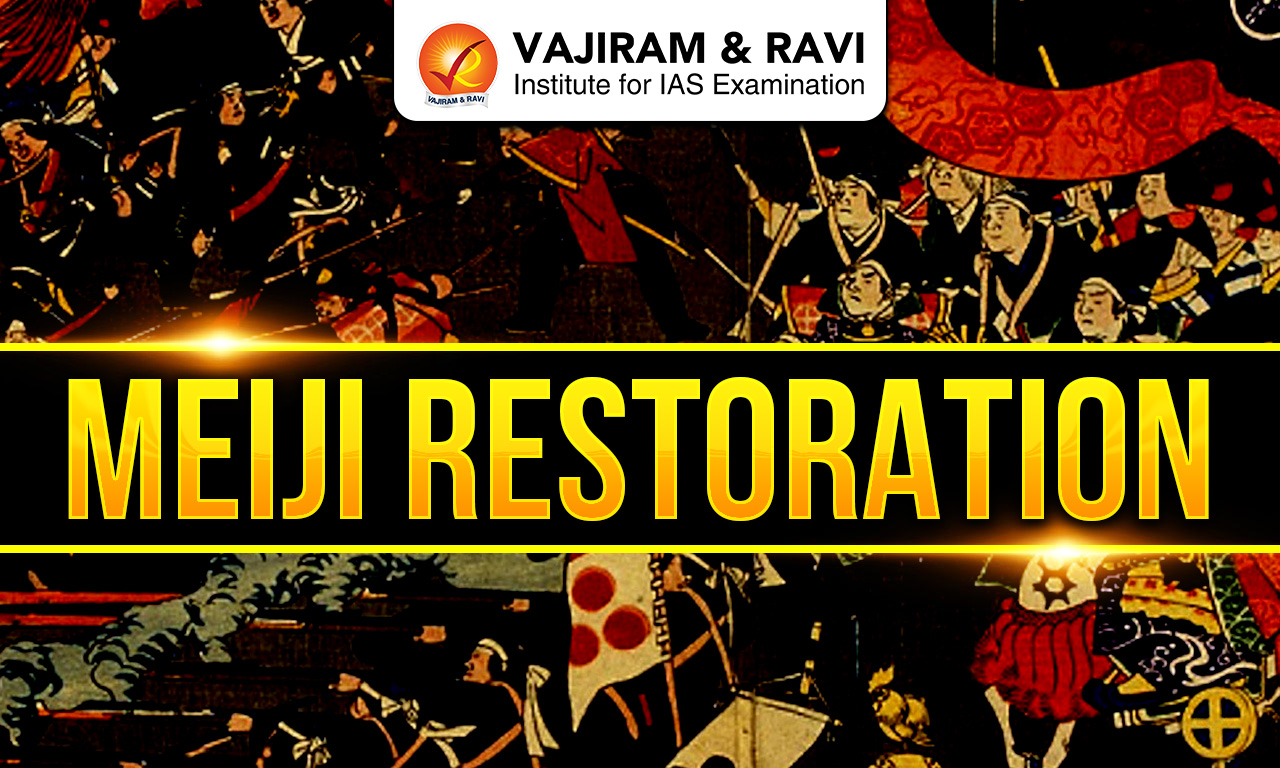
The Meiji Restoration in 1868 changed Japan from a feudal and isolated country into a modern, industrial nation. After Tokugawa Yoshinobu stepped down, Emperor Meiji’s rule was restored. The government introduced reforms under the Charter Oath, encouraging better governance, social mobility, and learning from other countries. Historians describe it as a “revolution from above”, as reforms were initiated and controlled by a small group of elites, unlike mass-based revolutions such as the French Revolution.

Meiji Restoration Background

Before 1868, Japan was governed under the feudal system of the Tokugawa Shogunate (1603-1867), which ensured political stability but limited modernization.

  • Power was decentralized, with regional lords (daimyos) exercising authority over their domains, while the shogun functioned as the supreme military ruler. 
  • Society was rigidly divided into hierarchical classes - samurai, peasants, artisans, and merchants.
  • At the core of this system was the samurai class, a hereditary warrior elite that served the daimyos and enjoyed high social status along with fixed stipends. 

This stable order began to weaken in the 19th century due to both internal and external pressures.

  • Internally, the declining economic condition of the samurai and the rising wealth of merchants created social imbalance. 
  • Externally, a major turning point came in 1853, when Matthew Perry, an American naval officer, arrived with warships known as the “Black Ships” and forced Japan to open its ports to foreign trade. The subsequent unequal treaties undermined Japan’s sovereignty by limiting its control over trade and legal jurisdiction, thereby exposing its military and technological weakness. 
  • At the same time, the fate of China, which had come under foreign domination, served as a warning.

These developments convinced Japanese leaders, many of them samurai, that without rapid modernization, Japan risked losing its independence.

Causes of the Meiji Restoration

The Meiji Restoration was driven by a combination of internal weaknesses and external pressures that made reform unavoidable.

  • Political Weakness of the Tokugawa Shogunate: The Tokugawa system was decentralized, with significant power vested in regional domains. This limited the capacity of the central authority to respond effectively to external threats. The inability of the shogunate to resist Western pressure or protect national interests led to a decline in its legitimacy. As a result, many leaders began to advocate the restoration of imperial authority as a means of unifying the country.
  • Economic Stagnation and Structural Imbalance: The feudal economy was primarily agrarian and could not generate sufficient resources for modernization. The samurai class, dependent on fixed stipends, faced economic hardship as commercial activities expanded. At the same time, merchants gained wealth but lacked social recognition. This imbalance created structural tensions and highlighted the need for economic reform and industrial development.
  • Social Discontent and Erosion of Feudal Order: The rigid class hierarchy began to break down under economic and social pressures. Samurai dissatisfaction, coupled with rising aspirations among merchants and commoners, contributed to instability. The traditional system no longer reflected the changing realities of society, making transformation inevitable.
  • Impact of Western Powers and Unequal Treaties: The forced opening of Japan and the imposition of unequal treaties posed a direct challenge to national sovereignty. Western powers enjoyed legal and economic privileges within Japan, which was seen as a humiliation. The fear of colonization, reinforced by developments in Asia, created a strong motivation for reform.
  • Rise of Reformist Samurai Leadership: A group of progressive samurai from domains like Satsuma and Chōshū played a crucial role in overthrowing the shogunate. They recognized that Japan needed to adopt Western technology and institutions to survive. Their leadership ensured that the restoration was not merely political but also transformative in nature.

Consequences of the Meiji Restoration

The Meiji Restoration brought about a far-reaching transformation of Japan across political, social, economic, and military spheres. These changes were not isolated reforms but part of a coordinated state strategy guided by the principle of “Fukoku Kyōhei” (Rich country, strong army), which aimed to build a strong, self-reliant nation capable of competing with Western powers.

Political Consequences: Creation of a Centralized Modern State: The most immediate consequence was the dismantling of the feudal political structure and the emergence of a centralized state.

  • The traditional feudal domains (han), controlled by daimyos, were abolished in 1871 and replaced by prefectures under the direct control of the central government. This eliminated regional autonomy and ensured uniform administration across Japan.
  • A modern bureaucratic system was established, with officials appointed on the basis of merit rather than hereditary status. This enabled efficient governance and facilitated the implementation of nationwide reforms.
  • The promulgation of the Meiji Constitution in 1889 introduced a constitutional monarchy with a parliament (Diet). However, political power remained concentrated in the hands of a small group of elites, reflecting a controlled transition to modern governance rather than full democracy.

Social Consequences: Transformation of Traditional Society: The Meiji Restoration fundamentally altered Japan’s social structure by breaking down feudal hierarchies.

  • The rigid class system was abolished, and all individuals were declared equal before the law. This marked a significant shift from a status-based society to a more egalitarian legal framework.
  • The samurai class, which had traditionally enjoyed privileges such as stipends and the exclusive right to bear arms, lost its special status. Many former samurai were compelled to seek new livelihoods in administration, business, or professional fields, reflecting a transition from hereditary privilege to occupational roles.
  • The removal of restrictions on occupation and movement allowed greater social mobility. Individuals could now pursue careers based on ability and opportunity rather than birth, contributing to a more dynamic society.

Economic Consequences: Industrialization and Emergence of Capitalism: Economic transformation was central to the success of the Meiji reforms, as the state actively promoted industrial development.

  • The government initially took the lead in industrialization by investing in infrastructure such as railways, telegraph networks, ports, and modern factories. This laid the foundation for economic growth and national integration.
  • The Iwakura Mission played a crucial role in this process by studying Western economies, industries, and institutions, and bringing back knowledge that informed Japan’s modernization strategy.
  • Land tax reforms converted traditional tax payments (in rice) into monetary payments, providing the government with a stable and predictable source of revenue. This financial stability was essential for funding modernization efforts.

Military Consequences: Emergence of a Modern Military Power: Military modernization was a critical component of Japan’s transformation, aimed at protecting national sovereignty and gaining international recognition.

  • The introduction of universal conscription in 1872 replaced the traditional samurai-based military system. This created a national army composed of citizens, strengthening both military capacity and national integration.
  • The army and navy were reorganized along Western lines, adopting modern training methods, organizational structures, and advanced weaponry. This significantly improved Japan’s military effectiveness.
  • Japan’s enhanced military strength was demonstrated through its victories in the First Sino-Japanese War and the Russo-Japanese War, which established it as a major power in East Asia.

Educational and Ideological Consequences: The Meiji state recognized that modernization required not just institutional change but also a transformation of mindset.

  • A national education system was established, promoting literacy, technical knowledge, and discipline. By the end of the Meiji period, a large proportion of the population had access to basic education, creating a skilled workforce.
  • The state promoted nationalism and unity through ideological tools such as State Shinto, which emphasized loyalty to the emperor as a symbol of national identity.
  • While Western knowledge and practices were actively adopted, efforts were made to preserve Japanese cultural traditions, ensuring continuity amidst change.

Significance of the Meiji Restoration

The Meiji Restoration represents one of the most successful examples of rapid modernization in world history. Within a few decades, Japan transformed itself from a feudal and isolated society into a modern industrial and military power. What makes this transformation particularly significant is that Japan was able to adopt Western institutions and technology while preserving its cultural identity and political independence.

  • Preservation of Sovereignty: Japan successfully avoided colonization at a time when many Asian countries were falling under Western control. Unlike China, which experienced semi-colonial domination, Japan strengthened its institutions in time to maintain independence and later renegotiate unequal treaties.
  • First Industrialized Nation in Asia: The Meiji reforms enabled Japan to become the first Asian country to industrialize successfully. State-led efforts in infrastructure, industry, and finance created a strong economic base, allowing Japan to compete with Western economies.
  • Emergence as a Military Power: Modern military reforms transformed Japan into a formidable power. Its victories in the First Sino-Japanese War and the Russo-Japanese War demonstrated that a non-Western nation could defeat major powers, altering global power perceptions.
  • Model of State-Led Modernization: The Meiji Restoration showed that strong state intervention can drive rapid modernization. The government actively led reforms in industry, education, and administration, providing a model for late-developing countries.
  • Selective Adaptation of the West: Japan’s success lay in its ability to adopt Western ideas selectively rather than blindly. It combined modern institutions with traditional values, ensuring stability during rapid transformation.

The Meiji Restoration not only made Japan a global power but also influenced Asian nationalism and modernization efforts. However, its emphasis on militarization later contributed to expansionism and conflicts, including World War II.

The “Darker Side” of Meiji Modernization

While the Meiji Restoration is often celebrated as a successful model of rapid modernization, it also generated significant structural inequalities and social costs that complicate its legacy.

  • The expansion of Japan into regions like Hokkaido involved colonization and forced assimilation of the Ainu, leading to land loss and cultural erosion.
  • Industrialization prioritized growth over welfare, causing environmental damage and harsh working conditions, especially for women, with long hours and health risks.
  • Legal equality after feudalism did not end social stratification; new inequalities arose, with discrimination against marginalized groups, economic gaps, and overcrowded urban living

Meiji Restoration FAQs

Q1: What was the Meiji Restoration?

Ans: The Meiji Restoration was a political revolution in 1868 that overthrew the Tokugawa Shogunate and restored imperial rule under Emperor Meiji, marking the beginning of Japan’s rapid modernization and transition into a modern nation-state.

Q2: Why did the Meiji Restoration take place?

Ans: The Meiji Restoration occurred due to the weakening of the feudal Tokugawa system, economic and social tensions, and external pressure from Western powers, especially after the arrival of Matthew Perry, which exposed Japan’s vulnerability and forced it to modernize to preserve sovereignty.

Q3: What role did the samurai play in the Meiji Restoration?

Ans: The Meiji Restoration was largely led by reformist samurai from powerful domains like Satsuma and Chōshū, who overthrew the shogunate and later implemented modernization policies, although the reforms eventually abolished their traditional privileges.

Q4: What were the major consequences of the Meiji Restoration?

Ans: The Meiji Restoration led to the establishment of a centralized state, rapid industrialization, social transformation, military modernization, and the creation of a national education system, collectively transforming Japan into a modern power.

Q5: What was the significance of the Meiji Restoration?

Ans: The Meiji Restoration is significant because it enabled Japan to avoid colonization, become the first industrialized nation in Asia, and emerge as a global military power while demonstrating a successful model of state-led modernization.

International Union for Conservation of Nature (IUCN)

International Union for Conservation of Nature (IUCN)

The International Union for Conservation of Nature (IUCN) is one of the world’s most influential environmental organisations working for biodiversity conservation and sustainable management of natural resources. It plays a crucial role in providing scientific knowledge, policy guidance and global standards that help governments and institutions protect ecosystems and wildlife. The organisation is widely known for initiatives such as the IUCN Red List of Threatened Species, which assesses the conservation status of species across the globe.

About International Union for Conservation of Nature (IUCN) 

  • The International Union for Conservation of Nature (IUCN) is a global environmental organization working for nature conservation and sustainable use of natural resources. 
  • It was established in 1948.
  • It is headquartered in Gland, Switzerland. 
  • IUCN brings together governments, NGOs, scientists and experts to address environmental challenges.
  • It does not directly manage wildlife parks or enforce environmental laws. Instead, it functions as a scientific and policy advisory organisation that helps governments and international bodies design better conservation strategies.
  • IUCN has observer status in the United Nations Environment Programme (UNEP) and contributes to international agreements related to climate change, biodiversity conservation and sustainable development.

International Union for Conservation of Nature (IUCN) Initiatives

The International Union for Conservation of Nature (IUCN) has launched several global initiatives to promote biodiversity conservation, ecosystem protection and sustainable development.

IUCN Red List of Threatened Species

One of the most important contributions of the IUCN is the IUCN Red List of Threatened Species, which was formally developed in 1964.

  • The Red List is considered the world’s most comprehensive database for assessing the extinction risk of plants, animals and fungi. 
  • It provides scientific information about species population, habitat, distribution, ecological role, threats and conservation status. 
  • The Red List categorises species into groups such as Critically Endangered, Endangered, Vulnerable, Near Threatened and Least Concern. 
  • Other important categories include Data Deficient (DD), which indicates insufficient scientific information, and Extinct (EX) or Extinct in the Wild (EW), which indicate that no surviving wild populations exist
  • It is widely used by governments, conservation organisations, researchers and policymakers for environmental planning.

IUCN World Conservation Congress 

  • The IUCN also organises the World Conservation Congress every four years, which is one of the largest global gatherings on conservation issues. 
  • The congress brings together around 1300+ member organisations, including countries, NGOs and indigenous groups, to discuss global environmental policies and biodiversity protection strategies.
  • IUCN World Conservation Congress took place in Abu Dhabi, UAE. 

S2S (Source-to-Sea) Action Platform

  • Launched by the Stockholm International Water Institute in 2014.
  • Since 2025, it has been hosted by IUCN.
  • Focuses on sustainable management of water systems from river sources to oceans.

World Heritage Outlook Programme

  • Assesses conservation status of natural World Heritage Sites.
  • The World Heritage Outlook 4 Report provides updated ecological risk evaluation.
  • 4th edition of World Heritage Outlook, released in 2025, findings:
    • The report noted that biodiversity decline continues globally despite ongoing conservation efforts. Many species populations are still decreasing, particularly coral reef species, amphibians, freshwater fishes and forest-dependent wildlife. Increased scientific monitoring and reassessment of species are required to improve conservation planning.
    • Over 80% of natural sites face direct climate risks like coral bleaching, glacier melt, and wildfires, posing severe ecological and cultural challenges.
    • It categorised Western Ghats, Manas National Park (Assam), and Sundarbans National Park (West Bengal as being of significant concern

Species Survival Commission (SSC) Initiative

  • Works through expert networks for protection and recovery of endangered species.
  • Supports habitat conservation and wildlife management.

Protected Area Management Guidelines

  • Provides scientific guidance for national parks, wildlife sanctuaries and marine protected areas.

International Union for Conservation of Nature (IUCN) FAQs

Q1: What is the International Union for Conservation of Nature (IUCN)?

Ans: The International Union for Conservation of Nature (IUCN) is a global environmental organization working for biodiversity conservation and sustainable use of natural resources. It was established in 1948 and is headquartered in Gland, Switzerland.

Q2: What is the main function of the International Union for Conservation of Nature (IUCN)?

Ans: The main function of the International Union for Conservation of Nature (IUCN) is to provide scientific research, policy guidance and conservation strategies to protect biodiversity, ecosystems and endangered species worldwide.

Q3: What is the IUCN Red List?

Ans: The IUCN Red List is the world’s most comprehensive database for assessing the extinction risk of species. It categorises species into groups such as Critically Endangered, Endangered, Vulnerable, Near Threatened and Least Concern.

Q4: Does the International Union for Conservation of Nature (IUCN) manage wildlife parks?

Ans: No, IUCN does not directly manage wildlife parks or enforce environmental laws. It works as a scientific and advisory organisation supporting governments and conservation bodies.

Q5: What are some major initiatives of the International Union for Conservation of Nature (IUCN)?

Ans: Major initiatives include the Red List of Threatened Species, World Conservation Congress, Source-to-Sea (S2S) Action Platform, World Heritage Outlook Programme and Species Survival Commission (SSC) programme.

Gegeneophis chandgadi

Gegeneophis chandgadi

Gegeneophis chandgadi Latest News

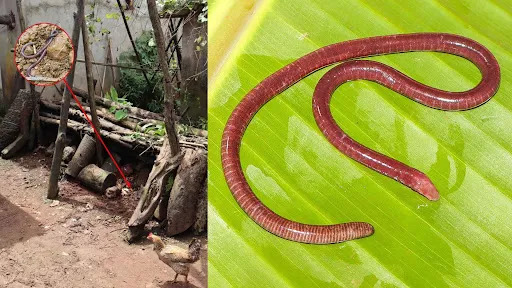
Scientists have discovered a new species of legless, worm-like amphibian from a rural village in Maharashtra and named it as Gegeneophis chandgadi.

About Gegeneophis chandgadi

  • It is a caecilian species discovered in the state of Maharashtra.
  • Caecilians may look like oversized earthworms or small snakes and this group of amphibians live mostly underground.
  • The species name, chandgadi, is a tribute to the local culture.
  • It is named after the ‘Chandgadi language,’ a distinct dialect of Marathi spoken by the people living in the region where the animal was found.
  • Distribution: The researchers noted that the northern Western Ghats is a hotspot for these elusive animals.
  • Features
    • It has a slender, flesh-colored body and a specific pattern of rings (called annuli) that encircle its trunk.
    • It has primary rings along its entire length, its secondary rings are concentrated only on the back half of its body.
    • It is legless, worm-like amphibian.

What are Caecilians?

  • These are tropical amphibians that look like large worms or slick snakes.
  • They have no arms or legs, and their shiny skin is ringed with skin folds called annuli. 
  • Most caecilians are burrowers, living in a network of tunnels underground. A hard, thick, pointy skull helps these amphibians dig in soft dirt. 
  • Habitat
    • Most caecilians inhabit moist tropical and subtropical regions of South and Central America, South and Southeast Asia, and Sub-Saharan Africa.
    • Almost all caecilians are terrestrial, but they are elusive as they spend the majority of their lives underground.

Source: RM

Gegeneophis chandgadi FAQs

Q1: What is Gegeneophis chandgadi?

Ans: A caecilian species

Q2: Where did Gegeneophis chandgadi was found?

Ans: Maharashtra

Bar Council of India (BCI)

Bar Council of India (BCI)

Bar Council of India Latest News

Recently, the Supreme Court declared that the Bar Council of India (BCI) and its chairperson lack jurisdiction to discipline or penalise law students. 

About Bar Council of India

  • It is a statutory body created by Parliament to regulate and represent the Indian bar.
  • It was established under the Advocates Act, 1961, based on the recommendations of the All India Bar Committee.
  • Objective: Its main objective is safeguarding the rights, interests, and privileges of advocates throughout India.

Functions of Bar Council of India

  • Regulatory: It performs the regulatory function by prescribing standards of professional conduct and etiquette and by exercising disciplinary jurisdiction over the bar.
  • Setting Standard: It also sets standards for legal education and grants recognition to Universities whose degrees in law will serve as qualification for enrolment as an advocate.
  • BCI also funds welfare schemes for economically weaker and physically handicapped advocates.
  • Other functions
    • It conducts the All India Bar Examination (AIBE) to grant a ‘Certificate of Practice’ to advocates practising law in India.
    • It also recognizes on a reciprocal basis foreign qualifications in law obtained outside India for admission as an advocate under this Act.

Composition of Bar Council of India

  • It comprises members elected from each State Bar Council, the Attorney General of India, and the Solicitor of India, who serve as members automatically. 
  • The members of the State Bar Councils are elected for five years. 
  • The Council has the power to choose its own Chairman and Vice-Chairman from among its members, and they serve for two years.

Source: TH

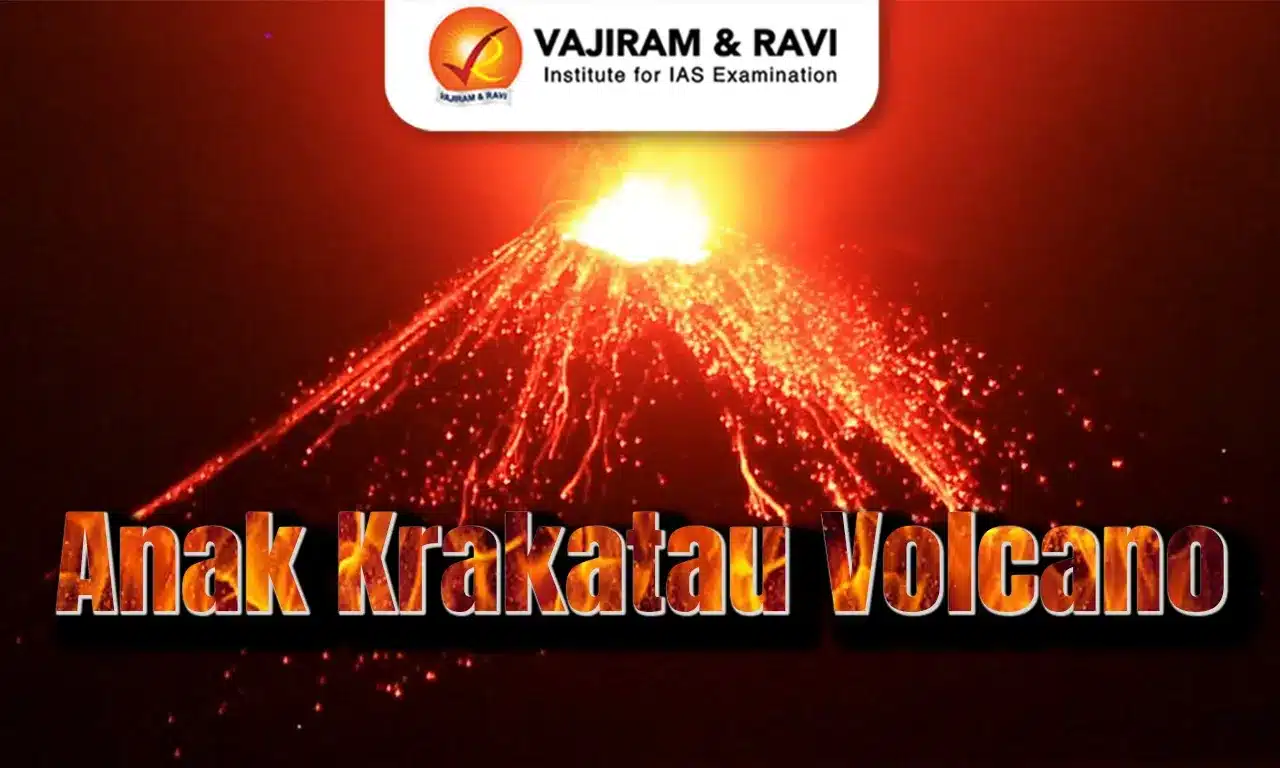
Anak Krakatau Volcano

Anak Krakatau Volcano

Anak Krakatau Volcano Latest News

Recently, Indonesia's Anak Krakatau volcano erupted prompting the cancellation of all flights at Jakarta's Soekarno-Hatta International Airport.  

About Anak Krakatau Volcano

  • Location: It is a stratovolcano located in the Sunda Strait, between Java and Sumatra in Indonesia. 
  • It is a part of the Ring of Fire, a chain of volcanoes in the Pacific Ocean. 
  • History
    • Anak Krakatau, or "child of Krakatau", is linked to the famed Krakatau, whose 1883 eruption triggered a period of global cooling.
    • It emerged from the sea in 1927.
    • Over the following years, frequent strombolian eruptions resulted in growth of the volcano. 
    • It sits above multiple magma chambers.
    • In 2018, an eruption led to the collapse of the southwestern flank of the volcano, with the resulting landslide generating a tsunami.

What is Stratovolcano?

  • It is also called composite volcano, and are typically steep-sided, symmetrical cones built of alternating layers of lava flows, volcanic ash, and other eruptive products.
  • They are typically found above subduction zones, and they are often part of large volcanically active regions, such as the Ring of Fire that frames much of the Pacific Ocean.
  • Stratovolcanoes comprise the largest percentage (~60%) of the Earth’s individual volcanoes.
  • They are formed from viscous, sticky lava that does not flow easily. 
  • The lava therefore builds up around the vent, forming a volcano with steep sides. Stratovolcanoes are more likely to produce explosive eruptions due to gas building up in the viscous magma.

Sound: TH

Anak Krakatau Volcano FAQs

Q1: Where is Anak Krakatau Volcano?

Ans: It is located in the Sunda Strait, between Java and Sumatra in Indonesia.

Q2: Anak Krakatau Volcano is what type of volcano?

Ans: It is a stratovolcano.

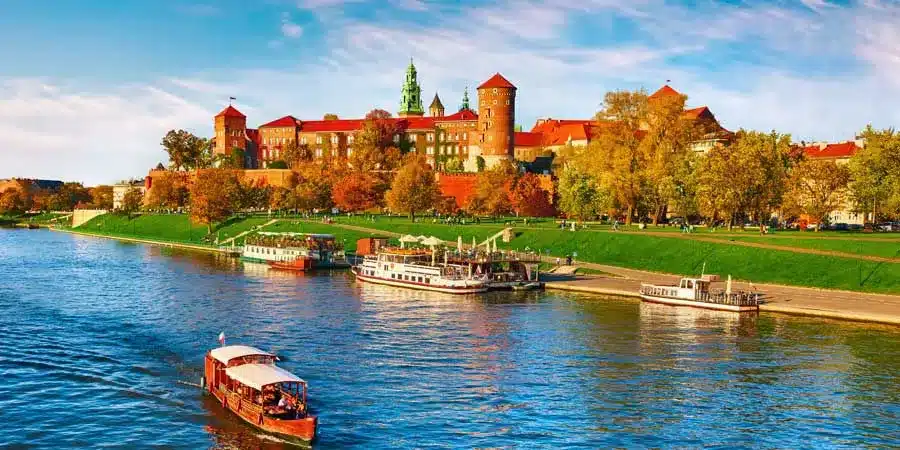
Poland

Key Facts about Poland

Poland Latest News

India and Poland are working on a series of agreements in key areas, including cyber security, space, and clean coal. 

About Poland

  • Location: It is a Central European country.
  • Bordering Countries: It is bordered by 7 nations: by Germany in the west; the Czech Republic in the southwest; Slovakia in the south; Ukraine  in the southeast; Belarus in the east; Lithuania and Russia in the northeast.
  • Water Bodies: It is bordered in the north by the Baltic Sea. 
  • It is a member of both NATO (North Atlantic Treaty Organization) and the European Union (EU).
  • Capital City: Warsaw

Geographical Features of Poland

  • Climate: It has a continental climate, moderated by westerly winds. 
  • Mountain Ranges: Major ranges include the Sudetes, and the Tatra Mountains which are the most elevated part of the Carpathian Mountains.
  • Highest Point: Its highest-point is Mt. Rysy which stands at 2,499 m (8,199 ft) in elevation.
  • Major Rivers: It is drained by the Rivers Vistula Warta and Oder.
  • Natural Resources: The country has deposits of coal, natural gas, and economically important minerals such as copper, rhenium, sulfur, and salt. 

Source: News On Air

Poland FAQs

Q1: What is the capital of Poland?

Ans: Warsaw

Q2: Which is the highest peak of Poland?

Ans: Mt. Rysy

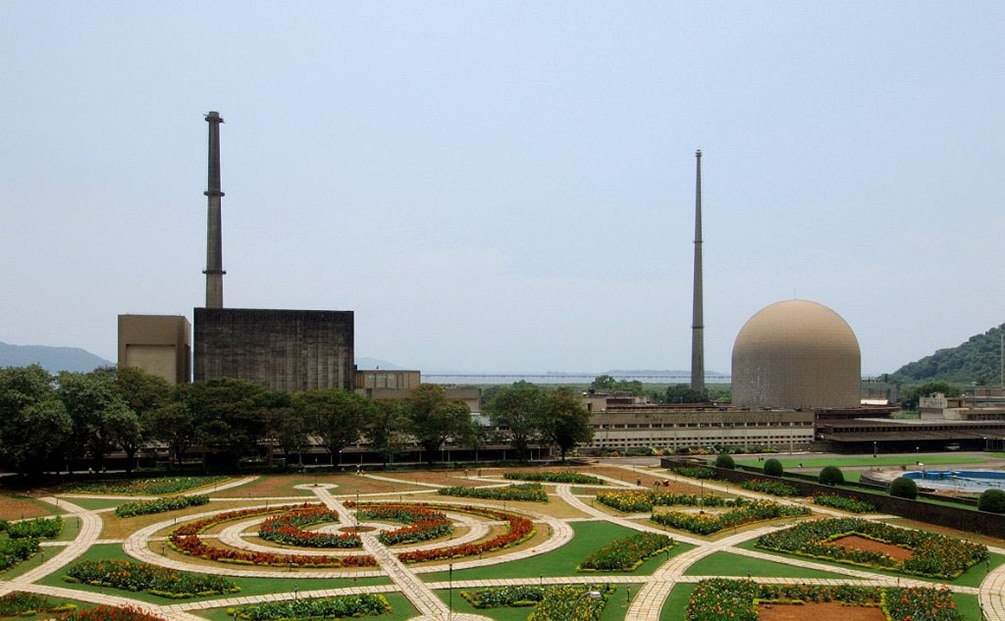
Bhabha Atomic Research Centre (BARC)

Bhabha Atomic Research Centre (BARC)

Bhabha Atomic Research Centre Latest News

The BMC’s Tree Authority recently approved the cutting of 251 trees and transplantation of 48 trees for Bhabha Atomic Research Centre (BARC) Old Mandala to New Mandala Road connectivity project by the Department of Atomic Energy.

About Bhabha Atomic Research Centre 

  • It is India’s premier nuclear research facility.
  • It is headquartered in Trombay, Mumbai, Maharashtra.
  • It operates under the Department of Atomic Energy, which is directly overseen by the Prime Minister of India. 
  • The statutory framework governing its activities is the Atomic Energy Act, 1962, which vests in the central government exclusive control over atomic minerals, fissile material, and nuclear research, superseding the earlier Atomic Energy Act of 1948. 
  • It is a multi-disciplinary research centre with extensive infrastructure for advanced research and development covering the entire spectrum of nuclear science and engineering and related areas.
  • BARC is the research backbone of the Nuclear Power Corporation of India (NPCIL), which currently operates all nuclear power reactors in India.
  • History:
    • Dr. Homi Jehangir Bhabha conceived the nuclear program in India.
    • Dr. Bhabha established the Tata Institute of Fundamental Research (TIFR) to carry out nuclear science research in 1945.
    • Dr. Bhabha established the Atomic Energy Establishment, Trombay (AEET), in January 1954 for a multidisciplinary research program essential for the ambitious nuclear program of India.
    • After the death of Bhabha in 1966, AEET was renamed Bhabha Atomic Research Centre (BARC).
  • Functions:
    • It is engaged in research with the objective of generating knowledge and techniques for nuclear power production, the advancement of nuclear science, the use of radioisotopes in industry, health, and agriculture, and research in frontier areas of science and technology.
    • It is responsible for the design and development of nuclear reactors, fuel cycle technologies, radiation protection, and safety systems.
    • BARC also plays an important role in nuclear education and training. It offers various training programs for scientists, engineers, and technicians in the areas of nuclear science and technology.

News: TOI

Bhabha Atomic Research Centre FAQs

Q1: What is the Bhabha Atomic Research Centre (BARC)?

Ans: BARC is India’s premier nuclear research facility.

Q2: Where is the Bhabha Atomic Research Centre headquartered?

Ans: BARC is headquartered in Trombay, Mumbai, Maharashtra.

Q3: Under which department does Bhabha Atomic Research Centre operate?

Ans: It operates under the Department of Atomic Energy, which is directly overseen by the Prime Minister of India.

Q4: What broad areas of research and development does BARC cover?

Ans: It covers the entire spectrum of nuclear science and engineering and related areas.

Thismia daemona

thismia-daemona

Thismia daemona Latest News

Scientists recently discovered a new species of leafless flowering plant named Thismia daemona that grows on the forest floor of a national park in western Thailand.

About Thismia daemona

  • It is a new species of leafless flowering plant.
  • It was discovered from Thong Pha Phum National Park in western Thailand.
  • It belongs to Thismia, a genus of tiny species also known as "fairy lanterns."  
    • The distinctive quality of these plants is that they lack chlorophyll and do not carry out photosynthesis. 
    • Instead, they produce their food from fungi beneath the earth's surface and also remain concealed beneath layers of leaf litter for nearly their entire lives. 
  • Thismia daemona plant was found growing at an elevation of approximately 1,000 meters, an unusually high and seasonally dry setting for this genus. 
  • Its unusual, almost supernatural appearance inspired its name: Thismia daemona, the "devil flower." 
    • Its flower is mostly black and topped with horn-like appendages that rise from a dome-shaped "miter." 
    • Bright reddish-orange patches near the base resemble glowing eyes, adding to its demon-like appearance. 
  • It is known from fewer than 50 individuals and has therefore been provisionally assessed as Critically Endangered.

News: WION

Thismia daemona FAQs

Q1: What is Thismia daemona?

Ans: Thismia daemona is a newly discovered species of leafless flowering plant.

Q2: Where was Thismia daemona discovered?

Ans: It was discovered in Thong Pha Phum National Park in western Thailand.

Q3: What are species of the genus Thismia commonly known as?

Ans: They are commonly known as “fairy lanterns.”

Q4: Why are Thismia species unable to carry out photosynthesis?

Ans: They lack chlorophyll, which is essential for photosynthesis.

Q5: How does Thismia daemona obtain its food?

Ans: It obtains nutrients through fungi beneath the earth's surface rather than through photosynthesis.

Striped Hyena

Striped Hyena

Striped Hyena Latest News

Recently it was observed that increasing awareness of the ecological value of striped hyenas will help mitigate the cultural beliefs keeping striped hyenas at the brink.

About Striped Hyena

  • It is one of four species belonging to the family Hyaenidae.
    • Other three are the Spotted Hyena, the Brown Hyena and the Aardwolf.
  • Appearance: It is a bit smaller than the spotted hyenas and has stripes all over their bodies. 
  • Habitat: It inhabits savannas, grasslands, semi-deserts, open woodlands, and mountainous regions.
  • Distribution: It is mainly found in South Asia (India, Nepal, Afghanistan), North Africa, Sub-Saharan Africa, Western Asia, and Central Asia.

Characteristics of Striped Hyena

  • They are territorial creatures and scent-mark their territorial boundaries as a warning to their rivals.
  • Diet: Striped hyenas are primarily scavengers and eat mainly carrion and human refuse
  • Adult Striped hyena females are dominant over males and aggressive toward other females.
  • The striped hyena is generally considered solitary, but has some social organization.

Conservation Status of Striped Hyena

  • IUCN Red List: Near Threatened.
  • Wildlife Protection Act, 1972: Schedule I

Source: TH

Striped Hyena FAQs

Q1: Where do we find Striped Hyena?

Ans: It is mainly found in South Asia (India, Nepal, Afghanistan), North Africa, Sub-Saharan Africa, Western Asia, and Central Asia.

Q2: What is the IUCN status of Striped Hyena?

Ans: Near Threatened

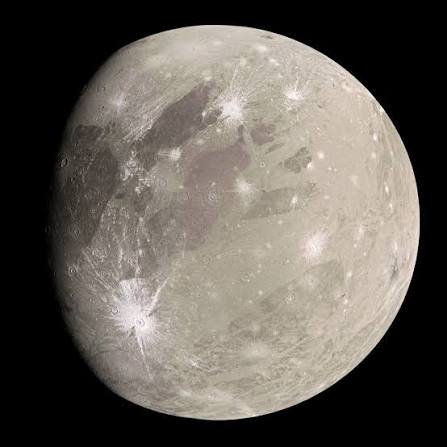
Ganymede

Ganymede

Ganymede Latest News

Magnetic and auroral evidence points to a vast ocean beneath Ganymede, but surface salts do not yet prove a direct connection through its roughly 150-kilometre ice shell.

About Ganymede

  • It is the largest of Jupiter’s satellites and of all the satellites in the solar system.   
  • It is the only moon known to possess its own magnetic field. 
  • Discovered by Galileo Galilei in 1610, Ganymede's name is derived from a figure in Roman mythology associated with the god Jupiter.  
  • It has a diameter of about 5,270 km, which makes it larger than the planet Mercury. 
  • It is situated about one million kilometers from Jupiter, exhibiting synchronous rotation, which means it always shows the same face to the planet. 
  • Ganymede’s relatively low density of 1.93 grams per cubic cm indicates that its composition is roughly half rock and half water ice by mass.  
  • Ganymede has a core of metallic iron, which is followed by a layer of rock that is topped off by a crust of mostly ice that is very thick. 
  • There are also a number of bumps on Ganymede's surface, which may be rock formations. 
  • It is believed that Ganymede has a saltwater ocean below its surface. 
  • A thin atmosphere surrounds Ganymede, containing hydrogen and possibly other compounds like carbon dioxide. 
  • Ongoing exploration, including missions like the recently launched Jupiter Icy Moons Explorer (JUICE), aims to deepen our understanding of Ganymede's geology, potential oceanic layers, and its role in the broader context of the solar system's formation and evolution.

News: SD

Ganymede FAQs

Q1: What is Ganymede?

Ans: Ganymede is the largest moon of Jupiter and the largest natural satellite in the Solar System.

Q2: What is unique about Ganymede among the moons of the Solar System?

Ans: Ganymede is the only moon known to possess its own magnetic field.

Q3: Who discovered Ganymede?

Ans: Galileo Galilei discovered Ganymede in 1610.

Q4: What is the internal structure of Ganymede?

Ans: Ganymede has a metallic iron core, followed by a rocky layer, and a very thick crust composed mostly of ice.

Exercise Veer Guardian 2026

Exercise Veer Guardian

Exercise Veer Guardian Latest News

The Japanese Self-Defense Force (JASDF) contingent recently touched down in Jodhpur ahead of Exercise Veer Guardian 2026.

About Exercise Veer Guardian

  • It is a bilateral air exercise between the Indian Air Force and the Japanese Air Self-Defense Force (JASDF).
  • The first edition of the exercise was held in 2023 at Hyakuri Air Base, Japan. 
  • It seeks to enhance interoperability, operational synergy, and mutual understanding, reinforcing the enduring bonds of friendship between India and Japan.
  • Ex Veer Guardian 2026:
    • Location: Jodhpur, Rajasthan
    • It will focus on improving the tactical proficiency of participating units and deepening mutual understanding between the two air forces. 
    • The training will include air-combat manoeuvring, giving personnel from both countries an opportunity to train together in complex operational scenarios. 
    • Japan is participating with three F-2A fighter aircraft from the 8th Air Wing at Tsuiki Air Base, along with approximately 110 personnel.
    • This is the first time that the Mitsubishi F-2 fighter aircraft will participate in an exercise in India.

News: TOI

Exercise Veer Guardian FAQs

Q1: What is Exercise Veer Guardian?

Ans: Exercise Veer Guardian is a bilateral air exercise between the Indian Air Force (IAF) and the Japanese Air Self-Defense Force (JASDF).

Q2: When was the first edition of Exercise Veer Guardian held?

Ans: The first edition was held in 2023.

Q3: What are the main objectives of Exercise Veer Guardian?

Ans: It aims to enhance interoperability, operational synergy and mutual understanding between the Indian and Japanese air forces.

Q4: Which Japanese fighter aircraft are participating in Exercise Veer Guardian 2026?

Ans: Three Mitsubishi F-2A fighter aircraft are participating.

Valles Marineris

valles-marineris

Valles Marineris Latest News

A vastly larger outburst flood occurred on Mars during the Late Hesperian to Early Amazonian, when the breaching of paleolakes in Valles Marineris, the largest canyon system in the Solar System, unleashed a massive deluge.

About Valles Marineris

  • Valles Marineris, or Mariner Valley, is a vast system of interconnected canyons on the planet Mars.
  • The system was discovered during, and named for, the Mariner 9 mission in 1971.
  • The canyons extend in an east-west direction for roughly 4,000 km just south of the equator. 
  • By comparison, Earth’s natural wonder, the Grand Canyon, is only 446 km long.
  • It is one of the larger canyons in the solar system.
  • It spans about 20 percent of the entire circumference of Mars. 
  • Individual canyons are typically 200 km across and have walls 2–5 km high.
  • At the centre of the system, several canyons merge to form a depression 600 km across and 9 km deep.
  • The canyon system contains a number of different features that give clues to its formation. 
    • Some of the canyon walls appear to be fault scarps that formed as a result of crustal movement along faults radiating from the Tharsis rise, an enormous volcanic bulge to the northwest. 
    • Erosion, however, has also played a significant role in canyon formation, as indicated by deep gullies cut in the walls.
    • In places, the canyons contain thick sedimentary sequences that may have been deposited in lakes that formerly occupied the canyons. 
    • These lakes later may have drained catastrophically to the east, where there is evidence of large floods.

News: TH

Valles Marineris FAQs

Q1: What is Valles Marineris?

Ans: Valles Marineris is a vast system of interconnected canyons on Mars.

Q2: When was Valles Marineris discovered?

Ans: Valles Marineris was discovered during the Mariner 9 mission in 1971.

Q3: How long does the Valles Marineris canyon system extend?

Ans: It extends for roughly 4,000 km.

Q4: Where is Valles Marineris located on Mars?

Ans: It is located just south of the Martian equator.

NSE IPO – India’s Largest Public Issue and the Debate Over Self-Trading

NSE IPO - India’s Largest Public Issue and the Debate Over Self-Trading

NSE IPO Latest News

  • After nearly a decade of regulatory delays, the National Stock Exchange (NSE) is poised to launch its Initial Public Offering (IPO), potentially raising around ₹30,000 crore, which could make it the largest IPO in India’s history. 
  • The proposed public listing has generated considerable interest among institutional and retail investors.
  • A key unresolved issue is whether NSE will eventually be permitted to trade its own shares on its platform, despite regulations prohibiting an exchange from listing itself.

Regulatory Hurdle - The Self-Listing Problem

  • Conflict of interest:
    • Under existing SEBI regulations, a stock exchange cannot list its own shares on its platform. 
    • Exchanges function as first-level regulators for entities listed and traded on them. 
    • Self-listing could therefore create a conflict of interest, as an exchange would effectively regulate itself. NSE's proposed solution is the Permitted-to-Trade (PTT) route. 
    • Under this mechanism -
      • NSE shares would initially be listed on BSE.
      • NSE would subsequently submit a proposal to SEBI seeking permission for its shares to trade on NSE without being listed there.
      • BSE would remain the primary listing platform and bear the principal compliance responsibility.
      • NSE would establish standard operating procedures for surveillance, price bands and other trading functions to mitigate conflicts of interest.
      • If SEBI approves the proposal, NSE shares could trade on NSE through the PTT mechanism.
  • Regulatory precedent:
    • The proposal faces a significant precedent. For example, SEBI rejected BSE's similar PTT proposal when BSE listed in 2017, citing concerns over conflict of interest.
    • SEBI Chair Tuhin Kanta Pandey has indicated that the regulator has not yet substantively considered the issue.
    • BSE MD Sundararaman Ramamurthy has opposed the idea, arguing that self-trading is currently not supported by the regulatory framework.

Why Trading NSE Shares on NSE Matters

  • Liquidity and market reach:
    • NSE dominates India's equity and derivatives markets, accounting for approximately -
      • 93% of cash-market turnover
      • Nearly the entire futures premium
      • Around 75% of options premium
    • Allowing NSE shares to trade on its own platform could therefore provide them with greater liquidity, visibility and investor participation.
  • Index inclusion and passive flows:
    • Trading on NSE could also facilitate inclusion in major NSE indices such as the Nifty 500 and Nifty Financial Services. 
    • Such inclusion could generate additional demand through passive mutual funds and index-tracking investments.
    • The PTT mechanism is not unprecedented in practice - around 250 companies that are not listed on NSE are nevertheless permitted to trade on its platform.

IPO Timing and Valuation

  • The NSE IPO arrives amid a revival in India's primary market after a period of weakness linked partly to the West Asia conflict and concerns surrounding the AI-driven global market environment.
  • Around 73% of funds raised through mainboard IPOs in 2026 had come during July and August, highlighting the recent acceleration in IPO activity. 
  • Despite several other large issues competing for investor attention, NSE's scale, market dominance and brand value are expected to distinguish its offering.
  • Brokerages have estimated a potential price-to-earnings (P/E) multiple of 35–49 times FY26 earnings. 
  • The final valuation will depend on the IPO price band, expected to be announced around mid-September.
  • Reports suggest that mutual funds may be comfortable with a price of roughly ₹1,800 per NSE share, implying a P/E multiple of approximately 43–45 times.

Significance for Investors and the Economy

  • NSE's IPO represents more than a large capital-market transaction. 
  • It marks the potential public-market transformation of one of India's most systemically important financial-market institutions.
  • Its attractiveness rests on India's -
    • Rising financialisation of household savings
    • Increasing retail participation in capital markets
    • Low penetration of equity investment relative to the size of the population
    • Growing derivatives and digital trading ecosystem
    • Expanding role of market infrastructure institutions
  • However, NSE's recent revenue and profit pressures, partly associated with regulatory changes in the derivatives segment, highlight the importance of balancing its growth potential against valuation and regulatory risks.
  • The broader policy challenge is to balance market efficiency and competition with regulatory neutrality, transparency and prevention of conflicts of interest.

Source: IE

NSE IPO FAQs

Q1: What regulatory concerns arise from allowing a stock exchange to trade its own shares?

Ans: It may create a conflict of interest, as the exchange could be both a market participant and regulator.

Q2: What is the Permitted-to-Trade (PTT) mechanism, and how could it help NSE?

Ans: Under PTT, NSE shares would be listed on BSE but permitted to trade on NSE, potentially enabling greater liquidity.

Q3: Why could NSE’s IPO become significant for India’s capital markets?

Ans: With its dominant share of equity and derivatives trading, the IPO could deepen market participation.

Q4: How can index inclusion influence the attractiveness of NSE shares?

Ans: Inclusion in indices such as the Nifty 500 can generate demand from passive and index-tracking funds.

Q5: What factors should investors consider while assessing NSE’s IPO valuation?

Ans: Investors should balance its market dominance and long-term growth potential against high P/E valuation.

EVM Totaliser: How It Protects Voter Anonymity and Booth-Level Secrecy

Totalisers for EVMs

EVM Totaliser Latest News

  • Recently, a Supreme Court Bench of Chief Justice Surya Kant, Justice Joymalya Bagchi, and Justice V. Mohana asked the Central government to examine introducing "totaliser" machines for counting EVM votes. 
  • The goal: protect the secrecy of booth-wise voting patterns and prevent voters at individual booths from being identified and potentially victimised.

What Is a Totaliser?

  • A totaliser is a device that allows votes from about 14 polling booths to be counted together, instead of the current practice of tallying votes booth by booth.
  • It is developed by Bharat Electronics Limited (Bengaluru) and Electronics Corporation of India Limited (Hyderabad).
  • It works as an interface connected to the main control unit of a cluster of 14 EVMs.
  • Pressing a single result button gives the consolidated vote count for each candidate across that entire cluster — without revealing how votes were split booth-wise.

How Did This Case Begin?

  • The case dates back to 2014, when two individuals — Yogesh Gupta and Imran Khan — filed a public interest petition asking the Election Commission to mix up votes across polling stations within a constituency. 
  • Their argument: this was necessary to stop candidates from intimidating voters in areas that had rejected them in the past.
  • They cited an alleged instance involving former Maharashtra Deputy CM Ajit Pawar in the Baramati constituency, where he reportedly threatened that his party (NCP) could identify anti-party voting patterns from EVM data and cut off water supply to those areas as retaliation.

The Centre's Position: Historically Opposed

  • The Central government has consistently resisted the totaliser proposal:
    • In 2017, the Centre told the Court that knowledge of booth-wise voting patterns does not lead to intimidation — instead, it helps candidates work harder in areas with low support, benefiting everyone.
    • A Law Ministry affidavit cited a Group of Ministers (headed by then-Home Minister Rajnath Singh) which concluded that large-scale voter intimidation was unlikely "in this era of media activism".
    • In 2018, Additional Solicitor General argued that installing a totaliser could cause a data breach even before counting begins.
    • More recently, the Centre again raised concerns about potential EVM data leaks before counting — prompting the Court to give the Election Commission two weeks to respond to these specific concerns

The Election Commission's Position: Consistently Supportive

  • Unlike the Centre, the Election Commission of India (ECI) has backed totalisers for years:
    • First proposed the idea to the UPA government in 2008.
    • In a 2018 submission to the Supreme Court, it stated: "a time has come for introduction of totaliser for counting of votes".
    • In the current hearings, the EC reaffirmed its support for protecting voter anonymity, while also flagging practical and legal challenges — particularly around booth-wise verification and VVPAT (Voter Verified Paper Audit Trail).

What Did the Supreme Court Say Now?

  • The Court directed the Central government to clearly state its position on introducing totalisers, specifically asking:
    • Whether there are any impediments to implementing such a system;
    • Whether it would have any negative impact.
  • The Election Commission has also been asked to submit its formal proposal to the Union government.

Why This Matters

  • This case touches a fundamental tension in electoral democracy: the right to a secret ballot versus the practical benefits candidates derive from booth-level voting data. 
  • If large-scale voter intimidation based on booth-wise EVM results is a real risk, totalisers could offer a technological safeguard — but concerns around data security and verification mechanisms like VVPAT remain unresolved.

Conclusion

  • The totaliser debate reflects a long-standing tussle between safeguarding voter anonymity and the Centre's practical and security-related reservations. 
  • With the Supreme Court now directing both the Centre and the Election Commission to clarify their positions, the coming weeks could determine whether India moves toward a more anonymised, cluster-based EVM counting system — a significant step for electoral integrity.

Source: TH | MC

EVM Totaliser FAQs

Q1: What is an EVM Totaliser?

Ans: An EVM Totaliser combines votes from about 14 polling booths, providing consolidated candidate-wise results without revealing individual booth-level voting patterns.

Q2: How does an EVM Totaliser protect voter anonymity?

Ans: An EVM Totaliser masks booth-specific voting patterns by combining results from multiple polling stations, making it harder to identify how individual booths voted.

Q3: Why has the Supreme Court considered an EVM Totaliser?

Ans: The Supreme Court is examining an EVM Totaliser to determine whether it can protect voters from potential intimidation linked to booth-wise voting patterns.

Q4: What is the Election Commission's position on an EVM Totaliser?

Ans: The Election Commission has consistently supported an EVM Totaliser, while acknowledging practical and legal challenges involving booth verification and VVPAT.

Q5: Why has the Centre opposed an EVM Totaliser?

Ans: The Centre has raised concerns about an EVM Totaliser, including possible data breaches, security risks and whether booth-level voting information actually causes voter intimidation.

BRICS Cross-Border Payments: India’s Push for Faster and Cheaper Transactions

BRICS and the Push for Cross-Border Payments

BRICS Cross-Border Payments Latest News

  • Ahead of the 18th BRICS Summit in New Delhi (September 2026), with India as Chair, member nations are pushing for new mechanisms to make cross-border payments faster and cheaper — including linking digital payment systems and central bank digital currencies (CBDCs). 
  • Finance ministries and central bank representatives from BRICS countries met in Jaipur recently to discuss this financial cooperation

How Do Cross-Border Payments Currently Work?

  • Sending money internationally isn't a direct transfer — it travels through a chain of intermediaries called correspondent banks. 
  • For example, if a South African importer pays an Indian exporter, the payment doesn't move directly between the two countries' banks. 
  • Instead, it's routed through a larger international bank (usually based in London or New York) that holds accounts with both.
  • Since very few banks hold both rupees and rand directly, the payment gets converted rand → dollar → rupee, with the US dollar acting as a "vehicle currency" — even though no American party is involved in the trade at all.

The Role of SWIFT

  • Alongside the actual money, payment instructions also need to travel between banks — this is handled by SWIFT (Society for Worldwide Interbank Financial Telecommunication).
  • SWIFT is a Belgium-based cooperative overseen by the National Bank of Belgium and G-10 central banks (including the US Federal Reserve).
  • SWIFT works like a secure messaging network — a "post office" for payment instructions — used directly by over 11,000 institutions in more than 200 countries. 
  • Smaller banks connect to it indirectly through larger ones, making SWIFT deeply embedded and hard to replace.

Why Are These Payments So Costly and Slow?

  • Every intermediary bank in the chain charges a fee, and currency is converted twice, meaning forex margins are paid twice over. 
  • A 2019 BRICS survey by Brazil found:
    • Forex margins of 2.5% for Brazilian respondents generally
    • Rising to 8.5% for payments involving Africa
    • Sometimes as high as 20% in certain cases
  • While SWIFT's "Global Payments Innovation" has helped speed up transactions, structural delays persist. 
  • The Bank for International Settlements (BIS) found that active correspondent banking relationships fell by 20% between 2011 and 2018 — with Latin America worst affected (declines up to 30%) — even as overall payment volumes kept growing through this shrinking network.

Why Does BRICS Want to Change This System?

  • For developing economies, heavy reliance on a few dominant currencies — the US dollar, euro, and yen — creates exposure to the monetary policies of the countries issuing them. 
  • The 2024 BRICS report (under Russia's chairmanship) argued that this system is effectively monopolised, driving up transaction costs.
  • Building alternatives is hard, though — they require convincing a large number of banks and regulators to join. 
  • There's also a sanctions risk: several Russian banks were cut off from SWIFT in 2022 after Russia's invasion of Ukraine, making other countries cautious about joining any alternative system that a sanctioned nation might use. 
  • This is exactly why Russia has pushed hardest for alternatives, while others remain wary.

What Alternatives Are Being Explored?

  • Direct linking of national payment systems — instead of routing through multiple correspondent banks, countries could connect their payment systems directly, in pairs. 
    • India has already done this with Singapore, linking UPI with Singapore's PayNow for remittances. However, building such bilateral links one at a time doesn't scale well.
  • A shared hub model — Project Nexus, designed by the BIS and now run by a company set up by six central banks (including India's RBI), aims to connect multiple countries' payment systems through one common hub. 
    • It's expected to go live only in 2027, and importantly, it is not a BRICS initiative.
  • Central Bank Digital Currencies (CBDCs) — BRICS discussions extend this idea further, exploring the use of CBDCs (digital versions of currencies used for bank-to-bank settlement, not retail digital currency for individuals) exchanged on a common platform. 
    • Both sides of a currency swap would settle simultaneously, eliminating the risk of one party paying before the other, speeding up settlement and reducing capital banks need to set aside.
    • The only such platform running today is mBridge, built by BIS with the central banks of China, Thailand, Hong Kong, and the UAE. 
    • BIS handed it over to participants in October 2024. Notably, over 95% of mBridge's settlement volume is in China's digital yuan.
  • The 2024 Kazan Declaration agreed to "discuss and study the feasibility" of an independent BRICS settlement system called BRICS Clear — but this proposal was notably absent from the following year's Rio Declaration.

What Is India's Position?

  • India's own proposal, reported in January, suggests member nations link their CBDCs specifically for trade and tourism payments. 
  • Indian officials have been careful to frame this purely as a way to cut transaction costs and speed up settlements — not as an attempt to displace the US dollar, unlike some Russian and Brazilian proposals that go further toward reducing dollar dependence.
  • This cautious framing may not be accidental. In November 2024, then US President Donald Trump threatened 100% tariffs on BRICS countries if they moved away from the dollar, plus a further 10% tariff on countries aligning with vaguely defined "anti-American" BRICS policies. 
  • Though these threats weren't carried out, they may explain why India has stuck to a narrower, cost-focused framing of the payment discussions.

Conclusion

  • BRICS's push for alternative cross-border payment mechanisms reflects developing economies' shared concern over high costs and dollar dependence in global finance, though the group remains divided on how far to go — with Russia favouring dollar alternatives and India framing its proposals purely around efficiency. 
  • As India hosts the 2026 summit, its cautious, cost-centric approach to CBDC linkages will likely shape how far BRICS's payment ambitions actually progress.

Source: TH | FP

BRICS Cross-Border Payments FAQs

Q1: What are BRICS Cross-Border Payments?

Ans: BRICS Cross-Border Payments refer to proposed mechanisms that could make international transactions faster and cheaper by linking national payment systems and CBDCs.

Q2: Why does BRICS want to improve Cross-Border Payments?

Ans: BRICS seeks better Cross-Border Payments because correspondent banking, currency conversions and intermediary fees make international transactions expensive and relatively slow.

Q3: What role can CBDCs play in BRICS Cross-Border Payments?

Ans: CBDCs could enable simultaneous settlement between currencies, reducing settlement risks, transaction costs and the capital banks need to maintain for international payments.

Q4: What is India's position on BRICS Cross-Border Payments?

Ans: India supports linking CBDCs for trade and tourism payments, primarily focusing on reducing costs and improving settlement efficiency rather than replacing the dollar.

Q5: Is Project Nexus a BRICS Cross-Border Payments initiative?

Ans: No. Project Nexus is a BIS-linked initiative designed to connect national payment systems through a common hub and is not a BRICS project.

National Teachers’ Awards 2026, 82 Teachers, List, Importance

National Teachers' Awards 2026

National Teachers' Awards 2026 was conferred by President Droupadi Murmu on 5 September 2026 (Teachers' Day) at Vigyan Bhawan, New Delhi. This year, 82 outstanding teachers from across India have been selected for their exceptional contribution to education, innovation in teaching, and positive impact on students' lives. The awards are presented annually by the Ministry of Education to recognise teachers who have significantly improved the quality of school education.

National Teachers' Awards 2026

The key highlights related to the National Teachers’ Awards 2026 have been tabulated below.

National Teachers' Awards 2026 Key Highlights

Particular

Details

Award Name

National Teachers' Awards 2026

Award Presented By

President Droupadi Murmu

Date of Ceremony

5 September 2026 (Teachers' Day)

Venue

Vigyan Bhawan, New Delhi

Organised By

Ministry of Education

Total Awardees

82 Teachers

Award Purpose

To honour outstanding teachers for excellence in education

Selection Process

District → State/Organisation → National Level

List of 48 Teachers Selected for National Teachers' Awards 2026

The Department of School Education and Literacy, Ministry of Education has selected 48 school teachers for the National Teachers' Awards 2026. The awardees represent States, Union Territories and Central Government organisations across India.

List of 48 Teachers Selected for National Teachers' Awards 2026

S. No.

Name of Teacher

State/UT/Organisation

School Name & Address

1

Shri J Prakash Rao

Andaman & Nicobar Islands

PM SHRI GMSSS Mayabunder, Pokadera

2

Shri Rajesh Kouluri

Andhra Pradesh

MPPS Chinamallupeta, Chinamallupeta

3

Ms. Yaku Tame

Arunachal Pradesh

Government Secondary School, G-Sector Naharlagun, Papum Pare District, Arunachal Pradesh, Ward No. 16 IMC

4

Shri Rajesh Bordoloi

Assam

Adarsha Tribal Higher Secondary School, Jorhat, Kalbari

5

Ms. Khushboo Kumari

Bihar

Urdu Primary School Bidaydih, Bidaydih

6

Ms. Pushpa Prasad

Bihar

Middle School Kuchaikote Kanya, Kuchaikote

7

Ms. Radha Rajesh

CISCE

New Horizon Public School, Indiranagar

8

Ms. Sangeeta Yadav

CBSE

St. Joseph's Convent Sr. Sec. School, Ward No. 8, Idgah Hills

9

Shri Ravi Jaiswal

Chandigarh

Govt. Model High School Maloya Colony, Chandigarh, Maloya Colony

10

Ms. Sunita Yadav

Chhattisgarh

Govt. M.S. Khichari, Khichari

11

Ms. Patel Purnima Mohanlal

Dadra and Nagar Haveli and Daman and Diu

GHS Dalwada, Dalwada

12

Ms. Suman Goel

Delhi

GSKV Pooth Kalan, Pooth Kalan

13

Md. Zafar Alam

Eklavya Model Residential Schools, Ministry of Tribal Affairs

EMRS Karanjia, Binuria (Tato)

14

Shri Mahadev Hanamant Shinde

Goa

Gujarati Samaj-Special School, Aquem

15

Shri Nitinkumar Mahendrakumar Pathak

Gujarat

Rangpur Primary School, Rangpur

16

Shri Anil Kaushik

Haryana

GMSSSS Sanghi, Rohtak, Sanghi

17

Ms. Manjari V Mahajan

Himachal Pradesh

Government Senior Secondary School, Bhaleth, Bhaleth

18

Mohd. Ayaz Raina

Jammu & Kashmir

HSS Dalhori, Dalhori

19

Ms. Munmun Bhattacharjee

Jharkhand

MS Barmasia, Barmasia

20

Ms. Rathnakumari S

Karnataka

Government Higher Primary School Samatagaru, Honnebailu

21

Ms. Amutha J

Kendriya Vidyalaya Sangathan

PM SHRI Kendriya Vidyalaya No. 2 Madurai, Madurai

22

Dr. Manisha Khetrapal

Kendriya Vidyalaya Sangathan

PM SHRI KV NFR Rangiya, Rangia

23

Shri Sunil Kumar KP

Kerala

GHSS Irikkur, Irikkur

24

Shri Mohd Mustafa Kumal

Ladakh

Govt. Middle School Zgangjing, Sankoo, Kanoor

25

Dr. Archana Shukla

Madhya Pradesh

Govt. Mahatma Gandhi Sandipani Hr. Sec. School, BHEL Bhopal, BHEL Bhopal

26

Shri Shailendra Pratap Singh

Madhya Pradesh

Government Middle School Kanjwar, Village Kanjwar, Post Pondi Jodouri, Block Majhauli, District Sidhi, Madhya Pradesh

27

Dr. Kavita Narsingrao Gitte

Maharashtra

Sane Guruji Niwasi Vidyalaya Kaij, Sane Guruji Niwasi Madhyamik Vidyalaya, Kaij-Dharur Road, Kaij

28

Ms. Kunda Jayawant Bachhav

Maharashtra

NMC School No. 18, Anandwalli, Nashik, Maharashtra

29

Shri Wanglembam Gobin Singh

Manipur

Laikon Upper Primary School, Kongba Makha Nandeibam Leikai

30

Ms. Lalnunmawii

Mizoram

Government Electric Veng High School, Electric Veng

31

Shri R Ronald Meru

Nagaland

GHSS Sechu Zubza, Sechu

32

Shri Vaibhav Vasantrao Kulkarni

Navodaya Vidyalaya Samiti

PM SHRI School Jawahar Navodaya Vidyalaya Latur, 12 No. Pati, Near Manjara Sugar Factory, Barshi Road

33

Shri Padaraj Umakanta Nayak

Odisha

Government High School Alipingal, Alipingal

34

Shri Ganesan S

Puducherry

Seenuvasan Government High School, Mettupalayam

35

Shri Dinesh Kumar

Punjab

Govt. Victoria Girls Senior Secondary School, Patiala

36

Dr. Divyendu Sen

Rajasthan

Mahatma Gandhi Government School Pachpahar, Pachpahar

37

Dr. Vartika Gulati

Rajasthan

GGUPS Tumli Ka Bas, Chaksu, Jaipur, Post Jagat Shiromani Pura

38

Shri Shivprasad Arvind Tingare

Sainik Schools under Ministry of Defence

Sainik School Satara, Satara

39

Ms. Sushma Tamang

Sikkim

PM SHRI Government Senior Secondary School Dikling, Dikling

40

Shri Thanga Raj M

Tamil Nadu

Panchayat Union Primary School Puliyampatti, Puliyampatti

41

Ms. Bhavani Bompelly

Telangana

MPPS Girls Gandhari, Gandhari

42

Shri Ranjan Debnath

Tripura

PM SHRI Sabroom Girls HS School, Sabroom

43

Dr. Renu Tripathi

Uttar Pradesh

Govt. Balika Inter College Vijay Nagar, Ghaziabad, Ward No. 14 (Municipal Area)

44

Dr. Iftkhar Khan

Uttar Pradesh

Government Inter College Ballia, Jagdishpur, Ballia

45

Ms. Shalini Kushwaha

Uttar Pradesh

Composite School Rasoolabad, Koilaha

46

Shri Gabar Singh

Uttarakhand

Govt. UPS Musyakhand, Maira

47

Shri Palash Chowdhury

West Bengal

Sri Ramkrishna Sarada Vidyapith Primary School, Ward No. 30

48

Shri Santanu Patra

West Bengal

Govt. Model School, Nayagram Block, Baranigui

What is the National Teachers' Award?

The National Teachers' Award is one of India's most prestigious honours for school teachers. It recognises teachers who have shown innovation, dedication, leadership, and excellence in improving the learning experience of students.

The award was instituted in 1958 and is presented every year on Teachers' Day (5 September) to celebrate the contribution of teachers towards nation-building. The awards are administered by the Department of School Education and Literacy, Ministry of Education.

About National Teachers' Awards 2026

The National Teachers' Awards 2026 will recognise 48 outstanding school teachers from across India, with President Droupadi Murmu scheduled to confer the awards at Vigyan Bhawan, New Delhi, on 5 September 2026, during the national Teachers' Day celebrations.

  • 48 school teachers have been selected through a three-stage selection process at the District, State/Organisation and National levels.
  • The awardees represent 27 States, 7 Union Territories and 6 Central Government organisations, reflecting the geographical and institutional diversity of India's school education system.
  • Of the 48 awardees, 26 are male and 22 are female teachers.
  • The awards recognise teachers for their outstanding contribution to school education, innovative teaching practices and efforts that enrich students' learning and overall development.
  • The selection process included online self-nominations, followed by evaluation at different levels and assessment by an Independent National Jury.
  • Short documentaries highlighting the exemplary work of each awardee will also be showcased during the award ceremony.
  • The 2026 awardees include teachers from government schools, PM SHRI schools, Kendriya Vidyalayas, Jawahar Navodaya Vidyalayas, Eklavya Model Residential Schools, Sainik Schools and other recognised institutions.
  • Sushma Tamang, a Post Graduate Teacher of Chemistry at PM SHRI Government Senior Secondary School, Dikling, Sikkim, has been selected for the National Teachers' Award 2026. Her selection has been recognised as an achievement for Sikkim's education sector.
  • The National Teachers' Awards 2026 ceremony will be broadcast live on Doordarshan and the Ministry of Education's SWAYAM PRABHA channels, besides being streamed through the Ministry's digital platforms.

Also Read:- Dr. Sarvepalli Radhakrishnan

Selection Process for National Teachers' Awards 2026

The National Teachers' Awards 2026 selection process follows a structured, merit-based system involving District/Regional, State/Organisation and National-level evaluation, with the final names selected by an Independent National Jury.

  • Online Self-Nomination: Teachers submit their applications and supporting portfolios through the official National Teachers' Awards portal.
  • District/Regional Level: The District/Regional Selection Committee scrutinises applications, verifies the submitted information and shortlists eligible teachers.
  • State/Organisation Level: The State Selection Committee or Organisation Selection Committee reviews the shortlisted candidates and forwards the best nominations to the national level.
  • Independent National Jury: The shortlisted candidates are assessed by an Independent National Jury, including through Virtual Conference (VC) interaction.
  • Performance-Based Assessment: Teachers are evaluated on parameters such as innovative teaching practices, improvement in learning outcomes, use of teaching-learning materials, experiential learning, co-curricular activities and community participation.
  • Final Selection: The Independent National Jury finalises the names of the awardees, followed by approval by the Union Education Minister.

Why Are the National Teachers' Awards Important?

National Teachers' Awards recognise and celebrate teachers who make an exceptional contribution to school education, student development and innovative teaching, while motivating educators across India to adopt better teaching practices.

  • Recognises teaching excellence: Honours teachers who demonstrate exceptional dedication, commitment and academic leadership.
  • Promotes innovative teaching: Encourages the use of creative, experiential and technology-enabled teaching methods in classrooms.
  • Improves learning outcomes: Highlights teachers who have made a measurable difference in students' academic performance and overall development.
  • Encourages inclusive education: Recognises efforts to create inclusive and equitable learning environments for students from diverse backgrounds.
  • Motivates teachers: National recognition boosts teacher morale and encourages educators to continuously improve their practices.
  • Shares best practices: The innovative approaches of award-winning teachers can inspire and be adopted by other schools and educators.
  • Supports education reforms: The awards complement the objectives of National Education Policy (NEP) 2020, particularly its focus on holistic, learner-centric and quality education.

National Teachers' Awards 2026 FAQs

Q1: What are the National Teachers' Awards 2026?

Ans: The National Teachers' Awards 2026 recognise outstanding school teachers for their excellence, innovation, dedication and contribution to improving the quality of school education.

Q2: When will the National Teachers' Awards 2026 be presented?

Ans: The awards has been presented on 5 September 2026, on the occasion of Teachers' Day, at Vigyan Bhawan, New Delhi.

Q3: Who will confer the National Teachers' Awards 2026?

Ans: President Droupadi Murmu confered the National Teachers' Awards 2026 on the selected teachers.

Q4: How many teachers have been selected for the National Teachers' Awards 2026?

Ans: A total of 82 teachers have been selected for the National Teachers' Awards 2026.

Q5: How are the 48 teachers represented?

Ans: The selected teachers come from 27 States, 7 Union Territories and 6 Central Government organisations. Among them, 26 are male and 22 are female teachers.

Shanghai Cooperation Organisation – India’s Role, Significance and Challenges

Shanghai Cooperation Organisation - India’s Role, Significance and Challenges

Shanghai Cooperation Organisation Latest News

  • The 26th Summit of the Shanghai Cooperation Organisation (SCO) was held in Bishkek, Kyrgyz Republic, on August 31-September 1, 2026. The summit marked 25 years of the organisation, which was established in 2001.

Shanghai Cooperation Organisation: Background

  • The SCO originated from the Shanghai Five, comprising China, Russia, Kazakhstan, Kyrgyzstan and Tajikistan. 
  • The grouping was formally established as the SCO on June 15, 2001.
  • India and Pakistan became full members in 2017, expanding the organisation's geographical and strategic significance.
  • The SCO does not have a collective defence mechanism. Instead, it functions as a platform for political dialogue, security cooperation, counter-terrorism, economic engagement and regional coordination.
  • The organisation currently operates through 29 charter bodies and more than 40 working mechanisms, providing regular channels for interaction among member states.

Key Areas of SCO Cooperation

  • Counter-Terrorism and Security
    • Countering terrorism, separatism and extremism remains a central objective of the SCO.
    • At the Bishkek Summit, the declaration strongly condemned terrorism. This was particularly significant for India, which has consistently advocated a zero-tolerance approach to terrorism and opposed double standards in counter-terrorism efforts.
    • India also highlighted the importance of peace and stability in Afghanistan and called for an inclusive government in the country.
  • West Asian Conflicts
    • The Bishkek Declaration expressed deep concern over military strikes against Iran and reaffirmed support for Iran's sovereignty and territorial integrity.
    • The SCO also emphasised the peaceful use of atomic energy, supporting the inalienable right of states to develop nuclear energy for peaceful purposes.
    • On the Palestine issue, member states stated that a just settlement of the Palestine question was essential for lasting stability in West Asia.
  • Connectivity and Sovereignty
    • India supported greater connectivity between markets of SCO member states, while emphasising respect for sovereignty and territorial integrity.
    • This position is significant because India has consistently opposed the China-Pakistan Economic Corridor (CPEC) due to its passage through Pakistan-occupied territory.
    • The SCO declaration supported the Belt and Road Initiative (BRI) and advocated its alignment with the Eurasian Economic Union. India, however, did not endorse the BRI.

News Summary: India’s Engagement with the SCO

  • India has used the SCO as an important platform for pursuing its diplomatic and strategic objectives since joining in 2017.
  • At the Bishkek Summit, Prime Minister Modi emphasised “no double standards” in fighting terrorism and highlighted India's humanitarian assistance to Afghanistan. India's position on connectivity also reflected its emphasis on territorial sovereignty.
  • The summit was particularly important because Pakistan assumed the chairmanship of the SCO, with the next summit scheduled to be held in Pakistan.
  • India's participation will therefore require careful diplomatic consideration given the deterioration in India-Pakistan relations following the Pahalgam terror attack, Operation Sindoor and the subsequent decision regarding the Indus Waters Treaty.
  • The SCO nevertheless provides India and Pakistan with a multilateral setting for sustained engagement. Such institutionalised interaction can help prevent bilateral tensions from escalating or spilling over into wider regional instability.

Significance of the SCO for India

  • The SCO provides India with access to a multilateral platform involving China, Russia, Iran and Central Asian countries. It enables India to:
    • Engage simultaneously with major Eurasian powers. 
    • Advance cooperation against terrorism and extremism. 
    • Participate in discussions on Afghanistan and regional security. 
    • Strengthen economic and connectivity linkages with Central Asia. 
    • Maintain diplomatic channels with China and Pakistan. 
    • Engage Russia and Iran within a broader multilateral framework. 
  • The organisation also provides an avenue for discussing global issues such as international security, missile defence, maritime connectivity and alternative financial mechanisms.
  • The proposed establishment of an SCO Development Bank and discussions on greater use of local currencies indicate efforts towards deeper financial and economic cooperation among member states.

Challenges

  • The SCO faces structural limitations because its members have significant geopolitical differences. 
  • India and China continue to have unresolved border issues, while India and Pakistan face deep bilateral tensions.
  • Similarly, members have different positions on conflicts such as Ukraine and West Asia. The organisation's consensus-based functioning can therefore make substantive collective action difficult.
  • Nevertheless, the SCO's survival for 25 years despite these differences demonstrates the continuing relevance of multilateral dialogue and institutionalised engagement.

Conclusion

  • The Shanghai Cooperation Organisation has evolved into an important Eurasian multilateral platform. 
  • For India, its significance lies not only in security cooperation but also in maintaining diplomatic engagement with China, Russia, Iran, Central Asia and Pakistan.
  • Despite internal differences, the SCO provides India with strategic space to pursue its interests, advocate counter-terrorism, promote regional connectivity and maintain dialogue in an increasingly fragmented international order.

Source : TH

Shanghai Cooperation Organisation FAQs

Q1: When was the Shanghai Cooperation Organisation established?

Ans: The SCO was established on June 15, 2001, by China, Russia, Kazakhstan, Kyrgyzstan and Tajikistan.

Q2: When did India become a member of the SCO?

Ans: India became a full member of the SCO in 2017, along with Pakistan.

Q3: What are the three major security challenges addressed by the SCO?

Ans: The SCO focuses particularly on terrorism, separatism and extremism.

Q4: Why is the SCO important for India?

Ans: The SCO provides India with a multilateral platform to engage major Eurasian powers and advance its interests in security, connectivity and regional stability.

Q5: Where will the next SCO Summit be held?

Ans: The next SCO Summit is scheduled to be held in Pakistan, which has assumed the organisation's chairmanship.

Enquire Now