Neelakurinji Flowers, Features, Significance, Key Details

Neelakurinji Flowers

Neelakurinji Flowers are one of the rarest natural flowering phenomena in the world, known for their mass blooming once every twelve years across select high altitude regions of southwest India. Scientifically named Strobilanthes kunthiana, these flowers transform mountain grasslands into vast blue-purple landscapes. Endemic to India’s Shola Grassland ecosystems, Neelakurinji Flowers are ecologically significant and globally recognised for their unique life cycle, restricted distribution and increasing conservation concerns.

Neelakurinji Flowers

Neelakurinji Flowers refer to the mass flowering of Strobilanthes kunthiana, a semelparous shrub endemic to southwest India’s high altitude mountain landscapes. Strobilanthes kunthiana belongs to the Acanthaceae family and was first scientifically described in the nineteenth century by Nees von Esenbeck. Neelakurinji Flowers occur only in India, confined to five mountain landscapes of the Western and Eastern Ghats. The species flowers once every twelve years, reproduces only once in its lifetime, sets seeds and then dies. It recently bloomed in 2018.

Neelakurinji Flowers Features

Neelakurinji Flowers possess unique biological and ecological features that distinguish them from most flowering plants globally.

  • Growth Form: The shrub generally grows 30-60 cm tall but can reach up to three metres under favourable ecological conditions.
  • Habitat Range: Found at elevations between 1340 and 2600 metres within shola grassland ecosystems.
  • Appearance: Produces dense clusters of purplish-blue flowers, giving the Nilgiri Mountains their name, meaning “Blue Mountains”.
  • Population Distribution: Consists of 34 subpopulations across 14 ecoregions, with 33 in the Western Ghats and one in the Eastern Ghats.

Neelakurinji Flowers Significance

Neelakurinji Flowers hold ecological, conservation, cultural and scientific importance at regional and global levels.

  • Ecological Indicator: Acts as a key indicator of ecosystem health in high altitude grasslands of the Western Ghats biodiversity hotspot.
  • Biodiversity Support: Mass flowering attracts pollinators and supports wildlife, including the endangered Nilgiri Tahr.
  • Conservation Status: Listed as Vulnerable under IUCN Red List Criteria A2c due to approximately 40% habitat loss.
  • Major Threats: Habitat fragmentation from tea plantations, urban expansion, invasive species, tourism pressure and climate change.
  • Cultural Relevance: The Paliyan tribal community uses the twelve year flowering cycle to calculate age and track generations.
  • Protected Areas: Kurinjimala Sanctuary in Kerala protects nearly 32 square kilometres of core Neelakurinji habitat.

Neelakurinji Flowers FAQs

Q1: What are Neelakurinji Flowers?

Ans: Neelakurinji Flowers are rare blue purple blooms of Strobilanthes kunthiana that appear once every twelve years in southwest India.

Q2: Where are Neelakurinji Flowers found?

Ans: They grow in high altitude shola grasslands of the Western Ghats and a small region of the Eastern Ghats.

Q3: Why do Neelakurinji Flowers bloom once in 12 years?

Ans: They are semelparous plants that reproduce only once in their lifetime through synchronized mass flowering.

Q4: What is the conservation status of Neelakurinji Flowers?

Ans: They are classified as Vulnerable on the IUCN Red List due to habitat loss and climate related threats.

Q5: Why are Neelakurinji Flowers important?

Ans: They indicate ecosystem health, support biodiversity and hold strong cultural significance for local tribal communities.

Crocodile Species in India, Habitats, Behavior, Distribution

Crocodile Species in India

Crocodiles are among the most ancient reptiles on Earth, with evolutionary origins dating back over 200 million years. In India, crocodiles occupy a crucial ecological niche as apex predators in freshwater, estuarine and coastal ecosystems. Their presence indicates healthy aquatic systems, balanced fish populations and stable riverine and mangrove habitats. India is unique globally as it supports three distinct crocodilian species, each adapted to specific ecological conditions. These species reflect India’s rich biodiversity, complex river systems and long coastline, while also highlighting conservation challenges linked to habitat degradation and human-wildlife interaction.

Crocodile Species in India

India is home to three crocodilian species: Mugger or Marsh Crocodile (Crocodylus palustris), Gharial (Gavialis gangeticus) and Saltwater or Estuarine Crocodile (Crocodylus porosus). Odisha’s Kendrapara district is the only region in the country where all three species coexist, especially within and around Bhitarkanika National Park. These species differ significantly in habitat preference, physical structure, feeding behavior and conservation status. All three are protected under Schedule I of the Wildlife Protection Act 1972, reflecting their ecological importance and vulnerability to anthropogenic pressures such as river pollution, sand mining and habitat loss.

Mugger

Mugger crocodiles are adaptable freshwater crocodilians widely distributed across the Indian subcontinent, inhabiting rivers, lakes, reservoirs, marshes and even coastal lagoons.

  • Taxonomy and Identity: Mugger crocodile belongs to the family Crocodylidae and is scientifically named Crocodylus palustris, recognised by its broad snout and robust body structure.
  • Physical Dimensions: Adult males average 3-4 metres in length, while females usually measure 2.5-3 metres, making them medium sized compared to other crocodilians.
  • Habitat Range: Muggers occupy diverse freshwater ecosystems across India, Iran, Pakistan and Sri Lanka, but are extinct in Bhutan and Myanmar.
  • Behavioural Traits: They are hole nesting, egg laying reptiles known to dig burrows for shelter during extreme temperatures and dry seasons.
  • Dietary Pattern: Mugger crocodiles are opportunistic feeders consuming fish, amphibians, reptiles, birds and small mammals depending on habitat availability.
  • Ecological Role: As apex predators, they regulate aquatic food chains and help maintain ecological balance by controlling prey populations.
  • Conservation Status: Listed as Vulnerable on the IUCN Red List, included in CITES Appendix I and protected under Schedule I of Indian law.

Gharial

Gharials are specialised riverine crocodilians endemic to the Indian subcontinent and are considered indicators of clean, fast flowing river systems.

  • Distinct Morphology: Gharials possess an elongated, narrow snout adapted for fish catching, with mature males developing a bulbous nasal growth called “ghara”.
  • Scientific Classification: They belong to the family Gavialidae and are scientifically known as Gavialis gangeticus, distinct from other crocodilians.
  • Habitat Preference: Gharials inhabit deep, clear, freshwater rivers with sandy banks, primarily within Himalayan river systems.
  • Core Distribution: The Chambal River hosts the largest wild population, with secondary habitats in Girwa, Ghaghara, Gandak, Son and Ramganga rivers.
  • Feeding Behaviour: Predominantly piscivorous, gharials play a key role in regulating fish diversity and maintaining riverine ecological balance.
  • Population Decline: Their numbers declined by nearly 98 percent since the 1940s due to dam construction, sand mining and river pollution.
  • Recovery Efforts: Coordinated conservation has increased populations to over 1,000 individuals, with significant recovery recorded in the Chambal basin.
  • Conservation Status: Classified as Critically Endangered by IUCN, included in CITES Appendix I and legally protected under Schedule I.

Salt Water Crocodile

Saltwater crocodiles are the largest living reptiles and the most widely distributed crocodilian species globally.

  • Species Identity: Scientifically named Crocodylus porosus, this species belongs to the family Crocodylidae and is adapted to both marine and freshwater environments.
  • Size Records: Adult individuals can reach lengths of up to 7 metres, with the largest recorded specimens found along India’s eastern coastline.
  • Indian Distribution: Found in Bhitarkanika National Park, Sundarbans mangroves, Mahanadi delta and the Andaman and Nicobar Islands.
  • Global Range: Extends across Southeast Asia, northern Australia and parts of the Indian and Pacific Oceans.
  • Habitat Adaptability: Occupies estuaries, mangroves, coastal lagoons and lower stretches of rivers influenced by tidal movements.
  • Behavioural Characteristics: Known for strong territorial instincts, exceptional swimming ability and opportunistic predatory behaviour.
  • Threat Factors: Illegal hunting, habitat degradation and human-crocodile conflict due to proximity to coastal settlements.
  • Conservation Status: Listed as Least Concern on the IUCN Red List, included in CITES Appendix I and protected under Schedule I in India.

Crocodile Species in India Conservation

India has implemented structured conservation initiatives to protect crocodilian populations and restore degraded habitats.

  • Crocodile Conservation Project: Launched in 1975 with UNDP and FAO support, focusing on captive breeding, habitat protection and population monitoring.
  • Bhitarkanika Success Model: Saltwater crocodile populations increased from fewer than 100 individuals in the 1970s to over 1000 by the mid 1990s.
  • Gharial Recovery Programs: Captive breeding and release initiatives significantly revived gharial populations in Chambal and Girwa rivers.
  • Legal Protection: All species are protected under Schedule I of the Wildlife Protection Act, ensuring strict penalties for hunting or trade.
  • Community Incentives: Odisha announced financial incentives for reporting and conserving gharials in the Mahanadi river basin.
  • Human-Wildlife Management: Relocation, habitat zoning and awareness programmes aim to reduce conflict near riverine and coastal settlements.

Crocodile Species Global Distribution

Globally, crocodiles regulate aquatic ecosystems, recycle nutrients and maintain biodiversity balance. Nearly 50% of crocodilian species worldwide face extinction risks due to habitat loss and climate change. Crocodilians inhabit tropical and subtropical regions as given below:

  • Asian Distribution: Includes saltwater crocodiles and Siamese crocodiles across South and Southeast Asia.
  • African Species: Nile crocodiles dominate freshwater systems, while West African crocodiles inhabit river basins and wetlands.
  • American Region: American, Orinoco and Morelet’s crocodiles occupy river systems across Central and South America.
  • Australian Habitat: Northern Australia supports both saltwater and freshwater crocodile species in rivers and estuaries.

Crocodile Species in India FAQs

Q1: How many Crocodile Species are found in India?

Ans: India has three Crocodile species: Mugger, Gharial and Saltwater Crocodile.

Q2: Which Crocodile Species in India is critically endangered?

Ans: The Gharial is critically endangered due to river pollution, dams and habitat fragmentation.

Q3: Which state hosts all three Crocodile Species in India?

Ans: Odisha is the only state where Mugger, Gharial and Saltwater Crocodiles coexist.

Q4: Which is the largest Crocodile Species found in India?

Ans: The Saltwater Crocodile is the largest Crocodile Species in India, growing up to 7 metres in length.

Q5: Under which law are Crocodiles protected in India?

Ans: All Crocodile species are protected under Schedule I of the Wildlife Protection Act 1972.

Non-Aligned Movement, History, Objectives, Principle, Challenges

Non-Aligned Movement

The Non-Aligned Movement (NAM) is a collective platform of sovereign states that chose not to align formally with any major power bloc during the Cold War. It was established in 1961 at Belgrade. It emerged from the shared concerns of newly independent nations seeking to preserve political autonomy, territorial integrity and independent foreign policies. NAM was shaped by leaders like Jawaharlal Nehru, Josip Broz Tito, Gamal Abdel Nasser, Sukarno and Kwame Nkrumah, who aimed to protect developing countries from great power rivalry. Today, with 121 member states, NAM remains the largest international grouping after the United Nations, representing nearly two-thirds of UN membership and about 55% of the global population.

Non-Aligned Movement Objectives

The objectives of the Non-Aligned Movement focus on safeguarding sovereignty, promoting peace and advancing collective interests of developing nations globally.

  • Protection of Sovereignty: NAM seeks to protect national independence and territorial integrity of member states against external domination, foreign aggression and political coercion by major powers.
  • Promotion of World Peace: The movement aims to reduce global tensions by opposing military alliances, foreign bases and escalation of conflicts through dialogue, mediation and peaceful dispute resolution.
  • Support for Developing Countries: NAM works to advance the political, economic and social interests of developing nations, especially those facing poverty, underdevelopment and unequal global economic structures.
  • Strengthening Multilateralism: It advocates reform of global institutions, particularly the United Nations, to ensure democratic decision making and fair representation of the Global South.
  • Opposition to Imperialism: NAM consistently resists colonialism, neo colonialism, racism, apartheid and all forms of external interference that undermine self determination.

Non-Aligned Movement Principles

The principles of Non-Aligned Movement are derived mainly from the Panchsheel doctrine and the Bandung Conference commitments.

  • Mutual Respect for Sovereignty: Member states commit to respecting territorial integrity and political independence of all nations, regardless of size or power.
  • Non Interference in Internal Affairs: NAM opposes intervention in domestic matters of states, emphasizing sovereign equality and freedom of policy choice.
  • Mutual Non Aggression: Countries pledge to refrain from the use or threat of force against other nations, ensuring peaceful coexistence.
  • Equality and Mutual Benefit: NAM promotes cooperation based on equality, rejecting dominance by stronger nations over weaker states.
  • Peaceful Coexistence: The movement supports dialogue, diplomacy and peaceful resolution of disputes as core principles of international relations.

Non-Aligned Movement Historical Background

The historical roots of the Non-Aligned Movement lie in post World War II decolonization and Cold War bipolarity.

  • Bandung Conference 1955: Asian and African nations met in Indonesia to oppose colonialism and military alliances, laying ideological foundations for NAM.
  • Brijuni Declaration 1956: Leaders of India, Yugoslavia and Egypt formally articulated non-alignment principles to avoid superpower domination.
  • Belgrade Summit 1961: The first Conference of Heads of State or Government officially established NAM as a global political movement.
  • Cold War Role: NAM expanded rapidly during the 1960s-1980s, supporting decolonization, nuclear disarmament and opposition to apartheid.
  • Post Cold War Transition: After 1991, NAM shifted focus from bloc politics to development, multilateral cooperation and Global South solidarity.

Non-Aligned Movement Organizational Structure

The organizational structure of the Non-Aligned Movement is flexible, reflecting its non institutional character.

  • Summit Conference: The Conference of Heads of State or Government is the highest decision making body, held every few years.
  • Chairmanship System: The chair rotates among member states, with Uganda holding chairmanship for 2024-2027 under President Yoweri Museveni.
  • Coordinating Bureau: Based at the United Nations headquarters in New York, it manages daily activities, working groups and coordination.
  • Ministerial Meetings: Foreign Ministers’ conferences and thematic meetings ensure continuity between summits and policy implementation.
  • Working Groups: Specialized groups address issues like UN reform, disarmament, peacekeeping, human rights and economic cooperation.

Non-Aligned Movement Membership

Non-Aligned Movement Membership reflects global diversity and developing world solidarity.

  • Member States: The movement currently has 121 full members across Asia, Africa, Latin America, Europe and the Middle East.
  • Observer States: Eighteen observer countries participate without full membership, maintaining association with NAM principles.
  • International Organizations: Ten international organizations engage with NAM, expanding cooperation beyond nation states.
  • Population Representation: NAM countries collectively account for approximately 55 percent of the world’s population, giving it demographic weight.
  • Membership Criteria: States must follow Bandung principles, avoid military alliances tied to great power conflicts and support independence movements.

Non-Aligned Movement India’s Position

India has played a central yet evolving role within the Non-Aligned Movement.

  • Founding Leadership: India, under Jawaharlal Nehru, was a principal architect of NAM, promoting strategic autonomy and peaceful coexistence.
  • Cold War Challenges: India’s close relations with the Soviet Union during the 1970s created doubts among smaller members about its neutrality.
  • Post Cold War Shift: Economic liberalization and closer ties with the United States reduced India’s emphasis on NAM diplomacy.
  • Selective Engagement: India skipped the 2016 NAM Summit in Venezuela, signaling declining priority while still engaging diplomatically.
  • Strategic Autonomy Today: India balances relations through forums like G20, SCO and Quad while advocating a multipolar world aligned with NAM ideals.

Non-Aligned Movement Challenges

The Non-Aligned Movement faces structural and political challenges in the contemporary global order.

  • Loss of Original Context: The end of the Cold War reduced the relevance of strict non-alignment between two superpower blocs.
  • Internal Diversity: Wide ideological, economic and political differences among members limit unity and decisive collective action.
  • Leadership Vacuum: Absence of strong consensus leaders weakens NAM’s global influence and strategic direction.
  • Competing Platforms: Emergence of BRICS, G20, SCO and regional blocs has diluted NAM’s centrality in global diplomacy.
  • Limited Enforcement Power: NAM resolutions often lack binding mechanisms, reducing their impact on global policy outcomes.

Non-Aligned Movement Recent Developments

Recent developments show Non-Aligned Movement’s efforts to remain relevant in a changing world.

  • Uganda Chairmanship 2024: The 19th NAM Summit in Kampala reaffirmed commitment to Global South cooperation and shared prosperity.
  • COVID 19 Cooperation: The 2020 virtual summit highlighted collective action against pandemics and global health inequality.
  • Focus on Multipolarity: NAM increasingly advocates a balanced world order resisting unilateral dominance and neo colonial practices.
  • UN Reform Advocacy: The movement continues to push for restructuring the UN Security Council to reflect contemporary global realities.
  • Sustainable Development Agenda: NAM emphasizes climate action, poverty reduction, South-South cooperation and inclusive economic growth.

Non-Aligned Movement FAQs

Q1: What is the Non-Aligned Movement?

Ans: The Non-Aligned Movement is a group of countries that avoid formal military alliances with major power blocs to maintain independent foreign policies.

Q2: When and where was the Non-Aligned Movement founded?

Ans: The Non-Aligned Movement was formally established in 1961 at the Belgrade Summit in Yugoslavia.

Q3: Who were the key founders of the Non-Aligned Movement?

Ans: Jawaharlal Nehru, Josip Broz Tito, Gamal Abdel Nasser, Sukarno and Kwame Nkrumah were the main founders of NAM.

Q4: How many countries are members of the Non-Aligned Movement today?

Ans: The Non-Aligned Movement has 121 member states, making it the largest grouping of countries after the United Nations.

Q5: Why is the Non-Aligned Movement still relevant today?

Ans: NAM remains relevant by promoting strategic autonomy, Global South cooperation and a multipolar world order in global affairs.

Estuary Ecosystem, Features, Biodiversity, Challenges, Importance

Estuary Ecosystem

Estuaries are partially enclosed coastal water bodies where freshwater from rivers mixes with saline seawater, creating brackish conditions. The Estuary Ecosystem represents a dynamic transition zone between terrestrial, freshwater and marine environments. These ecosystems are shaped by tidal action, river discharge, sediment deposition and salinity gradients. Because they receive nutrients from both land and sea, Estuarine Ecosystems rank among the most productive natural systems on Earth. They function as ecological connectors, linking river basins to oceans while supporting high biological productivity, complex food webs and essential ecosystem services for both nature and human societies.

Estuary Ecosystem

An Estuary Ecosystem is a semi enclosed coastal ecosystem with a free connection to the open sea, where seawater is measurably diluted by freshwater inflow from rivers, streams, or land runoff. Salinity typically ranges between 0 and 35 parts per thousand, depending on tidal cycles, river discharge, evaporation and seasonal variations. Estuaries act as Ecotones, meaning overlapping zones of riverine and marine ecosystems. They are influenced simultaneously by fluvial processes such as sediment transport and marine forces like tides and waves, resulting in constantly changing physical, chemical and biological conditions.

Estuary Ecosystem Features

Estuary Ecosystems exhibit unique physical, chemical and biological characteristics driven by freshwater-seawater interaction, tidal rhythms, nutrient enrichment and sediment dynamics.

  • Estuary waters show fluctuating salinity from freshwater dominance upstream to marine conditions near the mouth, requiring organisms to possess strong osmoregulatory adaptations for survival.
  • Regular tidal inflow causes daily mixing, sediment resuspension and nutrient redistribution, shaping Estuary circulation patterns and influencing species distribution and productivity.
  • Rivers deliver nitrogen, phosphorus and organic matter, while tidal waters resupply minerals, making Estuaries among the world’s most nutrient rich aquatic systems.
  • Estuaries are more productive than most freshwater and marine ecosystems due to constant nutrient recycling and high primary productivity by phytoplankton and vegetation.
  • Reduced wave energy allows fine sediments, clay and alluvium to settle, supporting delta formation and stabilising coastlines.
  • As transitional zones, Estuaries support freshwater, marine and terrestrial species simultaneously, enhancing ecological interactions and adaptive diversity.
  • Sheltered geography creates calmer waters, providing refuge and breeding grounds for larvae, juvenile fish and invertebrates.
  • Oxygen levels, turbidity and nutrient concentrations fluctuate seasonally and daily, making Estuaries environmentally variable yet resilient ecosystems.

Read About: Terrestrial Ecosystem

Estuary Ecosystem Biodiversity

Estuary Ecosystems host diverse plant and animal communities adapted to fluctuating salinity, water levels and sediment conditions. The major Flora and Fauna found in the Estuary Ecosystem has been given below:

  • Phytoplankton Communities: Diatoms dominate Estuary phytoplankton due to high nutrient availability, followed by dinoflagellates, green algae and cyanobacteria, forming the primary producers driving high Estuary productivity.
  • Mangrove Vegetation: Mangroves such as Rhizophora, Avicennia and Sonneratia thrive in Estuaries using salt filtration, pneumatophores and prop roots, stabilizing sediments and supporting complex food webs.
  • Salt Marsh Grasses: Cordgrasses, Sedges and saltworts dominate marsh habitats, providing organic matter and acting as nutrient sources for detritus based food chains.
  • Seagrass Meadows: Seagrasses such as Eelgrass grow in shallow Estuary zones, enhancing oxygen levels, stabilizing sediments and serving as nurseries for juvenile fish and invertebrates.
  • Zooplankton Assemblages: Copepods, cladocerans and larval crustaceans dominate Estuary zooplankton, transferring energy from phytoplankton to higher trophic levels efficiently.
  • Invertebrate Fauna: Worms, molluscs, crabs and burrowing organisms inhabit Estuary sediments, enhancing nutrient cycling and sediment aeration through bioturbation.
  • Fish Diversity: Estuaries serve as nurseries for commercially important fish and anadromous species migrating between rivers and seas such as mullets, catfish, prawns, salmon, catadromous, etc.
  • Avian Species: Wading birds like herons, egrets, pelicans and migratory shorebirds rely on Estuaries for feeding, nesting and seasonal stopovers.
  • Microbial Communities: Bacteria and fungi drive decomposition, nutrient cycling and biogeochemical processes such as nitrogen fixation, denitrification, etc. essential for Estuary productivity.

Estuary Ecosystem in India

India hosts a wide range of Estuary Ecosystems shaped by monsoonal rivers, long coastlines and tropical climatic conditions. The features of the Estuary Ecosystem in India have been given below:

  • River Network Contribution: Fourteen major, forty four medium and over one hundred sixty minor rivers drain into the sea through Estuaries across India.
  • East Coast Dominance: Most major Indian Estuaries occur along the Bay of Bengal due to large rivers such as Ganga, Godavari, Krishna, Mahanadi and Cauvery.
  • West Coast Characteristics: Estuaries along the Arabian Sea, including Mandovi and Zuari, are smaller, steeper and strongly tidal due to narrow coastal plains.
  • Delta-Estuary Systems: Large deltaic Estuaries like Hooghly and Godavari function as combined Estuary-delta ecosystems with high sediment and nutrient loads.
  • Mangrove Integration: Indian Estuaries support extensive mangroves, with the Sundarbans forming the world’s largest continuous mangrove ecosystem.
  • Economic Significance: Major ports such as Kolkata, Paradip and Visakhapatnam are located within Estuary systems due to sheltered waters and navigability.
  • Biodiversity Hotspots: Estuaries like Chilika and Pulicat support fish migrations, bird habitats and complex food webs critical to regional ecology.
  • Human Dependence: Millions depend on Indian Estuaries for fisheries, aquaculture, transport and coastal livelihoods.

Estuary Ecosystem Challenges

Estuary Ecosystems face growing environmental stress from natural variability and intense human pressures as highlighted below:

  • Salinity Fluctuation Stress: Rapid changes in salinity limit species diversity, allowing only highly adapted organisms to survive in Estuary conditions.
  • Pollution Load: Industrial effluents, sewage discharge, agricultural runoff, heavy metals and hydrocarbons degrade water quality and disrupt biological processes.
  • Eutrophication: Excess nutrients cause algal blooms, oxygen depletion and habitat degradation, reducing fish productivity and ecosystem resilience.
  • Habitat Loss: Urban expansion, port construction, aquaculture ponds and land reclamation permanently destroy Estuary wetlands and mudflats.
  • Overexploitation: Intensive fishing, prawn seed collection and small mesh nets reduce fish stocks and disturb trophic balance.
  • Climate Change Impact: Sea level rise shifts salinity zones inland, causing Estuary squeeze where habitats cannot migrate due to embankments and development.
  • Sediment Flow Alteration: Dams and river diversions reduce sediment supply, affecting delta stability and Estuary productivity.
  • Mangrove Degradation: Clearing for agriculture, aquaculture and industry weakens coastal protection and biodiversity support systems.
Also Check Other Posts
Climate Change Coastal Regulation Zone
Global Plastic Treaty Nitrogen Cycle
Carbon Cycle

Estuary Ecosystem FAQs

Q1: What is an Estuary Ecosystem?

Ans: An Estuary Ecosystem is a coastal zone where freshwater from rivers mixes with saline seawater, forming nutrient-rich brackish environments.

Q2: Why are Estuaries called highly productive ecosystems?

Ans: Estuaries receive nutrients from rivers and oceans, supporting high primary productivity and dense food webs.

Q3: What type of salinity is found in Estuaries?

Ans: Estuaries have brackish water with fluctuating salinity due to tidal action and freshwater inflow.

Q4: Name two major functions of Estuary Ecosystems.

Ans: They support fisheries by acting as nursery grounds and protect coastlines by reducing erosion and storm impacts.

Q5: What are major threats to Estuary Ecosystems?

Ans: Pollution, habitat loss, river damming, overfishing, and climate-induced sea-level rise threaten Estuary stability.

Salinity of Ocean Water, Meaning, Horizontal and Vertical Distribution

Salinity of Ocean Water

The oceans cover about 71% of the Earth’s surface, and most of their water is salty. The Salinity of Ocean Water refers to the concentration of dissolved salts in seawater. It is a crucial factor that influences ocean circulation, marine ecosystems, and global climate patterns. Salinity reflects the balance between processes that remove water, such as evaporation, and those that add water, such as precipitation, river inflow, and melting ice.

What is the Salinity of Ocean Water?

Salinity is defined as the total amount of dissolved salts present in seawater. It is usually expressed in parts per thousand (ppt), which indicates grams of salt per kilogram of seawater.

  • Average Salinity: The average salinity of seawater is approximately 35 ppt, meaning 35 grams of dissolved salts are present per 1 kilogram of seawater.
  • Brackish Water Threshold: Salinity above 24.7 ppt is considered not freshwater but lower than seawater.
  • Composition of Seawater: The majority of the salts in seawater are sodium chloride (NaCl), making up around 77.7% of the total salts. Other important salts include magnesium chloride (10.9%), magnesium sulfate (4.7%), calcium sulfate (3.6%), and potassium sulfate (2.5%).

Factors Affecting Salinity of Ocean Water

Salinity is not uniform across the oceans. Various natural processes influence the concentration of salts in seawater:

  • Evaporation and Precipitation:
    • High rates of evaporation remove water while leaving salts behind, increasing salinity.
    • Conversely, heavy rainfall dilutes seawater, reducing salinity.
    • Examples: The Red Sea and Mediterranean Sea have high salinity due to intense evaporation.
  1. River Inflow and Freshwater Input:
    • Freshwater from rivers and melting ice reduces the salinity of seawater.
    • Examples: The Bay of Bengal shows low salinity because of the inflow from the Ganges-Brahmaputra river system.
  2. Freezing and Melting of Ice:
    • When sea ice forms, salt is left behind in the surrounding water, increasing salinity.
    • Melting ice adds freshwater, reducing salinity in polar regions.
  3. Ocean Currents and Wind:
    • Currents redistribute water with different salinity levels.
    • Warm currents can raise salinity in higher latitudes, while cold currents may reduce it in tropical regions.
    • Example: The North Sea has higher salinity due to the inflow of saline water from the North Atlantic Drift.
  4. Temperature and Density:
    • Warmer water promotes evaporation, increasing salinity, while colder water slows evaporation, decreasing it.
    • Changes in water density due to temperature also influence vertical mixing and the distribution of salinity.
  5. Limited Water Mixing:
    • Enclosed or land-locked seas with minimal freshwater inflow tend to have high salinity.
    • Examples: Red Sea, Persian Gulf, and Caspian Sea.

Extremely high salinity examples:

  • Lake Van in Turkey: ~330 ppt
  • Dead Sea: ~238 ppt
  • Great Salt Lake: ~220 ppt

Horizontal Distribution of Salinity of Ocean Water

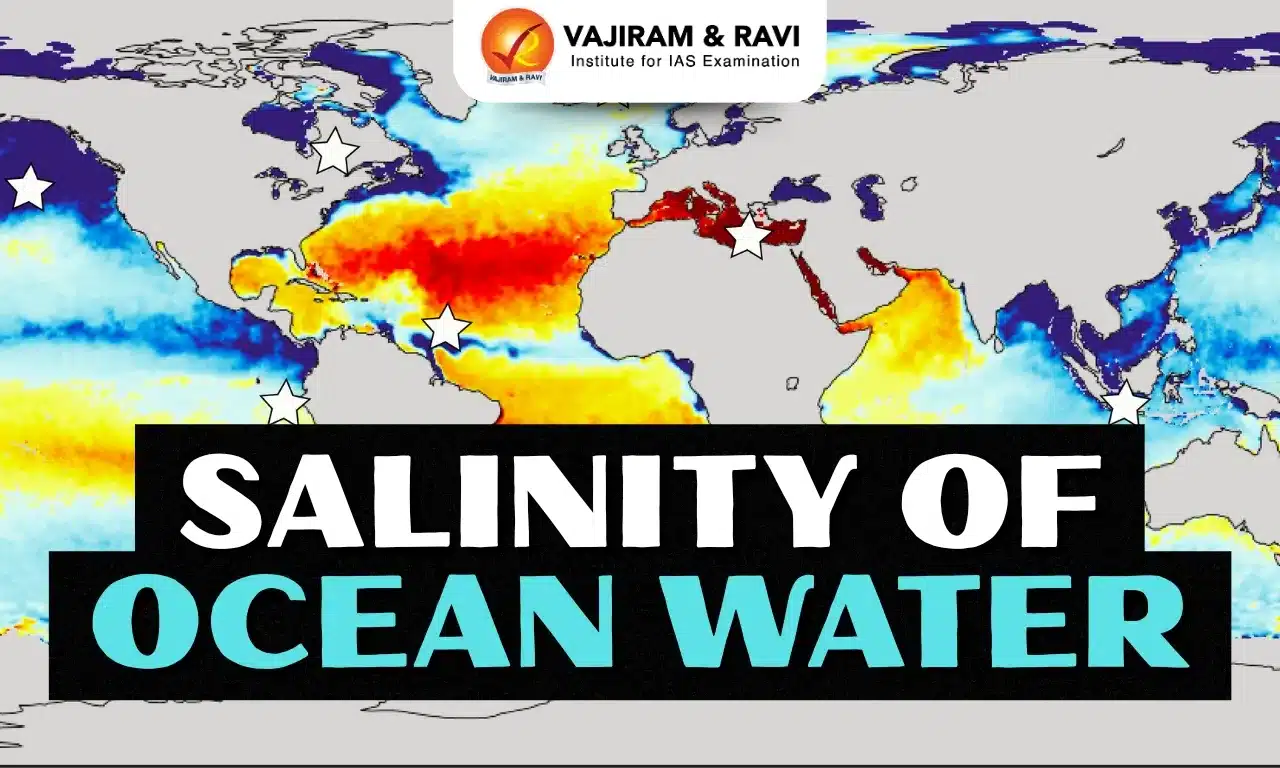
The Horizontal Distribution of Salinity of Ocean Water refers to variations across different regions of the oceans. The salinity of the open ocean ranges between 33 and 37 ppt.

  • Equatorial Regions: Salinity is moderate. While evaporation is high, it is often balanced by heavy rainfall.
  • Subtropical High-pressure Zones: These regions (around 20°–30° latitude) experience the highest salinity due to high evaporation and low precipitation.
  • Polar Regions and Mid-latitudes: Surface salinity is low due to freshwater input from melting ice and rivers.

Examples of Regional Variations:

  • Atlantic Ocean: Generally higher salinity (~36 ppt) compared to the Pacific.
  • Pacific Ocean: Slightly lower salinity (35–31 ppt) due to higher freshwater input.
  • Indian Ocean: Average salinity ~35 ppt; the Arabian Sea has higher salinity due to evaporation, whereas the Bay of Bengal has lower salinity due to river inflow.
  • Red Sea: Very high salinity because it is landlocked and evaporation is high.
  • Black Sea / Baltic Sea: Low salinity due to large freshwater inflow from rivers.
  • Mediterranean Sea: High salinity due to high evaporation and limited freshwater input.

Vertical Distribution of Salinity of Ocean Water

Salinity varies with ocean depth, forming distinct layers that influence water density and mixing. The surface water, halocline, and deep water show different salinity characteristics depending on latitude and regional factors.

  • Surface Layer: Salinity changes due to evaporation, precipitation, and freshwater inflow.
  • Halocline: A zone where salinity increases sharply with depth.
  • Deep Water: Salinity becomes relatively uniform due to minimal mixing.
  • High Latitudes: Salinity generally increases with depth.
  • Mid-Latitudes: Salinity increases up to a certain depth (~35 m), then slightly decreases.

  • Equatorial Regions: Surface salinity is lower due to high precipitation and cloudiness; moderate increase occurs at depth.

Salinity of Ocean Water Significance

Salinity plays a crucial role in regulating ocean circulation, marine ecosystems, and climate. It affects water density, ocean currents, and the physical and chemical properties of seawater.

  • Drives Ocean Circulation: Salinity, along with temperature, determines water density, powering thermohaline circulation.
  • Supports Marine Life: Many organisms are adapted to specific salinity ranges; sudden changes can impact biodiversity.
  • Influences Climate: Salinity affects ocean currents that distribute heat globally, impacting weather patterns.
  • Affects Water Properties: Determines freezing point, boiling point, and conductivity of seawater.
  • Important for Oceanography: Salinity measurements help track water movement, nutrient distribution, and climate change effects.

Salinity of Ocean Water FAQs

Q1: What is salinity?

Ans: Salinity is the total amount of dissolved salts in seawater, usually expressed in parts per thousand (ppt).

Q2: What is the average salinity of ocean water?

Ans: The average salinity of seawater is approximately 35 ppt.

Q3: Which regions have the highest salinity?

Ans: Subtropical regions like the Red Sea and Persian Gulf have the highest salinity due to high evaporation and low freshwater inflow.

Q4: Which regions have low salinity?

Ans: The Bay of Bengal, Baltic Sea, and Black Sea have low salinity because of large freshwater inflows from rivers.

Q5: What is a halocline?

Ans: A halocline is a vertical layer in the ocean where salinity increases sharply with depth.

Fall of the Berlin Wall 1989, Causes, Significance, Impact

Fall of the Berlin Wall

The Berlin Wall, built in 1961, divided East and West Germany for 28 years, symbolizing the Cold War divide. The Fall of the Berlin Wall in 1989 was triggered by mass protests, economic stagnation, and political reforms in the Soviet Union. The event marked the end of the Cold War, leading to German reunification and democratic reforms across Eastern Europe. It also had lasting political, economic, social, and global impacts, inspiring freedom movements worldwide.

Fall of the Berlin Wall 1989

The Berlin Wall, built in 1961, physically and ideologically divided East and West Germany for nearly three decades. The Fall of the Berlin Wall in 1989 was due to mass protests, political reforms in the Soviet Union, and economic difficulties in East Germany. Its collapse marked the end of the Cold War and paved the way for German reunification. The event also inspired democracy movements across Eastern Europe and became a global symbol of freedom.

Fall of the Berlin Wall Causes

Several factors contributed to the Fall of the Berlin Wall, making it inevitable by late 1989:

  1. Political Reforms in the Soviet Union: Under Mikhail Gorbachev, policies like Perestroika (economic restructuring) and Glasnost (political openness) encouraged reform and weakened Soviet control over Eastern Europe.
  2. Mass Pro-Democracy Protests: Cities like Leipzig and East Berlin saw continuous demonstrations demanding freedom of movement, political reforms, and better living conditions.
  3. Economic Stagnation in East Germany: East Germany’s planned economy faced shortages of goods, low productivity, and limited opportunities, creating widespread public dissatisfaction.
  4. Emigration Pressure: Many East Germans fled through neighboring countries such as Hungary and Czechoslovakia, highlighting the regime’s inability to control migration.
  5. Diplomatic Shifts: The Soviet Union adopted a non-interventionist stance, signaling that it would not use force to maintain East Germany’s communist regime, emboldening citizens and reformers.

Fall of the Berlin Wall Significance

The Fall of the Berlin Wall had profound historical, political, and social significance:

  • End of Cold War Division: It marked the decline of Soviet influence in Eastern Europe and the beginning of a new era in global politics.
  • German Reunification: Germany officially reunited on 3 October 1990, symbolizing national unity and European integration.
  • Democratic Movements: The event inspired pro-democracy movements across Eastern Europe, including in Czechoslovakia and Romania.
  • Symbol of Freedom: The Wall became a global icon of liberation from oppression, representing the triumph of liberty over authoritarianism.

Fall of the Berlin Wall Impact

  • The Fall of the Berlin Wall marked the end of the Cold War and the collapse of communist regimes in Eastern Europe.
  • It led to German reunification on 3 October 1990, restoring a single democratic Germany.
  • East Germany integrated into a market-oriented economy, leading to modernization, infrastructure development, and increased investment.
  • Citizens regained freedom of movement, expression, and travel, reuniting families and communities separated for decades.
  • The event inspired pro-democracy movements across Eastern Europe, including in Czechoslovakia and Romania.
  • It became a global symbol of liberty and human resilience, showing the power of popular movements over authoritarian control.
  • The fall reshaped geopolitics in Europe, contributing to the expansion of NATO and the European Union and redefining international relations.

Fall of the Berlin Wall 1989 FAQs

Q1: When did the Berlin Wall fall?

Ans: The Berlin Wall fell on 9 November 1989, when the East German government announced new travel regulations allowing citizens to cross freely into West Berlin.

Q2: Why was the Berlin Wall built?

Ans: The Wall was erected in 1961 by the East German government to prevent mass emigration to West Germany and to stop the loss of skilled workers, effectively separating East and West Berlin.

Q3: How did the Berlin Wall impact Germany?

Ans: Politically, it led to reunification; economically, East Germany transitioned to a market economy; socially, families and communities were reunited, restoring mobility and personal freedom.

Q4: How long did the Berlin Wall stand?

Ans: The Berlin Wall stood for 28 years, from 1961 to 1989, dividing East and West Berlin both physically and ideologically.

Q5: What lessons does the fall of the Berlin Wall teach?

Ans: It teaches that popular movements, political reform, and global diplomacy can overcome authoritarian regimes, emphasizing the power of freedom, democracy, and unity.

Special Intensive Revision (SIR) by Election Commission, Significance, Challenges

Special Intensive Revision (SIR)

The Special Intensive Revision (SIR) of electoral rolls is a strategic exercise by the Election Commission of India (ECI) aimed at thoroughly updating, verifying and correcting the voter lists across India. While routine roll updates happen annually, SIR is a far more comprehensive, time-bound house-to-house verification drive, often preceding major elections. Its goal is to ensure that the electoral roll is accurate, inclusive and free from errors such as duplicates, deceased voters, or ineligible entries.

Special Intensive Revision (SIR)

SIR refers to a large-scale, intensive revision of electoral rolls by the Election Commission of India under its constitutional and statutory powers. Usually triggered in anticipation of high-stakes elections or when the rolls have remained largely unchanged for years, the SIR involves steps such as fresh enumeration forms, house-to-house verification by Booth Level Officers (BLOs), document verification of voters, deletion of ineligible entries, and inclusion of those omitted. The SIR 2025 in Bihar, where more than 8 crore voters were to be re-verified, is the latest example. Key facts:

  • The legal basis lies in Article 324 of the Constitution (superintendence, direction and control of elections) and Section 21(3) of the Representation of the People Act, 1950, which allows the Commission to carry out “special revision of the electoral roll.”
  • The objective is to include every eligible citizen (18+ years) and to remove duplicates, deceased persons, ineligible entries and correct errors like wrong names or addresses.
  • It is not simply a summary revision but combines features of a full enumeration (intensive revision) and summary updates, hence the nomenclature “Special Intensive”.

Special Intensive Revision Significance

The SIR exercise offers multiple benefits for democracy and electoral integrity:

  • Reduces ghost voters and multiple registrations: By removing duplicate entries, the fairness of elections improves.
  • Reflects demographic changes: Large-scale migration, new elector entrants, and urbanization distort old rolls; SIR addresses this.
  • Improves inclusion of marginalised groups: Young voters, internal migrants, disabled voters get properly registered.
  • Strengthens transparency and trust: When voters feel the list is updated and inclusive, public confidence in the system increases.
  • Facilitates efficient polling logistics: Clean rolls help better planning: fewer spoiled ballots, accurate polling station allocation (as seen in Jaipur creation of new booths).

Special Intensive Revision Objectives

The major objectives of conducting a Special Intensive Revision are:

  • Accuracy: To update and correct the electoral roll so that duplicate names, deceased voters, and ineligible persons are removed.
  • Inclusion: To ensure that all eligible citizens, including first-time voters, migrants, and those omitted earlier, are included in the voter list.
  • Legitimacy: To strengthen public trust in elections by cleansing rolls and thereby reinforcing the “one person, one vote” principle.
  • Demographic adjustment: With increasing migration (rural→urban), changing residencies, newly eligible voters (18+), SIR helps the roll reflect ground realities.
  • Pre-election readiness: Especially before major Assembly or Lok Sabha elections, a clean roll reduces litigations and helps smooth polling operations.

Special Intensive Revision Legal Framework

The legal and constitutional basis for SIR is critical for understanding its authority and challenges:

  • Article 324 (1): Grants the ECI superintendence, direction and control of elections to Parliament and State Legislatures.
  • Article 326: Guarantees adult suffrage to all citizens aged 18+ for elections to Lok Sabha and State Assemblies.
  • Representation of the People Act, 1950, Section 16 and 19: Sets out criteria for voter eligibility (citizen, 18+, ordinary resident). Section 21(3) empowers the ECI to order special roll revision.
  • Registration of Electors Rules, 1960: Specifies procedures for enrolment, revision, etc. Some legal commentators note that the term “Special Intensive Revision” itself is not explicitly present in the Rulebook, raising questions of nomenclature and procedural clarity.

Special Intensive Revision Process

The SIR process involves several distinct phases and features which differentiate it from routine roll updates:

  1. Notification & Planning: The ECI issues notification specifying qualifying date (e.g., July 1, 2025 in Bihar).
  2. House-to-House Enumeration: BLOs visit every house in assigned polling booth area and distribute pre-filled “Enumeration Forms” to existing electors and new eligible persons.
  3. Submission of Documents: For voters enrolled after a certain past date (e.g., Jan 2003 in Bihar SIR) proof of date/place of birth and parentage is required. This is stricter than earlier frameworks.
  4. Verification & Deletions/ Additions: EROs scrutinise the submissions, identify deaths, duplicates, migration, ineligible voters and remove them; simultaneously new inclusions are processed. For example in Jaipur, 741 new polling booths were to be created under SIR to accommodate changes.
  5. Draft Publication & Objections: A draft roll is published, objections entertained, grievance redressal mechanism applied. The Supreme Court directed ECI to publish details of deleted names in the Bihar SIR litigation.
  6. Final Roll & Freeze: The final roll is constituted and frozen for ensuing election. Additions/deletions after that are restricted to special cases.

Special Intensive Revision Features

The key features of the Special Intensive Revision (SIR) has been listed below:

  • Focus on every household rather than selective updates.
  • Time-bound completion preceding major elections.
  • Special emphasis on migrants, youth, and excluded electorates.
  • Integration of digital tools, SMS alerts, online enumeration portals.
  • Stronger document verification for entries added post last intensive revision.

Bihar SIR 2025

The SIR exercise launched in Bihar in mid-2025 offers concrete insights and lessons. This case underlines both the scale and complexity of SIR. It also highlights the balancing act between thoroughness of revision and inclusivity of electoral participation.

  • The ECI notified SIR with the qualifying date 1 July 2025, marking all citizens turning 18 by 1 October 2025 as eligible for inclusion.
  • More than 8 crore voters were subject to enumeration; BLOs and 4 lakh volunteers were mobilised.
  • The process required voters registered after Jan 2003 to provide proof of their name, birth date and parent’s details. This was stricter than past editions of intensive revision.
  • The Supreme Court directed the ECI to publish details of deletions and make it widely known via websites and media.
  • As part of booth rationalisation, districts such as Jaipur created hundreds of new polling stations under SIR to avoid over-crowding.

Uttar Pradesh SIR 2026

The Election Commission of India (ECI) has published the draft electoral roll for Uttar Pradesh following the recently completed Special Intensive Revision (SIR) 2026, marking one of the most extensive voter list overhauls in the state ahead of upcoming elections. Out of the total 15.44 crore registered voters in Uttar Pradesh, the names of 12.55 crore voters have been retained in the draft electoral roll after the completion of the Special Intensive Revision (SIR).

The reasons for this Uttar Pradesh Special Intensive Revision (SIR) 2026 have been listed below.

  • Death of the voter as verified through field checks and official records
  • Permanent migration of voters to other states or constituencies
  • Duplicate or multiple entries detected in the electoral roll
  • Voters found to be untraceable or not residing at the given address during verification
  • Ineligible entries due to age-related discrepancies or incorrect details
  • Failure to submit required documents or verification forms during the SIR process

Special Intensive Revision Challenges

While SIR is conceptually sound, its implementation has raised serious concerns:

  • Risk of disenfranchisement: The demand for additional documents (especially for post-2003 entries) may exclude legitimate voters lacking birth or parentage proof. Critics argue that this risks excluding the poor, migrants and marginalised groups.
  • Timing before elections: Conducting a full-scale revision just before a major election may create confusion, logistic issues, and allegations of bias. For example, state parties asked for clarity that SIR is not a citizenship verification exercise.
  • Terminology & procedural clarity: The term “Special Intensive Revision” is not explicitly mentioned in existing rules, leading to questions about legal basis and consistency.
  • Resource and staffing constraints: House-to-house enumeration at scale demands huge human and technological resources, field officials have flagged shortages.
  • Digital divide and accessibility: Rural, remote, migrant or low-literate citizens may be disadvantaged in online enumeration or document submission.
  • Political objections and litigations: Some opposition parties allege SIR may be used to manipulate voter lists for favourable outcomes. For example, the Supreme Court is hearing a PIL (Association for Democratic Reforms vs ECI) challenging the 2025 Bihar SIR.

Way Forward:

Given the importance and complexity of SIR, a set of reforms can help strengthen its outcomes:

  • Define clear legal guidelines: While Section 21(3) of RP Act provides power, transparent guidelines on document requirements, timeline and inclusion criteria can reduce disputes and litigations.
  • Ensure minimal documentation barrier: Maintain presumption of validity for earlier registered voters; avoid blanket demands of new proof unless probable cause exists.
  • Use technology to streamline the process: Mobile apps for enumeration, GIS mapping of premises, online grievance portals for exclusion/delayed enrolment can enhance efficiency and reduce errors.
  • Inclusion focus: Special camps for migrants, disabled, first-time voters; mass awareness campaigns in multiple languages; mobile verification vehicles in remote areas.
  • Stakeholder consultation: Political parties, civil society organisations, tribal and migrant groups must be consulted to detect potential exclusion and build confidence in the exercise.
  • Real-time monitoring & public disclosure: Publishing lists of deleted/included names, reasons for deletion, leveraging transparency to reduce fear of disenfranchisement.
  • Post-roll audit & feedback mechanism: Conduct sample audits after the roll is finalised to verify inclusion of marginalised groups, and correct omissions before polling.
  • Synchronise with delimitation and polling station rationalisation: Changes in constituency boundaries, migration flows, and new polling station creation (as seen in Jaipur) must be integrated into SIR design.

SIR Election Commission

The Election Commission of India (ECI) plays a central role in planning and executing the Special Intensive Revision (SIR). It issues formal notifications specifying the schedule, qualifying date, and procedures for enumeration. The ECI also supervises the house-to-house verification, document scrutiny, and final roll publication. Through its constitutional authority under Article 324, the Commission ensures that every eligible citizen is included and every error or duplicate is eliminated from the voter roll.

Chief Electoral Officer

The Chief Electoral Officer (CEO) of each state or union territory is responsible for implementing SIR on the ground. Acting under the guidance of the Election Commission, the CEO coordinates with District Election Officers, Electoral Registration Officers, and Booth Level Officers. The CEO ensures timely data collection, field verification, training of staff, public awareness drives, and transparent grievance redressal during the revision. Their reports form the basis for ECI’s final electoral roll approval.

Special Intensive Revision UPSC

The Election Commission of India (ECI) has launched the next phase of the Special Intensive Revision (SIR) of electoral rolls across 12 states and Union Territories, including Tamil Nadu, Kerala, West Bengal, and Puducherry, ahead of upcoming Assembly elections. The process begins on November 4, 2025, covering over 51 crore voters, with the final roll to be released on February 7, 2026. Voters must prove eligibility using one of 13 documents, including the Aadhaar card, a provision introduced after procedural reforms during the Bihar SIR. States like Tamil Nadu and Kerala have sought clarifications, citing concerns over large-scale voter verification. Meanwhile, Assam has been excluded due to the ongoing NRC exercise, making this one of India’s largest voter verification drives since 2002.

Special Intensive Revision (SIR) FAQs

Q1: What is Special Intensive Revision (SIR)?

Ans: SIR is a large-scale voter roll verification process conducted by the Election Commission to update and correct the electoral list.

Q2: Why is Special Intensive Revision important before elections?

Ans: It ensures fair and accurate elections by removing duplicate or ineligible entries and adding newly eligible voters to the list.

Q3: Who conducts Special Intensive Revision in each state?

Ans: The Chief Electoral Officer and local election officers conduct SIR under the supervision of the Election Commission of India.

Q4: What documents are required for SIR verification?

Ans: Voters may need to provide proof of age, address, and parentage, especially for registrations after 2003.

Q5: What are the major challenges in Special Intensive Revision?

Ans: Challenges include risk of voter exclusion, documentation barriers, limited staff, and digital accessibility issues in remote areas.

Smog, Types, Causes, Composition, Impact, Govt Initiatives

Smog

Smog is a type of air pollution formed by a mixture of smoke, harmful gases, and fine particles, reducing air quality and visibility. It is mainly of two types: Classical (Sulphurous) smog and Photochemical (Oxidizing) smog. Smog is caused by vehicular emissions, industrial pollution, stubble burning, and construction dust, often worsened by winter weather conditions. Its composition includes PM2.5, PM10, SO₂, NOx, CO, ozone, and VOCs, leading to serious health, environmental, and economic impacts, which the government addresses through NCAP, GRAP, BS-VI norms, and public awareness initiatives.

What is Smog?

Smog is a type of air pollution formed by the combination of smoke, fog, and harmful chemical pollutants present in the atmosphere. The term “smog” is derived from the words smoke and fog, indicating its composite nature. It develops when pollutants released from vehicles, industries, and burning activities react with atmospheric components under specific weather conditions.

How Smog is Formed?

Smog is formed when pollutants released from vehicles, industries, and burning activities accumulate in the atmosphere and undergo chemical reactions under specific weather conditions. Factors like sunlight, high moisture, and temperature inversion prevent dispersion of pollutants and intensify smog formation.

  • Emission of primary pollutants such as PM, SO₂, NOx, CO, and VOCs from human activities.
  • Chemical reactions between NOx and VOCs in the presence of sunlight form secondary pollutants like ozone and PAN.
  • Unfavourable meteorological conditions (low wind speed, high humidity, temperature inversion) trap pollutants near the ground, creating dense smog.

Types of Smog

Smog can broadly be classified into two major types based on its composition and formation mechanism.

1. Classical Smog (London Smog / Sulphurous Smog)

  1. Formation Conditions: Develops in cold, humid winter conditions, often during temperature inversion, which traps pollutants close to the ground.
  2. Primary Source: Caused mainly by burning of coal and heavy fossil fuels in industries and for domestic heating.
  3. Major Pollutants: Dominated by sulfur dioxide (SO₂), smoke, soot, and sulfuric acid aerosols formed due to high moisture.
  4. Chemical Nature: Known as reducing smog because it contains reducing agents rather than oxidants.
  5. Appearance & Effects: Appears as a dense grey-black haze, drastically reducing visibility and creating choking conditions.
  6. Impacts: Causes severe respiratory illnesses, corrosion of buildings, and historically led to high mortality (e.g., Great Smog of London, 1952).

2. Photochemical Smog (Los Angeles Smog / Oxidizing Smog)

  1. Formation Conditions: Forms in warm, dry, and sunny climates, where strong sunlight triggers chemical reactions in the atmosphere.
  2. Primary Sources: Originates mainly from vehicular emissions, especially nitrogen oxides (NOx) and volatile organic compounds (VOCs).
  3. Major Pollutants: Contains ground-level ozone (O₃), peroxyacetyl nitrate (PAN), aldehydes, and other secondary oxidants.
  4. Chemical Nature: Known as oxidizing smog due to the dominance of strong oxidizing agents like ozone.
  5. Appearance & Timing: Appears as a yellowish-brown haze, with peak intensity during afternoon hours.
  6. Impacts: Causes eye and throat irritation, aggravates asthma, reduces lung function, and damages crops, rubber, and painted surfaces.

Causes of Smog

Smog is caused by a combination of human activities and unfavourable meteorological conditions that lead to the accumulation and chemical transformation of air pollutants near the Earth’s surface.

  • Vehicular Emissions: Exhaust from cars, buses, and trucks releases nitrogen oxides (NOx), carbon monoxide (CO), and hydrocarbons, which are primary contributors to photochemical smog in urban areas.
  • Industrial Activities: Thermal power plants, refineries, brick kilns, and manufacturing units emit sulfur dioxide (SO₂), particulate matter, and toxic gases that intensify smog formation.
  • Burning of Fossil Fuels: Extensive use of coal and petroleum for electricity generation, heating, and cooking releases smoke, soot, and sulfur compounds into the atmosphere.
  • Agricultural Stubble Burning: Seasonal burning of crop residue, especially in northern India, adds large quantities of particulate matter and gases, worsening smog episodes.
  • Construction and Road Dust: Large-scale urban construction, mining, and poorly maintained roads contribute fine dust particles (PM10 and PM2.5) that remain suspended in air.
  • Open Waste Burning: Burning of municipal solid waste and landfill fires release toxic fumes, dioxins, and particulate matter, aggravating air pollution.
  • Meteorological Conditions: Temperature inversion, low wind speed, high humidity, and calm atmospheric conditions prevent dispersion of pollutants.
  • Urbanization and Population Growth: Rapid growth of cities increases energy demand, vehicle density, and industrial output, all of which elevate smog levels.

Composition and Pollutants Involved in Smog

Smog is a complex mixture of primary pollutants released directly into the atmosphere and secondary pollutants formed through chemical reactions under specific climatic conditions.

  • Particulate Matter (PM2.5 and PM10): Fine particles originating from vehicle exhaust, coal burning, construction dust, and biomass burning; PM2.5 penetrates deep into the lungs and bloodstream, making it highly harmful.
  • Sulfur Dioxide (SO₂): Emitted mainly from coal-based power plants and industries; reacts with moisture in the air to form sulfuric acid aerosols, a key component of classical smog.
  • Nitrogen Oxides (NO and NO₂): Released from vehicle engines and industrial combustion; act as precursor pollutants in the formation of photochemical smog.
  • Carbon Monoxide (CO): Produced by incomplete combustion of fuels; reduces oxygen-carrying capacity of blood and worsens respiratory stress during smog episodes.
  • Ground-Level Ozone (O₃): A secondary pollutant formed by the reaction of NOx and volatile organic compounds in the presence of sunlight; a major irritant in photochemical smog.
  • Volatile Organic Compounds (VOCs): Emitted from fuels, solvents, paints, and industrial processes; play a crucial role in ozone and PAN formation.
  • Peroxyacetyl Nitrate (PAN): A toxic secondary pollutant responsible for eye irritation and damage to vegetation.
  • Smoke and Soot: Carbon-rich particles released from fossil fuel and biomass burning, contributing to reduced visibility and health hazards.
  • Trace Heavy Metals: Elements like lead, mercury, and arsenic present in industrial emissions, adding to the toxicity of smog.

Smog Impact

Smog has wide-ranging impacts on human health, environment, economy, and daily life. Prolonged exposure to smog significantly lowers quality of life and poses a major challenge to sustainable urban development.

Health Impacts

  • Causes respiratory problems such as asthma, bronchitis, chronic obstructive pulmonary disease (COPD), and lung infections.
  • Increases risk of cardiovascular diseases, including heart attacks and strokes.
  • Leads to eye irritation, headaches, fatigue, and throat discomfort.
  • Affects children, elderly, and pregnant women more severely due to weaker immunity.
  • Long-term exposure can result in reduced lung capacity and premature deaths.

Environmental Impacts

  • Reduces visibility, disrupting road, rail, and air transport.
  • Damages crops and vegetation, especially due to ground-level ozone affecting photosynthesis.
  • Leads to acid rain formation, harming soil, water bodies, and forests.
  • Alters local climate conditions by trapping heat near the surface.

Economic Impacts

  • Increases healthcare expenditure due to rising pollution-related illnesses.
  • Causes loss of productivity from sick days and reduced work efficiency.
  • Results in school closures, work restrictions, and emergency measures during severe smog episodes.
  • Negatively impacts tourism, aviation, and outdoor economic activities.

Social and Urban Impacts

  • Reduces overall quality of life in cities.
  • Forces vulnerable populations to remain indoors, affecting mental well-being.
  • Highlights environmental inequality, as poorer communities are more exposed to polluted environments.

Smog Monitoring and Measurement

Monitoring and measurement of smog are essential for assessing air quality, issuing health advisories, and implementing timely control measures. In India, smog is monitored through a combination of ground-based stations, forecasting systems, and satellite observations.

Air Quality Index (AQI): AQI is a standardized numerical scale used to communicate air pollution levels and associated health risks. It integrates concentrations of major pollutants like PM2.5, PM10, NO₂, SO₂, CO, O₃, Lead, and NH₃ into a single value.

Government Initiatives and Policy Measures

  • National Clean Air Programme (NCAP): Aims to reduce particulate matter (PM2.5 and PM10) concentrations by a targeted percentage through city-specific action plans.
  • Graded Response Action Plan (GRAP): Implements emergency measures in Delhi-NCR during severe smog episodes, such as restricting vehicles, banning construction, and closing schools.
  • Bharat Stage VI (BS-VI) Emission Norms: Introduced stringent vehicular emission standards to reduce NOx, SO₂, and particulate emissions from vehicles.
  • Commission for Air Quality Management (CAQM): Ensures coordinated and integrated management of air pollution across Delhi-NCR and adjoining states.
  • Promotion of Electric Vehicles: FAME scheme and state EV policies encourage cleaner transportation to reduce vehicular pollution.
  • National Electric Mobility Mission (NEMM): Supports transition to electric and hybrid vehicles to curb emissions.
  • Control of Industrial Emissions: Mandates installation of pollution control devices and adoption of cleaner fuels in industries and power plants.
  • Stubble Burning Management Measures: Provides incentives, machinery, and alternatives to farmers to discourage crop residue burning.
  • Expansion of Public Transport: Investments in metro rail, buses, and non-motorized transport to reduce private vehicle dependence.

Challenges in Smog Management

  • Inter-State Nature of Air Pollution: Smog often results from pollutants transported across state boundaries, making coordinated action and accountability difficult.
  • Weak Enforcement of Pollution Norms: Poor monitoring, limited manpower, and regulatory gaps reduce the effectiveness of existing environmental laws.
  • Rapid Urbanization and Vehicle Growth: Increasing population, urban sprawl, and rising vehicle ownership continuously add to emission levels.
  • Economic Dependence on Polluting Activities: Industries, construction sector, and farmers rely on practices that contribute to smog, limiting strict action.
  • Seasonal Agricultural Practices: Crop residue burning remains prevalent due to time constraints and lack of affordable alternatives for farmers.
  • Inadequate Public Awareness: Limited understanding of pollution sources and health impacts hinders behavioral change at the individual level.

Way Forward

  • Strengthen Regional & Inter-State Coordination: Studies show that 30–40% of Delhi-NCR’s winter smog originates from outside the city, highlighting the need for coordinated action among Punjab, Haryana, UP, Rajasthan, and Delhi through bodies like CAQM.
  • Accelerate Clean Energy Transition: India still derives over 70% of its electricity from coal, a major source of SO₂ and PM emissions. Rapid expansion of renewables (India’s target: 500 GW non-fossil capacity by 2030) can significantly reduce smog-forming pollutants.
  • Improve Urban Transport Systems: Vehicular emissions contribute nearly 40% of PM2.5 pollution in major cities. Expanding metro networks, electric buses, and EV adoption (target of 30% EV penetration by 2030) can substantially cut NOx and VOC emissions.
  • Address Agricultural Stubble Burning: Satellite data indicates that stubble burning accounts for 20–35% of peak PM2.5 levels in North India during October–November. Scaling alternatives like Happy Seeders, bio-decomposers, and biomass-based power plants is critical.
  • Strengthen Industrial Emission Controls: Thermal power plants contribute around 50% of SO₂ emissions in India. Enforcing flue gas desulfurization (FGD) units and cleaner fuels can reduce classical smog components.
  • Enhance Air Quality Monitoring & Forecasting: Currently, India has air quality monitoring stations in only ~800 locations, which is insufficient for a country of its size. Expanding real-time monitoring and early-warning systems like SAFAR can enable timely preventive measures.

Smog FAQs

Q1: What is smog?

Ans: Smog is a severe form of air pollution formed by the mixture of smoke, harmful gases, and particulate matter, often trapped near the ground under specific weather conditions.

Q2: What are the main types of smog?

Ans: There are two major types: Classical (Sulphurous) smog, common in cold and humid climates, and Photochemical (Oxidizing) smog, common in warm, sunny urban areas.

Q3: Why is smog more severe in winter in India?

Ans: Winter smog intensifies due to temperature inversion, low wind speed, high moisture, and increased biomass burning, which prevent dispersion of pollutants.

Q4: Which pollutants are mainly responsible for smog?

Ans: Key pollutants include PM2.5, PM10, sulfur dioxide (SO₂), nitrogen oxides (NOx), carbon monoxide (CO), ozone (O₃), and volatile organic compounds (VOCs).

Q5: How does smog affect human health?

Ans: Smog causes respiratory diseases, cardiovascular problems, eye irritation, reduced lung capacity, and increases the risk of premature death.

Important Seas of the World, Location, Bordering Countries, Importance

Important Seas of the World

Important Seas of the World are vital components of the Earth. They regulate climate, sustain biodiversity, support trade and influence global geopolitics. From monsoon driven Arabian Sea to dispute prone South China Sea and resource rich Caspian Sea, each sea plays a distinct role. Increasing human pressure, climate change and geopolitical competition make the sustainable management of these seas critical for future global stability and environmental balance.

Important Seas of the World

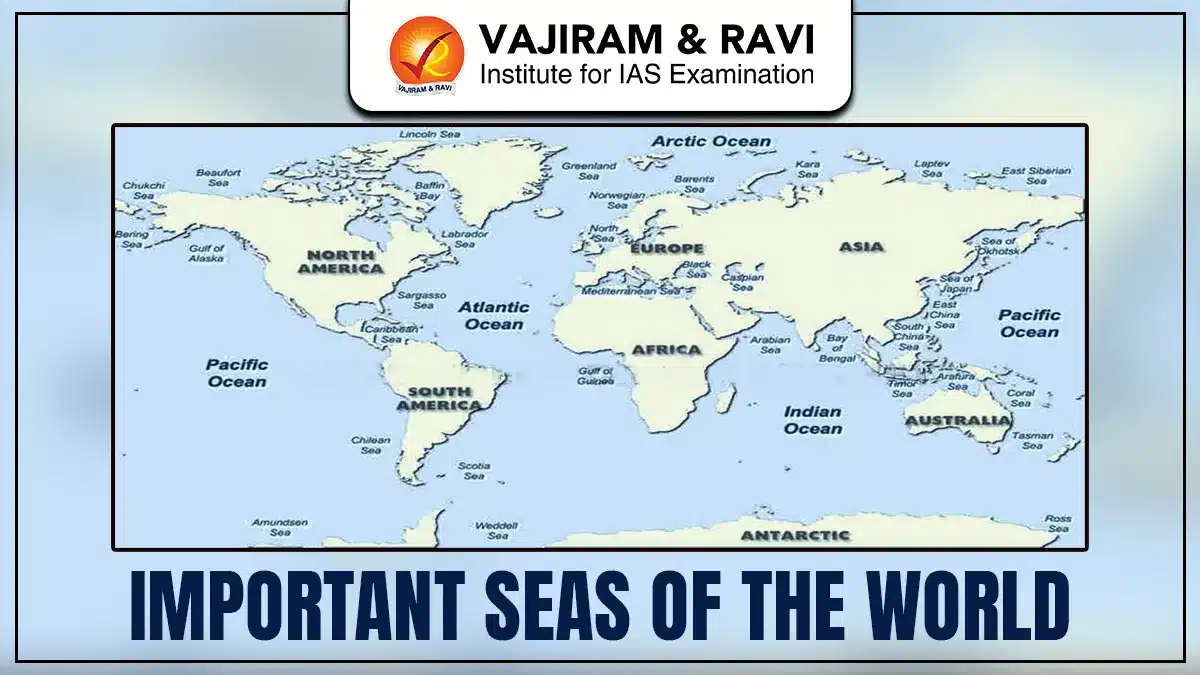
A Sea is a part of the Ocean that is partly surrounded by land and connected to an ocean. Seas are generally shallower than oceans and are located where land meets water. In oceanography, many seas are classified as marginal seas because they are partially enclosed by islands, peninsulas, or archipelagos. Seas have major geographical, political and economic importance due to shipping routes, fisheries, mineral resources and climate influence. The map of Important Seas of the World is provided below.

[my_image src="https://vajiramandravi.com/current-affairs/wp-content/uploads/2026/01/Important-Seas-of-the-World-Map.webp" size="full" align="none" width="auto" height="512px" alt="Important Seas of the World map" title="Important Seas of the World Map"]

Arabian Sea

The Arabian Sea lies in the northern Indian Ocean, bordered by India, Pakistan, Oman, Yemen and Somalia. It is strongly influenced by the monsoon winds.

  • Geographical Location: The Arabian Sea connects the Indian subcontinent with the Middle East and Africa, bordered by the Gulf of Oman and Gulf of Aden.
  • Monsoon Influence: Seasonal monsoon winds reverse ocean currents, influencing fisheries, navigation and nutrient upwelling.
  • Trade Importance: It historically supported spice trade routes linking India with Arabia and East Africa.
  • Strategic Chokepoints: Bab-el-Mandeb Strait connects it to the Red Sea and global shipping lanes.
  • Marine Productivity: High plankton productivity supports tuna, sardine and mackerel fisheries.

South China Sea

The South China Sea is a marginal sea of the western Pacific Ocean and one of the busiest maritime regions globally.

  • Strategic Location: It connects East Asia with the Indian Ocean via the Malacca Strait.
  • Territorial Disputes: Multiple countries contest islands such as Spratly, Paracel and Scarborough Shoal.
  • Trade Route: Nearly one-third of global maritime trade passes through this sea.
  • Natural Resources: Contains potential oil, gas reserves and rich fishing grounds.
  • Ecological Significance: Hosts coral reefs, mangroves and diverse marine biodiversity.

Bay of Bengal

The Bay of Bengal forms the northeastern part of the Indian Ocean. It is bordered by India, Bangladesh, Myanmar and Sri Lanka.

  • River Inflow: Major rivers like Ganga, Brahmaputra and Irrawaddy discharge freshwater and sediments.
  • Cyclone Formation: Warm waters make it one of the world’s most cyclone prone regions.
  • Monsoon System: Plays a key role in South Asian monsoon rainfall patterns.
  • Marine Ecosystem: Supports mangroves such as the Sundarbans and rich fisheries.
  • Economic Importance: Vital for ports, energy exploration and regional trade.

Mediterranean Sea

The Mediterranean Sea is almost completely enclosed by Europe, Asia and Africa, connected to the Atlantic by the Strait of Gibraltar.

  • Historical Role: Cradle of ancient civilizations including Roman, Greek and Egyptian societies.
  • Salinity Levels: High evaporation rates increase salinity compared to open oceans.
  • Climate Influence: Regulates Mediterranean climate with mild, wet winters and dry summers.
  • Trade Network: Remains a major maritime route between Europe, Asia and Africa.
  • Biodiversity Hotspot: Hosts endemic marine species and unique ecosystems.

Red Sea

The Red Sea is a seawater inlet of the Indian Ocean between Africa and the Arabian Peninsula.

  • Tectonic Origin: Formed due to the Red Sea Rift, part of the Great Rift Valley.
  • Salinity and Temperature: Among the warmest and saltiest seas globally.
  • Coral Reefs: Contains some of the world’s most resilient coral reef systems.
  • Shipping Route: Links the Indian Ocean to the Mediterranean via the Suez Canal.
  • Bordering Nations: Bordered by Egypt, Saudi Arabia, Sudan, Eritrea, Yemen and Djibouti.

Black Sea

The Black Sea is an inland sea between Eastern Europe and Western Asia.

  • Anoxic Layer: Deep waters lack oxygen, preventing decomposition of organic matter.
  • River Inputs: Receives freshwater from Danube, Dnieper and Don rivers.
  • Trade Route: Connects Europe to the Caucasus and Central Asia.
  • Strategic Importance: Linked to the Mediterranean through the Bosporus Strait.
  • Fisheries: Supports anchovy and other commercial fish species.

Caspian Sea

The Caspian Sea is the world’s largest enclosed inland body of water.

  • Geographical Status: Considered both a sea and a lake due to enclosure.
  • Energy Resources: Contains significant oil and natural gas reserves.
  • Bordering Countries: Russia, Iran, Kazakhstan, Azerbaijan and Turkmenistan.
  • Biodiversity: Home to sturgeon species producing most of the world’s caviar.
  • Legal Disputes: Ongoing debates over maritime boundaries and resource rights.

Caribbean Sea

The Caribbean Sea lies southeast of the Gulf of Mexico and is part of the Atlantic Ocean.

  • Island Chains: Bordered by Greater and Lesser Antilles.
  • Tourism Hub: Known for clear waters, coral reefs and tropical climate.
  • Marine Life: Rich in coral species and tropical fish.
  • Shipping Importance: Connects Panama Canal to Atlantic routes.
  • Hurricane Activity: Frequently affected by tropical cyclones.

North Sea

The North Sea lies between Great Britain and continental Europe.

  • Energy Production: Major offshore oil and gas extraction zone.
  • Wind Energy: Rapid expansion of offshore wind farms.
  • Fishing Grounds: Important for cod, herring and haddock.
  • Trade Routes: Connects major European ports.
  • Environmental Concerns: Pollution and overfishing pressures.

Sargasso Sea

The Sargasso Sea is the only sea defined by ocean currents rather than land boundaries.

  • Current Boundaries: Enclosed by North Atlantic Gyre currents.
  • No Coastline: Unique among seas with no land borders.
  • Sargassum Mats: Floating seaweed supports marine ecosystems.
  • Spawning Ground: Critical for eel reproduction.
  • Climate Role: Influences Atlantic weather systems.

Bering Sea

The Bering Sea lies between Alaska and Russia, connecting the Pacific and Arctic Oceans.

  • Marine Biodiversity: Supports large populations of fish, seals and seabirds.
  • Commercial Fisheries: Among the world’s most productive fishing zones.
  • Bering Strait: Narrow passage linking Arctic and Pacific waters.
  • Seasonal Ice: Extensive ice cover in winter.
  • Climate Sensitivity: Rapid warming affects ecosystems.

Baltic Sea

The Baltic Sea is a shallow inland sea in Northern Europe, surrounded by Scandinavia and mainland Europe.

  • Low Salinity: Limited connection with the Atlantic results in brackish water.
  • Glacial Origin: Formed due to post glacial processes.
  • Economic Role: Supports shipping, fisheries and offshore energy.
  • Environmental Stress: Suffers from eutrophication and pollution.
  • Bordering Nations: Sweden, Finland, Russia, Poland, Germany, Denmark.

Aegean Sea

The Aegean Sea lies between Greece and Turkey and is part of the Mediterranean region.

  • Island Dominated: Contains thousands of islands and archipelagos.
  • Historical Importance: Centre of ancient Greek civilization.
  • Tectonic Activity: Region prone to earthquakes and volcanism.
  • Maritime Disputes: Ongoing Greece - Turkey territorial issues.
  • Tourism Hub: Important for cruise routes and coastal tourism.

Adriatic Sea

The Adriatic Sea separates the Italian Peninsula from the Balkan Peninsula.

  • Elongated Shape: Narrow and long sea basin.
  • Shallow Northern Part: Suitable for fishing and ports.
  • Cultural History: Important during Roman and Venetian periods.
  • Marine Biodiversity: Rich coastal ecosystems.
  • Bordering Countries: Italy, Croatia, Montenegro, Albania.

Ionian Sea

The Ionian Sea is part of the Mediterranean Sea, south of the Adriatic Sea.

  • Deep Waters: Contains some of the deepest parts of the Mediterranean.
  • Seismic Zone: Lies in an active tectonic region.
  • Navigation Route: Connects Eastern and Western Mediterranean.
  • Fisheries: Supports tuna and sardine populations.
  • Coastal Nations: Italy, Greece, Albania.

Sea of Japan (East Sea)

The Sea of Japan lies between Japan, Korea and Russia.

  • Semi Enclosed Basin: Limited water exchange with the Pacific.
  • Cold and Warm Currents: Interaction influences climate and fisheries.
  • Economic Importance: Major fishing and shipping region.
  • Political Sensitivity: Naming dispute between Japan and Korea.
  • Seasonal Ice: Northern areas freeze in winter.

Sea of Okhotsk

The Sea of Okhotsk lies north of Japan in the northwest Pacific Ocean.

  • Cold Sea: Experiences heavy seasonal ice cover.
  • Rich Fisheries: Supports salmon and pollock fishing.
  • River Input: Receives freshwater from the Amur River.
  • Energy Potential: Offshore oil and gas reserves.
  • Strategic Location: Important for Russian maritime access.

East China Sea

The East China Sea lies between China, Japan and Taiwan.

  • Continental Shelf: Broad and shallow sea.
  • Fishing Grounds: One of Asia’s richest marine zones.
  • Territorial Disputes: Senkaku or Diaoyu Islands conflict.
  • Trade Route: Key passage for East Asian shipping.
  • River Sediments: Influenced by Yangtze River discharge.

Yellow Sea

The Yellow Sea is a marginal sea of the western Pacific Ocean.

  • Sediment Rich: Yellow color due to river borne loess sediments.
  • Shallow Basin: Average depth is low.
  • Tidal Flats: Extensive mudflats along coastlines.
  • Fishing Pressure: Overexploitation concerns.
  • Bordering Regions: China and the Korean Peninsula.

Sea of Azov

The Sea of Azov is connected to the Black Sea by the Kerch Strait.

  • Very Shallow: One of the shallowest seas in the world.
  • High Freshwater Input: Fed by Don and Kuban rivers.
  • Low Salinity: Due to river inflow.
  • Strategic Importance: Regional shipping and fisheries.
  • Bordering Countries: Russia and Ukraine.

Dead Sea

The Dead Sea is a salt lake bordered by Israel, Jordan and the West Bank.

  • Extreme Salinity: Nearly ten times saltier than oceans.
  • Lowest Elevation: Earth’s lowest land surface.
  • No Outlet: Water leaves only through evaporation.
  • Mineral Resources: Rich in potash and bromine.
  • Environmental Decline: Rapid shrinking due to water diversion.

Timor Sea

The Timor Sea lies between Australia and Southeast Asia.

  • Energy Resources: Major offshore oil and gas fields.
  • Continental Shelf: Part of Australia’s northern margin.
  • Maritime Boundaries: Subject to Australia - Timor-Leste agreements.
  • Marine Biodiversity: Coral reefs and deep sea habitats.
  • Trade Link: Connects Indian and Pacific Oceans.

Important Seas of the world FAQs

Q1: Why are Seas important for global trade?

Ans: Seas connect continents through shipping routes, supporting international trade and energy transport.

Q2: How are Seas different from Oceans?

Ans: Seas are smaller, shallower and often partially enclosed by land compared to oceans.

Q3: Which Sea has no coastline?

Ans: The Sargasso Sea is the only sea without a land boundary.

Q4: Which Sea is the saltiest?

Ans: The Dead Sea is one of the saltiest water bodies on Earth.

Q5: Which Sea is most affected by geopolitical disputes?

Ans: The South China Sea faces multiple territorial and maritime disputes.

UPSC Daily Quiz 7 January 2026

UPSC Daily Quiz

[WpProQuiz 61]

UPSC Daily Quiz FAQs

Q1: What is the Daily UPSC Quiz?

Ans: The Daily UPSC Quiz is a set of practice questions based on current affairs, static subjects, and PYQs that help aspirants enhance retention and test conceptual clarity regularly.

Q2: How is the Daily Quiz useful for UPSC preparation?

Ans: Daily quizzes support learning, help in revision, improve time management, and boost accuracy for both UPSC Prelims and Mains through consistent practice.

Q3: Are the quiz questions based on the UPSC syllabus?

Ans: Yes, all questions are aligned with the UPSC Syllabus 2025, covering key areas like Polity, Economy, Environment, History, Geography, and Current Affairs.

Q4: Are solutions and explanations provided with the quiz?

Ans: Yes, each quiz includes detailed explanations and source references to enhance conceptual understanding and enable self-assessment.

Q5: Is the Daily UPSC Quiz suitable for both Prelims and Mains?

Ans: Primarily focused on Prelims (MCQ format), but it also indirectly helps in Mains by strengthening subject knowledge and factual clarity.

Apparel Export Promotion Council (AEPC)

Apparel Export Promotion Council (AEPC)

Apparel Export Promotion Council (AEPC) Latest News

A Sakthivel has been recently appointed as the chairman of the Apparel Export Promotion Council (AEPC), marking his fifth term at the helm of the organization.

About Apparel Export Promotion Council (AEPC)

  • It was established in 1978 under the provisions of the Foreign Trade (Development and Regulation) Act of 1992. 
  • It is the official body of apparel exporters in India.
  • It operates under the aegis of the Ministry of Textiles, Government of India. 
  • Its primary objective is to promote and support the export of Indian garments and textiles to the global market. 
  • AEPC is the most significant body representing apparel exporters in India and works towards improving the competitiveness of the Indian apparel sector.
  • It acts as a bridge between the government, Indian apparel exporters, and international customers.
  • It comprises various stakeholders, including:
    • Central Government representatives
    • Exporters
    • Industry Associations
    • Government Bodies
  • AEPC's decision-making process involves inputs from these sectors to make informed decisions for the development of the industry. 
  • Its governing body is led by an elected chairman, supported by regional and sectoral committees, along with professionals and experts in the field of textile and apparel export.
  • Functions:
    • Promoting Apparel Exports: Facilitates the export of Indian-made garments worldwide.
    • Market Research & Development: Conducts research to understand global trends, market demands, and opportunities.
    • Organizing Trade Fairs: AEPC organizes national and international trade fairs to showcase Indian apparel.
    • Policy Advocacy: Acts as a liaison between the government and exporters to address issues in the export sector.
    • Skill Development: Provides training programs and workshops for improving the skills of the workforce in the apparel sector.
    • Certification and Standards: Works to ensure that apparel exports meet international quality standards and certifications.
    • Data Collection: Gathers and disseminates data on market trends, industry reports, and export statistics.
  • It also organizes the India International Garment Fair twice a year that allows more than 300 exhibitors to display their products and unique apparel.
  • It has its headquarters in Gurgaon, Haryana.

Source: DEVD

Apparel Export Promotion Council (AEPC) FAQs

Q1: When was the Apparel Export Promotion Council (AEPC) established?

Ans: It was established in 1978.

Q2: Under which Act was Apparel Export Promotion Council (AEPC) set up?

Ans: Under the Foreign Trade (Development and Regulation) Act, 1992.

Q3: Under which ministry does Apparel Export Promotion Council (AEPC) operate?

Ans: It operates under the Ministry of Textiles, Government of India.

Q4: What is the primary objective of Apparel Export Promotion Council (AEPC)?

Ans: To promote and support the export of Indian garments and textiles.

Q5: Where is Apparel Export Promotion Council (AEPC) headquartered?

Ans: In Gurgaon, Haryana.

Melghat Tiger Reserve

Melghat Tiger Reserve

Melghat Tiger Reserve Latest News

Recently, the Bombay Natural History Society (BNHS) has released 15 critically endangered Indian vultures at the Melghat Tiger Reserve in Maharashtra.

About Melghat Tiger Reserve

  • Location: It is situated  in the state of Maharashtra.
  • It is located on the southern offshoot of the Satpura Hill Range in Central India, called Gavilgarh Hill. 
  • It was the first tiger reserve in Maharashtra.
  • The name ‘Melghat’ means the confluence of various ‘ghats’ or valleys, as is typical from the landscape of this tiger reserve.
  • Vegetation: The forest is tropical dry deciduous in nature, dominated by teak.
  • Rivers: The reserve is a catchment area for five major rivers: the Khandu, Khapra, Sipna, Gadga, and Dolar, all of which are tributaries of the river Tapti.
  • Boundaries: The Tapti River and the Gawilgadh ridge of the Satpura Range form the boundaries of the reserve.
  • Tribes: The Korkus are the largest tribal community in Melghat. Other communities include the Gawli community, the Gond tribe,
  • Flora: Some of the common species are teak, Lagerstroemia Parviflora, Terminalia Tomentosa, Ougeinia Oojeinensis, Emblica Officinalis, Bamboo, etc.
  • Fauna: Sloth Bear, Indian Gaur, Sambar deer, Leopard, Nilgais, dhole, hyena, jungle cat, langur, etc. 
    • It is considered a stronghold of the critically endangered forest owlet.

Source: TP

Melghat Tiger Reserve FAQs

Q1: Where is Melghat Tiger Reserve located?

Ans: Maharashtra

Q2: What is the primary vegetation type in Melghat Tiger Reserve?

Ans: Tropical dry deciduous forest

W Ursae Majoris Star

W Ursae Majoris Star

W Ursae Majoris Star Latest News

Astronomers from Aryabhatta Research Institute of Observational Sciences used data from Devasthal Fast Optical Telescope and NASA’s TESS space telescope to create detailed light curves of the W Ursae Majoris (W UMa) star.

About W Ursae Majoris Star

  • It is also known as a low mass contact binary, is a type of eclipsing binary variable star. 
  • They share a single outer atmosphere and they orbit around each other.
  • W UMa stars are easily recognized by their light curves with near equal minima and continuous light variation.
  • Their variability ranges from a few tenths to slightly over a magnitude. The periods are typically short and range between 0.25 days to around 1.0 days.
  • Origin: The traditional theory explaining the origin of contact binaries is that W UMa systems form from detached binaries of comparable periods through orbital decay by angular momentum loss.
  • The idea of the contact binary seems to have been first introduced by Kuiper (1941).
  • Significance W Ursae Majoris Star Study: They assist in precise determinations of fundamental stellar parameters such as masses, radii, and temperatures, crucial for testing theories about how stars evolve over time.

Key Findings about W Ursae Majoris Star

  • It was found that stars share their outer layers, their orbits shift slightly over time, as if tugging and pulling on one another
  • Some stars appear lopsided—brighter on one side than the other.
  • It is found that there is an uneven brightness point at dark magnetic star spots similar to star spots.
  • These spots rotate in and out of view, creating bumps in the light curves.  
  • This also suggests the stars have strong magnetic activity.
  • Scientists also found specific light signals (called H-alpha and H-beta) that clearly show activity in the star’s outer layer, which is linked to magnetic events like star spots and stellar flares.

Source: PIB

W Ursae Majoris Star FAQs

Q1: What type of star system is W Ursae Majoris?

Ans: Eclipsing binary star

Q2: In which constellation is W Ursae Majoris located?

Ans: Ursa Major

SHINE Scheme

SHINE Scheme

SHINE Scheme Latest News

Recently, at the 79th Bureau of Indian Standards Foundation Day union ministers launched the SHINE scheme in New Delhi. 

About SHINE Scheme

  • The Standards Help Inform & Nurture Empowered Women (SHINE) is a new scheme of the Bureau of Indian Standards.
  • It places women at the center of India’s quality journey.
  • Through structured training, grassroots partnerships with NGOs and SHGs, and practical, locally delivered programmes,
  • It empowers women with knowledge that protects families and strengthens livelihoods.
  • Through this BIS spreads awareness about standards, safety, and quality within households, self-help groups, and communities.

Key Facts about Bureau of Indian Standards

  • It is the National Standard Body of India established under the BIS Act 2016.
  • Objective: It was established for the harmonious development of the activities of standardization, marking, and quality certification of goods and for matters connected therewith or incidental thereto.
  • It is the successor of the Indian Standards Institution (ISI), which was created in 1947 to ensure quality control and competitive efficiency in the rapid industrialization era.
  • BIS represents India in International Organization for Standardization (ISO) and International Electrotechnical Commission (IEC).
  • Nodal Ministry: It is functioning under the administrative control of the Ministry of Consumer Affairs, Food and Public Distribution.
  • Headquarter: It is headquartered in New Delhi and maintains regional and branch offices throughout the country.

Source: PIB

SHINE Scheme FAQs

Q1: What is the primary objective of the SHINE Scheme?

Ans: It is aimed at empowering women through education and awareness about quality standards.

Q2: What is the symbol used by BIS for certification?

Ans: ISI Mark

Biomaterials

Biomaterials

Biomaterials Latest News

As countries look to shift to cleaner processes to manufacture consumer products, be it plastics or textiles, biomaterials will become the new frontier of materials engineering.

About Biomaterials

  • They are materials of natural, synthetic, or hybrid origin designed to interact safely and compatibly with different systems such as the human body and the environment. 
  • They are derived wholly or partly from biological sources or engineered using biological processes that are designed to replace or interact with conventional materials. 
  • They are increasingly used across sectors such as packaging, textiles, construction, and healthcare. 
  • Biomaterials are central to modern biomedicine and bioengineering, and their design is informed by application-specific demands and trade-offs.
  • The modern field of biomaterials combines physics, chemistry, medicine, and biology, as well as materials science and tissue engineering. 
  • Metals, plastics, ceramics, glass, cells, and living tissue are currently used to create biomaterials.
  • Biomaterials can be broadly categorised into three types: 
    • Drop-in biomaterials, which are chemically identical to petroleum-based materials and can be used in existing manufacturing systems (such as bio-PET); 
    • Drop-out biomaterials, which are chemically different and require new processing or end-of-life systems (such as polylactic acid or PLA); 
    • Novel biomaterials, which offer new properties not found in conventional materials, such as self-healing materials, bioactive implants, and advanced composites.

Source: TH

Biomaterials FAQs

Q1: What are biomaterials?

Ans: Biomaterials are materials of natural, synthetic, or hybrid origin designed to interact safely and compatibly with the human body or the environment.

Q2: Why are biomaterials used in many sectors?

Ans: Because they offer safe, sustainable alternatives to conventional materials.

Q3: What materials are used to create biomaterials?

Ans: Metals, plastics, ceramics, glass, cells, and living tissue are currently used to create biomaterials.

Q4: What are novel biomaterials?

Ans: Biomaterials which offer new properties not found in conventional materials.

Katydids

Katydids

Katydids Latest News

Researchers recently identified three previously unknown species of meadow katydids, or long-horned grasshoppers, named Conocephalus usmanii, Conocephalus nagariensis, and Conocephalus ganderbali, in Jammu and Kashmir.

About Katydids

  • Found on every continent except Antarctica, Katydids are a family of primarily nocturnal insects. 
  • There are more than 8,000 known species of Katydid, all of which belong to the family Tettigoniidae. 
  • Grasshoppers, locusts, crickets, and katydids belong to a group of insects known as orthopterans (meaning 'straight wings').
  • They closely resemble grasshoppers and used to go by the name long-horned grasshoppers. 
  • However, in reality, they are more closely related to crickets, hence their other common name, the bush cricket.

Katydids Features

  • Katydids vary greatly in size depending on the species. That said, most range between 0.2 inches to 5.1 inches long.
  • The body generally resembles that of grasshoppers, but katydids have long, threadlike antennae instead of the grasshoppers’ short antennae. 
  • While most Katydids appear bright green or mimic the appearance of leaves, they come in a variety of colors, ranging from pink to yellow. 
  • Like grasshoppers and crickets, katydids make noise by rubbing body parts together — in their case, by moving a leg against a wing and producing a sound that resembles their name. 
  • They are famous for their ability to blend into their surroundings. 
  • Katydids have feet with four segments. 
  • The lifespan of a katydid is about a year.
  • They are mostly herbivores, feeding on leaves, flowers, and fruit, but some eat small insects.

Key Facts about Meadow Katydids

  • The meadow katydids are a group of about 20 species of slender, small-to medium-sized katydids found in grassy meadows near lakes and ponds.
  • Genus: Orchelimum
  • When disturbed, they enter the water, cling to underwater plants, and can remain submerged for several minutes. 
  • Abundant and widespread, meadow katydids have large orange eyes and a body that is brown on top and green on the bottom. 
  • They produce a song, consisting of clicks and buzzes, during the day or at night.

Conocephalus Nagariensis

  • Found in the Budgam district, it is distinguished by its spindle-shaped appendages (cerci) and a stridulatory file containing exactly 34 teeth. 
  • It is dedicated to Dr. Rajendra Nagar, a researcher credited with discovering several other species of katydids across the country, and bears his name.

Conocephalus Ganderbali

  • Discovered in the Ganderbal region, it is notably small and slender.
  • It has a musical file of only 28 teeth and a unique V-shaped incision on its underbelly. 
  • Its name is derived from the Ganderbal district in Kashmir, the specific locality where the researchers first collected the specimens.

Conocephalus Usmanii

  • It features a flat, elongated plate on its abdomen and a musical file with 36 teeth. 
  • It was named in honour of Professor Mohd Kamil Usmani, a scholar who has made significant contributions to the study of Orthoptera (the group of insects including grasshoppers and katydids) in India.

Source: RM

Katydids FAQs

Q1: What are Katydids?

Ans: They are a family of primarily nocturnal insects.

Q2: How many species of katydids are known?

Ans: There are over 8,000 known species.

Q3: To which insect group do grasshoppers, locusts, crickets, and katydids belong?

Ans: They all belong to Orthoptera.

Q4: What is another common name for katydids?

Ans: They are also called bush crickets.

Q5: What colors can katydids appear in?

Ans: Mostly green, but also pink, yellow, and other colors.

Sagar Island

Sagar Island

Sagar Island Latest News

The West Bengal Chief Minister recently laid the foundation stone of a 5-km-long bridge over the river Muriganga to connect Sagar Island with the mainland.

About Sagar Island

  • Sagar Island, also known as Gangasagar or Sagardwip, is located in the Ganges delta, in West Bengal.
  • It is about 100 km south of Kolkata. 
  • It is part of the South 24 Parganas district. It consists of 43 villages. 
  • It lies at the mouth of the Hooghly River (a major distributary of the Ganges), an arm of which separates it from the mainland to the east. 
  • Although Sagar Island is a part of Sundarbans, it does not have any tiger habitation or mangrove forests or small river tributaries as is characteristic of the overall Sundarban delta. 
  • Situated at a point where the Ganges River system meets the Bay of Bengal, the island is held to be particularly sacred and is a noted Hindu pilgrimage center.
    • Thousands of pilgrims make their way to Sagardwip every year in mid-January to take a holy dip in the river during the Ganga Sagar Fair. 
    • The Ganga Sagar Fair is the second most attended fair in the world, after the popular Kumbh Mela.
    • The Kapil Muni temple on the island is a popular pilgrim centre.

Source: TH

Sagar Island FAQs

Q1: What is another name for Sagar Island?

Ans: It is also known as Gangasagar or Sagardwip.

Q2: Where is Sagar Island located?

Ans: It is located in the Ganges delta in West Bengal.

Q3: Is Sagar Island part of the Sundarbans?

Ans: Yes, it is part of the Sundarbans.

Q4: When do pilgrims visit Sagar Island for a holy dip?

Ans: Every mid-January during the Ganga Sagar Fair.

Q5: What is the famous temple located on Sagar Island?

Ans: The Kapil Muni Temple.

Wangchu Hydroelectric Project

Wangchhu Hydroelectric Project

Wangchhu Hydroelectric Project Latest News

The Adani Group recently commenced the 570 MW Wangchhu Hydro Electricity Project in Bhutan.

About Wangchhu Hydro Electricity Project

  • It is a 570 MW run-of-river hydropower project being built on the Wangchu River/basin in Chukha District, Bhutan. 
    • The Wangchu River (also called Raidāk River in India) is a significant tributary of the Brahmaputra River.
  • It is being developed by Wangchhu Hydroelectric Power Limited (WHPL), a joint venture company formed by India’s Adani Power Limited (APL) and Bhutan’s state-owned Druk Green Power Corporation Ltd (DGPC) following a shareholders’ agreement signed in September 2025.
    • DGPC holds a controlling 51% stake in the venture, with Adani Power owning the remaining 49%. 
  • This project will involve an investment of ₹6,000 crore.  It will be implemented on a build, own, operate, and transfer (BOOT) basis.
  • The facility will function as a peaking run-of-river plant, helping Bhutan manage seasonal fluctuations in hydropower generation.
  • The facility will feature four turbines, each rated at 142.5 MW, producing roughly 2,478.93 GWh annually.
  • The Wangchu Project will meet Bhutan’s electricity demand during winters. Power generated in the summer season will be exported to India.

Source: TOI

Wangchhu Hydro Electricity Project FAQs

Q1: What is the capacity of the Wangchhu Hydro Electricity Project?

Ans: It is a 570 MW run-of-river project.

Q2: Where is the Wangchhu project located?

Ans: In the Wangchu River basin, Chukha District, Bhutan.

Q3: The Wangchu River is a tributary of which major river?

Ans: It is a tributary of the Brahmaputra River.

Daily Editorial Analysis 7 January 2026

Daily Editorial Analysis

The Right to Disconnect in an ‘Always-On’ Economy

Context

  • The rapid expansion of digital technology has fundamentally reshaped modern work culture.
  • Tools designed to improve efficiency, such as smartphones, laptops, and instant communication platforms, have increasingly blurred the boundary between professional responsibilities and personal life.
  • In India, this erosion has fostered a culture of constant availability, where employees are expected to remain connected long after official working hours.
  • Far from symbolising dedication, this practice has contributed to widespread burnout, declining mental health, and reduced productivity.
  • In this context, recognising the right to disconnect as a legal protection is no longer optional but essential for ensuring the well-being and sustainability of India’s workforce.

The Culture of Overwork in India and Its Consequences

  • The Culture of Overwork

    • India’s workforce is operating under extreme pressure.
    • Data from the International Labour Organization reveal that more than half of Indian workers regularly exceed 49 working hours per week, placing the country among the highest globally for excessive work hours.
    • This relentless pace has resulted in alarming levels of burnout, with a vast majority of employees reporting physical and emotional exhaustion.
    • The expectation of constant digital availability has extended work into evenings, weekends, and holidays, transforming rest periods into unpaid labour and eroding the fundamental concept of work-life balance.
  • Health and Productivity Consequences

    • The consequences of overwork extend beyond individual discomfort and directly affect public health and economic efficiency.
    • Prolonged stress and insufficient rest significantly contribute to lifestyle diseases such as hypertension, diabetes, anxiety, and depression.
    • Work-related stress now forms a notable share of India’s mental health burden, placing additional strain on healthcare systems.
    • From an organisational perspective, fatigued employees are less creative, more prone to errors, and less engaged.
    • The tragic death of a young employee due to overwork in 2024 serves as a stark reminder of the human cost of unchecked workplace pressure and highlights the urgent need for systemic reform.

Gaps in the Existing Legal Framework

  • Despite recent labour reforms, India’s current legal framework remains inadequate in addressing the realities of the digital economy.
  • The Occupational Safety, Health, and Working Conditions Code, 2020 sets limits on working hours, but its protections largely apply to traditional workers and often exclude contractual, freelance, and gig employees.
  • This omission leaves a significant segment of the workforce vulnerable to exploitation, especially those who fear professional repercussions for ignoring after-hours communication.
  • The imbalance of power between employers and employees further intensifies the need for explicit legal safeguards.

The Case for the Right to Disconnect

  • The right to disconnect aims to restore dignity and autonomy to workers by clearly defining boundaries between work and personal life.
  • It seeks to ensure that employees cannot be penalised, disciplined, or discriminated against for disengaging from work-related communication beyond their designated working hours.
  • Additionally, it provides mechanisms for grievance redressal when such rights are violated.
  • By amending existing labour laws to include this protection, the reform would recognise mental well-being as a core component of occupational safety and extend coverage to vulnerable segments of the workforce.

Global Precedents and Lessons

  • India is not alone in facing the challenges of an always-on work culture.
  • Several countries, including France, Portugal, Italy, Ireland, and Australia, have already enacted right-to-disconnect laws.
  • These frameworks require organisations to establish clear protocols for after-hours communication, reinforcing the principle that respecting personal time is vital for sustainable productivity.
  • International experience demonstrates that such legislation does not hinder economic growth but instead supports long-term efficiency and workforce resilience.

The Path Forward Beyond Legislation: Cultural and Organisational Change

  • While legal reform is necessary, it is insufficient on its own. The success of the right to disconnect depends on a broader cultural shift within organisations.
  • Awareness programmes, sensitisation workshops, and leadership accountability are crucial to dismantling toxic norms that equate long hours with commitment.
  • Employers must prioritise output and innovation over presenteeism and integrate mental health support services into workplace policies.
  • Only through this holistic approach can the law achieve its intended impact.

Conclusion

  • The right to disconnect represents a forward-looking investment in India’s human capital.
  • By enabling employees to rest, recover, and maintain their physical and mental health, the reform enhances not only individual well-being but also national productivity and economic sustainability.
  • As India seeks to position itself as a global power, it must recognise that progress cannot be built on exhaustion.
  • Embracing the right to disconnect affirms that a strong economy depends not on constant speed, but on the strength, dignity, and resilience of its people.

The Right to Disconnect in an ‘Always-On’ Economy FAQs

Q1. What problem does the “right to disconnect” seek to address?
Ans. The right to disconnect addresses the expectation of constant digital availability that blurs work-life boundaries and causes burnout.

Q2. Why is overwork considered unsustainable in India?
Ans. Overwork is unsustainable because a large proportion of Indian employees work excessive hours, leading to burnout and health issues.

Q3. How does constant availability affect employee health?
Ans. Constant availability increases stress and contributes to physical and mental health problems such as anxiety and depression.

Q4. What gap exists in India’s current labour laws?
Ans. India’s labour laws often fail to protect contractual and gig workers from excessive working hours.

Q5. Why is legislation alone not sufficient to ensure work-life balance?
Ans. Legislation alone is insufficient because workplace culture and organisational practices must also change to respect employee downtime.

Source: The Hindu


America’s Venezuelan Actions are Most Unlawful

Context

  • The alleged attack by the United States on Venezuela and the capture of President Nicolás Maduro represents a grave violation of international law.
  • Even acknowledging the authoritarian nature of the Maduro administration, internal governance failures do not justify external military intervention.
  • The incident raises serious legal concerns relating to the use of force, state sovereignty, and the protection accorded to heads of state.
  • More broadly, it highlights the erosion of the international rule of law in a period marked by declining respect for legal constraints on power.

The Prohibition on the Use of Force

  • The cornerstone of the modern international legal order is the prohibition on the use of force enshrined in Article 2(4) of the United Nations Charter.
  • This provision forbids states from using force against the territorial integrity or political independence of another state.
  • The Charter recognises only two exceptions: self-defence in response to an armed attack, and force authorised by the UN Security Council. Neither condition was satisfied in the Venezuelan case.
  • Although this framework is clear, powerful states have repeatedly sought to dilute its force.
  • Expansive interpretations of self-defence, including anticipatory and pre-emptive action, have been advanced, particularly in counterterrorism contexts.
  • Similarly, claims of humanitarian intervention have been used to justify military action without Security Council approval.
  • Yet even these controversial doctrines fail to accommodate unilateral military action against Venezuela, where no armed attack or imminent threat was established.

The Illegality of Law-Enforcement Justifications

  • The U.S. operation was reportedly framed as a law-enforcement measure aimed at apprehending alleged criminals, including the Venezuelan President.
  • This rationale stretches international law beyond recognition. International law maintains a firm distinction between domestic criminal jurisdiction and the cross-border use of armed force.
  • Military incursions into another state’s territory cannot be justified by reference to criminal prosecution objectives.
  • Accepting such a justification would set a dangerous precedent, allowing states to characterise military interventions as policing operations to evade legal constraints.
  • This approach undermines the principle of sovereign equality and risks normalising unilateral coercion.

Head-of-State Immunity and the Status of President Maduro

  • A central legal issue concerns the treatment of President Maduro following his capture.
  • Under international law, sitting heads of state enjoy immunity ratione personae of sitting heads of state from the criminal jurisdiction of foreign courts.
  • This immunity is absolute during their term of office and applies regardless of the nature of the alleged offences.
  • As a result, domestic courts of another state lack jurisdiction to prosecute a serving head of state.
  • Arguments seeking to deny this immunity based on the alleged illegitimacy of Maduro’s election or lack of diplomatic recognition are legally unsound.
  • International law does not condition immunity on democratic credentials or external recognition.
  • The decisive criterion is effective control over state territory and institutions. Since the Maduro administration exercised such control, its head remained entitled to full personal immunity.
  • Allowing states to unilaterally withdraw recognition and deny immunity would destabilise diplomatic relations and invite selective enforcement.

Sovereignty, Non-Intervention, and Imperial Overreach

  • The forcible apprehension of a foreign national on another state’s territory without consent constitutes an internationally wrongful act.
  • This violation is particularly acute when the individual concerned is a sitting head of state.
  • Such conduct breaches fundamental principles of sovereignty and non-intervention, which are essential to maintaining international stability.
  • Any attempt to influence or control Venezuela’s political trajectory through coercive means further compounds the illegality.
  • These actions evoke earlier forms of imperial domination and reinforce perceptions that international law is applied selectively.
  • Such practices weaken trust in the international legal system and embolden further violations.

The Broader Crisis of International Law

  • The Venezuelan episode is symptomatic of a wider pattern of disregard for international legal norms, especially those governing the use of force.
  • Repeated violations risk hollowing out the authority of international law. The problem lies not in the substance of the law, but in the declining willingness of states to comply with it.
  • The weakening of domestic rule-of-law institutions has had a direct and corrosive effect on international legal accountability.
  • At the same time, international law should not be dismissed as merely a tool of powerful states.
  • Core norms, particularly those restricting the use of force, remain fundamentally opposed to authoritarianism and unilateral domination.

Conclusion

  • The U.S. action against Venezuela constitutes a serious breach of international law, violating rules on the use of force, sovereignty, and head-of-state immunity.
  • Beyond its immediate illegality, the episode exemplifies a broader decline in respect for legal restraints on power.
  • Strengthening international law ultimately depends on revitalising domestic democracy and the rule of law.
  • Without such commitment, foundational norms will continue to be eroded by authoritarian impulses and imperial ambitions.

America’s Venezuelan Actions are Most Unlawful FAQs

 Q1. Why is the U.S. action against Venezuela considered illegal under international law?
Ans. It violates the UN Charter’s prohibition on the use of force and lacks both self-defence justification and Security Council authorisation.

Q2. Can a military operation be justified as a law-enforcement measure under international law?
Ans. No, international law does not permit cross-border military force to be justified as domestic criminal enforcement.

Q3. What legal protection does a sitting head of state enjoy under international law?
Ans. A sitting head of state enjoys personal immunity from the criminal jurisdiction of foreign courts.

Q4. Does lack of diplomatic recognition remove head-of-state immunity?
Ans. No, immunity depends on effective control over the state, not on external recognition.

Q5. What broader danger does this incident pose to international law?
Ans. It weakens respect for fundamental legal norms and encourages authoritarian disregard for international constraints.

 Source: The Hindu

Daily Editorial Analysis 7 January 2026 FAQs

Q1: What is editorial analysis?

Ans: Editorial analysis is the critical examination and interpretation of newspaper editorials to extract key insights, arguments, and perspectives relevant to UPSC preparation.

Q2: What is an editorial analyst?

Ans: An editorial analyst is someone who studies and breaks down editorials to highlight their relevance, structure, and usefulness for competitive exams like the UPSC.

Q3: What is an editorial for UPSC?

Ans: For UPSC, an editorial refers to opinion-based articles in reputed newspapers that provide analysis on current affairs, governance, policy, and socio-economic issues.

Q4: What are the sources of UPSC Editorial Analysis?

Ans: Key sources include editorials from The Hindu and Indian Express.

Q5: Can Editorial Analysis help in Mains Answer Writing?

Ans: Yes, editorial analysis enhances content quality, analytical depth, and structure in Mains answer writing.

Mpemba Effect

Mpemba Effect

Mpemba Effect Latest News

Recently, researchers from Jawaharlal Nehru Centre for Advanced Scientific Research have used supercomputers to develop the first simulation of ice formation proving the Mpemba effect of water. 

About Mpemba Effect

  • Mpemba effect is a paradoxical phenomenon in which a hot liquid can cool or freeze faster than a cold liquid under certain conditions. 
  • The effect described by Aristotle, in his book Meterologica.
  • It is named after Tanzanian student Erasto Mpemba, who brought attention to this counterintuitive phenomenon in 1969, making for curious observations.

Possible Explanations

  • Micro bubbles: One cause, scientists have posited, is micro bubbles left suspended in water that has been heated by boiling.
  • These cavities promote convection and transfer heat faster as the water cools.
  • Evaporation: as warmer water evaporates more, it also takes away some heat (evaporation is inherently endothermic, which is how sweat cools your skin).
    • Both convection and accelerated heat transfer are enhanced in warmer water because such water is less dense.
  • Presence of frost in cold water: Frost is an insulator and could slow the loss of heat.
  • Scientists have also considered whether compounds in water like calcium carbonate could be precipitated by boiling, and then dissolve, thus increasing the water’s freezing point.

Recent Findings related to Mpemba Effect

  • The researchers also found that the Mpemba effect is not unique to water.
  • The simulation demonstrates that similar behaviour can occur during fluid-to-solid phase transitions in other materials

Source: PIB

Mpemba Effect FAQs

Q1: Who popularized the Mpemba Effect in 1969?

Ans: Erasto Mpemba

Q2: What is the Mpemba Effect?

Ans: A phenomenon where hot water freezes faster than cold water

Key Facts about Iran

Key Facts about Iran

Iran Latest News

Recently, India has issued an advisory urging its nationals to avoid any non-essential travel to Iran until further notice amid the ongoing protests. 

About Iran

  • Location: It is a prominent country located in West Asia.
  • Bordering Countries: It shares land boundaries with Armenia, Azerbaijan, and Turkmenistan to the north, Afghanistan and Pakistan to the east, Iraq to the west, and Turkey to the northwest.
  • Maritime Boundaries: It is bordered by major water bodies, namely the Caspian Sea to the north, and the Persian Gulf and the Gulf of Oman to the south.
  • Capital City: Tehran
  • It is a member country of SCO, OPEC and BRICS.

Geographical Features of Iran

  • Terrain: Its terrain is predominantly marked by the Iranian Plateau, characterised by vast deserts like the Dasht-e Kavir and Dasht-e Lut.
  • Mountain Range: It has important mountain ranges such as the Zagros Mountains in the west and the Alborz Mountains in the north.
  • Highest Peak: Mount Damavand, located in the Alborz Mountain Range, is the highest peak in Iran.
  • Climate: Iran’s climate varies from arid and semi-arid conditions to subtropical regions, especially along the Caspian coast.
  • Major Rivers:  Karun, Dez, Karkheh, and Diyala rivers, essential for irrigation and agriculture.
  • Natural Resources: It is rich in oil and natural gas, along with coal, chromium, copper, iron ore, lead, manganese, zinc, and sulphur.

Source: ET

Iran FAQ's

Q1: Which mountain range runs along the border between Iran and Iraq?

Ans: Zagros Mountains

Q2: Iran is a significant producer of which natural resource?

Ans: Oil

UAPA Amendments in India: Defining Modern Terrorism

UAPA Amendments

UAPA Amendments Latest News

  • The Supreme Court’s denial of bail to Umar Khalid and Sharjeel Imam rests on an expansive reading of “terrorist act” under Section 15 of the UAPA, which includes acts committed by “any other means” beyond conventional weapons. 
  • Section 15 of the UAPA has been repeatedly invoked in cases unrelated to mass-casualty violence or organised terror, from the arrest of journalist Siddique Kappan and the detention of NewsClick editor Prabir Purkayastha to charges against Kashmir University students and Umar Khalid for protest-related activities, highlighting the law’s widening application to dissent and political mobilisation. 
  • While the UAPA’s expansion has been incremental and bipartisan, the ruling reinforces a widened scope of terrorism and the strengthened executive powers under the current framework.

Origins of the Unlawful Activities (Prevention) Act

  • Enactment Without a Terror Focus (1967) - The UAPA was enacted in 1967 to address “unlawful activities” threatening India’s sovereignty and territorial integrity. In its original form, it did not deal with terrorism.
  • Roots in National Integration Concerns - The law emerged from the work of the National Integration Council (NIC), set up in 1961 to counter communalism, regionalism, and other divisive forces.
  • Constitutional Backing - NIC recommendations led to the Constitution (Sixteenth Amendment) Act, 1963, introducing reasonable restrictions on fundamental rights to protect national integrity. The UAPA operationalised these changes.
  • Shift Towards Terrorism Came Later - Initially focused on secessionist and integrity-related activities, terrorism entered the UAPA framework only decades later through subsequent amendments.

Terrorism Brought Within the UAPA Framework (2004)

  • Shift After Repeal of POTA - A major change came in 2004 when Parliament amended the UAPA after repealing the Prevention of Terrorist Activities Act, responding to concerns over misuse.
  • Creation of a Terror-Specific Chapter - The Act’s title was expanded, and Chapter IV (Sections 15–23) was introduced to define terrorist acts, prescribe punishments, and criminalise related activities.
  • Definition of Terrorist Acts - Section 15 defined terrorism as acts using explosives, firearms, hazardous substances or lethal weapons, causing or likely to cause death, injury or property damage, with intent to threaten India’s sovereignty or strike terror.
  • Expanded Scope of Unlawful Activity - The amendment widened “unlawful activity” to include acts causing “disaffection against India” and strengthened penalties for membership of banned organisations, including life imprisonment or death if loss of life occurred.

Post-26/11 Amendments: Expansion of UAPA Powers (2008)

  • Trigger: Mumbai Terror Attacks and UNSC Mandate - Following the 26/11 attacks and citing UNSC Resolution 1373, Parliament amended the UAPA to strengthen India’s counter-terror framework.
  • Broadening the Definition of Terrorism - The insertion of “by any other means” in Section 15 vastly widened the scope of terrorism, enabling non-violent or disruptive acts to be construed as terrorist offences.
  • Harsher Procedural Regime - Police custody was extended to 30 days and judicial custody to 180 days. Anticipatory bail was barred, and regular bail was restricted if accusations appeared “prima facie true.”
  • Reversal of Burden of Proof - Section 43E introduced presumptions of guilt for possession of arms linked to terrorism, departing from standard criminal law principles.
  • Expanded Offences and Institutions - The amendments criminalised conspiracy, recruitment, and training, classified attacks on public functionaries as terrorism, introduced “terrorist gangs,” and established special courts.

Economic Offences Brought Under UAPA (2012)

  • Expansion to Economic Security - In 2012, the UPA government amended the UAPA to include threats to “economic security” within the definition of terrorism, covering financial, food, energy, livelihood, and environmental security.
  • Counterfeit Currency as Terrorism - The production, smuggling, and circulation of counterfeit Indian currency were explicitly designated as terrorist acts.
  • Corporate and Institutional Liability - New Sections 22A–22C extended criminal liability to companies, trusts, and societies, holding office-bearers responsible unless they proved lack of knowledge.
  • Longer Bans and Global Alignment - The period for declaring organisations “unlawful associations” was extended from two to five years, and new schedules incorporated international conventions and currency security features.

2019 Amendments: Individual Designation and Expanded Powers

  • Individuals as Terrorists - The 2019 amendment empowered the Centre to designate individuals—not just organisations—as terrorists, drawing criticism for undermining the presumption of innocence without prior conviction.
  • Enhanced Powers for Investigating Agencies - The National Investigation Agency (NIA) was authorised to seize properties without state consent, and investigation authority was extended to inspector-rank officers.
  • Expanded International Commitments - The amendment added the International Convention for the Suppression of Acts of Nuclear Terrorism to the UAPA schedule, widening the Act’s global legal alignment.

Source: IE

UAPA Amendments FAQs

Q1: How did UAPA Amendments in India change in 2004?

Ans: The 2004 UAPA Amendments in India created a terror-specific chapter. These UAPA Amendments in India defined "terrorist acts" formally. UAPA Amendments in India followed the POTA repeal.

Q2: What was the impact of the 2008 UAPA Amendments in India?

Ans: The 2008 UAPA Amendments in India added "by any other means" to the definition. These UAPA Amendments in India extended police custody. UAPA Amendments in India restricted bail.

Q3: Did UAPA Amendments in India include economic crimes?

Ans: Yes, the 2012 UAPA Amendments in India covered economic security. These UAPA Amendments in India classified counterfeit currency as terrorism. UAPA Amendments in India expanded corporate liability.

Q4: What is unique about the 2019 UAPA Amendments in India?

Ans: The 2019 UAPA Amendments in India allow the designation of individuals as terrorists. These UAPA Amendments in India empower the NIA significantly. UAPA Amendments in India align with global conventions.

Q5: Why are UAPA Amendments in India often criticised?

Ans: Critics argue UAPA Amendments in India grant too much discretionary power. These UAPA Amendments in India can target non-violent activists. UAPA Amendments in India shift the burden of proof.

Rethinking India’s Skilling Outcomes: Why India’s Skilling Outcomes Remain Weak

India’s Skilling Outcomes

India’s Skilling Outcomes Latest News

  • Over the past decade, India has built a massive skilling ecosystem, with the Pradhan Mantri Kaushal Vikas Yojana training about 1.40 crore candidates between 2015 and 2025. 
  • However, skilling has not emerged as a preferred career pathway. 
  • Employability outcomes remain uneven. PLFS data show limited and inconsistent wage gains from vocational training—especially in the informal sector, where most trainees find work and certified skills bring little improvement in livelihoods.

Why Skilling Struggles to Attract Aspirations

  • Low Integration with Education Pathways - India’s GER is 28%, with a target of 50% by 2035 under NEP 2020. Achieving this requires embedding skilling within higher education, not expanding standalone vocational tracks.
  • Limited Reach of Formal Training - Only about 4.1% of India’s workforce has formal vocational training, up marginally from 2% a decade ago—far below OECD levels where vocational enrolment is widespread.
  • Global Comparison Gap - In OECD countries, 44% of upper-secondary students pursue vocational education, rising to 70% in several European economies, making skilling a mainstream choice.
  • Weak Post-Degree Skilling Culture - The India Skills Report 2025 shows that graduates rarely pursue skilling after degrees, underscoring the need to align skilling with formal education systems.

Industry’s Limited Role in Strengthening Skilling

  • High Industry Dependence on Skilled Labour - Industries face high attrition (30–40%), long onboarding periods, and productivity losses, making effective skilling economically critical for sectors like retail, logistics, hospitality, and manufacturing.
  • Low Use of Public Skilling Certifications - Most employers do not rely on government skilling certificates for hiring, preferring internal training, referrals, or private platforms, limiting the value of public skilling programmes.
  • Uneven Impact of Apprenticeships - While the National Apprenticeship Promotion Scheme (NAPS) has expanded participation, benefits remain uneven, especially among larger firms.
  • Lack of Co-Design and Accountability - Industry is neither incentivised nor required to co-create curricula, standards, or assessments, keeping skilling disconnected from real labour-market needs.

Why Sector Skill Councils Are Underperforming

  • Original Mandate vs Reality - Sector Skill Councils (SSCs) were designed to anchor industry-led skilling—defining standards, ensuring relevance, and certifying employability. This core mandate remains largely unmet.
  • Fragmented Accountability - Training, assessment, certification, and placement are handled by different entities, diluting responsibility and removing reputational or outcome-based accountability.
  • Weak Employer Trust - SSCs’ certifications carry limited signalling value for employers, who prefer degrees or work experience. Standards exist, but hiring is rarely aligned to them.
  • Contrast with Industry-Led Certifications - Global certifications (AWS, Google, Microsoft) succeed because certifiers own outcomes, conduct graded assessments, and risk their credibility—something SSCs lack.
  • Need for Outcome Ownership - Unless SSCs are made accountable for employability and labour-market outcomes, certification will remain symbolic rather than economically meaningful.

Skilling as a Driver of Long-Term Economic Growth

  • Accountability, Not Intent, Is the Core Gap - India’s skilling challenge stems from weak accountability rather than lack of funding or policy intent.
  • Workplace-Embedded Skilling - Expanding apprenticeships under NAPS and integrating skilling into workplaces can rapidly improve job readiness at scale.
  • Industry-Led Execution Models - Schemes like PM-SETU and ITI modernisation show the value of embedding industry ownership and responsibility into programme design.
  • From Welfare to Economic Strategy - When skills are integrated into degrees, industry becomes a co-owner, and SSCs are accountable for placements, skilling transforms into a pillar of economic empowerment.
  • Beyond Employment Outcomes - Effective skilling enhances dignity of labour, productivity, and enables India to convert its demographic advantage into sustained economic growth.

Rethinking India’s Skills Strategy

  • Skills Must Translate into Better Pay - Vocational training cannot succeed unless wages and benefits reflect the skills acquired. Skilling policy must align training with sectoral competitiveness and worker aspirations.
  • Shift to Demand-Led Training - Curricula should be guided by real-time labour market data, closer industry–institution coordination, and transparent job prospects to reduce skill mismatches.
  • Remove Wage-Suppressing Constraints - Regulatory hurdles, finance and land access issues, corruption, and trade barriers limit firms’ ability to pay competitive wages. Skilling must be linked with broader industrial and regulatory reforms.
  • Scale Placement-Linked Models - Training works best when combined with rigorous selection, quality instruction, and assured placement support through proven public-private partnerships.
  • Make Skilling Aspirational - Only pathways that offer dignity, mobility, and clear career progression can shift India’s skilling ecosystem from headline numbers to real economic impact.

Source: TH | ORF

India’s Skilling Outcomes FAQs

Q1: Why are India’s skilling outcomes weak despite large-scale training?

Ans: India’s skilling outcomes are weak because vocational training is poorly linked to wages, formal education pathways, and industry hiring practices, especially in the informal sector.

Q2: How do labour market realities affect India’s skilling outcomes?

Ans: India’s skilling outcomes suffer due to skill–job mismatches, weak labour market signalling, and lack of real-time data guiding training curricula.

Q3: What role does industry play in shaping India’s skilling outcomes?

Ans: Industry plays a limited role in India’s skilling outcomes, as employers rarely co-design curricula or use public skilling certifications for recruitment.

Q4: Why have Sector Skill Councils failed to improve India’s skilling outcomes?

Ans: Sector Skill Councils fail to improve India’s skilling outcomes due to fragmented accountability and lack of ownership over employability and placement results.

Q5: How can policy reforms improve India’s skilling outcomes?

Ans: India’s skilling outcomes can improve by embedding skills in degrees, expanding apprenticeships, linking skilling with industrial reforms, and enforcing outcome-based accountability.

Biomaterials in India – A New Frontier for Sustainable Manufacturing

Biomaterials

Biomaterials Latest News

  • Biomaterials have gained attention as countries, including India, explore cleaner and low-carbon alternatives to fossil-based materials for manufacturing.

Understanding Biomaterials

  • Biomaterials refer to materials that are derived wholly or partly from biological sources or are engineered using biological processes to replace or interact with conventional materials. 
  • Unlike traditional petroleum-based materials, biomaterials are designed to reduce environmental impact while supporting sustainable production systems. 
  • They are increasingly used in sectors such as packaging, textiles, construction, and healthcare.
  • Broadly, biomaterials are classified into three categories. 
    • Drop-in biomaterials are chemically identical to petroleum-based materials and can be used in existing manufacturing systems without major modifications. Examples include bio-PET used in packaging. 
    • Drop-out biomaterials are chemically different and require new processing or end-of-life systems, such as polylactic acid (PLA), which needs industrial composting. 
    • Novel biomaterials go a step further by offering entirely new properties, including self-healing materials, bioactive implants, and advanced composites with enhanced performance characteristics.
  • The development of biomaterials is seen as the next frontier in materials engineering as industries attempt to reduce carbon footprints and comply with tightening environmental regulations.

Importance of Biomaterials for India

  • For India, biomaterials serve multiple strategic objectives through a single development pathway. 
  • First, they contribute to environmental sustainability by reducing reliance on fossil fuels and lowering greenhouse gas emissions associated with conventional manufacturing. 
  • Second, they offer significant industrial and economic opportunities, enabling India to build domestic capacity in advanced materials and reduce dependence on imports.
  • A key advantage for India lies in its large agricultural base. Biomaterials can be produced using agricultural feedstocks such as sugarcane, maize, and crop residues. 
  • This creates additional income streams for farmers, beyond traditional food markets, and supports rural livelihoods. 
  • Biomaterials also align well with India’s domestic policy priorities, including the ban on single-use plastics, waste reduction, and climate action commitments.
  • From a trade perspective, as global consumer preferences shift toward low-carbon and circular products, biomaterials help Indian manufacturers remain competitive in export markets that are increasingly governed by sustainability standards.

Current Status of Biomaterials in India

  • India’s biomaterials sector, encompassing bioplastics, biopolymers, and bio-derived materials, is at an early but rapidly emerging stage. 
  • The bioplastics market alone was valued at around $500 million in 2024 and is expected to grow steadily through the decade. Several domestic initiatives highlight this transition. 
  • Large-scale investments such as the planned PLA plant by Balrampur Chini Mills in Uttar Pradesh mark a significant step toward commercial-scale biomanufacturing. 
  • Indian start-ups are also playing a role, with enterprises converting agricultural and floral waste into value-added biomaterials. 
  • However, despite strong feedstock availability, India remains dependent on foreign technologies in certain segments, particularly in converting raw biomass into market-ready materials.

Global Developments in Biomaterials

  • Globally, many regions are moving faster in adopting biomaterials. 
  • The European Union has introduced binding regulations under its Packaging and Packaging Waste Regulation, recognising the environmental benefits of compostable materials in specific applications. 
  • The United States supports biomaterials through government procurement policies, particularly under programmes that prioritise bio-based products. 
  • Meanwhile, countries like the UAE are positioning themselves as major manufacturing hubs through large-scale investments in PLA production.
  • These global developments underscore the competitive urgency for India to scale up its biomaterials ecosystem.

Challenges and Way Forward

  • Despite its potential, India’s biomaterials sector faces several challenges. 
  • Scaling up feedstock production without competing with food security remains a key concern. 
  • Intensive agricultural practices could also lead to water stress and soil degradation. 
  • Additionally, weak waste management and composting infrastructure may undermine the environmental benefits of certain biomaterials.
  • Fragmented policy coordination across agriculture, environment, and industry further slows adoption. 
  • To address these issues, India needs to invest in biomanufacturing infrastructure, improve feedstock productivity using advanced technologies, and strengthen research and development.
  • Clear regulatory definitions, labelling standards, and end-of-life pathways are essential to build industry and consumer confidence. 
  • Government procurement and time-bound incentives can also help de-risk early investments and accelerate adoption.

Source: TH

Biomaterials FAQs

Q1: What are biomaterials?

Ans: Biomaterials are materials derived from biological sources or biological processes used as alternatives to conventional materials.

Q2: How are biomaterials different from petroleum-based materials?

Ans: They reduce dependence on fossil fuels and generally have a lower environmental footprint.

Q3: Why are biomaterials important for India?

Ans: They support sustainability, reduce imports, promote industrial growth, and provide new income sources for farmers.

Q4: What is the current size of India’s bioplastics market?

Ans: The Indian bioplastics market was valued at around $500 million in 2024.

Q5: What are the main challenges in scaling biomaterials in India?

Ans: Feedstock availability, infrastructure gaps, policy coordination issues, and waste management limitations.

India’s FTAs – Rising Trade Deficit Amid Structural Shift Towards Sunrise Exports

India’s FTAs

India’s FTAs Latest News

  • At a time when India is fast-tracking Free Trade Agreement (FTA) negotiations to diversify exports and mitigate the impact of potential US tariffs, a recent NITI Aayog ‘Trade Watch Quarterly’ report highlights a paradox.
  • India’s trade deficit with FTA partners is widening sharply, even as sunrise sectors like electronics show strong global integration and export growth.

Key Findings of the NITI Aayog Report

  • Rising trade deficit with FTA partners:
    • India’s trade deficit with FTA partners rose 59.2% between April and June last year compared to the previous year as imports jumped by 10% to $65.3 billion and exports declined by 9% to $38.7 billion.
    • This indicates asymmetric gains from FTAs and weak export competitiveness in traditional sectors.
  • India’s expanding FTA network:
    • India has concluded FTAs with Oman, New Zealand and the UK in 2025 and is in active negotiations with the EU, the US, Australia, Bahrain, the GCC, the Eurasian Economic Union (EAEU), Canada and the Southern African Customs Union (SACU). 
    • New Delhi is also considering a Preferential Trade Agreement (PTA) with Brazil and Israel.
    • This reflects India’s strategy of trade diversification and geopolitical hedging.
  • Structural divergence in export performance:
    • Decline in traditional exports: Petroleum exports declined sharply, contributing to overall export contraction.
  • Surge in sunrise industries: 
    • Electronics emerged as the standout performer, rising 47% year-on-year, increasing its share to over 11% of total exports, reflecting deeper integration into global electronics supply chains.
    • This signals deeper integration into Global Value Chains (GVCs) and success of PLI schemes, Make in India, and China+1 strategy.
  • ASEAN factor - Key driver of trade deficit:
    • Exports to ASEAN fell by 16.9%, making it the largest contributor to export contraction.
    • Sharp declines witnessed with Malaysia (–39.7%), Singapore (–13.2%), and Australia (–10.9%).
    • India–ASEAN FTA renegotiation missed the end-2025 deadline.
    • Meanwhile, ASEAN–China signed an upgraded FTA, intensifying competitive pressures on Indian exports.
  • Mixed export trends across FTA partners:
    • Marginal gains recorded with South Korea (+15.6%), Japan (+2.8%), Thailand (+2.9%), and Bhutan (+10.2%).
    • UAE, India’s second-largest FTA export destination, saw a 2.1% dip.
  • Import concentration and surge:
    • Top 7 import sources (China, UAE, Russia, USA, etc.) now account for 43% of total imports in Q1 FY26 (up from 39% in Q1 FY25), amounting to total imports from these countries to $76.7 billion.
    • High import growth from UAE (+28.7%), China (+16.3%), USA (+16.9%), and Singapore (+14%).
  • Commodity-wise import trends:
    • UAE: Surge driven by gold compounds (UAE becomes a top supplier, surpassing Japan), petroleum oils and bituminous minerals.
    • China: Increase in electronics components under HS 85 - circuit boards (HS 851779), integrated circuits (HS 854239). This highlights India’s dependence on intermediate imports for electronics manufacturing.
    • Russia, Iraq, Saudi Arabia: Import decline due to lower petroleum oil inflows. Iraq shows diversification into gaseous fuels, petroleum bitumen, and crude soybean oil.

Challenges Highlighted and Way Ahead

  • Rising trade deficit with FTA partners: Recalibrate FTAs with a focus on rules of origin, market access for labour-intensive sectors, etc.
  • Export contraction to ASEAN: Strengthen export competitiveness through logistics reforms, technology upgradation, etc.
  • High import dependence on few countries: Reduce import dependency via domestic capacity-building in intermediates. Strategic trade diplomacy to counter ASEAN–China trade asymmetries.
  • Weak competitiveness in traditional sectors: Deepen GVC integration beyond electronics into EVs, semiconductors, green technologies, etc.

Conclusion

  • The NITI Aayog report underscores a critical transition phase in India’s trade strategy. 
  • While FTA-led trade deficits and ASEAN export contraction pose concerns, the robust rise of electronics exports reflects a positive structural shift. 
  • The challenge lies in aligning FTAs with India’s manufacturing ambitions, ensuring reciprocal gains, and leveraging sunrise sectors to achieve sustainable, export-led growth.

Source: IE

India’s FTAs

Q1: What does the rising trade deficit with FTA partner countries indicate?

Ans: It indicates asymmetric gains from FTAs, where import growth has outpaced exports due to weak export competitiveness and unfavourable trade terms.

Q2: How does the surge in electronics exports reflect a structural shift in India’s export profile?

Ans: It signifies India’s deeper integration into global value chains and a transition towards high-value, sunrise manufacturing sectors.

Q3: Why has ASEAN emerged as a key contributor to India’s widening trade deficit?

Ans: India’s exports to ASEAN have sharply declined while imports remain strong, compounded by delayed FTA renegotiation.

Q4: What does the concentration of imports from countries like China and the UAE reveal?

Ans: It reveals India’s continued dependence on a few countries for critical intermediates, energy, and gold.

Q5: What policy lesson does the NITI Aayog Trade Watch report offer for India’s future FTA strategy?

Ans: India must recalibrate FTAs to ensure reciprocity, strengthen domestic manufacturing competitiveness, etc.

Enquire Now