Indira Gandhi Death Anniversary 2026, 42nd Death Anniversary, Assassination, Life, Achievements and Legacy

Indira Gandhi Death Anniversary 2026

When is Indira Gandhi's Death Anniversary 2026?

Indira Gandhi Death Anniversary 2026 will be observed on 31 October 2026, marking 42 years since her assassination.

Indira Gandhi was assassinated on 31 October 1984 at her official residence in New Delhi by two of her bodyguards, Beant Singh and Satwant Singh. The assassination was linked to the resentment following Operation Blue Star, which had been carried out at the Golden Temple in Amritsar earlier that year.

The anniversary provides an occasion to examine her political career, major policy decisions and the events that shaped her legacy.

Who was Indira Gandhi?

Indira Gandhi was the third Prime Minister of India and the country's first woman Prime Minister. She served from 1966 to 1977 and again from 1980 until her assassination in 1984.

Born on 19 November 1917 in Allahabad (now Prayagraj), Uttar Pradesh, she was the daughter of India's first Prime Minister, Jawaharlal Nehru, and Kamala Nehru.

Her leadership was marked by strong central authority, major economic interventions and an assertive foreign policy. While she is remembered for significant achievements such as the creation of Bangladesh and the expansion of India's agricultural and scientific capabilities, her tenure also faced criticism for the imposition of the Emergency and the concentration of political power.

Indira Gandhi Early Life and Political Career

Indira Gandhi's political journey was shaped by her upbringing in a politically active family and her early involvement in India's freedom movement.

  • Early involvement: During her childhood, she formed the Vanar Sena, a group of children who supported the freedom movement by carrying messages and assisting Congress workers.
  • Education: She studied at institutions in India and abroad, including Visva-Bharati University and the University of Oxford.
  • Entry into politics: She formally joined the Indian National Congress in 1938 and became increasingly involved in party activities.
  • Congress President (1959): She was elected President of the Indian National Congress.
  • Minister of Information and Broadcasting (1964): After Jawaharlal Nehru's death, she joined the Union Cabinet under Prime Minister Lal Bahadur Shastri.
  • Becoming Prime Minister (1966): Following Shastri's sudden death in January 1966, she became India's Prime Minister on 24 January 1966.

Her initial years as Prime Minister were challenging, marked by food shortages, economic difficulties, political instability and growing differences within the Congress party.

Major Achievements and Contributions of Indira Gandhi

Indira Gandhi's governments introduced several important policies and initiatives that influenced India's economy, agriculture, foreign relations, science and environment.

1. Nationalisation of Banks (1969)

Nationalisation of Banks was one of the most significant economic decisions taken during Indira Gandhi's first term as Prime Minister.

On 19 July 1969, the government nationalised 14 major commercial banks. The decision aimed to bring the banking sector under greater public control and direct financial resources towards national development.

The major objectives of Nationalisation of Banks:  

  • Expanding banking services in rural and underserved areas.
  • Increasing access to institutional credit for farmers, small industries and weaker sections.
  • Reducing the concentration of economic power in a few private business groups.
  • Aligning banking activities with national development priorities.

In 1980, six more commercial banks were nationalised.

The policy expanded the reach of formal banking in India, although it also raised concerns about political interference and the efficiency of public sector banks.

2. Green Revolution and Agricultural Development

The Green Revolution transformed India's agricultural production and helped the country reduce its dependence on food imports.

The government supported the expansion of the High-Yielding Varieties (HYV) Programme, introduced in 1966, through the use of improved seeds, chemical fertilisers, pesticides, irrigation and modern farming techniques.

Its major developments included:

  • Increased production of wheat and rice, particularly in Punjab, Haryana and western Uttar Pradesh.
  • Expansion of irrigation facilities and agricultural research.
  • Greater use of fertilisers, tractors and other agricultural inputs.
  • Improved foodgrain availability and progress towards food self-sufficiency.

Agricultural scientist M. S. Swaminathan played a major role in developing and promoting the Green Revolution in India.

However, its benefits were unevenly distributed. It also contributed to regional inequalities, groundwater depletion, soil degradation and excessive dependence on a few crops in certain areas.

3. Indo-Pakistan War of 1971 and Creation of Bangladesh

The Indo-Pakistan War of 1971 was a defining event in Indira Gandhi's foreign policy and established India's strategic influence in South Asia.

The conflict originated in political and military tensions within Pakistan, which then consisted of two geographically separated regions: East Pakistan and West Pakistan.

In the 1970 general elections in Pakistan, the Awami League, led by Sheikh Mujibur Rahman, won a majority. However, the transfer of power was denied. In March 1971, the Pakistani military launched Operation Searchlight, a violent crackdown in East Pakistan.

The resulting violence triggered a large refugee crisis, with nearly 10 million refugees entering India.

India supported the Bangladesh liberation movement and took several diplomatic and military steps:

  • Indo-Soviet Treaty (1971): India signed the Treaty of Peace, Friendship and Cooperation with the Soviet Union on 9 August 1971, strengthening its diplomatic position.
  • Military intervention: After Pakistan launched air strikes on Indian airfields on 3 December 1971, India formally entered the war.
  • Role of Mukti Bahini: Indian forces fought alongside the Mukti Bahini, the Bengali liberation forces.
  • Creation of Bangladesh: Pakistani forces surrendered in Dhaka on 16 December 1971, leading to the creation of Bangladesh.

The war strengthened India's position in South Asia. The subsequent Shimla Agreement, signed between India and Pakistan on 2 July 1972, sought to establish a framework for resolving bilateral issues peacefully.

4. Pokhran-I Nuclear Test (1974)

India conducted its first nuclear test on 18 May 1974 at Pokhran in Rajasthan under Indira Gandhi's leadership.

The test was code-named Smiling Buddha and was officially described by India as a peaceful nuclear explosion.

It demonstrated India's growing scientific and technological capabilities and marked an important stage in the development of its nuclear programme.

The test also raised international concerns about nuclear proliferation and contributed to the formation of the Nuclear Suppliers Group (NSG) in 1974.

5. Abolition of Privy Purses (1971)

After Independence, the princely states joined the Indian Union through agreements of accession and integration. In return, their former rulers were assured certain privileges, including annual payments known as privy purses.

Indira Gandhi's government sought to abolish these payments as part of its efforts to reduce inherited privileges and promote equality.

The 26th Constitutional Amendment Act, 1971 abolished privy purses and ended the official recognition of former rulers of princely states.

The amendment removed Articles 291 and 362 and inserted Article 363A into the Constitution.

6. Launch of Project Tiger (1973)

Project Tiger was launched on 1 April 1973 to protect India's declining tiger population and conserve its natural habitats.

The initiative focused on:

  • Establishing protected tiger reserves.
  • Preventing poaching and illegal wildlife trade.
  • Conserving forests and natural habitats.
  • Improving monitoring and management of tiger populations.

Project Tiger became an important milestone in India's wildlife conservation efforts and laid the foundation for a more organised approach to tiger protection.

7. Integration of Sikkim into India (1975)

Sikkim was initially a kingdom ruled by the Chogyal. Under the 1950 Indo-Sikkim Treaty, India was responsible for its defence, external affairs and communications.

In 1975, political developments within Sikkim led to a referendum in which voters supported the abolition of the monarchy and integration with India.

Through the 36th Constitutional Amendment Act, 1975, Sikkim became the 22nd state of the Indian Union. The amendment also inserted Article 371F, providing special constitutional provisions for Sikkim.

8. Development of India's Space Programme

Indira Gandhi's tenure witnessed important institutional and technological developments in India's space programme.

  • Department of Space: Established in 1972 to coordinate and promote India's space activities.
  • Space Commission: Also established in 1972 to formulate policies and oversee the development of the space programme.
  • Aryabhata Satellite: India's first satellite, Aryabhata, was launched on 19 April 1975 with Soviet assistance. It was designed and manufactured in India.
  • Satellite Instructional Television Experiment (SITE): Conducted during 1975-76, it used satellite communication to deliver educational programmes to rural communities.

These developments helped establish the institutional foundation for India's future achievements in space technology.

National Emergency (1975-1977)

The National Emergency was one of the most controversial periods of Indira Gandhi's tenure, marked by restrictions on civil liberties and the weakening of democratic institutions.

  • Political tensions had been rising due to inflation, unemployment and protests against the government. The crisis deepened on 12 June 1975, when the Allahabad High Court declared Indira Gandhi's election from Rae Bareli void on grounds of electoral malpractice.
  • Amid growing demands for her resignation, a National Emergency was proclaimed on 25 June 1975 under Article 352 of the Constitution on the grounds of internal disturbance. It continued until 21 March 1977.
  • During this period, opposition leaders were arrested, press censorship was imposed and civil liberties were restricted. The government also enacted the 42nd Constitutional Amendment Act, 1976, popularly known as the 'Mini Constitution' because of its wide-ranging changes to the Constitution. It added Socialist, Secular and Integrity to the Preamble, introduced Fundamental Duties and sought to limit judicial review.
  • The Emergency ended in 1977 after the Congress lost the general election and the Janata Party came to power.
  • Subsequently, the 44th Constitutional Amendment Act, 1978 introduced safeguards against the misuse of Emergency provisions, including replacing internal disturbance with armed rebellion as a ground for proclaiming an Emergency.

The Emergency remains a defining episode in India's constitutional history, highlighting the importance of civil liberties, democratic institutions and checks on executive power.

Operation Blue Star and Assassination of Indira Gandhi

Operation Blue Star was a major military operation undertaken by the Indian Army in June 1984. Its consequences had a lasting impact on India's internal security and political stability.

Background of Operation Blue Star

During the early 1980s, Punjab experienced growing political and religious tensions, with demands for greater autonomy and increasing militancy.

Jarnail Singh Bhindranwale, a Sikh religious preacher and head of the Damdami Taksal, emerged as an influential figure during this period. He and his armed supporters took shelter inside the Golden Temple complex in Amritsar. The government's decision to remove the armed militants from the complex eventually led to the launch of Operation Blue Star.

What was Operation Blue Star?

Operation Blue Star was launched by the Indian Army between 1 and 8 June 1984 to remove armed militants from the Golden Temple complex.

The operation resulted in significant casualties and extensive damage to the Akal Takht, one of the most important religious buildings in Sikhism.

Although the government stated that the operation was necessary to restore law and order, it generated deep resentment among sections of the Sikh community because of the military action at a sacred religious site.

Assassination of Indira Gandhi

On 31 October 1984, Indira Gandhi was assassinated by two of her Sikh bodyguards, Beant Singh and Satwant Singh, at her official residence in New Delhi.

The assassination was widely linked to the anger following Operation Blue Star.

Her death was followed by widespread anti-Sikh violence, particularly in Delhi. Thousands of Sikhs were killed, and many families lost their homes and livelihoods.

The violence exposed serious failures in the protection of citizens and raised questions about the role of state institutions in preventing and responding to communal violence.

Legacy of Indira Gandhi

Indira Gandhi's legacy remains complex because her tenure combined major national achievements with serious controversies.

Her contributions to India included:

  • Strengthening India's position in South Asia through the 1971 war and the creation of Bangladesh.
  • Expanding public control over the banking sector through nationalisation.
  • Supporting agricultural transformation through the Green Revolution.
  • Advancing India's nuclear and space capabilities.
  • Promoting wildlife conservation through Project Tiger.
  • Playing an important role in the integration of Sikkim into India.

Her tenure also faced significant criticism:

  • The imposition of the Emergency (1975-1977) weakened democratic institutions and restricted civil liberties.
  • Concentration of political power raised concerns about institutional independence and accountability.
  • Operation Blue Star caused deep religious and political resentment.
  • The anti-Sikh violence following her assassination exposed grave failures in protecting minority communities.

Her political career demonstrates how strong leadership can influence national development while also raising questions about constitutional limits, democratic accountability and the responsible exercise of power.

Indira Gandhi Death Anniversary 2026 FAQs

Q1: Who was Indira Gandhi?

Ans: Indira Gandhi was India's first woman Prime Minister. She served from 1966 to 1977 and again from 1980 until her assassination in 1984.

Q2: When is Indira Gandhi Death Anniversary 2026 observed?

Ans: Indira Gandhi Death Anniversary 2026 will be observed on 31 October 2026. It marks the 42nd anniversary of her assassination in 1984.

Q3: How did Indira Gandhi die?

Ans: Indira Gandhi was assassinated on 31 October 1984 by two of her bodyguards, Beant Singh and Satwant Singh, at her official residence in New Delhi.

Q4: What were the major achievements of Indira Gandhi?

Ans: Her major achievements included bank nationalisation, support for the Green Revolution, India's victory in the 1971 war, the abolition of privy purses, the Pokhran-I nuclear test and the launch of Project Tiger.

Q5: Why was the National Emergency declared in 1975?

Ans: The Emergency was proclaimed on 25 June 1975 under Article 352 on the grounds of internal disturbance, amid political unrest and growing opposition to Indira Gandhi's government.
Digital Arrest Fraud in India, Meaning, Modus Operandi, Supreme Court Directions, Prevention

Digital Arrest Fraud in India

What is Digital Arrest Fraud?

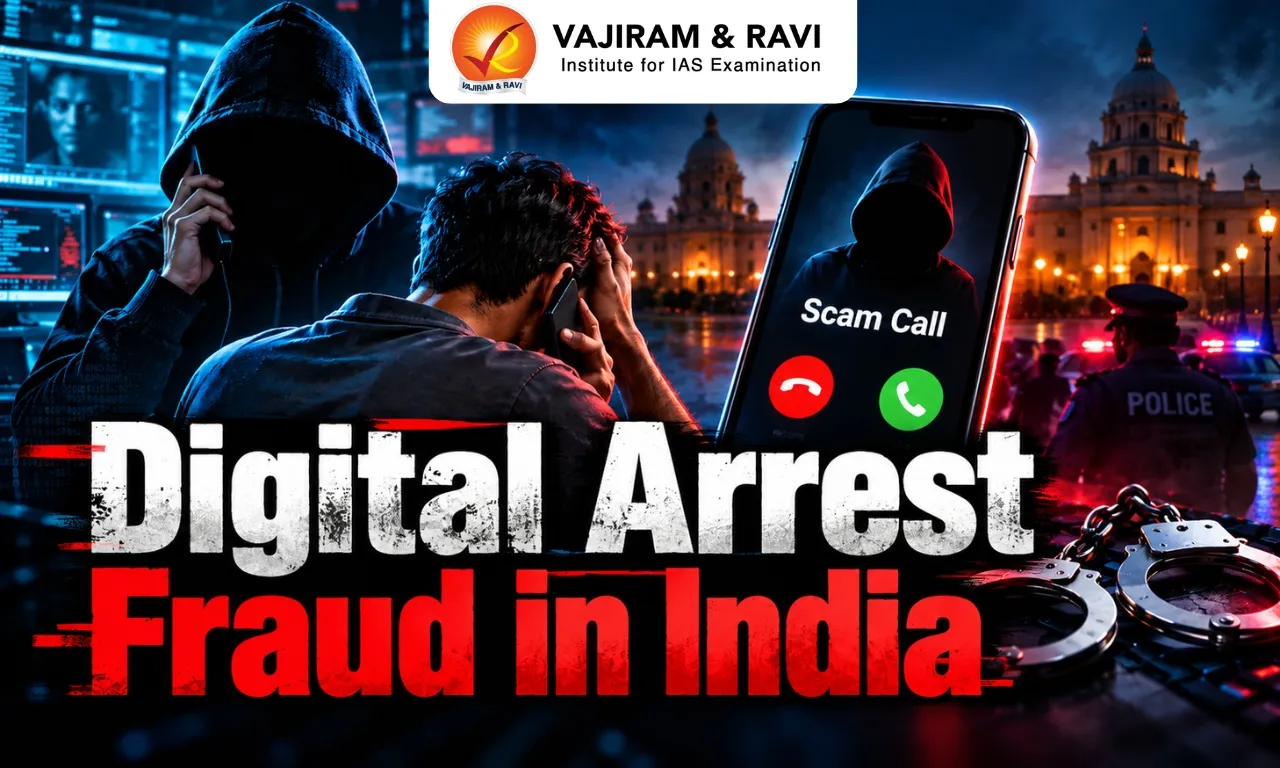
Digital arrest fraud is a cyber-enabled financial scam in which criminals impersonate police officers or government agency officials to threaten and extort money from victims.

Fraudsters use phone and video calls to create the illusion of an official investigation, falsely linking victims' identity documents, bank accounts or mobile numbers to criminal activities.

They threaten arrest and prosecution, isolate victims from family members and pressure them to transfer money under the pretext of verification or security deposits.

Digital arrest has no legal validity in India. No person can be arrested merely through a phone or video call. It is a form of impersonation and financial extortion, not a recognised legal procedure.

How Does Digital Arrest Fraud Work?

Digital arrest scams generally follow a pattern of impersonation, intimidation and financial extortion.

  1. Initial Contact: The victim receives a call from someone posing as a police officer, Central Bureau of Investigation (CBI), Enforcement Directorate (ED), Narcotics Control Bureau (NCB) or other government official.
  2. False Allegations: The caller claims that the victim's Aadhaar details, bank account, mobile number or identity documents have been linked to a criminal investigation.
  3. Creation of Fear: Fraudsters use forged notices, fake identity cards, fabricated case documents and official-looking video-call backgrounds to make their claims appear genuine.
  4. Digital Confinement: Victims are instructed to remain on video calls, sometimes for several hours or days. They are told not to contact family members, friends or lawyers, supposedly to maintain the confidentiality of the investigation.
  5. Financial Extortion: The criminals demand money in the name of verification, security deposits, account clearance or settlement of alleged legal liabilities. Victims are pressured into transferring funds to bank accounts controlled by the fraudsters.
  6. Disappearance: Once the money is transferred, the fraudsters may stop communicating, block the victim or continue demanding additional payments.

Why are these Scams Difficult to Identify?

  • Impersonation of authorities: Fraudsters misuse the names, logos and identities of law-enforcement agencies.
  • Forged documents: Fake arrest warrants, court orders and investigation notices create an appearance of legal authority.
  • Psychological pressure: Threats of arrest, public humiliation and damage to family reputation prevent victims from thinking calmly.
  • Digital confinement: Continuous video calls isolate victims and restrict their ability to verify the claims.
  • Multiple bank accounts: Fraudulently obtained or recruited bank accounts, commonly called mule accounts, help move and conceal the stolen money.

Scale of Digital Arrest Fraud in India

Digital arrest fraud has emerged as a significant cybercrime and financial-security concern. Data submitted by the Indian Cybercrime Coordination Centre (I4C) and the Ministry of Home Affairs (MHA) before the Supreme Court indicates the scale of the problem.

Digital Arrest Complaints Reported in India

Period

Complaints registered on the National Cybercrime Reporting Portal

2024

1,23,672

2025

58,239

January-June 2026

16,377

January-August 2026

21,928

The 21,928 complaints registered between January and August 2026 involved financial losses of more than ₹647 crore.

The figures indicate a decline in reported complaints in 2025 compared with 2024. However, the continued registration of thousands of complaints in 2026 shows that the threat persists. These figures represent complaints registered on the portal and should not be treated as the total number of incidents or a measure of all unreported fraud.

Supreme Court's Intervention in Digital Arrest Fraud

The Supreme Court took suo motu cognisance of digital arrest fraud in October 2025 after receiving a complaint from a senior citizen couple from Haryana. The couple alleged that fraudsters impersonating CBI officers, ED officials and judicial authorities used forged Supreme Court documents to extort approximately ₹1.05 crore from them.

The case is being heard as In Re: Victims of Digital Arrest Related to Forged Documents, Suo Motu Writ Petition (Criminal) No. 3 of 2025.

The Court has sought coordinated action from the Centre, State governments, banks, regulators, telecom service providers and digital platforms.

Key Directions and Observations of the Supreme Court

  1. Investigation by the CBI: The Court directed the CBI to investigate major digital arrest fraud cases, including cases involving fraud of ₹10 crore or more.
  2. Action against Mule Accounts: The Court has emphasised the need to identify and investigate bank accounts used to receive and transfer money obtained through cyber fraud.
  3. Coordination Among Agencies: An inter-departmental committee involving relevant ministries, regulators, investigating agencies, telecom service providers and digital platforms has been examining preventive and enforcement measures.
  4. Restoration of Defrauded Money: The Court has called for recovered amounts to be returned to victims without unnecessary delay.
  5. Accountability of Financial Institutions: In its October 2026 proceedings, the Court stressed that banks must be held accountable where their failure to exercise due diligence contributes to cyber fraud. It called for a compensation mechanism under which financial institutions would indemnify victims for losses, subject to the failure being established.
  6. Action Against Complicit Bank Officials: The Court emphasised that bank officials found to have colluded with fraudsters should face prosecution and that regulatory safeguards must provide for institutional accountability.

RBI's Proposed KYC Reforms and Bank Accountability

The Supreme Court's October 2026 observations have brought the role of banks and financial institutions into focus. Fraudsters often use multiple bank accounts to receive, transfer and layer the proceeds of cybercrime. Weak customer due diligence and inadequate monitoring of suspicious transactions can make such networks difficult to detect.

The Reserve Bank of India (RBI) is finalising the proposed Know Your Customer (KYC) Amendment Directions, 2026. The Court has sought an opportunity to examine the draft before it is finalised.

The proposed regulatory framework is expected to be notified by 30 November 2026 and operationalised by 31 December 2026.

The Court has called for the following safeguards:

  • Detection of unusual transactions: Banks should identify transactions that are inconsistent with a customer's normal transaction history.
  • Temporary suspension: Unusual high-value transactions may need to be temporarily withheld for verification.
  • Automated alerts: Financial institutions should establish systems to flag and report suspicious transactions.
  • Physical verification: Banks may need to verify the account holder's identity and the genuineness of a transaction through appropriate verification mechanisms.
  • Compensation for victims: Financial institutions should compensate customers where a fraud is found to have resulted from their failure to exercise due diligence.
  • Accountability: Banks and officials should face consequences for negligence or collusion, as applicable.

The Court has also asked the RBI to submit a list of authorised financial institutions that would be covered by the proposed framework.

Legal Provisions Applicable to Digital Arrest Fraud

Digital arrest is not a separate offence under Indian law at present. However, the acts involved in such scams can attract several provisions of existing criminal and cyber laws.

Legal provision

Relevance to digital arrest fraud

Section 318 of the Bharatiya Nyaya Sanhita (BNS), 2023

Deals with cheating through deception and dishonest inducement.

Section 319 of the BNS, 2023

Deals with cheating by personation, including impersonating another person.

Section 308 of the BNS, 2023

Deals with extortion through threats or intimidation.

Section 61 of the BNS, 2023

Deals with criminal conspiracy.

Section 66C of the Information Technology Act, 2000

Deals with identity theft involving the fraudulent use of electronic signatures, passwords or other unique identification features.

Section 66D of the Information Technology Act, 2000

Deals with cheating by personation using a communication device or computer resource.

Depending on the facts of a case, provisions relating to forgery, use of forged documents and other offences may also apply.

The Supreme Court's October 2025 order records that FIRs in the Haryana case included provisions of the BNS relating to wrongful confinement, extortion, cheating, forgery and criminal conspiracy.

Government Measures to Combat Digital Arrest Fraud

The government has introduced several institutional, technological and public-awareness measures to prevent digital arrest fraud, strengthen cybercrime investigations and protect citizens from financial losses.

Indian Cybercrime Coordination Centre (I4C)

The Ministry of Home Affairs established the I4C to coordinate efforts to prevent, detect and investigate cybercrime across India. It supports coordination among law-enforcement agencies, financial institutions, telecom service providers and other stakeholders.

National Cybercrime Reporting Portal

The National Cybercrime Reporting Portal enables citizens to report cybercrime complaints online. It provides a central platform through which complaints can be referred to the concerned law-enforcement agencies.

Citizen Financial Cyber Fraud Reporting and Management System

The Citizen Financial Cyber Fraud Reporting and Management System (CFCFRMS) facilitates immediate reporting of financial cyber fraud and coordination among banks, payment intermediaries and law-enforcement agencies to help prevent the transfer of defrauded money.

Cybercrime Helpline 1930

The government has operationalised the toll-free 1930 helpline for reporting financial cyber fraud. Prompt reporting can help authorities and banks take steps to trace and potentially stop the movement of stolen funds.

Awareness Campaigns

The government and law-enforcement agencies issue advisories to educate citizens about impersonation scams, suspicious calls, fake government notices and safe digital practices.

Challenges in Tackling Digital Arrest Fraud

Despite growing awareness and government interventions, digital arrest fraud remains difficult to tackle due to the evolving tactics of cybercriminals, gaps in institutional coordination and challenges in tracing stolen funds.

  1. Cross-Border Nature of Cybercrime: Fraud networks may operate across multiple States and countries, making investigation, evidence collection and recovery of money difficult.
  2. Use of Mule Bank Accounts: Fraudsters use accounts opened through stolen identities or recruited account holders to receive and transfer illicit funds. The movement of money through multiple accounts complicates financial tracing.
  3. Misuse of Digital Platforms: Messaging applications, internet-based calling services and forged websites can be used to impersonate authorities and maintain contact with victims.
  4. Gaps in Institutional Coordination: Effective action requires timely information-sharing among banks, telecom operators, digital platforms, State police and central agencies.
  5. Delayed Reporting: Victims may hesitate to report fraud because of fear, embarrassment or continued threats from criminals. Delays reduce the opportunity to trace and freeze the transferred funds.
  6. Limited Victim Compensation: Recovering money after it has moved through several accounts or jurisdictions can be difficult. The absence of a clear and comprehensive compensation framework can leave victims with substantial financial losses.
  7. Evolving Modus Operandi: Fraudsters continuously change their methods, including the use of artificial intelligence, forged documents, spoofed identities and convincing digital interfaces.

Measures to Prevent Digital Arrest Fraud

A comprehensive response must combine public awareness, stronger financial safeguards, effective investigation and accountability of digital intermediaries.

  • Public Awareness: Conduct sustained campaigns explaining that digital arrest is not a legal procedure and that citizens should verify claims independently.
  • Stronger Banking Safeguards: Use risk-based transaction monitoring, alerts and verification for unusual high-value transfers.
  • Action Against Mule Accounts: Strengthen customer due diligence, identify suspicious accounts and improve coordination between banks and investigating agencies.
  • Telecom Regulation: Improve detection of spoofed calls, misuse of SIM cards and fraudulent connections.
  • Digital Platform Responsibility: Encourage messaging and social media platforms to detect impersonation, suspicious accounts and patterns of prolonged coercive calls while protecting legitimate communication.
  • Inter-State and International Cooperation: Improve information-sharing, joint investigations and coordination to trace cross-border fraud networks.
  • Victim Support and Compensation: Establish accessible grievance-redressal mechanisms and clear accountability where institutional negligence is established.
  • Capacity Building: Equip police personnel and investigators with specialised training in digital forensics, financial tracing and cybercrime investigation.

What should citizens do if they receive a Digital Arrest call?

Preventing digital arrest fraud requires citizens to remain vigilant, verify suspicious claims independently and report suspected cybercrime promptly to minimise financial losses.

  • Do not panic: Threats of immediate arrest through a video call are a common tactic used by fraudsters.
  • Do not transfer money: No genuine law-enforcement agency asks individuals to transfer money for verification or to avoid arrest.
  • End the suspicious call: Do not remain on a video call under pressure or follow instructions to isolate yourself.
  • Verify independently: Contact the concerned agency through its official website or publicly listed contact details.
  • Inform trusted people: Speak to family members, friends or a lawyer rather than keeping the alleged investigation secret.
  • Report financial fraud immediately: Call 1930 and report the incident on cybercrime.gov.in.
  • Preserve evidence: Save phone numbers, messages, call records, screenshots, transaction details and other relevant information.
  • Contact the bank: Immediately inform the bank or payment service provider and request urgent action to secure the account and trace the transaction.

Digital Arrest Fraud in India FAQs

Q1: What is digital arrest fraud?

Ans: Digital arrest fraud is a cybercrime in which criminals impersonate law-enforcement or government officials and use threats of arrest to force victims to transfer money.

Q2: Is digital arrest legally recognised in India?

Ans: No. Indian law does not recognise arrest or detention through a phone or video call. Digital arrest is a fraudulent method of impersonation and extortion.

Q3: Which government agency coordinates efforts to tackle cybercrime in India?

Ans: The Indian Cybercrime Coordination Centre (I4C), under the Ministry of Home Affairs, coordinates efforts to prevent, detect and investigate cybercrime.

Q4: What is the cybercrime helpline number in India?

Ans: The toll-free helpline number for reporting financial cyber fraud is 1930. Complaints can also be registered through the National Cybercrime Reporting Portal at cybercrime.gov.in.

Q5: What has the Supreme Court said about banks' responsibility in digital arrest fraud?

Ans: In October 2026, the Supreme Court stressed that financial institutions should compensate victims where fraud is found to have resulted from a failure of due diligence. It also called for safeguards to flag unusual transactions and accountability for bank officials involved in collusion.

Chief Election Commissioners of India List 1950–2026, Names and Tenure

Chief Election Commissioners of India

Chief Election Commissioners of India List includes the names and tenures of individuals who have headed the Election Commission of India (ECI) since its establishment in 1950. The Chief Election Commissioner plays a crucial role in supervising elections to the Lok Sabha, Rajya Sabha, State Legislative Assemblies, and the offices of the President and Vice-President of India.

Sukumar Sen was the first Chief Election Commissioner of India, taking office on 21 March 1950. Gyanesh Kumar became the 26th Chief Election Commissioner on 19 February 2025.

Current Chief Election Commissioner of India

Gyanesh Kumar is the 26th Chief Election Commissioner of India. He assumed office on 19 February 2025, succeeding Rajiv Kumar. He is a 1988-batch Indian Administrative Service (IAS) officer of the Kerala cadre.

List of Former Chief Election Commissioners of India

The following table provides the names and tenures of former Chief Election Commissioners of India.

List of Former Chief Election Commissioners of India

S. No.

Chief Election Commissioner

Tenure

1

Sukumar Sen

21 March 1950 – 19 December 1958

2

K. V. K. Sundaram

20 December 1958 – 30 September 1967

3

S. P. Sen Verma

1 October 1967 – 30 September 1972

4

Dr. Nagendra Singh

1 October 1972 – 6 February 1973

5

T. Swaminathan

7 February 1973 – 17 June 1977

6

S. L. Shakdhar

18 June 1977 – 17 June 1982

7

R. K. Trivedi

18 June 1982 – 31 December 1985

8

R. V. S. Peri Sastri

1 January 1986 – 25 November 1990

9

V. S. Ramadevi

26 November 1990 – 11 December 1990

10

T. N. Seshan

12 December 1990 – 11 December 1996

11

M. S. Gill

12 December 1996 – 13 June 2001

12

J. M. Lyngdoh

14 June 2001 – 7 February 2004

13

T. S. Krishna Murthy

8 February 2004 – 15 May 2005

14

B. B. Tandon

16 May 2005 – 29 June 2006

15

N. Gopalaswami

30 June 2006 – 20 April 2009

16

Navin B. Chawla

21 April 2009 – 29 July 2010

17

S. Y. Quraishi

30 July 2010 – 10 June 2012

18

V. S. Sampath

11 June 2012 – 15 January 2015

19

H. S. Brahma

16 January 2015 – 18 April 2015

20

Nasim Zaidi

19 April 2015 – 5 July 2017

21

A. K. Joti

6 July 2017 – 22 January 2018

22

O. P. Rawat

23 January 2018 – 1 December 2018

23

Sunil Arora

2 December 2018 – 12 April 2021

24

Sushil Chandra

13 April 2021 – 14 May 2022

25

Rajiv Kumar

15 May 2022 – 18 February 2025

List of Former Election Commissioners of India

Election Commissioners are members of the Election Commission of India who assist in supervising and administering electoral processes. The following table lists former Election Commissioners and their tenures.

List of Former Election Commissioners of India

S. No.

Former Election Commissioner

Tenure

1

V. S. Seigell

16 October 1989 – 2 January 1990

2

S. S. Dhanoa

16 October 1989 – 2 January 1990

3

Dr. G. V. G. Krishnamurty

1 October 1993 – 30 September 1999

4

Ashok Lavasa

23 January 2018 – 31 August 2020

5

Anup Chandra Pandey

9 June 2021 – 14 February 2024

6

Arun Goel

21 November 2022 – 9 March 2024

Role and Functions of the Chief Election Commissioner

The Chief Election Commissioner (CEC) heads the Election Commission of India, a constitutional body responsible for administering elections under the Constitution and applicable laws.

The major functions of the Chief Election Commissioner and the Election Commission include:

  • Conducting elections: Supervising elections to the Lok Sabha, Rajya Sabha, and State Legislative Assemblies, as well as the offices of the President and Vice-President.
  • Ensuring free and fair elections: Monitoring the electoral process and ensuring compliance with applicable election laws.
  • Supervising election machinery: Coordinating election officials and overseeing election-related arrangements.
  • Implementing the Model Code of Conduct: Monitoring compliance with the code during elections.
  • Maintaining electoral integrity: Promoting transparent, orderly, and credible elections.

Constitutional Articles Related to the Election Commission of India

The Constitution of India establishes the framework for the Election Commission and the conduct of elections.

Constitutional Articles Related to the Election Commission of India

Constitutional Article

Provision

Article 324

Provides for the superintendence, direction, and control of elections by the Election Commission.

Article 325

Provides for a general electoral roll for every territorial constituency and prohibits exclusion on specified grounds.

Article 326

Provides for elections to the Lok Sabha and State Legislative Assemblies based on adult suffrage, subject to constitutional provisions.

Article 327

Empowers Parliament to make laws relating to elections to legislatures.

Article 329

Deals with restrictions on judicial interference in electoral matters.

Important Facts About Chief Election Commissioners of India

  • First Chief Election Commissioner: Sukumar Sen.
  • First woman Chief Election Commissioner: V. S. Ramadevi.
  • Chief Election Commissioner known for strengthening election enforcement: T. N. Seshan.
  • 25th Chief Election Commissioner: Rajiv Kumar.
  • 26th Chief Election Commissioner: Gyanesh Kumar.
  • Current Chief Election Commissioner: Gyanesh Kumar, who assumed office on 19 February 2025.

Chief Election Commissioners of India FAQs

Q1: Who was the first Chief Election Commissioner of India?

Ans: Sukumar Sen was the first Chief Election Commissioner of India. He assumed office on 21 March 1950.

Q2: Who is the current Chief Election Commissioner of India?

Ans: Gyanesh Kumar is the current Chief Election Commissioner of India. He assumed office on 19 February 2025.

Q3: Who was the first woman Chief Election Commissioner of India?

Ans: S. Ramadevi was the first woman Chief Election Commissioner of India. She served from 26 November 1990 to 11 December 1990.

Q4: Who was the Chief Election Commissioner before Gyanesh Kumar?

Ans: Rajiv Kumar was the Chief Election Commissioner before Gyanesh Kumar. His tenure ended on 18 February 2025.

Q5: Which Article of the Constitution deals with the Election Commission of India?

Ans: Article 324 of the Constitution of India deals with the superintendence, direction, and control of elections by the Election Commission of India.

Ayushman Vay Vandana Initiative

Ayushman Vay Vandana Initiative

Ayushman Vay Vandana Initiative Latest News

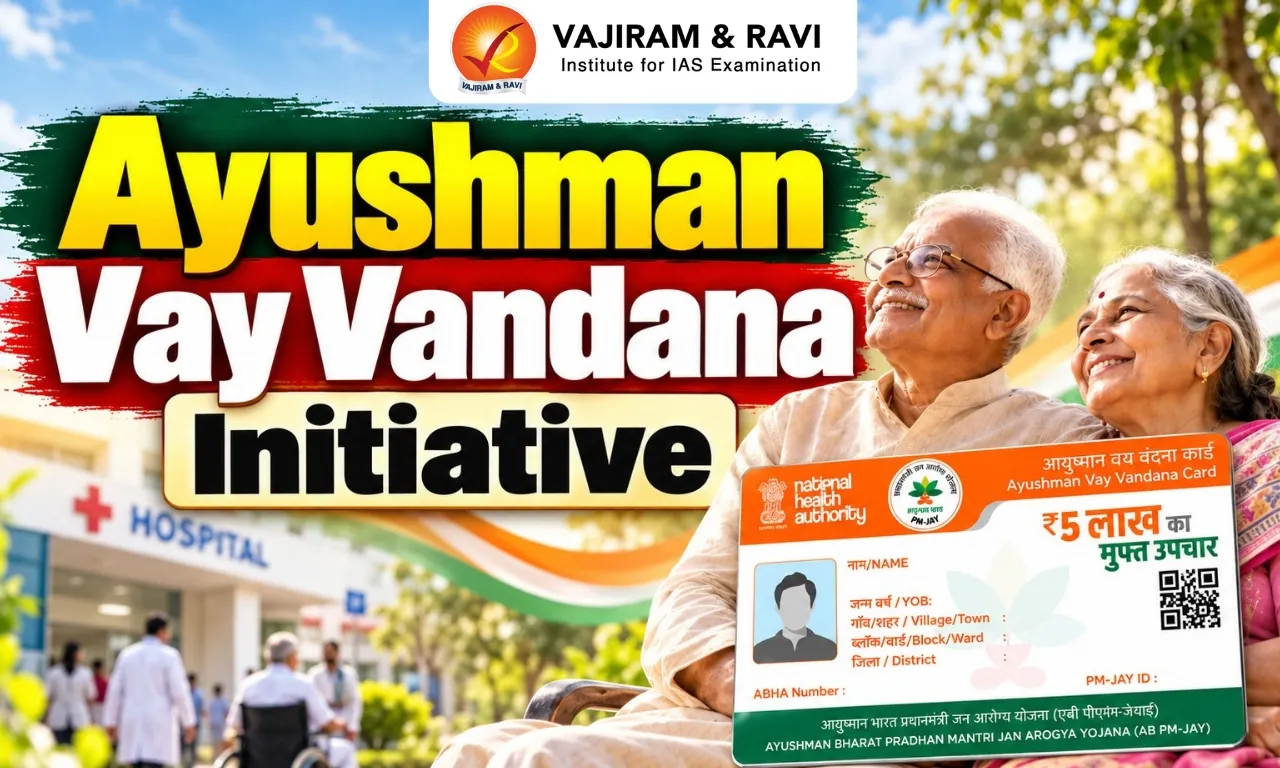
The Ayushman Vay Vandana initiative completed two years and recorded 23.46 lakh authorised hospital admissions worth ₹5,668.80 crore.

About Ayushman Vay Vandana Initiative

  • It was launched in 2024.
  • It extends the benefits of Ayushman Bharat-Pradhan Mantri Jan Arogya Yojana (AB PM-JAY) to elderly citizens.
  • It is aiming to improve access to healthcare and reduce the financial burden of hospitalisation.
  • It is implemented by the National Health Authority (NHA) under the Ministry of Health and Family Welfare.
  • Coverage: It is designed to provide financial protection to approximately six crore senior citizens belonging to around 4.5 crore families across the country.

Features of Ayushman Vay Vandana Initiative

  • Under the initiative, all citizens aged 70 years and above are eligible for health coverage of up to ₹5 lakh per family annually for secondary and tertiary care hospitalisation,
  • Senior citizens belonging to families already covered under AB PM-JAY receive an additional top-up cover of up to ₹5 lakh annually, exclusively for themselves.
  • This coverage is separate from the existing family cover available to members below 70 years of age.

Source: PIB

Ayushman Vay Vandana Initiative FAQs

Q1: What is the aim of Ayushman Vay Vandana Initiative?

Ans: It is aiming to improve access to healthcare and reduce the financial burden of hospitalisation.

Q2: Which is the implementing agency of Ayushman Vay Vandana Initiative?

Ans: National Health Authority

Talacauvery Wildlife Sanctuary

Talacauvery Wildlife Sanctuary

Talacauvery Wildlife Sanctuary Latest News

Recently, Karnataka Forest department personnel arrested “eight poachers” inside the Talacauvery Wildlife Sanctuary.

About Talacauvery Wildlife Sanctuary

  • Location: It is located in the state of Karnataka.
  • It borders Ranipuram Hills and Kottencheri hills in Kasaragod district of Kerala.
  • The Sanctuary is named after the birth place of river Cauvery that originates from the Brahmagiri peak located inside the Sanctuary.
  • It derives its name from the source of the Cauvery river (tala = head).
  • Vegetation: The Sanctuary consists of Tropical Evergreen Forests, Tropical Semi-evergreen Forests and grasslands. 
  • Flora: It includes Michelia champaca (Champak), Mesua (Ironwood), Diospyros (Ebony and other species), Toona ciliata (Indian mahogany), Chukrasia tabularis, Calophyllum angustifolium (Poon spar).
  • Fauna: It mainly has Asian Elephant Elephas maximus, Tiger Panthera tigris, Leopard P. pardus, Wild Dog Cuon alpinus, Gaur Bos frontalis, Sloth Bear Melursus ursinus.
  • It is one of the Important Bird Areas (IBA) and supports species such as the Nilgiri wood pigeon, Asian fairy-bluebird, Malabar trogon and great hornbill.

Source: DH

Talacauvery Wildlife Sanctuary FAQ's

Q1: Where is Talacauvery Wildlife Sanctuary located?

Ans: Karnataka

Q2: What type of vegetation is found in Talacauvery Wildlife Sanctuary?

Ans: The Sanctuary consists of Tropical Evergreen Forests, Tropical Semi-evergreen Forests and grasslands. 

Sankosh River

Sankosh River

Sankosh River Latest News

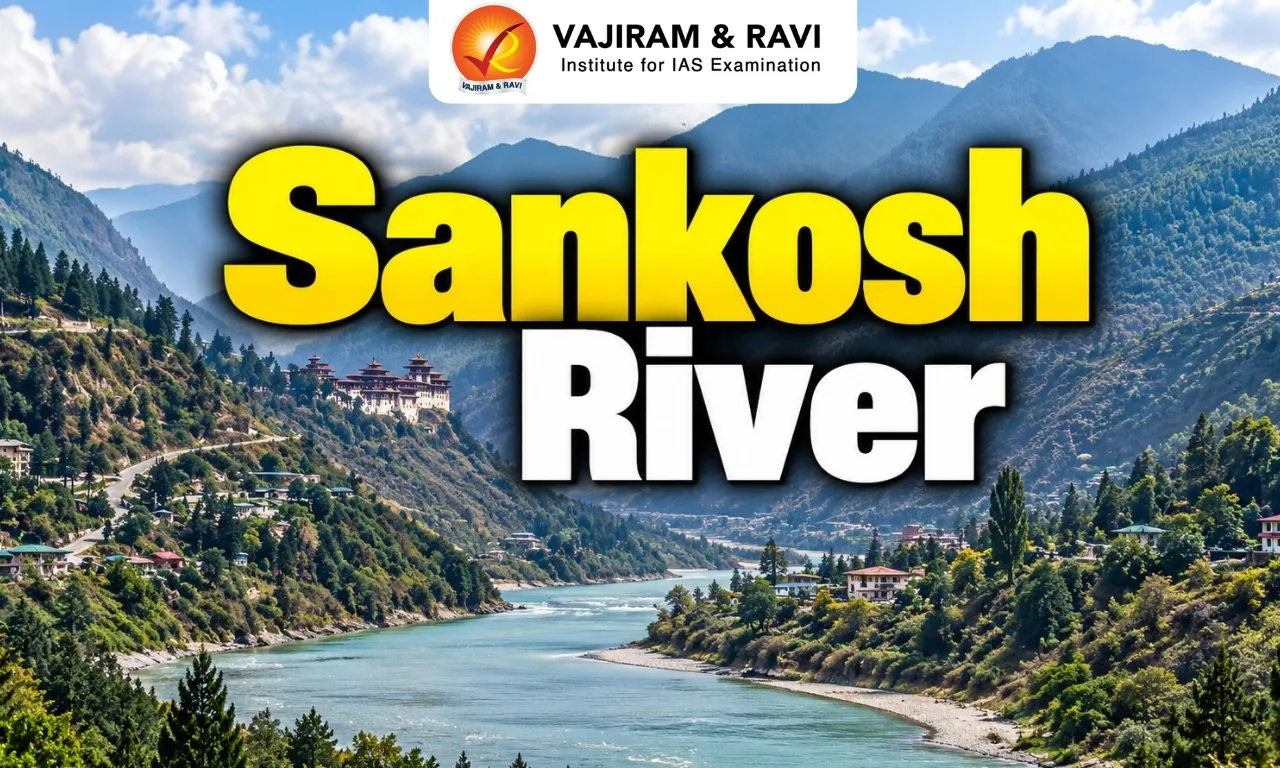
More than 10,000 people have been recently moved to shelters in West Bengal’s Alipurduar district following a glacial lake outburst in neighbouring Bhutan, as authorities placed the Sankosh river system on red alert over fears of a sudden flood surge.

About Sankosh River

  • It is a major transboundary river flowing through Bhutan and India. 
  • It is one of the major north bank tributaries of the Brahmaputra River. 
  • In Bhutan, the river is called “Puna Tsang Chu.” 
  • Course: 
    • It originates in northern Bhutan, where it is fed by glacial melt and snow from the Himalayas. 
    • It is formed by the confluence of the Phochu and Mochu rivers.
    • It flows southward through Bhutan before crossing into India, where it flows through the Dhubri district of Assam and empties into the Brahmaputra River at Gauripur. 
    • In its lower course it forms part of the boundary between the states of Assam and West Bengal.  
    • It generally flows in narrow gorges and steep gradients up to the Indo-Bhutan border and then flows with a flatter slope. 
  • Total Length: The river traverses a length of 321 km from source to outfall. It crosses a distance of 214 km in Bhutan and 107 km in India.

News: SM

Sankosh River FAQs

Q1: Which major river is the Sankosh River a tributary of?

Ans: The Brahmaputra River.

Q2: Sankosh River flows through which countries?

Ans: Bhutan and India

Q3: By what name is the Sankosh River known in Bhutan?

Ans: Puna Tsang Chu.

Q4: Which two rivers meet to form the Sankosh River?

Ans: Phochu and Mochu rivers.

Q5: What is the total length of the Sankosh River from source to outfall?

Ans: Approximately 321 km.

Mollisia sokpayensia

Mollisia sokpayensia

Mollisia sokpayensia Latest News

A team of microbiologists recently discovered a novel fungal species named Mollisia sokpayensia.

About Mollisia sokpayensia

  • It is a new species of fungus.
  • It is a fungal endophyte isolated from a rhizome of Panax sokpayensis, a rare and high-value medicinal plant found in the Sikkim Himalaya.  
  • Mollisia sokpayensia has been named after its host plant, recognising the association between the fungus and the medicinal species. 
  • ​In the laboratory, the fungus was isolated using Potato Dextrose Agar (PDA), a commonly used medium for cultivating fungi. 
  • The species exhibited notably slow growth under laboratory conditions. 
  • At 28°C, its colonies initially appeared cottony and brown, reaching a diameter of 2–3 cm after six days and approximately 8 cm after 14 days. 
  • The colonies gradually changed colour from brown to blackish-brown. 

What are Fungal Endophytes?

  • They are microorganisms that inhabit the internal tissues of healthy plants without causing visible disease symptoms. 
  • They are quite distinct from the fungi that grow on the surface of plants (epiphytic fungi). 
  • They can form associations with their hosts and are increasingly studied for their potential to produce bioactive compounds relevant to medicine, agriculture, and biotechnology.

News: IT

Mollisia sokpayensia FAQs

Q1: What is Mollisia sokpayensia?

Ans: It is a newly identified species of fungus.

Q2: What type of fungus is Mollisia sokpayensia?

Ans: It is a fungal endophyte that inhabit the internal tissues of healthy plants without causing visible disease symptoms. .

Q3: From which plant was Mollisia sokpayensia isolated?

Ans: It was isolated from the rhizome of Panax sokpayensis.

Q4: How did Mollisia sokpayensia grow under laboratory conditions?

Ans: It exhibited notably slow growth.

INS Srishti

INS Srishti

INS Srishti Latest News

Goa Shipyard Limited (GSL) recently launched the next generation offshore patrol vessel (NGOPV) INS Srishti (Yard 1283) for the Indian Navy. 

About INS Srishti

  • INS Srishti (Yard 1283) is the fourth Next-Generation Offshore Patrol Vessel (NGOPV) built by Goa Shipyard Limited (GSL) for the Indian Navy. 
  • INS Srishti forms part of the Indian Navy’s NGOPV acquisition program, under which 11 vessels were ordered through contracts signed on 30 March 2023. 
  • The project is being executed simultaneously by two Indian shipyards, with seven vessels being constructed by GSL and four by Garden Reach Shipbuilders & Engineers (GRSE). 
  • The program has been developed under the Buy (Indian-IDDM) category, placing emphasis on indigenous design, development, and manufacturing.  
  • Designed as versatile multi-mission platforms, the NGOPVs will undertake a broad range of operational tasks, including maritime surveillance, Search and Rescue (SAR), protection of offshore assets, Humanitarian Assistance and Disaster Relief (HADR), and anti-piracy operations. 
  • Key Features of NGOPVs:
    • The NGOPVs are significantly larger and more capable than the Offshore Patrol Vessels.
    • NGOPVs measure approximately 110 m in length, with a draught of less than 5 m, and have a displacement of 3,000 tonnes.
    • They can achieve speeds of up to 23 knots and have an endurance of 8,500 nautical miles at a cruising speed of 14 knots.
    • The vessels can operate at sea for up to 60 days and can accommodate around 20 officers.

News: NEWSM

INS Srishti FAQs

Q1: What is INS Srishti?

Ans: It is the fourth Next-Generation Offshore Patrol Vessel (NGOPV) built by Goa Shipyard Limited (GSL) for the Indian Navy.

Q2: Under which acquisition programme is INS Srishti being constructed?

Ans: The Indian Navy’s Next-Generation Offshore Patrol Vessel (NGOPV) acquisition programme.

Q3: What are the major operational roles of INS Srishti?

Ans: Maritime surveillance, Search and Rescue (SAR), protection of offshore assets, Humanitarian Assistance and Disaster Relief (HADR), and anti-piracy operations.

Surangams

Surangams

Surangams Latest News

A comprehensive project to rejuvenate the district’s traditional underground water tunnels, known as “Surangams”, is set to be implemented in eight grama panchayats in Kasaragod Districts of Kerala.

About Surangams

  • Surangams, also known as tunnel wells, are a remarkable indigenous water management system unique to the Kasaragod District of Kerala and parts of Dakshina Kannada in Karnataka. 
  • They are also known by different names, such as Surangas, Thurangams, or Thorappu. 
  • While its origins remain unclear, historians draw parallels to the Qanat system of Persia, introduced to India via the ancient Silk Route.  
  • Features:
    • These are basically horizontal tunnels dug through a laterite hillock through which water seeps out and into the tunnel. 
    • Water is then collected at the end of the tunnel in a storage pit.  
    • Built without pumps or electric motors, surangams rely entirely on natural water percolation.  
    • They channel underground water to the surface using gravity, ensuring a steady and sustainable supply for households and agriculture.
    • Generally a surangam was about 0.45–0.70 m wide and about 1.8-2.0 m in height. The length of the tunnel varied between 3 m to 300 m. 
    • For long tunnels, air shafts were provided to ensure atmospheric pressure.
    • Surangams are dug in places where the hydrogeological profile consists of lateritic and weathered rocks. 
  • Workmen who traditionally undertook the digging of surangas were people who were familiar with the slopes, soil structure, and catchment areas and used their knowledge of local flora and fauna to identify water sources. 
  • With over 5,000 surangas in Kasaragod District alone, this system has played a crucial role in sustaining the local communities.

News: TH

Surangams FAQs

Q1: What are Surangams?

Ans: Surangams are traditional underground water-harvesting structures, also known as tunnel wells.

Q2: In which regions of India are Surangams traditionally found?

Ans: Kasaragod district of Kerala and parts of Dakshina Kannada district of Karnataka.

Q3: Which traditional water-harvesting system is considered comparable to Surangams?

Ans: The Qanat system of Persia.

Q4: How are Surangams constructed?

Ans: They are constructed by digging horizontal tunnels through laterite hillocks.

Q5: How do Surangams bring underground water to the surface?

Ans: They use gravity to channel groundwater through horizontal tunnels.

National Cooperative Development Corporation

National Cooperative Development Corporation

National Cooperative Development Corporation Latest News

Recently, the 93rd Meeting of the General Council of the National Cooperative Development Corporation (NCDC) was held at the Corporation's headquarters in New Delhi.

About National Cooperative Development Corporation

  • It is a statutory organisation established in 1963, under the Ministry of Cooperation, Government of India.
  • Objective: Promoting, strengthening and developing farmer cooperatives for increasing production, productivity and instituting post- harvest facilities across the country. 

Functions of National Cooperative Development Corporation

  • Promoting and strengthening farmer cooperatives: It aims to increasing production, productivity by developing farmer cooperatives and instituting post-harvest facilities
  • Postharvest Facilities: It provides assistance for developing processing, storage, cold chain and marketing of agricultural produce and the supply of seeds, fertilizer and other agricultural inputs etc.
  • Financial Assistance: It provides financial assistance to the cooperative sector for their economic development and social upliftment through NCDC Sponsored schemes and various GoI schemes implemented by NCDC
  • It also supports income-generating cooperatives across various non-farm sectors such as weaker section activities which include dairy, livestock, handloom, sericulture etc.

Initiatives of National Cooperative Development Corporation

  • Yuva Sahakar: The scheme aims at encouraging newly formed cooperative societies with new and/ or innovative ideas.
  • Ayushman Sahakar: The scheme has a comprehensive approach to cover hospitals, healthcare, medical education, nursing education, paramedical education, health insurance and holistic health systems such as AYUSH.
  • Nandini Sahakar: The scheme aims to improve the socio-economic status of women and supports the entrepreneurial dynamism of women through women’s cooperatives.
  • Dairy Sahakar: It is a cooperative dairy business focused framework of financial assistance for encouraging cooperatives to achieve higher outcomes in ESG (environmental, social, governance) linked activities.
  • Swayam Sahakar: Scheme for providing NCDC's financial assistance to Agricultural Credit Cooperatives for providing loan/advances to Women Self Help Groups (SHGs).

Source: PIB

National Cooperative Development Corporation FAQs

Q1: What is National Cooperative Development Corporation ?

Ans: It is a statutory organisation established in 1963, under the Ministry of Cooperation, Government of India.

Q2: What is the objective of National Cooperative Development Corporation ?

Ans: Promoting, strengthening and developing farmer cooperatives for increasing production, productivity and instituting post- harvest facilities across the country. 

Gangetic River Dolphin

Gangetic River Dolphin

Gangetic River Dolphin Latest News

Recently, the United Nations Environment Programme (UNEP) report recognized India's Ganges River dolphin (Platanista gangetica) species recovery program. 

About Gangetic River Dolphin

  • It is a freshwater species and one of the few river dolphins found in the world.
  • Other Names: Blind dolphin, Ganges dolphin, Ganges susu, hihu, side-swimming dolphin, South Asian River Dolphin.
  • Distribution: It inhabits the Ganges-Brahmaputra-Meghna and Karnaphuli-Sangu river systems of Nepal, India, and Bangladesh.
  • It has been recognized by the government of India as its National Aquatic Animal.

Features of Gangetic Dolphin

  • It has a long, thin snout, rounded belly, stocky body, and large flippers are characteristics of the Ganges River dolphin.
  • Diet: It feeds majorly on freshwater fish and invertebrates.
  • Its eyes lack lenses, and as a result, this species is also referred to as the “blind dolphin”.
  • They have a highly developed bio-sonar system that facilitates them to hunt for fish even in murky waters.
  • They emit an ultrasonic sound which reaches the prey. The dolphin then registers this image in its mind and subsequently catches hold of its prey.
  • Being a mammal, the Ganges River dolphin cannot breathe in the water and must surface every 30-120 seconds. 
  • Because of the sound it produces when breathing, the animal is popularly referred to as the ‘Susu’.

Conservation Status of Gangetic Dolphin

Source: NIE

Gangetic River Dolphin FAQs

Q1: Where do we find Gangetic River Dolphin?

Ans: It inhabits the Ganges-Brahmaputra-Meghna and Karnaphuli-Sangu river systems of Nepal, India, and Bangladesh.

Q2: What is the IUCN Red list status of Gangetic River Dolphin?

Ans: Endangered

Bhutan Flood 2026, GLOF, Impacts, Alert in India, Management

Bhutan Flood

The Bhutan Flood incident of October 2026 highlights the growing vulnerability of Himalayan regions to climate induced disasters. A Glacial Lake Outburst Flood (GLOF) at Shintaphu Lake in Bhutan triggered flood warnings in parts of West Bengal and Assam. The event has raised concerns about downstream river systems, vulnerable settlements, hydropower infrastructure and the need for effective transboundary disaster management in the Himalayan region.

Bhutan Flood Latest News

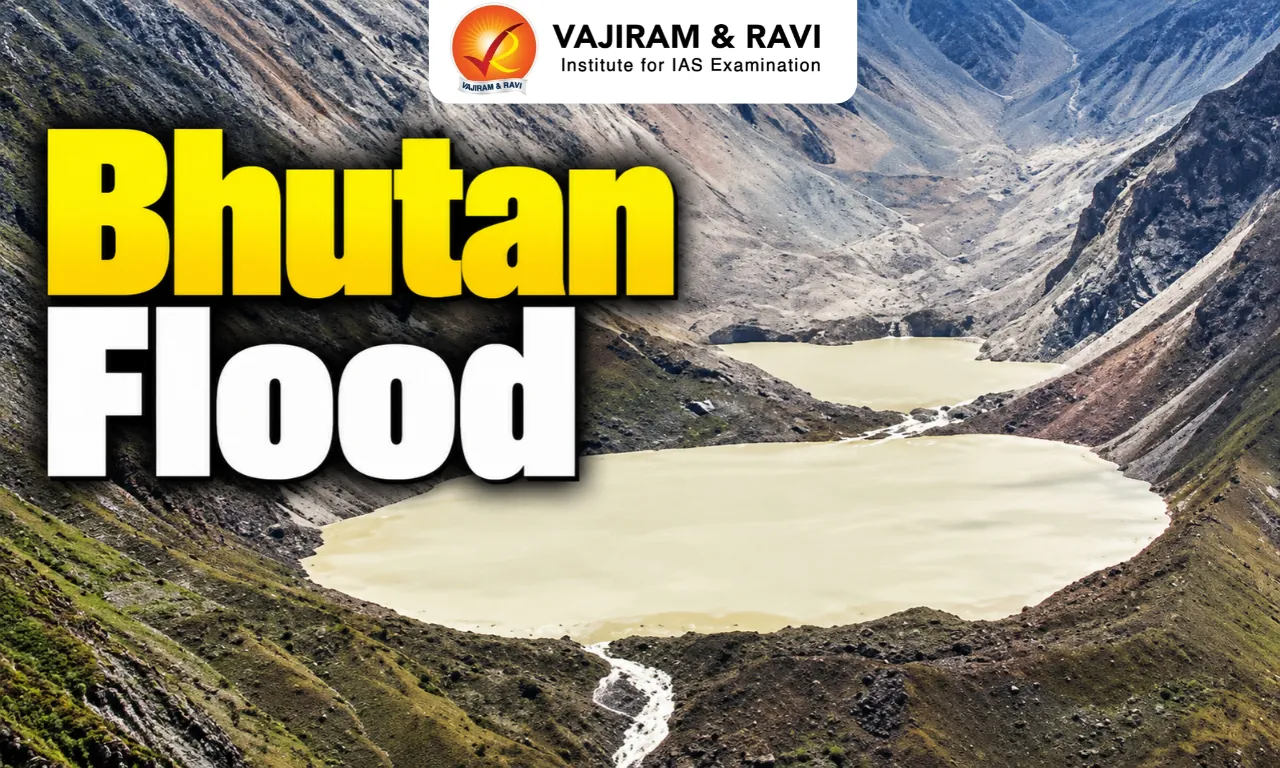
On 30 October 2026, a Glacial Lake Outburst at Shintaphu Lake in Bhutan's Gasa district triggered flood alerts in northern West Bengal and Assam. Authorities initiated evacuations in vulnerable settlements along the Sankosh River. Nearly 7.4 million cubic metres of water reportedly escaped from the breached lake, raising concerns about a sudden increase in downstream river levels. Disaster response teams were placed on alert.

Bhutan Flood 2026

The Bhutan Flood 2026 originated in the Himalayan region, with potential downstream consequences for settlements and infrastructure in India.

  • Location: The GLOF occurred at Shintaphu Lake in the Lemthang region of Bhutan's Gasa district. The lake is situated at the source of the Mo Chhu River.
  • Vulnerable Glacial Lake: Shintaphu Lake is among Bhutan's 17 potentially dangerous glacial lakes. Its geographical position makes a sudden release of accumulated water a potential threat to downstream settlements.
  • River System Involved: Floodwater entered the Mo Chhu River, also called Mofu, which connects with the Sankosh River system. The Sankosh subsequently flows into the Brahmaputra River in Assam.
  • Affected Areas: In India, Alipurduar and Jalpaiguri in West Bengal, parts of Darjeeling hills and Dhubri in Assam were identified as vulnerable to downstream flooding.
  • Flood Movement: The floodwater crossed Srigang in Kabesa Gewog, around eight kilometres from Punakha Dzong. Authorities estimated that the surge could reach Indian border areas within six to eight hours.
  • Evacuation Measures: Residents of vulnerable riverbank villages were instructed to move to safer locations. Loudspeaker announcements were made in settlements under Rampur I gram panchayat to facilitate evacuation.
  • Infrastructure Damage: The flood damaged facilities at Gasa Tshachu hot spring and partially affected a solar irrigation lifting system in Punakha. Debris also covered a section of the Punakha-Gasa Highway.

Bhutan Flood Impacts

The Bhutan Glacial Flood 2026 demonstrates how disasters originating beyond national boundaries can affect downstream populations, economic infrastructure and river management.

  • Impact on Bhutan: The sudden flood damaged tourism related facilities at Gasa Tshachu, affected irrigation infrastructure and deposited debris along the Punakha-Gasa Highway, disrupting local activities.
  • Impact on West Bengal: Alipurduar and neighbouring vulnerable areas faced the possibility of inundation. Residents along the Sankosh riverbanks were advised to evacuate as a precautionary measure.
  • Impact on Assam: Dhubri district was placed on alert because of the possibility of a sudden rise in Sankosh River water levels, creating risks for downstream settlements.
  • Hydropower Infrastructure: The flood raised concerns about the Punatsangchhu hydropower project, an important India-Bhutan joint venture exposed to sudden changes in river discharge.
  • Disaster Management Challenges: The incident highlights the difficulty of managing transboundary floods, as water released in one country can reach another within a few hours.
  • Ecological and Human Risks: Such events can cause loss of life, displacement, agricultural damage, erosion and destruction of transport infrastructure, particularly in fragile Himalayan river valleys.

Bhutan Flood Management

Managing a Bhutan Glacial Lake Outburst Flood requires early warnings, coordinated evacuation, scientific monitoring and cooperation between upstream and downstream authorities.

  • Early Warning Systems: Continuous monitoring of potentially dangerous glacial lakes and downstream river levels can provide authorities with sufficient time to issue warnings and organise evacuations.
  • Disaster Response Forces: The National Disaster Response Force (NDRF) and State Disaster Response Force (SDRF) should maintain readiness for evacuation, rescue and emergency relief operations.
  • Transboundary Cooperation: India and Bhutan need effective information sharing mechanisms to communicate glacial lake conditions, sudden water releases and downstream flood risks.
  • River Monitoring: Regular monitoring of the Sankosh River and its tributaries can help identify sudden changes in discharge and support timely precautionary measures.
  • Infrastructure Safety: Hydropower projects, roads, bridges and settlements in vulnerable Himalayan valleys require proper risk assessments and disaster resilient construction practices.
  • Community Preparedness: Public awareness, evacuation routes, designated shelters and local disaster response teams can reduce casualties during sudden flooding events.

What is Glacial Lake Outburst Flood (GLOF)?

A Glacial Lake Outburst Flood (GLOF) is a sudden release of accumulated water from a glacial lake following the failure of its natural dam.

  • Formation of Glacial Lakes: These lakes develop when retreating glaciers leave behind depressions that collect meltwater. Ice, rocks and accumulated moraine deposits can act as natural barriers.
  • Moraine-Dammed Lakes: Such lakes are particularly vulnerable because their natural dams consist of loose rocks, sediments and buried ice, making them structurally unstable.
  • Climate Change: Rising temperatures accelerate glacier melting and retreat, increasing meltwater accumulation and contributing to the formation and expansion of potentially dangerous glacial lakes.
  • Natural Triggers: Heavy rainfall, cloudbursts, earthquakes, avalanches and landslides can disturb natural lake barriers, resulting in the sudden release of enormous water volumes.
  • Downstream Destruction: GLOFs generate powerful flood surges carrying water, rocks and debris. These can destroy settlements, roads, bridges, agricultural land and hydropower infrastructure.
  • Himalayan Vulnerability: The Hindu Kush Himalayan region faces significant GLOF risks because of expanding glacial lakes, fragile mountain ecosystems and settlements located along downstream river valleys.

Bhutan Flood FAQs

Q1: What caused the Bhutan Flood in October 2026?

Ans: The Bhutan Flood was triggered by a Glacial Lake Outburst Flood at Shintaphu Lake in the Gasa district, releasing approximately 7.4 million cubic metres of water.

Q2: Which lake caused the Bhutan Glacial Lake Outburst Flood?

Ans: Shintaphu Lake in Bhutan's Lemthang region caused the October 2026 GLOF. It is located at the source of the Mo Chhu River.

Q3: Which Indian states are affected by the Bhutan Flood?

Ans: West Bengal and Assam are the Indian states at risk. Alipurduar, Jalpaiguri, parts of Darjeeling hills and Dhubri were identified as vulnerable areas.

Q4: Why is the Sankosh River on alert during the Bhutan Flood 2026?

Ans: The Sankosh River carries floodwater from the upper Bhutanese river system towards India. A sudden increase in its water level can threaten downstream settlements in West Bengal and Assam.

Q5: What is the difference between a flash flood and a Glacial Lake Outburst Flood?

Ans: A flash flood is a sudden flooding event caused by intense rainfall or rapid water discharge. A GLOF specifically results from the sudden release of water from a glacial lake after its natural barrier fails.

Dwarf Planet Beyond Neptune, New Candidate 2026 ED138 Discovered

Dwarf Planet Beyond Neptune

Why in News?

Astronomers have identified a potential dwarf planet beyond Neptune, designated 2026 ED138, using observations from the Vera C. Rubin Observatory in Chile.

  • Its estimated diameter ranges between 600 and 1,500 kilometres.
  • It is located approximately 46 Astronomical Units (AU) from the Sun.
  • Its orbit is tilted around 25 degrees relative to the plane of the Solar System.
  • Scientists are conducting further observations to determine whether it qualifies as a dwarf planet.

What is 2026 ED138?

2026 ED138 is an icy celestial object located beyond Neptune and Pluto. It belongs to the category of Trans-Neptunian Objects (TNOs) and is considered a potential dwarf planet because of its estimated size. Important facts:

  • Designation: 2026 ED138
  • Category: Dwarf planet candidate
  • Location: Beyond Neptune
  • Estimated Diameter: 600–1,500 km
  • Distance from Sun: Approximately 46 AU
  • Orbital Inclination: Around 25 degrees
  • Discovering Astronomer: Matthew Holman
  • Observatory: Vera C. Rubin Observatory, Chile

How Was 2026 ED138 Discovered?

The object was identified by Matthew Holman, an astronomer at the Center for Astrophysics | Harvard & Smithsonian.

  • On 13 October 2026, Holman analysed observations from the Vera C. Rubin Observatory using a search programme developed with Kevin Napier.
  • The object was recorded 30 times across 20 nights between 4 March and 11 July 2026.
  • Researchers also identified earlier observations from 2016 using the Dark Energy Camera (DECam) in Chile.
  • These observations helped establish its movement and orbital characteristics.

Key Features of the Dwarf Planet Beyond Neptune

  • Distant Location: It is approximately 46 AU from the Sun, beyond Neptune's orbit.
  • Large Size: Its estimated diameter of 600–1,500 km makes it a potential dwarf planet.
  • Inclined Orbit: Its orbit is tilted approximately 25 degrees relative to the Solar System's plane.
  • Possible Classification: Scientists are investigating whether its gravity is sufficient to give it a nearly spherical shape.
  • Further Research: Infrared observations, including those from the James Webb Space Telescope (JWST), may help determine its physical characteristics.

What is a Dwarf Planet?

A dwarf planet is a celestial body that orbits the Sun, has sufficient gravity to achieve a nearly round shape, but has not cleared its orbital neighbourhood of other objects.

According to the International Astronomical Union (IAU), a dwarf planet must:

  • Orbit the Sun.
  • Have sufficient mass to achieve a nearly round shape.
  • Not have cleared the neighbourhood around its orbit.
  • Not be a natural satellite of another celestial body.

Five Officially Recognised Dwarf Planets

The five officially recognised dwarf planets in the Solar System are:

Five Officially Recognised Dwarf Planets

Dwarf Planet

Location

Ceres

Asteroid Belt

Pluto

Kuiper Belt region

Haumea

Kuiper Belt

Makemake

Kuiper Belt

Eris

Scattered Disc

What are Trans-Neptunian Objects (TNOs)?

Trans-Neptunian Objects (TNOs) are celestial bodies that orbit the Sun beyond Neptune.

  • They are mainly found in the Kuiper Belt and scattered disc.
  • They generally consist of ice, rock or a combination of both.
  • Their orbits provide information about the formation and evolution of the Solar System.
  • Pluto, Haumea and Makemake are examples of dwarf planets in the trans-Neptunian region.

What is the Vera C. Rubin Observatory?

The Vera C. Rubin Observatory is an astronomical observatory located on Cerro Pachón in Chile. It is designed to repeatedly observe the southern sky and identify changes in celestial objects.

Key Facts:

  • Location: Cerro Pachón, Chile.
  • Primary Mirror: 8.4 metres.
  • Camera: 3.2-gigapixel digital camera.
  • First Light: April 2025.
  • Major Survey: Legacy Survey of Space and Time (LSST).
  • Survey Duration: 10 years.

Significance of the Discovery

The discovery of 2026 ED138 is significant because:

  • Solar System Formation: It can provide information about the early formation and evolution of the Solar System.
  • Outer Solar System: It improves understanding of icy objects beyond Neptune.
  • Planetary Classification: Its confirmation could expand the list of recognised dwarf planets.
  • Gravitational Interactions: Its inclined orbit may provide clues about Neptune's influence on distant objects.
  • Astronomical Research: It highlights the importance of advanced telescopes in discovering distant celestial bodies.

Dwarf Planet Beyond Neptune FAQs

Q1: What is the newly discovered dwarf planet beyond Neptune?

Ans: 2026 ED138 is an icy celestial object beyond Neptune that is being studied as a potential dwarf planet.

Q2: Who discovered 2026 ED138?

Ans: Astronomer Matthew Holman identified the object using observations from the Vera C. Rubin Observatory.

Q3: How far is 2026 ED138 from the Sun?

Ans: It is approximately 46 Astronomical Units (AU) from the Sun.

Q4: Is 2026 ED138 officially recognised as a dwarf planet?

Ans: No. It is currently a dwarf planet candidate and requires further observations for confirmation.

Q5: How many officially recognised dwarf planets are there?

Ans: There are five: Ceres, Pluto, Haumea, Makemake and Eris.

Acharya Narendra Dev Birth Anniversary 2026, Key Facts and History

Acharya Narendra Dev Birth Anniversary

Acharya Narendra Dev Birth Anniversary 2026 is observed on October 31, 2026, to commemorate the 137th birth anniversary of Acharya Narendra Dev. Born on October 31, 1889, in Sitapur, Uttar Pradesh, he was a prominent Indian freedom fighter, socialist thinker, educationist and scholar. He played an important role in India's freedom struggle and the development of the socialist movement.

Acharya Narendra Dev believed that political independence alone was not sufficient to build a strong nation. He advocated social equality, economic justice, democratic values and universal education as essential elements of an independent India. His contribution to Indian political thought and education made him one of the important intellectual leaders of the national movement.

Acharya Narendra Dev Early Life and Education

Acharya Narendra Dev was born on October 31, 1889, in Sitapur, Uttar Pradesh. His father, Baldev Prasad, was a lawyer and had an interest in Indian culture and public affairs. His family environment encouraged his interest in education, history and national issues.

He developed a deep interest in Indian history, Sanskrit, philosophy and Buddhist literature. His academic interests helped him develop a strong understanding of Indian civilisation, social institutions and political thought.

He was particularly influenced by Buddhist philosophy, including its emphasis on compassion, equality and ethical conduct. These ideas also influenced his understanding of social justice and human welfare.

Along with his academic pursuits, he became increasingly involved in the national movement and dedicated his life to India's freedom and social transformation.

Also Read:- Important Days in October 2026

Role in India's Freedom Struggle

Acharya Narendra Dev actively participated in India's national movement against British colonial rule. He believed that freedom from colonial rule should be accompanied by social and economic reforms.

His major contributions to the freedom struggle include:

  • Non-Cooperation Movement (1920-22): He joined the national movement inspired by Mahatma Gandhi and supported the boycott of British institutions and colonial policies.
  • Civil Disobedience Movement: He participated in the national struggle against British rule and supported the demand for political freedom.
  • Quit India Movement (1942): He actively supported the movement launched by Mahatma Gandhi, demanding an end to British rule in India.
  • Imprisonment: He was arrested and imprisoned several times by British authorities because of his participation in nationalist activities.
  • Nationalist Leadership: He worked with other freedom fighters to strengthen the national movement and promote political awareness among people.

Contribution to the Socialist Movement

Acharya Narendra Dev was one of the leading founders and ideological leaders of the Congress Socialist Party (CSP), established in 1934 within the Indian National Congress.

The party aimed to promote socialist ideas within the national movement and address economic and social inequalities in Indian society.

He worked with prominent socialist leaders, including Jayaprakash Narayan, Ram Manohar Lohia and other Congress socialists, to strengthen the socialist movement.

His major contributions to socialist thought include:

  • Democratic Socialism: He advocated a democratic socialist system that combined political freedom with economic and social equality.
  • Economic Justice: He opposed the concentration of wealth and resources in a few hands and supported a more equitable economic system.
  • Workers' and Peasants' Welfare: He emphasised the rights, welfare and economic security of workers and farmers.
  • Social Equality: He supported the removal of social and economic inequalities and promoted equal opportunities.
  • Human Values: He believed that socialism should be based on ethical values, democracy and human welfare.
  • National Independence: He argued that political independence should also bring meaningful changes in the economic and social conditions of ordinary people.

Contribution to Education

Acharya Narendra Dev was an eminent educationist and academic leader who believed that education was essential for national development and social transformation.

He considered education a means of developing independent thinking, social responsibility and awareness of democratic values. His major academic contributions include:

  • University of Lucknow: He served as its Vice-Chancellor and contributed to the development of higher education.
  • Banaras Hindu University (BHU): He also served as the Vice-Chancellor of BHU.
  • Kashi Vidyapeeth: He served as the first Vice-Chancellor of Kashi Vidyapeeth, an important institution associated with India's national movement.
  • Indian Philosophy: He encouraged the study of Indian history, culture, philosophy and Buddhist literature.
  • Educational Values: He promoted education based on intellectual development, ethical values and social responsibility.

Contribution to Buddhist Philosophy and Literature

Apart from politics and education, Acharya Narendra Dev made important contributions to the study of Buddhist philosophy. He was deeply interested in Buddhist literature and its ethical and philosophical foundations.

He studied Buddhist ideas related to compassion, morality, equality and human welfare. His scholarship helped bring attention to the relevance of Buddhist thought in understanding Indian intellectual traditions.

His academic interests also influenced his socialist thinking, particularly his emphasis on human dignity, social responsibility and ethical values.

Legacy of Acharya Narendra Dev

Acharya Narendra Dev is remembered for his contributions to India's freedom struggle, democratic socialism, education and intellectual development. He played an important role in introducing socialist ideas into the Indian national movement.

His belief in combining political freedom with social and economic justice remains an important part of India's political history. Several educational institutions have been named in his honour:

  • Acharya Narendra Dev College: A constituent college of the University of Delhi, established in his memory.
  • Acharya Narendra Deva University of Agriculture and Technology: Located in Ayodhya, Uttar Pradesh, this university honours his contribution to education and public life.

Acharya Narendra Dev Birth Anniverrsary 2026 FAQs

Q1: When is Acharya Narendra Dev Birth Anniversary 2026 observed?

Ans: Acharya Narendra Dev Birth Anniversary 2026 will be observed on October 31, 2026, marking his 137th birth anniversary.

Q2: Who was Acharya Narendra Dev?

Ans: Acharya Narendra Dev was an Indian freedom fighter, socialist leader, educationist and scholar who played an important role in India's national movement and the development of democratic socialist thought.

Q3: When and where was Acharya Narendra Dev born?

Ans: He was born on October 31, 1889, in Sitapur, Uttar Pradesh, during British rule in India.

Q4: What was the contribution of Acharya Narendra Dev to socialism?

Ans: He was a founding leader of the Congress Socialist Party and promoted democratic socialism, economic equality, workers' welfare and social justice.

Q5: When was the Congress Socialist Party established?

Ans: The Congress Socialist Party was established in 1934 within the Indian National Congress to promote socialist principles in the national movement.

Digital Arrest Scams – Supreme Court, RBI and Bank Accountability

Digital Arrest Scams

Digital Arrest Scams Latest News

  • On October 29, 2026, the Supreme Court urged the Reserve Bank of India (RBI) to introduce mandatory safeguards and make banks compensate victims of digital arrest frauds where institutional negligence or failure of due diligence is established.

Understanding Digital Arrest Scams

  • Digital arrest is a form of cyber fraud in which criminals impersonate police officers, officials of central investigative agencies, judges or other government authorities through phone calls or video conferencing platforms.
  • Fraudsters threaten victims with fabricated allegations of money laundering, financial irregularities or other criminal activities. 
  • They often use forged identity cards, official-looking documents and fake arrest warrants to create an atmosphere of fear and urgency.
  • Victims are instructed to remain on video calls, avoid contacting family members and transfer money for purported verification, security deposits or settlement of cases.
  • Digital arrest has no legal recognition in India. Law enforcement agencies do not arrest or detain individuals through video calls or demand money to prevent arrest.

Scale of Digital Arrest Frauds in India

  • The scale of financial losses highlights the urgency of institutional intervention.

Financial Losses Due to Digital Arrest Frauds

  • The figures also demonstrate that public awareness campaigns alone cannot adequately address a fraud model that exploits institutional weaknesses and psychological manipulation.

Supreme Court's Intervention

  • The Supreme Court has taken suo motu cognisance of the growing number of digital arrest frauds across the country.
  • On October 29, 2026, a three-judge Bench comprising Chief Justice of India Surya Kant, Justice Joymalya Bagchi and Justice V. Mohana expressed serious concern over the scale of financial losses caused by these scams.
  • The Court described digital arrest as one of the country's biggest financial frauds and questioned the delay in introducing stronger regulatory safeguards.
  • The Bench also criticised the RBI for what it described as a slow response to the problem, particularly its continued consultations with banks despite the need for urgent preventive action.

Proposed Compensation and Bank Accountability

  • The Supreme Court proposed directing banks to compensate victims where a failure of due diligence by the bank contributed to the fraud. It also raised the possibility of prosecution in cases involving institutional negligence or complicity.
  • The Chief Justice emphasised that banks should be held accountable if suspicious transactions are allowed to proceed without adequate verification.
  • The Court suggested that:
    • Banks should temporarily suspend unusual transactions until mandatory verification protocols are completed.
    • Suspicious transactions should trigger automated alerts and appropriate intervention.
    • Financial institutions should be required to compensate victims where their failure to exercise due diligence is established.
    • Accountability should extend to bank officials found involved in or negligent towards fraudulent transactions.

RBI's Proposed Regulatory Measures

  • The Supreme Court examined the proposed Reserve Bank of India (Know Your Customer) Amendment Directions, 2026, intended to strengthen safeguards against cyber fraud.
  • The Attorney General informed the Court that the RBI was in the advanced stages of finalising the regulatory framework. The proposed directions were expected to be notified by November 30 and operationalised by December 31, 2026.
  • The proposed safeguards include:
    • Transaction monitoring: Financial institutions should identify transactions that significantly deviate from an individual's established account history.
    • Temporary suspension: Unusual transactions should be temporarily suspended until the prescribed verification process is completed.
    • Automated alerts: Suspicious transactions should generate alerts for relevant police authorities.
    • Physical verification: Authorities should undertake physical verification and establish the genuineness of suspicious transactions.
    • Institutional accountability: Banking officials and financial institutions should be subject to appropriate accountability mechanisms where negligence or complicity is established.

Role of Technology Platforms and Law Enforcement Agencies

  • Digital arrest scams frequently exploit instant messaging platforms, particularly WhatsApp, to impersonate government officials and maintain prolonged contact with victims.
  • During the hearing, WhatsApp informed the Court that it had independently banned approximately 9,400 suspicious accounts.
  • The Attorney General also informed the Court that the responsibilities of digital intermediaries would form part of instructions being developed by the Ministry of Electronics and Information Technology (MeitY) and the Department of Telecommunications.
  • The Bench further directed State governments to submit details of FIRs registered in digital arrest cases, along with the status of investigations and prosecutions.

Challenges in Combating Digital Arrest Frauds

  • Despite increasing awareness and regulatory intervention, several challenges remain:
    • Psychological manipulation: Fraudsters exploit fear of arrest, social stigma and the authority associated with law enforcement institutions.
    • Institutional gaps: Delayed detection of unusual transactions can allow stolen funds to be transferred rapidly across multiple accounts.
    • Jurisdictional complexity: Cyber fraud networks may operate across multiple States and jurisdictions, complicating investigation and prosecution.
    • Digital impersonation: Forged documents, official identities and manipulated video calls make scams appear credible.
    • Delayed recovery: Once funds are transferred through multiple accounts, tracing and recovering the money becomes difficult.
  • The problem requires coordinated action involving banks, the RBI, police authorities, digital platforms and central government agencies.

Source: TH | IE

Digital Arrest Scams FAQs

Q1: What is a digital arrest scam?

Ans: It is a cyber fraud in which criminals impersonate law enforcement officials through calls or video conferencing and threaten victims into transferring money.

Q2: Can a person be arrested through a video call in India?

Ans: No. Digital arrest has no legal recognition in India. Police and investigative agencies do not arrest individuals through video calls or demand money to avoid arrest.

Q3: What has the Supreme Court proposed regarding bank liability?

Ans: The Court proposed making banks compensate victims where failure of due diligence contributed to the fraud, alongside possible prosecution in appropriate cases.

Q4: What are the RBI's proposed KYC Amendment Directions, 2026?

Ans: They are proposed regulatory measures intended to strengthen transaction monitoring, verification and institutional safeguards against cyber fraud.

Q5: What role does WhatsApp play in combating digital arrest scams?

Ans: WhatsApp informed the Supreme Court that it had banned approximately 9,400 suspicious accounts and was developing software to identify accounts impersonating law enforcement officials and government agencies.

Siang Dam Controversy: China, Hydropower and Indigenous Rights

Siang Dam Controversy

Siang Dam Controversy Latest News

  • Tensions are escalating in Arunachal Pradesh’s Siang belt, where sections of the indigenous Adi community, youth leaders, and riverbank residents are opposing the proposed Siang Upper Multipurpose Project (SUMP). 
  • While the state government defends the project as essential to counter China’s upstream dam and as a national security imperative, locals fear economic, social, and cultural losses tied to their ancestral land.

What Is the Siang Upper Multipurpose Project?

  • At 11,200 MW, the SUMP would be India’s largest hydropower project.
  • Historical Origins: Plans to harness the Siang and Subansiri rivers date back to 1982, when the Brahmaputra Board proposed three smaller projects — countering China was not the original concern then.
  • 2013: The central government raised concerns over Chinese projects on the Yarlung Tsangpo (as the Siang is known upstream in Tibet), expressing interest in India’s position as a downstream user.
  • 2017: The proposed Siang Upper Stage-I and Stage-II were merged into one project, eventually becoming the SUMP.
  • December 2024: The project gained renewed prominence after China approved its 60,000 MW lower Yarlung Tsangpo hydropower project — significantly larger than India’s proposed response.

The Counter China Argument

  • Supporters defend the project as a matter of national interest: What if China purposely releases water and uses it [its dam] as a water bomb? We need checks and balances in place.
  • However, experts question this reasoning: 
    • Water experts point out: We don’t even know the basic dimensions of the Chinese project. Only when we know the operational SOP, will we know what kind of impact it will have on India.
    • They argue India, as a downstream country, has the right to seek public details of China’s project from Beijing.
    • They stress India is pushing for the project by just assuming it will counter China’s dam — and that even if India proceeds, it cannot succeed without full cooperation of the local community.

Current Status of the Project

  • SUMP is currently at the pre-feasibility survey (PFR) stage.
  • Arunachal Pradesh CM Pema Khandu stated that the project would “not be rushed beyond the feasibility stage,” and that if experts find it not feasible, there will be no further progress.
  • He assured extensive consultations with affected communities if the project advances further — including a social impact assessment, environmental assessment, and a detailed project report (DPR).
  • The govt officials claim that if villagers reject the project even after the PFR, it will not be done. 

Local Scepticism

  • Local leaders expressed deep distrust: It is unlikely that the PFR will say that the project is not feasible. When has it ever happened?
  • They demanded authorities give it in writing that the dam won’t be built post-PFR, declaring: Even if the PFR is done, we will not allow the construction of the dam.
  • They fear that they will be refugees in their own land.
  • What’s at Stake for Local Communities
    • The core concern is loss of ancestral land and livelihood.
    • Water experts emphasise that for indigenous communities, the river holds deep significance — functioning as a “mother” culturally, economically, socially, and religiously.

Conclusion

  • The Siang dam controversy encapsulates a recurring dilemma in India’s border infrastructure strategy: balancing legitimate national security concerns against China’s massive upstream hydropower ambitions with the rights, livelihoods, and cultural heritage of indigenous communities who call the river basin home. 
  • While the government’s counter China rationale carries strategic weight — especially given China’s approved 60,000 MW project — experts rightly question whether India is proceeding on assumption rather than verified information about the Chinese project’s actual impact. 
  • With trust between authorities and local communities visibly strained, the real test for the Siang project’s future lies not just in its feasibility studies, but in whether the government can deliver genuine, binding consultation that local residents believe in — rather than a process many already suspect is a formality before construction proceeds regardless.

Source: IE

Siang Dam Controversy FAQs

Q1: What is the Siang Upper Multipurpose Project?

Ans: The Siang dam controversy centres on an 11,200 MW hydropower project proposed on the Siang River in Arunachal Pradesh, potentially India’s largest hydropower project.

Q2: Why does India consider the Siang dam strategically important?

Ans: The Siang dam controversy involves concerns over China’s proposed 60,000 MW hydropower project on the Yarlung Tsangpo, raising downstream water-security and national-security concerns.

Q3: hy are indigenous communities opposing the Siang dam project?

Ans: The Siang dam controversy reflects indigenous fears of displacement, loss of ancestral land, disrupted livelihoods and damage to the river’s cultural and religious significance.

Q4: What is the current status of the Siang Upper Multipurpose Project?

Ans: The Siang dam controversy remains unresolved, with the project at the pre-feasibility survey stage and the state government promising consultations and further assessments.

Q5: How can the government address concerns surrounding the Siang dam controversy?

Ans: Resolving the Siang dam controversy requires transparent feasibility studies, reliable information about China’s project, meaningful community consultation and credible safeguards for indigenous rights.

Punjab Drug Crisis: Causes, Drug Trafficking and Solutions

Punjab Drug Crisis

Punjab Drug Crisis Latest News

  • Punjab’s drug crisis has triggered fresh unrest. Recently, police took custody of the body of 35-year-old Daljit Singh, who died of a suspected overdose. 
  • His family was taking the body to a protest site in Mansa. At that site, the family of activist Parvinder Singh Jhota was already protesting. Jhota was shot dead on October 13 by a chemist he had confronted over the sale of prohibited drugs.
  • With Assembly elections due next year, drugs have become a central political issue in the state.

Scale of the Problem

  • Punjab has struggled with drugs for nearly 15 years. The problem shows no sign of easing.
  • As per NCRB 2024 data (released September 2026):
    • Punjab leads India with 6,060 drug trafficking cases.
    • It recorded 106 overdose deaths, second only to Tamil Nadu (313).

Historical Roots: Social Acceptance of Intoxicants

  • Intoxicants have a long history in Punjab.
  • Before Independence, opium (afeem) and poppy husk were socially accepted. People consumed them in small quantities, often on a doctor’s advice.
    • The Royal Commission on Opium (1894) found that opium use in India was generally very low, but had been common for centuries among certain groups in North India.
  • Home-brewed liquor (desi daru) was the most popular and accepted form of intoxication.
  • Opium use continued after Independence despite a state ban. People simply crossed into Rajasthan, which had legal opium shops (thekas). 
  • A 1979 study found opium use was widespread in rural Punjab, even though it had to be smuggled in.

Geographic Vulnerability

  • Proximity to the Golden Crescent
    • Punjab shares a 553-km border with Pakistan. This makes it a natural transit route for drugs.
    • The Golden Crescent (Pakistan, Afghanistan and Iran) is one of three major global heroin-processing centres. 
      • The other two are the Golden Triangle (Myanmar, Thailand, Laos) and South America.
    • Police officials describe the problem as narco-terrorism. They say Pakistan began pushing drugs into Punjab to weaken the state after militancy declined.
  • Multiple Supply Routes
    • Heroin (chitta): Smuggled across the porous Pakistan border.
    • Opium and poppy husk: From Rajasthan and Madhya Pradesh, where cultivation is legal for medical, scientific and export purposes.
    • Charas and hashish: From Himachal Pradesh.
    • High-quality heroin: Suspected to come from Delhi via Gujarat, Rajasthan (Ganganagar, Hanumangarh) or Jammu and Kathua.

Rise of Pharmaceutical Drugs

  • Tighter border enforcement pushed users towards pharmaceutical drugs. In 2021, the Centre extended the BSF’s jurisdiction from 15 km to 50 km inland.
    • In 2024, India seized 5.13 crore pharma drug units. Punjab alone accounted for 2.94 crore, more than half.
    • About 25% of NDPS FIRs filed by Punjab Police in 2022 involved pharma drugs.
    • Around 80% of these drugs come from manufacturing hubs in Himachal Pradesh, Uttar Pradesh, Haryana and Rajasthan.
  • The Jhota killing itself was linked to the illegal sale of pharma drugs.

Drones: A New Smuggling Tool

  • Drone-based smuggling has grown sharply.
  • BSF data shows drone droppings rose from 3 in 2021 to over 200 in 2025.
  • Most are small Chinese quadcopters carrying heroin and weapons. They now land even in daylight. The Amritsar–Tarn Taran–Ferozepur–Gurdaspur belt is the core of this corridor.
  • The BSF has set up an anti-drone intelligence wing. Punjab Police has bought anti-drone guns. Yet smugglers continue to escape.

Economics of the Drug Trade

  • High Profits, Few Jobs: The trade survives crackdowns because it pays well. A gram of chitta sells for ₹1,000–5,000. One trip as a drug carrier can earn about ₹1 lakh. This matters in a state where jobs do not match the high aspirations of youth. 
  • Changing Social Values: Experts also point to changing social values, where wealth earned through illegal means is increasingly accepted.
  • Nexus of Traffickers, Police and Politicians: An alleged nexus protects the trade. The 2013 arrest of DSP Jagdish Singh Bhola in a large drug racket exposed this link. He was convicted in 2019.

Growing Role of Women

  • Arrests of women under the NDPS Act rose 85% in 2022 compared with 2015.
  • Traffickers use women because they are less likely to be frisked and can carry drugs on buses.
  • Entire families are often drawn in. Many women addicts become peddlers to fund their own addiction.

Policy Responses Over the Years

  • Since the then government declared a “war on drugs” in 2014, Punjab has followed the EDP approach — Enforcement, De-addiction and Prevention.
    • Introduced dope tests for arms licences and new government recruitment.
    • Focused on catching big traffickers while running large-scale awareness campaigns.
    • Yudh Nasheyan Virudh (March 2025): Targeted traffickers’ finances and demolished houses built with drug money.
    • Phase 2 (2026): Shifted to community action, deploying over 1.5 lakh village volunteers (“Pind De Pehredar”).
  • Despite these efforts, drugs remain easily available. Experts argue the EDP model has the wrong priorities. They believe prevention and rehabilitation should come before enforcement, not after it.

Conclusion

  • Punjab’s drug crisis is rooted in history, geography and economic distress. Enforcement alone has failed to curb it. 
  • A lasting solution needs stronger regulation of pharma drugs, better border technology, breaking the trafficker-police-politician nexus, youth employment, and greater focus on prevention and rehabilitation.

Source: IE

Punjab drug crisis FAQs

Q1: What are the major causes of the Punjab drug crisis?

Ans: The Punjab drug crisis is sustained by historical acceptance of intoxicants, proximity to international smuggling routes, pharmaceutical drug misuse, unemployment and alleged criminal networks.

Q2: How does Pakistan’s border contribute to drug trafficking in Punjab?

Ans: The Punjab drug crisis is aggravated by its 553-kilometre Pakistan border, which provides trafficking networks opportunities to smuggle heroin and other prohibited substances.

Q3: What role do pharmaceutical drugs play in Punjab’s drug crisis?

Ans: The Punjab drug crisis increasingly involves pharmaceutical drugs, with seizures rising and illegal supplies reportedly originating from manufacturing hubs across several neighbouring states.

Q4: How are drones being used for drug smuggling in Punjab?

Ans: The Punjab drug crisis has acquired a technological dimension, as smugglers increasingly use drones to transport heroin and weapons across the Pakistan border.

Q5: What measures can help address Punjab’s drug crisis?

Ans: Addressing Punjab drug crisis requires stronger border surveillance, pharmaceutical regulation, action against criminal networks, youth employment and greater emphasis on prevention and rehabilitation.

Mexico

Mexico

Mexico Latest News

India and Mexico signed the Terms of Reference (ToR) to start negotiations on a trade deal between the two countries, the government announced following the signing in Mexico.

About Mexico

  • Location: It is located in the southern part of North America. 
  • Bordering Countries: It shares its land border with the United States of America to the north and with Guatemala and Belize to the southeast. 
  • Maritime boundaries: It is surrounded by the Pacific Ocean to the south and west; by the Gulf of Mexico and the Caribbean Sea to the east. 
  • Capital City: Mexico City

Geographical Features of Mexico

  • It is a part of the circum-Pacific “Ring of Fire”—a region of active volcanism and frequent seismic activity. 
  • Peninsulas: It consists of the Baja Peninsula and Yucatan Peninsula.
  • Major Rivers: It is mainly drained by the Rio Grande River and Colorado River (which is shared with US)
  • Lakes: Lake Chapala and Lake Cuitzeo.
  • Major mountain range: Sierra Madre.
  • Natural Resources: It mainly consists of Petroleum, silver, Antimony, Copper, Gold, Lead, zinc, natural gas.

Source: TH

Mexico FAQs

Q1: What is the capital city of Mexico ?

Ans: Mexico City

Q2: Which peninsulas are present in Mexico ?

Ans: It consists of the Baja Peninsula and Yucatan Peninsula.

Sakurajima Volcano

Sakurajima Volcano

Sakurajima Volcano Latest News

Japan's Sakurajima volcano blasted a thick plume of ash into a clear blue sky recently.

About Sakurajima Volcano

  • It is located on the southern tip of Kyushu Island near the city of Kagoshima, Southern Japan.
  • It lies in Kagoshima Bay (Kinkowan Bay), on the southern edge of the Aira Caldera. 
  • It is one of Japan’s most active volcanoes, and eruptions of varying levels take place on a regular basis.
  • As it is situated on a convergent plate margin, Sakurajima is a stratovolcano formed from layers of lava and ash. 
  • It lies at an elevation of 1,117 meters and has a circumference of about 50 kilometers. 
  • It is an andesitic volcano (meaning it has a high gas content and is very viscous).
  • It consists of two principal volcanic peaks:
    • Kitadake (Northern Peak): Older and currently inactive.
    • Minamidake (Southern Peak): Younger and currently active.
  • Sakurajima began forming approximately 13,000 years ago; prior to 1914, it was an island in Kagoshima Bay. 
  • Sakurajima was joined to the mainland by the deposition of volcanic material following a major eruption in 1914. 
  • Since 1955, Sakurajima volcano has erupted 100-200 times each year.  
  • Most eruptions are Stombolian in character and affect only the summit of the volcano.

News: REUT

Sakurajima Volcano FAQ's

Q1: Where is Sakurajima Volcano located?

Ans: It is located at the southern tip of Kyushu Island, near Kagoshima city in southern Japan.

Q2: On what type of tectonic plate boundary is Sakurajima Volcano located?

Ans: A convergent plate boundary.

Q3: What type of volcano is Sakurajima?

Ans: A stratovolcano.

Q4: What is the volcanic composition of Sakurajima?

Ans: It is an andesitic volcano (meaning it has a high gas content and is very viscous).

Q5: What is the characteristic nature of most eruptions of Sakurajima Volcano?

Ans: Most are Strombolian in character and affect mainly the summit of the volcano.

Daily Editorial Analysis 30 October 2026

Daily-Editorial-Analysis

The Examination Overload, Its Enormous Cost

Context

  • India’s education system has become a relentless cycle of competitive examinations for admission to higher education, research opportunities and employment.
  • Examinations such as JEE, NEET, CUET, GATE, CAT, NET and UPSC have become essential gateways to academic and professional advancement.
  • Although intended to ensure fairness and uniform standards, their proliferation has created excessive competition, financial inequality, psychological distress and declining institutional credibility.
  • India must reconsider whether repeated testing is necessary when school and university assessments already evaluate students’ academic performance over several years.

The Cost of Competition

  • The Endless Cycle of Examinations

    • Students must clear multiple examinations throughout their educational journeys.
    • Undergraduate admissions are followed by postgraduate entrance tests, research eligibility examinations and recruitment assessments.
    • Consequently, young people spend years preparing for successive tests instead of concentrating on learning and intellectual development.
    • Limited affordable educational opportunities and repeated attempts further intensify this pressure.
  • Examination Failures and Institutional Credibility

    • Separate entrance examinations were introduced because school and university assessments were considered inconsistent and vulnerable to manipulation.
    • However, centralised examinations have also experienced paper leaks, dummy candidates, mark manipulation and cancellations.
    • These failures waste public resources, delay admissions and recruitment, and undermine public confidence.
    • The continuing difficulties of the National Testing Agency (NTA), despite reviews and reform initiatives, demonstrate the need to address systemic deficiencies rather than repeatedly reorganising examination administration.
  • Financial Inequality and Psychological Distress

    • Application fees, coaching expenses, study materials and travel impose substantial financial burdens.
    • Economically disadvantaged students cannot always afford specialised coaching or repeated attempts, allowing wealthier candidates to enjoy significant advantages.
    • Thus, examinations intended to identify merit may reward financial resources rather than genuine academic ability.
    • Persistent competition also produces anxiety, exhaustion and fear of failure.
    • Student protests across several States reflect growing dissatisfaction with an expensive and unreliable system. Effective reform must protect both fairness and students’ well-being.
  • The Decline of Classroom Learning

    • Examination-centred education encourages students to prepare for tests rather than acquire comprehensive knowledge.
    • Classroom teaching is increasingly overshadowed by coaching-centre drilling focused on speed, question patterns and examination techniques.
    • A single test cannot adequately measure the knowledge, creativity and abilities developed over years.
    • Consequently, continuous academic assessment is undervalued while high-stakes entrance examinations dominate educational decisions. Restoring the importance of classroom learning is essential.

Ways to Use Existing Merit

  • Strengthening Existing Assessment Systems

    • India should improve school board and university examinations instead of continually expanding competitive testing.
    • Class XII marks and university CGPAs reflect sustained academic performance, consistency and diligence, offering a broader assessment than a single examination.
    • Differences between institutions can be addressed through standardisation, normalisation, common moderation frameworks, external audits and periodic score equating.
    • Strengthening existing systems would improve reliability without imposing additional examinations on every student.
  • Reforming Admissions, Scholarships and Recruitment

    • Higher education admissions should primarily consider moderated school-leaving results. Scholarships and fellowships should recognise academic achievement and consistent performance. Public recruitment could combine verified academic records and structured interviews.
    • Where additional evaluation is necessary, a single national aptitude test at each educational exit level could supplement academic results.
    • This approach would preserve standards while reducing duplication, costs and unnecessary competition.

Global Practices

  • Many countries rely primarily on school-leaving results for university admissions, supplemented by references, essays and relevant aptitude or language tests.
  • Although admission systems differ, international practices demonstrate that repeated examinations are not the only means of maintaining standards.
  • India must adapt suitable approaches to its large population, regional inequalities and intense competition.
  • A balanced system should combine reliable academic records with limited, purpose-specific assessments, ensuring transparency without repeatedly testing the same competencies.

Conclusion

  • India needs structural reform rather than repeated administrative adjustments. Excessive examinations increase financial inequality, psychological pressure and institutional distrust.
  • The solution lies in strengthening school and university assessments, securing examination processes and holding testing agencies accountable.
  • Merit should reflect knowledge, consistency and ability, not repeated success in high-pressure examinations.
  • By reducing unnecessary tests and restoring confidence in existing educational institutions, India can develop a fairer, more affordable and learning-centred education system that promotes genuine merit and equal opportunity.

The Examination Overload, Its Enormous Cost FAQs

Q1. What is the major problem with India’s examination system?

Ans. The major problem is the excessive proliferation of competitive examinations at different educational and professional levels.

Q2. How do multiple examinations affect students?

Ans. Multiple examinations cause financial burdens, psychological stress, anxiety and intense competition.

Q3. Why are centralised examinations losing credibility?

Ans. Paper leaks, dummy candidates, mark manipulation and examination cancellations have weakened public confidence.

Q4. How can India restore academic merit?

Ans. India can restore academic merit by strengthening school and university assessments through standardisation, moderation and continuous evaluation.

Q5. What is the main objective of examination reform?

Ans. The main objective is to establish a fair, affordable and learning-centred education system that recognises genuine merit.

Source: The Hindu


Disinvestment as Key Economic Strategy

Context

  • India’s fiscal management in 2026–27 faces challenges arising from global economic uncertainty, high energy prices and concerns over a deficient monsoon.
  • Rising expenditure commitments and modest revenue growth have increased the importance of alternative revenue sources.
  • In this context, disinvestment and asset monetisation have emerged as important instruments for strengthening government finances and advancing economic reforms.
  • The proposed sale of the government’s stake in IDBI Bank could help exceed the annual disinvestment target while reinforcing investor confidence.

Disinvestment Performance and Fiscal Pressures

  • According to DIPAM data, the Centre mobilised ₹62,124 crore through disinvestment and asset monetisation between April and September 2026, including ₹55,757 crore from disinvestment.
  • This represented 78% of the annual budget target of ₹80,000 crore, even before accounting for IDBI Bank sale proceeds.
  • However, fiscal pressures remain significant. Net tax revenue grew by only 3.4% and non-tax revenue by 3.2% between April and August 2026, while capital expenditure increased by over 18%.
  • The fiscal deficit had already reached 42% of its budgeted level, highlighting the need to balance development spending with revenue mobilisation.
  • Disinvestment can provide additional resources without increasing government borrowing. Nevertheless, asset-sale proceeds are generally non-recurring and cannot replace sustainable revenue growth.

Disinvestment as a Structural Reform

  • Disinvestment should not be viewed merely as a means of meeting fiscal targets.
  • It is a structural economic reform aimed at unlocking public assets, improving corporate governance, widening ownership and introducing market discipline.
  • The 2021 New Public Sector Enterprise Policy envisages a bare minimum presence of public-sector enterprises in strategic sectors, encouraging private participation elsewhere.
  • Similarly, the National Monetisation Pipeline (NMP) seeks to unlock capital from mature public assets.
  • NMP 2.0 has established a target of ₹16.72 lakh crore for FY2026–30, following the achievement of 90% of Phase 1's target.
  • The 2022 LIC IPO demonstrated how public offerings could attract first-time retail investors and policyholders, broadening participation in capital markets.
  • While monetisation unlocks value without necessarily transferring ownership, privatisation involves transferring government ownership or control to private investors.

Demand-based Approach

  • Until October 2026, disinvestment receipts had largely come through Offer for Sale (OFS) mechanisms, which broaden ownership without fundamentally changing enterprise management.
  • The proposed IDBI Bank strategic sale, following Air India's privatisation in 2022, represents a significant step towards deeper private-sector participation.
  • It could establish the foundation for Privatisation 2.0, based on investor participation, professional management and time-bound implementation.
  • Two reforms could strengthen this approach.
  • First, the government should adopt a demand-based disinvestment strategy, assessing investor interest before selecting enterprises for sale.
  • Priority should be given to companies attracting credible bids at reasonable valuations. Investor feedback could help identify regulatory and procedural obstacles.
  • Second, a rolling three-year privatisation programme would provide predictability and sufficient time for investors to conduct due diligence, encouraging wider participation and better price discovery.

Calibrated Disinvestment and Institutional Reform

  • Since privatising several public-sector enterprises may take years, calibrated disinvestment can serve as an interim measure.
  • According to CII estimates, reducing government ownership to 51% across 95 listed PSEs could generate approximately ₹9 lakh crore, while retaining the government's position as the largest shareholder.
  • Enterprises with government holdings of 75% or less could be prioritised during the first two years, followed by those with higher holdings.
  • A dedicated institutional body, comprising a ministerial board, industry experts and professional management, could coordinate the process, ensure accountability and minimise administrative delays.
  • However, decisions must consider strategic importance, financial viability, employment and public interest.

Fiscal Prudence and the Way Forward

  • Disinvestment cannot justify fiscal complacency. Economic shocks can increase deficits and public debt, with consequences extending beyond the immediate crisis.
  • Excessive dependence on asset sales could also undermine sustainable fiscal management.
  • The government must maintain fiscal discipline, strengthen revenue mobilisation and manage borrowing responsibly.
  • Adequate resources must remain available for healthcare, education and infrastructure without crowding out private investment.
  • Transparent valuation, competitive bidding, regulatory certainty and safeguards against undervaluation are equally essential to ensure that public assets generate fair returns.

Conclusion

  • Disinvestment and asset monetisation can strengthen India's public finances while improving public-sector efficiency.
  • The proposed IDBI Bank sale offers an opportunity to exceed annual targets and reinforce investor confidence.
  • However, lasting benefits require a transparent, demand-driven and time-bound privatisation framework, supported by professional management and institutional accountability.
  • Ultimately, disinvestment must advance both fiscal consolidation and structural economic reform.
  • Combining asset sales with sustainable revenue growth and responsible expenditure can encourage private investment, unlock public wealth and support India's long-term development.

Disinvestment as Key Economic Strategy FAQs

Q1. What is the main objective of disinvestment?

Ans. Disinvestment aims to unlock public assets, improve efficiency and widen private-sector participation.

Q2. How much did the government mobilise through disinvestment and asset monetisation in April–September 2026?

Ans. The government mobilised ₹62,124 crore during this period.

Q3. What is the objective of the 2021 New Public Sector Enterprise Policy?

Ans. The policy envisages a bare minimum presence of public enterprises in strategic sectors.

Q4. What is Privatisation 2.0?

Ans. Privatisation 2.0 is an investor-driven approach based on professional management and time-bound implementation.

Q5. Why is fiscal prudence important?

Ans. Fiscal prudence ensures sustainable public finances and adequate investment in healthcare, education and infrastructure.

Source: The Hindu


Administrative Reforms 3.0 - Why India Needs to Reform the Reformer

Context

  • The announcement of Administrative Reforms 3.0 by the Cabinet Secretary has renewed the debate on India's governance and institutional efficiency.
  • Despite several initiatives aimed at improving the Ease of Doing Business (EoDB), simplifying regulations and strengthening administration, India continues to face bureaucratic hurdles, weak firm dynamism and uneven economic growth.
  • The limited impact of previous reforms is not merely due to faulty rules or administrative inefficiency but also to deeper structural problems in the political economy and the government's approach to governance.
  • Therefore, reforms must address not only administrative rules but also the institutional environment and ideology underpinning them.

Structural Weaknesses in India's Business Environment

  • The IMF and India's Economic Survey 2025-26 highlight persistent weaknesses in the business environment.
  • For example,
    • Regulatory burden: Indian firms face longer customs delays than their international peers, while senior management spends considerable time complying with regulations.
    • Low firm dynamism: Firm entry and exit rates remain below 1%, compared with 8–13% in comparable economies.
    • Zombie firms: Around 15% of firms qualify as zombie firms, indicating weak productivity and inefficient resource allocation.
    • Rent-seeking behaviour: Regulatory arbitrage, protected profit margins and firm-specific concessions often take precedence over productivity enhancement, competition and learning-by-doing.
  • Core concern: Political patronage, rent-seeking and perceived preferential treatment of certain business groups undermine fair competition and weaken the effectiveness of administrative reforms.

Limitations of Earlier EoDB Reforms

  • The government has introduced several formal regulatory and procedural changes, for example,
    • Tax reforms: Consolidation and simplification of parts of the tax system.
    • Labour reforms: Consolidation of labour laws into four Labour Codes.
    • Corporate reforms: Simplification of company incorporation procedures.
    • Decriminalisation: Removal of criminal penalties for several minor regulatory offences.
    • Environmental regulations: Changes aimed at easing compliance requirements.
  • However, these measures have been accompanied by new complexities, for example,
    • Unclear and frequently changing Quality Control Orders (QCOs).
    • Uncertainty and inconsistency in tax enforcement.
    • Concerns over retrospective taxation.
    • Expansion of detailed regulations affecting businesses and ordinary citizens.
  • Consequently, formal simplification has not necessarily translated into easier compliance or greater institutional efficiency. This contradiction is a return to "Maximum Government, Minimum Governance."

Why Have Administrative Reforms (ARC 1 and 2) Failed to Deliver?

  • Political economy of rent-seeking:

    • Merely centralising the distribution of economic rents does not eliminate rent-seeking.
    • Multiple actors across different levels of government continue to extract rents.
    • Even digitised governance mechanisms can be bypassed through informal networks and discretionary interventions.
    • Political influence can weaken competition, accountability and market discipline.
  • Confusing rule changes with institutional reforms:

    • Changing formal rules does not automatically transform the institutions responsible for implementing them.
    • Institutional culture, enforcement mechanisms, accountability and administrative incentives determine actual outcomes.
    • China's experience illustrates the importance of the broader institutional environment in facilitating economic dynamism.
    • Measuring reform through the number of amended rules or simplified procedures overlooks the actual experience of citizens and businesses.
  • Human resource and bureaucratic challenges:

    • Identification of bureaucrats with different orientations towards administrative functioning points towards an underlying human resource management problem.
    • Administrative reforms must address bureaucratic attitudes, institutional incentives, accountability and capacity-building rather than focusing exclusively on procedural changes.

Three Foundational Principles for Effective Governance

  • Presumptive trust in citizens:

    • Citizens should be treated as autonomous individuals capable of managing their own affairs.
    • Excessive suspicion, documentation and compliance requirements increase transaction costs and administrative discretion.
    • Governance should move towards trust-based regulation, with intervention based on evidence of non-compliance rather than blanket suspicion.
  • Decentralisation of governance:

    • Decision-making should be transferred to the appropriate levels of government.
    • Excessive centralisation weakens local accountability, responsiveness and administrative efficiency.
    • The spirit of the 73rd and 74th Constitutional Amendments must be strengthened through genuine devolution of functions, funds and functionaries to Panchayati Raj Institutions and Urban Local Bodies.
    • Greater autonomy for States and local governments is essential for cooperative and participatory governance.
  • Minimise unnecessary surveillance and control:

    • Excessive monitoring and regulatory control increase compliance costs and discourage entrepreneurship.
    • Expanding information collection can increase discretionary state intervention rather than improve governance.
    • The state must distinguish between legitimate regulation and unnecessary interference in citizens' and businesses' activities.

Conclusion

  • India's challenge is not the absence of administrative reforms but the gap between formal policy changes and their actual implementation.
  • Although mission-mode implementation has delivered outcomes in selected sectors, such as highways and certain areas of industrial policy, these achievements do not eliminate the need for broader institutional reforms.
  • Administrative Reforms 3.0 must therefore focus on reforming the institutions, incentives and governing philosophy of the state itself.
  • For these reforms to produce meaningful outcomes, India needs to move beyond top-down procedural changes towards structural and institutional transformation, which is essential for achieving a dynamic economy and responsive governance.

Administrative Reforms 3.0 FAQs

Q1. Why have successive EoDB reforms failed to generate adequate firm dynamism in India?

Ans. Due to regulatory uncertainty, rent-seeking, uneven enforcement, political patronage and weak institutional accountability.

Q2. What is the difference between procedural reforms and institutional reforms in governance?

Ans. Procedural reforms simplify rules and processes, whereas institutional reforms transform administrative culture.

Q3. How does excessive centralisation undermine democratic decentralisation in India?

Ans. It weakens the autonomy, financial capacity and accountability of local governments.

Q4. Why is presumptive trust in citizens essential for good governance?

Ans. It reduces unnecessary compliance burdens, limits bureaucratic discretion, promotes individual autonomy, etc.

Q5. What should be the key priorities of Administrative Reforms 3.0?

Ans. Strengthening institutional accountability, decentralisation, civil service capacity, regulatory predictability, etc.

Source: IE

Daily Editorial Analysis 2026 FAQs

Q1: What is editorial analysis?

Ans: Editorial analysis is the critical examination and interpretation of newspaper editorials to extract key insights, arguments, and perspectives relevant to UPSC preparation.

Q2: What is an editorial analyst?

Ans: An editorial analyst is someone who studies and breaks down editorials to highlight their relevance, structure, and usefulness for competitive exams like the UPSC.

Q3: What is an editorial for UPSC?

Ans: For UPSC, an editorial refers to opinion-based articles in reputed newspapers that provide analysis on current affairs, governance, policy, and socio-economic issues.

Q4: What are the sources of UPSC Editorial Analysis?

Ans: Key sources include editorials from The Hindu and Indian Express.

Q5: Can Editorial Analysis help in Mains Answer Writing?

Ans: Yes, editorial analysis enhances content quality, analytical depth, and structure in Mains answer writing.

Enquire Now