Matangini Hazra, Early Life and Role in Freedom Struggle

Matangini Hazra

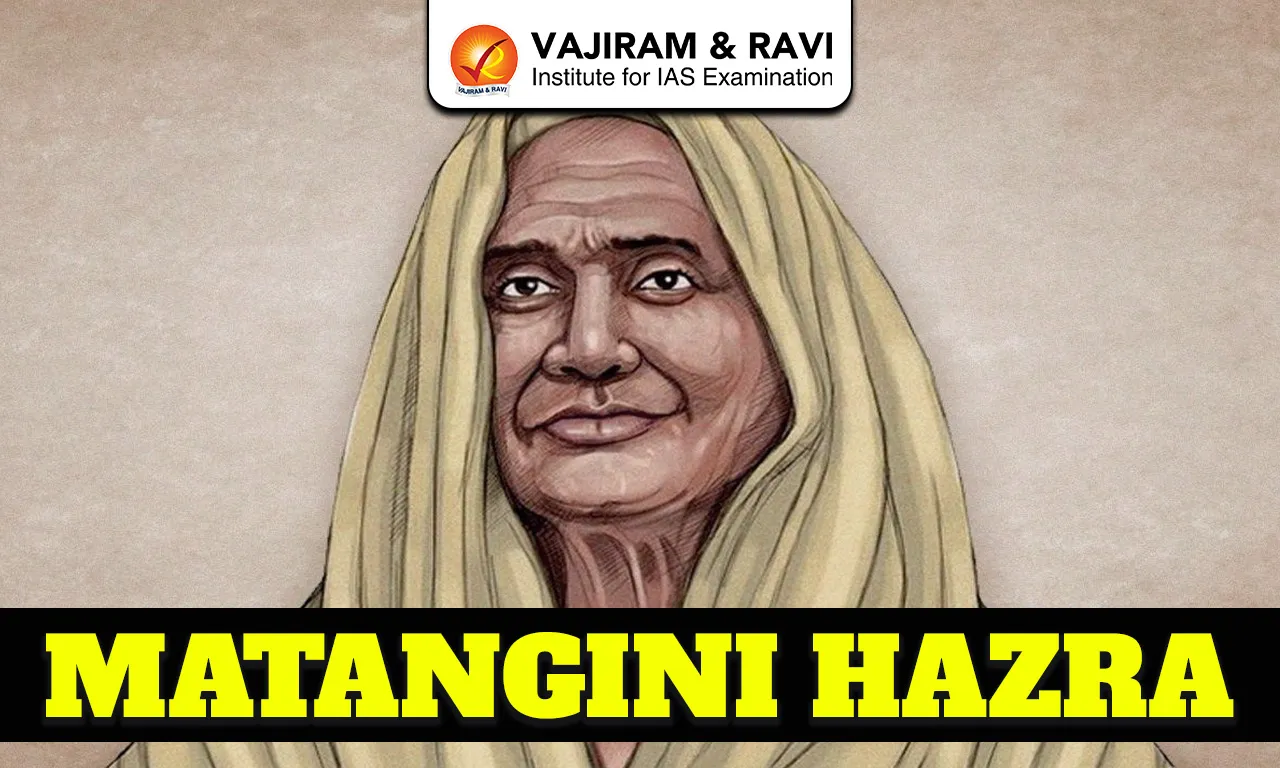
Matangini Hazra was an important women freedom fighter from Bengal. She played an active role in India’s national movement. She is popularly called as the “Gandhi Buri” (Old Lady Gandhi) of Bengal for her unwavering commitment to non-violence and civil disobedience.

Matangini Hazra Early Life

  • Matangini Hazra was born on 19 October 1870 in a small village in the Tamluk region of present-day West Bengal.
  • She belonged to a poor peasant family and had no formal education.
  • She married at a very young age to Trilochan Hazra, a 60 year old man and became a widow early in life at the age of 18.
  • After her husband’s death, she devoted herself to social service and later to the freedom struggle.
  • Matangini Hazra was deeply influenced by Mahatma Gandhi and Gandhian ideology of non-violence (Ahimsa) and civil disobedience and therefore she was popularly called as the “Gandhi Buri” (Old Lady Gandhi) of Bengal. 

Matangini Hazra Role in Freedom Struggle

Matangini Hazra became an active member of Indian National Congress and actively participated in India’s freedom struggle movement. 

  • She actively participated in the Non-Cooperation Movement (1920-22), Civil Disobedience Movement (1930-34) and the Quit India Movement (1942). 
  • During the Civil Disobedience Movement (10930-34) she was arrested for her role in the Salt Satyagraha movement in Bengal.
  • During the Quit India Movement (1942) she led a procession of thousands of freedom fighters, mostly women, to take over the Tamluk Police Station from British authorities. 
  • During the Tamluk procession, the British police opened fire on the unarmed demonstrators. Despite being shot multiple times, she continued advancing while chanting “Vande Mataram” and holding the Indian national flag.
  • She eventually succumbed to her injuries, becoming a martyr at the age of 72.

Matangini Hazra FAQs

Q1: Who was Matangini Hazra?

Ans: Matangini Hazra was an important women freedom fighter from Bengal who played an active role in India’s national movement.

Q2: Matangini Hazra was popularly known as?

Ans: Matangini Hazra was popularly known as “Gandhi Buri”

Q3: Why was Matangini Hazra called “Gandhi Buri”?

Ans: Matangini Hazra was called “Gandhi Buri” because she was deeply influenced by Mahatma Gandhi and Gandhian ideology of non-violence (Ahimsa) and civil disobedience.

Q4: Which major national movements did she participate in?

Ans: She took part in the Non-Cooperation Movement, Civil Disobedience Movement, and Quit India Movement.

Q5: Matangini Hazra was martyred during which Movement?

Ans: Matangini Hazra was martyred during the Quit India Movement (1942).

Sewa Singh Thikriwala (1886-1935), Biography, Contributions

Sewa Singh Thikriwala

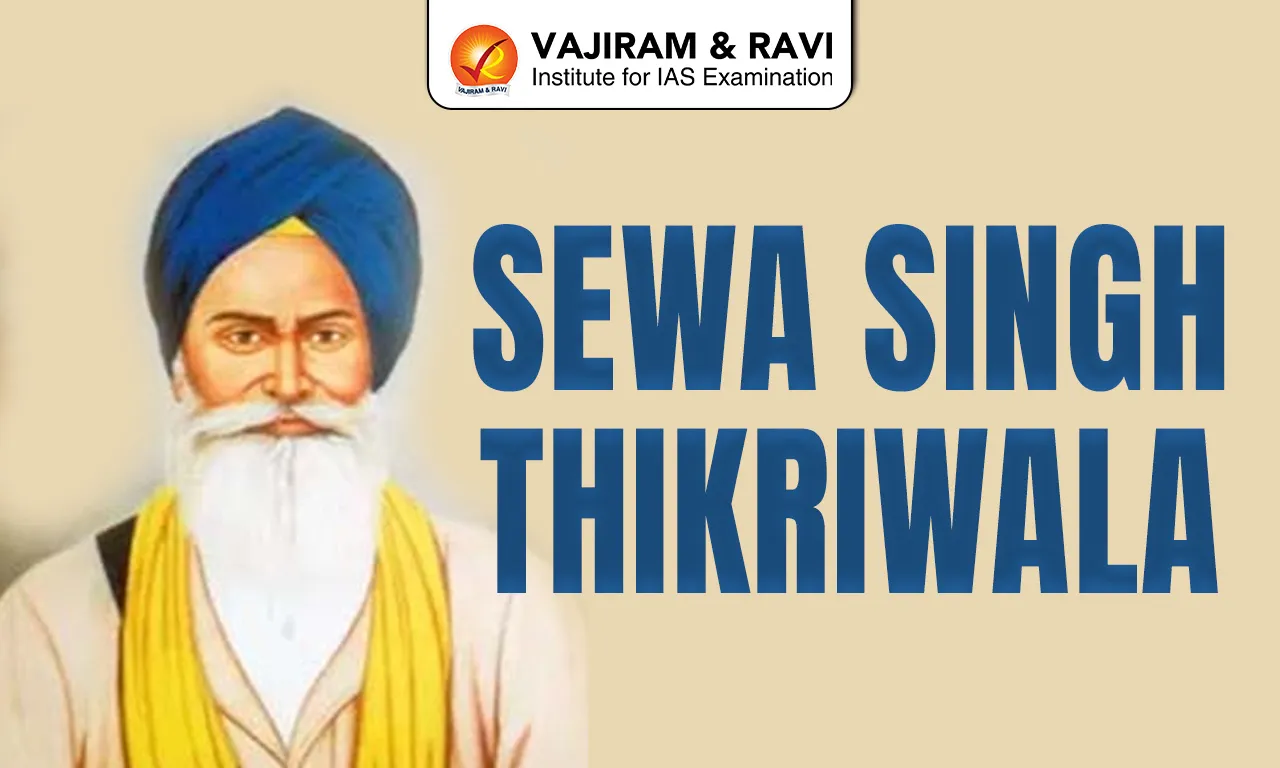
Sewa Singh Thikriwala was a leading figure of Punjab’s princely states reform movement in the early twentieth century. He emerged as a strong voice against autocratic rule in Patiala state. He connected religious reform with political awakening and became president of the Punjab Riyasat Praja Mandal. His imprisonment, repeated prosecutions and death in jail on 19 January 1935 made him a symbol of resistance in the Malwa region of Punjab.

Sewa Singh Thikriwala Biography

Sewa Singh Thikriwala was born in 1886 in Thikriwala village near Barnala in present Sangrur district to Dewa Singh, a senior court official under Maharaja Rajinder Singh of Patiala. After completing middle school, he joined the Hazuri department at Patiala but soon turned toward public service. Inspired by the Singh Sabha reform movement in 1911, he helped organise its first Diwan in his village and promoted Punjabi language teaching. He played a key role in laying the foundation of Gurdwara Thikriwala in 1912, completed within five years through large donations collected domestically and overseas.

Also Read: Narsinh Mehta

Sewa Singh Thikriwala Contributions

He played a decisive role in political mobilisation across princely Punjab through organised movements and institutional leadership.

  • Akali Leadership and Gurdwara Reform: After the Nankana Sahib tragedy on 21 February 1921, he actively joined the Akali Movement. He organised an Akali Jatha in Patiala and established close links with the Shiromani Akali Dal and the Shiromani Gurdwara Parbandhak Committee to support democratic management of gurdwaras.
  • Punjab Riyasat Praja Mandal Presidency: Inspired by the 1927 Kuthala incident, he founded the Punjab Riyasat Praja Mandal and became its first president. The organisation demanded civil liberties, reduction of oppressive taxation, peasant reforms, expansion of education and establishment of responsible government in princely territories.
  • National Level Political Engagement: He hosted major conventions at Lahore in 1929, Ludhiana in 1930 and Shimla in 1931. He participated in the 1929 All India Congress session, the 1931 All India People’s Conference and the 1932 Princely State People’s Association meeting, linking Punjab’s struggle with broader all India politics.
  • Confrontation with Patiala State: His direct criticism of the Maharaja led to confiscation of his property during the Shimla Conference period. Negotiations initiated by the Patiala ruler failed when he insisted on an elected assembly, showing his firm commitment to constitutional governance.
  • Repeated Imprisonments: In 1923, he was detained for three years in Lahore’s Shahi Qila. In 1926, he received three and a half years in Patiala Jail. In 1930, he was fined Rs 5,000 and sentenced to six years, though released after four months. Further detentions followed in 1931 for Sangrur Satyagraha and in 1932 for the Malerkotla agitation.
  • Final Sentence and Martyrdom: In August 1933, he was fined Rs 10,000 and awarded eight years of rigorous imprisonment for defying Patiala orders. After prolonged hunger strikes in 1926 and again during 1933-35 protesting jail ill treatment, he died inside Patiala Central Jail on 19 January 1935.
  • Anti Untouchability Efforts: He presided over the 1933 Anti Untouchability Conference at Raikot, showing his commitment beyond political rights toward social equality within Punjabi society.
  • Memorial: Every year, a martyrdom fair is organised in Thikriwala on 19 January. Guru Ka Langar started in 1912 still operates. A government high school bears his name and his life size statue stands near the Singh Sabha building on Patiala’s Mall Road. Plans have also been announced to convert his ancestral house into a memorial.

Sewa Singh Thikriwala FAQs

Q1: Who was Sewa Singh Thikriwala?

Ans: Sewa Singh Thikriwala (1886-1935) was a political activist from Patiala princely state in Punjab who led the Punjab Riyasat Praja Mandal and worked for civil liberties, responsible government and reforms in princely states.

Q2: What was the Punjab Riyasat Praja Mandal?

Ans: It was an organisation led by Sewa Singh Thikriwala that demanded protection of civil rights, reduction of heavy taxes, peasant reforms, expansion of education and establishment of elected and accountable government in princely states.

Q3: Why was Sewa Singh Thikriwala imprisoned multiple times?

Ans: He openly criticised the Patiala Maharaja and organised political movements. Between 1923 and 1933, he faced repeated arrests, heavy fines up to Rs 10,000 and long jail sentences for alleged rebellion.

Q4: How did Sewa Singh Thikriwala die?

Ans: He died on 19 January 1935 inside Patiala Central Jail after prolonged imprisonment and hunger strike, protesting against ill treatment and suppression of political rights in the princely state.

Q5: What role did Sewa Singh Thikriwala play in the Akali movement?

Ans: After the Nankana Sahib incident in 1921, he organised an Akali Jatha in Patiala and supported the movement for democratic control of gurdwaras, linking religious reform with political awakening in princely Punjab.

Gatka Martial Art, Origins, Key Details, other Martial Arts

Gatka Martial Art

Gatka is a traditional martial art of Punjab, mainly associated with the Sikh community. It involves the use of wooden sticks, swords and other traditional weapons. Gatka is not only a form of self-defence but also a part of Sikh cultural and religious heritage.

Gatka Martial Art Key Details

  • The word “Gatka” comes from the Persian word Khutka, meaning a leather-covered stick used in fencing.
  • It was introduced by the 6th Sikh Guru, Guru Hargobind, during the Mughal period as a system of self-defence. He also gave the concept of Miri-Piri, which means the balance between spiritual and temporal power.
  • The 10th Sikh Guru, Guru Gobind Singh, further strengthened this martial tradition and founded the Khalsa, a community of warriors dedicated to justice and protection of the weak.
  • Gatka developed as a safer and simplified form of Shastar Vidya. Instead of sharp swords, practitioners use wooden sticks (soti) and small shields (farri) for practice and safety. It is also known as Gatkabaazi.
  • The martial art combines stick fighting, weapon training and controlled combat techniques, while also teaching discipline, courage, resilience, self-control and honour.
  • Earlier, Gatka was mainly performed in gurudwaras, Nagar Kirtans and traditional akharas, but over time it developed into a sport with two forms - Virasat (traditional style) and Khed (sport style).
  • After the formation of the Gatka Federation of India in 2008, Gatka received official recognition as a sport and is now open to people of all religions.

Other Martial Arts in India

  • Kalaripayattu (Kerala) - It is one of the oldest martial arts of India. The word Kalari means a training ground or schoo It mainly teaches self-defence techniques, body control and physical fitness and includes both armed and unarmed combat.
  • Silambam (Tamil Nadu) - This martial art uses a variety of weapons, especially long bamboo sticks. Its movements are inspired by animals like the snake, tiger and eagle, showing speed and flexibility.
  • Thang-Ta (Manipur) - It is a traditional martial art of the Meitei community and is also called Huyen Langlon. It includes fighting with swords and spears as well as unarmed techniques known as Sarit Sarak.
  • Lathi (Punjab and Bengal) - This is a simple stick-based martial art practiced mainly in rural areas. It is now performed as a traditional sport in villages.
  • Mardani Khel (Maharashtra) - Developed by the Marathas, this martial art focuses on the use of swords and other traditional weapons. It is mainly practiced in Kolhapur.
  • Pari-Khanda (Bihar) - This style involves the use of sword and shield. It was started by Rajputs of Bihar and its movements are also seen in the traditional Chhau dance.

Gatka Martial Art FAQs

Q1: What is Gatka?

Ans: Gatka is a traditional martial art of Punjab linked with the Sikh community. It teaches self-defence using sticks and traditional weapons.

Q2: Who introduced Gatka?

Ans: It was introduced by Guru Hargobind and later promoted by Guru Gobind Singh.

Q3: What is Miri-Piri?

Ans: Miri-Piri means the balance between spiritual and worldly power, a concept given by Guru Hargobind.

Q4: When did Gatka become a sport?

Ans: It became a recognised sport after the formation of the Gatka Federation of India in 2008.

Q5: How is Gatka related to Shastar Vidya?

Ans: Gatka is a safer form of Shastar Vidya where wooden sticks replace sharp swords.

UPSC Daily Quiz 16 February 2026

[WpProQuiz 93]

UPSC Daily Quiz FAQs

Q1: What is the Daily UPSC Quiz?

Ans: The Daily UPSC Quiz is a set of practice questions based on current affairs, static subjects, and PYQs that help aspirants enhance retention and test conceptual clarity regularly.

Q2: How is the Daily Quiz useful for UPSC preparation?

Ans: Daily quizzes support learning, help in revision, improve time management, and boost accuracy for both UPSC Prelims and Mains through consistent practice.

Q3: Are the quiz questions based on the UPSC syllabus?

Ans: Yes, all questions are aligned with the UPSC Syllabus 2025, covering key areas like Polity, Economy, Environment, History, Geography, and Current Affairs.

Q4: Are solutions and explanations provided with the quiz?

Ans: Yes, each quiz includes detailed explanations and source references to enhance conceptual understanding and enable self-assessment.

Q5: Is the Daily UPSC Quiz suitable for both Prelims and Mains?

Ans: Primarily focused on Prelims (MCQ format), but it also indirectly helps in Mains by strengthening subject knowledge and factual clarity.

Kisan Drone, Features, Impact, Challenges, Way Forward

Kisan Drone

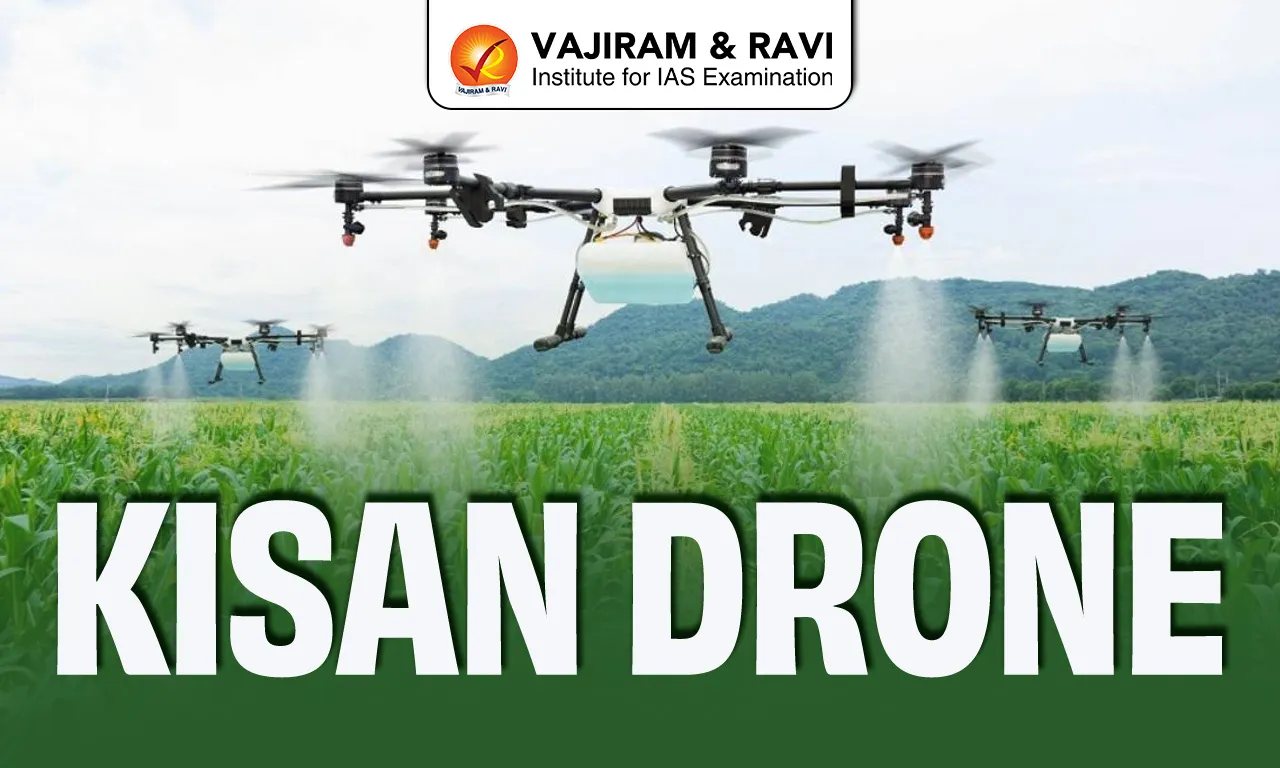
India’s agriculture sector is undergoing a technological transformation, and the Kisan Drone is at the center of this change. It is promoted by the Government of India and highlighted during the Kisan Drone Mahotsav 2022 by Narendra Modi, Kisan Drones are designed to modernize farming through precision spraying, crop monitoring, and faster farm-to-market connectivity.

Kisan Drone Features

Kisan Drones are advanced unmanned aerial vehicles (UAVs) specially designed for agricultural operations such as spraying, crop monitoring, and field mapping.

  • Equipped with a chemical tank for spraying pesticides, insecticides, and liquid fertilizers.
  • Carrying capacity generally ranges between 5 kg to 10 kg, depending on the model.
  • Capable of spraying one acre of land in approximately 15 minutes, saving time and labor.
  • Ensures uniform and controlled spraying, reducing chemical wastage.
  • Operates using GPS-based navigation for accurate field coverage.
  • Supports automated flight paths and pre-programmed routes.
  • Reduces direct exposure of farmers to harmful chemicals, improving safety.
  • Can be used for crop health monitoring and damage assessment.
  • Assists in land mapping and digitization of records under schemes like SWAMITVA Scheme.

Impact on Agriculture

The introduction of Kisan Drones has brought a technological shift in Indian agriculture by promoting precision farming and reducing manual dependency. The impact of Kisan Drone Scheme in agriculture are:

  • Increases crop productivity through accurate and timely spraying of pesticides and nutrients.
  • Ensures uniform application of chemicals, leading to better crop health and balanced growth.
  • Reduces labor dependency, especially during peak agricultural seasons.
  • Saves time by covering large areas quickly compared to manual spraying.
  • Minimizes farmers’ exposure to harmful pesticides, improving health and safety.
  • Helps in early detection of crop diseases, pest attacks, and nutrient deficiencies.
  • Supports faster crop damage assessment during floods, droughts, or natural disasters.
  • Assists in agricultural insurance claim verification through aerial surveys.
  • Reduces input costs by preventing excessive use of fertilizers and pesticides

Also Read: Drone Technology – Drones and UAVs Types, Advantages

Kisan Drone Challenges

While Kisan Drones offer significant potential to modernize Indian agriculture, their large-scale adoption faces practical and structural hurdles.

High Initial Cost

  • Agricultural drones are expensive for individual farmers.
  • Costs include purchase price, batteries, spare parts, and maintenance.
  • Small and marginal farmers may not afford them without subsidies.

Limited Awareness in Rural Areas

  • Many farmers are unaware of the benefits and operation of drones.
  • Lack of demonstration projects reduces confidence in the technology.

Skill and Training Gap

  • Operating drones requires technical knowledge and certified training.
  • Rural youth need structured training programs to become licensed drone pilots.

Regulatory and Compliance Issues

  • Drone usage must follow aviation rules and airspace restrictions.
  • Obtaining permissions and registrations may be time-consuming.

Connectivity and Digital Infrastructure Problems

  • Poor internet connectivity in rural areas affects real-time monitoring.
  • Lack of digital literacy limits effective utilization of drone data.

Battery Life and Technical Limitations

  • Limited battery backup restricts coverage area per flight.
  • Technical malfunctions may delay operations during peak farming seasons.

Weather Dependency

  • Strong winds, rain, or extreme temperatures can disrupt drone operations.
  • Weather unpredictability affects scheduling of spraying activities.

Income Uncertainty

  • Experts question whether drones alone can significantly increase farmers’ income.
  • Market price fluctuations may offset productivity gains.

Unequal Benefit Distribution

  • Concerns exist that agrochemical companies may benefit more from increased spraying.
  • Without proper regulation, overuse of chemicals may occur.

Way Forward

  • Increase government subsidies and financial assistance for small and marginal farmers to make drones affordable.
  • Promote drone services through Farmer Producer Organizations (FPOs) and cooperative societies to enable shared usage.
  • Establish dedicated drone training and certification centers in rural areas to build technical skills among youth.
  • Integrate drone data with agricultural advisory systems for better crop planning and pest management.
  • Improve rural digital infrastructure, including high-speed internet connectivity, to support real-time monitoring.
  • Encourage public-private partnerships to reduce costs and promote innovation in agricultural drone technology.
  • Provide easy access to credit facilities for purchasing and maintaining drones.
  • Develop clear and farmer-friendly regulatory guidelines for drone operations.
  • Promote research and development to improve battery life, payload capacity, and weather resistance.

Kisan Drone FAQs

Q1: What is a Kisan Drone?

Ans: A Kisan Drone is an unmanned aerial vehicle used for spraying pesticides, fertilizers, crop monitoring, and transporting agricultural produce.

Q2: How much land can a Kisan Drone cover?

Ans: A Kisan Drone can spray approximately one acre of land in about 15 minutes.

Q3: What is the carrying capacity of a Kisan Drone?

Ans: Most Kisan Drones have a carrying capacity of 5–10 kg, depending on the model.

Q4: How does a Kisan Drone help farmers?

Ans: It saves time, reduces labor costs, ensures uniform spraying, and improves crop monitoring.

Q5: Are Kisan Drones affordable for small farmers?

Ans: The government provides subsidies and financial assistance to make drones accessible, but affordability remains a challenge for small farmers.

AI Impact Summit 2026, Importance, Three Sutras, Seven Chakras

AI Impact Summit 2026

The Ministry of Electronics and Information Technology (MeitY) is hosting AI Impact Summit 2026 on 16-20 February 2026 at Bharat Mandapam, New Delhi. It will be the first global AI summit held in the Global South.The summit aims to promote inclusive and responsible use of AI through global cooperation.

India AI Impact Summit 2026

  • The India-AI Impact Summit 2026, announced by Prime Minister Narendra Modi, will be held on 16-20 February 2026 in New Delhi. It will be the first global AI summit hosted in the Global South.
  • The summit builds on earlier global meetings such as the UK AI Safety Summit, AI Seoul Summit, France AI Action Summit and the Global AI Summit on Africa. Its aim is to move beyond only discussions and focus on practical results, stronger cooperation and real progress in global AI governance.
  • The summit plans to ensure that AI supports inclusive growth, social development and people-centered innovation, while also protecting the environment. It also aims to strengthen the voice of developing countries so that AI benefits are shared equally across the world.
  • At the same time, it recognizes challenges such as job loss, bias in AI systems and rising energy use. Therefore, the summit focuses on taking concrete steps to manage both the opportunities and risks of Artificial Intelligence.

AI Impact Summit 2026 Need

  • Artificial Intelligence (AI) is rapidly transforming society, economy and governance. It offers major opportunities for development, especially for developing countries, by improving access to services through multi-lingual and digital platforms.
  • In recent years, global efforts like the G20 AI Principles, UN resolutions and the Global Partnership on AI (GPAI) have focused on promoting responsible and ethical use of AI.
  • However, a “Global AI Divide” still exists, as AI resources are concentrated in a few developed countries and big corporations. AI also creates challenges such as job loss, bias and high energy consumption.
  • Therefore, there is a need for coordinated global action to ensure AI is inclusive, fair and beneficial for all.

AI Impact Summit 2026 Three Sutras

The India-AI Impact Summit is based on three main guiding principles, called “Sutras.” These Sutras explain how Artificial Intelligence (AI) should be used for the benefit of all through global cooperation.

  1. People
  • The People Sutra focuses on human welfare. It says that AI should respect cultural diversity, protect human dignity and include everyone in its design and use. Technology must remain human-centered and promote safety, trust and equal benefits for society.
  1. Planet
  • The Planet Sutra highlights environmental responsibility. It calls for the responsible use of AI so that it reduces resource use and helps in climate action and environmental protection. AI development should support global sustainability and not harm the planet.
  1. Progress
  • The Progress Sutra aims at inclusive development. It sees AI as a tool for economic growth and social progress. It supports equal access to AI resources and encourages the use of AI in sectors like health, education, agriculture and governance for overall development.

AI Impact Summit 2026 Seven Chakras of the India

Based on the three main Sutras-People, Planet and Progress, the Summit discussions will focus on seven key areas called “Chakras.” These Chakras represent important areas of international cooperation to ensure that AI brings real and practical benefits to society.

  • Human Capital: AI is changing jobs, creating new roles but replacing old ones, risking an “AI divide.” The Human Capital Chakra promotes skills, AI literacy and fair access to AI benefits for all workers.
  • Science: AI is changing scientific research in areas like health, climate and materials. The Science Chakra promotes global collaboration, clear standards and using AI discoveries for real-world benefits.
  • Resilience, Innovation and Efficiency: As AI use grows, it can harm the environment and affect fair development. The Resilience, Innovation & Efficiency Chakra promotes sustainable, efficient AI systems that work well even with limited resources.
  • Inclusion for Social Empowerment: AI can boost social and economic progress if used inclusively. The Inclusion for Social Empowerment Chakra promotes designing AI that meets the needs of all people fairly.
  • Democratizing AI Resources: AI needs large infrastructure like computing power and data systems, which are mostly in a few countries, creating global inequality. The Democratizing AI Resources Chakra aims to make these resources affordable and accessible to all nations, so everyone can benefit from AI progress.
  • Economic Growth and Social Good: AI can boost economic growth and support social development. The Economic Growth and Social Good Chakra aims to use AI to improve services, increase productivity and promote fair and inclusive development.
  • Safe and Trusted AI: Promoting ethical, secure and reliable AI systems that protect privacy and reduce bias.

Earlier AI Summits

  • The AI Safety Summit 2023 was held in England to discuss risks from advanced (frontier) AI. Twenty-eight countries, including the US, China, India and the EU, signed the Bletchley Park Declaration, the first global agreement on AI safety.
  • The declaration recognized both the benefits and risks of AI, especially in cybersecurity and misinformation, and called for international cooperation and regular summits.
  • India supported risk-based and ethical AI regulation and referred to the proposed Digital India Act, 2023 to regulate AI platforms.
  • This was followed by the AI Seoul Summit (2024), where countries discussed innovation, inclusiveness and responsible AI development. The focus expanded from safety to broader governance and global collaboration.
  • In 2025, the AI Action Summit in Paris emphasized practical cooperation, responsible AI deployment and shared global standards. It highlighted the importance of ensuring that AI benefits are distributed fairly among nations. The 2nd India-France AI Policy Roundtable was held on the sidelines of the summit.

Significance of AI for India

Artificial Intelligence (AI) has become an important tool for India’s economic growth, better governance and improved quality of life. It supports the goals of People, Planet and Progress by promoting inclusive and sustainable development.

AI in Healthcare

  • AI improves healthcare services, especially in rural areas. It supports telemedicine, early disease detection (like TB and cancer), faster diagnosis, and drug discovery. It also helps in predicting disease outbreaks and reducing treatment costs.

AI in Agriculture & Rural Economy

  • AI helps farmers through weather prediction, pest alerts, crop monitoring using drones, and market price forecasting. Mobile-based advisories and regional language tools provide real-time support to farmers.

AI in Education

  • AI enables personalized learning and provides content in regional languages. Platforms like DIKSHA use AI to make education more accessible and inclusive.

AI in Finance

  • AI strengthens digital payments through fraud detection, improves credit access for the unbanked, and provides 24/7 banking support through chatbots.

AI in Governance

  • AI improves public service delivery, smart city management, translation of court judgments, and efficient case management in the judiciary.
  • Recognizing its importance, the Government of India launched initiatives like the IndiaAI Mission to build AI infrastructure, promote indigenous AI models, and develop skilled manpower.

AI Impact Summit 2026 Key Highlights

  • The AI Impact Expo at Bharat Mandapam would be inaugurated by the Prime Minister, showcasing newly developed Indian AI language models, including sovereign AI models by Sarvam AI and BharatGen.
  • More than 840 exhibitors, including national delegations, tech companies, AI startups and research labs, showcased their AI products and innovations.
  • The Bharat-VISTAAR (Virtually Integrated System to Access Agricultural Resources) tool would be launched in Jaipur. It is an AI-based multilingual platform to help farmers with crop planning, pest control, weather updates and government schemes through a 24/7 AI assistant named Bharati. It initially supports Hindi and English and will later expand to regional languages.
  • The tool also allows stakeholder collaboration and feedback to improve agricultural policies and research.
  • The India AI Readiness Assessment Methodology (RAM) Report, prepared by UNESCO in partnership with the IndiaAI Mission and Ikigai Law, would be released. It will assess India’s preparedness for ethical and responsible AI and give policy recommendations.
  • AI4Bharat (IIT Madras) announced a new benchmark to evaluate speech recognition systems across 15 Indian languages.

AI Impact Summit 2026 FAQs

Q1: What is the AI Impact Summit 2026?

Ans: It is a global AI governance summit hosted by India in February 2026, focusing on inclusive and responsible AI. It is the first such summit held in the Global South.

Q2: Why is the summit needed?

Ans: AI is growing fast but benefits are unequal and risks like job loss and bias exist. The summit aims to ensure fair and coordinated global AI development.

Q3: What are the Three Sutras?

Ans: People (human-centered AI), Planet (environment-friendly AI), and Progress (inclusive economic growth through AI).

Q4: What are the Seven Chakras?

Ans: They focus on Human Capital, science, Resilience, Innovation and Efficiency, inclusion, Democratizing AI Resources, AI for economic and social good and Safe and Trusted AI.

Q5: How is it linked to earlier AI summits?

Ans: It builds on earlier global AI meetings in the UK, Seoul and Paris, moving from safety discussions to practical outcomes and Global South leadership.

Mannathu Padmanabhan (1878-1970), Biography, Contributions

Mannathu Padmanabhan

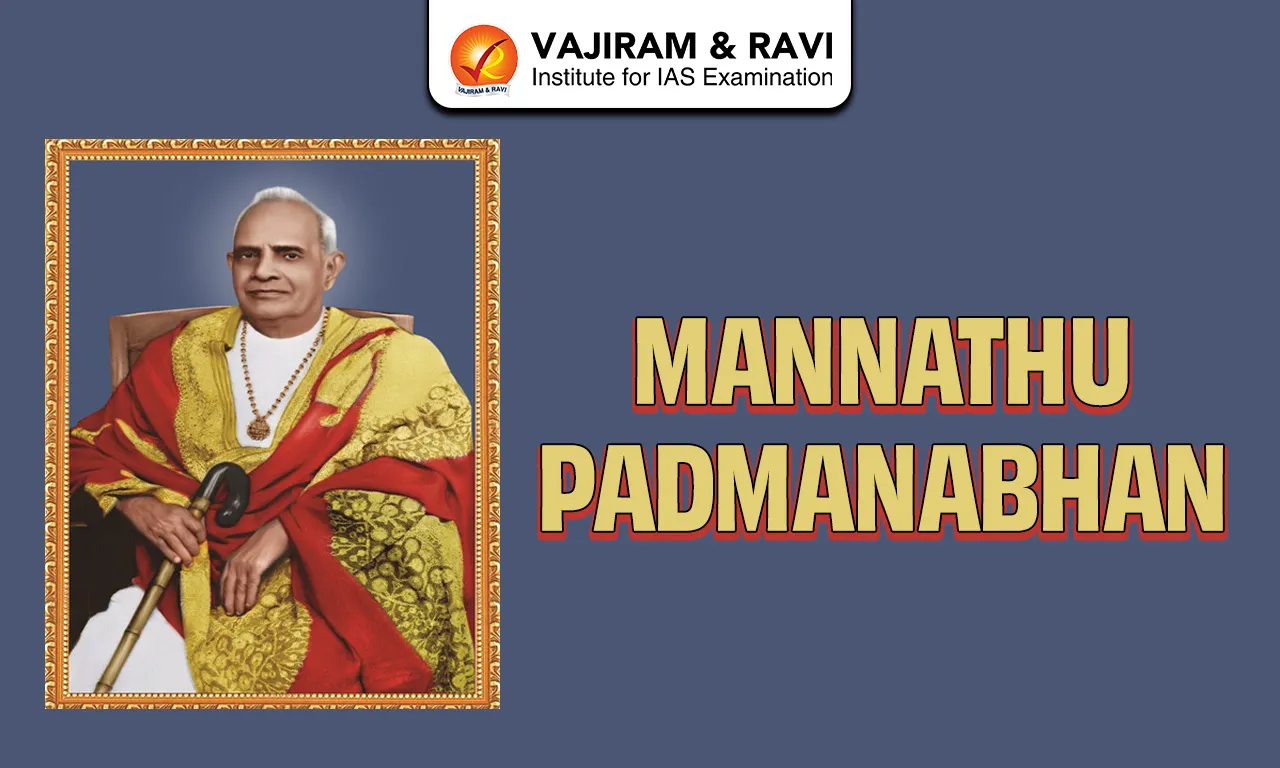
Mannathu Padmanabhan was a prominent social reformer and freedom fighter from Kerala who dedicated his life to equality, dignity and national progress. He emerged as a key figure challenging caste discrimination and social exclusion in the early twentieth century. He was deeply influenced by Mahatma Gandhi and adopted Satyagraha as a powerful instrument of moral resistance. His birth anniversary on 2 January is observed as Mannam Jayanti, reflecting his enduring public legacy across generations.

Mannathu Padmanabhan Biography

Mannathu Padmanabhan was born on 2 January 1878 in Perunna village, Changanacherry, in Kottayam district of erstwhile Travancore to Easwaran Namboothiri and Mannathu Parvathy Amma. He began his professional journey as a school teacher in 1893 and later shifted to legal practice in Magistrate Courts in 1905. In 1914, he founded the Nair Service Society to organise and reform the Nair community, which constituted 12.10% of Kerala’s population as per the 2011 data. He served the organisation as secretary for 31 years and later as president. He passed away at the age of 92 on 25 February 1970.

Mannathu Padmanabhan Contributions

Mannathu Padmanabhan transformed social reform into organised community action through institutions, mass mobilisation and legislative engagement.

  • Nair Service Society: On 31 October 1914, he established the Nair Service Society to promote education, discipline and social reform among Nairs. He revived Karayogams as grassroots units, institutionalising community organisation and long term social upliftment.
  • Legal Reforms: During 1924-25, the NSS persuaded the Travancore government to enact the Nair Regulation, restructuring the matrilineal Marumakkathayam system and ensuring equitable property division among children, modernising family law practices.
  • Anti Untouchability: He actively supported the Vaikom Satyagraha (1924-25) demanding public road access near temples and played a crucial role in the Guruvayur Satyagraha (1931-32), strengthening movements against caste based exclusion.
  • Temple Entry: He led the Savarnajatha Satyagraha advocating temple access for oppressed communities, contributing to the broader climate that resulted in progressive temple entry reforms in Travancore.
  • Freedom Movement Participation: Associated with the Indian National Congress, he joined national agitations including the Civil Disobedience Movement and was arrested on 14 June 1947 for his involvement in political protests in Travancore.
  • Administrative Leadership: As the first President of the Travancore Devaswom Board, he revitalised several temples that had declined in administration and functioning, ensuring systematic governance of religious institutions.
  • Legislative and Political Role: He became a member of the Travancore Legislative Assembly in 1949 and later played a decisive role in the 1959 Vimochana Samaram, which led to the dismissal of the communist government under Article 356.
  • Regional Political Contribution: In 1964, he was instrumental in forming Kerala Congress, regarded as India’s first regional political party, marking a shift toward state based political mobilisation.
  • Literary Works and Writings: He also contributed through influential publications including Ente Jeevitasmaranakal (1989), his autobiography; Mannattinte Sampurnakrithikal (1978), a compilation of complete works; Mannathu Padmanabhante Prasangangal (1982), a collection of speeches; and Mār Mātyūs Attānāsyōsint̲e Pañcakalyāṇi: oru nirūpaṇaṃ (1951), a critical study reflecting his intellectual depth.

Mannathu Padmanabhan Awards and Honours

Mannathu Padmanabhan received national recognition for lifelong service in social reform and nation building initiatives. The major awards and recognition are:

  • Padma Bhushan 1966: The Government of India honoured him with the Padma Bhushan in 1966 for distinguished service in social work and public affairs, acknowledging decades of reformist leadership.
  • Bharata Kesari Title: The President of India conferred upon him the title Bharata Kesari, meaning Lion of India, recognising his courage in fighting social injustice and promoting unity.
  • Mannam Jayanti Observance: His birth anniversary on 2 January is celebrated annually and the NSS headquarters at Perunna hosts commemorative events highlighting his reformist philosophy.
  • Memorial: His Samadhi at NSS Headquarters in Changanacherry stands as a memorial site, symbolising his moral authority and lasting imprint on Kerala’s social and political history.

Mannathu Padmanabhan FAQs

Q1: Who was Mannathu Padmanabhan?

Ans: Mannathu Padmanabhan was a Kerala based social reformer and freedom fighter who worked against caste discrimination and founded the Nair Service Society in 1914.

Q2: What is the Nair Service Society (NSS)?

Ans: The Nair Service Society is a community organisation established on 31 October 1914 to promote education, discipline and social reform among the Nair community.

Q3: What role did Mannathu Padmanabhan play in anti untouchability movements?

Ans: He supported the Vaikom Satyagraha (1924-25) and Guruvayur Satyagraha (1931-32), advocating temple entry and equal rights for oppressed communities.

Q4: Which political movements was Mannathu Padmanabhan associated with?

Ans: He participated in the Indian national movement in Travancore, joined the Indian National Congress and was arrested on 14 June 1947 for his activism.

Q5: What awards did Mannathu Padmanabhan receive?

Ans: He was awarded the Padma Bhushan in 1966 and was honoured with the title Bharata Kesari by the President of India for his contributions to social reform.

Mission Kakatiya, Background, Strategy, Impact, Significance

Mission Kakatiya

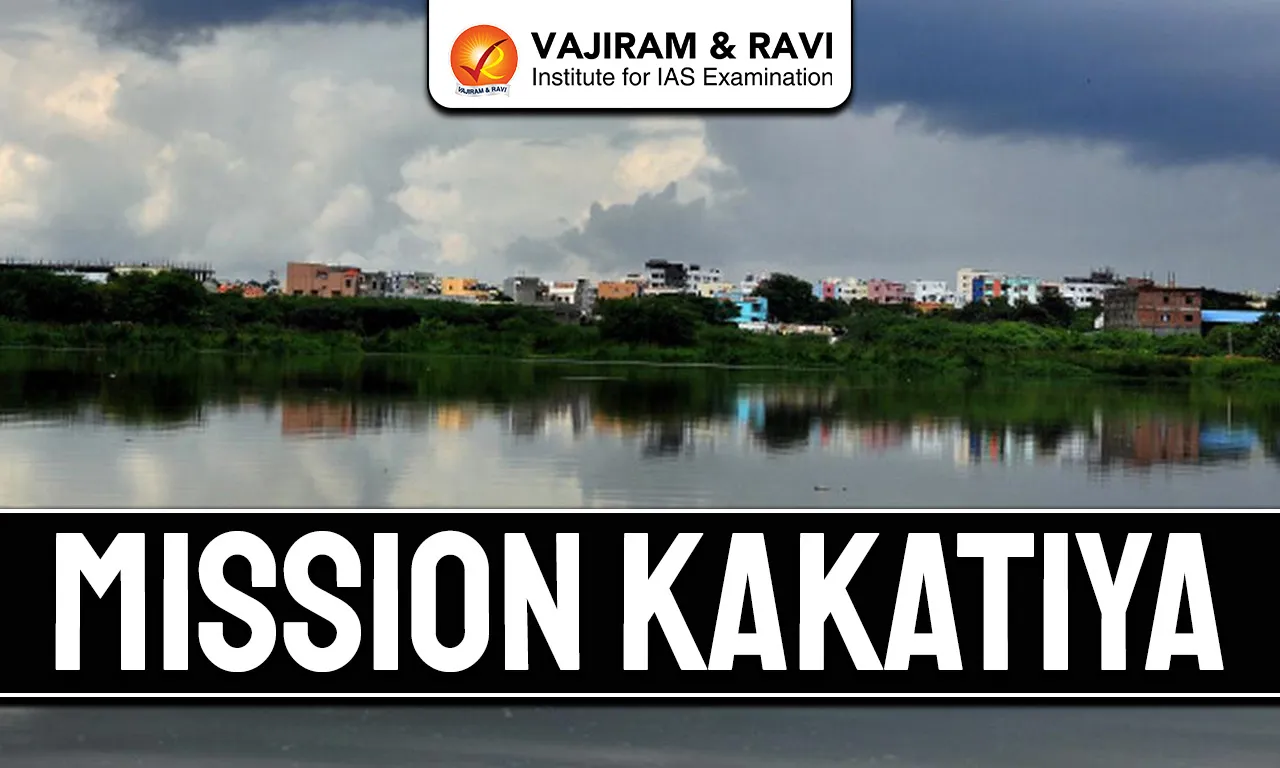
Mission Kakatiya is a large-scale tank restoration and rejuvenation programme launched by the Government of Telangana in 2015. It aims to restore traditional irrigation tanks that have historically supported agriculture and rural livelihoods. The programme focuses on reviving minor irrigation sources to improve water security and agricultural productivity across the state.

Mission Kakatiya Historical Background

  • The programme is named after the historic Kakatiya dynasty, which ruled the Telangana region between the 12th and 14th centuries.
  • The Kakatiya rulers developed an advanced and decentralized irrigation system based on thousands of artificial tanks to store rainwater.
  • These tanks were constructed scientifically, considering slope, catchment area, and rainfall pattern to ensure maximum water storage.
  • A unique feature of their system was the “chain tank system,” where overflow from one tank would automatically fill another downstream.
  • Tank irrigation became the backbone of agriculture in the region due to semi-arid climate and uneven rainfall.
  • During later periods and especially after the colonial era, many tanks were neglected, leading to silt accumulation and structural damage.
  • Over time, reduced storage capacity of tanks forced farmers to depend heavily on borewells, resulting in groundwater depletion.
  • After the formation of Telangana in 2014, reviving the historic tank system became a priority to restore irrigation potential and rural livelihoods.
  • Mission Kakatiya was thus conceptualized to restore these traditional water bodies and revive the legacy of sustainable water management practiced during the Kakatiya period.

Also Read: Solar Charkha Mission

Mission Kakatiya Implementation Strategy and Targets

Mission Kakatiya was inaugurated by Chief Minister K. Chandrashekhar Rao at Sadashiva Nagar Village with a clear phased implementation plan. The government identified 46,531 minor irrigation tanks for restoration and aimed to restore approximately 9,306 tanks every year, covering 20% annually. The goal was to restore nearly 10 lakh acres of gap ayacut under irrigation within five years.

  • Total tanks identified: 46,531 across the state.
  • Annual restoration target: Around 9,306 tanks (20% each year).
  • Aim to bring 10 lakh acres of additional land under irrigation.

Mission Kakatiya Agricultural and Economic Impact

Mission Kakatiya has significantly improved irrigation coverage and agricultural productivity across Telangana. By restoring tanks and increasing water availability, the programme has strengthened rural incomes and revitalized the local economy.

  • Increased irrigation potential leading to higher crop yields.
  • Expansion of cultivable land under assured irrigation.
  • Promotion of multi-cropping and crop diversification.
  • Improved soil fertility due to distribution of nutrient-rich tank silt.
  • Reduction in input costs such as fertilizers and electricity.
  • Higher and more stable income for small and marginal farmers.
  • Growth in allied activities like fisheries and livestock rearing.
  • Generation of rural employment during restoration and farming activities.

Also Read: National Critical Minerals Mission

Mission Kakatiya Significance

Mission Kakatiya holds great significance as a sustainable water management initiative in Telangana. It revives traditional irrigation systems while addressing modern challenges like water scarcity, groundwater depletion, and rural distress.

  • Revives the historic tank irrigation system developed during the rule of the Kakatiya dynasty.
  • Strengthens water security in a semi-arid region with uneven rainfall.
  • Enhances groundwater recharge and improves the overall water table.
  • Reduces overdependence on borewells and saves electricity in agriculture.
  • Improves agricultural productivity and farmer incomes.
  • Promotes community participation in water resource management.
  • Supports climate resilience by acting as a buffer during drought years.
  • Contributes to ecological balance by restoring natural water bodies.
  • Complements large irrigation projects like the Kaleshwaram Lift Irrigation Scheme.
  • Ensures inter-generational equity by conserving water resources for future generations.

Mission Kakatiya FAQs

Q1: What is Mission Kakatiya?

Ans: Mission Kakatiya is a tank restoration and rejuvenation programme launched by the Government of Telangana in 2015. It aims to revive minor irrigation tanks to improve water storage, agriculture, and groundwater levels.

Q2: Why is it called Mission Kakatiya?

Ans: The programme is named in honor of the historic Kakatiya dynasty, which built thousands of irrigation tanks in the region using advanced water management techniques.

Q3: When was Mission Kakatiya launched?

Ans: It was launched in March 2015 by Chief Minister K. Chandrashekhar Rao at Sadashiva Nagar Village.

Q4: What are the main objectives of Mission Kakatiya?

Ans: The key objectives include restoring irrigation potential, increasing farmers’ income, improving groundwater recharge, and promoting sustainable water management.

Q5: How does Mission Kakatiya help farmers?

Ans: It increases irrigation coverage, improves soil fertility through nutrient-rich silt distribution, reduces input costs, and enhances crop yields.

Saakshar Bharat Mission, Objectives, Features, Framework

Saakshar Bharat Mission

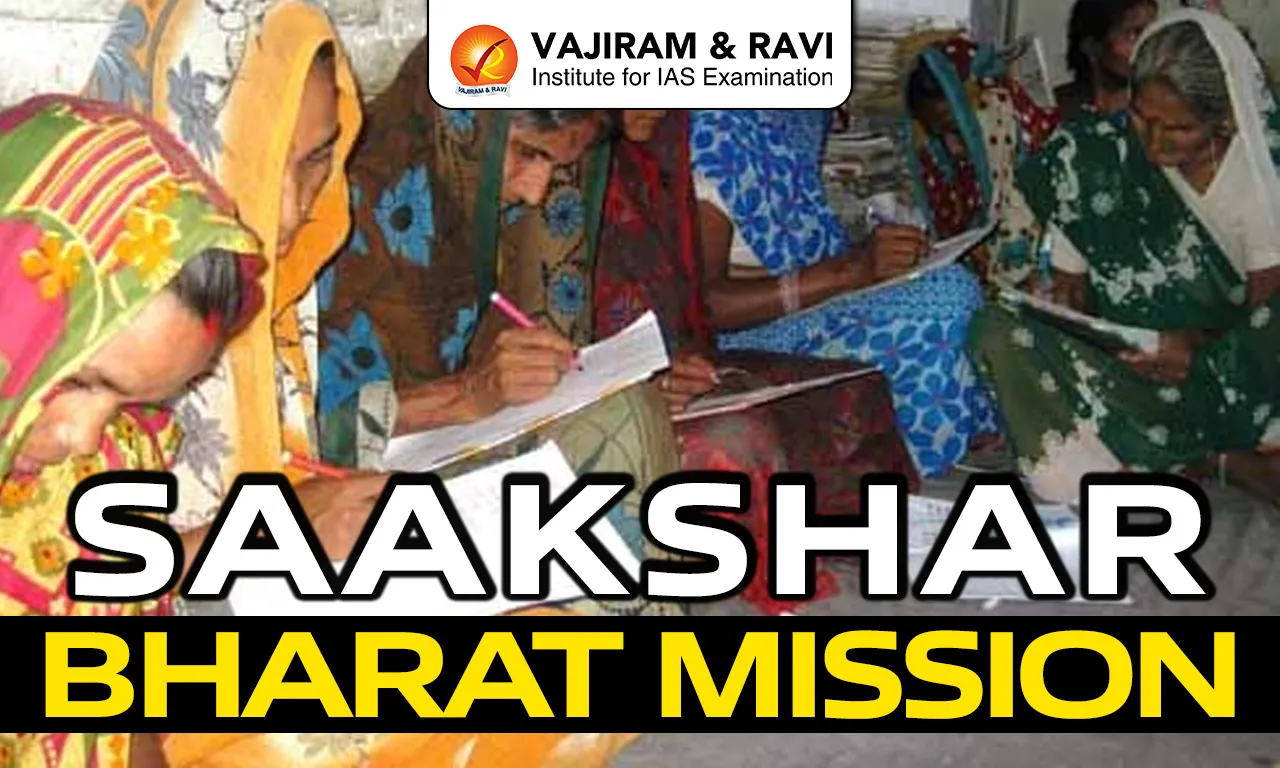
The Saakshar Bharat Mission was one of the most important literacy programmes launched by the Government of India to reduce adult illiteracy, especially among women. In a country where millions of adults missed formal education due to poverty and social barriers, this mission aimed to provide a second chance to learn reading, writing, and basic skills.

Saakshar Bharat Mission

The Saakshar Bharat Mission (also known as Saakshar Bharat Programme) was launched on 8 September 2009 by the Government of India on International Literacy Day. It was implemented under the Ministry of Human Resource Development (now Ministry of Education).

The mission mainly focused on adult education, especially targeting women in rural areas who were left out of the formal schooling system.

It replaced the earlier National Literacy Mission and aimed to further reduce illiteracy across India.

Saakshar Bharat Mission Objectives

The main objective of the Saakshar Bharat Mission was to increase the literacy rate among adults aged 15 years and above, especially women. The mission aimed to achieve an overall literacy rate of 80% and reduce gender disparity in literacy to 10%.

  • Promote functional literacy (reading, writing, and arithmetic skills).
  • Reduce the gender gap in literacy.
  • Provide opportunities for basic education and skill development.
  • Encourage lifelong learning.
  • Strengthen community participation in education.
  • Empower women socially and economically.

Saakshar Bharat Mission Features

The Saakshar Bharat Mission was designed to reduce adult illiteracy in India, especially among rural women, through community-based learning and functional education. It focused on providing basic reading, writing, numeracy skills, and lifelong learning opportunities to disadvantaged groups.

  1. Special focus on women literacy, with nearly 70% of beneficiaries being women to reduce the gender gap in education.
  2. Targeted adults aged 15 years and above who missed formal schooling opportunities.
  3. Covered around 410 districts with female literacy rate below 50% (as per 2001 data).
  4. Implemented through Gram Panchayats to ensure strong local participation and community ownership.
  5. Appointed local volunteers called “Preraks” to motivate and teach adult learners.
  6. Included four major components: basic literacy, basic education (up to Class 8), vocational skills, and continuing education.
  7. Encouraged skill development programmes to improve employment opportunities and self-reliance.
  8. Provided continuing education centres for lifelong learning and awareness programmes.
  9. Adopted a Centre-State funding pattern of 75:25 (90:10 for North-Eastern states).
  10. Promoted awareness about health, sanitation, financial literacy, and government welfare schemes.
  11. Focused on socially disadvantaged groups such as SC, ST, minorities, and rural poor populations.

Saakshar Bharat Mission Institutional Framework

  • Multi-tier Structure: The Saakshar Bharat Mission was implemented through a four-level structure: national, state, district, and village, to ensure proper coordination and monitoring at every stage.
  • National Literacy Mission Authority (NLMA): Acted as the apex body responsible for policy direction, planning, funding support, and overall supervision of the mission at the national level.
  • State Literacy Missions: Managed implementation at the state level, adapted strategies according to regional needs, and monitored district performance.
  • District Lok Shiksha Samitis: Supervised literacy activities at the district level, conducted enrolment drives, reviewed progress, and ensured quality control.
  • Adult Education Centres (AECs): Established mainly in Gram Panchayat buildings to provide easy local access to literacy classes for rural adults.
  • Volunteer Teachers (Preraks): Locally selected and trained volunteers conducted classes, motivated learners, and carried out continuous asssessment.
  • Community Participation: Panchayats, NGOs, self-help groups, and local leaders actively supported enrolment and awareness campaigns, ensuring local ownership and relevance.

Saakshar Bharat Mission Achievements and Contributions

  • Rise in Adult Literacy: Significant improvement in literacy rates in targeted districts, especially among rural populations.
  • Increased Female Participation: Strong growth in women enrolment, helping reduce gender gaps in education.
  • Community Learning Environment: Development of vibrant village-level learning centres promoting continuous education.
  • Empowerment Through Skills: Integration of livelihood-linked learning helped neo-literates improve employment opportunities.
  • Strengthened Institutional System: Built stronger frameworks for future adult education programmes in India.
  • Functional and Relevant Content: Literacy content included topics like health awareness, financial literacy, sanitation, and civic participation.
  • Social and Economic Empowerment: Helped adults become more confident, informed, and actively involved in community decision-making.

Saakshar Bharat Mission FAQs

Q1: What is Saakshar Bharat Mission?

Ans: Saakshar Bharat Mission was a government programme launched to promote adult literacy in India, especially among rural women and disadvantaged groups.

Q2: When was Saakshar Bharat Mission launched?

Ans: It was launched on 8 September 2009 on the occasion of International Literacy Day.

Q3: Which ministry implemented the mission?

Ans: The mission was implemented by the Ministry of Human Resource Development (now Ministry of Education) through the National Literacy Mission Authority.

Q4: Who were the main beneficiaries of the mission?

Ans: Adults aged 15 years and above who were non-literate, with special focus on rural women, SC/ST communities, minorities, and economically weaker sections.

Q5: What was the main objective of Saakshar Bharat Mission?

Ans: The main objective was to increase adult literacy to 80% and reduce the gender gap in literacy.

Difference between Capital Receipt and Revenue Receipt

Difference between Capital Receipt and Revenue Receipt

In the government budget, receipts refers to the money received by the government. These receipts can be broadly classified into Capital Receipts and Revenue Receipts based on their nature and impact on government finances. The Difference between Capital Receipt and Revenue Receipt has been discussed below in detail in the article.

Difference Between Capital Receipts and Revenue Receipts

Capital receipts and revenue receipts are two different types of income received by a government or a business. They serve different purposes and affect financial accounts in different ways. The key differences between capital receipts and revenue receipts are discussed below:

Difference Between Capital Receipts and Revenue Receipts
Basis of Difference Capital Receipts Revenue Receipts

Meaning

Money received from selling assets or taking loans.

Money received from regular day-to-day activities.

Source

Sale of land, buildings, machinery, borrowings, disinvestment.

Taxes, sale of goods and services, fees, interest, dividends.

Nature

Non-recurring and occasional.

Recurring and regular.

Purpose

Used for long-term investment or repayment of long-term debt.

Used for meeting daily expenses like salaries, pensions, subsidies.

Effect on Assets/Liabilities

Creates liability (in case of loans) or reduces assets (in case of sale).

Does not create liability and does not reduce assets.

Accounting Treatment

Shown in the Balance Sheet.

Shown in the Revenue/Income Account (Profit and Loss Statement).

Impact on Financial Position

Affects the Balance Sheet of the government/company.

Affects the income and revenue position.

Tax Treatment

Generally not taxed regularly (except capital gains in some cases).

Normally subject to tax.

Examples

Borrowings, recovery of loans, disinvestment proceeds.

Tax revenue (GST, Income Tax), non-tax revenue (fees, interest).

Capital Receipt and Revenue Receipt

Capital receipts and revenue receipts are two types of income received by the government or a business. They are different in their nature, purpose, and effect on financial accounts. To understand public finance and budgeting clearly, their details are explained below:

Capital Receipt

  • Capital receipts are the money received by the government or a company from sources that have long-term effects on its finances.
  • These are not earned from regular or day-to-day activities. They are received occasionally.
  • They mainly arise from selling assets such as land, buildings, investments or from borrowing money, which creates a liability.
  • Since they are usually non-recurring, they cannot be treated as a regular source of income.
  • Capital receipts affect the assets or liabilities of the government and are recorded in the Balance Sheet, not in the income or profit statement.
  • Examples: borrowings, disinvestment proceeds and recovery of loans by the government.

Purpose of Capital Receipts

  • Capital receipts are mainly used to strengthen the financial position of the government or a company.
  • It helps in raising large funds for long-term purposes like building infrastructure, buying assets or expanding business activities.
  • These funds can also be used to repay old debts and reduce financial burden.
  • In India, the government sets disinvestment targets every year to earn capital receipts and manage the fiscal deficit.

Capital Receipts from Debt (Borrowings)

  • These receipts create a liability, meaning the amount has to be repaid in the future.
  • Loans - When money is borrowed from banks or financial institutions.
  • Bonds - Money raised from the public by promising repayment with interest.
  • Debentures - Long-term borrowing instruments issued at a fixed interest rate.

Capital Receipts not from Debt

  • Sale of Fixed Assets- When a company or government sells long-term assets like land, buildings or machinery that are no longer required, the money received is treated as a capital receipt. This increases cash but reduces the value of assets in the balance sheet.
  • Issue of Equity Shares- When a company raises money by selling shares to investors, it receives capital funds. This does not create a repayment burden like a loan, but it increases the company’s share capital.
  • Government Grants- If a company receives financial assistance from the government for specific long-term purposes such as research, development or expansion, it is treated as a capital receipt.

Advantages of Capital Receipts

  • Capital receipts provide large funds for long-term development and investment purposes.
  • They give financial flexibility, as the money can be used to repay debts or invest in infrastructure and new projects.
  • Sale of unused or non-essential assets helps in better utilisation of resources.
  • They help in reducing liabilities when the funds are used to repay old loans, improving financial stability.
  • Capital receipts improve the cash position and balance sheet of the government or company.
  • They support economic growth by financing major projects like roads, railways and public infrastructure.

Revenue Receipt

  • Revenue receipts are the money received by the government or a company from its regular day-to-day activities.
  • These receipts come from activities like sale of goods, providing services, taxes, fees, interest, etc.
  • They are recurring in nature, which means they are received regularly every year.
  • Revenue receipts do not create any liability (no repayment obligation) and do not reduce assets of the government or company.
  • They are shown in the Income Statement or Revenue Account, not in the Balance Sheet.
  • In the case of the Government of India, examples include tax revenue (Income Tax, GST, Customs Duty) and non-tax revenue (interest receipts, dividends from PSUs, fees and fines).

Purpose of Revenue Receipts

  • Revenue receipts are the main source of regular income for the government or a company.
  • They help in running daily activities smoothly and meeting routine expenses like salaries, pensions, subsidies and maintenance costs.
  • When businesses earn revenue from selling goods and services, they can expand production, improve quality and create more jobs.
  • When the government collects revenue through taxes and other sources, it can spend more on public services such as education, healthcare, infrastructure and welfare schemes.
  • Revenue receipts do not create any repayment burden and do not require selling assets.
  • Since they are received regularly, they provide financial stability and support economic growth.

Similarity Between Capital Receipts and Revenue Receipts

  • Both are sources of income for the government or a company.
  • Both result in an inflow of cash or funds.
  • Both are recorded in the accounting books and reflected in financial statements.
  • Both help in assessing the financial health and stability of the government or organisation.
  • Funds received from both can be used for development, growth and achieving economic objectives.
  • Both arise from financial transactions between economic entities.
Also Check Related Articles
Difference between NITI Aayog and Inter-State Council Difference Between Economic Survey and Union Budget
Difference Between Tropical Evergreen and Tropical Deciduous Forests Difference Between Ordinary Bill and Money Bill
Difference Between Legislative and Executive Difference between Himalayan and Peninsular Plateau
Difference Between Vedas and Upanishads Difference Between Scheduled and Non-Scheduled Banks
Difference Between Written and Unwritten Constitution Difference between NITI Aayog and Planning Commission
Difference between Colonialism and Imperialism Difference between Fundamental Rights and Directive Principles of State Policy
Difference between Procedure Established by Law and Due Process of Law Difference Between Democracy and Republic
Difference between Creamy Layer and Non-Creamy Layer of OBC Difference between Rajya Sabha and Vidhan Sabha
Difference Between Western Ghats and Eastern Ghats

Difference between Capital Receipt and Revenue Receipt FAQs

Q1: What are Capital Receipts?

Ans: Capital receipts are non-regular income received from borrowings or sale of assets, which affect assets or liabilities.

Q2: What are Revenue Receipts?

Ans: Revenue receipts are regular income earned from day-to-day activities like taxes and services.

Q3: What is the key difference between them?

Ans: Capital receipts are non-recurring and related to long-term finances, while revenue receipts are recurring and used for daily expenses.

Q4: Give examples of Capital Receipts.

Ans: Borrowings, recovery of loans and disinvestment proceeds.

Q5: Give examples of Revenue Receipts

Ans: Income Tax, GST, fees, interest and dividends.

Punnapra-Vayalar Revolt, Background, Course, Consequences

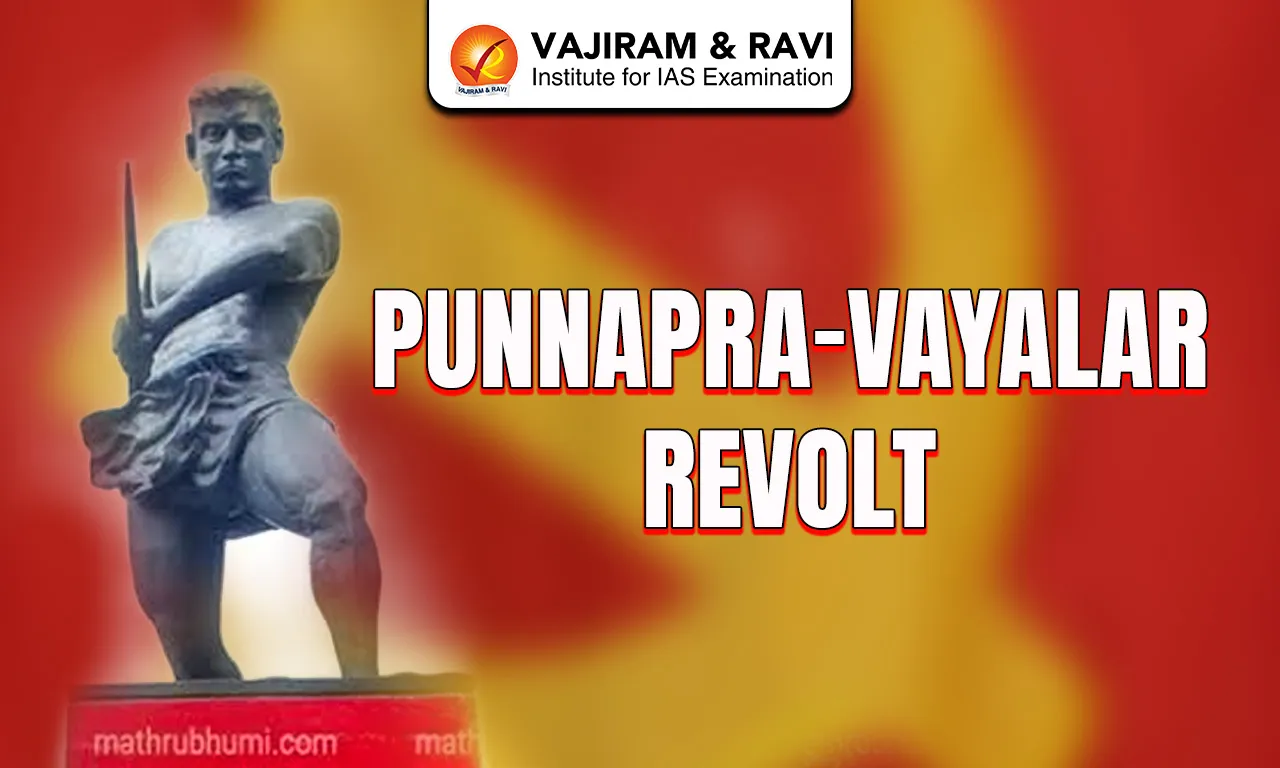
Punnapra-Vayalar Revolt

The Punnapra-Vayalar Revolt was a significant peasant and workers’ uprising that took place in October 1946 in the princely state of Travancore (present-day Kerala). The revolt is named after the two places in which it took place; beginning in Punnapra and ending in Vayalar. The revolt was mainly led by the Communist Party and directed against the autocratic rule of the Diwan of Travancore, C. P. Ramaswami Iyer.

Punnapra-Vayalar Revolt Background

  • Travancore was a princely state ruled by a Maharaja, but real power was exercised by the Diwan.
  • In the 1940s, C. P. Ramaswami Iyer was the Diwan and followed an authoritarian style of governance where civil liberties were restricted, and political dissent was suppressed. 
  • In June 1947, the Diwan declared that Travancore would become an independent sovereign state after the British left India, instead of joining the Indian Union. This decision created widespread anger among political groups, especially the Congress and the Communists.
  • This decision was also opposed by the people, especially workers and peasants, who were already suffering due to low wages and poor working conditions, high prices and economic hardships, political repression and lack of civil liberties after World War II.
  • The Communist Party had strong influence among coir workers and peasants in the Alappuzha (Alleppy) region. They organized protests demanding responsible government and better rights.

Course of the Punnapra-Vayalar Revolt

  • The All Travancore Trade Union Congress had called for a general strike starting October 22. 
  • Thousands of workers took to the streets, marching toward the reserve police camp at Punnapra, demanding freedom.
  • Armed clashes took place between protesters and state forces.
  • In response, the Travancore government declared martial law in the affected areas and deployed armed police and military units to suppress the agitation. Violent clashes followed, and state forces opened fire on protesters. Hundreds of people were killed and the revolt was militarily suppressed.

Punnapra-Vayalar Revolt Consequences

Although the Punnapra-Vayalar Revolt was suppressed militarily, its consequences were significant.

  • Though the revolt was brutally suppressed by the state, it weakened the authority of the Diwan.
  • In 1947, after an assassination attempt on the Diwan he resigned from office.
  • Travancore agreed to join the Indian Union.
  • The event strengthened the Communist movement in Kerala and it later contributed to the rise of the first elected Communist government in Kerala in 1957.

Punnapra-Vayalar Revolt FAQs

Q1: What was the Punnapra-Vayalar Revolt?

Ans: The Punnapra-Vayalar Revolt was a peasant and workers’ uprising that took place in October 1946 in the princely state of Travancore, mainly led by the Communist Party against the autocratic rule of the Diwan, C. P. Ramaswami Iyer.

Q2: Why did the Punnapra-Vayalar Revolt occur?

Ans: The revolt occurred due to low wages, poor working conditions, economic hardships after World War II, political repression, and the Diwan’s plan to make Travancore an independent state instead of joining the Indian Union.

Q3: Where did the Punnapra-Vayalar Revolt take place?

Ans: It took place in the coastal region of Alappuzha in Travancore, mainly at the villages of Punnapra and Vayalar.

Q4: How did the Travancore government respond to the revolt?

Ans: The government declared martial law and sent armed police and military forces to suppress the agitation, resulting in violent clashes and the death of hundreds of protesters.

Q5: What were the consequences of the revolt?

Ans: The revolt weakened the authority of the Diwan, led to his resignation after an assassination attempt in 1947, and pushed Travancore to join the Indian Union. It also strengthened the Communist movement in Kerala.

Operation Barkhane, Background, Objectives, Features

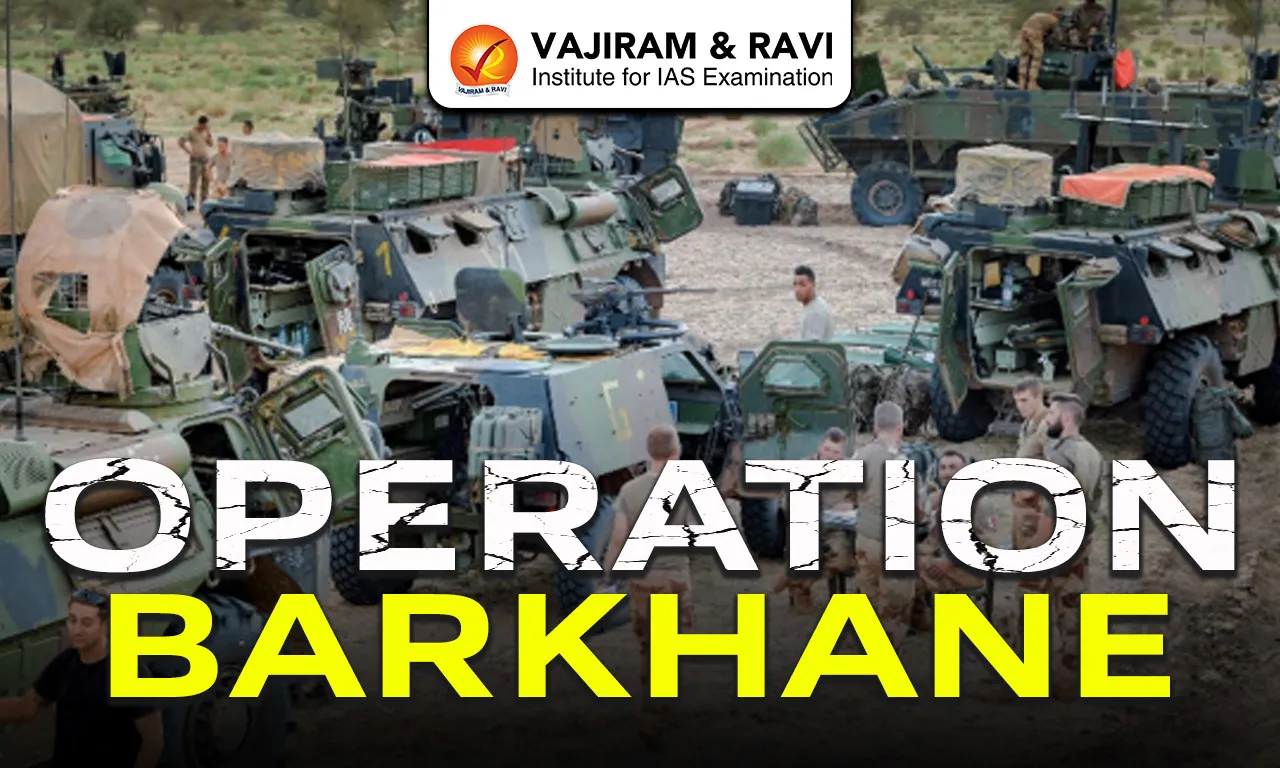
Operation Barkhane

Operation Barkhane was a large-scale French counter-terrorism military operation conducted in the Sahel region of Africa from August 2014 to November 2022. It aimed to combat Islamist extremist groups operating across the Sahara-Sahel belt. 

Operation Barkhane Background 

The background of Operation Barkhane lies in the growing terrorism and political instability in the Sahel region of Africa after 2011. 

The fall of the government in Libya during the Arab Spring led to the spread of weapons and armed fighters across nearby countries. Many fighters returned to northern Mali, where a rebellion started in 2012. In the same year, a military coup in Mali weakened the government. As a result, extremist groups linked to Al-Qaeda captured important cities like Timbuktu and Gao. To stop these groups from taking control of the entire country, France launched Operation Serval in 2013. This operation successfully pushed back the terrorists. However, the problem did not end because these extremist groups were operating across borders in countries like Niger, Burkina Faso, and Chad. Since terrorism in the region had become a regional issue and not just a Mali problem, France started Operation Barkhane in 2014 to fight terrorism across the whole Sahel region.

Operation Barkane Key Features

  • The main objectives were to eliminate extremist groups, prevent the creation of terrorist safe havens, support and train local security forces, and ensure regional stability. 
  • Operation Barkane covered five Sahel countries: Mali, Niger, Burkina Faso, Chad, and Mauritania. 
  • Its headquarters was located in N’Djamena, Chad. 
  • The operation was coordinated with the G5 Sahel Joint Force and the UN peacekeeping mission MINUSMA.
  • The key terrorist groups targeted included Al-Qaeda in the Islamic Maghreb (AQIM), Islamic State in the Greater Sahara (ISGS), and Jama’at Nusrat al-Islam wal-Muslimin (JNIM).
  • About 5,100 French troops were deployed and the operation used drones, fighter jets, helicopters, armored vehicles, and special forces. It focused on intelligence-based targeted strikes and cross-border mobility.Despite eliminating several militant leaders, insecurity continued to spread in the region.
  • After the military coups in Mali in 2020 and 2021, anti-French sentiment grew among the people and the new leadership. Relations between France and the Malian government became increasingly tense, making continued military cooperation difficult. As a result, France decided to withdraw its troops, and Operation Barkhane officially ended in November 2022.
Also Check
Operation Sindoor Operation Sankat Mochan
Operation Ganga Operation Olivia
Operation Devi Shakti Operation Safe Homecoming
Operation Cactus Operation Keller
Operation Kaveri Operation Rising Lion
Operation Karuna Operation Airlift
Operation Megh Chakra Operation Maitri
Operation Rahat Operation Nader
Operation Dost Operation Baam
Operation Samudra Setu Operation Mahadev
Operation Iron Swords Operation Shiv Shakti
Operation Sagar Bandhu Operation Smiling Buddha

Operation Barkhane FAQs

Q1: What was Operation Barkhane?

Ans: Operation Barkhane was a large-scale French counter-terrorism military operation conducted in the Sahel region of Africa from August 2014 to November 2022 to fight Islamist extremist groups.

Q2: Why was Operation Barkhane launched?

Ans: It was launched after the rise of terrorism in the Sahel following the fall of Libya’s government in 2011 and the 2012 crisis in Mali, where extremist groups captured major cities.

Q3: Which countries were covered under Operation Barkhane?

Ans: The operation covered five Sahel countries: Mali, Niger, Burkina Faso, Chad, and Mauritania.

Q4: Which terrorist groups were targeted in Operation Barkhane?

Ans: The operation mainly targeted groups linked to Al-Qaeda and Islamic State, such as AQIM, ISGS, and JNIM.

Q5: Why did Operation Barkhane end in 2022?

Ans: After military coups in Mali in 2020 and 2021, anti-French sentiment increased and relations between France and Mali became tense. France then withdrew its troops, and the operation officially ended in November 2022.

Population Pyramid, Types, Factors, Transition Theory

Population Pyramid

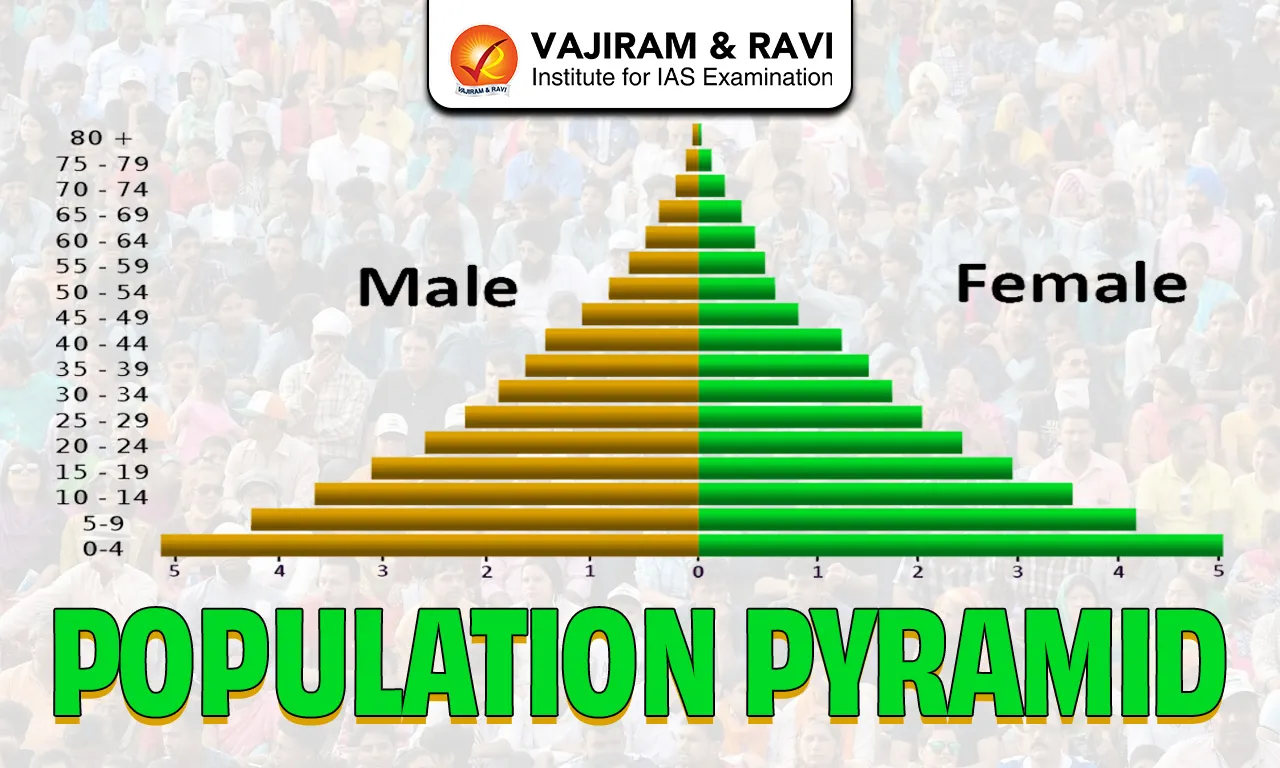
A Population Pyramid is a graphical representation that shows the distribution of a country’s population by age and gender. It helps in understanding population structure, workforce availability, and dependency levels. The shape of the pyramid reflects trends in birth rate, death rate, and life expectancy. It is an important tool in demography for analyzing population growth and future planning.

Population Pyramid Types

There are three major types of population pyramids based on their shape and demographic characteristics. Each type reflects a different stage of population growth and economic development.

1. Expansive Population Pyramid

An Expansive Population Pyramid has a broad base and a narrow top, showing a high birth rate and rapid population growth. It is commonly seen in developing countries with a large young population.

  • Broad Base: Indicates a high number of children (0-14 years).
  • High Birth Rate: Families tend to have more children due to social and economic factors.
  • High Population Growth: Birth rate is much higher than death rate.
  • Low Life Expectancy: Smaller proportion of elderly people.
  • High Child Dependency Ratio: Large non-working population depends on the working-age group.
  • Pressure on Resources: Heavy demand for schools, hospitals, housing, and employment.
  • Agrarian Economy Link: Often associated with rural and agriculture-based economies.
  • Future Workforce Potential: Can result in demographic dividend if properly utilized.
  • Common in Developing Nations: Seen in economically less developed countries.

2. Stationary Population Pyramid

A Stationary Population Pyramid has a nearly rectangular shape, showing low birth and death rates. It represents stable population growth and balanced age distribution.

  • Rectangular Shape: Similar width across most age groups.
  • Low Birth Rate: Fewer children are being born compared to expansive type.
  • Low Death Rate: Better healthcare and sanitation systems.
  • Stable Population Growth: Birth rate and death rate are almost equal.
  • Balanced Age Structure: Even distribution of children, adults, and elderly.
  • Moderate Dependency Ratio: Both child and old-age dependency are manageable.
  • High Life Expectancy: Larger proportion of people living to old age.
  • Economic Stability: Indicates developed and stable economy.
  • Higher Literacy & Urbanization: Education and women empowerment reduce fertility.

3. Constrictive Population Pyramid

A Constrictive Population Pyramid has a narrow base and wider middle or top, indicating very low birth rates and an aging population. It is typical of highly developed countries facing population decline.

  • Narrow Base: Fewer children due to very low fertility rate.
  • Wider Middle: Large working-age adult population.
  • Broad Top: Higher proportion of elderly people.
  • Aging Population: Increasing percentage above 60–65 years.
  • Low or Negative Growth Rate: Population growth is slow or declining.
  • High Old-Age Dependency Ratio: More elderly depend on fewer workers.
  • Labor Shortage Risk: Shrinking workforce over time.
  • Higher Pension & Healthcare Burden: Increased government spending on elderly care.
  • Common in Developed Countries: Seen in advanced industrial economies.

Population Pyramid of India

India’s population pyramid has been gradually transforming over the past few decades due to declining fertility rates, improving healthcare, and rising life expectancy.

  • Broad but Gradually Narrowing Base: India still has a significant young population, but fertility rates have declined in many states, reducing the width of the base compared to earlier decades.
  • Large Working-Age Population (15–59 Years): A substantial proportion of the population falls within the productive age group, providing an opportunity for economic growth.
  • Demographic Dividend Phase: India is currently experiencing a demographic dividend, where the working-age population is larger than the dependent population.
  • Declining Total Fertility Rate (TFR): Fertility rates have fallen close to or below replacement levels in several states, signaling a shift toward stabilization.
  • Increasing Life Expectancy: Improvements in healthcare, nutrition, and sanitation have increased survival rates and expanded older age groups.
  • Rising Elderly Population: The share of people aged 60+ is steadily increasing, which may raise old-age dependency in the future.
  • Regional Variations: Southern and western states show more stationary patterns, while some northern states still reflect expansive characteristics.

Factors Affecting the Shape of a Population Pyramid

The shape of a Population Pyramid is not random; it reflects the demographic, social, and economic conditions of a country. Changes in birth rate, death rate, migration, and development level directly influence whether the pyramid appears expansive, stationary, or constrictive.

  • Birth Rate (Fertility Rate): A high birth rate widens the base of the pyramid, while a low birth rate narrows it. Countries with high fertility show an expansive shape, whereas low fertility leads to a constrictive pattern.
  • Death Rate (Mortality Rate): High death rates reduce the number of people reaching older age groups, narrowing the upper portion. Lower death rates increase survival and widen the top.
  • Life Expectancy: Higher life expectancy increases the proportion of elderly people, making the top broader. Lower life expectancy keeps the pyramid narrow at the top.
  • Infant Mortality Rate: High infant mortality can slightly reduce the width of the lower age groups despite high birth rates. Improved healthcare reduces infant deaths and maintains a broad base.
  • Migration (Immigration & Emigration): Immigration increases the working-age population, widening the middle section. Emigration of young workers can shrink the productive age group.
  • Economic Development: Developed countries generally have low fertility and aging populations (constrictive shape), while developing countries have higher fertility (expansive shape).
  • Urbanization: Urban populations tend to have fewer children due to higher living costs and career priorities, narrowing the base.
  • Women’s Education and Employment: Higher female literacy and workforce participation usually lead to delayed marriages and fewer children.
  • Government Policies: Family planning programs, pro-natalist policies, healthcare improvements, and social security schemes significantly affect population structure.
  • Cultural and Social Norms: Traditions, early marriage practices, and preference for larger families influence fertility patterns.
  • Healthcare Facilities: Access to better healthcare reduces mortality rates and increases life expectancy, widening the upper age groups.

Population Pyramid and Demographic Transition Theory

The Population Pyramid visually represents a country’s age and sex composition, while the Demographic Transition Theory (DTT) explains how birth and death rates change as a country develops economically. Together, they help us understand population growth patterns and predict future demographic trends.

Demographic Transition Theory describes the transformation of a country’s population structure through stages linked with industrialization and development.

  1. High Stationary Stage (Stage 1)
  • In this stage, both the birth rate and death rate are very high.
  • The population growth remains very low because births and deaths are almost equal.
  • Poor medical facilities and lack of sanitation lead to high mortality.
  • Life expectancy is low due to diseases, famine, and limited healthcare.
  • The population pyramid shows an expansive shape with a broad base and narrow top.
  1. Early Expanding Stage (Stage 2)
  • In this stage, the birth rate remains high while the death rate begins to decline.
  • The decline in death rate occurs due to improvements in healthcare, sanitation, and food supply.
  • The population grows rapidly because more people survive to adulthood.
  • Agricultural and medical advancements reduce mortality significantly.
  • The population pyramid becomes very wide at the base, indicating rapid growth.
  1. Late Expanding Stage (Stage 3)
  • In this stage, the birth rate starts to decline gradually.
  • The death rate remains low due to continued medical progress.
  • Population growth slows down compared to the previous stage.
  • Urbanization, education, and women’s empowerment contribute to lower fertility.
  • The population pyramid begins to narrow at the base, moving toward a stationary shape.
  1. Low Stationary Stage (Stage 4)
  • In this stage, both birth rate and death rate are low.
  • The population growth becomes stable or very slow.
  • Life expectancy is high because of advanced healthcare systems.
  • The population structure becomes balanced across different age groups.
  • The population pyramid appears rectangular or stationary in shape.
  1. Declining Stage (Stage 5)
  • In this stage, the birth rate falls below the replacement level.
  • The death rate remains low but may slightly increase due to aging population.
  • The overall population begins to decline over time.
  • The proportion of elderly people increases significantly.
  • The population pyramid takes a constrictive shape with a narrow base and wider top.

Population Pyramid FAQs

Q1: What is a population pyramid?

Ans: A population pyramid is a graphical representation of the age and sex structure of a population.

Q2: How many types of population pyramids are there?

Ans: There are three main types: Expansive, Stationary, and Constrictive.

Q3: Why is the population pyramid important?

Ans: It helps in understanding workforce availability, dependency ratio, economic planning, and future growth trends.

Q4: What does a broad base indicate?

Ans: A broad base indicates a high birth rate and rapid population growth.

Q5: What is India’s current population pyramid type?

Ans: India is transitioning from an expansive to a more stationary population structure.

Piton de la Fournaise Volcano

Piton de la Fournaise Volcano

Piton de la Fournaise Volcano Latest News

The Piton de la Fournaise volcano on Reunion Island erupted for the second time this year.

About Piton de la Fournaise Volcano

  • Location: It occupies the east-southeastern end of French Island La Réunion in the western Indian Ocean.
  • Type: It is a massive basaltic shield volcano.
  • It is built on the flank of the larger and older Piton des Neiges volcano whose early activity was basaltic but ended with eruption of differentiated alkaline lavas. 
  • It is one of the most active volcanoes in the world.
  • It is in a phase of frequent but short-lived eruptions that start with lava fountains and produce large lava flows. 
  • Status: It is around 500,000 years old and since 2010, it has been a member of the prestigious club of natural treasures listed as World Heritage sites by UNESCO.

Key Facts about Shield Volcano

  • They are the largest volcanoes on Earth.
  • They do not form soaring mountains with conical peaks like composite volcanoes. Instead, they are broad volcanoes with gentle slopes. 
  • They are almost exclusively basalt, a type of lava that is very fluid when erupted.
  • Because basalt has a low viscosity, it can flow on the surface better. So, when these types of volcanoes erupt, lava flows outwards at large distances.
  • They are built by repeated eruptions that occurred intermittently over vast periods of time.
  • The Hawaiian shield volcanoes are the most famous examples.

Source: Watchers

Piton de la Fournaise Volcano FAQs

Q1: Where is Piton de la Fournaise located?

Ans: La Réunion Island, western Indian Ocean

Q2: What type of volcano is Piton de la Fournaise?

Ans: Shield volcano

Exposome

Exposome

Exposome Latest News

Scientists are launching an ambitious global effort to map the “human exposome” — the lifelong mix of environmental and chemical exposures that drive most diseases.

About Exposome

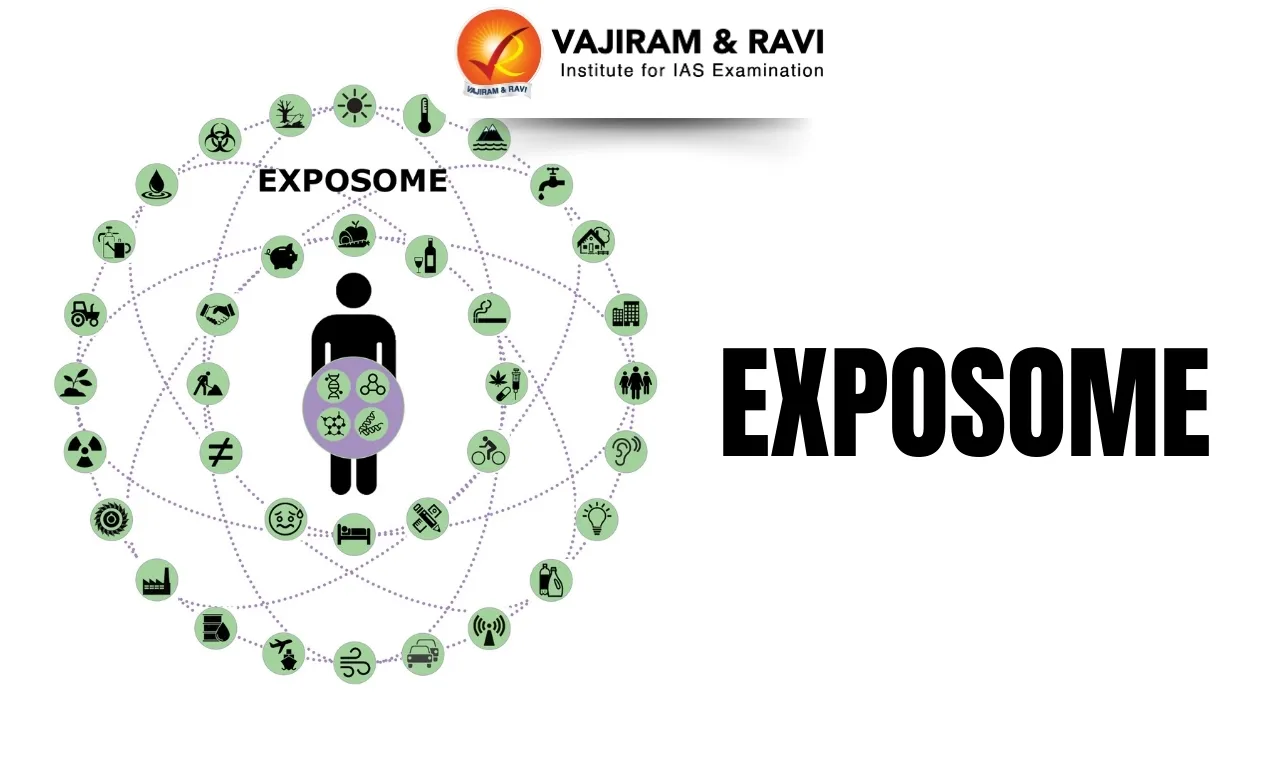
  • It can be defined as the measure of all the exposures of an individual in a lifetime, from conception onward, and how those exposures relate to health. 
  • The International Human Exposome Network (IHEN) defines the exposome as the "integrated compilation of all physical, chemical, biological, and psychosocial factors, and their interactions."
  • It reveals the accumulated lifetime exposures that determine our health, wellness, and susceptibility to disease. 
  • This is shaped by internal exposures such as individual metabolism or the microbiome, as well as external factors such as air quality. 
  • It also involves social or behavioral decisions that influence nutrition and exercise. 
  • Exposomics is the study of the exposome and relies on the application of internal and external exposure assessment methods.
  • Internal exposure assessment relies on fields of study such as genomics, metabonomics, lipidomics, transcriptomics, and proteomics. Commonalities of these fields include
    • use of biomarkers to determine exposure, effect of exposure, disease progression, and susceptibility factors
    • use of technologies that result in large amounts of data and
    • use of data mining techniques to find statistical associations between exposures, effect of exposures, and other factors such as genetics with disease. 
  • External exposure assessment relies on measuring environmental stressors. 
    • Common approaches include using direct reading instruments, laboratory-based analysis, and survey instruments.

Source: SD

Exposome FAQs

Q1: What is the exposome?

Ans: The exposome is the measure of all the exposures an individual experiences in a lifetime from conception onward and how those exposures relate to health.

Q2: How does the International Human Exposome Network (IHEN) define the exposome?

Ans: IHEN defines the exposome as the integrated compilation of all physical, chemical, biological, and psychosocial factors, and their interactions.

Q3: What does the exposome reveal about an individual?

Ans: It reveals accumulated lifetime exposures that determine health, wellness, and susceptibility to disease.

Q4: What does exposomics rely on?

Ans: It relies on the application of internal and external exposure assessment methods.

Leiogalathea Samudragiri

Leiogalathea Samudragiri

Leiogalathea Samudragiri Latest News

Researchers recently discovered a new species of squat lobster named Leiogalathea samudragiri off Lakshadweep’s coast.

About Leiogalathea Samudragiri

  • It is a new species of squat lobster.
  • It was found living 360 metres below the surface near Minicoy, part of the Lakshadweep archipelago.
  • The discovery was made during a research cruise as part of India’s ambitious Deep Ocean Mission (Samudrayaan program).
  • L. samudragiri possesses smooth, uninterrupted ridges running across the top of its shell, whereas its closest relatives have ridges that are broken or interrupted. 
  • It also features exactly six transverse ridges on the back half of its body.
  • It lacks a specific spine on its feelers (antennules) that is commonly found in similar species. 
  • It is bright orange in colour.

What are Squat Lobsters?

  • They are marine crustaceans that resemble small lobsters but are not true lobsters. 
  • They are more closely related to hermit crabs and porcelain crabs.
  • There are well over 900 species of squat lobsters, and they can be found in nearly every marine environment across most latitudes around the world.
  • They have small, flat bodies, ranging from 0.7 to 3.5 inches (1.778 to 88.9 mm) in length. 
  • These decapods (ten-footed) have a front pair of legs that are much longer than their bodies that end in a pair of large claws.   
  • The lobsters earned their name by tucking their tails under their thorax, giving their bodies a shorter, more “squat” appearance.  
  • As with many other crustaceans, squat lobsters can use their tail as a paddle to escape backwards very quickly.

Source: RM

Leiogalathea Samudragiri FAQs

Q1: What is Leiogalathea samudragiri?

Ans: It is a new species of squat lobster.

Q2: Near which place was Leiogalathea samudragiri discovered?

Ans: It was discovered near Minicoy in the Lakshadweep archipelago.

Q3: What is unique about the ridges on the shell of Leiogalathea samudragiri?

Ans: It has smooth, uninterrupted ridges across the top of its shell.

Q4: What is the colour of Leiogalathea samudragiri?

Ans: It is bright orange in colour.

Bio-Based Chemicals

Bio-Based Chemicals

Bio-Based Chemicals Latest News

India has prioritised bio-based chemicals and enzymes as a priority area under the Department of Biotechnology’s BioE3 policy

About Bio-Based Chemicals

  • Bio-based chemicals are industrial chemicals produced using biological feedstocks like sugarcane, corn, starch, or biomass residues.
  • These are often produced through fermentation or enzymatic processes.
    • Examples: Organic acids (such as lactic acid), bio-alcohols, solvents, surfactants, and intermediates used in plastics, cosmetics, and pharmaceuticals.
  • Unlike conventional chemicals, for which the largely available supplies are obtained through sources of fossil fuel, bio-based alternatives reflect a sustainable solution.

Ecological Benefits of the Bio-Based Chemicals

  • The bio-based industry reduces reliance on fossil fuels by applying renewable feedstocks.
  • Low production of harmful byproducts: Biobased methods generate much lower amounts of hazardous waste than the conventional petroleum-based methodologies.
  • Reduced Carbon Footprint: The production of biochemicals generally requires less energy than their corresponding petroleum-based equivalents.
  • Waste Minimization and Circular Economy: With bio-based chemicals mostly coming from organic waste resources, development of the circular economy will be based on recycling, efficiency in the use of resources.

Challenges and Risks

  • Cost Disadvantage: Higher production cost compared to petrochemical alternatives, which creates an entry level barrier.
  • Feedstock: Availability of reliable feedstocks and supporting infrastructure required to produce different categories of bio-based chemicals at scale.
  • Market Adoption: Uncertainty about adapting bio-based chemicals as substitutes over fossil fuel based chemicals.

Source: TH

Bio-Based Chemicals FAQs

Q1: What are bio-based chemicals derived from?

Ans: Biological feedstocks (sugarcane, corn, biomass)

Q2: Which process is used to produce bio-based chemicals?

Ans: Fermentation or enzymatic processes

Narsinh Mehta (1414-1488), Biography, Contributions, Honours

Narsinh Mehta

Narsinh Mehta was also known as Narsinh Bhagat or Narsi Mehta. He was a major saint-poet of Gujarat and is honoured as the Adi Kavi, the first poet of Gujarati literature. He was a leading figure of the Vaishnava Bhakti tradition and dedicated his life to devotion towards Krishna through poetic compositions. His hymns have shaped Gujarat’s cultural identity for over five centuries. His famous bhajan “Vaishnava Jana To” later became deeply associated with Mahatma Gandhi and India’s Freedom Movement.

Narsinh Mehta Biography

Narsinh Mehta was born in 1414 at Talaja in present day Bhavnagar district of Gujarat. Narsinh belonged to a Nagar Brahmin family originally linked to Vadnagar. The title “Mehta” referred to officials who maintained royal accounts. He was orphaned at five and reportedly mute until eight. He began speaking after uttering “Radhe Shyam” on a saint’s advice. He was raised by his elder brother Bansidhar, later married Manekbai and settled in Junagadh. Despite poverty and social opposition, he pursued Krishna bhakti. He is believed to have died around age 79 at Mangrol in the late fifteenth century in about 1488.

Also Read: Sardar Vallabhbhai Patel

Narsinh Mehta Contributions

Narsinh Mehta transformed Gujarati devotional literature through poetry, music and social reformist ideas rooted in Bhakti philosophy. His major contributions are:

  • Literary Contributions: He composed more than 750 padas in Gujarati, establishing early narrative and devotional poetry traditions. His works include autobiographical pieces such as “Shamaldas no Vivah,” “Kunvarbai nu Mameru,” “Hundi,” and “Har Mala,” which connect personal experiences with divine intervention themes.
  • Vaishnava Jana To: His 15th century bhajan “Vaishnava Jana To” described the qualities of an ideal devotee who empathizes with others’ suffering. Mahatma Gandhi adopted it in daily prayers at Sabarmati Ashram, giving the hymn national moral significance.
  • Musical Tradition: His compositions belong to “pad” or “deshi” style and were sung in genres such as garbi, dhol and prabhatiya. He is credited with composing bhajans in specific ragas suited to seasons and times of day, especially morning devotional melodies.
  • Social Equality: Narsinh openly associated with communities considered “lower caste,” challenging rigid social hierarchies of the Nagar Brahmins. His acceptance of all devotees regardless of birth reflected a socially inclusive Bhakti movement in fifteenth century western India.

Also Read: Freedom Fighters of India

Narsinh Mehta Honours

Narsinh Mehta is commemorated through the “Narsinh Mehta Award” for excellence in Gujarati literature. Junagadh University even named a newly discovered spider species “Narsinhmehtai” in his honour, reflecting continued academic recognition. His life inspired early Gujarati cinema, including the 1932 film “Narsinh Mehta” and later adaptations.

Narsinh Mehta FAQs

Q1: Who was Narsinh Mehta?

Ans: Narsinh Mehta was a 15th century Gujarati poet-saint (1414-1488), known as Adi Kavi of Gujarati literature and a major Vaishnava Bhakti figure devoted to Lord Krishna.

Q2: Why is Narsinh Mehta called Adi Kavi?

Ans: He is regarded as the first major poet of Gujarati language because he composed over 750 padas and laid the foundation of devotional and narrative poetry in Gujarat.

Q3: Which famous bhajan did Narsinh Mehta compose?

Ans: He wrote “Vaishnava Jana To,” a devotional hymn describing the qualities of an ideal human being, later popularised by Mahatma Gandhi.

Q4: Where was Narsinh Mehta born?

Ans: He was born in Talaja in present day Bhavnagar district of Gujarat and later lived in Junagadh, where he composed most of his devotional works.

Q5: What themes dominate Narsinh Mehta’s poetry?

Ans: His compositions mainly focus on Krishna bhakti, spiritual wisdom, detachment from worldly life, moral values and equality beyond caste distinctions.

Osteoporosis

Osteoporosis

Osteoporosis Latest News

Osteoporosis is a bone-weakening disease that afflicts tens of millions of people, and much-needed new treatments could be on the way after researchers discovered a key mechanism behind how exercise strengthens bones.

About Osteoporosis

  • It is a disease in which your bones become weak and are likely to fracture (break). 
  • People with osteoporosis are much more likely to experience broken bones (bone fractures).

What Causes Osteoporosis?

  • Your bones are made of living tissue. To keep them strong, your body breaks down old bone and replaces it with new bone. 
  • Osteoporosis develops when more bone is broken down than replaced
  • You lose bone mass, and changes happen in the structure of your bone tissue. This can happen as you get older. 
  • Other risk factors can also lead to the development of osteoporosis or increase your chance of developing the disease.

Osteoporosis Symptoms

  • It is called a "silent" disease because it doesn't usually cause symptoms. You may not even know you have the disease until you break a bone.  
  • This could happen with any bone, but it's most common in the bones of your hip, vertebrae in the spine, and wrist.
  • Once your bones have been weakened by osteoporosis, you might have signs and symptoms that include:
  • Back pain, caused by a broken or collapsed bone in the spine.
  • Loss of height over time.
  • A stooped posture.
  • A bone that breaks much more easily than expected.

Osteoporosis Treatment

  • Treatment for osteoporosis may involve:
  • Making lifestyle changes, such as changing your diet and exercise routine
  • Taking calcium and vitamin D supplements
  • Using medicines to strengthen bones.

Source: SA

Osteoporosis FAQs

Q1: What is osteoporosis?

Ans: Osteoporosis is a disease in which bones become weak and are more likely to fracture.

Q2: Why are people with osteoporosis at greater risk of injury?

Ans: Because their bones are weak and more prone to fractures.

Q3: When does osteoporosis develop?

Ans: Osteoporosis develops when more bone is broken down than is replaced.

Q4: Which bones are most commonly affected by fractures due to osteoporosis?

Ans: The hip, vertebrae in the spine, and wrist are most commonly affected.

Q5: Which supplements are commonly recommended for osteoporosis?

Ans: Calcium and vitamin D supplements are commonly recommended.

U.S.-India Interim Trade Deal – Explained

Interim Trade Deal

Interim Trade Deal Latest News

  • India and the United States have signed an interim trade agreement, triggering debates over its economic impact, agricultural implications, and sovereignty concerns.

Background of U.S.-India Trade Relations

  • India and the United States share a deep strategic and economic partnership. 
  • Bilateral trade in goods and services has grown significantly over the past decade, with the U.S. emerging as one of India’s largest trading partners. 
  • India has traditionally maintained a trade surplus with the U.S., exporting pharmaceuticals, textiles, engineering goods, and IT services, while importing energy, aircraft, and high-value technology products.
  • However, trade tensions escalated in August 2025 when U.S. President Donald Trump imposed 25% tariffs on Indian imports, along with an additional 25% penalty linked to India’s continued import of Russian crude oil. 
  • These measures strained bilateral ties and disrupted trade flows.
  • Nearly a year later, both countries agreed to an interim trade agreement as the first step towards a broader bilateral trade deal. 
  • While this agreement is being presented as a breakthrough in restoring ties, it has raised several policy and economic questions.

Key Provisions of the Interim Agreement

  • Tariff Reduction by the U.S.: The U.S. will reduce tariffs on Indian imports from 50% to 18%.
  • India’s Concessions on Market Access: India will eliminate or significantly reduce tariffs and non-tariff barriers on imports of industrial goods and a wide range of food and agricultural products from the U.S.
  • Energy and Strategic Commitments: India has expressed its intent to purchase $500 billion worth of U.S. energy products, aircraft, aircraft parts, precious metals, technology products, and coking coal over the next five years.
  • Russian Oil Imports: An Executive Order issued alongside the Joint Statement indicates that India would stop directly or indirectly importing Russian oil, although Indian officials have not formally confirmed this commitment.
  • Monitoring Mechanism: The U.S. administration has indicated that additional tariffs could be reimposed if India resumes Russian oil imports.

Potential Benefits of the Agreement

  • Supporters argue that lower U.S. tariffs could provide opportunities for Indian exporters, particularly in labour-intensive sectors such as textiles and clothing. 
  • A tariff reduction to 18% may offer some competitive advantage compared to countries facing higher duties.
  • However, this advantage may be limited. The U.S. has also concluded trade arrangements with countries like Bangladesh, offering preferential treatment to certain textile products. This reduces India’s relative edge in the American market.
  • Moreover, the agreement could strengthen strategic ties between the two countries and signal policy stability to global investors.

Concerns Regarding the Agricultural Sector

  • Impact on Farmers
    • The interim agreement does not explicitly state that tariff protection on sensitive agricultural products, especially cereals, will be maintained. 
    • Historically, India has safeguarded such products in all its Free Trade Agreements, including the recent EU-India FTA.
    • If tariff barriers on cereals and other agricultural commodities are reduced, Indian farmers may face competition from highly subsidised American agribusiness. This could undermine farm incomes and threaten food security.
  • Genetically Modified (GM) Products
    • The U.S. has long objected to India’s restrictions on genetically modified (GM) food imports, treating them as non-tariff barriers. 
    • The agreement’s reference to resolving “long-standing concerns” has raised fears that India may allow GM food imports in the future.
    • This has implications not only for farmers but also for public health, biosafety, and regulatory autonomy.

Unequal Tariff Structure

  • A critical concern is the asymmetry in tariff concessions.
  • While India is eliminating or reducing tariffs on U.S. imports, the U.S. is retaining an 18% tariff on Indian exports. 
  • Before the tariff dispute, average U.S. tariffs on Indian goods were around 2.5%. Thus, the new arrangement represents a significant increase in protection against Indian exports.
  • This raises questions about negotiating leverage and whether India has accepted an unequal arrangement under external pressure.

Sovereignty and Strategic Autonomy

  • The clause related to Russian oil imports and the potential reimposition of tariffs has broader geopolitical implications.
  • The possibility of U.S. surveillance over India’s oil imports and the conditionality attached to tariff relief could be viewed as constraining India’s strategic autonomy. 
  • For a country that has historically maintained an independent foreign policy, this aspect of the agreement has sparked intense debate.
  • Additionally, several countries, such as China and Brazil, have resisted similar tariff pressures. Critics question why India has chosen accommodation over resistance.

Broader Economic and Political Implications

  • The interim agreement must be seen as a precursor to a full-fledged U.S.-India Trade Agreement. Its final contours will determine:
    • The balance between export opportunities and domestic protection.
    • The future of India’s agricultural policy.
    • The degree of regulatory autonomy India retains.
    • The strategic alignment between the two democracies.
  • The government faces the challenge of ensuring that economic gains do not come at the cost of food security, farmer livelihoods, and sovereign decision-making.

Source: TH

Interim Trade Deal FAQs

Q1: What triggered the recent U.S.-India interim trade agreement?

Ans: The agreement followed U.S. tariff hikes in 2025 and aims to restore strained trade relations.

Q2: What is the new tariff rate imposed by the U.S. on Indian exports?

Ans: The U.S. has reduced tariffs to 18% under the interim agreement.

Q3: Why are Indian farmers concerned about the agreement?

Ans: There is uncertainty over tariff protection on cereals and the possible entry of U.S. agricultural products.

Q4: What is the controversy regarding Russian oil imports?

Ans: The U.S. may reimpose tariffs if India resumes importing Russian crude oil.

Q5: Why is the agreement termed unequal by critics?

Ans: India has reduced tariffs significantly, while the U.S. continues to maintain an 18% tariff on Indian exports.

YUVA AI for ALL Initiative

YUVA AI for ALL Initiative

Yuva AI for All Initiative Latest News

Recently, the Ministry of Electronics and Information Technology (MeitY) launched Kaushal Rath under the National AI Literacy programme “Yuva AI for All.”

About Yuva AI for All Initiative

  • It is an initiative launched by the Ministry of Electronics and Information Technology (MeitY), under the IndiaAI Mission.
  • It is a first-of-its-kind free course that introduces the world of Artificial Intelligence (AI) to all Indians, especially the youth.
  • It consists of a 4.5-hour self-paced course designed to make students, professionals and other curious learners comfortable with the basics of Artificial intelligence.
  • Aim: To empower 1 crore (10 million) citizens with foundational  AI skills.

Key Features of YUVA AI for ALL Initiative

  • It’s simple, practical, and filled with real-life Indian examples to make learning relatable and fun.
  • It is available for free on leading learning platforms – FutureSkills Prime, iGOT  Karmayogi, and other popular ed-tech portals.
  • Every learner who completes the course will get an official certificate from the Government of India.
  • It’s 100% free and open to everyone
  • It allows learning at one’s own pace — anytime, anywhere

Source: DD News

YUVA AI for ALL Initiative FAQs

Q1: Who launched the YUVA AI for ALL Initiative?

Ans: Ministry of Electronics and Information Technology (MeitY)

Q2: What is the aim of YUVA AI for ALL Initiative?

Ans: Empower 1 crore citizens with foundational AI skills

Vande Mataram Row Explained

Vande Mataram Row

Vande Mataram Row Latest News

  • The Union government’s January 28 directive mandating the singing of all six stanzas of the National Song Vande Mataram at official functions has triggered objections from several organisations. 
  • The notification requires the full 3-minute-10-second version to be played before Jana Gana Mana when both are included in state events, with the audience standing in attention.
  • Traditionally, only the first two stanzas have been sung at public functions. The later four stanzas contain explicit religious imagery, which has historically been a source of controversy and discomfort for some communities.
  • The directive comes amid the government’s commemoration of 150 years of Vande Mataram, during which references to the “dropped” stanzas have been repeatedly raised in Parliament.
  • The move aligns with this broader effort but has revived debates over the song’s composition and the objections surrounding its later verses.

Origins and Evolution of Vande Mataram

  • Vande Mataram (“Mother, I bow to thee”) was composed in 1875 by Bankim Chandra Chattopadhyay in Sanskritised Bengali. 
  • It was later included in his 1882 novel Anandamath, which depicted the late-18th century Sanyasi Rebellion against the rule of Mir Jafar and the East India Company.
  • The song became a powerful nationalist slogan during the Swadeshi movement (1905–08), symbolising resistance to British rule. 
  • However, concerns about its religious undertones emerged early on. 
  • In 1937, Jawaharlal Nehru wrote to Subhas Chandra Bose acknowledging apprehensions among Muslims, though he described the controversy as being amplified by communal elements.

Congress Compromise on Stanzas

  • In October 1937, the Congress Working Committee recommended that only the first two stanzas be sung at national gatherings. 
  • It observed that these verses, which celebrate the natural beauty and bounty of the motherland, were free of objectionable religious imagery, unlike the lesser-known later stanzas.

National Song Status and Protocol

  • In 1950, the first two stanzas were formally adopted as India’s National Song. 
  • The Constituent Assembly accorded it equal honour with the National Anthem but did not prescribe mandatory protocols regarding posture or recital. 
  • The recent government directive marks a shift toward formalising etiquette and performance requirements.

Religious and Constitutional Objections to Vande Mataram

  • Objections from Muslim scholars centre on the portrayal of “Mother India” as a goddess, which conflicts with Islam’s core principle of strict monotheism. 
  • Worship of any entity other than Allah is considered impermissible in Islamic belief.

Controversy Over the Later Stanzas

  • The latter four stanzas intensify the controversy.
    • The third stanza refers to “crores and crores” of arms ready for battle.
    • The fourth suggests the motherland’s image is present in shrines.
    • The fifth likens the nation to Hindu goddesses Durga, Lakshmi, and Saraswati.
  • Historians argue that in the context of Anandamath, these verses frame Muslims as adversaries and depict the motherland in explicitly Hindu religious imagery, alienating non-Hindu communities.
  • Various organizations have termed the move a “blatant attack” on religious freedom under Article 25 of the Constitution.
  • They clarified that Muslims do not object to others singing the song but oppose being compelled to recite verses that conflict with monotheistic beliefs.

Political Flashpoint Over Vande Mataram

  • In December 2025, Parliament marked 150 years of Vande Mataram, triggering sharp political exchanges over its historical interpretation and contemporary relevance.
  • In the Lok Sabha, PM Modi accused Jawaharlal Nehru of truncating the song in 1937 under pressure from the Muslim League. 
  • He cited Nehru’s correspondence with Subhas Chandra Bose, arguing that Nehru acknowledged Muslim League objections instead of firmly defending the song.
  • Opposition leaders responded by quoting additional portions of Nehru’s letter, where he described the opposition to Vande Mataram as largely “manufactured by communalists” and criticised what he termed the Muslim League’s “low type of communalism.”
  • Many contended that forcing citizens to sing the song violates constitutional principles. 
  • They maintained that portraying Bharat as a goddess turns nationalism into a religious expression, conflicting with secular values.

Source: IE

Vande Mataram Row FAQs

Q1: What triggered the Vande Mataram row?

Ans: The Vande Mataram row began after the government directed that all six stanzas be sung at official events, reviving debate over religious imagery in later verses.

Q2: Why are the later stanzas controversial?

Ans: In the Vande Mataram row, critics object to references portraying the motherland as Hindu goddesses, arguing this conflicts with monotheistic religious beliefs and secular constitutional principles.

Q3: What was the 1937 Congress decision regarding Vande Mataram?

Ans: During earlier controversy similar to the Vande Mataram row, Congress recommended singing only the first two stanzas, which celebrate the motherland without explicit religious imagery.

Q4: What constitutional concerns are raised in the Vande Mataram row?

Ans: The Vande Mataram row involves claims that compulsory singing violates Article 25, which guarantees freedom of religion, and challenges the secular framework of the Constitution.

Q5: Why is the Vande Mataram row politically significant?

Ans: The Vande Mataram row has reignited historical debates about nationalism, religious symbolism, and political interpretations of Nehru’s 1937 position on the song’s contested stanzas.

Refurbished Medical Devices in India: Policy Debate, Industry Divide & Regulatory Challenges

Refurbished Medical Devices

Refurbished Medical Devices Latest News

  • Recently, the Department of Pharmaceuticals informed the Rajya Sabha that the Ministry of Health and Family Welfare (MoHFW) has constituted a committee to draft a policy on the regulation of refurbished medical devices. 
  • The panel will define their scope, establish methods to assess safety, performance, and remaining useful life, and recommend guidelines for disposal and waste management.
  • The core debate now centres not on whether refurbished medical devices should be allowed, but on how they should be effectively regulated while balancing healthcare access and industrial policy considerations.

About Refurbished Medical Devices

  • Refurbished medical devices are previously used equipment restored to original operating standards and resold at lower prices. 
  • These are typically capital-intensive technologies such as MRI machines, CT scanners, PET-CT systems, advanced endoscopy units, and robotic surgical systems.

Cost Advantage Over New Equipment

  • Refurbished systems offer significant cost savings:
    • 1.5T MRI machine: New: ₹4–8 crore | Refurbished: ₹1–3.5 crore
    • PET-CT system: New: ₹20 crore+ | Refurbished: ₹60 lakh–3.5 crore
    • CT scanner: New: ₹2–4 crore | Refurbished: ₹20 lakh–2.5 crore
  • These price differences make advanced diagnostics more accessible, particularly for hospitals in Tier-2 and Tier-3 cities.
  • For district hospitals, standalone diagnostic centres, and smaller private facilities, refurbished equipment reduces upfront capital costs. 
  • This supports decentralisation of healthcare and improves access to advanced diagnostics outside major urban centres.

Dependence on Imports

  • Despite growth in domestic manufacturing, India remains reliant on imports for advanced imaging and specialised devices due to technological complexity and global supply chain dominance. 
  • Refurbished equipment is commonly sourced from countries like the US, Germany, Japan, and the Netherlands, where hospitals upgrade systems before the end of their functional life.

Current Government Policy on Refurbished Medical Devices

  • India does not have a specific regulatory pathway for refurbished medical devices under the Medical Devices Rules, 2017
  • Although all medical devices were brought under phased regulation from 2017 and notified as “drugs” in 2020 under the Drugs and Cosmetics Act, no separate licensing mechanism exists for refurbished products.

Imports Governed by Waste Management Rules

  • At present, refurbished device imports are regulated primarily under the Hazardous and Other Wastes (Management and Transboundary Movement) Rules, 2016.
  • Imports are allowed only after obtaining:
    • No-objection certificates from an expert committee under the Ministry of Environment, Forest and Climate Change (MoEFCC)
    • Technical inputs from the Central Drugs Standard Control Organisation (CDSCO)
    • Import authorisation from the Directorate General of Foreign Trade
  • Earlier bans on used critical-care devices were relaxed in December 2022, permitting certain high-end equipment under strict scrutiny.

Recent Approvals and Regulatory Clash

  • In November 2025, a MoEFCC technical committee approved several refurbished devices for reuse.
  • However, in January 2025, CDSCO stated that refurbished devices cannot be imported for sale due to the absence of licensing provisions under the Medical Devices Rules. 
  • This contradiction created regulatory inconsistency between environmental approvals and medical device regulation.

Policy Ambiguity and Industry Concerns

  • India lacks a statutory definition distinguishing “used,” “refurbished,” “reconditioned,” or “remanufactured” devices. 
  • This creates uncertainty around classification, licensing, compliance, patient safety, and domestic manufacturing policy.
  • Industry estimates place the refurbished segment at around ₹1,500 crore, nearly 10% of India’s medical equipment market, highlighting the need for a coherent and unified regulatory framework.

Refurbished Medical Devices: Industry Divide and Policy Debate

  • The absence of a clear pathway under the Medical Devices Rules has created uncertainty for both industry and policymakers.
  • A key tension lies between promoting domestic manufacturing under Make in India and ensuring affordable access to advanced diagnostics, particularly in Tier-2 and Tier-3 cities.

International Manufacturers’ Perspective

  • The Medical Technology Association of India (MTAI), representing global manufacturers, argues against a blanket ban. 
  • It maintains that refurbished devices are regulated globally rather than prohibited.
  • It contends that regulated imports can improve affordability, expand access, support healthcare training goals, and complement industrial initiatives such as Electronics Repair Services Outsourcing.

Domestic Manufacturers’ Concerns

  • The Association of Indian Medical Device Industry (AiMeD) strongly opposes easing restrictions without robust regulatory standards aligned with global benchmarks.
  • Domestic players argue refurbished devices carry risks of unclear usage history, inconsistent performance, limited traceability, and shorter lifespan. 
  • They warn that legalising such imports could undermine indigenous manufacturing, weaken emergency preparedness, and turn India into a destination for end-of-life equipment.
  • Industry estimates suggest that unauthorised trade in pre-owned equipment is already significant, raising oversight and compliance concerns.

Impact on Innovation and Industrial Policy

  • Critics highlight that in developed countries, hospitals upgrade equipment after around 10 years, with older systems refurbished for resale. 
  • When such systems compete at similar price points with new Indian-made products, they may discourage domestic investment in advanced medical technologies.
  • This raises broader questions about balancing healthcare affordability with long-term industrial growth and innovation capacity.

Source: IE

Refurbished Medical Devices FAQs

Q1: What are refurbished medical devices?

Ans: Refurbished medical devices are previously used diagnostic or surgical machines restored to original specifications and resold at lower prices, improving affordability for smaller hospitals and diagnostic centres.

Q2: Why are refurbished medical devices controversial in India?

Ans: Refurbished medical devices raise concerns over safety, traceability, regulatory gaps, and their potential impact on domestic manufacturing under the Make in India initiative.

Q3: How are refurbished medical devices currently regulated?

Ans: Refurbished medical devices are governed mainly under waste management rules, requiring environmental clearance, but lack a dedicated licensing pathway under the Medical Devices Rules, 2017.

Q4: What is the industry divide on refurbished medical devices?

Ans: International manufacturers support regulated imports of refurbished medical devices for affordability, while domestic manufacturers fear they may undermine indigenous innovation and industrial growth.

Q5: Why is a new policy needed for refurbished medical devices?

Ans: A clear regulatory framework for refurbished medical devices would resolve policy inconsistencies, ensure patient safety, protect domestic industry, and improve affordable access to advanced healthcare technologies.

Futala Lake

Futala Lake

Futala Lake Latest News

Futala Lake, an iconic water body in the city, continues to grapple with untreated sewage inflow and mounting filth along its banks.

About Futala Lake

  • Futala Lake, also known as Telankhedi Lake, is a man-made lake located in the western part of Nagpur, Maharashtra.
  • It is believed to be more than 200 years old.
  • It was created during the Bhonsle dynasty rule in the 18th century for the purpose of providing water to the nearby villages and farmlands.
  • The lake covers an area of about 60 acres, making it one of the largest lakes in Nagpur.
  • The lake is surrounded on three sides by forest and a landscaped beach on the fourth side.
  • It features a picturesque promenade, boating facilities, and an amusement park.
  • This lake is known for its colorful fountains.

Source: TOI

Futala Lake FAQs

Q1: Where is Futala Lake located?

Ans: Futala Lake is located in the western part of Nagpur, Maharashtra.

Q2: How old is Futala Lake believed to be?

Ans: It is believed to be more than 200 years old.

Q3: During which dynasty was Futala Lake created?

Ans: Futala Lake was created during the Bhonsle dynasty in the 18th century.

Q4: What is the approximate area covered by Futala Lake?

Ans: The lake covers about 60 acres.

African Union

African Union

African Union Latest News

Recently, the African Union hosted its annual summit in Ethiopia.

About African Union

  • It is a continental body consisting of the 55 member states that make up the countries of the African Continent.
  • It was officially launched in 2002 and replaced its predecessor, the Organization of African Unity (OAU), which was founded in 1963.
  • Primary Objective: To promote unity, cooperation, and development among African nations while advancing the continent’s interests on the global stage.
  • Headquarters: Addis Ababa, Ethiopia

Read more about African Union

Governance of African Union

  • Assembly: It is the highest decision-making body, consisting of the heads of state and government of member countries.
  • Executive Council: Made up of foreign affairs ministers, handles policy matters and makes recommendations to the Assembly.
  • AU Commission: Headquartered in Addis Ababa, is the administrative arm responsible for implementing the decisions of the Assembly and the Executive Council.
  • The Peace and Security Council: Responsible for maintaining peace and security on the continent.
  • The AU structure promotes the participation of African citizens and civil society through the Pan-African Parliament and the Economic, Social & Cultural Council (ECOSOCC).

Source: New India Express

African Union FAQs

Q1: What is the predecessor of the African Union?

Ans: Organisation of African Unity (OAU)

Q2: How many member states are in the African Union?

Ans: 55

White-Bellied Sea Eagle

White-Bellied Sea Eagle

White-Bellied Sea Eagle Latest News

Recently, the annual nest monitoring survey of the White-bellied Sea Eagle recorded 17 active nesting sites in Kannur and Kasaragod districts during this season.

About White-bellied Sea Eagle

  • It is also known as the white-breasted sea eagle, is a large diurnal bird of prey in the family Accipitridae.
  • Habitat: It lives primarily in terrestrial habitats near the ocean, especially coasts, islands, and estuaries, but also live in forested areas with access to smaller bodies of water
  • Distribution: It is found in India, Sri Lanka, Andaman Island, southern China, the Philippines, Wallacea, New Guinea, Australia, and Tasmania, among other countries. 
  • It exhibits sexual dimorphism, with females being slightly larger than males.
  • Communication: The primary form of communication in white-bellied sea eagles is vocalizations
  • Diet: They are carnivorous and primarily prey on aquatic animals, especially fish, eels, and crustaceans.
  • It is an apex predator in coastal ecosystems, and is considered an indicator of marine and coastal environmental health.
  • Conservation Status
    • IUCN: Least Concern

Source: TH

White-Bellied Sea Eagle FAQs

Q1: What is the primary habitat of White-bellied Sea Eagles?

Ans: Coastal areas and wetlands

Q2: What is the diet of White-bellied Sea Eagles?

Ans: Fish and aquatic animals

Daily Editorial Analysis 16 February 2026

Daily-Editorial-Analysis

Bridging a Divide with an ‘Indian Scientific Service’

Context

  • In the immediate aftermath of Independence, India’s foremost administrative challenge was stability.
  • The newly formed nation inherited vast territorial, linguistic, and institutional complexities and therefore relied upon a system of generalist civil servants to unify governance.
  • This framework proved essential to nation-building and administrative continuity, however, governance in the twenty-first century has transformed fundamentally.
  • Scientists working within government continue to operate under administrative service rules designed for a different era.
  • This structural mismatch limits the effective integration of scientific expertise into policymaking.

The Historical Logic of the Generalist Civil Service

  • At Independence, India required administrative coherence more than technical expertise.
  • The country needed uniform laws, revenue collection, institutional continuity, and political integration.
  • A generalist bureaucracy provided flexibility and coordination across diverse sectors.
  • Competitive examinations ensured meritocracy, and structured training prepared administrators to manage multiple responsibilities. The nature of governance problems has since changed.
  • Early governance dealt with territorial and institutional management, whereas contemporary governance must manage complex systems, ecological networks, epidemiological patterns, technological risks, and long-term environmental change.
  • These challenges cannot be addressed through administrative experience alone and require specialised scientific understanding.

The Administrator–Scientist Paradox

  • The integration of scientists into government created a structural contradiction. Civil servants are selected through rigorous examinations and trained for coordination, implementation, and regulatory decision-making.
  • Scientists emerge through long processes of higher education, experimentation, and peer review.
  • Their professional role is based on questioning assumptions, evaluating evidence, and acknowledging uncertainty.
  • Administrators receive defined career paths, structured training, and clear authority structures.
  • Scientists are often placed in technical portfolios without equivalent institutional support, professional safeguards, or career progression.
  • As a result, scientists are evaluated using administrative criteria rather than scientific performance.
  • Bureaucratic systems emphasise discipline and hierarchy, while scientific work depends on independent inquiry and peer review.
  • Scientists remain present within governance structures but cannot fully perform their professional role.

Administrative Rules and Their Consequences

  • Service rules shape institutional behaviour and culture. The Central Civil Services (Conduct) Rules, 1964 were designed to ensure neutrality, discipline, and administrative efficiency.
  • Scientific work, however, depends on transparent recording of evidence, communication of uncertainty, and the ability to present findings even when they challenge policy
  • Without supportive frameworks, scientific input remains advisory rather than integral.
  • Scientists may hesitate to document risks or long-term consequences in areas such as environmental regulation, nuclear safety, and public health.
  • Consequently, science is often used reactively during crises instead of guiding long-term governance.
  • When scientific assessments cannot be formally recorded, their role becomes symbolic rather than substantive.

International Experience

  • Several advanced democracies have created dedicated scientific cadres within government.
  • Countries including the United States, the United Kingdom, Germany, France, and Japan maintain institutional mechanisms that protect scientific integrity.
  • These systems ensure transparent documentation of advice, prevent political interference, and prohibit suppression of research findings.
  • Elected authorities retain final decision-making power, while policies remain informed by credible evidence.
  • India possesses strong research institutions and highly trained professionals, yet the institutional authority of government scientists remains limited.
  • Their expertise may not always carry formal weight in technically complex sectors. This produces cautious communication, incomplete recording of uncertainty, and reliance on science primarily during emergencies.

The Case for an Indian Scientific Service

  • The establishment of an Indian Scientific Service offers a constructive institutional solution.
  • The ISS would function as a permanent all-India cadre working alongside existing civil services rather than replacing them.
  • Recruitment would combine national-level selection with professional evaluation, and scientists would be embedded within ministries and regulatory bodies as participants in decision-making.
  • Separate service rules would protect professional independence, enable transparent documentation of scientific assessments, and clarify the relationship between scientific advice and political authority.
  • Administrators would ensure coordination and implementation, while scientists would contribute risk assessment, long-term analysis, and technical expertise.

A Potential Institutional Structure

  • The ISS could include specialised branches reflecting contemporary governance needs: environmental and ecological services, climate and atmospheric services, hydrological services, marine and ocean services, etc.
  • Such a structure would integrate scientific knowledge directly into institutions rather than confining it to research bodies.

Conclusion

  • India’s post-Independence administrative system successfully ensured stability and unity; however, present challenges differ fundamentally from those of the mid-twentieth century.
  • Modern governance requires both administrative efficiency and institutionalised scientific reasoning.
  • When scientists function under frameworks designed for generalist administrators, their expertise cannot fully inform policy.
  • Establishing an Indian Scientific Service represents an evolution rather than a replacement of the existing system.
  • By integrating scientific expertise into governance while preserving democratic authority, India can strengthen accountability, improve policy quality, and build resilience in addressing technological and environmental challenges.

Bridging a Divide with an ‘Indian Scientific Service’ FAQs

Q1. What problem exists in India’s current governance structure?
Ans. India’s governance structure relies on generalist administrative rules that limit the effective use of scientific expertise in policymaking.

Q2. Why is a separate scientific service considered necessary?
Ans. A separate scientific service is necessary to integrate scientific evidence, risk assessment, and long-term analysis into government decision-making.

Q3. How do administrators and scientists differ in their professional roles?
Ans. Administrators focus on coordination and implementation, whereas scientists evaluate evidence, question assumptions, and assess uncertainty.

Q4. What is the proposed Indian Scientific Service (ISS)?
Ans. The ISS is a permanent all-India cadre of scientists working alongside civil services within ministries and regulatory institutions.

Q5. How would the ISS improve governance?
Ans. The ISS would strengthen evidence-based policymaking and improve the government’s ability to address technological and environmental challenges.

Source: The Hindu


The UAE-India Corridor is Sparking a Growth Story

Context

  • India and the United Arab Emirates have significantly deepened their economic partnership under the Comprehensive Economic Partnership Agreement (CEPA) signed in 2022.
  • The two countries achieved their initial target of $100 billion in bilateral trade five years ahead of the 2030 deadline.
  • Building on this momentum, leaders in January set a new and more ambitious goal of $200 billion in trade by 2032, underscoring the rapid growth and strategic importance of the India–UAE economic corridor.
  • This article highlights how the India–UAE economic corridor has rapidly evolved into one of the most dynamic global partnerships, achieving $100 billion in trade ahead of schedule and now targeting $200 billion by 2032.

India–UAE Economic Corridor: Scale and Strategic Shift

  • Rising Trade and Deep Economic Integration

    • India–UAE non-oil trade surged nearly 20% last year to reach $65 billion, signalling a partnership that has expanded far beyond energy.
    • Since 2000, UAE investments in India have crossed $22 billion, while Indian investments in the UAE exceed $16 billion.
    • Nearly five million Indians live and work in the UAE, strengthening economic ties and supporting over 1,200 weekly flights — one of the busiest air corridors globally.
  • Shift Toward Advanced Sectors

    • The relationship is increasingly driven by advanced manufacturing, financial services, technology, and logistics:
      • Reliance Industries has partnered with TA’ZIZ on a $2 billion low-carbon chemicals project in Abu Dhabi.
      • Ashok Leyland has shifted electric bus production to the UAE.
      • Larsen & Toubro is leading a major solar-plus-storage project in Abu Dhabi.
      • Indian banks, tech firms, and healthcare companies are expanding their operational footprint in the Emirates.
    • These represent long-term industrial commitments rather than exploratory ventures.
  • Strong Reverse Investment Flows

    • UAE investments in India are equally robust:
      • DP World has pledged an additional $5 billion for Indian infrastructure.
      • Emirates NBD acquired a majority stake in RBL Bank, marking a landmark FDI in Indian banking.
      • ADNOC signed multi-billion-dollar LNG supply agreements with Indian oil companies.
      • Mubadala has invested over $4 billion in Indian healthcare, renewables, and technology.
      • Abu Dhabi Investment Authority (ADIA) established a base in India’s GIFT City.

India–UAE Partnership: Built for the Long Term

  • Trust and Policy Foundations

    • The deepening India–UAE economic relationship is anchored in decades of trust, strong diaspora ties, and a robust policy framework.
    • The CEPA removed tariffs on nearly 90% of tariff lines, while the 2024 Bilateral Investment Treaty and a new strategic defence partnership provide long-term certainty for businesses and investors.
  • Expanding Into Third Markets

    • The partnership is now extending beyond bilateral trade.
    • The upcoming Bharat Mart in the UAE will function as a wholesale hub for Indian goods targeting Africa, West Asia, and Eurasia, aiming to significantly boost exports.
    • Both countries are also exploring joint digital infrastructure and capacity-building initiatives in Africa, transforming the corridor into a platform for global economic outreach.
  • AI as the Next Frontier

    • Artificial intelligence is emerging as the next major area of collaboration.
    • India’s hosting of the AI Impact Summit 2026 in New Delhi signals its growing leadership in AI governance and innovation.
    • The UAE, a pioneer in institutional AI adoption, is a natural partner.
    • Both nations are exploring cooperation in advanced computing, data centres, and AI-driven innovation, recognising that future technological leadership will depend on strategic partnerships rather than isolated growth.

India–UAE Partnership: The Next Chapter of Global Expansion

  • India’s Global Economic Moment

    • India, now the world’s fourth-largest economy with a GDP of around $4 trillion, is entering a decisive global phase.
    • Driven by entrepreneurial dynamism, manufacturing growth, and world-class digital infrastructure, Indian businesses are increasingly focused on international expansion.
    • The question is no longer whether Indian enterprises will go global, but how effectively strategic corridors can accelerate that ambition.
  • Wider Strategic Realignment

    • The India–UAE partnership is part of a broader geopolitical and economic convergence.
    • The recent Delhi Declaration between India and Arab Foreign Ministers sets out an ambitious roadmap for cooperation through 2028, spanning politics, trade, energy, technology, and security.
    • The India–UAE corridor stands at the forefront of this realignment.
  • Beyond Trade: Deep Economic Integration

    • Having achieved $100 billion in trade ahead of schedule, the partnership now moves into a deeper phase.
    • The next chapter will be defined not just by higher trade volumes, but by greater integration of capital, technology, infrastructure, and strategic interests.

The UAE-India Corridor is Sparking a Growth Story FAQs

Q1. What milestone did India and the UAE achieve under CEPA?

Ans. India and the UAE achieved their $100 billion bilateral trade target five years ahead of schedule and have now set a new $200 billion goal by 2032.

Q2. How has the India–UAE trade relationship diversified?

Ans. Non-oil trade has surged, and cooperation now spans advanced manufacturing, finance, logistics, renewables, infrastructure, and technology, moving well beyond traditional energy ties.

Q3. What role does investment play in the corridor?

Ans. Two-way investments are strong, with UAE sovereign funds and companies expanding in India, while Indian firms deepen manufacturing and infrastructure commitments in the UAE.

Q4. Why is AI considered the next frontier of cooperation?

Ans. Both nations are investing in AI infrastructure, advanced computing, and data centres, recognising that strategic partnerships will determine future technological leadership.

Q5. How does the corridor fit into broader geopolitical trends?

Ans. The India–UAE partnership aligns with wider regional realignment, including the Delhi Declaration, positioning the corridor at the forefront of economic and strategic convergence.

Source: TH


Building Trusted AI Ecosystems in Asia - From Fragmentation to Shared Governance

Context

  • Artificial Intelligence (AI) is increasingly central to economic growth, public service delivery, and national competitiveness.
  • Across South Asia, Southeast Asia, and the wider Asia-Pacific, AI promises breakthroughs in public health, education access, productivity gains, and human rights protections.
  • However, AI’s expansion remains uneven. Governance decisions on bias, safety, accountability, cybersecurity, and social impact are often taken far from the communities most affected.
  • As a result, the core question for Asia is no longer about AI adoption—but about trust.

Why Trust is Central to AI Governance

  • AI systems, no matter how advanced, risk public rejection, governmental resistance, misuse or weaponisation, and cross-border regulatory friction.
  • Trust becomes difficult because AI ecosystems are inherently transnational, marked by -
    • Global data flows
    • Semiconductor supply chain interdependence
    • Concentrated AI talent pools
    • Uneven cybersecurity standards
    • Dispersed cloud and compute infrastructure
  • For developing nations in South and Southeast Asia, this often translates into becoming passive consumers of AI technologies developed elsewhere, with limited regulatory influence.

Divergent National Agendas in Asia

  • Asian countries are pursuing AI policies aligned with their strategic strengths and constraints. For example,
    • South Korea: Aims to preserve its dominance in memory chips within the global AI supply chain.
    • Singapore: Seeks to position itself as a “pace-setter” in AI governance.
    • China: Intends to lead global AI governance while reinforcing sovereign state control.
    • India: Focuses on upskilling its IT workforce and leveraging its expanding digital market.
    • Nepal: Aspires to become a hub for energy-efficient compute infrastructure.
  • Despite differing objectives, one shared principle stands out - the need to institutionalise.

Emerging Governance Initiatives

  • Recent policy developments underline convergence. For example,
    • India’s AI Governance Guidelines (2025) place trust at the core of AI adoption.
    • South Korea’s AI Basic Act establishes a legal foundation for trustworthy AI.
    • The United Nations Secretary-General’s AI Advisory Body calls for shared understanding and common benefits.
    • The UNESCO Recommendation on the Ethics of AI promotes rights-based AI development.
    • ISO standards such as ISO 42001/42005 aim to standardise AI management systems.
  • These reflect an emerging consensus - trust must be measurable, interoperable, and regionally grounded.

Foundational Layers of a Trusted AI Ecosystem

  • A trusted AI ecosystem rests on interconnected layers.
    • Trusted datasets: High-quality, representative, real-time data. Inclusion of Asia’s linguistic and cultural diversity. Anchoring within Digital Public Infrastructure (DPI).
    • Resilient AI infrastructure: Secure access to compute, energy, and cloud services. Protection against geopolitical and supply-side disruptions.
    • AI skills and public awareness: Advanced technical talent pipelines. AI literacy among citizens. Responsible adoption frameworks.
    • Global value chain leverage: Access to semiconductors and critical minerals. Building manufacturing capabilities, and predictable and stable supply chains.
    • Proportionate AI governance: Balancing innovation with accountability. Managing risks like misinformation, deepfakes, liability. Avoiding regulatory overreach that stifles data flows or deters investment.
    • Cybersecurity backbone: Safeguarding AI systems against AI-enabled attacks. Harmonised security protocols.
  • Together, these dimensions enable measurement of trust and guide policy interventions.

Key Challenges

  • Fragmented: Regulatory landscape across Asia.
  • Technological asymmetry: Between advanced and developing economies.
  • Dependence: On Global Supply Chains, especially semiconductors.
  • Cybersecurity gaps: In cross-border AI systems.
  • Risk: Of Digital Colonialism, where developing countries lack influence.

India’s Strategic Opportunity

  • India is uniquely positioned to bridge governance divides:
    • Strong DPI (Aadhaar, UPI model)
    • Large IT workforce and expanding AI talent base
    • Techno-legal regulatory approach that simplifies compliance
    • Growing influence in global digital governance debates
  • India’s AI Impact Summit offers a platform to promote:
    • A shared Asian framework for AI trust measurement
    • Interoperability with global standards
    • Balance between innovation and safeguards
  • Rather than minimising risks, India can shape a model that builds trusted ecosystems necessary for inclusive AI-driven development.

Way Forward

  • Develop a Regional AI Trust Index measuring cybersecurity, bias mitigation, data representativeness, and governance preparedness.
  • Promote interoperability with global frameworks (UNESCO norms, ISO standards).
  • Strengthen semiconductor and compute cooperation among Asian economies.
  • Invest in AI literacy and cross-border research collaboration.
  • Institutionalise multi-stakeholder participation—governments, academia, private sector, and civil society.

Conclusion

  • Asia stands at a pivotal AI’s transformative potential can either deepen inequalities or drive inclusive growth. The determining factor is trust—institutional, technical, and societal.
  • A fragmented governance model risks reinforcing existing asymmetries. A shared, interoperable trust-based framework can convert AI from a tool of technological dominance into a catalyst for human-centric, inclusive development.

AI Ecosystems in Asia FAQs

Q1. Why is ‘trust’ considered the foundational principle in AI governance across Asia?

Ans. Trust ensures legitimacy, societal acceptance, and responsible AI deployment by addressing concerns like cross-border governance.

Q2. What are the challenges faced by developing Asian countries in the global AI ecosystem?

Ans. Developing nations face technological asymmetry, semiconductor dependence, weak cybersecurity standards, etc.

Q3. What are the key components of a trusted AI ecosystem in the Asian context?

Ans. A trusted AI ecosystem rests on representative datasets, resilient infrastructure, skilled talent, value-chain leverage, etc.

Q4. How can India leverage its Digital Public Infrastructure (DPI) model to lead AI governance in Asia?

Ans. India can use its techno-legal DPI framework and large IT talent base to promote interoperable, trust-based AI governance.

Q5. What is the need for a shared regional AI governance framework in Asia?

Ans. It is essential to reduce regulatory fragmentation, ensure interoperability with global norms, etc.

Source: TH

Daily Editorial Analysis 16 February 2026 FAQs

Q1: What is editorial analysis?

Ans: Editorial analysis is the critical examination and interpretation of newspaper editorials to extract key insights, arguments, and perspectives relevant to UPSC preparation.

Q2: What is an editorial analyst?

Ans: An editorial analyst is someone who studies and breaks down editorials to highlight their relevance, structure, and usefulness for competitive exams like the UPSC.

Q3: What is an editorial for UPSC?

Ans: For UPSC, an editorial refers to opinion-based articles in reputed newspapers that provide analysis on current affairs, governance, policy, and socio-economic issues.

Q4: What are the sources of UPSC Editorial Analysis?

Ans: Key sources include editorials from The Hindu and Indian Express.

Q5: Can Editorial Analysis help in Mains Answer Writing?

Ans: Yes, editorial analysis enhances content quality, analytical depth, and structure in Mains answer writing.


Spot-Bellied Eagle-Owl

Spot-Bellied Eagle-Owl

Spot-Bellied Eagle-Owl Latest News

A rare and mysterious night bird, the Spot-bellied Eagle-Owl, known as the 'Ghost of the Forest', was recently caught on camera in Uttarakhand's Corbett Reserve.

About Spot-Bellied Eagle-Owl

  • The spot-bellied eagle-owl, also known as the forest eagle-owl, is a large bird of prey with a formidable appearance.
  • Scientific Name: Ketupa nipalensis

Spot-Bellied Eagle-Owl Habitat and Distribution 

  • It is commonly found in India, Sri Lanka, Nepal, Bhutan, Bangladesh, and parts of Southeast Asia.
  • It can be found in a variety of habitats, including tropical and subtropical forests, woodlands, and savannas.

Spot-Bellied Eagle-Owl Features

  • It is a very large owl. It can be from 50 to 65 cm (20 to 26 in) long. This makes it one of the longest owls in the world. 
  • It also has very long wings. Its wingspan can reach up to 1.7 meters.
  • The most distinguishing feature is its striking colouration. The upper parts of its body are a rich chocolate brown, speckled with white spots.
  • The feathers on its wings and tail are barred with alternating shades of brown and white, creating a stunning pattern that helps it blend in with its surroundings.
  • The underside of the owl is where it gets its name; its belly and breast are a light cream colour, covered in bold black spots.
  • It is primarily nocturnal.
  • It is a solitary bird that is territorial and maintains a home range.
  • It is famous for its strange, human-like calls.

Spot-Bellied Eagle-Owl Conservation Status

It is classified as 'Least Concern' under the IUCN Red List.

Source: ETVB

Spot-bellied Eagle-Owl FAQ's

Q1: What is the scientific name of the spot-bellied eagle-owl?

Ans: Its scientific name is Ketupa nipalensis.

Q2: In which countries is the spot-bellied eagle-owl commonly found?

Ans: It is found in India, Sri Lanka, Nepal, Bhutan, Bangladesh, and parts of Southeast Asia.

Q3: Why is it called the spot-bellied eagle-owl?

Ans: It is named for its light cream belly and breast covered in bold black spots.

Q4: What is the colour of the upper parts of the spot-bellied eagle-owl?

Ans: The upper parts are rich chocolate brown with white spots.

Q5: What is the IUCN conservation status of the spot-bellied eagle-owl?

Ans: Its IUCN Red List status is Least Concern.

Enquire Now