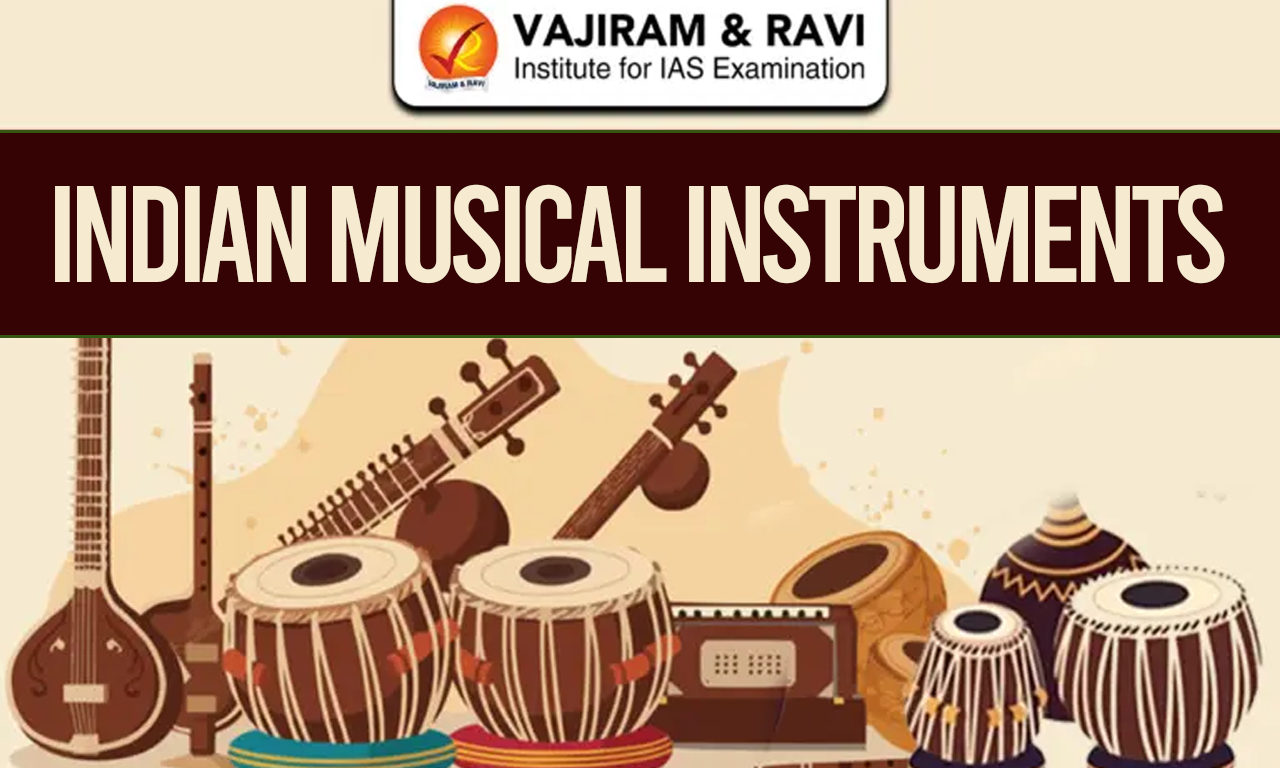
Indian Musical Instruments represent one of the oldest and richest musical traditions in the world, deeply connected with India’s cultural and spiritual heritage. The concept of ‘Sangeet’ combines vocal, instrumental and dance forms, making music a holistic art. From Vedic chants of Samaveda to modern classical and folk traditions, Indian Musical Instruments have evolved across regions, religions and dynasties, reflecting diversity, continuity and deep scientific understanding of sound and rhythm.
Indian Musical Instruments Historical Evolution
Indian Musical Instruments evolved from Vedic chants, temple traditions, Mughal influences and regional cultures, reflecting continuous musical development across ancient, medieval and modern periods.
- Vedic Origins: Early music began with Samaveda chants sung by Udgatar priests. These chants used structured notes, marking the origin of swaras (sa, re, ga, ma, pa, da, ni) and establishing music as a medium of prayer and ritual.
- Natya Shastra Contribution: Bharata’s Natya Shastra (200 BCE-200 CE) systematically classified instruments and explained sound production, performance and musical theory, forming the scientific foundation of Indian musical traditions.
- Indus and Prehistoric Evidence: Archaeological findings from Bhimbetka caves and Harappan sites show early use of drums, flutes and dance, indicating musical activity dating back nearly 10,000 years.
- Medieval Influence: Mughal rulers introduced Persian and Central Asian elements, influencing instruments like sitar and tabla and expanding melodic and rhythmic complexity in North Indian music traditions.
- Bhakti Movement Role: Devotional saints promoted music through simple instruments like ektara and tambura, making music accessible and integrating it with spiritual practices across regions.
- Modern Developments: Systematic classification by Vishnu Narayan Bhatkhande and integration of Western instruments like violin strengthened Indian music, preserving tradition while adapting to modern contexts.
Indian Musical Instruments Classification
Indian Musical Instruments are classified into four categories based on sound production, as described in Natya Shastra, forming a universal scientific system.
- Tata Vadya: These are string instruments where sound is produced by vibrating strings, such as sitar, veena, sarod and violin.
- Sushira Vadya: These are wind instruments producing sound through vibrating air columns, including flute, shehnai and harmonium.
- Avanaddha Vadya: These are percussion instruments producing sound by striking stretched membranes, such as tabla, dholak and mridangam.
- Ghana Vadya: These are solid instruments producing sound by self vibration, like manjira, ghatam and khartal, often used in rhythm accompaniment.


Tata Vadya
Tata Vadya includes string instruments where sound is produced by vibrating stretched strings, controlled by tension, length and playing techniques.
- String Vibration Principle: Sound is generated by plucking or bowing stretched metal or gut strings, where tension and length determine pitch, duration and tonal quality.
- Structural Components: Instruments include resonator (toomba), fingerboard (danda), bridge and tuning pegs, which together amplify and regulate sound vibrations effectively.
- Pitch Control Mechanism: Changes in string length and tightness allow precise variation in musical notes, enabling complex ragas and melodic improvisations.
- Historical Origin: Early forms evolved from hunter’s bow like harps, later developing into sophisticated instruments like veena and sitar used in classical traditions.
- Resonance Enhancement: Sympathetic strings (tarab) vibrate along with main strings, enriching sound depth and creating a distinctive echo effect in instruments like sitar.
Tata Vadya Musical Instruments
Tata Vadya instruments are widely used in classical, folk and modern music, forming the melodic foundation of Indian Musical Instruments tradition.
- Saraswati Veena: One of the oldest instruments, dating to around 1700 BCE, used in Carnatic music, featuring 4 main strings and 3 drone strings with 24 fixed frets.
- Sitar: Introduced around the 13th century, influenced by Persian ‘setar’, widely used in Hindustani music and popularized globally by artists like Ravi Shankar.
- Sarod: Derived from rebab and veena, made of teak wood, known for its deep tone and associated with musicians like Tansen and Amjad Ali Khan.
- Violin: Adapted into Indian music in the 18th century, played differently from Western style, becoming essential in Carnatic performances as both solo and accompaniment instrument.
- Santoor: A dulcimer type instrument with around 100 strings, played by striking with mallets, mainly associated with Jammu and Kashmir’s Sufiana music tradition.
Sushira Vadya
Sushira Vadya includes wind instruments where sound is produced by vibrating air columns, controlled through blowing techniques and finger movements.
- Air Column Vibration: Sound originates from air blown into hollow tubes, with pitch controlled by opening and closing finger holes.
- Flute Structure: Usually made of bamboo or wood, simple design with finger holes allows production of melodious and soft tonal variations.
- Reed Mechanism: Reed instruments use one or two vibrating reeds, producing sharper and louder sounds suitable for ceremonial and classical performances.
- Conical Design: Many reed instruments have conical tubes widening at one end, enhancing sound projection and tonal richness.
- Ancient Evidence: Indus Valley excavations reveal clay whistles and wind instruments, proving early existence of aerophones in Indian civilization.
Sushira Vadya Musical Instruments
Sushira Vadya instruments play a major role in melody and ceremonial music across Indian Musical Instruments traditions.
- Bansuri: Bamboo flute with six or seven holes, associated with Lord Krishna, widely used in Folk and Classical music for its soft and expressive sound.
- Shehnai: Double reed instrument with seven holes, traditionally played at weddings and temples, known for its auspicious and powerful tonal quality.
- Harmonium: Introduced in the 19th century, uses reeds and keyboard system, widely used in classical, devotional and folk music accompaniment.
- Nadaswaram: A South Indian reed instrument with a loud and resonant sound, commonly played in temples and religious ceremonies.
- Algoza: Twin flute instrument used in Punjab and Rajasthan, producing continuous melody through simultaneous blowing into two pipes.
Avanaddha Vadya
Avanaddha Vadya includes percussion instruments where sound is produced by striking stretched animal skin membranes over hollow bodies.
- Membrane Vibration: Sound is generated when stretched skin vibrates upon striking, producing rhythmic beats essential for musical timing.
- Material Composition: Instruments are made using wood, metal, or clay bodies covered with animal hide, ensuring durability and tonal variation.
- Playing Techniques: Played using hands, sticks, or both, depending on instrument type, enabling diverse rhythmic patterns.
- Vedic References: Early mention of Bhumi Dundhubhi shows use of ground drums covered with animal hide, struck for sound production.
- Structural Types: Includes vertical drums, horizontal drums, frame drums and hourglass shaped instruments like damaru, each with distinct sound properties.
Avanaddha Vadya Musical Instruments
Avanaddha Vadya instruments provide rhythm and tempo, forming the backbone of Indian Musical Instruments performance systems.
- Tabla: Pair of drums consisting of dayan and bayan, widely used in Hindustani music, with complex tuning system and rhythmic versatility.
- Mridangam: Double headed drum used in Carnatic music, played with hands, producing rich tonal combinations essential for classical performances.
- Dholak: Barrel shaped drum popular in folk music, used in bhangra and traditional events, played in lap or standing position.
- Pakhawaj: Ancient drum used in dhrupad style, played horizontally, producing deep and resonant sounds.
- Damaru: Hourglass shaped drum associated with mythology, producing rhythmic beats through attached cords striking the membrane.
Ghana Vadya
Ghana Vadya includes solid instruments that produce sound through self vibration without strings or membranes, mainly used for rhythm support.
- Self Sounding Nature: Sound is produced by striking or shaking the instrument itself, without requiring tuning or external vibration sources.
- Earliest Instruments: Considered among the earliest musical tools created by humans due to their simple structure and natural sound production.
- Rhythmic Function: Primarily used for maintaining rhythm and timing in folk, devotional and classical performances.
- Material Composition: Made from metal, wood, or clay, providing durability and distinct tonal qualities.
- Ease of Use: Simple design makes them accessible for community participation in music and dance activities.
Ghana Vadya Musical Instruments
Ghana Vadya instruments are essential for rhythm accompaniment and are widely used in Indian Musical Instruments traditions.
- Manjira: Small metallic cymbals struck together, commonly used in devotional songs and classical performances to maintain rhythm.
- Ghatam: Clay pot instrument used in Carnatic music, producing bass sounds by striking different parts with hands and fingers.
- Khartal: Wooden clappers with metal jingles, widely used in folk music, especially in Rajasthan and devotional performances.
- Chimta: Metal instrument with jingles, commonly used in Punjabi folk music, producing rhythmic metallic sounds.
- Jhanj: Large cymbals used in temple rituals and classical performances, creating loud rhythmic beats.
Musical Instruments of Northern India
Northern India follows Hindustani Music, where instruments show strong Mughal influence and focus on improvisation, melody and rhythmic complexity.
- Melodic Emphasis: Instruments are designed to explore ragas with improvisation, using techniques like meend (gliding notes) and gamak, creating expressive and flexible musical structures.
- Rhythmic Complexity: Strong tala system supported by percussion instruments, especially tabla, allows intricate rhythmic patterns and accompaniment in vocal and dance forms.
- Persian Influence: Many instruments reflect Indo Persian fusion, seen in structure and playing styles, especially in string and wind instruments.
- Performance Style: Instruments are widely used in solo, accompaniment and classical dance forms like Kathak, showing versatility in musical presentation.
- Examples: Sitar and sarod for melody, tabla for rhythm and shehnai for ceremonial and classical performances.
Musical Instruments of Southern India
Southern India follows Carnatic Music, where instruments are structured, composition based and closely linked to temple and devotional traditions.
- Composition Based System: Instruments strictly follow fixed compositions (kritis), focusing on precision, discipline and clarity in musical expression.
- Strong Rhythmic Foundation: Complex tala system supported by percussion instruments like mridangam ensures mathematical precision in rhythm patterns.
- Temple Tradition Influence: Instruments are deeply connected with religious and temple performances, often used in rituals and classical concerts.
- Technical Playing Style: Emphasis on speed, accuracy and ornamentation like gamakas, requiring high technical skill and coordination.
- Examples: Veena and violin for melody, mridangam for rhythm and nadaswaram for temple and festive performances.

 Last updated on Sep, 2026
→ UPSC Mains Question Paper 2026 is out now for Essay & GS Paper 1, 2, 3 & 4.
→ UPSC Mains GS Paper 1 2026 is out now.
→ UPSC Mains GS Paper 2 2026 is out now.
→ UPSC Mains GS Paper 3 2026 is out now.
→ UPSC Mains GS Paper 4 2026 is out now.
→ UPSC Mains Indian Language Paper & English Compulsory Paper are out now.
→ Check out the latest UPSC Syllabus 2026 here.
→ UPSC Mains Admit Card 2026 is now out.
→ Enroll in Vajiram & Ravi’s UPSC Mains Test Series 2027 for structured answer writing practice, expert evaluation, and exam-oriented feedback.
→ Join Vajiram & Ravi’s UPSC Mentorship Program 2027 for personalized guidance, strategy planning, and one-to-one support from experienced mentors.
→ Go through the UPSC Mains Previous Year Papers to enhance your preparation.
→ Download UPSC Mains Essay Paper 2025, UPSC Mains GS Paper-I 2025, UPSC Mains GS Paper-II 2025, UPSC Mains GS Paper-III 2025, UPSC Mains GS Paper-IV 2025, UPSC Mains English (Compulsory) Paper 2025, UPSC Mains Hindi (Qualifying) Paper 2025 here.
→ UPSC has released UPSC Toppers List 2025 with the Civil Services final result on its official website.
→ UPSC Calendar 2027 has been released.
→ Also check Best UPSC Coaching in India
Indian Musical Instruments FAQs
Q1. What are Indian Musical Instruments?+
Q2. How are Indian Musical Instruments classified?+
Q3. Which is the oldest Indian Musical Instrument?+
Q4. What is the difference between Hindustani and Carnatic instruments?+
Q5. Which Indian Musical Instruments are most commonly used?+
Tags: art and culture art and culture notes indian art and culture indian musical instruments