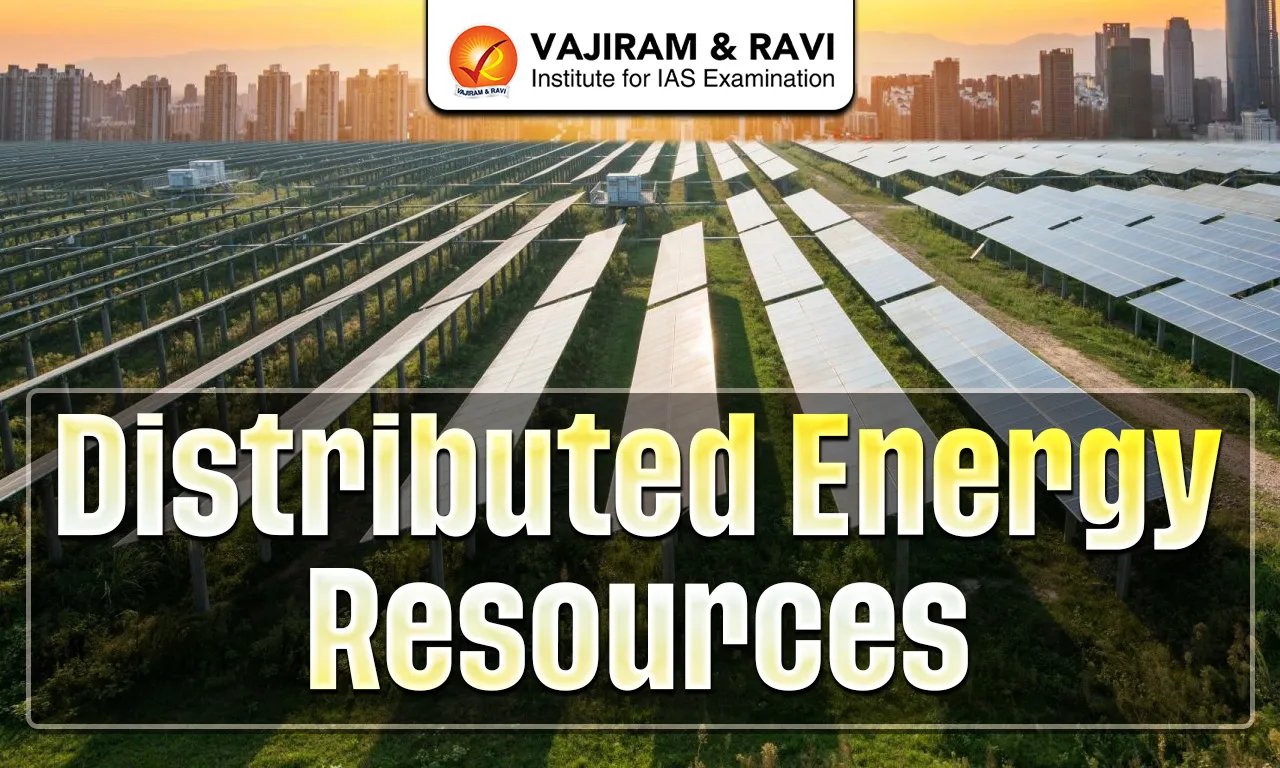
Distributed Energy Resources (DERs) are small-scale energy systems that generate or store electricity close to where it is used. Instead of relying only on large power plants, these resources help supply energy locally. They make the energy system more flexible, efficient, and reliable.
About Distributed Energy Resources
- Distributed Energy Resources (DERs) are small and flexible energy systems located close to where electricity is used, such as homes or businesses, instead of large central power plants. They are usually connected to the local grid but can also work independently.
- These systems can provide electricity, heat, or mechanical energy and are often installed on the consumer’s side (“behind the meter”), allowing users to generate and manage their own energy.
- DERs include various technologies such as renewable energy sources, energy storage systems, and energy-efficient devices. Common examples are rooftop solar panels, wind turbines, battery storage, electric vehicle batteries, biomass generators, fuel cells, small hydro systems, gas turbines, and diesel engines.
- A related concept is distributed generation, which means producing electricity near the place of use rather than relying only on centralized power plants. However, not all DER systems are limited to being behind the meter.
- Many DERs use renewable energy like solar and wind, helping reduce pollution and carbon emissions, while even those using natural gas produce fewer emissions compared to traditional power plants.
- DERs improve energy reliability and resilience by providing backup power during outages or extreme weather and also help meet rising electricity demand by supporting the main grid during peak times.
Distributed Energy Resources Technologies & Types
- DER technologies include both traditional fossil fuel-based systems and modern clean energy technologies. Older systems like oil and diesel-based engines produce high greenhouse gas emissions, while newer technologies focus on reducing or eliminating pollution.
- Solar energy systems (solar PV) convert sunlight directly into electricity using solar panels. These are widely used in homes and businesses and have seen rapid growth in recent years.
- Wind turbines (distributed wind) generate electricity from wind. They can be very small (less than 1 kW for small uses) or large enough (up to 100 kW) to power industrial sites.
- Fuel cells produce electricity through a chemical process using fuels like hydrogen. While hydrogen is often made from natural gas, it can also be produced using renewable energy (called green hydrogen). Fuel cells are used in some electric vehicles and power systems.
- Cogeneration (Combined Heat and Power – CHP) systems produce electricity and useful heat at the same time from a single fuel source. They can run on natural gas or renewable fuels like biomass, making them more efficient.
- Microturbines are small engines that run on fuels like natural gas, biogas, or propane. Even though each unit produces a small amount of electricity (15-300 kW), multiple units together can supply power to large facilities.
- Small-scale hydropower systems use flowing water to generate electricity and are useful in areas with rivers or streams.
- Energy storage systems like batteries store extra electricity (especially from solar or wind) so it can be used later. Thermal storage systems store heat or cold to help balance energy demand.
- Microgrids are small, local energy systems that can operate independently from the main grid during emergencies, improving reliability and resilience.
- Demand response technologies help reduce or shift electricity use during peak demand times, making the overall system more efficient.
- Electric vehicles (EVs) can act as mobile batteries, storing energy and even supplying power back to the grid when needed.


Distributed Energy Resources Benefits
- Better reliability and resilience: DERs reduce dependence on large power plants by generating energy locally. This helps keep the power supply stable and provides backup during power cuts, extreme weather, or other disruptions.
- Environmental benefits: DERs promote the use of renewable energy like solar and wind, which lowers greenhouse gas emissions, reduces air pollution, and decreases dependence on fossil fuels.
- Cost savings for consumers: By producing energy closer to where it is used, DERs reduce transmission losses and can lower electricity bills. They also help avoid expensive upgrades to the main grid and can even generate income through systems like net metering or energy markets.
- Energy independence and security: DERs allow countries and individuals to use a mix of energy sources, reducing reliance on imported fuels and improving overall energy security.
- Support for modern energy systems: DERs help in building a smarter, more flexible, and decentralized power system, making it easier to manage energy demand and supply efficiently.
- Efficient use of energy storage: DERs make use of energy storage technologies that store extra energy for later use, ensuring energy is not wasted and can be used when needed.
- Battery storage advantages: Batteries are the most common storage systems. They can be installed at homes or businesses (“behind the meter”) to store extra electricity and use it later, improving reliability and reducing costs.
- Electric vehicles as energy sources: Electric vehicles (EVs) can act like mobile batteries. With vehicle-to-grid (V2G) technology, they can send unused energy back to the grid, helping balance electricity demand.
- Thermal storage using water heaters: Electric water heaters can store energy in the form of heat and release it later when needed. This helps support the grid and improves overall energy efficiency.
Distributed Energy Resources Challenges
- Integration and coordination issues: Renewable sources like solar and wind do not produce energy all the time, which makes it difficult to maintain a stable power supply. Also, managing and coordinating many small energy systems together and connecting them smoothly to the existing grid is a big challenge.
- Regulatory and policy barriers: Different rules and regulations in various regions can make it difficult to adopt DERs widely. There is a need for clear and supportive government policies to encourage their use.
- High initial costs and financial concerns: Some DER technologies require a large investment at the beginning. This makes it important to have proper financing options and business models that make these systems affordable and profitable for users.
- Technical and system compatibility issues: Different DER systems need to work together efficiently, which requires proper communication and compatibility between technologies. Ensuring smooth operation between various systems can be complex.
- Cybersecurity risks: As energy systems become more digital and connected, they become vulnerable to cyberattacks. Protecting these systems from hacking and data breaches is an important challenge.
- Need for skilled management: Operating and maintaining multiple small energy systems requires proper planning, skilled workforce, and advanced monitoring systems.
Government Initiatives for Renewable Energy
- The Government of India has set a major goal of achieving 500 GW of power capacity from non-fossil fuel sources by 2030, as announced by the Prime Minister at COP26.
- To achieve this target, the government is actively spreading awareness about renewable energy through various schemes, campaigns, and media outreach.
- Solar Parks & Ultra Mega Solar Projects: Aimed at setting up 40,000 MW capacity, this scheme provides ready infrastructure like land, roads, water, and power connections, making it easier and faster to develop large-scale solar projects.
- CPSU Scheme Phase-II (Government Producer Scheme): Supports government companies to set up solar power projects using domestically made solar panels, with financial support (VGF). The power generated is used by government bodies or DISCOMs.
- Production Linked Incentive (PLI) Scheme: Focuses on boosting domestic manufacturing of high-efficiency solar PV modules at a large (GW) scale under different phases.
- PM-KUSUM Scheme: Promotes solar energy in agriculture through solar power plants, solar pumps, and solarisation of existing pumps. It benefits farmers, reduces subsidy burden on states, and provides cheaper electricity to DISCOMs.
- Rooftop Solar Programme Phase II: Encourages installation of solar panels on rooftops, especially in homes. It provides subsidies to households and incentives to DISCOMs for increasing solar capacity.
- Green Energy Corridors (GEC): Focuses on building transmission systems to carry renewable energy efficiently. Financial support is given to states for infrastructure under Phase I and Phase II.
- Bio-Energy and Waste-to-Energy Programmes
- Waste to Energy Programme: Converts urban, industrial, and agricultural waste into useful energy.
- Biomass Programme: Supports production of biomass fuels like briquettes and pellets and promotes their use in industries.
- Biogas Programme: Encourages setting up small biogas plants for households, especially in rural areas.

 Last updated on Oct, 2026
→ UPSC 2027 Notification will be released on 13 January 2027 at upsconline.nic.in.
→ Check Nobel Prize 2026 Winners List here.
→ Download PIB PRiSM Monthly Magazine 2026 here.
→ Check UPSC Monthly Current Affairs Magazine The Recitals here.
→ Check out the latest UPSC Syllabus here.
→ Download UPSC Model Answers for Mains 2026
→ UPSC Mains Question Paper 2026 is out now for Essay & GS Paper 1, 2, 3 & 4.
→ UPSC Calendar 2027 has been released.
→ Enroll in Vajiram & Ravi’s UPSC Mains Test Series 2027 for structured answer writing practice, expert evaluation, and exam-oriented feedback.
→ Join Vajiram & Ravi’s UPSC Mentorship Program 2027 for personalized guidance, strategy planning, and one-to-one support from experienced mentors.
→ Go through the UPSC Mains Previous Year Papers to enhance your preparation.
→ UPSC has released UPSC Toppers List 2025 with the Civil Services final result on its official website.
→ Also check Best UPSC Coaching in India
Distributed Energy Resources FAQs
Q1. What are Distributed Energy Resources (DERs)?+
Q2. What are some common examples of DERs?+
Q3. How do DERs improve energy reliability?+
Q4. What are the environmental benefits of DERs?+
Q5. What are the main challenges of DERs?+
Tags: distributed energy resources environment environment notes