Parbati Giri

Parbati Giri

Parbati Giri Latest News

The Prime Minister recently paid homage to freedom fighter Parbati Giri on the occasion of her birth centenary, saying that she played a commendable role in India’s freedom struggle against colonial rule.

About Parbati Giri

  • Also known as the Mother Teresa of Western Odisha, and epithet as ‘Banhi-kanya’ (daughter of fire) Giri was a prominent freedom fighter from Odisha. 
  • While she fought for the Independence of India, after independence she dedicated her life as a social worker.
  • Born on 19 January 1926 to mother Srimati and father Dhananjay Giri of Samleipadar village near Bijepur of the present Bargarh district and undivided Sambalpur district of Odisha, she was filled with patriotism since childhood. 
  • In 1942, she was just 16 when she was in the forefront of agitation following Mahatma Gandhi’s ‘Quit India’ movement
  • She had also staged an agitation at Bargarh Court to persuade the lawyers to boycott the erstwhile court in defiance of the British.
  • Parbati Giri initiated her journey as a freedom fighter from her village only. 
  • She was inspired by Gandhian philosophy. She had even come in contact with Mahatma Gandhi. 
  • She had taken tutelage at the famous Ashrams in Bari, Wardha, and Delhi Gandhi Sebashram. 
  • Giri was also associated with freedom fighter and social reformer Rama Devi.
  • Dearly known as Badamaa (Big mother) to the inmates of her Ashrams, the legendary woman from the Western Odishan district Bargarh worked for the poor and downtrodden till her death.

Source: DDN

Parbati Giri FAQs

Q1: Who was Parbati Giri?

Ans: She was a prominent freedom fighter from Odisha and a dedicated social worker after Independence.

Q2: By which popular title is Parbati Giri known in Western Odisha?

Ans: She is known as the Mother Teresa of Western Odisha.

Q3: When was Parbati Giri born?

Ans: She was born on 19 January 1926.

Q4: Which national movement did Parbati Giri actively participate in during 1942?

Ans: She participated in the Quit India Movement.

Central Silk Board

Central Silk Board

Central Silk Board Latest News

Recently, the government has increased the Central Silk Board’s financial approval limit to ₹1 crore from ₹50 lakh by amending Rule 22 of the Central Silk Board Rules, 1955.

About Central Silk Board

  • It is a statutory body established in 1948 by an Act of Parliament.
  • Nodal Ministry: It is working under the administrative control of Ministry of Textiles, Government of India.
  • Headquarter: Bengaluru

Mandate of Central Silk Board

  • To advise the central Government on all matters relating to the development of silk industry including import and export of raw silk
  • To prepare and furnish such other reports relating to the silk industry as may be required by the Central Government from time to time.
  • To create greater opportunities for gainful employment and improved levels of income in sericulture through spread of scientific sericulture practices

Silk production in India

  • India is the second-largest producer and consumer of silk globally.
  • India's raw silk production increased from 31,906 MT in 2017-18 to 38,913 MT in 2023-24.
  • Major silk producing states: Karnataka (the largest silk producing state), Andhra Pradesh,
  • Major Silk varieties Produced: Mulberry, Eri, Tasar and Muga.

Source: LM

Central Silk Board FAQs

Q1: Where is the Central silk Board situated?

Ans: Bengaluru

Q2: In which year was the Central silk Board established?

Ans: 1948

World Economic Forum (WEF)

World Economic Forum (WEF)

World Economic Forum (WEF) Latest News

Union minister Ashwini Vaishnaw recently clarified that while India remains engaged with major global powers, the World Economic Forum (WEF) at Davos is largely a platform for the exchange of ideas rather than a venue for formal group-to-group trade negotiations.

About World Economic Forum (WEF)

  • It is an international non-profit organisation that brings together business, political, and social leaders to discuss global challenges.
  • Established in 1971, the WEF promotes stakeholder theory for broader societal impact.
  • This body has a concise mission: ‘To improve the state of the world through public-private cooperation’.
  • The WEF is best known for its annual WEF Meeting at Davos, the Swiss ski resort. 
  • The WEF Annual Meeting brings together top decision-makers from government, business, and civil society to address major global issues and priorities for the year ahead.
  • WEF addresses major global concerns such as climate change, economic challenges, and global security.
  • The organization is funded by its diverse membership, which includes prominent global figures.

Source: TOI

World Economic Forum (WEF) FAQs

Q1: What is the World Economic Forum (WEF)?

Ans: It is an international non-profit organisation that brings together business, political, and social leaders to discuss global challenges.

Q2: When was the World Economic Forum established?

Ans: It was established in 1971.

Q3: Where is the annual World Economic Forum (WEF) Meeting held?

Ans: At Davos, the Swiss ski resort.

Mount Aso

Mount Aso

Mount Aso Latest News

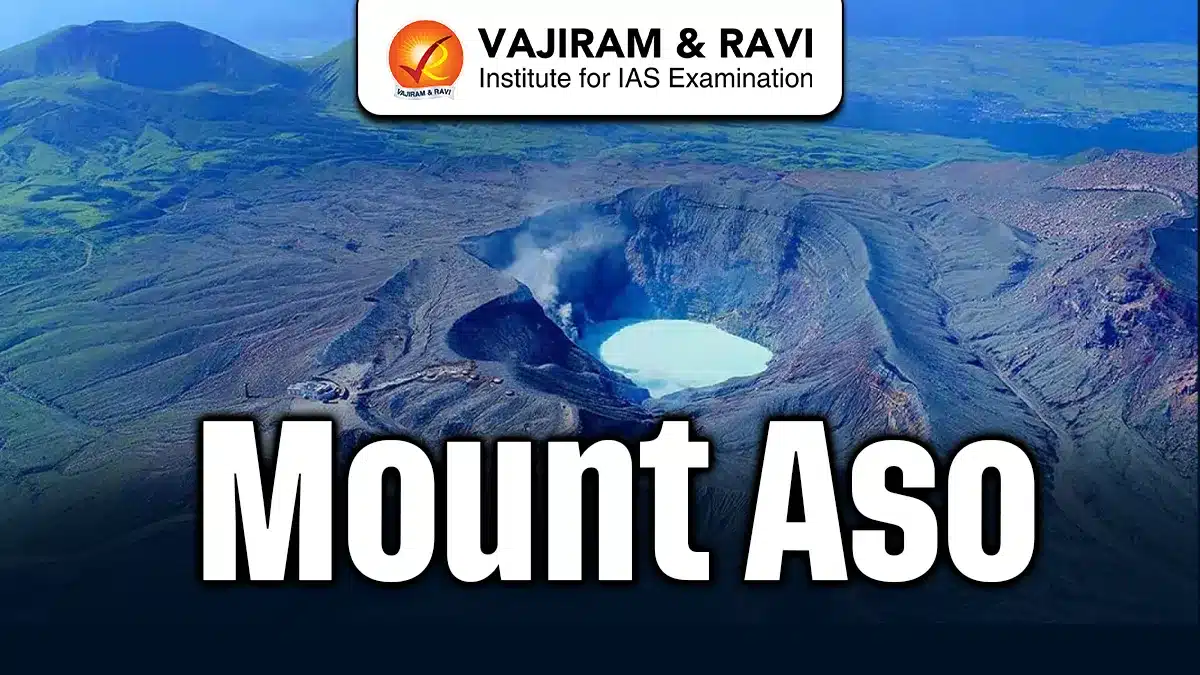
Authorities recently initiated an extensive search operation after a helicopter vanished while flying near a 'highly active' Mount Aso volcano in Japan.

About Mount Aso

  • It is located in Kumamoto-ken (prefecture), Kyushu, Japan, rising to an elevation of 1,592 meters.
  • It is the largest active volcano in Japan.
  • It has the largest active crater in the world, measuring 114 km in circumference, 27 km from north to south, and 16 km from east to west. 
  • Its Caldera (bowl-shaped volcanic depression) marks the original crater and contains the active volcano of Naka-dake and numerous hot springs. 
  • The crater is inhabited and is crossed by roads and railways. 
  • Its mountain pastures are used for cattle raising and dairy farming. 
  • The volcano is the central feature of Aso-Kuju National Park.
  • The volcano has been erupting sporadically for decades, most recently in 2021.

Source: MSN

Mount Aso FAQs

Q1: Where is Mount Aso located?

Ans: It is located in Kumamoto-ken (prefecture), Kyushu, Japan.

Q2: What is the elevation of Mount Aso?

Ans: It rises to an elevation of about 1,592 metres.

Q3: Why is Mount Aso considered significant among volcanoes in Japan?

Ans: It is the largest active volcano in Japan.

Q4: Which active volcano is located within the caldera of Mount Aso?

Ans: Naka-dake.

Responsible Nations Index

Responsible Nations Index

Responsible Nations Index Latest News

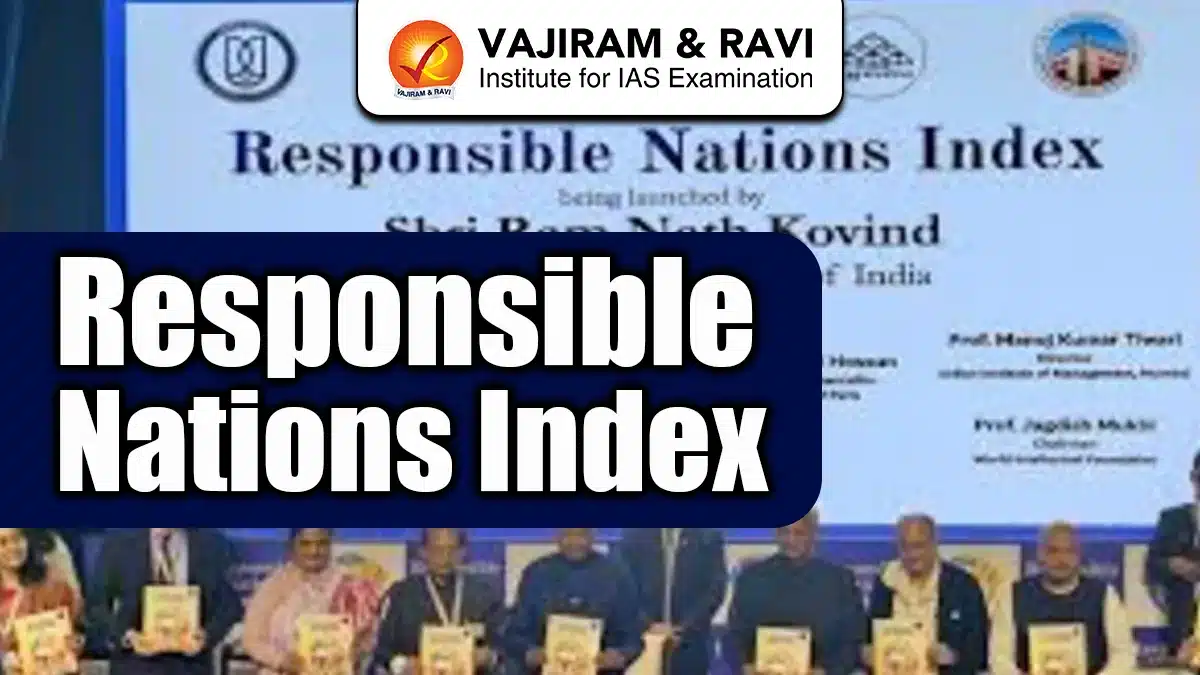
Recently, India launched the Responsible Nations Index (RNI) at the Dr. Ambedkar International Centre, New Delhi.

About Responsible Nations Index

  • It is India’s first globally anchored index.
  • It is developed by the World Intellectual Foundation (WIF) in collaboration with Jawaharlal Nehru University (JNU), IIM Mumbai, and the Dr. Ambedkar International Centre.
  • The Index covers 154 countries and is built on transparent, globally sourced data to ensure credibility and comparability.
  • It is designed to assess countries on the basis of responsible governance, social well-being, environmental stewardship, and global responsibility, moving beyond conventional power- and GDP-based measures.
  • It is structured around three core dimensions, namely
    • Internal responsibility: It focuses on dignity, justice, and the well-being of citizens;
    • Environmental responsibility: It is covering stewardship of natural resources and climate action.
    • External responsibility: It measures a country's contribution to peace, cooperation, and global stability.
  • Significance: It seeks to promote a global dialogue on ethics, responsibility, global food security, and sustainable leadership in international affairs.
    • It is expected to contribute to a more balanced and value-based understanding of national performance on the global stage.

Source: PIB

Responsible Nations Index FAQs

Q1: What is the primary focus of the Responsible Nations Index?

Ans: Ethical governance and responsibility

Q2: How many countries are covered in the Responsible Nations Index?

Ans: 154

Darwin’s Bark Spider

Darwin’s Bark Spider

Darwin’s Bark Spider Latest News

Recently, scientists from institutions in China, Madagascar, Slovenia, and the US studied bark spiders (Caerostris darwini and Caerostris kuntneri) to understand the conditions in which they produce the tough silk. 

About Darwin’s Bark Spider

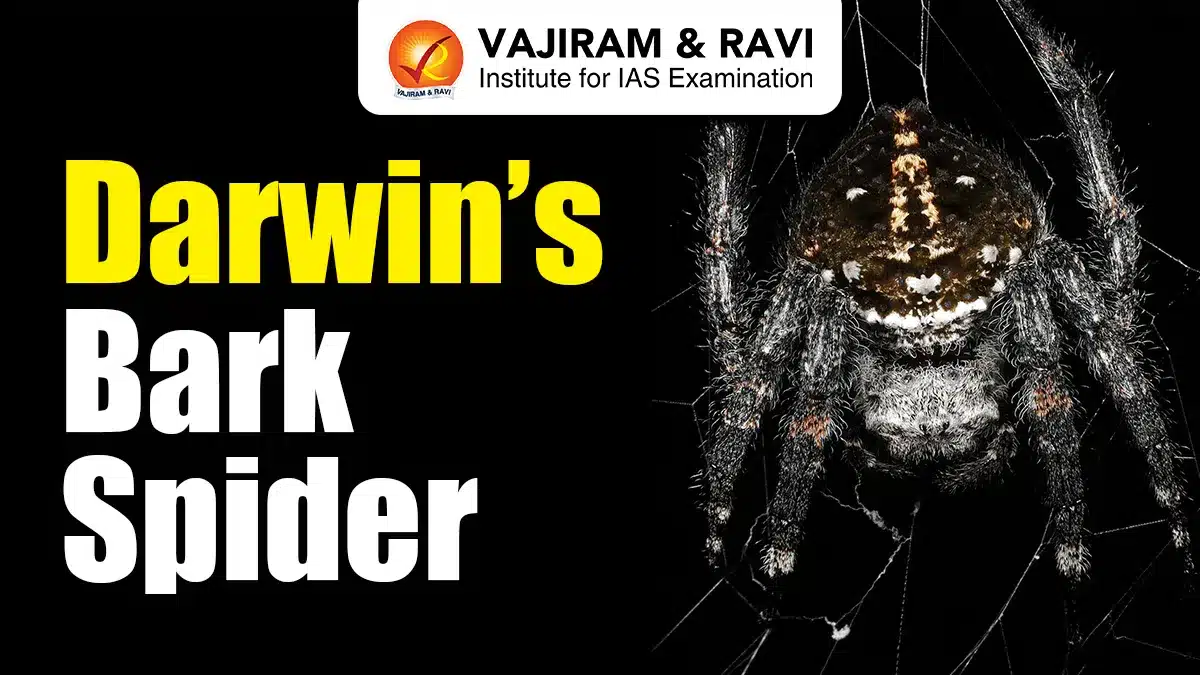
  • The Darwin’s Bark Spider (Caerostris darwini) is a remarkable arachnid famed for producing the largest and toughest known webs in the animal kingdom.
  • It belongs to the family Araneidae, or orb-weaver spiders.
  • It was discovered in 2001 and formally described in 2009.
  • Habitat: It inhabits riverine forests and wetlands.
  • Distribution: It is found in the forests of Madagascar.

Appearance of Darwin’s Bark Spiders

  • These are medium-sized, with females reaching about 0.8–1 inch (2–2.5 cm) in body length, while males are significantly smaller.
  • They are typically dark brown with mottled patterns, which helps them blend into tree bark.

Characteristics of Darwin’s Bark Spiders

  • It weaves silk that outperforms steel and most human-made fibres in both strength and toughness.
  • Their silk is more than twice as tough as any other spider silk studied.
  • Web-Building Ability: Darwin’s bark spiders construct orb webs that can span rivers and streams, with diameters up to 82 ft (25 m). 
  • Lifespan: They have relatively short lifespans, typical of orb-weaving spiders, with females living longer than males.
  • Unique Habitat: Unlike most orb-weavers, it builds webs over open water rather than in vegetation.
  • Ecological Role of Darwin’s Bark Spiders: They play an important role in controlling insect populations.

Source: TH

Darwin’s Bark Spider FAQs

Q1: What is unique about Darwin's Bark Spider?

Ans: It produces the strongest silk known

Q2: Where is Darwin's Bark Spider primarily found?

Ans: Madagascar

Souparnika River

Sowparnika River

Souparnika River Latest News

The National Green Tribunal (NGT) recently directed the Udupi DC and the Chairman of the Karnataka Urban Water Supply and Drainage Board (KUWSDB) to file a detailed report outlining proposed action along with approximate estimates and timelines to stop the flow of wastewater into the Sauparnika River in Kollur.

About Souparnika River

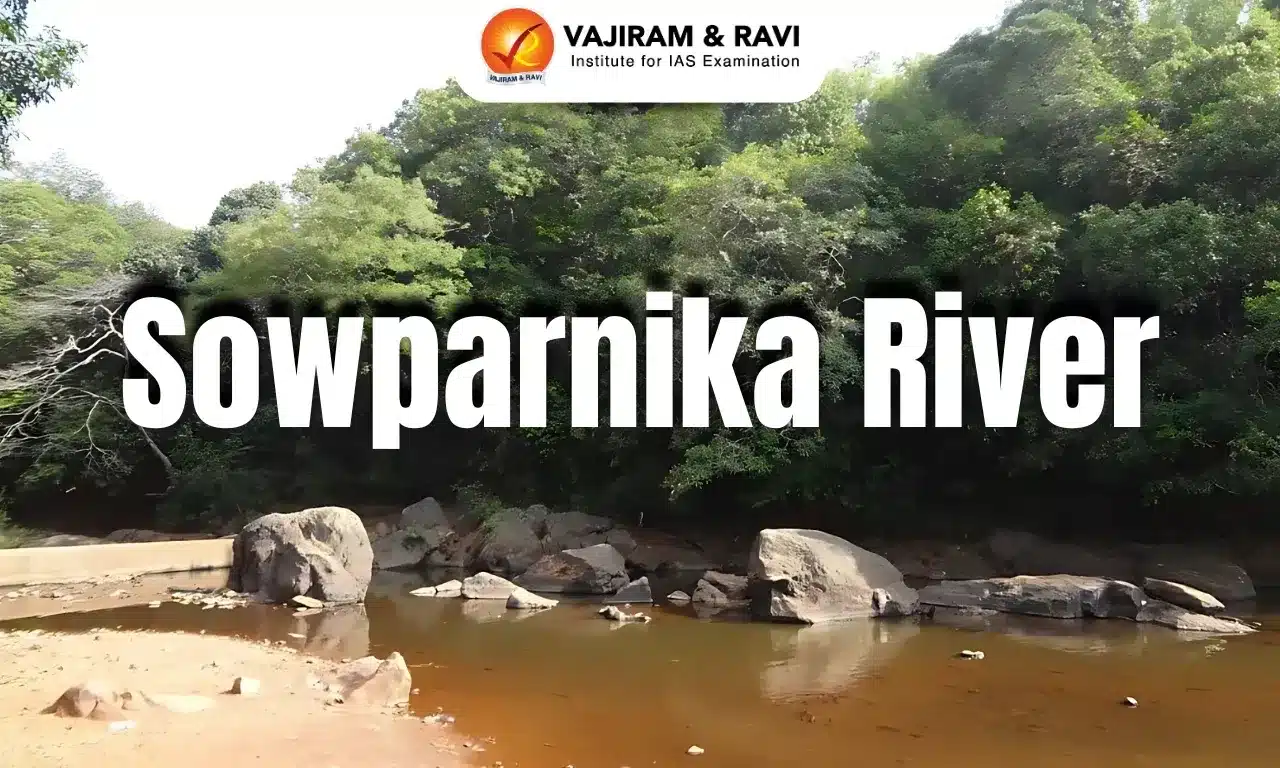
  • The Souparnika River, also known as Sowparnika, is a west-flowing river in Karnataka.
  • It is surrounded by lush green forests of the Western Ghats.
  • Course: Originating from the Kodachadri Hills in the Western Ghats, it flows through the Byndoor taluk, passing near the renowned Mookambika Temple in Kollur, before merging with the Arabian Sea.
  • It is deeply associated with Hindu mythology.
  • Legend has it that Garuda (the divine bird and vehicle of Lord Vishnu) performed penance on the riverbanks, which is how it got its name “Souparnika” (named after “Suparna,” another name for Garuda). 
  • A unique feature of the Souparnika River is observed near Maravanthe Beach, where the river runs parallel to the Arabian Sea, separated by a narrow stretch of land. 
  • This rare geographical phenomenon offers a picturesque landscape, making it a popular spot for tourists and photographers.

Source: NIE

Souparnika River FAQs

Q1: In which Indian state does the Souparnika River flow?

Ans: It flows in Karnataka.

Q2: Which major mountain range surrounds the Souparnika River?

Ans: The Western Ghats.

Q3: From where does the Souparnika River originate?

Ans: It originates from the Kodachadri Hills in the Western Ghats.

Q4: Near which famous temple does the Souparnika River pass?

Ans: It passes near the Mookambika Temple at Kollur.

Kamchatka Peninsula

Kamchatka Peninsula

Kamchatka Peninsula Latest News

Russia’s Far Eastern Kamchatka Peninsula is reeling under extreme and record-breaking snowfall, with powerful winter storms dumping several metres of snow.

About Kamchatka Peninsula

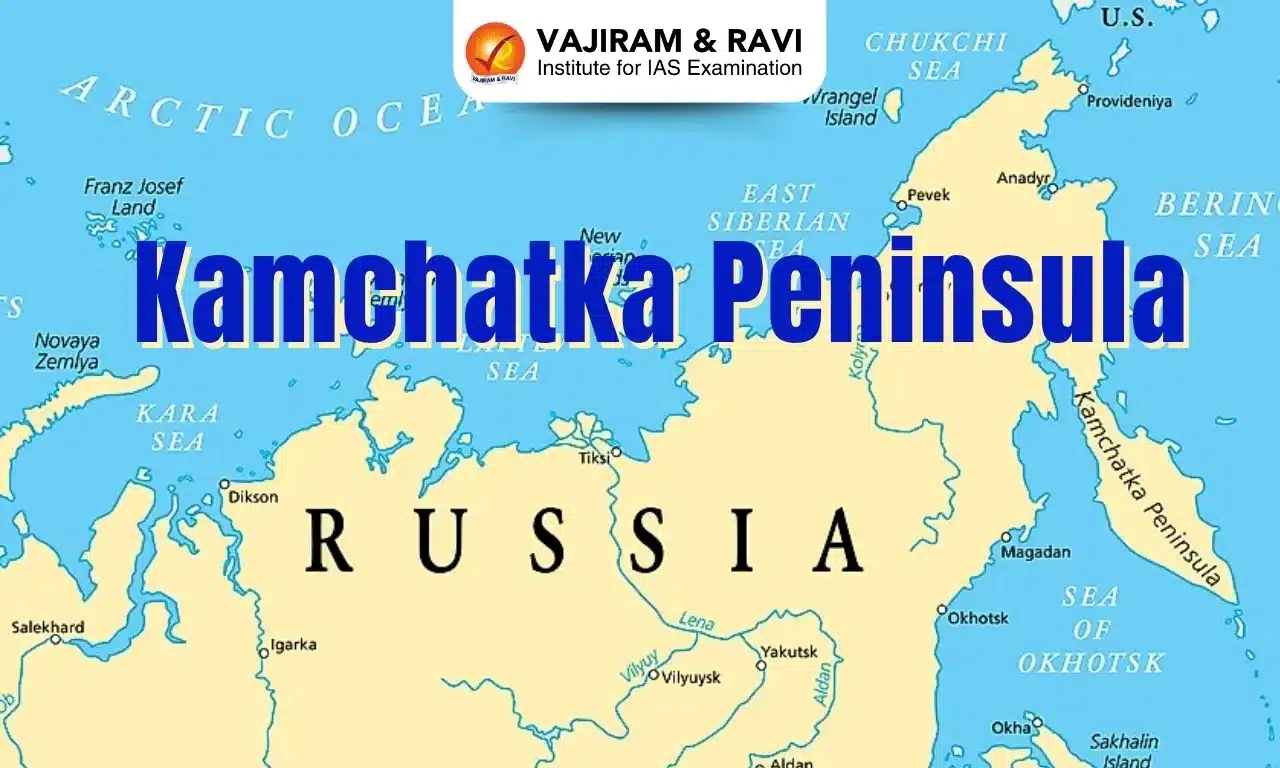
  • Location: It lies in far eastern Russia, between the Sea of Okhotsk on the west and the Pacific Ocean and Bering Sea on the east.
  • It is one of the world’s most concentrated areas of geothermal activity.
  • It contains the “volcanoes of Kamchatka”, a UNESCO World Heritage Site.
  • It is part of the Kamchatka Krai. Kamchatka, also known as a land of fire and ice, sits on the Pacific Ring of Fire and is home to over 150 volcanoes, including 29 active volcanoes.
  • It is one of the largest peninsulas in the world.
  • Climate: It experiences severe, with prolonged, cold, and snowy winters and wet, cool summers.
  • Highest Point: The Klyuchevskaya Sopka in the Eastern Range is the highest point on the Kamchatka Peninsula. 
    • The Kuril island chain runs from the southern tip of the peninsula to a short distance from Japan’s northern Hokkaido Island.

Source: TOI

Kamchatka Peninsula FAQs

Q1: Which ocean is the Kamchatka Peninsula bordered by?

Ans: Pacific Ocean

Q2: What is Kamchatka Peninsula known for?

Ans: Volcanic activity

Kumbhalgarh Wildlife Sanctuary

Kumbhalgarh Wildlife Sanctuary

Kumbhalgarh Wildlife Sanctuary Latest News 

The Centre recently declared the biodiversity-rich area, ranging from zero to one kilometre around Kumbhalgarh Wildlife Sanctuary, located in one of the most fragile ecosystems of the Aravali Range in Rajasthan, as an eco-sensitive zone (ESZ).

About Kumbhalgarh Wildlife Sanctuary

  • It is situated in the Rajsamand district of Rajasthan.
  • It spreads in an area of 610.5 sq.km. stretching across the Aravalli ranges.
    • It covers four hill and mountain ranges of the Aravallis – the Kumbhalgarh Range, the Sadri Range, the Desuri Range, and the Bokhada Range.
  • Once the hunting grounds of royals, this area was declared a wildlife sanctuary in 1971.
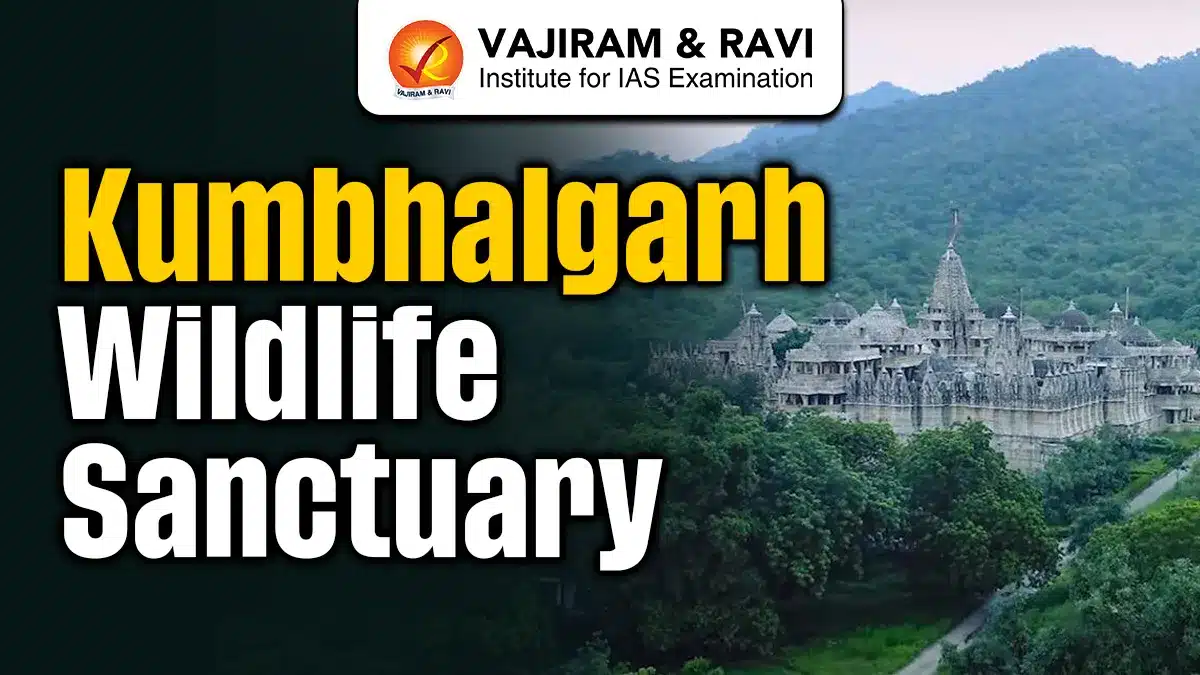
  • It encompasses the historic Kumbhalgarh Fort and is also named after the fort.
  • The sanctuary’s landscape is varied. The eastern part has hills ranging from 500 to 1300 meters high, while the western part borders the Marwar plains. 
  • Drainage: 
    • The eastern section is the starting point for the Banas River, which flows into the Bay of Bengal. 
    • Meanwhile, rainwater from the western slopes forms small rivers like Sukdi, Sumer, Mithdi, and Kot, all of which are tributaries of the Luni River that eventually flow into the Arabian Sea.
  • Flora: The flora of the sanctuary is mainly herbs. The species of Churel, Dhok, Khair, and Salar grow abundantly. among others.
  • Fauna: The sanctuary provides a natural abode to many creatures like Wolf, Leopards, Sloth bear, Hyena, jackal, Jungle cat, Sambhar, Nilgai, Chausingha (the four horned antelope), Chinkara and Hare.

Source: TOI

Kumbhalgarh Wildlife Sanctuary FAQs

Q1: Where is the Kumbhalgarh Wildlife Sanctuary located?

Ans: It is located in the Rajsamand district of Rajasthan.

Q2: Across which mountain range does the Kumbhalgarh Wildlife Sanctuary extend?

Ans: It stretches across the Aravalli mountain ranges.

Q3: Which river originates from the eastern section of the sanctuary?

Ans: The Banas River originates from the eastern section.

Indian Skimmer

Indian Skimmer

Indian Skimmer Latest News

Recently, the Bombay Natural History Society (BNHS) has launched a new conservation project under the National Mission for Clean Ganga (NMCG) at Dehradun to protect Indian Skimmer in the Ganga Basin.

About Indian Skimmer

  • It is one of the three species that belong to the skimmer genus Rynchops in the family Laridae. 
  • It gets its name from the way it feeds, flying low over the water surface and ‘skimming’for fish.
  • Habitat: It occurs primarily on larger, sandy, lowland rivers, around lakes and adjacent marshes, and, in the non-breeding season, in estuaries and coasts.
  • Distribution: It is native to South Asia and mainly found in India, Bangladesh, and Pakistan, with some populations extending to Nepal and Myanmar.
    • In India, one of the key areas for spotting Indian Skimmers is the Chambal River.
  • Conservation status: IUCN: Endangered.
  • Threats:  Loss of river habitats, unplanned water release from dams, sand mining, threats from predators.

Features of Indian Skimmer

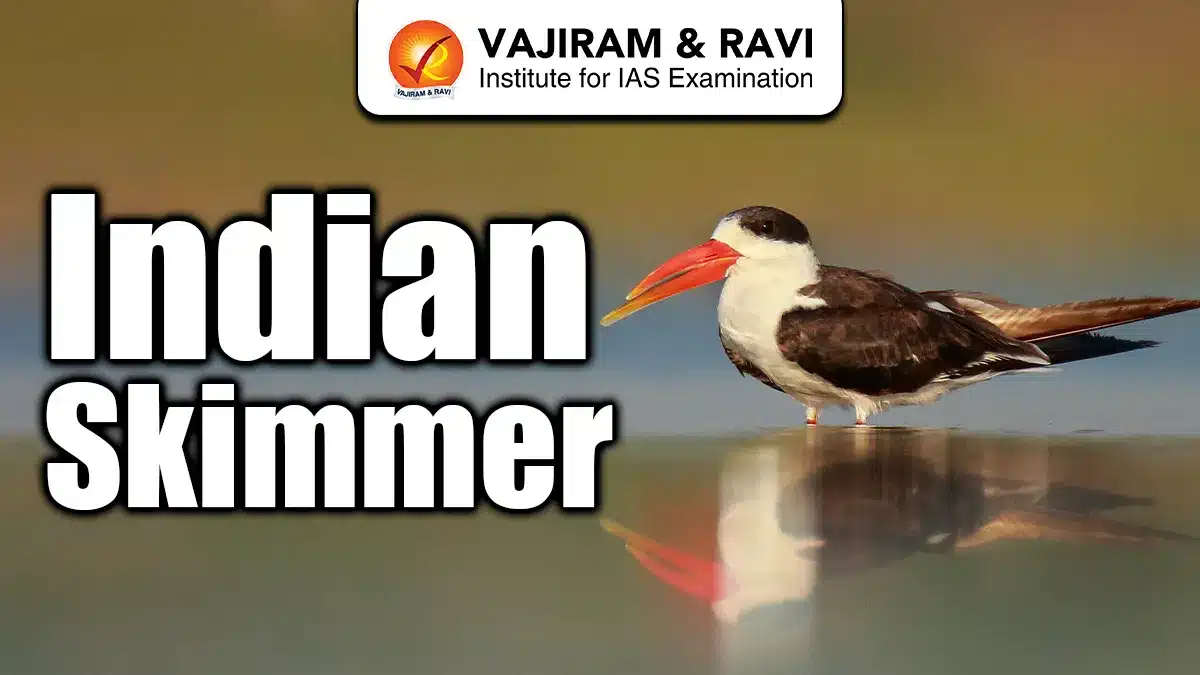
  • It has a striking appearance. Its upper body is black, while its underbelly is white.
  • The most eye-catching feature is its beak, which is orange with a lower mandible that is much longer than the upper one.
  • This special beak helps the bird skim across the surface of the water to catch small fish and aquatic creatures.
  • The bird’s wings are long and angular, designed for fast, precise flight.

Source: DTE

Indian Skimmer FAQs

Q1: What is the scientific name of the Indian Skimmer?

Ans: Rynchops albicollis

Q2: What is the conservation status of the Indian Skimmer?

Ans: Endangered

Enquire Now