AIDS Acquired Immuno Deficiency Syndrome, Causes, Prevention

AIDS

AIDS (Acquired Immuno Deficiency Syndrome) is a serious health condition caused by long-term infection with the Human Immunodeficiency Virus (HIV). It weakens the immune system, making the body unable to fight common infections and diseases. If HIV is not treated in time, it can progress to AIDS, which is the most advanced stage of the infection.

HIV/AIDS remains a global public health challenge. According to the World Health Organization, millions of people worldwide are living with HIV, but improved treatment and awareness have significantly reduced AIDS-related deaths. In India, the National AIDS Control Organisation (NACO) leads national efforts to prevent, treat, and control HIV/AIDS.

AIDS Causes

AIDS is caused by long-term infection with the Human Immunodeficiency Virus (HIV), which gradually weakens the immune system. When HIV is not treated properly, it destroys CD4 cells, leading to severe immune damage and the development of AIDS.

  • Infection with HIV (Primary Cause): AIDS develops only after a person becomes infected with HIV. The virus attacks and destroys CD4 (T-helper) cells that protect the body from infections.
  • Untreated or Late Diagnosis of HIV: If HIV is not detected early, the virus continues to multiply and damage the immune system over several years, eventually progressing to AIDS.
  • Lack of Antiretroviral Therapy (ART): Without proper ART treatment, the viral load increases rapidly, and the immune system becomes severely weakened.
  • High Viral Load in the Body: When HIV replicates actively in the blood, it reduces CD4 cell count significantly, accelerating progression toward AIDS.
  • Co-infections (e.g., Tuberculosis, Hepatitis): Existing infections weaken the immune system further and speed up the progression from HIV to AIDS.
  • Poor Nutrition and Weak Immunity: Malnutrition and poor health conditions make it harder for the body to fight infections, increasing the risk of developing AIDS.
  • Social Stigma and Lack of Awareness: Fear, discrimination, and misinformation often prevent people from seeking timely testing and treatment, leading to advanced disease stages.

Also Read: World AIDS Day 2025

AIDS Transmission

AIDS itself is not directly transmitted; it develops from long-term infection with HIV (Human Immunodeficiency Virus). HIV spreads from one person to another through specific body fluids such as blood, semen, vaginal fluids, rectal fluids, and breast milk.

Unprotected Sexual Contact

  • The most common mode of transmission worldwide.
  • Sexual contact without using condoms increases risk.
  • Risk is higher if one partner has a high viral load or untreated HIV.

Blood Transfusion with Infected Blood

  • Receiving unscreened or contaminated blood can transmit HIV.
  • Strict blood screening in hospitals has greatly reduced this risk.

Sharing Needles and Syringes

  • Common among injecting drug users.
  • Even a tiny amount of infected blood in a needle can transmit HIV.

Mother-to-Child Transmission (MTCT)

  • Can occur during pregnancy, childbirth, or breastfeeding.
  • With proper medical treatment, the risk can be reduced to very low levels.

Organ or Tissue Transplant from an Infected Donor

  • Rare, but possible if proper screening is not done.

Note: HIV is not transmitted through casual social contact or everyday interactions. Activities like hugging, sharing food, using public toilets, coughing, sneezing, or mosquito bites do not spread the virus, as HIV cannot survive or reproduce outside the human body in such conditions.

AIDS Prevention

AIDS can be prevented by stopping the transmission of HIV and by starting early treatment in people who are already infected. Awareness, safe practices, regular testing, and proper medical care are the most effective ways to control the spread of HIV.

  • Safe Sexual Practices: Using condoms correctly during every sexual act significantly reduces the risk of HIV transmission. Limiting the number of sexual partners and maintaining mutual monogamy also lowers risk.
  • Regular HIV Testing: Early testing helps in early detection and timely treatment. People who know their HIV status can take necessary precautions to prevent spreading the virus to others.
  • Antiretroviral Therapy (ART): HIV-positive individuals should start ART as soon as possible. ART reduces the viral load in the body to very low levels, helping people live healthy lives and greatly reducing the chance of transmission.
  • Pre-Exposure Prophylaxis (PrEP): PrEP is a preventive medicine taken by people at high risk of HIV infection. When taken regularly, it significantly lowers the risk of getting HIV through sexual contact.
  • Post-Exposure Prophylaxis (PEP): PEP is an emergency medication that must be started within 72 hours after possible exposure to HIV. It reduces the chance of infection if taken properly.
  • Safe Blood Transfusion: Ensuring that all donated blood is properly screened for HIV prevents transmission through blood transfusion.
  • Avoid Sharing Needles or Syringes: Injecting drug users should never share needles. Use of sterile, single-use syringes is essential to prevent infection.
  • Prevention of Mother-to-Child Transmission: HIV-positive pregnant women should take ART during pregnancy and breastfeeding. Proper medical care can reduce transmission risk to the baby to very low levels.
  • Health Education and Awareness Programs: Community education helps remove myths, reduce stigma, and encourage responsible behavior.
  • Reducing Stigma and Discrimination: Creating a supportive environment encourages people to get tested and treated without fear

Major Government Initiatives

  • Free Antiretroviral Therapy (ART) Centres: The government provides free ART medicines through thousands of centres across India to ensure long and healthy lives for HIV-positive individuals.
  • HIV Testing and Counseling Centres (HTCs/ICTCs): These centres offer free and confidential HIV testing services along with counseling support.
  • Prevention of Parent-to-Child Transmission (PPTCT) Programme: Provides HIV testing and ART to pregnant women to prevent transmission to newborns.
  • Blood Safety Programme: Strict screening of donated blood in blood banks to prevent HIV transmission through transfusion.
  • Targeted Intervention (TI) Programme: Focuses on high-risk groups such as sex workers, injecting drug users, and migrant workers through awareness and preventive services.
  • Red Ribbon Clubs: Established in colleges and educational institutions to spread awareness among youth.
  • HIV and AIDS (Prevention and Control) Act, 2017: This law prohibits discrimination against people living with HIV/AIDS and ensures confidentiality, equal rights, and access to treatment.

National AIDS Control Programme (NACP)

The Government of India has taken several strong steps to control and prevent HIV/AIDS through awareness, free testing, and treatment services. The main body responsible for implementing these programmes is the National AIDS Control Organisation (NACO), which functions under the Ministry of Health and Family Welfare.

The National AIDS Control Programme (NACP) was launched in 1992 to prevent the spread of HIV and reduce AIDS-related deaths in a phased and systematic manner.

  • NACP Phase I (1992–1999): Focused on creating awareness about HIV/AIDS, ensuring safe blood transfusion, and establishing surveillance systems to monitor the spread of HIV.
  • NACP Phase II (1999–2006): Strengthened preventive interventions among high-risk groups, expanded HIV testing facilities, and improved blood safety measures.
  • NACP Phase III (2007–2012): Aimed at reducing new HIV infections and scaling up Antiretroviral Therapy (ART) centres across the country.
  • NACP Phase IV (2012–2017): Focused on consolidating prevention efforts, expanding treatment coverage, and integrating HIV services with the general healthcare system.
  • Current Focus (NACP Phase V): Aligns with global targets to eliminate AIDS as a public health threat by 2030, increase treatment coverage, and achieve the 95-95-95 goals (95% diagnosed, 95% on treatment, 95% virally suppressed).

AIDS FAQs

Q1: What is AIDS?

Ans: AIDS (Acquired Immuno Deficiency Syndrome) is the most advanced stage of HIV infection. It occurs when the immune system becomes severely damaged and the body can no longer fight serious infections and diseases.

Q2: What is the difference between HIV and AIDS?

Ans: HIV (Human Immunodeficiency Virus) is the virus that attacks the immune system. AIDS is the final stage of HIV infection when the CD4 cell count becomes very low or serious opportunistic infections develop.

Q3: How does HIV spread?

Ans: HIV spreads through infected blood, semen, vaginal fluids, rectal fluids, and breast milk. It is mainly transmitted through unprotected sex, sharing needles, infected blood transfusion, and from mother to child during pregnancy, childbirth, or breastfeeding.

Q4: Can HIV spread through casual contact?

Ans: No. HIV does not spread through hugging, shaking hands, sharing food, coughing, sneezing, or mosquito bites.

Q5: Is there a cure for HIV/AIDS?

Ans: There is no complete cure yet. However, Antiretroviral Therapy (ART) allows people living with HIV to lead long, healthy, and near-normal lives.
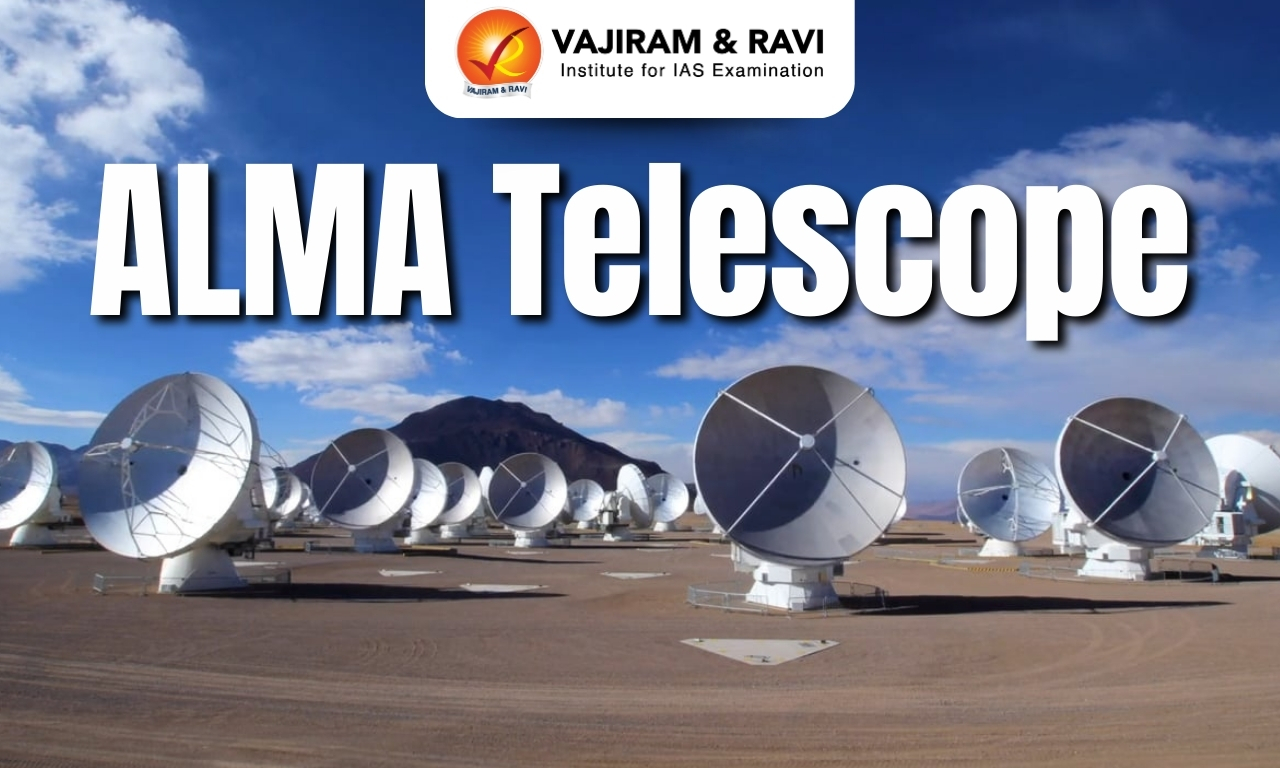

ALMA Telescope

ALMA Telescope

ALMA Telescope Latest News

Recently, astronomers have captured the central region of our Milky Way and unveiled a complex network of filaments of cosmic gas in unprecedented detail with the help of the Atacama Large Millimeter/submillimeter Array (ALMA) telescope..

About ALMA Telescope

  • Location: The Atacama Large Millimeter/submillimeter Array (ALMA) is a radio telescope located in the Atacama Desert in Chile.
  • It is a state-of-the-art radio-telescope that studies celestial objects at millimetre and submillimetre wavelengths.
  • It has been fully functional since 2013.
  • It was designed, planned and constructed by the US’s National Radio Astronomy Observatory (NRAO), the National Astronomical Observatory of Japan (NAOJ) and the European Southern Observatory (ESO).

Properties of ALMA Telescope

  • It also has extraordinary sensitivity, which allows it to detect even extremely faint radio signals.
  • It consists of 66 high-precision antennas, spread over a distance of up to 16 km in the Atacama Desert of northern Chile.
  • These antennas can be moved closer together or farther apart for different perspectives – like the zoom lens of a camera.

Also Read: ALMA Telescope: Soon it will get a ‘new brain’

Major Discoveries of ALMA Telescope

  • In 2013 it discovered starburst galaxies earlier in the universe’s history than they were previously thought to have existed.
  • It provided detailed images of the protoplanetary disc surrounding HL Tauri — a very young T Tauri star in the constellation Taurus, approximately 450 light years from Earth.
  • It helped scientists observe a phenomenon known as the Einstein ring.
    • The Einstein ring occurs when light from a galaxy or star passes by a massive object en route to the Earth, in extraordinary detail.

Source: Phy.Org

ALMA Telescope FAQs

Q1: Where is the ALMA Telescope located?

Ans: Atacama Desert, Chile

Q2: What is unique about ALMA's location?

Ans: High altitude and dry climate

Eligible Manufacturer Importers (EMIs) Scheme

Eligible Manufacturer Importers Scheme

Eligible Manufacturer Importers (EMIs) Scheme Latest News

Recently, the Central Board of Indirect Taxes and Customs (CBIC) has issued detailed eligibility conditions, application process and operational guidelines for the Eligible Manufacturer Importers (EMIs) scheme.

About Eligible Manufacturer Importers (EMIs) Scheme

  • It is designed as a trust-based facilitation measure, encouraging compliant manufacturers to benefit from simplified procedures.
  • Under this initiative, Eligible Manufacturer Importers (EMI) will be able to clear imported goods without paying Customs duty at the time of clearance.
    • Instead, the applicable duty can be paid on a monthly basis as prescribed under the Deferred Payment of Import Duty Rules, 2016.
  • Duration: EMI facility will be available from 1st April, 2026 and will remain in force till 31st March, 2028.
  • Eligible Manufacturer Importers are: Existing Authorised Economic Operators (AEOs) AEO-T1 entities, including MSMEs that fulfill the eligibility conditions are also eligible to participate.
  • Under this, approved Eligible Manufacturer Importers are expected to progressively obtain AEO-T2 or AEO-T3 status, enabling access to enhanced facilitation, faster clearances and priority treatment under the AEO Programme.
  • It is expected to improve ease of doing business, strengthen compliance culture, and boost domestic manufacturing.

Source: PIB

Eligible Manufacturer Importers (EMIs) Scheme FAQs

Q1: What is the main benefit of the EMI Scheme?

Ans: Deferred payment of customs duty

Q2: When will the EMI Scheme be effective?

Ans: April 1, 2026

Debrigarh Wildlife Sanctuary

Debrigarh Wildlife Sanctuary

Debrigarh Wildlife Sanctuary Latest News

The Debrigarh Wildlife Sanctuary is set to host the second edition of the two-day ‘Indian Bison Fest’.

About Debrigarh Wildlife Sanctuary

  • It is situated in the Bargarh district of Odisha.
  • It is located near Hirakud Dam (the longest dam in India and the longest earthen dam in the world) on the Mahanadi River.
  • It finds a special mention because of noted freedom fighter Veer Surendra Sai. 
  • During his rebellion against the British, his base at Barapathara was located within the sanctuary.
  • Vegetation: Most of the plant sanctuary is covered with mixed and dry deciduous forest. 
  • Flora: Major trees found here are Sal, Asana, Bija, Aanla, Dhaura, etc.
  • Fauna
    • Indian leopards, sloth bears, chousingha (four-horned antelope), sambar deer, gaurs (Indian bison), wild boars, and Indian wild dogs (dholes) are among the notable animal residents.
    • It is one of the most flocked wintering grounds of migratory birds that visit the sanctuary from far-off places.
    • Some of the most prominent among them are the crested serpent eagle, Flower Peckers, red-vented bulbul, tree pie, drongo, and white eye oriental.

Key Facts about Indian Bison

  • The Indian Bison, also known as Gaur, is the largest species among the wild cattle and the Bovidae.
  • Gaur are strong and mightily built, with a high grey ridge on their forehead between their horns, which curve upwards from the sides of the head. 
  • Distribution: Gaurs are indigenous to the South and Southeast parts of Asia.
  • Habitat:
    • Gaurs are primarily found in evergreen and semi-evergreen forests along with moist deciduous forests with open grasslands.
    • They prefer hilly terrains below an altitude of 1,500-1,800 m with large and undisturbed forest tracts and abundant water.
  • Conservation Status:
    • IUCN Red List: Vulnerable.

Source: NIE

Debrigarh Wildlife Sanctuary FAQs

Q1: Where is Debrigarh Wildlife Sanctuary located?

Ans: It is located in Bargarh district of Odisha.

Q2: Near which major dam is Debrigarh Wildlife Sanctuary situated?

Ans: It is located near the Hirakud Dam.

Q3: Which freedom fighter is associated with Debrigarh Wildlife Sanctuary?

Ans: Veer Surendra Sai.

Q4: What type of vegetation dominates Debrigarh Wildlife Sanctuary?

Ans: Mixed and dry deciduous forests.

Kosi River

Kosi River

Kosi River Latest News

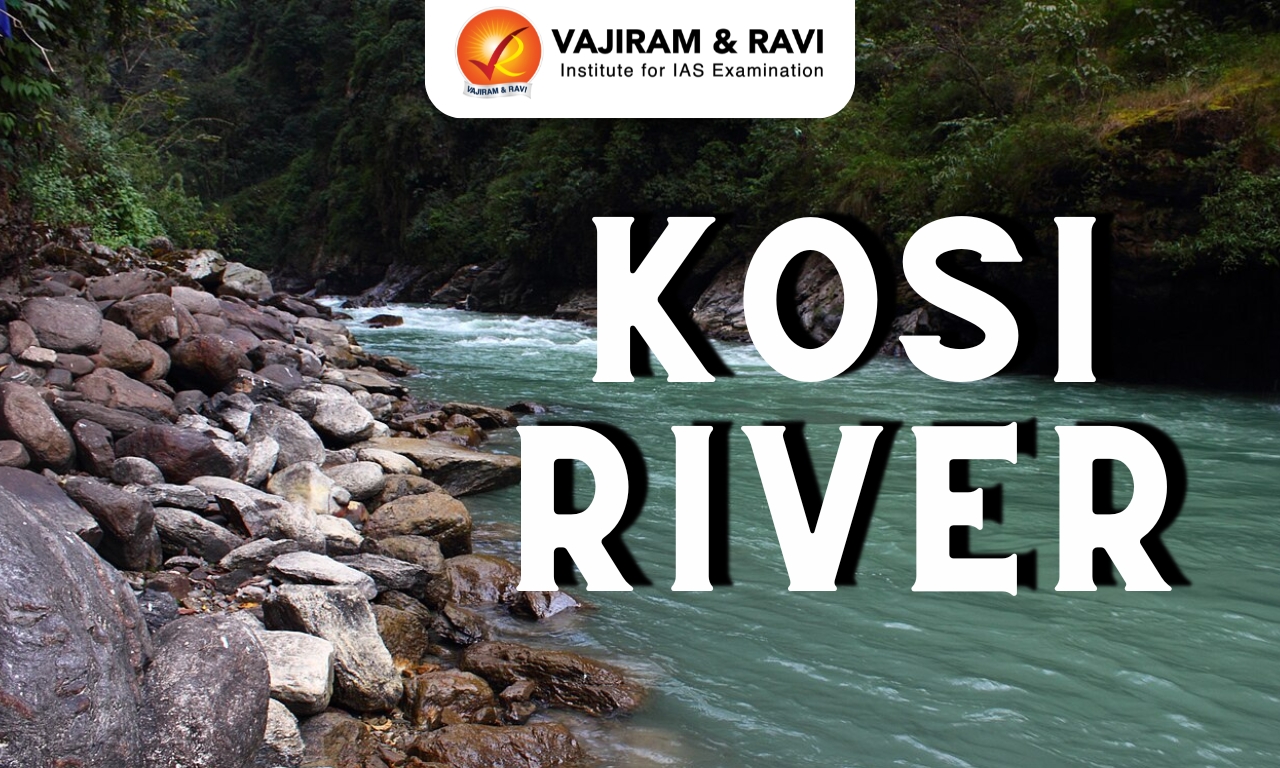
Over the past 200 years, the Kosi River has shifted its path westward by over 100 kilometres.

About Kosi River

  • It is a transboundary river which flows through China, Nepal, and India.
  • It is a prominent tributary of the Ganges.
  • People often call it the "Sorrow of Bihar" because of the big floods it can cause, especially in the Indian state of Bihar.
  • Course:
    • The river Kosi is formed by the confluence of three streams, namely the Sun Kosi, the Arun Kosi, and the Tamur Kosi, all of which have their origin in the Himalayan region of Nepal and Tibet. 
    • About 48 km north of the Indian-Nepalese frontier, the Kosi is joined by several major tributaries and breaks southward through the Siwalik Hills at the narrow Chatra Gorge. 
    • The river then emerges on the great plain of northern India in Bihar state on its way to the Ganges River, which it enters south of Purnea after a course of about 724 km. 
  • The Kosi drains an area of 74,500 sq.km, of which only 11,070 sq.km lie within Indian Territory. 
  • Over the last 250 years, the Kosi has shifted its course over 100 kilometres from East to West and the unstable nature of the river is attributed to the heavy silt it carries during the monsoon season.
  • Corn (maize) is extensively cultivated on the sandy soils of the Kosi’s basin.
  • Tributaries: It has seven major tributaries: Sun Koshi, Tama Koshi or Tamba Koshi, Dudh Koshi, Indravati, Likhu, Arun, and Tamore or Tamar.

Source: IT

Kosi River FAQs

Q1: Through which three countries does the Kosi River flow?

Ans: China, Nepal, and India.

Q2: The Kosi River is a tributary of which major river?

Ans: The Ganges.

Q3: Why is the Kosi River called the “Sorrow of Bihar”?

Ans: Because it causes frequent and devastating floods in Bihar.

Q4: What is the approximate total length of the Kosi River?

Ans: About 724 km.

Bureau of Energy Efficiency

Bureau of Energy Efficiency

Bureau of Energy Efficiency Latest News

Recently, the 25th Foundation Day of the Bureau of Energy Efficiency (BEE), Ministry of Power, Government of India, was celebrated in New Delhi.

About Bureau of Energy Efficiency

  • It is a statutory body which was established in 2002 under the provisions of the Energy Conservation Act, 2001.
  • Objective: The primary objective of BEE is to reduce energy intensity in the Indian economy.
  • Nodal Ministry: Ministry of Power.

Function and Duties of Bureau of Energy Efficiency

  • It coordinates with designated consumers, designated agencies and other organizations; recognizes, identifies and utilizes the existing resources and infrastructure, in performing the functions assigned to it under the Energy Conservation Act.
  • The EC Act provides for regulatory and pro­motional functions which are assigned to the organisation.
  • Regulatory functions
    • Develop minimum energy performance standards for equipment and appliances under Standards and Labelling
    • Develop minimum energy performance standards for Commercial Buildings
    • Develop Energy Consumption Norms for Designated Consumers

Schemes of Bureau of Energy Efficiency

Source: PIB

Bureau of Energy Efficiency FAQs

Q1: Under which ministry does BEE operate?

Ans: Ministry of Power

Q2: What is the primary objective of BEE?

Ans: Improve energy efficiency

Sulphur Dioxide

Sulphur Dioxide

Sulphur Dioxide Latest News

Recently, it was observed that India still has no national standards for sulphur dioxide (SO2) emissions from steel-producing facilities like sinter plants, mill zones, despite their being recognised as SO2 emission sources.

About Sulphur Dioxide

  • It is a colorless gas with a pungent odor.
  • Properties of Sulphur Dioxide
    • It is a liquid when under pressure, and it dissolves in water very easily.
    • It has a pungent, irritating odor, familiar as the smell of a just-struck match.
  • Applications: It is used to manufacture chemicals, in paper pulping, in metal and food processing.
  • Impacts of Sulphur Dioxide: It is harmful for human health, environment and climate.

Occurrence of Sulphur Dioxide

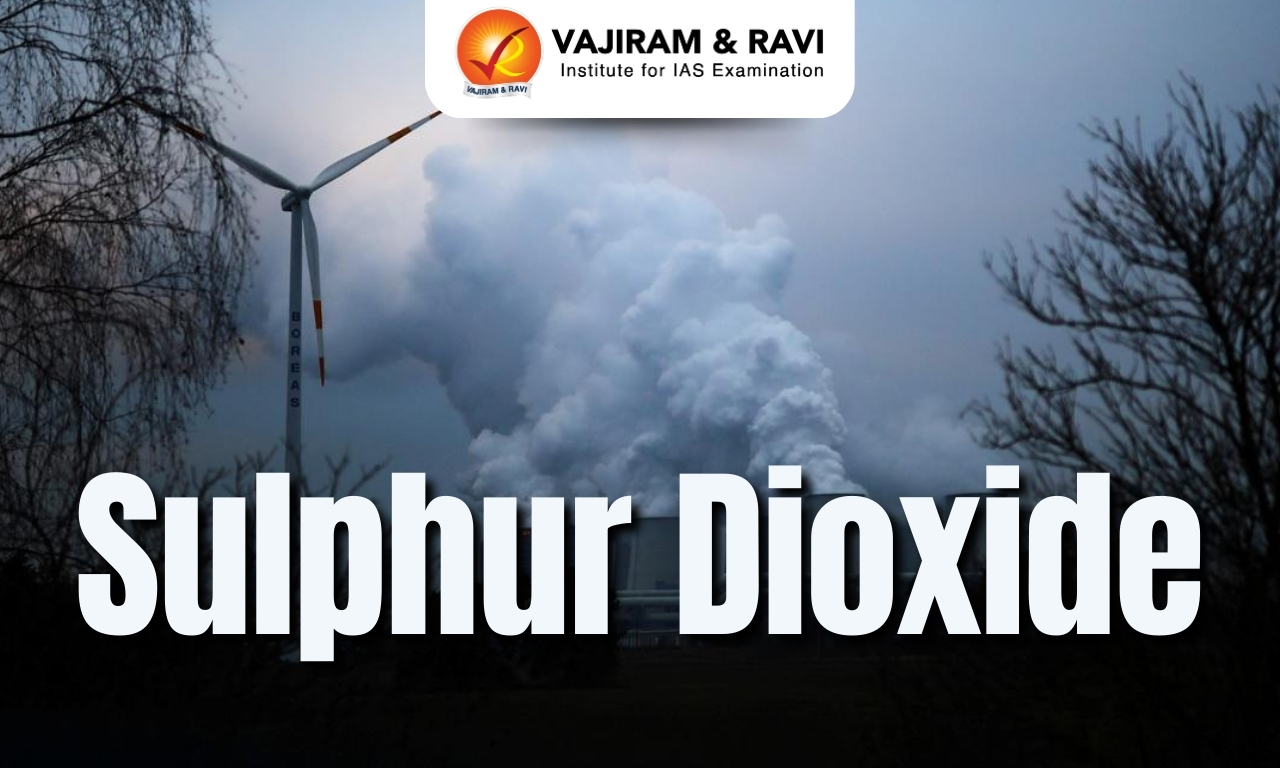
  • Sulfur dioxide in the air comes mainly from activities such as the burning of coal and oil at power plants or from copper smelting.
  • It is usually prepared industrially by the burning in air or oxygen of sulfur or such compounds of sulfur as iron pyrite or copper pyrite.
  • In nature, sulfur dioxide can be released to the air from volcanic eruptions.
  • The largest source of SO2 in the atmosphere is the burning of fossil fuels by power plants and other industrial facilities

Source: DTE

Sulphur Dioxide FAQs

Q1: What is the chemical formula of Sulphur Dioxide?

Ans: SO2

Q2: What is the impact of Sulphur Dioxide on the environment?

Ans: Sulfur dioxide can damage trees and plants, inhibit plant growth, and damage sensitive ecosystems and waterways.

India Meteorological Department (IMD)

India Meteorological Department (IMD)

India Meteorological Department (IMD) Latest News

An above-normal number of heatwave days are expected over most parts of the country between March and May, the India Meteorological Department (IMD) said in its monthly forecast.

About India Meteorological Department (IMD)

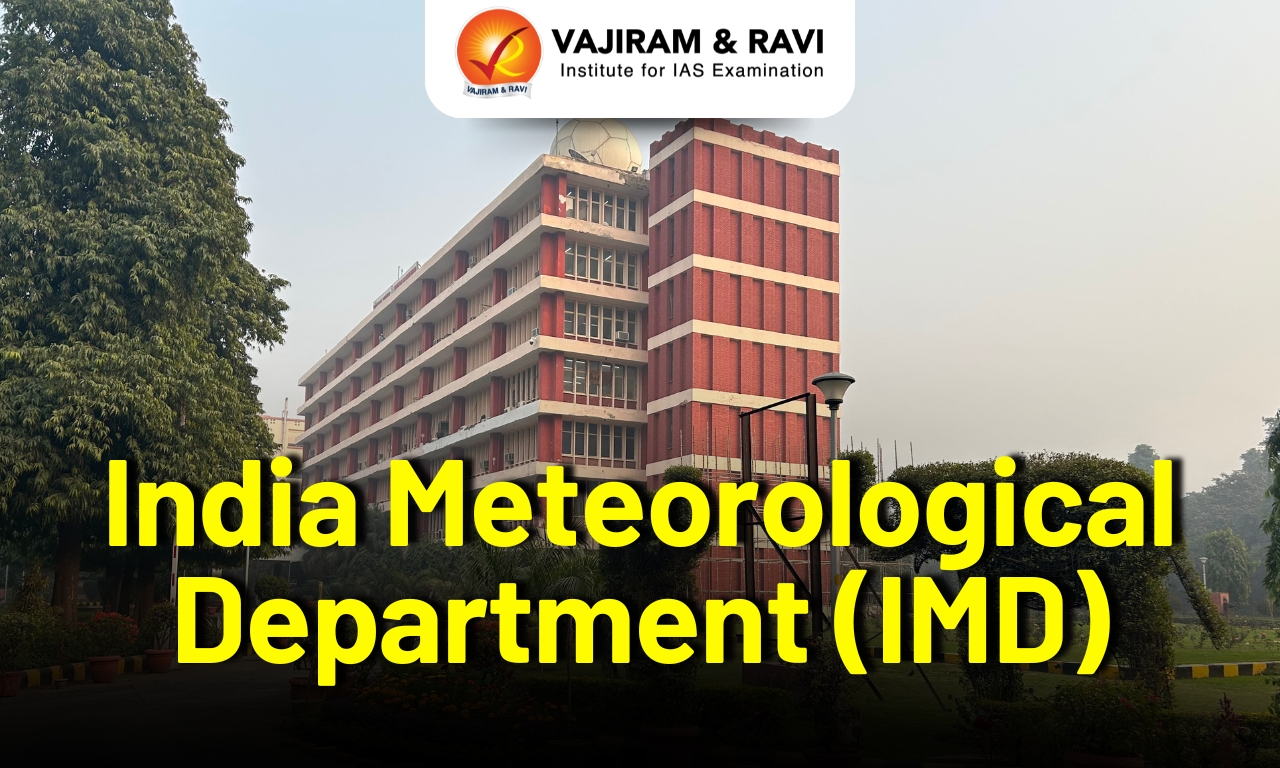
  • Established in 1875, IMD is the National Meteorological Service of the country and the principal government agency in all matters relating to meteorology and allied subjects.
  • It functions under the Ministry of Earth Sciences (MoES).
  • IMD is headquartered in Delhi and operates hundreds of observation stations across India and Antarctica. 
  • The Director General of Meteorology is the Head of the IMD.
  • There are 6 Regional Meteorological Centres, each under a Deputy Director General, with headquarters at Mumbai, Chennai, New Delhi, Calcutta, Nagpur, and Guwahati.
  • IMD Mandate:
    • To take meteorological observations and to provide current and forecast meteorological information for weather-sensitive activities like agriculture, shipping, aviation, offshore oil explorations, etc.
    • To warn against severe weather phenomena like tropical cyclones, norwesters, duststorms, heavy rains and snow, cold and heat waves,,
    • To provide meteorological statistics required for agriculture, water resource management, industries, oil exploration, and other nation-building activities.
    • To conduct and promote research in meteorology and allied disciplines.
  • IMD is also one of the six Regional Specialized Meteorological Centres of the World Meteorological Organization (WMO)
  • It is responsible for forecasting, naming, and distributing warnings for tropical cyclones in the Northern Indian Ocean region, including the Straits of Malacca, the Bay of Bengal, the Arabian Sea, and the Persian Gulf.

Source: TH

India Meteorological Department (IMD) FAQs

Q1: When was the India Meteorological Department established?

Ans: 1875.

Q2: Under which ministry does the India Meteorological Department function?

Ans: Ministry of Earth Sciences.

Q3: What is the primary role of IMD in weather-sensitive sectors?

Ans: To provide current and forecast meteorological information.

Q4: For which ocean region does IMD provide cyclone forecasting and naming services

Ans: The Northern Indian Ocean region.

Pilibhit Tiger Reserve

Pilibhit Tiger Reserve

Pilibhit Tiger Reserve Latest News

An adult male tiger, estimated to be between six and seven years old, was found dead near the Mala forest range of Pilibhit Tiger Reserve (PTR).

About Pilibhit Tiger Reserve

  • Location: It is located in the state of Uttar Pradesh, forming part of the Terai Arc Landscape, in the upper Gangetic Plain Biogeographic Province. 
  • It lies along the India-Nepal border in the foothills of the Himalayas.
  • Rivers: The River Gomti originates from the PTR, which is also the catchment of several others like Sharda, Chuka, and Mala Khannot.
  • The Sharda Sagar Dam, extending up to a length of 22 km, is on the boundary of the reserve.
  • It has a dry and hot climate, which brings a combination of dry teak forest and Vindhya Mountain soils.
  • Vegetation: Tropical Moist Deciduous Forests, Tropical Dry Deciduous Forests, Seasonal Swamp Forests and Tropical Semi-evergreen Forests are the major forest types found in the reserve.
  • Flora: The Sal woodland is very dense with good natural regeneration, amounting to almost 76% of the reserve area.
    • The forest patches are interspersed with grass meadows with several species like Sacchrum, Sclerostachya, Imperata, Themeda, Bothriochloa, Vetiveria, Apluda, Dichanthium, Digitaria and Cyperus.
  • Fauna:  It is home to a myriad of wild animals, including the endangered tiger, swamp deer, Bengal florican, hog deer, leopard, etc.

Source: TOI

Pilibhit Tiger Reserve FAQs

Q1: Where is Pilibhit Tiger Reserve located?

Ans: Uttar Pradesh

Q2: Which river flows through Pilibhit Tiger Reserve?

Ans: River Gomti

Enquire Now