
Carbon sequestration is the capture and long-term storage of carbon, particularly CO₂, in biological, geological, oceanic or engineered reservoirs, thereby limiting its accumulation in the atmosphere. It plays an important role in climate-change mitigation by reducing the amount of CO₂ contributing to atmospheric warming. Carbon can be stored biologically in forests, soils and wetlands, absorbed by oceans, or captured and stored in underground geological formations through technological methods. Practices such as afforestation, reforestation, sustainable agriculture, soil management and carbon capture technologies can enhance sequestration.
However, the effectiveness of carbon sequestration depends on storage permanence, ecosystem health, technological costs, land availability and reliable monitoring. Carbon sequestration complements emission reduction by protecting and strengthening carbon sinks while helping address residual emissions from difficult-to-decarbonise sectors.
Carbon Sequestration Meaning
Carbon sequestration means the process of capturing carbon dioxide from the atmosphere and storing it in stable reservoirs such as vegetation, soils, oceans, rocks or engineered storage systems, thereby limiting atmospheric warming.
- Carbon exists naturally in different forms and moves continuously between the atmosphere, vegetation, soils, oceans and geological systems.
- However, the accumulation of additional CO₂ from activities such as fossil-fuel combustion and land-use change strengthens the greenhouse effect.
- Carbon sequestration seeks to capture and retain some of this carbon for longer periods.
Carbon Sequestration Types
Carbon sequestration can occur through natural biological processes as well as oceanic, geological and technological pathways, depending on where carbon is captured and how it is stored.
Biological Carbon Sequestration
Biological sequestration occurs when plants, soils and ecosystems absorb CO₂ and retain the resulting carbon in living or organic matter. Photosynthesis converts atmospheric CO₂ into organic compounds that become part of plant biomass and soil carbon. Major biological carbon-storage systems include
- Forests: Trees store carbon in trunks, branches, roots, leaves and surrounding soils.
- Grasslands: A substantial share of their carbon is stored below ground in roots and soils.
- Wetlands and peatlands: Waterlogged conditions can allow large quantities of carbon to remain stored for long periods.
- Agricultural soils: Better soil-management practices can increase soil organic carbon.
Ocean Carbon Sequestration
Ocean sequestration involves storing carbon in marine systems. Oceans naturally absorb roughly one-quarter of human-generated CO₂ emissions annually, although this uptake also contributes to ocean acidification. Some proposed enhancement approaches include
- Ocean fertilisation: Adding nutrients such as iron can stimulate phytoplankton growth, increasing biological CO₂ uptake.
- Direct ocean injection: Captured CO₂ can be introduced into deeper ocean waters, where pressure and temperature conditions may support longer-term storage.
Geological Carbon Sequestration
Geological sequestration stores captured CO₂ in suitable underground formations. Carbon dioxide from industrial facilities or energy-related sources can be captured, compressed and injected into porous geological formations for long-term storage.
- Potential storage formations include deep reservoirs and suitable porous rock structures capable of retaining CO₂ for very long periods.
Technological Carbon Sequestration
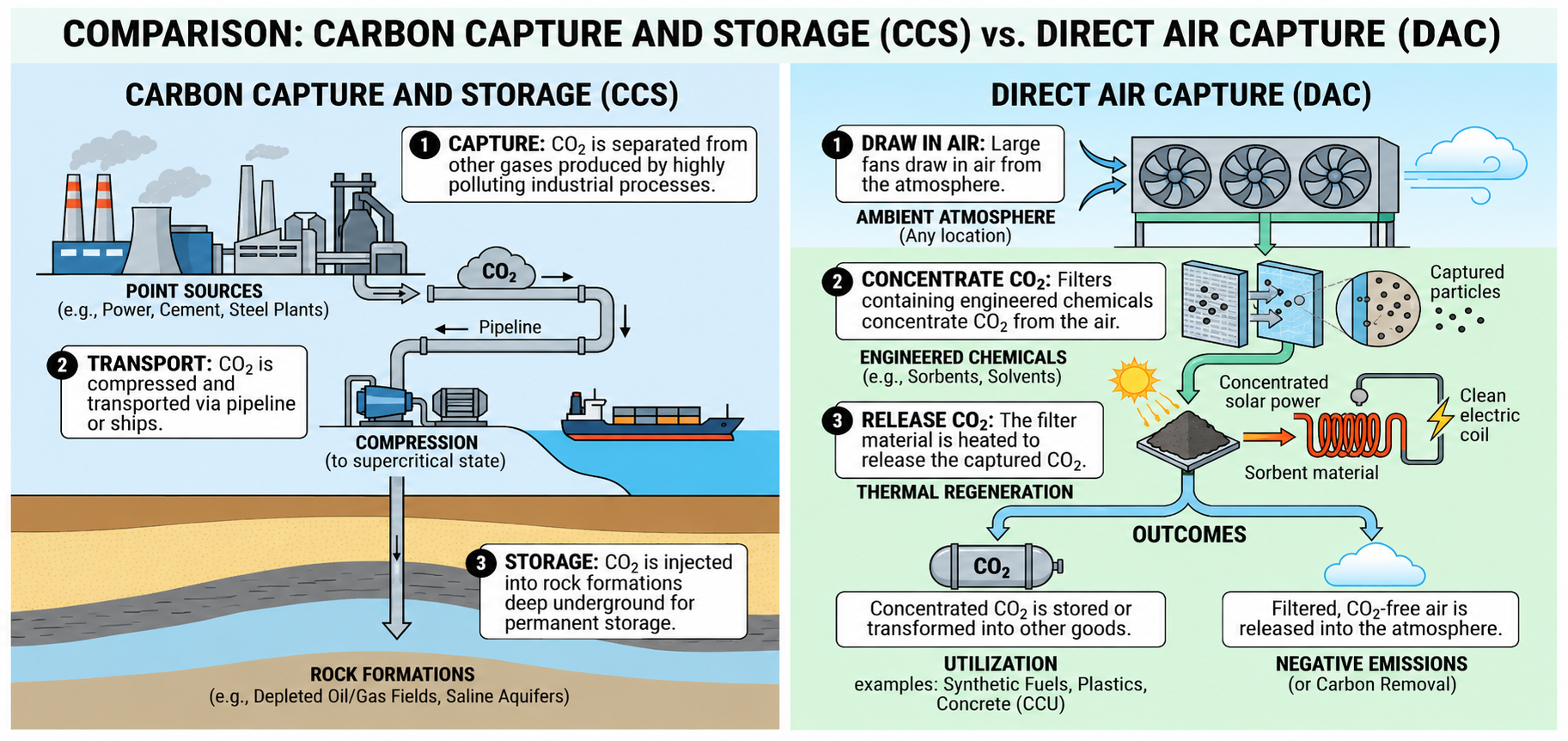
Technological sequestration uses engineered systems to capture and store CO₂. Examples include Carbon Capture and Storage (CCS), Direct Air Capture (DAC) with permanent storage (DACCS) and emerging technologies that use captured carbon as an industrial feedstock.


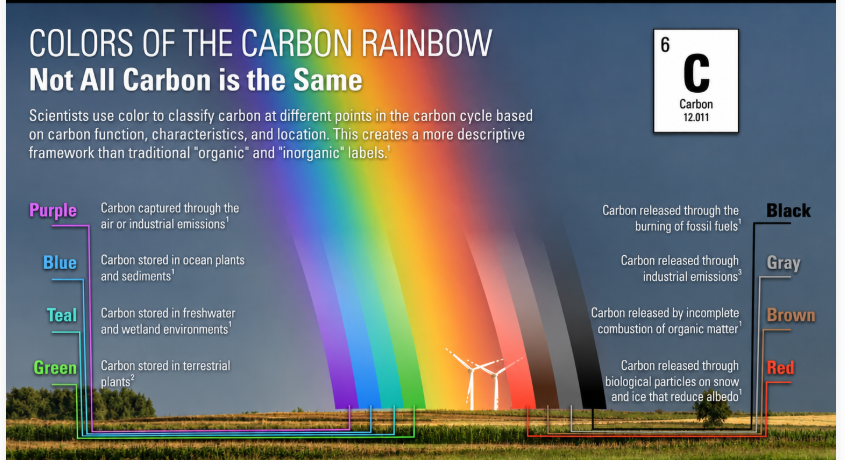
Carbon Sequestration and Types of Carbon
Carbon Sequestration Working
Carbon sequestration works by transferring CO₂ from the atmosphere or concentrated emission sources into reservoirs where it can remain stored for extended periods, reducing its contribution to atmospheric warming.
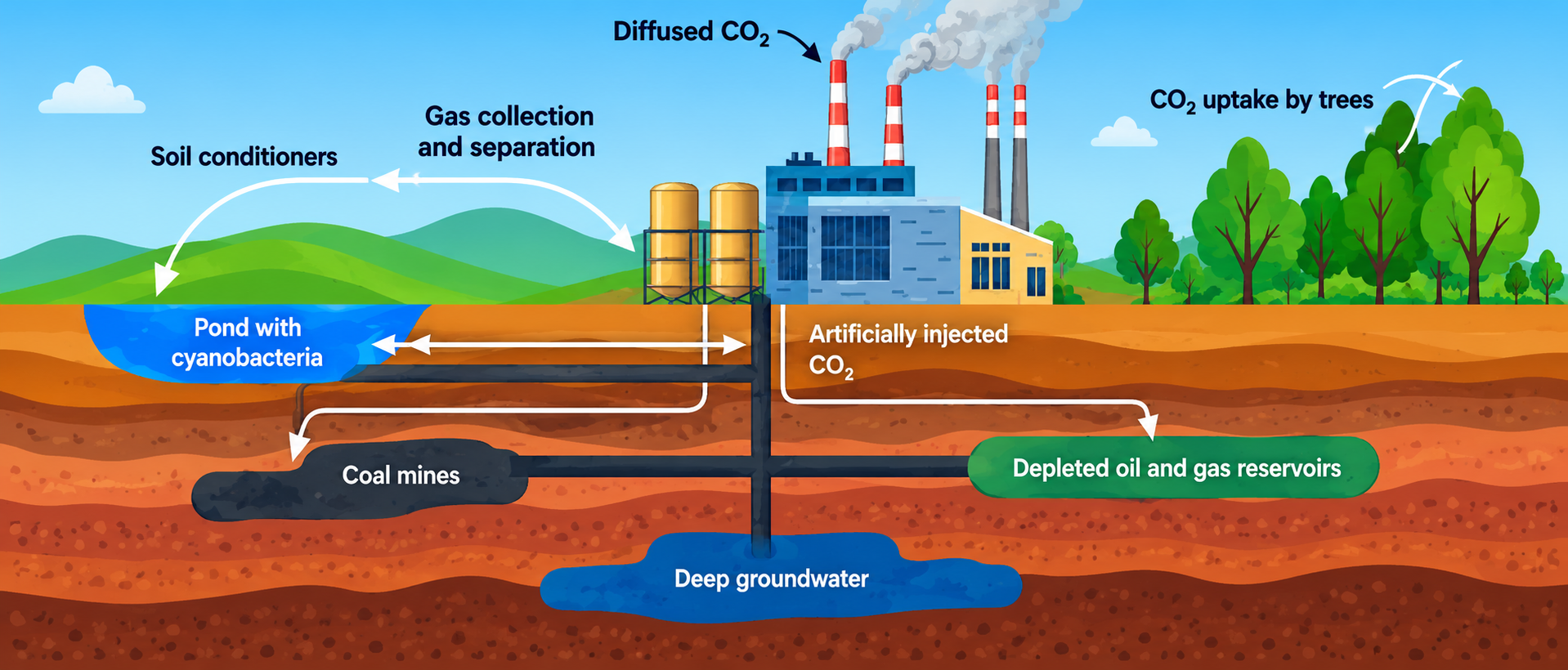
- Natural Process: Plants absorb CO₂ through photosynthesis and convert it into organic carbon. Some of this carbon remains in vegetation, while some enters soils through roots, plant residues and decomposition.
- Agricultural Process: Farmers can increase soil carbon through practices such as:
- Reduced or no tillage
- Cover cropping
- Maintaining crop residues
- Diversified crop rotations
- Improving soil organic matter
- Agroforestry
- Restoring degraded land
- Protecting peatlands
- Reducing soil disturbance can also help prevent previously stored carbon from being released back into the atmosphere.
- Forest-Based Process: Forests capture CO₂ through photosynthesis and store carbon in biomass, deadwood, litter and soils. However, harvesting, fires, deforestation and other disturbances can release stored carbon.
- Therefore, maintaining healthy and sustainably managed forests is important for preserving their role as carbon sinks.
- Geological Process: In geological storage, CO₂ is captured, compressed and transported to appropriate underground sites before being injected into porous rock formations. This provides a pathway for long-term carbon storage.
Carbon Sequestration Methods
Different methods target different carbon reservoirs, ranging from ecosystem restoration to advanced technological capture systems.
| Method | How it works | Major storage location |
|
Afforestation |
Establishes additional tree cover to absorb CO₂ |
Biomass and soil |
|
Reforestation |
Restores forests on previously degraded or cleared land |
Biomass and soil |
|
Soil carbon management |
Improves practices that increase soil organic carbon |
Agricultural soils |
|
Wetland and peatland restoration |
Protects ecosystems capable of retaining large carbon stocks |
Wetlands and peat soils |
|
Ocean sequestration |
Enhances or utilises marine carbon uptake. |
Oceans |
|
Geological storage |
Injects captured CO₂ into suitable underground formations |
Rocks and geological reservoirs |
|
Carbon Capture and Storage |
Captures CO₂ from major emission sources and stores it underground |
Geological formations |
|
Direct Air Capture |
Uses chemical or physical processes to extract CO₂ directly from the ambient air, which can then be permanently stored or utilised. The captured CO₂ can serve as a sustainable, recycled raw material or feedstock, such as in plastic production. |
Geological or other storage |
|
Bioenergy with Carbon Capture and Storage |
Combines biomass-based energy with capture and geological storage |
Geological formations |
Carbon Sequestration Importance
Carbon sequestration is important because it complements emission reduction by removing or storing CO₂ and strengthening the capacity of natural and technological systems to retain carbon over time.
- Mitigates Climate Change: Storing CO₂ reduces the amount of carbon available to contribute to the greenhouse effect and can therefore support efforts to limit global warming.
- Supports Net-Zero Goals: Some sectors, particularly difficult-to-decarbonise industries, may continue producing residual emissions. Carbon sequestration can help address part of these residual emissions alongside deep emission reductions.
- Protects Natural Carbon Reservoirs: Forests, grasslands, wetlands, peatlands, soils and oceans can retain substantial quantities of carbon. Protecting these systems helps preserve their climate-regulating functions.
- Improves Soil Health: Carbon-rich soils can support biological activity, soil structure and moisture retention. Agricultural practices that enhance soil carbon can therefore provide both climate and land-management benefits.
- Supports Biodiversity: Protecting and restoring forests, wetlands, grasslands and peatlands can simultaneously support carbon storage and ecological conservation.
- Supports Sustainable Resource Use: Wood products from sustainably managed forests can continue storing carbon during their useful life, while sustainably sourced wood can also substitute for some carbon-intensive materials and fossil fuels
Carbon Sequestration vs Carbon Removal vs Carbon Sink
These terms are closely connected but describe different aspects of the carbon cycle and climate mitigation process.
| Term | Meaning | Examples |
|
Carbon sequestration |
Capturing CO₂ and storing it in a reservoir for a period of time |
Forests storing carbon in biomass and soil |
|
Carbon removal |
Taking CO₂ that is already present in the atmosphere and removing it through a process |
Direct Air Capture, Afforestation |
|
Carbon sink |
A natural or other reservoir that absorbs and stores more carbon than it releases over a given period. |
Forests, oceans and wetlands |
Carbon Sequestration Challenges
Carbon sequestration offers significant climate benefits, but its effectiveness depends on permanence, environmental conditions, technology, cost and proper monitoring.
- Risk of Carbon Release: Stored carbon is not necessarily permanent. Forest fires, deforestation, soil disturbance and ecosystem degradation can release previously stored carbon back into the atmosphere.
- Climate Change Can Weaken Natural Sinks: Changes in temperature and rainfall can affect forest health and productivity. Droughts, fires, storms and pests can reduce the ability of forests to continue functioning as carbon sinks.
- High Cost of Some Technologies: Technological approaches such as direct air capture require substantial energy and remain expensive, limiting their widespread deployment.
- Ocean Acidification: Although oceans absorb substantial quantities of CO₂, increased carbon uptake contributes to ocean acidification, creating risks for marine ecosystems and organisms that form shells.
- Land Availability: Large-scale afforestation and ecosystem restoration can compete with agriculture, settlements and other land uses if poorly planned.
- Measurement and Verification: It can be difficult to accurately determine how much additional carbon has been stored, for how long it will remain stored and whether the storage is genuinely additional.
- Technological Limitations: Engineered solutions such as direct air capture and geological storage require infrastructure, energy, transportation networks, suitable storage locations and long-term monitoring.
- Risk of Relying on Sequestration Instead of Emission Cuts: Carbon sequestration should complement, rather than replace, rapid reductions in fossil-fuel use and other greenhouse gas emissions.
Carbon Sequestration Sites in India
Examples of carbon sequestration sites in India include geological formations and natural ecosystems capable of storing carbon dioxide, ranging from deep saline formations and basaltic rocks to oil fields, coal-bearing regions and forests.
- Krishna-Godavari Basin: The Krishna-Godavari Basin is considered one of India's promising regions for geological CO₂ storage. Its geological characteristics make it a potential area for further investigation, including source-sink mapping, geological assessment and development of suitable CCUS projects.
- Mumbai Offshore Basin: The Mumbai Offshore Basin represents another potential region for geological CO₂ storage. Its offshore formations could support carbon storage, subject to detailed studies of geological characteristics, storage capacity, source-sink linkages and technical feasibility.
- Cambay Basin, Gujarat: The Cambay Basin in Gujarat is another prospective region for geological carbon storage. The presence of existing oil and gas infrastructure in Gujarat could also provide supporting infrastructure for the development of future CCUS projects.
- The Gandhar field in Gujarat is an important example associated with CO₂-based Enhanced Oil Recovery (CO₂-EOR), involving ONGC and Indian Oil Corporation.
- Deccan Basalt: The Deccan Basalt formation across western and central India offers significant potential for long-term geological CO₂ storage. Carbon dioxide can potentially be stored through mineralisation, in which CO₂ reacts with minerals in basaltic rocks and is converted into relatively stable carbonate minerals.
- Rajmahal Basalt: The Rajmahal Trap in Jharkhand is another basaltic formation with potential for geological CO₂ storage. Along with the Deccan basalt system, it represents an area requiring further geological investigation to determine its practical storage potential.
- Deep Saline Formations: Deep saline formations are among India's important potential resources for geological carbon storage. These are deep underground porous rock formations containing saline water, into which CO₂ can potentially be injected and retained through different geological trapping mechanisms.
- Coal-Bearing Regions: Unmineable coal seams can potentially be used for CO₂ storage while simultaneously supporting Enhanced Coal Bed Methane Recovery (ECBMR). Potential coal-bearing regions include Raniganj, Jharia, Bokaro, North Karanpura, and Sohagpur.
- Forests and Native Tree Landscapes: Forests and native tree landscapes are important biological carbon sequestration systems because trees absorb atmospheric CO₂ through photosynthesis and store carbon in biomass and soils.
Carbon Sequestration Technologies
Carbon sequestration technologies involve different methods of capturing carbon dioxide and storing it in stable forms or locations so that it does not return to the atmosphere. Technological approaches range from geological storage to mineralisation and enhanced natural processes that can accelerate long-term carbon removal.
- Enhanced Mineral Weathering: Enhanced mineral weathering accelerates the natural process through which rocks react with carbon dioxide and water.
- In this process, minerals are exposed to CO₂ to increase the rate at which carbon dioxide is converted into stable forms, particularly carbonate minerals.
- This can provide a pathway for long-term carbon storage.
- CO₂ Mineralisation: CO₂ mineralisation converts carbon dioxide into stable solid carbonate minerals through chemical reactions with suitable rocks or minerals. Materials such as basalt, olivine, serpentine and suitable industrial alkaline wastes can participate in these reactions.
- Since the carbon becomes incorporated into relatively stable mineral forms, mineralisation offers a potential route for durable carbon storage.
- Ocean-Based Carbon Removal: Ocean-based approaches seek to increase the capacity of seawater to absorb and retain atmospheric carbon dioxide.
- Mineral-based techniques can enhance alkalinity and promote chemical reactions that facilitate carbon storage.
- However, their large-scale application requires careful assessment of ecological impacts, monitoring requirements and technical feasibility.
- Carbon Capture and Mineral Storage: Carbon capture can be combined with mineralisation to store CO₂ permanently.
- Carbon dioxide captured from industrial facilities can be processed and reacted with suitable minerals, transforming it into stable carbonate compounds.
- This approach can reduce the risk of CO₂ leakage associated with some conventional storage methods.
- Biochar: Biomass is heated under limited oxygen through pyrolysis, producing a carbon-rich material that can be incorporated into soils, potentially increasing the persistence of carbon while improving some soil properties.
Carbon Sequestration UPSC PYQs
Q1. What is Carbon Capture, Utilization and Storage (CCUS)? What is the potential role of CCUS in tackling climate change? (UPSC Mains 2025)
Q2. With reference to Direct Air Capture, an emerging technology, which of the following statements is/are correct? (UPSC Prelims 2025)
I. It can be used as a way of carbon sequestration.
II. It can be a valuable approach for plastic production and in food processing.
III. In aviation, it can be a source of carbon for combining with hydrogen to create synthetic low-carbon fuel.
Select the correct answer using the code given below.
a) I and II only
b) III only
c) I, II and III
d) None of the above statements is correct
Ans: (c)
Q3. What is blue carbon? (UPSC Prelims 2021)
a) Carbon captured by oceans and coastal ecosystems
b) Carbon sequestered in forest biomass and agricultural soils
c) Carbon contained in petroleum and natural gas
d) Carbon present in atmosphere
Ans: (a)
Q4. In the context of mitigating the impending global warming due to anthropogenic emissions of carbon dioxide, which of the following can be the potential sites for carbon sequestration? (UPSC Prelims 2017)
- Abandoned and uneconomic coal seams
- Depleted oil and gas reservoirs
- Subterranean deep saline formations
Select the correct answer using the code given below
a) 1 and 2 only
b) 3 only
c) 1 and 3 only
d) 1, 2 and 3
Ans: (d)

 Last updated on Oct, 2026
→ UPSC 2027 Notification will be released on 13 January 2027 at upsconline.nic.in.
→ Asian Games 2026 are being held in Aichi-Nagoya, Japan, from 19 September to 4 October.
→ Check Nobel Prize 2026 Winners List here.
→ Download PIB PRiSM Monthly Magazine 2026 here.
→ Check UPSC Monthly Current Affairs Magazine The Recitals here.
→ Check out the latest UPSC Syllabus here.
→ Download UPSC Model Answers for Mains 2026
→ UPSC Mains Question Paper 2026 is out now for Essay & GS Paper 1, 2, 3 & 4.
→ UPSC Calendar 2027 has been released.
→ Enroll in Vajiram & Ravi’s UPSC Mains Test Series 2027 for structured answer writing practice, expert evaluation, and exam-oriented feedback.
→ Join Vajiram & Ravi’s UPSC Mentorship Program 2027 for personalized guidance, strategy planning, and one-to-one support from experienced mentors.
→ Go through the UPSC Mains Previous Year Papers to enhance your preparation.
→ UPSC has released UPSC Toppers List 2025 with the Civil Services final result on its official website.
→ Also check Best UPSC Coaching in India
Carbon Sequestration FAQs
Q1. What is carbon sequestration in simple terms?+
Q2. What is another name for carbon sequestration?+
Q3. What is the largest source of carbon sequestration on Earth?+
Q4. What is carbon sequestration in agriculture?+
Q5. Which is the only country that is carbon negative?+
Tags: carbon sequestration quest UPSC Environment & Ecology Notes