



Emergence of Slave Dynasty
Muhammad Ghori: In 1173 AD Shahabuddin Muhammad, also called Muhammad of Ghor, ascended the throne of Ghazni.
- His invasions resulted in the establishment of the Turkish Sultanate in the region lying north of the Vindhyas.
- Conquest of Punjab and Sind: He launched a campaign against the Ghaznavid possessions in Punjab.
- As a result, Peshawar was conquered in AD 1179–80 and Lahore in AD 1186. Thus by AD 1190, He secured Multan, Sind and Punjab.
- First Battle of Tarain (AD 1191): Muhammad Ghori’s possession of Punjab and his attempt to advance into the Gangetic Doab brought him into direct conflict with the Rajput ruler Prithivaraja Chauhan.
- The conflict started with the claims of Bhatinda. In the first battle fought at Tarain in AD 1191, Ghori’s army was routed, and he narrowly escaped death.
- Prithviraj conquered Bhatinda, but he made no effort to garrison it effectively.
- This allowed Ghori to re-assemble his forces and prepare for another advance into India.
- Second Battle of Tarain (AD 1192): This battle is regarded as one of the turning points in Indian History.
- The Turkish and Rajput forces again came face to face at Tarain. A large number of Indian soldiers were killed.
- Prithviraj tried to escape but was captured near Sarsuti.
- The Turkish army captured the fortresses of Hansi, Sarsuti and Samana. Then they moved forward, running over Delhi and Ajmer.
- After Tarain, Ghori returned to Ghazni, leaving the affairs of India in the hand of his trusted slave, General Qutbuddin Aibak.
- Battle of Chandawar: In AD 1194, Muhammad Ghori again returned to India. He crossed Yamuna and moved towards Kannauj.
- He gave a crushing defeat to Jai Chand at Chandwar near Kannauj. Thus the battle of Tarain and Chandwar laid the foundations of Turkish rule in Northern India.
- His death in AD 1206 did not mean the withdrawal of Turkish interests in India.
- He left behind his slave General Qutbuddin Aibak who became the first Sultan of the Delhi Sultanate.
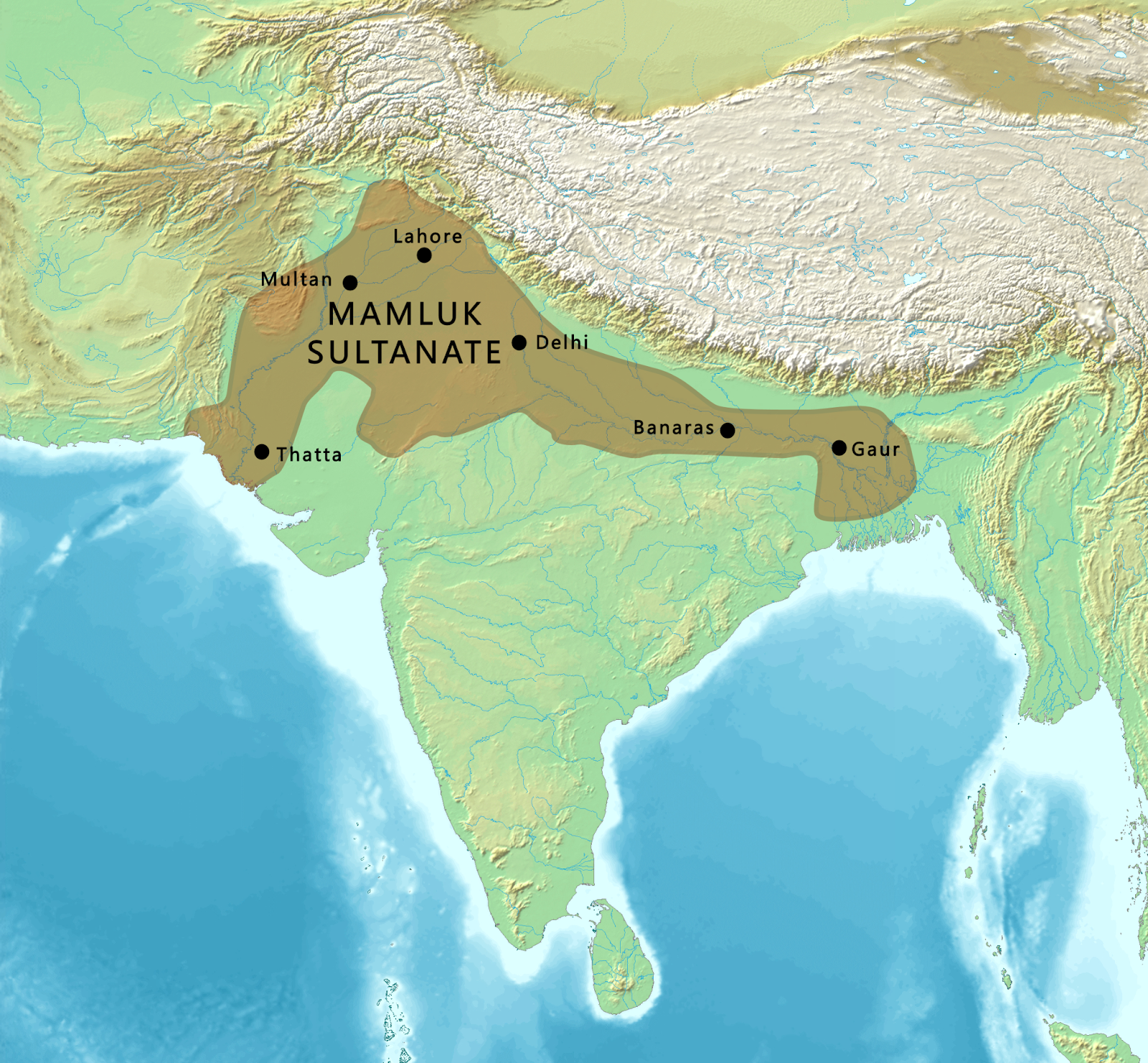
| Slave Dynasty | |||||||||||||
| Period: 1206 AD to 1290 AD | Capital: Lahore and Delhi | ||||||||||||
|
|||||||||||||
|
Qutbuddin Aibak (1206 AD -1210 AD) |
|
||||||||||||
|
Contributions to Art and Architecture:
|
|||||||||||||
|
Qutub Minar (Delhi)
|
|
||||||||||||
|
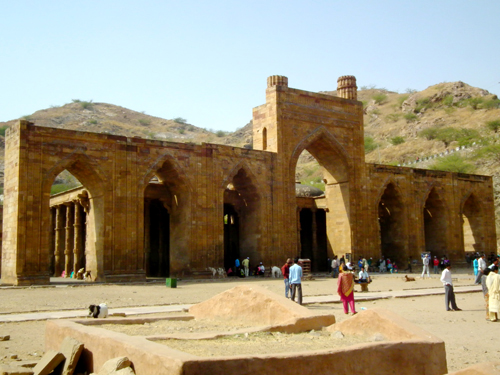
Adhai-din-ka-Jhonpra (Rajasthan)
|
|
||||||||||||
|
Quwwat-ul-Islam Mosque
|
|
||||||||||||
| Aram Shah (1210-1211 AD) |
|
||||||||||||
|
Shamshuddin Iltutmish (AD 1210–1236) |
|
||||||||||||
| Contributions to Art and Architecture: | |||||||||||||
|
Hauz-e-Shamsi (Delhi)
|
|
||||||||||||
|
Gandhak ki Baoli (Delhi)
|
|
||||||||||||
|
Sultan Garhi (Delhi)
|
|
||||||||||||
|
Jama Masjid Shamsi (Uttar Pradesh)
|
|
||||||||||||
|
Tomb of Iltutmish (Delhi)
|
|
||||||||||||
| Razia Sultan (1236 AD-1240 AD) |
|
||||||||||||
| Ghiyas-ud-din Balban (1266-87 AD) |
|
||||||||||||



Literature of Slave Dynasty
| Literature of Slave Dynasty | |
| Book | Description |
| Jawami-ul-Hikayat by Sadidu’d din Muhammad Awfi Bukhari |
|
| Tabaqat-i-Nasiri by Minhaj-i-Siraj |
|
| Taj-ul-Maasir by Hasan Nizami |
|
| Tarikh-i-Mubarakshahi by Yahya bin Ahmad bin Abdullah Sarhindi |
|





Decline of Slave Dynasty
- After the death of Balban (1287 AD), the nobles raised his grandson Kaiquabad to the throne. He was soon replaced by his son, Kaimurs, who remained on the throne for a little over three months.
- During Balban’s reign, Jalal-ud-din Firoz Khilji had been the warden of the marches in the north-west and had fought many successful battles against the Mongols.
- He was called to Delhi as Ariz-i-Mumalik (Minister of War). In AD 1290, Firoz murdered Kaimurs and seized the throne.
- A group of Khilji nobles led by him established the Khilji dynasty. It brought to an end the slave dynasty, and Firoz ascended the throne under the title of Jalaluddin Khilji.

 Last updated on April, 2026
→ UPSC Final Result 2025 is now out.
→ UPSC has released UPSC Toppers List 2025 with the Civil Services final result on its official website.
→ Anuj Agnihotri secured AIR 1 in the UPSC Civil Services Examination 2025.
→ UPSC Marksheet 2025 is now out.
→ UPSC Notification 2026 & UPSC IFoS Notification 2026 is now out on the official website at upsconline.nic.in.
→ UPSC Calendar 2026 has been released.
→ Check out the latest UPSC Syllabus 2026 here.
→ UPSC Prelims 2026 will be conducted on 24th May, 2026 & UPSC Mains 2026 will be conducted on 21st August 2026.
→ The UPSC Selection Process is of 3 stages-Prelims, Mains and Interview.
→ Prepare effectively with Vajiram & Ravi’s UPSC Prelims Test Series 2026 featuring full-length mock tests, detailed solutions, and performance analysis.
→ Enroll in Vajiram & Ravi’s UPSC Mains Test Series 2026 for structured answer writing practice, expert evaluation, and exam-oriented feedback.
→ Join Vajiram & Ravi’s Best UPSC Mentorship Program for personalized guidance, strategy planning, and one-to-one support from experienced mentors.
→ Shakti Dubey secures AIR 1 in UPSC CSE Exam 2024.
→ Also check Best UPSC Coaching in India
Slave Dynasty FAQs
Q1. What was Turk-i-Chalgani?+
Q2. Who was Qutubuddin Bakhtiyar Kaki?+
Tags: quest slave dynasty