Arctic Region, Countries, Climate, Geographical Features

Arctic Region

The Arctic Region lies north of the Arctic Circle and includes the Arctic Ocean, surrounding seas, islands, and parts of eight countries. It features sea ice, glaciers, permafrost, tundra, and unique polar ecosystems, making it environmentally sensitive. The Arctic region is also known as the frigid zone or the land of the midnight sun. The land of the midnight sun is called due to the Earth's axial tilt, the sun remains visible for 24 hours a day for a period during the summer.

The Arctic Regions' governance is guided by UNCLOS, the Arctic Council, the Polar Code, and the Svalbard Treaty, ensuring resource management and cooperation. Climate change is rapidly altering its ice cover and ecosystems, affecting global weather and sea levels.

Also Read: Atlantic Ocean

Arctic Region Geographical Features

  1. Location & Extent
  • Lies north of the Arctic Circle (66° 33’ N).
  • Includes the Arctic Ocean and parts of Canada, Denmark (Greenland), Finland, Iceland, Norway, Russia, Sweden, and the United States (Alaska)..
  • Defined by extreme cold, polar climate, and unique ecosystems.
  1. Arctic Ocean
  • World’s smallest and shallowest ocean.
  • Composed of major basins: Eurasian Basin and Amerasian Basin.
  • Bordered by marginal seas like Barents, Kara, Laptev, Chukchi, Beaufort, Greenland Sea.
  1. Sea Ice Cover
  • Seasonal: expands in winter, shrinks sharply in summer.
  • 2025 sea-ice maximum was the lowest ever recorded, showing rapid melting.
  • Multi-year ice declining, replaced by thin first-year ice.
  1. Permafrost
  • Permanently frozen ground found in Alaska, Canada, Russia, Greenland.
  • Covers around 24% of Northern Hemisphere land area.
  • Thawing releases methane and damages buildings, pipelines, and roads.
  1. Glaciers & Ice Sheets
  • Greenland holds the second-largest ice sheet globally.
  • Major glaciers rapidly retreating due to climate warming.
  • Significant contributor to global sea-level rise.
  1. Tundra Biome
  • Treeless landscape dominated by mosses, lichens, grasses, and shrubs.
  • Extremely short summers support sudden plant and wildlife activity.
  • Experiencing “Arctic greening” due to rising temperatures.
  1. Climate Characteristics
  • Polar night in winter (24 hours darkness).
  • Midnight sun in summer (24 hours daylight).
  • Arctic warming 3-4 times faster than global average.
  • Due to its high latitude, the Arctic experiences months of continuous daylight in summer and months of darkness in winter.
  1. Mountains & Landforms
  • Ranges include Brooks Range (Alaska), Ural Mountains, Scandes.
  • Landforms include fjords, frozen rivers, glaciers, coastal cliffs, braided streams.
  • Coastal areas face rapid erosion due to ice melt and wave action.
  1. Islands & Archipelagos
  • Major islands: Greenland, Svalbard, Iceland, Canadian Arctic Archipelago, Franz Josef Land.
  • Most islands sparsely populated and highly sensitive to climate change.
  1. Ocean Currents
  • Warm North Atlantic Current reduces ice in the European Arctic.
  • Cold Arctic Basin circulations maintain sea-ice formation.
  • Current changes influence global weather patterns.
  1. Unique Biodiversity
  • Species adapted to extreme cold: polar bears, walrus, seals, Arctic fox, narwhal.
  • Rich summer marine productivity due to sunlight and open water.
  • Many species threatened by sea-ice loss.
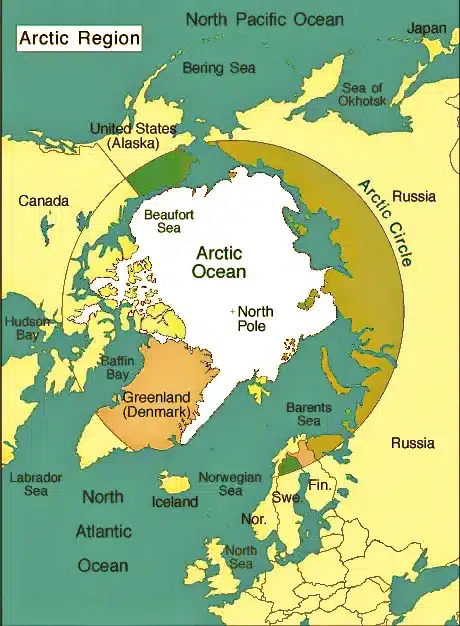
arctic region map

Strategic Importance of the Arctic Region

  • The Arctic is becoming important because melting ice is opening new shorter shipping routes between Europe and Asia, saving 30-40% travel time compared to the Suez Canal route.
  • It holds huge energy resources. Studies show the Arctic may contain 13% of the world’s undiscovered oil and 30% of undiscovered natural gas, making it valuable for future energy needs.
  • Many countries are increasing their naval presence, patrols, and icebreaker ships in the region to protect their interests and secure new sea routes.
  • Russia controls more than half of the Arctic coastline, and along with the USA, Canada, and Nordic countries, is strengthening military bases there.
  • China calls itself a “Near-Arctic State” and is investing in research and shipping access, increasing global competition.
  • Melting ice is opening access to new fishing grounds and mineral resources, which countries want to claim early.
  • For India, the Arctic matters for climate impacts on monsoons, future trade routes, energy security, and participating in global rule-making.

Also Read: Pacific Ocean

Climate Change Impact on the Arctic

  • The Arctic is warming 3 to 4 times faster than the rest of the world, making it the fastest-heating region on Earth.
  • Sea ice is shrinking rapidly. In recent years, both winter maximum and summer minimum ice levels have hit record lows.
  • As the ice melts, more sunlight is absorbed by dark ocean water, which makes the Arctic heat up even more. This is called the albedo effect.
  • Greenland’s ice sheet is melting at high speed, adding significantly to global sea-level rise.
  • Permafrost (permanently frozen ground) is thawing, releasing methane—a powerful greenhouse gas, which further increases global warming.
  • Thawing permafrost damages roads, buildings, pipelines, and homes in Arctic communities, creating huge economic losses.
  • Wildlife such as polar bears, walrus, seals, and Arctic foxes are losing their natural habitats, affecting food chains and survival.
  • Warmer waters are changing fish migration patterns, impacting both local communities and global fisheries.
  • Melting sea ice allows more shipping, tourism, and drilling, increasing risks of oil spills and accidents in fragile ecosystems.

India’s Engagement and Interests in the Arctic

India’s engagement in the Arctic Region focuses on scientific research, climate studies, and strengthening international cooperation through forums like the Arctic Council. India aims to understand climate impacts, secure future energy resources, and contribute to sustainable development in the region.

  • India is connected to the Arctic mainly through climate, because changes in the Arctic affect India’s monsoon patterns, sea levels, and weather extremes.
  • India became an Observer in the Arctic Council in 2013, giving it access to scientific cooperation, policy discussions, and research opportunities.
  • India runs a permanent research station in Svalbard, Norway called Himadri (established in 2008), used for glaciology, atmospheric studies, and climate research.
  • India also operates an underwater moored observatory called IndARC (since 2014) to study Arctic Ocean currents and how they influence the Indian monsoon.
  • The National Centre for Polar and Ocean Research (NCPOR) leads India’s Arctic studies, focusing on ice-core analysis, permafrost studies, and climate change.
  • India’s Arctic Policy (2022) aims to expand research, strengthen international cooperation, and explore opportunities in energy, minerals, and new shipping routes.
  • Melting Arctic ice can create shorter shipping routes (like the Northern Sea Route), which may help India reduce travel time for trade with Europe.

Also Read: Indian Ocean

International Laws and Governance in the Arctic

  • United Nations Convention on the Law of the Sea (UNCLOS) defines rights over territorial waters, Exclusive Economic Zones (EEZ), and the seabed, guiding how Arctic states use marine resources.
  • Arctic Council acts as the main cooperation forum for Arctic issues, focusing on environment, research, and sustainable development (not security). The Arctic Council members include Canada, Denmark, Finland, Iceland, Norway, Sweden, Russia, and the United States.
  • Svalbard Treaty (1920) allows Norway sovereignty over the Svalbard Islands but gives signatory countries equal rights to engage in commercial activities there. India too signed this treaty in 1920.
  • Polar Code (IMO, 2017) sets safety and environmental rules for ships operating in Arctic waters.
  • Search and Rescue (SAR) Agreement, 2011 under the Arctic Council ensures coordination among Arctic nations for emergencies.
  • Fisheries Agreement (2018) bans unregulated commercial fishing in the Central Arctic Ocean for 16 years, promoting scientific study first.

Arctic Region Challenges

  • Pollution and Black Carbon from shipping and industry accelerates ice melt and harms marine and terrestrial ecosystems.
  • Unregulated Fishing Threats increase as warming waters attract commercial fish stocks to new regions.
  • Limited Infrastructure (ports, rescue systems, weather stations) makes operations, tourism, and shipping unsafe and difficult.
  • Geopolitical Tensions have grown as countries compete for energy reserves, minerals, and control over new sea routes like the Northern Sea Route.
  • Loss of Sea Ice opens new shipping routes but increases risks like accidents, oil spills, and disturbance to marine life.
  • Ecosystem Fragility makes Arctic wildlife, polar bears, seals, walruses, and migratory birds highly vulnerable to warming, pollution, and habitat change.

Way Forward

  • Enforce Strong Environmental Protection: The Arctic has already lost over 75% of its summer sea ice volume since 1979. Strict rules on shipping, drilling, and pollution are needed to prevent irreversible ecological damage.
  • Strengthen Global Climate Action: The Arctic is warming four times faster than the global average. Reducing global CO₂ and black-carbon emissions is essential to slow further ice melts.
  • Expand Scientific Collaboration: Climate models show that a 1°C rise in Arctic temperature can increase extreme monsoon variability in Asia. Joint research by India, Arctic nations, and global bodies can improve climate predictions and disaster planning.
  • Improve Search, Rescue & Infrastructure: Arctic shipping increased by 44% between 2013 and 2023 due to melting ice. More icebreakers, ports, and emergency systems are needed to handle accidents and oil spill risks.
  • Promote Sustainable Resource Use: Commercial fishing is still banned in the Central Arctic Ocean until 2037, but warming waters could attract new species. A precautionary approach is necessary to avoid overfishing.
  • Encourage Peaceful Cooperation: As Russia controls 53% of Arctic coastlines, tensions have risen. Diplomatic engagement is necessary to prevent militarization and keep the region peaceful.
  • Enhance India’s Arctic Role: India’s Himadri station (since 2008) and its 2022 Arctic Policy support research on monsoons, climate, and polar science. Expanding these programs can strengthen India’s climate resilience.

Arctic Region FAQs

Q1: What is known as the Arctic region?

Ans: The Arctic region is the area north of the Arctic Circle, including the Arctic Ocean, surrounding seas, islands, and parts of eight countries, characterized by extreme cold and ice-covered landscapes.

Q2: What are the 8 countries in the Arctic?

Ans: The eight countries in the Arctic are: Canada, United States (Alaska), Russia, Norway, Denmark (Greenland), Iceland, Sweden, and Finland.

Q3: Is Arctic land or ice?

Ans: The Arctic is a combination of land and ice. It includes the Arctic Ocean covered by sea ice, surrounding lands and islands, glaciers, and permafrost regions.

Q4: How does the Arctic impact India?

Ans: Arctic changes influence India’s monsoon, sea-level rise, and extreme weather.

Q5: How much of the Arctic ice is left?

Ans: As of 2025, summer sea-ice extent has dropped to record lows, and multi-year ice is declining sharply, threatening ecosystems and global climate stability.


Difference between Civil Law and Criminal Law, Key Points

Difference between Civil Law and Criminal Law

The difference between Civil Law and Criminal Law is based on the nature and characteristic of the cases involved. These Laws form the fundamental feature of the Indian Legal System, functioning by separate procedures and aspects. These are governed by the BNS, BNSS, BSA and CPC for Civil and Criminal Law respectively.

Difference between Civil Law and Criminal Law

The key difference between Civil Law and Criminal Law can be studied as mentioned below:

Difference between Civil Law and Criminal Law
Aspect Civil Law Criminal Law

Meaning

It deals with the disputes between individuals, organizations, institutions, etc.

It deals with the acts that threaten the society, state or public order, etc.

Purpose

The main purposes include protection of rights, providing remedies and maintaining private relationships.

The purpose remains to prevent crime, punish offenders and maintain public order and security.

Cases

Examples of cases include: property disputes, breach of contract, matrimonial cases, service matters, nuisance, etc.

Example of cases include: theft, homicide, sexual abuse, kidnapping, murder and other offences that affect the society/ state.

Governing Laws

It is governed by the  Code of Civil Procedure (CPC) 1908 along with the special legislations such as Contract Act 1872, Family laws, Property laws

It is mainly governed by the Bharatiya Nagarik Suraksha Sanhita, 2023, BNS and BSA after replacement in 2023.

  • BNS 2023: define offence and punishments
  • BNSS 2023: provides procedures for investigation, arrest, trial, bail, sentence, etc.
  • BSA 2023: evaluate the evidence and related guidelines

Parties Involved

In civil cases, the two parties are: Plaintiff vs. Defendant.

In criminal cases, the two parties are: State (Plaintiff) vs. Accused (Defendant).

Burden of Proof

In civil cases, the Plaintiff is responsible for the burden of proof

In criminal cases, the State is responsible for the burden of proof, governing under the BSA 2023 rules.

Trial

The civil cases are tried under Civil Courts or equivalent tribunals.

The criminal cases are triable under Criminal Courts.

Procedure

The process is flexible and resolution driven. In this generally ADR (alternate dispute resolution) mechanism is used.

The process under criminal law is complex and includes mandatory registration of FIR. Although BSA 2023 strengthens the evidence validity through regulations. It has a faster investigation timeline, i.e, filing a chargesheet within 90 days extending up to 180 days based on severity.

Outcomes

The outcomes are usually meant to restore the harm by compensation, arbitration or mediation based settlements.

The outcomes include punishment such as imprisonment with or without fine; sealing of property, community services, or conviction, etc. depending on the level of extremity.

Appeal

In civil law there is a multiple appeal system from District Court to High Court and Supreme Court.

In criminal law, the appeals are usually based on the severity of the conviction.

Difference between Civil Law and Criminal Law UPSC

The difference between Civil Law and Criminal Law can be seen in the scope, impact and proceeding patterns. As per the National Judicial Data Grid about 4.6 crore cases are still pending at the lower courts out of them majority are expected to be criminal in nature. This shows heavier Criminal litigation. Around 66% of the nationwide Civil Cases are filed for disputes related to property and land related matters. Signifies need for a strict and faster resolution based system.

Also Check Related Articles
Difference between NITI Aayog and Inter-State Council Difference Between Economic Survey and Union Budget
Difference Between Tropical Evergreen and Tropical Deciduous Forests Difference Between Ordinary Bill and Money Bill
Difference Between Legislative and Executive Difference between Himalayan and Peninsular Plateau
Difference Between Vedas and Upanishads Difference Between Scheduled and Non-Scheduled Banks
Difference Between Written and Unwritten Constitution Difference between NITI Aayog and Planning Commission
Difference between Colonialism and Imperialism Difference between Fundamental Rights and Directive Principles of State Policy
Difference between Procedure Established by Law and Due Process of Law Difference Between Democracy and Republic
Difference between Creamy Layer and Non-Creamy Layer of OBC Difference between Rajya Sabha and Vidhan Sabha
Difference Between Western Ghats and Eastern Ghats

Difference between Civil Law and Criminal Law FAQs

Q1: What is the basic difference between Civil Law and Criminal Law?

Ans: The major difference between Civil Law and Criminal Law is that Civil law deals with private disputes while criminal law handles offences against society.

Q2: The Criminal Cases in India are governed through which law?

Ans: The Criminal Cases in India are governed through the The Bharatiya Nagarik Suraksha Sanhita, 2023 along with the Bharatiya Nyaya Sanhita (BNS) and Bharatiya Sakshya Adhiniyam (BSA).

Q3: Who are the two parties in the Criminal Law?

Ans: The two parties are: Plaintiff vs. Defendant, here Plaintiff is the State and the Defendant is the accused.

Q4: What are the remedies available for Civil Law?

Ans: The Civil Law usually deals with the restoration of the harm by the means of compensation, injunctions, restitution, mediation and specific performances.

Q5: Who files a criminal case under Criminal Law?

Ans: In Criminal Law usually the State prosecutes the Accused through public prosecutors. It can also be filed by an individual and initiate the process through the Police or Magistrate directly, who then acts upon it.

Nelson Mandela, Anti-Apartheid, Presidency, Achievements

Nelson Mandela

Nelson Mandela, a Nobel Laureate and Philanthropist, is remembered as the South African Anti-Apartheid Leader who fought for Human Rights. His resilience played a great role in abolishing Apartheid (a system that segregated or discriminated on the basis of “Race”) in 1948. He was the first Black President of South Africa from 1994 to 1999. He was the leader of African National Congress and played an important role in the establishment of democratic South Africa.

Nelson Mandela

Nelson Mandela was born on July 18th, 1918 in Mvezo, Cape Province, Union of South Africa. His birth anniversary (18 July) was declared as “Nelson Mandela International Day” by the United Nations in 2009. By birth Rolihlahla Mandela (childhood name) belonged to the Thembu Royal Lineage. He pursued Law from the University of Witwatersrand and became one of the few Black Law Graduates. With Oliver Tambo he established South Africa’s first Black Law Firm in 1952.

Anti-Apartheid Movement of Nelson Mandela

After 1948, various Apartheid Laws were being expanded by the National Party, such as- Population Registration Act 1950, Bantu Education Act 1953, etc. Mandela, a leader of ANC (joined 1943) and co-founder of ANC Youth League (1944), led the Defiance Campaign 1952 against these laws using non-violent resistance and civil disobedience. He also contributed to the drafting of the Freedom Charter of 1955.

The Sharpeville Massacre 1960 (in which 69 peaceful protestors were killed by Police) led to the shift from peaceful protest to arm resilience, followed by the formation of armed wing “Umkhonto we Sizwe” by ANC with Mandela as the Founder along with mass burning of the ‘Passbooks’ in solidarity.

Also Read: Mahatma Gandhi

Nelson Mandela Imprisonment

In 1962, Mandela was arrested and sentenced for five years. While serving the sentence, he was put on a trial (Rivonia Trial) in 1964 for sabotage and conspiracy to overthrow the Government. He gave a famous speech stating that he is ready to die for his ideals and beliefs. In this trial he was further sentenced with life imprisonment along with other leaders arrested and sent to the Robben Island Prison, where he spent 18 years followed by Pollsmoor Prison and Victor Verster Prison. During this period, his messages were conveyed internationally by his followers which led to the increase in global sanctions on apartheid including UN General Assembly Resolution 1761 (1962), etc. He was released from prison after 27 years in 1990 after President Klerk initiated reforms. 

Nelson Mandela Presidency

After his release, ANC was legalized and various negotiations began for a democratic transformation, leading to the Convention for a Democratic South Africa (CODESA) in 1991-93. The first Multiracial Election of South Africa was held on April 27 1994, which elected Nelson Mandela as the President in 1994 till 1999. As President he guided the drafting of the Constitution (1966) while guaranteeing Universal Suffrage, Equality and other rights. He established Truth and Reconciliation Commission (TRC) under A. Desmond Tutu in 1995 to investigate the violation of apartheid and assist the victims. Mandela Government focussed on Reconstruction and Development Programme (RDP) which addressed housing, healthcare, education and other issues. The significant achievement was construction of ~1.1 million houses and enrollment of primary schools for Black Children.

Nelson Mandela Achievements

For his remarkable and iconic role, Nelson Mandela received more than 260 Awards and Honours. These include one of the prestigious Nobel Prize, Bharat Ratna , Presidential Medal of Freedom, Order of Merit, and other honours such as Honorary Degrees (250+) and citizenship from various nations worldwide. The significant awards include:

  • Lenin Peace Prize (1990): Awarded by the Soviet Union. 
  • Bharat Ratna (1990): India's highest civilian award.
  • Nishan-e-Pakistan (1992): Pakistan's highest civilian award.
  • Nobel Peace Prize (1993): Mandela and Klerk jointly received for peaceful end of apartheid.
  • Philadelphia Liberty Medal (1993): Awarded by the U.S. National Constitution Center.
  • Order of Merit (1995): Awarded by the United Kingdom.
  • Sakharov Prize for Freedom of Thought (1988): Awarded by the European Parliament for his dedication to human rights.
  • Congressional Gold Medal (1998): Awarded by the U.S. Congress.
  • Presidential Medal of Freedom (2002): The highest civilian award in the United States.
  • Nelson Mandela International Day (2009): UN General Assembly designated July 18 to honor him.

Nelson Mandela UPSC

Nelson Mandela is globally regarded as one of the most influential political figures of the 20th century. He played a crucial role in the national as well as international issues including mediation of the conflicts such as Burundi and Democratic Republic Congo. He emphasized on education stating- “Education Is the most powerful weapon to change the world” and also advocated for various healthcare concerns. He passed away on December 05th, 2013 in Johannesburg at the age of 95, leaving a remark of his life around the world. His autobiography “Long Walk to Freedom” (1994) remains a primary source for his principles and philosophies.

Nelson Mandela FAQs

Q1: Who was Nelson Mandela?

Ans: Nelson Mandela was a South African Anti-Apartheid leader, a Nobel laureate and the first Black President of South Africa.

Q2: What was Nelson Mandela Known for?

Ans: Nelson Mandela is known for his struggle against the apartheid and promotion of reconciliation, democracy, and human rights.

Q3: Why was Nelson Mandela imprisoned?

Ans: Mandela was imprisoned in 1962 for 27 years for opposing apartheid and being a part of the anti-government resistance movements.

Q4: What role did Nelson Mandela play after becoming the President?

Ans: Mandela focused on the National Reconciliation, Development, and creation of equality promoting policies in South Africa.

Q5: What are the major achievements of Nelson Mandela?

Ans: Mandela was awarded more than 260 awards and honours including Nobel Peace Prize 1993 and Bharat Ratna 1990 for his contribution.

Nuclear Power Plants in India, List, Location, Capacity, Reactor Type

Nuclear Power Plants in India

The fifth largest source of electricity in India is Nuclear Power after thermal, hydroelectric and renewable sources of electricity. Currently, there are 22 Nuclear Power Plants in India operating in seven states with 6780 MegaWatt (MWe) out of which 18 reactors are Pressurised Heavy Water Reactors (PHWRs) and 4 are Light Water Reactors (LWRs). The responsibility for generating nuclear power in India lies with the Nuclear Power Corporation of India Limited (NPCIL), a public sector enterprise headquartered in Mumbai. NPCIL functions under the administrative control of the Department of Atomic Energy, Government of India.

Nuclear Power Plants in India

Nuclear Power Plants in India play an important role in energy resources which ensure a balanced and sustainable power supply. Recognised as a clean and environment-friendly option, Nuclear Power serves as a reliable energy source available. As of 2021, the country operates 22 nuclear reactors with a combined installed capacity of 6,780 MWe, maintaining an operational efficiency of more than 80% plant load factor. 

Of these, 18 are Pressurised Heavy Water Reactors (PHWRs) and 4 are Light Water Reactors (LWRs). The First Nuclear Reactor of Asia was Apsara commissioned in Mumbai, marking a significant milestone in the atomic journey of India.

List of Nuclear Power Plants in India

Nuclear Power Plants in India span multiple states, with all commercial nuclear power plants operated by the Nuclear Power Corporation of India Limited (NPCIL). These facilities employ a range of reactor technologies, including Pressurised Heavy Water Reactors (PHWRs), Light Water Reactors (LWRs), and Fast Breeder Reactors (FBRs). Below is a List of Nuclear Power Plants in India currently in operation.

List of Nuclear Power Plants in India

Nuclear Power Plant

Location

Reactor Type

Capacity (MW)

Tarapur Atomic Power Station Units 1 and 2

Maharashtra

Pressurized Heavy Water Reactor (PHWR)

2 x 160

Tarapur Atomic Power Station Units 3 and 4

Maharashtra

PHWR

2 x 540

Rajasthan Atomic Power Station Units 1 and 2

Rajasthan

PHWR

2 x 100

Rajasthan Atomic Power Station Units 3 and 4

Rajasthan

PHWR

2 x 220

Kakrapar Atomic Power Station Units 1 and 2

Gujarat

PHWR

2 x 220

Kudankulam Nuclear Power Plant Units 1 and 2

Tamil Nadu

Pressurized Water Reactor (PWR)

2 x 1,000

List of Nuclear Power Plants in India (Under Construction)

Below are the List of Nuclear Power Plants in India currently under construction in India. The table includes key details such as the location of each plant, reactor type, installed capacity, and the expected year of completion. 

List of Nuclear Power Plants in India (Under Construction)

Name

Location

Reactor Type

Capacity (MW)

Expected Completion

Kakrapar Atomic Power Plant Units 3&4

Gujarat

Pressurized Heavy Water Reactor

700

2024

Kalpakkam Power Plant

Tamil Nadu

Prototype Fast Breeder Reactor

500

20244

Rajasthan Atomic Power Plant Units 7&8

Rajasthan

Pressurized Heavy Water Reactor

700

2023-24

Kudankulam Nuclear Power Plant Units 3&4

Tamil Nadu

VVER-1000

1000

2026-27

Gorakhpur Nuclear Power Plant Units 1&2

Haryana

Pressurized Heavy Water Reactor

700

2029-30

Nuclear Power Plants In India (To Be Constructed)

Below are the Nuclear Power Plants In India that are planned for future development in India. The list includes the location of each site and the planned power generation capacity.

Nuclear Power Plants In India (To Be Constructed)

Nuclear Power Plant

Location

Capacity (MW)

Status

Chutka Nuclear Power Plant

Madhya Pradesh

2 x 700

Planned, site clearance obtained

Mahi Banswara Nuclear Power Plant

Rajasthan

2 x 700

Planned, site clearance obtained

Kaiga Nuclear Power Plant Units 5 and 6

Karnataka

2 x 700

Planned, environmental clearance obtained

Bhimpur Nuclear Power Plant

Madhya Pradesh

4 x 700

Planned, pre-project activities underway

Kovvada Nuclear Power Plant

Andhra Pradesh

6 x 1,000

Planned, Pre-Project activities underway

Haripur Nuclear Power Plant

West Bengal

6 x 1,000

Planned, pre-project activities underway

Nuclear Power Plants in India Advantages

  • Low Carbon Emissions: Generates minimal greenhouse gases, helping reduce environmental impact and mitigate climate change.
  • High Energy Efficiency: Produces large amounts of electricity from small quantities of nuclear fuel.
  • Enhanced Energy Security: Decreases dependence on imported fossil fuels, supporting national energy independence.
  • Reliable Baseload Supply: Offers a steady and uninterrupted power output, unlike variable sources like solar or wind.
  • Cost-Effective Over Time: While capital-intensive initially, nuclear plants have low long-term operating and fuel costs.
  • Drives Technological Innovation: Promotes R&D in advanced nuclear technologies, including thorium-based reactors.
  • Generates Employment: Creates job opportunities in plant construction, operations, safety, and maintenance.
  • Utilization of Indigenous Resources: Supports India's three-stage nuclear programme through efficient use of domestic thorium reserves.

Also Check: India Nuclear Power 2047

Nuclear Power Plants in India Recent Development

  • Bharat Small Reactors (BSR): India is working on compact, modular reactors designed for flexible deployment and lower costs. These small reactors represent a shift from conventional large plants and involve greater participation from private industry in design and innovation.
  • Expansion of Capacity: The government has set a target to triple the country’s nuclear power capacity by 2032. Currently, six reactors are under construction, with several new large-scale projects in the pipeline.
  • Global Partnerships: India is strengthening international cooperation by securing uranium supplies and partnering with countries like France and Russia for advanced reactor technologies.
  • Focus on Sustainability: The Union Budget 2024 discusses investments in clean energy, including research into low-emission technologies such as ultra-supercritical thermal systems, in line with climate goals.
  • Energy and Climate Alignment: These initiatives collectively aim to address India’s growing energy needs while maintaining commitments to reduce greenhouse gas emissions and promote sustainable development.

Nuclear Power Plants in India Challenges

  • High Capital Investment: Setting up nuclear power plants requires significant upfront costs for infrastructure, advanced technology, and safety systems.
  • Public Resistance: Concerns over radiation, environmental impact, and past global nuclear incidents often lead to local opposition and protests.
  • Fuel Supply Constraints: India's limited domestic uranium reserves make the sector heavily reliant on imports, exposing it to supply chain risks.
  • Radioactive Waste Management: Safely storing and disposing of nuclear waste remains a major technical and environmental challenge.

Project Delays: Nuclear projects frequently face execution delays due to regulatory clearances and acquisition issues.

Nuclear Power Plants in India FAQs

Q1: How many nuclear power plants are there in India (2025)?

Ans: India has 8 nuclear power stations with 23 operational reactors as of 2025.

Q2: Which is India’s first nuclear power plant?

Ans: Tarapur Atomic Power Station (Maharashtra) was India’s first nuclear power plant, commissioned in 1969.

Q3: Which is the largest nuclear power plant in India?

Ans: Kudankulam Nuclear Power Plant in Tamil Nadu is India’s largest, with planned capacity of 6000 MW.

Q4: Who operates nuclear power plants in India?

Ans: All nuclear plants are operated by the Nuclear Power Corporation of India Limited (NPCIL).

Q5: Which Indian state has the most nuclear reactors?

Ans: Tamil Nadu has the highest number of operational nuclear reactors.

South Asian Association for Regional Cooperation (SAARC)

South Asian Association for Regional Cooperation

The South Asian Association for Regional Cooperation (SAARC) is a regional organisation established on 8th December 1985 in Dhaka, Bangladesh, to promote economic, social, cultural, and technical cooperation among South Asian countries. It comprises 8 member states: India, Pakistan, Bangladesh, Sri Lanka, Nepal, Bhutan, the Maldives, and Afghanistan, with its headquarters in Kathmandu, Nepal. SAARC has launched initiatives like the SAARC Development Fund, South Asian University, and SAARC Satellite to strengthen regional collaboration. Despite achievements in trade, education, and disaster management, the organisation faces challenges due to political tensions and low intra-regional trade.

South Asian Association for Regional Cooperation (SAARC) Overview

The South Asian Association for Regional Cooperation (SAARC), established on 8th December 1985 in Dhaka, is a regional organisation. The table gives an overview of the SAARC organisation.

South Asian Association for Regional Cooperation (SAARC) Overview
Information Details

SAARC Established

1985 (December 8), Dhaka, Bangladesh

Number of Member Countries

8 - India, Bangladesh, Nepal, Sri Lanka, Maldives, Bhutan, Afghanistan, Pakistan

Number of Observers

9 - Australia, European Union (E.U), Iran, Japan, Mauritius, South Korea, USA, China, Myanmar

SAARC Headquarters

Kathmandu, Nepal

Launch of SAARC Satellite for South Asia

2017

SAARC Specialised Bodies

  1. South Asian University (SAU) - India
  2. South Asian Regional Standards Organization (SARSO) - Dhaka
  3. SAARC Development Fund (SDF) - Bhutan
  4. SAARC Arbitration Council (SARCO) - Pakistan

1st Secretary General of SAARC

Abul Ahsan (Bangladesh)

Current Secretary-General of SAARC

Golam Sarwar (Bangladesh) - Took office on 4th March 2023

Last Member to Join SAARC

Afghanistan (April 2007)

Last SAARC Summit

19th SAARC Summit in Pakistan (Cancelled)

Also Read: United Nations Environment Programme

SAARC Historical background

  • Formation Idea (1980s): The idea of a South Asian regional organisation was first proposed by Ziaur Rahman (Bangladesh), Indira Gandhi (India), and other leaders to promote regional cooperation.
  • Treaty Signed (1985): The SAARC Charter was signed on 8 December 1985 in Dhaka, Bangladesh, officially establishing the organisation.
  • Founding Members: The original members were Bangladesh, Bhutan, India, the Maldives, Nepal, Pakistan, and Sri Lanka. Afghanistan joined later in 2007.
  • Objectives: The main aim was to promote economic, social, cultural, and technical cooperation among South Asian countries and to strengthen regional integration.
  • Headquarters and Secretariat: The SAARC Secretariat was established in Kathmandu, Nepal, in 1987 to coordinate activities and implement programs.
  • Early Initiatives: Initially, SAARC focused on health, population, agriculture, rural development, and education, laying the groundwork for later economic and trade cooperation.

SAARC Principles

  • All member countries are equal in status, regardless of their size or power.
  • Cooperation is aimed at economic, social, and cultural development for all members.
  • Decisions are taken jointly by all members to ensure a collective agreement.
  • The main focus is on strengthening regional resources and reducing dependence on external powers.
  • Encouragement of collaboration in trade, technology, education, and culture.
  • Respect for each country’s internal affairs, and there is no interference in domestic matters.

Also Read: International Labour Organisation

SAARC Objectives

  • To promote cooperation in economic, social, cultural, technical, and scientific fields among member countries.
  • To enhance economic growth and trade within the region.
  • To strengthen social development in areas like health, education, and poverty alleviation.
  • To ensure regional peace and stability through dialogue and cooperation.
  • To encourage cultural exchange and knowledge-sharing among member states.
  • To promote regional self-reliance by efficiently utilising shared resources.

South Asian Association for Regional Cooperation (SAARC) Countries List

There are 8 member nations in the South Asian Association for Regional Cooperation (SAARC) organisation. Here is the list of all the SAARC member countries along with their capital, population and area.

South Asian Association for Regional Cooperation (SAARC) Countries List
S.No Country Capital Population Area (sq km)

1

Afghanistan

Kabul

42 million

652,230

2

Bangladesh

Dhaka

170 million

147,570

3

Bhutan

Thimphu

0.8 million

38,394

4

India

New Delhi

1.42 billion

3,287,263

5

Maldives

Malé

0.5 million

298

6

Nepal

Kathmandu

31 million

147,516

7

Pakistan

Islamabad

240 million

881,913

8

Sri Lanka

Colombo / Sri Jayawardenepura Kotte

22 million

65,610

Structure & Composition of SAARC

SAARC’s structure consists of the Secretariat in Kathmandu, the Council of Ministers, and various Technical Committees, and its composition includes eight member states: Afghanistan, Bangladesh, Bhutan, India, Maldives, Nepal, Pakistan, and Sri Lanka.

  • SAARC Summit - The highest decision-making body, comprising the Heads of State or Government of member countries, which meets biennially to set policies and priorities.
  • Council of Ministers (COM) - Composed of Foreign Ministers of member states, responsible for implementing Summit decisions and reviewing progress of SAARC programs.
  • Standing Committee - Consists of Foreign Secretaries of member countries; monitors and coordinates activities of various SAARC bodies.
  • SAARC Secretariat - Headquartered in Kathmandu, Nepal, led by the Secretary-General, it coordinates and implements programs and maintains records of decisions.
  • Observers: SAARC has nine observers: Australia, China, the European Union, Iran, Japan, Mauritius, Myanmar, South Korea, and the United States.

SAARC’s Specialised Bodies

The specialised bodies of SAARC are given below:

  1. SAARC Arbitration Council (SARCO) - Pakistan: The SAARC Arbitration Council (SARCO), based in Pakistan, was established to resolve commercial and investment disputes among member countries. It aims to promote regional trade and economic cooperation by providing a fair and efficient arbitration mechanism.
  2. SAARC Development Fund (SDF) - Bhutan: The SAARC Development Fund (SDF), headquartered in Bhutan, finances social, economic, and infrastructure projects across member states. Its goal is to reduce regional disparities and promote sustainable development in South Asia.
  3. South Asian University (SAU) - India: The South Asian University (SAU), located in India, was set up to provide postgraduate education and research for students from SAARC countries. It fosters regional integration and knowledge exchange in higher education and research.
  4. South Asian Regional Standards Organisation (SARSO) - Dhaka: The South Asian Regional Standards Organisation (SARSO) in Dhaka develops regional standards and quality assurance for products and services. It helps facilitate trade and technical cooperation among SAARC member countries.

Also Read: United Nations Development Programme

SAARC Significance

  • South Asian Association for Regional Cooperation (SAARC) comprises of 21% of world’s population, 3% of the world’s area and 3.8% (US$2.9 trillion) of the world economy.
  • Neighbourhood First Policy: India gives primacy to its immediate South Asian neighbours through initiatives in trade, connectivity, and development projects, strengthening regional ties.
  • Act East Policy Integration: Linking South Asian economies with Southeast Asia through SAARC-driven projects promotes economic integration, especially in the services sector, IT, tourism, and trade.
  • Global Leadership Role: Active participation in SAARC allows India to assert regional leadership, take on development and humanitarian responsibilities, and influence policy-making in South Asia.
  • Regional Stability: SAARC provides a platform for political dialogue and conflict resolution, helping to build mutual trust, peace, and cooperation among South Asian nations historically affected by disputes.

SAARC Achievements

  • SAFTA (South Asian Free Trade Area) came into effect in 2006, which aims to reduce tariffs and promote intra-regional trade.
  • Intra-SAARC trade, low compared to global trade, increased from $1 billion in 1995 to around $23 billion in 2020.
  • SAARC also launched the SAARC Development Fund (SDF) in 2010, with a total capital of $300 million, to finance social, economic, and infrastructure projects.
  • Initiatives like the SAARC Motor Vehicles Agreement (2010) and SAARC Railway Cooperation aim to improve transport links.
  • SAARC established several specialised bodies, e.g., SAARC Tuberculosis and HIV/AIDS Centre (Bangladesh) and SAARC Agriculture Centre (Bhutan).
  • Launched programs like the SAARC Food Bank (2013) to help member countries in times of food shortages.
  • The SAARC Disaster Management Centre (SDMC), based in India, coordinates disaster preparedness and emergency response.
  • Established the SAARC Cultural Centre (Sri Lanka) and SAARC Documentation Centre (India) to promote regional culture and knowledge sharing.

SAARC Challenges

  • The relation between India and Pakistan has escalated tensions and conflicts which hamper the prospects of SAARC.
  • Geopolitical factors and the influence of external powers like China create additional complications for regional dynamics.
  • SAARC operates on the consensus of all members which means that a single member's opposition can block reforms and policies.
  • SAARC has often struggled to effectively implement agreements and regional projects due to limited authority and coordination.
  • Trade among SAARC countries remains limited due to similar export products, high tariffs, and investment barriers, restricting regional economic integration.
  • Addressing environmental issues is a common challenge for member nations.

SAARC Way Forward

  • Boost Intra-Regional Trade: Intra-SAARC trade is only 5% of the total trade of member countries; reducing tariffs, removing non-tariff barriers, and diversifying exports can significantly increase regional economic integration.
  • Enhance Connectivity: Only 50% of South Asian countries are well-connected via transport and digital networks; improving roads, railways, energy grids, and internet infrastructure will facilitate trade and mobility.
  • Strengthen Institutions: SAARC Secretariat and specialised bodies like SDF ($300 million fund) need greater authority and efficiency to implement regional projects effectively.
  • Support Less-Developed Members: Countries like Afghanistan, Bhutan, and the Maldives lag in development; targeted programs can reduce regional disparities and ensure inclusive growth.
  • Promote Peace and Political Dialogue: Regular SAARC summits and councils can help build trust among India, Pakistan, and other members, ensuring regional stability.
  • Collaborate on Emerging Challenges: Focus on climate change, health, technology, disaster management, and sustainable development, areas where joint action can yield significant regional benefits.

South Asian Association for Regional Cooperation (SAARC) FAQs

Q1: What is SAARC?

Ans: The South Asian Association for Regional Cooperation (SAARC) is a regional organization established in 1985 to promote economic, social, cultural, technical, and scientific cooperation among South Asian countries.

Q2: When and where was SAARC established?

Ans: SAARC was established on 8th December 1985 in Dhaka, Bangladesh.

Q3: How many member countries are in SAARC?

Ans: SAARC has 8 member countries: Afghanistan, Bangladesh, Bhutan, India, Maldives, Nepal, Pakistan, and Sri Lanka.

Q4: How many observer countries does SAARC have?

Ans: There are 9 observer countries: Australia, European Union (EU), Iran, Japan, Mauritius, South Korea, USA, China, and Myanmar.

Q5: Where is the SAARC Secretariat located?

Ans: The SAARC Secretariat is located in Kathmandu, Nepal.

Right to Information (RTI) Act 2005, Objectives, Provisions, Challenges

Right to Information (RTI) Act 2005

The RTI Act of 2005 was created to provide citizens with access to information from their government through authorised agencies. The Act is intended to provide citizens with greater transparency, accountability, and the ability to engage in democratic activities.

This article provides evolutions, objectives, important provisions, challenges, recent amendments and Supreme Court judgements, along with its criticism and way forward.

Right to Information Act 2005

The Government of India enacted the Right to Information (RTI) Act, 2005, which allows Indian citizens to obtain any information that the Government or its institutions have available to them, thereby increasing accountability between the State and the people and enhancing the processes of democracy. 

The RTI Act provides a mechanism by which citizens may request access to records and information located within the Government. The timeframe for a response is 48 hours for life and liberty situations and 30 days for all other requests. The Act also establishes a formal procedure for Citizens to appeal against a denial of their request for information.

Right to Information Act 2005 Evolution

The evolution of the Right to Information Act 2005 has been highlighted below:

  • 1976: Supreme Court recognition: The Supreme Court, in the case of Raj Narain v. State of Uttar Pradesh, declared the right to information a fundamental right under Article 19(1)(a) of the Constitution.
  • 1977-1980: The demand for “open government” gained momentum after the Emergency period.
  • 1990s: Grassroots movements like the Mazdoor Kisan Shakti Sangathan (MKSS) led campaigns in Rajasthan and demanded transparency in public expenditure and government records.
  • 1997: Tamil Nadu became the first state to enact a state-level RTI law, followed by 8 other states.
  • 2002: The Freedom of Information Act was passed, but it was weak, and hence it was never implemented fully.
  • 2005: The RTI Act has replaced the earlier law, offering stronger provisions, broader coverage, and broader appeal mechanisms.

Right to Information Act 2005 Objectives

The Right To Information Act, 2005, aims to promote transparency and accountability in the operation of the Government, and thus enable citizens to hold their Governments accountable through the use of this legislation. The main purpose of the legislation is to improve and strengthen the functioning of democracy by allowing citizens to more effectively engage with government agencies and organisations.

  • Promote transparency in the functioning of public authorities.
  • Ensure accountability by making government officials answerable for their actions.
  • Empower citizens to seek information affecting their lives and rights.
  • Reduce corruption through public scrutiny of decisions and processes.
  • Strengthen participatory democracy by encouraging citizen involvement in governance.
  • Make government records accessible except those linked to national security or sensitive concerns.
  • Improve decision-making by ensuring information flows openly within the system.

Right to Information Act 2005 Important Provisions

The Right To Information Act of 2005 is designed with numerous provisions to make it easier for individuals to access public records and obtain information from government agencies and organisations. 

Under this law, every citizen in India can ask for access to information held by public authorities without having to give reasons for his/her requests. 

In addition, the Act places a duty on public authorities to respond to requests for information within a specific period of time: information requested must be provided within 30 days from the date of request, or within 48 hours for cases of life and liberty

  • Proactive Disclosure (Section 4): Public authorities must regularly publish organisational details, functions, budgets, decisions, and other key documents.
  • Penalties: PIOs face fines up to ₹25,000 for delays or wrongful denial of information.
  • Appeals Mechanism: Applicants can approach the First Appellate Authority and later the CIC or SIC if information is denied or unsatisfactory.
  • Digital records: The Act encourages electronic storage and dissemination of information for better accessibility.

Exemptions from Disclosure under the RTI Act

RTI Act not only promotes openness, but also balances national interest, privacy, and sensitive information through specific exemptions listed under Section 8. These exemptions prevent disclosure of information that could harm national security, privacy, investigations, or diplomatic relations.

Information exempted under Section 8

  • Information affecting India’s sovereignty, security, or strategic interests.
  • Information prohibited by a court or constituting contempt of court.
  • Data that breaches parliamentary privilege.
  • Commercial confidence, trade secrets, and intellectual property.
  • Information received confidentially from a foreign government.
  • Data that endangers the life or safety of any individual.
  • Information affecting ongoing investigations and prosecution.
  • Cabinet papers and deliberations.
  • Personal information unrelated to public activity.

Section 24 exempts a total of 27 intelligence and security organisations. These include various agencies such as the Computer Emergency Response Team (CERT-In), Intelligence Bureau (IB), Research and Analysis Wing (RAW), Directorate of Enforcement (ED), and the National Technical Research Organisation (NTRO).

Central Information Commission

The Central Information Commission (CIC) is the highest appellate body under the RTI Act 2025, and is responsible for ensuring transparency and resolving disputes related to information access. It acts as an independent authority that reviews appeals when citizens are denied information by public authorities.

Central Information Commission Composition

    • One Chief Information Commissioner (CIC)
  • Up to ten Information Commissioners (ICs)
  • Members are appointed by the President of India
  • Appointment is based on the recommendation of a committee which comprises the Prime Minister (Chairperson), the Leader of Opposition in Lok Sabha, and a Union Cabinet Minister nominated by the Prime Minister.

Challenges in the Implementation of the RTI Act

  • Non-Functional Commissions: Many CICs and SICs operate understaffed or without heads, causing inefficiencies.
  • Weak Enforcement: Penalties for PIOs are applied in only about 2% of eligible cases, reducing accountability.
  • Transparency Deficits: Proactive disclosure under Section 4 is inconsistently implemented; many commissions fail to publish annual reports.
  • Low Public Awareness: Awareness is particularly low among women, rural populations, and marginalised groups; only 48% of citizens dissatisfied with PIO responses know about filing appeals (Section 18).
  • Application Submission Issues: Mandatory user guides (Section 26) are often missing, standard forms may not exist, submission channels are limited, and payment options are inconvenient.
  • Poor Information Quality: Inadequately trained PIOs provide incomplete or unclear information; inspection facilities are rarely used due to lack of training.
  • Ineffective Record Management: Weak systems for managing and retrieving records delay RTI processing.
  • Executive Apathy: The RTI Amendment 2019 reduced the autonomy of commissions, reflecting limited government commitment.

Recent Amendments and Supreme Court Judgments on the RTI Act

The RTI Act has undergone key amendments and judicial interpretations that shape its current implementation. The RTI (Amendment) Act, 2019 allows the central government to decide the tenure, salaries, and service conditions of Information Commissioners, which has raised concerns about reducing their independence.

Digital Personal Data Protection (DPDP) Act, 2023: This act amended Section 8(1)(j) of the RTI Act 2005, strengthening the exemption for "personal information".The previous version allowed for disclosure of personal information if a "larger public interest" justified it. The new provision removes this override, potentially shielding more information about public servants, such as asset declarations or qualifications.

  • Association for Democratic Reforms (ADR) v. Union of India, 2013: It mandated disclosure of criminal records of electoral candidates.
  • CBSE vs Aditya Bandopadhyay, 2011: Students can access their evaluated answer sheets.
  • RBI vs Jayantilal Mistry, 2015: Bank inspection reports can be disclosed for transparency in financial institutions.
  • Office of the Chief Justice of India Case, 2019: Brought the office of the CJI under RTI, enhancing accountability in the judiciary.

Right to Information Act 2005 Criticism

  • Delays and Backlogs: Thousands of RTI applications and appeals remain pending, causing delays of months or years in receiving information.
  • Weak Enforcement: Penalties for non-compliance by Public Information Officers (PIOs) are rarely imposed, reducing accountability.
  • Reduced Autonomy of Commissions: The RTI Amendment Act 2019 allows the government to decide tenure, salaries, and service conditions of Information Commissioners, raising concerns over executive influence.
  • Threats to RTI Activists: Citizens using RTI to expose corruption or mismanagement often face intimidation, harassment, or violence.
  • Overuse of Exemptions: Broad or vague exemptions under Section 8 and Section 24 limit access to critical information, undermining transparency.
  • Poor Record-Keeping: Inadequate document management and lack of digitization delay responses and reduce the quality of information provided.
  • Administrative Gaps: Lack of trained personnel, insufficient infrastructure at local levels, and low motivation among PIOs hinder proper implementation.
  • Limited Public Awareness: Many citizens, especially in rural areas and marginalised groups, are unaware of their RTI rights or appeal mechanisms.

Way Forward

  • Fill Vacancies in Commissions: Prompt appointment of Chief Information Commissioners and Information Commissioners to reduce backlogs.
  • Strengthen Enforcement: Strictly impose penalties on PIOs who delay or deny information.
  • Digitise Records: Promote electronic record-keeping and online RTI filing to speed up access.
  • Public Awareness Campaigns: Educate citizens, especially rural populations and marginalised groups, about RTI rights and appeal procedures.
  • Protect RTI Activists: To ensure legal and physical protection for citizens exposing corruption or maladministration.
  • Improve Infrastructure: To allocate adequate resources, especially at the Block and Panchayat levels, for smooth RTI implementation.
  • Increase PIO Motivation: To provide training, incentives, and support systems to encourage proactive information disclosure.
  • Enhance Transparency in Governance: Encourage proactive disclosure of government functions, decisions, and budgets under Section 4.

Right to Information Act 2005 FAQs

Q1: What is the aim of the RTI Act?

Ans: To promote transparency and accountability in governance by empowering citizens to access information held by public authorities.

Q2: Who can file an RTI application?

Ans: Any Indian citizen, regardless of age or profession, can file an RTI request.

Q3: Which authorities are covered under the RTI Act?

Ans: All public authorities, including central, state, and local government bodies, constitutional authorities, and institutions substantially funded or controlled by the government.

Q4: What is the time frame for providing information?

Ans: Information must be provided within 30 days; in cases involving the life or liberty of a person, within 48 hours.

Q5: Can a citizen appeal if information is denied?

Ans: Yes, appeals can be filed first with the first appellate authority within the same public authority, and then with the Central or State Information Commission.

Arunachalesvara Temple

Arunachalesvara Temple

Arunachalesvara Temple Latest News

Encroachments around Arunachaleswarar Temple in Tiruvannamalai town were demolished recently to provide more road space for pilgrims during the Karthigai Deepam festival.

About Arunachalesvara Temple

  • It is a Hindu temple located at the base of Arunachala Hill in Tiruvannamalai in Tamil Nadu.
  • It is dedicated to Lord Arunachalesvara, a form of Lord Shiva.
  • The temple’s origin dates back thousands of years, with references in ancient scriptures and Tamil Saiva texts. 
  • The current structure, however, was built during the period of the early Chola kings (9th century AD), expanded during the period of the later Cholas, Hoysala (Bhosala) kings, and Vijayanagarar Nayakar kings, 

Arunachalesvara Temple Architecture

  • The temple is a fine example of South Indian (Dravidian) architecture and sculpture.
  • Spread out over 25 acres, the temple complex is among the largest in the country, housing four gateways, or gopurams. 
  • The Rajagopuram, located on the eastern side at a height of 217 feet, is regarded as among the tallest temple towers in the country built by the Nayaka kings. 
  • There are nine lofty gopurams, intricately carved with mythological figures and deities.
  • It has a massive thousand-pillar hall built by the ancient kings.

Source: TH

Arunachalesvara Temple FAQs

Q1: The Arunachalesvara Temple is located in which Indian state?

Ans: Tamil Nadu

Q2: The Arunachalesvara Temple is situated at the base of which hill?

Ans: It is located at the base of Arunachala Hill.

Q3: The current structural form of the Arunachalesvara Temple was mainly developed during which dynasty?

Ans: The current structure, however, was built during the period of the early Chola kings (9th century AD).

Vitamin B12

Vitamin B12

Vitamin B12 Latest News

Vitamin B12 deficiency often first appears as skin changes like hyperpigmentation, dryness, or paleness, indicating poor oxygen and nutrient delivery to skin cells.

About Vitamin B12

  • It is a water-soluble vitamin. 
  • It is also called cobalamin.
  • It is a vitamin the body uses to make and support healthy nerve cells. 
  • It's also used to make healthy red blood cells and the genetic material inside cells called DNA
  • Your body cannot produce B12 on its own, so it must be obtained through foods high in vitamin B12 or supplements. 
  • It is naturally found in animal foods such as fish, meat, poultry, eggs, milk, and milk products. 
  • It is not present in plant foods unless fortified.
  • The body stores vitamin B12 in the liver. 
  • The body can store vitamin B12 for 2 to 5 years, and it can get rid of any excess or unwanted vitamin B12 in the urine.
  • Vitamin B12 Deficiency:
    • People who follow a vegetarian or vegan diet can sometimes have low levels of Vitamin B12. This is because plant foods don't have vitamin B-12.
    • Older adults and people who have had stomach surgery also are at risk because they may not absorb the vitamin as well.
    • People with digestive conditions such as celiac disease and Crohn's disease also are at risk of low vitamin B-12 levels.
    • People with very low vitamin B-12 levels can have symptoms such as fatigue, muscle weakness, stomach problems, nerve damage, vision problems, and mood changes. 
    • They also may have low iron, called anemia, or low blood counts.

Source: TOI

Vitamin B12 FAQs

Q1: Is Vitamin B12 water-soluble?

Ans: Yes, Vitamin B12 is a water-soluble vitamin.

Q2: The body obtains Vitamin B12 primarily from which source?

Ans: It is naturally found in animal foods such as fish, meat, poultry, eggs, milk, and milk products.

Q3: Where is Vitamin B12 stored in the human body?

Ans: Vitamin B12 is primarily stored in the liver.

Q4: Vitamin B12 is essential for the formation of what?

Ans: Healthy nerve cells and red blood cells.

Aloe Vera

Aloe Vera

Aloe Vera Latest News

Computer simulations suggest that common plant molecules from Aloe vera might block enzymes tied to Alzheimer’s disease.

About Aloe Vera

  • It is a succulent plant belonging to the Aloaceae family, known for its medicinal and therapeutic properties.
  • Scientific Name: Aloe barbadensis Mill
  • Distribution:
    • It is native to the arid, desert regions of the Arabian Peninsula, particularly in Oman, Yemen, and Saudi Arabia. 
    • It thrives in hot, dry climates with well-drained, sandy, or rocky soils. 
    • Today, aloe vera is widely cultivated in various warm regions around the world, including parts of North Africa, the Canary Islands, India, and the southwestern United States.
  • It is a thick, short-stemmed plant that stores water in its leaves. 
  • It is known for its thick, pointed, and fleshy green leaves. 
  • Each leaf contains a slimy tissue that stores water, making the leaves thick. 
  • This water-filled tissue is the “gel” that people associate with aloe vera products.
  • The gel contains beneficial bioactive compounds, including vitamins, minerals, and antioxidants.
  • Uses:
    • Aloe vera is known for its antibacterial, antiviral, and antiseptic properties. 
    • It is best known for treating skin injuries.
    • Aloe vera inhibits the growth of different types of bacteria, with the most studied being Staphlococcus aureus and Pseudomonas aeruginosa.
    • Aloe vera is used in arid regions for erosion control due to its shallow root system and ability to stabilize soil.

Source: SCTD

Aloe vera FAQ's

Q1: Aloe vera is native to which geographical region?

Ans: Arabian Peninsula

Q2: Aloe vera thrives best in which type of environment?

Ans: Hot, dry climates with well-drained soils.

Q3: The “gel” used in Aloe vera products is found in which part of the plant?

Ans: Water-filled leaf tissue.

Q4: Aloe vera is best known for treating which problem?

Ans: It is best known for treating skin injuries.

Grey Seal

Grey Seal

Grey Seal Latest News

Recently, researchers found that seal milk comprises 332 different kinds of oligosaccharides

About Grey Seal

  • It is a large seal of the family Phocidae.
  • It is also known as the Atlantic seal and the horsehead seal.
  • It is found on both shores of the North Atlantic Ocean. 
  • Distribution: They are found across the North Atlantic Ocean in coastal areas from mid-Atlantic to the Baltic Sea.
  • Habitat: These seals spend the majority of their lives in coastal waters; when on land, they occur on rocky coasts, islands, and sandbars, as well as on ice shelves and icebergs.
  • Conservation Status: IUCN: Least Concern

Characteristics of Grey Seals

  • Appearance: Males can reach 10 feet long and females are smaller in size. Its pups have white fur known as lanugo. This white fur helps absorb sunlight and trap heat to keep the pups warm. 
  • Gray seals are diurnal animals, being active during the day and sleeping at night. 
  • It shows a ‘bottling’ behavior i.e when the seal is in a vertical position in the water with only its head up above the surface.
  • Diet: Gray seals are carnivores (piscivores). They feed on a wide variety of fish, mostly benthic or demersal species.
  • Life Span: Their lifespan ranges from 25 to 35 years.

Source: IE

Grey Seal FAQs

Q1: Where is the Grey Seal found?

Ans: North Atlantic Ocean

Q2: What is the conservation status of the Grey Seal?

Ans: Least Concern

Tex-RAMPS Scheme

Tex-RAMPS Scheme

Tex-RAMPS Scheme Latest News

Recently, the Government of India has approved the Textiles Focused Research, Assessment, Monitoring, Planning and Start-up (Tex-RAMPS) Scheme.

About Tex-RAMPS Scheme

  • It will be implemented as a Central Sector Scheme, fully funded by the Ministry of Textiles.
  • Total outlay: ₹305 crore for the period FY 2025-26 to FY 2030-31.
  • It is designed to address critical gaps in research, data systems, and innovation support and capacity development.

Components of Tex-RAMPS Scheme

  • Research & Innovation: It promotes advanced research in smart textiles, sustainability, process efficiency, and emerging technologies to boost India’s innovation capacity.
  • Data, Analytics & Diagnostics: It creates robust data systems including employment assessments, supply chain mapping, and the India-Size study to facilitate evidence-based policymaking.
  • Integrated Textiles Statistical System (ITSS): A real-time, integrated data and analytics platform to support structured monitoring and strategic decision-making.
  • Capacity Development & Knowledge Ecosystem: It strengthens State-level planning, dissemination of best practices, capacity building workshops, and organisation of sectoral events.
  • Start-up & Innovation Support: It supports incubators, hackathons, and academia-industry collaborations to nurture high-value textile start-ups and entrepreneurship.

Source: PIB

Tex-RAMPS Scheme FAQs

Q1: What is the primary objective of the Tex-RAMPS Scheme?

Ans: To boost research and innovation in the textile sector

Q2: What is the duration of the Tex-RAMPS Scheme?

Ans: 2025-2031

International Institute for Democracy and Electoral Assistance

International Institute for Democracy and Electoral Assistance

International Institute for Democracy and Electoral Assistance Latest News

Chief Election Commissioner of India is set to assume the role of the Chairperson of the International Institute for Democracy and Electoral Assistance (International IDEA) for the year 2026.

About International Institute for Democracy and Electoral Assistance

  • It is an inter-governmental organisation established in 1995.
  • It works to strengthen democratic institutions and electoral processes worldwide.
    • International IDEA has been granted UN observer status.
  • Objective:  The objectives of the Institute are to support stronger democratic institutions and processes, and more sustainable, effective and legitimate democracy.
  • Member countries: It currently has 35 member countries, with the United States and Japan as observers. India is a founding member of International IDEA
  • Governance: The Institute's governance consists of a Council of Member States, a Steering Committee, a Finance and Audit Committee, a Board of Advisers and a Secretariat, led by the Secretary-General.
    • Each year, the Council elects a Chair and two Vice Chairs among its Member States. 
  • Core Functions: Its working modalities include four elements: knowledge production, capacity development, advocacy as well as convening of dialogues.
  • It focuses on six workstreams namely:
    • Electoral Processes
    • Constitution-Building 
    • Democracy Assessment
    • Political Participation and Representation
    • Climate Change and Democracy
    • Digitalization and Democracy
  • Secretariat: Stockholm, Sweden

Source: TH

International Institute for Democracy and Electoral Assistance FAQs

Q1: Where is the headquarters of International IDEA located?

Ans: Stockholm, Sweden

Q2: What is the primary objective of International IDEA?

Ans: To support sustainable democracy worldwide

Sirpur Archaeological Site

Sirpur Archaeological Site

Sirpur Archaeological Site Latest News

The government is planning to prepare Chhattisgarh’s 5th Century Sirpur archaeological site for UNESCO tag.

About Sirpur Archaeological Site

  • Location: It is located in Mahasamund district of Chhattisgarh.
  • It is a 5th–12th Century archaeological site located on the banks of the Mahanadi.
  • It was the flourishing capital of Dakshina Kosala under the Panduvanshi and later Somavamshi kings.
  • It is a multi-religious urban centre first discovered in 1882 by Alexander Cunningham in 1871.

Key Features of Sirpur Archaeological Site

  • Excavations revealed 22 Shiva temples, five Vishnu temples, 10 Buddhist viharas and three Jain viharas.
  • Notable Structures
    • Lakshmana Temple (dedicated to Vishnu): It is one of India’s finest brick temples which was built around the 7th Century.
    • Surang Tila complex: It is built on a high terrace and has multiple shrines in the panchayatana style (one main shrine surrounded by four subsidiary ones).
    • Tivaradeva Mahavihara: It houses a significant Buddha statue.
  • It was a major Buddhist centre with large viharas, meditation halls and excavated stupas.
  • It also has a 6th Century market complex, showing Sirpur was both a religious and commercial hub.

Source: IE

Sirpur Archaeological Site FAQs

Q1: Where is the Sirpur Archaeological Site located?

Ans: Mahasamund district, Chhattisgarh

Q2: On which river the Sirpur Archaeological Site located?

Ans: Mahanadi

Etalin Hydroelectric Project

Etalin Hydroelectric Project

Etalin Hydroelectric Project Latest News

The Project Affected Peoples Forum (PAPF) of Arunachal Pradesh recently urged NHPC Ltd to reinstate every local worker previously engaged in the Etalin Hydroelectric Project (HEP), following the Centre’s decision to transfer the project from SJVN Limited to NHPC.

About Etalin Hydroelectric Project

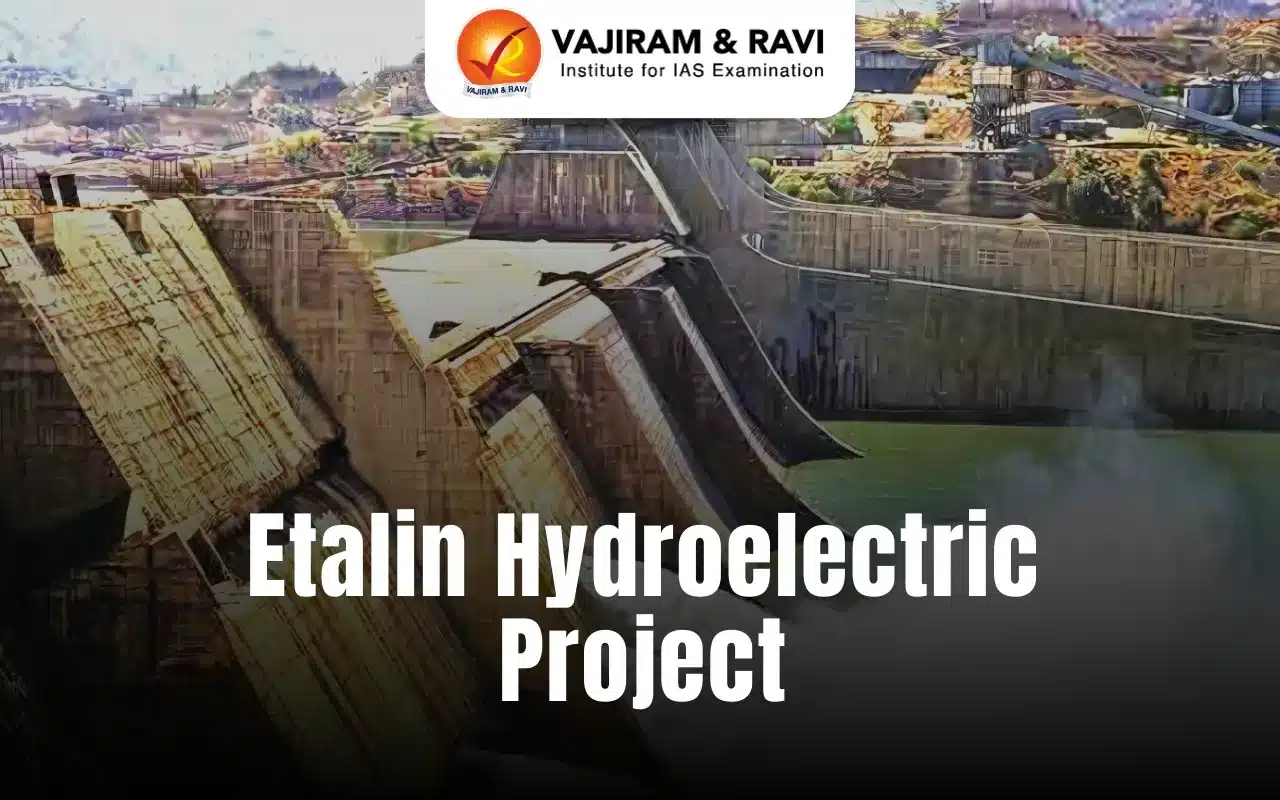
  • It is a 3,097 MW hydropower project planned on Dri and Talo rivers (tributaries of the Dibang river) in Arunachal Pradesh’s Dibang Valley.
  • It is one of the largest hydropower projects proposed in the country in terms of installed capacity.
  • EHEP is proposed to be developed as a combination of two run-of-the-river schemes.
  • The project is being executed by NHPC Limited (formerly known as the National Hydroelectric Power Corporation).
  • The project will feature two concrete gravity dams, one on the Dri River and another on the Talo (Tangon) River, with an underground powerhouse near their confluence close to Etalin village.
  • The project is expected to generate 12,752 GWh of electricity.
  • The project area falls under the “richest bio-geographical province of the Himalayan zone” and “one of the mega biodiversity hotspots of the world”.
  • The project area is dominated by indigenous populations belonging to Idu-Mishmi tribes.

Source: NEN

Etalin Hydroelectric Project FAQs

Q1: The Etalin Hydroelectric Project is planned on which rivers?

Ans: It is planned on Dri and Talo rivers (tributaries of the Dibang river).

Q2: The Etalin Hydroelectric Project is located in which Indian state?

Ans: Arunachal Pradesh

Q3: What is the total planned installed capacity of the Etalin Hydroelectric Project?

Ans: 3,097 MW

Q4: Which indigenous community primarily inhabits the Etalin project area?

Ans: The project area is dominated by indigenous populations belonging to Idu-Mishmi tribes.

Vikram-I Rocket

Vikram-I Rocket

Vikram-I Rocket Latest News

Recently, the Prime Minister of India unveiled Skyroot Aerospace’s first orbital rocket, Vikram-I.

About Vikram-I Rocket

  • It is developed by Skyroot Aerospace.
  • It is India’s new private orbital-class launch vehicle named after the notable space pioneer Vikram Sarabhai. 

Features of Vikram-I Rocket

  • Thrust: It produces 1,200 kN of thrust using an all-carbon composite structure for enhanced lightweight strength and efficiency.
  • Design: The design emphasises simplicity, reliability, and the ability to launch within 24 hours from any location.
  • Stages: It has four stages and the first three stages are solid-fuelled, providing robust initial thrust, topped by a hypergolic liquid upper stage for precise orbital adjustments.
    • Stage 4 uses a cluster of four Raman engines. These are hypergolic engines, (meaning they ignite instantly when two chemicals, MMH fuel and NTO oxidiser, come into contact.
  • It is built to target the small-satellite segment and is capable of placing multiple satellites into orbit in a single mission.
  • Payload Capacity: It can deploy up to 350 kg into low Earth orbit (LEO) and 260 kg into a sun-synchronous orbit (SSO).
  • Innovation: Other key innovations include 3D-printed engines, ultra-low-shock pneumatic separation systems, and advanced avionics for real-time guidance.

Source: India Today

Vikram-I Rocket FAQs

Q1: Who developed Vikram-I Rocket?

Ans: Skyroot Aerospace

Q2: Who is known as the Father of the Indian Space Program?

Ans: Vikram Sarabhai

Tex-RAMPS Scheme – Boosting Innovation in the Textile Sector

Tex-RAMPS Scheme

Textile Sector Latest News

  • The Union Government has approved the Textiles Focused Research, Assessment, Monitoring, Planning and Start-up (Tex-RAMPS) Scheme.

Textile Sector: A Pillar of Manufacturing and Employment

  • India’s textile and apparel sector is one of the country’s oldest and most significant industries, deeply embedded in its cultural and economic landscape. 
  • It contributes over 2% to India’s GDP, nearly 11% to industrial output, and around 13% to total export earnings. 
  • With more than 45 million workers, it is the second-largest employer after agriculture.
  • The sector’s strength lies in its integrated value chain, from fibre, spinning, weaving, knitting, processing, to apparel and home textiles. 
  • India is among the world’s largest producers of cotton, jute, silk, polyester, and technical textiles, and is globally competitive in home furnishings and garment manufacturing.

Challenges Faced by the Textile Sector

  • Slow adoption of advanced technologies,
  • Limited R&D capacity,
  • Absence of an integrated data and analytics ecosystem,
  • Fragmented supply chains,
  • Rising global competition from technologically agile economies like China, Vietnam, and Bangladesh.

News Summary

  • The Union Government has approved the Textiles Focused Research, Assessment, Monitoring, Planning and Start-up (Tex-RAMPS) Scheme, with an outlay of Rs. 305 crore, to be implemented between 2025-26 and 2030-31. 
  • The initiative aims to strengthen innovation capacity, improve data systems, and enhance the global competitiveness of India’s textile and apparel sector. 

Aims and Vision of Tex-RAMPS

  • Tex-RAMPS is designed as a future-oriented intervention to address critical structural gaps that limit India’s competitiveness in the global textile value chain.
  • According to the Textiles Ministry, the scheme will integrate research, data, and innovation to position India as a global leader in sustainability, technology, and competitiveness.  The scheme aims to:
    • Build a strong national ecosystem for textile research and innovation,
    • Strengthen evidence-based policymaking through advanced data systems,
    • Promote sustainability and efficiency across the value chain,
    • Develop high-value textile start-ups and entrepreneurship,
    • Enhance collaboration between States, academia, industry, and government bodies. 

Key Components of the Tex-RAMPS Scheme

  • Research and Innovation Development
    • The scheme promotes advanced research in Smart textiles, Sustainability and circularity, Process efficiency, Emerging and frontier technologies.
    • This is expected to significantly boost India’s innovation capabilities and enhance global value chain integration. 
  • Data, Analytics, and Diagnostic Systems
    • Tex-RAMPS places strong emphasis on building a robust, real-time textile data ecosystem, including employment assessments, supply chain mapping, across-India study,  and standardized analytics for strategic planning.
    • The idea is to enable “evidence-based decision making” across the sector. 
  • Integrated Textiles Statistical System (ITSS)
    • A major innovation is the establishment of the ITSS, a centralised data and analytics platform enabling Continuous monitoring, Centralised diagnostics, and Strategic policy planning. 
    • This system will support State governments as well as industry bodies in aligning strategies with national goals.
  • Capacity Development and Knowledge Ecosystem
    • Tex-RAMPS proposes to Strengthen State-level planning units, Share best practices across textile clusters, Organise workshops, training programmes, and sectoral events.
    • These efforts aim to enhance human resource development and cultivate a strong “quality culture” within the textile value chain. 
  • Start-up and Innovation Support
    • The scheme actively encourages entrepreneurship through Support for textile incubators, Hackathons, academia-industry collaboration, Innovation challenges and early-stage funding support.
    • This is intended to nurture high-value textile start-ups and foster innovations in technical textiles, smart fabrics, and sustainable materials. 

Expected Outcomes of Tex-RAMPS

  • The scheme is expected to deliver significant long-term gains:
    • Enhanced global competitiveness of India’s textile and apparel industries,
    • A stronger research and innovation ecosystem,
    • Improved quality, productivity, and supply-chain resilience,
    • More accurate, data-driven policies and workforce assessments,
    • Generation of employment opportunities,
    • Deeper collaborations between States, academia, and industry.
  • Industry leaders note that the scheme will “strengthen the innovation ecosystem, promote promising start-ups, and deepen the quality culture” in the textile sector. 

Source: TH | PIB

Textile Sector FAQs

Q1: What is the total outlay of the Tex-RAMPS Scheme?

Ans: The scheme has an outlay of ₹305 crore for 2025-26 to 2030-31.

Q2: What are the key focus areas of Tex-RAMPS?

Ans: Research, innovation, data systems, capacity development, and start-up support.

Q3: What is ITSS under Tex-RAMPS?

Ans: A real-time Integrated Textiles Statistical System for monitoring and analytics.

Q4: Does the scheme support start-ups?

Ans: Yes, through incubators, hackathons, and academia–industry collaborations.

Q5: What outcome is expected from Tex-RAMPS?

Ans: Enhanced competitiveness, better policymaking, and stronger innovation ecosystems.

Why India’s Air Pollution Crisis Persists: Fragmented Governance and Flawed Policy Approaches

Air Pollution

Air Pollution Latest News

  • Every winter, Delhi sinks into its usual toxic smog, and India reaches for the same short-term fixes — cloud seeding, smog towers, water sprinkling, odd-even rules, and festival crackdowns. 
  • These highly visible measures create an impression of action but barely change actual air quality.
  • Public discourse deteriorates just as fast: scientists are accused of weak solutions, politicians of lacking resolve, and administrators of copying Western models without local adaptation. 
  • While each criticism holds some truth, none captures the full systemic failure.
  • This year, frustration spilled into small but peaceful public protests near India Gate. 
  • Around 50–60 people gathered on November 24, only to face heavy police presence, and five protesters were detained — reflecting both civic desperation and administrative defensiveness.

Fragmented Governance Fuels India’s Pollution Crisis

  • India’s repeated reliance on short-term pollution fixes stems from a deeper structural flaw: air-quality management is fragmented across numerous agencies.
  • Responsibilities are split among the Environment Ministry, CPCB, SPCBs, CAQM, DPCC, municipal bodies, and sectoral departments such as agriculture, transport, industry, and energy. 
  • With each institution overseeing only a slice of the problem, no agency has full authority or accountability for clean air.

Governance Constraints and Institutional Weaknesses

  • Environmental powers are constitutionally shared, budgets and manpower vary widely, and judicial pressure prioritises quick actions over long-term planning. 
  • With many actors involved but none empowered to lead, sustained progress becomes difficult.

Short-Term Measures Dominate

  • The dominance of quick fixes is also rooted in political incentives. 
  • High-visibility measures — cloud seeding, smog towers, anti-smog guns, odd-even rules — allow governments to show immediate action without challenging powerful polluting sectors like construction, transport, and agriculture. 
  • They cost little, fit easily into annual budgets, and avoid political backlash.
  • These interventions respond to headlines rather than the science of pollution control, providing momentary relief while doing little to improve public health.

Political Optics Over Public Health

  • Short-term measures help officials signal responsiveness during pollution spikes but fail to address structural issues such as waste burning, fuel quality, industrial emissions, and crop residue management. 
  • As a result, the air remains hazardous, and winter pollution keeps returning, exposing systemic gaps that require long-term, coordinated reform rather than symbolic actions.

Why India’s Pollution Policies Fail: The Intellectual and Western Traps

  • India’s pollution strategies are often shaped by elite institutions, think tanks, and top scientific bodies. 
  • While analytically strong, these actors are frequently removed from the lived realities of municipal governance — understaffing, limited budgets, informal economies, and political constraints.
  • As a result:
    • Policies look good on paper but falter in execution.
    • Strategies underestimate enforcement challenges and administrative gaps.
    • Many remain pilots, unable to scale due to lack of institutional support.
  • This trap prioritises what should work in theory over what can work in practice.

The Western Trap: Copying Global Models Without Local Adaptation

  • India routinely imports “best practices” from Europe, East Asia, and the West, assuming they can function the same way here.
  • However, India’s conditions differ sharply:
    • High-density neighbourhoods
    • Informal construction and transport sectors
    • Weak regulatory credibility
    • Limited institutional trust and administrative coordination
  • When applied without contextual redesign, global models collapse under India’s resource constraints and socio-political complexities. 
  • The issue isn’t foreign ideas — it’s the lack of localisation.

Building India-Specific Clean-Air Solutions

  • To overcome the intellectual and Western traps, India must adapt global ideas to its own administrative, political, and social realities. 
  • Even strong solutions need redesign to fit local constraints.

Need for Clear Leadership and Accountability

  • India’s air-quality governance lacks clarity on:
    • Who leads,
    • Who coordinates, and
    • Who is accountable across national, State, and municipal levels.
  • A modern clean-air law with explicit mandates could streamline roles, reduce jurisdictional overlaps, and ensure steady implementation.

Strengthening Institutions Through Stable Systems

  • Effective air-quality management requires:
    • Multi-year funding to build staff and maintain equipment
    • Public access to compliance data to build credibility
    • Visible enforcement to ensure rules matter
    • Consistency across election cycles, avoiding policy resets
  • These foundation blocks enable long-term progress rather than episodic, crisis-driven interventions.

The Missing Link: Science Managers

  • India needs a professional cadre of science managers who can:
    • Understand both science and governance
    • Translate expert knowledge into workable policies
    • Help ministries navigate complex transitions
    • Maintain coherence despite bureaucratic turnover
  • Without them, India’s scientific tools and models remain disconnected from actual policymaking.

Aligning Ambition with Capacity

  • India’s main gap is not ideas but alignment:
    • Policies often assume levels of staffing, coordination and public compliance that vary widely across cities and States.
    • Solutions must start from Indian constraints—informal economies, uneven urban capacity, budget limits, and diverse regional priorities.
    • Policies should be implementation-first, built around what agencies can realistically enforce and what communities will accept.

Source: TH

Air Pollution FAQs

Q1: Why does India rely on short-term pollution measures every winter?

Ans: Fragmented authority, political incentives, and weak long-term planning push governments toward quick fixes like smog towers and odd-even schemes instead of structural emission control.

Q2: What structural flaw lies at the heart of India’s pollution crisis?

Ans: Air-quality duties are split across ministries, regulators, municipal bodies, and sectoral agencies, leaving no single accountable leader for clean-air outcomes.

Q3: What is the “intellectual trap” in India’s pollution policymaking?

Ans: Elite-designed solutions often ignore the realities of municipal capacity, enforcement limits, informal economies, and political constraints—resulting in policies that fail in implementation.

Q4: How does the “Western trap” affect India’s clean air strategies?

Ans: India imports global best practices without adapting them to local density, informality, weak enforcement, and resource constraints, causing such models to collapse in real-world application.

Q5: What India-specific reforms are needed for lasting clean air?

Ans: Clear leadership mandates, multi-year funding, science-manager cadres, public compliance data, and policies designed for Indian administrative and social constraints—not Western templates—are crucial.

India’s Shift to Genome-Edited Crops: Faster Approvals, New Traits, and Fresh Policy Push

Genome-edited crops

Genome-Edited Crops Latest News

  • India’s genetically modified (GM) crop adoption has stalled since the approval of Bt cotton in 2006. 
  • However, genome-edited (GE) crops are progressing rapidly. In May, two GE rice lines—improved versions of Samba Mahsuri and MTU-1010—were cleared after multi-location trials in 2023 and 2024.
  • The enhanced Samba Mahsuri line showed a 19% average yield increase, while the GE MTU-1010 variant demonstrated tolerance to saline and alkaline soils. 
  • A third GE crop, a canola-quality mustard variety resistant to major fungal diseases and pests, is currently in its second year of trials across 16 locations. 
  • If successful, it may be released by August 2026, signalling a new phase in India’s agricultural biotechnology.

How GE Differs from GM: The Science Behind India’s New Crop Breeding

  • Genetically modified (GM) crops introduce foreign genes from unrelated species, such as Bt genes from Bacillus thuringiensis used in cotton to produce insect-killing proteins.
  • Genome editing (GE), however, modifies only the plant’s own native genes. 
    • Using protein enzymes that act as “molecular scissors,” GE alters specific DNA sequences to change how a gene functions—without adding foreign DNA. 
    • A custom-designed guide RNA directs these scissors to the exact spot in the genome.
  • For India’s new GE rice and mustard lines, scientists used CRISPR-Cas technologies:
    • Cas9 edited the drought-and-salt tolerance gene in MTU-1010 rice and 10 glucosinolate transporter genes in mustard.
    • Cas12a edited the cytokinin oxidase 2 (Gn1a) gene in Samba Mahsuri rice to increase cytokinin levels, boosting the number of spikelets and grain yield.
  • Importantly, Cas proteins—sourced from bacteria—appear only in the first-generation GE plants and are removed in subsequent breeding. 
  • The final GE plants are transgene-free, unlike GM crops that retain permanently inserted foreign genes.

Policy Push for Genome-Edited (GE) Crops in India

  • GE plants that contain no foreign DNA are exempt from the stringent biosafety regulations applied to GM crops.
  • Under a March 2022 MoEFCC memorandum, GE crops require only approval from an Institutional Biosafety Committee, which must certify that no exogenous DNA is present.
  • This bypasses the earlier requirement of clearance from the Genetic Engineering Appraisal Committee (GEAC) for field trials, seed production, or environmental release.
  • Because GE crops are considered similar to normal plant varieties, they face minimal regulatory hurdles, enabling faster research, trials, and eventual deployment compared to GM crops.

Strong Government Funding Support

  • The government has backed GE crop development through major funding allocations.
  • Research on improved GE rice varieties began in 2018 through the National Agricultural Science Fund.
  • The 2023–24 Union Budget allocated ₹500 crore specifically for genome editing.

Large Pipeline of GE Targets Identified

  • ICAR scientists have mapped and prioritised key genes across major crops for targeted editing:
    • 178 target genes identified in 24 field crops (cereals, pulses, oilseeds, cotton, sugarcane, jute, tobacco).
    • 43 genes identified in 16 horticultural crops (vegetables, fruits, spices).
  • Most of these crops now have full genome sequences available, allowing researchers to locate each gene precisely on its chromosome. 
  • Once a gene’s role in a trait is known, it can be specifically edited to improve yield, stress tolerance, nutrition, disease resistance, and more.

A Clear Signal of Policy Shift

  • Together, relaxed regulations and major funding underscore the government’s intent to make genome editing a mainstream tool in India’s crop-breeding strategy — a shift from the stalled GM crop pathway.

Building Human Resource Capacity for India’s GE Revolution

  • Training Scientists in Advanced Genome Editing
    • Developing GE crops requires specialised skills.
    • So far, nine ICAR scientists have undergone advanced training in the US, Europe, Australia, and CIMMYT (Mexico), with 12 more scheduled for upcoming international training.
  • Collaboration with Global Leaders in GE
    • In February 2025, the Innovative Genomics Institute (IGI) — founded by Nobel laureate Jennifer Doudna, co-inventor of CRISPR-Cas9 — conducted intensive training sessions for IARI scientists and students.
    • IGI also supplied advanced GE tools such as GeoCas9 and CasLambda, expanding India’s editing toolkit beyond Cas9 and Cas12a.
  • Indigenous Breakthrough: India’s Miniature GE Tool
    • A team led by Kutubuddin Ali Molla at the Central Rice Research Institute, Cuttack, has patented a homegrown genome-editing system based on TnpB proteins (Transposon-associated proteins).
    • Key advantages:
      • Much smaller proteins than Cas9/Cas12a → easier delivery into plant cells
      • Cheaper due to indigenous IP, avoiding costly foreign licensing
      • Highly effective for precision gene editing
  • India Positioned to Lead in GE Crops
    • With global collaborations, domestic innovation, and robust capacity-building, India is on track to advance its genome-editing ecosystem. 
    • Unlike GM crops — stalled for years — the GE pathway appears poised for sustained growth and adoption.

Source: IE | FDA

Genome-Edited Crops FAQs

Q1: What marks the major shift from GM to genome-edited crops in India?

Ans: Genome-edited crops progress faster due to CRISPR-based precision editing, transgene-free plants, and simplified regulations—unlike GM crops that faced long biosafety approvals and public resistance.

Q2: How do GE crops differ scientifically from GM crops?

Ans: GE crops modify native genes through CRISPR “molecular scissors,” while GM crops insert foreign genes. GE plants eventually become transgene-free, making them comparable to conventional varieties.

Q3: Why are GE crops exempt from strict biosafety approvals?

Ans: The 2022 MoEFCC memorandum exempts GE plants without foreign DNA from GEAC oversight, requiring only Institutional Biosafety Committee clearance, significantly speeding up trials and release.

Q4: What funding and institutional support backs India’s GE revolution?

Ans: The government allocated ₹500 crore for GE research in 2023-24 and identified over 200 target genes across crop types, accelerating large-scale breeding programmes.

Q5: How is India building scientific capacity for GE technologies?

Ans: ICAR researchers receive advanced global training, collaborate with the Innovative Genomics Institute, and even develop indigenous tools like the TnpB-based miniature editing system.

Regulating User-Generated Content (UGC) – SC Pushes for Robust Framework to Balance Free Speech and Protection

Regulating User-Generated Content

Regulating User-Generated Content (UGC) Latest News

  • The Supreme Court of India expressed serious concern over the rapid spread of harmful User-Generated Content (UGC) on social media, including obscene, perverse, defamatory and allegedly “anti-national” content. 
  • The Court examined the need for autonomous regulation, age-verification mechanisms, preventive measures, and amendments to the IT (Intermediary Guidelines and Digital Media Ethics Code) Rules/ IT Rules 2021 while ensuring compliance with Article 19(1)(a) and Article 19(2).

Key Developments

  • SC’s observations:
    • UGC with adult content, defamatory material or harmful misinformation goes viral before takedowns are possible.
    • Existing warnings before adult content are insufficient.
    • Users can run their own channels without accountability — termed as “very strange” by the Chief Justice of India (CJI).
    • Need for an impartial and autonomous authority, independent of government and private broadcasters.
  • Protection vs free speech:
    • The court clarified the intention not to curb free speech, but to protect innocents from irreversible harm.
    • Emphasised that misuse of online speech undermines the rights of vulnerable individuals.

Proposed Regulatory Measures

  • Preventive mechanisms for online content:
    • Age verification: Suggested use of Aadhaar or PAN for age verification before accessing sensitive content.
    • Stricter oversight: Autonomous body to regulate UGC — “self-styled bodies will not be effective.”
    • AI-enabled moderation: Platforms must leverage AI for impact assessment, early detection, and prompt moderation.
  • Amendments proposed by the Ministry of I&B:
    • Expansion of the IT Rules, 2021: Incorporation of guidelines on obscenity standards, AI and deepfake regulation, accessibility norms, rating of content by age group, bar on anti-national digital content.
    • Definition of “obscene content”: Based on lascivious character, prurient interest, and potential to "deprave or corrupt" the audience.
  • Digital content must not:
    • Offend decency, attack religions/communities, promote communal attitudes
    • Be obscene, defamatory, false or contain suggestive innuendos
    • Promote violence, anti-national attitudes, criminality
    • Derogate women or PwDs
    • Present indecent or vulgar themes
    • Violate Cinematograph Act, 1952
    • Include live coverage of anti-terror operations outside official briefings
  • Community standards test: Use of Aveek Sarkar judgment (contemporary community standards).
  • Content rating framework: U (can be viewed by a person under the age of 7 years with parental guidance), U/A 7+, U/A 13+, U/A 16+, A (online curated content which is restricted to adults).

Key Concerns Raised

  • Risk of pre-censorship: Senior Advocate Amit Sibal warned that the term “preventive” may imply “pre-censorship.” Suggested replacing it with “effective” regulation.
  • Ambiguity in ‘anti-national’ definition: Advocate Prashant Bhushan expressed concerns over broad and vague use of the term.
  • Need for public consultations: Prior SC directions mandating consultations with stakeholders not yet followed. Pre-legislative consultation policy (2014) requires open public debate on such rules.
  • Other concerns:
    • Rapid virality of content before takedown.
    • Lack of pre-emptive protection for victims.
    • Borderless nature of social media communication.
    • Difficulty balancing free speech with protection against harm.
    • Children’s vulnerability to unfiltered online content.
    • Confusion among platforms due to legal overlaps and pending challenges to IT Rules, 2021.

Way Forward

  • Establish autonomous digital content authority: Independent of both State and private intermediaries.
  • Implement secure age verification: Explore Aadhaar/PAN integration with strong privacy protections.
  • Strengthen IT Rules, 2021: Clear standards for obscenity, deepfakes, community harm, and discrimination.
  • Mandate public consultations: In line with the 2014 Pre-Legislative Consultation Policy.
  • AI-driven early detection systems: Mandatory deployment for content risk assessment.
  • Clear definition of key terms: Especially “anti-national,” “perverse content,” “obscene digital content”.
  • Enhanced platform accountability: Strict penalties for non-compliance, modelled on SC/ST Act safeguarding principles.

Conclusion

  • The Supreme Court’s intervention marks a critical step in India’s evolving digital governance landscape. 
  • While reaffirming the sanctity of freedom of speech under Article 19(1)(a), the Court emphasises the urgent need for preventive, accountable and technologically updated mechanisms to safeguard citizens from harmful UGC. 
  • The proposed amendments to the IT Rules, 2021 and establishment of an autonomous regulatory body aim to strike a delicate balance between digital rights and digital safety, ensuring a responsible and secure online environment.

Source: TH | IE

Regulating User-Generated Content (UGC) FAQs

Q1: Why did SC proposed an autonomous authority for regulating User-Generated Content (UGC)?

Ans: It is needed because self-regulation by platforms is ineffective and harmful content goes viral before any remedial action is possible.

Q2: How does the SC seek to balance freedom of speech with the need to regulate harmful digital content?

Ans: The Court emphasised that regulation must remain within Article 19(2) limits, while preventing irreversible harm caused by obscene online content.

Q3: What is the importance of age-verification mechanisms in the SC’s observations?

Ans: The SC stressed Aadhaar/PAN-based age verification to prevent minors from accessing adult or harmful content.

Q4: What amendments to the IT Rules, 2021 were proposed to address issues around UGC?

Ans: The Ministry proposed guidelines on obscenity, AI/deepfakes, accessibility, content rating, and a bar on anti-national digital content.

Q5: Why did the SC highlight the need for preventive mechanisms rather than relying solely on post-occurrence penalties?

Ans: The Court noted that takedowns and legal remedies occur too late, as viral harmful content causes irreversible reputational and psychological damage within seconds.

Daily Editorial Analysis 28 November 2025

Daily Editorial Analysis

The Kamalesan Case and Its Simple Lesson

Context

  • Lieutenant Samuel Kamalesan’s dismissal from the Indian Army for refusing to enter the sanctum of his regiment’s temple or gurdwara during ritual worship presents a clash between individual conscience and institutional cohesion.
  • The Delhi High Court and the Supreme Court upheld the Army’s decision, interpreting his refusal as disobedience of a lawful command rather than an exercise of religious freedom.
  • Their reasoning rested on military necessity, discipline, and the constitutional authority under Article 33, which allows the restriction of fundamental rights for the armed forces.

When Restraint Becomes Silence

  • While judicial deference to military expertise is common, it is not absolute.
  • The courts have previously reshaped military norms in cases involving women officers, recruitment, pensions, and promotion policies when equality demanded intervention.
  • The question here was modest: whether a sincere religious objection could be accommodated without weakening discipline.
  • The principle from Bijoe Emmanuel, that respectful dissent need not be punished, offered a constitutional framework.
  • A proportionality test could have examined whether compelling entry into the sanctum was essential to cohesion.
  • The judiciary chose restraint, but restraint left the deeper dilemma unresolved.

The Army’s Ethos and the Fragility of Trust

  • Ritual as Unity

    • The Army argued that participation in ceremonial practices enhances morale, trust, and troop bonding, especially in fixed-class regiments where officers must be fully accepted by the soldiers they lead into combat.
    • Rituals, though rooted in faith, function as secular instruments of cohesion. Kamalesan’s refusal, however respectful, was seen as distancing.
    • This interpretation guided the disciplinary action.
  • An Institution Proud of Inclusivity

    • The Army’s record of religious diversity and equal opportunity is longstanding. From UN missions to disaster relief, it has integrated soldiers of all faiths.
    • The prominence of Colonel Sofiya Qureshi during Operation Sindoor exemplifies its efforts to highlight women and officers from varied backgrounds.
    • This tradition of inclusivity makes the Kamalesan episode particularly unsettling, for it suggests a moment when an institution known for flexibility chose rigidity instead.
  • A Modest Request, A Missed Opportunity

    • Kamalesan attended the parades, followed all customs, removed his shoes, tied the turban, and stood with his troops.
    • His single request was not to enter the sanctum during active worship, a line many Protestant Christians cannot cross.
    • This was a chance for the Army to employ its characteristic pragmatism.
    • The example of Eric Liddell in Chariots of Fire, whose Olympic team reshuffled events to honour his belief, shows how institutions can bend without breaking.
    • A small accommodation would have preserved both discipline and dignity.

The Costs: Personal, Institutional, and Symbolic

  • More Than a Lost Officer

    • The dismissal cost the Army more than one career.
    • It risks sending an unintended signal to minority soldiers that sincere conscience-based boundaries may carry no institutional weight, even when expressed respectfully.
    • India’s military unity has never rested on majoritarian comfort but on deep interfaith trust forged in war and counterinsurgency.
    • Any perception that religious lines may be crossed under compulsion threatens that trust.
  • Messages Beyond Intention

    • Neither the courts nor the Army may have intended exclusion, but institutional messages do not depend solely on intention.
    • In diverse militaries, perception shapes morale as much as policy. A feeling of vulnerability among minority soldiers, even slight, can erode the confidence that underpins cohesion.

Leadership, Rigidity, and the Drift of Institutions

  • Avoiding the Path of Prejudice

    • While not equivalent to the Dreyfus affair, this episode carries a cautionary note.
    • Strong institutions can drift toward rigidity one small step at a time, mistaking uniformity for unity.
    • Victor Hugo’s warning that armies lose strength when they lose their sense of justice remains relevant.
    • The Indian Army’s credibility rests on rising above religious and political divides. Any shift toward coercive uniformity risks diminishing that credibility.
  • A Failure of Command, Not of Commitment

    • The troubling aspect is not the legal judgment but that the issue reached a courtroom at all.
    • A matter solvable by empathetic leadership and a single directive hardened into a disciplinary conflict.
    • The Army has long balanced tradition with modernity and authority with fairness; here, that balance slipped.

Conclusion

  • When duty meets conscience, the challenge is not choosing between them but enabling them to coexist.
  • A small accommodation would have reinforced the principle that every soldier, of every faith, stands equal in uniform.
  • As Justice Chinnappa Reddy wrote, our Constitution practises tolerance. Institutions honour that ideal not through enforced uniformity but through discerning when uniformity is not required.

The Kamalesan Case and Its Simple Lesson FAQs

 Q1. What central conflict does the Kamalesan case highlight?
Ans. The case highlights the conflict between individual conscience and institutional cohesion in the Indian Army.

Q2. Why did the courts uphold Lieutenant Kamalesan’s dismissal?
Ans. The courts upheld the dismissal because they viewed his refusal as disobedience of a lawful command under military discipline.

Q3. What made Kamalesan’s request distinct from a refusal of duty?
Ans. His request was distinct because he participated in all rituals except entering the sanctum during worship due to sincere religious beliefs.

Q4. What broader message might the dismissal send to minority soldiers?
Ans. The dismissal may signal to minority soldiers that their conscientious boundaries may not be respected even when expressed respectfully.

Q5. What alternative approach could have preserved both discipline and trust?
Ans. A small accommodation by the Army could have preserved both discipline and trust within the unit.

Source: The Hindu


Enabling a Modern and Future-Ready Labour Ecosystem

Context

  • On November 21, 2025, India marked a milestone in its long journey toward Viksit Bharat with the implementation of the Four Labour Codes.
  • Together, these reforms represent one of the most ambitious attempts to modernise India’s labour governance framework.
  • They aim to create a fair, future-ready system that supports both the protection of workers and the competitiveness of enterprises, reflecting India's broader aspirations of Aatmanirbhar Bharat and inclusive growth.

Evolution of India’s Labour Framework

  • India’s labour laws have historically developed in a fragmented manner, shaped by varying economic contexts and social needs since Independence.
  • The resulting framework, consisting of numerous separate legislations, created complexities for employers and often left gaps or inconsistencies for workers.
  • Recognising these challenges, the Second National Commission on Labour recommended consolidating the many existing laws into broader functional codes.
  • After extensive consultation with stakeholders, including employers, labour unions, and State governments, the Four Labour Codes were enacted between 2019 and 2020.

A Large and Dynamic Workforce

  • India’s transformation is underpinned by its demographic strength: with over 643 million workers, it boasts one of the largest and youngest labour forces globally.
  • Between 2017–18 and 2023–24, the country generated 83 crore new jobs, saw unemployment fall from 6% to 3.2%, and witnessed a rise in formal employment.
  • Yet a large share of India’s workers remain in the informal sector, underscoring the urgent need for simplified laws and stronger protections.
  • The new Codes aim to bridge these gaps. The Code on Social Security’s broader coverage, including for unorganised workers, signals a decisive move to extend the benefits of growth and security to those who have traditionally been excluded from formal protections.

The Core Objective of Labour Codes: Strengthening Worker Protections

  • Universal minimum wages and a national floor wage establish a more consistent and equitable wage structure.
  • Mandatory appointment letters and timely wage payments reinforce transparency and accountability.
  • A clearer framework for working hours, including the standard 48-hour work week, helps ensure predictability and work–life balance.
  • The OSH Code emphasises workplace safety through mandatory safety committees, free preventive health check-ups, and stronger norms for working conditions.
  • The Social Security Code provides universal ESIC coverage, streamlined EPF processes, and creates a National Social Security Fund addressing the needs of various worker categories.
  • These measures collectively advance worker welfare while supporting productivity and sustained economic growth.

Some Other Features of New Labour Codes

  • Simplifying Compliance and Encouraging Formalisation

    • From the perspective of businesses, especially MSMEs, the Codes represent a significant shift toward simpler and more transparent compliance.
    • The introduction of single registration, single licence, and single return mechanisms, reduces administrative burdens and encourages participation in the formal economy.
    • A uniform definition of wages also reduces ambiguity and disputes, promoting predictability in wage calculations and legal compliance.
  • Preparing for the Future of Work

    • The nature of employment in India is rapidly evolving, driven by digital platforms, flexible work arrangements, and the rise of gig and platform-based labour.
    • By including gig and platform workers under the Social Security Code, India has taken a forward-looking step.
    • As this workforce is projected to expand from one crore in 2024–25 to 2.35 crore by 2029–30, establishing social protection frameworks early is vital for ensuring sustainable livelihoods and equitable growth.
  • Advancing Women’s Participation in the Workforce

    • Despite recent improvements, women’s labour force participation, at 8%, according to the ILO’s India Employment Report 2024, remains below potential.
    • The Labour Codes attempt to address key barriers by:
    • reinforcing equal remuneration,
    • strengthening maternity benefits,
    • extending social protection to women in unorganised and gig sectors, and
    • allowing women to work at night with their consent, supported by safety measures.
  • Balancing Worker Protections and Enterprise Competitiveness

    • A modern labour framework must carefully balance the rights of workers with the needs of businesses.
    • The Labour Codes aim to strike this balance by simplifying industrial relations procedures, improving transparency, and ensuring faster resolution of disputes.
    • This stability is crucial for attracting investment, strengthening India’s integration into global value chains, and enabling industries to grow competitively.

Conclusion

  • As the Codes come into force, State-level implementation will be critical. Uniformity and consistency across States, particularly in thresholds, rules, and enforcement, will determine the effectiveness of the reforms.
  • Just as the Goods and Services Tax (GST) represented a major overhaul of indirect taxation, the Labour Codes constitute one of the most far-reaching reforms in labour regulation.
  • Their success will depend on continued reform momentum, coordination with States, investment in digital systems, and sustained dialogue with stakeholders.
  • If implemented effectively, these Codes have the potential to significantly boost job creation, expand social security, increase formalisation, and strengthen India’s long-term growth trajectory.

Enabling a Modern and Future-Ready Labour Ecosystem FAQs

 Q1. What is the significance of November 21, 2025, in India’s labour history?
Ans. November 21, 2025, is significant because the Government of India implemented the Four Labour Codes, marking a major reform in the country’s labour framework.

Q2. How do the Labour Codes benefit workers?
Ans. The Labour Codes benefit workers by ensuring universal minimum wages, timely payment of wages, better safety standards and expanded social security coverage.

Q3. Why was there a need to consolidate India’s earlier labour laws?
Ans. There was a need to consolidate earlier labour laws because they were numerous, outdated, and complex, making compliance difficult and protections inconsistent.

Q4. How do the Labour Codes support the future of work in India?
Ans. The Labour Codes support the future of work by including gig and platform workers under social security and by adapting regulations to new forms of employment.

Q5. How do the Labour Codes promote women’s participation in the workforce?
Ans. The Labour Codes promote women’s participation by ensuring equal pay, improving maternity benefits and allowing women to work at night with adequate safety measures.

Source: The Hindu

Daily Editorial Analysis 28 November 2025 FAQs

Q1: What is editorial analysis?

Ans: Editorial analysis is the critical examination and interpretation of newspaper editorials to extract key insights, arguments, and perspectives relevant to UPSC preparation.

Q2: What is an editorial analyst?

Ans: An editorial analyst is someone who studies and breaks down editorials to highlight their relevance, structure, and usefulness for competitive exams like the UPSC.

Q3: What is an editorial for UPSC?

Ans: For UPSC, an editorial refers to opinion-based articles in reputed newspapers that provide analysis on current affairs, governance, policy, and socio-economic issues.

Q4: What are the sources of UPSC Editorial Analysis?

Ans: Key sources include editorials from The Hindu and Indian Express.

Q5: Can Editorial Analysis help in Mains Answer Writing?

Ans: Yes, editorial analysis enhances content quality, analytical depth, and structure in Mains answer writing.

Chanakya Defence Dialogue

Chanakya Defence Dialogue

Chanakya Defence Dialogue 2025 Latest News

The President of India recently inaugurated the third edition of the Indian Army’s seminar, Chanakya Defence Dialogue-2025, in New Delhi.

About Chanakya Defence Dialogue 2025 (CDD 2025)

  • CDD is an annual platform that encourages discussion on contemporary security issues, technological advancements in defense, and strategic partnerships.
  • It is organised by the Indian Army, in collaboration with the Centre for Land Warfare Studies (CLAWS).
  • It is the third edition of the dialogue.
  • Venue: New Delhi
  • Scheduled as a two-day conference, the gathering will feature military leaders, global strategic experts, diplomats, industry leaders, and young scholars. 
  • The 'Chanakya Defence Dialogue', named after the ancient Indian strategist Chanakya,  aims to create a comprehensive platform for strategic deliberation on India’s future security architecture. 
  • It examines India’s security challenges and technological frontiers in an increasingly contested global landscape.
  • The dialogue’s outcomes are expected to inform future military policies and enhance cooperative security arrangements, potentially influencing regional peace and stability.

Source: TH

Chanakya Defence Dialogue 2025 FAQs

Q1: Which organisation collaborates with the Indian Army to organise Chanakya Defence Dialogue 2025?

Ans: Centre for Land Warfare Studies (CLAWS)

Q2: Where is Chanakya Defence Dialogue 2025 being held?

Ans: New Delhi

Q3: The Chanakya Defence Dialogue 2025 is which edition of the event?

Ans: It is the third edition of the dialogue.

Q4: What is the primary aim of the Chanakya Defence Dialogue?

Ans: Create a platform for strategic deliberations on India’s security architecture.

Enquire Now