UPSC Daily Quiz 11 December 2025

UPSC Daily Quiz

The Daily UPSC Quiz by Vajiram & Ravi is a thoughtfully curated initiative designed to support UPSC aspirants in strengthening their current affairs knowledge and core conceptual understanding. Aligned with the UPSC Syllabus 2025, this daily quiz serves as a revision resource, helping candidates assess their preparation, revise key topics, and stay updated with relevant issues. Whether you are preparing for Prelims or sharpening your revision for Mains, consistent practice with these Daily UPSC Quiz can significantly enhance accuracy, speed, and confidence in solving exam-level questions

[WpProQuiz 43]

UPSC Daily Quiz FAQs

Q1: What is the Daily UPSC Quiz?

Ans: The Daily UPSC Quiz is a set of practice questions based on current affairs, static subjects, and PYQs that help aspirants enhance retention and test conceptual clarity regularly.

Q2: How is the Daily Quiz useful for UPSC preparation?

Ans: Daily quizzes support learning, help in revision, improve time management, and boost accuracy for both UPSC Prelims and Mains through consistent practice.

Q3: Are the quiz questions based on the UPSC syllabus?

Ans: Yes, all questions are aligned with the UPSC Syllabus 2025, covering key areas like Polity, Economy, Environment, History, Geography, and Current Affairs.

Q4: Are solutions and explanations provided with the quiz?

Ans: Yes, each quiz includes detailed explanations and source references to enhance conceptual understanding and enable self-assessment.

Q5: Is the Daily UPSC Quiz suitable for both Prelims and Mains?

Ans: Primarily focused on Prelims (MCQ format), but it also indirectly helps in Mains by strengthening subject knowledge and factual clarity.

State of Madras vs Champakam Dorairajan 1951, Issue, Judgment

State of Madras vs Champakam Dorairajan

State of Madras vs Champakam Dorairajan (1951) is one of the earliest and most influential Supreme Court judgments in independent India. It directly shaped the relationship between Fundamental Rights and Directive Principles and led to the First Constitutional Amendment Act 1951. The case centered on caste-based reservation in educational institutions under the Communal Government Order of Madras. Its outcome transformed affirmative action (reservation) policy, constitutional interpretation, and the rights of socially and educationally backward groups.

State of Madras vs Champakam Dorairajan Issue Involved

The background of the State of Madras vs Champakam Dorairajan case reflects early post-Independence debates on equality, caste, and state responsibilities.

  • In 1948, the Madras government issued the Communal General Order reserving seats in educational institutions by caste and religion categories.
  • The state justified this policy using Article 46, which directs governments to promote educational and economic interests of SCs, STs, and weaker sections.
  • Champakam Dorairajan, a Brahmin woman denied admission, challenged the order before the Madras High Court, arguing violation of Article 14.
  • She contended that caste-based allotment restricted her equal claim to seats despite higher merit.
  • In 1950, the Madras High Court struck down the Communal GO as unconstitutional for using caste and religion as the basis of classification.
  • The government appealed to the Supreme Court, arguing that social justice goals justified the order.
  • The case raised critical constitutional questions on equality, affirmative action, and the enforceability of Directive Principles.
  • The case raised foundational questions concerning constitutional interpretation and the balance between rights and state policy:
    • Whether the Communal GO violated Article 14 guaranteeing equality before law.
    • Whether caste-based allocation of seats violated Article 15(1), which prohibits discrimination based on religion, race, caste, sex, or place of birth.
    • Whether Directive Principles, especially Article 46, could justify state action that infringes Fundamental Rights.
    • Whether the government could use social justice objectives to override the individual right to equality in education.
    • Whether Parliament held the power to amend Fundamental Rights if required for public policy.
    • Whether reservations in education were constitutionally permissible before the First Amendment.
    • Whether the Supreme Court should prioritize enforceable rights or non-enforceable Directive Principles in constitutional conflicts.

State of Madras vs Champakam Dorairajan Judgment

The State of Madras vs Champakam Dorairajan judgment clarified the supreme status of Fundamental Rights over Directive Principles and altered India’s reservation framework permanently.

  • In 1951, a five-judge Supreme Court bench upheld the Madras High Court ruling and struck down the Communal GO.
  • The Court held that the order violated Article 14 and Article 15(1) since it allocated seats on caste and religion categories.
  • The Court ruled that Directive Principles cannot override Fundamental Rights; rights are enforceable, while DPSPs are only guiding principles.
  • The Court emphasized that social justice goals must be pursued without violating constitutional guarantees.
  • It clarified that the Constitution, as originally framed, allowed reservations only in public employment under Article 16(4), not in education.
  • The judgment prompted the government to introduce the First Constitutional Amendment Act, 1951.
  • Through Article 15(4), the amendment allowed special provisions for SEBCs, SCs, and STs in educational institutions.
  • This restored the legal basis for reservations in education and strengthened affirmative action in India.
  • The case firmly established that Parliament could amend Fundamental Rights through constitutional amendment procedures.
  • The verdict remains foundational to discussions on equality, social justice, and constitutional amendments in India.

1st Constitutional Amendment Act 1951

The First Constitutional Amendment Act of 1951 introduced Article 15(4), enabling special provisions for SEBCs, SCs, and STs, and restored reservation in education. It expanded restrictions under Article 19, revised legislative session rules, protected land reform laws through Articles 31A and 31B, and empowered the President to specify SCs and STs.

State of Madras vs Champakam Dorairajan FAQs

Q1: What was the main issue in State of Madras vs Champakam Dorairajan?

Ans: The primary issue was whether the Communal GO’s caste-based reservation in education violated Articles 14 and 15(1) of the Constitution.

Q2: Why did the Supreme Court strike down the Communal GO in State of Madras vs Champakam Dorairajan Case?

Ans: The Supreme Court held that allocating seats by caste and religion violated the right to equality and the prohibition of discrimination.

Q3: How did the State of Madras vs Champakam Dorairajan judgment impact reservation policy in India?

Ans: The judgment invalidated education reservations, leading to the First Constitutional Amendment, which added Article 15(4) to permit such reservations.

Q4: What constitutional principle was clarified in the State of Madras vs Champakam Dorairajan case?

Ans: The Court established that Fundamental Rights take precedence over Directive Principles when they conflict.

Q5: Why is the State of Madras vs Champakam Dorairajan case significant in constitutional history?

Ans: It influenced the First Amendment, shaped affirmative action, and set early rules for interpreting the Constitution’s rights and policy directives.

Sajjan Singh vs State of Rajasthan 1964, Issue, Judgment, 17th Amendment

sajjan singh vs state of rajasthan

Sajjan Singh vs State of Rajasthan (1964) is a landmark Supreme Court judgment that examined Parliament’s authority to amend the Constitution, especially provisions of Part III relating to fundamental rights. The case was decided by a six-judge bench led by Chief Justice P.B. Gajendragadkar. The case addressed whether the Seventeenth Constitutional Amendment was valid, which added several land reform laws to the Ninth Schedule of the Constitution of India. The ruling reaffirmed the supremacy of Article 368 and upheld Parliament’s wide amending power at a critical stage of India’s constitutional evolution.

Sajjan Singh vs State of Rajasthan Issue Involved

The Sajjan Singh vs State of Rajasthan case arose from challenges to the Seventeenth Amendment which expanded Articles 31A and 31B.

  • Parliament enacted the 17th Constitutional Amendment Act 1964 by adding 44 land reform laws to the Ninth Schedule of the Constitution.
  • Petitioners affected by these State laws filed writ petitions arguing that their fundamental rights were diluted.
  • They contended that the amendment altered Part III, indirectly impacting High Courts’ powers under Article 226.
  • Petitioners argued that the proviso to Article 368 required ratification by half of the States, which was not done.
  • They claimed the amendment exceeded Parliament’s jurisdiction since land is a State subject.
  • Petitioners urged reconsideration of the Sankari Prasad Case ruling validating earlier amendments.
  • The case raised critical constitutional questions linked to Parliament’s power to amend rights:
    • Whether altering Part III required mandatory ratification under the proviso to Article 368.
    • Whether Parliament could indirectly restrict the powers of High Courts under Article 226.
    • Whether the term “law” in Article 13(2) included constitutional amendments.
    • Whether Parliament had competency to amend or abridge fundamental rights.
    • Whether the Seventeenth Amendment was a valid exercise of constitutional power.

Sajjan Singh vs State of Rajasthan Judgment

In the Sajjan Singh vs State of Rajasthan Case, the Supreme Court upheld the Seventeenth Constitutional Amendment by a majority decision.

  • Majority held that amendments to Part III could be made under Article 368 without State ratification.
  • Changes to fundamental rights caused only indirect or incidental impact on Article 226, so the proviso did not apply.
  • Constitutional amendments were not “law” under Article 13(2), so they could not be struck down for abridging fundamental rights.
  • Parliament possessed plenary power to amend any constitutional provision, including Part III.
  • Minority (Hidayatullah and Mudholkar JJ.) warned that unlimited amending power risked damaging essential features of the Constitution.

Doctrine of Basic Structure

The Basic Structure Doctrine is a judicial principle stating that Parliament may amend any part of the Constitution but cannot alter its essential features. It was introduced by the Supreme Court in the Kesavananda Bharati case (1973) to protect core elements such as judicial review, rule of law, federalism, and fundamental rights from destructive amendments.

Although not explicitly recognized in the Sajjan Singh vs State of Rajasthan Case, it has played a crucial role in shaping the doctrine through the dissent of Justice Mudholkar questioning whether there existed certain fundamental features that Parliament could not amend, including judicial review and the democratic framework. 

Seventeenth Constitutional Amendment Act 1964

The 17th Constitutional Amendment Act 1964 was enacted to protect land reform laws facing invalidation before courts.

  • Amended Article 31A to further shield agrarian reform laws from judicial scrutiny.
  • Added 44 State land reform Acts to the Ninth Schedule through Article 31B.
  • Sought to protect ceiling laws, tenancy reforms, and land redistribution policies.
  • Ensured previously invalidated laws would be deemed valid retrospectively (A- 31B).
  • Enabled the continuation of socio-economic reforms linked to equitable land distribution.
  • Became one of the most controversial amendments due to its sweeping immunities.

Sajjan Singh vs State of Rajasthan FAQs

Q1: What was the main issue in Sajjan Singh vs State of Rajasthan?

Ans: The central issue was whether Parliament could amend Part III of the Constitution and whether such an amendment required State ratification under Article 368’s proviso.

Q2: Why was the Seventeenth Amendment challenged in Sajjan Singh vs State of Rajasthan Case?

Ans: It was challenged because it expanded Articles 31A and 31B and shielded 44 land reform laws, allegedly infringing fundamental rights and restricting judicial review.

Q3: What did the Supreme Court decide in the Sajjan Singh vs State of Rajasthan case?

Ans: The Court upheld the amendment, holding that Parliament had full power to amend any constitutional provision, including fundamental rights.

Q4: Did the Sajjan Singh vs State of Rajasthan case influence the basic structure doctrine?

Ans: Yes. Justice Mudholkar’s dissent hinted at the concept of essential constitutional features, later developed into the basic structure doctrine in 1973.

Q5: What constitutional Articles were addressed in the Sajjan Singh vs State of Rajasthan judgment?

Ans: The case primarily interpreted Articles 368, 13(2), 31A, 31B, and 226, examining their scope, interaction, and limitations during constitutional amendments.

Shayara Bano vs Union of India 2017, Background, Issue, Judgment

Shayara Bano vs Union of India

Shayara Bano vs Union of India (2017), also known as the “Triple Talaq Case”, is a landmark Supreme Court judgment that declared the practice of instant triple talaq unconstitutional. The case became a turning point in Indian constitutional law, women’s rights, and religious freedom debates. The decision examined whether talaq-e-biddat, an irreversible unilateral divorce pronounced thrice in one sitting, violated Articles 14, 15, 21, and 25 of the Constitution. It laid the foundation for later legislative reforms prohibiting instant divorce among Muslims.

Shayara Bano vs Union of India Background

The Shayara Bano vs Union of India case arose after Shayara Bano challenged her instant divorce and questioned the constitutional validity of triple talaq.

  • Shayara Bano married Rizwan Ahmad on 11 April 2001 according to Muslim Shariat law.
  • The couple had two children, a son and a daughter, during their marriage.
  • On 10 October 2015, her husband gave instant triple talaq by pronouncing “talaq” thrice before witnesses.
  • She filed a writ petition in the Supreme Court in February 2016 seeking to strike down triple talaq as unconstitutional.
  • She argued that talaq-e-biddat violated Articles 14, 15, and 21 which guarantee equality, non-discrimination, and personal liberty.
  • She also argued that triple talaq was not protected under Articles 25, 26(b), and 29 relating to religious freedom and cultural rights.
  • It asked whether the Muslim Personal (Shariat) Application Act 1937 validated or enforced the practice.
  • The Union of India supported ending triple talaq, citing women’s rights and constitutional values.
  • Several community bodies presented different views, reflecting religious, social, and legal complexities.

Shayara Bano vs Union of India Issue Involved

The Shayara Bano vs Union of India case required the Supreme Court to decide whether triple talaq violated constitutional protections and whether it was an essential religious practice.

  • Whether triple talaq violated Articles 14, 15, and 21 by enabling arbitrary and unilateral divorce.
  • Whether talaq-e-biddat fell under protection of religious freedom in Articles 25(1), 26(b), and 29.
  • Whether instant talaq could be considered an essential practice of Islam requiring constitutional protection.
  • Whether the practice was consistent with the ideals of Shariat and the teachings of the Quran.
  • Whether the Muslim Personal (Shariat) Application Act, 1937 recognized or enforced triple talaq as binding law.
  • Whether the judiciary had the authority to review personal law practices when they conflict with fundamental rights.
  • Whether instant talaq could be sustained when it required no reconciliation efforts.
  • Whether the form of divorce was inherently arbitrary and therefore invalid.
  • Whether the 5-judge Constitution Bench could strike down a religious practice deemed harmful to gender equality.
  • Whether triple talaq should remain valid unless Parliament enacted a law replacing it.

Shayara Bano vs Union of India Judgment

The Supreme Court’s 2017 judgment delivered a historic ruling declaring instant triple talaq unconstitutional and arbitrary.

  • The judgment was delivered on 22 August 2017 by a five-judge bench: Chief Justice J.S. Khehar, and Justices Kurian Joseph, Rohinton Nariman, U.U. Lalit, and Abdul Nazeer
  • The practice of triple talaq was struck down with a 3:2 majority decision.
  • The majority opinion was authored by Justices Nariman, Lalit, and Kurian Joseph.
  • The majority held that instant triple talaq is arbitrary because it allows a Muslim man to dissolve marriage unilaterally without reason.
  • The court stated that talaq-e-biddat is not protected under Article 25 as it is not an essential Islamic practice
  • Justice Kurian Joseph held that what is invalid in the Quran cannot be considered valid under Shariat or law.
  • The court held that triple talaq violated Article 14 because it permitted a capricious breakup of marriage without any reconciliation process.
  • The Muslim Personal (Shariat) Application Act, 1937 was interpreted as “law in force” under Article 13, making unconstitutional practices subject to judicial review.
  • The court struck down the practice to the extent that it recognized and enforced instant talaq.
  • The minority view by Chief Justice Khehar and Justice Nazeer argued that while triple talaq was undesirable, only Parliament should legislate on it.

Shayara Bano vs Union of India FAQs

Q1: What was the main issue in Shayara Bano vs Union of India?

Ans: The case primarily questioned whether instant triple talaq was unconstitutional and violated Articles 14, 15, and 21 guaranteeing equality and personal liberty.

Q2: What did the Supreme Court decide in Shayara Bano vs Union of India?

Ans: The Court declared triple talaq unconstitutional, arbitrary, and not protected by Article 25, striking it down with a 3:2 majority.

Q3: Why did the Court say triple talaq is not an essential religious practice?

Ans: The Court held it lacked Quranic sanction, contradicted Islamic principles of reconciliation, and thus could not claim protection under religious freedom.

Q4: Who delivered the majority judgment in Shayara Bano vs Union of India?

Ans: Justices Rohinton Nariman, U.U. Lalit, and Kurian Joseph delivered the majority ruling declaring triple talaq invalid.

Q5: What was the significance of the Shayara Bano vs Union of India judgment?

Ans: It strengthened women’s rights, ended instant divorce among Muslims, and aligned personal laws with constitutional principles of equality.

AK Gopalan vs State of Madras 1950, Issue, Judgment, Procedure Established by Law

ak gopalan vs state of madras

AK Gopalan vs State of Madras and Union of India (1950) is one of the earliest and most influential constitutional law judgments delivered by the Supreme Court of India. It interpreted Article 21 and defined the meaning of “Procedure Established by Law” in post-independence India. The case examined Preventive Detention, Personal Liberty, and the scope of fundamental rights under Articles 19, 21, and 22. Though it upheld the Preventive Detention Act 1950, the judgment shaped constitutional interpretation for decades.

AK Gopalan vs State of Madras Issue

The AK Gopalan vs State of Madras case began with AK Gopalan’s challenge to his preventive detention and raised crucial questions on personal liberty.

  • A.K. Gopalan, a Communist leader and MP, had been under continuous detention since December 1947 under several preventive detention laws.
  • He was first detained under the Madras Maintenance of Public Order Act, 1947, and later under the Preventive Detention Act, 1950.
  • A fresh detention order under Section 3(1)(a)(i) was issued by the Madras Government on 20 February 1950 for one year.
  • The grounds for detention, communicated on 25 February 1950, alleged activities prejudicial to public order.
  • His separate conviction under criminal law was set aside, but his detention continued under preventive detention laws.
  • On 6 March 1950, he filed a writ petition under Article 32 seeking a writ of habeas corpus against the detention order.
  • He claimed violation of his fundamental rights under Articles 19, 21, and 22.
  • He challenged several sections of the Preventive Detention Act as unconstitutional for violating safeguards in Article 22.
  • The petition alleged mala fide exercise of power and breach of procedural fairness.
  • The case was placed before a Constitution Bench due to its major constitutional implications.
  • Key Issues highlighted under this case were:
    • Whether Article 21 required “due process of law” or only “procedure established by law.”
    • Whether the Preventive Detention Act violated Articles 19, 21, and 22.
    • Whether Articles 19 and 21 were interrelated or functioned independently.
    • Whether Sections 7, 8, 11, 12, and 14 of the Preventive Detention Act were constitutional.
    • Whether principles of natural justice applied to preventive detention.
    • Whether the detention law violated the equality guarantee under Article 14.

AK Gopalan vs State of Madras Judgment

The Supreme Court delivered its judgment with a 4:1 majority, shaping the early interpretation of personal liberty in India.

  • The majority led by Chief Justice Kania held that Article 21 only requires “procedure established by law,” not “due process of law.” If a law exists and is followed, Article 21 is satisfied even if the procedure is unfair.
  • The Court adopted compartmentalization of fundamental rights, holding that each Article is independent. Articles 19 and 21 cannot be read together.
  • “Personal liberty” under Article 21 was given a narrow meaning, limited to physical freedom, not broader freedoms under Article 19.
  • The Preventive Detention Act 1950 was largely upheld as constitutional and fell within the powers granted under Article 22.
  • Section 14 of the Act was struck down for violating Article 22(5) since it blocked disclosure of grounds of detention before courts.
  • The Court held that natural justice principles did not apply because preventive detention was administrative, not judicial, in nature.
  • Justice Fazl Ali dissented, arguing that Article 21 inherently includes fairness, natural justice, and must be read with other fundamental rights.
  • He advocated a broad, liberal interpretation of personal liberty, criticizing the restrictive majority approach.
  • Fazl Ali stressed that fundamental rights should work harmoniously, not in isolation, to protect citizens effectively.
  • The Court confirmed Parliament’s power to enact preventive detention laws under the Seventh Schedule.
  • It viewed preventive detention as necessary for national security and public order in the early years after independence.
  • The judgment influenced decades of constitutional jurisprudence until it was overruled by the Maneka Gandhi Case (1978), which introduced the due-process-oriented interpretation of Article 21.

What is the Procedure Established by Law?

Procedure established by law means that the State can deprive a person of life or personal liberty as long as there is an existing law that prescribes a procedure and the State follows that procedure. The Court in AK Gopalan Case held that Article 21 does not require the procedure to be fair, reasonable, or just. This narrow interpretation was later replaced by a more expansive, rights-protective approach in Maneka Gandhi Case (1978).

AK Gopalan vs State of Madras FAQs

Q1: What was the main issue in AK Gopalan vs State of Madras?

Ans: The main issue was whether Article 21 requires “Procedure Established by Law” or incorporates “Due Process of Law,” and whether the Preventive Detention Act violated fundamental rights.

Q2: Why was AK Gopalan detained?

Ans: He was detained under the Preventive Detention Act 1950, on the grounds that his activities threatened public order, after earlier detentions under pre-independence laws.

Q3: What did the Supreme Court decide in the AK Gopalan vs State of Madras case?

Ans: The Court upheld the Preventive Detention Act except Section 14 and ruled that Article 21 only requires a legally enacted procedure, not a fair or just procedure.

Q4: What was Justice Fazl Ali’s dissent in AK Gopalan vs State of Madras Case?

Ans: He argued for a wider interpretation of personal liberty, insisting that Article 21 includes principles of natural justice and must be read with other fundamental rights.

Q5: Why is AK Gopalan vs State of Madras Case law significant?

Ans: It set the early framework for Article 21 interpretation, endorsed the compartmentalization of rights, and shaped preventive detention jurisprudence until it was overruled in 1978.

Vishaka vs State of Rajasthan, Judgment, Vishaka Guidelines

Vishaka vs State of Rajasthan

The Vishaka vs State of Rajasthan case became a landmark case law that addressed workplace sexual harassment after the brutal assault of activist Bhanwari Devi. It led to the first legally enforceable guidelines in India to ensure women’s safety at work, recognizing sexual harassment as a violation of equality, dignity, and the fundamental rights guaranteed under Articles 14, 19, and 21 of the Constitution.

Vishaka vs State of Rajasthan Issue

The Vishaka vs State of Rajasthan 1997 focused on whether formal, enforceable guidelines were essential to address increasing workplace sexual harassment and ensure safe working conditions for women. The assault of Bhanwari Devi during her attempt to stop a child marriage and the failure of institutional mechanisms raised urgent concerns about women’s safety and legal protection at workplaces across India. This case led to the filing of multiple PILs by NGOs and Activists.

Vishaka vs State of Rajasthan Judgment

The Vishaka vs State of Rajasthan 1997 judgment emphasized creating legally binding guidelines to prevent workplace sexual harassment and ensure women’s constitutional rights are protected effectively.

  • The Supreme Court relied on Articles 14, 19, and 21 to state that every workplace must guarantee safety, dignity, and equal opportunity.
  • It recognized sexual harassment as a fundamental rights violation affecting women’s liberty, equality, and freedom of profession.
  • The judgment defined sexual harassment clearly, covering physical, verbal, and non-verbal misconduct impacting working conditions.
  • The court formulated a detailed guideline for the safety of woman at workplace as- Vishaka Guidelines.
  • The Court criticized lack of statutory support and directed immediate guidelines until formal legislation is made.
  • It acknowledged that gender equality at work cannot be achieved without strict preventive and redressal mechanisms.
  • It emphasized employer responsibility in preventing harassment and providing a secure, non-hostile environment.
  • The Court considered international conventions like CEDAW for strengthening protections where Indian law remained silent.
  • It held that workplace safety is essential to allow women full participation in social and economic life.

Vishaka Guidelines

Vishaka Guidelines provided mandatory procedures for workplaces to prevent and address sexual harassment until a law was enacted.

  • Employers must ensure safety, dignity, and a secure environment for every woman employee.
  • Government bodies were directed to develop strict rules prohibiting workplace sexual harassment.
  • Any act of harassment should attract disciplinary action and, when necessary, criminal proceedings.
  • Organizations must create a functional complaint mechanism with timely redressal.
  • Each workplace must form a Complaint Committee headed by a woman with at least 50% women members.
  • The committee must include an external NGO or expert familiar with sexual harassment issues.
  • Annual reports must be submitted to authorities to ensure transparency and compliance.
  • Discussions on sexual harassment must not be treated as taboo and should be addressed openly.
  • Employers must regularly inform women employees of their rights and new guidelines.
  • Responsibility extends to acts committed by third parties, requiring employers to provide support to victims.
  • These guidelines applied to both government and private sector organizations.

POSH Act 2013

The POSH Act of 2013 transformed the Vishaka Guidelines into binding law, strengthening workplace safety mechanisms for women.

  • Enacted in 2013, it replaced the Vishaka Guidelines with a comprehensive statutory framework.
  • The Act aims to create a safe and supportive workplace environment for women across sectors.
  • It defines sexual harassment, including unwelcome physical contact, sexual favours, remarks, pornography, and verbal or non-verbal misconduct.
  • The Act lists circumstances that constitute harassment such as threats, favoritism, hostile environments, and interference with work.
  • It mandates Internal and Local Complaints Committees for organizations and districts.
  • The Act imposes fines up to Rs 50,000 for non-compliance, with repeated violations leading to stricter penalties and licence cancellation.

Vishaka vs State of Rajasthan FAQs

Q1: What is the Vishaka vs State of Rajasthan case?

Ans: It is a 1997 Supreme Court landmark case law that laid down mandatory guidelines to prevent sexual harassment of women at workplaces after the assault of activist Bhanwari Devi.

Q2: Why did the Vishaka vs State of Rajasthan case reach the Supreme Court?

Ans: The case reached the Court after Bhanwari Devi was gang-raped while stopping a child marriage, and legal systems failed to protect her, prompting NGOs to file PILs.

Q3: What did the Supreme Court decide in the Vishaka vs State of Rajasthan?

Ans: The Court held that workplace sexual harassment violates Articles 14, 19, and 21, and issued binding guidelines ensuring women’s safety and dignity until legislation was enacted.

Q4: What are the Vishaka Guidelines?

Ans: These are Supreme Court mandated rules requiring complaints committees, employer responsibility, preventive mechanisms, awareness drives, transparency, and disciplinary action against sexual harassment at workplaces.

Q5: How did the POSH Act relate to the Vishaka case?

Ans: The POSH Act, 2013 replaced the Vishaka Guidelines by creating a statutory framework with clear definitions, complaint committees, protections, and penalties for ensuring safe work environments for women.

Direct Tax, Features, Types, CBDT, Impact on Indian Economy

Direct Tax

Direct taxes have become a major source of revenue for the government in recent years. In FY 2023–24, they made up about 56.7% of India’s total tax collection, meaning more than half of all taxes came from income tax and corporate tax. This share has been rising steadily, showing better tax compliance and a stronger economy. The article below shares details about the Direct Tax, its types, and its impact on Indian Economy.

What is Direct Tax?

Direct tax is a tax levied directly on an individual’s or entity’s income, wealth, or profits and is paid straight to the government. The defining feature of direct taxes is that the burden cannot be transferred to another person. Examples include Income Tax, Corporate Tax, Capital Gains Tax, and Securities Transaction Tax.

Historical Background of Direct Taxation in India

Direct taxation in India has developed over centuries, evolving from simple agrarian levies in ancient times to a modern income and wealth-based system.

  • Ancient Period: Taxes were mostly on land, agriculture, and trade; systems under the Maurya and Gupta empires included organized revenue collection, with officials overseeing land and produce taxes.
  • Medieval Period: Regional kingdoms and empires like the Mughals maintained structured land revenue systems, such as Zabt and Mansabdari, forming the basis for systematic tax administration.
  • British Era: The Income Tax Act of 1860 was introduced after the 1857 revolt to finance administrative and defense expenses. Direct taxation expanded gradually to include salaries, profits, and trade activities.
  • Post-Independence (1947–1961): India inherited the colonial tax framework; multiple amendments aimed to broaden the tax base and standardize procedures.
  • Income Tax Act, 1961: Consolidated various direct tax laws, created clear rules for individuals, HUFs, and companies, and introduced progressive taxation to promote equity.
  • Recent Developments: Implementation of digitalization, e-filing, faceless assessments, and technology-driven monitoring improved efficiency, reduced corruption, and increased compliance.

Direct Taxes Features

Direct taxes are a critical component of India’s fiscal system, designed to generate revenue while promoting equity and economic stability. The features of direct taxes in India are given below:

  • Direct Payment to Government: Tax is remitted directly by the taxpayer to the government without intermediaries.
  • Non-Transferable Burden: The liability cannot be shifted to another person; the taxpayer alone bears it.
  • Based on Income, Wealth, or Profit: Levied according to the taxpayer’s ability to pay, ensuring fairness in taxation.
  • Progressive Nature: Higher income earners pay proportionately higher taxes, reducing income inequality.
  • Legal Obligation: Compliance is mandatory under law, with penalties for evasion or non-payment.
  • Revenue Source for Government: Funds public services, infrastructure, and social welfare schemes.
  • Redistributive Function: Helps in narrowing the gap between rich and poor through progressive taxation.
  • Indicator of Economic Health: Direct tax collection trends reflect economic growth, formalization, and financial transparency.
  • Influence on Economic Behavior: Tax incentives encourage investment, savings, and adherence to formal financial practices.

Also Read: Goods and Services Tax

Types of Direct Taxes

1. Income Tax

  • Levied on the income of individuals, Hindu Undivided Families (HUFs), and other non-corporate entities..
  • Follows a progressive structure, meaning higher income pays higher tax.
  • Provides exemptions and deductions to encourage savings and investment.

2. Capital Gains Tax

Capital Gains Tax is levied on profits earned from the sale of capital assets, including property, stocks, bonds, and other investments.

  • Capital Assets include land, buildings, house property, vehicles, machinery, patents, trademarks, leasehold rights, and jewellery.
  • Assets not considered capital assets: stock-in-trade, consumables/raw materials, personal effects (except jewellery and artwork), and agricultural land beyond specified limits.

Types of Capital Assets:

  • Short-Term Capital Assets: Held for 36 months or less (taxed at higher rates).
  • Long-Term Capital Assets: Held for more than 36 months (taxed at concessional rates).

3. Corporation Tax

It is a tax levied on the profits earned by companies, including both domestic and foreign firms operating in India.

  • The tax rates differ based on the type of company, turnover, and whether it opts for concessional tax regimes.
  • It is governed by the Income Tax Act, 1961, and forms a major source of revenue for the government, reflecting the health of the corporate sector.

4. Securities Transaction Tax (STT)

Securities Transaction Tax (STT) is a tax on every purchase or sale of securities listed on recognized stock exchanges.

  • Applies to shares, bonds, mutual funds, and derivatives.
  • Levied on the transaction value, not the profit.
  • Introduced in 2004 to curb tax evasion and ensure transparency in capital markets.

5. Alternate Minimum Tax (AMT)

  • AMT is a minimum tax imposed on non-corporate entities like partnership firms, LLPs, and individuals claiming certain deductions or exemptions, to ensure they pay at least a basic amount of tax.
  • It prevents businesses from reducing their taxable income excessively through incentives and ensures fair and consistent tax contribution.
  • AMT is calculated on the adjusted total income, and taxpayers must pay either the regular income tax or AMT, whichever is higher.

6. Dividend Distribution Tax (DDT)

Dividend Distribution Tax (DDT) was a tax imposed on dividends paid by domestic companies to shareholders.

  • Companies deducted the tax before distributing dividends, ensuring taxation at the corporate level.
  • Only domestic companies were liable under this law.
  • Abolished from April 1, 2020, shifting the tax liability to shareholders.

7. Wealth Tax

Wealth Tax targeted the net wealth or assets of individuals, HUFs, or companies.

  • Levied on owned assets rather than income, including property, jewellery, vehicles, and other valuable possessions.
  • Governed by the Wealth Tax Act, 1957.
  • Abolished from April 1, 2016, as the government integrated wealth into the income tax system for better compliance.

8. Minimum Alternate Tax (MAT)

  • Ensures companies with high book profits but low taxable income pay a minimum tax.
  • Calculated on book profits when the regular tax is lower than the prescribed MAT rate.
  • Allows companies to carry forward MAT credit and adjust it in future years.

Central Board of Direct Taxes (CBDT)

The Central Board of Direct Taxes (CBDT) is a statutory authority in India responsible for administering direct tax laws, including income tax and corporate tax. It operates under the Department of Revenue, Ministry of Finance, and oversees policy formulation, tax collection, and compliance.

The CBDT was established on January 1, 1964, under the Central Board of Revenue Act, 1963, following the bifurcation of the original Central Board of Revenue (1924) into separate boards for direct and indirect taxes.

  • Policy Formulation: Develops tax policies and recommends amendments to direct tax laws to the government.
  • Tax Administration: Oversees assessment, collection, and enforcement of all direct taxes in India.
  • Taxpayer Facilitation: Enhances services for taxpayers through e-filing, grievance redressal, and awareness programs.
  • International Coordination: Represents India in global tax forums and aligns domestic policies with international standards.
  • Reform Implementation: Introduces digitalization, faceless assessments, and other reforms to reduce corruption and improve efficiency.
  • Revenue Monitoring: Tracks direct tax collections to meet government targets and maintain fiscal stability.

Impact of Direct Taxes on the Economy

Direct taxes play a vital role in India’s economy, influencing revenue generation, economic behavior, and social equity. They not only provide funds for government spending but also encourage formalization, investments, and fair wealth distribution.

  • Revenue Generation: Direct taxes are a major source of government income, financing infrastructure, education, healthcare, defense, and welfare programs. For instance, net direct tax collections in FY 2024–25 were around ₹22.26 lakh crore, showing consistent growth.
  • Redistribution of Wealth: Progressive direct taxes ensure higher-income individuals and profitable companies contribute proportionately more, reducing income inequality and funding social programs for lower-income groups.
  • Economic Stability: Stable tax collections help the government plan fiscal policy, reduce dependence on borrowing, and maintain macroeconomic stability.
  • Encouragement of Savings and Investment: Tax exemptions and deductions under income tax encourage individuals to save and invest, stimulating capital formation and economic growth.
  • Formalization of the Economy: Compliance with direct tax laws increases the size of the formal economy, as individuals and businesses maintain records and follow legal financial practices.

Challenges and Limitations of Direct Taxes

  • Low Tax Base: Only around 6–7% of India’s population pays income tax, which limits revenue despite a large workforce.
  • High Tax Evasion: Underreporting of income, use of cash transactions, and non-filing of returns reduce effective tax collection.
  • Complex Tax Structure: Multiple exemptions, deductions, and frequent amendments make compliance difficult for individuals and small businesses.
  • Administrative Burden: Processing assessments, appeals, and refunds places heavy pressure on the Income Tax Department, leading to delays.
  • Litigation Overload: A significant portion of direct tax disputes related to assessments, transfer pricing, and refunds remains stuck in tribunals and courts, increasing uncertainty for taxpayers.
  • Impact on Investment: Higher marginal tax rates may discourage entrepreneurship and risk-taking, especially for small and medium enterprises.
  • Informal Economy Dominance: A large share of economic activity still happens outside the formal sector, making it difficult to expand the direct tax net.

Reforms in Direct Taxation (Recent Measures)

  • Faceless Assessment & Appeals: Introduced to eliminate human interface, reduce corruption, ensure transparency, and make assessments fully technology-driven.
  • New Simplified Tax Regime (2020 onwards): Lower slab rates with reduced exemptions to make income tax filings easier and promote voluntary compliance.
  • Corporate Tax Rate Cut (2019): Major reduction of corporate tax to 22% for existing companies and 15% for new manufacturing units, improving India’s global competitiveness.
  • Vivad se Vishwas Scheme (2020): Launched to settle long-pending tax disputes by offering waivers on interest and penalties, reducing litigation burden.
  • Introduction of Annual Information Statement (AIS): Enhanced reporting system showing all financial transactions in one place, promoting accuracy in income reporting.
  • Tax Deducted at Source (TDS) & TCS Expansions: Wider coverage of TDS/TCS to track high-value transactions and curb tax evasion.
  • Improved Refund Processing: Faster and automated refund issuance through the CPC system, reducing delays and improving taxpayer experience.
  • PAN–Aadhaar Linking: Mandatory linking strengthens identity verification and reduces duplication and fraud.

Direct Tax FAQs

Q1: What is a Direct Tax?

Ans: A direct tax is a tax paid directly by individuals or organizations to the government on income, profits, or wealth, without shifting the burden to others.

Q2: Who collects direct taxes in India?

Ans: Direct taxes are collected by the Central Board of Direct Taxes (CBDT) under the Department of Revenue, Ministry of Finance.

Q3: What are the major types of direct taxes?

Ans: Key types include Income Tax, Corporate Tax, Capital Gains Tax, Securities Transaction Tax (STT), Minimum Alternate Tax (MAT), Wealth Tax (abolished), Professional Tax, and Equalization Levy (digital tax).

Q4: What is the difference between direct and indirect taxes?

Ans: Direct taxes are paid directly by taxpayers (e.g., Income Tax), while indirect taxes are levied on goods/services and collected by sellers (e.g., GST).

Q5: Who is liable to pay Income Tax in India?

Ans: Any individual, HUF, partnership firm, LLP, company, trust, or other entity earning taxable income during a financial year is liable to pay Income Tax.

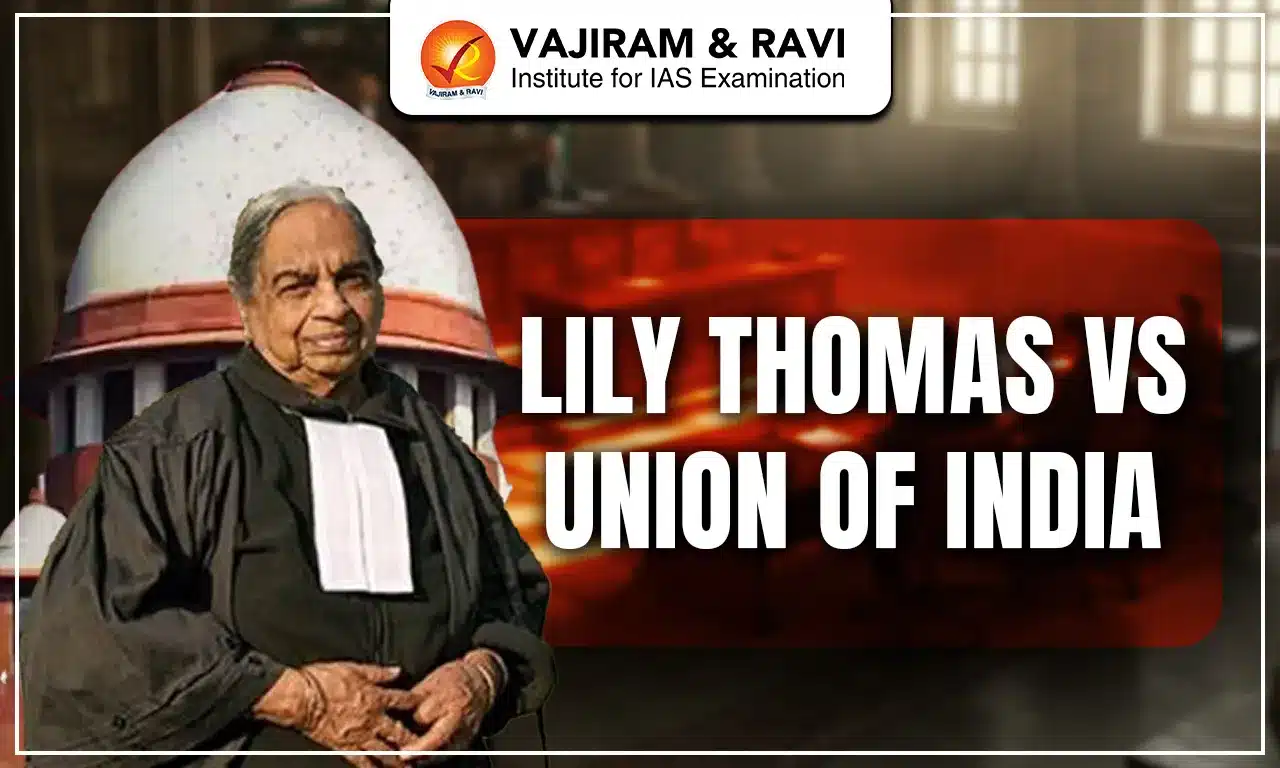
Lily Thomas vs Union of India 2013, Background, SC Judgement

Lily Thomas vs Union of India

Lily Thomas vs Union of India (2013) is a landmark judgment that transformed the legal framework governing the disqualification of elected representatives in India. The case is widely discussed in the context of electoral reforms because it directly addressed whether convicted legislators should continue to hold office.

The Supreme Court’s ruling in this case strengthened democratic accountability and brought clarity to the provisions of the Representation of the People Act, 1951.

Lily Thomas vs Union of India Background

The case was filed by advocate Lily Thomas and NGO Lok Prahari challenging the constitutional validity of Section 8(4) of the Representation of the People Act (RPA), 1951. This provision allowed sitting MPs and MLAs to retain their seats even after being convicted of certain criminal offences, provided they filed an appeal within three months.

  • Section 8 of the RPA outlines offences that lead to disqualification.
  • Section 8(4) carved out an exception for sitting legislators, giving them immunity from immediate disqualification.
  • Petitioners argued that this was discriminatory because ordinary citizens faced immediate consequences, while elected representatives enjoyed special protection.
  • The case questioned whether Parliament had the authority to postpone the disqualification of convicted legislators.
  • The matter raised concerns about electoral integrity and the criminalisation of politics.

Supreme Court Judgement on Lily Thomas vs Union of India

The Supreme Court delivered its judgment on 10 July 2013, striking down Section 8(4) of the RPA, 1951 as unconstitutional.

  • The Court held that Parliament cannot defer the date of disqualification of a convicted representative through legislation.
  • Once convicted for offences listed under Section 8(1), 8(2), or 8(3), the MP or MLA stands immediately disqualified.
  • The Court clarified that Articles 101(3)(a) and 190(3)(a) of the Constitution provide for disqualification from the date of conviction.
  • The exception created for sitting legislators under Section 8(4) was held to violate the principle of equality.
  • The judgment emphasized the need for maintaining the purity of the legislative process.

Disqualification of MPs and MLAs under RPA, 1951

  • Section 8(3) of the Representation of the People Act, 1951 mandates that any MP or MLA convicted of an offence and sentenced to two years or more of imprisonment is automatically disqualified.
  • The disqualification under Section 8(3) continues for the entire duration of imprisonment and further extends for six additional years after the individual’s release.
  • After such a conviction, the individual cannot contest elections, hold legislative office, or continue as a sitting representative.
  • Even if the convicted individual is out on bail, the disqualification remains effective as long as the conviction stands.
  • Candidates who have filed an appeal against their conviction and are on bail are still ineligible to contest elections unless a court specifically stays the conviction, not just the sentence.
  • Before 2013, Section 8(4) created an exception for sitting MPs and MLAs, allowing them to continue in office if they filed an appeal against their conviction within three months.
  • This provision provided a legal shield to elected representatives, preventing immediate disqualification and creating an unequal advantage over ordinary citizens.

Representation of the People Act, 1951

The Representation of the People Act, 1951 lays down the legal framework for conducting elections to Parliament and state legislatures in India. It defines the qualifications, disqualifications, and procedures governing elected representatives.

  • Provides the rules and procedures for conducting elections to Lok Sabha and state assemblies.
  • Defines qualifications and disqualifications for candidates and elected members.
  • Regulates corrupt practices, electoral offences, and penalties.
  • Lays down the framework for election petitions and resolution of electoral disputes.
  • Empowers the Election Commission to ensure fair conduct of elections.
  • Includes provisions relating to vacancies, by-elections, and conduct of polls.
  • Contains mechanisms to address malpractices such as bribery, intimidation, and misuse of official machinery.
  • Provides for maintenance of electoral rolls and registration of voters.

Lily Thomas vs Union of India FAQs

Q1: What is the Lily Thomas vs Union of India case about?

Ans: It is a landmark 2013 Supreme Court case that challenged Section 8(4) of the Representation of the People Act, 1951, which allowed convicted legislators to continue in office if they filed an appeal.

Q2: What was Section 8(4) of the RPA, 1951?

Ans: Section 8(4) allowed sitting MPs and MLAs to avoid immediate disqualification after conviction by giving them three months to appeal, during which their membership remained intact.

Q3: Why was Section 8(4) declared unconstitutional?

Ans: The Court held that Parliament cannot postpone disqualification and that the special protection for sitting legislators violated the principle of equality before the law.

Q4: What happens to MPs/MLAs convicted for 2 or more years?

Ans: Under Section 8(3), they face immediate disqualification and remain disqualified for the duration of imprisonment plus six years after release.

Q5: Does filing an appeal stop the disqualification?

Ans: No. Only a stay on conviction from a higher court can stop disqualification; mere bail or suspension of sentence is not enough.

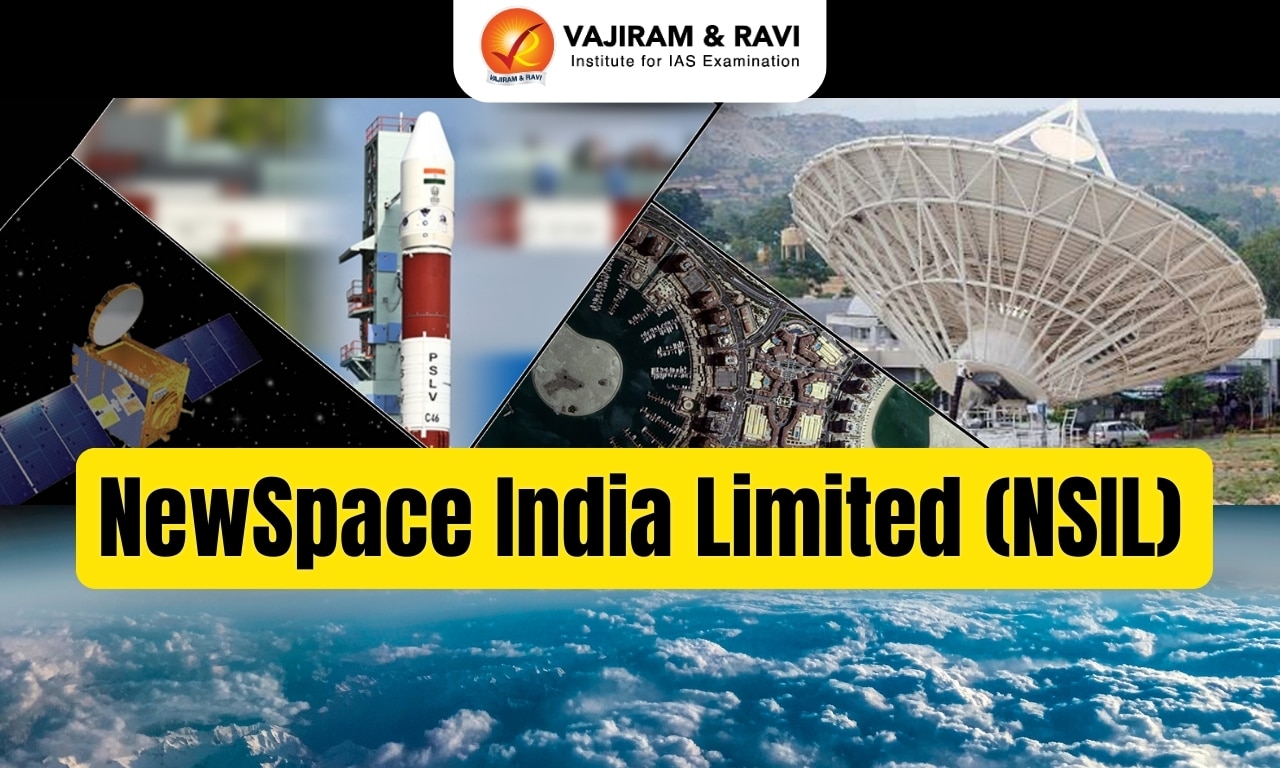
NewSpace India Limited (NSIL)

NewSpace India Limited (NSIL)

NewSpace India Limited Latest News

As on date, M/s. NewSpace India Limited (NSIL) has signed 70 Technology Transfer Agreements to transfer technologies developed at ISRO to Industry.

About NewSpace India Limited

  • NSIL, incorporated on 6 March 2019 (under the Companies Act, 2013) is a wholly owned Government of India company, under the administrative control of Department of Space (DOS). 
  • It is the commercial arm of Indian Space Research Organisation (ISRO).
  • Primary Responsibility:
    • Enabling Indian industries to take up high technology space related activities.
    • Promotion and commercial exploitation of the products and services emanating from the Indian space programme. 
  • The major business areas of NSIL include:
    • Production of Polar Satellite Launch Vehicle (PSLV) and Small Satellite Launch Vehicle (SSLV) through industry.
    • Production and marketing of space-based services, including launch services and space-based applications like transponder leasing, remote sensing and mission support services.
    • Building of Satellites (both Communication and Earth Observation) as per user requirements.
    • Transfer of technology developed by ISRO centres/units and constituent institutions of the Dept. of Space.
    • Marketing spinoff technologies and products/services emanating out of ISRO activities.
    • Consultancy services.

Source: PIB

NewSpace India Limited FAQs

Q1: NewSpace India Limited (NSIL) functions under which department?

Ans: Department of Space

Q2: NewSpace India Limited is the commercial arm of which organisation?

Ans: It is the commercial arm of Indian Space Research Organisation (ISRO).

Q3: What is the primary mandate of NewSpace India Limited?

Ans: Enabling Indian industries to undertake high-technology space activities.

Q4: NewSpace India Limited builds which types of satellites as per user requirements?

Ans: Both communication and Earth observation satellites.

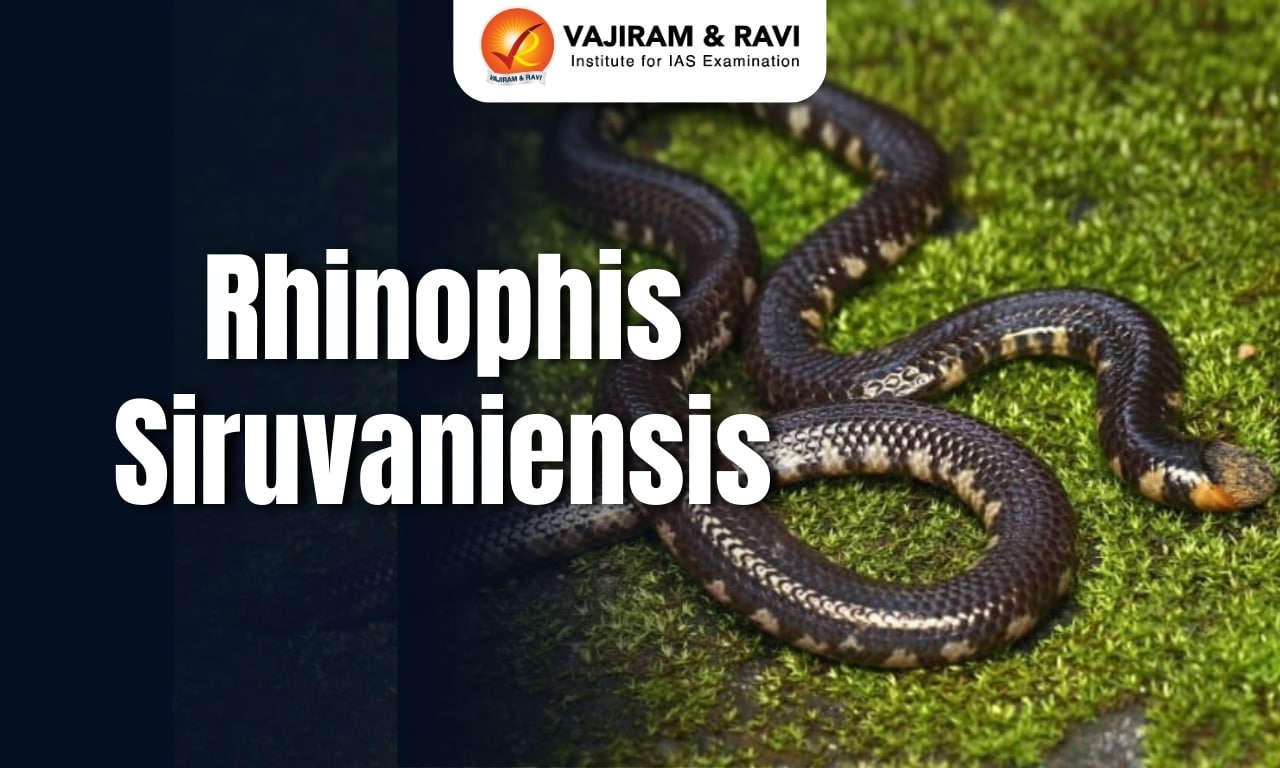
Rhinophis siruvaniensis

Rhinophis siruvaniensis

Rhinophis siruvaniensis Latest News

A new shieldtail species, Rhinophis siruvaniensis, has been described with the help of citizen scientists after it was found recently in the Siruvani Hills which fall in both Kerala and Tamil Nadu.

About Rhinophis siruvaniensis

  • It is a new species of shieldtail snake.
  • It was discovered in Siruvani Hills, located in the Western Ghats in Kerala and Tamil Nadu.
  • A shiny snake, R. siruvaniensis is brownish black and creamy white in colour, with bold dark blotches. 
  • The tip of its tail is dome-shaped.

Key Facts about Shieldtail Snakes

  • Shieldtails are a group of small-sized, non-venomous snakes that burrow in the soil and mostly live underground. 
  • They belong to the Uropeltidae family of snakes and are also called uropeltids. 
  • They’ve been named shieldtails because the tip of their tails looks like a disc-shaped shield.
  • Distribution
    • They are endemic to India & Sri Lanka.
    • In India, they are found in the Western Ghats and some parts of Peninsular India.

Source: MB

Rhinophis siruvaniensis FAQs

Q1: What is Rhinophis siruvaniensis?

Ans: It is a new species of shieldtail snake.

Q2: In which region was Rhinophis siruvaniensis discovered?

Ans: It was discovered in Siruvani Hills, located in the Western Ghats in Kerala and Tamil Nadu.

Q3: Shieldtail snakes are primarily found in which countries?

Ans: India and Sri Lanka

Q4: What is the characteristic feature of shieldtail snakes that gives them their name?

Ans: They’ve been named shieldtails because the tip of their tails looks like a disc-shaped shield.

‘Your Money, Your Right’ Movement

‘Your Money, Your Right’ Movement

‘Your Money, Your Right’ Movement Latest News

The Prime Minister recently called upon citizens to take part in the ‘Your Money, Your Right’ movement.

About ‘Your Money, Your Right’ Movement

  • It was launched by the central government in October 2025.
  • It is an initiative aimed at enabling people to reclaim their unclaimed deposits, insurance proceeds, dividends, and other financial assets.
  • The effort brings together government agencies, regulators, banks, and financial institutions to identify and return long-forgotten funds.
    • Indian banks are holding Rs 78,000 crore of unclaimed money belonging to our own citizens. 
    • Insurance companies have nearly Rs 14,000 crore lying unclaimed. 
    • Mutual fund companies have around Rs 3,000 crore, and dividends worth Rs 9,000 crore are also unclaimed.
  • The deposits in accounts which are not operated for a period of 10 years are classified as unclaimed deposits.
  • Under the initiative, individuals need to verify if their close family members or relatives have unclaimed deposits, insurance proceeds, mutual-fund payouts, or dividends. 
  • To facilitate this, the government has created dedicated portals as follows:
    • Reserve Bank of India (RBI): UDGAM Portal for unclaimed bank deposits & balances.
    • Insurance Regulatory and Development Authority of India (IRDAI): Bima Bharosa Portal for unclaimed insurance policy proceeds.
    • Securities and Exchange Board of India (SEBI): MITRA Portal for unclaimed amounts in mutual funds.
    • Ministry of Corporate Affairs: IEPFA Portal for unpaid dividends and unclaimed shares.
  • Facilitation camps are being organised in districts across both rural and urban regions of the country.
    • During the camps, the citizens will be provided on-the-spot guidance on how to search for their unclaimed assets, update records, and complete claim procedures. 
    • Digital tools and step-by-step demonstrations will also be showcased.
  • On the national level, the campaign is coordinated by the Department of Financial Services (DFS), Ministry of Finance.

Source: PMI

‘Your Money, Your Right’ Movement FAQs

Q1: What is the primary objective of the ‘Your Money, Your Right’ Movement?

Ans: Returning unclaimed financial assets to citizens.

Q2: The ‘Your Money, Your Right’ initiative is coordinated at the national level by which authority?

Ans: Department of Financial Services, Ministry of Finance.

Q3: Approximately how much unclaimed money is lying with Indian banks? A. ₹25,000 crore

Ans: ₹78,000 crore

Q4: Which portal is used for checking unclaimed bank deposits?

Ans: UDGAM Portal

Deepavali

Deepavali

Deepavali Latest News

Recently, Deepavali has been inscribed on UNESCO’s List of the Intangible Cultural Heritage of Humanity.

About Deepavali

  • Deepavali, also known as Diwali, is the festival of lights celebrated across India.
  • ‘Deepa’ means lamp or light and‘Vali’ means string or row, and Deepavali means rows of lights.
  • It is celebrated on Kartik Amaavasya, which typically falls in October or November.
  • The fundamental philosophy of Deepavali encompasses the celebration of prosperity, renewal, and abundance for all individuals.
  • It is added as the 16th Indian element on UNESCO’s List of the Intangible Cultural Heritage of Humanity.

Celebration of Deepavali

  • It begins with Dhanteras, a day of auspicious beginnings when families buy new metalware or essentials that symbolise prosperity.
  • The second day marks Naraka Chaturdashi, observed with rituals and lighting lamps to dispel negativity and welcome positive energy.
  • The third day is the highlight of Deepavali- the sacred Lakshmi-Ganesha Puja.
  • On the fourth day, families and friends visit one another, exchange gifts, and reconnect, strengthening their bonds and shared happiness.
  • The celebrations conclude with Bhai Dooj, a heartfelt tribute to the bond between brothers and sisters, observed with prayers, blessings, and meaningful rituals.

Source:  PIB

Deepavali FAQs

Q1: On which day is Deepavali typically celebrated?

Ans: Kartik Amaavasya

Q2: What is the significance of Deepavali?

Ans: Celebration of prosperity, renewal, and abundance

SAMPANN Portal

SAMPANN Portal

SAMPANN Portal Latest News

Controller General of Communication Accounts (CGCA) recently inaugurated the onboarding of all MTNL employees retiring in November 2025 onto the SAMPANN portal at the Office of Principal CCA, Delhi.

About SAMPANN Portal

  • SAMPANN, or “System for Accounting and Management of Pension”, is a Comprehensive Pension Management System (CPMS).
  • It is an initiative undertaken by the Controller General of Communication Accounts (CGCA), Department of Telecommunications, Ministry of Communications
  • It is an online pension processing and payment system for Department of Telecommunications pensioners.
  • It was launched on 29th December, 2018.
  • It brings the pension processing, sanctioning, authorisation, and payment units under a common platform.
  • It provides direct credit of pension into the bank accounts of pensioners.
  • The system has helped the Department in faster settlement of pension cases, improved reconciliation/auditing, and ease of accounting.

SAMPANN Portal Features

  • Direct disbursement of pension on a timely basis without intermediaries.
  • Single window system for complete pension process.
  • Online grievance management for the pensioners, reducing paperwork.
  • Tracking of pension status from home encourages transparency and accountability.
  • Faster processing of arrears and revision of pension.

Source: PIB

SAMPANN Portal FAQs

Q1: SAMPANN is used for pension management of employees from which department?

Ans: Department of Telecommunications

Q2: Under which ministry does the SAMPANN portal operate?

Ans: Ministry of Communications

Q3: When was the SAMPANN portal launched?

Ans: It was launched on 29th December, 2018.

Q4: What is a key benefit of the SAMPANN portal for pensioners?

Ans: Direct credit of pension to bank accounts.

Swasthya Portal

Swasthya Portal

Swasthya Portal Latest News

In Rajya Sabha, in reply to a starred question the Minister of Tribal Affairs recently stated that there are no plans to expand the Swasthya Portal to integrate national health databases, district dashboards or AI-enabled analytics.

About Swasthya Portal

  • It is a one-stop solution presenting the health and nutrition status of the tribal population of India. 
  • It was developed under the central sector scheme “Tribal Research Information Education Communication and Events (TRI ECE)” of the Ministry of Tribal Affairs.
  • The portal is hosted on the National Informatics Centre (NIC) Server and is maintained by the Centre of Excellence for Knowledge Management for Health and Nutrition, established by the Ministry of Tribal Affairs.
  • It provides information and data as well as curates innovative practices, research briefs, case studies, and best practices collected from different parts of India to facilitate the exchange of evidence, expertise, and experiences.
  • It has a dashboard, knowledge repository, partner segment, Sickle Cell Diseases (SCD) support corner.
    • The dashboard presents data curated from multiple sources for the 177 identified high-priority tribal districts.
  • Information available on Swasthya will provide insights to all stakeholders working with the tribal population of India in the areas of health and nutrition.

Key Facts about Tribal Research Information Education Communication and Events (TRI ECE)

  • It is a Central Sector Scheme of the Ministry of Tribal Affairs.
  • Under the scheme, financial support is provided to the research organizations, reputed organizations, research institutes, and universities where expertise exists and which have already made a mark by carrying out pioneering research in their respective field.
  • The purpose of the scheme is to create replicable models in areas of education, health, livelihood, digital governance, etc.

Source: PIB

Swasthya Portal FAQs

Q1: What is the Swasthya Portal?

Ans: It is a one-stop solution presenting the health and nutrition status of the tribal population of India.

Q2: The Swasthya Portal was developed under which central sector scheme?

Ans: It was developed under the central sector scheme “Tribal Research Information Education Communication and Events (TRI ECE)” of the Ministry of Tribal Affairs.

Q3: Which centre maintains the Swasthya Portal?

Ans: It is maintained by the Centre of Excellence for Knowledge Management for Health and Nutrition.

Deodar Tree

Deodar Tree

Deodar Tree Latest News

Deodar trees in Himachal Pradesh’s Sangla Valley have revealed the process of climatic shifts from wetter spring conditions that prevailed during pre-historic times to drier conditions from the year 1757 onwards.

About Deodar Tree

  • It is also known as the Himalayan Cedar, is one of the most revered and iconic tree species in the Western Himalayas.
  • The name Deodar is derived from the Sanskrit word Devadāru, meaning “wood of the gods,” highlighting the tree’s cultural and spiritual importance.
  • Distribution:  It is mainly found in the western Himalayan region.
  • Applications: Traditionally, its wood has been used in temple construction, religious ceremonies, and Ayurvedic medicine.
  • Threats: It faced threats from logging, habitat loss, and climate change.

Characteristics of Deodar Tree

  • It is native to high-altitude forests, this majestic conifer plays a critical ecological and cultural role.
  • Soil and climate: It thrives in well-drained soils and moist temperate climates.
  • It is a large evergreen tree found between 1800-3000m altitude. Branches are brown-reddish. Cones are solitary, erect, ovoid, dark brown.
  • Male and female cones are on the same tree.
  • Growth: It reaches heights of up to 50 meters and is characterized by its tall, pyramidal shape, drooping branches, and needle-like bluish-green leaves.
  • Its bark is dark gray and becomes deeply fissured with age, adding to their stately presence in alpine and subalpine forest zones.

Source: PIB

Deodar Tree FAQs

Q1: Where is Deodar Tree mainly found?

Ans: Western Himalayas

Q2: What is the scientific name of Deodar Tree?

Ans: Cedrus deodara

GlowCas9 Protein

GlowCas9 Protein

GlowCas9 Protein Latest News

Recently, scientists from Kolkata based Bose institute have created GlowCas9 protein which can track gene editing.

About GlowCas9 Protein

  • It is a CRISPR protein that lights up while performing gene editing.
  • It is a bioluminescent version of Cas9 that glows inside cells.
  • Structure: GlowCas9 is created by fusing Cas9 with a split nano-luciferase enzyme derived from deep-sea shrimp proteins.

Properties of GlowCas9 Protein

  • The GlowCas9 is very stable and maintains its structure and activity at higher temperatures compared to the conventional enzyme.
  • It glows inside cells, allowing for real-time monitoring of CRISPR operations

Working of GlowCas9 Protein

  • The split nano-luciferase enzyme pieces reconnect when Cas9 folds correctly, producing light
  • This glowing activity allows scientists to monitor CRISPR operations in living cells, tissues, and even plant leaves—without harming them.

Benefits of GlowCas9 Protein

  • It can also increase the precision of homology-directed repair (HDR).
    • Homology-Directed Repair (HDR) is a DNA repair process crucial for fixing hereditary mutations that are linked to genetic diseases like sickle cell anaemia, muscular dystrophy and so on.
  • GlowCas9 pioneers the emerging field of theratracking or visualizing molecular gene therapy in motion.

Source: PIB

GlowCas9 Protein FAQs

Q1: What is GlowCas9?

Ans: A bioluminescent version of Cas9

Q2: How does GlowCas9 glow?

Ans: It is fused with a split nano-luciferase enzyme.

Goniopora Coral

Goniopora Coral

Goniopora Coral Latest News

Recently, scientists have reported that a combination of extreme heat stress and a rare Black band disease has wiped out 75 per cent of Goniopora coral colonies at a site on the Great Barrier Reef.

About Goniopora Coral

  • It is also known as flowerpot or daisy coral, is a type of hard, soft coral belonging to the Poritidae family.
  • It is appreciated for its beautiful appearance as it possesses unique polyps that resemble flower petals.
  • Appearance: Colonies consist of small branching columns, usually oval in transverse section.
  • Size: Goniopora polyps can range from a few to several centimeters in diameter.
  • Habitat: It typically inhabits lagoons and turbid reefs and are considered thermally tolerant.
  • Goniopora are a photosynthetic coral and derive some of their nutritional requirements from light.
  • Symbiotic Relationship: They have a symbiotic relationship with dinoflagellates called zooxanthellae that live in the flesh of the coral.
  • Goniopora can thrive in a wide range of lighting.
  • Feeding: It is a predatory coral, meaning it obtains some of its nutrients by capturing small organisms in the water.

What is Black Band Disease?

  • It is a bacterial necrotic infection that invades living coral.
  • It forms a black band that crosses the infected coral, usually killing the colony.
  • It is common in Caribbean reefs and rare in Australian waters.
  • It is often linked to pollution or nutrient runoff.

Source: DTE

Goniopora Coral FAQs

Q1: What type of coral is Goniopora?

Ans: Photosynthetic coral

Q2: What is a notable feature of some Goniopora coral varieties?

Ans: They glow under actinic lights

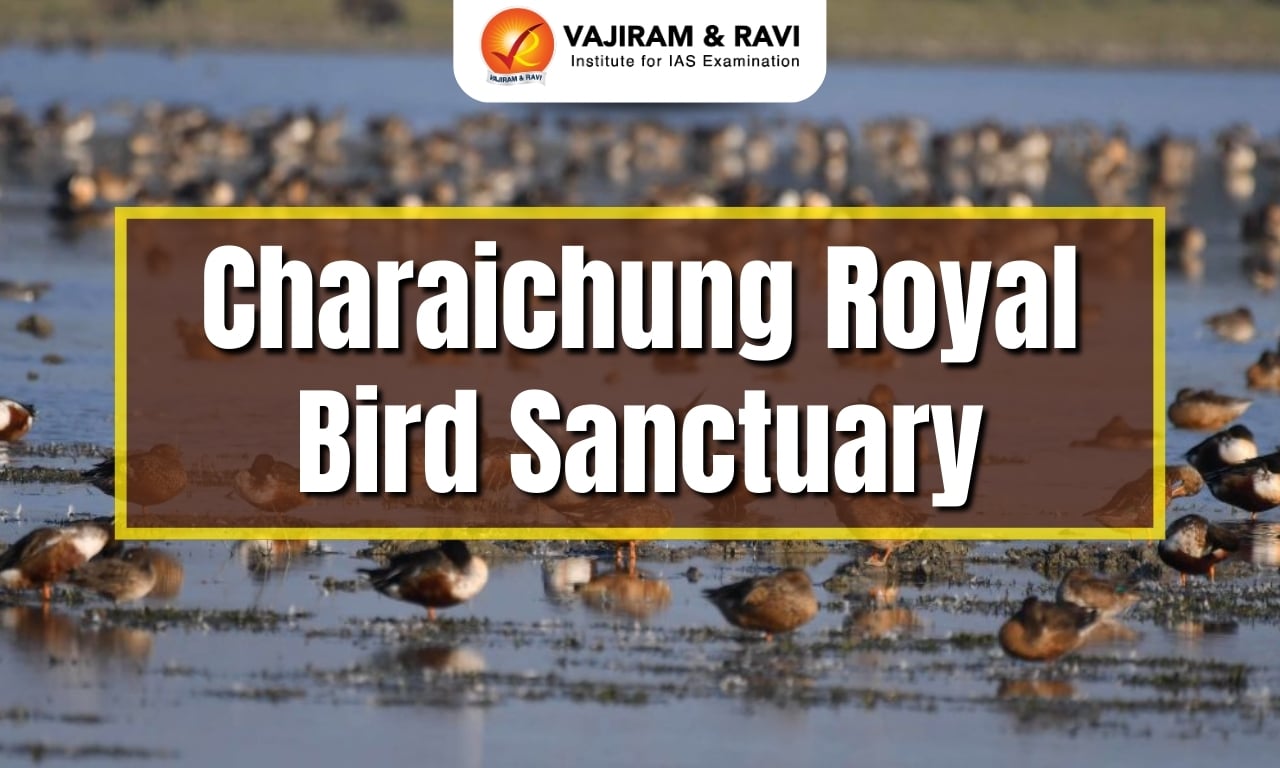
Charaichung Royal Bird Sanctuary

Charaichung Royal Bird Sanctuary

Charaichung Royal Bird Sanctuary Latest News

Recently, ‘Charaichung Festival’ was hosted in Assam’s Majuli island to revive Asia’s first protected royal bird sanctuary.

About Charaichung Royal Bird Sanctuary

  • It is Asia’s first protected bird sanctuary.
  • It was established in 1633 AD by Ahom king Swargadeu Pratap Singha.
  • Location: It is located at Majuli - the world's largest river island.
  • Ecological Significance: Nearly 150 varieties of indigenous and migratory birds are found here, making their protection and conservation extremely essential.

Key Facts about Charaichung Festival

  • It is the second edition of the festival held in Majuli, Assam.
  • This festival, organised with the support of Majuli Sahitya and local residents
  • It aims to urge the government to further promote Charaichung as a tourism destination.

Majuli Island

  • It is the world’s largest river island located in Assam.
  • The island is formed by the Brahmaputra River and its tributaries the Kherkutia Xuti and Subansiri
  • Rice cultivation is the primary livelihood for the residents of Majuli, with several unique varieties of rice, such as Komal Saul and Bao Dhan, grown in the region.
  • Most of the islanders belong to three tribes-Mishing, Deori, and Sonowal Kachari.

Source: DD News

Charaichung Royal Bird Sanctuary FAQs

Q1: Where is Charaichung Royal Bird Sanctuary located?

Ans: Majuli Island, Assam

Q2: Who established Charaichung Royal Bird Sanctuary?

Ans: Ahom king Swargadeu Pratap Singha

US Fed Rate Cut and Its Impact on Indian Economy, Key Details

US Fed Rate Cut and Its Impact on Indian Economy

Why US Fed Rate Cut in News?

The US Federal Reserve is in news after it cut the benchmark interest rate by 25 basis points in its latest monetary policy review, marking a shift towards supporting economic growth.

US Fed Rate Cut

The US Fed rate, or Federal Funds Rate, is the short-term interest rate at which American banks lend money to each other overnight. The Federal Reserve recently cut this rate by 25 basis points, making borrowing cheaper across the economy. 

An interest rate cut is used to stimulate growth, increase liquidity, and support economic activity when signs of slowdown appear.

  • The Federal Funds Rate is the benchmark rate that guides all other lending rates in the US.
  • A 25 bps rate cut lowers the cost of loans for consumers and businesses.
  • It encourages investment, spending, and credit growth.
  • Signals the Fed’s shift toward supporting economic growth.
  • Influences global financial markets, capital flows, and currency movements.

US Fed Rate Cut and Its Impact on Indian Economy

A US Fed Rate Cut reshapes India’s financial landscape by influencing capital flows, currency valuation, borrowing costs, trade dynamics, and inflation trends.

  1. Impact on Capital Flows
  • Lower US yields push investors toward emerging markets; historically, India saw ₹1–1.5 lakh crore FPI inflows during similar easing cycles (e.g., 2019–20).
  • Equity markets generally react positively as global liquidity improves.
  • Indian government and corporate bonds become more attractive due to higher relative returns.
  1. Impact on the Indian Rupee
  • A rate cut weakens the US dollar; during past Fed cuts, the Dollar Index (DXY) fell, strengthening emerging market currencies.
  • The rupee may appreciate due to increased foreign inflows, depending on market sentiment.
  • Stronger Rupee reduces India’s import bill, especially for crude oil and gold.
  1. Impact on Inflation
  • A stronger Rupee makes imports cheaper, helping cool inflation.
  • India imports 85% of its crude oil, so even a $5 per barrel drop can lower inflation by 15–20 basis points.
  • However, excess liquidity from capital inflows may create inflationary pressure if not sterilized by RBI.
  1. Impact on Stock Markets
  • Increased FPI inflows boost benchmark indices like NIFTY 50 and Sensex.
  • Sectors benefiting the most: banking, IT, pharma, and capital-intensive industries.
  • Improved liquidity increases market depth and investor confidence.
  1. Impact on Borrowing Costs
  • External Commercial Borrowing (ECB) becomes cheaper for Indian companies.
  • A 25 bps cut reduces the cost of overseas borrowing, saving corporates millions in interest outgo.
  • Companies in infrastructure, aviation, and telecom benefit from lower global rates.
  1. Impact on India’s Trade Balance
  • Appreciation of the Rupee reduces the export competitiveness of sectors like textiles, leather, and agriculture.
  • Imports become cheaper, helping reduce the current account deficit (CAD).
  • Stronger Rupee eases the burden on oil marketing companies and electronics importers.
  1. Impact on Domestic Monetary Policy
  • RBI may adopt a more neutral or accommodative stance if global easing reduces inflationary pressures.
  • To manage excess liquidity from FPI inflows, RBI may conduct Open Market Operations (OMOs) or increase forex intervention.
  1. Impact on Gold Prices in India
  • US rate cuts generally raise global gold prices as investors shift from bonds to safe assets.
  • But a stronger Rupee may offset some of the rise in domestic gold prices.
  1. Impact on Government Borrowing
  • Lower global yields can reduce the cost of issuing sovereign or quasi-sovereign bonds abroad.
  • Better capital inflows reduce pressure on domestic government securities (G-Secs).

Why Central Banks Cut Interest Rates?

Central banks cut interest rates to stimulate economic activity when growth slows, borrowing weakens, or inflation falls below desired levels. Lower rates reduce the cost of loans, encourage spending and investment, and support financial stability during economic stress.

  • To boost economic growth: Cheaper loans encourage businesses to invest and households to spend.
  • To counter recessionary trends: Helps revive demand when the economy shows signs of slowdown.
  • To reduce borrowing costs: Lower EMIs increase disposable income and credit demand.
  • To prevent deflation: Encourages spending when prices begin to fall or inflation is too low.
  • To support employment: Higher investment leads to more job creation.
  • To improve liquidity: Ensures financial markets and banks have adequate funds.
  • To stabilize financial markets: Helps calm volatility during global or domestic shocks.
  • To encourage investment inflows: Lower rates can make the economy more attractive for investors.

US Fed Rate Cut FAQs

Q1: What is the US Fed rate?

Ans: The US Fed rate, or Federal Funds Rate, is the short-term interest rate at which American banks lend money to each other overnight. It serves as the benchmark for all lending and borrowing rates in the US economy.

Q2: What does a US Fed rate cut mean?

Ans: A rate cut means the Federal Reserve has lowered its benchmark interest rate, making borrowing cheaper to support economic growth, liquidity, and employment.

Q3: Why did the US Fed cut rates recently?

Ans: The Fed cut rates by 25 basis points due to slowing economic indicators, easing inflation, and the need to support demand and financial stability.

Q4: How does a Fed rate cut affect global markets?

Ans: Global markets react strongly because lower US yields encourage capital to move toward higher-return emerging markets, affecting currencies, bonds, equities, and commodity prices.

Q5: How does a US Fed rate cut impact the Indian economy?

Ans: It influences capital inflows, strengthens the Rupee, affects inflation through cheaper imports, boosts stock markets, and reduces external borrowing costs for Indian companies.

Daily Editorial Analysis 11 December 2025

Daily Editorial Analysis

The National Song Debate, A Reading Between the Lines

Context

  • The controversy surrounding Vande Mataram reflects ongoing struggles over historical memory, constitutional values, and the political ownership of nationalism.
  • Although the song occupies a revered place in India’s anti-colonial heritage, its meaning has repeatedly been reshaped by competing visions of national identity.
  • The current revival of debate in Parliament suggests an effort to reinterpret settled questions and redefine symbolic markers of national unity.

Historical Roots of the Song and Its Early Controversies

  • Rabindranath Tagore’s 1896 rendition and Controversy

    • Vande Mataram, composed by Bankim Chandra Chattopadhyay in 1875, became a powerful emblem of India’s freedom struggle.
    • Rabindranath Tagore’s 1896 rendition at the Congress session embedded it within the nationalist imagination.
    • Yet its later stanzas, rich in Hindu goddess imagery, raised concerns among Muslim leaders who regarded certain verses as religiously exclusionary.
    • These objections gained urgency after the Government of India Act, 1935 ushered in provincial elections, compelling the Congress to adopt a more inclusive public posture.
  • CWC Adoption of First Two Stanzas

    • A turning point came in 1937 when the Congress Working Committee, chaired by Jawaharlal Nehru and attended by major leaders such as Sardar Patel, Rajendra Prasad, Maulana Azad, and Subhas Chandra Bose, unanimously resolved to adopt only the first two stanzas for public and official occasions.
    • Though Mahatma Gandhi was not a formal member, he was influential in shaping the final wording.
    • The committee affirmed the song’s historic significance while recognising the validity of Muslim objections.
    • The selected stanzas were deemed non-religious, inclusive, and reflective of the song’s essence.
    • This decision was guided by the need for communal harmony and the practical responsibility of administering provinces with diverse populations.

Constituent Assembly Debates: Settling the Question

  • Following Independence, the Constituent Assembly revisited the status of national symbols.
  • Its composition highlighted India’s pluralism: despite the post-Partition Hindu majority, leaders such as R. Ambedkar entered the Assembly through cross-community political arrangements.
  • The Assembly considered three contenders, Vande Mataram, Sare Jahan Se Achha, and Jana Gana Mana.
  • While Sare Jahan Se Achha carried secular appeal, concerns arose due to Allama Iqbal’s later association with the Pakistan movement.
  • The Assembly ultimately selected Jana Gana Mana as the national anthem, while giving Vande Mataram a place of honour.
  • Notably, the Constitution made no mention of a national song, allowing its status to remain customary rather than legal.
  • The distinction became clearer in 1976 when the 42nd Constitutional Amendment introduced fundamental duties, including respect for the national anthem and flag, without extending similar provisions to the national song.

Legal and Judicial Interventions

  • Courts have occasionally engaged with the question of Vande Mataram.
  • In 2017, the Madras High Court suggested that schools sing it weekly and offices monthly, even recommending translation for those unable to sing it in Bengali or Sanskrit.
  • The Delhi High Court considered petitions urging equal treatment of the national song and anthem.
  • The Union government argued that while both deserve equal respect, only the national anthem enjoys legal protection under the Prevention of Insults to National Honour Act, 1971, which criminalises disruptions to the anthem but provides no parallel regime for the national song.
  • This distinction underscores the enduring legal separation between the two symbols.

Contemporary Revival of the Controversy: Symbolic Politics or Constitutional Engineering?

  • The renewed parliamentary debate is striking because the issue was conclusively settled both in 1937 and during constitution-making.
  • One explanation for its revival lies in symbolic politics, where invoking Vande Mataram allows contemporary leaders to present themselves as champions of nationalism while indirectly questioning the judgment of earlier figures such as Patel, Nehru, and Gandhi.
  • Selective memory transforms a nuanced historical decision into a simplistic narrative of compromise.
  • A second possibility is the intention to elevate the national song’s legal status.
  • Proposals to create a new fundamental duty to respect Vande Mataram suggest the potential to reshape national symbols without constitutional amendment, echoing procedural strategies used in other policy domains.
  • Such a move could eventually facilitate the introduction of a new national anthem or alter the established symbolic framework of the Republic.

Conclusion

  • The evolution of Vande Mataram demonstrates how national symbols must adapt to pluralistic realities.
  • Leaders such as Nehru, Patel, Gandhi, and Rajendra Prasad acted not out of hesitation but out of a commitment to inclusive nationalism.
  • By respecting the song while choosing an anthem aligned with India’s secular ethos, the Constituent Assembly safeguarded national unity.
  • True patriotism lies in recognising the historical complexity of national symbols and preserving the pluralistic balance that has shaped India’s democratic identity.

The National Song Debate, A Reading Between the Lines FAQs

Q1. Why did the Congress Working Committee in 1937 adopt only the first two stanzas of Vande Mataram?
Ans. The Congress Working Committee adopted only the first two stanzas because they were inclusive and avoided the religious imagery that some communities found objectionable.

Q2. What role did the Constituent Assembly play in deciding India’s national anthem?
Ans. The Constituent Assembly selected Jana Gana Mana as the national anthem after evaluating several options.

Q3. Why does Vande Mataram not have the same legal status as the national anthem?
Ans. Vande Mataram does not have the same legal status because the Constitution does not mention a national song, and no law provides it legal protection.

Q4. How did the government justify treating the anthem and the national song differently in court?
Ans. The government justified the difference by citing the Prevention of Insults to National Honour Act, which protects only the national anthem.

Q5. What concern arises from reviving the controversy around Vande Mataram today?
Ans. The concern is that the renewed debate could be used to reshape national symbols for political purposes.

Source: The Hindu


A Verdict That is an Abdication of Judicial Function

Context

  • The Supreme Court’s judgment in the 16th Presidential Reference has attracted both criticism and praise. The debate centres on whether the Court should fix timelines for high constitutional authorities such as the President, Governors, and Speakers.
  • The judgment emphasises strict adherence to the written Constitution, avoiding judicial innovation where the text is silent.
  • However, critics argue that this reflects a reluctance to exercise the Court’s broader constitutional duty—interpreting the Constitution in a manner suited to present-day realities.
  • Such judicial restraint, they warn, weakens the Court’s role as a guardian of constitutional accountability.
  • The Constitution does not prescribe timelines for many crucial functions of constitutional authorities.
    • A key example is the Speaker’s quasi-judicial role under the Tenth Schedule, where they decide disqualification cases due to defection.
    • Despite the importance of these decisions, no time limits have been specified, often leading to long delays and political misuse.
  • This article highlights how the Supreme Court’s judgment in the 16th Presidential Reference has raised serious concerns about judicial restraint, constitutional accountability, and the misuse of constitutional silences by authorities such as Governors and Speakers.

The Lack of Timelines Creates a Constitutional Anomaly

  • The absence of fixed timelines for key constitutional actions has produced a serious anomaly.
  • Legislatures have a fixed five-year term, yet defection cases under the Tenth Schedule can remain undecided until the term expires — allowing defecting legislators to escape consequences entirely. This undermines the very purpose of the anti-defection law.
  • Similar issues arise with Governors withholding assent or delaying action on Bills.
  • While Governors may return a Bill for reconsideration, they cannot indefinitely sit on legislation and effectively block laws without justification.
  • Such inaction contradicts the Constitution’s design, as only courts — not Governors — have the authority to invalidate legislative or executive acts.

The Irony in the Supreme Court’s Verdict

  • The Supreme Court’s decision in the Presidential Reference ironically strengthens the very problem it was expected to resolve.
  • By refusing to impose timelines on constitutional authorities — particularly Governors — the Court held that since Article 200 contains no explicit timeline, none should be read into it.
  • This effectively legitimises Governors indefinitely withholding assent to Bills, allowing them to stall laws passed by elected Assemblies.
  • In doing so, the Court not only ceded ground to the executive but also failed to recognise how constitutional silence can be misused to undermine democratic functioning.

A Missed Opportunity to Uphold Constitutional Morality

  • The judgment also overlooks the doctrine of constitutional morality — a principle championed by Dr. B.R. Ambedkar in 1948.
  • He urged that constitutional morality must guide those interpreting and operating the Constitution so that its spirit prevails even where the text is silent.
  • In recent years, courts have invoked constitutional morality to advance progressive values in cases such as Sabarimala (women’s entry) and LGBTQIA+
  • Here, however, the Court declined to use that interpretive tool, missing an opportunity to protect the Constitution from misuse and ensure that its foundational ideals are upheld.

Ambedkar’s Warning and the Costs of Judicial Hesitation

  • B.R. Ambedkar had cautioned that a Constitution could be subverted not by changing its text but by altering the form of administration.
  • His warning is strikingly relevant today: Speakers delaying defection rulings and Governors withholding assent to Bills beyond the Assembly’s tenure exemplify how constitutional processes can be distorted without formally breaking the law.
  • Ambedkar recognised that not every administrative detail could be written into the Constitution.
  • Instead, he placed trust in future courts and institutions to uphold constitutional morality and protect the spirit of the document.
  • Yet, the Supreme Court’s reluctance to mandate timelines for constitutional authorities undermines this very trust.
  • By refusing to interpret constitutional silences in a way that prevents misuse, the Court risks enabling outcomes that contradict the Constitution’s purpose and democratic ideals.
  • This moment serves as a reminder that constitutional morality — the principle Ambedkar saw as essential for the Republic’s future — remains far from fully realised in India’s political and administrative culture.

A Verdict That is an Abdication of Judicial Function FAQs

Q1. Why is the Supreme Court’s judgment in the Presidential Reference controversial?

Ans. The judgment avoids prescribing timelines for constitutional authorities, which critics say weakens judicial oversight and allows misuse of constitutional silence in today’s political context.

Q2. How does the lack of timelines create a constitutional anomaly?

Ans. Without deadlines, Speakers and Governors can indefinitely delay decisions—letting defectors avoid punishment and enabling Governors to block Bills passed by elected legislatures.

Q3. What irony does the Supreme Court’s verdict reveal?

Ans. By refusing to read timelines into Article 200, the Court inadvertently empowers Governors to stall legislation, undermining democratic functioning instead of protecting it.

Q4. How is constitutional morality relevant to this issue?

Ans. Ambedkar urged that constitutional morality guide interpretation, ensuring the Constitution’s spirit prevails. Critics argue the Court ignored this tool, missing a chance to curb misuse.

Q5. What warning from Ambedkar is echoed in this situation?

Ans. Ambedkar warned that Constitutions are subverted not by text changes but by administrative practices. Delays by Speakers and Governors exemplify such constitutional perversion today.

Source: TH

Daily Editorial Analysis 11 December 2025 FAQs

Q1: What is editorial analysis?

Ans: Editorial analysis is the critical examination and interpretation of newspaper editorials to extract key insights, arguments, and perspectives relevant to UPSC preparation.

Q2: What is an editorial analyst?

Ans: An editorial analyst is someone who studies and breaks down editorials to highlight their relevance, structure, and usefulness for competitive exams like the UPSC.

Q3: What is an editorial for UPSC?

Ans: For UPSC, an editorial refers to opinion-based articles in reputed newspapers that provide analysis on current affairs, governance, policy, and socio-economic issues.

Q4: What are the sources of UPSC Editorial Analysis?

Ans: Key sources include editorials from The Hindu and Indian Express.

Q5: Can Editorial Analysis help in Mains Answer Writing?

Ans: Yes, editorial analysis enhances content quality, analytical depth, and structure in Mains answer writing.

Australia Under-16 Social Media Ban: New Rules, Impact & Global Reactions

Australia Under-16 Social Media Ban

Australia Under-16 Social Media Ban Latest News

  • Australia has implemented a first-of-its-kind ban preventing anyone under 16 from using major social media platforms such as TikTok, Instagram, Facebook, YouTube, X, Snapchat, and Threads. 
  • Under the new rules, minors cannot create new accounts and any existing profiles are being shut down. 
  • The move is historic and is drawing global attention, as other countries observe how the ban unfolds and whether it effectively protects children online.

Australia Sets Global Precedent With Social Media Age Ban

  • Australia has become the first country to legally enforce a minimum age of 16 for social media use. 
  • Platforms like Instagram, YouTube, Snapchat and others must now block over a million underage accounts, marking a major shift in global online safety regulation.

What the New Australian Law Mandates

  • Under the Online Safety Amendment (Social Media Minimum Age) Act, platforms must:
    • Take “reasonable steps” to identify under-16 users and deactivate their accounts.
    • Block new account creation by anyone below 16.
    • Prevent workarounds, such as fake birthdays or identity misrepresentation.
    • Have a grievance mechanism to fix errors where someone is wrongly blocked or allowed.
  • This shift places direct responsibility on tech platforms to verify user ages and enforce compliance — something never before mandated at this scale.

Key Exemptions in the Law

  • The Australian government has excluded several online services from the age-ban:
    • Dating apps
    • Gaming platforms
    • AI chatbots
  • This has raised questions, especially as some AI tools have recently been found allowing inappropriate or “sensual” conversations with minors.

Why Australia Introduced the Under-16 Social Media Ban

  • The Australian government says the ban aims to shield young users from the “pressures and risks” created by social media platforms. 
  • These include:
    • Addictive design features that encourage excessive screen time
    • Harmful or unsafe content affecting mental health and well-being
    • High levels of cyberbullying — over half of young Australians report experiencing it
  • The government argues that stronger safeguards are required because existing platform policies have failed to protect minors.

Regulatory Impact: Big Tech Under Pressure

  • The new law has forced major companies such as Meta, Google and TikTok to overhaul their systems.
  • Meta has reportedly begun deactivating under-16 accounts.
  • Platforms that fail to block under-16 users face penalties up to AUD 33 million.
  • Although tech companies oppose the law publicly, all have stated they will comply.
  • Importantly, children themselves aren’t penalised for attempting to access social media — only platforms are.

Concerns Over Rights and Feasibility

  • The Australian Human Rights Commission has criticised the blanket ban, arguing that:
    • It may restrict a child’s right to free expression
    • It risks pushing children to unsafe, unregulated online spaces
    • Enforcement challenges could weaken the effectiveness of the law
  • Debate continues over whether this strict ban is the right solution or if more balanced, protective alternatives exist.

The Risk of State Overreach

  • Digital rights advocates warn that child-safety regulations can expand into tools of state control. Examples include:
    • Turkey, where child-safety powers were used to remove political posts.
    • Brazil, where similar laws restricted election content.
    • India, where online speech is already heavily regulated.
  • Safety rules can become a gateway to censorship.

Why Bans Often Fail in Practice

  • Teenagers repeatedly bypass restrictions using VPNs, fake ages, and loopholes.
  • The internet’s decentralised design — originally meant for resilience — makes enforcing bans extremely difficult. 
  • Meanwhile, platforms like Twitch host thriving creator economies, complicating blanket restrictions.

Reactions: Tech Pushback, Parental Support

  • Tech companies warn the new rules may be impractical and intrusive.
  • Parents and safety advocates widely support the move, citing rising online harms, bullying, and mental-health concerns among teenagers.
  • The law is now being closely watched by other governments as a possible model for future regulation.

How Australia’s Rule Differs From India’s Approach

  • Unlike Australia’s blanket ban, India does not restrict children from using social media.
  • Instead, the Digital Personal Data Protection Act, 2023 focuses on parental consent and data safeguards.
  • Key points:
    • No minimum age for social media use, but anyone under 18 is treated as a child under the law.
    • Platforms must implement a “verifiable parental consent” mechanism before processing children’s data — though the law does not prescribe how this must be done.
    • Companies are prohibited from processing children’s data in ways that may harm their well-being.
    • Platforms cannot track, monitor behaviour, or run targeted ads toward children.
  • India’s model is therefore data-protection–centric, not access-restricting, unlike Australia’s outright ban for under-16s.
  •  

Source: IE | IE | BBC

Australia Under-16 Social Media Ban FAQs

Q1: Why has Australia enforced the under-16 social media ban?

Ans: Australia introduced the ban to protect minors from online harms such as cyberbullying, addictive design features, unsafe content exposure, and mental-health risks associated with social media.

Q2: What does the new Australian law require social media platforms to do?

Ans: Platforms must verify user ages, deactivate under-16 accounts, prevent new sign-ups by minors, stop workarounds, and establish grievance systems to correct wrongful account removals.

Q3: Are there any exceptions to Australia’s minimum-age rule?

Ans: Yes. Dating apps, gaming platforms, and AI chatbots are excluded, which has raised concerns about inconsistent regulation and potential risks for younger users.

Q4: What penalties do social media platforms face for non-compliance?

Ans: Non-compliant companies may face fines up to AUD 33 million, compelling tech giants like Meta, Google and TikTok to redesign their age-verification and safety systems.

Q5: How does India’s approach differ from Australia’s?

Ans: India does not ban minors; instead, it emphasises parental consent and strict data-processing rules under the Digital Personal Data Protection Act, focusing on safeguards rather than access restrictions.

Deepavali in UNESCO Intangible Heritage List: Significance, Criteria & India’s Living Traditions

Deepavali

Deepavali Latest News

  • Deepavali, the Festival of Lights, has been inscribed on UNESCO’s List of the Intangible Cultural Heritage of Humanity during the 20th Intergovernmental Committee session held at New Delhi’s Red Fort. 
  • It is now the 16th Indian cultural element on the prestigious list. 
  • The inscription recognises Deepavali as a living tradition continuously recreated by communities, fostering social cohesion and contributing to cultural continuity and development.

Understanding UNESCO’s Intangible Cultural Heritage List

  • UNESCO’s Intangible Cultural Heritage List recognises living traditions and skills — unlike monuments or archaeological sites. 
  • It includes oral traditions, performing arts, festivals, social practices, traditional craftsmanship, and knowledge of nature. 
  • These practices, such as India’s Garba and Kumbh Mela or France’s baguette-making, are passed across generations, strengthen cultural identity, and preserve humanity’s shared heritage.

How a Tradition Gets Inscribed on UNESCO’s Intangible Heritage List

  • For a cultural practice to be inscribed, UNESCO requires it to be inclusive, representative, and rooted in the community
  • The aim is to recognise living traditions that embody shared identity and social habits — such as France’s baguette-making, which UNESCO says reflects everyday rituals and conviviality.
  • To include an element on UNESCO’s Representative List of ICH, states must submit a nomination dossier for evaluation. Each country can nominate one element every two years. 
    • India nominated the ‘Deepavali’ Festival for the 2024–25 cycle.
  • As globalisation and conflict threaten cultural diversity, UNESCO emphasises preserving these social histories. 
  • The list also highlights traditions at risk: in 2022, four elements were marked for urgent safeguarding, including Vietnam’s Chăm pottery-making, Chile’s Santa Cruz de Cuca pottery, Albania’s Xhubleta garment craft, and Türkiye’s traditional Ahlat stonework.

India’s Cultural Heritages Recognised by UNESCO

  • Apart from Deepavali added in 2025, India has several cultural traditions inscribed on UNESCO’s Intangible Cultural Heritage list. 
  • These include:
    • Festivals & Rituals: Durga Puja in Kolkata (2021), Kumbh Mela (2017), Nowruz (2016), Ramman festival of Garhwal (2009).
    • Performing Arts & Theatre: Sankirtana of Manipur (2013); Chhau dance, Kalbelia dance of Rajasthan, Mudiyettu of Kerala (2010); Kutiyattam Sanskrit theatre and Ramlila (2008).
    • Oral & Spiritual Traditions: Buddhist chanting of Ladakh (2012); Vedic chanting (2008).
    • Traditional Craftsmanship: Brass and copper utensil-making of the Thatheras of Jandiala Guru, Punjab (2014).
  • These entries reflect the diversity and richness of India’s living heritage.

Deepavali in UNESCO Intangible Heritage List

  • Deepavali, India’s iconic festival of lights, has been inscribed on UNESCO’s Representative List of the Intangible Cultural Heritage of Humanity, alongside 19 other global traditions in 2025. 
  • This came a year after West Bengal’s Durga Puja made it to the prestigious list. The decision was taken during a key meeting of UNESCO being hosted at the Red Fort. 

What UNESCO Recognition Means for Deepavali

  • Deepavali’s inscription enhances the festival’s global stature, strengthens efforts to preserve its traditions, and supports India’s cultural diplomacy, including among the diaspora. 
  • The Intergovernmental Committee guiding the 2003 Convention promotes safeguarding measures, best practices, and funding support. 
  • The recognition also boosts tourism, fosters cultural exchange, and helps sustain the artisans and communities who keep Deepavali’s living traditions vibrant.

UNESCO Intangible Cultural Heritage List 2025: Key Additions

  • The 2025 Representative List features a diverse set of cultural traditions from across the world. 
  • Highlights include:
    • Performing Arts & Music: Amateur theatre of Czechia; Cuarteto music of Argentina; Cuban Son; Joropo of Venezuela; Mvet Oyeng musical art of Central Africa.
    • Festivals & Rituals: Deepavali (India); Gifaataa New Year festival (Ethiopia); Festivity of the Virgen of Guadalupe (Bolivia); Christmas Bram and Sambai (Belize).
    • Crafts & Traditional Skills: Brussels’ rod marionettes; Behzad’s miniature art (Afghanistan); Bisht weaving and practices across West Asia; Tangail saree weaving (Bangladesh); zaffa wedding tradition in parts of the Arab world.
    • Culinary Heritage: Commandaria wine (Cyprus); Koshary dish traditions (Egypt).
    • Community Practices: Guruna pastoral retreats (Chad–Cameroon); family circus tradition (Chile); Confraternity of flowers and palms (El Salvador); bagpipe craftsmanship in Bulgaria.

Source: IE | IE | PIB

Deepavali FAQs

Q1: What is UNESCO’s Intangible Cultural Heritage List?

Ans: It is a global list recognising living traditions—festivals, performing arts, oral traditions and craftsmanship—passed across generations to preserve cultural identity and diversity.

Q2: How does a cultural tradition get inscribed on the UNESCO list?

Ans: A tradition must be community-rooted, inclusive and representative. Countries submit detailed nominations showing cultural value, continuity, and safeguarding measures.

Q3: Why was Deepavali chosen for the UNESCO Representative List?

Ans: Deepavali represents a vibrant living tradition fostering social cohesion, cultural continuity, communal participation, and global recognition of India’s diverse cultural expressions.

Q4: What benefits does UNESCO listing bring to Deepavali?

Ans: The inscription enhances global visibility, supports safeguarding efforts, encourages tourism, strengthens cultural diplomacy, and helps artisans sustain traditional crafts linked to the festival.

Q5: Which other Indian traditions are recognised on UNESCO’s ICH list?

Ans: India’s entries include Durga Puja, Kumbh Mela, Sankirtana, Vedic chanting, Chhau dance, Garhwal’s Ramman festival, Buddhist chanting of Ladakh, and traditional metal-craft of Thatheras.

India’s 8.2% GDP Growth – Momentum and Challenges

GDP Growth

GDP Growth Latest News

  • India posted a robust 8.2% GDP growth, supported by strong manufacturing and services activity. 
  • However, the IMF assigned India a ‘Grade C’ in national income accounting, highlighting structural weaknesses and statistical gaps.

Current Growth Performance

  • India’s economic output for the quarter reached Rs. 48.63 lakh crore, significantly higher than the previous year. The broad-based expansion shows that the current momentum goes beyond a mere post-pandemic rebound.
  • Manufacturing grew 9.1%, indicating stronger industrial demand and higher capacity utilisation.
  • Services expanded 9.2%, now forming 60% of GDP, with financial services at 10.2%, signalling buoyant credit growth and high transaction volumes.
  • Agriculture, supported by improved reservoir levels and horticulture output, rose 3.5%, showing a slight improvement in rural incomes.
  • Real GVA rose from Rs. 82.88 lakh crore to Rs. 89.41 lakh crore, confirming real value creation rather than price effects.
  • Crucially, nominal GDP grew only 8.8%, showing that inflation, previously a major concern, remained under control through 2024-25. 
  • Household consumption grew 7.9%, reflecting resilient domestic demand.

Macroeconomic Stability Indicators

  • Several macro indicators underline India’s economic resilience:
    • Inflation eased, dipping even below target toward the end of 2024-25.
    • Bank credit growth remained strong, with well-capitalised banks holding buffers above regulatory norms.
    • Fiscal consolidation continued, supported by buoyant GST and direct tax revenues.
    • The current account deficit remained modest, helped by strong services exports and diversified forex reserves.
  • These signals collectively suggest that India continues to grow even as global economic activity weakens. 

IMF's Grade C Assessment: What It Means

  • Despite India’s strong growth numbers, the IMF assigned India a ‘Grade C’ for its national income accounting framework. 
  • This rating does not evaluate the GDP growth rate itself but the statistical system supporting it. Key shortcomings highlighted:
    • Use of an outdated base year (2011-12).
    • Dependence on the Wholesale Price Index (WPI) due to the absence of Producer Price Index (PPI) deflators.
    • Single deflation method, which introduces cyclical bias.
    • Significant gaps between production and expenditure data, indicating incomplete coverage of the informal sector and expenditure components.
    • Lack of seasonally adjusted data in quarterly accounts.
    • No consolidated datasets for States and local bodies after 2019. 
  • The IMF’s view suggests that India’s “statistical backbone” needs strengthening to match its economic muscle.

Uneven Recovery Across Sectors

  • Despite strong headline numbers, the growth pattern shows unevenness:
    • Mining grew barely 0.04%, due to prolonged monsoon disruptions.
    • Electricity and utilities grew only 4.4%, affected by a mild winter, reducing peak load demand.
  • These sectors are foundational for industrial growth. Their sluggish performance indicates that the recovery has not spread uniformly across the real economy.
  • The sectoral contribution to GVA stands at: Primary: 14%, Secondary: 26%, Tertiary: 60%
  • This structure mirrors a service-driven economy, but India’s employment profile still remains heavily tilted toward low-productivity agriculture and informal services. 

Structural Vulnerabilities

  • India’s long-term challenges, highlighted both by the RBI and IMF, include:
  • Weak Export Competitiveness
    • Trade protectionism, tariff uncertainty, and global geopolitical tensions threaten India's export growth. Structural scaling of goods exports remains limited.
  • Labour Productivity Issues
    • A mismatch exists between India’s output structure and its employment structure. A large share of the workforce remains in low-productivity sectors.
  • Fragile Statistical and Institutional Capacity
    • The absence of updated base years, comprehensive data, and modern statistical tools weakens policy evaluation.
  • External Pressures on the Rupee
    • Although seemingly stable, the rupee continued to face downward pressure due to a strong U.S. dollar and fluctuating foreign capital flows. 
  • These issues do not negate India’s growth achievement but underscore the need for deeper institutional reforms to sustain high growth over time.

Source: TH

GDP Growth FAQs

Q1: What was India’s latest GDP growth rate?

Ans: India recorded 8.2% GDP growth, reflecting strong economic momentum.

Q2: Why did the IMF give India a Grade C?

Ans: Due to outdated base year, data gaps, and weaknesses in national accounting methods.

Q3: Which sectors drove India’s recent growth?

Ans: Manufacturing (9.1%) and services (9.2%) were key contributors.

Q4: What structural challenges threaten growth sustainability?

Ans: Low productivity, weak export competitiveness, and inadequate statistical capacity.

Q5: What does the RBI caution about India’s growth outlook?

Ans: Rising global trade barriers and geopolitical tensions may impact exports.

World Inequality Report 2026 – Income Inequality in India and the World

World Inequality Report 2026

World Inequality Report 2026 Latest News

  • The World Inequality Report 2026 (3rd edition after 2018 and 2022), released by the World Inequality Lab and led by economists such as Thomas Piketty, highlights the deepening income, wealth, and gender inequalities across India and the globe. 
  • The findings are crucial for achieving inclusive growth, social justice, welfare economics, SDGs, and climate equity across India and the globe.

India’s Income and Wealth Inequality

  • Average income and wealth: Average annual income per capita is around 6,200 euros (PPP), and average wealth stands at about 28,000 euros (PPP).
  • Income inequality:
    • Top 10% earners capture 58% of national income. The bottom 50% receive only 15% of income.
    • This is a jump from 57% (top 10%) and 13% (bottom 50%) in the 2022 Report.
  • Wealth inequality:
    • The richest 10% hold 65% of total wealth. The top 1% own 40% of India’s wealth.
  • Global Inequality Trends
    • The top 0.001% (~60,000 ultra-rich) own wealth three times the bottom 50% of humanity. Their share rose from 4% (1995) to 6% (2025).
    • The global top 10% own 75% of world wealth; bottom 50% own just 2%.
    • The top 1% control 37% of global wealth—more than eighteen times the wealth of the entire bottom half of the world population.

Geographic Inequality Shift (1980-2025)

  • China: By 2025, China’s position has shifted upward with much of its population having moved into the middle 40%, and a growing share having entered the upper-middle segments of the global distribution.
  • India (lost relative ground): In 1980, a larger part of its population was in the middle 40%, but today almost all are in the bottom 50%. 
  • Sub-Saharan Africa: Remains concentrated in the lower half of the global distribution.

Gender Inequality

  • Indian perspective: Female labour force participation remains extremely low at 15.7%, and there are persistent income gaps across sectors.
  • Global perspective:
    • Excluding unpaid work, women earn only 61% of what men earn per working hour; and when unpaid labor is included, this figure falls to just 32%.
    • Women capture just 25% of global labour income, a share that has barely shifted since 1990.
    • Regional shares of women’s labour income:
      • Middle East & North Africa (MENA): 16%
      • South & Southeast Asia: 20%
      • Sub-Saharan Africa: 28%
      • East Asia: 34%
      • Europe/North America: ~40%

Climate Inequality

  • The poorest 50% contribute only 3% of carbon emissions linked to private capital ownership. While the top 10% account for 77% of emissions. 
  • The wealthiest 1% account for 41% of private capital ownership emissions, almost double the amount of the entire bottom 90%.

Reasons Behind Inequality

  • The inequality in India (and globe) remains deeply entrenched across income, wealth, and gender dimensions, highlighting persistent structural divides within the economy.
  • These structural divides are -
    • Low female workforce participation. 
    • Weak multilateralism on global redistribution.
    • Rise of ultra-wealth concentration. 
    • Weak taxation systems and loopholes for the ultra-rich.

Challenges Identified, Policy Recommendations and Way Forward

  • Regressive taxation:
    • Effective tax rates decline sharply for billionaires and centi-millionaires. As a result, States lose revenue, impacting education, healthcare, and climate action.
    • Strengthen progressive taxation - Implement wealth taxes on ultra-rich. Eliminate tax loopholes and ensure effective tax compliance.
  • Gendered labour burden:
    • As unpaid work is undervalued, it depresses women’s economic mobility.
    • Addressing gender inequality - Recognize and reduce unpaid care work through public provisioning. Increase female labour participation through skilling, flexibility, childcare.
  • Inter-country inequality: 
    • India’s global position worsened compared to China. Limited transition of population into the global middle class.
    • Redistributive social protection - Expand cash transfers, pensions, unemployment benefits. Targeted support to vulnerable households.
  • Climate responsibility gap: 
    • High emitters evade accountability; vulnerable populations bear disproportionate impact.
    • Climate justice framework - Equitable sharing of emissions responsibility. Incentivize green technologies and sustainable consumption.
    • Strengthen global multilateralism - Coordinated global approach to taxation, climate, and redistribution.
  • Inequality within the top: 
    • Even within rich groups, inequality widens due to extreme concentration of power.
    • Public investment in human capital - Free, high-quality schooling; universal healthcare, nutrition, childcare; and closing early-life disparity.

Conclusion

  • The World Inequality Report 2026 underscores that India and the world are witnessing historic levels of inequality. 
  • India’s relative decline in the global distribution and persistently low female participation indicate deep structural issues
  • As Thomas Piketty notes, promoting equality is essential to tackle the social and climate challenges of the coming decades.
  • For India, achieving inclusive growth, social justice, and SDG targets will require strong political will, effective governance, and sustained investment in human capital.

Source: IE

World Inequality Report 2026 FAQs

Q1: What are the major findings of the World Inequality Report 2026 regarding India’s income and wealth inequality?

Ans: The report shows India’s top 10% capturing 58% of income and 65% of wealth, while the bottom 50% receives only 15% of income.

Q2: How has India’s relative position in the global income distribution changed from 1980 to 2025?

Ans: India has lost relative ground, shifting from a sizeable population in the middle 40% in 1980 to almost its entire population being in the global bottom 50% by 2025.

Q3: What is the nature of gender inequality highlighted in the report?

Ans: Women globally earn only 61% of men’s hourly earnings (32% including unpaid work) and capture just a quarter of labour income.

Q4: Why does the report emphasise progressive taxation as a key solution to inequality?

Ans: Because effective tax rates fall for billionaires and centi-millionaires, progressive taxation is essential to mobilise revenues for public goods.

Q5: What is the significance of climate inequality as highlighted in the report?

Ans: The poorest 50% contribute only 3% of emissions linked to private capital while the top 10% account for 77%, underscoring extreme inequity in climate responsibility and impact.

UNICEF Foundation Day 2025, History, Significance, Theme

UNICEF Foundation Day 2025

UNICEF Foundation Day is observed on 11th December every year, 2025 being the 79th anniversary year of the United Nations Children Fund. UNICEF has been known to be the global organisation, always in the front protecting the rights of children worldwide. The organisation has made various contributions for reducing child mortality, improving education and supporting underprivileged communities. This article will look into the remarkable contributions of UNICEF Organisation, its functions and significance. 

UNICEF Foundation Day 2025

UNICEF Foundation Day 2025 spreads awareness on the importance of supporting unprivileged communities and children. 

UNICEF Foundation Day 2025 Overview

Organisation

United Nations Children’s Fund

Previous Name

United Nations International Children’s Emergency Fund

Date

December 11, 2025

Anniversary

79th Anniversary

Headquarters

New York City, USA

Tagline

For every child

Primary Functions

Promoting child health, supporting education, providing vaccinations, and protecting children from abuse and exploitation.

Key Campaigns

Fair Start, Champions for Children, Early Moments Matter

UNICEF Full Form

UNICEF Full Form is the United Nations International Children Emergency Fund. The name was changed to United Nations Children’s Fund in 1953. 

What is UNICEF?

UNICEF is an organisation established by the United Nations in 1946 which works on humanitarian grounds to provide emergency assistance to children belonging to underprivileged communities. Currently, UNICEF is working in over 190 countries around the globe and focusing of the following areas and issues: 

  • Focus on Children Health: Includes healthcare facilities, nutrition programmes and proper immunisation resources. 
  • Education: Ensuring Gender Equality along with universal education.
  • Child protection: protection of children against child labor, exploitation and trafficking. 
  • Emergency relief fund: UNICEF provides resources to areas that get affected by natural disasters. 

UNICEF History

The UN General Assembly established UNICEF on 11th December 1946. It started its operation as an agency who was providing food, clothing and healthcare to people in Europe affected by World War II. 

Over the years, UNICEF has been collaborating with governments, NGOs and private institutions to work on child welfare programmes. In 1953, UNICEF was declared a permanent organisation of the UN system and in 1956 it gained the Nobel Peace Prize for working for children worldwide. 

UNICEF Headquarters 

UNICEF Headquarters are set in New York City, United States. All the activities ongoing in over 190 countries are coordinated from the central office in New York. Following are the main headquarters of UNICEF Office around the globe: 

  • Global Shared Services Centre, Budapest, Hungary
  • Private Fundraising and Partnerships, Geneva, Switzerland
  • Supply Division, Copenhagen, Denmark
  • Office of Research – Innocenti, Florence, Italy
  • Brussels Office, Belgium
  • Office for Japan, Tokyo, Japan
  • Seoul Office, Republic of Korea 

Functions of UNICEF

UNICEF has a very broad role in ensuring the right care and resources are reached to children. Their responsibilities include: 

  • Eradicating diseases like Polio and Measles by conducting immunisation programs. 
  • Promoting education equality by building schools, providing books and human resources
  • Supporting feeding programs by tackling malnutrition. 
  • Ensure drinking water facility and clean sanitation. 
  • Providing support and supplies to the countries impacted from natural disasters and pandemics.

Importance of UNICEF

UNICEF has always played a very important role in improving the living conditions of children around the globe: 

  • Improving the living conditions of girl childs and their health.
  • Providing aid to natural disasters and calamities stuck countries.
  • Providing education to all 
  • Immunisation and vaccination programmes.

UNICEF Foundation Day 2025 FAQs

Q1: What is the theme for UNICEF Foundation Day 2025?

Ans: The theme for 2025 is "My Day, My Rights".

Q2: What is the 75 years of UNICEF?

Ans: UNICEF celebrated its 75th anniversary in December 2021, marking its legacy of serving children's rights and welfare globally.

Q3: Where is the headquarter of UNICEF?

Ans: UNICEF's headquarters is located in New York City, USA.

Q4: Who declared Universal Children's Day?

Ans: Universal Children's Day was declared by the United Nations General Assembly in 1954.

Q5: Who is the founder of UNICEF?

Ans: UNICEF was founded by Ludwik Rajchman in 1946 to address the needs of children in countries affected by World War II.

Enquire Now