Arab Nationalism, Origin, Ideology, Phases, Causes, Decline

Arab Nationalism

Arab nationalism is the belief that people living in Arab countries share a common identity because of their language, culture, history, and traditions. It emphasises unity among Arab societies, pride in Arab identity, and the belief that Arabs should shape their own political and social destiny without domination by outside powers.

Arab Nationalism Origin 

Arab nationalism started in the late 19th and early 20th centuries in the Arab regions of the Ottoman Empire, particularly in Arab lands like Syria, Lebanon, Jordan, Palestine, Egypt, and Iraq against the domination of the Ottoman empire and later against European colonialism. 

Arab Nationalism Ideology 

Arab nationalism is a political and cultural idea that views all Arabic-speaking people as part of one nation. They are connected by a common language, shared history, cultural traditions, and collective identity. This ideology aims to restore political independence and cultural dignity to Arab societies. It seeks to unite Arabs into one nation, going beyond the borders of individual Arab countries.

Key leaders like Gamal Abdel Nasser of Egypt, King Faisal I, Shukri al-Quwatli of Syria, and Ahmed Ben Bella from Algeria played a significant role in the growth of Arab nationalism. Gamal Abdel Nasser became the most well-known figure, promoting Arab unity, independence from Western influence, and support for the Palestinian cause. In Syria, thinkers like Michel Aflaq and Salah al-Din al-Bitar discussed Arab unity through the Ba‘ath Party. Leaders such as King Faisal I and Shukri al-Quwatli worked to end foreign control, while Ahmed Ben Bella in Algeria connected Arab nationalism with the struggle against colonialism. Together, they instilled pride, hope, and a sense of belonging to a larger Arab community.

Arab Nationalism Phases and Evolution 

Arab nationalism evolved in many phases, reflecting the changing hopes and struggles of the Arab world. 

First Phase - Late 19th and Early 20th Century  

In its early phase during the late 19th and early 20th centuries, it focused on reviving the Arabic language, literature, and identity under Ottoman rule.  

Second Phase - After World War II (1940s)  

The second phase, around World War I and its aftermath, became political. Arabs sought independence from the Ottomans and later opposed Western colonial powers that divided their lands.  

Third Phase - Mass Mobilisation Phase (1950s-1970s)  

The mid-20th century marked the peak of Arab nationalism. Leaders like Gamal Abdel Nasser promoted pan-Arab unity, anti-imperialism, and the Palestinian cause. This inspired mass movements across Egypt, Syria, and Iraq.  

Last Phase - Decline and Fragmentation phase (1970s - 1990s)  

In its later phase, from the 1970s onward, Arab nationalism gradually declined. It gave way to state-centered politics, religious movements, and pragmatic alliances. However, the ideals of unity, dignity, and resistance against foreign domination continued to resonate across the Arab world. 

Arab Nationalism Causes 

  • Political Alienation under Ottoman Rule : In the late 19th century, the Ottoman Empire tried to centralise power and promote Turkish identity. This reduced the political identity of Arabs and weakened their local autonomy. As a result, Arab elites, officials, and intellectuals began to feel ignored and started asserting a distinct Arab identity.
  • Impact of Western Imperialism : After the First World War, most Arab regions came under British and French control. Agreements such as the Sykes–Picot Pact divided Arab lands without considering local realities. Colonial rule crushed Arab hopes of independence, imposed foreign authority, and created artificial borders, leading to deep resentment and a sense of collective injustice.
  • Cultural Revival of Arabic Language and History : A renewed interest in Arabic literature, history, and education reminded Arabs of their shared past. This cultural awakening strengthened emotional bonds and helped people see themselves as part of a larger Arab community.
  • Role of Intellectuals and Educated Elite : Arab intellectuals, including writers, teachers, and journalists, were influenced by modern nationalist ideas from Europe. Through newspapers, books, and public debates, they transformed cultural pride into political awareness.
  • Spread of Modern Communication and Education : The growth of print media, schools, and cities helped nationalist ideas spread quickly across different Arab regions. This shift helped people move beyond local identities toward a broader sense of Arab unity.
  • Rise of Pan-Arab Issues : Shared political concerns, especially the Palestinian question, united Arabs across national boundaries. Common struggles created a feeling that Arabs formed one nation with shared interests and responsibilities.
  • Economic Grievances under Colonial Rule : European powers controlled Arab economies to benefit themselves. Raw materials were extracted cheaply, profits were sent abroad, and local industries remained underdeveloped. High unemployment, limited opportunities for Arabs, and foreign dominance in trade and banking further fueled nationalist sentiments.

Arab Nationalism Decline

While Arab nationalism has played an important role in the region, it has also faced challenges. Conflicting national interests, the formation of modern nation-states, and the effects of regional conflicts have weakened the idea of Arab nationalism. Over time, it gradually declined due to political, social, and economic factors. 

Political Factors 

  • Failure to achieve Arab unity : Arab states like Egypt, Iraq, and Syria focused on their own national interests, which blocked true pan-Arab cooperation.  
  • Misuse by authoritarian rulers : Leaders used Arab nationalism as a slogan to justify their power instead of empowering the people.  
  • Military defeats : Repeated losses in wars, especially against Israel, undermined public confidence in Arab unity as a source of strength and security.  
  • Foreign interference : During the Cold War, outside powers backed different states, which increased rivalries and divisions.  
  • Loss of charismatic leadership : The death or decline of leaders like Gamal Abdel Nasser created a leadership gap, reducing public inspiration.  

Economic Factors 

  • Failure to deliver development : Promises of economic growth and social justice were mostly unmet.  
  • Corruption and unemployment : Poor governance, limited opportunities, and economic inequality led to disillusionment.  
  • Foreign control of resources : Key sectors such as trade, land, and later oil remained under the influence of foreign powers or local elites, which weakened collective economic empowerment.  

Social Factors 

  • Rise of state-centered identities : People began to identify more with their own countries rather than the larger Arab world.  
  • Ethnic and sectarian divisions : Minority groups like Kurds, Berbers, and various religious communities were often left out of the nationalist vision.  
  • Growth of political Islam : Religious movements, particularly the rise of Islam, provided an alternative source of identity and legitimacy.  
  • Globalisation : Globalisation connected countries more closely, prompting Arab states to concentrate on their own national interests and regional issues. This shift made the idea of a unified Arab world seem less practical and less significant to many people.

Arab Nationalism and Israel 

The creation of Israel in 1948 was seen as a direct challenge to Arab territorial integrity and a symbol of Western interference, leading to widespread resentment across Arab nations. 

Arab nationalists viewed Israel as an illegitimate state. They thought Israel was forced onto land that belonged to Arabs in Palestine. This caused a lot of problems in the region like the wars between Arabs and Israel in 1948, 1956, 1967 and 1973. 

Some important leaders, like Gamal Abdel Nasser from Egypt believed that Arabs should work together and that Palestine should be free. The Arab nationalists did not like the idea of Israel. Over time, while some Arab states prioritized pragmatic politics, the Palestinian cause remained a key emotional and political rallying point for Arab nationalism, shaping alliances, conflicts, and the broader Middle East narrative.

Arab Nationalism and Contemporary Relevance 

Although the peak of Arab nationalism has passed, its legacy still continues to shape the Middle East. Issues like the Palestinian struggle, opposition to foreign intervention, and calls for social and political reform reflect the spirit of Arab nationalism. For example, The Arab Spring was fueled by a desire for dignity, self-determination, and an end to corrupt regimes. 

Even in Gulf politics, Arab identity and cultural solidarity influence regional alliances, from responses to conflicts in Yemen and Syria to stances on Iran and Israel. In essence, contemporary Middle Eastern affairs, from protests to diplomacy, continue to be shaped by the values of pride, independence, and collective Arab identity that Arab nationalism championed.

Arab Nationalism FAQs

Q1: What is Arab Nationalism?

Ans: Arab nationalism is a political and cultural idea that considers all Arabic-speaking people as one nation. It is based on a shared language, history, culture, and collective identity, and aims to achieve political independence, dignity, and unity of Arab societies.

Q2: When and where did Arab Nationalism originate?

Ans: Arab nationalism started in the late 19th and early 20th centuries in Arab regions of the Ottoman Empire, such as Syria, Egypt, Iraq, Palestine, and Lebanon. It developed in response to Ottoman centralisation and later European colonial rule.

Q3: What were the main causes behind the rise of Arab Nationalism?

Ans: The main causes of the Arab National were political alienation of Arabs under Ottoman rule, Western imperialism after World War I, cultural revival of the Arabic language, role of intellectuals, spread of modern education and media, shared pan-Arab issues like Palestine, and economic exploitation under colonial rule.

Q4: Who were the key leaders of Arab Nationalism?

Ans: Important leaders included Gamal Abdel Nasser (Egypt), King Faisal I (Iraq), Shukri al-Quwatli (Syria), and Ahmed Ben Bella (Algeria). Thinkers like Michel Aflaq and Salah al-Din al-Bitar played an important role in rise of Arab Nationalism
Purple Revolution, Meaning, Objective, Benefits, Role

Purple Revolution

Purple Revolution

Purple Revolution, also known as the Lavender Revolution, is an agricultural revolution in India focused on the large-scale cultivation of lavender, especially in the temperate region of Jammu & Kashmir. 

It was launched by the Union Ministry of Science & Technology in 2016 through the Council of Scientific & Industrial Research (CSIR) Aroma Mission.

Purple Revolution Objectives

Under Purple Revolution, farmers are encouraged to shift from traditional crops like maize and wheat to lavender because it is more profitable, drought-resistant, and less prone to damage by pests or animals.

Under Purple Revolution, First-time producers were offered free lavender seedlings as part of the goal, and those who had previously produced lavender were paid Rs. 5-6 per plant.

Read about: White Revolution

Purple Revolution Benefits

  • Doubling Farmers Income : It helps in doubling farmers income as Lavender is a high-value crop with strong domestic and global demand. While traditional grains might yield a profit of roughly ₹40,000 to ₹60,000 per hectare, lavender cultivation can generate upto ₹3.5 to ₹6 lakh from the same area. Moreover the market for lavender oil in India is expected to expand at a CAGR (Compound Annual Growth Rate) of 5.5 percent, while trade is expected to touch $1 billion per year. 
  • Promote Crop Diversification : Enables shift from mono-cropping and low-productivity subsistence based agriculture to commercial aromatic farming, particularly in hilly regions
  • Low Input, Climate-Resilient Farming : Requires less water, less fertilizers, and minimal pesticides. Moreover it is naturally resistant to pests and grazing animals. It can be grown even under cool and dry climatic conditions, making it a climate-resilient crop.
  • Employment Generation and Rural Livelihoods : Creates employment in cultivation, harvesting, processing, packaging, and marketing sectors particularly significant for border and conflict-prone regions like Jammu & Kashmir.
  • Development of Value-Added Agro-Industries : Promotes forward and backward linkages in agriculture. Encourages setting up of distillation units, perfume units, cosmetic and wellness industries. It shifts agriculture from raw produce to processed, branded goods.
  • Reduce Import Dependence : India imports a significant quantity of essential and aromatic oils. Lavender cultivation supports import substitution by boosting domestic production.

Read about: Pink Revolution

Aroma Mission 

The Aroma Mission is a flagship initiative launched by the Government of India in 2016 through the Council of Scientific and Industrial Research (CSIR).

Its goal is to transform the lives of farmers by moving them from traditional crops to high-value aromatic crops like Lavender, Lemongrass, and Rosemary. It also aims to transform the aroma sector through scientific interventions in the areas of agriculture, processing and product development for fuelling the growth of aroma industry and rural development.

Under the Aroma Mission, the government helps farmers and rural entrepreneurs grow, process, and sell aromatic plants. It provides high-quality planting material, modern farming techniques, and training to cultivate crops like lavender, lemongrass, mint and vetiver. 

The mission also supports the setting up of distillation units so farmers can extract essential oils locally instead of selling raw produce cheaply. 

In addition, it helps with value addition, branding, and market linkages, ensuring better prices. Overall, the mission focuses on turning aromatic farming into a profitable rural livelihood while reducing India’s dependence on imported essential oils.

About Lavender Cultivation 

  • Lavender is an aromatic plant valued for its essential oil. It is widely used in perfumes, cosmetics, medicines and aromatherapy.
  • Climate: It grows well in cool to temperate climates with plenty of sunlight and low humidity.
  • Temperature: Lavender grows best in moderate temperatures ranging between 15°C and 30°C. 
  • Rainfall: Lavender requires low to moderate rainfall, ideally around 300–500 mm annually.
  • Soil: It requires well-drained, sandy or loamy soil, as waterlogging can damage the roots.

Region: The crop requires less water and limited fertilisers, making it suitable for dry and hilly regions.In India, lavender is mainly cultivated in Jammu & Kashmir, Himachal Pradesh, Uttarakhand, and parts of the North-Eastern states.

Purple Revolution FAQs

Q1: What is the Purple Revolution?

Ans: It promotes large-scale lavender cultivation, mainly in Jammu & Kashmir, to increase farmers’ income.

Q2: Who launched the Purple Revolution?

Ans: It was launched in 2016 under the CSIR Aroma Mission by the Ministry of Science & Technology.

Q3: Why is lavender encouraged over traditional crops?

Ans: Lavender is high-value, low-input, drought-resistant, and less prone to pests and animal damage.

Q4: What support do farmers get?

Ans: Free or subsidised seedlings, training, distillation units, and market linkages.

Q5: Where is lavender grown in India?

Ans: Mainly in Jammu & Kashmir, Himachal Pradesh, Uttarakhand, and parts of the North-East.

Outcomes of Democracy, Ideals, Key Traits, Economic Growth

Outcomes of Democracy

Democracy is widely recognized as the most popular form of government in the world. It is valued for its ability to empower citizens, ensure equality, and provide mechanisms for accountable governance. However, for democracy to be successful, it must produce specific outcomes that enhance governance, social harmony, and economic prosperity.

Ideals of Democracy

Democracy is built on principles that ensure governments are accountable, transparent, and responsive to the people. It empowers citizens to participate in governance while upholding fairness, equality, and legitimacy.

  • Accountability: Democracy ensures that the government and its officials are answerable to the citizens for their decisions and actions.
  • Responsiveness: Democratic governments are expected to respond to the needs, demands, and aspirations of the people in a timely and effective manner.
  • Legitimate Government: The authority of the government is derived from the consent of the governed, ensuring that power is exercised lawfully and fairly.
  • Citizen Participation: Democracy empowers citizens to actively participate in governance through voting, public debates, and other decision-making processes.
  • Rule of Law: In a democracy, laws apply equally to all individuals, including those in positions of power, ensuring fairness and justice.
  • Transparency: Democratic systems require openness in government operations, allowing citizens access to information and preventing misuse of authority.
  • Protection of Rights: Democracies safeguard fundamental freedoms, human rights, and individual dignity, enabling people to express themselves freely.
  • Social Justice: Democracy promotes equality, reduces social and economic disparities, and ensures fair treatment and opportunities for all citizens.
  • Conflict Resolution: Democratic institutions provide mechanisms to address social, political, and economic conflicts peacefully and fairly.
  • Freedom and Dignity: Democracy respects human dignity, protects personal liberties, and allows citizens to live with autonomy and self-respect.

Read about: Po

Key Traits of a Strong Democracy

  • Equality: A strong democracy ensures that all citizens have equal rights, opportunities, and protection under the law, regardless of caste, religion, gender, or social status.
  • Citizen Empowerment: People have the power to influence decisions, choose their representatives, and actively participate in governance.
  • Free and Fair Elections: Elections are conducted transparently, regularly, and without bias, giving legitimacy to the government.
  • Rule of Law: Laws are applied equally to all citizens, and no one, including government officials, is above the law.
  • Freedom of Expression: Citizens can voice opinions, criticize the government, and engage in public debate without fear of repression.
  • Conflict Resolution Mechanisms: A strong democracy provides peaceful and fair ways to resolve political, social, and economic disputes.
  • Accountability: Government institutions and leaders are answerable to the people for their actions and decisions.
  • Transparency: Government processes and decisions are open and accessible, ensuring trust and preventing corruption.
  • Adaptability: Democracies can learn from mistakes, reform policies, and evolve based on citizens’ feedback.
  • Protection of Minority Rights: Even while the majority rules, the rights and dignity of minorities are safeguarded.
  • Social Inclusion: A strong democracy accommodates diverse social, cultural, and religious groups, promoting harmony and unity.

Economic Growth and Development in Democracies

Democracies are expected not only to provide good governance but also to foster economic growth and sustainable development. Open political systems, transparency, and citizen participation often create an environment conducive to investment, innovation, and social welfare.

  • Democracies create conditions for long-term economic growth and stability.
  • Policies are influenced by public participation, leading to more balanced and inclusive economic planning.
  • Transparency and accountability in governance attract domestic and international investments.
  • Democracies encourage innovation, entrepreneurship, and freedom of enterprise.
  • Open debate and policy review allow governments to correct mistakes and improve economic outcomes.

Reducing Inequality and Poverty

One of the central promises of democracy is the reduction of economic disparities and poverty. Democratic systems allow for political representation of marginalized groups and create mechanisms for redistribution and welfare policies.

  • Political equality ensures that all citizens have equal rights and representation.
  • Democratic governments implement welfare schemes and policies to reduce poverty.
  • Economic opportunities are extended to marginalized and disadvantaged communities.
  • Addressing inequalities strengthens social cohesion and stability.
  • Governments are incentivized to reduce disparities to maintain legitimacy and public support.

Accommodation of Social Diversity

A vibrant democracy acknowledges the diverse nature of its society and strives to create harmony among various groups. By ensuring representation, rights, and participation, democracies reduce social tensions and conflicts that could otherwise destabilize governance.

  • Democracy ensures fair representation for all social, cultural, and religious groups.
  • Mechanisms exist to address conflicts arising from social differences peacefully.
    Policies promote equality regardless of caste, creed, language, religion, or region.
  • Social inclusion fosters national unity and strengthens trust in democratic institutions.
  • Respecting diversity prevents discrimination and promotes harmony in society.

Dignity and Freedom of Individuals

At the core of democracy lies the protection of human dignity and individual freedom. Democratic governance allows citizens to express themselves, participate in decision-making, and enjoy rights and liberties that non-democratic regimes often suppress.

  • Democracy protects freedom of speech, expression, and assembly.
  • Citizens can question, criticize, and hold leaders accountable without fear.
  • Equal rights and opportunities are promoted for all, including historically oppressed groups.
  • Participatory governance transforms citizens from passive subjects to active participants.
  • Protection of human dignity strengthens societal trust and supports social justice.

Outcomes of Democracy FAQs

Q1: What are the main outcomes of democracy?

Ans: The main outcomes of democracy are accountable governance, economic growth, reduced inequality, social inclusion, protection of individual freedom, and conflict resolution.

Q2: How does democracy promote economic growth?

Ans: Democracy promotes economic growth by ensuring transparency, citizen participation, rule of law, and a conducive environment for investments and innovation.

Q3: Can democracy reduce poverty and inequality?

Ans: Yes, democracy can reduce poverty and inequality through equal political rights, welfare policies, and opportunities for marginalized communities.

Q4: How does democracy handle social diversity?

Ans: Democracy handles social diversity by ensuring fair representation, protecting minority rights, and addressing conflicts through dialogue and legal frameworks.

Q5: What role does democracy play in protecting individual freedom and dignity?

Ans: Democracy protects individual freedom and dignity by safeguarding rights, allowing criticism of leaders, and promoting equality for all citizens.

Indian Accounting Standards, History, Adoption Phases, Role

Indian Accounting Standards

Indian Accounting Standards play a crucial role in ensuring transparency, consistency, and reliability in financial reporting across India. These standards help businesses, investors, regulators, and other stakeholders understand a company’s financial position in a uniform manner. With globalization and cross-border investments increasing, India has aligned its accounting framework with international practices through Indian Accounting Standards (Ind AS).

What are Accounting Standards?

Accounting Standards are a set of written principles, rules, and guidelines issued by regulatory authorities to standardize the preparation and presentation of financial statements. They define how financial transactions and events should be recognized, measured, recorded, and disclosed in the books of accounts.

The main objectives of accounting standards are:

  • To ensure uniformity and comparability in financial statements
  • To improve transparency and reliability of financial information
  • To prevent manipulation and misrepresentation of accounts
  • To enhance investor confidence and decision-making

Indian Accounting Standards (Ind AS)

Indian Accounting Standards (Ind AS) are a set of accounting principles notified by the Ministry of Corporate Affairs (MCA) in 2015. These standards are largely converged with International Financial Reporting Standards (IFRS), bringing Indian financial reporting closer to global practices. Ind AS emphasizes a principle-based approach, focusing on fair value measurement, transparency, and enhanced disclosure.

Indian Accounting Standards (Ind AS) History

Before the introduction of Indian Accounting Standards (Ind AS), India followed the Indian Generally Accepted Accounting Principles (IGAAP). Indian GAAP was primarily developed by:

  1. The Institute of Chartered Accountants of India (ICAI)
  2. Provisions under the Companies Act, 1956

Indian GAAP comprised 18 accounting standards issued by ICAI, focusing largely on historical cost accounting and legal compliance. While these standards served India well for decades, the growing need for global comparability and fair value accounting led to the adoption of Ind AS.

Indian Accounting Standards and Its Adoption

The adoption of Ind AS in India was phased, based on company size, net worth, and type of business. The four adoption phases are as follows:

Indian Accounting Standards and Its Adoption
Phase Adoption Date Applicable Companies Net Worth Financial Year for Calculation

Phase 1

1st April 2016

All listed and unlisted companies

≥ ₹500 crore

FY between 31/03/2014 and 31/03/2016

Phase 2

1st April 2017

Companies with net worth ≥ ₹250 crore but < ₹500 crore

≥ ₹250 crore but < ₹500 crore

FY between 31/03/2014 and 31/03/2017

Phase 3

1st April 2018

All banks, NBFCs, and insurance companies

≥ ₹500 crore

FY between 31/03/2016 and 31/03/2018

Phase 4

1st April 2019

All NBFCs

≥ ₹250 crore but < ₹500 crore

FY between 31/03/2017 and 31/03/2019

International Financial Reporting Standards (IFRS)

International Financial Reporting Standards (IFRS) are a set of accounting guidelines issued by the International Accounting Standards Board (IASB). IFRS provides a common global accounting language, enabling companies and investors to increase transparency and comparability in financial reporting across countries.

The IASB, an independent standard-setting body, was established in 2001 to develop and maintain IFRS. It succeeded the International Accounting Standards Committee (IASC), which previously had the responsibility of setting international accounting standards. The IASB is headquartered in London and plays a key role in promoting consistent and transparent financial reporting worldwide.

Basel Norms

Basel Norms are a set of international banking regulations issued by the Basel Committee on Banking Supervision (BCBS). Their primary objective is to strengthen bank regulation, supervision, and risk management globally, ensuring that banks maintain sufficient capital to cover risks and remain financially stable.

Basel Norms
Basel Accord Year Introduced Key Focus Capital Adequacy Requirement Description

Basel I

1988

Credit Risk & Capital Adequacy

8% of risk-weighted assets

Introduced minimum capital requirements based on risk-weighted assets. Focused primarily on credit risk.

Basel II

2004

Risk Management & Supervision

8% minimum, with Tier 1 and Tier 2 capital distinctions

Introduced three pillars: minimum capital requirements, supervisory review, and market discipline. Expanded to include credit, operational, and market risks.

Basel III

2010 (post-2008 crisis)

Capital, Liquidity & Stability

Minimum CET1 4.5%, Tier 1 6%, Total Capital 8%, plus Capital Conservation Buffer 2.5%

Strengthened capital quality, introduced leverage ratio, liquidity coverage ratio (LCR), and net stable funding ratio (NSFR) to improve resilience. Focused on stress testing and systemic stability.

Indian Accounting Standards FAQs

Q1: Who issues Indian Accounting Standards?

Ans: Indian Accounting Standards are notified by the Ministry of Corporate Affairs (MCA) based on recommendations of the Institute of Chartered Accountants of India (ICAI).

Q2: Are Ind AS and IFRS the same?

Ans: No, Ind AS is converged with IFRS but includes certain carve-outs to suit Indian legal and economic conditions.

Q3: Is Ind AS mandatory for all companies?

Ans: Ind AS is mandatory only for specified classes of companies based on listing status and net worth.

Q4: What is the main benefit of Ind AS?

Ans: Ind AS improves transparency, comparability, and global acceptability of Indian financial statements.

Q5: Do Basel Norms apply to all companies?

Ans: No, Basel Norms primarily apply to banks and financial institutions to ensure financial stability and risk management.

UGC Act, New UGC Rules 2026, Provisions, Download UGC Bill PDF

New UGC Rule 2026

The University Grants Commission (UGC) notified the Promotion of Equity in Higher Education Institutions Regulations, 2026 to strengthen fairness, inclusion, and equal treatment across Indian universities and colleges. These rules aim to eliminate discrimination on campuses and ensure that students, teachers, and staff from all backgrounds feel safe, respected, and supported. The detailed UGC Act and New UGC Rules 2026 have been discussed below in detail.

What is University Grants Commission?

The University Grants Commission (UGC) is a statutory body responsible for the coordination, funding, and maintenance of standards in higher education in India. It was established to ensure uniform quality and systematic development of universities across the country.

  • The idea of a national higher education system originated from the Sargeant Report, 1944.
  • A University Grants Committee was formed in 1945 to supervise Aligarh, Banaras, and Delhi universities.
  • By 1947, its jurisdiction was extended to all existing universities in India.
  • The University Education Commission (1948) chaired by Dr. S. Radhakrishnan recommended restructuring it on the British model.
  • In 1952, the Union Government designated the University Grants Commission to oversee grants for higher education institutions.
  • The UGC was formally inaugurated in 1953 by Maulana Abul Kalam Azad.
  • It became a statutory body in 1956 under the UGC Act, 1956.
  • The UGC is headquartered in New Delhi.
  • It consists of a Chairman, Vice-Chairman, and ten members appointed by the Central Government.
  • Its main functions include grant allocation, advising on higher education reforms, and maintaining academic standards.

University Grants Commission (Promotion of Equity in Higher Education Institutions) Regulations, 2026 Provisions

  • Comprehensive Coverage of Caste-Based Discrimination: The regulations clearly define caste-based discrimination to include unfair or biased treatment against Scheduled Castes (SCs), Scheduled Tribes (STs), and Other Backward Classes (OBCs). This explicitly extends legal protection to OBCs and addresses a major gap in earlier policy frameworks.
  • Expanded and Inclusive Definition of Discrimination: Discrimination is broadly defined as any unfair, biased, or differential treatment, whether direct or indirect, based on caste, religion, race, gender, place of birth, or disability. It also includes actions that undermine equality in education or violate human dignity.
  • Mandatory Establishment of Equal Opportunity Centres (EOCs): All higher education institutions are required to establish an Equal Opportunity Centre (EOC) to promote equity, social inclusion, and equal access, and to handle complaints related to discrimination on campus.
  • Formation of Equity Committees under EOCs: Each institution must constitute an Equity Committee under the EOC, chaired by the head of the institution, with compulsory representation from SCs, STs, OBCs, women, and persons with disabilities, ensuring inclusive and balanced decision-making.
  • Reporting and Compliance Framework: Equal Opportunity Centres must submit bi-annual reports, and institutions are required to file an annual report on equity-related measures with the UGC, strengthening transparency and institutional accountability.
  • Institutional Responsibility and Leadership Accountability: The regulations place a clear obligation on institutions to eliminate discrimination and promote equity, with the head of the institution held directly responsible for effective implementation and compliance.
  • National-Level Monitoring Mechanism: The UGC will set up a national monitoring committee comprising representatives from statutory bodies and civil society to oversee implementation, review complaints, and recommend preventive measures. The committee will meet at least twice a year.
  • Strict Penalties for Non-Compliance: Institutions that violate the regulations may face debarment from UGC schemes, restrictions on offering degree, distance, or online programmes, or withdrawal of UGC recognition, making the regulations legally enforceable rather than merely advisory

UGC Bill 2026 PDF Link

UGC New Rules 2026 is the official notification of the UGC (Promotion of Equity in Higher Education Institutions) Regulations, 2026, which many sources refer to informally as the UGC Bill 2026. It contains the full text of the new regulations that were published in the Official Gazette. 

Click here to download UGC Bill 2026 PDF

What is UGC Bill 2026 in Hindi?

UGC बिल 2026 केंद्र सरकार द्वारा प्रस्तावित एक नया कानून है, जिसका उद्देश्य उच्च शिक्षा प्रणाली को अधिक पारदर्शी, समान और गुणवत्तापूर्ण बनाना है। इस बिल के तहत विश्वविद्यालयों में समान अवसर, जवाबदेही और छात्रों की शिकायतों के समाधान की व्यवस्था को मजबूत किया गया है। इसमें इक्विटी कमेटी, ओम्बड्सपर्सन और समान अवसर केंद्र जैसी संस्थागत व्यवस्थाओं को अनिवार्य किया गया है। UGC बिल 2026 का मुख्य लक्ष्य उच्च शिक्षा में भेदभाव समाप्त करना और सभी छात्रों को समान अवसर प्रदान करना है।

What is Ombudsperson in New UGC Rules 2026

An Ombudsperson is an independent authority responsible for hearing appeals related to equity-based grievances when a complainant is not satisfied with the decision taken by the institution’s internal mechanisms.

  • The Ombudsperson acts as a neutral and impartial appellate authority.
  • Students or staff can approach the Ombudsperson if their complaint regarding discrimination, exclusion, or unfair treatment is not adequately resolved by the Equity Committee.
  • The Ombudsperson ensures transparency, fairness, and timely justice.
  • Decisions of the Ombudsperson are binding on the institution.

Role of Equal Opportunity Centre

The Equal Opportunity Centre (EOC) is the core institutional mechanism under the 2026 regulations. It functions as the nodal body for promoting equity and inclusion on campus.

  1. Promotion of Equity and Social Inclusion: Ensure equity and equal opportunity for all stakeholders in the HEI and foster social inclusion across the campus.
  2. Elimination of Discrimination: Promote fairness among students, teaching, and non-teaching staff while removing actual and perceived discrimination.
  3. Inclusive and Conducive Campus Environment: Create a socially harmonious atmosphere that encourages healthy academic interaction among students from diverse social backgrounds.
  4. Awareness and Sensitisation: Sensitise students, faculty, and staff on issues of social inclusion, equity, and non-discrimination.
  5. Support and Protection for Disadvantaged Groups: Provide assistance to individuals or groups from disadvantaged sections and protect complainants from retaliation.
  6. Information Dissemination and Reporting Mechanisms: Disseminate information on welfare schemes and maintain an online portal for reporting incidents of discrimination.
  7. Institutional Coordination and Inclusive Processes: Develop inclusive admission procedures and coordinate with government and other agencies to mobilise academic and financial support for disadvantaged students.

Equity Committee Composition

Every Higher Education Institution must constitute an Equity Committee under the Equal Opportunity Centre. The committee examines complaints, recommends action, and ensures compliance with equity norms.

  1. The Head of the Institution shall be the ex-officio Chairperson
  2. Three Professors/Senior Faculty Members of the HEI, as Members
  3. One Staff Member, other than a teacher, of the HEI, as a Member
  4. Two representatives from civil society having relevant experience, as Members
  5. Two student representatives, to be nominated based on academic merit/excellence in sports/performance in co-curricular activities, as Special Invitees.
  6. The Coordinator of the Equal Opportunity Centre shall act as the ex-officio Member Secretary

Representation Requirement

The committee must ensure adequate representation of:

  • Scheduled Castes (SC)
  • Scheduled Tribes (ST)
  • Other Backward Classes (OBC)
  • Women
  • Persons with Disabilities

Legal Provisions Against Caste Discrimination

India has a strong constitutional and legal framework to prevent caste-based discrimination and ensure equality, dignity, and social justice. These provisions protect historically disadvantaged communities, especially Scheduled Castes (SCs) and Scheduled Tribes (STs), from exclusion and abuse.

  • Article 14 (Right to Equality): Guarantees equality before law and equal protection of laws to all persons, prohibiting arbitrary discrimination.
  • Article 15 (Prohibition of Discrimination): Prohibits discrimination by the State on grounds of religion, race, caste, sex, or place of birth and allows affirmative action for socially and educationally backward classes.
    Article 16 (Equality of Opportunity in Public Employment): Ensures equal opportunity in public employment and permits reservation for SCs, STs, and OBCs.
  • Article 17 (Abolition of Untouchability): Abolishes untouchability in all forms and declares its practice a punishable offence.
  • Article 46 (Directive Principle of State Policy): Directs the State to promote the educational and economic interests of SCs, STs, and other weaker sections and protect them from social injustice and exploitation.
    Protection of Civil Rights Act, 1955: Enforces Article 17 by prescribing penalties for practising untouchability and denying civil rights.
  • Scheduled Castes and Scheduled Tribes (Prevention of Atrocities) Act, 1989: Provides stringent punishment for offences against SCs and STs and aims to prevent social, economic, and physical exploitation.
  • Right to Education Act, 2009: Promotes inclusive and non-discriminatory access to elementary education for all children.
  • University Grants Commission Regulations: Mandate higher education institutions to prevent caste-based discrimination and establish grievance redressal and equity mechanisms.
  • Judicial Safeguards: Indian courts have consistently upheld constitutional values of equality and dignity and expanded protections through progressive interpretations.

Impact of Caste-Based Discrimination on Access to Education

  • Erosion of Constitutional Values: Caste discrimination undermines equality, dignity, and fraternity, weakening trust in affirmative action and democratic institutions.
  • Restricted Access to Quality Education: Prejudice and poor schooling outcomes reduce the representation of SC/ST/OBC students in elite institutions, limiting social mobility.
  • Higher Dropout Rates: Combined academic, financial, and psychological pressures result in disproportionately higher dropout rates among marginalised communities.
  • Psychological Exclusion: Stigma associated with “reserved category” status causes anxiety, low self-esteem, and adverse academic outcomes.
  • Weak Grievance Redressal: SC/ST Cells in many institutions lack autonomy and effective enforcement powers, often prioritising institutional reputation.
  • Campus Segregation: The Thorat Committee (2007) highlighted segregation in hostels, dining spaces, and sports facilities, leading to isolation of marginalised students.

[youtube url="https://www.youtube.com/watch?v=FPOJcuHeJ14" width="560" height="315"]

UGC Rules 2026 FAQs

Q1: What are the UGC Promotion of Equity Regulations, 2026?

Ans: These are regulations notified by the University Grants Commission to prevent caste-based discrimination and promote equity, inclusion, and equal access in higher education institutions.

Q2: What is the UGC new rule in 2026?

Ans: The University Grants Commission (UGC) has introduced the Promotion of Equity in Higher Education Institutions Regulations, 2026 to eliminate caste-based discrimination.

Q3: What is the UGC Act 2026 controversy?

Ans: These regulations replace the 2012 framework and introduce a stricter system to address caste-based discrimination on campuses.

Q4: How do the 2026 regulations define discrimination?

Ans: Discrimination includes any direct or indirect, explicit or implicit unfair treatment based on caste, religion, gender, race, place of birth, or disability that undermines equality or human dignity.

Q5: What is the role of the Equal Opportunity Centre (EOC)?

Ans: The EOC promotes equity and inclusion, handles discrimination complaints, provides support to affected persons, and conducts awareness programmes within institutions.

Doctrine of Territorial Nexus, Meaning, Provisions, Features

Doctrine of Territorial Nexus

The Doctrine of Territorial Nexus originated to address the limits of legislative power in a federal system like India. It evolved through judicial interpretation of Article 245 of the Constitution of India, 1950. It emerged to address situations where State laws appeared to operate beyond territorial boundaries. The doctrine emerged prominently through judicial scrutiny, especially in taxation and regulatory cases, to ensure that State laws do not become invalid merely due to extra-territorial effects. This doctrine balances federal distribution of powers with practical governance needs, especially in taxation and regulatory matters involving cross-border activities.

Doctrine of Territorial Nexus

The Doctrine of Territorial Nexus means that a law enacted by a State Legislature can operate beyond the physical boundaries of the State only when there is a sufficient and real connection between the State and the object of the law. Generally, State laws apply only within the State, but this doctrine acts as an exception. It ensures legislative validity where activities, persons, or transactions partly occur outside the State but are closely linked to it. The doctrine prevents rigid territorial limits from obstructing effective governance while preserving constitutional boundaries.

Doctrine of Territorial Nexus Constitutional Provisions

The constitutional foundation of the Doctrine of Territorial Nexus is derived mainly from Article 245 of the Constitution of India.

  • Article 245(1): It authorizes Parliament to make laws for the whole or any part of India and State Legislatures for the whole or any part of the State.
  • Article 245(2): It protects Parliamentary laws from invalidity solely due to extra-territorial operation, granting Parliament wider legislative reach.
  • State Limitation Clause: Unlike Parliament, States lack inherent extra-territorial power and must rely on territorial nexus to justify such laws.
  • Federal Distribution of Power: This article establishes territorial division of legislative authority between Union and States.
  • Judicial Interpretation Role: Courts interpret Article 245 to determine whether State laws with external effects satisfy constitutional requirements.

Doctrine of Territorial Nexus Features

The Doctrine of Territorial Nexus allows limited extra-territorial application of State laws when justified by a genuine territorial connection. The major features of this doctrine has been listed below:

  • State Legislatures can ordinarily legislate only within State boundaries, ensuring federal balance and preventing jurisdictional overreach under Article 245(1).
  • Extra-territorial operation is permitted only when a clear, legal and factual connection exists between the State and the subject matter.
  • The nexus must not be imaginary or incidental; it should be direct, meaningful and relevant to the liability imposed.
  • Courts examine the existence and adequacy of the nexus, acting as constitutional guardians against arbitrary State action.
  • The doctrine is most commonly applied in State taxation cases involving non-residents, interstate sales and manufacturing activities.

Doctrine of Territorial Nexus Applications

The Doctrine of Territorial Nexus is applied where State laws affect persons, transactions, or objects located partly outside State boundaries as highlighted below:

  • Taxation of Non-Residents: States tax income, sales, or transactions linked to activities within the State even if the person resides outside.
  • Interstate Trade Regulation: Manufacturing or processing within a State creates sufficient nexus to regulate or tax interstate commercial transactions.
  • Consumer Protection Enforcement: States regulate manufacturing standards when production occurs within State territory, even if goods are sold elsewhere.
  • Regulation of Trusts: States regulate trusts managed within their territory, even if trust properties are located outside State boundaries.
  • Economic Activity Oversight: Business operations partly conducted within a State establish a territorial nexus for regulatory control.

Doctrine of Territorial Nexus Case Laws

Judicial interpretation has played a decisive role in defining and applying the Doctrine of Territorial Nexus in various case laws as highlighted below:

  • A.H. Wadia v. Income Tax Commissioner (1948): The Bombay High Court held that extraterritoriality cannot invalidate laws enacted by a supreme legislative authority.
  • State of Bombay v. RMDC (1952): The Supreme Court upheld State taxation where business activities substantially occurred within Bombay, establishing sufficient territorial nexus.
  • State of Bombay v. RMDC (1957): The Court reaffirmed that participation of residents and in-State operational activities justified extra-territorial tax imposition.
  • Tata Iron and Steel Co. v. Bihar State Tax Act (1958): Manufacturing in Bihar was held to create a direct nexus allowing taxation of out-of-State sales.
  • State of Bihar v. Charusila Dasi (1959): Management of a trust in Bihar justified regulation of trust properties located outside the State.
  • State of Bihar v. Shankar Wire Products Industries (1994): Manufacturing based regulation was upheld due to sufficient nexus protecting consumer interests.
  • Shrikant Bhalchandra Karulkar v. State of Gujarat (1994): The Supreme Court reaffirmed that valid nexus ensures constitutional compliance under Articles 245 and 246.

Doctrine of Territorial Nexus FAQs

Q1: What is the Doctrine of Territorial Nexus?

Ans: It allows a State Legislature to apply its laws beyond State boundaries when a real, legal and substantial connection exists with the subject matter.

Q2: Which constitutional provision supports the Doctrine of Territorial Nexus?

Ans: Article 245 of the Constitution of India provides the foundation by defining territorial limits of laws and permitting extra-territorial application with sufficient nexus.

Q3: Can State Legislatures make extra-territorial laws freely under the Doctrine of Territorial Nexus?

Ans: No, States can legislate beyond territorial limits only when a clear, direct and legally valid territorial nexus with the subject exists.

Q4: In which area is the Doctrine of Territorial Nexus most commonly applied?

Ans: It is most commonly applied in taxation cases, especially involving non-residents, interstate trade and goods manufactured within a State.

Q5: Which landmark case first applied the Doctrine of Territorial Nexus?

Ans: The doctrine was first applied by the Supreme Court in State of Bombay v. RMDC, establishing taxation validity due to sufficient territorial connection.

Features of Indian Economy, Low Per Capita Income, Population Growth

Features of Indian Economy

The Indian economy is the fourth-largest and one of the fastest-growing economies in the world. It presents a unique blend of traditional and modern economic structures, shaped by its vast population, historical legacy, and policy reforms. Understanding the Features of Indian Economy is important for UPSC aspirants, economists, and policy analysts.

Nature of Indian Economy

The nature of the Indian economy can be understood through the following aspects:

  • Developing Economy: India is classified as a developing country with rising income levels but persistent poverty and inequality.
  • Mixed Economy: Both public and private sectors operate together to achieve growth with social welfare.
  • Agrarian Base with Industrial and Service Expansion: Agriculture supports livelihoods, while industry and services drive GDP growth.
  • Democratic and Welfare-Oriented: Economic policies focus on inclusive growth, poverty alleviation, and social justice.
  • Globally Integrated: India is increasingly connected to the global economy through trade, investment, and technology flows.

Features of Indian Economy

The Indian economy is a developing, mixed economy characterized by a unique blend of traditional sectors and modern industries. It reflects diversity in income levels, occupations, and regional development while striving for inclusive and sustainable growth.

(i) Low Per Capita Income

India is known as a country with low per capita income, which refers to the average income earned per person in a year. It is calculated by dividing national income by total population and gives a general idea of living standards, though it does not reflect individual earnings accurately.

In 2012–13, India’s per capita income was estimated at ₹39,168 per year (about ₹3,264 per month). Compared to developed and emerging economies, India lags behind significantly per capita income in the USA is nearly 15 times higher, while China’s is more than three times that of India.

(ii) Heavy Population Pressure

India is the second most populous country in the world, with a population exceeding 121 crore as per the 2011 Census. The rapid growth of population is mainly due to a sharp decline in the death rate, while the birth rate has declined relatively slowly.

In 2010, the birth rate was 22.1 per thousand population, whereas the death rate was only 7.2. A declining death rate reflects improvements in healthcare, but a persistently high birth rate has led to rapid population growth. Since 1921, this gap between birth and death rates has caused population explosion.

Heavy population pressure places a huge burden on government resources, making it difficult to provide adequate education, healthcare, housing, and infrastructure.

(iii) Dependence on Agriculture

A major feature of the Indian economy is its heavy dependence on agriculture. Around 58 percent of the working population was engaged in agriculture in 2011, even though the sector contributes only about 17 percent to GDP.

Agricultural productivity in India remains low due to several factors:

  • Excessive population pressure on land and small landholdings
  • Low per capita availability of cultivable land
  • Dependence on monsoons and inadequate irrigation
  • Limited use of modern technology
  • Engagement of untrained and less-educated workers

(iv) Poverty and Inequality

Poverty and inequality are major challenges facing the Indian economy. In 2011–12, about 269 million people (22% of the population) were living below the poverty line. Poverty is defined based on minimum calorie intake: 2400 calories in rural areas and 2100 calories in urban areas.

The poverty line income was estimated at ₹816 per month in rural areas and ₹1000 per month in urban areas, indicating extremely low living standards. Globally, in 2018, around 8% of workers lived on less than USD 1.90 per day.

Poverty in India is closely linked with income and wealth inequality. The top 5 percent of households own about 38 percent of total wealth, while the bottom 60 percent possess only 13 percent. This reflects a high concentration of economic power.

(v) Planned Economy

India has followed a planned development strategy since independence, beginning with the First Five-Year Plan (1951-56). Economic planning helps set priorities, allocate resources efficiently, and achieve balanced growth.

India has completed eleven Five-Year Plans, with periodic reviews to assess achievements and shortcomings. Planning has played a key role in industrial growth, infrastructure development, poverty reduction, and economic stability.

As a result, India is now recognized globally as a fast-growing economy and an emerging economic power with a large consumer market and rising per capita income.

(vi) Higher Rate of Capital Formation or Investment

At the time of independence, India suffered from a severe shortage of capital, including machinery, infrastructure, and savings. A large proportion of income was spent on basic consumption, leaving little scope for savings and investment.

However, in recent decades, the situation has improved significantly. To support economic growth and population needs, India requires around 14 percent of GDP as investment. In 2011, the saving rate reached 31.7 percent, while gross capital formation rose to 36.6 percent.

This improvement is due to higher incomes, better banking facilities, increased consumption of durable goods, and large-scale public investment in infrastructure.

(vii) Financial Market Development

The development of financial markets is an important feature of the Indian economy. India has a strong and well-regulated banking system, where both public and private sector banks play a vital role in mobilizing savings and providing credit.

India’s capital markets, led by institutions such as the Bombay Stock Exchange (BSE) and the National Stock Exchange (NSE), have expanded rapidly in terms of market size, participation, and technology. Financial sector liberalization has improved efficiency, attracted foreign investment, and enhanced the overall stability and growth of the Indian economy.

Features of Indian Economy FAQs

Q1: Why is India called a mixed economy?

Ans: India is called a mixed economy because both the government and private sector participate in economic activities.

Q2: What is the main feature of the Indian economy?

Ans: The main feature is its diversity, with agriculture-based livelihoods alongside modern industrial and service sectors.

Q3: Why is the services sector important in India?

Ans: The services sector contributes the highest share to GDP and plays a key role in employment and exports.

Q4: Is the Indian economy developing or developed?

Ans: India is a developing economy with emerging market characteristics and strong growth potential.

Q5: What is meant by the dualistic nature of the Indian economy?

Ans: It refers to the coexistence of modern, high-productivity sectors with traditional, low-productivity sectors within the same economy.

Human Environment Interaction, Components, Impacts, Factors

Human Environment Interaction

Human Environment Interaction (HEI) explains the relationship between humans and their surrounding environment. It shows how people depend on nature, adapt to it, and modify it to meet their needs. This interaction has shaped human civilization from ancient times to the modern technological era. Understanding Human Environment Interaction is important to balance development with environmental protection.

Human Environment Interaction

Human Environment Interaction refers to the continuous two-way relationship between human beings and the natural environment. Humans use natural resources such as land, water, forests, and minerals for survival and development. At the same time, human activities like farming, industrialization, and urbanization change the environment. The quality of this interaction decides the sustainability of life on Earth.

Components of Environment

The environment consists of biotic (living) and abiotic (non-living) components. Biotic components include all living organisms, while abiotic components consist of non-living physical and chemical elements. Both components interact with each other and together support life on Earth.

Biotic Components

Biotic components are the living parts of the environment that directly or indirectly depend on each other for survival. They play a vital role in maintaining ecological balance through food chains and nutrient cycles.

  • Producers: Green plants, algae, and certain bacteria that make their own food using sunlight through photosynthesis and form the foundation of all ecosystems.
  • Consumers: Animals that depend on plants or other animals for food, including herbivores, carnivores, and omnivores.
  • Decomposers: Bacteria and fungi that break down dead plants and animals into simple substances and return nutrients to the soil and water.

Abiotic Components

Abiotic components are the non-living elements of the environment that influence the survival, growth, and distribution of living organisms. They provide the physical and chemical conditions necessary for life on Earth.

  • Air: A mixture of gases like oxygen, nitrogen, and carbon dioxide that supports respiration, photosynthesis, and climate regulation.
  • Water: Essential for all forms of life, it helps in metabolic activities, transportation of nutrients, and regulation of temperature.
  • Soil: Supports plant growth by providing nutrients, water, and anchorage, and acts as a habitat for many organisms.
  • Sunlight: The primary source of energy that drives photosynthesis and controls climate and weather patterns.
  • Temperature: Influences metabolic activities of organisms and determines the types of plants and animals in a region.
  • Minerals: Natural inorganic substances found in soil and rocks that are essential for the growth and development of living organisms.

Factors Influencing Human Environment Interaction

Human Environment Interaction is shaped by a combination of natural and human factors that determine how people use, adapt to, and modify their surroundings. These factors influence the intensity and nature of human impact on the environment.

  • Geographical Factors: Climate, relief, soil, and availability of natural resources influence settlement patterns, occupations, and lifestyles of people.
  • Economic Factors: Level of economic development, industrialization, and income determine the extent of resource use and environmental modification.
  • Technological Factors: Advancement in technology increases human capacity to exploit natural resources and alter the environment, both positively and negatively.
  • Social Factors: Population growth, education, traditions, and social values affect consumption patterns and environmental awareness.
  • Cultural Factors: Beliefs, customs, and traditional practices shape how communities interact with and conserve nature.
  • Political Factors: Government policies, environmental laws, and international agreements guide and regulate human activities affecting the environment.

Role of Technology in Human Environment Interaction

Technology strongly influences how humans interact with the environment by improving resource use, living conditions, and adaptability to natural surroundings. At the same time, it can create environmental challenges if not used responsibly.

  • Efficient Resource Use: Modern technology enables faster and more efficient extraction and utilization of natural resources.
  • Agricultural Advancement: Use of machines, irrigation, and improved seeds increases agricultural productivity and food security.
  • Industrial Growth: Technology supports industrial development, contributing to economic growth and employment.
  • Environmental Conservation: Eco-friendly technologies like renewable energy and pollution control devices help protect the environment.
  • Improved Transportation and Communication: Technological progress enhances connectivity and reduces human isolation.
  • Environmental Degradation: Overuse and misuse of technology can lead to pollution, deforestation, and depletion of natural resources.

Human Environment Interaction Positive Impacts

The positive impacts of Human Environment Interaction 

  • Agricultural Development: Use of scientific farming methods increases food production and ensures food security.
  • Improved Living Standards: Better use of natural resources supports housing, healthcare, transport, and education.
  • Renewable Energy Use: Adoption of solar, wind, and hydro energy reduces dependence on fossil fuels and lowers pollution.
  • Infrastructure Growth: Construction of roads, dams, and irrigation systems supports economic development and connectivity.
  • Environmental Conservation: Afforestation, wildlife protection, and biodiversity conservation help maintain ecological balance.
  • Sustainable Resource Management: Planned use of resources ensures long-term availability for future generations.

Human Environment Interaction Negative Impacts

  • Deforestation: Clearing forests for agriculture and urban expansion destroys natural habitats, for example large-scale deforestation in the Amazon rainforest.
  • Environmental Pollution: Industries releasing untreated waste into rivers cause water pollution, such as pollution of the Yamuna and Ganga rivers.
  • Resource Depletion: Excessive extraction of groundwater for irrigation and industries has led to falling water tables in states like Punjab and Haryana.
  • Climate Change: Burning of fossil fuels in factories and vehicles increases greenhouse gases, contributing to global warming and rising temperatures.
  • Loss of Biodiversity: Construction of roads, dams, and mining activities in forest areas reduces wildlife populations, such as threats to tigers and elephants.
  • Urban Problems: Rapid growth of cities leads to waste disposal issues and air pollution, for example severe air pollution in Delhi during winter months.

Government Policies for Managing Human Environment Interaction

Governments implement various policies and schemes to balance human development with environmental protection.

  • National Action Plan on Climate Change (NAPCC): Aims to address climate change through missions like National Solar Mission and National Mission for Sustainable Agriculture.
  • Swachh Bharat Mission: Promotes cleanliness, solid waste management, and sanitation to improve environmental and public health conditions.
  • National Afforestation Programme / Green India Mission: Focuses on increasing forest and tree cover while improving livelihoods of forest-dependent communities.
  • Jal Jeevan Mission: Ensures sustainable management of water resources by providing safe drinking water and encouraging water conservation.
  • National Solar Mission: Encourages the use of solar energy to reduce carbon emissions and dependence on fossil fuels.
  • AMRUT and Smart Cities Mission: Promote sustainable urban development with better water supply, waste management, and green infrastructure.
  • Wildlife Protection Act and Project Tiger: Aim to conserve wildlife and biodiversity through protected areas and species-specific programmes.

Human Environment Interaction FAQs

Q1: What is Human Environment Interaction?

Ans: Human Environment Interaction refers to the relationship between humans and the natural environment, showing how people depend on, adapt to, and modify nature.

Q2: Why is Human Environment Interaction important?

Ans: It helps us understand the impact of human activities on the environment and guides sustainable development.

Q3: What are the main types of Human Environment Interaction?

Ans: The three main types are dependence on nature, adaptation to environmental conditions, and modification of the environment.

Q4: How do humans depend on the environment?

Ans: Humans depend on the environment for food, water, shelter, energy, and raw materials.

Q5: How does technology affect Human Environment Interaction?

Ans: Technology increases human ability to use resources efficiently but can also cause environmental damage if misused.

Consumer Protection Act 2019, Features, Provisions, Government Initiatives

Consumer Protection Act 2019

The Consumer Protection Act 2019 is a landmark legislation enacted to strengthen consumer rights and provide a faster, simpler and more effective grievance redressal mechanism. It replaced the Consumer Protection Act 1986 to address emerging challenges such as misleading advertisements, e-commerce transactions, unfair trade practices and product liability. The Act came into force on 20 July 2020 and aims to empower consumers by ensuring access to justice that is affordable, speedy and technology driven. It reflects India’s commitment to consumer welfare in a rapidly evolving market economy.

Consumer Protection Act 2019

The Consumer Protection Act 2019 was enacted after recognising the limitations of the 1986 Act in handling modern consumer disputes. Earlier, consumers relied on a three tier redressal system that often became time consuming due to jurisdictional and procedural delays. With expanding markets, digital platforms and aggressive marketing practices, consumers became more vulnerable to exploitation. The 2019 Act introduced institutional reforms, stricter penalties and new mechanisms like mediation and product liability to protect consumers. It applies to all goods and services, including online and offline transactions, except free and personal services.

Read about: Immoral Traffic (Prevention) Act 1956

Consumer Protection Act 2019 Features

The Consumer Protection Act 2019 introduces several progressive features to modernise consumer protection law and ensure effective enforcement, such as:

  • Expansion of the definition of consumer to include online, e-commerce, teleshopping and direct selling transactions
  • Recognition of consumer rights such as safety, information, choice and redressal
  • Establishment of Central Consumer Protection Authority for enforcement and regulation
  • Introduction of product liability for manufacturers, sellers and service providers
  • Strong provisions against misleading advertisements
  • Three tier Consumer Disputes Redressal Commissions with revised pecuniary jurisdiction
  • Filing of complaints electronically and from place of residence
  • Provision for mediation as an alternate dispute resolution mechanism
  • Strict timelines for admission of complaints
  • Coverage of unfair contracts and unfair trade practices
  • This act is applicable to the State of Ladakh and Jammu and Kashmir after the replacement of the Consumer Protection Act 1986 and enactment of Jammu and Kashmir Reorganisation Act 2019.

Consumer Protection Act 2019 Provisions

The Consumer Protection Act 2019 provides a comprehensive legal framework covering consumer rights, enforcement authorities, dispute resolution, penalties and regulatory mechanisms. The major provisions laid through this act has been listed below:

Definition of Consumer

Under Section 2 of the act, consumers along with other terminologies have been defined. A consumer is defined as a person who buys goods or avails services for consideration. It excludes purchases made for resale or commercial purposes. The Act covers all transaction modes including offline, online, electronic platforms, teleshopping, multi level marketing and direct selling.

Consumer Rights

The Act legally recognises key consumer rights:

  • Protection against hazardous goods and services
  • Right to information regarding quality, quantity, purity, standard and price
  • Right to access goods and services at competitive prices
  • Right to seek redressal against unfair or restrictive trade practices

Consumer Protection Councils

The Act mandates the establishment of Consumer Protection Councils at the Central, State and District levels. These councils are advisory bodies aimed at promoting consumer awareness and rights.

  • Central Council is headed by the Union Minister of Consumer Affairs
  • State Councils are headed by State Consumer Affairs Ministers
  • District Councils are headed by the District Collector

Central Consumer Protection Authority (CCPA)

The Act establishes the Central Consumer Protection Authority to promote, protect and enforce consumer rights. It is empowered to:

  • Investigate violations of consumer rights
  • Order recall of unsafe goods and services
  • Discontinue unfair trade practices
  • Impose penalties for misleading advertisements
  • File complaints before Consumer Disputes Redressal Commissions
  • Issue safety notices to alert consumers

Misleading Advertisements

The Act imposes strict penalties for false and misleading advertisements.

  • Fine up to ₹10 lakh and imprisonment up to two years for first offence
  • Fine up to ₹50 lakh and imprisonment up to five years for subsequent offence
  • Endorsers can also be penalised and banned from endorsing products

Consumer Disputes Redressal Commissions (CDRCs)

The Act establishes a three tier redressal system in which the appeals lie from District to State Commission, State to National Commission and finally to the Supreme Court. The three tier of redressal system includes:

  • District Commission: claims up to ₹1 crore
  • State Commission: claims between ₹1 crore and ₹10 crore
  • National Commission: claims above ₹10 crore

Consumers can file complaints related to:

  • Unfair or restrictive trade practices
  • Defective goods or deficient services
  • Overcharging or deceptive pricing
  • Sale of hazardous goods or services

Adjudication Process

The act has simplified the process of adjudication as compared to the 1986 act by the below mentioned means:

  • Electronic filing of complaints allowed
  • Complaints can be filed where consumer resides or works
  • Video conferencing permitted for hearings
  • Complaint deemed admitted if not decided within 21 days
  • Power of review granted to all commissions
  • Mandatory pre-deposit of 50% for appeals

Mediation

The Act introduces mediation as an Alternate Dispute Resolution mechanism.

  • Mediation cells attached to consumer commissions
  • Cases referred for mediation with consent of parties
  • Faster and less adversarial settlement
  • No appeal against mediation settlement

Product Liability

Product liability is a major innovation under the Act. Manufacturers, sellers and service providers are liable for harm caused due to:

  • Manufacturing defects
  • Design defects
  • Deviation from specifications
  • Failure to meet express warranty
  • Lack of adequate usage instructions
  • Deficient or faulty services

E-commerce Rules

The Consumer Protection (E-commerce) Rules 2020 were added as the major provision of the 2019 act. It has the following regulations:

  • Mandatory disclosure of return, refund, warranty, delivery and grievance details
  • Appointment of grievance officer compulsory
  • Complaints must be acknowledged within 48 hours
  • Complaints must be resolved within one month
  • No refusal of refunds for defective or misrepresented goods
  • Prohibition on price manipulation and unjustified pricing

Offences and Penalties

The Act introduces criminal penalties for the first offence as:

  • Suspension or cancellation of licence for adulterated goods
  • Imprisonment and fines for spurious goods
  • Penalties for non-compliance with CCPA directions

Read about: Child Marriage Restraint Act, 1929

Consumer Rights under Consumer Protection Act 2019

The Consumer Protection Act 2019 has prevailed several rights to the consumers through the enactment. The consumer has the following rights:

  • Protection against goods and services hazardous to life, health or property.
  • Access to correct information on quality, quantity, price, ingredients and standards to prevent unfair trade practices.
  • Freedom to access a variety of goods and services at competitive prices without coercion or monopoly pressure.
  • Assurance that consumer interests will receive due consideration at appropriate forums and authorities.
  • Right to fair settlement of genuine grievances, including compensation for defective goods or deficient services.
  • Right to acquire knowledge and skills to make informed consumer choices and protect against exploitation.

Government Initiatives for Consumer Protection

The government has launched multiple initiatives to support the objectives of the Consumer Protection Act 2019. The major initiatives have been listed below:

  • National Consumer Helpline (NCH): Toll free number 1800114000 for grievance assistance
  • INGRAM Portal: Online platform for grievance registration and awareness
  • State Consumer Helplines: Promote dispute resolution at state level
  • Smart Consumer App: Barcode scanning for product information
  • GAMA Portal: Grievance registration against misleading advertisements
  • Online Consumer Mediation Centre: Established at NLSIU Bengaluru
  • Jaago Grahak Jaago: Nationwide consumer awareness campaign

Consumer Protection Act 2019 FAQs

Q1: When did the Consumer Protection Act 2019 come into force?

Ans: The Consumer Protection Act 2019 was passed in 2019 and came into force on 20 July 2020 across India.

Q2: Does the Consumer Protection Act 2019 apply to online purchases?

Ans: Yes, it covers e-commerce, online platforms, teleshopping and direct selling.

Q3: What is the role of CCPA under Consumer Protection Act 2019?

Ans: CCPA enforces consumer rights and penalises unfair trade practices and misleading advertisements.

Q4: What is product liability under the Consumer Protection Act 2019?

Ans: It holds manufacturers, sellers and service providers accountable for defective products or services.

Q5: Why is the Consumer Protection Act 2019 called the common man’s Civil Court?

Ans: Consumer Protection Act 2019 is called the common man’s Civil Court as it provides inexpensive, speedy and accessible justice without complex procedures.

Sikh Reform Movements, Timeline, List of Movements, Leaders

Sikh Reform Movements

Sikh Reform Movements emerged mainly during the nineteenth and early twentieth centuries to revive Sikh religious purity, strengthen community identity and reform social and institutional practices. These movements developed after the decline of the Sikh Empire and under British colonial rule, when Sikh institutions faced internal corruption, ritual dilution and external religious influences. Reformers focused on restoring core teachings of Guru Nanak, promoting monotheism, rejecting superstition and idolatry, strengthening Punjabi and Gurmukhi education and reclaiming control of Gurdwaras from hereditary mahants. Collectively, these movements reshaped modern Sikh religious, social and political life in a lasting and institutionalized manner.

Sikh Reform Movements Historical Timeline

Sikh Reform Movements evolved gradually from religious revival to organized institutional and political reform, especially between the mid nineteenth century and the 1920s.

  • Early Nineteenth Century: After the fall of Maharaja Ranjit Singh’s empire in 1849, Sikh institutions weakened, allowing ritualism, caste practices and Udasi control over Gurdwaras to expand steadily.
  • 1840s: Baba Dayal Das initiated early reform by stressing nirankar, the formless God, marking the first organized attempt to restore Guru Nanak’s teachings.
  • 1857: Baba Ram Singh launched a disciplined socio-religious movement combining moral reform with symbolic resistance against British authority.
  • 1873: Establishment of Singh Sabha at Amritsar and Lahore institutionalized reform through education, print culture and theological clarification of Sikh doctrines.
  • Post 1920: Mass mobilization freed Gurdwaras from mahants, leading to the formation of SGPC in 1920 and legal recognition under the Gurdwara Act, 1925.

Read about: Akali Movement

Sikh Reform Movements List

The Sikh Reform Movements addressed religious purification, institutional control and community identity, each contributing distinctively to Sikh revival. The list of major Socio-Religious Movements by Sikh include the following movements as listed below:

  1. Nirankari Movement
  2. Kuka Movement or Namdhari Movement
  3. Singh Sabha Movement
  4. Gurudwara Reform or Akali Movement
  5. Babbar Akali Movement

Nirankari Movement

The Nirankari Movement focused on restoring the original teachings of Guru Nanak by emphasizing monotheism, moral conduct and rejection of ritualism.

  • Founded by Baba Dayal Das (1783-1855) in the 1840s at Rawalpindi, it became one of the earliest organized Sikh Reform Movements.
  • The movement stressed belief in Nirankar, the formless God, rejecting idol worship, caste distinctions and empty rituals.
  • It highlighted Guru Nanak’s teachings over later ritual practices and emphasized simplicity in worship.
  • Followers were advised to avoid alcohol, meat consumption, lying, cheating and moral corruption.
  • The movement created awareness for doctrinal purity and prepared the ground for later Sikh reform initiatives.

Kuka Movement (Namdhari Movement)

The Namdhari Movement or Kuka Movement was a socio-religious Sikh Reform Movement that combined religious purification with disciplined living and early resistance to British colonial policies.

  • Founded by Baba Ram Singh (1816-1885) in 1857 after discipleship under Balak Singh of the Kuka sect.
  • It followed Khalsa inspired rituals, five Sikh symbols, white attire and use of a stick instead of a sword.
  • Followers were required to abstain from alcohol, theft, falsehood, slander and immoral behavior.
  • Idol worship, tomb worship and superstition were strictly rejected to preserve Sikh purity.
  • The movement opposed British policies, especially cow slaughter, leading to harsh colonial repression.

Singh Sabha Movement

The Singh Sabha Movement institutionalized Sikh reform through education, literature and theological clarification to protect Sikh identity.

  • Established in 1873 at Amritsar by Thakur Singh Sandhawalia and Giani Gian Singh.
  • It aimed to restore Sikhism’s original purity, promote Gurmukhi, Punjabi language and Sikh history.
  • Schools, colleges and journals were opened, including Khalsa College Amritsar in 1892.
  • Sikh beliefs were clearly distinguished from Hindu rituals and Christian missionary interpretations.
  • Lahore Singh Sabha adopted a more democratic approach and expanded reform across Punjab.
  • It laid the intellectual base for the Gurdwara and Akali reform movements.

Gurdwara Reform Movement (Akali Movement)

The Gurdwara Reform Movement aimed to free Sikh shrines from corrupt hereditary mahants and restore democratic Sikh control.

  • Before 1920, Gurdwaras were controlled by Udasi mahants who treated shrine income as private property.
  • British support to mahants and incidents like honoring General Dyer intensified Sikh resentment.
  • Nonviolent agitations, divans and marches mobilized rural Sikh masses across Punjab.
  • Shiromani Gurdwara Prabandhak Committee was formed in November 1920.
  • The Gurdwara Act of 1925 legally transferred shrine control to the Sikh community.
  • It linked religious reform with political awakening and nationalist consciousness.

Babbar Akali Movement

The Babbar Akali Movement represented a militant response to colonial repression and failures of peaceful reform strategies.

  • Active mainly between 1921 and 1925 during the peak of the Akali Movement.
  • It comprised largely of returned Sikh immigrants from Canada, many associated with the Ghadar movement.
  • It rejected Gandhian nonviolence and supported armed resistance against British authority.
  • The Nankana Sahib massacre radicalized sections of Sikhs towards militancy.
  • Targeted British officials and collaborators seen as betraying Sikh interests.
  • Though suppressed by colonial force, it strengthened revolutionary nationalism among Sikhs.
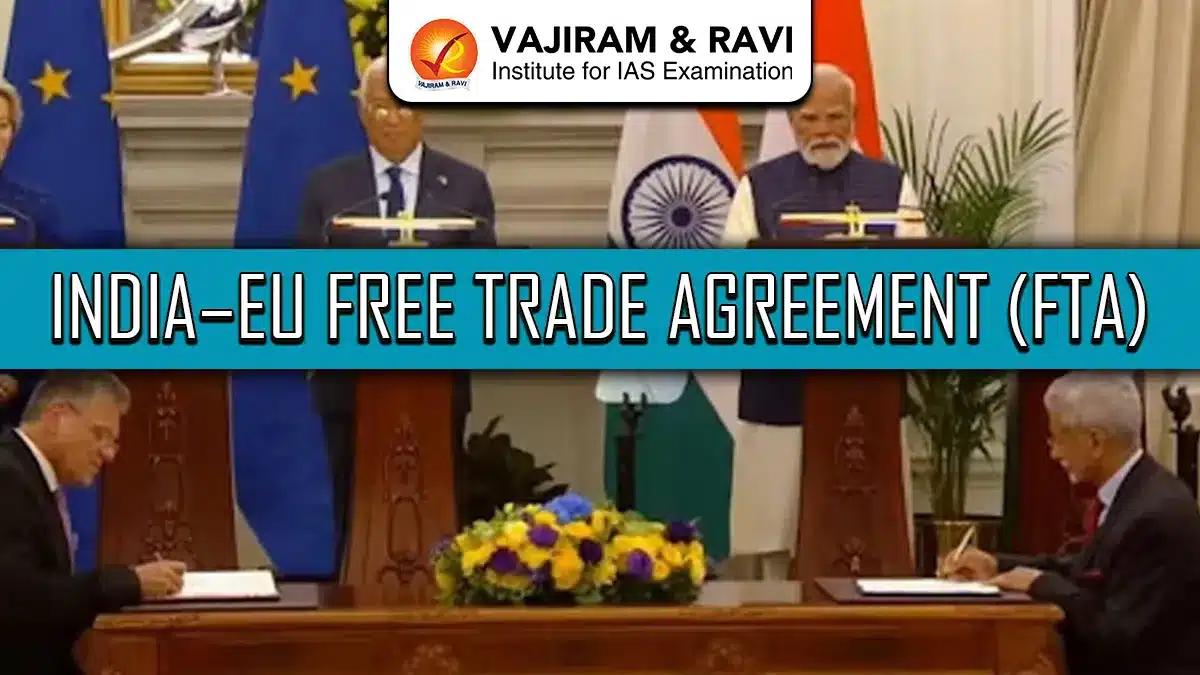
Sikh Reform Movements Leaders

Leadership played a central role in shaping ideology, mobilizing followers and institutionalizing reforms across different Sikh Reform Movements.

  • Baba Dayal Das: Founder of the Nirankari Movement, he emphasized monotheism, moral conduct, rejection of idolatry and return to Guru Nanak’s original teachings during the mid nineteenth century.
  • Baba Ram Singh: Leader of the Namdhari Movement, he promoted disciplined living, Khalsa inspired rituals, vegetarianism and early resistance to British authority through social and religious reform.
  • Thakur Singh Sandhawalia: A key initiator of the Amritsar Singh Sabha, he worked to revive Sikh education, identity and religious purity during the late nineteenth century.
  • Giani Gian Singh: Prominent scholar associated with Singh Sabha, he contributed to Sikh historiography and dissemination of religious literature in Gurmukhi.
  • Kartar Singh Jhabbar: An influential leader of the Akali Movement, he mobilized Sikhs for Gurdwara liberation and played a role in establishing democratic shrine management.

Sikh Reform Movements FAQs

Q1: What were Sikh Reform Movements?

Ans: Sikh Reform Movements were nineteenth and early twentieth century efforts to purify Sikh religious practices, remove superstitions and strengthen Sikh identity under colonial rule.

Q2: Which was the earliest Sikh Reform Movements?

Ans: The Nirankari Movement, founded by Baba Dayal Das in the 1840s, was the earliest organized Sikh reform movement.

Q3: What was the main aim of the Singh Sabha Movement?

Ans: Its main aim was to restore Sikhism to doctrinal purity through education, promotion of Gurmukhi and publication of authentic Sikh literature.

Q4: What was the Gurdwara Reform or Akali Movement?

Ans: It ended corrupt mahant control over Gurdwaras and led to the formation of the SGPC under the Gurdwara Act of 1925.

Q5: How did Sikh Reform Movements impact Indian nationalism?

Ans: They linked religious reform with political awakening, contributing to mass mobilization and anti-colonial consciousness among Sikhs.

Sapinda Marriage, Meaning, Constitutional Validity, Exceptions

Sapinda Marriage

Sapinda Marriage

A sapinda marriage is a marriage between closely related individuals. For example, a man marrying his father’s brother’s daughter (i.e., his first cousin) is a sapinda marriage.

As per section 3 of Hindu Marriage Act (HMA), “Two persons are said to be sapindas of each other if one is a lineal ascendant (it means son, grandson) of the other, or if they have a common lineal ascendant who is within the limits of sapinda relationship.”

Constitutional Validity of Sapinda Marriages 

Sapinda marriages are void by the Section 5(v) of the Hindu Marriage Act. Marriage is forbidden within three generations on Mother’s side. For Example, marriage between siblings, their parents, their grandparents. On Father’s Side, it extends to five generations. 

Exceptions 

Under Hindu Marriage Act, Sapinda Marriage is valid if the custom of each individual permits sapinda marriages.

The definition of the word “custom” is provided in Section 3(a) of the Hindu Marriage Act. As per the law, a custom must be continuously and uniformly observed for a long period to gain legitimacy among Hindu.

As per the Supreme Court in Thakur Gokal Chand v. Parvin Kumari (1952) customs should not be unreasonable or opposed to public policy. In the case of a rule that is applicable only to a certain family, the rule should not have been “discontinued by that family”.

Recent Supreme Court Judgements 

Recently in Neetu Grover v. Union of India & Ors, 2024 case Supreme Court rejected a challenge to the constitutionality of Section 5(v) of the Hindu Marriage Act, 1955 (HMA), which prohibits marriage between two Hindus if they are “Sapindas” of each other.

Status of Sapinda Marriages in other Countries 

In many countries, marriages within close blood relations - comparable to sapinda marriages under Hindu law - are regulated differently based on social, religious, and medical considerations. 

In most Western countries such as the United States, the United Kingdom, Canada, and much of Europe, marriages between lineal relatives and siblings are strictly prohibited, while first-cousin marriages are either allowed or regulated at the state level, reflecting a more liberal approach. 

In contrast, several West Asian and North African countries, including Saudi Arabia, Iran, and Egypt, legally permit consanguineous marriages, particularly first-cousin marriages, as they are socially and culturally accepted. Similarly, in Japan and South Korea, marriages between certain cousins are legally permissible.

Sapinda Marriage FAQs

Q1: What is Sapinda Marriage?

Ans: A sapinda marriage is a marriage between closely related individuals.

Q2: Is sapinda marriage legally valid in India?

Ans: Sapinda marriages are void under Section 5(v) of the Hindu Marriage Act.

Q3: What are the exceptions to Sapinda Marriages?

Ans: Sapinda Marriage is valid if the custom of each individual permits sapinda marriages.

Q4: What happens if a sapinda marriage is performed without a valid custom?

Ans: Such a marriage is void ab initio and has no legal validity under Section 11 of the HMA.

Q5: Has the constitutionality of the sapinda prohibition been challenged?

Ans: Yes. In Neetu Grover v. Union of India (2024), the Delhi High Court upheld the constitutional validity of Section 5(v) of the HMA.

UPSC Daily Quiz 28 January 2026

UPSC Daily Quiz

[WpProQuiz 78]

UPSC Daily Quiz FAQs

Q1: What is the Daily UPSC Quiz?

Ans: The Daily UPSC Quiz is a set of practice questions based on current affairs, static subjects, and PYQs that help aspirants enhance retention and test conceptual clarity regularly.

Q2: How is the Daily Quiz useful for UPSC preparation?

Ans: Daily quizzes support learning, help in revision, improve time management, and boost accuracy for both UPSC Prelims and Mains through consistent practice.

Q3: Are the quiz questions based on the UPSC syllabus?

Ans: Yes, all questions are aligned with the UPSC Syllabus 2025, covering key areas like Polity, Economy, Environment, History, Geography, and Current Affairs.

Q4: Are solutions and explanations provided with the quiz?

Ans: Yes, each quiz includes detailed explanations and source references to enhance conceptual understanding and enable self-assessment.

Q5: Is the Daily UPSC Quiz suitable for both Prelims and Mains?

Ans: Primarily focused on Prelims (MCQ format), but it also indirectly helps in Mains by strengthening subject knowledge and factual clarity.

Euratom

Euratom

Euratom Latest News

The European Union (EU) and India recently committed to promoting collaboration on the peaceful uses of nuclear energy under the India-Euratom agreement.

About Euratom

  • The European Atomic Energy Community (Euratom) is an international organization established under the Treaty of Rome in 1957.
  • Objective: To form a common market for the development of the peaceful uses of atomic energy. 
  • A major incentive for the creation of Euratom was the desire to facilitate the establishment of a nuclear-energy industry on a European rather than a national scale. 
  • Euratom’s control was not extended to nuclear materials intended for military use.
  • Membership
    • The original members were Belgium, France, West Germany, Italy, Luxembourg, and the Netherlands. 
    • It subsequently came to include all members of the European Union (EU).
  • Euratom regulates the European civil nuclear industry, which produces almost 30% of energy in the EU. 
  • Euratom’s work safeguards nuclear materials and technology, facilitates investment, research, and development, and ensures equal access to nuclear supplies, as well as the correct disposal of nuclear waste and the safety of operations. 
  • It is governed by the Commission and Council, operating under the jurisdiction of the European Court of Justice.
  • Its main instruments are the Euratom Supply Agency and its research and nuclear safeguard activities. 
  • The EU has its own Joint Research Centre (JRC) in the nuclear field. 
  • Euratom is involved in developing atomic fusion technology, which has the potential of delivering abundant sustainable energy in the future.

Source: TH

Euratom FAQs

Q1: What is Euratom?

Ans: Euratom is the European Atomic Energy Community, an international organisation for peaceful use of atomic energy.

Q2: Under which treaty was Euratom established?

Ans: Under the Treaty of Rome, 1957.

Q3: What was the main objective behind the creation of Euratom?

Ans: To create a common market for the development of peaceful uses of atomic energy.

Q4: Which countries are members of Euratom today?

Ans: All member states of the European Union.

Q5: What are the key functions of Euratom?

Ans: Safeguarding nuclear materials, facilitating investment and R&D, ensuring equal access to nuclear supplies, nuclear safety, and proper disposal of nuclear waste.

Lepidagathis Konkanensis

Lepidagathis konkanensis

Lepidagathis Konkanensis Latest News

A team of researchers recently discovered a new species of wildflower named Lepidagathis konkanensis, tucked away on the sun-drenched, rocky plateaus of Maharashtra’s Konkan region.

About Lepidagathis Konkanensis

  • It is a new species of flowering plant.
  • It was discovered in the Ratnagiri district in Maharashtra’s Konkan region.
  • It was first encountered during a floristic survey of the region’s lateritic plateaus, harsh, iron-rich environments that often host specialised life forms. 
  • It is currently only known to exist in a small area of less than 65 sq.km.
  • It is unique with its striking appearance and compact size. 
    • While many of its cousins have pink or pale flowers and long flowering spikes, this new species features bright yellow, two-lipped blossoms and very short, dense flowering heads that measure only about two centimetres. 
    • It also has smaller seeds and a shorter style—the part of the flower that receives pollen—than its closest relatives. 
  • The plant’s name, konkanensis, serves as a tribute to the Konkan region of Maharashtra where it was found.
    • This area is geographically isolated by the Arabian Sea to the west and the Sahyadri Mountains to the east, creating a cradle for evolution where unique species can develop in isolation.
  • Scientists have recommended it be classified as Data Deficient by the IUCN.

Source: RM

Lepidagathis Konkanensis FAQs

Q1: What is Lepidagathis konkanensis?

Ans: It is a newly discovered species of flowering plant.

Q2: Where was Lepidagathis konkanensis discovered?

Ans: In the Ratnagiri district of Maharashtra’s Konkan region.

Q3: What type of habitat does Lepidagathis konkanensis grow in?

Ans: Harsh, iron-rich lateritic plateaus.

Q4: What makes Lepidagathis konkanensis visually unique compared to related species?

Ans: It has bright yellow, two-lipped flowers and very short, dense flowering heads.

Key Facts about Myanmar

Key Facts about Myanmar

Myanmar Latest News

Recently, the Union Solidarity and Development Part won the election in Myanmar.

About Myanmar

  • It is the northernmost country of Southeast Asia.
  • Bordering Countries: It is bordered by India in the west, Bangladesh in the northwest; China in the north and northeast; by Laos in the east and by Thailand in the southeast. 
  • Maritime Borders: It is bounded by the Andaman Sea in the south and by the Bay of Bengal in the southwest. 
  • Capital City: Naypyidaw

Geographical Features of Myanmar 

  • Climate: Tropical monsoon
  • Mountain ranges: It consists of Bago Yoma, Rakhine Yoma, and Shan Hills.
  • Highest Point: Hkakabo Razi.
  • Major Rivers: It is drained by Mekong, Irrawaddy, Salween and Chindwin.
  • Natural resources: Petroleum, timber, tin, copper, tungsten, lead, coal, marble, limestone, natural gas, hydropower etc.

Source: TH

Myanmar FAQs

Q1: Which river is the lifeline of Myanmar?

Ans: Irrawaddy River

Q2: What is the capital of Myanmar?

Ans: Naypyidaw

PANCHAM

PANCHAM

PANCHAM Latest News

Recently, the Union Minister of State for Panchayati Raj launched the PANCHAM – Panchayat Assistance and Messaging Chatbot.

About PANCHAM

  • It is a digital tool developed in collaboration with UNICEF.
  • Aim: It is a flagship digital initiative aimed at empowering Panchayat Elected Representatives and Functionaries.
  • It is designed as a digital companion for Panchayats, providing timely and contextual guidance, simplified workflows, and easy access to information to support day-to-day governance and service delivery functions.

Features of PANCHAM

  • Direct Connect: It enables, for the first time, a direct digital connect between the Government of India and Elected Representatives and Panchayat Functionaries across the country.
  • Language Support: It is integrated with BHASHINI and will support 22 Indian languages, enabling Panchayat representatives to interact with the platform in their preferred local language.
  • Citizen Access: Citizens would be able to access PANCHAM through a QR-code-based entry mechanism.
  • It will facilitate quicker decision-making, faster resolution of field-level issues, and stronger feedback loops between the grassroots and decision-making centers.
  • Two way communications:  PANCHAM facilitates two way communication and officials can send feedback, ask questions, and flag local problems directly to the ministry. 
  • Information Dissemination: The Ministry would be able to directly disseminate circulars, advisories, key messages, and updates to Panchayat Elected Representatives and Functionaries.

Source: PIB

PANCHAM FAQs

Q1: What is the primary function of PANCHAM?

Ans: To facilitate communication between government and panchayats

Q2: What is PANCHAM?

Ans: A digital platform for panchayats

Lord Linlithgow (1887-1952), Biography, Contributions, Events

Lord Linlithgow

Lord Linlithgow, formally known as Victor Alexander John Hope, was Statesman, Agriculturalist and Colonial Administrator under the British Administration. He was the longest serving Viceroy of British India who held the office for 7.5 years from April 1936 to October 1943. His tenure coincided with critical constitutional changes, the outbreak of the Second World War and the most intense phase of the Indian freedom struggle. He implemented the Government of India Act 1935, oversaw provincial autonomy and took decisive wartime actions without Indian consent. His administration shaped India’s political trajectory, deepened nationalist resistance and left a controversial legacy marked by political repression, economic strain and humanitarian crises.

Lord Linlithgow Biography

Lord Linlithgow was born on 24 September 1887 in Abercorn, West Lothian, Scotland. He succeeded as the 2nd Marquess of Linlithgow in 1908. He was educated at an elite British institution. He emerged as a Unionist politician, agricultural expert and colonial administrator. Before serving as the Viceroy of India, he chaired the Royal Commission on Agriculture in India from 1926 to 1928 and gained deep exposure to Indian rural conditions. In his later life, he acted as Lord High Commissioner to the Church of Scotland. Linlithgow retired on 1 October 1943 after more than seven years and was succeeded by Lord Wavell amid worsening political deadlock. He later died on 5 January 1952 at the age of 64 at Linlithgowshire, Scotland.

Lord Linlithgow Contributions

The policies designated by Lord Linlithgow significantly influenced provincial politics, centre and province relations and Britain’s wartime control over India. The important works of Linlithgow has been listed below:

  • Implementation of Government of India Act 1935: Linlithgow operationalised the Government of India Act 1935 by conducting provincial elections in 1937, enabling elected ministries in British Indian provinces and ending dyarchy at the provincial level.
  • Provincial Autonomy System: He ensured smooth functioning of autonomous provincial governments, especially Congress ministries in five provinces, by limiting excessive use of governors’ reserve powers initially.
  • Administrative Reorganisation: During his tenure, Sind was separated from Bombay Presidency, Orissa became a distinct province and Burma was constitutionally separated from India in 1937.
  • Agricultural Policy Experience: Drawing from his earlier commission work, he promoted administrative focus on agricultural productivity, though wartime priorities limited large scale rural reforms.
  • Expansion of Executive Council: Despite Congress refusal, Linlithgow increased Indian representation in the Viceroy’s Executive Council, attempting limited inclusiveness without transferring real power.
  • Wartime Mobilisation: Under his leadership, over two million Indian soldiers voluntarily joined British forces during World War II, making the Indian Army the largest volunteer force globally by 1943.

Events During Lord Linlithgow Tenure

The tenure of Lord Linlithgow witnessed vast political events that reshaped Indian nationalism, intensified communal divisions and escalated confrontation between colonial authority and mass movements as highlighted below:

  • Provincial Elections of 1937: Elections under the 1935 Act resulted in Congress forming ministries in eight provinces, while the Muslim League failed to secure power, deepening political rivalry.
  • Declaration of World War II 1939: In September 1939, Linlithgow declared India at war with Germany without consulting Indian leaders, triggering nationwide political outrage and Congress protest.
  • Resignation of Congress Ministries: Following the unilateral war declaration, Congress ministries resigned during October to November 1939, ending constitutional cooperation and expanding British administrative control.
  • August Offer: Linlithgow proposed post war constitutional framing and expanded advisory roles in 1940, but rejected immediate self government, leading to its rejection by Congress and Muslim League.
  • Individual Satyagraha 1940: Gandhi launched limited civil resistance through the selected individuals like Vinoba Bhave and Jawaharlal Nehru, highlighting opposition while avoiding mass violence initially.
  • Lahore Resolution 1940: During his tenure, the Muslim League passed the Lahore Resolution demanding separate Muslim majority states, formalising the “Two Nation Theory”.
  • Cripps Mission 1942: Sent by Britain amid Japanese advances, the mission promised post-war dominion status but allowed provincial secession, leading to rejection by all major Indian groups.
  • Quit India Movement 1942: Linlithgow responded to the Quit India Resolution by arresting Congress leaders immediately, suppressing the movement through force, censorship and mass detentions.
  • Japanese Threat and Military Expansion: Japanese occupation of Andaman Islands in 1942 intensified wartime urgency, reinforcing Linlithgow’s repressive measures to maintain internal security.
  • Bengal Famine 1943: His administration faced severe criticism for policy failures during the Bengal famine, which caused nearly three million deaths amid food shortages and wartime inflation.
  • Political and Economic Criticism: Leaders like V. P. Menon and Tej Bahadur Sapru criticised his regime for deepening divisions, rising living costs and weakening political unity.

Lord Linlithgow FAQs

Q1: Who was Lord Linlithgow?

Ans: Lord Linlithgow was the longest-serving Viceroy of India, holding office from 1936 to 1943 during World War II.

Q2: Which major law was implemented during Lord Linlithgow’s tenure?

Ans: He implemented the Government of India Act 1935, introducing provincial autonomy and elected provincial governments in British India.

Q3: Why did Congress ministries resign in 1939 ?

Ans: They resigned after Lord Linlithgow declared India’s entry into World War II without consulting Indian political leaders.

Q4: What was the August Offer 1940 of Lord Linlithgow?

Ans: It was Linlithgow’s proposal promising post-war constitutional reforms, which was rejected due to lack of immediate self-rule.

Q5: Why is the tenure of Lord Linlithgow considered controversial?

Ans: Linlithgow’s Tenure as Viceroy is famous for the repression of mass movements, wartime authoritarianism and the Bengal famine of 1943, causing severe criticism.

Hoya Nagaensis

Hoya Nagaensis

Hoya Nagaensis Latest News

Recently, a new plant species has been discovered in Nagaland and it’s named as Hoya Nagaensis.

About Hoya Nagaensis

  • It is a new plant species found in the high-altitude forests of Nagaland.
  • It is a member of the 'wax plant family' discovered in the Kavunhou Community Reserved Forest in Phek district.
  • It is currently known from only a single location, making it highly vulnerable.

Features of Hoya Nagaensis

  • The plant displays unique leaf shapes and floral features.
  • It belongs to the Hoya genus, a group known for its ornamental value.
  • Habitat: It was found growing in a temperate forest ecosystem that remains largely unexplored by science.
  • It produces distinctive star-shaped flowers and exudes milk-like latex, a characteristic of many species in the Apocynaceae or milkweed family.

What is Hoya Genus?

  • Hoyas, commonly known as wax plants, are a captivating genus cherished by indoor gardeners for their unique flowers and diverse growth forms. 
  • Native Range: Southeast Asia, Australia, and Polynesia
  • Flower Characteristics: Hoya flowers are star-shaped and have a wax-like appearance.
  • Growth Habit: Hoyas are known for their climbing or trailing growth habit. 

Source: TH

Hoya Nagaensis FAQs

Q1: Where was Hoya Nagaensis recently discovered?

Ans: Nagaland, India

Q2: What is Hoya Nagaensis?

Ans: A species of Hoya plant

Lord Chelmsford (1868-1933), Biography, Contributions, Events

Lord Chelmsford

Lord Chelmsford, formally known as Frederic John Napier Thesiger, was a famous British administrator whose tenure as Viceroy of India coincided with intense political unrest and constitutional change. He served from 1916 to 1921 as the Viceroy of India. His period witnessed the First World War’s impact on India, rising nationalist demands and the first structured attempt to introduce responsible government through constitutional reforms.

Lord Chelmsford Biography

Lord Chelmsford was born on 12 August 1868 to a distinguished British family with a strong military and administrative background. He served as Governor of Queensland from 1905 to 1909 and Governor of New South Wales from 1909 to 1913 which gave him colonial administrative experience. During the First World War, he returned to military service and was appointed to the Privy Council in February 1916. In March 1916, he succeeded Lord Hardinge as Viceroy of India, later becoming the 1st Viscount Chelmsford in 1921. He died in 1933 at the age of 64 in London, England.

Lord Chelmsford Contributions

Lord Chelmsford had brought several administrative, economic, social as well as military reforms. Various contributions during the tenure of Chelmsford as the Viceroy of India has been listed below:

  • Constitutional Reform Advocate: Chelmsford accepted that educated Indians demanded self government and supported gradual constitutional change within the British Empire framework through structured reforms rather than immediate transfer of power.
  • Montagu Partnership: He worked closely with Edwin Samuel Montagu, Secretary of State for India, facilitating consultations with Indian leaders like Gandhi and Jinnah, which shaped the Indian Constitutional Reforms Report of 1918.
  • Administrative Restructuring: Under his leadership, provincial legislative councils were expanded, Indian representation increased and the idea of responsible government at the provincial level was formally introduced.
  • Wartime Governance: During World War I, Chelmsford ensured India’s continued contribution of troops, finances and resources to the British war effort while managing rising political expectations at home.

Events During Lord Chelmsford Tenure

The tenure of Lord Chelmsford as Viceroy coincided with major political movements, laws and conflicts that reshaped Indian nationalism.

  • Lucknow Pact 1916: The Congress and Muslim League jointly demanded constitutional reforms, including separate electorates and weightage for minorities, symbolizing temporary Hindu-Muslim unity encouraged by Chelmsford’s call for reform suggestions.
  • August Declaration 1917: Edwin Montagu’s statement in the British Parliament promised progressive realization of responsible government in India, marking the first formal British commitment to self governing institutions.
  • Rowlatt Act 1919: Based on the Rowlatt Committee’s recommendations, Chelmsford’s government passed a law allowing detention without trial for up to two years, triggering nationwide protests due to its denial of civil liberties.
  • Jallianwala Bagh Massacre 1919: Following unrest in Punjab, martial law was imposed and General Reginald Dyer ordered firing on an unarmed crowd at Amritsar on 13 April 1919, killing more than 400 people and deeply damaging British legitimacy.
  • Hunter Commission Inquiry: The British government appointed the Disorders Inquiry Committee under Lord William Hunter, which condemned Dyer’s actions but upheld martial law, leading to Chelmsford disciplining Dyer without criminal prosecution.
  • Khilafat Movement: Indian Muslims launched protests against the dismemberment of the Ottoman Caliphate after World War I, reflecting global Islamic concerns intersecting with Indian anti-imperial politics.
  • Non-Cooperation Movement 1920: Mahatma Gandhi launched a mass movement boycotting British institutions, goods and councils, transforming the Congress into a mass based party during Chelmsford’s final year in office.
  • Third Anglo-Afghan War 1919: Conflict between British India and Afghanistan ended with the Treaty of Rawalpindi, recognizing Afghan control over its foreign policy and affecting India’s north-west frontier security.
  • Government of India Act 1919: The Government of India Act also known as Montagu-Chelmsford Reforms was enacted with the joint recommendations of Montagu and Lord Chelmsford.

Montagu-Chelmsford Reforms

The Montagu-Chelmsford Reforms aimed to introduce limited responsible Government in India while retaining British supremacy. It formed the basis of the Government of India Act 1919.

  • Objective: The reforms sought gradual self government by increasing Indian participation in administration while affirming India as an integral part of the British Empire under parliamentary sovereignty.
  • Central Legislature Changes: A bicameral legislature was introduced with the Legislative Assembly of 145 members and the Council of State of 60 members, allowing elected Indians to debate budgets and question the executive.
  • Executive Structure: The Governor General remained the chief executive with overriding powers, but his executive council now included three Indian members out of eight, marking limited inclusion at the highest level.
  • Provincial Dyarchy System: Provincial subjects were divided into reserved and transferred categories, with elected Indian ministers handling areas like education and health, while governors retained control over finance and law and order.
  • Impact: The Act provided for a Public Service Commission and a ten year review clause leading to the Simon Commission, institutionalizing constitutional reform while exposing limitations that fueled further nationalist resistance.

Lord Chelmsford FAQs

Q1: Who was Lord Chelmsford?

Ans: Lord Chelmsford was a British statesman who served as Governor General and Viceroy of India from 1916 to 1921 during a critical phase of constitutional reforms and nationalist movements.

Q2: What major events occurred during the tenure of Lord Chelmsford?

Ans: Key events included the Lucknow Pact, August Declaration 1917, Rowlatt Act, Jallianwala Bagh tragedy, Khilafat Movement, Non-Cooperation Movement, the Third Anglo-Afghan War and Government of India Act 1919.

Q3: What was the Rowlatt Act passed during Lord Chelmsford?

Ans: The Rowlatt Act of 1919 allowed detention without trial for suspected political offenders, which was widely opposed for violating civil liberties and sparked nationwide protests.

Q4: What was Lord Chelmsford’s role in the Jallianwala Bagh incident?

Ans: As Viceroy, Chelmsford initially supported General Dyer’s actions under martial law but later disciplined him after the Hunter Committee inquiry, a response widely viewed as inadequate by Indian nationalists.

Q5: What were the Montagu-Chelmsford Reforms recommended by Lord Chelmsford?

Ans: The reforms expanded legislative councils, introduced dyarchy in provinces and increased Indian representation, but their limited nature disappointed nationalists and intensified demands for complete self rule.

India–EU Strategic Agenda 2030: Key Pillars and Priorities

India–EU Strategic Agenda Latest News

  • India and the European Union have agreed to deepen their partnership by adopting the “Towards 2030: India–EU Joint Comprehensive Strategic Agenda.” 
  • The agenda was adopted during talks between Prime Minister Narendra Modi and visiting European leaders Ursula von der Leyen and Antonio Costa.

India–EU Joint Comprehensive Strategic Agenda (Towards 2030): Key Takeaways

  • This Joint India-EU Comprehensive Strategic Agenda was endorsed at the 16th India-EU Summit.
  • It aims to further reinforce the strategic partnership by broadening, deepening and better coordinating EU-India cooperation to deliver mutually beneficial, concrete and transformative outcomes for both partners and for the wider world.
  • This agenda is being described as a more ambitious and holistic roadmap for the next five years, aimed at providing clear direction in a complex global environment.
  • Five Key Pillars of Cooperation
    • The Joint Comprehensive Strategic Agenda seeks to accelerate progress across five pillars:
      • Prosperity and sustainability
      • Technology and innovation
      • Security and defence
      • Connectivity and global challenges
      • Enablers, including skills, mobility, business cooperation, and people-to-people ties
  • Trade, Investment, and Economic Cooperation
    • Reaffirmation of trade and economic ties as the foundation of the partnership.
    • Timely implementation of the India–EU Free Trade Agreement (FTA).
    • Conclusion of Investment Protection Agreement and Geographical Indications (GI) Agreement.
    • Enhanced financial services regulatory cooperation, customs cooperation, and macroeconomic dialogue.
    • Scaling up Global Gateway investments with EIB participation.
  • Supply Chains and Economic Security
    • Cooperation on strategic value chains and economic security under the Trade and Technology Council (TTC).
    • Implementation of EU–India Semiconductor MoU; collaboration on R&D, chip design, and manufacturing.
    • Cooperation on critical minerals, APIs, agrifood supply chains, and biotechnology.
  • Clean Transition and Resilience
    • Strengthening Clean Energy and Climate Partnership.
    • Cooperation on renewables (wind, hydrogen), sustainable mobility, railways, ship recycling, smart cities.
    • Collaboration on carbon markets (CCTS–ETS), industrial decarbonisation, circular economy, water security.
    • Enhanced cooperation on health systems, disaster risk management, and climate adaptation.
  • Critical and Emerging Technologies
    • Joint research in AI, quantum, semiconductors, clean tech, biotech.
    • Establishment of India–EU Innovation Hubs and Startup Partnership.
    • Cooperation on trustworthy, human-centric AI, HPC, space technologies, and critical technology protection.
  • Digital Cooperation
    • Building a secure, interoperable digital ecosystem.
    • Cooperation on data protection, digital public infrastructure (DPI), telecom (6G), e-commerce.
    • Exploring interoperability of digital wallets and electronic signatures.
  • Research Collaboration
    • Deepening engagement under Horizon Europe; exploring India’s association.
    • Cooperation in peaceful nuclear research, semiconductors, advanced materials, and ITER.
  • Security and Defence Partnership
    • Implementation of India–EU Security and Defence Partnership (SDP).
    • Annual Security and Defence Dialogue; agreement on Security of Information.
  • Defence Industrial Cooperation
    • Industry-led India–EU Defence Industry Forum.
    • Exploring cooperation under relevant EU defence initiatives.
  • Regional and Global Security
    • Cooperation for a free, open, and rules-based Indo-Pacific.
    • Engagement through IPOI, IORA, IOC, and consultations on the Indo-Pacific.
    • Dialogue on global issues, including Ukraine.
  • Countering Threats
    • Cooperation against terrorism, hybrid threats, cyber risks, drug trafficking.
    • Strengthened law enforcement cooperation (CBI–Europol, SIENA).
  • Connectivity
    • Implementation of EU–India Connectivity Partnership (Global Gateway, MAHASAGAR).
    • Deepening collaboration under IMEC, digital corridors, green shipping, aviation dialogue.
  • Cooperation in Third Countries
    • Trilateral projects in energy, climate resilience, green mobility, digitalisation.
    • Cooperation through International Solar Alliance and CDRI.
  • Global Governance
    • Coordination in UN, G20, and reform of multilateral institutions (UN, WTO).
    • Cooperation on Paris Agreement, biodiversity, plastic pollution, maritime decarbonisation.
    • Engagement on AI governance, human rights, global health architecture.
  • Skills, Mobility, and People-to-People Ties
    • Skills and talent mobility, European Legal Gateway Office in India.
    • Easier visas, student and researcher mobility (Erasmus+, MSCA, SPARC).
    • Recognition of qualifications and gender balance.
  • Mutual Understanding
    • Academic, think-tank, cultural, and diplomatic exchanges.
    • Dedicated Jean Monnet network for India.
  • Business and Institutional Mechanisms
    • EU–India Business Forum; stronger role for business in TTC.
    • Annual summits, strengthened dialogues, and monitoring via TTC and Strategic Dialogue.

Source: IE | MEA

India–EU Strategic Agenda FAQs

Q1: What is the India–EU strategic agenda?

Ans: The India–EU strategic agenda is a joint roadmap adopted in 2026 to deepen cooperation across prosperity, technology, security, connectivity and people-to-people ties.

Q2: Why was the India–EU strategic agenda adopted?

Ans: The India–EU strategic agenda was adopted to provide clear direction for partnership in a complex geopolitical environment and deliver mutually beneficial outcomes.

Q3: What are the main pillars of the India–EU strategic agenda?

Ans: The India–EU strategic agenda rests on prosperity and sustainability, technology and innovation, security and defence, connectivity and global challenges, supported by enablers.

Q4: How does the India–EU strategic agenda address technology cooperation?

Ans: The India–EU strategic agenda promotes collaboration in AI, semiconductors, quantum, digital public infrastructure, clean tech and secure digital ecosystems.

Q5: Why is the India–EU strategic agenda important globally?

Ans: The India–EU strategic agenda strengthens coordination on global governance, supply chains, climate action and multilateral reforms, reflecting shared strategic interests.

Mahakaleshwar Temple

Mahakaleshwar Temple

Mahakaleshwar Temple Latest News

The Supreme Court recently did not entertain a petition challenging the practice of ‘VIP darshan’ at the famed Shri Mahakaleshwar temple in Ujjain, observing that the court is not meant to play the role of a gatekeeper on who enters a temple and when.

About Mahakaleshwar Temple

  • It is a Hindu temple located on the banks of the River Shipra at Ujjain in Madhya Pradesh.
  • It is dedicated to Lord Shiva. It is one of the 12 Jyotirlingas in India.
  • The history of Mahakaleshwar Temple dates back to ancient times, with references to the temple found in various Hindu scriptures and texts.
    • The temple finds mention in the Puranas
    • The renowned poet Kalidas also mentioned this temple in his creations. 
  • The current structure of the temple was built in the 18th century by the Maratha ruler Ranoji Shinde.
  • However, the temple has been destroyed and rebuilt several times throughout history.

Mahakaleshwar Temple Architecture

  • The architecture of the temple shows the influence of Maratha, Bhumija, and Chalukya styles of structural design. 
  • The temple complex is spread over five levels, one of which is underground. 
  • The Sabha Mandap (assembly hall) and Garbha Griha (sanctum sanctorum) are adorned with elaborate sculptures depicting various Hindu deities and mythological scenes. 
  • The sanctum houses the Jyotirlinga, which is the focal point of devotion and rituals. 
  • The grand spire (shikhara), intricately carved pillars, and ornate ceilings are proof of the exquisite craftsmanship.

Source: TH

Mahakaleshwar Temple FAQs

Q1: Where is the Mahakaleshwar Temple located?

Ans: On the banks of the River Shipra at Ujjain in Madhya Pradesh.

Q2: Who built the present structure of the Mahakaleshwar Temple?

Ans: The current structure of the temple was built in the 18th century by the Maratha ruler Ranoji Shinde.

Q3: Which architectural styles influence the Mahakaleshwar Temple?

Ans: Maratha, Bhumija, and Chalukya styles.

Q4: What is the religious significance of Mahakaleshwar Temple among Shiva temples?

Ans: It is one of the 12 Jyotirlingas in India.

Achanakmar Tiger Reserve

Achanakmar Tiger Reserve

Achanakmar Tiger Reserve Latest News

Recently, a young male tiger was found dead inside due to territorial infighting inside the Achanakmar Tiger Reserve in Chhattisgarh.

About Achanakmar Tiger Reserve

  • Location: It is situated in the state of Chhattisgarh. 
  • It is part of the huge Achanakmar – Amarkantak Biosphere Reserve.
  • It is one of three tiger reserves in Chhattisgarh. It plays a crucial role in the tiger corridor network, vital for the movement of wildlife.
  • It has a corridor connecting Kanha and Bandhavgarh Tiger Reserve and plays a critical role in the dispersal of tigers among these reserves.
  • River: The Maniyari River flows right from the centre of this reserve, which is the forest’s lifeline.
  • Tribal Community: It is home to the Baigas, (Particularly Vulnerable Tribal Group), Gond and Yadav communities residing inside of this tiger reserve.
  • Vegetation: Tropical moist deciduous vegetation covers the majority of the area.
  • Flora: Sal, bija, saja, haldu, teak, tinsa, dhawara, lendia, khamar, and bamboo bloom here, along with over 600 species of medicinal plants.
  • Fauna: It includes the tiger, leopard, bison, flying squirrel, Indian giant squirrel, chinkara, wild dog, hyena, sambar, chital, and over 150 species of birds.

Source: TOI

Achanakmar Tiger Reserve FAQs

Q1: Where is Achanakmar Tiger Reserve located?

Ans: Chhattisgarh

Q2: Which river flows through Achanakmar Tiger Reserve?

Ans: Maniyari River

India-EU Free Trade Agreement – The ‘Mother of All Deals’

Trade Agreement

Trade Agreement Latest  News

  • India and the European Union have concluded negotiations on a long-pending Free Trade Agreement (FTA), described by leaders as the “mother of all deals”.

Background of India-EU Trade Relations

  • India and the European Union are among the world’s largest economies and long-standing trading partners. 
  • The EU is India’s largest trading partner in goods, while India is a key market for EU exports and investments. 
  • Negotiations for a comprehensive trade agreement began in 2007 but faced repeated pauses due to differences over market access, regulatory standards, agriculture, automobiles, and services. 
  • Talks were revived in 2022 with a more pragmatic approach, leading to the conclusion of the FTA in January 2026 after nearly two decades.

Key Features of the India-EU Free Trade Agreement

  • The India-EU FTA is one of the most ambitious trade agreements signed by India to date, covering goods, services, and investment-related issues.
  • Tariff Liberalisation Commitments
    • The EU has agreed to remove tariffs on 99.5% of the items India exports to the region, with most duties falling to zero immediately upon the agreement coming into force. 
    • On India’s side, tariff concessions have been offered on 97.5% of the traded value of EU exports, though with phased reductions for sensitive sectors. 
    • This asymmetrical liberalisation reflects India’s developmental concerns while ensuring substantial market access gains.

What India Gains from the Agreement

India’s Gains

  • India secures tariff reductions across 97% of tariff lines, covering 99.5% of trade value. 
  • About 90.7% of India’s exports will enjoy zero-duty access to the EU market from day one. 
  • Key beneficiaries include labour-intensive sectors such as textiles, apparel, leather and footwear, gems and jewellery, marine products, toys, sports goods, tea, coffee, and spices. 
  • These sectors are critical for employment generation and export-led growth.
  • The EU has also made commitments across 144 services subsectors, including IT and IT-enabled services, professional services, education, and business services. 
  • This enhances opportunities for Indian professionals and firms in a high-income market and strengthens India’s position in global value chains.

What India Has Conceded

EU’s Gains

  • India has agreed to duty elimination or reduction on 92.1% of tariff lines, covering 97.5% of EU exports. 
  • Nearly half of these tariff lines will see immediate duty elimination, while others will be phased out over 5, 7, or 10 years. 
  • High-technology imports from the EU, such as machinery, electrical equipment, medical devices, pharmaceuticals, aircraft components, and precision instruments, are expected to reduce input costs for Indian industry and support manufacturing competitiveness.
  • Sensitive sectors like dairy and certain agricultural products have been excluded from full liberalisation to protect farmers’ livelihoods. 
  • Similarly, the EU has retained protections for products such as beef, sugar, rice, poultry, and milk powder.

Handling Sensitive and Contested Sectors

  • Automobiles and wine were among the most contentious issues. A compromise was reached through quota-based systems. 
  • India agreed to lower import duties on European cars priced above Rs. 25 lakh from 110% to as low as 10%, subject to quotas and price-based categories. 
  • For wines, tariffs will be reduced from 150% to 20-30%, again under a quota mechanism. 
  • This approach balances consumer access and domestic industry protection.

Strategic and Geopolitical Significance

  • For the EU, it reduces over-dependence on a limited set of global suppliers and strengthens supply chain resilience amid geopolitical uncertainties. 
  • For India, the agreement reinforces its image as a reliable economic partner and complements initiatives such as ‘Make in India’ and ‘Atmanirbhar Bharat’ by integrating domestic manufacturing with global markets.

Ratification and Implementation Process

  • The concluded text will undergo legal scrubbing and translation before being sent to all 27 EU member states. 
  • Ratification by the European Parliament is required before the agreement enters into force. This process underscores the institutional complexity of EU trade governance.

Conclusion

  • The India-EU Free Trade Agreement marks a watershed moment in India’s trade diplomacy. 
  • By opening markets while safeguarding sensitive sectors, the pact promises to boost exports, attract investment, generate employment, and deepen strategic ties between the two major economic blocs. 
  • Its successful implementation could serve as a template for India’s future trade agreements in an increasingly fragmented global trade environment.

Source: TH | ET

Trade Agreement FAQs

Q1: What is the India-EU Free Trade Agreement?

Ans: It is a comprehensive trade pact liberalising goods and services trade between India and the European Union.

Q2: Why is the India-EU FTA called the ‘mother of all deals’?

Ans: It is India’s largest and most ambitious FTA, covering nearly all traded goods and many services sectors.

Q3: Which Indian sectors benefit the most from the agreement?

Ans: Labour-intensive sectors such as textiles, leather, footwear, gems and jewellery, and marine products gain maximum benefits.

Q4: How are sensitive sectors protected under the FTA?

Ans: Sensitive areas like dairy, agriculture, automobiles, and wine are managed through exclusions or quota-based tariff reductions.

Q5: What is the strategic importance of the India-EU FTA?

Ans: It strengthens supply chain resilience, reduces strategic dependencies, and deepens India–EU economic and geopolitical cooperation.

Polar Vortex

Polar Vortex

Polar Vortex Latest News

A severe winter storm impacting the U.S. from Texas to New England recently highlights the dynamic role of the stratospheric polar vortex.

About Polar Vortex

  • The polar vortex is a large area of low pressure and cold air surrounding both of the Earth’s poles. 
  • The polar vortex extends from the tropopause (the dividing line between the stratosphere and troposphere) through the stratosphere and into the mesosphere (above 50 km).
  • The term “vortex” refers to the counter-clockwise flow of air that helps keep the colder air near the Poles.
  • These winds circulate and form a vortex near the North and South Poles of the planet.
  • The polar vortex contains some of the coldest air on Earth. 
  • The strength of the polar vortex varies with the season, but it is strongest during the winter season in each hemisphere, when the temperature contrast between the pole and the Equator is greatest. 
  • It may weaken or disappear entirely during the warmer months of the year.
  • Many times, during winter in the northern hemisphere, the polar vortex will expand, sending cold air southward with the jet stream.
    • Jet streams are relatively narrow bands of strong wind in the upper levels of the atmosphere, typically occurring around 30,000 feet (9,100 meters) in elevation.
  • This occurs fairly regularly during wintertime and is often associated with large outbreaks of Arctic air in the United States.
  • This is not confined to the United States. Portions of Europe and Asia also experience cold surges connected to the polar vortex.
  • By itself, the only danger to humans is the magnitude of how cold temperatures will get when the polar vortex expands, sending Arctic air southward into areas that are not typically that cold.
  • The Antarctic polar-front jet stream is more uniform and constant than its Arctic counterpart, because Antarctica is surrounded by ocean rather than a mix of land and water.
  • Cold-air outbreaks, however, do occur in the Southern Hemisphere, but they are less frequent and strike heavily populated areas less frequently.

Source: DEVD

Polar Vortex FAQs

Q1: What is the polar vortex?

Ans: It is a large area of low pressure and cold air surrounding both of the Earth’s poles.

Q2: Where is the polar vortex located in the atmosphere?

Ans: It extends from the tropopause through the stratosphere and into the mesosphere.

Q3: What does the term “vortex” in polar vortex signify?

Ans: It refers to the counter-clockwise circulation of air that keeps cold air near the poles.

Q4: During which season is the polar vortex strongest?

Ans: During the winter season in each hemisphere.

Q5: What phenomenon occurs when the polar vortex expands in winter?

Ans: Cold Arctic air is pushed southward along with the jet stream.

Daily Editorial Analysis 28 January 2026

Daily Editorial Analysis

The Solution to the Falling Rupee Lies in Diplomacy

Context

  • The recent decline in the value of the Indian rupee has caused considerable concern among market participants and the general public.
  • What makes this episode particularly puzzling is that it has occurred despite strong macroeconomic fundamentals.
  • India currently enjoys robust economic growth, historically low inflation, and a manageable current account deficit, conditions that typically support currency stability.
  • The depreciation of the rupee, therefore, cannot be adequately explained through conventional economic indicators.
  • Instead, it reflects the growing influence of geopolitical tensions and capital flow volatility, especially arising from strained trade relations with the United States.

Strong Macroeconomic Fundamentals

  • India’s macroeconomic performance remains strong by both domestic and international standards.
  • Economic growth is estimated at 4% for the current year, reinforcing India’s position as one of the fastest-growing major economies.
  • Inflation has been remarkably subdued, with consumer price inflation falling to 1.33% by the end of 2025, well below the Reserve Bank of India’s lower tolerance band for several consecutive months.
  • The external sector also appears stable, with the current account deficit amounting to only 0.76% of GDP in the first half of 2025–26, a significant improvement over the previous year.
  • Despite these favourable indicators, the rupee has depreciated by around 6% since April 2025.

Reason Behind Rupee Depreciation

  • Capital Outflows as the Primary Cause

    • A closer examination shows that the primary driver of the rupee’s decline is not the trade deficit but capital outflows.
    • Although India’s merchandise and services trade deficit widened modestly during April-December 2025, it remains within manageable limits and does not justify the magnitude of the currency’s fall.
    • In contrast, capital flows have undergone a sharp reversal. Net capital inflows of over $10 billion during April–December 2024 turned into net outflows of nearly $4 billion in the corresponding period of 2025.
    • This reversal has exerted significant downward pressure on the rupee and reflects deteriorating investor sentiment rather than economic weakness.
  • Geopolitical Tensions and U.S. Trade Policy

    • These capital outflows are closely linked to geopolitical developments, particularly the increasingly adverse trade stance of the United States toward India.
    • The imposition of a cumulative 50% tariff on Indian exports, initially on a reciprocal basis and later due to India’s import of Russian crude oil, has heightened uncertainty among investors.
    • Additional threats of tariffs on countries trading with Iran, despite India’s limited trade exposure, have further intensified fears.
    • As tariffs are increasingly weaponised for geopolitical objectives, economic fundamentals have taken a back seat in shaping investment decisions.

Shift from Economic to Diplomatic Determinants and the Role of the Reserve Bank of India

  • Shift from Economic to Diplomatic Determinants

    • This episode marks a departure from earlier instances of rupee depreciation.
    • In 2022, for example, the rupee’s fall could be explained by global economic factors such as aggressive interest rate hikes by the U.S. Federal Reserve.
    • The present depreciation, however, lacks a clear economic rationale and is driven largely by non-economic pressures.
    • Consequently, the challenge has moved from the economic arena to the diplomatic sphere, implying that conventional macroeconomic tools alone are insufficient to address the problem.
  • Role of the Reserve Bank of India

    • In this context, the role of the Reserve Bank of India is important but constrained.
    • Since the adoption of a market-determined exchange rate regime in 1993, the RBI has intervened in foreign exchange markets primarily to reduce volatility rather than to fix the rupee’s value.
    • Although volatility has never been formally defined, RBI actions indicate that it includes moderating sharp and disruptive depreciations.
    • Such intervention seeks to minimise the costs of sudden exchange rate shocks while allowing the currency to adjust gradually.

Why Rupee Depreciation Is Not a Solution

  • The argument that rupee depreciation could stimulate exports is weak under present conditions.
  • India’s exports increasingly depend on imported inputs, reducing the competitive advantage gained from a weaker currency.
  • Moreover, high tariffs in the U.S. market significantly limit export growth. On the import side, India relies heavily on essential commodities, particularly crude oil, which accounts for a large share of total imports.
  • A weaker rupee would raise import costs and risk fuelling inflation, undermining price stability.

Conclusion

  • The recent decline in the value of the rupee is primarily the result of capital outflows driven by geopolitical tensions rather than weak economic fundamentals.
  • As long as uncertainty over trade relations with the United States persists, downward pressure on the rupee is likely to continue, with potential spillover effects on financial markets.
  • While the Reserve Bank of India can smoothen volatility, a lasting solution lies in diplomatic engagement.
  • An early and credible understanding between India and the United States is essential to restore investor confidence, stabilise capital flows, and ensure long-term currency stability.

The Solution to the Falling Rupee Lies in Diplomacy FAQs

Q1. Why is the recent fall in the rupee considered unusual?
Ans. The recent fall in the rupee is unusual because it has occurred despite strong economic growth, low inflation, and a modest current account deficit.

Q2. What is the main factor behind the rupee’s depreciation?
Ans. The main factor behind the rupee’s depreciation is capital outflows driven by geopolitical tensions rather than economic fundamentals.

Q3. How have U.S. trade policies affected the rupee?
Ans. U.S. trade policies have increased investor uncertainty through high tariffs on Indian exports, leading to capital outflows and pressure on the rupee.

Q4. What role does the Reserve Bank of India play in this situation?
Ans. The Reserve Bank of India intervenes in the foreign exchange market to reduce volatility and smoothen sharp movements in the rupee.

Q5. Why is currency devaluation not a suitable solution for India?
Ans. Currency devaluation is not suitable for India because it would raise import costs, fuel inflation, and offer limited export benefits under current trade conditions.

Source: The Hindu


A Spark to Drive India’s e-LCV Transition

Context

  • India’s logistics ecosystem has been transformed by the rapid expansion of Light Commercial Vehicles, which underpin last-mile delivery in the e-commerce
  • These vehicles operate intensively and travel long daily distances, yet for years they existed in a regulatory blind spot.
  • While passenger cars were brought under fuel economy rules, LCVs remained outside mandatory limits.
  • This changed in July 2025, when the Bureau of Energy Efficiency proposed fuel efficiency standards for LCVs for the 2027–2032 period, marking a decisive shift in clean transport policy.

The significance of LCVs in India’s emissions landscape

  • LCVs accounted for 48% of India’s commercial goods vehicle fleet in 2024, making them central to freight movement and urban air quality.
  • Despite this dominance, electrification remains minimal at just 2%.
  • The climate implications are substantial: average LCV fleet emissions stood at 147.5 g CO2/km in 2024, and without even this small electric share, emissions would rise to 150 g CO₂/km.
  • This demonstrates that limited electrification can still produce measurable gains, reinforcing the importance of regulating this segment within India’s broader decarbonisation strategy.

Industry resistance and government resolve

  • Automakers initially lobbied for exemptions, arguing that the LCV market is highly price-sensitive and that compliance would require costly upgrades.
  • These concerns mirror earlier industry resistance in the passenger car segment.
  • However, the government’s refusal to dilute the proposal signals a clear policy commitment to decarbonisation.
  • The experience with passenger vehicles, where electric adoption remains around 3% after years of regulation, illustrates that exemptions and weak targets can significantly blunt the impact of otherwise well-intentioned rules.

Fuel efficiency standards and the economics of electrification

  • The effectiveness of fuel economy regulation depends largely on its stringency.
  • Weak standards encourage incremental improvements to ICE vehicles rather than a shift to electric powertrains.
  • Research shows that at 116.5 g CO₂/km, further reductions become cheaper through electric vehicles than through ICE optimisation.
  • The proposed target of 115 g CO₂/km marginally crosses this threshold, making electric LCVs technically viable but not compelling enough to trigger large-scale transition.
  • Market dynamics further complicate adoption. Conventional LCVs typically cost under ₹1 million, while electric equivalents remain more expensive.
  • Although battery-powered vehicles offer lower lifetime operating costs, inconsistent policy support undermines demand.
  • National schemes exclude LCVs, leaving adoption dependent on uneven state-level incentives, which weakens investor confidence and slows scale-up.

Super credits, hybrids, and the risk of regulatory dilution

  • To address early barriers, the proposal introduces super credits for electric LCVs and assigns them a zero CO₂ value for compliance, making them attractive for manufacturers seeking cost-effective compliance.
  • This approach aligns with international practices and can accelerate early market entry. However, the policy also extends similar benefits to hybrids and offers offset factors for select ICE technologies.
  • While intended as transitional measures, these provisions risk delaying full electrification.
  • If manufacturers can comply through partial solutions rather than committing to BEVs, investment in dedicated electric platforms may be postponed.
  • The plan to phase out super credits for electric LCVs while retaining support for hybrids and ICE technologies could entrench conventional powertrains rather than displace them.

Conclusion

  • India has taken a necessary step by bringing LCVs under fuel efficiency regulation, recognising their scale and environmental impact.
  • Yet regulation alone is insufficient without careful design. Strong targets that make electrification economically attractive, combined with time-bound incentives that clearly prioritise BEVs, are essential for meaningful transformation.
  • Without this alignment, India risks repeating the passenger car experience, where cautious standards have slowed the transition to clean mobility rather than accelerating it.

A Spark to Drive India’s e-LCV Transition FAQs

Q1. Why are light commercial vehicles important for India’s transport emissions?
Ans. Light commercial vehicles form nearly half of commercial goods vehicles and are heavily used, making them a major source of transport emissions.

Q2. What policy change addresses the regulatory gap for LCVs?
Ans. The Bureau of Energy Efficiency has proposed fuel efficiency standards for LCVs for the 2027–2032 period.

Q3. Why is electrification of LCVs still limited in India?
Ans. Electrification remains low due to high upfront costs, limited models, and inconsistent incentive policies.

Q4. How do super credits influence manufacturer compliance?
Ans. Super credits make electric LCVs more attractive by allowing manufacturers to meet emission targets more easily.

Q5. What risk arises from supporting hybrids and ICE technologies?
Ans. Supporting hybrids and ICE technologies can delay full electrification by reducing incentives to invest in battery electric vehicles.

Source: The Hindu

Daily Editorial Analysis 28 January 2026 FAQs

Q1: What is editorial analysis?

Ans: Editorial analysis is the critical examination and interpretation of newspaper editorials to extract key insights, arguments, and perspectives relevant to UPSC preparation.

Q2: What is an editorial analyst?

Ans: An editorial analyst is someone who studies and breaks down editorials to highlight their relevance, structure, and usefulness for competitive exams like the UPSC.

Q3: What is an editorial for UPSC?

Ans: For UPSC, an editorial refers to opinion-based articles in reputed newspapers that provide analysis on current affairs, governance, policy, and socio-economic issues.

Q4: What are the sources of UPSC Editorial Analysis?

Ans: Key sources include editorials from The Hindu and Indian Express.

Q5: Can Editorial Analysis help in Mains Answer Writing?

Ans: Yes, editorial analysis enhances content quality, analytical depth, and structure in Mains answer writing.

Model Youth Gram Sabha

Model Youth Gram Sabha

Model Youth Gram Sabha Latest News

The Ministry of Panchayati Raj in collaboration with the Ministry of Education and the Ministry of Tribal Affairs, is jointly organizing a National Award Ceremony to felicitate the winners of the Model Youth Gram Sabha.

About Model Youth Gram Sabha

  • It is a simulated forum for School Children to participate in mock Gram Sabha sessions.
  • Purpose: It is a pioneering initiative to strengthen Janbhagidari and promote participatory local governance by engaging students in simulated Gram Sabha sessions.
  • It is an initiative based on the Model UN – an educational simulation of the United Nations – in schools across the country
  • It is an initiative of the Ministry of Panchayati Raj, in collaboration with the Ministry of Education and the Ministry of Tribal Affairs. 
  • Implementation: It will be rolled out across more than 1,000 schools nationwide, including Jawahar Navodaya Vidyalayas, Eklavya Model Residential Schools (EMRSs), and State Government Schools.

Key Features of Model Youth Gram Sabha

  • Focus: Students from classes 9-12 will play the roles of sarpanch, ward members, and village-level officials, including village secretary, Anganwadi worker etc.
  • They will hold mock meetings of the Gram Sabha, discuss various issues, and prepare the village budget and development plans.
  • Financial Support: The Panchayati Raj Ministry also provides a support of Rs 20,000 to each school for holding the mock Gram Sabha.

Source: PIB

Model Youth Gram Sabha FAQs

Q1: What is the objective of Model Youth Gram Sabha?

Ans: To empower rural youth through democratic processes

Q2: What is the format of Model Youth Gram Sabha?

Ans: Similar to actual Gram Sabha

UGC Equity Regulations 2026: Caste Discrimination Rules Explained

UGC Equity Regulations

UGC Equity Regulations Latest News

  • The University Grants Commission (UGC) recently notified new regulations to address discrimination, including caste-based bias, in higher education institutions. 
  • The move followed intervention by the Supreme Court of India after petitions filed by the mothers of Rohith Vemula and Payal Tadvi, who died by suicide in 2016 and 2019 amid allegations of caste-based discrimination.
  • These rules are an updated version of the UGC’s earlier “equity” regulations issued in 2012. 
  • However, they have triggered opposition from some quarters, who argue that the provisions could lead to harassment of general category students.

UGC Notifies New Promotion of Equity Regulations, 2026

  • The UGC has notified the University Grants Commission (Promotion of Equity in Higher Education Institutions) Regulations, 2026. 
  • The regulations aim to eradicate discrimination in higher education on grounds such as religion, race, gender, place of birth, caste, or disability.
  • The particular focus is on protecting Scheduled Castes, Scheduled Tribes, socially and educationally backward classes, economically weaker sections, and persons with disabilities, while promoting equity and inclusion.
  • These rules replace the earlier 2012 Promotion of Equity Regulations and apply to all higher education institutions. 
  • They establish a defined structure and procedure for filing and addressing complaints related to discrimination within campuses.

How Will the New UGC Regulations Be Implemented

  • To operationalise the Promotion of Equity Regulations, 2026, the University Grants Commission has mandated a three-tier institutional mechanism in all higher education institutions.

Equal Opportunity Centre (EOC)

  • Every institution must establish an Equal Opportunity Centre to oversee policies for disadvantaged groups.
  • The EOC will coordinate with district administration and police and facilitate legal aid when required.
  • It will comprise five faculty members, with no category-wise reservation mandated.
  • If a college lacks five faculty members, the university-level EOC of its affiliating university will perform these functions.

Equity Committee

  • The EOC will be supported by a 10-member Equity Committee, chaired by the head of the institution.
  • Five members must belong to reserved categories—OBCs, Scheduled Castes, Scheduled Tribes, Persons with Disabilities, and women.
  • The committee must meet within 24 hours of receiving a complaint and submit its report within 15 days.
  • The head of the institution is required to initiate action within seven days of receiving the report.

Equity Squads and Helpline

  • Institutions must constitute Equity Squads to maintain vigilance and prevent discrimination on campus.
  • These squads are expected to remain mobile and regularly visit vulnerable spots.
  • A 24-hour Equity Helpline must be set up to report discrimination.
  • Institutions are also required to appoint Equity Ambassadors, tasked with promoting awareness and acting as “torch bearers” of equity.

How Do the 2026 UGC Regulations Differ from the 2012 Rules

  • Nature of the Regulations
    • 2012 Regulations: Largely advisory, stating that punishment should be proportionate to the discrimination or harassment, without clearly defined enforcement mechanisms.
    • 2026 Regulations: Mandatory and enforceable, with clear structures, procedures, and penalties for non-compliance.
  • Enforcement and Penalties
    • 2012: No provision for action against institutions that failed to comply with the regulations.
    • 2026: The UGC can monitor implementation through a national-level monitoring committee and take punitive action against defaulting institutions, including:
      • Debarring them from UGC schemes
      • Restricting them from offering degree or online programmes
      • Removing eligibility for central grants
  • Institutional Mechanisms
    • 2012: Provided for Equal Opportunity Cells but did not specify their composition or detailed procedures for handling discrimination cases. Mandated an Anti-Discrimination Officer, with an appeal to the head of the institution.
    • 2026: Introduces a detailed, multi-tier mechanism—Equal Opportunity Centres, Equity Committees, and Equity Squads—with clearly defined roles, composition, and time-bound procedures.
  • Complaint Handling and Procedures
    • 2012: Lacked clarity on complaint registration, timelines, and disposal mechanisms.
    • 2026: Lays down elaborate procedures for filing, examining, and resolving complaints, with fixed timelines at each stage.
  • Coverage of Social Groups
    • 2012: Focused mainly on Scheduled Castes and Scheduled Tribes, with no explicit mention of Other Backward Classes (OBCs).
    • 2026: Explicitly covers OBCs, along with SCs, STs, persons with disabilities, women, and other disadvantaged groups, reflecting a broader and more inclusive approach.

Controversy Over the New UGC Regulation

  • Critics argue that the rules could lead to harassment of students from the general category and deepen caste-based divisions within campuses.
  • One of the main objections is the absence of penalties for “false complaints of discrimination”
    • Critics claim that without such a provision, the regulations could be misused, while institutions may face punitive action for non-compliance.
  • They allege that the regulations are unfair to general category students and that they promote caste-based divisions, particularly within the OBC community, for political purposes.

Source: IE | FP

UGC Equity Regulations FAQs

Q1: What are the UGC equity regulations 2026?

Ans: UGC equity regulations 2026 are new rules to prevent discrimination in higher education, focusing on caste, disability, gender and other forms of exclusion.

Q2: How do UGC equity regulations differ from 2012 rules?

Ans: Unlike advisory 2012 rules, UGC equity regulations are mandatory, enforceable and allow punitive action against institutions for non-compliance.

Q3: How are UGC equity regulations implemented on campuses?

Ans: UGC equity regulations mandate Equal Opportunity Centres, Equity Committees and Equity Squads with defined roles and strict timelines for complaint redressal.

Q4: Why did UGC equity regulations include OBCs?

Ans: UGC equity regulations explicitly include OBCs following objections to the draft and recommendations by parliamentary committees and student organisations.

Q5: What is the controversy over UGC equity regulations?

Ans: Critics argue UGC equity regulations may enable harassment of general category students, lack penalties for false complaints, and could deepen caste-based divisions.

India-EU Free Trade Agreement 2026, Objectives, Benefits

India-EU Free Trade Agreement (FTA)

Why India-EU FTA in News?

India and the European Union have concluded the negotiation on a free trade agreement, “Mother of all Deals”, which is expected to boost India’s export and strength India’s vision of Viksit Bharat at 2047.

India-EU Free Trade Agreement (FTA) Objectives

The objectives of the India-EU Free Trade Agreement have been discussed below:

  • To reduce or eliminate tariffs on goods to improve market access for Indian exports in the EU.
  • To liberalise trade in services, especially IT, digital, healthcare, and professional services.
  • To promote easier movement of skilled professionals between India and the EU.
  • To attract high-quality European investment by ensuring regulatory certainty and transparency.
  • To strengthen regulatory cooperation and reduce non-tariff barriers.
  • To integrate India into global and European value chains as a reliable manufacturing hub.
  • To boost export-led growth in line with Make in India and PLI schemes.
  • To diversify India’s trade partnerships and enhance economic resilience.

India-EU Free Trade Agreement (FTA) Benefits

  • Boost to Exports: The EU is India’s largest export market bloc, accounting for about 17% of India’s total exports. Duty-free or reduced tariffs will benefit labour-intensive sectors like textiles, apparel, leather, and footwear, as well as pharmaceuticals, engineering goods, and chemicals. Indian goods worth USD 75-80 billion were exported to the EU in 2024-25.
  • Expansion of Services Trade: India exported around USD 50 billion in services to the EU in 2024-25, mainly in IT, telecom, digital, and business services. Easier mobility of skilled professionals and regulatory alignment under the FTA will further increase India’s services footprint.
  • Increased Foreign Investment: Enhanced investment protection and regulatory certainty can attract high-quality FDI from Europe. Europe accounted for USD 70 billion of FDI inflows into India in 2023-24.
  • Integration into Global Value Chains: The FTA positions India as a “China-plus-one” destination, helping Indian manufacturers integrate into European supply chains and strengthen export competitiveness.
  • Industrial Growth and Make in India: Access to the 450-million-strong European market will promote industrial upgrading in pharmaceuticals, engineering goods, auto components, and chemicals, complementing Make in India and PLI schemes.
  • Employment Generation: Growth in manufacturing and services exports is expected to create jobs in sectors such as textiles, leather, IT services, and pharmaceuticals. Labour-intensive exports could see 10-15% growth under duty-free access.
  • Strategic and Geopolitical Gains: Strengthened economic ties with the EU reduce dependence on a few trade partners and enhance India’s influence in global trade forums.
  • Technology and Knowledge Transfer: FDI and collaboration with EU firms will accelerate adoption of advanced technologies, boosting competitiveness of domestic industries and innovation capacity.

Challenges Associated with the Free Trade Agreement

  • High Environmental and Labour Standards: The EU’s stringent environmental and labour norms increase compliance costs for Indian exporters and act as non-tariff barriers.
  • Carbon Border Adjustment Mechanism (CBAM): The proposed carbon tax on imports like steel, cement, and aluminium may reduce the competitiveness of Indian exports.
  • Intellectual Property Rights (IPR) Issues: EU demands for stronger IPR protection, especially data exclusivity in pharmaceuticals, could affect India’s generic drug industry.
  • Digital Trade and Data Protection: Differences over data localisation and cross-border data flows remain unresolved.
  • Tariff Reduction on Sensitive Sectors: Pressure to cut duties on automobiles, wines, spirits, and dairy could impact domestic industries and MSMEs.
  • Public Procurement Access: The EU’s demand for access to India’s government procurement market conflicts with India’s local-preference policies.
  • Regulatory and Standards Compliance: Meeting EU technical, sanitary, and phytosanitary standards is challenging for small Indian exporters.
  • Adjustment Costs: Domestic industries may face short-term disruptions due to increased competition from European imports.

Way Forward

  • Phased Tariff Liberalisation - Gradually reduce tariffs, giving sensitive sectors like agriculture, dairy, and MSMEs time to adjust.
  • Safeguard Domestic Industries - Use protective carve-outs to prevent disruption to small-scale manufacturers and local producers.
  • Align with Make in India & PLI - Leverage the FTA to boost high-value manufacturing, technology transfer, and industrial growth.
  • Protect Digital Sovereignty - Negotiate data-sharing rules that balance trade facilitation with privacy and national digital infrastructure.
  • Address IPR & CBAM Issues - Safeguard India’s generic pharmaceutical industry and ensure competitiveness under EU carbon-related regulations.
  • Enhance Strategic & Services Gains - Expand IT, telecom, and professional services exports, attract European FDI, and strengthen India’s global economic resilience.

About Eurpoean Union

The European Union (EU) is a political and economic union of 27 European countries that work together on trade, governance, and regional development. It has a single market allowing free movement of goods, services, people, and capital among member states.

  • Formation and Members: Established in 1993 by the Maastricht Treaty, the EU consists of 27 member states, including Germany, France, Italy, Spain, and the Netherlands.
  • Single Market: Promotes free movement of goods, services, people, and capital across member countries, creating one of the largest economic zones in the world.
  • Common Policies: The EU coordinates on trade, agriculture, competition, environment, energy, and foreign policy to maintain regional stability and growth.
  • Euro Currency: 19 of the 27 member states use the euro as their official currency, facilitating economic integration.
  • Global Economic Influence: The EU is one of the largest trading blocs, contributing around 15-17% of global exports and a major source of FDI worldwide.

Institutions: Key EU institutions include the European Commission, European Parliament, European Council, and Court of Justice, which oversee policy, legislation, and enforcement.

[youtube url="https://www.youtube.com/watch?v=naqsu4LXhbY" width="560" height="315"]

India-EU Free Trade Agreement (FTA) FAQs

Q1: Why is the India-EU FTA important for India?

Ans: It boosts exports, attracts high-quality European investment, promotes industrial growth, and strengthens India’s integration into global value chains.

Q2: Which sectors are expected to benefit the most?

Ans: Labour-intensive sectors like textiles, apparel, leather, and footwear, as well as pharmaceuticals, engineering goods, IT, telecom, and renewable energy.

Q3: What are the key challenges in the FTA?

Ans: Challenges include intellectual property rights (IPR) issues, Carbon Border Adjustment Mechanism (CBAM), data and digital trade rules, tariff reductions on sensitive products, and EU access to public procurement.

Q4: How will services trade benefit India?

Ans: Regulatory cooperation and professional mobility provisions will expand India’s IT, telecom, digital, and business services exports, which were around USD 50 billion in 2024–25.

Q5: How does the FTA align with India’s development vision?

Ans: It supports Viksit Bharat@2047, Make in India, and PLI schemes by promoting export-led growth, industrial upgrading, and strategic economic partnerships.

Padma Awards 2026 Winners List, Name, Field, State

Padma Awards 2026 Winners List

The Padma Awards are among India’s highest civilian honours and are presented in three categories: Padma Vibhushan, Padma Bhushan, and Padma Shri. These awards recognise excellence and distinguished service across a wide range of fields, including art, social work, public affairs, science and engineering, trade and industry, medicine, literature and education, sports, and civil service. The Padma Vibhushan is conferred for exceptional and outstanding service, the Padma Bhushan for distinguished service of a high order, and the Padma Shri for notable contributions in any area of activity. The awards are traditionally announced every year on the occasion of Republic Day.

The Padma Awards 2026 Winners List has been shared below, along with the field in which it has been awarded.

Padma Awards 2026 Winners List

The Padma Awards 2026 recognise 131 individuals for their exceptional contributions across various fields such as art, public affairs, medicine, literature, science, social work, sports, and trade. The awards include Padma Vibhushan, Padma Bhushan, and Padma Shri, with some honours given posthumously. Notable recipients include Dharmendra Singh Deol, Mammootty, Alka Yagnik, Rohit Sharma, and Uday Kotak. These awards are announced every year on Republic Day to honour distinguished service to the nation.

Padma Vibhushan Winners 2026

The Padma Vibhushan 2026 was awarded to five individuals for their exceptional and distinguished service in fields like art and public affairs. The  Padma Vibhushan Winners 2026 List has been tabulated below.

Padma Vibhushan Winners 2026
SN Name Field State

1

Shri Dharmendra Singh Deol (Posthumous)

Art

Maharashtra

2

Shri K T Thomas

Public Affairs

Kerala

3

Ms. N. Rajam

Art

Uttar Pradesh

4

Shri P. Narayanan

Literature & Education

Kerala

5

Shri V. S. Achuthanandhan (Posthumous)

Public Affairs

Kerala

Padma Bhushan Winners 2026

The Padma Bhushan 2026 was conferred on 13 individuals for distinguished service of a high order in fields such as art, public affairs, medicine, social work, sports, and trade & industry. The Padma Bhushan Winners 2026 List has been shared below.

Padma Bhushan Winners 2026
SN Name Field State / Country

1

Ms. Alka Yagnik

Art

Maharashtra

2

Shri Bhagat Singh Koshyari

Public Affairs

Uttarakhand

3

Shri K. R. Palaniswamy

Medicine

Tamil Nadu

4

Shri Mammootty

Art

Kerala

5

Dr. Nori Dattatreyudu

Medicine

United States of America

6

Shri Piyush Pandey (Posthumous)

Art

Maharashtra

7

Shri S. K. M. Maeilanandhan

Social Work

Tamil Nadu

8

Shri Shatavadhani R. Ganesh

Art

Karnataka

9

Shri Shibu Soren (Posthumous)

Public Affairs

Jharkhand

10

Shri Uday Kotak

Trade & Industry

Maharashtra

11

Shri V. K. Malhotra (Posthumous)

Public Affairs

Delhi

12

Shri Vellappally Natesan

Public Affairs

Kerala

13

Shri Vijay Amritraj

Sports

United States of America

Padma Shri Winners 2026

The Padma Shri 2026 was awarded to 113 individuals for their distinguished contributions in diverse fields including art, literature and education, medicine, science and engineering, social work, sports, and others. Padma Shri Winners 2026 List is given below.

Padma Shri Winners 2026
SN Name Field State / Country

1

Shri A E Muthunayagam

Science and Engineering

Kerala

2

Shri Anil Kumar Rastogi

Art

Uttar Pradesh

3

Shri Anke Gowda M.

Social Work

Karnataka

4

Ms. Armida Fernandez

Medicine

Maharashtra

5

Shri Arvind Vaidya

Art

Gujarat

6

Shri Ashok Khade

Trade and Industry

Maharashtra

7

Shri Ashok Kumar Singh

Science and Engineering

Uttar Pradesh

8

Shri Asok Kumar Haldar

Literature and Education

West Bengal

9

Shri Baldev Singh

Sports

Punjab

10

Shri Bhagwandas Raikwar

Sports

Madhya Pradesh

11

Shri Bharat Singh Bharti

Art

Bihar

12

Shri Bhiklya Ladakya Dhinda

Art

Maharashtra

13

Shri Bishwa Bandhu (Posthumous)

Art

Bihar

14

Shri Brij Lal Bhat

Social Work

Jammu and Kashmir

15

Shri Buddha Rashmi Mani

Others – Archaeology

Uttar Pradesh

16

Dr. Budhri Tati

Social Work

Chhattisgarh

17

Shri Chandramouli Gaddamanugu

Science and Engineering

Telangana

18

Shri Charan Hembram

Literature and Education

Odisha

19

Shri Chiranji Lal Yadav

Art

Uttar Pradesh

20

Ms. Deepika Reddy

Art

Telangana

21

Shri Dharmiklal Chunilal Pandya

Art

Gujarat

22

Shri Gadde Babu Rajendra Prasad

Art

Andhra Pradesh

23

Shri Gafruddin Mewati Jogi

Art

Rajasthan

24

Shri Gambir Singh Yonzone

Literature and Education

West Bengal

25

Shri Garimella Balakrishna Prasad (Posthumous)

Art

Andhra Pradesh

26

Ms. Gayatri Balasubramanian & Ms. Ranjani Balasubramanian (Duo)

Art

Tamil Nadu

27

Shri Gopal Ji Trivedi

Science and Engineering

Bihar

28

Shri Guduru Venkat Rao

Medicine

Telangana

29

Shri H V Hande

Medicine

Tamil Nadu

30

Shri Hally War

Social Work

Meghalaya

31

Shri Hari Madhab Mukhopadhyay (Posthumous)

Art

West Bengal

32

Shri Haricharan Saikia

Art

Assam

33

Ms. Harmanpreet Kaur Bhullar

Sports

Punjab

34

Shri Inderjit Singh Sidhu

Social Work

Chandigarh

35

Shri Janardan Bapurao Bothe

Social Work

Maharashtra

36

Shri Jogesh Deuri

Others – Agriculture

Assam

37

Shri Juzer Vasi

Science and Engineering

Maharashtra

38

Shri Jyotish Debnath

Art

West Bengal

39

Shri K Pajanivel

Sports

Puducherry

40

Shri K Ramasamy

Science and Engineering

Tamil Nadu

41

Shri K Vijay Kumar

Civil Service

Tamil Nadu

42

Shri Kabindra Purkayastha (Posthumous)

Public Affairs

Assam

43

Shri Kailash Chandra Pant

Literature and Education

Madhya Pradesh

44

Ms. Kalamandalam Vimala Menon

Art

Kerala

45

Shri Kewal Krishan Thakral

Medicine

Uttar Pradesh

46

Shri Khem Raj Sundriyal

Art

Haryana

47

Ms. Kollakal Devaki Amma G

Social Work

Kerala

48

Shri Krishnamurty Balasubramanian

Science and Engineering

Telangana

49

Shri Kumar Bose

Art

West Bengal

50

Shri Kumarasamy Thangaraj

Science and Engineering

Telangana

51

Prof. (Dr.) Lars-Christian Koch

Art

Germany

52

Ms. Liudmila Viktorovna Khokhlova

Literature and Education

Russia

53

Shri Madhavan Ranganathan

Art

Maharashtra

54

Shri Maganti Murali Mohan

Art

Andhra Pradesh

55

Shri Mahendra Kumar Mishra

Literature and Education

Odisha

56

Shri Mahendra Nath Roy

Literature and Education

West Bengal

57

Shri Mamidala Jagadesh Kumar

Literature and Education

Delhi

58

Ms. Mangala Kapoor

Literature and Education

Uttar Pradesh

59

Shri Mir Hajibhai Kasambhai

Art

Gujarat

60

Shri Mohan Nagar

Social Work

Madhya Pradesh

61

Shri Narayan Vyas

Others – Archaeology

Madhya Pradesh

62

Shri Naresh Chandra Dev Varma

Literature and Education

Tripura

63

Shri Nilesh Vinodchandra Mandlewala

Social Work

Gujarat

64

Shri Nuruddin Ahmed

Art

Assam

65

Shri Othuvaar Thiruthani Swaminathan

Art

Tamil Nadu

66

Dr. Padma Gurmet

Medicine

Ladakh

67

Shri Palkonda Vijay Anand Reddy

Medicine

Telangana

68

Ms. Pokhila Lekthepi

Art

Assam

69

Dr. Prabhakar Basavprabhu Kore

Literature and Education

Karnataka

70

Shri Prateek Sharma

Medicine

USA

71

Shri Praveen Kumar

Sports

Uttar Pradesh

72

Shri Prem Lal Gautam

Science and Engineering

Himachal Pradesh

73

Shri Prosenjit Chatterjee

Art

West Bengal

74

Dr. Punniamurthy Natesan

Medicine

Tamil Nadu

75

Shri R Krishnan (Posthumous)

Art

Tamil Nadu

76

Shri R V S Mani

Civil Service

Delhi

77

Shri Rabilal Tudu

Literature and Education

West Bengal

78

Shri Raghupat Singh (Posthumous)

Others – Agriculture

Uttar Pradesh

79

Shri Raghuveer Tukaram Khedkar

Art

Maharashtra

80

Shri Rajastapathi Kaliappa Goundar

Art

Tamil Nadu

81

Shri Rajendra Prasad

Medicine

Uttar Pradesh

82

Shri Rama Reddy Mamidi (Posthumous)

Others – Animal Husbandry

Telangana

83

Shri Ramamurthy Sreedher

Others – Radio Broadcasting

Delhi

84

Shri Ramchandra Godbole & Ms. Suneeta Godbole (Duo)

Medicine

Chhattisgarh

85

Shri Ratilal Borisagar

Literature and Education

Gujarat

86

Shri Rohit Sharma

Sports

Maharashtra

87

Ms. S G Susheelamma

Social Work

Karnataka

88

Shri Sangyusang S Pongener

Art

Nagaland

89

Sant Niranjan Dass

Others – Spiritualism

Punjab

90

Shri Sarat Kumar Patra

Art

Odisha

91

Shri Saroj Mandal

Medicine

West Bengal

92

Shri Satish Shah (Posthumous)

Art

Maharashtra

93

Shri Satyanarayan Nuwal

Trade and Industry

Maharashtra

94

Ms. Savita Punia

Sports

Haryana

95

Prof. Shafi Shauq

Literature and Education

Jammu and Kashmir

96

Shri Shashi Shekhar Vempati

Literature and Education

Karnataka

97

Shri Shrirang Devaba Lad

Others – Agriculture

Maharashtra

98

Ms. Shubha Venkatesha Iyengar

Science and Engineering

Karnataka

99

Shri Shyam Sundar

Medicine

Uttar Pradesh

100

Shri Simanchal Patro

Art

Odisha

101

Ms. Sivasankari

Literature and Education

Tamil Nadu

102

Dr. Suresh Hanagavadi

Medicine

Karnataka

103

Swami Brahmdev Ji Maharaj

Social Work

Rajasthan

104

Shri T T Jagannathan (Posthumous)

Trade and Industry

Karnataka

105

Shri Taga Ram Bheel

Art

Rajasthan

106

Shri Tarun Bhattacharya

Art

West Bengal

107

Shri Techi Gubin

Social Work

Arunachal Pradesh

108

Shri Thiruvaarur Bakthavathsalam

Art

Tamil Nadu

109

Ms. Tripti Mukherjee

Art

West Bengal

110

Shri Veezhinathan Kamakoti

Science and Engineering

Tamil Nadu

111

Shri Vempaty Kutumba Sastry

Literature and Education

Andhra Pradesh

112

Shri Vladimer Mestvirishvili (Posthumous)

Sports

Georgia

113

Shri Yumnam Jatra Singh (Posthumous)

Art

Manipur


[youtube url="https://www.youtube.com/watch?v=fbMRY-9iRHA" width="560" height="315"]

Padma Awards 2026 Winners List FAQs

Q1: What are the Padma Awards?

Ans: The Padma Awards are among India’s highest civilian honours, bestowed annually to individuals for distinguished service in various fields such as art, public affairs, science, social work, medicine, sports, and literature.

Q2: When were the Padma Awards 2026 announced?

Ans: The Padma Awards 2026 were announced by the Government of India in January ahead of Republic Day, recognising achievements across diverse fields.

Q3: How many categories are there in the Padma Awards?

Ans: There are three main categories: Padma Vibhushan (second highest civilian award), Padma Bhushan (third highest civilian award) and Padma Shri (fourth highest civilian award)

Q4: How many recipients were named in the Padma Awards 2026?

Ans: A total of 131 recipients were conferred with Padma honours in 2026 across the three categories.

Q5: Which category includes the largest number of recipients?

Ans: The Padma Shri category has the most recipients, honouring individuals from a wide range of professions and regions.

Doomsday Clock

Doomsday Clock

Doomsday Clock Latest News

The Bulletin of the Atomic Scientists recently moved the hands of the Doomsday Clock to 85 seconds to midnight, the closest the world has ever been to global catastrophe in its estimation.

About Doomsday Clock

  • It is a symbolic clock adopted by atomic scientists to show how close human beings are considered to be to a global catastrophe, with midnight standing for annihilation, or “doomsday.” 
  • Metaphorically, the clock’s minute hand moves closer to or farther from midnight, depending on the level of threat thought to be posed by nuclear weapons, climate change, or disruptive technologies. 
  • The clock was created in 1947 by the Bulletin of the Atomic Scientists (BAS), which was founded two years earlier.
  • During that time, the clock was set at seven minutes to midnight.
  • Since its invention in 1947, the clock has been reset 27 times. 
  • In January 2026 the clock was set to 85 seconds before midnight, the closest it has ever been to doomsday.

Key Facts about Bulletin of the Atomic Scientists (BAS)

  • It is a nonprofit organization that sought to warn the public about the danger of nuclear weapons. 
  • The Bulletin was founded by a group called the Atomic Scientists of Chicago in September 1945 at the University of Chicago. 
  • Its founding members and sponsors were scientists who had contributed to the development of the first atomic bombs as part of the Manhattan Project, including physicists Albert Einstein, J. Robert Oppenheimer, and Eugene Rabinowitch. 
  • Concerned about the devastating consequences of this new technology, the group published their first newsletter, the Bulletin of the Atomic Scientists, in December 1945.

Source: MINT

Doomsday Clock FAQs

Q1: What is the Doomsday Clock?

Ans: It is a symbolic clock used to indicate how close humanity is to a global catastrophe.

Q2: What does midnight on the Doomsday Clock represent?

Ans: Global annihilation or “doomsday”.

Q3: Who created the Doomsday Clock?

Ans: The Bulletin of the Atomic Scientists (BAS).

Q4: What factors influence the movement of the Doomsday Clock’s hands?

Ans: Threats from nuclear weapons, climate change, and disruptive technologies.

Q5: What was the Doomsday Clock time set in January 2026?

Ans: 85 seconds before midnight.

India–EU Free Trade Agreement (FTA) – A Strategic Milestone in a Fragmenting Global Trade Order

India-EU Free Trade Agreement (FTA)

India-EU Free Trade Agreement (FTA) Latest  News

  • At the India–EU Leaders’ Summit, the Indian PM, European Council President António Luís Santos da Costa, and European Commission President Ursula von der Leyen announced the successful conclusion of negotiations of the India–EU Free Trade Agreement (FTA).
  • The agreement marks a major breakthrough in the India–EU Strategic Partnership, especially at a time of global trade uncertainty, tariff wars, and supply chain disruptions.

Significance of the India-EU FTA

  • India and the EU together account for approximately 25% of global GDP and over one-third of global trade.
  • The EU is India’s second-largest export destination after the US.
  • The FTA complements India’s recent trade agreements with the UK and European Free Trade Agreement (EFTA).

Key Components and Takeaways of the Agreement

  • Trusted strategic partnership:
    • Based on shared democratic values, rule of law, and human rights, highlighting India’s soft power, and diaspora diplomacy.
    • Strengthened by people-to-people ties, including 1.7 million Indian diaspora in the EU, and 1.21 lakh Indian students.
  • Economic complementarity, scale and diversity:
    • India (4th largest economy) and EU (2nd largest economy) are complementary rather than competitive.
    • Market integration opens unprecedented trade and investment opportunities.
  • Trade diversification, supply chain resilience, and de-risking: This will reduce excessive dependence on China-centric supply chains. It is critical amid US–China trade tensions and rising weaponisation of trade.
  • Commercially meaningful ‘Win–Win’ deal:
    • For India, major gains in labour-intensive sectors such as textiles & clothing, gems & jewellery, and leather & footwear. These sectors face high EU tariffs, making the FTA economically significant.
    • For the EU, India is a large, fast-growing market with relatively higher tariffs, giving the EU a significant advantage vis-a-vis its competitors (with India-EU FTA).
  • Safeguarding sensitive agriculture, food security: Core agriculture sectors excluded dairy, cereals, meat, select fruits and vegetables. This addresses concerns of farmers, a key political and electoral constituency.
  • Calibrated opening of the auto sector:
    • EU automakers allowed entry primarily in higher price segments, encouraging Make in India, future exports from India.
    • Auto sector liberalisation will benefit Indian consumers from technology transfer and competition.
  • Carbon Border Adjustment Mechanism (CBAM), green protectionism: Despite CBAM being a very sensitive and complex regulation, FTA provides most favoured treatment, dedicated technical dialogue, and EU support to India for climate transition.
  • Services as the future growth driver:
    • Services are expected to dominate bilateral trade growth, promoting services trade, digital economy, and mobility of professionals.
    • Key gains for India are certainty of market access, non-discriminatory treatment, boost to digitally delivered services, ease of mobility and social security coordination, and greater penetration of Indian talent and students.
  • Living agreement with review mechanisms:
    • Agreement designed as a “living document” includes periodic review clauses, consultation mechanisms for emerging technologies and regulations.
    • It relies on mutual trust and strong institutional stewardship.
  • Signal to global business and the US:
    • Projects India as a supporter of open, fair, stable, rule-based trading order.
    • Sends a strong message amid tariff wars, protectionism, unilateral trade actions (including by the US), promoting multilateralism, and trade certainty.

Challenges and Way Forward

  • Managing adjustment costs: In sensitive domestic sectors. Leveraging the FTA to boost manufacturing, services, and exports.
  • Aligning regulatory standards and compliance mechanisms: Effective implementation with capacity-building support.
  • Addressing CBAM-related competitiveness concerns: Using review mechanisms to adapt to technological and climate transitions.
  • Ensuring gains for MSMEs and small farmers: Strengthening domestic competitiveness through reforms.

Conclusion

  • The India–EU FTA is not merely a trade agreement but a strategic economic compact that reinforces India’s commitment to openness, diversification, and rule-based global trade. 
  • By balancing market access with protection of sensitivities, and embedding flexibility through a living framework, the agreement positions India as a reliable global economic partner in an era of uncertainty—making it a landmark step in India’s evolving trade diplomacy.

Source: IE

[youtube url="https://www.youtube.com/watch?v=naqsu4LXhbY" width="560" height="315"]

India-EU Free Trade Agreement (FTA) FAQs

Q1: How does the India-EU FTA strengthen India’s trade diversification strategy?

Ans: It reduces over-dependence on the US and China by expanding market access in the EU.

Q2: Why is the India–EU FTA described as a “commercially meaningful” agreement for India?

Ans: It offers substantial gains in labour-intensive sectors like textiles, leather, gems and jewellery by lowering high EU tariffs.

Q3: What is the significance of excluding core agricultural sectors from the India–EU FTA?

Ans: It safeguards farmer livelihoods and food security by respecting domestic sensitivities in sectors like dairy and cereals.

Q4: How does the India–EU FTA address concerns related to the CBAM?

Ans: It provides preferential treatment, institutionalised technical dialogue, and EU support to help India manage climate-related trade barriers.

Q5: In what ways does the India–EU FTA reinforce India’s position in the evolving global trade order?

Ans: It signals India’s commitment to an open, fair, and rule-based trading system amid rising protectionism and tariff wars.

Enquire Now