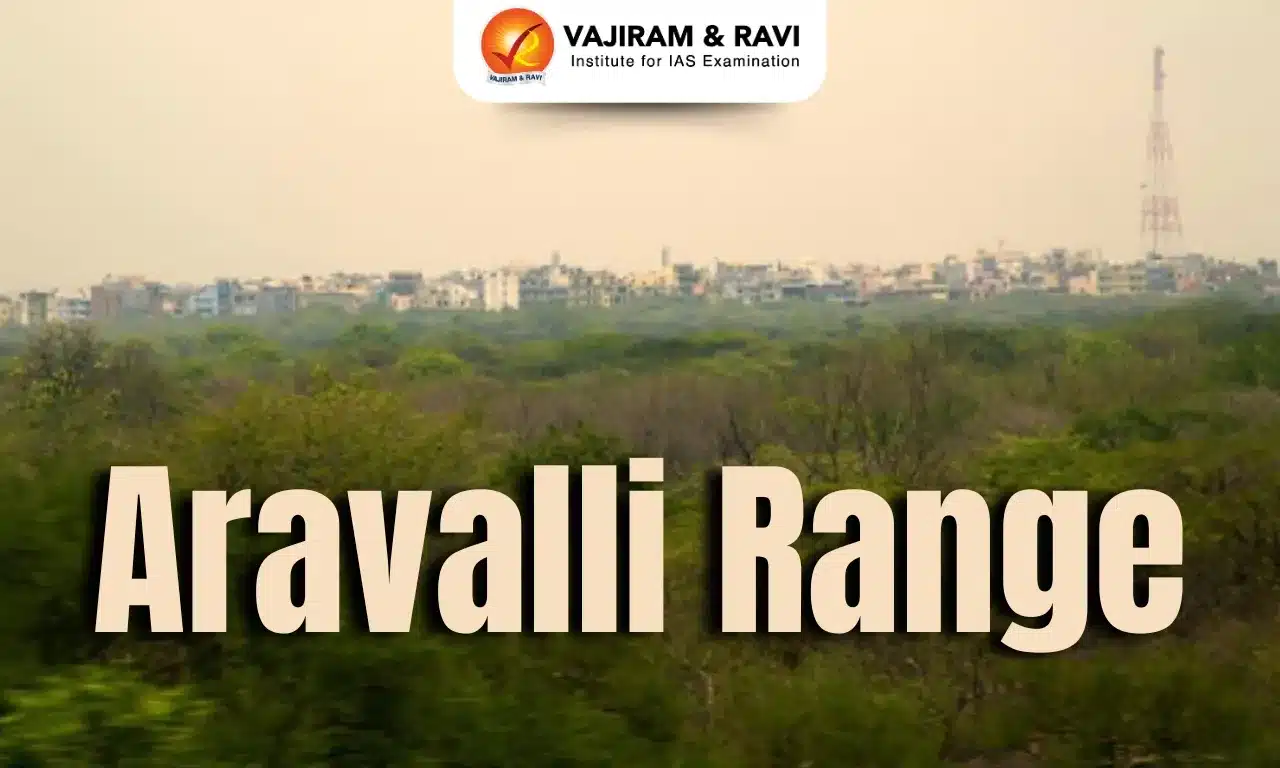
Project Himank

Project Himank

Project Himank Latest News

A rare sighting of the elusive snow leopard recorded by Project Himank in the High Himalayas recently, has drawn attention to successful conservation efforts alongside infrastructure development in the region.

About Project Himank

  • It is a project of the Border Roads Organization (BRO) in the Ladakh region of India, which started in 1985. 
  • Objective: Development of road communication in the Ladakh region.
  • The "Mountain Tamers" as they are called, have been instrumental in creating and maintaining roads and airfields in the most inhospitable terrain and are presently the custodians of approx. 2216.24 km of roads in Ladakh. 
  • The entire area of responsibility of the project falls in high altitude with challenging working conditions and a limited working season.
  • The Project ensures the maintenance of communication and access to strategic areas close to the Line of Actual Control (LAC) with China.
  • It is known for building some of the most motorable roads in the highlands of the world through Khardung La, Tanglang La, Chang La, and Mig La passes.
    • At 19,400 ft, Mig La Pass is the highest motorable road in the world.

Key Facts about Border Roads Organization (BRO)

  • It is a road construction executive force in India that provides support to the Indian Armed Forces.
  • BRO was entirely brought under the Ministry of Defence in 2015.
  • Establishment: It was formed on 7 May 1960 to secure India’s borders and develop infrastructure in remote areas of the north and northeastern states of the country.
  • It develops and maintains road networks in India’s border areas and friendly neighboring countries.
    • This includes infrastructure operations in 19 states and three union territories (including Andaman and Nicobar Islands) and neighboring countries such as Afghanistan, Bhutan, Myanmar, Tajikistan, and Sri Lanka.
    • BRO specialises in constructing and maintaining Roads, Bridges, Tunnels, Airfields and Marine Works across some of the world’s most challenging terrains.
  • The BRO also has an operational role during national emergencies and the outbreak of hostilities, when it provides direct support to the Army in the maintenance of roads in the forward zones and executes other functions specified by the government.
  • It also provides the workforce for the rehabilitation of certain forward airfields of the Indian Air Force during operations.
  • BRO is also included in the Order of Battle of the Armed Forces, ensuring their support at any time.
  • In order to ensure coordination and expeditious execution of projects, the Government of India set up the Border Roads Development Board (BRDB) with the Prime Minister as Chairman of the Board and the Defence Minister as Deputy Chairman.
  • Motto: Shramena Sarvam Sadhyam (everything is achievable through hard work).

Source: TOI

Project Himank FAQs

Q1: What is the primary objective of Project Himank?

Ans: The primary objective of Project Himank is the development of road communication in the Ladakh region.

Q2: When was Project Himank started?

Ans: Project Himank was started in 1985.

Q3: Which organization implements Project Himank?

Ans: Project Himank is implemented by the Border Roads Organization (BRO).

Q4: Which major mountain passes have roads built by Project Himank?

Ans: Project Himank has built roads through Khardung La, Tanglang La, Chang La, and Mig La passes.

Q5: Which pass built under Project Himank is the highest motorable road in the world?

Ans: Mig La Pass, at an altitude of 19,400 feet, is considered the highest motorable road in the world.

PM VIKAS Scheme

PM VIKAS Scheme

PM VIKAS Scheme Latest News

Recently, the union minister of minority affairs informed the Rajya Sabha about the Pradhan Mantri Virasat Ka Samvardhan (PM VIKAS) scheme.

About PM VIKAS Scheme

  • It is a Central Sector Scheme launched in 2025.
  • It focuses on socio-economic empowerment of six notified minority communities.
  • It aims to ensure inclusive growth for not only the minority and artisan communities but also for the youth and women. 

Objectives of PM VIKAS Scheme

  • Skill Development: To build capacity of minority communities through targeted interventions by providing skill training support in need-based courses and ensuring employment.
  • Cultural Preservation: To preserve and promote the cultural heritage including traditional arts and craft forms by propagation of literature/ documents/ manuscripts and showcasing their unique ICH.
  • Educational Support: To provide formal education and certification up to 8th, 10th, and 12th through open schooling to school dropouts from minority communities.
  • Leadership and Entrepreneurship: To empower women from minority communities and instil confidence amongst them by providing leadership and entrepreneurship support.

Key Features of PM VIKAS Scheme

  • The National Minorities Development & Finance Corporation (NMDFC) has been given the responsibility of providing finance to the communities. 
  • School dropouts are given formal education as well as certification.
  • The Export Promotion Council for Handicrafts provides market linkages in order to provide livelihood opportunities for beneficiaries. 
  • The ‘Hub and Spoke’ model is used to establish Vishwakarma Villages to support the artisans and their crafts. 
  • Nodal Ministry: Ministry of Minority Affairs

Source: PIB

PM VIKAS Scheme FAQs

Q1: Which ministry launched the PM VIKAS Scheme?

Ans: Ministry of Minority Affairs

Q2: What is the primary objective of PM VIKAS Scheme?

Ans: To provide skill training and entrepreneurship opportunities to minority communities

Temperate Rainforest, About, Location, Flora, Fauna

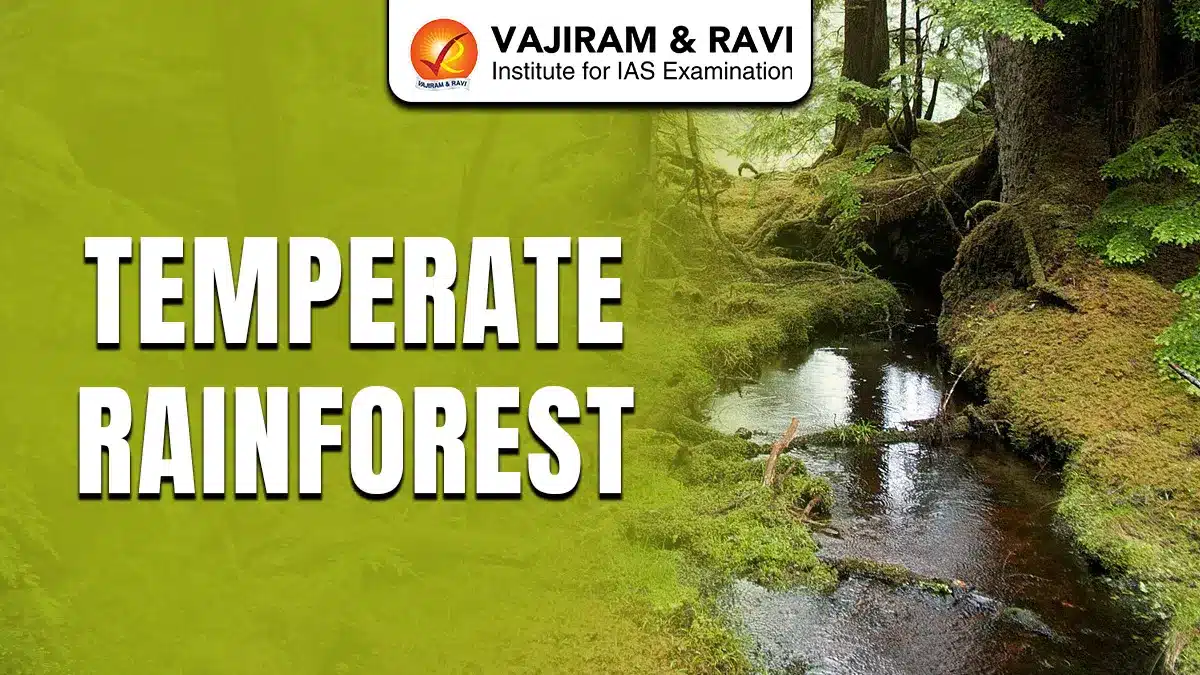
Temperate Rainforest

Temperate Rainforest is a rainforest biome that exists in the temperate region climate. They receive heavy rainfall throughout the year but have a lower average temperature as compared to Tropical Rainforest. They have dense vegetation, which is crucial to maintain the ecological balance.

Temperate Rainforest Location

  • Temperate Rainforest is mainly located between 40° to 60° in both Northern and Southern Hemisphere.
  • They are primarily located along the western coast of the continents, close to the oceans.
  • Some of the major locations are:
    • North America: Pacific Northwest (USA and Canada). It is the home to the world's largest temperate rainforests.
    • South America: Southern Chile
    • Europe: Western Coastal region (UK and Norway)
    • Asia: in some parts of Japan
    • Oceania: Southern Australia and New Zealand
  • The longest stretch of tropical rainforest can be found in northern California north to Alaska and along the coast of Southern Chile.
  • They extend about 1,200 miles from Oregon to Alaska.
  • India does not have any true Temperate Rainforest but some regions of Himalayas show similar characteristics.

Temperate Rainforest Climate

  • The overall climate of Temperate Rainforest varies from mild to moderate and does not experience any extreme heat or cold.
  • The climate is pleasant throughout the year as the temperature rarely rises above 27°C in summer and does not fall below 0° in winters.
  • The two major seasons over here are short, dry but foggy summers and long, wet winters.
  • Due to continuous rainfall, winters are cold and wet, with the ocean winds keeping the temperature moderate.
  • While the summers are dry, cool and foggy and the fog further adds to the moisture pushing the growth of the plantation even when there is no rainfall.
  • The oceanic winds play a major role in keeping the climate moderate, by absorbing the heat in summer and releasing the heat in winters.
  • The mountain ranges contribute to the orographic rainfall and block the extreme continental effects.

Temperate Rainforest Temperature and Precipitation

  • The temperature in these regions varies moderately due to Oceanic influence.
  • In winters the temperature does not fall below 0°C.
  • In summers the temperature varies in the range of 25°C to 27°C.
  • The absence of extreme temperature supports the growth of rich vegetation.
  • The precipitation is very high in these regions, usually varying from 150-300 cm annually.
  • Rainfall in these regions are well distributed throughout the year, thus there is no specific dry season.
  • Winters are the wettest with prolonged rainfall and Summers are comparatively drier but the fog adds to the moisture requirement.

Temperate Rainforest Seasons

  • Temperate Rainforests experience two main seasons rather than four distinct seasons.
  • The winter season is long, cool, and very wet, receiving maximum annual rainfall.
  • Summer season is short, cool, and relatively dry, but marked by frequent fog formation.

Temperate Rainforest Natural Vegetation

  • Temperate Rainforests have a comparatively simpler structure than the tropical rainforests.
  • They have two important layers - the upper tree layer (canopy) and a few very tall trees rising above it.
  • The lower layers are less dense, allowing more sunlight to reach the ground.
  • Because of better light availability, the floor of the forest supports rich plant growth.
  • Mosses, ferns, lichens, and small plants grow widely on the soil, rocks, and tree trunks.
  • During the spring season, trees usually do not have fully grown leaves, so sunlight easily reaches the ground.
  • This helps ground plants to grow, flower, and bear fruits early in the season.
  • As the canopy becomes thicker later, shade-loving plants begin to grow.
  • These plants are specially adapted to survive in low-light conditions.
  • Common trees found in temperate rainforests include oak, beech, birch, maple, walnut, elm, aspen, and sycamore.
  • Many trees are deciduous, shedding leaves in winter, which further increases sunlight on the forest floor.
  • Overall, the vegetation remains green and healthy due to high rainfall and mild temperatures.

Temperate Rainforest Wildlife

  • Temperate rainforests have fewer large mammals as compared to tropical rainforests as the vegetation is seasonal and forest layers are simpler than the tropical rainforests.
  • Despite this, they support a wide variety of animal life.
  • Small mammals such as raccoons, porcupines, red foxes, white-tailed deer, and opossums are commonly found.
  • Animals depend heavily on seasonal food sources like nuts and winged seeds during summer.
  • Fruits from trees such as apple, gooseberry, hawthorn, and rose ripen together in late summer and help animals store fat for winter.
  • Amphibians and reptiles like frogs, salamanders, and turtles thrive due to high moisture levels.
  • Bird life is rich, including woodpeckers, cardinals, hawks, owls, and songbirds.
  • Insects and spiders are found in large numbers and play an important role in the food chain.
  • Many animals show seasonal behaviour, such as migration, hibernation, or food storage, to survive cold winters.
  • Overall, wildlife in temperate rainforests is well adapted to cool climate, high rainfall, and seasonal changes.

Temperate Rainforests Climate Risks

  • The rising global temperature poses a serious threat to the mild and stable climate of the temperate rainforests.
  • The rapidly changing rainfall pattern has reduced the winter rainfall and has made the summer more drier.
  • The warming of oceans has reduced the fog formation in the summers thus reinforcing the dryness in summer.
  • This prolonged long dry period has increased the water stress to the vegetation and has affected the forest health severely.
  • The rising warmer weather is contributing to the growth of invasive pests and pathogens.
  • The rising sea level is increasing the coastal soil salinity and increases the chances of flooding.

Temperate Rainforests Ecological Significance

  • The Temperate Rainforest is home to many rare and endemic plant and animal species.
  • They act as an excellent source of carbon sink, thus reducing the impact of climate change.
  • As it supports a mild, cool and stable climate reducing the temperature extremities, thus providing pleasant weather.
  • Dense vegetation and roots prevents soil erosion.
  • Coastal rainforest reduces the risks of flooding and lessens the impact of storms and other climate vulnerabilities.
  • Many temperate rainforests are declared as UNESCO World Heritage sites, recognizing their significant contribution in maintaining the ecological balance.

Temperate Rainforests Declared as UNESCO World Heritage Sites

  • Gondwana Rainforests of Australia
    • These are the most extensive and rich areas containing many ancient vegetation from the historic Gondwana Supercontinent.
  • Tasmanian Wilderness (Australia)
    • This region has witnessed severe glaciation episodes and constitute one of the last expanses of temperate rainforests in the world. The remains of the limestone caves date back to more than 20,00 years.
  • Hyrcanian Wilderness (Iran/Azerbaijan)
    • This unique forest massif along the Caspian sea in Azerbaijan and Iran. The history of these forests dates back to as long as 25 to 50 million years, when they usually covered most of the Northern Temperate region.
  • Yakushima (Japan)
    • It is located in the interior of Yaku Island, at the meeting point of the Oriental biotic and the Palaearctic region, thus exhibiting a rich floral range.
  • Olympic National Park (USA)
    • It is located in the north-west of Washington State. It is known for its diverse ecosystems. The park includes 100 km of wilderness coastline and offers a best habitat for anadromous fish species as eleven major rivers drain the Olympic mountains.
  • Redwood National and State Parks (USA)
    • It comprises the region of coastal mountains bordering the Pacific Ocean north of San Francisco, which is covered with coastal redwood trees exhibiting the tallest and most impressive trees in the world.

Temperate Rainforests FAQs

Q1: What are temperate rainforests?

Ans: A temperate rainforest is a rainforest biome in the temperate regions of the world.

Q2: Where are they found?

Ans: Temperate rainforests are mostly located between 40° to 60° latitude in both Northern and Southern hemispheres.

Q3: Does India have a temperate rainforest?

Ans: India does not have a true temperate rainforest although some himalayan regions do exhibit similar characteristics.

Q4: What is the climate of the temperate rainforest?

Ans: The climate is mild and moderate, as the winter temperature does not fall below 0°C and in Summers also the temperature range is 25–27°C.

Q5: What kind of vegetation is supported by the temperate rainforests?

Ans: The vegetation is very simple consisting of 2 layers, one is Canopy and the other is emergent trees. Common trees: oak, beech, birch, maple, walnut, elm, aspen, sycamore

Pakhal Wildlife Sanctuary

Pakhal Wildlife Sanctuary

Pakhal Wildlife Sanctuary Latest News

Recently, scientists from the Botanical Survey of India (BSI) have identified a new species of flowering plant in Pakhal Wildlife Sanctuary and named it as Dicliptera pakhalica.

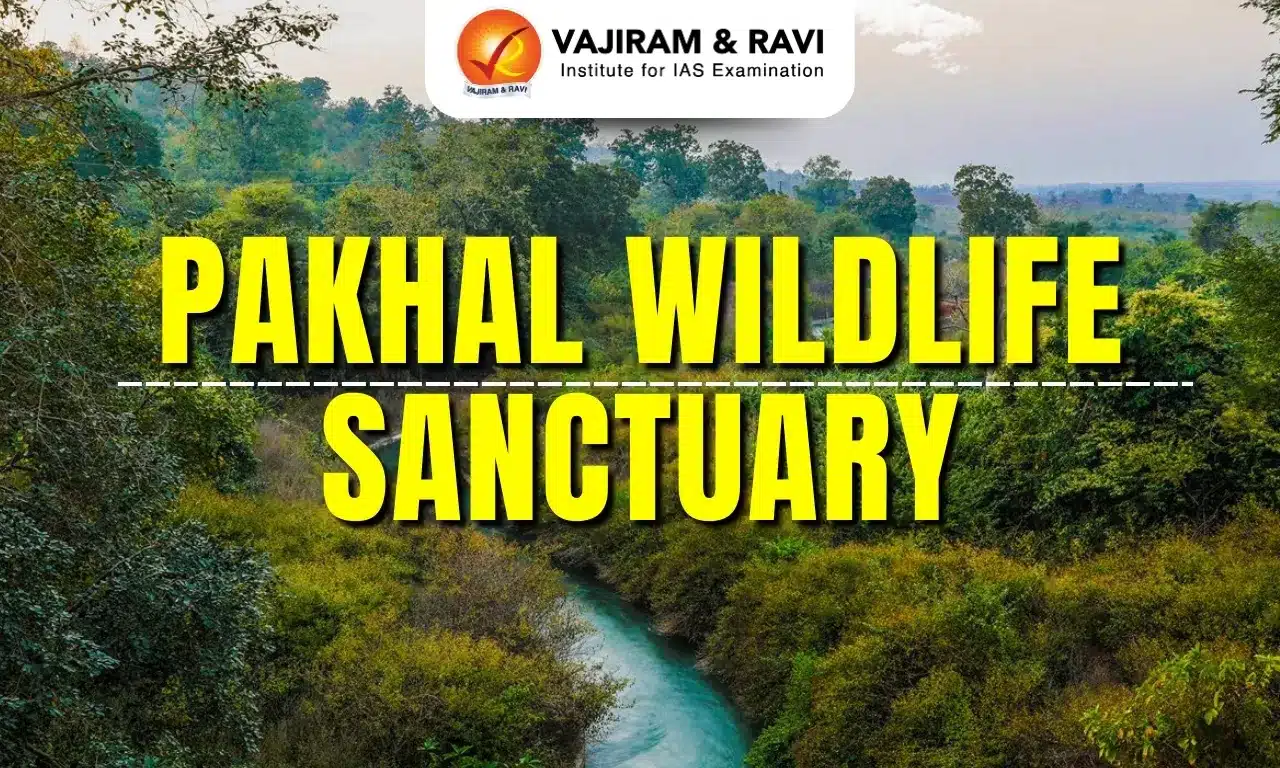
About Pakhal Wildlife Sanctuary

  • Location: It is located in the Warangal district of Telangana.
  • Vegetation: It has mixed deciduous forests.
  • The Pakhal Wildlife Sanctuary houses the Pakhal Lake which was excavated on the orders of King Ganapati Deva of the Kakatiya empire in 1213 AD. 
  • Flora:  It consists of bamboo, teak, and diverse flora, including Terminalia, Pterocarpus, and Mohua. 
  • It also consists of various kinds of herbs, shrubs and climbers.
  • Fauna: Leopard, wild boar, panthers, hyenas, sloth bear, chital, mountain gazelle, blackbuck etc.

Key Facts about Dicliptera pakhalica

  • It is a flowering plant species belongs to the Acanthaceae family
  • Habitat: The plant was found growing along stream banks and rocky areas.
  • It flowers between November and January, with fruiting extending from December to March. 
  • The species occurs in association with other native plants such as Tarenna asiatica, Eranthemum purpurascens, Ruellia prostrata and Mallotus philippensis, among others.

Source: New India Express

Pakhal Wildlife Sanctuary FAQs

Q1: Where is Pakhal Wildlife Sanctuary located?

Ans: Telangana

Q2: What is Pakhal Wildlife Sanctuary known for?

Ans: Pakhal Lake and diverse flora/fauna

Myoglobin

Myoglobin

Myoglobin Latest News

Researchers have developed a flexible, low-cost biosensor capable of detecting myoglobin which is associated with the early stages of a heart attack.

About Myoglobin

  • It is a small protein that accounts for about 2% of total muscle protein. 
  • It is found predominantly in striated muscle tissue, namely skeletal muscle and cardiac muscle.
    • Specifically, it is in the cytoplasm of cardiac myocytes and the sarcoplasm of oxidative skeletal muscle fibers.
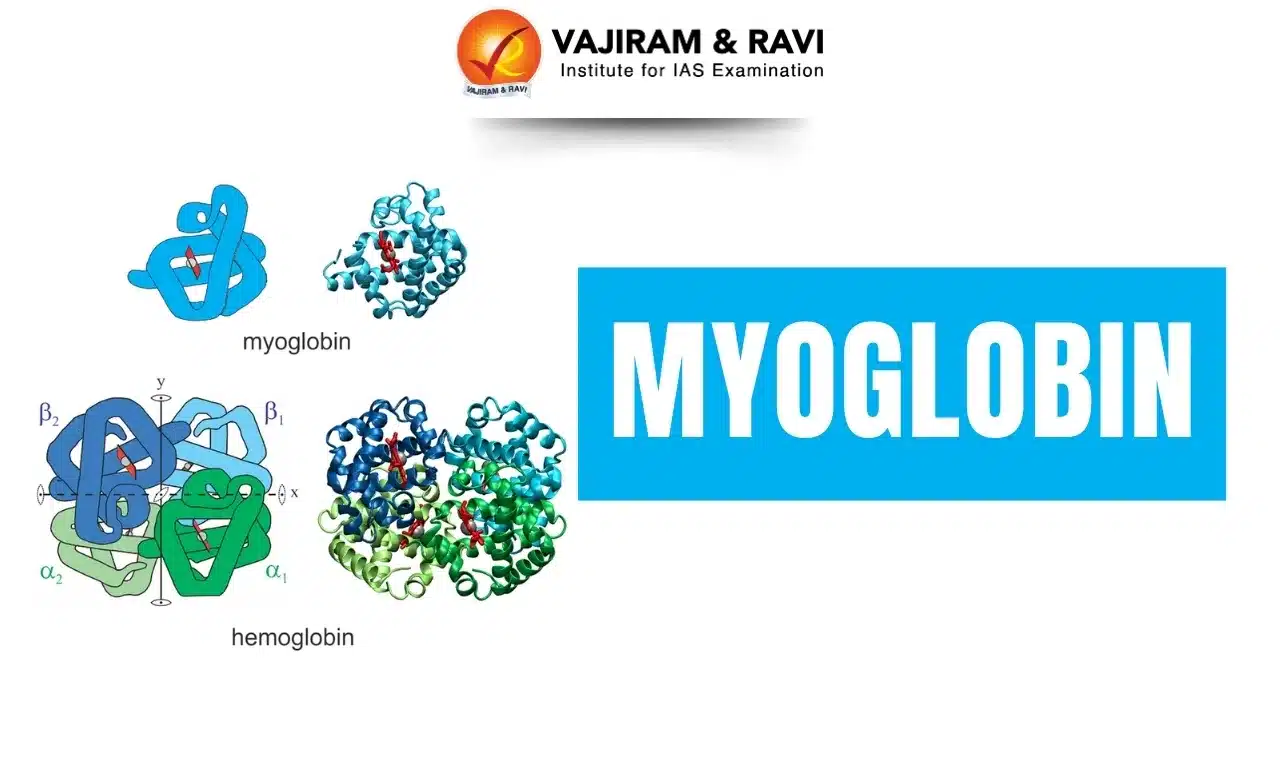
  • It encodes a single polypeptide chain with one oxygen binding site.
  • It is one of the members of the globin superfamily, which also includes hemoglobin. It often gets compared structurally and functionally to hemoglobin.
    • Hemoglobin has four polypeptide chains and four oxygen binding sites. 
  • Composition: It’s made of amino acids, iron and other molecules that work together to hold onto oxygen.

Functions of Myoglobin

  • Transports Oxygen: It transports oxygen from the bloodstream to your muscles when they need it to convert stored energy into movements.
  • It serves as a sensitive indicator of cellular damage when detected in urine or plasma.
  • It serves as a buffer of intracellular oxygen concentrations and as an oxygen reservoir in muscle. 
  • Enzymatic functions: It is necessary for the decomposition of bioactive nitric oxide to nitrate. The removal of nitric oxide enhances mitochondrial respiration.
  • Remove reactive oxygen species: It can do this by interacting with fatty acids.

Source: TH

Myoglobin FAQs

Q1: What is Myoglobin?

Ans: A protein that stores oxygen in muscles

Q2: Where is Myoglobin primarily found?

Ans: Skeletal muscle and cardiac muscle

Tender Years Doctrine

Tender Years Doctrine

Tender Years Doctrine Latest News

The Delhi High Court recently held that the welfare and best interests of minor children must prevail over the application of the Tender Years Doctrine.

About Tender Years Doctrine

  • It is a prominent common law principle in family law and custody jurisprudence. 
  • It presumes that children of "tender age" (generally under 5 years) should remain with their mother unless she is proven unfit. 
  • The doctrine rests on several presumptions:
    • Biological Bond: Infants have a natural attachment to mothers.
    • Nurturing Instinct: Mothers are presumed better caregivers for young children.
    • Developmental Needs: Early childhood requires maternal involvement.
    • Emotional Security: Mother's presence provides psychological stability.
  • It has been in existence since the latter part of the 19th century.
  • The tender years doctrine is often raised in divorce proceedings.
  • However, its relevance has declined due to evolving views on gender equality and parenting roles. 
  • Recent Delhi High Court Ruling:
    • It held that the best interests and welfare of minor children are paramount and must override the application of the Tender Years Doctrine.
    • The court also held that custody disputes must be resolved based on a comprehensive evaluation of the child’s overall well-being rather than stereotypical assumptions regarding parental roles.

Source: VERD

Tender Years Doctrine FAQs

Q1: What is the Tender Years Doctrine?

Ans: The Tender Years Doctrine is a common law principle in family law and child custody jurisprudence.

Q2: What does the Tender Years Doctrine presume?

Ans: It presumes that children of tender age, generally below five years, should remain in the custody of their mother unless she is proven unfit.

Q3: Since when has the Tender Years Doctrine been in existence?

Ans: It has been in existence since the latter part of the 19th century.

Q4: What did the recent Delhi High Court ruling state regarding the Tender Years Doctrine?

Ans: The Delhi High Court held that the best interests and welfare of the minor child must override the application of the Tender Years Doctrine.

Dholpur–Karauli Tiger Reserve

Dholpur–Karauli Tiger Reserve

Dholpur–Karauli Tiger Reserve Latest News

The Rajasthan Forest and environment minister recently said in the Assembly that residents of villages in Dholpur–Karauli Tiger Reserve (DTR) will not be displaced without their consent.

About Dholpur–Karauli Tiger Reserve

  • It is located in the eastern part of Rajasthan, spanning across the Dholpur and Karauli districts.
  • It shares ecological continuity with the Ranthambhore Tiger Reserve to the west and lies close to the Chambal River on the east, which serves as a natural boundary and water source for the region.
  • It was officially declared in 2023, becoming Rajasthan’s fifth tiger reserve and India’s 54th tiger reserve. 
  • It covers an approximate area of 1,111 sq.km.
  • The terrain is characterised by undulating plateaus, rugged hills, ravines, and dry deciduous forests, typical of the Aravalli and Vindhyan ranges.
  • Vegetation: The vegetation primarily consists of dry deciduous forests, interspersed with grassy patches, thorny shrubs, and riverine belts. 
  • Flora: Some of the common tree species found here include:
    • Dhok (Anogeissus pendula) – the dominant tree species across much of the reserve.
    • Khair (Acacia catechu)
    • Tendu (Diospyros melanoxylon)
    • Babool (Acacia nilotica)
  • Fauna
    • The reserve hosts tiger, leopard, sloth bear, Indian wolf, striped hyena, herbivores such as spotted deer, sambar, nilgai, chinkara, and wild boar, and small mammals including Indian hare, porcupine and jungle cat.
    • More than 250 species of birds have been documented here.

Source: TOI

Dholpur–Karauli Tiger Reserve FAQs

Q1: Where is the Dholpur–Karauli Tiger Reserve located?

Ans: It is located in the eastern part of Rajasthan.

Q2: Which river lies close to the eastern boundary of the Dholpur–Karauli Tiger Reserve?

Ans: The Chambal River lies close to its eastern boundary.

Q3: What is the dominant vegetation type found in the Dholpur–Karauli Tiger Reserve?

Ans: The dominant vegetation is dry deciduous forest, along with grassy patches, thorny shrubs, and riverine belts.

Solid Fuel Ducted Ramjet (SFDR) Technology

Solid Fuel Ducted Ramjet (SFDR) Technology

Solid Fuel Ducted Ramjet (SFDR) Technology Latest News

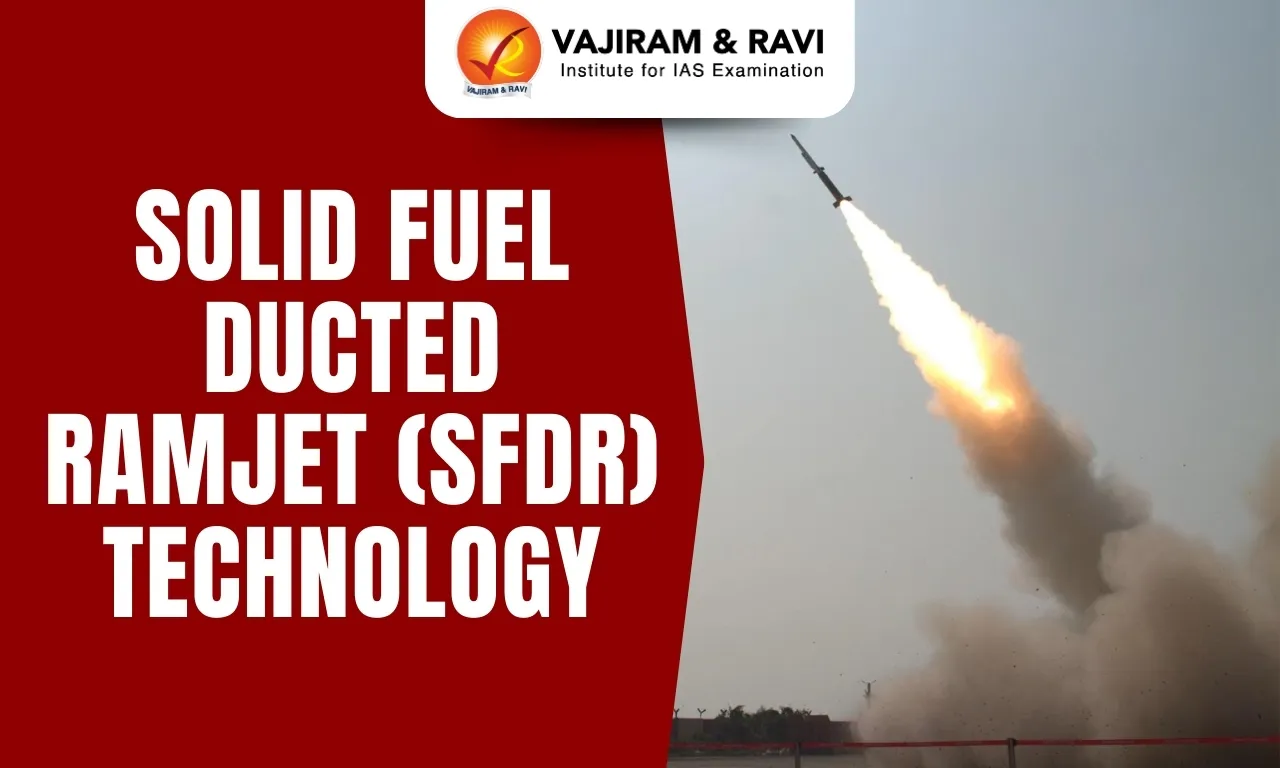
Recently, the Defence Research & Development Organisation (DRDO) has carried out a successful demonstration of Solid Fuel Ducted Ramjet (SFDR) technology from the Integrated Test Range (ITR), Chandipur off the coast of Odisha.

About Solid Fuel Ducted Ramjet (SFDR) Technology

  • It is an advanced air-breathing propulsion system using a solid fuel gas generator.
  • It has been developed by Defence Research and Development Laboratory (DRDL), Hyderabad in collaboration with other DRDO laboratories.
  • Working:
    • It uses solid fuel instead of liquid fuel to make the system simpler, safer, and easier to store and transport.
    • Unlike conventional rockets, SFDR does not carry an oxidiser, making it lighter and more efficient.
    • SFDR provides sustained thrust over a longer duration and allows thrust modulation during flight.
    • The SFDR system allows missiles to fly faster, farther and remain manoeuvrable throughout their flight, unlike conventional rocket-powered missiles.

Significance of Solid Fuel Ducted Ramjet (SFDR) Technology

  • SFDR technology significantly enhances long-range air-to-air missiles by providing sustained propulsion throughout much of the missile’s flight.
  • It places India into an elite league of nations possessing this technology that enables developing long-range air-to-air missiles to give tactical edge over the adversaries.

What is Ramjet?

  • It is a propulsion system that relies on the missile’s high forward speed to compress incoming air, eliminating the need for a compressor and enabling efficient high-speed flight.

Source: PIB

Solid Fuel Ducted Ramjet (SFDR) Technology FAQs

Q1: What type of missiles can SFDR Technology be used for?

Ans: Air-to-air missiles

Q2: What is SFDR Technology?

Ans: A solid fuel-based air-breathing propulsion system

Punatsangchhu-II Hydroelectric Project

Punatsangchhu-II Hydroelectric Project

Punatsangchhu-II Hydroelectric Project Latest News

India and Bhutan recently deliberated on the commercial optimization of power output from the Punatsangchhu-II Hydroelectric Project (1020 MW) and the early commissioning of the Punatsangchhu-I Hydroelectric Project (1200 MW).

About Punatsangchhu-II Hydroelectric Project

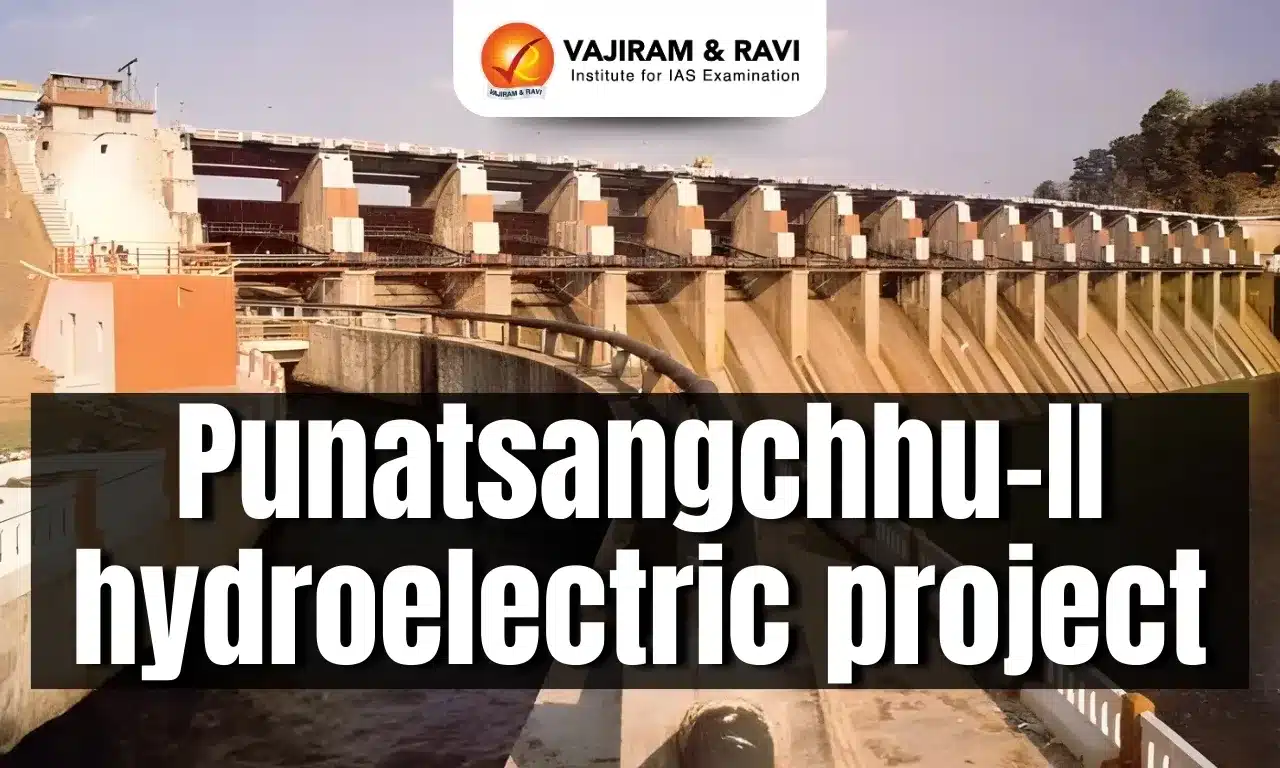
  • It is a 1020 MW run-of-the-river hydroelectric power project.
  • Location: It is located in the Wangdue Phodrang district of Bhutan on the right bank of the Punatsangchhu River.
  • The project is being developed by the Punatsangchhu II Hydroelectric Project Authority, under an Inter-Government Agreement (IGA) between the Royal Government of Bhutan and the Government of India.
  • It is funded by the Government of India (GoI): 30% grant and 70% loan at 10% annual interest, repayable in 30 equated semi-annual installments commencing one year after the mean date of operation. 
  • With the completion of the Punatsangchhu-II project, Bhutan’s installed power generation capacity has increased by about 40 percent to over 3500 MW.
  • The project involves the construction of a 91 m-high and 223.8 m-long concrete gravity dam, along with a diversion tunnel with a discharge capacity of 1118 cubic metres per second.
  • The project also involves a 168.75 m-long and 22 m-high upper cofferdam and a 102.02 m-long and 13.5 m-tall downstream cofferdam.
  • It will comprise an underground powerhouse equipped with six Francis turbines of 170 MW capacity each. 

Key Facts about Punatsangchhu-I Hydroelectric Project

  • It is a 1.2GW run-of-the-river hydroelectric power project.
  • Location: It is located in Wangdue Phodrang district of Bhutan on the left bank of Punatsangchhu River.
  • The project is being developed by Punatsangchhu I Hydroelectric Project Authority, an entity formed under a bilateral agreement signed by the Bhutanese government and the Government of India (GoI) in July 2007.
  • It is funded by the Government of India (GoI): 40% Grant and 60% Loan at 10% annual interest, repayable in 30 equated semi-annual installments commencing one year after the mean date of operation.
  • It is the largest hydro power project to be undertaken in Bhutan in partnership with the Government of India.
  • The project comprises a 130m-high and 239m-long concrete gravity dam. 
  • It involves the construction of two diversion tunnels.
  • The facility includes an underground powerhouse that will generate power via six 200 MW turbines.

Source: TH

Punatsangchhu-II Hydroelectric Project FAQs

Q1: Where is the Punatsangchhu-II Hydroelectric Project located?

Ans: It is located in the Wangdue Phodrang district of Bhutan on the right bank of the Punatsangchhu River.

Q2: What is the installed capacity of the Punatsangchhu-II Hydroelectric Project?

Ans: It has an installed capacity of 1020 MW.

Q3: What type of hydroelectric project is Punatsangchhu-II?

Ans: It is a run-of-the-river hydroelectric project.

Q4: How is the Punatsangchhu-II Hydroelectric Project funded?

Ans: It is funded by the Government of India with 30% as grant and 70% as loan.

Key Facts about Armenia

Key Facts about Armenia

Armenia Latest News

The Chief of Defence Staff (CDS) is leading a high-level defence delegation on a four-day official visit to Armenia to strengthen bilateral defence engagement.

About Armenia

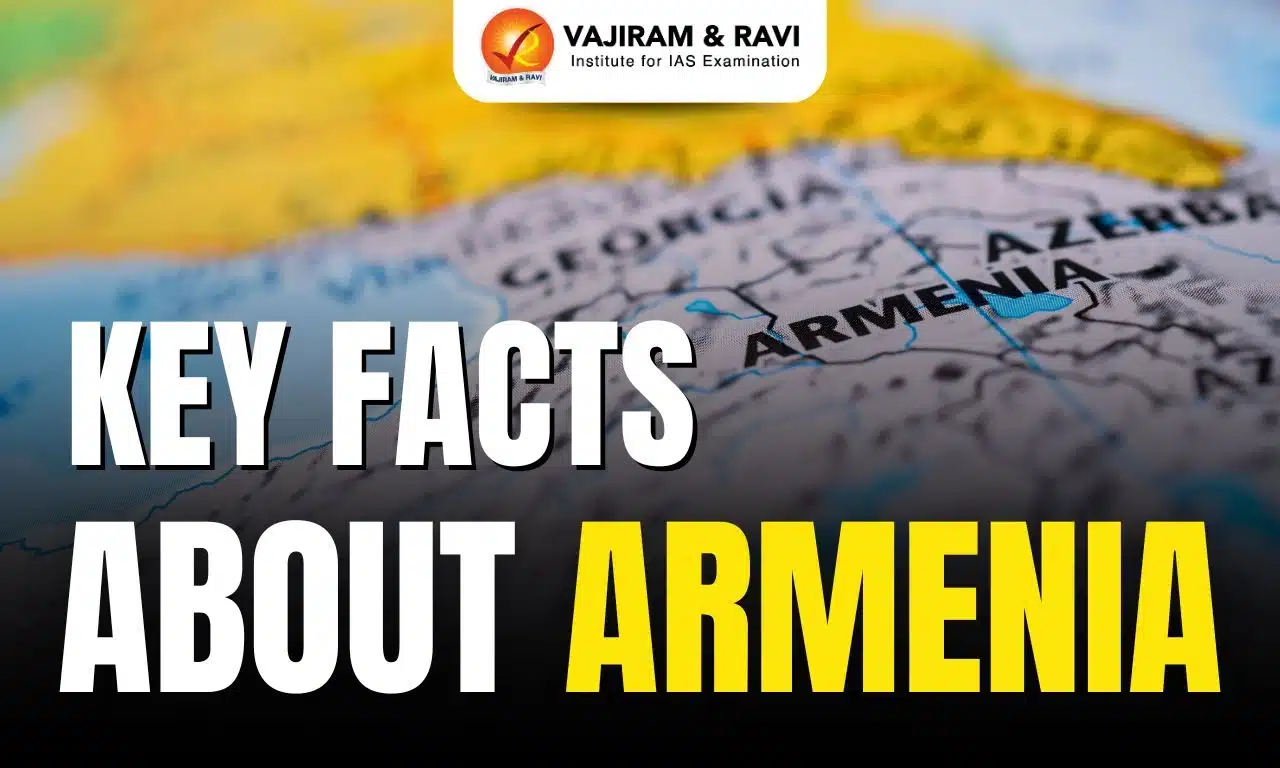
  • Location: It is a landlocked country, located in the south of Caucasus mountain range.
  • Bordering Countries: It is bounded by Georgia in the north, Azerbaijan in the east, Iran in the southeast and Turkey in the west. 
  • Capital: Yerevan.

Geographical Features of Armenia

  • Terrain: The Lesser (or Little) Caucasus Mountains dominate much of Armenia’s landscape. 
  • Much of Armenia’s soil—formed partly by residues of volcanic lava—is rich in nitrogen, potash, and phosphates. 
  • Highest Peak: Mount Aragats (4,090 m) which is an extinct volcanic peak.
  • Climate: Highland continental, hot summers, cold winter climate.
  • Rivers:  Aras, Hrazdan, Arpa, and Vorotan, rivers which provide hydropower and irrigation facilities to the country.
  • Lakes: Lake Sevan is the largest lake of Armenia.
  • Natural resources: Small deposits of gold, copper, molybdenum, zinc, bauxite

Source: New India Express

Armenia FAQs

Q1: What is the capital of Armenia?

Ans: Yerevan

Q2: Which mountain range runs along Armenia's northern border?

Ans: Caucasus

Winter Olympics 2026, Host Country, Motto, India’s Presence

Winter Olympics 2026

The Winter Olympics 2026, officially known as the 25th Winter Olympic Games, is one of the most awaited international sporting events. The Games are popularly called Milano Cortina 2026 and will bring together athletes from across the world to compete in snow and ice sports. The event is organized under the supervision of the International Olympic Committee (IOC) and aims to promote sportsmanship, global unity, and cultural exchange.

Winter Olympics 2026 Host Country

The Winter Olympics 2026 will be hosted by Italy, marking the country’s fourth time hosting the Olympic Games. The event will take place in the northern Italian cities of Milan and Cortina d’Ampezzo, both famous winter sports destinations. The Games aim to showcase Italy’s sports infrastructure, tourism, and cultural heritage on a global platform.

Olympics Logo and Motto

The official logo of the Milano Cortina 2026 Olympics represents modern design, creativity, and unity between the host cities Milan and Cortina d’Ampezzo. It reflects innovation and Italy’s rich artistic culture. The official motto of the Games is “IT’s Your Vibe.” The word “IT” highlights Italy as the host nation and encourages people worldwide to connect with the Olympic spirit and celebrate sports together.

About Winter Olympics 2026

The Winter Olympics 2026 will be hosted in northern Italy. The Games will be jointly hosted by two famous winter sports destinations - Milan and Cortina d’Ampezzo.

Italy has previously hosted the Olympics three times:

  • Winter Olympics 1956 - Cortina d’Ampezzo
  • Summer Olympics 1960 - Rome
  • Winter Olympics 2006 - Turin

The Winter Olympics 2026 Games will be Italy’s fourth Olympic hosting event. Around 2,900 athletes from nearly 90 countries are expected to participate. The Games will include 116 medal events across 16 winter sports disciplines.

A major highlight of the Winter Olympics 2026 Games is the inclusion of a new sport called Ski Mountaineering (Skimo). This sport involves athletes climbing and skiing down mountainous terrains using specialized equipment and techniques.

The official mascot of the Games is Tina, a white stoat symbolizing agility and adaptability in snowy conditions. Another branding element includes “The Flo,” characters inspired by the snowdrop flower, representing hope and resilience.

Olympics History

The Olympic Games have a rich history that dates back thousands of years. They began as a religious and cultural festival in ancient Greece and later evolved into one of the largest international sporting events in the modern world. The journey of the Olympics reflects the development of sports, international cooperation, and global unity.

Ancient Olympic Games

The Ancient Olympic Games started in 776 BCE in Olympia, Greece. These games were organized to honour Zeus, the king of Greek gods. The event was not just a sports competition but also a religious and cultural festival.

Features of Ancient Olympics

  • Held every four years, a period known as an Olympiad.
  • Only free Greek men were allowed to participate.
  • Women were not allowed to compete or watch the Games.
  • Athletes competed without modern equipment and often performed naked, which symbolized strength and equality.
  • Major sports included running, wrestling, boxing, chariot racing, discus throw, javelin throw, and pentathlon.

Decline of Ancient Olympics

The Ancient Olympic Games continued for nearly 12 centuries but were abolished in 393 CE by Roman Emperor Theodosius I. He banned the Games because they were linked to pagan religious practices.

Modern Olympics

  • The Modern Olympic Games were revived by Baron Pierre de Coubertin in the late 19th century.
  • The first Modern Olympics were held in 1896 in Athens, Greece.
  • Around 241 athletes from 14 countries participated in the first modern Games.
  • The Olympics are now organized by the International Olympic Committee (IOC), established in 1894.
  • Women were first allowed to participate in the 1900 Paris Olympics.
  • The Winter Olympic Games were introduced in 1924 in Chamonix, France.
  • The Paralympic Games began in 1960 to promote sports for athletes with disabilities.
  • The Youth Olympic Games started in 2010 to encourage young athletes.
  • The Olympics were cancelled during World War I (1916) and World War II (1940 and 1944).
  • The Games are now divided into Summer Olympics and Winter Olympics, held every four years.
  • The Olympic symbol includes five interlocking rings, representing unity among continents.
  • Modern Olympics promote values such as excellence, friendship, peace, and global unity.

About International Olympics Committee

  • The International Olympic Committee (IOC) is the main governing body of the Olympic Games.
  • It was established in 1894 by Baron Pierre de Coubertin.
  • The headquarters of the IOC is located in Lausanne, Switzerland.
  • The IOC organizes and supervises both Summer and Winter Olympic Games.
  • It selects and approves host cities for the Olympic Games.
  • The IOC promotes Olympic values such as excellence, friendship, and respect.
  • It ensures fair competition and maintains rules and regulations for Olympic sports.
  • The IOC works with National Olympic Committees and international sports federations.
  • It supports athlete development and encourages global participation in sports.
  • The IOC also promotes peace, cultural exchange, and international cooperation through sports.

India’s Presence in Winter Olympics 2026

India’s participation in the Winter Olympics 2026 is expected to be limited but significant, showing the country’s gradual progress in winter sports. Arif Khan, India’s top alpine skier, has qualified in the Slalom event and is likely to represent the country at the Games. Additionally, Abhinav Bindra, India’s first individual Olympic gold medallist, has been selected as a torchbearer, highlighting India’s growing role in the global Olympic movement.

Indian Olympic Association

  • The Indian Olympic Association (IOA) is the official body responsible for India’s participation in the Olympic Games.
  • It was established in 1927 and is recognized by the International Olympic Committee (IOC).
  • The IOA selects and sends Indian athletes to the Olympics, Asian Games, Commonwealth Games, and other international sports events.
  • It works to promote and develop sports across India.
  • The IOA coordinates with national sports federations and training authorities.
  • It supports athlete preparation, training, and participation in global competitions.
  • The IOA also promotes Olympic values such as sportsmanship, unity, and fair play.

Winter Olympics 2026 Significance

  • The Winter Olympics 2026 will promote global unity and international cooperation through sports.
  • It will boost tourism and economic growth in Italy, especially in Milan and Cortina d’Ampezzo.
  • The Games will encourage the development of winter sports and inspire young athletes worldwide.
  • The inclusion of Ski Mountaineering (Skimo) highlights innovation and expansion of Olympic sports.
  • It focuses on sustainable and eco-friendly infrastructure, promoting environmental responsibility.
  • The event will strengthen cultural exchange and showcase Italy’s rich heritage and hospitality.
Other Related Posts
Nobel Prize 2025 Winners List Padma Awards 2026 Winners List
Oscar Award 2025 Indian Olympic Association
Commonwealth Games International Awards List 2025

Winter Olympics 2026 FAQs

Q1: When will the Winter Olympics 2026 be held?

Ans: The Winter Olympics 2026 are scheduled to be held in February 2026.

Q2: Which country is hosting the Winter Olympics 2026?

Ans: Italy is hosting the Winter Olympics 2026.

Q3: Which cities will host the Winter Olympics 2026?

Ans: The Games will be co-hosted by Milan and Cortina d’Ampezzo in northern Italy.

Q4: How many sports will be included in the Winter Olympics 2026?

Ans: The Games will feature 16 winter sports with 116 medal events.

Q5: Which new sport is introduced in the Winter Olympics 2026?

Ans: Ski Mountaineering (Skimo) will make its Olympic debut in 2026.

Ramsar Sites in India, State-wise List, Largest, Smallest & Oldest Sites

ramsar sites in india

India is home to 98 Ramsar Sites across 28 states and union territories, each recognized for its ecological, hydrological, and biodiversity significance. The largest Ramsar site is the Sundarban Wetland in West Bengal (4,230 km²), while the smallest sites include Renuka Lake in Himachal Pradesh and Vembannur Wetland Complex in Tamil Nadu (both under 1 km²). The oldest Ramsar sites, Chilika Lake in Odisha and Keoladeo Ghana National Park in Rajasthan, were designated in 1981, reflecting India’s long-standing commitment to wetland conservation.

What is a Ramsar Site?

A Ramsar Site is a wetland recognized under the Ramsar Convention (1971) for its international importance in conserving biodiversity and sustaining ecological balance. These wetlands provide critical habitats for migratory birds, endangered species, and unique flora and fauna. They help in groundwater recharge, flood control, and climate regulation, while supporting local livelihoods like fishing and agriculture. India currently has 98 Ramsar Sites spread across 28 states and union territories, highlighting the country’s rich wetland diversity.

Ramsar Sites in India State-wise List

India has 98 Ramsar sites spread across 28 states and union territories, each recognized for its ecological, hydrological, and biodiversity significance. These wetlands range from large brackish lagoons to small freshwater lakes, supporting unique flora, fauna, and migratory birds.

Ramsar Sites in India State-wise List

S.No

Ramsar Site

State/UT

Designated Year

Area (km²)

1

Kolleru Lake

Andhra Pradesh

2002

901

2

Deepor Beel

Assam

2002

40

3

Kanwar (Kabar) Taal

Bihar

2020

26.2

4

Nagi Bird Sanctuary

Bihar

2023

2

5

Nakti Bird Sanctuary

Bihar

2023

3.3

6

Nanda Lake

Goa

2022

0.42

7

Khijadia WLS

Gujarat

2021

6

8

Nalsarovar BS

Gujarat

2012

123

9

Thol Lake

Gujarat

2021

6.99

10

Wadhvana Wetland

Gujarat

2021

10.38

11

Bhindawas WLS

Haryana

2021

4.11

12

Sultanpur NP

Haryana

2021

142.5

13

Chandra Taal

Himachal Pradesh

2005

0.49

14

Pong Dam Lake

Himachal Pradesh

2002

156.62

15

Renuka Lake

Himachal Pradesh

2005

0.2

16

Ranganathituu BS

Karnataka

2022

5.18

17

Magadi Kere Conservation Reserve

Karnataka

2024

0.5

18

Ankasamudra Bird Conservation Reserve

Karnataka

2024

0.98

19

Aghanashini Estuary

Karnataka

2024

4.8

20

Ashtamudi Wetland

Kerala

2002

614

21

Sasthamkotta Lake

Kerala

2002

3.73

22

Vembanad-Kol Wetland

Kerala

1905

1,512.5

23

Bhoj Wetland

Madhya Pradesh

2002

32

24

Sakhya Sagar

Madhya Pradesh

2022

2.48

25

Sirpur Wetland

Madhya Pradesh

2022

1.61

26

Yashwant Sagar

Madhya Pradesh

2022

8.22

27

Tawa Reservoir

Madhya Pradesh

2024

200

28

Lonar Lake

Maharashtra

2020

4.27

29

Nandur Madhameshwar

Maharashtra

2019

14

30

Thane Creek

Maharashtra

2022

65.21

31

Loktak Lake

Manipur

1990

266

32

Pala Wetland

Mizoram

2021

18.5

33

Ansupa Lake

Odisha

2021

2.31

34

Bhitarkanika Mangroves

Odisha

2002

650

35

Chilika Lake

Odisha

1981

1,165

36

Hirakud Reservoir

Odisha

2021

654

37

Satkosia Gorge

Odisha

2021

981.97

38

Tampara Lake

Odisha

2021

3

39

Beas CnR

Punjab

2019

64

40

Harike Wetland

Punjab

1990

41

41

Kanjli Wetland

Punjab

2002

1.83

42

Keshopur-Miani CmR

Punjab

2019

34

43

Nangal WLS

Punjab

2019

1

44

Ropar Wetland

Punjab

2002

13.65

45

Keoladeo National Park

Rajasthan

1981

28.73

46

Sambhar Lake

Rajasthan

1990

240

47

Chitrangudi BS

Tamil Nadu

2021

2.6

48

Gulf of Mannar Marine BR

Tamil Nadu

2022

526.72

49

Kanjirankulam BS

Tamil Nadu

2022

0.96

50

Karikili BS

Tamil Nadu

2022

0.584

51

Koonthankulam BS

Tamil Nadu

2021

0.72

52

Pallikaranai Marsh Reserve Forest

Tamil Nadu

2022

12.475

53

Pichavaram Mangrove

Tamil Nadu

2022

14.786

54

Point Calimere WLS & BS

Tamil Nadu

2002

389

55

Suchindram Theroor Wetland Complex

Tamil Nadu

2022

0.94

56

Udhayamarthandapuram BS

Tamil Nadu

2022

0.44

57

Vaduvur BS

Tamil Nadu

2022

1.12

58

Vedanthangal BS

Tamil Nadu

2022

0.4

59

Vellode BS

Tamil Nadu

2022

0.77

60

Vembannur Wetland Complex

Tamil Nadu

2022

0.2

61

Karaivetti Bird Sanctuary

Tamil Nadu

2024

4.5

62

Longwood Shola Reserve Forest

Tamil Nadu

2024

1.16

63

Nanjarayan Bird Sanctuary

Tamil Nadu

2024

1.3

64

Kazhuveli Bird Sanctuary

Tamil Nadu

2024

1,513

65

Rudrasagar Lake

Tripura

2005

2.4

66

Hokera Wetland

UT of Jammu & Kashmir

2005

13.75

67

Hygam Wetland CnR

UT of Jammu & Kashmir

2022

8.02

68

Shallbugh Wetland CnR

UT of Jammu & Kashmir

2022

16.75

69

Surinsar-Mansar Lakes

UT of Jammu & Kashmir

2005

3.5

70

Wular Lake

UT of Jammu & Kashmir

1990

189

71

Tso Kar

UT of Ladakh

2020

95.77

72

Tsomoriri

UT of Ladakh

2002

120

73

Bakhira WLS

Uttar Pradesh

2021

28.94

74

Haiderpur Wetland

Uttar Pradesh

2021

69

75

Nawabganj BS

Uttar Pradesh

2019

2

76

Parvati Arga BS

Uttar Pradesh

2019

7

77

Saman BS

Uttar Pradesh

2019

5

78

Samaspur BS

Uttar Pradesh

2019

8

79

Sandi BS

Uttar Pradesh

2019

3

80

Sarsai Nawar Jheel

Uttar Pradesh

2019

2

81

Sur Sarovar (Keetham Lake)

Uttar Pradesh

2020

4.31

82

Upper Ganga River (Brijghat to Narora)

Uttar Pradesh

2005

265.9

83

Asan Barrage

Uttarakhand

2020

4.44

84

East Kolkata Wetlands

West Bengal

2002

125

85

Sundarban Wetland

West Bengal

2019

4,230

86

Sakkarakottai Bird Sanctuary

Tamil Nadu

2025

87

Therthangal Bird Sanctuary

Tamil Nadu

2025

88

Khecheopalri Wetland

Sikkim

2025

89

Udhwa Lake

Jharkhand

2025

90

Khichan (Phalodi)

Rajasthan

2025

91

Menar (Udaipur)

Rajasthan

2025

92

Gokul Jalashay

Bihar

2025

93

Udaipur Jheel

Bihar

2025

94

Gogabeel Lake

Bihar

2025

-

95

Siliserh Lake

Rajasthan

2025

-

96

Kopra Jalashay

Chhattisgarh

2025

-

97

Patna Bird Sanctuary

Uttar Pradesh

2026

-

98

Chhari-Dhand

Kutch (Gujarat)

2026

-

Newly Added Ramsar Sites in India

In 2025 and 2026, India added 13 new Ramsar Sites, reflecting its ongoing commitment to wetland conservation and biodiversity protection. These sites span several states and union territories, including Tamil Nadu, Chhattisgarh, Sikkim, Jharkhand, Rajasthan, and Bihar.

Newly Added Ramsar Sites in India

S.No

Ramsar Site

State/UT

Designated Year

1

Sakkarakottai Bird Sanctuary

Tamil Nadu

2025

2

Therthangal Bird Sanctuary

Tamil Nadu

2025

3

Khecheopalri Wetland

Sikkim

2025

4

Udhwa Lake

Jharkhand

2025

5

Khichan (Phalodi)

Rajasthan

2025

6

Menar (Udaipur)

Rajasthan

2025

7

Gokul Jalashay

Bihar

2025

8

Udaipur Jheel

Bihar

2025

9

Gogabeel Lake

Bihar

2025

10

Siliserh Lake

Rajasthan

2025

11

Kopra Jalashay

Chhattisgarh

2025

12

Patna Bird Sanctuary

Uttar Pradesh

2026

13

Chhari-Dhand

Kutch (Gujarat)

2026

Ramsar Sites in India Description

This table provides a comprehensive list of all 98 Ramsar Sites in India, including their state/UT and a brief description highlighting ecological, cultural, and conservation importance. It serves as a handy reference for understanding India’s wetlands and their significance for biodiversity, migratory birds, and local livelihoods.

Ramsar Sites in India Description

S.No

Ramsar Site

State/UT

Description

1

Kolleru Lake

Andhra Pradesh

Nutrient-rich freshwater lake between Godavari and Krishna basins, supports fisheries and agriculture; endangered Spot-Billed Pelican.

2

Deepor Beel

Assam

Permanent freshwater lake near Guwahati; habitat for Grey Pelican, Lesser & Greater Adjutant Storks, Baer’s Pochard.

3

Kanwar Taal

Bihar

Oxbow lake in Indo-Gangetic plain; hosts critically endangered vultures and waterbirds like Baer’s Pochard.

4

Nagi Bird Sanctuary

Bihar

Created from damming Nagi River; wintering site for Baer’s Pochard and steppe eagle; large bar-headed goose congregation.

5

Nakti Bird Sanctuary

Bihar

Man-made wetland from Nakti Dam; habitat for red-crested pochard and vulnerable catfish.

6

Gokul Jalashay

Bihar

Oxbow lake on Ganga’s southern edge; supports 50+ bird species; local communities depend on it for fishing and agriculture.

7

Udaipur Jheel

Bihar

Oxbow lake in Udaipur WLS; home to 280 plant species and migratory birds including vulnerable common pochard.

8

Nanda Lake

Goa

Freshwater marsh near Zuari River; supports aquatic biodiversity despite small size (0.42 km²).

9

Khijadia WLS

Gujarat

Freshwater wetland in Jamnagar; endangered Pallas’s Fish-Eagle, Indian Skimmer, and Bdellium-Tree.

10

Nalsarovar BS

Gujarat

Largest natural freshwater lake in Thar Desert; supports endangered Indian Wild Ass and Sociable Lapwing.

11

Thol Lake

Gujarat

Human-made reservoir; supports Blackbucks and endangered birds like White-Rumped Vulture.

12

Wadhvana Wetland

Gujarat

Semi-arid man-made wetland; habitat for Pallas’s Fish-Eagle, Sarus Crane, Common Pochard.

13

Bhindawas WLS

Haryana

Human-made freshwater wetland; hosts Egyptian Vultures and Pallas’s Fish-Eagle.

14

Sultanpur NP

Haryana

Near Delhi; IBA wetland supporting Sociable Lapwing, Egyptian Vultures, Saker Falcon, Black-Bellied Tern.

15

Chandra Taal

Himachal Pradesh

High-altitude lake; habitat for Snow Leopard, Himalayan Ibex, Blue Sheep; threatened by overgrazing.

16

Pong Dam Lake

Himachal Pradesh

Reservoir on Beas River; lies on Trans-Himalayan Flyway for migratory waterfowl.

17

Renuka Lake

Himachal Pradesh

Freshwater wetland with karst formations; named after sage Parshuram’s mother.

18

Udhwa Lake

Jharkhand

Oxbow wetland; supports Oriental White-Backed Vulture, Pallas’s Fish Eagle, Lesser Adjutant.

19

Aghanashini Estuary

Karnataka

Free-flowing river estuary; mangroves support fish, prawns, and bird diversity; important nutrient cycling.

20

Ankasamudra Bird CnR

Karnataka

Near Hampi; 175 bird species including 11 IUCN-listed species; nesting and breeding site.

21

Magadi Kere CnR

Karnataka

Saline wetland attracting migratory waterfowl; hosts bar-headed goose, Grey & Purple Herons.

22

Ranganathituu BS

Karnataka

Part of Kaveri River; habitat for Mugger Crocodile, Smooth-Coated Otter, Painted Stork, Grey Pelican.

23

Ashtamudi Wetland

Kerala

Backwater ecosystem; second-largest estuary in Kerala; supports fisheries and National Waterway 3.

24

Sasthamkotta Lake

Kerala

Largest freshwater lake in Kerala; exceptionally pure water supporting diverse aquatic life.

25

Vembanad-Kol Wetland

Kerala

Largest brackish lake in Kerala; supports paddy cultivation and migratory birds; second-largest Ramsar site in India.

26

Bhoj Wetland

Madhya Pradesh

Two human-made lakes in Bhopal; habitat for Sarus Crane.

27

Sakhya Sagar

Madhya Pradesh

Reservoir near Madhav National Park; hosts Mugger, Smooth-Coated Otter, Hump-Backed Mahseer.

28

Sirpur Wetland

Madhya Pradesh

Human-made wetland in Indore; supports Common Pochard, Egyptian Vulture, Indian River Tern.

29

Tawa Reservoir

Madhya Pradesh

Within Satpura Tiger Reserve; fish spawning ground and habitat for Indian giant squirrel.

30

Yashwant Sagar

Madhya Pradesh

IBA wetland in Indore region; important for migratory and resident birds.

31

Lonar Lake

Maharashtra

Meteorite crater lake; hypersaline and alkaline, hosts haloarchaea producing pink pigment.

32

Nandur Madhameshwar

Maharashtra

Created by Godavari-Kadwa confluence; hosts leopards and endangered bird species.

33

Thane Creek

Maharashtra

Large brackish water creek; fringed by mangroves; supports flamingos and diverse avifauna.

34

Loktak Lake

Manipur

Largest freshwater lake in northeast India; features floating phumdis and Keibul Lamjao, the only floating national park.

35

Pala Wetland

Mizoram

Natural lake in Indo-Burma hotspot; supports Sambar Deer, Barking Deer, Hoolock Gibbon.

36

Ansupa Lake

Odisha

Freshwater oxbow of Mahanadi River; largest freshwater lake in Odisha; endangered birds and fish.

37

Bhitarkanika Mangroves

Odisha

Part of Bhitarkanika WLS; supports Olive Ridley Turtles, Saltwater Crocodiles.

38

Chilika Lake

Odisha

India’s first Ramsar site (1981); brackish water lagoon; home to Irrawaddy dolphins; major migratory bird hub.

39

Hirakud Reservoir

Odisha

Large earthen dam; moderates floods in Mahanadi delta.

40

Satkosia Gorge

Odisha

Mosaic of rivers and forests; home to tigers and endangered turtles.

41

Tampara Lake

Odisha

Formed during 1766 battle; now connected to Rushikulya River for flood control.

42

Beas CnR

Punjab

189 km stretch of Beas River; hosts Indus River dolphin and reintroduced Gharial.

43

Harike Wetland

Punjab

Shallow reservoir at Beas-Sutlej confluence; important for migratory birds.

44

Kanjli Wetland

Punjab

Associated with Guru Nanak; freshwater wetland supporting local biodiversity.

45

Keshopur-Miani CmR

Punjab

Mosaic of marshes and ponds; supports Common Pochard, Spotted Pond Turtle.

46

Nangal WLS

Punjab

Bhakra-Nangal reservoir; historically significant; endangered Indian Pangolin and Leopard.

47

Ropar Wetland

Punjab

Formed by Sutlej River barrage; supports Smooth Indian Otter, Hog Deer, Sambar.

48

Keoladeo NP

Rajasthan

Complex of seasonal marshes; invasive grasses threaten Siberian Crane; on Montreux Record in 1990.

49

Sambhar Lake

Rajasthan

India’s largest inland saltwater lake; wintering site for flamingos.

50

Khichan Wetland

Rajasthan

Thar Desert wetland; wintering site for migratory demoiselle cranes.

51

Menar Wetland Complex

Rajasthan

Monsoon-fed freshwater ponds; supports vultures, waterbirds, and local flora.

52

Khecheopalri Wetland

Sikkim

Sacred lake in Demazong valley; revered by Hindus and Buddhists; near Kanchenjunga.

53

Chitrangudi BS

Tamil Nadu

IBA adjacent to Kanjirankulam; supports Grey Pelican, Painted Stork, Little Egret.

54

Gulf of Mannar Marine BR

Tamil Nadu

First marine biosphere reserve in South Asia; Dugong, Hawksbill Turtle, Humpback Dolphin.

55

Kanjirankulam BS

Tamil Nadu

Affected by invasive Prosopis trees; hosts Painted Stork, Oriental Darter.

56

Karaivetti BS

Tamil Nadu

Irrigation tank; freshwater feeding ground for migratory birds like Bar-headed Goose.

57

Karikili BS

Tamil Nadu

Near Kanchipuram; supports Oriental Darter, Spot-Billed Pelican.

58

Kazhuveli BS

Tamil Nadu

Brackish lake; important migratory bird path and spawning ground for fish.

59

Koonthankulam BS

Tamil Nadu

Human-made wetland; IBA maintained by local community.

60

Longwood Shola RF

Tamil Nadu

Urban shola forest in Nilgiris; retains water, regulates microclimate.

61

Nanjarayan BS

Tamil Nadu

Historical freshwater lake; nesting habitats for waterbirds and flapshell turtles.

62

Pallikaranai Marsh RF

Tamil Nadu

Coastal marsh; buffers Chennai floodwaters.

63

Pichavaram Mangrove

Tamil Nadu

Large mangrove forest; spiritual value; supports endangered birds and Olive Ridley Turtle.

64

Point Calimere WLS & BS

Tamil Nadu

Last remnants of dry evergreen forests; hosts Spoon-Billed Sandpiper and Grey Pelican.

65

Suchindram Theroor Wetland Complex

Tamil Nadu

IBA; inland perennial man-made tank on Central Asian flyway.

66

Udhayamarthandapuram BS

Tamil Nadu

Stores monsoon floodwaters; maintains dry-season water flow.

67

Vaduvur BS

Tamil Nadu

Large human-made tank; shelter for migratory birds.

68

Vedanthangal BS

Tamil Nadu

Freshwater wetland; protected by locals; guano enriches agriculture.

69

Vellode BS

Tamil Nadu

Supports Indian River Tern, Oriental Darter, Painted Stork.

70

Vembannur Wetland Complex

Tamil Nadu

Human-made inland tank; habitat for Spot-Billed Pelican and Spotted Greenshank.

71

Karaivetti BS

Tamil Nadu

Freshwater lake; attracts migratory waterbirds.

72

Rudrasagar Lake

Tripura

Reservoir fed by perennial streams; habitat for Three-Striped Roof Turtle.

73

Hokera Wetland

UT of JK

Natural wetland near Srinagar; hosts White-Eyed Pochard.

74

Hygam Wetland CnR

UT of JK

Downstream of Wular Lake; threatened by siltation.

75

Shallbugh Wetland CnR

UT of JK

Prevents flooding; supports Steppe Eagle, Pallas’s Fish-Eagle.

76

Surinsar-Mansar Lakes

UT of JK

Composite freshwater lake; semi-arid Punjab plains; linked to Mahabharata mythology.

77

Wular Lake

UT of JK

Largest freshwater lake in India; fed by Jhelum; supports rich biodiversity.

78

Tso Kar

UT of Ladakh

High-altitude hypersaline and freshwater lakes; breeding site for Black-Necked Cranes.

79

Tsomoriri

UT of Ladakh

Freshwater-brackish lake; only breeding site in India for Black-Necked Cranes and Bar-Headed Geese.

80

Bakhira WLS

Uttar Pradesh

Freshwater marsh near Gorakhpur; hosts Egyptian Vultures, Greater Spotted Eagle.

81

Haiderpur Wetland

Uttar Pradesh

Formed by Madhya Ganga Barrage; supports Gharial, Golden Mahseer, Hog Deer.

82

Nawabganj BS

Uttar Pradesh

Shallow marsh near Lucknow; renamed Chandra Shekhar Azad BS; Egyptian Vulture and Pallas’s Fish Eagle.

83

Parvati Arga BS

Uttar Pradesh

Freshwater oxbow lakes; home to Red-Headed Vulture, Indian Vulture.

84

Saman BS

Uttar Pradesh

Seasonal oxbow lake on Ganges floodplain; Sarus Crane, Greater Spotted Eagle.

85

Samaspur BS

Uttar Pradesh

Perennial lowland marsh; Egyptian Vulture, Pallas’s Fish Eagle.

86

Sandi BS

Uttar Pradesh

Freshwater wetland; supports Sarus Crane.

87

Sarsai Nawar Jheel

Uttar Pradesh

Marsh; name from Sarus Crane; pilgrimage site nearby.

88

Sur Sarovar (Keetham Lake)

Uttar Pradesh

Created for Agra water supply; supports Greater Spotted Eagle.

89

Upper Ganga River

Uttar Pradesh

Stretch from Brijghat to Narora; endangered Ganges River Dolphin and Gharial.

90

Asan Barrage

Uttarakhand

Formed by damming Asan River; supports Red-Headed Vulture, White-Rumped Vulture, Baer’s Pochard.

91

East Kolkata Wetlands

West Bengal

Multiple-use wetland; feeds world’s largest wastewater-fed aquaculture.

92

Sundarban Wetland

West Bengal

Largest Ramsar site in India; mangrove forest; Northern River Terrapin, Irrawaddy Dolphin.

93

Newly Added Sites (2025 and 2026)

Multiple States

Includes Sakkarakottai BS, Therthangal BS (TN), Khecheopalri Wetland (Sikkim), Udhwa Lake (Jharkhand), Khichan (Rajasthan), Menar (Rajasthan), Gokul Jalashay, Udaipur Jheel (Bihar), Gogabeel Lake (Bihar), Siliserh Lake (Rajasthan), and Kopra Jalashay (Chhattisgarh), Patna Bird Sanctuary and Chhari-Dhand.

Ramsar Sites in India Largest, Smallest and Oldest

The detailed list of Lagest, Smallest and Oldest Ramsar Sites in India have been listed below.

The Sundarban Wetland, Kazhuveli Bird Sanctuary, and Vembanad-Kol Wetland are among India’s largest Ramsar sites, spanning over 1,500 km² each. These wetlands play a crucial role in biodiversity conservation, supporting diverse flora, fauna, and migratory birds.

Largest Ramsar Sites in India

Rank

Ramsar Site

State

Area (km²)

1

Sundarban Wetland

West Bengal

4,230

2

Kazhuveli Bird Sanctuary

Tamil Nadu

1,513

3

Vembanad-Kol Wetland

Kerala

1,512.5

4

Chilika Lake

Odisha

1,165

5

Satkosia Gorge

Odisha

981.97

6

Kolleru Lake

Andhra Pradesh

901

Renuka Lake, Vembannur Wetland Complex, and Vedanthangal Bird Sanctuary are India’s smallest Ramsar sites, each under 1 km² in area. Despite their size, these sites are ecologically significant, providing critical habitats for endangered species and local communities.

Smallest Ramsar Sites in India

Rank

Ramsar Site

State

Area (km²)

1

Renuka Lake

Himachal Pradesh

0.2

2

Vembannur Wetland Complex

Tamil Nadu

0.2

3

Vedanthangal BS

Tamil Nadu

0.4

4

Nanda Lake

Goa

0.42

5

Udhayamarthandapuram BS

Tamil Nadu

0.44

Chilika Lake and Keoladeo Ghana National Park were the first Indian wetlands recognized under the Ramsar Convention in 1981. They are internationally renowned for their rich biodiversity, especially migratory waterbirds, and long-standing conservation importance.

Oldest Ramsar Sites in India

Rank

Ramsar Site

Year of Designation

1

Chilika Lake

1981

2

Keoladeo Ghana NP

1981

Importance of Ramsar Sites in India

Ramsar sites are wetlands of international importance that support biodiversity, regulate water cycles, and sustain livelihoods of local communities. They play a vital role in flood control, groundwater recharge, and climate regulation. 

  • Provide habitat for migratory and endangered species.
  • Support fisheries, agriculture, and tourism-based livelihoods.
  • Act as natural water purifiers and carbon sinks.
  • Help in flood mitigation and groundwater replenishment.
  • Contribute to climate regulation and ecosystem services.

Montreux Record in India

The Montreux Record is a register of Ramsar sites facing ecological changes due to human activities or natural factors. Inclusion highlights wetlands requiring priority conservation and restoration efforts. There are only 2 Ramsar Sites in India in the Montreux Record.

Indian Ramsar Sites on the Montreux Record

Ramsar Site

State

Reason for Inclusion

Year Listed

Keoladeo Ghana National Park

Rajasthan

Water shortage and unbalanced grazing

1990

Loktak Lake

Manipur

This lake is affected by factors such as human-induced changes and pollution

1993

Also Check Other Posts
Biosphere Reserves in India National Parks in India
Waterfalls in India Highest Peak in India
Ramsar Sites in India Wildlife Sanctuaries in India
Dams in India Tiger Reserves in India
Mountain Passes in India Longest Bridge in India

Ramsar Sites in India FAQs

Q1: What is a Ramsar Site?

Ans: A Ramsar Site is a wetland designated as being of international importance under the Ramsar Convention (1971) for its biodiversity, ecological, and hydrological value.

Q2: How many Ramsar Sites are there in India?

Ans: India has 96 Ramsar Sites spread across 28 states and union territories.

Q3: Which is the largest Ramsar Site in India?

Ans: The Sundarban Wetland in West Bengal is the largest Ramsar Site in India, covering 4,230 km².

Q4: Which is the smallest Ramsar Site in India?

Ans: The Renuka Lake (Himachal Pradesh) and Vembannur Wetland Complex (Tamil Nadu) are the smallest Ramsar Sites, each under 1 km².

Q5: Which are the oldest Ramsar Sites in India?

Ans: Chilika Lake (Odisha) and Keoladeo Ghana National Park (Rajasthan), both designated in 1981, are the oldest Ramsar Sites.

Exercise Khanjar-XIII

Exercise Khanjar-XIII

Exercise Khanjar-XIII Latest News

The 13th edition of the joint military Exercise KHANJAR between India and Kyrgyzstan begins recently at Misamari in Sonitpur district of Assam.

About Exercise Khanjar-XIII

  • It is the 13th edition of the annual India-Kyrgyzstan Joint Special Forces Exercise.
    • Exercise Khanjar was first initiated in December 2011, in Nahan, India.
    • Since then, the exercise has been held alternatively in India and the Kyrgyz Republic every year.
  • Khanjar-XIII Location: Misamari in the Sonitpur district of Assam
  • The 14-day-long military exercise aims to enhance interoperability between the Special Forces of both nations.
  • The 2026 exercise will focus on joint operations in urban warfare and counter-terrorism scenarios under the United Nations mandate.
  • The training modules will include close-quarter battle techniques, room intervention procedures, hostage-rescue simulations, counter-terrorism operations, and joint tactical manoeuvres.

Source: NOA

Exercise Khanjar-XIII FAQs

Q1: What is Exercise Khanjar?

Ans: Exercise Khanjar-XIII is an annual joint special forces exercise between India and Kyrgyzstan.

Q2: When was Exercise Khanjar first initiated?

Ans: Exercise Khanjar was first initiated in December 2011.

Q3: Where was the first edition of Exercise Khanjar held?

Ans: The first edition was held in Nahan, India.

Q4: Where is Khanjar-XIII being conducted?

Ans: Khanjar-XIII is being conducted at Misamari in the Sonitpur district of Assam.

Daily Editorial Analysis 4 February 2026

Daily Editorial Analysis

India’s Next Industrial Shift — Electrons Over Molecules

Context

  • For more than a century, industrial growth has been driven by the combustion of fossil fuels. Coal, oil, and gas supplied heat and motion through molecules, shaping factories, transport systems, and global trade.
  • This paradigm is now being replaced by one centred on electrons, delivered through electricity networks.
  • The shift toward electrification is no longer only an environmental objective; it is a defining factor in economic competitiveness, trade access, and resilience.
  • Countries that rapidly electrify production, particularly with clean power, are better positioned to attract capital and jobs. In this emerging landscape, China has moved decisively ahead, while India faces a pivotal moment in determining its industrial future.

Conceptual Framework: Molecules versus Electrons

  • The contrast between molecules and electrons offers a clear framework for understanding the energy transition.
  • Molecules such as coal, oil, and gas are burned directly in engines, furnaces, and boilers. Electrons, supplied through the grid, power electric motors and digitally controlled processes.
  • Electrification delivers significant efficiency gains: electric motors convert over 90% of energy into useful work, compared with less than 35% for combustion engines.
  • These gains enable higher automation, better process control, and faster decarbonisation as electricity generation shifts toward cleaner sources.
  • As a result, each incremental increase in electrification displaces a disproportionately large amount of fossil fuel use.

China’s Electron-First Industrial Strategy

  • China’s approach demonstrates how electrification can be used as a deliberate industrial strategy.
  • Nearly half of its industrial energy consumption now comes from electricity, with a growing share sourced from renewables.
  • This transformation has been enabled by sustained investment in generation capacity, ultra-high-voltage transmission, flexible substations, and grid-scale storage.
  • Rather than relying on on-site fuel combustion, factories are designed to run on reliable grid power.
  • Sectoral outcomes illustrate this shift. In steel production, electric arc furnaces have expanded rapidly through policies supporting scrap recycling and preferential electricity tariffs.
  • In cement, electrification of grinding, materials handling, and advanced controls has reduced fuel intensity, while waste heat recovery supplies a meaningful share of energy demand.
  • Although process emissions remain unavoidable, pilots for carbon capture indicate long-term planning.
  • Together, these measures strengthen manufacturing competitiveness in markets where carbon intensity increasingly influences trade decisions.

India’s Starting Point and Structural Constraints

  • India has expanded electricity capacity rapidly and is a global leader in annual solar additions.
  • Despite this progress, industrial electricity accounts for only about one quarter of energy use, while green electricity remains a small fraction of final demand.
  • Three structural constraints explain this gap. First, legacy reliance on on-site combustion continues to lock firms into molecule-based systems. Second, uneven power quality discourages all-electric process design.
  • Third, policy has prioritised generation capacity more than industrial adoption of electricity.
  • Without addressing these constraints, Indian industry risks falling behind as global markets tighten carbon standards.

Sectoral Pathways for India’s Transition

  • India nevertheless has viable pathways to accelerate the transition. Around one-third of steel production already uses electric arc furnaces, providing a foundation for expansion.
  • Improving scrap collection and linking incentives to clean power could raise this share, particularly as the European Union’s CBAM reshapes global trade.
  • In cement, support for electrified kilns, large-scale waste heat recovery, and carbon capture hubs could significantly reduce fuel use per tonne over the coming decade.
  • For MSMEs, which often depend on coal boilers and diesel generators, the challenge is access rather than technology.
  • Concessional finance for electric boilers, pooled procurement of renewable power, and technical assistance are essential.
  • Embedding digitalisation in new industrial clusters can further reduce energy waste, enable demand response, and generate auditable emissions data demanded by international buyers.

Strategic Importance Beyond Climate Goals

  • The shift from molecules to electrons extends beyond climate mitigation. Low-carbon production is increasingly central to exports, influencing buyer preferences and supply-chain contracts.
  • Electrification enhances energy security by reducing exposure to volatile imported fuel prices.
  • It also strengthens economic sovereignty, allowing industries to locate based on skills and logistics rather than proximity to fossil fuel resources.

Conclusion

  • The emerging industrial race is defined by the speed and quality of electrification.
  • China’s experience shows that directing clean electricity into industry delivers durable advantages in productivity and trade. India must respond with equal ambition.
  • Future efforts must focus not only on adding capacity but on ensuring that electricity flows into factories, workshops, and industrial parks.
  • Accelerated grid investment, mandated electrification in new clusters, and targeted support for smaller firms are critical.
  • The next phase of global industry will be written in electrons rather than molecules, and India’s ability to compete will depend on how decisively it acts now.

India’s Next Industrial Shift — Electrons Over Molecules FAQs

Q1. What does the shift from molecules to electrons signify in modern industry?
Ans. It signifies a transition from direct fossil fuel combustion to electricity-driven production that improves efficiency, automation, and decarbonisation.

Q2. Why does electrification improve industrial energy efficiency?
Ans. Electrification improves efficiency because electric motors convert over 90% of input energy into useful work, far more than combustion engines.

Q3. How has China used electrification to strengthen manufacturing competitiveness?
Ans. China has invested heavily in grid infrastructure and clean electricity to redesign industrial processes around reliable, low-carbon power.

Q4. What are the main structural constraints limiting India’s industrial electrification?
Ans. India faces legacy dependence on fossil fuels, uneven power quality, and policies that focus more on generation than industrial adoption.

Q5. Why is industrial electrification important beyond climate change goals?
Ans. Industrial electrification enhances export competitiveness, improves energy security, and strengthens economic sovereignty.

Source: The Hindu


AI’s Next Investment Cycle Belongs to Applications

Context

  • The artificial intelligence industry has entered a critical phase. After years of rapid expansion and heavy capital deployment, the central issue has shifted from technical capability to long-term profitability.
  • Massive spending on compute power, data centres and foundational systems has proven that AI can function at scale, but not that it can consistently generate profits.
  • The emerging evidence shows that durable value is being created not at the level of infrastructure, but through practical AI applications that solve real business problems.

The Limits of Infrastructure-Led Growth and The Rise of AI Applications and Real Demand

  • The Limits of Infrastructure-Led Growth

    • The AI sector has been shaped by unprecedented investment in infrastructure, reaching hundreds of billions of dollars annually.
    • Despite this scale, foundational AI providers continue to struggle financially. Operating margins remain thin due to high inference costs and intense competition among model providers, which suppresses pricing power.
    • Even firms reporting strong revenue growth often remain unprofitable, relying on external funding to offset operational losses.
    • A further weakness of this model is the prevalence of circular spending. Much reported revenue originates within the AI ecosystem itself, particularly through discounted compute arrangements between large technology firms.
    • This dynamic inflates revenue figures while masking limited external demand, raising concerns about the sustainability of infrastructure-driven growth.
  • The Rise of AI Applications and Real Demand

    • In contrast, AI applications show clear signs of genuine market traction.
    • Corporate spending on applied AI tools has grown rapidly, reflecting widespread adoption rather than experimentation.
    • These tools are increasingly embedded in daily operations across industries, driving efficiency and cost savings.
    • The commercial success of application-focused companies is evident in their recurring revenue, with multiple products reaching substantial annual income levels within a short time frame.
    • This performance demonstrates that customers are willing to pay for AI systems that deliver concrete outcomes, validating application-led business models and highlighting the limits of purely technological differentiation.

Investment Shifts and Market Validation

  • Market behaviour among investors further confirms this shift. Capital is increasingly flowing toward AI firms with proven products, stable customers and clear paths to profitability.
  • Strategic acquisitions now focus on application providers rather than infrastructure assets, reflecting confidence in businesses that offer immediate operational value.
  • High-profile purchases of young but revenue-generating AI companies illustrate this trend.
  • These deals reward speed to market, usability and customer relevance, reinforcing the idea that successful AI strategies prioritise execution over scale alone.

Departmental AI and the Concentration of Value

  • The strongest concentration of AI value is found in departmental AI tools, particularly those designed for coding.
  • These applications represent the largest share of departmental AI spending and enjoy exceptionally high daily usage rates among developers.
  • Their success is driven by clear gains in productivity, making their value immediately measurable.
  • Large technology firms have responded by acquiring application-focused startups that enhance employee efficiency and automate routine tasks.
  • These transactions underline the growing consensus that AI’s economic contribution is maximised when tools are tightly aligned with specific job functions.

Applications as the Driver of Model Success

  • Shifts within the enterprise AI market further support the primacy of applications.
  • Changes in market share among leading models have been driven less by technical superiority and more by dominance in high-value use cases such as software development.
  • This demonstrates that applications generate demand for underlying models, reversing the assumption that better models naturally lead to better businesses.
  • As AI systems mature, the greatest returns accrue to companies offering integrated solutions rather than standalone model access.
  • Deep integration into organisational workflows creates switching costs and long-term customer dependence, strengthening profitability over time.

Policy and Regulatory Challenges

  • The expansion of AI applications raises complex policy questions.
  • As large AI providers move downstream into applications, competition risks intensify, potentially disadvantaging smaller innovators.
  • At the same time, AI solutions tailored to specific verticals increase exposure to legal issues around data use, privacy and accountability.
  • Effective regulation must balance oversight with flexibility. Overly restrictive rules could suppress experimentation, while weak enforcement may allow dominant firms to stifle competition.
  • The goal should be to preserve market openness while protecting users and maintaining trust.

Conclusion

  • The evolution of AI mirrors earlier technological revolutions.
  • Just as the Internet derived its value from services built on top of connectivity, AI will be monetised through applications that convert computational power into business results.
  • Infrastructure enables progress, but applications deliver innovation and lasting economic impact.
  • As capital markets and policymakers refocus on fundamentals, the future of AI is increasingly defined by usefulness, integration and real-world outcomes rather than scale alone.

AI’s Next Investment Cycle Belongs to Applications FAQs

Q1. Why is AI infrastructure alone no longer sufficient for long-term success?
Ans. AI infrastructure alone is insufficient because high costs and competition prevent it from achieving sustainable profitability.

Q2. What indicates that AI applications have real market demand?
Ans. Strong customer adoption and high recurring revenues show that AI applications meet real business needs.

Q3. Why are investors shifting focus toward AI applications?
Ans. Investors prefer AI applications because they generate measurable value, stable revenues, and clearer paths to profitability.

Q4. Which area of AI applications shows the strongest value creation?
Ans. Departmental AI, especially coding tools, shows the strongest value creation due to direct productivity gains.

Q5. What regulatory challenge arises as AI companies expand into applications?
Ans. Competition concerns increase as large AI providers may disadvantage smaller firms by controlling both models and applications.

Source: The Hindu

Daily Editorial Analysis 4 February 2026 FAQs

Q1: What is editorial analysis?

Ans: Editorial analysis is the critical examination and interpretation of newspaper editorials to extract key insights, arguments, and perspectives relevant to UPSC preparation.

Q2: What is an editorial analyst?

Ans: An editorial analyst is someone who studies and breaks down editorials to highlight their relevance, structure, and usefulness for competitive exams like the UPSC.

Q3: What is an editorial for UPSC?

Ans: For UPSC, an editorial refers to opinion-based articles in reputed newspapers that provide analysis on current affairs, governance, policy, and socio-economic issues.

Q4: What are the sources of UPSC Editorial Analysis?

Ans: Key sources include editorials from The Hindu and Indian Express.

Q5: Can Editorial Analysis help in Mains Answer Writing?

Ans: Yes, editorial analysis enhances content quality, analytical depth, and structure in Mains answer writing.

India-U.S. Trade Deal 2026 – Strategic Significance

Trade Deal 2026

Trade Deal 2026 Latest News

  • India has committed to importing goods worth $100 billion annually from the U.S. for five years as part of a broader trade understanding that also involves significant tariff reductions. 

Background: India-U.S. Trade Relations

  • India and the United States share a rapidly expanding trade relationship, shaped by strategic convergence, supply chain realignments, and geopolitical considerations. 
  • The U.S. is India’s largest trading partner, accounting for a substantial share of India’s exports in services, pharmaceuticals, engineering goods, and IT.
  • However, trade ties have also witnessed friction, particularly over tariffs, market access, digital trade, and agriculture. 
  • In August 2025, the U.S. raised tariffs on Indian goods to 50%, citing trade imbalances. 
  • This escalation set the stage for renewed negotiations aimed at stabilising bilateral trade while protecting domestic interests.

Key Features of the India-U.S. Trade Deal

  • Large-Scale Import Commitment
    • India has committed to importing $100 billion worth of U.S. goods annually for five years, more than double the $45.62 billion imported in FY25. The imports will primarily include:
      • Energy products (oil, gas, coal), Aircraft and aircraft parts, Technology and high-value manufactured goods, Precious metals, Nuclear-related equipment and Selected agricultural products 
  • Tariff Reduction by the United States
    • As part of the understanding, the U.S. agreed to reduce tariffs on Indian goods to 18%, down from the earlier 50%. 
    • This rollback improves market access for Indian exporters and restores competitiveness in sectors such as engineering goods, textiles, and auto components.
  • Protection of Sensitive Sectors
    • Despite opening its market to a wide range of U.S. products, India has maintained explicit protection for sensitive sectors, including:
      • Genetically modified agricultural products, the dairy sector, Poultry, maize, cereals, and corn
    • This calibrated approach reflects India’s long-standing policy of shielding small farmers and food security from external shocks.

Agriculture and Market Access Framework

  • India has allowed quota-based or limited access for select agricultural commodities such as cotton, pulses, chestnuts, and onions. 
  • Market access has also been extended to apples, wine, spirits, and beer, products already permitted under trade agreements with other partners like the EU and New Zealand.
  • The government has consistently reiterated that no compromise has been made on farmer welfare

Strategic and Economic Rationale

  • Addressing Trade Imbalances
    • The deal aims to reduce persistent U.S. trade deficits in goods, particularly in agriculture. 
    • For India, the arrangement helps ease tariff pressure while ensuring continuity of access to the U.S. market.
  • Energy Security and Diversification
    • Large-scale energy imports from the U.S. support India’s energy diversification strategy, reducing overdependence on volatile regions and strengthening long-term supply stability.
  • Geopolitical Significance
    • Beyond economics, the deal reinforces India-U.S. strategic alignment amid shifting global trade patterns, decoupling pressures, and competition with China. 
    • Trade is increasingly being used as a tool of diplomacy and strategic reassurance.

Concerns and Criticisms

  • Fiscal and Trade Deficit Risks
    • Committing to fixed import values may constrain India’s trade flexibility and widen the merchandise trade deficit if exports do not grow proportionately.
  • Farmer and MSME Concerns
    • Farmer groups have expressed apprehensions that surplus U.S. agricultural produce could eventually seek deeper access to Indian markets, affecting domestic prices and livelihoods.
  • Absence of a Formal FTA
    • Despite its scale, the arrangement stops short of a full-fledged Free Trade Agreement (FTA), leaving uncertainties about dispute resolution mechanisms and long-term enforceability.

Way Forward

  • India will need to closely monitor implementation, ensure safeguard mechanisms remain robust, and simultaneously push for export expansion in services, manufacturing, and technology. 
  • Strengthening domestic competitiveness and productivity will be critical to maximising gains from the deal.

Source: TH | IE

Trade Deal 2026 FAQs

Q1: What is the core commitment under the India–U.S. Trade Deal?

Ans: India will import $100 billion worth of U.S. goods annually for five years.

Q2: Which sectors dominate India’s planned imports from the U.S.?

Ans: Energy, aircraft parts, technology goods, precious metals, and select agricultural products.

Q3: How did the U.S. respond to tariffs under the deal?

Ans: The U.S. reduced tariffs on Indian goods from 50% to 18%.

Q4: Are Indian farmers protected under the agreement?

Ans: Yes, sensitive sectors like dairy, GM crops, and staples remain protected.

Q5: Is this deal a formal Free Trade Agreement?

Ans: No, it is a large trade understanding, not a comprehensive FTA.

World Cancer Day 2026, Theme, History, Significance

World Cancer Day 2026

World Cancer Day 2026, observed on 4 February, is a global initiative to raise awareness about cancer and promote prevention, early detection, and treatment. The theme for this year, “United by Unique”, focuses on patient-centred care and the individual experience of cancer. It was established in 2000 during the World Cancer Summit in Paris; the day has grown into a worldwide movement uniting countries in the fight against cancer. Its significance lies in educating people, reducing stigma, and improving access to quality cancer care for all.

World Cancer Day 2026 Theme

The theme for World Cancer Day 2026 (4 February) is “United by Unique”. It is part of a three-year campaign (2025-2027) led by the Union for International Cancer Control (UICC). The theme highlights the unique personal experience of every cancer patient.

It also encourages a global, united effort to improve cancer care for all.

World Cancer Day 2026 History

  • World Cancer Day was established in 2000 during the World Cancer Summit Against Cancer for the New Millennium, held in Paris, France.
  • The Charter of Paris Against Cancer was adopted at the summit, calling for global cooperation to reduce cancer cases and deaths.
  • The Union for International Cancer Control (UICC) was given the responsibility to lead and coordinate World Cancer Day globally.
  • Since its beginning, World Cancer Day has grown into a worldwide movement observed in more than 100 countries.
  • Today, it plays an important role in shaping cancer awareness campaigns, public health policies, and global action against cancer.

What is Cancer?

Cancer is a group of diseases characterized by the uncontrolled growth and spread of abnormal cells in the body. If left untreated, these cells can invade surrounding tissues and spread to other parts of the body, a process known as metastasis.

Common Causes of Cancer

  • Tobacco use: Smoking and chewing tobacco are the leading causes of cancer, especially lung, oral, throat, and esophageal cancers.
  • Unhealthy diet: High intake of processed foods, red meat, and low consumption of fruits and vegetables increases cancer risk.
  • Physical inactivity & obesity: Lack of exercise and excess body weight are linked to breast, colorectal, and endometrial cancers.
  • Alcohol consumption: Excessive alcohol intake raises the risk of liver, breast, mouth, and throat cancers.
  • Infections: Certain infections like HPV, Hepatitis B & C, and Helicobacter pylori can lead to cancer.
  • Genetic factors: Inherited gene mutations can increase susceptibility to specific cancers.
  • Environmental pollution: Exposure to air pollution, chemicals, and toxins contributes to cancer development.
  • Radiation exposure: Prolonged exposure to ultraviolet (UV) rays and ionizing radiation increases cancer risk.
  • Occupational hazards: Long-term exposure to asbestos, pesticides, and industrial chemicals can cause cancer.

World Cancer Day 2026 Significance

  • Raises awareness about cancer: World Cancer Day helps people understand different types of cancer, their causes, symptoms, and the importance of early detection.
  • Promotes early diagnosis and screening: It encourages regular medical check-ups and screening, which can greatly increase survival chances and reduce deaths.
  • Encourages cancer prevention: The day spreads awareness about healthy lifestyles such as avoiding tobacco, eating nutritious food, exercising regularly, and limiting alcohol use.
  • Supports equal access to cancer care: World Cancer Day highlights the need for affordable and quality cancer treatment for all, regardless of income or location.
  • Focuses on patient-centred care: In line with the theme “United by Unique”, it emphasizes caring for patients as individuals, addressing emotional, social, and mental needs.

Strengthens global cooperation: It brings together governments, health organizations, NGOs, and communities worldwide to work together in the fight against cancer.

World Cancer Day 2026 FAQs

Q1: When is World Cancer Day 2026 observed?

Ans: World Cancer Day 2026 is observed on 4 February 2026.

Q2: What is the theme of World Cancer Day 2026?

Ans: The theme is “United by Unique”, focusing on patient-centred care and recognizing each person’s unique experience with cancer.

Q3: Who organizes World Cancer Day?

Ans: World Cancer Day is led by the Union for International Cancer Control (UICC), a global organization dedicated to cancer control.

Q4: Why is World Cancer Day important?

Ans: It raises awareness about cancer, promotes prevention, encourages early diagnosis, reduces stigma, and advocates for equitable access to treatment.

Q5: Is cancer preventable?

Ans: Many cancers are preventable by avoiding risk factors such as tobacco and alcohol, maintaining a healthy lifestyle, getting vaccinated, and undergoing regular screenings.

Solid Waste Management Rules 2026: Key Changes Explained

Solid Waste Management Rules 2026

Solid Waste Management Rules 2026 Latest News

  • The Solid Waste Management Rules, 2026, notified by the Union Ministry of Environment, Forest and Climate Change, will come into force on April 1, 2026, replacing the 2016 framework. 
  • The new rules comprehensively overhaul waste management by urban and rural local bodies, emphasising waste reduction, reuse, segregation, and at-source processing. 
  • By discouraging dependence on large landfills and dumping yards, the rules aim to promote decentralised, sustainable, and circular approaches to managing India’s growing solid waste challenge.

Rationale Behind the Introduction of New Rules

  • As per Central Pollution Control Board’s 2023-24 data, India is facing a severe solid waste management crisis:
    • Annual waste generation: over 620 lakh tonnes
    • Daily waste generation: around 1.85 lakh tonnes
    • Daily collection: 1.79 lakh tonnes
    • Daily processing/treatment: 1.14 lakh tonnes
    • Daily landfilling: 39,629 tonnes
  • Despite the Solid Waste Management Rules, 2016, large quantities of waste continue to be poorly segregated and dumped in landfills, leading to environmental and public health risks.
  • To address this, the 2026 Rules aim to:
    • Reduce dependence on landfills
    • Improve segregation and accountability
    • Shift towards a circular economy, where waste is treated as a resource
    • Strengthen compliance through penalties and digital monitoring

How Are the 2026 Rules Different from the 2016 Rules

  • While retaining the core principles of segregation, recycling, and scientific disposal introduced in 2016, the 2026 Rules introduce stricter obligations, expanded segregation, and stronger enforcement mechanisms.

Waste Hierarchy Introduced

  • The Solid Waste Management Rules, 2026 lay down a clear waste hierarchy that prioritises prevention and minimisation of waste over disposal. 
  • The hierarchy follows the sequence of prevention, reduction, reuse, recycling, recovery, with disposal permitted only as a last resort, signalling a move away from landfill-dependent waste management.

Four-Way Waste Segregation

  • To operationalise this hierarchy, the rules introduce a four-way segregation system, expanding the earlier wet–dry classification.
    • Wet waste: biodegradable household waste
    • Dry waste: recyclable materials such as paper, plastic, metal, and glass
    • Sanitary waste: items like sanitary napkins, tampons, and condoms
    • Special-care waste: hazardous or sensitive items including medicines, paint cans, bulbs, and tube lights
  • Urban local bodies are mandated to support segregation through appropriate infrastructure. 
  • This includes green bins for wet waste, blue bins for dry waste, and red bins for sanitary waste, particularly in public toilets where such waste is generated.

Enhanced Responsibilities of Bulk Waste Generators

  • Definition of Bulk waste Generators - Entities meeting any one of the following:
    • Built-up area of 20,000 sq m or more
    • Water consumption of 40,000 litres/day or more
    • Waste generation of 100 kg/day or more
  • Covered entities include:
    • Residential societies and gated communities
    • Malls, hotels, restaurants
    • Colleges, universities, hostels
    • Government departments and large townships
  • New obligations:
    • Mandatory segregation at source
    • Hand over recyclable waste to authorised entities
    • All gated communities, RWAs, hotels and restaurants, and institutions with over 5,000 sq m area must comply within one year
  • The 2016 Rules had weaker enforcement for bulk generators.

Polluter Pays Principle and Environmental Compensation

  • Environmental compensation for:
    • Failure to register on the centralised portal
    • False reporting or forged documents
    • Improper waste handling and segregation
  • Higher landfill fees for mixed or unsegregated waste
  • Landfilling made financially disincentivising
  • Role of CPCB: To frame detailed guidelines on compensation and penalties.
    • This marks a shift from advisory compliance to deterrence-based regulation.

Centralised Tracking and Digital Monitoring System

  • Introduction of a centralised online portal to track: Waste generation; Collection; Transportation; Processing; Disposal.
  • Mandatory registration for:
    • Bulk waste generators
    • Urban and rural local bodies
    • Waste transporters and processors
    • Waste pickers
    • Railways, airports, SEZs and large authorities
  • This addresses data gaps and weak monitoring seen under the 2016 Rules.

Impact on Bulk Generators Including Housing Societies

  • Under the new rules, bulk waste generators are brought under an extended responsibility regime, similar to the Extended Producer Responsibility (EPR) applicable to manufacturers of electronic and plastic products.
  • This framework will become operational once urban local bodies (ULBs) notify by-laws by March 2027 incorporating provisions of the new rules.

Mandatory Registration and Certification-Based Compliance

  • Bulk generators—such as housing societies, colleges, large townships, commercial complexes and institutions—will be required to:
    • Register on a centralised online portal
    • Submit mandatory waste accounting data
    • Follow certification-based compliance, replacing the earlier self-declaration model
  • This system introduces verifiable accountability for waste generation and handling.

Segregation and On-Site Waste Processing Obligations

  • Mandatory four-way segregation of waste (wet, dry, sanitary and special-care)
  • Strong emphasis on at-source processing of wet waste, preferably through:
    • On-site composting, or
    • Other approved decentralised alternatives

Alternative Compliance through Certification

  • Where on-site processing is not feasible, bulk generators may procure compliance certificates from Urban local bodies, or Authorised waste processing facilities.
  • These certificates will serve as proof that waste has been scientifically processed.

Annual Reporting and Penalties

  • Annual returns to be filed by June 30 each year
  • Returns must detail: Quantity of waste generated; Mode of processing; Certificates procured.
  • Non-compliance will attract environmental compensation

Implications of SWM Rules, 2026 for Landfills

  • The Solid Waste Management Rules, 2026 seek to end India’s long-standing dependence on landfills. 
  • Under the new framework, landfills are to be used only as a last option, and exclusively for non-usable, non-recyclable, and non-energy-recoverable waste
  • This marks a decisive shift away from dumping mixed waste, which has historically led to large landfill mounds and severe environmental contamination.

Mapping and Remediation of Legacy Landfills

  • All urban local bodies (ULBs) are mandated to:
    • Map existing legacy landfills and dumpsites by October 31, 2026
    • Prepare time-bound action plans for their remediation
  • Remediation methods include:
    • Bioremediation: use of bacteria and microbes to reduce waste volume and odour
    • Biomining: scientific excavation of old waste to recover usable materials and reduce landfill mass
  • These measures aim to reclaim land, reduce pollution, and eliminate long-standing garbage mountains.

Energy Recovery from High-Calorific Waste

  • The new rules mandate that waste with a calorific value of 1,500 kcal/kg or more must be diverted for energy recovery
  • Methods include:
    • Refuse-Derived Fuel (RDF) production
    • Co-processing in cement kilns and thermal power plants
  • High-calorific waste includes plastic waste, agricultural residues, and kitchen waste, which can substitute conventional fossil fuels.
  • Industries have been assigned progressive targets for replacing solid fossil fuels with RDF:
    • 6% substitution initially
    • Scaling up to 15% substitution within six years
  • This creates assured demand for waste-derived fuels and strengthens the waste-to-energy ecosystem.

Source: IE | PIB

Solid Waste Management Rules 2026 FAQs

Q1: What are the Solid Waste Management Rules 2026?

Ans: The Solid Waste Management Rules 2026 replace the 2016 framework, focusing on waste reduction, segregation, decentralised processing, and reduced landfill dependence.

Q2: Why were the Solid Waste Management Rules 2026 introduced?

Ans: The Solid Waste Management Rules 2026 address poor segregation, landfill overload, and environmental risks amid India’s rapidly rising urban waste generation.

Q3: How are the Solid Waste Management Rules 2026 different from 2016 rules?

Ans: The Solid Waste Management Rules 2026 introduce four-way segregation, digital monitoring, polluter-pays penalties, and stricter obligations for bulk waste generators.

Q4: What do the Solid Waste Management Rules 2026 mean for housing societies?

Ans: Under the Solid Waste Management Rules 2026, housing societies must segregate waste, register on a central portal, process wet waste on-site, and file annual returns.

Q5: How do the Solid Waste Management Rules 2026 impact landfills?

Ans: The Solid Waste Management Rules 2026 restrict landfills to last-resort use, mandate remediation of legacy dumps, and promote waste-to-energy solutions.

Frozen Embryo Donation Case: ART Act Rules Under Court Review

Frozen Embryo Donation

Frozen Embryo Donation Latest News

  • The Delhi High Court has issued notice on a PIL questioning whether the law can mandate the destruction of viable frozen embryos instead of allowing their donation to infertile couples, even when all parties consent.
  • The plea challenges provisions of the Assisted Reproductive Technology (Regulation) Act, 2021 and its Rules, which allow embryos to be created using donor sperm and eggs but prohibit donating unused frozen embryos to another couple for reproductive use.
  • Under the existing framework, unused frozen embryos can be stored for up to 10 years. After that, they must either be donated for research or be “allowed to perish”, but cannot be transferred to another infertile couple. 
  • The plea argues that forcing viable embryos to perish is ethically irrational when willing recipient couples exist.
  • The petition questions why the law permits some forms of non-genetic parenthood, such as donor sperm or eggs, while blocking embryo donation, calling this inconsistency a possible legislative oversight.

What the Law Allows

  • The Assisted Reproductive Technology (ART) Act, 2021 permits altruistic donation of sperm and eggs under regulated conditions. 
  • It also allows donor-assisted IVF, including double-donor IVF, where embryos created from donor sperm and donor eggs are implanted in a commissioning couple.
  • In donor-assisted and double-donor IVF, the child has no genetic link with either parent. The law explicitly recognises and permits this form of non-genetic parenthood.
  • What the law prohibits - Despite allowing donor-based embryo creation, the law does not permit the donation of surplus frozen embryos to another infertile couple for reproductive use.
  • Why surplus embryos exist - IVF procedures typically create multiple embryos to improve pregnancy success rates. Not all embryos are implanted, and many remain cryopreserved when couples decide not to pursue further pregnancies.
  • Where the restriction applies - It is at this post-IVF stage — when embryos remain unused but viable — that the law restricts their transfer to other couples, limiting their fate to storage, research use, or eventual destruction.

How the prohibition works

  • The law does not expressly ban “embryo adoption”, but the restriction arises from how multiple provisions of the ART Act and its Rules operate together.
  • Embryos tied to the original couple - Clinics are required to preserve unused embryos only for the commissioning couple. They are prohibited from transferring these embryos to any other person or couple.
  • Limited scope for embryo transfer - Embryo transfer is allowed only when the same couple seeks to use its own embryos for personal reproductive purposes, and that too with regulatory approval. Any third-party use is barred.
  • Mandatory end-point after 10 years - Under Section 28(2), embryos can be stored for a maximum of 10 years. After this period, embryos must either be:
    • allowed to perish, or
    • donated to registered research institutions, with consent.
      • There is no legal pathway for donating embryos to another infertile couple for pregnancy.
  • Consent forms reinforce the restriction - The prescribed consent forms ask couples to choose the fate of embryos in situations like death or separation. However, donation to another couple is not listed as an option, effectively closing that route.

Fresh vs frozen embryos: the core contradiction

  • The petition highlights a key inconsistency in how the law treats fresh and frozen embryos.
  • What the law allows with fresh embryos - The ART Act permits embryos created using donor sperm and donor eggs to be transferred to a commissioning couple. In such cases, the child has no genetic link to the parents, which the law explicitly accepts.
  • Biological equivalence of frozen embryos - Frozen embryos, once thawed, are biologically identical to fresh embryos and are routinely used in IVF treatments with similar success rates.
  • Different legal treatment - Despite this equivalence, frozen embryos are barred from being transferred to another couple for reproductive use. They are treated as non-transferable once cryopreserved.
  • Alleged ‘double standard’ - The plea argues that while the law accepts genetic non-linearity in fresh donor embryos, it rejects the same principle for existing frozen embryos — creating what the petitioner calls a legal and ethical inconsistency.

The constitutional challenge to the ART law

  • The petition questions the validity of the embryo donation ban on constitutional grounds, invoking Articles 14 and 21.

Article 14: equality before law

  • The plea argues that the law makes an arbitrary distinction between couples allowed to receive fresh donor embryos and those barred from receiving frozen embryos. 
  • In both cases, the child has no genetic link to the parents.
  • It contends that this classification lacks an intelligible differentia and has no rational link to the objective of the law, thereby violating Article 14.

Article 21: reproductive autonomy

  • The petition places reproductive choice within the right to life, dignity and privacy. 
  • Decisions on whether and how to have a child through assisted reproduction, it argues, are part of individual decisional autonomy. 
  • Blocking embryo donation intrudes into this freedom.

Compulsory destruction as a core concern

  • A central objection is the law’s requirement that unused embryos be “allowed to perish” after 10 years if not used by the original couple.
  • The plea calls this a “legislative absurdity”, since viable embryos must be destroyed even when willing and consenting recipient couples exist.

Why the case matters

  • The petition highlights the broader social and ethical stakes of the embryo donation debate.
  • Scale of infertility in India - Infertility affects an estimated 27–30 million couples in India, making access to assisted reproductive options a significant public health issue.
  • Limits of existing options - IVF is costly and often requires multiple cycles, while traditional adoption is marked by long waiting periods and procedural hurdles. This leaves many couples with few viable choices.
  • Embryo donation as an alternative - The plea argues that regulated embryo donation could offer a middle path—allowing pregnancy and childbirth for couples who cannot conceive through other means.
  • Equity and access concerns - It also flags inequality: wealthier couples can seek embryo donation abroad, while others cannot. This, the petition argues, turns reproductive choice into a function of economic privilege rather than medical need.

Source: IE

Frozen Embryo Donation FAQs

Q1: What is the frozen embryo donation case before the Delhi High Court?

Ans: The frozen embryo donation case challenges ART Act provisions that require unused frozen embryos to perish or be donated for research instead of being donated to infertile couples.

Q2: Why does the ART Act restrict frozen embryo donation?

Ans: The ART Act allows storage of embryos for 10 years but does not provide a legal framework for frozen embryo donation to another couple for reproductive use.

Q3: How does the law treat fresh versus frozen embryos differently?

Ans: Fresh donor embryos can be transferred to commissioning couples, but frozen embryo donation is prohibited despite biological equivalence, creating a legal inconsistency.

Q4: What constitutional rights are raised in the frozen embryo donation challenge?

Ans: The plea invokes Articles 14 and 21, arguing that banning frozen embryo donation violates equality, reproductive autonomy, dignity, and decisional privacy.

Q5: Why does frozen embryo donation matter for infertile couples in India?

Ans: Frozen embryo donation could provide a regulated, affordable option for infertile couples, reducing dependence on costly IVF cycles and lengthy adoption processes.

Death Penalty in India – Appellate Courts Correcting Trial Court Errors, but Structural Faultlines Persist

Death Penalty in India

Death Penalty in India Latest News

  • A decade-long study (2016–2025) by the Square Circle Clinic, a criminal laws advocacy group with the NALSAR University of Law (Hyderabad), highlights systemic flaws in death penalty sentencing in India. 
  • Despite a high number of death sentences awarded by trial courts, appellate courts—High Courts and the Supreme Court—have overturned, commuted, or acquitted the overwhelming majority, pointing to erroneous and unjustified convictions at the trial stage. 
  • The report is significant for debates on criminal justice reform, due process, Article 21 of the Indian constitution, and capital punishment jurisprudence.

Death Penalty in India

  • Meaning: It is a legal punishment for heinous crimes (such as murder, gang rape of minors under 18, terrorism-related offenses), restricted to the "rarest of rare" cases under the IPC and CrPC. 
  • Confirmation and appellate review: A death sentence passed by a Sessions Court must be confirmed by the High Court. Convicts have a right to appeal to the Supreme Court. 
  • Exceptions: Death penalties cannot be imposed on individuals who were under 18 at the time of the offense. Executions are generally avoided for pregnant women. 
  • The Bharatiya Nyaya Sanhita (BNS), 2023: It retains the death penalty for heinous crimes, and is restricted to the "rarest of rare" cases.
  • Constitutional aspects:
    • Article 21: The death penalty is not inherently unconstitutional, provided the procedure is fair, just, and reasonable (the Supreme Court interpretation).
    • Articles 14 and 19: While challenged under these articles, the courts have upheld the constitutionality of capital punishment.
    • Clemency powers: Article 72 empowers the President to grant pardons or commute sentences, including death sentences. 
  • Judicial aspects (Key cases):
    • Jagmohan Singh v. State of UP (1973): Upheld constitutionality.
    • Bachan Singh v. State of Punjab (1980): Established the "rarest of rare" doctrine.
    • Machhi Singh v. State of Punjab (1983): Further refined the guidelines for applying the "rarest of rare" rule.
    • Mandatory penalty struck down: The Supreme Court in Mithu v. State of Punjab (1983) declared mandatory death penalties (like Section 303 of the IPC) unconstitutional. 
    • Judicial discretion: Courts must consider mitigating factors (e.g., age, mental state, potential for rehabilitation) against aggravating factors (e.g., brutality, premeditation).

Key Findings of the Report

  • Stark disparity between trial courts and appellate courts:

  • In 2025 alone: Sessions courts awarded 128 death sentences in 94 cases. High Courts overturned death sentences in almost 90% of cases. Supreme Court acquitted the accused in over 50% of cases (10 out of 19).
  • This indicates a pattern, not an aberration, of wrongful or unjustified convictions.
  • Growing death row population despite fewer confirmations:
    • For example: 574 persons on death row as of December 31, 2025 — the highest since 2016.
    • Paradox: Appellate courts increasingly cautious, yet trial courts continue to impose death sentences at scale.
  • Supreme Court’s evolving jurisprudence on due process:
    • 2022 guidelines: Before imposing a death sentence, trial courts must consider psychological evaluation report, probation officer’s report, and prison conduct records.
  • Vasanta Sampat Dupare v. Union of India (2025):
    • Death penalty sentencing hearings recognised as an essential component of a fair trial.
    • Non-compliance with 2022 guidelines amounts to violation of Articles 14 and 21.
    • Enabled reopening of sentencing hearings even after exhaustion of appeals.
    • This reflects a constitutional shift towards procedural fairness and mitigation-centric sentencing.
  • Persistent non-compliance at Sessions Court level:
    • In 2025, trial courts failed to comply with Supreme Court guidelines in 79 of 83 cases (95.18% non-compliance).
    • For example, sentencing is often conducted on the same day as conviction (18 cases). Within five days in over two-thirds of cases.
    • Such haste prevents collection of mental health and prison records, and effective presentation of mitigating circumstances by the defence.
  • Legislative expansion vs judicial retrenchment:
    • While the higher judiciary shows restraint, Parliament and state legislatures have expanded the scope of capital punishment over the past decade.
    • Reflects a disconnect between legislative intent and judicial application.
  • Rise of life imprisonment without remission:
    • Appellate courts increasingly commute death sentences to fixed-term or whole-life imprisonment without remission.
    • The report flags this as a poorly regulated and arbitrary sentencing category.
    • Such sentences remove the possibility of remission, and deprive prisoners of hope, an essential element of human dignity under Article 21.
  • Geographical and offence-wise trends:
    • States with highest death row population: Uttar Pradesh (highest), followed by Gujarat, Haryana, Maharashtra, Kerala, Karnataka.
    • Women: Constituted 4.18% of death row inmates in 2025.
    • Major offences: Murder simpliciter, and murder involving sexual offences.

Challenges Highlighted and Way Forward

  • Systemic failure of trial courts: To follow constitutional safeguards. Mandatory enforcement of Supreme Court’s 2022 sentencing guidelines.
  • High risk of wrongful convictions: Capacity-building and sensitisation of trial court judges on mitigation and sentencing hearings.
  • Arbitrary use: Of life imprisonment without remission. Development of a clear statutory framework governing life imprisonment without remission.
  • Gap: Between evolving constitutional jurisprudence and ground-level judicial practice. Strengthening legal aid and defence representation in capital cases.
  • Legislative push: Towards harsher punishment amid judicial caution. Aligning legislative policy with constitutional values of fair trial, proportionality, and human dignity.

Conclusion

  • The report underscores that wrongful convictions in death penalty cases are systemic, not incidental, revealing deep structural flaws in India’s criminal justice system. 
  • While higher courts have emerged as corrective institutions safeguarding Articles 14 and 21, the persistence of procedural lapses at the trial level and the unregulated rise of harsh alternative sentences demand urgent reform
  • For a constitutional democracy, the legitimacy of capital punishment hinges not merely on legality, but on scrupulous adherence to due process and fairness.

Source: IE

Death Penalty in India FAQs

Q1: What does the high acquittal rate of death row prisoners by appellate courts indicate?

Ans: It reveals systemic errors and unjustified convictions at the trial court level, especially in capital sentencing.

Q2: How has the SC strengthened due process in death penalty sentencing in recent years?

Ans: By mandating mitigation-based sentencing hearings and recognising non-compliance as a violation of Articles 14 and 21.

Q3: Why is the judgment in Vasanta Sampat Dupare v. Union of India (2025) considered a landmark?

Ans: It constitutionalised sentencing hearings in death penalty cases as an essential part of the right to a fair trial.

Q4: What are the key concerns associated with the increasing use of life imprisonment without remission?

Ans: It is an unregulated and potentially arbitrary sentencing practice that extinguishes the prisoner’s right to hope and dignity.

Q5: What institutional contradiction does the report highlight regarding capital punishment in India?

Ans: While higher courts are increasingly reluctant to confirm death sentences, legislatures continue to expand the scope of capital punishment.

Enquire Now