Veto Power of President, Meaning, Types, Article

Veto Power of President

As per Article 111 of the Indian Constitution, the President of India holds three types of Veto Power while approving bills. For any bill to become law, it must first be passed by both Houses of Parliament and then receive the President’s assent. If the President chooses to withhold approval, the bill cannot be enacted. The Veto Power of President serves as a constitutional safeguard to ensure that legislation is carefully examined and does not conflict with the principles and spirit of the Constitution.

Veto Power of President

In legislative terms, Veto Power of the President refers to the authority of an executive head, such as the President or a Governor, to withhold approval of a bill passed by the legislature. This power enables the executive to unilaterally reject or return legislation for reconsideration. It functions as a safeguard against one-sided legislative actions and ensures that proposed laws undergo a thorough review. By doing so, the Veto Power upholds the principle of checks and balances between the legislature and the executive.

The President of India, as the Head of State, holds a crucial position in the legislative framework of India. To ensure the effective exercise of this role, the Constitution of India confers upon the Veto Power of President. The Veto Power of the President of India refers to the constitutional authority to withhold assent to, or reject, legislation enacted by Parliament or State Legislatures. This power serves as an important instrument for maintaining checks and balances within the law-making process.

Veto Power of President Types

The Veto Power of President is generally divided into four types:

  • Absolute Veto - This refers to the complete rejection of a bill. The Executive withholds assent, and the bill fails to become law.
  • Qualified Veto - In this case, the Executive’s veto can be overturned if the legislature re-passes the bill with a higher majority than usual.
  • Suspensive Veto - Here, the Executive returns the bill for reconsideration. If the legislature passes it again with an ordinary majority, the veto is set aside.
  • Pocket Veto - This occurs when the Executive chooses not to take any action on the bill. By neither approving nor rejecting it, the bill remains pending indefinitely.

Veto Power of President Constitutional Articles

The Constitution of India lays down clear provisions regarding the Veto Power of President of India:

  • Article 111 - Grants the President veto power over bills passed by Parliament.
  • Article 201 - Grants the President veto power over bills passed by State Legislatures that are reserved for the President’s consideration.

Veto Power of President Objectives

The Veto Power of President serves several important purposes within the constitutional framework:

  • To prevent hasty or ill-conceived legislation passed by Parliament.
  • To check legislation that may be unconstitutional in nature.
  • To safeguard the Rule of Law by ensuring that all laws conform to the Constitution.
  • To provide a corrective mechanism against possible legislative errors during the law-making process.
  • To encourage more thorough deliberation and revision of bills within Parliament before they become law.

Absolute Veto Power of President

The Absolute Veto is the power of the President of India to withhold assent to a bill passed by Parliament. Once exercised, the bill lapses and does not become law. The President generally uses the Absolute Veto in two circumstances:

  • When the bill is a Private Member’s Bill, introduced by a Member of Parliament who is not a minister.
  • When it is a Government Bill, but the Cabinet that introduced and passed it resigns before it receives assent, and the succeeding Cabinet advises the President to withhold approval.

Suspensive Veto Power of President

The Suspensive Veto is the power of the President to return a bill to Parliament for reconsideration. If the bill is passed again whether with amendments or in its original form and presented to the President, he is bound to give his assent. This means the Presidential veto is overridden by a simple majority, unlike in the USA where a higher majority is needed.

However, this veto does not apply to Money Bills. In their case, the President must either give assent or withhold it but cannot return the bill. Usually, assent is given since a Money Bill can be introduced only with the President’s prior approval.

Pocket Veto Power of President

The Pocket Veto is the power of the President to keep a bill pending indefinitely without approving, rejecting, or returning it. Unlike the United States, where the President must act within 10 days, the Indian Constitution does not specify any time limit for the President to decide on a bill. This absence of a deadline effectively allows the Indian President to withhold a decision indefinitely. Hence, it is often said that the "pocket" of the Indian President is larger than that of the American President.

Veto Power of President over State Legislation

If a bill passed by a State Legislature is reserved by the Governor for the consideration of the President, it can become an Act only upon receiving the President’s assent. In this regard, the Veto Power of President in relation to State legislation as well.

According to Article 201 of the Indian Constitution, when a bill is reserved by the Governor for the President’s consideration, the President has three alternatives before him:

  • To give his assent to the bill
  • To withhold his assent to the bill - This reflects the President’s power of absolute veto over State legislation.
  • To direct the Governor to return the bill (if it is not a Money Bill) for reconsideration by the State Legislature - This reflects the President’s power of suspensive veto.

In the third case, if the State Legislature passes the bill again, with or without amendments, and resubmits it to the President, he is not bound to provide assent. Hence, the State Legislature cannot overrule the President’s veto power.

The Constitution does not prescribe any time limit within which the President must take a decision on such bills. Consequently, the President may also exercise a pocket veto with respect to State legislation.

Veto Power of President FAQs

Q1: What is the veto power of the President of India?

Ans: It is the authority of the President to withhold or refuse assent to bills passed by Parliament.

Q2: How many types of veto powers exist in India?

Ans: Three, Absolute Veto, Suspensive Veto, and Pocket Veto.

Q3: What is Absolute Veto?

Ans: The President rejects a bill completely; it does not become law.

Q4: What is Suspensive Veto?

Ans: The President returns a bill for reconsideration; if Parliament passes it again, he must give assent.

Q5: What is Pocket Veto?

Ans: The President takes no action on a bill indefinitely; the bill remains pending.

Strengthening National Commission for Scheduled Castes (NCSC)

Strengthening National Commission for Scheduled Castes

The National Commission for Scheduled Castes (NCSC), established under Article 338 of the Constitution, is the principal constitutional body responsible for protecting the rights and safeguards of Scheduled Castes. However, rising pendency, weak enforcement powers, and institutional constraints have limited its effectiveness, making reforms essential to ensure timely justice and strengthen social justice.

National Commission for Scheduled Castes (NCSC) Evolution 

Originally, Article 338 provided for a Special Officer (Commissioner for SCs and STs). 

About the National Commission for Scheduled Castes (NCSC)

The National Commission for Scheduled Castes (NCSC) is a constitutional body established to safeguard the rights, interests and constitutional protections available to Scheduled Castes and promote social justice.

  • The NCSC functions under Article 338 of the Constitution.
  • Composition: It consists of a Chairperson, Vice-Chairperson and three Members, appointed by the President of India by warrant under his hand and seal. Their tenure and service conditions are also determined by the President.
  • Mandate: It investigates complaints regarding deprivation of constitutional safeguards, monitors their implementation, advises governments on welfare measures, and evaluates the socio-economic development of Scheduled Castes.
  • Powers: While investigating complaints, the Commission enjoys the powers of a civil court, including summoning witnesses, examining evidence and requisitioning official records.
  • It submits annual and special reports to the President of India,  who places them before Parliament along with the government’s Action Taken Report.

National Commission for Scheduled Castes (NCSC): Issues

Despite being a constitutional body, the National Commission for Scheduled Castes (NCSC) continues to face institutional, administrative and functional challenges that limit its effectiveness in protecting the rights of Scheduled Castes.

  • Rising Pendency: The Commission has a backlog of over 20,000-25,000 complaints at the national level. High-population states such as Uttar Pradesh, Bihar and Rajasthan account for a significant share of pending cases.
  • Backlog of Service Matters: Most pending complaints relate to delays in implementing reservation rosters, reservation in promotions, and denial of service benefits in government employment.
  • Delay in Atrocity Cases: Complaints under the Scheduled Caste and Scheduled Tribe (Prevention of Atrocities) Act 1989 often remain pending before the Commission for years, delaying inquiry and justice for victims.
  • Emerging Constitutional Issues: Cases relating to sub-categorisation within Scheduled Castes and the creamy layer debate, especially after recent Supreme Court judgments, have added to the Commission’s workload.
  • Advisory Nature of Recommendations: Under Article 338, the Commission can investigate complaints with the powers of a civil court, but its recommendations are not legally binding, reducing their practical impact.
  • Politicised Appointments: Members are appointed without an independent selection mechanism, leading to concerns regarding political patronage and institutional impartiality.
  • Staff Shortages: Many national and state commissions suffer from vacancies in the posts of members, investigators and support staff, weakening their investigative capacity.
  • Delayed Annual Reports: Reports submitted to the President are often laid before Parliament after two to three years, making recommendations outdated before policy action can be taken.
  • Digital Exclusion: Although online complaint filing has improved accessibility, many rural victims lack digital literacy and internet access, resulting in a “ghost backlog” of abandoned or untracked complaints.
  • Limited Financial Independence: The Commission depends on the Ministry of Social Justice and Empowerment for funding, restricting its operational autonomy.

Why Strengthening the NCSC is Important? 

A stronger and more empowered National Commission for Scheduled Castes is essential for translating constitutional guarantees into meaningful social justice and ensuring effective protection of the rights of Scheduled Castes.

  • Protect Constitutional Safeguards: A robust Commission ensures effective implementation of the constitutional and legal safeguards guaranteed to Scheduled Castes under the Constitution.
  • Ensure Timely Justice: Strengthening institutional capacity helps in the speedy disposal of complaints, preventing delays that often deny justice to victims.
  • Strengthen Social Justice: An effective NCSC promotes substantive equality by addressing discrimination, exclusion and historical injustices faced by Scheduled Castes.
  • Improve Accountability: Strong oversight by the Commission enhances the accountability of governments and public authorities in implementing reservation policies and welfare measures.
  • Reduce Atrocities and Discrimination: Timely intervention and effective monitoring act as a deterrent against caste-based atrocities and violations of statutory safeguards.
  • Build Trust in Constitutional Institutions: A responsive and independent Commission strengthens public confidence in constitutional governance and reinforces the principles of equality, dignity and inclusive development.

Way Forward

To transform the National Commission for Scheduled Castes (NCSC) from a “paper tiger” into an effective constitutional guardian of Scheduled Castes’ rights, the following reforms are essential:

  • Strengthen Legal Powers: Amend Article 338 to make the Commission’s recommendations binding, or mandate the government to provide legally justified reasons before the High Court if they reject its recommendations.
  • Ensure Independent Appointments: Establish a transparent selection committee on the lines of the National Human Rights Commission (NHRC) to ensure independence and credibility.
  • Decentralise the Commission: Establish permanent regional benches in high-atrocity districts instead of relying only on the New Delhi headquarters and regional offices to ensure quicker grievance redressal.
  • Time-bound Disposal of Cases: Introduce a statutory timeline of 180 days for complaint disposal, with cases exceeding the limit automatically subjected to judicial review.
  • Enhance Transparency through Technology: Integrate NCSC complaint data with the National Judicial Data Grid (NJDG) to enable real-time monitoring of pendency and improve public accountability.
  • Provide Financial Autonomy: Charge the Commission’s expenditure to the Consolidated Fund of India instead of routing it through the Ministry of Social Justice and Empowerment to safeguard its independence from executive interference.

Conclusion

The National Commission for Scheduled Castes is a cornerstone of India’s constitutional commitment to equality and social justice. However, rising pendency, advisory powers, staffing shortages, delayed reporting and financial dependence have reduced its effectiveness. Strengthening its legal authority, institutional independence, administrative capacity and accessibility can transform the Commission from a largely advisory body into a truly effective guardian of the constitutional rights and dignity of Scheduled Castes.

Strengthening National Commission for Scheduled Castes FAQs

Q1: What is the National Commission for Scheduled Castes (NCSC)?

Ans: The National Commission for Scheduled Castes (NCSC) is a constitutional body established under Article 338 to protect the rights of Scheduled Castes, investigate complaints regarding the violation of safeguards, monitor welfare measures, and advise the government on policies concerning Scheduled Castes.

Q2: Who appoints the Chairperson and Members of the National Commission for Scheduled Castes (NCSC)?

Ans: The President of India appoints the Chairperson, Vice-Chairperson and three Members of the National Commission for Scheduled Castes.

Q3: What powers does the National Commission for Scheduled Castes (NCSC) enjoy while investigating complaints?

Ans: The National Commission for Scheduled Castes (NCSC) enjoys the powers of a civil court, including summoning witnesses, examining documents, receiving evidence on affidavit, and requisitioning public records.

Q4: Are the recommendations of the National Commission for Scheduled Castes (NCSC) binding on the government?

Ans: No. Although the NCSC has the powers of a civil court while conducting investigations, its recommendations are advisory and are not legally binding on the government.

Q5: What are the major causes of pendency in the National Commission for Scheduled Castes (NCSC)?

Ans: Major causes include advisory powers, shortage of staff and investigators, vacancies in commissions, delayed disposal of complaints, politicised appointments, and increasing cases related to reservation and atrocities.
Article 20 of Indian Constitution, Clause, Provisions, Case Laws

Article 20 of Indian Constitution

Article 20 of the Constitution of India provides legal protection to individuals accused of crimes and fairness in criminal justice. The article doesn't allow retroactive laws, protection against self-incrimination and double jeopardy. It only helps in ensuring justice and preventing arbitrary punishment. 

Article 20 of Indian Constitution

The Constitution of India, states the following about Article 20: 

Article 20- Protection in respect of conviction for offences

  1. No person shall be convicted of any offence except for violation of a law in force at the time of the commission of the act charged as an offence, nor be subjected to a penalty greater than that which might have been inflicted under the law in force at the time of the commission of the offence.
  2. No person shall be prosecuted and punished for the same offence more than once.
  3. No person accused of any offence shall be compelled to be a witness against himself.

Article 20 of Indian Constitution Provisions

Article 20 of the Indian Constitution is an important article that legally safeguards people who are accused of crimes, ensures fairness and non-arbitrariness and protection from protection. It provides protection to citizens, foreigners and legal entities. Article 20 is sub-divided into the following clauses: 

  • Article 20(1): Protection from Retrospective Criminal Laws (Ex-Post Facto Laws)
    • Part 1 of Article 20 states that no person can be convicted from an act that was not a crime at the time it was committed or be given a hard punishment. 
    • This applies to criminal laws and convictions and not to trial and certainty. 
  • Article 20(2): Protection Against Double Jeopardy
    • Article 20 Part 2 states that no individuals can be prosecuted or punished for the same offence more than once.
    • The aim is to protect during the time of judicial proceedings leading to punishment and protect individuals from harassment for the same crime. 
  • Article 20(3): Protection Against Self-Incrimination
    • Article 20(3) states that no person accused of a crime can be compelled to testify against themselves, and ensure the right to remain silent. 
    • This article is used for both oral and documentary evidence and applies to criminal proceedings except for physical examination or body search.

Article 20 of Indian Constitution Case Laws

Article 20 of Indian Constitution has been clarified through important Supreme Court judgments as highlighted below:

  • State of Bombay v. Kathi Kalu Oghad (1961): The Supreme Court ruled that giving fingerprints, handwriting samples, or similar physical evidence does not violate Article 20(3). Only compelled personal statements are protected from self incrimination.
  • Nandini Satpathy v. P.L. Dani (1978): The Court held that every accused or suspect has the right to remain silent during police questioning if answering may lead to self incrimination under Article 20(3).
  • Selvi v. State of Karnataka (2010): The Supreme Court declared that narco analysis, polygraph and brain mapping tests cannot be conducted without the voluntary consent of the accused, protecting personal liberty and constitutional rights.
  • Tofan Singh v. State of Tamil Nadu (2020): The Court ruled that confessions recorded by Narcotics Control Bureau officers are not admissible as evidence, strengthening protection against self incrimination under Article 20(3).
Also Check Related Articles
Article 167 of Indian Constitution Article 93 of Indian Constitution
Article 141 of Indian Constitution Article 47 of Indian Constitution
Article 84 of Indian Constitution Article 174 Of Indian Constitution
Article 128 of Indian Constitution Article 114 of Indian Constitution
Article 17 of Indian Constitution Article 32 of Indian Constitution
Article 21 of Indian Constitution Article 19 of indian constitution
Article 14 of indian constitution Article 18 of Indian Constitution
Article 23 of Indian Constitution Article 24 of Indian Constitution
Article 3 of Indian Constitution Article 38 of Indian Constitution
Article 43 of Indian Constitution Article 48 of Indian Constitution
Article 143 of Indian Constitution Article 326 of Indian Constitution
Article 124 of indian constitution Article 45 of Indian Constitution
Article 41 of Indian Constitution Article 160 of Indian Constitution
Article 340 of Indian Constitution Article 43b of Indian Constitution
Article 156 of Indian Constitution Article 144 of Indian Constitution
Article 365 of Indian Constitution
Article 201 of Indian Constitution
Article 140 of Indian Constitution Article 35 of Indian Constitution
Article 166 of Indian Constitution Article 102 of Indian Constitution
Article 83 of Indian Constitution Article 88 of Indian Constitution
Article 28 of Indian Constitution Article 103 of Indian Constitution
Article 36 of Indian Constitution Article 62 of Indian Constitution
Article 82 of Indian Constitution Article 97 of Indian Constitution
Article 224 of Indian Constitution Article 251 of Indian Constitution
Article 13 of Indian Constitution Article 29 & 30 of Indian Constitution
Article 15 of Indian Constitution Article 4 of Indian Constitution
Article 85 of Indian Constitution Article 27 of Indian Constitution
Article 238 of Indian Constitution Article 312 of Indian Constitution
Article 137 of Indian Constitution Article 118 of Indian Constitution
Article 353 of Indian Constitution Article 111 of Indian Constitution
Article 113 of Indian Constitution Article 76 of Indian Constitution
Article 44 of Indian Constitution Article 50 of Indian Constitution
Article 295 of Indian Constitution Article 194 of Indian Constitution
Article 39 of Indian Constitution Article 191 of Indian Constitution
Article 20 of Indian Constitution Article 16 of Indian Constitution
Article 67 of Indian Constitution Article 40 of Indian Constitution
Article 78 of Indian Constitution


Article 20 of Indian Constitution FAQs

Q1: What is the Article 20 of the Constitution of India?

Ans: Article 20 provides protection to individuals against arbitrary and retrospective criminal laws, double jeopardy, and self-incrimination.

Q2: What is Article 20 of Indian Constitution known for?

Ans: Article 20 is also known as the safeguard against conviction for offences.

Q3: Is civil offence covered in Article 20 of the Constitution?

Ans: No, Article 20 applies only to criminal offences, not civil matters.

Q4: What is Article 21 of the Indian Constitution?

Ans: Article 21 guarantees the Right to Life and Personal Liberty, ensuring no person is deprived of these except by the due process of law.

Q5: What is Article 20(3) of the Constitution of India?

Ans: Article 20(3) protects an accused person from being compelled to be a witness against themselves (self-incrimination).

UPSC Daily Quiz 26 June 2026

UPSC Daily Quiz

[WpProQuiz 195]

UPSC Daily Quiz FAQs

Q1: What is the Daily UPSC Quiz?

Ans: The Daily UPSC Quiz is a set of practice questions based on current affairs, static subjects, and PYQs that help aspirants enhance retention and test conceptual clarity regularly.

Q2: How is the Daily Quiz useful for UPSC preparation?

Ans: Daily quizzes support learning, help in revision, improve time management, and boost accuracy for both UPSC Prelims and Mains through consistent practice.

Q3: Are the quiz questions based on the UPSC syllabus?

Ans: Yes, all questions are aligned with the UPSC Syllabus 2025, covering key areas like Polity, Economy, Environment, History, Geography, and Current Affairs.

Q4: Are solutions and explanations provided with the quiz?

Ans: Yes, each quiz includes detailed explanations and source references to enhance conceptual understanding and enable self-assessment.

Q5: Is the Daily UPSC Quiz suitable for both Prelims and Mains?

Ans: Primarily focused on Prelims (MCQ format), but it also indirectly helps in Mains by strengthening subject knowledge and factual clarity.

Foreign Ministers of India, List from 1946 to 2026, Tenure

Foreign Ministers of India

The Ministry of External Affairs (MEA) is headed by the Minister of External Affairs, who is also a member of the Union Cabinet. While the minister sets the direction, the day-to-day administration is overseen by the Foreign Secretary, a senior officer from the Indian Foreign Service and Foreign Ministers of India. The MEA manages India’s representation in the United Nations and other international bodies, oversees embassies and commissions around the world, and advises other ministries and state governments on matters related to foreign affairs.

Foreign Ministers of India

The Foreign Minister of India holds one of the most important portfolios in the Union Cabinet. This role is central to shaping India’s foreign policy and maintaining diplomatic relations with the rest of the world. The position is usually allocated to a senior or highly experienced member of the cabinet.

The Foreign Minister represents India on the global stage, attending international summits, negotiating treaties, and fostering bilateral ties. So far, 29 individuals have held this post. Notably, Indira Gandhi was the First Woman Foreign Minister of India, from 6 September 1967 to 13 February 1969.

Foreign Ministers of India History

The Ministry of External Affairs (MEA) was originally known as the Ministry of External Affairs and Commonwealth Relations when it was established in 1948. First Prime Minister of India, Jawaharlal Nehru, personally handled this portfolio until his death in 1964.

Over time, the Ministry’s responsibilities expanded beyond diplomatic relations. It took charge of the Protection of Pilgrims Act, 1887, the Indian Pilgrim Shipping Rules 1933, and the Mohammedan Pilgrims Act, 1896. It was also responsible for the administration of Naga Hill’s Tuensang Area.

Today, the Ministry of External Affairs remains the central authority for managing India’s foreign relations and diplomatic missions worldwide.

List of Foreign Ministers of India

Here’s the List of Foreign Ministers of India from 1964 to the present.

List of Foreign Minister of India
Foreign Minister Tenure Prime Minister

1. Jawahar Lal Nehru

2 Sept. 1946 to 27 May 1964

Himself

2. Gulzarilal Nanda

27 May 1964 to 9 June 1964

Himself (acting)

3. Lal Bahadur Shastri

9 June 1964 to 17 July 1964

Himself

4. Swaran Singh

18 July 1964 to 14 Nov. 1966

Lal Bahadur Shastri, Indira Gandhi

5. M. C. Chagla

14 Nov. 1966 to 5 Sept. 1967

Indira Gandhi

6. Indira Gandhi

6 Sept. 1967 to 13 Feb. 1969

Indira Gandhi

7. Dinesh Singh

14 Feb. 1969 to 27 June 1970

Indira Gandhi

Swaran Singh  (reappointed)

27 June 1970 to 10 Oct. 1974

Indira Gandhi

8. Yashwantrao Chavan

10 Oct. 1974 to 24 March 1977

Indira Gandhi

9.Atal Bihari Vajpayee  (Janata Party )

26 March 1977 28 to July 1979

Morarji Desai

10. Shyam Nandan Prasad Mishra (Janata Party (Secular))

28 July 1979 to 13 January 1980


Charan Singh

11. P. V. Narasimha Rao

14 Jan. 1980 to 19 July 1984

Indira Gandhi

Indira Gandhi (reappointed)

19 July 1984 to 31 Oct. 1984

Herself

12. Rajiv Gandhi

31 Oct. 1984 to 24 Sept. 1985

Himself

13. Bali Ram Bhagat

25 Sept. 1985 to 12 May 1986

Rajiv Gandhi

14. P. Shiv Shankar

12 May 1986 to 22 Oct. 1986

Rajiv Gandhi

15.N. D. Tiwari

22 Oct. 1986 to 25 July 1987

Rajiv Gandhi

Rajiv Gandhi (Repeated)

25 July 1987 to 25 June 1988

Himself

P. V. Narasimha Rao (reappointed)

25 June 1988 to 2 Dec. 1989

Rajiv Gandhi

16. V. P. Singh (Janta Dal)

2 Dec. 1989 to 5 Dec. 1989

Himself

17. I. K. Gujral  (Janata Dal (National Front))

5 Dec. 1989 to 10 Nov. 1990

V. P. Singh

18. Vidya Charan Shukla (Samajwadi Janata Party)

21 Nov. 1990 to 20 Feb. 1991

Chandra Shekhar


19. Madhavsinh Solanki

21 June 1991 to 31 March 1992

P. V. Narasimha Rao

P. V. Narasimha Rao (reappointed))

31 March 1992 to 18 January 1993

Himself

Dinesh Singh (reappointed)

18 January 1993 to 10 February 1995

P. V. Narasimha Rao

20. Pranab Mukherjee

10 February 1995 to 16 May 1996

P. V. Narasimha Rao

21. Sikander Bakht

21 May 1996 to 1 June 1996

Atal Bihari Vajpayee

I. K. Gujral (Janata Dal )

1 June 1996 to 18 March 1998

H. D. Deve Gowda & I. K. Gujral

Atal Bihari Vajpayee (reappointed)

19 March 1998 to 5 December 1998

Atal Bihari Vajpayee

22. Jaswant Singh

5 Dec. 1998 to 23 June 2002

Atal Bihari Vajpayee

23.Yashwant Sinha

1 July 2002 to 22 May 2004

Atal Bihari Vajpayee

24. Natwar Singh

22 May 2004 TO 6 Nov. 2005

Manmohan Singh

25. Manmohan Singh

6 Nov. 2005 to 24 Oct. 2006

himself

Pranab Mukherjee (reappointed)

24 Oct. 2006 to 22 May 2009

Manmohan Singh

26. S. M. Krishna

22 May 2009 to 26 Oct. 2012

Manmohan Singh

27. Salman Khurshid

28 Oct. 2012 to 26 May 2014

Manmohan Singh

28. Sushma Swaraj

26 May 2014 to 30 May 2019

Narendra Modi

29. Subrahmanyam Jaishankar

30 May 2019 -- Incumbent

Narendra Modi

Longest Serving External Affairs Minister of India

Jawaharlal Nehru, India’s first Prime Minister, also served as the External Affairs Minister (earlier known as the External & Commonwealth Affairs portfolio). He held this charge continuously from 1946-47 until his death in 1964, alongside the prime ministership. This made him the longest-serving External Affairs Minister in India’s history.

First Foreign Minister of India

  • Jawaharlal Nehru served as First Foreign Minister of India from 1947 to 1964, while also being the First Prime Minister of India.
  • He was a central figure in India’s independence movement and deeply committed to non-alignment and peaceful diplomacy.
  • Born in 1889 in Allahabad, he studied in England at Harrow and Trinity College, Cambridge, before returning to India in 1912.
  • Nehru joined the Indian National Congress and quickly rose to prominence, facing multiple imprisonments during the struggle for freedom.
  • After independence, he led the formation of modern India's foreign policy and laid the foundation for its global diplomatic presence.
Also Check Related Post
Vice Presidents of India Education Ministers of India
Foreign Ministers of India Finance Ministers of India
Cabinet Ministers of India Prime Ministers of India
Deputy Prime Minister of India Presidents of India
Ministry of External Affairs

Foreign Ministers of India FAQs

Q1: Who is the current Foreign Minister of India (2026)?

Ans: Dr. Subrahmanyam Jaishankar is the Current External Affairs Minister of India, serving since May 2019.

Q2: Who was the first Foreign Minister of India?

Ans: Jawaharlal Nehru was the first Foreign Minister of India, holding the position from 1947 to 1964.

Q3: Who was the first woman Foreign Minister of India?

Ans: Indira Gandhi became the first woman to hold the post in 1967, while serving as Prime Minister.

Q4: Who served the longest tenure as Foreign Minister of India?

Ans: Jawaharlal Nehru served the longest, from 1947 until his death in 1964.

Q5: Has any Prime Minister served as Foreign Minister?

Ans: Yes, several Prime Ministers including Nehru and Indira Gandhi also held the Foreign Ministry portfolio.

QS World Future Skills Index 2027, India Ranks 13th Globally

QS World Future Skills Index 2027

The QS World Future Skills Index 2027 was recently released by QS Quacquarelli Symonds (QS), a global higher education analytics firm. The report ranked India 13th globally in AI-economy readiness, making it the highest-ranked country in South Asia and among lower-middle-income economies. The report also highlighted a significant gap between the rapidly evolving labour market and the quality of skills produced by higher education institutions.

About QS World Future Skills Index 2027

The QS World Future Skills Index is a global ranking released by QS Quacquarelli Symonds (QS), a global higher education analytics organisation. It evaluates how prepared countries are for an economy increasingly driven by Artificial Intelligence, digital transformation and green technologies.

  • It evaluates 89 countries based on five key pillars: Skills Alignment, Academic Readiness, Future of Work, Economic Transformation and Economic Capacity. 
  • The index combines indicators relating to higher education quality, graduate employability, labour-market readiness, AI preparedness and economic competitiveness.

Global Rankings

The top-performing countries in the QS World Future Skills Index are:

Rank Country Overall Score

1

United States

99.2

2

Australia

97.5

3

United Kingdom

96.6

4

Germany

95.5

5

Canada

93.7

6

South Korea

93.4

7

China

92.5

8

Netherlands

91.9

9

Spain

91.7

10

Switzerland

91.6

11

France

91.2

12

Singapore

91.1

13

India

89.4

India’s Performance in the QS World Future Skills Index 2027

India secured the 13th position globally in the QS World Future Skills Index 2027, emerging as the highest-ranked country in South Asia and the top-performing lower-middle-income economy, reflecting its growing readiness for an AI-driven future. 

India performed strongly across most dimensions of the index, demonstrating significant progress in building a future-ready economy.

Indicator Score Global Rank

Economic Capacity

100.0

1

Future of Work

96.0

5

Economic Transformation

93.3

14

Academic Readiness

85.7

22

Skills Alignment

82.7

18

Overall Score

89.4

13


Major Strengths of India

India has emerged as one of the world’s most promising economies for AI-led growth due to several structural advantages.

Strong Economic Capacity

  • India achieved a perfect score of 100, the highest globally, reflecting sustained GDP growth, labour-market investment and infrastructure expansion.
  • India has remained the fastest-growing G20 economy for three consecutive years.
  • AI-related investments reached around $90 billion by February 2026, indicating strong policy and industry support.

Future-Ready Workforce

  • India ranked 5th globally in the Future of Work category.
  • The country is well-positioned to benefit from AI adoption because of increasing demand for digital, AI and green skills.
  • India possesses the largest IT services workforce in the world, employing nearly 5.8 million professionals.
  • The IT sector contributes approximately $300 billion annually to the Indian economy.

Largest Talent Pool

  • India has the largest number of tertiary-educated individuals in the world.
  • Its vast engineering, technology and digital workforce provides a strong foundation for future economic growth.

Leadership Among Developing Economies

  • India significantly outperforms comparable developing countries.
  • Bangladesh ranks 67th, while the Philippines ranks 38th, highlighting India’s clear lead among its peer economies.

Key Challenges

Despite its impressive ranking, the report identifies several structural weaknesses that require urgent policy attention.

  • Skills Mismatch: India ranks only 18th in Skills Alignment, indicating that graduate skills are not fully aligned with employer expectations. Demand for AI, digital and green skills is growing faster than universities are adapting their curricula.
  • Human Capital Quality: India ranks 73rd on the Human Capital Index, suggesting that while graduate numbers are high, their average quality and employability remain uneven.
  • Quantity Over Quality: The country produces graduates at an unprecedented scale, but many lack industry-relevant competencies required for emerging sectors.
  • Higher Education Gaps: Universities continue to rely on traditional teaching models that often fail to keep pace with rapidly evolving technologies.
  • Automation Risks: India’s large Business Process Outsourcing (BPO) and call centre industries are particularly vulnerable to AI-driven automation. A significant share of the agricultural workforce also faces limited opportunities for AI augmentation.
  • Regional Disparities: Implementation of reforms under the National Education Policy (NEP) 2020 remains uneven across states, creating disparities in educational outcomes.

Economic Opportunities for India

If India successfully addresses these challenges, the gains could be transformative.

  • According to IBM projections cited in the report, AI adoption could add nearly $500 billion to India’s economy by 2030.
  • AI can enhance productivity across sectors such as healthcare, financial services, manufacturing, agriculture and education.
  • India’s digital workforce positions it as a potential global hub for AI innovation and knowledge services.
  • Future-ready skills will support India’s vision of Viksit Bharat 2047 and its commitment to achieve net-zero emissions by 2070.

Way Forward 

  • Accelerate implementation of NEP 2020: Ensure uniform implementation across all states to reduce regional disparities and create a future-ready workforce.
  • Bridge the skills gap: Align higher education curricula with industry demand by integrating AI, digital technologies, green skills and emerging technologies.
  • Promote AI-Augmented Jobs: Encourage sectors such as healthcare, financial services, agri-tech and business services where AI enhances human productivity rather than replacing jobs.
  • Develop a Green Talent Pipeline: Build a workforce equipped with green skills to support India’s Net Zero 2070 commitment and the vision of Viksit Bharat 2047.
  • Strengthen Industry-Academia Collaboration: Expand internships, apprenticeships, research partnerships and curriculum co-design with industry to improve graduate employability.
  • Expand International Education Partnerships: Promote transnational education, branch campuses and global university collaborations to strengthen talent pipelines and improve educational quality.
  • Invest in Lifelong Learning: Encourage continuous reskilling and upskilling so that workers remain competitive in an AI-driven economy.

QS World Future Skills Index 2027 FAQs

Q1: Which organisation releases the QS World Future Skills Index?

Ans: The QS World Future Skills Index is released by QS Quacquarelli Symonds (QS), a global higher education analytics organisation.

Q2: What are the five pillars used in the QS World Future Skills Index?

Ans: The index evaluates countries based on Skills Alignment, Academic Readiness, Future of Work, Economic Transformation, and Economic Capacity.

Q3: What was India’s rank in the QS World Future Skills Index 2027?

Ans: India ranked 13th globally, emerging as the highest-ranked country in South Asia and the top-performing lower-middle-income economy.

Q4: Which indicator is India’s strongest area in the QS World Future Skills Index 2027?

Ans: India ranked 1st globally in Economic Capacity with a perfect score of 100, and 5th globally in Future of Work.

Q5: What are the key reforms suggested by the QS World Future Skills Index 2027 for India?

Ans: The report recommends accelerating NEP 2020 implementation, aligning higher education with industry needs, promoting AI-augmented jobs, strengthening industry-academia collaboration, expanding international education partnerships, developing green skills, and promoting lifelong learning.

Drafting Committee, Meaning, Formation, Members, Chairman, Set Up

Drafting Committee

The Drafting Committee was one of the major committees of the Constituent Assembly of India. It was tasked with framing the Constitution of independent India, ensuring that the nation became a sovereign and democratic republic. The committee embedded the core values of justice, liberty, equality, and fraternity into the governance structure, while also considering India’s cultural, linguistic, and religious diversity.

What is Drafting Committee?

The Committee served as the central body that synthesized proposals from various sub-committees, analyzed suggestions from members of the Constituent Assembly, and prepared drafts for discussion. The committee laid the foundation for a legal framework of India. It was part of the Constituent Assembly.

Drafting Committee Formation

The Drafting Committee was set up on 29 August 1947, shortly after India gained independence on 15 August 1947. The formation was recommended by the Constituent Assembly’s Steering Committee, chaired by Dr. Rajendra Prasad. The decision was formalized to assign the task of preparing a draft Constitution to a smaller, focused group with expertise in law, governance, and public administration.

Drafting Committee Members

The Drafting Committee had seven members, chaired by Dr. B. R. Ambedkar, considered the “Father of the Indian Constitution.” Each member contributed uniquely to different aspects of the Constitution:

Members of the Drafting Committee
Member Roles and Contributions

Dr. B. R. Ambedkar

Drafting Committee Chairman; led drafting of fundamental rights, directive principles, and social justice provisions

Alladi Krishnaswami Ayyar

Legal expert; contributed to judicial and administrative provisions

N. Gopalaswami Ayyangar

Worked on federal structure and state reorganization

K. M. Munshi

Advocated for cultural preservation and fundamental rights

Mohammad Saadulla

Focused on minority rights and regional interests

B. L. Mitter / N. Madhava Rau

Legal and administrative contributions, replaced resigning members

D. P. Khaitan / T. T. Krishnamachari

Assisted in drafting, replaced members as necessary

Drafting Committee Objectives

The Drafting Committee was guided by the following objectives:

  • Draft a Constitution suitable for India’s socio-political diversity.
  • Safeguard individual rights through Fundamental Rights and Directive Principles of State Policy.
  • Ensure a federal structure balancing central and state powers.
  • Promote social justice, minority rights, and affirmative action.
  • Establish strong governance institutions with checks and balances between Executive, Legislature, and Judiciary.

Process of Drafting of the Constitution

The drafting of the Indian Constitution was carried out in well-defined stages, beginning with the Objectives Resolution in 1946 and culminating in its adoption in 1949. The timeline below highlights the major steps:

Drafting of the Indian Constitution
Stage Title Date Key Highlights

Stage 1

First Session of Constituent Assembly

13 Dec 1946 - 22 Jan 1947

Nehru moved the Objectives Resolution on 13 Dec 1946; adopted on 22 Jan 1947, setting guiding principles for the Constitution.

Stage 2

Committee Stages & Second Session

27 Feb 1947 - 30 Aug 1947

Advisory Committee, Union Powers Committee, Provincial Constitution Committee submitted reports; debates concluded on 30 Aug 1947.

Stage 3

Draft by Constitutional Adviser (B. N. Rau)

1 Feb 1947 - 31 Oct 1947

B. N. Rau prepared the Draft Constitution, completed by Oct 1947 and submitted to Drafting Committee.

Stage 4

First Draft by Drafting Committee

27 Oct 1947 - 21 Feb 1948

Drafting Committee, chaired by Ambedkar, revised Rau’s draft; First Draft submitted on 21 Feb 1948.

Stage 5

Public Circulation of Draft

21 Feb 1948 - 26 Oct 1948

Draft Constitution circulated for feedback; Special Committee reviewed suggestions; revised draft re-submitted on 26 Oct 1948.

Stage 6

Draft Presented to Assembly

4 Nov 1948

Dr. B. R. Ambedkar introduced the Draft Constitution in the Constituent Assembly.

Stage 7

First Reading (Clause-by-Clause Debates)

15 Nov 1948 - 17 Oct 1949

Assembly held extensive debates, with over 2,000 amendments proposed and discussed article by article.

Stage 8

Revision & Second Reading

3 Nov 1949 - 16 Nov 1949

Drafting Committee revised Constitution as per debates; Second Reading held from 14–16 Nov 1949.

Stage 9

Third Reading

17 Nov 1949 - 26 Nov 1949

Final speeches and general comments; Constitution adopted on 26 Nov 1949.

Stage 10

Enactment & Adoption

24 Jan 1950 - 26 Jan 1950

Constitution signed by members on 24 Jan 1950; came into effect on 26 Jan 1950 (Republic Day).

First Draft (21 February 1948)

The Drafting Committee, chaired by Dr. B.R. Ambedkar, presented the first draft on 21 February 1948. It had 315 Articles and 8 Schedules. This draft was circulated for public discussion, attracting over 7,000 comments from provincial assemblies, legal experts, and the public, shaping future revisions.

Second Draft (21 October 1948)

The second draft was introduced in the Constituent Assembly on 21 October 1948. It reflected changes from public feedback and Assembly debates. Members deliberated extensively on fundamental rights, the federal system, and emergency provisions. This draft remained open for detailed discussions until November 1949.

Third Draft (Feb - Oct, 1949)

Between February and October 1949, the Drafting Committee submitted the third draft after considering nearly 2,000 amendments moved in the Assembly. Key debates covered the national language, separation of powers, minority rights, and the judiciary’s role, bringing the Constitution close to its final shape.

Final Draft (26 November 1949)

On 26 November 1949, the Constituent Assembly formally adopted the final Constitution with 395 Articles, 22 Parts, and 8 Schedules. The process had taken 2 years, 11 months, and 18 days. This date is now observed as Constitution Day in India.

Signature (24 January 1950)

On 24 January 1950, 284 of 299 members of the Constituent Assembly signed the final handwritten copies in English and Hindi. Two days later, on 26 January 1950, the Constitution came into effect, marking India’s transition to a sovereign democratic republic.

Challenges Faced by Drafting Committee

The drafting committee although being filled with the members belonging to Political and Legal backgrounds faced several challenges while drafting of the constitution as given below:

  • Balancing linguistic, religious, and cultural differences.
  • Fundamental Rights vs Directive Principles while Ensuring social justice without compromising liberty.
  • Confusion in Federal vs Unitary Structure while determining power distribution between Union and States.
  • Adapting and integrating ideas from other constitutions to suit Indian context.
  • Drafting amid post-independence economic and political instability.

Criticism of Drafting Committee

In spite of various features and successful implementation of final draft, the drafting committee faced several backlashes including:

  • Limited representation, with only seven members, potentially reducing diversity of perspectives.
  • Dominant influence of the Chairman, Dr. Ambedkar, though positive for efficiency.
  • Too complex for the Public to understand.
  • Domination of Advocates and Politicians.
  • No representation of Woman.
  • Borrowing of Provisions
  • Excessive Restrictions on Fundamental Rights

Also Read: Salient Features of Indian Constitution

Drafting Committee FAQs

Q1: Who chaired the Drafting Committee of India?

Ans: Dr. B. R. Ambedkar served as the Chairman of the Drafting Committee.

Q2: When was the Drafting Committee formed?

Ans: It was established on August 29, 1947.

Q3: How many members were initially in the Drafting Committee?

Ans: The committee initially had seven members.

Q4: When was the final draft of the Constitution completed?

Ans: The final draft was completed on October 17, 1949.

Q5: What was the main objective of the Drafting Committee?

Ans: To prepare a Constitution reflecting India’s diversity, ensuring justice, equality, liberty, and social welfare.

Important Rulers of the Maratha Empire, List, Rulers

Important Rulers of the Maratha Empire

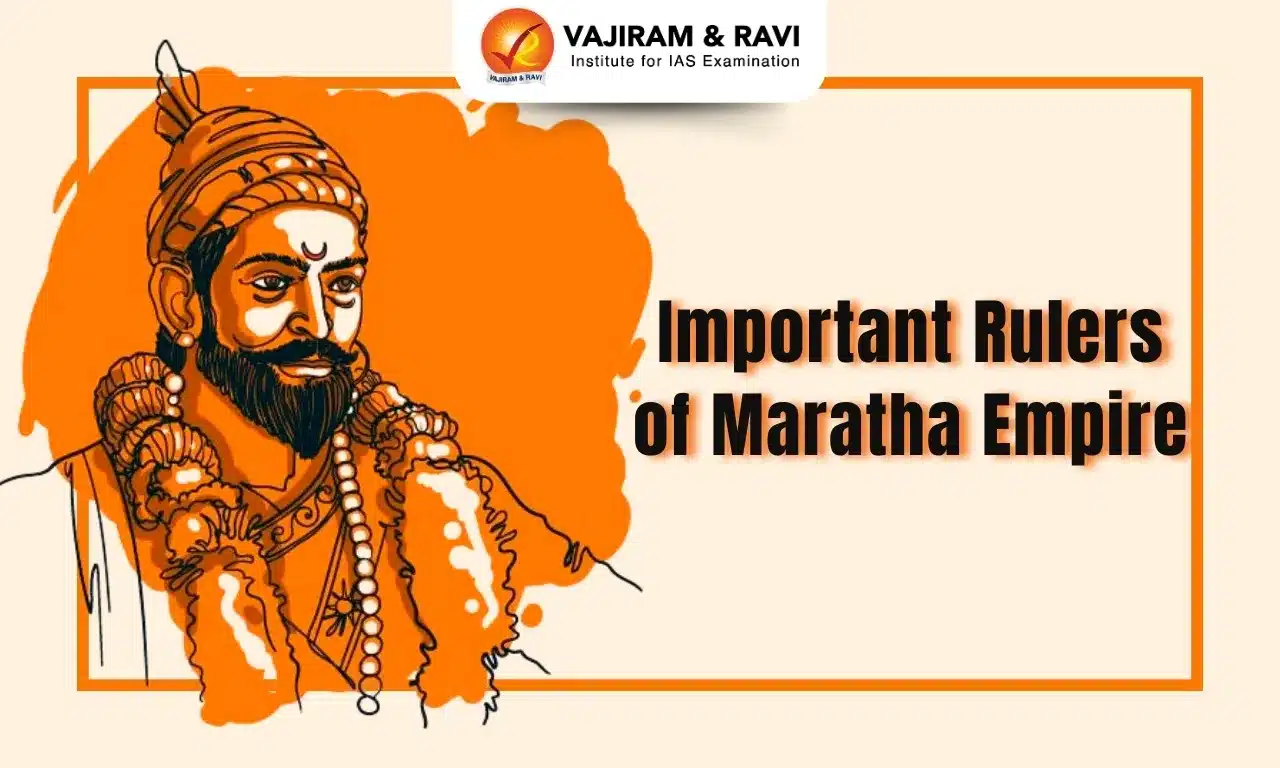
Important Rulers of the Maratha Empire include rulers under whose influence and rule the Maratha Empire became one of the most powerful kingdoms in Indian history. Under the leadership of these rulers, the Maratha empire not only defeated powerful invaders like the British but also strengthened its own individual identity. Established in the 17th century, the Maratha empire played an important role in framing the cultural and political landscape of India. The marathas are remembered for their smartness, unique strategies, military skills and various contributions. In this article, we are going to cover the important maratha rulers of India and their contributions in strengthening the empire. 

Maratha Empire

The Marathas were known to constitute a powerful empire during the 17th-19th century period. Founded in 1674 by Chhatrapati Shivaji Maharaj, the empire was consequently led by powerful Important Rulers of the Maratha Empire who eventually contributed to the growth. The empire is not only remembered for its victory over the Mughal rule but also as a strong force against the British colonists. 

The foundation of maratha rule can be traced back to the strong disciplined military and administrative system introduced by Shivaji. By the mid 18th century, the marathas had established a strong control over various territories including Tamil Nadu and Punjab. 

List of Important Rulers of the Maratha Empire

The Maratha Empire saw the rule of several great leaders who shaped its destiny. Here is a list of some of the most important rulers of the Maratha Empire:

Important Chhatrapati Rulers of the Maratha Empire

The Maratha Empire designated the title of Chhatrapati to the supreme Ruler of the Maratha Empire. They were the central figures in Maratha leadership who played an important role in establishment, administration and expansion of the empire. The title of Chhatrapati Shivaji was given to the following rulers: 

  • Chhatrapati Shivaji (1674-1680)
    • Founder of the Maratha Empire and crowned Chhatrapati in 1674.
    • Introduced Swarajya (self-rule) and an efficient administrative system.
    • Built a powerful navy to protect the Konkan coastline.
    • Conducted successful military campaigns against the Mughals and Bijapur Sultanate.
  • Chhatrapati Sambhaji Maharaj (1681-1689)
    • Son of Shivaji, known for his bravery and resistance against the Mughals.
    • Defeated the Portuguese and Chikka Deva Raya of Mysore.
    • Fought against Aurangzeb but was captured and executed in 1689.
  • Chhatrapati Rajaram Maharaj (1689-1700)
    • He was the younger brother of Sambhaji. 
    • Took refuge in Gingee Fort in Tamil Nadu after Sambhaji’s death.
    • Led guerrilla warfare against the Mughals to sustain Maratha rule.
  • Chhatrapati Shahu Maharaj (1707-1749)
    • Grandson of Shivaji, secured the throne, becoming the fifth Chhatrapati following the short reign of Shivaji II.
    • Introduced the Peshwa system, granting administrative control to Balaji Vishwanath.
    • Expanded Maratha influence across India

Important Peshwa Rulers of the Maratha Empire

The Peshwas were influential Rulers of the Maratha Empire, shaping its administration, military, and political strategies. Originally appointed as prime ministers, they gradually rose to become the de facto rulers in the 18th century. Below is a list of the Peshwas of the Maratha Empire

  • Balaji Vishwanath (Peshwa 1713-1720)
    • First Hereditary Peshwa from the Bhat Family.
    • Strengthened the empire’s financial and military systems.
    • Negotiated the release of Shahu Maharaj from Mughal captivity.
  • Baji Rao I (Peshwa 1720-1740)
    • A brilliant military strategist who expanded the Maratha Empire and established the Maratha Confederacy.
    • Defeated the Mughals and expanded Maratha rule to Malwa, Gujarat, and Bundelkhand.
    • Marathas became the dominant power in India during his reign.
  • Balaji Baji Rao (Nana Saheb) (Peshwa 1740-1761)
    • Continued Maratha expansion and established dominance in North India.
    • Led the Marathas during the Third Battle of Panipat (1761) against Ahmad Shah Abdali.
  • Madhav Rao I (Peshwa 1761-1772)
    • Revived the Maratha Empire after the loss at Panipat.
    • Focused on stabilizing the empire, reviving its finances, and re-establishing law and order
    • Strengthened administration and restored Maratha influence.
  • Mahadji Shinde (Shinde Dynasty, 1761-1794)
    • Controlled Delhi and played a major role in North Indian politics.
    • Defended Maratha interests against the British and Afghans.
  • Baji Rao II (Peshwa 1796-1818)
    • The last Peshwa of the Maratha Empire.
    • Defeated by the British in the Third Anglo-Maratha War (1817-1818), leading to the empire’s collapse.

Chhatrapati vs Peshwa Rulers of the Maratha Empire

The Peshwa and Chhatrapati were two different positions of Rulers of the Maratha Empire. The Chhatrapati was associated with being the sovereign ruler, while the Peshwa was considered to be the prime minister responsible for managing the military and administrative affairs. Over the years, the Peshwas gained more prominence over the Chhatrapati, due to their hold over the Maratha administration. The shift in power eventually led to the political shaping of the Maratha Empire. 

Difference Between Chhatrapati and Peshwa Rulers of the Maratha Empire

Feature

Chhatrapati

Peshwa

Position

Supreme ruler

Prime minister

Authority

Head of the Maratha Empire

Chief executive under Chhatrapati

Role

Symbol of sovereignty

Military and administrative head

Founder

Shivaji Maharaj

Balaji Vishwanath

Power Shift

Initially had full power

Gradually became the real power center


Important Rulers of Maratha Empire FAQs

Q1: Who was the major ruler of the Maratha kingdom?

Ans: Chhatrapati Shivaji Maharaj was the major ruler of Maratha Kingdom.

Q2: Who was an important leader of the Marathas?

Ans: Bajirao I was an important leader of Marathas.

Q3: Who were the major leaders of the Marathas?

Ans: Shivaji Maharaj, Bajirao I, Madhavrao I, Mahadji Shinde.

Q4: Who is considered the greatest Ruler of Maratha Empire?

Ans: Chhatrapati Shivaji Maharaj was the greatest Maratha leader.

Q5: Who defeated Shivaji?

Ans: Aurangzeb’s forces captured him, but he later escaped.

Netra Airborne Early Warning and Control System

Netra Airborne Early Warning and Control System

Netra Airborne Early Warning and Control System Latest News

Recently, the Defence Research & Development Organisation (DRDO) handed over the Final Operational Clearance (FOC) certificate of the Indigenous ‘Netra’ Airborne Early Warning and Control (AEW&C) system to the Indian Air Force (IAF).

About Netra Airborne Early Warning and Control System

  • It is an airborne radar and command platform built around an Embraer EMB-145 aircraft. 
  • It is commonly known as the Indian Air Force’s (IAF) “Eye in the Sky.” 
  • It is developed indigenously by the Bengaluru-based Centre for Airborne Systems (CABS).
  • India is the fifth country in the world to develop this capability.

Features of  Netra Airborne Early Warning and Control System

  • It is designed to detect incoming projectiles, ships and aircraft at long ranges, differentiate friend from foe and direct friendly fighters in real time.
  • Detection Range: It offers real-time battlefield management, 250-500+ km detection ranges and 300° to 360° radar coverage to track hostile aircraft, drones and missiles.
  • It uses the Brazilian Embraer EMB-145 aircraft as its platform, on which is mounted an active electronically scanned array radar in its dorsal fin.
  • The system encompasses a sophisticated suite of mission equipment, including an Active Electronically Scanned Array (AESA) radar, Identification Friend or Foe (IFF), mission computer, secure communication networks, electronic support measures (ESM) and communication support measures.
  • Unlike ground-based radar, an AEW&C aircraft operates at altitude, allowing it to see farther over terrain and provide a broader picture of aircraft, drones and other airborne activity.
  • It can also share real-time information with fighter jets, ground stations and other military assets.

 Source: PIB

Netra Airborne Early Warning and Control system FAQs

Q1: What is NETRA?

Ans: DRDO’s indigenous Airborne Early Warning & Control system.

Q2: Which aircraft is NETRA Mk1 based on?

Ans: Embraer EMB-145I – Brazilian twin-engine jet; modified by CABS, DRDO Bengaluru

Banganapalle Mango

Banganapalle Mango

Banganapalle Mango Latest News

Recently, the Agricultural and Processed Food Products Export Development Authority (APEDA), under the Ministry of Commerce and Industry, has facilitated the first commercial sea shipment of premium Banganapalle mangoes from India to Singapore.

About Banganapalle Mango

  • It is one of the most popular mango varieties cultivated in the town of Banganapalle in Andhra Pradesh, India.
  • It is also known as Beneshan, Baneshan, Benishan, Chappatai and Safeda.
  • It is known for its golden-yellow colour, fibreless pulp, rich sweetness and pleasant aroma. The variety enjoys strong demand in international markets and offers significant scope for expanding India’s mango exports.
  • It received a Geographical Indication (GI) tag in 2017.

Key Facts about Geographical Indication (GI) Tag

  • It is a sign used on products that have a specific geographical origin and possess qualities or a reputation that are due to that origin.
  • This is typically used for agricultural products, foodstuffs, wine and spirit drinks, handicrafts and industrial products.
  • The Geographical Indications of Goods (Registration and Protection) Act, 1999 seeks to provide for the registration and better protection of geographical indications relating to goods in India.
  • This GI tag is valid for 10 years following which it can be renewed.

Source: PIB

Banganapalle Mango FAQs

Q1: When did Banganapalle get GI tag?

Ans: GI tag in 2017

Q2: What are key features of Banganapalle Mango?

Ans: It has large obliquely oval shape and Golden-yellow skin.

Passport is Not a Citizenship Document, MEA Clarifies, Latest News

passport vs citizenship

Many people think that an Indian passport is the final proof of Indian citizenship. This belief became a topic of discussion after the Ministry of External Affairs (MEA) clarified on Passport Seva Divas 2026 that a passport is mainly a travel document and not a standalone legal proof of citizenship.

The clarification surprised many people because a passport is one of the most trusted government-issued documents. It carries the name of the Republic of India, is accepted worldwide, and is issued only after proper government verification. However, under Indian law, citizenship and passport are two different concepts. A passport is issued because the government believes a person is an Indian citizen, but it does not itself create or permanently prove citizenship if that status is challenged in a court.

Passport vs Citizenship

On Passport Seva Divas 2026, the Ministry of External Affairs (MEA) stated that: An Indian passport is primarily a travel document and should not be treated as conclusive proof of Indian citizenship. This statement led to confusion among the public because many people consider a passport to be the strongest identity document issued by the Government of India.

What is Citizenship?

Citizenship is the legal status that makes a person a member of a country. It gives individuals certain rights, protections, and responsibilities under the law. In India, citizenship is governed by the Constitution of India and the Citizenship Act, 1955. Indian citizens enjoy rights such as voting, contesting elections, obtaining an Indian passport, and receiving constitutional protection.

Passport vs Citizenship Key Differences

Although a passport and citizenship are closely related, they are not the same. A passport is an official travel document, while citizenship is a legal status that gives a person rights and responsibilities as a member of a country.

Passport vs Citizenship Key Differences

Basis of Difference

Passport

Citizenship

Meaning

An official document used for international travel.

A legal status that makes a person a citizen of a country.

Purpose

Allows a person to travel abroad and serves as proof of identity during international travel.

Gives a person legal rights, duties, and protection under the Constitution.

Governed By

Passports Act, 1967

Constitution of India (Articles 5–11) and Citizenship Act, 1955

Issued/Granted By

Issued by the Ministry of External Affairs (MEA).

Acquired under the Citizenship Act through birth, descent, registration, naturalisation, or incorporation of territory.

Nature

A government-issued travel document.

A legal relationship between an individual and the country.

Rights Provided

Does not provide voting or political rights.

Provides rights such as voting, contesting elections, and eligibility for certain government jobs.

Validity

Has a fixed validity period and must be renewed after expiry.

Generally remains valid for life unless renounced, terminated, or deprived under law.

Proof of Citizenship

Strong evidence of citizenship, but not conclusive legal proof if citizenship is challenged.

Citizenship itself is the legal status recognised under Indian law.

Can It Be Cancelled?

Yes, under the Passports Act for specific legal reasons.

Yes, but only under the provisions of the Citizenship Act, 1955.

Constitutional Provisions Related to Citizenship

The Constitution of India deals with citizenship under Articles 5 to 11 in Part II. These Articles explain who became an Indian citizen at the commencement of the Constitution and give Parliament the power to make laws relating to citizenship.

  • Article 5 – Citizenship at the Commencement of the Constitution: Grants citizenship to persons who had their domicile in India on 26 January 1950 and fulfilled the prescribed conditions.
  • Article 6 – Rights of Migrants from Pakistan: Provides citizenship to certain persons who migrated from Pakistan to India before or after the Partition, subject to specified conditions.
  • Article 7 – Rights of Migrants to Pakistan: Deals with persons who migrated to Pakistan after 1 March 1947 but later returned to India under a permit for resettlement.
  • Article 8 – Citizenship of Indians Living Abroad: Grants citizenship to persons of Indian origin residing outside India who registered themselves with an Indian diplomatic or consular representative.
  • Article 9 – Voluntary Acquisition of Foreign Citizenship: States that a person who voluntarily acquires the citizenship of another country cannot continue to be an Indian citizen.
  • Article 10 – Continuance of Citizenship: Ensures that every person recognised as an Indian citizen shall continue to be a citizen, subject to laws made by Parliament.
  • Article 11 – Parliament's Power: Empowers Parliament to make laws regarding the acquisition, termination, and all other matters related to Indian citizenship.

Citizenship Act, 1955

The Citizenship Act, 1955 is the main law that governs the acquisition, determination, and termination of Indian citizenship. Enacted by Parliament under Article 11 of the Constitution, the Act explains who can become an Indian citizen, the different ways citizenship can be acquired, and the circumstances under which it can be renounced, terminated, or deprived.

Citizenship Act, 1955

Mode

Description

By Birth

A person born in India can acquire citizenship, subject to the conditions specified in the Act.

By Descent

A person born outside India can acquire Indian citizenship if one or both parents are Indian citizens, as per the applicable provisions.

By Registration

Certain eligible persons, such as Persons of Indian Origin (PIOs) or spouses of Indian citizens, can obtain citizenship through registration after meeting the prescribed conditions.

By Naturalisation

A foreign national can become an Indian citizen after fulfilling the residency and other eligibility conditions laid down in the Act.

By Incorporation of Territory

People living in a territory that becomes part of India automatically become Indian citizens as notified by the Government.

Passport vs Citizenship FAQs

Q1: What is the difference between a passport and citizenship?

Ans: A passport is an official travel document issued by the government for international travel, while citizenship is a legal status that makes a person a member of a country and provides constitutional rights and responsibilities.

Q2: Is an Indian passport proof of citizenship?

Ans: An Indian passport is strong evidence that the holder is an Indian citizen, but it is not considered conclusive legal proof of citizenship if the matter is challenged before a court.

Q3: Which law governs Indian citizenship?

Ans: Indian citizenship is governed by Articles 5–11 of the Constitution of India and the Citizenship Act, 1955.

Q4: Does an Aadhaar Card prove Indian citizenship?

Ans: No. An Aadhaar Card is only a proof of identity and residence. It does not establish Indian citizenship.

Q5: Can a non-citizen be issued an Indian passport?

Ans: Yes, in exceptional cases. Under Section 20 of the Passports Act, 1967, the Central Government may issue a passport or travel document to a non-citizen if it is considered necessary in the public interest.

Lake Laach

Lake Laach

Lake Laach Latest News

More than 1,000 tiny earthquakes have exposed a deeper, slanted reservoir beneath Germany’s Lake Laach volcano, not the vertical body scientists expected.

About Lake Laach

  • Lake Laach, also known as Laacher See, is a volcanic caldera lake located in Rhineland-Palatinate, Germany.
  • With around 3.3 sq.km. and a depth of 53 m, it is the largest lake in Rhineland-Palatinate. 
  • It is part of the East Eifel volcanic field within the larger volcanic Eifel region. 
  • The lake is oval in shape and surrounded by high banks. 
  • It was formed by a massive volcanic eruption around 13,000 years ago. 
  • Traces of volcanic activity can still be found in the form of volcanic outgassing, the so-called mofettes, on the eastern shore of the lake. 
    • Small bubbles rise up in the water - these so-called mofettes are rising carbon dioxide and illustrate the volcanic history of the lake.  
  • The lake has no natural outlet but is drained by a tunnel dug before 1170 and rebuilt several times since.

News: EARTH

Lake Laach FAQs

Q1: What type of lake is Lake Laach?

Ans: It is a volcanic caldera lake.

Q2: In which country is Lake Laach located?

Ans: Germany

Q3: Lake Laach is part of which volcanic field?

Ans: The East Eifel volcanic field.

Q4: How was Lake Laach formed?

Ans: It was formed by a massive volcanic eruption around 13,000 years ago.

Q5: What evidence indicates that volcanic activity still exists around Lake Laach?

Ans: Volcanic outgassing in the form of mofettes.

Maharishi Sushruta

Maharishi Sushruta

Maharishi Sushruta Latest News

A bronze statue of Maharishi Sushruta, revered as the Father of Surgery, has been recently unveiled at the prestigious Royal College of Surgeons of Edinburgh in the United Kingdom.

About Maharishi Sushruta

  • Sushruta, known as the “father of Indian medicine” and the “father of surgery” , was a pioneering figure in ancient Indian medicine.
  • For Sushruta, the concept of shalya tantra (surgical science) was all-encompassing. 
  • His contributions have influenced the field of surgery, especially cosmetic surgery and medical practices within the global community. 
  • According to medical scholars, Sushruta lived and practiced medicine from 600 BC to 1000 BC.
  • Sushruta was believed to be the disciple of the God of Ayurveda – Lord Dhanvanthri. 
  • He taught and practiced medicine in the city of Varnashi
  • He is known for his pioneering operations and techniques and for his influential treatise Sushruta-samhita, the main source of knowledge about surgery in ancient India
    • Though composed over 2500 years ago, it contains detailed instructions on surgery and medicine. 
    • The Sushruta Samhita comprises 184 chapters. This extensive work lists more than 300 surgical procedures
    • It describes over 120 surgical instruments and provides details on various types of wounds, fractures, dislocations, conditions, and their treatments. 
    • The Sushruta-samhita also provides details on toxicology, pediatrics, pharmacology, and other branches of the traditional system of Indian medicine known as Ayurveda
    • Furthermore, the text includes descriptions of over 100 medicinal plants, detailing their taste, usage, and effects.
    • It remains one of the most important contributions to both Ayurveda and the early history of medical science. 
  • Examples of some of his groundbreaking operations include rhinoplasty (the repairing or remaking of a nose), removal of a dead fetus, and lithotomy (surgical incision into hollow organs such as the urinary bladder to remove stones, or calculi). 
  • He also developed many unique and practical techniques to dissect the human body and study its structure. 
  • His systematized approach to surgery, with the use of herbal anaesthetics and postoperative care, laid the foundation for surgical practices. 
  • Sushruta's emphasis on practical experience, dissection of cadavers, and detailed documentation established standards that continue to underpin surgical education today. 
  • The influence of his detailing surgical techniques and surgical instruments extended beyond ancient India, spreading to other parts of the world and shaping the development of reconstructive surgery, orthopaedics, ophthalmology, and many more fields.

News: TH

Maharishi Sushruta FAQ's

Q1: Who is known as the "Father of Indian Medicine" and the "Father of Surgery"?

Ans: Maharishi Sushruta.

Q2: Which branch of medicine was pioneered by Maharishi Sushruta?

Ans: Surgery (Shalya Tantra).

Q3: During which period is Sushruta believed to have lived and practiced medicine?

Ans: Between 600 BC and 1000 BC.

Q4: What is the name of the famous medical treatise written by Sushruta?

Ans: Sushruta Samhita.

Azim Premji Scholarship 2025, Eligibility, Application Status

Azim Premji Scholarship 2025

The Azim Premji Scholarship 2025, offered by the Azim Premji Foundation, is a significant initiative aimed at supporting girl students from economically weaker backgrounds. The scholarship provides financial assistance directly to beneficiaries, ensuring that deserving students continue their higher education without financial hurdles.

Azim Premji Scholarship 2025

The Azim Premji Scholarship 2025 has been designed to encourage higher education among girl students in India. Eligible candidates who have cleared Class 10th and 12th as regular students and are now enrolled in the first year of Graduation or Diploma courses can apply. The scholarship provides an annual financial assistance of ₹30,000, which is directly credited to the Aadhaar-linked bank accounts of beneficiaries. The last date to apply is 30 September 2025, and applications must be submitted through the official portal at azimpremjifoundation.org.

Azim Premji Foundation Scholarship 2025

The following table presents a quick overview of the scholarship scheme for easy understanding:

Azim Premji Scholarship 2025 Overview
Aspect Description

Scholarship

Azim Premji Scholarship 2025

Organization

Azim Premji Foundation

Beneficiaries

Girl students from financially weaker backgrounds

Eligibility

Passed Class 10th and 12th as regular students; enrolled in 1st year of graduation or diploma course

Scholarship Amount

₹30,000 annually

Mode of Transfer

Direct Benefit Transfer (DBT) into Aadhaar-linked bank accounts

Last Date to Apply

30 September 2025

Official Website

azimpremjifoundation.org

Azim Premji Scholarship Eligibility Criteria

To ensure the scholarship reaches the most deserving candidates, the Azim Premji Foundation has defined strict eligibility conditions. These conditions highlight the scheme’s focus on inclusive education for women, a priority under India’s social development agenda. Students must meet the following Azim Premji Scholarship Eligibility Criteria:

Azim Premji Scholarship Eligibility Criteria 2025
Aspect Description

Gender

Only Female students are eligible to Apply

Educational Qualification

Must have passed Class 10th and 12th as regular students from recognized boards

Admission Criteria

Must be enrolled in the first year of a graduation degree or diploma course (2 to 5 years) in a government-recognized or bonafide private institution in India

Economic Background

The scheme is targeted at economically weaker sections, ensuring inclusion and equity

Azim Premji Scholarship Amount 2025

The Azim Premji Scholarship 2025 provides direct financial aid to the selected students. The details regarding Scholarship amount and other benefits are listed below:

  • Each beneficiary receives ₹30,000 per year.
  • The amount is credited to the Aadhaar-linked bank account through Direct Benefit Transfer (DBT).
  • The scholarship can be used to cover tuition fees, examination fees, books, and other academic requirements.
  • The scheme reduces the financial burden on families and motivates young women to continue higher studies.

Azim Premji Scholarship Apply Online 2025

The last date to submit applications for the Azim Premji Scholarship 2025 is 30 September 2025. Candidates are advised not to wait until the deadline, as last-minute technical issues may create hurdles. Applying early also allows candidates to correct errors, if any, before final submission. Candidates can go through the link given below to apply for this scholarship:

Click Here to Apply for Azim Premji Scholarship 2025

Steps to Apply Online for Azim Premji Scholarship 2025

The application process for the scholarship is simple and student-friendly. Candidates can follow these steps:

  1. Visit the official website: azimpremjifoundation.org.
  2. On the homepage, click on the “What We Do” section and select “Education”.
  3. For new users, complete the registration process first.
  4. If already registered, use the Login (Already Registered Applicants) option.
  5. Enter username and password to access the portal.
  6. Fill in the scholarship application form carefully with all required details.
  7. Preview the form before final submission to avoid mistakes.
  8. Submit the application and save a copy for future reference.

Azim Premji Scholarship 2025 Benefits

The Azim Premji Scholarship holds immense importance not just for students but also for India’s education system:

  • Encourages Higher Education: Motivates girl students to pursue degrees and diplomas.
  • Promotes Gender Equality: Targets women’s education, aligning with government initiatives like Beti Bachao, Beti Padhao.
  • Financial Support for Weaker Sections: Provides relief to economically disadvantaged families.
  • Boosts Human Capital: Helps in creating a skilled and educated workforce for India’s growth.

Azim Premji Scholarship 2025 FAQs

Q1: Who is eligible for the Azim Premji Scholarship 2025?

Ans: Only girl students who passed Class 10th and 12th as regular students and enrolled in the first year of graduation or diploma courses are eligible.

Q2: How much financial aid is given under the Azim Premji Scholarship?

Ans: Each beneficiary receives ₹30,000 annually directly into their Aadhaar-linked bank account.

Q3: What is the last date to apply for the Azim Premji Foundation Scholarship 2025?

Ans: The last date for online applications is 30 September 2025.

Q4: Where can students apply for the Azim Premji Scholarship?

Ans: Students must apply online through the official website: azimpremjifoundation.org.

Q5: Can students from private colleges apply for the Azim Premji Foundation Scholarship 2025?

Ans: Yes, students enrolled in a bonafide private or government-recognized institution can apply if provided other eligibility conditions are met.

HELINA Missile

HELINA Missile

HELINA Missile Latest News

State-owned Bharat Dynamics Limited recently secured an order worth Rs 1,109.37 crore from Hindustan Aeronautics Limited to supply launchers for helicopter-launched anti-tank Nag (Helina) missiles.

About HELINA Missile

  • HELINA (Helicopter-launched NAG) is an indigenous, third-generation "fire-and-forget" anti-tank guided missile (ATGM.) 
  • It is the helicopter-based version of the Nag Anti-Tank Guided Missile (ATGM)
  • The Air Force version of the missile is called Dhruvastra, along with an ATGM version, which can be fired by soldiers. 
  • It has been developed indigenously by the Defence Research and Development Organisation (DRDO).

HELINA Missile Features

  • The Helina ATGM system measures 1.94 m in length, 150 mm in diameter, and weighs 44 kg. 
  • Helina missile systems are outfitted with two twin launchers, one on each side, capable of carrying a total of eight missiles. 
  • It can cover distances ranging between 500 m and 7,000 m and is guided by an imaging infrared (IIR) seeker with lock-on before launch capability. 
    • It means the crew locks on to the target before the launch, and the missile then guides itself to the target without any further control from the helicopter. 
  • The missile climbs sharply after the launch and then plunges directly onto the top of the tank. 
  • The system is equipped for day and night operations in all weather conditions, capable of neutralising battle tanks equipped with both conventional armour and explosive reactive armour.

News: BS

HELINA Missile FAQs

Q1: What type of missile is HELINA?

Ans: It is an indigenous, third-generation fire-and-forget anti-tank guided missile (ATGM).

Q2: What is the Air Force version of the HELINA missile called?

Ans: Dhruvastra.

Q3: Which organisation developed the HELINA missile?

Ans: The Defence Research and Development Organisation (DRDO).

Q4: What is the maximum range of the HELINA missile?

Ans: 7,000 metres (7 km).

Q5: Which guidance system is used by the HELINA missile?

Ans: An Imaging Infrared (IIR) seeker.

Social Issues in India, Poverty, Caste, Top 10 Problems List

Social Issues in India

Social Issues in India are deeply interconnected and rooted in historical, economic, and structural factors. While constitutional safeguards, government schemes, and civil society efforts have brought measurable progress, persistent inequalities remain. These problems are interconnected and influence education, health, employment, safety, and social harmony. Addressing these challenges requires inclusive growth, effective governance, social awareness, and sustained investment in education, healthcare, employment, and environmental protection.

Social Issues in India

Social Issues in India arise from historical inequalities, rapid urbanisation, population pressure, economic disparities, and uneven access to public services. Challenges such as caste discrimination, gender inequality, poverty, healthcare gaps, education disparities, environmental degradation, unemployment, crime, and digital exclusion continue to shape daily life. Government interventions, legal reforms, and civil society movements have shown progress, but structural problems persist, requiring sustained policy focus and public participation.

Top 10 Social Issues in India List

The detailed discussion of major List of Social Problems in India has been provided below:

Caste System and Discrimination

The caste system continues to shape access to education, employment, housing, and social dignity across regions.

  • Historical Origins: Varna-based hierarchy emerged in ancient society, later becoming rigid birth-based stratification.
  • Scheduled Castes Impact: SC communities face higher poverty, lower literacy, and employment discrimination.
  • Educational Barriers: Dropout rates remain higher among SC and ST students.
  • Employment Inequality: Informal and hazardous jobs dominate lower-caste employment patterns.
  • Social Exclusion: Residential segregation persists in rural and urban settlements.
  • Legal Safeguards: Untouchability is abolished under Article 17 of the Constitution.
  • Reservation Policy: Quotas exist for SCs, STs, and OBCs in education and public employment.
  • Atrocity Laws: SC/ST Prevention of Atrocities Act criminalises caste-based violence.
  • Awareness Campaigns: Government-led social justice programs promote inclusion.
  • Continuing Challenge: Social mobility remains uneven despite constitutional protections.

Gender Inequality

Gender inequality affects workforce participation, safety, health outcomes, and decision-making power.

  • Economic Participation: Women contribute about 17% to India’s GDP.
  • Missing Women: Census and survey data indicate 63 million missing women nationally.
  • Wage Gap: Women earn significantly less than men for similar work.
  • Workplace Barriers: Promotion and leadership opportunities remain limited.
  • Gender Violence: High incidence of domestic violence and sexual crimes reported annually.
  • Safety Concerns: Public transport and workplaces remain unsafe for many women.
  • Legal Protection: Sexual Harassment at Workplace Act enacted in 2013.
  • Girl Child Schemes: Beti Bachao Beti Padhao addresses declining child sex ratio.
  • Marriage Rights: Triple Talaq law strengthened women’s legal security.
  • Social Change Need: Cultural attitudes slow progress despite strong legal framework.

Poverty Issues

Economic inequality remains a core social challenge despite poverty reduction efforts.

  • Rural Poverty: Rural households face limited employment and infrastructure access.
  • Urban Inequality: Urban poverty exists alongside concentrated wealth.
  • Basic Amenities: Clean water and sanitation remain inaccessible for many rural families.
  • COVID Impact: Pew Research reported 75 million Indians pushed into poverty.
  • Shrinking Middle Class: Nearly 32 million people slipped out of middle-income status.
  • Employment Guarantee: MGNREGA provides 100 days of wage employment.
  • Food Security: Public Distribution System supplies subsidised food grains.
  • Housing Support: Indira Awaas Yojana targets rural housing shortages.
  • Regional Gaps: Eastern and central states show higher poverty ratios.
  • Inclusive Growth Need: Growth benefits remain uneven across social groups.

Healthcare Challenges in India

Healthcare access and affordability remain unequal across regions and income groups.

  • Rural Access Gap: Rural areas face shortages of doctors and hospitals.
  • Urban Cost Burden: High out-of-pocket expenditure dominates private healthcare.
  • Mental Health Prevalence: Over 10.6% adults face mental health disorders.
  • Treatment Gap: Mental healthcare gap ranges between 70 and 92%.
  • Economic Loss: Mental illness reduces productivity and workforce participation.
  • Ayushman Bharat: Provides health insurance coverage to vulnerable families.
  • National Health Mission: Strengthens primary healthcare infrastructure.
  • Hospital Sector: Accounts for nearly 80% of healthcare services.
  • Industry Size: Healthcare market approached USD 132 billion by 2023.
  • Awareness Deficit: Stigma limits healthcare-seeking behaviour.

Education System

Education quality and access vary widely across geography, gender, and income.

  • Literacy Growth: National literacy improved to nearly 77.7%.
  • Urban Advantage: Urban literacy exceeds rural literacy by over 14 percentage points.
  • School Infrastructure: Many rural schools lack teachers and basic facilities.
  • Dropout Rates: Economic pressure increases school dropout risk.
  • Gender Gap: Female literacy lags behind male literacy.
  • Right to Education: Guarantees free education for ages 6 to 14.
  • Mid-Day Meals: Improves attendance and child nutrition.
  • NEP Reform: National Education Policy focuses on inclusivity and skills.
  • Digital Divide: Online learning widened inequality during pandemic.
  • Outcome Disparity: Learning outcomes remain inconsistent nationwide.

Environmental Issues

Environmental degradation directly impacts health, livelihoods, and food security.

  • Air Pollution: Urban air quality frequently exceeds safe limits.
  • Health Impact: Pollution increases respiratory and cardiovascular diseases.
  • Water Pollution: Industrial discharge contaminates rivers and groundwater.
  • Climate Vulnerability: India faces floods, droughts, and heatwaves.
  • Agricultural Risk: Erratic monsoons threaten farmer incomes.
  • NCAP Program: Targets reduction in urban air pollution levels.
  • Swachh Bharat: Improves sanitation and waste management.
  • Biodiversity Plan: Protects ecosystems and endangered species.
  • Urban Pressure: Unplanned growth worsens environmental stress.
  • Sustainability Need: Long-term development requires ecological balance.

Religious and Ethnic Conflicts

Social harmony is challenged by periodic religious and ethnic tensions.

  • Colonial Legacy: Historical divisions intensified during colonial rule.
  • Identity Politics: Religion and ethnicity influence political mobilisation.
  • Community Violence: Conflicts disrupt social and economic stability.
  • Trust Deficit: Inter-community mistrust affects coexistence.
  • Economic Loss: Violence damages livelihoods and infrastructure.
  • Legal Safeguards: Laws prohibit hate speech and communal violence.
  • Education Role: Civic education promotes tolerance.
  • Community Dialogue: Peace initiatives encourage reconciliation.
  • Security Concerns: Religious sites face heightened risk during unrest.
  • Unity Priority: Social cohesion remains essential for national stability.

Urbanization

Rapid urban growth reshapes social structures and public service demand.

  • Urban Shift: Half of India’s population expected urban by 2031.
  • Rural Migration: Job search drives large-scale migration.
  • Economic Opportunity: Cities offer employment and services.
  • Overcrowding: Housing shortages worsen urban living conditions.
  • Slum Growth: Informal settlements lack sanitation and healthcare.
  • Transport Stress: Infrastructure struggles with rising population.
  • Affordable Housing: Shortage affects low-income migrants.
  • Planning Gaps: Weak urban governance worsens inequality.
  • Public Services: Education and health facilities face pressure.
  • Sustainable Cities: Planned growth essential for livability.

Social Movements

Social movements have driven legal reforms and public awareness.

  • Women’s Movements: Advanced gender equality and legal reforms.
  • Dalit Assertion: Challenged caste-based oppression.
  • Environmental Movements: Protected forests and rivers.
  • RTI Movement: Increased government transparency.
  • Civil Society Role: Acts as bridge between state and citizens.
  • Grassroots Advocacy: Mobilises marginalised communities.
  • Policy Influence: Shapes legislative and administrative reforms.
  • Public Awareness: Strengthens democratic participation.
  • Legal Victories: Courts influenced by sustained activism.
  • Social Accountability: Movements improve governance outcomes.

Unemployment

Youth unemployment poses economic and social risks.

  • Unemployment Rate: Youth unemployment reached 8.1% in 2022.
  • Educated Joblessness: Degrees do not guarantee employment.
  • Gender Gap: Young women face higher unemployment rates.
  • Skill Mismatch: Education not aligned with market needs.
  • Skill India: Targets large-scale workforce training.
  • PMKVY Scheme: Supports vocational certification.
  • Apprenticeship Program: Encourages industry-based training.
  • Startup India: Promotes entrepreneurship among youth.
  • Digital Jobs: IT sector offers emerging opportunities.
  • Demographic Dividend: Employment critical for harnessing youth potential.

Impact of Technology on Society

Technology reshapes education, employment, and social interaction.

  • Digital Divide: Rural areas lag in internet connectivity.
  • Economic Barriers: Device affordability limits access.
  • Education Impact: Online learning benefits digitally connected students.
  • Social Media Reach: Expands awareness and mobilisation.
  • Misinformation Risk: Rapid spread affects social trust.
  • Cyber Harassment: Online abuse disproportionately targets women.
  • Digital India: Expands digital infrastructure nationwide.
  • E-Governance: Improves service delivery transparency.
  • Skill Training: Focus on digital literacy.
  • Inclusive Tech Need: Equitable access essential for social equity.

Crime and Public Safety

Public safety challenges affect trust in institutions.

  • Crime Rate: Reported crime rate stood near 445 per 100,000 population.
  • Violence Against Women: Remains a major safety concern.
  • Cybercrime Rise: Digital fraud and identity theft increasing.
  • Urban Crime: Migration and inequality influence crime patterns.
  • Police Shortage: Staffing gaps reduce enforcement capacity.
  • Judicial Backlog: Delayed justice weakens deterrence.
  • Legal Reforms: New criminal laws aim faster trials.
  • Community Policing: Improves local trust.
  • Technology Use: Surveillance aids crime prevention.
  • Public Confidence: Law enforcement reform essential.
Also Check
Learning Poverty Woman Empowerment
Feminization of Poverty Domestic Violence


Social Issues in India FAQs

Q1: What are major Social Issues in India?

Ans: Major social issues include caste discrimination, gender inequality, poverty, unemployment, healthcare gaps, education inequality, and environmental degradation.

Q2: Why does caste system remain a Social Issues in India?

Ans: The caste system continues due to historical hierarchy, social practices, economic inequality, and uneven implementation of constitutional safeguards.

Q3: How does gender inequality affect India’s development?

Ans: Gender inequality reduces workforce participation, lowers GDP contribution, increases violence, and limits education and leadership opportunities for women.

Q4: What role does poverty play in Social Issues in India?

Ans: Poverty restricts access to education, healthcare, nutrition, and employment, reinforcing intergenerational inequality across rural and urban regions.

Q5: How is the government addressing Social Issues in India?

Ans: The government uses laws, welfare schemes, reservations, education reforms, healthcare programs, and digital initiatives to promote social inclusion.

Narco-Coordination Centre

Narco-Coordination Centre

Narco-Coordination Centre Latest News

The Union Home Minister is scheduled to chair the 10th Apex-Level Meeting of the Narco-Coordination Centre (NCORD) in New Delhi. 

About Narco-Coordination Centre

  • The Narco-Coordination Centre (NCORD) mechanism was established in 2016 for better coordination between states and the Ministry of Home Affairs. 
  • It has been further strengthened through a four-tier system in 2019.
  • Purpose: To enhance coordination between the States, the Ministry of Home Affairs and concerned stakeholders in addressing the challenge of the drug menace in a holistic manner.
  • It is designed to facilitate better communication, cooperation, and intelligence sharing among law enforcement and drug control agencies.
  • Structure of Narco-Coordination Centre (NCORD)
    • Apex Level NCORD Committee: It is headed by Union Home Secretary;
    • Executive Level NCORD Committee: It is headed by Special Secretary, Ministry of Home Affairs;
    • State Level NCORD Committees: It is headed by Chief Secretaries; and 
    • District Level NCORD Committees: It is headed by District Magistrates.
  • Initiatives of Narco-Coordination Centre (NCORD)
    • Mission SPANDAN – Partnership with spiritual institutions for awareness have emerged out of the NCORD mechanism.
    • MANAS Helpline: A toll-free helpline called MANAS (Madak Padarth Nishedh Asuchna Kendra) with the number 1933 has been launched.

Source: News On Air

Narco-Coordination Centre FAQs

Q1: What is the objective of NCORD?

Ans: Real-time coordination among supply reduction, demand reduction & harm reduction agencies to combat drug trafficking

Q2: When was NCORD mechanism constituted?

Ans: It was established in 2016 by the Ministry of Home Affairs

Senna Spectabilis

Senna spectabilis

Senna Spectabilis Latest News

Uprooting of the highly invasive plant Senna Spectabilis has been going on in Male Mahadeshwara Hills Wildlife Sanctuary, and soon after its uprooting, the area cleared will be replaced by grass cover, among other forest plant species, to increase fodder availability.

About Senna Spectabilis

  • It is a versatile, flowering tree belonging to the family Fabaceae native to the tropical Americas. 
  • Common names: Popcorn Bush Cedar, Archibald’s Cassia, Calceolaria Cassia, Golden Shower, Golden Wonder, Scented Shower, Fetid Cassia.
  • It is admired for its vivid yellow blossoms and its capacity to grow in a variety of climates, making it a popular choice as an ornamental tree in gardens and parks worldwide.
  • However, this adaptability has led to it becoming invasive in some regions of the world.
  • It forms dense, sterile thickets, choking out native plants, altering soil chemistry and depriving herbivores of food.
  • It typically grows between 7 to 15 meters in height and has a spreading, rounded crown. 
  • The bright yellow flowers, arranged in large terminal panicles, bloom from summer to fall.
    • It resembles Kerala’s state flower, Cassia fistula, known locally as kanikkonna.
  • This tree prefers sunny areas and welldrained, loamy soils but is adaptable to various soil types. 
  • Once established, Senna spectabilis can tolerate drought, making it suitable for both dry and tropical regions.
  • It is classified as Least Concern under the IUCN Red List.
  • Challenges: It has a very aggressive growth rate and degrades lands in forest ecosystems, which make it challenging to control its spread.

Key Facts about Male Mahadeshwara Hills Wildlife Sanctuary

  • It is located at the intersection of the Western and the Eastern Ghats and falls in the Chamarajanagara District of Karnataka.
  • It is contiguous to Biligiri Rangaswamy Temple (BRT) Tiger Reserve, Sathyamangalam Tiger Reserve, and the Cauvery Wildlife Sanctuary.
  • It’s the home of the famous Male Mahadeshwara Temple, dedicated to Lord Shiva, known here as Mahadeshwara.
  • It is bound by the Kaveri River to the northeast and by the Palar River to the south.
  • Flora: The forests are principally of the dry deciduous type, degrading to scrub forest in the fringe areas, and are interspersed with patches of moist deciduous, semi-evergreen, evergreen and shola forests occurring at varying altitudes.
  • Fauna
    • It is home to several animals, including elephants, Indian bison, wild dogs, leopards, foxes, sambars, spotted deer, and many species of birds.
    • It is also a tiger habitat noted for its increasing number of tigers.

News: DC

Senna Spectabilis FAQ's

Q1: What is Senna spectabilis?

Ans: It is a versatile flowering tree belonging to the family Fabaceae.

Q2: Where is Senna spectabilis native to?

Ans: The tropical Americas.

Q3: Why has Senna spectabilis become invasive in some regions?

Ans: Due to its high adaptability and aggressive growth.

Q4: What is the colour of the flowers of Senna spectabilis?

Ans: Bright yellow.

Q5: What is the IUCN Red List status of Senna spectabilis?

Ans: Least Concern.

Magadha Empire, Time Period, Map, King, Capital, Dynasty

Magadha Empire

The Magadha Empire was one of the most powerful and influential empires of ancient India, known for its strategic location, military strength, and political acumen. Emerging as a prominent Mahajanapada during the 6th century BCE, Magadha played a decisive role in shaping the political, cultural, and economic landscape of the Indian subcontinent. It laid the foundation for subsequent empires such as the Mauryas and significantly influenced Indian history. This article delves into the Magadha Empire’s rise, its major dynasties, administrative and economic structures, cultural contributions, and enduring legacy.

Magadha Empire

The Magadha Empire covers the dynamic evolution of political power, economic organization, and cultural patronage in ancient India. Its rise was facilitated by a combination of strategic geography, strong leadership, military innovation, and economic prosperity. Successive dynasties the Brihadrathas, Pradyotas, Haryankas, Sisunagas, and Nandas each contributed uniquely to its consolidation and expansion.

The empire’s legacy, particularly in governance, trade, urbanization, and religious patronage, laid the foundation for the Mauryan Empire, which became one of the greatest empires in Indian history. Magadha’s story reflects the intricate interplay of geography, economy, military power, and culture that shaped the trajectory of ancient India, leaving a lasting imprint on its political and cultural landscape.

Magadha Empire Geographical Location

Magadha was located in the eastern part of the Gangetic plain, primarily in present-day Bihar, encompassing areas around Patna, Gaya, Rajgir, and Bodh Gaya. The kingdom was naturally fortified by hills and rivers, making it strategically defensible. Key geographical features contributing to its rise included:

  • Fertile Alluvial Soil: The plains of the Ganga and Son rivers provided nutrient-rich soil, allowing abundant agricultural production and sustaining a growing population.
  • Iron Resources: The Chotanagpur plateau offered a plentiful supply of iron ore, critical for weapons and agricultural tools, giving Magadha a technological and military edge.
  • Rivers and Trade Routes: The Ganga, Son, and Gandak rivers facilitated trade, transport, and communication, enhancing economic prosperity and political control.
  • Centralized Location: Being at the heart of northern India, Magadha could influence neighboring Mahajanapadas and act as a hub for trade, administration, and military campaigns.
  • Neighboring regions included the Republic of Vajjis to the north, the Kosala Kingdom to the west, and Avanti (Ujjain) further west. Control over these regions was crucial for dominance in northern India.

Mahajanapadas and Rise of Magadha Empire

By the 6th century BCE, northern India was divided into 16 Mahajanapadas, comprising monarchies and republics. Monarchical states like Magadha, Kosala, and Kashi concentrated on agriculture and centralized administration, whereas republics such as the Licchavis, Shakyas, and Mallas emphasized collective decision-making.

Urbanization played an important role in the rise of these states. Towns such as Rajgir, Vaishali, Hastinapur, Shravasti, Kaushambi, and Champa became centers of trade, administration, and culture. Markets emerged in areas of agricultural surplus, connecting distant regions through trade networks. Religious centers like Vaishali attracted scholars, monks, and pilgrims, promoting both cultural and economic activity.

The strategic positioning of Magadha, combined with its fertile land, iron resources, and central location, enabled it to gradually dominate other Mahajanapadas, setting the stage for an empire that would later encompass large parts of northern and eastern India.

Magadha Empire Dynasties

The history of Magadha Empire spans many centuries, with several ruling dynasties expanding its territory, strengthening administration and making it the dominant political power of ancient India.

Vedic Period (c. 1500 BCE-600 BCE)

During the Vedic Period, Magadha was located outside the main Vedic cultural region. The Atharvaveda mentions the Magadhas along with the Angas, Gandharis and Mujavats as non Vedic tribes.

  • Location: The region was situated in present day southern Bihar. It remained beyond the Kuru-Panchala cultural sphere and gradually emerged as an important political centre in eastern India.
  • Early References: Some scholars associate the Kikata tribe mentioned in the Rigveda with the early Magadhas because later texts use Kikata as another name for Magadha, although this identification remains debated.
  • Religious Background: Early Vedic texts describe the Kikatas as people who did not perform Vedic rituals and lived outside the Brahmanical cultural tradition, reflecting Magadha's distinct religious identity.
  • Historical Importance: This early phase laid the foundation for the rise of Greater Magadha, where the Second Urbanisation began around 500 BCE and both Buddhism and Jainism later originated and

Early Period

Brihadratha Dynasty

Considered the earliest ruling dynasty of Magadha, the Brihadrathas are mentioned in the Puranas, Rigveda and Mahabharata. Much of their history is connected with tradition, making exact historical details uncertain.

  • Location: The dynasty ruled the Magadha region in present day southern Bihar, which later became the political centre of eastern India because of its fertile land and strategic position.
  • Capital: Rajagriha, later known as Rajgir, served as the early capital. It was naturally protected by hills and became one of the oldest fortified cities of ancient India.
  • Rulers: Brihadratha is regarded as the founder, while Jarasandha became the most famous ruler.
  • Art and Architecture: Early defensive structures developed around Rajagriha. The famous Cyclopean Wall, built with massive stone blocks, is among the oldest surviving examples of ancient stone fortification.
  • Major Features: This dynasty laid the political foundation of Magadha, which later emerged as one of the strongest Mahajanapadas and the centre of several powerful empires.

Pradyota Dynasty

The Pradyota Dynasty, founded by Punika/Pulika, ruled after the Brihadrathas. Although historical records are somewhat confusing, key aspects include:

  • Origins: Punika/Pulika placed his son, Pradyota, on the throne.
  • Capital: Avanti (Ujjain), though their influence extended over Magadha temporarily.
  • Religion: Brahmanism and Buddhism coexisted, reflecting religious diversity.
  • Significance: The Pradyotas consolidated territories and engaged in diplomacy, setting the stage for later expansion by Magadha proper.

Mahajanapada Period (6th-4th Century BCE)

Haryanka Dynasty (544 BCE-413 BCE)

The Haryanka Dynasty transformed Magadha into the leading kingdom of northern India through military expansion, diplomacy and efficient administration over nearly 130 years.

  • Location: The kingdom initially covered southern Bihar and later expanded into Anga, most of Bihar, Bengal and parts of neighbouring regions through successful conquests.
  • Capital: Rajagriha remained the capital under Bimbisara and Ajatashatru. Udayin later shifted the capital to Pataliputra, located near modern Patna, because of its strategic river location.
  • Rulers: Bimbisara annexed Anga and strengthened Magadha through diplomatic marriages. Ajatashatru conquered the Vajjika League, expanded territory and fortified Rajagriha. Udayin established Pataliputra as the new capital.
  • Art and Architecture: Rajagriha's Cyclopean Wall remained an important defensive structure, while Pataliputra developed into a planned administrative city with strong fortifications and river based connectivity.
  • Major Features: Bimbisara and Ajatashatru were contemporaries of Gautama Buddha and Mahavira. Their patronage helped Buddhism and Jainism grow, while Magadha became the strongest Mahajanapada.

Shaishunaga Dynasty (413 BCE-345 BCE)

The Shaishunaga (Sisunaga) Dynasty rulers succeeded the Haryankas and further strengthened Magadha by ending the long rivalry with the powerful kingdom of Avanti.

  • Location: Their rule covered Magadha and neighbouring regions after incorporating Avanti, significantly increasing political influence across northern India.
  • Capital: Vaishali briefly served as the capital during Kalashoka's reign before Pataliputra once again became the permanent administrative centre.
  • Rulers: Shishunaga founded the dynasty, while Kalashoka is remembered for the Second Buddhist Council held at Vaishali around 383 BCE.
  • Art and Architecture: Pataliputra continued to expand as an important administrative city, while Buddhist religious centres gained greater importance during this period.
  • Major Features: The conquest of Avanti removed Magadha's strongest rival and prepared the kingdom for the rise of the powerful Nanda dynasty.

Nanda Dynasty (345 BCE-322 BCE)

The Nandas established the first large empire of northern India before the Mauryas and created one of the strongest military systems of ancient India.

  • Location: Their empire extended across Magadha, Kalinga, Kosala, Bihar, Uttar Pradesh and several other regions of northern India.
  • Capital: Pataliputra remained the capital and functioned as the administrative and military headquarters of the expanding empire.
  • Rulers: Mahapadma Nanda founded the dynasty, while Dhana Nanda became its last and most famous ruler before being defeated by Chandragupta Maurya with Chanakya's guidance.
  • Art and Architecture: The Nandas strengthened administrative centres and invested in state infrastructure supported by their enormous treasury and organised taxation system.
  • Major Features: Ancient traditions mention nine Nanda rulers. Their army reportedly included about 200,000 infantry, 60,000 cavalry and nearly 6,000 war elephants, making it one of the largest military forces of the time.

Imperial Period

Maurya Empire (322 BCE-185 BCE)

Originating from Magadha, the Maurya Empire became the first empire to unite almost the entire Indian subcontinent under a single political authority.

  • Location: The empire stretched across nearly the whole Indian subcontinent, making Magadha the centre of one of ancient India's largest political systems.
  • Capital: Pataliputra developed into one of the world's largest ancient cities and served as the imperial capital throughout the Mauryan period.
  • Rulers: Chandragupta Maurya founded the empire after overthrowing the Nandas. Magadh Empire under Ashoka later expanded and consolidated while promoting Buddhist values across India and beyond.
  • Art and Architecture: Pataliputra flourished with grand palaces and administrative buildings. Buddhist monuments and religious institutions expanded significantly under Ashoka's patronage.
  • Major Features: The Mauryan Empire represented the political peak of Magadha, extending its influence across almost the entire Indian subcontinent through strong administration and imperial governance.

Shunga Dynasty (185 BCE-73 BCE)

The Shungas replaced the Mauryas after Pushyamitra Shunga overthrew the last Mauryan ruler, beginning a new political phase in Magadha.

  • Location: Their authority covered Magadha and several northern Indian regions while facing repeated challenges from Indo-Greek invasions.
  • Capital: Pataliputra initially remained the capital before administrative importance gradually shifted towards Vidisha and later Ayodhya.
  • Rulers: Pushyamitra Shunga founded the dynasty after defeating Brihadratha, the last Mauryan ruler and established independent rule over Magadha.
  • Art and Architecture: Brahmanical traditions received greater royal support, while existing religious and cultural institutions continued to develop.
  • Major Features: The dynasty marked a revival of Brahmanical traditions and defended northern India against several foreign invasions during its rule.

Kanva Dynasty (73 BCE-28 BCE)

The Kanvas succeeded the Shungas and ruled Magadha for a comparatively short period before losing power to the Satavahanas.

  • Location: Their control remained centred on Magadha with limited territorial expansion compared to earlier imperial dynasties.
  • Capital: Pataliputra continued as the political capital and administrative centre during Kanva rule.
  • Rulers: Vasudeva Kanva founded the dynasty after overthrowing Devabhuti. Bhumimitra, Narayana and Susharman succeeded him.
  • Art and Architecture: Buddhist institutions continued receiving patronage, helping preserve religious learning and monastic activities in Magadha.
  • Major Features: The dynasty ended around 28 BCE when Satakarni of the Satavahana dynasty defeated the last Kanva ruler.

Later Period

Gupta Empire (c. 240-c. 579 CE)

The Guptas restored Magadha's importance after centuries of political change and established one of India's greatest classical empires.

  • Location: Their empire covered much of northern India, with Magadha remaining one of its principal political regions.
  • Capital: Pataliputra again functioned as a major imperial capital, increasing Magadha's historical prestige.
  • Rulers: Chandragupta I, Samudragupta and Chandragupta II strengthened imperial authority and expanded the empire across northern India.
  • Art and Architecture: Literature, education, sculpture and temple architecture flourished during the Gupta period, making it one of India's greatest cultural eras.
  • Major Features: The Guptas restored Magadha's political prominence and created lasting achievements in administration, art, literature and cultural development.

Later Guptas and Maukharis (6th-8th Century CE)

After the Imperial Guptas declined, the Later Guptas and Maukharis controlled Magadha, though political authority became more regional than imperial.

  • Location: Their influence covered Magadha and parts of Malwa, while the Maukharis initially ruled from Gaya before expanding towards Kannauj.
  • Capital: Gaya remained important under the early Maukharis, while Magadha continued to serve as their principal political region.
  • Rulers: Mahasenagupta was a notable Later Gupta ruler, while Harivarman emerged as an important Maukhari ruler after westward expansion.
  • Art and Architecture: Coins, inscriptions and administrative records provide valuable evidence of political continuity and regional governance during this period.
  • Major Features: Later Guptas adopted the "-gupta" suffix to associate themselves with the earlier imperial legacy, while the Maukharis maintained Magadha's political importance until the 8th century CE.

Reasons for the Rise of Magadha Empire

Magadha’s rise as a dominant power was due to several interlinked factors:

  • Strategic Geographical Location: Fertile plains, river systems, and central positioning enabled agricultural surplus, trade, and defense.
  • Surplus Resources: Abundant food production and revenue allowed support for large armies and state infrastructure.
  • Availability of Iron: Access to iron resources from Chotanagpur facilitated weapons, tools, and military superiority.
  • Strong Leadership: Rulers like Bimbisara, Ajatashatru, and Mahapadma Nanda combined strategic marriages, military campaigns, and administrative reforms to consolidate power.
  • Capital Location: Patliputra provided central administration, military defense (surrounded by rivers), and communication advantages.
  • Trade and Urbanization: Emergence of towns as administrative, trade, and religious centers strengthened economic and cultural influence.

Magadha Empire Administration and Governance

Magadha Empire developed an organised administrative system:

  • Monarchical Structure: Kings wielded absolute power, assisted by ministers and regional governors.
  • Revenue Administration: Land revenue was a primary source of income. Tax collection was organized and supported the army and infrastructure.
  • Military Organization: Large standing armies included infantry, cavalry, chariots, and elephants.
  • Capital Fortifications: Rajgir was naturally fortified by hills, while Patliputra served as a riverine fortress, making invasion difficult.
  • Judicial System: Maintained law and order, resolved disputes, and protected property rights.

Magadha Empire Economy and Trade

Magadha Empire’s economic strength stemmed from:

  • Agriculture: Fertile alluvial soil produced surplus crops, enabling trade and taxation.
  • Iron Tools: Advanced metallurgy improved productivity and military strength.
  • Trade Networks: Towns like Rajgir, Patliputra, and Vaishali were key trade centers, connecting regions within India.
  • Urban Centers: Facilitated markets, crafts, and cultural activities, enhancing regional prosperity.

Magadha Empire Culture, Religion, and Society

Magadha Empire was a hub of religious and cultural development:

  • Buddhism: Gautama Buddha lived and taught in Magadha, with Rajgir and Bodh Gaya being prominent centers.
  • Jainism: Mahavira, the 24th Tirthankara, spent much of his life in the region.
  • Patronage: Kings supported monasteries, temples, and learning centers.
  • Arts and Architecture: Development of stupas, temples, and urban planning reflected a vibrant cultural life.

Magadha Empire Military Strategies and Conquests

Magadha Empire rulers emphasized military expansion:

  • Elephants and Cavalry: Provided battlefield dominance and intimidation.
  • Strategic Forts: Rajgir and Patliputra offered natural and constructed defenses.
  • Diplomacy and Marriage Alliances: Marriages with neighboring kingdoms reduced hostilities and expanded influence.
  • Conquest of Rival Mahajanapadas: Annexation of Anga, Kashi, Kosala, and Vaishali ensured political supremacy.

Magadha Empire Decline

The decline of Magadha Empire was gradual rather than sudden as highlighted below:

  • After the Mauryan Empire weakened, frequent changes of rulers, political instability and the emergence of smaller regional kingdoms reduced central authority. 
  • Foreign invasions by Indo-Greeks and later Indo-Scythians further affected governance. 
  • Trade routes gradually shifted away from the Gangetic region, reducing economic strength. 
  • Although the Gupta Empire briefly restored Magadha's importance during the 4th century CE, power later shifted to other kingdoms. 
  • The region remained historically significant under later rulers, including the Pithipatis, before being conquered by Muslim forces toward the end of the 12th century, marking the close of Magadha's long political dominance.

Magadha Empire Significance

The Magadha Empire’s influence extended far beyond its time:

  • Foundation for Mauryan Empire: Chandragupta Maurya built upon Magadha’s military, administrative, and economic framework.
  • Political Models: Set precedents for centralized governance, taxation, and military organization.
  • Cultural Hub: Nurtured Buddhism and Jainism, which spread across Asia.
  • Economic Growth: Paved the way for trade, urbanization, and resource utilization in northern India.
  • Infrastructure Development: Forts, roads, and urban centers enhanced connectivity and administration.

Magadha Empire FAQs

Q1: Who founded the Magadha Empire?

Ans: The Magadha Empire was established by Brihadratha of the Brihadratha Dynasty.

Q2: What are the main dynasties of Magadha?

Ans: The seven dynasties are Brihadratha, Pradyota, Haryanka, Shaishunaga (Sisunaga), Nanda, Maurya, and Shunga.

Q3: Who ruled the Haryanka Dynasty?

Ans: The Haryanka Dynasty was ruled by Bimbisara, Ajatashatru, and Udayin.

Q4: Who ruled the Nanda Dynasty?

Ans: ​​The Nanda Dynasty was ruled by Mahapadma Nanda and Dhana Nanda.

Q5: Who ruled the Sisunaga Dynasty?

Ans: The Sisunaga Dynasty was ruled by Sisunaga and Kalasoka (Kakvarnin).

Golden Langurs

Golden Langur

Golden Langur Latest News

Recently, seven endangered golden langurs (Trachypithecus geei), rescued from wildlife traffickers, were released in the Sikhna Jwhwlao National Park. 

About Golden Langur

  • It is an Old World monkey which is also known as Gee's golden langur.
  • It can be most easily recognized by the color of their fur, after which they are named.
  • Distribution
    • It is found only in a narrow geographic corridor comprising western Assam and the foothills of southern Bhutan.
    • The area they inhabit is restricted to the region surrounded by four geographical landmarks: the foothills of Bhutan (north), Manas river (east), Sankosh river (west), and Brahmaputra river (south).
  • Habitat
    • They occupy moist evergreen and tropical deciduous forests as well as some riverine areas and savannas in Assam and Bhutan.
    • They are very much dependent on trees, living in the upper canopy of sub-tropical forests in the south and in more temperate forests in the north.
    • They may be found at elevations close to sea level in the south and up to 3000 m at the foothills of Bhutan in the north.
  • Characteristics
    • It has been noted that their fur changes colors according to the seasons.
    • The color of the young also differs from adults in that they are almost pure white.
    • These are arboreal and diurnal creatures.
  • Conservation status
    • IUCN: Endangered
    • CITES: Appendix I
    • Wildlife Protection Act, 1972: Schedule I

Source: TH

Golden Langur FAQs

Q1: Why is Golden Langur important for conservation?

Ans: It is because this langur is a flagship species of Manas-Bhutan landscape and indicator of forest health.

Q2: What is the scientific name of Golden Langur?

Ans: Trachypithecus geei

Passport is not Proof of Citizenship – Understanding India’s Legal Position

Passport is not Proof of Citizenship

Passport is not Proof of Citizenship Latest News

  • On Passport Seva Divas (June 24), the Ministry of External Affairs (MEA) clarified that an Indian passport is primarily a travel document and not conclusive proof of citizenship. 
  • The statement sparked public debate because passports are widely regarded as the most authoritative identity documents. 
  • However, the clarification reflects the long-established legal distinction between citizenship as a legal status and documents that merely provide evidence of that status.

Citizenship 

  • A legal status, not a document:
    • Articles 5–11 (Part II) of the Constitution and the Citizenship Act, 1955 govern acquisition and determination of Indian citizenship.
    • Citizenship is based on birth, descent, registration, naturalisation or incorporation of territory, not on possession of any particular document.
    • No law identifies a single universal document as definitive proof of Indian citizenship.
    • Government-issued documents only serve as evidence supporting the legal claim of citizenship.
  • MHA’s Parliamentary clarification (2020):
    • In response to a Parliament question, the Ministry of Home Affairs (MHA) clarified that Aadhaar, Passport, Voter ID, PAN Card and Birth Certificate are not legally designated as proof of citizenship.
    • Instead, citizenship is determined strictly according to the Citizenship Act, 1955 and related rules.

Why a Passport is Strong Evidence but Not Conclusive Proof

  • Legal position:
    • A passport is issued only after the government is satisfied that the applicant is an Indian citizen.
    • However, it does not create citizenship and cannot conclusively establish citizenship if challenged before a court.
  • Section 20 of the Passports Act:
    • It empowers the Central Government to issue a passport or travel document even to a non-citizen in exceptional cases where public interest so requires.
    • This provision has been used for stateless persons, certain Tibetan refugees, and Sri Lankan Tamil refugees requiring international travel.
  • Thus, the law itself recognises that a passport is fundamentally a travel document, not an exclusive citizenship certificate.

International Practice and Judicial Interpretation

  • Many democracies follow the same principle:
    • The United Kingdom and United States issue passports only after citizenship has been established.
    • However, they also maintain formal citizenship certificates and stronger civil registration systems, making citizenship verification more straightforward.
  • SC observations:
    • During hearings on Bihar's Special Intensive Revision (SIR) of electoral rolls, the Supreme Court of India observed that passports and birth certificates possess stronger evidentiary value.
    • Nevertheless, the Court stopped short of declaring them conclusive proof of citizenship.
  • Judicial precedents:
    • Sarbananda Sonowal v. Union of India (2005): The SC held that the burden of proving citizenship rests on the individual claiming it.
    • State of Andhra Pradesh v. Abdul Khader (1962): The Court treated a passport as relevant evidence but ultimately examined constitutional criteria such as birth, domicile and migration history before determining citizenship.
    • Bombay High Court (2013): The Court held that documentary possession alone was insufficient without establishing parental citizenship.

India’s Structural Gap

  • No universal citizenship document: A key issue highlighted by the controversy is that India has no universal citizenship certificate.
  • Current position:
    • Citizens by registration or naturalisation receive formal citizenship certificates under Sections 5 and 6 of the Citizenship Act.
    • Citizens by birth, who constitute the overwhelming majority, receive no equivalent document.
    • As a result, citizenship is generally established through a combination of birth certificates, electoral rolls, school records, land records, passports, etc., rather than a single definitive credential.
  • Historical reasons:
    • India’s civil registration system developed unevenly after Independence.
    • Universal birth registration became widespread only in recent decades.
    • Consequently, many older citizens rely on multiple documents accumulated over time instead of a dedicated citizenship certificate.

NRC - Attempt to Create a Citizenship Register

  • Legal framework: The Citizenship Rules, 2003, introduced during the Vajpayee government, envisaged:
    • A National Register of Indian Citizens (NRIC).
    • National, State and Local Citizenship Registers.
    • Issuance of citizenship identity cards.
  • Aadhaar vs Citizenship debate:
    • During the UPA government, the Home Ministry argued that Aadhaar should not be treated as proof of citizenship, since it verifies identity and residence rather than citizenship.
    • The proposed NRC was intended to fill this gap by creating an official citizenship record.
  • Assam NRC experience (2015–2019):
    • Applicants had to establish links with legacy records predating 24 March 1971.
    • Nearly 19 lakh applicants were excluded due to missing or inconsistent documents, spelling discrepancies, and difficulties in proving family lineage.
    • The nationwide NRC proposal subsequently became politically contentious, especially after the Citizenship (Amendment) Act (CAA) debate.

Conclusion

  • The MEA's clarification reiterates a long-settled legal principle. However, the controversy also exposes a deeper institutional challenge - India possesses a comprehensive citizenship law but lacks a universal document.
  • Experts emphasise the need for better integration of identity and citizenship databases while safeguarding constitutional rights.
  • Such reforms would reduce dependence on fragmented documentary evidence and minimise disputes over citizenship.

Source: IE

Passport is not Proof of Citizenship

Q1: Why is an Indian passport not considered conclusive proof of citizenship?

Ans: Because citizenship is a legal status determined under the Constitution and the Citizenship Act, 1955, whereas a passport is only a travel document.

Q2: What is the significance of Section 20 of the Passports Act?

Ans: It permits the Government to issue passports to certain non-citizens in public interest.

Q3: Why does India lack a universal proof of citizenship?

Ans: Most Indians acquire citizenship by birth and are not issued citizenship certificates, making citizenship dependent on multiple documents.

Q4: What principle did the SC establish in Sarbananda Sonowal v. Union of India (2005) regarding citizenship?

Ans: The Supreme Court held that the burden of proving Indian citizenship lies on the individual claiming it.

Q5: What reforms are necessary to reduce citizenship-related disputes in India?

Ans: Universal birth registration, robust civil registration systems, reliable archival records, and integrated identity databases.

Caspian Sea

Key Facts about Caspian Sea

Caspian Sea Latest News

Recent data suggests that since the mid-1990s, the Caspian Sea has lost roughly 24,000km² of surface area and water levels have fallen by about two metres.

About Caspian Sea

  • It is the world’s largest water body that is enclosed or bordered by land on all sides. 
  • Location: It is located between Asia and Europe.
  • The sea’s name derives from the ancient Kaspi peoples, who once lived in Transcaucasia to the west.
  • Basin: It is an endorheic basin (drainage basin without an outflow).
  • Bordering countries: It is bordered by Russia and Azerbaijan on the west, Kazakhstan and Turkmenistan on the north and east, and Iran on the south. 
  • The composition of the water of the Caspian Sea also varies from almost fresh in the northern parts of the lake to saltier southwards. 
  • Water Source: Three major rivers—the Volga, the Ural, and the Terek—empty into the Caspian from the north. 
  • Cities on Caspian Sea: Baku, the capital of Azerbaijan, is the largest city on the Caspian. Another important city along the Caspian is Iran’s Nowshahr.
  • Islands: The largest are Chechen, Tyuleny, Morskoy, Kulaly, Zhiloy, and Ogurchin.
  • Resources: It is also known for its abundance of energy resources (oil and natural gas reserves in offshore fields and onshore on the coast of the sea).

Source: DTE

Caspian Sea FAQ's

Q1: Which major river feeds the Caspian Sea?

Ans: Volga River

Q2: Which 5 countries border the Caspian Sea?

Ans: Kazakhstan, Russia, Iran, Turkmenistan, Azerbaijan

CCPA Fines Food Brands for Misleading Labels with “100%” Claims

Misleading Labels

Misleading Labels Latest News

  • The Central Consumer Protection Authority has fined two major food companies Rs 1 lakh each for misleading consumers through “100%” claims on product packaging and advertisements.

Consumer Protection and Misleading Advertising in India

  • India’s consumer protection framework is primarily governed by the Consumer Protection Act, 2019, which aims to protect consumers from unfair trade practices, misleading advertisements, and defective goods and services.
  • A key institution under this law is the Central Consumer Protection Authority (CCPA), established to:
    • Protect consumer rights as a class,
    • Prevent unfair trade practices,
    • Take action against misleading advertisements,
    • Order recall or discontinuation of deceptive promotions.
  • Under the law:
    • Section 2(28) defines a misleading advertisement as one that falsely describes a product, gives a false guarantee, or deliberately conceals important information.
    • Section 2(47) defines an unfair trade practice as making false representations about the standard, quality, quantity, or composition of goods.
  • The Guidelines for Prevention of Misleading Advertisements and Endorsements, 2022 further require that advertising claims must be truthful, verifiable, and not likely to mislead an ordinary consumer.
  • In the food sector, the Food Safety and Standards Authority of India (FSSAI) also plays an important regulatory role. 
  • In an advisory issued in May last year, FSSAI warned that the increasing use of the term “100%” was likely to create a false impression of absolute purity or superiority, especially because the term is not specifically defined in its regulations.

News Summary

  • In two separate orders, the CCPA imposed a penalty of Rs 1 lakh each on Mrs. Bectors Food Specialities Ltd and Storia Foods and Beverages Pvt Ltd for misleading advertisements and unfair trade practices through the use of “100%” claims on packaging and promotional materials. 
  • The authority also directed both companies to immediately withdraw these claims from product packaging, websites, and digital platforms.

Case 1: “100% Atta Bread”

  • The CCPA took suo motu cognisance of advertisements by the company behind English Oven bread for products labelled “100% Atta Bread” and “100% Whole Wheat Bread.”
  • During proceedings, the company admitted that the bread actually contained 87% wheat flour (atta). It argued that the phrase “100%” was only meant to indicate that wheat flour was the sole grain source, with no refined flour or maida used. It also relied on FSSAI labelling rules, which require at least 75% whole wheat flour for a bread to be classified as whole wheat bread.
  • The CCPA rejected this defence. It held that meeting the minimum FSSAI threshold for classification does not justify an absolute and unqualified “100%” claim. 
  • According to the authority, an ordinary consumer would reasonably understand “100% Atta Bread” to mean that the product is entirely composed of atta. Since the actual content was only 87%, the claim was factually incorrect.
  • The authority also noted that the combined use of “100% Whole Wheat Bread” and “Zero Maida” on the packaging created a cumulative and false impression that the bread was entirely whole wheat.

Case 2: “100% Tender Coconut Water” and “100% Juice”

  • The CCPA also investigated Storia’s “100% Tender Coconut Water” and various “100% Juice” claims, including pomegranate and mixed fruit variants.
  • It found that the coconut water was not fresh from the fruit, but reconstituted from 9.6% coconut water concentrate. Likewise, the “100% Juice” variants were found to consist mostly of water, with fruit pulp or concentrate ranging only between 4% and 16%.
  • The authority also objected to health-related statements on the company’s website, claiming that the coconut water “Combats Virus” and “Kills Fatigue”, finding them unsubstantiated.
  • The company argued that FSSAI permits reconstitution of juices from concentrates and that the packaging carried a disclaimer on the back stating the product was “reconstituted.” 
  • The CCPA rejected this too, making an important distinction: a permitted manufacturing process does not automatically justify a marketing claim that gives a misleading impression.
  • It held that a back-label disclaimer in fine print cannot cure a bold and misleading front-of-pack claim. An ordinary consumer buying “100% Tender Coconut Water” would naturally expect the product to be in its natural form, not something made by concentration and re-dilution.

Key Legal Principle

  • A central principle emerging from both orders is that technical compliance with food safety standards is not a safe harbour against deceptive advertising. 
  • Even if a product is legally manufactured under FSSAI norms, its branding and advertisement must still meet the standards of fairness and truthfulness under consumer law.
  • The CCPA also made it clear that advertisements must be judged from the perspective of a reasonable consumer, not by post-facto technical explanations offered by the company. 
  • If a claim is capable of misleading consumers, the advertiser’s intention becomes irrelevant.
  • The authority also underlined the shift from the old doctrine of caveat emptor (“let the buyer beware”) to caveat venditor (“let the seller beware”), meaning the burden now lies more heavily on sellers to ensure that their representations are truthful and not misleading.

Significance

  • These orders are significant because they strengthen consumer protection in three important ways.
  • First, they send a strong signal that front-of-pack claims matter, and companies cannot rely on hidden disclaimers or technical ingredient details to escape responsibility.
  • Second, they clarify that regulatory compliance under one law does not excuse misleading conduct under another. 
    • Food law may permit a production method, but consumer law still governs how that product is presented to the public.
  • Third, the decisions are likely to influence the wider food and beverage industry, where terms such as “100%,” “natural,” “pure,” and “healthy” are frequently used as marketing tools.

Source: IE | ET

Misleading Labels FAQs

Q1: Why did the CCPA fine the two companies?

Ans: They were fined for using “100%” claims in a misleading manner that misrepresented the actual composition of their products.

Q2: Under which law did the CCPA act?

Ans: The action was taken under the Consumer Protection Act, 2019 and the Guidelines for Prevention of Misleading Advertisements, 2022.

Q3: Why was “100% Atta Bread” held to be misleading?

Ans: Because the bread contained only 87% atta, while the “100%” claim suggested to an ordinary consumer that it was entirely made of atta.

Q4: Why was the coconut water claim found misleading?

Ans: Because the product was reconstituted from concentrate and not in its natural form, despite being labelled “100% Tender Coconut Water.”

Q5: Can a back-label disclaimer justify a misleading front claim?

Ans: No. The CCPA held that fine-print disclaimers on the back cannot cure a bold and misleading claim on the front of the package.

Seismic Doublet: Understanding Venezuela’s Twin Earthquakes and Their Devastating Impact

Seismic Doublet

Seismic Doublet Latest News

  • Venezuela has been struck by two powerful earthquakes within 39 seconds of each other — a rare phenomenon called a seismic doublet. The first quake measured magnitude 7.2 and the second, stronger one measured magnitude 7.5. 
  • The US Geological Survey (USGS) estimates the death toll at between 10,000 and 100,000, making it potentially Venezuela's deadliest natural disaster.

What Happened: The Two Earthquakes

  • The first quake (M 7.2) — classified by USGS as the foreshock — struck about 24 km from San Felipe in Yaracuy state, approximately 160 km west of Caracas. 
  • Just 39 seconds later, the second quake (M 7.5) — the mainshock — hit near Morón in neighbouring Carabobo state, about 168 km west of Caracas.
  • The second earthquake was the largest to strike Venezuela or its coast since 1900. 
  • USGS noted that the sequence "likely indicates a complex rupture interaction process" — forming what seismologists call a seismic doublet.

What Is a Seismic Doublet

  • In a typical earthquake sequence, one large quake (the mainshock) is followed by progressively smaller aftershocks. A doublet is fundamentally different.
  • A seismic doublet consists of two earthquakes of similar magnitude that originate from distinct but closely related fault ruptures and occur within a very short span — seconds, minutes, or at most a few hours — in close geographic proximity.
  • Crucially, the two events are independent — not triggered by each other in the way aftershocks are. 
  • Aftershocks result from stress redistribution caused by the mainshock and are typically one or more magnitudes smaller. Doublets are two separate rupture events happening in near-simultaneous succession.

Why Doublets Are So Destructive

  • Shallow Depth
    • The mainshock occurred at a relatively shallow depth of about 10 km. 
    • Shallow earthquakes are far more destructive than deep ones because seismic energy dissipates less before reaching the surface. 
    • The shockwaves hit the ground — and buildings — with very high intensity.
  • Prolonged and Extended Ground Shaking
    • This is the defining danger of a doublet. Various studies found that a second major shock has potential to double both the duration of ground shaking and the area affected by the strongest shaking.
    • In Venezuela's case, buildings already severely weakened or partially damaged by the 7.2 magnitude foreshock were immediately subjected to an even stronger 7.5 magnitude mainshock — with no time for people to evacuate or structures to be assessed. 
    • This dramatically increased both the risk of collapse and the complexity of rescue operations.

Why Is Venezuela Seismically Vulnerable

  • Venezuela lies along the boundary between the Caribbean Plate and the South American Plate — one of the most seismically active zones in northern South America. 
  • These two plates slide horizontally past each other along fault lines in a process called strike-slip faulting
  • The USGS confirmed that Venezuela’s stronger mainshock resulted from shallow strike-slip faulting near this plate boundary.
  • A fault is a fracture or zone of fractures between two blocks of rock. When these blocks move rapidly, they release energy as earthquakes. 
  • Three main fault types exist: 
    • Normal faults (where the upper block moves down), 
    • Reverse faults (where the upper block moves up and over), and 
    • Strike-slip faults (where two blocks slide horizontally past each other). 
      • Venezuela's earthquakes result from the last type.

Earthquake

Historical Seismicity

  • Venezuela has recorded approximately 1,000 earthquakes of magnitude 4.0 or above in the past decade alone. 
  • Prior to this event, a series of earthquakes in Zulia state had reached magnitudes of 6.2 and 6.3. 
  • The previous strongest recorded earthquake was the 1900 San Narciso earthquake (M 7.7), which killed at least 21 people and devastated parts of Caracas. The 2026 doublet is feared to be far deadlier.
  • Venezuela's neighbours — Mexico and Chile — lie along the Pacific Ring of Fire, a 40,000 km arc that hosts 75% of the world's volcanoes and generates 90% of the world's earthquakes. 
  • Venezuela itself does not sit on the Ring of Fire but lies in a comparably active intraplate boundary zone.

Source: IE | NDTV

Seismic Doublet FAQs

Q1: What is a Seismic Doublet and how did it affect Venezuela?

Ans: A Seismic Doublet consists of two powerful earthquakes occurring within a short interval, causing prolonged shaking and widespread destruction, as witnessed in Venezuela.

Q2: Why was the Venezuela Seismic Doublet particularly destructive?

Ans: The Seismic Doublet involved shallow earthquakes occurring seconds apart, leaving weakened buildings vulnerable to collapse during the stronger second shock.

Q3: How is a Seismic Doublet different from an aftershock sequence?

Ans: Unlike aftershocks, a Seismic Doublet comprises two nearly equal-magnitude earthquakes originating from separate but closely related fault ruptures.

Q4: Why is Venezuela prone to a Seismic Doublet and other earthquakes?

Ans: Venezuela lies along the boundary of the Caribbean and South American plates, where strike-slip faulting generates frequent seismic activity, including rare Seismic Doublet events.

Q5: What lessons does the Venezuela Seismic Doublet offer for disaster preparedness?

Ans: The Seismic Doublet highlights the importance of earthquake-resistant infrastructure, rapid emergency response, hazard mapping and public preparedness in seismically active regions.

PCPNDT Act Reform: Balancing Gender Justice with Diagnostic Access

PCPNDT Act Reform

PCPNDT Act Reform Latest News

  • A 45-year-old woman in rural Assam noticed a breast lump but refused to travel two hours to a cancer hospital. 
  • By the time she finally went, she had advanced breast cancer. She died six months later. A portable ultrasound at a community health camp could have given her a timely diagnosis. 
  • But under India's current law, using an ultrasound machine outside a registered facility is a criminal offence — carrying a minimum three months' non-bailable imprisonment.

The PCPNDT Act: Origin and Purpose

  • The Pre-Conception and Pre-Natal Diagnostic Techniques (PCPNDT) Act was enacted in 1994 to address a serious demographic and ethical crisis — the sharp decline in India's child sex ratio.
  • This decline was driven by the misuse of ultrasonography for prenatal sex determination followed by selective abortion of female foetuses.
  • The problem had become acute from the 1980s as imaging technology became more accessible. 
  • The Act was thus not merely a medical regulation — it was a response to deep-rooted gender discrimination.

Key Provisions of the Act

  • All genetic clinics, ultrasound centres, and laboratories must be registered with district authorities. 
  • Sex of the foetus cannot be communicated or disclosed under any circumstances. 
  • Purchasing an ultrasound machine without prior registration of the facility is illegal. 
  • Manufacturers must verify buyer credentials and obtain a written undertaking that the machine will not be used for sex determination. 
  • Once installed, the machine must remain at the approved location permanently. 
  • Strict patient-level documentation is mandatory for every scan.

Impact of the Act: Achievements and Unintended Consequences

  • Following the Act, India's sex ratio at birth has shown gradual improvement at the national level. 
  • The law established a critical regulatory framework signalling societal and state commitment against female foeticide.

Unintended Adverse Effects

  • Families with a firstborn girl — unable to use sex selection — tended to have more children to achieve a son. 
  • This resulted in a 25% higher child mortality rate among firstborn girls compared to firstborn boys, likely due to reduced parental investment in girls' health. 
  • Fertility increased in these families, diluting resources per child and widening gender disparities in education and healthcare.

Continued Illegal Practices

  • Despite three decades of legal prohibition, sex-selective practices persist. 
  • In October 2025, authorities uncovered an organised illegal racket in Karnataka conducting prenatal sex determination using portable ultrasound devices through informal providers and covert networks. 
  • The problem is not confined to India — reports from the United Kingdom suggest son preference persists among some Indian-origin diaspora communities even in settings with stricter oversight. 
  • This underscores a fundamental limitation: laws alone cannot drive social change where gender bias is deeply rooted.

The Case for Reform: Technology Has Moved Ahead of the Law

  • Modern portable, handheld ultrasound devices — often connected to smartphones or tablets — make it technically feasible to bring diagnostic services directly to patients' homes and communities. 
  • This is particularly critical for early cancer detection in underserved rural areas where nearly 70% of India's population resides and access to specialist radiologists is severely limited.
  • Currently, using such devices at the community level is illegal under the PCPNDT Act. 
  • High-frequency linear probes — used for detecting superficial conditions like breast cancer — are physically incapable of imaging a foetus for sex determination. 
  • Yet they are subject to the same blanket restrictions as conventional ultrasound machines. The law makes no such distinction.

Role of Artificial Intelligence

  • Recent developments in AI-enabled ultrasound further strengthen the case for reform. 
  • AI systems can assist with image acquisition and interpretation — in some configurations generating automated diagnostic reports based on pattern recognition without requiring full image storage or display. 
  • This creates a pathway for purpose-specific, safeguarded use of ultrasound that substantially reduces misuse risk.
  • A pilot study demonstrated that portable ultrasound scans performed by individuals with minimal training, combined with AI analysis, could identify suspicious breast lesions with high accuracy — correctly flagging all confirmed cancer cases. 
  • This means frontline health workers like ASHA workers or ANMs could potentially use AI-assisted ultrasound.

What Should Change: The Reform Agenda

  • Technological shifts and India's high cancer burden together demand a regulatory update. 
  • Specifically, they recommend two changes to the PCPNDT Act.
  • First, an amendment should legalise community-based ultrasound using high-frequency linear probes — since these probes cannot be used for foetal sex determination, their community use poses no threat to the Act's core purpose.
  • Second, the Act should incorporate provisions addressing emerging technologies — including AI-enabled and technically safeguarded ultrasound imaging systems — designed to prevent foetal sex determination irrespective of intent.

Source: TH

PCPNDT Act Reform FAQs

Q1: Why is PCPNDT Act Reform being debated in India?

Ans: PCPNDT Act Reform is being discussed because current restrictions on portable ultrasound machines may delay early diagnosis of diseases, particularly in rural areas.

Q2: What is the primary objective of PCPNDT Act Reform?

Ans: PCPNDT Act Reform seeks to retain safeguards against sex-selective practices while allowing safe diagnostic technologies that cannot be misused for prenatal sex determination.

Q3: How can artificial intelligence support PCPNDT Act Reform?

Ans: PCPNDT Act Reform proposes using AI-enabled ultrasound systems to improve early disease detection while incorporating technical safeguards against illegal fetal sex determination.

Q4: What challenges does PCPNDT Act Reform attempt to address?

Ans: PCPNDT Act Reform aims to balance gender justice, women's rights, healthcare accessibility, technological innovation and effective regulation of diagnostic imaging.

Q5: Why is PCPNDT Act Reform important for India's healthcare system?

Ans: PCPNDT Act Reform could improve access to timely diagnosis in underserved regions while preserving the law's original objective of preventing female foeticide.

Daily Editorial Analysis 26 June 2026

Daily-Editorial-Analysis

India’s Shipbuilding Ambitions Can Set Sail with Korea

Context

  • The strengthening of India–South Korea relations marks a significant milestone in India's efforts to revive its shipbuilding industry and establish itself as a major maritime power.
  • The recent high-level engagement has expanded cooperation in strategic sectors through investments, technology transfer, and industrial collaboration.
  • While South Korea provides expertise and advanced manufacturing capabilities, India must complement this partnership with domestic reforms to achieve its maritime ambitions.

Strategic Importance of the Partnership

  • The partnership is strategically important for both countries.
  • Shipbuilding strengthens commercial trade, national security, naval capability, employment generation, and technological advancement.
  • South Korea contributes decades of experience in ship design, engineering, and production, while India offers a large market, skilled workforce, and growing manufacturing base. Together, they can build a resilient maritime ecosystem.

Major Areas of Cooperation

  • Investment and Industrial Collaboration

    • Significant investments have already been announced by leading South Korean firms.
    • Hyundai's subsidiary has partnered with Cochin Shipyard Limited and proposed a $4 billion green shipyard in Thoothukudi.
    • Samsung Heavy Industries has collaborated with Swan Defence and Heavy Industries.
    • HD Korea Shipbuilding & Offshore Engineering and Hanwha Ocean have also expressed interest in expanding operations in India.
    • These collaborations enhance industrial capacity, facilitate technology transfer, and improve India's global competitiveness.
  • Building a Comprehensive Shipbuilding Ecosystem

    • Shipbuilding requires an integrated network of ancillary industries, suppliers, logistics, repairs, and marine equipment manufacturers.
    • The establishment of the Korea Marine Equipment Association (KOMEA) office in Mumbai supports this objective by encouraging supplier localization and industrial clustering.
    • India can adopt the Ulsan model, where interconnected industries, research institutions, and shipyards function as a unified ecosystem, generating economies of scale and sustained industrial growth.

Key Enablers for India's Maritime Ambitions

  • Human Capital and Technology Development

    • A globally competitive shipbuilding industry depends on a highly skilled workforce.
    • Investments in marine engineering, naval architecture, digital manufacturing, automation, and maritime education will strengthen India's ability to absorb advanced technologies.
    • Universities, research institutions, and technical institutes must actively support innovation and skill development.
  • Policy and Financial Support

    • Government intervention remains crucial during the industry's growth phase.
    • Initiatives such as Maritime Vision 2030, Maritime Amrit Kaal Vision 2047, the Maritime Development Fund, the Shipbuilding Development Scheme, the Shipbuilding Financial Assistance Policy, and the Sagarmala Finance Corporation Limited (SFCL) demonstrate India's long-term commitment to maritime development.
    • Stable regulations, legal certainty, and access to affordable long-term capital are equally important for attracting domestic and foreign investment.

Challenges and the Way Forward

  • Existing Challenges

    • Despite encouraging progress, several structural challenges remain:
      • Regulatory bottlenecks and implementation delays.
      • Weak supplier networks and limited localization.
      • Shortage of skilled manpower.
      • Intense competition from China, which possesses a highly integrated manufacturing ecosystem.
      • Vulnerability to global supply chain disruptions.
  • Priority Reforms

    • To overcome these challenges, India should focus on:
      • Providing sustained policy and fiscal support.
      • Developing indigenous technological capabilities.
      • Expanding supplier localization and ancillary industries.
      • Establishing dedicated maritime research and training institutions.
      • Ensuring timely project approvals through stronger Centre–State coordination.

Lessons from South Korea

  • South Korea transformed itself from a minor shipbuilder into a global leader within fifteen years through consistent industrial planning, government support, technological investment, and workforce development.
  • India can replicate this success by maintaining policy continuity, strengthening industrial capacity, encouraging innovation, and promoting effective public-private partnerships.

Conclusion

  • The India–South Korea shipbuilding partnership represents a strategic opportunity to transform India's maritime economy.
  • By combining foreign investment, innovation, technology transfer, skilled workforce development, and a robust industrial ecosystem with consistent policy support, India can emerge as one of the world's leading shipbuilding nations.
  • Achieving this vision will require sustained commitment, effective implementation, and continuous collaboration between the public and private sectors.

India’s Shipbuilding Ambitions Can Set Sail with Korea FAQs

Q1. Why is the India–South Korea shipbuilding partnership important?
Ans. It is important because it strengthens India's shipbuilding industry through investment, technology transfer, and strategic cooperation.

Q2. What is the Ulsan model?
Ans. The Ulsan model is South Korea's integrated industrial cluster that combines shipyards, suppliers, research institutions, and skilled workers.

Q3. What are India's major challenges in shipbuilding?
Ans. India faces challenges such as regulatory delays, weak supplier networks, skill shortages, and competition from China.

Q4. What government initiatives support India's shipbuilding sector?
Ans. Initiatives such as Maritime Vision 2030, Maritime Amrit Kaal Vision 2047, and the Maritime Development Fund support the sector.

Q5. What can India learn from South Korea's experience?
Ans. India can learn the importance of consistent policies, skilled workforce development, industrial capacity, and long-term government support.

Source: The Hindu

Daily Editorial Analysis 2026 FAQs

Q1: What is editorial analysis?

Ans: Editorial analysis is the critical examination and interpretation of newspaper editorials to extract key insights, arguments, and perspectives relevant to UPSC preparation.

Q2: What is an editorial analyst?

Ans: An editorial analyst is someone who studies and breaks down editorials to highlight their relevance, structure, and usefulness for competitive exams like the UPSC.

Q3: What is an editorial for UPSC?

Ans: For UPSC, an editorial refers to opinion-based articles in reputed newspapers that provide analysis on current affairs, governance, policy, and socio-economic issues.

Q4: What are the sources of UPSC Editorial Analysis?

Ans: Key sources include editorials from The Hindu and Indian Express.

Q5: Can Editorial Analysis help in Mains Answer Writing?

Ans: Yes, editorial analysis enhances content quality, analytical depth, and structure in Mains answer writing.

Enquire Now