Battle of Khanwa, History, Course of Battle, Outcomes, Aftermath

Battle of Khanwa

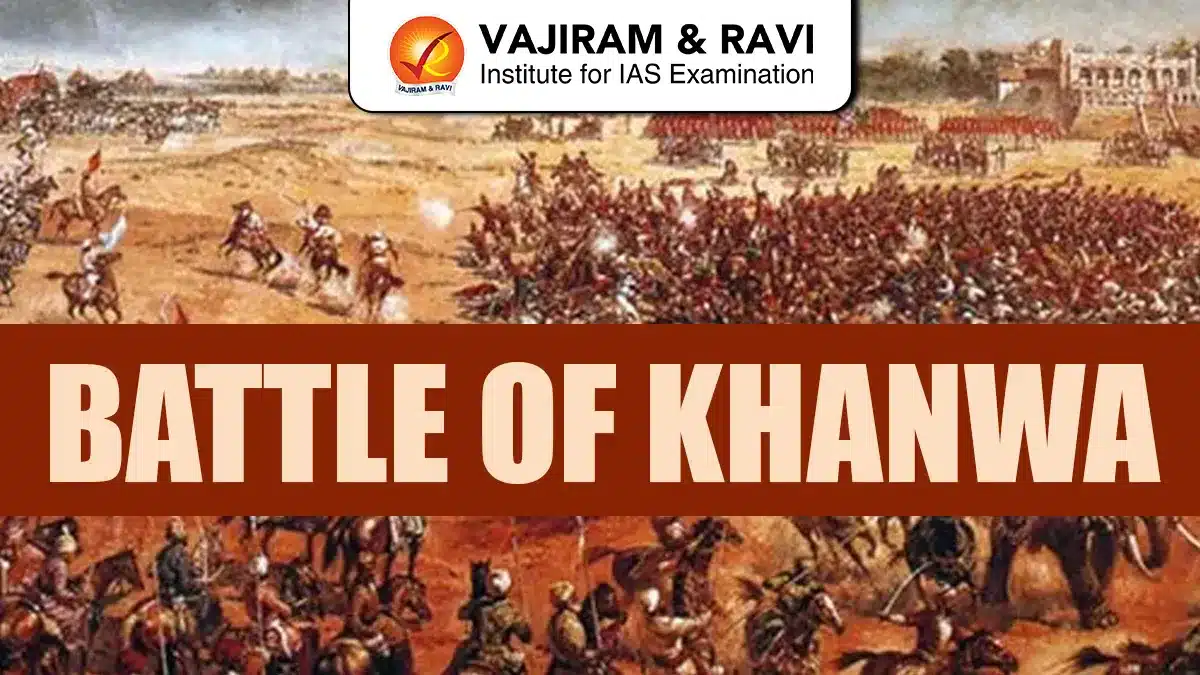
The Battle of Khanwa was a decisive military confrontation fought on 16 March 1527 near Khanwa, close to present day Fatehpur Sikri in Rajasthan. It marked a critical phase in medieval Indian history as it firmly established Mughal authority in northern India. The battle was fought between the Mughal forces led by Babur and a powerful Rajput confederacy under Rana Sanga of Mewar. This conflict was not merely a clash of two armies but a struggle for political supremacy over North India. It was among the earliest battles in the region where gunpowder weapons were used on a large scale, resulting in heavy casualties on both sides.

Battle of Khanwa

The Battle of Khanwa was fought between the Mughal Empire led by Babur and the Kingdom of Mewar led by Rana Sanga for dominance over northern India. The encounter followed Babur’s victory at the First Battle of Panipat in 1526 and represented a direct challenge to Mughal expansion. Rana Sanga had united several Rajput chiefs and Afghan nobles to expel Babur from India. The battle ended in a decisive Mughal victory, largely due to Babur’s superior military tactics and effective use of artillery and firearms. This victory ensured Mughal control over the Delhi-Agra region and weakened Rajput resistance significantly.

Battle of Khanwa Reasons

The Battle of Khanwa was fought due to a direct struggle for political supremacy in northern India after the decline of the Lodi Sultanate. Babur’s victory at the First Battle of Panipat in 1526 alarmed Rana Sanga, who had emerged as the most powerful Rajput ruler and aimed to expand his influence over the Delhi-Agra region. Rana Sanga formed a strong Rajput-Afghan confederacy to expel Babur from India. Disputes over an alleged alliance, Babur’s decision to permanently settle in India, and fear of Mughal expansion finally made armed conflict unavoidable.

Battle of Khanwa Historical Background

The historical background of the Battle of Khanwa reflects political instability in North India and competing ambitions of Babur and Rana Sanga.

  • Decline of the Lodi Dynasty: The Delhi Sultanate under Ibrahim Lodi was weakened by rebellions, defections, and administrative failures, creating conditions for foreign intervention and regional power struggles.
  • Babur’s Early Indian Campaigns: Babur had conducted multiple raids into Punjab between 1504 and 1519, gradually familiarizing himself with Indian politics and geography before launching a full-scale invasion.
  • Conquest of Punjab Region: Between 1520 and 1521, Babur captured Bhira, Sialkot, and Lahore, gaining control over the strategic gateways to Hindustan and weakening Afghan resistance.
  • Role of Lodi Rebels: Afghan nobles like Daulat Khan Lodi and Alam Khan Lodi invited Babur to invade India, hoping to overthrow Ibrahim Lodi and gain political advantage.
  • First Battle of Panipat 1526: Babur defeated Ibrahim Lodi at Panipat, killing the Sultan and founding the Mughal Empire in India, which altered the balance of power in North India.
  • Rana Sanga’s Rising Power: Rana Sanga had transformed Mewar into the strongest Rajput state, extending influence over eastern Malwa, Chanderi, and areas close to Agra.
  • Disputed Alliance Claims: Babur accused Rana Sanga of breaking an alleged agreement to jointly fight the Lodis, while Rajput sources claim Babur himself sought Sanga’s support.
  • Formation of Rajput Confederacy: Realizing Babur intended to stay in India, Rana Sanga organized a grand coalition of Rajput chiefs and Afghan allies to confront Mughal authority.

Battle of Khanwa Leaders

The major leaders involved in the Battle of Khanwa were:

  1. Rana Sanga: Ruler of Mewar and leader of the Rajput confederacy, he commanded the anti-Mughal alliance aiming to expel Babur from India.
  2. Babur: Founder of the Mughal Empire, he led the Mughal forces using artillery, firearms, and defensive tactics to secure victory.
  3. Mahmud Lodi: Younger son of Sikandar Lodi, he joined Rana Sanga with Afghan troops to restore Lodi rule in Delhi.
  4. Hasan Khan Mewati: Ruler of Mewat, he supported Rana Sanga and contributed men and resources to the Rajput-Afghan alliance.

Battle of Khanwa Course

The course of the Battle of Khanwa shows contrasting military strategies, intense fighting, and decisive moments that shaped the outcome.

  • Initial Mughal Concerns: Babur identified Rana Sanga and eastern Afghan rulers as major threats, initially sending Humayun east before recalling him due to Sanga’s rapid advance.
  • Strength of Opposing Armies: Estimates suggest Rana Sanga commanded over 110,000 soldiers, including 10,000 Afghan troops, while Babur’s army was likely around 80,000 men.
  • Early Rajput Successes: Mughal detachments sent to Dholpur, Gwalior, and Bayana were defeated, especially at the Battle of Bayana, boosting Rajput morale.
  • Impact on Mughal Morale: Continuous defeats caused fear among Babur’s troops, leading to desertions by Afghans and dissatisfaction among Turkish soldiers unwilling to fight in India.
  • Babur’s Religious Appeal: To raise morale, Babur renounced wine, destroyed his drinking vessels, and declared the campaign a religious struggle, strengthening unity within his army.
  • Strategic Positioning at Khanwa: Babur selected Khanwa carefully and fortified his camp using carts chained with iron, trenches on flanks, and defensive barriers.
  • Use of Firearms and Artillery: Mughal musketeers, falconets, and mortars were placed behind defensive carts, allowing sustained fire against advancing Rajput forces.
  • Rajput Battle Tactics: Rana Sanga relied on traditional cavalry charges, believing Rajput horsemen could overwhelm Mughal ranks through direct and sustained assaults.
  • Psychological Effect of Gunfire: Loud musket fire frightened Rajput horses and elephants, causing confusion and trampling within their own ranks.
  • Flank Battles: Rajput forces attacked Mughal flanks for nearly three hours, but Mughal firepower prevented them from breaking through defensive positions.
  • Failed Taulqama Maneuvers: Babur attempted flanking movements twice, but fierce Rajput resistance forced Mughal units to withdraw temporarily.
  • Silhadi’s Alleged Defection: Silhadi of Raisen reportedly joined Babur during the battle, though some historians believe this was a later Mughal narrative.
  • Rana Sanga Wounded: Rana Sanga was struck by a bullet and lost consciousness, creating confusion and temporary leadership vacuum within the Rajput army.
  • Role of Jhala Ajja: Jhala Ajja impersonated Rana Sanga to maintain morale and command, continuing Rajput attacks despite heavy losses.
  • Collapse of Rajput Centre: Continuous artillery fire decimated Rajput central formations, preventing close combat and causing severe casualties.
  • Mughal Counteroffensive: Babur ordered a general advance when Rajput strength weakened, pushing their forces back and killing many commanders.
  • Final Rajput Charge: Rajputs launched desperate attacks on Mughal flanks, but superior Mughal firepower ensured their defeat.
  • End of the Battle: Exhausted Mughal troops did not pursue fleeing Rajputs, marking the battle’s end with heavy casualties scattered across Bayana, Alwar, and Mewat.

Battle of Khanwa Outcomes

The outcomes of the Battle of Khanwa reshaped political power in North India and confirmed Mughal military superiority.

  • Decisive Mughal Victory: Babur’s victory eliminated the strongest immediate threat to Mughal rule in North India after Panipat.
  • Heavy Casualties: Both Mughal and Rajput forces suffered severe losses, reflecting the battle’s intensity and scale.
  • Use of Gunpowder Warfare: Khanwa highlighted the effectiveness of firearms and artillery against traditional cavalry-based armies.
  • Decline of Rajput Confederacy: The defeat weakened Rajput unity and ended Rana Sanga’s bid for northern supremacy.
  • Psychological Impact: Babur’s victory established Mughal invincibility, discouraging further large-scale resistance.
  • Construction of Skull Towers: Babur ordered towers of enemy skulls, following Timurid tradition, to intimidate future opponents.
  • End of Afghan Hopes: Afghan nobles supporting Mahmud Lodi lost their last major chance to revive Lodi authority.
  • Territorial Consolidation: Mughal control over Agra, Delhi, and surrounding regions was secured after the battle.

Also Read: Important Battles in Indian History

Battle of Khanwa Aftermath and Impact

The aftermath of the Battle of Khanwa had long-term military, political, and historical consequences for India.

  • Rana Sanga’s Retreat: Rana Sanga was carried unconscious from the battlefield by Prithviraj Kachwaha and Maldev Rathore of Marwar.
  • Oath of Revenge: After regaining consciousness, Rana Sanga vowed not to return to Chittor until Babur was defeated and expelled from India.
  • Death of Rana Sanga: In January 1528, Rana Sanga died at Kalpi, reportedly poisoned by his own nobles fearing further conflict with Babur.
  • Shift in Warfare Methods: Indian armies increasingly adopted artillery and firearms, abandoning older battlefield strategies.
  • Babur’s Strategic Advantage: Superior tactics and cannons proved decisive, as noted by historians like Pradeep Barua.
  • Subsequent Campaigns: Babur went on to fight the Battle of Chanderi in 1528 and the Battle of Ghagra in 1529.
  • Continuation of Rajput Power: Rajput resistance did not end permanently, as Rao Maldeo Rathore later emerged as a strong Rajput leader.
  • Foundation of Mughal Rule: Khanwa confirmed Babur’s intention to stay in India and laid the groundwork for a lasting Mughal Empire.

Battle of Khanwa FAQs

Q1: When was the Battle of Khanwa fought?

Ans: The Battle of Khanwa was fought on 16 March 1527 near Khanwa in present-day Rajasthan.

Q2: Who fought in the Battle of Khanwa?

Ans: The battle was fought between Mughal Emperor Babur and Rana Sanga of Mewar leading a Rajput confederacy.

Q3: Why was the Battle of Khanwa important?

Ans: It firmly established Mughal supremacy in North India after Panipat and weakened Rajput resistance significantly.

Q4: What military innovation decided the Battle of Khanwa?

Ans: Babur’s effective use of artillery, muskets, and defensive tactics proved decisive against traditional cavalry warfare.

Q5: What happened to Rana Sanga after the Battle of Khanwa?

Ans: Rana Sanga was wounded, retreated from the battlefield, and died in January 1528 before launching another campaign.
ISRO Missions List, Axiom 4, Chandrayan, Mangalyaan, Aditya L1

ISRO Missions List

The Indian Space Research Organisation (ISRO), established on 15 August 1969 under the leadership of Dr. Vikram Sarabhai, has grown into one of the world’s most efficient space agencies. From its first satellite Aryabhata to complex interplanetary and human spaceflight missions, ISRO has focused on low cost, high impact science and national development. Till now, ISRO has completed 133 spacecraft missions and 104 launch missions, while also launching 434 foreign satellites. Its missions span Earth observation, lunar and planetary exploration, astronomy, solar science, navigation and human spaceflight, reflecting India’s expanding technological and scientific capabilities.

Top ISRO Missions List

ISRO’s Mission portfolio includes completed, ongoing and planned missions across multiple domains such as Earth observation, lunar exploration, interplanetary science, astronomy, solar studies, navigation and human spaceflight. Major achievements include:

  • Total Spacecraft Missions: 133 (including 3 Nano and 1 Micro Satellite)
  • Launch Missions: 104
  • Foreign Satellites Launched: 434
  • Re-entry Missions and POEMS: 9
  • Satellites realised by private players or students: 18
  • Other Launch missions facilitated by ISRO: 2
  • Human Spaceflight Missions: 1 (Gaganyaan programme)

1. Axiom Mission 4

Axiom Mission 4 marked India’s first human presence on the International Space Station through a commercial mission linked to Gaganyaan objectives.

  • Mission Overview: Launched on 25 June 2025, Ax-4 enabled Indian astronaut Shubhanshu Shukla to spend 18 days aboard the ISS until 15 July 2025.
  • Scientific Experiments: Experiments included studies on muscle atrophy, microbial behaviour, cognitive effects of screen exposure and crop growth under microgravity conditions.
  • Strategic Importance: The mission provided hands-on human spaceflight experience supporting ISRO’s independent Gaganyaan human spaceflight programme.

2. NISAR

NASA-ISRO Synthetic Aperture Radar (NISAR) is a landmark Earth observation mission jointly developed by India and the United States.

  • Mission Objective: Launched on 30 July 2025, NISAR studies Earth’s surface changes related to earthquakes, landslides, glaciers, forests and agriculture.
  • Unique Technology: It is the world’s first dual frequency radar imaging satellite using both L-band and S-band radar systems.
  • Global Impact: NISAR provides high resolution data for climate change monitoring and disaster management worldwide.

3. Chandrayaan-1

Chandrayaan-1 was India’s first mission to the Moon and a major breakthrough in lunar science.

  • Launch Details: Launched on 22 October 2008, the orbiter entered lunar orbit on 8 November 2008 and operated until August 2009.
  • Scientific Discovery: The mission confirmed the presence of water molecules on the Moon, especially near the lunar poles.
  • Technological Gain: Chandrayaan-1 established India’s capability in deep space navigation and lunar mission design.

4. Chandrayaan-2

Chandrayaan-2 aimed to explore the Moon’s south polar region with advanced instruments.

  • Mission Composition: Launched on 22 July 2019 using LVM3, it included an orbiter, Vikram lander and Pragyan rover.
  • Lander Outcome: The lander crashed during descent due to a software issue, but the orbiter remains functional.
  • Scientific Output: The orbiter continues mapping lunar water ice and surface mineral composition with high resolution data.

5. Chandrayaan-3

Chandrayaan-3 demonstrated India’s capability for safe lunar soft landing and surface operations.

  • Launch and Landing: Launched on 14 July 2023, it successfully landed on 23 August 2023 near the Moon’s south pole.
  • Mission Focus: The mission focused on landing and roving technology without carrying a new lunar orbiter.
  • Extended Operations: The propulsion module was later shifted from lunar orbit to Earth orbit, operating till August 2024.

6. Aditya-L1 

Aditya-L1 is India’s first dedicated solar observatory mission.

  • Mission Objective: Launched on 2 September 2023, it studies the Sun’s corona, chromosphere and solar wind behaviour.
  • Orbital Location: The spacecraft entered orbit around the Sun-Earth L1 point, 1.5 million kilometres from Earth, in January 2024.
  • Scientific Value: Data supports understanding of solar storms and space weather impacts on Earth.

7. Mars Orbiter Mission

Mars Orbiter Mission, also known as Mangalyaan, established India as a major interplanetary power.

  • Historic Achievement: Launched on 5 November 2013, it reached Mars orbit on 24 September 2014 in the first attempt.
  • Cost Efficiency: The mission cost around ₹450 crore, making it one of the most economical Mars missions globally.
  • Mission Duration: Operated successfully till October 2022, studying Martian atmosphere, dust storms and surface features.

8. AstroSat

AstroSat is India’s first multi-wavelength space observatory for astronomy.

  • Launch Details: Launched on 28 September 2015, AstroSat enables observations in visible, ultraviolet and X-ray bands.
  • Scientific Coverage: It studies black holes, neutron stars, galaxies and cosmic radiation across wide energy ranges.
  • Global Significance: AstroSat places India among select nations with advanced space based astronomy capability.

9. XPoSat

XPoSat is India’s first mission dedicated to X-ray polarimetry of cosmic sources.

  • Mission Launch: Launched on 1 January 2024 aboard PSLV-C58 for studying high energy astrophysical phenomena.
  • Scientific Targets: It observes pulsars, black hole binaries, active galactic nuclei and supernova remnants.
  • Research Impact: XPoSat improves understanding of extreme cosmic environments and radiation mechanisms.

10. Gaganyaan

Gaganyaan represents India’s ambitious human spaceflight programme.

  • Spacecraft Design: Developed jointly by ISRO and HAL, it is designed to carry three astronauts to low Earth orbit.
  • Test Missions: Gaganyaan-1, 2 and 3 are uncrewed test flights planned between 2025 and 2026.
  • Crewed Mission: Gaganyaan-4 in 2026 aims to make India the fourth nation to independently send humans to space.

11. Chandrayaan-4

Chandrayaan-4 is a planned lunar sample return mission enhancing India’s lunar exploration capability.

  • Mission Timeline: Scheduled for 2027, it represents the fourth mission in the Chandrayaan programme.
  • Mission Modules: It includes transfer, lander, ascender and re-entry modules for sample collection and return.
  • Scientific Value: Lunar samples will provide detailed insights into Moon’s geology and evolution.

12. Venus Orbiter Mission

The Venus Orbiter Mission focuses on studying Venus’s atmosphere and surface conditions.

  • Expected Launch: Planned for 29 March 2028, it will orbit Venus for long term atmospheric observations.
  • Research Goals: It studies cloud dynamics, greenhouse effects and surface atmosphere interactions.
  • Strategic Importance: The mission expands India’s interplanetary exploration beyond Mars and the Moon.

13. Lunar Polar Exploration Mission

Lunar Polar Exploration Mission, also known as Chandrayaan-5, is a joint ISRO-JAXA initiative.

  • Mission Timeline: Planned for 2028-29, it targets the Moon’s south polar region.
  • Mission Components: Includes a lander and rover designed for extreme polar conditions.
  • Scientific Focus: The mission aims to study water ice and lunar resources for future human missions.

14. Bharatiya Antariksh Station

Bharatiya Antariksh Station is India’s proposed space station project.

  • Development Period: Planned between 2028 and 2035, it represents India’s long term human spaceflight vision.
  • Station Design: The station will weigh about 20 tonnes and orbit Earth at approximately 400 kilometres altitude.
  • Operational Use: Astronauts may stay for 15 to 20 days conducting scientific experiments in microgravity.

ISRO Missions List FAQs

Q1: How many spacecraft missions has ISRO completed so far?

Ans: ISRO has completed 133 spacecraft missions, including nano, micro and full scale satellites across science, communication and exploration domains.

Q2: Which was ISRO’s first space mission?

Ans: Aryabhata, launched in 1975, was ISRO’s first satellite mission, marking India’s entry into space science and satellite technology.

Q3: What is ISRO’s most successful launch vehicle?

Ans: The Polar Satellite Launch Vehicle (PSLV) is ISRO’s most reliable launcher, known for precision, cost effectiveness and multiple satellite deployment capability.

Q4: Which ISRO mission made India reach Mars in its first attempt?

Ans: The Mars Orbiter Mission (Mangalyaan), launched in 2013, made India the first nation to reach Mars orbit in its maiden attempt.

Q5: What is the objective of the Gaganyaan mission?

Ans: Gaganyaan aims to send Indian astronauts into low Earth orbit using an indigenous spacecraft and launch vehicle.

Malimath Committee, Objectives, History, Recommendations, Criticism

Malimath Committee

The Malimath Committee represents one of the most comprehensive and authoritative attempts by the Indian State to overhaul the Criminal Justice System, which has long suffered from delay, low conviction rates and declining public confidence. Constituted at the turn of the millennium, the Committee undertook a deep examination of criminal jurisprudence, constitutional safeguards, investigation standards, trial procedures and victim justice. Its report, submitted in 2003, remains a central reference point in debates on criminal justice reforms in India, especially regarding police investigation, victim rights and judicial accountability.

Malimath Committee

The Malimath Committee, officially called the Committee on Reforms of the Criminal Justice System, was constituted by the Ministry of Home Affairs on 24 November 2000 to recommend systemic reforms. Headed by Justice V.S. Malimath, former Chief Justice of Karnataka and Kerala High Courts, the Committee examined foundational principles of criminal law, procedural inefficiencies and institutional coordination. Its two-volume report, containing 158 recommendations, sought to make the system faster, fairer and more credible while restoring citizens’ faith in justice delivery.

Malimath Committee Objectives

The objectives of the Malimath Committee focused on restructuring criminal jurisprudence to address delays, inefficiency, low conviction rates and imbalance between accused rights and victim justice.

  • Review of Criminal Jurisprudence: The Committee examined core principles such as presumption of innocence, burden of proof and right to fair trial to assess whether constitutional or legal modifications were required.
  • Legal Framework Modernisation: It evaluated the need to amend the Indian Penal Code, Code of Criminal Procedure and Indian Evidence Act to align them with contemporary social realities and crime patterns.
  • Simplification of Procedures: The Committee aimed to reduce procedural complexity so that justice delivery becomes faster, cheaper and more accessible to ordinary citizens across the country.
  • Institutional Coordination: It sought to improve synergy among police, prosecution and judiciary to eliminate fragmented functioning and improve investigation and trial outcomes.
  • Accountability for Delays: The Committee proposed mechanisms to fix responsibility on police, prosecutors and courts for delays at investigation and trial stages.
  • Victim-Centric Justice: It aimed to rebalance the system by ensuring victims are adequately protected, heard and compensated during criminal proceedings.
  • Examination of Federal Crimes: The Committee studied the feasibility of introducing “Federal Crimes” under the Union List for organised, inter-state and transnational crimes.

Malimath Committee Historical Background

The Malimath Committee emerged against the backdrop of mounting concern over the near-collapse of India’s Criminal Justice System due to delays and inefficiencies.

  • The Committee was constituted on 24 November 2000 by the Ministry of Home Affairs to consider measures for revamping the Criminal Justice System.
  • Justice V.S. Malimath had earlier served as Chief Justice of Karnataka and Kerala High Courts, Chairman of the Central Administrative Tribunal and Member of the Human Rights Commission.
  • The Committee included Sri S. Varadachary, former Planning Commission advisor and Sri Amitabh Gupta, former Director General of Police, Rajasthan.
  • Sri Durgadas Gupta, Joint Secretary (Judicial), Ministry of Home Affairs, served initially as Secretary and later as Member Secretary of the Committee.
  • Justice T.S. Arunachalam and Prof. N.R. Madhava Menon were co-opted for judicial and academic expertise, later replaced by Sri D.V. Subba Rao after resignation.
  • Sri C.M. Basavarya, former District Judge and Registrar of Karnataka High Court, was appointed Executive Director to provide trial-level insights.
  • Initially given six months, the Committee’s tenure was extended until 31 March 2003 due to the vast scope of reforms examined.
  • The Committee was formed when pendency and low conviction rates in serious crimes had encouraged violent and organised crime nationwide.

Malimath Committee Recommendations

The recommendations of the Malimath Committee aimed at improving investigation quality, speeding up trials, strengthening victim rights and enhancing institutional efficiency.

  • Inquisitorial Elements: The Committee recommended borrowing features from inquisitorial systems like Germany and France, allowing judges to actively supervise investigations for truth-seeking.
  • Court Authority in Investigation: Courts should have the power to summon any person for questioning if necessary to discover the truth during criminal proceedings.
  • Right to Silence Modification: It proposed allowing courts to draw adverse inference if the accused refuses to answer questions, subject to judicial safeguards.
  • Accused Written Statement: The accused should submit a written statement outlining their defence position to assist courts in understanding contested facts.
  • Police Investigation Separation: The investigation wing should be separated from law-and-order duties to improve professionalism, focus and evidence collection quality.
  • National Security Commission: The Committee recommended establishing National and State Security Commissions to insulate police from political interference.
  • Police Establishment Board: A Board should manage postings, transfers and promotions to ensure stability and professionalism in police functioning.
  • Extended Police Custody: Police custody limit should increase from 15 to 30 days for serious crimes, with extended timelines for filing charge sheets.
  • Victim Participation Rights: Victims or their legal representatives should be allowed to participate in serious criminal trials as parties to proceedings.
  • Victim Compensation Mandate: Compensation should be mandatory in all serious crimes, irrespective of conviction, acquittal, or offender identification.
  • Victim Compensation Fund: A statutory fund should be created, including confiscated assets from organised crime, to finance victim rehabilitation.
  • State-Funded Legal Aid: Victims unable to afford lawyers should be provided advocates of their choice at state expense.
  • Court Vacation Reduction: Judicial vacations should be reduced by 21 days to increase annual working days and reduce pendency.
  • Increased Court Sitting Days: The Supreme Court should sit for 206 days and High Courts for 231 days annually to handle backlog.
  • Arrears Eradication Scheme: Long-pending cases beyond two years should be prioritised through daily hearings, mainly via Lok Adalats.
  • Organised Crime Law: A federal law should address organised crime, terrorism and transnational offences requiring central coordination.
  • Department of Criminal Justice: A permanent department should periodically review criminal laws and procedural effectiveness.
  • Economic Crime Sentencing: Punishments for economic offences should run consecutively to enhance deterrence and accountability.
  • Witness and Informant Protection: Strong legal safeguards should protect informants and witnesses from intimidation and retaliation.
  • Forensic and Scientific Methods: Investigation should rely more on forensic science and admissible evidence rather than confession-based practices.

Malimath Committee Criticism

Despite its comprehensive scope, the Malimath Committee faced serious criticism from legal scholars, civil society and human rights advocates.

  • Police Confession Admissibility: Allowing confessions to senior police officers was criticised due to documented custodial abuse and coerced statements.
  • Lowering Proof Standard: Proposals to dilute the “beyond reasonable doubt” standard were seen as undermining accused rights and judicial fairness.
  • Right Against Self-Incrimination: Drawing adverse inference from silence was viewed as conflicting with Article 20(3) of the Constitution.
  • Human Rights Risks: Critics warned that enhanced police powers without safeguards could worsen custodial violence and evidence manipulation.
  • Inquisitorial System Burden: Shifting towards inquisitorial methods may overload courts already struggling with vacancies and infrastructure shortages.
  • Death Penalty Concerns: Recommendations easing restrictions on capital punishment were opposed as contrary to global abolitionist trends.
  • SC and ST Crimes Omission: The report did not adequately address crimes against Scheduled Castes and Scheduled Tribes, limiting inclusiveness.
  • Implementation Vacuum: Despite 158 recommendations, most proposals remain unimplemented due to judicial resistance and bureaucratic inertia.
  • International Obligations Conflict: Several recommendations were argued to conflict with India’s commitments under the International Covenant on Civil and Political Rights.
  • Practical Feasibility Issues: Critics highlighted lack of investment plans for judges, police, forensic labs and infrastructure required for reforms.

Criminal Justice System in India

India’s Criminal Justice System consists of interlinked institutions responsible for crime prevention, investigation, adjudication and correction.

  • Core Subsystems: The system includes Legislature, Police, Judiciary and Correctional institutions, each performing distinct yet interconnected functions.
  • Colonial Legacy: India’s criminal laws, including IPC of 1860 and procedural frameworks, were largely shaped during British rule.
  • Code of Criminal Procedure: Enacted in 1973 and effective from 1974, CrPC governs investigation, trial and sentencing processes nationwide.
  • Persistent Pendency: Huge backlog of cases at investigation and trial stages continues to delay justice and weaken deterrence.
  • Low Conviction Rates: Serious crimes often see low convictions due to weak investigation, poor coordination and evidentiary lapses.
  • Supreme Court Observations: The Court has repeatedly stressed the need for consistent and dependable investigation standards to prevent acquittals.
  • Law Commission Findings: The 2012 Law Commission report cited unscientific police investigations and prosecution failures as key reasons for low convictions.
  • Victim Marginalisation: Historically, the system prioritised accused rights, often sidelining victims’ participation and compensation needs.
  • Reform Imperative: The Malimath Committee underscored that without systemic reform, public confidence and rule of law would continue eroding.
  • Contemporary Relevance: Even today, debates on police reforms, victim justice and investigation quality draw heavily from Malimath Committee insights.

Malimath Committee FAQs

Q1: What was the Malimath Committee?

Ans: The Malimath Committee was a government-appointed panel formed in 2000 to recommend comprehensive reforms in India’s Criminal Justice System.

Q2: Who chaired the Malimath Committee?

Ans: The Committee was chaired by Justice V.S. Malimath, former Chief Justice of the Karnataka and Kerala High Courts.

Q3: Why was the Malimath Committee constituted?

Ans: It was constituted to address delays, low conviction rates and declining public confidence in India’s Criminal Justice System.

Q4: When did the Malimath Committee submit its report?

Ans: The Committee submitted its final report in 2003 to the Ministry of Home Affairs.

Q5: How many recommendations did the Malimath Committee make?

Ans: The Malimath Committee made 158 recommendations aimed at reforming investigation, trial and sentencing processes.

UPSC Daily Quiz 12 January 2026

UPSC Daily Quiz

[WpProQuiz 65]

UPSC Daily Quiz FAQs

Q1: What is the Daily UPSC Quiz?

Ans: The Daily UPSC Quiz is a set of practice questions based on current affairs, static subjects, and PYQs that help aspirants enhance retention and test conceptual clarity regularly.

Q2: How is the Daily Quiz useful for UPSC preparation?

Ans: Daily quizzes support learning, help in revision, improve time management, and boost accuracy for both UPSC Prelims and Mains through consistent practice.

Q3: Are the quiz questions based on the UPSC syllabus?

Ans: Yes, all questions are aligned with the UPSC Syllabus 2025, covering key areas like Polity, Economy, Environment, History, Geography, and Current Affairs.

Q4: Are solutions and explanations provided with the quiz?

Ans: Yes, each quiz includes detailed explanations and source references to enhance conceptual understanding and enable self-assessment.

Q5: Is the Daily UPSC Quiz suitable for both Prelims and Mains?

Ans: Primarily focused on Prelims (MCQ format), but it also indirectly helps in Mains by strengthening subject knowledge and factual clarity.

International Renewable Energy Agency

International Renewable Energy Agency

International Renewable Energy Agency Latest News

Recently, the Union Minister for New and Renewable Energy delivered India’s national statement at the 16th Assembly of the International Renewable Energy Agency (IRENA) in Abu Dhabi, United Arab Emirates.

About International Renewable Energy Agency

  • It is an intergovernmental organisation that was founded in 2009 to support countries in their transition to a sustainable energy future.
  • It serves as the principal platform for international cooperation, a centre of excellence, and a repository of policy, technology, resource and financial knowledge on renewable energy
  • Member countries: It has 170 Members (169 States and the European Union). India is also one of the founder members of IRENA.

Governance of International Renewable Energy Agency

  • Assembly: It is IRENA’s ultimate decision-making authority, made up of one representative from each Member. 
  • Council: It is composed of 21 Member States elected for a two-year term and is accountable to the Assembly.
  • Council members serve on a rotating basis to ensure the effective participation of both developing and developed countries and a fair and equitable geographical distribution.
  • Secretariat: It comprises the Director-General and his staff, provides administrative and technical support to the Assembly, the Council and their subsidiary bodies.
  • Its headquarter is in Abu Dhabi, United Arab Emirates.
  • It is an official United Nations observer.

Source: PIB

International Renewable Energy Agency FAQs

Q1: Where is IRENA headquartered?

Ans: Abu Dhabi

Q2: What is IRENA's primary objective?

Ans: Promote adoption of renewable energy

Bhairav Battalions

Bhairav Battalions

Bhairav Battalions Latest News

For the first time, the Indian Army’s newly raised Bhairav Battalion will march down Kartavya Path and salute the Supreme Commander during the Republic Day parade.

About Bhairav Battalions

  • They are a new class of compact, high-tech combat units of the Indian Army.
  • Each battalion comprises approximately 250 soldiers, drawing personnel from infantry, artillery, air defence, signals, and other combat support arms.
  • They are specially equipped for swift, surprise, and high-impact operations in diverse combat environments.
  • Unlike Para Special Forces, which handle strategic missions deep inside enemy territory, Bhairav Battalions are positioned closer to the border.
  • Their job is to handle tactical, fast-breaking situations, the kind that require immediate response rather than detailed planning.
  • In the Army’s own words, Bhairav units are built to “fight tonight”, meaning they must be ready to move at short notice, often without waiting for larger formations.
  • The Bhairav units will act as a bridge between Special Forces and regular infantry, aimed at freeing up Special Forces for more critical assignments.
  • The battalions are being placed under corps and division-level formations, especially in sectors considered sensitive, Rajasthan, Jammu, Ladakh, and the Northeast.
  • Their structure allows them to be deployed for multi-domain tasks, a mix of ground action, drone operations, and electronic support.
  • With nearly 15 battalions already raised and plans for up to 25, the Bhairav formation is becoming a permanent part of India’s defence structure.

Source: IS

Bhairav Battalions FAQs

Q1: What are Bhairav Battalions?

Ans: They are a new class of compact, high-tech combat units of the Indian Army.

Q2: How many soldiers are there in a Bhairav Battalion?

Ans: Each battalion comprises approximately 250 soldiers, drawing personnel from infantry, artillery, air defence, signals, and other combat support arms.

Q3: What type of operations are Bhairav Battalions designed for?

Ans: Swift, surprise, and high-impact operations.

Q4: How are Bhairav Battalions different from Para Special Forces?

Ans: They handle tactical, immediate-response situations rather than deep strategic missions.

Q5: In which regions are Bhairav Battalions primarily deployed?

Ans: Rajasthan, Jammu, Ladakh, and the Northeast.

Nelapattu Bird Sanctuary

Nelapattu Bird Sanctuary

Nelapattu Bird Sanctuary Latest News

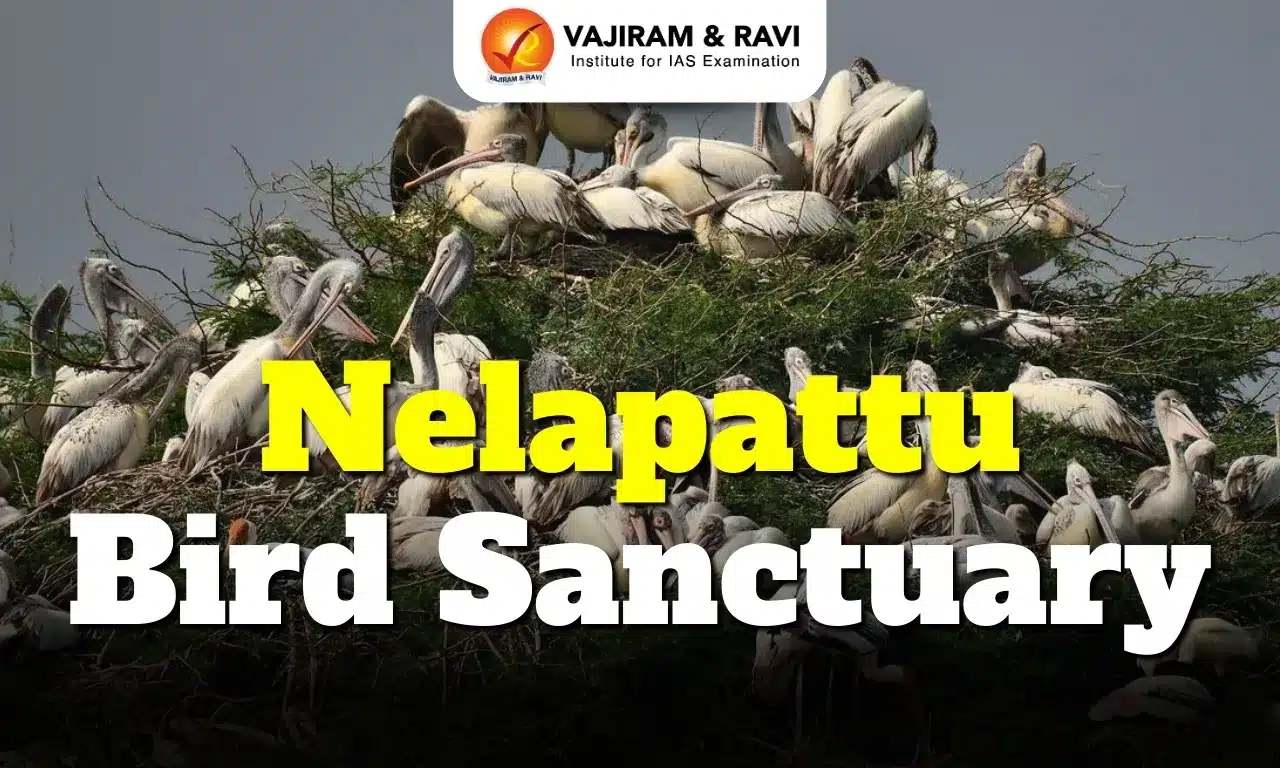
Recently, the Flamingo Festival attracted many families to Nelapattu Bird Sanctuary near Sullurpeta in Andhra Pradesh.

About Nelapattu Bird Sanctuary

  • Location: It is located in the state of Andhra Pradesh.
  • It is situated just near the Pulicat Lake, which is the second-largest salt lake in all of India.
  • It is an important breeding site for spot-billed pelicans.
  • Vegetation: The sanctuary is filled with significant plant communities like the Barringtonia swamp forests and the southern dry evergreen scrub.
  • Flora: Plants like Buchnania angustifolia, barringtonia actutangula, Acacia arabica, Albizzia amara, Borassus flabellifer, Euphorbia antiquorum, etc are found here.
  • Fauna:  In addition to the spot-billed pelican, it is an important breeding site for black-headed ibis, Asian openbill, black-crowned night heron, and little cormorant.

Source: TH

Nelapattu Bird Sanctuary FAQs

Q1: Where is the Nelapattu Bird Sanctuary located?

Ans: Andhra Pradesh

Q2: When was the Nelapattu Bird Sanctuary established?

Ans: 1976

Pradhan Mantri-Rashtriya Krishi Vikas Yojana

Pradhan Mantri-Rashtriya Krishi Vikas Yojana

Pradhan Mantri-Rashtriya Krishi Vikas Yojana Latest News

The Union Ministry of Agriculture has proposed to merge three separate ongoing schemes with its flagship Pradhan Mantri-Rashtriya Krishi Vikas Yojana.

About Pradhan Mantri-Rashtriya Krishi Vikas Yojana

  • It is a Centrally Sponsored Schemes (CSS) operating under the Ministry of Agriculture and Farmers Welfare.
  • It is aimed at accelerating agricultural growth and improving farmers’ income.

Objectives of Pradhan Mantri Rashtriya Krishi Vikas Yojana

  • To encourage states to increase public investment in agriculture and allied sectors.
  • To enhance agricultural productivity and overall farm growth.
  • To strengthen agricultural and post-harvest infrastructure and reduce losses.
  • To promote diversification into high-value crops, horticulture, livestock, and fisheries.
  • To encourage adoption of modern, innovative, and climate-resilient farming practices.
  • To reduce regional disparities in agricultural development.

Features  of Pradhan Mantri Rashtriya Krishi Vikas Yojana

  • State-Led and Decentralized Approach: States have the flexibility to plan and implement agricultural projects according to local priorities.
  • Growth-Oriented Scheme: The scheme aims to achieve a sustained annual growth rate of around 4 percent in agriculture and allied sectors.
  • Wide Sectoral Coverage: It supports crop production, horticulture, livestock, fisheries, organic farming, agricultural research, and marketing infrastructure.
  • Incentive-Based Funding: States receive financial assistance based on their commitment to increasing public investment in agriculture.

Funding Pattern of Pradhan Mantri Rashtriya Krishi Vikas Yojana

  • General States: 60 percent Centre and 40 percent State
  • North-Eastern and Hilly States: 90 percent Centre and 10 percent State
  • Union Territories: 100 percent central funding.

Source: IE

Pradhan Mantri-Rashtriya Krishi Vikas Yojana FAQs

Q1: What is the primary objective of PM-RKVY?

Ans: To enhance agricultural productivity and farmers' income

Q2: Which ministry implements PM-RKVY?

Ans: Ministry of Agriculture

Osteoarthritis

Osteoarthritis

Osteoarthritis Latest News

In a promising breakthrough, scientists at Stanford University recently identified a key protein called 15-PGDH linked to cartilage loss during aging, offering hope for new treatments for osteoarthritis.

About Osteoarthritis

  • Arthritis is a general term that means inflammation of the joints.
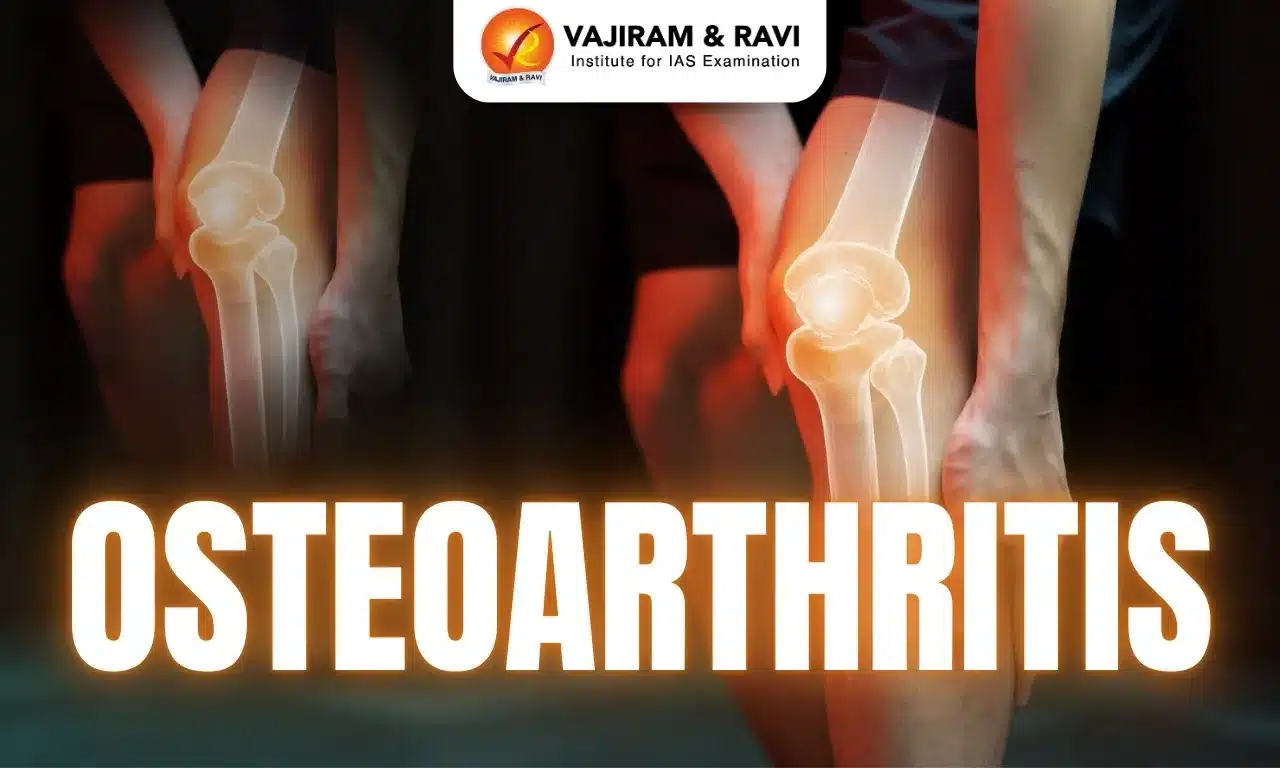
  • Osteoarthritis (OA), commonly known as wear-and-tear arthritis, is the most common type of arthritis.
  • What Causes OA?
    • It is associated with a breakdown of cartilage in joints.
    • Cartilage is a firm, rubbery material that covers the ends of bones in normal joints. 
    • Its main function is to reduce friction in the joints and serve as a "shock absorber.
    • The shock-absorbing quality of normal cartilage comes from its ability to change shape when compressed (flattened or pressed together).
    • Osteoarthritis causes the cartilage in a joint to become stiff and lose its elasticity, making it more susceptible to damage. 
    • Over time, the cartilage may wear away in some areas, greatly decreasing its ability to act as a shock absorber. 
    • As the cartilage deteriorates, tendons and ligaments stretch, causing pain. 
    • If the condition worsens, the bones could rub against each other.
  • It commonly occurs in the weight-bearing joints of the hips, knees, and spine. 
  • It also affects the fingers, thumbs, neck, and large toe.
  • It usually does not affect other joints unless previous injury, excessive stress, or an underlying disorder of cartilage is involved.
  • It is more likely to develop as people age. But it can affect much younger people, too, especially those who have had a prior joint injury.
  • Symptoms: Symptoms of osteoarthritis most often develop gradually and include:
    • Joint aching and soreness, especially with movement
    • Pain after overuse or after long periods of inactivity
    • Stiffness after periods of rest
    • Bony enlargements in the middle and end joints of the fingers (which may or may not be painful)
    • Joint swelling
  • Treatment
    • Although there is no cure for osteoarthritis, there are many treatment options available to help manage pain and keep people active.
    • As a last resort, a damaged joint may be surgically fused or replaced with one made of a combination of metal, plastic, and/or ceramic.

Source: NDTV

Osteoarthritis FAQs

Q1: What does the term arthritis mean?

Ans: It means inflammation of the joints.

Q2: What is osteoarthritis (OA)?

Ans: Osteoarthritis is the most common type of arthritis, often called wear-and-tear arthritis.

Q3: What is the main cause of osteoarthritis?

Ans: It is caused by the breakdown of cartilage in the joints.

Q4: What is cartilage?

Ans: Cartilage is a firm, rubbery material that covers the ends of bones in normal joints.

Q5: Which joints are most commonly affected by osteoarthritis?

Ans: Weight-bearing joints like the hips, knees, and spine.

PSLV-C62 Mission

PSLV-C62 Mission

PSLV-C62 Mission Latest News

ISRO’s PSLV-C62 mission experienced an anomaly at the end of the PS3 stage, and a detailed investigation has been launched to analyze the issue.

About PSLV-C62 Mission

  • It is a multi-payload mission of the Indian Space Research Organisation (ISRO) that carries one primary satellite and 18 secondary payloads into space.
  • It is ISRO’s first space launch of 2026.
  • It is scheduled to lift off from Sriharikota.
  • The mission's primary payload is the earth observation satellite EOS-N1 (codenamed ‘Anvesha’), an hyperspectral imaging satellite developed primarily for the Defence Research and Development Organisation (DRDO) for strategic purposes.
    • Unlike conventional imaging satellites, hyperspectral satellites can “see” the Earth in hundreds of wavelengths, allowing them to identify materials and objects with far greater precision.
    • This capability makes EOS-N1 a high-value asset for national security, border surveillance and strategic monitoring. 
    • At the same time, the satellite will also be used for civilian applications such as agriculture planning, urban mapping, mineral detection, and environmental monitoring.

Also Read: ISRO Missions List

  • PSLV-C62 also carries Europe's Kestrel Initial Demonstrator (KID), an experimental mission involving a small re-entry capsule developed in collaboration with a Spanish startup. 
    • The capsule is expected to re-enter Earth’s atmosphere and splash down in the South Pacific Ocean.
  • Additionally, 17 commercial payloads from startups and research institutions across India, Mauritius, Luxembourg, the UAE, Singapore, Europe, and the United States are manifested for the PSLV-C62 Mission.
  • Several Indian startups and academic institutions are also flying their satellites. 
    • These include OrbitAID Aerospace’s AayulSAT, CV Raman Global University’s CGUSAT-1, Dhruva Space’s DA-1, Space Kidz India’s SR-2, Assam Don Bosco University’s Lachit-1, Akshath Aerospace’s Solaras-S4, and Dayanand Sagar University’s DSAT-1.
  • Bengaluru-based OrbitAID Aerospace’s AayulSAT stands out as a historic first. 
    • It is India’s maiden on-orbit satellite refuelling payload. 
    • The mission aims to demonstrate technologies that could extend the operational life of satellites by enabling in-orbit servicing and refuelling.
    • Such capabilities are seen as crucial for tackling space debris and improving sustainability in Earth’s increasingly crowded orbital environment.

Source: MC

PSLV-C62 Mission FAQs

Q1: What is the PSLV-C62 Mission?

Ans: It is a multi-payload mission of ISRO carrying one primary satellite and 18 secondary payloads.

Q2: What is the primary payload of the PSLV-C62 Mission?

Ans: The Earth observation satellite EOS-N1 (codenamed Anvesha).

Q3: For which organisation was EOS-N1 primarily developed?

Ans: The Defence Research and Development Organisation (DRDO).

Q4: Which European experimental payload is carried onboard PSLV-C62?

Ans: Kestrel Initial Demonstrator (KID).

Charophytes

Charophytes

Charophytes Latest News

Research conducted at 27 test lakes in northeastern Germany revealed that the abundance of charophytes increased. 

About Charophytes

  • Charophytes are a type of green algae.
  • Fossils of Charophytes have been found going back to the Silurian Period (443 million years ago).
    • This was the period when plants moved from water to land—and Charophytes are considered the closest living relatives to land plants.
  • Habitat: Charophytes grow in silt, mud, peat or sand, often as the first plants to colonize newly-cleared areas.
  • Distribution: These “plants” are found on all continents except Antarctica.

Features of Charophyte

  • They have no true leaves, stems nor fruits.
  • These are generally submergent and are loosely attached to the sediment by thin rhizome- like structures called ‘holdfasts’.
  • Seeds can remain dormant for years.
  • Charophytes have been found in water as deep as 213 feet.
  • They are unable to grow or are restricted in growth in turbid or murky waters.

Benefits of Charophyte

  • Charophytes are underwater plants that play a crucial role in the water quality and biodiversity of lakes;
  • They stabilize the lake bed, produce oxygen, promote water clarity, and provide habitat for numerous aquatic organisms.

Source: PHYS

Charophytes FAQs

Q1: Charophytes are considered the closest relatives of?

Ans: Land plants

Q2: What are Charophytes?

Ans: A group of freshwater green algae

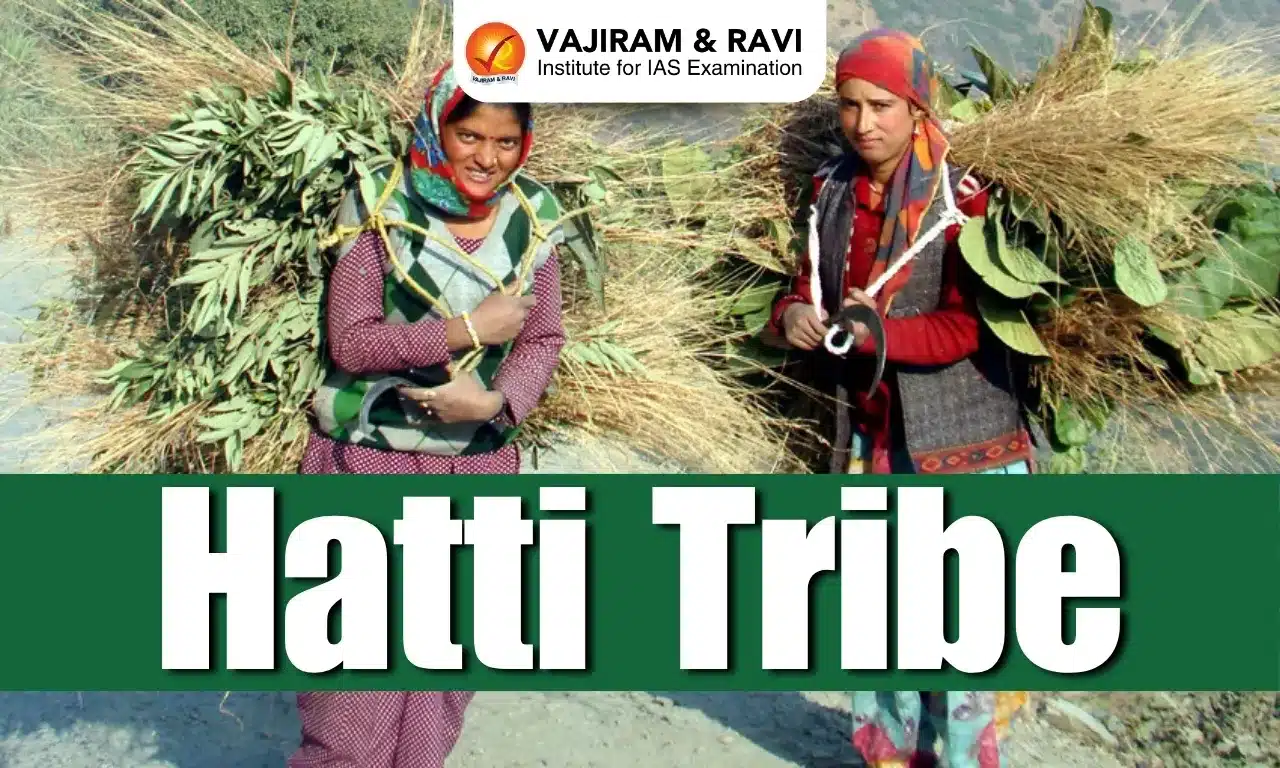
Hatti Tribe

Hatti Tribe

Hatti Tribe Latest News

"Boda Tyohar", the biggest annual festival of the Hati tribe in Himachal Pradesh's Sirmour and celebrated by over three lakh community members, recently commenced with traditional fervour.

About Hatti Tribe

  • The Hattis are a close-knit community who take their name from their age-old professional practice of selling their homegrown crops at small markets called ‘Haat’ in nearby cities.
  • Hatti men traditionally don distinctive white headgear on ceremonial occasions.
  • These tribal people reside in the Himachal-Uttarakhand border in the basin of the Giri and Tons rivers, both tributaries of the Yamuna.
  • There are two main Hatti clans: one in the Trans-Giri area of the Sirmaur district in Himachal Pradesh and the other in Jaunsar Bawar of Uttarakhand.
  • The two Hatti clans have similar traditions, and intermarriages are common.
  • Jodidara is a traditional form of polyandrous marriage practised among the Hatti tribe in Himachal Pradesh, where a woman marries two or more brothers.
    • Polyandry is legally recognised in Himachal Pradesh under revenue laws.
  • Harris is governed by a traditional council called ‘khumbli’ which decides community matters.
  • Economy: The Hatti population relies on agriculture for livelihood and bare subsistence since their climate is ideal for growing “Cash Crops.”
  • Population: According to the 2011 census, members of the community numbered 2.5 lakh, but at present the population of the Hattis is estimated at around 3 lakhs.
  • In 2023, the Indian government granted Scheduled Tribe (ST) status to the Hatti community in Himachal Pradesh.
  • The Jaunsar-Bawar region of Uttarakhand was granted tribal status in 1967.
  • Boda Tyohar, also called Magho ko Tyohar, is the biggest annual festival of the Hatti tribe.

Source: HT

Hatti Tribe FAQs

Q1: Who are the Hattis?

Ans: The Hattis are a close-knit tribal community named after their traditional practice of selling homegrown crops at small markets called Haat.

Q2: Where do the Hatti tribal people mainly reside?

Ans: They live along the Himachal–Uttarakhand border in the basin of the Giri and Tons rivers.

Q3: Which traditional council governs the Hatti community?

Ans: The community is governed by a traditional council called khumbli.

Q4: What is the main livelihood of the Hatti tribe?

Ans: Agriculture is the primary source of livelihood.

Q5: What is the biggest annual festival of the Hatti tribe?

Ans: Boda Tyohar.

Context Window in AI

Context Window in AI

Context Window in AI Latest News

In the context of artificial intelligence (AI), specifically large language models (LLMs) like GPT-5 and Claude, the context window is the maximum amount of text the model can consider at any one time while generating a response.

About Context Window in AI

  • The context window of an artificial intelligence (AI) model measures how much information the AI model can remember, working similarly to humans’ short-term memory.
  • AI models don’t read words; instead, they read chunks of characters called tokens.
  • Context Window is the amount of text, in tokens, that the model can consider or “remember” at any one time. 
  • A larger context window enables an AI model to process longer inputs and incorporate a greater amount of information into each output.
  • large language model’s (LLM’s) context window can be thought of as the equivalent of its working memory. 
  • It determines how long of a conversation it can carry out without forgetting details from earlier in the exchange. 
  • It also determines the maximum size of documents or code samples that it can process at once. 
  • When a prompt, conversation, document, or code base exceeds an AI model’s context window, it must be truncated or summarized for the model to proceed. 
  • Generally speaking, increasing an LLM’s context window size translates to increased accuracy, fewer hallucinations, more coherent model responses, longer conversations and an improved ability to analyze longer sequences of data.
  • However, increasing context length is not without tradeoffs: it often entails increased computational power requirements—and therefore increased costs—and a potential increase in vulnerability to adversarial attacks.

Source: TH

Context Window in AI FAQs

Q1: What does the context window of an AI model measure?

Ans: It measures how much information the AI model can remember, similar to short-term memory.

Q2: How is an AI model’s context window comparable to human memory?

Ans: It works like human short-term or working memory.

Q3: What are tokens in AI models?

Ans: They are chunks of characters that AI models process instead of full words.

Q4: What is a context window in AI?

Ans: It is the amount of text, measured in tokens, that a model can consider at one time.

Q5: How does a larger context window benefit an AI model?

Ans: It allows the model to process longer inputs and use more information in each output.

Central Groundwater Board (CGWB)

Central Ground Water Board

Central Ground Water Board Latest News

The Central Ground Water Board (CGWB) recently stated in its Annual Ground Water Quality Report-2025 that Andhra Pradesh is one of the States facing widespread contamination of groundwater as per the BIS standards.

About Central Ground Water Board

  • It is a multidisciplinary scientific organization of the Department of Water Resources, River Development and Ganga Rejuvenation, Ministry of Jal Shakti, Government of India.
  • It is the National Apex Agency entrusted with the responsibilities of providing scientific inputs for management, exploration, monitoring, assessment, augmentation, and regulation of groundwater resources of the country.
  • It was established in 1970 by renaming the Exploratory Tube wells Organization under the Ministry of Agriculture, Government of India. 
  • It was merged with the Ground Water Wing of the Geological Survey of India during 1972.
  • Mandate: Develop and disseminate technologies and monitor and implement national policies for the scientific and sustainable development and management of India’s groundwater resources.
  • Organization Setup:
    • It is headed by the Chairman and has five members.
    • CGWB is a multidisciplinary scientific organization consisting of Hydrogeologists, Geophysicists, Chemists, Hydrologists, Hydrometeorologists, and Engineers.
    • It has four main wings, namely 
      • Sustainable Management & Liaison (SML)
      • Survey, Assessment & Monitoring (SAM)
      • Exploratory Drilling & Materials Management (ED&MM)
      • Water Quality & Training and Technology Transfer (WQ&TT). 
    • Headquarters: Bhujal Bhawan, Faridabad, Haryana.

Major Activities of the Central Ground Water Board

  • National Aquifer Mapping and Management (NAQUIM) involving the preparation of Aquifer Maps and Management Plans.
  • Groundwater explorations to delineate groundwater-worthy areas and potential aquifers.
  • Geophysical surveys to delineate groundwater bearing zones, etc.
  • Periodic assessment of the country’s groundwater resources.
  • Monitoring of groundwater levels and quality through groundwater observation wells.
  • Dissemination of Ground Water Data and knowledge.
  • Groundwater modelling.
  • GIS and Remote sensing.
  • Regulation and control of groundwater development and management by Central Ground Water Authority (CGWA) in coordination with State Government Organizations.
  • Coordination with the State Government with a view to establish benchmark methodologies for groundwater studies.
  • R&D studies in the ground water sector and application and operationalization of new technologies/techniques for groundwater investigation, development, and management.
  • Water conservation and artificial recharge to groundwater.
  • Capacity building and knowledge transfer.

Source: TH

Central Ground Water Board FAQs

Q1: What is the Central Ground Water Board (CGWB)?

Ans: It is a multidisciplinary scientific organization under the Ministry of Jal Shakti, Government of India.

Q2: What responsibilities are entrusted to Central Ground Water Board (CGWB)?

Ans: Management, exploration, monitoring, assessment, augmentation, and regulation of groundwater resources.

Q3: Where is the headquarters of Central Ground Water Board (CGWB) located?

Ans: Bhujal Bhawan, Faridabad, Haryana.

Q4: What kind of professionals work in Central Ground Water Board (CGWB)?

Ans: Hydrogeologists, Geophysicists, Chemists, Hydrologists, Hydrometeorologists, and Engineers.

Daily Editorial Analysis 12 January 2026

Daily Editorial Analysis

Faster is not Fairer in POCSO Case Clearance Numbers

Context

  • India’s milestone achievement in 2025, when fast track special courts disposed more child sexual offence cases than registered under the POCSO Act, generated widespread optimism.
  • That year recorded a 109% disposal rate with 87,754 cases concluded against 80,320 registered. The moment appeared to signal decisive progress against chronic backlogs.
  • Yet rising speed has coexisted with falling conviction rates and inadequate support for child survivors, revealing a justice system where efficiency outpaces fairness.

From Backlog to Breakdown: When Speed Distorts Justice

  • The POCSO Act, enacted in 2012, sought to recognise the distinctive nature of offences against children and ensure a child-friendly justice process.
  • Trials were expected to be time-bound, trauma-sensitive, and supported by welfare mechanisms designed to prevent secondary victimisation.
  • In pursuit of these goals, 773 fast track special courts were established, 400 dedicated exclusively for POCSO cases and funded primarily through the Nirbhaya Fund after Supreme Court directives in 2019.
  • These courts processed 9.51 cases per month compared to 3.26 in regular courts, clearing over 350,000 cases by September 2025.
  • Despite these gains, conviction rates have steadily declined. National convictions fell from 35% in 2019 to 29% by 2023, while fast track courts averaged just 19%.
  • Statistically, a 90% disposal rate in 2023 should have pushed convictions to roughly 45% based on earlier baselines.
  • Instead, the gap widened, indicating that accelerated hearings often coincided with weaker investigations, incomplete charge sheets, and delayed forensics rather than improved adjudication.

Children in Court: Support Promised, Support Denied

  • Children who testify in POCSO cases require more than quick hearings.
  • They need trained support persons, sensitive police and lawyers, timely compensation, and functioning child welfare committees.
  • When these protections remain under-implemented, speed becomes superficial and children navigate the legal system without emotional safety or procedural clarity.
  • Support persons mandated under Section 39 and reaffirmed by the Supreme Court in 2021 are still unavailable in many jurisdictions.
  • Their absence leaves children uninformed about trial processes, exposing them to intimidation and re-traumatisation.
  • Some regional initiatives demonstrate that child-centred design can improve outcomes.
  • In Madhya Pradesh, expedited forensic processes and protected testimony scheduling improved conviction rates, showing that accelerated handling and substantive justice can be compatible when implemented deliberately rather than reactively.

The Missing First Line of Defence: Para-Legal Volunteers

  • At the policing stage, the absence of para-legal volunteers (PLVs) represents a critical weakness.
  • PLVs provide guidance at the moment when families first approach the police, helping secure First Information Reports (FIRs), protect evidence, and prevent coercion.
  • The Supreme Court ordered PLV deployment across all police stations for POCSO cases in December 2025, yet implementation remains minimal.
  • Andhra Pradesh has PLVs in only 42 of 919 stations, and Tamil Nadu has none across more than 1,500.
  • Without PLVs, families often enter police stations alone, frightened, and unprepared to confront institutional power.
  • Examples from Uttar Pradesh illustrate the consequences.
  • In Unnao, FIR registration was delayed and the family allegedly threatened. In Lalitpur in 2022, a 13-year-old gang-rape survivor was assaulted again within the police station, and her FIR was filed only after intervention by a non-governmental organisation.
  • Proper PLV deployment could have prevented coercion, secured timely documentation, and protected the survivor and evidence from contamination.

Compensation, Class, and the Unequal Burden of Seeking Justice

  • Economic vulnerability shapes access to justice. Courts are empowered to award interim compensation at any stage to protect schooling, health, and safety, yet many wait until final verdicts years later.
  • By then, the harm to education, income, and family stability is often irreversible, and survivors receive payments that arrive too late to offset the debts incurred during trial.
  • Daily wage families miss work for hearings, and mothers frequently leave employment to accompany children to court.
  • Many spend more on travel and subsistence than the State eventually reimburses. Justice thus becomes economically extractive, particularly for marginalised

Conclusion

  • India’s POCSO system has reached a point where rising disposal rates mask falling conviction rates, inadequate welfare protection, inconsistent forensic practices, and judicial interpretations that deviate from statutory purpose.
  • Efficiency without support leaves children more harmed than protected and erodes trust in the legal system.
  • Durable reform requires shifting evaluation metrics from backlog-clearance to substantive outcomes and expanding welfare infrastructures such as PLVs, support persons, forensic capacity, and timely compensation.
  • Only then can the system deliver justice that is not merely fast but genuinely child-centred, protective, and fair.

Faster is not Fairer in POCSO Case Clearance Numbers FAQs

Q1. What milestone did India’s fast track special courts achieve in 2025?
Ans. They disposed more POCSO cases than were registered, reaching a 109% disposal rate.

Q2. Why did the POCSO Act require a special framework?
Ans. It recognised that offences against children needed child-sensitive procedures and protections beyond regular criminal law.

Q3. What key weakness accompanied higher disposal rates?
Ans. Conviction rates declined, indicating weaker investigations and fragile adjudication.

Q4. Why are para-legal volunteers important in POCSO cases?
Ans. They help families secure FIRs, protect evidence, and prevent coercion at the police station stage.

Q5. How do economic conditions affect child survivors during trials?
Ans. Families often incur costs and income losses that exceed delayed compensation, making the pursuit of justice financially burdensome.

Source: The Hindu

Daily Editorial Analysis 12 January 2026 FAQs

Q1: What is editorial analysis?

Ans: Editorial analysis is the critical examination and interpretation of newspaper editorials to extract key insights, arguments, and perspectives relevant to UPSC preparation.

Q2: What is an editorial analyst?

Ans: An editorial analyst is someone who studies and breaks down editorials to highlight their relevance, structure, and usefulness for competitive exams like the UPSC.

Q3: What is an editorial for UPSC?

Ans: For UPSC, an editorial refers to opinion-based articles in reputed newspapers that provide analysis on current affairs, governance, policy, and socio-economic issues.

Q4: What are the sources of UPSC Editorial Analysis?

Ans: Key sources include editorials from The Hindu and Indian Express.

Q5: Can Editorial Analysis help in Mains Answer Writing?

Ans: Yes, editorial analysis enhances content quality, analytical depth, and structure in Mains answer writing.

Orobanche Threat to Mustard: How a Parasitic Weed Is Undermining India’s Edible Oil Crop

Orobanche Threat to Mustard

Orobanche Threat to Mustard Latest News

  • Mustard is India’s largest indigenous source of edible oil, cultivated across nearly nine million hectares, mainly in Rajasthan, Uttar Pradesh, Madhya Pradesh, Haryana and West Bengal.
  • However, the crop is increasingly threatened by Orobanche aegyptiaca, a parasitic weed that attaches to mustard roots and siphons off water and nutrients, leading to poor plant growth and reduced seed yields.

How Orobanche Damages the Crop

  • Orobanche attaches itself to mustard roots underground and siphons off water, nutrients and carbon. 
  • This leads to wilting, yellowing, stunted plant growth and ultimately sharp declines in seed yields. 
  • Because the parasite remains hidden below the soil initially, damage is already extensive by the time it becomes visible.

Farmers See Sharp Yield Losses

  • Farmers report steep yield declines despite following recommended control measures. 
  • In Haryana’s Sirsa district, yields have fallen from 9–12 quintals per acre earlier to nearly 6 quintals per acre in recent seasons. 
  • Even herbicide sprays have shown little effect, pushing farmers to reduce mustard acreage in favour of wheat, chickpea and barley.

Why Infestation Is Spreading Fast

  • Each Orobanche plant produces thousands of tiny seeds that can remain viable in soil for up to 20 years and spread through wind and water. 
  • Fields repeatedly planted with mustard are especially vulnerable, as irrigation creates ideal conditions for seed germination and rapid underground attachment to crop roots.
  • The rising infestation has shaken farmer confidence in mustard, traditionally valued for its low irrigation needs. 
  • As Orobanche spreads, many farmers are cutting back on mustard cultivation, raising concerns over future domestic edible oil production.

Why Mustard Matters for India

  • Mustard is India’s most important edible oilseed crop, contributing over 4 million tonnes out of the country’s 10.5–10.6 million tonnes of annual indigenous edible oil production. 
  • It is central to efforts to cut India’s heavy dependence on edible oil imports.
  • Reducing Import Dependence - India imports nearly 16 million tonnes of edible oils every year — mainly palm, soybean and sunflower oil — costing $15.9 billion in 2023–24 and $18.3 billion in 2024–25. 
    • Improving mustard yields is therefore a key national priority to reduce this import bill.
  • Rising Disease and Pest Pressure - Mustard’s increasing vulnerability to Orobanche (margoja), along with pests like aphids and fungal diseases such as white rust, leaf blight, stem rot and powdery mildew, has emerged as a serious concern for productivity and farmer confidence.

Farmers Flag Changing Threat Patterns

  • Farmers report that Orobanche infestation is now appearing earlier in the crop cycle and in fertile soils, unlike earlier when it emerged later and mostly in sandy fields. 
  • This shift signals a growing and more aggressive threat.
  • The buildup of long-lasting Orobanche seed banks in soil has increased the weed’s damage potential, enabling early emergence and greater yield losses. 
  • This has left farmers increasingly uncertain, sowing mustard largely on hope rather than confidence.

Herbicides as a Possible Control Tool

  • Chemical control using herbicides such as glyphosate is one possible way to tackle Orobanche. 
  • However, this approach has major limitations with conventional mustard varieties.

Why Conventional Herbicides Don’t Work

  • Glyphosate and similar broad-spectrum, non-selective herbicides kill all plants by blocking the EPSPS (5-enolpyruvylshikimate-3-phosphate synthase) enzyme essential for protein formation. 
  • Applied to normal mustard, they destroy the crop along with the weed. 
  • At currently recommended low doses, they are also ineffective against Orobanche.

Role of Herbicide-Resistant Mustard

  • A new approach lies in breeding mustard varieties that can tolerate specific herbicides. 
  • Farmers are testing a hybrid mustard that is resistant to imidazolinone herbicides, allowing selective control of Orobanche without harming the crop.
  • The hybrid ‘Pioneer-45S42CL’ can tolerate imazapyr and imazapic herbicides.
  • Sold with a compatible herbicide formulation, it requires a single spray after 25 days of sowing and has shown encouraging early results in farmers’ fields.

GM Mustard as a Future Option

  • Researchers have also developed GM mustard lines resistant to glyphosate and other herbicides, offering multiple chemical options and reducing the risk of resistance buildup.
  • Given mustard’s strategic importance and the rising weed threat, policymakers face a critical decision on permitting GM crops. 
  • Any decision, experts argue, should be guided by science and farm economics rather than ideology.

Source: IE

Orobanche Threat to Mustard FAQs

Q1: What is the Orobanche threat to mustard crops?

Ans: The Orobanche threat to mustard comes from a parasitic weed that attaches to roots, stealing water and nutrients, causing stunted growth and heavy yield losses.

Q2: Why is the Orobanche threat to mustard hard to detect early?

Ans: The Orobanche threat to mustard remains underground initially, and by the time shoots appear above soil, irreversible crop damage has already occurred.

Q3: Why is the Orobanche threat to mustard spreading rapidly?

Ans: The Orobanche threat to mustard spreads due to long-lived soil seed banks, repeated mustard cultivation, irrigation-triggered germination, and wind- and water-based seed dispersal.

Q4: Why does the Orobanche threat to mustard matter for India’s economy?

Ans: The Orobanche threat to mustard endangers India’s biggest edible oil crop, risking higher import dependence and undermining efforts to reduce the edible oil import bill.

Q5: How are farmers tackling the Orobanche threat to mustard?

Ans: Farmers are testing herbicide-resistant mustard hybrids and selective herbicides, while scientists explore GM mustard lines to manage the Orobanche threat to mustard sustainably.

Indian Telecom Security Assurance Requirements (ITSAR) – India’s Proposed Smartphone Security Regime

ITSAR

ITSAR Latest News

  • The Union Government is considering legally enforcing Indian Telecom Security Assurance Requirements (ITSAR) for smartphones, involving 83 security standards, including source code disclosure, software controls, and user-permission restrictions.
  • This has triggered strong resistance from global smartphone makers like Apple (5% market share in India), Samsung (15%), Google, and Xiaomi (19%), who argue that many provisions lack global precedent and threaten proprietary technologies.

Background

  • India is the world’s second-largest smartphone market with nearly 750 million users.
  • Rising online fraud, cybercrime, and data breaches have prompted the government to strengthen device-level security.
  • The proposals align with the Indian PM’s broader push for digital security and data sovereignty.
  • Similar tensions have emerged earlier over mandatory cyber safety apps (later revoked), and stringent testing norms for security cameras due to national security concerns.

Key Features of the Proposed Security Standards

  • Source code disclosure:
    • Manufacturers must submit proprietary source code for review and vulnerability analysis by government-designated labs.
    • Objective: Detect backdoors and systemic vulnerabilities.
    • Industry response:
      • The Manufacturers’ Association for Information Technology (MAIT) calls it “not possible” due to corporate secrecy and privacy norms.
      • No such requirement exists in the EU, North America, Australia, or Africa.
  • Background permission restrictions:
    • Apps cannot access camera, microphone, or location in the background. Mandatory continuous status-bar alerts when permissions are active.
    • Concern: No global precedent or standardized testing method.
  • Permission review alerts: Devices must periodically prompt users to review app permissions. Industry wants alerts limited to “highly critical” permissions to avoid user fatigue.
  • One-year log retention:
    • Phones must store security audit logs (logins, app installs) for 12 months.
    • Industry concern: Consumer devices lack sufficient storage capacity.
  • Periodic malware scanning: Mandatory automatic malware scans. Concerns: Battery drain, slower device performance, etc.
  • Removal of pre-installed apps: All non-essential pre-installed apps must be removable. Companies argue many apps are integral system components.
  • Mandatory notification of software updates:
    • Manufacturers must inform the National Centre for Communication Security before releasing major updates or patches.
    • Industry view: This will be impractical during zero-day vulnerabilities. Delays may increase user exposure to active cyber threats.
  • Tamper detection (Rooting/Jailbreaking): Devices must detect tampering and show persistent warnings. Industry response: No reliable universal detection mechanism exists.
  • Anti-rollback protection: Blocking installation of older software versions, even if manufacturer-signed.
  • Concern: No global standard; may restrict legitimate use cases.

Key Challenges and Way Ahead

  • Data Security vs proprietary rights: Risk of exposing trade secrets. Risk-based regulation focusing on critical vulnerabilities rather than blanket controls.
  • Lack of global precedent: Potential regulatory overreach. Adopt global best practices aligned with OECD and EU cybersecurity norms.
  • Ease of doing business: Compliance costs may deter investment. Ensure time-bound clearance mechanisms for security updates. Strengthen user-level security awareness alongside device-level controls.
  • Operational practicality: Update delays, battery drain, storage constraints. Explore independent third-party audits instead of direct source code disclosure.
  • Innovation chill: Excessive regulation may impact R&D. Maintain a balance between national security, privacy, and innovation.

Conclusion

  • India’s proposed smartphone security framework (ITSAR) reflects legitimate concerns over cybersecurity, data protection, and national security in a rapidly digitising economy. 
  • However, enforcing intrusive measures like source code disclosure without global precedent risks undermining innovation, trust, and market competitiveness. 
  • A consultative, proportionate, and globally harmonised approach is essential to safeguard users while preserving India’s attractiveness as a major digital and manufacturing hub.

Source: TH | ET

ITSAR FAQs

Q1: What is the rationale behind India’s proposal to mandate source code disclosure by smartphone manufacturers?

Ans: To enhance national cybersecurity and data sovereignty by identifying vulnerabilities and preventing exploitation.

Q2: Why have global smartphone manufacturers opposed India’s proposed ITSAR?

Ans: They argue that measures like source code review, malware scanning are operationally impractical.

Q3: How do India’s proposed smartphone security norms raise concerns related to Ease of Doing Business?

Ans: Mandatory disclosures, compliance costs, may discourage investment and innovation in India’s digital ecosystem.

Q4: What is the significance of background permission restrictions in the proposed smartphone security framework?

Ans: They aim to protect user privacy by preventing unauthorised background access to location services, thereby reducing cyber misuse.

Q5: How can India address cybersecurity concerns without hampering technological innovation?

Ans: India should adopt a risk-based, consultative, and globally aligned cybersecurity framework.

Graphene

Graphene

Graphene Latest News

Recently, researchers developed a flexible graphene-based capacitive sensor fabricated on a paper substrate using pencil-drawn interdigitated electrodes (IDEs).

About Graphene

  • It is an allotrope of carbon, along with diamond and graphite. 
  • It is a two-dimensional material consisting of a single layer of carbon atoms arranged in a honeycomb structure. 
  • The stacked form of graphene is graphite.
  • Graphene was first isolated in 2004. Since then, graphene has found hundreds of innovative applications, from sensors and electronics to energy storage and healthcare.

Properties of Graphene

  • Thickness: Graphene is the world’s thinnest material – it is only one atom thick, one million times thinner than a human hair.
  • Strength: It is 200 times stronger than steel but six times lighter. 
  • Flexibility: It is extremely flexible and stretchable.
  • Conductivity: It is an excellent electrical and thermal conductor.
  • Transparency: It is almost perfectly transparent since it only absorbs 2% of light.
  • It is impermeable to gases, even those as light as hydrogen or helium.

Source: PIB

Graphene FAQs

Q1: What is Graphene composed of?

Ans: Carbon atoms in a hexagonal lattice

Q2: What is a notable property of Graphene?

Ans: High strength and flexibility

Age of Consent in India – Law, Adolescent Autonomy, and Child Protection

Age of Consent

Age of Consent Latest News

  • The Supreme Court has flagged the misuse of the POCSO Act in consensual adolescent relationships, reopening the debate on India’s age of consent. 

Legal Framework Governing the Age of Consent in India

  • The age of consent refers to the legally defined age at which an individual is considered capable of giving valid consent for sexual activity. 
  • In India, this age is 18 years, as stipulated under the Protection of Children from Sexual Offences (POCSO) Act, 2012, which classifies anyone below 18 as a “child.” 
  • Consequently, any sexual activity involving a minor is treated as statutory rape, irrespective of consent.
  • This position was reinforced by the Criminal Law (Amendment) Act, 2013, which aligned Section 375 of the Indian Penal Code with the POCSO threshold. 
  • The Bharatiya Nyaya Sanhita (BNS), 2023, has retained this framework, reaffirming that consent is legally irrelevant if the individual is below 18.
  • Historically, India’s age of consent has evolved from 10 years (IPC, 1860) to 12 years (1891), then 14 and 16 years, before being raised to 18 years in 2012
  • It is distinct from the minimum age of marriage, which is 18 years for women and 21 years for men under the Prohibition of Child Marriage Act, 2006.

Arguments Supporting a Review of the Age of Consent

  • A key driver of the current debate is the sharp rise in POCSO cases involving adolescents aged 16-18 years, often arising from consensual romantic relationships. 
  • In many such cases, the minor involved testifies that the relationship was voluntary, yet the law mandates criminal prosecution.
  • Empirical data strengthen this concern. The NFHS-4 (2015-16) indicates that 39% of girls reported sexual debut before the age of 18. 
  • Further, studies by civil society organisations analysing thousands of POCSO judgments show that nearly one-fourth of cases involve consensual adolescent relationships, with a large majority of victims refusing to testify against the accused.
  • Supporters of reform argue that the current law fails to acknowledge adolescent sexuality and autonomy, leading to the criminalisation of normal teenage relationships. 
  • They point out that the original intent of POCSO was to combat sexual abuse and exploitation, not to penalise peer relationships. 
  • Many also cite international practices, where several countries fix the age of consent at 16 years, often coupled with “close-in-age” or “Romeo-Juliet” exemptions to prevent misuse.

Concerns Against Lowering the Age of Consent

  • Opponents of lowering the age of consent emphasise that the existing bright-line rule provides an unambiguous and uniform standard for child protection. 
  • Any dilution, they argue, risks creating loopholes that could be exploited by traffickers, abusers, and those in positions of trust.
  • Evidence suggests that child sexual abuse is frequently perpetrated by known persons, family members, neighbours, teachers, or caregivers. 
  • A Ministry of Women and Child Development study (2007) found that over 50% of abusers were known to the child, raising concerns that claims of consent in such contexts may mask coercion or manipulation.
  • Parliament has consistently upheld this protective approach. 
  • Multiple parliamentary committees and the Law Commission of India (283rd Report, 2023) have warned that reducing the age of consent could weaken POCSO and undermine efforts against child marriage, trafficking, and exploitation.

Judicial Responses and Emerging Nuances

  • Courts have increasingly struggled to balance the letter of the law with the real-life consequences of its application. 
  • While several High Courts have acknowledged the need to view consensual adolescent relationships differently, they have also reiterated that, under POCSO, consent of a minor has no legal validity.
  • The Supreme Court has reaffirmed this position, even while exercising extraordinary powers in select cases to mitigate harsh outcomes. 
  • Recent judicial observations suggest growing recognition of the trauma caused when consensual relationships are prosecuted, but without altering the statutory framework.

Way Forward

  • The debate underscores the need for a calibrated legal response, rather than a binary choice between protection and autonomy. 
  • Many experts advocate limited close-in-age exemptions for adolescents aged 16-18, combined with judicial oversight to detect coercion or abuse.
  • Beyond legal reform, long-term solutions lie in comprehensive sex education, accessible adolescent health services, and gender-sensitive policing. 
  • Strengthening social support systems can reduce misuse of the law while ensuring that genuine cases of abuse are addressed effectively.

Source: TH

Age of Consent FAQs

Q1: What is the current age of consent in India?

Ans: It is 18 years under the POCSO Act and the Bharatiya Nyaya Sanhita.

Q2: Why has the age of consent debate resurfaced?

Ans: Due to rising POCSO cases involving consensual adolescent relationships.

Q3: Does Indian law recognise consent of minors?

Ans: No, consent of anyone below 18 is legally invalid.

Q4: What are ‘close-in-age’ exemptions?

Ans: Legal provisions that protect consensual relationships between adolescents close in age.

Q5: Who has the authority to change the age of consent?

Ans: Parliament has exclusive legislative authority to amend the law.

Fog-Induced Disruptions in India: How Railways and Airlines Manage Winter Delays

Fog-Induced Disruptions

Fog-Induced Disruptions Latest News

  • Every winter, dense fog—especially in northern India—disrupts travel plans, causing delays and cancellations across rail and air networks. 
  • Low visibility affects safety and scheduling, forcing operators to slow down or halt services.
  • Indian Railways faces severe congestion during foggy periods, with cascading delays and cancellations. 
  • To mitigate risks, it equips loco pilots with fog safety devices and is investing in improved fog-related technologies, while prioritising safety over speed.
  • Airlines have managed fog better through advanced navigation technology and specialised operating procedures. 
  • However, surging passenger volumes mean that even brief disruptions can trigger widespread knock-on delays across airports and flight schedules nationwide.

Why Fog Lingers Over North India

  • Northern India is mainly affected by radiation fog, which forms on clear winter nights when the ground cools rapidly, moisture condenses, and calm winds trap the fog near the surface. 
  • This leads to frequent episodes of extremely low visibility that disrupt train and flight operations.
  • Air pollution worsens the problem. Smog mixes with fog, making it denser, lowering it closer to ground level, and prolonging poor visibility even after sunrise. 
  • High pollution levels, especially around Delhi, have increasingly intensified and extended fog-related disruptions over the years.

How Flights Operate in Low-Visibility Conditions

  • Low Visibility Procedures (LVP) - When dense fog sharply reduces visibility, airports activate Low Visibility Procedures. These include Low Visibility Take-Offs and precision landings using advanced navigation aids.
  • Instrument Landing System (ILS) CAT IIIB – ILS, a ground based radio navigation system, provides pilots with accurate horizontal and vertical guidance during landing. CAT IIIB, one of the highest precision categories, allows landings with visibility as low as 50 metres.
  • Limited Airport and Aircraft Capability - Only select Indian airports, most notably Delhi, are equipped for CAT IIIB operations. 
    • Airports without such systems must resort to delays or cancellations during heavy fog. 
    • Aircraft and flight crew also require specific certification to operate under CAT IIIB conditions.
  • Airline Preparedness - Airlines plan rosters to ensure enough CAT IIIB-trained pilots and crew are available at fog-prone airports. They also position CAT IIIB-certified aircraft at these hubs to reduce disruption.
  • Forecasting and Regulation - The aviation regulator has designated December 10 to February 10 as the official fog season. Airlines and airports rely on real-time weather data, predictive analytics, and AI-based tools to anticipate fog and manage operations more efficiently.

Why Fog-Related Flight Disruptions Cannot Be Fully Avoided

  • Safety Limits Under Low Visibility Procedures - Even with Low Visibility Procedures in place, operations slow down significantly. Aircraft need greater spacing during take-offs and landings, which reduces overall airport capacity.
  • Reduced Airport Throughput - In dense fog, major hubs like Delhi see hourly aircraft movements drop sharply. Recovery from even one hour of fog can take two to three hours, creating cascading delays.
  • Ground Movement Constraints - Taxiing between runways and terminals becomes much slower in poor visibility, adding to congestion and delaying both arriving and departing flights.
  • Mismatch Between Landing and Take-Off Visibility - CAT IIIB landings can occur at lower visibility than take-offs. This can cause arriving aircraft to pile up while departures remain grounded, leading to parking congestion and diversions.
  • Visibility Below Operational Thresholds - If visibility falls below 50 metres, even CAT IIIB operations may be suspended, forcing a halt to landings until conditions improve.
  • Flight Diversions and Alternate Airports - Airlines plan fair-weather alternate airports for diversions during fog. Final diversion decisions depend on real-time weather and the availability of engineering support at alternate locations.

How Indian Railways Manages Train Operations During Fog

  • Dense winter fog in northern India causes severe train delays, sometimes exceeding 12 hours. 
  • Safety concerns make fog management a critical operational priority for Indian Railways.

Fog Safety Devices for Loco Pilots

  • Indian Railways uses Fog Safety Devices (FSDs)—GPS-based handheld tools that give audio-visual alerts to drivers about signals, stations, crossings, and obstacles in geo-fenced areas.
  • In December 2025, 25,939 FSDs were deployed, with around 23% allocated to Northern Railway, the most fog-prone zone.

Modified Signalling to Reduce Risk

  • To prevent congestion and accidents during fog, Northern and North Central Railways use modified automatic signalling, limiting train movement to two trains between stations. Luminous strips on signals improve visibility.

Kavach: Automatic Train Protection System

  • Indian Railways is rolling out Kavach, its Automatic Train Protection (ATP) system, which displays signal information inside the locomotive cabin and automatically applies brakes if needed. 
  • This allows safer operations even in dense fog.
  • The advanced Kavach 4.0 has been commissioned on 738 route km, covering key sections of the Delhi–Mumbai and Delhi–Howrah high-density corridors. 

Source: IE | ToI

Fog-Induced Disruptions FAQs

Q1: What causes fog-induced disruptions in India every winter?

Ans: Fog-induced disruptions in India are caused by radiation fog, stagnant winds, and high pollution, especially in northern regions, leading to extremely low visibility conditions.

Q2: How do airlines handle fog-induced disruptions in India?

Ans: Airlines manage fog-induced disruptions in India through Low Visibility Procedures, CAT IIIB landings, trained pilots, certified aircraft, and predictive weather technologies.

Q3: Why are fog-induced disruptions in India unavoidable for flights?

Ans: Fog-induced disruptions in India slow aircraft movements, reduce runway capacity, and limit ground visibility, causing cascading delays even at technologically advanced airports.

Q4: How does Indian Railways manage fog-induced disruptions in India?

Ans: Indian Railways tackles fog-induced disruptions in India using fog safety devices, modified signalling systems, luminous markers, and the Kavach automatic train protection system.

Q5: Why do fog-induced disruptions in India cause network-wide delays?

Ans: Fog-induced disruptions in India create cascading effects because trains and aircraft operate in interconnected networks, where one delay quickly impacts multiple routes and schedules.

National Youth Day 2026, Theme, Role, Significance

National Youth Day 2026

National Youth Day is celebrated as Rashtriya Yuva Diwas every year in India on 12th January to commemorate the birth anniversary of Swami Vivekananda, one of India’s greatest philosophers, spiritual leaders, and youth icons. The day was officially declared as National Youth Day in 1984 by the Government of India, following the recommendation of the Government of India’s Ministry of Youth Affairs and Sports, to honour Vivekananda’s contribution to inspiring youth.

National Youth Day 2026

National Youth Day 2026 will be celebrated with various events organized by the Ministry of Youth Affairs and Sports, state governments, educational institutions, and youth organizations across India. Programs typically include yoga competitions, seminars, cultural events, awareness campaigns, and lectures on youth development. The day is not only a tribute to Swami Vivekananda but also a platform to motivate young Indians to participate in nation-building activities and contribute positively to society.

National Youth Day 2026 Theme

Each year, National Youth Day adopts a theme that reflects contemporary priorities for youth development and national progress. The theme of National Youth Day 2026, “Ignite the Self, Impact the World,” highlights the importance of awakening inner potential, character, and confidence among young people so they can become responsible citizens and positive agents of change.

Life and Teachings of Swami Vivekananda

Swami Vivekananda (1863-1902) was a visionary monk, philosopher, and social reformer who played a key role in introducing Indian spirituality to the world. Born in Kolkata, he was a disciple of Sri Ramakrishna Paramahamsa and inspired millions with his message of youth empowerment, education, and service to humanity.

Teachings of Swami Vivekananda:

  • Believed in self-confidence as the key to personal success and social transformation.
  • Advocated service to humanity, stating that serving others is equivalent to serving God.
  • Promoted education that develops character alongside knowledge and practical skills.
  • Encouraged spiritual growth through Vedanta and Yoga for mental clarity and self-realization.
  • Supported the unity of religions and tolerance, emphasizing respect for all faiths.
  • Inspired the youth to be the driving force of the nation through courage and dedication.
  • Urged individuals to practice fearlessness, overcoming obstacles with knowledge, action, and faith.

Role of National Youth Day in Modern India

  • Inspires Youth Leadership: Motivates young people to take initiative in social, cultural, and economic development.
  • Promotes National Integration: Encourages patriotism and unity among youth from diverse regions and backgrounds.
  • Supports Government Initiatives: Highlights schemes like Skill India, Start-up India, and National Service Scheme (NSS) for youth empowerment.
  • Encourages Social Responsibility: Urges young people to participate in community service, environmental protection, and awareness campaigns.
  • Fosters Innovation and Entrepreneurship: Motivates youth to develop creative solutions for societal challenges and national progress.
  • Strengthens Moral and Ethical Values: Reinforces principles like honesty, courage, and self-discipline inspired by Swami Vivekananda.
  • Promotes Holistic Development: Integrates physical, mental, spiritual, and intellectual growth through activities like yoga, seminars, and cultural programs.

National Youth Day 2026 Significance

National Youth Day 2026 holds great significance as it inspires India’s youth to emulate the ideals of Swami Vivekananda, fostering personal growth, social responsibility, and nation-building.

  • Inspires Youth Leadership: Encourages young people to take initiative in social, cultural, and economic spheres.
  • Promotes Moral and Ethical Values: Reinforces principles like honesty, courage, discipline, and integrity.
  • Encourages Social Responsibility: Urges youth to engage in community service, environmental protection, and awareness campaigns.
  • Supports National Development: Motivates youth to contribute to nation-building and sustainable growth.
  • Celebrates Swami Vivekananda’s Ideals: Highlights his teachings on self-confidence, education, spiritual growth, and service to humanity.

Fosters National Unity and Patriotism: Strengthens the bond among youth across diverse regions and communities.

National Youth Day 2026 FAQs

Q1: Why is National Youth Day observed on 12th January?

Ans: It marks the birth anniversary of Swami Vivekananda, whose teachings on youth empowerment, self-confidence, and service to society continue to inspire India’s younger generation.

Q2: When was National Youth Day first officially celebrated?

Ans: The Government of India officially declared National Youth Day in 1984, and it was first celebrated in 1985 to honor Swami Vivekananda’s legacy.

Q3: What is the main purpose of National Youth Day?

Ans: The day aims to inspire youth to develop self-confidence, moral values, leadership qualities, and a sense of social responsibility, following the ideals of Swami Vivekananda.

Q4: What is the theme of National Youth Day 2026?

Ans: The theme is “Ignite the Self, Impact the World,” focusing on awakening the inner potential of young people so they can contribute positively to society and nation-building.

Q5: How is National Youth Day celebrated?

Ans: Celebrations include seminars, workshops, cultural events, yoga sessions, awareness campaigns, and community service activities, organized by educational institutions, youth organizations, and government bodies.

Enquire Now