FP-7 Missile

FP-7 Missile

FP-7 Missile Latest News

Ukraine has deployed its FP-7 tactical ballistic missile in combat for the first time, President Volodymyr Zelenskiy said recently.

About FP-7 Missile

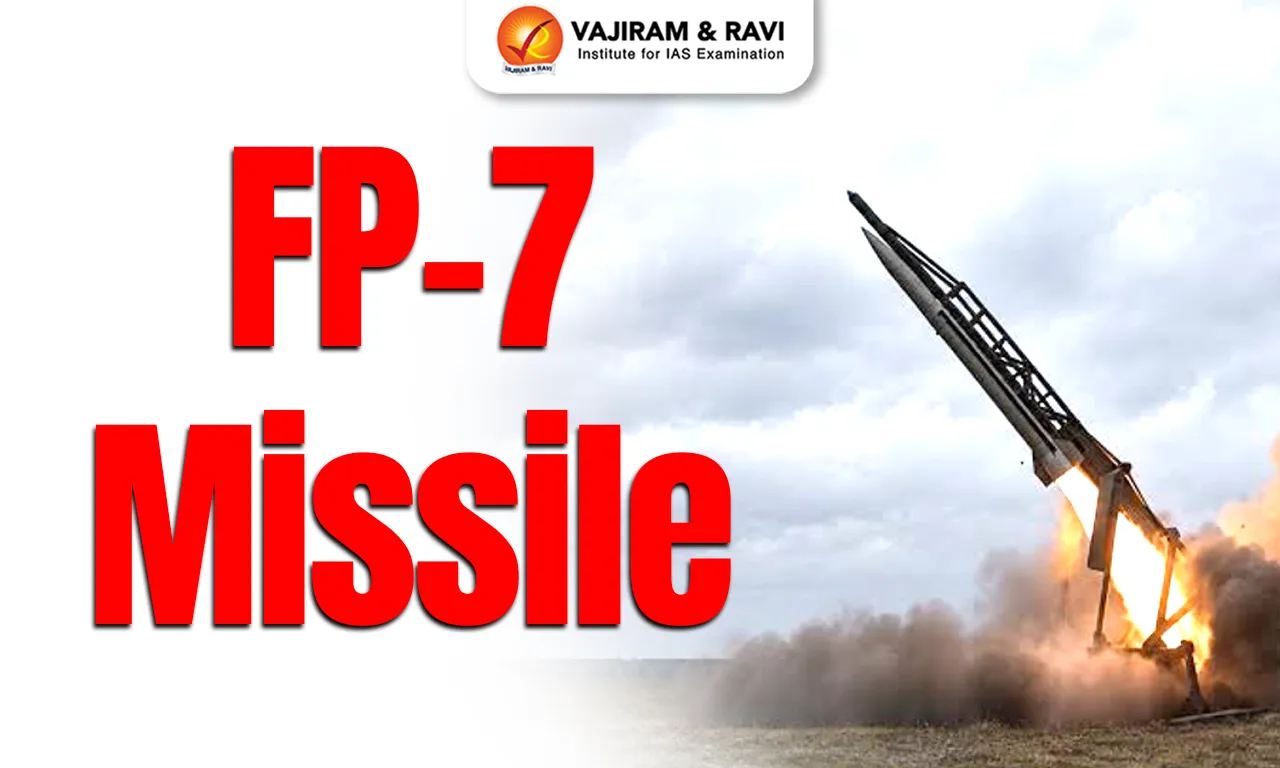
  • The FP-7 Missile, nicknamed the Pelican, is a ground-launched tactical ballistic missile developed by Ukrainian defence company Fire Point. 
  • It is designed for shorter-range strikes against targets such as logistics hubs, air-defence sites, and drone bases, rather than deep strikes far behind the frontline.
  • It is also being reworked to be used in air defense systems.  It is a key part of Europe’s first common anti-ballistic system project, called Freyja.  

FP-7 Missile Features

  • It measures 7.25 m long and 530 mm in diameter. 
  • It has a solid-fuel rocket motor. 
  • It has a reported range of around 200 km and a reported speed of around 1,500 metres per second. 
  • Its payload is 150 kg while its maximum flight duration is 250 seconds. 
  • It has a circular error probability (CEP) of 14 meters.

News: N18

FP-7 Missile FAQs

Q1: What is the FP-7 Missile?

Ans: It is a ground-launched tactical ballistic missile.

Q2: Which country developed the FP-7 Missile?

Ans: Ukraine.

Q3: Which company developed the FP-7 Missile?

Ans: Fire Point, a Ukrainian defence company.

Q4: What is the reported range of the FP-7 Missile?

Ans: Around 200 km.

Asian Games 2026 Medal Tally, Country-Wise Medals and Rankings

Asian Games 2026 Medal Tally

Asian Games 2026 Medal Tally is updated as athletes from across Asia compete for medals at the 20th Asian Games in Aichi-Nagoya, Japan. The Asian Games 2026 are being held from 19 September to 4 October 2026. The event features 43 sports, 71 disciplines and 469 medal events.

China, Japan, South Korea and other Asian countries are competing across multiple sports. The medal table ranks countries based primarily on the number of gold medals, followed by silver and bronze medals. 

India has won 81 medals at the Asian Games 2026, including 19 gold medal, 26 silver medals and 36 bronze medals. Indian athletes have earned these medals across events such as shooting and mixed martial arts.

Asian Games 2026 Medal Tally

The following is the Asian Games 2026 medal tally based on the latest figures provided as of 3rd October 2026.

Rank Country Gold Silver Bronze Total
1 China 163 82 74 319
2 Japan 72 83 85 240
3 South Korea 33 40 62 135
4 Uzbekistan 20 23 22 65
5 India 19 26 36 81
6 Iran 15 17 13 45
7 Thailand 15 12 17 44
8 Kazakhstan 12 21 44 77
9 Bahrain 11 5 6 22
10 Malaysia 9 5 16 30
11 Hong Kong, China 7 17 22 46
12 North Korea 7 11 9 27
13 United Arab Emirates 7 4 1 12
14 Indonesia 5 8 22 35
15 Chinese Taipei 4 16 31 51
16 Philippines 4 8 16 28
17 Kuwait 4 1 4 9
18 Qatar 3 6 5 14
19 Vietnam 3 3 19 25
20 Singapore 2 9 5 16
21 Tajikistan 2 5 7 14
22 Saudi Arabia 2 2 9 13
23 Myanmar 2 1 2 5
24 Macao, China 1 4 1 6
25 Kyrgyzstan 1 3 9 13
26 Jordan 1 3 4 8
27 Mongolia 1 1 11 13
28 Sri Lanka 1 1 0 2
29 Iraq 0 2 3 5
30 Turkmenistan 0 2 0 2
31 Pakistan 0 1 6 7
32 Afghanistan 0 1 2 3
33 Lebanon 0 1 2 3
34 Oman 0 1 1 2
35 Cambodia 0 0 4 4
36 Nepal 0 0 2 2
37 Bangladesh 0 0 1 1
38 Brunei Darussalam 0 0 1 1
39 Laos 0 0 1 1
40 Syria 0 0 1 1

Note: The medal tally changes throughout the Asian Games as more events are completed. The table above reflects the figures provided for this update and should be treated as a live/ongoing tally rather than the final medal standings.

India in Asian Games 2026 Medal Tally

India has recorded 79 medals in the provided Asian Games 2026 medal tally, including 19 gold medal, 26 silver medals and 36 bronze medals.

India in Asian Games 2026 Medal Tally

Medal

Number

Gold

19

Silver

26

Bronze

36

Total

81

Indian Medalists at Asian Games 2026

India delivered a strong performance at the Asian Games 2026, winning 81 medals, 19 Gold, 26 Silver and 36 Bronze across sports including shooting, athletics, kabaddi, cricket, squash, weightlifting, badminton, rowing, wushu and table tennis.

Gold Medallists

No. Sport Event Indian Medallist(s) Medal
1 Cricket Women’s Indian Women’s Cricket Team Gold
2 Shooting 10m Air Pistol Mixed Team Kamaljeet, Suruchi Singh Gold
3 Kabaddi Women’s Team Indian Women’s Kabaddi Team Gold
4 Kabaddi Men’s Team Indian Men’s Kabaddi Team Gold
5 Shooting Women’s Trap Neeru Dhanda Gold
6 Athletics Women’s 4×400m Relay Kiran Pahal, Poovamma MR, Prachi Choudhary, Vithya Ramraj Gold
7 Archery Women’s Compound Team Chikitha Taniparthi, Prithika Pradeep, Jyothi Surekha Vennam Gold
8 Archery Mixed Compound Team Sahil Jadhav, Chikitha Taniparthi Gold
9 Shooting Mixed Team Trap Kynan Chenai, Neeru Dhanda Gold
10 Archery Men’s Compound Team Sahil Jadhav, Ganesh Mani Ratnam Thirumuru, Kushal Dalal Gold
11 Archery Women’s Recurve Team Ankita Bhakat, Kumkum Mohod, Kirti Sharma Gold
12 Boxing Women’s 75kg Lovlina Borgohain Gold
13 Boxing Women’s 65kg Parveen Hooda Gold
14 Boxing Men’s 80kg Ankush Gold
15 Wrestling Men’s Freestyle 65kg Sujeet Gold
16 Hockey Women’s Team Indian Women’s Hockey Team Gold
17 Archery Women’s Recurve Individual Kumkum Mohod Gold
18 Golf Women’s Individual Pranavi Urs Gold
19 Cricket Men Indian Men's Cricket Team  

Silver Medallists

No. Sport Event Indian Medallist(s) Medal
19 Shooting Women’s 10m Air Rifle Team Elavenil Valarivan, Sonam Maskar, Vidarsa Vinod Silver
20 Shooting Women’s 10m Air Rifle Elavenil Valarivan Silver
21 Shooting Men’s 10m Air Rifle Team Rudrankksh Patil, Parth Mane, Himanshu Dhillon Silver
22 Shooting Men’s 10m Air Rifle Himanshu Dhillon Silver
23 Weightlifting Women’s 49kg Mirabai Chanu Silver
24 Wushu Women’s 60kg Sanda Roshibina Devi Silver
25 Athletics Mixed 4×400m Relay Indian Mixed Relay Team Silver
26 Shooting Men’s 50m Rifle 3P Team Aishwary Pratap Singh Tomar, Rudrankksh Patil, Niraj Kumar Silver
27 Athletics Men’s 10,000m Gulveer Singh Silver
28 Athletics Men’s Marathon Sawan Berwal Silver
29 Shooting Women’s 50m Rifle 3P Team Vidarsa Vinod, Ashi Chouksey, Tilottama Sen Silver
30 Athletics Men’s Shot Put Tajinderpal Singh Toor Silver
31 Squash Men’s Singles Abhay Singh Silver
32 Squash Women’s Singles Anahat Singh Silver
33 Athletics Women’s Long Jump Ancy Sojan Silver
34 Athletics Men’s High Jump Sarvesh Kushare Silver
35 Shooting Women’s 25m Pistol Esha Singh Silver
36 Athletics Men’s 1500m Gulveer Singh Silver
37 Athletics Men’s Long Jump Murali Sreeshankar Silver
38 Athletics Men’s Javelin Throw Yash Vir Singh Silver
39 Shooting Women’s Trap Team Neeru Dhanda, Manisha Keer, Aashima Ahlawat Silver
40 Sailing Men’s Skiff Manu Francis, Prince Kurisinkal Noble Silver
41 Wrestling Men’s Greco-Roman 97kg Nitesh Siwach Silver
42 Archery Mixed Recurve Team Kumkum Mohod, Dhiraj Bommadevara Silver
43 Archery Men’s Recurve Team Neeraj Chauhan, Yashdeep Bhoge, Dhiraj Bommadevara Silver
44 Golf Women’s Team Pranavi Urs, Diksha Dagar, Aditi Ashok Silver

Bronze Medallists

No. Sport Event Indian Medallist(s) Medal
45 Shooting Men’s 10m Air Rifle Rudrankksh Patil Bronze
46 MMA Women’s Traditional -60kg Suchika Tariyal Bronze
47 Shooting Women’s Skeet Team Parinaaz Dhaliwal, Raiza Dhillon, Maheshwari Chauhan Bronze
48 Shooting Men’s Skeet Team Anantjeet Singh Naruka, Bhavtegh Singh Gill, Mairaj Ahmad Khan Bronze
49 Soft Tennis Men’s Singles Jay Meena Bronze
50 Badminton Men’s Team Indian Men’s Badminton Team Bronze
51 Rowing Men’s Double Sculls Satnam Singh, Salman Khan Bronze
52 Shooting Mixed Skeet Team Anantjeet Singh Naruka, Parinaaz Dhaliwal Bronze
53 Athletics Women’s 10,000m Seema Kumari Bronze
54 Table Tennis Mixed Doubles Diya Chitale, Manush Shah Bronze
55 Athletics Women’s Shot Put Manpreet Kaur Bronze
56 Athletics Women’s Pole Vault Baranica Elangovan Bronze
57 Squash Mixed Doubles Joshna Chinappa, Velavan Senthilkumar Bronze
58 Athletics Women’s 400m Prachi Choudhary Bronze
59 Athletics Women’s 200m Haritha Bhadra Bronze
60 Athletics Decathlon Tejaswin Shankar Bronze
61 Athletics Women’s 3000m Steeplechase Parul Chaudhary Bronze
62 Kurash Women’s -78kg Pincky Balhara Bronze
63 Athletics Women’s 400m Hurdles Vithya Ramraj Bronze
64 Athletics Women’s 5000m Parul Chaudhary Bronze
65 Athletics Men’s Javelin Throw Rohit Yadav Bronze
66 Boxing Men’s +90kg Narender Berwal Bronze
67 Athletics Men’s 5000m Gulveer Singh Bronze
68 Athletics Mixed 4×100m Relay Gurindervir Singh, Sneha SS, Animesh Kujur, Harita Bhadra Bronze
69 Athletics Women’s High Jump Pooja Singh Bronze
70 Athletics Men’s 4×400m Relay Dharmveer Choudhary, Manu TS, Jay Kumar, Vishal TK Bronze
71 Boxing Women’s 60kg Priya Ghanghas Bronze
72 Boxing Men’s 90kg Kapil Pokhariya Bronze
73 Wrestling Men’s Greco-Roman 80kg Sunil Kumar Bronze
74 Squash Women’s Team Anahat Singh, Joshna Chinappa, Tanvi Khanna, Shameena Riaz Bronze
75 Archery Men’s Compound Individual Ganesh Mani Ratnam Thirumuru Bronze
76 Squash Men’s Team Indian Men’s Squash Team Bronze
77 Sailing Women’s Dinghy Nethra Kumanan Bronze
78 Sepaktakraw Men’s Quadrant Indian Men’s Sepaktakraw Team Bronze

India at Asian Games 2026 Day-Wise Medal Updates

India has won 81 medals at the Asian Games 2026 in Aichi-Nagoya, comprising 19 Gold, 26 Silver and 36 Bronze medals as of 3rd October, 2026. India’s medal campaign has seen strong contributions from shooting, athletics, kabaddi, cricket, squash, weightlifting, wushu, rowing, badminton and table tennis.

3 October Update

India added three medals in the early events on 3 October 2026, taking its overall tally to 79 medals — 18 Gold, 26 Silver and 35 Bronze. The medals came from archery and golf.

  • Kumkum Mohod won gold in the women’s individual recurve archery event, defeating South Korea’s Oh Yejin in a shoot-off. She also secured an LA 2028 Olympic quota place.
  • Pranavi Urs won gold in the women’s individual golf event, finishing at 15-under par after four rounds.
  • Pranavi Urs, Aditi Ashok and Diksha Dagar won silver in the women’s team golf event, finishing behind China.
  • India has won the match against Pakistan in the men’s T20 cricket gold-medal final held on 3 October 2026 by 19 runs. The match is scheduled for 10:00 AM IST at Korogi Sports Park, Nisshin, Japan. The Indian team, led by Shreyas Iyer, reached the final after defeating Sri Lanka in the semifinal, while Pakistan defeated Bangladesh to book its place in the gold-medal match.
  • The India vs Pakistan final is an opportunity for India to add another gold medal to its Asian Games tally. The result of the match will determine the men's cricket gold and silver medals.
  • India also has a men’s hockey gold-medal match against Malaysia at 3:30 PM IST on the same day.

2 October Update

India enjoyed one of its most successful days at the Asian Games 2026 on 2 October, winning 11 medals — five Gold, two Silver and four Bronze. The day's medals came from archery, boxing, wrestling, hockey, sailing and sepaktakraw.

  • Ankita Bhakat, Kumkum Mohod and Kirti Sharma won gold in the women’s recurve team event.
  • Lovlina Borgohain won gold in women’s 75kg boxing.
  • Parveen Hooda secured gold in women’s 65kg boxing.
  • Ankush Panghal won gold in men’s 80kg boxing.
  • Sujeet Kalkal won gold in men’s 65kg freestyle wrestling after a dramatic comeback in the final.
  • India’s women’s hockey team defeated China 1–0 to win gold, ending a 44-year wait for an Asian Games women’s hockey title.
  • Kumkum Mohod and Dhiraj Bommadevara won silver in the mixed recurve team event.
  • Yashdeep Bhoge, Neeraj Chauhan and Dhiraj Bommadevara secured silver in the men’s recurve team event.
  • Nethra Kumanan won bronze in the women’s dinghy sailing event.
  • Harshita Tomar and Shital Verma secured bronze in the women’s skiff event following China’s disqualification.
  • India won bronze in the men’s quadrant sepaktakraw event after losing to Japan.

1 October Update

India added seven medals on 1 October 2026, taking its overall tally to 65 medals — 10 Gold, 23 Silver and 32 Bronze. The medals came from wrestling, sailing, squash and archery.

  • Nitesh Siwach won the silver medal in the men’s Greco-Roman 97kg wrestling event after losing the final to Japan’s Yuri Nakazato.
  • Manu Francis and Prince Kurisinkal Noble secured silver in the men’s skiff (49er) sailing event.
  • Harshita Tomar and Shital Verma won bronze in the women’s skiff sailing event after a retrospective change in the standings.
  • India’s women’s squash team won bronze after losing its semifinal to Hong Kong, China.
  • India’s men’s squash team also secured bronze after its semifinal defeat to Malaysia.
  • T. Ganesh Mani Ratnam Thirumuru won bronze in the men’s compound individual archery event.
  • India also secured a bronze medal in the men’s quadrant sepaktakraw event, with the team losing to Japan in the semifinal.

30 September Update

India enjoyed its best medal-winning day so far at the Asian Games 2026 on 30 September, with the compound archery contingent completing a clean sweep of all three team gold medals. Indian shooters also added a gold in the mixed trap team event, while boxing and wrestling contributed bronze medals.

  • Jyothi Surekha Vennam, Chikitha Taniparthi and Prithika Pradeep won gold in the women's compound team event, defeating China 238–234. Their score equalled the world record for the event.
  • Chikitha Taniparthi and Sahil Jadhav won gold in the mixed compound team event, defeating South Korea in a dramatic shoot-off. Their victory also secured an LA 2028 Olympic quota place.
  • Sahil Jadhav, Kushal Dalal and Thirumuru Ganesh Maniratnam won gold in the men's compound team event, completing India's sweep of all three compound archery team titles.
  • Neeru Dhanda and Kynan Chenai won gold in the mixed team trap shooting event, giving India another gold medal on the day.
  • Priya Ghanghas won bronze in women's 60kg boxing after losing her semifinal to China's Yang Chengyu by a 1–4 decision.
  • Kapil Pokhariya secured bronze in men's 90kg boxing after losing his semifinal to Uzbekistan's Turabek Khabibullaev.
  • Sunil Kumar won bronze in men's 87kg Greco-Roman wrestling. His medal was notable as it made him the first Indian to win two Greco-Roman medals at the Asian Games.
  • India's women's hockey team reached the final after defeating South Korea 2–0, while both the men's and women's squash teams reached the semifinals and assured themselves of at least bronze medals.

29 September Update

India had a highly productive 29 September, winning eight medals, including two gold, one silver and five bronze medals. The day's medals took India's tally to 47 medals, 5 Gold, 21 Silver and 21 Bronze.

  • Neeru Dhanda, Manisha Keer and Aashima Ahlawat won the silver medal in the women's trap team event in shooting.
  • Neeru Dhanda then won the gold medal in the women's individual trap event.
  • Dhanda became the first Indian woman to win Asian Games gold in the women's individual trap event.
  • India also added medals in athletics, shooting and other events during the day, taking the total to 47 medals by the end of the day's reported tally.

28 September Update

India entered 28 September with 37 medals, 4 Gold, 16 Silver and 17 Bronze. The day features medal opportunities in athletics, shooting, boxing, squash and hockey, along with India's men's cricket quarter-final against Afghanistan. Key Indian athletes in action include Manu Bhaker, Avinash Sable and Lovlina Borgohain.

  • Athletics: Avinash Sable begins his campaign in the men's 3000m steeplechase as he looks to defend his Asian Games title.
  • Shooting: Manu Bhaker competes in the women's 25m pistol event after India's strong showing in shooting earlier in the Games.
  • Boxing: Lovlina Borgohain and other Indian boxers continue their campaigns across different weight categories.
  • Cricket: India's men's cricket team takes on Afghanistan in the quarter-final.
  • Hockey: The Indian women's hockey team continues its campaign after topping its group with five wins from five matches.
  • Medal tally: No new Indian medal had been added at the time of this update; India's latest confirmed tally remained 37 medals.

27 September Update – Seven More Medals

India added seven medals on 27 September, taking its overall tally to 37 medals. Athletics contributed five medals, while India won two silver medals in squash.

  • Ancy Sojan – Silver (Athletics): Won silver in the women's long jump.
  • Sarvesh Kushare – Silver (Athletics): Won silver in the men's high jump, clearing 2.25m.
  • Anahat Singh – Silver (Squash): Won silver in the women's singles after losing the final to Malaysia's Sivasangari Subramaniam.
  • Abhay Singh – Silver (Squash): Won silver in the men's singles after losing the final to Malaysia's Ng Eain Yow.
  • Tejaswin Shankar – Bronze (Athletics): Secured bronze in the men's decathlon with 7,934 points.
  • Harita Bhadra – Bronze (Athletics): Won bronze in the women's 200m.
  • Parul Chaudhary – Bronze (Athletics): Secured bronze in the women's 3000m steeplechase.

26 September Update – India Wins Double Kabaddi Gold

India enjoyed a highly successful day on 26 September, winning seven medals, including two gold medals in kabaddi. The men's and women's teams both defeated Iran in their respective finals, completing India's historic kabaddi double.

  • Men's Kabaddi Gold: India defeated Iran 40–34 in the final to successfully defend its Asian Games title.
  • Women's Kabaddi Gold: India defeated Iran 37–34 to win the women's kabaddi title and successfully defend its crown.
  • Sawan Barwal – Silver (Athletics): Won silver in the men's marathon, setting a national record and becoming India's first Asian Games marathon medallist since 1982.
  • Tajinderpal Singh Toor – Silver (Athletics): Secured silver in the men's shot put.
  • Ashi Chouksey, Tilottama Sen & Vidarsa Kochalumkal – Silver (Shooting): Won silver in the women's 50m rifle 3 positions team event.
  • Prachi Chaudhary – Bronze (Athletics): Won bronze in the women's 400m.
  • Joshna Chinappa & Velavan Senthilkumar – Bronze (Squash): Secured bronze in mixed doubles.

Following the day's results, India had 4 Gold, 12 Silver and 14 Bronze medals, taking its tally to 30 medals at the end of 26 September.

25 September Update

India added two medals on 25 September, including a gold medal in shooting. Kamaljeet and Suruchi Singh won the 10m Air Pistol Mixed Team event, securing India's second gold medal of the Games and India's first shooting gold.

India also won a silver medal in the Men's 50m Rifle 3 Positions Team event, with Aishwary Pratap Singh Tomar, Rudrankksh Patil and Niraj Kumar finishing second.

Athlete/Team Sport Event Medal
Kamaljeet & Suruchi Singh Shooting 10m Air Pistol Mixed Team Gold
Aishwary Pratap Singh Tomar, Rudrankksh Patil & Niraj Kumar Shooting Men's 50m Rifle 3 Positions Team Silver

Following these results, India's medal tally stands at 2 Gold, 8 Silver and 9 Bronze, 19 medals in total.

24 September Update Wushu Silver and Rowing Bronze

  • Roshibina Devi – Silver (Wushu): Won silver in the women's 60kg sanda category after losing the final to China's Zhang Xiaoyu. This is her third consecutive Asian Games medal, following bronze in 2018 and silver in 2023.
  • Satnam Singh and Salman Khan – Bronze (Rowing): Won bronze in the men's double sculls, clocking 6:13.25. It is India's first Asian Games medal in the men's double sculls.
  • Anantjeet Singh Naruka and Parinaaz Dhaliwal: Qualified for the mixed skeet team final, keeping India in contention for another shooting medal.
  • Balraj Panwar: Finished fourth in the men's single sculls after staying in medal contention for much of the race.

23 September Update India's Five-Medal Day

  • Mirabai Chanu – Silver (Weightlifting): Won silver in the women's 49kg category, ending India's 28-year wait for an Asian Games weightlifting medal since Karnam Malleswari's bronze in 1998.
  • Women's skeet team – Bronze (Shooting): Parinaaz Dhaliwal, Raiza Dhillon and Maheshwari Chauhan won bronze.
  • Men's skeet team – Bronze (Shooting): Anantjeet Singh Naruka, Bhavtegh Singh Gill and Mairaj Ahmad Khan secured bronze.
  • Jay Meena – Bronze (Soft Tennis): Won India's first-ever Asian Games medal in soft tennis in the men's singles.
  • Men's badminton team – Bronze: India secured bronze after reaching the semi-finals.
  • Women's hockey: India defeated Thailand 20-1, with Deepika Sehrawat scoring nine goals.
  • Women's kabaddi: The defending champions defeated Iran 37-23 to record their second consecutive group-stage win.

22 September Update India Wins First Gold

  • Women's cricket team – Gold: India defeated Sri Lanka by 147 runs in the final to retain the Asian Games women's cricket title.
  • Record total: India scored 216/3, the highest team total in Asian Games cricket, with Smriti Mandhana scoring 79, Shafali Verma 48 and Richa Ghosh remaining unbeaten on 49.
  • Shooting: Elavenil Valarivan and Parth Mane finished fourth in the 10m air rifle mixed team event.
  • Swimming: India's men's 4x100m medley relay team qualified for the final with the seventh-fastest time.
  • Karate: Chetan Bhatt missed a bronze medal in the men's 84kg kumite event.

Which Country is Leading the Asian Games 2026 Medal Tally?

China is at the top of the Asian Games 2026 medal tally with 105 gold medals and a total of 169 medals.

Japan is next with 30 gold medals, followed by South Korea with 13 gold medals and Kazakhstan with 8 gold medals.

The Asian Games medal table is generally arranged according to gold medals first, followed by silver and bronze medals. Therefore, the total number of medals alone does not determine the position of a country in the table.

Also Read:- Asian Games 2026 Indian Cricket Team

Asian Games 2026 Host Country

Japan is the host country of the 20th Asian Games. The event is officially called the Aichi-Nagoya 2026 Asian Games.

The Games are being organised in Aichi Prefecture and Nagoya, with competitions taking place across multiple venues. The official event programme includes 43 sports and 71 disciplines.

The Asian Games are being held from 19 September 2026 to 4 October 2026. The Opening Ceremony took place on 19 September 2026, while the Closing Ceremony is scheduled for 4 October 2026.

Also Read:- India's medals at Asian Games 2026

How is the Asian Games Medal Tally Calculated?

The Asian Games medal tally records the number of gold, silver and bronze medals won by each participating country or region.

The ranking generally follows this order:

  1. Number of gold medals
  2. Number of silver medals
  3. Number of bronze medals

For example, a country with 5 gold medals is placed above a country with 4 gold medals even if the second country has a higher overall medal count.

The Total column is calculated by adding: Gold + Silver + Bronze = Total Medals

Asian Games 2026 Key facts for UPSC Prelims

20th Asian Games, hosted by Aichi Prefecture and Nagoya, Japan, are being held from 19 September to 4 October 2026, featuring 43 sports, 71 disciplines and 469 medal events under the Olympic Council of Asia (OCA).

Parameter Details
Edition 20th Asian Games (XX Asian Games)
Host Aichi Prefecture and Nagoya, Japan
Dates 19 September – 4 October 2026
Sports / Disciplines / Events 43 / 71 / 469
Governing Body Olympic Council of Asia (OCA), headquartered in Kuwait City
Debut Sport Mixed Martial Arts (MMA)
India’s Firsts in 2026 First MMA medal – Suchika Tariyal; first soft tennis medal – Jay Meena; first wushu medals at three consecutive Games – Roshibina Devi
First Asian Games New Delhi, India – 1951
India at Hangzhou 2023 106 medals (28 Gold, 38 Silver, 40 Bronze) – 4th position; India’s first 100+ medal haul
Next Editions Doha 2030 and Riyadh 2034

Asian Games 2026 Medal Tally FAQs

Q1: What is the Asian Games 2026 Medal Tally?

Ans: The Asian Games 2026 Medal Tally is the country-wise record of gold, silver and bronze medals won at the Aichi-Nagoya 2026 Asian Games.

Q2: Which country is leading the Asian Games 2026 Medal Tally?

Ans: China is leading the medal tally with 163 gold medals and 319 total medals.

Q3: How many medals has India won in Asian Games 2026?

Ans: According to the provided update, India has won 81 medals, including 19 gold, 26 silver and 36 bronze medals.

Q4: How many gold medals has India won in Asian Games 2026?

Ans: India has won 19 gold medals in the provided medal tally.

Q5: When are the Asian Games 2026 being held?

Ans: Asian Games 2026 are being held from 19 September to 4 October 2026 in Aichi-Nagoya, Japan.

Himalayan Tahr

Himalayan Tahr

Himalayan Tahr Latest News

The Kedarnath Wildlife Division is preparing to restrict human activity in high-altitude meadows and clear rubbish from parts of its sanctuary after a survey found that visitors and local residents were feeding Himalayan tahrs.

About Himalayan Tahr

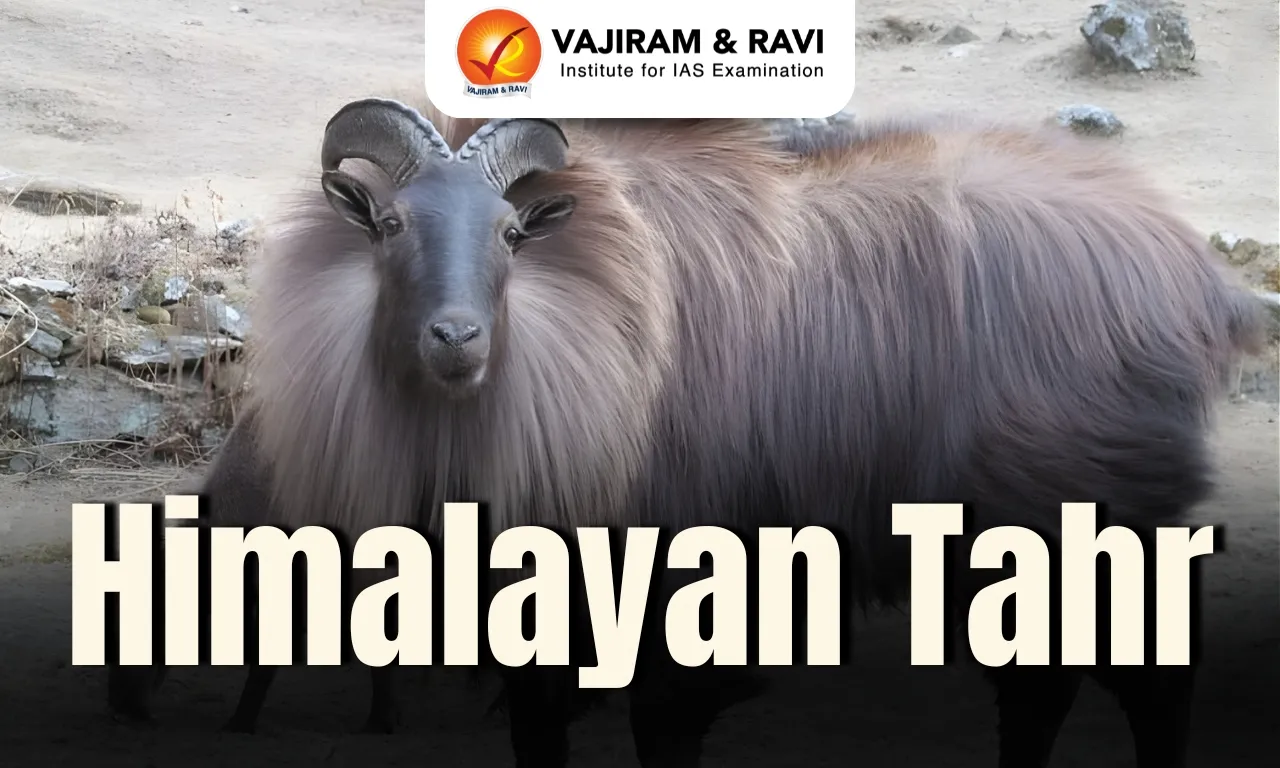
  • It is a large, wild, goatlike mammal that lives on the mountain slopes and in the forests of the Himalayas.  
  • Scientific Name: Hemitragus jemlahicus.

Himalayan Tahr Habitat and Distribution

  • It is found in southern Tibet, northern India, western Bhutan, and Nepal. 
  • In the Himalayas, they are mostly found on slopes between 2,500 and 5,000 meters high.
  • In India, they are found in the states of Jammu and Kashmir, Himachal Pradesh, Uttarakhand, and Sikkim.  

Himalayan Tahr Features

  • They are shorter in height than they are long. 
  • They have a small head, small pointed ears, and large eyes. 
  • They are sexually dimorphic, with females being smaller in weight and in size and having smaller horns. 
  • Male horns can grow up to 46 cm long. 
  • The horns curve backward, which helps prevent injuries when males fight during mating season.
  • The exterior of a tahr is well adapted to the harsh climate of the Himalayas.  
  • They are double coated with a dense, reddish to dark brown woolly coat, and a thick undercoat. 
  • Their coats are thin with the end of winter and become lighter in color. 
  • As a member of the ungulate group of mammals, the Himalayan tahr has an even number of toes. They can grip both smooth and rough surfaces.
  • They are gregarious animals. They live in all-male and all-female herds that usually include up to 80 members.  
  • Himalayan Tahr Conservation Status
    • It is classified as 'Near Threatened' under the IUCN Red List.

Key Facts about Kedarnath Wildlife Sanctuary (KWS)

  • The KWS, famously known as the Kedarnath Musk Deer Sanctuary, is located in the Rudraprayag and Chamoli districts of Uttarakhand.
  • The area falls under the West Himalayan Zone in the Palearctic realm.
  • It was named after the famous Hindu temple of Kedarnath, which lies outside the northern border of the sanctuary.
  • Its alternate name comes from its primary purpose of protecting the endangered Himalayan musk deer.
  • The sanctuary was established in 1972, covering a total area of 975.20 sq.km.
  • It is the largest protected area in the western Himalayas.
  • It lies in the upper catchment of the Alaknanda and Mandakini Rivers.
  • The altitude ranges from 1,160 to 7,068 m.
  • It is bordered by Kedarnath (6940 m), Mandani (6193 m), and Chaukhamba (7068 m) peaks in the north. 
  • Vegetation:
    • It is covered with temperate forests.
    • The higher and upper regions possess the sub-alpine and alpine coniferous forests.
    • At high altitude, lush green meadows envelope the entire region. 
  • Flora: Oak, rhododendrons, Chir Pine and Alpine meadows along with several Himalayan flowering plants. 
  • Fauna: 
    • Some of the mammals are Musk deer, Himalayan Thar, Himalayan Black bear, Snow Leopard, etc.
    • The birds found here are, Nepal Tree-creeper, Little Pied Flycatcher, Koklass Pheasant, Grey-cheeked Warbler, Himalayan Monal and Kalij Pheasant.

News: NIE

Himalayan Tahr FAQs

Q1: What is the Himalayan Tahr?

Ans: It is a large, wild, goatlike mammal found on the mountain slopes and in the forests of the Himalayas.

Q2: Where is the Himalayan Tahr found?

Ans: Southern Tibet, northern India, western Bhutan, and Nepal.

Q3: Are Himalayan Tahrs sexually dimorphic?

Ans: Yes, they are sexually dimorphic, with females being smaller and having smaller horns than males.

Q4: What is the conservation status of the Himalayan Tahr according to the IUCN Red List?

Ans: Near Threatened.

GenZ Protest for CEC Removal, Process of Removal, Background

GenZ Protest for CEC Removal

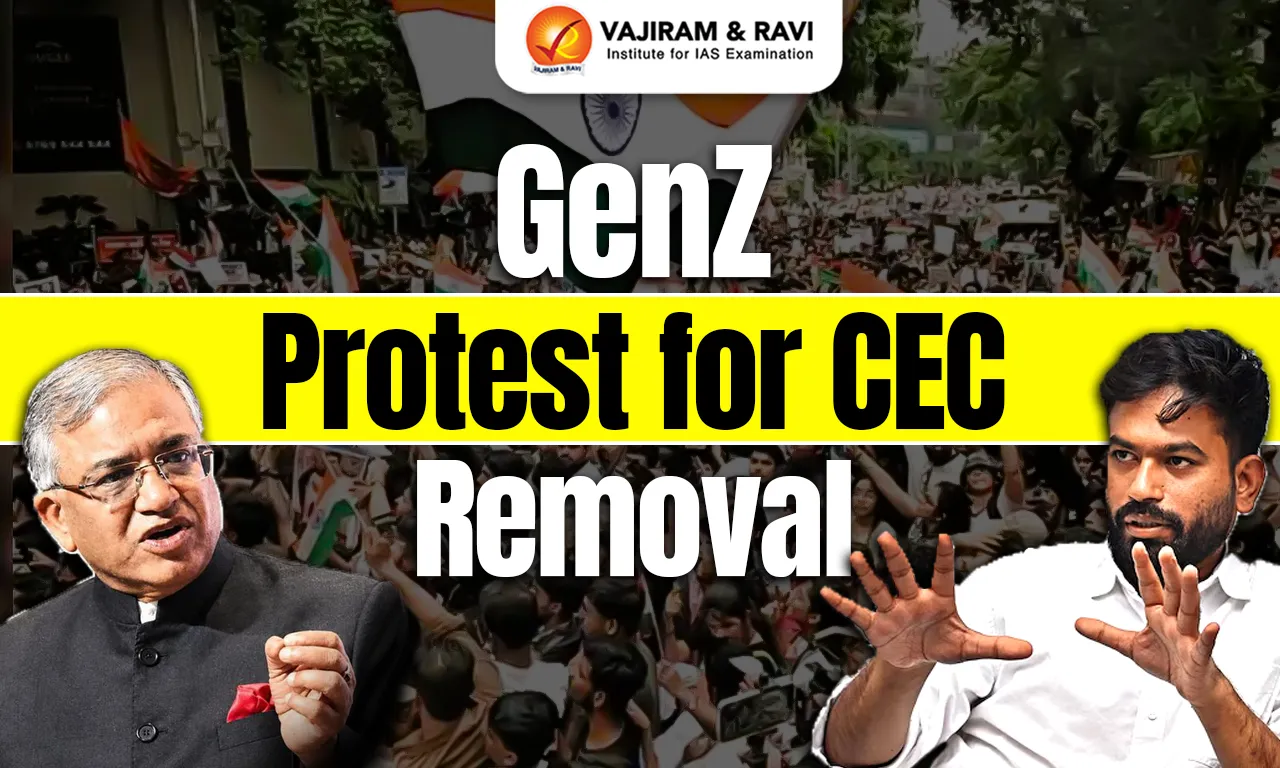
The GenZ Protest for CEC Removal has emerged around demands for the resignation of Chief Election Commissioner Gyanesh Kumar and concerns over the Special Intensive Revision (SIR) of electoral rolls. The Cockroach Janta Party (CJP) organised a major protest at Mumbai’s Shivaji Park on October 2, 2026. Opposition parties, student groups and youth organisations also held demonstrations in Delhi. The protests have raised questions about electoral transparency, institutional accountability and youth participation.

GenZ Protest for CEC Removal

The GenZ Protest for CEC Removal centres on allegations of irregularities in SIR and demands for greater transparency in the functioning of the Election Commission of India. CJP founder Abhijeet Dipke announced another protest Jantar Mantar 2.0 on October 10 if Gyanesh Kumar does not resign.

GenZ Protest for CEC Removal Background

The current GenZ Protest 2.0 developed around SIR related concerns and reported internal disagreements within the ECI. The following factors explain the background of the protests.

  • SIR Electoral Roll Concerns: Protesters have alleged irregularities in the Special Intensive Revision of electoral rolls. Their concerns include alleged deletion of eligible voters and demands for greater transparency in the revision process.
  • Demand for Gyanesh Kumar’s Resignation: The protest’s main demand is the resignation of CEC Gyanesh Kumar. The organisation has also demanded greater transparency in the appointment and functioning of election commissioners.

Who is Chief Election Commissioner (CEC)?

Gyanesh Kumar is the present CEC of ECI. The Chief Election Commissioner (CEC) heads the three member Election Commission of India (ECI), which is responsible for conducting elections. The CEC is constitutionally described as “first among equals” within the Commission. The other two Election Commissioners are Sukhbir Singh Sandhu and Vivek Joshi. The Commission is expected to take decisions unanimously as far as possible.

Process of Removal of CEC

The Constitution establishes a high threshold for removing a CEC. The process for the removal of the CEC is detailed below:

  • Constitutional Provision: Article 324(5) states that the CEC can be removed only “in like manner and on the like grounds as a Judge of the Supreme Court.” Section 11(2) of the 2023 Act follows the same principle.
  • Grounds for Removal: Removal requires proved misbehaviour or incapacity. Misbehaviour can include corrupt practices, abuse of office or conduct incompatible with the office. Incapacity means inability to perform official duties.
  • Motion in Parliament: Members of Parliament must submit a motion alleging misbehaviour or incapacity. At least 100 MPs in the Lok Sabha or 50 MPs in the Rajya Sabha must support the motion for admission.
  • Inquiry Committee: After admission, a committee investigates the allegations and examines relevant evidence. The inquiry is an important stage before Parliament considers the removal motion.
  • Two Thirds Majority: The motion must receive a two thirds majority of members present and voting in both Houses of Parliament. The requirement makes removal procedurally difficult.
  • Presidential Order: After Parliament passes the motion, the President issues the removal order. At this stage, the President acts on Parliament’s advice.
  • No Previous CEC Removal: No Chief Election Commissioner has ever been impeached in India. In March 2026, Opposition parties submitted motions supported by 130 Lok Sabha MPs and 63 Rajya Sabha MPs.
  • Earlier Motions Rejected: In April 2026, the Rajya Sabha Chairman and Lok Sabha Speaker rejected those motions.

Who are GenZ?

Gen Z generally refers to people born from around 1997 onwards, although the exact boundaries differ across studies. India’s National Youth Policy, 2014 defines youth as persons aged 15 to 29 years.

  • Electoral Presence: The 2024 electoral roll depicted approx. 1.85 crore electors were of age 18-19 and about 19.74 crore electors were aged 20-29. This gives young citizens a substantial presence in the electorate.
  • Education Expansion: Higher education enrolment reached to approx. 4.50 crore in 2023-24. The Gross Enrolment Ratio reached 30%, reflecting wider participation in higher education.
  • Employment Pressure: PLFS 2025 placed unemployment among persons aged 15-29 at 9.9%. Urban youth unemployment was 13.6%, making employment a major concern for younger citizens.
  • Skill Gap: Only about 5% of people aged 15-29 reported receiving or having received formal vocational or technical training in 2025.
  • Digital Connectivity: India had about 1.066 billion broadband subscriptions by March 2026. Rural tele density remained substantially below urban tele density.
  • Political Representation: The average age of MPs in the 18th Lok Sabha was 56 years. Only 11% of MPs were aged 40 or below.

GenZ Protest India Background

Youth Mobilisation in India has changed from campus based ideological movements to digitally connected campaigns around education, employment, governance and accountability.

  • Early Youth Movements: The Anti Hindi Agitation of 1965 and Naxalbari Movement of 1967 involved significant student participation. Language, education and ideology were major concerns.
  • 1970s Mobilisation: Nav Nirman Andolan in Gujarat in 1974 and the Jayaprakash Narayan Movement of 1974-75 expanded youth mobilisation towards corruption, inflation and governance.
  • Social Justice Movements: The Assam Agitation of 1979-85 and Anti Mandal Commission protests of 1990 brought regional identity, migration, reservation and social justice into youth politics.
  • Rights Based Activism: The Anna Hazare Movement of 2011 and Nirbhaya Protests of 2012 showed the growing role of young citizens in campaigns on corruption and gender justice.
  • Other Mobilisation: Anti CAA/NRC protests and Agnipath protests represent newer forms of issue based youth mobilisation.
  • NEET Paper Leak Protest: The 2026 Youth Movement began over alleged NEET paper leak irregularities and demands for examination reforms. The protest continued at Jantar Mantar for 36 days. It ended after Education Minister Dharmendra Pradhan resigned.
  • Delhi Women’s Safety Protests: In September 2026, hundreds of students, many of them women, protested after the alleged gang rape of a 17 year old girl at Aastha Kunj Park. Students from several colleges demanded safer public spaces, stronger policing and accountability for sexual violence.

GenZ Protests in India Impacts

Recent Youth Protests have connected digital participation with demands concerning institutional accountability, employment, education and democratic rights.

  • Issue Based Mobilisation: GenZ campaigns can form around specific issues instead of permanent political affiliations. Examination integrity, recruitment, employment and electoral accountability are examples.
  • Online to Offline Shift: Digital discussion can create networks, spread messages and support physical demonstrations. This creates a hybrid model of political participation.
  • Greater Institutional Attention: Sustained protests can bring public attention to administrative decisions and institutional processes. The CJP movement has focused attention on SIR and the role of the ECI.
  • New Protest Language: Satire, memes, film references and slogans have become important communication tools. The CJP Protest illustrates this combination of digital communication and street mobilisation.
  • Youth Participation: The protests show how younger citizens can participate in public affairs through student groups, social media, civil campaigns and street demonstrations.

GenZ Protests Across World

GenZ led movements in several countries have focused on employment, taxation, corruption, economic pressures and governance, with different political and institutional outcomes.

  • Bangladesh 2024: Student protests initially focused on government job quotas and wider economic and political grievances. The mobilisation eventually contributed to the fall of Sheikh Hasina’s government.
  • Kenya 2024: Youth led online mobilisation opposed proposed tax increases. President William Ruto withdrew the Finance Bill and called for dialogue with young protesters.
  • Nepal 2025: Protests followed concerns over corruption and social media restrictions. Large GenZ demonstrations were followed by the Prime Minister’s resignation.
  • Indonesia 2026: Students protested fuel price increases, public spending decisions and other governance concerns. The government acknowledged the protests and indicated willingness to listen.

GenZ Protest for CEC Removal FAQs

Q1: What is the GenZ Protest for CEC Removal?

Ans: The GenZ Protest for CEC Removal is a youth led mobilisation demanding the resignation of CEC Gyanesh Kumar over alleged irregularities in electoral roll revision.

Q2: Why are GenZ protesters demanding CEC Gyanesh Kumar’s resignation?

Ans: Protesters have raised concerns over alleged irregularities in the Special Intensive Revision (SIR) of electoral rolls and demanded greater transparency from the ECI.

Q3: How can a Chief Election Commissioner be removed in India?

Ans: A CEC can be removed only through a parliamentary process based on proved misbehaviour or incapacity, following the constitutional procedure applicable to a Supreme Court judge.

Q4: What is the main issue behind the GenZ Protest for CEC Removal?

Ans: The main issue is the demand for CEC Gyanesh Kumar’s resignation over alleged irregularities in the Special Intensive Revision of electoral rolls.

Q5: What is the role of the Election Commission of India in elections?

Ans: The Election Commission of India conducts and supervises elections and is responsible for maintaining electoral rolls and ensuring the electoral process functions properly.

Bihar Floods 2026, Over 50 Lakh People Affected Across 15 Districts

Bihar Floods 2026

Bihar Floods 2026 situation has intensified, with around 50 lakh people affected across 15 districts of the state. The crisis has worsened after the Ganga crossed its previous Highest Flood Level (HFL) at Gandhi Ghat in Patna, prompting authorities to issue alerts for downstream areas.

North Western Bihar Floods 2026

Recently, the Champaran Floods 2026 have worsened after continuous rainfall in Nepal’s Gandak basin and North Bihar. As of 3rd October, the Gandak River reached a record 91.25 metres in Bagaha, while embankments breached at several places. Over 200 villages across Bihar have been affected, with relief and rescue operations continuing in flood-hit areas.

Major Causes of Floods in Bihar

Floods in Bihar are caused by a combination of natural factors, geographical conditions and human activities.

  1. Heavy Monsoon Rainfall: Intense and prolonged monsoon rainfall increases the volume of water flowing into Bihar's rivers and can quickly push them beyond their carrying capacity.
  2. River Overflow: Rivers such as the Ganga, Kosi, Gandak and Bagmati frequently experience rising water levels during the monsoon, resulting in inundation of nearby areas.
  3. Siltation of Riverbeds: Large quantities of sediment and silt carried by Himalayan rivers gradually raise riverbeds and reduce their water-carrying capacity.
  4. Flat and Low-Lying Terrain: Much of Bihar consists of flat alluvial plains, allowing floodwaters to spread over large areas and drain slowly.
  5. Embankment-Related Problems: Embankments protect settlements and agricultural land but can also restrict natural drainage. Breaches, poor maintenance and waterlogging can worsen flood impacts.
  6. Deforestation and Land-Use Changes: Loss of vegetation in catchment areas can increase surface runoff and soil erosion, adding more sediment to rivers.
  7. Urbanisation: Unplanned urban growth and the conversion of natural drainage channels can reduce the ability of cities and towns to absorb and drain excess water.

Why is Bihar Highly Vulnerable to Floods?

Bihar is among India's most flood-prone states because of its geography, river system and socio-economic conditions. A large part of the state consists of fertile but low-lying alluvial plains, while many rivers entering Bihar originate in the Himalayan region.

Key factors behind Bihar's vulnerability include:

  • Himalayan rivers: Rivers originating in the Himalayas carry substantial amounts of water and sediment into Bihar during the monsoon.
  • Low-gradient plains: The state's relatively flat terrain slows the movement of floodwaters.
  • High population density: Large populations live in flood-prone areas, increasing the number of people exposed to disasters.
  • Agricultural dependence: A significant rural population depends on agriculture, making floods a major threat to livelihoods and food security.
  • Drainage constraints: Water can remain stagnant for long periods because of inadequate natural and artificial drainage.
  • Transboundary river systems: Several major rivers enter Bihar from Nepal, making effective flood management dependent partly on upstream conditions and cooperation.

Major Rivers Responsible for Floods in Bihar

Bihar's flood vulnerability is closely linked to its major Himalayan and Gangetic rivers, which carry high volumes of water and sediment during the monsoon.

  • Ganga: The principal river of Bihar; rising water levels can inundate large areas along its floodplain.
  • Kosi: Known for its high sediment load and shifting course, making it one of Bihar's most flood-prone rivers.
  • Gandak: Originating in the Himalayas, it causes flooding in parts of north-western Bihar during heavy rainfall.
  • Bagmati: Frequently causes floods in north Bihar, particularly during intense monsoon rainfall.
  • Burhi Gandak: Its overflowing waters affect several districts of north and central Bihar.
  • Kamla-Balan: A Himalayan river that contributes to flooding in parts of Madhubani, Darbhanga and adjoining areas.
  • Ghaghra: Its high water levels can affect areas near its confluence with the Ganga.
  • Punpun: A significant cause of flooding in parts of south Bihar, including Patna region.

Impact of Bihar Floods 2026

Northwestern Bihar Floods 2026 have created significant humanitarian, economic and infrastructural challenges.

  • Human displacement: Flooding forces vulnerable families to move to safer locations and relief camps.
  • Agricultural losses: Floodwaters can damage standing crops, farmland and livestock, affecting rural incomes.
  • Infrastructure damage: Roads, bridges, houses, schools and other public infrastructure may be damaged or disrupted.
  • Transport disruption: Flooding can affect road and rail connectivity, making movement difficult.
  • Health risks: Contaminated water and stagnant water can increase the risk of waterborne diseases and other health problems.
  • Livelihood disruption: Small businesses, agricultural workers and rural households may lose income during prolonged flooding.
  • Food and water insecurity: Disruption of supplies can create shortages of safe drinking water, food and essential medicines.
  • Pressure on administration: Large-scale flooding requires extensive deployment of NDRF, SDRF, boats, relief camps and community kitchens.

Government Measures for Flood Management in Bihar

Bihar government follows a multi-dimensional approach to flood management, combining embankment protection, drainage, flood forecasting, rescue operations, relief and disaster preparedness. The Water Resources Department is responsible for flood-control works, including embankments, river-bank protection and drainage of waterlogged areas.

  • Embankment Construction and Maintenance: The government undertakes the construction, strengthening and maintenance of embankments to protect flood-prone settlements and agricultural areas.
  • Anti-Erosion Measures: Revetments, land spurs and other river-bank protection works are undertaken at vulnerable locations to reduce erosion and protect embankments.
  • Flood Forecasting and Monitoring: River water levels and vulnerable locations are monitored to support timely warnings and preparedness.
  • Flood Control Orders: The Water Resources Department issues annual flood-control guidelines and operational directions for managing vulnerable rivers and embankments; a specific Flood Control Order 2026 is also listed by the department.
  • Flood Protection Forces: Special flood-fighting teams are constituted to provide technical assistance for protecting embankments and other vulnerable sites during the flood season.
  • NDRF and SDRF Deployment: Disaster-response forces are deployed for rescue, evacuation and emergency relief in severely affected areas.
  • Relief and Rehabilitation: The Disaster Management Department coordinates response, relief, rehabilitation and reconstruction, with a focus on vulnerable communities.
  • Flood and Drainage Schemes: The state implements flood-protection and drainage schemes to reduce inundation and waterlogging in vulnerable areas.
  • Community-Based Preparedness: Bihar's flood-disaster management framework includes pre-flood preparation, relief and rescue during floods, post-flood action and reconstruction, helping strengthen disaster preparedness at different stages.

Challenges in Flood Management in Bihar

Bihar faces persistent challenges in managing floods due to its geographical vulnerability, heavy sedimentation, inadequate drainage, infrastructure limitations and recurring monsoon floods. These challenges are further complicated by the transboundary nature of several major rivers.

  • High Sediment Load: Himalayan rivers carry large amounts of silt, reducing the carrying capacity of river channels and raising riverbeds.
  • Embankment Breaches: Weak or damaged embankments can lead to sudden flooding, while their maintenance requires continuous monitoring and investment.
  • Poor Drainage: Inadequate drainage and blocked natural channels can result in prolonged waterlogging even after river levels decline.
  • Transboundary Rivers: Several major rivers originate in Nepal, making effective flood management dependent on timely data sharing and cooperation between India and Nepal.
  • Changing Rainfall Patterns: Climate change and extreme rainfall events can increase uncertainty in flood forecasting and preparedness.
  • High Population Exposure: A large population lives in low-lying and flood-prone areas, making evacuation, relief and rehabilitation difficult.
  • Agricultural Dependence: Frequent floods cause crop and livestock losses, affecting the livelihoods of rural communities.
  • Limited Floodplain Management: Encroachment and unplanned development in flood-prone areas can obstruct natural drainage and increase flood risks.

Bihar Floods 2026 FAQs

Q1: What is the Bihar Floods 2026 situation?

Ans: Bihar Floods 2026 have affected around 50 lakh people across 15 districts and 330 gram panchayats. The situation worsened after the Ganga crossed its previous Highest Flood Level (HFL) at Gandhi Ghat in Patna.

Q2: Which rivers are responsible for floods in Bihar?

Ans: Major flood-prone rivers include the Ganga, Kosi, Gandak, Bagmati, Burhi Gandak, Punpun and Ghaghra. Rising water levels in these rivers can cause widespread inundation during the monsoon.

Q3: Why is Bihar highly vulnerable to floods?

Ans: Bihar's vulnerability is linked to its flat alluvial terrain, Himalayan river systems, heavy monsoon rainfall, high sediment load, poor drainage and high population exposure.

Q4: What are the major impacts of Bihar Floods 2026?

Ans: The floods have caused displacement, disruption of transport, damage to livelihoods and agricultural activities, waterlogging and increased risks to public health and infrastructure.

Q5: How does climate change affect floods in Bihar?

Ans: Changing rainfall patterns, intense rainfall events and increasing weather variability can make flood prediction and management more difficult, increasing the need for climate-resilient disaster preparedness.

Koder House Fire: What Was Lost at Fort Kochi’s Historic Landmark

Koder House

Koder House Latest News

  • The Koder House, a key heritage landmark in Fort Kochi functioning as a luxury hotel, was gutted by a major fire. 
  • The structure is believed to have first been built during the Dutch occupation of Kochi (1663–1795) and was later bought and renovated by SS Koder, patriarch of a Paradesi Jewish family, in the 19th century.

How Old Is the Structure?

  • Heritage experts agree the building is old, but its exact construction year cannot be ascertained due to a lack of documentation.
  • Former Mayor of Kochi and member of INTACH Kerala chapter, estimates the building to be at least two centuries old.
  • Other experts date it to around three centuries, saying it "bears the signs of at least 300 years of history."
  • The hotel's own website had claimed it was a Portuguese structure, but historians and heritage experts say this is inaccurate — the building is more recent and was built during the Dutch period.

Who Were the Koders?

  • The Dutch reasons for constructing the building are unknown, but SS Koder renovated it and used it as his family home.
  • Origins — A Point of Disagreement Among Experts
    • Few analysts say the Koders were Paradesi Jews — immigrants from outside India, with most of the community's migration originating from Spain and other parts of Europe.
    • Other analysts, however, believe the Koders migrated from Iraq, tracing the family's roots to West Asia.
    • Unlike most Paradesi Jews — distinct from Kochi's Malabari Jews — who emigrated to their countries of origin or Israel in the 1950s, the Koder family never left Fort Kochi. 
    • Experts note that family members are "buried in Kochi."

The Koders' Legacy in Fort Kochi

  • The Koders were among the richest families in Fort Kochi, with wide-ranging civic and commercial influence.
  • Samuel Koder served as the Cochin princely state's Honorary Consul to the Netherlands and later as municipal chairman of Fort Kochi.
  • The family brought electricity to Kochi through the Cochin Electric Company, burning coal to generate power and supplying it across Fort Kochi and Mattanchery islands.
  • They were prominent traders with global connections, running a textile and crockery store that doubled as a luxury goods outlet.
  • Before economic liberalisation, when foreign goods were unavailable in Kerala or India more broadly, the Koders imported luxury items and sold them to the local populace.

What Made the Structure Architecturally Unique?

  • The main Koder House has a simple architecture with balconies, built by the Dutch and later renovated by the Koders. 
  • But its most distinctive feature lies at the rear:
    • A Guest House, connected to the main building by a wooden bridge.
    • This guest house was where the Koders hosted entrepreneur and business friends from across the globe.
    • The guest house also has a courtyard containing a small pond, or Mikvah — a space for Jewish ritual/holy bathing.
    • According to experts, this is believed to be the only such Mikvah in Ernakulam — making it a site of singular religious and cultural significance.
  • What survived: Kerala's fire service confirmed that only the top floor of the main Koder House was gutted. The flames were prevented from spreading to the historic guest house, the Mikvah, and the connecting wooden bridge.

What the Fire Destroyed

  • According to fire service officers, the top floor's ancient roof and columns were gutted.
  • Beyond the physical structure, the loss extends to irreplaceable historical material:
    • Photographs and paintings documenting the Koder family's history.
    • Furniture and tapestry, much of it originally imported from across the world.

Conclusion

  • The Koder House fire did more than damage a roof — it consumed photographs, paintings and furnishings that cannot be replaced, each a fragment of a Jewish community's three-century presence on India's coast. 
  • With the Mikvah and guest house spared, part of that legacy survives. But the loss is a reminder that India's heritage structures, often undocumented and privately held, remain one accident away from permanent erasure.

Source: IE

Koder House FAQs

Q1: What is the historical significance of Koder House?

Ans: Koder House is a historic Fort Kochi landmark, believed to date from the Dutch period and later renovated as the Koder family's residence.

Q2: How old is Koder House?

Ans: Experts estimate Koder House to be between two and three centuries old, although its exact construction date remains uncertain because documentation is unavailable.

Q3: Who were the Koders associated with Koder House?

Ans: The Koders were an influential Fort Kochi family involved in civic affairs, electricity generation, trade and importing luxury goods from overseas markets.

Q4: What architectural features made Koder House unique?

Ans: Koder House included a historic guest house, wooden bridge and a Mikvah, a Jewish ritual bathing space believed to be unique in Ernakulam.

Q5: What was destroyed in the Koder House fire?

Ans: The Koder House fire gutted the ancient top-floor roof and columns and destroyed photographs, paintings, furniture and tapestries documenting the family's history.

Exercise Yudh Abhyas 2026, Objectives, Importance, Latest News

Exercise Yudh Abhyas 2026

Why in News?

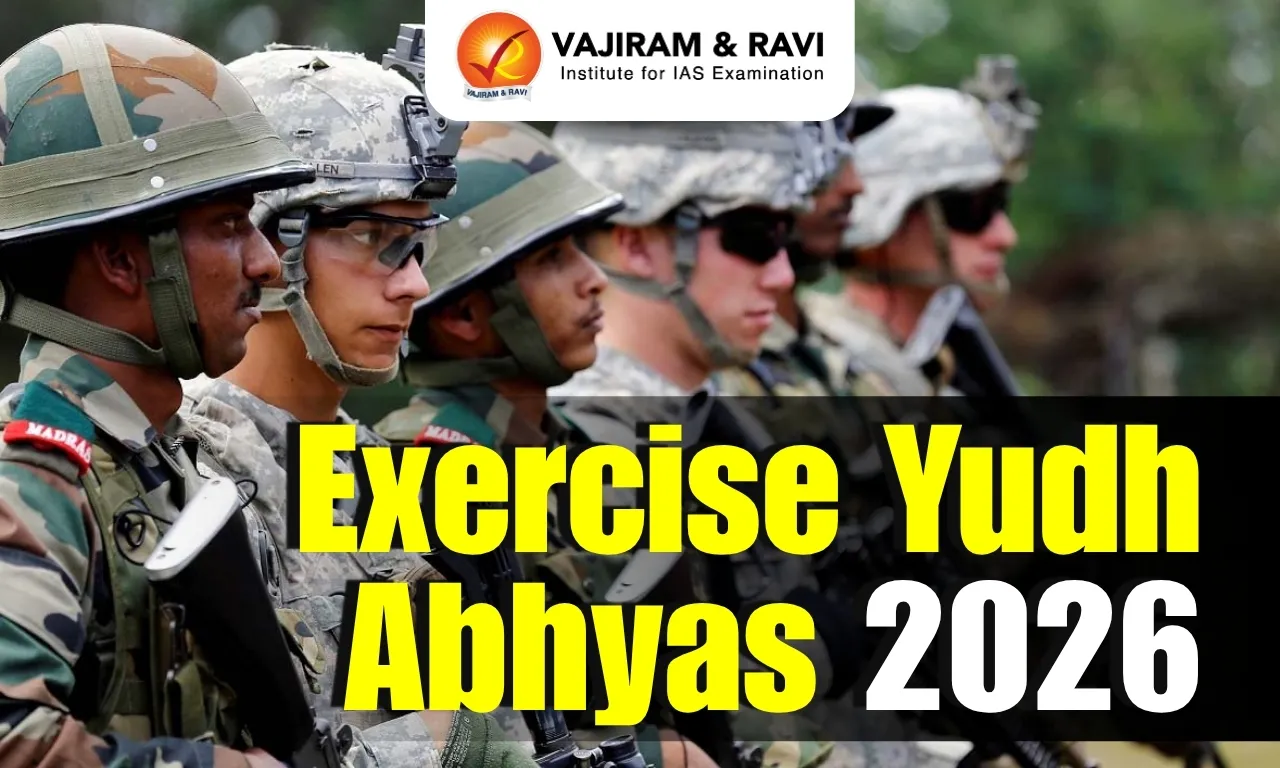
The 22nd edition of Exercise Yudh Abhyas 2026, the India-US joint military exercise, commenced in September 2026. The exercise is being conducted at Auli Foreign Training Node in Uttarakhand and Mahajan Field Firing Range in Rajasthan.

The exercise focuses on improving the ability of the Indian and US armies to conduct joint operations, particularly in mountainous and semi-mountainous terrain. It also includes training involving drones, autonomous systems, modern weapons and multi-domain warfare.

What is Exercise Yudh Abhyas?

Exercise Yudh Abhyas is an annual bilateral military exercise between the Indian Army and the US Army.

It was started in 2004 and has developed into an important platform for improving military cooperation, interoperability and operational coordination between the two countries.

The exercise allows soldiers from both countries to train together, exchange operational experiences and understand each other's military procedures.

Exercise Yudh Abhyas 2026 Objectives

The major objectives of the Exercise Yudh Abhyas 2026 are:

  • Enhancing interoperability between the Indian and US armies.
  • Improving the ability to conduct joint military operations.
  • Developing operational skills for mountainous and semi-mountainous terrain.
  • Strengthening joint planning and execution.
  • Sharing military tactics, techniques and procedures.
  • Improving coordination during complex operational situations.
  • Understanding and using emerging military technologies.
  • Enhancing cooperation in multi-domain warfare.

Exercise Yudh Abhyas 2026 Importance

Exercise Yudh Abhyas 2026 is important for strengthening India-US defence cooperation and improving the ability of both armies to operate together. Its focus on mountain warfare, modern technology and joint operations is particularly relevant to India's evolving security needs.

  • Enhances Interoperability: Helps Indian and US soldiers coordinate effectively during joint military operations.
  • Strengthens Mountain Warfare Skills: Training in mountainous and semi-mountainous terrain improves operational preparedness in difficult environments.
  • Promotes Defence Technology Cooperation: Exposure to drones, autonomous systems and modern weapon systems helps both forces understand emerging technologies.
  • Improves Joint Planning: Command Post Exercises enhance coordination in planning and executing military operations.
  • Supports Counter-Terrorism Capabilities: Joint training helps both forces develop coordinated responses to counter-terrorism situations.
  • Prepares for Multi-Domain Warfare: The exercise focuses on integrating capabilities across different domains of modern warfare.
  • Encourages Exchange of Best Practices: Personnel from both armies share operational experiences, tactics and procedures.
  • Deepens Strategic Partnership: Regular military exercises strengthen long-term defence and security cooperation between India and the United States.

Other Exercises Between India and US

India and the United States conduct several joint military exercises covering land, air, sea and special operations. These exercises strengthen interoperability, operational coordination and defence cooperation between the two countries.

  • Malabar: A multilateral naval exercise involving India, the US, Japan and Australia.
  • Cope India: A bilateral air exercise between the Indian Air Force and US Air Force.
  • Vajra Prahar: A joint exercise between Indian and US Special Forces, focusing on special operations and counter-terrorism.
  • Tiger Triumph: A tri-service humanitarian assistance and disaster relief exercise between the Indian and US armed forces.
  • Red Flag: A multinational air combat exercise in which the Indian Air Force and US Air Force have participated.

Exercise Yudh Abhyas 2026 FAQs

Q1: What is Exercise Yudh Abhyas 2026?

Ans: Exercise Yudh Abhyas 2026 is a bilateral military exercise between the Indian Army and the US Army aimed at improving interoperability, joint planning and operational coordination.

Q2: Which edition of Exercise Yudh Abhyas is being conducted in 2026?

Ans: The 22nd edition of Exercise Yudh Abhyas is being conducted in 2026.

Q3: Where is Exercise Yudh Abhyas 2026 being conducted?

Ans: The exercise is being conducted simultaneously at the Auli Foreign Training Node in Uttarakhand and the Mahajan Field Firing Range in Rajasthan.

Q4: Which countries participate in Exercise Yudh Abhyas?

Ans: India and the United States participate in the exercise through their respective armies.

Q5: What is the main objective of Yudh Abhyas 2026?

Ans: The exercise aims to improve the joint military capability of both armies, particularly for operations involving Integrated Battle Groups in mountainous and semi-mountainous terrain.

Medicine Pricing in India: Why the Supreme Court Is Concerned

Medicine Pricing

Medicine Pricing Latest News

  • The Supreme Court described the markup between a medicine's price to retailers and its printed MRP as "carnage," calling it akin to "broad daylight dacoity with patients." 
  • A bench of Justices Vikram Nath and Sandeep Mehta, hearing petitions on medicine pricing, asked the Centre why the 16% retailer margin under the Drugs (Prices Control) Order (DPCO), 2013 should not apply to all essential medicines.
  • The triggering example: An essential cancer drug supplied to retailers for ₹2,700 carries an MRP of nearly ₹27,000 — ten times the supply price. 
  • The bench remarked: "If this is not extortion, then what is it? It is very surprising that the authorities who are supposed to take a decision on this are absolutely silent."
  • The petitions seek regulation of drug prices, generic prescriptions, medical devices, and stricter enforcement of price controls to prevent disproportionate profit margins across the drug supply chain.

The Legal Framework

  • Essential Commodities Act, 1955 gives the Centre power over essential goods, including medicines.
    • Section 3(1): Allows regulation of production, supply, and distribution "for maintaining or increasing supplies... or for securing their equitable distribution and availability at fair price."
    • Section 3(2)(c): Allows issuing orders to control commodity prices.
  • The DPCO is such an order (under Section 3(2)(c) of the act) — the primary framework governing medicine prices in India. 
  • It authorises the National Pharmaceutical Pricing Authority (NPPA), set up in 1997 under the Department of Pharmaceuticals, to:
    • Fix and revise ceiling prices of scheduled formulations.
    • Set retail prices for new drugs.
    • Monitor overcharging and enforce the DPCO.
    • Order recovery of money from companies if patients are overcharged.
    • In some cases, cap prices even of medicines/devices otherwise outside regular price control.

Scheduled vs Non-Scheduled Medicines

  • The DPCO divides medicines into two categories. A formulation means a medicine in a particular strength and dosage form.
    • Scheduled formulations: Listed in Schedule I of the DPCO, based on the National List of Essential Medicines (NLEM) prepared by the Ministry of Health and Family Welfare. These are subject to government price controls.
    • Non-scheduled formulations: Medicines not on this list — not subject to price ceilings.
  • The current NLEM contains 384 medicines, accounting for only 20% of total drug market turnover. This means 80% of the market operates largely outside direct price control.

How Ceiling Prices Are Calculated

  • A ceiling price is the highest price at which a scheduled formulation can be sold, before taxes. The NPPA calculates it through a specific method:
    • It identifies every version (brand and generic) of a formulation sharing the same active ingredient.
    • It excludes versions accounting for less than 1% of total market sales, measured via Moving Annual Turnover (MAT) — a product's sales popularity over the previous year, sourced from market research firms.
    • For each remaining version, it takes the Price to Retailer (PTR) — what the manufacturer/distributor charges the chemist or hospital pharmacy.
    • It averages these PTRs, then adds a 16% retailer margin.
    • The result is the ceiling price — the MRP cannot legally exceed this, apart from local taxes or GST.
  • Example: If three versions hold ≥1% market share with PTRs of ₹8, ₹10, and ₹12, the average is ₹10. Adding the 16% margin gives a ceiling price of ₹11.60.
  • Annual Revision: Ceiling prices are revised every April 1, based on the Wholesale Price Index (WPI). Manufacturers may raise prices in line with the preceding year's WPI change without separate approval; if WPI falls, they must cut prices within 45 days.

The Loophole: Non-Scheduled Medicines

  • Medicines outside the NLEM face no price ceiling. Manufacturers can freely set the initial MRP. The only restriction: the MRP cannot rise by more than 10% in 12 months thereafter.
  • This is precisely what's being challenged. Petitioners argue that since the DPCO never regulates the launch price of non-scheduled drugs, manufacturers can set inflated prices from day one — making the 10% annual cap meaningless, since it only limits growth from an already-inflated base.

The Constitutional Argument

  • The PILs invoke Article 21 — the right to life, which includes the right to health — as the constitutional basis for regulating medicine pricing. 
  • One petition argues that allowing manufacturers to freely set the initial MRP gives them arbitrary, unrestricted power to set any MRP, regardless of the actual cost of manufacturing the medicine.
  • Hospital pharmacy influence: The petition claims retail price or MRP of medicines by companies are decided according to inputs of corporate hospitals, and that pharmacy expenses constitute 30–40% of a critically ill patient's total bill in corporate hospitals.
  • Generic vs branded pricing: Citing Lok Sabha statements, the petition notes medicines sold under generic names (their composition names) are 50% to 90% cheaper than their branded counterparts — pointing to prescribing practices as another lever for reducing patient costs.

Conclusion

  • The Supreme Court's blunt language captures a system where regulation exists on paper but bites only a fifth of the market. 
  • A 16% margin cap means little when 80% of drugs can launch at any price a company chooses, and even "controlled" medicines can be marked up far beyond legal limits in hospital pharmacies. 
  • Fixing this requires closing the launch-price loophole, not just capping future hikes.

Source: IE | HT

Medicine Pricing FAQs

Q1: Why has medicine pricing come under Supreme Court scrutiny?

Ans: Medicine pricing has come under scrutiny after the Supreme Court questioned large differences between retailer prices and printed MRPs of essential medicines.

Q2: What is the role of the DPCO in medicine pricing?

Ans: The DPCO is India's primary medicine pricing framework, authorising the NPPA to fix ceiling prices, monitor overcharging and enforce price controls.

Q3: How are ceiling prices determined under India's medicine pricing system?

Ans: The NPPA averages eligible price-to-retailer figures for a formulation and adds a 16% retailer margin to determine its ceiling price.

Q4: What is the major loophole in India's medicine pricing framework?

Ans: Non-scheduled medicines have no initial price ceiling, allowing manufacturers to launch products at high MRPs before the subsequent 10% annual increase limit applies.

Q5: How does generic prescribing affect medicine pricing and patient costs?

Ans: Generic medicines can substantially reduce medicine pricing burdens, with petitioners citing evidence that generics may cost 50% to 90% less than branded counterparts.

UPSC Examination Reforms – Reasoning, Judgment and Future-Ready Selection

UPSC Examination Reforms

UPSC Examination Reforms Latest News

  • As the Union Public Service Commission (UPSC) marks 100 years of its institutional journey, its Chairman has emphasised reforms aimed at assessing reasoning, spontaneous thinking and judgment under ambiguity, rather than predictable or coached responses. 

UPSC at 100: Institutional Evolution

  • The first Public Service Commission in India was constituted on 1 October 1926 as an advisory body. 
  • Over the following decades, it evolved into an independent constitutional body responsible for conducting examinations and recruitment for various public services.
  • The centenary celebrations, titled ‘Manthan’, brought together public officials and experts to discuss the changing requirements of civil services, innovations in public administration and the institutional values underlying public service.
  • The UPSC undertakes around 250 recruitment processes every year across disciplines such as engineering, medicine, science, economics and defence. 
  • The Civil Services Examination is conducted annually for recruitment to services including the IAS, IFS and IPS. 

Shift Towards Competency-Based Assessment

  • A major theme highlighted by the UPSC Chairman Ajay Kumar is the need to assess capabilities that are difficult to reproduce through memorisation or coaching.
  • The emphasis is on three interconnected abilities:
    • Reasoning: Ability to analyse information, identify relationships and reach logically supported conclusions.
    • Spontaneous thinking: Ability to respond appropriately to unfamiliar or unexpected situations.
    • Judgment under ambiguity: Ability to make reasoned decisions when information is incomplete or competing considerations are involved.
  • This approach reflects the nature of public administration, where civil servants frequently have to deal with complex situations that may not have predetermined solutions.
  • The Chairman also emphasised three principles for the Commission's next phase: trust, transparency and technology. 
  • At the same time, he stated that technological and examination-format changes should preserve the constitutional principles of merit, fairness and equal opportunity. 

Technology and Examination Integrity

  • The Commission is also expanding the use of technology in its examination processes. 
  • Measures highlighted during the centenary discussions include:
    • Digital e-admit cards
    • Face authentication to strengthen examination integrity
    • Universal Registration Number (URN) introduced in 2025
    • Randomised interview boards
    • A 30-channel IP-based Candidate Helpdesk 
    • Expansion of examination centres
  • The UPSC's technology journey itself has evolved over several decades, beginning with the introduction of computers in 1978.
  • Technology can improve administrative efficiency and examination security, but its role is not limited to digitisation. 
  • The broader objective is to create systems that are accessible, transparent and capable of reducing procedural difficulties for candidates.

Future of Civil Services Recruitment

  • The centenary discussions also focused on how the civil services must respond to changing governance requirements.
  • Speakers highlighted the importance of outcome-oriented administration, reducing departmental silos, encouraging informed decision-making and preparing administrators for rapidly changing technological and social environments. 
  • Discussions also covered artificial intelligence, data analytics and digital architectures as tools for improving public-service delivery.
  • Another issue raised was the need to widen recruitment from Tier-2 and Tier-3 cities and aspirational districts, thereby expanding the geographical diversity of the public-service talent pool.
  • The examination system therefore faces a dual requirement: maintaining a rigorous and standardised selection process while ensuring that assessment methods remain relevant to the competencies required in contemporary governance.

Key Challenges in Examination Reform

  • Reforming a large-scale competitive examination involves several considerations:
  • Objectivity: New assessment methods must retain measurable and comparable standards.
  • Fairness: Changes should not create advantages for candidates with access to specialised coaching or technology.
  • Transparency: Candidates should understand the broad principles and procedures governing evaluation.
  • Examination security: Greater digitisation requires strong safeguards for candidate data and examination infrastructure.
  • Accessibility: Technological reforms must remain accessible to candidates across different socioeconomic and geographical backgrounds.

Conclusion

  • The UPSC's centenary provides an opportunity to examine how public-service recruitment can evolve alongside changing governance requirements. 
  • Greater emphasis on reasoning, spontaneous thinking and judgment under ambiguity, combined with technology-enabled examination processes, represents an effort to align selection methods with the competencies expected of future public servants. 
  • The continuing challenge is to introduce such reforms while preserving merit, fairness, transparency and equal opportunity. 

Source: IE | TH

UPSC Examination Reforms FAQs

Q1: When was the first Public Service Commission established in India?

Ans: The first Public Service Commission in India was established on 1 October 1926 as an advisory body.

Q2: What competencies is the UPSC seeking to assess through examination reforms?

Ans: The focus highlighted by the Chairman includes reasoning, spontaneous thinking and judgment under ambiguous situations.

Q3: What are the three principles highlighted for the UPSC's next phase?

Ans: The three principles are trust, transparency and technology.

Q4: What technological reforms have recently been introduced by the UPSC?

Ans: Recent measures include the Universal Registration Number, randomised interview boards, digital e-admit cards, face authentication and an expanded candidate helpdesk.

Q5: How many recruitment processes does the UPSC undertake annually?

Ans: The Commission undertakes around 250 distinct recruitment processes each year across multiple disciplines.

Asian Games 2026, Medal Tally, Participating Countries, Host Country

Asian Games 2026, officially known as the 20th Asian Games Aichi-Nagoya 2026, are being held in Japan from 19 September to 4 October 2026. Aichi Prefecture and Nagoya are hosting the continental multi-sport event, which brings together athletes from across Asia.

The Games feature 43 sports, 71 disciplines and 469 medal events. The official programme also includes newer sports such as teqball, padel, sport climbing, skateboarding, surfing, esports and mixed martial arts (MMA).

Asian Games 2026 Overview

The key highlights related to the Asian Games 2026 have been tabulated below...

Asian Games 2026 Overview

Particulars

Details

Event

20th Asian Games

Official Name

Aichi-Nagoya 2026

Host Country

Japan

Host Region

Aichi Prefecture and Nagoya

Dates

19 September – 4 October 2026

Total Indian Delegation

768

New and Emerging Sports at Asian Games 2026

Asian Games 2026 feature several new and emerging sports, reflecting the changing interests of athletes and younger audiences. These sports add more variety to the Games and give athletes from newer sporting disciplines an international platform.

  • Teqball: A football-based sport played on a curved table, making its Asian Games debut in 2026.
  • Mixed Martial Arts (MMA): Included in the Games for the first time, with competitions across different weight categories.
  • Padel: A racket sport combining elements of tennis and squash, included in men's and women's competitions.
  • Surfing: Features shortboard events for men and women.
  • Skateboarding: Includes different disciplines that test balance, speed and technical skills.
  • Sport Climbing: Includes speed, bouldering and lead events.
  • Esports: Continues to provide a competitive platform for digital sports and gaming.

Also Read:- India to Host Commonwealth Games 2030

Asian Games 2026 Participating Countries

Asian Games 2026 feature participation from 45 countries and regions across Asia. The participating delegations represent South Asia, Southeast Asia, East Asia, Central Asia and West Asia.

No. Country/Region No. Country/Region No. Country/Region
1 Afghanistan 16 Kazakhstan 31 Philippines
2 Bahrain 17 Kuwait 32 Qatar
3 Bangladesh 18 Kyrgyzstan 33 Korea
4 Bhutan 19 Lao PDR 34 Saudi Arabia
5 Brunei 20 Lebanon 35 Singapore
6 Cambodia 21 Macao, China 36 Sri Lanka
7 Chinese Taipei 22 Malaysia 37 Syria
8 DPR Korea 23 Maldives 38 Tajikistan
9 Hong Kong, China 24 Mongolia 39 Thailand
10 India 25 Myanmar 40 Timor-Leste
11 Indonesia 26 Nepal 41 Turkmenistan
12 Iraq 27 Oman 42 United Arab Emirates
13 IR Iran 28 Pakistan 43 Uzbekistan
14 Japan 29 Palestine 44 Vietnam
15 Jordan 30 China 45 Yemen

Asian Games 2026 Host Country

Japan is hosting the 20th Asian Games 2026 in Aichi-Nagoya, marking the third time the country has hosted the Asian Games. The event is being held from 19 September to 4 October 2026 across multiple venues in Aichi Prefecture and Nagoya. Japan previously hosted the Asian Games in Tokyo in 1958 and Hiroshima in 1994. The Games feature athletes from across Asia competing in a wide range of sports and disciplines.

Also Read:- India's medals at Asian Games 2026

India at Asian Games 2026

India is participating in the 20th Asian Games in Aichi-Nagoya with 503 athletes across 36 disciplines. The contingent includes 269 men and 234 women, supported by coaches, officials and other staff. India enters the Games after winning a record 107 medals at Hangzhou 2023, including 28 gold, 38 silver and 41 bronze medals.

India delivered a strong performance at the Asian Games 2026, winning 79 medals, 18 Gold, 26 Silver and 35 Bronze across sports including shooting, athletics, kabaddi, cricket, squash, weightlifting, badminton, rowing, wushu and table tennis.

Gold Medallists

No. Sport Event Indian Medallist(s) Medal
1 Cricket Women’s Indian Women’s Cricket Team Gold
2 Shooting 10m Air Pistol Mixed Team Kamaljeet, Suruchi Singh Gold
3 Kabaddi Women’s Team Indian Women’s Kabaddi Team Gold
4 Kabaddi Men’s Team Indian Men’s Kabaddi Team Gold
5 Shooting Women’s Trap Neeru Dhanda Gold
6 Athletics Women’s 4×400m Relay Kiran Pahal, Poovamma MR, Prachi Choudhary, Vithya Ramraj Gold
7 Archery Women’s Compound Team Chikitha Taniparthi, Prithika Pradeep, Jyothi Surekha Vennam Gold
8 Archery Mixed Compound Team Sahil Jadhav, Chikitha Taniparthi Gold
9 Shooting Mixed Team Trap Kynan Chenai, Neeru Dhanda Gold
10 Archery Men’s Compound Team Sahil Jadhav, Ganesh Mani Ratnam Thirumuru, Kushal Dalal Gold
11 Archery Women’s Recurve Team Ankita Bhakat, Kumkum Mohod, Kirti Sharma Gold
12 Boxing Women’s 75kg Lovlina Borgohain Gold
13 Boxing Women’s 65kg Parveen Hooda Gold
14 Boxing Men’s 80kg Ankush Gold
15 Wrestling Men’s Freestyle 65kg Sujeet Gold
16 Hockey Women’s Team Indian Women’s Hockey Team Gold
17 Archery Women’s Recurve Individual Kumkum Mohod Gold
18 Golf Women’s Individual Pranavi Urs Gold

Silver Medallists

No. Sport Event Indian Medallist(s) Medal
19 Shooting Women’s 10m Air Rifle Team Elavenil Valarivan, Sonam Maskar, Vidarsa Vinod Silver
20 Shooting Women’s 10m Air Rifle Elavenil Valarivan Silver
21 Shooting Men’s 10m Air Rifle Team Rudrankksh Patil, Parth Mane, Himanshu Dhillon Silver
22 Shooting Men’s 10m Air Rifle Himanshu Dhillon Silver
23 Weightlifting Women’s 49kg Mirabai Chanu Silver
24 Wushu Women’s 60kg Sanda Roshibina Devi Silver
25 Athletics Mixed 4×400m Relay Indian Mixed Relay Team Silver
26 Shooting Men’s 50m Rifle 3P Team Aishwary Pratap Singh Tomar, Rudrankksh Patil, Niraj Kumar Silver
27 Athletics Men’s 10,000m Gulveer Singh Silver
28 Athletics Men’s Marathon Sawan Berwal Silver
29 Shooting Women’s 50m Rifle 3P Team Vidarsa Vinod, Ashi Chouksey, Tilottama Sen Silver
30 Athletics Men’s Shot Put Tajinderpal Singh Toor Silver
31 Squash Men’s Singles Abhay Singh Silver
32 Squash Women’s Singles Anahat Singh Silver
33 Athletics Women’s Long Jump Ancy Sojan Silver
34 Athletics Men’s High Jump Sarvesh Kushare Silver
35 Shooting Women’s 25m Pistol Esha Singh Silver
36 Athletics Men’s 1500m Gulveer Singh Silver
37 Athletics Men’s Long Jump Murali Sreeshankar Silver
38 Athletics Men’s Javelin Throw Yash Vir Singh Silver
39 Shooting Women’s Trap Team Neeru Dhanda, Manisha Keer, Aashima Ahlawat Silver
40 Sailing Men’s Skiff Manu Francis, Prince Kurisinkal Noble Silver
41 Wrestling Men’s Greco-Roman 97kg Nitesh Siwach Silver
42 Archery Mixed Recurve Team Kumkum Mohod, Dhiraj Bommadevara Silver
43 Archery Men’s Recurve Team Neeraj Chauhan, Yashdeep Bhoge, Dhiraj Bommadevara Silver
44 Golf Women’s Team Pranavi Urs, Diksha Dagar, Aditi Ashok Silver

Bronze Medallists

No. Sport Event Indian Medallist(s) Medal
45 Shooting Men’s 10m Air Rifle Rudrankksh Patil Bronze
46 MMA Women’s Traditional -60kg Suchika Tariyal Bronze
47 Shooting Women’s Skeet Team Parinaaz Dhaliwal, Raiza Dhillon, Maheshwari Chauhan Bronze
48 Shooting Men’s Skeet Team Anantjeet Singh Naruka, Bhavtegh Singh Gill, Mairaj Ahmad Khan Bronze
49 Soft Tennis Men’s Singles Jay Meena Bronze
50 Badminton Men’s Team Indian Men’s Badminton Team Bronze
51 Rowing Men’s Double Sculls Satnam Singh, Salman Khan Bronze
52 Shooting Mixed Skeet Team Anantjeet Singh Naruka, Parinaaz Dhaliwal Bronze
53 Athletics Women’s 10,000m Seema Kumari Bronze
54 Table Tennis Mixed Doubles Diya Chitale, Manush Shah Bronze
55 Athletics Women’s Shot Put Manpreet Kaur Bronze
56 Athletics Women’s Pole Vault Baranica Elangovan Bronze
57 Squash Mixed Doubles Joshna Chinappa, Velavan Senthilkumar Bronze
58 Athletics Women’s 400m Prachi Choudhary Bronze
59 Athletics Women’s 200m Haritha Bhadra Bronze
60 Athletics Decathlon Tejaswin Shankar Bronze
61 Athletics Women’s 3000m Steeplechase Parul Chaudhary Bronze
62 Kurash Women’s -78kg Pincky Balhara Bronze
63 Athletics Women’s 400m Hurdles Vithya Ramraj Bronze
64 Athletics Women’s 5000m Parul Chaudhary Bronze
65 Athletics Men’s Javelin Throw Rohit Yadav Bronze
66 Boxing Men’s +90kg Narender Berwal Bronze
67 Athletics Men’s 5000m Gulveer Singh Bronze
68 Athletics Mixed 4×100m Relay Gurindervir Singh, Sneha SS, Animesh Kujur, Harita Bhadra Bronze
69 Athletics Women’s High Jump Pooja Singh Bronze
70 Athletics Men’s 4×400m Relay Dharmveer Choudhary, Manu TS, Jay Kumar, Vishal TK Bronze
71 Boxing Women’s 60kg Priya Ghanghas Bronze
72 Boxing Men’s 90kg Kapil Pokhariya Bronze
73 Wrestling Men’s Greco-Roman 80kg Sunil Kumar Bronze
74 Squash Women’s Team Anahat Singh, Joshna Chinappa, Tanvi Khanna, Shameena Riaz Bronze
75 Archery Men’s Compound Individual Ganesh Mani Ratnam Thirumuru Bronze
76 Squash Men’s Team Indian Men’s Squash Team Bronze
77 Sailing Women’s Dinghy Nethra Kumanan Bronze
78 Sepaktakraw Men’s Quadrant Indian Men’s Sepaktakraw Team Bronze
 

Medal Tally at Asian Games 2026

As of 03 October 2026, China leads the Asian Games 2026 medal table with 255 medals, while India is ranked 5th with 79 medals, including 18 gold, 26 silver and 35 bronze.

Rank Country Gold Silver Bronze Total
1 China 163 82 74 319
2 Japan 72 83 85 240
3 South Korea 33 40 62 135
4 Uzbekistan 20 23 22 65
5 India 18 26 35 79
6 Iran 15 17 13 45
7 Thailand 15 12 17 44
8 Kazakhstan 12 21 44 77
9 Bahrain 11 5 6 22
10 Malaysia 9 5 16 30
11 Hong Kong, China 7 17 22 46
12 North Korea 7 11 9 27
13 United Arab Emirates 7 4 1 12
14 Indonesia 5 8 22 35
15 Chinese Taipei 4 16 31 51
16 Philippines 4 8 16 28
17 Kuwait 4 1 4 9
18 Qatar 3 6 5 14
19 Vietnam 3 3 19 25
20 Singapore 2 9 5 16
21 Tajikistan 2 5 7 14
22 Saudi Arabia 2 2 9 13
23 Myanmar 2 1 2 5
24 Macao, China 1 4 1 6
25 Kyrgyzstan 1 3 9 13
26 Jordan 1 3 4 8
27 Mongolia 1 1 11 13
28 Sri Lanka 1 1 0 2
29 Iraq 0 2 3 5
30 Turkmenistan 0 2 0 2
31 Pakistan 0 1 6 7
32 Afghanistan 0 1 2 3
33 Lebanon 0 1 2 3
34 Oman 0 1 1 2
35 Cambodia 0 0 4 4
36 Nepal 0 0 2 2
37 Bangladesh 0 0 1 1
38 Brunei Darussalam 0 0 1 1
39 Laos 0 0 1 1
40 Syria 0 0 1 1

About Asian Games

Asian Games, also known as the Asiad, are a major multi-sport event held every four years for athletes from across Asia. The Games have evolved significantly since their beginning in 1951.

  • Early Origins: The idea of an Asian multi-sport event was influenced by the Far Eastern Championship Games (1913) and the West Asian Games (1934).
  • 1948 Initiative: During the 1948 London Olympics, Asian representatives discussed creating a larger sporting event for Asian countries. Indian IOC representative Guru Dutt Sondhi played an important role in promoting the idea.
  • Asian Games Federation: The Asian Games Federation (AGF) was established in 1949 in New Delhi to organise and govern the new continental sporting event.
  • First Asian Games: The first Asian Games were held in New Delhi in March 1951, with 489 athletes from 11 countries competing in 6 sports and 57 events.
  • Expansion: The Games gradually expanded to more countries and sports, with editions held in Manila (1954), Tokyo (1958), Jakarta (1962), Bangkok (1966 and 1970) and other Asian cities.
  • Formation of OCA: In 1981, the Olympic Council of Asia (OCA) was created to replace the Asian Games Federation. It later became the main governing body for the Asian Games.
  • Modern Asian Games: The Games continued to grow, with recent editions held in Guangzhou (2010), Incheon (2014), Jakarta-Palembang (2018) and Hangzhou (2023).

Asian Games 2026 FAQs

Q1: When are the Asian Games 2026 being held?

Ans: Asian Games 2026 are being held from 19 September to 4 October 2026 in Aichi-Nagoya, Japan.

Q2: Where are the Asian Games 2026 being held?

Ans: The Games are being hosted by Aichi Prefecture and Nagoya in Japan, with competitions taking place across multiple venues.

Q3: How many sports are there in Asian Games 2026?

Ans: The official Aichi-Nagoya programme features 43 sports, 71 disciplines and 469 medal events.

Q4: How many athletes are representing India?

Ans: India has sent 503 athletes, comprising 269 men and 234 women, across 36 disciplines.

Q5: How many members are there in India's Asian Games contingent?

Ans: India's total approved contingent consists of 768 members, including 503 athletes and accompanying support staff and officials.

Daily Editorial Analysis 3 October 2026

Daily-Editorial-Analysis

A Court Divided by Its Own Architecture

Context

  • The Supreme Court of India is the guardian of the Constitution and is expected to provide authoritative answers to fundamental legal questions.
  • However, its expanding workload, fragmented Bench system and delays in constituting Constitution Benches have created significant institutional challenges.
  • The September 23 split verdict concerning the Chief Election Commissioner and other Election Commissioners (Appointment, Conditions of Service and Term of Office) Act, 2023 illustrates these difficulties.
  • The disagreement was not initially about the validity of the law but about whether a two-judge Bench was competent to decide the challenge.

The Election Commissioners’ Appointment Framework

  • The 2023 Appointment Law
    • The 2023 Act provides that the Chief Election Commissioner and Election Commissioners shall be appointed on the recommendation of a committee consisting of the Prime Minister, Leader of the Opposition in the Lok Sabha and a Union Cabinet Minister nominated by the Prime Minister.
    • The law replaced the interim arrangement established by the Constitution Bench in Anoop Baranwal vs Union of India (2023), under which the Chief Justice of India served as the third member of the selection committee.
  • The Article 145(3) Dispute
    • During the proceedings, the Union government argued that the challenge raised a substantial question concerning constitutional interpretation and therefore required a minimum five-judge Bench under Article 145(3).
    • Justice Dipankar Datta rejected this argument, while Justice Satish Chandra Sharma accepted it.
    • The matter was consequently placed before the Chief Justice for consideration of a Constitution Bench.
    • Article 145(3) does not require every important or new case to be heard by five judges. It applies when there is a substantial question of constitutional interpretation.
    • Earlier decisions have distinguished constitutional interpretation from merely applying an already established constitutional principle.

The Constitutional Significance of Anoop Baranwal

  • The Interim Nature of the CJI’s Role
    • Both judges agreed that the CJI’s membership of the appointment committee in Anoop Baranwal was an interim arrangement, intended to operate until Parliament enacted legislation.
    • However, the judgment went beyond merely creating that temporary mechanism.
  • Protection from Executive Dominance
    • The Constitution Bench had held that Article 324 requires safeguards against exclusive executive control over appointments to the Election Commission.
    • This constitutional principle is binding under Article 141.
    • Justice Datta therefore viewed the central issue as whether the new statutory arrangement complied with an already established constitutional requirement.
    • Justice Sharma adopted a different approach, reasoning that since the constitutional validity of the 2023 Act had not previously been authoritatively decided, the matter required a Constitution Bench.

The Broader Institutional Problem

  • Transformation of the Supreme Court
    • The Supreme Court has changed considerably since 1950. It now has a sanctioned strength of 38 judges and functions largely through two-judge Benches.
    • A large part of its workload consists of special leave petitions and ordinary appeals, while Constitution Benches are constituted only when judges can be spared from this daily workload.
  • Fragmentation and Judicial Consistency
    • This structure can result in different Benches developing different interpretations of legal principles. Such fragmentation creates challenges for precedent, consistency and constitutional certainty.
    • The problem becomes particularly serious when constitutional questions remain unresolved for years.
    • Anoop Baranwal, for instance, was instituted in 2015, referred to a Constitution Bench in 2018 and decided only in 2023.

The Consequences of Judicial Delay

  • By the time the present challenge is finally decided, Election Commissioners appointed under the disputed law may have already overseen multiple State and general elections.
  • Thus, delay can create a fait accompli, making a later judicial ruling less capable of reversing the consequences of an earlier decision.
  • Constitutional courts must resolve fundamental questions in a reasonable time so that legal uncertainty does not persist indefinitely.

The Way Forward: Institutional Reform

  • One possible reform is the creation of a permanent Constitution Bench dedicated primarily to constitutional questions.
  • The Law Commission’s 229th Report (2009) had already proposed a similar structural arrangement.
  • The Master of the Roster system gives the Chief Justice substantial authority over Bench composition.
  • In a Court with 38 judges, this is more than a routine administrative function.
  • Bench composition should therefore be governed by transparent, predetermined and objective rules to strengthen institutional confidence and reduce uncertainty.

Conclusion

  • The dispute over the Election Commissioners’ appointment law reveals a deeper structural challenge facing the Supreme Court.
  • Delayed Constitution Benches, fragmented adjudication, uncertainty over precedent and concentrated roster powers can weaken the Court’s ability to perform its constitutional role effectively.
  • Reforms should provide clearer standards under Article 145(3), faster constitution of larger Benches, transparent Bench allocation and stronger adherence to precedent.
  • The Supreme Court was conceived not merely as an appellate institution but as the guardian of constitutional governance.
  • Its institutional structure must therefore ensure that the most important constitutional questions are answered before delay makes those answers practically ineffective.

A Court Divided by Its Own Architecture FAQs

Q1. What was the main issue in the Supreme Court’s split verdict?
Ans. The main issue was whether a two-judge Bench could hear the challenge to the 2023 Election Commissioners’ appointment law.

Q2. What does Article 145(3) provide?
Ans. Article 145(3) requires at least five judges when a case involves a substantial question of constitutional interpretation.

Q3. What did Anoop Baranwal establish?
Ans. Anoop Baranwal held that Election Commission appointments should be protected from exclusive executive control.

Q4. Why are delays in forming Constitution Benches problematic?
Ans. Delays can allow disputed laws to operate for years before their constitutional validity is determined.

Q5. What institutional reforms are suggested?
Ans. The reforms include permanent Constitution Benches, transparent Bench allocation, faster hearings and stronger adherence to precedent.

Source: The Hindu


India’s Model BIT — A Decade Later, Amid Changes

Context

  • India’s decision to revise its Model Bilateral Investment Treaty (BIT) nearly a decade after the 2015 framework comes at an important stage in the evolution of international investment law.
  • The Union Budget 2025-26 announced the revamp to make the framework more investor-friendly.
  • However, the objective is not simply to increase investor protection but to incorporate India’s experience since 2015 while responding to changes in the global investment regime.
  • A revised Model BIT should promote investment, legal certainty, sustainable development and regulatory autonomy while limiting unnecessary litigation risks.

A Cautious Framework

  • India’s 2015 Model BIT emerged amid concerns over investor-state arbitration, particularly after the White Industries Australia Limited v. Republic of India award in 2011.
  • It adopted a cautious framework with a narrower definition of investment, carefully defined substantive protections, regulatory exceptions and a requirement to pursue domestic judicial and administrative remedies for five years before treaty arbitration.
  • India’s subsequent treaty practice has become more flexible. The India-UAE BIT reduced the local-remedies period to three years, while the India-Israel Bilateral Investment Agreement, effective from July 2026, also provides a three-year period.
  • These agreements demonstrate a gradual shift from the rigidity of the 2015 framework.
  • A Model BIT should function as a starting point for negotiations, rather than an inflexible template.
  • Individual agreements should retain flexibility to reflect the economic and legal circumstances of treaty partners.

What a New Model Must Factor In

  • Most Favoured Nation Provision
    • The inclusion of a Most Favoured Nation (MFN) clause requires careful consideration.
    • Most Indian investment treaties have excluded MFN provisions, limiting investors’ ability to invoke protections contained in other treaties.
    • If included, the clause must clearly define its scope. Maffezini v. Spain demonstrated how an MFN provision could potentially be used to access more favourable dispute-settlement arrangements from another treaty.
    • Conversely, Plama Consortium v. Bulgaria adopted a restrictive interpretation where such an extension was not clearly authorised.
    • India should therefore specify whether MFN provisions apply to dispute settlement, reducing interpretive uncertainty.
  • Investor Obligations and Counterclaims
    • The revised model should also establish clearer investor obligations.
    • The India-Uzbekistan BIT permits a state to bring counterclaims against investors or investments in specified circumstances.
    • The new model could incorporate clearly defined responsibilities relating to compliance with domestic law and responsible investment.
    • Such provisions would create greater symmetry between investor rights and obligations while establishing a legal basis for legitimate state counterclaims.

Dispute Settlement Reform

  • The five-year domestic-remedies requirement under the 2015 Model should be reassessed.
  • The three-year periods in the India-UAE and India-Israel agreements indicate greater flexibility in India’s approach.
  • The revised model could strengthen consultation, mediation and dispute-prevention mechanisms before arbitration.
  • Early resolution could reduce litigation, costs and uncertainty while improving investor-state relations.

Need for Precision and Clarity

  • The revised model should provide greater precision regarding expropriation and Fair and Equitable Treatment (FET).
  • Ambiguous provisions can encourage conflicting interpretations and increase disputes.
  • At the same time, investor protection should not undermine the state’s right to regulate in the public interest.
  • The treaty should clearly distinguish legitimate regulation from compensable expropriation.
  • Similarly, sustainable development and responsible investment should be supported by enforceable legal provisions wherever India intends to impose investor obligations rather than remaining merely aspirational principles.

Conclusion

  • India’s Model BIT revision provides an opportunity to create a clearer, balanced and adaptable investment framework.
  • The experience of the past decade suggests that excessive rigidity can restrict treaty flexibility, while vague protections can generate uncertainty.
  • The revised model should incorporate India’s evolving treaty practice, clarify MFN provisions, reform dispute settlement, recognise investor responsibilities, strengthen dispute prevention and preserve regulatory policy space.
  • A carefully designed Model BIT can strengthen India’s position in the changing global investment regime and enable it to play a greater role in shaping international investment rules.

India’s Model BIT — A Decade Later, Amid Changes FAQs

Q1. What is a Model BIT?

Ans. A Model BIT provides a framework for India’s negotiations with foreign countries on investment protection.

Q2. Why is India revising its Model BIT?

Ans. India is revising it to incorporate lessons from the past decade and adapt to changes in international investment law.

Q3. What change has India made regarding local remedies?

Ans. India has reduced the local-remedies period from five years to three years in agreements with the UAE and Israel.

Q4. Why is the MFN provision important?

Ans. The MFN provision is important because its scope can determine whether investors access protections available under other treaties.

Q5. What should the revised Model BIT achieve?

Ans. The revised Model BIT should balance investor protection with India’s regulatory autonomy and promote predictable investment rules.

Source: The Hindu

Daily Editorial Analysis 2026 FAQs

Q1: What is editorial analysis?

Ans: Editorial analysis is the critical examination and interpretation of newspaper editorials to extract key insights, arguments, and perspectives relevant to UPSC preparation.

Q2: What is an editorial analyst?

Ans: An editorial analyst is someone who studies and breaks down editorials to highlight their relevance, structure, and usefulness for competitive exams like the UPSC.

Q3: What is an editorial for UPSC?

Ans: For UPSC, an editorial refers to opinion-based articles in reputed newspapers that provide analysis on current affairs, governance, policy, and socio-economic issues.

Q4: What are the sources of UPSC Editorial Analysis?

Ans: Key sources include editorials from The Hindu and Indian Express.

Q5: Can Editorial Analysis help in Mains Answer Writing?

Ans: Yes, editorial analysis enhances content quality, analytical depth, and structure in Mains answer writing.

Asian Games 2026 Indian Cricket Team, Squad, Schedule, Format and Players

Asian Games 2026 Indian Cricket Team

The Asian Games 2026 Indian Cricket Team will compete in Nagoya, Japan, with India defending the gold medals won in both men’s and women’s cricket at the 2022 Asian Games in Hangzhou. The women’s cricket competition is being held from September 17 to 22, while the men’s tournament will run from September 24 to October 3. Both competitions will be played in the T20 format. 

India Men Win Gold Medal at Asian Games 2026

India won the men’s cricket gold medal at the Asian Games 2026 after defeating Pakistan by 19 runs in the final at the Korogi Sports Park in Nisshin, Japan, on October 3.

The victory enabled India to successfully defend the men’s cricket gold medal won at the 2022 Asian Games in Hangzhou. India had entered the knockout stage as the defending champions and reached the final after defeating Sri Lanka by 124 runs in the semi-final.

With the men’s victory, India defended both cricket gold medals at the Asian Games 2026, after the women’s team had earlier defeated Sri Lanka by 147 runs in the women’s final on September 22.

India Women Win Gold Medal at Asian Games 2026

India won the women’s cricket gold medal at the Asian Games 2026 after defeating Sri Lanka by 147 runs in the final at the Korogi Sports Park in Nisshin, Japan, on September 22.

India posted 216/3 in 20 overs, the highest team total in women’s cricket at the Asian Games. Sri Lanka were then bowled out for 69 in 15.4 overs, giving India a comprehensive 147-run victory.

The 147-run margin is India Women’s biggest victory in T20 Internationals, surpassing their previous record of a 144-run win over Malaysia in 2018.

The victory gave India its second consecutive women’s cricket gold medal at the Asian Games, following the team’s triumph over Sri Lanka in the final at the 2022 Hangzhou Games. Sri Lanka won the silver medal, while Pakistan secured bronze after defeating Bangladesh in the third-place play-off.

With this victory, India also became only the second team after Pakistan to successfully defend the women’s cricket gold medal at the Asian Games.

What are the Asian Games?

The Asian Games are a continental multi-sport event held every four years, bringing together athletes from across Asia. The 20th Asian Games, Aichi-Nagoya 2026, are being held in Japan from September 19 to October 4, with competitions taking place across Nagoya and other venues in Aichi Prefecture.

Also Read:- India's medals at Asian Games 2026

Cricket at the Asian Games

Cricket made its Asian Games debut at Guangzhou 2010. It was also included at Incheon 2014, absent from Jakarta 2018, and returned at Hangzhou 2022. The 2026 edition will therefore mark the fourth appearance of cricket in the last five Asian Games. 

Asian Games 2026 Cricket Venue

The cricket competition is being played at the Nisshin Cricket Ground in Korogi Sports Park, located in Nisshin on the outskirts of Nagoya. The venue is hosting both the men’s and women’s competitions.

Format and Qualification

The men’s and women’s tournaments follow different competition structures, with the men’s event beginning with a preliminary group stage and the women’s event starting at the quarter-final stage. 

Men's Competition

The men’s tournament features 10 teams. Six teams begin in the preliminary round, divided into two groups of three.

Group A

  • Afghanistan
  • Japan
  • Nepal

Group B

  • Hong Kong, China
  • Malaysia
  • Oman

The top two teams from each group will qualify for the quarter-finals. India, Pakistan, Sri Lanka and Bangladesh have direct entry into the quarter-finals based on their seeding.

ICC Full Members received automatic qualification, along with hosts Japan. Hong Kong, China, Malaysia, Nepal and Oman secured the remaining places through the qualification process.

Also Read:- Asian Games 2026 Medal Tally

Women's Competition

The women’s tournament features eight teams and begins directly with the quarter-finals. The winners progress to the semi-finals, followed by the bronze-medal and gold-medal matches. 

The participating teams are India, Japan, Bangladesh, China, Sri Lanka, Malaysia, Pakistan and Thailand.

Asian Games 2026 Cricket Schedule

The Asian Games 2026 cricket schedule covers the women’s competition from September 17 to 22 and the men’s tournament from September 24 to October 3. )

Women's Cricket Schedule

Date

Match

September 17

Bangladesh vs China

September 17

Pakistan vs Thailand

September 18

Sri Lanka vs Malaysia

September 18

India vs Japan

September 20

Semi-finals

September 22

Bronze-medal match

September 22

Gold-medal match

The quarter-final between India and Japan was played on September 18, with India winning by eight wickets. India then defeated Bangladesh by 114 runs in the semi-final on September 20 to reach the gold-medal match against Sri Lanka. 

Men's Cricket Schedule

The men’s preliminary round will be played from September 24 to 26, followed by the quarter-finals, semi-finals and medal matches. 

Date

Match

September 24

Afghanistan vs Japan

September 24

Hong Kong, China vs Malaysia

September 25

Hong Kong, China vs Oman

September 25

Afghanistan vs Nepal

September 26

Japan vs Nepal

September 26

Malaysia vs Oman

September 28

Pakistan vs Group B runner-up

September 28

India vs Group A runner-up

September 29

Sri Lanka vs Group A winner

September 29

Bangladesh vs Group B winner

October 1

Semi-finals

October 3

Bronze-medal and Gold-medal matches

Asian Games 2026 Indian Cricket Team

India Men's Squad

The final Asian Games 2026 Indian Cricket Team men's squad comprises 14 players:

Shreyas Iyer (Captain), Abhishek Sharma, Sanju Samson (WK), Ishan Kishan (WK), Shivam Dube, Tilak Varma (Vice-Captain), Axar Patel, Washington Sundar, Ravi Bishnoi, Jasprit Bumrah, Arshdeep Singh, Vaibhav Sooryavanshi, Yash Thakur and Vipraj Nigam.

BCCI initially named Harshit Rana and Varun Chakaravarthy in the squad. Harshit Rana was later replaced by Yash Thakur after a rectus femoris strain, while Vipraj Nigam replaced Varun Chakaravarthy after the latter was ruled out with a side strain. Nitish Kumar Reddy was also withdrawn from the Asian Games squad. 

India Women's Squad

The Asian Games 2026 Indian Cricket Team women's squad is:

Harmanpreet Kaur (Captain), Smriti Mandhana, Shafali Verma, Pratika Rawal, Deepti Sharma, Richa Ghosh, G. Kamalini, Bharti Fulmali, Sree Charani, Renuka Singh, Kranti Gaud, Arundhati Reddy, Shreyanka Patil, Radha Yadav and Nandni Sharma.

Jemimah Rodrigues was ruled out of the Asian Games because of a high-grade right hamstring tear. Pratika Rawal was named as her replacement. 

Asian Games 2026 Indian Cricket Team FAQs

Q1: When will the Asian Games 2026 cricket tournament be held?

Ans: The women’s cricket competition will be held from September 17 to 22, 2026, while the men’s competition will take place from September 24 to October 3, 2026. Both tournaments will be played in the T20 format.

Q2: Where will the Asian Games 2026 cricket matches be played?

Ans: All cricket matches at the Asian Games 2026 will be played at the Nisshin Cricket Ground in Korogi Sports Park, located in Nisshin near Nagoya, Japan.

Q3: When was cricket first played at the Asian Games?

Ans: Cricket made its Asian Games debut at the 2010 Asian Games in Guangzhou, China.

Q4: What is the format of cricket at the Asian Games 2026?

Ans: Both the men’s and women’s competitions will be played in the Twenty20 (T20) format. The women’s tournament begins with the quarter-finals, while the men’s tournament has a preliminary round followed by the quarter-finals.

Q5: Who are the defending champions in Asian Games cricket?

Ans: India are the defending champions in both men’s and women’s cricket. The Indian men’s and women’s teams won gold at the 2022 Asian Games in Hangzhou, where cricket returned to the Games after being absent from the 2018 edition.

Enquire Now