UPSC Daily Quiz 6 October 2026

UPSC Daily Quiz

[WpProQuiz 271]

UPSC Daily Quiz FAQs

Q1: What is the Daily UPSC Quiz?

Ans: The Daily UPSC Quiz is a set of practice questions based on current affairs, static subjects, and PYQs that help aspirants enhance retention and test conceptual clarity regularly.

Q2: How is the Daily Quiz useful for UPSC preparation?

Ans: Daily quizzes support learning, help in revision, improve time management, and boost accuracy for both UPSC Prelims and Mains through consistent practice.

Q3: Are the quiz questions based on the UPSC syllabus?

Ans: Yes, all questions are aligned with the UPSC Syllabus 2025, covering key areas like Polity, Economy, Environment, History, Geography, and Current Affairs.

Q4: Are solutions and explanations provided with the quiz?

Ans: Yes, each quiz includes detailed explanations and source references to enhance conceptual understanding and enable self-assessment.

Q5: Is the Daily UPSC Quiz suitable for both Prelims and Mains?

Ans: Primarily focused on Prelims (MCQ format), but it also indirectly helps in Mains by strengthening subject knowledge and factual clarity.

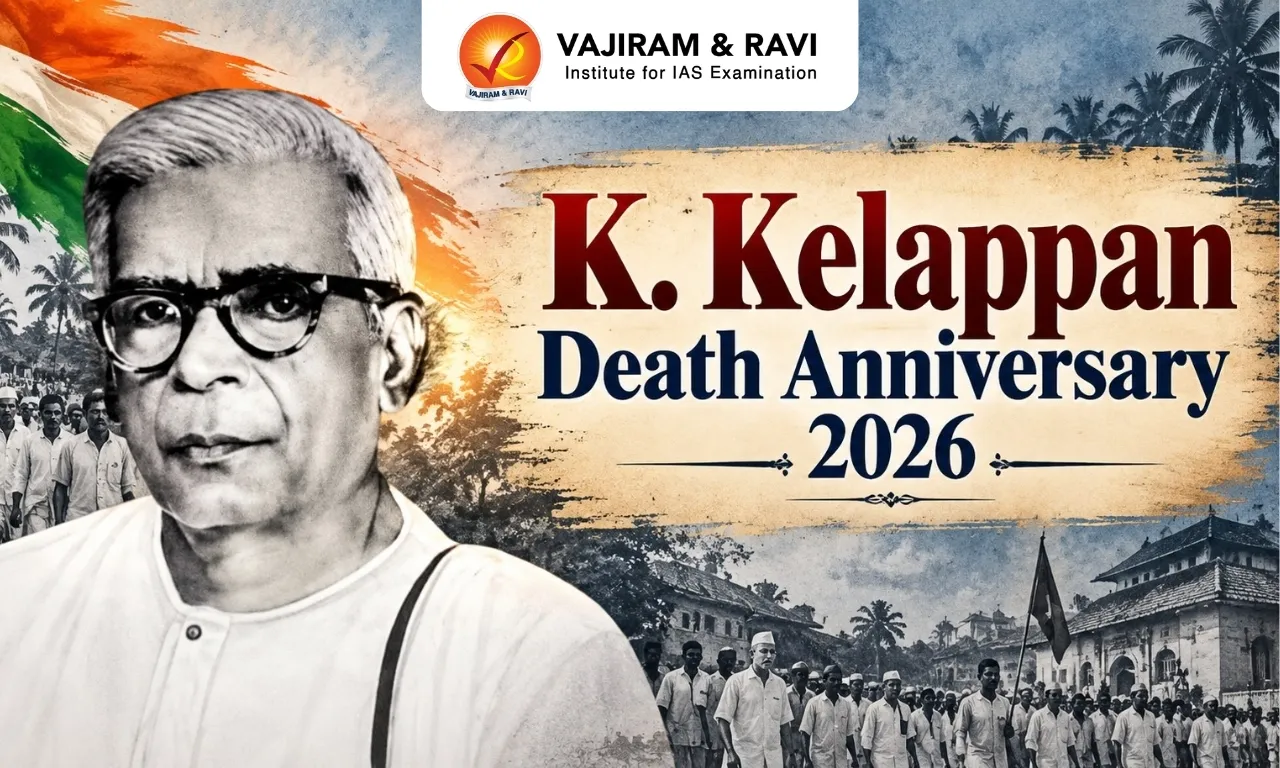
K. Kelappan Death Anniversary 2026, Kerala Gandhi, Biography

K. Kelappan Death Anniversary 2026

K. Kelappan Death Anniversary 2026 is observed each year on October 7. K. Kelappan was a prominent leader of Kerala’s freedom movement, social reformer, educationist and journalist. He was popularly known as “Kerala Gandhi” for his commitment to Gandhian principles, non  violence, satyagraha and constructive work. His public life connected the freedom struggle with campaigns against untouchability, caste discrimination and social inequality. His role in Vaikom Satyagraha, Payyannur Salt Satyagraha and Guruvayur Satyagraha remains important in understanding Kerala’s contribution to India’s national movement.

K. Kelappan Death Anniversary 2026

K. Kelappan Death Anniversary 2026 will be observed on 7 October, marking 55 years since his death in 1971. Koyapalli Kelappan Nair was born on 24 August 1889 at Muchukunnu in Koyilandy, Kozhikode, Kerala. He died on 7 October 1971. Kelappan Death Anniversary 2026 highlights his contribution to India’s freedom struggle, social equality, education, journalism and Gandhian movements in Kerala.

K. Kelappan Biography

K. Kelappan’s life combined political activism, education, journalism and social reform. His career reflected the wider regional spread of Gandhian nationalism in Kerala.

  • Early Life: Koyapalli Kelappan Nair was born on 24 August 1889 at Muchukunnu, Koyilandy, Kozhikode. His parents were Thenpoyil Kanaran Nair and Koyapalli Kunjamma.
  • Education and Teaching: He studied in Kozhikode and Madras and graduated from the University of Madras. He later worked as a teacher at St. Berchmans High School, Changanassery.
  • Nair Service Society: Kelappan was the founding President and first president of the Nair Service Society. He later became the principal of a school run by the organisation.
  • Journalism: He helped establish Mathrubhumi and served as its editor for several years. Journalism became an important part of his public engagement and nationalist activities.
  • Political Career: After independence, Kelappan left the Congress Party and joined the Kisan Mazdoor Praja Party. He was elected to Parliament from the Ponnani Lok Sabha seat in 1952.

K. Kelappan Contributions

K. Kelappan’s contributions extended from anti  colonial resistance to social reform. His major movements connected political freedom with equality and removal of caste  based discrimination.

  • Vaikom Satyagraha: Kelappan played a prominent role in the Vaikom Satyagraha of 1924-25. The movement challenged restrictions on lower castes using roads surrounding the Vaikom temple.
  • Payyannur Salt Satyagraha: Kelappan led the Payyannur Salt Satyagraha during the Civil Disobedience Movement. Salt laws were violated on 21 April 1930 by preparing salt.
  • Guruvayur Satyagraha: Kelappan led the Guruvayur Satyagraha in 1931-32 for temple entry and against untouchability. He undertook a twelve  day fast in September 1932.
  • Social Equality: He consistently opposed untouchability and caste discrimination. His reform activities sought equality among different sections of society and connected social emancipation with national freedom.
  • Kerala’s National Movement: The Payyannur Conference of 1928 supported Poorna Swaraj, tenancy  related demands and a united Malayalam  speaking region, linking political, agrarian and regional concerns.
  • Post  Independence Work: Kelappan became a Sarvodaya worker and participated in the Bhoodan Movement in Kerala. He also worked for Kerala’s linguistic unification and led several Gandhian organisations.

K. Kelappan Recognitions and Awards

K. Kelappan’s public legacy continued through commemorations and his association with major Gandhian organisations. His recognition also reflects his lasting place in Kerala’s modern history.

  • Kerala Gandhi: Kelappan was popularly called “Kerala Gandhi” because of his adherence to Gandhian methods, non  violence, satyagraha, simplicity and constructive social work.
  • Gandhian Organisations: He served as president of Kerala Sarvodaya Sangh, Kerala Gandhi Smarak Nidhi, Kerala Sarvodaya Mandal and Gandhi Peace Foundation, Calicut.
  • Commemorative Stamp: India Post issued a commemorative stamp in his honour in 1990. This recognised his contribution to India’s freedom struggle and public life.
  • Legacy: K. Kelappan Death Anniversary 2026 marks 55 years since his death. His legacy remains linked with Kerala’s freedom movement, social reform, Gandhian thought and public service.

K. Kelappan Death Anniversary 2026 FAQs

Q1: When is K. Kelappan Death Anniversary 2026 observed?

Ans: K. Kelappan Death Anniversary 2026 is observed on 7 October 2026, marking 55 years since his death in 1971.

Q2: Who is K. Kelappan?

Ans: K. Kelappan was a Kerala freedom fighter, social reformer, educationist and journalist who was popularly known as “Kerala Gandhi.”

Q3: Who is called Kerala Gandhi?

Ans: K. Kelappan is called Kerala Gandhi for following Gandhian principles, non  violence, satyagraha, social equality and constructive work.

Q4: What were K. Kelappan’s major contributions?

Ans: His major contributions include leadership in the Vaikom Satyagraha, Payyannur Salt Satyagraha and Guruvayur Satyagraha, along with campaigns against untouchability and caste discrimination.

Q5: When did K. Kelappan die?

Ans: K. Kelappan died on 7 October 1971. He was born on 24 August 1889 at Muchukunnu in Koyilandy, Kozhikode, Kerala.

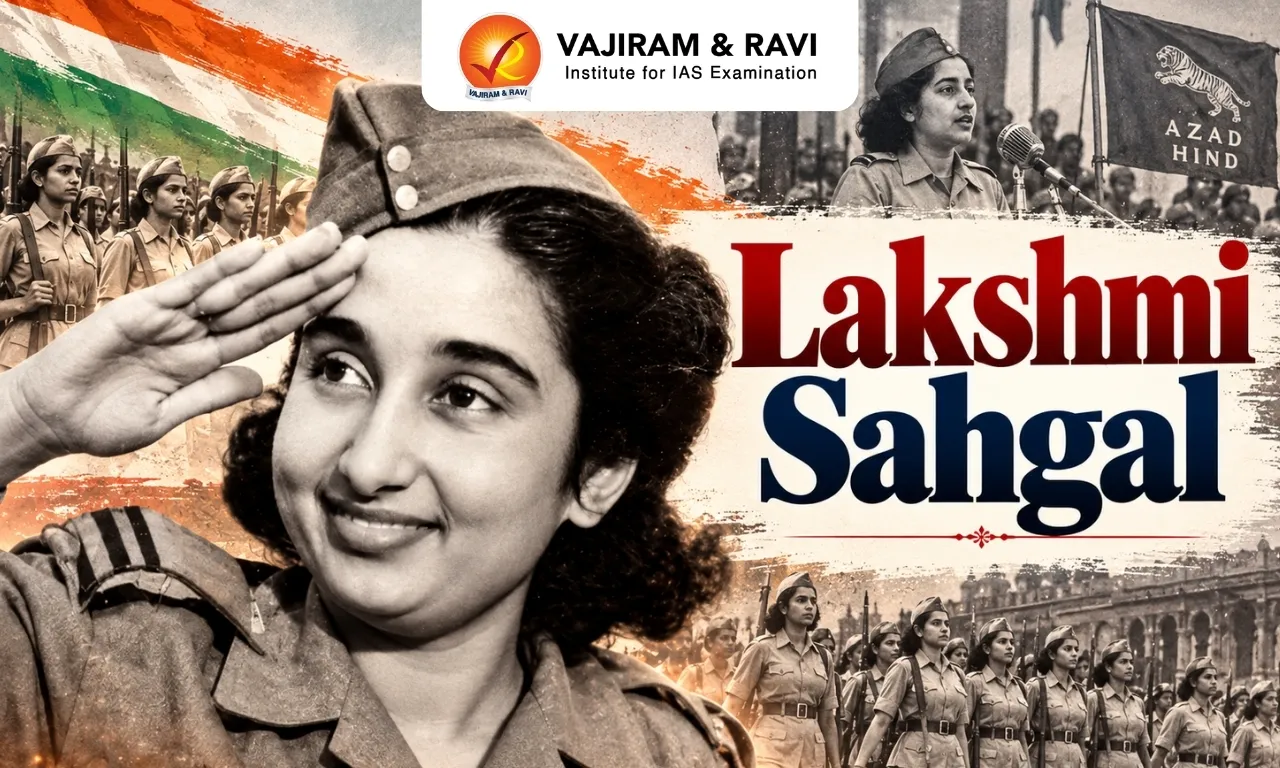
Lakshmi Sahgal, Life, INA Role and Rani of Jhansi Regiment

Lakshmi Sahgal

Lakshmi Sahgal was an Indian doctor, freedom fighter and social activist who played a prominent role in the Indian National Army (INA) under Subhas Chandra Bose. She is best remembered for commanding the Rani of Jhansi Regiment, the INA’s all-women regiment, and for serving as Minister for Women’s Affairs in the Provisional Government of Azad Hind.

After Independence, she continued her medical and social work, particularly in refugee relief, healthcare and women’s rights. Her life reflects the participation of women in India’s freedom struggle and the continuation of public service beyond Independence.

Who Was Lakshmi Sahgal?

Lakshmi Sahgal was born Lakshmi Swaminathan on 24 October 1914 in Madras Presidency. She came from a family associated with law, social work and public life.

  • Her father, S. Swaminathan, was a lawyer.
  • Her mother, Ammu Swaminathan, was a social worker and freedom activist.
  • She studied at Queen Mary’s College in Madras before pursuing medicine at Madras Medical College.
  • She completed her MBBS in 1938 and obtained a diploma in Gynaecology and Obstetrics in 1940.
  • She later worked at the Government Kasturba Gandhi Hospital in Madras.

Her medical training became an important part of both her work during the freedom struggle and her public service after Independence.

Lakshmi Sahgal in Singapore

In 1940, Lakshmi Sahgal moved to Singapore and began practising medicine. She primarily served the Indian community, including poor workers who had limited access to healthcare.

The Japanese occupation of Singapore in 1942 and the activities of the Indian nationalist movement in Southeast Asia brought her into closer contact with the struggle for Indian independence.

  • She provided medical assistance to Indian prisoners of war and other people affected by the war.
  • She became associated with the Indian Independence League, which sought to mobilise Indians in Southeast Asia for India's independence.
  • Her work with Indian prisoners of war brought her closer to the activities surrounding the Indian National Army.

The arrival of Subhas Chandra Bose in Singapore in July 1943 became a turning point in her life.

Lakshmi Sahgal and the Rani of Jhansi Regiment

The Rani of Jhansi Regiment was formed in 1943 on the initiative of Subhas Chandra Bose as the women’s regiment of the Indian National Army. Bose wanted women to participate directly in the struggle for India’s independence and named the regiment after Rani Lakshmibai of Jhansi, who had become a symbol of resistance during the Revolt of 1857.

Lakshmi Sahgal played the central role in organising and leading the regiment. 

  • She recruited women from the Indian community in Southeast Asia and helped organise their military training. As its commanding officer, she became popularly known as Captain Lakshmi.
  • The regiment included women volunteers mainly from Singapore and Malaya.
  • Members received training in military discipline, physical exercises, weapons handling and first aid.
  • The regiment was associated with the INA’s Burma campaign and advance towards India.
  • Its members also undertook medical and support responsibilities.

The regiment was significant because it gave women an organised military role in the freedom struggle and became one of the most prominent examples of women’s participation in the INA.

Lakshmi Sahgal and the Provisional Government of Azad Hind

On 21 October 1943, Subhas Chandra Bose proclaimed the Provisional Government of Azad Hind in Singapore. It was established as part of the wider Azad Hind movement seeking to end British rule in India.

Lakshmi Sahgal was given responsibility for women’s affairs in the government.

Her position extended her involvement in the freedom struggle beyond the leadership of the Rani of Jhansi Regiment. It also reflected the importance attached to women’s participation in the political organisation of the Azad Hind movement.

Lakshmi Sahgal’s Arrest and Return to India

  • The INA’s military campaign weakened as Japan suffered defeats in the Second World War. The INA forces were eventually forced to retreat from Southeast Asia, bringing their military campaign towards India to an end.
  • Lakshmi Sahgal was captured by British forces in Burma in 1945 and detained in Rangoon. 
  • Her arrest took place during the British government’s action against INA personnel. The subsequent INA trials at the Red Fort generated widespread public sympathy for the INA and became an important episode in the final phase of the Indian freedom struggle.
  • She returned to India in March 1946.
  • After her return, Lakshmi Sahgal continued to remain involved in public service. She helped raise funds for destitute INA families and visited refugee camps in Madras and Kerala.

Lakshmi Sahgal After Independence

After Independence, Lakshmi Sahgal continued her work as a doctor while remaining active in humanitarian and social causes. She settled in Kanpur in 1947 and continued providing medical care, particularly to poor and working-class communities.

Her post-Independence work included several major humanitarian and social initiatives.

  • During Partition, she provided medical assistance to refugees and displaced people.
  • During the 1971 refugee crisis, she worked with the People’s Relief Committee of Bengal to support refugees from East Pakistan.
  • She joined the Communist Party of India (Marxist) in 1971 and remained active in public life.
  • She was among the founding members of the All India Democratic Women’s Association in 1981.
  • Following the anti-Sikh violence of 1984, she worked to assist affected people and promote communal harmony.
  • After the Bhopal gas tragedy in 1984, she led a medical team to provide assistance to victims.
  • In 1996, she was arrested during an AIDWA campaign opposing the Miss World contest in Bangalore.
  • She continued treating patients in Kanpur well into her later years.

Her long medical career showed that her commitment to serving people continued well beyond the freedom struggle.

Lakshmi Sahgal and the 2002 Presidential Election

In 2002, she contested the Presidential election of India as the joint Left candidate against A. P. J. Abdul Kalam, who was elected President. Her candidature brought her back into national political attention and reflected her continued engagement with public and political affairs.

Lakshmi Sahgal Awards and Recognition

Lakshmi Sahgal received recognition for her contribution to public life and social service.

  • She was awarded the Padma Vibhushan in 1998.
  • The University of Calicut conferred an honorary doctorate on her in 2010.

Lakshmi Sahgal’s Autobiography

Lakshmi Sahgal recorded her experiences of the freedom struggle and her later political and social work in her autobiography.

Her English autobiography, A Revolutionary Life: Memoirs of a Political Activist, was published in 1997. Its Hindi version is titled Mera Jeevan Sangharsh.

Death and Legacy of Lakshmi Sahgal

  • Lakshmi Sahgal died in Kanpur on 23 July 2012, at the age of 97.
  • Her life connected two phases of public service: the struggle for independence and the building of an independent India. She first became prominent through the INA and the Rani of Jhansi Regiment and later continued serving society through medicine, humanitarian work and political activism.
  • She remains particularly remembered for demonstrating the important role that women could play in the armed and political dimensions of India’s freedom struggle.

Lakshmi Sahgal FAQs

Q1: Who was Lakshmi Sahgal?

Ans: Lakshmi Sahgal was an Indian doctor, freedom fighter and social activist who served in the Indian National Army under Subhas Chandra Bose and commanded the Rani of Jhansi Regiment.

Q2: What was the Rani of Jhansi Regiment?

Ans: The Rani of Jhansi Regiment was the all-women regiment of the Indian National Army, formed in 1943 on the initiative of Subhas Chandra Bose and named after Rani Lakshmibai of Jhansi.

Q3: Why is Lakshmi Sahgal known as Captain Lakshmi?

Ans: She was popularly known as Captain Lakshmi because she served as the commanding officer of the Rani of Jhansi Regiment.

Q4: What was Lakshmi Sahgal’s role in the Provisional Government of Azad Hind?

Ans: She was given responsibility for women’s affairs in the Provisional Government of Azad Hind proclaimed by Subhas Chandra Bose in 1943.

Q5: What did Lakshmi Sahgal do after Independence?

Ans: She continued practising medicine and worked in refugee relief, humanitarian assistance, women’s rights and social causes.

Samanvaya Portal, Features, Objectives, Significance

Samanvaya Portal

The Samanvaya Portal is a web-based cybercrime coordination platform launched by the Ministry of Home Affairs under I4C. It enables Law Enforcement Agencies to share cybercrime data, analyse crime patterns, map criminal networks and coordinate investigations across States and Union Territories. The portal aims to strengthen inter-State coordination and technology-driven cybercrime prevention in India. 

What is Samanvaya Portal?

  • Samanvaya Platform is a web-based Joint Cybercrime Investigation Facilitation System developed under the Indian Cyber Crime Coordination Centre (I4C) of the Ministry of Home Affairs.
  • It was launched by Union Home Minister Amit Shah on 10 September 2024 during the first Foundation Day celebrations of I4C.
  • The platform works as a centralised one-stop system for cybercrime data sharing, crime mapping, data analytics and coordination among police and Law Enforcement Agencies (LEAs) across States and Union Territories.
  • Samanvaya aims to address the growing problem of inter-State and multi-jurisdictional cybercrime, where criminals, victims, bank accounts, mobile numbers and digital infrastructure may be spread across different States.
  • It follows the principle of “duty to share, not need to know”, encouraging agencies to proactively share relevant information for effective investigation and prevention of cybercrime.
  • The platform is part of the broader efforts of I4C to strengthen coordination between different agencies and build a more integrated cybercrime response system in India.

Also Read : Cyber Security in India

Samanvaya Portal Key Features and Objectives

  • Centralised Data Repository: Samanvaya provides a common platform where Law Enforcement Agencies can access and share relevant cybercrime information, including details related to criminals, complaints, cases and digital footprints.
  • Inter-State Crime Linkages: The platform helps investigators identify connections between cybercrime cases registered in different States and Union Territories, making it easier to detect larger criminal networks.
  • Crime Mapping and Data Analytics: Samanvaya uses data analysis and geographical mapping to identify crime patterns, locations and linkages. This helps law enforcement agencies make better use of available intelligence.
  • Pratibimb Module: The Pratibimb module provides a geographical representation of cybercriminals and associated crime infrastructure, helping investigating agencies identify locations and connections relevant to cybercrime cases.
  • Investigation Support: The platform facilitates investigation-related assistance, including techno-legal support, particularly for cases involving complex digital technologies and specialised cybercrime techniques.
  • Inter-State Coordination: It helps police forces from different States and Union Territories share information and coordinate action when a cybercrime case crosses jurisdictional boundaries.
  • Joint Cybercrime Investigation: Samanvaya supports the work of Joint Cyber Coordination Teams (JCCTs) by facilitating information exchange and analysis related to cybercriminals and cases across jurisdictions.
  • Breaking Information Silos: By bringing information from different agencies onto a common platform, Samanvaya reduces information gaps and helps investigators see connections that may otherwise remain hidden.

How Does the Samanvaya Portal Help in Monitoring Government Schemes?

  • Samanvaya is not a general government-scheme monitoring portal. Its primary purpose is to support cybercrime investigation, data sharing, crime mapping and coordination among Law Enforcement Agencies.
  • In terms of governance, the platform helps monitor and strengthen the functioning of India's cybercrime response system by bringing relevant information together on a common platform.
  • It enables authorities to track cybercrime patterns and emerging hotspots, helping law enforcement agencies understand where and how cybercrime networks are operating.
  • Through data analytics and crime mapping, agencies can identify inter-State linkages and recurring patterns, which can support timely action against organised cybercrime.
  • The platform also improves coordination between State/UT police forces and central agencies, allowing them to exchange information and work together on cases involving multiple jurisdictions.
  • Samanvaya should be understood as a cybercrime governance and coordination platform, rather than a portal designed to monitor welfare schemes or development programmes.

Samanvaya Portal Significance for Governance in India

  • Strengthens Cooperative Federalism: Cybercrime often crosses State boundaries, while policing is primarily a State responsibility. Samanvaya creates a mechanism through which State/UT agencies and central institutions can work together more effectively.
  • Promotes Data-Driven Policing: By using data analytics, crime mapping and digital information, the platform encourages law enforcement agencies to move towards evidence-based and technology-driven investigation.
  • Improves Inter-State Investigations: Cybercriminals can operate across several jurisdictions using multiple mobile numbers, bank accounts and digital identities. Samanvaya helps investigators connect these scattered pieces of information.
  • Reduces Jurisdictional Gaps: A common coordination platform makes it easier for different police forces to share information instead of treating cybercrime cases as isolated incidents within individual jurisdictions.
  • Strengthens Institutional Coordination: Samanvaya complements other I4C initiatives and contributes to a broader ecosystem for cybercrime reporting, fraud prevention, investigation and enforcement.
  • Helps Identify Criminal Networks: By linking information from different cases and locations, the platform can help law enforcement agencies identify organised cybercrime networks rather than focusing only on individual incidents.
  • Supports Faster and More Effective Investigation: Access to shared information, crime mapping and specialised technical assistance can help investigating officers develop a clearer picture of complex cybercrime cases.
  • Promotes a Cyber-Secure India: Samanvaya strengthens India's institutional capacity to prevent, investigate and respond to cybercrime and supports the broader objective of building a secure and resilient digital ecosystem.

Samanvaya Portal FAQs

Q1: What is the Samanvaya Portal?

Ans: The Samanvaya Portal is a web-based Joint Cybercrime Investigation Facilitation System developed under the Ministry of Home Affairs’ Indian Cyber Crime Coordination Centre (I4C).

Q2: When was the Samanvaya Portal launched?

Ans: The Samanvaya Portal was launched by Union Home Minister Amit Shah on 10 September 2024 during the first Foundation Day celebrations of I4C.

Q3: What is the main objective of the Samanvaya Portal?

Ans: Its main objective is to facilitate cybercrime data sharing, crime mapping, data analytics and coordination among Law Enforcement Agencies across States and Union Territories.

Q4: What are the key features of the Samanvaya Portal?

Ans: Key features include a centralised data repository, inter-State crime linkage, crime mapping, data analytics, investigation support and coordination among Law Enforcement Agencies.

Q5: What is the role of the Pratibimb module in Samanvaya?

Ans: The Pratibimb module provides geographical mapping of cybercriminals and related crime infrastructure, helping agencies identify locations, patterns and connections.

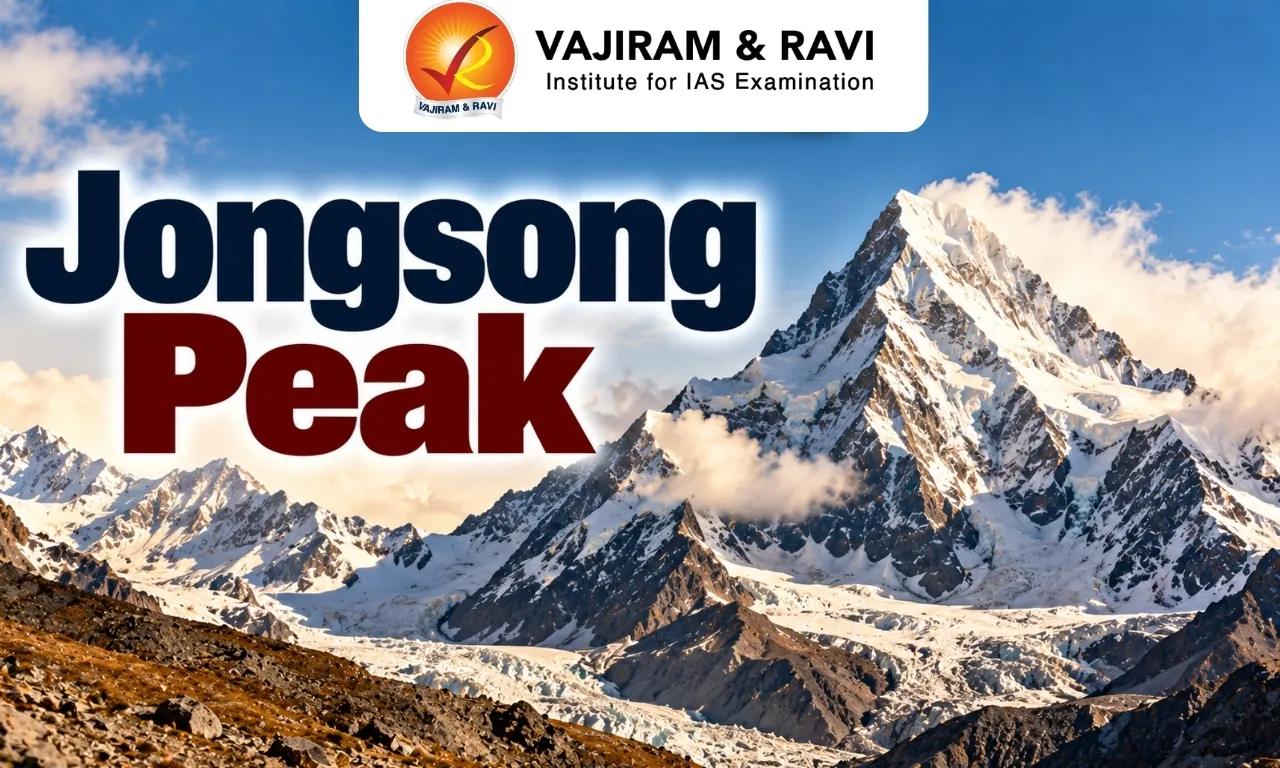
Jongsong Peak, Location, Height, Geography, Significance

Jongsong Peak

Jongsong Peak is a prominent mountain in the eastern Himalayas, rising to about 7,462 metres above sea level. Located near the India-Nepal-China (Tibet) tri-junction, it is known for its high altitude, challenging terrain and importance in the history of Himalayan mountaineering. 

Jongsong Peak Location

  • Jongsong Peak is a high mountain of the Himalayas, located in the Janak section of the Himalayan range.
  • It lies at the tri-junction of India, Nepal and China (Tibet), making it a significant transboundary mountain in the eastern Himalayas. The summit is located close to the Sikkim-Nepal-Tibet border region.
  • On the Indian side, the peak is associated with North Sikkim, while its northern and western surroundings extend towards Tibet and eastern Nepal. The mountain is part of the broader Kangchenjunga Himalayan region.
  • Jongsong Peak rises to an elevation of about 7,462 metres (24,482 feet) and is generally listed as the 57th-highest mountain in the world.
  • It is situated around 20 km northeast of Kangchenjunga, the world’s third-highest mountain, and is geographically connected with the high mountain and glacier systems of the eastern Himalayas.

Jongsong Peak Geographical Significance

  • Jongsong Peak is particularly important because its main summit forms a tripoint between India, Nepal and China (Tibet). This makes it one of the notable border mountains of the eastern Himalayas.
  • With an elevation of 7,462 metres, it is one of the prominent 7,000-metre peaks of the Himalayas and has considerable geographical and mountaineering importance.
  • The mountain forms part of the Janak Himal and lies within a rugged landscape of high-altitude glaciers, snow-covered ridges and steep mountain slopes. The Jongsong Glacier is one of the important glacial features associated with the mountain.
  • Its location close to Kangchenjunga places it within one of the most significant high-mountain regions of the eastern Himalayas. The surrounding terrain is remote and difficult to access, adding to its importance for Himalayan exploration and mountaineering.
  • Jongsong Peak also has a notable place in mountaineering history. It was first climbed in 1930 by Hermann Hoerlin and Erwin Schneider during the international Himalayan expedition led by Günter Dyhrenfurth.
  • Following its first ascent, Jongsong Peak remained the highest mountain successfully climbed in the world until the first ascent of Kamet (7,756 m) in 1931.
  • The mountain continues to have mountaineering significance. In 2012, a Himalayan Club expedition led by Pradeep Chandra Sahoo reached the eastern summit of Jongsong by a new route from the Sikkim side, highlighting the continuing exploration of the remote high-altitude region.

Jongsong Peak FAQs

Q1: Where is Jongsong Peak located?

Ans: Jongsong Peak is located in the eastern Himalayas at the India-Nepal-China (Tibet) tri-junction, in the Janak section of the Himalayan range.

Q2: What is the height of Jongsong Peak?

Ans: Jongsong Peak has an elevation of about 7,462 metres (24,482 feet) and is considered the 57th-highest mountain in the world.

Q3: Why is Jongsong Peak geographically significant?

Ans: Jongsong Peak is significant because it lies at the tri-junction of India, Nepal and China (Tibet) and forms part of the high mountain landscape of the eastern Himalayas.

Q4: When was Jongsong Peak first climbed?

Ans: Jongsong Peak was first climbed in 1930 by Hermann Hoerlin and Erwin Schneider during an expedition led by Günter Dyhrenfurth.

Q5: Why is Jongsong Peak important in mountaineering history?

Ans: After its first ascent in 1930, Jongsong Peak remained the highest mountain successfully climbed until Kamet was climbed in 1931.

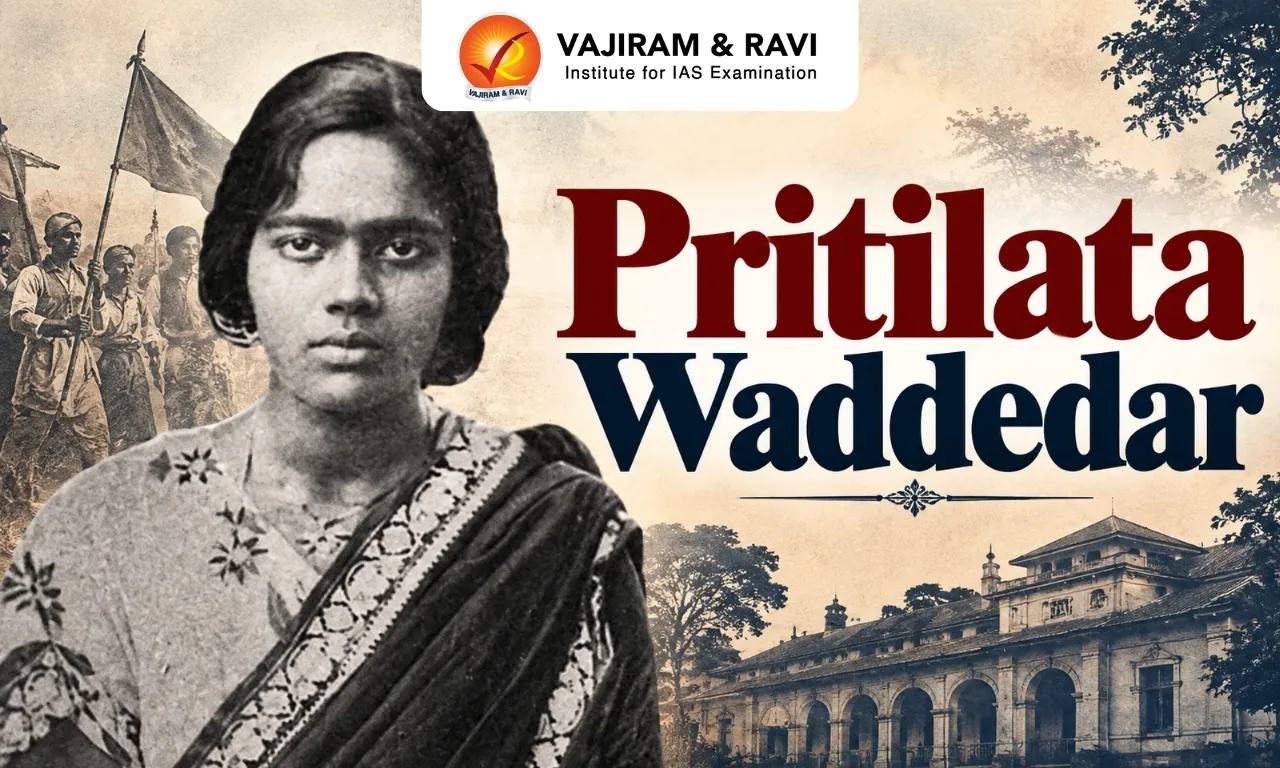
Pritilata Waddedar, Life, Role and Freedom Struggle Legacy

Pritilata Waddedar

Pritilata Waddedar was a young revolutionary who participated in India’s struggle against British colonial rule. She is remembered for her contribution to the revolutionary movement in Bengal and for the role she played in expanding women’s participation in the armed freedom struggle.

Who Was Pritilata Waddedar?

Pritilata Waddedar was a revolutionary from Chittagong who became associated with the underground nationalist movement during the early 1930s. She worked under the leadership of Surya Sen, popularly known as Masterda, and became one of the prominent women involved in the revolutionary activities of the Chittagong region.

Pritilata Waddedar Early Life and Education

Pritilata Waddedar was born on 5 May 1911 in Chittagong into the family of Jagat Bandhu Waddedar. She was a bright and academically accomplished student who pursued her education across Chittagong, Dhaka and Calcutta.

  • She received her early education at Dr Khastagir Government Girls’ School, Chittagong, and passed the Matriculation examination in 1928 in the first division. 
  • She then studied at Eden College, Dhaka, where she performed well in the Intermediate examination.
  • Pritilata later joined Bethune College, Calcutta, to study Philosophy and completed her Bachelor of Arts examination in 1932 with distinction. 

During her student years, she also came into contact with nationalist activities and became associated with the Dipali Sangha, a women’s organisation involved in the nationalist movement.

After completing her education, she returned to Chittagong and became the headmistress of Nandankanan Girls’ School. Her academic background, teaching career and growing exposure to nationalist networks formed the foundation for her later involvement in the revolutionary movement.

Pritilata Waddedar Role in the Freedom Struggle

Pritilata entered the revolutionary movement in Bengal during a period when underground groups were using organised resistance against British rule. Her involvement brought women into a more direct role within the revolutionary network.

  • Entry into the revolutionary movement: After returning to Chittagong, Pritilata came into contact with Surya Sen’s revolutionary network and became involved in its underground activities.
  • Revolutionary training and support: She received training in revolutionary methods and assisted the organisation by carrying messages, weapons and other materials.
  • Participation in the Chittagong movement: She became involved in the activities of the Indian Republican Army, Chittagong Branch, which operated under Surya Sen’s leadership.
  • Dhalghat Encounter: In June 1932, she was present at the Dhalghat encounter when British forces raided a revolutionary hideout. She escaped along with Surya Sen.
  • Pahartali European Club Attack: On 23 September 1932, Pritilata led an attack on the Pahartali European Railway Officers’ Club in Chittagong, targeting a symbol of colonial racial segregation.

Pritilata Waddedar’s Legacy

Pritilata Waddedar’s legacy continues to be remembered through educational institutions, historical records and the wider recognition of women’s contribution to India’s freedom struggle.

  • She is remembered as an important woman revolutionary of the Indian freedom struggle.
  • Bethune College has commemorated her through Pritilata Bhavan and preserved archival material associated with her.
  • The University of Calcutta awarded her Bachelor of Arts degree posthumously in 2012.
  • Her life remains an important part of the history of revolutionary nationalism and women’s participation in the freedom struggle.
  • Her story is frequently used to examine women’s agency, youth participation and the regional diversity of India’s anti-colonial movement.

Pritilata Waddedar FAQs

Q1: Who was Pritilata Waddedar?

Ans: Pritilata Waddedar was a Bengali revolutionary who participated in the armed struggle against British colonial rule and was associated with Surya Sen’s revolutionary network in Chittagong.

Q2: When was Pritilata Waddedar born?

Ans: Pritilata Waddedar was born on 5 May 1911 in Chittagong, then part of British India.

Q3: Which organisation was associated with Pritilata Waddedar?

Ans: Pritilata Waddedar was associated with the Indian Republican Army, Chittagong Branch, led by Surya Sen.

Q4: What was Pritilata Waddedar’s role in the freedom struggle?

Ans: Pritilata Waddedar was an active member of Surya Sen’s revolutionary network in Chittagong. She assisted underground operations, participated in the Dhalghat encounter, and led the 1932 Pahartali European Club attack, becoming an important example of women’s direct participation in the armed revolutionary movement.

Q5: How did Pritilata Waddedar die?

Ans: Pritilata Waddedar was wounded during the Pahartali operation. To avoid capture by the British authorities, she consumed potassium cyanide and died on 24 September 1932.

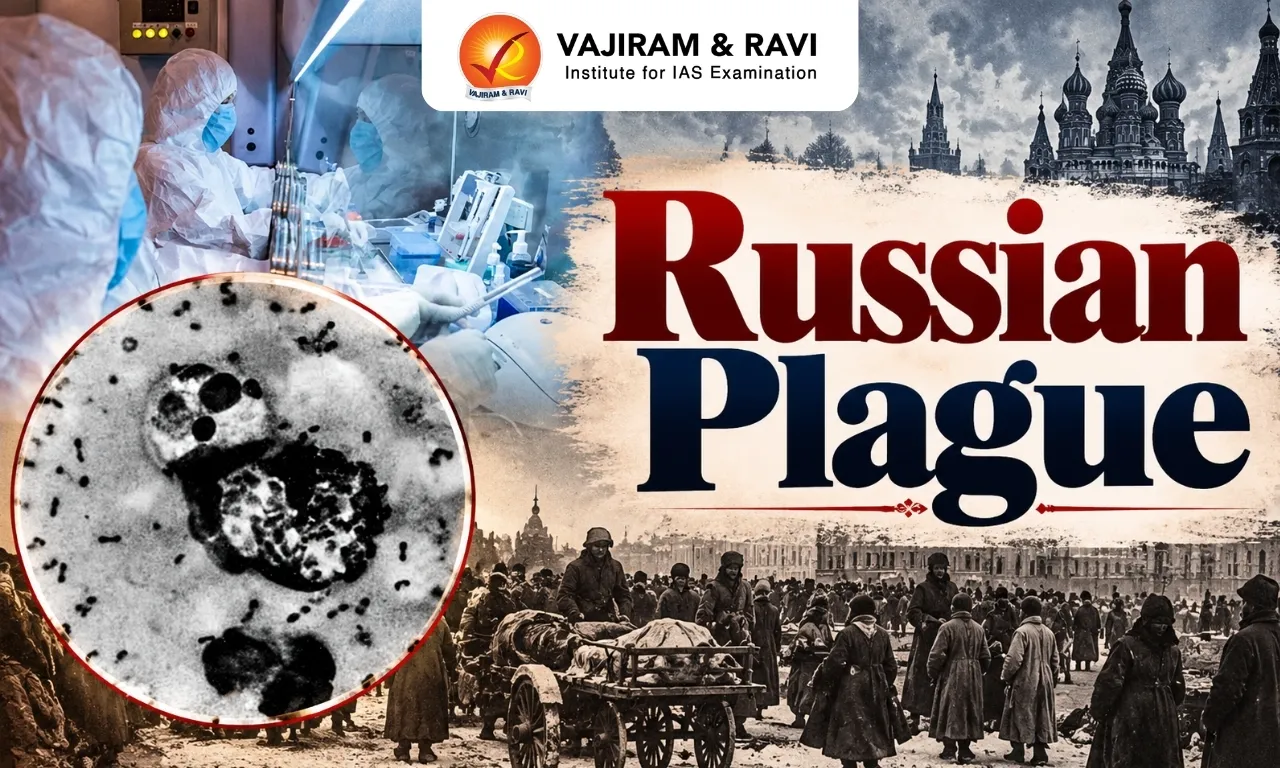
Russian Plague 2026, Symptoms, Outbreak News, India’s Risk

Russian Plague 2026

Russian Plague refers to concerns related to a possible case of pneumonic plague in Russia. Pneumonic plague is a severe form of plague caused by Yersinia pestis that affects the lungs. It can spread from person to person through respiratory droplets. The disease can progress rapidly, making early recognition, antibiotic treatment, isolation and contact tracing important for public health management.

Russian Plague Outbreak News

Russian Plague reports have raised concern after the death of a 28 year old laboratory worker in Irkutsk, Russia. The woman reportedly worked at an anti plague research institute and may have faced laboratory exposure. Authorities have described the illness as pneumonia of unknown aetiology. Testing reportedly did not identify microorganisms linked to her professional activities. The case has therefore raised questions about pneumonic plague without confirming an outbreak. Russia has not confirmed the reported death as pneumonic plague. Potentially exposed people have reportedly been placed under medical observation.

Russian Plague

Russian Plague refers to current concern surrounding a suspected pneumonic plague case in Russia. The following facts explain its disease features, transmission, symptoms and treatment requirements.

  • Causative Bacterium: Pneumonic plague is caused by Yersinia pestis. It infects the lungs and differs from bubonic plague, which affects lymph nodes and septicemic plague, which affects the bloodstream.
  • Person to Person Spread: Pneumonic plague can spread through heavy respiratory droplets from an infected person, particularly during coughing or spitting blood. It does not remain airborne like measles.
  • Major Exposure Risk: The highest risk involves close contact within 6 feet (2 meters), direct patient care without protection, or airway related medical procedures without appropriate protective measures.
  • Incubation Period: Symptoms generally develop within one to three days. The reported range is one to seven days, followed by rapid clinical deterioration in severe cases.
  • Warning Symptoms: Initial symptoms include high fever, chills, severe headache and extreme weakness. Shortness of breath, chest pain and cough with watery, blood tinged or pinkish phlegm can follow quickly.
  • Treatment: Gentamicin, ciprofloxacin and doxycycline are effective antibiotics. Treatment should begin within 24 hours of symptom onset because delayed treatment increases the risk of death.

Also Read:- Russian Revolution

Russian Plague in India

India currently has no reported confirmed case linked to this Russian episode. The practical response focuses on early recognition, travel history, isolation and rapid testing.

  • Current Risk: The risk to people in India is described as virtually zero based on the available Russian reports. Risk would change substantially only with uncontrolled international transmission.
  • Traveller Management: Port Health Organisations screen international travellers. A severely ill passenger can be moved to an isolation facility and transferred through a specialised biocontainment ambulance.
  • Contact Tracing: Nearby passengers may be traced and given preventive antibiotics. Samples can be tested through the National Centre for Disease Control (NCDC).
  • Hospital Preparedness: Indian tertiary and government referral hospitals maintain effective antibiotics such as ciprofloxacin, levofloxacin and gentamicin. Isolation protocols also support rapid response.
  • Clinical Detection: Fever, cough and pneumonia can resemble common respiratory illnesses. Recent international travel, rodent contact, flea exposure, laboratory exposure and contact with suspected cases can guide diagnosis.

Also Read:- India Russia Relations

Russian Plague Management

Effective management depends on confirming Yersinia pestis, identifying exposure and preventing secondary transmission. Early action is important because pneumonic plague can progress rapidly.

  • Isolation: Suspected patients should be placed in isolated negative pressure rooms. Healthcare workers should use protective equipment, including N95 masks.
  • Contact Monitoring: Close contacts should receive preventive antibiotics for 7 days and have their temperature monitored twice daily.
  • Risk Assessment: An isolated suspected case should not be called an outbreak without confirmed infection and evidence of transmission. Sustained community transmission would materially change India’s risk assessment.

Russian Plague 2026 FAQs

Q1: What is Russian Plague?

Ans: Russian Plague refers to concerns about a possible pneumonic plague case reported in Irkutsk, Russia.

Q2: What causes pneumonic plague?

Ans: Pneumonic plague is caused by the bacterium Yersinia pestis and primarily affects the lungs.

Q3: How does pneumonic plague spread?

Ans: It can spread through heavy respiratory droplets from an infected person, especially during coughing or close contact.

Q4: What is the risk of Russian Plague in India?

Ans: The current risk to India is virtually zero based on the available Russian reports and absence of confirmed international transmission.

Q5: How is pneumonic plague managed?

Ans: Management includes early antibiotic treatment, patient isolation, contact tracing, preventive antibiotics and rapid laboratory testing.

India-Switzerland Relations 2026, Cooperation, India-EFTA TEPA

India-Switzerland Relations

India-Switzerland Relations are based on friendship, democracy, rule of law and mutual economic interests. The two countries established formal ties through the Treaty of Friendship in 1948. Their partnership now covers trade, investment, science, education, skill development, infrastructure and people to people contacts. Recent agreements have expanded cooperation into migration and mobility, young professionals, defence, nuclear energy, transport and infrastructure.

India-Switzerland Relations Latest News

India-Switzerland Relations recently expanded bilateral cooperation during Swiss President Guy Parmelin’s visit to New Delhi. Agreements were signed on migration and mobility, young professionals and transport and infrastructure. India and Switzerland also agreed to strengthen defence production, military exchanges and nuclear energy cooperation. The India-EFTA TEPA, which entered into force in October 2025, remains central to economic engagement.

India-EFTA TEPA

The India-EFTA TEPA connects India with Iceland, Liechtenstein, Norway and Switzerland through a wider European trade partnership.

  • Trade and Economic Partnership Agreement: TEPA is a trade agreement between India and the four EFTA States. It is India’s first FTA with an economic bloc in Europe.
  • Entry into force: The India-EFTA TEPA came into force in October 2025. Its first anniversary has provided a platform to deepen India-Switzerland economic cooperation.
  • Investment target: TEPA seeks to attract $100 billion in investment in India over the next 15 years. It also aims to create one million direct jobs.
  • Benefits for India: India expects greater access to Swiss markets for agriculture, pharmaceuticals, textiles and engineering goods. The agreement can also support capital inflows and technology transfers.
  • Benefits for Switzerland: Switzerland gains access to a large and growing Indian market. Swiss businesses can benefit from opportunities in investment, trade and high value added goods.
  • Investment protection: Switzerland has expressed the hope of concluding an investment protection agreement soon. It has also stressed the importance of progress on intellectual property protection.

India-Switzerland Relations History and Evolution

India-Switzerland Relations have evolved from diplomatic friendship into a broad partnership covering trade, research, skills, culture, mobility and strategic cooperation.

  • Treaty of Friendship 1948: India and Switzerland signed the Treaty of Friendship at New Delhi in 1948. The relationship reflects shared support for democracy, pluralism and rule of law.
  • Cold War understanding: India followed a policy of Non alignment while Switzerland maintained traditional neutrality. These positions created a close understanding between the two countries.
  • Bangladesh crisis: From 1971 to 1976, Switzerland represented India’s interests in connection with the dispute in Bangladesh. This reflected the depth of diplomatic engagement during that period.
  • Political dialogue: Formal political dialogue between India and Switzerland has been conducted since 2005. Bilateral agreements have expanded cooperation in trade, education, taxation, visas and science.
  • Economic engagement: The India-Switzerland Joint Economic Commission was established in 1959. The India-Switzerland Financial Dialogue followed in 2011.
  • EFTA negotiations: The 14th round of India-EFTA TEPA negotiations was held in 2016. These negotiations eventually contributed to the wider trade partnership that entered into force in October 2025.

India-Switzerland Area of Cooperation

India and Switzerland cooperate across economic, technological, educational, cultural, infrastructure and people centred areas with growing strategic importance.

The key areas of cooperation under the India-Switzerland Relations are:

Trade and Investment

  • Trade partnership: Switzerland was India’s 11th largest trading partner in 2018-19, according to EXIM Bank. India is also Switzerland’s third largest trading partner in Asia.
  • Swiss investment: Switzerland invested approximately USD 4.781 billion in FDI equity in India between April 2000 and September 2019. It ranked as India’s 12th largest investor and accounted for about 1.07% of total FDI.
  • Future investment sectors: India seeks Swiss investment in biotech, life sciences, banking, insurance, food processing and sustainability. TEPA is expected to support wider investment opportunities.

Science, Technology and Research

  • Joint research: An Inter Governmental Framework Agreement on Technical and Scientific Cooperation was signed during the Swiss President’s 2003 India visit. The Indo-Swiss Joint Research Programme was launched in 2005.
  • Research priorities: New joint research projects are planned in health, clean energy and space. These areas can strengthen innovation and address shared development priorities.
  • Swissnex India: Swissnex India connects the two countries in science, education, art and innovation. It supports institutional and knowledge based cooperation.

Education and Skill Development

  • Excellence Scholarships: The Swiss Government gives priority to India under its Excellence Scholarships. This supports academic and research opportunities for Indian students.
  • Vocational training: Swiss institutions have supported the introduction of the Swiss Dual Vocational Educational System in India. This strengthens industry linked skill development.
  • Skill institutions: The Bharatiya Skill Development Campus and University, Indo-Swiss Centre of Excellence in Pune and Vocational Training Center in Andhra Pradesh reflect cooperation in skill training.

Infrastructure and Transport

  • Infrastructure projects: Swiss expertise has contributed to projects including the Varanasi ropeway, Jewar Airport in Noida and railway and tunnelling projects in hilly areas.
  • New cooperation: India and Switzerland signed an agreement covering transport and infrastructure. India has invited Swiss companies to participate in investment, capacity building, design and manufacturing.

Defence and Nuclear Energy

  • Defence cooperation: India and Switzerland identified new opportunities for military exchanges and defence production. This marks an expansion of bilateral cooperation into strategic sectors.
  • Nuclear cooperation: Both countries agreed to deepen collaboration in nuclear energy. This adds a new dimension to the expanding India-Switzerland strategic partnership.

Mobility and People to People Ties

  • Migration and Mobility Partnership: The agreement promotes migration cooperation based on equal treatment. It also addresses irregular migration, human exploitation and trafficking under national laws.
  • Longer duration visas: The agreement provides multiple entry visas for up to five years. Each visit can allow a stay of up to six months.
  • Student mobility: Renewable one year student permits create additional opportunities for Indian students. The agreement also benefits researchers, professionals and young people seeking opportunities in Switzerland.
  • Young professionals: The Young Professionals Agreement provides for an exchange of 300 persons annually from each country. The number may increase to 500.

Cultural and Tourism Cooperation

  • Cultural exchanges: Swiss personalities such as Le Corbusier and Alice Boner contributed to India’s architecture, art and cultural understanding. Both countries continue to promote cultural exchanges.
  • Indian cinema and tourism: Switzerland has been a popular location for Bollywood film shoots. Tourism and cultural familiarity have strengthened public level connections between the two countries.
  • Indian cultural presence: A Mahatma Gandhi statue was installed at Ariana Park, Geneva, on 14 November 2007. A Tagore Chair for Hindi was established at the University of Lausanne in 2011.
  • Yoga and heritage: Swiss cities have hosted mass yoga practices through different Yoga schools. The 150th Birth Centenary of Swami Vivekananda was celebrated at Saas Fe in the Alps on 30 August 2013.

Development and Global Cooperation

  • Climate and sustainability: Development cooperation focuses on climate change and global warming. Switzerland has supported municipal authorities through CapaCITIES to reduce greenhouse gas emissions.
  • Food and water security: Cooperation also covers food security and water related issues. M.S. Swaminathan has worked with Swiss Development Cooperation on food security and climate change.
  • Multilateral cooperation: India sought Swiss support for the India-South Africa proposal at the WTO for a TRIPS waiver related to COVID 19 vaccines and technology.

India-Switzerland Relations Significance

India-Switzerland Relations are significant because the partnership combines trade, investment, technology, mobility and strategic cooperation across multiple sectors.

  • Economic opportunities: TEPA creates a framework for stronger trade and investment. The $100 billion investment target and one million direct jobs goal give the partnership long term economic importance.
  • Technology and innovation: Swiss capital, technology transfers and expertise can support Indian sectors such as biotech, life sciences, clean energy, infrastructure and advanced manufacturing.
  • Export expansion: Greater Swiss market access can support Indian exports of agriculture, pharmaceuticals, textiles and engineering goods. This can diversify India’s European trade opportunities.
  • Human mobility: Longer visas, renewable student permits and young professional exchanges can strengthen academic, professional and cultural links between the two countries.
  • Infrastructure development: Swiss expertise in transport, railways, tunnelling and infrastructure can support complex projects in India. Cooperation also creates opportunities for Swiss companies in design and manufacturing.
  • Strategic diversification: Defence production, military exchanges and nuclear energy cooperation broaden India-Switzerland Relations beyond traditional economic and cultural engagement.
  • Global cooperation: India and Switzerland can work together on trade, intellectual property, climate change, food security, clean energy and other international issues.
  • People to people ties: The Indian community in Switzerland comprises approximately 18,000 Indians, including over 6,300 persons of Indian origin holding Swiss passports. These links add a strong social dimension to bilateral relations.

India-Switzerland Relations FAQs

Q1: What is the India-Switzerland Treaty of Friendship?

Ans: India and Switzerland signed the Treaty of Friendship in New Delhi in 1948, establishing the foundation for bilateral relations.

Q2: What is the India-EFTA TEPA?

Ans: The India-EFTA TEPA is a trade agreement between India and Iceland, Liechtenstein, Norway and Switzerland. It came into force in October 2025.

Q3: What is the India-EFTA TEPA investment target?

Ans: The India-EFTA TEPA aims to attract $100 billion in investment in India and create one million direct jobs over 15 years.

Q4: What are the major areas of India-Switzerland cooperation?

Ans: India-Switzerland cooperation covers trade, investment, science, education, skill development, infrastructure, defence, nuclear energy, mobility and culture.

Q5: What recent agreements were signed between India and Switzerland?

Ans: India and Switzerland signed agreements on migration and mobility, young professionals and transport and infrastructure, while also expanding cooperation in defence and nuclear energy.

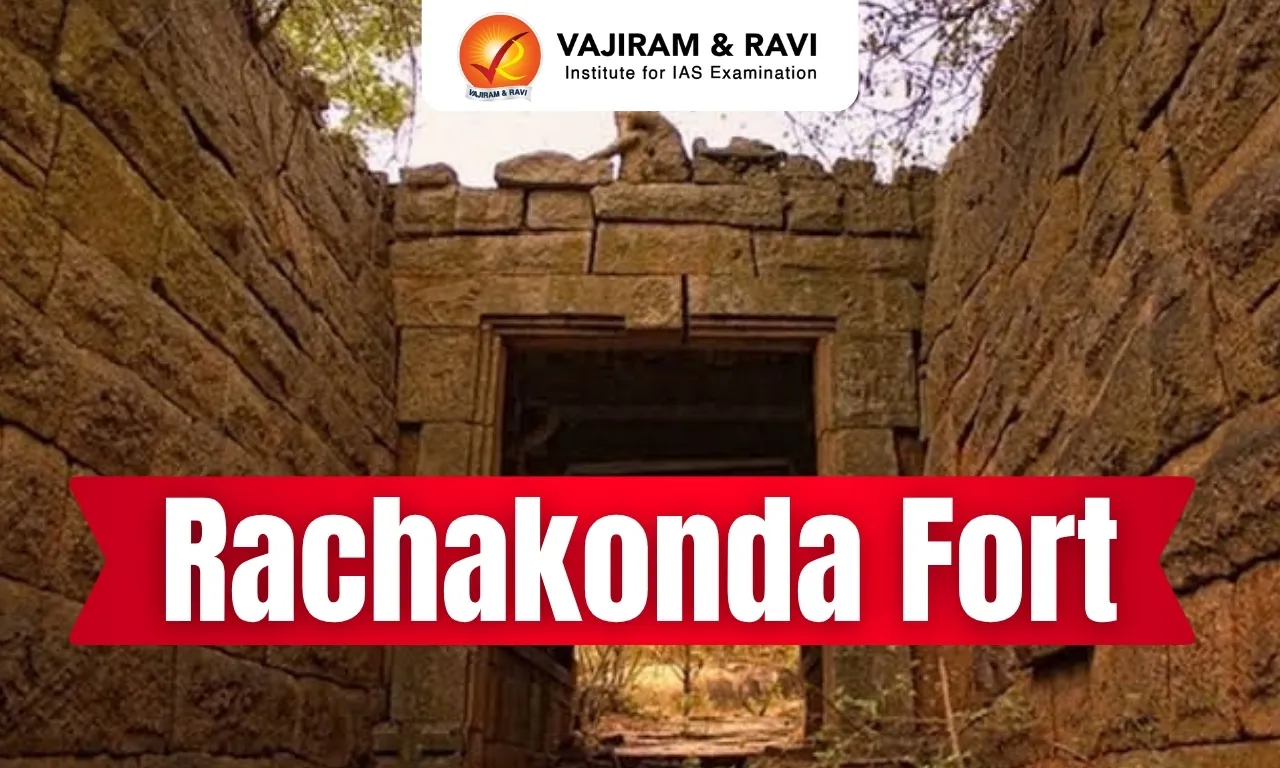
Rachakonda Fort

Rachakonda Fort

Rachakonda Fort Latest News

Rachakonda Fort, which is a 90-minute drive from Hyderabad, failed to realise its potential because of the negligence shown by successive governments.

About Rachakonda Fort

  • It is a medieval hill fort located in Rachakonda village, Yadadri Bhuvanagiri district, Telangana.  

Rachakonda Fort History

  • The fort is closely associated with the Recherla Nayaks, who established Rachakonda as an important political and military centre after the decline of Kakatiya power. 
  • Recherla Singama Nayak is traditionally credited with establishing the Rachakonda stronghold in the 14th century. 
  • Rachakonda was taken by the Bahmani Sultanate in 1433 CE during its expansion in the Deccan.  

Rachakonda Fort Architecture

  • It is a good example of medieval Hindu fort architecture.
  • The fort is built on a hill and covers an area of about 6 sq.km.
  • The fort is particularly noted for its large stone fortifications and cyclopean masonry, in which massive irregular stones were fitted together without conventional mortar.  
  • The complex contains gateways, stone structures, temples, water-retaining structures, and extensive ruins spread across a rocky hill.  
  • The fort has two concentric walls, with four gates on each side.  
  • Among the structures reported at the site are historic Sri Rama temples and several Shaiva shrines, including structures locally identified with Shiva and Veerabhadra worship. 
  • The fort is largely in ruins, and vegetation has grown around portions of the remains.

News: DC

Rachakonda Fort FAQs

Q1: Where is Rachakonda Fort located?

Ans: It is located in Rachakonda village of Yadadri Bhuvanagiri district, Telangana.

Q2: Which dynasty is closely associated with Rachakonda Fort?

Ans: The fort is closely associated with the Recherla Nayaks.

Q3: Who is traditionally credited with establishing the Rachakonda stronghold?

Ans: Recherla Singama Nayak is traditionally credited with establishing the Rachakonda stronghold.

Q4: What type of masonry is Rachakonda Fort particularly known for?

Ans: It is particularly known for cyclopean masonry, in which massive irregular stones were fitted together without conventional mortar.

Fleet Support Ship-1 (FSS-1)

Fleet Support Ship-1

Fleet Support Ship-1 Latest News

Defence Minister will soon launch the Indian Navy’s first Fleet Support Ship, FSS-1, at Hindustan Shipyard Limited in Visakhapatnam, marking a milestone in India’s indigenous shipbuilding programme.

About Fleet Support Ship-1 

  • It is the first of five Fleet Support Ships being built for the Indian Navy.  
  • FSSs are being developed by Hindustan Shipyard Limited (HSL), Visakhapatnam, a state-owned shipbuilding company. 
  • The ships are the first of their kind being constructed in India. 

Fleet Support Ship-1 Purpose

  • The FSS will supply ships at sea with fuel, water, ammunition, and supplies, allowing the Indian Naval fleet to stay at sea for longer periods.
  • Additionally, the vessels can transfer all types of stores, victuals, and personnel to naval vessels while they are at sea. 
  • They will also be capable of handling multirole helicopters.
  • Furthermore, the vessels will be utilised for evacuating individuals and providing human assistance during disaster relief operations and delivering relief supplies quickly during natural disasters.  

Fleet Support Ship-1 Features

  • The vessel will be equipped with diesel propulsion utilising a single-shaft configuration and a controllable pitch propeller. 
  • It has an overall length of 200 m, a breadth of 25 m, and a draft of 10 m. 
  • It has a displacement of 44,000 tonnes and a speed of 20 knots. 
  • Its complement is approximately 190 personnel.
  • The ship will feature a double bottom and double hull in the cargo hold areas to enhance the range and duration of naval combat missions.

News: DDN

Fleet Support Ship-1 FAQs

Q1: What is Fleet Support Ship-1 (FSS-1)?

Ans: FSS-1 is the first of five Fleet Support Ships being built for the Indian Navy.

Q2: Which company is developing the Fleet Support Ships for the Indian Navy?

Ans: Hindustan Shipyard Limited (HSL) is developing the Fleet Support Ships.

Q3: Why are Fleet Support Ships important for the Indian Navy?

Ans: They enable naval vessels to remain at sea for longer periods by supplying fuel, water, ammunition and other essential supplies.

Uranium Corporation of India Limited (UCIL)

Uranium Corporation of India Limited (UCIL)

Uranium Corporation of India Limited Latest News

Senior officers, scientists, engineers, technical personnel, and other employees of Uranium Corporation of India Limited (UCIL) celebrated the PSU’s diamond jubilee in Jaduguda recently.

About Uranium Corporation of India Limited 

  • It is a Central Public Sector Enterprise (CPSE) under the Department of Atomic Energy.
  • It was established on October 4, 1967. 
  • UCIL is the main organization that mines and processes uranium ore to meet the fuel needs of India’s nuclear power program. 
  • It plays an important role in the country’s nuclear power cycle and provides uranium for Pressurized Heavy Water Reactors. 
  • Over the past six decades, the corporation has developed expertise across underground and open-cast mining, ore processing, technology development, occupational safety, radiation protection, and environmental management. 
  • The company operates six underground mines (Bagjata, Jaduguda, Bhatin, Narwapahar, Turamdih, and Mohuldih) and one open pit (Banduhurang) in the state of Jharkhand.  
  • The ore produced from these mines is processed at two processing plants located in Jaduguda and Turamdih. 
  • UCIL also operates an underground mine and processing plant in Tummalapalli, Andhra Pradesh.

News: TOI

Uranium Corporation of India Limited FAQs

Q1: What is Uranium Corporation of India Limited (UCIL)?

Ans: UCIL is a Central Public Sector Enterprise (CPSE) under the Department of Atomic Energy.

Q2: When was Uranium Corporation of India Limited established?

Ans: UCIL was established on October 4, 1967.

Q3: What is the primary function of UCIL?

Ans: Its primary function is to mine and process uranium ore to meet the fuel requirements of India's nuclear power programme.

Q4: How many underground uranium mines does UCIL operate in Jharkhand?

Ans: UCIL operates six underground mines in Jharkhand.

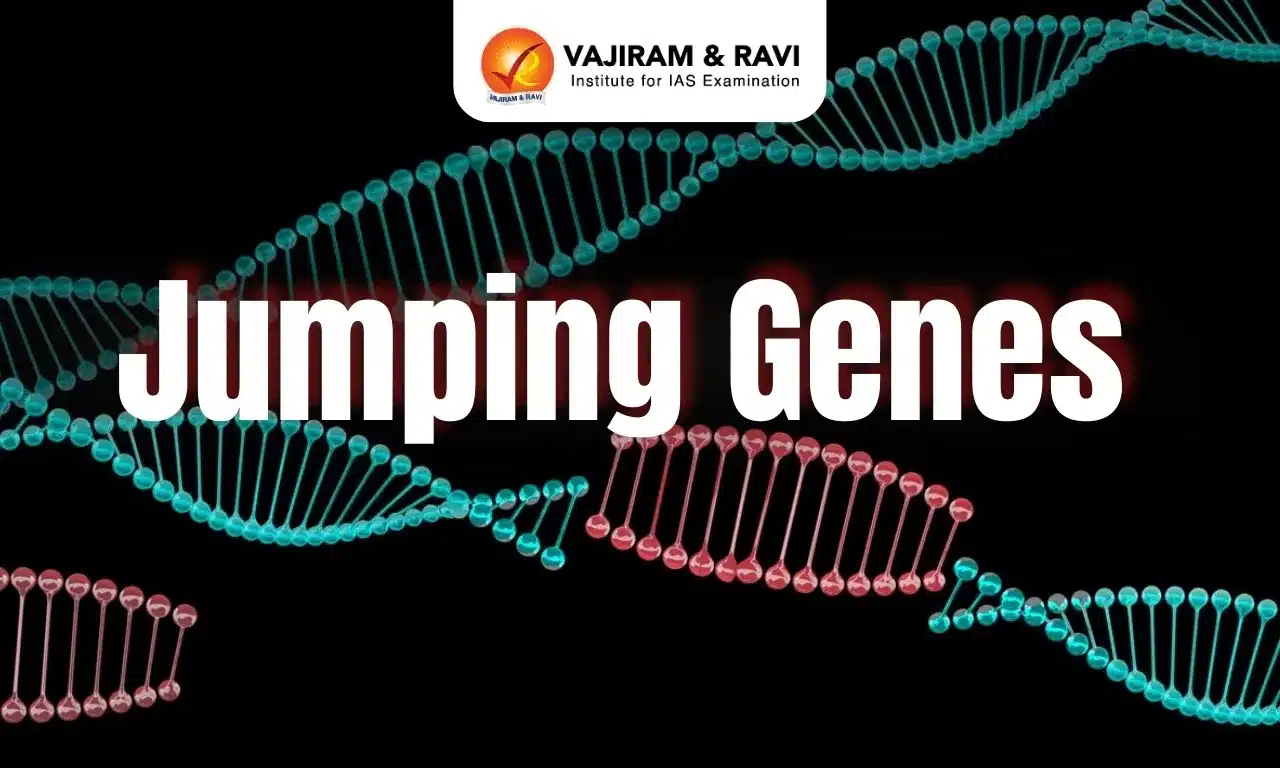
Jumping Genes

Jumping Genes

Jumping Genes Latest News

Ants branched into thousands of new species after the dinosaurs died, and a new study links that burst to jumping genes in their DNA.

About Jumping Genes

  • Jumping genes, scientifically called transposable elements (TEs) or transposons, are DNA sequences that move from one location on the genome to another. 
  • They are widespread in both prokaryotes and eukaryotes, often making up significant portions of an organism's genetic material.  
  • In humans, for instance, transposons account for approximately 50% of the genome, whereas in corn, they account for up to 90%. 
  • Types: Transposons can be grouped into distinct types based on 2 main criteria: their mechanism of movement and their independence. 
    • They are classified as retrotransposons or DNA transposons, depending on how they move within the genome.
    • They are classified as autonomous or non-autonomous, based on whether they require other transposons for their mobility. 
  • Transposons have a dual nature as both a threat to genome stability and a driver of genetic diversity. 
    • On the harmful side, they can inactivate genes or disrupt gene expression patterns by inserting into regulatory or coding regions, leading to diseases such as hemophilia, hypercholesterolemia and various cancers. 
    • However, transposons also play a key part in evolution. 
    • For instance, in plants, environmental stresses like climate change can trigger increased transposon activity, potentially giving rise to adaptive mutations that enhance survival. 
  • To counter the potentially damaging effects of transposons, most organisms have evolved epigenetic mechanisms to regulate their activity. 
    • In humans, for example, regions of the genome rich in transposons are often tightly condensed so that the transcription machinery cannot access them. 
    • This densely packed DNA is called heterochromatin, and it is formed through histone modifications (changes to the histone proteins around which the DNA is wound) and DNA methylation (the addition of methyl groups to cytosine bases). 
  • Other silencing mechanisms are based on RNAi or small RNAs, such as piRNAs, miRNAs, or siRNAs, to specifically target and inactivate transposons. 
  • While most TEs are located far away from genes in areas of the chromosome that can be thought of as gene deserts, some are located near genes and even target gene-rich regions. 
  • Transposons can also be useful tools in the lab, with applications in mutagenesis, transgenesis, and gene therapy.

News: EAR

Jumping Genes FAQs

Q1: What are jumping genes?

Ans: Jumping genes are DNA sequences that can move from one location on the genome to another.

Q2: What are jumping genes scientifically called?

Ans: Jumping genes are scientifically called transposable elements (TEs) or transposons.

Q3: Approximately what proportion of the human genome is made up of transposons?

Ans: Approximately 50% of the human genome consists of transposons.

Q4: What is the dual nature of transposons?

Ans: Transposons can be both a threat to genome stability and a driver of genetic diversity.

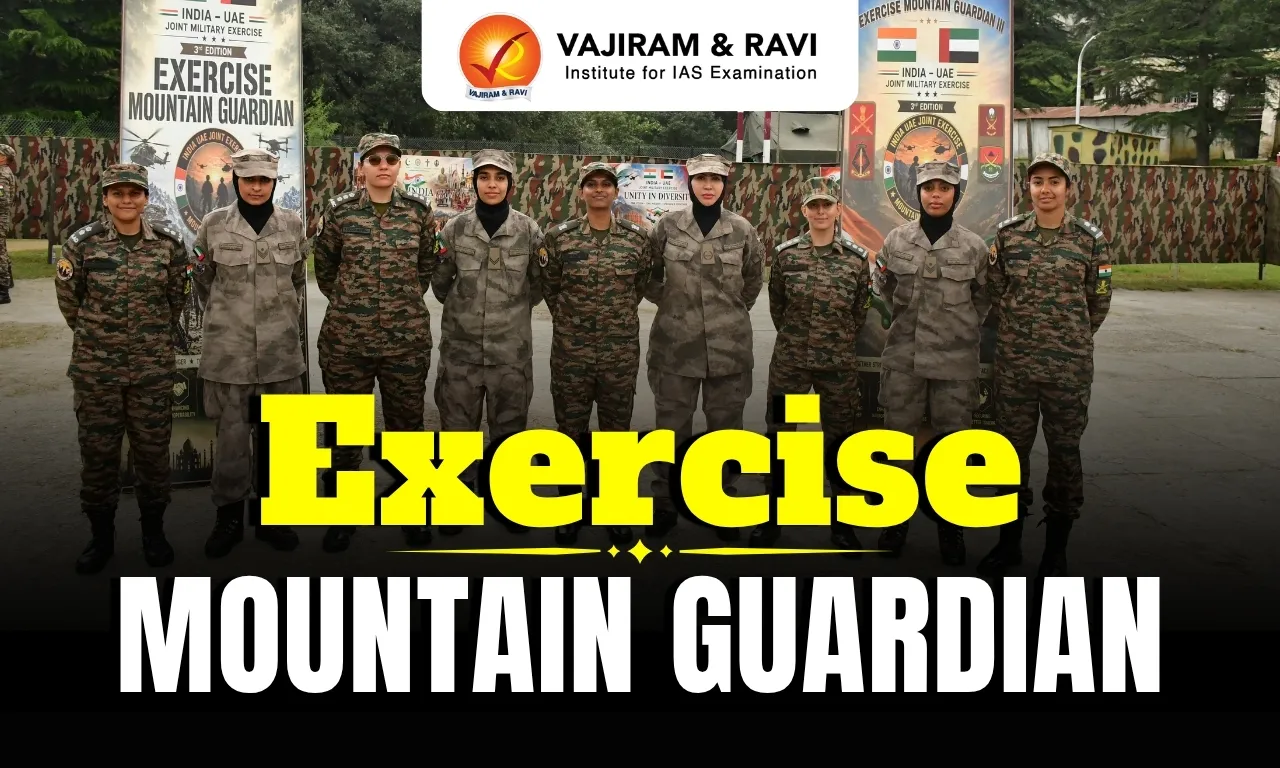
Exercise Mountain Guardian 2026

Exercise Mountain Guardian 2026

Exercise Mountain Guardian 2026 Latest News

The Exercise Mountain Guardian 2026 commenced at the Foreign Training Node, Chaubatia, Uttarakhand.

About Exercise Mountain Guardian 2026

  • It is a joint military exercise conducted between India and UAE.
  • Aim: It aims to enhance interoperability, mutual understanding and cooperation, with a focus on Mountain Warfare.
  • Participating Contingent: The Indian Army contingent comprises troops from a Bhairav Battalion, women officers and combatants from both Armies are also participating in the exercise across specialist roles.
  • During the exercise, troops will undertake joint planning, tactical drills, firing practices, establishment of surveillance grids, drone operations, physical endurance training, rock climbing, obstacle training and integrated field exercises.
  • The training will also incorporate technology-enabled operations and exchange of tactics, techniques and procedures relevant to operations in challenging mountainous terrain.
  • Significance: The exercise will further strengthen military-to-military cooperation between India and the UAE and reinforce the bonds of friendship and trust between the two nations.

Source: PIB

Exercise Mountain Guardian 2026 FAQs

Q1: Exercise Mountain Guardian is conducted between which two countries?

Ans: India and UAE

Q2: What is the aim of Exercise Mountain Guardian 2026 ?

Ans: It aims to enhance interoperability, mutual understanding and cooperation, with a focus on Mountain Warfare.

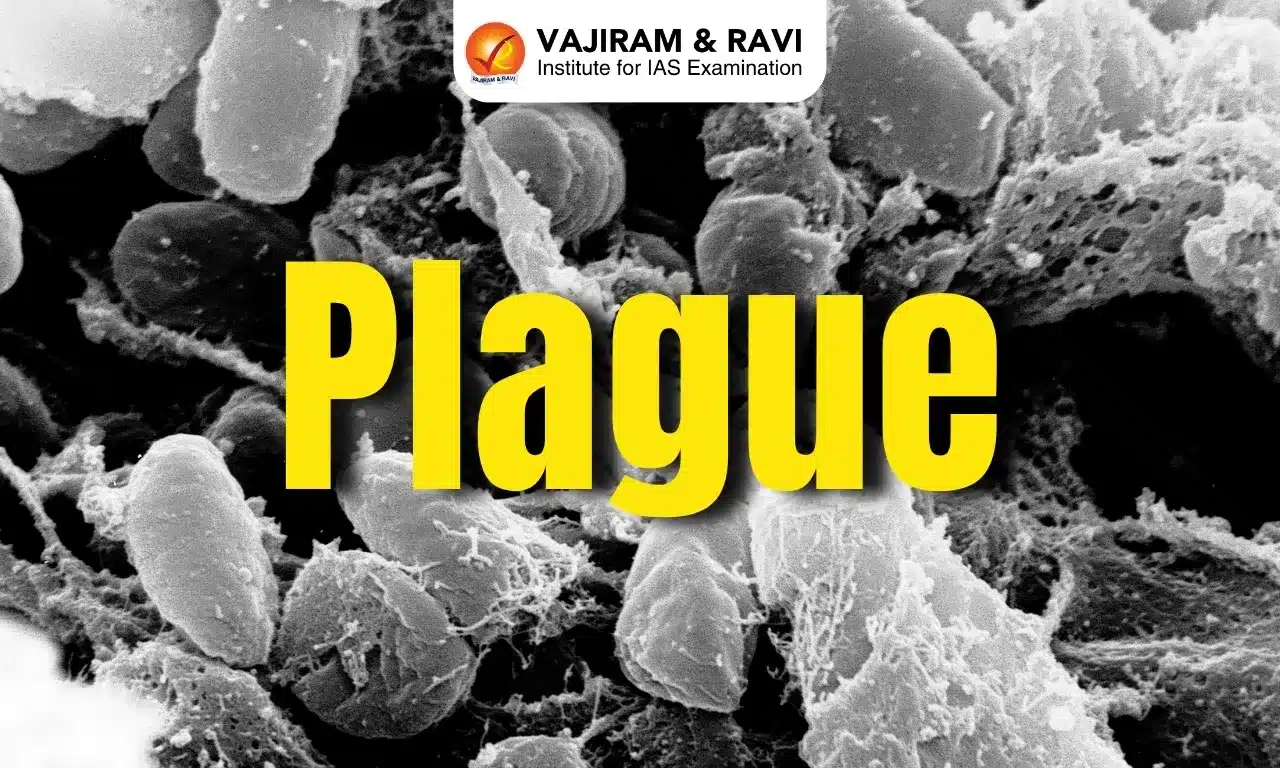
Plague

Plague

Plague Latest News

A suspected case of pneumonic plague in Siberia has triggered heightened public-health precautions after a 28-year-old laboratory worker at an anti-plague research institute died following severe pneumonia. 

About Plague

  • Plague is an infectious disease caused by the bacteria Yersinia pestis, usually found in small mammals and their fleas.
  • Transmission
    • It is transmitted between animals through fleas.
    • Humans can be infected through: infected flea bites, contact with infected animal tissues or fluids and in the case of pneumonic plague inhalation of respiratory particles from an infected person or animal.

Types of Plague

  • Bubonic Plague
    • It is the most common form of plague and is caused by the bite of an infected flea.
    • Plague bacillus, Y. pestis, enters at the bite and travels through the lymphatic system to the nearest lymph node where it replicates itself.
    • The lymph node then becomes inflamed, tense and painful, and is called a ‘bubo’.
    • At advanced stages of the infection, the inflamed lymph nodes can turn into open sores
    • Symptoms: Sudden onset fever, chills, head and body aches and weakness, vomiting and nausea. Painful and inflamed lymph nodes can also appear.
  • Pneumonic Plague
    • It is the most virulent form of plague.
    • Transmission: It transmits through respiratory droplets or particles from an infected person that can infect another person, particularly during close and sustained contact.
    • Symptoms: Its symptoms can appear very rapidly, sometimes within 24 hours of infection.
    • It includes high fever, chills, cough, shortness of breath and blood-stained sputum.
  • Septicaemic plague
    • It occurs when Y. pestis multiplies rapidly in the bloodstream.
    • It can develop from any other form of plague.
    • Symptoms: Bleeding under the skin and, in some cases, a bluish discoloration of the skin (cyanosis) and tissue death (necrosis) of the extremities.

Treatment For Plague

  • There is no routinely recommended plague vaccination for the general public.
  • Antibiotics and supportive therapy are effective against plague if patients are diagnosed in time.

Source: IE

Plague FAQs

Q1: What is Plague?

Ans: It is an infectious disease caused by the bacteria Yersinia pestis, usually found in small mammals and their fleas.

Q2: What are the types of Plague?

Ans: Bubonic Plague, Pneumonic Plague and Septicaemic plague

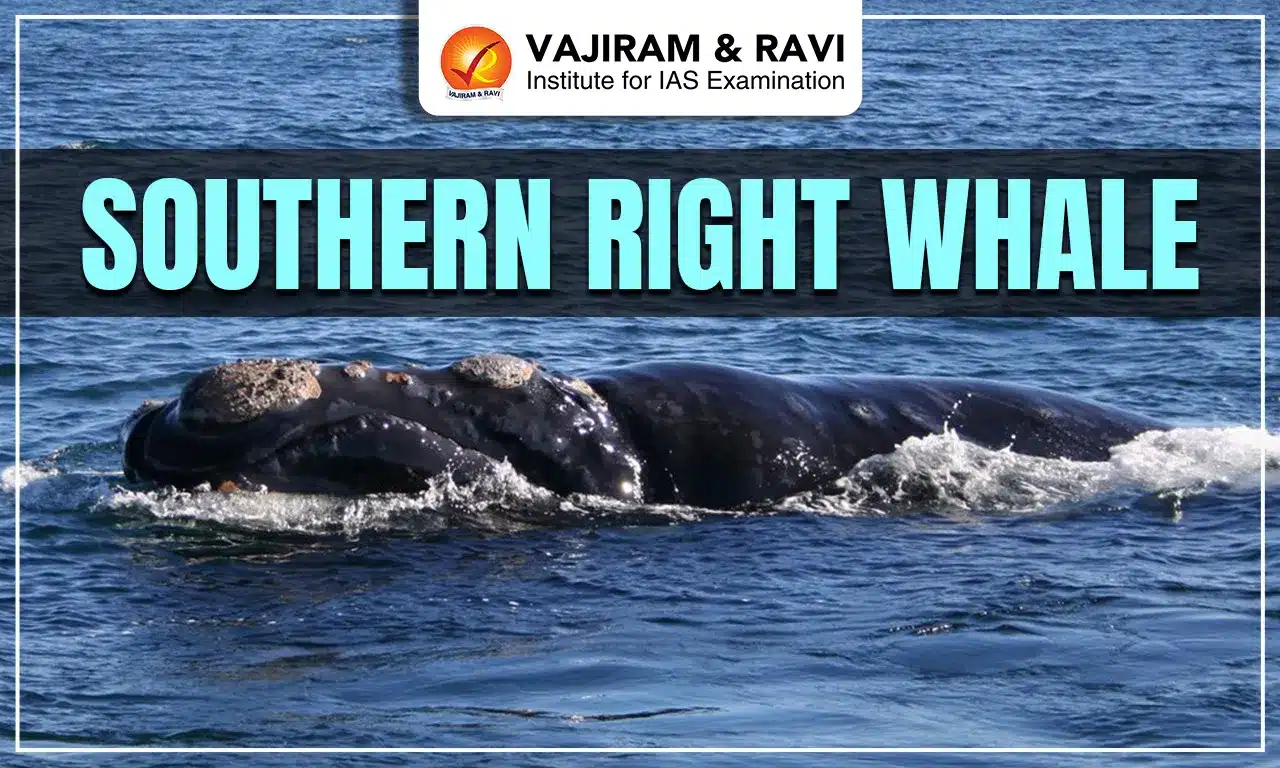
Southern Right Whale

Southern Right Whale

Southern Right Whale Latest News

Recently, dozens of southern right whale calves have been found dead on Argentina's Patagonian coast and scientists are probing a possible bacterial infection after an unusually deadly season. 

About Southern Right Whale

  • The Southern right whale (Eubalaena australis) is a baleen whale, one of three species classified as right whales.
  • Appearance
    • It is readily distinguished from others by the callosities on its head, a broad back without a dorsal fin, and a long arching mouth that begins above the eye.
    • Its skin is very dark grey or black, occasionally with some white patches on the belly. 
  • Distribution
    • They live across the Southern Hemisphere, generally ranging between 20°S and 60°S latitude.
    • They usually live in sheltered bays, but in summer they can be found in the cold water around Antarctica. 
    • Southern right whales visit the South African coast from May to November each year.
  • Characteristics
    • They feed just beneath the water's surface, holding their mouths partly open and skimming water continuously while swimming.
    • They strain the water out through their long baleen plates to capture their prey.
    • Diet: They are carnivores (plankrivores) and eat small plankton, including copepods, and pelagic larval crustaceans.
  • Conservation Status: IUCN Red List: Least Concern

Source: TH

Southern Right Whale FAQs

Q1: Where do we find Southern Right Whale ?

Ans: They live across the Southern Hemisphere, generally ranging between 20°S and 60°S latitude.

Q2: What is the IUCN status of Southern Right Whale?

Ans: Least Concern

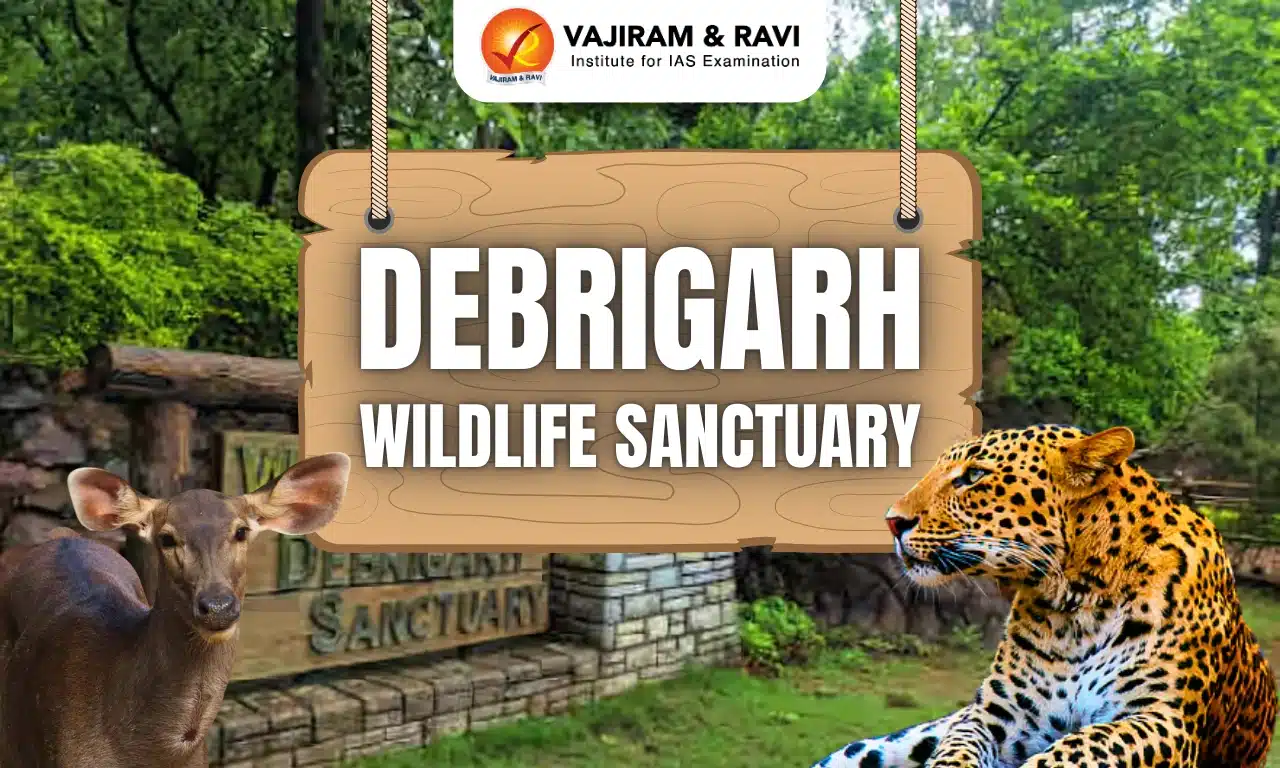
Debrigarh Wildlife Sanctuary

Debrigarh Wildlife Sanctuary

Debrigarh Wildlife Sanctuary Latest News

Odisha Forest, Environment and Climate Change minister virtually inaugurated new accommodation and visitor facilities at Debrigarh Wildlife Sanctuary as part of the ongoing expansion of its community-managed ecotourism infrastructure.

About Debrigarh Wildlife Sanctuary

  • It is situated in the Bargarh district of Odisha.
  • It is located near Hirakud Dam (the longest dam in India and the longest earthen dam in the world) on the Mahanadi River.
  • It is spread over an area of 347 sq.km. 
  • It finds a special mention because of the state’s noted freedom fighter, Veer Surendra Sai. 
    • During his rebellion against the British, his base at Barapathara was located within the sanctuary.
  • Vegetation: Most of the plant sanctuary is covered with mixed and dry deciduous forest. 
  • Flora: Major trees found here are Sal, Asana, Bija, Aanla, Dhaura, etc.
  • Fauna:
    • Indian leopards, sloth bears, chousingha (four-horned antelope), sambar deer, gaurs (Indian bison), wild boars, and Indian wild dogs (dholes) are among the notable animal residents.
    • It is one of the most flocked wintering grounds of migratory birds like crested serpent eagle, Flower Peckers, red-vented bulbul, tree pie, drongo, and white-eye oriental.

News: NIE

Debrigarh Wildlife Sanctuary FAQs

Q1: Where is Debrigarh Wildlife Sanctuary located?

Ans: Bargarh district, Odisha.

Q2: Near which major dam is Debrigarh Wildlife Sanctuary located?

Ans: Hirakud Dam.

Q3: Which freedom fighter is closely associated with Debrigarh Wildlife Sanctuary?

Ans: Veer Surendra Sai.

Q4: What type of forests are predominantly found in Debrigarh Wildlife Sanctuary?

Ans: Mixed and dry deciduous forests.

Supreme Court, ECI and Form 6, Constitutional Provisions, Latest News

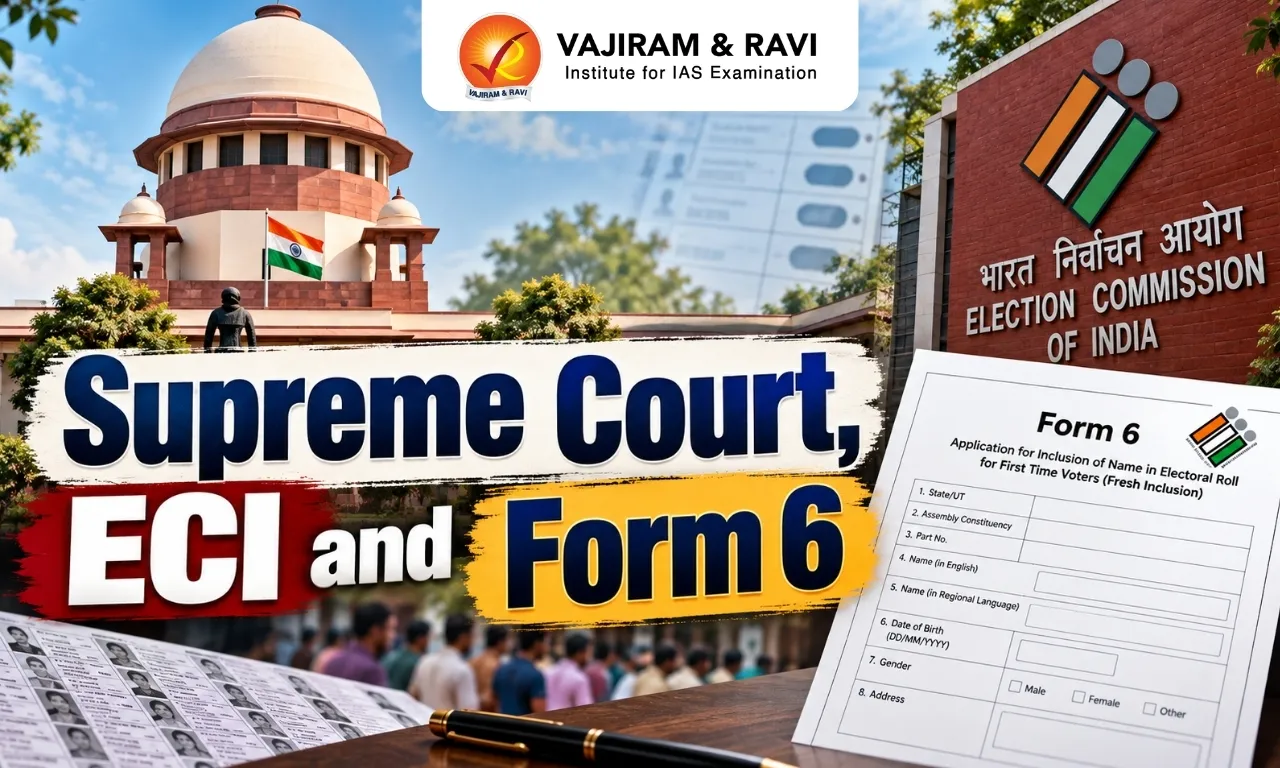
Supreme Court, ECI and Form 6

The Supreme Court, Election Commission of India (ECI) and Form 6 have come into focus following the Court’s recent clarification that it had not approved any modified version of Form 6 used during the Special Intensive Revision (SIR) of electoral rolls. 

Why in News?

On October 5, 2026, a three-judge Bench headed by Chief Justice of India Surya Kant, along with Justices Joymalya Bagchi and V. Mohana, clarified that the Supreme Court had not approved any modified Form 6.

The Court said it would examine the ECI's records to determine who introduced the changes to the form. The observation came during the hearing of a petition concerning alleged unilateral decisions relating to the SIR exercise.

What is Form 6?

Form 6 is the prescribed application form used by an eligible citizen for inclusion of their name in the electoral roll.

According to the ECI, a person who is eligible to be registered as a general elector can apply through Form 6 before the Electoral Registration Officer or Assistant Electoral Registration Officer. The form can also be submitted online through the ECI or the concerned Chief Electoral Officer's website.

Form 6 is therefore an important instrument for voter registration and electoral participation.

Role of the Election Commission of India

The Election Commission of India is a constitutional body responsible for the superintendence, direction and control of elections in India.

Under Article 324 of the Constitution, the ECI has powers relating to:

  • Elections to the Lok Sabha and State Legislative Assemblies.
  • Elections to the offices of President and Vice-President.
  • Preparation and revision of electoral rolls.
  • Conduct and supervision of elections.
  • Recognition of political parties and allocation of election symbols under the relevant laws and rules.

Constitutional Provisions Related to Electoral Rolls

The Constitution provides the legal framework for electoral rolls, voter registration and the conduct of elections through key provisions dealing with the Election Commission, non-discrimination and adult suffrage.

  • Article 324: Vests the superintendence, direction and control of elections in the Election Commission of India.
  • Article 325: Provides for one general electoral roll for every territorial constituency and prohibits exclusion on grounds only of religion, race, caste or sex.
  • Article 326: Provides for elections to the Lok Sabha and State Legislative Assemblies based on adult suffrage, subject to constitutional and statutory qualifications.
  • Article 327: Empowers Parliament to make laws relating to elections, including electoral rolls.
  • Article 328: Empowers State Legislatures to make provisions relating to elections to State Legislatures, subject to Parliament's laws.

Supreme Court, ECI and Form 6 FAQs

Q1: What is Form 6?

Ans: Form 6 is the prescribed application form for inclusion of an eligible citizen's name in the electoral roll.

Q2: What is the Form 6 controversy?

Ans: The controversy concerns an additional declaration associated with Form 6 during the Special Intensive Revision of electoral rolls and questions regarding its authorisation and approval.

Q3: Did the Supreme Court approve the modified Form 6?

Ans: The Supreme Court clarified that it had not approved any modified Form 6 and sought the ECI's records concerning the disputed changes.

Q4: Which constitutional article deals with the Election Commission?

Ans: Article 324 of the Constitution provides for the Election Commission and vests it with the superintendence, direction and control of elections.

Q5: What is Special Intensive Revision?

Ans: Special Intensive Revision (SIR) is an intensive process of revising and verifying electoral rolls to improve their accuracy and ensure that eligible voters are included.

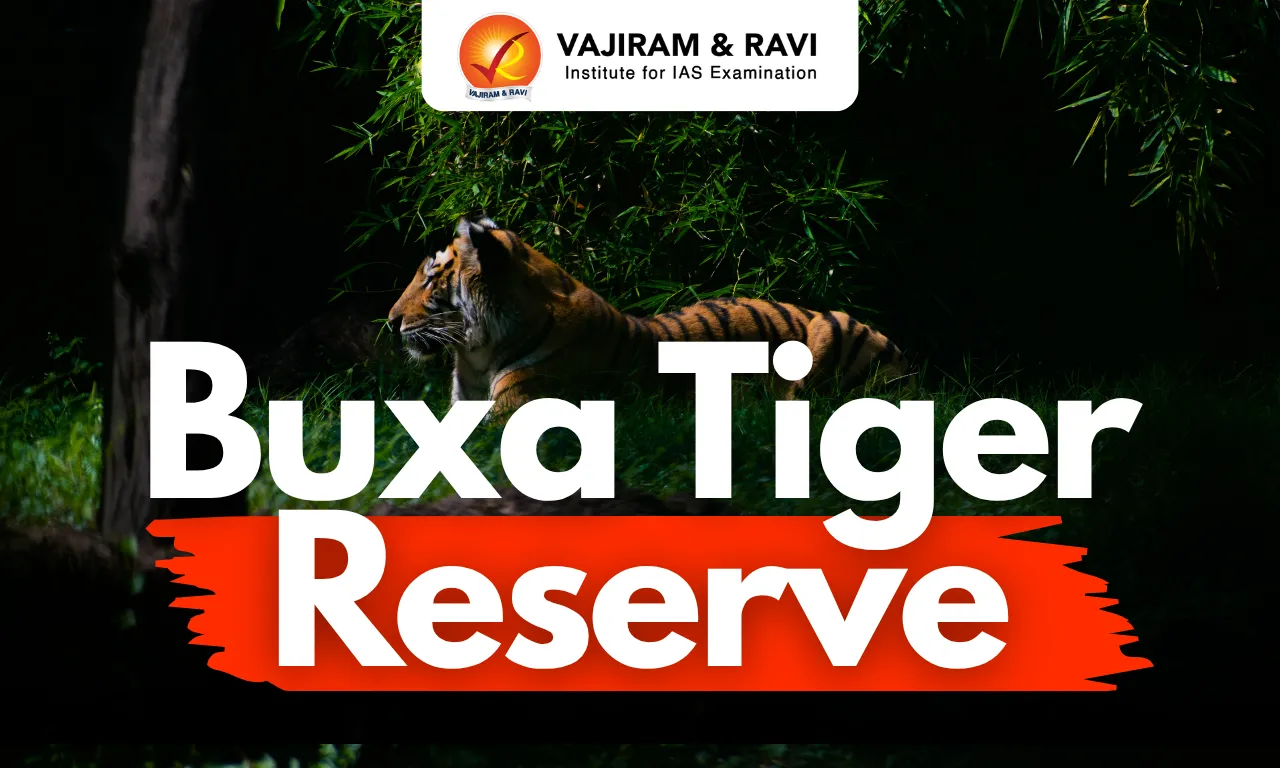
Buxa Tiger Reserve – Rebuilding a Lost Tiger Population

Buxa Tiger Reserve

Buxa Tiger Reserve Latest News

  • A three-year-old tigress, T138, was released into Buxa Tiger Reserve (BTR), West Bengal, on October 2, marking the beginning of a phased programme to reintroduce tigers and establish a viable, self-sustaining tiger population in the reserve.
  • The tigress was translocated from Valmiki Tiger Reserve, Bihar, in the presence of Union Environment Minister and West Bengal CM. 
  • Tiger reintroduction is a conservation strategy used when a species has become locally extinct but suitable habitat remains available for restoring a breeding population. Three more tigers are expected to be introduced.

Reintroduction of T138

  • Initially, T138 will remain in a 2.3-hectare enclosure to acclimatise to the new environment. 
  • Intensive post-release monitoring through telemetry, camera traps and field-based observation will track her movement, adaptation, health and behaviour.
  • The objective is not merely to increase tiger numbers, but to create ecological conditions in which a tiger population can establish, breed and eventually become viable and self-sustaining.

Significance of Buxa Tiger Reserve

  • Buxa was declared a Tiger Reserve in 1983 under Project Tiger and is the 15th Tiger Reserve in India.
  • Located in the Alipurduar subdivision of Jalpaiguri district, West Bengal, it covers about 760.87 sq km. The reserve extends approximately 50 km east-west and 35 km north-south. 
  • It has important transboundary and landscape-level connectivity, including Bhutan to the north, Kochugaon forests (Assam), Manas Tiger Reserve (Assam) and Jaldapara National Park (West Bengal) towards the east.
  • Such connectivity is crucial for wildlife corridors, gene flow and long-term population viability.

Why did Tiger Numbers Decline in Buxa?

  • Buxa experienced a prolonged absence of a stable resident tiger population. 
  • Increasing anthropogenic pressure, habitat degradation and fragmentation, land-use changes and declining prey availability weakened the ecological conditions necessary for sustaining tigers.
  • West Bengal nevertheless has an established tiger population in the Sundarbans, the world's only mangrove tiger habitat, with about 100 tigers according to the latest census. 
  • However, translocating Sundarbans tigers to Buxa was considered unsuitable because of major differences in terrain and habitat.

Reasons for Choosing Valmiki Tiger Reserve

  • The National Tiger Conservation Authority (NTCA) found no tigers in Buxa, Dampa (Mizoram) and Palamu (Jharkhand) Tiger Reserves and initiated a tiger reintroduction programme in 2018.
  • Scientists and forest officials searched for a source population inhabiting conditions comparable to Buxa. 
  • Valmiki Tiger Reserve, located in the easternmost part of the Terai Arc Landscape, was considered suitable because of similarities in terrain.
  • Valmiki also has ecological connectivity with the Bhutan landscape, making it relevant from a wider landscape-conservation perspective.

India’s Experience with Tiger Reintroduction

  • Tiger reintroduction in India is a major scientific and collaborative conservation effort involving the NTCA, State governments and the Wildlife Institute of India (WII).
  • The programme began successfully in 2008, with tigers reintroduced into Sariska Tiger Reserve, Rajasthan, and Panna Tiger Reserve, Madhya Pradesh. 
  • Since then, reintroduction has been undertaken across several tiger reserves. However, outcomes have not been uniformly successful.
  • The ‘Reintroduction & Population Recovery of Tigers in India’ (a publication by NTCA and WII), highlighted difficulties experienced in Satkosia Tiger Reserve, Odisha. 
  • Translocated tigers faced problems adapting to the new landscape, while human-tiger conflict, livestock depredation and negative local responses also emerged.
  • Similarly, some tiger-release attempts in Dongarpur (Rajasthan) were unsuccessful because of multiple factors.

NTCA Protocol for Reintroduction

  • Learning from earlier experiences, the NTCA has prepared a detailed protocol on tiger reintroduction covering -
    • Objectives and aims of reintroduction
    • Constitution of the expert team
    • Pre-project activities
  • Feasibility and site-suitability assessment
    • Selection and evaluation of release sites
    • Selection and suitability of source tigers
    • Socio-economic requirements
    • Preparation for release
    • Post-release monitoring and management
  • This reflects the shift from simply increasing tiger numbers towards evidence-based, landscape-level conservation.

Major Challenges for Buxa

  • Human settlements and conflict: Buxa is surrounded by revenue villages and tea estates. Around 300 families are reportedly being relocated to improve the prospects of successful tiger reintroduction.
  • Habitat and prey concerns: The reserve has lacked a stable resident tiger population for years, while habitat degradation and prey availability remain important ecological considerations.
  • Linear infrastructure: Wildlife, particularly elephants, has been severely affected by linear infrastructure, including a railway line. Heavy commercial traffic on the road connecting Bhutan and West Bengal through Buxa adds to the pressure.
  • Landscape connectivity: Maintaining functional corridors is essential because isolated populations face risks of habitat fragmentation, genetic isolation and human-wildlife conflict.

Conclusion

  • The Buxa initiative illustrates that wildlife conservation is not merely species protection but ecosystem restoration. 
  • Successful tiger reintroduction requires suitable habitat, adequate prey, ecological connectivity, scientific monitoring, community participation and mitigation of human-wildlife conflict.

Source: TH

Buxa Tiger Reserve FAQs

Q1: Why is the reintroduction of tigers in Buxa Tiger Reserve significant for wildlife conservation?

Ans: It aims to restore a viable, breeding and self-sustaining tiger population through landscape-level conservation.

Q2: Why was Valmiki Tiger Reserve selected as the source for tiger reintroduction in Buxa?

Ans: Due to similar terrain and ecological conditions, along with its location in the Terai Arc Landscape.

Q3: What are the major challenges to successful tiger reintroduction in Buxa Tiger Reserve?

Ans: Habitat degradation, inadequate prey availability, human settlements, human-tiger conflict, etc.

Q4: What lessons does India’s experience with tiger reintroduction provide for wildlife management?

Ans: Successful reintroduction requires site suitability, scientific monitoring, community participation, etc.

Q5: How does tiger reintroduction reflect a shift towards landscape-level conservation?

Ans: It goes beyond increasing tiger numbers to restoring habitat, prey base, ecological corridors, genetic connectivity, etc.

Legislative Privilege vs Press Freedom: Supreme Court’s Constitutional Test

Legislative Privilege

Legislative Privilege Latest News

  • The Supreme Court began hearing a long-pending reference on the scope of legislative privileges — the special powers and immunities enjoyed by Parliament and state legislatures to protect their functioning. 
  • The central question: can these privileges, under Articles 105 and 194 of the Constitution, be invoked against citizens and journalists, and can they override fundamental rights like freedom of speech under Article 19?
  • A seven-judge Constitution Bench, headed by Chief Justice of India Surya Kant, is hearing the matter.

The Legal Framework at Stake

  • Article 194(3): Grants state legislatures certain privileges and immunities to protect their functioning (Article 105 does the same for Parliament).
  • Article 19(1)(a): Guarantees freedom of speech and expression, including press freedom.
  • The case turns on how these two rights interact. The petitioners argue privilege exists "to protect the functioning of the House, not to shield it from scrutiny."
  • Liberty angle: Petitioners also invoke Article 14 (equality) and Article 21 (right to life), arguing that when legislatures order arrest or imprisonment for alleged "breach of privilege," this affects personal liberty.
    • Any such action must satisfy constitutional guarantees of fairness, due process, and protection against arbitrariness.

How the Case Began: Tamil Nadu, 2003

  • In 2003, The Hindu newspaper reported on sharp exchanges between the then Tamil Nadu CM J Jayalalithaa and the Opposition in the Assembly. 
  • The then Speaker K Kalimuthu objected, calling the reports "contrary to truth" and referring them to a Privileges Committee.
  • The controversy escalated after The Hindu published an editorial titled Rising Intolerance. 
  • It criticised crude use of state power against various sections including political opponents and the independent media as showing "contempt for the democratic spirit." 
  • The editorial stated that legislative privilege exists to protect its free and independent functioning and not to protect the reputation of the government or of individual members. 
  • The outcome: The Tamil Nadu Assembly held journalists guilty of gross contempt and breach of privilege, sentencing them to 15 days' imprisonment and issuing arrest warrants. Police teams were deployed across Tamil Nadu, Karnataka and Delhi to execute them.
  • The journalists approached the Supreme Court, which immediately stayed the warrants and referred the matter to a Constitution Bench, noting "substantial questions of law as to the interpretation of Articles 194(3) and 19(1)(a)" were involved.

Why a Reference Was Needed: Two Conflicting Precedents

  • Pandit M.S.M. Sharma v. Sri Krishna Sinha (1959) — the "Searchlight case"
    • A 4:1 majority held that Assembly privileges under Article 194(3) included the power to prohibit publication. 
    • Since Article 19(1)(a) is a general provision and Article 194(3) a special provision, the Court held free speech must yield to legislative privilege. 
    • It stated that even if the petitioner were deprived of personal liberty through Privileges Committee proceedings, this would be "in accordance with procedure established by law" — no breach of Article 21.
  • Special Reference No. 1 of 1964 — Keshav Singh's Case
    • Here, the UP Assembly jailed a citizen, Keshav Singh, for distributing pamphlets accusing an MLA of corruption. 
    • When the Allahabad High Court granted interim bail, the Assembly ordered the two judges, the lawyer, and Keshav Singh himself be brought before the House in custody. The President referred the dispute to the Supreme Court.
    • A seven-judge bench held:
      • Constitutional courts could examine the legality of detention ordered in privilege proceedings.
      • Legislatures could not proceed against judges and lawyers for performing their duties.
  • These two rulings created the doctrinal conflict the current seven-judge bench must now resolve.
  •  

The Evolving Judicial Trend

  • This trajectory shows the Court steadily narrowing the scope of unchecked legislative privilege over the decades.

What the Petitioners Argue

  • The Assembly's action violated free speech, personal liberty, and natural justice.
  • Honest and courageous reporting by the press is the bedrock of parliamentary democracy," and journalists cannot function in an atmosphere of fear and terror.
  • Legislative privileges are subject to Article 21; allowing a legislature to deprive someone of liberty by mere passing of a resolution would be "an anathema to the Constitution.
  • Privilege protects the House's functioning, not the government — there is no concept of any parliamentary privilege being applicable to a Chief Minister... or to a government, and privilege is not intended to protect the fame and reputation of the ruling party.

Conclusion

  • Two decades after a Tamil Nadu editorial landed journalists in jail, the question it raised finally returns to a seven-judge Bench: does legislative privilege exist to protect debate, or to protect legislators from criticism? 
  • The Court's own trajectory — from Searchlight's deference to Keshav Singh's limits, through Raja Ram Pal's judicial review to Sita Soren's rejection of bribery immunity — suggests privilege is no longer presumed absolute. 
  • How this case resolves that tension will shape not just press freedom, but the basic boundary between legislative self-protection and constitutional accountability.

Source: IE

Legislative Privilege FAQs

Q1: What is legislative privilege under the Indian Constitution?

Ans: Legislative privilege comprises special powers and immunities granted to Parliament and state legislatures to protect their functioning and independent proceedings.

Q2: How did the 2003 Tamil Nadu case begin the legislative privilege dispute?

Ans: The dispute began after The Hindu reported Assembly exchanges, leading the Speaker to refer the reports to the Privileges Committee.

Q3: How does legislative privilege conflict with press freedom?

Ans: The dispute concerns whether legislative privilege can restrict journalists' reporting when Article 19(1)(a) guarantees freedom of speech and expression.

Q4: What did the Searchlight case establish about legislative privilege?

Ans: The Searchlight case held that Assembly privilege could restrict publication, reasoning that the special constitutional provision could prevail over general free-speech protection.

Q5: Why is the Supreme Court's current reference significant?

Ans: The seven-judge Bench must reconcile conflicting precedents and determine whether legislative privilege can override press freedom, personal liberty and constitutional accountability.

Optogenetics: How the 2026 Nobel Prize Revolutionised Neuroscience

Optogenetics

Optogenetics Latest News

  • The 2026 Nobel Prize in Physiology or Medicine has been jointly awarded to Karl Deisseroth, Peter Hegemann, and Georg Nagel for "discoveries concerning light-gated ion channels and optogenetics." 
  • Their work created a new scientific field that lets researchers switch specific nerve cells on and off using light — transforming neuroscience from merely observing brain activity to actively controlling it.

The Laureates

  • Karl Deisseroth (1971) - Professor of Bioengineering and Psychiatry & Behavioral Sciences, Howard Hughes Medical Institute and Stanford University, USA
  • Peter Hegemann (1954) - Professor of Neuroscience, Humboldt University of Berlin, Germany
  • Georg Nagel (1953) - Professor of Molecular Plant Physiology, University of Würzburg, Germany

What Are Light-Gated Ion Channels and Optogenetics?

  • Light-gated ion channels are proteins acting like tiny doors in a cell's membrane — but controlled by light instead of chemical signals. When a specific wavelength of light hits the protein, it changes shape and opens, allowing charged particles (ions) to flow through.
  • Optogenetics is the technique built on this discovery — it lets scientists switch specific cells on or off using light, by placing light-sensitive proteins called opsins into targeted cells. 
  • As the Nobel committee put it, optogenetics has transformed neuroscience from observing and reading brain activity to actively writing into it.

The Idea's Origin: Francis Crick's Far-Fetched Theory

  • The foundation for this field traces back to Francis Crick (Nobel laureate, 1962, for the double helix structure of DNA). 
  • Crick wanted to activate individual nerve cells to study the mechanisms underlying human consciousness. 
  • Since nerve signals are extremely rapid, he reasoned light would be the ideal control mechanism. He admitted the idea sounded "far-fetched" — but not impossible.

An Alga That Swims Toward Light

  • In the early 1990s, Peter Hegemann studied the unicellular alga Chlamydomonas, which detects light through a tiny orange "eyespot" and swims toward it within half a millisecond — more than 20 times faster than the human eye's reaction time (~10 milliseconds).
  • Hegemann's Hypothesis: Unlike the human eye, where light-reception and signal-passing involve multiple proteins in sequence, in Chlamydomonas, a single protein might do both jobs at once.
  • The Challenge: Isolating this protein was difficult — it became unstable outside the eyespot.

Confirming the Hypothesis: Enter Georg Nagel

  • Nagel injected each gene into frog egg cells, which then produced the proteins in their outer membranes.
  • Result: Both proteins were confirmed to be ion channels that open in response to light — named channelrhodopsin-1 and channelrhodopsin-2 (ChR-2).
  • ChR-2 opened within 0.2 milliseconds of a light pulse, letting positive ions flow and producing an electrical signal — this discovery paved the way for optogenetics.
  • In 2003, Hegemann and Nagel published the results of their research, proposing the protein as a tool for generating electrical impulses using light.

From Psychiatric Clinic to Nerve Cells: Karl Deisseroth's Contribution

  • Deisseroth, while training at a psychiatric clinic in the 1990s, became deeply interested in brain function and psychiatric disorders. After hearing of ChR-2, he obtained the gene from Nagel and introduced it into rat nerve cells in petri dishes.
  • Result: Blue light provoked a nerve signal that passed to other nerve cells — published in 2005. The technique was formally named "optogenetics" in 2006.

What Optogenetics Has Revealed

  • The adult human brain has roughly 90 billion nerve cells, often intermingled despite having entirely different functions. 
  • Optogenetics lets researchers separate and isolate these circuits, identifying those governing:
    • Pain, social behaviour, thirst, food consumption, reward, attention, circadian rhythm, and fever.
  • The technique also works beyond the brain — Deisseroth showed forcing the heart to work harder can reinforce anxiety, while other researchers identified gut cells explaining sugar preference over sweeteners.

Moving Toward Treatments

  • Optogenetics has deepened understanding of depression, anxiety, schizophrenia, Alzheimer's, and Parkinson's disease.
  • In ongoing trials for retinitis pigmentosa (a disease destroying the eye's rods and cones), a channelrhodopsin-like protein placed in a blind person's retina restored partial vision — enabling them to discern and grasp objects on a table using special light-emitting glasses.
  • Researchers hope optogenetics could make cochlear implants (which currently stimulate the auditory nerve electrically) more precise.

Addressing Safety Concerns

  • Experts outlined three technical safeguards making misuse unlikely:
    • Optogenetics requires genetically modifying neurons to produce light-sensitive proteins human cells don't naturally make — this needs a deliberate genetic intervention.
    • The scalp and skull block most visible light, and what penetrates gets scattered, making precise targeting difficult from outside the body.
    • Changing specific neurons' activity does not by itself grant control over a person's thoughts or actions.

Conclusion

  • What began as Crick's far-fetched idea and an alga swimming toward light has become a technology that lets scientists flip individual brain circuits on and off with precision once thought impossible. 
  • From restoring partial vision in the blind to decoding the neural basis of fear and memory, optogenetics has turned neuroscience from a science of observation into one of intervention — while built-in biological safeguards keep it far from the realm of mind control.

Source: IE | IE

Optogenetics FAQs

Q1: What is optogenetics?

Ans: Optogenetics is a technique that uses light-sensitive proteins called opsins to switch specific nerve cells on or off with precision.

Q2: Who received the 2026 Nobel Prize in Medicine for optogenetics?

Ans: Karl Deisseroth, Peter Hegemann and Georg Nagel received the 2026 Nobel Prize for discoveries concerning light-gated ion channels and optogenetics.

Q3: How did Hegemann and Nagel contribute to optogenetics?

Ans: Hegemann studied light-sensitive proteins in algae, while Nagel confirmed channelrhodopsins as light-responsive ion channels, creating the foundation for optogenetics.

Q4: What has optogenetics revealed about brain function?

Ans: Optogenetics has helped researchers identify neural circuits associated with pain, social behaviour, thirst, food consumption, reward, attention and circadian rhythms.

Q5: Can optogenetics be used for medical treatment?

Ans: Optogenetics is being explored for conditions including retinitis pigmentosa, depression, Parkinson's disease and other neurological disorders, with some trials showing partial vision restoration.

Great Indian Bustard

Great Indian Bustard

Great Indian Bustard Latest News

In a major milestone for the conservation of the Great Indian Bustard (GIB), the Union Environment Minister recently released two captive-bred male GIBs into the wild at Sam in the Desert National Park, Jaisalmer, Rajasthan.

About Great Indian Bustard

  • Known locally as Godawan, it is a large terrestrial bird endemic to the Indian subcontinent.
  • It is one of the heaviest flying birds in the world.

Great Indian Bustard Habitat and Distribution

  • It is endemic to the Indian subcontinent, with its remaining population concentrated mainly in India. 
  • Its core population survives in the Thar Desert, mainly in Jaisalmer and Barmer districts of Rajasthan.
  • Other important habitats occur in Gujarat, Maharashtra, Karnataka and Andhra Pradesh. 
  • The bird is primarily found in dry grasslands and scrublands, which are rapidly declining due to agricultural expansion and development.

Great Indian Bustard Features

  • It has a horizontal body posture, long bare legs, and resembles an ostrich in appearance.
  • Both sexes are similar in size, with the heaviest individuals reaching up to 15 kg.
  • It can easily be distinguished by its black crown on the forehead contrasting with the pale neck and head. 
  • The body is brownish and the wings are marked with black, brown and grey.
  • Males have larger black crowns and a black band across the breast.
  • Life Span: The bird has a lifespan of 12–15 years.
  • Diet: These birds are opportunist eaters. Their diet ranges widely depending on the seasonal availability of food. They feed on grass seeds, insects like grasshoppers and beetles, and sometimes even small rodents and reptiles.

Great Indian Bustard Conservation Status

It is classified as 'Critically Endangered' under the IUCN Red List.

News: DD

Great Indian Bustard FAQs

Q1: What type of bird is the Great Indian Bustard?

Ans: A large terrestrial bird.

Q2: Where is the Great Indian Bustard endemic to?

Ans: The Indian subcontinent.

Q3: Which desert is the core habitat of the Great Indian Bustard?

Ans: The Thar Desert.

Q4: What type of habitat is primarily preferred by the Great Indian Bustard?

Ans: Dry grasslands and scrublands.

Q5: What is the IUCN Red List status of the Great Indian Bustard?

Ans: Critically Endangered.

Asian Games 2026 Medal Tally, Country-Wise Medals and Rankings

Asian Games 2026 Medal Tally

Asian Games 2026 Medal Tally is updated as athletes from across Asia compete for medals at the 20th Asian Games in Aichi-Nagoya, Japan. The Asian Games 2026 are being held from 19 September to 4 October 2026. The event features 43 sports, 71 disciplines and 469 medal events.

China, Japan, South Korea and other Asian countries are competing across multiple sports. The medal table ranks countries based primarily on the number of gold medals, followed by silver and bronze medals. 

India has won 85 medals at the Asian Games 2026, including 21 gold medal, 27 silver medals and 37 bronze medals. Indian athletes have earned these medals across events such as shooting and mixed martial arts.

Asian Games 2026 Medal Tally

The following is the Asian Games 2026 medal tally based on the latest figures as concluded on 4th October, 2026.

Country Gold Silver Bronze Total
China 169 89 83 341
Japan 83 95 91 269
South Korea 39 43 68 150
India 21 27 37 85
Uzbekistan 21 25 24 70
Iran 19 18 15 52
Thailand 18 13 21 52
Kazakhstan 12 24 48 84
Hong Kong, China 11 19 24 54
Bahrain 11 5 6 22
Malaysia 9 7 16 32
North Korea 7 13 9 29
United Arab Emirates 7 5 1 13
Qatar 6 6 6 18
Chinese Taipei 5 17 33 55
Indonesia 5 11 23 39
Philippines 4 9 16 29
Saudi Arabia 4 3 10 17
Kuwait 4 1 4 9
Vietnam 3 3 19 25
Singapore 2 9 7 18
Tajikistan 2 5 9 16
Jordan 2 3 6 11
Myanmar 2 1 2 5
Macao, China 1 4 1 6
Kyrgyzstan 1 3 10 14
Mongolia 1 1 13 15
Sri Lanka 1 1 1 3
Pakistan 0 2 8 10
Iraq 0 2 3 5
Turkmenistan 0 2 0 2
Afghanistan 0 1 2 3
Lebanon 0 1 2 3
Oman 0 1 1 2
Cambodia 0 0 4 4
Nepal 0 0 2 2
Bangladesh 0 0 1 1
Brunei Darussalam 0 0 1 1
Laos 0 0 1 1
Syria 0 0 1 1

Note: The medal tally changes throughout the Asian Games as more events are completed. The table above reflects the figures provided for this update and should be treated as a live/ongoing tally rather than the final medal standings.

India in Asian Games 2026 Medal Tally

India has recorded 85 medals in the provided Asian Games 2026 medal tally, including 21 gold medal, 27 silver medals and 37 bronze medals.

India in Asian Games 2026 Medal Tally

Medal

Number

Gold

21

Silver

27

Bronze

37

Total

85

Indian Medalists at Asian Games 2026

India delivered a strong performance at the Asian Games 2026, winning 85 medals, 21 Gold, 27 Silver and 37 Bronze across sports including shooting, athletics, kabaddi, cricket, squash, weightlifting, badminton, rowing, wushu and table tennis.

No. Athlete Sport Event Medal
1 Elavenil Valarivan, Sonam Maskar, Vidarsa Vinod Shooting Women's 10m air rifle team Silver
2 Elavenil Valarivan Shooting Women's 10m air rifle Silver
3 Rudrankksh Patil, Parth Mane, Himanshu Dhillon Shooting Men's 10m air rifle team Silver
4 Himanshu Dhillon Shooting Men's 10m air rifle Silver
5 Rudrankksh Patil Shooting Men's 10m air rifle Bronze
6 Suchika Tariyal Mixed martial arts Women's traditional -60kg Bronze
7 Team India Cricket Women's event Gold
8 Parinaaz Dhaliwal, Raiza Dhillon, Maheshwari Chauhan Shooting Women's skeet team Bronze
9 Anantjeet Singh Naruka, Bhavtegh Singh Gill, Mairaj Ahmad Khan Shooting Men's skeet team Bronze
10 Jay Meena Soft tennis Men's singles Bronze
11 Mirabai Chanu Weightlifting Women's 49kg Silver
12 Team India Badminton Men's team Bronze
13 Satnam Singh, Salman Khan Rowing Men's double sculls Bronze
14 Roshibina Devi Wushu Women's 60kg sanda Silver
15 Anantjeet Singh Naruka, Parinaaz Dhaliwal Shooting Mixed skeet team Bronze
16 Seema Kumari Athletics Women's 10,000m Bronze
17 Manu TS, Poovamma MR, Vishal Thennarasu, Vithya Ramraj Athletics Mixed 4×400m relay Silver
18 Aishwary Pratap Singh Tomar, Rudranksh Patil, Niraj Kumar Shooting Men's 50m rifle 3P team Silver
19 Kamaljeet, Suruchi Singh Shooting Mixed team 10m air pistol Gold
20 Diya Chitale, Manush Shah Table tennis Mixed doubles Bronze
21 Manpreet Kaur Athletics Shot put Bronze
22 Gulveer Singh Athletics Men's 10,000m Silver
23 Baranica Elangovan Athletics Women's pole vault Bronze
24 Sawan Berwal Athletics Men's marathon Silver
25 Vidarsa Vinod, Ashi Chouksey, Tilottama Sen Shooting Women's 50m rifle 3P team Silver
26 Joshna Chinappa, Velavan Senthilkumar Squash Mixed doubles Bronze
27 Team India Kabaddi Women's event Gold
28 Team India Kabaddi Men's event Gold
29 Tajinderpal Singh Toor Athletics Shot put Silver
30 Prachi Choudhary Athletics Women's 400m Bronze
31 Abhay Singh Squash Men's singles Silver
32 Anahat Singh Squash Women's singles Silver
33 Haritha Bhadra Athletics Women's 200m Bronze
34 Ancy Sojan Athletics Women's long jump Silver
35 Tejaswin Shankar Athletics Decathlon Bronze
36 Parul Chaudhary Athletics Women's 3000m steeplechase Bronze
37 Sarvesh Kushare Athletics Men's high jump Silver
38 Pincky Balhara Kurash Women's -78kg Bronze
39 Esha Singh Shooting Women's 25m pistol Silver
40 Vithya Ramraj Athletics Women's 400m hurdles Bronze
41 Gulveer Singh Athletics Men's 1500m Silver
42 Parul Chaudhary Athletics Women's 5000m Bronze
43 Murali Sreeshankar Athletics Men's long jump Silver
44 Yash Vir Singh Athletics Men's javelin throw Silver
45 Rohit Yadav Athletics Men's javelin throw Bronze
46 Neeru Dhanda, Manisha Keer, Aashima Ahlawat Shooting Women's trap team Silver
47 Neeru Dhanda Shooting Women's trap Gold
48 Narender Berwal Boxing Men's +90kg Bronze
49 Gulveer Singh Athletics Men's 5000m Bronze
50 Gurindervir Singh, Sneha SS, Animesh Kujur, Harita Bhadra Athletics Mixed 4×100m team relay Bronze
51 Pooja Singh Athletics Women's high jump Bronze
52 Kiran Pahal, Poovamma MR, Prachi Choudhary, Vithya Ramraj Athletics Women's 4×400m relay Gold
53 Dharmveer Choudhary, Manu TS, Jay Kumar, Vishal TK Athletics Men's 4×400m relay Bronze
54 Jyothi Surekha Vennam, Prithika Pradeep, Chikitha Taniparthi Archery Women's compound team Gold
55 Chikitha Taniparthi, Sahil Jadhav Archery Mixed compound team Gold
56 Priya Ghanghas Boxing Women's 60kg Bronze
57 Kynan Chenai, Neeru Dhanda Shooting Mixed trap Gold
58 Kapil Pokhariya Boxing Men's 90kg Bronze
59 Sahil Jadhav, Ganesh Mani Ratnam Thirumuru, Kushal Dalal Archery Men's compound team Gold
60 Sunil Kumar Wrestling Greco-Roman 87kg Bronze
61 Anahat Singh, Joshana Chinappa, Tanvi Khanna, Shameena Riaz Squash Women's team Bronze
62 Prince Kurisinkal Noble, Manu Francis Sailing Men's skiff Silver
63 Ganesh Mani Ratnam Thirumuru Archery Men's compound individual Bronze
64 Nitesh Kumar Wrestling Greco-Roman 97kg Silver
65 Abhay Singh, Veer Chotrani, Velavan Senthilkumar, Suraj Kumar Chand Squash Men's team Bronze
66 Harshita Tomar, Shital Verma Sailing Women's skiff Bronze
67 Ankita Bhakat, Kumkum Mohod, Kirti Sharma Archery Women's team recurve Gold
68 Kumkum Mohod, Dhiraj Bommadevara Archery Mixed team recurve Silver
69 Nethra Kumanan Sailing Women's dinghy Bronze
70 Lovlina Borgohain Boxing Women's 75kg Gold
71 Dhiraj Bommadevara, Neeraj Chauhan, Yashdeep Bhoge Archery Men's team Silver
72 Team India Sepaktakraw Men's quadrant Bronze
73 Parveen Hooda Boxing Women's 65kg Gold
74 Ankush Panghal Boxing Men's 80kg Gold
75 Sujeet Kalkal Wrestling Men's 65kg Gold
76 Team India Hockey Women's event Gold
77 Kumkum Mohod Archery Women's individual recurve Gold
78 Pranavi Urs Golf Women's individual Gold
79 Pranavi Urs, Aditi Ashok, Diksha Dagar Golf Women's team Silver
80 Neeraj Chauhan Archery Men's individual recurve Bronze
81 Team India Cricket Men's event Gold
82 Aman Sehrawat Wrestling Men's 57kg Gold
83 Deepak Punia Wrestling Men's 97kg Bronze
84 Antim Panghal Wrestling Women's 53kg Silver
85 Team India Hockey Men's event Gold
India at Asian Games 2026 Day-Wise Medal Updates

India has won 85 medals at the Asian Games 2026 in Aichi-Nagoya, comprising 21 Gold, 27 Silver and 37 Bronze medals as of 4th October, 2026. India’s medal campaign has seen strong contributions from shooting, athletics, kabaddi, cricket, squash, weightlifting, wushu, rowing, badminton and table tennis.

4 October Update

India added further medals on 4 October, taking its final Asian Games 2026 tally to 85 medals, 21 Gold, 27 Silver and 37 Bronze.

  • Indian men’s cricket team won the Gold medal in the men’s T20 cricket event.
  • Indian men’s hockey team won the Gold medal in the men’s hockey event.
  • Aman Sehrawat won Gold in the men’s 57kg wrestling event.
  • Antim Panghal won Silver in the women’s 53kg wrestling event.
  • Deepak Punia won Bronze in the men’s 97kg wrestling event.
  • India’s final medal tally reached 85 medals, including 21 Gold, 27 Silver and 37 Bronze.

3 October Update

India added medals in archery and golf on 3 October, taking its tally to 79 medals, 18 Gold, 26 Silver and 35 Bronze at that stage.

  • Kumkum Mohod won Gold in the women’s individual recurve archery event.
  • Pranavi Urs won Gold in the women’s individual golf event with a score of 15-under par.
  • Pranavi Urs, Aditi Ashok and Diksha Dagar won Silver in the women’s team golf event.
  • India also competed in the men’s T20 cricket gold-medal match against Pakistan.
  • India faced Malaysia in the men’s hockey gold-medal match on the same day.

2 October Update

India enjoyed one of its most successful days at the Asian Games 2026 on 2 October, winning 11 medals — five Gold, two Silver and four Bronze. The day's medals came from archery, boxing, wrestling, hockey, sailing and sepaktakraw.

  • Ankita Bhakat, Kumkum Mohod and Kirti Sharma won gold in the women’s recurve team event.
  • Lovlina Borgohain won gold in women’s 75kg boxing.
  • Parveen Hooda secured gold in women’s 65kg boxing.
  • Ankush Panghal won gold in men’s 80kg boxing.
  • Sujeet Kalkal won gold in men’s 65kg freestyle wrestling after a dramatic comeback in the final.
  • India’s women’s hockey team defeated China 1–0 to win gold, ending a 44-year wait for an Asian Games women’s hockey title.
  • Kumkum Mohod and Dhiraj Bommadevara won silver in the mixed recurve team event.
  • Yashdeep Bhoge, Neeraj Chauhan and Dhiraj Bommadevara secured silver in the men’s recurve team event.
  • Nethra Kumanan won bronze in the women’s dinghy sailing event.
  • Harshita Tomar and Shital Verma secured bronze in the women’s skiff event following China’s disqualification.
  • India won bronze in the men’s quadrant sepaktakraw event after losing to Japan.

1 October Update

India added seven medals on 1 October 2026, taking its overall tally to 65 medals — 10 Gold, 23 Silver and 32 Bronze. The medals came from wrestling, sailing, squash and archery.

  • Nitesh Siwach won the silver medal in the men’s Greco-Roman 97kg wrestling event after losing the final to Japan’s Yuri Nakazato.
  • Manu Francis and Prince Kurisinkal Noble secured silver in the men’s skiff (49er) sailing event.
  • Harshita Tomar and Shital Verma won bronze in the women’s skiff sailing event after a retrospective change in the standings.
  • India’s women’s squash team won bronze after losing its semifinal to Hong Kong, China.
  • India’s men’s squash team also secured bronze after its semifinal defeat to Malaysia.
  • T. Ganesh Mani Ratnam Thirumuru won bronze in the men’s compound individual archery event.
  • India also secured a bronze medal in the men’s quadrant sepaktakraw event, with the team losing to Japan in the semifinal.

30 September Update

India enjoyed its best medal-winning day so far at the Asian Games 2026 on 30 September, with the compound archery contingent completing a clean sweep of all three team gold medals. Indian shooters also added a gold in the mixed trap team event, while boxing and wrestling contributed bronze medals.

  • Jyothi Surekha Vennam, Chikitha Taniparthi and Prithika Pradeep won gold in the women's compound team event, defeating China 238–234. Their score equalled the world record for the event.
  • Chikitha Taniparthi and Sahil Jadhav won gold in the mixed compound team event, defeating South Korea in a dramatic shoot-off. Their victory also secured an LA 2028 Olympic quota place.
  • Sahil Jadhav, Kushal Dalal and Thirumuru Ganesh Maniratnam won gold in the men's compound team event, completing India's sweep of all three compound archery team titles.
  • Neeru Dhanda and Kynan Chenai won gold in the mixed team trap shooting event, giving India another gold medal on the day.
  • Priya Ghanghas won bronze in women's 60kg boxing after losing her semifinal to China's Yang Chengyu by a 1–4 decision.
  • Kapil Pokhariya secured bronze in men's 90kg boxing after losing his semifinal to Uzbekistan's Turabek Khabibullaev.
  • Sunil Kumar won bronze in men's 87kg Greco-Roman wrestling. His medal was notable as it made him the first Indian to win two Greco-Roman medals at the Asian Games.
  • India's women's hockey team reached the final after defeating South Korea 2–0, while both the men's and women's squash teams reached the semifinals and assured themselves of at least bronze medals.

29 September Update

India had a highly productive 29 September, winning eight medals, including two gold, one silver and five bronze medals. The day's medals took India's tally to 47 medals, 5 Gold, 21 Silver and 21 Bronze.

  • Neeru Dhanda, Manisha Keer and Aashima Ahlawat won the silver medal in the women's trap team event in shooting.
  • Neeru Dhanda then won the gold medal in the women's individual trap event.
  • Dhanda became the first Indian woman to win Asian Games gold in the women's individual trap event.
  • India also added medals in athletics, shooting and other events during the day, taking the total to 47 medals by the end of the day's reported tally.

28 September Update

India entered 28 September with 37 medals, 4 Gold, 16 Silver and 17 Bronze. The day features medal opportunities in athletics, shooting, boxing, squash and hockey, along with India's men's cricket quarter-final against Afghanistan. Key Indian athletes in action include Manu Bhaker, Avinash Sable and Lovlina Borgohain.

  • Athletics: Avinash Sable begins his campaign in the men's 3000m steeplechase as he looks to defend his Asian Games title.
  • Shooting: Manu Bhaker competes in the women's 25m pistol event after India's strong showing in shooting earlier in the Games.
  • Boxing: Lovlina Borgohain and other Indian boxers continue their campaigns across different weight categories.
  • Cricket: India's men's cricket team takes on Afghanistan in the quarter-final.
  • Hockey: The Indian women's hockey team continues its campaign after topping its group with five wins from five matches.
  • Medal tally: No new Indian medal had been added at the time of this update; India's latest confirmed tally remained 37 medals.

27 September Update – Seven More Medals

India added seven medals on 27 September, taking its overall tally to 37 medals. Athletics contributed five medals, while India won two silver medals in squash.

  • Ancy Sojan – Silver (Athletics): Won silver in the women's long jump.
  • Sarvesh Kushare – Silver (Athletics): Won silver in the men's high jump, clearing 2.25m.
  • Anahat Singh – Silver (Squash): Won silver in the women's singles after losing the final to Malaysia's Sivasangari Subramaniam.
  • Abhay Singh – Silver (Squash): Won silver in the men's singles after losing the final to Malaysia's Ng Eain Yow.
  • Tejaswin Shankar – Bronze (Athletics): Secured bronze in the men's decathlon with 7,934 points.
  • Harita Bhadra – Bronze (Athletics): Won bronze in the women's 200m.
  • Parul Chaudhary – Bronze (Athletics): Secured bronze in the women's 3000m steeplechase.

26 September Update – India Wins Double Kabaddi Gold

India enjoyed a highly successful day on 26 September, winning seven medals, including two gold medals in kabaddi. The men's and women's teams both defeated Iran in their respective finals, completing India's historic kabaddi double.

  • Men's Kabaddi Gold: India defeated Iran 40–34 in the final to successfully defend its Asian Games title.
  • Women's Kabaddi Gold: India defeated Iran 37–34 to win the women's kabaddi title and successfully defend its crown.
  • Sawan Barwal – Silver (Athletics): Won silver in the men's marathon, setting a national record and becoming India's first Asian Games marathon medallist since 1982.
  • Tajinderpal Singh Toor – Silver (Athletics): Secured silver in the men's shot put.
  • Ashi Chouksey, Tilottama Sen & Vidarsa Kochalumkal – Silver (Shooting): Won silver in the women's 50m rifle 3 positions team event.
  • Prachi Chaudhary – Bronze (Athletics): Won bronze in the women's 400m.
  • Joshna Chinappa & Velavan Senthilkumar – Bronze (Squash): Secured bronze in mixed doubles.

Following the day's results, India had 4 Gold, 12 Silver and 14 Bronze medals, taking its tally to 30 medals at the end of 26 September.

25 September Update

India added two medals on 25 September, including a gold medal in shooting. Kamaljeet and Suruchi Singh won the 10m Air Pistol Mixed Team event, securing India's second gold medal of the Games and India's first shooting gold.

India also won a silver medal in the Men's 50m Rifle 3 Positions Team event, with Aishwary Pratap Singh Tomar, Rudrankksh Patil and Niraj Kumar finishing second.

Athlete/Team Sport Event Medal
Kamaljeet & Suruchi Singh Shooting 10m Air Pistol Mixed Team Gold
Aishwary Pratap Singh Tomar, Rudrankksh Patil & Niraj Kumar Shooting Men's 50m Rifle 3 Positions Team Silver

Following these results, India's medal tally stands at 2 Gold, 8 Silver and 9 Bronze, 19 medals in total.

24 September Update Wushu Silver and Rowing Bronze

  • Roshibina Devi – Silver (Wushu): Won silver in the women's 60kg sanda category after losing the final to China's Zhang Xiaoyu. This is her third consecutive Asian Games medal, following bronze in 2018 and silver in 2023.
  • Satnam Singh and Salman Khan – Bronze (Rowing): Won bronze in the men's double sculls, clocking 6:13.25. It is India's first Asian Games medal in the men's double sculls.
  • Anantjeet Singh Naruka and Parinaaz Dhaliwal: Qualified for the mixed skeet team final, keeping India in contention for another shooting medal.
  • Balraj Panwar: Finished fourth in the men's single sculls after staying in medal contention for much of the race.

23 September Update India's Five-Medal Day

  • Mirabai Chanu – Silver (Weightlifting): Won silver in the women's 49kg category, ending India's 28-year wait for an Asian Games weightlifting medal since Karnam Malleswari's bronze in 1998.
  • Women's skeet team – Bronze (Shooting): Parinaaz Dhaliwal, Raiza Dhillon and Maheshwari Chauhan won bronze.
  • Men's skeet team – Bronze (Shooting): Anantjeet Singh Naruka, Bhavtegh Singh Gill and Mairaj Ahmad Khan secured bronze.
  • Jay Meena – Bronze (Soft Tennis): Won India's first-ever Asian Games medal in soft tennis in the men's singles.
  • Men's badminton team – Bronze: India secured bronze after reaching the semi-finals.
  • Women's hockey: India defeated Thailand 20-1, with Deepika Sehrawat scoring nine goals.
  • Women's kabaddi: The defending champions defeated Iran 37-23 to record their second consecutive group-stage win.

22 September Update India Wins First Gold

  • Women's cricket team – Gold: India defeated Sri Lanka by 147 runs in the final to retain the Asian Games women's cricket title.
  • Record total: India scored 216/3, the highest team total in Asian Games cricket, with Smriti Mandhana scoring 79, Shafali Verma 48 and Richa Ghosh remaining unbeaten on 49.
  • Shooting: Elavenil Valarivan and Parth Mane finished fourth in the 10m air rifle mixed team event.
  • Swimming: India's men's 4x100m medley relay team qualified for the final with the seventh-fastest time.
  • Karate: Chetan Bhatt missed a bronze medal in the men's 84kg kumite event.

Also Read:- Asian Games 2026 Indian Cricket Team

Asian Games 2026 Host Country

Japan is the host country of the 20th Asian Games. The event is officially called the Aichi-Nagoya 2026 Asian Games.

The Games are being organised in Aichi Prefecture and Nagoya, with competitions taking place across multiple venues. The official event programme includes 43 sports and 71 disciplines.

The Asian Games are being held from 19 September 2026 to 4 October 2026. The Opening Ceremony took place on 19 September 2026, while the Closing Ceremony is scheduled for 4 October 2026.

Also Read:- India's medals at Asian Games 2026

How is the Asian Games Medal Tally Calculated?

The Asian Games medal tally records the number of gold, silver and bronze medals won by each participating country or region.

The ranking generally follows this order:

  1. Number of gold medals
  2. Number of silver medals
  3. Number of bronze medals

For example, a country with 5 gold medals is placed above a country with 4 gold medals even if the second country has a higher overall medal count.

The Total column is calculated by adding: Gold + Silver + Bronze = Total Medals

Asian Games 2026 Key facts for UPSC Prelims

20th Asian Games, hosted by Aichi Prefecture and Nagoya, Japan, are being held from 19 September to 4 October 2026, featuring 43 sports, 71 disciplines and 469 medal events under the Olympic Council of Asia (OCA).

Parameter Details
Edition 20th Asian Games (XX Asian Games)
Host Aichi Prefecture and Nagoya, Japan
Dates 19 September – 4 October 2026
Sports / Disciplines / Events 43 / 71 / 469
Governing Body Olympic Council of Asia (OCA), headquartered in Kuwait City
Debut Sport Mixed Martial Arts (MMA)
India’s Firsts in 2026 First MMA medal – Suchika Tariyal; first soft tennis medal – Jay Meena; first wushu medals at three consecutive Games – Roshibina Devi
First Asian Games New Delhi, India – 1951
India at Hangzhou 2023 106 medals (28 Gold, 38 Silver, 40 Bronze) – 4th position; India’s first 100+ medal haul
Next Editions Doha 2030 and Riyadh 2034

Asian Games 2026 Medal Tally FAQs

Q1: What is the Asian Games 2026 Medal Tally?

Ans: The Asian Games 2026 Medal Tally is the country-wise record of gold, silver and bronze medals won at the Aichi-Nagoya 2026 Asian Games.

Q2: Which country is leading the Asian Games 2026 Medal Tally?

Ans: China is leading the medal tally with 169 gold medals and 341 total medals.

Q3: How many medals has India won in Asian Games 2026?

Ans: According to the provided update, India has won 85 medals, including 21 gold, 27 silver and 37 bronze medals.

Q4: How many gold medals has India won in Asian Games 2026?

Ans: India has won 21 gold medals in the provided medal tally.

Q5: When are the Asian Games 2026 being held?

Ans: Asian Games 2026 are being held from 19 September to 4 October 2026 in Aichi-Nagoya, Japan.

Asian Games 2026, Medal Tally, Participating Countries, Host Country

Asian Games 2026, officially known as the 20th Asian Games Aichi-Nagoya 2026, are being held in Japan from 19 September to 4 October 2026. Aichi Prefecture and Nagoya are hosting the continental multi-sport event, which brings together athletes from across Asia.

The Games feature 43 sports, 71 disciplines and 469 medal events. The official programme also includes newer sports such as teqball, padel, sport climbing, skateboarding, surfing, esports and mixed martial arts (MMA).

Asian Games 2026 Overview

The key highlights related to the Asian Games 2026 have been tabulated below...

Asian Games 2026 Overview

Particulars

Details

Event

20th Asian Games

Official Name

Aichi-Nagoya 2026

Host Country

Japan

Host Region

Aichi Prefecture and Nagoya

Dates

19 September – 4 October 2026

Total Indian Delegation

768

New and Emerging Sports at Asian Games 2026

Asian Games 2026 feature several new and emerging sports, reflecting the changing interests of athletes and younger audiences. These sports add more variety to the Games and give athletes from newer sporting disciplines an international platform.

  • Teqball: A football-based sport played on a curved table, making its Asian Games debut in 2026.
  • Mixed Martial Arts (MMA): Included in the Games for the first time, with competitions across different weight categories.
  • Padel: A racket sport combining elements of tennis and squash, included in men's and women's competitions.
  • Surfing: Features shortboard events for men and women.
  • Skateboarding: Includes different disciplines that test balance, speed and technical skills.
  • Sport Climbing: Includes speed, bouldering and lead events.
  • Esports: Continues to provide a competitive platform for digital sports and gaming.

Also Read:- India to Host Commonwealth Games 2030

Asian Games 2026 Participating Countries

Asian Games 2026 feature participation from 45 countries and regions across Asia. The participating delegations represent South Asia, Southeast Asia, East Asia, Central Asia and West Asia.

No. Country/Region No. Country/Region No. Country/Region
1 Afghanistan 16 Kazakhstan 31 Philippines
2 Bahrain 17 Kuwait 32 Qatar
3 Bangladesh 18 Kyrgyzstan 33 Korea
4 Bhutan 19 Lao PDR 34 Saudi Arabia
5 Brunei 20 Lebanon 35 Singapore
6 Cambodia 21 Macao, China 36 Sri Lanka
7 Chinese Taipei 22 Malaysia 37 Syria
8 DPR Korea 23 Maldives 38 Tajikistan
9 Hong Kong, China 24 Mongolia 39 Thailand
10 India 25 Myanmar 40 Timor-Leste
11 Indonesia 26 Nepal 41 Turkmenistan
12 Iraq 27 Oman 42 United Arab Emirates
13 IR Iran 28 Pakistan 43 Uzbekistan
14 Japan 29 Palestine 44 Vietnam
15 Jordan 30 China 45 Yemen

Asian Games 2026 Host Country

Japan is hosting the 20th Asian Games 2026 in Aichi-Nagoya, marking the third time the country has hosted the Asian Games. The event is being held from 19 September to 4 October 2026 across multiple venues in Aichi Prefecture and Nagoya. Japan previously hosted the Asian Games in Tokyo in 1958 and Hiroshima in 1994. The Games feature athletes from across Asia competing in a wide range of sports and disciplines.

Also Read:- India's medals at Asian Games 2026

India at Asian Games 2026

India is participating in the 20th Asian Games in Aichi-Nagoya with 503 athletes across 36 disciplines. The contingent includes 269 men and 234 women, supported by coaches, officials and other staff. India enters the Games after winning a record 107 medals at Hangzhou 2023, including 28 gold, 38 silver and 41 bronze medals.

India delivered a strong performance at the Asian Games 2026, winning 85 medals, 21 Gold, 27 Silver and 37 Bronze across sports including shooting, athletics, kabaddi, cricket, squash, weightlifting, badminton, rowing, wushu and table tennis.

No. Athlete Sport Event Medal
1 Elavenil Valarivan, Sonam Maskar, Vidarsa Vinod Shooting Women's 10m air rifle team Silver
2 Elavenil Valarivan Shooting Women's 10m air rifle Silver
3 Rudrankksh Patil, Parth Mane, Himanshu Dhillon Shooting Men's 10m air rifle team Silver
4 Himanshu Dhillon Shooting Men's 10m air rifle Silver
5 Rudrankksh Patil Shooting Men's 10m air rifle Bronze
6 Suchika Tariyal Mixed martial arts Women's traditional -60kg Bronze
7 Team India Cricket Women's event Gold
8 Parinaaz Dhaliwal, Raiza Dhillon, Maheshwari Chauhan Shooting Women's skeet team Bronze
9 Anantjeet Singh Naruka, Bhavtegh Singh Gill, Mairaj Ahmad Khan Shooting Men's skeet team Bronze
10 Jay Meena Soft tennis Men's singles Bronze
11 Mirabai Chanu Weightlifting Women's 49kg Silver
12 Team India Badminton Men's team Bronze
13 Satnam Singh, Salman Khan Rowing Men's double sculls Bronze
14 Roshibina Devi Wushu Women's 60kg sanda Silver
15 Anantjeet Singh Naruka, Parinaaz Dhaliwal Shooting Mixed skeet team Bronze
16 Seema Kumari Athletics Women's 10,000m Bronze
17 Manu TS, Poovamma MR, Vishal Thennarasu, Vithya Ramraj Athletics Mixed 4×400m relay Silver
18 Aishwary Pratap Singh Tomar, Rudranksh Patil, Niraj Kumar Shooting Men's 50m rifle 3P team Silver
19 Kamaljeet, Suruchi Singh Shooting Mixed team 10m air pistol Gold
20 Diya Chitale, Manush Shah Table tennis Mixed doubles Bronze
21 Manpreet Kaur Athletics Shot put Bronze
22 Gulveer Singh Athletics Men's 10,000m Silver
23 Baranica Elangovan Athletics Women's pole vault Bronze
24 Sawan Berwal Athletics Men's marathon Silver
25 Vidarsa Vinod, Ashi Chouksey, Tilottama Sen Shooting Women's 50m rifle 3P team Silver
26 Joshna Chinappa, Velavan Senthilkumar Squash Mixed doubles Bronze
27 Team India Kabaddi Women's event Gold
28 Team India Kabaddi Men's event Gold
29 Tajinderpal Singh Toor Athletics Shot put Silver
30 Prachi Choudhary Athletics Women's 400m Bronze
31 Abhay Singh Squash Men's singles Silver
32 Anahat Singh Squash Women's singles Silver
33 Haritha Bhadra Athletics Women's 200m Bronze
34 Ancy Sojan Athletics Women's long jump Silver
35 Tejaswin Shankar Athletics Decathlon Bronze
36 Parul Chaudhary Athletics Women's 3000m steeplechase Bronze
37 Sarvesh Kushare Athletics Men's high jump Silver
38 Pincky Balhara Kurash Women's -78kg Bronze
39 Esha Singh Shooting Women's 25m pistol Silver
40 Vithya Ramraj Athletics Women's 400m hurdles Bronze
41 Gulveer Singh Athletics Men's 1500m Silver
42 Parul Chaudhary Athletics Women's 5000m Bronze
43 Murali Sreeshankar Athletics Men's long jump Silver
44 Yash Vir Singh Athletics Men's javelin throw Silver
45 Rohit Yadav Athletics Men's javelin throw Bronze
46 Neeru Dhanda, Manisha Keer, Aashima Ahlawat Shooting Women's trap team Silver
47 Neeru Dhanda Shooting Women's trap Gold
48 Narender Berwal Boxing Men's +90kg Bronze
49 Gulveer Singh Athletics Men's 5000m Bronze
50 Gurindervir Singh, Sneha SS, Animesh Kujur, Harita Bhadra Athletics Mixed 4×100m team relay Bronze
51 Pooja Singh Athletics Women's high jump Bronze
52 Kiran Pahal, Poovamma MR, Prachi Choudhary, Vithya Ramraj Athletics Women's 4×400m relay Gold
53 Dharmveer Choudhary, Manu TS, Jay Kumar, Vishal TK Athletics Men's 4×400m relay Bronze
54 Jyothi Surekha Vennam, Prithika Pradeep, Chikitha Taniparthi Archery Women's compound team Gold
55 Chikitha Taniparthi, Sahil Jadhav Archery Mixed compound team Gold
56 Priya Ghanghas Boxing Women's 60kg Bronze
57 Kynan Chenai, Neeru Dhanda Shooting Mixed trap Gold
58 Kapil Pokhariya Boxing Men's 90kg Bronze
59 Sahil Jadhav, Ganesh Mani Ratnam Thirumuru, Kushal Dalal Archery Men's compound team Gold
60 Sunil Kumar Wrestling Greco-Roman 87kg Bronze
61 Anahat Singh, Joshana Chinappa, Tanvi Khanna, Shameena Riaz Squash Women's team Bronze
62 Prince Kurisinkal Noble, Manu Francis Sailing Men's skiff Silver
63 Ganesh Mani Ratnam Thirumuru Archery Men's compound individual Bronze
64 Nitesh Kumar Wrestling Greco-Roman 97kg Silver
65 Abhay Singh, Veer Chotrani, Velavan Senthilkumar, Suraj Kumar Chand Squash Men's team Bronze
66 Harshita Tomar, Shital Verma Sailing Women's skiff Bronze
67 Ankita Bhakat, Kumkum Mohod, Kirti Sharma Archery Women's team recurve Gold
68 Kumkum Mohod, Dhiraj Bommadevara Archery Mixed team recurve Silver
69 Nethra Kumanan Sailing Women's dinghy Bronze
70 Lovlina Borgohain Boxing Women's 75kg Gold
71 Dhiraj Bommadevara, Neeraj Chauhan, Yashdeep Bhoge Archery Men's team Silver
72 Team India Sepaktakraw Men's quadrant Bronze
73 Parveen Hooda Boxing Women's 65kg Gold
74 Ankush Panghal Boxing Men's 80kg Gold
75 Sujeet Kalkal Wrestling Men's 65kg Gold
76 Team India Hockey Women's event Gold
77 Kumkum Mohod Archery Women's individual recurve Gold
78 Pranavi Urs Golf Women's individual Gold
79 Pranavi Urs, Aditi Ashok, Diksha Dagar Golf Women's team Silver
80 Neeraj Chauhan Archery Men's individual recurve Bronze
81 Team India Cricket Men's event Gold
82 Aman Sehrawat Wrestling Men's 57kg Gold
83 Deepak Punia Wrestling Men's 97kg Bronze
84 Antim Panghal Wrestling Women's 53kg Silver
85 Team India Hockey Men's event Gold

Medal Tally at Asian Games 2026

As of 04 October 2026, China leads the Asian Games 2026 medal table with 341 medals, while India is ranked 4th with 85 medals, including 21 gold, 27 silver and 37 bronze.

Country Gold Silver Bronze Total
China 169 89 83 341
Japan 83 95 91 269
South Korea 39 43 68 150
India 21 27 37 85
Uzbekistan 21 25 24 70
Iran 19 18 15 52
Thailand 18 13 21 52
Kazakhstan 12 24 48 84
Hong Kong, China 11 19 24 54
Bahrain 11 5 6 22
Malaysia 9 7 16 32
North Korea 7 13 9 29
United Arab Emirates 7 5 1 13
Qatar 6 6 6 18
Chinese Taipei 5 17 33 55
Indonesia 5 11 23 39
Philippines 4 9 16 29
Saudi Arabia 4 3 10 17
Kuwait 4 1 4 9
Vietnam 3 3 19 25
Singapore 2 9 7 18
Tajikistan 2 5 9 16
Jordan 2 3 6 11
Myanmar 2 1 2 5
Macao, China 1 4 1 6
Kyrgyzstan 1 3 10 14
Mongolia 1 1 13 15
Sri Lanka 1 1 1 3
Pakistan 0 2 8 10
Iraq 0 2 3 5
Turkmenistan 0 2 0 2
Afghanistan 0 1 2 3
Lebanon 0 1 2 3
Oman 0 1 1 2
Cambodia 0 0 4 4
Nepal 0 0 2 2
Bangladesh 0 0 1 1
Brunei Darussalam 0 0 1 1
Laos 0 0 1 1
Syria 0 0 1 1

About Asian Games

Asian Games, also known as the Asiad, are a major multi-sport event held every four years for athletes from across Asia. The Games have evolved significantly since their beginning in 1951.

  • Early Origins: The idea of an Asian multi-sport event was influenced by the Far Eastern Championship Games (1913) and the West Asian Games (1934).
  • 1948 Initiative: During the 1948 London Olympics, Asian representatives discussed creating a larger sporting event for Asian countries. Indian IOC representative Guru Dutt Sondhi played an important role in promoting the idea.
  • Asian Games Federation: The Asian Games Federation (AGF) was established in 1949 in New Delhi to organise and govern the new continental sporting event.
  • First Asian Games: The first Asian Games were held in New Delhi in March 1951, with 489 athletes from 11 countries competing in 6 sports and 57 events.
  • Expansion: The Games gradually expanded to more countries and sports, with editions held in Manila (1954), Tokyo (1958), Jakarta (1962), Bangkok (1966 and 1970) and other Asian cities.
  • Formation of OCA: In 1981, the Olympic Council of Asia (OCA) was created to replace the Asian Games Federation. It later became the main governing body for the Asian Games.
  • Modern Asian Games: The Games continued to grow, with recent editions held in Guangzhou (2010), Incheon (2014), Jakarta-Palembang (2018) and Hangzhou (2023).

Asian Games 2026 FAQs

Q1: When are the Asian Games 2026 being held?

Ans: Asian Games 2026 are being held from 19 September to 4 October 2026 in Aichi-Nagoya, Japan.
Q2: Where are the Asian Games 2026 being held?

Ans: The Games are being hosted by Aichi Prefecture and Nagoya in Japan, with competitions taking place across multiple venues.

Q3: How many sports are there in Asian Games 2026?

Ans: The official Aichi-Nagoya programme features 43 sports, 71 disciplines and 469 medal events.

Q4: How many athletes are representing India?

Ans: India has sent 503 athletes, comprising 269 men and 234 women, across 36 disciplines.

Q5: How many members are there in India's Asian Games contingent?

Ans: India's total approved contingent consists of 768 members, including 503 athletes and accompanying support staff and officials.

Daily Editorial Analysis 6 October 2026

Daily-Editorial-Analysis

The Looming Crisis of World Unemployment

Context

  • The global economy faces a major employment challenge as around 2 billion young people in the Global South are expected to enter working age over the next decade, while only about 400 million viable jobs may be created.
  • This potential shortfall of 800 million jobs threatens to turn the demographic dividend into a source of unemployment, instability and migration. India, with its large young population, stands at the centre of this challenge.

A Failing Blueprint

  • The demographic dividend traditionally emerges when declining fertility increases the proportion of working-age people, boosting productivity, savings, investment and economic growth.
  • East Asian economies successfully used this transition to accelerate industrialisation and reduce poverty.
  • However, developing economies now operate in a transformed global environment. Automation, robotics and advanced technology have reduced manufacturing's labour intensity, producing premature deindustrialisation in many countries.
  • Manufacturing can no longer absorb low-skilled workers on the scale experienced during earlier industrialisation.
  • At the same time, modern industries increasingly demand digital and technical skills, while millions of young people lack quality education, vocational training and digital access.
  • Consequently, demographic expansion is not automatically translating into economic opportunity.

Building an Enabling Economic Environment

  • Large-scale employment requires stronger conditions for private-sector investment and entrepreneurship.
  • High borrowing costs, regulatory uncertainty, complicated legal systems, weak property rights and inefficient taxation discourage businesses from expanding and hiring.
  • Governments must therefore improve regulatory transparency, institutional quality and governance while enabling small and medium-sized enterprises to grow.
  • Infrastructure is equally crucial. Reliable electricity, efficient roads, modern ports, affordable logistics and digital connectivity can make businesses more competitive.
  • Infrastructure investment has a dual benefit: construction generates immediate employment, while improved infrastructure lowers business costs and strengthens long-term economic productivity.

Sector-Specific Strategies Are Ideal

  • Employment strategies must focus on sectors capable of absorbing large numbers of workers.
  • Agriculture remains a major employer across developing economies.
  • Moving towards commercial agriculture, agri-tech, food processing, cold chains and modern storage can raise rural productivity and create better-paid employment, reducing distress migration.
  • The health and care economy provides another major opportunity.
  • Expanding nursing, community healthcare and elderly care can create stable, locally rooted jobs while increasing women's labour-force participation and strengthening human capital.
  • Tourism and cultural industries are also highly labour-intensive. Hospitality, transport, handicrafts, heritage conservation and local services can distribute employment beyond major cities.
  • Sustainable infrastructure and destination promotion can generate broad local economic benefits.
  • Manufacturing must also be reimagined rather than abandoned.
  • Green manufacturing, solar equipment, electric vehicles, energy-efficient products, modern assembly and decentralised production can create employment when combined with effective skill-development programmes.

The Social and Global Consequences

  • The employment crisis extends beyond economics.
  • Large numbers of educated young people without productive opportunities can experience frustration, declining institutional trust and social polarisation.
  • Persistent unemployment may increase vulnerability to crime, extremism and civil unrest.
  • The consequences can also cross national borders.
  • Limited employment in developing countries could intensify migration towards developed economies, creating additional political and social pressures.
  • Therefore, youth employment in the Global South is increasingly connected with global stability.

India at the Crossroads

  • India is particularly important because its median age is below 30 and millions of people enter the workforce every year.
  • Yet economic growth has not always generated sufficient employment.
  • Major challenges include skill-job mismatches, underemployment, low female labour-force participation and excessive dependence on agriculture.
  • Agriculture continues to employ a very large proportion of Indians despite contributing a much smaller share of national output, revealing substantial underemployment.
  • India therefore needs labour-absorbing growth, stronger manufacturing and services, modern agriculture, better vocational education, increased female employment and deeper participation in global value chains.

Conclusion

  • A demographic dividend is not automatic; a young population becomes an economic asset only when supported by productive employment, appropriate skills, infrastructure and entrepreneurship.
  • The projected global employment gap demands coordinated action by governments, businesses and international institutions.
  • For India and other developing countries, the priority is to convert demographic potential into productive and inclusive economic participation.
  • Without sufficient employment opportunities, the world's youthful population could become a source of prolonged economic and social instability rather than an engine of development.

The Looming Crisis of World Unemployment FAQs

Q1. What is the major global employment challenge?
Ans. The world may face a shortage of 800 million jobs for young workers in the Global South.

Q2. Why is the traditional demographic dividend model weakening?
Ans. Automation and premature deindustrialisation are reducing manufacturing's ability to absorb labour.

Q3. Which sectors can generate large-scale employment?
Ans. Agriculture, healthcare, tourism and modern manufacturing can generate substantial employment.

Q4. What are India's major employment challenges?
Ans. India faces skill mismatches, underemployment, low female participation and excessive agricultural dependence.

Q5. How can India convert its demographic potential into growth?
Ans. India must promote labour-intensive growth, skill development, infrastructure and greater female employment.

Source: The Hindu


From Water Infrastructure to Water Security - Lessons for Climate-Resilient Governance

Context

  • The 9th edition of the India International Water Week in New Delhi highlighted India’s evolving approach to water management—from expanding access and building infrastructure to ensuring climate resilience, efficient water use, sustainable services and reuse of treated wastewater.
  • India’s experience over the past two decades, particularly the reforms initiated in Gujarat between 2001 and 2014 and subsequently scaled nationally, offers lessons for the Global South.
  • The central message is that water security is not merely an engineering challenge; it is fundamentally a governance and institutional

India’s Water Governance Journey

  • Over the last 25 years, India has implemented large-scale programmes for water conservation, sanitation, groundwater management, river rejuvenation and household water access.
  • These include Swachh Bharat Mission, Jal Jeevan Mission (JJM), Jal Shakti Abhiyan, Namami Gange, Atal Bhujal Yojana (ABY), and Per Drop More Crop (PDMC).
  • The Gujarat experience demonstrated how political prioritisation, public financing, institutional reform, administrative capacity and community participation could be combined to improve water security.
  • These principles subsequently informed national programmes.

Four Lessons for Future Water Governance

  • Lead with governance, not just hardware:

    • Water security requires more than taps, canals and dams. It needs political will, institutions, financing, partnerships and citizen participation.
    • The “4 Ps” framework, articulated through the Delhi Declaration (2018), highlights -
      • Political leadership — placing water security high on the policy agenda.
      • Public and private financing — meeting both capital and recurring expenditure.
      • Partnerships — cooperation among Union, State and local governments, communities, knowledge institutions and development partners.
      • People’s participation — involving communities in local water planning and management.
    • Success story: Initiatives such as Jal Shakti Abhiyan: Catch the Rain, village water-security plans and community-led sanitation demonstrate this governance-centred approach.
  • Manage water resources and services together:

    • Infrastructure is ineffective if the underlying water resource is unsustainable. Hence, water-resource management and service delivery must be planned together.
    • Rapid urbanisation and rising industrial and irrigation demand, particularly in Africa and other developing regions, make advance planning essential.
    • Integrated planning can prevent costly retrofitting and reduce future water insecurity. A major emerging opportunity is water reuse, particularly for non-potable purposes.
    • Treated wastewater can support industries such as data centres and semiconductor manufacturing while reducing pressure on freshwater resources.
    • India’s treated-used-water market is projected to reach around ₹73,000 crore annually by 2047, at current prices.
  • Put communities at the centre:

    • Sustainable water management depends on community ownership and local institutions.
    • Bodies such as Pani Samitis, supported by reliable infrastructure and appropriate financial and technical assistance, can make water governance more responsive and durable.
    • Gujarat’s Chintan Shivirs provided a platform for stakeholders to identify problems and develop actionable solutions aligned with community needs.
    • The approach was later replicated nationally, including through the Departmental Summit on Water held in September 2026.
    • Thus, effective water governance requires a vertical linkage—from local communities to State and national institutions.
  • Think big and build for scale:

    • The world remains off track on SDG 6, which seeks universal access to safe water and sanitation and sustainable management of water resources and ecosystems by 2030.
    • Meeting this goal is estimated to require an additional $500 billion annually.
    • India’s experience with the Jal Jeevan Mission demonstrates the possibility of combining large-scale political commitment, financing, institutional capacity and implementation.

Way Forward

  • India’s next phase of water governance must move beyond access to sustainability by integrating -
    • Climate resilience,
    • Groundwater management,
    • Wastewater reuse,
    • Demand management,
    • Data-driven planning and
    • Community ownership.
  • The broader lesson is that water security requires a shift from a supply-side, infrastructure-centric model to an integrated water-governance approach combining -
    • Resource sustainability
    • Service delivery
    • Behavioural change, and
    • Decentralised participation.

Conclusion

  • India’s water governance journey shows that political leadership, institutional capacity, adequate financing and community participation can convert water challenges into opportunities for sustainable development.
  • For the Global South, the Indian experience offers a scalable model of climate-resilient, participatory and governance-led water security.

From Water Infrastructure to Water Security FAQs

Q1. Why is water security increasingly considered a governance challenge?

Ans. Because sustainable water security requires political leadership, inter-governmental partnerships, community participation, etc.

Q2. What is the “4 Ps” framework of water governance in India?

Ans. The 4 Ps are Political leadership, Public/private financing, Partnerships and People’s participation.

Q3. Why should water-resource management and water-service delivery be planned together?

Ans. Because integrated planning can address rising urban, industrial and irrigation demand.

Q4. How can community ownership improve the sustainability of water-management?

Ans. It promotes ownership, accountability and context-specific solutions, making water interventions more durable.

Q5. What lessons can the Global South draw from India’s experience?

Ans. India demonstrates that political prioritisation and implementation at scale are essential for achieving SDG 6.

Source: IE


Colby’s Mid-Term Report Card, What It Means For India

Context

  • Elbridge A. Colby, the US Under Secretary of War for Policy, has delivered a mid-term assessment of the Trump administration's defence strategy.
  • His update on the 2026 National Defense Strategy shows how Washington is converting the administration's priorities into concrete policy.
  • In this context, this article examines what this evolving strategy means for India.

The Four Pillars of the New Strategy

  • The strategy focuses on four main goals:
    • Defending the US homeland
    • Deterring China
    • Gaining more support from allies and partners
    • Rebuilding the US defence industry
  • Together, these priorities signal clearly how Washington intends to manage its relationships going forward: it wants partners to be stronger, to contribute more, and to assume greater shares of the costs for regional security.

A Different Bargain with Partners

  • For decades, the US supplied much of the military strength behind its alliances.
  • Colby's approach reverses this expectation, demanding partners take more responsibility for security in their own regions.
  • Regional Examples
    • Europe is being urged to lead on its own defence.
    • South Korea is expected to do more on the Korean Peninsula.
    • Japan and Australia are being asked to play a bigger role in the Indo-Pacific.
  • The New Model: The US retains its advanced capabilities, strategic coordination, and extended deterrence, while partners are expected to provide more troops, infrastructure, funding, and industrial support.
    • This is a burden-sharing shift, not a withdrawal of US leadership.

China: Still the Central Concern, But Not the Only One

  • China remains the primary strategic focus. The National Defense Strategy aims to stop China from dominating the Indo-Pacific, with emphasis on deterrence, especially along the First Island Chain.
  • A Complicating Dynamic: Even as this military deterrence continues, the Trump administration is simultaneously negotiating with Beijing on trade and other matters.
    • Military competition and economic talks are happening at the same time — not sequentially.
  • Implication for India: India's value to Washington rests substantially on the China and Indo-Pacific calculus. But since the US-China relationship itself can shift between competition and cooperation, Indian and American interests will often overlap but will not always align.
    • This is a key caveat — proximity of interest does not guarantee identity of interest.
      • Proximity of interest = both countries are focused on/invested in the same issue (containing China's dominance in the Indo-Pacific).
      • Identity of interest = both countries wanting the exact same thing from that issue, in the exact same way.

The Russia Factor

  • Russia adds another layer of complexity.
  • The US wants to lower its costs in the Ukraine War and expects Europe to take more responsibility for its own security.
  • At the same time, Washington still wants to limit Russian military power and influence.
  • For India: This connects directly to India's defence ties with Russia, its energy needs, and its own pursuit of strategic autonomy — three areas where Indian and American calculations may not neatly align.

What This Means for India

  • India occupies a unique position in this evolving system.
  • Its location, military potential, position in the Indian Ocean, technology goals, and role in the Indo-Pacific make it important to Washington.
  • These underlying interests have remained largely consistent across different US administrations. What has changed is the expectation of contribution.
  • Washington now expects India to:
    • Help maintain the regional balance.
    • Work more closely on defence cooperation.
    • Join technology and supply-chain projects.
    • Build up its own military strength.
  • India's Parallel Strategy

    • India has good reasons to pursue these goals independently too.
    • It is simultaneously building partnerships with France, Europe, Japan, Australia, the Gulf, and others, while maintaining important ties with Russia and other countries.
    • This web of connections gives India greater capabilities and more strategic choices — not dependence on any single partner.

The Central Question: Leverage, Not Just Importance

  • This sets up the key question for the next stage of India-US relations:
    • The US wants India to be stronger and do more for the Indo-Pacific balance;
    • India wants to build its own strength, partly to have greater freedom to act independently.
  • A country's importance to Washington does not automatically determine the terms on which Washington negotiates with it. Leverage does.
  • What builds leverage: Economic scale; Military capability; Technology; Market access; and the ability to offer or withhold strategically important capabilities

The China Example as a Model

  • China illustrates this principle directly. Its economic and technological strength gives Beijing real tools to influence US decisions — not merely its geographic importance to American strategy.
  • The lesson for India: As India's capabilities and economy grow, it too will gain more influence in its relationship with Washington. But gaining that leverage will take time — it is not automatic or immediate.

Conclusion

  • Colby's report card signals a Washington that wants capable partners, not dependent ones — and India fits this shift naturally, given its own ambitions for strategic autonomy.
  • But the geography and goodwill only go so far; real bargaining power must be built, through economic scale, technology, and military capability.
  • India's task now is less about proving its importance to the US, and more about converting that importance into genuine leverage — while keeping the freedom to use it on its own terms.

Colby’s Mid-Term Report Card, What It Means For India FAQs

Q1. What are the four main pillars of the Trump administration’s defence strategy?

Ans: The four pillars are defending the US homeland, deterring China, gaining greater allied support, and rebuilding the American defence industry.

Q2. How is the United States changing its expectations from partners?

Ans: The United States expects partners to assume greater responsibility by contributing troops, infrastructure, funding and industrial support for regional security.

Q3. Why is China important to India-US strategic relations?

Ans: China remains Washington’s primary strategic concern, making India important to Indo-Pacific deterrence, although Indian and American interests may not always align.

Q4. How does Russia complicate India-US relations?

Ans: Russia complicates relations because India maintains defence and energy ties with Moscow while pursuing strategic autonomy, sometimes creating divergent Indian and American interests.

Q5. What can strengthen India’s leverage in relations with the United States?

Ans: India can strengthen leverage through greater economic scale, military capability, technological capacity, market access and strategically important capabilities.

Source: TH

Daily Editorial Analysis 2026 FAQs

Q1: What is editorial analysis?

Ans: Editorial analysis is the critical examination and interpretation of newspaper editorials to extract key insights, arguments, and perspectives relevant to UPSC preparation.

Q2: What is an editorial analyst?

Ans: An editorial analyst is someone who studies and breaks down editorials to highlight their relevance, structure, and usefulness for competitive exams like the UPSC.

Q3: What is an editorial for UPSC?

Ans: For UPSC, an editorial refers to opinion-based articles in reputed newspapers that provide analysis on current affairs, governance, policy, and socio-economic issues.

Q4: What are the sources of UPSC Editorial Analysis?

Ans: Key sources include editorials from The Hindu and Indian Express.

Q5: Can Editorial Analysis help in Mains Answer Writing?

Ans: Yes, editorial analysis enhances content quality, analytical depth, and structure in Mains answer writing.

Enquire Now