Kushiyara River, Origin, Treaty, Key Details

Kushiyara River

Kushiyara River is a transboundary river between India and Bangladesh. It is a distributary of Barak river. It forms on the India-Bangladesh border as a branch of the Barak River, when the Barak separates into the Kushiyara and Surma. From its origin at the mouth of the Barak, the Kushiyara flows westward forming the boundary between Assam, India, and the Sylhet District of Bangladesh. In 2022 India and Bangladesh signed an interim water sharing pact with regard to the Kushiyara River. 

Kushiyara River Treaty

  • The Kushiyara River Treaty was signed in September 2022 to establish a framework for sharing water from the Kushiyara River.
  • It is the first water sharing agreement between India and Bangladesh since the landmark Ganga Water Treaty, 1996.
  • The agreement aims to address seasonal water shortages and flooding issues in both lower Assam (India) and Sylhet (Bangladesh).
  • Under this treaty, Bangladesh can withdraw 153 cusecs (cubic feet per second) of water from the Kushiyara out of the approximately 2,500 cusecs of water. This allocation ensures adequate water for irrigation in Sylhet’s dry-season (Boro) rice cultivation.
  • The water of Kushiyara will be channelled through the Rahimpur Canal project in Sylhet. 

Unlike the Teesta River dispute with West Bengal, the Kushiyara agreement does not require state level approval from Assam.

Kushiyara River FAQs

Q1: What is Kushiyara River?

Ans: Kushiyara River is a transboundary river between India and Bangladesh.It is a distributary of Barak river.

Q2: Kushiyara river originates from where?

Ans: It originated on the India-Bangladesh border as a branch of the Barak River, when the Barak separated into the Kushiyara and Surma.

Q3: Kushiyara river agreement signed between which countries?

Ans: Kushiyara river agreement signed between India and Bangladesh.

Q4: Why was the Kushiyara river treaty signed?

Ans: Kushiyara treaty was signed to address seasonal water shortages and flooding issues in both lower Assam (India) and Sylhet (Bangladesh).

Q5: The water of Kushiyara will be channeled through which Canal in Bangladesh?

Ans: The water of Kushiyara will be channeled through Rahimpur Canal project in Sylhet.

Operation Indravati, Crisis, about Haiti, Key Details

Operation Indravati

Operation Indravati was launched by the Government of India in March 2024 to evacuate Indian nationals from Haiti to the neighboring Dominican Republic amidst civil unrest and gang warfare.

Since India does not have an embassy in Haiti, the evacuation was coordinated through the Indian Embassy in the Dominican Republic.

About Haiti

  • Haiti is a Caribbean country located on the island of Hispaniola, which it shares with the Dominican Republic.
  • It lies between the Caribbean Sea and the North Atlantic Ocean and is part of the Greater Antilles.
  • Capital: Port-au-Prince 
  • It is the poorest country in western hemisphere. 
  • It is known as the Land of Mountains,over 60% of its landmass is covered by rugged, steep mountain ranges.
  • Haiti was a French colony. It became the world’s first Black republic in 1804 after a successful slave revolt led by Toussaint Louverture and Jean-Jacques Dessalines.
  • It is also the first country to abolish slavery through a revolution. 

Haiti Crisis

  • Haiti is facing one of the world’s most severe humanitarian crises marked by political vacuum, gang violence, food insecurity and crippling economy. 
  • Haiti has no elected government since the assassination of President Jovenel Moïse in 2021.
  • The Transitional Presidential Council, a temporary body constituted by the Council of Ministers to exercise the powers and duties of the president of Haiti until an elected president takes office or 7 February 2026, whichever comes first.
  • Armed gangs control nearly all of Port-au-Prince, Haiti’s capital city and victimize communities through killings, extortion and kidnappings. 
  • In October 2025, the United Nations authorized a new “gang suppression force" in an effort to improve Haiti’s security crisis.

Major Overseas Evacuation & Rescue Operations by India

  • Operation Brahma (2025): To provide rapid earthquake relief, medical aid and search-and-rescue support to Myanmar.
  • Operation Sagar Bandhu (2025): To deliver humanitarian and disaster relief to cyclone-affected Sri Lanka.
  • Operation Sindhu (2025): To evacuate Indian nationals from Iran following the escalation of the Iran–Israel war.
  • Operation Sadbhav (2024): To deliver humanitarian aid and disaster relief to Vietnam, Laos, and Myanmar after Typhoon Yagi.
  • Operation Kaveri (2023): To evacuate Indian nationals from Sudan amid civil war between the Sudanese Army and paramilitary forces.
  • Operation Dost (2023): To aid Syria and Turkey, after the 2023 Turkey–Syria earthquakes devastated both countries.
  • Operation Ganga (2022): To evacuate Indian students and citizens stranded in Ukraine amid Russia-Ukraine war.

Operation Indravati FAQs

Q1: What is Operation Indravati?

Ans: Operation Indravati was launched by the Government of India in March 2024 to evacuate Indian nationals from Haiti to the neighboring Dominican Republic amidst civil unrest and gang warfare.

Q2: Which country is facing Gang Violence?

Ans: Haiti

Q3: What is Gang Suppression Force?

Ans: Gang Suppression Force is an international police and military force approved by the United Nations Security Council to assist the government of Haiti in restoring law and order amid worsening civil strife and gang violence.

Q4: Which country is known as the Land of Mountains?

Ans: Haiti is known as the land of mountains.

Q5: Port-au-Prince is the capital of which country?

Ans: Haiti

Mural Paintings, Background, Features, Techniques, Evolution

Mural Paintings

Mural Paintings are the artforms which are painted or integrated directly on walls or caves or ceiling. The art of mural painting has been practiced since ancient times, which usually revolves around religious themes and daily life activities. In India Mural Paintings are usually found in caves, temples and palaces.

Mural Paintings Historical Background

  • The existence of the mural painting dates back to 2nd century BC to 8th-10th century AD.
  • The Ajanta cave murals are considered as the peak of the mural paintings, which dates back to 2nd century BC to 7th century BC.
  • Other notable places, where mural paintings were found were Ellora caves, Sittanavasal caves, Bagh Caves, Armamalai cave, Ravan Chhaya rock shelter, Lepakshi temple etc.
  • Most of the mural paintings were found in natural or rock-cut chambers.
  • The most common themes of the paintings were Hinduism, Buddhism and Jainism.
  • The mural paintings were patronized by Pallavas, Cholas, Chalukyas of Badami, Satavahanas, Vijayanagara empire and Nayakas.

Mural Paintings Features

  • They are large scale paintings often drawn on Walls, Ceilings and Caves.
  • Usually natural pigments which are derived from vegetables, rock-minerals and plant-extracts were used in the paintings.
  • The theme of the paintings revolve around Hinduism, Buddhism and Jainism.
  • Stories from the Buddhist “Jataka”, hunting scenes, family scenes and human and animal figures were the common subjects of painting.
  • The most common technique was Fresco technique, in which the painting was done on dry to semi-dry plasters.
  • The stories are narrated in continuous panels, with expressive gestures and postures.
  • Colours were used to reflect emotional and spiritual meanings.
  • The style of mural paintings vary across regions like Ajanta, Ellora, Badami etc.

Mural Paintings Technique

  • The Sanskrit text Vishnudharamotaram, written in 5th-6th CE contains a special chapter in which the art of  wall paintings has been discussed in detail. It provides guidance on the art of painting. It is believed to be written by Markandeya Muni.
  • The wall was prepared by applying a thin layer of lime plaster mixed with sand and organic matter is applied, over which colour would be applied.
  • Most of the colours were obtained locally from available materials and brushes were prepared from animal hairs.
  • In a true Fresco method, the painting is done when the wall is still wet, so that the pigments can penetrate deep into the walls.
  • In the other method the limed surface is first allowed to dry then it is drenched with the lime water, this method is called Fresco-Secco.
  • At first the figures are drawn using red or black outlines before the filling of the colours.
  • Colours are applied on various layers to ensure depth and durability.
  • The major colors to be used were ochre, red colour from Vermillion, indigo blue, lapis lazuli, chalk white etc.

Ajanta Caves Paintings

  • It is one of the oldest surviving mural paintings in the Indian subcontinent, which were created around 2nd century BC to 5th Century AD out of Volcanic rocks, located near Aurangabad, Maharashtra.
  • They were created during the Satavahana and Vakataka rule.
  • It is a set of 29 caves carved in Horseshoe shape.
  • The major theme of the paintings revolve around Buddhist teachings, Buddha’s previous and future birth and Jataka stories.
  • Most of the cave paintings belonged to Gupta Period with only exception with cave no 9 and 10 which belong to Shunga Period. While the most recent paintings are in the cave in 1 and 2
  • The wall murals were majorly created using fresco-secco techniques.
  • Natural and organic pigments are used like red ochre, yellow ochre, white lime etc.
  • The paintings are known for naturalism, soft modelling, shading, and depth, showing advanced understanding of anatomy and emotions.
  • Human figures have elegant postures, expressive eyes, detailed ornaments, and flowing drapery.
  • It is considered the finest achievement of Indian classical mural tradition and a major influence on later Indian art.
  • Paintings provide valuable information on contemporary social life, costumes, musical instruments, trade, and administration.
  • It was declared a UNESCO World Heritage Site in 1983
  • Some of the notable paintings of Ajanta caves are:
    • Padmapani Bodhisattva (Avalokiteshwara) (Cave 1): The painting depicts compassion and grace, holding a lotus symbolizing mercy and purity.
    • Vajrapani Bodhisattva (Cave 1): Holding a thunder symbolizing power and protection.
    • Dying Princess (Cave 16): reflecting human suffering and emotional depth.
    • Shibi Jataka depicts King Shibi giving his flesh to save the pigeon.
  • Some caves have paintings of Hinduism like the painting of Indra flying amidst clouds.

  Ellora Cave Paintings

  • The Ellora caves located in Aurangabad district of Maharashtra dates back to 6th-10th century CE.
  • The caves have three major religious representations.
  • 17 Hindu caves (13-29)
    • 12 Buddhist caves (1-12)
    • 5 Jain caves (30-34)
  • Among all the most famous is the Kailasha Temple in cave no 16 and some of the Buddhist caves.
  • The famous Kailasha temple was patronized under Rashtrakuta king Krishna I, dedicated to Lord Shiva.
  • The murals were created in two phases, first was done during the carving of the caves and secondly it was done after many centuries.
  • Images of Lord Vishnu and Goddess Laxmi are one of the famous paintings of the cave.
  • Painting of Lord Shiva surrounded by his devotees and Apsara is another prominent painting of the cave.
  • Some of the other significant paintings are:
    • Cave 10: Vishvakarma cave (Buddhist cave)
      • Also known as “Carpenter’s cave”.
      • In this painting Buddha is seated Vyakhyana Mudra and a Bodhi tree is carved at his back.
    • Cave 14: Raavan ki khai 
      • The theme is Ravan shaking Mount Kailash. It is associated with Shavite mythology.
      • Signifies movement and power.
    • Cave 15: Dashavatara Temple
      • Dedicated to Lord Vishu, depicting his ten incarnations. Most of the mural paintings are lost, only some outlines are remaining.
    • Cave 32: Indra Sabha (Jain Cave)
      • It is one of most prominent Jain caves, where paintings of Tirthankaras, celestial beings and decorative motifs are painted.
    • Cave 33: Jagannath Sabha (Jain Cave)
      • It depicts significant Jain themes.

Sittanavasal Cave (Arivar Koil)

  • The paintings are located at Sittanavasal, Tamil Nadu.
  • They date back to 1st Century BC to 10th Century AD.
  • They are mainly associated with Jainism. The theme of the paintings is Jain Samavarsarana (Preaching Hall).
  • There is division of thoughts among scholars regarding its origin, some believe they belong to the Pallava period, patronized by King Mahendravarman I. while others believe that they were rebuilt by Pandya rulers  (7th Century).
  • They executed Fresco-secco technique (painted on dry plaster).
  • Paintings were made using mineral dyes and vegetable colours, where the most common colours were yellow, green, orange, blue, black and white.
  • Artistic features: Graceful and rhythmic with minimal facial expressions.
  • The most prominent painting is the Pond with the lotuses (Samavasarana concept), where monks are collecting the flowers and depictions of swans, fishes, ducks are also there.
  • The ceiling and pillars are also carved with dancing figures and celestial beings.
  • Samavasarna is a special hall, where tirthankaras deliver sermons after they have attained realisation (Kevala-jnana). The painting depicts elephants, bulls, apsaras and gods, who all have gathered in the audience hall.

Bagh Caves

  • Located in the Vindhyas, Bagh town of Dhar district of Madhya Pradesh. It is an extension of Ajanta cave paintings.
  • They were primarily Viharas (monasteries), intended for the residence of the monks (cave 3 and 4)
  • Cave 2 is known as the “Pandava cave”
  • The paintings are mostly similar to Ajanta caves but the major difference is that the figures are tightly drawn, have stronger outlines and sharper contour and are more earthly and human.
  • Cave no 4 known as the “Rang Mahal” showcases one of the most prominent paintings of Bagh caves, depicting Buddhist Jataka tales.
  • Most of the paintings are largely damaged and only a few have survived in fragments. They depict religious narratives in the light of contemporary social life, thus making them more secular as compared to Ajanta cave paintings.

Armamalai Cave Paintings

  • The caves are located in the Vellore district of Tamil Nadu, dating back to the 8th century, when they were adapted to Jain Temple, reflecting a strong Jain presence in medieval Tamil Nadu.
  • Inside the cave there are unbaked mud platforms and structure for resting, meditation and preaching for the Jain monks.
  • Major theme: tales of Asthadik palakas (guardian deities of eight directions) and other Jainism themes and religious motifs.
  • Paintings are created combining the Fresco and Tempera techniques.
  • Mainly use of natural and organic pigment having vibrant and bright colours.
  • They have stylistic similarities with the Bagh cave and Sittanavasal cave paintings.

Ravan Chhaya Rock Shelter

  • Located near Keonjhar district of Odisha. Which dates back to 6th-7th century CE
  • It is one of the earliest mural paintings of Eastern India.
  • They are also called as Sitabhinji group of rock shelters. 
  • They are in the shape of a Half-opened Umbrella. 
  • The most remarkable painting depicts a royal procession, dated back to the 7th century. 
  • Paintings were executed using fresco-tempera methods.
  • It also consists of remains from the Chola period of the 11th century.

Lepakshi Temple Paintings

  • Located at Lepakshi, Anantpur district of Andhra Pradesh.
  • Painted on the walls of Veerbhadra temple at Leepakshi, which was built in the 16th Century during Vijayanagar period. They represent the late medieval phase of Indian mural paintings.
  • The theme of the painting is around Ramayana. Mahabharata and incarnations of Vishnu and puranic themes.
  • Paintings are mainly found on the ceilings of Natya Mandapa, Ardha Mandapa and the inner halls of the temple.
  • The dominant colours in the paintings were red, yellow, green, black and white. The paintings have a complete absence of blue colour and other primary colours.

Jogimara Cave Paintings

  • Located in the Ramgarh hills of Chattisgarh. They are part of twin cave complexes: Jogimara caves and Sita Bengara caves.
  • It is one of the earliest mural paintings in India, dating back to the 3rd century BC.
  • The cave depicts a love story in Brahmi script and other paintings.
  • The cave served as resting or recreational space and was an addition of an amphitheater and paintings were to decorate the cave.
  • Paintings were largely secular and depicted dancing couples, animals like elephants and fishes and other floral and decorative motifs.
  • The painting was executed using natural pigments and have a distinct red outline and the dominant colours were yellow, white and black.

Badami Cave Paintings

  • Located in Badami, Bagalkot district of northern Karnataka. 
  • They were patronized by the early Chalukyan Dynasty (543-753 CE).
  • Badami has four main rock-cut caves (cave 1-4)
  • Cave 3, which is the Vaishnavite cave, has the most significant mural paintings.
  • The paintings were completed during the period of Mangalishwara (son of Puleksin I). 
  • The major theme of painting is Vaishvavism and others inspired from Puranas.
  • The well survived painting is that of Shiva and Parvathi.
  • The cave paintings include:
    • Cave 1: It is the oldest of all the four and contains paintings of Lord Shiva, Parvati and Lord Shiva asNataraja. The paintings are on the ceiling of the cave.
    • Cave 2: It is mainly dedicated to Lord Vishnu and his incarnations.
    • Cave 3: It depicts figures of Lord Vishnu as Paravasudeva, Bhuvaraha, Narasimha and Harihara.
    • Cave 4: It is dedicated to Jainism and has a huge image of Lord Mahavira.

Evolution of Mural Paintings under different rulers

Mural painting in India evolved over time under the patronage of different rulers and dynasties. Each ruling power contributed its own themes, techniques, and styles, reflecting the religious beliefs, cultural values, and artistic traditions of its period.

Under Pallavas

  • The Pallava period (6th–9th century CE) saw early development of mural painting in South India.
  • It was patronised by Pallava rulers like Narasimhavarman I and Mahendravarman I.
  • Traces of murals are found at Mahabalipuram, Kanchipuram (Kailasanatha Temple) and Panamalai cave.
  • The paintings were of Shaivite and Vaishnavite religious themes.
  • They were painted using the fresco-secco (tempera) technique with natural colours.
  • They show strong influence of Ajanta paintings, adapted to local Tamil traditions.
  • Figures were graceful, calm, and decorative.
  • Pallava murals form a link between Gupta Ajanta art and later Chola temple paintings.

Under Pandyas

  • It flourished during the early Pandya period (6th–9th century CE) in Tamil Nadu, reflecting strong royal support.
  • Best reflected by Sittanavasal Cave (Arivar Koil); traces were also found in Thirumalapuram cave and other Pandya rock-cut shrines.
  • They were closely linked with Jainism (and later Shaivism), reflecting the religious diversity under Pandya rule.
  • Dominantly  symbolic and non-narrative, such as the lotus pond motif, nature elements, and spiritual ideals.

Under Cholas

  • It mainly flourished during the 9th–13th centuries CE under the Imperial Cholas in Tamil Nadu.
  • Examples are- Brihadeeswara (Rajarajeswaram) Temple, Thanjavur and also traces at Gangaikonda Cholapuram and Darasuram.
  • Mostly Shaivite, depicting Lord Shiva, Nataraja, saints (Nayanars), and stories from Puranas and also include royal portraits of Chola rulers.
  • Executed in fresco-secco technique using natural mineral pigments
  • Represent a distinct South Indian mural tradition, showing continuity from Pallava art and influence on later Vijayanagara paintings.

Under Vijayanagara

  • After the decline of the Cholas, the Vijayanagara Empire (14th–16th century CE) extended control from Hampi to the Trichy region, supporting a new phase of mural art.
  • Hampi was the capital, though important mural sites also developed in Tamil Nadu and Andhra Pradesh.
  • Early Vijayanagara murals (14th century)  can be seen at Thiruparankundram near Trichy, mostly on the ceilings of mandapas, showing the formative style of the school.
  • Major themes include stories from the Ramayana and Mahabharata, events from dynastic history, and Vaishnavite subjects such as the incarnations of Vishnu.
  • A notable mural depicts Vidyaranya, the spiritual guide of Harihara and Bukka, being carried in a palanquin procession, reflecting royal religious linkage.
  • Lepakshi Shiva Temple (Andhra Pradesh) contains the most significant Vijayanagara murals which are painted on walls and ceilings.
  • Images are shown mostly in profile, large frontal eyes, slender waists, decorative costumes, and firm yet flowing lines.
  • Vijayanagara murals represent a combination of Chola traditions and regional styles, marking a mature phase of South Indian mural painting.

Under Nayaka

  • Nayaka murals developed between the 14th and 17th centuries CE, largely as a continuation and regional expansion of the Vijayanagara painting tradition.
  • Important sites were Thiruparankundram, Srirangam, Tiruvarur, Thiruvalanjuli, and the Sri Krishna Temple at Chengam (Arcot region).
  • Paintings depict stories from the Ramayana, Mahabharata, and Krishna Leela.
  • Some of the early murals at Thiruparankundram (14th century) display scenes from the life of Mahavira, reflecting religious pluralism.
  • The Sri Krishna Temple at Chengam has an extensive Ramayana series in about 60 panels, reflecting strong narrative continuity.
  • A famous panel at Tiruvarur depicts the legend of Muchukunda, while the Nataraja painting at Thiruvalanjuli is a classic Nayaka masterpiece.
  • Images are mostly shown in profile, with thin waists, lighter abdomens, large expressive eyes, and bold yet flowing lines.
  • Nayaka murals mark the late medieval phase of South Indian mural painting, blending Vijayanagara aesthetics with strong local Tamil elements.

Under Kerala

  • Kerala mural tradition contains elements of Vijayanagara and Nayaka styles, adapted to local aesthetic and religious needs.
  • Strongly influenced by Kathakali (facial expressions, colour symbolism) and Kalam Ezhuthu ritual floor art traditions.
  • Images are rendered in a three-dimensional form with bold contours, rhythmic lines, and bright, vivid colours.
  • Subject matter includes Hindu mythological themes, regional versions of the Ramayana and Mahabharata, and local oral legends.
  • Paintings are executed on temple shrine walls, cloister corridors, and palace interiors.
  • Prominent murals are found in the Dutch Palace (Mattancherry) in Kochi, Krishnapuram Palace (Kayamkulam), and Padmanabhapuram Palace (former Travancore capital, now in Tamil Nadu).
  • Some of the important temple murals include Vadakkunnathan Temple (Thrissur), Panayannarkavu Temple (Pundareekapuram), and Thrikodithanam Sri Rama Temple.

Previous Years Questions

Que. Consider the following historical places: (2013)

  1. Ajanta Caves
  2. Lepakshi Temple
  3. Sanchi Stupa

Which of the above places is/are also known for mural paintings?

(a) 1 only
(b) 1 and 2 only
(c) 1, 2 and 3
(d) None

[Ans - (b)]

Que. There are only two known examples of cave paintings of the Gupta period in ancient India. One of these is paintings of Ajanta caves. Where is the other surviving example of Gupta paintings? (2010)

(a) Bagh caves
(b) Ellora caves
(c) Lomas Rishi cave
(d) Nasik caves

[Ans- (b)]

Mural Paintings FAQs

Q1: What are Mural Paintings?

Ans: Mural paintings are large-scale artworks painted directly on walls, ceilings, caves, temples, and palaces.

Q2: What were the main religious themes of mural paintings in India?

Ans: The major themes were Buddhism, Hinduism, and Jainism, including Jataka tales, Ramayana, Mahabharata, Puranic stories.

Q3: What techniques were commonly used in mural paintings?

Ans: The two main techniques were:True Fresco – painting on wet plaster and Fresco-Secco (Tempera) – painting on dry plaster after lime priming.

Q4: Why are Ajanta cave paintings considered the peak of mural art?

Ans: Ajanta murals represent the finest classical tradition, noted for naturalism, soft modelling, emotional depth, refined anatomy, and detailed depiction of Buddhist themes.

Q5: Which dynasties patronised mural paintings in India?

Ans: Major patrons included the Satavahanas, Vakatakas, Pallavas, Pandyas, Cholas, Chalukyas of Badami, Vijayanagara rulers, Nayakas, and later Kerala rulers.

Maratha Reservation, Background, SEBC Act 2024, Commission Findings

Maratha Reservation

Maratha Reservation has been a long-standing demand by the Maratha Community in Maharashtra. Though historically dominant, the Maratha community today faces economic distress, land fragmentation and limited opportunities in education and government jobs. Hence there is increased demand for Maratha reservation in government jobs and educational institutions. 

Maratha Reservation Background

The question of reservation for the Maratha community in Maharashtra has a long and contested history. 

In 2014, Narayan Rane committee recommended a 16% quota for Marathas.

In 2018, on the recommendations of Gaikwad Commission, Maharashtra government enacted the Maharashtra State Socially and Educationally Backward Class (SEBC) Act 2018 granting 16% reservation to Marathas in government jobs and educational institutions.  The Bombay High Court reduced this to 12% in education and 13% in jobs but it was struck down by the Supreme Court in May 2021, citing insufficient empirical data to justify exceeding the 50% quota ceiling.

In 2023, Maharashtra State Backward Class Commission was set up under Justice (Retd.) Sunil Shukre to reassess the reservation issue.

Findings of Maharashtra State Backward Class commission: 

  • Marathas make up 28% of Maharashtra’s population, but 84% of the Marathas are socially or economically backward.
  • 94% of farmer suicides in Maharashtra involve Marathas, highlighting acute agrarian distress.
  • Marathas have limited representation in government jobs and administrative services.
  • The Commission recommended separate reservations for Marathas to improve access to government jobs and educational institutions.

In response, Maharashtra State Reservation for Socially and Educationally Backward Classes (SEBC) Act, 2024, was enacted to provide a 10% reservation for the Maratha community in government jobs and educational institutions.

Maharashtra State SEBC Act, 2024

Salient features of Maratha State SEBC Act are as follows: 

  • The Act formally recognises the Maratha community as a Socially and Educationally Backward Class (SEBC) under the state law.
  • It provides 10% reservation to Marathas in State government jobs, and in admissions to public as well as private educational institutions under Article 15(4) and 16(4) of the constitution. 
  • The act was drafted based on the report submitted by the Maharashtra State Backward Class Commission, chaired by Justice (Retd.) Sunil Shukre which highlighted social and educational backwardness of Marathas within the state.
  • Reservation benefits are limited to the non-creamy layer candidates.

Issues with Maharashtra State SEBC Act, 2024

The act breaches the 50% reservation ceiling established in Indra Sawhney v. Union of India (1992). Maharashtra currently has a reservation of 52%, including various categories such as SC, ST, OBC, Vimukt Jati, Nomadic Tribes, and others. With the addition of 10% reservation for the Marathas, the total reservation in the state will now reach 62%. Hence currently the 2024 act is under judicial scrutiny in Bombay high court.

Maratha Reservation FAQs

Q1: What is Maratha Reservation?

Ans: Maratha Reservation refers to providing quota benefits to the Maratha community in education and government jobs by recognising them as a Socially and Educationally Backward Class (SEBC) in Maharashtra.

Q2: Why has the Maratha community demanded reservation?

Ans: Despite historical dominance, a large section of Marathas faces economic distress, agrarian crisis, land fragmentation, low educational attainment and limited representation in government services, leading to demands for reservation.

Q3: What was the outcome of earlier attempts to grant Maratha reservation?

Ans: The Maharashtra SEBC Act, 2018 granting 16% reservation was struck down by the Supreme Court in 2021 for violating the 50% ceiling and lacking sufficient empirical evidence of backwardness.

Q4: What is the Maharashtra State SEBC Act, 2024?

Ans: The SEBC Act, 2024 provides 10% reservation to Marathas in state jobs and educational institutions, based on the Justice Sunil Shukre Commission findings on social and educational backwardness.

Q5: Why is the SEBC Act, 2024 controversial?

Ans: The Act raises total reservation in Maharashtra to about 62%, breaching the 50% cap set in Indra Sawhney (1992), and is therefore under judicial scrutiny in the Bombay High Court.

UPSC Daily Quiz 2 February 2026

UPSC-Daily-Quiz

[WpProQuiz 81]

UPSC Daily Quiz FAQs

Q1: What is the Daily UPSC Quiz?

Ans: The Daily UPSC Quiz is a set of practice questions based on current affairs, static subjects, and PYQs that help aspirants enhance retention and test conceptual clarity regularly.

Q2: How is the Daily Quiz useful for UPSC preparation?

Ans: Daily quizzes support learning, help in revision, improve time management, and boost accuracy for both UPSC Prelims and Mains through consistent practice.

Q3: Are the quiz questions based on the UPSC syllabus?

Ans: Yes, all questions are aligned with the UPSC Syllabus 2025, covering key areas like Polity, Economy, Environment, History, Geography, and Current Affairs.

Q4: Are solutions and explanations provided with the quiz?

Ans: Yes, each quiz includes detailed explanations and source references to enhance conceptual understanding and enable self-assessment.

Q5: Is the Daily UPSC Quiz suitable for both Prelims and Mains?

Ans: Primarily focused on Prelims (MCQ format), but it also indirectly helps in Mains by strengthening subject knowledge and factual clarity.

Vasuki Indicus, Background, Size, Discovery, Significance

Vasuki Indicus

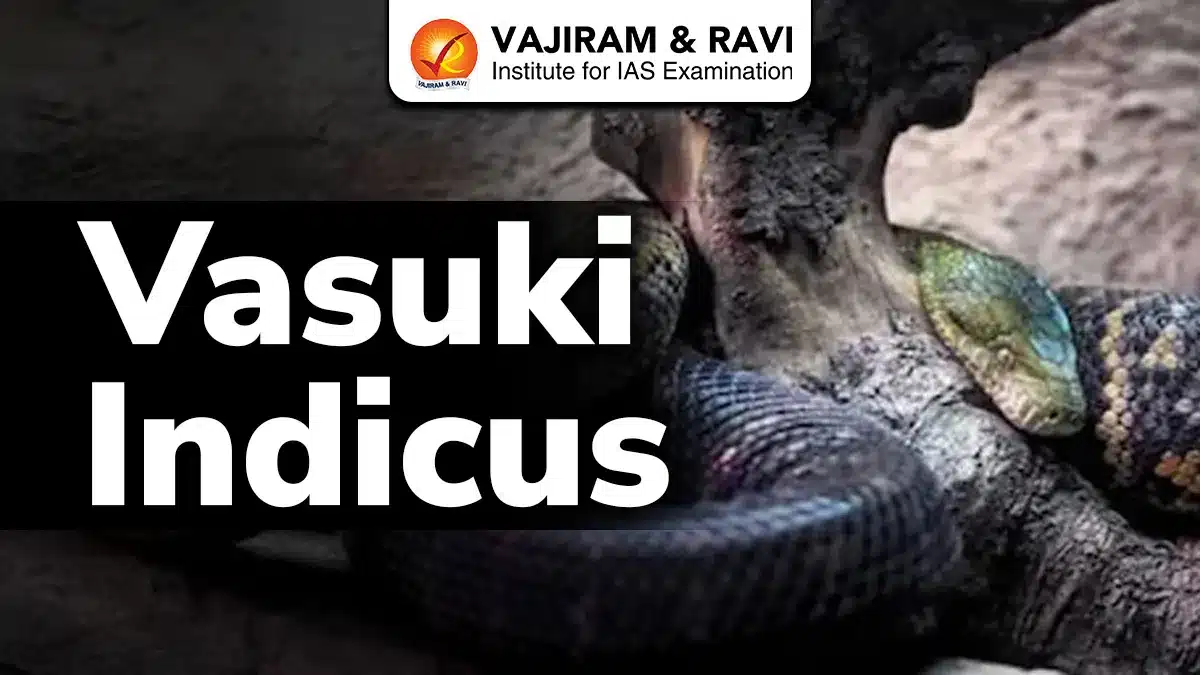
Vasuki Indicus is the recent scientific discovery unveiled by professors of  IIT Roorkee which is an ancient snake species fossil,  believed to be one of the largest ever to roam the earth.

Vasuki Indicus Background

The newly discovered snake used to live in the region of present-day Gujarat about 47 million years ago, during the Middle Eocene period. It was a member of now-extinct Madtsoiidae snake family representing a distinctive lineage from India.

About the discovery of Vasuki Indicus

  • The fossil was a unique discovery, hence it was named after the mythical snake often depicted around the neck of Hindu god Shiva, symbolizing its cultural significance.
  • The amazing discovery of the snake fossil of length 11-15 metres was made in the Panandhro Lignite Mine in Kutch, Gujarat.
  • It was inferred from the fossil that the body of Vasuki Indicus was broad and cylindrical, pointing towards a robust and powerful build.
  • From its size, it can considered a rival of the titleholder of the longest snake to ever roamed the earth “Titanoboa”.
  • Scientists are of opinion that Vasuki was able to live due to its secretive hunting nature, like moving slowly and ambush for its prey.
  • Due to its huge size it was a formidable predator in the ancient ecosystem.

Significance of the discovery

  • The name not just reflects its Indian roots but also symbolises its close ties to the region’s rich cultural heritage. 
  • The discovery sheds light to the vibrant biodiversity which sustained the evolution of the such huge snakes during the Eocene period.
  • It also gives insights about the geographical spread of the Madtsoiidae family, believed to be existed approximately 100 million years ago across the regions of Africa, Europe and India.
  • The discovery is also significant to understand the ancient ecosystem of Indian subcontinent in which the evolutionary history of snakes flourished.

The discovery of such a huge fossil is a moment of pride for the IIT Roorkee’s commitment to advancing scientific knowledge and relentless pursuit of excellence in the research, giving a glance to our ancient rich and vibrant ecosystem and further expanding the scope for more such remarkable discoveries, which are yet to be unearthed.

Vasuki Indicus FAQs

Q1: What is Vasuki Indicus?

Ans: Vasuki Indicus is an extinct snake species whose fossil was recently discovered by professors from IIT Roorkee, which is believed to be one of the largest snake to ever exist.

Q2: Where was Vasuki Indicus discovered?

Ans: Vasuki Indicus was discovered in the Panandhro Lignite Mine in Kutch, Gujarat.

Q3: Is Vasuki Indicus the biggest snake?

Ans: Vasuki Indicus is one of the largest snakes to be discovered but Titanoboa hold the record for being the longest and the heaviest snake ever known.

Q4: Is Vasuki Indicus still alive?

Ans: No, Vasuki Indicus is now extinct but once used to roam the earth approx. 47 million years ago.

Q5: Vasuki Indicus belonged to which family of snake?

Ans: Vasuki Indicus belonged to the family of Madtsoiidae, an extinct group of large, primitive snakes.

Zero Poverty Programme, Objectives, Features, Key Details

Zero Poverty Programme

The Zero Poverty Programme is a major social welfare initiative launched by the Government of Uttar Pradesh with the aim of eliminating extreme poverty and ensuring inclusive development. The programme is named after Baba Saheb Dr. Bhimrao Ambedkar, reflecting his vision of educational, social, and economic upliftment of the poor and marginalized sections of society.

The scheme focuses on identifying families who are still deprived of basic facilities and connecting them with all government welfare schemes through a structured and technology-driven approach.

What is Zero Poverty?

"The Zero Poverty Programme directly supports 'SDG 1 - No Poverty'. It means a situation where no individual or family is deprived of basic human needs such as housing, sanitation, clean drinking water, electricity, healthcare, and livelihood opportunities."

In Uttar Pradesh, the concept of Zero Poverty emphasizes holistic empowerment, where welfare benefits are combined with skill development and employment support so that families can achieve long-term self-reliance rather than depending only on subsidies.

What does SDG 1 (No Poverty) aim to achieve?

SDG 1, "No Poverty," is the first of the 17 United Nations Sustainable Development Goals, aimed at ending poverty in all its forms everywhere by 2030.

It focuses on eradicating extreme poverty, defined by the international poverty line, and

Reducing vulnerability through social protection systems, access to basic services, and equal rights to resources.

Zero Poverty Programme Objectives

The main objectives of the Zero Poverty Programme are:

  • To ensure that no person in Uttar Pradesh is deprived of basic facilities
  • To link poor and marginalized communities with all eligible government schemes
  • To identify 20-25 deprived families in every Gram Panchayat
  • To include 14-15 lakh families in the first phase of the scheme
  • To promote educational, social, and economic upliftment in line with Dr. Ambedkar’s philosophy
  • To provide special focus on historically disadvantaged and vulnerable communities
  • To support the state’s broader goal of zero poverty through skill development and employment

Zero Poverty Programme Features

The Zero Poverty Programme adopts a multi-dimensional approach to eradicate poverty by combining welfare delivery, skill development, and digital governance.

  • Identification of Deprived Families: 20-25 families in every Gram Panchayat who are still deprived of basic facilities are identified.
  • Welfare Scheme Coverage: Families receive benefits under Pradhan Mantri Awas Yojana, toilets, drinking water, electricity, LPG connections, Ayushman Bharat health cards, and pension schemes.
  • Focus on Vulnerable Communities: Special priority is given to Musahar, Tharu, Vantangiya, Kol, Buksa, Chero, Gond, and Saharia communities.
  • Skill Development: Guaranteed skill training is provided to heads of poor families in seven focus areas, including hospitality services and language skills, enhancing employability.
  • Community Sanitation Support: Committees maintaining Gram Panchayat community toilets receive regular monthly honorarium for sustainability.
  • Digital Infrastructure: Central portal (Zero-poverty.in) and department microsites facilitate coordination, while apps like Mop-Up and Rishta monitor beneficiary identification and DBT/benefit flows.
  • Feedback Mechanism: Alerts and voice-based feedback collection ensure participation even from remote areas.

Zero Poverty Programme FAQs

Q1: What is the Zero Poverty Programme?

Ans: The Zero Poverty Programme is an initiative of the Uttar Pradesh government aimed at ensuring that no person is deprived of basic facilities such as housing, food security, healthcare, sanitation, and livelihood opportunities.

Q2: Why is the programme named after Baba Saheb Dr. Bhimrao Ambedkar?

Ans: According to the Chief Minister, the programme is named after Baba Saheb Ambedkar because he advocated educational, social, and economic upliftment of poor and marginalized communities.

Q3: How does the Zero Poverty Programme align with Sustainable Development Goals (SDGs)?

Ans: The programme aligns with SDG 1 (No Poverty) by reducing deprivation and with SDG 2 (Zero Hunger) by improving income security, access to basic services, and overall living standards.

Q4: How are beneficiary families identified under the programme?

Ans: In every Gram Panchayat, 20–25 families who are still deprived of basic facilities are identified and included in the scheme.

Q5: How many families will be covered in the first phase?

Ans: In the first phase, around 14–15 lakh families will be covered under the Zero Poverty Programme.

Vamsadhara River, Origin, Tributaries, Dispute, Key Details

Vamsadhara River

The Vamsadhara River is an important east-flowing river of India. The river is very important for the north-eastern region of Andhra Pradesh, where agriculture is the main source of livelihood.

Vamsadhara River Origin

The Vamsadhara River originates in the Eastern Ghats region of Odisha.

  • The river rises in the Kalahandi district of Odisha.
  • It flows in a south-eastern direction.
  • For some distance, it flows along the boundary between Odisha and Andhra Pradesh.
  • Finally, it drains into the Bay of Bengal at Kalingapatnam, Andhra Pradesh.

The river passes through hilly and tribal regions where rainfall is seasonal. Because of this, storing and managing river water through reservoirs and canals becomes very important for farming and drinking water supply.

Vamsadhara River Tributaries

Tributaries are smaller rivers that join a main river and increase its water flow.

  • Nagavali River (inter-linked with Vamsadhara through projects)
  • Suvarnamukhi River – a tributary of the Nagavali River
  • Mahendratanaya River
  • Gumadra River

Madduvalasa Reservoir Project

  • The Madduvalasa Project is a Medium Irrigation Project.
  • It is built across the Suvarnamukhi River, which is a tributary of the Nagavali River.
  • Andhra Pradesh wants to expand this project and link the Nagavali River with the Vamsadhara River.
  • The main aim is to improve irrigation facilities and make agriculture more reliable.

Vamsadhara River Water Dispute

The Vamsadhara River Water Dispute is an inter-state dispute between Odisha and Andhra Pradesh related to the sharing and use of river water.

Background of the Dispute:

  • In February 2006, Odisha submitted a complaint to the Central Government.
  • The complaint was filed under Section 3 of the Inter-State River Water Disputes (ISRWD) Act, 1956.
  • Odisha demanded the formation of an Inter-State Water Disputes Tribunal to resolve the issue.

Grievances of Odisha:

Odisha raised several objections regarding Andhra Pradesh’s projects on the Vamsadhara River:

  • Construction of a flood flow canal at Katragada in Andhra Pradesh.
  • The canal could dry up the existing river bed, affecting the natural flow of the river.
  • Possible lowering of the groundwater table in Odisha due to reduced water flow.
  • Failure of Andhra Pradesh to follow the inter-state agreement on use, distribution, and control of Vamsadhara waters.
  • Demand for a scientific assessment of available water at Katragada and Gotta Barrage.
  • Objection to the basis used for sharing river water between the two states.

UPSC CSE Prelims PYQs

Consider the following Rivers. [2021]

  1. Brahmani
  2. Nagavali
  3. Subarnarekha
  4. Vamsadhara

Which of the above rise from the Eastern Ghats?

  1. 1 and 2
  2. 2 and 4
  3. 3 and 4
  4. 1 and 3

Answer: B 2 and 4

Consider the following rivers: [2015]

  1. Vamsadhara
  2. Indravati
  3. Pranahita
  4. Pennar

Which of the above are tributaries of Godavari?

(a) 1, 2 and 3

(b) 2, 3 and 4

(c) 1, 2 and 4

(d) 2 and 3 only

Answer: (d) 2 and 3 only

Vamsadhara River FAQs

Q1: Where is the Vamsadhara River located?

Ans: The Vamsadhara River is located in eastern India. It flows through the states of Odisha and Andhra Pradesh and finally drains into the Bay of Bengal.

Q2: In which state does the Vamsadhara River originate?

Ans: The Vamsadhara River originates in the Kalahandi district of Odisha, in the Eastern Ghats region.

Q3: Is the Vamsadhara River east-flowing or west-flowing?

Ans: The Vamsadhara River is an east-flowing river as it flows towards the Bay of Bengal.

Q4: Where does the Vamsadhara River meet the sea?

Ans: The river meets the Bay of Bengal at Kalingapatnam in Andhra Pradesh.

Q5: Which states share the Vamsadhara River?

Ans: The Vamsadhara River is shared by Odisha and Andhra Pradesh, making it an inter-state river.

Moral Development, Piaget’s Theory, Kohlberg’s Theory

Moral Development

Moral development refers to the process through which individuals learn to distinguish right from wrong and develop ethical values, judgments, and behaviour. It evolves gradually with age, experience, social interaction, and cognitive growth. For UPSC GS-IV, moral development is crucial to understand ethical decision-making, integrity, values in governance, and public service behaviour.

Psychologists such as Jean Piaget, Lawrence Kohlberg, and Carol Gilligan have explained moral development through stage-based theories, highlighting how moral reasoning changes from childhood to adulthood.

Piaget’s Theory of Moral Development

Jean Piaget studied moral development in children using the clinical interview method. He believed that moral reasoning develops in stages alongside cognitive development. According to Piaget, children move from externally imposed morality to internalized moral reasoning.

Stages of Piaget’s Moral Development:

  1. Anomy (Below 5 years – Without Law)
  • Behaviour is non-moral or amoral.
  • Actions are guided by pain and pleasure, not by rules.
  • This stage reflects Rousseau’s idea of natural consequences.
  1. Heteronomy - Discipline of Authority (5–8 years)
  • Moral rules are imposed by external authority such as parents or teachers.
  • Children obey rules to avoid punishment or gain rewards.
  • Rules are seen as fixed and unchangeable.
  1. Heteronomy - Reciprocity (9–13 years)
  • Morality is based on cooperation and mutual respect among peers.
  • The idea of reciprocity develops: “Do not do to others what you would not like done to you.”
  • Group conformity becomes important.
  1. Autonomy – Adolescence (13–18 years)
  • Individuals understand that rules are flexible and based on fairness.
  • Moral decisions are guided by intentions and equity, not blind obedience.
  • The person becomes fully responsible for moral choices.

Kohlberg’s Theory Of Moral Development

Lawrence Kohlberg expanded Piaget’s ideas and argued that moral development occurs through age and experience. He proposed three levels, each with two stages, focusing on how people reason about moral dilemmas.

Levels and Stages of Kohlberg’s Theory:

  1. Pre-Conventional Level

Stage 1: Punishment and Obedience Orientation

  • Actions are judged by their physical consequences.
  • Avoiding punishment and obeying authority are primary concerns.

Stage 2: Instrumental Relativist Orientation

  • Moral actions serve self-interest and personal needs.
  • Reciprocity exists, but it is practical, not ethical.
  1. Conventional Level

Stage 3: Interpersonal Concordance Orientation

  • Behaviour aims to gain social approval and be seen as a “good person.”
  • Moral actions are influenced by relationships and emotions.

Stage 4: Law and Order Orientation

  • Emphasis on rules, laws, and authority.
  • Maintaining social order becomes morally important.
  1. Post-Conventional Level

Stage 5: Social Contract Orientation

  • Laws are viewed as social agreements meant for public welfare.
  • Rules can be changed if they conflict with human rights.

Stage 6: Universal Ethical Principles Orientation

  • Moral reasoning is guided by universal values such as justice, equality, and human dignity.
  • Conscience becomes the ultimate guide.

Carol Gilligan’s Theory of Moral Development

Carol Gilligan criticized Kohlberg’s theory in her work “In a Different Voice”, arguing that it was gender-biased as it was based mainly on male subjects. She proposed that women’s moral reasoning emphasizes care, relationships, and responsibility, rather than rules and rights.

Stages of Gilligan’s Moral Development:

  1. Pre-Conventional Stage (Self-Interest)
  • Focus is on self-survival and personal needs.
  • Moral thinking appears selfish but is developmentally natural.
  1. Conventional Stage (Care for Others)
  • Individuals prioritize caring for others, often neglecting self-needs.
  • Commonly reflected in social roles such as mother or caregiver.
  1. Post-Conventional Stage (Ethics of Care)
  • Balance between care for self and care for others.
  • Moral decisions are guided by responsibility and compassion.

Gilligan emphasized that moral development is context-dependent and relational, not purely rule-based.

Differences Between These Theories

The theories of Piaget, Kohlberg, and Carol Gilligan explain moral development from different perspectives, cognitive growth, justice-based reasoning, and care-based ethics. Together, they highlight how moral understanding evolves with age, experience, and social relationships.

Differences Between These Theories
Aspect Piaget’s Theory Kohlberg’s Theory Gilligan’s Theory

Primary Focus

Moral reasoning linked to cognitive development

Moral judgment based on justice and rights

Moral reasoning based on care and relationships

Number of Stages

Four stages

Three levels with six stages

Three stages

Key Moral Driver

Reciprocity and fairness

Rules, laws, and universal principles

Care, empathy, and responsibility

Role of Authority

Strong in early stages, weakens later

Central in conventional level

Less emphasis on authority

View of Rules

Rules are flexible and created by people

Rules maintain social order

Rules are secondary to relationships

Role of Emotions

Limited role

Secondary to rational judgment

Central role in moral decision-making

Gender Perspective

Gender-neutral

Criticized as male-centric

Includes women’s moral experiences

Moral Dilemma Approach

Considers intentions and fairness

Uses abstract moral dilemmas (e.g., Heinz dilemma)

Emphasizes context and alternative solutions

Outcome of Moral Growth

Autonomous moral reasoning

Universal ethical principles

Balanced care for self and others

Moral Development FAQs

Q1: What is moral development?

Ans: Moral development is the process of learning values, ethics, and principles to distinguish right from wrong.

Q2: Who proposed the stages of moral development?

Ans: Jean Piaget, Lawrence Kohlberg, and Carol Gilligan are the major contributors.

Q3: Which theory is most relevant for UPSC GS-IV?

Ans: Kohlberg’s and Gilligan’s theories are highly relevant for Ethics and integrity questions.

Q4: What is the main criticism of Kohlberg’s theory?

Ans: It is criticized for being gender-biased and overly focused on justice and rules.

Q5: Why is moral development important for civil servants?

Ans: It helps in ethical decision-making, integrity, empathy, and responsible governance.

Ikshavaku Dynasty, History, Administration, Art, Architecture

Ikshavaku Dynasty

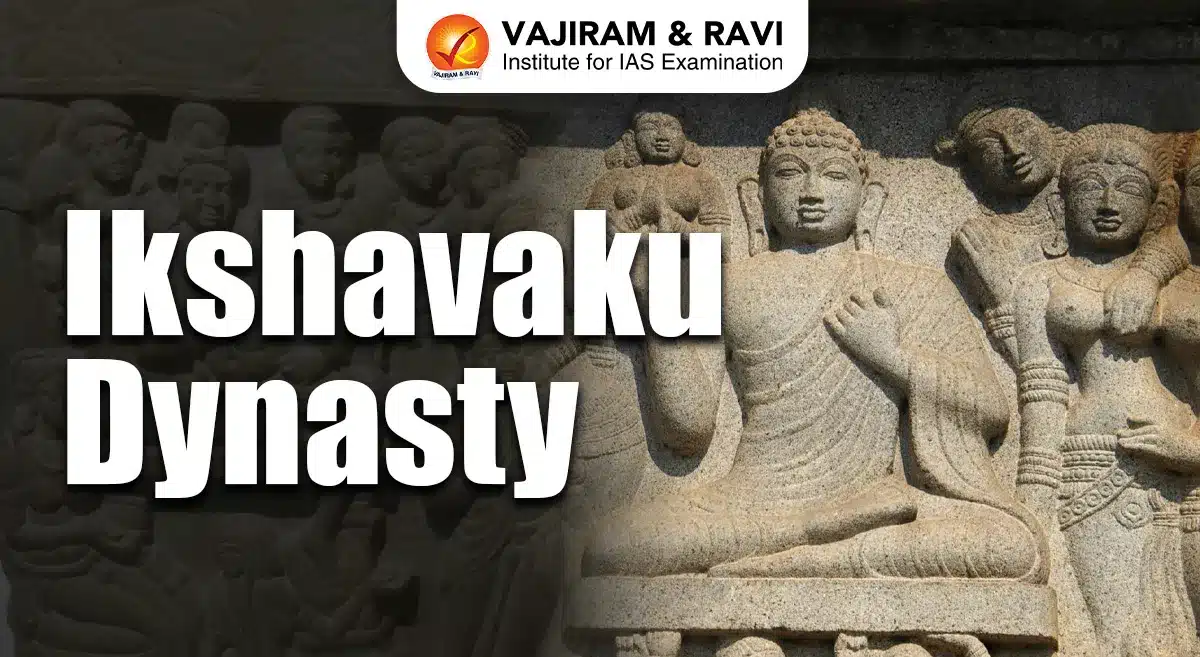
The Ikshavaku Dynasty (c. 225-340 CE) ruled the eastern Krishna River valley in present-day Andhra Pradesh. Their capital was Vijayapuri, identified with modern Nagarjunakonda. To distinguish them from the legendary Ikshvakus of Ayodhya, historians refer to them as the Andhra Ikshvakus or Ikshvakus of Vijayapuri.

The Ikshvaku rulers were Shaivites who followed Vedic rituals, yet they actively supported Buddhism. This period is especially known for the growth of Buddhist art, architecture, and monastic institutions, largely due to the patronage of Ikshvaku queens and princes. The dynasty played a key role in the political and cultural transition of the Deccan after the decline of the Satavahanas.

Ikshavaku Dynasty Historical Background

The Ikshavaku Dynasty (c. 225–340 CE) emerged in the Krishna River valley of Andhra Pradesh after the decline of the Satavahanas, with Vijayapuri (Nagarjunakonda) as its capital. The dynasty played a key role in shaping early Deccan polity while promoting both Vedic traditions and Buddhism.

  • They are also known as the Andhra Ikshvakus to distinguish them from the legendary Ikshvakus of Ayodhya.
  • Information about the dynasty comes mainly from inscriptions found at Nagarjunakonda, Jaggayyapetta, Amaravati, and Bhattiprolu.
  • The Puranas refer to them as Andhrabhrityas and Sriparvatiyas, indicating their regional identity.
  • The rulers claimed descent from the Solar dynasty (Suryavansha) to strengthen their legitimacy.
  • Although the kings followed Shaivism and Vedic rituals, Buddhism flourished under their rule due to royal patronage, especially by queens and princes.
  • The Ikshavaku period marks an important transition from Satavahana rule to regional powers in the Deccan.

Ikshavaku Dynasty Administration and Political Structure

The Ikshavaku Dynasty followed a monarchical system of governance, with the king as the supreme authority ruling from Vijayapuri (Nagarjunakonda). Their administration combined centralized royal control with support from local officials and feudatories, ensuring stability in the Krishna valley.

  • The king was the head of the state, and kingship was hereditary in nature.
  • Rulers claimed Kshatriya status and Solar lineage to legitimize their political authority.
  • The kingdom was likely divided into administrative units such as provinces and districts for effective governance.
  • Local administration was managed by officials and village heads, who handled revenue collection and law and order.
    Land grants were made to Brahmanas and Buddhist monasteries, indicating a well-organized revenue system.
  • Royal inscriptions recorded administrative orders, donations, and religious endowments.
  • The Ikshvakus maintained a standing army, including infantry and cavalry, for defense and expansion.
  • Fortifications, ramparts, and military-related structures at Nagarjunakonda highlight the importance of internal security.
  • The rulers performed Vedic rituals and sacrifices, reinforcing the religious basis of political power.
  • Overall, the Ikshavaku administrative system reflects a transition from imperial Satavahana governance to regional rule in the Deccan.

Ikshavaku Dynasty Art and Architecture

The Ikshavaku Dynasty made significant contributions to art and architecture, especially in the Krishna–Guntur region, with Nagarjunakonda (Vijayapuri) emerging as a major centre. Their monuments reflect religious tolerance, as both Brahmanical temples and Buddhist structures were actively patronized.

  • Nagarjunakonda was the principal architectural centre of the Ikshavakus and witnessed extensive construction activity.
  • The dynasty supported the building of Buddhist stupas, chaityas, and viharas, making the region an important Buddhist hub.
  • At the same time, Brahmanical temples were constructed, showing royal support for Vedic religion.
  • Inscriptions record donations by kings, queens, and royal women, with many queens acting as major patrons of Buddhist monuments.
  • Architectural remains include Mahachaityas, monasteries with courtyards, and well-planned religious complexes.
  • The Ikshavaku capital had a fortified citadel with strong rampart walls for defense.
  • Excavations reveal residential buildings, barracks, stables, baths, and cisterns, indicating advanced urban planning.
  • A stepped tank with an overflow system reflects their knowledge of water management.
  • Brick was the main construction material, often combined with stone decorative elements.
  • Overall, Ikshavaku architecture represents a transition phase between Satavahana and later Deccan architectural styles, combining simplicity with structural grandeur.

Ikshavaku Dynasty Sculpture

Ikshavaku Dynasty Sculpture represents the final phase of the Amaravati-Satavahana artistic tradition. Early sculptures were simple and symbolic, with no human images of Buddha, who was represented through symbols like the wheel, footprints, and throne.

As the style matured:

  • Sculptures became more detailed and expressive
  • Themes from Jataka stories such as Mandhatu, Sasa, Vessantara, and Mahahamsa appeared
  • Scenes from Buddha’s life, including Mara’s attack, Muchalinda protecting Buddha, and episodes from Lalitavistara were carved

Later sculptures show bold relief work, emotional expressions, and human figures carved in the round. Brahmanical sculptures of Sati and Karttikeya and secular themes like battle scenes also emerged, reflecting artistic diversity.

Decline of the Ikshvaku Dynasty

The decline of the Ikshavaku Dynasty began in the mid-4th century CE. Political instability, internal weaknesses, and external pressure from rising powers weakened their control. The dynasty lost its supremacy during the reign of Rudrapurushadatta.

The last known Ikshavaku ruler, Purushadatta II, was eventually defeated by the Pallava ruler Simhavarman I, bringing an end to Ikshavaku rule in the Krishna valley.

Ikshavaku Dynasty FAQs

Q1: Where was the capital of the Ikshavaku Dynasty?

Ans: Vijayapuri, identified with modern Nagarjunakonda in Andhra Pradesh.

Q2: Which religion did the Ikshavaku kings follow?

Ans: They were Shaivites who followed Vedic rituals but also supported Buddhism.

Q3: Why is Nagarjunakonda important?

Ans: It was a major Buddhist centre with stupas, monasteries, inscriptions, and sculptures.

Q4: Which art school influenced Ikshavaku sculpture?

Ans: The Amaravati School of Art had a strong influence.

Q5: Who ended the Ikshavaku rule?

Ans: The Pallava ruler Simhavarman I defeated the last Ikshavaku king.

102nd Constitutional Amendment Act, History, Key Details

102nd Constitutional Amendment Act

The 102nd Constitutional Amendment Act of 2018 granted constitutional status to the National Commission for Backward Classes (NCBC). It also empowered the President to notify the list of socially and educationally backward classes (SEBCs) for each state or union territory. In May 2021, the Supreme Court ruled that this amendment had taken away the state’s power to identify SEBCs within their own jurisdictions for the purpose of providing reservations in education and employment.

102nd Constitutional Amendment Act

India passed the 102nd Constitutional Amendment Act on August 11, 2018. This Act gave constitutional status to the National Commission for Backward Classes (NCBC), which had originally been set up in 1993. Article 338B was introduced to formally establish the NCBC as a constitutional body. It empowers the Commission to investigate matters related to socially and educationally backward classes (SEBCs), handle complaints, and advise the government on welfare policies and development measures.

Article 342A was added to give the President the authority to notify SEBCs for each state and union territory. Once notified, only Parliament can make changes to the central list of SEBCs. The Amendment clarified that it does not impact existing reservations for Scheduled Castes, Scheduled Tribes, or Other Backward Classes (OBCs). 

The Amendment updated Article 366, which contains definitions used throughout the Constitution. The 102nd Constitutional Amendment strengthened the institutional framework for protecting and promoting the interests of SEBCs by giving the NCBC more authority and a constitutional mandate. It aimed to improve representation, ensure consistent policy-making, and provide a clearer process for identifying and supporting backward communities.

102nd Constitutional Amendment Act History

Two Backward Class Commissions were appointed one by Kaka Kalelkar in the 1950s and another by B.P. Mandal in the 1970s. Later, in the Indra Sawhney Case 1992, the Supreme Court directed the government to set up a permanent body to handle issues related to Backward Classes.

The idea was to have a commission that could regularly review, examine, and recommend which communities should be included or excluded from the Backward Classes list. Acting on this, Parliament passed the National Commission for Backward Classes Act in 1993, leading to the formal establishment of the commission.

Article 338B

Article 338B was added to the Indian Constitution through the 102nd Constitutional Amendment Act in 2018. It made the National Commission for Backward Classes (NCBC) a constitutional body. This Article outlines the structure, powers, and duties of the Commission. The table below highlights some of the key provisions and features of Article 338B.

Article 338B
Title Description

Establishment of NCBC

  • NCBC is a commission for backward classes.
  • It is established by Article 338B.
  • It operates at the national level.
  • It replaces the National Commission for Backward Classes Act, 1993.

Composition

  • The NCBC has a Chairperson, Vice-Chairperson, and three other members. 
  • They are appointed by the President of India. 
  • They hold office for a tenure specified by the President.

Powers and Functions

  • NCBC investigates and monitors backward class matters.
  • This includes their inclusion in SC and ST lists. 
  • It can investigate complaints about the rights of backward classes. 
  • It can take action to protect those rights.

Advice to the Government

  • NCBC advises central and state governments on welfare measures for backward classes.
  • It also recommends measures for their advancement.

Duties

  • NCBC studies the socio-economic conditions of backward classes. 
  • They undertake research and analysis. 
  • Reports are presented to the President. 
  • The President shares the reports with both houses of Parliament i.e Lok Sabha and Rajya Sabha.

Autonomy

  • NCBC is independent and not controlled by any government authority. 
  • It has civil court powers during inquiries.

Article 343A

Article 342A of the Indian Constitution was added in 2018. It empowers the President of India to identify socially and educationally backward classes for each State and Union Territory.

Under this Article, the President can issue a notice specifying which communities qualify as backward. These notifications form the basis for creating official lists of backward classes across States and Union Territories. These lists are important because they determine who is eligible for government benefits like reservations in education and jobs, as well as other affirmative action programs.

While the President has this power, the process can involve suggestions and discussion with the Governor of a State or the Administrator of a Union Territory. However, the final decision rests with the President, and Parliament plays a role in shaping how the law is implemented.

102nd Constitutional Amendment Act FAQs

Q1: What is the 102nd Constitutional Amendment Act?

Ans: The 102nd Amendment grants constitutional status to the National Commission for Backward Classes (NCBC), making it a statutory body under Article 338B.

Q2: When was the 102nd Constitutional Amendment Act passed?

Ans: It was enacted in August 2018 and came into effect on 15 August 2018.

Q3: What Article was inserted through the 102nd Amendment?

Ans: It inserted Article 338B to establish the NCBC and Article 342A to list socially and educationally backward classes (SEBCs).

Q4: What is Article 342A?

Ans: Article 342A empowers the President to notify the list of SEBCs for any state or Union Territory, in consultation with the Governor.

Q5: How did the 102nd Amendment impact states' powers?

Ans: According to the Supreme Court, it limited states’ powers to identify SEBCs, making the central list binding unless amended later.

Green Revolution in India, History, Impact, Advantages

Green Revolution in india

The Green Revolution brought a major shift in the agriculture sector during the 1960s and 70s, especially in countries like India. It introduced high-yielding crop varieties, chemical fertilizers, improved irrigation, and machines like tractors. This helped in increasing the food production and reduced dependence on imports. Regions like Punjab and Haryana saw huge gains in production. Poorer farmers who weren’t financially stable were deprived of the benefits and over time, the heavy use of chemicals damaged soil and water though the Green Revolution helped prevent famines and made India self-sufficient in grains.

Green Revolution In India

The Green Revolution was a turning point for agriculture in many developing countries, especially during the 1960s and 70s. It focused on increasing food production using high-yielding seeds, chemical fertilizers, pesticides, and modern irrigation techniques. Tractors and other machines also replaced traditional farming tools in several regions. 

The Green Revolution Objectives were to avoid food shortages and make countries less dependent on imports. This initiative helped to increase the food production and reduce hunger crisis, it also created gaps, small farmers couldn’t always afford the new methods, and the overuse of chemicals harmed the environment and the soil.

Green Revolution In India History

The Green Revolution in India was introduced during the 1960s when food scarcity had become a serious national concern. To tackle this, scientists introduced high-yielding seeds for crops like wheat and rice, which were first developed in places like Mexico and the Philippines.

Dr. M.S. Swaminathan, the Father of Green Revolution played a key role in bringing these changes to India, with support from Norman Borlaug. Farmers in regions like Punjab, Haryana, and western Uttar Pradesh quickly adopted the new methods using chemical fertilizers, pesticides, and better irrigation. It helped India achieve food security, but over time, problems like soil damage and water overuse also came to light.

Green Revolution in India Components

Several key factors laid the foundation for the Green Revolution in India which includes:

  • High-Yielding Varieties (HYVs): The revolution focused on the use of HYV seeds mainly for wheat and rice. These were dwarf, high-output varieties that produced 2 to 3 times more than traditional crops. But they weren’t low-maintenance. These seeds needed more water, more fertiliser, and more protection from pests.
  • Irrigation Facilities: In 1960, only about 30 million hectares of land in India were irrigated. Expanding irrigation was essential to support the water-intensive HYVs. 
  • Credit and Financing: Farmers couldn’t afford modern seeds, fertilisers, or machinery on their own. A strong rural credit system, including co-operative banks and microfinance institutions, became important to fund the shift.
  • Commercialisation of Agriculture: For the first time, farming became market-driven. With the government introducing Minimum Support Prices (MSP), farmers now had guaranteed returns. This changed their approach from growing just enough for survival to growing for profit.
  • Farm Mechanisation: New technology like tractors, threshers, and harvesters became part of the farming landscape. Mechanisation saved time, reduced labour costs, and made large-scale farming feasible.
  • Command Area Development Programme (CADP) - 1974: The CADP pushed for infrastructure development in irrigated areas. It had two parts:
  • On-farm development like levelling land, building water channels, and preparing the soil.
  • Off-farm development, by improving the infrastructure such as roads, markets, and rural transport to move produce efficiently.
  • Chemical Fertilisers and Pesticides: Indian soils, especially in intensively farmed regions, lacked sufficient nitrogen. To address this, NPK (Nitrogen-Phosphorus-Potassium) fertilisers were recommended in a 4:2:1 ratio. Alongside, insecticides and herbicides were used to protect crops.

Also Read: Blue Revolution

Green Revolution in India Phases

The Green Revolution evolved in phases, each responding to the needs and challenges of the time. It started as a response to food shortages and gradually expanded to tackle regional differences, ecological concerns, and the diversification of agriculture.

Phase I (1965-66 to 1980)

India's first phase of the Green Revolution was driven by an urgent need for food security. The country was heavily dependent on food imports, and the threat of famine was high. This phase focused on wheat production and was largely limited to regions like Punjab, Haryana, and Western Uttar Pradesh, where irrigation and infrastructure were already in place, and natural hazards were minimal.

Programs like the Intensive Agriculture Development Program (IADP) and Intensive Agriculture Area Programme (IAAP) were launched. But the real game-changer was the High-Yielding Varieties (HYV) program introduced in 1965-66. By 1980, food grain production had around 100 million tonnes, up from just 33 MT in 1965 and 25 MT in 1950.

Phase II (1980-1991)

With wheat production stable, attention turned to rice production during the 6th and 7th Five-Year Plans. This phase aimed to replicate the success of Phase I in wetter regions like West Bengal, Bihar, Eastern UP, Assam, and coastal areas with over 100 cm of rainfall.

While areas like the Krishna-Godavari delta, Cauvery basin, and parts of West Bengal saw progress, the impact was uneven. In Bihar, only a few regions like Bhojpur benefitted.

Phase III (1991-2003)

By the 1990s, the revolution aimed to reach India's semi-arid and dryland regions. Crops like cotton, oilseeds, pulses, and millets were targeted under the 8th and 9th Five-Year Plans.

Efforts like the Integrated Watershed Management Programme tried to improve water usage in dry areas. A few regions like the Narmada-Tapi doab, Tungabhadra basin, and Bhima-Krishna basin showed success but overall, the results were limited.

Green Revolution in India Impact

The Green Revolution may have solved India’s immediate food crisis, but it came with long-term impact. It mostly benefited a few regions like Punjab, Haryana, and western UP, leaving other parts of the country behind. Rich farmers grew richer; small ones lost land and became labourers. Heavy use of chemicals damaged soil and water, and mechanisation reduced rural jobs.

Economic Impact

The Green Revolution increased social and economic differences. As some regions like Punjab and western UP prospered, others like eastern UP and Bihar were left behind. This growth created interpersonal, inter-regional, and interstate disparities. People in high-yield areas earned more, invested more, and pulled further ahead. Meanwhile, farmers in left-out zones struggled to compete.

In regions including Punjab and Bihar during 1960, both had similar crop output. By 1990, Punjab was miles ahead by utilising early access to HYVs, irrigation, and capital. On the other hand, many small farmers took informal credit to keep up, falling into debt cycles.

Social Impact

Rural landlessness increased as small and marginal farmers, unable to purchase new technology instruments, sold their land. Many ended up working as agricultural labourers in wealthy owner’s fields. That shift increased poverty, worsened health conditions, and made rural communities more vulnerable.

Machines including tractors, harvesters, and threshers contributed to utilise less human capital needed in the field, so the lands became efficient yet the employment level declined Rural unemployment increased especially among the unskilled.

Ecological Impact

Initially soil degradation was a serious problem, the push for higher yields led to farming practices that ignored the land’s natural limits. Over-irrigation, poor drainage, and heavy chemical use resulted in salinisation, alkalisation, and the formation of unproductive soils like reh and kallar especially in regions like Punjab and Haryana.

Waterlogging became another side-effect. Excessive canal irrigation, without proper drainage systems which damaged soil structure over time. The chemical overload by the utilisation of synthetic fertilisers, pesticides, and weedicides poisoned the soil. Over time, soil microbes died off, fertility declined, and the land became dependent on chemical inputs to stay productive.

Rivers, ponds, tanks, and reservoirs in the Green Revolution started showing signs of pollution. There was large-scale deforestation. Forests in the Punjab, Tarai, and Bhabhar zones were cleared to make way for farmland. This wiped out biodiversity and weakened ecological balance in those regions.

Green Revolution in India Advantages

  1. The Green Revolution helped in tackling the chronic food shortage during a time of rapid population growth in India.
  2. Eliminated recurring famines and brought food security to millions allowing farmers to generate surplus production, which led to agricultural commercialisation.
  3. The government improved rural infrastructure including roads, irrigation, storage which became essential support systems for the producers.
  4. The Green Revolution made India self-sufficient in food grain production which reduced the import dependence, freeing up funds for poverty alleviation schemes like IRDP and Tribal Area Development.
  5. Rising farm wages increased rural cash flow which helped in promoting the agro and food-processing industries. It also enabled land reforms like land consolidation and ceiling implementation.

Green Revolution in India Disadvantages

  1. Overuse of chemical fertilisers and pesticides degraded soil health and polluted water bodies like rivers and canals through disposals of the chemicals.
  2. Intensive irrigation practices led to groundwater depletion and even the surface water sources such as wells.
  3. Majorly wealthy farmers with the benefits of the initiatives introduced by the government with land and capital, leaving small and marginal farmers behind.
  4. Economic inequality in rural areas increased, with resource-rich regions advancing while others stagnated.
  5. Crop diversity declined due to the focus on a few high-yield varieties, increasing vulnerability to pests and diseases.

Green Revolution in India FAQs

Q1: Who is the Father of the Green Revolution in India?

Ans: Dr. M. S. Swaminathan, supported by Norman Borlaug’s work on wheat HYVs, led the efforts.

Q2: What crops were central to the Green Revolution?

Ans: Primarily wheat and rice; later phases included jowar, bajra, maize, and dryland crops like pulses and oilseeds.

Q3: Why did the Green Revolution succeed only in parts of India?

Ans: Failure to implement irrigation, credit and land reforms limited adoption in rain‑fed and eastern regions.

Q4: What is meant by monoculture in this context?

Ans: Growing the same crop (wheat or rice) repeatedly over large areas leading to biodiversity loss and increased vulnerability to pests.

Q5: Can India feed itself indefinitely with Green Revolution methods?

Ans: Not sustainably. Groundwater depletion, soil degradation, and climate stress mean that India needs a new, eco‑sensitive model often called Green Revolution 2.0 or Evergreen Revolution.

Basic Customs Duty (BCD)

Basic Customs Duty (BCD)

Basic Customs Duty Latest News

Bringing immediate relief to patients with cancer and rare diseases, Union Budget 2026-27 proposed a full exemption of basic customs duty on 17 cancer-related drugs and medicines.

About Basic Customs Duty

  • BCD is a type of tax imposed on goods imported into India. 
  • It is levied on imported items under Section 12 of the Customs Act, 1962. The tax rate is levied as per the First Schedule to Customs Tariff Act, 1975.
  • Purpose: To protect domestic industries from foreign competition, regulate trade, and generate revenue for the government. 
  • BCD is calculated as a percentage of the value of the imported goods, determined based on the customs tariff, i.e., it is fixed based on the ad-valorem. 
  • It can significantly impact the total landed cost of the imported items. 
  • BCD rates usually range from 5% to 40% and depend on the item’s category and country of origin.
  • The Central Government holds the power to exempt specific goods from tax. 
  • The calculation of BCD involves several steps:
    • Classification of Goods: Imported goods are classified under specific Harmonized System (HS) codes, which determine the applicable duty rate.
    • Assessment of Value: The value of the goods is assessed based on the transaction value, including the cost of goods, insurance, and freight (CIF).
    • Application of Duty Rate: The BCD Tax rate is applied to the assessed value to determine the duty payable. 

Other Types of Custom Duties

  • Additional Customs Duty: 
    • Additional Customs Duty, also called Special Countervailing Duty, is a tax that is applied to balance subsidies that exporting countries provide to their products
    • It helps level the playing field and ensures that domestic producers are not disadvantaged.
  • Countervailing Duty (CVD): 
    • This duty counters foreign government subsidies on exports. 
    • When foreign producers receive subsidies, they can sell at a lower price, creating unfair competition for local industries. 
    • CVD safeguards local businesses from this unfair advantage.
  • Special Additional Duty (SAD): 
    • SAD is levied on imports under the Central Excise Act and applies to the total value, including BCD and CVD. 
    • This duty shields domestic industries by offsetting the impact of low-cost imports.
  • Anti-Dumping Duty: 
    • When foreign goods are sold in India at prices below their value in the exporting country, anti-dumping duty is applied. 
    • This duty prevents unfair pricing practices that could damage domestic industries.
  • Education Cess: 
    • It is a 2% additional charge on customs duties, used to fund educational initiatives in India. 
    • Education cess basically reflects the government’s commitment to improving education standards in the country.
  • Protective Duties: 
    • These duties are designed to protect local industries from competition with cheaper imported goods. 
    • By increasing the cost of imports, protective duties make local products more appealing to consumers.
  • Safeguard Duties: 
    • Imposed under Section 8B of the Customs Tariff Act, safeguard duties are temporary measures to protect local industries from sudden increases in imports. 
    • This duty gives domestic industries time to adapt and strengthen their market position.
  • National Calamity Contingent Duty (NCCD): 
    • NCCD is applied to generate funds for responding to natural disasters and large-scale national emergencies. 
    • NCCD rate varies depending on the item and ensures quick resources are available for crisis response.

Source: TH

Basic Customs Duty FAQs

Q1: What is Basic Customs Duty (BCD)?

Ans: What is Basic Customs Duty (BCD)?

Q2: What is the primary purpose of levying Basic Customs Duty?

Ans: To protect domestic industries, regulate international trade, and generate government revenue.

Q3: How is Basic Customs Duty calculated?

Ans: BCD is calculated as a percentage of the value of imported goods, i.e., on an ad-valorem basis.

Q4: Who has the authority to exempt goods from Basic Customs Duty?

Ans: The Central Government has the power to exempt specific goods from BCD.

Q5: Is Basic Customs Duty a direct or indirect tax?

Ans: Basic Customs Duty is an indirect tax.

Fiscal Policy in India, Objectives, Instruments, Types, Role

Fiscal Policy in India

Fiscal Policy in India forms the bedrock of the nation’s economic governance, guiding the country through various stages of growth, development, and challenges. It acts as a vital instrument in achieving macroeconomic stability, ensuring inclusive development, and addressing socio-economic inequalities. By controlling government expenditure, taxation, and public debt, fiscal policy determines how the state intervenes in the economy to promote sustainable growth and stability. In this article, we are going to cover Fiscal Policy in India, its meaning, objectives, instruments, types and cyclical nature of Fiscal Policy in India along with important concepts that shape India’s economic policy framework. 

Fiscal Policy in India

Fiscal Policy refers to the policy decisions of the government concerning public expenditure, taxation, and public borrowing. It is the mechanism through which the government adjusts its spending and taxation levels to influence a nation’s overall economic activity.

The concept is rooted in Keynesian economics, which argues that during periods of economic instability like recessions or inflation government intervention through fiscal measures can help restore balance. For instance, increasing spending or cutting taxes can boost demand during a slowdown, while reducing spending or raising taxes can help cool inflationary pressures.

Thus, Fiscal Policy acts as both a stabilizing and developmental tool, shaping India’s economic trajectory and ensuring that growth translates into social welfare.

Fiscal Policy in India Objectives

The objectives of India’s Fiscal Policy are wide-ranging and interlinked, reflecting both developmental and stabilizing roles:

  1. Mobilization of Resources: To channel financial resources into socially necessary and productive sectors such as infrastructure, education, and health.
  2. Economic Stability: To counter cyclical fluctuations and maintain macroeconomic balance.
  3. Price Stability: To control inflationary and deflationary trends and ensure stable purchasing power.
  4. Sustained Growth Rate: To maintain a consistent and balanced rate of economic growth.
  5. Balance of Payments Equilibrium: To prevent excessive dependence on foreign capital and ensure external stability.
  6. Raising Living Standards: To improve public welfare through employment generation and social development.
  7. Reducing Inequality: To minimize disparities in income and wealth through progressive taxation and redistributive policies.
  8. Encouraging Private Sector Growth: To provide incentives and a conducive environment for private investment and entrepreneurship.

Fiscal Policy in India Instruments

Fiscal Policy operates mainly through three major instruments that includes Public Expenditure, Taxation, and Public Borrowing along with other supplementary measures.

1. Public Expenditure

This includes all government spending on goods, services, infrastructure, and welfare programmes.

  • Role: By altering expenditure levels, the government can directly affect economic activity.
  • Example: During slowdowns, higher public spending on rural employment or infrastructure creates jobs and boosts demand.

2. Taxation

Taxation is one of the most powerful fiscal tools that influences disposable income, investment, and savings.

  • Reducing Taxes: Increases consumption and investment, spurring growth.
  • Increasing Taxes: Helps curb inflation and reduce excessive demand.

3. Public Borrowing

When expenditures exceed revenues, governments borrow internally (from citizens, banks, etc.) or externally (from foreign institutions).

  • Purpose: To fund infrastructure, welfare schemes, or deficit financing.
  • Instruments: Bonds, Treasury Bills, National Savings Certificates, etc.

4. Other Fiscal Measures

Additional tools include:

  • Price and wage controls
  • Subsidy reforms
  • Encouragement of production and exports
  • Regulation of consumption through duties and levies

Difference between Fiscal Policy and Monetary Policy 

Fiscal Policy and Monetary Policy have the following differences: 

Aspect Fiscal Policy Monetary Policy

Definition

Government’s policy related to expenditure, taxation, and borrowing to influence the economy.

Policy framed by the Central Bank to regulate money supply and interest rates.

Authority

Managed by the Government (Ministry of Finance).

Managed by the Reserve Bank of India (RBI).

Objective

To influence overall economic activity and achieve growth and stability.

To control inflation and ensure monetary stability.

Major Tools

Public expenditure, taxation, and borrowing.

Bank Rate, Cash Reserve Ratio (CRR), Statutory Liquidity Ratio (SLR), etc.

Both policies work in coordination. Fiscal Policy ensures demand creation and developmental spending, while Monetary Policy maintains liquidity and price stability.

Fiscal Policy in India Types

Depending on economic conditions and objectives, Fiscal Policy can be classified into three types:

1. Expansionary Fiscal Policy

  • Mechanism: Involves higher government spending or lower taxes to stimulate demand.
  • Objective: To reduce unemployment and boost GDP growth.
  • When Used: During recessions or economic slowdowns.
  • Caution: May lead to inflation if demand exceeds supply.

2. Contractionary (Tight) Fiscal Policy

  • Mechanism: Reduces spending or increases taxes to lower aggregate demand.
  • Objective: To control inflation and reduce fiscal deficit.
  • When Used: During periods of high inflation or overheating economy.
  • Caution: May increase unemployment temporarily.

3. Neutral Fiscal Policy

  • Mechanism: Keeps government revenue and expenditure balanced.
  • Objective: To maintain economic stability without stimulating or restricting growth.
  • When Used: When the economy is in equilibrium.

Cyclicality of Fiscal Policy

Fiscal Policy often responds to the phases of the business cycle—expansion, peak, contraction, and trough. Its direction of influence gives rise to two types of cyclical behavior:

1. Counter-Cyclical Fiscal Policy

  • Moves opposite to the business cycle.
  • During a slowdown, the government increases spending and reduces taxes (expansionary).
  • During a boom, it cuts spending or raises taxes (contractionary).
  • Example: India’s fiscal stimulus packages during the 2008 global financial crisis and COVID-19 pandemic.

2. Pro-Cyclical Fiscal Policy

  • Moves in the same direction as the business cycle.
  • Expansionary in booms and contractionary during recessions.
  • Considered risky as it may deepen economic volatility and social distress.

Fiscal Policy in India Key Related Concepts

1. Fiscal Deficit

The Fiscal Deficit is the difference between the government’s total expenditure and total non-borrowed revenue in a financial year.
It is expressed as a percentage of GDP and serves as a key indicator of fiscal health. A high deficit implies greater borrowing, which may increase future debt burden.

2. Fiscal Consolidation

Refers to the process of improving government finances by reducing fiscal deficit through prudent spending, better revenue collection, and structural reforms.
India’s Fiscal Responsibility and Budget Management (FRBM) Act aims to institutionalize fiscal discipline and reduce deficits sustainably.

3. Fiscal Drag

Fiscal Drag occurs when inflation or income growth pushes taxpayers into higher tax brackets without a real increase in purchasing power reducing disposable income and demand.
This phenomenon often occurs under progressive taxation systems.

4. Fiscal Neutrality

When the government’s taxing and spending decisions are designed to have no net effect on overall demand. For example, if new welfare spending is exactly matched by equivalent tax revenue, the fiscal stance remains neutral.

5. Crowding Out Effect

This theory suggests that excessive government borrowing or spending can reduce private investment. When the government borrows heavily, interest rates rise, making it costlier for businesses to borrow and invest.

6. Pump Priming

Pump Priming refers to the government’s deliberate effort to inject funds into a sluggish economy through public expenditure or tax incentives to stimulate growth.mIt was first used during the Great Depression to describe Keynesian-style economic recovery measures.

7. Economic Stimulus

An economic stimulus package involves fiscal or monetary interventions aimed at reviving growth during a slowdown. For instance, during the COVID-19 pandemic, India launched the Atma Nirbhar Bharat Abhiyan, comprising three tranches of stimulus measures, to support businesses, workers, and vulnerable populations.

Fiscal Policy in India UPSC

Fiscal Policy in India remains the government’s most powerful economic instrument—balancing the dual objectives of growth and stability. It not only helps in managing inflation and unemployment but also plays a transformative role in achieving social equity and sustainable development.

In recent years, India’s fiscal strategy has evolved towards greater transparency, efficiency, and responsibility under frameworks like the FRBM Act, targeted subsidies, and digital reforms. Going forward, a well-calibrated fiscal policy complemented by effective monetary measures will continue to steer India toward inclusive growth, fiscal prudence, and long-term economic resilience.

Also Check Other Posts
Care Economy Mutual Funds
Alternative Investment Funds GDP Deflator

Fiscal Policy in India FAQs

Q1: What are the fiscal policies of India?

Ans: Fiscal policies of India are government strategies involving taxation, public expenditure, and borrowing to influence the country’s economy.

Q2: What are the three types of fiscal policy?

Ans: The three types are Expansionary, Contractionary (Tight), and Neutral fiscal policies.

Q3: What is fiscal policy?

Ans: Fiscal policy is the government’s use of spending, taxation, and borrowing to manage and influence economic activity.

Q4: What is monetary policy?

Ans: Monetary policy is the central bank’s regulation of money supply and interest rates to control inflation and stabilize the economy.

Q5: What are the objectives of fiscal policy?

Ans: The objectives include promoting economic growth, maintaining price stability, ensuring employment, reducing income inequality, and managing public resources efficiently.

SHE Marts

SHE Marts

SHE Marts Latest News

The Finance Minister recently announced SHE-Mart, a new platform for women entrepreneurs.

About SHE Marts

  • SHE (Self-help Entrepreneur) Marts are planned as community-owned retail outlets that will be set up within cluster-level federations through enhanced and innovative finance instruments.
  • It aims to provide women entrepreneurs with better market access, branding opportunities, and sustainable income avenues, while strengthening grassroots institutions such as self-help groups (SHGs).
  • The proposal builds on the success of the Lakhpati Didi programme and signals a policy shift from micro-credit-led livelihoods to structured, women-owned enterprises. 
  • SHE Marts are meant to:
    • Provide permanent retail points for SHG-made goods.
    • Improve direct market access.
    • Support value-added and processed products.
    • Be backed by enhanced and innovative financing instruments.

What is the Lakhpati Didi Programme?

  • It was announced by the Prime Minister in his Independence Day speech on August 15, 2023.
  • Run by the Ministry of Rural Development, the Lakhpati Didi programme seeks to support rural women by helping members of SHGs start small businesses and earn a steady income of at least Rs 1 lakh a year. 
  • Under this scheme, women will be trained in various skills, such as plumbing, LED bulb making, drone operation and repair, and tailoring and weaving.
  • After completing the training, women will be provided with opportunities to earn income using their skills.
  • The programme aims to help them become financially independent.
  • Under the initiative, the government aims to train two crore women.

Source: PRINT

SHE Marts FAQs

Q1: What are SHE Marts?

Ans: SHE Marts are community-owned retail outlets proposed to be set up within cluster-level federations using enhanced and innovative financing instruments.

Q2: What is the primary objective of SHE Marts?

Ans: To provide women entrepreneurs with better market access, branding opportunities, and sustainable income avenues.

Q3: On which successful programme is the SHE Marts proposal based?

Ans: he Lakhpati Didi programme.

Q4: How do SHE Marts support women entrepreneurs in marketing their products?

Ans: By providing permanent retail points for goods produced by SHGs.

Mahatma Gandhi Gram Swaraj Initiative (MGGSI)

Mahatma Gandhi Gram Swaraj Initiative (MGGSI)

Mahatma Gandhi Gram Swaraj Initiative Latest News

In the Union Budget 2026-27 presented recently, the Finance Minister announced the launch of the Mahatma Gandhi Gram Swaraj Initiative aimed at strengthening Khadi, handloom, and handicrafts.

About Mahatma Gandhi Gram Swaraj Initiative

  • It was announced in the Union Budget 2026-27 to strengthen India’s traditional craft sectors.  
  • It is a major initiative to strengthen the khadi, handloom, and handicrafts sector by improving global market access, branding, and market linkages.
  • It is aimed at making traditional rural industries more competitive while ensuring sustainable livelihoods for artisans and weavers.
  • The programme mainly targets weavers, village industries, beneficiaries of the One District One Product (ODOP) initiative, and rural youth, and MGGSI aims to address structural challenges. 
    • These include fragmented supply chains, inconsistent quality standards, and limited market connectivity. 
  • MGGSI encourages artisans to adopt modern production methods. This would be done while preserving traditional craftsmanship. 
  • The initiative also focuses on improving market access by better branding and marketing to enable artisans to reach organised retail, export markets, and online platforms.
  • It aligns with the “Vocal for Local” philosophy and efforts to strengthen micro, small, and medium enterprises (MSMEs).
  • By reinforcing traditional industries, the initiative seeks to generate sustainable employment, reduce rural distress, and promote locally produced goods, thereby aligning with the broader vision of Atmanirbhar Bharat.

Source: IE

Mahatma Gandhi Gram Swaraj Initiative FAQs

Q1: What is the Mahatma Gandhi Gram Swaraj Initiative (MGGSI)?

Ans: MGGSI is a government initiative announced in the Union Budget 2026–27 to strengthen India’s traditional craft sectors.

Q2: Which sectors does Mahatma Gandhi Gram Swaraj Initiative (MGGSI) aim to strengthen?

Ans: The khadi, handloom, and handicrafts sectors.

Q3: Who are the primary beneficiaries of Mahatma Gandhi Gram Swaraj Initiative (MGGSI)?

Ans: Weavers, village industry workers, ODOP beneficiaries, and rural youth.

National Population Policy 2000, Objectives, Evolution, Features

National Population Policy

The second largest population in the world is India with a current population of about 1.4 billion, recognising the implications of population expansion on socio-economic development, the Government of India has implemented various policy measures over the decades. Among these, the National Population Policy (NPP), 2000 stands out as a comprehensive strategy aimed at achieving population stabilisation and improving reproductive health outcomes. 

National Population Policy 2000

The National Population Policy 2000 was adopted by the Government of India to address the challenges related to the rapid population growth. Its primary objective is to achieve population stabilisation through voluntary and informed family planning. The policy provides access to reproductive and child healthcare services, while also promoting responsible parenthood.

Also Read: National Education Policy 2020

National Population Policy Evolution

  • Pre-Independence Efforts (1940): The Indian National Congress set up a committee under social thinker Radha Kamal Mukherjee to explore ways to resolve the fast-growing population, especially post-1921. The committee emphasized voluntary restraint, public education about low-cost contraception, and discouraging practices like polygamy.
  • Bhore Committee (1943-46): Headed by Sir Joseph Bhore, this health-focused panel proposed actively limiting family size as part of a national health strategy. It laid early groundwork for linking public health with population control.
  • Post-Independence Beginnings (1952): India became the first developing nation to launch a government-backed family planning program. A Population Policy Committee was formed in 1952, though its initial efforts lacked structure and impact.
  • Establishment of Central Family Planning Board (1956): By the mid-1950s, a national board was introduced, shifting focus primarily to sterilization as a core method of population control.
  • National Population Policy of 1976: Key measures under this policy included:
    • Raising the legal marriage age to 21 for men and 18 for women
    • Offering financial rewards for adopting birth control
    • Promoting female literacy
    • Tying central assistance to states with their performance in population control
    • Using mass media to spread family planning messages
    • Including population awareness in school curriculum
  • Emergency Period & Coercive Measures (1975-77): During the Emergency, the government carried out mass sterilizations under duress, which severely damaged public trust in the program and drew widespread backlash.
  • Shift to Voluntary Approach (Post-1977): The incoming government moved away from coercion, rebranding the initiative as the “Family Welfare Programme” to rebuild credibility.
  • National Health Policy 1983: This policy supported smaller family norms achieved through informed, voluntary choices, and emphasized population stabilization as a national goal.
  • Population Committee & MS Swaminathan Group (1991-1993): A new committee was formed to suggest a long-term, integrated population strategy. It recommended a full-fledged national policy, integrating development, demographic balance, and environmental sustainability.
  • An expert panel led by Dr. M.S. Swaminathan later drafted the framework for what would become India’s formal population policy.
  • Launch of National Population Policy (2000): The policy was officially adopted in 2000, providing a comprehensive plan to stabilize population growth while addressing health, education, and gender-related concerns in a balanced, rights-based framework.

Also Read: New Economic Policy 1991

National Population Policy Objectives

  • To address the need of contraception, strengthen the health infrastructure and human resources and ensure integrated service delivery in the domain of reproductive and child healthcare.
  • To bring the Total Fertility Rate (TFR) to replacement level by 2010 through the effective implementation of inter-sectoral strategies and coordinated policy interventions.
  • To achieve a stable population by 2045, aligned with the goals of sustainable economic development, improved quality of life, and environmental sustainability.

Measures of Population

  • Survey: Collection of sample based demographic data through questionnaires to know the population trends.
  • Census: The Census is a full count of the population. It captures data on population size, distribution, literacy, employment, housing, and more, serving as the foundation for planning and policy-making every 10 years.
  • Population Registers: This keeps continuous records of people living in a country. These registers are dynamic in nature and are useful for maintaining up-to-date information on births, deaths, migration, and marital status.
  • Vital Registration Systems: Official systems that record vital events such as births, deaths, marriages, and divorces. They provide essential data for calculating indicators like birth rate, death rate, and life expectancy.

National Population Policy Features

  • The National Population Policy lays a clear framework aimed at ensuring accessible reproductive health service across India, it emphasizes on encouraging people to adopt responsible health and family planning decisions through awareness and education.
  • NPP 2000 guarantees free and compulsory education for every child up to 14 years of age, reducing the dropout rates and improving retention for both boys and girls.
  • The policy targets a significant reduction in the Infant Mortality Rate aiming for fewer than 30 deaths per 1000 live births. In maternal health, the goal is to reduce the Maternal Mortality Ratio (MMR) to fewer than 100 deaths per 1,00,000 live births.
  • National Population Policy had an objective to expand immunization coverages delaying the age of marriage for women to improve maternal and child health outcomes.
  • Controlling the spread of communicable diseases is another area of focus, alongside integrating traditional Indian medicine systems (AYUSH) into maternal and child healthcare.
  • The NPP 2000 policy expands access to various contraceptive options, also promotes HIV prevention and strengthens coordination between National AIDS Control Organization (NACO) and healthcare services for treating reproductive and sexually transmitted infections.

National Population Policy Key Initiatives

  • Expanded Contraceptive Choices: The policy has broadened the range of contraceptives available, introducing newer methods like injectable contraceptives. This gives individuals more flexibility to choose options that align with their health needs and personal preferences.
  • Sterilization Incentive Scheme: To support those opting for sterilization, a compensation mechanism is in place. It offers financial support both to individuals undergoing the procedure and to healthcare teams involved in offsetting any income loss or related costs during the process.
  • Mission Parivar Vikas: To strengthen the reach of family planning services, Mission Parivar Vikas was rolled out in 146 districts with high fertility rates across seven priority states. The mission focuses on direct community engagement and ensures wider access to contraceptives and reproductive health services.
  • Use of Postpartum IUDs (PPIUCDs): The policy promotes offering intrauterine devices to women immediately after childbirth. This helps ensure effective birth spacing and long-term contraception right from the post-delivery stage.
  • Doorstep Delivery of Contraceptives: ASHAs (Accredited Social Health Activists) play a central role in distributing contraceptives directly to households. This approach is especially crucial for reaching people in remote or underserved regions, where access to healthcare services can be limited.
  • Pregnancy Test Kits at Community Level: Pregnancy testing kits have been added to the medical supplies distributed by ASHAs. These kits allow women to check for pregnancy privately and promptly, improving early detection and timely medical care.

National Population Policy Need of Changes

  • By 2041, around 59% of Indians will be of working age, a narrow window to leverage demographic advantage.
  • With longer lifespans and falling birth rates, the world is aging fast. In India, 12% of the population will be elderly by 2025, and 20% by 2050.
  • Economic planning must align with population growth. The key lies in equipping people with relevant skills and making them employable.
  • The one-child policy slowed growth but led to a steep rise in the elderly population. India's policies must avoid such unintended consequences.
  • Rather than enforcing fertility limits, the goal should be enabling families to make informed choices in a growing economy.
  • The 2000 National Population Policy emphasized family planning. Now, it must also address aging, sexual health, and regional imbalances.
  • India must treat its population as a development asset. The goal isn’t just to manage numbers but to create a healthy, skilled, and productive society.

National Population Policy 2000 FAQs

Q1: What is the National Population Policy (NPP)?

Ans: The NPP is a policy aimed at stabilizing India’s population through education, healthcare access, and voluntary family planning initiatives.

Q2: When was the National Population Policy implemented?

Ans: The current National Population Policy was implemented in 2000, replacing the earlier policies from 1976 and 1977.

Q3: What are the objectives of the NPP 2000?

Ans: Its goals include achieving a stable population, reducing infant and maternal mortality, promoting delayed marriage, and ensuring universal access to contraception.

Q4: What is the immediate objective of NPP 2000?

Ans: The immediate goal was addressing unmet needs for contraception, healthcare infrastructure, and personnel in reproductive and child health.

Q5: What is the medium-term objective of the NPP 2000?

Ans: To bring the Total Fertility Rate (TFR) to replacement levels by 2010 meaning two children per woman.

Economic Survey 2025, Highlights, Key Figures, Download PDF

Economic Survey 2025

The Economic Survey is an important document that is prepared for the country’s economic performance analysis over the past financial year and offers policy recommendations for the upcoming fiscal year. In India, the Economic Survey is released one day before the Union Budget. The Economic Survey 2025 was published on January 31, 2025. It is prepared by the Department of Economic Affairs (DEA) under the Ministry of Finance, and serves as a resource for policymakers, economists and researchers.

Economic Survey 2025

Economic Survey 2024-25 provides an elaborated analysis of the economic performance of the country over the previous year (2024-2025) and includes key policy recommendations for the upcoming fiscal year (2025-2026).

Check Economic Survey 2025-26

Structure of the Economic Survey 2025

The Economic Survey 2025 is divided into two parts:

  • Part A: Focuses on economic trends, key challenges, and policy recommendations that shape the government's approach to economic management.
  • Part B: Provides detailed statistical analysis of various sectors, including agriculture, industry, services, infrastructure, healthcare, and environmental concerns.

Economic Survey 2025 History

The Economic Survey was first presented in 1950-51 as part of the Union Budget and since 1964, it has been presented as a stand-alone document. This change was made to ensure an elaborated review of economic developments in the previous year before budget release This year the Economic Survey 2025 is released on 31st January 2025 whereas the Union Budget is released on 1st February 2025.

Economic Survey 2025 Highlights

The Economic Survey 2025 was released on January 31, 2025. It includes in-depth analysis of the economic performance of India in the previous year. Here are the Economic Survey 2025 Key Highlights:

  1. India’s real GDP growth is projected at 6.4% for FY25, The real GVA (Gross Value Added) is also expected to grow at 6.4% in FY25. GDP growth for FY26 is forecasted between 6.3% and 6.8%.
  2. All the sectors are functioning as expected. The Agriculture Sector continues to operate above trend levels. Industrial Sector rebounded strongly post-pandemic whereas Service Sector has stabilized its growth at pre-pandemic levels.
  3. Retail inflation has reduced from 5.4% (FY24) to 4.9% (April-December 2024) due to government interventions. Consumer price inflation is expected to align around 4% in FY26.
  4. Gross NPAs (Non-Performing Assets) of banks dropped to a record low of 2.6% (as of Sept 2024). Credit-GDP gap reduced from -10.3% (Q1FY23) to -0.3% (Q1FY25). Insurance market has grown 7.7% year-over-year, reaching ₹11.2 lakh crore in FY24.
  5. Foreign Direct Investment has increased by 17.9% year-over-year, reaching $55.6 billion in FY25. Overall exports (merchandise + services) grew 6% year-over-year, in the first nine months of FY25.
  6. The Union Government’s capital expenditure (capex) on infrastructure increased by 38.8% (FY20-FY24).
  7. Industrial sector grew by 6.2% in FY25 (as per first GDP advance estimates). Steel production grew by 4.6%, while automobile domestic sales increased by 12.5% in FY24. 
  8. Electronics production grew at a CAGR of 17.5% (FY15-FY24). Textiles, apparel, pharmaceuticals, and steel industries witnessed steady growth.
  9. Service sector contributes 55.3% to total GVA in FY25 (up from 50.6% in FY14) majorly focusing on the Skill development for workforce and simplifying grassroots-level regulations.
  10. Agriculture & other related activities contribute 16% to GDP (FY24).

Economic Survey 2025 PDF

The Economic Survey 2025 offers a detailed analysis of India’s economic performance and projections for the upcoming year. Download the Economic Survey 2025 PDF.

Economic Survey 2025 PDF

Why is the Economic Survey Released Before the Budget?

The Economic Survey is released a day before the Union Budget to ensure transparency and build the foundation for budget decisions. It offers an economic overview by analyzing growth trends, challenges, and opportunities while highlighting key issues such as inflation, fiscal deficit, unemployment, and sectoral performance. 

The Economic Survey helps to shape policy direction, influencing budget allocations and reforms. Understanding the linkage between the Economic Survey and the Union Budget 2025 is important, as it reflects the government’s economic strategy, policy priorities, and governance approach.

Economic Survey 2025 FAQs

Q1: Who publishes the Economic Survey?

Ans: The Ministry of Finance publishes the Economic Survey every year.

Q2: When is the economic survey 2025 released?

Ans: The Economic Survey is typically tabled a day before the budget speech, so it is mostly presented on January 31.

Bharat-VISTAAR

Bharat-VISTAAR

Bharat-VISTAAR Latest News

Recently, the Union Finance Minister proposed the Bharat VISTAAR tool for the agriculture sector.

About Bharat-VISTAAR

  • ‘Bharat-VISTAAR’(Virtually Integrated System to Access Agricultural Resources) is a multilingual AI tool.
  • It shall integrate the AgriStack portals and the ICAR package on agricultural practices with AI systems.
  • Significance: It will enhance farm productivity, will lead to better farmer decision making and reduce risk through customized advisory support for the farmer

What is AgriStack?

  • Agri Stack is the digital foundation being set up by the government to make it easier to bring various stakeholders together to improve agriculture in India.
  • It enables better outcomes and results for the farmers by using data and digital services. 
  • Agri Stack aims to make it easier for farmers to get easier access to cheaper credit, higher-quality farm inputs, localized and specific advice, and more informed and convenient access to markets. 
  • It also focuses on making it easier for governments to plan and implement various farmer and agriculture-focused benefit schemes.

Source: PIB

Bharat-VISTAAR FAQs

Q1: What is the primary objective of Bharat-VISTAAR?

Ans: To integrate agri-stack portals and ICAR package on farm practices with AI systems

Q2: When was Bharat-VISTAAR launched?

Ans: 2026

Biopharma SHAKTI

Biopharma SHAKTI

Biopharma SHAKTI Latest News

Recently, the Union Minister for Finance announced the launch of Biopharma Shakti initiative in budget 2026-27.

About Biopharma SHAKTI

  • ‘Biopharma SHAKTI (Strategy for Healthcare Advancement through Knowledge, Technology & Innovation)’ is designed to develop India into a global biopharmaceutical manufacturing hub.
  • This will build the ecosystem for domestic production of biologics and biosimilars. 
  • It will include a Biopharma-focused network with 3 new National Institutes of Pharmaceutical Education and Research (NIPER) and upgrading 7 existing ones.
  • It will also create a network of over 1000 accredited India Clinical Trials sites.
  • Financial Outlay & Time Period: ₹10,000 crore over the next five years
  • This initiative will catalyse investments in advanced biomanufacturing infrastructure, promote innovation and enhance India’s capabilities in high-value, next-generation therapies.
  • It will focus on building a biopharma-centric innovation and manufacturing network, responding to India's rapidly changing disease profile marked by a rising burden of non-communicable diseases such as diabetes, cancer and autoimmune disorders.

What is Biologics?

  • Biologics are complex medicines derived from living organisms.
  • Their complex manufacturing processes have traditionally limited their availability, primarily serving high-income countries.

What are Biosimilars?

  • These are highly similar versions of biologic medicines, developed through comprehensive analytical studies and rigorous preclinical and clinical trials to ensure therapeutic equivalence.
  • These products offer equally effective and safe alternatives thereby increasing market competition and reducing the costs of biologic therapies.

Source: PIB

Biopharma SHAKTI FAQs

Q1: What is the primary objective of Biopharma SHAKTI?

Ans: To develop India as a global biopharma manufacturing hub

Q2: What is the budget allocation for Biopharma SHAKTI?

Ans: ₹10,000 crore

Bindeshwar Pathak, Toilet Man of India, Early Life, Contributions

Bindeshwar Pathak

Bindeshwar Pathak, also known as Toilet man of India, pioneered the low cost sanitation in India. He dedicated his life to eradicating manual scavenging and spreading awareness on sanitation.

Bindeshwar Pathak Early Life

Bindeshwar Pathak was born in a Brahmin family in Rampur Baghel village of district Vaishali, Bihar. After completing schooling at his village, he graduated in Sociology from BN College, Patna.

He joined Gandhi Centenary Committee in Patna as a volunteer which sent him to work for restoration of human rights and dignity of people from Dalit community in Bihar’s Bettiah. From there, he resolved to start a mission to eradicate manual scavenging and open defecation.

Bindeshwar Pathak Contribution and Achievements

Bindeshwar Pathak was a social reformer who dedicated his life for the eradication of manual scavenging, promotion of sanitation, and restoration of dignity to marginalized communities, especially sanitation workers, through social awareness, technological innovation, and grassroots reform.

Low Cost Public Sanitation 

  • He founded Sulabh International, an India-based social service organisation which works to promote human rights, environmental sanitation, and waste management in India
  • Sulabh International developed the two-pit pour-flush toilet, a sustainable and low-cost technology that replaced dry latrines and eliminated the need for manual cleaning of human excreta.
  • Sulabh international started the concept of pay-to-use public toilets in India at a very low cost and installed more than 1.3 million toilets in households and 10,000 public toilets in India.

Rehabilitation of Manual Scavengers 

  • He advocated for the rehabilitation of manual scavengers by providing skill development, alternative livelihoods, and restoring social dignity.
  • He also worked for the temple entry of manual scavengers. In 1988, Pathak led a group of manual scavengers to the Nathdwara temples along with a group of Brahmins to perform rites and rituals. 

Women Empowerment 

  • Promoted gender safety and health by providing safe sanitation access to women reducing the prevalence of diarrhoeal and sanitation-related diseases.
  • Provided safe shelter, free food, healthcare, vocational training and a dignified living environment for destitute widows.

Bindeshwar Pathak earned both national and international recognition for his work : 

  • In 1991, he was awarded the Padma Bhushan for his work on liberating and rehabilitating manual scavengers.
  • In 1992, he received the International St Francis Prize for Environment the following year.
  • In 2009, he won the Stockholm Water Prize, conferred by the Royal Swedish Academy of Sciences.
  • In 2016, Sulabh was awarded the Gandhi Peace Prize for its contribution to the government’s flagship Swachh Bharat mission.

Bindeshwar Pathak FAQs

Q1: Who was Bindeshwar Pathak?

Ans: Bindeshwar Pathak was a social reformer, best known as the founder of Sulabh International. He dedicated his life to improving sanitation, social equality and human dignity.

Q2: What was his major contribution to India?

Ans: He pioneered low-cost sanitation solutions and led a nationwide movement against open defecation, unsafe toilets and manual scavenging, transforming public health and social attitudes.

Q3: What is Sulabh International?

Ans: Founded in 1970, Sulabh International is a non-profit organisation working in sanitation, waste management, human rights, environmental protection and social reform.

Q4: What is the Sulabh twin-pit toilet?

Ans: It is a low-cost, eco-friendly, pour-flush toilet system that does not require sewers and safely converts waste into manure, making it suitable for rural and urban poor areas.

Q5: Who is called the “Toilet Man of India”?

Ans: Bindeshwar Pathak is called the toilet man of India.

Divyangjan Kaushal Yojana

Divyangjan Kaushal Yojana

Divyangjan Kaushal Yojana Latest News

The Union Minister of Finance announced the Divyangjan Kaushal Yojana and Divyang Sahara Yojana during the union budget 2026-2027.

About Divyangjan Kaushal Yojana

  • It is launched for persons with disabilities.
  • It is aimed at training them for “dignified livelihood opportunities”.
  • Financial Support: It has been allocated ₹200 crore for the upcoming fiscal.
  • Under this yojana “industry-relevant, customised training specific to each divyang group” will be provided for creating “dignified livelihood opportunities”
  • Sectors Covered: Information Technology, Animation, Visual Effects, Gaming, and Comics (AVGC), Hospitality, and Food and Beverages, which offer “task-oriented and process-driven roles”.

About Divyang Sahara Yojana

  • Financial Support: ₹100 crore has been allocated.
  • It supports Artificial Limbs Manufacturing Corporation of India (ALIMCO) to scale up production of high-quality assistive devices, deepen research and development and integrate advanced technologies, including artificial intelligence, into product design and services.
  • It also strengthens PM Divyasha Kendras and supports setting up of Assistive Technology Marts as modern retail-style centres where Divyangjans and senior citizens can see, try and purchase assistive products.

What is  PM Divyasha Kendra?

  • It is a unique initiative aimed at providing integrated services under one roof—including assessment, evaluation, counselling, distribution, and post-distribution care—for eligible Divyangjan (persons with disabilities) and elderly beneficiaries.
  • These centres are being established through ALIMCO (Artificial Limbs Manufacturing Corporation of India), 
    • ALIMCO is a Central Public Sector Undertaking under the Department of Empowerment of Persons with Disabilities (DEPwD).

Source: PIB

Divyangjan Kaushal Yojana FAQs

Q1: What is the primary objective of Divyangjan Kaushal Yojana?

Ans: To provide skill training and employment opportunities to persons with disabilities.

Q2: When was Divyangjan Kaushal Yojana launched?

Ans: 2026

Representation of the People Act 1951, Features, Important Sections

Representation of the People Act 1951

The Representation of the People Act,1951 (RPA 1951) is one of the most important laws governing India’s democratic framework. Enacted after independence, it provides the legal foundation for the conduct of free and fair elections to the Parliament and State Legislatures. The Act deals with qualifications and disqualifications of candidates, the registration and recognition of political parties, and the resolution of election disputes.

It also lays down the powers and responsibilities of the Election Commission in ensuring transparency and accountability in the electoral process. Key provisions such as Section 8 (disqualification of convicted members) and Section 29A (registration of political parties) make it a cornerstone of India’s electoral democracy.

Representation of the People Act 1951

The Representation of the People Act, 1951 (RPA) is a key law that governs India’s electoral framework, ensuring free, fair, and transparent elections. Enacted in 1951, it lays down rules for conducting elections to Parliament and State Legislatures, defines eligibility and disqualification criteria for candidates, and regulates the registration and functioning of political parties. The Act empowers the Election Commission to enforce these provisions and maintain the integrity of India’s democratic process. The table below summarizes the major sections and their significance.

Representation of the People Act 1951

Section

Highlight

Section 8

Lists disqualification grounds based on criminal convictions, promoting ethical public office.

Section 29A

Allows political parties to register with the Election Commission, essential for electoral participation.

Section 123

Defines corrupt practices, including bribery and undue influence, to maintain election integrity.

Section 33

Discusses candidate nomination procedures and associated eligibility criteria.

Section 62

Ensures voting rights for individuals listed on the electoral roll, strengthening voter inclusion.

Section 100

Specifies conditions for voiding elections due to malpractice or eligibility issues.

Section 126

  • 48 hours before the polling ends or concludes, displaying any election matter by television or similar apparatus in a constituency is prohibited.
  • Section 126 is not applicable to the print media, news portals and social media
  • Section 126A prohibits the conduct of exit poll and dissemination of its results during the period mentioned.

Section 77

Regulates election expenses to prevent financial misuse and maintain fairness.

Representation of the People Act 1951 Features

Representation of the People Act 1951, lays down the legal framework for conducting elections in India. It ensures transparency, fairness, and accountability in the democratic process. The table below highlights the key features and provisions of the Act, explaining how each section contributes to free and fair elections.

Representation of the People Act 1951 Features

Section/Aspect

Purpose/Description

Election Procedures

Details the conduct of elections, procedures for resolving disputes, and handling seat vacancies.

Qualifications and Disqualifications

Defines criteria for candidate eligibility, focusing on moral standards and criminal background.

Electoral Offenses

Lists offenses such as bribery, impersonation, and undue influence to ensure fair elections.

Role of Election Commission

Outlines the powers and responsibilities of the Election Commission in supervising and maintaining ethical electoral processes.

Representation of the People Act 1951 Important Sections

The Representation of the People Act 1951, ensures ethical conduct, transparency, and accountability in India’s electoral system. The following table summarizes important sections, their purpose, and related electoral provisions.

Representation of the People Act 1951 Important Sections

Section / Provision

Description / Purpose

Details / Sub-Clauses

Section 8

Disqualifications for MPs and MLAs based on criminal convictions, ensuring ethical standards.


Section 8(1)

Conviction under specific acts leads to disqualification.

Includes Indian Penal Code, Protection of Civil Rights Act 1955, Unlawful Activities (Prevention) Act 1967, Prevention of Corruption Act 1988, Prevention of Terrorism Act 2002; disqualified for 6 years from conviction or 6 years post-release.

Section 8(2)

Conviction for offences related to social welfare laws.

  • Prevention of hoarding/profiteering, 
  • Adulteration of food/drugs, 
  • Dowry Prohibition Act 1961.

Section 8(3)

Conviction for other offences with imprisonment ≥ 2 years.

Disqualified from conviction date + 6 years post-release.

Section 8(4)

Earlier provision for appeal allowed retention of seat.

Struck down by Supreme Court in 2013 (Lily Thomas case).

Section 29A

Registration of political parties.

Parties must register with Election Commission to contest elections.

Election Offences

Defines corrupt and illegal practices during elections.

  • Bribery or offering gratification to electors or candidates.
  • Interference with free exercise of electoral rights.
  • Appeals based on religion, race, caste, community, or language. 
  • Promoting enmity or hatred among classes. - Propagation or glorification of sati. 
  • Publishing false statements about candidates.
  • Booth capturing. 
  • Using government assistance for electoral advantage.
Also Check Other Posts
Important Articles of Indian Constitution 9th Schedule
Schedules of Indian Constitution Anti Defection Law
5th Schedule Preamble of the Indian Constitution
6th Schedule

Representation of the People Act 1951 FAQs

Q1: What is the Representation of the People Act 1951?

Ans: It regulates elections in India, defining procedures, qualifications, disqualifications, and conduct for Parliament, State Assemblies, and offices like President and Vice-President.

Q2: What is the main objective of the Act?

Ans: To ensure free, fair, and transparent elections, prevent electoral malpractices, and regulate political representation across Parliament and State Legislative Assemblies.

Q3: Who can vote under the Act?

Ans: All Indian citizens aged 18 or above, registered in the electoral rolls, and not disqualified by law can vote.

Q4: Who is disqualified from contesting elections?

Ans: Convicted criminals, bankrupts, persons of unsound mind, or those holding certain offices are disqualified under the Act.

Q5: What are the key provisions of the Act?

Ans: Provisions include voter registration, conduct of elections, qualification and disqualification of candidates, electoral offences, and dispute resolution mechanisms.

Guru Ravidas

Guru Ravidas

Guru Ravidas Latest News

The Prime Minister recently inaugurated the Adampur Airport in Punjab and renamed it after Sri Sant Guru Ravidas Ji in a bid to honour the revered saint and social reformer on his birth anniversary.

About Guru Ravidas

  • Guru Ravidas (1377-1527 C.E.) was a renowned saint known for his contributions to the Bhakti movement.
  • His devotional songs and verses made a lasting impact upon the Bhakti Movement.
  • Guru Ravidas is also known as Raidas, Rohidas, and Ruhidas.
  • Ravidas was born in a village called Sir Gobardhanpur, near Varanasi in Uttar Pradesh, India. 
    • Today, his birthplace is a special place known as Shri Guru Ravidass Janam Asthan.
    • His birthday is celebrated as Ravidas Jayanti.
  • Ravidas is traditionally seen as a student of the bhakti-poet Ramananda. 
  • He is also thought to have lived around the same time as Kabir, another famous poet-saint.
  • He was a well-known poet. His poems, written in local languages, inspired many people.
    • 41 of his devotional songs and poems are found in the Sikh holy book, the Guru Granth Sahib. 
    • Many of his poems are also in the Panch Vani text of the Dadu Panthi tradition within Hinduism. 
  • Philosophy and Teachings:
    • The core of Guru Ravidas’s philosophy was the rejection of the caste system and the promotion of human rights and dignity. 
    • He envisioned a society called 'Beghumpura' (a city without sorrow), where there is no suffering, no fear, and no discrimination.
    • He also became a symbol of opposition to untouchability in society by the higher caste people for the lower caste people.
    • He emphasised the philosophy of spiritual freedom.
    • He abandoned the saguna (with attributes, image) forms of supreme beings and focussed on the nirguna (without attributes, abstract) form of supreme beings.
    • Meera Bai, a revered figure in Hindu spiritualism, is said to have considered Guru Ravidas as her spiritual Guru. 
  • Ravidassia religion:
    • The Guru’s teachings now form the basis of the Ravidassia religion.
    • Ravidassias believe that Guru Ravidas should be treated as a saint just like the other gurus, as he lived before the first Sikh Guru, and his teachings were studied by the Sikh Gurus.
    • The Ravidassia community adopted the Amrit Bani Guru Ravidass as its holy book and established its own symbols and rituals.

Source: IT

Guru Ravidas FAQs

Q1: Who was Guru Ravidas?

Ans: Guru Ravidas was a renowned saint known for his contributions to the Bhakti movement.

Q2: During which period did Guru Ravidas live?

Ans: Guru Ravidas lived from 1377 to 1527 C.E.

Q3: By what other names is Guru Ravidas known?

Ans: He is also known as Raidas, Rohidas, and Ruhidas.

Q4: Who is traditionally considered Guru Ravidas’s spiritual teacher?

Ans: Ramananda, the Bhakti poet-saint.

Q5: Which contemporary saint is Guru Ravidas believed to have lived alongside?

Ans: He is also thought to have lived around the same time as Kabir, another famous poet-saint.

Pasumpon Muthuramalinga Thevar, Early Life, Role in Freedom Struggle

Pasumpon Muthuramalinga Thevar

Pasumpon Muthuramalinga Thevar was a revered Indian freedom fighter, socialist leader, and politician from Tamil Nadu, often called the “Tilak of the South”

Pasumpon Muthuramalinga Early Life

  • Pasumpon Muthuramalinga was born on 30 October 1908 in Pasumpon, Ramnad District.
  • He belonged to the Thevar community. 
  • He lived as a sadhu and was known for his simplicity.

Pasumpon Muthuramalinga Role in Freedom Struggle 

  • Pasumpon Muthuramalinga was a staunch nationalist who advocated militant nationalism against colonial rule in India.
  • He actively participated in the Quit India Movement.
  • He played a key role in getting the Criminal Tribes Act (CTA) repealed in 1948 which was a discriminatory British legislation that branded certain communities as "criminals" by birth.
  • He served as the secretary of the Harijan Sevak Sangh in Ramnad district and fought for the upliftment of marginalized communities and against untouchability.
  • He was also associated with the Temple Entry movement. He played an important role in allowing Dalits to enter the Meenakshi Temple in Madurai alongside A. Vaidyanatha Iyer.​
  • He supported the Tamil culture and dignity but did not see it as separate from India. He even wanted Hindustani as the national language but with Roman script.

Pasumpon Muthuramalinga Thevar and Subhash Chandra Bose 

Pasumpon Muthuramalinga was a close ally of Netaji Subhash Chandra Bose. He attended the Tripuri session of the Indian National Congress in 1939 and mobilised all south India votes for Bose. He left Indian National Congress when Bose was forced to resign due to the lack of support from the Congress Working Committee and became a founding member of the All India Forward Bloc (AIFB) in Tamil Nadu. 

He was instrumental in recruiting thousands of Tamil youth for Bose’s Indian National Army (INA) during the struggle for independence.

Pasumpon Muthuramalinga Thevar FAQs

Q1: Who was Pasumpon Muthuramalinga?

Ans: Pasumpon Muthuramalinga was a revered Indian freedom fighter, socialist leader, and politician from Tamil Nadu.

Q2: Pasumpon Muthuramalinga was also known as?

Ans: He was also known as Tilak of the South.

Q3: Pasumpon Muthuramalinga belonged to which community?

Ans: Thevar community

Q4: Pasumpon Muthuramalinga role in Freedom Struggle?

Ans: He was a staunch nationalist who advocated militant nationalism against colonial rule in India and actively participated in the Quit India Movement.

Q5: Pasumpon Muthuramalinga role in upliftment of Dalits.

Ans: He served as the secretary of the Harijan Sevak Sangh in Ramnad district and fought for the upliftment of marginalized communities and against untouchability. He was also associated with the Temple Entry movement. He played an important role in allowing Dalits to enter the Meenakshi Temple in Madurai alongside A. Vaidyanatha Iyer.​

List of Navratna Companies in India 2025, Eligibility, Benefits

Navratna Companies in India

Navratna companies in India are Central Public Sector Enterprises (CPSEs) that have been granted enhanced autonomy and financial freedom by the Government of India to help them compete more effectively in the global market. These companies are given operational and financial powers, enabling them to make quick decisions on investments, joint ventures, and mergers, up to a certain limit, without the need for government approval. 

Navratna Companies Eligibility Criteria

Central Public Sector Enterprises (CPSEs) that hold Miniratna Category–I status, fall under Schedule ‘A’, and have achieved an ‘Excellent’ or ‘Very Good’ Memorandum of Understanding (MoU) rating in at least three out of the last five years are eligible to be considered for Navratna status. Additionally, the CPSE must obtain a composite score of 60 or above based on six selected performance indicators, which together carry a maximum weight of 100 marks.

Performance Indicator Maximum Weight
Net Profit to Net Worth 25
Manpower Cost to Total Cost of Production / Cost of Services 15
PBDIT to Capital Employed 15
PBIT to Turnover 15
Earnings Per Share (EPS) 10
Inter-Sectoral Performance 20
Total 100

Navratna Companies in India: Benefits

Navratna status offers several benefits to public sector enterprises in India, enhancing their operational and financial capabilities. Here are the key benefits:

  1. Enhanced Financial Autonomy: Navratna companies can invest up to ₹1,000 crore without needing government approval, allowing for quicker and more strategic investments.
  2. Operational Flexibility: These companies have the freedom to form joint ventures, alliances, and undertake mergers and acquisitions both domestically and internationally.
  3. Decision-Making Power: The Board of Directors of Navratna companies has greater authority in making decisions related to human resources, capital expenditure, and other operational aspects.
  4. Competitive Edge: With greater autonomy, Navratna companies can respond more swiftly to market changes and competition, enhancing their overall efficiency and effectiveness.
  5. Global Expansion: The status encourages these companies to expand their operations globally, helping them to emerge as significant players on the international stage.
  6. Performance Incentives: Achieving and maintaining Navratna status is a recognition of a company’s strong performance, which can boost its reputation and attract better talent and partnerships.

List of 14 Navratna Companies in India 

Here is a list of 14 Central Public Sector Enterprises in India: 

Sl.No

Central Public Sector Enterprises (CPSE)

1

Bharat Electronics Limited (BEL)

2

Container Corporation of India Limited

3

Engineers India Limited (EIL)

4

Hindustan Aeronautics Limited (HAL)

5

Mahanagar Telephone Nigam Limited (MTNL)

6

National Aluminium Company (NALCO)

7

National Buildings Construction Corporation (NBCC)

8

NationCal Mineral Development Corporation (NMDC)

9

NLC India Limited (NLCIL)

10

Oil India Limited (OIL)

11

Power Finance Corporation (PFC)

12

Rashtriya Ispat Nigam Limited (RINL)

13

Rural Electrification Corporation (REC)

14

Shipping Corporation of India (SCI)

14 Navratna Companies Details 

Here is a detailed explanation of 14 Navratna Companies in India: 

  • Bharat Electronics Limited (BEL)
    Founded in 1954 in Bengaluru, BEL is a state-owned aerospace and defense company with nine factories and several regional offices across India. It reported a revenue of ₹12,921.11 crore (US$1.8 billion) in 2020. BEL's product range includes avionics, radars, weapon systems, C4I systems, and electronic voting machines.
  • Container Corporation of India (CONCOR)
    CONCOR, a Navratna PSU under the Ministry of Railways, was incorporated in 1988 and began operations in 1989 by taking over seven Inland Container Depots (ICDs) from Indian Railways. This strategic move marked India's entry into intermodal freight transport, making rail a cost-effective option for long-distance cargo.
  • Engineers India Limited (EIL)
    EIL, a Navratna PSU established in 1965, provides engineering services for the petroleum, petrochemical, pipeline, and infrastructure sectors. Under the Ministry of Petroleum and Natural Gas, EIL is a leader in turnkey contracting and industrial projects across various sectors, including mining, metallurgy, and offshore oil & gas.
  • Hindustan Aeronautics Limited (HAL)
    Founded in 1940 and headquartered in Bengaluru, HAL is a key player in India's aerospace and defense industries, managed by the Ministry of Defence. HAL specializes in the design, fabrication, and assembly of aircraft, helicopters, jet engines, and their components.
  • Mahanagar Telephone Nigam Limited (MTNL)
    Established in 1986, MTNL is a state-owned telecom provider operating in Mumbai, New Delhi, and Mauritius. Now a subsidiary of BSNL, MTNL provides crucial telecom services in these metro areas.
  • National Aluminium Company (NALCO)
    Headquartered in Bhubaneswar, NALCO is India's largest integrated Bauxite-Alumina-Aluminium-Power complex, recognized globally as the lowest-cost producer of metallurgical grade alumina and bauxite. NALCO operates across bauxite mining, alumina refining, aluminium smelting, power generation, and logistics.
  • NBCC (India) Limited
    NBCC, established in 1960, is a leading construction and project management company under the Ministry of Housing and Urban Affairs. With 31 regional offices, it is responsible for implementing key national initiatives like AMRUT, PMGSY, and solid waste management projects.
  • National Mineral Development Corporation (NMDC)
    NMDC, India’s largest iron ore producer, explores minerals like iron ore, copper, limestone, and diamonds. It operates mechanized mines in Chhattisgarh and Karnataka and manages India's only mechanized diamond mine in Panna, Madhya Pradesh.
  • Neyveli Lignite Corporation (NLC) India Limited
    Incorporated in 1956, NLC is a government-owned mining and energy company that produces 30 million tonnes of lignite annually from its opencast mines in Tamil Nadu and Rajasthan. This lignite powers its thermal power stations with a capacity of 3,640 MW.
  • Oil India Limited (OIL)
    OIL, a Navratna PSU, is the second-largest oil and gas exploration company in India. Established in 1959 and headquartered in Assam, it engages in the exploration, development, and production of crude oil, natural gas, and LPG.
  • Power Finance Corporation (PFC)
    PFC, incorporated in 1986, is the financial backbone of India's power sector, providing consulting, financial products, investment banking, and loan management services. Its IPO in 2007 was one of the most oversubscribed in India's history.
  • Rashtriya Ispat Nigam (Vizag Steel)
    Vizag Steel, under Rashtriya Ispat Nigam Ltd (RINL), is India’s first shore-based integrated steel plant. It produces high-grade steel using state-of-the-art technology and operates subsidiaries like Eastern Investments Limited and The Orissa Minerals Development Company.
  • REC Limited
    REC, formerly known as Rural Electrification Corporation, is a public infrastructure finance company in India’s power sector. It provides loans to central and state sector utilities, private developers, and rural electric cooperatives.
  • Shipping Corporation of India (SCI)
    Founded in 1961, SCI is India’s premier shipping company and a recipient of Navratna status in 2008. It operates a diversified fleet, providing shipping solutions to various sectors. In 2019, the Government of India approved its privatization.

Navratna Companies in India FAQs

Q1: How many Navratna companies are there in India?

Ans: There are currently 13 Navratna companies in India.

Q2: Which is the 17th Navratna company?

Ans: NLC India Limited became the 17th Navratna company.

Q3: Which is the 18th Navratna company in India?

Ans: NHPC Limited is the 18th Navratna company in India.

Daily Editorial Analysis 2 February 2026

Daily Editorial Analysis

Debating Union Budget 2026 as Turning Point or Tinkering

Context

  • The annual Union Budget is both a fiscal statement and a strategic document responding to short- and medium-term economic challenges.
  • Beyond headline announcements, it signals the broader direction of economic policy, particularly in a context where long-term frameworks and explicit targets are absent.
  • Budget 2026–27 assumes heightened significance as it is shaped by intensifying geopolitical uncertainty and persistent weaknesses in domestic manufacturing.

Geopolitical Context and Policy Imperatives

  • The global environment surrounding Budget 2026-27 is marked by instability and the erosion of established international economic norms.
  • Renewed tensions during the second term of Donald Trump’s presidency disrupted global trade arrangements and complicated India’s external economic relations.
  • India’s strategic ties with Russia face pressure, while steep U.S. tariffs on labour-intensive Indian exports have undermined prospects for closer bilateral trade.
  • At the same time, India’s dependence on imports from China remains substantial despite policy efforts since 2020 to curb it.
  • Restrictions imposed by China on critical minerals, industrial machinery, and skilled services, particularly for electric vehicles, have exposed strategic vulnerabilities.
  • Within this context, the Budget underscores the urgency of strengthening domestic industrial capabilities.
  • The emphasis on reducing import dependence, streamlining trade procedures, and promoting domestic production reflects a growing alignment between economic and strategic priorities, framed around the goal of self-reliance.

Manufacturing Decline and Structural Weaknesses

  • India’s recent growth trajectory masks deep structural concerns. Despite robust headline GDP growth, the economy has experienced premature deindustrialisation.
  • Manufacturing’s share in output has stagnated or declined, while manufacturing employment has fallen relative to total employment.
  • Concerns also persist about the reliability of official manufacturing growth estimates.
  • Alternative data from the ASI suggest significantly slower output growth, pointing to underlying fragilities.
  • Weak investment, especially in fixed capital, has contributed to the erosion of industrial capacity.
  • Rising dependence on imported capital and intermediate goods further constrains domestic production.
  • An inverted duty structure, where intermediate goods face higher duties than finished products, has discouraged domestic value addition.
  • Flagship initiatives such as Make in India, Aatma Nirbhar Bharat, and the Production Linked Incentive schemes have yielded limited success in reversing these trends, apart from select assembly-driven gains.

Budgetary Measures and Their Limits

  • Targeted Tariff Rationalisation

    • Budget 2026–27 attempts to address these vulnerabilities through targeted tariff rationalisation and procedural reforms.
    • By lowering customs duties on capital and intermediate goods, it seeks to correct distortions that discourage domestic production.
    • Measures aimed at reducing delays at ports and simplifying import procedures may improve production efficiency and trade competitiveness.
  • Focus on Electronics

    • A major focus is on electronics, the sector with the highest dependence on China.
    • The proposed development of a rare rare-earths corridor across mineral-rich States aims to strengthen domestic mining, processing, and manufacturing ecosystems.
    • Continued tax exemptions for capital goods used in lithium-ion battery production further support supply chains critical for emerging industries.
  • Focus on Labour-Intensive Sectors

    • The Budget also prioritises labour-intensive sectors as engines of trade integration and diversification.
    • Support for MSMEs through new industrial clusters, modernisation of legacy clusters, and improved access to capital markets could enhance productivity.
    • However, these measures alone may be insufficient without complementary investments in scale, skills, and infrastructure.

Gaps in Investment and Fiscal Coordination

  • Despite its stated objectives, the Budget remains cautious in addressing India’s deficit in high-end industrial technology.
  • Advanced manufacturing capabilities are closely linked to multinational firms and foreign capital. Yet net FDI inflows as a share of GDP have declined sharply in recent years.
  • The Budget offers limited incentives to reverse this trend, possibly reflecting uncertainties in the global investment climate.
  • The decision to allow firms in SEZs to sell part of their output domestically appears counterproductive.
  • Rather than resolving export-related bottlenecks, this approach risks diluting export orientation and weakening long-term exports
  • Another notable omission is the absence of discussion on Centre–State fiscal relations.
  • With the recommendations of the Sixteenth Finance Commission forthcoming, issues of fiscal federalism and coordinated public investment remain unresolved, despite their importance in a volatile global environment.

Conclusion

  • Budget 2026–27 represents a cautious but deliberate attempt to confront India’s industrial stagnation and strategic dependence on imports.
  • Its focus on tariff correction, electronics manufacturing, and MSME support reflects awareness of structural constraints.
  • However, the effectiveness of these measures will hinge on their detailed design and timely implementation.
  • Without stronger investment momentum, renewed foreign capital inflows, and improved fiscal coordination, the ambition of transforming India’s industrial base may remain only partially fulfilled.

Debating Union Budget 2026 as Turning Point or Tinkering FAQs

Q1. What macroeconomic phase provides the backdrop for Budget 2026–27?
Ans. The Budget is presented during a phase of high economic growth combined with relatively low inflation.

Q2. How does the Budget aim to sustain growth while maintaining stability?
Ans. The Budget sustains growth through increased public capital expenditure while adhering to fiscal prudence.

Q3. Which sectors receive special emphasis to strengthen industrial capacity?
Ans. The Budget prioritises manufacturing sectors such as semiconductors, electronics, and MSMEs.

Q4. Why is employment generation in the services sector questioned?
Ans. Employment generation is questioned because automation and artificial intelligence are reducing labour absorption in services.

Q5. What is identified as a key weakness in the Budget’s growth strategy?
Ans. The limited focus on domestic demand and gaps in execution are identified as key weaknesses.

Source: The Hindu


Union Budget 2026 Bets Big on Industrial Growth

Context

  • The Union Budget 2026–27 is presented during a rare phase of strong economy performance marked by high growth and relatively low inflation.
  • India’s rise to become the fourth-largest global economy reinforces optimism, yet underlying vulnerabilities remain.
  • Geopolitical tensions, tariff wars, and supply-chain disruptions pose risks to long-term expansion.
  • Against this backdrop, the Budget seeks to balance optimism with realism by maintaining continuity, articulating a long-term vision, and offering selective short-term interventions aimed at sustaining growth and improving welfare.

Growth with Fiscal Prudence

  • A defining feature of the Budget is its adherence to fiscal discipline while continuing to rely on public investment as the main growth driver.
  • The increase in capex to ₹12.2 lakh crore for FY27 signals continuity in infrastructure-led expansion.
  • Simultaneously, the commitment to consolidation is reflected in the fiscal deficit target of 4.3% of GDP, aligning with the medium-term goal of lowering public debt.
  • The borrowing programme involves significant borrowing, with higher gross market issuances even as net borrowings remain stable.
  • Assumptions of nominal GDP growth above 10% appear realistic given projected real growth and moderate inflation.
  • However, the scale of government borrowing may restrict further monetary easing, limiting room for interest rate cuts.
  • This interaction between fiscal and monetary policy underscores the delicate balance required to sustain momentum without destabilising macroeconomic conditions.

Strategic Push for Manufacturing and Frontier Sectors

  • A notable shift in the Budget is its early and explicit focus on manufacturing.
  • The strategy targets emerging industries, legacy sectors, and MSMEs, signalling an intent to broaden the production base beyond services.
  • Support for seven strategic sectors, including semiconductors, electronics, biopharma, chemicals, capital goods, and textiles, reflects a move beyond earlier incentive-based frameworks toward deeper industrial capability building.
  • Enhanced allocations for electronics and the launch of India Semiconductor Mission 2.0 aim to reduce dependence on fragile global supply chains.
  • Investments in logistics, freight corridors, and container manufacturing strengthen export competitiveness, particularly in a volatile global trade environment.
  • Measures supporting exports affected by higher tariffs, alongside the creation of an SME Growth Fund, address structural financing gaps and encourage scalable enterprise growth.

Contradictions and Policy Surprises

  • Despite its coherence in several areas, the Budget presents notable inconsistencies.
  • Expectations of substantial revenue from disinvestment appear optimistic given repeated shortfalls in previous years.
  • A major surprise is the long-term tax exemption for global cloud service providers operating through Indian data centres, raising questions about opportunity costs and revenue foregone.
  • The anticipation of job creation in the services sector contrasts with trends of automation and artificial intelligence reducing labour absorption, weakening assumptions around employment
  • The strong push for data centres increases demand for data infrastructure but is not matched by a corresponding emphasis on power generation, despite the sector’s high energy intensity.
  • Additionally, the continued silence on exchange rate volatility leaves the issue of the rupee unaddressed, despite its macroeconomic significance.

Structural Gaps and Demand Constraints

  • While the emphasis on manufacturing is welcome, the absence of a comprehensive industrial policy framework risks leaving initiatives fragmented.
  • Industrial expansion requires sustained domestic demand, yet demand-side measures receive limited attention.
  • Shortfalls in effective capital expenditure relative to budgeted targets weaken multiplier effects and undermine assumptions of demand-led expansion.
  • Given uncertainty in global markets, domestic income and job growth are critical to sustaining manufacturing momentum.
  • Weak execution of planned investments and rising prices threaten real purchasing power, potentially constraining consumption.
  • Addressing these gaps is essential to building long-term resilience and ensuring that growth translates into broad-based gains.

Conclusion

  • The Union Budget 2026–27 reflects an attempt to balance ambition with caution.
  • It reinforces infrastructure-led investment, prioritises strategic manufacturing, and maintains macroeconomic stability.
  • However, optimistic revenue assumptions, internal contradictions, and limited attention to domestic demand and implementation challenges constrain its transformative potential.
  • Sustained growth will depend on aligning vision with delivery and strengthening the structural foundations of the economy.

Union Budget 2026 Bets Big on Industrial Growth FAQs

Q1. Why is Budget 2026–27 considered strategically important?
Ans. It reflects India’s attempt to align economic policy with geopolitical challenges and reduce external vulnerabilities.

Q2. What structural problem affects India’s manufacturing sector?
Ans. India has experienced premature deindustrialisation with stagnant output and declining manufacturing employment.

Q3. How does the Budget address import dependence on China?
Ans. It promotes domestic electronics production and proposes a rare earths corridor to secure critical inputs.

Q4. Why are MSMEs emphasised in the Budget?
Ans. MSMEs are seen as key drivers of labour-intensive production, export diversification, and productivity growth.

Q5. What is a major limitation of Budget 2026–27?
Ans. It makes limited efforts to revive high-technology investment and foreign direct investment inflows.

Source: The Hindu


India’s Budgetary Blueprint for Resilience - Governing Growth in a Fragmented World

Context

  • There is the need to analyse the Union Budget 2026-27 against the backdrop of intensifying geopolitical uncertainty, trade fragmentation, and macroeconomic constraints.
  • The core argument is that the Budget marks a decisive shift towards trade, capital formation, technology, and export competitiveness as engines of growth, while attempting to preserve macroeconomic stability in a volatile world.

Changing Global Order - From Integration to Fragmentation

  • The global economy is witnessing a rupture in the old order, marked by -
    • Tariffs, export controls, and licensing regimes by the US and China
    • Restrictions on advanced technologies
    • Fragmentation of global value chains
  • This has reignited debates on -
    • Inflation vs growth trade-offs
    • Capital flows and currency management
    • India’s attractiveness as an investment destination
  • The Budget and Economic Survey 2025-26 subtly recognizes this chaotic shift, supporting "Carney-ism"—the notion that nations that can forge agile alliances in the areas of commerce, energy, and security will gain influence.

Trade as an Engine of Growth

  • Budget speech: The Finance Minister’s mantra this year has been capital, technology, and export competitiveness.
  • Reflected in:
    • Trade agreements with the EU, UK, Australia, UAE and Oman
    • Rationalisation of customs duties and correction of inverted duty structures
  • The approach balances Atmanirbharta (self-reliance) with deeper integration with trusted partners, particularly in Asia and Europe.

Macroeconomic Constraints - CAD, Debt and Savings

  • The Economic Survey warns that a persistent Current Account Deficit (CAD) raises macro risk premium, and interest rates.
  • However, CAD of 1.3% of GDP (Q2 FY26) need not be eliminated by running down forex reserves, as India has managed higher CADs in the past with adequate buffers.
  • The FRBM Review Committee placed sustainable CAD at around 2.3% of GDP.

Blueprint for India’s “Goldilocks” Economy

  • Fiscal credibility beyond headline deficits

    • Fiscal consolidation since FY21:
      • Deficit reduced from 9.2% (FY21) to 4.8% (FY25) and 4.4% (FY26).
      • Public capex has risen to Rs 11.21 lakh crore, while the general government debt-to-GDP ratio has declined by over seven percentage points.
    • Role of GST: GST provides a new source of information as well as revenue, and encourages movement from informal to formal.
    • Challenges:
      • Government borrowing absorbs a large share of net household financial savings.
      • Shift of household savings to equity markets may raise borrowing costs.
      • High cost of capital hurts manufacturing and MSMEs.
    • Imperative: Fiscal discipline must crowd in private investment, not pre-empt it.
  • State finances and cooperative fiscal federalism

    • State deficits have risen since FY22, reaching around 3.2% of GDP in FY25, while state debt remains close to 28% of GDP.
    • In integrated sovereign debt markets, sub-national slippages raise borrowing costs for all. Therefore, cooperative fiscal federalism must move beyond transfers toward shared discipline and credible rules.
  • Private investment as the growth bridge

    • The Centre is leading by example with additional grants of Rs 1.6 lakh crore to raise states’ capex.
    • However, capex alone cannot remain the primary growth engine, private investment must lead, as it remains the bridge between macroeconomic stability and sustained growth.
    • The investment rate has stabilised near 30% of GDP, corporate balance sheets have strengthened, and capacity utilisation has improved.
    • The Budget emphasises simplified regulations, faster contract enforcement, and lowering the economy-wide cost of capital.
  • Competitiveness, manufacturing and climate

    • Industrial GVA grew by 7% in the first half of FY26, with medium and high-technology manufacturing accounting for nearly half of this.
    • The Budget strengthens competitiveness through rationalised customs duties, correction of inverted duty structures, faster MSME payments, and stronger private R&D.
    • The Budget’s focus on carbon capture utilisation and storage (CCUS), will be good for India while enabling exports to Europe (e.g., CBAM) and elsewhere.
    • This means climate action is now an instrument of industrial and trade policy.

Human Capital, AI and Urban Transformation

  • Labour and productivity

    • India’s workforce exceeds 56 crore, unemployment has declined to 8%, and female labour force participation has crossed 41%.
    • AI is expected to lift productivity, with the Economic Survey projecting total factor productivity growth of 1.9% annually.
  • Urban transformation

    • Cities as growth engines: Cities generate a disproportionate share of output and FDI. Budget focus on City Economic Regions (CERs). For example, ₹5,000 crore per CER over five years, and funding will be linked to outcomes.
    • Urban finance: Between 2017 and 2025, municipal bonds — further incentivised in this Budget — raised Rs 2,834 crore. Property taxes now account for about 60% of urban local body revenues.
    • Without stronger municipal finance and governance, India risks losing agglomeration benefits in labour absorption and capital attraction. Pollution and congestion are a major constraint on talent, investment, and growth.
    • Therefore, urban infrastructure needs reforms that reduce emissions, manage mobility and improve service delivery.

Challenges and Way Forward

  • Fragmented global order and trade uncertainty: Build agile alliances across trade, energy and security.
  • High cost of capital: For MSMEs and manufacturing. Crowd in private investment through lower cost of capital.
  • Rising state-level fiscal risks: Maintain credible fiscal consolidation with quality expenditure. Strengthen cooperative fiscal federalism.
  • Climate risks to industrial competitiveness: Integrate climate policy with industrial strategy.
  • Weak urban governance and infrastructure stress: Invest in human capital, AI adoption and urban reforms. Stronger, cleaner public transport spurs inclusion and creates opportunities for poor people to benefit from urban growth.

Conclusion

  • In a harsher and more fragmented global environment, the Union Budget seeks not just to accelerate growth, but to govern growth with judgement and resilience.
  • It reflects a Schumpeterian moment of creative destruction, creating space for new investments, technologies and alliances.
  • By aligning fiscal prudence, trade openness, climate competitiveness and urban transformation, the Budget positions India to protect growth while reshaping its development trajectory for a turbulent world.

India’s Budgetary Blueprint FAQs

Q1. How does the Union Budget signal a shift in India’s growth strategy?

Ans. The Budget repositions trade, capital formation, technology and export competitiveness.

Q2. Why is eliminating the current account deficit (CAD) by drawing down foreign exchange reserves risky?

Ans. Because a moderate CAD is sustainable for India, and excessive reserve depletion would raise macroeconomic vulnerability.

Q3. Why is fiscal credibility in India increasingly assessed beyond headline deficit reduction?

Ans. Fiscal credibility now depends on the composition and crowding-in effect of public spending.

Q4. How has climate policy become integral to India’s manufacturing competitiveness and trade access?

Ans. Reducing emissions in sectors like cement and steel through CCUS enhances export competitiveness.

Q5. Why are cities and municipal finance critical to sustaining India’s long-term growth momentum?

Ans. Cities drive output, FDI and labour absorption, but without stronger municipal finance and governance, India risks losing agglomeration benefits.

Source: IE

Daily Editorial Analysis 2 February 2026 FAQs

Q1: What is editorial analysis?

Ans: Editorial analysis is the critical examination and interpretation of newspaper editorials to extract key insights, arguments, and perspectives relevant to UPSC preparation.

Q2: What is an editorial analyst?

Ans: An editorial analyst is someone who studies and breaks down editorials to highlight their relevance, structure, and usefulness for competitive exams like the UPSC.

Q3: What is an editorial for UPSC?

Ans: For UPSC, an editorial refers to opinion-based articles in reputed newspapers that provide analysis on current affairs, governance, policy, and socio-economic issues.

Q4: What are the sources of UPSC Editorial Analysis?

Ans: Key sources include editorials from The Hindu and Indian Express.

Q5: Can Editorial Analysis help in Mains Answer Writing?

Ans: Yes, editorial analysis enhances content quality, analytical depth, and structure in Mains answer writing.


Important Days in November 2025, National and International Days List

Important Days in November 2025

November is a month full of important national and international days that highlight social awareness, historical milestones, cultural observances, and environmental initiatives. From festivals like Diwali and Guru Nanak Jayanti to global observances such as World Diabetes Day and Children’s Day, November 2025 will see celebrations that inspire unity, knowledge, and responsibility. This article provides a complete list of Important Days in November 2025 with their themes and significance.

Important Days in November 2025

November 2025 brings together a range of important national and international days that inspire education, equality, and awareness. From commemorating India’s Constitution and statehood to promoting global health, science, and peace, each day carries deep meaning. Observing these days not only enriches our understanding of history and society but also motivates citizens to act toward a better world.

Also Check: Important Days in October 2025

Important Days in November 2025 List

The list of Important Days in November 2025 has been tabulated below along with their significance:

Important Days in November 2025
Date Day Significance

November 1

World Vegan Day

Promotes a lifestyle free from animal products and encourages sustainability.

November 1

Formation Day of Karnataka, Kerala, Haryana, Punjab, and Madhya Pradesh

Commemorates the creation of these Indian states in 1956 and 1966.

November 5

World Tsunami Awareness Day

Raises awareness about tsunami risk and disaster preparedness.

November 7

National Cancer Awareness Day (India)

Promotes early detection and prevention of cancer across India.

November 8

World Radiography Day

Honors radiologists and emphasizes safe use of radiation in healthcare.

November 9

Legal Services Day (India)

Marks the enactment of the Legal Services Authorities Act, 1987.

November 10

World Science Day for Peace and Development

Highlights the role of science in creating a sustainable world.

November 11

National Education Day (India)

Birth anniversary of Maulana Abul Kalam Azad, India’s first Education Minister.

November 12

World Pneumonia Day

Raises awareness to combat pneumonia and promote child health.

November 13

World Kindness Day

Encourages acts of kindness and compassion globally.

November 14

Children’s Day (India)

Marks the birth anniversary of Jawaharlal Nehru, promoting child welfare.

November 14

World Diabetes Day

Highlights the global rise of diabetes and prevention measures.

November 16

National Press Day (India)

Celebrates a free and responsible press in a democracy.

November 17

International Students’ Day

Promotes global education and unity among students.

November 19

International Men’s Day

Focuses on men’s mental health and equality.

November 19

World Toilet Day

Promotes sanitation and hygiene awareness globally.

November 20

Universal Children’s Day

Promotes international togetherness and children’s welfare.

November 21

World Television Day

Recognizes television’s impact on communication and development.

November 25

International Day for the Elimination of Violence against Women

Advocates for women’s safety and gender equality.

November 26

Constitution Day (India)

Marks the adoption of the Indian Constitution in 1949.

November 29

International Day of Solidarity with the Palestinian People

Expresses global support for peace in Palestine.

November 30

St. Andrew’s Day

Celebrated in parts of India and the world in honor of Saint Andrew, the patron saint of Scotland.

Important Days in November 2025 Explained

The major notable days in November 2025 have been discussed here based on their background and significances:

November 1- State Formation Day

On this day, the Indian states of Karnataka, Kerala, Punjab, Haryana, and Madhya Pradesh celebrate their formation in 1956 and 1966 . It commemorates the linguistic reorganization of states under the States Reorganisation Act, 1956, and later, the creation of Haryana and Punjab in 1966. Although the years of formation, reorganization were different, the date has been the same for each of them.

November 7- National Cancer Awareness Day

Observed to spread awareness about the importance of early diagnosis and preventive healthcare in fighting cancer. It was first introduced by the Indian government in 2014 to honor Marie Curie’s birth anniversary, who pioneered research on radioactivity.

November 10- World Science Day for Peace and Development

Celebrated to emphasize the role of science in promoting peace, sustainable development, and improving lives. It encourages trust in scientific methods and global collaboration.

November 11- National Education Day

This day marks the birth anniversary of Maulana Abul Kalam Azad, a key freedom fighter and India’s first Minister of Education. It emphasizes education as the foundation of empowerment and development in the country.

November 14- Children’s Day and World Diabetes Day

In India, Children’s Day honors Pandit Jawaharlal Nehru’s affection for children and his vision for their education. On the same day, World Diabetes Day raises global awareness about diabetes management and prevention.

November 16- National Press Day

Celebrated by journalists and media institutions, this day signifies the importance of a free press in maintaining democracy and truth. It marks the foundation of the Press Council of India in 1966.

November 19- International Men’s Day and World Toilet Day

International Men’s Day recognizes men’s positive contributions and emphasizes mental health and gender equality. World Toilet Day highlights the need for clean sanitation facilities and hygiene for public health.

November 20- Universal Children’s Day

Established by the United Nations, it promotes child rights, welfare, and education worldwide. It complements India’s own Children’s Day celebrated earlier in the month.

November 25- International Day for the Elimination of Violence against Women

This day focuses on ending gender-based violence and protecting women’s human rights. It reminds governments and communities to ensure safety and equality for all women.

November 26- Constitution Day (India)

Constitution Day or Samvidhan Divas honors the adoption of India’s Constitution on 26 November 1949. It reminds citizens of their rights, duties, and the values enshrined by Dr. B.R. Ambedkar and the Constituent Assembly.

Important Days in November 2025 FAQs

Q1: Why is November 14 celebrated as Children’s Day in India?

Ans: It marks the birth anniversary of Pandit Jawaharlal Nehru, who was deeply fond of children and emphasized their education and welfare.

Q2: What is the significance of November 26 in Indian history?

Ans: November 26 is observed as Constitution Day, marking the adoption of the Indian Constitution in 1949.

Q3: Which states in India celebrate Formation Day on November 1?

Ans: Karnataka, Kerala, Punjab, Haryana, and Madhya Pradesh celebrate their State Formation Day on November 1.

Q4: What is the theme of World Vegan Day 2025?

Ans: The 2025 theme for World Vegan Day 2025 is “Veganism and its positive impact on the planet, animals, and human health”

Q5: Why is November called an important month for awareness campaigns?

Ans: November includes global days for health, education, gender equality, and environmental awareness, making it a key month for public campaigns.

Sovereign Gold Bonds

Sovereign Gold Bonds

Sovereign Gold Bonds Latest News

The Budget has clarified that the capital gains tax exemption on sovereign gold bonds will not apply to investors who purchase them in the secondary market and hold them to maturity.

About Sovereign Gold Bonds

  • These bonds are government securities denominated in grams of gold.
  • The SGB Scheme was first launched by the Government of India (GOI) on October 30, 2015. 
  • They are substitutes for holding physical gold. Investors have to pay the issue price, and the bonds will be redeemed upon maturity.
  • Issuance: The bond is issued by the Reserve Bank on behalf of the GOI.
  • Eligible to invest in the SGBs: The bonds will be restricted for sale to resident Indian entities, including individuals, Hindu Undivided Family (HUF), Trusts, Universities and Charitable Institutions.
  • Investment Limits in SGBs
    • The bonds are issued in denominations of one gram of gold and in multiples thereof.
    • The minimum investment in the bond shall be one gram, with a maximum subscription limit of 4 kg for individuals, 4 kg for HUFs, and 20 kg for trusts.
  • In case of joint holding, the investment limit of 4 KG will be applied to the first applicant only.
  • Term: The term of the bond will be for a period of 8 years, with an exit option in the 5th, 6th, and 7th years, to be exercised on the interest payment dates.
  • Bonds are sold through offices or branches of Nationalised Banks, Scheduled Private Banks, Scheduled Foreign Banks, designated Post Offices, Stock Holding Corporation of India Ltd. (SHCIL), and the authorised stock exchanges either directly or through their agents.

Source: THBS

Sovereign Gold Bonds FAQs

Q1: What is the primary objective of Sovereign Gold Bonds?

Ans: To reduce dependence on gold imports

Q2: Who issues Sovereign Gold Bonds?

Ans: Reserve Bank of India

Carbon Capture Utilisation and Storage

Carbon Capture Utilisation and Storage

Carbon Capture Utilisation and Storage Latest News

Recently, the Finance Minister proposed an outlay of Rs 20,000 crore over the next five years in Carbon Capture Utilisation and Storage (CCUS) technologies.

About Carbon Capture Utilisation and Storage

  • It is a suite of technologies that enable the mitigation of carbon dioxide (CO2) emissions from large point sources such as power plants, refineries and other industrial facilities, or the removal of existing CO2 from the atmosphere.
  • Working of Carbon Capture Utilisation and Storage:
  • It consists of three stages: capture, transport and storage (or usage) of CO2.
  • Capturing methods: The main methods for capturing CO2 are: post-combustion; pre-combustion; and oxy-fuel combustion.
    • Post-combustion technology: It separates CO2 from the flue gas, by using a chemical solvent for instance, after the fuel is burnt.
    • Pre-combustion methods: It involves converting the fuel into a gas mixture consisting of hydrogen and CO2 before it is burnt. 
    • Oxy-fuel Combustion: Oxy-fuel technology involves burning a fuel with almost pure oxygen to produce CO2 and steam, with the released CO2 subsequently captured.
  • CCUS can play a strategic role in global decarbonisation efforts in a number of ways. 
    • Reducing emissions in ‘hard-to-abate’ industries
    • Producing low-carbon electricity and hydrogen, this can be used to decarbonise various activities
    • Removing existing CO2 from the atmosphere

Source: IE

Carbon Capture Utilisation and Storage FAQs

Q1: What is CCUS?

Ans: A technology to reduce greenhouse gas emissions

Q2: Why is CCUS important?

Ans: It mitigates climate change by reducing CO2 emissions

Securities Transaction Tax (STT)

Securities Transaction Tax

Securities Transaction Tax (STT) Latest News

The Finance Minister recently proposed to raise the Securities Transaction Tax (STT) on both futures and options by up to 150%.

About Securities Transaction Tax (STT)

  • It is a direct tax levied on the purchase and sale of securities listed on recognised stock exchanges in India. 
  • It is levied and collected by the central government of India.
  • It is applied irrespective of the profit or loss made by you in the transaction. It is levied directly on the value of the transaction. 
  • STT operates similarly to Tax Deducted at Source (TDS) in that it is deducted at the time of the transaction itself. 
  • The tax is paid directly to the government through the stock exchanges or other intermediaries involved in the transaction.
  • Introduced through the Finance Act of 2004, STT was designed to simplify taxation on securities trading and curb tax evasion in the capital market.
  • STT is governed by the Securities Transaction Tax Act (STT Act), and STT Act has specifically listed various taxable securities transactions, i.e., transactions on which STT is leviable.
    • Taxable securities include equities, derivatives, or equity-oriented mutual funds investment units (excluding commodities and currency).
    • It also includes unlisted shares sold under an offer for sale to the public included in IPO and where such shares are subsequently listed in stock exchanges. 
    • STT is not applicable to off-market transactions or to commodity or currency transactions.
  • The rate of taxation is different for different types of securities.
  • The government has the authority to revise STT rates periodically. 

What is Futures and Options Trading?

  • Futures and options are the major types of stock derivatives trading in a share market. 
    • Derivatives are financial contracts whose value is linked to the value of an underlying asset such as shares, stock market indices, commodities, ETFs, and more.. 
    • They are complex financial instruments that are used for various purposes, including speculation, hedging and getting access to additional assets or markets.
  • Futures and Options are contracts signed by two parties for trading a stock asset at a predetermined price at a later date.
  • Futures and Options trading are different in terms of obligations imposed on individuals. 
    • Futures contracts obligate the buyer to purchase an underlying asset, while the seller must deliver it at a predetermined price and date. 
    • In options contracts, the buyer has the right, but not the obligation, to buy or sell the underlying asset at a predetermined price and date, while the seller must honour the contract if the buyer chooses to exercise their option.

Source: CNBC

Securities Transaction Tax (STT) FAQs

Q1: What is Securities Transaction Tax (STT)?

Ans: STT is a direct tax levied on the purchase and sale of securities listed on recognised stock exchanges in India.

Q2: On what basis is Securities Transaction Tax (STT) levied?

Ans: STT is levied on the value of the securities transaction, irrespective of whether the investor makes a profit or loss.

Q3: When is Securities Transaction Tax (STT) collected?

Ans: STT is deducted at the time of the transaction itself, similar to Tax Deducted at Source (TDS).

Q4: When was Securities Transaction Tax (STT) introduced in India?

Ans: STT was introduced through the Finance Act, 2004.

Q5: Is Securities Transaction Tax (STT) applicable to off-market securities transactions?

Ans: No, STT is not applicable to off-market transactions.

Persian Gulf

Persian Gulf

Persian Gulf Latest News

The Directorate General of Civil Aviation (DGCA) recently issued an urgent advisory, asking all Indian carriers to avoid flying through the West Asian and Persian Gulf airspace following escalating military tensions in the region.

About Persian Gulf

  • It is a marginal sea of the Indian Ocean.
  • It is located in Western Asia.
  • It is an extension of the Gulf of Oman and connects to the Indian Ocean via the Strait of Hormuz in the east.
  • It is also referred to as the Arabian Gulf or Gulf of Iran. 
  • It lies between the Arabian Peninsula and Iran to the southwest and northeast, respectively.
  • It is about 989 km long. Its narrowest point between two land areas is 56 km.
  • Iran borders it from the north, east and northeast, while Oman and UAE surround it from the south and southeast. 
  • It is surrounded by Qatar, Saudi Arabia and Bahrain from the southwest and west and Iraq and Kuwait from the northwest.
  • To the west, it connects to a large river delta called Shatt al-Arab. Here, the waters from two major rivers, the Euphrates and the Tigris, flow into the Gulf.
  • It has a coastline length of about 5,117 km, with Iran having the longest coastline (1,536 km).
  • Islands:
  • There are several islands in the Persian Gulf, including Bahrain, the Persian Gulf state. Bahrain comprises over 50 islands centered on Bahrain Island.
  • Qeshm Island is the largest island in the Persian Gulf, almost 2.5 times the size of Bahrain.
  • The area in and around the Persian Gulf holds the world's largest amounts of crude oil.
  • Al-Safaniya, the world's largest offshore oilfield, is located in the Persian Gulf.

Source: HT

Persian Gulf FAQs

Q1: What type of water body is the Persian Gulf?

Ans: A marginal sea of the Indian Ocean.

Q2: Between which two major landmasses is the Persian Gulf located?

Ans: The Arabian Peninsula and Iran.

Q3: Which country has the longest coastline along the Persian Gulf?

Ans: Iran

Q4: Why is the Persian Gulf economically important globally?

Ans: It holds the world’s largest reserves of crude oil.

Union Budget 2026–27 Highlights: Three Kartavyas Explained

Union Budget 2026–27

Union Budget 2026–27 Latest News

  • Union Minister for Finance presented the Union Budget 2026–27 in Parliament, the first to be prepared in Kartavya Bhawan.
  • The Budget is anchored around three “kartavyas” (duties). The first focuses on accelerating and sustaining economic growth by boosting productivity, competitiveness, and resilience amid global uncertainties. 
  • The second aims to fulfil people’s aspirations by strengthening their capacities and making them active partners in India’s prosperity. 
  • The third, aligned with the vision of Sabka Saath, Sabka Vikas, seeks to ensure inclusive access to resources, amenities, and opportunities so that every family, region, and sector can meaningfully participate in growth.

Union Budget 2026–27: Key Fiscal Estimates

  • Receipts and Expenditure
    • Non-debt receipts are estimated at ₹36.5 lakh crore.
    • Total expenditure is projected at ₹53.5 lakh crore.
    • Centre’s net tax receipts are estimated at ₹28.7 lakh crore.
  • Borrowings
    • Gross market borrowings are pegged at ₹17.2 lakh crore.
    • Net market borrowings from dated securities are estimated at ₹11.7 lakh crore.
  • Revised Estimates for 2025–26
    • Non-debt receipts stand at ₹34 lakh crore, with net tax receipts of ₹26.7 lakh crore.
    • Total expenditure is revised to ₹49.6 lakh crore, including capital expenditure of about ₹11 lakh crore.
  • Fiscal Deficit
    • Fiscal deficit (BE 2026–27) is estimated at 4.3% of GDP.
    • Fiscal deficit (RE 2025–26) remains at 4.4% of GDP, unchanged from the Budget Estimate.
  • Debt Position
    • Debt-to-GDP ratio is projected to decline to 55.6% in BE 2026–27, from 56.1% in RE 2025–26, indicating gradual fiscal consolidation.

First Kartavya — Accelerating and Sustaining Economic Growth

  • The first Kartavya focuses on boosting productivity, competitiveness, and resilience through six major interventions.

1. Scaling Up Manufacturing in Strategic and Frontier Sectors

  • Biopharma and Healthcare Manufacturing
    • Biopharma SHAKTI launched with an outlay of ₹10,000 crore over five years to position India as a global biopharma hub.
    • Creation of a biopharma network with 3 new National Institutes of Pharmaceutical Education and Research (NIPER) and upgradation of 7 existing institutes.
    • Establishment of 1,000+ accredited clinical trial sites across India.
  • Semiconductors and Electronics
    • India Semiconductor Mission (ISM) 2.0 to promote equipment and material manufacturing, full-stack Indian IP, and industry-led R&D and training.
    • Electronics Components Manufacturing Scheme outlay increased to ₹40,000 crore.
  • Critical Minerals and Chemicals
    • Dedicated Rare Earth Corridors to be set up in Odisha, Kerala, Andhra Pradesh, and Tamil Nadu for mining, processing, R&D, and manufacturing.
    • Scheme to support States in establishing 3 Chemical Parks through a cluster-based, plug-and-play challenge route.
  • Strengthening Capital Goods Capability
    • Hi-Tech Tool Rooms to be set up by CPSEs at two locations as digitally enabled automated service bureaus.
    • Construction and Infrastructure Equipment (CIE) Scheme to strengthen domestic manufacturing of high-value, advanced equipment.
    • Container Manufacturing Scheme with over ₹10,000 crore outlay over five years to build a globally competitive ecosystem.
  • Integrated Programme for the Textile Sector
    • National Fibre Scheme for self-reliance in natural fibres (silk, wool, jute), man-made fibres, and new-age fibres.
    • Textile Expansion and Employment Scheme to modernise traditional clusters with capital support, technology upgradation, and common testing facilities.
    • Mega Textile Parks in challenge mode focusing on technical textiles.
    • Mahatma Gandhi Gram Swaraj Initiative to strengthen khadi, handloom, and handicrafts through skilling, quality improvement, branding, and global market linkage.

2. Rejuvenating Legacy Industrial Sectors

  • Scheme announced to revive 200 legacy industrial clusters by improving cost competitiveness and efficiency through infrastructure and technology upgrades.

3. Creating “Champion SMEs” and Supporting Micro Enterprises

  • ₹10,000 crore SME Growth Fund to nurture future “Champion SMEs” based on defined performance criteria.
  • Additional ₹2,000 crore allocation to the Self-Reliant India Fund to support micro enterprises and ensure access to risk capital.
  • Professional bodies such as ICAI, ICSI, and ICMAI to develop short-term courses and tools to create ‘Corporate Mitras’, especially in Tier-II and Tier-III towns.

4. Delivering a Powerful Push to Infrastructure

  • Public Capex and Risk Mitigation
    • Public capital expenditure increased to ₹12.2 lakh crore in FY 2026–27.
    • Infrastructure Risk Guarantee Fund to boost private developer confidence during construction phases.
    • Monetisation of CPSE real estate through dedicated REITs.
  • Logistics, Waterways and Coastal Shipping
    • New Dedicated Freight Corridor from Dankuni to Surat.
    • 20 new National Waterways to be operationalised over five years, starting with NW-5 in Odisha.
    • Ship repair hubs for inland waterways at Varanasi and Patna.
    • Coastal Cargo Promotion Scheme to raise modal share of waterways and coastal shipping from 6% to 12% by 2047.
  • Aviation and Connectivity
    • Incentives for indigenous seaplane manufacturing and last-mile connectivity.
    • Seaplane VGF Scheme to support operations and tourism.

5. Ensuring Long-Term Energy Security

  • ₹20,000 crore outlay over five years for Carbon Capture, Utilisation and Storage (CCUS) technologies.

6. Developing City Economic Regions (CERs)

  • ₹5,000 crore per CER over five years through a reform-linked, results-based challenge mechanism.
  • Development of seven high-speed rail corridors as growth connectors:
    • Mumbai–Pune
    • Pune–Hyderabad
    • Hyderabad–Bengaluru
    • Hyderabad–Chennai
    • Chennai–Bengaluru
    • Delhi–Varanasi
    • Varanasi–Siliguri

Financial Sector and Urban Finance Reforms

  • High-Level Committee on Banking for Viksit Bharat to align banking with future growth needs.
  • Restructuring of PFC and REC to improve scale and efficiency of public sector NBFCs.
  • Review of FEMA (Non-Debt Instruments) Rules to modernise foreign investment regulations.
  • ₹100 crore incentive for municipal bond issuances above ₹1,000 crore to deepen urban bond markets.

Second Kartavya: Fulfilling Aspirations and Building Human Capacity

  • The Second Kartavya focuses on strengthening human capital, skills, and services-led growth, positioning people as central partners in India’s development journey.

Education–Employment–Enterprise Linkage

  • A High-Powered ‘Education to Employment and Enterprise’ Standing Committee to be set up.
  • The committee will recommend measures to strengthen the services sector as a core driver of Viksit Bharat.

Creating Professionals for Viksit Bharat

  • Upgradation of existing Allied Health Professional (AHP) institutions and establishment of new AHP institutions in both government and private sectors.
  • Addition of 1 lakh Allied Health Professionals over the next five years.
  • Establishment of five Regional Medical Hubs to promote India as a global medical tourism hub.

Strengthening AYUSH Systems

  • Establishment of three new All India Institutes of Ayurveda to strengthen education, research, and healthcare delivery in traditional medicine systems.

Animal Husbandry and Veterinary Services

  • Scaling up availability of over 20,000 veterinary professionals.
  • Launch of a loan-linked capital subsidy scheme to support:
    • Veterinary and para-veterinary colleges
    • Veterinary hospitals
    • Diagnostic laboratories
    • Breeding facilities in the private sector

Promoting the Orange Economy (Creative Industries)

  • Support to the Indian Institute of Creative Technologies, Mumbai to set up AVGC (Animation, Visual Effects, Gaming and Comics) Content Creator Labs in:
    • 15,000 secondary schools
    • 500 colleges

Education Infrastructure and Inclusion

  • Creation of five University Townships near major industrial and logistics corridors through a challenge-based approach.
  • Establishment of one girls’ hostel in every district through VGF or capital support to improve access to education.

Tourism and Hospitality Development

  • Skill Development in Tourism
    • National Council for Hotel Management and Catering Technology to be upgraded to the National Institute of Hospitality.
    • Pilot scheme to upskill 10,000 tourist guides at 20 sites through a 12-week standardized training programme in hybrid mode, in collaboration with an IIM.
  • Digital Tourism Infrastructure
    • Creation of a National Destination Digital Knowledge Grid to digitally document all cultural, spiritual, and heritage sites.

Heritage and Cultural Tourism

  • Development of 15 major archaeological and heritage sites—including Lothal, Dholavira, Rakhigarhi, Adichanallur, Sarnath, Hastinapur, and Leh Palace—into experiential cultural destinations.

Sports Development

  • Launch of the Khelo India Mission to transform India’s sports ecosystem over the next decade.

Third Kartavya: Sabka Saath, Sabka Vikas through Targeted Inclusion

  • The Third Kartavya focuses on inclusive growth, ensuring that farmers, vulnerable groups, and lagging regions actively participate in India’s development process.

Increasing Farmer Incomes

  • Water Resources and Rural Assets - Integrated development of 500 reservoirs and Amrit Sarovars to strengthen irrigation, water security, and rural livelihoods.
  • High-Value Agriculture Push - Government support for high-value crops such as coconut, sandalwood, cocoa, and cashew, particularly in coastal regions.
    • Launch of a Coconut Promotion Scheme to increase production and productivity.
  • Digital Agriculture: Bharat-VISTAAR - Launch of Bharat-VISTAAR (Virtually Integrated System to Access Agricultural Resources).
    • A multilingual AI-based platform integrating AgriStack portals with ICAR’s agricultural practice packages to improve farm decision-making.

Empowering Divyangjan

  • Launch of Divyangjan Kaushal Yojana to enable persons with disabilities to access task-oriented and process-driven roles.
  • Focus sectors include IT, AVGC, Hospitality, and Food & Beverages.

Strengthening Mental Health and Trauma Care

  • Establishment of NIMHANS-2 in North India.
  • Upgradation of National Mental Health Institutes at Ranchi and Tezpur as Regional Apex Institutions.

Focus on Purvodaya States and the North-Eastern Region

  • Regional Infrastructure and Mobility - Development of an integrated East Coast Industrial Corridor with a key node at Durgapur.
    • Creation of five tourism destinations across the five Purvodaya States.
    • Deployment of 4,000 e-buses to improve sustainable public transport.
  • Buddhist Circuit Development - Launch of a scheme to develop Buddhist Circuits across Arunachal Pradesh, Sikkim, Assam, Manipur, Mizoram, and Tripura.

Fiscal Support to States: 16th Finance Commission

  • Allocation of ₹1.4 lakh crore to States in FY 2026-27 as Finance Commission grants, in line with the recommendations of the 16th Finance Commission.

Source: PIB | PIB

Union Budget 2026–27 FAQs

Q1: What is the focus of Union Budget 2026–27?

Ans: Union Budget 2026–27 focuses on three Kartavyas: accelerating growth, building human capacity, and ensuring inclusive development across regions, sectors and social groups.

Q2: Why are the three Kartavyas important in Union Budget 2026–27?

Ans: The three Kartavyas provide a structured framework in Union Budget 2026–27 to balance economic ambition, social inclusion and long-term resilience.

Q3: How does Union Budget 2026–27 boost manufacturing?

Ans: Union Budget 2026–27 boosts manufacturing through Biopharma SHAKTI, ISM 2.0, textile parks, rare earth corridors and higher capital expenditure.

Q4: What role does human capital play in Union Budget 2026–27?

Ans: Union Budget 2026–27 strengthens human capital via healthcare professionals, education reforms, skilling, tourism capacity building and creative industries.

Q5: How does Union Budget 2026–27 promote inclusive growth?

Ans: Union Budget 2026–27 promotes inclusion through farmer income initiatives, regional corridors, Divyangjan empowerment, mental health institutions and higher Finance Commission grants.

Union Budget 2026–27 Tax Reforms: Direct and Indirect Changes

Union Budget 2026–27

Union Budget 2026–27 Latest News

  • Union Finance Minister Nirmala Sitharaman presented the Union Budget 2026–27 in Parliament, describing it as a Yuva Shakti–driven Budget rooted in the government’s Sankalp to prioritise the poor, underprivileged and disadvantaged.

Direct Taxes: Key Proposals in Union Budget 2026–27

  • New Income Tax Framework
    • The New Income Tax Act, 2025 will come into force from April 2026.
    • Simplified Income Tax Rules and Forms to be notified shortly.
    • Redesigned tax forms to enable easy compliance for ordinary taxpayers.
  • Relief and Ease for Taxpayers
    • TCS Rationalisation- Overseas tour programme packages: TCS reduced to 2% (from 5%–20%), with no amount threshold.
      • Liberalized Remittance Scheme (LRS) for education and medical purposes: TCS reduced from 5% to 2%.
    • TDS Simplification
      • Manpower supply services brought under TDS provisions applicable to contractors.
      • TDS rate fixed at 1% or 2%, benefiting labour-intensive sectors.
      • Automated, rule-based process introduced for small taxpayers to obtain lower or nil TDS certificates.
    • Return Filing Reforms
      • Time limit for revising returns extended from 31 December to 31 March, with nominal fee.
      • Staggered timelines for filing income tax returns to ease compliance.
    • Foreign Asset Disclosure
      • One-time, 6-month disclosure scheme for small taxpayers such as students, young professionals, tech employees, and relocated NRIs to declare overseas income or assets below a specified threshold.
  • Rationalising Penalty and Prosecution
    • Reducing Litigation- Assessment and penalty proceedings to be integrated through a single common order. Pre-payment requirement reduced from 20% to 10%, calculated only on core tax demand.
      • Taxpayers allowed to update returns even after reassessment begins, with an additional 10% tax.
    • Expanded Immunity Provisions
      • Immunity from penalty and prosecution extended from under-reporting to misreporting, subject to payment of 100% additional tax.
      • Decriminalisation of:
      • Non-production of books of accounts
      • Non-deduction of TDS where payment is made in kind
      • Immunity from prosecution for non-disclosure of non-immovable foreign assets below ₹20 lakh, with retrospective effect from 1 October 2024.
  • Tax Support for Cooperatives
    • Deduction extended to cooperatives supplying cattle feed and cotton seed, in addition to milk, oilseeds, fruits and vegetables.
    • Inter-cooperative dividend income allowed as deduction under the new tax regime, if passed on to members.
    • Three-year tax exemption on dividend income for notified national cooperative federations on investments made up to 31 January 2026, subject to redistribution.
  • Strengthening the IT Sector
    • Simplified Tax Regime for IT Services
      • Software development, ITES, KPO and contract R&D services clubbed into a single category: Information Technology Services.
      • Common safe harbour margin fixed at 15.5%.
      • Safe harbour threshold increased from ₹300 crore to ₹2,000 crore.
      • Safe harbour approvals to be automated and valid for five continuous years.
    • Faster APA Mechanism
      • Unilateral Advanced Pricing Agreements (APA) for IT services to be concluded within two years (extendable by six months).
      • Facility of modified returns extended to associated entities under APA.
  • Attracting Global Business and Investment
    • Tax holiday till 2047 for foreign companies providing global cloud services using Indian data centres.
    • 15% cost-based safe harbour for related-party data centre services.
    • Safe harbour for bonded warehouse component warehousing at 2% profit margin, resulting in low effective tax.
    • Five-year income tax exemption for non-residents supplying capital goods to toll manufacturers in bonded zones.
    • Exemption on global income of non-resident experts for five years under notified schemes.
    • MAT exemption for non-residents taxed on presumptive basis.
  • Tax Administration Reforms
    • Constitution of a Joint MCA–CBDT Committee to integrate ICDS into IndAS, eliminating dual accounting from FY 2027–28.
    • Rationalisation of the definition of ‘accountant’ for Safe Harbour Rules.
  • Other Key Tax Proposals
    • Buyback Taxation
      • Buybacks for all shareholders to be taxed as capital gains.
      • Additional buyback tax on promoters:
      • 22% for corporate promoters
      • 30% for non-corporate promoters
    • Transaction and Market Taxes
      • TCS on alcoholic liquor, scrap and minerals reduced to 2%.
      • TCS on tendu leaves reduced from 5% to 2%.
      • STT on futures increased to 0.05%.
      • STT on options premium and exercise increased to 0.15%.
    • MAT Reforms
      • MAT to become final tax from 1 April 2026.
      • MAT rate reduced from 15% to 14%.
      • No fresh MAT credit accumulation post April 2026.
      • Existing MAT credit usable only under new tax regime, limited to 25% of tax liability.


Indirect Taxes: Key Proposals in Union Budget 2026–27

  • The proposals on Customs and Central Excise aim to simplify the tariff structure, support domestic manufacturing, enhance export competitiveness, correct duty inversion, and improve ease of living and doing business.

1. Rationalisation of Customs Duties

  • Support for Exports and Manufacturing
    • Marine, Leather and Textile sectors:
      • Duty-free import limit for specified inputs used in seafood exports increased from 1% to 3% of FOB value.
      • Duty-free inputs for leather and synthetic footwear exports allowed.
  • Energy and Clean Technology
    • Extension of basic customs duty (BCD) exemption on capital goods used for manufacturing Lithium-ion cells.
    • BCD exemption on sodium antimonate used in manufacturing solar glass.
    • Entire value of biogas excluded while calculating excise duty on biogas-blended CNG.
  • Nuclear, Critical Minerals and Consumer Electronics
    • Extension of BCD exemption on imports for nuclear power projects till 2035.
    • BCD exemption on capital goods required for processing critical minerals.
    • BCD exemption on specified parts used in the manufacture of microwave ovens.
  • Civil and Defence Aviation
    • BCD exemption on components and parts for manufacturing civilian, training and other aircraft.
    • BCD exemption on raw materials imported for manufacture of aircraft parts used in defence MRO operations.
    • Special Economic Zones
    • One-time special measure to allow eligible SEZ manufacturing units to sell goods to the Domestic Tariff Area (DTA) at concessional duty rates.

2. Ease of Living Measures

  • Tariff rate on dutiable personal imports reduced from 20% to 10%.
  • BCD exemption on 17 drugs and medicines.
  • Seven additional rare diseases added for duty-free personal imports of medicines and Food for Special Medical Purposes (FSMP).

3. Customs Process Reforms

  • Trade Facilitation
    • Customs processes to adopt minimal intervention for faster cargo movement.
    • Duty deferral period for Tier-2 and Tier-3 Authorised Economic Operators (AEOs) increased from 15 to 30 days and extended to eligible manufacturer-importers.
    • Validity of advance rulings binding on Customs extended from 3 to 5 years.
    • Government agencies encouraged to use AEO accreditation for preferential cargo clearance.
  • Warehousing Reforms
    • Customs warehousing framework to shift to a warehouse-operator-centric model, with:
      • Self-declarations
      • Electronic tracking
      • Risk-based audits

4. Ease of Doing Business Initiatives

  • Single interconnected digital window for cargo clearances from all government agencies by end-FY.
  • Immediate customs clearance for goods with no compliance requirements after online registration.
  • Roll-out of Customs Integrated System (CIS) within two years as a unified, scalable platform.
  • Phased expansion of non-intrusive scanning using AI and advanced imaging, with the goal of scanning all containers at major ports.

5. Trade, Logistics and E-commerce Boost

  • Fish caught by Indian vessels in the EEZ or High Seas made duty-free.
  • Landing of such fish at foreign ports treated as export of goods.
  • Removal of ₹10 lakh value cap per consignment on courier exports, supporting MSMEs, artisans and start-ups using e-commerce.

6. Baggage and Dispute Resolution Reforms

  • Baggage clearance rules to be revised to enhance duty-free allowances in line with modern travel patterns.
  • Dispute settlement mechanism allowing honest taxpayers to close cases by paying an additional amount in lieu of penalty.

Source: PIB | PIB

Union Budget 2026–27 FAQs

Q1: What are the key tax reforms in Union Budget 2026–27?

Ans: Union Budget 2026–27 introduces a new Income Tax Act, lower TCS rates, simplified TDS, MAT reforms, customs duty rationalisation and digital customs processes.

Q2: How does Union Budget 2026–27 simplify income tax compliance?

Ans: Union Budget 2026–27 simplifies compliance through redesigned tax forms, automated TDS certificates, extended return revision timelines and reduced penalty proceedings.

Q3: How does Union Budget 2026–27 support the IT sector?

Ans: Union Budget 2026–27 supports IT services via a unified tax category, higher safe harbour limits, faster APAs and long-term tax certainty.

Q4: What indirect tax changes are proposed in Union Budget 2026–27?

Ans: Union Budget 2026–27 cuts customs duties, supports exports, boosts clean energy, aviation and healthcare, and improves ease of doing business.

Q5: How does Union Budget 2026–27 promote trade and exports?

Ans: Union Budget 2026–27 promotes trade through duty-free inputs, courier export liberalisation, digital customs, faster clearances and export-friendly duty structures.

Union Budget 2026 and Urban India – Spending Cuts and Policy Signals

Urban India

Urban India Latest News

  • The Union Budget 2026 has reduced central allocations for urban development by 11.6%, triggering debate on the government’s commitment to India’s cities.

Urban Development in India: Context and Importance

  • Urban India is central to the country’s economic and social transformation. 
  • Cities contribute nearly two-thirds of India’s GDP and act as hubs for employment, innovation, and service delivery. 
  • Rapid urbanisation, however, has placed enormous stress on housing, transport, sanitation, water supply, and urban governance systems. 
  • Managing this transition requires sustained public investment, especially as urban local bodies (ULBs) remain fiscally weak and highly dependent on central and state transfers.
  • The Constitution, through the 74th Constitutional Amendment Act, envisaged empowered municipalities with functional autonomy. 
  • In practice, inadequate devolution of funds, functions, and functionaries has limited their capacity. 
  • Central schemes such as PMAY-Urban, AMRUT, Swachh Bharat Mission-Urban, and investments in mass transit were designed to fill this gap and create a baseline of urban services across Indian cities.

Urban Development Financing Framework

  • Urban development in India is financed through a mix of central allocations, state budgets, municipal revenues, and borrowing. 
  • Centrally Sponsored Schemes (CSS) play a dominant role, particularly in housing, sanitation, water supply, and mobility. 
  • While capital-intensive projects such as metro rail have received consistent support, everyday urban services, waste management, buses, footpaths, drainage, and informal housing depend on sustained, predictable funding.
  • In recent years, climate risks such as heatwaves, floods, and water scarcity have further increased the need for resilient urban infrastructure. 
  • This makes budgetary prioritisation of cities not merely a welfare concern but a macroeconomic necessity.


Union Budget 2026: Overall Urban Allocation

  • The Union Budget 2026 has reduced total central outlay for urban development from Rs. 96,777 crore to Rs. 85,522 crore, a nominal cut of 11.6%. 
  • After accounting for inflation, the real decline in urban spending is even sharper. 
  • This contraction comes at a time when cities are absorbing large-scale migration, facing infrastructure fatigue, and confronting climate-induced stresses.
  • The reduction signals a shift in fiscal priorities, where urban development appears to be treated as a residual sector rather than a growth-critical investment area.

Skewed Spending Priorities within Urban Allocation

  • Despite the overall contraction, spending remains heavily skewed towards metro rail projects. 
  • In 2026-27, metro and mass rapid transit systems account for Rs. 28,740 crore, about one-third of total urban allocations. 
  • While metro systems are important for large cities, they are capital-intensive, spatially limited, and cater mainly to formal commuters.
  • By contrast, bus-based public transport, non-motorised transport, and last-mile connectivity, used by the majority of urban residents, receive relatively limited attention. 
  • This reflects a policy bias towards high-visibility infrastructure over inclusive and scalable mobility solutions.

Cuts in Flagship Urban Schemes

  • All major urban welfare and service schemes have seen budgetary reductions:
    • Pradhan Mantri Awas Yojana-Urban (PMAY-U) has faced a cut of nearly 6%, despite persistent urban housing shortages and expanding informal settlements.
    • Swachh Bharat Mission-Urban (SBM-U) allocation has been halved, raising concerns about the sustainability of sanitation gains and waste processing infrastructure.
    • AMRUT, critical for urban water supply and sewerage, has seen a 20% reduction, even as cities face acute water stress and ageing infrastructure.
  • These cuts directly affect the quality of life in cities and risk reversing progress made in basic urban services.

Implications for Urban Governance and Growth

  • The Budget does not compensate for reduced central spending through greater fiscal devolution or enhanced revenue-raising powers for municipalities. 
  • As a result, ULBs remain constrained in planning long-term infrastructure and responding to local needs.
  • At a broader level, weakening urban investment undermines India’s growth aspirations. Globally, successful development trajectories are built on well-funded, inclusive, and productive cities. 
  • Treating urban development as a cost centre rather than an engine of growth risks long-term economic and social consequences.

Source: TH

Urban India FAQs

Q1: By how much has urban development allocation been reduced in Budget 2026?

Ans: It has been cut by 11.6%, from Rs. 96,777 crore to Rs. 85,522 crore.

Q2: Which urban sector continues to receive the largest share of funding?

Ans: Metro rail and mass rapid transit projects, accounting for about one-third of total urban allocations.

Q3: Which major urban schemes faced budget cuts in 2026?

Ans: PMAY-Urban, Swachh Bharat Mission-Urban, and AMRUT all saw reduced allocations.

Q4: Why are cuts to sanitation and water schemes a concern?

Ans: Because urban sanitation and water supply require continuous investment, not one-time spending.

Q5: What is the broader implication of reduced urban spending?

Ans: It risks weakening cities’ capacity to support economic growth, climate resilience, and inclusive development.

Tomahawk Missile

Tomahawk Missile

Tomahawk Missile Latest News

The United States unleashed an array of weaponry against Iranian targets recently, including Tomahawk cruise missiles, stealth fighters, and for the first time in combat, low-cost one-way attack drones modeled after Iranian designs.

About Tomahawk Missile

  • It is an American-made long-range subsonic cruise missile used for deep land attack warfare.
  • It is launched from ships or submarines through a Vertical Launch System.
  • The Tomahawk was first conceptualised in the early 1970s as a Cold War-era weapon.
  • Developed by General Dynamics and later Raytheon, it entered service in 1983.
  • Tomahawks were first deployed in combat during Operation Desert Storm in 1991.

Tomahawk Missile Features

  • It measures 18.3 feet in length and weighs about 3,200 pounds (4,400 with booster). 
  • It can carry a 1,000-pound conventional warhead or cluster munitions.
  • It is powered by a solid propellant during its launch phase. Thereafter, it is powered by a turbofan engine that does not emit much heat, which makes infrared detection difficult.
  • They cruise at subsonic speeds of 880 kmph and fly as low as 30-50 metres to avoid radar detection.
  • Tomahawks are guided by advanced GPS, inertial navigation, and terrain contour mapping. 
  • This makes them highly accurate-with a margin of error of just 10 meters. 
  • They are built to follow a non-linear path, reducing the chance of interception.
  • It has a range of up to approximately 2,400 km.
  • Each Tomahawk missile reportedly costs around $2 million.

Source: REUT

Tomahawk Missile FAQs

Q1: What type of missile is the Tomahawk?

Ans: A long-range subsonic cruise missile for deep land attack.

Q2: Which country developed the Tomahawk missile?

Ans: The United States.

Q3: What is the maximum range of the Tomahawk missile?

Ans: Approximately 2,400 km.

Q4: From which platforms can the Tomahawk missile be launched?

Ans: Ships and submarines.

Ethiopia Volcano Eruption, Hayli Gubbi, Map, Location, History

Ethiopia Volcano Eruption

A massive eruption from Ethiopia’s Hayli Gubbi volcano, dormant for nearly 12,000 years, released an enormous volcanic ash cloud rising to 45,000 ft (FL450). The plume has drifted across the Red Sea and the Arabian Peninsula and is now moving toward western India, raising concerns over aviation safety, visibility, and atmospheric impacts. While it is a high-altitude ash event, its indirect effects on India’s aviation and upper-atmosphere pollution remain under watch.

Ethiopia Volcano Eruption Hayli Gubbi

Hayli Gubbi is a shield volcano located in Ethiopia’s Afar Region, known for its wide, gently sloping structure formed by highly fluid basaltic lava. It lies within the Afar Depression, one of the most tectonically active rift zones on Earth. The volcano is part of the broader Erta Ale volcanic range, famous for continuous lava activity and rift-related Ethiopia Volcano Eruption. Its geological setting makes it a part of the ongoing rifting process shaping the East African landscape.

  • Broad, low-gradient volcanic shield built from thin basaltic lava flows.
  • Located in the Afar Depression at the southern end of the Erta Ale range.
  • Part of the divergent boundary where the African Plate is splitting.
  • Known for geothermal features, fissure vents, and low-viscosity lava fields.
Ethiopia Volcano Eruption Hayli Gubbi
Parameter Details

Volcano Type

Shield Volcano

Location

Afar Region, Ethiopia

Last Known Eruption

~10,000–12,000 years ago

Latest Eruption

23 November 2025

Eruption Style

Sub-Plinian

Ash Cloud Height

45,000 ft

Key Components

Ash, SO₂, glass shards

Drift Path

Yemen → Oman → Arabian Sea → Western India

Tectonic Background: East African Rift System (EARS)

The Hayli Gubbi volcano lies within the East African Rift System, where the Nubian Plate and the Somali Plate are gradually separating. This rifting process thins the crust, allowing magma from the mantle plume beneath Afar to rise easily. The Afar Triple Junction, where the Red Sea Rift, Gulf of Aden Rift, and East African Rift meet, makes this region a hotspot for volcanic and seismic activity.

  • One of the world’s most active continental rift zones.
  • Mantle plume beneath Afar contributes high heat flow.
  • Frequent earthquakes precede volcanic events.
  • Produces both fissure eruptions and shield-type eruptions.

Hayli Gubbi Volcano Location

Hayli Gubbi Volcano is situated in the Afar Depression, a sunken rift valley characterised by salt flats, lava fields, and deep fissures. This area is geologically unique for being below sea level and directly above a thinning continental crust. Its proximity to the Red Sea and the Erta Ale range places it in a zone that frequently experiences tectonic stretching and geothermal activity.

Ethiopia Volcano Eruption Hayli Gubbi History

The Hayli Gubbi volcano had no confirmed eruption for nearly 10,000-12,000 years, making its 2025 Ethiopia Volcano Eruption a major geological event. On 23 November 2025, it produced a sub-plinian eruption, characterised by a strong vertical ash column and widespread dispersal. The ash plume travelled across Yemen and Oman before drifting eastward towards India.

  • Last major activity was during the Holocene period.
  • 2025 eruption classified as sub-plinian due to eruption column height.
  • Ash plume reached 45,000 ft, entering commercial flight altitudes.
  • Carried volcanic ash, SO₂, glass shards, and fine rock particles.

Ethiopian Volcanic Eruptions Causes

Ethiopian volcanic Eruptions occur primarily due to the active rifting process underway in the East African Rift System (EARS), where the Nubian and Somali plates are gradually pulling apart.

  • Divergent Plate Boundary: Separation of the Nubian and Somali plates creates fissures for magma ascent.
  • Afar Mantle Plume: Deep mantle hotspot enhances heat and magma supply.
  • Crustal Thinning: Stretching crust reduces pressure, enabling magma movement.
  • Fissure Eruptions: Long cracks release large volumes of basaltic lava.
  • Seismic Activity: Earthquakes indicate magma movement and precede eruptions.

Composition of the Volcanic Plume

The ash cloud contains a mix of volcanic ash, sulphur dioxide, glass shards, and rock fragments, transported at high altitudes between 15,000-45,000 ft. These aerosols can persist in the atmosphere for days to weeks depending on wind patterns and atmospheric stability.

  • Ash particles (silicates and rock debris).
  • SO₂ gas responsible for haze and acid formation.
  • Volcanic glass shards that pose risks to aircraft engines.
  • Fine aerosols that affect visibility and solar radiation.

Ethiopia Volcano Eruption Economic Implications

Ethiopian Volcano Eruption impose significant economic burdens, especially in the Afar and Rift Valley regions where agriculture, pastoralism, and trade routes dominate livelihoods. Ashfall damages crops, grazing land, and livestock, directly affecting food security and rural income.

  • Agricultural Losses: Ash destroys crops, contaminates soil, and reduces livestock productivity.
  • Transport & Aviation Disruption: Flight cancellations and road blockages raise logistics costs.
  • Relief & Rehabilitation Costs: Government spending increases sharply during resettlement and recovery.
  • Tourism Decline: Adventure tourism in Afar and Danakil suffers temporary slowdown.
  • Trade Impact: Exports and regional supply chains may face delays due to restricted routes.

Ethiopia Volcano Eruption Environmental Consequences

Ethiopian Volcano Eruption significantly alter the physical environment by releasing ash, lava, and sulphur-rich gases into the atmosphere. Ashfall disrupts vegetation, contaminates water sources, and affects soil chemistry, impacting local ecosystems.

  • Air Pollution: SO₂, ash, and aerosols degrade air quality and reduce visibility.
  • Water Contamination: Ash deposits pollute rivers, lakes, and groundwater sources.
  • Habitat Disruption: Lava flows and ash burial damage wildlife habitats and vegetation.
  • Soil Alteration: Volcanic materials change soil pH and nutrient composition.
  • Climate Effects: Aerosols can cool the atmosphere and alter rainfall patterns.
  • Landscape Modification: Formation of new lava fields, fissures, and geothermal features.

Other Major Volcanoes in Africa

Africa contains several prominent volcanic systems, especially along the East African Rift. These volcanoes vary from shield types to stratovolcanoes and caldera systems.

  • Mount Nyiragongo (DR Congo) – Known for extremely fast-moving lava.
  • Mount Silali (Kenya) – Extinct caldera with past massive eruptions.
  • Dabbahu Volcano (Ethiopia) – Famous for large fissure eruptions.
  • Mount Alayta (Ethiopia) – A shield volcano within the Afar Rift.
  • Ardoukoba (Djibouti) – Last erupted in 1978.
  • Mallahle (Ethiopia) – Stratovolcano in Danakil Depression.
  • Asavyo (Ethiopia) – Large volcanic field with widespread vents.

Ethiopia Neighbouring Countries

Ethiopia shares its borders with six countries: Eritrea, Djibouti, Somalia, Kenya, South Sudan, and Sudan. It is bordered by Eritrea in the north, Djibouti in the northeast, and Somalia along the eastern frontier. To the south lies Kenya, while South Sudan borders Ethiopia on the west, and Sudan forms the northwestern boundary.

Why the Ash Reached India

Upper-level westerly winds and jet streams transported the ash cloud across continents. The altitude of the plume allowed it to bypass local weather systems and move efficiently toward India. Because the ash layer is positioned high above the troposphere, its descent toward the surface is slow and unlikely to significantly impact ground-level air quality.

Ethiopia Volcano Eruption FAQs

Q1: Why does Ethiopia experience frequent volcanic eruptions?

Ans: Because Ethiopia lies on the East African Rift System, where the Nubian and Somali plates are diverging, creating fissures that allow magma to rise easily.

Q2: Which volcanic regions of Ethiopia are most active?

Ans: The Afar Depression, Erta Ale Range, and Central Rift Valley are the most active volcanic belts.

Q3: What type of eruptions commonly occur in Ethiopia?

Ans: Most eruptions are fissure eruptions or shield-volcano eruptions, producing basaltic lava and high-altitude ash plumes.

Q4: How does volcanic ash affect local communities?

Ans: Ashfall damages crops, contaminates water, reduces visibility, affects livestock, and poses respiratory health risks.

Q5: Can volcanic eruptions in Ethiopia impact India?

Ans: Yes, high-altitude ash clouds transported by jet streams can reach India, affecting aviation routes, visibility, and upper-atmosphere pollution, but not usually ground-level air quality.

Putin’s India Visit, India-Russia Summit 2025, Impact on India-Russia Ties

Putin's India Visit 2025

Russian President Vladimir Putin visited India on 4-5 December 2025, coinciding with the 23rd India-Russia Annual Summit. This visit comes amid shifting global geopolitics, including sanctions on Russia, U.S. tariff pressures on India, and global energy volatility. 

During the summit, both nations reaffirmed their Special and Privileged Strategic Partnership, a cornerstone of bilateral relations since 2000.

Putin's India Visit 2025 Why Now?

The timing of Putin's India Visit 2025 is significant for several reasons:

Institutionalised Annual Summits: India and Russia have held annual summits since the 2000 Strategic Partnership Declaration to reinforce long-term cooperation.
First Visit Since 2021: This is Putin’s first visit to India after a gap of four years, underlining renewed engagement.

Recent Developments:

  • Russia acknowledges U.S. pressure on India regarding trade and tariffs.
  • Russia seeks a “third-country-proof” payment mechanism to facilitate smoother bilateral trade.

Historical Anchoring:

  • The 1971 Treaty of Peace, Friendship and Cooperation laid the foundation for a strategic partnership.
  • Since the Soviet era, India and Russia have maintained deep defence, energy, and nuclear synergies.

Also Read: RELOS Agreement

India-Russia Bilateral Relations Evolution

India-Russia Bilateral Relations have evolved from strategic and defence-focused ties during the Cold War to multi-dimensional cooperation today. The partnership has strengthened through defence deals, energy trade, nuclear collaboration, and regional/global forum coordination.

  • 1971: USSR supported India during the Bangladesh Liberation War, using its UNSC veto three times in India’s favour.
  • Cold War Era: Transfer of advanced military platforms to India strengthened defence capability.
  • 2000: Strategic Partnership formalised, leading to annual summits.
  • 2010: Upgraded to Special & Privileged Strategic Partnership, signalling deeper trust.
  • 2019 onwards: Renewed engagement through initiatives like the Eastern Economic Forum and India’s “Act Far East Policy.”
  • Post-2022: Russia became India’s largest crude oil supplier via discounted oil arrangements amid sanctions.

Also Read: India-Russia Relations

India-Russia Summit 2025 Outcomes

India and Russia held the 23rd Annual Summit in New Delhi on 4–5 December 2025, marking 25 years of the Strategic Partnership (2000–2025). The visit reaffirmed the Special and Privileged Strategic Partnership, emphasizing continuity, trust, and strategic alignment despite global uncertainties.

Political & Diplomatic Engagement

  • High-level exchanges across parliaments, ministries, and NSA-level talks.
  • Opening of new Indian Consulates in Yekaterinburg and Kazan.
  • Active cooperation in UN, SCO, BRICS, G20, and support for UNSC reforms with Russia backing India’s permanent seat.

Trade & Economic Partnership

  • Revised trade target: USD 100 billion by 2030.
  • Adoption of “Programme 2030” for expanding bilateral economic cooperation.
  • Progress on India–EAEU Free Trade Agreement and Investment Protection Agreement.

Key Areas

  • Cooperation in energy, fertilizers, precious metals, minerals, critical raw materials.
  • Push for smooth payment systems, national currency settlements, CBDC cooperation.
  • Joint efforts to remove logistics bottlenecks, tariff/non-tariff barriers, and insurance issues.

Energy Partnership

  • One of the strongest pillars of the relationship.
  • Broad cooperation in:
    • Oil & gas, LNG, petrochemicals, refineries
    • Underground coal gasification
    • Nuclear energy (Kudankulam NPP; India’s 100 GW nuclear capacity goal by 2047)
  • Agreement to resolve pending investment issues.

Connectivity & Transport

  • Major push for three strategic corridors:
    • International North–South Transport Corridor (INSTC)
    • Chennai–Vladivostok Maritime Corridor
    • Northern Sea Route (NSR)
  • MoU on training Indian specialists for polar water navigation.

Russian Far East & Arctic Cooperation

  • Framework: India–Russia Far East Cooperation Programme (2024–29).
  • Areas: agriculture, mining, manpower, diamonds, pharmaceuticals, shipping.
  • India ready to expand role as Observer in Arctic Council.

Defence & Military-Technical Cooperation

  • Defence cooperation shifting from “buyer–seller” to co-development & co-production.
  • Joint manufacturing of spare parts for Russian-origin weapons in India.
  • Expansion of INDRA joint exercises and military delegations.
  • Emphasis on Make-in-India and joint development of high-tech systems.

India-Russia Annual Summit 2025 Significance

The 23rd India-Russia Annual Summit 2025 on 4-5 December 2025 holds major diplomatic, economic, and defence importance at a time of shifting global geopolitics, energy volatility, and Western sanctions on Russia.

Diplomatic Significance

  • Reaffirmation of Strategic Partnership despite global tensions and sanctions.
  • Strengthens India’s strategic autonomy by maintaining balanced ties with Russia, the U.S., Europe, and the Global South.
  • Russia’s continued support for India’s bid for a UNSC permanent seat.
  • Reinforces cooperation in BRICS, SCO, RIC, G-20, and the Arctic.
  • Helps India maintain influence in Eurasia and Central Asia, where Russia remains a major player.

Economic & Energy Significance

  • Russia remains India’s largest crude supplier, providing discounted oil post-2022.
  • Expected creation of a non-USD, “third-country-proof” payment mechanism to bypass sanctions.
  • Push for long-term oil & gas supply contracts for price stability.
  • Discussion on expanding civil nuclear projects, possibly Kudankulam Units 7-8 or SMR cooperation.
  • Boost to connectivity projects like INSTC and the Chennai-Vladivostok maritime corridor.

Defence Significance

  • Ensures continuity in major defence deliveries including S-400, spare parts, engines.
  • Expansion of joint defence manufacturing, including localisation of components for Su-30, T-90, and helicopters.
  • Strengthens BrahMos cooperation and potential upgrades in air defence systems.
  • Discussions on joint R&D in hypersonic systems, UAVs, aircraft engines, etc.
  • Establishment of joint MRO hubs to reduce dependency and delays.
  • Helps India maintain operational readiness, as 60-70% of India’s defence equipment is Russian-origin.

Challenges in India-Russia Relations

  • Severe Trade Imbalance: Russia-India trade is heavily skewed in Russia’s favour (imports ~$63.8 bn vs exports ~$4.9 bn), creating long-term sustainability concerns and limiting India’s bargaining power.
  • Sanctions & Payment Mechanism Issues: Western sanctions complicate rupee-ruble settlements, banking channels, and large defence/energy payments, slowing trade and creating financial uncertainty.
  • Defence Dependence & Delivery Delays: With 60-70% of India’s military equipment being Russian-origin, supply delays after the Ukraine conflict and reduced production capacity affect India’s operational readiness.
  • Russia’s Growing Proximity to China: Deepening Russia-China strategic and defence ties, especially amid India-China border tensions, reduce India’s leverage and introduce new security challenges.
  • Diverging Geopolitical Alignments: India’s closer partnerships with the U.S., QUAD, and Indo-Pacific frameworks diverge from Russia’s Eurasian and China-centric approach, creating diplomatic friction.

Way Forward

  • Rebuild Strategic Trust: Regular high-level consultations and transparency on defence ties with China can prevent strategic misperceptions.
  • Expand Non-Defence Trade: Prioritise trade in pharma, IT, agriculture, and logistics to reduce overdependence on energy and defence sectors.
  • Secure Long-Term Energy Deals: Finalise multi-year contracts on discounted oil, LNG, nuclear fuel, and critical minerals to stabilise India’s energy basket.
  • Advance Connectivity Projects: Fast-track INSTC, Chennai–Vladivostok Maritime Corridor, and Eurasian Economic Union FTA to cut logistics costs and boost market access.
  • Strengthen People-Centric Engagement: Improve medical education standards for Indian students in Russia, boost tourism, and increase cultural/academic exchanges for durable ties.

Putin's India Visit 2025 FAQs

Q1: Why is Vladimir Putin visiting India in 2025?

Ans: Putin is visiting India to participate in the India–Russia Annual Summit 2025, aimed at strengthening strategic, defence, energy, and economic cooperation.

Q2: What is the main agenda of the India–Russia Annual Summit 2025?

Ans: The agenda includes discussions on defence modernisation, long-term energy cooperation, nuclear projects, trade expansion, and geopolitical coordination on regional security.

Q3: How often do India and Russia hold Annual Summits?

Ans: India and Russia hold annual leaders’ summits since 2000, making it one of India’s most institutionalised strategic dialogues.

Q4: What are the key defence outcomes expected from the visit?

Ans: Expected outcomes include progress on Su-30MKI upgrades, joint production of spare parts, BrahMos expansion, and new agreements on air defence and maintenance support.

Q5: How will this visit impact India’s energy security?

Ans: India aims to secure discounted crude supplies, expand LNG trade, boost nuclear reactor cooperation, and explore investments in Arctic energy projects.

National Song of India, Vande Mataram, Lyrics, Significance

National Song of India

The national song of India, Vande Mataram, holds a deeply rooted place in the country’s history and cultural heritage. Written by Bankim Chandra Chattopadhyay, it became a rallying cry in the freedom struggle. On 24 January 1950, the Constituent Assembly of India officially adopted it as the national song, giving it enduring significance.

National Song of India Why in News? 

Prime Minister Narendra Modi will inaugurate the year-long commemoration of 150 years of the National Song “Vande Mataram” on 7th November 2025 at the Indira Gandhi Indoor Stadium, New Delhi. Written by Bankim Chandra Chatterjee on Akshaya Navami in 1875, Vande Mataram symbolizes India’s unity and patriotism. The event features mass singing of the full version nationwide at 9:50 AM and the release of a commemorative stamp and coin, marking the beginning of celebrations that will continue until 7th November 2026 across the country.

National Song of India

A national song serves as a symbol of national pride, unity and cultural identity. In India, Vande Mataram represents devotion to the mother-land and the spirit of selfless service. Composed in a mix of Sanskrit and Bengali, it reflects India’s plurality and storied past.

National Song of India Historical Background

The key milestones related to the historical background of the National Song of India has been listed below:

  • Origin (1875): Bankim Chandra Chattopadhyay wrote the poem Vande Mataram on November 07, 1885.
  • 1882: Publication of Anandamath including Vande Mataram
  • First public rendition (1896): It was sung at the 1896 session of the Indian National Congress, evoking patriotic fervour.
  • 1905: Surge of popularity during the Swadeshi Movement
  • Adoption as National Song: On 24 January 1950, the Constituent Assembly declared Vande Mataram as the national song; President Rajendra Prasad emphasised its status equal to the national anthem. 
  • 2025: Celebration of 150 years of the song’s composition.

National Song of India Lyrics

The opening lines of the National Song of India is mentioned below:

“Vande Mataram!

Sujalam, suphalam, malayaja shitalam,

Shasyashyamalam, Mataram!

Vande Mataram!

Shubhrajyotsna pulakitayaminim,

Phullakusumita drumadala shobhinim,

Suhasinim sumadhura bhashinim,

Sukhadam varadam, Mataram!

Vande Mataram, Vande Mataram!”

The meaning of the refrain “Vande Mataram” is “I bow to thee, Mother.” It captures both reverence and devotion.

National Song of India during the Freedom Struggle

National Song of India- “Vande Mataram” became a beacon of resistance against colonial rule.

  • It inspired freedom fighters to embrace national service despite repression.
  • The British government at one point banned its public singing in Bengal, which only amplified its symbolic power.
  • The song unified diverse communities under the shared aspiration of independence.
  • Many of the freedom fighters sacrificed their life while chanting “Vande Mataram” including Shirish Kumar, Babu Genu, etc.

National Song of India Significance

Even today, National Song of India Vande Mataram is sung at national events, schools and flag hoist ceremonies. It stands as:

  • A tribute to India’s cultural heritage and freedom legacy.
  • A symbol of patriotism and collective identity.
  • A reminder of service and sacrifice for the nation.
  • Although the Constitution does not explicitly mention a “national song,” the Indian government’s official portal affirms its unique status.
  • It highlights unity in diversity, written in a mixed language form and sung across communities.
  • It embodies service to the nation and respect for freedom fighters’ sacrifice.
  • It enriches India’s national identity, alongside other national symbols like the flag and anthem.

National Song of India Code of Conduct

While the National Anthem of India has formal guidelines and a legally mandated duration (52 seconds) under the Prevention of Insults to National Honour Act, 1971, the National Song of India- “Vande Mataram” does not carry mandatory legal etiquette. However, it is deeply respected and has been accorded equal honour by the President.

National Song of India UPSC

Vande Mataram, the national song of India, is more than a melody, it’s a living legacy of the struggle for freedom, cultural pride and national unity. Its words echo the aspirations of a young nation and continue to stir hearts across generations. Its equal status with the national anthem underlines the importance of remembering where we came from, even as we look ahead.

National Song of India FAQs

Q1: Who wrote the National Song of India?

Ans: Bankim Chandra Chatterjee wrote Vande Mataram in 1875, originally appearing in his novel Anandamath.

Q2: When is the 150th anniversary of Vande Mataram being celebrated?

Ans: It will be celebrated from 7th November 2025 to 7th November 2026.

Q3: What special events are planned for the commemoration of National Song of India?

Ans: The events include a mass singing of Vande Mataram, and the release of a commemorative stamp and coin by the Prime Minister.

Q4: What does the National Song of India- Vande Mataram symbolize?

Ans: It symbolizes India’s strength, unity, and devotion to the motherland.

Q5: When was the National Song of India Vande Mataram first published?

Ans: It was first published in the literary journal Bangadarshan as part of the novel Anandamath in 1882.

Sex Ratio in India, NFHS-5 Survey, Current Status, Projected 2036 Estimate

Sex Ratio in India

The sex ratio in India is one of the key demographic indicators used to measure gender balance within the population. It represents the number of females per 1,000 males and reflects the country’s socio-economic and cultural dynamics. A balanced sex ratio is vital for equitable development, social stability, and sustainable population growth. However, India has long struggled with gender disparities rooted in deep-seated social and cultural preferences.

Sex Ratio in India

The sex ratio serves as a mirror to gender equity, social progress, and health conditions. As per Census 2011, India’s overall sex ratio stood at 943 females per 1,000 males, marking an improvement from 933 in 2001. The Sample Registration System (SRS) Statistical Report 2023 estimated India’s sex ratio at 1,020 females per 1,000 males, showing gradual improvement, especially in southern states. However, the child sex ratio (0-6 years) remains a concern, declining from 927 in 2001 to 919 in 2011, indicating persistent issues like sex-selective abortions and gender bias

Read About: Neighbouring Countries of India

Sex Ratio in India Historical Background

India’s sex ratio has witnessed significant fluctuations since the early 20th century. In 1901, the sex ratio was 972 females per 1,000 males. It declined to 933 by 2001, before slightly improving in 2011. The fall was mainly due to gender discrimination, preference for male children, and unequal healthcare access. The NFHS-5 (2019-21) data later revealed a positive trend, showing 1,020 females per 1,000 males, indicating gradual social transformation and better health outcomes for women.

Sex Ratio in India State-Wise

According to Census 2011, states like Kerala (1084) and Puducherry (1037) recorded the highest sex ratios, while Haryana (879), Delhi (868), and Chandigarh (818) had the lowest. Key highlights include:

  • Kerala: 1084 females per 1000 males
  • Puducherry: 1037
  • Tamil Nadu: 996
  • Uttar Pradesh: 912
  • Haryana: 879
  • Punjab: 895
  • Delhi: 868

Child Sex Ratio in India

The Child Sex Ratio (CSR), which measures the number of girls per 1,000 boys aged 0–6 years, is a crucial indicator of gender bias at birth. As per Census 2011, the child sex ratio in India stood at 919, down from 927 in 2001. The SRS Statistical Report 2023 shows improvement in CSR to around 935, supported by schemes like Beti Bachao Beti Padhao and awareness against prenatal sex selection.

States such as Chhattisgarh (969) and Kerala (964) show balanced ratios, while Haryana (834) and Punjab (846) remain among the lowest, though improving in recent years.

Factors Influencing Sex Ratio in India

Various factors that influence the Sex Ratio in India are:

  1. Socio-Cultural Preference for Sons: Historical patriarchal beliefs and inheritance patterns favor male children for economic and social reasons.
  2. Female Foeticide and Infanticide: Widespread use of sex determination tests in past decades led to declining birth rates of girls.
  3. Migration Patterns: Male-dominated labor migration from rural to urban areas skews the ratio in certain states.
  4. Health Inequalities: Poor nutrition, limited access to maternal healthcare, and early marriages impact female survival rates.
  5. Educational and Economic Gaps: Lower education and employment levels among women often translate to less empowerment and autonomy.

Read About: Highest Peak in India

Sex Ratio in India Government Initiatives to Improve

The Government of India has prevailed several initiatives and policies to improve the Sex Ratio in India as given below:

  1. Beti Bachao Beti Padhao (2015): Launched in Panipat, Haryana, this flagship scheme aims to prevent gender-biased sex selection and promote the education and survival of girl children. It helped improve the child sex ratio in Haryana from 834 (2011) to 923 (2022).
  2. Sukanya Samriddhi Yojana (2015): A savings scheme for the girl child that provides financial security and encourages families to value female education and empowerment.
  3. Janani Suraksha Yojana: Promotes institutional deliveries and maternal healthcare, reducing female infant mortality.
  4. Poshan Abhiyan (2018): Addresses malnutrition and anemia among adolescent girls and women, improving overall health indicators contributing to sex ratio balance.
  5. National Girl Child Day: Celebrated every year on January 24, it promotes gender equality and awareness about rights of the girl child.

Sex Ratio in India Regional Variation

The southern and northeastern states such as Kerala, Tamil Nadu, and Meghalaya consistently report higher sex ratios due to better female literacy, healthcare access, and matrilineal traditions. In contrast, northern states like Haryana, Punjab, and Delhi lag behind due to stronger patriarchal structures and lower participation of women in workforce and decision-making.

Sex Ratio in India Impact

The skewed Sex Ratio in India has several impacts on the social, cultural, developmental and other aspects as mentioned here:

  1. Marriage Squeeze: Shortage of women in northern states leads to delayed marriages and rise in trafficking.
  2. Social Instability: Gender imbalance increases violence against women.
  3. Labor Market Effects: Reduced female participation affects economic growth.
  4. Population Aging: Declining female birth rates impact demographic stability in the long term.
  5. Health Burden: Poor reproductive health and stress among women in male-dominated societies.

Sex Ratio in India Challenges

The challenges faced in the balancing of the Gender disparities are:

  1. Persistent Gender Bias: Deep-rooted son preference in rural and semi-urban India continues. Way Forward: Gender sensitization programs in schools and local governance reforms are vital.
  2. Economic Dependence of Women: Limited job opportunities restrict women’s empowerment. Way Forward: Promote skill-based employment and financial inclusion.
  3. Incomplete Enforcement of Laws: Laws like PCPNDT Act often face poor implementation. Way Forward: Strengthen monitoring and impose strict penalties for violations.
  4. Health Disparities: Maternal and infant health services remain inadequate in some regions. Way Forward: Expand healthcare outreach and nutritional programs.
  5. Cultural Resistance: Traditions favoring dowry and son preference still prevail. Way Forward: Promote awareness campaigns and incentivize girl child education.

Sex Ratio in India International Comparison

According to World Bank Data and UN, the global average sex ratio is 984 females per 1,000 males, while India’s ratio stands around 1,020 as per NFHS-5 (2019-20), indicating notable improvement but still facing child sex ratio concerns. Countries like China (926) continue to struggle with similar issues, showing that socio-cultural bias remains a global challenge.

Sex Ratio in India SDG

Balanced sex ratio directly contributes to achieving SDG 5 (Gender Equality) and SDG 3 (Good Health and Well-being). Ensuring equal survival, education, and employment opportunities for women forms the foundation for inclusive development in India.

Sex Ratio in India Status of Women

Today, India is witnessing gradual improvement in gender parity, reflected in higher political participation, rising education levels, and workforce inclusion. Women now hold 33% of Parliament seats and increasingly occupy leadership positions. The narrowing gender gap is reshaping India’s social fabric and contributing to its human capital growth.

NFHS-5 Survey on Sex Ratio in India (2019-21)

The National Family Health Survey (NFHS-5) conducted in 2019-21 provided updated demographic insights into India’s population and gender balance. It reported a total sex ratio of 1,020 females per 1,000 males, a significant rise from 991 in NFHS-4 (2015-16), showing gradual improvement. However, the sex ratio at birth remained low at 929, below the natural level of 950-970, due to continued sex-selective practices. The child sex ratio also stood at 929, reflecting regional variations and modest progress in reducing gender imbalance.

Projected Sex Ratio in India by 2036

By 2036, India’s population is projected to reach 152.2 crore, with women forming 48.8% of the total, up from 48.5% in 2011. The overall sex ratio is expected to improve to 952 females per 1,000 males, reflecting a more balanced demographic structure. With declining fertility rates, enhanced maternal healthcare, and rising female literacy and workforce participation, India’s demographic future looks more gender equitable. The emphasis on women’s education, entrepreneurship, and participation in policymaking will further shape a progressive and inclusive Vision 2036.

Sex Ratio in India UPSC

The journey of India’s sex ratio, from 933 (2001) to over 1,020 (2019-20), represents progress driven by awareness, legal reforms, and policy interventions. However, regional disparities, cultural prejudices, and child sex ratio decline remain pressing concerns. Strengthening gender-sensitive education, enforcing anti-discrimination laws, and promoting economic independence for women are crucial to achieving a balanced and equitable demographic future.

As per the recent estimates, India’s overall sex ratio has reached 1,020 females per 1,000 males, marking a significant milestone. This improvement is attributed to better maternal health, rising female literacy (77.70% in 2021-2022, according to the National Family Health Survey (NFHS-5) and the National Statistical Office), and government-led welfare programs focusing on girl child education and protection.

  • NFHS-5 (2019-20) reported 1,020 females per 1,000 males, for the first time showing a slightly higher number of females.
  • Maternal Mortality Ratio (MMR) dropped from 556 (1990) to 97 (2020) per 100,000 live births (WHO data).
  • Female Literacy improved to 77.70% in 2021 from 54.16% in 2001 (Census).
  • Government interventions and legal bans on sex selection have curbed female foeticide significantly.

Sex Ratio in India FAQs

Q1: What is the Sex Ratio in India as per Census 2011?

Ans: The sex ratio of India in 2011 was 943 females per 1,000 males, an increase from 933 in 2001.

Q2: Which state has the highest Sex Ratio in India?

Ans: According to Census 2011, Kerala recorded the highest sex ratio of 1084 females per 1,000 males.

Q3: What is India’s current sex ratio as per NFHS-5 (2019-20)?

Ans: India’s sex ratio improved to 1,020 females per 1,000 males, reflecting progress toward gender balance.

Q4: Which states have the lowest Sex Ratio in India?

Ans: Haryana (879), Punjab (895), and Delhi (868) recorded the lowest sex ratios in 2011, though improving in recent years.

Q5: What measures has the government taken to improve the Sex Ratio in India?

Ans: Key schemes include Beti Bachao Beti Padhao, Sukanya Samriddhi Yojana, and strict enforcement of the PCPNDT Act (1994) to prevent sex-selective practices

RELOS Agreement and India-Russia Relations, Objectives, News

RELOS Agreement and India-Russia Relations

Why in News?

Russia has officially approved the Reciprocal Exchange of Logistics Support (RELOS) agreement with India ahead of President Vladimir Putin’s India Visit 2025.

Reciprocal Exchange of Logistics Agreement (RELOS) Agreement

The Reciprocal Exchange of Logistics Agreement (RELOS) is a bilateral military logistics pact between India and Russia that allows their armed forces to access each other's military facilities for refuelling, repairs, supplies, berthing, and maintenance.

This agreement significantly strengthens India–Russia defence cooperation and expands India’s strategic reach from the Indo-Pacific to the Arctic and Eurasian regions.

Also Read: India-Russia Relations

RELOS Agreement Objectives

  • Provide reciprocal access to each other’s military bases, ports, and airfields for refuelling, repairs, and logistical support.
  • Strengthen defence cooperation by enabling smoother logistics during joint exercises and coordinated operations.
  • Enhance operational efficiency by reducing deployment time and costs, especially for long-range naval missions.
  • Support faster and more coordinated humanitarian assistance and disaster relief (HADR) operations during emergencies.

RELOS and India-Russia Defence Cooperation

The RELOS Agreement represents a strategic leap in India-Russia defence ties, complementing decades of military collaboration. It formalizes logistics support, allowing reciprocal access to over 40 Russian naval and air bases, including key Arctic and Pacific facilities, which significantly extends India’s operational reach beyond the Indian Ocean.

  • Boosts Interoperability: RELOS facilitates seamless coordination during joint exercises such as INDRA (tri-service), enabling Indian and Russian forces to deploy over 20 ships, multiple aircraft, and ground units simultaneously.
  • Enhances Naval Reach: Indian Navy access to Russian ports like Vladivostok, Petropavlovsk-Kamchatsky, and Murmansk allows for long-range maritime patrols, Arctic missions, and monitoring of strategic sea lanes covering over 70% of India’s maritime trade.
  • Supports Defence Supply Chains: With RELOS, maintenance, repairs, and refuelling of critical platforms like Su-30MKI, T-90 tanks, MiG and Sukhoi fleets, and S-400 air defence systems can be coordinated more efficiently, reducing delays caused by logistics gaps.
  • Strengthens Strategic Trust: Logistic support under RELOS complements joint projects such as BrahMos cruise missile development and submarine cooperation, reinforcing a bilateral defence trade worth over USD 13 billion in the last decade.

RELOS vs India’s Other Logistics Agreements (LEMOA, COMCASA, BECA)

India has multiple logistics and defence cooperation agreements with different countries to enhance operational reach and interoperability. RELOS with Russia complements these pacts but offers unique strategic advantages.

LEMOA (Logistics Exchange Memorandum of Agreement)

  • Allows India and the U.S. to use each other’s military bases for refuelling, replenishment, and repairs.
  • Primarily focuses on the Indo-Pacific and Indian Ocean regions.
  • Supports joint naval and air exercises, enhancing operational interoperability.

COMCASA (Communications Compatibility and Security Agreement)

  • Enables secure encrypted communications between Indian and U.S. military forces.
  • Supports integration of Indian platforms into advanced U.S. defence networks.
  • Facilitates real-time coordination during joint operations and exercises.

BECA (Basic Exchange and Cooperation Agreement)

  • Grants access to geospatial, satellite, and navigation data for improved targeting and situational awareness between Indian and U.S.
  • Enhances accuracy of precision-guided weapons and missile systems.
  • Strengthens surveillance and reconnaissance capabilities during long-range missions.

RELOS Agreement and India-Russia Relations FAQs

Q1: What is the RELOS Agreement?

Ans: The Reciprocal Exchange of Logistics Support (RELOS) is a bilateral military pact that allows India and Russia to use each other’s bases, ports, and airfields for refuelling, repairs, berthing, and other logistical support.

Q2: Why is RELOS important for India?

Ans: It expands India’s operational reach to Russia’s Arctic, Far East, and Pacific bases, enhances defence interoperability, reduces deployment costs by 20–25%.

Q3: How does RELOS differ from LEMOA, COMCASA, and BECA?

Ans: Unlike the U.S.-aligned agreements, RELOS provides India access to Russian territories, Arctic routes, and long-range deployment support, balancing India’s logistics network between Western and Eurasian partners.

Q4: Will RELOS impact India’s other defence partnerships?

Ans: No. RELOS complements India’s multi-aligned strategy by diversifying logistics support, maintaining operational flexibility, and reinforcing strategic autonomy.

Q5: What are the key operational benefits of RELOS?

Ans: It enables faster joint exercises, coordinated maritime patrols, humanitarian missions, and maintenance of Russian-origin platforms that constitute 60–70% of India’s military inventory.

G20 Summit 2025, Theme, Venue, Countries List, Objectives, Key Points

G20 Summit 2025

The G20 Summit 2025, hosted in Johannesburg on 22–23 November, was the first time the leaders’ meeting took place on African soil, giving the Global South a more prominent platform. The South African presidency prioritised climate adaptation, debt relief, inclusive industrialisation, and upgrading global governance to better represent developing economies. The summit produced a lengthy Leaders’ Declaration focused on resilience, equity and sustainable development, but it also exposed diplomatic rifts that complicated unanimous endorsement by every guest.

G20 Summit 2025

The 2025 G20 Johannesburg Summit, held on 22-23 November 2025 at the Johannesburg Expo Centre, marked the 20th meeting of the G20 and the first-ever summit hosted on the African continent. South Africa used this opportunity to highlight Africa’s development priorities, global equity, and South-South cooperation. The summit gained attention due to the absence of top leaders from major economies, including China’s Xi Jinping and U.S. President Donald Trump. Despite this, leaders focused on global economic recovery, climate resilience, and digital cooperation.

G20 Summit 2025 Theme

South Africa has selected the G20 Summit 2025 Theme “Solidarity, Equality and Sustainability” for its G20 Presidency, reflecting the group’s original mission and values. The theme emphasises collective action, fairness in global development, and long-term environmental responsibility. It aims to strengthen unity among nations while promoting inclusive and sustainable growth worldwide.

G20 Summit 2025 Outcomes

The 2025 G20 Summit is expected to focus on delivering stronger commitments on global economic stability, climate financing, and digital cooperation under South Africa’s leadership.

  • Scale up climate adaptation support and technical assistance for vulnerable countries.
  • Strengthen debt sustainability frameworks and creditor coordination.
  • Boost food security efforts and support smallholders and supply chains.
  • Support digital public infrastructure and AI governance dialogues.
  • Advance industrialisation and value-chain development for critical minerals. 

G20 Historical Background

The G20 was established in 1999 in the aftermath of the Asian Financial Crisis to bring together major advanced and emerging economies for global economic coordination. Initially a finance ministers’ forum, it evolved into a Leaders’ Summit in 2008 after the Global Financial Crisis.

  • Formed in 1999 by G7 finance ministers and central bank governors to prevent future financial crises.
  • Initially functioned as a finance ministers’ and central bank governors’ forum before expanding to leaders’ summits in 2008.
  • The shift to leaders’ meetings came during the Global Financial Crisis, positioning the G20 at the center of global economic recovery.
  • Represents 85% of global GDP, 75% of global trade, and around two-thirds of the world’s population, giving it unmatched influence.
  • Membership includes a mix of advanced and emerging economies, ensuring a broad, inclusive approach to global challenges.
  • Over the years, the G20 agenda expanded from macroeconomic coordination to climate change, health security, digital transformation, terrorism financing, and sustainable development.
  • Played a major role in creating global financial reforms, including Basel III, strengthening financial institutions, and enhancing global regulatory cooperation.
  • Supported major global commitments such as the Paris Agreement, the 2030 Agenda for Sustainable Development, and debt relief initiatives for vulnerable nations.

G20 Member Countries List

The G20 Member Countries includes 19 countries: Argentina, Australia, Brazil, Canada, China, France, Germany, India, Indonesia, Italy, Japan, the Republic of Korea, Mexico, Russia, Saudi Arabia, South Africa, Türkiye, the United Kingdom, and the United States, along with the European Union and, since 2023, the African Union as a permanent member.

G20 Member Countries List
Member / Bloc Founding member (finance-level) Year joined

Argentina

Yes

1999

Australia

Yes

1999

Brazil

Yes

1999

Canada

Yes

1999

China

Yes

1999

France

Yes

1999

Germany

Yes

1999

India

Yes

1999

Indonesia

Yes

1999

Italy

Yes

1999

Japan

Yes

1999

Republic of Korea

Yes

1999

Mexico

Yes

1999

Russia

Yes

1999

Saudi Arabia

Yes

1999

South Africa

Yes

1999

Türkiye

Yes

1999

United Kingdom

Yes

1999

United States

Yes

1999

European Union (institutional)

Yes (institutional member)

1999

African Union (AU)

No (added later)

2023

G20 Countries Objectives

The G20 Countries aims to promote stable, inclusive, and sustainable global economic growth by coordinating macroeconomic policies among major economies. It works to strengthen financial regulation, ensure resilient supply chains, and support developing countries through equitable reforms.

  • Global Economic Stability: Enhance coordination on fiscal, monetary, and structural policies to prevent crises.
  • Financial Sector Reforms: Strengthen the stability and regulation of global financial institutions and markets.
  • Sustainable Development & SDGs: Mobilize funds and policies for poverty reduction, climate resilience, and green growth.
  • International Taxation: Create fair taxation frameworks, including digital tax rules and BEPS (Base Erosion and Profit Shifting) reforms.
  • Trade & Investment: Promote open, transparent, and rules-based global trade systems under WTO principles.
  • Climate Action: Advance commitments to energy transition, climate finance, and disaster resilience.
  • Digital Transformation: Expand digital infrastructure, cybersecurity norms, and AI governance.
  • Global Health Security: Enhance pandemic preparedness, vaccine equity, and health system resilience.
  • Support for Global South: Improve debt sustainability, development financing, and capacity-building initiatives.
  • Food & Energy Security: Strengthen global cooperation to ensure affordable, accessible, and sustainable supplies.

G20 Countries Issues

Despite its global influence, the G20 Countires faces several challenges that hinder coherent and effective decision-making. Geopolitical tensions, competing economic interests, and disagreements on climate finance often slow down consensus-based outcomes. Developing nations demand greater equity and climate justice, while advanced economies differ on commitments related to emissions, trade, and taxation.

  • Geopolitical Conflicts: Russia-Ukraine war, US-China tensions, Middle East instability affecting cooperation.
  • Climate Finance Gap: Developed nations yet to fully deliver the promised $100 billion/year for climate adaptation and mitigation.
  • Debt Crisis in Poor Nations: Rising debt distress in Sub-Saharan Africa, Sri Lanka, Pakistan, etc., with limited G20 consensus on restructuring.
  • Global Trade Fragmentation: Protectionism, tariff wars, and supply chain disruptions limiting free trade.
  • Inequity Between Members: Advanced economies push innovation goals, while developing economies focus on development finance and energy security.
  • Energy Transition Divide: Conflicts over phasing out fossil fuels versus ensuring affordable energy access.
  • Digital Inequality: Unequal access to digital infrastructure limits growth in developing economies.
  • Slow Decision-Making: Consensus-based system makes rapid global crisis responses difficult.Global Tax Reform Delays: Implementation challenges of OECD’s minimum corporate tax framework.
  • Multilateral System Weakening: Overlapping institutions and loss of trust in global governance frameworks.

G20 Countries Way Forward

The G20 must strengthen multilateralism, bridge geopolitical divides, and prioritize inclusive growth to ensure global stability. Future cooperation requires greater climate finance, debt relief mechanisms, and investment in digital transformation to support developing economies.

  • Revive Multilateralism: Promote consensus-building and strengthen global governance institutions.
  • Debt Relief Mechanisms: Implement faster and more transparent debt restructuring frameworks for vulnerable nations.
  • Boost Climate Finance: Ensure predictable funding for mitigation, adaptation, and energy transition.
  • Promote Digital Inclusivity: Support global digital infrastructure, cybersecurity cooperation, and AI governance.
  • Reform Global Institutions: Restructure IMF quotas, WTO rules, and UN frameworks for better Global South representation.
  • Strengthen Supply Chains: Diversify critical sectors like semiconductors, pharmaceuticals, and green technologies.
  • Enhance Global Health Security: Expand vaccine manufacturing, disease surveillance, and health-emergency financing.
  • Support Sustainable Development: Prioritise SDGs, food security, gender equality, and green infrastructure investment.

G20 Summit 2025 FAQs

Q1: Where was the G20 Summit 2025 held?

Ans: It was held at the Johannesburg Expo Centre, Johannesburg, South Africa.

Q2: What was the theme of the G20 Summit 2025?

Ans: The theme was “Solidarity, Equality and Sustainability.”

Q3: Why is the 2025 summit historically significant?

Ans: It was the first G20 Summit hosted on the African continent.

Q4: Which major leaders did not attend the summit?

Ans: Chinese President Xi Jinping and US President Donald Trump were absent.

Q5: What were the key focus areas of the 2025 G20 Summit?

Ans: Climate finance, global economic stability, digital transformation, debt relief, and sustainable development.

National Scholarship Portal (NSP) 2025, Eligibility, Features, Objectives

National Scholarship Portal (NSP) 2025

The National Scholarship Portal (NSP) 2025 is India’s flagship digital scholarship platform, streamlining financial aid for students from school to doctoral levels. It simplifies application, verification, and fund transfer, promoting transparency and inclusion through a unified system. It uses Direct Benefit Transfer (DBT), the portal ensures that scholarship funds are transferred directly into the bank accounts seeded with Aadhaar, reducing intermediaries and potential leakage.

National Scholarship Portal (NSP) 2025

The National Scholarship Portal (NSP) 2025 is an integrated online portal operated by the Government of India that brings together more than 140 scholarship schemes under one roof. Designed for students from Class 1 to Ph.D., NSP 2025 aims to provide a one-stop, transparent, and efficient way to apply for government scholarships.

National Scholarship Portal (NSP) 2025 Objectives

The National Scholarship Portal (NSP) 2025 has several well-defined objectives:

  1. Centralization: To unify multiple central, state, UGC, and AICTE scholarship schemes in a single online platform, avoiding fragmentation.
  2. Efficiency: To make the application-to-disbursal process smoother, faster, and less dependent on paperwork.
  3. Transparency: To maintain a clear audit trail by integrating with systems like PFMS (Public Financial Management System) and DBT.
  4. Accountability: To track applications at multiple verification stages (institute, district, state) and reduce fraud.
  5. Inclusivity: To ensure students from marginalized backgrounds (SC/ ST/ OBC/ Minorities/ PwD) have easier access to scholarships.
  6. Real-time Monitoring: To provide live dashboards and status updates for both students and administrators.
  7. Simplified User Experience: To provide a single application form, auto-matching of eligible scholarship schemes, and status tracking.
  8. Prevent Duplication: To avoid the same student applying for or receiving multiple scholarships for the same period.
  9. Secure Fund Transfer: To leverage Aadhaar-seeded bank accounts for DBT, minimizing risk of misdirection.
  10. Policy Support: To provide data-driven insights for policy makers based on application trends and disbursal statistics.

National Scholarship Portal (NSP) 2025 Purpose

The purpose of National Scholarship Portal (NSP) 2025 can be understood through its social, economic, and governance motivations:

  • Promoting Social Equity: By enabling scholarships for historically marginalized communities (SC/ ST/ OBC, minorities, PwD), NSP 2025 helps reduce financial barriers to education.
  • Reducing Dropout Rates: Financial assistance encourages students from low-income families to complete school, college, and higher studies.
  • Ease of Access: The portal replaces complex, paper-based scholarship systems with a single, user-friendly digital interface.
  • Direct Benefit Transfer (DBT): By channeling funds directly into students’ bank accounts, NSP 2025 minimizes delays and corruption.
  • Accountable Governance: With two-level verification (Institute Nodal Officer and District Nodal Officer), NSP reinforces accountability in scholarship awarding.
  • Data-Driven Planning: Aggregated data on scholarship demand and distribution can guide government policy and budget allocation.
  • Administrative Efficiency: NSP reduces the administrative burden on ministries, states, and educational institutions by consolidating processes.

National Scholarship Portal (NSP) 2025 Eligibility

Eligibility for scholarships on National Scholarship Portal (NSP) 2025 depends on the individual scheme, but there are common criteria across many programs:

  1. Educational Level: Students from Class 1 to Ph.D. are eligible, depending on scheme. 
  2. Income Ceiling:
    • For many schemes, family income must be below a threshold (e.g., ≤ ₹ 2.5 lakh per annum for some pre-matric and disability scholarships).
    • For the National Means-cum-Merit Scholarship (NMMSS), parental income must not exceed ₹ 3.50 lakh per annum according to the Ministry of Education.
  3. Academic Performance:
    • Minimum marks requirement (for instance, 55% or equivalent in certain schemes like NMMSS).
    • For selection test schemes, students may need to pass eligibility exams.
  4. Category: Eligibility may be reserved for specific social categories (SC, ST, OBC, Minorities, PwD) depending on the scholarship.
  5. Aadhaar / Bank Account: Students generally need an Aadhaar-linked bank account for DBT.
  6. Institution: Enrollment in recognized school, college, or university may be required per the scheme guidelines.
  7. Renewal Criteria: For renewal, students often need to meet academic progress criteria and have received the scholarship in the prior year.
  8. Nationality: Indian citizenship is typically required for most NSP-administered scholarships.
  9. Other Documents: Income certificate, caste/domicile certificate, and student’s previous mark sheets are commonly required.

Types of Scholarships under NSP 2025

The National Scholarship Portal (NSP) 2025 consolidates a wide range of scholarships, categorized roughly into the following types:

  • Central Government Scholarships:
    • Schemes offered by ministries like Minority Affairs, Higher Education, Tribal Affairs, Home Affairs, etc.
    • Examples: Pre-Matric and Post-Matric Minority Scholarships, Merit-cum-Means Scholarship (professional/technical), Central Sector Scholarship Scheme (CSS) for college students.
  • State Government Scholarships:
    • State-level scholarship schemes for students belonging to their respective states or UTs.
  • UGC / AICTE Schemes:
    • Scholarships for higher education and technical studies.
    • Examples: AICTE Pragati Scholarship for girl students, AICTE Saksham Scholarship for students with disabilities.
  • Pre-Matric Scholarships:
    • Financial aid for school-level students (classes 1–10) under various socio-economic and special categories.
  • Post-Matric Scholarships:
    • For students in class 11, 12, college, and higher education under reserved or economically backward categories.
  • Merit-cum-Means Scholarships:
    • Based on both merit and family income, commonly for professional and technical courses.
  • Special Scholarships:
    • For persons with disabilities (PwD), tribal students (ST), minority students, etc.
  • National Means-cum-Merit Scholarship (NMMSS):
    • For students in class 8 (or other class, depending on the scheme) from low-income families to continue education through class 12

Steps to Apply for National Scholarship Portal (NSP) 2025

Applying for scholarships on NSP 2025 involves several systematic steps:

  1. Visit NSP Portal: Go to the official website: scholarships.gov.in.
  2. New Registration / OTR:
    • Click “New Registration” and fill in personal details, Aadhaar number, mobile number, bank account details.
    • A One-Time Registration (OTR) ID is generated after face-authentication, which is valid for all future applications.
  3. Receive Credentials: Upon registration, you receive a Temporary ID and password via SMS, which becomes a Permanent Registration ID after final submission.
  4. Login: Use your registration credentials to log in. The portal might ask you to change the default password.
  5. Fill Application Form:
    • Enter academic details, contact information, and choose the scholarship scheme(s) you want to apply for.
    • The system automatically filters eligible schemes based on your data.
  6. Upload Documents:
    • Required documents: income certificate, caste certificate (if applicable), mark sheets, Aadhaar, bank passbook.
    • Some schemes (e.g., NEC) may ask for additional documentation like PRC (Permanent Residential Certificate) for NE states.
  7. Review & Final Submission:
    • Check all the entries carefully before final submission, because once “Final Submit” is clicked, no edits are allowed.
  8. Institute Verification:
    • After submission, your application is forwarded to the Institute Nodal Officer (INO) for first-level verification.
    • Then, it goes to District Nodal Officer (DNO) or State Nodal Officer (SNO) for second-level verification.
  9. Ministry Approval: Once verified by institute and district/state, the application is reviewed by the concerned ministry or department.
  10. Fund Disbursal: Approved scholarships are disbursed via DBT directly into the student’s bank account, tracked via PFMS.
  11. Status Tracking:
    • Students can log in any time to check their application status (“Under Review,” “Verified,” etc.).
    • Payment status can also be tracked via PFMS using NSP ID.

National Scholarship Portal (NSP) 2025 Features

The National Scholarship Portal (NSP) 2025 incorporates several important provisions to make the system robust, transparent, and inclusive:

  • DBT and PFMS Integration: Scholarship amounts are disbursed via Direct Benefit Transfer, tracked through the Public Financial Management System, ensuring funds reach beneficiaries.
  • Two-Level Verification: Institute-level verification (INO) followed by District or State-level verification (DNO/SNO) ensures checks and balances.
  • Eligibility Matching: The portal suggests relevant scholarship schemes based on students’ profile (category, income, course, institution).
  • One-Time Registration (OTR): Students register once (with face authentication), and the same ID can apply for multiple scholarships over the years. 
  • Real-Time Status Tracking: Applicants can monitor the progress of their application and payment status in real time. 
  • Secure and Transparent Process: Use of Aadhaar-linked bank accounts, verified institutes, and electronic documentation minimizes chances of fraud.
  • Inclusive Reach: Schemes cover various social categories (SC, ST, OBC, Minorities, PwD) and all educational levels. 
  • Policy Feedback: The portal’s backend provides data analytics for policymakers on scheme uptake, demographic outreach, and fund utilization.
  • Extensions & Flexibility: For academic year 2025-26, certain deadlines were extended (e.g., institute verification) to ensure more students can benefit.
  • Helpdesk Support: NSP offers a helpdesk (e.g., contact number 0120-6619540) to resolve applicant queries.

National Scholarship Portal (NSP) 2025 Challenges

Ensuring the National Scholarship Portal remains effective involves tackling a number of challenges and proposing strategic solutions.

Challenges:

The NSP 2025 faces several operational and systemic hurdles:

  1. Digital Divide: Many students in rural or remote areas may lack reliable internet or digital literacy.
  2. Delayed Verification: Institute-level and district-level verification can be slow, delaying fund disbursal.
  3. Income Certificate Authenticity: Verifying income certificates is complex, leading to misuse or exclusion of deserving students.
  4. Aadhaar and Bank Linking Issues: Not all students have Aadhaar-seeded bank accounts, or there may be mismatches, creating disbursal failures.
  5. Over-Dependence on Self-Reported Data: Students’ data entry errors (marks, income) may lead to misallocation or rejection.
  6. Capacity Constraints in Nodal Offices: District or state nodal officers may be overburdened with large application volumes.
  7. Fraudulent Applications: Risk of fake institutes or misrepresentation by students.
  8. Lack of Awareness: Many eligible students may be unaware of NSP or specific scholarship schemes.
  9. Technical Glitches: Portal downtime, bugs, or slowness during peak application periods.
  10. Delayed Payments: Even after approval, disbursal through DBT via PFMS might be delayed due to bureaucratic or technical issues.

Way Forward: 

To strengthen NSP 2025, the following strategic measures can be considered:

  1. Digital Outreach Programs: Conduct camps in rural areas, schools, and colleges to educate students about NSP and assist with registration.
  2. Capacity Building: Train institute nodal officers (INOs) and district nodal officers (DNOs) to manage verification efficiently and quickly.
  3. Robust Income Verification: Leverage data integration (e.g., income tax or social welfare databases) to validate income certificates.
  4. Aadhaar-Bank Integration Campaign: Facilitate linking of Aadhaar with bank accounts via banking partners to ensure smooth DBT.
  5. Form Validation: Add error-checking and auto-validation features in the application form to reduce data entry mistakes.
  6. Incentivize Verification: Provide performance-based incentives to nodal officers for timely verification.
  7. Anti-Fraud Measures: Use data analytics to flag suspicious applications and conduct spot checks on institutes.
  8. Awareness Drives: Use social media, school outreach, and radio/print media to raise awareness about NSP schemes.
  9. Technical Upgrades: Scale up the portal infrastructure to handle high traffic, and offer mobile app support for better accessibility.
  10. Faster Disbursal Cycle: Streamline the DBT-PFMS pipeline and set strict internal SLAs (Service-Level Agreements) for payment after approval.

National Scholarship Portal (NSP) 2025 UPSC

The National Scholarship Portal (NSP) 2025 represents a major step forward in India’s efforts to democratize educational access. By consolidating diverse scholarship schemes into a single, transparent, and efficient digital platform, NSP 2025 empowers students, particularly from marginalized backgrounds, to pursue their academic goals with financial support. Its design, built on DBT, two-level verification, and centralized data tracking, not only improves trust but also reduces systemic leakages. However, to fully realize its potential, the portal must address issues like delayed verification, digital divide, and technical challenges. With strategic reforms, NSP 2025 can become a truly inclusive and efficient tool in India’s educational and social justice architecture.

National Scholarship Portal (NSP) 2025 FAQs

Q1: What is the National Scholarship Portal (NSP) 2025?

Ans: It is a unified online platform for applying to over 140 government scholarship schemes, covering students from Class 1 to Ph.D.

Q2: How do I apply on the National Scholarship Portal (NSP) 2025?

Ans: Register on scholarships.gov.in, complete one-time registration (OTR), fill in application form, upload documents, and submit for verification.

Q3: What is the eligibility for National Scholarship Portal (NSP) 2025?

Ans: Eligibility depends on the scheme, but common criteria include income ceiling (e.g., ≤ ₹ 2.5-3.5 lakh), minimum academic marks, and category (SC/ ST/ OBC/ Minority/ PwD).

Q4: What is the official website of the National Scholarship Portal (NSP) 2025?

Ans: The official website of the National Scholarship Portal (NSP) 2025 is www.scholarships.gov.in.

Q5: How are payments done via National Scholarship Portal (NSP) 2025?

Ans: Approved scholarships are disbursed via Direct Benefit Transfer (DBT) into the student’s Aadhaar-seeded bank account, tracked on PFMS.

500% Tariffs on India? Russia Sanctions Bill, Impact on India

500% Tariffs on India_ Russia Sanctions Bill

The U.S. Sanctioning Russia Act 2025 recently cleared a major procedural hurdle and could authorize tariffs of up to 500% on imports from countries that continue to buy Russian oil, including India, China and Brazil, as part of efforts to tighten economic pressure on Moscow amid the Ukraine war.

India has historically sourced around 35-40% of its crude from Russia at steep discounts, and Washington has already doubled tariffs on Indian exports to 50% in 2025 over those purchases.

Sanctioning Russia Act 2025 Background and Provisions

The Sanctioning Russia Act 2025 is a bipartisan legislative initiative of the United States aimed at intensifying economic pressure on Russia amid the ongoing Ukraine conflict. The bill seeks to restrict Russia’s revenue streams, particularly from energy exports, which remain a major source of funding for its war efforts.

Provisions of the bill include:

  • Authorization to impose extreme punitive tariffs on countries importing Russian crude oil, gas, and petroleum products.
  • Expansion of secondary sanctions, penalizing third-party nations rather than Russia alone.
  • Increased executive powers to enforce trade restrictions without lengthy congressional approvals.
  • Strategic objective of isolating Russia economically by disrupting its global energy trade network.

Read About: India Russia Relations

Implications for India-U.S. Trade and Economic Relations

India-U.S. trade relations have grown steadily, with the U.S. being one of India’s largest export destinations. However, the threat of 500% tariffs introduces serious uncertainty into this partnership. Economic implications for India include:

  • Reduced competitiveness of Indian exports in the U.S. market.
  • Potential impact on key sectors such as textiles, pharmaceuticals, engineering goods, and gems & jewellery.
  • Disruption of long-term trade contracts and investor confidence.

India’s Energy Security and Dependence on Russian Crude Oil

India’s growing energy demand makes affordable and stable oil supplies a national priority. Russian crude has played a crucial role in this context, particularly due to discounted prices following Western sanctions.

Reasons for India’s continued oil imports from Russia:

  • Cost advantage helping control domestic inflation.
  • Energy diversification to reduce dependence on West Asian suppliers.
  • Long-term supply security amid global market volatility.

Challenges arising from sanctions pressure:

  • Risk of higher fuel prices if Russian imports are curtailed.
  • Increased import bill affecting fiscal stability.
  • Difficulty in rapidly shifting to alternative suppliers without price shocks.

Geopolitical Dimensions

The proposed tariffs place India at the center of a broader geopolitical dilemma. As a country committed to strategic autonomy, India has traditionally avoided aligning fully with any single power bloc.

Key geopolitical considerations include:

  • Balancing relations with the U.S., Russia, and other global partners.
  • Resisting external pressure that undermines sovereign decision-making.
  • Preserving independent foreign policy choices in a multipolar world.

Read About: India-US Relations

Way Forward

  • Pursue sustained diplomatic negotiations with the U.S. to seek exemptions or phased implementation, highlighting that India currently imports over 85% of its crude oil and requires affordable supplies to manage inflation and growth.
  • Reduce over-dependence on Russian crude, which has accounted for around 35–40% of India’s oil imports at peak levels, by gradually increasing sourcing from West Asia, Africa, and the Americas.
  • Strengthen strategic petroleum reserves and buffering mechanisms, as a sudden shift away from discounted Russian oil could raise India’s annual import bill by USD 9–11 billion, impacting the fiscal balance.
  • Accelerate renewable energy expansion and alternative fuels, given India’s commitment to achieve 500 GW of non-fossil fuel capacity by 2030, reducing long-term exposure to geopolitical energy shocks.

Sanctioning Russia Act 2025 FAQs

Q1: What is the Sanctioning Russia Act 2025?

Ans: What is the Sanctioning Russia Act 2025?

Q2: Why was this Act introduced?

Ans: The Act was introduced to further constrain Russia’s ability to finance its war efforts and to discourage global trade in Russian energy following the Ukraine conflict.

Q3: What are its key provisions?

Ans: The Act allows the U.S. government to impose punitive measures, including steep tariffs, on countries that purchase significant volumes of Russian energy.

Q4: What does the proposed “500% tariff” mean?

Ans: The Act authorizes tariffs up to 500% on imports from countries that defy U.S. sanctions by continuing to buy Russian crude oil.

Q5: Which countries could be impacted?

Ans: Major energy importers like India, China, and Brazil, which have continued to import Russian oil despite Western sanctions, could face higher tariffs under this provision.

7 Wonders of the World 2026, Names, Location, Old & New List

7 Wonders of the World

7 Wonders of the World: Across the globe, there are countless architecture that leave us in amaze, some crafted by human hands and others formed by nature itself. From grand churches and temples to monumental tombs, mosques, and entire cities, these creations have endured for centuries, constantly reminding us of human artistry. While the world is filled with incredible landmarks, there are seven in particular that are celebrated for their exceptional design and craftsmanship. These 7 Wonders of the World include the Great Wall of China, Petra, the Colosseum, Chichen Itza, Machu Picchu, the Taj Mahal, and Christ the Redeemer-each a testament to the brilliant minds and skills of their creators.

7 Wonders of the World

In 2000, the Swiss Foundation started a campaign to select the 7 Wonders of the World from the existing collection of 200 monuments. Out of the 200 monuments and landmarks under consideration, seven were chosen to be recognized as the New 7 Wonders of the World. These include the Giza Pyramid, the Great Wall of China, Petra, the Colosseum, Chichen Itza, Machu Picchu, the Taj Mahal, and Christ the Redeemer. Although the Great Pyramid of Giza is an iconic monument, it was not included in the official list of the Seven Wonders of the World, being recognized more as a historic landmark. Below, we provide a table showcasing the New Seven Wonders of the World.

7 Wonders of the World

So.

Name

Location

Year

1

The Great Wall of China

China

700 BC

2

The Petra

ma’an, Jordan

312 BC

3

The Colosseum

Rome, Italy

AD 80

4

The Chichen Itza

Yucatan, Mexico

AD 600

5

The Machu Picchu

Cusco Region, Peru

AD 1450

6

The Taj Mahal

Agra, India

AD 1643

7

Christ the Redeemer

Rio de Janeiro

AD 1931

List of 7 Wonders of the World

Below we have shared some facts related to each of the 7 Wonders of the World For a better understanding and to stay updated with the unknown facts.

The Great Wall of China

The Great Wall of China

The Great Wall of China stands as one of the most massive construction projects in history. It is often referred to as a "wall" due to its dual structure, consisting of parallel walls spanning vast distances. This extensive network of fortifications was designed to safeguard the Chinese empires and their borders. Throughout history, various sections of the wall were built, starting as early as the 7th century BC, but the most iconic parts were constructed during the Ming dynasty (1368–1644). The entire system, including its branches, stretches over 21,196 kilometres. In 1987, it earned a UNESCO World Heritage status, drawing tourists from across the globe.

Petra, Jordan

Petra

Located in a secluded valley in between sandstone mountains, Petra is a historical and archaeological wonder in southern Jordan. Originally known as Raqmu, Petra became the capital of the Nabataean Kingdom, an Arab tribe that made remarkable advancements in trade, architecture, and water management. The city flourished as a trade hub, particularly for spices. The rock-cut structures, which change hues under different sunlight, earned it the nickname "Rose City." Petra's complex water system and stunning architecture continue to captivate tourists.

The Colosseum, Italy

The Colosseum

Located in Rome, the Colosseum (also called the Flavian Amphitheater) is an architectural marvel from the first century AD. Commissioned by Emperor Vespasian in AD 72 and completed by his son Titus in AD 80, this oval-shaped arena was designed for large-scale public spectacles. Made primarily from concrete and sand, the Colosseum features a series of intricate vaults and remains the largest amphitheater ever built. Today, it stands as an enduring symbol of Imperial Rome, attracting millions of visitors annually.

Chichen Itza, Mexico

Chichen Itza

Chichen Itza, located in Mexico's Yucatan Peninsula, was once a thriving city of the Maya civilization. At its peak in the 9th and 10th centuries CE, the city served as a center for trade and culture. The city’s most famous structure, the El Castillo pyramid, is a testament to the Mayans' astronomical knowledge, with 365 steps representing the days of the year. Chichen Itza, a UNESCO World Heritage site since 1988, attracts tourists from around the world to explore its ancient temples and ball courts.

Machu Picchu, Peru

Machu Picchu

Machu Picchu is a 15th-century Inca citadel built 7,970 feet above sea level in the Andes Mountains of Peru. Believed to have been built for the Inca emperor Pachacuti, the site was abandoned by the 16th century but remained hidden from the outside world until American explorer Hiram Bingham rediscovered it in 1911. Known for its sophisticated dry-stone construction, agricultural terraces, and sacred temples, Machu Picchu remains one of the most well-preserved pre-Columbian sites in the world. It became a UNESCO World Heritage site in 1983 and continues to draw explorers and history enthusiasts.

The Taj Mahal, India

The Taj Mahal, India

The Taj Mahal, located in Agra, India, is an architectural masterpiece and symbol of eternal love. Built by Mughal Emperor Shah Jahan in memory of his wife Mumtaz Mahal, the Taj Mahal is renowned for its stunning white marble dome and intricate design. The Taj Mahal took 22 years to complete and employed 20,000 workers, also features a vast garden and reflecting pool. It houses the tombs of both Mumtaz and Shah Jahan. Designated a UNESCO World Heritage site in 1983, the Taj Mahal remains one of the most popular tourist destinations in the world, attracting millions each year.

Christ the Redeemer, Brazil

Christ the Redeemer

Christ the Redeemer, a monument statue of Jesus Christ, stands at the top of Mount Corcovado in Rio de Janeiro, Brazil. This Art Deco statue, designed by Brazilian engineer Heitor da Silva Costa and sculpted by French artist Paul Landowski, was completed in 1931. The 30-meter (98-foot) tall statue, with outstretched arms measuring 28 meters (92 feet), is made of reinforced concrete and covered in mosaic tiles. It overlooks the city of Rio and is the largest Art Deco sculpture in the world. In 2007, Christ the Redeemer was named one of the New 7 Wonders of the World.

Original 7 Wonders of the World

Of the Original 7 Wonders of the World, only the Great Pyramid of Giza remains intact today. The others were lost to history, destroyed over time by natural disasters such as earthquakes and fires. Among them, the famed Hanging Gardens of Babylon are believed to have been built near the Euphrates River, in present-day Iraq, by King Nebuchadnezzar II around 600 B.C. Ancient Greek poets described the gardens as a marvel, reportedly rising to a height of 75 feet atop a large, square, brick structure. The complete list of the Original 7 Wonders of the World includes:

  1. Great Pyramid of Giza - Egypt
  2. Hanging Gardens of Babylon - Ancient Mesopotamia (modern-day Iraq)
  3. Statue of Zeus at Olympia - Greece
  4. Temple of Artemis at Ephesus - Turkey
  5. Mausoleum at Halicarnassus - Turkey
  6. Colossus of Rhodes - Greece
  7. Lighthouse of Alexandria - Egypt

7 Wonders of the World Selection Process

The concept of the 7 Wonders of the World dates back to the 5th century BCE, when Greek historian Herodotus first made a list of the most remarkable man-made structures he encountered during his travels. These wonders reflected the inspiring achievements of ancient civilizations in architecture and engineering.

In contrast, a modern list, known as the New 7 Wonders of the World was finalized in 2007 through a global public voting campaign initiated by the New7Wonders Foundation. Millions of people from around the world participated, selecting monuments they believed best represented human creativity and heritage.

While there were no rigid criteria for selection, the chosen wonders typically stood out for their historical significance, architectural brilliance, cultural impact, and visual amazement.

7 Wonders of the World FAQs

Q1: Which are the official 7 Wonders of the World?

Ans: The 7 wonders of the world are The Great wall of China, Petra, Colosseum, Chichen Itza, Machu Picchu, Taj Mahal, Christ the Redeemer.

Q2: What is the Speciality of 7 wonders of the world?

Ans: All these Sculptures represent the man made architectural works of the modern era representing the diversity and history of each landmark where these seven wonders exist.

Q3: When was Taj Mahal constructed?

Ans: Taj Mahal was constructed in AD 1643.

Q4: Where is The Great Wall of China situated?

Ans: The Great Wall of China is situated in China.

Q5: Is the Giza pyramid counted among 7 wonders of the world?

Ans: No, the Giza pyramid is just considered as an honorary.

Enquire Now