Shishunaga Dynasty 413-345 BCE, Rulers, 2nd Buddhist Council

Shishunaga Dynasty

The Shishunaga Dynasty was an early imperial ruling house of Magadha that governed from around 413 BCE to 345 BCE. It succeeded the Haryanka dynasty after a popular revolt against Nāgadāsaka and played a crucial role in consolidating Magadha’s political power. The dynasty expanded territories, integrated Avanti and strengthened administrative systems. It also witnessed key religious developments, including the Second Buddhist Council, before eventually being replaced by the Nanda dynasty.

Shishunaga Dynasty Historical Background

The Shishunaga Dynasty emerged after political instability and public dissatisfaction with the Haryanka rulers, leading to a change in power structure.

  • Shishunaga, originally an amatya (minister) of Nāgadāsaka, ascended the throne around 413 BCE after a rebellion.
  • Initially, the capital was at Rajgir and Vaishali but later shifted to Pataliputra under Kalashoka.
  • Buddhist texts like Mahavamsa place this dynasty after Haryankas, while Puranas present different king lists, showing inconsistencies in chronology and succession records.

Shishunaga Dynasty Administration

The Shishunaga Dynasty strengthened Magadha’s administration and expanded its territory, laying the foundation for future imperial growth.

  • Governance: Shishunaga reorganized governance after Haryanka instability, maintaining a structured system supported by provincial administration, including appointing his son as governor of Varanasi.
  • Military strength: Magadha’s army included infantry, cavalry, chariots and elephants, supported by abundant natural resources like iron ore and forests, ensuring sustained military campaigns.
  • Conquest of Avanti: Shishunaga defeated the powerful Avanti kingdom, ending a century long rivalry and annexing it into Magadha, significantly expanding territorial control and influence.
  • Strategic resources: Fertile lands produced surplus grain, enabling maintenance of large armies, while forests provided elephants, strengthening Magadha’s dominance in warfare and logistics.

Shishunaga Dynasty Rulers

The rulers of the Shishunaga Dynasty played key roles in political consolidation, expansion and religious patronage.

  • Shishunaga: Founder of the dynasty, he came to power after overthrowing Nāgadāsaka, shifted capitals strategically and achieved major success by defeating Avanti, integrating it into Magadha’s expanding empire.
  • Kalashoka (Kakavarna): Successor of Shishunaga, he ruled for about 28 years, shifted the capital to Pataliputra and patronized the Second Buddhist Council at Vaishali around 383 BCE. He divided the empire among his ten sons, possibly allowing simultaneous rule, which weakened centralized authority and contributed to administrative fragmentation in later years.
  • Later rulers: Names like Nandivardhana and Mahanandin appear in Puranic lists, but details remain unclear, reflecting limited historical evidence and inconsistencies across sources. However, Mahanandin is widely considered as the last ruler of this dynasty.

Shishunaga Dynasty Society

Social and Religious developments during the Shishunaga Dynasty reflected the diversity and evolving nature of beliefs in eastern India.

  • Rise of heterodox sects: Buddhism, Jainism and Ajivikaism flourished in eastern India, where Vedic influence was relatively weaker, encouraging alternative philosophical traditions.
  • Continuation of Haryanka policies: Like earlier rulers, Shishunaga kings supported Buddhism and Jainism, ensuring their expansion and institutional development across Magadha.
  • Social structure: Society was divided into four varnas, but eastern regions saw reduced Brahmanical dominance, allowing broader acceptance of non Vedic religious practices.
  • Religious tolerance: Despite supporting Buddhism and Jainism, rulers did not oppose Hindu traditions, maintaining a balanced approach towards multiple faiths in the kingdom.

Shishunaga Dynasty and Second Buddhist Council

The Second Buddhist Council was a major religious event during the Shishunaga Dynasty, reflecting doctrinal debates within Buddhism.

  • The council was held at Vaishali around 383 BCE under King Kalashoka’s patronage, approximately 100 years after Buddha’s Mahaparinirvana.
  • Presided over by Sabakami, it aimed to resolve disputes regarding monastic discipline and interpretation of the Vinaya Pitaka among Buddhist monks.
  • The council led to division into Sthaviravadins (Theravada) and Mahasanghikas, marking the first major split within the Buddhist Sangha.
  • It shaped the future development of Buddhist traditions by formalizing doctrinal differences and influencing the spread of distinct schools of thought.

Shishunaga Dynasty Decline

The decline of the Shishunaga Dynasty was gradual, driven by internal conflicts, weak successors and political instability as highlighted below:

  • Kalashoka was reportedly killed by a dagger attack, reflecting internal conspiracies and weakening central authority within the kingdom.
  • His ten sons ruled either simultaneously or successively, causing division of power and weakening administrative unity across Magadha.
  • Mahanandin is considered as the last ruler. He was overthrown by Mahapadma Nanda, who established the powerful Nanda dynasty around 345 BCE.

Shishunaga Dynasty FAQs

Q1: Who founded the Shishunaga Dynasty?

Ans: Shishunaga founded the dynasty around 413 BCE after a popular revolt against the last Haryanka ruler Nāgadāsaka, where he was elevated from a minister to the king of Magadha.

Q2: What was the capital of the Shishunaga Dynasty?

Ans: The capital initially shifted between Rajgir and Vaishali and later Kalashoka permanently moved it to Pataliputra, which became a major political center.

Q3: What was the major achievement of Shishunaga?

Ans: His greatest achievement was defeating and annexing the Avanti kingdom, ending a long standing rivalry and significantly expanding Magadha’s territory.

Q4: Who was the last ruler of the Shishunaga Dynasty?

Ans: Mahanandin is considered the last ruler of the dynasty, who was overthrown by his son Mahapadma Nanda, leading to the rise of the Nanda dynasty.

Q5: How did the Shishunaga Dynasty decline?

Ans: The dynasty declined due to internal conflicts, division of power among successors and was eventually overthrown by Mahapadma Nanda around 345 BCE.

Liberalization, Meaning, Features, Benefits, Impact on Economy

Liberalization

Liberalization refers to the process of reducing government restrictions and controls in the economy to allow free participation of private businesses, both domestic and foreign. It aims to make the economy more open, competitive, and market-driven by minimizing regulations, licenses, and trade barriers.

Liberalization Background

India adopted liberalization reforms in 1991 due to a severe economic crisis. The government, under Prime Minister P.V. Narasimha Rao and Finance Minister Dr. Manmohan Singh, introduced major economic reforms to stabilize the economy and promote growth. These reforms were part of the broader LPG Reforms (Liberalization, Privatization, Globalization).

Liberalization Features

Liberalization focuses on creating a competitive and open market environment by minimizing controls and encouraging private and foreign participation.

  • Reduction in Government Control: The role of the government in economic activities is minimized, allowing market forces to operate freely.
  • Abolition of License System (License Raj): Industries are freed from the need to obtain licenses for production and expansion in most sectors.
  • Encouragement to Private Sector: Private enterprises are given greater opportunities to invest, expand, and compete.
  • Promotion of Foreign Direct Investment (FDI): Foreign companies are allowed to invest in the domestic economy, bringing capital and technology.
  • Reduction in Trade Barriers: Import duties, quotas, and tariffs are lowered to promote free trade and competition.
  • Financial Sector Reforms: Banking and financial systems are improved to increase efficiency, transparency, and competitiveness.
  • Market-Oriented Economy: Decisions regarding production, pricing, and investment are guided by market demand and supply rather than government control.
  • Increased Competition: Both domestic and international competition increases, leading to better quality products and services.
  • Improved Efficiency and Productivity: Businesses become more efficient due to competition and reduced regulatory burden.
  • Global Integration: The economy becomes more connected with the global market through trade and investment.

Liberalization Objectives

The liberalization's main goal is to promote economic growth by giving greater freedom to businesses and encouraging investment.

  • Promote Economic Growth: To increase the overall production and growth rate of the economy.
  • Enhance Efficiency and Productivity: To improve the performance of industries by reducing unnecessary regulations and encouraging competition.
  • Encourage Private Sector Participation: To give more opportunities to private enterprises to invest and expand in different sectors.
  • Attract Foreign Investment: To invite foreign companies to invest in the country, bringing capital, technology, and expertise.
  • Increase Competition in the Market: To create a competitive environment that leads to better quality goods and services at lower prices.
  • Improve Quality of Products and Services: To ensure consumers get better choices and higher-quality products.
  • Promote Global Integration: To connect the domestic economy with the global market through trade and investment.

Impact of Liberalization on the Indian Economy

Liberalization has significantly transformed the Indian economy by making it more open, competitive, and market-oriented. Since the 1991 reforms, it has accelerated growth, improved efficiency, and increased global integration.

Positive Impact

  • Higher Economic Growth: India’s GDP growth rate increased due to expansion in industries and services.
  • Rise in Foreign Investment: Increased inflow of FDI brought capital, technology, and global business practices.
  • Expansion of Industrial Sector: Sectors like IT, telecom, banking, and manufacturing grew rapidly.
  • Growth of Service Sector: IT and service industries became major contributors to India’s economy.
  • Increase in Exports and Imports: Trade liberalization boosted India’s participation in global trade.
  • Improved Infrastructure: Investments led to better roads, communication, and urban development.
  • Consumer Benefits: Availability of diverse products at competitive prices improved living standards.
  • Rise of Middle Class: Increased income and job opportunities strengthened the middle-income group.

Negative Impact

  • Income Inequality: Benefits of growth were uneven, increasing the gap between rich and poor.
  • Pressure on Agriculture: Farmers faced challenges due to global competition and price fluctuations.
  • Decline of Small-Scale Industries: Many small businesses struggled to survive against large firms.
  • Jobless Growth: Growth did not always translate into sufficient employment opportunities.
  • Regional Disparities: Development was concentrated in urban and developed regions.
  • Dependence on Global Economy: India became more vulnerable to global economic crises and fluctuations.
  • Environmental Concerns: Rapid industrialization led to pollution and resource depletion.

Liberalization FAQs

Q1: What is Liberalization?

Ans: Liberalization is the process of reducing government restrictions and giving more freedom to businesses to operate, invest, and grow in the economy.

Q2: When did Liberalization start in India?

Ans: Liberalization began in 1991 when India introduced major economic reforms to overcome a financial crisis.

Q3: What are LPG Reforms?

Ans: LPG stands for Liberalization, Privatization, and Globalization, introduced in 1991 to make the Indian economy more open and competitive.

Q4: What is the main aim of Liberalization?

Ans: The main aim is to promote economic growth by increasing efficiency, competition, and investment in the economy.

Q5: How does Liberalization help the economy?

Ans: It boosts growth, attracts foreign investment, improves product quality, and provides more choices to consumers.

Digital Humans, China’s New Rules, Key Risks, Safeguards, Safety

Digital Humans

China’s cyberspace regulator issued draft regulations to oversee the development online of ​digital humans, requiring clear labelling and banning services that could ‌mislead children or fuel addiction.

What are Digital Humans?

Digital humans are AI-powered virtual representations of human beings that can interact, communicate, and perform tasks in a human-like manner. They are created using technologies such as artificial intelligence, machine learning, and computer graphics, and are increasingly used in areas like customer service, entertainment, education, and social interaction.

These virtual entities can simulate speech, emotions, and behaviour, making them appear realistic and interactive, which raises both opportunities and risks.

Key Provisions of China’s Draft Regulations

The proposed rules lay down several safeguards to control misuse and ensure responsible development.

  • Mandatory Labelling: The rules require that all digital human content must be clearly labelled. This ensures that users are aware that they are interacting with an artificial entity and are not misled into believing it is a real human.
  • Protection of Minors: Digital humans are prohibited from offering “virtual intimate relationships” to individuals below the age of 18. This provision aims to prevent emotional dependency, addiction, and psychological harm among children.
  • Data Privacy and Consent: The regulations prohibit the creation of digital humans using another person’s personal information without their consent. This addresses concerns related to identity misuse and privacy violations.
  • Prevention of Misuse and Fraud: The use of digital humans to bypass identity verification systems is banned. This is intended to prevent fraud and misuse of technology in illegal activities.
  • Content Regulation and National Security: Digital humans are restricted from generating content that threatens national security, promotes secession, or undermines national unity. They must also avoid content that is sexually suggestive, violent, or discriminatory.
  • Focus on User Safety and Well-being: Platforms are encouraged to to intervene and provide assistance when users show signs of self-harm or suicidal behaviour, indicating a focus on user safety and mental health.

Rationale Behind Regulation

The regulation of digital humans is driven by multiple concerns. The increasing realism of AI-generated human-like entities can lead to misinformation, manipulation, and emotional exploitation, particularly among vulnerable users such as children.

There are also concerns related to data privacy, identity theft, and ethical use of AI, especially when digital humans are created using real individuals’ data.

From a broader perspective, governments view digital humans as part of the digital economy and cyberspace governance, making their regulation important for national security, public order, and economic development.

Digital Humans FAQs

Q1: What are Digital Humans?

Ans: Digital Humans are AI-powered virtual representations of people that can interact, communicate, and behave like real humans using technologies such as artificial intelligence and computer graphics.

Q2: Why are Digital Humans in the news?

Ans: Digital Humans are in the news because China has proposed new rules to regulate them, including mandatory labelling and restrictions to protect children from misuse and addiction.

Q3: What is the purpose of regulating Digital Humans?

Ans: The regulation of Digital Humans aims to prevent misuse such as misinformation, fraud, emotional exploitation, and violation of privacy, while ensuring safe and responsible use of AI.

Q4: What are the key restrictions on Digital Humans?

Ans: Digital Humans are restricted from misleading users, forming virtual relationships with minors, using personal data without consent, bypassing identity checks, and generating harmful or sensitive content.

Q5: What are the risks associated with Digital Humans?

Ans: Digital Humans can lead to risks such as misinformation, identity misuse, emotional dependency, privacy violations, and potential threats to national security if not properly regulated.

Shanta Kumar Committee 2014, FCI, Recommendations, Criticism

Shanta Kumar Committee

The Shanta Kumar Committee was a High Level Committee (HLC) set up by the Government of India on 20 August 2014 to recommend restructuring of the Food Corporation of India (FCI). It was chaired by Shanta Kumar. The committee submitted its report to the serving Prime Minister Narendra Modi in January 2015. Its core objective was to improve efficiency, financial management, procurement, storage and distribution under India’s foodgrain management system.

Shanta Kumar Committee Background

The Shanta Kumar Committee was constituted to address inefficiencies in foodgrain management and reorient FCI’s role in procurement, storage and distribution systems.

  • Objective: The Government of India set up the High Level Committee in August 2014 to suggest restructuring or unbundling of FCI to improve operational efficiency, financial management and integration of foodgrain supply chains across the country.
  • Consultation Process: The committee held extensive consultations with Chief Ministers, Food Secretaries and stakeholders across states and also invited public suggestions through newspapers and electronic media for wider participation.
  • Historical Context: FCI was created in 1965 when India faced acute grain shortages, with wheat imports of 6-7 MMT against domestic production of 10-12 MMT and limited foreign exchange reserves.
  • Changing Food Scenario: India transitioned from shortages in the 1960s to surplus production post 2010, yet inefficiencies persisted in foodgrain management, requiring structural reforms in FCI’s functioning.
  • Limited Farmer Benefits: NSSO data (2012-13) showed only 6% of total farmers benefited from procurement, with just 13.5% paddy and 16.2% wheat farmers selling to procurement agencies.
  • PDS Leakages: Diversion of foodgrains from the Public Distribution System reached 46.7% in 2011-12, highlighting major inefficiencies in distribution and targeting mechanisms.
  • Surplus Stocks Issue: India held excessive grain stocks beyond buffer norms, even after exporting over 42 MMT cereals during 2012-13 and 2013-14, indicating poor stock management policies.

Food Corporation of India (FCI)

Food Corporation of India is the central agency responsible for procurement, storage, movement and distribution of foodgrains to ensure national food security.

  • Establishment: FCI was established in 1965 under the Food Corporations Act 1964 to address food shortages and support India’s goal of self sufficiency in foodgrains.
  • Core Objectives: FCI has three main roles: providing price support to farmers, supplying grains for PDS distribution and maintaining buffer stocks to stabilize foodgrain markets.
  • Procurement System: FCI follows open ended procurement, buying unlimited quantities of wheat and rice at MSP, which often leads to excessive accumulation of stocks beyond buffer norms.
  • Role in Food Security: It plays a critical role in ensuring food availability for vulnerable populations through PDS and acts as a stabilizing force in grain markets.
  • Storage Challenges: Lack of adequate warehousing infrastructure leads to wastage of grains, increasing inefficiency and contributing to higher food subsidy burdens.
  • Financial Burden: Excess procurement and storage inefficiencies have led to rising debts, estimated at around ₹2.55 lakh crore by March 2020, reflecting structural inefficiencies.
  • Operational Issues: Inefficient liquidation policies, high storage costs and outdated systems like CAP storage contribute to losses and inefficiencies in FCI operations.

Shanta Kumar Committee Recommendations

The Shanta Kumar Committee proposed comprehensive reforms across procurement, PDS, storage, subsidy systems and institutional restructuring to improve efficiency and reduce costs.

  • Decentralized Procurement: FCI should transfer procurement operations to capable states like Andhra Pradesh, Chhattisgarh, Haryana, Madhya Pradesh, Odisha and Punjab and focus on eastern states where farmers face distress sales.
  • Rationalizing MSP Operations: States offering bonus over MSP should not be allowed excess procurement under central pool and statutory levies should be reduced to 3-4% to create uniformity.
  • Negotiable Warehouse Receipts: Introduce NWR system allowing farmers to store produce and receive 80% advance against MSP value, enabling better price realization and reducing government storage burden.
  • MSP Policy Reforms: MSP should be better aligned with trade policy and expanded effectively to pulses and oilseeds, which currently lack adequate price support despite national shortages.
  • PDS Reforms: Coverage under NFSA should be reduced from 67% to 40% and allocation to priority households increased from 5 kg to 7 kg per person per month.
  • Cash Transfer System: Gradual introduction of cash transfers in PDS could save over ₹30,000 crore annually while reducing leakages and improving efficiency in subsidy delivery.
  • Stocking and Storage Reforms: FCI should outsource storage to agencies like Central Warehousing Corporation, State Warehousing Corporations and private players through competitive bidding.
  • Infrastructure Modernization: Shift from CAP storage to silos, promote mechanization and adopt containerized grain movement to reduce transit losses and improve efficiency.
  • Transparent Liquidation Policy: Establish automatic mechanisms to offload surplus stocks through open market sales or exports when buffer norms are exceeded.
  • Labour Reforms: Address inefficiencies in labour costs where departmental workers earned up to ₹79,500 per month, compared to ₹26,000 (DPS) and ₹10,000 (contract workers), by rationalizing incentives and increasing mechanization.
  • Direct Subsidy to Farmers: Replace fertilizer subsidies with direct cash transfers of about ₹7,000 per hectare to improve efficiency and reduce misuse of subsidized inputs.
  • End to End Computerization: Implement real time digital tracking of procurement, storage, movement and distribution to reduce leakages and improve transparency in the food management system.

Shanta Kumar Committee Criticism

The recommendations of the Shanta Kumar Committee attracted criticism due to concerns over food security, federal structure and potential exclusion of vulnerable populations.

  • Reduction in NFSA Coverage: Proposal to reduce coverage from 67% to 40% was criticized for potentially excluding many poor households from food security benefits.
  • Shift to Cash Transfers: Concerns were raised that cash transfers may not ensure food security in areas with weak banking infrastructure or volatile food prices.
  • Privatization Concerns: Increased role of private sector in procurement and storage raised fears of reduced government control over foodgrain management.
  • Impact on Farmers: Limiting procurement and restructuring MSP operations could adversely affect farmers dependent on assured government procurement in certain states.
  • Federal Concerns: Delegating procurement responsibilities to states may create disparities due to varying capacities and infrastructure across regions.

Shanta Kumar Committee Impacts

The recommendations of the Shanta Kumar Committee  influenced policy debates and highlighted the need for structural reforms in India’s foodgrain management system.

  • Policy Discussions: The report triggered extensive discussions on reforming FCI, PDS and MSP systems, focusing on efficiency, transparency and fiscal sustainability.
  • Emphasis on Decentralization: It strengthened the case for decentralized procurement and state level participation in foodgrain management systems.
  • Focus on Technology: Highlighted the importance of end to end computerization and digital systems to curb leakages and improve monitoring of foodgrain flows.
  • Reform Oriented Approach: Encouraged gradual movement towards market oriented mechanisms like cash transfers and private sector participation.
  • Long Term Food Security Vision: Provided a framework to transition from crisis driven food management to a more efficient, sustainable and farmer inclusive system. 

Shanta Kumar Committee FAQs

Q1: What is the Shanta Kumar Committee?

Ans: It is a High Level Committee set up in August 2014 under Shanta Kumar to recommend restructuring of the Food Corporation of India (FCI) and improve foodgrain management efficiency.

Q2: Why was the Shanta Kumar Committee formed?

Ans: It was formed to address inefficiencies in procurement, storage and distribution of foodgrains, reduce subsidy burden and improve the functioning of FCI and the Public Distribution System.

Q3: What was the key recommendation of the Shanta Kumar Committee on procurement?

Ans: The committee recommended that FCI should transfer procurement operations to capable states and focus on regions where farmers face distress sales and lack access to MSP benefits.

Q4: When was the Shanta Kumar Committee report submitted?

Ans: The report was submitted in 2015 by Shanta Kumar to the government led by Narendra Modi after extensive consultations with stakeholders.

Q5: How does the Shanta Kumar Committee aim to improve storage and efficiency?

Ans: It recommended outsourcing storage, adopting modern silos, reducing CAP storage and implementing end to end computerization to minimize losses and improve transparency.

Global Navigation Satellite System (GNSS), Types, Features

Global Navigation Satellite System

A Global Navigation Satellite System (GNSS) is a space geodesy technique that provides autonomous geospatial positioning with global coverage by using constellations of Earth orbiting satellites, ground control networks and receivers. It enables positioning, navigation and timing (PNT) across multiple sectors. GNSS receivers determine precise locations through trilateration using signals transmitted by satellites.

Global Navigation Satellite System Types

Global Navigation Satellite System (GNSS) comprises multiple global and regional satellite systems developed by different countries, each with unique orbital structures, satellite constellations and operational features for positioning services.

  • GPS (Global Positioning System): The United States’ GPS constellation includes 24 satellites orbiting at 20,200 km with 12 hour periods. Six satellites remain visible almost continuously from any Earth location, ensuring global positioning capability.
  • GLONASS (Russian Federation): GLONASS consists of 24 operational satellites orbiting at 19,140 km in circular paths. At least four satellites are visible nearly all the time, offering reliable navigation similar to GPS.
  • Galileo (European System): Europe’s Galileo system has been operational since December 2016, with a planned constellation of 30 satellites (27 operational and 3 spares) positioned at 23,222 km in three orbital planes.
  • BeiDou/Compass (China): China’s BeiDou system includes 35 satellites, comprising 5 GEO, 3 IGSO and 27 MEO satellites. It provides global coverage with a complex constellation design and enhanced positioning capabilities.
  • IRNSS/NavIC (India): India’s IRNSS, also known as NavIC, is a regional navigation system with geosynchronous satellites at an apogee of 20,650 km, providing accurate real time positioning services in India and surrounding regions.
  • QZSS (Japan): Japan’s Quasi Zenith Satellite System is a four satellite regional system designed to enhance GPS accuracy in Asia Oceania, especially in urban and mountainous regions.

Global Navigation Satellite System Features

Global Navigation Satellite System systems are characterized by satellite constellations, signal transmission mechanisms, ground infrastructure and receiver technologies that enable accurate positioning, navigation and timing services globally.

  • Satellite Constellations: GNSS includes constellations of satellites orbiting Earth that continuously broadcast their spatial and temporal coordinates, enabling receivers to determine precise geographic positions anywhere on the planet.
  • Technique: GNSS receivers calculate positions by measuring distances from multiple satellites using trilateration, ensuring high accuracy depending on signal quality, receiver capability and data processing methods.
  • Multi System Interoperability: Interoperability among systems like GPS, GLONASS, Galileo and BeiDou allows a single receiver to access signals from multiple constellations, improving positioning accuracy, especially in urban and mountainous areas.
  • Ground Control Networks: GNSS depends on global networks of control stations and data centers such as CDDIS, which archive and process satellite data to maintain system accuracy and reliability.
  • Signal Transmission: Satellites transmit ranging codes on two radio frequency carriers, enabling receivers to decode signals and compute positions with varying degrees of precision based on processing techniques.
  • Data Infrastructure: The International GNSS Service (IGS) provides global data through hundreds of stations, including nearly 475 daily, 300 hourly and 160 high rate sites, supporting scientific and geophysical research.

Global Navigation Satellite System Significance

Global Navigation Satellite System (GNSS) plays a critical role in modern infrastructure, governance and technological systems by enabling accurate positioning, navigation and timing across diverse sectors and applications worldwide.

  • Transportation Systems: GNSS is widely used in aviation, maritime, rail, road and space navigation, ensuring safe and efficient movement by providing real time positioning and route guidance.
  • Communication and Power Networks: GNSS timing signals are essential for synchronizing telecommunications, managing power grids and controlling computer networks, ensuring stability and operational efficiency.
  • Scientific Research: High accuracy GNSS data helps study tectonic plate movements, earthquake displacements and Earth orientation, contributing significantly to geophysical and environmental research.
  • Economic and Governance Applications: GNSS supports sectors such as finance, mining, agriculture, surveying and law enforcement by enabling precise measurements, monitoring and decision making processes.
  • GNSS Based ETC System: In India, GNSS is being integrated into toll collection through NHAI’s GNSS based ETC system, enabling distance based tolling and barrier free movement alongside the existing FASTag system.
  • Efficient Toll Collection: GNSS based ETC uses onboard units and centralized toll chargers to calculate tolls based on distance travelled, reducing congestion, improving compliance and modernizing toll infrastructure in line with global practices.

Global Navigation Satellite System FAQs

Q1: What is a Global Navigation Satellite System (GNSS)?

Ans: GNSS is a satellite based system that provides accurate positioning, navigation and timing services globally using signals from multiple Earth orbiting satellites.

Q2: Which are the major Global Navigation Satellite System (GNSS) systems in the world?

Ans: Major GNSS systems include GPS (USA), GLONASS (Russia), Galileo (Europe), BeiDou (China), IRNSS/ NavIC (India) and QZSS (Japan).

Q3: How does the Global Navigation Satellite System determine location?

Ans: GNSS determines location using trilateration, where a receiver calculates its position by measuring distances from multiple satellites based on transmitted signals.

Q4: What is tthe Global Navigation Satellite System based Electronic Toll Collection (ETC)?

Ans: GNSS based ETC is a barrier free toll system that uses satellite tracking to calculate tolls based on the distance travelled instead of fixed toll plazas.

Q5: What is the role of satellites in the Global Navigation Satellite System?

Ans: Satellites in GNSS continuously broadcast their position and time signals, which are used by receivers on Earth to calculate accurate location coordinates.

Water Vapour, Atmospheric Role, Greenhouse Effect, Significance

Water Vapour

Water Vapour is the gaseous form of water present in the atmosphere and is a highly variable component influencing weather and climate. It is produced through evaporation, boiling and sublimation processes and forms a key link in the hydrological cycle. Despite forming a small fraction of atmospheric volume, it plays a dominant role in regulating Earth’s temperature and atmospheric processes.

Water Vapour

Water Vapour is a dynamic atmospheric component controlling heat balance, moisture distribution and weather formation processes across different climatic regions globally.

  • Abundance and Composition: Water vapour is the most abundant greenhouse gas, accounting for nearly 95% of greenhouse gases. It contributes around 4% of air volume in warm tropics and less than 1% in cold polar and desert regions.
  • Distribution: Its concentration decreases with altitude due to reduced temperature and pressure and also declines from equator towards poles due to lower evaporation and insolation levels.
  • Formation Processes: Water vapour forms through evaporation of liquid water, boiling and sublimation of ice directly into vapour. Continuous exchange occurs between oceans, land and atmosphere through the hydrological cycle.
  • Physical Properties: It is less dense than dry air, enabling convection currents that help in cloud formation. It is transparent but absorbs longwave radiation effectively, making it thermally significant.
  • Atmospheric Role: It contributes to both stability and instability of air masses. Rising moist air leads to cloud formation, while its uneven distribution influences weather systems and precipitation patterns.
  • Variability: Water vapour is a variable gas with rapid changes in concentration compared to other greenhouse gases. It continuously cycles through evaporation and condensation processes in the atmosphere.
  • Heating Impact: Water vapour heats the atmosphere much more than aerosols. Aerosols, especially over the Indo-Gangetic Plain, are significant, but their heating effect is lower compared to water vapour.

Water Vapour Related Terms

Water Vapour is associated with several atmospheric processes and terms that define moisture content, phase changes and weather phenomena in the atmosphere.

  • Humidity: Humidity refers to the amount of water vapour present in the air. It includes absolute humidity measured in grams per cubic metre and relative humidity, which indicates the percentage of moisture relative to maximum capacity at a given temperature.
  • Condensation: Condensation is the process where water vapour changes into liquid water due to cooling. It leads to formation of clouds, fog and precipitation and releases latent heat, slightly reducing atmospheric temperature.
  • Precipitation: Precipitation is the release of condensed moisture in forms like rain, snow, sleet, or drizzle. It occurs after condensation when water droplets or ice crystals grow large enough to fall under gravity.
  • Sublimation: Sublimation is the direct conversion of ice into water vapour without passing through liquid phase. It is responsible for gradual disappearance of snow in cold regions even when temperatures remain below freezing.
  • Clouds: Clouds are masses of tiny water droplets or ice crystals formed by condensation of water vapour. They vary in types such as cirrus, cumulus, stratus and nimbus based on altitude and structure.
  • Dew Point: Dew point is the temperature at which air becomes fully saturated with water vapour, leading to condensation. At this point, relative humidity reaches 100% and further cooling results in dew or frost formation.
  • Evaporation: Evaporation is the transformation of liquid water into vapour due to heat absorption. It increases with temperature, air movement and lower humidity and plays a crucial role in adding moisture to the atmosphere.

Water Vapour and Greenhouse Effect

Water Vapour plays a dominant role in Earth’s greenhouse effect by absorbing radiation and amplifying warming through feedback mechanisms in the climate system.

  • Water vapour is the most abundant greenhouse gas and is responsible for around half of Earth’s greenhouse effect, making it the primary contributor to atmospheric heat retention.
  • It absorbs longwave radiation emitted by Earth and re-radiates it back to the surface, acting like a blanket that prevents extreme temperature variations between day and night.
  • Increase in gases like carbon dioxide and methane raises temperature, enhancing evaporation. This increases water vapour concentration, which further intensifies warming through a positive feedback mechanism loop.
  • Without greenhouse gases, Earth’s average temperature would be about -18°C instead of the current 15°C, highlighting the essential warming role of water vapour and related gases.
  • Unlike CO2, water vapour has a short atmospheric residence time due to continuous evaporation and condensation, but its concentration strongly depends on temperature changes.
  • Research shows precipitable water vapour produces heating rates of about 0.94 and 0.96 K per day in Himalayan regions like Nainital and Hanle, significantly higher than aerosol effects.
  • According to IPCC findings, atmospheric water vapour is increasing by 1-2% per decade and can rise by about 7% for every 1°C increase in temperature, amplifying climate warming.

Water Vapour Significance

Water Vapour is essential for maintaining Earth’s climate system, driving weather processes and regulating energy balance through complex atmospheric interactions.

  • Hydrological Cycle Role: It is a key component of the water cycle, linking evaporation, condensation and precipitation processes, ensuring continuous circulation of water between atmosphere, land and oceans.
  • Energy Transfer: Water vapour transfers latent heat during phase changes, playing a crucial role in atmospheric thermodynamics and influencing weather systems such as cyclones and monsoons.
  • Climate Regulation: It maintains Earth’s energy balance by absorbing and emitting radiation, thereby stabilizing surface temperatures and preventing extreme climatic conditions.
  • Cloud Formation: Condensation of water vapour leads to cloud formation, which reflects incoming solar radiation and absorbs terrestrial radiation, directly affecting Earth’s radiation budget.
  • Extreme Weather Influence: Increased water vapour enhances energy in the atmosphere, leading to intense storms, heavy rainfall and variability in weather patterns, including droughts and floods.
  • Regional Climate Impact: Studies highlight its strong radiative effect in sensitive regions like the Himalayas, where it significantly influences local climate and atmospheric heating processes.
  • Environmental Balance: Water vapour contributes to both wet and dry extremes by intensifying the global water cycle, making wet areas wetter and dry areas drier, thereby shaping global climatic patterns. 

Water Vapour FAQs

Q1: What is Water Vapour?

Ans: Water vapour is the gaseous form of water present in the atmosphere, produced through evaporation, boiling and sublimation and plays a key role in weather and climate processes.

Q2: How does Water Vapour act as a Greenhouse Gas?

Ans: Water vapour absorbs longwave radiation emitted by Earth and re-radiates it back, trapping heat and contributing nearly half of the greenhouse effect on Earth.

Q3: How is Water Vapour formed in the Atmosphere?

Ans: Water vapour forms mainly through evaporation of water bodies, transpiration from plants, boiling of water and sublimation of ice in cold regions.

Q4: What role does Water Vapour play in Cloud Formation?

Ans: Water vapour condenses into tiny droplets or ice crystals at higher altitudes, forming clouds that influence weather patterns and precipitation processes.

Q5: Why does Water Vapour decrease with Altitude?

Ans: Water vapour decreases with altitude because temperature and pressure drop at higher levels, reducing the air’s capacity to hold moisture.

Ad Valorem Duty, Meaning, Type, Examples, Role in Trade

Ad Valorem Duty

The United States has imposed 100% ad valorem duty on the import of certain patented pharmaceuticals and associated pharmaceutical ingredients.

Ad Valorem Duty Meaning

Ad valorem duty refers to a tax that is imposed as a percentage of the value of a good, service, or property. The term “ad valorem” literally means “according to value.” Unlike specific taxes, which are charged as a fixed amount per unit, Ad valorem duties vary depending on the market value of the item.

For example, if a product worth ₹1,000 is subject to a 10% ad valorem duty, the tax will be ₹100. If the value increases, the tax amount also increases proportionally.

In contrast, under a specific tax, the tax is fixed regardless of value. For instance, if a duty of ₹50 per unit is imposed on a product, both a ₹500 item and a ₹1,000 item will be taxed ₹50 each, showing that the tax does not change with the value of the product.

Types of Ad Valorem Taxes

Ad valorem taxation is widely used in different forms across economies.

  • Property tax is a common example, where tax is charged on real estate based on its market value. 
  • Sales tax is another form, applied as a percentage of the price of goods and services at the point of purchase. The rate may vary depending on the region and type of product.
  • Customs duties, which are highly relevant in international trade, are often ad valorem in nature. Imported goods are taxed based on their value.

Ad Valorem Duty in International Trade

In global trade, Ad valorem duties are widely used as tariff instruments. Governments impose them to regulate imports, protect domestic industries, and generate revenue.

The recent decision by the United States to impose a 100% ad valorem duty on certain patented drugs illustrates how such duties can be used as a tool of trade policy and strategic economic protection. The move was linked to concerns about dependence on foreign pharmaceutical supplies and reflects the use of tariffs for national security considerations.

Ad Valorem Duty FAQs

Q1: What is Ad Valorem Duty?

Ans: Ad Valorem Duty is a tax charged as a percentage of the value of a good, service, or property, meaning the tax amount increases as the value of the item increases.

Q2: How is Ad Valorem Duty different from specific tax?

Ans: Ad Valorem Duty depends on the value of the product, while a specific tax is fixed per unit and remains the same regardless of the product’s price.

Q3: Why did the United States impose 100% Ad Valorem Duty on pharmaceuticals?

Ans: The United States imposed 100% Ad Valorem Duty on certain patented drugs to reduce dependence on foreign supplies and protect its domestic pharmaceutical sector.

Q4: Where is Ad Valorem Duty commonly used?

Ans: Ad Valorem Duty is commonly used in property tax, sales tax, and customs duties, especially in international trade where imports are taxed based on their value.

Q5: What is the role of Ad Valorem Duty in international trade?

Ans: Ad Valorem Duty acts as a tariff tool that helps governments regulate imports, protect domestic industries, and generate revenue.

Plastic Waste Management (Amendment) Rules 2026, Key Features

Plastic Waste Management (Amendment) Rules 2026

The Government of India has notified the Plastic Waste Management (Amendment) Rules, 2026. These rules amend the Plastic WasteManagement Rules, 2016. The rules mandate the use of recycled plastic in packaging by producers, importers, and brand owners.

Plastic Waste Management (Amendment) Rules 2026 Key Features

Plastic Waste Management (Amendment) Rules, 2026, were built upon the original Plastic Waste Management Rules, 2016 and subsequent amendments, particularly the introduction of the Extended Producer Responsibility (EPR) regime in 2022. 

Mandatory Use of Recycled Plastic in Packaging

The 2026 amendment makes it compulsory for all Producers, Importers, and Brand Owners (PIBOs) to use a minimum and gradually increasing percentage of recycled plastic in their packaging. These targets are defined category-wise and increase year by year, ensuring that industries steadily shift toward a circular economy.

The mandatory recycled content requirements are as follows:

  • For Category I (rigid plastic packaging), companies must use 30% recycled plastic in 2025-26, which increases to 40% in 2026-27, 50% in 2027-28, and reaches 60% from 2028-29 onwards.
  • For Category II (flexible plastic packaging), the requirement starts at 10% in 2025-26, remains 10% in 2026-27, and then rises to 20% from 2027-28 onwards.
  • For Category III (multi-layered plastics), which are the hardest to recycle, the targets are relatively lower, 5% in 2025-26 and 2026-27, increasing to 10% from 2027-28 onwards.

Additionally, the amendment mandates labelling and marking requirements, requiring companies to disclose the use of recycled plastic. This enhances transparency and enables regulatory verification.

Sector-Specific Exemptions

The amendment provides exemptions from recycled content requirements in cases where other laws prohibit such use. This applies to sectors like food packaging (regulated by FSSAI), medicines (regulated by CDSCO), and pesticides (regulated by the Central Insecticides Board). This brings much-needed clarity and prevents unnecessary legal and operational confusion for industries.

Compliance and Disclosure Requirements

While exemptions are allowed, the government has ensured that they are not misused. Companies cannot simply claim exemption without justification. Any company seeking exemption must explicitly declare the legal basis for it, such as the relevant law or Indian Standard, while filing their annual returns on the Central Pollution Control Board (CPCB) portal.

This provision strengthens transparency and accountability. It ensures that exemptions remain genuine and verifiable, rather than becoming a loophole for avoiding environmental responsibility.

Carry-Forward Provision

Companies that fail to meet their obligations in 2025-26 are allowed to carry forward the shortfall for three subsequent years, provided they fulfil at least one-third of the deficit annually. In effect this means that the 2025-26 target can be met in 2028-29.

Trading Certificates 

The rules introduce a system where companies can buy and sell recycling certificates. If one company recycles more plastic than required, it gets extra certificates. Another company that fails to meet its target can buy these certificates instead of recycling its own plastic.

End-of-Life Disposal 

The Plastic Waste Management (Amendment) Rules, 2026 allow plastic waste that cannot be recycled to be used for making energy. This is called end-of-life disposal. It includes methods like burning plastic in waste-to-energy plants, using it in cement and steel industries, converting it into fuel, or using it in road construction. 

Plastic Waste Management (Amendment) Rules, 2026 Criticism

The Plastic Waste Management (Amendment) Rules, 2026, though aimed at improving plastic waste handling in India, have been criticised for several loopholes and practical limitations that may reduce their effectiveness.

  • Carry-Forward Provision Weakens Enforcement: Allowing companies to delay targets for three years reduces urgency and may increase plastic waste in the short term.
  • Tradable Certificates Reduce Accountability: Companies can buy credits instead of managing their own waste, leading to indirect and weaker responsibility.
  • Promotion of Plastic Burning is Environmentally Risky: End-of-life disposal like waste-to-energy releases toxic pollutants and worsens air pollution.
  • Large Sectoral Exemptions Limit Impact: Exemptions for food, pharma, and pesticides exclude major plastic users from compliance.

Plastic Waste Management (Amendment) Rules, 2026 Implementation 

The state govt and UT administration concerned will constitute a state/UT-level monitoring committee for effective monitoring and implementation of the amended rules.The local body in urban and rural areas will be the ground-level authority for enforcement of the rules, which come into force with immediate effect.

Plastic Waste Management (Amendment) Rules 2026 FAQs

Q1: What is the main aim of the Plastic Waste Management (Amendment) Rules, 2026?

Ans: The main aim of the Plastic Waste Management (Amendment) Rules, 2026 is to reduce plastic waste by making companies use recycled plastic in packaging and take responsibility for the plastic they produce.

Q2: When did the Plastic Waste Management (Amendment) Rules, 2026 come into force?

Ans: The Plastic Waste Management (Amendment) Rules, 2026 came into effect from 31st March 2026 and apply across India from that date.

Q3: Are all companies required to follow the Plastic Waste Management (Amendment) Rules, 2026?

Ans: No, under the Plastic Waste Management (Amendment) Rules, 2026, some sectors like food, medicines, and pesticides are exempt if other safety laws do not allow the use of recycled plastic.

Q4: What are recycling certificates in the Plastic Waste Management (Amendment) Rules, 2026?

Ans: In the Plastic Waste Management (Amendment) Rules, 2026, recycling certificates are credits that companies can buy if they do not recycle enough plastic themselves, instead of managing their own waste.

Q5: What is the carry-forward rule in the Plastic Waste Management (Amendment) Rules, 2026?

Ans: The Plastic Waste Management (Amendment) Rules, 2026 allow companies to carry forward unmet targets for up to three years, but they must complete at least one-third of the pending amount each year.

Gujarat Uniform Civil Code (UCC) Bill, Concept, Constitutional Basis

Gujarat Uniform Civil Code (UCC) Bill

The Gujarat Assembly passed the Uniform Civil Code (UCC), making it the second Indian state after Uttarakhand to adopt a Uniform Civil Code (UCC). The bill was drafted based on a report submitted by a high-level committee chaired by retired Supreme Court judge Justice Ranjana Prakash Desai.

Uniform Civil Code (UCC) Concept and Constitutional Basis

A Uniform Civil Code (UCC) refers to a common set of laws governing personal matters such as marriage, divorce, inheritance, adoption, and succession for all citizens, irrespective of religion. Currently, these matters are regulated by religion-specific personal laws, leading to legal diversity. It aims to replace diverse personal laws governing marriage, divorce, and inheritance with a common, secular legal framework to promote equality, national integration, and gender justice.

The constitutional basis of UCC lies in Article 44 of the Indian Constitution, which directs the State to endeavor to secure a uniform civil code for citizens across India. Although Directive Principles are non-justiciable, they serve as guiding principles for governance. 

About Gujarat Uniform Civil Code (UCC) Bill 

The Gujarat Uniform Civil Code (UCC) Bill proposes a common legal framework to govern marriage, divorce, succession, and live-in relationships, irrespective of religion. 

  • Scope & Applicability: The law will apply throughout the state and to residents of Gujarat living outside its territorial limits. Scheduled Tribes, as defined under Article 366(25), have been fully exempted from the ambit of the bill, ensuring that their customs and traditions remain protected.
  • Compulsory Registration of Marriages: The Bill requires compulsory registration of all marriages within 60 days across all religions, with a penalty of up to ₹10,000 for non-compliance. Non-registration, however, will not invalidate the marriage itself. Cases of forced, coerced or fraudulent marriages, as well as multiple marriages, may invite punishment of up to seven years.
  • Divorce: Uniform rules for divorce have been introduced, making court approval and registration mandatory. Out-of-court divorces would be invalid and may attract punishment of up to three years. Women are granted the right to remarry without conditions under the Bill.
  • Prohibition of Bigamy: The Code prohibits bigamy, stating that no person can enter into a second marriage while their spouse is still alive, and a marriage is valid only if neither party has a living spouse. 
  • Inheritance: Equal inheritance rights are granted to sons and daughters across all religions, aimed at promoting gender equality and economic security for women.
  • Live-in Relationships: The law mandates registration of live-in relationships and provides a formal mechanism for their termination through a declaration process. Failure to register may result in imprisonment of up to 3 months or a fine of ₹10,000. If the individuals are between 18 and 21 years, their parents will be informed. POCSO provisions apply in cases involving minors, and strict penalties apply if a married person enters into a live-in relationship. It also provides for maintenance rights for women and legal recognition for children born out of such relationships.

Gujarat Uniform Civil Code (UCC) Bill FAQs

Q1: What is the Gujarat Uniform Civil Code (UCC) Bill?

Ans: The Gujarat Uniform Civil Code (UCC) Bill is a state law that introduces a common legal framework for marriage, divorce, inheritance, succession, and live-in relationships for all citizens, irrespective of religion, with the aim of ensuring legal uniformity and gender justice.

Q2: What is the constitutional basis of the Gujarat Uniform Civil Code (UCC) Bill?

Ans: The Gujarat Uniform Civil Code (UCC) Bill draws its constitutional legitimacy from Article 44 of the Indian Constitution, which directs the State to strive for a uniform civil code, along with principles of equality and non-discrimination under Articles 14 and 15.

Q3: The Gujarat Uniform Civil Code (UCC) Bill has been prepared on the recommendations of a committee of which committee?

Ans: The Gujarat Uniform Civil Code (UCC) Bill was prepared based on the recommendations of a committee chaired by Justice Ranjana Prakash Desai.

Q4: Who is exempted under the Gujarat Uniform Civil Code (UCC) Bill?

Ans: The Gujarat Uniform Civil Code (UCC) Bill exempts Scheduled Tribes as defined under Article 366(25) of the Indian Constitution to protect their traditional customs and practices.

Q5: What changes does the Gujarat Uniform Civil Code (UCC) Bill bring to marriage laws?

Ans: The Gujarat Uniform Civil Code (UCC) Bill mandates compulsory registration of all marriages within 60 days and prescribes penalties for non-compliance while ensuring that non-registration does not invalidate the marriage.

Mudumalai Tiger Reserve

Mudumalai Tiger Reserve

Mudumalai Tiger Reserve Latest News

Recently, Nilgiris Collector inspected Thengumarahada, a remote village inside the core area of Mudumalai Tiger Reserve, to ensure basic amenities for voters.

About Mudumalai Tiger Reserve

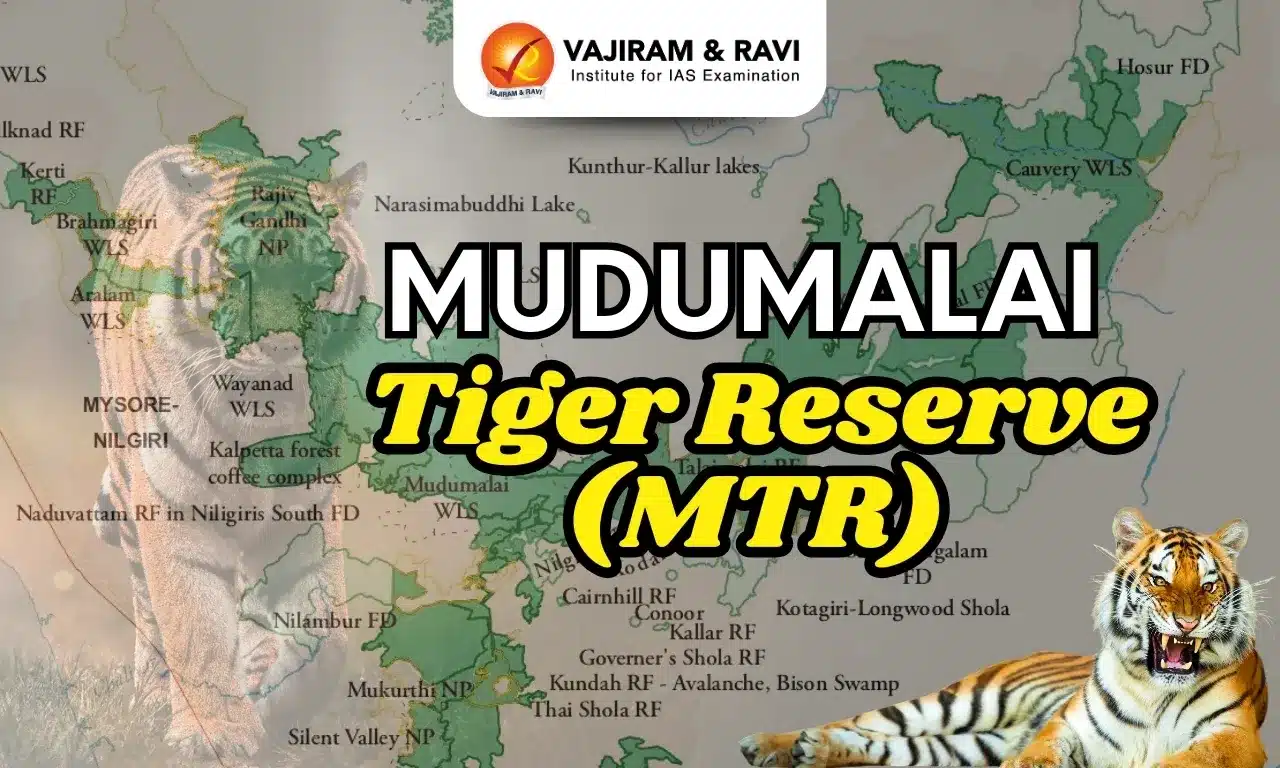
  • Location: It is located in the Nilgiris District of Tamil Nadu.
  • It is at the tri–junction of three states, viz, Karnataka, Kerala, and Tamil Nadu.
  • It is part of the Nilgiris Biosphere Reserve, the first biosphere reserve in India.
  • It has a common boundary with Wayanad Wildlife Sanctuary (Kerala) on the west, Bandipur Tiger Reserve (Karnataka) on the north.
  • Terrain: The terrain is undulating, with the elevation ranging from 960m to 1266m.
  • Vegetation: A variety of habitats ranging from tropical evergreen forest, moist deciduous forest, moist teak forest, dry teak forest, secondary grasslands, and swamps are found here.
  • River: The Moyar River runs through the reserve.
  • Flora: It has tall grasses, commonly referred to as “Elephant Grass”, bamboo of the giant variety, and valuable timber species like Teak, Rosewood, etc.
    • It has wild relatives of cultivated plants, viz. wild rice, ginger, turmeric, cinnamon, etc.
  • Fauna: It includes elephant, gaur, sambar, four-homed antelope, spotted deer, barking deer, blackbuck, wild pig, mouse deer, and predators like tigers, leopards, and wild dogs.

Source: NIE

Mudumalai Tiger Reserve FAQs

Q1: Where is Mudumalai Tiger Reserve located?

Ans: Tamil Nadu

Q2: What is the primary Vegetation type of Mudumalai Tiger Reserve?

Ans: Tropical evergreen forest and Moist deciduous forest

Chedi Dynasty, Capital, History, Sources, Architecture, Rulers

Chedi Dynasty

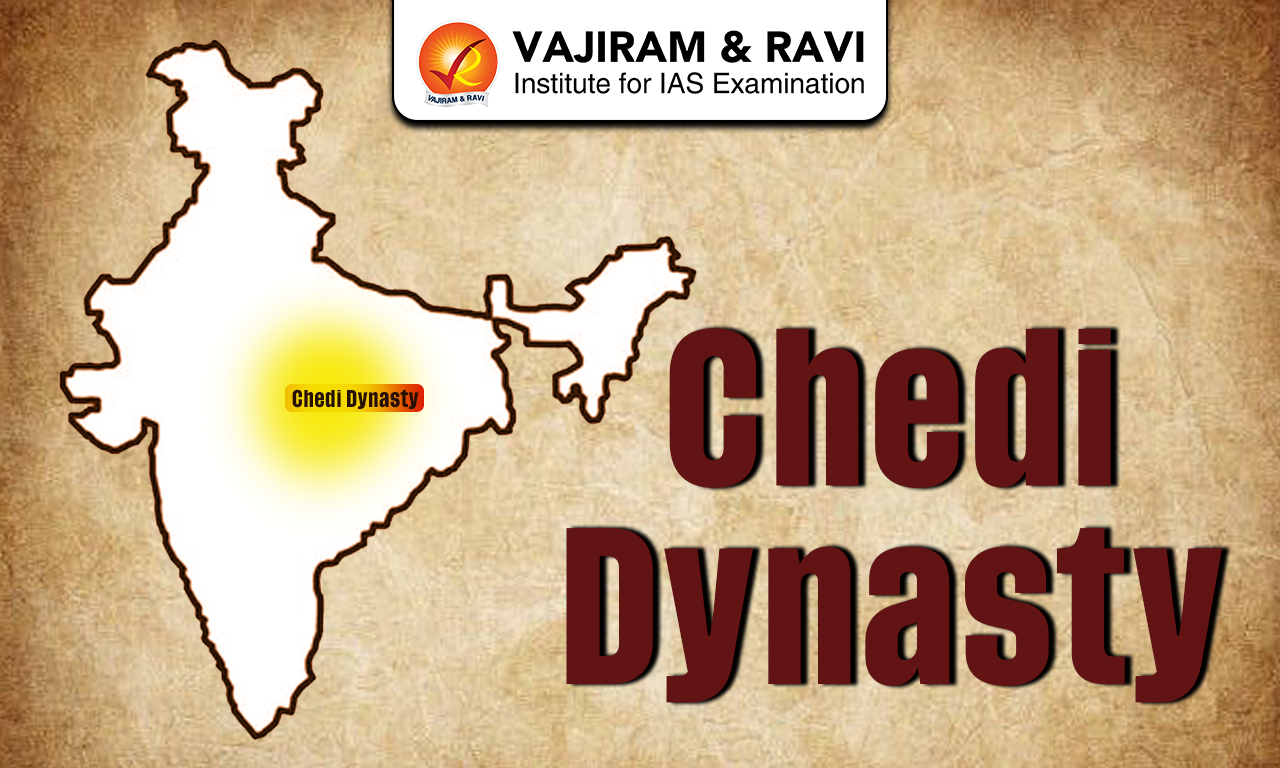
The Chedi Dynasty was an important ruling lineage that emerged in Kalinga around the 1st century BCE. The dynasty was also known as Cheta, Chetavamsa or Mahameghavahana. It gained prominence after Ashoka. There is very limited or no detailed information available about other rulers of the Chedi dynasty. Most historical information about this dynasty comes from the Hathigumpha inscription.

Chedi Dynasty Historical Background

The Chedi Dynasty originated in Kalinga and rose to prominence after the decline of Mauryan influence in the region.

  • Origin: The dynasty was founded by King Abhichandra around the 1st century BCE in Kalinga (present day Odisha).
  • Rise: After Ashoka’s rule, Kalinga regained importance under the Chedi rulers, who re-established regional political strength and cultural identity in eastern India.
  • Capital: Suktimati-Puri served as the capital city, strategically located on the banks of the Suktimati river, supporting political control and regional connectivity in Kalinga.
  • Sources: Almost all information about the dynasty comes from the Hathigumpha inscription near Bhubaneswar, making it the primary historical evidence for understanding the dynasty’s political and cultural aspects.
  • Mahajanapada Linkage: The Chedi lineage is connected with one of the sixteen monarchical mahajanapadas, earlier located near the Yamuna river between the Vatsas and Kurus.
  • Literary References: The Chedi people, a Kshatriya group, are frequently mentioned in Buddhist, Jaina and Brahmanical texts, as well as in the Rigveda, indicating their long standing historical presence.
  • Geographic Expansion: In later periods, the Chedi region extended towards the Narmada river and important towns like Sahajati and Tripuri became associated with its political geography.

Chedi Dynasty Features

The Chedi Dynasty displayed significant features in administration, economy, religion and art, mainly reflected through inscriptions and cave architecture.

  • Administration: The dynasty followed a monarchical system, with strong centralized authority under the king, as reflected in Kharavela’s detailed inscriptions describing governance and military expeditions.
  • Economy: The economy was supported by agriculture and regional trade, with river based settlements like Suktimati aiding in economic activities and sustaining urban centers.
  • Religion: Jainism was strongly patronized, especially under Kharavela, who supported Jain monks and religious practices, evident from inscriptions and cave structures linked to Jain traditions.
  • Hathigumpha Inscription: Located in the Udayagiri hills near Bhubaneswar, this inscription in Brahmi script provides detailed information about Kharavela’s reign and remains the primary historical source. This inscription is written beginning with Jain Namokar Mantra and detailing military campaigns and achievements of Kharavela.
  • Art and Architecture: The dynasty is noted for rock cut cave architecture, inscriptions and sculptures, showing a blend of religious purpose and artistic excellence in early historic India.
  • Udayagiri and Khandagiri Caves: Built during the 1st to 2nd century BCE near Bhubaneswar, these caves include both natural and artificial structures, used as residences for Jain monks and religious activities.
  • Ranigumpha Cave: The double storeyed Ranigumpha cave in Udayagiri is known for its intricate sculptures, reflecting advanced artistic skills and architectural planning during the Chedi period.
  • Cultural Importance: The Chedi dynasty played a role in preserving Kshatriya traditions and contributed to the cultural and religious landscape through its association with Jainism and ancient literature.

Chedi Dynasty Rulers

The information about the Chedi rulers is limited. However King Kharavela is considered as the most prominent and well documented ruler of the dynasty. Major rulers of the Chedi Dynasty are:

  • Abhichandra: Considered the founder of the Chedi dynasty in Kalinga during the 1st century BCE, he established the base of the dynasty with Suktimati-Puri as its capital.
  • Kharavela: The most important ruler, he ruled around the 1st century BCE and is known through the Hathigumpha inscription, which records his achievements, military campaigns and administrative activities. He was a follower of Jainism and promoted Jain religious traditions, as reflected in the Hathigumpha inscription that begins with the Jain Namokar Mantra.
  • Kudepasiri: Kharavela was succeeded by his son Kudepasiri, whose name appears in the Mancapuri Cave inscription, indicating continuation of the dynasty.

Chedi Dynasty FAQs

Q1: What was the Chedi Dynasty?

Ans: The Chedi Dynasty was an ancient ruling dynasty that emerged in Kalinga around the 1st century BCE and is mainly known through the Hathigumpha inscription.

Q2: Who founded the Chedi Dynasty?

Ans: The dynasty was founded by King Abhichandra in Kalinga, with Suktimati-Puri as its capital.

Q3: Who was the most important ruler of the Chedi Dynasty?

Ans: King Kharavela was the most prominent ruler, known for his military achievements and Jain patronage recorded in the Hathigumpha inscription.

Q4: What is the main source of information about the Chedi Dynasty?

Ans: The Hathigumpha inscription located in the Udayagiri hills near Bhubaneswar is the primary source of information about the dynasty.

Q5: Which religion was supported by the Chedi Dynasty Rulers?

Ans: The Chedi rulers, especially Kharavela, were followers and patrons of Jainism.

UPSC Daily Quiz 6 April 2026

UPSC Daily Quiz

[WpProQuiz 130]

UPSC Daily Quiz FAQs

Q1: What is the Daily UPSC Quiz?

Ans: The Daily UPSC Quiz is a set of practice questions based on current affairs, static subjects, and PYQs that help aspirants enhance retention and test conceptual clarity regularly.

Q2: How is the Daily Quiz useful for UPSC preparation?

Ans: Daily quizzes support learning, help in revision, improve time management, and boost accuracy for both UPSC Prelims and Mains through consistent practice.

Q3: Are the quiz questions based on the UPSC syllabus?

Ans: Yes, all questions are aligned with the UPSC Syllabus 2025, covering key areas like Polity, Economy, Environment, History, Geography, and Current Affairs.

Q4: Are solutions and explanations provided with the quiz?

Ans: Yes, each quiz includes detailed explanations and source references to enhance conceptual understanding and enable self-assessment.

Q5: Is the Daily UPSC Quiz suitable for both Prelims and Mains?

Ans: Primarily focused on Prelims (MCQ format), but it also indirectly helps in Mains by strengthening subject knowledge and factual clarity.

Arjun Tank, Features, Variants, Mk1, Mk1A, MkII, Contributions

Arjun tank

Arjun Tank is India’s indigenously developed third generation Main Battle Tank designed by the Defence Research and Development Organisation (DRDO) with the aim of achieving superior firepower, mobility and protection. The development was initiated in 1972 and the project was completed in March 1995 with delivery of prototypes and pre production tanks. It has been inducted into the Indian Army with 100+ tanks operationalised in two armoured regiments.

Arjun Tank Features

Arjun Tank combines advanced firepower, mobility and protection systems, making it a modern battlefield platform suited for diverse operational conditions. The key highlighting features of the Tank are:

  • Firepower System: Arjun is equipped with an indigenously developed 120 mm rifled gun using FSAPDS ammunition. It has a computer controlled integrated fire control system with stabilised sighting.
  • Secondary Armament: The tank includes a 7.62 mm coaxial machine gun for anti personnel roles and a 12.7 mm machine gun for engaging aerial and ground targets effectively.
  • Crew and Design: It is operated by a four member crew including commander, gunner, driver and loader, ensuring efficient division of operational responsibilities during combat situations.
  • Mobility Capability: Powered by a 1400 HP diesel engine, Arjun achieves a top speed of around 70 km/h, providing high mobility and maneuverability across different battlefield terrains.
  • Protection System: It uses Kanchan modular composite armour developed by DRDO, offering strong protection against anti tank ammunition along with NBC protection and fire suppression systems.
  • Advanced Technologies: The tank integrates modern systems such as night vision, infrared systems, digital communication and passive countermeasures, making it a technologically advanced combat platform.

Arjun Tank Variants 

Arjun Tank has evolved into multiple variants with continuous improvements to enhance operational capability, survivability and indigenous content.

Arjun Mk1

  • This is the base variant with 124 tanks ordered and 122 inducted into service, forming two armoured regiments and marking India’s entry into indigenous MBT capability.

Arjun Mk1A

  • This upgraded variant includes 72 new features and 14 major upgrades, enhancing firepower, mobility and survivability with 54.3% indigenous content compared to 41% in Mk1.
  • The Ministry of Defence placed an order for 118 tanks worth Rs 7,523 crore in 2021, boosting domestic manufacturing and supporting over 200 Indian vendors and 8,000 jobs.
  • It includes improved transmission systems, better target engagement, all terrain mobility and capability to operate effectively in both static and dynamic combat conditions.

Also Read: T-90 Bhishma Tank

Arjun MkII

  • MkII is under development with 73 improvements including 15 major upgrades, out of which 53 have been validated through user trials, though the induction timeline remains uncertain.
  • It is planned as a lightweight futuristic MBT with electro optical sensors and high power laser systems, enhancing surveillance and combat effectiveness in modern warfare scenarios.

Arjun Tank Contributions 

Arjun Tank has contributed significantly to India’s armoured strength through deployment, trials and technological advancements in indigenous defence production.

  • Operational Deployment: Two armoured regiments (43 and 75 Armoured Regiments) equipped with Arjun Mk1 have been raised and deployed, primarily along western frontiers for strategic defence operations.
  • Trial Performance: During comparative trials in 2010, Arjun Mk1 outperformed imported T 90 tanks in key parameters such as firing accuracy, mobility and subsystem performance.
  • Development Milestone: The project began in 1972 and was completed in 1995 at a total cost of Rs 305.60 crore, reflecting long term indigenous technological development efforts.
  • Mk1A Induction Progress: The upgraded Mk1A variant was developed within two years (2010-2012) and tested over 7000+ km, highlighting rapid advancement in indigenous defence capabilities.
  • Industrial Impact: The Mk1A project supports over 200 Indian vendors and generates employment for around 8,000 people, strengthening the domestic defence manufacturing ecosystem.

Arjun Tank FAQs

Q1: What is Arjun Tank?

Ans: Arjun Tank is an indigenously developed third generation Main Battle Tank designed by the Defence Research and Development Organisation for the Indian Army with advanced firepower, mobility and protection systems.

Q2: When was the Arjun Tank project completed?

Ans: The Arjun Tank project was completed in March 1995 after delivering prototypes and pre production tanks, although development had started earlier in 1972.

Q3: What is the main gun of Arjun Tank?

Ans: Arjun Tank is equipped with a 120 mm rifled gun that uses FSAPDS ammunition, capable of destroying modern tank armour at direct firing ranges.

Q4: What is the status of Arjun MkII variant?

Ans: Arjun MkII is under development with 73 improvements, out of which 53 have been successfully validated through user trials, but its induction timeline is not yet fixed.

Q5: What is Arjun Tank Mk1A variant?

Ans: Arjun Mk1A has 72 new features, improved firepower, better mobility and 54.3% indigenous content, making it more advanced than the earlier Mk1 version.

Rupee Depreciation, Meaning, Causes, Impact, and Solutions

Rupee Depreciation

Rupee depreciation is a crucial concept in economics that reflects the strength of India’s currency in the global market. It directly affects trade, inflation, investment, and the daily life of citizens. Let’s understand it in a simple yet comprehensive way.

What is Rupee Depreciation?

Rupee depreciation refers to a decline in the value of the Indian Rupee (INR) relative to foreign currencies such as the US Dollar (USD) or other major global currencies. In simple terms, it means that more rupees are required to purchase one unit of foreign currency. For example, if the exchange rate changes from ₹90 per USD to ₹95 per USD, the rupee has depreciated.

Exchange Rate System in India

India follows a managed floating exchange rate system, where the value of the Indian Rupee is mainly determined by market demand and supply, but the central bank intervenes when necessary. This system provides flexibility while ensuring stability in the currency market.

  • Market-Based Determination: The exchange rate of the rupee is primarily decided by the forces of demand and supply in the foreign exchange market.
  • Role of Reserve Bank of India: The RBI intervenes by buying or selling foreign currencies (mainly US dollars) to control excessive fluctuations.
  • Managed Nature: It is not a completely free-floating system, as RBI actively manages volatility to avoid sudden shocks.
  • No Fixed Exchange Rate: India does not fix its currency value against any specific foreign currency like the US dollar.
  • Volatility Control: RBI steps in during sharp appreciation or depreciation to maintain stability in the economy.
  • Forex Reserve Management: RBI uses foreign exchange reserves as a tool to influence the exchange rate and ensure liquidity.
  • Flexibility with Stability: The system allows the rupee to adjust according to global economic conditions while preventing extreme instability.
  • Protection from External Shocks: Helps India deal with global crises such as oil price shocks, financial crises, or capital outflows.

Factors Responsible for Rupee Depreciation

Rupee depreciation occurs due to a combination of domestic economic conditions and global factors. It mainly happens when the demand for foreign currency increases more than the demand for the Indian Rupee.

  • Capital Outflows (FPI Withdrawals): When foreign investors withdraw money from Indian stock and bond markets, demand for foreign currency rises, leading to a fall in the rupee’s value.
  • Trade Deficit: When imports exceed exports, India needs more foreign currency (like USD) to pay for imports, which weakens the rupee.
  • High Import Dependence: India imports large quantities of crude oil, gold, electronics, and machinery, increasing demand for dollars.
  • Rising Crude Oil Prices: Higher global oil prices increase India’s import bill, putting pressure on the rupee.
  • High Gold Imports: Increased gold imports widen the current account deficit and reduce the strength of the rupee.
  • Inflation Differential: Higher inflation in India compared to other countries reduces purchasing power and makes exports less competitive, leading to depreciation.
  • Monetary Policy Decisions: Lower interest rates or loose monetary policy by the Reserve Bank of India can reduce foreign investment inflows.
  • Forex Reserve Operations: RBI’s buying or selling of foreign currency to manage reserves can influence exchange rate movements.
  • Weak Investor Confidence: If investors lose confidence in the economy or central bank policies, capital outflows increase, weakening the rupee.
  • Global Economic Factors: Events like US Federal Reserve rate hikes, geopolitical tensions, or global recession increase demand for safe currencies like the US Dollar.
  • Illiquidity Issues: When short-term foreign liabilities exceed available foreign exchange assets, it creates pressure on the rupee.

Impact of Rupee Depreciation on the Economy

Rupee depreciation has a mixed impact on the economy, creating both opportunities and challenges. While it can boost exports and foreign inflows, it also increases inflation and the cost of imports.

Positive Impact

  • Boost to Exports: A weaker rupee makes Indian goods and services cheaper in international markets, increasing demand and improving export performance, especially in sectors like IT, textiles, and pharmaceuticals.
  • Higher Remittance Inflows: Non-Resident Indians (NRIs) get more rupees for every dollar sent to India, which increases household income and strengthens foreign exchange inflows.
  • Encouragement to Domestic Production: Costlier imports push consumers and industries to prefer locally produced goods, supporting domestic industries and initiatives like “Make in India.”
  • Improved Global Competitiveness: Indian companies become more competitive globally as their products are relatively cheaper compared to other countries.
  • Growth in Tourism Sector: India becomes a cheaper destination for foreign tourists, increasing tourism revenue and foreign exchange earnings.

Negative Impact

  • Higher Import Costs: Essential imports like crude oil, electronics, and machinery become expensive, increasing the overall import bill and affecting industries.
  • Imported Inflation: Rising import costs lead to an increase in prices of goods and services, contributing to overall inflation in the economy.
  • Widening Trade and Current Account Deficit: Higher cost of imports increases the trade deficit, even if import volumes remain unchanged.
  • Increased External Debt Burden: Loans taken in foreign currencies become more expensive to repay, increasing financial pressure on companies and the government.
  • Capital Outflows and Investment Risk: Continuous depreciation can reduce foreign investor confidence, leading to capital flight and lower foreign investment.
  • Reduced Purchasing Power: Higher prices of imported goods reduce the spending capacity of consumers, affecting overall demand in the economy.
  • Higher Production Costs: Industries dependent on imported raw materials face increased costs, which may reduce profits and slow economic growth. 

Devaluation vs Depreciation of Currency

Devaluation and depreciation both refer to a fall in the value of a currency, but they differ in how and why this fall happens. Devaluation is a deliberate policy action by the government or central bank, while depreciation occurs naturally due to market forces.

Devaluation vs Depreciation of Currency

Basis

Devaluation

Depreciation

Meaning

Intentional reduction in currency value by the government or central bank

Fall in currency value due to market forces

Control

Controlled and planned action

Not directly controlled; happens automatically

Exchange Rate System

Occurs in fixed exchange rate system

Occurs in floating or managed floating system

Decision Authority

Government or central bank (like Reserve Bank of India)

Determined by demand and supply in forex market

Nature

Sudden and official

Gradual and continuous

Purpose/Cause

To boost exports, reduce trade deficit, or improve balance of payments

Caused by inflation, capital outflows, high imports, global factors

Example

Government officially lowers currency value against USD

Rupee falls from ₹80 to ₹85 per USD due to market pressure

How Can the Indian Rupee Be Strengthened?

Strengthening the Indian Rupee requires a mix of short-term actions and long-term structural reforms. It involves improving economic fundamentals, increasing foreign inflows, and reducing dependence on foreign currencies.

Short-Term Measures

  • Forex Market Intervention: The Reserve Bank of India can sell US dollars from its reserves to control excessive depreciation and stabilize the rupee.
  • Interest Rate Hike: Increasing interest rates attracts foreign investors seeking better returns, which increases demand for the rupee.
  • Currency Swap Agreements: Agreements with other countries help ensure liquidity and reduce pressure on foreign exchange reserves.
  • Import Control Measures: Restricting non-essential imports (like gold) helps reduce demand for foreign currency.
  • Attract Short-Term Capital Flows: Policies to encourage Foreign Portfolio Investment (FPI) can support the rupee in the short run.

Long-Term Measures

  • Boost Exports: Improving export competitiveness through better quality, innovation, and diversification helps increase foreign exchange earnings.
  • Reduce Import Dependence: Promote domestic production, especially in sectors like energy, electronics, and defence, to reduce reliance on imports.
  • Promote Rupee-Based Trade: Encourage international trade settlements in INR through mechanisms like Special Vostro Rupee Accounts (SVRAs), reducing dependence on the US Dollar.
  • Strengthen Forex Reserves: Maintaining high foreign exchange reserves provides a buffer against external shocks and supports currency stability.
  • Attract Foreign Investment (FDI & FPI): Improving ease of doing business, stable policies, and infrastructure development attract long-term capital inflows.
  • Control Inflation: Keeping inflation low ensures better purchasing power and strengthens the rupee over time.
  • Fiscal Discipline: Reducing fiscal deficit and maintaining stable government finances improve investor confidence.
  • Develop Global Market for INR: Promoting offshore trading, masala bonds, and global acceptance of INR increases its demand internationally.
  • Expand Digital Payment Systems: Global expansion of platforms like UPI can enhance the international usage of the rupee.

Rupee Depreciation FAQs

Q1: What is rupee depreciation?

Ans: Rupee depreciation means a fall in the value of the Indian Rupee (INR) compared to foreign currencies like the US Dollar. It implies that more rupees are needed to buy one unit of foreign currency.

Q2: What causes rupee depreciation?

Ans: Rupee depreciation is caused by factors such as high imports, low exports, inflation, capital outflows, rising crude oil prices, and global economic conditions.

Q3: Is rupee depreciation good or bad?

Ans: It has both positive and negative effects. It helps exports and remittances but increases import costs, inflation, and reduces purchasing power.

Q4: Who controls rupee depreciation in India?

Ans: The Reserve Bank of India manages it indirectly by controlling interest rates, forex reserves, and intervening in the currency market.

Q5: What is the difference between depreciation and devaluation?

Ans: Depreciation is a market-driven fall in currency value, while devaluation is a deliberate reduction by the government or central bank.

International Health Regulations (IHR), Objectives, Principles

International Health Regulations

The International Health Regulations (IHR) are a global legal framework developed by the World Health Organization to protect people from the international spread of diseases. These regulations clearly define the rights and responsibilities of countries in handling public health events that may cross borders. 

The IHR are legally binding on 196 countries, including all WHO member states, which means countries are required to follow them. They also provide clear guidelines to decide whether a situation should be declared a Public Health Emergency of International Concern (PHEIC). The regulations aim to ensure global health safety while also protecting trade and travel from unnecessary restrictions.

International Health Regulations Objectives

The International Health Regulations (IHR) aim to protect global health by preventing and controlling the international spread of diseases in a timely and effective manner.

  • Prevent the international spread of infectious diseases and health risks
  • Ensure early detection and timely reporting of public health events
  • Promote quick and coordinated global response to health emergencies
  • Strengthen national health systems and surveillance capacity
  • Minimize unnecessary interference with international travel and trade
  • Encourage transparency and information sharing among countries
  • Support global cooperation and collective action
  • Protect human rights while implementing health measures

Also Read: Communicable Diseases

Principles of International Health Regulations

The International Health Regulations (IHR) are guided by key principles that ensure public health measures are effective while also respecting the rights and dignity of individuals. Developed by the World Health Organization, these principles promote fairness, transparency, and global cooperation in managing health emergencies.

  • Protect the human rights and dignity of all individuals during health measures
  • Ensure privacy and confidentiality of personal health data
  • Promote informed consent before applying medical examinations or treatments
  • Prevent discrimination based on nationality, race, or identity
  • Encourage transparency and timely sharing of information between countries
  • Apply health measures that are scientifically justified and evidence-based
  • Ensure actions are proportionate to the public health risk
  • Avoid unnecessary interference with international travel and trade
  • Promote international cooperation and mutual trust among countries
  • Ensure fair and ethical implementation of all health regulations

Also Read: Non-Communicable Diseases.

Implementation of IHR

The implementation of the International Health Regulations (IHR) is essential for protecting global health and preventing the international spread of diseases. It requires strong coordination between countries and the World Health Organization, along with well-developed health systems at the national level.

  • Every country must establish a National IHR Focal Point to act as the main communication link with WHO and ensure timely sharing of public health information
  • The focal point is responsible for reporting health events, emergencies, and potential risks to WHO quickly and accurately
  • Early detection of public health threats is crucial to prevent the spread of diseases at national and international levels
  • Governments must build effective response systems to take immediate action and control outbreaks before they become serious
  • Core health capacities should be developed at all levels, including local, regional, and national health systems
  • Special focus is given to points of entry such as airports, seaports, and land borders to prevent cross-border transmission of diseases
  • Countries must implement health measures related to international travel and transport, including checking health documents like vaccination certificates
  • Proper monitoring of aircraft, ships, and cargo is required to ensure that diseases are not transmitted through international movement
  • The IHR require countries to follow a systematic approach of detecting, assessing, reporting, and responding to health events
  • Detection involves identifying risks through strong surveillance and early warning systems
  • Assessment requires evaluating the seriousness of the event using IHR guidelines to determine its potential global impact
  • Reporting involves informing WHO through the National IHR Focal Point about events that may become a Public Health Emergency of International Concern (PHEIC)
  • Response includes taking immediate public health actions, such as isolation, treatment, and control measures to contain the outbreak

Role of the World Health Organization (WHO)

The World Health Organization plays a central and coordinating role in the implementation of the International Health Regulations (IHR). It supports countries in strengthening their health systems, ensures global cooperation, and helps manage public health emergencies effectively.

  • Acts as the global coordinating authority for implementing the IHR among all member countries
  • Provides technical guidance and support to countries for managing public health risks and emergencies
  • Helps countries build and strengthen core health capacities, including surveillance, detection, and response systems
  • Develops and shares tools, frameworks, and guidelines for disease prevention and control
  • Facilitates timely information sharing between countries during health emergencies
  • Assists in identifying and declaring Public Health Emergencies of International Concern (PHEIC)
  • Supports countries in risk assessment and decision-making based on scientific evidence
  • Provides training and capacity-building programs for healthcare professionals and authorities
  • Coordinates international response efforts during global outbreaks and pandemics
  • Monitors global health trends and tracks disease outbreaks worldwide

International Health Regulations FAQs

Q1: What are International Health Regulations (IHR)?

Ans: The International Health Regulations (IHR) are legally binding rules created by the World Health Organization to help countries prevent and control the international spread of diseases. They provide a framework for global cooperation during public health emergencies.

Q2: How many countries are part of the IHR?

Ans: A total of 196 countries, including all 194 WHO Member States, are bound by the IHR, making it a truly global health agreement.

Q3: What is a Public Health Emergency of International Concern (PHEIC)?

Ans: A PHEIC is a serious public health event that can spread across countries and requires international coordination and response to control the situation effectively.

Q4: What is the main objective of the IHR?

Ans: The main objective is to prevent the international spread of diseases, ensure global health security, and avoid unnecessary disruptions to international travel and trade.

Q5: What is a National IHR Focal Point?

Ans: It is a designated authority in each country responsible for communication with WHO regarding public health events and emergencies.

National Maritime Day

National Maritime Day

National Maritime Day Latest News

The Prime Minister of India on the occasion of National Maritime Day, recalled India’s rich maritime heritage and acknowledged the invaluable contribution of all those associated with the sector.

About National Maritime Day

  • It is celebrated every year on April 5.
  • History: National Maritime Day commemorates the maiden voyage of S.S. Loyalty, which sailed from Mumbai to London on April 5, 1919.
  • This was a groundbreaking event as it represented India’s independence in maritime affairs, challenging the British shipping monopoly.
  • Theme of National Maritime Day 2026: “Maritime India – Empowering Progress"
  • The theme of 2026 aims at fostering a self-reliant, technologically advanced, and eco-friendly maritime sector by 2047.
  • Key Focus Areas for National Maritime Day 2026
    • Port-Led Development: Expansion of port infrastructure, including the strengthening of the Sagarmala initiative to enhance India’s port capacity.
    • Sustainability: Promoting eco-friendly practices in shipping, and focusing on reducing the carbon footprint of the maritime industry.
    • Honouring Seafarers: Acknowledging the vital role maritime professionals play in driving India’s economy.
    • Technological Advancement: Enhancing digital infrastructure to reduce port turnaround times and improve operational efficiency.

Source: PIB

National Maritime Day FAQs

Q1: What is the theme of National Maritime Day 2026?

Ans: Maritime India – Empowering Progress

Q2: When is National Maritime Day celebrated in India?

Ans: April 5

ECINet Platform

ECINet Platform

ECINet Platform Latest News

Recently, the Election Commission of India (ECI) has urged voters to make informed choices by using the “Know Your Candidates” (KYC) module available on its ECINet platform.

About ECINet Platform

  • It is a single-point digital platform developed by the Election Commission of India (ECI).
  • It is a new user-friendly digital interface for the electors and other stakeholders such as the election officials, political parties, and civil society.

Features of ECINet Platform

  • It integrates and reoriented over 40 of ECI’s existing mobile and web applications.
  • ECINET subsumed existing apps like the Voter Helpline App, Voter Turnout App, cVIGIL, Suvidha 2.0, ESMS, Saksham, and KYC App.
  • ECINET has an aesthetic User Interface (UI) and a simplified User Experience (UX) by providing a singular platform for all electoral-related activities. 
  • It offers a range of services to voters, including registration, electoral roll search, application tracking, and grievance redressal.
  • Additional features include downloading digital voter ID cards (e-EPIC), connecting with election officials, and booking calls with Booth Level Officers (BLOs).
  • The platform also includes tools such as cVIGIL for reporting election code violations and Saksham for facilitating accessible services for persons with disabilities.
  • It has been developed in full compliance with the Constitution of India, the Representation of the People Acts, 1950 and 1951, Registration of Electors Rules, 1960 and the Conduct of Election Rules, 1961.

Source: DD News

ECINet Platform FAQs

Q1: What is a key feature of ECINet?

Ans: Real-time election monitoring

Q2: Who launched the ECINet digital platform?

Ans: Election Commission of India

Rove Beetle

Rove Beetle

Rove Beetle Latest News

Researchers have discovered three previously unknown species of rove beetles in Arunachal Pradesh, marking a significant addition to the state’s rich biodiversity.

About Rove Beetle

  • Rove beetles (family Staphylinidae) are one of the largest beetle families.
  • Appearance: They are typically elongate, fast-moving beetles with shortened wing covers (elytra) that expose flexible abdominal segments.
  • Many species of these beetles can raise the abdomen in a scorpion-like defensive posture (not a true sting).
  • Preferred climate: sub-tropical, cold tolerant
  • Distribution: Rove beetles occupy almost all moist environments throughout the world.
  • Habitat: Typical microhabitats include leaf litter, soil surface, under bark, fungi, shorelines, dung, carrion, compost, and nests of social insects;
  • These are usually found around decaying animal and vegetable matter, preying on carrion-feeding insects. 
  • Features
    • Some large species are a brightly coloured black and yellow, thus resembling wasps; other rove beetles mimic soldier ants in both appearance and behaviour.
    • These predatory beetles are beneficial to farmers and gardeners, because they can reduce pest populations, also referred to as biological control
    • Lifespan is variable: adults may live ~2 weeks to ~12 months; total life cycle often ~1-24 months depending on climate and species.
    • Chemical defenses from abdominal glands; secretions can deter predators and may include irritants or antimicrobial compounds. 

Source: IT

Rove Beetle FAQs

Q1: What do Rove Beetles primarily feed on?

Ans: Decaying organic matter

Q2: What is the primary defense mechanism of Rove Beetles?

Ans: Releasing irritating chemicals

Indian Softshell Turtle

Indian Softshell Turtle

Indian Softshell Turtle Latest News

Recently, during a routine check police rescued 16 Indian Softshell turtles in Greater Noida.

About Indian Softshell Turtle

  • Indian softshell turtles (Nilssonia gangetica) are one of the largest freshwater turtle species in the world. 
  • It is also known as the Ganges Softshell turtle.
  • Appearance
    • It has carapace (upper shell), which is round to oval shaped, and green in colour with a yellow border.
    • It has a long neck and tube-like snouts help them to extend their nose out of the water to breathe.
    • The compressed shell, on the other hand, streamlines them, thereby making them brilliant and fast swimmers.
  • Habitat: These turtles inhabit deep rivers, streams, canals, lakes and ponds, typically preferring areas with sandy or muddy bottoms.
  • They thrive in turbid water and spend most of their time hidden under the sand.
  • Geographical Distribution: They are found in Afghanistan, India, Bangladesh and Pakistan.
  • Mainly found in Indus, Ganges, Meghna, Brahmaputra, Yamuna, Narmada and Mahanandi river basins.
  • Diet: Indian softshell turtles are omnivorous, feeding on fish, amphibians, mollusks, insects, carrion and aquatic plants. 
  • These turtles breed from February to April.
  • These are often maintained in the temple ponds of Orissa where they are considered sacred.
  • Threat: Habitat alteration and destruction, Poaching and illegal trading for traditional medicines, expansion of agriculture, commercial exploitation.
  • Conservation Status
    • IUCN Red List: Endangered
    • Wildlife Protection Act, 1972: Schedule I

Source: IE

Indian Softshell Turtle FAQs

Q1: What is the scientific name of the Indian Softshell Turtle?

Ans: Nilssonia gangeticus

Q2: Where is the Indian Softshell Turtle primarily found?

Ans: Rivers and lakes of northern India

BioNEST

BioNEST

BioNEST Latest News

Recently, the Union Minister inaugurated the Biotechnology Industry Research Assistance Council (BIRAC)-BioNEST Incubation Centre at the Central Food Technology & Research Institute (CFTRI) in Mysuru.

About BioNEST

  • The Bioincubators Nurturing Entrepreneurship for Scaling Technologies (Bio-NEST) was launched by Biotechnology Industry Research Assistance Council.
  • It was launched with a vision that focused on fostering the biotech innovation ecosystem in the country.
  • The BioNEST Incubators provide access to high end infrastructure, specialized and advanced equipment, business mentorship, IP, legal and regulatory guidance and networking opportunities to start-ups. 
  • The main objectives of the BioNEST scheme are to promote and establish Bioincubators in India which will:
    • Support and encourage startups and entrepreneurs in the biotech sector
    • Connect Industry and Academia and enable interactions for efficient exchange of knowledge as well as facilitate technical and business mentorship.
    • Provide enabling services and required mentorship for IP and Technology management, legal support, certifications, validation, regulatory requirements, resource mobilization and a unique networking platform.
  • Funding: The BIRAC funding for the BIRAC BioNEST Centres will be done in alignment with the Government’s umbrella scheme ‘Biotechnology Research Innovation and Entrepreneurship Development’ (Bio-RIDE).

Source: DD News

BioNEST FAQs

Q1: What is BioNEST?

Ans: A bioincubation center for startups

Q2: What is the primary objective of BioNEST?

Ans: To support biotech startups

Afghanistan

Afghanistan

Afghanistan Latest News

India has sent Humanitarian Assistance and Disaster Relief materials to Afghanistan, which is currently facing a difficult situation due to recent floods and earthquakes.

About Afghanistan

  • Location: It is a landlocked mountainous country in Southern Asia.
  • Bordering Countries: It is bordered by India (north east),  Pakistan in the east and south; Iran in the west; Turkmenistan, Uzbekistan and Tajikistan in the north and China in the northeast. 
  • Capital City: Kabul

Geographical Features of Afghanistan

  • Climate: It has hot summers and extremely cold winters which are typical in a semiarid steppe climate.
  • Mountain ranges: It consists of Hindu Kush, Pamir Mountains in the northeast and Safed Koh range in the south.
  • Major rivers: River Amu Darya, Helmand River, Kabul River
  • Highest Point: Mt. Nowshak (7,485 m). 
  • Natural Resources: It mainly consists of coal, copper, natural gas, petroleum, gold, lithium, uranium, gold, rare earth elements.

Source: News On Air

Afghanistan FAQs

Q1: What is the capital of Afghanistan?

Ans: Kabul

Q2: What are the major ethnic group in Afghanistan?

Ans: Pashtun, Tajik and Hazara

Obstructive Sleep Apnea

Obstructive Sleep Apnea

Obstructive Sleep Apnea Latest News

Scientists have found that those living with obstructive sleep apnea (OSA) have a 71 per cent higher risk of cardiovascular events (CVEs).

About Obstructive Sleep Apnea

  • It is the most common sleep-related breathing disorder. 
  • People with OSA repeatedly stop and start breathing while they sleep. 
  • These breath pauses are known as apneas.
  • It is characterised by recurrent upper airway obstruction during sleep and is associated with reduced quality of sleep and life and increased cardiovascular risk.
  • There are several types of sleep apnea. OSA occurs when the throat muscles relax and block the airway. 
  • Anyone at any age can have OSA. But it’s most common in middle-aged and older adults
  • This condition has significant implications for cardiovascular health, mental well-being, and quality of life.

Symptoms of Obstructive Sleep Apnea

  • Loud snoring
  • Pauses in breathing during sleep, often noticed by a partner.
  • Waking during the night gasping or choking.

Treatment for OSA

  • Making lifestyle changes like sleeping position adjustments (not sleeping on your back) or maintaining a weight that’s healthy for you.
  • Using a continuous positive airway pressure (CPAP) machine
  • Wearing oral appliances (mouthpieces)

Source: DD News

Obstructive Sleep Apnea FAQs

Q1: What is the primary cause of Obstructive Sleep Apnea?

Ans: Airway obstruction due to relaxed throat muscles

Q2: How is OSA typically diagnosed?

Ans: Sleep study (polysomnography)

Measles

Key Facts about Measles

Measles Latest News

Bangladesh launched an emergency vaccination campaign targeting more ​than a million children as a fast-spreading measles ‌outbreak sweeps across the country.

About Measles

  • Measles is a highly contagious, serious airborne disease caused by a virus.
  • Cause: It is caused by a virus in the paramyxovirus family.

Transmission of Measles

  • It spreads by contact with infected nasal or throat secretions (coughing or sneezing) or breathing the air that was breathed by someone with measles. 
  • The virus remains active and contagious in the air or on infected surfaces for up to two hours. 
  • The virus infects the respiratory tract, then spreads throughout the body, causing severe disease, complications, and even death.

Symptoms of Measles

  • The first sign of measles is usually high fever, beginning about 10 to 14 days after exposure to the virus and lasting four to seven days.
  • A runny nose, cough, red and watery eyes, and small white spots inside the cheeks can develop in the initial stage.
  • A rash erupts after several days, usually on the face and upper neck.

Who is at Risk of Measles?

  • Any non-immune person (not vaccinated or vaccinated but did not develop immunity) can become infected.
  • Unvaccinated young children and pregnant persons are at the highest risk of severe measles complications.

Measles Treatment

  • No specific antiviral treatment exists for measles.
  • It can be prevented with a safe and effective measles-rubella (MR) vaccine that gives long-term immunity

Source: TH

Measles FAQs

Q1: How is measles primarily transmitted?

Ans: Airborne droplets

Q2: What is the causative agent of measles?

Ans: Virus

Udanti- Sitanadi Tiger Reserve

Udanti Sitanadi Tiger Reserve

Udanti- Sitanadi Tiger Reserve Latest News

Recently, a rare Indian giant flying squirrel, a native of Western Ghats, was found in the Udanti- Sitanadi tiger reserve (USTR) in Chhattisgarh.

About Udanti- Sitanadi Tiger Reserve

  • Location: It is located in the state of Chhattisgarh.
  • It was established by joining the regions represented by Sitanadi and Udanti wildlife sanctuaries. 
  • Rivers: The drainage system of the reserve consists of the Mahanadi as the main river, along with the Udanti, Sitanadi, Indravan, and Pairi Rivers as tributaries.
  • The location of the reserve is strategic since it also connects with the Kanker and North Kondagaon forest divisions, forming a contiguous forest corridor to Indravati Tiger Reserve in the Bastar region.
  • There are 19 named mountains in the reserve. Deo Dongri is the highest point. The most prominent mountain is Atānga Dongar.
  • Vegetation: The forest type here is predominantly tropical dry and moist deciduous.
  • Flora: The forest is dominated by Sal (Shorea robusta), which forms dense patches across the landscape. 
    • Alongside, species such as Teak (Tectona grandis), Bamboo, Tendu, Mahua, Bija, and Harra contribute to the green diversity of the region.
  • Fauna: It is home to the last few herds of the highly endangered Wild Buffalo.
    • Apart from the tiger, other endangered and rare species are the Indian Wolf, Leopard, Sloth Bear, and Mouse Deer.

Source: DC

Udanti- Sitanadi Tiger Reserve FAQs

Q1: What is the dominant tree species in Udanti-Sitanadi Tiger Reserve?

Ans: Sal

Q2: Where is Udanti-Sitanadi Tiger Reserve located?

Ans: Chhattisgarh

Transgender Rights Law in India: 2026 Amendment and the Shift in Transgender Rights Law

Transgender Rights Law

Transgender Rights Law Latest News

  • The Transgender Persons (Protection of Rights) Amendment Act, 2026 marks a shift in the trajectory of transgender rights in India.
  • Since the 2014 NALSA judgment, courts have expanded transgender rights by emphasising personal autonomy.
  • However, legislative and executive actions have often introduced bureaucratic hurdles, limiting the full realisation of these rights.

Core Conflict: Self-Identification vs Medical Certification

  • The Supreme Court recognised transgender persons as the “third gender” and affirmed the right to self-identification.
  • Gender identity was held to be part of personal liberty (Article 21) and freedom of expression (Article 19).
  • Courts consistently upheld that gender identity is based on an individual’s internal experience, not biological tests.
  • Self-determination was treated as central to dignity, privacy, and identity.

Expansion of Rights by Courts

  • High Courts protected: 
    • Self-identification without medical proof in official documents 
    • Employment rights, rejecting forced medical examinations 
    • Access to institutions (e.g., NCC inclusion) 
    • Political rights, including contesting elections 
    • Marriage and relationships, recognising trans persons’ rights 
  • Courts repeatedly ruled that no authority can question self-identified gender.
  • Courts across India reaffirmed that gender choice lies solely with the individual, and state or institutional interference is impermissible.

Shift in 2026 Amendment Act

  • The 2026 Amendment removes self-perceived identity as the basis for recognition. 
  • It introduces: 
    • Medical board certification for gender identity 
    • Mandatory approval by district authorities 
    • Removal of categories like trans-man, trans-woman, genderqueer 
    • Surgery requirement for legal gender change
  • The amendment marks a shift from self-identification to medical certification, contrasting with the long-standing judicial emphasis on autonomy.

Legislative Reluctance and ‘Omissive Discrimination’

  • Delay and Disagreement in Lawmaking
    • After the NALSA judgment, a Private Member’s Bill (2015) was passed in Rajya Sabha. 
    • The government introduced revised versions in 2016 and 2018, which faced criticism from the transgender community. 
  • Concerns with the 2019 Act
    • The Transgender Persons Act, 2019 removed screening committees but still: 
      • Required proof of surgery for gender change 
      • Several provisions were challenged in the Supreme Court (2020) and remain pending.
  • Implementation Failures
    • The law’s implementation was weak, leading to repeated judicial interventions. 
    • In Jane Kaushik v. Union of India (2025), the Supreme Court criticised: 
      • Administrative inaction 
      • Termed it “omissive discrimination” (failure of the State to act)
    • The Court noted that the law had become a “dead letter” due to government apathy. 
    • It directed the government to: 
      • Form an advisory committee 
      • Implement the law effectively
  • 2026 Amendment and Lack of Consultation
    • The 2026 Amendment Act reintroduced: 
      • Medical certification 
      • Removal of self-identification 
    • This was done without consulting the advisory committee. 
  • Judicial Response to the Amendment
    • The Rajasthan High Court highlighted that the amendment: 
      • Departs from constitutional principles 
      • Makes gender identity subject to State approval
    • The Court warned that legal recognition of gender identity risks becoming a State-controlled entitlement, undermining earlier constitutional guarantees of autonomy.

Source: IE

Transgender Rights Law FAQs

Q1: What is the key change in the 2026 Amendment to Transgender Rights Law?

Ans: The amendment replaces self-identification with mandatory medical certification, requiring approval from authorities and surgery for legal gender change, altering earlier rights-based approaches.

Q2: What did the NALSA judgment establish regarding transgender rights?

Ans: The NALSA judgment recognised transgender persons as the third gender and affirmed self-identification as a fundamental right under personal liberty and freedom of expression.

Q3: How have courts supported transgender rights over the years?

Ans: Courts upheld self-identification, protected employment and education rights, allowed gender changes without medical proof, and recognised marriage, political participation, and personal autonomy.

Q4: What is ‘omissive discrimination’ in this context?

Ans: Omissive discrimination refers to the State’s failure to implement laws effectively, resulting in denial of rights despite legal protections, as criticised by the Supreme Court.

Q5: Why is the 2026 Amendment seen as controversial?

Ans: It shifts from autonomy to state-controlled certification, undermining constitutional principles of dignity, privacy, and self-determination recognised in earlier judicial rulings.

Iran War and Stagflation: Will the 2026 Crisis Trigger Global Stagflation?

Iran War and Stagflation

Iran War and Stagflation Latest News

  • In the 1970s and early 1980s, many Western countries faced stagflation, meaning low or negative economic growth along with high inflation. 
  • For example, the US and UK had negative or very low GDP growth in 1974–75, while inflation remained very high during the same period. 
  • A similar pattern was seen again between 1979 and 1982, especially in the US, with fluctuating growth and high inflation rates. 
  • The main cause of stagflation was oil shocks: 
    • First: After the 1973 Yom Kippur War, when Arab countries imposed an oil embargo. 
    • Second: After the 1979 Iranian Revolution and the Iran-Iraq conflict. 
  • Later oil shocks (2008, 2022, 2026) also affected economies, but: 
    • 2008 caused slow growth without high inflation. 
  • 2022 led to inflation but not a major recession.

Understanding Stagflation: Causes and Mechanism

  • Stagflation refers to a situation where high inflation and low or negative economic growth occur together, described as “the worst of both worlds”.
  • A combination of "stagnation" and "inflation," famously coined in the 1960s to describe a period of rising prices alongside a sluggish economy.

Basic Demand–Supply Framework

  • Prices and output are determined by the interaction of demand and supply curves. 
  • The equilibrium point is where quantity demanded equals quantity supplied (P0, Q0). 
  • Normally, changes in supply occur due to price changes, leading to movement along the same supply curve. In contrast, a supply shock shifts the entire supply curve.
  • Stagflation arises from negative supply shocks, which reduce production. 
  • Causes include wars, pandemics, natural disasters, and disruptions in trade or shipping routes. These factors increase input costs and reduce supply. 

Impact on Economy

  • The supply curve shifts left (from S0 to S1). 
  • This leads to: 
    • Higher prices (P1) 
    • Lower output (Q1)

Is Stagflation a Real Risk Today

  • The possibility of stagflation depends on the magnitude and duration of the supply shock.
  • The ongoing US-Israel vs Iran conflict has created a severe shock.
  • Unlike 2022 (mainly a price shock), the current crisis is both a price and supply shock, making it more serious.
  • The issue is not just high prices but also availability of energy (oil, gas, LPG).
  • Shortages can lead to sudden stoppage of industrial activity and long-term economic disruptions.

Increased Economic Vulnerability

  • Compared to the 1970s, India is now more dependent on energy and petrochemical products.
  • Fertilisers, LPG, synthetic fibres, and plastics are widely used, increasing vulnerability to energy disruptions.
  • Energy disruptions affect multiple industries through supply chains.
  • These create complex, non-linear economic impacts, where small disruptions can lead to large economic consequences.

Dealing with Stagflation: Limits and Challenges

  • Role of Supply Shock Duration
    • The impact of stagflation depends on how long the supply shock lasts. 
    • If disruptions end quickly, the supply curve can return to normal, avoiding prolonged stagflation.
  • Limits of Conventional Policy Tools
    • Fiscal and monetary policies can address either: 
      • Low growth (through spending and lower interest rates), or 
      • Inflation (through tighter money and higher rates).
  • Policy Trade-offs in Stagflation
    • Raising interest rates to control inflation can worsen growth and unemployment
    • Stimulating demand through spending or lower rates can increase inflation further when supply is constrained.
  • Nature of the Problem
    • Stagflation is mainly a supply-side issue, while traditional policies target demand management. 
    • This makes standard tools less effective.
  • Way to Address Stagflation
    • The solution lies in restoring disrupted supply chains. 
    • However, achieving this is difficult and complex.

Source: IE

Iran War and Stagflation FAQs

Q1: What is stagflation and why is it linked to the Iran war?

Ans: Stagflation is high inflation with low growth. The Iran war may cause energy supply shocks, leading to rising prices and reduced industrial output simultaneously.

Q2: How is the current crisis different from previous oil shocks?

Ans: Unlike earlier shocks, the current Iran war creates both price and supply disruptions, making energy availability uncertain and economic effects more severe and widespread.

Q3: Why are modern economies more vulnerable to stagflation?

Ans: Today’s economies depend heavily on energy and petrochemicals, so disruptions affect multiple industries, causing wider supply chain breakdowns and stronger economic shocks.

Q4: Why are traditional policies ineffective during stagflation?

Ans: Policies targeting demand fail because stagflation is supply-driven. Tightening reduces growth, while easing policies increases inflation when supply remains constrained.

Q5: What is the key solution to stagflation?

Ans: The main solution is restoring disrupted supply chains and stabilising energy availability, though this is complex and depends on resolving underlying geopolitical conflicts.

Prime Minister Tenure Debate in India – Explained

Prime Minister Tenure

Prime Minister Tenure Latest News

  • Prime Minister Narendra Modi has become the longest-serving elected head of government in India, reigniting debate on executive term limits.

Constitutional Position on Executive Tenure

  • India’s Constitution does not prescribe any term limit for the office of the Prime Minister.
  • The Prime Minister continues in office as long as they enjoy the confidence of the Lok Sabha. This principle is rooted in the parliamentary system adopted from the British model.
  • The framers of the Constitution believed that democratic accountability through Parliament would act as an effective check on executive power.

Constituent Assembly’s Rationale

  • The reasoning behind the absence of term limits was clearly articulated during the Constituent Assembly debates.
  • Dr B.R. Ambedkar emphasised the concept of “daily accountability” through parliamentary mechanisms such as question hour, no-confidence motions, and adjournment motions. 
  • He argued that these mechanisms were more effective than periodic elections in ensuring executive responsibility.
  • Thus, the Constitution relied on continuous legislative oversight rather than fixed tenure restrictions.

Comparative Perspective on Term Limits

  • India stands out among major democracies for not having executive term limits.
  • Countries such as the United States, Brazil, and Indonesia impose limits on the tenure of their executive heads. 
  • In parliamentary systems, term limits are generally absent because leaders can be removed through legislative processes.
  • However, this assumption depends on the effectiveness of institutional checks within the system.

Impact of Anti-Defection Law

  • The introduction of the Tenth Schedule through the 52nd Constitutional Amendment in 1985 significantly altered the balance between the legislature and executive.
  • The anti-defection law mandates the disqualification of legislators who vote against the party whip. 
  • This has weakened the effectiveness of no-confidence motions, as ruling party members are unlikely to vote against their own government.
  • As a result, the primary mechanism envisioned by the framers to check executive power has been diluted.

Weakening of Parliamentary Accountability

  • In addition to the anti-defection law, the absence of strong intra-party democracy further reduces accountability.
  • Unlike in the United Kingdom, where party members can challenge leadership, Indian political parties lack structured mechanisms for internal leadership change.
  • This creates a situation where both legislative and intra-party checks on executive authority are weakened. 

The Presidential Convention Paradox

  • Interestingly, India has developed an informal convention limiting the President to two terms, despite the Constitution not mandating such a restriction.
  • No President has served more than two terms, even though the office is largely ceremonial. 
  • In contrast, the Prime Minister, who exercises real executive power, faces no such formal or informal limitation.
  • This creates an institutional asymmetry in the constitutional framework.

Debate on Democratic Legitimacy

  • One argument against imposing term limits is that repeated electoral victories reflect the will of the people.
  • However, prolonged incumbency may provide structural advantages such as control over institutions, influence over policy, and shaping of the political narrative. 
  • This raises concerns about whether electoral processes alone can ensure adequate checks on executive power.

Possible Reforms

  • Experts suggest that there are two potential reform pathways.
    • First, restoring parliamentary accountability by exempting confidence motions from the anti-defection law.
    • Second, introducing a constitutional amendment to limit consecutive terms for Prime Ministers and Chief Ministers, while allowing a return after a gap. 
  • These reforms aim to balance democratic choice with institutional safeguards.

Source: TH

Prime Minister Tenure FAQs

Q1: Does the Indian Constitution limit the tenure of the Prime Minister?

Ans: No, there is no constitutional limit on the Prime Minister’s tenure.

Q2: What mechanism ensures accountability of the Prime Minister?

Ans: Accountability is ensured through parliamentary confidence and legislative oversight.

Q3: How has the anti-defection law affected accountability?

Ans: It has weakened no-confidence motions by restricting legislators from voting against party lines.

Q4: Why is India unique among democracies in this regard?

Ans: Unlike many countries, India does not impose term limits on its executive head.

Q5: What reforms have been suggested?

Ans: Suggested reforms include limiting consecutive terms and modifying the anti-defection law.

Daily Editorial Analysis 6 April 2026

Daily-Editorial-Analysis

The World Trade Organization is Flailing

Context

  • The global system of trade multilateralism is facing one of its most severe challenges since the Second World War.
  • Increasing unilateral actions, particularly by the United States, have raised concerns about the erosion of foundational principles such as most-favoured nation (MFN) treatment.
  • In this context, the fourteenth Ministerial Conference (MC14) of the World Trade Organisation, held in Yaoundé in March 2026, was expected to reaffirm the importance of a rules-based global trading order.
  • However, instead of strengthening the system, the conference revealed deep divisions and structural weaknesses.

Failure to Achieve Consensus

  • A major disappointment of MC14 was the inability of its 166 member countries to agree on a ministerial declaration outlining future priorities.
  • Such declarations are essential for providing direction and coherence to global trade governance.
  • The absence of consensus reflects widening differences among member states and highlights the WTO’s declining effectiveness as a negotiating platform.
  • The so-called Yaoundé package, consisting only of draft decisions, further underscores the organisation’s inability to deliver concrete outcomes at a critical juncture.

Breakdown of Key Moratoriums

  • E-commerce Moratorium
    • One of the most significant developments at MC14 was the lapse of the long-standing moratorium on customs duties on electronic commerce.
    • Since 1998, WTO members had agreed not to impose tariffs on digital transactions to facilitate global digital trade.
    • Its expiration now allows countries to impose such duties, potentially benefiting developing nations through increased revenue but also raising costs for businesses and consumers.
    • Additionally, 66 WTO members signed a separate e-commerce agreement prohibiting such tariffs.
    • This creates a fragmented system with parallel legal frameworks, one within the WTO allowing tariffs and another outside it prohibiting them, thereby weakening the uniformity of global trade rules.
  • TRIPS Non-Violation Complaints
    • The second moratorium that lapsed concerned non-violation complaints under the TRIPS Agreement.
    • These complaints allow countries to challenge measures that may not violate trade rules but undermine expected benefits.
    • The removal of this safeguard raises concerns for developing countries, particularly regarding public health policies that could be contested by developed nations.
    • Although past cases suggest such complaints are unlikely to succeed, their possibility introduces uncertainty into policymaking.

Challenges of Plurilateral Agreements

  • Another key issue at MC14 was the failure to incorporate the Investment Facilitation for Development (IFD) agreement into the WTO framework.
  • Despite support from 129 countries, opposition from India prevented its inclusion. India raised concerns about the absence of clear legal safeguards for integrating plurilateral agreements into the WTO system.
  • This highlights a broader dilemma: while plurilateral agreements can help advance negotiations among willing members, they may undermine inclusivity and create divisions within the multilateral system.

Lack of a Reform Roadmap and Implications for the Future of Global Trade

  • Lack of a Reform Roadmap
    • Critical issues, such as restoring the appellate mechanism of the WTO’s dispute settlement system, remain unresolved.
    • This institutional paralysis weakens the organisation’s credibility and effectiveness.
    • Historical experience, particularly during the stagnation of negotiations under the General Agreement on Tariffs and Trade in the 1970s, shows that such periods often lead to increased unilateral actions by the United States.
    • Measures like Section 301 of the Trade Act of 1974 exemplify how unilateralism can rise when multilateral systems falter.
  • Implications for the Future of Global Trade
    • The failure of MC14 is likely to accelerate the shift toward alternative trade arrangements outside the WTO.
    • As countries increasingly negotiate separate agreements, the central role of the WTO in global trade governance may diminish.
    • This fragmentation risks creating a less predictable and more unequal global trading system.
    • To remain relevant, the WTO must adopt innovative approaches, such as developing a coherent framework for plurilateral agreements.
    • In this regard, India can play a constructive role by advocating for legal safeguards that ensure inclusivity while enabling progress.

Conclusion

  • The WTO’s MC14 represents a missed opportunity to reinforce and revitalise the global trading system.
  • The inability to reach consensus, the breakdown of key moratoriums, and the absence of a reform agenda highlight a deepening crisis in trade multilateralism.
  • Without decisive action and strong political commitment, the system risks further fragmentation, with unilateralism replacing cooperation.
  • Strengthening the WTO and preserving a rules-based order is therefore essential for ensuring stability and fairness in global trade.

The World Trade Organization is Flailing FAQs

Q1. What was the main expectation from the MC14 of the World Trade Organization?
Ans. The MC14 was expected to reinforce confidence in a rules-based global trading system.

Q2. Why is the role of the United States seen as a challenge to trade multilateralism?
Ans. The United States is promoting unilateral actions that weaken established global trade rules.

Q3. What happened to the e-commerce moratorium at MC14?
Ans. The e-commerce moratorium lapsed, allowing countries to impose tariffs on digital trade.

Q4. Why did India oppose the Investment Facilitation for Development agreement?
Ans. India opposed it due to the lack of legal safeguards for including plurilateral agreements in the WTO.

Q5. What is a major consequence of the failure of MC14?
Ans. The failure may lead to increased fragmentation of the global trading system.

Source: The Hindu


Transforming India’s Nuclear Power Landscape

Context

  • India plans a massive expansion of nuclear power capacity—from 8,180 MW to 100 GW by 2047—backed by major policy reforms.
  • The SHANTI Act (2025) marks a structural shift by ending the monopoly of the Department of Atomic Energy, allowing private (and potentially foreign) participation in building, owning, and operating nuclear plants.
  • It also strengthens regulation by giving statutory status to the Atomic Energy Regulatory Board and revises liability laws to attract investment, replacing earlier laws like the Atomic Energy Act (1962) and CLNDA (2010).
  • However, achieving the 100 GW target will depend on effective implementation—especially timely framing of rules, regulatory clarity, and alignment with the reform-oriented vision of the Act.

Driving India’s Energy Transition: Growth, Net Zero, and the Role of Power Mix

  • Twin Drivers: Viksit Bharat & Net-Zero Goals
    • India’s energy reforms are guided by two key goals: becoming a developed nation (Viksit Bharat) by 2047 and achieving net-zero emissions by 2070.
    • Economic development will increase dependence on electricity over traditional fuels like coal, firewood, and fossil fuels.
    • India’s per capita electricity consumption (1,418 kWh) is far below China, the US, and OECD averages—highlighting the need for massive expansion.
    • Currently, only one-fifth of total energy consumption is electricity, indicating a major transition ahead.
  • Current Energy Mix: Capacity vs Reality
    • As of June 2025, India’s installed power capacity is 476 GW, with nearly 50% from non-fossil sources.
    • Renewable capacity stands at 227 GW (solar, wind, hydro, bioenergy), while nuclear is 8.8 GW and thermal (mainly coal) is 240 GW.
    • India aims to reach 500 GW renewable capacity by 2030.
  • The Generation Gap: Renewables vs Thermal
    • Installed capacity does not equal actual power generation.
    • In 2024–25:
      • Total generation: 1,824 TWh
      • Thermal: 75% of generation
      • Renewables: 22%
      • Nuclear: 3%
    • Despite equal capacity share, renewables underperform due to dependence on sunlight, wind, and seasonal factors.
  • Baseload Challenge & Storage Constraint
    • Thermal and nuclear power provide stable baseload electricity, unlike intermittent renewables.
    • Scaling renewables requires large investments in energy storage systems.
    • Due to these constraints, renewable expansion is slowing, with ~40 GW projects stuck without power-purchase agreements (PPAs).
  • The Core Challenge Ahead
    • India must simultaneously:
      • Expand electricity access and consumption for development
      • Decarbonise power generation for climate goals
    • This requires balancing renewables, nuclear, and storage solutions while ensuring reliable and affordable power supply.

India’s Nuclear Power Path: Capacity Expansion, Costs, and Future Options

  • Rising Power Needs & Role of Nuclear Energy
    • India may need over 2,000 GW of electricity capacity to achieve Viksit Bharat levels.
    • Renewables like solar and wind are highly land-intensive (≈10× more than thermal) and intermittent.
    • With coal incompatible with net-zero goals, nuclear power emerges as the preferred baseload solution.
  • Evolution of India’s Nuclear Programme
    • India’s first reactor began operations in Tarapur (1969).
    • Currently, NPCIL operates 24 reactors with about 8,780 MW capacity.
    • Reactor mix includes:
      • Boiling Water Reactors (BWRs) – oldest
      • VVER (PWR) reactors at Kudankulam (Russian design)
      • Pressurised Heavy Water Reactors (PHWRs) – dominant and indigenised
    • PHWR designs have evolved from 220 MW to 540 MW and 700 MW, showing strong domestic capability.
  • Cost Advantage & Investment Challenge
    • India’s 700 MW PHWR costs ~$2 million/MW, among the lowest globally.
    • To add 90 GW nuclear capacity, India needs over $200 billion (₹18 lakh crore).
    • Such scale is not feasible without private and foreign investment, despite steady public funding.
  • Stalled Large-Scale Projects
    • Approval for 10 × 700 MW reactors (fleet mode) was granted in 2017, but progress is slow.
    • Major proposed projects:
      • Jaitapur (Maharashtra) – 6 × 1,650 MW (French EDF design)
      • Mithi Virdi (Gujarat) & Kovvada (Andhra Pradesh) – 6 × 1,000 MW each (US/Japanese designs)
    • These imported designs are costlier (~$5 million/MW) and remain under consideration for years.
  • Small Modular Reactors (SMRs) & Industrial Demand
    • Government has allocated ₹20,000 crore to develop indigenous SMRs (5–200 MW) by 2033.
    • Industries with captive power plants (steel, cement, petrochemicals, data centres) show growing interest in nuclear options.
    • Existing 220 MW PHWRs can act as reliable, scalable units for faster deployment.

Three-Front Strategy for Scaling Nuclear Power in India

  • Indigenisation of Large Reactor Technologies
    • Foreign designs (EdF, Westinghouse) are new and costly; indigenisation is needed to reduce costs.
    • China’s example shows that building a domestic supply chain can lower costs to below $2 million per MW.
  • Advancing Indigenous R&D (SMRs and Thorium)
    • The DAE should accelerate research on Small Modular Reactors (SMRs), especially molten-salt designs.
    • Focus on Thorium-based technologies using HALEU as an alternative to breeder reactors.
    • This can enable early utilisation of India’s thorium reserves.
  • Scaling Indigenous PHWRs for Industrial Use
    • The 220 MW PHWR model can be modularised for captive industrial power plants.
    • Indian private sector firms already have design, fabrication, and construction capabilities.
    • Requires suitable financing models due to high upfront costs and long operational life (60 years).
    • Exclusion zone norms need modification for single-unit captive reactors.

Conclusion

  • The SHANTI Act seeks to clearly separate strategic and defence-related nuclear activities from civilian power generation.
  • Its success depends on transparent rules addressing key issues such as tariffs, fuel ownership, waste management, liability, dispute resolution, and establishing an independent regulator.

Transforming India’s Nuclear Power Landscape FAQs

Q1. What is the objective of the SHANTI Act?

Ans. The SHANTI Act aims to transform India’s nuclear sector by allowing private participation, strengthening regulation, and replacing earlier laws to accelerate nuclear capacity expansion.

Q2. Why is nuclear energy crucial for India’s net-zero goals?

Ans. Nuclear power provides stable baseload electricity with low carbon emissions, making it essential to complement intermittent renewables and reduce dependence on fossil fuels.

Q3. What challenges does India face in expanding nuclear capacity?

Ans. Key challenges include high capital costs, slow project execution, regulatory uncertainties, limited private investment, and the need for technological indigenisation and infrastructure development.

Q4. How do renewables compare with nuclear power in India’s energy mix?

Ans. Renewables have significant capacity but lower generation due to intermittency, while nuclear offers consistent baseload power, making it vital for reliable and sustainable electricity supply.

Q5. What is the significance of Small Modular Reactors (SMRs)?

Ans. SMRs offer flexible, cost-effective nuclear solutions suitable for industries, enabling faster deployment, supporting decentralised power needs, and enhancing India’s long-term nuclear expansion strategy.

Source: TH


Expanding Digital Censorship in India - Concerns over IT Rules 2021

Context

  • The blocking of a comedian’s (Pulkit Mani) video under Section 79(3)(b) of the IT Act highlights growing concerns over arbitrary online censorship in India.
  • The episode reflects broader systemic issues arising from the Information Technology (IT) Rules, 2021, and their subsequent amendments.

Background - The IT Rules 2021

  • Notified (on February 25, 2021) through executive action, the repeated amendments of the rules have -
    • Expanded executive control over digital platforms.
    • Reduced procedural safeguards for users.
  • Legal challenges
    • Various High Courts (HCs) have issued interim orders (partial stays, selective validation).
    • Final constitutional validity remains pending, allowing continued enforcement.

Key Provisions and Recent Amendments

  • Arbitrary content takedown mechanism:
    • Section 79(3)(b) allows content removal without clear reasoning, opportunity for hearing, and transparent procedure, violating the principles of natural justice.
  • Shrinking timeframes for compliance:
    • The most recent (February 2026) amendment of the rules reduced the takedown timeline to 3 hours.
    • No exemptions for parody, satire, or artistic expression. This may have a chilling effect on the freedom of speech and expression (Article 19(1)(a)) due to over-compliance by intermediaries.
  • Expansion of State surveillance infrastructure:
    • The earlier (October 2025) changes strengthened Sahyog Portal, enabling over 35 State police officers and 8 Central agencies to order takedowns.
    • Parallel powers under Section 69A of IT Act provides some procedural safeguards, but rarely followed in practice.
  • Overlapping and opaque legal framework:
    • In addition, there is also the power for the Union government to block websites under the IT Rules, Section 69A, executive advisories, and SOPs (Standard Operating Procedures).
    • Issues are lack of transparency, no clarity on authority responsible, and users unaware of grounds for censorship.
  • Proposed amendments:
    • The proposed amendments highlight the need for expansion of regulation to Digital news media, and even on individual social media users commenting on current affairs.
    • Seen as indirect implementation of the Broadcasting Bill, 2024.
    • Other changes are giving legal force to unpublished advisories/SOPs, and removal of a 3-month cap on data retention for intermediaries.

Major Concerns/ Challenges

  • Violation of fundamental rights: Impacts Article 19(1)(a) – Freedom of Speech and Expression – restrictions may fail the tests of reasonableness and proportionality.
  • Erosion of due process: No prior notice, hearing, and reasoned orders, undermining rule of law.
  • Chilling effect on free speech: Fear of arbitrary action discourages satire, political commentary, and dissent.
  • Executive overreach: Expansion via executive notifications, not parliamentary scrutiny, weakens separation of powers.
  • Surveillance and privacy risks: Unlimited data retention - threat to Right to Privacy (recognized in Puttaswamy judgment), and potential misuse by state agencies.
  • Regulatory uncertainty: Pending judicial review creates legal ambiguity, and uneven enforcement.
  • Critically analysing government’s justification:
    • Government’s justification:
      • According to the MeitY, these measures are needed to combat Deepfakes, and AI-generated misinformation.
      • These projects India’s framework as a “global benchmark”.
    • Critical analysis: While misinformation is a genuine concern, measures appear disproportionate, lack institutional accountability, and risk of transforming regulation into censorship architecture.

Way Forward

  • Strengthening procedural safeguards: Mandatory notice, hearing, and reasoned orders, ensuring compliance with natural justice principles.
  • Parliamentary oversight: Limit executive rule-making, and major changes should pass through legislative scrutiny.
  • Clear and transparent framework: Single, streamlined mechanism for content regulation. Public disclosure of takedown orders, and responsible authorities.
  • Judicial clarity: Fast-track constitutional adjudication of IT Rules. Establish clear jurisprudence on digital free speech.
  • Safeguards for creative expression: Explicit exemptions for satire, parody, and artistic content.
  • Data protection alignment: Harmonize with Digital Personal Data Protection framework, and reinstate limits on data retention.

Conclusion

  • India stands at a critical juncture where the need to regulate digital platforms must be balanced against constitutional freedoms.
  • The expanding scope of the IT Rules, 2021 risks tilting this balance towards unchecked executive power and systemic censorship.
  • A transparent, accountable, and rights-based framework is essential to ensure that the digital public sphere remains a space for free expression, dissent, and democratic engagement—not control.

IT Rules 2021 FAQs

Q1. What are the constitutional implications of the IT Rules, 2021 on freedom of speech in India?

Ans. The rules risk violating Article 19(1)(a) by enabling disproportionate and opaque restrictions on online speech without adequate safeguards.

Q2. How do recent amendments to digital content regulation reflect executive overreach in India?

Ans. They bypass parliamentary scrutiny, expanding censorship and surveillance powers, thereby undermining the separation of powers.

Q3. What are the challenges posed by arbitrary content takedown mechanisms under the IT Act?

Ans. Lack of transparency, absence of due process, and overlapping authorities create a chilling effect on free expression.

Q4. What is the balance between tackling misinformation and protecting civil liberties in India’s digital governance framework?

Ans. While combating misinformation is necessary, current measures are disproportionate and risk eroding fundamental rights and privacy.

Q5. What reforms are required to make India’s digital content regulation framework more accountable and rights-based?

Ans. Ensuring procedural safeguards, judicial oversight, transparency, and legislative scrutiny can align regulation with constitutional principles.

Source: IE

Daily Editorial Analysis 6 April 2026 FAQs

Q1: What is editorial analysis?

Ans: Editorial analysis is the critical examination and interpretation of newspaper editorials to extract key insights, arguments, and perspectives relevant to UPSC preparation.

Q2: What is an editorial analyst?

Ans: An editorial analyst is someone who studies and breaks down editorials to highlight their relevance, structure, and usefulness for competitive exams like the UPSC.

Q3: What is an editorial for UPSC?

Ans: For UPSC, an editorial refers to opinion-based articles in reputed newspapers that provide analysis on current affairs, governance, policy, and socio-economic issues.

Q4: What are the sources of UPSC Editorial Analysis?

Ans: Key sources include editorials from The Hindu and Indian Express.

Q5: Can Editorial Analysis help in Mains Answer Writing?

Ans: Yes, editorial analysis enhances content quality, analytical depth, and structure in Mains answer writing.

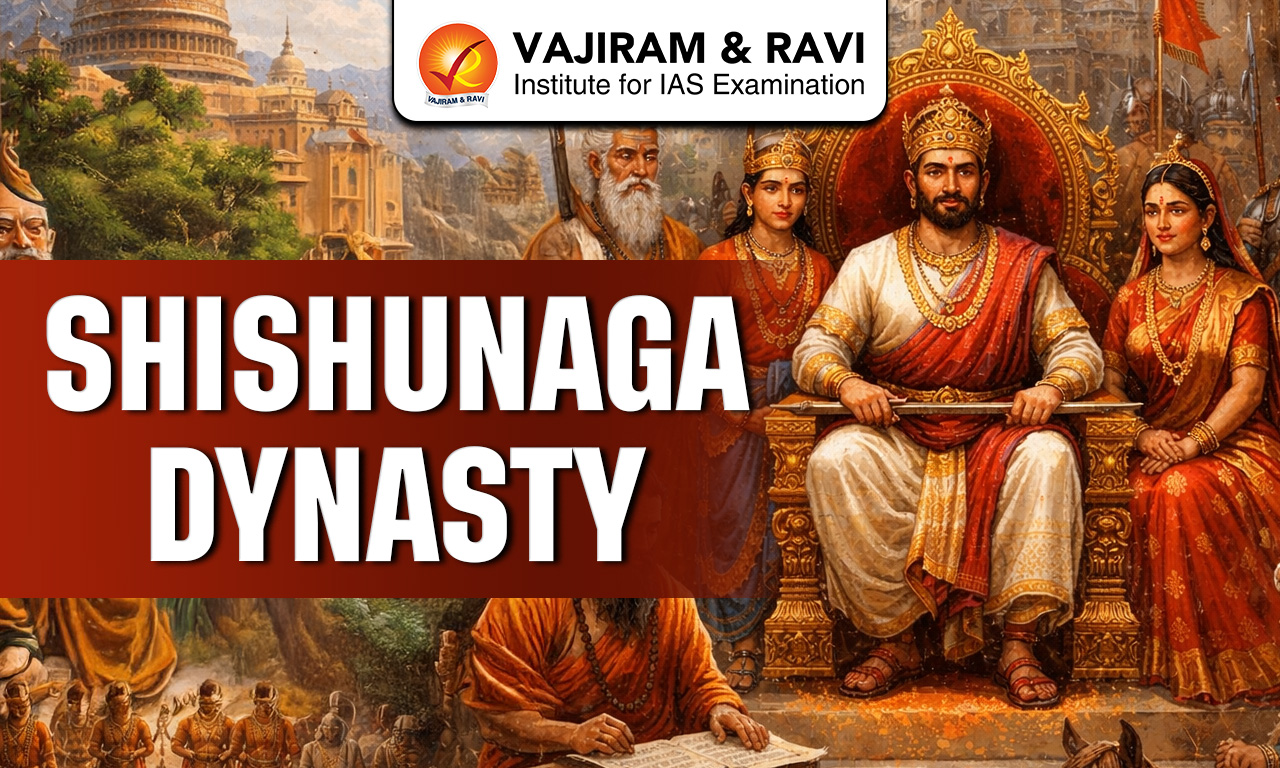
Enquire Now