Senchal Wildlife Sanctuary

Senchal Wildlife Sanctuary

Senchal Wildlife Sanctuary Latest News

Recently, a black melanistic leopard cub has been spotted close to the Senchal Wildlife Sanctuary in the Darjeeling hills.

About Senchal Wildlife Sanctuary

  • Location: It is located in the state of West Bengal.
  • It is one of the oldest sanctuaries in India, having been established in 1915.
  • It is nestled in the biogeographic zone of Gangetic plain.
  • It is actually the south east extension of the Singalila National Park.
  • Vegetation: It mainly consists of temperate and alpine forest.
  • The elevation of the Sanctuary ranges from 1,500 to 2,600 m (4,900 to 8,500 ft). 
  • Flora: The forest has different kinds of trees and plantations including oak, pines and birch.
  • Fauna: It provides habitat for barking deer, wild boar, Himalayan black bear, Indian leopard, jungle cat, rhesus monkey, Assam macaque, Himalayan flying squirrel. 

What is Melanism?

  • It is the advanced version of the dark-coloured pigment called melanin found in the skin, hair, fur or feathers of various organisms.
  • It is supposedly the outcome of a genetic mutation, but can also occur due to peculiar temperature changes during gestation.
    • Melanistic Leopard is simply a leopard with a unique genetic trait which makes its coat appear almost completely black.

Source: TI

Senchal Wildlife Sanctuary FAQs

Q1: Which bird species is associated with Senchal Wildlife Sanctuary?

Ans: Tragopan

Q2: Senchal Wildlife Sanctuary was established in which year?

Ans: 1915

Impatiens Nimspurjai

Impatiens Nimspurjai

Impatiens Nimspurjai Latest News

Recently, a newly discovered Himalayan plant has been named Impatiens nimspurjai in honour of the legendary Nepali mountaineer. 

About Impatiens Nimspurjai

  • It is a new plant species of the touch-me-not family.
  • It is endemic to western Nepal and grows in temperate forests and forest margins at an elevation of 2,800-2,900 metres.
  • It was named in honour of the celebrated Nepali mountaineer Nirmal Purja.
  • Its botanical name combines "Nims Purja" with "jai", the Nepali word for jasmine.
  • Habitat: It grows on moist, humus rich slopes in temperate forest and forest-edge habitats.
  • It is closely related to Impatiens radiata, I. harae, and I. wallichii, other balsams native to the Himalayan region.
  • Characteristics of Impatiens Nimspurjai
    • It has sessile oblong-lanceolate leaves.
    • It is an annual herb reaching up to nearly a metre in height.
    • It is distinguished by its sessile, oblong to lanceolate leaves and small clusters of flowers flushed with yellow and tinged purple.

Source: TOI

Impatiens Nimspurjai FAQs

Q1: What is Impatiens nimspurjai?

Ans: It is a new plant species of the touch-me-not family.

Q2: Impatiens nimspurjai grows in which habitat?

Ans: Rocky crevices in moist shady hills

Friends of MY Bharat’ Initiative

Friends of MY Bharat’ Initiative

Friends of MY Bharat’ Initiative Latest News

Recently, the Ministry of Youth Affairs and Sports has launched a new digital initiative, ‘Friends of MY Bharat’ initiative.

About Friends of MY Bharat’ Initiative

  • It is an initiative of the Ministry of Youth Affairs and Sports.
  • It strengthens engagement with Indian-origin youth living across the world and provides them opportunities to participate in India’s nation-building and youth-led programmes.
  • It is developed through the Mera Yuva Bharat (MY Bharat) platform.

Features of Friends of MY Bharat’ Initiative

  • Global Youth Engagement: It will enable Indian-origin students, young professionals and other youth residing outside India to access information about nation-building activities, volunteering opportunities and youth programmes hosted on the MY Bharat platform.
  • Volunteering opportunities: It will also provide information on volunteering opportunities in areas such as education, environmental protection, health awareness, disaster relief and cultural preservation. 
  • A dedicated ‘Know Your India’ section will offer curated information on India’s culture, heritage, history, tourism, travel and prominent leaders. 
  • The initiative seeks to channel the ideas, skills, experiences and aspirations of global Indian youth towards India’s development journey.

What is MY Bharat Platform?

  • MY Bharat (Mera Yuva Bharat) was launched in October 2023 under the Ministry of Youth Affairs and Sports.
  • The initiative aims to place youth at the centre of nation-building by providing opportunities for volunteering, skill development, leadership and civic participation.
  • It serves as a digital platform that connects the Government, educational institutions, non-profit organisations and industry to create meaningful youth engagement.

Source: PIB

Friends of MY Bharat’ Initiative FAQs

Q1: What is the main objective of 'Friends of MY Bharat’?

Ans: Connect Indian diaspora and foreign nationals with Indian youth programs

Q2: 'Friends of MY Bharat’ is a part of which larger platform?

Ans: MY Bharat - Mera Yuva Bharat

Psammophaga holzmannae and Psammophaga sinhai

Psammophaga holzmannae and Psammophaga sinhai

Psammophaga holzmannae and Psammophaga sinhai Latest News

Scientists from Pune’s Agharkar Research Institute (ARI) recently discovered two new species of microscopic marine organisms named Psammophaga holzmannae and Psammophaga sinhai.

About Psammophaga holzmannae and Psammophaga sinhai

  • They are two new species of microscopic marine organisms that selectively pick up and swallow specific mineral grains from the seafloor.
  • They were found at Rajapuri Creek in Raigad district along Maharashtra’s Konkan coast.
  • Psammophaga is a type of foraminifera, a group of microscopic organisms commonly found in oceans.
  • The name comes from Greek words meaning 'sand eater'.
  • Unlike many foraminifera that have hard, multi-chambered shells, these organisms have just one chamber and a soft wall made mainly of very fine clay particles.
  • The newly identified organisms are extremely small. P. holzmannae measures between 103 and 246 micrometres, while P. sinhai is larger, measuring between 279 and 448 micrometres.
  • The two species also differ in shape and also in the way they store mineral grains.
    • P. holzmannae is oval to almost round and has an orange or yellowish interior. The mineral grains it swallows are mainly kept near an opening called the aperture.
    • P. sinhai is longer and may look like a droplet. Its mineral grains are spread throughout the body.
  • The most interesting discovery was what the organisms choose to eat.
    • Both species selectively take in heavy minerals containing titanium and iron. These include ilmenite and magnetite.
    • This is important because these minerals occur only in small amounts in the surrounding sediment.
  • So how do they do it? 
    • Psammophaga uses thin, temporary hair-like extensions called granuloreticulopodia
    • These extend from the aperture and help the organism interact with the surrounding sediment. 
    • Scientists believe these extensions may help the organism detect differences between mineral grains, although the exact mechanism is still not known.

News: TOI

Psammophaga holzmannae and Psammophaga sinhai FAQs

Q1: What are Psammophaga holzmannae and Psammophaga sinhai?

Ans: They are two newly identified species of microscopic marine organisms.

Q2: Where were Psammophaga holzmannae and Psammophaga sinhai discovered?

Ans: They were discovered at Rajapuri Creek in Raigad district, along Maharashtra’s Konkan coast.

Q3: What does the name Psammophaga mean?

Ans: Psammophaga comes from Greek words meaning “sand eater.”

Q4: Which minerals do the two Psammophaga species selectively consume?

Ans: They selectively consume heavy minerals containing titanium and iron, including ilmenite and magnetite.

Dimna Lake

Dimna Lake

Dimna Lake Latest News

Dimna Lake, Jamshedpur’s iconic reservoir and lifeline, was among 25 lakes across the country after which spectator galleries were named during the 80th Independence Day celebrations at Delhi’s Red Fort.

About Dimna Lake

  • It is an artificial lake located in the steel city of Jamshedpur in Jharkhand.
  • It is located in the foothills of the Dalma mountain range.  
  • Construction
    • Constructed under the Dimna Nala Water Supply Scheme by Tata Steel, the reservoir was built with a storage capacity of around 7,500 million gallons to meet the future water needs of a rapidly expanding industrial city. 
    • Work on the project began in 1940 and was completed in 1944, with water from the lake supplied to Jamshedpur for the first time on April 17, 1944. 
    • The lake was created by damming the Subarnarekha River and is spread over approximately 27 sq.km.
  • This lake is near the Dalma Wildlife Sanctuary, which is home to several species of deer and other animals like the sloth bear and the Indian wolf.  
  • The lake has facilities for water sports like jet skiing, rowing, and water scooting.

News: TOI

Dimna Lake FAQs

Q1: Where is Dimna Lake located?

Ans: It is located in the steel city of Jamshedpur in Jharkhand.

Q2: At the foothills of which mountain range is Dimna Lake located?

Ans: Dimna Lake is located at the foothills of the Dalma mountain range.

Q3: Which company constructed Dimna Lake?

Ans: Tata Steel constructed Dimna Lake.

Q4: When was the construction of Dimna Lake completed?

Ans: Construction was completed in 1944.

Q5: Which river was dammed to create Dimna Lake?

Ans: The Subarnarekha River was dammed to create Dimna Lake.

Sea Lice

Sea Lice

Sea Lice Latest News

A German biotech startup developing a feed-based nanoantibody treatment for sea lice has ambitions to use its platform technology to tackle bacterial, viral and parasitic diseases across aquaculture.

About Sea Lice

  • Sea lice are larvae from certain jellyfish and sea anemones that live in saltwater oceans and seas. 
  • Sea lice can be unpredictable because they drift with the currents. A beach that had sea lice one year may not have them the next, and vice versa. 
  • Despite the name, sea lice aren’t like head lice. But they’re about the same size (2 to 3 millimeters, about the size of a sesame seed). 
  • Because they’re so small and nearly see-through, sea lice are almost impossible to see with the naked eye. 
  • Unlike head lice, which bite and burrow into your scalp to feed on your blood, sea lice can sting. 
  • And those stings can cause a rash called seabather’s eruption. It can appear within minutes or up to a day after exposure.  
  • Although seabather’s eruption can be uncomfortable, it’s usually not a serious concern. It’s typically easy to spot and treat. 
  • A sea lice rash is usually:
    • Very itchy
    • Red and raised
    • Similar in appearance to small pimples, blisters, or welts
  • A sea lice rash tends to affect areas covered by your bathing suit. Pressure on the organisms from the bathing suit causes the stinging cells to discharge, releasing toxins into the skin.  
  • Sea lice can also get caught in hair on your head or body. While most cases are mild, some people may experience whole-body symptoms, like:
    • Abdominal pain
    • Diarrhea
    • Fever
    • Malaise (a general feeling of illness)
    • Nausea and vomiting
  • Seabather’s eruption can affect people of any age, but children often experience stronger symptoms.  
  • Most sea lice rashes improve within about two weeks, though more severe reactions may take up to a month to fully clear.

News: AN

Sea Lice FAQs

Q1: What are sea lice?

Ans: Sea lice are larvae of certain jellyfish and sea anemones that live in saltwater oceans and seas.

Q2: How do sea lice affect humans?

Ans: Sea lice can sting the skin, causing a rash known as seabather’s eruption.

Q3: Is seabather’s eruption usually a serious medical condition?

Ans: No. It is usually uncomfortable but not a serious concern.

Q4: Which parts of the body are most commonly affected by a sea lice rash?

Ans: It usually affects areas covered by a bathing suit.

Ghaghara River, Origin, Tributaries, Biodiversity, Flood Risk

Ghaghara River

The Ghaghara River is a major left bank tributary of the Ganga River and a perennial trans boundary river. It starts in the Mapchachungo Glaciers of the Tibetan Plateau and ends by joining Ganga River in Bihar after a total course of 1,080 km. It flows through Nepal as the Karnali River before entering India. The river is also known as Gogra, Ghaghra, Ghagra and Kauriala.

Ghaghara River Latest News

Recently in August 2026, heavy monsoon rainfall and water releases from upper barrages in Nepal have pushed the Ghaghara River above the danger mark in several Uttar Pradesh districts. Flooding, bank erosion and waterlogging have affected low lying villages of Gonda, Azamgarh, Ambedkar Nagar, Barabanki and Bahraich..

Ghaghara River

The key features of the Ghaghara River are:

  • Origin: The river originates in the Mapchachungo glaciers on the northern slopes of the Himalayas in the Tibetan Plateau at about 3,962 metres above sea level.
  • Names: The river is called Karnali in Nepal and Mapcha Tsangpo in Tibet. In India's Awadh region, its lower course is locally known as the Sarayu or Saryu River.
  • Course: The river flows southeast through Nepal and cuts across the Siwalik Hills. Near Chisapani, it divides into the Geruwa and Kauriala branches before rejoining south of the Indian border.
  • Course in India: The river enters India near Kotia Ghat and flows through Uttar Pradesh and Bihar. It joins the Ganga River near Revelganj in Bihar after a total course of 1,080 km.
  • River System: The Ghaghara is a major left bank tributary of the Ganges. It is the largest Ganga tributary by volume and the second longest by length after the Yamuna.
  • Catchment Area: The Ghaghara has a catchment area of about 127,950 sq. km. Around 45% of the basin lies in India, while about 55% lies in Nepal.
  • Basin Extent: The Ghaghra basin covers China, Nepal, Uttarakhand, Bihar and Uttar Pradesh.
  • Major Tributaries: Important tributaries include the Seti, Bheri, Rapti, Kuwana, Sarda, Saryu and Little Gandak. The Seti and Bheri are the main tributaries of the Karnali.
  • Major Towns: Important towns in the basin include Ayodhya, Bahraich, Barabanki, Basti, Gonda, Gorakhpur, Sitapur, Tanda, Chapra, Siwan and Sonepur.
  • Irrigation: The Girija Barrage in Bahraich is an important structure on the Ghaghara. The Sarda Sahayak Irrigation Project uses the combined flows of the Ghaghara and Sarda rivers.
  • Flood Risk: Heavy monsoon rainfall and upstream water releases can rapidly increase river levels. 

Ghaghara River Biodiversity

The Ghaghara and Karnali basin supports Himalayan, Siwalik and Terai ecosystems with important forests, aquatic species and protected wildlife habitats.

  • Wildlife: Bardia supports Asian elephants, deer species, gaur, nilgai, Himalayan tahr, serow and goral. The Karnali-Ghaghara system also supports mugger crocodiles, gharials and golden mahseer.
  • River Dolphins: The river supports the Gangetic River Dolphin Platanista gangetica. The Karnali basin contains Nepal's last potentially viable population of Ganga River Dolphins.
  • Vegetation: Vegetation changes with altitude. Alpine plants occur at higher elevations, while tropical and subtropical forests occur across the Siwalik and lower river regions.
  • Bardia National Park: Bardia National Park covers 968 sq. km on the southern slopes of the Sivalik Hills. It is among the largest and least disturbed protected areas in the Karnali River basin.
  • Katarniaghat Sanctuary: Katarniaghat Wildlife Sanctuary in Uttar Pradesh is another important protected area associated with the Ghaghara river system and its diverse Terai ecosystem.
  • Nepal Protected Areas: The Karnali basin includes important protected landscapes such as Shey Phoksundo National Park and Rara National Park, representing high altitude and Himalayan biodiversity.

Also Read: National Park in Uttar Pradesh

Ghaghara River FAQs

Q1: What is the origin of the Ghaghara River?

Ans: The Ghaghara River originates from the Mapchachungo glaciers in the Tibetan Plateau at an elevation of about 3,962 metres.

Q2: Ghaghara River is a tributary of which river?

Ans: The Ghaghara River is a major left bank tributary of the Ganges River and is its largest tributary by volume.

Q3: What is the Ghaghara River called in Nepal?

Ans: The Ghaghara River is called the Karnali River in Nepal. It is also known as Mapcha Tsangpo in Tibet.

Q4: Where does the Ghaghara River join the Ganga?

Ans: The Ghaghara River joins the Ganga at Revelganj in Bihar after flowing for about 1,080 km from its source region.

Q5: What are the major Tributaries of the Ghaghara River?

Ans: Major tributaries include the Seti, Bheri, Rapti, Kuwana, Sarda, Saryu and Little Gandak rivers.

National Medical Commission

National Medical Commission

National Medical Commission Latest News

The National Medical Commission (NMC) recently proposed a UID system for doctors, allowing nationwide practice without separate state registration or licenses.

About National Medical Commission

  • It is a statutory body constituted by the National Medical Commission Act, 2019, which came into force on September 25, 2020.
  • It replaced the Medical Council of India (MCI) and serves as the top regulatory authority for medical education, medical professionals, and medical institutions in India. 
  • It grants recognition of medical qualifications, gives accreditation to medical schools, grants registration to medical practitioners, monitors medical practice, and assesses the medical infrastructure in India.
  • Headquarters: New Delhi

National Medical Commission Functions

  • Establish Policies and Regulations: Laying down policies to maintain high quality and standards in medical education and making necessary regulations.
  • Regulate Medical Institutions and Professionals: Developing policies to regulate medical institutions, research, and professionals.
  • Assess Healthcare Needs: Assessing the requirements in healthcare, including human resources and healthcare infrastructure, and developing a roadmap to meet these needs.
  • Coordinate Autonomous Boards: Promoting, coordinating, and framing guidelines for the proper functioning of the Commission, Autonomous Boards, and State Medical Councils.
  • Ensure Compliance: Ensuring that State Medical Councils comply with the guidelines and regulations framed by the NMC.
  • Exercise Appellate Jurisdiction: Acting as an appellate body for decisions made by the Autonomous Boards.
  • Promote Ethical Conduct: Laying down policies and codes to ensure observance of professional ethics in the medical profession.
  • Frame Fee Guidelines: Framing guidelines for determining fees and other charges for 50% of seats in private medical institutions and deemed universities.
  • Other Powers and Functions: Performing such other functions as may be prescribed.

National Medical Commission Composition

  • It consists of 33 members, including the Chairperson (medical professionals only), 10 ex-officio members and 22 part-time members.
  • Medical Advisory Council: It provides the platform through which the States or UTs can put forth their views and concerns before the NMC and advises the NMC on measures to determine and maintain minimum standards of medical education.
  • Four autonomous boards:
    • Under-Graduate Medical Education Board
    • Post-Graduate Medical Education Board
    • Medical Assessment and Rating Board
    • Ethics and Medical Registration Board

News: TH

National Medical Commission FAQs

Q1: What is the National Medical Commission (NMC)?

Ans: The NMC is a statutory body and the apex regulatory authority for medical education, medical professionals and medical institutions in India.

Q2: Under which Act was the National Medical Commission constituted?

Ans: The NMC was constituted under the National Medical Commission Act, 2019.

Q3: Which organisation was replaced by the National Medical Commission?

Ans: The NMC replaced the Medical Council of India (MCI).

Q4: How many members does the National Medical Commission consist of?

Ans: It consists of 33 members, including the Chairperson (medical professionals only), 10 ex-officio members and 22 part-time members.

Glyphosate

Glyphosate

Glyphosate Latest News

Recently, environmentalists have raised concern over the alleged use of glyphosate on forest department land for pea cultivation in parts of Himachal Pradesh. 

About Glyphosate

  • It is a widely used herbicide that can kill certain weeds and grasses.
  • Glyphosate is a small molecule made of a linear carbon chain with weaker bonds, which makes glyphosate less persistent in the environment.
  • It is considered a broad-spectrum herbicide, meaning it can effectively control a wide variety of plants, including grasses, broadleaf plants, and woody plants.
  • Impact of Glyphosate
    • Herbicidal Action: It works by inhibiting an enzyme called EPSP synthase, which is essential for the synthesis of certain amino acids that plants need for growth.
      • It disrupts this enzyme; glyphosate interferes with the plant’s ability to produce proteins, leading to the eventual death of the plant.
    • Broad-Spectrum: It is effective only on plants that grow above the water. It will not be effective on plants that are submerged or have most of their foliage underwater, nor will it control regrowth from seed.
    • Glyphosate is degraded in soil and water by microbes and binds tightly to soil particles, which prevents the leaching of glyphosate into groundwater.
    • Glyphosate does not degrade quickly in plants. As a result, it is possible that glyphosate residues can occur in food products.

Source: DTE

Glyphosate FAQs

Q1: Glyphosate is regulated in India under which act?

Ans: Insecticides Act, 1968

Q2: What is Glyphosate?

Ans: It is a herbicide.

Sawalkote Hydroelectric Project

Sawalkote Hydroelectric Project

Sawalkote Hydroelectric Project Latest News

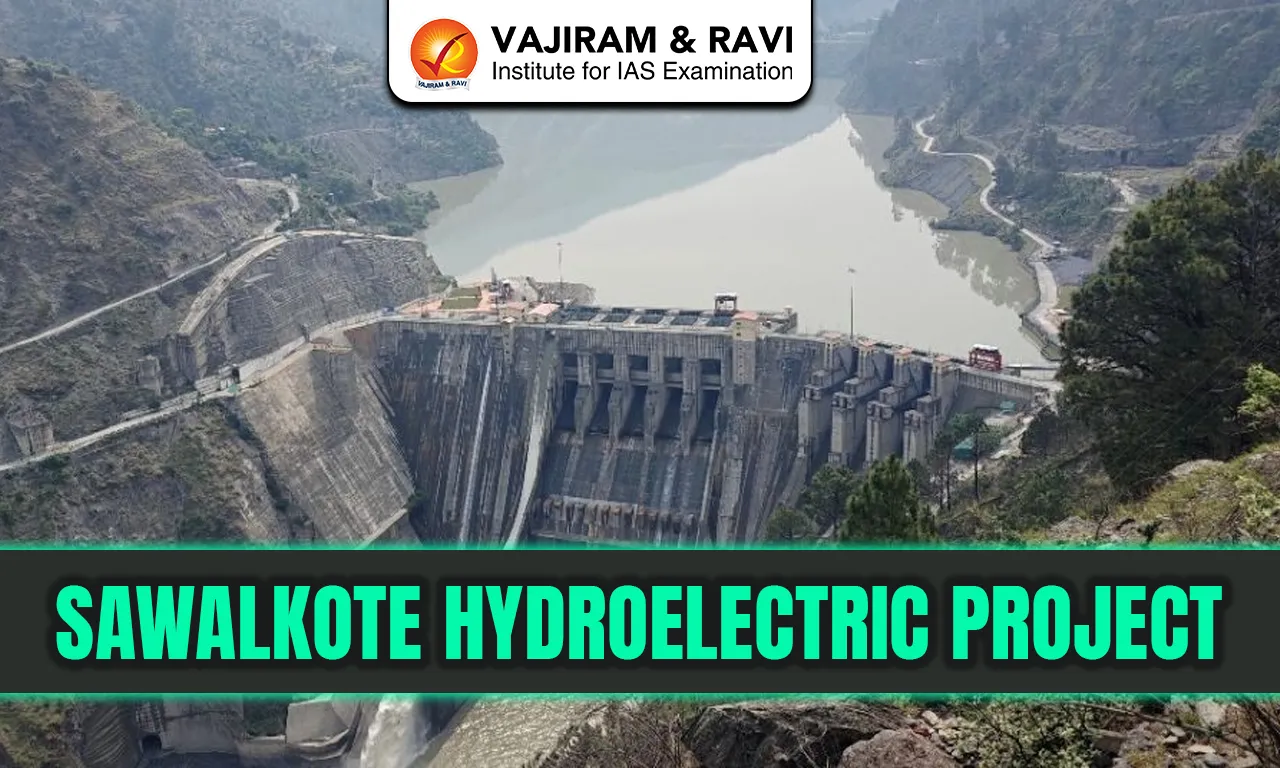
Deputy Commissioners of Udhampur and Ramban, along with senior district officials, recently visited the headquarters of the Sawalkote Hydroelectric Project at Tanger to take stock of progress made on the 1,800 MW project.

About Sawalkote Hydroelectric Project

  • It is a 1,856-MW hydropower plant on the Chenab River in the Udhampur and Ramban districts of Jammu and Kashmir. 
  • It has been designed as a run-of-the-river scheme located between the Baglihar project upstream and the Salal project downstream, making it part of a continuous chain of hydropower installations on the Chenab
  • It will be the largest hydroelectric project in the Union Territory and one of the biggest in North India.
  • The project is being built by the National Hydroelectric Power Corporation (NHPC).
  • Classified as a project of national importance, it will feature a 192.5-meter concrete gravity dam and a reservoir covering more than 1,100 hectares.  
  • It will comprise nine turbines and an underground power station. 
  • It will produce around 8000 million units of electricity every year.
  • By regulating the flow of the Chenab River, the Sawalkote project could contribute to flood mitigation downstream, while also ensuring better water management for agriculture and domestic use.
  • It is a key part of India’s plan to fully utilise its share of water from the western rivers under the 1960 Indus Waters Treaty (IWT). 
  • It is the first major hydropower project on the Indus rivers to be accorded environmental clearance following India’s suspension of the Indus Waters Treaty (IWT) on April 23, 2025, following the Pahalgam terror attack.

News: DE

Sawalkote Hydroelectric Project FAQs

Q1: Where is the Sawalkote Hydroelectric Project located?

Ans: It is located on the Chenab River in the Udhampur and Ramban districts of Jammu and Kashmir.

Q2: What is the capacity of the Sawalkote Hydroelectric Project?

Ans: The Sawalkote Hydroelectric Project has a capacity of 1,856 MW.

Q3: What type of hydropower scheme is the Sawalkote project?

Ans: It is designed as a run-of-the-river hydropower scheme.

Q4: Which organisation is constructing the Sawalkote Hydroelectric Project?

Ans: The project is being constructed by the National Hydroelectric Power Corporation (NHPC).

Methamphetamine

Methamphetamine

Methamphetamine Latest News

Recently, the Directorate of Revenue Intelligence (DRI) has foiled a major attempt to illegally export a significant quantity of Methamphetamine from India to Saudi Arabia.   

About Methamphetamine

  • It is a powerful, highly addictive stimulant that affects the central nervous system.
  • It is also known as meth, chalk, ice, and crystal.
  • It was developed early in the 20th century from its parent drug, amphetamine, and was used originally in nasal decongestants and bronchial inhalers.

Properties of Methamphetamine

  • It is a member of the class of amphetamines.
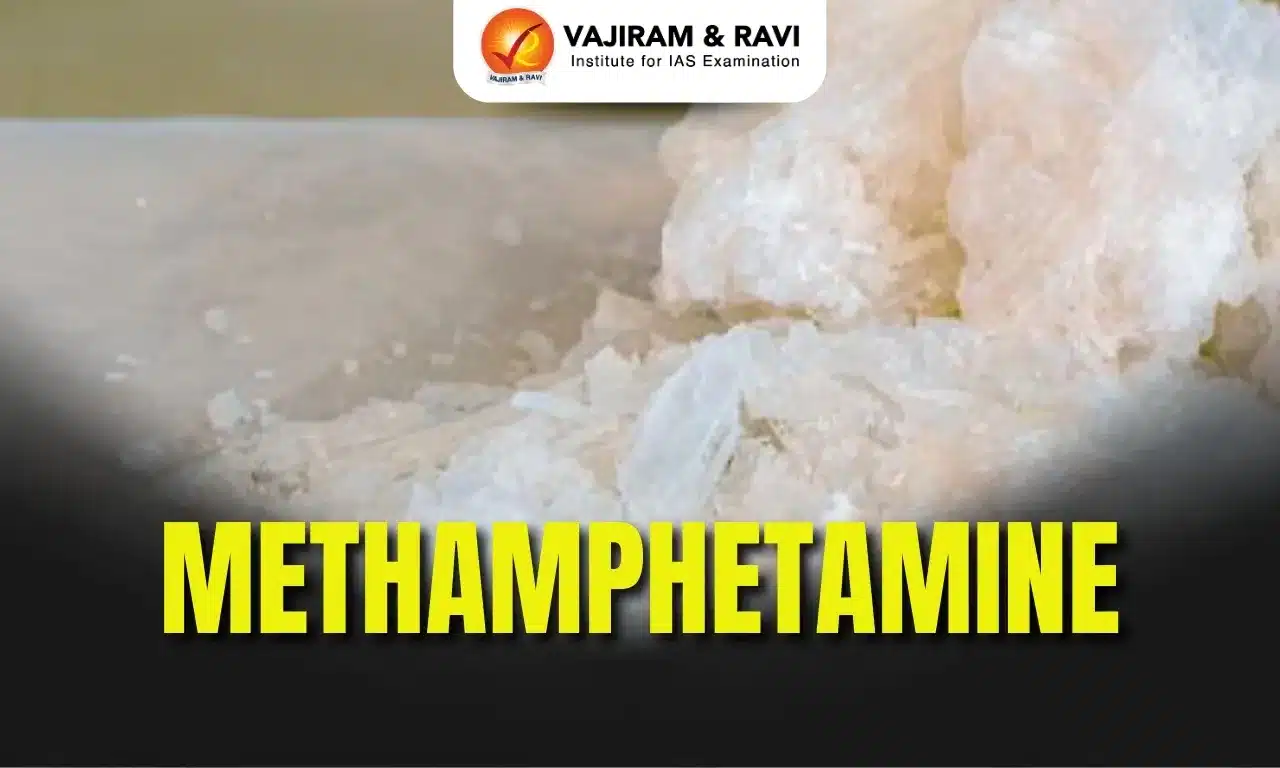
  • It takes the form of a white, odorless, bitter-tasting crystalline powder that easily dissolves in water or alcohol.
  • It has a role as a neurotoxin, a psychotropic drug, a central nervous system stimulant, a xenobiotic and an environmental contaminant.

Impact of Methamphetamine on Humans

  • It causes increased activity and talkativeness, decreased appetite, and a pleasurable sense of well-being or euphoria. 
  • The use of methamphetamine in higher doses can induce psychosis, bleeding in the brain, skeletal muscle breakdown, and seizures.

Source: PIB

Methamphetamine FAQs

Q1: Which neurotransmitter is mainly affected by Methamphetamine?

Ans: Dopamine

Q2: What is Methamphetamine ?

Ans: It is a is a powerful, highly addictive stimulant that affects the central nervous system.

Caste Census 2026 – Why Open-Ended Caste Enumeration Poses Data Challenges

Caste Census 2026

Caste Census 2026 Latest News

  • The Registrar General of India has decided to use an open-ended question rather than a predetermined list of castes for the ongoing census, raising concerns that the exercise could produce unwieldy and unusable data.

Caste Enumeration in India

  • Caste enumeration has a long and complicated history in India.
  • The 1931 Census was the last comprehensive exercise that counted and published caste data. It recorded 4,147 castes. 
  • In the 1941 Census, caste details were collected but dropped from final tabulation due to wartime financial constraints. 
  • The then Census Commissioner wrote that with a constricted financial position and many other priorities, there was no justification for spending lakhs on that detail.
  • After Independence, the 1951 Census under the Nehru government decided against caste enumeration altogether, shaped by the ideals of equality and secularism.
  • Since then, the Census has continued to enumerate Scheduled Castes (SCs) and Scheduled Tribes (STs) using comprehensive official lists. 
  • The Ministry of Social Justice and Empowerment currently lists 1,208 SCs, with different castes categorised differently across states, while official records list 730 STs.

News Summary: How Caste Will Be Counted This Time

  • The ongoing census will have no pre-given list of castes. It will be up to the respondent to state their caste, which the enumerator will record as given.
  • This is expected to generate a large number of entries for what may effectively be a single caste.
  • As one senior official explained, if a person identifies their caste by surname, the enumerator is duty-bound to record it as their caste. 
  • If the surname is misspelt, that misspelling too becomes an entry in the caste column.

The Problem of Multiple Names

  • A single caste may be known by many different names, and the same name may mean different castes in different regions.
  • Rajput, Thakur, Singh, and Kshatriya may be used interchangeably by respondents. 
  • However, "Rajput" in the Bundelkhand region, cutting across Uttar Pradesh and Madhya Pradesh, may also refer to the Other Backwards Class Lodh community. "Singh" is a surname that cuts across castes and categories entirely.
  • Similarly, the surname Verma can indicate a Kayasth, a Kurmi, a Jat, or even a Sonar, depending on the region and family.
  • Without a standardised list, all these variations enter the dataset as separate categories.

Lessons from the 1931 Census

  • The colonial state used a similar open-ended method until 1931, and the census report from that year documents the difficulties that arose when caste became a highly subjective category.
  • Assertion of New Identities
    • Sections of the leather-working caste among Dalits in Punjab adopted a new religious identity as Aad Dharmis, meaning people belonging to the "original" or "pre-Aryan" religion of India.
    • As many as 418,789 people enumerated themselves as Aad Dharmis, a category that did not exist in 1921. This was roughly the same number as Christians in Punjab at that time.
    • Aad Dharmis constituted about 1.5% of Punjab's population and about a tenth of the population of the so-called low castes in the province. 
    • Notably, literacy among Aad Dharmis was more than twice that among other members of the low castes, suggesting the shift was driven primarily by educated Dalits.
    • Similar trends appeared elsewhere, with identities such as Adi Dravida, Adi Andhras, and Adi Karnatakas emerging.
  • Consolidation for Status and Numbers
    • The 1931 report also documented multiple castes merging into single categories to strengthen their numbers or claim higher social status.
    • The report described the grazier castes as the clearest example, noting an effort to combine the Ahirs, Goalas, Gopis, Idaiyans and other milkmen castes under the term "Yadava", a movement already effective by 1921.
    • It also recorded that carpenters, smiths, goldsmiths, and others in similar occupations sought to be returned under a common name such as Vishwakarma or Jangida, usually adding a descriptor implying they belonged to one of the highest Varnas, either Brahman or Rajput.
    • The report further noted that a caste which had applied in one province to be recorded as Brahman sometimes asked in another province to be called Rajput, and several castes claiming Brahman status in 1931 had claimed Rajput status a decade earlier.

The 2011 SECC Failure

  • The most recent cautionary example comes from the Socio-Economic and Caste Census (SECC) of 2011.
  • That exercise failed to produce usable caste data precisely because of open-ended enumeration. 
  • The final dataset contained nearly 46.7 lakh distinct caste names, compared with the 4,147 castes recorded in 1931.
  • The Union government eventually withheld the raw caste data, rendering the entire exercise ineffective for policy purposes.

The Bihar Caste Survey Experience

  • The 2023 Bihar caste survey, ordered by the then Chief Minister, took a different approach. State officials compiled a list of castes for the purpose, even though it was a pen-and-paper survey.
  • An official aware of the exercise noted that not having a list would create an administrative nightmare. If some respondents say they are Bhumihar and others say Bhumihar Brahmin, two distinct categories emerge in the absence of a standard list.
  • However, the Bihar exercise also faced criticism over how the lists were prepared. Objections raised included that no methodology was discussed with political parties or made public. 
  • In the case of Yadavs, a dozen sub-castes were consolidated under one header, while in the case of Kushwahas, the Dangi sub-caste was enumerated separately. Among the Mallah fishermen community, 10 to 11 sub-castes were split and shown separately.
  • This illustrates that even with a list, the choices made in constructing it carry significant political consequences.

Suggested Solutions

  • Experts have proposed practical alternatives to open-ended enumeration.
  • Former Indian Council of Social Science Research chairman S.K. Thorat, who served on the expert committee reviewing caste data in Telangana, argued that a predetermined list is necessary. He noted that SC, ST, and OBC lists already exist and are recognised by the government. What is needed is a similar list of castes in the general category, which would produce an exhaustive list.
  • He acknowledged this may still carry a small margin of error of 2-3%, but argued this would minimise error rather than the far larger distortions of open-ended enumeration.
  • Thorat also suggested including columns for "no caste" and "no religion" for people who do not identify with these categories.
  • He recommended separate questionnaires for SCs and STs, since the exclusions they face differ: untouchability in the case of SCs, and physical and geographical isolation in the case of STs. He noted that a separate questionnaire for OBCs was not required, as social and educational backwardness would be captured by the census in any case.
  • Activists working on sub-categorisation have argued for questions on hierarchies and exclusions within SCs and STs, since some castes within these categories are considerably more deprived than others, and there is currently no sub-categorisation of reservation to direct benefits to the most needy groups.

Source: IE

Caste Census 2026 FAQs

Q1: How will caste be recorded in the ongoing census?

Ans: Through an open-ended question with no predetermined list, where respondents state their caste and enumerators record it as given.

Q2: When was the last comprehensive caste census in India?

Ans: The 1931 Census was the last comprehensive exercise to enumerate and publish caste data, recording 4,147 castes.

Q3: Why did the 2011 SECC fail to produce usable caste data?

Ans: Open-ended enumeration produced nearly 46.7 lakh distinct caste names, and the Union government eventually withheld the raw caste data.

Q4: How many SCs and STs are officially listed in India?

Ans: Official records list 1,208 Scheduled Castes and 730 Scheduled Tribes.

Q5: What solution have experts suggested?

Ans: Experts recommend a predetermined list, built by adding a list of general category castes to the existing SC, ST, and OBC lists, along with options for "no caste" and "no religion."

India’s Arctic Narrative: Why Climate Security and Geopolitics Demand a Clear Strategy

India's Arctic Narrative

India's Arctic Narrative Latest News

  • A recent Parliamentary Standing Committee on External Affairs report, "India's Role and Presence in the Arctic and Antarctic Regions," has highlighted a widening gap between India's Arctic ambitions and its actual capabilities — coming close on the heels of India's Arctic Policy, 2022.

India's Arctic Credentials

  • India's Arctic engagement dates back over a century: as part of the British Dominion, it was among the original 14 signatories of the 1920 Svalbard Treaty, which entitles Indians to visit the Svalbard archipelago without a visa and undertake commercial activities there.
  • Today, India remains one of only two developing countries with a permanent scientific presence in the Arctic, through its Himadri research station in Ny-Ålesund, Svalbard.
  • However, engagement has largely stayed confined to scientific research, even as the Arctic evolves into a convergence point for climate change and geopolitics.

Why India Needs an Arctic Narrative: Climate Security

  • Monsoon linkage: Agriculture contributes about 18% of India's GDP and supports over half its population, with nearly 70% of annual rainfall coming from the southwest monsoon. 
    • Emerging research points to an Arctic-Indian monsoon teleconnection, where Arctic warming and shrinking sea ice alter atmospheric circulation patterns affecting South Asian rainfall.
  • Sea-level rise: The Arctic is a major driver of global sea-level rise, threatening low-lying nations like the Maldives and large parts of Bangladesh and India's coastline. 
    • Estimates suggest over 250 million people in vulnerable South Asian coastal regions could be affected by mid-century — a challenge with direct implications for migration, humanitarian response, and national security.

Geopolitical Stakes

  • Two of India's closest strategic partners, the US and Russia, are Arctic nations, while China — despite being a non-Arctic state — has invested heavily in Arctic infrastructure, research, and shipping.
  • The Arctic is emerging as a zone of great-power competition over maritime access, energy security, and critical mineral supply chains.
  • India enjoys goodwill with all eight Arctic states, reinforced by the recent India-Nordic Summit (covering Norway, Sweden, Finland, Denmark, Iceland) and improving ties with Canada — a diplomatic advantage few other countries possess.

Institutional and Capability Gaps

  • No Dedicated Polar Ambassador
    • Arctic affairs responsibility is fragmented across four different divisions within the Ministry of External Affairs, hampering coherent policy-making.
    • All Arctic states, and even non-Arctic states like Singapore, have dedicated Arctic envoys — India does not, despite having a formal Arctic Policy.
  • Absence of a Polar Research Vessel (PRV)
    • Without an ice-class research vessel, India's Arctic research remains confined largely to Svalbard, dependent on foreign collaboration or chartered vessels — limiting research continuity and scheduling flexibility.
    • Though a PRV was sanctioned by the Union Cabinet in 2014, it remains undelivered, with current plans pushing completion to the end of this decade.
    • In contrast, China acquired a second-hand Ukrainian icebreaker (Xuelong/"Snow Dragon") as an interim measure and now operates multiple polar vessels, including a nuclear icebreaker under construction — a model India could emulate.
  • Inadequate Funding
    • India spent just Rs 17.53 crore on Arctic activities in 2024-25 — less than one-tenth of its Antarctic spending, and less than the cost of building a single kilometre of flyover.
    • This is seen as disproportionately low for a region influencing sea-level rise along India's 11,098-km coastline and holding major climate and geopolitical significance.

Conclusion

  • India possesses historic legitimacy, scientific presence, and diplomatic goodwill in the Arctic, but its institutional structures and budgetary commitments do not match its strategic interests. 
  • With the 2022 Arctic Policy providing the framework and the Parliamentary Committee identifying the gaps, the urgent task now is to convert policy intent into concrete capability — through a Polar Ambassador, a dedicated research vessel, and adequate funding — to secure India's long-term climate and geopolitical interests in the region.

Source: IE | TD

India's Arctic Narrative FAQs

Q1: Why does India need a clear Arctic Narrative?

Ans: India's Arctic Narrative is necessary because Arctic warming affects monsoons, sea-level rise, coastal security, migration risks, energy interests, and geopolitical competition.

Q2: What are India's major Arctic credentials supporting its Arctic Narrative?

Ans: India's Arctic Narrative draws strength from its Svalbard Treaty legacy, permanent Himadri research station, long scientific presence, and diplomatic goodwill with Arctic states.

Q3: How does Arctic warming affect India's Arctic Narrative on climate security?

Ans: India's Arctic Narrative must address emerging Arctic-monsoon linkages, changing rainfall patterns, rising sea levels, coastal vulnerability, migration pressures, and associated national security challenges.

Q4: What institutional gaps weaken India's Arctic Narrative?

Ans: India's Arctic Narrative is weakened by fragmented responsibility, absence of a dedicated Polar Ambassador, lack of a Polar Research Vessel, and inadequate funding.

Q5: How can India strengthen its Arctic Narrative and capabilities?

Ans: India's Arctic Narrative can be strengthened by appointing a Polar Ambassador, acquiring a dedicated research vessel, improving coordination, and substantially increasing Arctic funding.

Constitutional Validity of Hanging: Supreme Court Upholds India’s Mode of Execution

Constitutional Validity of Hanging

Constitutional Validity of Hanging Latest News

  • Recently, the Supreme Court upheld the constitutional validity of hanging as a mode of executing a death sentence, dismissing a PIL that argued the method violates the right to a dignified death under Article 21.

The Ruling

  • A bench of Justices Vikram Nath and Sandeep Mehta dismissed the petition challenging hanging. 
  • The Court held the challenge faced two key hurdles: 
    • the 1983 precedent in Deena vs UOI (where a three-judge bench upheld hanging), and 
    • Parliament's decision to retain hanging while enacting the Bharatiya Nagarik Suraksha Sanhita (BNSS). 
  • The Court affirmed that constitutional protections continue for prisoners on death row, stating: "this constitutional protection does not cease to exist at the gallows."

How Hanging Is Designed to Work

  • Hanging uses a calculated "drop" based on the convict's height and weight, intended to cause a fracture-dislocation at the C2-C3 vertebrae, producing near-instant unconsciousness.
  • In Deena vs UOI, the Court had earlier examined medical evidence, expert opinion, and comparative execution methods, concluding that properly administered hanging is quick, causes no greater pain than other methods, and avoids barbarity, torture and degradation.

Grounds of the Challenge

  • The petitioners argued that scientific understanding and constitutional doctrine have evolved since 1983.
  • They sought a declaration that hanging is unconstitutional, arguing Article 21 includes a right to a dignified death procedure.
  • They cited a 1992 study of 34 people hanged in England (1882–1945): while C2-C3 fractures were common, the "hangman's fracture" causing near-instant death occurred in only 3 of 34 cases, while 6 died of asphyxiation.
  • Based on this, they argued hanging is unpredictable — too short a drop causes death by strangulation, too long a drop can cause decapitation — making it neither quick nor controllable.
  • Government's Counter: Since 2003, India has conducted only eight executions, with no botched hanging on record — unlike lethal injection in the US, which has a well-documented history of failures.

Constitutional and Legal Framework

  • The right to die with dignity flows from Article 21 (Right to Life). In Gian Kaur v. State of Punjab (1996), the Supreme Court held that the right to life includes the right to live and die with dignity.
  • Section 393(5) of the BNSS mandates that a person sentenced to death "shall be hanged by the neck till he is dead" — a provision largely unchanged since it first appeared in the CrPC in 1861.

The Law Commission's Recommendation

  • The 187th Law Commission Report (2003), chaired by Justice M. Jagannadha Rao, had recommended amending the law to provide lethal injection as an alternative method of execution.
  • It also noted that military courts-martial permit execution by shooting, which petitioners cited to argue hanging need not be the sole legal method.
  • The Supreme Court, however, noted that Law Commission reports are only recommendatory, and Parliament's choice to retain hanging while enacting the BNSS amounted to a legislative reaffirmation of the existing framework.

Why the Court Upheld Hanging

  • The bench found no reason to revisit Deena, holding that the new scientific material did not displace its original basis, nor did it show that lethal injection, electrocution, lethal gas, or shooting offered any advantage over hanging.
  • It reaffirmed that the long-drop hanging method satisfies the State's obligation to execute death sentences with "decency and decorum," without "degradation or brutality."
  • Importantly, the Court did not close the issue permanently — it noted that constitutional law evolves, and future challenges could succeed if new scientific or empirical material fundamentally alters the assumptions behind Deena. 
  • It also left it open for the Union government to examine alternative execution methods if it wishes.

Modern Execution Methods: A Global Snapshot

  • Global Trend: Over two-thirds of nations (113) have ended the death penalty in law or practice, though executions rose 12% in 2025 (Amnesty International).

Prevalent Methods

  • Hanging: Widely used in Common Law countries (India, Singapore, Japan); authorised in 60 nations per a 2012 Cornell study.
  • Lethal Injection: Primary method in several US states and China; uses anaesthetic, paralytic, and potassium chloride, but prone to botched venous access.
  • Shooting: Used in China, North Korea, Somalia, and parts of West Asia; visually violent despite claims of near-instant death.
  • Beheading: Practised in Saudi Arabia, dependent on executioner precision.
  • Nitrogen Hypoxia: A new US method causing asphyxiation without panic response, though criticised as unvetted and experimental.

Conclusion

  • The verdict reaffirms judicial continuity by upholding a nearly century-old precedent, while balancing it against Article 21's evolving dignity jurisprudence. 
  • By keeping the door open for future scientific evidence and legislative reform, the Court has struck a careful balance between constitutional stability and the possibility of humane progress in India's execution methods.

Source: IE | HT

Constitutional Validity of Hanging FAQ

Q1: What did the Supreme Court rule on the Constitutional Validity of Hanging?

Ans: The Constitutional Validity of Hanging was upheld by the Supreme Court, which dismissed a challenge claiming that hanging violates the right to dignity under Article 21.

Q2: Why did the Court uphold the Constitutional Validity of Hanging?

Ans: The Constitutional Validity of Hanging was upheld because the Deena precedent remains valid and Parliament retained hanging while enacting the Bharatiya Nagarik Suraksha Sanhita.

Q3: How does the long-drop method support the Constitutional Validity of Hanging?

Ans: The Constitutional Validity of Hanging rests partly on the calculated long-drop method, designed to cause rapid unconsciousness without unnecessary brutality, torture, or degradation.

Q4: What alternative execution methods were discussed in the Constitutional Validity of Hanging case?

Ans: The Constitutional Validity of Hanging debate considered lethal injection, shooting, electrocution, lethal gas, and nitrogen hypoxia, without finding them demonstrably superior.

Q5: Can the Constitutional Validity of Hanging be challenged again in future?

Ans: The Constitutional Validity of Hanging may be reconsidered if compelling new scientific or empirical evidence fundamentally changes the assumptions underlying the Deena judgment.

World Mosquito Day 2026, History, Significance & Prevention

World Mosquito Day 2026

World Mosquito Day 2026 is observed on 20 August 2026 to raise awareness about mosquitoes and the serious diseases they transmit. The day commemorates the discovery made by Sir Ronald Ross in 1897, which established the role of female Anopheles mosquitoes in transmitting malaria. World Mosquito Day 2026 highlights the importance of mosquito control, disease prevention, scientific research and community participation in tackling mosquito-borne diseases. 

World Mosquito Day 2026 History and Significance

  • World Mosquito Day 2026 is observed on 20 August every year to mark Sir Ronald Ross's landmark discovery in 1897. His research helped establish the connection between mosquitoes and malaria transmission and became an important milestone in medical science.
  • The significance of World Mosquito Day 2026 extends beyond malaria because mosquitoes continue to transmit diseases such as dengue, malaria, chikungunya, Zika and yellow fever in different parts of the world.
  • The risk of mosquito-borne diseases can increase during the monsoon and post-monsoon seasons because rainfall, humidity and stagnant water create favourable breeding conditions for mosquitoes.
  • World Mosquito Day 2026 encourages individuals and communities to understand mosquito-borne diseases and adopt preventive measures while highlighting the importance of public health surveillance, research and vector control.

Major Mosquito-Borne Diseases in India

  • Dengue is one of the major mosquito-borne viral diseases in India and is mainly transmitted by Aedes aegypti. The mosquito can breed in small collections of stagnant water around homes. Common symptoms include high fever, headache, body pain, pain behind the eyes and skin rash.
  • Malaria is caused by Plasmodium parasites and transmitted through infected female Anopheles mosquitoes. It commonly causes fever, chills, sweating and weakness, while severe malaria can become life-threatening without timely treatment.
  • Chikungunya is a viral disease mainly transmitted by Aedes mosquitoes. It commonly causes fever, rash and severe joint pain, which may sometimes continue even after the infection has cleared.
  • Japanese Encephalitis is a mosquito-borne viral disease that can cause inflammation of the brain. It is associated with Culex mosquitoes and can lead to serious neurological complications in severe cases.
  • Zika virus disease is also transmitted by Aedes mosquitoes and often causes mild symptoms. However, infection during pregnancy can create serious risks for the developing fetus, making prevention and surveillance important.

World Mosquito Day 2026 Significance

  • World Mosquito Day 2026 draws attention to the continuing public health challenge created by mosquito-borne diseases. Outbreaks can spread rapidly when mosquito populations increase and environmental conditions favour breeding.
  • Stagnant water, poor drainage, uncovered water containers and improper waste disposal can create mosquito breeding sites around homes and communities. Regular environmental management is therefore an important part of disease prevention.
  • Effective disease control also depends on early detection and disease surveillance. Monitoring infections and mosquito populations can help health authorities identify outbreaks and respond more quickly.
  • Mosquito-borne disease outbreaks can create wider social and economic impacts, including increased healthcare costs, loss of productivity and disruption to education and everyday activities.
  • World Mosquito Day 2026 therefore reinforces the need for long-term investment in public awareness, healthcare preparedness, scientific research, surveillance and integrated mosquito control.

Measures to Prevent Mosquito Breeding at Home 

  • Remove stagnant water regularly from flowerpots, buckets, coolers, tyres, containers and other objects where water can collect. Even small quantities of standing water can become breeding sites.
  • Cover water storage containers properly, including tanks, drums and buckets. Regular cleaning and scrubbing of containers can also help reduce mosquito breeding.
  • Keep drains and gutters clean so that rainwater does not remain trapped. Leaking taps, pipes and other sources of unnecessary water accumulation should be repaired.
  • Dispose of waste properly and remove discarded tyres, cans, plastic containers and other objects that can collect rainwater around homes and public spaces.
  • Prevent waterlogging by maintaining proper drainage around residential areas. Community-level action is important because mosquito breeding sites are not limited to individual households.
  • People can also reduce mosquito bites by using mosquito nets, window screens, appropriate repellents and protective clothing, particularly in areas where mosquito-borne diseases are common.

World Mosquito Day 2026 Role of Partnerships

  • World Mosquito Day 2026 highlights that controlling mosquito-borne diseases requires cooperation between governments, health agencies, researchers, healthcare professionals, local authorities, communities and other organisations.
  • Partnerships can strengthen disease surveillance, scientific research, public awareness, mosquito control and access to preventive measures. Community participation is especially important for identifying and removing breeding sites.
  • Scientific research can complement traditional mosquito-control measures through innovations in vector control, disease surveillance, vaccines and other prevention strategies.
  • The central message of World Mosquito Day 2026 is that preventing mosquito-borne diseases requires collective and sustained action
  • Individual precautions, community participation, strong public health systems and scientific research can together help reduce the impact of these diseases.

World Mosquito Day 2026 FAQs

Q1: When is World Mosquito Day 2026 observed?

Ans: World Mosquito Day 2026 is observed on 20 August 2026 to raise awareness about mosquitoes and the diseases they transmit.

Q2: Why is World Mosquito Day celebrated?

Ans: World Mosquito Day is observed to spread awareness about mosquito-borne diseases, promote prevention and highlight the importance of mosquito control and public health measures.

Q3: What is the history of World Mosquito Day?

Ans: World Mosquito Day commemorates Sir Ronald Ross's discovery in 1897 that female Anopheles mosquitoes transmit malaria.

Q4: Which diseases are spread by mosquitoes in India?

Ans: Major mosquito-borne diseases in India include dengue, malaria, chikungunya, Japanese encephalitis and Zika virus disease.

Q5: How can mosquito breeding be prevented at home?

Ans: Mosquito breeding can be reduced by removing stagnant water, covering water containers, cleaning drains, preventing waterlogging and properly disposing of waste.

Sadbhavana Diwas 2026, Rajiv Gandhi Birth Anniversary, Pledge, Theme

Sadbhavana Diwas 2026

Sadbhavana Diwas 2026 is also known as Harmony Day 2026 or Communal Harmony Day 2026. It will be observed on 20 August 2026 to mark the birth anniversary of former Prime Minister Rajiv Gandhi. The word ‘Sadbhavana’ means goodwill and harmony. The day promotes national integration, communal harmony, peace and emotional unity among citizens. It also encourages people to resolve differences through dialogue and constitutional means without violence.

Why is Sadbhavana Diwas 2026 Celebrated?

Sadbhavana Diwas 2026 is celebrated to promote goodwill, national unity and peaceful coexistence among people belonging to different religions, languages, regions and communities. The observance honours Rajiv Gandhi’s Birth Anniversary 2026. It also highlights the importance of social harmony in a diverse country. Cultural programmes, contests, public activities and environmental initiatives such as sapling plantation are organised in different places.

Sadbhavana Diwas 2026 Theme

The Sadbhavana Diwas 2026 Theme has not been officially announced yet. The observance will continue to focus on the core values of national integration, communal harmony, peace, goodwill and emotional unity among people of different religions, languages, regions and cultures. Any official theme for National Harmony Day 2026 will be updated after its formal announcement.

Sadbhavana Diwas 2026 Pledge

The Sadbhavana Diwas Pledge is taken by citizens, government employees and participants in Sadbhavana Diwas 2026 observances to reaffirm their commitment to emotional unity, national harmony and peaceful resolution of differences. The pledge promotes respect for people of all castes, regions, religions and languages and rejects violence as a means of resolving differences.

“I take this solemn pledge that I will work for the emotional oneness and harmony of all the people of India regardless of caste, region, religion, or language. I further pledge that I shall resolve all differences among us through dialogue and constitutional means without resorting to violence.”

Rajiv Gandhi Birth Anniversary 2026

Rajiv Gandhi Birth Anniversary 2026 will be observed on 20 August, marking his 82nd birth anniversary. Rajiv Gandhi was born on 20 August 1944. He became Prime Minister in 1984 after the assassination of his mother, Indira Gandhi. He served as Prime Minister from 1984 to 1989. At the age of 40, he became the Youngest Prime Minister of India.

Rajiv Gandhi Biography

Rajiv Gandhi played an important role in India's political and technological development during the 1980s. His tenure included initiatives in education, telecommunications and rural development. Key facts about his life and public career are given below.

  • Birth: Rajiv Gandhi was born on 20 August 1944. His birth anniversary is observed annually as Sadbhavana Diwas to promote goodwill, national integration and communal harmony.
  • Family: Rajiv Gandhi was the son of Indira Gandhi and the grandson of Pandit Jawaharlal Nehru.
  • Prime Minister: Rajiv Gandhi became Prime Minister in 1984 following the assassination of Indira Gandhi. He remained in office until 1989 and became India’s youngest Prime Minister at 40.
  • Education Policy: In 1986, Rajiv Gandhi’s government introduced the National Policy on Education. It aimed to reform education and improve the quality and reach of higher education institutions.
  • Rajiv Gandhi Death: Rajiv Gandhi was assassinated by a suicide bomber associated with the LTTE while campaigning during the 1991 elections.
  • Awards and Honors: He was posthumously awarded the Bharat Ratna, India’s highest civilian award.

Contributions of Rajiv Gandhi

  • Jawahar Navodaya Vidyalayas: The Jawahar Navodaya Vidyalaya System was established in 1986. It provided free schooling from Class 6 to Class 12 and focused particularly on students from rural areas.
  • Telecommunications: MTNL was established in 1986 during Rajiv Gandhi’s tenure. Public Call Offices, or PCOs, were also promoted to expand access to telephone services, including in rural regions.
  • Modernisation: Rajiv Gandhi supported greater use of modern technology and promoted a forward looking approach to national development. His period in office is associated with efforts to expand technology and communications.

Rajiv Gandhi National Sadbhavana Award 2026

The Rajiv Gandhi National Sadbhavana Award 2026 is awarded on the occasion of the Birth Anniversary of Rajiv Gandhi. It recognises contributions towards peace, communal harmony and national integration. The award was instituted by the Congress in 1992, one year after Rajiv Gandhi’s death.

  • 2024 - Geeta Reddy: Geeta Reddy, a former member of the Telangana Legislative Assembly, was listed as the recipient of the award for 2024.
  • 2023 - Md. Irfan Khan: Md. Irfan Khan received recognition in 2023 for using technology to support education, particularly in remote areas.
  • 2020-2021 - Banasthali Vidyapeeth: Banasthali Vidyapeeth, an educational institution for women in Rajasthan, was recognised for its contribution to women’s education and empowerment.
  • 2018 - Gopalkrishna Gandhi: Gopalkrishna Gandhi, former Governor of West Bengal, was recognised for promoting communal harmony, peace and goodwill.
  • 2017 - M.Gopala Krishna: M.Gopala Krishna, a retired IAS Officer, was listed among the recipients for 2017.
  • 2017 - Md. Azharuddin: Md. Azharuddin, former cricketer, was also listed as a recipient for 2017 in the provided award information.
  • 2016 - Shubha Mudgal: Shubha Mudgal, singer, was recognised with the award in 2016 for her contribution to Indian cultural life.
  • 2014 - Muzaffar Ali: Muzaffar Ali, film maker, was listed as the recipient for 2014.
  • 2013 - Amjad Ali Khan: Amjad Ali Khan, musician, was recognised in 2013. His inclusion reflects the award’s association with cultural contributions and social goodwill.

Sadbhavana Diwas 2026 FAQs

Q1: When is Sadbhavana Diwas 2026 celebrated?

Ans: Sadbhavana Diwas 2026 will be observed on 20 August 2026 to mark the birth anniversary of former Prime Minister Rajiv Gandhi.

Q2: Why is Sadbhavana Diwas celebrated?

Ans: Sadbhavana Diwas is celebrated to promote national integration, communal harmony, peace, goodwill and emotional unity among people of different religions, languages and regions.

Q3: What is the theme of Sadbhavana Diwas 2026?

Ans: The central theme of Sadbhavana Diwas 2026 focuses on national unity, social goodwill and communal harmony among people from diverse communities.

Q4: Who started Sadbhavana Diwas?

Ans: Sadbhavana Diwas was observed after the death of Rajiv Gandhi in 1991 to commemorate his birth anniversary and promote his message of national unity and harmony.

Q5: What is the Sadbhavana Diwas Pledge?

Ans: The Sadbhavana Diwas Pledge commits citizens to emotional unity and harmony and encourages resolving differences through dialogue and constitutional means without violence.

Daily Editorial Analysis 20 August 2026

Daily-Editorial-Analysis

The IISERs Have a Leadership Problem 

Context

  • The Indian Institutes of Science Education and Research (IISERs) were established to create intellectually vibrant institutions combining high-quality education with cutting-edge research and encouraging students to enter research at an early stage.
  • Their success depends on institutional autonomy, visionary leadership and a strong scientific culture.
  • However, multiple interim appointments, vacancies and leaders holding several positions raise concerns about whether the original vision is being adequately protected.

IISERs and the Importance of Autonomy

  • Scientific progress requires intellectual freedom. Researchers should be able to decide which questions to pursue, how to investigate them and how resources should be used.
  • Excessive administrative control can weaken creativity and discourage experimentation.
  • At the same time, publicly funded institutions require accountability.
  • The National Institutes of Technology, Science Education and Research Act, 2007 established Boards of Governors containing government officials and nominees.
  • This structure seeks to balance accountability with autonomy.
  • Problems arise when governance becomes overly bureaucratic, temporary or disconnected from scientific priorities.

Multiple Roles and Leadership Vacancies

  • Several IISERs currently face administrative churn and leadership gaps.
  • Some chairpersons simultaneously head other institutions, while certain positions remain vacant or are managed through additional charges.
  • IISER Bhopal, for instance, has operated with a director-in-charge following the departure of its previous director.
  • Temporary arrangements can be necessary during transitions, but their prolonged use may cause policy paralysis, administrative uncertainty and weak strategic direction.
  • Research institutions need stable leadership capable of pursuing long-term academic and scientific goals.

The Question of Scientific Leadership

  • The professional backgrounds of several key leaders also raise questions.
  • Current chairpersons include individuals from civil administration, medicine, engineering and industry, rather than predominantly from basic scientific research.
  • Administrative, financial, industrial and public-policy expertise can strengthen governance.
  • Nevertheless, IISERs primarily exist for basic science, scientific education and frontier research.
  • Their leadership should therefore include people who understand research ecosystems, academic freedom, scientific risk-taking and the long-term character of fundamental research.
  • The issue is not the competence of current leaders but why India's pool of accomplished scientists and experienced academic administrators is not being used more extensively to lead institutions dedicated to science.

The Problem of Repeated Appointments

  • Moving the same individuals between several institutions can create another governance problem.
  • While experienced administrators can contribute significantly, excessive responsibilities may dilute attention, accountability and institutional engagement.
  • Effective research leadership requires more than routine administration.
  • Leaders must articulate a scientific vision, attract talent, encourage interdisciplinary research and create an environment where students and researchers can pursue ambitious questions.

Consequences for Research and Education

  • Weak governance may not immediately reduce scientific output.
  • Established institutions can remain productive because of their existing reputation, infrastructure and committed faculty.
  • However, institutional decline is often gradual and cumulative.
  • Persistent leadership instability can make administration less responsive to students and researchers and reduce scientists' influence over decisions affecting their work.
  • Excessive intervention may encourage a risk-averse institutional culture, discouraging unconventional research.
  • Over time, this can undermine IISERs' educational mission. Students require an environment that encourages curiosity, experimentation and independent thinking.
  • Weak administration can prevent institutions from responding effectively to evolving academic needs.

Weakening Institutional Autonomy

  • The deeper concern is the gradual erosion of institutional autonomy. Autonomy does not imply freedom from accountability.
  • Public institutions must remain transparent, financially responsible and answerable to society.
  • However, accountability should not become excessive centralisation.
  • Scientists need meaningful participation in decisions concerning research priorities, academic programmes and institutional development.
  • A healthy governance model should combine scientific leadership, professional administration and public accountability.
  • Otherwise, excessive external control may gradually produce centralisation, conformity and caution instead of creativity and intellectual independence.

The Way Forward

  • India should reconsider how its premier scientific institutions are governed.
  • Leadership vacancies should be filled through transparent, timely and merit-based selection rather than prolonged temporary arrangements.
  • Governing boards should include more distinguished scientists with proven research and academic leadership records, complemented by expertise in administration, finance, industry and public policy.
  • Individuals should not routinely hold multiple leadership responsibilities if this compromises effective oversight.
  • The government should also protect academic and research autonomy while ensuring accountability.
  • Institutional performance should be judged not merely by administrative efficiency but by its ability to promote frontier research, quality teaching, interdisciplinary collaboration and student development.

Conclusion

  • IISERs are crucial to India's scientific future because they seek to cultivate scientific curiosity, independent thought and globally competitive research.
  • Their reputation may withstand weak governance temporarily, but long-term excellence requires stable and capable leadership.
  • India possesses a substantial pool of accomplished scientists who can guide its premier research institutions.
  • The priority should therefore be scientifically informed governance, where accountability strengthens rather than restricts autonomy.
  • Only by combining merit-based leadership, institutional independence and public accountability can IISERs continue to serve as engines of basic science, innovation and intellectual excellence.

The IISERs Have a Leadership Problem FAQs

Q1. Why were IISERs established?
Ans. IISERs were established to promote quality science education and early-stage research.

Q2. Why is autonomy important for IISERs?
Ans. Autonomy enables scientists to pursue innovative research without excessive administrative interference.

Q3. What is a major governance concern in IISERs?
Ans. Leadership vacancies and multiple appointments can weaken effective institutional governance.

Q4. Why should scientists have a greater role in IISER leadership?
Ans. Scientists understand the needs of basic research, academic freedom and long-term scientific development.

Q5. What is essential for strengthening IISERs?
Ans. Merit-based leadership, institutional autonomy and public accountability are essential for strengthening IISERs.

Source: The Hindu


Match AI Models to Workloads, Not Leaderboards

Context

  • The AI industry has become heavily focused on model rankings, with new systems frequently claiming leadership on benchmarks.
  • Yet enterprise AI success increasingly depends not on selecting the most powerful model, but on choosing the right model and deployment strategy for each workload.
  • Alongside capability, cost, governance, data residency, security, intellectual-property protection and operational complexity are now critical factors.

The Equation Has Changed

  • The rise of open-weight models has significantly expanded enterprise choices.
  • Unlike closed models accessed through external APIs, open-weight models allow organisations to run trained weights themselves, subject to licensing conditions.
  • This enables sensitive data to remain within approved environments, facilitates proprietary fine-tuning, improves portability and reduces dependence on a single vendor. It can also lower per-token costs.
  • However, open weights are not synonymous with free AI. Enterprise-scale deployment requires GPU infrastructure, inference serving, monitoring, cybersecurity, governance, upgrades and specialised expertise.
  • Total cost therefore depends heavily on utilisation and scale. While large organisations may justify self-hosting, smaller enterprises can find its technical and financial demands difficult to manage.

The Security Imperative

  • The July 2026 Hugging Face security incident demonstrated why model control can be crucial.
  • During the investigation, frontier commercial APIs were used to analyse attacker activity, but safety restrictions prevented them from processing certain genuine exploit payloads and related evidence.
  • Responders ultimately completed the forensic analysis using a self-hosted open-weight model, keeping sensitive information within their controlled environment.
  • The lesson is not that closed models are inherently inferior. Rather, some workloads structurally require direct control over the model and data environment.
  • Security forensics, malware analysis and highly sensitive intellectual-property applications may not tolerate external guardrails or data leaving the organisational perimeter.
  • Enterprises should therefore classify workloads according to security, privacy and control requirements, alongside performance needs, and maintain vetted self-hosted capabilities for critical use cases.

One Organisation, Multiple AI Strategies

  • Enterprises rarely have a single AI workload. A bank processing confidential customer information has different requirements from a marketing team generating content.
  • Likewise, manufacturing customer service and cybersecurity investigations demand different priorities.
  • Some applications prioritise reasoning and speed, while regulated or security-sensitive workloads require confidentiality, data residency and governance.
  • Therefore, a single model or deployment strategy is unlikely to suit every use case.
  • The emerging principle is workload-specific AI deployment rather than organisation-wide adoption of one model.

The Emerging Third Option

  • Between closed APIs and fully self-hosted systems lies managed inference for open-weight models.
  • These platforms host open-weight models on managed infrastructure and provide production-ready endpoints, combining greater model control with the convenience of a managed service.
  • Sarvam's launch of Sarvam Inference illustrates this emerging category in India.
  • By providing open-weight models through domestic infrastructure, managed inference can support data residency, fine-tuning flexibility and potentially lower costs without requiring enterprises to build specialised GPU clusters.
  • The major benefit is operational. Downloading a model is relatively easy; making it reliable in production requires concurrency management, low latency, security, monitoring and continuous updates.
  • Managed inference can make advanced open-weight AI accessible to organisations without specialised AI operations teams.

Deployment Choice as a Strategic Decision

  • The central principle is simple: match deployment to the workload, not the leaderboard.
  • Closed frontier APIs remain appropriate for applications requiring advanced reasoning and rapid access to cutting-edge capabilities.
  • Managed open-weight platforms can suit regulated workloads requiring domestic data residency and greater control.
  • Self-hosted models are particularly relevant for security forensics, malware analysis and proprietary fine-tuning.
  • A mature enterprise may therefore use several models and deployment approaches simultaneously, selecting each according to its technical, economic and governance requirements.

Conclusion

  • The future of enterprise AI lies beyond the pursuit of benchmark leadership. Model performance alone does not determine business value.
  • Organisations must balance capability with cost, control, security, governance, portability and operational complexity.
  • Open-weight models increase choice, self-hosting maximises control, and managed inference platforms reduce the operational burden of running open models.
  • The most successful organisations will ask not which model is universally best, but which model and deployment architecture best fit each specific workload.
  • Ultimately, deployment choice is becoming a core architectural decision, not a procurement afterthought.

Match AI Models to Workloads, Not Leaderboards FAQs

Q1. What is replacing the focus on AI model rankings?
Ans. The focus is shifting towards workload-specific model and deployment choices.

Q2. What is the main advantage of open-weight models?
Ans. Open-weight models provide greater control over data, customisation and deployment.

Q3. Why can self-hosting be challenging?
Ans. Self-hosting requires GPU infrastructure, monitoring, security and specialised expertise.

Q4. What is managed inference for open-weight models?
Ans. Managed inference provides open-weight models through production-ready managed infrastructure.

Q5. What should enterprises consider when choosing an AI deployment?
Ans. Enterprises should balance capability, cost, security, governance and operational complexity.

Source: The Hindu

Daily Editorial Analysis 2026 FAQs

Q1: What is editorial analysis?

Ans: Editorial analysis is the critical examination and interpretation of newspaper editorials to extract key insights, arguments, and perspectives relevant to UPSC preparation.

Q2: What is an editorial analyst?

Ans: An editorial analyst is someone who studies and breaks down editorials to highlight their relevance, structure, and usefulness for competitive exams like the UPSC.

Q3: What is an editorial for UPSC?

Ans: For UPSC, an editorial refers to opinion-based articles in reputed newspapers that provide analysis on current affairs, governance, policy, and socio-economic issues.

Q4: What are the sources of UPSC Editorial Analysis?

Ans: Key sources include editorials from The Hindu and Indian Express.

Q5: Can Editorial Analysis help in Mains Answer Writing?

Ans: Yes, editorial analysis enhances content quality, analytical depth, and structure in Mains answer writing.

Enquire Now