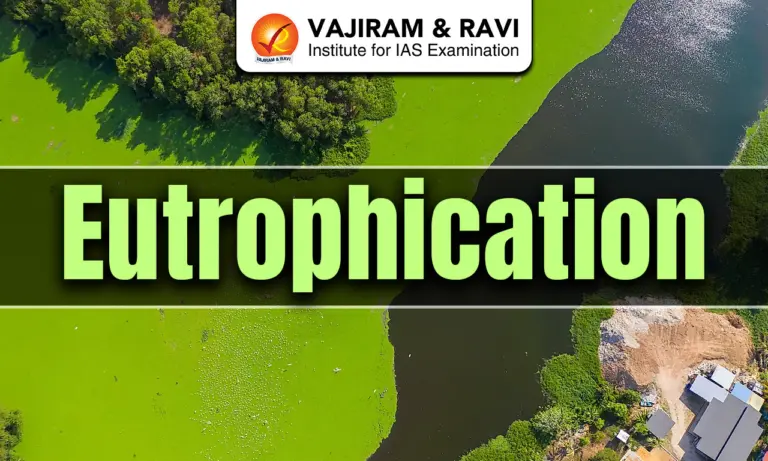
Eutrophication is a natural process in which water bodies like lakes, rivers, or ponds become rich in nutrients, especially substances like nitrogen and phosphorus. When too many of these nutrients enter the water, it leads to excessive growth of algae and aquatic plants. This can make the water look green and dirty.
About Eutrophication
- Eutrophication is a natural process in which a water body like a lake, river, or pond becomes rich in nutrients, especially nitrogen and phosphorus, making it more fertile for plant growth.
- These nutrients mainly enter the water through rainwater runoff, which carries soil, waste, and organic matter from land into water bodies.
- As nutrient levels increase, there is rapid growth of algae and aquatic plants, often forming thick layers on the surface called algal blooms.
- These algal blooms block sunlight and reduce oxygen levels in the water, making it difficult for fish and other aquatic organisms to survive.
- Over time, lakes naturally accumulate nutrients and organic matter through a slow ageing process known as natural Eutrophication.
- However, human activities like use of fertilizers, sewage discharge, and industrial waste speed up this process, which is called cultural (man-made) Eutrophication.
- Based on nutrient levels, water bodies are classified as:
- Oligotrophic – low nutrients, clean water
- Mesotrophic – moderate nutrients
- Eutrophic – high nutrients with excessive plant growth
- Today, Eutrophication has become a major environmental problem, as it degrades water quality and harms aquatic ecosystems, similar to issues like pollution and climate change.
Types of Eutrophication
- Natural Eutrophication
- Natural Eutrophication happens on its own over a long period of time due to natural processes.
- Nutrients from soil, plants, and organic matter are carried into water bodies through rainfall, floods, and natural runoff.
- This gradual increase in nutrients allows algae and aquatic plants to grow slowly and naturally.
- Compared to human-induced Eutrophication, this process is very slow and occurs over thousands of years.
- Environmental factors like temperature and climate change (global warming) can also influence and sometimes speed up this natural process.
- Man-Made (Cultural/Anthropogenic) Eutrophication
- Man-made Eutrophication is caused by human activities that add excess nutrients to water bodies.
- The major source is the use of fertilizers in agriculture, lawns, and gardens, which are washed into rivers and lakes by rainwater.
- These extra nutrients lead to rapid growth of algae and plankton, causing quick Eutrophication.
- Sewage discharge and industrial waste also add nutrients and pollutants, making the problem more serious.
- Activities like deforestation and overpopulation increase soil erosion, which carries nutrient-rich soil (especially phosphorus) into water bodies.
- This type of Eutrophication happens much faster and causes serious damage to aquatic ecosystems and water quality.


Process of Eutrophication
- Eutrophication begins when excess nutrients like nitrates and phosphates enter water bodies through sources such as fertilizers, sewage, and industrial waste. This is called nutrient enrichment or nutrient loading.
- These nutrients act like food for algae and tiny plants (phytoplankton), leading to their rapid and excessive growth, known as an algal bloom.
- The algal bloom forms a thick layer on the water surface, which blocks sunlight from reaching plants growing under the water.
- Due to lack of sunlight, underwater plants cannot perform photosynthesis properly and eventually die. Algae also have a short life cycle and die in large numbers.
- The dead plants and algae are broken down by bacteria, and this decomposition process uses up a large amount of oxygen present in the water.
- As a result, the level of dissolved oxygen decreases sharply (a condition called hypoxia), making it difficult for aquatic animals to survive.
- Fish and other organisms that depend on oxygen begin to suffocate and die, leading to the formation of “dead zones” where very little life can exist.
- During the day, phytoplankton produce oxygen through photosynthesis, but at night they consume more oxygen through respiration, which further reduces oxygen levels.
- The large number of algae increases the overall oxygen demand, and microorganisms use even more oxygen while decomposing dead matter, worsening the situation.
- In low-oxygen (anaerobic) conditions, harmful bacteria such as Clostridium botulinum may grow and release toxic substances that can harm fish, birds, and even mammals.
- Warmer water temperatures can also encourage faster growth of algal blooms, making Eutrophication worse.
- Algal blooms can appear in different colors like green, red, or brown, often referred to as red tides or brown tides.
Effects of Eutrophication
- Eutrophication causes lakes and ponds to gradually become shallow due to the accumulation of dead plants and organic matter (detritus). Over time, these water bodies may turn into marshy land, changing from an aquatic to a terrestrial ecosystem.
- The rapid growth of algae (algal blooms) blocks sunlight, which stops underwater plants from photosynthesizing. As a result, plants die, and their decomposition by bacteria reduces oxygen levels in the water.
- The decrease in oxygen (high BOD and hypoxia) leads to the death of fish, shellfish, and other aquatic organisms, causing a serious loss of biodiversity and disturbing the food chain.
- Eutrophication also leads to changes in species composition, where invasive or unwanted species may dominate due to excess nutrients in the water.
- The water becomes dirty, coloured (green/red/brown), foul-smelling, and more turbid, which affects water quality, harms coral reefs, and creates problems for navigation, fishing, and recreation.
- Harmful algal blooms can release toxic substances (neurotoxins and hepatotoxins), which can enter the food chain through fish and shellfish, affecting animals, birds, and even human health.
- It also causes health risks such as water contamination, skin irritation, breathing problems, and diseases like blue baby syndrome due to high nitrate levels.
- Economically, Eutrophication leads to loss of fisheries, decline in tourism, and increased water treatment costs, negatively impacting livelihoods and local economies.
Causes of Eutrophication
- Natural Events: Heavy rainfall, storms, and floods wash nutrients, soil, and organic matter from land into rivers and lakes. Also, as lakes age over time, organic matter settles at the bottom, increasing nutrient levels and promoting the growth of algae and phytoplankton.
- Agricultural Runoff (Fertilizers): Excess use of nitrate and phosphate fertilizers in farming leads to nutrients being washed into nearby water bodies during rainfall. This makes agriculture one of the major causes of Eutrophication, as it results in rapid growth of algae, aquatic plants, and even invasive species like water hyacinth.
- Animal Waste and Farming Activities: Runoff from animal dung, animal feed, and organic manure used in agriculture adds more nutrients to water bodies. Activities like phosphorus mining and fertilizer production also increase nutrient levels, worsening the problem.
- Aquaculture and Livestock Operations: Wastewater released from fish farming (aquaculture) and large-scale animal feeding operations contains high levels of nitrates and phosphates. These nutrients enter water bodies through discharge and flooding, contributing to Eutrophication.
- Sewage and Wastewater: Untreated or poorly treated domestic sewage and wastewater carry nutrients, including those from detergents and household waste, directly into rivers and lakes, increasing pollution and nutrient levels.
- Industrial Discharge: Effluents from industries and manufacturing units release nutrient-rich and chemical waste into water bodies, which accelerates Eutrophication.
- Urban Runoff: Rainwater flowing through cities carries pet waste, lawn fertilizers, and other pollutants into drains and water bodies, adding to nutrient enrichment.
- Atmospheric Deposition: Nitrogen compounds released into the air from burning fossil fuels and agricultural activities can settle on water bodies through rainfall, adding to nutrient levels.
- Animal Farming (CAFOs): Large-scale livestock operations produce huge quantities of animal waste (manure). If not properly managed, this waste can seep into groundwater or be carried by runoff into rivers and lakes, adding to nutrient pollution.
Sources of Eutrophication
- Point Sources: These are sources where nutrients enter water bodies from a single, clearly identifiable location. Common examples include sewage treatment plants, municipal wastewater discharge, and industrial effluents. In such cases, pollution is usually highest near the source and gradually decreases with distance. These sources directly release nitrogen and phosphorus into rivers, lakes, and groundwater.
- Non-Point Sources: These sources do not originate from a single point but are spread over large areas. Nutrients are carried into water bodies through rainfall, surface runoff, leaching from soil, and atmospheric deposition. They are more difficult to control and are often the major contributors to Eutrophication.
Control and Prevention of Eutrophication
- Wastewater Treatment & Nutrient Removal: Industrial effluents and domestic sewage must be properly treated before discharge to remove excess nitrogen and phosphorus. Advanced methods like nitrification–denitrification, reverse osmosis, ion exchange, and electrodialysis help in effective nutrient removal, while separating and diluting nutrient-rich streams further reduces pollution.
- Sustainable Agricultural Practices: Efficient use of fertilizers (right amount, time, and method), along with nitrogen testing and modelling, helps reduce nutrient runoff. Promoting organic farming, use of manure, and better soil practices also minimizes pollution from agriculture.
- Natural Filtering Systems (Riparian Buffers): Vegetative buffer zones such as wetlands and estuaries act as natural filters by trapping sediments and nutrients before they reach water bodies.
- Control of Runoff and Emissions: Managing urban runoff, animal waste, and aquaculture discharge, along with reducing nitrogen emissions from vehicles and industries, helps limit nutrient entry through land, water, and air.
- Physical and Biological Removal: Excess algae, aquatic plants, and nutrient-rich sediments can be removed through harvesting or dredging, which lowers nutrient levels and improves water quality.
- Chemical and Technical Measures: Chemicals like alum, lime, iron, and sodium aluminate can bind phosphorus and reduce its availability. Aeration and mixing increase oxygen levels and help control algal blooms, while limiting soluble nutrients also restricts their growth.
- Policies, Projects & Community Role: Strong laws, pollution control standards, and monitoring systems are essential. Initiatives like Namami Gange and lake restoration projects (e.g., Hussainsagar Lake) focus on reducing pollution and restoring ecosystems. Public awareness and participation, along with coordination between government and institutions, ensure long-term prevention.

 Last updated on Sep, 2026
→ UPSC 2027 Notification will be released on 13 January 2027 at upsconline.nic.in.
→ Check out the latest UPSC Syllabus here.
→ Download UPSC Model Answers for Mains 2026
→ UPSC Mains Question Paper 2026 is out now for Essay & GS Paper 1, 2, 3 & 4.
→ UPSC Calendar 2027 has been released.
→ Enroll in Vajiram & Ravi’s UPSC Mains Test Series 2027 for structured answer writing practice, expert evaluation, and exam-oriented feedback.
→ Join Vajiram & Ravi’s UPSC Mentorship Program 2027 for personalized guidance, strategy planning, and one-to-one support from experienced mentors.
→ Go through the UPSC Mains Previous Year Papers to enhance your preparation.
→ UPSC has released UPSC Toppers List 2025 with the Civil Services final result on its official website.
→ Also check Best UPSC Coaching in India
Eutrophication FAQs
Q1. What is Eutrophication?+
Q2. What are the main causes of Eutrophication?+
Q3. How does Eutrophication affect aquatic life?+
Q4. What is the difference between natural and cultural Eutrophication?+
Q5. What are algal blooms and why are they harmful?+
Tags: environment environment notes