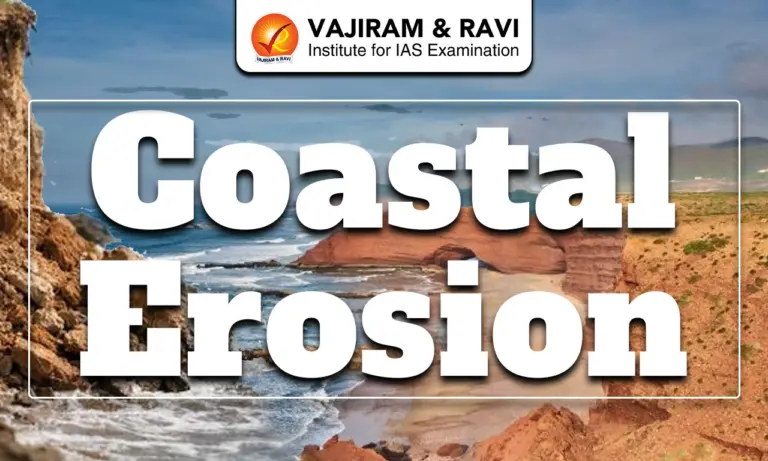
Coastal Erosion is the gradual wearing away and displacement of coastal land by waves, tides, sea currents, storms and rising sea levels. It affects rocks, soils, beaches and sand dunes along shorelines and has become a major environmental challenge across the world. India, with a coastline touching 13 States and Union Territories, is highly vulnerable to Coastal Erosion due to both natural coastal processes and large scale human interventions such as ports, breakwaters, reclamation and urban infrastructure projects.
Coastline of India
India has a coastline of 7,516.6 km, including about 6,100 km of mainland coastline and nearly 1,197 km of island coastline touching 13 coastal States and Union Territories. Gujarat has the longest coastline among states with 1,214.7 km, followed by Andhra Pradesh with 973.7 km and Tamil Nadu with 906.9 km of coastline. Andaman and Nicobar Islands possess the longest coastline among Union Territories at nearly 1,962 km, making them highly exposed to shoreline instability and Coastal Erosion related hazards.
Coastal Erosion in India
India’s coastline faces severe erosion due to natural marine processes and increasing anthropogenic activities, threatening ecosystems, fisheries, infrastructure and coastal livelihoods.
- NCCR Report: National Centre for Coastal Research observed that nearly 33.6% of India’s coastline is vulnerable to erosion, 26.9% is under accretion, while 39.6% remains relatively stable.
- Mainland Coast: NCCR analysed about 6,907.18 km of India’s mainland coastline from 1990 to 2018 using satellite imagery, GIS mapping and field surveyed coastal data.
- Port Expansion: Expansion of Ennore Port and Adani Kattupalli Port in Tamil Nadu significantly disrupted sediment flow; and intensified shoreline retreat and wave intrusion inland. Expansion of harbours and commercial ports blocks littoral drift and sediment circulation.
- Erosion Rates: Erosion rates along India’s east coast are increasing by nearly 3 metres annually, while west coast erosion advances at approximately 2.5 metres per year.
- Shoreline Mapping: NCCR prepared 526 shoreline maps, 69 district maps and maps for 9 States and 2 Union Territories at 1:25000 scale to identify vulnerable coastal stretches.
- Coastal Types in India: Coromandel Coast of Tamil Nadu represents a coast of emergence, while Konkan Coast of Maharashtra and Goa is classified as a coast of submergence.


Coastal Erosion Examples
The state wise analysis of the Coastal Erosion has been discussed here:
- West Bengal: West Bengal recorded the highest erosion vulnerability, where nearly 60.5% of its 534.35 km coastline, equivalent to 323.07 km, experienced severe shoreline retreat.
- Kerala: Kerala witnessed erosion along nearly 46.4% of its 592.96 km coastline, amounting to around 275.33 km affected by continuous marine erosion and flooding threats.
- Tamil Nadu: Tamil Nadu experienced erosion across nearly 42.7% of its 991.47 km coastline, with coastal land losses exceeding 4,450 acres affecting fishing communities and settlements. Along the coast, winds and currents move sand from south to north for nearly eight months annually, while northeast monsoon reverses the flow for four months.
- Puducherry: Puducherry recorded erosion along nearly 56.2% of its 41.66 km coastline, making it among the most erosion prone coastal regions in the country.
- Gujarat Coast Erosion: Gujarat, despite having India’s longest coastline of 1,945.6 km, recorded erosion across around 27.06% or nearly 537.5 km of coastal stretches.
- Odisha: Odisha remains unique among coastal states as nearly 51% of its coastline shows accretion, where sediment deposition is expanding coastal landforms instead of eroding them.
Mechanism of Coastal Erosion
Coastal Erosion operates through wave energy, sediment movement, hydraulic pressure and mechanical weathering processes that continuously reshape shoreline landscapes and coastal landforms.
- Corrasion: Corrasion occurs when strong waves hurl pebbles and sediments against cliff bases, gradually cutting wave notches and weakening coastal rock structures through repeated impacts.
- Abrasion: Abrasion takes place when waves carrying sand and rock fragments continuously scrape coastal cliffs and headlands, producing a sandpaper like erosion effect during storms.
- Hydraulic Action: Hydraulic action develops when waves compress trapped air inside rock cracks and joints, causing explosive pressure release that breaks and dislodges coastal rock masses.
- Attrition: Attrition occurs when rocks, pebbles and sediments carried by waves collide repeatedly, breaking into smaller and smoother particles over long periods of coastal movement.
- Sediment Transportation: Longshore currents transport sand and sediments parallel to coastlines, continuously redistributing beach material and influencing erosion and deposition patterns along shores.
- Wave Energy Concentration: High energy waves during cyclones, storms and monsoon conditions increase shoreline retreat by exerting greater mechanical force on beaches, cliffs and coastal embankments.
- Sea Level Rise: Rising sea levels allow waves to penetrate further inland, intensifying shoreline instability and increasing the frequency of coastal flooding and sediment displacement.
- Weathering: Physical and chemical weathering weakens coastal rocks before marine processes erode them, accelerating cliff collapse and shoreline retreat in vulnerable coastal zones.
Causes of Coastal Erosion
Coastal Erosion results from combined natural coastal dynamics and human induced modifications that disturb shoreline stability, sediment balance and marine ecological systems.
- Strong Wave Action: Continuous wave attack erodes coastlines through hydraulic action, corrasion and abrasion, especially during cyclones, storms and rough sea conditions along exposed coasts.
- Tidal Influence: High and low tides repeatedly expose and submerge coastlines, increasing sediment displacement and coastal instability, particularly in regions with large tidal variations.
- Wind and Currents: Persistent sea currents and strong winds gradually transport sediments away from beaches, causing long term shoreline retreat and coastal land degradation.
- Monsoonal Reversal Effect: Tamil Nadu experiences seasonal reversal of currents during northeast monsoon, altering sediment transport patterns and creating imbalance in coastal sand distribution.
- Hard Coastal Structures: Ports, groynes, seawalls, breakwaters and jetties obstruct natural sediment movement, causing erosion on down current sides while increasing deposition on opposite sides.
- Land Reclamation Projects: Coastal reclamation projects in cities like Mumbai alter natural shorelines and marine currents, increasing erosion risks in surrounding coastal stretches.
- Urban Infrastructure Growth: Roads, tourism facilities, industrial zones and coastal construction weaken natural barriers such as dunes and mangroves, increasing shoreline vulnerability.
- Destruction of Coastal Vegetation: Removal of mangroves, seagrass and dune vegetation reduces sediment stability and weakens natural coastal defence systems against wave action.
- Climate Change and Sea Level Rise: Global warming increases sea levels, storm surges and extreme weather events, significantly accelerating Coastal Erosion across vulnerable low lying regions.
Effects of Coastal Erosion
Coastal Erosion causes several impacts including environmental degradation, infrastructure damage, livelihood insecurity, displacement, biodiversity loss and increased disaster vulnerability across coastal regions and island ecosystems as highlighted below
- Loss of Coastal Land: Continuous shoreline retreat destroys valuable land resources, affecting public infrastructure, tourism areas, settlements and beaches such as Marina Beach in Chennai.
- Threat to Fishing Communities: Fishermen lose operational spaces for boat parking, fish drying and net repair activities, directly affecting income and traditional coastal livelihoods.
- Mangrove Destruction: Erosion in Sundarbans has damaged mangrove forests, weakening biodiversity protection and reducing natural barriers against cyclones and tidal surges.
- Increased Flooding Risk: Coastal Erosion removes natural protective barriers, increasing vulnerability of low lying regions in Kerala and other coastal states to floods and storm surges.
- Community Displacement: Severe shoreline retreat in Andaman and Nicobar Islands forced relocation of several coastal communities due to shrinking habitable land and repeated flooding threats.
- Saltwater Intrusion: Seawater intrusion into agricultural fields in Andhra Pradesh increased soil salinity, reduced crop productivity and damaged freshwater availability for farming activities.
- Biodiversity Loss: Coastal Erosion damages habitats such as coral ecosystems, wetlands, dunes and salt marshes, disrupting marine biodiversity and coastal ecological balance.
- Impact on Lakshadweep: Erosion and shoreline instability negatively affected fragile marine ecosystems and coastal biodiversity in the Lakshadweep Islands.
- Economic Losses: Damage to ports, roads, tourism infrastructure, fisheries and housing increases financial burden on governments and coastal communities dependent on marine resources.
- Increased Disaster Vulnerability: Eroded coastlines become more exposed to cyclones, storm surges, tidal flooding and sea level rise, increasing disaster risks for coastal populations.
Coastal Erosion Prevention Measures
Sustainable coastal management combines ecological restoration, scientific planning, engineering interventions and regulatory controls to reduce shoreline retreat and protect vulnerable communities.
- Coastal Vegetation Plantation: Planting mangroves, seagrass and coastal vegetation stabilises sediments, reduces wave energy and strengthens natural coastal defence against erosion.
- Beach Nourishment: Artificial replenishment of beach sand restores eroded shorelines and enhances beaches’ natural capacity to absorb storm energy without disturbing coastal ecosystems.
- Wetland Restoration: Restoring wetlands and marshes improves sediment retention, reduces flooding risks and provides critical breeding grounds for marine and coastal species.
- Construction of Soft Barriers: Eco-friendly methods such as dune stabilisation and vegetative barriers reduce erosion without severely disturbing natural shoreline sediment movement.
- Scientific Shoreline Management: Site specific shoreline management plans based on coastal data, wave patterns and sediment transport improve long term erosion mitigation strategies.
- Buffer Zones: Maintaining minimum distance from shoreline areas prevents infrastructure encroachment and protects ecologically sensitive coastal stretches from excessive disturbance.
- Sustainable Port: Coastal infrastructure projects should incorporate sediment flow studies and environmental assessments to minimise disruption of natural littoral drift systems.
- Climate Adaptation Measures: Integrated climate adaptation strategies involving early warning systems, coastal resilience planning and disaster preparedness reduce future erosion related risks.
Government Initiatives for Coastal Erosion
Government agencies have launched mapping systems, coastal regulations, hazard assessment programmes and shoreline protection strategies to tackle Coastal Erosion across India.
- Shoreline Mapping System: NCCR developed extensive shoreline mapping using remote sensing and GIS technologies to identify vulnerable erosion prone stretches along India’s coastline.
- National Shoreline Assessment: The “National Assessment of Shoreline Changes along Indian Coast” report released in July 2018 provided scientific data for coastal planning and protection measures.
- Coastal Atlas: A revised digital shoreline atlas released on 25 March 2022 included updated erosion maps and detailed coastal vulnerability assessments for policymakers and researchers.
- Hazard Line Mapping: MoEFCC delineated hazard lines across India’s coast to indicate shoreline changes, sea level rise impacts and areas vulnerable to coastal hazards.
- Coastal Regulation Zone Notification 2019: CRZ Notification 2019 aims to conserve coastal stretches, protect marine ecosystems and ensure livelihood security for fishermen and coastal communities.
- No Development Zones: CRZ Notification introduced No Development Zones along sensitive coastal stretches to prevent encroachment, ecological degradation and shoreline instability.
- Coastal Zone Management Plans: States and Union Territories were directed to finalise CZMPs including mapping of erosion prone areas and preparation of Shoreline Management Plans.
- National Green Tribunal Directions: NGT directed coastal states on 11 April 2022 to strengthen coastal management planning and identify vulnerable erosion stretches scientifically.
- Flood Management: Ministry of Jal Shakti supports anti sea erosion projects executed by State Governments through technical, advisory and promotional assistance mechanisms.
- Coastal Management Information System: CMIS was launched under the Development of Water Resources Information System scheme to collect nearshore coastal process and wave data. Experimental CMIS facilities were established at three sites each in Kerala, Tamil Nadu and Puducherry for coastal monitoring and protection planning.
- Puducherry Mitigation Measures: Coastal protection works in Puducherry helped restore and safeguard eroded shoreline stretches vulnerable to marine intrusion and wave damage.
- Chellanam Kerala Protection Efforts: Coastal mitigation measures at Chellanam fishing village in Kerala reduced flooding risks and improved shoreline protection against severe marine erosion.
- INCOIS Coastal Vulnerability Atlas: Indian National Centre for Ocean Information Services prepared Coastal Vulnerability Index maps for India’s coastline at 1:100000 scale for risk assessment.

 Last updated on Oct, 2026
→ UPSC 2027 Notification will be released on 13 January 2027 at upsconline.nic.in.
→ Check Nobel Prize 2026 Winners List here.
→ Download PIB PRiSM Monthly Magazine 2026 here.
→ Check UPSC Monthly Current Affairs Magazine The Recitals here.
→ Check out the latest UPSC Syllabus here.
→ Download UPSC Model Answers for Mains 2026
→ UPSC Mains Question Paper 2026 is out now for Essay & GS Paper 1, 2, 3 & 4.
→ UPSC Calendar 2027 has been released.
→ Enroll in Vajiram & Ravi’s UPSC Mains Test Series 2027 for structured answer writing practice, expert evaluation, and exam-oriented feedback.
→ Join Vajiram & Ravi’s UPSC Mentorship Program 2027 for personalized guidance, strategy planning, and one-to-one support from experienced mentors.
→ Go through the UPSC Mains Previous Year Papers to enhance your preparation.
→ UPSC has released UPSC Toppers List 2025 with the Civil Services final result on its official website.
→ Also check Best UPSC Coaching in India
Coastal Erosion FAQs
Q1. What is Coastal Erosion?+
Q2. Which Indian state faces the highest Coastal Erosion?+
Q3. How do ports and breakwaters increase Coastal Erosion?+
Q4. What are the major impacts of Coastal Erosion?+
Q5. Which government agency monitors Shoreline Erosion in India?+