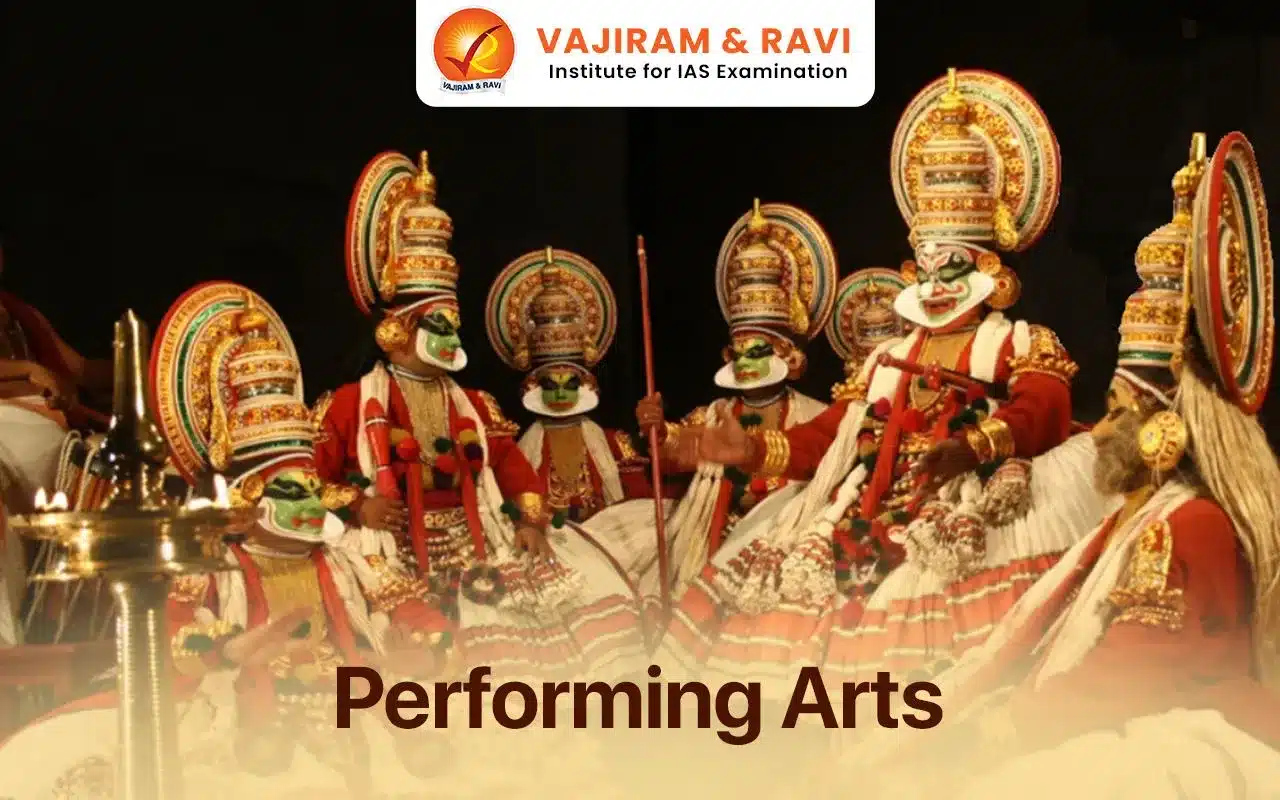
The performing arts are an umbrella term encompassing various artistic disciplines, including music, dance, and drama, all performed to an audience. Music, a universal art, is often integral to other forms and reflects diverse contexts - sacred, classical, or popular. Dance, a complex yet ordered expression, usually conveys sentiments or illustrates specific events.
Traditional theatre, combining acting, singing, dance, and music, transcends mere performance, playing crucial societal and cultural roles. These art forms have not only entertained and captivated audiences but have also preserved and transmitted cultural values, stories, and traditions across generations.
Performing Arts Meaning
The performing arts are artistic pursuits in which performers utilise their bodies, voices, movement, or instruments to tell tales, communicate emotions, or express ideas in front of an audience. Unlike visual or fine arts, which produce physical, immobile items such as paintings or sculptures, performing arts exist only in the moment they are performed.
Performing Arts Examples
Performing arts are art forms presented before an audience through live performances. In India, they reflect the country's rich cultural heritage and diversity.
- Major examples include classical dances such as Bharatanatyam (Tamil Nadu), Kathak (North India), Kathakali (Kerala), Odissi (Odisha), Kuchipudi (Andhra Pradesh), Manipuri (Manipur), Sattriya (Assam) and Mohiniyattam (Kerala).
- Indian classical music includes Hindustani and Carnatic traditions. Traditional theatre forms include Yakshagana (Karnataka), Jatra (Bengal) and Bhavai (Gujarat).
- Puppetry, folk dances such as Bhangra and Garba, and musical storytelling traditions also form important parts of India's performing arts heritage.
Performing Arts in India History
As civilisations developed, rulers and religious centres provided sustenance to the performing arts. They hosted and employed performers, invited artists from other regions, and facilitated a meaningful cross-cultural exchange. This support encouraged artists to learn, teach, and experiment with their chosen art forms.
- Vedic Period: The Rigveda contains hymns that were likely sung during religious rituals. This period also saw the development of Gandharva Veda, an ancient treatise on music.
- Golden Age of the Guptas: The Gupta Empire witnessed a flourishing of the arts, with the royal court emerging as a major patron.
- The Pallava, Chola, Vijayanagara, and other mediaeval dynasties continued this tradition, endowing temple complexes and dedicating spaces for cultivating and performing various art forms.
- Mughal Empire: The Mughal era witnessed a unique synthesis of Persian and Indian performing arts, with Akbar's patronage of Tansen and the flourishing of Hindustani classical music and Kathak dance under royal support, leading to the development of various gharanas.
- Colonial Period: Though this period was disruptive in many ways, it also led to the codification and revival of several classical traditions through the efforts of scholar-practitioners.
- Post-Independence Era: The Indian state has played a pivotal role in the preservation, promotion, and dissemination of the country's rich performing arts heritage through institutions, festivals, awards, and policies.


Performing Arts Fundamentals
The concept of Performing Arts in Indian culture is deeply intertwined with expressing human emotions, or ‘Rasas’. These Rasas are a key element in various art forms, including music, dance, and drama, which are collectively known as the performing arts.
- Art as Expression: Art is a manifestation of the human mind’s aesthetic qualities, reflecting a spectrum of emotions.
- Rasas: The term ‘Rasa’ in Sanskrit symbolises the essence of emotions, akin to a sweet juice providing satisfaction or ‘aanand’. There are traditionally nine Rasas, known as ‘Navras’, each representing a different emotional state:
- Hasya (laughter), Shringara (love/beauty), Karuna(sorrow), Raudra (anger), Veera (heroism/courage), Bhayanaka (terror/fear), Bibhatsa (disgust), Adbutha (surprise/wonder), Shantha (peace or tranquillity).
- Art Forms: Human emotions are spontaneously expressed through various art forms, such as singing, dancing, drawing, painting, acting, and sculpture.
- Visual vs. Performing Arts: Visual arts include sketching, painting, and sculpture, while performing arts encompass singing, dancing, and acting.
- Music: In India, music has been a predominant art form since ancient times, with roots traceable to the Sama Veda.
- Historical Texts:
- Natyashastra: Authored by Bharata Muni and dated around the 2nd century BCE, it’s a seminal text on performing arts with significant emphasis on music.
- Brihaddesi: Matanga’s work from the 8th- 9th centuries AD, where ragas were first systematically named and described.
- Sangeet Ratnakara: A 13th-century text by Sarangdeva, listing 264 ragas.
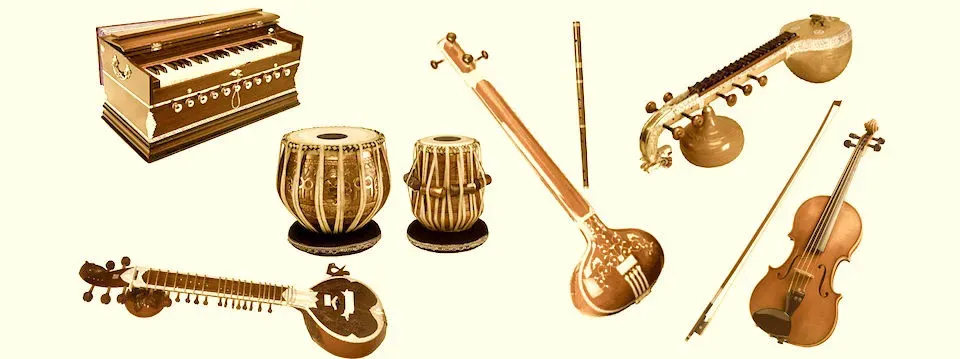
- Instruments: Over time, a variety of string and wind instruments have been developed, with ancient texts mentioning flutes, drums, veena, and cymbals.
Performing Arts Elements
The performing arts rely on live presentations where artists use their bodies, voices, and movements to tell stories or evoke emotions for an audience. The general elements of Performing Arts include the following:
- Time: The duration, pace, and temporal progression of the performance from start to finish.
- Space: The physical or digital environment where the action happens.
- Performer's Body (or Presence): The physical instrument, voice, or medium the artist uses to express ideas and emotions.
- Relationship (Performer and Audience): The direct connection, interaction, or tension between the person performing and the public or observers.
- Content (or Message): The underlying theme, storyline, or emotional goal that the performance seeks to communicate.
Performing Arts Types
The main types of performing arts include music, dance, theatre (drama, opera, and musical theatre), spoken word, puppetry, mime, and circus arts, performed live before an audience.
- Music: Vocal or instrumental arrangements ranging from classical and folk to contemporary genres.
- Dance: Ordered, rhythmic bodily movements like ballet, contemporary, hip-hop, or traditional classical styles.
- Theatre & Drama: Scripted or improvised stage plays, physical theatre, and mime.
- Musical Theatre & Opera: A combination of singing, acting, orchestration, and choreography.
- Speciality Arts: Circus arts, magic shows, and puppetry.
Performing Arts Music
Music in Indian culture dates back to the Vedic era, with Narada Muni introducing music to Earth and the concept of Nada Brahma (the sound pervading the universe).
- Ancient instruments like the seven-holed flute from the Indus Valley Civilization and the Ravanahatha from Sri Lanka’s Hela Civilisation highlight India’s rich musical history.
- The Aitareya Aranyaka mentions components of the Veena, a revered musical instrument, and the Jaiminiya Brahmana discusses dance and music collectively.
- The sacred syllable “Om” is believed by musicologists to be the source of all ragas and musical notes.
Classical Music
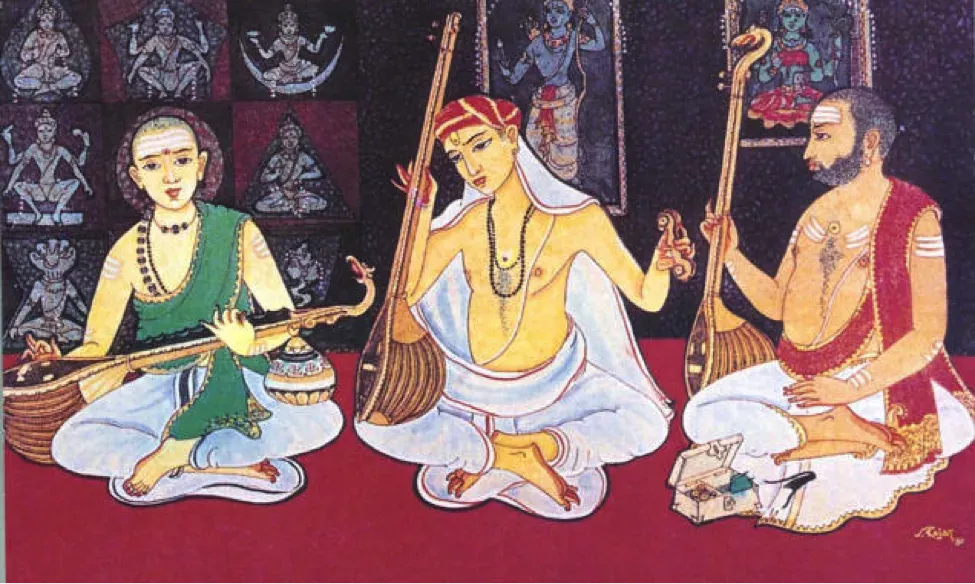
Indian music history evolved from Vedic times to Sangita Ratnakara, then divided into Hindustani and Carnatic systems around the 14th century, enriching Raga, Tala, and musical forms. Haripala introduced Hindustani and Carnatic music terms around the same period.
- Carnatic Music: Originating in the southern regions of India, Carnatic music is known for its intricate melodic and rhythmic patterns and its emphasis on vocal music.
- It follows a highly structured system of ragas and talas, with compositions often based on religious texts and themes.
- Prominent instruments include the veena, mridangam, and nadaswaram.
- Hindustani Music: Rooted in the Vedic traditions, Hindustani classical music evolved over centuries, incorporating influences from various cultures and dynasties.
- Its complex melodic structures (ragas) and rhythmic cycles (talas) characterise it.
- Notable genres include Dhrupad, Khayal, Thumri, and Ghazal.
- Prominent instruments include the sitar, sarod, sarangi, and tabla.
- Folk Music: It is an expression of the emotions and experiences of everyday people, celebrating life events and serving as oral histories.
- Each state has its unique musical traditions, and while classical music adheres to strict rules laid out in texts like the Natyashastra, folk music is more fluid and spontaneous such as the Mand of Rajasthan and the Bhatiali of Bengal.
- Examples: Baul music (Bengal), Rabindra Sangeet (Bengal), Bhangra (Punjab), Lavani (Maharashtra), Garba (Gujarat), and Bihu (Assam), among many others.
Performing Arts Dances of India
Dance is a rhythmic, ordered bodily movement, often set to music, expressing sentiments, illustrating events, or daily activities like hunting, warfare, or religious rituals. The art of dance in India has deep historical roots.
- Origins and Early References: India has ancient roots, with mentions in the Rig Veda of dance (nrti) and danseuse (nrtu).
- The Brahmanas, including Jaiminiya and Kausitaki, mention dance and music together, and the Epics like the Ramayana and Mahabharata are filled with references to dances on earth and in heaven.
- Development of Classical Tradition: Like music, Indian dance has developed a rich classical tradition, with a powerful capacity for expression and storytelling.
- Ancient statues from Harappa and Mohenjodaro reveal glimpses of dance. A male dancer’s torso and a dancing girl’s figure hint at its presence in the Indus Valley Civilisation.
- Natyashastra of Bharata: It is a primary source of information for the analytical study of this art form.
- Bharata discussed dance and its various angas (limbs) in detail, categorising them under nritta (pada sanchalan), nritya (anga sanchalan), and natya (abhinay).
- Religious and Cultural Significance: In traditional Indian culture, dance served to symbolically express religious ideas.
- The figure of Lord Shiva as Nataraja, representing the creation and destruction of the cosmic cycle, is a testament to the importance of dance in Indian culture.
- Classical Dance Forms: Originating in temple rituals, these dance styles symbolically express religious ideas and mythological narratives.
- The Sangeet Natak Akademi recognises 8 dance forms as classical: Bharatanatyam, Kuchipudi, Kathakali, Mohiniattam, Odissi, Manipuri, Kathak, and Sattriya.
- Folk Dances: These dances evolved from the lives and celebrations of common people. These dance forms celebrate various aspects of life, from harvests and festivals to martial traditions and social customs.
- These dances, often performed in unison, include the Bihu of Assam, Garba of Gujarat, Bhangra and Gidda of Punjab, Bamboo dance of Mizoram, Koli of Maharashtra, Dhumal of Kashmir, and Chhau of Bengal, among many others.
Performing Arts Drama and Theatre

Indian drama traces its origins to the Vedic period, where ritual performances and recitations of epic narratives laid the groundwork. The Natyashastra provides principles and techniques for ancient Indian theatre.
- Classical Sanskrit Drama: Flourished from the 1st century CE to the 12th century CE:
- Playwrights like Kalidasa, Bhasa, Sudraka, and Harsha crafted intricate dramas blending poetry, music, and dance.
- Themes ranged from love and heroism to exploration of the human condition.
- Sanskrit theatre thrived through royal patronage and temple performances.
- Stylised acting, rich language, and incorporation of music and dance characterised these plays.
- Emergence of Regional Theatre: As Sanskrit drama waned, regional theatre traditions emerged. These forms were rooted in local languages, folk narratives, and religious or social customs. Notable examples:
- Tamasha (Maharashtra): Semi-improvised folk theatre with music, dance, and satire.
- Nautanki (Uttar Pradesh): Folk opera enacting epics and legends.
- Tamilu (Tamil Nadu): Street theatre exploring social and political themes.
- Jatra (West Bengal): Devotional and mythological narratives.
- Bhand Pather (Jammu and Kashmir): Comic theatre using masks and satire.
Performing Arts Martial Arts

India, with its rich cultural heritage known for a diverse array of martial arts. Originally used for combat, these disciplines now serve as demonstrations, rituals, fitness routines, and self-defence methods. These martial arts not only showcase India's rich warrior heritage but also serve as a means of physical, mental, and spiritual development for practitioners.
- Kalaripayattu (Kerala): One of the oldest surviving martial arts, it emphasises fluid, acrobatic movements and the use of various weapons.
- Silambam (Tamil Nadu): A stick-fighting art known for its intricate footwork and lightning-fast strikes.
- Gatka (Punjab): A traditional Sikh martial art that involves the skilled handling of swords, shields, and other weapons.
- Thang-Ta (Manipur): It combines the use of sword (thang) and spear (ta) with fluid, graceful movements.
- Mallakhamb (Maharashtra& other states): A unique sport that involves complex gymnastic feats performed on a vertical wooden pole or rope.
Performing Arts Puppetry
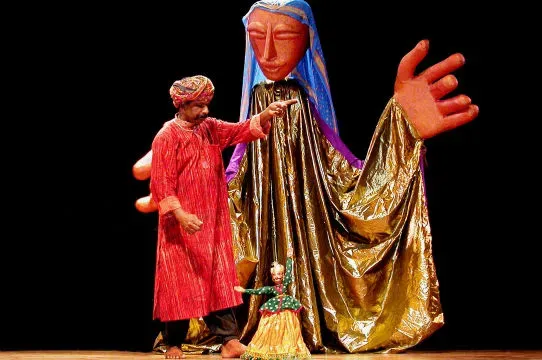
Puppetry is an ancient form of storytelling and entertainment, with diverse regional variations and traditional techniques. These puppet traditions not only entertain but also serve as a medium for the transmission of cultural heritage, social commentary, and spiritual narratives. These include:
- Kathputli (Rajasthan): Colourful, string-operated puppets that depict characters from epics, folklore, and daily life.
- Tholu Bommalata (Andhra Pradesh): Shadow puppetry using intricately crafted leather puppets, often used to enact mythological stories.
- Putumaikkal (Tamil Nadu): Glove puppets made of cloth, leather, and wood, used to perform folk tales and social satires.
- Pavakkathakal (Kerala): Rod puppets with intricate costumes and makeup, portraying characters from the Ramayana and Mahabharata.
- Chhou (West Bengal, Jharkhand, Odisha): Mask-based puppet theatre that combines elements of dance, drama, and martial arts.
Performing Arts Significance
Performing arts such as music, dance, theatre, puppetry, and storytelling are an important part of India’s intangible cultural heritage. They preserve inherited knowledge and skills while allowing communities to express their identity, beliefs, and collective memory.
- Cultural Identity: Performing arts provide communities with a means to express their distinct traditions and strengthen a sense of identity and continuity. For instance, Chhau is recognised as a symbol of community identity and continuity.
- Transmission of Heritage: They transmit traditional knowledge, techniques, stories, music and performance practices from one generation to another, keeping cultural traditions alive.
- Social Cohesion: Collective performances, festivals and community theatre bring different social groups together and encourage dialogue and mutual understanding.
- Livelihood Generation: Performing arts provide employment and income to artists, teachers, musicians, technicians and other cultural practitioners. The Ministry of Culture supports artists through grants, fellowships, scholarships and other assistance.
- Tourism Promotion: Dance, music and theatre can attract visitors and provide an accessible window into local culture, thereby contributing to cultural tourism and local economic activity.
- Cultural Diplomacy: Performances provide a means of presenting India’s cultural heritage internationally and strengthening people-to-people connections.
- Recent cultural programmes at international forums such as the 2026 BRICS Summit showcased Indian traditional music to international audiences.
Performing Arts UPSC PYQs
Q1: Discuss the Tandava dance as recorded in the early Indian inscriptions. (UPSC Mains 2013)
Q2: Which one of the following Carnatic music ragas is similar to Raga Bilawal in Hindustani music? (UPSC Prelims 2026)
(a) Nat Bhairavi
(b) Kamavardhini
(c) Hanumatodi
(d) Dheera Shankarabharanam
Ans: (d)
Q 3: With reference to the cultural history of India, consider the following statements (UPSC Prelims 2018)
- Most of the Tyagaraja Kritis are devotional songs in praise of Lord Krishna
- Tyagaraja created several new ragas
- Annamacharya and Tyagaraja are contemporaries
- Annamacharya kirtanas are devotional songs in praise of Lord Venkateshwara
Which of the statements given above are correct?
(a) 1 and 3 only
(b) 2 and 4 only
(c) 1, 2 and 3
(d) 2, 3 and 4
Answer: (b)
Question 4: Consider the following pairs: (UPSC Prelims 2018)
Tradition —– State
- Chapchar Kut festival – Mizoram
- Khongjom Parba ballad – Manipur
- Thang -Ta dance – Sikkim
Which of the pairs given above is/are correct?
(a) 1 only
(b) 1 and 2
(c) 3 only
(d) 2 and 3
Ans: (b)
Q5: With reference to Manipuri Sankirtana, consider the following statements: (UPSC Prelims 2017)
- It is a song and dance performance
- Cymbals are the only musical instruments used in the performance
- It is performed to narrate the life and deeds of Lord Krishna
Which of the statements given above is/are correct?
(a) 1, 2 and 3
(b) 1 and 3 only
(c) 2 and 3 only
(d) 1 only
Ans: (a)

 Last updated on Nov, 2026
→ UPSC Mains Result 2026 has been declared on 05 November 2026 at the official website at upsc.gov.in.
→ UPSC 2027 Notification will be released on 13 January 2027 at upsconline.nic.in.
→ Check Nobel Prize 2026 Winners List here.
→ Download PIB PRiSM Monthly Magazine 2026 here.
→ Check UPSC Monthly Current Affairs Magazine The Recitals here.
→ Check out the latest UPSC Syllabus here.
→ Download UPSC Model Answers for Mains 2026
→ UPSC Mains Question Paper 2026 is out now for Essay & GS Paper 1, 2, 3 & 4.
→ UPSC Calendar 2027 has been released.
→ Enroll in Vajiram & Ravi’s UPSC Mains Test Series 2027 for structured answer writing practice, expert evaluation, and exam-oriented feedback.
→ Join Vajiram & Ravi’s UPSC Mentorship Program 2027 for personalized guidance, strategy planning, and one-to-one support from experienced mentors.
→ Go through the UPSC Mains Previous Year Papers to enhance your preparation.
→ UPSC has released UPSC Toppers List 2025 with the Civil Services final result on its official website.
→ Also check Best UPSC Coaching in India
Performing Arts FAQs
Q1. What are 5 examples of performing arts?+
Q2. What do you mean by performing arts?+
Q3. What are the subjects under performing arts?+
Q4. What are the five elements of performing arts?+
Q5. What are three types of performing arts?+
Tags: performing arts quest UPSC Art and Culture Notes