UPSC Daily Quiz 23 September 2025

UPSC Daily Quiz

The Daily UPSC Quiz by Vajiram & Ravi is a thoughtfully curated initiative designed to support UPSC aspirants in strengthening their current affairs knowledge and core conceptual understanding. Aligned with the UPSC Syllabus 2025, this daily quiz serves as a revision resource, helping candidates assess their preparation, revise key topics, and stay updated with relevant issues. Whether you are preparing for Prelims or sharpening your revision for Mains, consistent practice with these Daily UPSC Quiz can significantly enhance accuracy, speed, and confidence in solving exam-level questions.

[WpProQuiz 77]

UPSC Daily Quiz FAQs

Q1: What is the Daily UPSC Quiz?

Ans: The Daily UPSC Quiz is a set of practice questions based on current affairs, static subjects, and PYQs that help aspirants enhance retention and test conceptual clarity regularly.

Q2: How is the Daily Quiz useful for UPSC preparation?

Ans: Daily quizzes support learning, help in revision, improve time management, and boost accuracy for both UPSC Prelims and Mains through consistent practice.

Q3: Are the quiz questions based on the UPSC syllabus?

Ans: Yes, all questions are aligned with the UPSC Syllabus 2025, covering key areas like Polity, Economy, Environment, History, Geography, and Current Affairs.

Q4: Are solutions and explanations provided with the quiz?

Ans: Yes, each quiz includes detailed explanations and source references to enhance conceptual understanding and enable self-assessment.

Q5: Is the Daily UPSC Quiz suitable for both Prelims and Mains?

Ans: Primarily focused on Prelims (MCQ format), but it also indirectly helps in Mains by strengthening subject knowledge and factual clarity.

Kalidasa, Early Life, Historical Background, Literary Works

Kalidasa

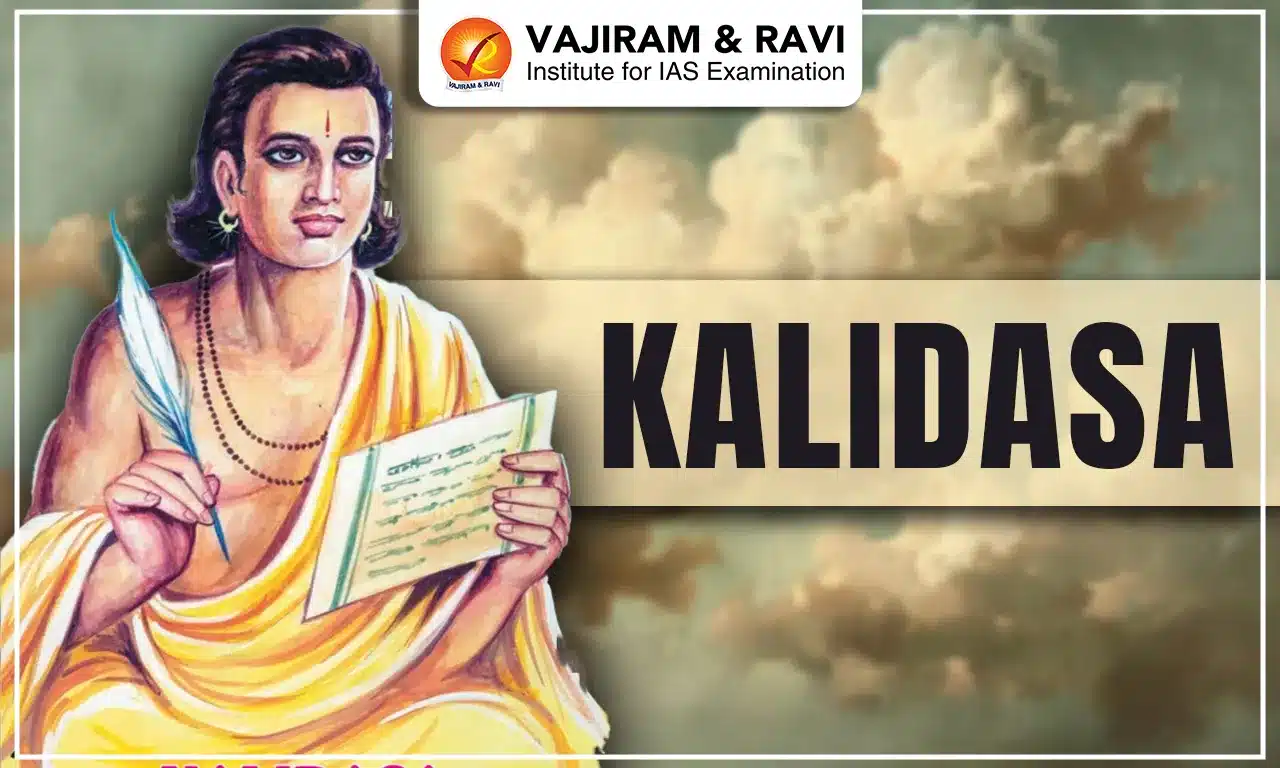
Kalidasa was a famous Indian Poet and dramatist who wrote his texts in Classical Sanskrit. His works were inspired from the Vedas, the Ramayana and the Mahabharata and the Puranas. At present, some of his most well known works include three plays, two epic poems and two shorter poems that together form a part of his legacy. There is not much known about Kalidasa’s personal life and all precise dating is challenging, his writings most likely predate the fifth century CE. In this article, we are going to cover Kalidasa’s life and works, important for Ancient History preparation for the UPSC Civil Services Examination.

Kalidasa

 Kalidasa is widely regarded as India’s greatest Sanskrit poet and dramatist. His name appears alongside poet Bharavi in a 634 CE inscription at Aihole, Karnataka. His influence reached later generations, notably Rabindranath Tagore, whose monsoon-themed poetry echoes the romanticism of Meghaduta. Kalidasa’s works remain a pinnacle of classical Sanskrit literature, embodying artistic, cultural, and intellectual excellence.

Kalidasa’s Life and Historical Background

Kalidasa was active during the late 4th and early 5th century. He was a famous poet and playwright representing the expressive heights of Sanskrit literature. He was a major literary figure of classical India, after the Buddhist poet Asvaghosa (1st Century CE). Kalidasa’s works are remembered under Chandragupta II, although some sources link him to the legendary king Vikramaditya of Ujjain (1st Century BCE). 

Kalidasa’s Early Life 

Kalidasa lived in regions such as the Himalayas, Ujjain and Kalinga. Sanskrit scholar Lakshmi Dhar Kalla suggested that Kalidasa was born in Kashmir, later traveling south to seek royal patronage. His works talk about flora and fauna typical of Kashmir like the saffron, deodar trees and musk deer along with Kashmiri cultural references like the Nilamata Purana. 

Kalidasa’s Literary Works

Kalidasa’s six important works include:

  • Kumarasambhava: An epic poem describing the heavenly romance leading to the birth of Kumara, Shiva’s son.
  • Raghuvamsa: An epic honoring Rama’s lineage, demonstrating Kalidasa’s skill in distilling the Ramayana.
  • Meghaduta: A lyrical poem narrating an exiled demi-god who sends a monsoon cloud to convey a message to his bride, founding a genre in Sanskrit literature.
  • Dramas: Kalidasa’s dramas, while sometimes retelling familiar love stories, are exceptional in language, settings, and detail, blending poetry and drama seamlessly.
    • Malavikagnimitra (early work)
    • Vikramorvasiya (exploring tragic love)
    • Abhijnanasakuntalam (celebrated for its poetry, drama, and creation of the iconic heroine Sakuntala)
  • Ritusamhara: A lyrical work depicting the six seasons, showcasing his mastery of poetic imagery.

Kalidasa’s Work Importance

Kalidasa’s literature reflects a sophisticated, courtly civilization confident in its power and culture. He reconciled Brahmanic religious traditions with the emerging secular Hindu ethos, exemplifying the Gupta period’s renaissance. His understanding extended beyond literature to rhetoric, theatrical theory, philosophy, astronomy, and law, showcasing a rare combination of intellect and creativity.

Other Related Posts
Jainism Mauryan Administration
Vardhaman Mahavira Ashoka
Jain Councils Post Mauryan Period
Sects of Jainism Indo-Greek Kingdom
Buddhism and Jainism Sangam Age
Mauryan Empire Kushan Empire

Kalidasa FAQs

Q1: What was Kalidasa famous for?

Ans: Kalidasa was famous for being a classical Sanskrit poet and dramatist.

Q2: Who is the king of Kalidasa?

Ans: Kalidasa is believed to have been a court poet of King Chandragupta II, also associated with the legendary Vikramaditya.

Q3: Who is the father of Kalidasa?

Ans: The identity of Kalidasa’s father is unknown; very little is known about his personal life.

Q4: Which epics did Kalidasa write?

Ans: Kalidasa wrote the epic poems Kumarasambhava and Raghuvamsa.

Q5: Which poems did Kalidasa write?

Ans: Kalidasa wrote the lyric poems Meghaduta and Ritusamhara.

Consolidated Fund of India, Meaning, Importance, Operation

Consolidated Fund of India

The Consolidated Fund of India is a part of the financial framework of the Government of India. The framework has three primary funds- the Consolidated Fund of India, Contingency Fund of India and the Public Account of India. Each of these funds have a different purpose and play an important role in efficient fiscal management of the country. Understanding these funds is important for not only grasping how the Union Government operates financially but also for appreciating the mechanisms that promote transparency, accountability and responsible use of public money. In this article, we are going to cover Consolidated Fund of India, their composition, objectives, operations and their overall importance in India’s public finance system. 

Union Government Funds 

To meet the financial requirements of the Government of India and ensure effective utilisation of resources, the Indian Constitution provides three distinct and specialised funds: 

  1. Consolidated Fund of India
  2. Contingency Fund of India
  3. Public Account of India

The Union Government funds are created to maintain financial discipline, allow flexibility in government expenditure and provide mechanisms for legislative oversight. They make sure that public resources are allocated and utilised efficiently and balance the operational needs of the government with parliamentary control over financial decisions. All these funds have a unique role in achieving fiscal stability and supporting the Union Government’s administrative and developmental objectives. 

Constitutional Provisions Related to Funds for Union Government

The Constitution of India provides for the creation and operation of these funds to safeguard transparency, accountability, and structured financial management. The key constitutional provisions are:

  • Article 266(1) in Part XII: Establishes the Consolidated Fund of India as the primary fund for all receipts and expenditures of the Union Government.
  • Article 266(2) in Part XII: Provides for the establishment of the Public Account of India, which holds public money received by or on behalf of the government that is not part of the Consolidated Fund.
  • Article 267 in Part XII: Establishes the Contingency Fund of India, which serves as a reserve for urgent and unforeseen expenditures.

The framework ensures that government finances operate within a legal structure, maintaining a balance between flexibility and accountability, and providing the Parliament with the authority to oversee and approve government spending.

Consolidated Fund of India 

The Consolidated Fund of India is the principal financial instrument of the Government of India. It acts as the central repository for all revenues received by the government, all loans raised by it and all repayments of loans made by the government. Every rupee earned or borrowed by the Union Government finds its ways into this fund. All legally authorised expenditures of the Union Government are drawn from the Consolidated Fund of India. Sources of Revenue for the Consolidated Fund of India include: 

  • All revenues received by the Government of India from taxes, fees, duties, and other sources.
  • All loans raised by the government through the issue of treasury bills, market loans, or ways and means advances.
  • All money received by the government in repayment of loans previously granted by it.

Expenditures from the Consolidated Fund of India are only those that are legally sanctioned by Parliament. This ensures that all disbursements from the fund are accountable, transparent, and subject to legislative approval.

Consolidated Fund of India Operation

The Consolidated Fund of India operates under parliamentary law. No money can be withdrawn, appropriated or spent from the Consolidated Fund without explicit parliamentary authorisation. This makes sure that a rigorous system of checks and balances, allows the Parliament to oversee government spending and maintain financial discipline. 

Charged and Voted Expenditure

The Expenditure from the Consolidated Fund of India is classified into two main categories. These two categories are: 

  • Charged Expenditures: These are non-votable by Parliament and include the following:
    • Salaries, allowances, and other expenditures of the President of India.
    • Salaries and pensions of the Chairperson and Deputy Chairperson of the Rajya Sabha, and the Speaker and Deputy Speaker of the Lok Sabha.
    • Salaries, allowances, and pensions of the judges of the Supreme Court.
    • Pensions of the judges of the High Courts.
    • Salaries, allowances, and pensions of the Comptroller and Auditor General of India.
    • Salaries, allowances, and pensions of members of the Union Public Service Commission.
    • Administrative expenses of the Supreme Court, CAG, and UPSC.
    • Debt charges, including interest, sinking funds, redemption charges, and other liabilities of the government.
    • Any sum required to satisfy court judgments, decrees, or arbitral awards.
    • Other expenditures declared by Parliament as charged upon the Consolidated Fund.
  • Voted Expenditures: These expenditures are subject to parliamentary approval and represent the normal budgetary allocations for government programs and schemes.
    • The strict categorization of expenditures ensures accountability, transparency, and legal compliance in government financial operations.

Expenditure Charged on the Consolidated Fund of India

Article 110(1)(e) specifies that any bill exclusively dealing with declaring an expenditure as charged on the Consolidated Fund of India, or enhancing such expenditure, qualifies as a Money Bill.

Article 112(3) lists specific expenditures charged on the Consolidated Fund of India, which include:

  • Emoluments and allowances of the President, along with other expenses related to the President’s office.
  • Salaries and allowances of the Chairman and Deputy Chairman of the Council of States, and the Speaker and Deputy Speaker of the House of the People.
  • Debt charges for which the Government of India is responsible, including interest, sinking fund charges, redemption charges, and other costs associated with raising loans and servicing public debt.
  • Salaries, allowances, and pensions of the Judges of the Supreme Court, as well as pensions for Judges of any High Court.
  • Salary, allowances, and pension for the Comptroller and Auditor General of India.
  • Sums required to satisfy any judgment, decree, or award passed by any court or arbitral tribunal.
  • Any other expenditure explicitly declared by the Constitution or by Parliament through law to be charged on the Consolidated Fund.

Public Account of India

The Public Account of India is a separate fund for public money received by or on behalf of the government that does not form part of the Consolidated Fund. These funds are held in trust for specific entities, such as individuals, institutions, or other governments, and are not available for general governmental expenditure.

Sources of Revenue for the Public Account of India:

  • Provident Fund deposits of government employees.
  • Judicial deposits, including court fees and security money.
  • Savings bank deposits held by the government.
  • Departmental deposits and remittances made to the government.

Expenditures from the Public Account

Expenditure from the Public Account involves returning funds to their rightful owners or meeting specific obligations, such as payment of pensions or refunds. Unlike the Consolidated Fund, these expenditures are not part of general government spending and are essentially treated as banking transactions.

Operation of the Public Account

Payments from the Public Account are made by executive action, without requiring parliamentary appropriation. This operational flexibility ensures that the government can manage public money efficiently while maintaining proper accounting and transparency.

Contingency Fund of India

The Contingency Fund of India is a reserve fund for emergency expenditures. The fund provides the government with the flexibility to address unforeseen events or urgent financial requirements without waiting for parliamentary approval.

  • Sources of Revenue: The fund receives amounts as determined under the Contingency Fund of India Act, 1950, which are credited periodically.
  • Expenditures: The fund is used exclusively for urgent and unforeseen expenses, such as natural disasters, economic crises, or any emergency situation requiring immediate financial intervention.
  • Operation: The Contingency Fund is placed at the disposal of the President of India and is held by the Finance Secretary on behalf of the President. Expenditures from this fund are carried out through executive action and later ratified by Parliament, ensuring both flexibility and accountability in emergency spending.

Union Government Funds Importance 

All three types of union government funds have their own importance: 

  • Consolidated Fund of India:
      • Legislative Oversight: Parliament controls all withdrawals from the fund, ensuring transparency and preventing unauthorized expenditure.
      • Planned Expenditure: Budgetary appropriations allow structured financial planning and allocation of resources in alignment with national priorities.
  • Contingency Fund of India:
      • Financial Flexibility: Enables the government to respond quickly to unforeseen emergencies without procedural delays.
      • Rapid Response: Ensures immediate funding for disasters, crises, or urgent requirements, stabilizing governance during emergencies.
  • Public Account of India:
    • Efficient Fund Management: Maintains accountability and proper handling of public money held in trust.
    • Specialized Handling: Segregates specific funds from general government revenue, ensuring proper use of these resources.
Also Check Other Posts
Care Economy Mutual Funds
Alternative Investment Funds GDP Deflator

Consolidated Fund of India FAQs

Q1: What is a Consolidated Fund of India?

Ans: The Consolidated Fund of India is the primary government fund where all revenues, loans raised, and repayments are credited and all government expenditures are debited.

Q2: What is the difference between Contingency Fund of India and Consolidated Fund of India?

Ans: The Contingency Fund of India is used for urgent and unforeseen expenditures and operated by the executive, while the Consolidated Fund requires parliamentary approval for all withdrawals.

Q3: Who takes salary from the Consolidated Fund of India?

Ans: Salaries, allowances, and pensions of the President, judges of the Supreme Court and High Courts, CAG, UPSC members, and parliamentary officials are paid from the Consolidated Fund of India.

Q4: What are Public Accounts of India?

Ans: The Public Account of India holds funds received by the government in trust, such as provident funds, judicial deposits, savings, departmental deposits, and remittances, which are not available for general expenditure.

Q5: What is Contingency Fund of India?

Ans: The Contingency Fund of India is an emergency fund at the disposal of the President, used for unforeseen expenditures, operated by the executive, and later approved by Parliament.

Policy of Ring Fence, History, Establishment, Key Details

Policy of Ring Fence

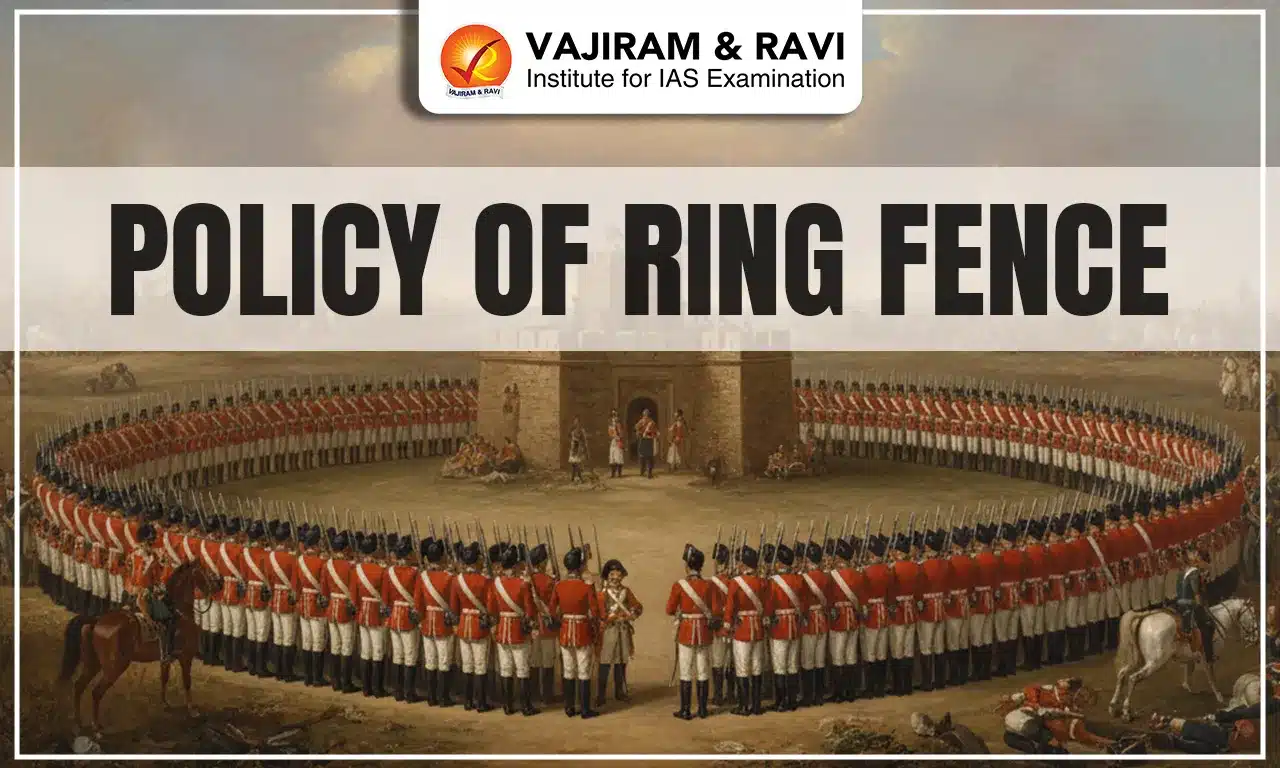
Warren Hastings, the first Governor-General of Bengal, introduced the Policy of Ring of Fence between 1765 and 1813 to secure the British East India Company’s frontiers. The strategy involved creating buffer zones of allied or subordinate states around British territories. These states were required to maintain subsidiary armies under Company officers, ensuring both their protection and the security of British interests. Policy of Ring Fence  reflected the British focus on strategic expediency, balancing alliances and control while steadily advancing their imperial ambitions in India.

Policy of Ring Fence

The Policy of Ring Fence (1765-1813), implemented by Warren Hastings, aimed to protect the Company’s territories by defending the borders of neighboring states and creating buffer zones. Under this policy, the ring-fence states were required to maintain subsidiary forces, which were organized, equipped, and commanded by Company officers, with the rulers of these states covering the expenses. While the British carried out this policy under the guise of protection, they never lost sight of their imperial ambitions, and their interactions with native states were guided by self-interest, which evolved over time.

Policy of Ring Fence History

During this period, the British treated native states as independent entities, as they had not yet established supreme power in India. Consequently, they could not intervene everywhere, nor could they claim full sovereignty over the native rulers who became their allies. Key events of this time included the Anglo-Mysore Wars, the First and Second Maratha Wars, and treaties with Awadh, Hyderabad, and Punjab. The Wellesley Wars, along with subsidiary treaties with various rulers, gradually established the British as the dominant power in India, while their allies became dependent states.

Two points stand out regarding their relationships with native rulers:

  • With the exception of the treaty with the Wodeyars of Mysore, all treaties were equal and reciprocal, reflecting a give-and-take approach. The British made no claims to suzerainty while negotiating these agreements.
  • Every treaty explicitly ensured that the native ruler retained complete control over the internal affairs of his state.

Policy of Ring Fence Establishment

To safeguard their own territories, Warren Hastings devised the Ring-Fence policy, which involved protecting the borders of neighbouring states. This approach was evident in conflicts with the Kingdom of Mysore and the Marathas. For example, the East India Company took responsibility for organizing Awadh’s defence to ensure Bengal’s security, as threats from the Marathas and Afghan invaders were significant.

The rulers of these kingdoms bore the cost of maintaining the troops that the Company dispatched to strengthen their fortifications. In effect, the East India Company became essential to the local ruler’s defence. During the Ring-Fence era, the British did not consider native rulers as having suzerainty over them; they treated these states as independent nations, free to manage their internal affairs. The exception was the Hindu ruler of Mysore, with whom treaties were negotiated on an equal footing.

Later, Wellesley expanded this framework through the subsidiary alliance system. Powerful states such as the Marathas, Awadh, and Hyderabad accepted subsidiary partnerships, further entrenching British dominance in India.

Also Check Other Posts
British Policies in India from 1765 to 1857 Economic Policies of British in India
Drain of Wealth Theory Land Revenue System in British India

Policy of Ring Fence FAQs

Q1: What is the ring-fence policy?

Ans: Ring-fencing is a financial strategy isolating specific assets or funds to protect them from risks, ensuring obligations are met despite other business losses.

Q2: What are the rules for ring-fencing?

Ans: Rules include segregation of assets, dedicated capital allocation, regulatory compliance, restricted fund use, and protection from liabilities to safeguard financial stability.

Q3: What is ring-fencing in insurance?

Ans: In insurance, ring-fencing separates premium funds for specific policies to ensure claims can be paid regardless of the insurer’s other financial issues.

Q4: Who was the governor of the ring-fence policy?

Ans: There isn’t a single “governor”; in India, RBI and IRDAI regulate ring-fencing norms in banking and insurance sectors.

Q5: What is the ring-fencing rule?

Ans: It mandates isolation of high-risk or specific funds/operations, protecting them from losses in other areas while ensuring obligations are met.

Battle of Tarain, Background, Causes, Preparations, Events, Aftermath

Battle of Tarain

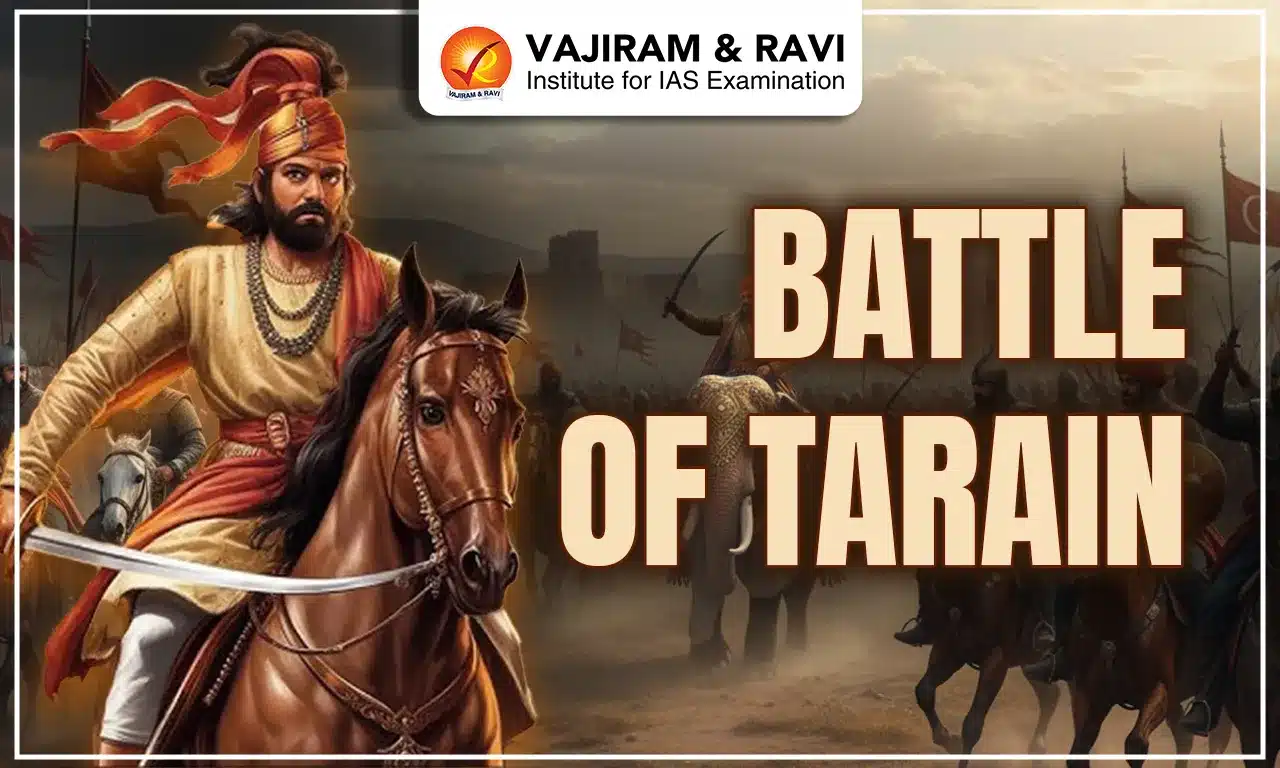
The Battle of Tarain is remembered as a turning point in medieval Indian history, fought in 1191 and 1192 between the Ghurid ruler Muizzuddin Muhammad Ghori and the Chauhan king Prithviraj Chauhan. These two clashes, fought near Tarain in present-day Haryana, reflected not just military strength but also the shifting political ambitions of the era. The first battle ended in victory for Prithviraj, but the second in 1192 saw Ghori decisively triumph, making the way for the establishment of Muslim rule in northern India. 

First Battle of Tarain

The First Battle of Tarain (1191 CE) was a turning point in medieval Indian history. It was fought between Prithviraj Chauhan, the powerful Rajput king of the Chauhan dynasty, and Muhammad of Ghor, the ruler of the Ghurid Empire. The battle took place near Tarain (modern-day Taraori in Haryana) and symbolized the resistance of the Rajputs against foreign invasions. The conflict is remembered as a decisive clash that shaped the political landscape of North India during the late 12th century.

First Battle of Tarain Background

  • The Rajputs and the Chauhan Dynasty: The Rajputs were a distinguished warrior class in medieval India, celebrated for their valor and code of honor. Among them, the Chauhan dynasty held considerable power in northwestern India. Prithviraj Chauhan, one of its most renowned rulers, governed the kingdoms of Delhi and Ajmer. He earned fame for his bravery, strategic acumen, and military skill.
  • The Ghurids and Muhammad of Ghor: The Ghurids, originating from present-day Afghanistan, sought to expand their dominion into the fertile plains of northern India. Muhammad of Ghor, a prominent leader of the Ghurid dynasty, aimed to establish a stronghold in the Indian subcontinent. His expansionist ambitions ultimately brought him into conflict with Prithviraj Chauhan, setting the stage for the First Battle of Tarain (1191 CE).

First Battle of Tarain Causes

  • Territorial Ambitions: Both Prithviraj Chauhan and Muhammad of Ghor sought to expand their control over northern India.
  • Strategic Importance: Tarain’s location was crucial for trade routes and military operations, making it a highly contested region.
  • Dynastic Conflicts: Rivalries between ruling dynasties fueled power struggles and competition for dominance.
  • Resource Competition: Fertile land, water, and other vital resources intensified the conflict.
  • Leadership Rivalry: Both leaders aimed to assert their authority and supremacy over the region.
  • Prestige and Honor: Victory was tied to defending reputation and preserving the prestige of their respective dynasties.
  • Alliance Systems: Formation of alliances created a polarized environment, escalating tensions.
  • Historical Precedents: Lingering grievances and previous disputes influenced the decision to fight.
  • Economic Interests: Control over trade routes and economic advantages added to the stakes.
  • Social and Religious Factors: Differences in social and religious practices contributed to underlying tensions.

First Battle of Tarain War Preparations

    • Initial Skirmishes: Rajputs, familiar with the terrain, launched surprise attacks on the Ghurid forces. They inflicted notable casualties, but Muhammad of Ghor successfully regrouped and countered these assaults.
  • Main Engagement:
    • Both armies clashed in the plains of Tarain.
    • Rajput cavalry executed fierce charges aimed at breaking the Ghurid lines.
    • Ghurid horse archers maintained distance attacks, causing heavy losses to the Rajputs and blunting their cavalry advantage.

First Battle of Tarain Events

Muhammad Ghori captured the fort of Bathinda, prompting Prithviraj Chauhan to gather his allies and confront him at Tarain in 1191. The Rajput army had around 50,000 soldiers, while the Ghurid forces were slightly smaller than the rumored 100,000. The Ghurids relied on skilled cavalry archers, whereas the Rajputs had more infantry and elephants, favoring close combat.

The battle began with Ghurid archers attacking the Rajputs from a distance, but Chauhan launched a sudden charge that caught them off guard. The Rajput infantry pursued the retreating archers to the Ghurid center, while their cavalry attacked from the flanks. Central Rajput elephants added to the chaos, disrupting the Ghurid ranks.

Muhammad Ghori attempted to rally his troops but was nearly killed by Rajput commander Govind Rai, and his bodyguard saved him. Seeing Ghori retreat, Ghurid morale collapsed, and the army fled. The Rajputs chased them for 40 kilometers before returning to besiege Bathinda, which fell in 1192.

Turning Points of First Battle of Tarain

A major Turning Points of First Battle of Tarain was the capture of Muhammad of Ghor by the Rajput forces. He was injured, fell from his horse, and was temporarily captured, causing confusion in the Ghurid army. He was later rescued by his troops, and the incident strengthened the Ghurids’ determination to fight.

The leadership of Prithviraj Chauhan was crucial to the Rajput success. He effectively coordinated the different Rajput contingents, inspiring his warriors and maintaining high morale. Despite internal rivalries, the Rajput confederation fought as a unified force under his command.

First Battle of Tarain Outcomes

The First Battle of Tarain concluded with a decisive victory for the Rajput confederation. The Ghurid forces, unable to withstand the Rajput assaults, retreated, and Muhammad of Ghor had to withdraw and regroup.

This victory gave the Rajput kingdoms a temporary reprieve from Ghurid invasions and bolstered Prithviraj Chauhan’s reputation as a strong ruler. However, the success was short-lived, as the Ghurids returned in 1192 CE for the Second Battle of Tarain, which had a different outcome.

Second Battle of Tarain

The Second Battle of Tarain, fought in 1192 near Tarain (modern-day Taraori, Haryana), was a clash between the Ghurid forces and the Rajput confederacy. This time, the Ghurids emerged victorious, signaling a major shift in medieval Indian history. The defeat significantly weakened Rajput power in North India and paved the way for a lasting Muslim presence, ultimately leading to the foundation of the Delhi Sultanate.

Second Battle of Tarain Background

After his defeat at the First Battle of Tarain in 1191, Muhammad Ghori returned to Ghazni, publicly shaming commanders who had shown cowardice and vowing to forgo all luxuries until he avenged his loss. Determined, he rebuilt his army with a focus on firepower, mobility, and discipline. Meanwhile, Prithviraj Chauhan, buoyed by his victory, became overconfident and neglected to strengthen his borders. He did, however, send proposals to neighboring kingdoms to assemble reinforcements in case of another Ghurid attack.

In the summer of 1192, Muhammad Ghori marched with 52,000 cavalry, half of his total forces. Upon reaching Peshawar, he reinstated the previously dismissed commanders, who rejoined his army. Shortly after the Rajputs captured Bathinda fort, Ghori recaptured it and demanded that Prithviraj Chauhan accept him as suzerain, a demand that was refused.

Prithviraj marched to confront Ghori again, though his army was smaller than expected due to prior deployments of his commanders. While contemporary sources exaggerate his forces at 500,000 men and 3,000 elephants, modern estimates suggest around 100,000 men and 300 elephants. As they faced each other at Tarain, Prithviraj sent a warning message to Ghori, offering him a chance to retreat. Ghori feigned agreement, asking to retain Bathinda and Multan while consulting his co-ruler brother.

Meanwhile, the Ghurids conducted reconnaissance and prepared a surprise attack. This ruse lulled the Rajputs into a false sense of security, leading them to neglect proper scouting. At dawn, the Ghurid army launched a night-time raid, neutralizing several war elephants. The Rajputs, unaccustomed to night attacks, initially struggled but eventually repelled the raiding cavalry. Pursuing them, they found the Ghurid forces fully arrayed for battle, the Second Battle of Tarain was about to begin.

Second Battle of Tarain Events

After his defeat in the First Battle of Tarain in 1191, Muhammad Ghori returned to Ghazni and took strict measures. He publicly humiliated and dismissed commanders who had performed poorly. Determined to avenge his loss, he renounced all luxuries and restructured his army, focusing on firepower, mobility, and discipline.

Prithviraj Chauhan, confident after his victory, believed in the superiority of his forces. He should have fortified his borders and secured alliances with neighboring kingdoms, but he did not. In the summer of 1192, Muhammad Ghori marched with 52,000 cavalry, half of his total army. Upon reaching Peshawar, he reinstated the previously dismissed commanders, who rejoined his forces.

A month after the Rajputs had captured Bathinda fort, Muhammad Ghori recaptured it. He sent a demand to Prithviraj Chauhan to accept him as suzerain, but Chauhan refused. Chauhan prepared to confront Ghori again, though his army was smaller than expected due to earlier deployments of his commanders. Contemporary sources exaggerate his forces, but modern estimates suggest fewer troops.

On the Tarain fields, Chauhan warned Ghori that he could leave peacefully or face destruction. Ghori pretended to negotiate, asking to retain Bathinda, while secretly preparing his army. The Ghurid forces analyzed the Rajput positions and planned a surprise attack. Chauhan, deceived into a false sense of security, neglected proper scouting.

At dawn, the Ghurid army launched a night attack on the Rajput camp, catching them off guard. The Rajputs, unaccustomed to night fighting, were initially shocked but managed to repel the first Ghurid cavalry assault. Soon, however, they realized that the Ghurids had already arranged their forces for a full-scale battle, the Second Battle of Tarain was about to begin.

Second Battle of Tarain Aftermath

Historical accounts differ on Prithviraj Chauhan’s fate. Some suggest he was captured and executed, while others indicate he was taken to Ajmer, where Muhammad Ghori planned to reinstate him as a Ghurid vassal. Ultimately, Prithviraj rebelled and was killed for treason. Regardless of the specifics, his kingdom fell to the Ghurid forces, who within a decade subjugated the entire Gangetic plain, extending as far as Bengal.

The Second Battle of Tarain holds great significance in the context of Turkish and Arab invasions of India. Though the Ghurid kingdom itself was short-lived, the Islamic presence it established left a lasting impact on the cultural and historical landscape of the Indian subcontinent.

Also Check Other Posts
Paramara Dynasty Ashtadiggajas 
Western Chalukyas Battle of Talikota
Hoysala Dynasty Bahmani Kingdom
Kakatiya Dynasty Deccan Sultanates
Vijayanagara Empire Muhammad Ghori
Krishnadevaraya Mahmud of Ghazni

Battle of Tarain FAQs

Q1: Who won the 2nd Battle of Tarain?

Ans: Muhammad Ghori defeated Prithviraj Chauhan in the Second Battle of Tarain (1192 CE), establishing Muslim dominance in northern India.

Q2: Who won the 3rd Battle of Tarain?

Ans: Historically, there were mainly two battles of Tarain; no widely recognized "third battle" exists in historical records.

Q3: Who won the First Battle of Tarain?

Ans: Prithviraj Chauhan defeated Muhammad Ghori in the First Battle of Tarain (1191 CE), temporarily halting Ghori’s invasion.

Q4: How many battles of Tarain are there?

Ans: There were two major battles: First (1191 CE, Chauhan victory) and Second (1192 CE, Ghori victory).

Q5: In which battle Muhammad Ghazni was defeated by Prithviraj Chauhan?

Ans: Muhammad Ghazni was not defeated by Prithviraj Chauhan; their encounters are largely separate. Prithviraj fought Muhammad Ghori, not Ghazni.

Coriolis Force and Coriolis Effect, Diagram, Causes, Impact

Coriolis Force and Coriolis Effect

The Coriolis Force is an imaginary force that appears to act on objects moving over a rotating surface, such as the Earth. Put simply, it’s the apparent force you feel when you move along with something that is spinning. The Coriolis Effect is the actual outcome of this force; it explains why moving objects, like winds, ocean currents, or even long-range projectiles, seem to bend from their straight path. This deflection happens because the Earth is rotating, and without this spin, the motion would appear straight.

Coriolis Force

The Coriolis Force arises due to the Earth’s rotation on its axis and plays a crucial role in determining the direction of wind and ocean currents. Its strength depends on latitude, it is zero at the equator and increases toward the poles. In the Northern Hemisphere, this force deflects moving air or water to the right of its path, while in the Southern Hemisphere, the deflection is to the left. This phenomenon is a key reason why large-scale wind systems, such as trade winds, westerlies, and cyclones, rotate in specific directions in different hemispheres.

Coriolis Force

Aspect

Explanation

Definition

The Coriolis Force is an apparent (fictitious) force that acts on objects moving within a rotating system like the Earth, making their path appear deflected.

Cause

It arises due to Earth’s rotation on its axis. Moving objects seem to deviate from a straight line because the surface beneath them is rotating.

Direction

In the Northern Hemisphere, objects deflect to the right of their motion, while in the Southern Hemisphere, they deflect to the left.

Applications

Explains the rotation of cyclones, global wind patterns (trade winds, westerlies), ocean currents, and even the deviation in long-range artillery or missile paths.

Coriolis Force and Coriolis Effect

The Coriolis Force is an apparent force that arises due to the Earth’s rotation. It acts perpendicular to the direction of motion and to the Earth’s axis of rotation, causing a deflection in the path of moving bodies. In the Northern Hemisphere, objects are deflected to the right, while in the Southern Hemisphere, they are deflected to the left. Though not a real force in the classical sense, it becomes significant in a rotating frame of reference, such as the Earth, and explains large-scale phenomena like global wind patterns, ocean currents, and cyclone rotation.

Coriolis Effect

The Coriolis Effect is the apparent deflection of moving objects caused by the Earth’s rotation. It plays a vital role in shaping wind patterns, ocean currents, and cyclone formation, making it highly significant in meteorology and oceanography. Coriolis Effect Features includes:

  • Hemisphere Deflection: Objects curve to the right in the Northern Hemisphere and to the left in the Southern Hemisphere.
  • Variation with Latitude: The effect is strongest at the poles and becomes zero at the equator.
  • Dependence on Speed: Faster-moving objects experience greater deflection than slower ones.
  • Direction, Not Speed: It changes only the direction of motion, not the velocity.
  • Right-Angle Deflection: The deflection occurs at right angles to the movement, preventing winds from flowing directly along pressure gradients.
  • Geostrophic Balance: At higher altitudes, when the Coriolis Effect balances pressure gradient force, winds flow parallel to isobars, this is known as geostrophic wind. Near the surface, friction modifies this balance.

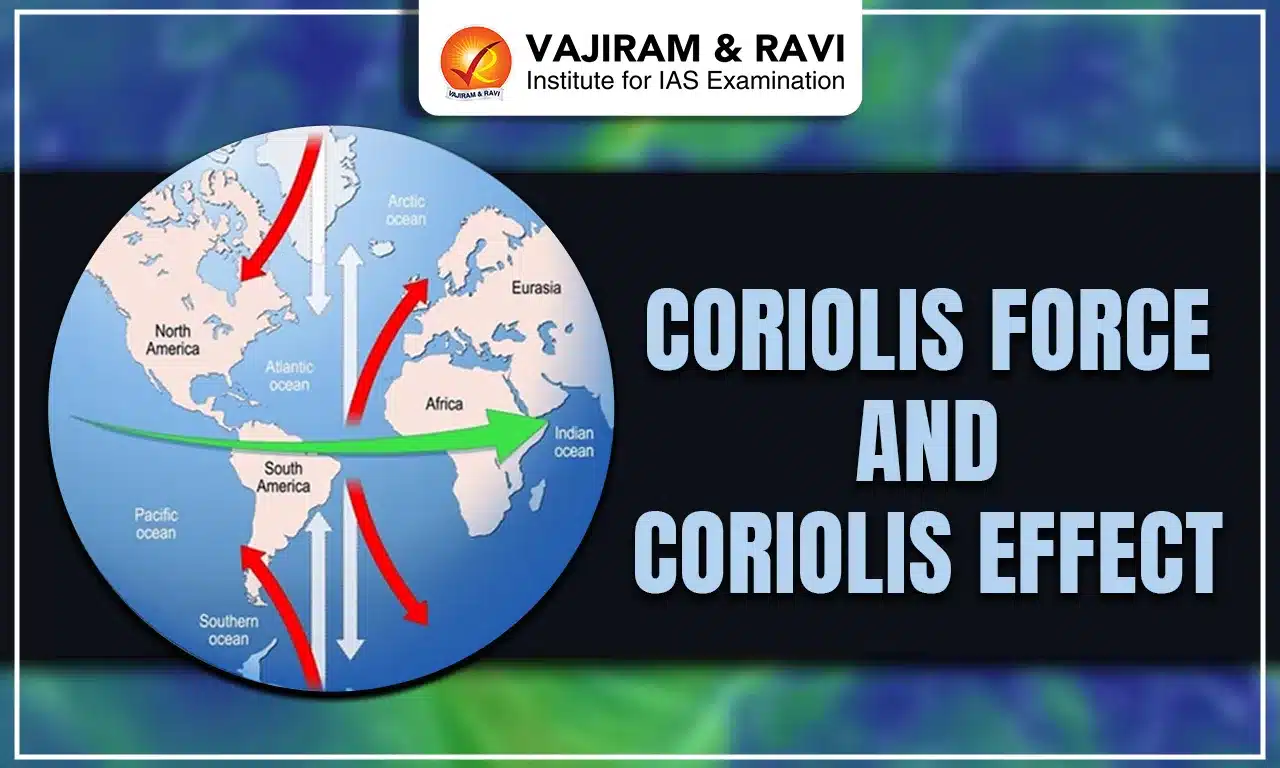
Coriolis Force Diagram

The direction of winds is strongly influenced by the Coriolis Force, which arises from the Earth’s rotation on its axis. This force causes moving air to deflect, to the right in the Northern Hemisphere and to the left in the Southern Hemisphere.

Coriolis Force Diagram is shown below, highlighting how wind paths curve differently across hemispheres and why this deflection is zero at the equator.

Coriolis Effect Causes

The Coriolis Effect occurs because the Earth rotates on its axis. Since the Earth spins eastward (counterclockwise when viewed from above the North Pole), objects moving freely over its surface, like winds, ocean currents, or airplanes appear to curve from their path. This happens because different parts of the Earth move at different speeds; the equator spins faster than regions closer to the poles.

At the equator, there is no deflection, so an object like a plane flying exactly along it stays on course. But as soon as the object moves north or south of the equator, it begins to drift: to the right in the Northern Hemisphere and to the left in the Southern Hemisphere. The effect becomes stronger at higher latitudes and is also greater for faster-moving objects.

Coriolis Force Impact

The Coriolis Effect plays a vital role in understanding planetary and Earth motions. Its influence is especially significant in atmospheric dynamics, where it determines wind patterns, storm systems, and the rotation of cyclones.

In oceanography, the Coriolis Effect explains why major ocean currents are deflected, shaping global circulation patterns and influencing climate. One of its most important geographical outcomes is the combined deflection of winds and ocean currents.

The effect is also crucial in fields like aviation and defense, where it alters the trajectories of airplanes, missiles, and long-range projectiles. Beyond human-made systems, the Coriolis Effect underpins natural phenomena studied across multiple sciences dealing with Earth’s motion. In practice, wind movement is guided by three factors:

  • It flows from high pressure to low pressure.
  • The Coriolis Force, generated by Earth’s rotation, causes deflection, rightward in the Northern Hemisphere and leftward in the Southern Hemisphere.
  • Friction, especially over landforms such as mountains and valleys, modifies both wind direction and speed, whereas winds move faster and more consistently over oceans.

Together, these forces create the complex wind systems that regulate weather and climate across the globe.

Also Check Other Posts
Geomorphology Major Dams in India
Composition and Structure of Atmosphere Major Ports in India
Types of Forests in India Coastal States of India
Ocean Acidification Migration in India
Deep Ocean Mission Natural Vegetation of India

Coriolis Force and Coriolis Effect FAQs

Q1: Is the Coriolis effect the same as the Coriolis force?

Ans: Not exactly. The Coriolis force is the apparent deflection; the Coriolis effect refers to the overall influence of Earth’s rotation on motion.

Q2: What is the Coriolis force and its effect?

Ans: It’s an apparent force due to Earth’s rotation, deflecting moving objects: right in the Northern Hemisphere, left in the Southern Hemisphere.

Q3: What is another name for Coriolis force?

Ans: It is also called the apparent force or fictitious force because it arises from a rotating reference frame.

Q4: What is Coriolis force UPSC?

Ans: In UPSC terms, it’s the deflection of winds, currents, and moving bodies caused by Earth’s rotation, influencing global atmospheric and oceanic circulation.

Q5: What is the full name of Coriolis?

Ans: Gaspard-Gustave de Coriolis, a French mathematician and engineer, first described this concept in 1835.

Impatiens Selvasinghii

Impatiens Selvasinghii

Impatiens Selvasinghii Latest News

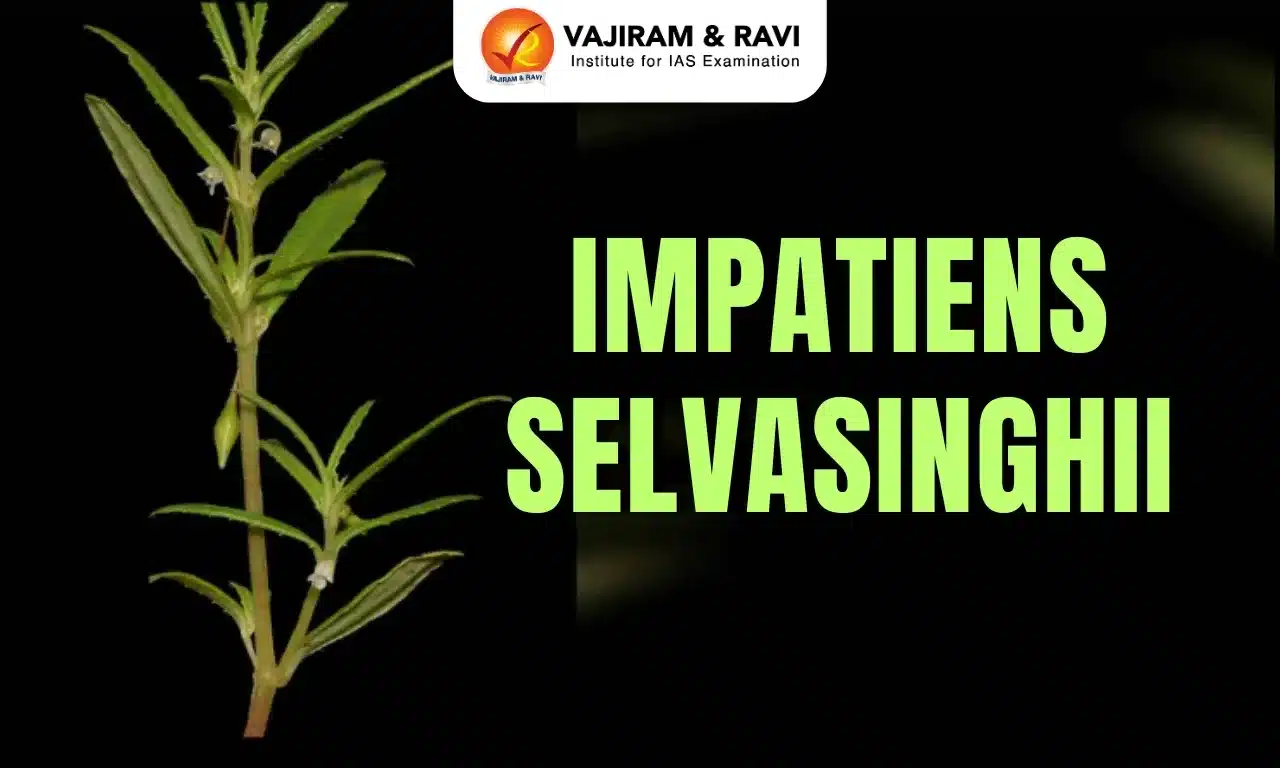
Researchers recently found a new plant species named Impatiens selvasinghii in the Kudremukh range of the Western Ghats.

About Impatiens Selvasinghii

  • It is a new species of flowering plant.
  • It was discovered in the Kudremukh range of the Western Ghats in Karnataka at an altitude of 1,630 meters.
  • It is named after an associate professor of botany at Madras Christian College.
  • It is one of the smallest flowered balsams from the Western Ghats. Small insects are dependent on this plant.
  • It has an exceptionally small flower size and prominently-lobed wing petals, which makes it unique.
  • In India, the genus Impatiens is represented by more than 280 taxa, chiefly distributed in the Eastern Himalayas and Western Ghats. 
    • Over 210 taxa are endemic to India, of which 130 are endemic to the Western Ghats, and 80% of taxa in the Western Ghats are categorized as endangered.

Source: TOI

Impatiens Selvasinghii FAQs

Q1: Where was the new species Impatiens selvasinghii discovered?

Ans: It was discovered in the Kudremukh range of the Western Ghats in Karnataka.

Q2: Who is Impatiens selvasinghii named after?

Ans: A professor at Madras Christian College.

Q3: What unique feature makes Impatiens selvasinghii distinct among balsams?

Ans: Exceptionally small flowers and prominently-lobed wing petals.

Q4: What percentage of Impatiens taxa in the Western Ghats are categorized as endangered?

Ans: 80%

Adi Yuva Fellowship & Adi Karmayogi Volunteers Programme

Adi Yuva Fellowship & Adi Karmayogi Volunteers Programme

Adi Yuva Fellowship & Adi Karmayogi Volunteers Programme Latest News

Recently, the Ministry of Tribal Affairs, in partnership with the United Nations in India, launched the Adi Yuva Fellowship and the Adi Karmayogi Volunteers Programme under the Adi Karmayogi Abhiyan.

About Adi Yuva Fellowship

  • It is supported by United Nations India.
  • It is a first-of-its-kind programme designed to empower tribal youth through structured learning, mentorship, and career development.

Features of Adi Yuva Fellowship

  • Under this initiative selected tribal youth will undertake a 12-month paid Fellowship, with a tailored learning plan that balances knowledge-building, on-the-job experience, and reflective practice.
  • Allowances: Fellows will receive monthly allowances, comprehensive health and life insurance, and access to high-quality UN and commercial learning platforms.
  • This programme will link Fellows to national skilling and employability schemes such as PMKVY 4.0, NAPS, and PM Viksit Bharat Rozgar Yojana.
  • Selection process: The fellows will be selected through a competitive process and placed with UN agencies at the national, state, and district levels.

Adi Karmayogi Volunteers Programme

  • It is supported by UNFPA.
  • Objective: It will equip tribal youth to act as catalysts for grassroots change and strengthen last-mile service delivery in tribal regions.
  • 82 UN Community Volunteers as Adi karmayogi Volunteers have been deployed across 82 blocks in 13 districts of Madhya Pradesh and Rajasthan for an intensive two-month grassroots engagement.
  • Volunteers will support Village Vision 2030 planning, awareness drives, outreach, and improved access to schemes and services.

Source: PIB

Adi Yuva Fellowship & Adi Karmayogi Volunteers Programme FAQs

Q1: What is the primary objective of the Adi Karmayogi Abhiyan?

Ans: It aims to empower tribal communities and strengthen responsive governance

Q2: Which the nodal ministry for the implementation of the Adi Karmayogi Abhiyan?

Ans: Ministry of Tribal Affairs

Smog Eating Photocatalytic Coatings

Smog Eating Photocatalytic Coatings

Smog Eating Photocatalytic Coatings Latest News

The Delhi government will conduct a time-bound study on “smog-eating” photocatalytic coatings in Delhi to combat air pollution.

About Smog Eating Photocatalytic Coatings

  • It is designed to neutralise harmful gases like nitrogen dioxide and volatile hydrocarbons that contribute to toxic air.
  • It usually uses titanium dioxide as a coating which has advantages for being low-cost and chemically stable.
    • Titanium dioxide is also known for its compatibility with traditional construction materials.
    • It has been “demonstrated that TiO₂-based photocatalytically active construction materials can be useful for gaseous depollution and environmental cleaning processes.
  • Photocatalytic activity helps fight pollution by breaking down harmful substances and organic waste into less toxic or harmless matters using light energy, thereby making air and water cleaner.

What is Smog?

  • Smog is used to refer to a type of air pollution caused by a combination of smoke (and other pollutants) and fog.
  • Smog encompasses a broad category of air pollutants created through a multitude of processes that relate specifically to the atmospheric conditions of the formation region. 
  • Two distinct types of smog are recognized: 
    • Sulfurous smog: It results from a high concentration of sulfur oxides in the air and is caused by the use of sulfur-bearing fossil fuels, particularly coal.
    • Photochemical smog: It occurs most prominently in urban areas that have large numbers of automobiles.

Source: New India Express

Smog Eating Photocatalytic Coatings FAQs

Q1: How do smog-eating photocatalytic coatings work?

Ans: They break down pollutants into harmless compounds through photocatalysis

Q2: Which material is commonly used in smog-eating photocatalytic coatings?

Ans: Titanium dioxide (TiO₂)

Fishing Cat

Fishing Cat

Fishing Cat Latest News

Marking a significant addition to Ramgarh Vishdhari Tiger Reserve's (RVTR) small cat population, forest officials said a Fishing Cat (Prionailurus viverrinus) was recently seen on camera for the first time inside the reserve.

About Fishing Cat

  • It is a stocky and powerfully built medium-sized wild cat species.
  • Scientific Name: Prionailurus viverrinus

Fishing Cat Distribution

  • It is native to South and Southeast Asia.
  • They inhabit the peninsular region of India, Sri Lanka, Malaysia, Thailand, Java, and Pakistan.
  • In India, fishing cats are mainly found in the mangrove forests of the Sundarbans, on the foothills of the Himalayas along the Ganga and Brahmaputra river valleys, and in the Western Ghats.
  • It is the state animal of West Bengal.

Fishing Cat Habitat

  • They are found in a variety of wetland habitats, including mangrove forests, swamps, marshes, and other areas near water sources. 
  • The species is adapted to both fresh and saltwater habitats, and is able to tolerate a wide range of weather conditions, from tropical rain forests to temperate regions.

Fishing Cat Features

  • Fishing cats are powerfully built with short limbs and a stocky body. 
  • They stand 15-16 inches tall and reach lengths of 38-47 inches. 
  • They have a long head and a short tail that is roughly one-third the length of their body. 
  • Their fur is coarse and brownish gray in color with distinctive dark markings.
  • The markings are a combination of both spots and stripes. These spots are arranged longitudinally across the body. 
  • Six to eight dark lines run from above the eyes between the ears over the crown to the nape of the neck.
  • The ears are short and round and the back side is black. 
  • The fishing cat is an adept swimmer and enters water frequently to prey on fish, as its name suggests. It is known to even dive to catch fish.
  • They show strong sexual dimorphism. Males are considerably larger. 
  • They are nocturnal

Fishing Cat Conservation Status

It is classified as 'Vulnerable' under the IUCN Red List.

Source: TOI

Fishing Cat FAQ's

Q1: Where are Fishing Cats primarily distributed?

Ans: It is native to South and Southeast Asia and inhabit the peninsular region of India, Sri Lanka, Malaysia, Thailand, Java, and Pakistan.

Q2: Which Indian state has declared the Fishing Cat as its state animal?

Ans: West Bengal

Q3: What is the IUCN conservation status of the Fishing Cat?

Ans: Vulnerable

Tropical Forests Forever Facility

Tropical Forests Forever Facility

Tropical Forests Forever Facility Latest News

Brazil will become the first country to announce an investment in the Tropical Forests Forever Facility.

About Tropical Forests Forever Facility

  • It is an innovative multilateral global permanent fund dedicated to supporting tropical forest conservation over the long-term.
  • It is a global initiative led by the Government of Brazil.
  • The idea for the fund was presented by the Brazilian government in 2023, at COP28 in the United Arab Emirates.
  • Goal: The TFFF is a blended finance structure that seeks to mobilize US$125 billion in capital from public and private sector sources.
  • The fund would invest the money into a diversified portfolio that generates a return that is higher than its cost of capital.
  • This would be used to pay the tropical forest countries (TFC) a fixed amount of money per hectare of standing forest.

Financial Mechanism of Tropical Forests Forever Facility

  • It aims to raise capital from two main sources, sponsors and market investors through financial markets by issuing debt instruments such as bonds. 
  • Sponsors: Sponsors would be the ‘high income’ countries as classified by the World Bank, along with philanthropies. (account for 20 per cent of the total corpus)
  • Market Investors: Institutional investors, sovereign wealth funds, and endowments (account for 80 per cent of the total corpus) investing through debt instruments.
  • Fund Management: Funds are managed via a Multilateral Development Bank (MDB), e.g., World Bank.

Source: DD News

Tropical Forests Forever Facility FAQs

Q1: What is the primary objective of the Tropical Forest Forever Facility (TFFF)?

Ans: To conserve and restore tropical forests

Q2: What is the target amount the Tropical Forest Forever Facility aims to raise?

Ans: USD 125 billion

Barren Island

Barren Island

Barren Island Latest News

Minor volcanic eruptions were noticed twice in a span of eight days at Barren Island in Andaman and Nicobar Islands recently.

About Barren Island

  • It is a volcanic island located in the Andaman Sea.
  • Popularly known as a submarine emergent volcano, the island is a part of the Indian union territory of the Andaman and Nicobar Islands.  
  • It lies about 138 kilometers northeast of the territory’s capital, Port Blair.
  • It lies above the subduction zone of India and Burmese plates.
  • It is the only active volcano in the Indian subcontinent.  Also, along a chain of volcanoes from Sumatra to Myanmar, this is the only active volcano. 
  • This island is about three kilometers in diameter and has a big crater of the volcano, about half a kilometer away from the shore. 
  • It is a stratovolcano composed of lava, rock fragments, and volcanic ash.
  • It has erupted multiple times in recent history, with the most recent significant eruptions occurring in 2017.
  • It is inhabited by humans. Only a small population of goats, birds, bats, and rats are living under harsh conditions.

Source: PRINT

Barren Island FAQs

Q1: Where is Barren Island located?

Ans: It is a part of the Indian union territory of the Andaman and Nicobar Islands located in the Andaman Sea.

Q2: Does anyone live on Barren Island?

Ans: It is inhabited by humans.

Q3: Barren Island lies above the subduction zone of which tectonic plates?

Ans: It lies above the subduction zone of India and Burmese plates.

Q4: What type of volcano is Barren Island?

Ans: Stratovolcano

Paradip Port

Paradip Port

Paradip Port Latest News

A decomposed body was discovered in a coal wagon at Paradip port's coal handling plant, marking the second such incident recently.

About Paradip Port

  • It is one of the major ports of India.
  • It is the only major port in the State of Odisha, situated 210 nautical miles south of Kolkata and 260 nautical miles north of Visakhapatnam.
  • It is situated on the Bay of Bengal on the delta of the Mahanadi River at the mouth of one of its branches. 
  • It is strategically situated so as to serve a vast hinterland spreading over the states of Odisha, Jharkhand, Chhattisgarh, Madhya Pradesh, Uttar Pradesh, Bihar, and West Bengal. 
  • The Port of Paradip, an autonomous body under the Major Port Trusts Act, 1963, functioning under the Ministry of Ports, Shipping & Waterways, is administered by a Board of Trustees set up by the Government of India headed by the Chairman. 
    • The Trustees of the Trust Board are nominated by the Government of India from various users of the Port such as shippers, ship owners, Government Departments concerned and also port labour. 
  • Paradip port enjoys the advantages of soft underwater soil, so that it can be deepened to any depth depending upon the need. 
  • At present Paradip Port is handling various cargo like Crude Oil, POL products, Iron Ore, Thermal Coal, Chrome Ore, Coking Coal, Manganese Ore, Charge Chrome, Ferro Chrome, Ferro Manganese, Limestone, Hard Coke, Ingots and Moulds, Billets, Finished Steel, Scrap, Fertilizer, Fertilizer Raw Material, Clinker, Gypsum, Project Cargo and Containers. 
  • The Port is now equipped with 16 (sixteen) berths, 3 (three) Single Point Moorings (SPM), 1 (one) Ro-Ro Jetty, a well maintained Approach and Entrance Channel having 17.1 Mtrs minimum depth.
  • Paradip Port achieved a milestone by joining the 150 million metric tonne (MMT) club and maintaining its top position in cargo handling among India’s major ports by recording 150.41 MMT cargo in 2024-25.

Source: TOI

Paradip Port FAQs

Q1: In which state is Paradip Port located?

Ans: It is located in Odisha.

Q2: Paradip Port is situated on which river delta?

Ans: Mahanadi River

Q3: What geographical advantage does Paradip Port have?

Ans: It has soft underwater soil, allowing deepening as needed.

Logistics Ease Across Different States (LEADS) 2025

Logistics Ease Across Different States (LEADS) 2025

Logistics Ease Across Different States (LEADS) 2025 Latest News

Recently, the Union Minister for Commerce and Industry launched the Logistics Ease Across Different States (LEADS) 2025 in New Delhi. 

About Logistics Ease Across Different States (LEADS) 2025

  • It represents a significant milestone in benchmarking logistics performance across States and Union Territories.
  • It was conceived on the lines of the Logistics Performance Index of World Bank in 2018
  • It is prepared by the Department for Promotion of Industry and Internal Trade (DPIIT), Ministry of Commerce and Industry.
  • LEADS 2025 Framework is as follows
    • Objective Indicator: It consists of regulatory and institutional support and logistics enablers.
    • Perception indicators: It consists of Logistics Infrastructure, Logistics Services, Operating and Regulatory Environment, introduced Sustainable Logistics.
    • Two major features of LEADS 2025 are
      • Performance assessment of 5–7 key corridors based on journey time, truck speed, and waiting periods.
      • API-enabled evaluation of section-wise speeds on major road corridors
  • Significance: It supports India’s vision of a globally competitive and future-ready logistics ecosystem.

Source: PIB

Logistics Ease Across Different States (LEADS) 2025 FAQs

Q1: Which ministry releases the LEADS report?

Ans: Ministry of Commerce and Industry

Q2: How are states categorized in the LEADS report?

Ans: Achievers, Fast Movers, and Aspirers

River Pollution in India – CPCB Shows Marginal Reduction

River Pollution

River Pollution Latest News

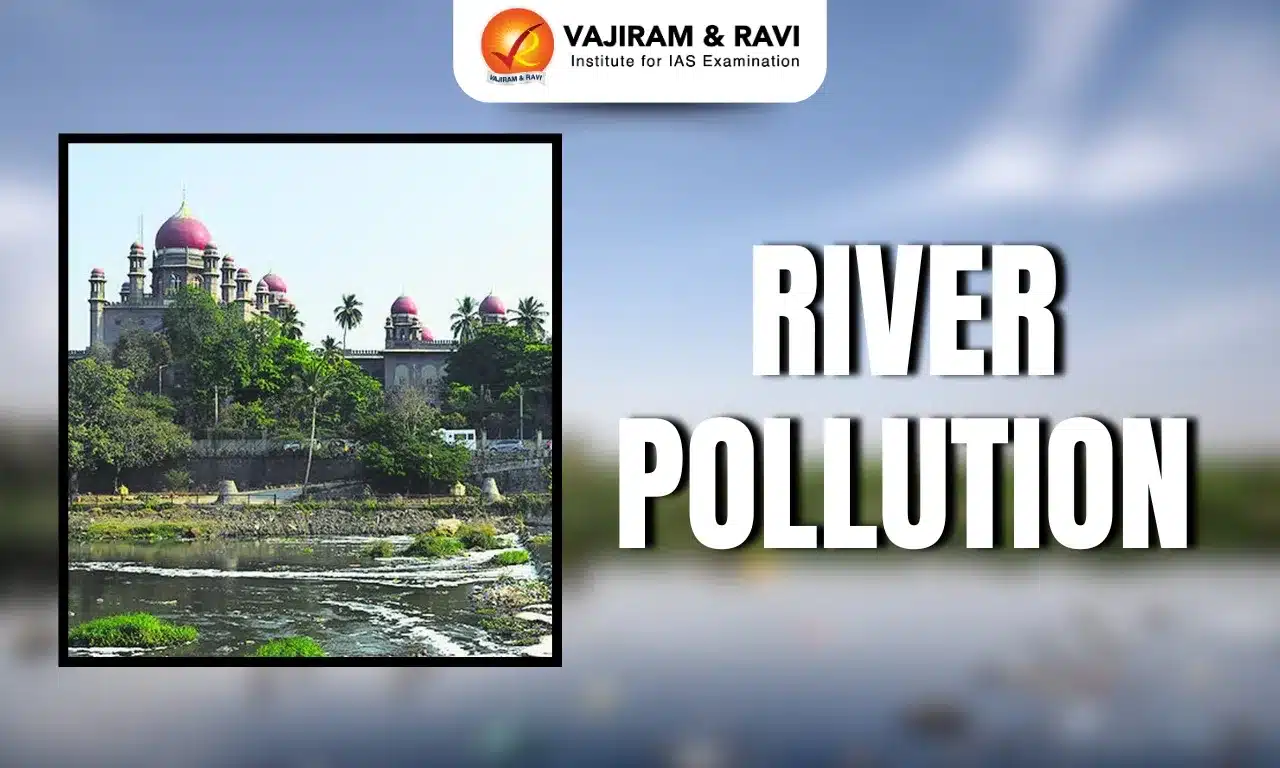
  • The CPCB’s latest report shows a marginal reduction in polluted river stretches across India, though several rivers, especially in Maharashtra, remain critically contaminated.

Introduction

  • Rivers are the lifelines of India, sustaining agriculture, industry, and millions of people. 
  • However, unchecked urbanisation, untreated sewage, and industrial effluents have turned several rivers into highly polluted water bodies. 
  • The Central Pollution Control Board (CPCB) regularly monitors river health, measuring biological oxygen demand (BOD) levels to identify polluted stretches. 
    • BOD measures the oxygen consumed by microorganisms to decompose organic matter in water, serving as a key indicator of organic pollution in aquatic ecosystems.
  • Its latest report indicates a marginal reduction in the number of polluted river stretches across India, though concerns remain about severely contaminated segments.

River Pollution in India

  • River pollution in India has been a persistent challenge, with most urban centres discharging untreated sewage directly into rivers. 
  • Industrial units, despite regulations, contribute chemical pollutants, while agricultural runoff adds pesticides and fertilisers. 
  • According to CPCB, a polluted river stretch is defined as two or more consecutive locations on a river where BOD levels exceed 3 mg/L, rendering water unfit for bathing.
  • Major Causes
    • Untreated sewage - Cities generate over 72,000 MLD of sewage, of which only about 30% is treated.
    • Industrial effluents - Chemical and textile hubs like Gujarat, Maharashtra, and Tamil Nadu release toxic waste.
    • Agricultural runoff - Fertilisers and pesticides flow into rivers during monsoons.
    • Encroachments and sand mining - These degrade river ecosystems and floodplains.
  • Impact
    • Decline in aquatic biodiversity.
    • Unsafe drinking and bathing water, leading to waterborne diseases.
    • Economic loss to fisheries and agriculture.
    • Social unrest, as seen in protests around rivers like the Yamuna and Ganga.
  • The Ganga, Yamuna, Sabarmati, Godavari, and Musi are among India’s most polluted rivers, with stretches frequently falling into the CPCB’s “Priority I” category, meaning they require immediate remediation.

News Summary: CPCB’s Latest Findings

  • Marginal Improvement
    • According to CPCB’s 2023 report, the number of polluted river stretches decreased from 311 to 296, covering 271 rivers across 32 states and Union Territories.
  • Most Affected States
    • Maharashtra continues to top the list with 54 polluted stretches.
    • Kerala (31), Madhya Pradesh and Manipur (18 each), and Karnataka (14) also reported significant pollution.
  • Priority Classifications
    • Priority I (BOD > 30 mg/L) - 37 stretches, down from 46 in 2022. These include the Yamuna in Delhi, the Sabarmati in Ahmedabad, the Chambal in Madhya Pradesh, and stretches of the Tungabhadra and Sarabanga.
    • Priority V (BOD 3.1–6 mg/L) - Indicating less polluted stretches needing minimal intervention.
  • Rivers Showing Deterioration
    • Despite marginal progress overall, certain rivers recorded worsening conditions. 
    • These include Jhelum (J&K), Ganga and Sikrahna (Bihar), Hasdeo and Mahanadi (Chhattisgarh), Cauvery and Tungabhadra (Karnataka), Periyar (Kerala), and Krishna (Telangana).
  • Long-Term Monitoring
    • CPCB, in collaboration with State Pollution Control Boards, monitors water quality at over 4,700 locations under the National Water Quality Monitoring Programme.
  • Institutional Interventions
    • Following a 2018 directive by the National Green Tribunal (NGT), states are mandated to prepare river rejuvenation action plans. 
    • The current CPCB report emphasises catchment management, sewage treatment, and floodplain protection as critical measures for reducing river pollution.

Challenges in River Rejuvenation

  • Infrastructure gaps - Sewage treatment plants (STPs) are under-capacity or non-functional in many cities.
  • Coordination failures - Overlapping jurisdictions between CPCB, State Boards, and local authorities hinder accountability.
  • Funding and monitoring - Many state-level action plans lack financial backing and robust evaluation.
  • Urbanisation pressures - Continuous encroachments and waste generation outpace clean-up efforts.

Future Outlook

  • While the marginal reduction in polluted stretches offers cautious optimism, India’s river rejuvenation efforts must scale up significantly. 
  • Initiatives like the Namami Gange Mission, Jal Jeevan Mission, and the push for decentralised sewage treatment are steps in the right direction. 
  • However, tackling agricultural runoff, enforcing industrial compliance, and engaging communities will be crucial for sustainable outcomes.

Source: TH | IE

River Pollution FAQs

Q1: What is a polluted river stretch according to CPCB?

Ans: A polluted river stretch is defined as two or more consecutive river locations where BOD levels exceed 3 mg/L.

Q2: How many polluted river stretches were identified in CPCB’s latest report?

Ans: The CPCB identified 296 polluted river stretches across 271 rivers in 2023.

Q3: Which state has the highest number of polluted river stretches?

Ans: Maharashtra reported the highest number with 54 polluted river stretches.

Q4: What does the Priority I category mean in CPCB’s classification?

Ans: Priority I includes stretches with BOD exceeding 30 mg/L, marking them as the most polluted and in need of urgent action.

Q5: What measures has the CPCB recommended to address river pollution?

Ans: The CPCB has recommended sewage treatment, catchment and basin management, and floodplain protection.

SEBI Proposal May Allow FPIs to Trade in Gold, Silver and Base Metals

FPI Commodity Trading

FPI Commodity Trading Latest News

  • SEBI is reviewing a proposal to let foreign portfolio investors (FPIs) trade in non-cash settled, non-agricultural commodity derivatives. 
  • If approved, FPIs could invest in gold, silver, zinc, and other base metals, expanding investor participation and deepening India’s commodity market.

Commodity Derivatives: An Overview

  • Commodity derivatives are financial contracts linked to physical commodities like oil, gold, or wheat. 
  • They help participants manage price risks or profit from market movements.

How They Work

  • Underlying Asset: Value is derived from commodities such as farm produce, energy, or metals.
  • Financial Contracts: Parties agree on future transactions at fixed prices and quantities.
  • Price Fluctuation: Contract value changes with commodity price movements.

Purpose and Use

  • Hedging: Producers and consumers secure prices to avoid losses from volatility.
  • Speculation: Traders invest to profit from expected price changes.

Key Types of Contracts

  • Futures: Binding contracts to buy/sell at a fixed price on a future date.
  • Options: Provide the right, not obligation, to transact at a set price within a period.

Underlying Commodities

  • Agricultural: Wheat, corn, cotton, coffee.
  • Energy: Crude oil, natural gas.
  • Metals: Gold, silver, copper, aluminum.

SEBI’s Proposal: FPI Entry into Commodity Derivatives

  • SEBI is reviewing a proposal to allow foreign portfolio investors (FPIs) to trade in non-cash settled, non-agricultural commodity derivatives, including metals. 
  • While a committee is already working on strengthening the agricultural commodities segment, a separate group will be set up to develop the non-agricultural space. 
  • The move follows SEBI’s recent approval of a single automatic window for foreign investors, even as FPIs have offloaded over ₹60,000 crore in equities since July 2025.

Current Commodity Trading Rules for Foreign Investors

  • In India, commodities traded on exchanges are divided into hard commodities (metals and energy) and soft commodities (agricultural and processed products). 
  • Presently, foreign investors are allowed to trade only in cash-settled non-agricultural contracts, such as natural gas, crude oil, and index-based futures and options. 
  • However, they are barred from trading in ferrous metals, base metals, and precious metals under current regulations.

Expanded Trading Access for FPIs

  • With the proposed regulatory changes, FPIs will be allowed to trade in physically settled non-agricultural commodities such as gold, silver, zinc, and lead. 
  • This expansion, covering base and ferrous metals along with precious metals, will give FPIs access to markets where India is a significant global player. 
  • Experts suggest this move will enhance capital efficiency and provide investors with broader opportunities, especially in commodities like gold and silver.

Why SEBI Wants FPIs in Non-Cash Commodities

  • Allowing FPIs in non-cash, non-agricultural commodities aims to deepen India’s commodity markets and improve price discovery
  • With their financial strength and research capabilities, FPIs can boost liquidity, especially in longer-duration contracts where trading is currently weak. 
  • This would help industrial users hedge more effectively and reduce costs from monthly rollovers. 
  • Greater participation could also encourage Indian corporates to hedge domestically instead of relying on international exchanges. 
  • SEBI’s push reflects the need for stronger, more liquid markets amid global geopolitical uncertainties.

Source: IE | BS

FPI Commodity Trading FAQs

Q1: What is SEBI’s new proposal for FPIs?

Ans: SEBI is reviewing a proposal to allow foreign portfolio investors to trade in non-cash settled, non-agricultural commodities like gold, silver, zinc, and lead.

Q2: What are commodity derivatives?

Ans: Commodity derivatives are financial contracts whose value is tied to physical commodities like oil, gold, or wheat, helping participants hedge risks or profit from price movements.

Q3: What are FPIs currently allowed to trade in India?

Ans: At present, FPIs can only trade in cash-settled non-agricultural contracts such as crude oil, natural gas, and index futures or options.

Q4: How will expanded access benefit FPIs?

Ans: The new regulations will let FPIs trade in physically settled metals, improving capital efficiency, boosting liquidity, and giving access to India’s strong gold and silver markets.

Q5: Why does SEBI want FPIs in non-cash commodities?

Ans: SEBI aims to deepen markets, improve price discovery, and help corporates hedge domestically. Increased FPI participation ensures liquidity in longer-duration contracts.

GST 2.0 – Rate Rationalisation and Structural Reforms

GST 2.0

GST 2.0 Latest News

  • The Goods and Services Tax (GST), India’s landmark indirect tax reform launched in July 2017, has undergone multiple tweaks.
  • The latest round of reforms, effective September 22, 2025, termed “GST Bachat Utsav” by the Prime Minister of India, aims at simplifying the rate structure.
  • This will resolve classification disputes, correct inverted duty structures, and boost household consumption.

Key Features of GST 2.0

  • Rate rationalisation: 
    • Transition from a 4-slab system (5%, 12%, 18%, 28%) to a 2-slab system - 
      • Merit rate: 5% (516 items, mostly food items, agricultural machinery, medical devices).
      • Standard rate: 18% (640 items, industrial goods, small cars, bikes).
  • Special slabs:
    • 0.25% for rough diamonds, semi-precious stones.
    • 1.5% for cut and polished diamonds.
    • 3% for precious metals like gold, silver, pearls.
    • 40% for sin/de-merit goods like pan masala, tobacco, aerated beverages, yachts, luxury cars.
    • 12% slab abolished, except for bricks (retained under special composition scheme).
  • Services covered: Exemptions and cuts - 
    • Life and health insurance – exempted from GST (earlier 18%).
    • Hotels with per day tariff rate of below or equal to Rs 7,500 have seen a cut in GST rate to 5% without ITC (input tax credit) from 12% with ITC earlier.
    • Salons, spas, wellness services – reduced from 18% to 5%.
  • Passing benefits to consumers:
    • The Finance Ministry has asked its officers in the field to compile monthly data reports on price change of commodities pre and post-GST rate rationalisation. 
    • These reports will be compiled by the Ministry for the next six months in a bid to ensure that the benefits get passed on to the consumers.

Economic Rationale of GST 2.0

  • Boost to household consumption:
    • Lower GST rates are expected to increase disposable income, spur demand, and incentivise investments.
    • The government aims to offset revenue loss from cuts on over 375 items through higher consumption.
  • Correcting Inverted Duty Structure (IDS):
    • IDS occurs when the input tax rate (on raw materials or services) is higher than the output tax rate (on the finished product), leading to capital blockage. 
    • Example: If textile fabric attracts a 12% GST (input tax), but the finished garments attract only an 5% GST (output tax), this creates an IDS.
    • Relief provided by aligning many inputs and outputs into the same slab.

Implementation and Compliance Reforms

  • Simplified registration – more technology-driven and time-bound.
  • Pre-filled returns to minimise manual errors and mismatches.
  • Automated refund process for exporters and IDS cases.
  • Amendment to CGST Act 2017 (Section 54(6)): This will provide for 90% provisional refund for IDS cases, similar to zero-rated supplies.

Challenges

  • Revenue concerns: For Centre and States despite expected consumption boost.
  • IDS issues: Persist in bicycles, tractors, fertilisers, textiles, corrugated boxes, etc.
  • Enforcement gap: No legal provision to prevent profiteering, reliance on monitoring only.

Way Forward

  • Address residual IDS issues and ensure benefit transfer to consumers through stricter anti-profiteering mechanisms.
  • Strengthen state finances via improved compliance and digital monitoring.
  • Periodic slab reviews to maintain balance between revenue neutrality and ease of business.
  • Enhance trust-based compliance by sustaining tech-enabled registration, return filing, and refunds.

Conclusion

  • GST 2.0 marks a major restructuring of India’s indirect tax regime, focusing on simplification, boosting consumption, and improving compliance. 
  • While it promises relief to households and businesses, addressing challenges will determine the long-term success of these reforms.

Source: IE

GST 2.0 FAQs

Q1: What are the key features of GST 2.0 rate rationalisation?

Ans: GST 2.0 replaces the four-slab system (5%, 12%, 18%, 28%) with a simplified two-slab structure — merit rate of 5% and standard rate of 18%.

Q2: How is GST 2.0 expected to boost household consumption and investments?

Ans: By reducing GST rates on over 375 items, GST 2.0 increases disposable income, spurs demand-led consumption, and incentivises private investment.

Q3: What is the issue of Inverted Duty Structure (IDS) under GST?

Ans: IDS occurs when input tax rates exceed output tax, blocking working capital. GST 2.0 has aligned many items into similar slabs.

Q4: What reforms have been proposed in GST 2.0 to simplify compliance for businesses?

Ans: GST 2.0 introduces tech-driven registration, pre-filled returns, automated refunds, etc.

Q5: What challenges remain in the implementation of GST 2.0?

Ans: Persistent IDS in key sectors, absence of strict anti-profiteering provisions, and revenue concerns for Centre and States.

India’s Growing Noise Crisis: Legal Framework, Health Impact, and Solutions

Noise pollution in India

Noise Pollution in India Latest News

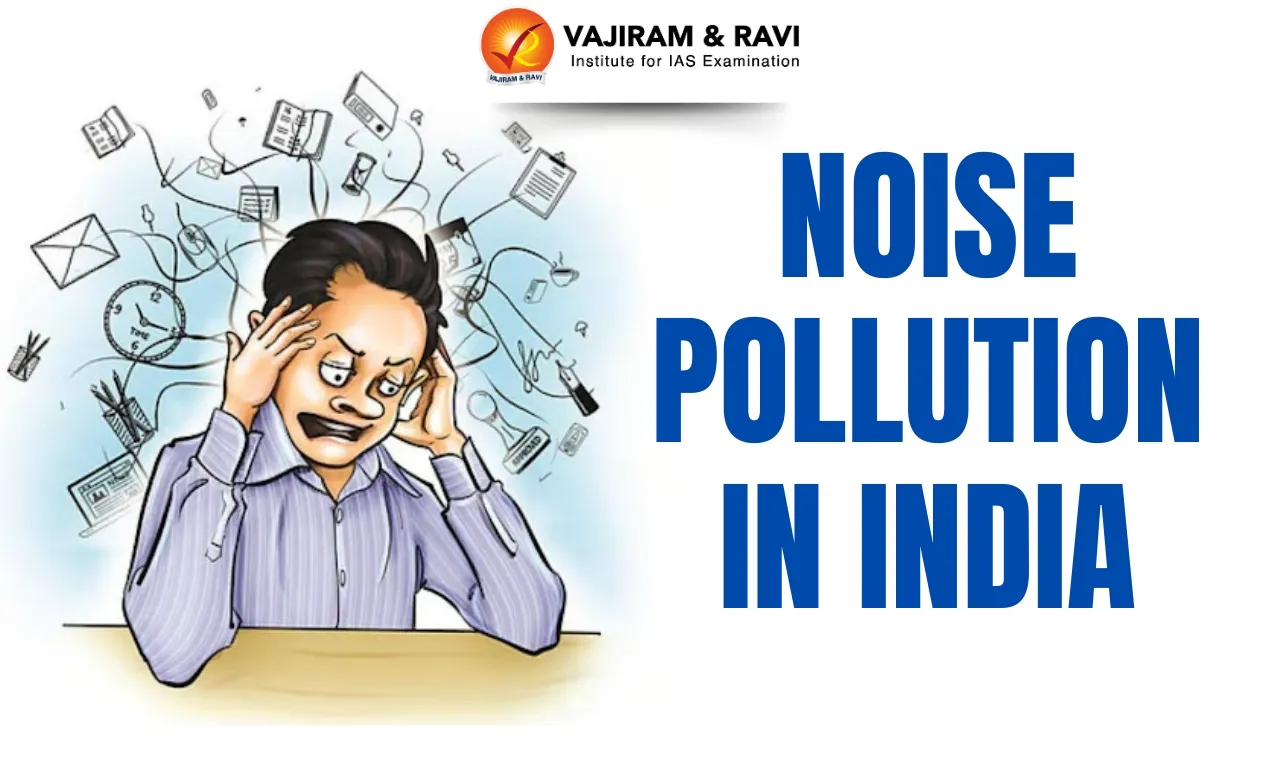
  • Noise has silently emerged as a serious yet under-recognised health threat in Indian cities. 
  • Though legally identified as an air pollutant under the Air (Prevention and Control of Pollution) Act, 1981, and medically linked to hypertension, sleep disorders, stress, and cognitive decline that reduce life expectancy, it continues to be neglected. 
  • Despite its dual recognition, India has made little investment in systematic monitoring or data collection to gauge the scale of the problem.

Legal Framework for Noise Pollution in India

  • According to the Central Pollution Control Board, noise is defined as unwanted sound. 
  • While sound that pleases is considered music, any sound that causes pain, irritation, or annoyance qualifies as noise.

Legal Provisions

  • Under Section 2(a) of the Air (Prevention and Control of Pollution) Act, 1981, noise is classified as an air pollutant. 
  • Noise regulation is governed by the Noise Pollution (Regulation and Control) Rules, 2000, framed under the Environment (Protection) Act, 1986
  • These rules outline permissible noise levels, designate silence zones, and impose restrictions on loudspeakers, horns, construction equipment, and firecrackers. 
  • They also assign enforcement responsibilities to authorities.

Permissible Noise Limits

  • The Rules define acceptable noise levels by area and time:
    • Industrial Areas: 75 dB during the day, 70 dB at night.
    • Commercial Areas: 65 dB during the day, 55 dB at night.
    • Residential Areas: 55 dB during the day, 45 dB at night.
    • Silence Zones (100 metres around hospitals, schools, and courts): 50 dB during the day, 40 dB at night.
      • Daytime is defined as 6 am to 10 pm, and nighttime as 10 pm to 6 am. These thresholds aim to protect health and ensure civic order.

The Heavy Toll of Urban Noise

  • Indian towns and cities regularly face noise levels well above safe limits. 
  • While the WHO recommends daytime exposure below 55 dB and India’s rules set similar thresholds, traffic corridors often cross 70 dB. 
  • Because noise intensity rises tenfold with every 10 dB increase, this exposure is far more damaging than it appears. 
  • The worst impact is borne by vulnerable groups such as street vendors, delivery workers, traffic police, and residents of informal settlements.
  • For these groups, constant urban noise is not just an irritation but a daily occupational hazard that undermines health and well-being.

Why Noise Pollution Remains Unchecked

  • India’s noise crisis persists due to three systemic failures. 
  • First, inadequate monitoring leaves policymakers blind, as noise data remains sporadic and incomplete compared to air quality tracking. 
  • Second, weak enforcement and cultural acceptance of noisy practices prevent meaningful action. 
  • Third, fragmented governance — split between pollution boards, municipalities, and police — dilutes responsibility and limits accountability. 
  • As a result, symbolic steps like honking bans or festival crackdowns fail to address the deeper structural causes, leaving noise pollution an unaddressed public health crisis.

Tackling Noise Pollution: The Way Forward

  • Addressing noise pollution requires treating it on par with air and water pollution through evidence-based, public-health-focused interventions. 
  • Monitoring must be expanded with real-time sensors and machine learning to identify sources like traffic, construction, and industry. 
  • Health studies should track noise exposure near schools, hospitals, and low-income areas. 
  • Urban planning must integrate noise mitigation with green buffers, zoning, and sustainable mobility measures such as electric buses and cycling. 
  • Governance reforms should strengthen enforcement, ensure inter-agency coordination, and enhance accountability. 
  • Finally, community engagement is vital—awareness campaigns and partnerships with local leaders can help shift cultural norms while ensuring inclusive solutions.

Noise as a Public Health Equity Issue

  • The fight against noise pollution must prioritise equity, as those most exposed often lack the means to shield themselves
  • Quiet living conditions should be a universal right, not a luxury. India’s experience with air pollution shows how neglect worsens harm and deepens inequality. 
  • Noise is already recognised as an air pollutant, but effective action demands stronger political and civic will. 
  • By embedding noise control into clean-air agendas, urban planning, and public health strategies, India can safeguard lives, protect vulnerable communities, and uphold the fundamental right to quiet.

Source: IE | IE | IE

Noise pollution in India FAQs

Q1: What is the legal definition of noise pollution in India?

Ans: Noise is defined by the Central Pollution Control Board as unwanted sound that causes irritation, pain, or annoyance, making it a recognised air pollutant.

Q2: What are the permissible noise limits under Indian law?

Ans: The Noise Pollution Rules set limits: 75 dB in industrial areas, 65 dB in commercial, 55 dB in residential, and 50 dB in silence zones during the day.

Q3: Why is urban noise a serious health threat in India?

Ans: Indian cities often exceed 70 dB, far above safe limits, leading to hypertension, stress, cognitive decline, and shortened life expectancy among vulnerable populations.

Q4: What systemic failures keep noise pollution unchecked?

Ans: Weak monitoring, poor enforcement, and fragmented governance dilute accountability, while symbolic actions like honking bans fail to address structural causes.

Q5: What measures can effectively tackle noise pollution?

Ans: Solutions include real-time monitoring, noise-sensitive urban planning, green buffers, electric mobility, stricter enforcement, and community-driven awareness campaigns.

Daily Editorial Analysis 23 September 2025

Daily Editorial Analysis

PHC Doctors — A Case Where the Caregivers Need Care

Context

  • Primary Health Centre (PHC) doctors form the bedrock of India’s public health system.
  • For millions in remote villages and underserved regions, they are not only the most visible representatives of modern medicine but also the first and often the only point of contact with organised health care.
  • Yet, their contributions and struggles remain largely unacknowledged in public discourse and policy design.

Problems Faced by PHC Doctors

  • The Expansive Role of PHC Doctors

    • The work of PHC doctors goes far beyond conventional clinical practice. They serve as clinicians, administrators, educators, and leaders.
    • Each PHC typically caters to around 30,000 people in rural areas (20,000 in hilly and tribal regions, and up to 50,000 in urban centres).
    • This diverse population includes children, women, the elderly, and those with chronic conditions, making the responsibility both complex and demanding.
    • Their tasks include coordinating immunisation drives, running school health programmes under the Rashtriya Bal Swasthya Karyakram (RBSK), managing disease surveillance, and leading outbreak response.
    • They also mentor community health workers such as ASHAs, ANMs, and Anganwadi staff.
    • Far from being perfunctory duties, these activities are the very threads that tie national health policies to grassroots realities.
  • The Crushing Clinical and Administrative Load

    • A typical day in a PHC can see a doctor attend to around 100 outpatients.
    • On designated antenatal care days, this number includes nearly 100 pregnant wome
    • Each consultation demands attentive listening, careful diagnosis, and compassionate treatment, often under severe time constraints.
    • Unlike specialists, PHC doctors must remain proficient across the entire medical spectrum, from paediatrics and maternal health to infectious diseases, geriatrics, and emergency care.
    • Beyond clinical duties, administrative responsibilities consume a disproportionate share of their energy.
    • PHCs maintain over 100 registers covering maternal and child health, drug inventories, sanitation, and more.
    • Despite the introduction of digital platforms like the Integrated Health Information Platform (IHIP), Health Management Information System (HMIS), and Ayushman Bharat Portal, doctors are forced to duplicate entries on both paper and electronic systems.
    • What was intended as streamlining has become a time-consuming burden.
    • This dual strain has created what many describe as a second shift: long hours spent documenting after exhausting clinical duties. Ironically, doctors trained to heal are overwhelmed by paperwork and bureaucracy.

Burnout: A Silent Crisis

  • The cumulative effect of excessive workload, administrative overload, and inadequate support is burnout.
  • The Lancet has identified physician burnout as a global public health crisis, while the WHO has classified it as an occupational phenomenon. Symptoms include emotional exhaustion, detachment, and reduced efficacy.
  • Studies indicate that nearly one-third of primary care physicians in low- and middle-income countries experience emotional exhaustion, a reality mirrored in India’s PHCs.
  • Even in states such as Tamil Nadu, celebrated for their relatively strong primary health infrastructure and National Quality Assurance Standards (NQAS) certification, PHC doctors report systemic stressors.
  • Certification processes often prioritise checklists over humane, sustainable care.
  • The mismatch between expectations and institutional support undermines both physician well-being and patient outcomes.

The Way Forward: The Need for Systemic Reform

  • The solution lies not in adding more registers or protocols but in reimagining systems with empathy.
  • Documentation should be simplified, redundant registers eliminated, and automation introduced wherever possible.
  • Non-clinical tasks must be delegated to trained administrative personnel, freeing doctors to focus on patient care.
  • Global models provide useful inspiration. The 25 by 5 campaign, led by the U.S. National Library of Medicine and Columbia University, seeks to reduce clinician documentation time by 75% by 2025.
  • The Bhore Committee, nearly eight decades ago, envisioned a primary health system rooted in prevention and community engagement.
  • PHCs remain central to that vision, but their doctors are caught in a web of unrealistic demands. Shifting from a culture of compliance to one of facilitation is essential.

Conclusion

  • PHC doctors are the unsung backbone of India’s health system; they bridge the gap between lofty policy goals and the lived realities of rural communities.
  • Yet, they work under crushing pressure, juggling clinical duties, administrative overload, and unrealistic expectations. Burnout is no longer a silent risk but an urgent crisis.
  • If India seeks to fulfil its promise of universal health care, it must begin by valuing its frontline doctors, not only for what they deliver but also for what they endure.
  • Strengthening PHCs means reimagining care delivery as humane, enabling, and sustainable; only then can primary health care truly serve as the cornerstone of a healthy and equitable nation.

PHC Doctors — A Case Where the Caregivers Need Care FAQs

 Q1. Who are Primary Health Centre (PHC) doctors in India?
Ans. PHC doctors are frontline physicians who provide medical care, lead health programmes, and connect communities with the public health system.

Q2. What makes the role of PHC doctors unique?
Ans. Their role is unique because they must balance clinical care with administrative duties, health education, disease surveillance, and community engagement.

Q3. What is the major challenge faced by PHC doctors?
Ans. The major challenge is the overwhelming combination of heavy clinical workload and excessive administrative responsibilities.

Q4. Why is burnout a growing concern among PHC doctors?
Ans. Burnout is a concern because doctors face long hours, unrealistic expectations, and little systemic support, leading to emotional exhaustion and reduced effectiveness.

Q5. How can India strengthen its primary health system?
Ans. India can strengthen its system by simplifying documentation, delegating non-clinical tasks, adopting automation, and prioritising doctors’ well-being.

Source: The Hindu


The Growing Relevance of Traditional Medicine

Context

  • Traditional medicine constitutes one of the oldest and most enduring health-care systems in human history.
  • According to the World Health Organisation (WHO), it is practised in 170 of its 194 member states, representing 88% of the global population (WHO, 2023).
  • For billions, particularly in low- and middle-income countries, traditional systems remain the primary source of health care due to accessibility, affordability, and cultural familiarity.
  • However, their significance extends beyond health treatment to encompass biodiversity conservation, nutritional security, and sustainable livelihoods.

Global Expansion of Traditional Medicine

  • The economic growth of the traditional medicine sector underscores its growing acceptance and integration into mainstream health care.
  • Projections estimate that the global traditional medicine market will reach $583 billion by 2025, expanding at an annual rate of 10%–20% (Market Analysis Reports, 2024).
  • China leads with a $122.4 billion traditional Chinese medicine industry, followed by India’s AYUSH sector valued at $43.4 billion, and Australia’s herbal medicine industry at $3.97 billion.
  • Such rapid expansion reflects a paradigmatic shift in health-care philosophy, from reactive treatment models focused on symptoms to preventive approaches aimed at addressing root causes of illness.

India’s Ayurvedic Transformation

  • India has emerged as a global leader in the revival and promotion of traditional medicine, particularly Ayurveda.
  • The AYUSH sector, comprising over 92,000 micro, small, and medium enterprises, has expanded nearly eight-fold within a decade.
  • Manufacturing revenues increased from ₹21,697 crore in 2014–15 to over ₹1.37 lakh crore in recent years, while service sector contributions exceeded ₹1.67 lakh crore (Government of India, 2023).
  • Furthermore, India exports AYUSH and herbal products worth $1.54 billion to more than 150 countries, enhancing its economic competitiveness and soft power.
  • Public acceptance of AYUSH systems within India has been remarkable.
  • The National Sample Survey Office (2022–23) reported awareness levels of 95% in rural regions and 96% in urban centres, with over half the population utilising these systems within the past year.
  • Ayurveda emerged as the preferred system, particularly for preventive care and rejuvenation therapies.
  • These figures suggest a deeply entrenched cultural and health-care shift that aligns with global trends toward integrative wellness.

Scientific Validation and International Outreach

  • A critical element in Ayurveda’s global legitimacy lies in its integration with modern scientific methods.
  • India has invested heavily in institutions such as the All India Institute of Ayurveda, the Institute of Teaching and Research in Ayurveda, and the Central Council for Research in Ayurvedic Sciences.
  • These bodies focus on clinical validation, drug standardisation, and integrative care models, thereby bridging the gap between traditional wisdom and evidence-based medicine.
  • India’s international engagement has further amplified its outreach. Through the Ministry of AYUSH’s International Cooperation Scheme, India has signed 25 bilateral agreements, developed 52 institutional partnerships, and established 43 AYUSH information cells across 39 countries.
  • The creation of 15 academic chairs in foreign universities demonstrates growing academic recognition of Ayurveda as a field of study.
  • A significant milestone was the establishment of the WHO Global Traditional Medicine Centre in India, which seeks to integrate traditional practices with digital health, artificial intelligence, and big-data analytics (WHO, 2022).
  • WHO’s recent guidance on AI in traditional medicine emphasises the potential for predictive care, clinical validation, and global scalability.

Ayurveda for People and Planet

  • The philosophical foundation of Ayurveda lies in the pursuit of balance, between body and mind, humans and nature, and consumption and conservation.
  • This holistic worldview holds contemporary relevance as societies grapple with lifestyle-related diseases and global challenges such as climate change.
  • Ayurveda extends its principles beyond human health to include veterinary medicine and plant well-being, embodying an ecological approach to health systems.
  • The theme for Ayurveda Day 2025, Ayurveda for People & Planet, captures this dual emphasis on individual and planetary health.
  • It frames Ayurveda not merely as a medical system but as a comprehensive wellness movement capable of addressing twenty-first-century challenges by harmonising ancient wisdom with modern innovations.

Conclusion

  • Traditional medicine is experiencing a renaissance, driven by global demand for preventive, sustainable, and culturally rooted health systems.
  • India’s Ayurvedic transformation exemplifies how traditional knowledge can be revitalised through scientific validation, institutional investment, and international cooperation.
  • By aligning with modern science and technology, Ayurveda is not only strengthening its credibility but also positioning itself as a vital component of global health architecture.

The Growing Relevance of Traditional Medicine FAQs

Q1. What percentage of WHO member states practise traditional medicine?
Ans. Traditional medicine is practised in 88% of WHO member states, or 170 out of 194 countries.

Q2. Why has the global traditional medicine market grown rapidly in recent years?
Ans. The market has grown rapidly because of increasing acceptance of preventive and holistic health-care approaches.

Q3. How has India’s AYUSH industry transformed in the past decade?
Ans. India’s AYUSH industry has expanded nearly eight-fold, with manufacturing revenues rising from ₹21,697 crore in 2014–15 to over ₹1.37 lakh crore.

Q4. What role do Indian research institutions play in promoting Ayurveda?
Ans. Indian research institutions focus on clinical validation, drug standardisation, and developing integrative care models that combine Ayurveda with modern medicine.

Q5. What is the theme of Ayurveda Day 2025, and what does it signify?
Ans. The theme of Ayurveda Day 2025 is Ayurveda for People & Planet, which signifies Ayurveda’s holistic approach to both human health and ecological sustainability.

Source: The Hindu

Daily Editorial Analysis 23 September 2025 FAQs

Q1: What is editorial analysis?

Ans: Editorial analysis is the critical examination and interpretation of newspaper editorials to extract key insights, arguments, and perspectives relevant to UPSC preparation.

Q2: What is an editorial analyst?

Ans: An editorial analyst is someone who studies and breaks down editorials to highlight their relevance, structure, and usefulness for competitive exams like the UPSC.

Q3: What is an editorial for UPSC?

Ans: For UPSC, an editorial refers to opinion-based articles in reputed newspapers that provide analysis on current affairs, governance, policy, and socio-economic issues.

Q4: What are the sources of UPSC Editorial Analysis?

Ans: Key sources include editorials from The Hindu and Indian Express.

Q5: Can Editorial Analysis help in Mains Answer Writing?

Ans: Yes, editorial analysis enhances content quality, analytical depth, and structure in Mains answer writing.

International Criminal Court

International Criminal Court

International Criminal Court Latest News

Recently, the military-led West African nations of Burkina Faso, Mali and Niger announced their withdrawal from the International Criminal Court.

About International Criminal Court

  • It was established by an international agreement, the Rome Statute, on 17 July 1998.
  • The Rome Statute sets out the Court’s jurisdiction, structures, and functions.
  • The Statute entered into force on 1 July 2002.
  • It is the only permanent international criminal tribunal.
  • Mandate: ICC investigates and, where warranted, tries individuals charged with the gravest crimes of concern to the international community: genocide, war crimes, crimes against humanity, and the crime of aggression. 
  • Members: There are 125 member countries, (China, India, Israel, Russia, and the United Statee are not ICC parties).
  • Funding: The Court is funded by contributions from the States Parties and by voluntary contributions from Governments, international organizations, individuals, corporations, and other entities.

Composition of International Criminal Court

  • Judges: The court has eighteen judges, each from a different member country, elected to non-renewable nine-year terms.
  • The Presidency: Consists of three judges (the President and two Vice-Presidents) elected from among the judges. It represents the Court to the outside world and helps with the organization of the work of the judges.
  • Office of the Prosecutor (OTP): OTP is responsible for receiving referrals and any substantiated information on crimes within the jurisdiction of the Court. OTP examines these referrals and information, conducts investigations, and conducts prosecutions before the Court.
  • Registry: It provides administrative and operational support to the Chambers and the Office of the Prosecutor.

Jurisdiction of International Criminal Court

  • Unlike the International Court of Justice (ICJ), which hears disputes between states, the ICC handles prosecutions of individuals.
  • The ICC is only competent to hear a case if:
    • The country where the offence was committed is a party to the Rome Statute; or
    • The perpetrator’s country of origin is a party to the Rome Statute.
    • The ICC may only exercise its jurisdiction if the national court is unable or unwilling to do so.
    • The ICC only has jurisdiction over offences committed after the Statute’s entry into force on 1 July 2002.

Source: TH

International Criminal Court FAQs

Q1: Where is the International Criminal Court headquarter?

Ans: Hague, Netherlands

Q2: Which treaty established the ICC?

Ans: Rome Statute

Sarcophagus

Sarcophagus

Sarcophagus Latest News

The first-ever scientific dating of a sarcophagus (terracotta coffin) found recently in Kilnamandi village in Tiruvannamalai district indicates that Tamil Nadu might have had trade contact with the north during the time of the Late Harappan civilisation.

About Sarcophagus

  • Used to bury leaders and wealthy residents in ancient Egypt, Rome, and Greece, a sarcophagus is a coffin or a container to hold a coffin. 
  • They were intended to be displayed above ground, but they were sometimes entombed or placed in burial chambers.
  • The word "sarcophagus" comes from ancient Greek words. Sarx means "flesh," and phagein means "to eat." So, "sarcophagus" literally means "flesh-eating." 
  • This name came from a special type of limestone that people believed could help bodies decompose quickly.
  • First used in Ancient Egypt and Ancient Greece, the sarcophagus gradually became popular throughout the ancient world. 
    • The earliest stone sarcophagi were used by Egyptian pharaohs of the 3rd dynasty, which reigned from about 2686 to 2613 B.C.E.
  • It carried over through the later years of European society, often used for high status members of the clergy, government, or aristocracy.
  • Features:
    • They differ in detail from one culture to another. 
    • They are almost always made of stone, limestone being the most popular, but sometimes of granite, sandstone, or marble.
    • Sarcophagi were elaborately decorated with carvings, images, and writing, usually including the name of the person who died.
  • Archaeological Significance:
    • Sarcophagi are important artifacts for archaeologists and historians because they provide insights into the art, culture, and beliefs of the societies that created them.
    • The carvings and inscriptions on sarcophagi often contain valuable historical information.
  • Example: The most famous Egyptian sarcophagus is perhaps the golden sarcophagus of King Tutankhamun.

Source: TOI

Sarcophagus FAQs

Q1: What is a Sarcophagus?

Ans: Sarcophagus is a coffin or a container to hold a coffin.

Q2: Which ancient civilization first used stone sarcophagi?

Ans: Ancient Egypt

Q3: Where were sarcophagi typically placed?

Ans: They were intended to be displayed above ground, but they were sometimes entombed or placed in burial chambers.

Q4: Besides Egypt, which other ancient civilizations commonly used sarcophagi?

Ans: Greece and Rome

Enquire Now