Vajiram & Ravi provides Daily articles for 2 January 2025, tailored for aspirants. We cover all relevant news and events crucial for the exam, ensuring you stay updated & well-prepared.
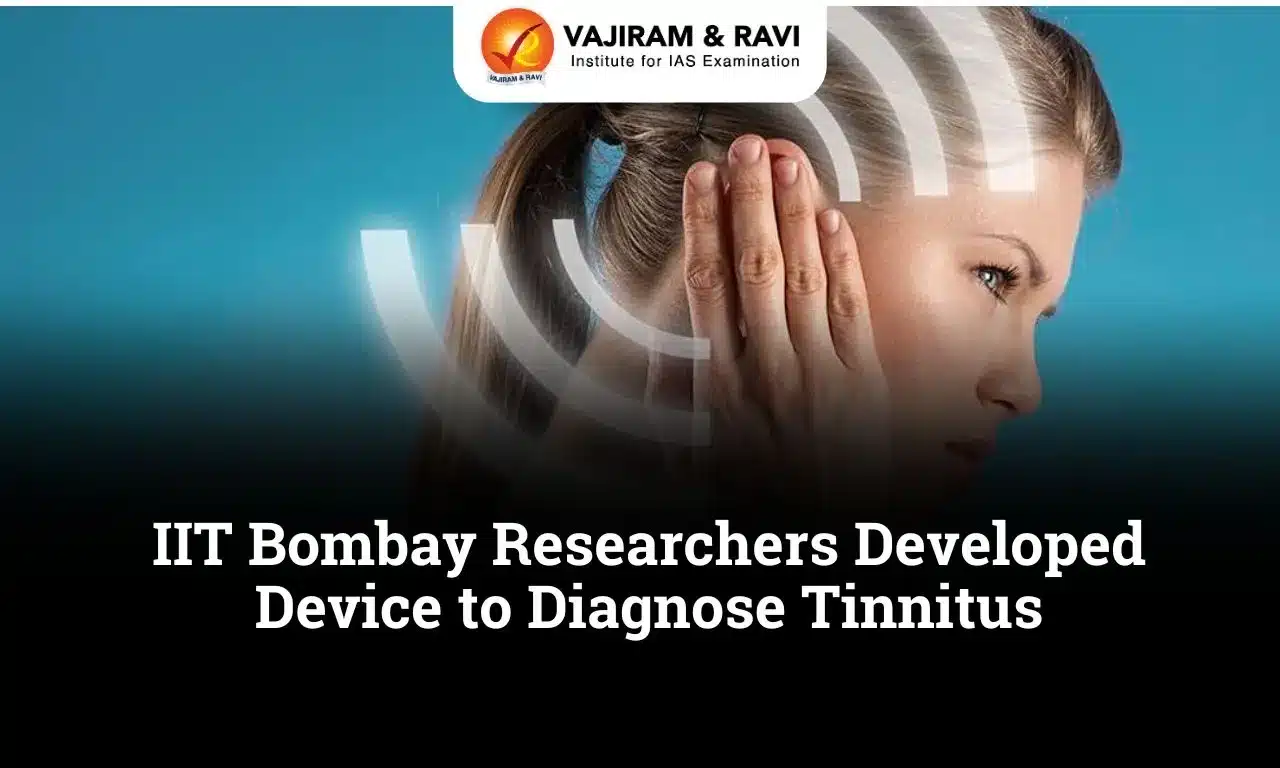
It is the perception of sound that does not have an external source, meaning only the affected individual can hear it.
Causes: It is usually caused by an underlying condition, such as age-related hearing loss, an ear injury or a problem with the circulatory system.
Symptoms:
It can include sleep disturbances, depression, anxiety, irritability, and significant impacts on mental health and social life.
It can also cause other types of phantom noises in your ears, including: Buzzing, Roaring and Clicking etc.
Treatment: It may include hearing aids, sound-masking devices, medicines, and ways to learn how to cope with the noise.
Key facts about the newly developed device
This device along with its supporting application software, offers a comprehensive approach to managing tinnitus.
It features precise tinnitus matching, which helps identify the exact nature and frequency of the sound experienced by the patient.
It provides a customisable, multimodal approach to treatment, ensuring each patient receives a tailored experience suited to their unique condition.
The software also includes tools for tracking disease progression, enabling clinicians to monitor patient improvement over time.
Q1: What is the cochlear implant?
It is a prosthetic device, a part of which is surgically implanted inside the cochlea. Cochlear implants have been found to be beneficial for children and adults with severe to profound hearing loss and steeply sloping hearing loss who do not benefit adequately with hearing aids but have an intact auditory nerve.
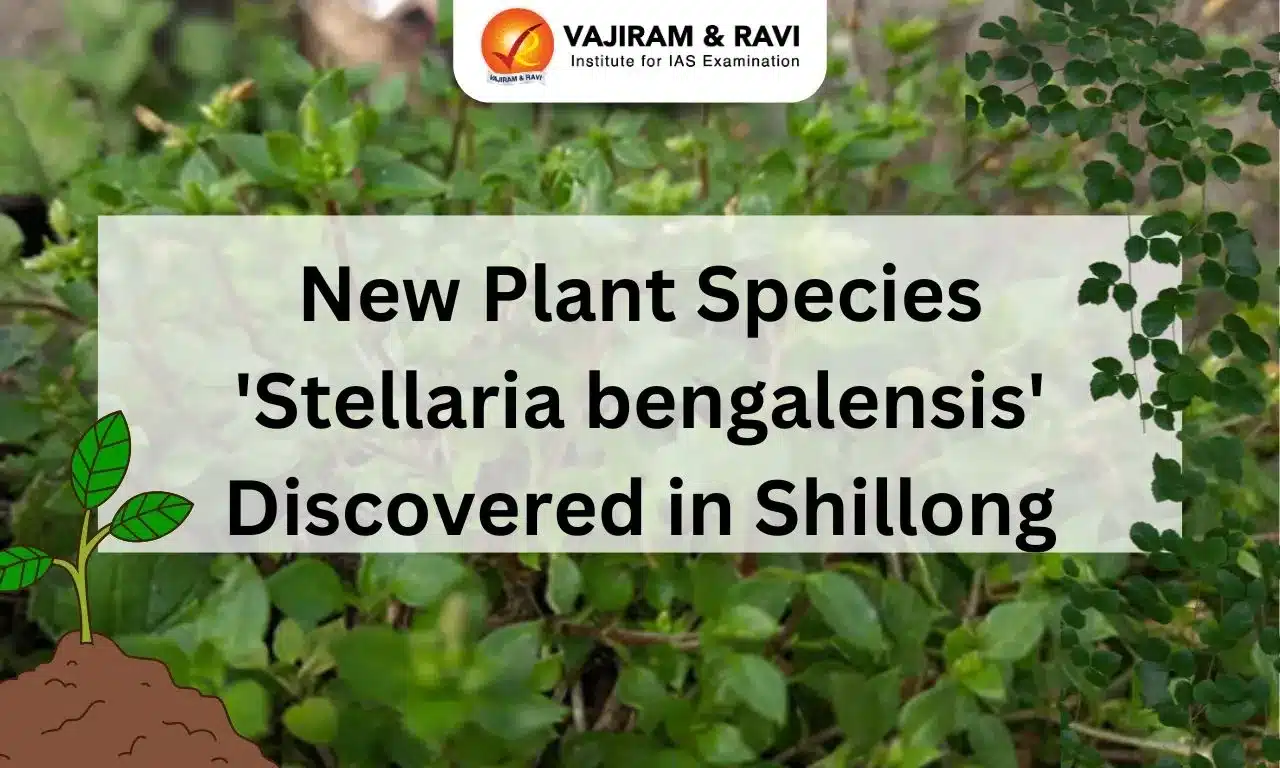
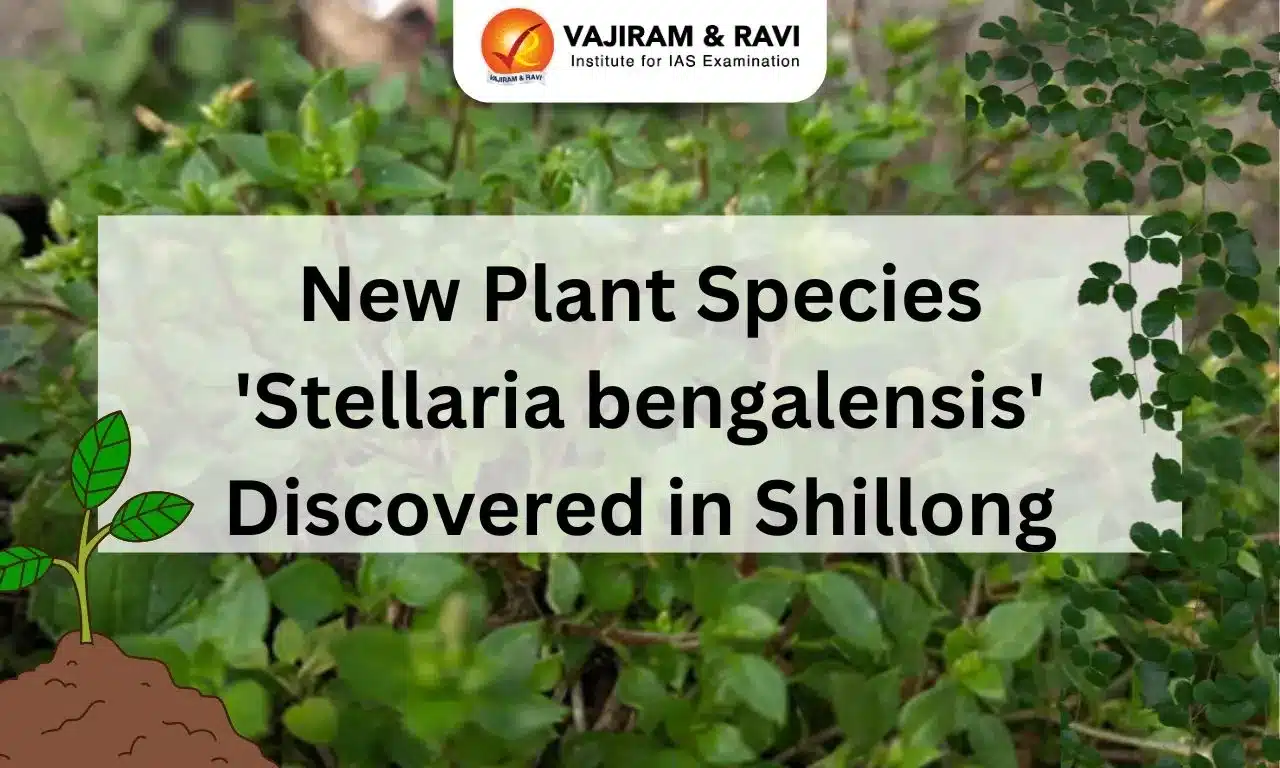
It is the annual herb plant of the genus Stellaria (family Caryophyllaceae).
It was found growing on muddy soil slopes — at altitudes of 2,245-2,450 metres in the Sangser forest, Kalimpong.
Characteristics
It is an annual herb growing to a height of 8 to 10.5 cm, characterised by white flowers, absence of bracts, shorter petals (or included within the sepal),and sharp and pointed seeds.
Flowering and fruiting occur from May to September.
India has around 22 Stellaria species, mostly distributed in the Himalayan region.
The researchers have, for the time being, assessed the new species as ‘data deficient’ under International Union for Conservation of Nature (IUCN) criteria.
Other species, Stellaria mcclintockiae, of the same genus, was found on the Elliyampathy Hills of Kerala.
Q1: What is IUCN?
The International Union for Conservation of Nature is a global organization composed of governments, NGOs, scientists, and experts dedicated to conserving nature and promoting sustainability.
CGWB is a multi-disciplinary scientific organization of the Department of Water Resources, River Development and Ganga Rejuvenation, Ministry of Jal Shakti, Government of India.
It is the National Apex Agency entrusted with the responsibilities of providing scientific inputs for management, exploration, monitoring, assessment, augmentation, and regulation of groundwater resources of the country.
Mandate: Develop and disseminate technologies and monitor and implement national policies for the scientific and sustainable development and management of India’s groundwater resources, including their exploration, assessment, conservation, augmentation, protection from pollution, and distribution, based on principles of economic and ecological efficiency and equity.
Organization Setup:
The Board is headed by the Chairman and has five members.
CGWB is a multi-disciplinary scientific organization consisting of Hydrogeologists, Geophysicists, Chemists, Hydrologists, Hydrometeorologists, and Engineers.
Headquarters: Bhujal Bhawan, Faridabad, Haryana.
The major activities of the CGWB are:
National Aquifer mapping and Management (NAQUIM) involving Preparation of Aquifer Maps and Management Plans.
Groundwater explorations to delineate groundwater worthy areas and potential aquifers.
Geophysical surveys to delineate groundwater bearing zones, etc.
Periodic assessment of the country’s groundwater resources.
Monitoring of groundwater levels and quality through groundwater observation wells.
Dissemination of Ground Water Data and knowledge.
Groundwater modelling.
GIS and Remote sensing.
Regulation and control of groundwater development and management by CGWA in coordination with State Government Organizations.
Coordination with State Government with a view to establish benchmark methodologies for groundwater studies.
R&D studies in ground water sector and application and operationalization of new technologies/techniques for groundwater investigation, development, and management.
Water conservation and artificial recharge to groundwater.
Capacity building and knowledge transfer.
Q1: What is an aquifer?
An aquifer is a body of porous rock or sediment saturated with groundwater. Groundwater enters an aquifer as precipitation seeps through the soil. It can move through the aquifer and resurface through springs and wells.
Source: TH
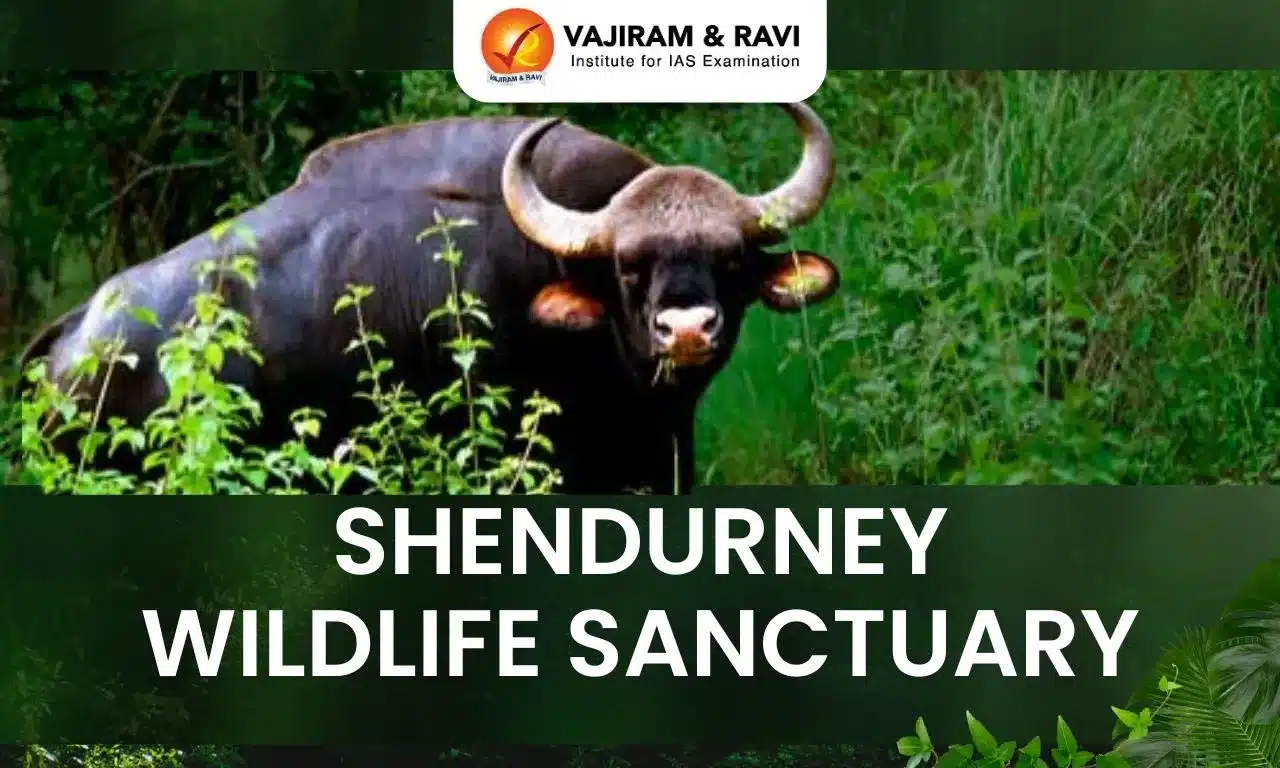
It is located in the southern part of the Western Ghats in the Kollam district of Kerala.
It spans an area of approximately 172 sq.km. and forms part of the Agasthyamala Biosphere Reserve.
Most of the Sanctuary area is hilly and interspersed with ravines.
Drainage: The major rivers are Shendurney, Kazhuthuruthy, and Kulathupuzha, which join together to form the Kallada River.
Flora:
The vegetation primarily consists of tropical evergreen forests, semi-evergreen forests, and moist deciduous forests.
The name "Shendurney" is derived from the name of a tree species, Gluta travancorica, locally known as ‘Chenkurunji’, which is endemic to this region and found in abundance within the sanctuary.
Fauna:
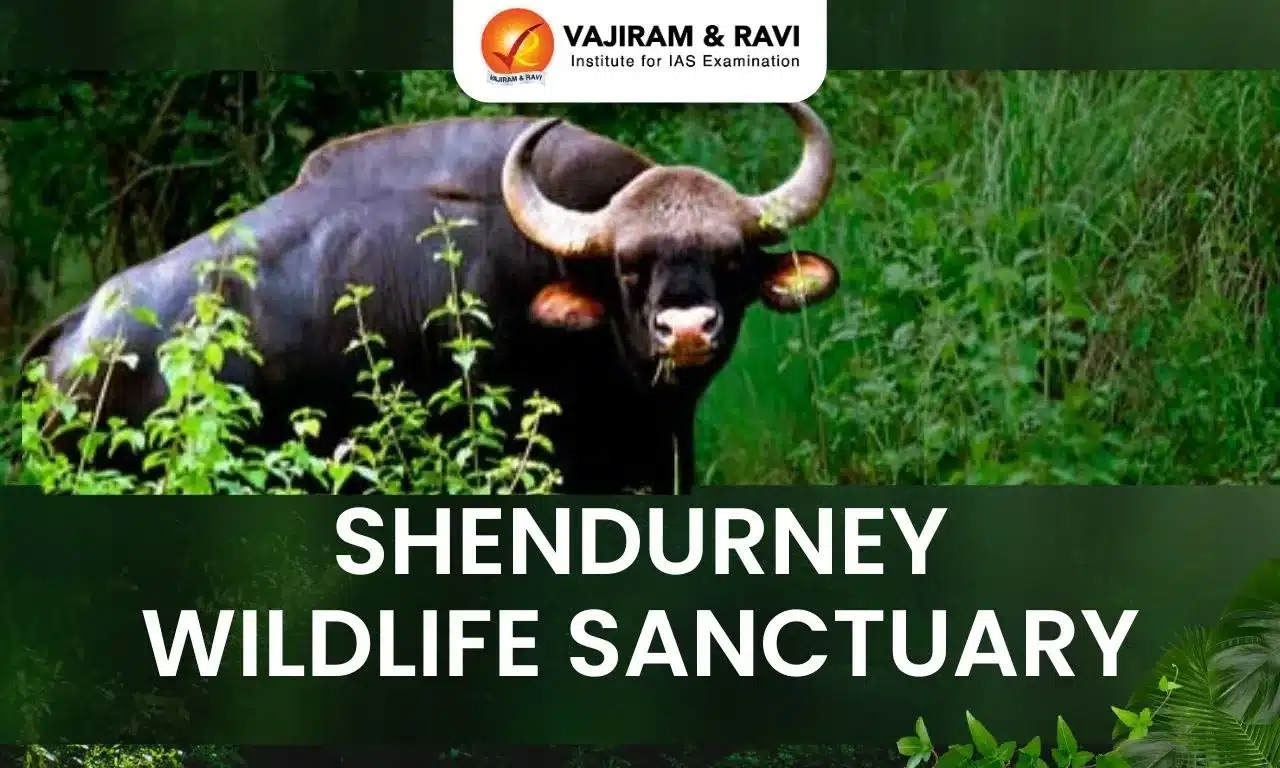
Notable mammals include elephants, tigers, leopards, gaurs (Indian bison), sambar deer, barking deer, wild boars, and bonnet macaques.
The sanctuary also supports a significant population of Nilgiri langurs and lion-tailed macaques, both of which are endemic to the Western Ghats.
Over 200 species of birds are recorded in the sanctuary. Some of the notable species include the great Indian hornbill, Malabar pied hornbill, grey-headed bulbul, white-bellied treepie, and various species of woodpeckers, flycatchers, and raptors.
Q1: Which are the sanctuaries located in the Agasthyamalai Biosphere Reserve?
Agasthyamalai Biosphere Reserve includes three wildlife sanctuaries namely Shendurney, Peppara and Neyyar.
Source: TH
It is recognized amongst the most competitive and prestigious digital governance awards schemes in the country.
Objective: The objective of the Scheme is to recognize and promote excellence in implementation of e-Governance initiatives.
The NAeG Awards, 2025 will consist of:
Trophy, Certificate and an incentive of Rs 10 lakh for Gold Awardees and Rs 5 Lakhs for Silver Awardees to be awarded to the District/organization for being utilized for implementation of project/programme or bridging resources gaps in any area of public welfare.
This year 16 Awards are being conferred under the NAeG 2025. Of these 10 will be Gold Awards and 6 will be silver Awards.
For the year 2025, there are six categories under which the National Awards for e-Governance 2026 will be conferred. These categories are
Government Process Re-engineering by use of technology for Digital Transformation
Innovation by Use of AI and other new age technologies for providing Citizen-Centric Services,
Best e-Gov. Practices/Innovation in Cyber Security
Grassroot Level Initiatives for Deepening/ Widening of Service Delivery with focus on initiatives by Districts/ULBs/Gram Panchayats
Replication and Scaling up of Successful National Awarded Projects like NAeG, Prime Minister Awards in Excellence, Awards conferred by other Central Ministries by State/UT/ District The NAeG 2024
Digital transformation by use of data analytics in digital platforms by Central Ministries/States/UTs
Nodal Ministry: Ministry of Personnel, Public Grievances & Pensions
Q1: What is Cybersecurity?
It is the practice of protecting systems, networks, and programs from digital attacks. These cyberattacks are usually aimed at accessing, changing, or destroying sensitive information; extorting money from users via ransomware; or interrupting normal business processes.
Source: PIB
It is an emergency landing technique that involves an aeroplane landing without extending its landing gear.
It is a last resort for pilots who are unable to deploy their landing gear owing to a technical or mechanical malfunction.
Belly-landings are risky and carried out only in an emergency. It results in considerable damage to the plane, its engines and wings as the aircraft skids to a stop and can leave those onboard injured.
The friction generated by the aircraft skidding on the runway can also create sparks or result in a fire.
A cockpit crew decides to land an aircraft on its belly in the following situations:
Landing gear fails to deploy.
A stricken aircraft cannot make it to an airport and landing is done in a field. The pilot considers skidding the aircraft to a stop safer than touching down on wheels.
Ditching: when an aircraft makes an emergency landing on water.
Any other situation a pilot considers a belly-landing safer than landing on wheels.
Other aviation terminology
Landing long and fast: It is an aviation term that means an aircraft touches down far beyond the designated touchdown zone on the runway, leaving the crew with less runway length to stop the aircraft, and at a speed far exceeding the recommended landing speed.
Q1: What is the Directorate General of Civil Aviation (DGCA)?
DGCA is the national regulatory body of India responsible for regulating and overseeing civil aviation activities in the country. The DGCA is responsible for implementing policies and regulations related to aviation safety, airworthiness, pilot training, and licensing of airlines and other aviation-related personnel.
Source: IE
It is a statutory body established on 1st January 1976 by an Act of Parliament “Tobacco Board Act, 1975 (Act 4 of 1975)”.
The Board is headed by a Chairman and is responsible for the development of the tobacco industry.
Functions
The primary function of the Board is export promotion of all varieties of tobacco and its allied products, its functions extend to production, distribution (for domestic consumption and exports) and regulation of Flue Cured Virginia (FCV) tobacco.
It ensures the smooth functioning of the farming system and to ensure fair and remunerative prices for tobacco farmers and the promotion of exports.
Financial assistance is extended to farmers through banks, along with the necessary inputs for the production of quality tobacco.
The Board also engages in extension and developmental activities to promote sustainable tobacco cultivation practices.
The Board supports farmers by providing handholding assistance to produce tobacco of requisite quality to meet the standards of importing countries.
Headquarters: Guntur, Andhra Pradesh
Nodal Ministry: Ministry of Commerce and Industry
India’s Tobacco Industry
India is the 2nd largest producer of tobacco in the world after China.
India is the 4th largest producer of FCV tobacco in the world after China, Brazil and Zimbabwe.
India is the 2nd largest exporter of unmanufactured tobacco (quantity terms) after Brazil.
Q1: What is Nicotine?
It is a naturally produced alkaloid in the nightshade family of plants and is widely used recreationally as a stimulant and anxiolytic. As a pharmaceutical drug, it is used for smoking cessation to relieve withdrawal symptoms.
Source: PIB
What is United District Information System for Education (UDISE+)?
UDISE+ is one of thelargest Management Information Systems initiated by the Department of School Education and Literacy (DoSEL), Ministry of Education, Government of India, covering more than 14.72 lakhs of schools, 98.08 lakhs of teachers, and 24.80 crores of children.
UDISE+ is an online portal facility created by DoSEL for record of data related to schools, teachers, enrolment, infrastructure, etc. in respect of all recognized schools in the country.
In UDISE+ school wise data is captured through Data Capture Format (DCF).
Each school has been provided with a login ID and password for facilitating online data compilation by respective schools.
The Head Teacher/ Head Master of the school in all the States compiles the data, and it goes through a 3-stage validation/verification process, viz., Block/ Cluster level, District level, and State level.
This data is finally certified by the State Project Director (SPD) at the State level.
The data once certified by SPD of the respective State is considered as approved by the State.
Therefore, data is entered in the UDISE+ portal by the respective State itself.
UDISE+ data is the only pan-India and most trusted database in school education in the country.
Highlights of UDISE+ Report 2023-24:
24.8 crore students enrolled in 2023-2024, while this figure stood at 25.18 crore in 2022-2023.
The figures for the previous four years – 26.52 crore (2021-2022), 26.44 crore (2020-2021), 26.45 crore (2019-2020), and 26.03 crore (2018-2019) – show that the average total enrolment stood around 26.36 crore.
Data shows that when compared from the period between 2018-2019 (reference year for UDISE+ data) and 2021-2022, the decline in enrolment – for the first time since the pandemic – has been over 1 crore between 2022-2023 and 2023-2024.
Boys account for 51.9% of enrolments and girls 48.1%.
The representation of minorities in total enrolment stood at around 20 percent.
Among the minorities, 79.6 percent were Muslims, 10 percent Christians, 6.9 percent Sikhs, 2.2 percent Buddhists, 1.3 percent Jains, and 0.1 percent Parsis.
In 2023-2024, the total SC students enrolled were 4.47 crore, while this figure was 4.59 crore in 2022-2023.
While 11.2 crore students enrolled in the OBC category in 2023-2024, the same was 11.45 crore in 2022-2023.
While over 90% of schools have basic amenities like electricity and gender-specific toilets, advanced facilities such as functional desktops, internet access, and ramps with handrails remain limited.
Only 57.2% of schools have functional computers, 53.9% have internet, and 52.3% are equipped with ramps, underscoring significant gaps in accessibility and tech readiness.
Q1: What is a Management Information System?
Management information systems (MIS) are an organized method of collecting information from various sources, compiling it, and presenting it in a readable format.Today’s management information systems rely heavily on technology to compile and present data.
Source: TH
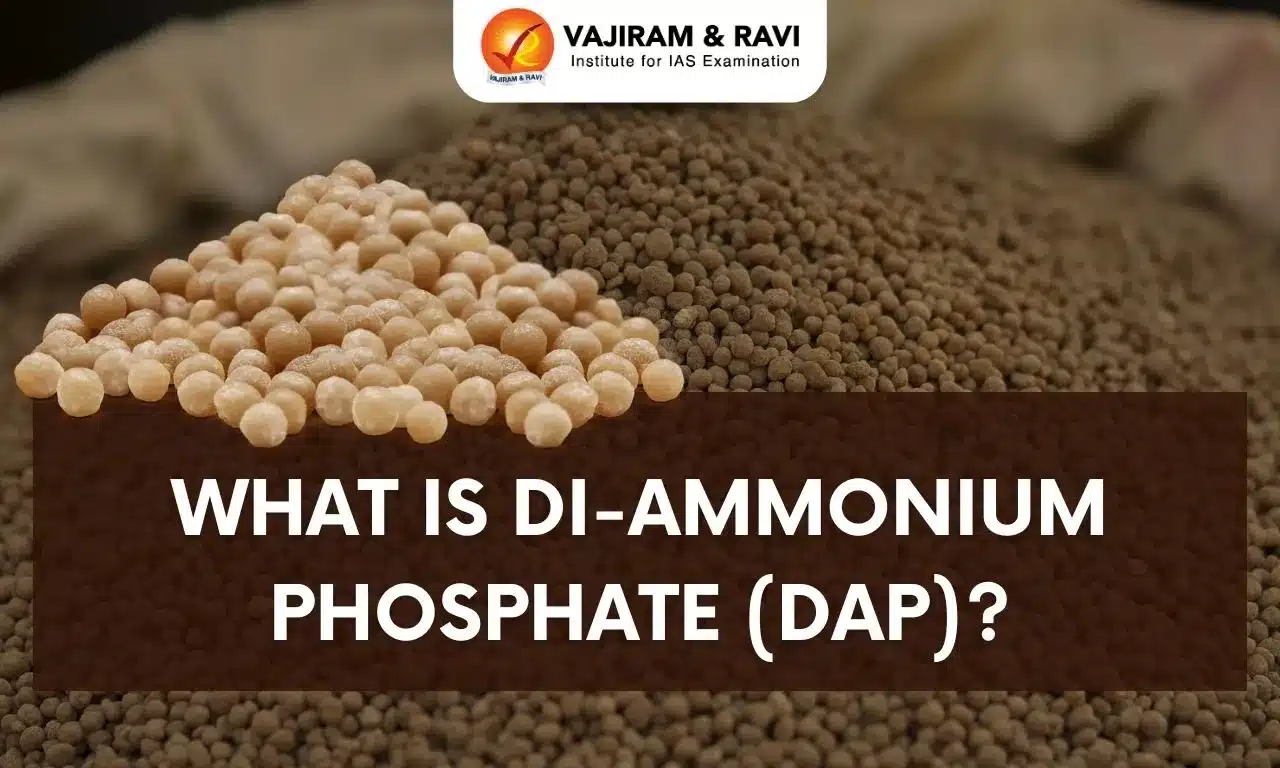
It is one of the most widely used fertilizers globally, providing essential nutrients—nitrogen (N) and phosphorus (P)—for plant growth.
It is the second most commonly used fertilizer in India after urea.
It is high in phosphorus (P) that stimulates root establishment and development-without which plants cannot grow to their normal size or will take too long to mature.
It’s highly soluble and thus dissolves quickly in soil to release plant-available phosphate and ammonium.
DAP has additional uses, including:
o As a fire retardant. For example, a mixture of DAP and other ingredients can be spread in advance of a fire to prevent a forest from burning.
o In various industrial processes, such as metal finishing.
o An addition to wine to sustain yeast fermentation.
o An addition to milk to produce cheese cultures.
o It proves as a flux for soldering tin, copper, brass, and zinc.
Q1: What is the Nutrient Based Subsidy (NBS) scheme?
It was implemented in 2010 by the Department of Fertilizers, Ministry of Chemicals & Fertilizers. A fixed amount of subsidy decided on an annual basis, is provided on each grade of subsidized Phosphatic & Potassic (P&K) fertilizers depending on its Nutrient Content. In case of phosphate (P) and potassic(K) fertilisers, subsidy is fixed under this scheme by an inter-ministerial committee taking into account the benchmark international prices of finished fertilisers as well as raw materials. The subsidy is given to registered to P&K fertiliser manufacturers/importers which provides these fertilisers at subsidised rates to farmers.
Source: ET
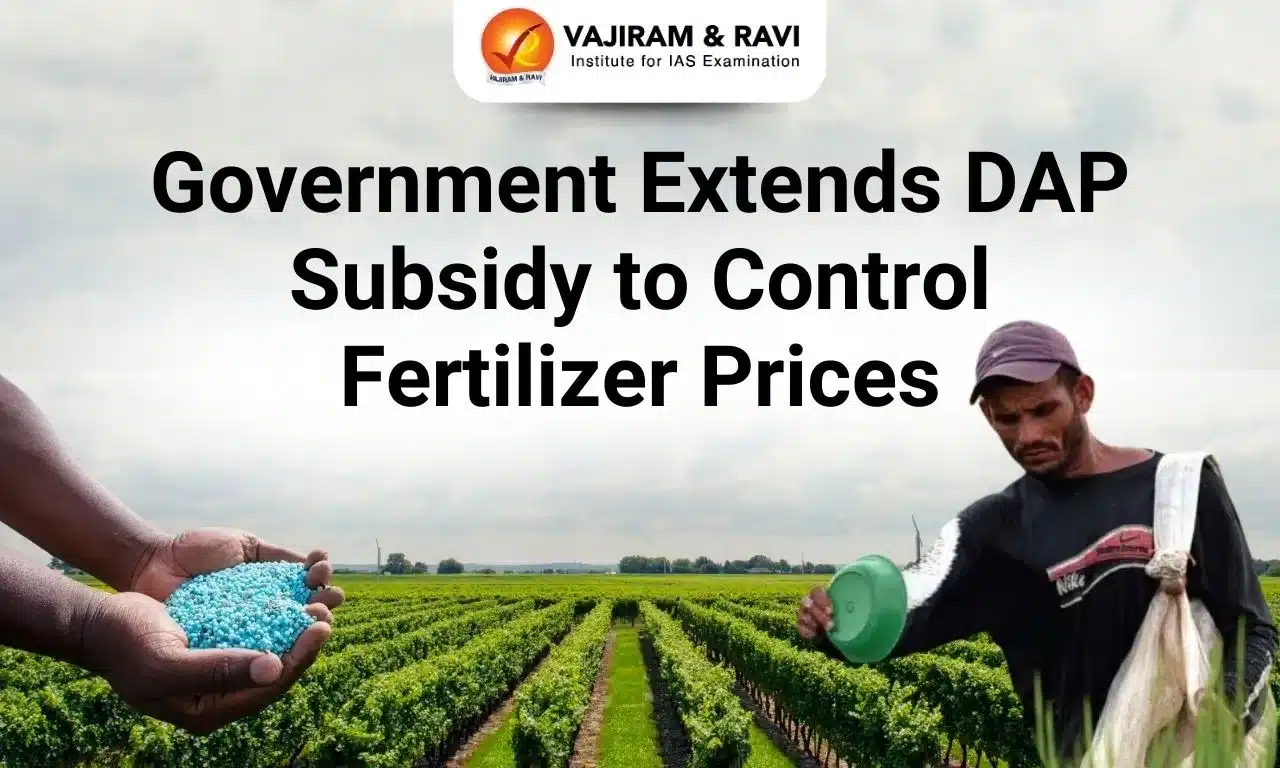
Cabinet approves extension of One-time Special Package on Di-Ammonium Phosphate (DAP) beyond the NBS subsidy for the period from 01.01.2025 till further orders to ensure sustainable availability of DAP at affordable prices to the farmers.
Key Decision of the Union Cabinet:
Extension of subsidy: The Centre has extended the Rs 3,500 per tonne special subsidy on di-ammonium phosphate (DAP) for one more year, effective from January 1, 2025, to December 31, 2025.
Objective: The decision aims to stabilize farmgate prices and shield farmers from price volatility caused by the rupee's depreciation against the US dollar.
Fertilizer Price Dynamics:
MRP caps on fertilizers:
The Modi government has informally frozen the maximum retail price (MRP) of non-urea fertilizers despite their decontrolled status.
Current MRPs:
DAP: Rs 1,350 per 50-kg bag
Complex fertilizers: Rs 1,300 to Rs 1,600 per bag, depending on the composition.
The government’s subsidy on DAP is Rs 21,911 per tonne, along with the Rs 3,500 special concession.
Impact of currency depreciation:
The rupee’s fall against the dollar has raised the cost of imported fertilizers.
Current import costs:
Landed price of DAP: Rs 54,160 per tonne, up from Rs 52,960 three months ago.
Total cost after additional expenses (e.g., customs, handling, and dealer margins): Rs 65,000 per tonne.
Challenges for the Fertilizer Industry:
Viability concerns:
Fertilizer companies face unviable import economics unless:
The government increases subsidies.
Companies are allowed to revise MRPs upward.
Even with the extended subsidy, companies estimate a shortfall of Rs 1,500 per tonne due to currency depreciation.
Stock levels:
Current stocks of DAP (9.2 lakh tonnes) and complex fertilizers (23.7 lakh tonnes) are below last year’s levels.
Insufficient imports may lead to supply challenges for the next kharif season (June-July 2025).
Government’s Strategy:
Compensation for imports:
On September 20, 2024, the government approved compensation for DAP imports above a benchmark landed price of $559.71 per tonne.
However, these calculations were based on an exchange rate of Rs 83.23 per dollar, which has since fallen below Rs 85.7.
Fiscal implications:
The extended subsidy will cost the government an additional Rs 6,475 crore.
Any MRP hike is expected to have minimal political implications, given that major agriculture states are not going to polls soon and the current DAP consumption season is over.
Future Outlook:
Immediate priority: Ensuring adequate fertilizer availability for the kharif season by securing imports of both finished fertilizers and raw materials.
The government’s ability to balance fiscal constraints, industry viability, and farmer affordability will be critical in the coming months.
Q.1. What is nutrient based subsidy (NBS)?
NBS is a government policy that provides subsidies for fertilizers based on their nutrient content. The policy was introduced in 2010 to improve agricultural productivity, ensure food security, and balance fertilizer use.
Q.2. What is Di-Ammonium Phosphate (DAP)?
DAP is a fertilizer that is made from a reaction of phosphoric acid and ammonia and is a primary source of nitrogen and phosphorus for plants. It is the most widely used phosphorus fertilizer in the world.
It is located in the southern part of the Western Ghats in the Kollam district of Kerala.
It spans an area of approximately 172 sq.km. and forms part of the Agasthyamala Biosphere Reserve.
Most of the Sanctuary area is hilly and interspersed with ravines.
Drainage: The major rivers are Shendurney, Kazhuthuruthy, and Kulathupuzha, which join together to form the Kallada River.
Flora:
The vegetation primarily consists of tropical evergreen forests, semi-evergreen forests, and moist deciduous forests.
The name "Shendurney" is derived from the name of a tree species, Gluta travancorica, locally known as ‘Chenkurunji’, which is endemic to this region and found in abundance within the sanctuary.
Fauna:
Notable mammals include elephants, tigers, leopards, gaurs (Indian bison), sambar deer, barking deer, wild boars, and bonnet macaques.
The sanctuary also supports a significant population of Nilgiri langurs and lion-tailed macaques, both of which are endemic to the Western Ghats.
Over 200 species of birds are recorded in the sanctuary. Some of the notable species include the great Indian hornbill, Malabar pied hornbill, grey-headed bulbul, white-bellied treepie, and various species of woodpeckers, flycatchers, and raptors.
Q1: Which are the sanctuaries located in the Agasthyamalai Biosphere Reserve?
Agasthyamalai Biosphere Reserve includes three wildlife sanctuaries namely Shendurney, Peppara and Neyyar.
The Union Home Ministry has introduced significant amendments to the Model Prison Manual, 2016, and the Model Prisons and Correctional Services Act, 2023.
The Amendments are aimed at addressing caste-based discrimination and refining the definition and treatment of habitual offenders in Indian prisons.
Background
The Supreme Court, in its October 3, 2024 ruling, highlighted the persistence of caste-based discrimination and inconsistencies in defining habitual offenders across states.
It directed governments to update their legal frameworks and ensure equality and fairness in prison administration.
This judgment forms the basis for the Home Ministry’s comprehensive overhaul of prison rules.
Addressing Caste-Based Discrimination in Prisons
To eradicate caste-based discrimination within prisons, the following changes have been implemented:
Prohibition of Discrimination:
Prison authorities are now mandated to ensure there is no discrimination, classification, or segregation of prisoners based on their caste.
Duties and work assignments within prisons must be allocated without prejudice, promoting equal treatment for all inmates.
Legal Provisions in Prison Rules:
A new section, 55(A), titled ‘Prohibition of caste-based discrimination in Prisons and Correctional Institutions,’ has been added under the Miscellaneous category of the Model Prisons and Correctional Services Act, 2023.
This ensures a codified framework to eliminate caste-based practices.
Implementation of Manual Scavenging Prohibition:
The provisions of the Prohibition of Employment as Manual Scavengers and their Rehabilitation Act, 2013, have been extended to prisons and correctional institutions.
Manual scavenging and hazardous cleaning of sewers or septic tanks within prisons are explicitly prohibited, safeguarding inmates from degrading practices.
Redefining Habitual Offenders
The amendments also address the treatment and classification of habitual offenders, following Supreme Court directives to standardize definitions and ensure adherence to constitutional principles:
Unified Definition:
A habitual offender is now defined as an individual who, during any continuous period of five years, has been convicted and sentenced to imprisonment on more than two occasions for offences committed on different occasions (not part of the same transaction), provided these sentences are not overturned on appeal or review.
Time spent in jail under sentence or detention will not be included in the five-year period.
Legislative Consistency:
In states lacking specific Habitual Offenders Acts, the Union and state governments are required to align their prison manuals and rules with the Supreme Court’s judgment within three months.
The amendments aim to create consistency across jurisdictions by replacing varied state definitions of habitual offenders with a standard model.
Significance of the Amendments
Ensuring Equality:
The amendments aim to uphold the constitutional right to equality and dignity for all prisoners, irrespective of their caste or background.
Eliminating Degrading Practices:
By prohibiting manual scavenging and hazardous cleaning, the rules reinforce humane treatment within prisons.
Standardized Framework:
The unified definition of habitual offenders ensures consistent treatment of repeat offenders across states, avoiding arbitrary classifications.
Conclusion
These amendments mark a significant step toward ensuring a fair and non-discriminatory prison environment.
By addressing caste-based discrimination and aligning the treatment of habitual offenders with constitutional principles, the Union Home Ministry aims to create a more just and equitable correctional system.
These changes reflect India's commitment to human rights and the rule of law, setting a progressive precedent for prison reforms nationwide.
Q1. Is the police under central or state?
'Police' and 'Public Order' are State subjects under the Seventh Schedule to the Constitution of India and therefore, it is the primary duty of the State Governments to prevent, detect, register and investigate crime and prosecute the criminals.
Q2 What is Central Industrial Security Force?
The Central Industrial Security Force is a federal police organisation in India under the Ministry of Home Affairs. It is one among the Central Armed Police Forces. CISF provides security to over 356 industrial units, government infrastructure projects and facilities and establishments located all over India.
CGWB is a multi-disciplinary scientific organization of the Department of Water Resources, River Development and Ganga Rejuvenation, Ministry of Jal Shakti, Government of India.
It is the National Apex Agency entrusted with the responsibilities of providing scientific inputs for management, exploration, monitoring, assessment, augmentation, and regulation of groundwater resources of the country.
Mandate: Develop and disseminate technologies and monitor and implement national policies for the scientific and sustainable development and management of India’s groundwater resources, including their exploration, assessment, conservation, augmentation, protection from pollution, and distribution, based on principles of economic and ecological efficiency and equity.
Organization Setup:
The Board is headed by the Chairman and has five members.
CGWB is a multi-disciplinary scientific organization consisting of Hydrogeologists, Geophysicists, Chemists, Hydrologists, Hydrometeorologists, and Engineers.
Headquarters: Bhujal Bhawan, Faridabad, Haryana.
The major activities of the CGWB are:
National Aquifer mapping and Management (NAQUIM) involving Preparation of Aquifer Maps and Management Plans.
Groundwater explorations to delineate groundwater worthy areas and potential aquifers.
Geophysical surveys to delineate groundwater bearing zones, etc.
Periodic assessment of the country’s groundwater resources.
Monitoring of groundwater levels and quality through groundwater observation wells.
Dissemination of Ground Water Data and knowledge.
Groundwater modelling.
GIS and Remote sensing.
Regulation and control of groundwater development and management by CGWA in coordination with State Government Organizations.
Coordination with State Government with a view to establish benchmark methodologies for groundwater studies.
R&D studies in ground water sector and application and operationalization of new technologies/techniques for groundwater investigation, development, and management.
Water conservation and artificial recharge to groundwater.
Capacity building and knowledge transfer.
Q1: What is an aquifer?
An aquifer is a body of porous rock or sediment saturated with groundwater. Groundwater enters an aquifer as precipitation seeps through the soil. It can move through the aquifer and resurface through springs and wells.
What is United District Information System for Education (UDISE+)?
UDISE+ is one of thelargest Management Information Systems initiated by the Department of School Education and Literacy (DoSEL), Ministry of Education, Government of India, covering more than 14.72 lakhs of schools, 98.08 lakhs of teachers, and 24.80 crores of children.
UDISE+ is an online portal facility created by DoSEL for record of data related to schools, teachers, enrolment, infrastructure, etc. in respect of all recognized schools in the country.
In UDISE+ school wise data is captured through Data Capture Format (DCF).
Each school has been provided with a login ID and password for facilitating online data compilation by respective schools.
The Head Teacher/ Head Master of the school in all the States compiles the data, and it goes through a 3-stage validation/verification process, viz., Block/ Cluster level, District level, and State level.
This data is finally certified by the State Project Director (SPD) at the State level.
The data once certified by SPD of the respective State is considered as approved by the State.
Therefore, data is entered in the UDISE+ portal by the respective State itself.
UDISE+ data is the only pan-India and most trusted database in school education in the country.
Highlights of UDISE+ Report 2023-24:
24.8 crore students enrolled in 2023-2024, while this figure stood at 25.18 crore in 2022-2023.
The figures for the previous four years – 26.52 crore (2021-2022), 26.44 crore (2020-2021), 26.45 crore (2019-2020), and 26.03 crore (2018-2019) – show that the average total enrolment stood around 26.36 crore.
Data shows that when compared from the period between 2018-2019 (reference year for UDISE+ data) and 2021-2022, the decline in enrolment – for the first time since the pandemic – has been over 1 crore between 2022-2023 and 2023-2024.
Boys account for 51.9% of enrolments and girls 48.1%.
The representation of minorities in total enrolment stood at around 20 percent.
Among the minorities, 79.6 percent were Muslims, 10 percent Christians, 6.9 percent Sikhs, 2.2 percent Buddhists, 1.3 percent Jains, and 0.1 percent Parsis.
In 2023-2024, the total SC students enrolled were 4.47 crore, while this figure was 4.59 crore in 2022-2023.
While 11.2 crore students enrolled in the OBC category in 2023-2024, the same was 11.45 crore in 2022-2023.
While over 90% of schools have basic amenities like electricity and gender-specific toilets, advanced facilities such as functional desktops, internet access, and ramps with handrails remain limited.
Only 57.2% of schools have functional computers, 53.9% have internet, and 52.3% are equipped with ramps, underscoring significant gaps in accessibility and tech readiness.
Q1: What is a Management Information System?
Management information systems (MIS) are an organized method of collecting information from various sources, compiling it, and presenting it in a readable format.Today’s management information systems rely heavily on technology to compile and present data.
It is the annual herb plant of the genus Stellaria (family Caryophyllaceae).
It was found growing on muddy soil slopes — at altitudes of 2,245-2,450 metres in the Sangser forest, Kalimpong.
Characteristics
It is an annual herb growing to a height of 8 to 10.5 cm, characterised by white flowers, absence of bract, shorter petals (or included within the sepal), sharp and pointed seeds.
Flowering and fruiting occurs during May to September.
India has around 22 Stellaria species mostly distributed in the Himalayan region.
The researchers have for the time being assessed the new species as ‘data deficient’ under International Union for Conservation of Nature (IUCN) criteria.
Other species Stellaria mcclintockiae, of the same genus, was found on Nelliyampathy Hills of Kerala.
Q1: What is IUCN?
The International Union for Conservation of Nature is a global organization composed of governments, NGOs, scientists, and experts dedicated to conserving nature and promoting sustainability.
The Union Cabinet, chaired by Prime Minister Narendra Modi, approved the continuation of the Pradhan Mantri Fasal Bima Yojana (PMFBY) and the Restructured Weather-Based Crop Insurance Scheme until 2025-26.
The schemes have been allocated an enhanced outlay of ₹69,515.71 crore for the period 2021-22 to 2025-26.
Pradhan Mantri Fasal Bima Yojana (PMFBY)
About:
A scheme of the Ministry of Agriculture & Farmers Welfare, PMFBY is an insurance service for farmers for their yields, launched in 2016.
The new Crop Insurance Scheme is in line with the One Nation One Scheme theme.
The PMFBY replaced the previous two schemes: the National Agricultural Insurance Scheme (NAIS) and the Modified NAIS.
It has incorporated the best features of all previous schemes while eliminating all previous shortcomings.
Objectives:
To provide insurance coverage and financial support to the farmers in the event of failure of any of the notified crops as a result of natural calamities, pests and diseases.
To stabilise the income of farmers to ensure their continuance in farming.
To encourage farmers to adopt innovative and modern agricultural practices.
To ensure flow of credit to the agriculture sector.
Key features of the PMFBY
Premium rates
There will be a uniform premium of only 2% to be paid by farmers for all Kharif crops and 1.5% for all Rabi crops (winter sown).
In case of annual commercial and horticultural crops, the premium to be paid by farmers will be only 5%.
Area based approach
The Scheme will be implemented on an 'Area Approach basis,' i.e., Defined Areas for each notified crop for widespread calamities,
The unit of insurance shall be Village/Village Panchayat level for major crops and for other crops it may be a unit of size above the level of Village/Village Panchayat.
It is assumed that all insured farmers in a unit of insurance, to be defined as a "Notified Area" for a crop, face similar risk exposures.
No upper limit to subsidy
There is no upper limit on Government subsidy. This means, even if the balance premium is 90%, it will be borne by the Government.
Use of technology
The use of technology will be encouraged to a great extent. For example,
Smartphones will be used to capture and upload data of crop cutting to reduce the delays in claim payment to farmers.
Remote sensing will be used to reduce the number of crops cutting experiments.
Beneficiaries to be covered
All farmers growing notified crops in a notified area during the season who have insurable interest in the crop are eligible.
To address the demand of farmers, the scheme has been made voluntary for all farmers from Kharif 2020.
Earlier, the enrolment was compulsory for farmers who possess a Crop Loan account or Kisan Credit Card (KCC) account, etc).
RWBCIS was introduced by the Government of India in 2016 to safeguard farmers against financial losses caused by unfavourable weather conditions.
These conditions encompass factors such as rainfall, temperature, wind, and humidity.
The scheme offers coverage for a range of crops, including food crops, oilseeds, and commercial or horticultural crops.
Its primary objective is to provide comprehensive insurance protection for various perils like drought, flood, cyclone, and hailstorm, thereby mitigating the impact of crop damage on farmers.
Eligibility - All farmers, including sharecroppers and tenant farmers, growing notified crops in notified areas.
Crop insurance scheme gets Rs 69,515 crore boost
Continuation of PMFBY and RWBCIS till 2025-26
The Union Cabinet approved the continuation of the PMFBY and the RWBCIS until 2025-26, with an enhanced outlay of ₹69,515.71 crore for the period 2021-22 to 2025-26.
Risk Coverage and Technology Infusion
The schemes aim to provide risk coverage for crops against non-preventable natural calamities.
To increase transparency and efficiency in claim calculation and settlement, the Cabinet approved the creation of the Fund for Innovation and Technology (FIAT) with a corpus of ₹824.77 crore.
Technological Initiatives under FIAT
Yield Estimation System using Technology (YES-TECH):
Utilizes Remote Sensing Technology for yield estimation, with at least 30% weightage to technology-based estimates.
Currently implemented in 9 states, with efforts to onboard others.
Madhya Pradesh has adopted 100% technology-based yield estimation, eliminating the need for Crop Cutting Experiments.
Weather Information and Network Data Systems (WINDS):
Plans to establish Automatic Weather Stations (AWS) at the block level and Automatic Rain Gauges (ARGs) at the Panchayat level.
Aims to increase network density fivefold for hyper-local weather data.
WINDS implementation starts in 2024-25, with states like Kerala, Uttar Pradesh, and Himachal Pradesh participating.
Special Provisions for Northeastern States
The Centre will share 90% of the premium subsidy for Northeastern states.
Flexibility is provided to reallocate funds to other development projects if required due to low gross cropped area or voluntary participation.
Key Benefits
Enhanced risk coverage for farmers across India.
Transition to technology-based systems for increased accuracy and transparency.
Support for Northeastern farmers with higher subsidy sharing.
Q.1. What are the key features of PMFBY?
PMFBY offers a uniform premium rate (2% for Kharif, 1.5% for Rabi, and 5% for horticulture crops), no upper limit on subsidies, and uses technology like remote sensing for crop yield estimation. Farmers growing notified crops in specified areas are eligible.
Q2. What is the role of FIAT in crop insurance schemes?
The ₹824.77 crore Fund for Innovation and Technology (FIAT) facilitates transparency in claim settlement using initiatives like YES-TECH for remote yield estimation and WINDS for hyper-local weather data, benefiting Indian farmers.
It is an emergency landing technique that involves an aeroplane landing without extending its landing gear.
It is a last resort for pilots who are unable to deploy their landing gear owing to a technical or mechanical malfunction.
Belly-landings are risky and carried out only in an emergency. It results in considerable damage to the plane, its engines and wings as the aircraft skids to a stop and can leave those onboard injured.
The friction generated by the aircraft skidding on the runway can also create sparks or result in a fire.
A cockpit crew decides to land an aircraft on its belly in the following situations:
Landing gear fails to deploy.
A stricken aircraft cannot make it to an airport and landing is done in a field. The pilot considers skidding the aircraft to a stop safer than touching down on wheels.
Ditching: when an aircraft makes an emergency landing on water.
Any other situation a pilot considers a belly-landing safer than landing on wheels.
Other aviation terminology
Landing long and fast: It is an aviation term that means an aircraft touches down far beyond the designated touchdown zone on the runway, leaving the crew with less runway length to stop the aircraft, and at a speed far exceeding the recommended landing speed.
Q1: What is the Directorate General of Civil Aviation (DGCA)?
DGCA is the national regulatory body of India responsible for regulating and overseeing civil aviation activities in the country. The DGCA is responsible for implementing policies and regulations related to aviation safety, airworthiness, pilot training, and licensing of airlines and other aviation-related personnel.
On New Year’s Day, Russian natural gas exports to Europe via Soviet-era pipelines through Ukraine were stopped as the transit deal expired, with no agreement reached between Moscow and Kyiv. This marks the end of Russia’s oldest gas route to Europe.
The Ukrainian government justified its decision as necessary for national security amid the military conflict.
Urengoy-Pomary-Uzhgorod Pipeline Overview
The pipeline transports gas from Siberia through Sudzha, located in Russia's Kursk region, now under Ukrainian military control.
It flows through Ukraine to Slovakia, branching into the Czech Republic and Austria.
Transdniestria, bordering Ukraine, receives Russian gas via Ukraine.
Volume of gas supplied through Ukraine
Decline in Russia's Gas Exports to Europe
Russia's gas supply to Europe has drastically reduced since the invasion of Ukraine in February 2022.
Moscow's share of the European gas market, once 35%, has dropped to 8%.
Diminished Gas Transit via Ukraine
By December 2024, the EU received less than 14 bcm of gas via Ukraine, a sharp decline from 65 bcm/year in 2020.
Ukraine earns $800 million to $1 billion annually in transit fees, while Russia could earn approximately $5 billion from sales via Ukraine in 2024.
Europe's Energy Diversification
The European Union has offset the loss of Russian gas with liquefied natural gas (LNG) and non-Russian pipeline imports.
Competitors like Norway, the United States, and Qatar have gained market share at Russia's expense.
Possible Impact
Impact on Russia and Gazprom
Economic Losses: Ukraine faces a loss of $800 million annually in transit fees, while Gazprom loses nearly $5 billion in gas sales.
Decline in Gas Exports: Russian gas transit through Ukraine fell from 65 bcm in 2020 to about 15 bcm in 2023.
Collapse of European Market Share: At its peak, Russia controlled 35% of Europe’s gas market, but the war has significantly eroded this dominance.
Impact on EU
Countries affected
The Ukraine route serves Austria and Slovakia. Austria received most of its gas via Ukraine, while Slovakia takes around 3 bcm from Gazprom per year, about two-thirds of its needs.
Slovakia has said the loss of Russian supply would not hit its consumption and that it has diversified supply contracts.
Ukraine’s gas supply remains unaffected as it no longer relies on Russian transit gas.
Market Impact
EU gas prices reached record highs in 2022 but are unlikely to repeat due to the small remaining volumes of Russian gas and reduced dependency.
The European Union has offset the loss of Russian gas with liquefied natural gas (LNG) and non-Russian pipeline imports.
Competitors like Norway, the United States, and Qatar have gained market share at Russia's expense.
Options available to the buyers
Shutting Down Other Pipelines
Yamal-Europe Pipeline: Closed via Belarus.
Nord Stream Pipeline: Severely damaged in 2022.
Alternative Routes and Adjustments
TurkStream Pipeline: Russia continues to export gas via TurkStream, supplying Turkey, Hungary, and Serbia.
European Union’s Shift: EU countries have diversified their energy sources to reduce dependency on Russian gas since 2022.
Slovakia: Diversifies gas supply from Hungary, Austria, the Czech Republic, and Poland.
Austria: Secured alternative supplies and prepared for the transition.
Czech Republic: Tapping into German pipelines, exempt from German gas levies, and supporting Slovakia with transit and storage capacities.
Moldova’s Challenges: Moldova, severely affected, plans to cut gas usage by a third.
Moldova receives 2 bcm of gas annually from Russia via Ukraine for Transdniestria, which generates power for the rest of Moldova.
Moldova has diversified its sources and will reduce gas consumption by a third starting January 1.
Q.1. Why did Russian gas transit via Ukraine stop?
The transit deal expired on January 1, 2025, without renewal due to ongoing conflict. Ukraine halted the pipeline citing national security, ending Russia’s oldest gas route to Europe.
Q.2. How is the EU mitigating the loss of Russian gas?
The EU offsets Russian gas losses through LNG imports and non-Russian pipelines. Countries like Norway, the US, and Qatar have gained market share, while Europe transitions to diversified and sustainable energy sources.
It is recognized amongst the most competitive and prestigious digital governance awards schemes in the country.
Objective: The objective of the Scheme is to recognize and promote excellence in implementation of e-Governance initiatives.
The NAeG Awards, 2025 will consist of:
Trophy, Certificate and an incentive of Rs 10 lakh for Gold Awardees and Rs 5 Lakhs for Silver Awardees to be awarded to the District/organization for being utilized for implementation of project/programme or bridging resources gaps in any area of public welfare.
This year 16 Awards are being conferred under the NAeG 2025. Of these 10 will be Gold Awards and 6 will be silver Awards.
For the year 2025, there are six categories under which the National Awards for e-Governance 2026 will be conferred. These categories are
Government Process Re-engineering by use of technology for Digital Transformation
Innovation by Use of AI and other new age technologies for providing Citizen-Centric Services,
Best e-Gov. Practices/Innovation in Cyber Security
Grassroot Level Initiatives for Deepening/ Widening of Service Delivery with focus on initiatives by Districts/ULBs/Gram Panchayats
Replication and Scaling up of Successful National Awarded Projects like NAeG, Prime Minister Awards in Excellence, Awards conferred by other Central Ministries by State/UT/ District The NAeG 2024
Digital transformation by use of data analytics in digital platforms by Central Ministries/States/UTs
Nodal Ministry: Ministry of Personnel, Public Grievances & Pensions
Q1: What is Cybersecurity?
It is the practice of protecting systems, networks, and programs from digital attacks. These cyberattacks are usually aimed at accessing, changing, or destroying sensitive information; extorting money from users via ransomware; or interrupting normal business processes.