UPSC Daily Quiz 8 August 2025

UPSC Daily Quiz

The Daily UPSC Quiz by Vajiram & Ravi is a thoughtfully curated initiative designed to support UPSC aspirants in strengthening their current affairs knowledge and core conceptual understanding. Aligned with the UPSC Syllabus 2025, this daily quiz serves as a revision resource, helping candidates assess their preparation, revise key topics, and stay updated with relevant issues. Whether you are preparing for Prelims or sharpening your revision for Mains, consistent practice with these Daily UPSC Quiz can significantly enhance accuracy, speed, and confidence in solving exam-level questions.

[WpProQuiz 40]

UPSC Daily Quiz FAQs

Q1: What is the Daily UPSC Quiz?

Ans: The Daily UPSC Quiz is a set of practice questions based on current affairs, static subjects, and PYQs that help aspirants enhance retention and test conceptual clarity regularly.

Q2: How is the Daily Quiz useful for UPSC preparation?

Ans: Daily quizzes support learning, help in revision, improve time management, and boost accuracy for both UPSC Prelims and Mains through consistent practice.

Q3: Are the quiz questions based on the UPSC syllabus?

Ans: Yes, all questions are aligned with the UPSC Syllabus 2025, covering key areas like Polity, Economy, Environment, History, Geography, and Current Affairs.

Q4: Are solutions and explanations provided with the quiz?

Ans: Yes, each quiz includes detailed explanations and source references to enhance conceptual understanding and enable self-assessment.

Q5: Is the Daily UPSC Quiz suitable for both Prelims and Mains?

Ans: Primarily focused on Prelims (MCQ format), but it also indirectly helps in Mains by strengthening subject knowledge and factual clarity.

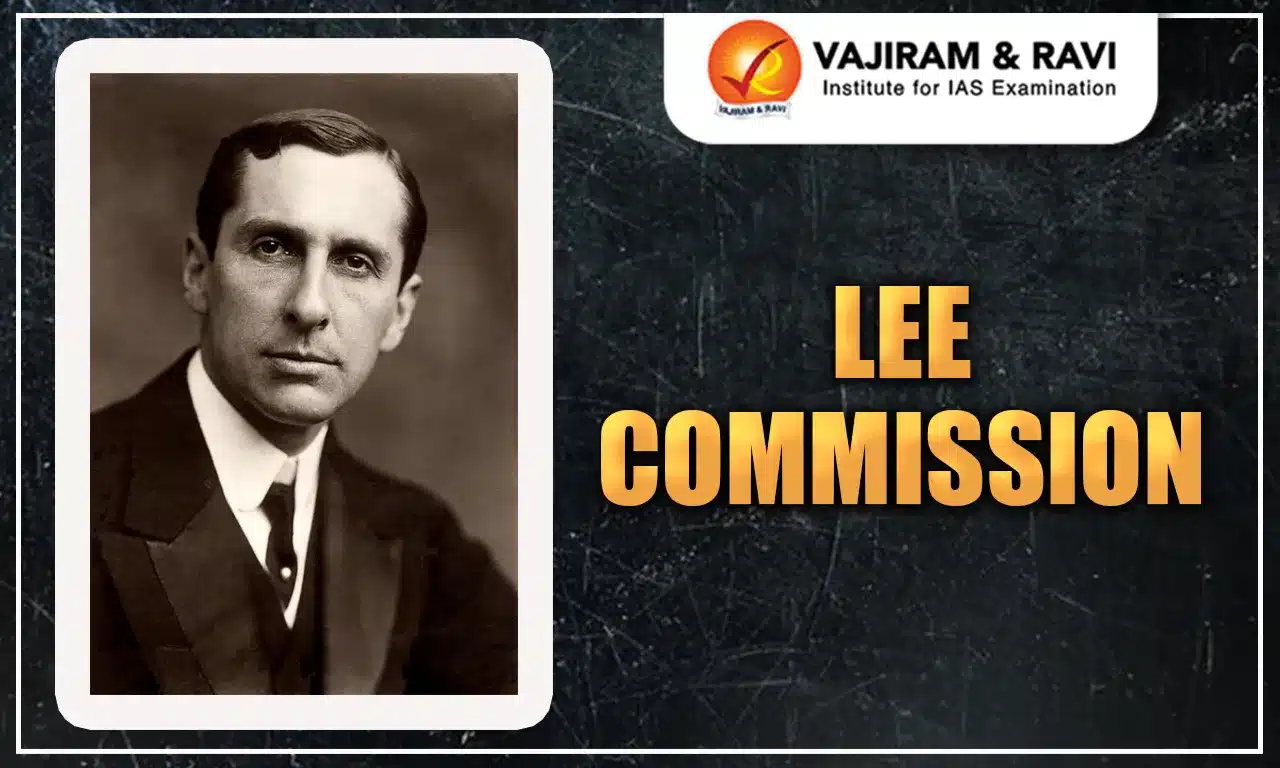
Lee Commission, History, Features and Recommendations

Lee Commission

The Lee Commission was established in 1923 by Lord Lee with an equal proportion of Indians and British members with the agenda of evaluating the racial composition of superior civil services in India. The Commission submitted its report in 1924. It examined the earlier recommendations of the Islington Commission and evaluated the structure of the All-India Services and Central Services in 1912. It didn’t focus on Provincial Services, since those were already under the control of provincial governments.

Lee Commission History

  • During 1923, against the growing political tension for independence and slow pace in civil services, the British government appointed a Royal Commission on the Superior Civil Services in India which was led by Lord Lee which was known as the Lee Commission. 
  • The Lee Commission was composed of equal proportions of the Indian and the British Members with the main task of examining the racial composition and recruitment structure of the civil services in India.
  • There were two main groups including All India Services and the Central Services. Provincial Services were left as they were managed by allocated provincial governments.
  • The Lee Commission also considered the Islington Commission Report 1912, which made a suggestion that 25% of superior civil service posts should be provided to the Indians, some of which were directly recruited, some were recruited through promotion and the exams must be held in India.
  • Though the Montagu-Chelmsford Reforms, 1919 which influenced greater Indian participation in the Indian Governance had moved further. They also proposed that 1/3rd of the higher service recruitments will go to the Indian, effectively considering the recommendations.
  • In response to these context, the Lee Commission recommended a new structure which includes:
    • 20% of superior posts should be filled by promotion from Provincial Services
    • The remaining 80% should be split between British and Indian officers recruited directly (though the actual ratio within this 80% leaned heavily toward British candidates)
  • Despite the growing demand of Indianisation, the pace of the changes which were expected remained very slow, especially in elite services like Indian Civil Service (ICS).
  • The Indian Statutory Commission (Simon Commission) in 1930 became the next major step in taking up the issues of the civil service reforms, following up with the dissatisfaction from the Lee Commission’s recommendations.

Lee Commission Features

  • The Lee Commission was established by the British Government in 1923 to examine the composition of Higher Civil Services of India especially to maintain the balance between the Indians and British Officers.
  • The Commission was headed by Lord Lee from Fareham; he ensured the equal representation of both British and Indian members.
  • In the Lee Commission Report in 1924, they recommended the future recruitment to higher civil services where the ratio should be 40% British, 40% directly recruited Indians, and 20% promoted from provincial services.
  • Since the commission only focused on the recruitment of the top-tier recruitment for higher services, they also referred to the Royal Commission on the Superior Civil Services in India.
  • One of the most significant recommendations was the establishment of a Public Service Commission which is considered as essential to ensure the fair and efficient administration. 
  • The commission also described this idea as a “cardinal feature” of its report and important to the future structure of the services.
  • By the time of Independence of India in 1947, over half of the roughly 1000 members of the civil services were Indian, from which various held the senior and the vital position to the future of the services.

Lee Commission Recommendations

  • The Lee Commission classified the services into three major categories which included All India Services: Common to both central and provincial governments (e.g., ICS, Indian Police). Central Services: Under the control of the central government (e.g., Railways, Posts, Foreign Affairs). Provincial Services: Controlled by respective provincial governments (e.g., Education, Health).
  • The Lee Commission has introduced the Recruitment Authority that was the Secretary of State that manages the recruitment for key All India Services including Indian Civil Service (ICS), Indian Police Service, Indian Forest Service, Indian Medical Service, Indian Service of Engineers.
  • Provincial governments should take charge of recruitment for services operating in transferred fields like Education, Civil Medical Service, Agriculture, Veterinary Services.
  • The Lee Commission suggested that within 15 years, direct recruitment to the ICS was to achieve a 50:50 ratio between British and Indian officers.
  • Recommended immediate establishment of a Public Service Commission, as discussed in the Government of India Act, 1919. This body would advise on recruitment and service matters and help make the system more impartial.
  • Officers already in All India Services would retain their rights and status. Provincial governments were to get recruitment powers only for new vacancies in services under their control.
  • Central services were to handle core national functions including Relations with Indian States, Foreign Affairs, State Railways,  Posts & Telegraphs, Customs and Revenue, Audit and Accounts, Scientific and Technical Services.

Lee Commission FAQs

Q1: What was the Lee Commission?

Ans: The Lee Commission, formed in 1923, was established by the British Government to examine the structure of the Indian Civil Services and recommend Indianisation.

Q2: Who headed the Lee Commission?

Ans: It was headed by Lord Lee of Fareham, a British politician and peer, after whom the commission was named.

Q3: Why was the Lee Commission established?

Ans: The commission was set up to address demands for greater Indian representation in the civil services and to frame a policy for its gradual Indianisation.

Q4: When was the Lee Commission appointed?

Ans: It was appointed in 1923 and submitted its report in 1924.

Q5: What was the main recommendation of the Lee Commission?

Ans: It recommended that 50% of future appointments to the Indian Civil Service (ICS) be filled by Indians.

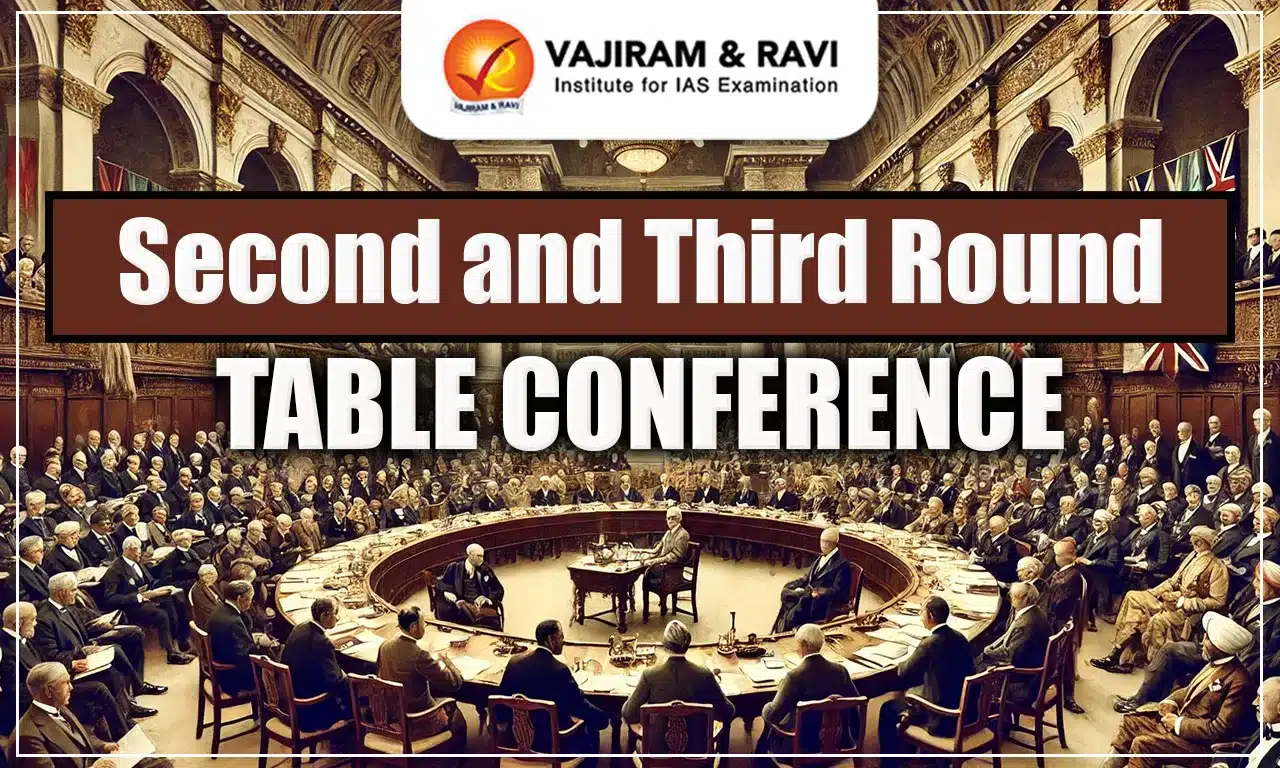
Second and Third Round Table Conference, History, Participants

Second and Third Round Table Conference

The Second and Third Round Table Conferences were held in London between 1931 and 1932 as part of the British government's efforts to introduce constitutional reforms in India. The Second Round Table Conference took place from 7th September to 1st December 1931. It was attended by Mahatma Gandhi as the sole representative of the Indian National Congress, along with other Indian leaders and British officials. The Third Round Table Conference was held from 17th November to 24th December 1932. These conferences were convened to discuss the Simon Commission’s report and the future of India’s political structure. However, no agreement was reached, and the talks ended without any conclusive outcome.

Round Table Conference

A Round Table Conference is a formal meeting where different groups often with opposing views come together to discuss important issues. The goal is to reach an agreement through open conversation and negotiation. It is like a gathering of equals around a circular table, not to fight but to solve problems. It's about finding common ground, even when opinions differ sharply.

Round Table Conference History

Round Table Conference by the British in the 1930s to address increasing demands for Indian self-rule during a politically tough time. Brought together a wide range of participants, British officials, Indian political leaders, minority representatives, and princely state delegates. Held in three separate sessions in London between 1930 and 1932.

Second Round Table Conference

The Second Round Table Conference took place in London from 7 September to 1 December 1931. It was organised after the First Round Table Conference failed to produce concrete results due to the absence of key Indian political figures. These conferences were initiated in response to the widespread dissatisfaction with the Simon Commission Report. 

While the First Round Table Conference was called by Ramsay MacDonald under the Labour government, the subsequent ones were conducted under the Conservative Party. The Indian National Congress agreed to participate in the Second Round Table Conference following the Gandhi-Irwin Pact earlier that year.

Second Round Table Conference Participants

The Second Round Table Conference in London brought together representatives from across the political and social areas of Indian society.

  • From Britain, Prime Minister James Ramsay MacDonald led the delegation, along with members from various British political parties.
  • Princely states sent their rulers and advisors, including representatives from Alwar, Darbhanga, Bhopal, Bikaner, Indore, Jammu and Kashmir, Patiala, Baroda (Manubhai Mehta), Gwalior (Sardar Sahibzada Sultan Ahmed Khan), and Hyderabad (Sir Muhammad Akbar Hydari), among others.
  • The Indian National Congress was represented by Mahatma Gandhi, who attended as its sole official representative, along with leaders like Rangaswami Iyengar and Madan Mohan Malaviya.
  • C. P. Ramaswami Iyer represented the Government of British India.
  • Muslim delegates included Aga Khan III (on behalf of the Muslim League), Muhammad Ali Jinnah, Maulana Shaukat Ali, A. K. Fazlul Huq, and Muhammad Iqbal.
  • Hindu representation came from B. S. Moonje of the Hindu Mahasabha and M. R. Jayakar.
  • Dr. B. R. Ambedkar attended on behalf of the Depressed Classes.
  • Sikh interests were represented by Sardar Ujjal Singh.
  • Women’s voices were brought forward by Sarojini Naidu, Begum Jahanara Shahnawaz, and Radhabai Subbarayan.
  • Liberal leaders included Tej Bahadur Sapru and Chimanlal Harilal Setalvad.
  • Labour representatives included N. M. Joshi, B. Shiva Rao, and V. V. Giri.
  • Industrialists like G. D. Birla and Purshottamdas Thakurdas also participated.
  • Other groups, including Christians, Parsis, and Anglo-Indians, were also represented, reflecting the diversity of British Indian society at the time.

Second Round Table Conference Results

The Second Round Table Conference has seen deep political rifts among Indian leaders. Although the Indian National Congress participated after the Gandhi-Irwin Pact, no consensus emerged on key constitutional issues. Ramsay MacDonald later announced the Communal Award, which sparked major controversy by proposing separate electorates for minorities. The conference ultimately failed to deliver any real constitutional reform.

Despite its failure, a few developments were seen. Two new provinces, Sindh and the North-West Frontier Province were separated. Other than this, Three expert committees were formed to examine finance, franchise and the princely states. An Indian Consultative Committee was also formed and none of these efforts led to immediate progress.

Third Round Table Conference

The Third Round Table Conference was held in London from 17th November to 24th December 1932, following the failure of the Second Round Table Conference. Unlike the previous sessions, it witnessed poor participation, with only a few delegates in attendance.

Third Round Table Conference Participants

The Third Round Table Conference in London saw limited participation compared to the earlier ones. It was attended by representatives from various sections of Indian society. Aga Khan III represented the British-Indian community. The princely states were represented by their Maharajas, Nawabs, Sardars, and Dewans, some of the notable states included Hyderabad, Bhopal, Mysore, Jammu and Kashmir, and Patiala.

  1. R. Ambedkar attended the Third Round Table Conference as the representative of the Depressed Classes. Women’s representation came through Begum Jahanara Shahnawaz. Other attendees included delegates from the European and Anglo-Indian communities, as well as labour groups. The Indian National Congress was not invited to the conference and therefore did not take part.

Third Round Table Conference Results

The Third Round Table Conference led to a few key developments. Its recommendations were published as a White Paper in March 1933, which was later debated in the British Parliament. A Joint Select Committee was then set up to review the proposals and prepare a draft for a new law. Eventually, this draft became the basis for the Government of India Act, 1935.

Second and Third Round Table Conference FAQs

Q1: When was the Second Round Table Conference held?

Ans: It took place in London from 7 September to 1 December 1931, following the Gandhi-Irwin Pact.

Q2: Who represented the Indian National Congress at the Second Conference?

Ans: Mahatma Gandhi attended as the sole representative of the Indian National Congress.

Q3: What was the outcome of the Second Conference?

Ans: No consensus was reached; Gandhi returned disillusioned, and the British government resumed repressive measures in India.

Q4: When was the Third Round Table Conference held?

Ans: It was held from 17 November to 24 December 1932, with very limited Indian participation.

Q5: Why is the Third Conference considered less significant?

Ans: Due to the Congress’s absence and lack of wider Indian representation, it failed to reflect true Indian opinion.

Daily Editorial Analysis 8 August 2025

Daily Editorial Analysis

The Bihar Migrant Worker, A Scylla-Charybdis Moment

 Context

  • In Homer’s Odyssey, King Odysseus famously faced a perilous choice, navigate close to Scylla, the six-headed monster lurking in the rocks, or Charybdis, the deadly whirlpool.
  • In today’s Indian democratic context, a similar dilemma confronts millions of migrant labourers whose names have been dropped from the draft electoral rolls during the Special Intensive Revision (SIR) process initiated by the Election Commission of India (ECI).
  • For these citizens, exercising their fundamental right to vote has become a matter of navigating between legal definitions and political realities, each carrying risks of disenfranchisement.

The Legal Foundation: ‘Ordinarily Resident’

  • The Representation of the People (RP) Act, 1950 governs the preparation of electoral rolls in India.
  • Section 19 mandates that a person must be ordinarily resident in a constituency to be included in its roll, a requirement designed to ensure genuine ties to the constituency and prevent fraudulent registrations.
  • Section 20 clarifies that mere ownership of property does not establish residency, while temporary absences do not negate it.
  • In 2010, Section 20A extended voting rights to Non-Resident Indians (NRIs) based on their passport address.
  • The ECI, under SIR, has excluded individuals marked as permanently shifted/not found if they were absent during verification or failed to submit forms.
  • This approach collides with the lived reality of migrant labourers, many of whom maintain strong familial and property ties to their native constituencies despite extended absences for work.
  • Judicial interpretation, notably in the Gauhati High Court’s 1999 Election Commission of India vs Dr. Manmohan Singh defines ordinarily resident as a habitual, permanent association with a place, not a casual presence.
  • For many migrants, this definition arguably still applies to their home constituencies.

Migrant Labour: The Scale of the Issue

  • The Periodic Labour Force Survey (2020–21) estimated that about 11% of India’s population, roughly 15 crore individuals, are migrant workers.
  • Driven by economic necessity, they often relocate alone, live in temporary accommodations, and move frequently within or across States.
  • While their bodies may be at construction sites or security posts far from home, their political and social identities often remain anchored in their native constituencies, where families reside and property exists.

Legal Pathways vs Political Resistance

  • Legally, migrants can register to vote in their current place of residence under the RP Act. However, the practical obstacles are significant.
  • Many lack the required documentation for voter registration in their work locations.
  • Even if these hurdles are overcome, regional political resistance often arises in in-migration States.
  • Local parties fear that transient populations may distort electoral outcomes, arguing that migrants lack deep familiarity with local political issues.
  • This tension creates a Catch-22: in their home constituencies, migrants risk being removed from rolls for prolonged absence; in their work constituencies, they face suspicion, documentation barriers, and political pushback.
  • The result is a de facto disenfranchisement, despite having a de jure right to vote somewhere.

The Broader Democratic Context

  • The problem is not unique to migrants. Urban voter apathy is well-documented, in many metropolitan areas, nearly half the electorate abstains despite living within a short walk of polling stations.
  • Similarly, NRIs often cannot return home to vote despite having that right.
  • These comparisons suggest that low participation among migrants is not grounds for excluding them but rather a challenge to be addressed through facilitation.

The Way Forward: Towards Inclusive Solutions

  • Short-term measures could improve access for migrants without altering the fundamental legal framework.
  • Strict enforcement of statutory holidays on polling day for all eligible workers.
  • Expanded special transportation services, trains, buses, and subsidised travel options — enabling interstate or intrastate return for voting.
  • Paid leave provisions for travel and participation in elections.
  • The ECI’s 2023 pilot of a Multi-Constituency Remote Electronic Voting Machine (RVM), capable of handling up to 72 constituencies, hinted at a technological path forward.
  • While concerns from political parties stalled the initiative, advances in secure, verifiable remote voting systems could eventually reconcile mobility with enfranchisement.
  • Parliament could amend the RP Act to explicitly protect the right of migrant labourers to choose their place of voting, ensuring that legal interpretation aligns with economic and social realities.

Conclusion

  • Like Odysseus steering between Scylla and Charybdis, migrant labourers in India are caught between legal definitions and political anxieties.
  • The law theoretically offers them two safe harbours, their native constituency or their current place of work, yet the waves of bureaucracy and the rocks of political resistance often leave them stranded.
  • Preserving their franchise is not just a matter of technical eligibility but a commitment to the constitutional promise of equal citizenship.
  • The challenge is to chart a course that avoids both disenfranchisement and political manipulation, a passage narrow, but navigable with will and innovation.

The Bihar Migrant Worker, A Scylla-Charybdis Moment FAQs

Q1. What does Section 19 of the RP Act, 1950 require for inclusion in the electoral roll?
Ans. Section 19 requires that a person must be “ordinarily resident” in a constituency to be included in its electoral roll.

Q2. Why are many migrant labourers removed from the draft electoral roll during SIR?
Ans. Many migrant labourers are removed because they are marked as “permanently shifted/not found” when absent during verification or unable to submit forms.

Q3. What is one major political concern about registering migrants in in-migration States?
Ans. Some regional parties fear that migrants may not understand local political issues and could distort electoral outcomes.

Q4. What short-term step can help migrant workers vote in their home constituencies?
Ans. Providing special transportation and enforcing statutory holidays on polling day can help them return home to vote.

Q5. What long-term solution did the ECI explore for migrant voting?
Ans. The ECI piloted a Multi-Constituency Remote Electronic Voting Machine (RVM) to enable remote voting for migrants.

Source: The Hindu


World Court’s Advisory Opinion Boosts Climate Action

Context

  • Climate change has emerged as one of the most pressing existential threats to humanity, with impacts that transcend national borders and political divides.
  • In this context, the International Court of Justice (ICJ), the principal judicial organ of the United Nations, has delivered a historic advisory opinion clarifying the legal obligations of states in combating climate change.
  • While advisory opinions are not legally binding, they carry significant moral and political weight, serving as authoritative interpretations of international law.
  • Precedents, such as the United Kingdom’s eventual compliance with the ICJ’s opinion on the Chagos Islands, illustrate their potential to influence state behaviour through global pressure.

Significance of ICJ’s Ruling

  • Affirmation of States’ Duties to the Climate System

    • The ICJ’s opinion firmly establishes that states have enforceable legal obligations to protect the global climate system.
    • It aligns with the positions of other international judicial bodies, such as the International Tribunal for the Law of the Sea (ITLOS) and the Inter-American Commission on Human Rights (IACHR), both of which have recognised states’ responsibilities in addressing the climate crisis.
    • Crucially, the ICJ emphasised that these duties are not political preferences but binding obligations that no state can ignore.
    • One of the most notable aspects of the ruling is its comprehensive interpretation of multiple climate treaties, including the UN Framework Convention on Climate Change, the Kyoto Protocol, and the Paris Agreement, in conjunction with the best available scientific consensus.
    • The court elevated the 1.5°C threshold, long considered an aspirational goal under the Paris Agreement, to a concrete benchmark derived from subsequent scientific findings and COP decisions.
    • This effectively narrows the room for states to adopt weaker climate targets under their Nationally Determined Contributions (NDCs).
  • Narrowing Discretion and Strengthening Accountability

    • The ICJ decisively rejected the view that states possess unfettered discretion in setting their NDCs.
    • While the Paris Agreement requires countries to articulate their highest possible ambition, the ruling clarifies that this phrase is not rhetorical but a standard with legal consequences.
    • States must adopt measures reasonably capable of achieving their stated goals, thereby transforming climate pledges from political statements into legal commitments.
    • This reasoning also reinforces the principle of common but differentiated responsibilities and respective capabilities (CBDR-RC), a cornerstone of climate justice.
  • Beyond a Self-Contained Regime

    • The ruling also rejects the argument that climate treaties form a self-contained legal system immune from broader principles of international law.
    • Instead, the ICJ integrated climate obligations with established environmental law doctrines, including the duty of due diligence, the duty to prevent significant harm, and the duty to cooperate.
    • These obligations arise not only from climate-specific treaties but also from the Law of the Sea Convention, customary international law, and human rights instruments.
  • Recognition of Intersection between Climate Change and Human Rights

    • Climate policies, the ICJ held, must respect the rights of vulnerable populations, and ensure a just transition.
    • Withdrawal from climate treaties, as in the case of the United States’ temporary exit from the Paris Agreement, does not nullify these obligations.
    • Moreover, the ICJ dismissed claims that states cannot be held individually accountable due to the difficulty of proving causation.
    • Scientific methods, it noted, can quantify each state’s contribution to global emissions, including historical responsibility.

Strategic Implications for the Global South

  • This advisory opinion carries particular significance for small island developing states, whose survival is directly threatened by rising sea levels.
  • It was their advocacy at the UN General Assembly that led to the request for the opinion.
  • The ruling provides them, and the broader Global South, with a powerful legal and diplomatic tool to demand stronger action from major emitters.
  • Beyond its symbolic victory, the opinion has the potential to reshape climate litigation worldwide.
  • Cases such as the Ridhima Pandey v. Union of India matter, which challenges the adequacy of India’s climate policies, may now draw on this decision to argue that insufficient action violates both human rights and binding legal duties.
  • For developing countries, the opinion strengthens the basis for insisting on equitable climate finance and technology transfer, while resisting measures that unfairly burden their economies.

Conclusion

  • The ICJ’s advisory opinion represents a pivotal moment in the evolution of international climate law.
  • By grounding climate obligations in binding legal principles, narrowing state discretion, and affirming the interplay between environmental protection and human rights, the court has armed vulnerable nations and climate advocates with new tools for accountability.
  • While it remains to be seen how states will respond, the opinion sends an unambiguous message: climate inaction is not merely a political choice, it is a breach of legal duty.

World Court’s Advisory Opinion Boosts Climate Action FAQs

Q1. What did the ICJ’s advisory opinion establish about states’ obligations to combat climate change?
Ans. The ICJ established that states have binding legal obligations to protect the climate system and cannot ignore these duties.

Q2. How did the ICJ interpret the Paris Agreement’s temperature goal?
Ans. The ICJ held that the 1.5°C threshold is the relevant target states must work toward, based on scientific consensus and COP decisions.

Q3. What principle did the ICJ emphasise to address climate justice between developed and developing countries?
Ans. The ICJ emphasised the principle of common but differentiated responsibilities and respective capabilities (CBDR-RC).

Q4. How did the ICJ address the argument that climate treaties form a “self-contained” regime?
Ans. The ICJ rejected this argument and linked climate obligations to general international law, environmental law, and human rights.

Q5. Why is the advisory opinion significant for small island states?
Ans. It gives them a strong legal and diplomatic tool to hold major emitters accountable and demand stronger climate action.

Source: The Hindu


Triple Disaster in Upper Bhagirathi Valley - A Wake-Up Call on Himalayan Climate Vulnerability and Policy Negligence

Context:

  • On August 5, 2025, three successive climate-related disasters struck the upper Bhagirathi (Ganga) river valley in Uttarkashi district, Uttarakhand, devastating Dharali, Harshil, and nearby settlements.
  • The incident underscores the climate vulnerability of the Himalayas, the impact of global warming on glacial systems, and the failure of governance in enforcing eco-sensitive zone regulations.

The Disasters – Sequence of Events:

  • First incident – Dharali flood (around 1:00 PM):

    • A suspected cloudburst flood (later denied by IMD) swept away houses, shops, and mela crowds.
    • Damage: Major parts of Dharali, Kalp Kedar temple, 20–25 hotels/homestays.
  • Second incident – Downstream Harshil (around 3:00 PM):

    Flash floods in a small mountain stream valley.
  • Third incident – Harshil helipad flood (around 3:30 PM):

    Submerged key relief infrastructure.

Casualties and Response:

  • The district administration reported 4 deaths and about 60 to 70 missing, including about 9 Army personnel.
  • About 100 Army personnel, assisted by the National Disaster Response Force (NDRF), State Disaster Response Force (SDRF), Indo-Tibetan Border Police (ITBP) and local police teams began prompt rescue operations.

Scientific Explanation - Geological and Climatic Triggers:

  • Dharali lies at the base of steep slopes with deodar forests stabilising soil and blocking avalanches.
  • Presence of cirques (“hanging glaciers”) filled with debris from past glacial retreat.
  • Five or six small streams emerge from these cirques and rush down the slopes.
  • Intense summer monsoon and rising temperatures melt the winter snows that quickly form massive avalanches, along with ice, rain water and the glacial moraines, as they rush down the stream valleys.
  • The recent catastrophes were due to three such avalanches, all within 2.5 hours.

Policy and Governance Failures:

  • In 2012, the Union government had notified the Gaumukh to Uttarkashi watershed of the Bhagirathi as an Eco-Sensitive Zone (BESZ).
    • This was to preserve its pristine areas and regulate infrastructural activities in the region.
  • However, there has been poor enforcement of regulations by Central and State governments despite Ministry of Environment, Forest and Climate Change (MoEF&CC) monitoring committee efforts.

Char Dham Highway Controversy:

  • With the governments ignoring the BESZ notification, the Union Ministry of Road Transport and Highways (MoRTH) prepared plans to widen the National Highway in the BESZ to accommodate Gangotri’s summer tourist traffic.
  • Recommendations (2020) of the Supreme Court directed High Powered Committee (HPC) to investigate the construction of the Char Dham highway -
    • Avoid disturbing sensitive slopes.
    • Consider elevated riverside highways to protect deodar forests.
  • Highway authorities ignored advice, and 6,000 deodar trees marked for felling.

Ignored Warnings – Pattern of Disasters:

  • Kedarnath tragedy (2013) – cloudburst & floods.
  • Raunthi Gad avalanche (2021) – destroyed Tapovan-Vishnugad hydroelectric project (HEP).
  • Joshimath land subsidence (2023) – cracks in ground and houses.
  • Teesta Valley glacial lake outburst flood (GLOF) (2023).
  • Recurring monsoon landslides and floods in Himachal.

Key Recommendations from Experts:

  • Avoid hydroelectric projects (HEPs) in para-glacial zones.
  • Keep human settlements and infrastructure away from flood-prone rivers/streams.
  • No road widening on slopes over 30° inclination.
  • Conduct carrying capacity studies for Himalayan towns.

Conclusion:

  • The triple disaster in Uttarkashi reflects a dangerous convergence of climate change impacts, fragile Himalayan geology, and policy negligence.
  • The repeated ignoring of scientific warnings points to an urgent need for climate-resilient, ecologically sensitive development that respects the carrying capacity of Himalayan ecosystems.
  • Without course correction, such tragedies will only intensify.

Triple Disaster in Upper Bhagirathi Valley FAQs

Q1. What geological and climatic factors caused the August 5, 2025 Bhagirathi valley disaster?

Ans. Successive avalanches from debris-filled cirques, triggered by warming, heavy monsoon, and fragile slopes, led to flash floods.

Q2. Why was the 2012 Bhagirathi Eco-Sensitive Zone (BESZ) notification important, and what was the impact of its weak enforcement?

Ans. It aimed to protect the Gaumukh–Uttarkashi watershed, but lax enforcement enabled harmful projects like road widening.

Q3. What were the HPC’s key recommendations on the Char Dham highway, and how were they ignored?

Ans. It suggested protecting slopes, conserving deodar forests, and elevated riverside roads, but authorities chose wide hill-cut roads instead.

Q4. What pattern do recent Himalayan disasters reveal for infrastructure planning?

Ans. They show the need for climate-resilient designs and strict ecological safeguards.

Q5. What policy measures can make the Himalayas more climate-resilient?

Ans. Ban HEPs in para-glacial zones, limit slope cutting, avoid floodplain settlements, and enforce eco-sensitive zone rules.

Source: IE

Daily Editorial Analysis 8 August 2025 FAQs

Q1: What is editorial analysis?

Ans: Editorial analysis is the critical examination and interpretation of newspaper editorials to extract key insights, arguments, and perspectives relevant to UPSC preparation.

Q2: What is an editorial analyst?

Ans: An editorial analyst is someone who studies and breaks down editorials to highlight their relevance, structure, and usefulness for competitive exams like the UPSC.

Q3: What is an editorial for UPSC?

Ans: For UPSC, an editorial refers to opinion-based articles in reputed newspapers that provide analysis on current affairs, governance, policy, and socio-economic issues.

Q4: What are the sources of UPSC Editorial Analysis?

Ans: Key sources include editorials from The Hindu and Indian Express.

Q5: Can Editorial Analysis help in Mains Answer Writing?

Ans: Yes, editorial analysis enhances content quality, analytical depth, and structure in Mains answer writing.


Shah Alam II, Early Life, Father, Battle of Buxar, Key Details

Shah Alam II

Shah Alam II, also known as Ali Gohar, was the seventeenth Mughal Emperor and the son of Alamgir II. He ruled from 1759 to 1806, a period when the Mughal Empire was in decline. His authority had weakened so much that a Persian saying emerged: “Sultanat-e-Shah Alam, Az Dilli ta Palam,” meaning “The kingdom of Shah Alam stretches from Delhi to Palam,” with Palam being just a suburb of Delhi. He is also remembered as the Mughal emperor who fought in the Battle of Buxar in 1764.

Shah Alam II Early Life

  • Ali Gohar, later known as Shah Alam II, was born on June 25, 1728, to Shahzada Aziz-ud-Din, the son of the deposed Mughal Emperor Jahandar Shah. 
  • He spent his early years in semi-captivity within the Salatin quarters of the Red Fort alongside his father. 
  • Unlike many Mughal princes raised in similar conditions, he didn’t grow up indulged or idle. When his father became emperor, Ali Gohar was named Crown Prince (Waali al-Ahd) and acted as his main representative, although real power remained with the Wazir, Imad-ul-Mulk. 
  • Conflicts with the Wazir and fears for his own safety eventually forced him to flee Delhi in 1758. 
  • Though widely recognized as the legitimate emperor, Shah Alam II couldn’t return to Delhi until 1772 after gaining the protection of the Maratha leader Mahadaji Shinde. 
  • During this turbulent period, he also fought in the Battle of Buxar against the British East India Company.

Shah Alam II Reign

  • During Shah Alam II Reign, the Mughal Empire had become a shadow of its former self, with real political authority almost entirely lost.
  • Owing to rising tensions and conflicts with the powerful wazir Imad-ul-Mulk, Shah Alam fled Delhi and took refuge in Awadh between 1761 and 1764.
  • When the Marathas regained control over Delhi, they extended an invitation to Shah Alam II to return, which he accepted, allowing him to be nominally restored as emperor.
  • Throughout his reign, Shah Alam II had to contend with repeated invasions, particularly from Ahmad Shah Abdali, the Emir of Afghanistan, whose campaigns caused massive instability in northern India.
  • One of the most significant consequences of Abdali’s invasions was the Third Battle of Panipat in 1761, fought between the Marathas who held political dominance in Delhi and Abdali’s Afghan forces.
  • In 1760, the Marathas under Sadashivrao Bhau drove out Abdali’s allies and deposed Shah Jahan III, a puppet emperor installed by Imad-ul-Mulk, reinstating Shah Alam II as the legitimate Mughal sovereign (1760–1772).
  • Shah Alam’s political decisions led him to join forces with Mir Qasim of Bengal and Shuja-ud-Daula of Awadh against the British East India Company in the Battle of Buxar in 1764. The alliance was defeated by British commander Hector Munro.
  • Following this defeat, the Treaty of Allahabad was signed around 1765, in which Shah Alam II granted the East India Company Diwani rights permission to collect land revenue in Bengal, Bihar, and Orissa.
  • This treaty effectively made Shah Alam II the first Mughal emperor to become a pensioner of the East India Company, living under their protection and relying on their financial support.
  • The Bengal Famine, 1770 signaled the deepening collapse of the Mughal Empire and exposed the growing power in the Indian subcontinent.
  • By the time the famine took hold, it was clear that the Mughal Empire had lost its grip not just on international affairs, but even on its own territories in South Asia. It was no longer the force it once was.
  • During his attempt to regain control over the Eastern Subahs, Shah Alam II received support from Jean Law de Lauriston, a French officer, and about 200 French troops showing the complex foreign involvement in Indian politics at the time.
  • He maintained contact with Hyder Ali and later with Tipu Sultan during the Anglo-Mysore Wars, sharing their concerns over British expansion and viewing the East India Company’s growing power with alarm.
  • Shah Alam II died of natural causes on November 19, 1806, marking the end of one of the powerless reigns in Mughal history.
  • He was buried alongside other later Mughals, including Bahadur Shah I and Akbar Shah II, in a marble enclosure near the dargah of the 13th-century Sufi saint Qutbuddin Bakhtiar Kaki in Mehrauli, Delhi.
  • Despite his political failures, Shah Alam II was a poet who wrote under the pen name "Aftab" and published a collection of poetry known as a Diwan, compiled and preserved by Mirza Fakhir Makin.
  • He was also the author of Ajaib-ul-Qasas, a classic of early Urdu literature that remains a significant part of the language’s literary heritage.

Shah Alam II FAQs

Q1: Who was Shah Alam II?

Ans: Shah Alam II was the 17th Mughal Emperor, who ruled from 1759 to 1806. His reign marked the decline of the Mughal Empire.

Q2: What was Shah Alam II’s real name?

Ans: His birth name was Ali Gohar. He took the title "Shah Alam II" upon ascending the Mughal throne.

Q3: When did Shah Alam II rule India?

Ans: He officially became emperor in 1759 and ruled until his death in 1806.

Q4: Which major battle did Shah Alam II participate in?

Ans: He was part of the Battle of Buxar (1764) alongside Shuja-ud-Daula and Mir Qasim against the British East India Company.

Q5: What was the result of the Battle of Buxar for Shah Alam II?

Ans: He was defeated and later signed the Treaty of Allahabad in 1765, granting the British Diwani rights in Bengal, Bihar, and Orissa.

World Tribal Day 2025

World Tribal Day 2025

World Tribal Day Latest News

The Adivasi Girijana Sangham has urged tribal representatives, youth, and elected leaders to actively participate in World Tribal Day celebrations on August 9 and commit to resolving tribal issues.

About World Tribal Day

  • It is observed on August 9 every year to support and protect the rights of the world’s indigenous people. 
  • Also referred to as World Indigenous Day or International Day of World's Indigenous People, this day offers an excellent chance to effectively work towards defending the fundamental rights of tribal communities around the world.
  • World Tribal Day 2025 Theme: "Indigenous Peoples and Artificial Intelligence – Defending Rights, Shaping the Future"

World Tribal Day History

  • The observance of this day originates from a worldwide movement pointed toward recognizing the rights and significant commitments of tribal people. 
  • Regardless of comprising around 6% of the worldwide population, tribal communities are often marginalized, despite the fact that they have wealthy cultural diversity.
  • The origins of the International Day of the World's Indigenous People date back to December 1994, when the United Nations General Assembly designated 9 August for this annual observance. 
  • This date holds symbolic significance as it marks the first meeting of the UN Working Group on Indigenous Populations of the Sub-commission on the Promotion and Protection of Human Rights.
  • This meeting took place in Geneva in 1982.

Source: DC

World Tribal Day FAQs

Q1: On which date is World Tribal Day observed each year?

Ans: It is observed on August 9 every year.

Q2: What is the theme for World Tribal Day 2025?

Ans: Indigenous Peoples and Artificial Intelligence – Defending Rights, Shaping the Future

Q3: Approximately what percentage of the global population is made up of indigenous or tribal communities?

Ans: 6%

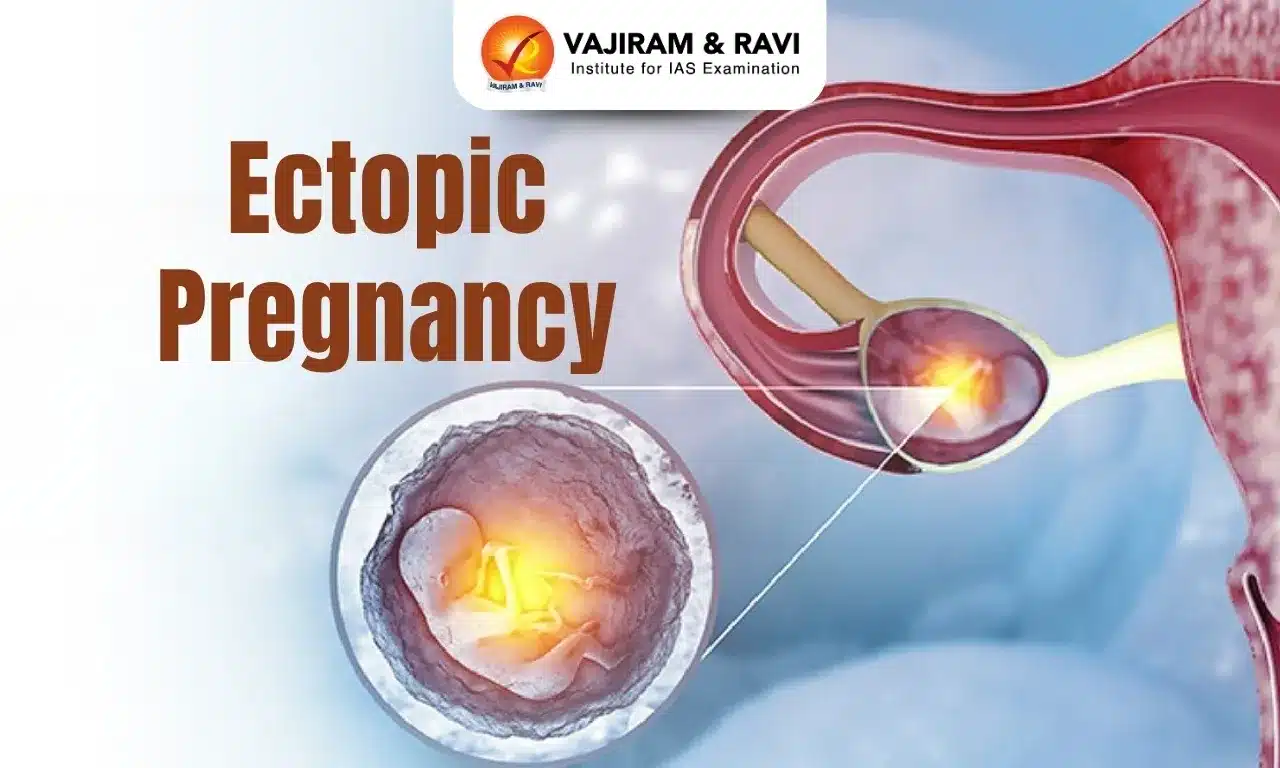
Ectopic Pregnancy

Ectopic Pregnancy

Ectopic Pregnancy Latest News

A recent case of pregnancy stunned doctors in Bulandhshahr, Uttar Pradesh: an MRI scan revealed a fetus growing in the liver and this extremely rare condition is known as an intrahepatic ectopic pregnancy.

About Ectopic Pregnancy

  • An ectopic pregnancy occurs when the fertilised egg, instead of implanting itself in the uterus, implants outside of it, commonly in the fallopian tube.
  • It most often occurs in a fallopian tube, which carries eggs from the ovaries to the uterus. This type of ectopic pregnancy is called a tubal pregnancy.
  • It sometimes occurs in other areas of the body, such as the ovary, abdominal cavity or the lower part of the uterus (cervix), which connects to the vagina.
  • In an ectopic pregnancy, the fertilised egg attaches itself to a structure other than the uterus.

Reasons for Ectopic Pregnancies

  • Ectopic pregnancies occur when the movement of the fertilised egg is blocked.
  • This could occur due to inflammation or scarring of the fallopian tubes, damage to the fallopian tubes (due to prior surgeries or infections), or an irregularly-shaped fallopian tube.

Symptoms of Ectopic Pregnancies

  • It may also be similar to those in early pregnancy such as a missed period, nausea and tenderness of breasts.
  • Other symptoms may become noticeable later and may include: vaginal bleeding, pain in the lower abdomen, as well as pelvic and back pain, dizziness, pain in the shoulder, discomfort during bowel movements, and low blood pressure.
  • Treatment: In some cases doctors suggest using a medication called methotrexate to stop the fertilized egg from growing, ending the pregnancy.

Source: TH

Ectopic Pregnancy FAQs

Q1: How long can an ectopic pregnancy last?

Ans: The structure containing the ectopic pregnancy typically ruptures after about 6 to 16 weeks.

Q2: What is the concept of ectopic pregnancy?

Ans: An ectopic pregnancy is when a fertilised egg implants itself outside of the womb, usually in one of the fallopian tubes.

SheLeads Programme

SheLeads Programme

SheLeads Programme Latest News

Recently, the Union Minister for Women and Child Development inaugurated the second edition of UN Women’s flagship capacity-building programme — SheLeads II: Workshop for Women Leaders, in New Delhi.

About SheLeads Programme

  • It is a flagship initiative of the UN Women India Country Office.
  • Aim: It is aimed to advance gender equality in public and political leadership, aiming to support women leaders in contesting the upcoming/next Lok Sabha and State Assembly elections.
  • It is an effort to ensure women have the platform, skills, and networks to step into roles such as shaping policies and governance that reflect the aspirations of all citizens with confidence.
  • Significance: This initiative is pivotal in equipping women with the skills and networks needed to lead from the front, ensuring that development agenda is truly inclusive and representative of every voice.

Key Facts about UN Women

  • It is the United Nations (UN) entity dedicated to gender equality and the empowerment of women.
  • It was created in July 2010 by the UN General Assembly.
  • The creation of UN Women came about as part of the UN reform agenda, bringing together resources and mandates for greater impact.
  • The main roles of UN Women are:
    • To support inter-governmental bodies, such as the Commission on the Status of Women, in their formulation of policies, global standards, and norms.
    • To help member states implement these standards, standing ready to provide suitable technical and financial support to those countries that request it, and to forge effective partnerships with civil society.

Source: PIB

SheLeads Programme FAQs

Q1: What are leadership programmes?

Ans: It is a program of learning solutions aimed at improving the skill sets, abilities and confidence of current business leaders, and bringing on the company's next generation of future leaders.

Q2: What does the United Nations organisation do?

Ans: Maintain International Peace and Security. Protect Human Rights. Deliver Humanitarian Aid. Support Sustainable Development and Climate Action.

Notary Portal

Notary Portal

Notary Portal Latest News

Recently, the Ministry of Law and Justice informed the Rajya Sabha about the Notary Portal.

About Notary Portal

  • It was launched by the Government of India as a dedicated platform for providing online services for the works related to the Notaries Act, 1952 and the Notaries Rules, 1956.
  • Objectives: The objective of the Notary Portal is to provide an online interface between the Notaries appointed by the Central Government and the Government of India for various services like,
    • Submission of applications for appointment as Notaries,
    • Verification of eligibility for appointment as Notaries,
    • Issuance of digitally signed Certificate of Practice as a Notary,
    • Also renewal of certificate of practice, change of practice area, submission of annual return etc.
  • The Notary Portal provides a faceless, paperless, transparent and efficient system. Presently, the module related to verification of documents and eligibility, and issuance of digitally singed Certificate of Practice to the newly appointed Notaries is live.

 Source: PIB

Notary Portal FAQs

Q1: What is a Notary Portal?

Ans: It is an online interface between the Notaries and the Government for various services like submission of applications for appointment as Notaries.

Q2: For what purpose is notary used?

Ans: A notary serves as an official witness to the signing of documents.

Hepatitis D

Hepatitis D

Hepatitis D Latest News

Recently, the World Health Organisation (WHO) announced the reclassification of hepatitis D as cancerous, emphasising the urgency for preventing viral hepatitis, which is a growing public health crisis.

About Hepatitis D

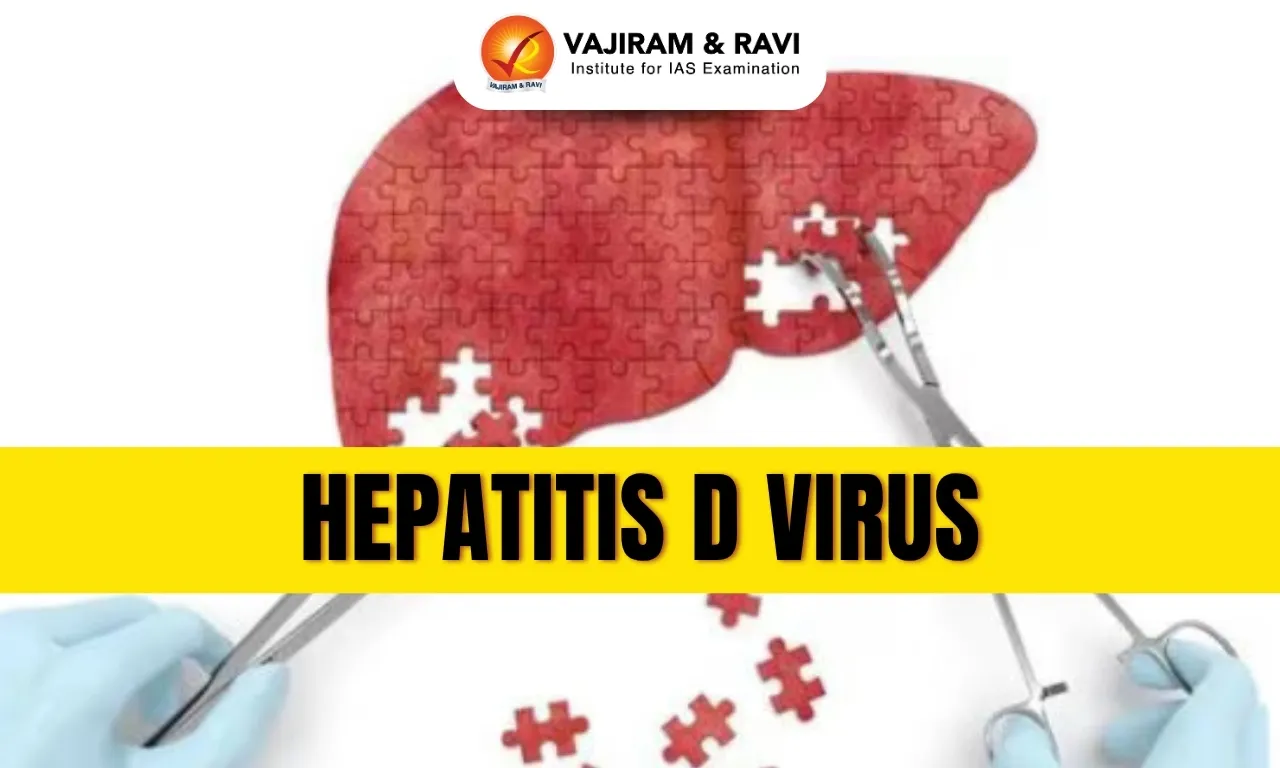
  • It is a serious liver infection caused by the hepatitis D virus (HDV).
  • It is an incompetent virus that requires hepatitis B virus (HBV) for replication.
  • This means it cannot cause infection alone and triggers co-infections only with the hepatitis B virus.
  • Hepatitis D only affects people who already have hepatitis B either simultaneously or sequentially.
  • Hepatitis B & D co-infection runs a more severe course for risk of cirrhosis and liver cancer. Hepatitis B can cause liver cancer even without causing cirrhosis as it gets integrated in the DNA of cells.
  • Hepatitis D virus augments the carcinogenic effect of Hepatitis B.
  • All types of hepatitis are associated with acute liver infection; however, only hepatitis B, C, and D can lead to chronic infections with a higher risk of liver cirrhosis, failure or cancer. 
  • Hepatitis D is associated with a two- to six-fold higher risk of liver cancer compared with hepatitis B.
  • Transmission: The mode of transmission is similar to hepatitis B and C, that is through parenteral route or injections and transfusion, mother to child transmission and sexual contact.
  • Prevention: Universal hepatitis B vaccination indirectly prevents hepatitis D. 
    • Hepatitis B vaccine may be given in any of the following schedules: Birth, 1 and 6 months; birth, 6 and 14 weeks; 6, 10 and 14 weeks; birth, 6, 10 and 14 weeks. In catch up vaccination, use 0, 1 and 6 months schedule.
    • An adult, especially if in a high risk comorbidity group, should take the hepatitis B vaccine in three shots. The second dose is given a month after the first, and the third dose is given six months after the second.

Source: IE

Hepatitis D FAQs

Q1: Can hepatitis D be cured?

Ans: There's currently no cure or vaccine for hepatitis D.

Q2: How is hepatitis D spread?

Ans: One can get hepatitis D if he/she comes in contact with infected blood or body fluids.

Great Barrier Reef

Great Barrier Reef

Great Barrier Reef Latest News

The Great Barrier Reef has recorded its steepest decline in hard coral cover in almost four decades, as climate change-induced heat stress, cyclones and outbreaks of coral-eating starfish drive the ecosystem to the brink.

About Great Barrier Reef

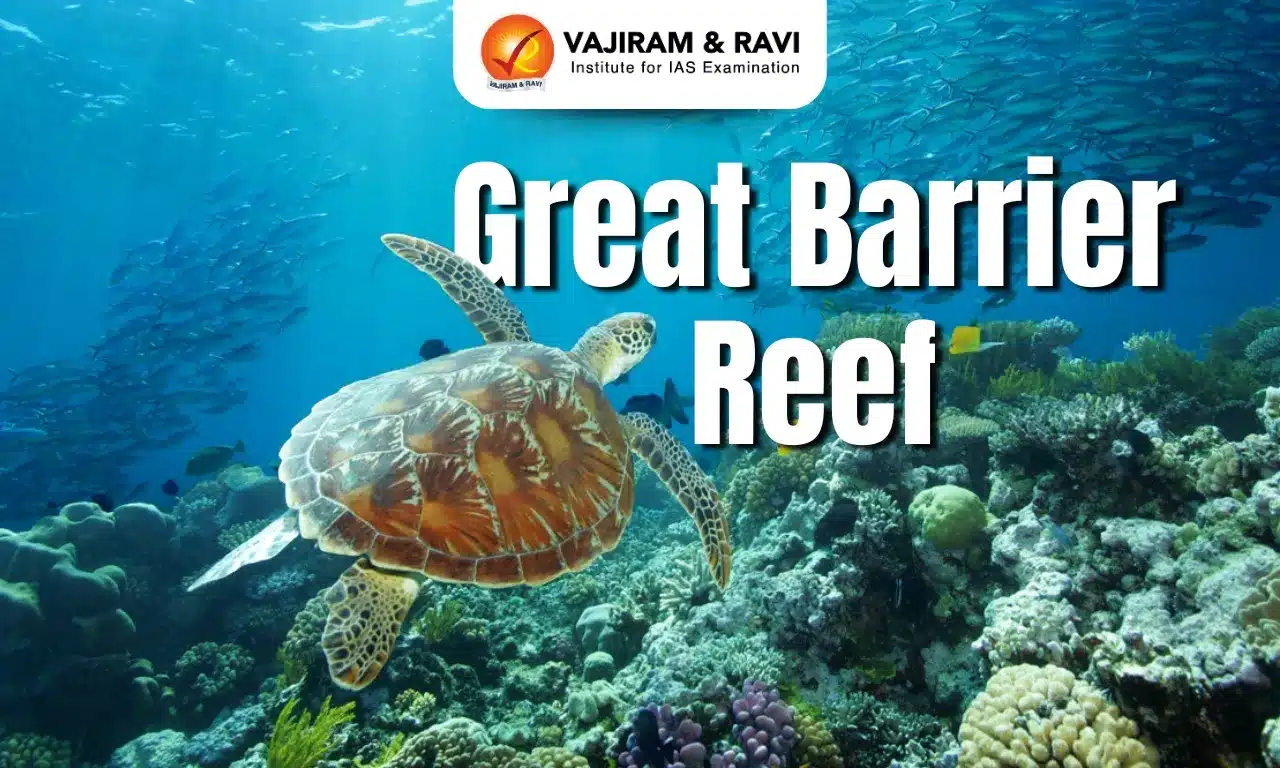
  • It is a complex of coral reefs, shoals, and islets in the Pacific Ocean off the northeastern coast of Australia in the Coral Sea.
  • It is the longest and largest reef complex in the world and is the largest living structure on Earth.
  • It extends in roughly a northwest-southeast direction for more than 2,000 km, at an offshore distance ranging from 16 to 160 km, and its width ranges from 60 to 250 km. 
  • It has an area of some 350,000 sq.km. It makes up about 10 percent of the world’s coral reef ecosystems.
  • The reef, which is large enough to be visible from space, actually consists of some 2,100 individual reefs and some 800 fringing reefs (formed around islands or bordering coastlines).
  • It contains 400 types of coral, 1,500 species of fishes, and 4,000 types of mollusks species. 
  • The reef is also home to six of the seven known species of sea turtles, more than a dozen sea snakes, and nearly two dozen species of birds.
  • It also holds great scientific interest as the habitat of species such as the dugong (‘sea cow’) and the large green turtle, which are threatened with extinction.
  • Much of the Great Barrier Reef is a marine protected area, managed by the Great Barrier Reef Marine Park Authority of Australia.
  • UNESCO declared the Great Barrier Reef a World Heritage Site in 1981.

Source: DTE

Great Barrier Reef FAQs

Q1: Where is the Great Barrier Reef located?

Ans: It is located in the Pacific Ocean off the northeastern coast of Australia in the Coral Sea.

Q2: Approximately how long is the Great Barrier Reef?

Ans: 2,000 km

Q3: What is the approximate total area of the Great Barrier Reef?

Ans: 350,000 sq. km

India’s Economic Equilibrium: Cracks in the Goldilocks Growth Story

India’s Goldilocks Economy Challenges

India’s Goldilocks Economy Challenges Latest News

  • India’s Finance Ministry recently hailed the economy’s “Goldilocks situation” — moderate growth, low inflation, and favourable monetary conditions — with analysts noting strong 7.6% GDP growth, peak interest rates, and steady corporate earnings. 
  • The country ended FY2024 as a $3.6 trillion economy, signalling optimism for 2025. 
  • However, seasoned economists caution that this rosy picture masks deeper structural imbalances, making the golden equilibrium more fragile than it appears.

Inflation and Stagnant Wage Growth: The Cracks in the “Goldilocks” Narrative

  • While headline CPI inflation eased from 4.8% in May 2024 to 2.82% by May 2025, food inflation told a harsher story. 
  • The Consumer Food Price Index (CFPI) often outpaced general inflation, peaking at 10.87% in October 2024 against CPI’s 6.21%. 
  • Even in moderate months, the gap persisted, disproportionately hurting lower-income households, for whom food constitutes nearly half the consumption basket. 
  • This volatility, driven by weather disruptions, supply chain issues, and global commodity swings, eroded real incomes and destabilised household budgets, undermining the perception of price stability.

Erosion of Real Wages

  • The wage data further challenges the “Goldilocks” image. In 2023, an average nominal salary hike of 9.2% translated to only 2.5% real wage growth. 
  • In 2020, real wages even turned negative (-0.4%) despite nominal growth of 4.4%. 
  • For 2025, projected real wage growth of 4% against an 8.8% nominal rise means inflation still halves the gain. 
  • This persistent erosion squeezes household savings, curtails discretionary spending, and increases debt dependence — particularly in sectors with modest pay hikes like IT services, manufacturing, engineering, and consumer industries.

The Silent Squeeze on Households

  • A salary hike loses its promise when inflation eats away its value — a 9% raise feels like just 2% in purchasing power if prices rise 7%. 
  • For many families, this silent squeeze means compromising on quality of life, reducing essential and discretionary consumption, and struggling with financial uncertainty, exposing the fragility beneath India’s supposed macroeconomic equilibrium.

Income Inequality and Fiscal Pressures: Questioning the “Goldilocks” Claim

  • India’s headline GDP growth masks deep-seated structural issues of inequality and fiscal strain. 
  • While the Gini coefficient for taxable income has declined from 0.489 in AY13 to a projected 0.402 in AY23, this improvement is limited to the formal sector and excludes the vast informal workforce
  • The post-pandemic recovery has been K-shaped, benefiting affluent segments and specific industries, while real wages for low-income groups have stagnated. 
  • This persistent disparity risks weakening social cohesion, restricting access to quality education and healthcare, and constraining long-term inclusive growth.
  • On the fiscal front, the government is committed to reducing the fiscal deficit from 6.4% in 2022-23 to 4.4% in 2025-26, with similar declines in revenue and primary deficits. 
  • However, these deficits remain high, necessitating large-scale borrowing that could crowd out private investment, slow job creation, and curb economic expansion. 
    • With public debt-to-GDP at around 81%—well above the FRBM target of 60%—a significant share of future revenues will be consumed by debt servicing, limiting funds for social sector spending and potentially leading to higher taxes. 
  • Together, entrenched inequality and fiscal vulnerabilities challenge the sustainability of India’s so-called “Goldilocks” economy.

Beyond the “Goldilocks” Illusion: India’s Underlying Economic Fragilities

  • India’s so-called “Goldilocks” economy—marked by strong GDP growth, low inflation, and stable macro indicators—conceals deeper structural weaknesses. 
  • Volatile food inflation, stagnant real wages, persistent income inequality, and constrained fiscal space undermine the perception of a universally shared macroeconomic sweet spot. 
  • While headline numbers project stability, the benefits of growth remain concentrated among a select few, leaving large sections of the population struggling with eroded purchasing power and limited economic opportunity. 
  • True equilibrium lies not in surface-level metrics but in inclusive growth that boosts real incomes, narrows inequality, and strengthens fiscal resilience. 
  • Without addressing these systemic challenges, the notion of a “just right” economy risks remaining an illusion for millions of Indians.

Source: TH

India’s Goldilocks Economy Challenges FAQs

Q1: What is India’s “Goldilocks” economy?

Ans: It refers to a phase of moderate growth, low inflation, and stable macroeconomic conditions without overheating.

Q2: Why is food inflation a concern?

Ans: Volatile food prices disproportionately hurt lower-income households, eroding purchasing power and destabilising budgets.

Q3: How are wages impacting growth?

Ans: Stagnant real wages limit household savings, cut spending, and increase debt dependence.

Q4: What role does inequality play?

Ans: Persistent disparities risk weakening social cohesion and limiting inclusive economic growth.

Q5: Why is fiscal pressure a threat?

Ans: High deficits and public debt crowd out private investment, reducing funds for social spending.

Clouded Leopard

Clouded Leopard

Clouded Leopard Latest News

Retired Indian Forest Service (IFS) officer Susanta Nanda recently shared an old video featuring a rare sighting of a family of clouded leopards in a now-viral post on X.

About Clouded Leopard

  • It is a wild cat inhabiting dense forests of the Himalayas through mainland Southeast Asia into South China.
  • They have a stocky build and are larger than small cat species, and smaller than the large cats. 
  • There are two species of clouded leopards: the clouded leopard (Neofelis nebulosa), found on the mainland of southeastern Asia, and the Sunda clouded leopard (Neofelis diardi), found on the islands of Sumatra and Borneo.
  • They are one of the most ancient cat species. However, they are neither a true great cat nor a true small cat, because they cannot roar or purr.

Clouded Leopard Distribution

  • It is found from Nepal, Bangladesh, and India through Indochina to Sumatra and Borneo, and northeastward to southern China and formerly Taiwan
  • It has been found at relatively high altitudes in the Himalayas.
  • In India, it is found in Sikkim, northern West Bengal, Meghalaya, Tripura, Mizoram, Manipur, Assam, Nagaland, and Arunachal Pradesh.
  • It is the State animal of Meghalaya.

Clouded Leopard Habitat

  • They prefer to live in lowland tropical rainforests
  • However, they can also be found in dry woodlands and secondary forests, and in Borneo, they are reported to live in mangrove swamps. 

Clouded Leopard Features

  • It is a medium-sized cat, 60 to 110 cm long and weighing between 11 and 20 kg.
  • It is named after the distinctive ‘clouds’ on its coat – ellipses partially edged in black, with the insides a darker colour than the background colour of the pelt.
  • The base of the fur is a pale yellow to rich brown, making the darker cloud-like markings look even more distinctive.
  • It has an exceptionally long tail for balancing, which can be as long as the body itself, thick with black ring markings.
  • Their long canine teeth are the same size as those of a tiger, even though a tiger is 10 times larger in body size!
  • It has relatively short legs and broad paws, which make it excellent at climbing trees and creeping through thick forest. 
  • They are arboreal and nocturnal inhabitants.
  • They are one of the only cats in the world that can climb down, hang upside down from, and hunt in trees.
  • It is a shy and elusive wildcat. It is a solitary animal.
  • They have a lifespan of around 13-17 years.

Clouded Leopard Conservation Status

It is classified as ‘Vulnerable’ under the IUCN Red List.

Source: NDTV

Clouded Leopard FAQs

Q1: Which Indian state has the Clouded Leopard as its state animal?

Ans: Meghalaya

Q2: In which Indian states is the clouded leopard found?

Ans: In India, it is found in Sikkim, northern West Bengal, Meghalaya, Tripura, Mizoram, Manipur, Assam, Nagaland, and Arunachal Pradesh.

Q3: What is the IUCN Red List conservation status of both species of Clouded Leopards?

Ans: Vulnerable

Trump’s 50% Tariff on India: Economic Impact, Trade Tensions, and Strategic Response

US Tariffs on Indian Exports

US Tariffs on Indian Exports Latest News

  • The US has imposed an additional 25% tariff on Indian imports, citing India’s Russian energy purchases, raising total tariffs to 50%—the highest for any nation. 
  • India condemned the move as “unfair, unjustified and unreasonable.” Experts warn it could reduce India’s annual GDP by over 0.5 percentage points.

Trump’s Reasons for Targeting India with Higher Tariffs

  • While officially citing India’s energy imports from Russia, the additional tariffs appear aimed at pressuring India into signing a US-favourable trade deal. 
  • Trump has long labelled India as one of the most protectionist nations, with high trade and non-trade barriers limiting foreign market access. 
  • He argues these barriers enable India to maintain a trade surplus with the US, meaning India exports more to the US than it imports. 
  • Trump’s broader goal is to reduce this trade deficit and establish what he considers balanced trade relations.
    • Trump’s notion is not rooted in promoting free trade but in achieving “balanced trade,” meaning zero trade deficit.
    • However, balanced trade between two countries rarely occurs naturally, as nations typically have deficits with some partners and surpluses with others
    • What truly matters is avoiding an overall trade deficit that becomes unsustainable, where imports significantly exceed a country’s capacity to pay.

Impact of Tariffs on Reducing Trade Deficit

  • A tariff acts as a tax on imported goods, making them costlier for domestic consumers. 
  • With a 50% tariff on Indian imports, US buyers will find these products significantly more expensive, leading to reduced demand. 
  • They may switch to cheaper alternatives from other countries or avoid purchasing the product altogether. 
  • As imports from India decline—while US exports to India remain unchanged—the US trade deficit with India will narrow and could eventually be eliminated.

Tariffs as a Tool to Push for a Trade Deal

  • Beyond reducing imports, tariffs are being used to pressure India into a trade deal aimed at eliminating the trade deficit. 
  • This could be achieved by compelling India to open its domestic markets to more US goods, thereby boosting US exports, or by urging the Indian government and related entities to purchase more American products—such as defence equipment or crude oil—directly contributing to narrowing the deficit.

Why Retaliatory Tariffs May Backfire for India

  • Imposing tariffs on US imports would hurt Indian consumers by raising costs and reducing imports from the US. 
  • This could widen India’s trade deficit, prompting further US tariffs since Trump’s primary goal is to eliminate the deficit.

Impact of US Tariffs on Indian Economy and Jobs

  • While tariffs are imposed between governments, their real effect hits companies and workers by disrupting supply chains. 
  • Indian exporters, especially in labour-intensive sectors like textiles, carpets, and food products, may lose contracts to competitors in un-tariffed countries, causing job losses and livelihood disruptions. 
  • The deeper impact lies less in GDP decline and more in employment devastation.

Overall Economic Exposure

  • Only around 20% of India’s goods exports — about 2% of GDP — are US-bound, limiting the direct macroeconomic hit. 
  • However, certain sectors are disproportionately dependent on US trade, making them more vulnerable. 
  • Experts estimate that $8 billion worth of exports, including gems and jewellery, apparel, textiles, and chemicals, could be most at risk.

Sectoral Impact

  • Vulnerable Sectors: Gems and jewellery, textiles, apparel, and chemicals are expected to bear the brunt, potentially prompting targeted government support measures.
  • Less Affected Sectors: IT services are not targeted, shielding much of the equity market. Pharmaceutical exports to the US are also expected to remain unaffected.
  • Excluded Goods: Steel, aluminium (taxed separately), semiconductors, and derived electronic products are exempt. Apple’s large-scale Indian manufacturing is unlikely to be impacted.

India’s Strategic Response to US Tariffs

  • In the short term, India must focus on minimising losses through trade negotiations
  • Over the long term, it needs urgent domestic reforms to boost manufacturing, skill development, infrastructure quality, logistics efficiency, and ease of doing business
  • Tax relief, a national human resource policy, and leveraging its young population are essential. 
  • Global trade rewards strength, and India must address structural weaknesses to avoid economic exploitation and punitive measures.

Source: IE | CNBC | IE

US Tariffs on Indian Exports FAQs

Q1: Why did Trump raise tariffs on India?

Ans: To pressure India over Russian energy imports and negotiate a US-favourable trade deal.

Q2: How do tariffs reduce trade deficit?

Ans: Higher import costs reduce US demand for Indian goods, lowering imports and narrowing the deficit.

Q3: Which sectors are most vulnerable?

Ans: Gems, jewellery, textiles, apparel, and chemicals face the highest risk.

Q4: Why avoid retaliatory tariffs?

Ans: They hurt Indian consumers, widen the deficit, and may trigger further US measures.

Q5: What’s India’s long-term solution?

Ans: Boost manufacturing, skills, infrastructure, and competitiveness through structural reforms.

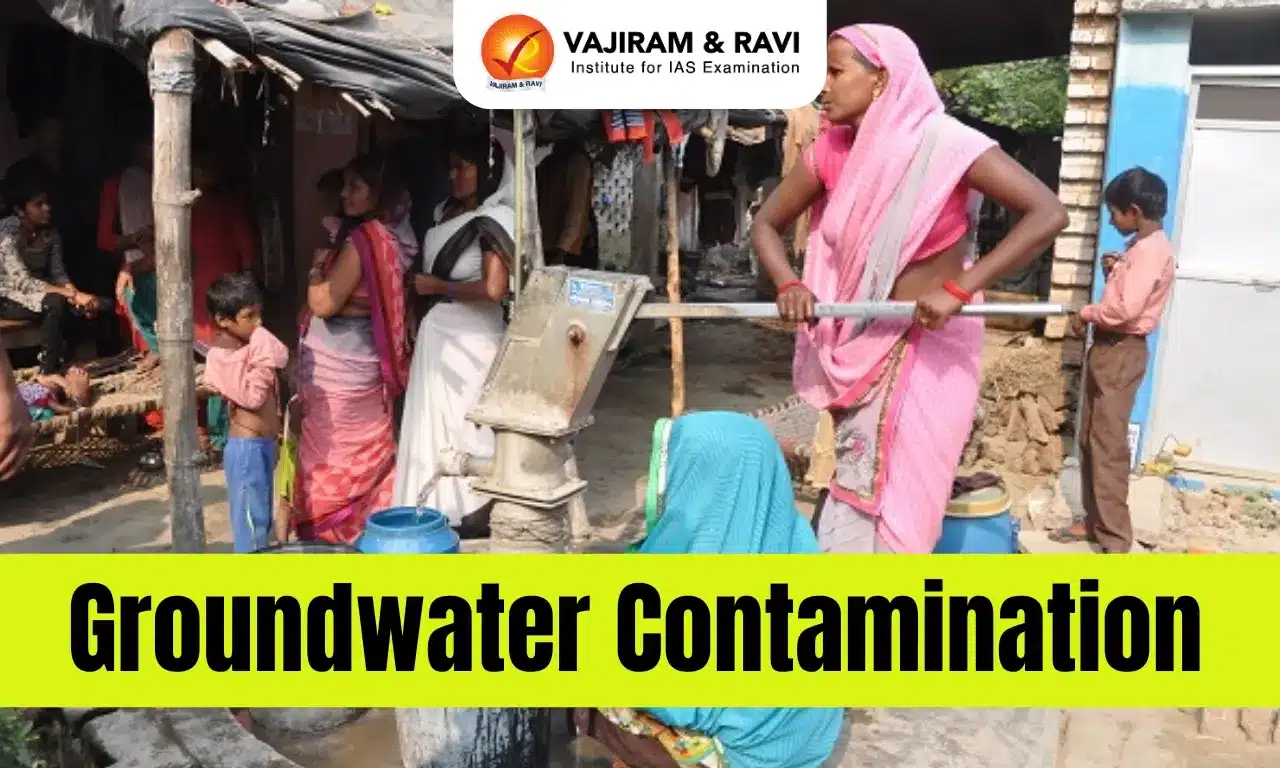
Groundwater Contamination – A Public Health Emergency

Groundwater Contamination

Groundwater Contamination Latest News

  • India’s worsening groundwater contamination crisis has emerged as a major public health threat, with toxic pollutants linked to chronic illnesses across several states.

Introduction

  • Groundwater is the lifeline of India, meeting over 85% of rural drinking water and 65% of irrigation needs. 
  • Once considered pure, it is now increasingly tainted by nitrates, heavy metals, industrial pollutants, and pathogenic microbes. 
  • The 2024 Annual Groundwater Quality Report by the Central Ground Water Board (CGWB) has revealed alarming contamination levels across the country, underscoring the urgent need for systemic reform. 
  • This crisis is no longer limited to environmental concerns; it is a nationwide public health emergency.

Scale and Nature of Groundwater Contamination

  • Groundwater samples from over 440 districts show dangerous levels of contaminants:
    • Nitrates: Found in more than 20% of samples, mainly due to excessive fertiliser use and septic tank leakage.
    • Fluoride: Excess levels in over 9% of samples, causing dental and skeletal fluorosis in states like Rajasthan, Andhra Pradesh, and Telangana.
    • Arsenic: Detected at unsafe levels in parts of Punjab, Bihar, and the Gangetic belt, posing severe cancer and neurological risks.
    • Uranium: Recorded above 100 ppb in districts of Punjab, Andhra Pradesh, and Rajasthan, linked to phosphate fertilisers and over-extraction.
    • Iron and Heavy Metals: Over 13% of samples exceeded safe iron limits; lead, cadmium, and mercury have been traced to industrial discharges.

Documented Health Impacts

  • The health effects of groundwater contamination are severe and widespread:
    • Fluorosis: Affecting over 66 million people in 230 districts; leads to joint pain, deformities, and stunted growth in children.
    • Arsenicosis: Causes skin lesions, cancers, gangrene, and respiratory illnesses; prevalent in West Bengal, Bihar, and Uttar Pradesh.
    • Nitrate Poisoning: Responsible for “blue baby syndrome” in infants; 56% of districts exceed safe nitrate limits.
    • Uranium Toxicity: Causes chronic organ damage and kidney disorders; children are particularly at risk.
    • Waterborne Diseases: Outbreaks of cholera, dysentery, and hepatitis due to sewage infiltration into aquifers.

Case Studies of Groundwater “Death Zones”

  • Baghpat, Uttar Pradesh: 13 deaths in two weeks from kidney failure linked to industrial effluents in borewells.
  • Jalaun, Uttar Pradesh: Petroleum-like fluids found in handpumps due to suspected underground fuel leaks.
  • Paikarapur, Bhubaneswar: Hundreds fell ill from sewage-contaminated groundwater due to a faulty treatment plant.

Root Causes of the Crisis

  • Fragmented Governance: Multiple agencies like CGWB, CPCB, SPCBs, and the Ministry of Jal Shakti work in silos, reducing policy coherence.
  • Weak Legal Framework: The Water Act, 1974 barely addresses groundwater; enforcement is lax.
  • Inadequate Monitoring: Lack of real-time, public data prevents early detection.
  • Over-Extraction: Falling water tables concentrate pollutants and mobilise geogenic toxins.
  • Industrial Negligence: Minimal oversight allows illegal discharges and untreated effluent disposal.

Pathways to Reform

  • To safeguard groundwater, a multi-pronged approach is essential:
    • National Groundwater Pollution Control Framework: Assign clear responsibilities and empower CGWB with enforcement powers.
    • Technology-Driven Monitoring: Real-time sensors, satellite imaging, and public data access.
    • Health-Centric Interventions: Community-based defluoridation and arsenic removal units, piped safe water supply.
    • Zero Liquid Discharge Mandates: Strict regulation for industrial effluent and landfill leachate.
    • Agrochemical Management: Shift towards organic and balanced fertilisation practices.
    • Citizen Participation: Empower panchayats, schools, and local monitoring groups to test and report water quality.

Source: TH

Groundwater Contamination FAQs

Q1: How much of India’s drinking water comes from groundwater?

Ans: Over 85% of rural drinking water and 65% of irrigation water in India comes from groundwater.

Q2: What are the main contaminants found in India’s groundwater?

Ans: Nitrates, fluoride, arsenic, uranium, heavy metals, industrial toxins, and pathogenic microbes.

Q3: Which regions are worst affected by arsenic contamination?

Ans: The Gangetic belt, including West Bengal, Bihar, Uttar Pradesh, Jharkhand, and Assam.

Q4: What health problems are caused by fluoride in groundwater?

Ans: Fluoride contamination can cause dental and skeletal fluorosis, joint pain, bone deformities, and stunted growth.

Q5: What measures are recommended to tackle groundwater contamination?

Ans: Stronger regulation, real-time monitoring, safe water access, industrial waste control, and citizen-led water governance.

Enquire Now