Daulatabad Fort, History and Architecture, Dynasties

Daulatabad Fort

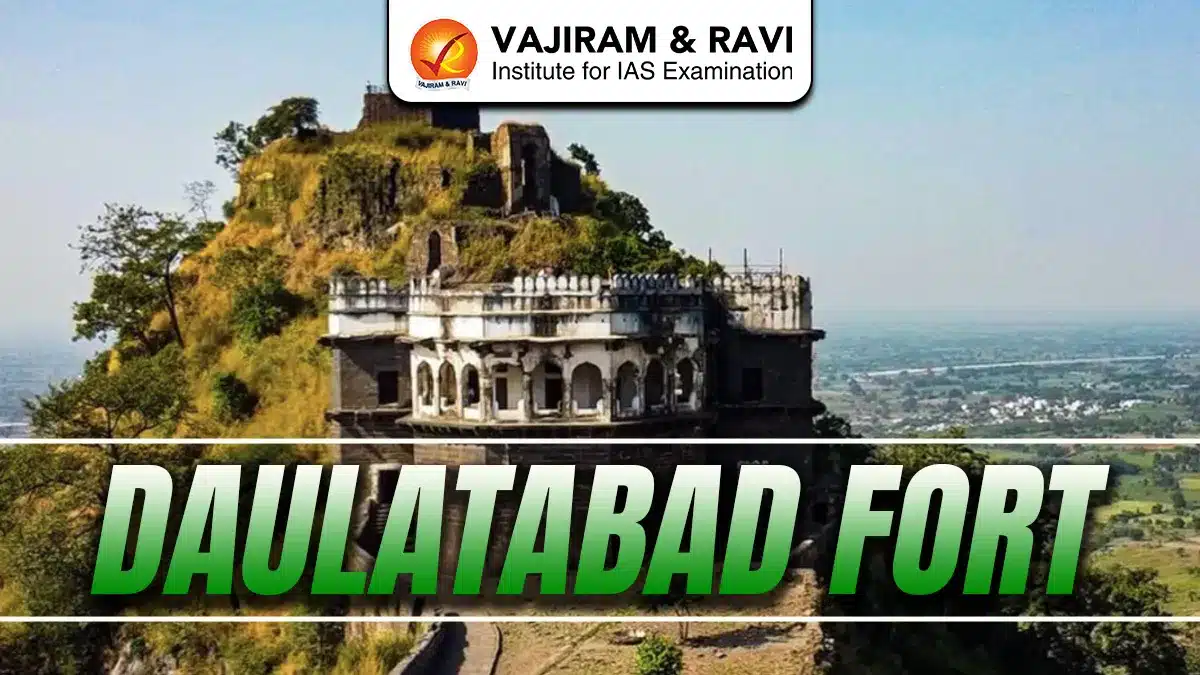
Daulatabad Fort, also known as Devgiri Fort, is a 12th-century hill fortress located in Daulatabad village near Chhatrapati Sambhaji Nagar (formerly Aurangabad) in Maharashtra. Spanning approximately 95 hectares, the fort served as a key political and military center for several dynasties. 

Daulatabad Fort History

Daulatabad Fort, from the 10th century CE to the 20th century CE, was the epicentre of all major political activity in the Deccan. Despite its brilliantly designed defensive layout, the fort fell to invaders time and again. 

The following dynasties controlled the Daulatabad Fort:

Yadava Period (12th–13th Century)

The fort was founded in the 12th century CE by Bhillama V, the first powerful ruler of the Yadava dynasty of Devagiri. Under his successors, especially Singhana II, Devagiri developed into a strong political capital and commercial centre. The Yadavas patronised temple building, trade, and fortification works, and Devagiri became one of the best-defended forts of the Deccan.

Khalji Invasion and Delhi Sultanate Control (1296–1317)

In 1296, Alauddin Khalji, then a subordinate of the Delhi Sultan Jalaluddin Khalji, launched a raid on Devagiri. He defeated the Yadava ruler Ramachandra and extracted enormous wealth, which later helped Alauddin seize the Delhi throne. Although Ramachandra initially remained a tributary, Devagiri was finally annexed in 1317 by Malik Kafur during Alauddin Khalji’s southern campaigns, bringing the Yadava dynasty to an end. This marked the beginning of permanent Delhi Sultanate influence in the Deccan.

Tughlaq Period and Capital Shift (1327)

A major turning point in the fort’s history came under Muhammad bin Tughlaq. In 1327, he renamed Devagiri as Daulatabad and ordered the transfer of the capital from Delhi to Daulatabad. The decision was motivated by Daulatabad’s central location, strong defences, and the need to better control the Deccan. However, the forced migration of people caused severe hardship, and administrative difficulties led to the abandonment of the plan, with the capital shifted back to Delhi.

Bahmani and Deccan Sultanates (14th–16th Century)

After the decline of Tughlaq authority in the Deccan, Daulatabad came under the Bahmani Sultanate in the mid-14th century. It functioned as an important military and administrative centre. Later, the fort was controlled by the Ahmadnagar (Nizam Shahi) Sultanate, which further strengthened its fortifications to resist Mughal expansion. During this phase, Daulatabad became a key stronghold in the power struggles among Deccan Sultanates and the Mughals.

Mughal Conquest and Later History (17th Century onwards)

In 1633, Daulatabad was captured by the Mughals under Shah Jahan after prolonged conflict with the Nizam Shahis. Under Mughal rule, it served mainly as a military outpost rather than a political capital. With the decline of Mughal authority in the Deccan, the fort later passed into the hands of the Nizam of Hyderabad and for a brief period under Maratha influence.

Daulatabad Fort Architecture 

Daulatabad Fort is an excellent example of medieval military architecture in India. It is built on a 200-metre-high basalt hill, which provides strong natural defence. The fort is divided into three concentric circular walls, known as "Kots," each serving a specific defensive purpose: 

  • Amberkot: The outermost wall, which originally enclosed the entire township for the common people.
  • Mahakot: The middle layer, featuring massive gateways and bastions. It contains guardrooms and was used to house the military and nobility.
  • Balakot (Kala Kot): The innermost citadel located at the pinnacle of the 200-meter-high conical hill. This was the royal residence and the final line of defense.
  • The fort has massive stone walls, bastions, and narrow zigzag pathways, which forced attackers to move slowly and in small numbers. Only one main entrance was provided, protected by iron-spiked gates to stop war elephants.
  • The natural defences were strengthened by artificial features such as deep moats, a sloping glacis, and the dark rock-cut Andheri tunnel with sharp turns and false passages to confuse intruders. 
  • The fort also had some of the largest cannons of its time, placed at key points to protect against distant enemies
  • Daulatabad fort is also known for its impressive town planning and water management system. The fort also had an advanced water-management system with rock-cut cisterns, stepwells, and large tanks like the Hathi Haud, allowing it to survive long sieges. 
  • Architecturally, the fort represents the blend of Indo-Islamic architecture, visible in its carved stone motifs, lotus designs, arches, and domes, reflecting the syncretic culture of the Deccan
  • It houses several structures of significance like the Chand Minar, Bharat Mata Mandir, Jami Masjid, Baradari, Chini Mahal and Rang Mahal 
  • Today, Daulatabad Fort is a protected Monument of National Importance under the Archaeological Survey of India (ASI).

Daulatabad Fort FAQs

Q1: Where is Daulatabad Fort located?

Ans: It is located near Aurangabad, Maharashtra.

Q2: Who built Daulatabad Fort and when?

Ans: Daulatabad Fort was built by Yadava ruler Bhillama V in the 12th century.

Q3: Daulatabad Fort is known for what ?

Ans: Daulatabad Fort is known for extraordinary military engineering, town planning, water management system and Indo-Islamic architecture

Q4: Which dynasties had Daulatabad Fort as their Fort?

Ans: Yadavas, Tughlaqs, Bahmanis, Nizam Shahis, Mughals, and briefly the Marathas before the Nizams of Hyderabad.

Q5: When Muhammad bin Tughlaq shifted his capital to Daulatabad Fort.

Ans: Muhammad bin Tughlaq made Daulatabad his capital in 1327 CE.
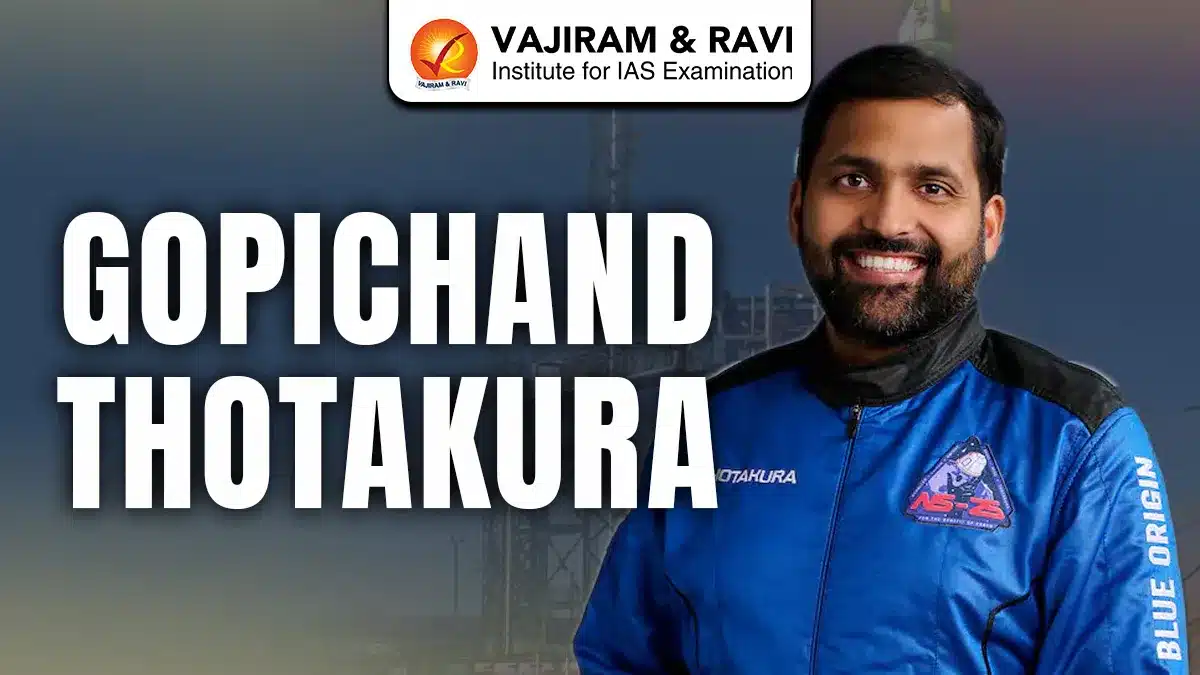
Gopichand Thotakura, Biography, Blue Origin NS-25 Mission

Gopichand Thotakura

Gopichand Thotakura is an entrepreneur and pilot of Indian Origin who created history by becoming the first Indian space tourist and the second Indian to travel to space after Rakesh Sharma. He flew aboard Blue Origin’s New Shepard NS-25 mission on 19 May 2024, marking India’s return to human spaceflight after four decades. His flight reflects the growing role of private companies in space exploration and highlights the rapid expansion of Commercial Space Tourism globally.

Gopichand Thotakura Biography

Gopichand Thotakura was born in 1993 in Vijayawada, Andhra Pradesh. At the age of 30, he became the first Indian to undertake a commercial suborbital spaceflight. He is the co-founder of “Preserve Life,” a multi-million-dollar wellness centre under development near Atlanta, United States. With a professional background in aviation and business, Thotakura represents a new generation of private citizens participating in space missions. His selection for Blue Origin’s NS-25 mission placed him among a rare global group of individuals who have crossed Earth’s atmospheric boundary.

Gopichand Thotakura Mission Highlights

Gopichand Thotakura’s spaceflight was a landmark event for India’s presence in commercial human space travel. The key highlights of his mission has been listed below:

  • Second Indian in Space: Thotakura became the second Indian to travel to space after Rakesh Sharma’s 1984 Soyuz T-11 mission, ending a 40 year gap in Indian human spaceflight representation.
  • First Indian Space Tourist: He was the first Indian citizen to fly on a commercial suborbital space mission, marking India’s entry into space tourism rather than government led astronaut programs.
  • Mission: He was part of Jeff Bezos’ Blue Origin NS-25 Mission developed for human spaceflight.
  • Duration of Spaceflight: The complete mission lasted 9 minutes and 53 seconds from launch to landing, covering ascent, microgravity experience and descent phases.

Blue Origin NS-25 Mission

The Blue Origin NS-25 mission was a major milestone in commercial suborbital spaceflight. The major features of the Mission are listed below:

  • Mission Operator: NS-25 was operated by Blue Origin, an American aerospace company founded in 2000 by Jeff Bezos, the founder of Amazon.
  • Mission Type: It was a suborbital human spaceflight mission, designed to briefly carry passengers beyond Earth’s atmosphere without entering orbit.
  • Mission History: NS-25 was the 25th mission of the New Shepard program and the seventh human crewed flight conducted by Blue Origin.
  • Launch Details: The mission launched on 19 May 2024 at 9:35:09 am CDT from Corn Ranch, Launch Site One, in West Texas.
  • Rocket and Capsule: The mission used the New Shepard NS4 rocket and the crew capsule named “RSS First Step,” both designed for full reusability.
  • Altitude Achieved: The capsule reached a maximum apogee of approximately 107 kilometres, well above the edge of Earth’s atmosphere. It crossed the Kármán Line at 100 kilometres, the internationally accepted boundary of space.
  • Microgravity Experience: Passengers experienced weightlessness starting around three minutes after launch, allowing several minutes of zero gravity movement inside the capsule.
  • Crew Size and Members: The six member crew included Gopichand Thotakura (India), Mason Angel (USA), Sylvain Chiron (France), Kenneth Hess (USA), Carol Schaller (USA) and Ed Dwight (USA). Ed Dwight (90 years and 253 days) became the oldest person to reach space.

Gopichand Thotakura FAQs

Q1: Who is Gopichand Thotakura?

Ans: Gopichand Thotakura is an Indian born entrepreneur and pilot who became the first Indian space tourist in May 2024.

Q2: What was the mission of Astronaut Gopichand Thotakura?

Ans: He flew on Blue Origin’s New Shepard NS-25 suborbital human spaceflight mission on 19 May 2024.

Q3: How long did Gopichand Thotakura stay in space?

Ans: The total mission duration was 9 minutes and 53 seconds, including ascent, microgravity experience and safe landing.

Q4: What is the significance of Gopichand Thotakura’s Space Mission?

Ans: He became the second Indian to travel to space after Rakesh Sharma and the first through a commercial space tourism mission.

Q5: What altitude did Gopichand Thotakura’s Blue Origin NS-25 Mission reach?

Ans: The Blue Origin NS-25 mission reached an apogee of about 107 kilometres, crossing the Kármán Line, the recognized boundary of space.

Potomac River, Origin, Drainage, Features, Flora, Fauna, Biodiversity

Potomac River

The Potomac River is a major Mid-Atlantic river of the United States that flows from the Appalachian highlands to the Chesapeake Bay. It rises from West Virginia, travels across five geological provinces and forms long stretches of state boundaries. Draining nearly 14,700 square miles and supporting over six million people, the Potomac integrates mountains, piedmont rapids and estuarine waters.

Potomac River

The Potomac River flows through West Virginia, Maryland, Virginia, Pennsylvania and Washington, D.C., covering about 405 miles before entering Chesapeake Bay, the largest U.S. estuary. It is known historically as “Patawomeck,” recorded by John Smith in 1608. Mount Vernon, the famous home of George Washington, stands along its banks. During the Civil War, it divided the Union and Confederacy, lending its name to the Army of the Potomac.

Read about: Indian River Systems

Potomac River Geographical Features

The physical structure, movement, tributary network, engineering works and hydrological behavior across landscapes and political boundaries of the Potomac River is highlighted below:

  • Origin and Headwaters: The river begins as North and South branches in the Appalachian Mountains, originating near Fairfax Stone, West Virginia and near Hightown, Virginia, respectively. These headwaters drain forested plateaus and valleys before converging southeast of Cumberland, Maryland, forming the main Potomac channel.
  • Course and Length: From the branch confluence, the Potomac flows about 302 miles to Chesapeake Bay, while its total length reaches roughly 405 miles. Its gradient averages 0.14%, descending around 930 meters, crossing Appalachian Plateau, Ridge and Valley, Blue Ridge, Piedmont and Coastal Plain provinces.
  • Drainage Basin: The Potomac basin covers approximately 14,679 to 14,700 square miles. More than six million residents depend on this basin for water, agriculture, industry and ecosystems.
  • Major Tributaries: Key tributaries include the Shenandoah River at Harpers Ferry, Monocacy River in the Piedmont, Anacostia River in Washington, D.C. and numerous creeks like Cacapon and Conococheague.
  • Political Boundaries: The river forms long boundaries between Maryland and West Virginia up to Harpers Ferry and between Maryland and Virginia downstream to Chesapeake Bay. Legal agreements such as the 1785 Mount Vernon Compact and 1877 Black-Jenkins Award govern navigation and riparian rights.
  • Tidal and Estuarine Reach: Below Little Falls, tides affect about 108 to 117 miles of the river. Salinity gradually increases downstream and the estuary widens to nearly 11 miles at its mouth, where freshwater mixes with Atlantic saltwater before entering Chesapeake Bay.
  • Rapids and Falls: Above Washington, D.C., the river descends through rapids and cataracts, most notably Great Falls. These features historically limited navigation and required canal construction, but they also create distinctive habitats and dramatic geomorphological expressions of erosional power.
  • Canals and Navigation Projects: The Chesapeake and Ohio Canal were completed in 1850 from Georgetown to Cumberland which paralleled the river to bypass rapids. Though commercial traffic ceased by the 1920s, the canal corridor remains a major recreational and heritage landscape.
  • Dams and Reservoirs: Only one major dam, forming Jennings Randolph Lake on the North Branch, was built for flood control and emergency water supply. Proposed mid 20th century dams near Little Falls and Seneca were abandoned after strong conservation opposition.
  • Water Supply Infrastructure: The Washington Aqueduct, opened in 1864, draws heavily from the Potomac. Around 486 million gallons per day are withdrawn in the metropolitan area, supplying nearly 78% of regional water needs for about 6.1 million residents.

Potomac River Biodiversity

The plant communities and animal life that are supported by freshwater, riparian and estuarine environments along the Potomac River have been discussed below:

  • Flora Diversity: Riparian forests along the Potomac include hardwoods such as oaks, maples, sycamores and floodplain vegetation adapted to periodic inundation. Wetlands and submerged aquatic plants in tidal reaches stabilize sediments, improve water quality and provide nursery habitats for aquatic organisms.
  • Aquatic Vegetation: Submerged grasses and freshwater plants expanded significantly after pollution controls reduced nutrient loads. Their recovery improved oxygen levels, reduced erosion and supported fish spawning, especially in the tidal Potomac where estuarine plant beds are ecologically critical.
  • Fish Species: The river supports bass, muskellunge, pike, walleye, sunfish, American eel, American shad and lamprey.
  • Invasive and Rare Fish: Northern snakehead, first recorded in 2004, represents a notable invasive predator. Conversely, occasional bull shark sightings demonstrate the estuary’s connectivity, while striped bass recovery reflects improved water quality and fisheries management in recent decades.
  • Mammals: Beavers and river otters, once extirpated locally, have partially returned. Since 2015, more than 500 Atlantic bottlenose dolphins have been identified seasonally in the river, likely linked to warmer waters and improved ecological conditions.
  • Birdlife: Bald eagles inhabit stretches such as the South Branch Trough, benefiting from fish abundance and protected shorelines. The basin supports migratory waterfowl, raptors and songbirds, reflecting its role as a major Atlantic Flyway corridor.
  • Reptiles and Amphibians: Eastern box turtles, diverse snakes, frogs, toads and salamanders occupy canal paths, wetlands and forest edges.

Read about: Peninsular Drainage System

Potomac River Challenges

Various Environmental Pressures and Other challenges on the Potomac River has been highlighted below:

  • Water Pollution: Historical mining, agriculture and urbanization caused severe eutrophication and contamination. Untreated wastewater and nutrient runoff degraded habitats, while episodic events like a Sewage Spill sharply reduce oxygen levels, stressing fish and invertebrate populations.
  • Flooding and Flow Extremes: Major floods in 1936 and 1942 demonstrated hydrological vulnerability, with peak flows exceeding 426,000 cubic feet per second at Little Falls. Climate variability continues to amplify flood and drought risks across the basin.
  • Urban and Industrial Pressure: Rapid growth around Washington, D.C., increases water withdrawals, alters land use and raises contaminant loads. Maintaining supply for millions while protecting ecological flows remains a complex balancing challenge for interstate governance bodies.
  • Ecological Disruption: Endocrine disrupting chemicals caused intersex characteristics in fish, revealing subtle but serious pollution impacts. Invasive species, overfishing and habitat fragmentation further threaten ecological stability despite visible improvements since the late twentieth century.
  • Safety and Human Impacts: The river has witnessed rare but severe incidents, including aircraft Crash caused by a Mid Air Collision over Washington, underscoring the need for integrated air, water and emergency management in dense corridors.
  • Governance and Legal Complexity: Interstate disputes over riparian rights, resolved through compacts and Supreme Court rulings, show governance challenges. Coordinated basin management remains essential to address water quality, supply allocation and land use planning across jurisdictions.

Potomac River FAQs

Q1: Where does the Potomac River originate?

Ans: The Potomac River originates from two headwaters, the North Branch near Fairfax Stone in West Virginia and the South Branch near Hightown in Virginia.

Q2: How long is the Potomac River?

Ans: The Potomac River is about 405 miles (652 kilometers) long from its headwaters to its mouth at the Chesapeake Bay.

Q3: Which states does the Potomac River flow through?

Ans: The river flows through West Virginia, Maryland, Virginia, Pennsylvania and Washington, D.C., forming natural boundaries between several states.

Q4: What is the main environmental issue facing the Potomac River today?

Ans: Major challenges include nutrient pollution, urban runoff, invasive species and climate related flood and water quality risks.

Q5: What are the major tributaries of the Potomac River?

Ans: Major tributaries include the Shenandoah River, Monocacy River, Anacostia River, North Branch Potomac River and South Branch Potomac River.

Syndicated Loan, Features, Types, Advantages, Regulatory Framework

Syndicated Loan

A syndicated loan is a type of financing provided by a group of lenders, usually banks and financial institutions working together to provide funds to a single borrower. It is used for large-scale projects or corporate financing. Syndicated loans allow the risk and capital requirements to be shared among multiple lenders. This type of loan is particularly useful for companies or governments seeking substantial funding beyond the capacity of a single lender.

Syndicated Loan Features

Syndicated Loans have several key features that distinguish them from traditional loans:

  • Multiple Lenders: Involves a consortium of banks or financial institutions, reducing individual exposure to risk.
  • Single Borrower: Despite multiple lenders, the loan is extended to a single borrower under a unified agreement.
  • Lead Arranger: A lead bank or arranger coordinates the loan, negotiates terms, and acts as an intermediary between borrower and lenders.
  • Shared Risk: Credit risk is distributed among lenders, minimizing the impact on any single institution.
  • Customizable Terms: Loan terms can be tailored, including interest rates, repayment schedules, and covenants.
  • Large Loan Amounts: Ideal for projects or corporate requirements that exceed the lending capacity of a single bank.

Syndicated Loan Types

Syndicated Loans can be structured in different ways to suit the borrower’s needs and the risk appetite of lenders. These types allow flexibility in repayment, borrowing limits, and project financing.

Syndicated Loan Advantages

Syndicated Loans offer several benefits to borrowers, lenders, and the financial system:

  • Access to Large Capital: Facilitates funding for large projects like infrastructure, energy, and industrial expansion.
  • Risk Diversification: Lenders share credit and operational risks, reducing individual exposure.
  • Efficiency and Convenience: A single loan agreement streamlines the borrowing process compared to multiple individual loans.
  • Flexible Terms: Borrowers can negotiate terms, interest rates, and repayment schedules tailored to their financial needs.
  • Enhanced Credibility: Association with a consortium of reputable banks enhances the borrower’s financial reputation.
  • Global Financing Opportunities: Enables cross-border borrowing, particularly for multinational projects.

Regulatory Framework in India

In India, Syndicated Loans are governed by a multi-layered regulatory framework comprising banking regulations, prudential norms, foreign exchange laws, and international banking standards. The objective is to ensure financial stability, risk containment, transparency, and orderly credit growth, especially for large-value exposures.

Role of the Reserve Bank of India (RBI)

  • The Reserve Bank of India (RBI) is the primary regulator overseeing syndicated lending by banks and financial institutions.
  • RBI issues prudential guidelines related to credit appraisal, exposure limits, risk management, and asset classification for consortium and syndicated loans.
  • Banks must adhere to single borrower and group borrower exposure norms, preventing excessive concentration of credit risk.

Prudential Norms and Risk Management

  • Syndicated loans are subject to income recognition, asset classification, and provisioning (IRAC) norms prescribed by RBI.
  • Banks are required to conduct due diligence, credit risk assessment, and stress testing, particularly for infrastructure and project finance loans.
  • Basel III capital adequacy norms apply, requiring banks to maintain sufficient capital buffers against syndicated exposures.

Banking and Financial Laws

  • The Banking Regulation Act, 1949 governs lending operations of scheduled commercial banks participating in syndicated loans.
  • RBI Act, 1934 empowers RBI to regulate credit creation and banking supervision.
  • Companies Act, 2013 influences borrower disclosures, corporate governance, and borrowing powers of companies.

Foreign Exchange and Cross-Border Syndicated Loans

  • Cross-border syndicated loans are regulated under the Foreign Exchange Management Act (FEMA), 1999.
  • If raised from non-resident lenders, such loans fall under the External Commercial Borrowing (ECB) framework.
  • RBI prescribes norms on: Eligible borrowers and lenders, End-use restrictions, Minimum average maturity and All-in-cost ceilings.

External Commercial Borrowing (ECB)

External Commercial Borrowing (ECB) refers to loans obtained by Indian companies from foreign lenders in the form of syndicated loans, bonds, or commercial loans. Key points include:

  • Foreign Lenders: ECB involves funds raised from overseas banks, financial institutions, or investors.
  • Purpose: Typically used for infrastructure, industrial development, or long-term capital requirements.
  • Regulatory Oversight: Governed by the RBI under the ECB framework, which specifies eligible borrowers, end-uses, maturity periods, and interest rates.
  • Advantages: Provides access to cheaper international finance and diversified sources of funding.
  • Integration with Syndicated Loans: ECB can be structured as a syndicated loan with multiple international banks participating in the funding.

UPSC Prelims PYQs 

Que. Consider the following statements: [2024]

Statement I: Syndicated lending spreads the risk of borrower default across multiple lenders.

Statement II: The syndicated loan can be a fixed amount/lump sum of funds, but cannot be a credit line.

Which one of the following is correct in respect of the above statements?

(a) Both Statement I and Statement II are correct and Statement II explains Statement I

(b) Both Statement I and Statement II are correct, but Statement II does not explain Statement I

(c) Statement I is correct, but Statement II is incorrect

(d) Statement I is incorrect, but Statement II is correct

Answer: (c) Statement I is correct, but Statement II is incorrect

Syndicated Loan FAQs

Q1: Who can avail of syndicated loans?

Ans: Large corporations, infrastructure projects, and governments needing substantial funds.

Q2: How does a syndicated loan differ from a normal bank loan?

Ans: It involves multiple lenders, higher loan amounts, and shared risk compared to a single-bank loan.

Q3: What role does a lead arranger play?

Ans: The lead arranger negotiates terms, structures the loan, and coordinates communication between the borrower and participating banks.

Q4: Are syndicated loans safe for lenders?

Ans: Yes, as the risk is shared among multiple lenders, reducing exposure to default.

Q5: Can syndicated loans be cross-border?

Ans: Yes, especially when structured as ECB, allowing foreign banks to participate.

Arabian Leopard, Ecology, Conservation Status, Threats

Arabian Leopard

The Arabian leopard, scientifically known as Panthera pardus nimr, is one of the most elusive and critically endangered big cats in the world. They are renowned for their adaptability to harsh desert landscapes and rugged mountains. This leopard subspecies represents a critical component of the Arabian Peninsula's biodiversity. Unfortunately, its survival is under severe threat due to habitat destruction, poaching, and declining prey populations.

Arabian Leopard Population and Conservation Status

    • IUCN Red List Status: Critically Endangered since 1996
    • Estimated Wild Population (2006): Fewer than 200 individuals
    • Population Trend: Continuously declining
  • Conservation Measures:
    • Listed in CITES Appendix I, prohibiting international trade.
    • Captive breeding programs, such as the Breeding Centre for Endangered Wildlife in Sharjah, aim to support future reintroduction and genetic diversity.

Arabian Leopard Ecology and Behavior

Arabian leopards are primarily nocturnal, though they can occasionally be active during the day. They are solitary predators, marking territories and hunting alone. Their diet consists of small to medium-sized prey species, which they stalk stealthily using their camouflage and agility.

Threats to Arabian Leopards

The survival of the Arabian leopard is threatened by several human-induced and environmental pressures:

  • Habitat Loss and Fragmentation: Urban expansion, farming, and overgrazing reduce suitable habitats.
  • Prey Depletion: Unregulated hunting of prey species diminishes food sources.
  • Illegal Wildlife Trade: Trapping and poaching for fur and trophies continue to be significant threats.
  • Retaliatory Killing: Leopards are sometimes killed in defense of livestock, further reducing their numbers.

Comparison with Other Leopard Subspecies

The Arabian leopard is one of several leopard species worldwide, each adapted to specific environments. The Comparison with Other Leopard Subspecies is given below.

Comparison with Other Leopard Subspecies
Leopard Species Scientific Name Region Status Details

African Leopard

Panthera pardus pardus

Sub-Saharan Africa

Vulnerable

Largest subspecies; varied fur; found in savannas and forests; CITES Appendix I

Persian Leopard

Panthera pardus saxicolor

Iran, Caucasus, Turkey

Endangered

Larger; adapted to mountains

Indian Leopard

Panthera pardus fusca

India, Nepal, Sri Lanka

Vulnerable

Adapted to diverse habitats including human areas

Sri Lankan Leopard

Panthera pardus kotiya

Sri Lanka

Vulnerable

Island subspecies; smaller; unique rosettes

Javan Leopard

Panthera pardus melas

Java, Indonesia

Endangered

Small, isolated population in mountainous forests

Amur Leopard

Panthera pardus orientalis

Russia (Siberia)

Critically Endangered

Most endangered; cold-climate adapted

Snow Leopard

Panthera uncia

Central Asia, Himalayas

Vulnerable

High-altitude specialist; elusive and solitary

Chinese Leopard

Panthera pardus japonensis

China

Vulnerable

Smaller; inhabits forests and mountains

Arabian Leopard FAQs

Q1: What is the Arabian leopard?

Ans: The Arabian leopard (Panthera pardus nimr) is the smallest subspecies of leopard, native to the Arabian Peninsula, known for its pale buff to golden fur with distinctive rosettes.

Q2: Where is the Arabian leopard found?

Ans: It is native to the Arabian Peninsula, including isolated regions in Saudi Arabia, Oman, Yemen, UAE, and Egypt’s Sinai Peninsula.

Q3: What kind of habitat does it prefer?

Ans: Arabian leopards inhabit mountains, uplands, hilly steppes, and well-vegetated areas, which provide cover for hunting and shelter.

Q4: What is the size of an Arabian leopard?

Ans: It is the smallest leopard subspecies, with males weighing 30–40 kg and females 25–35 kg.

Q5: What does the Arabian leopard eat?

Ans: It preys on small to medium-sized animals, including gazelles, hyraxes, and other native wildlife, using stealth and ambush hunting techniques.

Tonnage Tax Scheme, Eligibility, Purpose, Tenure, Impact

Tonnage Tax Scheme

The Tonnage Tax Scheme is a special taxation regime designed for the shipping industry to simplify tax compliance and incentivize investment in vessels. Initially introduced in 2004 under the Indian Finance Act, 2004, the scheme was available only to sea-going ships operating in international or coastal waters.

Recently, the scope of the scheme has been expanded to include inland vessels registered under the Inland Vessels Act, 2021. This move aligns with the government’s vision to promote inland water transport, which is cost-effective, environmentally friendly, and helps decongest road and rail transport.

Read about: Direct Tax

Tonnage Tax Scheme Features

The features of the Tonnage Tax Scheme are:

  • Eligibility: Applicable to sea-going ships and inland vessels registered under the Inland Vessels Act, 2021.
  • Taxation Method: Instead of profit-based corporate tax, tax is levied on net tonnage of the vessel, simplifying computation and compliance.
    Purpose: Encourages investment in shipping and inland waterways infrastructure by offering predictable and lower tax liability.
  • Tenure: Ships and vessels opting for the scheme enjoy the tax benefits for a specified period, subject to renewal.
  • Administration: Overseen by the Ministry of Ports, Shipping, and Waterways, ensuring alignment with national maritime policy.
  • Economic Incentive: Reduces operational costs for shipping companies, making cargo movement more competitive compared to road or rail transport.

Read about: Indirect Tax

Impact on Indian Shipping Industry

The expansion of the Tonnage Tax Scheme to inland vessels is expected to have significant positive effects on the Indian shipping and logistics sector:

  • Increased Investment: Shipping companies are likely to invest in modern inland vessels due to predictable tax liabilities.
  • Boost to Inland Water Transport: More cargo will be shifted to rivers and canals, reducing pressure on road and rail infrastructure.
  • Cost-Effective Logistics: Inland waterways transport is cheaper per tonne-km, providing economic advantages to shippers.
  • Environmental Benefits: Reduced fuel consumption and emissions compared to road transport contribute to sustainable logistics.
  • Enhanced Competitiveness: Indian shipping becomes more competitive globally, encouraging domestic and foreign investment.

Overall, the scheme aligns with the government’s National Waterways Policy and the vision to develop India’s blue economy by promoting safe, efficient, and sustainable inland shipping.

Tonnage Tax Scheme FAQs

Q1: What is the Tonnage Tax Scheme?

Ans: A taxation regime for shipping companies where tax liability is calculated based on the net tonnage of vessels rather than profits.

Q2: Who can avail of the Tonnage Tax Scheme?

Ans: Initially sea-going ships; now also inland vessels registered under the Inland Vessels Act, 2021.

Q3: What is the significance of the Inland Vessels Act, 2021?

Ans: It promotes safe, economical inland water transport, ensures legal uniformity, and standardizes vessel registration and operational procedures.

Q4: Which ministry administers the scheme?

Ans: The Ministry of Ports, Shipping, and Waterways oversees its implementation.

Q5: Why was the Tonnage Tax Scheme introduced?

Ans: To encourage cargo movement, reduce operational costs, simplify taxation, and incentivize investment in shipping infrastructure.

Women Empowerment, Need, Legal Framework, Challenges, Achievements

Women Empowerment

Women Empowerment is the process of reducing and eliminating Social Issues, Economic Challenges and Political Inequalities between men and women. The concept gained prominence in the 19th century, where empowerment meant enabling individuals with rights and authority. Historically, women have been regarded as the weaker gender worldwide and, even after India’s independence, they remained deprived of equal socio-economic status. To address this imbalance, the Government of India and various non-governmental organizations initiated multiple women development programmes. At the global level, the United Nations declared 1975-1985 as the "Decade for Women", and 2001 as the "International Year for Women’s Empowerment", a resolution adopted by India.

Women Empowerment in India

In India, Women constitute nearly 48% of the population which makes the Woman Empowerment central to inclusive national development. Over the past decade, improvements in female literacy, workforce participation, entrepreneurship, political representation and health indicators show steady progress. At the same time, persistent challenges such as patriarchy, violence, informal employment and moral policing continue to restrict women’s autonomy.

Women Empowerment Need

Women Empowerment is essential for equality, economic growth, democratic strength, social justice and sustainable development in a diverse and populous society.

  • Reduction of Violence Against Women: Empowerment strengthens legal awareness, economic independence and social support, enabling women to resist domestic violence, sexual abuse and exploitation while improving reporting and justice delivery.
  • Addressing Feminization of Poverty: Women form a disproportionate share of the poor due to low wages, informal work and unpaid care responsibilities; empowerment expands income access and financial security.
  • Economic Productivity: Greater female workforce participation increases national productivity, household incomes and economic resilience, directly supporting inclusive growth.
  • Social Justice: Empowerment corrects historical discrimination by ensuring equal rights, opportunities and dignity across social, economic and political spheres.
  • Democratic Strengthening: Women’s participation in governance improves policy inclusiveness, accountability and responsiveness, reflecting grassroots realities and social diversity.

Women Empowerment Legal Frameworks

In India, Women Empowerment is backed by Constitutional Provisions, Government Schemes and Initiatives and other Legal Aspects as highlighted below:

1. Constitutional Provisions

Article 14 guarantees equality before law, while Article 15 prohibits discrimination and allows special provisions for women. Article 16 ensures equal opportunity in public employment, forming the legal foundation for gender justice. Article 39(d) mandates equal pay for equal work and Article 42 directs the state to ensure humane working conditions and maternity relief.

2. Government Initiatives

Various Government Schemes and Initiatives help in the eradication of discrimination against woman at various levels of society and administrations. The major initiatives include:

  • The Protection of Women from Domestic Violence Act 2005: provides legal remedies against abuse, the Nirbhaya Scheme improved legal deterrence, though enforcement gaps remain a concern.
  • Maternity Benefit (Amendment) Act 2017: extended paid maternity leave to 26 weeks and mandated crèche facilities, supporting women’s workforce continuity and child care responsibilities.
  • Beti Bachao Beti Padhao Scheme: addresses declining child sex ratios and promotes girls’ education, contributing to rising female literacy and increased school enrollment across states.
  • Pradhan Mantri Mudra Yojana: expanded credit access, with 68% of loans in 2024 issued to women. Stand-Up India and Mahila E-Haat further support women-led enterprises and market access.
  • Mission Shakti: integrates safety, security and empowerment schemes, including One Stop Centres. Over 725 centres offer legal aid, medical support and counselling to women facing violence.
  • The Nari Shakti Vandan Adhiniyam 2023: mandates 33% reservation for women in Parliament and state assemblies, marking a historic step toward balanced political representation after delimitation.
  • Digital and Technology Initiatives: Programs like Drone Didis promote technology adoption and digital entrepreneurship among rural women, expanding income opportunities beyond traditional sectors.
  • Other Scheme: The Government of India has brought various other schemes for the upliftment and protection of the Females, such as: Swadhar Greh, Nari Shakti Puruskar, POSH Act, Ujjawala Scheme, POCSO Act, Sakhi Niwas, Vishaka Guidelines, Sukanya Samriddhi Yojana, Mahtari Vandana Yojana  etc.

Women Empowerment Challenges

Women empowerment in India faces structural, social, economic and cultural barriers that limit women’s freedom, safety and participation despite visible progress in education and employment. Some of the major Women Empowerment Difficulties are:

  • Labour Force Exclusion: About 90% of working women remain in informal employment without social security, maternity benefits, or job stability. Although female labour force participation rose to 41.7% in 2023-24, it remains far below male participation and the global average of 48.7%, reinforcing economic vulnerability.
  • Feminisation of Agriculture: Women constitute over 42% of India’s agricultural workforce in 2025, marking a 135% rise in a decade. However, most lack land ownership, access to credit and decision making power, resulting in unpaid or underpaid labour despite increased responsibility in food production.
  • Political Underrepresentation: Women hold only about 13.6% of seats in the 18th Lok Sabha, with limited representation in state legislatures. Practices like the “sarpanch-pati” system undermine elected women leaders, while delays in implementing the 33% reservation law weaken meaningful political empowerment.
  • Health Inequality: NFHS-5 reports that 57% of women aged 15-49 are anaemic, affecting productivity and maternal health. Despite maternal mortality declining to 97 per 100,000 live births, malnutrition and inadequate preventive care continue to undermine women’s physical well-being.
  • Educational and Skill Gaps: Higher education enrollment stands at about 28.5%, with women underrepresented in STEM fields. Early marriage, care burdens and limited career guidance restrict skill development, preventing education from translating into quality employment opportunities.
  • Digital and Infrastructure Exclusion: Around 51.6% of rural women do not own a mobile phone, limiting access to digital education, banking and e-governance. This digital divide reduces participation in the modern economy and increases dependence on intermediaries for essential services.
  • Cyber Abuse and Online Harassment: Growing digital access has introduced cyberstalking, bullying, AI manipulation of Photos and Videos and doxing, discouraging women from using online platforms for education and work as seen in the recent Grok AI Case. Fear of online violence creates a chilling effect, reinforcing digital exclusion rather than empowerment.
  • Gender-Based Violence: More than 4,45,000 crimes against women were reported in 2022, including domestic violence and sexual assault. Weak enforcement and social stigma reduce reporting, affecting women’s mobility, confidence and participation in public life.

Women Empowerment International Measures

Global conventions and development goals provide normative guidance and accountability mechanisms supporting women’s rights and gender equality across nations.

  • CEDAW: India ratified the Convention on the Elimination of All Forms of Discrimination against Women, committing to eliminate legal and social discrimination and ensure equal political, economic and social rights.
  • Beijing Platform for Action: The 1995 declaration emphasised women’s economic participation, education, health and freedom from violence, shaping national gender policies and monitoring frameworks worldwide.
  • Sustainable Development Goal 5: SDG 5 aims to achieve gender equality by 2030, linking women empowerment with education, health, decent work, leadership and access to resources, influencing national planning priorities.
  • International Labour Standards: ILO conventions on equal remuneration, maternity protection and workplace safety inform labour reforms and gender-sensitive employment policies in developing economies.
  • Global Advocacy and Reporting: UN Women and global indices on gender inequality highlight gaps and best practices, encouraging evidence based policymaking and cross-country learning for women empowerment.

Women Empowerment Achievements

India’s progress in women empowerment is reflected in measurable gains across education, economy, health, leadership and social visibility over the past decade.

  • Rising Female Literacy: Female literacy reached about 70.3% in 2025, while youth literacy stands at 96%. States like Kerala and Mizoram approach universal literacy, showing the impact of sustained educational investments.
  • Workforce Participation Growth: Female labour force participation rose to 41.7% in 2023-24, with increased presence in IT, healthcare, education and the gig economy, signalling gradual economic integration.
  • Entrepreneurship Expansion: Women-led MSMEs nearly doubled to 1.92 crore enterprises in 2023-24. Women-owned proprietary establishments increased from 17.4% to 26.2%, reflecting growing economic independence.
  • Self-Employment Rise: Self-employment among women increased from 51.9% in 2017 to 67.4% in 2024, supported by microcredit, SHGs and digital marketplaces.
  • Local Governance Leadership: Women constitute nearly 46% of representatives in Panchayati Raj Institutions, supported by state-level reservations up to 50%, strengthening grassroots democracy.
  • Health Outcome Improvements: Maternal mortality declined and institutional deliveries exceeded 88%, reflecting expanded healthcare access and maternal support schemes.
  • Political Visibility: Women leaders like Nirmala Sitharaman and Mamata Banerjee influence national and state governance, while the reservation law signals future gains in legislative representation.
  • Cultural and Sports Achievements: Athletes like Smriti Mandhana and Harmanpreet Kaur led historic cricket victories in 2025, while Olympic performances by women enhanced national pride and challenged gender stereotypes.
Related Articles
National Annual Report and Index on Women's Safety (NARI) 2025 International Day for Elimination of Violence Against Women
Women Entrepreneurship Program National Policy For Women
National Women's Day POSH Act
Women Freedom Fighters Commission on the Status of Women (CSW)
Women in Space Leadership Programme Women Poineers of Indian Constitution
Women in Indian Armed Forces Nari Adalat
Female Genital Mutilation Me Too Movement
Womaniya Initiative Pankhudi Portal
Acid Attack Laws in India Devadasi System
Child Marriage in India Shilp Didi Programme


Women Empowerment FAQs

Q1: What is Women Empowerment?

Ans: Women Empowerment means enabling women to participate equally in decision-making, education, employment and social life with dignity and rights.

Q2: What is the need of Women Empowerment?

Ans: It reduces gender inequality, boosts economic growth, improves family health and strengthens democratic participation.

Q3: How does the Government support Women Empowerment in India?

Ans: The Government supports Women Empowerment through constitutional guarantees, education and skill schemes, economic support programs, safety laws, and integrated initiatives like Mission Shakti.

Q4: What are the Challenges to the Empowerment of Womens?

Ans: Patriarchy, gender-based violence, wage gap, limited access to education and underrepresentation in politics and leadership roles.

Q5: How does Women Empowerment help reduce Poverty?

Ans: When women earn and control income, family spending on food, health, and education increases, which directly reduces poverty and improves living standards.

Industrial Revolution 4.0, Evolution, Features, Challenges

Industrial Revolution 4.0

The Industrial Revolution 4.0, also known as the Fourth Industrial Revolution, marks a transformative phase in human history where digital, physical, and biological systems converge.

Unlike earlier industrial revolutions that focused on mechanisation, electricity, or automation, Industry 4.0 is driven by smart technologies such as Artificial Intelligence (AI), Internet of Things (IoT), Big Data, Robotics, and Cyber-Physical Systems. It enables intelligent decision-making, real-time data exchange, and highly efficient production processes, reshaping industries, economies, and societies worldwide.

Industrial Revolution Evolution

The evolution of industrial Revolutions reflects humanity’s continuous quest for productivity and efficiency:

First Industrial Revolution (Industry 1.0)

  • First Industrial Revolution (Industry 1.0) began in the late 18th century (around 1760) in Britain.
  • Introduced mechanisation using steam power and water wheels.
  • Shifted production from handcrafted goods to machine-based manufacturing.
  • Textile industry became the first major beneficiary with inventions like spinning jenny and power loom.
  • Led to the rise of factories, replacing cottage industries.
  • Triggered rapid urbanisation as people moved from villages to industrial towns.
  • Laid the foundation for capitalist industrial economy.

Second Industrial Revolution (Industry 2.0)

  • Second Industrial Revolution (Industry 2.0) emerged in the late 19th and early 20th centuries.
  • Marked by the use of electricity as the primary power source.
  • Enabled mass production through assembly line systems.
  • Introduction of steel production, chemical industries, and petroleum refining.
  • Development of railways, telegraphs, and telephones improved connectivity.
  • Standardisation of products increased efficiency and reduced costs.
  • Strengthened the rise of large corporations and global trade.

Third Industrial Revolution (Industry 3.0)

  • Third Industrial Revolution (Industry 3.0) began in the mid-20th century, particularly after the 1950s.
  • Characterised by electronics, computers, and information technology.
  • Introduction of programmable logic controllers (PLCs) enabled automated production.
  • Use of robots and computer-aided manufacturing in industries.
  • Shift from mechanical and electrical systems to digital automation.
  • Enhanced precision, speed, and consistency in production processes.
  • Marked the beginning of the digital economy and information age.

Fourth Industrial Revolution (Industry 4.0)

  • Fourth Industrial Revolution (Industry 4.0) gained momentum in the early 21st century.
  • Integrates digital, physical, and biological systems.
  • Driven by technologies such as Artificial Intelligence, Internet of Things, Big Data, Robotics, and Cloud Computing.
  • Enables smart factories with real-time data exchange and autonomous decision-making.
  • Focuses on mass customisation rather than uniform mass production.
  • Blurs boundaries between human labour and machine intelligence.
  • Creates new economic models while redefining work, governance, and social structures.

Industrial Revolution 4.0 Features

Industrial Revolution 4.0 is defined by the deep integration of digital technologies with physical production systems, enabling intelligent, autonomous, and interconnected industrial operations.

  • Interconnectivity: Machines, sensors, and systems are connected through the Internet of Things (IoT), enabling seamless communication across the value chain.
  • Cyber-Physical Systems (CPS): Physical processes are monitored and controlled by digital systems that can analyse data and take corrective action in real time.
  • Artificial Intelligence and Machine Learning: Systems learn from data, predict outcomes, and optimise processes without continuous human intervention.
  • Automation with Intelligence: Unlike earlier automation, Industry 4.0 enables self-adjusting and self-optimising production systems.
  • Real-Time Data and Analytics: Continuous data collection allows instant decision-making, predictive maintenance, and quality control.
  • Decentralised Decision-Making: Smart machines and systems can make operational decisions independently, reducing delays and errors.
  • Mass Customisation: Enables production of customised goods at the cost and speed of mass production.
  • Cloud Computing and Edge Computing: Provides scalable computing power and storage, supporting flexibility and remote operations.
  • Advanced Robotics: Robots perform complex, precise, and adaptive tasks alongside human workers.
  • High System Integration: Vertical and horizontal integration connects design, production, supply chain, and customer feedback loops.

Industrial Revolution 4.0 Impact

Industrial Revolution 4.0 is reshaping economic structures, labour markets, productivity, and governance through intelligent automation and digital integration. The impacts are:

  • Accelerates global productivity growth by an estimated 0.8–1.4% annually through AI, automation, and data-driven decision-making.
  • Reduces machine downtime by 30–50% using predictive maintenance and real-time monitoring systems.
  • Lowers manufacturing and operational costs by 10–30% through efficient resource utilisation and process optimisation.
  • Transforms manufacturing into smart factories with real-time quality control, automation, and mass customisation.
  • Improves product quality and precision, reducing defects by up to 50% in advanced manufacturing units.
  • Shortens time-to-market by 30–60% using technologies like 3D printing and digital twins.
  • Reshapes labour markets by displacing routine jobs while creating new roles in AI, data analytics, robotics, and cybersecurity.
  • Leads to a net employment shift, with millions of new technology-driven jobs emerging globally despite automation risks.

Government Initiatives Supporting Industry 4.0 in India

The Government of India has launched multiple policy, institutional, and financial initiatives to promote advanced manufacturing, digital transformation, and emerging technologies. These initiatives aim to strengthen India’s readiness for Industrial Revolution 4.0, enhance global competitiveness, and build a future-ready workforce.

  • Indian Semiconductor Mission (2021): Aims to develop a robust semiconductor and display manufacturing ecosystem in India, reducing import dependence and supporting electronics, AI, and digital industries.
  • Production Linked Incentive (PLI) Scheme: Incentivises domestic manufacturing in sectors like electronics, semiconductors, EVs, and telecom, encouraging technology-driven and large-scale production.
  • Digital India Programme (2015): Expands digital infrastructure, broadband connectivity, and digital governance, enabling faster adoption of IoT, AI, cloud computing, and smart manufacturing.
  • Skill Development Initiatives (PMKVY 4.0): Incorporates training in AI, robotics, data analytics, and Industry 4.0 technologies to prepare a future-ready workforce.
  • National Quantum Mission (₹6,000 crore): Supports research in quantum computing, communication, and sensing, strengthening technological sovereignty and next-generation innovation capacity.
  • Atal Innovation Mission (AIM): Promotes innovation through Atal Tinkering Labs, incubation centres, and start-up support, fostering research and entrepreneurship in emerging technologies.
  • National AI Portal (INDIAai): Acts as a knowledge hub for artificial intelligence, promoting awareness, research collaboration, and policy innovation.
  • SAMARTH Udyog Bharat 4.0: Focuses on awareness, training, and pilot projects to facilitate adoption of smart manufacturing, especially among MSMEs.
  • Make in India 2.0: Encourages advanced and technology-intensive manufacturing to position India as a global production hub.
  • Startup India Initiative: Supports deep-tech and Industry 4.0 startups through funding, incubation, and regulatory facilitation.
  • Open Network for Digital Commerce (ONDC): Strengthens digital ecosystems, supporting MSMEs and data-driven business models aligned with Industry 4.0.

Industrial Revolution 4.0 and MSMEs

  • MSMEs are central to India’s economy, contributing about 31.1% of India’s GDP, nearly 35.4% of manufacturing output, and approximately 48.58% of exports, highlighting their critical role in industrial growth and global supply chains.
  • The MSME sector comprises over 7.47 crore enterprises and employs about 32.82 crore people, making it the second-largest employer in India after agriculture and a major livelihood source.
  • Despite strong digital payment uptake and growing formalisation, only a fraction of MSMEs currently adopt advanced Industry 4.0 technologies, indicating a need for deeper technology diffusion and capacity building.
  • Enhanced credit growth, expanded classification thresholds, and targeted equity funding under government programs support MSME digital transformation and expansion, but addressing skill gaps and finance access remains essential for widespread Industry 4.0 adoption.

Industrial Revolution 4.0 Challenges

Industrial Revolution 4.0 offers transformative opportunities, but its adoption also presents economic, social, technological, and governance challenges that must be addressed to ensure inclusive and sustainable growth.

  • Skill Gap and Workforce Readiness: A significant mismatch exists between current workforce skills and the advanced competencies required in AI, robotics, data analytics, and automation.
  • Job Displacement Risks: Automation and intelligent machines may replace repetitive and low-skill jobs, raising concerns about unemployment and social inequality.
  • High Cost of Adoption: Advanced technologies demand substantial initial investment, which is particularly challenging for MSMEs and traditional industries.
  • Digital Divide: Unequal access to digital infrastructure across regions and sectors may widen economic and social disparities.
  • Cybersecurity Threats: Increased interconnectivity exposes systems to cyberattacks, data breaches, and industrial espionage.
  • Data Privacy and Governance Issues: Large-scale data collection raises concerns regarding data ownership, misuse, and regulatory oversight.
  • Technological Dependence: Over-reliance on imported hardware, software, and semiconductors can create strategic vulnerabilities.

Way Forward

  • Prioritise large-scale skilling and reskilling in AI, robotics, data analytics, cybersecurity, and advanced manufacturing through industry–academia collaboration.
  • Integrate Industry 4.0 modules into school, ITI, and higher education curricula to build future-ready human capital.
  • Ensure affordable access to advanced technologies for MSMEs through subsidies, shared infrastructure, and technology clusters.
  • Strengthen digital infrastructure including broadband, 5G, cloud facilities, and reliable power supply across regions.
  • Promote indigenous R&D and innovation in semiconductors, AI, quantum technologies, and robotics to reduce import dependence.
  • Encourage startup and innovation ecosystems focused on deep-tech and Industry 4.0 solutions.
  • Formulate adaptive regulatory frameworks to address AI ethics, data privacy, accountability, and safety concerns.
  • Support MSME digital transformation through capacity-building, awareness programs, and easier credit access.

Promote inclusive digital growth to bridge regional, sectoral, and social divides.

Industrial Revolution 4.0 FAQs

Q1: What is Industrial Revolution 4.0?

Ans: Industrial Revolution 4.0 refers to the integration of digital technologies like AI, IoT, and robotics into industrial and economic systems.

Q2: How is Industry 4.0 different from Industry 3.0?

Ans: Industry 3.0 focused on automation using computers, while Industry 4.0 emphasises smart, interconnected, and autonomous systems.

Q3: Why is Industrial Revolution 4.0 important for India?

Ans: It enhances manufacturing efficiency, global competitiveness, employment in high-skill sectors, and economic growth.

Q4: What sectors are most affected by Industry 4.0?

Ans: Manufacturing, healthcare, agriculture, logistics, finance, and energy sectors are significantly impacted.

Q5: Does Industry 4.0 lead to job losses?

Ans: While it may reduce repetitive jobs, it creates new opportunities in technology, analytics, and innovation-driven roles.

Bharatiya Antariksha Station, Modules, Development, Significance

Bharatiya Antariksha Station

India’s space journey has steadily evolved from satellite launches to deep space exploration missions such as Chandrayaan and Gaganyaan under the leadership of the Indian Space Research Organisation (ISRO). These programmes laid the technological and human capability foundation for long duration missions in Low Earth Orbit. India is now moving towards establishing its own indigenous Space Station named the Bharatiya Antariksha Station (BAS). This Station represents the next logical step in India’s human spaceflight roadmap, enabling sustained astronaut presence, advanced microgravity research, and preparation for future missions to the Moon and beyond.

Bharatiya Antariksha Station

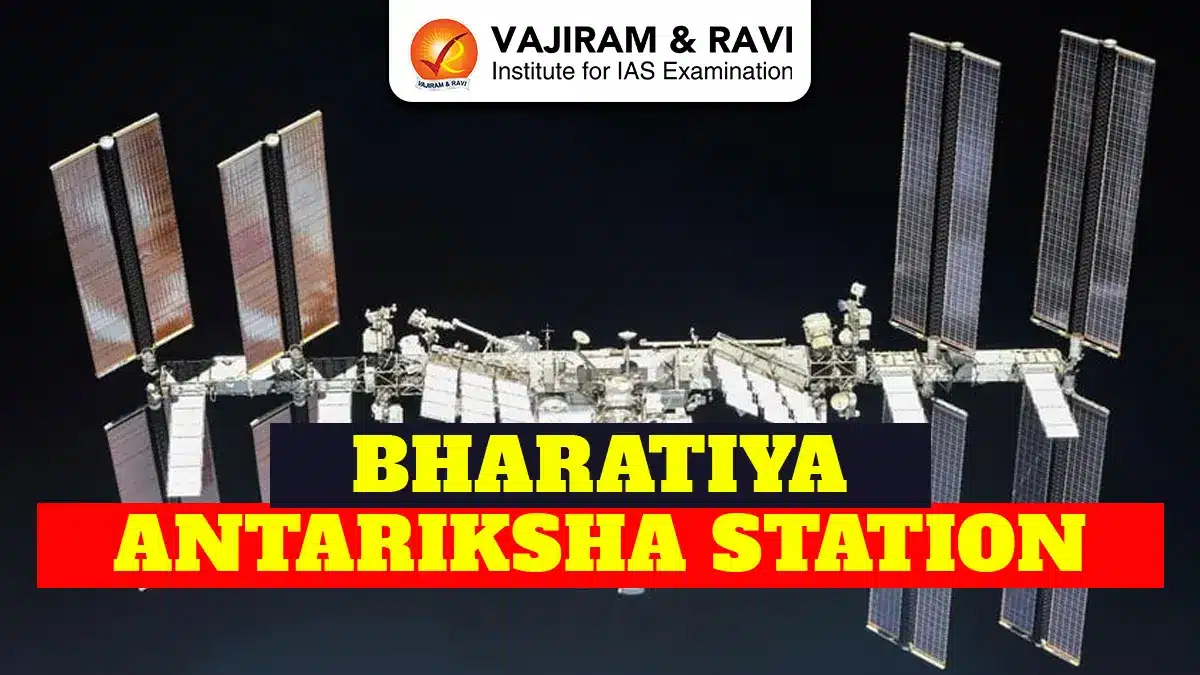
The Bharatiya Antariksh Station (BAS) is India’s planned modular Space Station designed for long term scientific research in Low Earth Orbit at an altitude of 400-450 kilometres. It will allow Indian astronauts to stay in space for extended durations of three to six months. It is planned on lines similar to the International Space Station. BAS will consist of five modules launched in phases. The first module, BAS-01, is targeted for launch in 2028, with the complete station expected to become fully operational by 2035 under ISRO’s long term space vision.

Bharatiya Antariksh Station Background

The idea of Bharatiya Antariksh Station emerged as a natural extension of India’s human spaceflight ambitions under Gaganyaan and long term space exploration goals.

  • Gaganyaan, approved in December 2018, aimed to develop technologies for safe human spaceflight to Low Earth Orbit, forming the technological base required for a future space station.
  • Short term orbital missions were insufficient to study long term effects of microgravity on humans, creating the need for a permanent orbital laboratory.
  • India’s space roadmap envisions an operational space station by 2035 and a crewed lunar mission by 2040, positioning BAS as a critical intermediate milestone under Amrit Kaal Vision 2047.
  • On 18 September 2024, the Union Cabinet approved expansion of Gaganyaan to include development of BAS-01 and precursor missions.
  • Establishing BAS enhances India’s autonomy in human spaceflight, scientific research, and strategic space capabilities amid growing global space competition.

Bharatiya Antariksh Station Features

The Bharatiya Antariksh Station is designed as a technologically advanced, modular, and internationally compatible orbital research facility.

  • Modular Configuration: BAS will consist of five interconnected modules, allowing phased construction, easier upgrades, and operational flexibility over its planned lifespan.
  • Orbital Characteristics: The station will orbit Earth at approximately 400-450 km, ensuring stable microgravity conditions suitable for scientific experiments.
  • Funding: Revised Gaganyaan funding stands at ₹20,193 crore, including an additional ₹11,170 crore approved specifically for BAS development and missions.
  • Mission Planning: Eight human spaceflight-related missions are planned under the revised programme, concluding with BAS-01 launch by December 2028.
  • Interoperability Standards: BAS-01 subsystems are being designed following international standards to enable docking and collaboration with global space agencies.

Bharatiya Antariksh Station Modules

The Bharatiya Antariksh Station will be constructed using five specialised modules launched using India’s heavy-lift launch vehicles.

  • BAS-01 Base Module: Target to be launched in 2028, measuring 3.8 m in diameter and 8 m in length, weighing around 9-10 tonnes, it houses crew quarters, life support, docking, and berthing systems.
  • BAS-02 Core Module: Designed for docking and station control, this module will support structural stability and internal systems integration.
  • BAS-03 Science Research Module: Dedicated to microgravity experiments in biotechnology, materials science, and human physiology.
  • BAS-04 Laboratory Module: Enables extended experimental setups, long-term observations, and technology demonstrations in space conditions.
  • BAS-05 Common Berthing Module: Facilitates cargo docking, crew transfers, and expansion capabilities, supporting station logistics and maintenance.

Bharatiya Antariksh Station Development

The development of Bharatiya Antariksha Station follows a phased, technology-driven roadmap integrated with Gaganyaan missions and indigenous system development.

  • Timeline Progression: First module launch is targeted for 2028, while complete five module operational capability is planned by 2035.
  • Technology Demonstration Missions: Four dedicated missions between 2026 and 2028 will validate life support, docking, robotics, and long-duration habitation technologies.
  • Launch Vehicles: BAS modules will be launched using LVM3, LVM3-SC and future Next Generation Launch Vehicles to handle heavy payloads.
  • Robotic Systems: A robotic arm tested on POEM-4 in January 2025 will assist in module assembly, maintenance, and external operations.
  • Industry Participation: ISRO has invited commercial players since January 2026 for module construction, increasing private-sector involvement.

Bharatiya Antariksh Station Significance

The Bharatiya Antariksha Station holds transformative significance for India’s scientific, technological, economic, and strategic ambitions.

  • Microgravity Research Hub: BAS will enable advanced research on muscle atrophy, bone density loss, fluid behaviour, and materials processing in microgravity.
  • Human Spaceflight Capability: Long-duration missions will help develop medical, psychological, and life-support solutions essential for future lunar and deep-space missions.
  • Economic Growth: India aims to raise its global space economy share from 2% to 10%, with BAS driving high-tech manufacturing and innovation.
  • Technological Spin-offs: Space-developed technologies will benefit sectors like healthcare, environmental monitoring, construction, and advanced materials.
  • STEM Inspiration: BAS offers career opportunities for youth in space science, engineering, and research, strengthening India’s knowledge economy.

Bharatiya Antariksh Station Challenges

Despite its promise, the Bharatiya Antariksh Station faces several technical, financial, and strategic challenges.

  • Complex Life Support Systems: Developing reliable systems for oxygen, waste recycling, radiation shielding, and thermal control is technologically demanding.
  • Astronaut Health Risks: Microgravity, radiation exposure, psychological isolation, and altered brain fluid dynamics pose serious health challenges.
  • Limited Funding: India’s Research and Development budget stands at around 0.7% of GDP, which may constrain advanced technology development pace.
  • Space Debris Threat: Increasing orbital debris heightens collision risks, requiring advanced tracking and avoidance systems.
  • Geopolitical Sensitivities: Balancing strategic autonomy with international collaboration remains complex in a competitive global space environment.

Way Forward

  • International Collaboration: Cooperation with experienced agencies like ESA, NASA, and Roscosmos can reduce costs and technological risks.
  • Enhanced Funding Models: Greater public-private partnerships and international collaboration can supplement national funding constraints.
  • Capacity Building: ISRO must upgrade infrastructure for life support, radiation protection, and orbital maintenance technologies.
  • Sustainability Planning: Regular resupply missions, modular upgrades, and maintenance strategies are essential for station longevity.
  • Regulatory Compliance: Adherence to international space law and sustainable space governance norms is critical for long-term operations.

International Space Station

The International Space Station is the world’s largest operational Space Laboratory and serves as a benchmark for global cooperation in space.

  • ISS is jointly operated by NASA, Roscosmos, ESA, JAXA, and the Canadian Space Agency, involving 15 countries.
  • Assembled in 1998 and operational since 2000, it has hosted continuous human presence for over two decades.
  • More than 3,000 experiments from over 108 countries have been conducted aboard the ISS.
  • ISS orbits Earth at around 400 km, similar to the planned orbit of BAS, enabling comparable research conditions.
  • ISS experience provides valuable lessons in long-duration missions, international coordination, and station sustainability.

Space Stations

A Space Station is a habitable artificial satellite designed for long duration human stay, research and experiments in Earth’s orbit. The list of other Space Stations that have been managed by the Countries across world is given below:

  1. Salyut 1, Soviet Union (Inoperative): Launched in April 1971, it was the world’s first space station and marked the beginning of long-duration human space habitation experiments.
  2. Skylab, United States (Inoperative): Launched by NASA in 1973, it was America’s first space station and conducted extensive solar and biomedical research before deorbiting in 1979.
  3. Salyut Series, USSR (Inoperative): Between 1971 and 1986, several Salyut stations were launched to test military and civilian space station technologies.
  4. Mir Space Station, Russia (Inoperative): Operational from 1986 to 2001, Mir was the first modular space station and supported long-duration missions exceeding one year.
  5. International Space Station (Operational): Operational since 2000, jointly run by NASA, Roscosmos, ESA, JAXA, and CSA, and the largest habitable structure in Low Earth Orbit.
  6. Tiangong Space Station, China (Operational): Fully operational since late 2022, China’s modular space station supports three-member crews and advanced microgravity research.
  7. Bharatiya Antariksh Station, India (Upcoming): India’s planned modular space station with five modules, first module launch targeted for 2028 and full operation by 2035.
  8. Gateway Space Station (Upcoming): A NASA-led international project under the Artemis programme, planned to orbit the Moon and support deep space and lunar missions.
  9. Axiom Space Station (Upcoming): The world’s first planned commercial space station, to be built in Low Earth Orbit and eventually replace ISS modules.
  10. Russian Orbital Service Station (ROSS) (Upcoming): Russia’s proposed next-generation space station intended to replace its role in the ISS after retirement.

Bharatiya Antariksha Station FAQs

Q1: What is the Bharatiya Antariksh Station (BAS)?

Ans: Bharatiya Antariksh Station is India’s planned modular space station for long-duration human spaceflight and microgravity scientific research in Low Earth Orbit.

Q2: When will the first module of Bharatiya Antariksha Station be launched?

Ans: The first module, BAS-01 (Base Module), is approved to be launched by 2028 as part of the revised Gaganyaan Programme.

Q3: What is the total budget allocated for Bharatiya Antariksh Station?

Ans: The revised Gaganyaan Programme, including BAS development, has a total approved budget of ₹20,193 crore.

Q4: What will be the location for the Bharatiya Antariksha Station?

Ans: Bharatiya Antariksh Station will orbit the Earth in Low Earth Orbit at an altitude of approximately 400 to 450 kilometres.

Q5: Which launch vehicle will be used to launch Bharatiya Antariksha Station Modules?

Ans: BAS modules will be launched using India’s heavy-lift launch vehicles, primarily LVM3 and future next-generation launch vehicles.

Internal Party Democracy, Meaning, Need, Benefits, Status, Measures

Internal Party Democracy

Internal party democracy means political parties adhere to the core principles of democracy in their internal structure like holding regular elections, active participation of its members in decision making and ensuring transparency, fairness, and accountability.

Internal Party Democracy Need 

India is the largest representative democracy in the world where voters directly elect 543 Members of Parliament (MP), who represent them in the Lok Sabha, or the Lower House of Parliament, and act as the crucial link between the electorate and the government.

It is the political parties that form the government, man the Parliament and run the governance of the country. It is, therefore, necessary to introduce internal democracy, financial transparency and accountability in the working of the political parties.

A political party which does not respect democratic principles in its internal working cannot be expected to respect those principles in the governance of the country. It cannot be a dictatorship internally and democratic in its functioning outside.

Internal Party Democracy Benefits 

  • Prevent Centralisation of Power: Internal party democracy institutionalises collective leadership and intra-party checks and balances, curbing high-command culture.
  • Strengthen Representative Democracy: Participatory internal processes ensure bottom-up representation, enhancing the representative legitimacy of political institutions.
  • Uphold Constitution Morality: As per the National Commission to Review the Working of the Constitution (NCRWC) democratic functioning of parties helps in upholding constitutional morality.
  • Prevent Nepotism and Favouritism: Democratic elections prevent nepotism and favouritism as it gives opportunity to every worker a fair and equal opportunity to rise through merit.
  • Better Decision-Making: Internal deliberation and dissent foster informed, inclusive, and rational decision making. 
  • Ensure Transparency and Accountability: Codified procedures and internal elections enhance institutional transparency and answerability of party leadership.
  • Reduction in Defections and Factionalism: Inclusive participation reduces alienation, thereby limiting factionalism and opportunistic political defections.

Internal Party Democracy Status in India 

India’s multi-party democracy thrives on diversity but often sees political parties driven by individual charisma rather than internal democracy. Despite their role in upholding the nation’s democratic framework, many parties struggle to maintain democratic structures.

Reasons for Lack of Internal Party Democracy in India 

  • Absence of Statutory Mandate: There is no legal compulsion under the Representation of the People Act, 1951 to enforce internal elections or democratic procedures within political parties.
  • Limited Regulatory Powers of the ECI: The Election Commission of India (Art. 324) can register parties but lacks adjudicatory and supervisory jurisdiction over intra-party democracy.
  • High-Command Culture: Decision-making is concentrated in a few leaders, leading to centralisation of power (e.g., ticket distribution by party leaderships).
  • Prevalence of Dynastic Politics: Leadership succession often follows hereditary lines, undermining meritocracy and Article 14–based equality of political opportunity.
  • Weak Enforcement of Party Constitutions: Though parties claim internal elections on paper, procedural compliance remains nominal, with irregular or symbolic polls.
  • Electoral Considerations: Electoral success prioritised over internal democracy leads to candidate selection based on winnability, resources, and caste equations rather than participation.

Internal Party Democracy Measures 

  • The 170th Report of the Law Commission recommended a dedicated Political Parties (Registration and Regulation) Act to introduce internal democracy, financial transparency, and accountability within party structures.
  • The Law Commission (170th Report) recommended a separate Political Parties (Registration and Regulation) Act to institutionalise internal elections, transparency, and accountability.
  • The Law Commission (255th Report) suggested that recognition and electoral benefits be conditional upon adherence to internal democracy and financial transparency.
  • The Indrajit Gupta Committee on State Funding of Elections emphasised regulation of party finances to reduce money power and strengthen internal accountability.
  • The Second Administrative Reforms Commission (ARC) highlighted the need for institutional grievance redressal mechanisms within political parties to manage dissent democratically.

Internal Party Democracy FAQs

Q1: What is internal party democracy?

Ans: It refers to democratic practices within political parties such as regular internal elections, participatory decision-making, transparency, accountability, and respect for dissent.

Q2: Why is internal party democracy needed in India?

Ans: Since political parties form governments and run Parliament, democratic functioning within parties is necessary to ensure accountable governance and uphold constitutional values.

Q3: Is internal party democracy legally enforced in India?

Ans: No. There is no statutory mandate under the Representation of the People Act, 1951, and the Election Commission lacks powers to regulate internal party functioning.

Q4: What are the major consequences of weak internal party democracy?

Ans: Centralisation of power, dynastic politics, erosion of meritocracy, weak accountability, factionalism, and declining quality of political leadership.

Q5: What reforms are needed to strengthen internal party democracy?

Ans: A Political Parties Regulation Act, mandatory internal elections, financial transparency, conditional party recognition, and internal grievance-redressal mechanisms.

Justice Hema Committee Report, Background, Recommendations

Justice Hema Committee Report

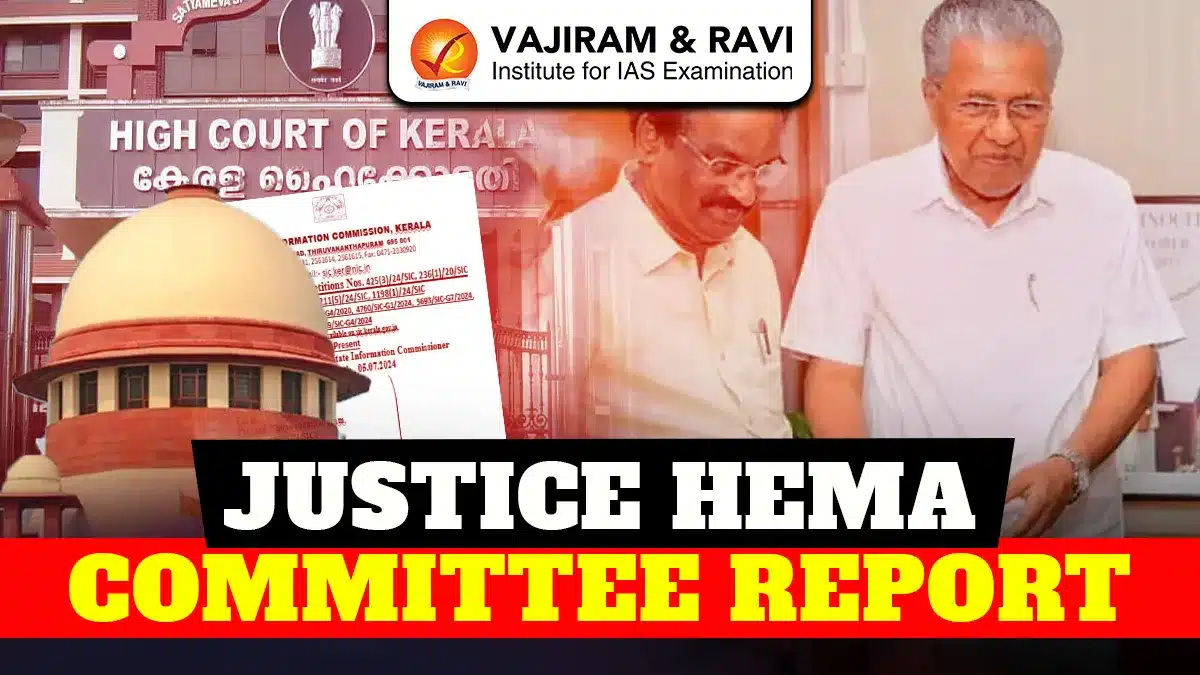
Hema Committee was an advisory committee formed by the Government of Kerala in July 2017, to investigate the issues related to sexual violence and gender inequality, in the Malayalam cinema industry.

It was a three-member committee chaired by former Kerala High Court judge Justice Hema. Film actress & politician Sarada and former IAS officer KB Vatsalakumari, were the other two members of the committee.

Justice Hema Committee Report Background

The committee was formed after a complaint to Chief Minister Pinarayi Vijayan by the Women in Cinema Collective (WCC), which had been formed after a young actress was assaulted in Kochi in 2017.

The committee after consulting multiple women professionals in the Malayalam film industry and recording detailed statistics on sexual harassment, earned wages and blacklisting from work submitted a 300-page report to Kerala chief minister Punarayi Vijayan. This report came  to be known as the Hema Committee Report, however the report was not released to the public and no action was taken by the government till July 2024.

In July 2024, the Kerala State Information Commission passed an order directing the Kerala government to issue the committee report to RTI applicants before 22 July, after redacting information that could identify individuals mentioned in the report, as prohibited under the Right to Information Act.

On 19 August 2024, the report was made available to the RTI applicants. The Kerala government released only 233 pages of the report, excluding sections that could infringe on the privacy of the individuals mentioned

Issues Highlighted by Justice Hema Committee

  • Sexual harassment : The report highlighted the issue of sexual harassment of women especially junior artists in form of unwanted physical touches, rape threats etc by influential individuals 
  • Casting Couch: The report highlights the prevalence of the casting couch, where women are often forced to exchange sexual favours for job opportunities.
  • Culture of fear and silence: Victims hesitate to report abuse due to stigma around sexual harassment and fear of loss of work and informal blacklisting.
  • Absence of effective grievance redressal mechanisms: Most production units lacked functional Internal Complaints Committees, despite legal mandates under the POSH Act.
  • Informal employment: Lack of written contracts, job security and defined work conditions
  • Inhumane working conditions: For example, work extending up to 19 hours a day 
  • Economic vulnerability: Irregular income, delayed payments and absence of minimum wage standards increased dependence on powerful intermediaries.
  • Male-dominance: Decision-making roles were largely controlled by men, leading to gender bias and weak institutional accountability.
  • Poor working conditions: Inadequate basic facilities such as toilets, changing rooms, safe accommodation and transport particularly affected women.
  • Substance abuse on film sets: The presence of alcohol and drugs during work hours created unsafe environments and increased incidents of misconduct.
  • Weak role of associations and unions: Industry bodies often prioritised reputation management over victim protection, failing to act impartially on complaints.

Justice Hema Committee Report Recommendations

  • Internal Complaint Mechanism : Every film production unit, association and organisation should have a functional and independent complaints mechanism in line with the POSH Act, 2013 to address sexual harassment at the workplace.
  • Independent Tribunal : An independent tribunal should be formed to handle complaints related to harassment, exploitation and abuse in the film industry.
  • Compulsory written contracts : All artists and workers, especially junior and freelance workers, should be employed through written contracts clearly defining wages, working hours, roles and responsibilities to prevent arbitrary exploitation.
  • Minimum wage and timely payment norms : Fixation of minimum remuneration and strict enforcement of timely payment to protect vulnerable workers from economic coercion.
  • Better working conditions : Provision of basic facilities such as clean toilets, changing rooms, drinking water, food, rest areas, safe accommodation and transport, particularly for women and junior artistes.
  • Gender sensitisation : Mandatory training programmes for producers, directors, actors and crew members to promote respectful behaviour, gender equality and professional ethics.
  • Substance Abuse Controls : Strict prohibition of alcohol and drug use on shooting locations and during work hours to reduce unsafe environments and misconduct.
  • Welfare Fund : Establish welfare schemes and funds for women workers to support them during maternity, illness, injury or periods of unemployment.
  • Institutional accountability of associations : Film associations and unions should be made legally accountable for ensuring safe workplaces and for acting promptly on complaints, rather than shielding influential members.

 Other Legal Safeguards for Women Safety at Workplaces 

  • Sexual Harassment of Women at Workplace (Prevention, Prohibition and Redressal) Act, 2013 (POSH Act) : This is the principal legislation dealing with workplace sexual harassment. It places a legal duty on employers to prevent harassment, establish complaint mechanisms and ensure time-bound redressal while protecting the dignity and confidentiality of women employees.
  • Visakha guidelines 2017: Visakha guidelines were given by Supreme Court in 2017 imposing obligations on the employer for prevention, prohibition and redressal of sexual harassment at workplace. 
  • Bharatiya Nyaya Sanhita, 2023 (earlier referred to as the IPC) and the Bharatiya Nagarik Suraksha Sanhita (BNSS), 2023: The new criminal laws, have introduced certain provisions to adress sexual harassment at workplace
    • Section 75 of the BNS deals with sexual harassment and the punishment for it (one year, or fine, or both), whereas Section 514 of BNSS provides for a limitation period of 3 years from the date of the incident.
    • Section 69 of BNS has introduced a provision addressing sexual harassment under the guise of promise of employment, promotion and marriage which traditionally fell under cheating and fraud in earlier laws. It targets cases of sexual intercourse obtained through false promises, i.e. without any intention of fulfilling the same.

Hema Committee Report FAQs

Q1: What is the Justice Hema Committee?

Ans: It was an advisory committee set up by the Kerala government in July 2017 to examine sexual harassment, exploitation and gender inequality in the Malayalam film industry.

Q2: Who headed the Justice Hema Committee?

Ans: The committee was chaired by Justice K. Hema, former judge of the Kerala High Court.

Q3: Who were the other members of the committee?

Ans: Film actress and politician Sarada and former IAS officer K.B. Vatsalakumari.

Q4: What were the Vishaka Guidelines?

Ans: Issued by the Supreme Court in 1997, they laid down binding norms on prevention and redressal of sexual harassment at work in the absence of legislation.

Key Facts about Canada

Key Facts about Canada

Canada Latest News

Recently, India and Canada signed a Joint Statement on Energy Cooperation on the sidelines of India Energy Week (IEW) 2026 in Goa.

About Canada

  • Location: It is located in the northern part of North America.
  • It is the second largest country in the world in area (after Russia).
  • Bordered by: It shares borders with Alaska, a non-contiguous US state, to the northwest, and 12 other US states to the south.
    • The border of Canada with the US is the longest bi-national land border in the world.
  • Maritime Borders: It is bounded by the Arctic Ocean to the north, by the Atlantic Ocean to the east and the Pacific Ocean to the west.
    • It also shares maritime borders with the island of Greenland in the northeast and the French island regions of Saint Pierre and Miquelon in the southeast. 
  • Capital City: Ottawa

Geographical Features of Canada

  • Climate: Canada has seven climatic regions or zones: the Arctic, Subarctic, Prairie, Great Lakes, Cordilleran, plus the East and West Coasts. 
  • Major Mountains: ​Rocky Mountain, the St. Elias Mountains  and the Laurentian Mountains.
  • Major Rivers:  Mackenzie River, Yukon River, Saint Lawrence River
  • Lakes: The five Great Lakes namely Superior, Michigan, Huron, Ontario, and Erie form a natural boundary between Canada and the United States. (Amongst these five, only Lake Michigan lies entirely within the US).
  • Natural Resources: Bauxite, Iron ore, Nickel, Zinc, copper, gold, lead, uranium, rare earth elements, potash, diamonds etc.

Source: DD News

Canada FAQs

Q1: Which country borders Canada to the south?

Ans: United States

Q2: How many Great Lakes form a natural boundary between Canada and the US?

Ans: 5

Q3: Which Great Lake lies entirely within the US?

Ans: Lake Michigan

NPS Swasthya Pension Scheme (NSPS)

NPS Swasthya Pension Scheme (NSPS)

NPS Swasthya Pension Scheme (NSPS) Latest News

The Pension Fund Regulatory and Development Authority (PFRDA) recently rolled out the NPS Swasthya Pension Scheme (NSPS) on a pilot basis.

About NPS Swasthya Pension Scheme (NSPS)

  • It is a new initiative launched by the Pension Fund Regulatory and Development Authority (PFRDA) as a Proof of Concept (PoC) under its Regulatory Sandbox Framework. 
  • The initiative aims to integrate health-related financial benefits with the existing National Pension System (NPS) framework.
  • The scheme, launched for a limited and controlled period, is designed to provide financial support for out-patient and in-patient medical expenses. 
  • The scheme will function as a sector-specific contributory pension scheme within the Multiple Scheme Framework (MSF) of NPS and will be offered to Indian citizens on a voluntary basis.
  • It will be launched by Pension Funds after obtaining prior approval from PFRDA. 
  • As it is being implemented as a pilot project, only a restricted number of subscribers will be enrolled during the PoC phase.
  • To facilitate the pilot, certain provisions of the PFRDA (Exits and Withdrawals under NPS) Regulations, 2015, have been relaxed. 
  • Pension Funds may also collaborate with FinTech firms and health service administrators to implement the scheme.

NPS Swasthya Pension Scheme (NSPS) Features

  • Any Indian citizen is eligible to join the scheme, but a Common Scheme Account under NPS is mandatory.
  • Subscribers can contribute any amount, in line with existing NPS guidelines applicable to the non-government sector.
  • Subscribers aged above 40 years (excluding government sector subscribers) may transfer up to 30% of their contributions from the Common Scheme Account to the Swasthya Pension Scheme.
  • Partial withdrawals are permitted for medical expenses up to 25% of the subscriber’s own contributions, with no limit on the number of withdrawals, subject to a minimum accumulated corpus of ₹50,000.
  • In cases of critical inpatient treatment, where medical expenses exceed 70% of the available corpus, subscribers may opt for 100% premature withdrawal solely to meet such medical costs.
  • Claim Settlement and Safeguards:
    • Amounts withdrawn under the scheme will be paid directly to the Health Benefit Administrator (HBA), Third Party Administrator (TPA), or hospital, based on valid claims and supporting bills. 
    • Any surplus remaining after settlement of medical expenses will be transferred back to the subscriber’s Common Scheme Account.

Source: BS

NPS Swasthya Pension Scheme (NSPS) FAQs

Q1: Which authority launched the NPS Swasthya Pension Scheme?

Ans: The Pension Fund Regulatory and Development Authority (PFRDA).

Q2: What is the main objective of the NPS Swasthya Pension Scheme?

Ans: To integrate medical expense support with the existing NPS framework.

Q3: What types of medical expenses are covered under the scheme?

Ans: Out-patient and in-patient medical expenses.

Q4: Is participation in the NPS Swasthya Pension Scheme mandatory?

Ans: No, it is offered on a voluntary basis.

Battle of Purandar, Overview, History, Series of Events, Aftermath

Battle of Purandar

The Maratha Empire was unbeatable under Shivaji Maharaj during the mid 17th century in the Deccan region. Shivaji had launched several successful raids against Mughal territories, including the famous attack on Shaista Khan's camp in Pune (1663) and the Sack of Surat (1664), where he looted the Mughal port city. In response to this invasion, Aurangzeb decided to take action against Shivaji. Instead of direct confrontation, he hired Raja Jai Singh I of Amber, to lead Mughal troops against Marathas. Jai Singh was given a force of approximately 40,000 soldiers, including Rajputs, Mughal cavalry, artillery, and support troops.

Battle of Purandar

The Maratha War, Battle of Purandar was between the Mughal Empire and the Maratha forces in 1665. Mughal Emperor Aurangzeb assigned Jai Singh to lead a military campaign against Chhatrapati Shivaji. Jai Singh was supported by several Mughal commanders, including Dilir Khan, Rai Singh, Sujan Singh, and Daud Khan. Under Jai Singh’s leadership, the Mughal forces successfully seized control of the Purandar Fort. The battle concluded by the signing of the Treaty of Purandar between Shivaji and Jai Singh. However, there seems to be a historical mix-up in the last part, as the Treaty of Purandar (1776) was later signed between the Peshwa of the Marathas and the British East India Company in Calcutta.

Battle of Purandar History

The Battle of Purandar was fought in 1665 between the Maratha Empire, led by Chhatrapati Shivaji Maharaj, and the Mughal Empire, under Raja Jai Singh I of Amber. The battle was part of the larger conflict between the Mughals and the Marathas over control of the Deccan region. 

During the mid-17th century, the Maratha Empire emerged as a major force in the Deccan under Shivaji Maharaj. Shivaji had successfully expanded his territories, capturing several forts and challenging the supremacy of the Adil Shahi Sultanate of Bijapur and the Mughal Empire. Some of the notable battles fought between Maratha and Mughal, before the Battle of Purandar are discussed below:

  1. 1659: Shivaji defeated Afzal Khan, a general of Bijapur, and expanded his control over the Deccan.
  2. 1663: Shivaji conducted a daring raid on Shaista Khan's camp in Pune, dealing a humiliating blow to the Mughals.
  3. 1664: Shivaji launched the Sack of Surat, looting one of the richest Mughal trading cities.

Battle of Purandar Overview

Below in the table we have discussed the Battle of Purandar Overview:

Battle of Purandar Overview

Events

Battle of Purandar

Date

31 March 1665 – 12 June 1665

Location

Purandar, Maharashtra, India

Forces Involved

Maratha Empire led by Chhatrapati Shivaji and Mughal Forces led by Jai Singh.

Result

Victory of Mughal Empire

Battle of Purandar Series of Events

  • In 1665, an army of 14,000 soldiers, armed with gunpowder and weapons, set out to invade Shivaji’s Swarajya. 
  • Instead of attacking Shivaji head-on, Mirza Jaisingh and Diler Khan chose a different strategy. They focused on capturing smaller forts first, where the defenses were weaker, with only 500 to 1,000 soldiers guarding them.
  • As they moved forward, their strength kept growing. By the time they reached Purandar, their army had nearly doubled to 30,000, reinforced by troops from the territories they had already conquered.
  • On the way, they stopped at a village called Saswad. Diler Khan decided to camp there for the night before pushing forward with his cannons and men. 
  • However, the Marathas saw an opportunity. Under the cover of darkness, a small group launched a sudden attack, striking the Mughals with full force. 
  • After causing chaos in their ranks, they swiftly withdrew, leaving the enemy unsettled

Siege of Vajragarh Fort

The late-night attack had a clear objective, to weaken the Mughal army’s military strength, and it proved highly successful. Despite their inventory of ammunition and cannons, the Mughals struggled to breach the walls of Purandar Fort. Even after days of attempts, they failed to break through its defenses.

Realizing direct assault wasn’t working, Diler Khan shifted his strategy. He began capturing smaller forts around Purandar, each manned by just 300 to 400 soldiers. One such fort was Vajragarh, located near Purandar. Historians believe that controlling Vajragarh made it easier to target Purandar.

Murarbaji Deshpande, the fort’s killedaar (commander), was renowned for his exceptional bravery. As the cannon fire weakened the fort’s walls, he knew he had to act. One evening, he led a small group of warriors on a daring mission into the Mughal camp. They first sabotaged the enemy’s artillery, then launched a surprise attack, killing around 200–300 Mughal soldiers before retreating to the fort.

The following morning, when the Mughals attempted to fire their cannons, many of them exploded due to the damage inflicted by Murarbaji’s men. However, the Mughal weapons were soon reinforced under the command of Niccolao Manucci, who managed to breach Purandar’s walls. Despite the defenses, Murarbaji and his men refused to surrender.

Siege by Murarbaji Deshpande

Diler Khan attempted to win him over after getting iImpressed by Murarbaji’s exceptional bravery . He offered a treaty, a high-ranking position in the Mughal army, a generous salary, and even a jagir (land grant).

However, Murarbaji was deeply committed to the cause of Hindavi Swarajya and rejected the offer outright. The very idea of serving the enemy enraged him. In a fearless act of defence, he charged straight into the heart of the Mughal forces, cutting down enemy soldiers one after another.

According to historical accounts, Murarbaji alone killed nearly 100 Mughal soldiers. Unable to contain his fury, Diler Khan broke the traditional code of battle. As Murarbaji engaged in combat with multiple warriors, Diler Khan shot an arrow at him from a distance, killing the Maratha warrior in the middle of the battle.

Battle of Purandar Aftermath

During the Battle of Purandar, Chhatrapati Shivaji realized that sustaining the Maratha troops against the massive Mughal forces led by Mirza Raja Jai Singh was becoming increasingly difficult. Following the Mughal victory in June 1665 and the fall of Purandar Fort, Shivaji made a strategic decision. Instead of prolonging the conflict, he chose to negotiate with Jai Singh and propose new terms for peace.

Before proceeding, Shivaji ensured his safety by securing a formal guarantee that he would be allowed to meet Jai Singh and return unharmed, regardless of the outcome. This agreement, which marked a significant turning point, came to be known as the Treaty of Purandar.

Treaty of Purandar 1665

The Treaty of Purandar was signed between Chhatrapati Shivaji Maharaj and Rajput ruler Jai Singh I, who was leading the Mughal forces on behalf of Emperor Aurangzeb. As per the Treaty of Purandar 1665 was surrendered to the Mughals, along with several other key territories. The terms of the agreement included the following:

  1. Shivaji gave 23 out of his 35 forts to the Mughals, which had a combined annual revenue of 40 lakh huns (a currency of that time).
  2. He was allowed to retain control over the remaining 12 forts, provided he remained loyal to the Mughal Empire.
  3. On the advice of Jai Singh, Shivaji agreed to send his eight-year-old son, Shambhaji, to the Mughal court. In return, Shambhaji was granted a mansab (military rank) of 500 and an honorable position.
  4. Shivaji pledged to join the Mughal army when required and act in accordance with imperial commands.
  5. The Mughals approved Shivaji’s request to govern the Bijapur-controlled provinces of Konkan and Balaghat. These regions generated an annual revenue of 4 lakh huns and 5 lakh huns, respectively.
  6. Shivaji agreed to pay the Mughal emperor a total sum of 40 lakh huns in 13 installments, ensuring his continued control over these newly acquired provinces despite the ongoing Mughal expansion.
  7. This treaty marked a significant moment in Shivaji’s strategic diplomacy, allowing him to regroup and later challenge Mughal dominance more effectively.

Battle of Purandar FAQs

Q1: Who won the Battle of Purandar?

Ans: Mughal Empire won the Battle of Purandar.

Q2: Who died while defending Purandar?

Ans: Murarbaji Deshpande died while defending Purandar.

Q3: Which is the biggest battle of Shivaji Maharaj?

Ans: The Battle of Pratapgad was fought between Chhatrapati Shivaji Maharaj and Afzal Khan is the biggest battle of Shivaji Maharaj.

Q4: What was the purpose of the Battle of Purandar?

Ans: The agenda of the battle was to capture the fort of Purandar which had been the then abode of the Marathas in the southwestern part of India located near to Pune.

Q5: Did Jai Singh defeat Shivaji?

Ans: Jai Singh did not defeat Shivaji in the conventional sense of a decisive battlefield victory. Instead, he used a combination of military pressure and diplomacy to force Shivaji into signing the Treaty of Purandar in 1665.

Daily Editorial Analysis 30 January 2026

Daily Editorial Analysis

Bridging the Gulf: On India, defence ties with Gulf nations

Context

  • The recent visit of United Arab Emirates President Sheikh Mohamed bin Zayed Al Nahyan to New Delhi, though brief, marked a significant moment in India–UAE relations.
  • With only a single meeting held with Prime Minister Narendra Modi, the visit nonetheless resulted in several important outcomes.
  • While economic cooperation remained central to the discussions, the announcement of negotiations towards an India–UAE Strategic Defence Partnership emerged as the most notable development.
  • This proposed agreement, unprecedented in India’s relations with the Gulf, must be understood against the backdrop of an increasingly volatile West Asian geopolitical environment.

Strengthening Economic Ties Between India and the UAE

  • India and the UAE already share strong economic ties. The UAE is India’s third-largest trading partner, its second-largest export destination, and a major source of foreign investment.
  • The two countries further strengthened this partnership through commitments to double bilateral trade to $200 billion, a $3 billion LNG agreement, and new UAE investments in Gujarat.
  • These initiatives build upon the Comprehensive Economic Partnership Agreement signed in 2022 and reflect a deepening economic interdependence.
  • However, while significant, these measures largely reinforce existing economic trends rather than introduce a strategic shift in relations.

The Strategic Defence Partnership: A New Dimension of Cooperation

  • The proposed Strategic Defence Partnership represents a new dimension of engagement between India and the UAE.
  • As the first defence framework of its kind between India and a Gulf nation, it signals a move beyond economic cooperation into the sensitive sphere of security.
  • Although specific details remain undisclosed, the announcement has attracted attention across West and South Asia, where regional security dynamics are closely interconnected.

Regional Geopolitical Tensions and Shifting Alliances

  • The timing of the defence talks is particularly significant given the growing rift between the UAE and Saudi Arabia.
  • Once allies in the coalition against the Houthi uprising in Yemen, the two nations are now engaged in a power struggle, especially in Sudan, alongside a breakdown in communication between Sheikh Mohamed bin Zayed and Saudi Crown Prince Mohammed bin Salman.
  • This rivalry, increasingly described as a Gulf cold war, coincides with wider regional instability, including protests in Iran, uncertainty surrounding the Gaza ceasefire, U.S. interventionist rhetoric, and Israel’s bombing of Qatar in 2025.
  • Saudi Arabia’s subsequent push for a mutual defence pact with Pakistan, with possible Turkish involvement, further illustrates the emergence of competing security blocs.

India’s Diplomatic Caution and Strategic Reassurance

  • In this complex environment, India’s defence discussions with the UAE risk being interpreted as alignment with one side of a regional contest.
  • Acknowledging these concerns, Indian officials have sought to reassure both domestic and international observers.
  • Foreign Secretary Vikram Misri clarified that the proposed defence agreement does not imply India’s involvement in hypothetical future conflicts in West Asia.
  • Despite these assurances, India must remain sensitive to regional perceptions, as misinterpretations could strain its carefully balanced foreign policy.

India’s Stakes in the Gulf Region

  • India’s cautious approach is shaped by its substantial interests in the Gulf. Nearly ten million Indians live and work in the region, making stability there a critical national concern.
  • Furthermore, the Gulf remains a vital source of energy for India, particularly as sanctions have restricted access to alternative suppliers.
  • India’s long-term connectivity initiatives, including the Chabahar port, the International North–South Transport Corridor, and the India–Middle East–Europe Economic Corridor, also depend on cooperation among diverse regional actors, all of whom are affected by the current instability.

Conclusion

  • The proposed India–UAE Strategic Defence Partnership reflects growing trust and expanding engagement between the two countries.
  • At the same time, it underscores the challenges India faces in navigating an increasingly fragmented and volatile West Asian geopolitical landscape.
  • With deep economic, energy, and human stakes across the region, India must pursue deeper partnerships without becoming entangled in regional rivalries.
  • Strategic restraint, diplomatic balance, and cautious engagement will therefore remain central to India’s approach in the years ahead.

Bridging the Gulf: On India, defence ties with Gulf nations FAQs

Q1. What was the most significant outcome of Sheikh Mohamed bin Zayed’s visit to India?
Ans. The most significant outcome was the announcement of negotiations for an India–UAE Strategic Defence Partnership.

Q2. Why is the proposed defence partnership considered unprecedented?
Ans. It is unprecedented because it would be India’s first strategic defence framework with a Gulf country.

Q3. How does regional instability affect India’s foreign policy choices?
Ans. Regional instability forces India to act cautiously to avoid being drawn into competing regional alliances.

Q4. Why is the Gulf region strategically important for India?
Ans. The Gulf is important for India due to its large Indian diaspora, energy supplies, and connectivity projects.

Q5. What position has the Indian government taken regarding the defence talks?
Ans. The Indian government has stated that the defence talks do not imply India’s involvement in future regional conflicts.

 Source: The Hindu


Is India Prepared for the End of Globalisation?

Context

  • Recent statements by U.S. President Donald Trump linking trade concessions to political approval illustrate a deeper transformation in the world economy.
  • What is eroding is not only international commerce but the political framework that once governed it.
  • The liberal system of globalisation is giving way to mercantilism, where economic exchange is subordinated to national interest and coercive bargaining.
  • This shift marks a decisive break from the post-war order and signals a return to power-driven economic relations.

Globalisation as a Political Order

  • Globalisation was never merely about markets. It was a political arrangement that shaped how states organised economies and interacted through multilateralism.
  • This order rested on assumptions of open markets, mobility of capital, and rule-based cooperation, and it was closely associated with liberalism and institutional legitimacy.
  • The weakening of shared rules and collective restraint has undermined this system, replacing cooperation with transactional bargaining rooted in sovereignty and strategic self-interest.

Historical Foundations of the Global Economy

  • The global economy long predates liberal norms. Early integration relied on force, extraction, and unequal exchange, benefiting industrialised nations at the expense of colonies.
  • The mid-20th century marked a turning point, as newly independent states and war-torn economies demanded a rules-based order.
  • International institutions emerged to provide legitimacy and manage power asymmetries. Even unilateral actions were justified through normative language.
  • The open abandonment of such restraint today reflects a fundamental historical reversal.

Unintended Consequences of Liberal Globalisation

  • The liberal order generated significant economic expansion but also deep structural distortions.
  • Rising inequality emerged as returns to capital far outpaced gains for labour, hollowing out manufacturing regions and intensifying migration pressures.
  • These stresses fuelled political backlash and the rise of populism, as economic insecurity was channelled into nationalist sentiment.
  • A second destabilising force was the rise of China, which integrated into global markets while retaining strong state control over finance, production, and information.
  • This model allowed China to accumulate economic and geopolitical power without fully adhering to liberal norms.
  • Persistent trade imbalances and export-driven growth constrained the industrial ambitions of poorer nations, reshaping global hierarchies.

The Return of Mercantilism and Decline of Multilateralism

  • Together, inequality and geopolitical rivalry transformed how major economies viewed cooperation.
  • Global engagement increasingly appeared as a constraint rather than a benefit. States turned inward, privileging industrial policy, border control, and economic coercion.
  • Trade surpluses became symbols of strength, while deficits were framed as vulnerabilities.
  • This environment encouraged nationalism and eroded confidence in shared governance, accelerating the collapse of the liberal multilateral order.

Consequences for the Developing World

  • The retreat from cooperation has been particularly damaging for developing International aid is now frequently conditioned on donor interests, while weakened institutions reduce collective bargaining power on issues such as climate change and financial regulation.
  • At the same time, domestic pressures are rising as youthful populations demand jobs, mobility, and dignity.
  • Without a supportive global framework, these states face heightened economic and political fragility.

India’s Position in the Emerging Global Order

  • India occupies an uneasy position in this shifting landscape. It is geopolitically significant but constrained by internal weaknesses.
  • Over the past decade, the country has failed to translate favourable demographics into broad-based productivity.
  • While potential exists in digital public infrastructure, renewable energy, and services, limited state capacity and uneven governance hinder progress.
  • Social stratification has deepened, weakening national cohesion.
  • In a mercantilist world, such constraints carry long-term costs. Without sustained investment in human development and more inclusive growth, aspirations of global leadership risk remaining symbolic.
  • Claims of becoming a Vishwaguru cannot substitute for robust institutions and economic foundations.

Conclusion

  • The erosion of liberal globalisation represents a systemic shift toward power-centric economic relations.
  • Mercantilism, nationalism, and strategic competition have displaced cooperation and shared norms. For developing nations, this new order narrows opportunities and amplifies vulnerabilities.
  • India’s future relevance will depend not on rhetoric, but on strengthening institutions, enhancing state capacity, and rebuilding a social contract capable of sustaining inclusive growth in an increasingly unforgiving global economy.

Is India Prepared for the End of Globalisation? FAQs

Q1. What does the return to mercantilism signify in the global economy?
Ans. It signifies a shift toward using trade as an instrument of state power rather than mutual economic cooperation.

Q2. Why was globalisation more than just free trade?
Ans. It was a political order based on shared rules, institutions, and multilateral cooperation among states.

Q3. How did inequality weaken the liberal global order?
Ans. Rising inequality fuelled economic insecurity and populist politics that challenged liberal norms.

Q4. Why did China’s rise disrupt the multilateral system?
Ans. China gained economic power through global markets while retaining strong state control outside liberal rules.

Q5. What limits India’s influence in the emerging global order?
Ans. Low state capacity and insufficient investment in human development constrain India’s global role.

Source: The Hindu

Daily Editorial Analysis 30 January 2026 FAQs

Q1: What is editorial analysis?

Ans: Editorial analysis is the critical examination and interpretation of newspaper editorials to extract key insights, arguments, and perspectives relevant to UPSC preparation.

Q2: What is an editorial analyst?

Ans: An editorial analyst is someone who studies and breaks down editorials to highlight their relevance, structure, and usefulness for competitive exams like the UPSC.

Q3: What is an editorial for UPSC?

Ans: For UPSC, an editorial refers to opinion-based articles in reputed newspapers that provide analysis on current affairs, governance, policy, and socio-economic issues.

Q4: What are the sources of UPSC Editorial Analysis?

Ans: Key sources include editorials from The Hindu and Indian Express.

Q5: Can Editorial Analysis help in Mains Answer Writing?

Ans: Yes, editorial analysis enhances content quality, analytical depth, and structure in Mains answer writing.

Tehri Lake

Tehri Lake

Tehri Lake Latest News

Two paraglider pilots were rescued by the State Disaster Response Force (SDRF) recently after they lost control and fell into Tehri Lake during the three-day Acro Festival & SIV Championship Tehri 2026.

About Tehri Lake

  • It is an artificial dam reservoir located in the Tehri Garhwal town of Uttarakhand.
  • It came into existence during the construction of Tehri Dam when the water from the Bhagirathi River was diverted to fill the dam reservoir. 
  • It lies at an elevation of 1,700 meters.
  • The depth of Tehri Lake is around 262 meters, and the length is 42 kms. 
  • Filled with multi-purpose rock and earth, Tehri Dam Lake was created with the motive of supplying water for generating electricity, drinking, and irrigation.
  • It is surrounded by the majestic Himalayan mountains, making it a picturesque destination.

Key Facts about Tehri Dam

  • It is a multipurpose dam built on the Bhagirathi River (one of the source streams of the Ganges River) in the Garhwal district of Uttarakhand.
  • Reaching a height of 260 meters, it is one of the tallest dams in the world and the tallest dam in India.
  • The construction of the Tehri Dam was completed in 2006. 
  • It is an earth and rock-fill dam, and its primary purpose is to generate hydroelectricity.
  • The installed hydro capacity is 1,000 MW along with an additional 1,000 MW of pumped storage hydroelectricity. 
  • It is managed by Tehri Hydro Development Corporation (THDC) India Limited, a subsidiary of the National Thermal Power Corporation (NTPC) Limited.

Source: TOI

Tehri Lake FAQs

Q1: What is Tehri Lake?

Ans: It is an artificial reservoir created by the Tehri Dam.

Q2: Where is Tehri Lake located?

Ans: Near Tehri Garhwal town in Uttarakhand.

Q3: At what elevation is Tehri Lake situated?

Ans: At about 1,700 metres above sea level.

Q4: What type of dam is associated with Tehri Lake?

Ans: A multi-purpose rock and earth-filled dam.

Pechora Missile System

Pechora Missile System

Pechora Missile System Latest News

Bengaluru-based defence equipment manufacturer Alpha Design Technologies Ltd (ADTL) has completed a major upgrade of the ’s (IAF) Pechora, a surface-toair missile (SAM) system, in line with the Centre’s push for modernising ageing military hardware through indigenous capability.

About Pechora Missile System

  • The Pechora, officially known as the S-125 Neva/Pechora, is a Soviet-origin, medium-range surface-to-air missile (SAM) system designed to intercept low- to medium-altitude targets.
  • It has been a mainstay of India’s air defence network since the 1970s.

Pechora Missile System Features

  • The system consists of a radar-guided missile launcher and a fire control unit, typically employing the V-600 missile. 
  • It uses the 4R90 Yatagan radar, equipped with five parabolic antennas, to detect, track, and lock onto targets.
  • Once a threat is identified, the system can launch missiles to intercept and destroy it mid-air.
  • It is particularly effective against slow-moving or low-flying targets, making it well-suited for countering drones and cruise missiles. 
  • It can operate independently or as part of a larger, integrated air defence network, and is capable of functioning even in environments with heavy electronic jamming.
  • Range: The Pechora system has an operational firing range of up to 30–35.4 km, with some upgraded versions reaching 35.4 km.
  • Altitude: It can engage targets flying at altitudes from as low as 20 meters up to 20–25 km, making it versatile for both low and medium-altitude threats.
  • Detection: The system’s radar can detect targets up to 100 km away, providing early warning and engagement capability.
  • Accuracy: The Pechora boasts a high kill probability of around 92% and can engage up to two targets simultaneously at speeds up to 900 m/s.

Source: TOI

Pechora Missile System FAQs

Q1: What is the Pechora Missile System?

Ans: It is a Soviet-origin, medium-range surface-to-air missile (SAM) system.

Q2: What is the official designation of the Pechora Missile System?

Ans: S-125 Neva/Pechora.

Q3: Which missile is typically employed by the Pechora system?

Ans: The V-600 missile.

Q4: What is the operational firing range of the Pechora missile system?

Ans: Up to about 30–35.4 km.

Q5: What is the maximum radar detection range of the Pechora system?

Ans: Up to about 100 km.

PAIMANA Portal

PAIMANA Portal

PAIMANA Portal Latest News

The Ministry of Statistics and Programme Implementation (MoSPI) has operationalised a new web-based portal, PAIMANA portal for the mandated monitoring of Central Sector Infrastructure Projects worth ₹150 crore and above.

About PAIMANA Portal

  • The Project Assessment, Infrastructure Monitoring & Analytics for Nation-building (PAIMANA) is a flagship initiative of the Ministry of Statistics and Programme Implementation (MoSPI).
  • It functions as a centralised national repository of infrastructure projects, enabling web-generated analytical reports and enhancing data accuracy, and operational efficiency.
  • It is integrated with DPIIT’s Integrated Project Monitoring Portal (IPMP/IIG-PMG) through APIs.

Key Features of the PAIMANA Portal

  • Centralized Project Monitoring: It serves as a centralized project monitoring system, providing a single-window interface for ministries, departments, and implementing agencies to upload, track, and review project information.
  • Real-time Dashboards: It features real-time dashboards with drill-down capabilities, enabling users to monitor progress across sectors, states, and timelines.
  • Advanced Data Analytics: It includes advanced data analytics, role-based user access, interactive dashboards, reporting and query modules, and review cases for identification of data gaps.
  • It is mandated to monitor Central Sector Infrastructure Projects worth ₹150 crore and above.

Source: PIB

PAIMANA Portal FAQs

Q1: What is the primary objective of PAIMANA Portal?

Ans: To monitor infrastructure projects

Q2: Which ministry launched the PAIMANA Portal?

Ans: Ministry of Statistics and Programme Implementation

Kyasanur Forest Disease

Kyasanur Forest Disease

Kyasanur Forest Disease Latest News

A 29-year-old man in Karnataka has tragically lost his life recently after contracting Kyasanur Forest Disease (KFD), commonly known as monkey fever, bringing fresh attention to a disease that often goes unnoticed until it turns fatal.

About Kyasanur Forest Disease 

  • It is a tick-borne viral haemorrhagic disease mostly found in southern India.
  • The disease was first reported from the Kyasanur Forest of Karnataka in India in 1957; hence, it is known as KFD.
  • The causal agent, KFD Virus (family Flaviviridae, genus Flavivirus), is a member of the tick-borne encephalitis (TBE) complex. 
  • It is also known as “monkey disease/monkey fever” because of its association with monkey deaths. 

Kyasanur Forest Disease Transmission

  • Hard ticks (Hemaphysalis spinigera) spread the KFD virus to people and to animals, like monkeys and rodents.
  • Transmission to humans may occur after a tick bite or contact with an infected animal, most importantly a sick or recently dead monkey.
  • KFD does not spread between people.
  • The epidemic period usually begins in October or November and peaks from January to April, then declines by May and June.

Kyasanur Forest Disease Symptoms

  • Sudden onset of high-grade fever, prostration, nausea, vomiting, diarrhea, and occasionally neurological and haemorrhagic manifestations.
  • Between 5 and 10% of people who are known to be affected by KFD die.

Kyasanur Forest Disease Treatment

  • There is no cure for KFD.
  • Supportive care is crucial, including fluid balance, providing oxygen, managing blood pressure, and treating additional infections.
  • With quick medical care, many patients recover from KFD without complications. 

Kyasanur Forest Disease  Vaccine

A vaccine for KFD is available and recommended in the parts of India where KFD is found.

Source: TOI

Kyasanur Forest Disease FAQs

Q1: What is Kyasanur Forest Disease (KFD)?

Ans: It is a tick-borne viral haemorrhagic disease found mainly in southern India.

Q2: Where was Kyasanur Forest Disease first reported?

Ans: In the Kyasanur Forest of Karnataka.

Q3: Why is Kyasanur Forest Disease also called “monkey disease” or “monkey fever”?

Ans: Because it is associated with deaths of monkeys.

Q4: Which vector transmits Kyasanur Forest Disease?

Ans: Hard ticks, mainly Hemaphysalis spinigera.

Q5: Can Kyasanur Forest Disease spread from person to person?

Ans: No, it does not spread between humans.

Economic Survey 2025–26 Preface – Towards an Entrepreneurial State in an Uncertain World

Economic Survey 2025-26

Economic Survey 2025-26 Latest News

  • The Economic Survey 2025–26, tabled in Parliament by the Union Minister for Finance and Corporate Affairs, Smt. Nirmala Sitharaman, reflects on India’s post-Covid economic resilience amid rising global geopolitical and economic uncertainties. 
  • The Preface departs from conventional macroeconomic commentary and makes a strong normative case for transforming India into an “entrepreneurial state” capable of navigating uncertainty while pursuing the goal of Viksit Bharat.

Reconfigured Economic Survey

  • Structural changes:
    • The Economic Survey 2025-26 expanded to 17 chapters - indicating greater depth and breadth.
    • Chapters are rearranged based on national priority and relevance, not convention.
  • Special essays on:
    • Evolution of Artificial Intelligence
    • Quality of life in Indian cities
    • State capacity, private sector and households in achieving strategic resilience and strategic indispensability.

Core Theme - Entrepreneurial Policy Making under Uncertainty

  • Fundamental shift in the role of the State: From risk-averse, compliance-driven governance to risk-structuring, capability-driven and adaptive governance.
  • Key features of an ‘Entrepreneurial State’:
    • It acts before certainty emerges, structures and manages risk, rather than avoiding it.
    • It will learn from systematic experimentation, and correct course without policy paralysis.
  • Significance: This vision is presented as practical and already unfolding, not merely aspirational.

Early Signals of the Entrepreneurial State

  • The Survey highlights ongoing initiatives as evidence of this shift. For example,
    • Mission-mode platforms (e.g., Semiconductors, Green Hydrogen).
    • Public procurement reforms enabling first-of-a-kind domestic innovation.
    • State-level deregulation compacts, replacing inspection-based controls with trust-based compliance.
  • These initiatives mark a transition from regulation to capability building.

India’s Macroeconomic Resilience in a Turbulent World

  • Despite the Covid-19 shock, US tariffs imposed (in April 2025), rising global fragmentation, India has demonstrated strong macroeconomic fundamentals.
  • For example, expected real GDP growth of over 7% in 2025–26, with momentum continuing into the next year.
  • However, the Survey identifies a “Paradox of 2025”:
    • India’s strongest macroeconomic performance in decades coincides with a global system that no longer rewards macroeconomic prudence with currency stability, capital inflows, or insulation from shocks.

Global Headwinds vs India’s Aspirations

  • India, with 145 crore people, aims to become a high-income country within a generation, within a democratic framework—a path with no ready-made global template.
  • The Survey notes:
    • Retreat of the global dominant power from earlier commitments.
    • Rising trade frictions, geopolitical rivalries, and economic nationalism.
  • These headwinds can become tailwinds only if the State, private sector, and households align and commit to sustained effort.

Three Possible Global Scenarios for 2026

  • Managed disorder:
    • Less coordinated world
    • Higher risk aversion
    • Integrated yet distrustful global system
    • Narrower margin of safety
  • Disorderly multipolar breakdown:
    • Intensified strategic rivalry
    • Coercive trade, sanctions, supply chain realignments
    • Greater trade-offs between autonomy, growth, and stability
  • Systemic shock cascade (low probability, high impact): Financial, technological, and geopolitical shocks amplify each other - potentially worse than the 2008 Global Financial Crisis.

India’s Relative Strengths

  • India is better placed than many countries due to:
    • Large domestic market
      • Less financialised growth model
      • Strong foreign exchange reserves
      • Credible strategic autonomy
  • Yet, a common risk across all scenarios remains:
    • Disruption of capital flows
    • Sustained pressure on the rupee

Running a Marathon and Sprint Simultaneously

  • External sector imperative: Rising incomes will inevitably lead to rising imports. Therefore, India must generate export earnings, and foreign investor confidence.
  • Policy stance for 2026:
    • Focus on supply stability, resource buffers, diversification of routes and payment systems.
    • Adopt strategic sobriety, not defensive pessimism.
  • India must “India must run a marathon and sprint simultaneously, or run a marathon as if it were a sprint”—maximising growth while absorbing shocks.

Challenges

  • India’s central challenge - Policy and process reforms:
    • The Survey underlines that policy reforms are necessary, and process reforms are even more critical.
    • Why? Processes govern state–citizen interaction. They determine whether policy intent succeeds or fails.
    • Positive signals: State-led deregulation and smart regulation, and shift from control to enabling governance.
  • Other challenges:
    • Global geopolitical fragmentation and economic coercion
    • Capital flow volatility and exchange rate pressures
    • Need for rapid institutional adaptation
    • Balancing growth with resilience and stability

Way Forward

  • Integrating 3 pillars for Viksit Bharat:
    • The Survey integrates three pillars: state capacity, societal participation, and deregulation.
    • In a democracy, the State remains the principal development agent, but must upskill and reskill, be mentally prepared for a hostile and uncertain global terrain, and adapt to the reality that old rules no longer apply.
  • Strategic opportunity amid global crises:
    • Potential global crises may open space for India to shape the emerging global order, and enhance strategic influence and indispensability.
    • This demands the most agile, flexible and purposeful governance since Independence.
  • Delayed gratification over short-term fixes:
    • The Survey advocates resilience over quick wins, innovation and persistence over short-term pressure management.
    • This will help India to stay committed to Viksit Bharat amid prolonged global churn.
  • Other suggestions:
    • Deepen entrepreneurial governance.
    • Strengthen process reforms and deregulation.
    • Build buffers, redundancy, and liquidity.
    • Align state, market, and society towards long-term national goals.
    • Invest in state capacity and institutional learning.

Conclusion

  • The Economic Survey 2025–26 Preface redefines India’s economic strategy for an era of uncertainty. 
  • It calls for an entrepreneurial, adaptive and resilient State that can sustain high growth while absorbing shocks. 
  • In a volatile global order, India’s path to Viksit Bharat lies not in quick fixes, but in patient resilience, relentless innovation, and strategic sobriety—running the marathon of development at the pace of a sprint.

Source: PIB

[youtube url="https://www.youtube.com/watch?v=Wu66P3clSAU" width="560" height="315"]

Economic Survey 2025–26 FAQs

Q1: What does the Economic Survey 2025–26 mean by an “entrepreneurial state”?

Ans: It is one that acts before certainty emerges, structures risk instead of avoiding it, learns through experimentation.

Q2: What is the “Paradox of 2025”?

Ans: India achieved its strongest macroeconomic performance while operating in a global system that no longer rewards such success.

Q3: What are the common macroeconomic risks for India?

Ans: Disruption of capital flows leading to sustained pressure on the rupee.

Q4: Why does the Economic Survey emphasise process reforms over policy reforms?

Ans: Because administrative processes shape state–citizen interaction and determine whether policy intent translates into effective outcomes.

Q5: What is meant by the metaphor of “running a marathon and sprint simultaneously”?

Ans: It signifies India’s need to maximise domestic growth while simultaneously building buffers, liquidity, and shock-absorption capacity.

Solar Cycles

Solar Cycles

Solar Cycles Latest News

Recently, the IIT-Kanpur team developed a new way to predict solar cycles.

About Solar Cycles

  • The solar cycle describes an approximately 11-year cycle of solar activity driven by the sun's magnetic field.
  • It is indicated by the frequency and intensity of sunspots visible on the surface. 
  • Every 11 years or so, the Sun's magnetic field completely flips.
  • This means that the Sun's north and south poles switch places. Then it takes about another 11 years for the Sun’s north and south poles to flip back again.
  • The solar cycle affects activity on the surface of the Sun, such as sunspots, which are caused by the Sun’s magnetic fields.
  • As the magnetic fields change, so does the amount of activity on the Sun’s surface.
  • It can be tracked by counting the number of sunspots.
  • Cycle Stages
    • Solar minimum: It is the beginning of a solar cycle or when the Sun has the least sunspots.
      • Over time, solar activity—and the number of sunspots—increases.
    • Solar maximum: It is the middle of the solar cycle or when the Sun has the most sunspots.
      • As the cycle ends, it fades back to the solar minimum, and then a new cycle begins.
  • Impact: The solar cycle has the potential to impact Earth’s climatic conditions through changes in solar radiation, cosmic rays, and ozone distribution.

Source: TH

Solar Cycles FAQs

Q1: What is the primary driver of the solar cycle?

Ans: Sun's magnetic field

Q2: What is the term for the period of maximum sunspot activity?

Ans: Solar Maximum

Has Health Spending by the Centre Increased in India?

Health Spending

Health Spending Latest News

  • Recent data show that while States have increased health expenditure, the Union government’s health spending as a share of GDP has declined in the post-pandemic period.

Background: Health Financing Commitments in India

  • India’s health financing framework has long acknowledged the need for higher public investment. 
  • The National Health Policy (NHP), 2017, committed to increasing total public health expenditure from 1.15% of GDP to 2.5% by 2025. 
  • A key pillar of this commitment was enhancing the Union government’s contribution, envisaged at 40% of total public health spending.
  • However, the policy target has not been achieved. As of 2025-26, India remains significantly below the stated goals, raising concerns about fiscal prioritisation of health in national budgeting.

Trends in Public Health Spending in India

  • India’s public health expenditure remains among the lowest globally. 
  • Comparative data show that countries such as Bhutan, Sri Lanka, Thailand, and Malaysia spend several times more per capita on health than India. Even among BRICS nations, India’s per capita public health spending is markedly lower.
  • During the COVID-19 pandemic, public health spending as a percentage of GDP rose temporarily. 
  • However, this increase was driven largely by State governments, not by sustained expansion in Union government allocations.

Union Government Health Spending: Declining Priority

  • According to Reserve Bank of India data, the Union government’s health expenditure declined from 0.37% of GDP in 2020-21 to 0.29% in 2025-26 (Budget Estimates). 
  • In real terms, the 2025-26 health allocation is 4.7% lower than actual spending in 2020-21, after adjusting for inflation.
  • This decline indicates that the modest priority accorded to health during the pandemic has not been sustained. 
  • The share of health in the total Union Budget has also fallen from 2.26% to 2.05% during this period, signalling a relative de-prioritisation.

State Governments Driving Health Expenditure Growth

  • In contrast, States and Union Territories have increased health spending consistently since 2017-18. 
  • Health expenditure by States rose from 0.67% of GDP in 2017-18 to 1.1% in 2025-26, with the share of health in State budgets increasing from 5% to 5.6%.
  • This trend highlights a structural imbalance: while health is primarily a State subject, the fiscal capacity of States depends heavily on Union transfers. Reduced Central spending, which directly affects frontline healthcare delivery.

Health and Education Cess: Limited Impact on Health Budgets

  • The Health and Education Cess (HEC), introduced in 2018-19 at 4% of taxable income, was intended to augment health spending. 
  • However, evidence suggests that cess collections have largely been absorbed into general revenues rather than used to expand health budgets.
  • In FY 2023-24, only about one-fourth of the Rs. 71,180 crore collected through HEC was allocated to health. 
  • Excluding cess contributions, the Union government’s health spending declined by 22.5% in real terms between 2020-21 and 2023-24.

Cuts in Centrally Sponsored Health Schemes

  • Another major concern is the declining share of Union spending transferred to States through Centrally Sponsored Schemes (CSS)
  • This share fell from 75.9% in 2014-15 to about 43% in 2024-25.
  • Key schemes such as the National Health Mission (NHM), which has been central to strengthening rural and urban health infrastructure since 2005, have seen stagnation or real-term declines in funding. 
  • During the second tenure of the NDA government, NHM spending declined by 5.5% annually in real terms, weakening public health system capacity.

Implications for Public Health Outcomes

  • Low and declining Central investment has several implications:
    • Increased out-of-pocket expenditure for households
    • Strain on State finances, especially poorer States
    • Weakened preventive and primary healthcare systems
    • Reduced preparedness for future health emergencies
  • These trends undermine India’s ability to achieve Universal Health Coverage and meet Sustainable Development Goal targets related to health.

Source: TH

Health Spending FAQs

Q1: What was the health spending target under the National Health Policy, 2017?

Ans: It aimed to raise public health expenditure to 2.5% of GDP by 2025.

Q2: Has Union government health spending increased since COVID-19?

Ans: No, it has declined from 0.37% to 0.29% of GDP post-pandemic.

Q3: Which level of government has driven recent increases in health spending?

Ans: State governments and Union Territories.

Q4: Has the Health and Education Cess significantly boosted health budgets?

Ans: No, most cess proceeds have not translated into higher health allocations.

Q5: Why is reduced Central health spending a concern?

Ans: It weakens State health systems and limits access to affordable public healthcare.

Vishwamitri River

Vishwamitri River

Vishwamitri River Latest News

The Vishwamitri River passes through the city of Vadodara in Gujarat and is commonly known as India’s Crocodile River due to the presence of mugger crocodiles in and around the urban area.

About Vishwamitri River

  • It is a small non-perennial river located in Gujarat.
  • Course
    • It originates from the western and southern slopes of the Pavagadh hills in eastern Gujarat. 
    • The river flows westward, through Gujarat’s third-largest city, Vadodara, after which it meets the two tributaries of Dhadar and Jambuva before draining into the Arabian Sea via the Gulf of Khambhat.
  • Total Length: 200 km
  • The highly meandering, sinuous river has a unique ecosystem bearing a plethora of beautiful ravines right from its beginning till its end.
  • Porcupines, the common Indian civet, the jungle cat, cobras, pythons, the checkered keelback, and the Bengal monitor are some of the species found in the ravines on the banks of this river. 
  • Vishwamitri is also where the protected and vulnerable species of the Indian crocodile (Crocodylus palustris), also known as the mugger, resides.
  • A 2025 census recorded 442 mugger crocodiles within a 21-kilometre stretch flowing through Vadodara.
  • Historically, the river has been central to Vadodara’s development, with human settlements along its banks dating back to 1000 B.C.

Key Facts about Mugger Crocodiles

  • It is one of the 24 extant species of crocodilians found globally.
  • The crocodile’s common name comes from magar, which translates loosely to “water monster” in the Hindi and Urdu languages.
  • Distribution
    • The mugger’s geographic range extends from extreme southeastern Iran eastward to Bangladesh and from Nepal and northern India south to Sri Lanka.
    • In India it is found in 15 Indian states, with the largest populations in the middle Ganges (Bihar-Jharkhand) and Chambal (Madhya Pradesh, Gujarat and Rajasthan) basins.
  • Habitat
    • It is most commonly found in freshwater environments such as rivers, lakes, hill streams, and village ponds. 
    • It can live in fresh water and coastal saltwater lagoons.
    • This species makes burrows on land in a wide variety of habitats.
  • Features:
    • The maximum length for this crocodile is 4-5 meters, and maximum weight is 700 kg. 
    • It has rough, thick scales covering the whole body with a muddy brown coloring. It has the widest snout among all crocodile species. 
    • The length of an adult crocodile’s tail is about 1.8 meters long. 
  • Conservation Status:
    • IUCN Red List: Vulnerable

Source: IE

Vishwamitri River FAQs

Q1: What is the Vishwamitri River?

Ans: It is a small, non-perennial river in Gujarat.

Q2: From where does the Vishwamitri River originate?

Ans: From the western and southern slopes of the Pavagadh hills in eastern Gujarat.

Q3: Which major city does the Vishwamitri River flow through?

Ans: Vadodara, Gujarat’s third-largest city.

Q4: Into which water body does the Vishwamitri River finally drain?

Ans: The Arabian Sea via the Gulf of Khambhat.

India’s New CPI Series: Food Weight Cut, Housing Gains

New CPI Series

New CPI Series Latest News

  • According to documents released by the Ministry of Statistics and Programme Implementation (MoSPI), India’s revised Consumer Price Index, with 2024 as the base year, will significantly lower the weight of food and beverages from 45.86% to 36.75%. 
  • At the same time, housing will account for a larger share of the CPI basket. Along with improved methods to measure rent increases, this change is expected to push up measured housing inflation and place upward pressure on headline retail inflation.

Why Food’s High Weight in CPI Has Been a Concern

  • Food items account for a large share of India’s Consumer Price Index (CPI), meaning sharp swings in food prices often dominate headline inflation, pushing it up or down irrespective of broader price trends.
  • From June 2025, food inflation turned negative, with prices consistently lower than a year earlier. 
  • This sharply pulled down headline CPI inflation, which fell to an all-time low of 0.25% in October 2025, alongside record-low food inflation of –5.02%.

Impact of New CPI Weights on Inflation Readings

  • According to experts, recalculating CPI with new weights but unchanged indices suggests:
  • Overall CPI could be 20–30 basis points higher when food inflation is low.
  • In periods of high food inflation, CPI could be 20–30 basis points lower than under the current series.

Why RBI Has Been Uneasy with the Current CPI

  • For the Reserve Bank of India, the heavy food weight is problematic because the existing CPI is based on 2011–12 consumption patterns, making it outdated and less representative of today’s economy.
  • As per Ernst Engel’s economic theory, the share of income spent on food declines as incomes rise. This trend is reflected in recent Indian data.
  • The updated CPI basket draws on the MoSPI’s 2023–24 Household Consumption Expenditure Survey (HCES):
    • Rural households: food share fell from 52.9% (2011–12) to 47.04% of monthly per capita consumption.
    • Urban households: food share declined from 42.62% to 39.68%.
  • Falling food shares in household spending underline why reducing food’s weight in the CPI is seen as necessary—to make inflation data more stable, current, and reflective of actual consumption patterns in India today.

Relief for RBI from Lower Food Weight in CPI

  • The RBI influences inflation mainly by managing demand through interest rates. 
  • However, it has limited ability to address supply-side shocks in food prices, as rate changes cannot quickly alter the supply of vegetables, cereals, or other food items.
  • In the past, episodes of high food inflation have kept headline inflation elevated, preventing the RBI from cutting interest rates even when underlying demand conditions were weak. This has complicated monetary policy decision-making.
  • Against this backdrop, the Economic Survey 2023–24 suggested exploring whether India’s inflation targeting should focus on inflation excluding food items
  • The RBI opposed this idea. 
    • Then Governor Shaktikanta Das said that while the central bank can look through temporary food inflation, it cannot ignore persistently high food inflation.

Current Inflation Targeting Framework

  • By law, the RBI must target CPI inflation at 4%, within a tolerance band of 2–6%, under the Flexible Inflation Targeting (FIT) framework. 
  • This framework is currently under review, with the new target for the next five years, starting April, expected to be announced by March.
  • Most economists expect the FIT framework to be retained in its current form, but changes in CPI composition—especially a lower food weight—could give the RBI greater operational comfort in managing inflation and interest rates.

New CPI Basket: What Is Changing

  • Timeline for the New CPI Series - The broad weights of categories in the new CPI basket have been released ahead of the first inflation data under the new series, which will come out on February 12 for January. Detailed item-wise weights will be published before that.
  • Expanded Coverage: More Items in the Basket - The new basket will include 358 items, up from 299 earlier—reflecting changes in consumption patterns.
  • Reclassification of Categories - The MoSPI has reorganised CPI categories, making one-to-one comparisons (with earlier version) difficult. For example, education services now carry a 3.33% weight as a standalone category, whereas earlier education was a sub-group under “miscellaneous” with a 4.46% weight.
  • Linking Old and New CPI Series - To ensure continuity, the expert group recommended releasing a linking factor between CPI 2012 and CPI 2024 for all-India, rural, and urban indices with the first CPI 2024 release. 
  • Food Weight Falls; Housing Gains Prominence - While food’s weight declines in the new series—expected to reduce headline inflation volatility—housing’s weight rises sharply from 10.07% to 17.66%.

Why Housing Weight Is Rising

  • The increase is driven by:
    • Expanded coverage to include residential utilities (water, electricity, gas, other fuels).
    • Higher spending on rent, per the 2023–24 HCES:
    • Rural rent share rose to 0.56% (from 0.45% in 2011–12).
    • Urban rent share increased to 6.58% (from 6.24%).

Implications for Inflation

  • Lower food weight should reduce volatility in headline CPI. 
  • However, the higher housing weight, combined with methodological changes—such as excluding employer-provided accommodation from rent measurement—could push housing inflation higher, adding upward pressure to overall inflation.

Source: IE | BS

New CPI series FAQs

Q1: What is changing in the new CPI series?

Ans: The new CPI series reduces food weight sharply, increases housing weight, expands item coverage, and updates inflation measurement to reflect current consumption patterns.

Q2: Why is food weight lower in the new CPI series?

Ans: In the new CPI series, food weight falls because households now spend a smaller share of income on food, as shown by the latest consumption survey data.

Q3: How does the new CPI series affect inflation volatility?

Ans: The new CPI series is expected to reduce headline inflation volatility by limiting the outsized impact of sharp food price swings on overall inflation.

Q4: Why does housing gain importance in the new CPI series?

Ans: Housing gains weight in the new CPI series due to expanded coverage of utilities, higher rent spending, and improved methods to measure housing inflation accurately.

Q5: How does the new CPI series help the RBI?

Ans: The new CPI series gives the RBI a clearer inflation signal by reducing food-driven distortions, making interest rate decisions more aligned with underlying demand conditions.

Gandhi’s Gram Swaraj Ideal and the Limits of Decentralisation

Gram Swaraj

Gram Swaraj Latest News

  • Recently a President of a prominent political party criticised the Union government for renaming the MGNREGS as VB-G RAM G ahead of Parliament’s Budget session. 
  • He alleged that the name change was an attempt to erase Mahatma Gandhi’s presence from public memory and weaken the idea of Gram Swaraj, or village self-rule.

Background to the Remarks on MGNREGS

  • Origins of the Employment Guarantee Scheme - The MGNREGS was introduced in 2005 and notified in February 2006. Its objective was to provide basic livelihood security in rural India amid rising concerns, including farmer suicides.
  • Addition of Mahatma Gandhi’s Name - The “Mahatma Gandhi” prefix was added to the scheme on October 2, 2009, linking it explicitly to Mahatma Gandhi’s philosophy of village self-reliance and rural empowerment.
  • Recent Legislative Changes - In December 2025, the Union government introduced a Bill to repeal the MGNREGA and replace it with VB-G RAM G. 
  • Ideological Objection - The main opposition party criticised both the repeal and the removal of Gandhi’s name, arguing that it undermines Gandhi’s vision of Gram Swaraj, which emphasised rural self-sufficiency as central to the nation’s well-being.

Gram Swaraj: Gandhi’s Vision of Village Self-Rule

  • Across his writings and actions, Mahatma Gandhi envisioned Gram Swaraj as the all-round development and self-reliance of villages
  • He believed excessive urbanisation harmed society and that cities had historically exploited villages, draining their resources and vitality.
  • Critique of Urban-Centric Development
    • In a June 23, 1946 writing, Gandhi argued that the growth of cities was “unfortunate for mankind,” stating that the prosperity of cities was built on the exploitation of villages. 
    • He wanted this flow reversed, so prosperity returned to rural India.
  • From Thought to Action
    • Gandhi’s ideas were reflected in practice. 
    • His first major satyagraha in Champaran (1917) addressed rural injustice, while Sevagram, the self-sufficient ashram he founded, served as a living experiment in rural self-reliance.
  • Village Swaraj as a ‘Complete Republic’
    • Writing in Harijan on July 26, 1942, Gandhi described Gram Swaraj as a “complete republic”—independent in meeting its basic needs but interdependent with others where necessary. 
    • Each village, he said, should prioritise growing its own food and cotton for clothing.
  • Social Equality and Non-Violence
    • Gandhi’s Gram Swaraj rejected caste hierarchies and graded untouchability. 
    • Non-violence, along with Satyagraha and non-cooperation, was to be the moral foundation of village life and governance.
  • Democratic Village Governance
    • Village administration, Gandhi proposed, should rest with a Panchayat of five members, elected annually by adult villagers—men and women alike—forming what he called a “perfect democracy based on individual freedom.”
  • Equality Between Village and City
    • In a November 13, 1945 letter to Jawaharlal Nehru, Gandhi stressed that every individual must have equal rights and opportunities, arguing for parity between villages and cities in India’s social and economic imagination.
    • Together, these ideas form Gandhi’s vision of Gram Swaraj—an ethical, democratic, and self-sufficient village-centred model for India’s development.

What Happened to Gandhi’s Gram Swaraj Vision

  • In the years after Independence, India’s development strategy prioritised urban and industrial growth. 
  • This widened the rural–urban divide and pushed large-scale migration to cities, often resulting in slum settlements and poor living conditions for rural migrants.
  • Rural Policies, But Limited Transformation
    • Rural-focused measures were not absent. 
    • Reforms such as the abolition of the Zamindari system (though uneven across states) and employment schemes like Jawahar Rojgar Yojana and the Employment Assurance Scheme sought to address rural distress. 
    • However, their impact was limited in creating sustained rural livelihoods.
  • Infrastructure Gains Without Social Foundations
    • While roads and electricity have reached many villages and improved daily life, quality education and healthcare have lagged
    • Persistent caste-based divisions and limited job opportunities mean migration often remains the best path to upward mobility.
  • Demographic Change and Migration
    • India remains predominantly rural, but the share of people living in villages has declined—from about 82% in 1960 to around 65% today—reflecting long-term migration trends driven by economic necessity.
  • Missing Push for Rural Entrepreneurship
    • Rural entrepreneurship has not received the policy backing needed to generate large-scale employment. 
    • As a result, villages remain dependent on external job markets rather than becoming self-sustaining economic units.
  • Decentralisation Without True Devolution
    • Although the 73rd Constitutional Amendment gave constitutional status to Panchayati Raj institutions, real self-reliance—as envisioned by Gandhi—has remained elusive. 
    • Financial, political, and administrative powers largely remain concentrated at higher levels of government.
  • Mixed Results from Village-Centric Initiatives
    • Activists and leaders have attempted grassroots change with mixed outcomes. 
    • In 2014, PM Modi launched the Sansad Adarsh Gram Yojana, urging MPs to adopt and develop villages. 
    • However, most MPs showed limited engagement, curbing its impact.
  • The Core Constraint: Political Will
    • Genuine devolution of power continues to depend on the willingness of higher authorities to relinquish control. 
    • Without this shift, policy measures and funding alone are insufficient to realise village self-rule.
  • A Lifelong Project
    • As Mahatma Gandhi himself acknowledged, building a truly self-sufficient village could take a lifetime. 
    • For India’s 6.74 lakh villages, his vision of Gram Swaraj remains an unfinished and long-term endeavour.

Source: IE | MG

Gram Swaraj FAQs

Q1: What did Gandhi mean by Gram Swaraj?

Ans: Gram Swaraj was Gandhi’s vision of self-reliant villages with local democracy, economic independence, social equality, and panchayat-based governance forming the foundation of India’s development.

Q2: Why did Gandhi oppose urban-centric development under Gram Swaraj?

Ans: Under Gram Swaraj, Gandhi believed cities exploited villages, drained their resources, and created inequality, arguing that prosperity must return to villages for national well-being.

Q3: How was Gram Swaraj reflected in Gandhi’s actions?

Ans: Gram Swaraj shaped Gandhi’s work in Champaran, his writings in Harijan, and the establishment of Sevagram as a living experiment in village self-sufficiency.

Q4: Why did Gram Swaraj weaken after Independence?

Ans: Gram Swaraj weakened as India prioritised industrialisation and urban growth, widening rural–urban gaps, encouraging migration, and limiting sustained investment in rural livelihoods.

Q5: Why has Gram Swaraj remained unfulfilled despite decentralisation?

Ans: Gram Swaraj remains unfulfilled because genuine financial, political, and administrative devolution has not occurred, with higher authorities reluctant to relinquish control to local institutions.

Mahatma Gandhi, Biography, Early Life, Education, Legacy

Mahatma Gandhi

Mahatma Gandhi was born on 2nd October 1869 in Porbandar, Gujarat. When born he was named Mohandas Karamchand Gandhi. Also known as the Father of the Nation, his life was based on the ideals of truth, nonviolence and self-reliance. Mahatma Gandhi’s leadership not only shaped India’s freedom struggle but also inspired global movements for justice, equality and peace. His principles continue to guide humanity in addressing conflict and oppression through moral courage rather than violence. In this article, we are going to cover all about Mahatma Gandhi, his life, education, philosophy and his teachings. 

Mahatma Gandhi Early Life and Education

Mahatma Gandhi was born in a Hindu family and grew up with deeply rooted values of morality, discipline and compassion. His background of growing up in a simple, truthful and empathetic family. He pursued his early education in Porbandar and later in Rajkot and left for London at the age of 18 to study law at University College London and the Inner Temple. During his stay in England, he adopted vegetarianism, studied world religions and refined his moral outlook, laying the groundwork for his future philosophy.  

Mahatma Gandhi’s Experiences in South Africa

Mahatma Gandhi came back to India in 1891 and struggled to establish a legal practice. He moved to South Africa on a legal assignment and encountered the harsh realities of racial discrimination. Gandhiji faced humiliation when he was thrown out of the train at Pietermaritzburg for refusing to leave the “whites only” compartment despite having a valid ticket. These experiences of alienation awakened in him a spirit of resistance. In South Africa, Mahatma Gandhi practiced Satyagraha, a method of non violent resistance against injustice. For over two decades, he held campaigns for the rights of Indian immigrants against discriminatory laws, laid the foundation for his leadership style based on civil disobedience and moral strength. 

Mahatma Gandhi’s Return to India

Mahatma Gandhi returned to India in 1915 and was welcomed by Gopal Krishna Gokhale, his political mentor. As soon as he entered India, Gandhi started working on grassroot levels and transformed India’s national struggle into a mass movement of the people. Some of these movements included: 

  • Champaran Satyagraha (1917)
      • Mahatma Gandhi’s first Satyagrapha movement took place in India where he fought for the rights of indigo farmers in Bihar who were being exploited by European planters. The success of this movement gave Gandhiji the status of a national leader. 
  • Non- Cooperation Movement (1920-22)
      • Gandhi motivated Indians to boycott British goods, schools, courts and titles. This marked the first nationwide participation of masses in the freedom struggle. 
  • Salt March/ Dandi March
      • A 240 mile march from Sabarmati Ashram to Dandi took place with the goal of breaking the salt law imposed by the British. This symbolised mass defiance of colonial authority and caught global attention. 
  • Quit India Movement
    • The Quit India Movement was launched during the time of World War II and demanded the immediate withdrawal of the British from India. While the whole movement was met with brutal repression, it galvanized with the slogan- “Do or Die”. 

Mahatma Gandhi Philosophy and Teachings

Gandhi’s ideology was rooted in ancient Indian values and universal human ethics. His major principles include:

  1. Ahimsa (Nonviolence): Belief in non-harming as the most powerful weapon.
  2. Satyagraha: Resistance based on truth, courage, and moral force rather than violence.
  3. Sarvodaya: Welfare of all, especially the weakest sections of society.
  4. Swadeshi and Self-Reliance: Promoted indigenous industries like khadi to empower rural India and reduce dependency on foreign goods.
  5. Communal Harmony: Advocated religious tolerance and social unity, fighting against caste-based discrimination.

Mahatma Gandhi’s Legacy and Global Influence 

Mahatma Gandhi’s fight for India’s independence came to fruition with India getting finally independent on 15 August, 1947. His teachings and influence is still remembered all over the world as an eternal force. 

  • In India: Gandhi remains the Father of the Nation. His birthday, October 2, is celebrated as Gandhi Jayanti and also observed globally as the International Day of Nonviolence. His emphasis on decentralization, village economy, and self-reliance continue to influence policies.
  • Globally: Leaders such as Martin Luther King Jr., Nelson Mandela, and Dalai Lama drew inspiration from Gandhi’s nonviolent struggles. His methods have shaped civil rights and liberation movements across continents.

Mahatma Gandhi’s Literary Contributions

Gandhi was a prolific writer. His works include:

  • “Hind Swaraj” (1909): A critique of modern civilization and vision of self-rule.
  • Autobiography – “The Story of My Experiments with Truth.”
  • Edited journals such as Young India, Harijan, Indian Opinion, and Navajivan.These writings remain key sources of his philosophy and political thought.

Mahatma Gandhi’s Recognition and Awards

Mahatma Gandhi was nominated five times for the Nobel Peace Prize but never received one. However his contributions were globally recognised and he was also declared the “Man of the Year” (1930) by the Times Magazine. In 2011, he was listed among the Top 25 Political Icons of all time. 

Mahatma Gandhi’s Life Timeline

Here is a timeline of Mahatma Gandhi life journey and his major accomplishments: 

Year Event Significance

1869

Birth of Mohandas Karamchand Gandhi on 2 October at Porbandar, Gujarat

Beginning of the life of India’s “Father of the Nation.”

1883

Married Kasturba Gandhi at age 13

Early marriage, common in that era.

1888

Left for London to study law at Inner Temple

Exposure to Western education and values.

1891

Returned to India after completing law studies

Began legal practice in Rajkot and Bombay.

1893

Went to South Africa for legal work

Faced racial discrimination; foundation of Satyagraha laid.

1894

Founded the Natal Indian Congress in South Africa

Organized Indians against racial discrimination.

1906

First Satyagraha launched in South Africa

Experimented with nonviolent resistance.

1915

Returned to India

Joined Indian freedom struggle; established Sabarmati Ashram.

1917

Champaran Satyagraha

First successful Satyagraha in India, for indigo farmers.

1919

Jallianwala Bagh massacre

Intensified Gandhi’s opposition to British rule.

1920

Launched the Non-Cooperation Movement

First mass movement under Gandhi’s leadership.

1930

Dandi March (Salt March)

Symbolic protest against salt tax; part of Civil Disobedience Movement.

1931

Attended Second Round Table Conference in London

Represented Indian National Congress.

1942

Launched Quit India Movement

Mass movement demanding immediate British withdrawal.

1947

India achieved Independence on 15 August

Culmination of Gandhi’s lifelong struggle.

1948

Assassinated on 30 January by Nathuram Godse in New Delhi

End of an era; Gandhi remembered as apostle of peace and nonviolence.

Mahatma Gandhi FAQs

Q1: Who is Mahatma Gandhi in history?

Ans: Mahatma Gandhi was the leader of India’s freedom struggle against British rule, known for his philosophy of nonviolence and truth.

Q2: What was the name of the book written by Mahatma Gandhi?

Ans: His famous book is The Story of My Experiments with Truth, an autobiography.

Q3: How did Mahatma Gandhi change the world?

Ans: Gandhi inspired global movements for civil rights and freedom through nonviolence and peaceful resistance.

Q4: What was the civil disobedience movement?

Ans: The Civil Disobedience Movement (1930) was Gandhi’s campaign of mass nonviolent resistance against unjust British laws, notably marked by the Salt March.

Q5: Which round table conference did Gandhiji attend?

Ans: Mahatma Gandhi attended the Second Round Table Conference in 1931 as the sole representative of the Indian National Congress.

Sunabeda Wildlife Sanctuary

Sunabeda Wildlife Sanctuary

Sunabeda Wildlife Sanctuary Latest News

Sunabeda Wildlife Sanctuary in Odisha, recently declared 'Maoist-free', is emerging as a promising habitat for leopards, with an estimated population of over 70 individuals, according to forest officials

About Sunabeda Wildlife Sanctuary

  • Location: It is located in the Nuapada district of Odisha.
  • It was declared a sanctuary in 1983.
  • It adjoins the Sitanadi and Udanti sanctuaries of Chhattisgarh. 
  • Terrain: The sanctuary harbors a great diversity of wildlife habitats, with a vast plateau, canyons, and 11 waterfalls.
  • Rivers: It also forms the catchment area of the Jonk River (tributary of the Mahanadi River), over which a dam has been constructed to facilitate irrigation.
  • Vegetation: The important vegetation of this sanctuary comprises dry deciduous tropical forests.
  • Flora: Bija, Teak, Sisoo, Asan, Dharua, Mahul, Char, Sandalwood, Sidha, etc.
  • Fauna:It is an ideal habitat for the Barasingha (swamp deer).
    • Other important animals found are tigers, Leopards, hyenas, Barking Deer, Chital, Gaur, Sambar, Sloth Bear, Hill Myna, etc.

Source: TOI

Sunabeda Wildlife Sanctuary FAQs

Q1: Where is Sunabeda Wildlife Sanctuary located?

Ans: Odisha

Q2: What is the main river flowing through Sunabeda Wildlife Sanctuary?

Ans: Jonk River

UGC Act, New UGC Rules 2026, Provisions, Download UGC Bill PDF

New UGC Rule 2026

The University Grants Commission (UGC) notified the Promotion of Equity in Higher Education Institutions Regulations, 2026 to strengthen fairness, inclusion, and equal treatment across Indian universities and colleges. These rules aim to eliminate discrimination on campuses and ensure that students, teachers, and staff from all backgrounds feel safe, respected, and supported. The detailed UGC Act and New UGC Rules 2026 have been discussed below in detail.

Supreme Court Decision on UGC Rules 2026

The Supreme Court has stayed the UGC (Promotion of Equity in Higher Education Institutions) Regulations, 2026, observing that the regulations raise serious constitutional and social concerns which, if left unaddressed, could have far-reaching and divisive consequences for society, prompting judicial scrutiny of their validity and impact.

What is University Grants Commission?

The University Grants Commission (UGC) is a statutory body responsible for the coordination, funding, and maintenance of standards in higher education in India. It was established to ensure uniform quality and systematic development of universities across the country.

  • The idea of a national higher education system originated from the Sargeant Report, 1944.
  • A University Grants Committee was formed in 1945 to supervise Aligarh, Banaras, and Delhi universities.
  • By 1947, its jurisdiction was extended to all existing universities in India.
  • The University Education Commission (1948) chaired by Dr. S. Radhakrishnan recommended restructuring it on the British model.
  • In 1952, the Union Government designated the University Grants Commission to oversee grants for higher education institutions.
  • The UGC was formally inaugurated in 1953 by Maulana Abul Kalam Azad.
  • It became a statutory body in 1956 under the UGC Act, 1956.
  • The UGC is headquartered in New Delhi.
  • It consists of a Chairman, Vice-Chairman, and ten members appointed by the Central Government.
  • Its main functions include grant allocation, advising on higher education reforms, and maintaining academic standards.

University Grants Commission (Promotion of Equity in Higher Education Institutions) Regulations, 2026 Provisions

  • Comprehensive Coverage of Caste-Based Discrimination: The regulations clearly define caste-based discrimination to include unfair or biased treatment against Scheduled Castes (SCs), Scheduled Tribes (STs), and Other Backward Classes (OBCs). This explicitly extends legal protection to OBCs and addresses a major gap in earlier policy frameworks.
  • Expanded and Inclusive Definition of Discrimination: Discrimination is broadly defined as any unfair, biased, or differential treatment, whether direct or indirect, based on caste, religion, race, gender, place of birth, or disability. It also includes actions that undermine equality in education or violate human dignity.
  • Mandatory Establishment of Equal Opportunity Centres (EOCs): All higher education institutions are required to establish an Equal Opportunity Centre (EOC) to promote equity, social inclusion, and equal access, and to handle complaints related to discrimination on campus.
  • Formation of Equity Committees under EOCs: Each institution must constitute an Equity Committee under the EOC, chaired by the head of the institution, with compulsory representation from SCs, STs, OBCs, women, and persons with disabilities, ensuring inclusive and balanced decision-making.
  • Reporting and Compliance Framework: Equal Opportunity Centres must submit bi-annual reports, and institutions are required to file an annual report on equity-related measures with the UGC, strengthening transparency and institutional accountability.
  • Institutional Responsibility and Leadership Accountability: The regulations place a clear obligation on institutions to eliminate discrimination and promote equity, with the head of the institution held directly responsible for effective implementation and compliance.
  • National-Level Monitoring Mechanism: The UGC will set up a national monitoring committee comprising representatives from statutory bodies and civil society to oversee implementation, review complaints, and recommend preventive measures. The committee will meet at least twice a year.
  • Strict Penalties for Non-Compliance: Institutions that violate the regulations may face debarment from UGC schemes, restrictions on offering degree, distance, or online programmes, or withdrawal of UGC recognition, making the regulations legally enforceable rather than merely advisory

UGC Bill 2026 PDF Link

UGC New Rules 2026 is the official notification of the UGC (Promotion of Equity in Higher Education Institutions) Regulations, 2026, which many sources refer to informally as the UGC Bill 2026. It contains the full text of the new regulations that were published in the Official Gazette. 

Click here to download UGC Bill 2026 PDF

What is UGC Bill 2026 in Hindi?

UGC बिल 2026 केंद्र सरकार द्वारा प्रस्तावित एक नया कानून है, जिसका उद्देश्य उच्च शिक्षा प्रणाली को अधिक पारदर्शी, समान और गुणवत्तापूर्ण बनाना है। इस बिल के तहत विश्वविद्यालयों में समान अवसर, जवाबदेही और छात्रों की शिकायतों के समाधान की व्यवस्था को मजबूत किया गया है। इसमें इक्विटी कमेटी, ओम्बड्सपर्सन और समान अवसर केंद्र जैसी संस्थागत व्यवस्थाओं को अनिवार्य किया गया है। UGC बिल 2026 का मुख्य लक्ष्य उच्च शिक्षा में भेदभाव समाप्त करना और सभी छात्रों को समान अवसर प्रदान करना है।

What is Ombudsperson in New UGC Rules 2026

An Ombudsperson is an independent authority responsible for hearing appeals related to equity-based grievances when a complainant is not satisfied with the decision taken by the institution’s internal mechanisms.

  • The Ombudsperson acts as a neutral and impartial appellate authority.
  • Students or staff can approach the Ombudsperson if their complaint regarding discrimination, exclusion, or unfair treatment is not adequately resolved by the Equity Committee.
  • The Ombudsperson ensures transparency, fairness, and timely justice.
  • Decisions of the Ombudsperson are binding on the institution.

Role of Equal Opportunity Centre

The Equal Opportunity Centre (EOC) is the core institutional mechanism under the 2026 regulations. It functions as the nodal body for promoting equity and inclusion on campus.

  1. Promotion of Equity and Social Inclusion: Ensure equity and equal opportunity for all stakeholders in the HEI and foster social inclusion across the campus.
  2. Elimination of Discrimination: Promote fairness among students, teaching, and non-teaching staff while removing actual and perceived discrimination.
  3. Inclusive and Conducive Campus Environment: Create a socially harmonious atmosphere that encourages healthy academic interaction among students from diverse social backgrounds.
  4. Awareness and Sensitisation: Sensitise students, faculty, and staff on issues of social inclusion, equity, and non-discrimination.
  5. Support and Protection for Disadvantaged Groups: Provide assistance to individuals or groups from disadvantaged sections and protect complainants from retaliation.
  6. Information Dissemination and Reporting Mechanisms: Disseminate information on welfare schemes and maintain an online portal for reporting incidents of discrimination.
  7. Institutional Coordination and Inclusive Processes: Develop inclusive admission procedures and coordinate with government and other agencies to mobilise academic and financial support for disadvantaged students.

Equity Committee Composition

Every Higher Education Institution must constitute an Equity Committee under the Equal Opportunity Centre. The committee examines complaints, recommends action, and ensures compliance with equity norms.

  1. The Head of the Institution shall be the ex-officio Chairperson
  2. Three Professors/Senior Faculty Members of the HEI, as Members
  3. One Staff Member, other than a teacher, of the HEI, as a Member
  4. Two representatives from civil society having relevant experience, as Members
  5. Two student representatives, to be nominated based on academic merit/excellence in sports/performance in co-curricular activities, as Special Invitees.
  6. The Coordinator of the Equal Opportunity Centre shall act as the ex-officio Member Secretary

Representation Requirement

The committee must ensure adequate representation of:

  • Scheduled Castes (SC)
  • Scheduled Tribes (ST)
  • Other Backward Classes (OBC)
  • Women
  • Persons with Disabilities

Legal Provisions Against Caste Discrimination

India has a strong constitutional and legal framework to prevent caste-based discrimination and ensure equality, dignity, and social justice. These provisions protect historically disadvantaged communities, especially Scheduled Castes (SCs) and Scheduled Tribes (STs), from exclusion and abuse.

  • Article 14 (Right to Equality): Guarantees equality before law and equal protection of laws to all persons, prohibiting arbitrary discrimination.
  • Article 15 (Prohibition of Discrimination): Prohibits discrimination by the State on grounds of religion, race, caste, sex, or place of birth and allows affirmative action for socially and educationally backward classes.
    Article 16 (Equality of Opportunity in Public Employment): Ensures equal opportunity in public employment and permits reservation for SCs, STs, and OBCs.
  • Article 17 (Abolition of Untouchability): Abolishes untouchability in all forms and declares its practice a punishable offence.
  • Article 46 (Directive Principle of State Policy): Directs the State to promote the educational and economic interests of SCs, STs, and other weaker sections and protect them from social injustice and exploitation.
    Protection of Civil Rights Act, 1955: Enforces Article 17 by prescribing penalties for practising untouchability and denying civil rights.
  • Scheduled Castes and Scheduled Tribes (Prevention of Atrocities) Act, 1989: Provides stringent punishment for offences against SCs and STs and aims to prevent social, economic, and physical exploitation.
  • Right to Education Act, 2009: Promotes inclusive and non-discriminatory access to elementary education for all children.
  • University Grants Commission Regulations: Mandate higher education institutions to prevent caste-based discrimination and establish grievance redressal and equity mechanisms.
  • Judicial Safeguards: Indian courts have consistently upheld constitutional values of equality and dignity and expanded protections through progressive interpretations.

Impact of Caste-Based Discrimination on Access to Education

  • Erosion of Constitutional Values: Caste discrimination undermines equality, dignity, and fraternity, weakening trust in affirmative action and democratic institutions.
  • Restricted Access to Quality Education: Prejudice and poor schooling outcomes reduce the representation of SC/ST/OBC students in elite institutions, limiting social mobility.
  • Higher Dropout Rates: Combined academic, financial, and psychological pressures result in disproportionately higher dropout rates among marginalised communities.
  • Psychological Exclusion: Stigma associated with “reserved category” status causes anxiety, low self-esteem, and adverse academic outcomes.
  • Weak Grievance Redressal: SC/ST Cells in many institutions lack autonomy and effective enforcement powers, often prioritising institutional reputation.
  • Campus Segregation: The Thorat Committee (2007) highlighted segregation in hostels, dining spaces, and sports facilities, leading to isolation of marginalised students.

[youtube url="https://www.youtube.com/watch?v=FPOJcuHeJ14" width="560" height="315"]

UGC Rules 2026 FAQs

Q1: What are the UGC Promotion of Equity Regulations, 2026?

Ans: These are regulations notified by the University Grants Commission to prevent caste-based discrimination and promote equity, inclusion, and equal access in higher education institutions.

Q2: What is the UGC new rule in 2026?

Ans: The University Grants Commission (UGC) has introduced the Promotion of Equity in Higher Education Institutions Regulations, 2026 to eliminate caste-based discrimination.

Q3: What is the UGC Act 2026 controversy?

Ans: These regulations replace the 2012 framework and introduce a stricter system to address caste-based discrimination on campuses.

Q4: How do the 2026 regulations define discrimination?

Ans: Discrimination includes any direct or indirect, explicit or implicit unfair treatment based on caste, religion, gender, race, place of birth, or disability that undermines equality or human dignity.

Q5: What is the role of the Equal Opportunity Centre (EOC)?

Ans: The EOC promotes equity and inclusion, handles discrimination complaints, provides support to affected persons, and conducts awareness programmes within institutions.

Shaheed Diwas 2026, Background, Mahatma Gandhi Death Anniversary

Shaheed Diwas 2026

Shaheed Diwas 2026, also known nationally as Martyrs’ Day or Sarvodaya Diwas, is observed on 30 January to honour the supreme sacrifice of India’s martyrs, especially Mahatma Gandhi. This day commemorates the assassination of Gandhi in 1948 and serves as a reminder of the cost of freedom and the values of truth, non violence and national unity. Across India, citizens remember martyrs who laid down their lives for the nation’s independence, integrity and democratic ideals.

Shaheed Diwas 2026 Background

Shaheed Diwas is observed on 30 January due to Mahatma Gandhi’s assassination in 1948. The background of this day has been highlighted below:

  • The Government of India declared 30 January as Martyrs’ Day to honour Mahatma Gandhi’s martyrdom and acknowledge countless freedom fighters who sacrificed their lives for India’s independence and unity during colonial rule.
  • The observance began after 1948, when Gandhi’s assassination shocked the nation.
  • The day is also called Sarvodaya Day, reflecting Gandhi’s vision of upliftment of all sections of society, social justice and moral governance rooted in truth and non violence.
  • Shaheed Diwas institutionalised remembrance through state ceremonies, educational programs and public participation, ensuring intergenerational awareness of sacrifices behind India’s freedom and constitutional order.
  • While centred on Gandhi, the day honours all recognised martyrs, reinforcing the idea that freedom was achieved through collective sacrifice across regions, communities and ideologies.

Shaheed Diwas 2026 Observation

Shaheed Diwas 2026 is observed nationwide on 30 January through official ceremonies, silence, prayers and public tributes honouring India’s martyrs.

  • Two Minute Silence: At 11:00 AM, a two minute silence is observed across India, encouraging citizens to pause, reflect and pay collective respect to martyrs who sacrificed their lives for the nation.
  • National Ceremonies: The President, Vice President, Prime Minister, Defence Minister, Chief of Defence Staff and three Service Chiefs participate in official ceremonies, reflecting unified civil-military respect.
  • Bugle and Last Post: Armed forces personnel sound the Last Post using bugles, a traditional military honour signifying final respect to fallen soldiers and national martyrs.
  • Inter Services Tribute: The inter services contingent reverses arms during ceremonies, a symbolic military gesture representing mourning, humility and deep respect for supreme sacrifice.
  • All Religion Prayers: Multi faith prayer meetings are organised to reflect India’s pluralistic ethos and Gandhi’s belief in communal harmony and spiritual unity.
  • Educational Participation: Schools and institutions conduct assemblies, speeches, patriotic songs and poetry to instill historical awareness and civic values among students.
  • Community Service: Many organisations undertake cleanliness drives and social service activities inspired by Gandhian ideals of selfless service and national responsibility.

Mahatma Gandhi

Mahatma Gandhi was born on 2 October 1869 in Gujarat. He led India’s freedom struggle through non violence, civil disobedience and moral resistance. His principles of Ahimsa and Satyagraha shaped movements like the Salt March, Non Cooperation and Quit India. His teachings influenced global leaders such as Martin Luther King Jr. and Nelson Mandela. 

Mahatma Gandhi Death

Mahatma Gandhi was assassinated on 30 January 1948 in New Delhi, while walking to a prayer meeting.

  • Gandhi was shot by Nathuram Vinayak Godse at Birla House, now known as Gandhi Smriti, marking a tragic moment in independent India’s early history.
  • Nathuram Godse, born in 1910 in Pune, was associated with Hindu nationalist organisations and opposed Gandhi’s views on partition and communal reconciliation.
  • Godse was tried, convicted and executed in 1949, reaffirming the rule of law and constitutional justice in independent India.
  • Gandhi’s death triggered nationwide mourning, reinforcing commitment to peace, unity and democratic governance despite deep emotional loss.
  • International leaders and institutions paid tribute, recognising Gandhi as a universal symbol of peace and non violent resistance.

Shaheed Diwas 2026 Samadhi

Shaheed Diwas ceremonies are centred at Raj Ghat, Mahatma Gandhi’s samadhi, located on the banks of the Yamuna River in Delhi.

  • Raj Ghat is the cremation site of Mahatma Gandhi, featuring a simple black marble platform inscribed with his last words, “Hey Ram.”
  • It is situated along the Yamuna River, Raj Ghat reflects simplicity, serenity and ecological harmony, mirroring Gandhi’s austere lifestyle and ethical philosophy.
  • National leaders lay wreaths decorated with multi colour flowers, symbolising respect, gratitude and remembrance of Gandhi’s supreme sacrifice.
  • Interfaith prayers held at Raj Ghat emphasise peace, tolerance and unity, aligning with Gandhi’s lifelong advocacy for communal harmony.
  • Citizens from across India visit Raj Ghat on Shaheed Diwas to offer floral tributes, observe silence and reflect on Gandhian values.

Shaheed Diwas 2026 FAQs

Q1: What is Shaheed Diwas 2026?

Ans: Shaheed Diwas 2026 is observed on 30 January to honour Mahatma Gandhi and all martyrs who sacrificed their lives for India.

Q2: Why is 30 January observed as Shaheed Diwas?

Ans: Mahatma Gandhi was assassinated on January 30th in 1948, making it a national day of remembrance and tribute on the death anniversary of Gandhi.

Q3: Where is the main Shaheed Diwas 2026 ceremony held?

Ans: The main national ceremony is held at Raj Ghat in New Delhi, the samadhi of Mahatma Gandhi.

Q4: What is the significance of the two minute silence on Shaheed Diwas?

Ans: A two minute silence at 11 AM symbolises collective respect, reflection and remembrance of India’s martyrs.

Q5: Who participates in Shaheed Diwas 2026 national observances?

Ans: The President, Prime Minister, senior ministers, armed forces chiefs and citizens participate in Shaheed Diwas observances.

National Legal Services Authority

National Legal Services Authority

National Legal Services Authority Latest News

Recently, the Minister of State of the Ministry of Law and Justice informed the Rajya Sabha about district legal services clinics established by the National Legal Services Authority.

About National Legal Services Authority

  • It was established under the Legal Services Authorities (LSA) Act, 1987.
  • Purpose: To provide free and competent legal services to the poor and marginalised sections of the society including Scheduled Caste (SC) and Scheduled Tribe (ST).
  • Structure 
    • NALSA is housed at Supreme Court of India, New Delhi 
    • In every State, a State Legal Services Authority and in every High Court, a High Court Legal Services Committee has been constituted.
    • District Legal Services Authorities and Taluk Legal Services Committees have been constituted in the Districts and most of the Taluks to give effect to the policies and directions of the NALSA.
  • The free legal services include
    • Payment of court fees, process fees, and all other charges payable or incurred in connection with any legal proceedings
    • Providing the service of lawyers in legal proceedings;
    • Obtaining and supply of certified copies of orders and other documents in legal proceedings.
    • Preparation of appeal, paper book, including printing and translation of documents in legal proceedings.
  • Persons eligible for free legal services includes:
    • Women and children
    • Members of SC/ST
    • Industrial workmen
    • Victims of mass disasters, violence, flood, drought, earthquake, and industrial disaster
    • Disabled persons
    • Persons in custody
    • Persons whose annual income does not exceed Rs. 1 lakh (in the Supreme Court Legal Services Committee the limit is Rs. 5,00,000).
    • Victims of trafficking in human beings 

Source: PIB

National Legal Services Authority FAQs

Q1: Under which Act was NALSA constituted?

Ans: Legal Services Authorities Act, 1987

Q2: What is the primary objective of NALSA?

Ans: To promote justice on the basis of equal opportunity

Economic Survey 2025-26 Out, Key Highlights, Features, PDF Download

Economic Survey 2026 Out

The Economic Survey 2026 is one of the most important official documents released by the Government of India every year. It acts as a comprehensive report card of the Indian economy and provides a clear picture of economic performance, challenges, opportunities, and future policy directions. It is released just before the Union Budget, the Economic Survey plays a crucial role in shaping fiscal decisions and long-term economic planning.

What is the Economic Survey?

The Economic Survey is an annual document prepared by the Department of Economic Affairs, Ministry of Finance, under the supervision of the Chief Economic Adviser (CEA) of India. It presents a detailed analysis of the Indian economy’s performance during the previous financial year.

Features of the Economic Survey

  • Economic Survey 2026 provides a comprehensive analysis of India’s economic performance, including growth, inflation, employment, and fiscal trends.
  • It evaluates sector-wise performance such as agriculture, industry, services, and infrastructure.
  • It is released every year before the Union Budget to provide an economic background for policy formulation.
  • The document is data-driven and analytical in nature, based on official statistics and economic indicators.
  • It reviews government policies and reforms while suggesting future economic strategies.
  • The Economic Survey serves as an important reference for policymakers and researchers.

Economic Survey 2026 History

The Economic Survey was first presented in 1950–51 as a part of the Union Budget documents to provide an overview of India’s economic performance. However, in 1964, it was separated from the Budget and began to be presented as an independent document. This change was introduced to ensure a more detailed and objective review of economic developments before the presentation of the Union Budget. The separation allowed policymakers and Parliament to analyze economic trends, challenges, and opportunities in advance, thereby enabling better-informed fiscal decisions. 

In line with this tradition, the Economic Survey 2026 has been released on 29th January 2026, before the Union Budget 2026-27, which will be presented on 1st February 2026.

Economic Survey 2025-26 PDF Download

The Economic Survey 2025-26 PDF is officially released by the Government of India for public access. It provides a detailed review of the country’s economic performance, sector-wise analysis, and policy recommendations. This year, the Economic Survey 2026 has been released on 29th January 2026, ahead of the Union Budget. The PDF can be downloaded from the official government portals for reference by students, researchers, and policymakers.

Download Economic Survey 2025-26 PDF

Economic Survey 2026 Key Highlights

The Economic Survey 2026 highlights India’s continued macroeconomic resilience, with FY26 real GDP growth estimated at 7.4%, low inflation, improved fiscal consolidation, and a strong banking and external sector despite global uncertainties. It underscores structural transformation driven by robust services growth, manufacturing revival, infrastructure expansion, digital and financial inclusion, poverty reduction, and a long-term vision of strategic resilience and strategic indispensability under the Viksit Bharat 2047 framework.

1. Overall State of the Economy

  • India remained the fastest-growing major economy for the fourth consecutive year, despite global headwinds such as geopolitical tensions, trade fragmentation and financial instability.
  • As per First Advance Estimates, real GDP growth for FY26 is projected at 7.4%, while GVA growth is estimated at 7.3%, indicating broad-based economic expansion.
  • Potential growth rate of the Indian economy is assessed at around 7%, with FY27 real GDP growth projected between 6.8–7.2%.

2. Consumption and Investment

  • Private Final Consumption Expenditure (PFCE) grew by 7% in FY26, reaching 61.5% of GDP, the highest level since 2012, reflecting strong domestic demand.
  • Rural consumption improved due to a good agricultural performance, while urban demand was supported by stable employment and tax rationalisation.
  • Gross Fixed Capital Formation (GFCF) rose by 7.8%, remaining steady at 30% of GDP, driven by sustained public capital expenditure and revival of private investment.

3. Fiscal Developments

  • Centre’s revenue receipts increased to 9.2% of GDP in FY25, up from the pre-pandemic average of about 8.5%, reflecting improved tax buoyancy.
  • The direct tax base expanded, with income tax return filers increasing from 6.9 crore in FY22 to 9.2 crore in FY25, indicating better compliance and formalisation.
  • Gross GST collections during April–December 2025 stood at ₹17.4 lakh crore, registering a 6.7% year-on-year growth.
  • Effective capital expenditure of the Centre rose to about 4% of GDP in FY25, reinforcing growth through infrastructure creation.
  • India reduced its general government debt-to-GDP ratio by 7.1 percentage points since 2020, while maintaining high public investment.

4. Monetary Management and Banking Sector

  • The banking system showed strong resilience, with Gross NPAs declining to 2.2% in September 2025, a multi-decadal low.
  • Net NPAs declined further to 0.5%, reflecting improved asset quality and stronger balance sheets.
  • Credit growth of scheduled commercial banks accelerated to 14.5% (YoY) by December 2025, supporting economic activity.

5. Financial Inclusion and Capital Markets

  • Under PM Jan Dhan Yojana, 55.02 crore bank accounts were opened by March 2025, with 36.63 crore accounts in rural and semi-urban areas.
  • The number of unique investors crossed 12 crore in September 2025, with nearly 25% being women, highlighting widening financial participation.
  • Mutual fund penetration expanded beyond metros, with a growing share of investors from non-tier I and II cities.
  • GIFT City is emerging as an international financial hub, helping channel global capital into India.

6. External Sector Performance

  • India’s share in global merchandise exports nearly doubled from 1% in 2005 to 1.8% in 2024, while services export share rose from 2% to 4.3%.
  • Total exports reached a record USD 825.3 billion in FY25, driven mainly by services exports.
  • Services exports touched an all-time high of USD 387.6 billion, growing by 13.6%.
  • India remained the largest recipient of remittances globally, with inflows of USD 135.4 billion in FY25, approximately 3.5% of GDP.
  • Foreign exchange reserves rose to USD 701.4 billion (January 2026), providing import cover of about 11 months and covering 94% of external debt.

7. Inflation Trends

  • India recorded the lowest average CPI inflation (1.7%) for April–December 2025 since the beginning of the CPI series.
  • The sharp decline in inflation was mainly due to moderation in food and fuel prices, strengthening household purchasing power.

8. Agriculture and Allied Sectors

  • Foodgrain production reached 3,577.3 LMT in AY 2024–25, an increase of 254.3 LMT over the previous year.
  • Horticulture, contributing about one-third of agricultural GVA, produced 362.08 MT, surpassing foodgrain outp ut.
  • Livestock and fisheries sectors showed strong long-term growth with fish production increasing by more than 140 per cent during 2014-2024, compared to the increase from 2004-14, reflecting diversification of rural incomes.
  • Under PM-KISAN, more than ₹4.09 lakh crore has been transferred to farmers, strengthening income support.
  • e-NAM enhanced price discovery by integrating farmers, traders and FPOs across States.

9. Services Sector

  • Services accounted for 53.6% of GDP and 56.4% of GVA, the highest ever, reflecting India’s shift towards a service-led economy.
  • India emerged as the 7th largest services exporter globally, driven by IT, business services and digitally delivered services.
  • The services sector attracted over 80% of total FDI inflows during FY23–FY25.

10. Industry and Manufacturing

  • Industry GVA (in real terms) grew by 7% in H1 FY26, despite global slowdown pressures.
  • Manufacturing GVA accelerated to 7.72% in Q1 and 9.13% in Q2 FY26, indicating structural recovery.
  • PLI schemes across 14 sectors attracted over ₹2 lakh crore in investment, generated ₹18.7 lakh crore in output, and created 12.6 lakh jobs.
  • The India Semiconductor Mission advanced domestic manufacturing with ₹1.6 lakh crore investment across 10 projects.

11. Infrastructure and Connectivity

  • Central government capital expenditure increased over four times since FY18, reaching ₹11.21 lakh crore in FY26 (BE).
  • High-speed highway corridors expanded nearly ten-fold to 5,364 km.
  • Railway network expanded with near-total electrification (99.1%).
  • India became the 3rd largest domestic aviation market, with airports increasing from 74 (2014) to 164 (2025).
  • Power sector reforms led to DISCOMs recording a positive PAT of ₹2,701 crore in FY25 for the first time.

12. Social Sector: Education, Health and Employment

  • School enrolment improved with GERs exceeding 90% at primary and upper primary levels.
  • Expansion of premier institutions: 23 IITs, 21 IIMs and 20 AIIMS, including overseas IIT campuses.
  • India achieved faster reduction in maternal and child mortality than global averages since 1990.
  • Employment (15 years & above) stood at 56.2 crore persons in Q2 FY26, with new job creation supported by manufacturing and services.
  • e-Shram portal registered over 31 crore unorganised workers, with women forming 54%.

13. Poverty Reduction and Rural Development

  • Multidimensional Poverty Index (MPI) declined sharply from 55.3% (2005–06) to 11.28% (2022–23) as per NITI Aayog.
  • Social Services Expenditure increased to 7.9% of GDP in FY26 (BE).
  • SVAMITVA scheme improved rural asset ownership through drone-based property mapping.

14. Strategic Vision: From Swadeshi to Strategic Indispensability

  • The Survey advocates “Disciplined Swadeshi” through a three-tier framework focusing on strategic urgency, feasibility and cost-effectiveness.
  • Emphasises reducing input costs, strengthening advanced manufacturing, and integrating India into global value chains.
  • The long-term goal is to make India strategically indispensable in the global economic system.

Why is the Economic Survey 2026 Released Before the Union Budget?

The Economic Survey 2026 is released before the Union Budget to provide a detailed review of India’s economic performance and trends. It helps policymakers and Parliament understand the current economic situation and challenges. The Survey acts as a guide for budget formulation and prioritizing government spending. Releasing it beforehand ensures informed decision-making and transparency in fiscal planning.

Difference Between Union Budget and Economic Survey

The Economic Survey is an analytical document that reviews India’s economic performance and provides policy insights, while the Union Budget is a financial statement outlining government revenue, expenditure, and fiscal priorities. The Survey is presented before the Budget to guide policy decisions. Together, they provide a complete picture of India’s economic strategy and planning

Difference Between Union Budget and Economic Survey
Aspect Economic Survey Union Budget

Nature

Analytical document assessing the economy

Financial and legal statement of government’s revenue and expenditure

Purpose

Review past economic performance and provide policy recommendations

Allocate resources, announce taxes, and set fiscal priorities

Content

GDP trends, inflation, employment, sector-wise performance, and policy suggestions

Tax proposals, government spending, fiscal deficit, and schemes

Timing

Released before the Budget

Released after the Economic Survey

Binding Nature

Non-binding, advisory in nature

Legally binding financial plan for the fiscal year

Prepared by

Chief Economic Adviser and Ministry of Finance

Finance Minister with Ministry of Finance support

Focus

Economic trends, challenges, and future outlook

Financial planning, allocation of resources, and fiscal management

Usefulness

Helps policymakers, researchers, and analysts understand economic conditions

Directly affects citizens, businesses, and government programs

Political Nature

Objective and neutral

Policy-oriented and may include government priorities

Frequency

Annually

Annually

Economic Survey 2026 FAQs

Q1: What is the Economic Survey 2026?

Ans: The Economic Survey 2026 is an annual report that reviews India’s economic performance over the past year, highlights trends and challenges, and offers analytical insights before the Union Budget.

Q2: Who prepares the Economic Survey?

Ans: It is prepared by the Ministry of Finance under the guidance of the Chief Economic Adviser (CEA).

Q3: When is the Economic Survey 2026 released?

Ans: The Economic Survey 2026 has been released on 29th January 2026, ahead of the Union Budget.

Q4: Why is the Economic Survey released before the Union Budget?

Ans: It is released because it provides a detailed economic review and context that helps policymakers and Parliament make informed budgetary decisions.

Q5: What does the Economic Survey include?

Ans: It includes economic data, macroeconomic trends, sector‑wise analysis, policy insights, projections, and recommendations for future growth.

Difference between Fundamental Rights and Directive Principles of State Policy

Difference between Fundamental Rights and Directive Principles of State Policy

Fundamental Rights and the Directive Principles of State Policy (DPSPs) are two essential pillars of the Indian Constitution. While Fundamental Rights guarantee individual liberty and protect citizens from arbitrary state action, the Directive Principles aim to promote social and economic welfare by guiding the state in policymaking. Together, they reflect the Constitution’s vision of justice, equality, and dignity for all. Despite their shared goal of national development, they differ significantly in terms of enforceability, legal status, and scope. This article explores the key Difference between Fundamental Rights and Directive Principles of State Policy and their role in shaping India’s constitutional and governance framework.

Fundamental Rights

Fundamental Rights are discussed in Part III of the Indian Constitution, spanning Articles 12 to 35. These rights are guaranteed to all citizens to ensure the protection of individual freedom, dignity, and equality. They serve as a safeguard against arbitrary actions by the state or any public authority and are essential for promoting a society where liberty, justice, and equality prevail. Fundamental Rights play an important role in the holistic development of individuals and the advancement of a democratic and inclusive society.

Key Features

  • Enforceable by the judiciary under Article 32 and Article 226.
  • Protect individuals against arbitrary actions of the state.
  • Aim to ensure political democracy and civil liberties.
  • Examples include the Right to Equality (Article 14-18), Right to Freedom (Article 19-22), Right to Constitutional Remedies (Article 32), etc.

Directive Principles of State Policy (DPSPs)

The Directive Principles of State Policy (DPSP), are discussed in Part IV (Articles 36 to 51) of the Indian Constitution, serve as non-justiciable guidelines for the government. Although not enforceable by any court of law, these principles are fundamental in the governance of the country. DPSPs aim to create a just and equitable social order by promoting the economic, social, and political welfare of the people. They guide the State in formulating policies and enacting laws that seek to uphold justice and enhance the well-being of all citizens.

Key Features

  • Act as moral obligations on the state.
  • Promote social and economic democracy.
  • Aim to ensure a welfare state and equitable society.
  • Include provisions like securing a living wage, equal pay for equal work, promotion of education and health, uniform civil code, etc.

Difference between Fundamental Rights and Directive Principles of State Policy

The table below outlines the key Difference between Fundamental Rights and Directive Principles of State Policy, primarily highlighting their nature, scope, and enforceability within the framework of the Indian Constitution.

Difference between Fundamental Rights and Directive Principles of State Policy
Aspect Fundamental Rights (FRs) Directive Principles of State Policy (DPSPs)

Constitutional Provision

Part III (Articles 12 to 35)

Part IV (Articles 36 to 51)

Nature

Justiciable (enforceable in courts)

Non-justiciable (not enforceable in courts)

Purpose

Ensure civil liberties and political democracy

Aim at socio-economic justice and welfare state

Legal Enforceability

Can be enforced through writs under Article 32 & 226

No legal remedy for violation

Target

Directed mainly towards individuals (citizens)

Directed towards the State

Examples

Right to Equality, Freedom, Education, etc.

Equal pay, Upliftment of weaker sections, Environment, etc.

Importance

Fundamental for individual development and dignity

Fundamental for nation-building and social transformation

Conflict Resolution

In case of conflict, Fundamental Rights usually prevail

DPSPs can override FRs only via constitutional amendment

Fundamental Rights and Directive Principles of State Policy Significance

The Supreme Court of India, through various judgments, has tried to harmonize Fundamental Rights and DPSPs:

  • Champakam Dorairajan Case (1951): FRs were held supreme over DPSPs.
  • Kesavananda Bharati Case (1973): Introduced the doctrine of basic structure, balancing both FRs and DPSPs.
  • Minerva Mills Case (1980): Reaffirmed the importance of both, stating that FRs and DPSPs are complementary and not contradictory.

Important Articles to Remember

Here are some of the most Important Articles to Remember of the Indian Constitution that highlight fundamental rights and directive principles, reflecting the core values, freedoms, and duties.

Important Articles to Remember
Fundamental Rights Directive Principles of State Policy

Article 14 - Right to Equality

Article 38 - Promote welfare of the people

Article 19 - Freedom of speech & expression

Article 39 - Equal pay, livelihood, health, etc.

Article 21 - Right to life and liberty

Article 41 - Right to work, education, public help

Article 32 - Right to Constitutional Remedies

Article 44 - Uniform Civil Code

Also Check Related Articles
Difference between NITI Aayog and Inter-State Council Difference Between Economic Survey and Union Budget
Difference Between Tropical Evergreen and Tropical Deciduous Forests Difference Between Ordinary Bill and Money Bill
Difference Between Legislative and Executive Difference between Himalayan and Peninsular Plateau
Difference Between Vedas and Upanishads Difference Between Scheduled and Non-Scheduled Banks
Difference Between Written and Unwritten Constitution Difference between NITI Aayog and Planning Commission
Difference between Colonialism and Imperialism Difference between Fundamental Rights and Directive Principles of State Policy
Difference between Procedure Established by Law and Due Process of Law Difference Between Democracy and Republic
Difference between Creamy Layer and Non-Creamy Layer of OBC Difference between Rajya Sabha and Vidhan Sabha
Difference Between Western Ghats and Eastern Ghats

Difference between Fundamental Rights and Directive Principles of State Policy FAQs

Q1: Are Directive Principles legally enforceable?

Ans: No, DPSPs are non-justiciable and cannot be enforced through courts.

Q2: Can Parliament give more importance to DPSPs over FRs?

Ans: Only through Constitutional Amendments, and even then, it must not violate the basic structure of the Constitution.

Q3: What is the relationship between FRs and DPSPs?

Ans: They are complementary in nature, FRs ensure individual liberty, and DPSPs promote social welfare.

Q4: Why were DPSPs made non-justiciable?

Ans: Because of economic limitations and practical difficulties in implementation at the time of Constitution framing.

Q5: Can courts use DPSPs to interpret Fundamental Rights?

Ans: Yes. Courts often use DPSPs as guiding principles to interpret and expand the scope of FRs.

Enquire Now