Coal Bed Methane, Features, Extraction, Impacts, Production in India

Coal Bed Methane

Unconventional gases are energy resources trapped in difficult geological formations like coal seams, shale and tight rocks. Coal Bed Methane (CBM) emerged from efforts to improve coal mine safety by removing methane before mining. With rising energy demand, depleting conventional gas reserves and climate concerns, CBM has gained importance as a cleaner burning fossil fuel that enhances domestic energy security while utilizing existing coal resources more efficiently.

Coal Bed Methane

Coal Bed Methane is a form of natural gas that is mainly composed of methane and naturally stored within Coal Seams through adsorption. Unlike conventional natural gas trapped in sandstone reservoirs, CBM is adsorbed onto the internal surfaces of coal micropores and fractures. It is called “Sweet Gas” because it lacks hydrogen sulphide and contains minimal heavier hydrocarbons, making it suitable for industrial and utility use. Once considered only a mining hazard, CBM is now widely used for power generation, industrial fuel, vehicle fuel (CNG) and methanol production, especially in energy deficient economies.

Coal Bed Methane Features

Coal Bed Methane possesses distinct geological and chemical characteristics that differentiate it from conventional hydrocarbons and shape its extraction and usage patterns.

  • Unconventional Gas Nature: CBM is stored through adsorption in coal micropores rather than free flowing reservoirs, making extraction technically complex but resource efficient.
  • Gas Composition: It primarily contains methane with minimal heavier hydrocarbons like propane or butane, resulting in cleaner combustion and lower particulate emissions.
  • Dual Porosity System: Coal seams have matrix porosity for gas storage and cleat fractures for gas flow, defining CBM reservoir behavior.
  • Sweet Gas Quality: CBM generally lacks hydrogen sulfide, reducing corrosion risks and processing requirements compared to sour natural gas.
  • Safety Significance: Methane accumulation in coal mines causes explosions, making CBM extraction critical for mine safety and disaster prevention.
  • Lower Energy Density Variability: Heating value depends on methane purity and gas with less than 92% methane may require blending for pipeline use.

Coal Bed Methane Extraction Process

Coal Bed Methane extraction relies on pressure reduction techniques rather than hydraulic fracturing, making it operationally distinct from shale gas development.

  • Drilling into Coal Seams: Steel cased wells are drilled 100 to 1500 meters deep into coal beds saturated with methane rich water.
  • Water Removal Stage: Pumping out groundwater reduces hydrostatic pressure, enabling methane to desorb from coal surfaces.
  • Desorption Mechanism: Gas release follows the Langmuir isotherm, where decreasing pressure increases methane liberation from coal matrices.
  • Gas Water Separation: Extracted fluids are separated at the surface, with methane directed into pipelines or compressors.
  • Permeability Evolution: Coal shrinkage during gas release increases fracture permeability, often raising gas production over time.
  • Produced Water Handling: Water may be reinjected, treated, evaporated, or reused depending on its chemical composition.

Also Read: Coal Mines in India

Coal Bed Methane Production in India

India’s vast coal reserves provide strong geological potential for Coal Bed Methane development as an alternative domestic gas source.

  • Coal Resource Advantage: India has the world’s fifth largest proven coal reserves, creating favorable conditions for CBM extraction.
  • Estimated CBM Potential: National CBM resources are estimated between 700 and 950 billion cubic meters, highlighting strategic energy value.
  • Policy Initiation: The CBM policy introduced in 1997 placed CBM under natural gas regulations administered by the Ministry of Petroleum and Natural Gas.
  • Awarded Blocks: Thirty three CBM blocks covering 16,613 sq. km across 12 states have been awarded through four bidding rounds.
  • Gas-in-place Estimates: Out of 62.4 TCF of prognosticated CBM resources, 9.9 TCF has been confirmed as gas-in-place.
  • Production Status: As of March 2016, CBM production stood at 1.637 MMSCMD from four operational blocks.
  • Commercial Pioneers: Great Eastern Energy Limited became India’s first commercial CBM producer in 2007, supplying CBM based CNG.
  • Operational Blocks: Essar’s Raniganj East block is active, while others in Jharkhand, Odisha and Madhya Pradesh remain under development.

Coal Bed Methane Production Across World

Coal Bed Methane has emerged as a significant unconventional gas source across multiple continents with varied geological and regulatory contexts.

  • United States: CBM production reached 1.76 TCF in 2017, accounting for 3.6% of total U.S. dry gas output. U.S. CBM production peaked at 1.97 TCF in 2008, mainly from Colorado, Wyoming and New Mexico.
  • Australia: Coal seam gas supplies about 10% of Australia’s gas production, with reserves estimated at 33 TCF. Bowen, Surat and Sydney basins form Australia’s CBM production backbone since commercial operations began in 1996.
  • Canada: Alberta alone holds up to 500 TCF of CBM resources, though commercial production remains limited.
  • United Kingdom: Despite estimated gas-in-place of 2,900 bcm, only about 1% is economically recoverable so far.
  • Kazakhstan: Preliminary studies suggest 900 bcm of CBM, representing 85% of national gas reserves.

Coal Bed Methane Impacts

Coal Bed Methane development generates mixed economic, environmental and social outcomes requiring balanced policy assessment.

  • Energy security enhancement: CBM reduces dependence on imported natural gas by utilizing domestic coal based energy resources.
  • Lower emissions than coal: Electricity generation from CBM produces less than half the greenhouse emissions compared to coal based power.
  • Mine safety improvement: Pre-mining msethane removal reduces explosion risks in underground coal operations.
  • Employment generation: CBM projects create skilled and semi skilled jobs in drilling, gas processing and pipeline infrastructure.
  • Methane leakage risk: Fugitive methane emissions during extraction significantly impact climate due to methane’s high global warming potential.
  • Produced water concerns: Saline and chemically contaminated water can pollute soil and water bodies if poorly managed.

Coal Bed Methane Challenges

Coal Bed Methane development faces technical, environmental, economic and governance related challenges across producing regions. To address these challenges various integrated methods can be applied as highlighted here:

  • High capital intensity: CBM wells have high initial costs with lower early gas output compared to conventional reservoirs.
  • Economic viability issues: Low gas prices reduce investment attractiveness and delay cost recovery for operators.
  • Methane emission risks: Methane has 72 times higher warming potential than CO₂ over 20 years, raising climate concerns.
  • Water pollution threat: Produced water may contain salts, heavy metals and radionuclides harmful to ecosystems.
  • Groundwater depletion: Large scale dewatering depresses aquifers, with Australia extracting over 126,000 million litres annually.
  • Accident hazards: Deeper CBM operations increase risks of ignition, explosions and infrastructure damage.
  • Regulatory fragmentation in India: Overlapping jurisdiction between coal and petroleum ministries delays integrated resource development.

Way Forward:

  • Integrated governance: Harmonizing coal and gas regulatory frameworks can reduce bureaucratic delays and investment uncertainty.
  • Gas pricing reforms: Market linked pricing mechanisms are crucial to attract private investment in capital intensive CBM projects.
  • Advanced technology adoption: Enhanced drilling, reservoir modeling and microbial methane recovery can improve extraction efficiency.
  • Environmental safeguards: Mandatory environmental impact assessments and water treatment norms must guide CBM operations.
  • Methane abatement programs: Capturing fugitive methane before mining can reduce emissions and improve energy recovery.
  • Public private partnerships: Leveraging private sector finance and expertise can address technological and managerial gaps.
  • Research support: Institutions like TERI demonstrate the role of innovation in improving CBM recovery through microbial techniques.

Coal Bed Methane FAQs

Q1: What is Coal Bed Methane?

Ans: Coal Bed Methane is natural gas, mainly methane, trapped within coal seams and extracted as an unconventional energy resource.

Q2: Why is Coal Bed Methane important for India?

Ans: India has large coal reserves and CBM helps increase domestic gas production while reducing dependence on imported natural gas.

Q3: How is Coal Bed Methane extracted?

Ans: CBM is extracted by drilling wells into coal seams and pumping out water to release adsorbed methane gas.

Q4: What are the main uses of Coal Bed Methane?

Ans: CBM is used for power generation, industrial fuel, CNG for vehicles and as feedstock for chemical industries.

Q5: What are the key challenges of Coal Bed Methane?

Ans: High extraction costs, groundwater depletion, methane leakage risks and regulatory issues limit large scale CBM development.
Water Crisis in India, Reasons, NITI Aayog Report, Reforms

Water Crisis in India

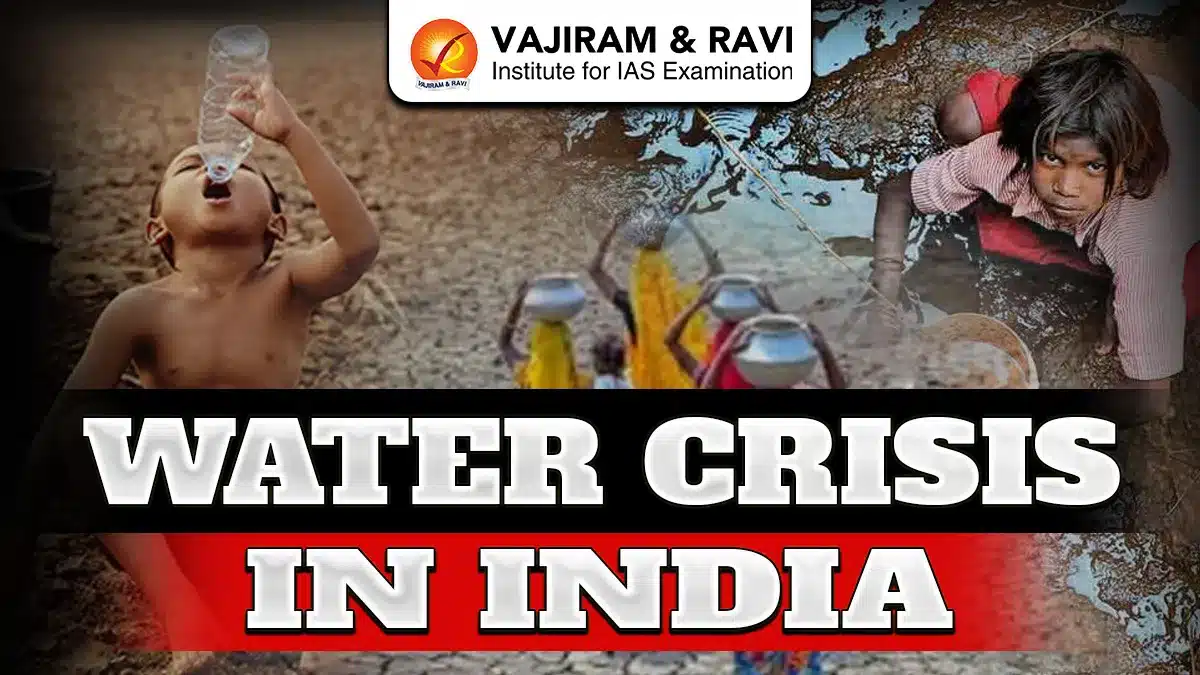
The Water Crisis in India has become a major issue in recent times. Water is essential for life, economic activity and ecological balance, yet it is a limited natural resource. Although water covers about 70% of the Earth, only around 1% is readily available for human use. India, with a rapidly growing population and increasing climate stress, is facing an acute water scarcity that threatens public health, food security and long term development of the country.

Water Crisis in India

India supports nearly 18% of the world’s population but has access to only about 4% of global freshwater resources. According to official assessments, around 600 million Indians experience high to extreme water stress. The per capita water availability has declined sharply to nearly 1,100 cubic metres, which is below the water stress threshold. Several major cities such as Delhi, Bengaluru, Chennai and Hyderabad are projected to face severe groundwater depletion by 2030, highlighting the seriousness of the water crisis in India.

Water Crisis in India Reasons

The Water Crisis in India is the result of multiple interlinked natural and human induced factors that have intensified over time. Major driving forces for the Water Scarcity in India are:

  • Overdependence on Groundwater:
      • About 65% of irrigation and 85% of drinking water relies on groundwater.
      • Overuse has caused sharp water table decline in Punjab, Haryana, Rajasthan and Tamil Nadu.
      • Nearly 256 out of 700 districts face critical or overexploited groundwater conditions.
  • Inefficient Water Use Practices:
      • Agriculture consumes nearly 85% of India’s freshwater resources.
      • Flood irrigation leads to large scale water wastage in water stressed regions.
      • Water intensive crops like paddy and sugarcane worsen scarcity in dry areas.
  • Pollution and Contamination
      • Over 70% of surface water is contaminated due to sewage and industrial discharge.
      • Rivers such as the Ganga and Yamuna receive large volumes of untreated wastewater.
  • Climate Change Impacts
      • Declining and irregular rainfall affects groundwater recharge and river flows.
      • Droughts and floods disrupt water availability and damage infrastructure.
  • Urbanisation and PPopulation Growth
    • Expanding cities increase water demand beyond supply capacity.
    • India’s population of 1.4 billion strains limited freshwater availability.

Water Crisis in India NITI Aayog Report

The NITI Aayog’s Composite Water Management Index Report was released in June 2018. It highlights that India is facing the worst water crisis in its history, with nearly 600 million people experiencing high to extreme water stress. The report also ranks India 120th out of 122 countries on the water quality index, noting that around 70% of available water is contaminated. Further, the 5th Minor Irrigation Census (2013-14) records 20.52 million wells nationwide, reflecting heavy dependence on groundwater.

Water Crisis in India Impacts

The Water Crisis in India has serious consequences for health, economy, agriculture, environment and social stability as detailed below:

  • Public Health Impacts
      • Unsafe water access: Around 342 million people lack access to safe drinking water.
      • Sanitation gaps: Nearly 539 million people do not have access to safe toilets.
      • Mortality burden: About 200,000 deaths annually are linked to inadequate water supply.
  • Agricultural and Food Security Impacts
      • Crop losses: Water scarcity reduces agricultural productivity and farmer incomes.
      • Food insecurity: Reduced yields threaten national food supply and price stability.
  • Economic Impacts
      • GDP loss risk: Water shortages could reduce India’s GDP by nearly 6% by 2050.
      • Industrial stress: Water intensive industries face rising costs and production disruptions.
  • Environmental Impacts
      • Ecosystem damage: Rivers, wetlands and biodiversity suffer due to water depletion.
      • Human wildlife conflict: Animals enter settlements searching for water, increasing conflict.
  • Social and Political Impacts
    • Water conflicts: Scarcity fuels disputes between states, farmers and urban users.

Reforms to Address Water Crisis in India

Addressing the Water Crisis in India requires a mix of conservation, governance reform, technology and community participation as highlighted below:

  • Improving Water Efficiency
      • Micro irrigation: Drip and sprinkler systems can save nearly 50% water and raise yields.
      • Infrastructure repair: Fixing leaks reduces water loss in urban and rural supply systems.
  • Reducing Overconsumption
      • Demand management: Efficient pricing and monitoring discourage excessive water use.
      • Technology use: AI, IoT and satellite data improve irrigation planning and monitoring.
  • Sustainable Agriculture Practices
      • Crop diversification: Shifting from water intensive to drought resistant crops conserves water.
      • MSP reforms: Incentives for less water intensive crops reduce groundwater stress.
  • Strengthening Governance
      • Decentralised management: Gram Panchayat led water planning improves local accountability.
      • Data systems: Real time monitoring strengthens evidence based water policymaking.
  • Ecosystem Restoration
    • Wetland revival: Restored wetlands improve groundwater recharge and water quality.
    • Forest protection: Healthy forests regulate rainfall and reduce runoff losses.

Water Crisis in India Government Initiatives

The Government of India has launched several large scale programmes to address Water Scarcity in India and ensure long term water security.

  • Jal Jeevan Mission (JJM)
      • Household connections: Aims to provide tap water to every rural household by 2024.
      • Coverage progress: Around 60% of rural households have received tap water connections.
  • Jal Shakti Abhiyan (JSA)
      • Conservation focus: Emphasises rainwater harvesting and water body restoration.
      • National coverage: Expanded from 256 districts to all 740 districts nationwide.
  • Atal Bhujal Yojana (ABY)
      • Groundwater management: Promotes community led sustainable groundwater use.
      • Targeted states: Focuses on seven major states facing critical groundwater depletion.
  • Namami Gange Programme
      • River rejuvenation: Targets pollution reduction and continuous river flow.
      • Sewage treatment: Expands treatment infrastructure to reduce river contamination.
  • National Water Policy (2012)
    • Integrated management: Prioritises drinking water, sanitation and conservation.
    • Rainwater harvesting: Encourages revival of traditional water conservation systems.

Water Crisis in India FAQs

Q1: What is meant by the Water Crisis in India?

Ans: Water crisis in India refers to a situation where safe and usable water availability is lower than the demand due to scarcity, pollution and mismanagement.

Q2: Why is India facing a severe Water Crisis?

Ans: India faces a water crisis due to limited freshwater resources, over extraction of groundwater, pollution, climate change and rapidly increasing population.

Q3: How serious is Groundwater Depletion in India?

Ans: India uses over 25% of global groundwater and many regions face critically declining water tables, threatening drinking water and agriculture.

Q4: What are the major impacts of the Water Crisis in India?

Ans: The water crisis affects health, agriculture, economic growth, ecosystems and increases conflicts over water sharing between regions and states.

Q5: What steps has the government taken to address the Water Crisis in India?

Ans: Major initiatives include Jal Jeevan Mission, Jal Shakti Abhiyan, Atal Bhujal Yojana, Namami Gange Programme and promotion of water conservation.

UPSC Daily Quiz 17 January 2026

UPSC Daily Quiz

[WpProQuiz 70]

UPSC Daily Quiz FAQs

Q1: What is the Daily UPSC Quiz?

Ans: The Daily UPSC Quiz is a set of practice questions based on current affairs, static subjects, and PYQs that help aspirants enhance retention and test conceptual clarity regularly.

Q2: How is the Daily Quiz useful for UPSC preparation?

Ans: Daily quizzes support learning, help in revision, improve time management, and boost accuracy for both UPSC Prelims and Mains through consistent practice.

Q3: Are the quiz questions based on the UPSC syllabus?

Ans: Yes, all questions are aligned with the UPSC Syllabus 2025, covering key areas like Polity, Economy, Environment, History, Geography, and Current Affairs.

Q4: Are solutions and explanations provided with the quiz?

Ans: Yes, each quiz includes detailed explanations and source references to enhance conceptual understanding and enable self-assessment.

Q5: Is the Daily UPSC Quiz suitable for both Prelims and Mains?

Ans: Primarily focused on Prelims (MCQ format), but it also indirectly helps in Mains by strengthening subject knowledge and factual clarity.

Injeti Srinivas Committee, Objectives, Organization, Recommendations

Injeti Srinivas Committee

The Injeti Srinivas Committee, formally known as the High Level Committee on Corporate Social Responsibility 2018, was constituted by the Ministry of Corporate Affairs to comprehensively review India’s CSR framework under the Indian Companies Act, 2013. It was formed after nearly four years of CSR implementation, during which large scale data on company participation, sectoral spending, geographic reach and social impact became available. By FY 2016-17, CSR expenditure had reached about Rs. 38,000 crore, highlighting both achievements and structural gaps. The Committee was tasked with strengthening governance, improving monitoring, enhancing impact and ensuring CSR contributes to sustainable and inclusive development without becoming a substitute for government funding.

Injeti Srinivas Committee Objectives

The Committee aimed to review, strengthen and future proof India’s CSR framework using evidence, stakeholder feedback and implementation experience.

  • The Committee examined Section 135 of the Companies Act 2013, along with related rules and circulars, to identify gaps, overlaps and enforcement challenges faced by companies and regulators.
  • It analyzed four years of CSR data, including spending patterns, sectoral allocation and geographic spread, to evaluate whether CSR investments were creating measurable social impact.
  • The Committee aimed to design systems for outcome based monitoring, impact assessment and social audit, especially for large CSR projects involving significant public resources.
  • It sought technology driven solutions such as digital platforms and data systems to connect companies, implementing agencies and beneficiaries more transparently.
  • The objective included creating a coherent, predictable CSR policy aligned with national priorities and global development frameworks like the Sustainable Development Goals.

Injeti Srinivas Committee Organizational Structure

The Committee was structured as a high level, multi stakeholder body combining government leadership, corporate expertise, legal insight and civil society experience.

  • Chairperson: The Committee was chaired by Shri Injeti Srinivas, Secretary, Ministry of Corporate Affairs, providing senior administrative leadership and direct policy linkage with the Government of India.
  • Government Representation: The Secretary, MCA and the Joint Secretary, MCA as Member Convener ensured coordination, documentation and translation of recommendations into actionable policy inputs.
  • Institutional Expertise: The Director General of the Indian Institute of Corporate Affairs participated to provide research, training and capacity building perspectives based on CSR implementation data.
  • Regulatory Perspective: SEBI representation at Executive Director level brought capital market and corporate governance experience relevant for listed companies’ CSR compliance.
  • Corporate Members: Industry leaders like N. Chandrasekaran of Tata Sons and Amit Chandra of Bain Capital added practical insights on large scale corporate CSR planning and execution.
  • Legal and Constitutional Expertise: P. S. Narasimha, Additional Solicitor General, contributed legal interpretation of CSR provisions and enforcement mechanisms under corporate law.
  • Academic and Innovation Input: Professor Anil K. Gupta of IIM Ahmedabad and Honey Bee Network provided grassroots innovation and inclusive development perspectives.
  • Social Sector Representation: Members like Mathew Cherian of HelpAge India ensured voices of beneficiaries and civil society were integrated into CSR reform discussions.
  • Sports and Social Influence: Prakash Padukone added insights on sports promotion and youth development as emerging CSR priority areas.
  • Professional and Financial Insight: Chartered Accountant S. Santhanakrishnan supported financial accountability, compliance and reporting aspects of CSR expenditure.

Corporate Social Responsibility (CSR)

Corporate Social Responsibility refers to a company’s legal and ethical obligation to contribute to social welfare and sustainable development.

  • CSR in India is governed by Section 135 of the Companies Act, 2013, making India the first country to mandate CSR spending by law.
  • CSR provisions apply to companies with net worth of Rs. 500 crore, turnover of Rs. 1,000 crore, or net profit of Rs. 5 crore or more.
  • Eligible companies are required to spend at least 2% of their average net profits of the previous three years on CSR activities.
  • Companies must constitute a CSR Committee of the Board to frame CSR policy, approve projects and monitor implementation periodically.
  • Schedule VII of the Act lists approved CSR activities including education, health, poverty alleviation, environmental sustainability and disaster relief.
  • Between 2014 and 2017, CSR spending reached approximately Rs. 38,000 crore, providing substantial data on outreach and impact.
  • The law empowers company boards to design CSR strategies suited to local needs while maintaining accountability and transparency.

Injeti Srinivas Committee Recommendations

The Injeti Srinivas Committee proposed structural, fiscal and governance reforms to make CSR impactful, accountable and aligned with national development goals.

  • Tax Deductibility of CSR Spend: It recommended allowing CSR expenditure as a deductible expense to encourage higher quality and sustained corporate participation.
  • Carry Forward of Unspent CSR Funds: The Committee proposed permitting unspent CSR amounts to be carried forward for three to five years to enable long term projects.
  • Alignment with SDGs: It suggested aligning Schedule VII with United Nations Sustainable Development Goals using an SDG Plus framework including sports and senior welfare.
  • Impact Assessment Mandate: For companies with CSR obligations of Rs. 5 crore or more, mandatory impact assessment studies were recommended for outcome evaluation.
  • Registration of Implementing Agencies: The Committee advised mandatory registration of CSR implementation agencies on the MCA portal for transparency and accountability.
  • CSR Exchange Portal: It proposed a digital CSR exchange platform to connect contributors, beneficiaries and agencies, improving efficiency and reducing duplication.
  • Discouraging Passive Fund Transfers: The Committee discouraged routine transfers to government funds, emphasizing project based CSR rather than resource gap financing.
  • Board driven Innovation Focus: CSR was recommended as a board led process promoting innovative, technology based solutions to social problems.
  • Relaxation for Small CSR Obligations: Companies with CSR obligations below Rs. 50 lakh were recommended exemption from forming a separate CSR Committee.
  • Civil Penalty Regime: Non compliance with CSR provisions was recommended to be treated as a civil offence under a penalty framework, replacing criminal sanctions.

Injeti Srinivas Committee FAQs

Q1: What was the Injeti Srinivas Committee?

Ans: It was a High Level Committee constituted in 2018 to review and strengthen India’s Corporate Social Responsibility framework.

Q2: Who chaired the Injeti Srinivas Committee?

Ans: The Committee was chaired by Shri Injeti Srinivas, Secretary, Ministry of Corporate Affairs, Government of India.

Q3: Why was the Injeti Srinivas Committee formed?

Ans: It was formed to assess CSR implementation experience, analyze outcomes and recommend reforms for better impact and monitoring.

Q4: What major issue did the Injeti Srinivas Committee address in CSR?

Ans: It focused on improving impact assessment, governance, transparency and preventing CSR from becoming government funding substitutes.

Q5: What was a key financial recommendation of the Injeti Srinivas Committee?

Ans: The Committee recommended tax deductibility of CSR expenditure and carrying forward unspent CSR funds for three to five years.

Roshni Act 2001, Features, Controversy, Repeal

Roshni Act

The Roshni Act refers to the Jammu and Kashmir State Land (Vesting of Ownership to Occupants) Act 2001, enacted to regularise unauthorised occupation of state land. Introduced during the chief ministership of Farooq Abdullah, the law aimed to transfer ownership of encroached state land to occupants in return for a prescribed payment. The revenue generated was intended to finance hydropower projects in Jammu and Kashmir, giving the Act its popular name “Roshni”, meaning light. Over time, the Act became controversial due to large scale irregularities, limited revenue generation and allegations of misuse by influential persons.

Roshni Act Features

The Roshni Act contained several key features that defined its scope, implementation mechanism and financial objectives.

  • Regularisation of State Land: The Act allowed unauthorised occupants of state land to gain legal ownership by paying a fee fixed by the government.
  • Cut off Dates: Initially, encroachments prior to 1990 were eligible. This was extended to 2004 and later to 2007 through amendments.
  • Pricing Mechanism: The premium for land was fixed administratively. Under later amendments, land was priced at 25% of the market rate.
  • Agricultural Land Provision: Occupants of agricultural land were granted ownership free of cost, except for nominal documentation charges.
  • Revenue Objective: The government aimed to generate ₹25,000 crore to fund hydropower projects, forming the basis for the Act’s name.
  • Land Transfer Targets: The government planned to transfer 20.46 lakh kanals of land but approved only 6.04 lakh kanals, with actual transfers limited to 3.48 lakh kanals.
  • Actual Revenue Generated: Against the revised target of ₹317.55 crore, only ₹76.46 crore was realised, reflecting a major shortfall.

Roshni Act Controversy

The Roshni Act became one of the most controversial land legislations in Jammu and Kashmir due to widespread allegations of corruption and misuse.

  • CAG Findings (2014): The Comptroller and Auditor General highlighted irregularities, arbitrary pricing and failure to achieve revenue targets.
  • Misuse by Influential Persons: Politicians, bureaucrats, businessmen and their relatives were alleged to have benefited disproportionately.
  • Low Revenue Realisation: Only ₹76.46 crore was collected against the projected ₹25,000 crore, defeating the core objective.
  • Vigilance Cases (2015): FIRs were filed against officials and beneficiaries for illegal land transfers, though prosecutions did not materialise.
  • Gulmarg Land Scam: Prime land under the Gulmarg Development Authority was allegedly transferred to ineligible private parties.
  • Demographic Concerns: Certain groups alleged the Act was used to influence demographic patterns, particularly in the Jammu region.

Roshni Act Repeal

The repeal and judicial scrutiny of the Roshni Act marked a decisive shift in addressing alleged land irregularities.

  • Repeal in 2018: The Act was repealed by Governor Satya Pal Malik, cancelling all pending allotments.
  • Investigation Orders: Probes were initially ordered through the Anti Corruption Bureau and later transferred to the CBI.
  • High Court Judgment (October 2020): The Jammu and Kashmir High Court declared the Act unconstitutional, illegal and unsustainable.
  • Nullification of All Allotments: All land allotments made under the Act were held void ab initio.
  • Recovery of Land: The administration announced plans to retrieve land within six months.
  • Disclosure of Beneficiaries: Orders were issued to make public the names of ministers, legislators, officials and influential beneficiaries.
  • Political and Administrative Impact: The issue gained national attention after prominent names were cited as beneficiaries in 2020.
Other Related Posts
Regulating Act 1773 Pitt's India Act 1784
Acts and Regulations under East India Company Charter Act 1853
Charter Act 1813 Government of India Act 1858
Charter Act 1833 Indian Councils Act 1861
Indian Councils Act 1892 Morley Minto Reforms
Government of India Act 1919 Government of India Act 1935
Indian Independence Act 1947 

Roshni Act FAQs

Q1: What is the Roshni Act?

Ans: It is the Jammu and Kashmir State Land (Vesting of Ownership to Occupants) Act, 2001 for regularising encroached state land.

Q2: Why was it called the Roshni Act?

Ans: The revenue generated was intended to fund hydropower projects, symbolising electricity and light.

Q3: What was the original cut off year under the Roshni Act?

Ans: The Act initially fixed 1990 as the cut off year for eligible land encroachments.

Q4: Why was the Roshni Act repealed?

Ans: Due to corruption allegations, revenue failure, irregular land transfers and constitutional violations.

Q5: What did the High Court decide in 2020 regarding the Roshni Act?

Ans: It declared the Act unconstitutional and nullified all land allotments made under it.

William Hawkins, Biography, Expedition to India, Key Details

William Hawkins

William Hawkins was a prominent 17th century English diplomat and sea captain of the British East India Company (EIC). He was tasked to command the Hector, the first company ship to anchor at Surat in 1608, by King James I to secure trading rights in India. He became the first Englishman to establish a direct diplomatic connection with the Mughal Empire. His journey marked the beginning of official English commercial interests in the East, navigating a complex landscape dominated by Portuguese rivals and the grand Mughal court.

William Hawkins Biography

William Hawkins came from a distinguished line of English maritime explorers and merchants.

  • Family: He was the eldest son of William Hawkins (a Merchant and Sea Captain) and the nephew of the famous Admiral Sir John Hawkins.
  • Early Expeditions: In 1577, he participated in Sir Francis Drake’s voyage to the South Sea and later fought against the Spanish Armada in 1588 aboard the ship Griffin.
  • Command of the Hector: In 1607, he was appointed to lead the British East India Company (EIC) third voyage to India due to his extensive experience and proficiency in the Turkish language.
  • Mughal Title: During his stay in India, Emperor Jahangir bestowed upon him the title of 'English Khan' and appointed him as a Mansabdar with the command of 400 horses.
  • Marriage: To solidify his presence at court, he married Mariam Khan, the daughter of an influential Armenian Christian merchant from Emperor Akbar's court.
  • Death: After leaving India in 1611, Hawkins died in late 1613 on his return voyage to England and was buried in Ireland.

William Hawkins Visit to India

The visit of William Hawkins to the Mughal court was a journey filled with political intrigue and cultural exchange.

  • Arrival at Surat: On August 24, 1608, Hawkins anchored the Hector at Surat, where he was immediately confronted by Portuguese hostility claiming exclusive rights to Indian ports.
  • Journey to Agra: Despite Portuguese capture of his goods, he managed to reach Agra on April 16 1609, to present King James I's letters and gifts to Emperor Jahangir.
  • Court Diplomacy: Hawkins gained Jahangir's favor by communicating directly in Turkish, a language the Emperor and his ministers understood well.
  • The Surat Factory: While Jahangir initially granted permission to establish an English factory at Surat, he later withdrew the grant due to immense pressure from Portuguese Jesuits and the Viceroy.
  • Political Downfall: Involvement in trade disputes, specifically an incident involving high-quality indigo and the Empress Dowager Mariam-uz-Zamani, eventually led to his disfavor at court.
  • Departure: Realizing the Portuguese influence was "impregnable," Hawkins left Agra in November 1611, paving the way for future ambassadors like Sir Thomas Roe.

William Hawkins FAQs

Q1: Who was William Hawkins?

Ans: He was an English East India Company representative and commander of the first English ship, the Hector, to reach Surat.

Q2: Why did William Hawkins visit Emperor Jahangir?

Ans: He visited to deliver a letter from King James I seeking formal permission to establish an English trade factory at Surat.

Q3: What title did Jahangir give William Hawkins?

Ans: Jahangir called him the "English Khan" and appointed him as a Mansabdar (military official) in the Mughal administration.

Q4: What language did William Hawkins use at court?

Ans: He spoke in Turkish, which allowed him to communicate directly with Jahangir without the need for a Portuguese interpreter.

Q5: Did William Hawkins succeed in his mission?

Ans: Initially yes, but Portuguese pressure eventually forced Jahangir to revoke the license for the English factory at that time.

Pradhan Mantri Jeevan Jyoti Bima Yojana (PMJJBY), Features

Pradhan Mantri Jeevan Jyoti Bima Yojana

Pradhan Mantri Jeevan Jyoti Bima Yojana (PMJJBY) is a flagship life insurance scheme launched by the Government of India to provide affordable life insurance coverage to the economically weaker sections of society. It was introduced as part of the Government’s social security initiatives, the scheme aims to ensure financial protection to families in case of the untimely death of the insured person. With a very low annual premium and easy enrollment through banks, PMJJBY has emerged as one of the most successful insurance-based welfare schemes in India.

Pradhan Mantri Jeevan Jyoti Bima Yojana

Pradhan Mantri Jeevan Jyoti Bima Yojana was launched in May 2015 by the Government of India under the Ministry of Finance. The scheme is linked with bank accounts and is available to all savings bank account holders in the age group of 18 to 50 years.

Under PMJJBY, a life insurance cover of ₹2 lakh is provided in case of death of the insured due to any reason, natural or accidental. The policy is renewable every year and operates on a simple auto-debit mechanism, making it accessible even for rural and low-income populations.

Pradhan Mantri Jeevan Jyoti Bima Yojana Objectives

The main objectives of Pradhan Mantri Jeevan Jyoti Bima Yojana are:

  • To provide affordable life insurance to economically weaker sections.
  • To ensure financial security to families in case of the death of the earning member.
  • To promote financial inclusion by linking insurance with bank accounts.
  • To reduce the burden of high insurance premiums for low-income groups.
  • To encourage a habit of savings and social security among citizens.
  • To support the government’s vision of “Insurance for All”.

Pradhan Mantri Jeevan Jyoti Bima Yojana Features

Some of the key features of Pradhan Mantri Jeevan Jyoti Bima Yojana (PMJJBY) are:

  • Life Cover: ₹2 lakh payable on death of the insured.
  • Premium Amount: ₹436 per annum (auto-debited from bank account).
  • Eligibility: Indian citizens aged between 18 and 50 years.
  • Renewal: Annual renewal up to the age of 55 years.
  • Coverage Period: From 1st June to 31st May every year.
  • Mode of Payment: Auto-debit from savings bank account.
  • Risk Coverage: Covers death due to both natural and accidental causes.
  • Implementing Agencies: Public and private sector life insurance companies in tie-up with banks.
  • Voluntary Scheme: Enrollment is optional but highly encouraged.
  • Simple Enrollment: Requires Aadhaar and bank account linkage.

Pradhan Mantri Jeevan Jyoti Bima Yojana Impact

Since its launch, PMJJBY has played a significant role in strengthening India’s social security system. The scheme has:

  • Enrolled crores of beneficiaries across rural and urban India.
  • Provided financial relief to families during unforeseen deaths.
  • Increased insurance penetration in India, especially among low-income groups.
  • Promoted financial literacy and inclusion through banking channels.
  • Reduced dependency on informal borrowing during crises.
  • Strengthened the government’s goal of inclusive growth and welfare-based governance.

The scheme has been particularly impactful in rural areas, where access to formal insurance products was previously limited.

Pradhan Mantri Jeevan Jyoti Bima Yojana FAQs

Q1: What is Pradhan Mantri Jeevan Jyoti Bima Yojana?

Ans: PMJJBY is a government-backed life insurance scheme offering ₹2 lakh coverage at a low annual premium.

Q2: Who can apply for PMJJBY?

Ans: Any Indian citizen aged between 18 and 50 years having a savings bank account can apply.

Q3: What is the duration of coverage?

Ans: The coverage period is one year, from 1st June to 31st May, renewable annually.

Q4: Is PMJJBY different from PMSBY?

Ans: Yes. PMJJBY provides life insurance, while PMSBY (Pradhan Mantri Suraksha Bima Yojana) provides accidental insurance.

Q5: What is the premium for PMJJBY?

Ans: The annual premium is ₹436, auto-debited from the linked bank account.

Kuznets Curve, Definition, Environmental Kuznets Curve, Criticism

Kuznets Curve

The Kuznets Curve is one of the most important concepts in economics used to explain the relationship between economic growth and income inequality. Proposed by economist Simon Kuznets, this theory helps policymakers understand how income distribution changes as an economy develops. Over time, the idea was also extended to environmental studies, leading to the Environmental Kuznets Curve (EKC).

This article explains the Kuznets Curve in detail, its relationship with income inequality, environmental implications, and criticisms.

What is Kuznets Curve?

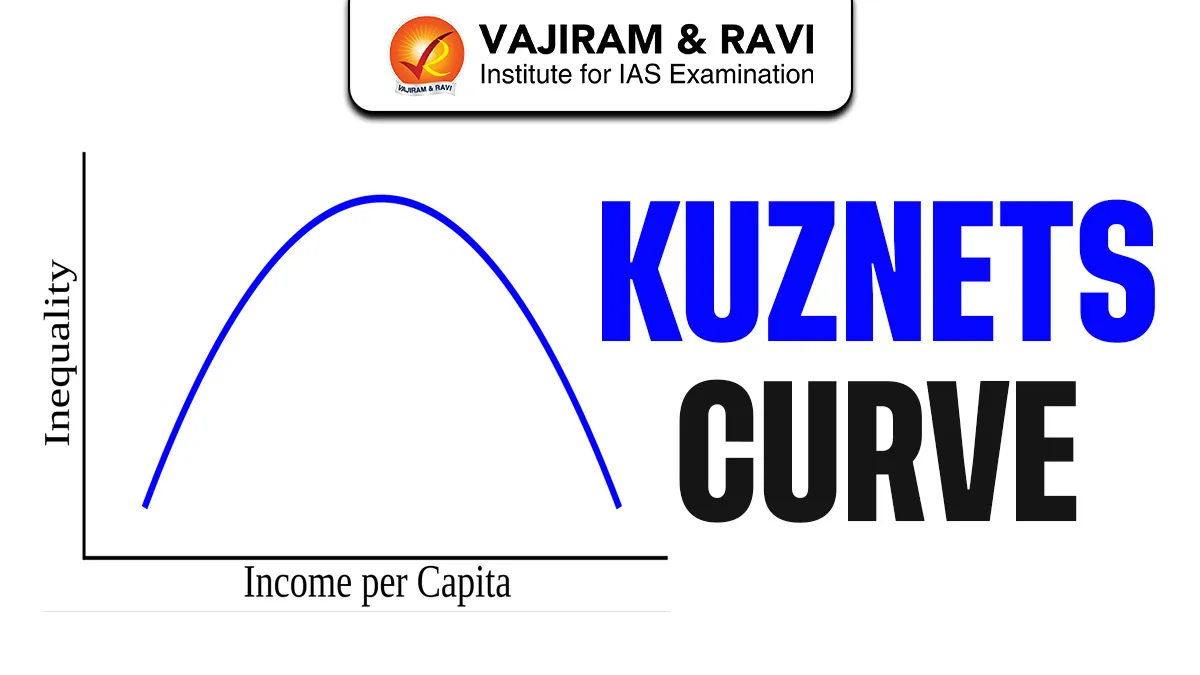
The Kuznets Curve is a theoretical model that shows an inverted U-shaped relationship between economic development and income inequality.

According to this theory, when a country begins to develop, income inequality first increases, but after reaching a certain level of economic growth, inequality starts decreasing. This happens due to structural transformation, urbanization, and better access to education and welfare policies.

Kuznets Curve and Income Inequality

The Kuznets Curve explains how income inequality changes at different stages of economic development. It suggests that inequality does not remain constant but follows a predictable pattern as an economy grows.

  • The Kuznets Curve shows an inverted U-shaped relationship between economic growth and income inequality.
  • In the early stage of development, income inequality is low because most people depend on
  • agriculture and earn similar incomes.
  • During industrialization, inequality rises as urban and industrial sectors grow faster than rural areas.
  • Skilled workers and capital owners earn more, widening the income gap.
  • With further development, education, welfare policies, and social security expand.
  • Government intervention and economic diversification help reduce inequality.
  • Thus, in the long run, income inequality declines as the economy becomes more developed and inclusive.

Environmental Kuznets Curve

  • The Environmental Kuznets Curve (EKC) explains the relationship between economic growth and environmental degradation.
  • It shows an inverted U-shaped curve, similar to the Kuznets Curve for income inequality.
  • In the early stage of development, pollution increases due to industrialization and lack of environmental regulations.
  • As income rises, industrial expansion and urbanization lead to higher emissions and resource exploitation.
  • At higher income levels, countries adopt cleaner technologies and stricter environmental laws.
  • Increased public awareness and investment in renewable energy help reduce pollution.
  • Thus, environmental degradation first rises and then declines with sustained economic development.

Criticism of Kuznets Curve

The Kuznets Curve has been widely debated because it oversimplifies the relationship between economic growth and income inequality.

  • The Kuznets Curve is not universally applicable, as many developing countries continue to face rising inequality despite economic growth.
  • It is based on limited historical data from a few developed countries, making it less relevant for modern economies.
  • The theory ignores the role of government policies, such as taxation, welfare programs, and labor laws, in reducing inequality.
  • Economic growth alone does not ensure equitable income distribution; political and social factors also matter.
  • Globalisation and technological change often increase income gaps, contradicting the Kuznets hypothesis.
  • In many cases, inequality does not decline automatically and requires active state intervention.

Kuznets Curve FAQs

Q1: Who proposed the Kuznets Curve?

Ans: Simon Kuznets proposed the Kuznets Curve in 1955.

Q2: What does the Kuznets Curve show?

Ans: It shows the relationship between economic growth and income inequality, represented by an inverted U-shape.

Q3: What is the Environmental Kuznets Curve?

Ans: It explains the relationship between economic development and environmental degradation, suggesting pollution rises first and then falls.

Q4: Is the Kuznets Curve valid today?

Ans: Partially. It applies in some cases, but modern economies show mixed results due to policy and globalization.

Q5: Why is the Kuznets Curve important?

Ans: It helps policymakers understand how economic growth affects inequality and guides inclusive development strategies.

Extended Producer Responsibility (EPR), Objectives, Advantages

Extended Producer Responsibility (EPR)

Extended Producer Responsibility (EPR) has emerged as one of the world’s most transformative environmental policy tools. Designed to make manufacturers, importers, and brand owners accountable for the environmental footprint of their products throughout the entire lifecycle, including waste management, EPR is reshaping how industries and governments tackle pollution, resource scarcity, and circularity. 

This comprehensive article explains EPR’s objectives, legal framework, real-world implementation (especially in India), challenges, and its role in advancing sustainable development.

What Is Extended Producer Responsibility (EPR)?

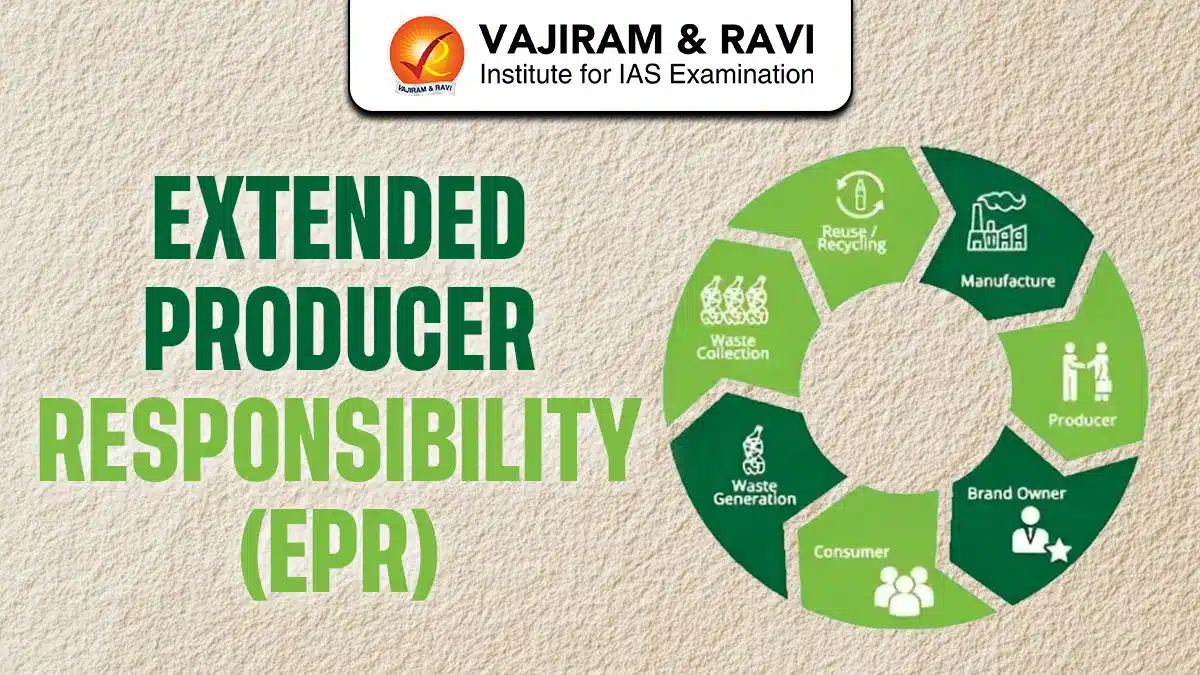
Extended Producer Responsibility (EPR) is a policy concept that holds producers legally responsible for the collection, recycling, recovery, and disposal of products once they have reached the end of their useful life. Rather than placing the burden of waste management solely on municipalities or consumers, EPR shifts accountability upstream to producers, encouraging them to design products that are easier to reuse, recycle, or safely dispose of.

Extended Producer Responsibility (EPR) Objectives

 Extended Producer Responsibility (EPR) is based on several key environmental and economic goals:

  • Pollution Reduction: By making producers responsible for waste, EPR reduces uncontrolled disposal and pollution.
  • Resource Efficiency: Encourages reuse, recycling, and recovery of valuable materials reducing extraction of virgin resources.
  • Eco-Design Innovation: Products are designed with recyclability and end-of-life management in mind.
  • Cost Shift: Shifts the financial responsibility of waste management from taxpayers to producers.
  • Circular Economy: Facilitates a move from a linear “take-make-dispose” economy to a circular one where waste becomes a resource.

Extended Producer Responsibility (EPR) Legal Framework

In India, EPR is codified through a combination of environmental rules and regulations enforced by the Ministry of Environment, Forest and Climate Change (MoEFCC) and regulatory bodies such as the Central Pollution Control Board (CPCB). Key legal frameworks include:

1. Plastic Waste Management Rules (PWM Rules)

  • Requires producers, importers, and brand owners to collect and recycle plastic packaging waste.
  • Sets annual EPR recycling targets that increase over time, for example, targets range from 30–50% in 2024-25 to 60–80% by 2027-28 and beyond.
  • There are mandates on recycled content (e.g., rigid plastics: 30% by 2025–26, aiming for 60% by 2028–29).

Also Read: Water (Prevention and Control of Pollution) Act, 1974

2. E-Waste (Management) Rules 2022

  • Producers must collect and recycle a growing percentage of e-waste generated from the products they place in the market.
  • Targets include 60% recycling initially, rising to 70% by 2025–26 and 80% by 2027–28 onwards.

3. Battery Waste Management Rules 2022

  • Applies to all types of batteries (portable, automotive, industrial, and EV).
  • Recovery targets range from 70–90% depending on the type of battery and year, with 90% by 2027 onwards for many categories.

Other Rules

  • Hazardous & Other Wastes (Management) Rules - includes tyres and other hazardous waste categories.
  • Used Oil Management Rules - added in 2024 to cover used and waste lubricating oil.
  • Each of these rules sets specific compliance, reporting, and registration requirements under centralized digital EPR portals.

EPR in E-Waste Management

E-waste, or electronic waste, includes discarded electrical and electronic equipment such as mobiles, laptops, TVs, refrigerators, and other consumer electronics. In FY 2024–25, India generated approximately 1.39 million tonnes of e-waste, but only around 70% was formally collected and processed, leaving the rest to informal and unsafe recycling channels.

Under the E-Waste (Management) Rules, 2022, producers, importers, and brand owners (PIBOs) must:

  • Producer Responsibility: Producers, importers, and brand owners (PIBOs) must manage e-waste from collection to recycling.
  • Registration: PIBOs are required to register on the Central EPR Portal for tracking compliance.
  • Collection & Take-Back: Producers must establish collection centers or partner with PROs to take back end-of-life electronics.
  • Recycling Targets: Phased targets include 60% by 2024–25, 70% by 2025–26, and 80% by 2027–28.
  • Authorized Recycling: E-waste must be sent to CPCB-approved recyclers for safe processing and material recovery.
  • Record-Keeping & Reporting: PIBOs must maintain digital records and submit annual compliance reports to regulators.

EPR and Circular Economy

EPR directly supports a circular economy, where products and materials are continually reused, remanufactured, or recycled rather than discarded. Key contributions include:

  • Design for recyclability: Manufacturers are incentivized to use materials that are easy to recycle or reuse.
  • Material recovery: Valuable resources like metals, plastics, and rare elements are reclaimed, reducing environmental impacts and import dependency.
  • Recycled content mandates: Producers must incorporate a minimum share of recycled materials, linking production back to recycling systems.

Government Initiatives to Strengthen EPR

The Government of India has actively strengthened the Extended Producer Responsibility (EPR) framework to improve waste management, promote a circular economy, and reduce environmental pollution

  • Expansion of Waste Coverage: EPR now applies to plastic, e‑waste, batteries, used oil, metals, packaging, and sanitary products, with phased recycling and recycled content targets.
  • Digital Compliance & Traceability: Centralized EPR portals, mandatory QR codes/unique IDs, and online reporting ensure transparency, real‑time monitoring, and prevention of fake recycling claims.
  • Market-Based Incentives: Introduction of EPR certificates and tradable credits encourages producers to exceed recycling targets and supports investment in formal recycling infrastructure.
  • Enforcement & Awareness: Strict penalties for non-compliance, environmental compensation, and state-level awareness programs strengthen accountability and improve on-ground collection and segregation.

Advantages of Extended Producer Responsibility

  • Environmental Protection: Ensures proper collection, recycling, and disposal, reducing pollution.
  • Resource Conservation: Promotes recycling and reuse, reducing the need for virgin raw materials.
  • Eco-Design Promotion: Encourages producers to design durable, recyclable, and less polluting products.
  • Reduces Municipal Burden: Shifts waste management responsibility from local authorities to producers.
  • Economic & Employment Benefits: Generates jobs in recycling, collection, and waste-processing sectors.
  • Accountability & Compliance: Holds producers responsible, ensuring adherence to environmental laws and sustainability goals.

Criticism and Limitations of EPR

  • High Compliance Costs: Small and medium producers may struggle with the financial and operational burden of meeting EPR obligations.
  • Informal Sector Dominance: A large portion of waste, especially e-waste and plastic, is still processed by informal recyclers, reducing environmental effectiveness.
  • Infrastructure Gaps: Inadequate collection, recycling, and processing facilities, particularly in rural and semi-urban areas.
  • Low Consumer Awareness: Limited public knowledge about segregation, take-back systems, and recycling reduces collection efficiency.
  • Enforcement Challenges: Weak monitoring and reporting systems can lead to fake recycling claims or non-compliance.
  • Limited Incentives for Over-Compliance: Without strong financial or policy incentives, producers may only aim to meet minimum targets, slowing innovation.

Way Forward

  1. Strengthen Digital Monitoring: Expand and enhance centralized EPR portals, digital tracking, and QR code systems for transparency and compliance.
  2. Integrate Informal Recyclers: Formalize and train informal sector workers to improve safe and efficient waste processing.
  3. Expand Recycling Infrastructure: Develop more collection centers, recycling facilities, and PROs (Producer Responsibility Organizations) nationwide.
  4. Promote Eco-Design and Innovation: Encourage producers to design products that are durable, recyclable, and resource-efficient.
  5. Increase Awareness: Conduct consumer education campaigns on segregation, take-back systems, and responsible consumption.
  6. Incentivize Compliance: Provide financial incentives, tax benefits, or EPR tradable credits to reward over-compliance and innovation.
  7. Enforce Penalties Strictly: Strengthen enforcement mechanisms to penalize non-compliance and prevent fraudulent reporting.

Extended Producer Responsibility (EPR) FAQs

Q1: What is Extended Producer Responsibility (EPR)?

Ans: EPR is a policy approach that makes producers, importers, and brand owners responsible for managing the environmental impact of their products throughout their lifecycle.

Q2: Which waste streams fall under EPR in India?

Ans: EPR covers plastic packaging, e-waste, batteries, tyres, used oil, metals, and sanitary products, with specific recycling targets under respective regulations.

Q3: Who must comply with EPR regulations?

Ans: Producers, Importers, and Brand Owners (PIBOs) are legally required to register on centralized EPR portals, meet annual recycling targets, and work with authorized recyclers or PROs.

Q4: How does EPR benefit the environment?

Ans: EPR reduces landfill dependency, promotes recycling and reuse, encourages eco-friendly product design, and conserves natural resources, supporting a circular economy.

Q5: What are the consequences of non-compliance with EPR?

Ans: Non-compliance can result in penalties, suspension of registration, environmental compensation, and legal action under the Environment Protection Act and associated rules.

Saraswati River System, Historical Background, Origin, Evidence and Disappearance

Saraswati River System

The Saraswati River System was an ancient river network mentioned in the Rigveda and other Indian texts as a mighty and sacred river. It originated from the Himalayan region, possibly near the Bandarpunch range. The river flowed through present-day Haryana and Rajasthan before reaching the Arabian Sea. Over time, tectonic movements and climate change led to its gradual disappearance.

Saraswati River System

The Saraswati River System refers to an ancient river network that once flowed through northwestern India, primarily covering parts of Haryana, Rajasthan, and Gujarat. In ancient Indian texts, Saraswati is described as a mighty, perennial river flowing from the Himalayas to the Arabian Sea.

Today, the Saraswati River is believed to survive in a subterranean form, with its remnants identified through satellite imagery, palaeo-channels, and groundwater studies. Modern rivers such as the Ghaggar, Hakra, Chautang, and Drishadvati are considered parts of its ancient system.

Saraswati River System Historical Background

The Saraswati River System holds immense historical significance as one of the most revered rivers of ancient India.

  • The Saraswati River is extensively mentioned in Rigveda, Mahabharata, and Puranas as a sacred and mighty river.
  • It was described as “Naditama” (the greatest of rivers) in Vedic texts.
  • The river formed the backbone of early Vedic civilization and settlements.
  • Archaeological evidence shows that more than 1,500 Harappan sites existed along its basin.
  • Ancient towns like Kalibangan, Banawali, and Rakhigarhi developed along its banks.
  • The river supported agriculture, trade, and urban life during the Bronze Age.
  • Over time, tectonic shifts and climatic changes led to its gradual decline.
  • By around 1500 BCE, the river had largely dried up, influencing the decline of Harappan culture.

Saraswati River System Origin

The Saraswati River originated from the Himalayan region, likely near the Bandarpunch range close to Yamunotri. It was initially fed by glacial rivers such as the Sutlej and Yamuna, making it a perennial river in ancient times. The river flowed southwest through present-day Haryana and Rajasthan before reaching the Arabian Sea. Later, tectonic movements diverted its feeder rivers, leading to the decline of the Saraswati River System.

Also Read: Indus River System

Geological Evidence of the Saraswati River

Geological, hydrological, and satellite-based studies provide strong scientific evidence for the existence of the Saraswati River. These findings confirm that a large, perennial Himalayan river once flowed through northwest India before disappearing due to tectonic and climatic changes.

  • Satellite Imagery Evidence: Images from ISRO, NASA, and French satellite missions clearly show wide, buried palaeo-channels beneath the Thar Desert, matching the ancient course described in Vedic texts.
  • Palaeo-Channel Mapping: Geological surveys have identified extensive palaeo-river networks extending from Haryana → Rajasthan → Rann of Kutch, confirming the former presence of a large river system.
  • Sediment Analysis: Studies of sand and silt deposits reveal Himalayan-origin sediments, indicating that the river was once fed by glacial sources rather than local rainfall.
  • Groundwater Investigation: Freshwater aquifers found along the ancient river path suggest continuous water flow in the past. Many wells in Rajasthan still tap water from these buried channels.
  • Carbon Dating Evidence: Carbon dating of organic material from riverbeds indicates that the Saraswati was active between 5000 BCE and 3000 BCE, aligning with the Harappan period.
  • Tectonic Evidence: Geological faults and plate movements show that the Yamuna and Sutlej rivers shifted their courses, cutting off the main water supply of the Saraswati.
  • Climatic Evidence: Paleoclimatic studies indicate a decline in monsoon intensity around 2000 BCE, which further accelerated the drying of the river.
  • Archaeological Correlation: Over 1,500 Harappan sites found along the Ghaggar-Hakra belt strengthen the link between human settlements and the ancient Saraswati River.

Also Read: Ganga River System

Saraswati River and Ghaggar-Hakra System

The Ghaggar-Hakra River system is widely identified as the present-day remnant of the ancient Saraswati River. The Ghaggar flows through Himachal Pradesh, Haryana, and Rajasthan, while its continuation in Pakistan is known as the Hakra River.

  • The Ghaggar-Hakra is considered the surface expression of the ancient Saraswati River.
  • Satellite images reveal a broad palaeo-channel beneath the Ghaggar-Hakra basin, indicating a once mighty river.
  • More than 1,500 Harappan and pre-Harappan sites are located along this river system, showing its importance for early civilization.
  • The river was once perennial, fed by Himalayan rivers like the Sutlej and Yamuna.
  • Due to tectonic shifts, the Sutlej moved westward to the Indus system and the Yamuna shifted eastward to the Ganga basin.
  • This diversion reduced water flow, turning the Ghaggar-Hakra into a seasonal river.
  • Archaeological sites such as Kalibangan, Banawali, and Rakhigarhi flourished along this river.
  • The drying of the Ghaggar-Hakra is considered a major reason for the decline of the Indus Valley Civilization in this region.

Also Read: Yamuna River System

Saraswati River Disappearance and Causes

The disappearance of the Saraswati River was a gradual natural process influenced by geological, climatic, and hydrological changes. Once a mighty perennial river, it slowly dried up over thousands of years, leading to major ecological and cultural transformations in northwestern India.

  • Tectonic Movements: Major tectonic shifts in the Himalayan region altered river courses. The Sutlej shifted westward towards the Indus, while the Yamuna moved eastward to join the Ganga, cutting off the Saraswati’s main water sources.
  • River Capture Phenomenon: The diversion of feeder rivers due to tectonic uplift led to the capture of Saraswati’s waters by neighboring river systems, drastically reducing its flow.
  • Climate Change and Monsoon Weakening: Paleoclimatic studies indicate a decline in monsoon intensity around 2000 BCE, reducing rainfall and glacial melt that sustained the river.
  • Loss of Glacial Support: With the shifting of Himalayan rivers, the Saraswati lost its glacial origin and became dependent only on seasonal rainfall.
  • Increasing Aridity in Northwest India: Expansion of the Thar Desert and arid conditions accelerated the drying of the river basin.
  • Sedimentation and Channel Siltation: Continuous deposition of sediments reduced the river’s depth and flow capacity.

Saraswati River System FAQs

Q1: Was the Saraswati River a real river or a mythical one?

Ans: The Saraswati River was a real river. Geological studies, satellite imagery, and archaeological evidence confirm its existence, matching descriptions found in Vedic texts.

Q2: Where did the Saraswati River originate?

Ans: The Saraswati River is believed to have originated from the Himalayan region near the Bandarpunch range, close to present-day Yamunotri.

Q3: Which present-day river represents the Saraswati River?

Ans: The Ghaggar-Hakra River system is considered the present-day remnant of the ancient Saraswati River.

Q4: Why did the Saraswati River disappear?

Ans: The river disappeared due to tectonic movements, diversion of tributaries (Yamuna and Sutlej), climate change, and weakening monsoons, leading to reduced water flow.

Q5: What is the archaeological importance of the Saraswati River?

Ans: More than 1,500 Harappan sites, including Kalibangan and Rakhigarhi, are located along its basin, showing its role in the Indus Valley Civilization.

Chatham Islands

Chatham Islands

Chatham Islands Latest News

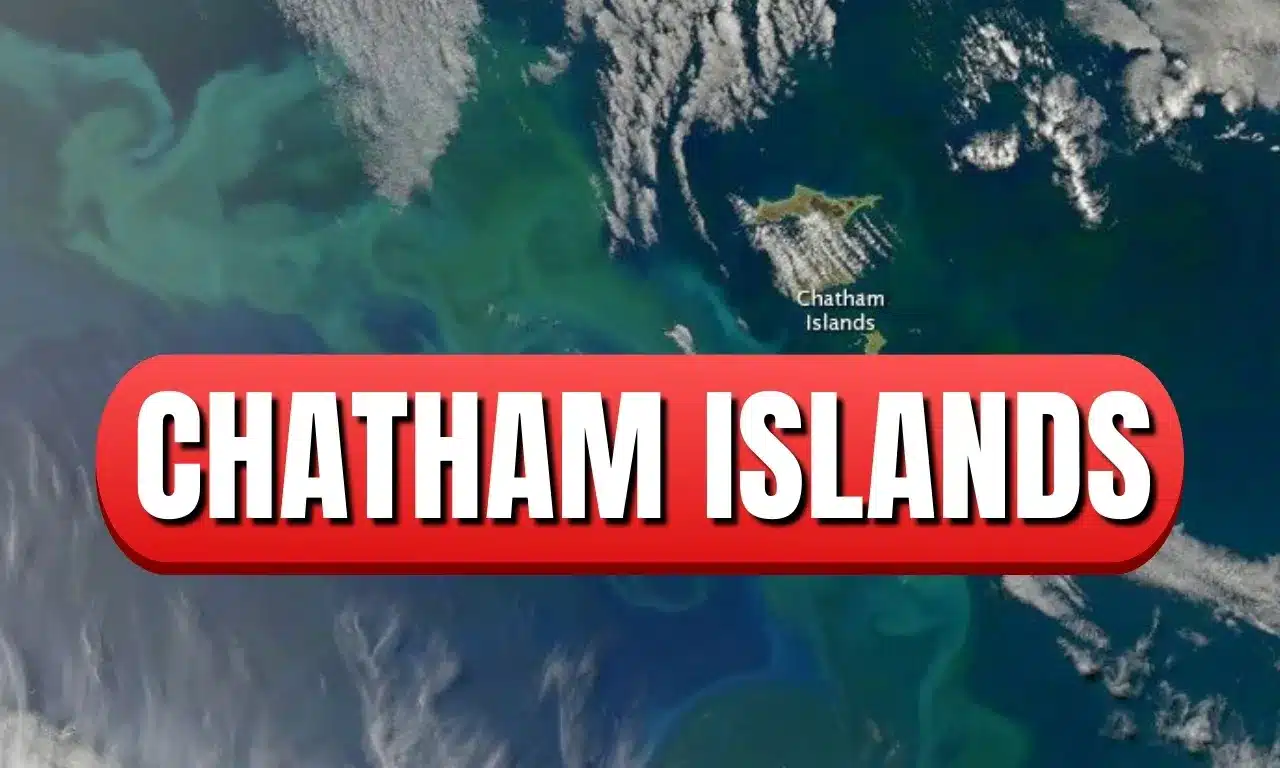
A bloom of phytoplankton—tiny photosynthetic organisms that become visible to satellites when their numbers explode—encircled the Chatham Islands in austral summer recently.

About Chatham Islands

  • It is an island group in the South Pacific Ocean, about 800 km east of New Zealand. 
  • These islands are New Zealand's most easterly territory.
  • Composed of 10 islands, they are primarily of volcanic formation, but areas of limestone indicate that they may once have been part of New Zealand.
  • Only the two main islands are inhabited: Chatham Island and Pitt Island.
    • Chatham Island, the largest of the islands, has a high southern tableland flanked by towering cliffs and a gentle northern portion encompassing extensive waterways, low peatlands and long sandy beaches. 
    • Pitt Island has a heartland of forest and a coast of wild cliffs, headlands, and sandy beaches.
    • Both islands are surrounded by a number of smaller islands, all within a radius of approximately 50 km. 
  • The Chatham Islands is the first inhabited place in the world to see the rising sun each day.
  • The islands were first inhabited by Moriori, who named the islands 'Rekohu' – translated as 'misty skies' or 'misty sun'. 
  • European sealers and whalers were next to arrive, followed by Māori from New Zealand, who named the islands 'Wharekauri'. 
  • Descendants of Moriori still reside on the Chatham Islands today.
  • The total population in 2024 was estimated to be 720.
  • The main settlement is Waitangi. Other settlements are Te One, Port Hutt, Kāingaroa, and Ōwenga.
  • The economy of the Chatham Islands is heavily dependent on fishing, farming, and tourism.

Source: SCNASA

Chatham Islands FAQs

Q1: Where are the Chatham Islands located?

Ans: The Chatham Islands are located in the South Pacific Ocean, about 800 km east of New Zealand.

Q2: Which country do the Chatham Islands belong to?

Ans: The Chatham Islands are New Zealand’s most easterly territory.

Q3: How many islands make up the Chatham Islands group?

Ans: The Chatham Islands group is composed of 10 islands.

Q4: Which two islands of the Chatham Islands are inhabited?

Ans: Chatham Island and Pitt Island are the only inhabited islands.

Q5: What is the main settlement of the Chatham Islands?

Ans: Waitangi is the main settlement.

CSIR Integrated Skill Initiative

CSIR Integrated Skill Initiative

CSIR Integrated Skill Initiative Latest News

CSIR Integrated Skill Initiative has trained more than 1.90 lakh individuals through 5200+ skill-based training.

About CSIR Integrated Skill Initiative

  • It is a flagship national programme implemented by the Council of Scientific and Industrial Research (CSIR).
  • It is aimed at bridging the gap between scientific research and industry requirements, and employable skills.
  • Objective: To seamlessly integrate skill development with science and technology by leveraging CSIR’s vast research infrastructure, widespread network domains, and profound scientific expertise spread across the country.
  • It provides inclusive accessibility, catering to a diverse spectrum of beneficiaries ranging from
    • Students, young researchers, technical staff, and working professionals to school dropouts, ITI diploma holders, farmers, and rural communities.
  • It emphasizes skill training with real-world industrial, societal, and entrepreneurial demands.

Features of CSIR Integrated Skill Initiative

  • It provides structured short-term and long-term skill development modules comprising training, internships, certification courses, and hands-on laboratory exposure.
  • It equips participants with comprehensive skill development in advanced and rapidly evolving technologies interconnected with industry requirements.
  • The programme spans 18 out of 36 key sectoral skills as identified by the National Skill Development Mission (NSDM).

Source: PIB

CSIR Integrated Skill Initiative FAQs

Q1: What is the primary objective of the CSIR Integrated Skill Initiative?

Ans: Bridge the gap between scientific research and industry requirements

Q2: Which organization implements the CSIR Integrated Skill Initiative?

Ans: Council of Scientific and Industrial Research (CSIR)

Womaniya Initiative

Womaniya Initiative

Womaniya Initiative Latest News

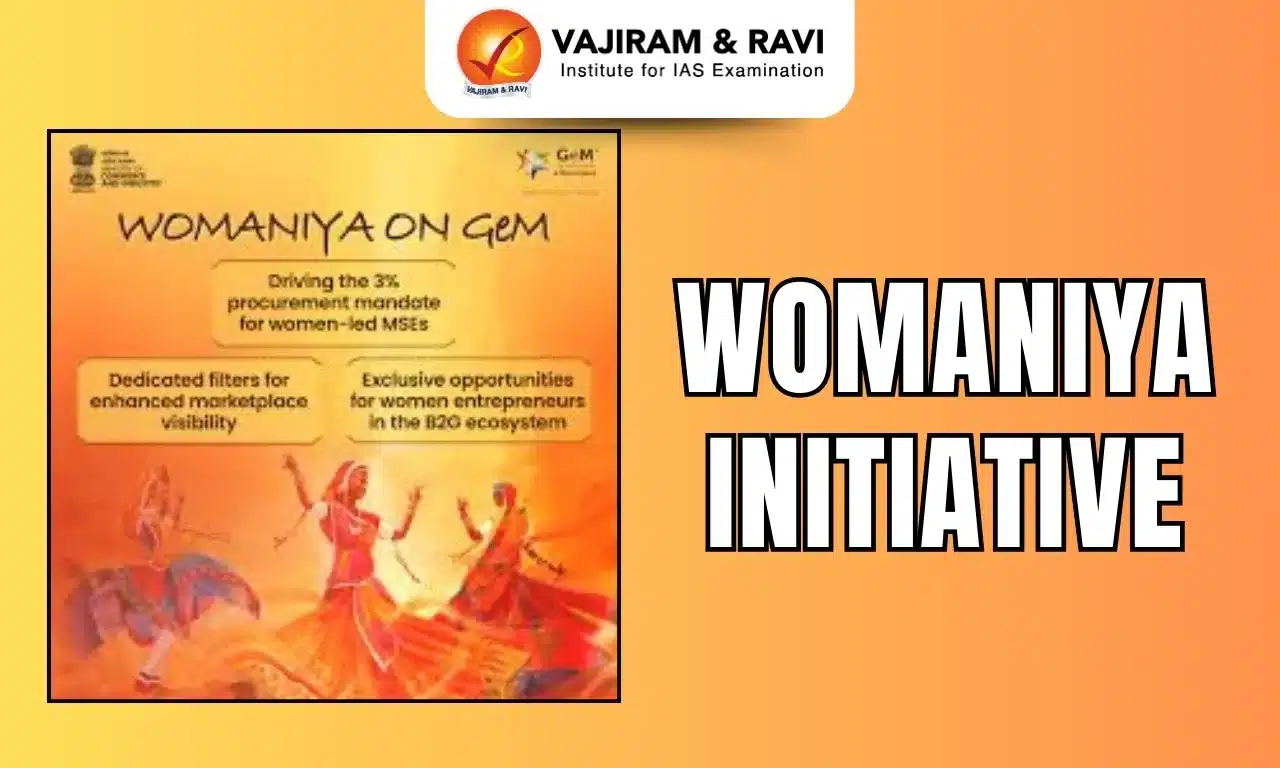
Recently, the Government e-Marketplace (GeM) marked seven years of the Womaniya initiative.

About Womaniya Initiative

  • It was launched on 14 January 2019.
  • It is a flagship programme aimed at strengthening the participation of women-led Micro and Small Enterprises (MSEs) in public procurement.
  • Womaniya was conceived to address the limited access of women entrepreneurs and Self-Help Groups (SHGs) to government markets.
  • It spurs Women entrepreneurship by aligning them with opportunities to sell their products to various Government ministries, departments and institutions.
    • By providing a direct, transparent and fully digital interface with government buyers, the initiative eliminated intermediaries and reduced entry barriers that had historically constrained participation.
  • Impact: The initiative seeks to develop women entrepreneurship to achieve gender-inclusive economic growth. 

What is a GeM Portal?

  • Government e-Marketplace, shortly known as GeM, is a digital platform that enables buying and selling of goods and services.
  • It is the Public Procurement Portal for procurement of goods and services for all Central Government and State Government Ministries, Departments, Public Sector Units (PSUs) and affiliated.
  • It was launched in August 2016, by the Ministry of Commerce & Industry.
  • The sole purpose of GeM is to enhance efficiency; transparency and speed in public procurement.

Source: PIB

Womaniya Initiative FAQs

Q1: What is the primary objective of the Womaniya Initiative?

Ans: Strengthen participation of women-led MSEs in public procurement

Q2: Which platform is used to implement the Womaniya Initiative?

Ans: Government e-Marketplace (GeM)

Intrinsically Disordered Proteins

Intrinsically Disordered Proteins

Intrinsically Disordered Proteins Latest News

Researchers have developed a deep-learning tool named Disobind that can predict how intrinsically disordered proteins (IDP) latch on to their binding partners.

About Intrinsically Disordered Proteins

  • Intrinsically disordered proteins are defined as proteins or regions of proteins that lack a fixed or ordered three-dimensional structure under biological conditions.
  • Other Names: Also called natively unfolded or intrinsically unstructured proteins.
  • These are important for cellular signaling and regulation.

Functions of Intrinsically Disordered Proteins

  • They are shape shifting molecules vital to cellular communication.
  • They don’t form a fixed structure.
  • They guide signalling networks.
  • They help proteins move and find partners within the cell, regulate which genes are switched on or off,
  • IDP supports protein folding and quality control, and assembles flexible cellular hubs called condensates.

Key Facts about Disobind Tool

  • It is developed by the researchers of National Centre for Biological Sciences (NCBS), Tata Institute of Fundamental Research, Bengaluru.

Features of Disobind Tool

  • It is open-source and freely available for researchers worldwide.
  • It analyses the protein sequences and uses protein language models (a form of AI trained on millions of known protein sequences).
  • No structural info needed: It does not require any structural information or sequence alignments, making it super convenient.
  • High accuracy: Disobind outperformed popular tools like AlphaFold-multimer and AlphaFold3 in tests on new protein pairs.
  • Disobind delivered consistently higher accuracy when tested on new protein pairs it had not seen before.
  • Applications of the tool could span from disease biology to drug design.

Source: TH

Intrinsically Disordered Proteins FAQs

Q1: What is a characteristic feature of Intrinsically Disordered Proteins (IDPs)?

Ans: Lack of fixed 3D structure

Q2: What is a key function of IDPs in cellular processes?

Ans: Regulating gene expression

Root Wilt Disease

Root Wilt Disease

Root Wilt Disease Latest News

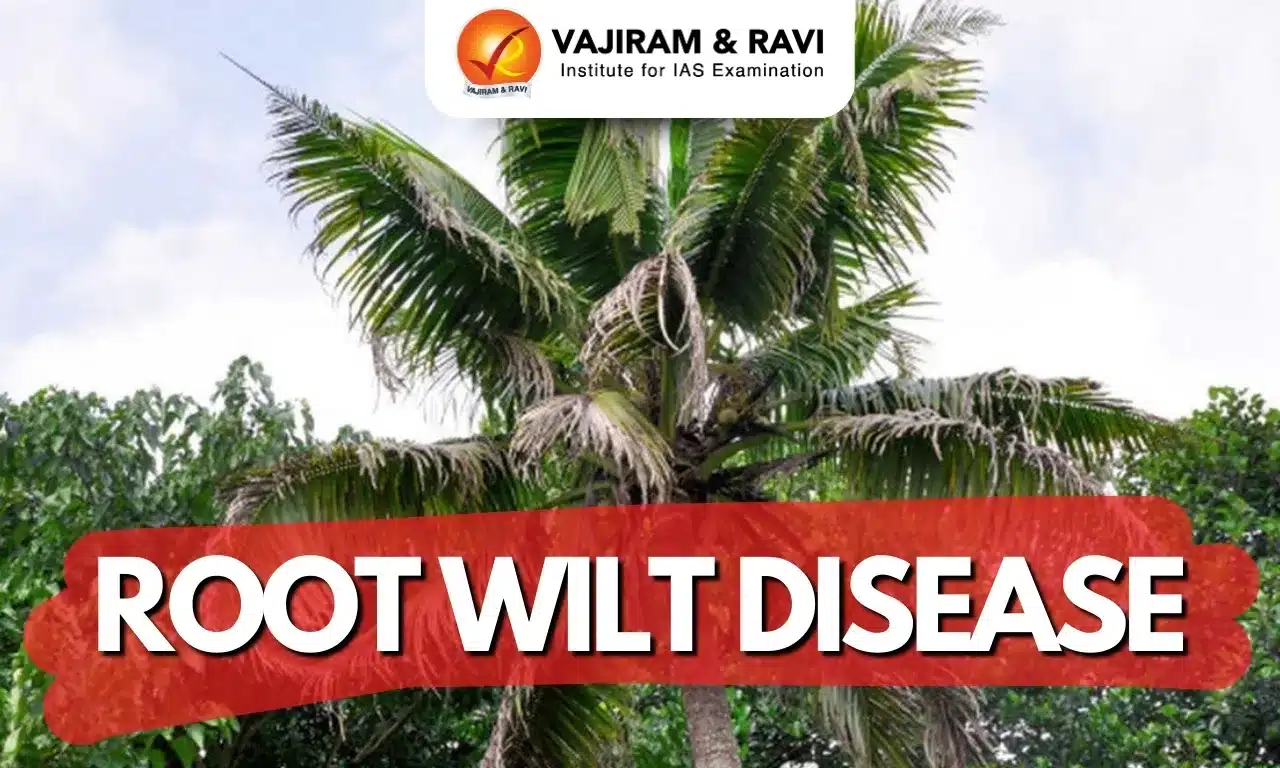
Recently, phytoplasma-induced root wilt disease has destroyed large tracts of traditional coconut-growing areas in Karnataka, Tamil Nadu, and Kerala states.

About Root Wilt Disease

  • It is caused by phytoplasma (bacteria) which is one of the most devastating diseases of coconut palms.
  • Origin: It is classified as a non-fatal disease of coconut palm and was first identified more than a century and a half ago in Erattupetta in Kerala.
  • It is not lethal; but it debilitates the production potential of the palms.
  • Transmission: The disease spreads through insect vectors, aided by the movement of wind and uninterrupted stretches of coconut plantations. 
  • The root (wilt) disease occurs in all major soil types but the spread is faster in sandy, sandy loam and alluvial soil.
  • Factors accelerating spread: Erratic temperatures, especially extremes, and the rise of new sucking pests, particularly whiteflies, have significantly accelerated its spread.
  • Symptoms of Root Wilt Disease
    • Tapering of the terminal portion of the trunk of Coconut Tree.
    • Reduction of leaf size
    • Abnormal bending of leaflets termed as flaccidity.
    • Flowering is delayed and yield is considerably reduced.
    • The characteristic symptom is the flaccidity of leaflets.
  • Impact: The tree quickly becomes unproductive, sheds all its nuts, and assumes a distorted appearance.
  • Management: Breeding resistant and tolerant varieties remains one of the most successful tools for managing phytoplasma.

Source: TH

Root Wilt Disease FAQs

Q1: What is the causative agent of Root Wilt Disease?

Ans: Phytoplasma

Q2: Which crop is affected by Root Wilt Disease?

Ans: Coconut

Vitamin A

Vitamin A

Vitamin A Latest News

Researchers recently uncovered new ways a vitamin A-derived molecule can interfere with the immune system's ability to fight cancer.

About Vitamin A

  • It is a fat-soluble vitamin primarily stored in the liver.
  • There are two types of vitamin A that are found in the diet.
    • Preformed vitamin A is found in animal products such as meat, fish, poultry, and dairy foods.
    • Precursors to vitamin A, also known as provitamin A, are found in plant-based foods such as fruits and vegetables. 
      • These compounds are converted to the active form in your body. 
      • The most common type of provitamin A is beta-carotene.
  • Foods with the highest levels of vitamin A include:
    • Beef liver and other organ meats
    • Some types of fish such as herring and salmon and cod fish oil
    • Eggs
    • Dairy products such as cheese and fortified milk 
    • Fortified breakfast cereals
    • Orange and yellow vegetables and fruits, such as carrots, sweet potatoes, mangos, and cantaloupe
    • Broccoli, spinach, and most dark green, leafy vegetables
  • Function:
    • Vitamin A helps form and maintain healthy teeth, skeletal and soft tissue, mucus membranes, and skin. 
    • It is also known as retinol because it produces the pigments in the retina of the eye.
    • Vitamin A promotes good eyesight, especially in low light. 
    • It also has a role in healthy pregnancy and breastfeeding.
  • If you do not get enough vitamin A, you have more risk of eye problems such as:
    • Reversible night blindness
    • Non-reversible corneal damage known as xerophthalmia
    • It can also lead to hyperkeratosis or dry, scaly skin.
  • Vitamin A deficiency can be treated with vitamin A supplements

Source: SD

Vitamin A FAQs

Q1: What type of vitamin is Vitamin A?

Ans: Vitamin A is a fat-soluble vitamin.

Q2: Where is Vitamin A primarily stored in the body?

Ans: Vitamin A is primarily stored in the liver.

Q3: What role does Vitamin A play in eye health?

Ans: Vitamin A helps produce retinal pigments and promotes good eyesight, especially in low light.

Q4: Why is Vitamin A also known as retinol?

Ans: It is known as retinol because it produces pigments in the retina of the eye.

Q5: Which vegetables and fruits are rich in Vitamin A?

Ans: Carrots, sweet potatoes, mangos, cantaloupe, broccoli, spinach, and dark green leafy vegetables are rich in Vitamin A.

Gegeneophis Valmiki

Gegeneophis Valmiki

Gegeneophis Valmiki Latest News

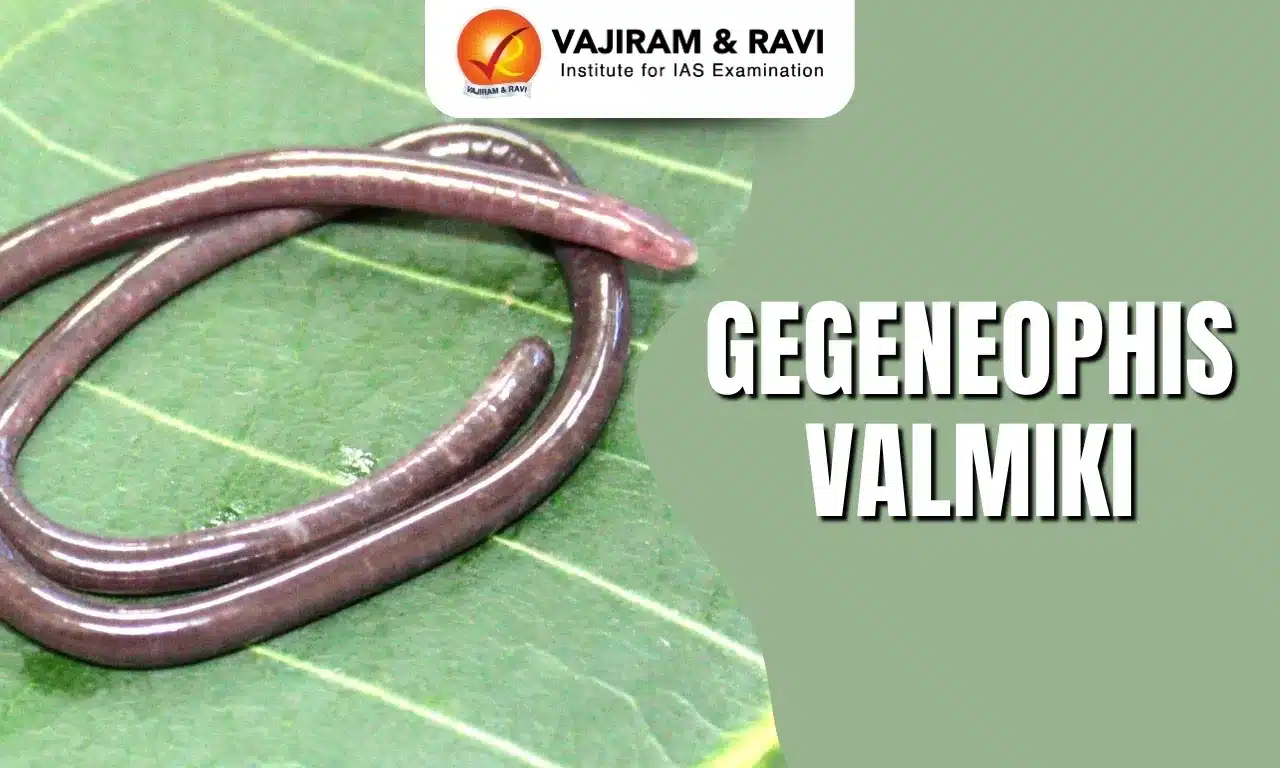
Indian scientists recently discovered a rare subterranean amphibian species in the northern Western Ghats of Maharashtra and named it Gegeneophis valmiki.

About Gegeneophis valmiki

  • It is a rare, subterranean amphibian species, discovered in the northern Western Ghats of Maharashtra.
  • The name Gegeneophis valmiki honors the historic Maharshi Valmiki Mandir located near the discovery site. 
  • It belongs to the genus Gegeneophis, commonly called blind caecilians.
    • Caecilians, often calledhidden amphibians”, are limbless, worm-like creatures that spend most of their lives underground. 
    • They look and move so much like earthworms.
    • They do not croak or call like frogs, and their eyes are buried beneath layers of skin and bone, making field identification exceptionally difficult.
    • Beyond rarity, caecilians play an important ecological role. 
    • Their burrowing improves soil aeration and structure, their feeding helps regulate soil invertebrates, and they form part of the food web for birds, reptiles and small mammals.
    • They also represent a key evolutionary link between aquatic and terrestrial vertebrates.
    • Globally, caecilians account for just 231 of the world’s 8,983 known amphibian species. 
    • India records 42 caecilian species among its 457 amphibians.
    • The Western Ghats alone are home to 26 endemic caecilians, with 11 belonging to the Gegeneophis group.
    • Gegeneophis valmiki is the first addition to its genus in more than a decade.

Source: TOI

Gegeneophis Valmiki FAQs

Q1: What is Gegeneophis valmiki?

Ans: It is a rare, subterranean amphibian species.

Q2: Where was Gegeneophis valmiki discovered?

Ans: In the northern Western Ghats of Maharashtra.

Q3: To which genus does Gegeneophis valmiki belong?

Ans: The genus Gegeneophis.

Q4: What are members of the genus Gegeneophis commonly called?

Ans: Blind caecilians.

Q5: What type of animals are caecilians?

Ans: Limbless, worm-like amphibians that live mostly underground.

Conference of Speakers and Presiding Officers of the Commonwealth (CSPOC)

Conference of Speakers and Presiding Officers of the Commonwealth (CSPOC)

Conference of Speakers and Presiding Officers of the Commonwealth (CSPOC) Latest News

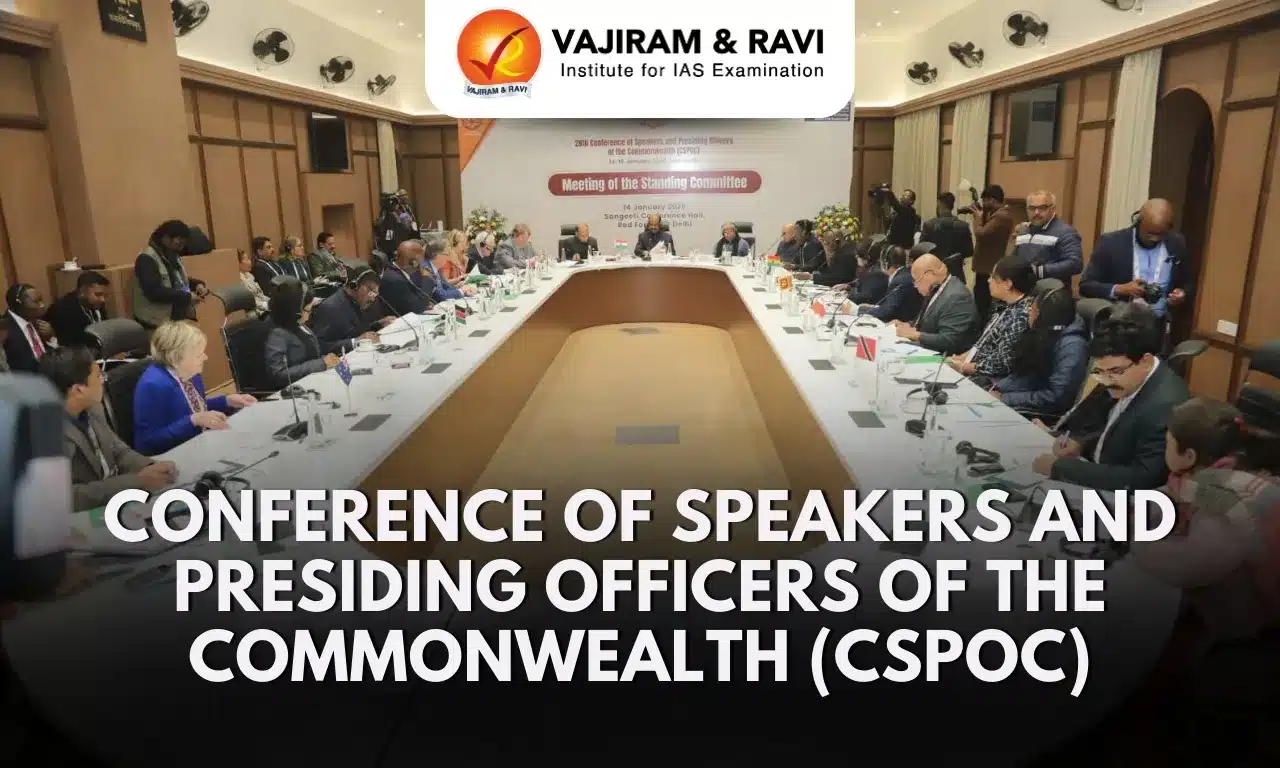
The Prime Minister recently inaugurated the 28th Conference of Speakers and Presiding Officers of the Commonwealth (CSPOC) in New Delhi, highlighting India's commitment to sharing open-source tech platforms with the Global South.

About Conference of Speakers and Presiding Officers of the Commonwealth (CSPOC)

  • It brings together the Speakers and Presiding Officers of the national parliaments of the independent sovereign states of the Commonwealth. 
  • It was created in 1969 as an initiative of the then Speaker of the House of Commons of Canada, Lucien Lamoureux. 
  • Since its inception, Canada has provided CSPOC with a secretariat to support its activities.
  • The Conference is an independent group and has no formal affiliation with the Commonwealth Parliamentary Association, the Commonwealth Secretariat, or the Commonwealth Heads of Government. 
  • CSPOC operates on a two-year cycle, holding a conference of the full membership every two years, usually early in January, and a meeting of the Standing Committee at the same time the intervening year.
  • The Conference aims to:
    • Maintain, foster, and encourage impartiality and fairness on the part of Speakers and Presiding Officers of Parliaments;
    • Promote knowledge and understanding of parliamentary democracy in its various forms; and
    • Develop parliamentary institutions

What is the Commonwealth?

  • It is a voluntary association of 56 independent countries, almost all of which were formerly under British rule.
  • It differs from other international bodies such as the United Nations or the World Trade Organization. 
  • It has no formal constitution or bylaws. 
  • The members have no legal or formal obligation to one another; they are held together by shared traditions, institutions, and experiences as well as by economic self-interest. 
  • Commonwealth action is based upon consultation between members, which is conducted through correspondence and through conversations in meetings.
  • The values and aspirations which unite the members of the Commonwealth are reflected in the Commonwealth Charter, adopted in December 2012. 
    • The Charter expresses the commitment of Commonwealth members to the development of free and democratic societies, good governance, human rights, the rule of law, sustainable development, and the promotion of peace and prosperity. 
  • The work of the Commonwealth is administered by the Commonwealth Secretariat based in London.
  • The last countries to join the Commonwealth were Gabon and Togo in 2022.
  • India is the largest member state of the Commonwealth, with nearly 60% of the total population of the association. 

Source: ET

Conference of Speakers and Presiding Officers of the Commonwealth (CSPOC) FAQs

Q1: What is the Conference of Speakers and Presiding Officers of the Commonwealth (CSPOC)?

Ans: It is a forum that brings together the Speakers and Presiding Officers of the national parliaments of independent sovereign Commonwealth states.

Q2: When was Conference of Speakers and Presiding Officers of the Commonwealth (CSPOC) created?

Ans: It was created in 1969 as an initiative of the then Speaker of the House of Commons of Canada, Lucien Lamoureux.

Q3: Which country has provided the secretariat support to Conference of Speakers and Presiding Officers of the Commonwealth (CSPOC) since its inception?

Ans: Canada

Q4: Is Conference of Speakers and Presiding Officers of the Commonwealth (CSPOC) formally affiliated with the Commonwealth Parliamentary Association?

Ans: No, CSPOC is an independent group with no formal affiliation.

Daily Editorial Analysis 17 January 2026

Daily Editorial Analysis

Budget 2026-27 Must Keep the Growth Momentum

Context

  • India entered 2025 amid global economic uncertainty, facing headwinds that many feared would derail its growth trajectory.
  • Concerns were reinforced when the United States imposed 50% tariffs, prompting speculation that India’s export-led sectors would face significant strain.
  • Yet, contrary to these expectations, the Indian economy proved resilient. This resilience was not accidental but rooted in sustained reform efforts, which PM Modi described as a continuous national mission.
  • The upcoming 2026–27 Budget is therefore expected to reinforce this mission by deepening reforms, enhancing competitiveness, and strengthening domestic levers of growth.

Fiscal Strategy for Growth

  • A central policy challenge ahead is balancing growth-enhancing expenditure with prudent fiscal consolidation.
  • Strengthening the domestic engines of consumption, investment, and productivity requires targeted public spending, especially in infrastructure and social sectors, without undermining fiscal credibility.
  • Maintaining India’s current glide path of fiscal consolidation is critical to containing debt risks and sustaining macroeconomic stability, particularly during a time of volatile global capital flows.

Defence Sector as an Industrial and Strategic Lever

  • One of the most significant reform thrusts has been in national defence, not only for security reasons but also as a catalyst for industrialisation.
  • Continued prioritisation of capital expenditure is necessary to modernise defence capabilities, with proposals to increase the share of capital outlays to 30% in the coming budget.
  • Enhanced funding for the Defence Research and Development Organisation would fortify indigenous innovation, while new defence industrial corridors, building on progress in Uttar Pradesh and Tamil Nadu, could geographically diversify industrial capacity.
  • An eastern corridor would align defence production with broader regional development goals.
  • Private enterprises have also emerged as key drivers of defence exports, accounting for nearly two-thirds of exports in 2024–25.
  • Institutional support through a defence export promotion council could strengthen coordination across ministries, foreign missions, defence firms and foreign buyers.
  • Such coordination is essential for meeting India’s ambitious export target of ₹50,000 crore by 2028–29.

Strategic Sectors and Critical Mineral Supply Chains

  • India’s industrial transition toward clean energy, advanced manufacturing, electric mobility, semiconductors and other strategic technologies is reshaping resource requirements.
  • The establishment of the National Critical Mineral Mission in 2025 has given India a strategic platform to secure minerals essential for these industries.
  • Complementing this mission with a tailings recovery programme and dedicated financing could further enhance resource security, reduce import dependence, and foster a circular economy for critical minerals, elements increasingly central to technological competitiveness.

Export Competitiveness and Trade Facilitation

  • In a period of global trade fragmentation, export competitiveness will require more than market access and exchange rate stability.
  • Schemes such as the Remission of Duties and Taxes on Exported Products remain vital in offsetting embedded costs that erode price competitiveness.
  • Significantly raising the scheme's budgetary allocation would support exporters facing tightening global margins.
  • Reducing tariff complexity and rationalising customs slabs would address inverted duty structures that currently penalize domestic manufacturers and discourage value addition within India.

Deepening Capital Markets and Financial Infrastructure

  • Sustained growth also depends on expanding long-term financing beyond the banking sector.
  • Deepening corporate bond markets is critical for large-scale infrastructure, manufacturing, and urban development.
  • Policy measures such as widening issuer eligibility, encouraging large firms to issue market instruments, increasing investment caps for insurers, and adjusting rating thresholds could boost market liquidity and diversify funding sources.
  • Permitting provident funds to invest in non-convertible debentures issued by infrastructure and real estate trusts would mobilise long-term domestic capital for sectors traditionally reliant on public financing.

Institutional Efficiency and Dispute Resolution

  • A modern economy requires efficient dispute resolution systems.
  • India’s direct tax appellate system faces significant pendency, especially at the Commissioner of Income Tax (Appeals) level, where vacancies approach 40%.
  • A dual-track disposal system that differentiates cases by complexity and value could accelerate resolution, reduce uncertainty for businesses, and improve tax administration credibility, an underrated component of competitiveness.

Emerging Technologies and Industrial Scale

  • Sectors such as drones highlight India’s evolving innovation ecosystem.
  • Global competitiveness in the drone sector will require both R&D and scale.
  • Policy proposals for enhancing production-linked incentives and establishing a dedicated R&D fund would accelerate the commercialisation cycle and bolster export readiness, mirroring approaches adopted successfully by major manufacturing economies.

Conclusion

  • As India prepares the 2026–27 Budget, its economic priorities are clear: sustain momentum, strengthen structural competitiveness, and crowd in private investment.
  • This requires a combination of fiscal discipline, policy certainty, and reform continuity.
  • By addressing bottlenecks across defence, manufacturing, critical minerals, export policy, financial markets, and institutional efficiency, India can fortify its domestic growth engines and enhance its global standing.

Budget 2026-27 Must Keep the Growth Momentum FAQs

 Q1. Why did India’s economy remain resilient in 2025 despite global challenges?
Ans. India’s economy remained resilient because the government sustained its reform efforts and strengthened domestic growth drivers.

Q2. What fiscal approach is recommended for the 2026–27 Budget?
Ans. The recommended fiscal approach is to increase productive expenditure while maintaining the fiscal consolidation path.

Q3. Why is the defence sector considered important for growth?
Ans. The defence sector is important because it promotes indigenisation, boosts exports, and stimulates industrial development.

Q4. How can India improve export competitiveness?
Ans. India can improve export competitiveness by increasing scheme allocations, simplifying customs tariffs, and reducing inverted duty structures.

Q5. What financial reform can support long-term capital formation?
Ans. Deepening the corporate bond market can support long-term capital formation by diversifying financing beyond banks.

Source: The Hindu

Daily Editorial Analysis 17 January 2026 FAQs

Q1: What is editorial analysis?

Ans: Editorial analysis is the critical examination and interpretation of newspaper editorials to extract key insights, arguments, and perspectives relevant to UPSC preparation.

Q2: What is an editorial analyst?

Ans: An editorial analyst is someone who studies and breaks down editorials to highlight their relevance, structure, and usefulness for competitive exams like the UPSC.

Q3: What is an editorial for UPSC?

Ans: For UPSC, an editorial refers to opinion-based articles in reputed newspapers that provide analysis on current affairs, governance, policy, and socio-economic issues.

Q4: What are the sources of UPSC Editorial Analysis?

Ans: Key sources include editorials from The Hindu and Indian Express.

Q5: Can Editorial Analysis help in Mains Answer Writing?

Ans: Yes, editorial analysis enhances content quality, analytical depth, and structure in Mains answer writing.

Kaziranga National Park

Kaziranga National Park

Kaziranga National Park Latest News

The Prime Minister of India is scheduled to flag off a 34.5-kilometre elevated corridor in Assam’s Kaziranga National Park.

About Kaziranga National Park

  • Location: It is situated between the Brahmaputra River and the Karbi (Mikir) Hills, in Assam.
  • It is the single largest undisturbed and representative area in the Brahmaputra Valley floodplain.
  • In 1985, the park was declared a World Heritage Site by UNESCO.
  • Terrain: It is of sheer forest, tall elephant grass, rugged reeds, marshes, and shallow pools.
  • Rivers: The River Diffalu, a tributary of the Brahmaputra, flows through the National Park while another tributary, Moradifalu, flows along its southern boundary.
  • Flora: It is primarily famous for its dense and tall elephant grasses intermixed with small swamplands. It also includes an abundant cover of water lilies, water hyacinths and lotus.
  • Fauna: It is home to species like Rhino, Tiger, Eastern swamp deer, Elephant, Buffalo, Hoolock gibbon, Capped langur,
    • The Gangetic River dolphin is commonly found in the habitat.
    • It is inhabited by the world’s largest population of one-horned rhinoceroses, as well as many mammals.

Source: IE

Kaziranga National Park FAQs

Q1: Where is Kaziranga National Park located?

Ans: Assam

Q2: What is Kaziranga National Park famous for?

Ans: One-horned rhinoceros conservation

Startup India @10 – From Policy Initiative to National Innovation Revolution

Startup India @10

Startup India @10 Latest News

  • On January 16, 2025 (National Startup Day), the Prime Minister of India addressed the startup ecosystem on the 10th anniversary of the Startup India scheme, launched on January 16, 2016
  • He highlighted record growth in startup registrations, changing attitudes towards risk-taking, and India’s ambition for global leadership in deep tech and indigenous AI.

The Startup India Scheme

  • It is a flagship Government of India initiative, launched in 2016, to foster a robust ecosystem for innovation and entrepreneurship, transforming India into a nation of job creators through support pillars
    • Simplification & Handholding, 
    • Funding Support, and 
    • Incubation & Industry-Academia Partnership. 
  • It offers benefits like tax exemptions, easier compliance, seed funding, and mentorship to eligible startups, promoting economic growth and large-scale job creation. 

Key Highlights of Startup India’s Decade-long Journey

  • Record growth in startup ecosystem:
    • Nearly 44,000 startups registered in 2025 — highest annual addition since inception. India is now the 3rd largest startup ecosystem globally.
    • Growth trajectory: Less than 500 startups, and 4 unicorns in 2014. Over 2 lakh DPIIT-recognised startups, and about 125 active unicorns in 2025.
    • Impact: Startups → Unicorns → IPOs → creates a virtuous cycle of job creation, and innovation-led growth.
  • Cultural shift - Mainstreaming risk-taking:
    • Risk-taking is now socially accepted and respected, unlike earlier stigma. Shift from job-seeking mindset to job-creating mindset.
    • Expansion of entrepreneurship beyond elite families to middle class and poor - boosting entrepreneurial culture, risk capital, and demographic dividend.
  • Government support and funding ecosystem:
    • ₹25,000 crore invested via Fund of Funds for Startups (FFS).
    • Fund of Funds 2.0 (₹10,000 crore) approved in April 2025 to focus on deep tech sectors (Artificial Intelligence (AI), Machine Learning, Quantum technologies, Defence & Aerospace).
    • Objective: To provide patient risk capital due to long gestation periods.
  • Strategic focus on indigenous AI and manufacturing:
    • PM’s call for indigenous AI solutions developed by Indian talent and hosted on Indian servers (data sovereignty).
    • IndiaAI Mission: 38,000+ GPUs onboarded to democratise access to computing power.
    • Emphasis on: Manufacturing, global-standard products, and leadership in new technologies (not mere partnerships) - boosting strategic autonomy, economic security, and data sovereignty.
  • Inclusivity in the startup revolution:
    • Women-led startups: For example, over 45% recognised startups have at least one woman director/partner. India is the 2nd largest ecosystem of women-led startups globally.
    • Geographical spread: Rapid rise in tier-2, tier-3 cities and rural areas. Focus on solving local and grassroots problems - promoting inclusive growth, women entrepreneurship, and regional balance.
  • Regulatory reforms and ease of doing business:
    • Jan Vishwas Act: Decriminalised over 180 provisions - promoting Ease of Doing Business, and trust-based governance.
    • Key enablers: Self-certification under multiple laws, simplified mergers and exits, and reduction in Inspector Raj.
    • Innovation ecosystem strengthened through Atal Tinkering Labs, hackathons, and incubation support.
  • Sectoral breakthroughs enabled by policy support:
    • Defence and space: iDEX enabled startup participation in defence procurement. The space sector opened to private players, with about 200 space startups gaining global approvals.
    • Drone sector: Removal of outdated rules unlocked innovation.
    • Government e-Marketplace (GeM): Nearly 35,000 startups and small businesses are onboarded on GeM, and have received more than 5 lakh orders worth over Rs 50,000 crore, highlighting public procurement reforms.

Challenges and Way Ahead

  • Sustaining funding: During global economic uncertainties. Expand access to risk capital and advanced infrastructure (GPUs, labs).
  • Bridging deep tech talent and R&D gaps: Strengthen deep tech ecosystems through academia–industry collaboration. Integrate startups with national missions (AI, defence, space, climate tech).
  • Ensuring quality scale-up: Enhance domestic manufacturing under startup-led innovation.
  • Managing cybersecurity: Ensuring data governance in AI-driven growth.
  • Avoiding regional and sectoral concentration: Focus on export-oriented and globally competitive startups.

Conclusion

  • As India marks a decade of the Startup India Initiative, the country’s startup ecosystem stands at an inflection point - moving decisively from rapid expansion to sustainable scale and deeper integration with the real economy.
  • It represents not merely scale, but structural transformation built on demographic advantage, digital public infrastructure, and a sustained reform agenda. 
  • As India advances towards a $7.3 trillion economy by 2030 and the broader vision of Viksit Bharat 2047, startups are poised to remain central to the country’s development trajectory.

Source: TH | IE

Startup India @10 FAQs

Q1: How has the Startup India scheme transformed India’s entrepreneurial ecosystem over the last decade?

Ans: A cultural and structural shift from job-seeking to job-creation, expanding startups and making India the world’s third-largest startup ecosystem.

Q2: Why is the government focusing on deep-tech startups under the Fund of Funds 2.0?

Ans: They require patient risk capital due to long gestation periods and are critical for India’s strategic autonomy in AI, defence.

Q3: What is the significance of indigenous AI development for India’s economic and strategic security?

Ans: Indigenous AI developed by Indian talent on Indian servers strengthens data sovereignty, reduces external dependence.

Q4: How has regulatory reform contributed to the success of India’s startup ecosystem?

Ans: Measures like the Jan Vishwas Act, self-certification, have lowered compliance burden and fostered trust-based innovation.

Q5: What is the role of inclusivity in strengthening India’s startup revolution?

Ans: Increased participation of women, rural youth, and tier-2/3 cities has broadened innovation, and ensured regional balance.

Pax Silica and MSP: Why India Joined Late

Pax Silica

Pax Silica Latest News

  • India’s belated induction into US-led initiatives like Minerals Security Partnership and Pax Silica has evoked a sense of déjà vu among policymakers. 
  • As with MSP—where India joined a year after launch—its entry into Pax Silica came after the initiative was already underway, seen largely as a conciliatory gesture amid efforts to steady bilateral ties.
  • The significance lies in what these groupings signal about the emerging global tech order, especially as countries reorganise supply chains in strategic sectors with Chinese presence.
  • Platforms like Pax Silica could shape rules by addressing chokepoints in inputs such as magnets and critical minerals—effectively determining where leverage will sit.
  • India’s initial exclusion, followed by a late inclusion, carries a subtle message: strategic goodwill alone may not suffice. 
  • To be a partner of first choice in US-led initiatives, India must be seen as bringing tangible capabilities and value to the table in shaping resilient, rules-setting supply chains.

About Pax Silica

  • Pax Silica is a US-led strategic initiative aimed at countering China’s dominance in next-generation technologies. 
  • It seeks to reduce “coercive dependencies” and protect materials and capabilities foundational to artificial intelligence, enabling aligned nations to develop and deploy transformative technologies at scale.

Objectives and Scope

  • According to the US State Department, Pax Silica is designed to build a secure, prosperous, and innovation-driven silicon supply chain.
  • It aims to ensure access across the entire AI stack—from critical minerals and semiconductor chips to security and logistics infrastructure.

Key Thrust Areas Under Pax Silica

  • Under Pax Silica, participating countries aim to:
    • Pursue joint ventures and strategic co-investments
    • Protect sensitive technologies and critical infrastructure from undue foreign control
    • Build trusted technology ecosystems spanning ICT systems, fibre-optic cables, data centres, foundational AI models, and applications

Founding Members and Their Strengths

  • The inaugural Pax Silica Summit brought together Japan, the Republic of Korea, Singapore, the Netherlands, the United Kingdom, Israel, the United Arab Emirates, and Australia
  • These countries collectively host key companies and investors that power the global AI and semiconductor supply chain, reflecting their technological or resource-based leverage.

Why India Was Initially Excluded from Pax Silica

  • Pax Silica aims to secure supply chains spanning critical minerals, energy inputs, advanced manufacturing, and semiconductors. 
  • India’s initial absence reflects perceptions that it lacks decisive edge technologies or control over key resources central to the grouping’s objectives.

What the Selected Countries Bring

  • Each of the eight founding members offers a distinct strategic advantage:
    • The Netherlands controls specialised lithography machines vital for chipmaking.
    • Japan and South Korea bring deep technology and manufacturing expertise.
    • Australia contributes critical mineral reserves and mining capabilities.
    • Israel is a global innovation and technology hub.
    • Singapore serves as a major transhipment and logistics hub.
    • The UK offers strengths in services and technology.
    • The UAE has rapidly built AI capabilities and supporting infrastructure.

A Familiar Pattern from MSP

  • A similar logic shaped the initial membership of the Minerals Security Partnership, where early partners included countries with clear mineral, technology, or institutional advantages. 
  • India joined later, despite its efforts to position itself as a node in global supply-chain realignment as firms diversify away from China.

The Takeaway for India

  • The common thread among the founding members is a tangible lead in AI or semiconductor supply chains—an area where India currently lacks comparable processing capacity and expertise. 
  • As with earlier initiatives such as the MSP, this gap explains India’s absence at the outset.
  • The exclusion underscores a consistent message: entry into US-led strategic groupings hinges on demonstrable capabilities and leverage—not just intent. 
  • To be a first-choice partner, India must strengthen its control over critical inputs, technologies, or platforms that shape supply-chain rules.

Shared Challenge: China’s Critical Minerals Dominance

  • Experts point out that China’s dominance in critical minerals has created sharp global price gaps, disadvantaging non-Chinese supply chains. 
  • While this opens space for India to attract US investment, it also raises risks of Chinese coercion as India deepens alignment with Washington.
  • US Treasury Secretary Scott Bessent framed China’s export controls as “China versus the rest of the world,” calling for support from Europe, India, and Asian democracies.
  • Despite this rhetoric and shared concerns, India remained outside Pax Silica’s initial list, underscoring a gap between strategic alignment and perceived capabilities.

Source: IE | IE

Pax Silica FAQs

Q1: What is Pax Silica?

Ans: Pax Silica is a US-led initiative to secure AI and semiconductor supply chains by reducing dependence on China and coordinating trusted partners across minerals, chips, and logistics.

Q2: Why is Pax Silica important for India?

Ans: Pax Silica matters for India because it signals where future leverage in AI, semiconductors, and critical minerals will lie as countries reshape global technology supply chains.

Q3: Why did India join Pax Silica late?

Ans: India joined Pax Silica late because it lacks strong processing capacity, edge technologies, and control over critical inputs compared to founding members with established leverage.

Q4: How is Pax Silica similar to MSP?

Ans: Pax Silica mirrors MSP in prioritising countries with tangible capabilities in minerals and technology, where India was initially excluded and later admitted after diplomatic lobbying.

Q5: What is the key lesson from Pax Silica for India?

Ans: Pax Silica shows India must build concrete capabilities in critical minerals, processing, and advanced manufacturing to be a first-choice partner in US-led strategic groupings.

POCSO Law and Romeo-Juliet Exception: SC’s Rethink

Pocso Law

Pocso Law Latest News

  • The Supreme Court of India has urged the Union Law Secretary to consider steps to prevent the misuse of the Protection of Children from Sexual Offences (POCSO) Act, 2012, particularly in cases involving consensual adolescent relationships.
  • While setting aside an Allahabad High Court order on age determination in a bail matter, a bench of Justices recommended exploring a “Romeo-Juliet clause”. 
  • Such a provision would exempt consensual sexual activity between teenagers close in age from criminal prosecution, an approach followed in several countries, including the US.
  • The observation comes amid a pending public interest litigation on the age of consent and reflects growing judicial concern over the blanket criminalisation of consensual sexual acts between minors under the existing POCSO framework.

POCSO Act: Balancing Child Protection and Adolescent Autonomy

  • Under the Protection of Children from Sexual Offences Act, 2012, anyone below 18 is considered a child, and the law does not recognise consent by minors.
  •  As a result, all sexual activity involving a minor is criminalised, irrespective of whether it is consensual or non-exploitative.
  • In its recent judgment, the Supreme Court of India acknowledged that while POCSO is a “solemn articulation of justice” aimed at protecting children from abuse, its misuse has created a “grim societal chasm”. 
  • The court observed that the law is often invoked by families to oppose consensual relationships between adolescents, raising concerns about over-criminalisation and the denial of young people’s autonomy.

Growing Momentum for Reform

  • The demand to amend the Protection of Children from Sexual Offences Act, 2012 has gained renewed traction through a pending public interest litigation before the Supreme Court of India concerning safeguards for women in sexual offence prosecutions.

Arguments for Adolescent Autonomy

  • Senior Advocate Indira Jaising, assisting the court as amicus curiae, has argued for either reading down the age of consent or introducing statutory exceptions. 
  • In her submissions, she contended that blanket criminalisation violates adolescents’ fundamental rights under Articles 14, 15, 19, and 21 of the Constitution.

‘Evolving Capacity’ and the Mature Minor Doctrine

  • Jaising maintained that adolescents aged 16–18 possess an “evolving capacity” to make informed decisions about sexual autonomy. 
  • Drawing on the common law “mature minor” doctrine, she argued that treating all under-18s as incapable of consent ignores scientific realities, including the biological onset of puberty.

Proposal for a Close-in-Age Exception

  • To address misuse of the law, Jaising proposed a “close-in-age” or “Romeo-Juliet” exception. 
  • Under this approach, consensual relationships between adolescents close in age—such as a 16- and 17-year-old—would not attract criminal liability, preventing unnecessary incarceration under the POCSO framework.

Union Government’s Case for Retaining the Existing Law

  • The Union Government of India has opposed any reduction in the age of consent or the creation of legislative exceptions under the POCSO Act, 2012. 
  • In its submissions before the Supreme Court of India, it argued that fixing the age of consent at 18 is a deliberate and carefully considered choice to provide an absolute protective shield for children.

Rationale: Vulnerability and Strict Liability

  • The government maintained that minors lack the legal and developmental capacity to give meaningful consent. 
  • It defended the Act’s strict liability framework—where consent is irrelevant—on the ground that children are especially vulnerable to manipulation and coercion by adults, including those in positions of trust.

Concerns Over Dilution and Misuse

  • According to the government, introducing exceptions or lowering the age of consent could create loopholes that allow child abuse and trafficking to be disguised as consensual relationships. 
  • Diluting the age threshold, it warned, would revive the very mischief the law was enacted to address.

Preference for Judicial Discretion

  • The Centre argued that relief in hard cases should come through judicial discretion exercised on a case-by-case basis, rather than through statutory dilution of protections built into the law.

Law Commission’s View

  • In 2023, the Law Commission of India also advised against lowering the age of consent to 16. 
  • However, it acknowledged the concern by recommending guided judicial discretion in sentencing for cases involving tacit consent by adolescents aged 16–18, instead of creating a blanket statutory exception.

Data Highlights Misuse and Unintended Consequences of POCSO

  • Empirical evidence supports judicial concerns over the application of the POCSO Act, 2012. 
  • A study by Enfold Proactive Health Trust and UNICEF found that nearly 25% of POCSO cases in Maharashtra, Assam, and West Bengal between 2016 and 2020 involved consensual “romantic” relationships between adolescents.
  • The data indicates frequent misuse of the law by families to control daughters’ choices, particularly in inter-caste or inter-religious relationships. 
  • Beyond legal misuse, the criminalisation of adolescent sexuality has serious public health implications. 
  • Mandatory reporting under POCSO compels doctors to inform police about underage pregnancies or sexual activity, discouraging adolescents from accessing essential sexual and reproductive healthcare due to fear of prosecution.

Conclusion

  • The Supreme Court’s recent judgment underscored that this problem cannot be resolved through case-by-case discretion alone. 
  • It signalled the need for a structural legislative solution, warning that when a law designed to protect children is misused as “a tool for exacting revenge”, the very idea of justice risks being inverted.

Source: IE | NDTV

Pocso Law FAQs

Q1: Why is the POCSO law under scrutiny?

Ans: The POCSO law is under scrutiny because it criminalises all sexual activity involving minors, including consensual adolescent relationships, leading to misuse and unjust prosecutions.

Q2: What is a Romeo-Juliet exception in POCSO law?

Ans: A Romeo-Juliet exception in POCSO law would exempt consensual sexual relationships between adolescents close in age from criminal liability for statutory rape.

Q3: What did the Supreme Court observe about POCSO law?

Ans: The Supreme Court said the POCSO law, though meant to protect children, is often misused by families, creating a societal chasm and criminalising adolescent autonomy.

Q4: What arguments support reforming the POCSO law?

Ans: Reform advocates argue the POCSO law violates adolescents’ fundamental rights, ignores evolving capacity, deters healthcare access, and leads to incarceration in non-exploitative cases.

Q5: Why does the government oppose changes to the POCSO law?

Ans: The government says strict POCSO law protections are essential to prevent child abuse, warning that exceptions could create loopholes enabling exploitation and trafficking.

Dardanelles Strait

Dardanelles Strait

Dardanelles Strait Latest News

Southbound ship traffic is set to resume in Turkey's Dardanelles Strait after a tanker experienced engine failure recently.

About Dardanelles Strait

  • It is a very important narrow waterway in northwestern Turkey. 
  • It connects the Aegean Sea (an arm of the Mediterranean Sea) to the Sea of Marmara. 
  • This strait acts like a natural border, separating the continent of Asia on its eastern side from Europe on its western side. 
  • The strait is named for the ancient city of Dardanus. In ancient times it was called the Hellespont, meaning “Helle’s sea,” in memory of Helle, a mythical princess.
  • The Gallipoli Peninsula lies along the western side of the Dardanelles Strait.
  • It is one of the narrowest straits used for international navigation. It is about 61 kilometers long and only 1.2 to 6 kilometers wide. 
  • It is entirely within Turkey. It forms a key part of the Turkish Straits, which also include the Bosphorus Strait and the Sea of Marmara.
    • The Bosporus connects the Sea of Marmara with the Black Sea. 
    • These waterways are the only sea route between the Black Sea and the Mediterranean Sea.
  • It is a vital shipping lane for countries around the Black Sea, like Russia and Ukraine. 
  • Their ships must pass through the Dardanelles to reach the Mediterranean Sea and the rest of the world's oceans.
  • Major ports along its shores include Gallipoli, Eceabat, and Çanakkale, all in Turkey.

Source: REUT

Dardanelles Strait FAQs

Q1: The Dardanelles Strait is located in which country?

Ans: Turkey

Q2: The Dardanelles Strait connects which water bodies?

Ans: It connects the Aegean Sea (an arm of the Mediterranean Sea) to the Sea of Marmara.

Q3: The Dardanelles Strait was known by what name in ancient times

Ans: Hellespont

Q4: The Dardanelles and Bosporus together provide the only sea route between which two seas?

Ans: Black Sea and Mediterranean Sea.

Guidelines on Religious Structures in Wildlife Sanctuaries

Wildlife Sanctuaries

Wildlife Sanctuaries Latest News

  • An apex wildlife advisory body has prepared draft guidelines regulating the diversion of forest land inside wildlife sanctuaries for religious structures. 

Background: Protected Areas and Legal Framework in India

  • India’s wildlife sanctuaries and national parks are governed under the Wildlife (Protection) Act, 1972, which aims to protect wildlife habitats from human-induced pressures. 
  • Any non-forest activity within protected areas is highly regulated and generally discouraged unless it meets strict conservation criteria.
  • Additionally, the Forest (Conservation) Act, 1980, places restrictions on the diversion of forest land for non-forest purposes. 
  • As per this law, forest land diversion after 1980 requires explicit approval from the central government, reinforcing the principle that ecological protection must take precedence over development or encroachment.

Role of the National Board for Wildlife

  • The Standing Committee of the National Board for Wildlife (SCNBWL) is an apex advisory body under the Ministry of Environment, Forest and Climate Change. 
  • It evaluates proposals related to infrastructure and land-use changes within protected wildlife habitats.
  • The Committee’s recommendations play a critical role in determining whether activities within sanctuaries align with conservation objectives. 
  • The formulation of guidelines on religious structures falls within this mandate, given the potential ecological consequences of such constructions.

Context for Framing the Guidelines

  • The issue gained prominence following a proposal involving the Balaram Ambaji Wildlife Sanctuary in Gujarat, where diversion of forest land was sought for a religious establishment. 
  • Although initial approval was granted, it was later revoked after concerns were raised about the absence of recorded forest rights and the risk of setting a precedent.
  • This episode highlighted the lack of a uniform framework to assess similar proposals across States. 
  • It also exposed governance gaps in cases where religious sites exist within forested areas but lack legal recognition in settlement records.

Key Provisions of the Draft Guidelines

  • The draft guidelines prepared by the apex wildlife body lay down the following principles:
    • Post-1980 constructions on forest land are to be treated as encroachments as a general rule.
    • Regularisation of existing structures may be considered only in exceptional cases where the State government provides a reasoned and documented justification.
    • Expansion of religious structures within sanctuaries is generally prohibited. Limited expansion may be allowed only if required for managing ecological conflict or essential public utilities.
    • Case-by-case scrutiny is mandated, with final decisions resting with the central government after ecological assessment.
  • These guidelines are currently under deliberation by State governments before final adoption. 

Balancing Faith, Ecology, and Governance

  • India’s forests often contain sacred groves, caves, and pilgrimage sites that predate modern conservation laws. 
  • While cultural and religious practices are constitutionally protected, they cannot override environmental safeguards in ecologically sensitive zones.
  • Unchecked construction can fragment habitats, increase human-wildlife conflict, and undermine conservation goals. 
  • The guidelines seek to strike a balance by recognising historical presence without legitimising fresh encroachments or large-scale development.

Implications for Wildlife Conservation

  • If implemented effectively, the guidelines can:
    • Prevent gradual erosion of protected areas through incremental construction.
    • Establish uniform standards for States when dealing with sensitive land diversion requests.
    • Strengthen the legal position of conservation authorities in resisting non-essential activities inside sanctuaries.
  • However, inconsistent enforcement or political pressure could dilute their impact, making monitoring and transparency crucial.

Source: TH

Wildlife Sanctuaries FAQs

Q1: Which body prepared the guidelines on religious structures in sanctuaries?

Ans: The Standing Committee of the National Board for Wildlife prepared the draft guidelines.

Q2: What is the general rule for constructions on forest land after 1980?

Ans: Such constructions are to be treated as encroachments.

Q3: Are new religious structures allowed inside wildlife sanctuaries?

Ans: No, new constructions are generally prohibited under the draft guidelines.

Q4: When can limited expansion be considered?

Ans: Only in exceptional cases for mitigating ecological conflict or managing essential public utilities.

Q5: Why are these guidelines significant for conservation?

Ans: They prevent precedent-setting land diversion that could weaken protection of wildlife habitats.

Enquire Now