Vajiram and Ravi provide Current Affairs of 29 October 2026 for UPSC aspirants. We cover all relevant news and important events crucial for the exam, helping you stay updated and well prepared.
Ans: The Daily UPSC Quiz is a set of practice questions based on current affairs, static subjects, and PYQs that help aspirants enhance retention and test conceptual clarity regularly.
Q2: How is the Daily Quiz useful for UPSC preparation?
Ans: Daily quizzes support learning, help in revision, improve time management, and boost accuracy for both UPSC Prelims and Mains through consistent practice.
Q3: Are the quiz questions based on the UPSC syllabus?
Ans: Yes, all questions are aligned with the UPSC Syllabus 2025, covering key areas like Polity, Economy, Environment, History, Geography, and Current Affairs.
Q4: Are solutions and explanations provided with the quiz?
Ans: Yes, each quiz includes detailed explanations and source references to enhance conceptual understanding and enable self-assessment.
Q5: Is the Daily UPSC Quiz suitable for both Prelims and Mains?
Ans: Primarily focused on Prelims (MCQ format), but it also indirectly helps in Mains by strengthening subject knowledge and factual clarity.
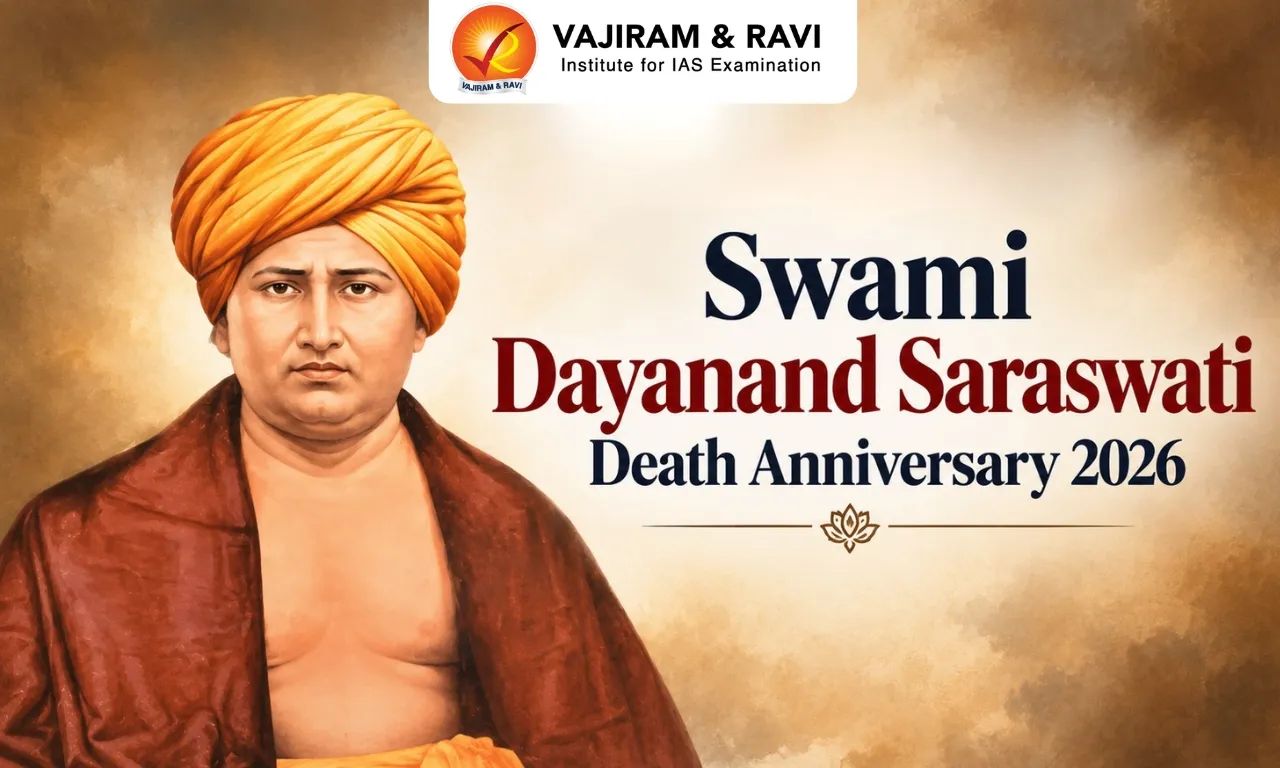
Swami Dayanand Saraswati was a prominent Hindu philosopher, religious leader and social reformer who played an important role in India's social and religious renaissance. He was born as Mool Shankar Tiwari. He founded the Arya Samaj in 1875 to promote Vedic teachings, social equality and rational thinking. His opposition to idol worship, caste discrimination and social evils, along with his emphasis on education and self rule, influenced religious reform and nationalist thought in India.
Swami Dayanand Saraswati Death Anniversary 2026
Swami Dayanand Saraswati Death Anniversary 2026 will be observed on 30 October 2026, marking the 143rd death anniversary of the reformer who passed away on 30 October 1883. Known for founding the Arya Samaj, he advocated a return to Vedic principles, social equality and educational reforms. His teachings challenged orthodox practices and encouraged rational thinking. The occasion, also associated with Swami Dayanand Saraswati Punya Tithi, provides an opportunity to remember his contributions to Indian society and religious reform.
Swami Dayanand Saraswati Biography
Swami Dayanand Saraswati's life journey reflects his dedication to spiritual knowledge, Vedic philosophy and the removal of social inequalities.
Birth and Early Life: He was born as Mool Shankar Tiwari on 12 February 1824 in Tankara, Gujarat, to Karshanji Lalji Tiwari and Yashodabai. His early education included Sanskrit, the Vedas and Hindu scriptures.
Turning Point: At the age of 14, he questioned idol worship after witnessing a mouse eating offerings placed before a Shiva idol during Shivaratri. This incident encouraged his search for spiritual truth.
Spiritual Journey: He renounced his home and became a wandering ascetic, travelling across India to study religious philosophy and seek knowledge from scholars and spiritual teachers.
Influence of Guru: He became a disciple of Swami Virajanand Saraswati in Mathura, whose teachings strengthened his commitment to reviving Vedic traditions and reforming Hindu society.
Foundation of Arya Samaj: In 1875, he founded the Arya Samaj in Bombay to promote Vedic teachings, truth, social equality and religious reform.
Death: Swami Dayanand Saraswati died on 30 October 1883 under suspicious circumstances following an alleged poisoning. The allegation was never proven in court.
Swami Dayanand Saraswati Contributions
Swami Dayanand Saraswati contributed to religious reform, social equality, education and nationalism through his advocacy of Vedic principles and rational thinking.
Foundation of Arya Samaj: Founded in 1875, the Arya Samaj promoted Vedic teachings, truth, knowledge and social equality while challenging practices considered inconsistent with Vedic principles.
Opposition to Social Evils: He criticised caste discrimination, untouchability, child marriage and other social inequalities. He supported women's education, widow remarriage and the upliftment of disadvantaged sections.
Promotion of Vedic Education: He encouraged education combining spiritual knowledge with modern subjects. The Dayanand Anglo Vedic (DAV) educational institutions, established by his followers after his death, carried forward this vision.
Literary Contributions: His major works include Satyarth Prakash, Rigvedadi Bhashya Bhumika and Sanskar Vidhi. These writings explained his interpretation of Vedic teachings and criticised religious practices he considered irrational.
Establishment of Paropkarini Sabha: Founded in 1882, the Paropkarini Sabha was established to publish and promote his works and Vedic texts, helping preserve his intellectual legacy.
Contribution to Nationalism: His call for a return to the Vedas and the idea of self rule influenced nationalist thought. He is credited with using the expression “India for Indians” in connection with Swaraj in 1876.
Rejection of Idol Worship: He advocated worship of one formless Supreme God and opposed idol worship, excessive rituals and superstitions. He considered the Vedas the primary source of religious knowledge and truth.
Swami Dayanand Saraswati Recognitions and Honours
Swami Dayanand Saraswati's legacy continues through educational institutions, reform organisations and recognition of his role in shaping modern Indian society.
Recognition as a Maker of Modern India: Sarvepalli Radhakrishnan, India's second President, described Dayanand Saraswati as one of the makers of modern India for his contribution to religious, cultural and social reform.
Legacy of Arya Samaj: The Arya Samaj continues to promote Vedic teachings, social equality and educational development, reflecting his vision of a reformed society.
DAV Educational Institutions: Dayanand Anglo Vedic schools and colleges carry forward his emphasis on education. The first DAV School was established in Lahore in 1886, with Mahatma Hansraj as headmaster.
Influence on Freedom Fighters: His ideas influenced several figures associated with India's freedom struggle, including Lala Lajpat Rai, Subhas Chandra Bose, Bhagat Singh and Shyamji Krishna Varma.
Swami Dayanand Saraswati Death Anniversary 2026
Q1: When is Swami Dayanand Saraswati Death Anniversary 2026?
Ans: Swami Dayanand Saraswati Death Anniversary 2026 will be observed on 30 October 2026, marking 143 years since his death in 1883.
Q2: What is the date of Swami Dayanand Saraswati Punya Tithi?
Ans: Swami Dayanand Saraswati Punya Tithi is observed on 30 October, the date of his death in 1883.
Q3: Who was Swami Dayanand Saraswati?
Ans: Swami Dayanand Saraswati was a Hindu philosopher, religious leader and social reformer who founded the Arya Samaj in 1875 to promote Vedic teachings and social reform.
Q4: What were the major contributions of Swami Dayanand Saraswati?
Ans: His major contributions included founding the Arya Samaj, promoting Vedic education, opposing caste discrimination and idol worship, supporting women's education and influencing Indian nationalist thought.
Q5: Which book was written by Swami Dayanand Saraswati?
Ans: Satyarth Prakash is one of his most important works. It explains his interpretation of Vedic teachings and presents his views on religious practices and social reform.
Sardar Vallabhbhai Patel Jayanti 2026 will be observed on Saturday, 31 October 2026, marking the 151st Birth Anniversary of Sardar Vallabhbhai Patel, popularly known as the Iron Man of India. The occasion honours his contribution to India's freedom struggle, national integration and administrative development. His Birth Anniversary is celebrated across the country as National Unity Day or Rashtriya Ekta Diwas, the day highlights Patel's vision of a united India through commemorative events, public pledges, the Run for Unity and official ceremonies.
Sardar Vallabhbhai Patel Jayanti 2026
Sardar Vallabhbhai Patel Jayanti 2026 marks the birth anniversary of a national leader whose efforts played a decisive role in shaping independent India. He was born in 1875 in Gujarat and is remembered for integrating more than 560 princely states into the Indian Union. His commitment to national unity earned him the title- “Iron Man of India”. The occasion also highlights his contributions to India's independence movement, governance and the development of a strong administrative system.
Sardar Vallabhbhai Patel Jayanti 2026 Events
Sardar Vallabhbhai Patel Birth Anniversary 2026 will feature nationwide activities promoting unity, cultural diversity and national integration through public participation, ceremonial programmes and commemorative events.
Run for Unity: Schools, colleges and public institutions organise the Run for Unity to encourage citizens to promote national integration and remember Patel's contribution to a united India.
Statue of Unity Celebrations: The Statue of Unity in Kevadia, Gujarat, serves as a major venue for official ceremonies, bringing together participants from police and paramilitary forces.
Official Parade: Ceremonial parades involving security personnel form an important part of the celebrations. The programme also includes rock band performances and an Indian Air Force flypast.
Bharat Parv: Gujarat will host Bharat Parv from 1 to 15 November 2026 under the theme Ek Bharat Shreshtha Bharat, showcasing traditional arts, crafts and regional cuisines.
Public Pledges and Government Events: Government institutions organise formal observances and unity pledges to encourage citizens to uphold national integrity and strengthen the spirit of collective responsibility.
Rashtriya Ekta Diwas 2026
Rashtriya Ekta Diwas 2026, also known as National Unity Day, will be observed on 31 October to mark Sardar Vallabhbhai Patel Birth Anniversary 2026 and honour his lasting contribution to national integration.
Purpose of the Day: The occasion recognises Patel's efforts to unite princely states and strengthen India's political unity after independence.
Beginning of the Observance: National Unity Day was established in 2014 to commemorate Patel's birth anniversary and promote the importance of national solidarity.
National Integration: The day encourages citizens to respect India's diversity while maintaining a shared commitment to national unity, integrity and collective progress.
Unity Pledge: Official observances include pledges that reinforce citizens' commitment to preserving the country's unity and protecting its integrity.
National Significance: Rashtriya Ekta Diwas highlights Patel's role in nation building and reminds citizens of the importance of a united and stable India.
Sardar Vallabhbhai Patel Biography
Sardar Vallabhbhai Patel was an Indian freedom fighter, lawyer and statesman whose leadership helped shape the country's political unity and administrative foundations.
Early Life: Patel was born on 31 October 1875 in Nadiad, Gujarat, to Jhaverbhai Patel and Ladba Patel.
Education: He studied law in England at Middle Temple and became a successful barrister in Ahmedabad.
Entry into Public Service: Inspired by Mahatma Gandhi, Patel entered public life and served as Ahmedabad's Sanitation Commissioner in 1917. He later led municipal reforms in sanitation, water supply and urban administration.
Role in the Freedom Struggle: Patel participated in the Kheda Satyagraha, Non Cooperation Movement, Bardoli Satyagraha and Quit India Movement, mobilising people against British policies and supporting India's independence.
Congress Leadership: Patel became President of the Indian National Congress at its Karachi session in 1931. Under his chairmanship, the Congress adopted the resolution on Fundamental Rights and the National Economic Programme.
Role After Independence: Patel became India's first Deputy Prime Minister and Home Minister in 1947. He played a leading role in integrating princely states and establishing a strong administrative framework.
Death: Sardar Vallabhbhai Patel passed away on 15 December 1950. His legacy continues through his contributions to national integration, public administration and the consolidation of independent India.
Sardar Vallabhbhai Patel Contributions
Sardar Vallabhbhai Patel made lasting contributions to India's freedom struggle, political integration, constitutional development and the establishment of an effective administrative structure.
Integration of Princely States: Patel led efforts to integrate more than 560 princely states into the Indian Union through negotiation, diplomacy and decisive action, preventing the fragmentation of the newly independent country.
Leadership in Farmers' Movements: Through the Kheda and Bardoli agitations, Patel mobilised farmers against unjust revenue demands. His leadership in Bardoli earned him the title Sardar, meaning leader or chief.
Establishment of All India Services: Patel supported the creation of the All India Services, regarding them as the steel frame of India. He emphasised impartiality, discipline and integrity in public administration.
Administrative and Constitutional Development: Patel contributed to the formation of India's administrative institutions and constitutional framework, helping establish stable governance during the challenging early years after independence.
Restoration of Somnath Temple: Patel supported the reconstruction of the Somnath Temple in Gujarat in 1948, reflecting his commitment to restoring the historic monument through a public initiative.
Promotion of National Unity: Patel worked to strengthen national integrity during independence and Partition, focusing on political consolidation, public order and the establishment of a stable Union.
Sardar Vallabhbhai Patel Awards and Recognitions
Sardar Vallabhbhai Patel's achievements have been recognised through national honours and memorials that commemorate his leadership, statesmanship and contribution to India's unity.
Bharat Ratna: Patel was posthumously awarded the Bharat Ratna in 1991 in recognition of his exceptional contribution to India's freedom struggle, national integration and public administration.
Iron Man of India: Patel earned this widely recognised title because of his determination and decisive leadership in integrating princely states into the Indian Union.
Father of All India Services: His pioneering role in developing India's civil services earned him recognition as the Father of All India Services, reflecting his emphasis on a disciplined and impartial administration.
Statue of Unity: Unveiled on 31 October 2018 in Gujarat, the Statue of Unity commemorates Patel's legacy. Standing approximately 182 metres tall, it is a major national monument dedicated to his contribution to India.
National Unity Day: The observance of Rashtriya Ekta Diwas on his birth anniversary is a continuing national tribute to Patel's vision of political unity and national integrity.
Sardar Vallabhbhai Patel Jayanti 2026 FAQs
Q1: When is Sardar Vallabhbhai Patel Jayanti 2026 celebrated?
Ans: Sardar Vallabhbhai Patel Jayanti 2026 will be celebrated on Saturday, 31 October 2026, marking his 151st birth anniversary.
Q2: Why is Sardar Vallabhbhai Patel Jayanti celebrated as National Unity Day?
Ans: The day honours Patel's role in integrating more than 560 princely states into India and promoting national unity after independence.
Q3: What is the theme of Bharat Parv 2026?
Ans: Bharat Parv 2026 in Gujarat will follow the theme Ek Bharat Shreshtha Bharat from 1 to 15 November 2026.
Q4: Where is the main celebration of Sardar Vallabhbhai Patel Jayanti 2026 held?
Ans: The Statue of Unity in Kevadia, Gujarat, is a major venue for official celebrations, including ceremonial parades, performances and an Indian Air Force flypast.
Q5: Which award was conferred on Sardar Vallabhbhai Patel posthumously?
Ans: Sardar Vallabhbhai Patel was posthumously awarded the Bharat Ratna, India's highest civilian award, in 1991.
Homi Jehangir Bhabha Birth Anniversary 2026 will be observed on October 30 to commemorate the birth of Dr. Homi Jehangir Bhabha. Homi Bhabha was a pioneering Indian scientist widely recognised as the father of India's nuclear programme. His contributions to nuclear physics, atomic energy, space research and electronics laid the foundation for India's scientific development. His life highlights the importance of quality education, scientific research, indigenous innovation and technological self reliance in building a strong and progressive nation.
Homi Jehangir Bhabha Birth Anniversary 2026
Homi Jehangir Bhabha Birth Anniversary 2026 marks the 117th birthday of Dr. Homi J Bhabha, born in 1909. He is remembered for his pioneering work in nuclear science. Bhabha established important research institutions and helped shape India's atomic energy programme. His vision promoted scientific excellence, national self reliance and the peaceful use of nuclear energy. His legacy continues to inspire scientists, researchers and students working towards technological advancement and innovation.
Homi Jehangir Bhabha Biography
Dr. Homi Bhabha's life combined academic excellence with institution building, establishing him as a leading figure in India's scientific development and research ecosystem.
Early life and family: Dr. Homi Jehangir Bhabha was born into a prominent Parsi family in Mumbai on October 30, 1909. His educated background supported his early interest in learning and scientific exploration.
Education: Bhabha studied at Cathedral School, Elphinstone College and the Royal Institute of Science in Bombay. He joined Cambridge University in 1927 to study mechanical engineering before pursuing theoretical physics.
Academic achievements: Influenced by Paul Dirac, Bhabha developed a strong interest in theoretical physics. He secured first class honours in mathematics at Tripos in 1932 and earned a doctorate in nuclear physics from Cambridge in 1934.
Career in India: During the Second World War, Bhabha returned to India and joined the Indian Institute of Science in Bangalore as a physics reader, contributing to the development of advanced scientific research.
Establishment of research institutions: In 1945, he founded the Tata Institute of Fundamental Research (TIFR). He also played a central role in establishing the Atomic Energy Commission in 1948 and developing the Atomic Energy Establishment, Trombay.
Death: Bhabha died on January 24, 1966, in the crash of Air India Flight 101 near Mont Blanc.
Legacy: The Atomic Energy Establishment, Trombay, was later renamed the Bhabha Atomic Research Centre in his honour.
Homi Jehangir Bhabha Contributions
Dr. Homi J Bhabha advanced theoretical physics and established the institutional foundations of India's nuclear programme, space research and electronics development.
Bhabha Scattering: Bhabha explained the electromagnetic scattering process involving electrons and positrons. This work remains important in particle physics experiments, particularly for studying interactions and calibrating electron-positron colliders.
Bhabha-Heitler Theory: His work explained electron-positron pair production and electromagnetic cascades caused by high energy particles. It helped researchers understand cosmic ray showers and estimate the energy of primary cosmic rays.
Research on cosmic rays and mesons: Bhabha investigated cosmic rays and the behaviour of mesons, providing theoretical explanations for particle showers produced when high energy cosmic rays interact with Earth's atmosphere.
Three stage nuclear power programme: Bhabha proposed a nuclear energy strategy based on pressurised heavy water reactors, fast breeder reactors and thorium based reactors to utilise India's thorium resources and support long term energy security.
Development of APSARA reactor: Bhabha helped establish India's first research reactor, APSARA, which had a capacity of 1 MWt. It supported nuclear physics research, material testing, radiography and the training of scientists and engineers.
Atomic Energy Act 1948: Bhabha contributed to drafting the legislation governing atomic energy, emphasising scientific development, safety and India's control over its nuclear programme without undue foreign interference.
Peaceful use of nuclear energy: As India's representative at the International Atomic Energy Agency, Bhabha advocated using nuclear technology for peaceful purposes, including electricity generation, medicine and agriculture.
Space research and electronics: Bhabha supported India's early space programme and encouraged indigenous development in electronics, computers and control systems. His initiatives helped strengthen the foundations of technological self reliance.
Homi Jehangir Bhabha Awards and Recognitions
Dr. Homi Jehangir Bhabha received national and international recognition for his scientific achievements, research leadership and contributions to the advancement of modern science.
Fellow of the Royal Society: Bhabha was elected a Fellow of the Royal Society in 1941, recognising his scientific contributions and establishing his standing in the international research community.
Adams Prize: Cambridge University awarded him the Adams Prize in 1943 for his research on cosmic rays, acknowledging his contributions to theoretical physics.
Hopkins Prize: In 1948, Bhabha received the Hopkins Prize from the Cambridge Philosophical Society for his scientific work and contributions to physics.
Padma Bhushan: The Government of India awarded Bhabha the Padma Bhushan in 1954 in recognition of his distinguished contributions to science and national development.
International scientific leadership: Bhabha served as President of the International Union of Pure and Applied Physics from 1960 to 1963. He also presided over the Indian Science Congress Association in 1951 and the National Institute of Sciences of India in 1963.
International recognition in scientific research: In 1963, Bhabha became a Foreign Associate of the US National Academy of Sciences and an Honorary Life Member of the New York Academy of Sciences.
Homi Jehangir Bhabha Birth Anniversary 2026 FAQs
Q1: When is Homi Jehangir Bhabha Birth Anniversary 2026 observed?
Ans: Homi Jehangir Bhabha Birth Anniversary 2026 will be observed on October 30, marking the birth anniversary of the Indian nuclear physicist born in 1909.
Q2: Who was Dr. Homi Jehangir Bhabha?
Ans: Dr. Homi Jehangir Bhabha was an Indian nuclear physicist widely regarded as the father of India's nuclear programme for his scientific research and institution building.
Q3: What were the major contributions of Homi J Bhabha?
Ans: Homi J Bhabha contributed to nuclear physics, cosmic ray research, India's three stage nuclear power programme and the development of scientific institutions, space research and electronics.
Q4: What was Homi Bhabha's educational qualification?
Ans: Homi Bhabha studied mechanical engineering at Cambridge University before switching to theoretical physics. He earned a doctorate in nuclear physics from Cambridge in 1934.
Q5: Which awards did Dr. Homi Bhabha receive?
Ans: Dr. Homi Bhabha received the Padma Bhushan in 1954, the Adams Prize in 1943 and the Hopkins Prize in 1948. He was also elected a Fellow of the Royal Society in 1941.
31st UN Climate Change Conference (COP31) will be held in Antalya, Turkiye, from November 9 to November 20, 2026. The conference will focus on climate finance, clean energy transition, methane reduction, climate adaptation and the implementation of global climate commitments.
31st UN Climate Change Conference (COP31) 2026 Key Highlights
The key highlights related to the 31st UN Climate Change Conference (COP31) 2026 have been tabulated below.
31st UN Climate Change Conference
Particulars
Details
Conference
31st UN Climate Change Conference
Full Form
Conference of the Parties (COP)
Dates
November 9-20, 2026
Host Country
Turkiye
Venue
Antalya Expo Center, Antalya
COP31 President
Murat Kurum
President of Negotiations
Chris Bowen, Australia
World Leaders’ Summit
November 11-12, 2026
Pre-COP31
October 5-8, 2026, in Fiji and Tuvalu
What Is the 31st UN Climate Change Conference?
The 31st UN Climate Change Conference, also known as COP31, is an international climate summit organised under the United Nations Framework Convention on Climate Change (UNFCCC).
It brings together countries to discuss ways to reduce greenhouse gas emissions, address global warming and strengthen climate resilience. The conference also reviews progress under the Paris Agreement and encourages countries to implement their climate commitments.
Key Issues on the COP31 Agenda
Climate Finance: Mobilising funds to help developing countries reduce emissions and adapt to climate change.
Clean Energy Transition: Expanding solar and wind energy, improving energy efficiency and promoting electrification.
Transition Away from Fossil Fuels: Implementing commitments to reduce dependence on coal, oil and natural gas.
Methane Reduction: Controlling methane emissions from agriculture, fossil fuel production and waste management.
Climate Adaptation: Strengthening resilience against floods, droughts, heatwaves and sea-level rise.
Loss and Damage: Supporting countries facing severe and irreversible climate-related losses.
Zero-Waste Initiatives: Promoting recycling, waste reduction and circular economy practices.
The Pre-COP31 meeting took place from October 5 to October 8, 2026, with preparatory events in Fiji and Tuvalu. The discussions highlighted the climate challenges faced by Pacific island nations.
Key concerns included sea-level rise, coastal erosion, climate finance, clean energy and ocean protection. These discussions helped highlight the priorities of vulnerable island nations ahead of the main conference.
India and COP31
India's participation in COP31 is important for balancing climate action, economic growth, energy security and sustainable development.
India's key priorities include:
Climate Finance: Ensuring adequate and accessible funding for developing countries.
Climate Justice: Recognising differences in historical emissions and national capacities.
Renewable Energy: Expanding clean energy and improving energy efficiency.
Climate Adaptation: Protecting agriculture, water resources and vulnerable communities.
Technology Transfer: Improving access to affordable climate-friendly technologies.
India supports the principle of Common but Differentiated Responsibilities and Respective Capabilities (CBDR-RC). It recognises that all countries must address climate change, but their responsibilities and capacities differ according to their historical emissions and development needs.
Major International Climate Agreements
Major international climate agreements provide a global framework for reducing greenhouse gas emissions, limiting global warming, supporting climate adaptation and promoting international cooperation to address climate change.
Major International Climate Agreements
Agreement
Key Objective
UNFCCC, 1992
Establishes a framework for international climate cooperation.
Kyoto Protocol, 1997
Established emission-reduction commitments for developed countries during its commitment periods.
Paris Agreement, 2015
Aims to limit global warming to well below 2°C and pursue efforts to limit it to 1.5°C.
Glasgow Climate Pact, 2021
Strengthened global climate action, adaptation and finance discussions.
UAE Consensus, COP28
Called for transitioning away from fossil fuels in energy systems.
COP29, 2024
Established a new collective climate finance goal for developing countries.
Major Challenges Before COP31
COP31 faces several challenges in achieving effective climate action, ensuring climate justice and implementing global climate commitments.
Climate Finance Gap: Developing countries need adequate funding for climate mitigation and adaptation.
Fossil Fuel Dependence: Many economies rely on coal, oil and natural gas for energy and industrial growth.
Implementation Gap: Climate pledges do not always translate into effective action.
Unequal Capacities: Developing countries face financial and technological constraints.
Climate Justice: Countries differ over historical responsibilities and the distribution of climate burdens.
Energy Security: Governments must balance emissions reduction with affordable and reliable energy supplies.
Way Forward
COP31 should focus on practical climate solutions, stronger international cooperation and equitable implementation of climate commitments.
Improve Climate Finance: Ensure predictable, accessible and adequate funding for developing countries.
Accelerate Clean Energy: Expand renewable energy, improve energy efficiency and strengthen electricity storage.
Strengthen Adaptation: Invest in climate-resilient agriculture, water conservation and disaster preparedness.
Promote a Just Transition: Support workers and communities affected by the shift towards cleaner energy.
Strengthen Accountability: Monitor national climate targets and improve the implementation of climate commitments.
Conclusion
The 31st UN Climate Change Conference (COP31) will provide an important platform for advancing global climate action. Its success will depend on effective climate finance, stronger national commitments and practical measures to reduce greenhouse gas emissions while protecting vulnerable communities.
31st UN Climate Change Conference FAQs
Q1: When and where will COP31 be held?
Ans: COP31 will be held from November 9 to November 20, 2026, at the Antalya Expo Center in Antalya, Türkiye.
Q2: Who will host COP31?
Ans: Türkiye will host COP31, with Murat Kurum as COP31 President and Chris Bowen leading the negotiations.
Q3: What are the main issues of COP31?
Ans: The major issues include climate finance, clean energy transition, methane reduction, climate adaptation, loss and damage, and the implementation of the Paris Agreement.
Q4: What is the role of India in COP31?
Ans: India's priorities include climate justice, renewable energy, affordable climate finance, technology transfer and climate adaptation.
Q5: What is the Paris Agreement?
Ans: The Paris Agreement is an international climate treaty adopted in 2015. It aims to limit global warming to well below 2°C above pre-industrial levels while pursuing efforts to limit the temperature rise to 1.5°C.
Indian Pilot Smit Machchhar recently received the UAE's First Class Order of Zayed II for his bravery in protecting 174 passengers aboard a Flydubai flight during an alleged attack by his Omani co-pilot.
About First Class Order of Zayed II
It is one of the United Arab Emirates’ (UAE’s) prestigious civilian decorations.
It is named afterSheikh Zayed bin Sultan Al Nahyan, the country's founding president, who ruled from 1971 until his death in 2004.
It is generally awarded to foreign diplomats, senior officials, and distinguished international figures whose work has made a significant contribution to the country or its international relations.
Indian Recipients:
Indian Pilot Smit Machchhar received the award in 2026 for his bravery in protecting 174 passengers aboard a Flydubai flight during an alleged attack by his Omani co-pilot.
However, he is not the first Indian to receive the prestigious honour.
Two former Indian ambassadors to the UAE, Navdeep Singh Suri and Sunjay Sudhir, were previously awarded the same decoration for their contributions to strengthening bilateral relations.
It is distinct from the Order of Zayed, the UAE's highest civilian honour, which has been presented to prominent world leaders, including Indian Prime Minister Narendra Modi in 2019.
Ans: It is a prestigious civilian decoration awarded by the United Arab Emirates (UAE).
Q2: After whom is the First Class Order of Zayed II named?
Ans: Sheikh Zayed bin Sultan Al Nahyan, the founding president of the UAE.
Q3: Who are the usual recipients of the First Class Order of Zayed II?
Ans: Foreign diplomats, senior officials and distinguished international figures who have made significant contributions to the UAE or its international relations.
Q4: Which Indian pilot received the First Class Order of Zayed II in 2026?
Ans: Smit Machchhar.
Q5: Which two former Indian ambassadors to the UAE received the First Class Order of Zayed II?
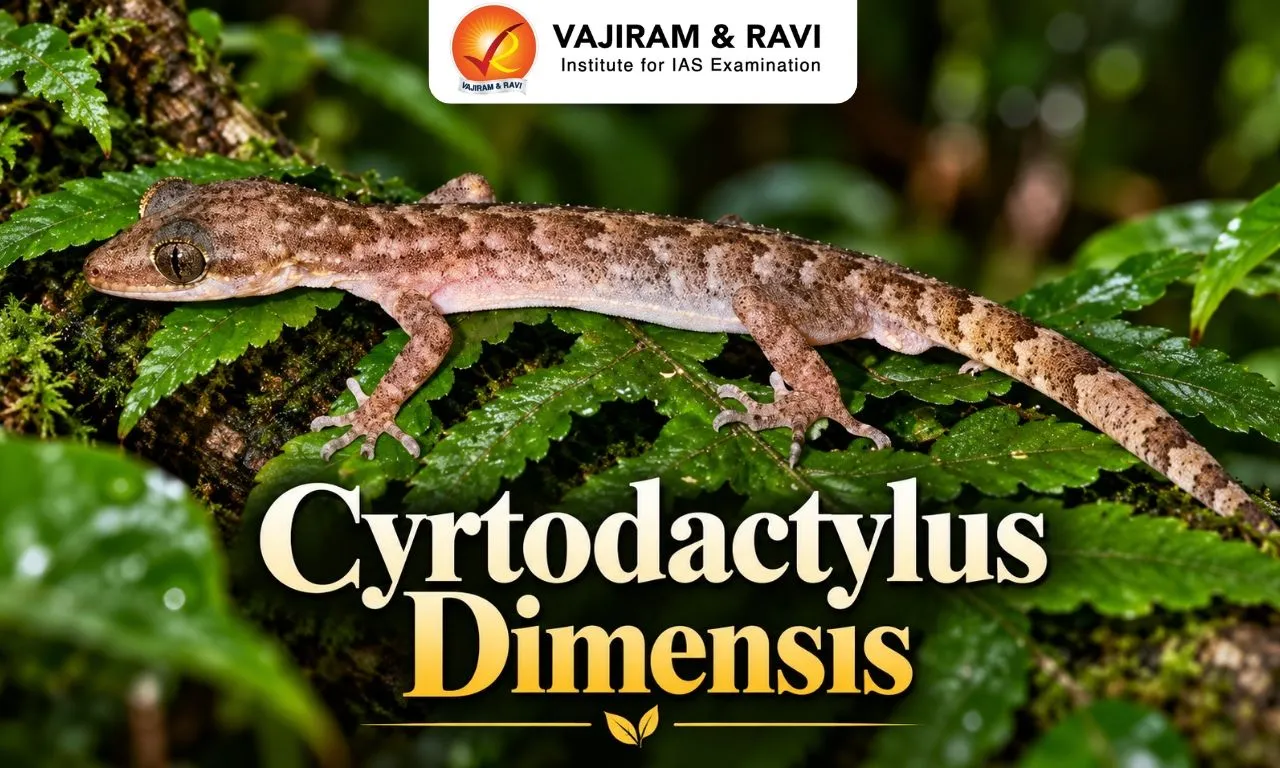
Researchers recently discovered a new species of gecko named Cyrtodactylus dimensis in the Umrangso area of Assam’s Dima Hasao district.
About Cyrtodactylus dimensis
It is a new species of gecko.
It was discovered in the Umrangso area of Assam’s Dima Hasao district.
Dima Hasao forms part of the Indo-Burma biodiversity hotspot, a region known for its rich variety of plants and animals.
Cyrtodactylus dimensis belongs to the bent-toed gecko group.
The discovery brings the number of described Cyrtodactylus species recorded from Assam to eight.
The species is closely related to Cyrtodactylus vanarakshaka,another gecko species described from Dima Hasao, but differs in its genetic and morphological characteristics.
Cyrtodactylus dimensis was distinguished by a combination of characteristics, including the arrangement of scales and specialised structures on its body.
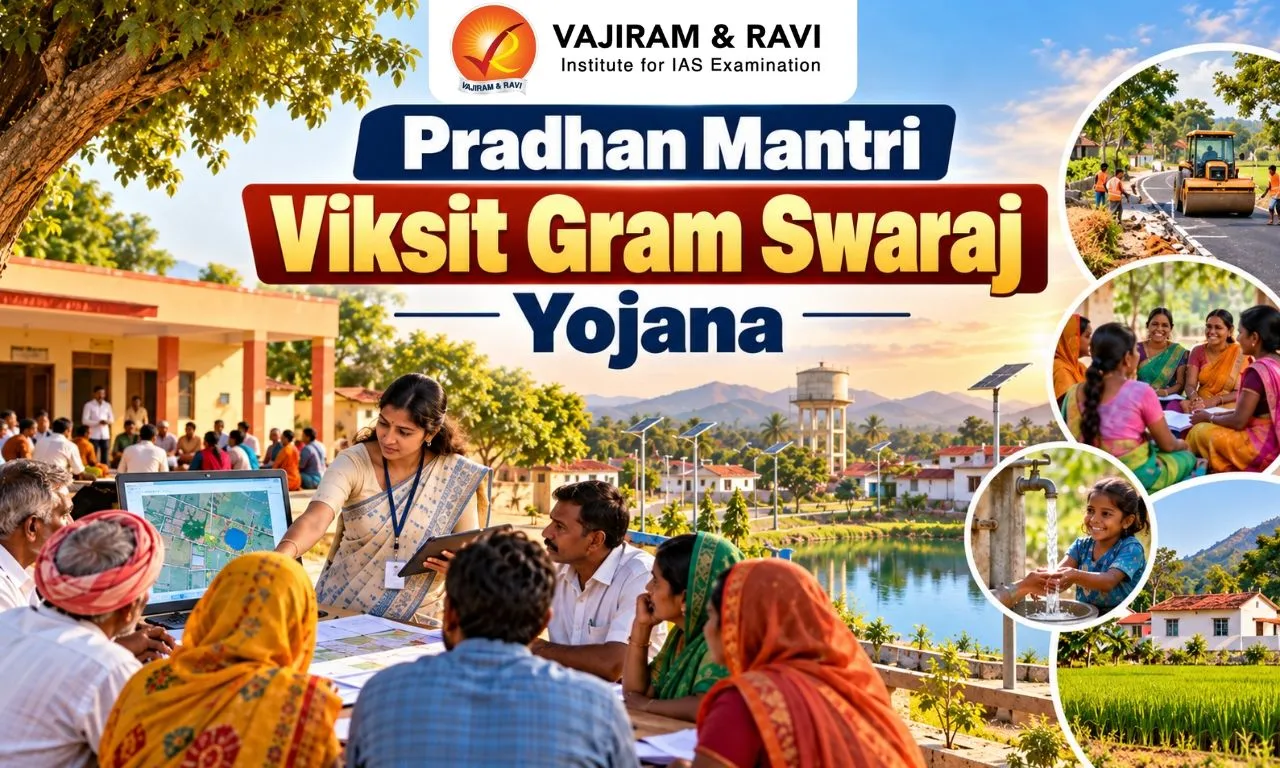
Recently, the Union Cabinet has approved the Pradhan Mantri Viksit Gram Swaraj Yojana (PM VGSY).
About Pradhan Mantri Viksit Gram Swaraj Yojana
It is a Centrally Sponsored Scheme (CSS) aimed at strengthening grassroots governance and rural development across the country.
Time Period: 2026-27 to 2030-31
Coverage: The scheme will extend to all States/UTs, including institutions of rural local government (traditional local bodies) in non-Part IX areaswhere Panchayats do not exist.
Key Features of Pradhan Mantri Viksit Gram Swaraj Yojana
Annual planning target: Support preparation of 2.55 lakh Gram Panchayat Development Plans on the eGramSwaraj portal, bringing together village priorities, departmental interventions and available resources.
Capacity building: Train and provide digital support to around 32 lakh elected representatives, Panchayat functionaries and other stakeholders annually.
Financial accountability: Support at least 2.55 lakh online audit plans annually and timely completion of the corresponding audits through Audit Online, alongside better accounting, public disclosure and mobilisation of Panchayats’ own revenue.
Citizen engagement: Each coordinated awareness exercise is intended to reach at least one crore citizens.
The scheme will use Gram Sabhas and existing outreach tools, including PANCHAM, a two-way platform available in 17 Indian languages.
Implementation: States and Union Territories will submit annual action plans for appraisal by a Central Empowered Committee. No permanent posts will be created under the scheme, although need-based contractual staff may provide technical support.
Q1: What is the coverage of Pradhan Mantri Viksit Gram Swaraj Yojana?
Ans: The scheme will extend to all States/UTs, including institutions of rural local government (traditional local bodies) in non-Part IX areas where Panchayats do not exist.
Q2: What is the time period of Pradhan Mantri Viksit Gram Swaraj Yojana?
The Cabinet recently approved a 3% hike in dearness allowance and dearness relief, benefiting over 1.17 crore central government employees and pensioners.
About Dearness Allowance
It is an allowance given to you if you are a government employee, public sector employee, and pensioner in India.
It's a way to mitigate the impact of rising costs of living and inflation on people's earnings.
It ensures that employees are protected against inflation, where the salary components help employees deal with the increasing prices of goods and essential items.
It is calculated as a percentage of basic pay or basic pension.
For example, if your basic pay is ₹40,000 and the applicable DA rate is 60%, your DA amount will be ₹24,000.
This DA is added to your salary along with other components such as basic pay, HRA, special allowance, and other applicable benefits.
Types of DA:
Industrial Dearness Allowance (IDA):
It is applicable to employees working in the public sector.
The revision is done on a quarterly basis, depending on the Consumer Price Index (CPI), to successfully change the salaries according to the increasing rate.
Variable Dearness Allowance (VDA):
It is mostly applicable to employees working in the central government sector.
The revision is done twice a year i.e, in January and in July, based on the changes in the CPI.
VDA has three parts:
Fixed Variable DA: This part stays the same, unless the government changes the basic minimum wage.
Base Index: This is fixed for a set period and does not change during that time.
Consumer Price Index (CPI): The CPI is updated every month. It plays a big role in setting the VDA. Because the CPI moves, so does the VDA that employees receive.
Private-sector employees do not automatically receive DA. Many private companies use other salary components such as special allowance, flexible benefits, performance pay, or cost-to-company adjustments instead of a formal DA line item.
Is DA Taxable?
It is fully taxable under the Income Tax Act, 1961.
Employees are required to declare it separately when filing income tax returns.
Ans: Dearness Allowance is an allowance paid to eligible government employees, public sector employees and pensioners in India to help offset the impact of inflation.
Q2: What is the primary objective of Dearness Allowance (DA)?
Ans: To protect the purchasing power of employees and pensioners against rising prices and the cost of living.
Q3: How is Dearness Allowance (DA) calculated?
Ans: It is calculated as a percentage of basic pay or basic pension.
Q4: Do private-sector employees automatically receive Dearness Allowance (DA)?
Ans: No. Private-sector employees do not automatically receive DA; their compensation depends on their employer's salary structure.
Q5: Is Dearness Allowance (DA) taxable in India?
Ans: Yes, DA is generally fully taxable under the Income Tax Act, 1961.
A recent comment by the Tamil Nadu Minister for Environment and Climate Change, that soap and shampoo used by the public can also cause excessive foaming in the Noyyal River, which flows through Tiruppur district, has sparked criticism.
About Noyyal River
It is an important tributary of the Cauvery River, flowing through Western Tamil Nadu.
The "Noyyal" is a sacred river in Tamil history, and its original name was "Kanchi Nadi"; however, it was later changed to the name of the place where it drains into the Kaveri River in 1750 A.D.
Course:
It begins from numerous small streams in the Vellingiri Hills, which are part of the Nilgiri Biosphere Reserve in the Western Ghats.
It flows through the districts of Coimbatore, Tirupur, and Erodeand meets the Cauvery River at the Noyyal village in Karur District.
Total Length: 158 km
It is a seasonal river with rapid flows during the monsoon periods.
The Noyyal watershedis connected with a series of 32 tanks, 14 major canals, 23 anicuts, and 55 check dams.
Most of these check dams and anicuts were constructed by the Chola Kings, who ruled the region in the 9th to 12th centuries to augment irrigation and control floods downstream.
The Noyyal River has two main tributaries: Cheyyar River (Chadiaar River) and Kanchimanadhi River.
It is also home to major dams like Aathupalayam Dam and Orathuppalayam Dam.
Until the early 20th century, the Noyyal was the main drinking water source for the region.
Today the Noyyal is one of the most polluted rivers in India.
Khelo India Sports Goods Manufacturing Scheme Latest News
Recently, the Union Cabinet has approved the Khelo India Sports Goods Manufacturing Scheme.
About Khelo India Sports Goods Manufacturing Scheme
It aims to promote investment, manufacturing, innovation and exports, and strengthen India's position in the global sports goods sector.
It provides support across the sports goods manufacturing value chain, from infrastructure and investment to research, skills, certification and market development.
Time Period: 2026 to 2033-34.
It has two parts: incentives that support manufacturing and interventions that build the wider ecosystem.
Key Features of Khelo India Sports Goods Manufacturing Scheme
Developing Integrated Manufacturing Zones: These zones will bring together manufacturers, suppliers, testing facilities, design and prototyping centres, and ancillary enterprises.
These will be developed through convergence with the BHAVYA Scheme and NICDC Industrial Parks.
Attracting Investment and Expanding Production: The scheme earmarks a combined ₹1,130 crore for Anchor Investment Support and Turnover Linked Support.
Anchor Investment Support will encourage leading domestic and global manufacturers, brands and retail chains to establish facilities in the designated zones.
Turnover Linked Support will incentivize higher production, capacity expansion and sustained manufacturing growth.
Upgrading existing clusters and supporting MSMEs: Existing sports goods manufacturing clusters will receive support for upgrading common facilities and shared infrastructure through cost-sharing with States, helping smaller enterprises strengthen their manufacturing capabilities.
Supporting international certification: To improve access to international markets, ₹105 crore has been allocated to help manufacturers obtain and renew certifications from International Sports Federations.
Advancing research and start-up innovation:Centres of Excellence in premier educational and research institutions will support research in sports equipment, material sciences, protective gear and advanced manufacturing technologies.
Research co-funding will be encouraged through convergence with the Anusandhan National Research Foundation. DPIIT-registered sports start-ups will be eligible for grants of up to ₹20 lakh.
Developing industry-aligned skills: Skill development initiatives will be implemented in collaboration with the Ministry of Skill Development and Entrepreneurship and relevant industry stakeholders to meet evolving workforce requirements.
Promoting Indian sports goods globally: Branding, outreach and market development initiatives will draw on the Export Promotion Mission to improve the visibility of Indian sports goods and expand their international reach.
Recently, the Union Cabinet has approved the Container Manufacturing Promotion Scheme (CMPS).
About Container Manufacturing Promotion Scheme
It aims to establish a globally competitive container manufacturing ecosystem by promoting domestic manufacturing and encouraging investment across the value chain.
The initiative seeks to reduce import dependence and strengthen supply-chain resilience.
It also supports new manufacturing facilities and expands existing container manufacturing units.
The scheme provides assistance through major components: investment support, operational expenditure, and testing and certification.
Components under Container Manufacturing Promotion Scheme
Interest Subvention Assistance (ISA)
ISA provides a 3% per annum interest subvention on eligible term loans (capital loans) availed by container manufacturers to set up greenfield facilities and brownfield expansion of existing manufacturing capacity.
To qualify for this support, projects must meet the following criteria
Greenfield facilities must have an annual capacity of at least 1,00,000 Twenty-foot Equivalent Units (TEUs)
Brownfield expansions must add at least 25,000 TEUs of annual capacity to be commissioned within three years of in-principle approval, and comply with global container standards.
Operational Expenditure Assistance (OEA): The component provides a financial outlay of ₹8,891 crore to support containers manufactured as per global shipping standards and sold by eligible manufacturers.
Eligibility Criteria: To avail support, manufacturers must meet a minimum local-content requirement of 70%through FY 2031-32.
These criteria will further rise to 90% from FY 2032-33 to strengthen the domestic supply chain.
Testing and certification assistance: A financial outlay of ₹150 crore has been allocated to support the setting up of common facilities such as Dynamic longitudinal impact.
Q1: What is the aim of Container Manufacturing Promotion Scheme?
Ans: It aims to establish a globally competitive container manufacturing ecosystem by promoting domestic manufacturing and encouraging investment across the value chain.
Q2: What are the components of Container Manufacturing Promotion Scheme?
Ans: Major components: investment support, operational expenditure, and testing and certification.
ISRO is scheduled to launch NVS-03 aboard GSLV-F18 on 30 October 2026 to strengthen NavIC, India’s regional satellite navigation system. NavIC currently has only three satellites available for positioning, navigation and timing services, below the minimum four required for basic standalone positioning.
NVS-03 Mission
NVS-03 is the third satellite in the second-generation NavIC series, which aims to improve the system’s reliability and service continuity.
Launch vehicle: GSLV-F18.
Launch site: Satish Dhawan Space Centre, Sriharikota, Andhra Pradesh.
Scheduled launch: 30 October 2026 at 11:51 p.m. IST.
Target orbit: Geosynchronous Transfer Orbit (GTO).
Satellite mass: Approximately 2,250 kg.
Key features: An indigenous atomic clock and support for the L1 navigation frequency alongside L5 and S-band signals.
After launch, the satellite must reach its intended orbit, complete testing and be commissioned before it can provide operational services.
NavIC: India’s Regional Navigation System
NavIC stands for Navigation with Indian Constellation. It is the operational name of the Indian Regional Navigation Satellite System (IRNSS), developed by ISRO to provide independent satellite-based positioning, navigation and timing services.
Main Features
Coverage: India and an area extending approximately 1,500 km beyond its borders.
Original constellation design: Seven satellites in geosynchronous and inclined geosynchronous orbits.
Services: Standard Positioning Service for civilian users and Restricted Service for authorised users.
Accuracy: ISRO specifies Standard Positioning Service accuracy better than 20 metres and timing accuracy better than 40 nanoseconds over the primary service area.
Strategic significance: Provides India with an indigenous regional navigation capability and reduces dependence on foreign navigation systems.
How Satellite Navigation Works
Satellite navigation relies on precise timing signals transmitted by satellites.
Satellites transmit signals containing timing and orbital information.
A receiver estimates its distance from satellites by measuring the time taken for their signals to arrive.
Signals from at least four satellites are generally needed to calculate a three-dimensional position and correct the receiver’s clock error.
Atomic clocks are essential because timing errors can lead to inaccurate position calculations.
Second-Generation NavIC Satellites
ISRO has planned five second-generation satellites: NVS-01, NVS-02, NVS-03, NVS-04 and NVS-05.
Their main improvements include:
Longer mission life: Designed for a mission life of approximately 12 years.
Indigenous atomic clocks: Support technological self-reliance and reliable timing.
L1 frequency: Added alongside the L5 and S-band signals used by NavIC.
Improved interoperability: L1 is widely used by other navigation systems and supported by many consumer devices, including compatible single-frequency receivers.
Constellation continuity: New satellites are intended to replace ageing spacecraft and strengthen service availability.
Applications of NavIC
A reliable constellation can support civilian services, public infrastructure and strategic operations.
Transport: Navigation and location services for road transport and public vehicles.
Railways: Real-time train tracking and related safety applications.
Maritime activities: Navigation and communication support for vessels, including fishing boats.
Disaster management: Location support for search, rescue and emergency response.
Defence and security: Positioning and timing support for authorised strategic applications.
Telecommunications and infrastructure: Precise timing for systems requiring synchronisation.
Consumer technology: Navigation in compatible smartphones, wearables and other devices.
Actual use depends on receiver compatibility, signal availability and the operational status of the satellite constellation.
NavIC and Other Navigation Systems
The following table compares major satellite navigation systems based on the countries or regions that operate them and their geographical coverage.
System
Country or region
Coverage
NavIC (IRNSS)
India
Regional
GPS
United States
Global
GLONASS
Russia
Global
Galileo
European Union
Global
BeiDou
China
Global
QZSS
Japan
Regional augmentation system
NavIC focuses on India and its surrounding region. GPS, GLONASS, Galileo and BeiDou provide global coverage, while Japan’s Quasi-Zenith Satellite System (QZSS) complements GPS coverage in the Asia-Pacific region.
Challenges Facing NavIC
NavIC faces challenges related to the availability of operational satellites, technical failures and limited use in consumer devices.
Shortage of Operational Satellites: NavIC needs at least four operational satellites for basic standalone positioning. A shortage of functional satellites has disrupted this service.
Atomic Clock Failures: Atomic clocks help satellites maintain accurate time, which is essential for navigation. Clock failures in some satellites have affected the system’s operational reliability.
Failure of NVS-02: NVS-02 could not reach its intended orbit because its propulsion system failed to complete the required orbit-raising manoeuvres. This delayed its entry into operational service.
Ageing Satellites: Several first-generation NavIC satellites have reached or exceeded their planned mission lives, making their timely replacement necessary.
Limited Use in Consumer Devices: NavIC-compatible receivers are not widely available across consumer devices. This limits its wider use in smartphones and other navigation-enabled equipment.
Way Forward
Complete the constellation: Progress with NVS-03, NVS-04 and NVS-05 is important for restoring and maintaining adequate satellite coverage.
Strengthen reliability testing: Improve checks of connectors, propulsion systems and other critical components before launch.
Expand indigenous technology: Develop reliable space-grade atomic clocks and reduce dependence on imported components.
Improve receiver adoption: Encourage NavIC integration into compatible smartphones, vehicles, wearables and public infrastructure.
Plan satellite replacement in advance: Reduce service gaps by replacing ageing satellites before the end of their operational lives.
Expand applications: Promote suitable uses in railways, maritime navigation, disaster management and other public services.
NVS-03 and NavIC Navigation System FAQs
Q1: What is NavIC?
Ans: NavIC (Navigation with Indian Constellation) is India's regional satellite navigation system developed by ISRO.
Q2: What is NVS-03?
Ans: NVS-03 is the third satellite in the second-generation NavIC series, designed to strengthen navigation services.
Q3: When is NVS-03 scheduled to be launched?
Ans: NVS-03 is scheduled for launch on 30 October 2026 aboard the GSLV-F18 rocket from Sriharikota, Andhra Pradesh.
Q4: What is the coverage area of NavIC?
Ans: NavIC covers India and an area extending approximately 1,500 km beyond its borders.
Q5: Why does NavIC need at least four operational satellites?
Ans: At least four satellites are generally required for basic standalone positioning, allowing a receiver to calculate its location and correct its clock error.
Kuno National Park, located in the Sheopur district of Madhya Pradesh, is one of India’s important wildlife conservation areas, known for its dry deciduous forests, grasslands and rich biodiversity. Spread across approximately 748.76 square kilometres, the park is home to leopards, sloth bears, deer, wolves and several bird species. It gained national and international attention in September 2022, when African cheetahs were reintroduced into India under Project Cheetah, more than 70 years after the species was declared extinct in the country.
Kuno National Park Latest News
Cheetah KNG22 dies after being shot: The 19-month-old male cheetah, son of Nirva, was found injured on 25 October in Morena’s forests, just outside Kuno National Park. He was rescued the same day, operated on in Jabalpur, and five firearm pellets were removed, but he died on the morning of 27 October. It is the first reported cheetah shooting since Project Cheetah began in September 2022.
Centre steps in with a high-level probe: The Environment Ministry has taken serious note of the death and sent a high-level team to investigate on the ground, examine the evidence and work with the Madhya Pradesh Forest Department so that strict and swift action follows.
Madhya Pradesh forms a Special Task Force: The state has set up its own Special Task Force to find those responsible, a key step in protecting the cheetahs living in and around Kuno.
Kuno National Park Location
Kuno National Park is one of central India’s most important wildlife areas, and its location plays a big role in what makes it special.
Location: Kuno National Park is situated in the Sheopur district of Madhya Pradesh, in central India. It lies in theVindhyan hill region, close to Rajasthan, and forms part of a larger forest landscape known for its wildlife and natural vegetation.
Area: The national park covers approximately 748.76 sq. km. Earlier, the Kuno Wildlife Sanctuary covered around 344 sq. km, but its area was expanded when it was upgraded to a national park in 2018.
River system: The park is named after the Kuno River, a tributary of the Chambal River, which flows through the region. The river and its surrounding water sources support wildlife and vegetation throughout the park.
Kuno National Park History
Kuno National Park has a long and interesting past, from a protected sanctuary to the home of India’s cheetah comeback.
Establishment in 1981: Kuno was originally established as the Kuno Wildlife Sanctuary in 1981 to protect the region’s forests, wildlife and natural habitats. It was earlier known as Kuno-Palpur Wildlife Sanctuary.
Historical background: The Kuno region was once associated with the princely state of Gwalior. Its forests have a long history of wildlife conservation, particularly involving efforts to establish a population of Asiatic lions outside Gujarat.
Asiatic Lion Reintroduction Project: Kuno was identified as a suitable location for introducing Asiatic lions from Gir National Park in Gujarat. The objective was to establish a second free-ranging population of Asiatic lions in India and reduce the risks associated with their concentration in a single region.
National park status in 2018: On December 10, 2018, Kuno Wildlife Sanctuary was officially notified as Kuno National Park. Its protected area was expanded to approximately 748.76 sq. km to provide a larger and more secure habitat for wildlife.
Selection for cheetah reintroduction: In 2009, Kuno was identified as a potential location for reintroducing cheetahs into India. After years of planning, Project Cheetah was launched on September 17, 2022, marking a major milestone in India’s wildlife conservation history.
Kuno National Park Geographical Features
Kuno National Park has a varied natural landscape that shapes its forests, wildlife and climate. Here is a quick look at the key features that define the park.
Vindhyan landscape: Kuno National Park is located in the Vindhyan region of central India, characterised by hills, valleys, rocky terrain and forested areas. This varied landscape provides suitable habitats for different wildlife species.
Dry deciduous forests: The park is mainly covered by tropical dry deciduous forests, where many trees shed their leaves during the dry season. These forests are adapted to the region’s seasonal rainfall and relatively dry climatic conditions.
Grasslands and savannah habitat: Kuno also contains open grasslands, dry savannah forests and scrub vegetation. These habitats support herbivores such as deer and nilgai and provide important hunting grounds for large carnivores, particularly cheetahs.
Kuno River: The Kuno River is an important geographical feature of the park. It flows through the landscape and provides water and riverine habitats for several animals, birds and reptiles.
Climate: The region experiences hot summers, seasonal monsoon rainfall and relatively cool winters. The availability of vegetation and water changes with the seasons, influencing wildlife movement and habitat conditions.
Kuno National Park Flora & Fauna
Kuno National Park supports a rich variety of plant and animal species because of its combination of dry deciduous forests, grasslands, rivers and scrublands. Its diverse vegetation provides food, shelter and breeding habitats for several species.
Flora of Kuno National Park
Vegetation: The park is dominated by dry deciduous forests, mixed woodlands, grasslands and scrub vegetation. These different habitats support a wide variety of plant species and maintain the park’s ecological balance.
Major tree species: Important trees found in Kuno include Kardhai, Salai, Khair, Palash, Dhok and Tendu. Other species, such as Kachnar and Kadam, also contribute to the vegetation of the region.
Plant diversity: According to Madhya Pradesh Tourism, the park supports approximately 123 tree species, 71 shrub species, 32 exotic and climbing plant species, and 34 bamboo and grass species, reflecting its rich floral diversity.
Kardhai trees: The Kardhai tree is particularly associated with Kuno’s forests. It is known for becoming green with increasing atmospheric moisture, sometimes even before the arrival of monsoon rainfall.
Grassland vegetation: The grasslands provide grazing areas for chital, nilgai and other herbivores. These open habitats are especially important for maintaining the prey population needed by cheetahs and other carnivores.
Fauna of Kuno National Park
Major carnivores: Apart from reintroduced African cheetahs, Kuno is home to Indian leopards, sloth bears, striped hyenas, Indian wolves, golden jackals and jungle cats. These predators play an important role in maintaining ecological balance.
Herbivorous animals: The park supports species such as chital (spotted deer), sambar, nilgai (blue bull), blackbuck, four-horned antelope and wild boar. These animals form an important prey base for large carnivores.
Bird diversity: Kuno is home to several bird species, including the Indian peafowl, painted spurfowl, grey francolin, black-shouldered kite and ruddy shelduck. Its forests and water bodies provide feeding and nesting habitats for resident and migratory birds.
Reptiles and other wildlife: The park’s wider ecosystem also supports reptiles such as mugger crocodiles, gharials, Bengal monitor lizards and turtles, along with smaller mammals and other wildlife species.
Kuno National Park and the Cheetah Reintroduction Project
Kuno National Park is the heart of Project Cheetah, India’s bold effort to bring back a lost big cat.
Kuno National Park is now home to about 57 cheetahs: After the Indian-born female KJP21 gave birth to five cubs, India’s total cheetah population rose to 60, including 41 Indian-born cheetahs. Of these, three live in Gandhi Sagar Sanctuary, which leaves roughly 57 cheetahs in Kuno National Park.
Project Cheetah: Kuno National Park became the main site for Project Cheetah, an ambitious wildlife conservation initiative launched by the Government of India to reintroduce cheetahs into the country after their local extinction.
Extinction of cheetahs in India: The Asiatic cheetah was officially declared extinct in India in 1952, mainly due to hunting, habitat loss and declining prey populations. Its reintroduction after more than seven decades represents an important effort to restore a lost large carnivore.
First cheetah release in 2022: On September 17, 2022, eight African cheetahs from Namibia, including five females and three males, were brought to Kuno National Park and released into quarantine enclosures as part of the first phase of the project.
Second cheetah release in 2023: On February 18, 2023, another 12 cheetahs from South Africa, comprising seven males and five females, were introduced into Kuno. This increased the initial number of translocated cheetahs to 20.
Objectives of the project: The initiative aims to establish a viable cheetah population in India, restore grassland ecosystems and strengthen biodiversity conservation. It also seeks to improve the management of prey species and their natural habitats.
International conservation initiative: Project Cheetah is recognised as a major intercontinental large carnivore translocation initiative, involving cooperation between India, Namibia and South Africa.
Conservation challenges: The project faces challenges such as ensuring cheetah survival and successful breeding, maintaining sufficient prey populations, managing habitats and reducing human-wildlife conflict in surrounding areas.
Kuno National Park Significance
Kuno National Park matters far beyond its borders, for its wildlife, its habitats and the future of conservation in India.
Wildlife conservation: Kuno National Park plays an important role in protecting central India’s wildlife and biodiversity. Its forests, grasslands and river habitats support a wide range of animals and plants.
Restoration of cheetahs: The park gained international importance through Project Cheetah, which marked the return of cheetahs to India after more than 70 years and opened new opportunities for wildlife restoration.
Grassland ecosystem protection: Kuno highlights the importance of conserving grasslands and semi-arid ecosystems, which support numerous herbivores, carnivores and other species but have often received less conservation attention than forests.
Asiatic lion conservation: Kuno has also been identified as a potential site for establishing a second population of Asiatic lions outside Gir, making it an important landscape for long-term big-cat conservation planning.
Ecological connectivity: The national park forms part of a larger central Indian forest landscape connected with Rajasthan, helping maintain wildlife habitats and supporting ecological connectivity across the region.
Wildlife tourism: Kuno has gained popularity as a wildlife tourism destination in Madhya Pradesh, particularly following the cheetah reintroduction project. Responsible tourism can create livelihood opportunities for local communities while encouraging conservation awareness.
Scientific research and conservation: The park provides opportunities for studying cheetah adaptation, wildlife behaviour, habitat restoration and human-wildlife interactions. Lessons from these efforts can support future wildlife conservation programmes in India.
Kuno National Park FAQs
Q1: Where is Kuno National Park located?
Ans: Kuno National Park is located in the Sheopur district of Madhya Pradesh, India. It lies in the Vindhyan hill region, near Rajasthan, and is named after the Kuno River, a tributary of the Chambal River.
Q2: What is Kuno National Park famous for?
Ans: Kuno National Park is famous for Project Cheetah, India's initiative to reintroduce cheetahs after their extinction in 1952. It is also known for its dry deciduous forests, grasslands and rich wildlife biodiversity.
Q3: What is the total area of Kuno National Park?
Ans: Kuno National Park covers approximately 748.76 square kilometres. It was originally established as a wildlife sanctuary in 1981 and was officially declared a national park on December 10, 2018.
Q4: Which animals are found in Kuno National Park?
Ans: Kuno National Park is home to African cheetahs, Indian leopards, sloth bears, striped hyenas, Indian wolves, chital, sambar, nilgai and wild boar. It also supports various bird and reptile species.
Q5: What are the major flora species found in Kuno National Park?
Ans: The park is dominated by tropical dry deciduous forests and grasslands. Its major tree species include Kardhai, Salai, Khair, Palash, Dhok and Tendu, along with various shrubs and grasses.
After the Road Ministry recently sought an audit of users accessing the Centre’s logistics portal following complaints that multiple apps and websites were selling vehicle information, the Unified Logistics Interface Platform (ULIP) rejected the allegations of its misuse.
About Unified Logistics Interface Platform
ULIP is a digital gateway that allows industry players to access logistics-related datasets from various Government systems through API-based integration.
It is conceptualized by the NITI Aayog and was developed under the PM Gati Shakti National Master Plan (PMGS-NMP).
The platform is maintained and operated by NICDC Logistics Data Services (NLDS).
NICDC Logistics Data Services (NLDS) is a joint venture between the Government of India, represented by the National Industrial Corridor Development and Implementation Trust (NICDIT), and Japanese IT major NEC Corporation, with 50:50 equity participation.
Currently, the platform integrates with 44 government systems from 11 ministries via 129 APIs, covering over 1800 data fields.
It covers major logistics databases, including VAHAN, SARATHI, FASTag, FOIS, ICEGATE, and Port Community Systems.
Unified Logistics Interface Platform Objectives
To create a nationwide single window logistics platform for end-to-end visibility.
To develop a logistics gateway by integrating information available with various Govt. agencies across the value chain.
To provide visibility for optimal usage of various modes of transportation.
To provide data which can be utilized by the stakeholders for simplification of complicated processes like compliance, document filing, certifications, and approvals.
To offer a platform for data exchange among government and private entities who are directly or indirectly involved in the Indian Logistics ecosystem.
Unified Logistics Interface Platform Benefits
It will give direct and indirect benefits to all logistics stakeholders, like verification of drivers and vehicle details, tracking & tracing of consignment, Route Optimization Planning, and timely updates on the destination of the consignment, etc.
It will enable structured planning by helping in decision-making on optimum use of modes of logistics, thereby saving cost and time.
Q1: What is the Unified Logistics Interface Platform (ULIP)?
Ans: ULIP is a digital gateway that enables industry stakeholders to access logistics-related datasets from various government systems through API-based integration.
Q2: Which organisation conceptualised the Unified Logistics Interface Platform (ULIP)?
Ans: NITI Aayog.
Q3: When was Unified Logistics Interface Platform (ULIP) launched?
Ans: September 17, 2022.
Q4: Which organisation maintains and operates Unified Logistics Interface Platform (ULIP)?
Ans: NICDC Logistics Data Services (NLDS).
Q5: How does Unified Logistics Interface Platform (ULIP) help improve logistics efficiency?
Ans: By integrating information from different government agencies and enabling better coordination across the logistics value chain.
Delhi's new protest sites have become a topic of discussion after Delhi Police removed Jantar Mantar from the list of designated protest venues in October 2026. The three alternative sites are Ramlila Maidan, Burari Ground and CBD Ground in East Delhi. The decision raises questions about the right to peaceful protest, public order and access to democratic spaces.
Why in News?
Delhi Police issued a Standing Order, removing Jantar Mantar as a designated protest site and identifying three alternative venues following recommendations from a committee constituted by the Union Ministry of Home Affairs.
Delhi New Protest Sites Three Alternative Venues
Ramlila Maidan
Location: Central Delhi.
Capacity: Reportedly around 50,000 people.
Significance: A major venue for political rallies and public demonstrations.
Challenges: High booking costs, limited availability during major events and advance reservation requirements may make access difficult for smaller organisations.
Burari Ground (Nirankari Ground)
Location: North Delhi.
Area: Approximately 50 acres.
Significance: Its large open area can accommodate mass gatherings and large demonstrations.
Challenges: Its distance from Parliament and central Delhi may increase travel costs and reduce the visibility of protests to policymakers and the media.
CBD Ground
Location: Shahdara, East Delhi.
Area: Approximately 12 acres.
Significance: Provides an additional venue for public demonstrations.
Challenges: Its location in a busy residential and commercial area raises concerns about traffic congestion, accessibility and site management. <sup>[2]</sup>
Why Was Jantar Mantar Removed as a Protest Site?
Jantar Mantar was a prominent location for demonstrations because of its proximity to Parliament and other government institutions. The change has been associated with concerns about security, traffic management and the regulation of public gatherings.
However, shifting protests to distant venues may reduce their visibility and increase the financial and logistical burden on participants. The effectiveness of the new arrangements will depend on accessibility, reasonable booking conditions and transparent permission procedures.
Constitutional Provisions Related to the Right to Protest
Here are the important constitutional provisions related to the Right to Protest in India which are listed below.
Article 19(1)(a): Protects freedom of speech and expression.
Article 19(1)(b): Guarantees the right to assemble peaceably and without arms.
Article 19(2): Permits reasonable restrictions on freedom of speech and expression on specified grounds.
Article 19(3): Permits reasonable restrictions on peaceful assembly in the interests of India's sovereignty and integrity and public order.
Article 21: Protects life and personal liberty.
The right to protest is constitutionally protected but is not absolute. Authorities may regulate demonstrations to maintain public order, protect security and safeguard the rights of other citizens.
Supreme Court Judgments on the Right to Protest
Here are the important Supreme Court Judgments on the Right to Protest in India.
Mazdoor Kisan Shakti Sangathan v. Union of India (2018): The Supreme Court emphasised the need to balance peaceful protest with the rights of residents and public order. The case concerned restrictions on demonstrations at Jantar Mantar.
Amit Sahni v. Commissioner of Police (2020): The Court held that public roads and spaces cannot be occupied indefinitely in ways that seriously inconvenience others, while recognising the importance of peaceful dissent.
Challenges Associated with Delhi New Protest Sites
Important challenges associated with Delhi New Protest Sites have been highlighted below.
Reduced visibility: Distant locations may weaken the reach and public impact of demonstrations.
Financial barriers: Venue charges and transport costs may disproportionately affect smaller groups.
Accessibility: Participants may face difficulties reaching sites located far from central Delhi.
Infrastructure: Adequate sanitation, drinking water, shade and emergency services are essential.
Public order: Authorities must balance the rights of protesters with traffic management and the interests of residents.
Way Forward
Ensure that designated venues are accessible and affordable.
Publish transparent rules for permissions, booking charges and capacity limits.
Provide adequate public transport, sanitation and emergency facilities.
Apply restrictions proportionately and provide clear reasons for denying permission.
Maintain dialogue between police, protest organisers and local communities.
Conclusion
The issue of Delhi New Protest Sites highlights the need to balance peaceful dissent with public order. Designating alternative venues can help manage large gatherings, but these locations must provide a meaningful opportunity for citizens to express their grievances. Democratic governance requires both effective public administration and the protection of constitutional freedoms.
Delhi New Protest Sites FAQs
Q1: What are the new protest sites in Delhi?
Ans: The three designated alternative protest sites are Ramlila Maidan, Burari Ground (Nirankari Ground) and CBD Ground in East Delhi.
Q2: Why was Jantar Mantar removed as a designated protest site?
Ans: The reported decision relates to the management of public demonstrations, security concerns, traffic regulation and the availability of alternative venues.
Q3: Where is Ramlila Maidan located?
Ans: Ramlila Maidan is located in central Delhi and is used for large public meetings, political rallies and demonstrations.
Q4: Where is Burari Ground located?
Ans: Burari Ground, also known as Nirankari Ground, is located in North Delhi and offers a large open area for mass gatherings.
Q5: Where is CBD Ground located?
Ans: CBD Ground is located in the Shahdara area of East Delhi. It provides an additional venue for public demonstrations.
In under 14 months, India has moved from legislative intent to a formal regulatory framework, setting the stage for establishing Mineral Exchanges — an electronic platform designed to bring India’s fragmented mineral market onto a single, transparent marketplace.
The goal: let representative prices reflect actual demand and supply, rather than relying on fragmented negotiations and auctions, addressing long-standing issues of price opacity, market fragmentation, and information asymmetry in India’s mining sector.
Why India Needs This Reform
Small and medium miners often have limited bargaining power compared to large buyers.
Key Benefits Expected
Market-driven mineral prices, improving cost planning for industries like steel, aluminium, cement, and renewable energy equipment manufacturing.
Greater visibility on transaction volumes, quality specifications, and prevailing prices — reducing information disadvantages for smaller miners.
Encouraging exploration investment by improving visibility of future demand and pricing.
This is an area where, as per NITI Aayog, India has struggled despite its significant mineral resources, due to gaps in exploration, geological data, logistics, and investment conditions.
This reform arrives as minerals become increasingly critical to India’s economic security, amid growing focus on infrastructure, renewable energy, EVs, defence equipment, advanced manufacturing, and clean energy.
The Legal and Regulatory Architecture
Legal bedrock: Amendments to the Mines and Minerals (Development and Regulation) Act paved the way, marking a shift from the traditional one-to-many sales model to a competitive many-to-many trading platform.
Section 18B, MMDR Act provides for promoting mineral markets, including trading via mineral exchanges.
The Ministry of Mines subsequently framed the Mineral Exchange Rules, 2026.
Regulatory Authority: The Indian Bureau of Mines (IBM), under the Ministry of Mines, has been designated to register and regulate mineral exchanges for minerals other than coal, lignite, and atomic minerals.
Industry Moves
PTC India’s board approved a ₹65 crore investment to set up a wholly-owned subsidiary for a mineral exchange.
MCX (Multi Commodity Exchange of India) has established MCX Mineral Exchange of India Limited as its subsidiary.
What Will Actually Be Traded
Exchanges will initially focus on physical mineral ores (spot, delivery-based contracts), starting with bulk minerals: iron ore, bauxite, limestone, and manganese ore.
Importantly, trading will begin with ores (raw mine output), not processed metals — distinguishing this from existing commodity bourses, which mostly trade processed products.
Iron ore is the strongest contender for the first major contract, combining scale, liquidity, and industrial importance.
India’s iron ore production jumped from 152 million tonnes (2013-14) to over 300 million tonnes recently, driven by robust steel demand.
Currently, steel producers rely on negotiated contracts, captive mines, auctions, and benchmark prices — an exchange could create a more visible domestic reference price.
Future phases may include critical minerals: lithium, nickel, cobalt, graphite, and rare earth elements, supporting India’s push to reduce import dependence via critical mineral block auctions, for EVs, batteries, renewables, and defence technologies.
Challenges Ahead
Exchanges will operate as an electronic, delivery-based physical marketplace — trading actual mineral quantities, not just financial contracts.
Success hinges on liquidity, requiring sufficient participation from buyers and sellers.
Unlike financial assets, physical minerals involve supply-chain complexities — quality variation, transportation, storage, and delivery — making standardisation of mineral grades essential.
Risk of Market Concentration: Given existing logistical and regional disparities, a small number of large producers or buyers could dominate trading, weakening competition.
The new system should complement existing mining regulations, not add fresh compliance burdens.
Key Priorities for Success
Standardise Mineral Grades and Testing — consistent specifications and independent assaying are essential for comparing offers.
Ensure Price Transparency — publish sufficient data on traded prices, quantities, and grades to build meaningful benchmarks.
Monitor Dominant Participants — watch for unusual trading and coordinated bidding to prevent market concentration and manipulation.
Make Participation Commercially Viable — ease access for smaller miners and regional buyers, while maintaining robust delivery and settlement safeguards.
Global and Strategic Significance
Asia is already the world’s largest regional market for critical-mineral trade — in 2024, it accounted for ~$757 billion in critical-mineral exports and nearly $1.37 trillion in imports (as per UN Trade and Development).
If successful, India’s Mineral Exchanges could become more than a domestic trading platform — potentially serving as a common reference point for mineral prices across Asia, amid intensifying global competition for mineral security.
Conclusion
India’s Mineral Exchanges represent a structurally sound attempt to replace fragmented, opaque price discovery with a transparent, market-driven system — potentially benefiting smaller miners, improving industrial cost planning, and attracting much-needed exploration investment.
With the regulatory and legal architecture now in place, the real test lies ahead: whether the exchanges can attract sufficient liquidity, enforce credible grade standardisation, and prevent dominance by a few large players.
If these conditions are met, India’s Mineral Exchanges could evolve from a domestic reform into a genuine regional benchmark, reinforcing the country’s position in the intensifying global contest for mineral security.
Ans: India’s Mineral Exchanges are electronic marketplaces designed to facilitate transparent, competitive trading of physical mineral ores and improve price discovery across the domestic mining sector.
Q2: Why does India need Mineral Exchanges?
Ans: India’s Mineral Exchanges aim to reduce price opacity, improve smaller miners’ bargaining power, provide reliable market information and encourage investment in mineral exploration.
Q3: Which minerals will initially be traded on India’s Mineral Exchanges?
Ans: India’s Mineral Exchanges will initially focus on physical ores, including iron ore, bauxite, limestone and manganese ore, with iron ore a leading contender.
Q4: Which institution will regulate India’s Mineral Exchanges?
Ans: The Indian Bureau of Mines, under the Ministry of Mines, will register and regulate India’s Mineral Exchanges for minerals excluding coal, lignite and atomic minerals.
Q5: What challenges could affect India’s Mineral Exchanges?
Ans: India’s Mineral Exchanges must attract enough buyers and sellers, standardise mineral grades, ensure reliable delivery and prevent market concentration or manipulation by dominant participants.
Cyclone Arnab, the first cyclone of 2026 in the North Indian Ocean basin, made landfall on India’s east coast, crossing the Andhra Pradesh and Yanam (Puducherry) coasts.
The “very severe” cyclonic storm has since weakened into a “severe” cyclonic storm. It uprooted trees and power poles, triggered widespread power outages, and forced the evacuation of over 1,80,000 people across Andhra Pradesh and Odisha.
This raises a key question: what role did El Niño — the abnormal warming of Pacific Ocean surface waters — play in intensifying Arnab?
How Cyclone Arnab Formed and Intensified
Began as a low-pressure system in the southeast Bay of Bengal on October 23.
Intensified into Cyclone Arnab by October 26.
Rapidly escalated into a “severe” and then a “very severe” cyclone — with wind speeds of 125-135 kmph.
Faster-than-forecast movement: The IMD advanced its landfall prediction from forenoon to early hours of Oct 28.
Landfall began around 1 am Oct 28, crossing between Bapatla and Visakhapatnam with wind speeds of 125-135 kmph, gusting to 140 kmph — cyclones cause maximum damage at the point of landfall, when the storm’s “eye” crosses from sea to land.
An Unusual Pattern: Sustained Intensity After Landfall
Normally, cyclones lose strength upon hitting land due to friction and obstacles.
Arnab defied this pattern — it maintained intensity for at least six hours after landfall before weakening to a “severe” storm.
As per IMD, Arnab remained stationary near Narsapur (Andhra Pradesh) and Yanam (Puducherry) since 4 am, slowing the landfall process (normally completed within ~6 hours, depending on cyclone speed/size).
2026’s El Niño is forecast to be among the strongest since records began; the World Meteorological Organization (WMO) has warned of its potential impact on Asian cyclones.
Normal Pattern: Odisha and West Bengal coasts are most prone to Bay of Bengal cyclones.
During El Niño Years: Cyclones instead tend to affect Andhra Pradesh and Tamil Nadu — linked to where cyclones form and the paths they take.
Mechanism: El Niño causes abnormal warming in the equatorial and central Pacific, altering rainfall patterns, temperatures, and global wind patterns — including unusual warming in the North Indian Ocean.
As the southwest monsoon weakens, the monsoon trough (a shifting low-pressure band) moves southwards; El Niño further alters wind patterns and air pressure near the equator.
Key Effect: During El Niño years, tropical cyclones form closer to the equator, making them more likely to move toward Andhra Pradesh and Tamil Nadu rather than Odisha/West Bengal.
Historical Precedent: 2014 — another El Niño year — saw Cyclone Hudhud strike the Andhra Pradesh coast.
Net Effect: Cyclones forming under these conditions tend to intensify rapidly and move faster, as seen with Arnab.
The Science of Cyclone Fuel
From July to September 2026, sea surface temperatures in the Niño 3.4 region (used to measure El Niño intensity) were 2 to 2.8°C above normal — indicating significantly warmer oceans.
Cyclone-Favourable Conditions: Ocean temperatures of 26°C or above, at depths of 50-100 metres.
Tropical cyclones are fuelled by ocean heat — warmer oceans directly contribute to rapid intensification.
Arnab reached peak “very severe” intensity within a single day — though cyclone intensification is a highly complex process, influenced by multiple factors: boundary layers, wind shear, convection, upper ocean circulation, and air-sea interaction.
Arnab’s Continuing Path and Impact
Heavy rainfall (64-115mm/24hrs) will continue to batter northern Andhra Pradesh and south Odisha coastal districts through Oct 29.
Alert status: Odisha and Andhra Pradesh on ‘red’ alert; Chhattisgarh on ‘orange’ alert.
As Arnab recurves northward, its weakening remnants are expected to bring very heavy rainfall (115-204mm/24hrs) over Telangana, Chhattisgarh, Jharkhand, Bihar, Gangetic West Bengal, eastern Madhya Pradesh, and eastern Uttar Pradesh over the next two days.
Conclusion
Cyclone Arnab exemplifies how large-scale climate phenomena like El Niño can reshape not just where cyclones strike, but how intensely and how quickly they do so.
By warming the North Indian Ocean and shifting cyclone formation closer to the equator, this year’s unusually strong El Niño redirected Arnab toward Andhra Pradesh rather than the traditionally more vulnerable Odisha-West Bengal coast, while also fuelling its rapid intensification and unusually sustained strength post-landfall.
As El Niño events are projected to grow more frequent and intense amid climate change, India’s disaster preparedness strategy will need to account for this shifting cyclone geography — treating states like Andhra Pradesh and Tamil Nadu as increasingly high-risk zones during El Niño years, rather than relying solely on historical vulnerability patterns.
Ans: Cyclone Arnab and El Niño were linked through warmer ocean conditions and changing wind patterns that favoured rapid intensification and influenced the storm’s trajectory.
Q2: Why did Cyclone Arnab intensify so quickly?
Ans: Cyclone Arnab and El Niño highlight how warmer sea surfaces can supply energy to tropical cyclones, although wind shear, convection and ocean circulation also influence intensification.
Q3: Why did Cyclone Arnab maintain its strength after landfall?
Ans: Cyclone Arnab and El Niño drew attention because Arnab maintained its intensity for at least six hours after landfall before weakening, an unusual pattern.
Q4: Which Indian states are more vulnerable to cyclones during El Niño years?
Ans: Cyclone Arnab and El Niño illustrate how Andhra Pradesh and Tamil Nadu may face greater cyclone exposure during El Niño years as storm formation and tracks shift.
Q5: How can El Niño affect India’s cyclone preparedness?
Ans: Cyclone Arnab and El Niño underline the need to account for shifting cyclone paths, improve regional forecasting and strengthen preparedness in states facing changing storm risks.
The Commission for Air Quality Management (CAQM) invoked Stage I of the Graded Response Action Plan (GRAP) as Delhi’s Air Quality Index (AQI) entered the ‘Poor’ category, renewing debate over the effectiveness of emergency pollution-control measures.
Understanding the Graded Response Action Plan
The Graded Response Action Plan is a set of short-term emergency measures designed to reduce air pollution when air quality deteriorates.
First notified by the Ministry of Environment, Forest and Climate Change in January 2017, it was introduced following Supreme Court directions.
GRAP operates through four stages, with increasingly stringent restrictions corresponding to worsening air quality. The CAQM announces the applicable stages based on recorded pollution levels or forecasts.
Its directions cover Delhi and the National Capital Region (NCR) districts of Haryana, Uttar Pradesh and Rajasthan. State governments implement the measures through their respective orders and are legally bound to comply with CAQM directions.
Institutional Evolution
Initially, GRAP was implemented by the Environment Pollution (Prevention and Control) Authority (EPCA), established in 1998. However, concerns about its limited statutory powers weakened its ability to enforce compliance.
In 2021, the Commission for Air Quality Management replaced the EPCA and assumed responsibility for implementing GRAP. The plan has since undergone multiple revisions to strengthen pollution-control measures.
Four Stages of GRAP
The restrictions become progressively more stringent as Delhi’s AQI rises.
Under Stage III, restrictions apply to BS-III petrol and BS-IV or older diesel light motor vehicles in Delhi and specified high-vehicle-density districts.
Stage IV further restricts construction activities and truck entry, with exemptions for specified cleaner-fuel and BS-VI vehicles.
Although GRAP can be imposed throughout the year, its higher stages are predominantly activated during winter, when meteorological conditions worsen pollution.
Factors Behind Delhi-NCR’s Winter Pollution
Winter air pollution results from a combination of emissions and atmospheric conditions.
Meteorological conditions: Lower wind speeds and falling temperatures hinder the dispersion of pollutants.
Vehicular emissions: Road transport contributes to the concentration of pollutants in the region.
Construction and road dust: Dust-generating activities add particulate matter to the atmosphere.
Stubble burning: Agricultural residue burning during October and November contributes to seasonal pollution.
Firecrackers: Festive-season emissions can further worsen air quality.
These interacting factors demonstrate why temporary restrictions may reduce pollution without eliminating its underlying causes.
Effectiveness of GRAP
GRAP aims to reduce pollution sources during episodes of extremely poor air quality. However, its short-term and emergency-oriented nature limits its ability to deliver sustained improvements without complementary long-term policies.
An analysis by the Centre for Research on Energy and Clean Air (CREA), cited in October 2026, found no consistent improvement in Delhi’s winter air quality over the preceding four years.
The figures show fluctuations rather than a consistent downward trend. Both the mean and median AQI in 2025-26 were higher than in 2022-23.
These findings indicate that the existence of emergency restrictions alone does not guarantee sustained improvement in winter air quality. They do not, by themselves, establish that GRAP has no effect during individual pollution episodes.
Additional Restrictions Introduced by Delhi
The Delhi government introduced additional restrictions through a notification dated June 23, 2026. Unlike GRAP, these measures apply during specified periods regardless of the prevailing AQI.
Vehicle restrictions: From November 1 to January 31, non-Delhi-registered motor vehicles below BS-VI emission standards are prohibited from operating in Delhi, subject to exemptions for electric, CNG, emergency and sovereign-duty vehicles.
Higher parking charges: Parking charges at authorised sites are doubled from November 1 to February 28 to discourage private vehicle use. Parking spaces owned and managed by the Delhi Metro Rail Corporation are exempt.
Priority of GRAP: In case of conflict between these restrictions and GRAP directions, GRAP takes precedence.
These measures represent an attempt to reduce vehicle-related emissions through preventive action rather than relying exclusively on emergency responses after air quality deteriorates.
Way Forward
A more effective approach to air pollution requires emergency measures to operate alongside sustained emissions reduction.
Year-round pollution control: Strengthen enforcement against vehicular emissions, construction dust and industrial pollution rather than concentrating action primarily in winter.
Regional coordination: Improve cooperation among Delhi and neighbouring states to address pollution sources across administrative boundaries.
Cleaner transport: Encourage public transport and cleaner vehicles while reducing dependence on private motor vehicles.
Agricultural solutions: Strengthen practical alternatives to stubble burning and support farmers in adopting them.
Monitoring and accountability: Improve pollution-source monitoring and assess the effectiveness of individual interventions.
Long-term planning: Combine emergency restrictions with sustained measures addressing the sources and causes of pollution.
Indian Naval Ship Sahyadri is participating in the India-Republic of Korea Navy (IN-RoKN) Bilateral Exercise which is taking place at Busan Naval Harbour, Republic of Korea.
About Exercise IN-RoKN
It is a bilateral naval exercise conducted between Indian Navy (IN) and South Korea Navy (RoKN).
Phases
Harbour phase: During this phase personnel of both navies will participate in professional interactions, cross-deck visits, cross-training activities and sporting events.
These activities will facilitate the exchange of operational experiences and Best Practices, while fostering mutual understanding and professional camaraderie.
Sea Phase: It involves INS Sahyadri and ROKS Munmu the Great, providing opportunities to strengthen operational coordination, enhance interoperability and consolidate professional ties between the two navies.
It underscores the shared commitment of India and the Republic of Korea to strengthening maritime cooperation and contributing to peace, stability and security in the Indo-Pacific.
Key Facts about INS Sahyadri
It is the third ship of the Shivalik Class Guided Missile Stealth Frigates which was built by Mazagon Dock Ltd in Mumbai.
It is indigenously designed, constructed and commissioned in 2012.
It is equipped with cutting-edge weapons and sensors, enabling her to identify and eliminate threats from the air, the surface, and the subsurface.
Capacity: It has a displacement capacity of 6,800 tons and has a massive surface speed of 32 knots.
Armaments: The ship is capable of carrying Barak-1 and Shtil-1 3S90M missiles, BrahMos anti-ship missiles, anti-submarine rocket launchers.
It is equipped with a versatile array of weapons and sensors, can carry multi-role helicopters and represent the ‘coming of age’ of India’s warship building capabilities.
Cyclone Arnab 2026 is a tropical cyclone that has developed over the Bay of Bengal and is moving towards the eastern coast of India. The India Meteorological Department (IMD) has warned of further intensification, heavy rainfall and strong winds, particularly along the Andhra Pradesh coast and adjoining southern Odisha. Understanding the cyclone's path, expected landfall, rainfall warnings and preparedness measures is important for assessing its potential effects on coastal communities, agriculture, infrastructure and disaster management.
Cyclone Arnab Latest News
As of October 29, 2026, Cyclone Arnab has weakened into a deep depression after making landfall along the Andhra Pradesh coast on October 28. According to the India Meteorological Department (IMD), the system is very likely to weaken further into a depression by Thursday morning and a well-marked low-pressure area by the evening. The cyclone has caused heavy rainfall, damage to infrastructure and agricultural land, and reported casualties in Andhra Pradesh. Despite weakening, heavy rainfall, strong winds, and potential flooding remain concerns across parts of Andhra Pradesh, Odisha, and neighbouring states.
What is Cyclone Arnab?
Cyclone Arnab is a tropical cyclone over theBay of Bengal that is expected to intensify into a very severe cyclonic storm before reaching the Andhra Pradesh coast. Its development highlights the importance of timely weather forecasting and coastal disaster preparedness.
Origin and development: Cyclone Arnab developed from a depression over the east-central and adjoining south-east Bay of Bengal. It subsequently intensified into a deep depression and then a cyclonic storm, according to theIndia Meteorological Department.
Expected intensity: The IMD has forecast further intensification into a severe cyclonic storm, followed by a very severe cyclonic storm. The expected intensity indicates the possibility of damaging winds, heavy rainfall and coastal disruption.
Expected landfall: The cyclone is likely to cross the Andhra Pradesh and Yanam coasts between Bapatla and Visakhapatnam by the forenoon of October 28, 2026. Authorities are preparing vulnerable areas for the potential impact.
Wind speed: Maximum sustained wind speeds of 115-125 kmph are forecast during landfall, with gusts reaching 140 kmph. Such strong winds can damage structures, uproot trees and disrupt electricity and transport services.
Cyclone Arnab Tracker Live: The latest available position and movement information places the cyclone over the east-central and adjoining west-central Bay of Bengal. Its projected path is towards the Andhra Pradesh coast, with landfall expected between Bapatla and Visakhapatnam.
The name “Arnab” was proposed by Bangladesh and forms part of the official tropicalcyclone naming list adopted in April 2020. The term “Arnab” means “Sea” or “Ocean” in Bengali. Naming of a cyclone helps authorities and the public identify weather systems and communicate warnings clearly. The IMD gives the pronunciation of Arnab as “Ornab”. Using a standard name helps distinguish this weather system from other cyclones and reduces confusion during emergency communication.
The Cyclone Arnab Tracker outlines the storm's current location, forecast movement, changing wind intensity and expected weakening. The storm is under continuous monitoring by the Doppler Weather Radar at Visakhapatnam. The following timeline is based on the IMD bulletin issued on October 29, 2026.
October 28, 2026 - Landfall nearing completion: Cyclone Arnab, a very severe cyclonic storm, began landfall near Narsapur, Andhra Pradesh, at 1:30 a.m. The IMD reports that the cyclone is moving inland, with landfall expected to conclude within hours. Rainfall of up to 263 mm has been recorded in coastal Andhra Pradesh, while heavy rain and strong winds continue to threaten Odisha and surrounding regions.
October 29, 2026 - Rainfall warning continues: Odisha is expected to experience very heavy rainfall in association with the weather system. Thunderstorms, lightning and squally conditions may create additional risks for communities, transport networks and agricultural activities.
October 30, 2026 - Heavy rainfall forecast: The IMD's Odisha warning schedule indicates heavy rainfall accompanied by thunderstorms, lightning and squally weather. Authorities and residents should continue following official advisories and local instructions.
October 31, 2026 - No warning: The Odisha sub division forecast lists no warning for this date. However, residents should continue to follow updated official advisories because actual weather conditions may differ from earlier forecasts.
November 1, 2026 - No warning: No warning is listed for Odisha on November 1. The seven day schedule indicates a gradual reduction in forecast warning levels after the period of intense rainfall and cyclone related activity.
The IMD has issued warnings for coastal and inland regions amid Arnab Cyclone, highlighting risks from intense rainfall, destructive winds, rough seas, storm surge and flooding. The alerts require appropriate precautions.
Heavy rainfall warning: On October 29, 2026, heavy to very heavy rainfall is likely over Chhattisgarh, Jharkhand, Bihar, east Uttar Pradesh and east Madhya Pradesh, with heavy rainfall at isolated places in coastal Andhra Pradesh, Odisha, Vidarbha and West Bengal. Heavy rainfall may continue over Bihar, east Uttar Pradesh, West Bengal and Sikkim during October 30–31.
Wind warning: Squally winds of 35–45 kmph, gusting to 55 kmph, are expected over the northwest Bay of Bengal and along Odisha and West Bengal coasts until noon on October 29. Winds reaching 45–55 kmph, gusting to 65 kmph, may affect parts of south Odisha, south Chhattisgarh and northeast Telangana until the afternoon, weakening thereafter.
Sea condition warning: Rough sea conditions are expected over the northwest Bay of Bengal and along the West Bengal coast until noon on October 29, with conditions gradually improving thereafter.
Storm surge warning: A storm surge of approximately 1–1.5 metres above astronomical tide may inundate low-lying coastal areas of Andhra Pradesh during landfall, increasing the risk of coastal flooding.
Fishermen and marine operations: Fishermen are advised not to venture into the northwest Bay of Bengal and along Odisha and West Bengal coasts until noon on October 29. Fishing activities should remain suspended in affected areas, and small vessels should avoid unsafe sea conditions.
Expected impact and flooding risks: Heavy rainfall and strong winds may cause damage to standing crops, plantations and vulnerable structures, along with waterlogging, road flooding and traffic disruptions. Riverine flooding, urban flooding and landslides in hilly areas are also possible, particularly in south Odisha, south Chhattisgarh and northeast Telangana.
Emergency precautions and safety measures: Residents in affected areas are advised to remain indoors, avoid vulnerable structures and waterlogged roads, and follow official weather and traffic advisories. Authorities should regulate road and rail traffic, monitor flood-prone areas and take necessary precautions to minimise damage.
Emergency response and preparedness: Local authorities and disaster management agencies should monitor weather conditions, maintain emergency response arrangements and protect vulnerable communities. Fisheries departments and harbour authorities should alert fishermen and ensure compliance with the latest IMD marine warnings.
Cyclone Arnab Impacts
Cyclone Arnab may affect coastal communities through strong winds, heavy rainfall, flooding and disruption of essential services. Its expected landfall and associated rainfall also raise concerns about agricultural losses, electricity interruptions, transport difficulties and the safety of people living in low lying areas.
Heavy rainfall and flooding: Heavy to extremely heavy rainfall is forecast in parts of southern Odisha during the warning period. Intense precipitation may cause waterlogging, local flooding and disruption to movement, particularly in vulnerable and low lying areas.
Strong winds and structural damage: Forecast winds of 115-125 kmph, with gusts up to 140 kmph, may damage weak structures, uproot trees and affect overhead electricity lines. Coastal districts near the expected landfall require particular attention.
Agricultural losses: Standing paddy and vegetable crops in southern Odisha face the risk of waterlogging, lodging and physical damage. Prolonged rainfall may affect harvesting and otheragricultural activities, creating concerns for farmers and rural livelihoods.
Electricity supply disruption: Strong winds, fallen trees and damaged electrical infrastructure may interrupt power distribution. Andhra Pradesh power utilities have mobilised personnel, machinery and electrical materials, while control rooms have been established to coordinate emergency response and restoration.
Fishing and coastal livelihoods: Fishing activities have been suspended as part of cyclone preparedness and more than 4,800 fishing boats have returned safely to the Kakinada coast. Such precautionary measures reduce exposure to dangerous sea conditions.
Transport and infrastructure: Heavy rainfall and strong winds may disrupt road movement and damage public infrastructure. Waterlogging, fallen trees and localisedflooding can complicate emergency access, making advance planning for transport and essential services important.
Displacement of vulnerable communities: Residents of low lying and exposed coastal settlements may need to move to safer locations. Evacuation planning and the availability of relief shelters can help reduce casualties and provide temporary protection during severe weather.
Pressure on essential services: Cyclone related damage may increase demand for drinking water, food, medical assistance, electricity restoration and emergency transport. Coordinated action among government departments is essential to maintain basic services and support affected communities.
Cyclone Arnab Preparedness
Preparedness for Cyclone Arnab involves early warnings, evacuation, emergency response teams and continuity of essential services. Andhra Pradesh and Odisha have taken precautionary measures to reduce casualties and limit disruption, with particular attention to vulnerable coastal settlements and districts expecting intense rainfall.
Early warning and monitoring: The IMD issues forecasts and warnings about cyclone intensity, movement, wind speeds and rainfall. Residents should follow the latest official bulletins and local administration instructions rather than relying on outdated forecasts or unverified information.
Evacuation of vulnerable areas: Authorities have directed the movement of people from low lying areas to safer shelters where necessary. Timely evacuation is particularly important for coastal communities exposed to strong winds, heavy rainfall and possible flooding.
Cyclone Arnab Tracker Live Satellite:Satellite based weather observations can help meteorological agencies monitor cloud patterns, cyclone organisation and changes in intensity. For current operational information, the IMD's latest bulletin remains the appropriate reference for the system's location and projected movement.
Deployment of rescue teams: Odisha has kept 302 rescue teams ready for emergency operations. These teams can support evacuation, rescue and relief activities, helping authorities respond more effectively if the cyclone causes flooding or other damage.
Closure of educational institutions: Schools, colleges and Anganwadi centres in Ganjam, Gajapati, Rayagada, Koraput and Malkangiri are scheduled to remain closed on October 28 and 29. The measure reduces exposure during the period of forecast severe weather.
Power supply management: Andhra Pradesh power utilities have been instructed to take precautionary measures to maintain electricity supply. APEPDCL has opened 30 divisional control rooms and 11 circle level control rooms to coordinate monitoring, emergency action and power restoration.
Removal of dangerous structures: Andhra Pradesh authorities have directed officials to remove dangerous hoardings and remain on high alert. Securing vulnerable structures and identifying potential hazards can reduce injuries and damage during periods of strong winds.
Relief camps and essential supplies: Authorities have identified relief camps and reviewed arrangements for food, drinking water, medical assistance and rehabilitation. Maintaining adequate supplies helps meet immediate needs during evacuation and supports the recovery of affected communities.
Protection of agriculture: Odisha authorities are focusing on reducing potential damage to standing crops and restoring essential services quickly. Farmers should follow locally issued agricultural advisories and take feasible precautions to protect harvested produce and vulnerable farm assets.
Coordination among departments: Effective cyclone management requires cooperation among meteorological agencies, district administrations, disaster response teams, power utilities, fisheries departments and health services. Clear responsibilities and timely information sharing improve preparedness and reduce delays during emergencies.
Why is Bay of Bengal Prone to Cyclonic Storms?
The Bay of Bengal exposes the Indian coastline to tropical cyclones, which are influenced by warm ocean waters, atmospheric conditions and seasonal storm tracks. The key reasons for the development of frequent cyclones in Odisha and Andhra Pradesh are:
Location along the Bay of Bengal: Odisha and Andhra Pradesh lies along a major cyclone corridor on India's eastern coast. Storms developing over the Bay of Bengal can move towards its coastline, creating recurring exposure to strong winds and heavy rainfall.
Warm ocean waters: Warm sea surfaces supply heat and moisture that support tropical cyclone development. When atmospheric conditions are favourable, these disturbances can strengthen over the Bay of Bengal and move towards coastal regions.
Seasonal cyclone activity: October to December is an important period for cyclone activity in the North Indian Ocean. Odisha's location makes it vulnerable to systems that approach the Odisha-West Bengal coastline during the post monsoon season.
Favourable atmospheric conditions: Cyclones develop when ocean heat, atmospheric moisture, a weather disturbance, sufficient rotation and relatively weak upper level winds combine. These conditions can allow a low pressure system to intensify into a cyclonic storm.
Storm movement towards the coast: Larger atmospheric wind patterns influence cyclone tracks. When these systems move west-northwestwards across the Bay of Bengal, Odisha and neighbouring coastal states may experience strong winds, heavy rainfall and associated hazards.
Cyclone Arnab 2026 FAQs
Q1: What is Cyclone Arnab 2026?
Ans: Cyclone Arnab 2026 is a tropical cyclone that developed over the Bay of Bengal after a depression intensified into a deep depression and then a cyclonic storm. The IMD expects it to strengthen further before reaching the Andhra Pradesh coast.
Q2: When and where is Cyclone Arnab expected to make landfall?
Ans: Cyclone Arnab is expected to cross the Andhra Pradesh and Yanam coasts between Bapatla and Visakhapatnam by the forenoon of October 28, 2026, as a very severe cyclonic storm.
Q3: What is the expected wind speed of Cyclone Arnab?
Ans: The IMD has forecast maximum sustained wind speeds of 115-125 kmph, with gusts reaching 140 kmph during the expected landfall.
Q4: Which areas are likely to be affected by Cyclone Arnab?
Ans: The Andhra Pradesh coast, particularly the stretch between Bapatla and Visakhapatnam, faces the expected landfall. Southern Odisha is also likely to experience heavy to extremely heavy rainfall, thunderstorms, lightning and squally weather.
Q5: Who named Cyclone ‘Arnab’?
Ans: The name Cyclone 'Arnab' was given by Bangladesh which means Sea or Ocean in Bengali.
India-New Zealand Trade Ties Set to Scale New Heights
Context
In 1953, Sir Edmund Hillary and Tenzing Norgay made history by climbing Mount Everest, demonstrating the power of cooperation, trust and determination.
The two countries share cordial diplomatic relations, a passion for cricket, cultural connections and strong people-to-people ties.
The Indian diaspora in New Zealand further strengthens cooperation in business, education and cultural exchange.
The FTA can transform these longstanding connections into a stronger economic partnership and enhance India's engagement in the Indo-Pacific region.
High Potential for Trade Expansion
Addressing the Existing Trade Gap
India–New Zealand merchandise trade stands at approximately $1.2 billion, considerably below its potential.
India supplies only 1.9% of New Zealand's merchandise imports, valued at $47.5 billion, while China accounts for over 22%.
Several competing countries enjoy preferential market access through existing trade agreements, placing Indian exporters at a disadvantage.
The FTA provides duty-free access across covered tariff lines, improving Indian products' price competitiveness and creating opportunities for export diversification.
Opportunities in Labour-Intensive Industries
New Zealand imported nearly $1.2 billion worth of apparel in 2025, but India's share was only around 4%.
Eliminating average apparel tariffs of approximately 10% creates opportunities for Indian manufacturers to expand exports.
Sectors such as apparel, leather, footwear, home textiles and carpets could benefit significantly.
Increased exports can strengthen small and medium-sized enterprises, encourage manufacturing investment and generate employment opportunities.
Expanding Higher-Value Manufacturing
New Zealand imports nearly $7 billion worth of machinery and $5.2 billion worth of vehicles and automotive components annually.
India's market share in these categories remains around 1% or lower.
The agreement creates opportunities for Indian engineering and automotive industries to expand their presence.
Greater market access can encourage manufacturers to improve product quality, strengthen supply chains and meet international standards.
Greater Market Access
Facilitating Pharmaceutical Exports
Indian pharmaceuticals already enjoy zero-duty access to New Zealand, where India's market share is approximately 5.5%.
The FTA facilitates the use of regulatory evaluation and inspection reports from recognised regulators, reducing duplicative compliance requirements and improving market access.
These measures can lower administrative costs and strengthen India's position as a reliable supplier of affordable medicines.
Expanding Services Trade
New Zealand's services imports reached $24.2 billion in 2024, while India's share remained below 3%.
The agreement establishes commitments across 118 services sectors, including IT, healthcare, education, professional services and financial services.
Dedicated pathways provide 5,000 visas at any given time, allowing skilled professionals to stay for up to three years.
These provisions can improve professional mobility, facilitate knowledge exchange and strengthen business relationships.
Strengthening Educational and Professional Linkages
Enhanced student mobility and post-study work opportunities can expand educational exchange and international employment prospects.
Cooperation between educational institutions and industries can also promote research, innovation and skill development.
Promoting Foreign Direct Investment
New Zealand will facilitate $20 billion in foreign direct investment into India over 15 years.
India's expanding market and manufacturing capabilities complement New Zealand's capital and technological expertise.
Promising sectors include renewable energy, agritech, food processing, digital technologies, infrastructure and high-value manufacturing.
Investment in these areas can encourage technology transfer, strengthen productive capacity and generate employment.
The Way Forward: Effective Utilisation Is the Key
Strengthening Business Preparedness
The benefits of an FTA depend on effective implementation.
Indian businesses need market intelligence, distribution networks, regulatory preparedness and commercial partnerships to expand their presence in New Zealand.
Government agencies and industry associations should help exporters understand the agreement, comply with quality standards and identify profitable opportunities, particularly for small and medium-sized enterprises.
Ensuring Investment and Institutional Cooperation
Sustained engagement with New Zealand investors is essential to develop commercially viable projects.
Both governments should simplify investment procedures and encourage partnerships among businesses, research institutions and technology providers.
Coordinated efforts by governments, industry associations and enterprises could help achieve the objective of doubling bilateral trade by 2030.
Conclusion
The India–New Zealand FTA provides a framework for expanding trade, attracting investment, improving professional mobility and strengthening economic cooperation.
However, its success depends on effective implementation and utilisation, rather than commitments alone.
By improving competitiveness, developing commercial networks and facilitating investment, both countries can generate employment, increase exports and promote technological advancement.
Like the historic ascent of Mount Everest, this partnership requires mutual trust, shared determination and coordinated effort to achieve sustained economic growth and strengthen India's position in the Indo-Pacific.
India-New Zealand Trade Ties Set to Scale New Heights FAQs
Q1. What is the main objective of the India–New Zealand FTA? Ans. The FTA aims to strengthen bilateral trade, investment and economic cooperation.
Q2. What is the current bilateral merchandise trade between India and New Zealand? Ans. Bilateral merchandise trade stands at approximately $1.2 billion.
Q3. Which Indian sectors could benefit from the FTA? Ans. Apparel, leather, footwear, pharmaceuticals, engineering and IT services could benefit from the FTA.
Q4. How much investment will New Zealand facilitate into India over 15 years? Ans. New Zealand will facilitate $20 billion in foreign direct investment into India over 15 years.
Q5. What is the target for bilateral trade by 2030? Ans. The target is to double India–New Zealand bilateral trade by 2030.
India’s development over the past decade has focused on highways, metro networks, electrification and digital platforms.
However, the care economy remains an overlooked foundation of economic and social progress.
Childcare, eldercare and support for persons with disabilities are essential for human well-being, gender equality and economic participation.
As India pursues Viksit Bharat 2047, care must become an integral part of its development strategy.
The Importance of the Care Economy
Care as a Foundation of Economic Development
Care is a universal need that influences individuals’ opportunities and participation in society.
When formal services are unavailable, families, particularly women, bear the burden of unpaid care work, sacrificing employment, education and personal development.
Recognising care as social infrastructure would support productivity, employment and inclusive growth.
Women's Employment and Unpaid Care Work
According to the Periodic Labour Force Survey 2025, 44.4% of women outside the labour force cited childcare and homemaking as their primary reason for not working.
The Time Use Survey 2024 found that 41% of women aged 15–59 provided unpaid care, spending an average of 140 minutes daily.
Affordable care services can improve women's economic empowerment, increase workforce participation and strengthen household incomes.
The Growing Need for Care Services
Population ageing, urbanisation and changing family structures are increasing demand for organised care.
India needs accessible services for children, senior citizens and persons with disabilities, alongside support for families and caregivers.
India's Existing Care Framework
Government Programmes and Institutional Support
The Anganwadi network, Saksham Anganwadi and POSHAN 2.0 support early childhood development and nutrition.
Palna, under Mission Shakti, supports crèches, while Mission Vatsalya addresses child protection.
Social security provisions also support older persons and persons with disabilities.
Fragmentation Across Ministries
Care programmes operate across multiple Ministries without adequate coordination.
This creates service gaps, such as childcare facilities closing before factory shifts end.
India needs coordinated governance to connect existing initiatives and improve service delivery.
Four Major Gaps in India's Care Economy
Fragmentation of Policies and Programmes
Dispersed responsibilities create overlapping initiatives and inadequate coverage.
A unified framework should establish common standards, clarify institutional responsibilities and strengthen coordination between Union, State and local governments.
Inadequate Coverage of Care Services
The UNDP estimates that 9-10 million women in low-income urban households need childcare.
Additionally, 24% of older persons face limitations in daily activities.
Better data collection, service mapping and targeted investment are necessary to reach underserved communities.
Weak Recognition and Protection of Care Workers
Anganwadi workers, home-based caregivers and domestic workers frequently face inadequate remuneration and limited employment security.
Professional certification, decent working conditions, social protection and career pathways can recognise care as skilled work and improve service quality.
Insufficient Financing and Traditional Gender Norms
Care is often treated as welfare expenditure rather than productive investment.
The Economic Advisory Council to the Prime Minister (EAC-PM) has recommended statutory paid paternity leave in the private sector.
Shared caregiving responsibilities and adequate financing can strengthen gender equality.
International Experiences and Lessons for India
Colombia's 2025 National Care Policy coordinates 34 government entities.
Brazil's national care policy and plan establish inter-Ministerial mechanisms, while Nepal uses care mapping to develop pilot projects.
These examples demonstrate the importance of integrated governance, evidence-based planning and adequate financing.
The Way Forward
Establishing a National Caregiving Council
NITI Aayog's Reimagining Care: Strategies for Empowering Caregivers in Viksit Bharat@2047 proposes a National Caregiving Council to coordinate policies, establish standards and monitor implementation.
Developing a National Care Economy Mission
A proposed National Care Economy Mission, discussed at a national workshop in May 2026, could align financing, shared data and inter-Ministerial governance.
Preparing State-Level Care Roadmaps
States should map demographic trends, existing services and local needs.
Costed care roadmaps with clear responsibilities and measurable targets can address gaps in childcare, eldercare and disability support.
Strengthening Partnerships, Skills and Innovation
Government, civil society and businesses should collaborate to expand services, train care workers and support women-led childcare enterprises.
Digital information systems and professional training can improve accessibility and accountability.
Conclusion
India has several care-related programmes but needs a coherent, adequately financed and accountable care system.
Treating care as essential economic infrastructure can increase women's employment, create dignified jobs and improve household well-being.
Giving care the same importance as transport, electricity and digital connectivity is vital for inclusive growth, gender equality and sustainable development under Viksit Bharat 2047.
India Must Build a Holistic Care System FAQs
Q1. What is the care economy? Ans. The care economy includes services such as childcare, eldercare and disability support.
Q2. Why does unpaid care work affect women? Ans. Unpaid care work limits women's employment opportunities and economic independence.
Q3. What are India's major care economy challenges? Ans. India faces fragmentation, inadequate coverage, poor worker protection and insufficient financing.
Q4. What is the proposed role of the National Caregiving Council? Ans. The Council would coordinate care policies and monitor their implementation.
Q5. How can India strengthen its care economy? Ans. India can strengthen its care economy through better financing, coordinated policies and trained care workers.
Ans: Editorial analysis is the critical examination and interpretation of newspaper editorials to extract key insights, arguments, and perspectives relevant to UPSC preparation.
Q2: What is an editorial analyst?
Ans: An editorial analyst is someone who studies and breaks down editorials to highlight their relevance, structure, and usefulness for competitive exams like the UPSC.
Q3: What is an editorial for UPSC?
Ans: For UPSC, an editorial refers to opinion-based articles in reputed newspapers that provide analysis on current affairs, governance, policy, and socio-economic issues.
Q4: What are the sources of UPSC Editorial Analysis?
Ans: Key sources include editorials from The Hindu and Indian Express.
Q5: Can Editorial Analysis help in Mains Answer Writing?
Ans: Yes, editorial analysis enhances content quality, analytical depth, and structure in Mains answer writing.
Want to Enroll for UPSC CSE Courses ?
Get all your questions answered with our expert counselling!