Humanitarian Corridors, Meaning, Objectives, Legal Basis

Humanitarian Corridors

There is no standard definition of a Humanitarian Corridor, nor are corridors specifically defined under international humanitarian law. Humanitarian Corridors can be defined as temporary, demilitarised routes established during armed conflicts to allow the safe movement of civilians, the wounded, and humanitarian aid. They are usually created when normal humanitarian access becomes impossible due to intense hostilities, sieges, or blockades.

Humanitarian Corridors Meaning

According to the International Committee of the Red Cross (ICRC), Humanitarian Corridors or safe passages are agreements between parties to a conflict that allow safe passage for a limited time and in a specific geographical area. They are generally used for:

  • Allowing civilians to leave active conflict zones safely.
  • Enabling humanitarian assistance to enter affected areas.
  • Evacuating the wounded, sick, or dead.

Examples: In the Russia-Ukraine War, humanitarian corridors were established to evacuate civilians from cities such as Mariupol. Humanitarian access arrangements were also seen during the Gaza conflict involving Hamas and Israel.

Humanitarian Corridors are often confused with humanitarian pauses, but the two differ in scope and purpose. Corridors are narrow, route-specific arrangements designed to facilitate safe passage, whereas humanitarian pauses generally involve a wider suspension of hostilities over a broader area to allow for multiple humanitarian activities

Humanitarian Corridors Key Features

Core features of humanitarian corridors:

  • They are temporary arrangements.
  • They are limited to a specific route and time period.
  • They require agreement from all relevant parties to the conflict.
  • They involve a temporary suspension of hostilities along the designated route.

Corridors declared unilaterally by one side do not offer the same level of protection because the other party may not recognize or respect them.

Humanitarian Corridors Objectives

The primary objectives of Humanitarian Corridors are:

  • To enable safe evacuation of civilians from conflict zones.
  • To allow delivery of food, water, and medical supplies.
  • To facilitate medical evacuations and rescue operations.
  • To reduce civilian casualties.

Humanitarian Corridors Legal Basis

Humanitarian Corridors are usually negotiated between conflicting parties and are often supervised by international organizations.

  • Humanitarian Corridors derive their legal basis primarily from International Humanitarian Law (IHL), especially the Geneva Conventions and their Additional Protocols. 
  • The Fourth Geneva Convention obligates parties to allow the free passage of essential supplies such as food, medicines, and clothing for civilians, while its provisions on occupied territories require facilitation of relief operations. 
  • Additional Protocol I (1977) mandates that parties permit and facilitate rapid, unimpeded humanitarian assistance and supports the evacuation of civilians from besieged areas.
  • Additional Protocol II extends similar principles to non-international armed conflicts. 

These treaty rules are reinforced by customary IHL, as identified by the International Committee of the Red Cross, which requires parties to allow humanitarian relief and prohibits starvation of civilians as a method of warfare.
In addition, the United Nations Security Council has often called for humanitarian pauses, safe zones, and corridors through its resolutions. 

Humanitarian Corridors Limitations 

Despite their humanitarian intent, corridors carry significant risks and limitations. 

  • Limited area and time: Humanitarian corridors work only on a specific route and for a short period. They do not protect civilians or aid workers outside that route or after the time limit ends.
  • Difficult to reach safely: Civilians and aid workers may not be able to reach the corridor because fighting may still be happening in nearby areas. This makes the corridor less useful.
  • No guarantee of safety: If all sides in the conflict do not fully respect the agreement, the corridor can be attacked. This creates a false sense of security for civilians using it.
  • Used for political or propaganda purposes: Some parties may announce corridors to show the world that they are helping civilians, even if the corridors are poorly planned or unsafe.
  • May lead to forced displacement: Corridors can sometimes be used to push civilians out of an area permanently. 

During the Russia–Ukraine conflict in 2022, the parties agreed to establish corridors for civilian evacuation and aid delivery. However, in practice, many corridors were poorly communicated, limited in number, and affected by security risks. Civilians often faced long waits at checkpoints, and in some cases, evacuation convoys were attacked, demonstrating that corridors are only effective when they are properly negotiated, coordinated, and respected by all parties.

Humanitarian Corridors and India

India has supported humanitarian assistance in conflict zones and has conducted evacuation operations such as Operation Ganga during the Ukraine crisis, Operation Rahat during the Yemen conflict.

Humanitarian Corridors FAQs

Q1: What is a Humanitarian Corridor?

Ans: A humanitarian corridor is a temporary, demilitarized route created during armed conflict to allow the safe movement of civilians, the wounded, and humanitarian aid. It is usually established through an agreement between the parties to the conflict.

Q2: What is the legal basis of Humanitarian Corridors?

Ans: Humanitarian Corridors are based on International Humanitarian Law, especially the Geneva Conventions and their Additional Protocols, which require parties to allow humanitarian relief and protect civilians. These rules are also supported by customary law and UN Security Council resolutions.

Q3: How are Humanitarian Corridors different from Humanitarian Pauses?

Ans: Humanitarian Corridors are narrow, route-specific arrangements meant for safe passage of civilians or aid, while humanitarian pauses involve a broader and temporary suspension of hostilities over a larger area to allow multiple humanitarian activities.

Q4: What are the main limitations of Humanitarian Corridors?

Ans: They are temporary and limited to specific routes, may be unsafe if not respected by all parties, can be difficult for civilians to reach, and may sometimes be used for political purposes or forced displacement.

Q5: What is India’s role related to Humanitarian Corridors?

Ans: India has supported humanitarian efforts and evacuation missions during conflicts, such as Operation Ganga during the Ukraine crisis and Operation Rahat during the Yemen conflict, helping evacuate its citizens and provide assistance.

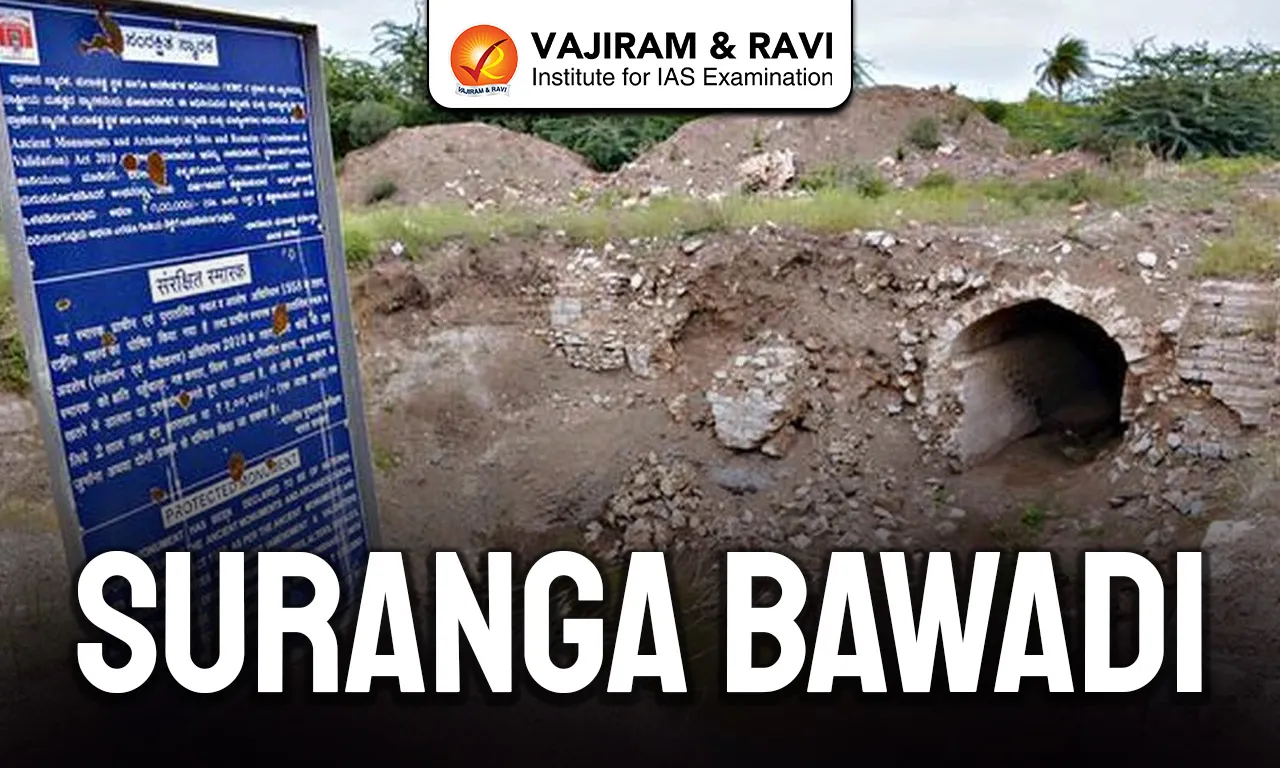
Suranga Bawadi, Details, Inclusion, World Monuments Watch

Suranga Bawadi

Suranga Bawadi is a historic stepwell located in Karnataka. It was built during the medieval period and is known for its unique underground structure. The Bawadi was mainly used for water storage and supply. It reflects the advanced water management system and architectural skills of that time.

Suranga Bawadi Details

  • Suranga Bawadi is a historic underground stepwell located in Vijayapura (Bijapur), Karnataka. It was constructed in the 16th century by Adil Shah I of the Adil Shahi dynasty. The structure was built as part of the ancient Karez system, which carried water through underground tunnels to supply water to the city.
  • Suranga Bawadi has been included in the World Monuments Watch List 2020 under the category “Ancient Water System of the Deccan Plateau” by the World Monuments Fund. This recognition highlights its historical and architectural importance.

Significance of Inclusion

  • This recognition is important because it will help the monument receive financial support for its repair and conservation in the coming years. 
  • The World Monuments Fund will also work with government authorities and other agencies to restore the structure and spread awareness among people about its historical and cultural value.

World Monuments Watch (WMW)

  • The World Monuments Watch is a global programme that identifies cultural heritage sites which are in danger and need protection. It was started in 1995 by the World Monuments Fund. The programme selects such sites every two years (biennial basis).
  • Its main aim is to highlight historically important places that are at risk and to provide them with financial and technical support for conservation. It also focuses on involving local communities, promoting social inclusion and strengthening skills in heritage conservation.
  • Anyone, including individuals, community groups, NGOs, government bodies or educational institutions, can nominate a site for the Watch list.
  • The historic buildings located along the Musi River in Hyderabad and the traditional water structures of Bhuj have been included in the 2025 World Monuments Watch list. This inclusion shows that these heritage sites are under threat due to environmental problems and rapid urban development.

World Monuments Fund (WMF)

The World Monuments Fund (WMF) is a private, non-profit international organisation founded in 1965 and headquartered in New York, USA. It works to protect and preserve historic buildings and cultural heritage sites around the world through research, advocacy, funding support, training and conservation projects.

Karez System

  • The Karez system is an old method of collecting and supplying water. In this system, underground water is brought to the surface through a network of tunnels. It works without using any machines or pumps. Water flows naturally with the help of gravity from higher ground to lower areas.
  • This technique first developed in ancient Persia (present-day Iran) and later spread to many other regions during the medieval period. Today, Karez systems are found in around 38 countries, mainly in the Middle East.

Suranga Bawadi FAQs

Q1: What is Suranga Bawadi?

Ans: Suranga Bawadi is a historic underground stepwell located in Vijayapura, Karnataka. It was built for water storage and supply.

Q2: Who built Suranga Bawadi and when?

Ans: It was built in the 16th century by Adil Shah I of the Adil Shahi dynasty.

Q3: What is the Karez system?

Ans: The Karez system is an ancient water management method in which underground water is brought to the surface through tunnels using gravity, without pumps.

Q4: Why was Suranga Bawadi included in the World Monuments Watch List 2020?

Ans: It was selected under the “Ancient Water System of the Deccan Plateau” for its historical and architectural importance.

Q5: What is the significance of this inclusion?

Ans: The inclusion helps in getting financial and technical support for restoration and creates public awareness about its heritage value.

Oussudu Lake, Features, Bird Sanctuary, Flora & Fauna, Challenges

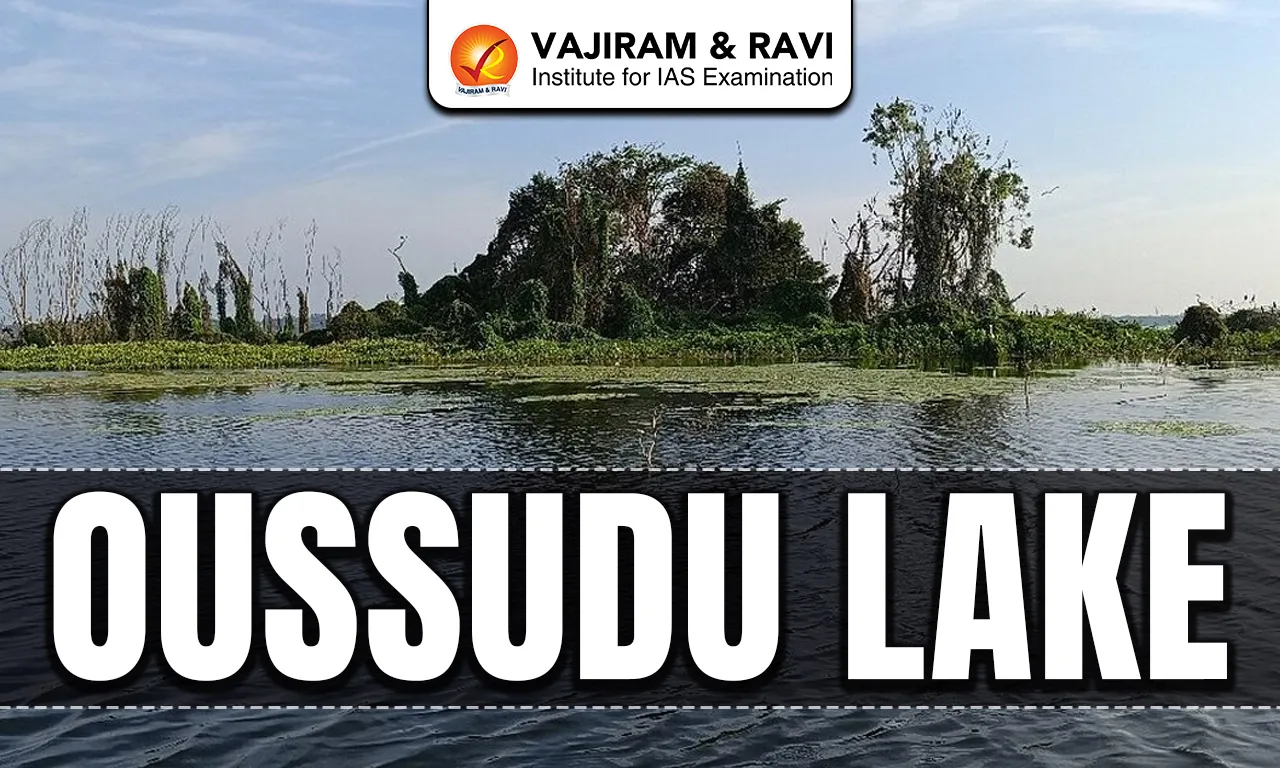
Oussudu Lake

Oussudu Lake is also known as Ousteri or Lac Oustéri. It is a man made freshwater lake located about 10 kilometres from Puducherry town and shared between the Union Territory of Puducherry and Tamil Nadu. It is spread across nearly 800 hectares across Puducherry and Tamil Nadu. It is the largest lake in Puducherry and recognized as one of the important wetlands of Asia by the International Union for Conservation of Nature. The lake forms a complex ecosystem of open water, marshes and mudflats that sustain rich biodiversity.

Oussudu Lake Features

Oussudu Lake is a large transboundary freshwater wetland supporting hydrological balance and ecological stability in the Puducherry region. The major highlighting features of the lake are:

  • The lake functions as the single largest freshwater catchment in Puducherry, storing monsoon runoff and regulating seasonal water availability across surrounding villages and agricultural lands.
  • Of the total 800 hectare extent, 390 hectares fall under Puducherry administration while the rest lies in Tamil Nadu, making it an inter state ecological asset requiring coordinated governance.
  • Constructed as an artificial reservoir, the lake evolved into a dynamic wetland system over time, integrating open water zones, shallow marshes and exposed mudflats.
  • The ecosystem includes water bodies of varying depths, peripheral marsh vegetation and seasonal mudflats that provide feeding and nesting grounds for water birds.
  • The lake has been recognized among significant Asian wetlands, reflecting its ecological value at a continental scale and its role in supporting migratory avifauna.
  • The Puducherry Tourism Development Corporation operates a small boat club on the lake, promoting regulated boating activities for visitors.
  • The Puducherry government has proposed upgrading the lake region into a National Park to strengthen legal protection and biodiversity management.
  • Plans include installation of bird watching telescopes and development of eco sensitive tourism facilities to balance conservation with public engagement.

Also Read: National Parks in Tamil Nadu

Oussudu Lake Bird Sanctuary

The Oussudu Lake region is legally protected as a notified Bird Sanctuary in India across both Puducherry and Tamil Nadu jurisdictions.

  • Sanctuary Declaration in Puducherry: In 2008, wetlands within Puducherry limits were officially declared as the Oussudu Bird Sanctuary, ensuring statutory protection for avifauna and habitat.
  • Tamil Nadu Notification: The Tamil Nadu portion received sanctuary status in 2015, strengthening conservation efforts across the entire wetland landscape.
  • Formal Establishment: On 11 August 2014, the sanctuary framework was formally recognized through government notification, marking a milestone in structured wetland conservation.
  • Sanctuary Area: The protected sanctuary area in Tamil Nadu covers approximately 3.32 square kilometres or 332 hectares dedicated to wetland ecosystem preservation.
  • Location: Situated in Viluppuram district and about 10 kilometres from Puducherry town.
  • Avian Habitat: The sanctuary supports both resident and migratory birds, with seasonal influxes during winter months due to suitable feeding grounds and shallow water zones.
  • Birdwatching Activities: Controlled boating and birdwatching are popular activities, allowing visitors to observe waterfowl without significant disturbance to nesting sites.

Oussudu Lake Biodiversity

Oussudu Lake supports diverse plant and animal communities across terrestrial and aquatic habitats. The key floral and faunal species found in the region are:

Flora

  • Tree Species: The wetland landscape includes Acacia auriculiformis, Azadirachta indica (Neem), Bombax ceiba (Red Silk Cotton Tree), Borassus flabellifer (Palmyra Palm) and Ceiba pentandra (Kapok Tree).
  • Native Forest: Species such as Ficus benghalensis (Banyan), Ficus religiosa (Peepal), Gmelina arborea and Dalbergia paniculata contribute to canopy cover and micro habitat formation.
  • Shrubs and Understory Plants: Plants like Abutilon hirtum, Abutilon indicum, Barleria cristata and Cassia auriculata thrive along moist margins of the lake.
  • Invasive and Adaptive Species: Lantana camara and Jatropha species are present in certain stretches, indicating ecological pressure and habitat transformation trends.
  • Grassland Vegetation: Grasses such as Chloris barbata and Chrysopogon asper stabilize soil in shallow zones and support invertebrate life.
  • Aquatic Support: The mixed vegetation ranging from herbs to tall trees provides roosting, nesting and feeding support for migratory birds during both summer and winter seasons.

Fauna

  • Mammalian Species: Terrestrial fauna include Spotted Deer, Jackal, Jungle Cat, Grey Mongoose, Black naped Hare, Asian Palm Civet, Short nosed Fruit Bat and Indian Pangolin.
  • Water Birds: Species such as Great White Pelican, Greater Flamingo and Lesser Flamingo are recorded, especially during migratory seasons.
  • Raptors and Eagles: Crested Serpent Eagle, White bellied Sea Eagle and Osprey use the wetland for hunting fish and small vertebrates.
  • Waders and Shorebirds: Bronze winged Jacana, Grey headed Lapwing, Dunlin and Ruff forage along exposed mudflats rich in invertebrates.
  • Woodland Birds: Chestnut winged Cuckoo, Crested Tree Swift, Black capped Kingfisher and Stork billed Kingfisher occupy vegetated zones near water.
  • Reptilian Diversity: Reptiles such as Indian Black Turtle, Indian Rock Python, Common Vine Snake, Indian Wolf Snake and Indian Monitor Lizard inhabit surrounding habitats.
  • Amphibians: The freshwater system sustains fish, amphibians and aquatic invertebrates that form the base of the wetland food web.

Oussudu Lake Challenges

The Oussudu Lake faces ecological stress due to anthropogenic pressure and environmental degradation affecting its hydrology and biodiversity.

  • Plastic Pollution: Vulnerability assessment studies highlight large scale dumping of plastic bags, thermocol, cups, plates, bottles and pipes into canals feeding the lake.
  • Disrupted Water Flow: Accumulated plastic waste obstructs monsoon runoff channels, reducing natural water inflow and altering seasonal hydrological cycles.
  • Slow Degradation: Nearly two thirds of plastic waste degrades slowly, releasing harmful substances into soil and water bodies over time.
  • Ecological Damage: Plastic pollution contaminates water, soil and air, disturbing aquatic organisms and affecting the broader wetland ecosystem.
  • Health Risks: Exposure to plastic pollutants is linked to eye irritation, breathing difficulty, liver dysfunction and increased cancer risks in surrounding populations.

Way Forwards

Sustainable management strategies are essential to conserve this inter state Oussudu Lake Wetland ecosystem for future generations.

  • Alternative Packaging Promotion: Before enforcing plastic bans, adoption of eco friendly packing materials should be encouraged at household and commercial levels.
  • Leaf Based Serving Practices: Hotels and eateries can shift to banana leaf, teak leaf, vanathula leaf and mantharai leaf for food serving and packaging.
  • Skill Development: Training programmes should promote local production of biodegradable packaging materials to create livelihood opportunities.
  • Strict Enforcement: Strong regulation of plastic production, sale and disposal is required to prevent further accumulation in canals and wetland zones.
  • Litter Free Zone Plan: Government renovation initiatives aim to make the lake surroundings plastic free and noise free to improve conditions for migratory birds.
  • Conservation Upgradation: Proposal to declare the lake as a National Park can enhance institutional protection, research support and long term ecosystem monitoring.

Oussudu Lake FAQs

Q1: Where is Oussudu Lake located?

Ans: Oussudu Lake is situated about 10 kilometres from Puducherry town and lies across Puducherry and Tamil Nadu, mainly in Viluppuram district of Tamil Nadu.

Q2: How large is Oussudu Lake?

Ans: The lake spreads over nearly 800 hectares, with around 390 hectares in Puducherry and the remaining area in Tamil Nadu.

Q3: When was Oussudu Lake declared a bird sanctuary?

Ans: The Puducherry portion was declared a bird sanctuary in 2008, while the Tamil Nadu section received sanctuary status in 2015.

Q4: What is the major environmental threat to Oussudu Lake?

Ans: Plastic pollution is a key concern, as waste dumped in canals blocks monsoon runoff and contaminates soil and water systems.

Q5: Which international body has recognized Oussudu Lake as an important wetland?

Ans: Oussudu Lake has been recognized as one of the important wetlands of Asia by the International Union for Conservation of Nature, highlighting its ecological significance.

Punjabi Suba Movement, Background, Demands, Impact

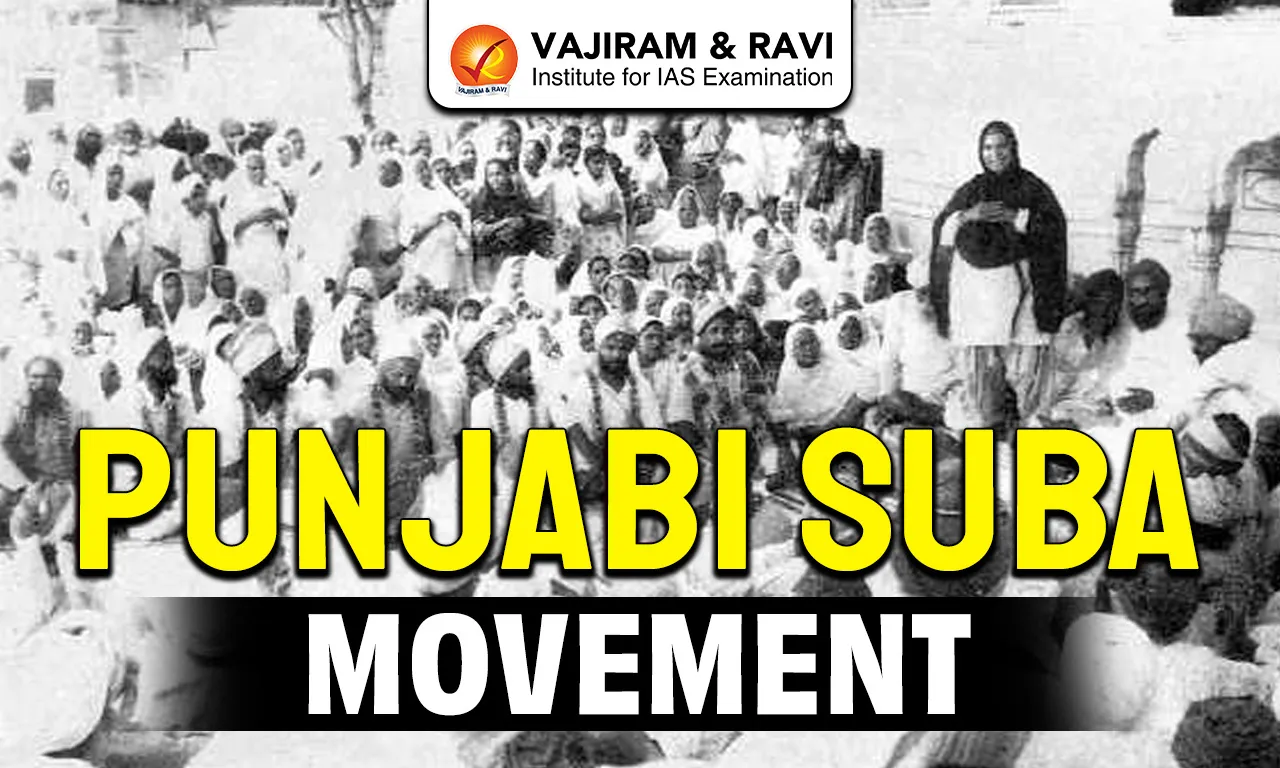
Punjabi Suba Movement

The Punjabi Suba Movement was a political movement in independent India that demanded the creation of a separate Punjabi-speaking state. It was mainly led by the Shiromani Akali Dal and supported largely by sections of the Sikh community. The movement emerged in the 1950s as part of the broader demand for reorganization of states on a linguistic basis. After years of protests and negotiations, the demand was accepted in 1966, leading to the reorganization of Punjab and the creation of Haryana and a new Punjab.

Punjabi Suba Movement Background

  • After Independence, India faced several demands for creation of states on a linguistic basis. In Punjab, the demand for a separate Punjabi-speaking state, known as Punjabi Suba, became the main political objective of the Sikh leadership, especially the Shiromani Akali Dal.
  • The Sikhs believed that their language (Punjabi) and cultural identity would be better protected in a separate state. Elections to the Shiromani Gurdwara Parbandhak Committee (SGPC) in 1954 showed strong Sikh support for this demand.

Punjabi Suba Movement Demands

  • Creation of a Punjabi-speaking state.
  • The state should include only Punjabi-speaking areas.
  • Its boundaries should not be changed artificially for political reasons.
  • The new state would function within the framework of the Indian Constitution.

Role of the States Reorganisation Commission (1953)

  • The States Reorganisation Commission (SRC), appointed in 1953, examined various demands for new states. It rejected the demand for Punjabi Suba.
  • Instead of recommending the creation of a separate Punjabi-speaking state, the Commission proposed expanding the existing Punjab by merging the Patiala and East Punjab States Union (PEPSU) and Himachal Pradesh with it.
  • Sikh leaders felt that this recommendation ignored their genuine concerns. They believed that the decision aimed to keep Sikhs politically in a minority. This rejection increased dissatisfaction and strengthened the movement.

Agitations and Police Action (1955)

  • The Punjabi Suba Movement turned into mass protests in 1955. During the Baisakhi festival in Amritsar, the Punjab government banned slogans supporting Punjabi Suba. Thousands of Sikhs courted arrest in protest.
  • On 4 July 1955, police entered the Golden Temple and used tear gas to disperse protesters. This incident deeply hurt Sikh religious sentiments and increased tensions between the government and the Sikh community. Although the ban was later withdrawn.
  • To solve the issue, a “Regional Formula” was introduced. It divided Punjab into Punjabi-speaking and Hindi-speaking regions for administrative purposes. However, it was not effectively implemented and failed to satisfy both sides.
  • Over time, language differences started taking a communal shape. The demand for Punjabi Suba continued through peaceful protests and political negotiations.
  • Leaders like Master Tara Singh and Sant Fateh Singh used hunger strikes and mass agitations to press the demand. Thousands of supporters courted arrest. The issue remained politically sensitive and emotionally charged.

Creation and Reorganisation of Punjab (1966)

  • After the 1965 India-Pakistan War, the central government reconsidered the long-pending demand for a Punjabi-speaking state. A Parliamentary Committee examined the issue and recommended the creation of Punjabi Suba. Accepting this recommendation, the government passed the Punjab Reorganisation Act, 1966.
  • The Act came into effect on 1 November 1966, and Punjab was reorganised mainly on a linguistic basis. As a result:
    • Punjab was reconstituted as a Punjabi-speaking state.
    • Haryana was created as a separate Hindi-speaking state and became the 17th state of India.
    • Some hill areas of the old Punjab were transferred to Himachal Pradesh (which was then a Union Territory and became a full state in 1971)..
    • Chandigarh was made a Union Territory and declared the joint capital of both Punjab and Haryana.
  • Thus, the long-standing Punjabi Suba Movement demand was fulfilled through constitutional means under Article 3 of the Indian Constitution. The reorganisation of 1966 became an important example of linguistic state formation in post-Independence India.

Constitutional Provisions for Creation of States (Article 3)

  • The Indian Constitution gives Parliament the power to:
    • Create a new state.
    • Change the name or boundaries of a state.
    • Merge or divide states.
  • Procedure under Article 3:
    • The President refers the proposal to the concerned State Legislature for its opinion.
    • The State Legislature gives its views within a specified time.
    • Parliament can then pass the Reorganisation Bill.
    • The final power lies with Parliament (state consent is not mandatory, only its opinion is required).

Punjabi Suba Movement FAQs

Q1: What was the Punjabi Suba Movement?

Ans: The Punjabi Suba Movement was a political movement led mainly by the Shiromani Akali Dal demanding the creation of a separate Punjabi-speaking state after Independence.

Q2: Why was the Punjabi Suba demand raised?

Ans: The demand was raised to protect Punjabi language and Sikh cultural identity and to reorganise Punjab on a linguistic basis, similar to other states in India.

Q3: What was the role of the States Reorganisation Commission (1953)?

Ans: The States Reorganisation Commission examined the demand but rejected the creation of Punjabi Suba and instead suggested a larger Punjab.

Q4: What happened during the 1955 agitation?

Ans: The Punjab government banned pro-Punjabi Suba slogans. Protests followed, thousands were arrested, and police entered the Golden Temple on 4 July 1955, which deeply hurt Sikh sentiments.

Q5: Who were the main leaders of the movement?

Ans: Important leaders included Master Tara Singh and Sant Fateh Singh, who used protests and hunger strikes to press the demand.

Satmala Range, Location, Peaks, Rivers, Flora & Fauna, Challenges

Satmala Range

The Satmala Range is a major east-west mountain chain running across Nashik district in northwestern Maharashtra. It forms an important northern offshoot of the Sahyadris in the Western Ghats system and stretches roughly 200 kilometers from Saputara near the Gujarat border to Manmad, later merging with the Ajanta hills. Its elevations generally range between 600 meters and 1,472 meters, with Dhodap as the highest summit. The range acts as a watershed divide between the Godavari and Tapi River basins and is geologically formed from ancient Deccan Trap basalt flows.

Satmala Range Features

Satmala Range forms the backbone of Nashik’s landscape with geological, hydrological and strategic importance across northern Maharashtra.

  • Location: The range runs centrally through Nashik district between Saputara and Manmad, covering nearly 100 miles. 
  • Extent: It continues eastward into the Ajanta hills, while the Chandvad range lies along its eastern flank, forming a continuous elevated ridge system.
  • Highest Peak: Dhodap rises to 1,472 meters or about 4,829 feet above sea level. It is the second highest peak in Nashik district and among the highest summits in Maharashtra. Its distinct rock profile makes it easily identifiable from surrounding plains.
  • Major Peaks: Saptashrungi stands at 1,264 meters and is a major religious hill. Achala reaches 4,062 feet and Ahivant 4,024 feet. Indrai rises to 4,495 feet, while Markandya measures 4,370 feet, forming a rugged skyline.
  • Geological Structure: The hills are built from layered basalt formed during the Deccan volcanic eruptions around 66 million years ago. Horizontal lava flows created flat topped plateaus and steep scarps. Continuous erosion produced mesas, pinnacles and step like slopes typical of trap topography.
  • Rivers: Rivers south of the range such as Kadva and Darna flow toward the Godavari basin. Northern streams including Girna and Mosam drain into the Tapi basin. This natural divide influences water availability across the Deccan Plateau.
  • Climate: The region experiences a tropical monsoon climate. Annual rainfall averages between 900 and 1,200 millimeters, mainly during June to September. Summers can touch 40 degrees Celsius, while winters remain mild between 10 and 25 degrees Celsius.
  • Strategic Fort Network: The range hosts 14 historic forts. Major ones include Hatgad at 3,656 feet, Rawlya Jawlya at 4,056 feet, Kanchana at 3,722 feet, Koldher at 3,209 feet, Rajdher at 3,579 feet and Chandwad at 3,611 feet.
  • Dhodap Fort: Dhodap fort contains bastions, rock cut caves, fortification walls and water cisterns. Its internal reservoirs ensured water supply during sieges, making it strategically strong during Maratha and Mughal conflicts.
  • Twin Fort Complexes: Ankai-Tankai near Manmad and Rawlya-Jawlya on plateau bases are twin hill forts. These controlled trade routes linking Khandesh with the Deccan interior and functioned as military lookout stations.
  • Saptashrungi: Saptashrungigad at 4,659 feet is a major pilgrimage site attracting thousands annually. Vehicles reach its foothills and devotees climb to the temple complex during major festivals.

Satmala Range Biodiversity

The Satmala Range supports dry deciduous forests, grasslands and basalt hill ecosystems with varied species richness.

Flora

  • Forest Type: Vegetation is dominated by southern tropical dry deciduous forests. Teak, tendu, dhawda and khair form the upper canopy, while bamboo species such as Dendrocalamus strictus thrive in valleys and slopes.
  • Medicinal Plants: Surveys indicate more than 297 medicinal plant species in the region. Around 74 taxa belong to the Fabaceae family, including Acacia and Dalbergia species valued for traditional medicine and rural healthcare systems.
  • Endemic Species: Species such as Achyranthes nashikensis grow in localized basalt plateaus. Elevation variation from 600 to 1,451 meters creates microhabitats that support narrow endemic plant communities.
  • Soil Influence: Black cotton soils derived from basalt support agriculture in valleys. On upper slopes, lateritic soils rich in iron oxide influence plant diversity and create seasonal grasslands during monsoon months.
  • Seasonal Bloom Cycles: Monsoon months trigger rapid vegetative growth across plateau tops, transforming dry slopes into green landscapes. From March to June, vegetation becomes sparse due to intense heat and moisture loss.

Fauna

  • Large Mammals: Leopard populations were estimated at 11 individuals in earlier wildlife counts. Indian wolf numbers were around 115, while chinkara populations stood near 100 in dry grasslands.
  • Ungulate Diversity: Blackbuck numbers were recorded around 849 in regional counts. Wild boar and deer species occupy scrub forests, contributing to trophic balance in the ecosystem.
  • Avifauna Richness: Over 200 bird species inhabit the hills. Painted stork and vulture species nest in tall trees and rocky cliffs. Grasslands near the range have recorded the critically endangered great Indian bustard.
  • Butterfly Species: Basalt plateau zones such as Ikhara and Kanchan support 49 butterfly species. Common rose, lemon pansy and common pierrot are frequently observed during post monsoon months.
  • Reptilian Species: Rocky terrains provide habitat for Indian cobra and Russell’s viper. These species adapt well to dry deciduous and scrub habitats common across the Satmala slopes.

Satmala Range Challenges

The Satmala Range faces ecological pressure due to human activities and climatic stress as mentioned here:

  • Habitat Fragmentation: Agricultural expansion has affected over 2,200 hectares of forest land. This reduces wildlife corridors and disrupts leopard and wolf movement patterns across hill slopes.
  • Forest Fires: Recurrent summer fires damage dry deciduous forests. High temperatures above 40 degrees Celsius increase vulnerability of leaf litter and grasslands to ignition.
  • Illegal Mining: Basalt extraction in certain stretches leads to slope instability, soil erosion and long term ecological degradation of plateau ecosystems.
  • Water Scarcity: Rainfall concentration within four months causes seasonal water stress. Post monsoon months witness depletion of small streams and surface reservoirs.
  • Tourism Pressure: Peak season from July to February increases footfall on trekking routes and forts. Waste accumulation and trampling disturb fragile plateau vegetation.

Way Forwards

  • Protected Area Management: Strengthening protection in parts linked with the Gautala Autramghat sanctuary area of 260.61 square kilometers can conserve dry deciduous forest patches and associated wildlife.
  • Community Participation: Involving local villages such as Pimpri-Achala and Hatti in eco tourism management can reduce unsustainable practices and generate livelihood alternatives.
  • Fire Monitoring Systems: Use of camera traps and early warning systems can detect forest fires quickly, preventing large scale habitat loss.
  • Sustainable Trekking Regulation: Limiting visitor numbers during sensitive seasons and enforcing strict waste management policies can protect plateau biodiversity.
  • Watershed Conservation: Check dams, contour bunding and soil conservation programs can improve groundwater recharge and reduce erosion in basalt derived soils.

Satmala Range FAQs

Q1: Where is the Satmala Range located?

Ans: The Satmala Range is located in Nashik district of Maharashtra. It runs east-west from Saputara near the Gujarat border to Manmad and later continues into the Ajanta hills.

Q2: What is the highest peak of the Satmala Range?

Ans: The highest peak of the Satmala Range is Dhodap, which rises to about 1,472 meters or 4,829 feet above sea level and is one of the highest peaks in Maharashtra.

Q3: Why is the Satmala Range important for rivers?

Ans: The range acts as a watershed divide. Rivers like Kadva and Darna flow south into the Godavari basin, while Girna and Mosam flow north toward the Tapi basin.

Q4: How many forts are present in the Satmala Range?

Ans: There are 14 historical forts in the Satmala Range, including Dhodap, Hatgad, Achala, Ahivant, Rawlya Jawlya and Ankai-Tankai.

Q5: What type of rocks form the Satmala Range?

Ans: The Satmala Range is formed mainly of basalt rocks created during the Deccan volcanic eruptions around 66 million years ago. These lava flows produced flat topped plateaus and steep escarpments typical of trap topography.

Indian Handloom Sector, Status, Export Trend, Schemes, Revival

Indian Handloom Sector

The India Handloom Sector is one of the largest unorganized sectors in India. It holds a long history and is known for its skilled artisans. The handloom industry reflects India’s rich cultural heritage and helps preserve traditional designs and craftsmanship.

India Handloom Sector Background

  • The tradition of handloom weaving in India is very ancient. It goes back to the time of the Indus Valley Civilization. Excavations at Mohenjo-Daro and Harappa show that people knew the art of spinning and weaving thousands of years ago. Over time, handloom weaving became an important part of the culture and traditions of different regions of India.
  • During British rule, the importance of handlooms increased further. In 1905, when Bengal was partitioned by the British, the Swadeshi Movement started as a protest. People were encouraged to boycott foreign goods, especially British cloth and use Indian-made handloom products. This movement promoted self-reliance and national unity.
  • The spinning wheel, known as the charkha, became a strong symbol of freedom. Mahatma Gandhi promoted hand-spinning as a way to achieve economic independence and social equality. Because of this, handloom weaving became closely connected with India’s freedom struggle.
  • Today, National Handloom Day, which is celebrated on 7th August every year reminds us that the handloom sector is not only about business and trade. It also represents India’s culture, patriotism and rich heritage.

Indian Handloom Sector Status

  • India’s handloom weavers are globally recognized for their traditional skills in spinning, weaving and hand-printing. Most of the weavers live in villages and small towns, where these skills are passed down through generations. 
  • The handloom sector is the largest cottage industry in India, with about 28 lakh looms and provides employment to nearly 35 lakh people in rural areas.
  • It produces both traditional items like sarees, shawls and kurtas, and modern products such as bed sheets and home furnishings. The sector requires low investment, uses minimal electricity and is eco-friendly.
  • According to the Handloom Census 2019-20, around 35 lakh people work in this sector, with women forming nearly 75% of the workforce, highlighting its role in women empowerment and rural development.
  • It produces traditional and modern textile products using eco-friendly methods with low investment and minimal electricity.

India Handloom Sector Export Trends

  • India mainly exports handloom items such as mats, carpets, rugs, bed sheets, cushion covers and other handmade textile products. Among these, mats and mattings made up around 12% of the total handloom exports in FY23. Home textile products like bed linen, curtains and other furnishing materials form more than 60% of India’s total handloom exports. In FY25, exports of carpets and other textile floor coverings were worth about US$ 1.63 billion. During April to July of FY26, these exports were valued at around US$ 531 million.
  • Silk scarves made on handlooms are also in high demand across the world. In FY23, these scarves contributed about ₹106 crore (around US$ 13 million) to India’s handloom export earnings.
  • Linen products made from handlooms, such as cotton bed sheets, pillow covers, napkins, tablecloths, kitchen and toilet linen accounted for nearly 27% of total exports in FY23.
  • Some of the main centres for handloom exports in India are Karur, Panipat, Varanasi and Kannur. These places are known for producing items like bed linen, table linen, floor coverings, embroidered fabrics and curtains for international markets. In FY25, India exported cotton yarn, fabrics, made-ups and handloom products worth about US$ 10.56 billion.

India Handloom Export Destination

  • India exports handloom products to over 20 countries, including the USA, UAE, Netherlands, France, UK, Germany and Australia. 
  • The USA is the largest buyer, importing goods worth about US$ 139 million in FY25 and accounting for nearly 28% of total exports. The UAE is the second-largest importer (about US$ 21 million, 15% share), followed by the Netherlands (6%). Other importers include South Africa, Sweden, Brazil, Canada, Portugal, Russia, Denmark, Belgium, Poland and Israel.

Indian Handloom Artistry and Craftmanship

  • Indian handloom textiles show great beauty, creativity and traditional skill. Different regions of the country have their own special weaving styles. Each fabric is made carefully by hand and reflects the history, culture and traditions of the local people. These textiles are not just clothes, but a part of India’s rich heritage.
  • In Varanasi, Banarasi silk sarees are famous for their heavy zari (gold and silver thread) work. These sarees are often worn at weddings and festivals. In South India, Kanjeevaram silk sarees are known for their bright colours and strong fabric, made from fine silk and rich borders.
  • The Ikat textiles of Pochampally and Odisha are popular for their special tie-and-dye weaving method that creates beautiful designs. Chanderi sarees from Madhya Pradesh are light in weight and slightly transparent with a shiny look. Jamdani weaving from Bengal is a very old art form and has been recognised by UNESCO as an important cultural heritage.
  • Handloom weaving needs great patience and skill. Weavers must understand different types of fibres like cotton, silk and wool. The designs often include flowers, shapes and patterns that show stories from mythology, nature and daily life. Every handloom product is unique and reflects the talent of the weaver and the culture of the community.

Indian Handloom Sector Challenges

  • The handloom sector faces strong competition from power looms and machine-made textiles, which are cheaper and produced faster. This makes it difficult for traditional weavers to compete in price and market demand.
  • Weavers often suffer from irregular income, lack of direct market access and dependence on middlemen. High cost and irregular supply of raw materials like yarn further increase their problems.
  • The younger generation is leaving this occupation due to low and uncertain earnings, threatening the continuation of traditional skills.
  • Policy issues have also affected the sector. For instance, the 2021 amendment to the Flag Code of India allowed machine-made polyester flags, reducing demand for hand-spun khadi.
  • In addition, weak branding, GST on raw materials, limited institutional support and low wages continue to hamper the growth and sustainability of the handloom industry.

Government Initiatives for Handloom Sector

  • National Handloom Development Programme (NHDP):
    • Supports overall growth of the sector through Cluster Development Programme (66 clusters assisted in FY22), Handloom Marketing Assistance, Urban Haats and handloom awards. Mega clusters are given financial assistance up to ₹30 crore to support around 10,000 looms.
  • Market Access Initiative (MAI):
    • Launched in 2018 and revised in 2021 (valid till March 2026). Promotes exports through product-specific strategy, market studies, trade fairs, exhibitions, buyer-seller meets and support for meeting international standards, with fixed budget limits.
  • Raw Material Supply Scheme (RMSS):
    • Implemented from 2021-22 to 2025-26. Provides quality yarn at subsidised rates, 15% price subsidy on selected yarns and freight reimbursement. Benefits are given through Direct Benefit Transfer (DBT).

Handloom Export Promotion Council (HEPC)

  • The Handloom Export Promotion Council (HEPC) was established in 1965 as a non-profit body under the Ministry of Textiles, Government of India. Its main aim is to promote the export of Indian handloom products such as fabrics, home furnishings, carpets and floor coverings.
  • HEPC supports exporters by conducting market research, sharing trade information, advising the government and providing guidance to members. It also organizes and participates in international trade fairs and buyer-seller meets in India and abroad to expand global markets.
  • The council was initially formed with 96 members and now has around 1,500 members across the country.

Indian Handloom Sector Revival and Innovation

  • Despite challenges, the handloom sector is showing signs of revival. Government schemes like the National Handloom Development Programme, Yarn Supply Scheme and Handloom Mark support weavers through financial help and quality assurance.
  • Cooperatives, designers and entrepreneurs are introducing new designs while preserving traditional skills, helping products reach urban and global markets. Digital platforms and e-commerce have improved direct market access and reduced dependence on middlemen.
  • Women-led groups in states like West Bengal and Odisha are reviving traditional weaving and improving local livelihoods. Overall, the sector is emerging as a model of sustainable development, cultural preservation and inclusive growth.

Indian Handloom Sector FAQs

Q1: Why is the Indian handloom sector important for the economy?

Ans: It is the largest cottage industry and the second-largest employer in rural India after agriculture, providing livelihood to about 35 lakh people, mostly women and weaker sections.

Q2: What are the major export products of the handloom sector?

Ans: Main exports include mats, carpets, rugs, bed linen, cushion covers, silk scarves and other home textile products. Home textiles form more than 60% of total handloom exports.

Q3: Which countries are the major importers of Indian handloom products?

Ans: The USA is the largest importer, followed by UAE and Netherlands. Other buyers include the UK, Germany, France, Australia and others.

Q4: What are the major challenges faced by the handloom sector?

Ans: Competition from power looms, irregular income, high raw material cost, migration of youth, weak branding and policy-related issues like GST burden affect the sector.

Q5: What is the role of the Handloom Export Promotion Council (HEPC)?

Ans: The Handloom Export Promotion Council, set up in 1965 under the Ministry of Textiles, promotes export of handloom products by organizing trade fairs, conducting market research and supporting exporters.

Censure Motion, Features, Significance, Key Differences

Censure Motion

A Censure Motion is an important parliamentary device used in the Indian political system to express strong disapproval of the government’s policies or actions. It is a formal way for Members of Parliament (MPs) to criticize the Council of Ministers for specific decisions or failures.

In India, the concept of a Censure Motion is rooted in the parliamentary form of government established by the Constitution of India. It ensures accountability of the executive (government) to the legislature (Parliament). Although it is not specifically mentioned in the Constitution, it is part of parliamentary conventions and procedures followed in the Lok Sabha.

What is Censure Motion?

A Censure Motion is a formal proposal moved by members of the opposition in the Lok Sabha to criticize the government for a specific policy, action, or failure. It is different from a general criticism because:

  • It clearly mentions the reasons for disapproval.
  • It focuses on a specific issue or policy.
  • It is debated and voted upon in the House.

If the motion is passed by a majority of members present and voting, it shows that the government has lost the support of the House on that particular issue. However, unlike a No Confidence Motion, the government is not required to resign after the passing of a Censure Motion.

Also Read: Substantive Motion

Censure Motion Features

Here are the main features of a Censure Motion explained below.

  • Moved in Lok Sabha Only: A Censure Motion can be introduced only in the Lok Sabha and not in the Rajya Sabha.
  • Specific Reasons Required: The motion must clearly state the specific charges or policies for which the government is being criticized.
  • Can Target Entire Government or a Minister: It may be moved against: The entire Council of Ministers, or A particular minister for his/her actions.
  • Requires Speaker’s Permission: The motion can only be admitted after approval by the Speaker of the Lok Sabha.
  • Debate and Voting: Once admitted, the motion is debated in the House and then put to vote.
  • Simple Majority Required: It is passed if it receives a simple majority of members present and voting.
  • No Compulsory Resignation: Even if passed, the government is not legally bound to resign. However, it faces political pressure.

Also Read: Cut Motions

Censure Motion Significance

The Censure Motion plays a vital role in strengthening democracy and ensuring government accountability. Its importance can be understood through the following points:

  • Ensures Accountability: It makes the government answerable for its decisions and actions.
  • Strengthens Opposition Role: It gives the opposition a powerful tool to question and criticize the government.
  • Encourages Healthy Debate: It allows detailed discussion on important national issues.
  • Promotes Transparency: The government must publicly defend its policies and clarify doubts.
  • Political Pressure Tool: Even if the government does not resign, passing of the motion damages its public image and moral authority.

Difference Between Censure Motion and No Confidence Motion

A Censure Motion is a parliamentary procedure used in the Lok Sabha to express strong disapproval of the government’s specific policies or actions. The Difference Between Censure Motion and No Confidence Motion has been provided below.

Difference Between Censure Motion and No Confidence Motion

Basis

Censure Motion

No Confidence Motion

Purpose

To criticize specific policy or action

To test overall majority of the government

Reasons Required

Specific reasons must be mentioned

No reasons required

Target

Specific minister or entire government

Entire Council of Ministers

Resignation

Not compulsory if passed

Government must resign if passed

Constitutional Basis

Not directly mentioned

Based on Article 75(3) – Collective Responsibility

Impact

Political criticism and pressure

Direct threat to survival of government

Censure Motion FAQs

Q1: What is a Censure Motion in simple words?

Ans: A Censure Motion is a proposal in the Lok Sabha to criticize the government for a specific policy or action.

Q2: Is Censure Motion mentioned in the Constitution?

Ans: No, it is not directly mentioned in the Constitution but is part of parliamentary procedures.

Q3: Who can move a Censure Motion?

Ans: Any member of the Lok Sabha can move it with the permission of the Speaker.

Q4: Does the government have to resign if it is passed?

Ans: No, resignation is not compulsory, but it creates strong political pressure.

Q5: Can it be moved in Rajya Sabha?

Ans: No, it can be moved only in the Lok Sabha.

Satpura Range, Sub-Ranges, Peaks, Rivers, Flora & Fauna, Challenges

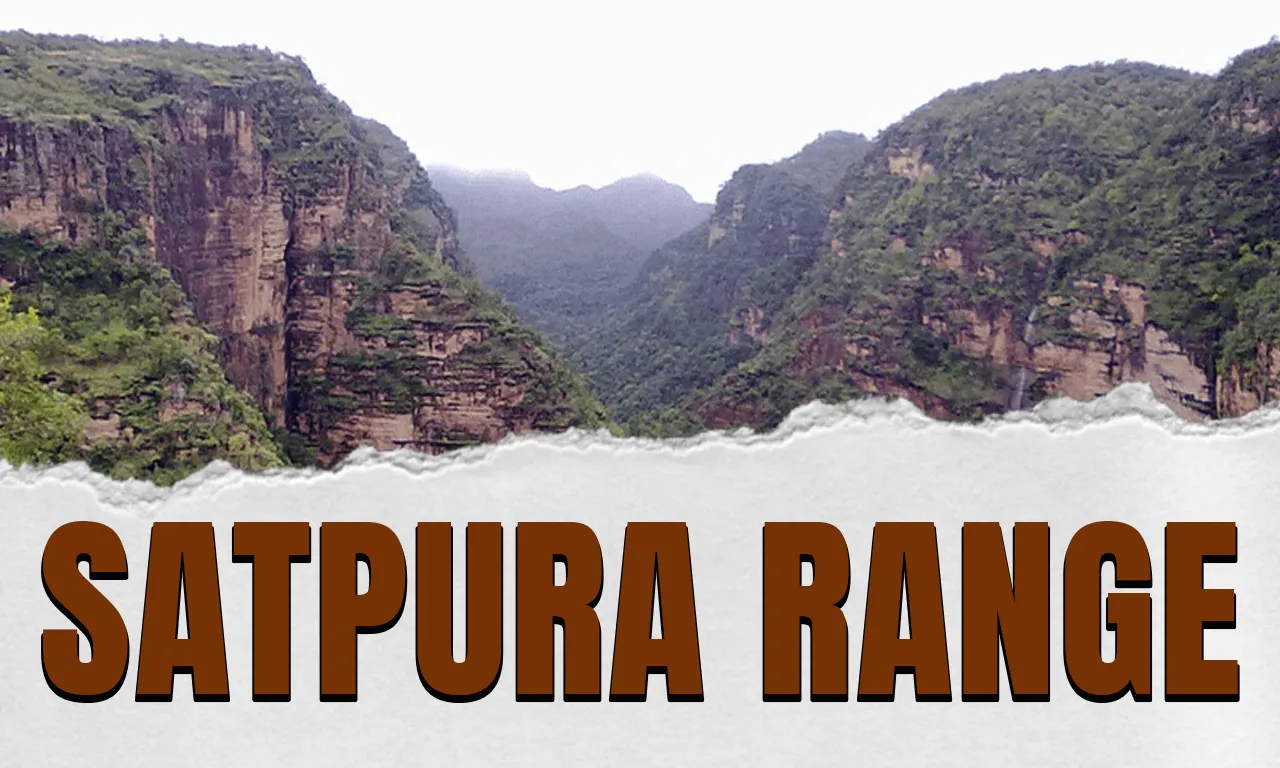
Satpura Range

The Satpura Range is a major hill system of central India extending nearly 900 kilometres from eastern Gujarat through Maharashtra and Madhya Pradesh to Chhattisgarh. Its name means “Seven Folds,” reflecting its folded and uplifted structure. It runs parallel to the Vindhya Range and forms a clear physiographic divide between the Indo-Gangetic Plain in the north and the Deccan Plateau in the south. It is structurally classified as a Horst Mountain. It is bounded by the Narmada Graben in the north and the Tapi Graben in the south, giving it distinct geological importance.

Satpura Range Features

The Satpura Range displays structural uplift, plateau like peaks and critical river origins shaping central India’s physiography.

  • Length: The range stretches about 560 miles or 900 kilometres east to west across peninsular India. 
  • Extent: It passes through four states: Gujarat, Maharashtra, Madhya Pradesh and Chhattisgarh, forming one of the broadest hill systems of the Deccan region.
  • Physiographic Division: It runs almost parallel to the Vindhya Range, together dividing northern India’s alluvial Indo-Gangetic Plain from the southern Deccan Plateau. This alignment creates a major natural boundary within the Indian subcontinent’s physical geography.
  • Structural Formation: The Satpura is a horst block mountain formed by tectonic uplift between two faulted depressions. The Narmada Graben lies to its north and the Tapi Graben to its south, indicating crustal tension and block faulting processes.
  • Major Sub-Ranges: It includes the Mahadeo Hills in the north, the Maikala Range in the east and the Rajpipla Hills in the west. Several peaks exceed 1,200 metres or 4,000 feet in elevation.
  • Highest Peak: Dhupgarh, located near Pachmarhi in the Mahadeo Hills, rises to about 1,350 metres. It represents the highest point of the entire Satpura system.
  • Narmada River: The Narmada River rises at Amarkantak at the north-eastern end of the range. It flows westward between the Satpura and Vindhya ranges before entering the Gulf of Khambhat in the Arabian Sea.
  • Tapti River: The Tapti River originates near Multai in the eastern-central Satpura. It flows west roughly 80 to 160 kilometres south of the Narmada and drains into the Arabian Sea near Surat.
  • Drainage Systems: The Godavari and its tributaries drain the Deccan Plateau south of the range into the Bay of Bengal. The Mahanadi drains the easternmost section before also entering the Bay of Bengal.
  • Eastern Junction: At its eastern extremity, the Satpura connects with the hills of the Chotanagpur Plateau, creating a continuous upland belt across central India.
  • Rainfall: The eastern portion receives comparatively higher rainfall, forming moist deciduous ecosystems. The western section is drier and falls within the Narmada valley dry deciduous forest zone.
  • Plateau Character: Much of the range is dissected plateau country with sharp southern slopes and relatively gentler northern slopes. Deep river valleys and fault scarps fragment the terrain.
  • Geological Composition: Rocks include schists, granites and quartzites overlain by basaltic lava flows. Southeastern flanks contain workable deposits of manganese and coal.
  • Agriculture: In upper Wainganga and Pench valleys, limited agriculture is practiced. On higher slopes, Gond communities traditionally followed shifting cultivation methods.
  • Teak Stands: Western parts of the range are known for valuable teak forests, making it an economically significant forest belt.
  • Natural Border: The hill system acts as a natural boundary between Maharashtra and Madhya Pradesh in several stretches.

Satpura Range Biodiversity

The Satpura Range landscape supports diverse moist and dry deciduous forests with rich wildlife populations.

Flora

  • Forest Type Variation: Eastern sectors form part of the eastern highlands moist deciduous forests. Western segments belong to the Narmada valley dry deciduous forest region, reflecting rainfall contrast.
  • Dominant Tree Species: Teak (Tectona grandis), sal, tendu (Diospyros melanoxylon), dhaora (Anogeissus latifolia) and bamboo dominate large tracts. These species support timber, minor forest produce and ecological stability.
  • Medicinal Plants: The range hosts numerous medicinal herbs and economically valuable forest products, especially in rugged uplands of Maharashtra and Madhya Pradesh.
  • Bamboo Distribution: Bamboo is widely spread across Gugamal and adjoining forest zones, playing a key ecological role in soil binding and wildlife habitat formation.
  • Floral Diversity in Gujarat: Shoolpaneshwar Wildlife Sanctuary alone records about 575 species of flowering plants, including semi-evergreen patches and extensive bamboo areas.

Fauna

  • Large Carnivores: The forests provide habitat to the Bengal tiger (Panthera tigris tigris), leopard and wild dog. Several tiger reserves are located within the range.
  • Herbivores: Species such as barasingha, sambar, chital, nilgai, gaur (Bos gaurus) and chousingha thrive in its grasslands and forests.
  • Smaller Mammals: Flying squirrel, mouse deer, jackal, hyena, porcupine and rhesus macaque are recorded in different protected areas.
  • Birdlife: Hornbills, peafowl and Alexandrine parakeet are notable avian species. Forest canopies and river valleys support diverse bird populations.
  • Aquatic and Reptilian Species: In Gugamal National Park, 25 fish species are recorded. Crocodiles were reintroduced in 1990 and 1991 in Siddu Kund and Hathikund water bodies.
  • Protected Area Network: Major reserves include Kanha National Park covering 940 km² with a 1,067 km² buffer, Pench National Park spanning 758 km², Satpura National Park covering 524 km² and Gugamal National Park covering 1,673.93 km².
  • Biosphere Reserve: The Pachmarhi Biosphere Reserve integrates Satpura National Park, Bori Wildlife Sanctuary and Pachmarhi Sanctuary, forming a continuous ecosystem of about 1,427 km².
  • Historical Fauna: The region once supported wild elephants, Asiatic lions and Asiatic cheetahs, reflecting its former ecological richness.

Satpura Range Challenges

The Satpura Range region faces ecological stress from deforestation, resource extraction and developmental pressures.

  • Deforestation Trends: Though historically heavily forested, large areas have undergone gradual forest loss in recent decades, fragmenting wildlife corridors.
  • Mining Activities: Southeastern parts contain manganese and coal deposits. Extraction activities risk habitat degradation and soil erosion if not scientifically regulated.
  • Infrastructure Expansion: Roads and development projects threaten ecological connectivity between reserves such as Melghat and Pench.
  • Shifting Cultivation: Traditional jhum practices on higher slopes can accelerate soil depletion if fallow cycles shorten due to population pressure.
  • Poaching Risks: Tigers and other large mammals remain vulnerable to illegal hunting despite protected area status.
  • Tourism Pressure: Popular destinations such as Pachmarhi and Chikhaldara attract heavy visitor inflow, increasing waste and habitat disturbance.

Way Forwards

Sustainable management and ecological restoration are essential to secure the Satpura landscape’s future.

  • Strengthening Corridors: Linking tiger reserves through ecological corridors will maintain genetic flow among tiger populations across Madhya Pradesh and Maharashtra.
  • Scientific Forestry: Expanding teak and mixed forest regeneration using native species can restore degraded tracts and stabilize slopes.
  • Regulated Mining: Strict environmental impact assessments and reclamation plans should guide manganese and coal extraction in southeastern sectors.
  • Community Participation: Involving Gond and local communities in joint forest management can balance livelihood needs with conservation goals.
  • Sustainable Tourism: Carrying capacity based tourism planning in hill stations and reserves can reduce ecological strain while supporting local economies.
  • Biodiversity Monitoring: Continuous wildlife census and habitat mapping in parks like Kanha, Pench and Gugamal will strengthen species protection strategies.

Satpura Range FAQs

Q1: What type of forests are found in the Satpura Range?

Ans: The eastern part has moist deciduous forests, while the western section falls under dry deciduous forests, with dominant species like teak, sal and bamboo.

Q2: Why is the Satpura Range called a Horst Mountain?

Ans: It is called a horst because it is an uplifted fault block situated between the Narmada Graben in the north and the Tapi Graben in the south.

Q3: Which major rivers originate from the Satpura Range?

Ans: The Narmada River rises at Amarkantak and the Tapti River originates near Multai. Both flow westward into the Arabian Sea.

Q4: What is the highest peak of the Satpura Range?

Ans: Dhupgarh is the highest peak with an elevation of about 1,350 metres. It is located near Pachmarhi in the Mahadeo Hills of Satpura Range.

Q5: Which important protected areas are located in the Satpura Range region?

Ans: Major protected areas include Kanha National Park, Pench National Park, Satpura National Park, Gugamal National Park and the Pachmarhi Biosphere Reserve.

Operation Sadbhavana, Details, Need & Topa Pir Village

Operation Sadbhavana

Operation Sadbhavana is a civic action programme started by the Indian Army in Jammu and Kashmir. The word Sadbhavana means “goodwill.”

About Operation Sadbhavana

  • Operation Sadbhavana (meaning Goodwill) is a special initiative by the Indian Army in Jammu & Kashmir and Ladakh to support people affected by terrorism and difficult conditions. Its main aim is to help local communities through welfare and development activities.
  • In Ladakh, the Army runs seven Army Goodwill Schools (AGS) to provide quality education to children in remote areas. Currently, over 2,200 students study in these schools.
  • The Indian Army also undertakes other projects under Operation Sadbhavana, including:
    • Building and improving infrastructure
    • Organizing education tours and skill development programs
    • Supporting healthcare, sports, women empowerment, employment and environmental projects
    • Promoting national integration and community development
  • For the financial year 2022-23, around ₹8.82 crore were allocated for Ladakh to implement these activities. Projects are carefully chosen based on local needs and coordinated with the civil administration to avoid duplication.
  • Under Operation Sadbhavana, women and girls in remote areas of Ladakh were empowered through vocational and skill training such as weaving, wool work, apricot oil extraction, and yak cheese making and initiatives like ‘Kargil Ignited Minds’ supported girls’ education and preparation for competitive exams, promoting skill development and gender empowerment.
  • Operation Sadbhavana focused on infrastructure, education, community development, women and youth empowerment and health, while also working to counter anti-India propaganda in Kashmir.
  • As part of Operation Sadbhavana, the Indian Army organized a National Integration Tour on 9 November 2025 for students and teachers from border districts of Rajouri and Poonch. The tour exposed them to India’s progress in education and technology and strengthened their bond with the nation. This initiative reflects the Army’s role in promoting unity, youth development, and nation-building in remote areas.

Operation Sadbhavana Need

  • Operation Sadbhavana was launched to support local communities in Jammu & Kashmir and reduce the influence of terrorist groups. These groups tried to create fear, target public services and turn people against the government, making locals vulnerable to recruitment into terrorism.
  • The main goal of the project was to integrate the local population into the national mainstream and provide them with education, development, and livelihood support. It also aimed to counter proxy wars, where terrorist groups, supported by Pakistan through funding and arms, carried out attacks in the region.

Adoption of Topa Pir Village

  • The Indian Army adopted Topa Pir village in Poonch district, Jammu and Kashmir as part of a model village initiative to improve community welfare and development. 
  • The village came into the spotlight after a controversial incident in which three civilians reportedly died due to alleged mistreatment by the Army. This event affected the trust and relationship between the Army and the local Gujjar and Bakarwal communities, who mainly live near the Line of Control (LoC).

UPSC Prelims PYQ

Q. Operations undertaken by the Army towards upliftment of the local population in remote areas to include addressing of their basic needs is called: [UPSC 2024]

(a) Operation Sankalp

(b) Operation Maitri

(c) Operation Sadbhavana

(d) Operation Madad

[Ans - (c)] 

Operation Sadbhavana FAQs

Q1: What is Operation Sadbhavana?

Ans: It is a goodwill initiative by the Indian Army in Jammu & Kashmir and Ladakh to support communities affected by terrorism and difficult conditions.

Q2: Why was Operation Sadbhavana launched?

Ans: To help local communities, integrate them into the national mainstream, reduce the influence of terrorist groups, and counter proxy wars supported by Pakistan.

Q3: Which areas does Operation Sadbhavana focus on?

Ans: Infrastructure, education, community development, women and youth empowerment, health, and countering anti-India propaganda.

Q4: What educational initiatives are part of Operation Sadbhavana?

Ans: The Army runs seven Army Goodwill Schools (AGS) in Ladakh, educating over 2,200 students, along with programs like ‘Kargil Ignited Minds’ for girls.

Q5: How does it empower women and youth?

Ans: Through vocational training such as weaving, wool work, apricot oil extraction, yak cheese making, and skill development programs.

Cyclone Asani, About, Features, Tropical Cyclone Formation, Regional Names

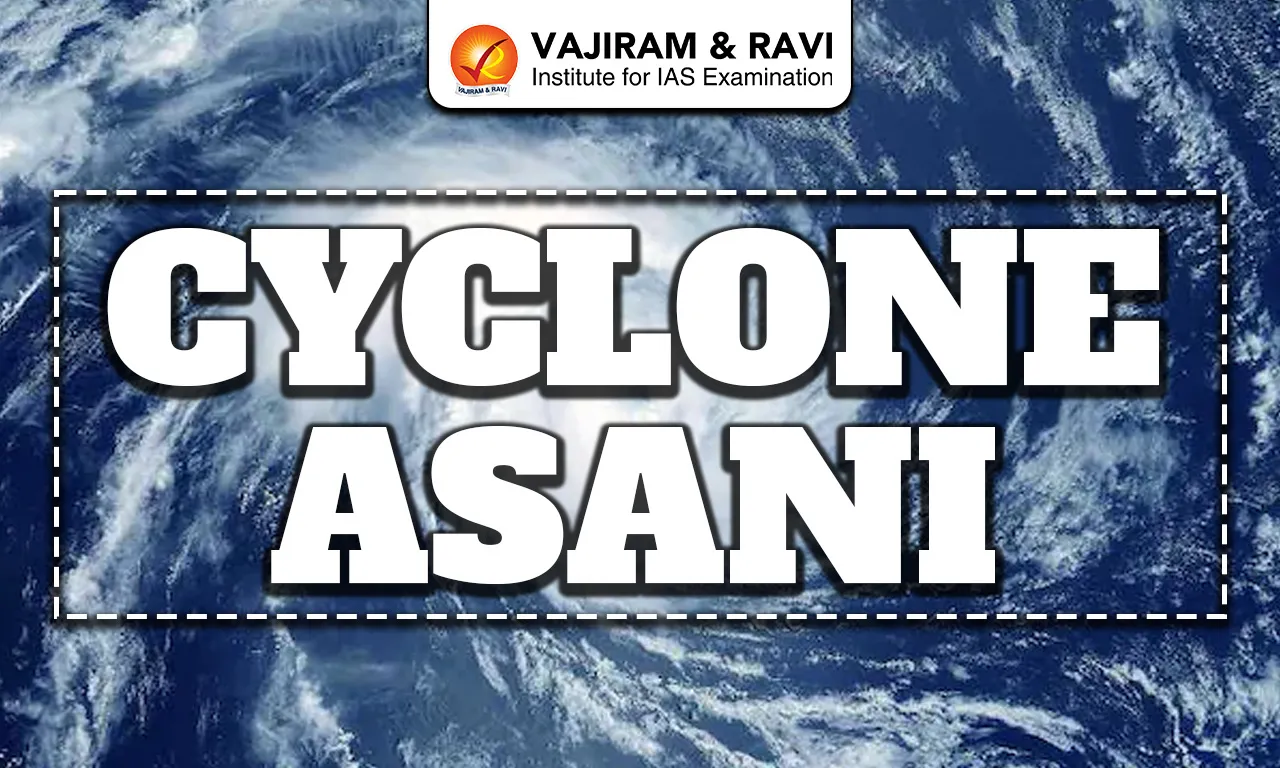
Cyclone Asani

Cyclone Asani was a tropical cyclone that developed over the Bay of Bengal in May 2022. It was the strongest storm of the 2022 North Indian Ocean cyclone season.

Cyclone Asani Key Features 

Key features of Cyclone Asani are: 

  • The name Cyclone Asani has been given by Sri Lanka under the World Meteorological Organization (WMO) naming system for cyclones in the North Indian Ocean region. It means 'wrath' in Sinhalese.
  • Cyclone Asani originated over the southeast Bay of Bengal on 8 May 2022. 
  • It mainly affected the eastern coast of India, especially Andhra Pradesh and Odisha.
  • Cyclone Asani initially formed as a low-pressure area and intensified into a severe cyclonic storm.

About Tropical Cyclones

A tropical cyclone is a rapidly rotating storm that begins over tropical oceans, and they can vary in speed, size, and intensity. It is characterized by strong winds, heavy rainfall, thunderstorms, and storm surges.

Conditions for Tropical Cyclone Formation

Tropical cyclones form over warm ocean waters under specific atmospheric and oceanic conditions. These conditions help create a low-pressure system, supply energy, and allow the storm to intensify.

  • Warm Sea Surface Temperature: Ocean temperature must be at least 26–27°C. Warm water provides the heat and moisture needed to fuel the cyclone.
  • Low Pressure: A low-pressure area or tropical disturbance is necessary.
  • Coriolis Force: Coriolis Force is needed to give the system rotational movement. Tropical cyclones do not originate between 5°N and 5°S latitudes because the Coriolis force is absent or too weak there.
  • High Humidity in the Mid-Troposphere: Moist air helps in cloud formation and convection.
  • Low Vertical Wind Shear: The difference in wind speed/direction between surface and upper levels should be small. High wind shear can break the structure of a developing cyclone.
  • Upper-level high pressure / divergence: There should be a high-pressure or anticyclonic condition in the upper atmosphere. This causes air to spread outward at higher levels, which allows rising air below to escape easily. As a result, a vacuum-like effect is created that pulls more air toward the low-pressure center, helping the cyclone to intensify. If this upper-level divergence is absent, air will accumulate and sink downward, which can stop the cyclone from developing.

Structure of a Tropical Cyclone

A cyclone is a large low-pressure system in which air spirals inward toward the center. In a tropical cyclone, the structure is organized into three main parts: the eye, the eyewall, and the spiral rainbands, along with an upper-level outflow. 

  • Eye: The eye is the central, calm region of the cyclone with the lowest air pressure and relatively clear skies. 
  • Eyewall: Surrounding the eye is the eyewall, a ring of towering cumulonimbus clouds where the strongest winds, heaviest rainfall, and most destructive weather occur. 
  • Spiral rainband: Outside the eyewall are the spiral rainbands, which are curved bands of clouds and thunderstorms extending outward for hundreds of kilometers, bringing intermittent heavy rain and gusty winds. Vertically, warm moist air rises in the eyewall, and at the upper levels it spreads outward as outflow, which helps maintain the low-pressure center and sustain the cyclone.

Tropical Cyclones in India

India is highly vulnerable to tropical cyclones because of its long coastline of over 7,500 km. The Bay of Bengal is more prone to severe cyclones compared to the Arabian Sea due to warmer waters and favorable atmospheric conditions. States such as Odisha, West Bengal, Andhra Pradesh, and Tamil Nadu are particularly vulnerable to cyclone impacts. 

Reasons for Higher Frequency in Bay of Bengal

The Bay of Bengal experiences a 35% greater frequency of cyclones compared to the Arabian Sea.

  • Warmer Waters: The Bay of Bengal is generally warmer, a key condition for cyclone formation.
  • Enclosed Nature: It is more enclosed, being surrounded by land on three sides. This allows the adjacent land to transfer excess heat to the water, contributing to higher temperatures.
  • Weaker Vertical Wind Shear: The Bay of Bengal generally has less vertical wind shear (upward and downward motion of wind), which is a favourable condition for tropical cyclones. Cyclones require a consistent upward movement of wind.
  • Remnants of Typhoons: The Bay of Bengal's connection to the Pacific Ocean means that remnants of typhoons, after crossing the South China Sea, can enter and intensify in the Bay of Bengal

Tropical Cyclones Regional Names

Tropical cyclones are known by different names in different parts of the world. In the Atlantic Ocean and Eastern Pacific, they are called Hurricanes. In the Western Pacific, they are known as Typhoons. In the Indian Ocean and South Pacific region, they are referred to as Cyclones.

Cyclone Asani FAQs

Q1: What was Cyclone Asani?

Ans: Cyclone Asani was a severe cyclonic storm that formed over the Bay of Bengal in May 2022. It was the strongest storm of the 2022 North Indian Ocean cyclone season.

Q2: Who named Cyclone Asani?

Ans: The name “Asani” was given by Sri Lanka under the WMO cyclone naming system.

Q3: Where did Cyclone Asani form and which areas were affected?

Ans: It originated over the southeast Bay of Bengal on 8 May 2022. The cyclone mainly affected the eastern coast of India, especially Andhra Pradesh and Odisha.

Q4: What was the intensity and impact of Cyclone Asani?

Ans: Cyclone Asani intensified from a low-pressure area into a severe cyclonic storm. It caused heavy rainfall, strong winds, and high waves, but major damage was limited as it weakened near the coast.

Q5: Why are Tropical Cyclones more frequent in Bay of Bengal than Arabian Sea?

Ans: Cyclones are more frequent in the Bay of Bengal because of warmer sea surface temperatures, enclosed basin that retains heat, lower vertical wind shear and remnants of Pacific typhoons entering the Bay of Bengal.

Accession of Jammu and Kashmir, Background, Instrument of Accession

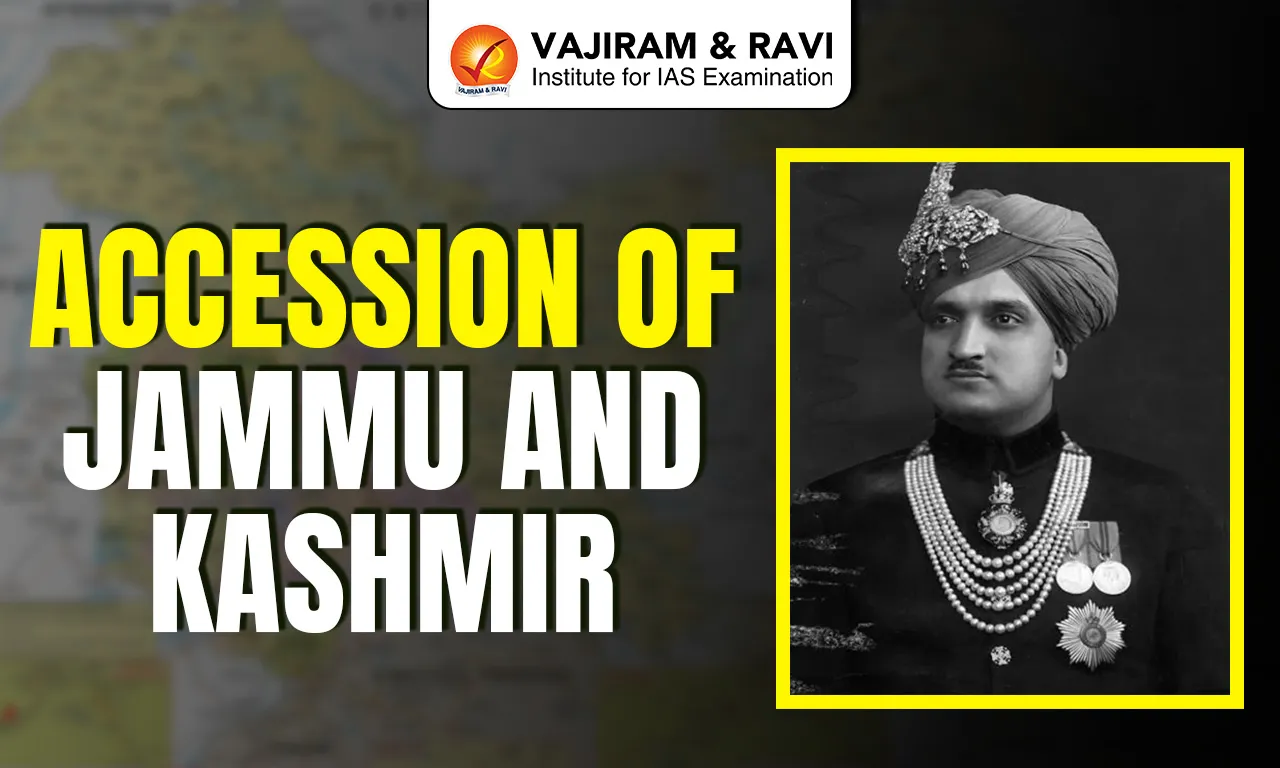
Accession of Jammu and Kashmir

After the Indian Independence Act, 1947, British India was divided into India and Pakistan. Around 580 princely states were given three choices: Join India, Join Pakistan, Remain independent. According to Section 6(a) of the Act, before joining India or Pakistan, these states had to sign an Instrument of Accession, in which they would specify the terms on which they were becoming part of the new dominions. This legal provision formed the basis of the Accession of Jammu and Kashmir.

Accession of Jammu and Kashmir Background 

The accession of Jammu and Kashmir took place on 26th October 1947. The ruler of Jammu & Kashmir, Maharaja Hari Singh, first wanted to remain independent. He signed standstill agreements with India and Pakistan to maintain the status quo. However, in October 1947, tribesmen and soldiers from Pakistan invaded Kashmir. Facing this threat, the Maharaja asked India for military help. India agreed, but only after Kashmir formally joined India. So, the Maharaja signed the Instrument of Accession on 26 October 1947. It was accepted by Governor-General Lord Mountbatten on 27 October 1947.

Instrument of Accession Key Provisions

The key provisions that shaped the Accession of Jammu and Kashmir were as follows:

  • Limited powers to India: The Indian government could make laws for Jammu & Kashmir only on three subjects - Defence, External Affairs and Communications.
  • No automatic change in terms (Clause 5): The conditions of accession could not be changed by Indian laws unless the Maharaja agreed.
  • No compulsion to accept India’s future Constitution (Clause 7): The Maharaja was not bound to accept any future Constitution of India automatically.
  • Protection of land rights (Clause 6): The Indian Parliament could not pass laws to take land in Jammu & Kashmir without permission.

After the Accession of Jammu and Kashmir in 1947,its relationship with India was given a special constitutional arrangement through Article 370. This provision defined how the Indian Constitution would apply to the state.

Article 370 Special Status for Jammu & Kashmir

Article 370 was included in the Constitution of India as a temporary provision. It granted special autonomy to Jammu & Kashmir after the Accession of Jammu and Kashmir.

Key features of Article 370 were as follows: 

  • The Indian Parliament could make laws for the state only on Defence, External Affairs, Communications (and later, other subjects only with the state’s consent)
  • Jammu & Kashmir had its own Constitution (adopted in 1957).
  • The state had its own flag along with the Indian national flag.
  • Central laws were applied to the state only through Presidential Orders with the state government’s approval.

In practice, over the years, many provisions of the Indian Constitution were gradually extended to the state.

In 1954, another provision called Article 35A was added to the Constitution through a Presidential Order issued under Article 370

Article 35A: Special Rights for Permanent Residents

Article 35A was added to the Constitution in 1954 through a Presidential Order issued under Article 370. It gave special legal status for residents of Jammu & Kashmir after the Accession of Jammu and Kashmir.

Key features of Article 35A:

  • It empowered the Jammu & Kashmir legislature to define “permanent residents” of the state.
  • Based on this definition, the state government could give special rights and privileges only to these permanent residents. These rights included the right to own land and property, eligibility for government jobs, access to state scholarships, and other welfare benefits provided by the state government. 
  • People from other parts of India were not allowed to buy land or get state government jobs in Jammu and Kashmir unless they were recognized as permanent residents.

In August 2019, the Government of India made major constitutional changes regarding Jammu and Kashmir. Through a Presidential Order and a resolution passed by Parliament, Article 370 was made inoperative. Since Article 35A existed only because of Article 370, it was automatically removed after these changes.

At the same time, the state was reorganized under the Jammu and Kashmir Reorganisation Act, 2019 into two Union Territories:

  • Jammu & Kashmir (with a legislature)
  • Ladakh (without a legislature)

Later, in December 2023, the Supreme Court of India upheld this decision and confirmed that the removal of Article 370 was constitutionally valid.

Accession of Jammu and Kashmir FAQs

Q1: What was the Instrument of Accession?

Ans: The Instrument of Accession was a legal document that princely states had to sign to join either India or Pakistan after independence in 1947. By signing it, the ruler agreed to give certain powers to the new dominion. The Accession of Jammu and Kashmir took place when this document was signed on 26 October 1947.

Q2: Why did Jammu & Kashmir sign the Instrument of Accession?

Ans: Maharaja Hari Singh initially wanted to remain independent. However, when tribesmen and soldiers from Pakistan invaded Kashmir in October 1947, he asked India for military help. India agreed only after the Accession of Jammu and Kashmir, so he signed the Instrument.

Q3: On what subjects did India get powers after the accession?

Ans: India received powers only on three subjects: Defence, External Affairs, and Communications. Other matters remained under the control of the Jammu & Kashmir government after the Accession of Jammu and Kashmir.

Q4: What was the purpose of Article 370?

Ans: Article 370 gave special constitutional status to Jammu & Kashmir. It allowed the state to have its own Constitution, flag, and internal autonomy, while India controlled defence, foreign affairs, and communications.

Q5: What rights were given under Article 35A?

Ans: Article 35A allowed the Jammu & Kashmir legislature to define permanent residents and give them special rights, such as owning land, getting government jobs, and receiving state welfare benefits.

SAHI and BODH Initiative

SAHI and BODH Initiative

SAHI and BODH Initiative Latest News

The Union Minister of Health and Family Welfare will launch two key national initiatives namely SAHI and BODH at the India AI Summit at Bharat Mandapam. 

About SAHI and BODH Initiative

About SAHI

  • The Strategy for Artificial Intelligence in Healthcare for India (SAHI) is a national guidance framework to enable the safe, ethical, evidence-based, and inclusive adoption of Artificial Intelligence across India’s healthcare system.
  • It aims to provide strategic direction on governance, data stewardship, validation, deployment, and monitoring of AI solutions, while supporting States and institutions in responsible adoption aligned with public health priorities.

About BODH

  • The Benchmarking Open Data Platform for Health AI (BODH) developed by the Indian Institute of Technology Kanpur in collaboration with the National Health Authority,
  • It is a privacy-preserving benchmarking platform that enables rigorous evaluation of AI models using diverse, real-world health data without sharing underlying datasets.
  • It is a digital public good under the Ayushman Bharat Digital Mission,
  • Significance: It is designed to strengthen trust, transparency, and quality assurance in Health AI deployment.

Source: PIB

SAHI and BODH Initiative FAQs

Q1: What is BODH (Benchmarking Open Data Platform for Health AI) designed for?

Ans: To evaluate AI models on diverse, real-world health data without sharing patient information.

Q2: What is the primary goal of SAHI?

Ans: To provide a national guidance framework for safe and ethical AI adoption in healthcare.

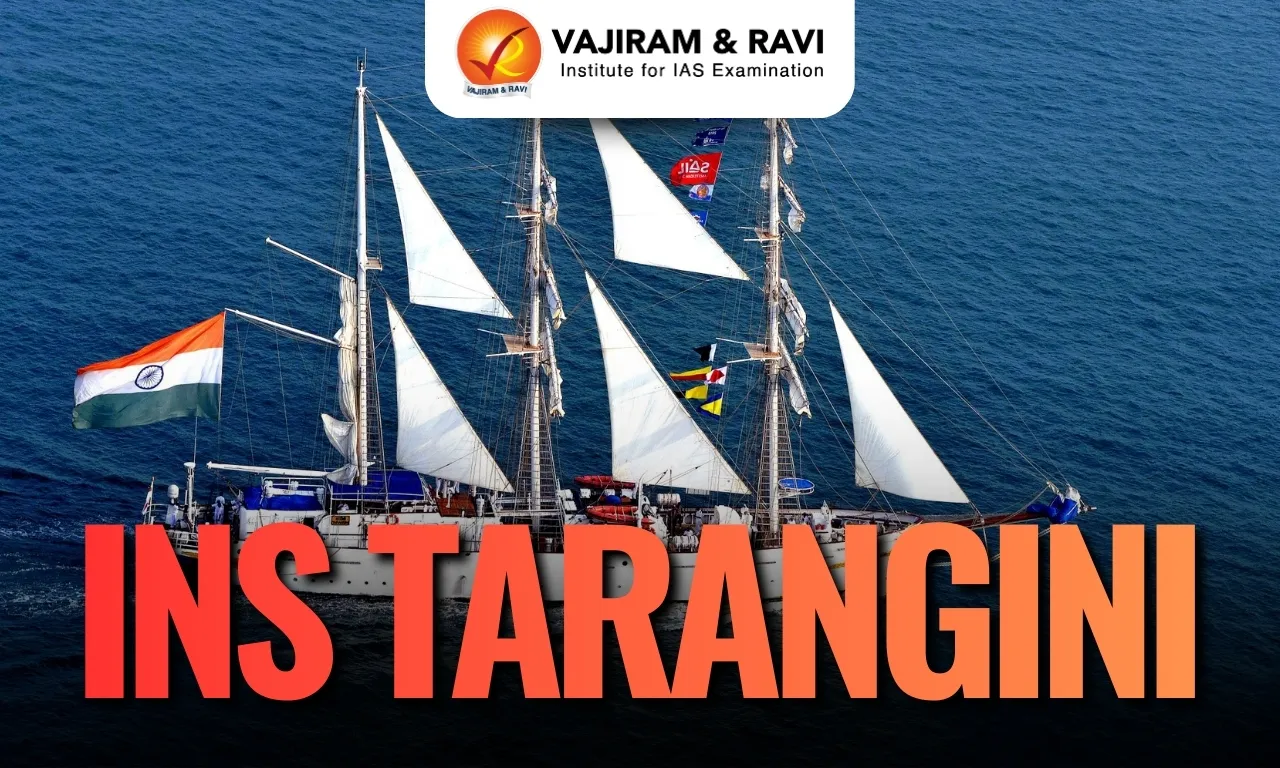
INS Tarangini

INS Tarangini

INS Tarangini Latest News

The sail training ship INS Tarangini is among several Indian and foreign naval vessels that arrived in Visakhapatnam for the international fleet review and MILAN exercise beginning February 18.

About INS Tarangini

  • It is the Indian Navy’s first Sail Training Ship (STS).
  • It was built by Goa Shipyard Limited and was commissioned on 11 November 1997
  • It became the first Indian naval ship to navigate the globe in 2003-2004.
  • The ship is a ‘three-masted barque’ signifying that she is square-rigged on the fore and mainmast and fore-and-aft-rigged on the Mizzen mast. 
  • The ship has excellent endurance and can remain at sea continuously for a period of over 20 days. 
  • It has a complement of eight officers and thirty eight sailors as permanent crew and can accommodate and impart sail training to 30 cadets.
  • The primary role of the ship is to foster time-honored virtues of courage, camaraderie, and endurance in officer cadets embarking on a naval career.
  • It provides an ideal setting for firsthand experience of the natural elements by imparting training which includes sailing, setting and furling of sails, watch-keeping, and sail manoeuvres.

Source: DC

INS Tarangini FAQs

Q1: What is INS Tarangini?

Ans: It is the Indian Navy’s first Sail Training Ship (STS).

Q2: Which shipyard built INS Tarangini?

Ans: It was built by Goa Shipyard Limited.

Q3: When was INS Tarangini commissioned?

Ans: It was commissioned on 11 November 1997.

Q4: What historic achievement did INS Tarangini accomplish in 2003–2004?

Ans: It became the first Indian naval ship to navigate the globe.

Nitric Oxide

Nitric Oxide

Nitric Oxide Latest News

In a study published in Science Translational Medicine, researchers found that a high dose of inhaled nitric oxide reduced drug-resistant Pseudomonas in a large-animal ICU model.

About Nitric Oxide

  • It exists in a gaseous state and is composed of  one nitrogen and one oxygen atom.
  • It was first prepared around 1620 by Jan Baptista van Helmont, and studied in 1772 by Joseph Priestley.
  • Formation: It is formed through nitrogen oxidation.
  • It can be created when lightning occurs, uniting nitrogen and oxygen in the air, or commercially by burning ammonia.

Properties of Nitric Oxide

  • It is a colorless, toxic gas.
  • It is noncombustible but accelerates the burning of combustible material.
  • It can be found in the natural environment and within parts of the human body.

Roles of Nitric Oxide

  • It plays important chemical signaling roles in humans and animals, plus some medical uses.
  • In animals, nitric oxide transmits signals to cells in the cardiovascular, nervous, and immune systems.
  • The body synthesizes it from the amino acid L-arginine with the help of nitric oxide synthase.
  • It helps regulate blood pressure by dilating blood vessels and acts as a neurotransmitter. 
  • Impact on Environment: Nitric oxide is generated by automotive engines and thermal power plants, making it a serious air pollutant.

Source: TH

Nitric Oxide FAQs

Q1: Who first prepared Nitric Oxide around 1620?

Ans: Jan Baptista van Helmont

Q2: What is a significant role of Nitric Oxide in humans?

Ans: Chemical signaling

Lepidocampa Sikkimensis

Lepidocampa Sikkimensis

Lepidocampa Sikkimensis Latest News

Scientists from the Zoological Survey of India (ZSI) recently discovered a new species of Diplura named  Lepidocampa sikkimensis in the eastern Himalayas.

About Lepidocampa Sikkimensis

  • It is a new species of Diplura discovered in Ravangla, Sikkim.
  • Diplura are small, wingless, soil-dwelling arthropods.
  • It represents the first time a species within this primitive hexapod group has been described by an Indian research team. 
  • While 17 species had been previously documented within the country, all were historically described by foreign researchers.
  • Morphological Distinctiveness: The species is distinguished by its unique arrangement of body scales, specific chaetotaxy (bristle patterns), and specialized appendage structures.
  • Ecological Role: As primitive, blind hexapods, Diplurans (two-pronged bristletails) are fundamental to soil health, playing a critical role in nutrient cycling and the maintenance of soil structure.
  • Beyond the description of a new species, the study provides a comprehensive update to Indian soil fauna records:
    • Rediscovery: The team successfully relocated a rare Indian Diplura subspecies, Lepidocampa juradii bengalensis, which had not been recorded in nearly 50 years.
    • Molecular Breakthrough: The study provides the first-ever DNA barcode data globally for an Indian Lepidocampa species, bridging a significant gap between traditional morphology and modern molecular phylogenetics.

Source: TS

Lepidocampa sikkimensis FAQs

Q1: What is Lepidocampa sikkimensis?

Ans: It is a new species of Diplura.

Q2: Where was Lepidocampa sikkimensis discovered?

Ans: It was discovered in Ravangla, Sikkim.

Q3: What are Diplura?

Ans: Diplura are small, wingless, soil-dwelling arthropods.

Q4: What morphological features distinguish Lepidocampa sikkimensis?

Ans: It is distinguished by its unique arrangement of body scales, specific chaetotaxy (bristle patterns), and specialized appendage structures.

Tulbul Navigation Barrage Project

Tulbul Navigation Barrage Project

Tulbul Navigation Barrage Project Latest News

The Jammu & Kashmir government is mulling to take advantage of the suspended Indus Waters Treaty (IWT) by diverting, for the first time, water from the Ravi river in Punjab to the Jammu region, and pushing for the revival of the Tulbul Navigation Barrage project.

About Tulbul Navigation Barrage Project

  • The Tulbul Navigation Barrage Project, also known as the Wullar Barrage, is a navigation lock-cum-control structure located at the outlet of Wullar Lake, in J&K.
  • It was designed to facilitate navigation on the Jhelum River during lean winter months (Oct-Feb).
  • The work on the project had started in 1984 but had to be stopped due to objections by Pakistan under IWT.
  • It was originally designed as a 439-ft-long and 40-ft-wide structure with a storage capacity of 0.30 million acre-feet.
  • The barrage, once completed, would have regulated the water of the Wular Lake to maintain a minimum draft of 4.4 ft in the river up to Baramulla during the winter season. 
  • This minimum draft would have ensured round-the-year navigation over a 20-km stretch between Baramulla and Sopore.
  • Besides, the project would have provided water and helped in firming up power generation in downstream hydroelectric plants such as the Uri I and II hydro projects.

Key Facts about Wular Lake

  • It is the largest freshwater lake in India and the second largest freshwater lake in Asia.
  • It is located in the Bandipore district of Jammu and Kashmir.
  • It is fed by the Jhelum River.
  • The lake lies at an altitude of 1,580 m on the foothills of Haramuk Mountain.
  • It is spread over a total area of 200 sq.km., covering almost 24 km in length and 10 km in breadth.
  • The lake basin was formed as a result of tectonic activity.
  • In 1990, it was designated as a Wetland of International Importance under the Ramsar Convention.

Source: TH

Tulbul Navigation Barrage Project FAQs

Q1: What is the Tulbul Navigation Barrage Project?

Ans: It is a navigation lock-cum-control structure located at the outlet of Wullar Lake, in J&K.

Q2: What is the Tulbul Navigation Barrage Project also known as?

Ans: It is also known as the Wullar Barrage.

Q3: When did work on the Tulbul Navigation Barrage Project begin?

Ans: The work on the project had started in 1984 but had to be stopped due to objections by Pakistan under Indus Waters Treaty (IWT).

Q4: What is the objective of Tulbul Navigation Barrage Project?

Ans: It was designed to facilitate navigation on the Jhelum River during lean winter months (Oct-Feb).

Khorramshahr-4 Missile

Khorramshahr-4 Missile

Khorramshahr-4 Missile Latest News

Iran recently released dramatic footage of its Khorramshahr‑4 ballistic missile — one of Tehran’s most powerful medium‑range missiles — as tensions with the United States continue to rise.

About Khorramshahr-4 Missile

  • Also known as the Kheibar missile, it is a medium-range ballistic missile developed by Iranian state-owned defence company Aerospace Industries Organization (AIO).
  • Iran first test-fired the missile in January 2017 and first publicly displayed it at a September 2017 military parade in Tehran. 

Khorramshahr-4 Missile Features

  • It stands 13 metres tall along with a 1.5-metre diameter weighing up to 20 tonnes.
  • It is liquid-fuelled and has an operational range of approximately 2,000 kilometers.
  • It has the capability of carrying multiple warheads of up to 1,800 kg. 
  • It is capable of striking 80 targets upon reaching the target area.
  • Its launch preparation time is less than 15 minutes.
  • The missile travels 16 times the speed of sound in the outer atmosphere and eight times within the atmosphere.

Source: ONE

Khorramshahr-4 Missile FAQs

Q1: What type of missile is the Khorramshahr-4?

Ans: It is a medium-range ballistic missile.

Q2: Which country developed the Khorramshahr-4 Missile?

Ans: It was developed by Iran.

Q3: What is the operational range of the Khorramshahr-4 Missile?

Ans: Its operational range is approximately 2,000 kilometers.

Q4: What is the maximum payload capacity of the Khorramshahr-4 Missile?

Ans: It can carry multiple warheads weighing up to 1,800 kg.

Lake Michigan

Lake Michigan

Lake Michigan Latest News

More than 150 years after it sank in a powerful storm, the remains of the luxury steamer Lac La Belle have finally been found at the bottom of Lake Michigan.

About Lake Michigan

  • It is the third largest of the five Great Lakes of North America and the only one lying wholly within the United States.
  • It is the fourth largest freshwater lake and the fifth largest lake in the world, ranked by surface area.
  • Surface Area: 57,757 sq.km.
  • The lake is 517 km long (north to south); it has a maximum width of 190 km.
  • It is connected directly to Lake Huron, into which it drains, through the broad Straits of Mackinac.
  • This hydrologic connection through the Straits keeps the water levels of the two lakes in equilibrium, causing them to behave in many ways as though they are one lake.
  • Water flows into Lake Michigan from several rivers, including the Fox-Wolf, the Grand, the St. Joseph, and the Kalamazoo rivers, among others. 
  • The northern end of the lake contains all of the islands, the largest of which is Beaver Island, Michigan.
  • The lake boasts a variety of natural habitats, including tallgrass prairies, wide savannas, and the world’s largest freshwater sand dunes.
  • The land adjacent to Lake Michigan is low and gently rolling, but wave-cut bluffs of rock occur in many places. 
  • It hosts a wealth of plant and animal species, many of which are rare or endangered (such as the Hine’s Emerald Dragonfly and the Dwarf Lake Iris).

Source: NDTV

Lake Michigan FAQs

Q1: Lake Michigan is located in which country?

Ans: It is located in the United States

Q2: Which position does Lake Michigan hold among the five Great Lakes of North America?

Ans: It is the third largest of the five Great Lakes.

Q3: What is the surface area of Lake Michigan?

Ans: Its surface area is 57,757 square kilometers.

Q4: Through which water body is Lake Michigan directly connected to Lake Huron?

Ans: It is connected through the Straits of Mackinac.

Q5: Which is the largest island in Lake Michigan?

Ans: The largest island is Beaver Island, Michigan.

Key Facts about South Korea

Key Facts about South Korea

South Korea Latest News

Recently, India and South Korea held the 6th foreign policy and security dialogue in Seoul.

About South Korea

  • Location: It occupies the southern half of the Korean Peninsula.
  • Bordering Country: North Korea
  • Maritime Borders: To the east by the East Sea (Sea of Japan), to the south by the East China Sea, and to the west by the Yellow Sea.
  • To the southeast it is separated from the Japanese island of Tsushima by the Korea Strait.
  • Capital: Seoul.

Geographical Features of South Korea

  • Climate: South Korea has a continental climate, with hot, rainy summers and cold winters. 
  • Major Rivers: Han River, Nakdong River.
  • Major Islands: Jeju Island in the Korea Strait is the largest island.
  • Mountains: The country is dominated by the Taebaek Mountain range along the eastern coast.
  • Highest Peak: Mount Halla on Jeju Island (1,950 meters), an extinct volcano.
  • Natural Resources: The most important reserves are anthracite coal, iron ore, graphite, gold, silver, tungsten, lead, and zinc.

Source: DD News

South Korea FAQs

Q1: Which currency is used in South Korea?

Ans: Won

Q2: What is the capital of South Korea?

Ans: Seoul

Bharat EduAI Stack and the Future of Digital Learning in India

Digital Learning

Digital Learning Latest News

  • The Centre has announced the integration of AI tools in teaching from the next academic session, backed by the launch of Bodhan AI and the Bharat EduAI Stack.

AI in Education: Background and Policy Context

  • Artificial Intelligence (AI) has emerged as a transformative force across sectors, including healthcare, agriculture, governance, and education. 
  • In the education sector, AI can enable personalised learning, real-time assessment, multilingual content delivery, and data-driven policy decisions.
  • India’s policy shift toward AI in Education aligns with the National Education Policy (NEP) 2020, which emphasises technology-enabled learning, foundational literacy and numeracy, and multilingual education. 
  • The NEP also advocates adaptive learning systems and the integration of emerging technologies in teaching and evaluation.
  • Globally, AI tools are used for:
    • Personalised content recommendation
    • Automated grading and feedback
    • Intelligent tutoring systems
    • Language translation and speech recognition
  • However, most existing AI systems are built primarily for English and rely on global platforms. 
  • This creates limitations for a linguistically diverse country like India, where school education takes place in multiple regional languages.

Centre of Excellence and Institutional Framework

  • The Centre’s initiative is anchored at the Centre of Excellence in AI for Education at IIT Madras, which was announced in the Union Budget with an allocation of Rs. 500 crore.
  • To operationalise the initiative, a not-for-profit company named Bodhan AI has been launched. It will function as a technology backbone provider and build core AI infrastructure tailored to Indian needs.

Bharat EduAI Stack as Digital Public Infrastructure

  • Bodhan AI will develop the Bharat EduAI Stack as a Digital Public Infrastructure (DPI) for education.
  • Digital Public Infrastructure refers to scalable digital systems that provide public services efficiently, similar to how UPI transformed digital payments. In this case, the EduAI Stack will serve as a foundational layer for AI applications in education.
  • Key components include:
    • AI models trained in Indian languages
    • Automatic speech recognition systems
    • Speech synthesis tools
    • Language understanding and diagnostics models
  • Instead of directly building classroom apps, Bodhan AI will create the “basic building blocks.” Edtech companies and state governments can plug their applications into this sovereign AI infrastructure. This approach aims to:
    • Reduce dependence on foreign AI platforms
    • Promote indigenous AI models
    • Enable scalable deployment across schools

Likely AI Tools and Applications

  • Personalised Learning for Students
    • AI tools will help students understand concepts in their mother tongue and identify learning gaps. 
    • Voice-based exercises can be delivered through phones, tablets, or laptops. The system can:
      • Provide instant feedback
      • Generate personalised worksheets
      • Suggest targeted practice modules
    • This is especially significant for foundational literacy and numeracy, where early interventions are critical.
  • Assistance for Teachers and Parents
    • AI-generated reports can help teachers track student performance and recommend interventions. Teachers can use AI-driven diagnostics to design remedial strategies.
    • For parents, AI-based dashboards may provide insights into their child’s progress.
  • Administrative and Policy Support
    • At the district or state level, AI tools can analyse aggregated data to assess school performance. This enables evidence-based policy decisions, resource allocation, and targeted interventions.

Funding and Operational Model

  • The initial funding comes from the Union Budget allocation for the Centre of Excellence. Over time, the system is expected to become self-sustaining through:
    • Maintenance contributions from state governments
    • Equity participation by start-ups using the infrastructure
    • Collaborative partnerships with edtech firms
  • The long-term vision is to evolve into a community-driven ecosystem, similar to open-source platforms like Linux.

Data Protection and Ethical Concerns

  • Data Privacy
    • Student inputs, written responses, and voice recordings constitute personal data. Authorities have emphasised that such data should not be stored in public forums and must remain secure.
    • This aligns with India’s broader digital governance framework, including the Digital Personal Data Protection Act.
  • Screen Time
    • To reduce excessive screen exposure, voice-based tools are being prioritised. The focus is on assistive use rather than replacing classroom teaching.
  • Equity and Access
    • Digital infrastructure gaps remain a challenge in rural and remote areas. Effective implementation will require device access, connectivity, and teacher training.

Significance for India’s Education System

  • The Bharat EduAI Stack represents a structural shift in how technology can be embedded into public education. Its importance lies in:
    • Building sovereign AI capabilities
    • Strengthening multilingual learning
    • Supporting teachers rather than replacing them
    • Creating scalable Digital Public Infrastructure
  • If implemented effectively, the initiative can improve learning outcomes, reduce regional disparities, and strengthen India’s position in educational technology innovation.

Source: IE

Digital Learning FAQs

Q1: What is the Bharat EduAI Stack?

Ans: It is a Digital Public Infrastructure platform that will provide AI models and tools for education across India.

Q2: What is the role of Bodhan AI?

Ans: Bodhan AI will develop core AI building blocks and infrastructure for educational applications.

Q3: Which institution hosts the Centre of Excellence in AI for Education?

Ans: IIT Madras hosts the Centre of Excellence, backed by a Rs. 500 crore Budget allocation.

Q4: What kind of AI tools will be introduced in classrooms?

Ans: Tools for personalised learning, speech recognition, multilingual support, and teacher assistance will be introduced.

Q5: What are the main concerns regarding AI in education?

Ans: Key concerns include data privacy, screen time, and equitable access to digital infrastructure.

Food Safety and Standards Authority of India

Food Safety and Standards Authority of India

Food Safety and Standards Authority of India Latest News

The Supreme Court has asked the Food Safety and Standards Authority of India (FSSAI) to consider introducing mandatory front-of-package warning labels (FOPL) on packaged food products high in sugar, salt and saturated fat.

About Food Safety and Standards Authority of India

  • It has been established under the Food Safety and Standards Act, 2006.
  • It was established under the Ministry of Health and Family Welfare, Government of India.
  • FSSAI is responsible for setting food standards, regulating the manufacture, storage, distribution, sale, and import of food, and ensuring the availability of safe and wholesome food for human consumption. 
  • Functions
    • Standards Development: It formulates standards for various food products, ensuring they are safe for consumption.
    • Food Safety Management Systems: It provides guidelines for businesses to implement effective food safety management practices.
    • Licensing and Registration: FSSAI manages the licensing process for food businesses, ensuring they comply with food safety regulations.
    • Surveillance and Monitoring: Regular inspections and audits are conducted to assess compliance with food safety standards.
    • Consumer Awareness: Initiatives to educate the public about food safety, hygiene, and nutrition are a key focus area.
  • Those who are selling or importing food in India needs a
  • FSSAI also directly monitors compliance of food regulations and food licence issued by FSSAI., especially in the area of food imports to India. 
  • The FSSAI is also responsible for the accreditation of food testing laboratories throughout India.
  • It has notified 14 referral labs, 72 State/UT labs across India, and 112 NABL approved commercial labs, all of which are situated throughout the country.

Source: TH

Food Safety and Standards Authority of India FAQ's

Q1: Under which ministry does FSSAI operate?

Ans: Ministry of Health and Family Welfare

Q2: What is the FSSAI's role in food regulation?

Ans: Set food standards and regulate

Daily Editorial Analysis 17 February 2026

Daily-Editorial-Analysis

A Budgetary Signal as Banks Cannot Bear It All

Context

  • India’s Union Budget 2026 introduces several financial-sector initiatives, including the creation of a market-making framework for corporate bonds, etc.
  • While these measures may appear technical, they collectively reflect a significant shift in policy thinking.
  • Rather than merely reforming banks, the government is attempting to address a deeper structural imbalance in India’s financial architecture.
  • The core issue is that Indian banks carry long-term credit risks that, in mature economies, are absorbed by financial markets.
  • Consequently, the reforms represent a move away from a bank-dominated system toward a market-oriented financial structure.

Structural Imbalance in the Financial System

  • Public discussions often attribute banking distress in India to weak governance, political interference, and poor risk management.
  • Although these factors exist, they do not fully explain recurring banking crises. The more fundamental problem is institutional.
  • India lacks a deep corporate bond market, forcing banks to finance large and risky projects.
  • India possesses a relatively well-developed government securities market, with outstanding sovereign bonds approaching 90 percent of GDP.
  • However, its corporate bond market is shallow, amounting to only about 15-16 percent of GDP, far smaller than those of the United States, Germany, or China.
  • Because the economy still requires long-term investment financing, banks inevitably step in to fill this gap.
  • As a result, banks hold around 60–65 percent of non-financial corporate debt, compared with roughly 30 percent in the United States and 40 percent in Europe.
  • The difference arises not from managerial competence but from financial system design.

Maturity Mismatch and Financial Fragility

  • Banks are structurally unsuited to finance long-term infrastructure projects.
  • They fund themselves primarily through short-term deposits and therefore depend heavily on liquidity and depositor confidence.
  • Yet they are expected to finance projects such as highways, power plants, ports, and telecom networks that require 15 to 20 years to generate returns.
  • This creates a severe maturity mismatch: short-term liabilities funding long-term assets.
  • When projects fail or are delayed, losses appear suddenly on bank balance sheets. In market-based systems, such losses are distributed gradually across investors.
  • In India, however, they accumulate within banks, making the financial system more fragile and vulnerable to shocks.

Fiscal Costs and Credit Misallocation

  • The consequences of this imbalance extend beyond banking stability. Since 2017, the government has injected over ₹3.2 lakh crore into public sector banks to recapitalise them.
  • These interventions stabilised the financial system but effectively transferred private corporate losses onto taxpayers, functioning as a hidden fiscal burden.
  • Additionally, large corporate exposures tie up bank capital that could otherwise support smaller enterprises.
  • This helps explain why small and medium-sized firms continue to face credit shortages despite repeated bank recapitalisation.
  • Thus, the problem is not merely insufficient credit but misallocated credit.

Impact on Monetary Policy and Role of Budget 2026 Reforms

  • Impact on Monetary Policy

    • The concentration of risk within banks also weakens monetary policy transmission.
    • When interest rates rise, banks burdened with long-term exposures hesitate to pass on higher costs.
    • When rates fall, impaired balance sheets limit fresh lending. Consequently, borrowing costs in the real economy adjust unevenly to policy changes.
    • In contrast, deep bond markets allow interest rates to reprice smoothly across maturities, improving the effectiveness of central bank policy.
  • Role of Budget 2026 Reforms

    • The Budget 2026 initiatives attempt to correct this structural deficiency.
    • Measures such as improving corporate bond market liquidity, introducing hedging instruments like total-return swaps, providing partial credit guarantees for infrastructure, and expanding market-ready assets through REITs are designed to distribute credit risk beyond banks.
    • By enabling institutional investors, pension funds, and other market participants to participate in long-term financing, these reforms aim to create a functioning corporate debt market.
    • In essence, the reforms seek to transform the financial system from one where banks act as the economy’s primary risk-bearers to one where markets share and price risk more efficiently.

Conclusion

  • India’s financial challenges stem less from banking mismanagement than from systemic design.
  • A shallow corporate bond market has forced banks to shoulder long-term credit risk, creating financial fragility, fiscal burdens, distorted credit allocation, and weak monetary transmission.
  • The financial-sector measures in Budget 2026 therefore represent more than incremental reform; they signal an effort to rebalance the financial architecture.
  • Whether these initiatives succeed will determine whether India evolves into a resilient, market-based financial system or continues relying on banks as the economy’s shock absorbers of last resort.

A Budgetary Signal as Banks Cannot Bear It All FAQs

Q1. What structural problem exists in India’s financial system?
Ans. India’s financial system is overly bank-centric, with banks carrying long-term credit risks that financial markets should normally distribute.

Q2. Why are banks vulnerable when financing infrastructure projects?
Ans. Banks rely on short-term deposits but lend for very long-term projects, creating a maturity mismatch that increases financial instability.

Q3. How does this system affect taxpayers?
Ans. When large loans fail, the government recapitalises public sector banks, and the cost is ultimately borne by taxpayers.

Q4. Why do small businesses face credit shortages?
Ans. Bank capital is heavily tied up in large corporate and infrastructure loans, leaving limited funds available for small and medium enterprises.

Q5. What is the aim of the Budget 2026 financial reforms?
Ans. The reforms aim to develop corporate bond markets and distribute risk across investors instead of concentrating it on bank balance sheets.

Source: The Hindu


India’s Federalism is in Need of a Structural Reset

Context

  • The Constitution of India created a federal system with a pronounced unitary At Independence, the Constitution prioritised stability and unity over dispersion of authority.
  • The argument for recalibration arises from the transformation of India into a politically mature, administratively capable, and socially consolidated nation.
  • Continued concentration of authority at the Centre now risks weakening governance rather than strengthening national cohesion.
  • A rebalancing of Union-State relations is therefore presented not as a political demand but as a constitutional necessity.

Historical Context: Why Centralisation Emerged

  • The immediate post-1947 environment shaped constitutional design. Partition, the integration of princely states, and fears of territorial fragmentation demanded a strong Union
  • Borrowing institutional features from the Government of India Act, 1935, authority was concentrated in New Delhi.
  • Centralisation functioned as a defensive mechanism to secure national
  • However, institutional structures created in emergency conditions often persist beyond the crisis. What began as a protective arrangement evolved into a permanent administrative orientation.

Theoretical Foundations: The Meaning of Federalism

  • Federalism rests on both allocation and restraint of authority. The effectiveness of public power depends on its proximity to information and accountability.
  • Decision-making closer to citizens improves responsiveness and administrative accuracy.
  • Excessive centralisation produces fragility because a single authority cannot efficiently manage diverse responsibilities.
  • A government that simultaneously oversees strategic sectors and local welfare disperses its capacity. The strength of a federation lies not in the accumulation of functions but in disciplined limitation.

Political Practice: From Necessity to Habit

  • For decades, the dominance of a single national party reinforced central authority. Political hierarchy reduced practical autonomy even where legal powers existed.
  • Later, coalition governments and the rise of regional parties produced greater equilibrium without threatening unity.
  • India’s continued centralising orientation reflects persistence of early anxieties rather than present realities.
  • The nation has moved beyond its formative insecurities, yet institutional reflexes remain.

Institutional Mechanisms of Centralisation

  • Central authority expanded through multiple channels:
    • constitutional amendments,
    • legislation in the Concurrent List,
    • conditional fiscal transfers,
    • centrally sponsored schemes,
    • administrative oversight.
  • Financial dependence has become a decisive instrument of influence. Ministries in New Delhi frequently duplicate state functions and steer priorities through procedural regulation.
  • In certain areas, executive rule-making effectively overrides state legislation, altering the practical balance of power.

Judicial Doctrine and Constitutional Tension

  • In R. Bommai (1994), the Supreme Court declared federalism part of the Basic Structure and affirmed that states are constitutionally autonomous within their spheres.
  • Federalism derives from India’s diversity and historical pluralism rather than administrative convenience.
  • A tension thus arises between doctrine and practice: judicial interpretation recognises parity of authority, yet administrative patterns continue to concentrate control.

Functional Argument: Why Decentralisation Improves Governance

  • India’s size and diversity make uniform policy inherently limited. Regional variation in language, ecology, labour markets, and development levels requires flexible solutions.
  • Decentralisation allows policy experimentation, containment of failure, and replication of success.
  • Many effective national programmes began as state initiatives.
  • Regional experimentation in nutrition programmes, literacy campaigns, and employment guarantees demonstrated how local innovation informs broader policy. Over-centralisation suppresses such adaptive learning.

The Way Forward: Recalibration, Not Disintegration

  • The relationship between the Union and the states is not a zero-sum contest. Strengthening states does not weaken the Union; it sharpens its focus on genuinely national functions.
  • Concentrated national authority combined with regional autonomy improves both administrative efficiency and democratic legitimacy.

Conclusion

  • India has reached a stage where centralisation no longer serves its original purpose.
  • A calibrated redistribution of functions would align authority with responsibility and enhance accountability.
  • A focused Union and trusted states together reinforce national unity; durable cohesion arises not from control but from participation, cooperation, and balanced constitutional practice.

India’s Federalism is in Need of a Structural Reset FAQs

Q1. Why did the Indian Constitution adopt a centralising structure?
Ans. The Constitution adopted a centralising structure to maintain stability and unity after Partition and the integration of princely states.

Q2. What is the basic principle of federalism described here?
Ans. Federalism means authority should be distributed so that governments closer to people handle local matters while the Union handles national concerns.

Q3. How has centralisation expanded over time?
Ans. Centralisation expanded through constitutional amendments, financial controls, and Union intervention in Concurrent List subjects.

Q4. Why is decentralisation considered beneficial for governance?
Ans. Decentralisation improves governance because local governments can design policies suited to regional needs and encourage innovation.

Q5. What is the main character Union–State relations?
Ans. A balanced distribution of powers will strengthen both national unity and administrative effectiveness.

Source: The Hindu


Reaffirming Reproductive Autonomy - Supreme Court’s Progressive Turn on Late-Term Abortion

Context

  • In a significant judgment, the Supreme Court of India overturned a Bombay High Court ruling and permitted a teenager to terminate her 30-week pregnancy.
  • The decision assumes importance in the backdrop of the Medical Termination of Pregnancy Act, 2021.
  • The act allows abortion up to 24 weeks under specified conditions but remains silent on late-term terminations beyond this limit, leaving courts to intervene on a case-by-case basis.
  • This judgment marks a notable reaffirmation of women’s reproductive autonomy and expands the constitutional conversation on mental health, bodily integrity, and dignity.

Legal Framework - The MTP Act and Judicial Discretion

  • Expanded but limited statutory framework

    • The MTP (Amendment) Act, 2021 extended the gestational limit for abortion from 20 to 24 weeks for certain categories of women (including survivors of rape, minors, and other vulnerable groups).
    • Beyond 24 weeks, termination is permissible only in cases of substantial foetal abnormalities, as diagnosed by Medical Boards.
    • There is no explicit fundamental “right to abortion” under Indian law.
  • Judicial role in late-term abortions

    • Due to statutory limits, courts frequently adjudicate petitions for termination beyond 24 weeks.
    • However, outcomes have been inconsistent, revealing judicial subjectivity and moral complexities.

Key Observations by the Supreme Court

  • Reproductive autonomy cannot be compelled

    • The Court emphatically stated that it “cannot compel” a woman to continue a pregnancy if she is unwilling.
    • This marks a clear shift toward prioritising bodily autonomy and individual choice, consistent with Article 21 (Right to Life and Personal Liberty).
  • Restrictive laws increase unsafe abortions

    • The Court acknowledged an important public health reality - restrictive access does not prevent abortions.
    • It increases the risk of unsafe procedures by “quacks and unauthorised doctors”.
    • Thus, access to safe Medical Termination of Pregnancy (MTP) services becomes central to reproductive justice and public health policy.
  • Mental health equals physical health

    • A landmark aspect of the judgment is the recognition of mental trauma as equally significant as physical health, placing mental health on par with physical health.
    • It adopted a broader, health-based approach rather than a moralistic “pro-life vs pro-choice” framework.
    • This aligns with a rights-based and health-centred interpretation of reproductive autonomy.

Health as a Determinant: Whose Health Matters?

  • Abortion jurisprudence globally wrestles with the foetus’s potential “right to life”, and the pregnant woman’s right to choice.
  • The Bombay HC had denied termination citing that the foetus was “healthy and viable”.
  • The SC set this aside and prioritised the pregnant individual’s unwillingness, thus clearly foregrounding maternal autonomy over foetal viability in this case.

The Minor and the Question of ‘Illegitimacy’

  • Special consideration for minors

    • The Court referred to the petitioner as a “child” (she had conceived as a minor though she turned 18 later). It held that minors cannot be compelled to continue pregnancy.
    • This is significant in light of rising cases of sexual abuse against minors, concerns under the POCSO Act, and the constitutional emphasis on dignity and best interests of the child.
  • Role of marital status

    • The pregnancy was described as “illegitimate” (outside marriage), which arguably influenced the Court’s empathetic stance.
    • However, this raises critical questions: Would the outcome have differed if the women were married?; Does marital status shape judicial perception of reproductive rights?

Inconsistency in Judicial Approach (The 2023 Case)

  • In 2023, the SC rejected a 26-week termination plea of a married 27-year-old woman, despite her citing mental health concerns and an unwanted pregnancy.
  • This contrast highlights judicial inconsistency, the continued influence of marital norms, and the entanglement of motherhood with marriage in legal reasoning.

Broader Constitutional and Social Questions

  • Marriage, motherhood and autonomy: Indian women’s sexual and reproductive autonomy often remains overshadowed by marital status.
  • This ties into: The ongoing debate on the marital rape exception, societal notions of “legitimacy”, and patriarchal assumptions about motherhood.
  • The Court’s observation: That “the mother’s reproductive autonomy must be given emphasis” should ideally transcend marital and social categories.

Challenges

  • Absence of absolute right to abortion: Decisions hinge on judicial discretion.
  • Inconsistent jurisprudence: Similar cases yield divergent outcomes.
  • Foetal viability debate: Ethical and legal tensions persist.
  • Marital status bias: Marriage continues to shape legal outcomes.
  • Limited mental health integration: Despite recognition, practical implementation remains weak.
  • Access barriers: Medical Boards, procedural delays, and stigma hinder timely access.

Way Forward

  • Codify: Reproductive autonomy as a fundamental right. Explicit recognition under Article 21 through judicial clarification or legislative reform.
  • Uniform: Guidelines for late-term abortions. Clear medical and psychological parameters to reduce judicial arbitrariness.
  • Strengthen: Public health infrastructure. Ensure safe, affordable, stigma-free access to abortion services. Expand trained providers and Medical Boards.
  • Mainstreaming: Mental health. Integrate psychiatric evaluation and trauma-informed care in reproductive health policy.
  • De-link: Autonomy from marital status. Ensure rights are not mediated by notions of legitimacy or marriage. Align abortion jurisprudence with gender justice principles.
  • Rights-based framework: Move from morality-based reasoning to dignity, autonomy, and health-based reasoning.

Conclusion

  • The Supreme Court’s ruling marks a progressive reaffirmation of women’s reproductive autonomy and a crucial shift toward a health-centred, dignity-based framework.
  • By recognising mental health as central and rejecting coercive continuation of pregnancy, the Court strengthens the constitutional promise of personal liberty.
  • However, inconsistencies across cases reveal that reproductive autonomy in India remains conditional and context-dependent.
  • For reproductive rights to become truly inalienable, the guiding principle going forward must be unequivocal: a woman’s reproductive autonomy is integral to her dignity, bodily integrity, and constitutional freedom.

Reaffirming Reproductive Autonomy FAQs

Q1. What is the significance of the Supreme Court’s recent ruling permitting termination of a 30-week pregnancy?

Ans. The ruling reinforces that a woman’s reproductive autonomy under Article 21 cannot be subordinated to foetal viability.

Q2. How does the MTP (Amendment) Act, 2021 balance reproductive rights and medical regulation in India?

Ans. The Act expands abortion access up to 24 weeks for specified categories while retaining medical oversight beyond that limit.

Q3. What is the role of mental health in determining the permissibility of abortion under Indian law?

Ans. Its recognition as equal to physical health broadens the interpretation of “risk to health” under the MTP framework.

Q4. What is the impact of marital status on women’s reproductive autonomy in India?

Ans. Judicial inconsistencies reveal that women’s reproductive rights are often influenced by marital norms.

Q5. Why is judicial intervention frequently required in late-term abortion cases in India?

Ans. Because the MTP Act lacks an absolute right to abortion beyond 24 weeks, courts must adjudicate based on health risks, foetal viability, etc.

Source: IE

Daily Editorial Analysis 17 February 2026 FAQs

Q1: What is editorial analysis?

Ans: Editorial analysis is the critical examination and interpretation of newspaper editorials to extract key insights, arguments, and perspectives relevant to UPSC preparation.

Q2: What is an editorial analyst?

Ans: An editorial analyst is someone who studies and breaks down editorials to highlight their relevance, structure, and usefulness for competitive exams like the UPSC.

Q3: What is an editorial for UPSC?

Ans: For UPSC, an editorial refers to opinion-based articles in reputed newspapers that provide analysis on current affairs, governance, policy, and socio-economic issues.

Q4: What are the sources of UPSC Editorial Analysis?

Ans: Key sources include editorials from The Hindu and Indian Express.

Q5: Can Editorial Analysis help in Mains Answer Writing?

Ans: Yes, editorial analysis enhances content quality, analytical depth, and structure in Mains answer writing.

Kapu Caste, Features, Eligibility Criteria, Demand for Reservation

Kapu Caste

The Kapu Caste is a major agrarian community concentrated in Andhra Pradesh and Telangana, forming nearly 20-26% of the population in the Telugu speaking region. Traditionally cultivators and landholders, they historically settled along the fertile Godavari basin after migrating from the Gangetic plains, possibly from Kampilya near Ayodhya. Over time, they emerged as a politically influential middle caste. Despite numerical strength, the community has consistently demanded backward status, arising major debates around social justice, constitutional amendments and reservation policies in recent times.

Kapu Caste Features

The Kapus are a historically agrarian, regionally dominant Telugu speaking community with strong demographic and political presence.

  • Agrarian Identity: The term “Kapu” in Telugu means cultivator or protector, reflecting their primary occupation as land owning farmers. They traditionally cultivated paddy and cash crops in the Godavari delta, benefiting from irrigation networks and fertile alluvial soil.
  • Demographic Strength: Estimates indicate the community constitutes between 20% to 26% of the population in Andhra Pradesh, making it one of the largest caste groups.
  • Regional Spread: Heavy concentration exists in East and West Godavari districts, Krishna, Guntur and parts of Telangana.
  • Social Classification: In India’s official framework, castes are categorized as General, Scheduled Castes, Scheduled Tribes and Other Backward Classes. The Mandal Commission in 1980 estimated OBCs at 52% of the population, later assessed at 41% by NSSO in 2006.
  • Subgroup Diversity: The broader Kapu identity includes subgroups such as Telaga, Balija, Munnuru Kapu, Ontari and Turpu Kapu. While culturally similar, these groups vary by region and historical occupational specialization.
  • Political Assertion: From the 1990s onward, Kapu leaders mobilized large gatherings demanding equitable representation. The first major organized protest for backward status inclusion occurred in 1993, marking a turning point in collective political identity.

Also Read: Caste System in India

Kapu Caste Reservation Demand

The Kapu Caste seeks inclusion in Backward Classes and benefits under the 10% EWS quota framework.

  • Demand for Backward Status: Kapus argue they were recognized as backward before independence and seek reinstatement in the Backward Classes list. A government order issued in 1993 proposed inclusion, but it was not implemented after a change in political leadership.
  • Agitations and Movements: Protests intensified over decades, with a major wave in 2016 that led to statewide disturbances. A commission was constituted to examine the demand, reflecting administrative engagement but prolonged decision making processes.
  • 10% Reservation Announcement: The Andhra Pradesh government announced 10% reservation for Kapus and other Economically Weaker Sections in initial state government appointments, aligning with the Constitution 103rd Amendment Act, 2019.
  • Constitutional Basis: The 103rd Amendment inserted Articles 15(6) and 16(6), enabling up to 10% reservation for EWS in education and public employment. This quota operates over and above the earlier 50% ceiling principle debated in constitutional jurisprudence.
  • EWS Eligibility Criteria: Beneficiaries must not belong to SC, ST, or SEBC categories and must have annual family income below Rs 8 lakh. Income includes salary, agriculture, business and professional earnings from the preceding financial year.
  • Constitutional Safeguards: Articles 14, 15(4), 16(4) and 46 collectively empower the state to promote social and educational advancement of weaker sections. The National Commission for Backward Classes under Article 338B monitors backward class welfare.

Kapu Caste FAQs

Q1: What is the primary occupation of the Kapu Caste?

Ans: The Kapus are traditionally an agrarian community engaged mainly in cultivation and landholding, especially in the Godavari and coastal Andhra regions.

Q2: What percentage of the population do Kapu Caste form in Andhra Pradesh?

Ans: The Kapu community is estimated to constitute around 20% to 26% of the population in Andhra Pradesh, making it a numerically significant group.

Q3: What reservation has been announced for the Kapu Community?

Ans: The Andhra Pradesh government announced 10 percent reservation for Kapus and other Economically Weaker Sections in initial state government appointments under the Constitution (103rd Amendment) Act, 2019.

Q4: What is the income limit for EWS reservation eligibility?

Ans: To qualify under the EWS category, the gross annual family income must be below Rs 8 lakh, including income from salary, agriculture, business, or profession.

Q5: When did the major Kapu Caste protest for Backward Class inclusion begin?

Ans: The first major organized protest demanding inclusion in the Backward Classes category was held in 1993, followed by continued agitations in later years.

Loggerhead Turtle

Loggerhead Turtle

Loggerhead Turtle Latest News

Recently, it is observed that warmer oceans and depleting food have affected the ubiquitous marine Loggerhead turtle’s reproductive and migratory patterns, and even its size

About Loggerhead Turtle

  • It is a species of oceanic turtle belonging to the family Cheloniidae.
  • It is named Loggerhead for their large heads that support powerful jaw muscles.
  • It is the world’s largest hard-shelled turtle, slightly larger at average and maximum mature weights than the green sea turtle and the Galapagos tortoise.
  • It is also the world’s second largest extant turtle after the leatherback sea turtle. 
  • It uses the geomagnetic field as a map when navigating large distances.
  • Habitat: They may be found hundreds of miles out to sea, as well as in inshore areas such as bays, lagoons, salt marshes, creeks.
  • Distribution: It inhabits the Atlantic, Indian, and Pacific Oceans and the Mediterranean Sea.
  • Diet: It is omnivorous, feeding mainly on bottom-dwelling invertebrates, such as gastropods, bivalves, and decapods.
  • Lifespan: Loggerheads can live up to 80 years or more. 
  • Conservation status: IUCN: Vulnerable.
  • Threats: Climate change, direct harvest of turtles and eggs, Loss and degradation of nesting habitat, Ocean pollution/marine debris and bycatch in fishing gear.

Source: TH

Loggerhead Turtle FAQs

Q1: What is the primary diet of Loggerhead Turtles?

Ans: Crustaceans and mollusks

Q2: Where do Loggerhead Turtles typically nest?

Ans: Sandy beaches

AI Impact Summit 2026, Importance, Three Sutras, Seven Chakras

AI Impact Summit 2026

The Ministry of Electronics and Information Technology (MeitY) is hosting AI Impact Summit 2026 on 16-20 February 2026 at Bharat Mandapam, New Delhi. It will be the first global AI summit held in the Global South.The summit aims to promote inclusive and responsible use of AI through global cooperation.

India AI Impact Summit 2026

  • The India-AI Impact Summit 2026, announced by Prime Minister Narendra Modi, will be held on 16-20 February 2026 in New Delhi. It will be the first global AI summit hosted in the Global South.
  • The summit builds on earlier global meetings such as the UK AI Safety Summit, AI Seoul Summit, France AI Action Summit and the Global AI Summit on Africa. Its aim is to move beyond only discussions and focus on practical results, stronger cooperation and real progress in global AI governance.
  • The summit plans to ensure that AI supports inclusive growth, social development and people-centered innovation, while also protecting the environment. It also aims to strengthen the voice of developing countries so that AI benefits are shared equally across the world.
  • At the same time, it recognizes challenges such as job loss, bias in AI systems and rising energy use. Therefore, the summit focuses on taking concrete steps to manage both the opportunities and risks of Artificial Intelligence.

AI Impact Summit 2026 Need

  • Artificial Intelligence (AI) is rapidly transforming society, economy and governance. It offers major opportunities for development, especially for developing countries, by improving access to services through multi-lingual and digital platforms.
  • In recent years, global efforts like the G20 AI Principles, UN resolutions and the Global Partnership on AI (GPAI) have focused on promoting responsible and ethical use of AI.
  • However, a “Global AI Divide” still exists, as AI resources are concentrated in a few developed countries and big corporations. AI also creates challenges such as job loss, bias and high energy consumption.
  • Therefore, there is a need for coordinated global action to ensure AI is inclusive, fair and beneficial for all.

AI Impact Summit 2026 Three Sutras

The India-AI Impact Summit is based on three main guiding principles, called “Sutras.” These Sutras explain how Artificial Intelligence (AI) should be used for the benefit of all through global cooperation.

  1. People
  • The People Sutra focuses on human welfare. It says that AI should respect cultural diversity, protect human dignity and include everyone in its design and use. Technology must remain human-centered and promote safety, trust and equal benefits for society.
  1. Planet
  • The Planet Sutra highlights environmental responsibility. It calls for the responsible use of AI so that it reduces resource use and helps in climate action and environmental protection. AI development should support global sustainability and not harm the planet.
  1. Progress
  • The Progress Sutra aims at inclusive development. It sees AI as a tool for economic growth and social progress. It supports equal access to AI resources and encourages the use of AI in sectors like health, education, agriculture and governance for overall development.

AI Impact Summit 2026 Seven Chakras of the India

Based on the three main Sutras-People, Planet and Progress, the Summit discussions will focus on seven key areas called “Chakras.” These Chakras represent important areas of international cooperation to ensure that AI brings real and practical benefits to society.

  • Human Capital: AI is changing jobs, creating new roles but replacing old ones, risking an “AI divide.” The Human Capital Chakra promotes skills, AI literacy and fair access to AI benefits for all workers.
  • Science: AI is changing scientific research in areas like health, climate and materials. The Science Chakra promotes global collaboration, clear standards and using AI discoveries for real-world benefits.
  • Resilience, Innovation and Efficiency: As AI use grows, it can harm the environment and affect fair development. The Resilience, Innovation & Efficiency Chakra promotes sustainable, efficient AI systems that work well even with limited resources.
  • Inclusion for Social Empowerment: AI can boost social and economic progress if used inclusively. The Inclusion for Social Empowerment Chakra promotes designing AI that meets the needs of all people fairly.
  • Democratizing AI Resources: AI needs large infrastructure like computing power and data systems, which are mostly in a few countries, creating global inequality. The Democratizing AI Resources Chakra aims to make these resources affordable and accessible to all nations, so everyone can benefit from AI progress.
  • Economic Growth and Social Good: AI can boost economic growth and support social development. The Economic Growth and Social Good Chakra aims to use AI to improve services, increase productivity and promote fair and inclusive development.
  • Safe and Trusted AI: Promoting ethical, secure and reliable AI systems that protect privacy and reduce bias.

Earlier AI Summits

  • The AI Safety Summit 2023 was held in England to discuss risks from advanced (frontier) AI. Twenty-eight countries, including the US, China, India and the EU, signed the Bletchley Park Declaration, the first global agreement on AI safety.
  • The declaration recognized both the benefits and risks of AI, especially in cybersecurity and misinformation, and called for international cooperation and regular summits.
  • India supported risk-based and ethical AI regulation and referred to the proposed Digital India Act, 2023 to regulate AI platforms.
  • This was followed by the AI Seoul Summit (2024), where countries discussed innovation, inclusiveness and responsible AI development. The focus expanded from safety to broader governance and global collaboration.
  • In 2025, the AI Action Summit in Paris emphasized practical cooperation, responsible AI deployment and shared global standards. It highlighted the importance of ensuring that AI benefits are distributed fairly among nations. The 2nd India-France AI Policy Roundtable was held on the sidelines of the summit.

Significance of AI for India

Artificial Intelligence (AI) has become an important tool for India’s economic growth, better governance and improved quality of life. It supports the goals of People, Planet and Progress by promoting inclusive and sustainable development.

AI in Healthcare

  • AI improves healthcare services, especially in rural areas. It supports telemedicine, early disease detection (like TB and cancer), faster diagnosis, and drug discovery. It also helps in predicting disease outbreaks and reducing treatment costs.

AI in Agriculture & Rural Economy

  • AI helps farmers through weather prediction, pest alerts, crop monitoring using drones, and market price forecasting. Mobile-based advisories and regional language tools provide real-time support to farmers.

AI in Education

  • AI enables personalized learning and provides content in regional languages. Platforms like DIKSHA use AI to make education more accessible and inclusive.

AI in Finance

  • AI strengthens digital payments through fraud detection, improves credit access for the unbanked, and provides 24/7 banking support through chatbots.

AI in Governance

  • AI improves public service delivery, smart city management, translation of court judgments, and efficient case management in the judiciary.
  • Recognizing its importance, the Government of India launched initiatives like the IndiaAI Mission to build AI infrastructure, promote indigenous AI models, and develop skilled manpower.

AI Impact Summit 2026 Key Highlights

  • The AI Impact Expo at Bharat Mandapam would be inaugurated by the Prime Minister, showcasing newly developed Indian AI language models, including sovereign AI models by Sarvam AI and BharatGen.
  • More than 840 exhibitors, including national delegations, tech companies, AI startups and research labs, showcased their AI products and innovations.
  • The Bharat-VISTAAR (Virtually Integrated System to Access Agricultural Resources) tool would be launched in Jaipur. It is an AI-based multilingual platform to help farmers with crop planning, pest control, weather updates and government schemes through a 24/7 AI assistant named Bharati. It initially supports Hindi and English and will later expand to regional languages.
  • The tool also allows stakeholder collaboration and feedback to improve agricultural policies and research.
  • The India AI Readiness Assessment Methodology (RAM) Report, prepared by UNESCO in partnership with the IndiaAI Mission and Ikigai Law, would be released. It will assess India’s preparedness for ethical and responsible AI and give policy recommendations.
  • AI4Bharat (IIT Madras) announced a new benchmark to evaluate speech recognition systems across 15 Indian languages.

AI Impact Summit 2026 FAQs

Q1: What is the AI Impact Summit 2026?

Ans: It is a global AI governance summit hosted by India in February 2026, focusing on inclusive and responsible AI. It is the first such summit held in the Global South.

Q2: Why is the summit needed?

Ans: AI is growing fast but benefits are unequal and risks like job loss and bias exist. The summit aims to ensure fair and coordinated global AI development.

Q3: What are the Three Sutras?

Ans: People (human-centered AI), Planet (environment-friendly AI), and Progress (inclusive economic growth through AI).

Q4: What are the Seven Chakras?

Ans: They focus on Human Capital, science, Resilience, Innovation and Efficiency, inclusion, Democratizing AI Resources, AI for economic and social good and Safe and Trusted AI.

Q5: How is it linked to earlier AI summits?

Ans: It builds on earlier global AI meetings in the UK, Seoul and Paris, moving from safety discussions to practical outcomes and Global South leadership.

AI-Powered Distributed Renewable Energy (DRE) – Building India’s Citizen-Centric Energy Future

AI-Powered Distributed Renewable Energy (DRE)

AI-Powered Distributed Renewable Energy (DRE) Latest News

  • At the India AI Impact Summit held at Bharat Mandapam, senior policymakers and global experts deliberated on the theme ‘Global Mission on AI for Energy Scaling through citizen-centric India Energy Stack’.
  • Reflecting the global interest in India’s AI-energy convergence model, the Indian government highlighted how Artificial Intelligence (AI) can become a game changer for India’s rapidly expanding Distributed Renewable Energy (DRE) sector. 

Understanding Distributed Renewable Energy (DRE)

  • DRE refers to small-scale, decentralised renewable power systems (few kW to MW scale) located near the point of consumption — such as rooftop solar systems, small wind turbines, biomass-based units, and solar pumps.
  • Unlike conventional centralised grids, DRE promotes energy decentralisation, local generation, and consumer participation.

India’s Renewable Energy Landscape

  • Key data points:
    • 52% (about 272 GW) of India’s total installed power capacity is now from non-fossil fuel sources.
    • Solar capacity: ~140 GW.
    • DRE: 38 GW. Nearly 18 GW was added in the DRE segment in the last 15 months.
  • Public expenditure: Approximately $9 billion on rooftop solarisation, and $4 billion on PM-KUSUM.
  • Major schemes driving DRE expansion: Pradhan Mantri Surya Ghar Muft Bijli Yojana, and Pradhan Mantri KUSUM Yojana.
  • Enabling factors: This rapid scale-up was enabled through technology integration benefiting consumers, vendors, banks, field workers, and DISCOMs.

Why AI is Crucial for the Next Phase of Energy Transition

  • Structural challenges in the grid: 
    • Transformers designed for unidirectional power flow. Emergence of ‘prosumers’ (consumers who also generate electricity). Increased stress on distribution networks. 
    • Need for demand response management and predictive maintenance.
  • AI applications in DRE: 
    • AI can enable -
      • Weather forecasting and predictive analytics for solar generation.
      • Asset performance monitoring across geographies.
      • Peer benchmarking for rooftop systems.
      • B2B electricity trading enablement.
      • Predictive load management.
      • Grid stability management.
    • Government’s emphasis: AI will move the system from reactive governance to predictive governance — enabling India to “act, not react”.

AI as Development Infrastructure

  • AI should be viewed as core development infrastructure, similar to power grids, DISCOMs, and smart meters.
  • This aligns with India’s digital public infrastructure (DPI) approach — suggesting the creation of an India Energy Stack, analogous to India Stack in fintech.
  • Strategic vision:
    • Scale AI deployment — not treat it as pilot projects.
    • Position India as the “Google of AI for Energy” globally.
    • Build interoperable digital architecture for energy markets.

Governance and Regulation

  • Concerns:
    • Energy transition increases system complexity.
    • AI innovation does not automatically equal progress.
    • Poor digital regulation (e.g., social media concentration) led to Big Tech dominance.
  • Key governance principles:
    • Open standards (like TCP/IP model).
    • Open-source AI systems.
    • Prevent monopolisation by global AI giants.
    • Promote local solutions tailored to farms, grids, and decentralised energy systems.
  • This raises critical questions about data sovereignty, digital regulation, energy security, and technological self-reliance (Atmanirbhar Bharat).

Defining Success - What Will AI-RE Convergence Achieve in the Next 2-3 Years?

  • Reduction in overall cost of power to consumers.
  • Increased industrial competitiveness.
  • Transition from consumer empowerment to prosumer empowerment.
  • Grid readiness for high renewable penetration.
  • Improved energy access and reliability.

Key Challenges and Way Forward

  • Legacy grid infrastructure constraints: Build an India Energy Stack - interoperable digital layers for generation, distribution, trading.
  • DISCOM financial stress: Promote open-source AI ecosystem - encourage startups, enable local innovation, avoid concentration risks.
  • Data governance, cybersecurity risks and risk of AI monopolisation: Strengthen regulatory frameworks - open standards, anti-monopoly safeguards, data privacy protections.
  • AI-energy integration:
    • Invest in AI-driven grid modernisation - smart transformers, real-time load balancing, AI-based forecasting.
    • Integrate AI with climate goals - support India’s Net Zero 2070 target, align with Nationally Determined Contributions (NDCs).

Conclusion

  • India stands at the intersection of energy transition and digital transformation. 
  • With over half its installed capacity already non-fossil, and rapid growth in distributed renewable energy, the next phase will depend not just on adding capacity but on intelligently managing complexity.
  • The convergence of AI and DRE may well determine whether India becomes a passive technology adopter — or a global leader shaping the future of sustainable, citizen-centric energy systems.

Source: IE

AI-Powered Distributed Renewable Energy (DRE) FAQs

Q1: What is the role of AI in scaling Distributed Renewable Energy (DRE) in India?

Ans: AI enables predictive analytics, demand response management, grid optimisation and prosumer empowerment.

Q2: How does the rise of ‘prosumers’ pose structural challenges to India’s power distribution network?

Ans: The emergence of prosumers disrupts traditional unidirectional grids, necessitating AI-driven bidirectional load management.

Q3: Why should AI be treated as development infrastructure in India’s energy transition?

Ans: Like grids and DISCOMs, AI forms a foundational digital layer that enhances efficiency, scalability.

Q4: What are the governance concerns associated with AI integration in the energy sector?

Ans: Without open standards, regulatory safeguards and data sovereignty frameworks, AI-driven energy systems risk monopolisation.

Q5: How can AI–Renewable Energy convergence contribute to India’s climate and economic goals?

Ans: AI lowers power costs, improves industrial competitiveness, strengthens grid readiness and accelerates renewable penetration.

Fertiliser Industry in India – Explained

Fertiliser Industry

Fertiliser Industry Latest News

  • The Uttar Pradesh government has banned the sale of non-subsidised fertilisers by urea manufacturers and suppliers, raising concerns over excessive controls in the Indian fertiliser industry.

Structure of the Fertiliser Industry in India

  • The fertiliser sector in India is one of the most regulated industries in the country. 
  • It plays a crucial role in ensuring food security, given India’s large agricultural base and dependence on chemical fertilisers such as urea, DAP, MOP and NPK complexes.
  • The maximum retail price (MRP) of urea is fixed at Rs. 266.5 per 45-kg bag, and this rate has remained largely unchanged since November 2012.
  • Although some fertilisers such as Di-Ammonium Phosphate (DAP) are officially “decontrolled”, companies receive a fixed subsidy per bag, subject to maintaining a capped MRP. 
    • For instance, the Centre provides a flat subsidy for DAP, but companies must sell it at a notified price to receive that subsidy.
  • Similarly, for other fertilisers such as Muriate of Potash (MOP) and NPK complexes, MRPs are indirectly regulated. Companies must align prices with subsidy rates notified by the government, and “unreasonable” profits can be recovered from subsidy claims.
  • Thus, while partial decontrol exists on paper, effective price control continues in practice.

Control Over Distribution and Movement

  • Government control is not limited to pricing. The Centre also regulates the movement and allocation of subsidised fertilisers across states.
  • The Department of Fertilisers (DoF) prepares an “agreed supply plan” based on the requirement assessed by the Union Agriculture Ministry and state governments. 
  • This plan is broken down state-wise, season-wise and month-wise.
  • At the state level, district-wise allocation is decided by the agriculture authorities. 
  • Companies must dispatch fertilisers according to official railway rake and road movement plans. 
  • Once a rake reaches a designated railhead, the district agriculture officer allocates stock dealer-wise.
  • In essence, even private fertiliser companies operate under a framework where price, quantity, location and timing of sale are largely determined by the government.

Non-Subsidised and Speciality Fertilisers

  • Apart from subsidised fertilisers, companies also sell non-subsidised speciality nutrients. These include:
    • Water-soluble fertilisers, Calcium nitrate, Zinc sulphate, Bentonite sulphur, Micronutrients and bio-stimulants
  • These products are used in high-value crops such as fruits, vegetables and sugarcane. They are typically applied in smaller quantities but offer higher nutrient efficiency.
  • Unlike subsidised fertilisers such as urea (around Rs. 5.9 per kg), speciality products can cost Rs. 60-90 per kg.
  • However, their market size is small, about 0.4 million tonnes annually, compared to 67 million tonnes of subsidised fertilisers.
  • These products are officially notified under the Fertiliser Control Order (FCO), 1985.

The Uttar Pradesh Ban

  • In January 2026, the Uttar Pradesh agriculture directorate issued an order prohibiting urea manufacturers and suppliers from selling any “gair-anudaanit” (non-subsidised) fertilisers in the state.
  • The ban applies to several major fertiliser companies, including cooperative, public and private entities.
  • Reason Behind the Ban
    • The state government acted on allegations of “tagging”, forcing farmers to buy non-subsidised products along with subsidised fertilisers. However, industry representatives argue that:
    • Both product categories are sold through the same dealer networks.
    • Cross-selling is a normal business practice.
    • The market for speciality fertilisers in UP is relatively small compared to subsidised fertilisers.

Implications of the Ban

  • Impact on Nutrient Use Efficiency
    • Speciality fertilisers are often more nutrient-efficient and environmentally sustainable. Restricting their sale may discourage balanced fertiliser use and worsen overdependence on cheap urea.
    • India already faces the problem of excessive nitrogen application due to the highly subsidised price of urea.
  • Investor Sentiment
    • The fertiliser industry operates in a capital-intensive environment. Frequent regulatory interventions can: Reduce private sector investment, Discourage innovation, Create policy uncertainty
  • Market Distortions
    • Ministry sources argue that banning established players could open space for unorganised operators selling low-quality products.
    • This may undermine quality control and farmer education.

Structural Challenges in the Fertiliser Sector

  • Overdependence on Subsidies: The fertiliser subsidy bill remains a major fiscal burden.
  • Imbalanced Nutrient Use: Artificially cheap urea leads to overuse of nitrogen relative to phosphorus and potassium.
  • Supply Constraints: Reports of urea selling above MRP have been linked to rising consumption and production constraints.
  • Policy Overreach: Layered controls on price, movement and sales restrict market flexibility.

Way Forward

  • Gradual rationalisation of fertiliser subsidies.
  • Promotion of balanced nutrient application under schemes like Soil Health Cards.
  • Encouragement of speciality and efficiency-enhancing fertilisers.
  • Clear and predictable regulatory framework to attract investment.
  • The fertiliser sector is central to India’s food security. However, excessive controls may hinder innovation, efficiency and long-term sustainability.

Source: IE

Fertiliser Industry FAQs

Q1: What is the MRP of urea in India?

Ans: Urea is sold at a fixed MRP of Rs. 266.5 per 45-kg bag.

Q2: Are DAP and other fertilisers fully decontrolled?

Ans: No, although technically decontrolled, their prices remain linked to subsidy conditions.

Q3: What are non-subsidised fertilisers?

Ans: They are specialty nutrients such as water-soluble fertilisers and micronutrients sold at market-determined prices.

Q4: Why did Uttar Pradesh ban non-subsidised fertilisers?

Ans: The ban was issued over allegations of “tagging” of non-subsidised products with subsidised fertilisers.

Q5: What is a key concern regarding excessive controls in the fertiliser sector?

Ans: Overregulation may discourage innovation, distort markets and weaken nutrient use efficiency.

Enquire Now