Renuka Lake, Location, Biodiversity, Religious Significance

Renuka Lake

Renuka Lake is a natural freshwater lake in Sirmaur district of Himachal Pradesh, located in the lower Himalayas. Named after Renuka, the mother of Parashurama, the lake is known for its distinctive shape, rich biodiversity and religious significance. It was designated a Ramsar Site in 2005.

About Renuka Lake

  • Renuka Lake lies in Sirmaur district of Himachal Pradesh, about 37 km from Nahan and 60 km from Paonta Sahib.
  • The lake is situated at about 672 metres above sea level and has a circumference of approximately 3.2 km.
  • Renuka is the largest natural freshwater lake in Himachal Pradesh.
  • Renuka Lake is an oxbow lake formed from an abandoned course of the Giri River. It was created when the river changed its course, leaving a curved section of its former channel separated from the main river. The Giri River is a tributary of the Yamuna.
  • Its present water supply comes mainly from subterranean freshwater springs and small rain-fed streams.
  • The lake's outline resembles a reclining woman, traditionally identified with Renuka, giving the lake its name.
  • Renuka Lake is associated with Goddess Renuka, wife of Sage Jamadagni and mother of Parashurama, giving the wetland considerable religious importance.
  • The surrounding forests support diverse flora and fauna, including sal, shisham, kachnar and amaltas, along with sambar, barking deer, goral, Himalayan black bear and langur.
  • The wetland supports more than 100 bird species, including resident and migratory waterbirds.
  • Renuka is one of the three Ramsar Sites in Himachal Pradesh, along with Chandra Taal and Pong Dam Lake. It was designated a Wetland of International Importance under the Ramsar Convention on 8 November 2005. 
  • With a Ramsar area of 20 hectares, Renuka Wetland is India's smallest Ramsar Site by area.
  • The lake lies within the Renuka Wildlife Sanctuary, which protects its surrounding ecosystem.
  • Renukaji Temple stands on the bank of the lake, making it an important pilgrimage site.
  • The annual Renukaji Fair is held around Prabodhini Ekadashi, generally in November, and attracts pilgrims and visitors.
  • Boating is permitted at the lake, while fishing is strictly prohibited because of its sacred status and protected-wetland setting.
  • Siltation, plastic and tourist litter, invasive aquatic weeds and eutrophication from surrounding runoff pose major threats to the lake's ecological health.

Renuka Lake FAQs

Q1: Where is Renuka Lake located?

Ans: Renuka Lake is located in Sirmaur district of Himachal Pradesh.

Q2: At what altitude is Renuka Lake situated?

Ans: Renuka Lake lies at approximately 672 metres above sea level.

Q3: Which river is associated with Renuka Lake?

Ans: Renuka Lake is a palaeo-channel or oxbow feature associated with the Giri River, a tributary of the Yamuna.

Q4: When was Renuka Lake declared a Ramsar Site?

Ans: Renuka Wetland was designated a Ramsar Site on 8 November 2005.

Q5: What is the religious significance of Renuka Lake?

Ans: Renuka Lake is associated with Renuka and Parashurama and is an important Hindu pilgrimage site. The Renukaji Temple stands on its bank.

Chamera Dam, Location, Features, History, Ravi River

Chamera Dam

The Chamera Dam is a major hydroelectric dam located in Chamba district of Himachal Pradesh, near Dalhousie. Built across the Ravi River, the dam forms the scenic Chamera Lake and plays an important role in hydroelectric power generation in the region. The Chamera project has been developed in different stages, with Chamera-I, Chamera-II and Chamera-III together contributing significantly to the area's electricity supply. 

Chamera Dam Location, History & Features

  • Chamera Dam is located near Dalhousie in Chamba district, Himachal Pradesh, India. It is constructed across the Ravi River and its reservoir is popularly known as Chamera Lake.
  • The dam was opened in 1994 and became an important part of the hydroelectric development of the Ravi River basin. The project was developed in multiple stages to increase electricity generation capacity.
  • The first stage, Chamera-I, was completed with an installed capacity of 540 MW, generated through three units of 180 MW each.
  • The second stage, Chamera-II, has a capacity of 300 MW, with three generating units of 100 MW each.
  • The third stage, Chamera-III, became operational from 2012 and has an installed capacity of 231 MW, generated through three units of 77 MW each.
  • The Chamera Dam and its surrounding lake have also developed into an important attraction for visitors travelling to the Chamba and Dalhousie region.
  • The Chamera Dam has a height of around 140 metres and extends for approximately 295 metres in length. It has a catchment area of about 472.5 square kilometres.
  • The water level of Chamera Lake varies between approximately 747 metres and 763 metres, depending on the conditions and inflow.
  • One distinctive feature of Chamera Lake is the reported absence of aquatic life, which has made the reservoir suitable for several recreational and water-based activities.

Chamera Dam Hydroelectric Power Project and Importance

  • The Chamera Hydroelectric Power Project is important for generating electricity from the water resources of the Ravi River. Its different stages have significantly increased the total power-generation capacity of the region.
  • Chamera-I generates 540 MW, while Chamera-II generates 300 MW. Chamera-III adds another 231 MW, making the three stages an important part of Himachal Pradesh's hydroelectric power infrastructure.
  • The project makes productive use of the Ravi River's water resources and contributes to the development of hydropower in Himachal Pradesh.
  • Apart from its role in electricity generation, Chamera Lake has become a popular recreational destination.
  • The government and tourism authorities have promoted activities such as boating, kayaking, sailing and other water sports around the lake, making the Chamera Dam and Lake significant from both an energy and tourism perspective.

Chamera Dam FAQs

Q1: Where is Chamera Dam located?

Ans: Chamera Dam is located near Dalhousie in Chamba district, Himachal Pradesh. It is built across the Ravi River.

Q2: Which river does Chamera Dam impound?

Ans: The Chamera Dam impounds the Ravi River, which is an important river of the Himalayan region.

Q3: When was Chamera Dam opened?

Ans: The Chamera Dam was opened in 1994 and became an important part of hydroelectric development in the Ravi River basin.

Q4: What is the height of Chamera Dam?

Ans: The Chamera Dam is approximately 140 metres high and has a length of around 295 metres.

Q5: What is the reservoir of Chamera Dam called?

Ans: The reservoir created by Chamera Dam is known as Chamera Lake. The lake is also a popular attraction in the Chamba-Dalhousie region.

Mission ShakthiSAT 2026, Launch, Eligibility, Latest News

Mission ShakthiSAT

Mission ShakthiSAT 2026 is a global all girls space education initiative led by Dr Srimathy Kesan, Founder and CEO of Space Kidz India. It aims to connect 12,000 girls from 108 countries with satellite technology, space science and innovation. The programme combines online learning, technical training and international collaboration. Its larger objective is to prepare young girls to participate in future space exploration and technology missions.

Why is Mission ShakthiSAT in News?

Prime Minister Narendra Modi highlighted Mission ShakthiSAT during the 137th episode of Mann Ki Baat on 30 August 2026. Mission ShakthiSAT is the world's first global all girls Lunar CubeSat Mission. He noted that 12,000 girls from 108 countries are receiving opportunities to learn satellite technology and explore innovation.

What is Mission ShakthiSAT 2026?

Mission ShakthiSAT is designed as an international platform where girls learn satellite development and contribute to payload related activities. The programme seeks to combine space education with gender inclusion and global cooperation.

  • Launch: The Mission was launched on January 16, 2025 with first aim expected in 2027.
  • Leadership: Mission ShakthiSAT is spearheaded by Dr Srimathy Kesan, Founder and CEO of Chennai based Space Kidz India, which works to make space science accessible to young learners.
  • Global participation: The programme involves approximately 12,000 girls from 108 countries. It provides participants from different regions an opportunity to learn satellite technology and work together.
  • Age eligibility: Girls from African and Latin American countries are eligible in the 14-18 years age group. Participants from other regions are selected in the 14-16 years age group.
  • Selection process: Candidates complete online coursework, attend a one hour interview with scientists and programme coordinators and submit a one minute video explaining Mission ShakthiSAT and STEM education.
  • Training programme: Selected participants complete a 21 module space programme developed by international professors from the US, Europe and India. Around 120 hours of online training covers spacecraft systems, programming and payload development.
  • Technical exposure: Participants learn about space science, coding, electronics, payload systems, satellite structures and mission design. Students also work on areas such as satellite structures, solar panels, thermal systems and electronics.
  • Mission objective: The initiative aims to promote girls’ participation in science, technology, engineering and mathematics. It also seeks to develop international cooperation in space science and technology.
  • Lunar objective: The central goal is to prepare a satellite involving girl students for deployment towards lunar orbit. Student developed payloads are intended to support experiments and technical activities.
  • Launch plan: The launch plan is scheduled from India in 2027. The mission is planned to use ISRO’s Polar Satellite Launch Vehicle (PSLV).
  • Payload configuration: Two payloads are planned under the programme. One is intended for Low Earth Orbit, while another is planned for a lunar trajectory.
  • National significance: Mission ShakthiSAT highlights India’s role in promoting inclusive space education. It also strengthens the participation of young women in emerging space technology and innovation.

Mission ShakthiSAT Significance

Mission ShakthiSAT is supported through collaboration among India’s space institutions and educational organisations, creating opportunities for international student participation.

  • ISRO: The Indian Space Research Organisation is leading the mission and is associated with the planned launch and spaceflight objectives of Mission ShakthiSAT.
  • IN-SPACe: The Indian National Space Promotion and Authorisation Centre is facilitating private sector participation in the programme and supporting wider involvement in India’s space ecosystem.
  • Space Kidz India: Space Kidz India coordinates student participation, educational activities and payload development. It is led by Dr Srimathy Kesan and is based in Chennai.
  • National Space Day 2026: The second phase of the mission was highlighted on 23 August 2026, National Space Day. The event demonstrated the programme’s connection with India’s broader effort to encourage young people towards space science.
  • Global outreach: The initiative also seeks participation from girls in remote areas of India. This expands access to space education beyond major urban centres and supports wider participation in advanced technology fields.
  • International support: The programme is also supported by UK based Meridian Space Command. This adds an international dimension to the mission’s training and space sector collaboration.
  • Women led space participation: Mission ShakthiSAT supports a broader focus on women led development by creating a platform where young girls can gain exposure to satellite technology, innovation and international scientific cooperation.

Mission ShakthiSAT FAQs

Q1: What is Mission ShakthiSAT?

Ans: Mission ShakthiSAT is an all girls global space initiative that aims to train young girls in satellite technology and prepare a satellite for lunar orbit.

Q2: How many girls are participating in Mission ShakthiSAT?

Ans: Mission ShakthiSAT aims to involve 12,000 girls from 108 countries in space science, satellite technology and innovation.

Q3: Who is leading Mission ShakthiSAT?

Ans: Mission ShakthiSAT is led by Dr Srimathy Kesan, Founder and CEO of Space Kidz India.

Q4: When is the satellite for Mission ShakthiSAT scheduled to launch?

Ans: Mission ShakthiSAT is scheduled for launch from India in 2027, with ISRO’s Polar Satellite Launch Vehicle (PSLV) planned for the mission.

Q5: What is the main objective of Mission ShakthiSAT?

Ans: The main objective of Mission ShakthiSAT is to promote girls’ participation in STEM, develop space technology skills and enable international collaboration in lunar exploration.

Pulakeshin II, Chalukya King, Battles, Narmada Victory & Legacy

Pulakeshin II

Pulakeshin II was one of the most important rulers of the Badami Chalukya dynasty and played a major role in strengthening the Chalukya Empire in the Deccan. He ruled during the 7th century CE and is particularly remembered for his military victories, territorial expansion and strong administration. One of his most famous achievements was defeating Harshavardhana and stopping his southward expansion at the Narmada River. The Aihole Inscription, written by his court poet Ravikirti, is an important source of information about his rule and achievements. His reign is considered a significant period in the history of the Chalukyas and early medieval India

Pulakeshin II Early Life, Rise to Power and Reign

  • Pulakeshin II was one of the most powerful rulers of the Badami Chalukya dynasty. He ruled approximately from 610 to 642 CE and brought the Chalukya kingdom to the height of its power in the Deccan.
  • His original name was Ereya, and he was the son of Kirtivarman I. Since Pulakeshin was still young when his father died, his uncle Mangalesha took control of the kingdom as regent.
  • Mangalesha later refused to hand over the throne to Pulakeshin. This resulted in a struggle for succession. Pulakeshin joined hands with the Banas, one of the Chalukya feudatories, and challenged his uncle.
  • Pulakeshin eventually defeated Mangalesha at Elpattu-Simbhige and secured the Chalukya throne. His victory marked the beginning of a new and powerful phase in Chalukya history.
  • After becoming king, Pulakeshin had to deal with several chiefs who had taken advantage of the succession dispute. 
  • He defeated Appayika and Govinda, while also bringing the Gangas of Talakad, Kadambas of Banavasi, Alupas of Aluvakheda and Mauryas of Konkana back under Chalukya authority.
  • Pulakeshin II strengthened the administration and military organization of his kingdom. His rule helped turn the Chalukya state into a major political power in peninsular India.
  • Much of what is known about his reign comes from the famous Aihole inscription, a prashasti composed by his court poet Ravikirti. The inscription records his victories and praises his achievements.
  • Pulakeshin adopted important administrative practices and developed a strong system of provincial and local governance. 
  • His empire was supported by a powerful army consisting of infantry, cavalry and elephants, along with naval strength along the western coast.
  • He was known by several titles, including Satyashraya, Parameshvara, Prithivivallabha, Bhattaraka and Maharajadhiraja
  • He also acquired the title Dakshinapatheshvara, meaning the lord of the southern region.

Pulakeshin II and the Expansion of the Chalukya Empire

  • After securing the throne, Pulakeshin II concentrated on expanding and consolidating Chalukya power. His military campaigns brought large parts of the Deccan under his influence.
  • He defeated the Kadambas of Banavasi, the Alupas of South Canara, the Mauryas of Konkana and other regional powers. These victories strengthened Chalukya control over present-day Karnataka and parts of western India.
  • His campaigns also extended Chalukya influence towards Maharashtra, Gujarat and Andhra Pradesh. At its greatest extent, his kingdom stretched broadly from the Narmada in the north to the Kaveri in the south.
  • Pulakeshin also came into conflict with the Pallavas of Kanchi. During his early southern campaign, he defeated Mahendravarman I, the Pallava ruler, and advanced towards the Cauvery River.
  • His success against the Vishnukundins, who were associated with the Pallavas, further brought him into confrontation with the Pallava kingdom.
  • The struggle with the Pallavas continued after Mahendravarman I was succeeded by his son Narasimhavarman I. The new Pallava ruler reorganized his forces and prepared to challenge Chalukya power.
  • Pulakeshin's second campaign against the Pallavas initially involved victories against their feudatories, including the Banas. However, Narasimhavarman I eventually turned the situation in favour of the Pallavas.
  • The Pallavas defeated the Chalukya forces in battles at Pariyala, Suramana and Manimangala near Kanchi. They then advanced into Chalukya territory.
  • Around 642 CE, the Pallavas captured Vatapi (modern Badami), the Chalukya capital. Pulakeshin II was defeated and is believed to have died during this conflict.
  • Despite his eventual defeat, Pulakeshin II's campaigns established the Badami Chalukyas as one of the strongest powers of early medieval peninsular India.

Pulakeshin II vs Harshavardhana The Battle of the Narmada

  • One of the most important achievements of Pulakeshin II was his successful resistance against Harshavardhana, the powerful ruler of northern India.
  • Harsha had built a large empire in northern India and sought to extend his influence towards the Deccan. 
  • Pulakeshin's growing power in the north-western Deccan brought the two rulers into direct competition.
  • The rulers of Malava and Gurjara are said to have accepted Pulakeshin's authority, which increased tensions between the Chalukyas and Harsha.
  • The two powers eventually came into conflict near the Narmada River. Pulakeshin II successfully stopped Harsha's southward expansion.
  • The Aihole inscription celebrates this victory by describing how Harsha lost his confidence after seeing the destruction caused to his elephant forces.
  • The Chinese traveller Xuanzang (Hiuen Tsang) also provides evidence of Pulakeshin's successful resistance to Harsha. He refers to Pulakeshin's kingdom as Mo-ho-la-cha, generally identified with the powerful Deccan kingdom of Maharashtra.
  • The victory was politically important because the Narmada effectively became a boundary between Harsha's northern dominions and Pulakeshin's southern empire.
  • Following this achievement, Pulakeshin adopted the prestigious title Dakshinapatheshvara, presenting himself as the dominant ruler of the southern region.
  • The confrontation with Harsha established Pulakeshin II as a ruler capable of resisting one of the most powerful monarchs of his time. It also confirmed the Chalukyas of Badami as a major force in the Deccan.

Pulakeshin II Achievements, Legacy and Historical Significance

  • Pulakeshin II is remembered as the greatest ruler of the Badami Chalukyas because his reign witnessed extensive territorial expansion, military success and political consolidation.
  • One of his most important achievements was bringing large parts of the Deccan under Chalukya authority. His empire covered areas corresponding to parts of modern Karnataka, Maharashtra, Gujarat and Andhra Pradesh.
  • His victory over Harshavardhana was particularly significant because it prevented the expansion of northern imperial power into the Deccan. The Narmada consequently became an important political boundary.
  • Pulakeshin was also an important patron of art, architecture and literature. His reign coincided with the development of the distinctive Chalukyan architectural tradition visible at places such as Badami, Aihole and Pattadakal.
  • His court poet Ravikirti composed the celebrated Aihole Prashasti, which is one of the most important sources for understanding Pulakeshin II's reign and military achievements.
  • The Meguti Jain Temple at Aihole was associated with Ravikirti, while Shaivite shrines such as the Upper Shivalaya, Lower Shivalaya and Malegitti Shivalaya were constructed during this period.
  • Although Pulakeshin II was a Vaishnavite, inscriptions such as the Lohner and Pimpalner copper plates indicate his association with Vishnu worship. At the same time, his reign reflected considerable religious tolerance.
  • Shaivism, Buddhism and Jainism also flourished during his period. Xuanzang reported the presence of numerous Buddhist monasteries in the Chalukya kingdom, while Jain monuments were also supported.
  • Pulakeshin maintained contacts beyond the Indian subcontinent. His period is associated with diplomatic relations with the Sassanian Empire, and evidence from the Ajanta paintings has often been connected with foreign embassies at his court.
  • His reign also encouraged trade and commercial activity, particularly through ports on the western coast. These connections linked the Deccan with wider networks of trade and diplomacy.
  • His final defeat at the hands of Narasimhavarman I and the fall of Vatapi around 642 CE marked a major setback for the Chalukyas. However, the dynasty later recovered under Vikramaditya I.
  • Pulakeshin II's lasting historical importance lies in his ability to build a strong Deccan empire, resist Harsha's expansion, promote cultural development and establish the Badami Chalukyas as one of the leading powers of early medieval India.
  • His reign remains an important chapter in Indian history because it demonstrates the political strength of the Deccan and its ability to stand independently against powerful northern and southern kingdoms.

Pulakeshin II FAQs

Q1: Who was Pulakeshin II?

Ans: Pulakeshin II was one of the greatest rulers of the Badami Chalukya dynasty. He ruled from around 610 to 642 CE and greatly expanded Chalukya power across the Deccan.

Q2: Who was the father of Pulakeshin II?

Ans: Pulakeshin II was the son of Kirtivarman I, a prominent ruler of the Badami Chalukyas. After his father's death, his uncle Mangalesha initially ruled the kingdom as regent.

Q3: How did Pulakeshin II become king?

Ans: Pulakeshin II fought against his uncle Mangalesha, who refused to give up the throne. With the support of the Banas, Pulakeshin defeated Mangalesha at Elpattu-Simhbige and became the Chalukya ruler.

Q4: Why is Pulakeshin II famous in Indian history?

Ans: Pulakeshin II is famous for his military victories, expansion of the Chalukya Empire and successful resistance against Harshavardhana. His reign established the Badami Chalukyas as a major power in the Deccan.

Q5: Who defeated Harshavardhana?

Ans: Pulakeshin II successfully stopped Harshavardhana's southward expansion near the Narmada River. This victory helped establish the Narmada as an important boundary between the northern and southern powers.

Guru Amar Das Ji Death Anniversary 2026, Date, Significance and Legacy

Guru Amar Das Ji Death Anniversary 2026

Guru Amar Das Ji Death Anniversary 2026, also known as Jyoti Jot Diwas, is observed on September 1, 2026. Guru Amar Das Ji was the third Sikh Guru and is remembered for his teachings of equality, selfless service, devotion and social reform. He made important contributions to Sikhism by strengthening the tradition of Langar, establishing the Manji system, and speaking against social practices such as Sati and Purdah. His death anniversary is an occasion to remember his life, teachings and lasting contribution to Sikh society. 

Guru Amar Das Ji Death Anniversary 2026 Date and Significance

  • Guru Amar Das Ji Death Anniversary 2026 or Jyoti Jot Diwas is observed on September 1, 2026. It marks the day when Sri Guru Amar Das Ji, the third Sikh Guru, left his earthly life and merged with the divine.
  • Guru Amar Das Ji passed away on September 1, 1574, at Goindwal Sahib, Punjab, at the age of 95. The occasion is remembered with deep respect by the Sikh community.
  • On this day, devotees remember his teachings, spiritual life and important contribution to the growth of Sikhism. His life remains an example of devotion, equality, selfless service and social reform.
  • Before his passing, Guru Amar Das Ji appointed Guru Ram Das Ji as his successor, continuing the spiritual tradition of the Sikh Gurus.
  • The death anniversary is therefore not only a day of remembrance but also an occasion to reflect on Guru Amar Das Ji's message of equality, community service and opposition to social discrimination.

Guru Amar Das Ji Early Life and Spiritual Journey

  • Guru Amar Das Ji was born in 1479 at Basarke, in present-day Amritsar district, into a Hindu family. Before becoming a Sikh Guru, he lived the life of a householder and was known for his devotion to Vaishnavism.
  • He regularly undertook pilgrimages and followed his religious practices sincerely. His spiritual search eventually changed the direction of his life.
  • Guru Amar Das Ji became interested in the teachings of the Sikh Gurus after hearing the sacred hymns associated with Guru Nanak Dev Ji. This inspired him to seek a spiritual teacher.
  • He eventually met Guru Angad Dev Ji and accepted him as his spiritual guide. Guru Amar Das Ji devoted himself completely to the Guru's service.
  • Despite his advanced age, he would regularly bring water from the river for Guru Angad Dev Ji and perform other forms of selfless service. His humility and dedication deeply impressed Guru Angad.
  • In March 1552, at the age of 73, Guru Amar Das Ji was appointed the third Sikh Guru, succeeding Guru Angad Dev Ji. He established his main centre at Goindwal Sahib.
  • His journey from an ordinary householder to the third Sikh Guru highlights the importance of devotion, humility and seva (selfless service) in Sikh teachings.

Guru Amar Das Ji Contributions to Sikhism and Society

  • Guru Amar Das Ji played a major role in strengthening and expanding the Sikh community. He organised the community into 22 Manjis, or administrative and missionary districts, to spread Sikh teachings more effectively.
  • He gave special importance to Guru Ka Langar, the Sikh tradition of the communal kitchen. He encouraged people from different social backgrounds to sit together and share a meal, reinforcing the principle of equality.
  • His emphasis on Langar challenged social divisions based on caste and status and made community service an important part of Sikh life.
  • Guru Amar Das Ji strongly opposed social practices that harmed women. He spoke against Sati and the Purdah system and supported greater dignity and equality for women.
  • He is also associated with the development of the Anand Karaj marriage ceremony, which became an important part of Sikh tradition.
  • Guru Amar Das Ji maintained a respectful relationship with Emperor Akbar. His interaction with Akbar is traditionally associated with the abolition of the pilgrim tax for non-Muslims.
  • He also encouraged spiritual learning and devotional singing through his compositions. His hymns became an important part of Sikh religious literature.
  • Guru Amar Das Ji composed a large number of verses, including the well-known Anand Sahib, which later became part of the Guru Granth Sahib.
  • He also developed Goindwal Sahib as an important Sikh centre and constructed the famous Baoli Sahib, which became an important place of pilgrimage.

Guru Amar Das Ji Legacy and Importance of His Death Anniversary

  • The legacy of Guru Amar Das Ji extends beyond his role as the third Sikh Guru. His teachings promoted equality, compassion, humility, service and social justice.
  • His efforts to strengthen Langar and the Manji system helped build a more organised and inclusive Sikh community. These institutions continue to hold an important place in Sikh tradition.
  • His opposition to practices such as Sati and Purdah reflected his concern for the dignity and status of women in society.
  • Goindwal Sahib, where Guru Amar Das Ji established his headquarters and spent his final years, remains an important spiritual centre associated with his life and teachings.
  • His compositions, particularly Anand Sahib, continue to be recited by Sikhs and remain an important part of Sikh devotional practice.
  • Guru Amar Das Ji Death Anniversary 2026 provides an opportunity to remember his spiritual teachings and his contribution to creating a more equal and compassionate society.
  • His life demonstrates that age is no barrier to spiritual growth or meaningful service. Even after beginning his spiritual journey at an advanced age, he went on to become one of the most influential Sikh Gurus.
  • Jyoti Jot Diwas is therefore remembered not simply as the anniversary of his passing, but as a day to honour the values and ideals he left behind for future generations.

Guru Amar Das Ji Death Anniversary 2026 FAQs

Q1: When is Guru Amar Das Ji Death Anniversary 2026?

Ans: Guru Amar Das Ji Death Anniversary 2026 will be observed on September 1, 2026. It is also known as Jyoti Jot Diwas.

Q2: Why is Guru Amar Das Ji Death Anniversary celebrated?

Ans: It is observed to remember the life, teachings and contributions of Guru Amar Das Ji, the third Sikh Guru, and his message of equality, devotion and selfless service.

Q3: When did Guru Amar Das Ji pass away?

Ans: Guru Amar Das Ji passed away on September 1, 1574, at Goindwal Sahib at the age of 95.

Q4: Who was Guru Amar Das Ji?

Ans: Guru Amar Das Ji was the third Sikh Guru. He succeeded Guru Angad Dev Ji in 1552 and played an important role in strengthening and expanding the Sikh community.

Q5: What were the major contributions of Guru Amar Das Ji?

Ans: His major contributions included strengthening Guru Ka Langar, establishing the 22 Manji system, promoting equality and opposing social practices such as Sati and Purdah.

Major Navya Shekhawat, First Woman Army Officer ADC to President

Major Navya Shekhawat

Major Navya Shekhawat has become the first woman officer from the Indian Army to be appointed Aide-de-Camp (ADC) to President Droupadi Murmu. She serves at Rashtrapati Bhavan in one of the Armed Forces’ most prestigious protocol appointments. An ADC is a commissioned military officer who assists a senior constitutional or military authority in official and ceremonial duties.

Who is Major Navya Shekhawat?

Major Navya Shekhawat is an officer of the Army Service Corps who entered the Indian Army through the Combined Defence Services (CDS) examination. She trained at Officers Training Academy (OTA), Chennai and later became the first woman Army officer appointed as the President’s ADC.

Women entered the Indian Army through the Short Service Commission route in 1992. The Supreme Court’s 2020 decision strengthened opportunities for eligible women SSC officers to receive Permanent Commission on terms comparable with male officers.

What is Aide-De-Camp (ADC)?

An Aide-De-Camp is a commissioned Armed Forces officer attached to a senior constitutional or military authority. The key features and highlights related to the ADC in India are given below:

  • Meaning of ADC: Aide-De-Camp means an officer appointed to assist a senior authority during official engagements. The officer works closely with the principal and handles responsibilities requiring discipline, discretion and military etiquette.
  • Services represented: ADCs can come from the Indian Army, Indian Navy or Indian Air Force. Their appointment depends on the authority they serve and the requirements of the concerned office.
  • Selection: ADC is not a direct entry level appointment. Officers are generally selected internally after gaining military experience. Performance, discipline, conduct, professional ability and suitability for protocol duties are important considerations.
  • Service Experience: Officers selected for ADC appointments generally have around 5 to 7 years of service. Captains, Majors and equivalent officers in the Navy and Air Force may be considered depending on the appointment.
  • Tenure: The tenure of an ADC is generally around three years. The exact appointment and service arrangements can depend on the authority and applicable military procedures.
  • Uniform Identification: ADCs can be identified by distinctive ceremonial uniform features, including aiguillettes or golden shoulder cords. These elements indicate their official appointment and protocol responsibilities.
  • Who is ADC appointed to in India?
    • ADC to Governors: State Governors are generally assisted by two ADCs. The arrangement usually includes one officer from the Armed Forces and one officer from the State Police.
    • ADC to Service Chiefs: Senior military leaders, including the Chiefs of the Army, Navy and Air Force, have designated ADCs. These officers provide assistance and coordination within the senior leadership environment.
    • ADC to President: The President of India is traditionally assisted by five ADCs, comprising three Army officers, one Navy officer and one Air Force officer.

Role and Responsibilities of ADC

Aide-De-Camps (ADCs) assist with schedules, meetings, official visits, ceremonies, communication and coordination. They also help ensure that protocol and military etiquette are properly followed during important engagements.

  • Ceremonial Duties: ADCs are commonly seen during state ceremonies, military functions, investiture ceremonies, official visits and national events. Their visible presence reflects the formal connection between the Armed Forces and senior national leadership.
  • Coordination Role: An ADC coordinates with military formations, civil authorities and officials involved in an engagement. This helps ensure that programmes involving senior authorities are conducted smoothly and according to established protocol.

Aide-De-Camp (ADC) to the President of India

The President’s ADC appointment has special national significance because the President is the Supreme Commander of the Indian Armed Forces. Five ADCs traditionally assist the President, representing all three military services.

  • How many ADCs are appointed to the President of India?: The President of India is traditionally assisted by five ADCs. Three are from the Indian Army, while one each comes from the Indian Navy and Indian Air Force.
  • First Woman ADC to the President of India: Lieutenant Commander Yashasvi Solanki of the Indian Navy became the first woman ADC to the President in May 2025. Major Shekhawat followed this milestone as the first woman Army officer in the position.
  • First Woman Army Officer ADC to the President of India: Major Navya Shekhawat is the first woman officer from the Indian Army to serve as ADC to the President. Her appointment made her the second woman overall to enter this presidential ADC group.
  • Duties: The President’s ADCs assist during state ceremonies, investiture functions, military events, diplomatic engagements, official visits, national celebrations and programmes at Rashtrapati Bhavan.

Major Navya Shekhawat FAQs

Q1: Who is Major Navya Shekhawat?

Ans: Major Navya Shekhawat is an Indian Army officer who became the first woman from the Indian Army to be appointed Aide-De-Camp (ADC) to the President of India.

Q2: Who is Major Navya Shekhawat ADC to?

Ans: Major Navya Shekhawat serves as an Aide-De-Camp to President Droupadi Murmu at Rashtrapati Bhavan.

Q3: Which Army branch does Major Navya Shekhawat belong to?

Ans: Major Navya Shekhawat belongs to the Army Service Corps (ASC) of the Indian Army.

Q4: How many ADCs assist the President of India?

Ans: The President of India is traditionally assisted by five ADCs, including three from the Army, one from the Navy and one from the Air Force.

Q5: Who was the first woman ADC to the President of India?

Ans: Lieutenant Commander Yashasvi Solanki of the Indian Navy became the first woman ADC to the President in May 2025. Major Navya Shekhawat later became the first woman Army officer in this role.

Hemchandra Vikramaditya (Hemu), Empire, Dynasty, Battle, Samadhi

Hemchandra Vikramaditya

Hemchandra Vikramaditya, popularly known as Hemu, was a 16th century military commander, administrator and ruler who rose from a modest background to the throne of Delhi. He served under the Sur Dynasty and won 22 battles before his defeat at the Second Battle of Panipat on 5 November 1556. His brief rule marked an important phase in the political struggle between the Mughals and Afghans in North India.

Who was Hemu (Hemchandra Vikramaditya)?

Hemu (Hemchandra Vikramaditya) was born around 1501 in Machheri village near Rajgarh in the Alwar region. His family later moved to Qutabpur in Rewari, where he received his education and developed skills in administration, trade, horse riding and military affairs.

  • Birth and family: Hemu was born in 1501 in a Dhusar Brahmin (Bhargava) family. His father Puran Das was a religious person who later took Sanyas and moved to Vrindavan.
  • Early education: Hemu grew up in Qutabpur, Rewari. He studied Hindi, Sanskrit, Persian and Arabic. He also developed an early interest in wrestling and horse riding.
  • Early occupation: Rewari stood on an important trading route connecting Iran and Iraq with Delhi. Hemu initially supplied cereals to Sher Shah Suri’s army and later supplied saltpeter used in gunpowder.
  • Service under Islam Shah: After Sher Shah Suri died on May 22, 1545, Islam Shah became ruler. He appointed Hemu as Shang-ah-i-bazar, or Market Superintendent, after recognising his administrative ability.
  • Rise in administration: Hemu later became Chief of Intelligence and Superintendent of Posts. He also served as Governor of Punjab and Delhi in 1552 and 1553 and became a trusted adviser to Islam Shah.
  • Rise under Adil Shah Suri: After Islam Shah’s death in 1554, Adil Shah Suri became ruler. Hemu became his Chief Advisor, Prime Minister and Chief of the Afghan Army and effectively managed major affairs of the state.

Hemchandra Vikramaditya Empire

Hemu rose during the decline of the Sur dynasty and briefly established his authority over Delhi after defeating Mughal forces at Tughlaqabad in October 1556.

  • Sur Dynasty connection: Hemu was closely associated with the Sur Empire but was not a member of its ruling dynasty. His influence grew through administrative ability, political judgement and military success.
  • Military Expansion: Hemu fought against Afghan rebels and rival claimants across North India. He reportedly fought 22 battles and emerged victorious in all these engagements before Panipat.
  • Control of North India: His campaigns extended across regions from Bengal towards Delhi. He defeated opponents including Ibrahim, Sultan Mohammad, Taj Karrani and Ruku Khan Nuhar.
  • Opportunity after Humayun’s death: Humayun died on January 26, 1556. Hemu used the resulting Mughal weakness to advance from Bengal and drive Mughal forces from Bayana, Etawah, Sambhal, Kalpi and Narnaul.
  • Capture of Agra: Hemu marched towards Agra after defeating Mughal forces. The Mughal governor abandoned the city without fighting, allowing Hemu to capture its treasure and military equipment.
  • Independent Rule: After defeating the Mughals at Tughlaqabad, Hemu captured Delhi on October 6, 1556. He declared his independent status and assumed the title Vikramaditya or Raja Bikramjit.
  • Administration: Hemu reorganised the army and retained Afghan officers in important positions. He removed corrupt officials, introduced administrative changes and paid attention to the mercantile system.
  • Hindu kingdom: Hemu’s coronation took place at Purana Qila in Delhi with religious ceremonies. He issued coins in his own name and sought to establish an indigenous Kingdom after a long period of foreign rule.
  • Short reign: Hem Chandra Vikramaditya ruled Delhi for only 29 days. Despite its brevity, his accession was historically significant because a ruler from a non royal background reached the throne of Delhi.

Hemchandra Vikramaditya Battles

Hemu established his reputation through repeated military victories against Afghan rebels, regional opponents and Mughal forces across North India.

Battle of Tughlaqabad

  • Mughal defence: Tardi Beg Khan commanded the Mughal forces defending Delhi. Bairam Khan sent Pir Mohammad Sharwani with reinforcements because the Mughal position was under serious threat.
  • Hemu’s forces: Hemu advanced with a large army containing 1,000 war elephants, 50,000 cavalry, 51 cannons and 500 falconets, according to the cited historical account.
  • Mughal defeat: Hemu kept 300 selected elephants and chosen horsemen in reserve. He used them for a decisive charge after parts of the Mughal army moved away in pursuit.
  • Capture of Delhi: Hemu defeated the Mughal forces and secured Delhi after a day long battle. Around 3,000 soldiers were killed, while Tardi Beg fled from the battlefield.

Second Battle of Panipat

  • Battle Date: The Second Battle of Panipat of Hemu vs Akbar was fought on 5 November 1556.
  • Leadership: It was fought between Hemu’s forces and the Mughal army led by Ali Quli Khan Shaibani under the overall leadership of Akbar and Bairam Khan.
  • Initial advantage: Hemu commanded his army from atop the war elephant Hawai. His forces successfully pushed back both wings of the Mughal army during the early stages of the battle.
  • Turning point: Hemu was struck in the eye by a Mughal arrow. He became unconscious while his army was close to victory, causing confusion and weakening its battlefield coordination.
  • Mughal victory: The loss of Hemu’s leadership caused his forces to disperse. The Mughal army recovered and won the battle.
  • Aftermath: Hemu was captured unconscious after the battle. He was subsequently beheaded in the Mughal camp, while Akbar took the title of Ghazi. The battle ended Hemu's brief rule after his Delhi victory.

Hemchandra Vikramaditya Death

Hemu was captured unconscious after the Second Battle of Panipat and taken to the Mughal camp, where his death became a decisive event in the Mughal restoration.

  • Capture: Hemu was found in an unconscious and severely wounded condition after his army dispersed. His war elephant was captured and brought him before the Mughal camp.
  • Execution: Bairam Khan asked Akbar to kill Hemu and gain the title of Ghazi. Historical accounts differ on whether Akbar personally struck the fatal blow or refused to kill an already defeated opponent.
  • Date of death: Hemchandra Vikramaditya died on 5 November 1556, immediately after the Second Battle of Panipat. His death ended his brief attempt to retain Delhi.
  • Treatment of remains: His head was reportedly sent to Kabul, while his body was displayed at a gate of Delhi.
  • Family aftermath: Hemu’s family faced Mughal retaliation. His father Puran Das was captured and executed after refusing to change his religion, while Hemu’s wife managed to escape.

Hemchandra Vikramaditya Samadhi

Hemu’s memory survived through the memorial tradition associated with Panipat, where his supporters established a site commemorating his life and final defeat.

  • Hemu’s Samadhi Sthal is a memorial site located in Shodapur village in Panipat, Haryana.
  • It is associated with Panipat and commemorates the ruler who fought the Mughals in the Second Battle of Panipat.
  • The samadhi represents Hemu’s rise from a modest background to the position of ruler of Delhi. His career remains notable for his military achievements and brief imperial rule.
  • Hemu is remembered for his administrative ability, military leadership and rapid rise during the political instability of the 16th century. His death strengthened Mughal control over Delhi and North India.

Hemchandra Vikramaditya (Hemu) FAQs

Q1: Who was Hemchandra Vikramaditya (Hemu)?

Ans: Hemchandra Vikramaditya, or Hemu, was a 16th century military commander, administrator and ruler who briefly ruled Delhi in 1556.

Q2: How many battles did Hemu win?

Ans: Hemu is recorded as having fought and won 22 battles against Afghan rebels, regional opponents and Mughal forces before the Second Battle of Panipat.

Q3: When did Hemu become the ruler of Delhi?

Ans: Hemu captured Delhi on 6 October 1556 after defeating Mughal forces at Tughlaqabad and assumed the title Vikramaditya.

Q4: When did Hemchandra Vikramaditya die?

Ans: Hemchandra Vikramaditya died on 5 November 1556 after being defeated and captured in the Second Battle of Panipat.

Q5: Where is Hemchandra Vikramaditya Samadhi located?

Ans: Hemu’s Samadhi Sthal is located at Panipat and commemorates Hemu, who was defeated and killed after the Second Battle of Panipat.

Amarnath Yatra 2026, Mount Amarnath, Security, Project Hawk Eye

Amarnath Yatra 2026,

Amarnath Yatra 2026 was conducted from 3 July to 28 August 2026 in Jammu and Kashmir. The 57 day pilgrimage concluded on Raksha Bandhan with the traditional arrival of Chhari Mubarak at the Holy Cave. More than 4.8 lakh devotees undertook the pilgrimage through the Pahalgam and Baltal routes. Security was strengthened through technology, surveillance, route regulation and coordinated deployment of security agencies.

What is Amarnath Yatra?

Amarnath Yatra, also known as Shri Amarnath Ji Yatra (SANJY),  is an annual Hindu pilgrimage to the Amarnath Cave in the Kashmir Himalayas. The cave is associated with Lord Shiva and contains a naturally formed ice stalagmite worshipped as the Shiva Lingam. The pilgrimage is managed by the Shri Amarnathji Shrine Board, constituted under an Act of the Jammu and Kashmir State Legislature in 2000.

Amarnath Yatra 2026

Amarnath Yatra 2026 involved registration, health certification, biometric verification, RFID tracking, route management and coordinated security arrangements.

  • Yatra duration: The pilgrimage started on 3 July 2026 and formally ended on 28 August 2026, completing a scheduled period of 57 days. The concluding ceremony was marked by Chhari Mubarak reaching the Holy Cave.
  • Managing authority: The Shri Amarnathji Shrine Board (SASB) managed the pilgrimage and pilgrim facilities. The Board was established through The Jammu and Kashmir Shri Amarnath Ji Shrine Act 2000 and is headed by the Lieutenant Governor of Jammu and Kashmir.
  • Eligibility: Pilgrims below 13 years or above 70 years were not permitted to register. Women with more than six weeks of pregnancy were also excluded from registration, even with a health certificate.
  • Health certificate: Every pilgrim required a valid Compulsory Health Certificate (CHC).
  • Routes: The two principal pilgrimage axes were the traditional Pahalgam route and the shorter but steeper Baltal route. The Baltal route covers about 14 km to the Holy Cave. The Pahalgam route is considerably longer.

Mount Amarnath

Mount Amarnath forms part of the Himalayas and is associated with the high altitude Holy Cave that remains the principal destination of the annual pilgrimage.

  • Location: Mount Amarnath is located in the Himalayas in Jammu and Kashmir. It lies south of Zojila and west of Machoi Glacier, with the Amarnath region connected to the Sonamarg and Baltal areas.
  • Height: Mount Amarnath has a peak elevation of about 5,186 metres (17,014 ft). 
  • Drainage: Its meltwaters contribute to the Sind River System near Baltal.
  • Holy Cave: The Amarnath Cave is an ice cave situated on the southern face of the mountain. The cave is the main religious destination of the annual summer pilgrimage.
  • Height of Amarnath Cave: The Holy Cave is situated much lower, at approximately 3,800 metres, making the pilgrimage a high altitude journey.
  • Ice formation: Inside the cave, a naturally formed ice stalagmite is worshipped as the ice Lingam representing Lord Shiva. Devotees traditionally associate its waxing and waning with the lunar cycle.
  • Ascent and Restrictions: Mount Amarnath is generally not climbed because of its religious significance. However, pilgrimage access is restricted to the designated Holy Cave routes and authorised Yatra movement.

Amarnath Yatra 2026 Security Aspects

Amarnath Yatra 2026 adopted a multi layered security model involving Jammu and Kashmir Police, CAPFs, intelligence agencies and modern surveillance systems.

  • No flying zone: The Pahalgam and Baltal axes were declared No Flying Zones from 1 July 2026 until completion of the Yatra. Consequently, helicopter services for pilgrim travel were unavailable during Shri Amarnath Ji Yatra (SANJY) 2026.
  • Biometric verification: Registration used Aadhaar based biometric eKYC and system generated permits through the NIC portal. A manual, webcam based verification option was available if biometric authentication failed.
  • RFID tracking: Registered pilgrims were required to collect and wear an RFID card before beginning the journey. The card was mandatory for crossing the designated access control points.
  • Multi layered grid: Security agencies were directed to maintain an integrated security grid along the pilgrimage route. Drones, CCTV systems and advanced monitoring technologies were used to strengthen preventive security.
  • Weather based movement: Movement of pilgrim batches was regulated according to prevailing weather conditions and forecasts. This was important because the route passes through vulnerable high altitude Himalayan terrain.
  • Local registration: Local persons and animals associated with the pilgrimage were brought under a registration system. QR code enabled identity cards were planned for registered local participants.
  • Essential services: Security planning also covered pilgrim registration, accommodation, healthcare and disaster management. Senior officers of CAPFs and J&K Police were stationed at camps to continuously monitor arrangements.

Project Hawk Eye

Project Hawk Eye was launched by Anantnag Police as a technology driven surveillance framework for continuous security monitoring during Amarnath Yatra 2026.

  • Implementing agency: Project Hawk Eye was conceptualised and implemented by the Anantnag District Police of Jammu and Kashmir Police. It combined technology based surveillance with specialised security personnel.
  • Drone surveillance: Five drones were deployed at important locations along the route. They provided real time aerial surveillance and helped ground forces assess developing situations quickly.
  • CCTV network: A network of 416 high resolution CCTV cameras was installed at critical locations. The system enabled continuous ground level monitoring of sensitive stretches.
  • Facial recognition: Facial Recognition System infrastructure was installed at critical points. It supported real time identification and detection of suspicious movements as part of preventive security.
  • Machan Morchas: 28 elevated observation posts, known as Machan Morchas, were established at vulnerable and sensitive locations. They strengthened visibility and ground level area monitoring.
  • Sniper teams: 22 specially trained sniper teams were positioned at designated points. Their deployment strengthened tactical preparedness and rapid response capability in vulnerable high altitude areas.
  • Preventive security: Project Hawk Eye shifted the security approach towards early detection and prevention. The combination of aerial surveillance, CCTV, facial recognition, observation posts and specialised teams helped reduce surveillance gaps along difficult terrain.

Amarnath Yatra 2026 FAQs

Q1: When was Amarnath Yatra 2026 held?

Ans: Amarnath Yatra 2026 was held from 3 July to 28 August 2026. The 57 day pilgrimage concluded with the traditional Chhari Mubarak ceremony at the Holy Cave.

Q2: Who manages Amarnath Yatra?

Ans: The Shri Amarnathji Shrine Board (SASB) manages the Amarnath Yatra. It was constituted under an Act of the Jammu and Kashmir State Legislature in 2000.

Q3: What are the main routes of Amarnath Yatra?

Ans: The two main routes are the Pahalgam route and the Baltal route. The Baltal route is shorter at about 14 km, while the Pahalgam route is longer.

Q4: What is Project Hawk Eye in Amarnath Yatra 2026?

Ans: Project Hawk Eye is a technology based security initiative of Anantnag District Police. It uses 5 drones, 416 CCTV cameras, facial recognition, 28 observation posts and 22 sniper teams.

Q5: What is the height of the Amarnath Cave?

Ans: The Holy Amarnath Cave is situated at approximately 3,800 metres (12,470 ft) above sea level in the Himalayas. Mount Amarnath itself reaches about 5,186 metres (17,014 ft).

UPSC Daily Quiz 30 August 2026

UPSC Daily Quiz

[WpProQuiz 243]

UPSC Daily Quiz FAQs

Q1: What is the Daily UPSC Quiz?

Ans: The Daily UPSC Quiz is a set of practice questions based on current affairs, static subjects, and PYQs that help aspirants enhance retention and test conceptual clarity regularly.

Q2: How is the Daily Quiz useful for UPSC preparation?

Ans: Daily quizzes support learning, help in revision, improve time management, and boost accuracy for both UPSC Prelims and Mains through consistent practice.

Q3: Are the quiz questions based on the UPSC syllabus?

Ans: Yes, all questions are aligned with the UPSC Syllabus 2025, covering key areas like Polity, Economy, Environment, History, Geography, and Current Affairs.

Q4: Are solutions and explanations provided with the quiz?

Ans: Yes, each quiz includes detailed explanations and source references to enhance conceptual understanding and enable self-assessment.

Q5: Is the Daily UPSC Quiz suitable for both Prelims and Mains?

Ans: Primarily focused on Prelims (MCQ format), but it also indirectly helps in Mains by strengthening subject knowledge and factual clarity.

Vikramshila Setu, Location, Connectivity, Collapse, Latest News

Vikramshila Setu

Vikramshila Setu is a major road bridge across the Ganga near Bhagalpur in Bihar. It connects the southern and northern banks and serves as a vital route between Bhagalpur, Banka, Jharkhand and the Kosi-Seemanchal region. The bridge was opened in 2001. The Vikramshila Bridge is currently under attention due to recent structural collapse.

Why is Vikramshila Setu in News?

Vikramshila Setu Bhagalpur News is important after a portion of the bridge collapsed in May 2026. The incident disrupted road connectivity across the Ganga. Authorities had accelerated permanent reconstruction work and planned a complete three month traffic closure from August 29, 2026. A Bailey Bridge was installed for emergency traffic movement. 

However, Its proposed removal from August 28 has now been postponed by four weeks due to the Ganga’s high water level. The revised repair date is yet to be announced.

Vikramshila Setu

Vikramshila Setu has historically provided the crucial land connection across the wide Ganga near Bhagalpur and Naugachhia.

  • Location: The bridge is located across the Ganga River near Bhagalpur City of Bihar.
  • Connectivity: The bridge runs from Barari Ghat on Bhagalpur’s south bank to Naugachhia on the north bank. Vikramshila Setu Connects Bhagalpur with Purnia and Katihar.
  • Bridge length: The Vikramshila Setu Length is about 4.4 km. It is a two lane bridge linking NH 33 and NH 31 across the Ganga.
  • Regional importance: Vikramshila Setu Bihar is a lifeline for Bhagalpur, Banka and Jharkhand on one side and Navgachhia, Katihar, Purnea, Saharsa and Madhepura on the other.
  • Historical significance: The bridge takes its name from Vikramashila Mahavihara. King Dharmapala of Pala Dynasty established this ancient centre of learning between 783 and 820 A.D.
  • Vikramshila Setu New Bridge: A four lane Vikramshila Setu New Bridge was approved parallel to the existing structure. Its foundation stone was laid by Prime Minister Narendra Modi on September 21, 2020, at ₹1110.23 crore.
  • Rail cum road project: A 24 km Vikramshila-Kataria rail-cum-road bridge was approved in June 2018. The project involves ₹4,379.01 crore and connects railway stations on both sides of the Ganga.

Vikramshila Setu Collapse

The Vikramshila Setu Collapse in 2026 severely affected movement between Bhagalpur and Naugachhia and created longer travel routes across southern Bihar and the Kosi-Seemanchal region.

  • Collapse incident: Structural failure began on May 4, 2026 splitting the bridge into two sections.
  • Damaged portion: Around 34 metres of the bridge structure fell into the Ganga. Authorities immediately stopped regular traffic after the incident to prevent further risk.
  • Immediate response: The administration arranged a Bailey bridge as an emergency measure. Only light vehicles were permitted to use the temporary crossing.
  • Repair assistance: The state government sought assistance from the Indian Army and Border Roads Organisation to accelerate restoration and permanent reconstruction of the damaged section.
  • Current Status: As of August 2026, the Bailey Bridge removal has been postponed by four weeks due to the Ganga’s high water level. The Bihar State Bridge Construction Corporation Limited has not yet fixed a revised repair date.
  • Why it matters: The Vikramshila Setu Bridge is not only a transport structure. It supports regional movement between southern Bihar and the Kosi-Seemanchal belt and reduces dependence on river crossings.

Vikramshila Setu FAQs

Q1: What is Vikramshila Setu?

Ans: Vikramshila Setu is a major 4.4 km long two lane bridge over the Ganga near Bhagalpur, Bihar.

Q2: Where is Vikramshila Setu located?

Ans: Vikramshila Setu is located between Barari Ghat in Bhagalpur and Naugachhia on the northern bank of the Ganga.

Q3: When was Vikramshila Setu opened?

Ans: Vikramshila Setu was inaugurated in the year 2001. It improved the road connectivity between Bhagalpur and northern Bihar.

Q4: When did Vikramshila Setu collapse?

Ans: A portion of Vikramshila Setu collapsed in May 2026 after structural failure near pillar number 133.

Q5: Why is Vikramshila Setu important?

Ans: Vikramshila Setu provides vital connectivity between Bhagalpur, Jharkhand, Banka and major Kosi-Seemanchal districts such as Purnia and Katihar.

Exceptions to the Fundamental Rights, Constitutional Rules

Exceptions to the Fundamental Rights

Fundamental Rights guaranteed by the Indian Constitution protect the liberty, equality and dignity of citizens. However, these rights are not absolute. The Constitution provides certain exceptions and reasonable restrictions to maintain public order, national security, morality and the interests of society.

These exceptions are important because individual rights sometimes need to be balanced with the collective interests of the nation.

Why are there Exceptions to Fundamental Rights?

Fundamental Rights cannot be unlimited because unrestricted exercise of one person's rights may affect the rights and security of others.

For example, freedom of speech does not give a person the unrestricted right to make statements that threaten national security or incite violence.

Therefore, the Constitution allows certain reasonable restrictions and exceptions while protecting the basic purpose of Fundamental Rights.

Exceptions to the Fundamental Rights

1. Reasonable Restrictions on Fundamental Rights

Several Fundamental Rights, particularly those under Article 19, are subject to reasonable restrictions.

The State can impose restrictions on freedoms such as speech and expression in the interests of:

  • Sovereignty and integrity of India
  • Security of the State
  • Friendly relations with foreign States
  • Public order
  • Decency or morality
  • Contempt of court
  • Defamation
  • Incitement to an offence

However, restrictions must be reasonable and cannot be arbitrary.

2. Special Provisions under Article 33

Article 33 allows Parliament to modify or restrict Fundamental Rights of members of:

  • Armed Forces
  • Forces maintaining public order
  • Intelligence organisations
  • Organisations connected with intelligence

The purpose is to ensure discipline and proper functioning of these organisations.

For example, members of the armed forces may face restrictions on certain forms of speech, association or political activity that could affect discipline.

3. Protection under Article 34

Article 34 deals with situations where martial law is in force in any area.

Parliament can provide legal protection for acts done by persons in connection with maintaining or restoring order during such circumstances.

The purpose is to enable authorities to restore public order and security in exceptional situations.

4. Laws Made to Implement Certain Directive Principles

Article 31C provides protection to certain laws made to give effect to the principles specified in Article 39(b) and Article 39(c).

These provisions relate broadly to:

  • Distribution of material resources of the community for the common good.
  • Preventing the concentration of wealth and means of production to the common detriment.

However, the scope of Article 31C has been significantly limited by the Supreme Court.

5. Protection of Laws under the Ninth Schedule

The Ninth Schedule was introduced through the First Constitutional Amendment Act, 1951.

Laws placed in the Ninth Schedule were initially intended to receive protection from challenges based on certain Fundamental Rights, particularly to facilitate land reform legislation.

However, this protection is not absolute.

In I.R. Coelho v. State of Tamil Nadu (2007), the Supreme Court held that laws inserted into the Ninth Schedule after 24 April 1973 can be reviewed if they violate the basic structure of the Constitution.

6. Article 35 and Parliament's Special Legislative Power

Article 35 gives Parliament exclusive power to make laws concerning certain matters related to Fundamental Rights.

These include laws relating to:

  • Residence requirements in certain cases.
  • Restrictions on Fundamental Rights of members of certain forces and organisations.
  • Punishment for acts such as untouchability and other offences mentioned in Part III.

This means that, in certain Fundamental Rights matters, the power to make legislation lies specifically with Parliament rather than State Legislatures.

Exceptions During an Emergency

The Constitution also provides special provisions concerning Fundamental Rights during a National Emergency.

Suspension of Article 19

Under Article 358, when a National Emergency is declared on the grounds of war or external aggression, the freedoms guaranteed under Article 19 receive special treatment.

The protection under Article 358 is linked specifically to emergencies declared on these grounds.

Suspension of the Right to Move Courts

Under Article 359, the President may suspend the right to move any court for the enforcement of specified Fundamental Rights during a National Emergency.

However, Articles 20 and 21 cannot be suspended under Article 359.

This protection was strengthened by the 44th Constitutional Amendment Act, 1978.

Are Fundamental Rights Absolute?

No, Fundamental Rights are not absolute. The Constitution itself provides for reasonable restrictions and special provisions. At the same time, these restrictions are subject to constitutional limitations and judicial review. The judiciary plays an important role in ensuring that restrictions do not unnecessarily or arbitrarily take away individual freedoms.

Exceptions to the Fundamental Rights FAQs

Q1: Are Fundamental Rights absolute?

Ans: No, Fundamental Rights are not absolute. The Constitution permits reasonable restrictions and certain exceptions to protect national security, public order, morality and the interests of society.

Q2: Which Fundamental Right has the most restrictions?

Ans: The freedoms under Article 19 are subject to several reasonable restrictions. These restrictions may be imposed in the interests of security, public order, morality, sovereignty and integrity of India, among other grounds.

Q3: What is Article 33 of the Constitution?

Ans: Article 33 empowers Parliament to modify or restrict the Fundamental Rights of members of the Armed Forces, forces maintaining public order, intelligence organisations and related organisations to ensure discipline and proper functioning.

Q4: What is Article 34 of the Constitution?

Ans: Article 34 deals with Fundamental Rights when martial law is in force in an area. Parliament may provide protection for acts carried out to maintain or restore order in such circumstances.

Q5: Can Fundamental Rights be suspended during an Emergency?

Ans: Certain constitutional provisions allow restrictions on the enforcement of Fundamental Rights during a National Emergency. However, Articles 20 and 21 cannot be suspended under Article 359.

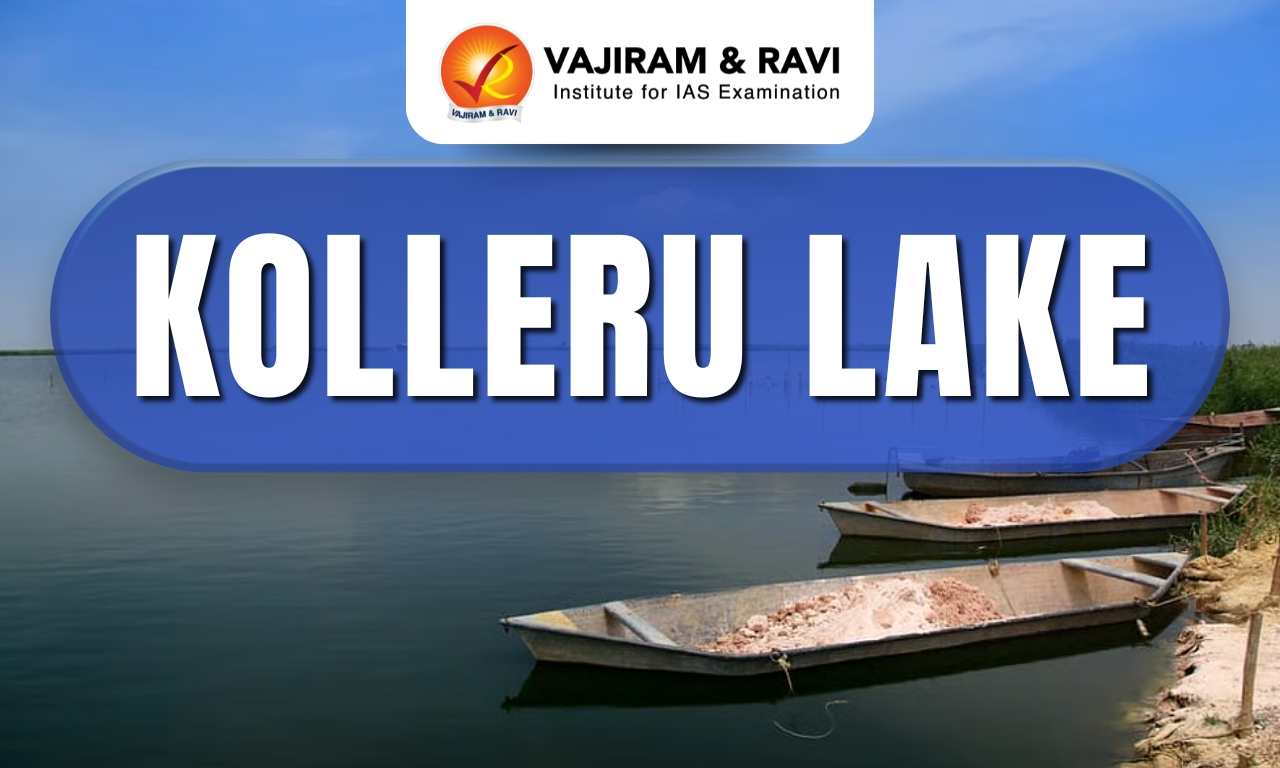
Kolleru Lake, Location, Biodiversity, Fisheries and Flood Control

Kolleru Lake

Kolleru Lake is a natural freshwater wetland in Andhra Pradesh, located between the Krishna and Godavari deltas. It is ecologically important as a flood-balancing system and a habitat for diverse fish and migratory waterbirds, and was designated a Ramsar Site in 2002.

About Kolleru Lake

  • Kolleru Lake is located in Andhra Pradesh, between the Krishna and Godavari river deltas.
  • It is a natural, shallow and eutrophic freshwater lake, with its water spread and depth varying considerably with the seasons.
  • Kolleru Lake is mainly fed by the Budameru, Tammileru and Ramileru rivers, along with numerous irrigation and agricultural drains.
  • The lake acts as a natural flood-balancing reservoir between the Krishna and Godavari delta systems, helping absorb excess water during periods of heavy rainfall and floods.
  • The lake contains numerous small fertile islands locally known as “lankas”, many of which become submerged when the lake expands during floods.
  • Its shallow freshwater environment supports aquatic vegetation such as lotus, water hyacinth and hydrilla, along with other wetland plants that provide feeding and nesting habitats for birds.
  • Kolleru is an important habitat for both resident and migratory waterbirds, including the spot-billed pelican, painted stork, open-billed stork, purple heron and ibises.
    • Kolleru has been recognised as an Important Bird Area (IBA) by BirdLife International because of its significance for waterbird conservation.
    • Atapaka is an important bird habitat within the Kolleru wetland, particularly known for its large breeding population of spot-billed pelicans.
    • During the winter season, large numbers of migratory birds visit Kolleru, making it an important wetland associated with the Central Asian Flyway (CAF).
  • The lake supports more than 60 species of fish, including species such as snakehead murrel and catfish, and sustains both capture and culture fisheries.
  • Kolleru Lake was designated a Wetland of International Importance under the Ramsar Convention in 2002. The wetland contributes to groundwater recharge and helps maintain the hydrological balance of the surrounding deltaic region.
  • The Kolleru Wildlife Sanctuary was established in 1999 to provide statutory protection to the lake ecosystem and its biodiversity.
  • Aquaculture expansion, encroachment, pollution, siltation and obstruction of natural drainage channels have altered the lake's hydrology and placed pressure on its wetland ecosystem.
  • Operation Kolleru was launched in 2006 to remove illegal fish ponds and encroachments within the protected area, with the objective of restoring the lake's natural drainage and ecological character.

Kolleru Lake FAQs

Q1: Where is Kolleru Lake located?

Ans: Kolleru Lake is located in Andhra Pradesh between the Krishna and Godavari river deltas, mainly covering parts of Eluru and Krishna districts.

Q2: Which rivers feed Kolleru Lake?

Ans: The major stream inflows into Kolleru Lake include Budameru, Tammileru and Ramileru, along with numerous agricultural drains and channels.

Q3: When was Kolleru Lake declared a Ramsar Site?

Ans: Kolleru Lake was designated a Ramsar Site in 2002 under the Ramsar Convention on Wetlands.

Q4: Which birds are found at Kolleru Lake?

Ans: Kolleru supports several resident and migratory waterbirds, including the spot-billed pelican, painted stork, open-billed stork, purple heron etc

Q5: What is Operation Kolleru?

Ans: Operation Kolleru was launched in 2006 to remove illegal fish ponds and encroachments within the Kolleru Wildlife Sanctuary and restore the lake's natural drainage and ecological character.

Bindusara, Biography, Reign, Achievements & Mauryan Empire

Bindusara

Bindusara was the second ruler of the Mauryan Empire and the son of Chandragupta Maurya, the founder of the empire. He succeeded his father around 297 BCE and played an important role in consolidating and expanding the Mauryan Empire.

Bindusara is particularly associated with the expansion of Mauryan control towards the Deccan. Greek sources refer to him as Amitrochates, which is generally linked to the Sanskrit term Amitraghata, meaning “destroyer of foes.”

Bindusara's Accession to the Throne

Bindusara succeeded Chandragupta Maurya around 297 BCE. By this time, Chandragupta had already established a powerful empire covering large parts of northern India.

Bindusara inherited a well-organised imperial system and worked to strengthen Mauryan authority over the territories inherited from his father. His reign served as an important link between the foundation of the Mauryan Empire under Chandragupta and its further expansion under Ashoka.

Bindusara and the Expansion into the Deccan

One of the most important aspects of Bindusara's reign was the expansion of the Mauryan Empire towards the Deccan.

According to the traditional historical interpretation, Bindusara's military campaigns extended Mauryan influence into large parts of the Deccan region. His expansion is believed to have reached areas close to present-day Karnataka.

However, the Mauryan advance did not extend to the extreme southern parts of the Indian peninsula. The territories associated with the Cholas, Pandyas and Cheras remained outside direct Mauryan control.

Why Did Mauryan Expansion Stop in Southern India?

The southern kingdoms appear to have maintained friendly relations with the Mauryas, which may have reduced the need for direct military conquest.

The Cholas, Pandyas and Cheras were important political powers of southern India. Their territories were therefore not incorporated into the Mauryan Empire in the same manner as the regions conquered farther north and in the Deccan.

Bindusara FAQs

Q1: Who was Bindusara?

Ans: Bindusara was the second emperor of the Mauryan Empire and the son of Chandragupta Maurya.

Q2: When did Bindusara become the Mauryan ruler?

Ans: Bindusara is considered to have ascended the throne around 297 BCE.

Q3: What was Bindusara's Greek name?

Ans: Greek sources refer to Bindusara as Amitrochates, associated with the Sanskrit term Amitraghata, meaning “destroyer of foes.”

Q4: Which region did Bindusara expand the Mauryan Empire into?

Ans: Bindusara is traditionally associated with the expansion of Mauryan influence into the Deccan, with the campaign reaching areas near present-day Karnataka.

Q5: Who succeeded Bindusara?

Ans: After a succession struggle among his sons, Ashoka emerged victorious and became the Mauryan ruler.

Chandra Taal, Location, Ramsar Site Status, Biodiversity

Chandra Taal

Chandra Taal is a high-altitude freshwater lake in Lahaul and Spiti district of Himachal Pradesh, located in the upper Chandra Valley near Kunzum Pass. Known for its crescent-shaped form and fragile Trans-Himalayan ecosystem, the lake was designated a Ramsar Site in 2005.

About Chandra Taal

  • Chandra Taal is located in the upper Chandra Valley of Lahaul and Spiti district, Himachal Pradesh, near the Kunzum Pass.
  • The lake is situated at about 4,337 metres above sea level, making it an important high-altitude wetland.
  • Its crescent-shaped form gives it the name Chandra Taal, meaning “Lake of the Moon”.
  • The lake is associated with the Chandra River system, with the Chandra joining the Bhaga at Tandi to form the Chandrabhaga, or Chenab.
  • Snowmelt and seasonal precipitation are the main sources of water for the lake.
  • Located in the cold, arid Trans-Himalaya, Chandra Taal supports specialised high-altitude biodiversity, including the snow leopard, Himalayan ibex, blue sheep, red fox and Himalayan marmot.
  • The wetland and its surroundings support high-altitude birds, including snowcock, chukar, golden eagle, kestrel and chough, while Ruddy Shelduck is also recorded here.
  • Chandra Taal was designated a Wetland of International Importance under the Ramsar Convention on 8 November 2005, covering 49 hectares.
  • It is one of Himachal Pradesh's three Ramsar Sites, the other two being Renuka Wetland and Pong Dam Lake.
  • The lake lies within the Chandratal Wildlife Sanctuary, which protects the surrounding high-altitude ecosystem.
  • Tourism, camping, littering, overgrazing and vehicular disturbance threaten the fragile wetland, while climate change may affect its snowmelt and water regime.

Chandra Taal FAQs

Q1: Where is Chandra Taal located?

Ans: Chandra Taal is located in the upper Chandra Valley of Lahaul and Spiti district, Himachal Pradesh, near Kunzum Pass.

Q2: Why is Chandra Taal called the Lake of the Moon?

Ans: Chandra Taal is called the “Lake of the Moon” because of its distinctive crescent-shaped appearance.

Q3: When was Chandra Taal declared a Ramsar Site?

Ans: Chandra Taal was designated a Ramsar Site on 8 November 2005.

Q4: Which river is associated with Chandra Taal?

Ans: Chandra Taal is associated with the Chandra River. Chandra later joins the Bhaga at Tandi to form the Chandrabhaga or Chenab.

Q5: Which wildlife sanctuary protects Chandra Taal?

Ans: Chandra Taal is situated within the Chandratal Wildlife Sanctuary in Himachal Pradesh.

UNCCD COP17, Key Outcomes, India’s Initiatives, Progress

UNCCD COP17

The 17th Conference of Parties (COP17) to the United Nations Convention to Combat Desertification (UNCCD) was held in Ulaanbaatar, Mongolia, from 17 to 28 August 2026 under the theme “Restoring Land. Restoring Hope.”The conference focused on land restoration, drought resilience, rangelands, pastoralist livelihoods and sustainable land management. With land degradation affecting up to 40% of the world’s land, COP17 sought to strengthen practical action, finance and community participation for restoring degraded landscapes.

About United Nations Convention to Combat Desertification 

The United Nations Convention to Combat Desertification (UNCCD) is a legally binding international framework established in 1994 to combat desertification, land degradation and the effects of drought, particularly in drylands.

  • The Convention entered into force in 1996 and currently has 197 Parties, including the European Union
  • It is the only legally binding global framework specifically addressing desertification and drought. 
  • The UNCCD follows the principles of participation, partnership and decentralisation, recognising the role of governments, local communities, scientists, civil society and other stakeholders in land management. 
  • Its broader objective is not merely to prevent desertification but to promote land restoration, sustainable land management and drought resilience, thereby supporting food security, water security, livelihoods and ecosystems.

About UNCCD COP17

The Conference of Parties (COP) is the main decision-making body of the UNCCD.

  • COP17 was hosted by Mongolia in Ulaanbaatar from 17-28 August 2026. 
  • The theme “Restoring Land. Restoring Hope.” reflected the focus on converting land restoration commitments into practical action.
  • COP17 brought together representatives of the UNCCD’s 197 Parties, along with scientists, governments, businesses, Indigenous Peoples, pastoralists, youth and civil society. 
  • The conference focused particularly on rangelands, drought resilience, water, food systems, land restoration and sustainable land management. 
  • Its significance was enhanced by 2026 being the International Year of Rangelands and Pastoralists, providing a global platform to address the degradation of rangelands and the livelihoods dependent on them. 

UNCCD COP17 Key Outcomes and Highlights 

UNCCD COP17 sought to move the global approach from declarations towards implementation, finance and community-led restoration.

Greater Focus on Rangelands and Pastoralists

UNCCD COP17 placed rangelands and pastoral communities at the centre of efforts to tackle land degradation and drought.

  • Rangelands cover about 54% of the Earth’s land surface and support the livelihoods of nearly 2 billion people, including around 500 million pastoralists.
  • The Rangelands Flagship Initiative was launched to fund projects that restore degraded rangelands, improve their sustainable management and strengthen the livelihoods of pastoral communities.
    • The initiative brings together around US$1.2 billion across 45 projects, making it the largest mobilisation for rangelands under the United Nations Convention to Combat Desertification.
    • The initiative recognises pastoralists as custodians of rangelands, giving greater importance to their traditional knowledge and participation in land management.
    • It also emphasises secure land rights, biodiversity conservation, food security and sustainable pastoral livelihoods.

Shift from Drought Response to Drought Resilience

UNCCD COP17 strengthened the emphasis on anticipatory and resilience-based drought management rather than responding only after drought occurs.

  • Drought resilience requires early warning systems, preparedness, risk reduction, adaptation and coordinated action. 
  • The approach seeks to integrate drought management into agriculture, water management, disaster risk reduction and development planning.
  • UNCCD and Luxembourg also launched the Drought Resilience Investment Facility, aimed at mobilising up to US$400 million in public and private capital for drought resilience. 

Stronger Emphasis on Land Restoration Finance

A major focus of COP17 was to treat land restoration as an investment opportunity rather than merely an environmental cost.

  • Governments, development banks, funds and companies announced a US$1.3 billion portfolio of finance across 23 countries for land restoration and drought resilience. 
  • Discussions emphasised the use of public finance, concessional resources, guarantees, insurance and private investment to scale up restoration.

Greater Role for Local Communities

COP17 highlighted that restoration is more effective when local communities are involved in planning, implementation and stewardship.

  • Community-led approaches were promoted for rangeland management, ecosystem restoration and drought resilience.
  • The conference also sought greater recognition of pastoralist, Indigenous, farming and other local communities as implementation partners. 

India at UNCCD COP17

India used COP17 to present its approach to rangeland restoration, drought resilience, open natural ecosystems and community-based conservation.

India’s First Guide to Grasslands and Other Open Natural Ecosystems

India launched its first-ever Guide to Grasslands and Other Open Natural Ecosystems (ONEs) of India at UNCCD COP17.

  • The guide recognises grasslands, savannas, scrublands, deserts and other open ecosystems as distinct ecosystems, rather than treating areas without trees as degraded land.
  • It brings together their geography, biodiversity, ecological functions and socio-economic importance, including pastoralism, fire ecology and carbon sequestration.
  • India’s open natural ecosystems include Himalayan and Terai grasslands, the Thar and Banni landscapes, Deccan savannas, rocky plateaus, ravines, scrublands, coastal ecosystems and deserts.

India’s Approach to Rangeland Restoration

India advocated community-led restoration that combines scientific knowledge with traditional practices and pastoral livelihoods.

  • India emphasised that pastoralists should be treated as custodians rather than merely beneficiaries of rangeland restoration.
  • India highlighted the Orans of Rajasthan, community-protected sacred groves that conserve biodiversity, support pastoral livelihoods and protect important habitats, including those of the Great Indian Bustard.
  • India stressed the importance of recognising grazing rights and community forest resource rights to strengthen community stewardship of rangelands.
  • India’s approach combines landscape management, watershed development, sustainable grazing, fodder development and livelihood support.
  • India also highlighted the role of deep-rooted grasses in storing carbon in soil, improving water infiltration and supporting groundwater recharge.

India’s Approach to Drought Resilience

India called for a shift from reactive drought relief to proactive, technology-enabled drought resilience.

  • India highlighted the use of rainfall monitoring and satellite-based drought assessment to support early preparedness and coordinated action.
  • It emphasised watershed-based measures, including restoration of springs and recharge zones in hill areas and ridge-to-valley watershed development in the plains.
  • India also highlighted crop insurance and technology-based assessment of crop losses as tools for reducing the economic impact of drought.

The approach brings together early warning, preparedness, mitigation, relief and community resilience rather than treating drought only as a post-disaster relief issue.

India’s Focus on International Finance

India called for greater access to predictable and accessible finance, technology and knowledge for land restoration and drought resilience in developing countries.

  • India stressed the need for dedicated financing for rangeland restoration and offered to share its experience through South-South cooperation.

India’s Progress on Land Restoration

India also highlighted its progress under the Bonn Challenge.

  • India restored approximately 21.76 million hectares of degraded and deforested land between 2011 and 2020, according to the country’s second progress report on the Bonn Challenge. 
  • Restoration included planted forests, natural regeneration, silviculture, agroforestry and mangrove restoration. 
  • India had initially pledged to restore 13 million hectares, with an additional 8 million hectares, and later increased its commitment to 26 million hectares by 2030.
  • Land restoration is linked with India’s broader objectives of sustainable land management, biodiversity conservation, climate action and rural development. 

What Is the Bonn Challenge?

The Bonn Challenge is a global initiative launched in 2011 by the Government of Germany and the International Union for Conservation of Nature (IUCN) to promote the restoration of degraded and deforested landscapes.

  • It initially set a global target of restoring 150 million hectares by 2020.
  • The target was subsequently expanded to 350 million hectares by 2030.
  • Forest Landscape Restoration is its principal approach, seeking to restore ecological functionality while meeting human needs.
  • The Bonn Challenge contributes to wider international commitments under the Sustainable Development Goals, United Nations Decade on Ecosystem Restoration, Convention on Biological Diversity and Paris Agreement.

UNCCD COP17 FAQs

Q1: What is UNCCD?

Ans: The United Nations Convention to Combat Desertification is the only legally binding international framework specifically addressing desertification, land degradation and drought.

Q2: Where and when was UNCCD COP17 held?

Ans: UNCCD COP17 was held in Ulaanbaatar, Mongolia, from 17 to 28 August 2026.

Q3: What was the theme of UNCCD COP17?

Ans: The theme of UNCCD COP17 was “Restoring Land. Restoring Hope.”

Q4: What was the major focus of UNCCD COP17?

Ans: UNCCD COP17 focused on land restoration, drought resilience, rangelands, pastoralist livelihoods, water and sustainable land management.

Q5: What did India launch at UNCCD COP17?

Ans: India launched its first-ever Guide to Grasslands and Other Open Natural Ecosystems (ONEs) of India at UNCCD COP17.

Legal Services Authorities Act 1987, Objectives, Provisions

Legal Services Authorities Act

The Legal Services Authorities Act, 1987 provides free and competent legal aid to weaker sections, ensures equal access to justice under Article 39A, and establishes Legal Services Authorities, Lok Adalats and Permanent Lok Adalats for affordable, speedy and accessible justice in India.

About Legal Services Authorities Act, 1987

The Legal Services Authorities Act, 1987 was enacted to establish legal services authorities that provide free and competent legal services to weaker sections of society, ensure that no citizen is denied access to justice due to economic or other difficulties, and organise Lok Adalats to promote justice through equal opportunities under the legal system.

  • The Act was enacted on 11 October 1987, but came into force on 9 November 1995 through a notification issued by the Central Government.
  • It extends to the whole of India and provides the statutory framework for free legal aid and the organisation of Lok Adalats.
  • The Act primarily gives effect to Article 39A, which directs the State to ensure equal justice and provide free legal aid so that economic or other disabilities do not prevent access to justice.
  • It also supports the constitutional guarantees under Article 14 (equality before law) and Article 21 (protection of life and personal liberty).

Legal Services Authorities Act, 1987 Objectives

The Legal Services Authorities Act, 1987 has two broad and interconnected objectives: 

  • Providing legal services to disadvantaged persons
  • Promoting alternative dispute resolution through Lok Adalats.

The Act further promotes legal literacy, legal awareness, preventive legal aid, social justice litigation and legal services clinics, thereby moving beyond merely providing lawyers after a dispute has reached the courts.

Institutional Structure under the Act

The Legal Services Authorities Act, 1987 establishes a multi-level institutional framework to ensure that legal aid and dispute-resolution services reach people from the national level to the local level.

  • National Level → NALSA → Supreme Court Legal Services Committee
  • State Level → State Legal Services Authority → High Court Legal Services Committee
  • District Level → District Legal Services Authority
  • Taluk Level → Taluk Legal Services Committee

1. National Legal Services Authority (NALSA)

The National Legal Services Authority (NALSA) is the apex statutory body responsible for formulating policies, coordinating and monitoring legal services programmes across India.

  • The Chief Justice of India is the Patron-in-Chief, while a serving or retired Supreme Court Judge nominated by the President in consultation with the CJI is the Executive Chairman.
  • NALSA allocates funds to State and District Authorities, organises legal aid camps, promotes legal literacy, supports legal services clinics and encourages settlement through negotiation, arbitration and conciliation.
  • It also undertakes social justice litigation, promotes clinical legal education and coordinates the functioning of State, District, High Court and Taluk legal services institutions.
  • Its administrative expenses are charged to the Consolidated Fund of India.

2. Supreme Court Legal Services Committee (SCLSC)

The Supreme Court Legal Services Committee (SCLSC) provides legal services in matters before the Supreme Court.

  • It is headed by a sitting Judge of the Supreme Court as Chairman, with other members nominated by the Chief Justice of India.
  • It facilitates free legal representation and related legal services for eligible persons before the Supreme Court.

3. State Legal Services Authorities (SLSAs)

Every State has a State Legal Services Authority (SLSA) responsible for implementing NALSA's policies and delivering legal services at the State level.

  • The Chief Justice of the High Court is the Patron-in-Chief, while a serving or retired High Court Judge nominated by the Governor in consultation with the Chief Justice is the Executive Chairman.
  • SLSAs provide legal services to eligible persons, organise Lok Adalats, including those for High Court cases, and undertake preventive and strategic legal aid programmes.
  • Their administrative expenses are charged to the Consolidated Fund of the State.

4. High Court Legal Services Committees (HCLSCs)

A High Court Legal Services Committee (HCLSC) is constituted for every High Court to provide legal services in matters before the High Court.

  • It is headed by a sitting Judge of the High Court nominated as Chairman by the Chief Justice of the High Court.
  • It primarily facilitates legal aid in High Court matters and supports the organisation of Lok Adalats for cases within the High Court's jurisdiction.

5. District Legal Services Authorities (DLSAs)

A District Legal Services Authority (DLSA) is constituted for every district to implement legal services programmes at the district level.

  • The District Judge is its Chairman, while a judicial officer of the prescribed rank serves as its Secretary.
  • DLSAs coordinate legal services activities in the district, organise Lok Adalats and coordinate the work of Taluk Legal Services Committees.

6. Taluk Legal Services Committees

The State Authority may constitute a Taluk Legal Services Committee for a taluk or mandal, or a group of taluks or mandals, to extend legal services to the grassroots.

  • The senior-most Judicial Officer in its jurisdiction is the ex-officio Chairman.
  • It coordinates legal services at the local level, organises Lok Adalats and performs functions assigned by the District Authority.

Legal Services Authorities Act, 1987 Major Provisions 

The Legal Services Authorities Act, 1987 contains provisions dealing with legal aid, eligibility, institutional responsibilities, funding, Lok Adalats, Permanent Lok Adalats, financial accountability and rule-making powers.

1. Meaning and Scope of Legal Services

The Legal Services Authorities Act, 1987adopts a broad understanding of legal services:

  • Under Section 2(c), legal services include assistance in conducting a case or legal proceeding before a court, authority or tribunal and legal advice on any matter.
  • The term court includes civil, criminal and revenue courts as well as tribunals and other authorities exercising judicial or quasi-judicial functions.
  • In practice, free legal services may include representation by an advocate, payment of process fees and other litigation expenses, preparation of pleadings and appeals, drafting legal documents and providing certified copies of judgments and orders.
  • Legal services can also include assistance in accessing benefits available under government welfare schemes, policies and legislation.

Who is Eligible for Free Legal Services? 

Section 12 provides a specific statutory list of persons entitled to legal services under the Act.

A person is eligible if they fall within any one of the following categories:

  • A member of a Scheduled Caste or Scheduled Tribe.
  • A victim of trafficking in human beings or begar referred to in Article 23 of the Constitution.
  • A woman or child.
  • A person with disability as recognised under the applicable disability law.
  • A person facing undeserved want, including a victim of mass disaster, ethnic violence, caste atrocity, flood, drought, earthquake or industrial disaster.
  • An industrial workman.
  • A person in custody, including persons in protective homes, juvenile homes and specified psychiatric institutions.
  • A person whose annual income falls below the prescribed income ceiling applicable to the relevant court.

Eligibility is not limited only to people below the poverty line; several categories, such as women, children, SC/ST persons and persons in custody, qualify because of their status or circumstances.

Income Criterion

Under Section 12(h) of the Legal Services Authorities Act, 1987, a person is eligible for free legal services if their annual income is below the prescribed limit.

  • For cases before courts other than the Supreme Court, the income limit is prescribed by the respective State Government and therefore varies across States.
  • For cases before the Supreme Court, the current NALSA limit is ₹5 lakh per annum. 
  • The income criterion is not applicable to the other categories independently covered under Section 12, such as women, children, SC/ST members and persons in custody. 

Entitlement to Legal Services – Section 13

Section 12 tells us who can apply for free legal aid, while Section 13 tells us when legal aid can actually be granted.

  • First, the person must qualify under Section 12, such as being a woman, child, SC/ST person, industrial workman or person in custody.
  • Second, the Legal Services Authority examines whether the person has a prima facie case, meaning the case appears to have a genuine legal basis and is worth pursuing or defending.
  • If both conditions are satisfied, legal aid can be provided.
  • Where eligibility is based on income, the applicant’s income affidavit can generally be accepted as proof, unless the authority has reason to doubt it.

Financing of Legal Services

The Legal Services Authorities Act, 1987 creates dedicated funds at the national, State and district levels to finance legal aid programmes.

  • Under Section 14, the Central Government provides grants to NALSA after due appropriation by Parliament.
  • Under Section 15, NALSA establishes the National Legal Aid Fund, which receives Central Government grants, donations and other amounts and finances legal services, including grants to State Authorities.
  • Under Section 16, every State Authority establishes a State Legal Aid Fund funded through grants from NALSA, State Government grants, donations and other permitted receipts.
  • Under Section 17, every District Authority establishes a District Legal Aid Fund to finance its functions, including the work of Taluk Committees.

Accounts and Audit

The Legal Services Authorities Act, 1987 under section 18, provides for financial accountability of legal services authorities.

  • NALSA, State Authorities and District Authorities must maintain proper accounts and prepare annual statements of accounts.
  • Their accounts are audited by the Comptroller and Auditor-General of India (CAG) at specified intervals.
  • The CAG has powers to inspect records, demand documents and examine accounts in connection with the audit.

The audited accounts and audit reports are forwarded to the Central or State Government and are laid before Parliament or the State Legislature, as applicable.

Lok Adalats

Lok Adalats are statutory forums established under the Legal Services Authorities Act, 1987 to provide speedy, inexpensive and amicable settlement of disputes through compromise and conciliation, thereby promoting access to justice and reducing the burden on regular courts.

  • Organising Authorities: Lok Adalats are organised by NALSA, State Legal Services Authorities, District Legal Services Authorities, High Court Legal Services Committees and Taluk Legal Services Committees.
  • Composition: They generally comprise serving or retired judicial officers and other qualified persons having prescribed experience and qualifications.
  • Nature of Cases: They can settle both pending court cases and pre-litigation disputes that fall within the jurisdiction of a court.
  • Reference of Cases: Pending cases may be referred with the consent of both parties, on an application by one party where settlement appears possible, or when the court considers the matter suitable for settlement.
  • Principle of Settlement: Their primary objective is compromise and conciliation, guided by justice, equity, fair play and other legal principles, rather than adversarial litigation.
  • Non-Compoundable Offences: Lok Adalats cannot settle offences that are non-compoundable under the applicable law.
  • Failure of Settlement: If settlement fails, a pending case is returned to the concerned court for disposal, while parties in a pre-litigation dispute may approach the appropriate court.
  • Legal Status of Award: Every Lok Adalat award has the status of a civil court decree or an order of the concerned court, depending on the nature of the case.
  • Finality and Appeal: The award is final and binding on all parties, and no appeal lies against it before any court.
  • Court Fee: When a pending case is settled through Lok Adalat, the court fee paid is refundable as provided under the applicable law.
  • Powers: Lok Adalats have specified powers of a Civil Court, including summoning witnesses, enforcing their attendance, examining them on oath, requiring production of documents, receiving evidence on affidavits and requisitioning public records.
  • Flexible Procedure: A Lok Adalat may determine its own procedure, making the process less formal, faster and more accessible than conventional litigation.
  • Judicial Character: Proceedings before a Lok Adalat are treated as judicial proceedings, and the Lok Adalat is deemed to be a Civil Court for specified purposes under criminal procedure law.

Permanent Lok Adalats

Permanent Lok Adalats (PLAs) are permanent statutory forums introduced through the Legal Services Authorities (Amendment) Act, 2002 to provide pre-litigation dispute resolution for matters relating to public utility services.

  • Purpose: Permanent Lok Adalats aim to provide speedy, inexpensive and accessible justice by first attempting conciliation and, if necessary, deciding the dispute on merits.
  • Public Utility Services: They cover services such as transport, postal and telephone services, supply of power, light and water, sanitation, hospitals, dispensaries and insurance. The Central or State Government may notify additional services in the public interest.
  • Composition: A Permanent Lok Adalat is headed by a person who is or has been a District Judge, Additional District Judge or held higher judicial office, along with two members having relevant experience in public utility services.
  • Pre-Litigation Jurisdiction: A party can approach a Permanent Lok Adalats before approaching a court, making it different from an ordinary Lok Adalat dealing with both pending and pre-litigation matters.
  • Bar on Parallel Litigation: Once an application is made before a PLA, the parties cannot simultaneously approach a court for the same dispute.
  • First Stage (Conciliation): The Permanent Lok Adalat first attempts amicable settlement through impartial conciliation, helping parties reach a mutually acceptable solution.
  • Second Stage (Decision on Merits): If conciliation fails, the PLA can decide the dispute on merits, except matters involving non-compoundable offences.
  • Guiding Principles: While deciding disputes, PLAs follow natural justice, objectivity, fair play and equity and are not bound by the Code of Civil Procedure, 1908 or the Indian Evidence Act, 1872.
  • Award: An award may be based on a settlement or a decision on merits and is treated as a decree of a civil court.
  • Finality: The award is final and binding on the parties, is passed by majority, and cannot be challenged through an original suit, application or execution proceeding.
  • Execution: The award can be executed through a competent civil court, ensuring enforceability of the decision.

Legal Services Authorities Act, 1987 Other Important Provisions

The Legal Services Authorities Act, 1987 also contains several provisions that ensure institutional functioning and accountability.

  • Section 23 treats members and staff of Legal Services Authorities, Committees and Lok Adalats, including persons constituting Permanent Lok Adalats, as public servants for the purposes specified in law.
  • Section 24 provides protection against suits, prosecution or other legal proceedings for actions done or intended to be done in good faith under the Act.
  • Section 25 gives the Act an overriding effect where its provisions are inconsistent with another law or legal instrument.
  • Section 27 empowers the Central Government, in consultation with the Chief Justice of India, to make rules for implementing the Act.
  • Section 28 empowers the State Governments, in consultation with the Chief Justice of the concerned High Court, to make rules for implementing the Act.
  • Section 29 empowers NALSA to make regulations concerning matters such as the powers and functions of the Supreme Court Legal Services Committee.
  • Section 29A empowers State Legal Services Authorities to make regulations concerning their functions and those of High Court, District and Taluk-level committees.
  • Section 30 requires rules and regulations made under the Act to be laid before the appropriate legislature, providing a measure of legislative oversight.

Legal Services Authorities Act, 1987 Significance

  • Access to Justice: Ensures free legal aid for vulnerable and disadvantaged sections.
  • Constitutional Mandate: Gives effect to Article 39A and strengthens Articles 14 and 21.
  • Social Justice: Protects the legal interests of women, children, SCs, STs, workers and other vulnerable groups.
  • Affordable Justice: Reduces the financial barriers to litigation.
  • Speedy Justice: Lok Adalats provide quick, inexpensive and informal dispute resolution.
  • Reduced Pendency: Settling suitable disputes outside regular courts helps reduce judicial backlog.
  • Legal Empowerment: Promotes legal literacy, awareness and access to legal advice.
  • Grassroots Justice: The State–District–Taluk network brings legal services closer to citizens.
  • Pre-litigation Settlement: Permanent Lok Adalats facilitate settlement of disputes involving public utility services.

Legal Services Authorities Act, 1987 Limitations

  • Low Awareness: Many eligible people remain unaware of free legal aid.
  • Quality Concerns: Shortage of trained lawyers and weak monitoring can affect the quality of representation.
  • Limited Outreach: Remote and marginalised communities may face difficulty accessing legal services.
  • Digital Divide: Digital legal services may exclude those lacking connectivity or digital literacy.
  • Resource Constraints: Inadequate staff, infrastructure and funding can limit institutional capacity.
  • Settlement Pressure: Excessive focus on compromise may affect fairness where parties have unequal bargaining power.
  • Limited Lok Adalat Jurisdiction: Lok Adalats cannot deal with non-compoundable offences and generally depend on settlement between parties.
  • Implementation Gap: Legal entitlement to aid does not always translate into timely and effective legal representation.

Legal Services Authorities Act, 1987 FAQs

Q1: What is the primary objective of the Legal Services Authorities Act, 1987?

Ans: Legal Services Authorities Act, 1987 aims to provide free and competent legal services to weaker sections, ensure equal access to justice despite economic or other disabilities, and organise Lok Adalats for amicable dispute resolution.

Q2: Which constitutional provision is primarily implemented by the Legal Services Authorities Act, 1987?

Ans: The Legal Services Authorities Act, 1987 primarily gives effect to Article 39A, which directs the State to provide free legal aid and ensure equal justice, while also supporting the guarantees of Articles 14 and 21.

Q3: Who is eligible for free legal services under the Legal Services Authorities Act, 1987?

Ans: Under Section 12, legal services are available to SCs/STs, victims of trafficking or begar, women and children, persons with disabilities, victims of mass disasters or atrocities, industrial workmen, persons in custody, and persons meeting the prescribed income criterion.

Q4: What is the institutional structure under the Legal Services Authorities Act, 1987?

Ans: The Act provides a multi-level institutional framework comprising NALSA and the Supreme Court Legal Services Committee at the national level; State Legal Services Authorities and High Court Legal Services Committees at the State level; District Legal Services Authorities at the district level; and Taluk Legal Services Committees at the grassroots level.

Q5: What are Lok Adalats?

Ans: Lok Adalats are statutory forums that facilitate the amicable settlement of pending and pre-litigation disputes through compromise and conciliation.

Major Industries in India, Locations, Importance, Challenges

Major Industries in India

Major industries in India are central to the country’s economic transformation, contributing to production, employment, exports, infrastructure development and technological advancement. India’s industrial base spans traditional sectors such as iron and steel, textiles, cement and food processing as well as emerging sectors such as electronics, automobiles, pharmaceuticals and semiconductors. Strengthening these industries is essential for achieving Aatmanirbhar Bharat and Viksit Bharat @2047 by promoting competitive, technology-driven and globally integrated manufacturing.

What Are the Major Industries in India?

India’s industrial sector can be broadly understood through its resource base, production role and technological intensity.

  • Resource-based industries: Iron and steel, cement, petroleum and petrochemicals, and sugar.
  • Labour-intensive industries: Textiles, leather, gems and jewellery, and food processing.
  • Capital and technology-intensive industries: Automobiles, chemicals, pharmaceuticals, electronics, engineering goods and semiconductors.
  • Emerging industries: Renewable energy equipment, electric vehicles, green hydrogen and semiconductor manufacturing.

Iron and Steel Industry

The iron and steel industry is a basic and strategic industry because steel provides inputs to construction, railways, automobiles, machinery, defence and infrastructure.

India is currently the world's second-largest producer of crude steel. In 2025-26, crude steel production reached around 168.4 million tonnes, recording growth of more than 10% over the previous year. Finished steel consumption was around 164 million tonnes, supported by infrastructure, construction, railways and manufacturing demand. 

Major Production Centres

  • Odisha: Rourkela, Kalinganagar, Angul and Jharsuguda
  • Jharkhand: Jamshedpur and Bokaro
  • Chhattisgarh: Bhilai and Raipur
  • West Bengal: Durgapur and Burnpur
  • Karnataka: Vijayanagar and Bhadravati
  • Andhra Pradesh: Visakhapatnam
  • Tamil Nadu: Salem

Why is the industry concentrated in eastern India?

The traditional steel belt developed around Jharkhand, Odisha, Chhattisgarh and West Bengal because of the availability of iron ore, coal, limestone, water and railway connectivity.

However, newer plants have increasingly been located closer to ports, markets and downstream industries, reflecting changes in transportation and technology.

Textile Industry

The textile industry is one of India's oldest and most employment-intensive industries. It has strong linkages with agriculture through cotton, jute, silk and wool and provides livelihoods across spinning, weaving, processing, garments and handicrafts.

India's textile and apparel exports, including handicrafts, reached ₹3.25 lakh crore in 2025-26, with exports growing across more than 100 destinations. 

Major Textile Centres

  • Cotton textiles: Gujarat, Maharashtra, Tamil Nadu, Karnataka, Telangana and Punjab
  • Woollen textiles: Punjab, Haryana and northern India
  • Silk textiles: Karnataka, Tamil Nadu, West Bengal and Assam
  • Jute textiles: West Bengal
  • Garments: Tamil Nadu, Karnataka, Maharashtra, Gujarat, Uttar Pradesh and Delhi-NCR

Tiruppur is a major garment-exporting centre, while Surat is an important centre for synthetic textiles and diamond-related manufacturing.

Why is the textile industry widely distributed?

Unlike iron and steel, textile industries are not heavily dependent on one particular mineral. Their location is influenced by raw materials, labour, markets, transport, electricity, water and export infrastructure.

Government Support

Major initiatives include:

Sugar Industry

The sugar industry is an important agro-based industry closely linked with agriculture and rural economies. India is the world's second-largest sugarcane producer, and the sector supports nearly 5 crore farmers and around 5 lakh workers in sugar factories and allied industries.

Sugarcane production reached about 500 million tonnes in 2025-26, according to the Third Advance Estimate. 

Major States

The industry is concentrated mainly in:

  • Uttar Pradesh
  • Maharashtra
  • Karnataka
  • Tamil Nadu
  • Gujarat
  • Bihar

Why is the sugar industry important?

Sugarcane is a perishable and bulky crop, so processing facilities need to be located close to production areas. The industry also supports ethanol production, cogeneration of electricity and other by-products, making it an important example of industrial diversification.

Cement Industry

The cement industry is a basic infrastructure industry because cement is essential for houses, roads, bridges, dams, railways and other construction activities.

Its distribution is closely related to the availability of limestone, the principal raw material, along with coal, power, water, transport and markets.

Major Producing Regions

Important cement-producing states include:

  • Rajasthan
  • Andhra Pradesh
  • Gujarat
  • Tamil Nadu
  • Madhya Pradesh
  • Chhattisgarh
  • Karnataka
  • Telangana

The industry has expanded beyond traditional limestone-rich regions because improved transport and technology have allowed producers to serve distant markets.

Automobile Industry

India's automobile industry is an important component of modern manufacturing, with strong linkages to steel, chemicals, electronics, engineering and services.

The sector contributed nearly 15% of India's GST revenue collections and supported an estimated 30 million jobs, including direct and indirect employment, according to government-cited industry data. 

Major Automobile Clusters

  • Chennai-Hosur
  • Pune-Mumbai-Nashik
  • Gurugram-Manesar
  • Sanand-Ahmedabad
  • Bengaluru
  • Hyderabad
  • Noida-Greater Noida

These clusters benefit from large markets, skilled labour, engineering capabilities, supplier networks, transport connectivity and ports. The sector is also undergoing a transition towards electric vehicles, advanced batteries, connected vehicles and cleaner mobility.

Chemical and Petrochemical Industry

The chemical industry is a critical part of India's manufacturing ecosystem because chemicals provide inputs to agriculture, pharmaceuticals, textiles, automobiles, plastics and construction.

India is the sixth-largest chemical producer globally and third-largest in Asia, producing more than 80,000 products across bulk and specialty chemicals, agrochemicals, petrochemicals, polymers and fertilisers. The sector contributes about 7% to India's GDP, while chemicals accounted for 8.1% of manufacturing GVA in FY2023-24. 

Major Centres

Important chemical and petrochemical clusters include:

  • Gujarat
  • Maharashtra
  • Tamil Nadu
  • Andhra Pradesh
  • Odisha
  • Assam

Petrochemical industries tend to develop around refineries, ports and major industrial clusters because petroleum and natural gas provide important feedstocks.

India's refining capacity was about 258.1 million metric tonnes per annum, with capacity projected to reach 309.5 million metric tonnes per annum by 2030. 

Pharmaceutical Industry

India's pharmaceutical industry is one of the country's major knowledge-intensive industries and is particularly important for health security, exports and affordable medicines.

India has developed a strong position in generic medicines, vaccines and pharmaceutical formulations, supported by a large scientific workforce and manufacturing base.

India's pharmaceutical exports increased from US$27.75 billion in 2024 to US$30.45 billion in 2025, registering growth of about 9.7%. 

Major Pharmaceutical Clusters

  • Hyderabad
  • Ahmedabad-Vadodara
  • Mumbai-Pune
  • Bengaluru
  • Chennai
  • Visakhapatnam
  • Baddi

Major Challenges

  • Dependence on imported Active Pharmaceutical Ingredients (APIs) in some segments.
  • Need for higher research and development.
  • Quality and regulatory compliance.
  • Competition in global markets.
  • Need to move towards high-value products and innovative medicines.

Electronics Industry

Electronics has emerged as one of India's fastest-growing manufacturing sectors and is central to Digital India, Make in India and Aatmanirbhar Bharat.

Electronics production increased from around ₹1.9 lakh crore in 2014-15 to about ₹12 lakh crore in 2024-25, while electronics exports rose from around ₹38,000 crore to ₹3.3 lakh crore during the same period. Mobile manufacturing units increased from 2 to around 300. 

Major Centres

  • Noida
  • Bengaluru
  • Chennai
  • Hyderabad
  • Pune
  • Sriperumbudur
  • Greater Noida

The government's approach is increasingly focused on developing the entire value chain, moving from finished products to sub-assemblies, components, materials and machinery. Domestic value addition in electronics manufacturing has risen to around 18-20%. 

Food Processing Industry

The food processing industry refers to industries that convert raw agricultural and allied products into processed, packaged or value-added food products for domestic consumption and export. It forms an important link between agriculture and manufacturing, connecting farmers with processors, retailers and consumers.

The sector helps reduce post-harvest losses, extend the shelf life of perishable produce, increase farmers’ returns, generate rural non-farm employment and promote value addition. Its GVA increased from ₹1.34 lakh crore in 2014-15 to ₹2.24 lakh crore in 2023-24. It accounted for 7.93% of manufacturing GVA, while processed food constituted 20.4% of India's agri-food exports in 2024-25.

Major Segments

  • Fruits and vegetables: Juices, pulp, frozen and canned products.
  • Dairy: Milk, cheese, butter, curd and milk powder.
  • Meat and fisheries: Processed meat, frozen seafood and ready-to-cook products.
  • Cereals and pulses: Flour, rice products, packaged pulses and breakfast cereals.
  • Sugar and confectionery: Sugar, chocolates, biscuits and other confectionery products.
  • Beverages: Fruit drinks, packaged beverages and other processed drinks.
  • Ready-to-eat and ready-to-cook foods: Packaged meals, snacks and convenience foods.

Fertilizer Industry

The fertilizer industry is strategically important because agricultural productivity depends heavily on timely availability of fertilisers.

India has increased domestic fertilizer production, but it continues to depend on imports for some raw materials and fertiliser types. In 2025, around 73% of total fertilizer consumption was met through domestic production, according to the government. 

Leather and Footwear Industry

The leather and footwear industry is an important labour-intensive manufacturing and export sector, particularly for employment generation among MSMEs and workers.

India's leather and footwear exports reached around US$4.75 billion in 2025-26, with Tamil Nadu accounting for nearly 37% of India's sectoral exports. The sector is concentrated in clusters such as:

  • Chennai and Ranipet
  • Kanpur
  • Agra
  • Kolkata
  • Hyderabad

Its future growth depends on value addition, design, branding, quality standards, sustainability and access to international markets.

Factors Influencing Industrial Location in India

The distribution of Major Industries in India can largely be explained through the following factors:

  • Raw materials: Heavy industries such as steel and cement tend to locate close to bulky raw materials.
  • Power: Reliable and affordable electricity is essential for energy-intensive industries.
  • Water: Industries such as textiles, chemicals, steel and food processing require substantial water.
  • Labour: Labour-intensive industries such as textiles, leather and food processing benefit from large labour pools.
  • Market: Automobile, food processing and consumer goods industries tend to locate near large markets.
  • Transport: Railways, highways and ports reduce the cost of moving inputs and finished products.
  • Capital and technology: Modern industries require investment, skilled manpower and research facilities.
  • Government policy: Industrial corridors, tax incentives, PLI schemes and special economic zones influence industrial location.
  • Agglomeration economies: Industries often cluster because suppliers, skilled workers, infrastructure and markets are available within the same region.

Importance of Industries for the Indian Economy

Industrial development has significance far beyond manufacturing output.

  • Economic growth: Manufacturing increases productivity and supports overall economic expansion.
  • Employment: Labour-intensive sectors such as textiles, food processing and leather provide large-scale employment.
  • Agricultural linkages: Agro-based industries create demand for agricultural products and support farmer incomes.
  • Infrastructure: Steel, cement and engineering industries provide the material base for infrastructure development.
  • Exports: Pharmaceuticals, automobiles, textiles, electronics and chemicals strengthen India's export base.
  • Import substitution: Domestic production of electronics, fertilisers, chemicals and machinery can reduce external vulnerabilities.
  • Regional development: Industrial clusters generate infrastructure, employment and urbanisation beyond major metropolitan centres.
  • Technological advancement: Electronics, pharmaceuticals, automobiles and chemicals promote research, innovation and skill development.

Government Initiatives to Promote Industries in India

The government has adopted a combination of industrial policies, production incentives, infrastructure development and investment support to strengthen India's manufacturing base and improve its global competitiveness.

  • Make in India: Promotes investment and manufacturing in India, with emphasis on job creation, ease of doing business and integration with global value chains.
  • Aatmanirbhar Bharat: Strengthens domestic production capabilities and seeks to reduce excessive import dependence in critical sectors.
  • Production Linked Incentive (PLI) Scheme: Provides incentives linked to incremental production and sales to expand domestic manufacturing and attract investment in priority sectors.
  • PM Gati Shakti: Integrates transport and logistics infrastructure through a multimodal connectivity approach to reduce logistics costs and improve industrial efficiency.
  • National Industrial Corridor Development Programme: Develops integrated industrial regions with modern infrastructure to create globally competitive manufacturing and investment hubs.
  • National Manufacturing Mission: Provides a policy framework to expand manufacturing, improve competitiveness, promote technology adoption and increase India's share in global production.
  • Startup India: Supports entrepreneurship and innovation through easier compliance, funding support and a stronger ecosystem for startups.
  • MSME support measures: Schemes such as the Prime Minister’s Employment Generation Programme (PMEGP), Credit Guarantee Scheme for Micro and Small Enterprises (CGTMSE) and Raising and Accelerating MSME Performance (RAMP) improve access to finance, entrepreneurship, technology and markets, strengthening the role of MSMEs in India's industrial base.
  • India Semiconductor Mission: Promotes semiconductor manufacturing and ecosystem development to build domestic capabilities in a strategically important technology sector.
  • National Green Hydrogen Mission: Promotes green hydrogen production and its use in industry and transport, supporting the transition towards low-carbon industrialisation.

Major Challenges Facing Indian Industries

Despite significant progress, Indian industries face several structural challenges.

  • High logistics and energy costs can reduce competitiveness.
  • Dependence on imported components and critical raw materials remains significant in several industries.
  • Skill gaps limit the availability of specialised workers.
  • Low research and development intensity affects technological competitiveness.
  • MSME constraints include limited access to credit, technology and formal markets.
  • Environmental pressures are particularly significant for steel, cement, chemicals and other resource-intensive industries.
  • Global competition and trade barriers can affect export-oriented sectors.
  • Regional concentration of industries can increase pressure on urban infrastructure and create regional disparities.

Way Forward

India needs to shift from capacity expansion to globally competitive, technology-driven and sustainable industrialisation.

  • Strengthen domestic value chains by increasing production of critical components, raw materials and machinery.
  • Reduce logistics costs through better multimodal connectivity, industrial corridors and efficient infrastructure.
  • Boost R&D and innovation to promote advanced manufacturing and indigenous technologies.
  • Integrate MSMEs into large domestic and global value chains through better finance, technology and market access.
  • Build industry-ready skills through apprenticeships and stronger industry-education partnerships.
  • Promote green manufacturing through clean technologies, energy efficiency and resource conservation.
  • Diversify exports by moving towards high-value products and wider global markets.
  • Ensure balanced industrialisation by developing industrial clusters beyond existing manufacturing hubs.
  • Increase domestic value addition by moving beyond assembly towards component manufacturing and complete production ecosystems.

Major Industries in India FAQs

Q1: What are the major industries in India?

Ans: The Major Industries in India include iron and steel, textiles, sugar, cement, automobiles, chemicals and petrochemicals, pharmaceuticals, electronics, food processing, fertilisers, and leather and footwear.

Q2: Which factors influence the location of major industries in India?

Ans: The location of Major Industries in India is influenced by the availability of raw materials, power, water, labour, markets, transport, capital, technology, government policies and agglomeration economies.

Q3: Why is the textile industry important for India?

Ans: The textile industry is a major employment-intensive and export-oriented industry, with strong linkages to agriculture through cotton, wool, silk and other natural fibres.

Q4: Why is the automobile industry important for the Indian economy?

Ans: The automobile industry supports manufacturing, employment and exports while creating demand for steel, electronics, rubber, glass, auto components and other industries.

Q5: What is the importance of the pharmaceutical industry in India?

Ans: The pharmaceutical industry strengthens India's healthcare and manufacturing capabilities and is an important export-oriented sector, particularly in generic medicines and formulations.

Larak Island

Larak Island

Larak Island Latest News

Recently, Iran retaliated with ballistic missiles at US bases in Jordan after the Larak Island strike.

About Larak Island

  • Location: It is a small island located in the Straits of Hormuz.
  • It is to the south of Hormuz Island approximately 45 kms southeast of Bandar Abbas and 18 kms southeast of the eastern end of Qeshm Island.
  • It covers roughly 49 square kilometres, but its location gives it outsized strategic importance.
  • The island sits close to one of the world's most important maritime choke points. 
  • Larak's importance is closely tied to the Strait of Hormuz, the narrow waterway linking the Persian Gulf with the Gulf of Oman.

Key Facts about Straits of Hormuz

  • It is a narrow waterway between Iran and the Arabian Peninsula, specifically the United Arab Emirates, and Musandam (Oman).
  • The Gulf of Oman is on the strait’s east, while the Persian Gulf is on the west. 
  • It is the only sea channel linking the oil-rich Persian Gulf (west) with the Gulf of Oman and the Arabian Sea (southeast).
  • Iran is located on the north coast, while the UAE is on the south coast
  • Islands: Some of the islands located in the Strait of Hormuz are Hengam, Hormuz, and Qishm.

Source: NIE

Larak Island FAQs

Q1: Where is Larak Island?

Ans: It is a small island located in the Straits of Hormuz.

Q2: Where is Straits of Hormuz?

Ans: It is a narrow waterway between Iran and the Arabian Peninsula, specifically the United Arab Emirates, and Musandam (Oman).

Rove Beetle

Rove beetle

Rove beetle Latest News

Recently, an Indo-German research team has discovered 15 species of rove beetles in the waterfalls and forests of Arunachal Pradesh.

About Rove beetle

  • Rove beetles (family Staphylinidae) are one of the largest beetle families.
  • Appearance: They are typically elongate, fast-moving beetles with shortened wing covers (elytra) that expose flexible abdominal segments.
  • Many species of these beetles can raise the abdomen in a scorpion-like defensive posture (not a true sting).
  • Preferred climate: It is mainly found in sub-tropical, cold tolerant climate.
  • Habitat: Typical microhabitats include leaf litter, soil surface, under bark, fungi, shorelines, dung, carrion, compost, and nests of social insects;
  • These are usually found around decaying animal and vegetable matter, preying on carrion-feeding insects. 
  • Distribution: Rove beetles occupy almost all moist environments throughout the world.

Features of Rove beetle

  • Some large species are a brightly coloured black and yellow, thus resembling wasps; other rove beetles mimic soldier ants in both appearance and behaviour.
  • These predatory beetles are beneficial to farmers and gardeners, because they can reduce pest populations, also referred to as biological control
  • Lifespan is variable: Adults may live ~2 weeks to ~12 months; total life cycle often ~1-24 months depending on climate and species.
  • It has chemical defenses from abdominal glands; secretions can deter predators and may include irritants or antimicrobial compounds.

Source: AT

Rove beetle FAQs

Q1: What are Rove beetle?

Ans: Rove beetles (family Staphylinidae) are one of the largest beetle families.

Q2: Where do we find Rove beetle?

Ans: It is mainly found in sub-tropical, cold tolerant climate.

Integrated Fertilizer Management System

Integrated Fertilizer Management System

Integrated Fertilizer Management System Latest News

Recently, the Ministry of Chemicals and Fertilizers said that the Integrated Fertilizer Management System (iFMS) has entered a new phase with the introduction of a series of digital initiatives.

About Integrated Fertilizer Management System

  • It is the digital platform for fertilizer management in India.
  • It is developed and technically supported by the National Informatics Centre (NIC) for the Department of Fertilizers.

Features Integrated Fertilizer Management System

  • It offers a range of online services related to fertilizer distribution and management.
  • It includes dealer registration, stock availability tracking, dealer search, and access to Management Information System and Direct Benefit Transfer (DBT) reports.
  • iFMS connects key stages of the fertilizer ecosystem, including production, imports, movement, stock availability, retail sale and subsidy processing.
  • It is operating at a national scale and covers more than 14 crore Aadhaar-linked fertilizer buyers, over 2.5 lakh retailers.
  • The new dashboards and analytical tools have been developed to provide officials with a consolidated view of fertilizer production, imports, dispatches, movement, stocks and retail sales.
  • These tools enable monitoring at the national, State, district and retailer levels, helping identify unusual trends and emerging supply situations at an early stage. 

Source: PIB

Integrated Fertilizer Management System FAQs

Q1: What is iFMS?

Ans: It is the digital platform for fertilizer management in India.

Q2: Who developed the iFMS?

Ans: It is developed and technically supported by the National Informatics Centre (NIC) for the Department of Fertilizers.

Hanging Glaciers

Hanging Glaciers

Hanging Glaciers Latest News

A recent study published in Nature magazine has found that there are as many as 219 hanging glaciers in the Alaknanda basin of the Garhwal Himalayas.  

About Hanging Glaciers

  • Hanging glaciers are ice masses perched on steep slopes that can detach and trigger massive avalanches.
  • Formation
    • They occur when a major valley glacier system retreats and thins, leaving the tributary glaciers in smaller valleys high above the shrunken central glacier surface.
    • If the entire system has melted and disappeared, the empty high valleys are called hanging valleys.
  • Impact of Hanging Glaciers
    • Hanging glaciers pose a significant risk of break-offs.
    • The break-offs from hanging glaciers can also trigger secondary hazards such as glacial lake outburst floods (GLOFs).
    • Glaciers in high-elevation alpine environments are highly sensitive to climate variability and warming.
    • This sensitivity is particularly pronounced in the Himalaya, where warming over the past two decades has exceeded the global average, resulting in accelerated glacier retreat.

Source: IE

Hanging Glaciers FAQs

Q1: What are Hanging Glaciers?

Ans: Hanging glaciers are ice masses perched on steep slopes that can detach and trigger massive avalanches.

Q2: What are the types of Hanging Glaciers?

Ans: Cold hanging and Temperate hanging

Magnetars

Magnetars

Magnetar  Latest News

Recently, a magnetar called 1E 1547.0−5408 has produced the strongest observational case so far that an intense magnetic field can change how light travels through otherwise empty space. 

About Magnetar

  • Magnetars are neutron stars having an ultrahigh magnetic field that are much stronger than the terrestrial magnetic field.
  • They are formed in the same way as all neutron stars, through the core-collapse of a massive star in a supernova explosion.
  • The idea of a magnetar was first proposed in 1987 and used to successfully explain soft gamma repeaters (SGR) in 1992. 

Characteristics Magnetar

  • They are characterised by exceptionally strong magnetic fields, estimated to be a thousand times stronger than typical neutron stars.
  • The magnetic field of a magnetar is over one quadrillion times stronger than the magnetic field of Earth.
  • What powers the emission of high-energy electromagnetic radiation in them is the decay of magnetic fields in these objects.
  • Besides, magnetars display strong temporal variability, typically including a slow rotation, a rapid spin-down, bright but short bursts going on upto months-long outbursts.
  • Occasionally, they emit intense bursts of energy in the form of flares.

Source: TH

Magnetar FAQs

Q1: What are Magnetars?

Ans: Magnetars are neutron stars having an ultrahigh magnetic field that are much stronger than the terrestrial magnetic field.

Q2: What are the characteristics of Magnetars?

Ans: They are characterised by exceptionally strong magnetic fields, estimated to be a thousand times stronger than typical neutron stars.

Malaria

Malaria

Malaria Latest News

According to the Union Health Ministry India recorded a nearly 80 per cent decline in malaria cases and deaths between 2015 and 2025, while the number of high-burden districts dropped sharply from 155 to 33, 

About Malaria

  • It is a life-threatening febrile illness caused by Plasmodium parasites.
  • Transmission: It is transmitted through the bites of infected female Anopheles mosquitoes.
  • It is not contagious, but can be spread through infected blood or contaminated needles.
  • Risk: Infants, children under 5 years, pregnant women and girls, travellers and people with HIV or AIDS are at higher risk of severe infection. 
  • Symptoms
    • Symptoms appear 10–15 days after infection and include fever, chills, and headache.
    • Severe symptoms can include seizures, difficulty breathing, jaundice, dark urine, and death if untreated.
  • Treatments include
    • ACTs (Artemisinin-based Combination Therapies) for P. falciparum.
    • Chloroquine for P. vivax 
    • Primaquine to prevent relapses in P. vivax and P. ovale infections.

Source: DD News

Malaria FAQs

Q1: What is Malaria?

Ans: It is a life-threatening febrile illness caused by Plasmodium parasites.

Q2: What are the symptoms is Malaria?

Ans: Severe symptoms can include seizures, difficulty breathing, jaundice, dark urine, and death if untreated.

India’s Shift to Grain-Based Ethanol: Food and Water Security Concerns

India’s Shift to Grain-Based Ethanol

India’s ethanol programme is undergoing a major structural shift. Originally designed to support the sugar industry and sugarcane farmers, it is increasingly dependent on grain-based ethanol, particularly from maize and rice.

This shift has helped India move towards E20, but also raises concerns over food security, water stress and sustainable feedstock availability, especially as sugar stocks tighten, maize faces climate risks and FCI rice is increasingly used for ethanol.

Why Was the Ethanol Programme Introduced?

The Ethanol Blended Petrol (EBP) Programme was initially intended to address problems in the sugar sector while strengthening India’s energy security.

  • Support sugar mills: Ethanol provides sugar mills with an additional revenue stream when sugar production exceeds market demand.
  • Ensure timely cane payments: Additional ethanol revenue improves mill liquidity and helps sugar mills make timely payments to sugarcane farmers.
  • Manage sugar surplus: Diverting part of sugarcane towards ethanol reduces surplus sugar production and helps stabilise the sugar market.
  • Reduce crude oil dependence: Blending domestic ethanol with petrol reduces the requirement for imported petroleum and strengthens energy security.
  • Create an agricultural market: The programme has also created additional demand for crops such as maize, which is traditionally used for poultry and livestock feed.

How Did India Shift to Grain-Based Ethanol?

India’s shift to grain-based ethanol took place as the government expanded the feedstock base and ethanol demand increased.

  • Until 2017-18, ethanol supplied to oil marketing companies came almost entirely from C-heavy molasses, a by-product of sugar production.
  • From 2018-19, mills were encouraged to use B-heavy molasses and sugarcane juice/syrup for ethanol, which increased the quantity of sugarcane diverted towards fuel.
  • Grains initially entered as an off-season feedstock, with sugar mills using maize and rice during May-October, when sugarcane was not available for crushing.
  • Standalone grain distilleries later expanded, allowing ethanol production from maize and rice throughout the year rather than depending on the sugarcane crushing season.
  • Rising ethanol blending targets increased demand for grain-based ethanol, while high sugar prices and lower sugar stocks reduced the scope for diverting sugarcane juice and B-heavy molasses.
  • The result was a sharp reversal in the feedstock mix. Sugarcane-based feedstock supplied over 83% of ethanol in 2021-22, but grains accounted for 59.7% in 2023-24 and 72.5% of allocated ethanol for the supply year ending October 2026.

Thus, grains have evolved from a supplementary off-season feedstock into the mainstay of India’s ethanol programme.

What Are the Concerns with the Shift to Grain-Based Ethanol?

The growing dependence on grains for ethanol is creating new pressures on food security, agricultural markets, water resources and sustainable feedstock availability.

  • Using food grains for ethanol can intensify the food-versus-fuel trade-off, as maize and rice are also required for food consumption, poultry and livestock feed.
  • Rising ethanol demand can put pressure on maize supplies, as it has created a major new source of demand alongside poultry and livestock feed. Wholesale maize prices rose from around ₹13.8-17.8 per kg in 2021 to ₹22.1–24.5 per kg in 2024.
  • Greater reliance on ethanol can increase dependence on Food Corporation of India rice, particularly if maize supplies tighten and sugarcane-based ethanol remains constrained.
  • Diversion of Food Corporation of India rice raises questions about its opportunity cost, as rice used for ethanol cannot simultaneously serve as food, animal feed or a buffer against future shortages. Food Corporation of India rice was supplied to distilleries at around ₹23.2 per kg, compared with about ₹40 per kg for normal rice and ₹30 per kg for broken rice in the retail market.
  • Greater dependence on rice can worsen water stress, as rice is a water-intensive crop and rising demand for it as an ethanol feedstock can reinforce water-intensive cropping patterns.
  • Dependence on a few feedstocks increases climate vulnerability, as weather shocks affecting maize or other major crops can directly affect ethanol availability.
  • Rapid expansion of ethanol capacity can increase pressure on agricultural feedstocks, with capacity nearing 2,000 crore litres against annual offtake of around 1,050 crore litres by oil marketing companies.
  • Ethanol production can also reduce the sugar available for consumption, because some sugarcane is diverted towards ethanol instead of being converted into sugar. This diversion was 2.2 million tonnes in 2020-21, 4.3 million tonnes in 2022-23 and 3 million tonnes in 2025-26, showing that ethanol production can significantly affect the sugar supply.

Thus, the shift to grain-based ethanol may reduce dependence on sugarcane, but it also transfers pressure towards India’s food, feed and water resources.

What Is the Central Policy Dilemma?

The issue now is not whether ethanol blending should be promoted, but how rapidly it should be expanded without creating unsustainable pressure on agricultural resources.

  • Achieving E20 requires around 1,050 crore litres of ethanol annually, creating substantial and sustained demand for feedstocks.
  • The government has already notified standards for E22, E25, E27 and E30, indicating the possibility of progressively higher blending in the future.
  • Higher blending targets should be linked to the availability of sustainable feedstocks, rather than being driven primarily by installed distillery capacity.
  • The benefits of reducing fossil-fuel dependence must be balanced against the competing demands on food grains, land and water.
  • Consolidating E20 while developing alternative feedstocks and second-generation ethanol could reduce pressure to divert increasing quantities of food grains.

The central challenge is to expand ethanol blending without compromising India’s food and water security.

What Should India Do?

India needs to move from a target-driven ethanol strategy towards a diversified and resource-efficient feedstock strategy.

  • Reduce excessive dependence on FCI rice: Public food stocks should be diverted to ethanol only when they are genuinely surplus after accounting for food-security requirements.
  • Use maize within sustainable limits: Rising ethanol demand should not undermine maize availability for poultry, livestock feed and other essential uses.
  • Promote bajra and jowar: Millets offer alternative feedstocks, with their grains containing around 58-62% recoverable starch and yielding approximately 380-400 litres of ethanol per tonne.
  • Link ethanol with crop diversification: Encouraging less water-intensive feedstocks can reduce pressure on rice and sugarcane while creating additional markets for millet farmers.
  • Promote second-generation ethanol: Agricultural residues and other lignocellulosic biomass can produce ethanol without directly competing with food crops.
  • Adopt region-specific feedstock planning: Ethanol production should reflect local water availability, agro-climatic conditions and crop suitability rather than relying uniformly on rice, maize or sugarcane.
  • Avoid capacity-driven blending targets: Expansion of distillery capacity should not by itself become a reason for continuously raising blending targets.
  • Increase blending gradually: The pace of blending should remain aligned with the availability of sustainable and diversified feedstocks.
  • Reassess the pace of expansion: Chief Economic Adviser V. Anantha Nageswaran has suggested returning to E10, highlighting the need to examine whether higher blending should be pursued at the current pace.

Conclusion

India’s shift to grain-based ethanol has strengthened energy security but has also created new pressures on food grains, water and agricultural resources. The way forward is to diversify feedstocks, expand 2G ethanol and align blending targets with sustainable resource availability.

India’s Shift to Grain-Based Ethanol FAQs

Q1: What is grain-based ethanol?

Ans: Grain-based ethanol is ethanol produced from cereals by converting their starch into sugars and then fermenting them into ethanol.

Q2: Why is India promoting grain-based ethanol?

Ans: Grain-based ethanol helps increase domestic ethanol availability, support farmers by creating new demand for crops such as maize, and reduce dependence on imported crude oil.

Q3: Which grains are mainly used for ethanol production in India?

Ans: Maize and rice are the major grains used as feedstock for ethanol production.

Q4: Why is the shift to grain-based ethanol a concern for India?

Ans: The shift can intensify the food-versus-fuel dilemma, increase dependence on FCI rice and water-intensive crops, and create competition between ethanol production and food, feed and other agricultural uses.

Q5: How can India make ethanol production more sustainable?

Ans: India should promote bajra, jowar and 2G ethanol, reduce excessive dependence on FCI rice and align blending targets with sustainable feedstock availability.

Kamlang Tiger Reserve

Kamlang Tiger Reserve

Kamlang Tiger Reserve Latest News

Recently, the Wildlife Trust of India (WTI), in collaboration with The Serenity Trust and the Department of Environment, Forest and Climate Change, provided essential field gear and equipment to frontline staff of the Kamlang Tiger Reserve. 

About Kamlang Tiger Reserve

  • Location: It is located in the state of Arunachal Pradesh near the border with Myanmar.
  • It is a part of the larger Eastern Himalayan Biodiversity Hot Spot.
  • It is named after the Kamlang River, which flows through the reserve and joins the Brahmaputra.
  • It is spread between the famed Namdapha National Park on its south and the Lang River on its north.
  • The western border is formed by the Lati River, while its eastern part is bordered by the Tawe River. 
  • Topography: It encompasses a diverse range of landscapes, including dense tropical forests, grasslands, rivers, and hills.
  • Climate: It enjoys a subtropical climate as it falls within the subtropical zone.
  • Vegetation: The vegetation types include moist evergreen tropical forests in the foothills and subtropical and temperate forests in higher elevations.
  • Flora: Common species of trees in the reserve include Ammora wallichi (Amari), Gmelina arborea (Gamari), Terminalia chebula (Hillika), Canarium resigniferum (Dhuna), and many others.
  • Fauna: All four big cats, including the Snow Leopard, Clouded Leopard, Leopard and Tiger and other species like Himalayan Palm Civets, Leopard Cat, Slow Lories and Hoolock Gibbon, can also be spotted in the sanctuary.

Source: AT

Kamlang Tiger Reserve FAQs

Q1: Where is Kamlang Tiger Reserve located?

Ans: Arunachal Pradesh

Q2: Which rivers drains in Kamlang Tiger Reserve?

Ans: Kamlang River

Qualified MFN in Bilateral Investment Treaties – India’s Proposed Reforms

Qualified MFN

Qualified MFN Latest News

  • India is considering a Qualified Most Favoured Nation provision while remodelling its Bilateral Investment Treaty framework. 

Bilateral Investment Treaties

  • A Bilateral Investment Treaty (BIT) is an agreement between two countries that establishes rules for protecting investments made by investors of one country in the territory of the other.
  • BITs generally address issues such as:
    • Protection against discriminatory treatment
    • Expropriation of investments
    • Fair and equitable treatment
    • Transfer of funds
    • Investor-State Dispute Settlement (ISDS)
  • India adopted a new Model BIT in 2015, partly in response to concerns arising from earlier investment disputes. 
  • The 2015 model adopted a more cautious approach towards investor protections, including not providing an open-ended MFN clause or a full Fair and Equitable Treatment (FET) standard.

About the MFN Principle

  • The Most Favoured Nation (MFN) principle generally requires a country to provide investors from one treaty partner treatment no less favourable than that provided to investors from another country.
  • For example, if Country A gives investors from Country B more favourable treatment under a later treaty, an MFN provision could potentially allow investors from Country C to seek similar treatment if their treaty with Country A contains an applicable MFN clause.
  • India moved away from an open-ended MFN provision in its 2015 Model BIT because of concerns that investors could use provisions from treaties with third countries to make broader claims than those expressly negotiated in their own treaty.

Qualified MFN

  • A Qualified MFN provision would retain the principle of non-discrimination but place specific limitations on its application.
  • Instead of allowing investors to automatically claim the most favourable provision available in any third-country treaty, the provision could include safeguards specifying:
    • Which treaty provisions can be imported?
    • Whether the provision can apply retrospectively?
    • Whether settled disputes can be reopened?
    • What categories of treatment are covered?
  • This approach attempts to balance investor protection with the regulatory autonomy of the State.

News Summary

  • The Union Government is considering a broader restructuring of its BIT framework. The proposed reforms include Qualified MFN treatment rather than restoring the open-ended MFN rule that was removed about a decade ago.
  • The objective is to address concerns of major trading partners such as the European Union, while avoiding the risks associated with allowing investors to import favourable provisions from unrelated third-country treaties.
  • The approach could also provide negotiating leverage for Indian companies seeking similar treatment in major overseas markets such as the US and EU.

Changes to ISDS

  • The proposed framework would reduce the domestic ISDS window from five years to one year.
  • Under such a system, investors would generally be expected to pursue domestic legal remedies for one year before moving towards international arbitration.
  • The proposal is intended to expedite dispute resolution, but experts have cautioned that shorter timelines would increase the importance of strengthening India’s domestic dispute-resolution institutions.

Longer Post-Treaty Protection

  • The draft proposal also seeks to double the period of investor protection after expiry of a BIT from five years to 10 years.
  • This could provide greater certainty to investments made under a treaty even after the treaty itself has expired.

Wider Definition of Investment

  • Another proposed change is to expand the definition of “investment” to include portfolio investments and other financial assets.
  • This could potentially bring certain shares and minority or portfolio holdings within the scope of treaty protection, depending on the final wording of the agreement.
  • The proposal also seeks to ban third-party funding of investment-related litigation.

India’s FDI Context

  • The proposed reforms come against a backdrop of declining net FDI inflows into India.
  • According to the report, average annual net FDI was close to US$40 billion during FY20-FY22, but fell to approximately US$7.65 billion in FY26, based on preliminary data.
  • At the same time, Indian companies have expanded their investments overseas. This combination has increased the policy focus on making India’s investment regime more predictable and competitive.

Strategic Balance

  • The proposed reforms attempt to balance two objectives: making India more attractive to foreign investors while preserving the policy flexibility sought under the 2015 Model BIT.
  • The EU itself has moved towards an Investment Court System model while retaining non-discrimination protections. 
  • India is also negotiating around a dozen BITs, making the design of its revised framework particularly important.

Conclusion

  • India's proposed BIT reforms represent an attempt to create a more predictable investment environment without returning to unrestricted treaty protections. 
  • A Qualified MFN clause could provide investors with greater protection while limiting the possibility of importing unrelated provisions from third-country treaties. 
  • The success of the proposed framework will depend on the precise safeguards adopted, the strength of domestic dispute-resolution institutions and India's ability to balance investor confidence with regulatory autonomy.

Source: IE

Qualified MFN FAQs

Q1: What is a Bilateral Investment Treaty?

Ans: A BIT is an agreement between two countries that establishes protections and dispute-resolution mechanisms for investors of the two countries.

Q2: What is a Qualified MFN provision?

Ans: It is an MFN provision subject to specific safeguards that limit when investors can claim more favourable treatment available under another treaty.

Q3: What change is proposed in the ISDS period?

Ans: The proposed reforms would reduce the domestic dispute-resolution period before international arbitration from five years to one year.

Q4: What is proposed regarding the definition of investment?

Ans: The proposed framework may expand the definition to cover portfolio investments and other financial assets.

Q5: Why is India revisiting its BIT framework?

Ans: The review aims to improve investment predictability and competitiveness amid declining net FDI while retaining safeguards introduced through the 2015 Model BIT.

India-Uzbekistan Relations – Towards a Comprehensive Strategic Partnership

India-Uzbekistan Relations

India-Uzbekistan Relations Latest News

  • India and Uzbekistan have elevated their bilateral relationship to a Comprehensive Strategic Partnership, marking a new phase in ties on the 15th anniversary of their Strategic Partnership. 
  • During the Indian PM’s visit to Tashkent, the two sides agreed to deepen cooperation in civil nuclear energy, trade, defence, critical minerals, connectivity, counter-terrorism, pharmaceuticals, technology and education.

Civil Nuclear Cooperation - Uranium Supply

  • A major new area of cooperation is the proposed long-term arrangement for uranium supplies from Uzbekistan to India.
  • India has been exploring uranium imports to support its expanding civilian nuclear energy programme and strengthen energy security. The agreement is reportedly close to being finalised.
  • For India, diversified uranium sourcing can reduce dependence on a limited number of suppliers and support the long-term expansion of nuclear power as a low-carbon baseload energy source.

Trade and Economic Partnership

  • The two countries set an ambitious target of raising annual bilateral trade from around USD 1 billion to USD 5 billion by 2030.
  • Key areas identified include trade and investment, agriculture and pharmaceuticals, energy and critical minerals, jewellery and mining, and infrastructure and connectivity.
  • To achieve the target, India and Uzbekistan intend to address market-access barriers, connectivity constraints, banking and payment mechanisms.
  • Significance: Uzbekistan is an important gateway to Central Asia, while India seeks greater economic engagement with the resource-rich and strategically located region.

Defence and Counter-Terrorism

  • Defence cooperation:
    • It is being expanded from traditional military exchanges towards defence-industrial collaboration.
    • Both sides will promote direct linkages between defence industries. Focus will be placed on co-development and co-production of military equipment.
    • The Joint Working Group on Military Cooperation is exploring new avenues in defence-industrial cooperation.
    • The Dustlik joint military exercise continues to strengthen operational cooperation.
  • Zero tolerance on terrorism:
    • The two countries unequivocally condemned terrorism, including cross-border terrorism, and rejected its justification on any grounds.
    • They agreed to strengthen -
      • Intelligence sharing
      • Law-enforcement cooperation
      • Countering violent extremism
      • Action against terrorist financing
      • Tackling safe havens and terrorist infrastructure
      • Combating organised crime and illicit drug trafficking
      • Cooperation against cyber threats
    • This has particular significance given the security uncertainties in Afghanistan and their implications for Central Asia.

Critical Minerals and Strategic Resources

  • Critical minerals and mining have emerged as important pillars of the relationship.
  • Uzbekistan possesses significant mineral resources, while India is seeking to diversify its sources of critical minerals essential for clean energy, electronics, advanced manufacturing and strategic technologies.
  • This cooperation can contribute to India's broader objective of building resilient and diversified global supply chains.

Connectivity and People-to-People Ties

  • Connectivity remains a key challenge in India–Central Asia relations because India lacks direct overland access to the region.
  • The partnership therefore assumes significance in the context of India's broader Connect Central Asia Policy and efforts to develop alternative connectivity corridors.
  • Other measures include -
    • Uzbekistan’s decision to remove visa requirements for Indian citizens for stays up to 30 days, facilitating tourism and business.
    • Expansion of digital payment connectivity, with UPI-enabled applications expected to become usable in Uzbekistan.
    • Cooperation in tourism, culture and education.
  • Strategic relevance: Improved connectivity and digital-payment integration can strengthen India's economic and societal presence in Central Asia.

Culture, Education and Heritage

  • The partnership also has a strong civilisational dimension.
  • A Letter of Intent was agreed for restoration and conservation of the Buddhist sites of Fayaz Tepa and Kara Tepa in Uzbekistan.
  • 100 Lal Bahadur Shastri Hindi scholarships were announced.
  • An ICCR Sanskrit Chair will be established at Tashkent State University of Oriental Studies.
  • Cooperation will also cover Ayurveda, education and culture.
  • These initiatives leverage the historical links between the Indian subcontinent and Central Asia.

Institutional Mechanism and Environmental Cooperation

  • The upgraded partnership will receive stronger institutional mechanisms -
    • A Foreign Minister-level Coordination Group will be established.
    • The existing Joint Commission will be elevated from the secretary level to the ministerial level.
  • Additionally, India announced a USD 1 million grant for afforestation in the Aral Sea region, linking bilateral cooperation with environmental restoration.

Strategic Significance for India

  • Uzbekistan occupies a pivotal position in Central Asia, a region increasingly shaped by competition and cooperation involving Russia, China, Türkiye, Iran and other powers. 
  • For India, deeper engagement can help -
    • Diversify energy and critical-mineral supplies.
    • Strengthen security cooperation amid instability surrounding Afghanistan.
    • Expand India's economic footprint in Central Asia.
    • Counterbalance growing Chinese economic and strategic influence.
    • Advance connectivity and India's wider Extended Neighbourhood Policy.
    • Promote India's technological and digital public infrastructure capabilities.

Conclusion

  • The elevation to a Comprehensive Strategic Partnership will be meaningful only if the announced targets translate into implementation
  • In essence, India–Uzbekistan ties are evolving from a predominantly diplomatic and security partnership into a multidimensional strategic relationship.

Source: IE | IE

India-Uzbekistan Relations FAQs

Q1: How does the proposed long-term uranium supply arrangement with Uzbekistan contribute to India’s energy security?

Ans: It diversifies India’s nuclear fuel sources, supports expansion of low-carbon nuclear power and strengthens long-term energy security.

Q2: What is the strategic significance of India–Uzbekistan Comprehensive Strategic Partnership for India?

Ans: It strengthens India’s economic, security and diplomatic footprint in Central Asia while helping diversify supply chains.

Q3: What is the significance of India–Uzbekistan cooperation in critical minerals?

Ans: It can diversify India’s sources of minerals vital for clean energy, electronics and strategic technologies.

Q4: How can enhanced defence cooperation between India and Uzbekistan contribute to regional security?

Ans: It can strengthen bilateral capabilities and promote stability in a strategically sensitive region.

Q5: What is the role of connectivity in deepening India–Uzbekistan relations?

Ans: Improved phygital connectivity can boost trade, tourism and people-to-people contacts, advancing India’s Connect Central Asia approach.

India’s Diaspora Dividend: From Remittances to Growth Capital

India's Diaspora Dividend

India's Diaspora Dividend Latest News

  • India's global diaspora, now numbering over 35 million, is evolving from a source of remittances into a long-term participant in the country's growth story. 
  • As India retains its position as the world's largest remittance recipient, the coming decade may witness a structural shift towards sustained diaspora investment in Indian markets.

Remittances Remain Robust, But the Story Is Changing

  • India received $143.6 billion in remittances in FY26, retaining its status as the world's largest remittance recipient. 
  • These inflows have historically supported household consumption and strengthened India's external sector. 
  • However, non-resident Indians (NRIs) are increasingly viewing India not merely as a source of emotional ties, but as a compelling long-term investment destination.

Strong Macroeconomic Fundamentals Underpin Investor Confidence

  • India remains the world's sixth-largest economy in dollar terms and continues to be the fastest-growing major economy. 
  • Key strengths include:

Financial Markets Have Matured Significantly

  • India's equity market capitalisation touched $5.18 trillion in July 2026, placing it among the world's largest equity markets. 
  • Mutual fund assets under management rose to ₹85.76 lakh crore, with monthly SIP inflows hitting a record ₹31,961 crore. 
  • Diaspora investment, once concentrated in real estate, gold and bank deposits, now spans equities, debt markets, REITs, InvITs, alternative investment funds, manufacturing and renewable energy.

Digital Public Infrastructure Is Reducing Distance for Investors

  • Institutions such as the RBI, SEBI and IFSCA have strengthened governance and market integrity, while GIFT IFSC is emerging as a globally competitive financial platform. 
  • Digital public infrastructure — Aadhaar, UPI, DigiLocker and the Account Aggregator framework — has simplified cross-border investment. 
  • UPI alone processed over 23.66 billion transactions in July 2026. 
  • Simplified digital onboarding and e-KYC have made investing in India more seamless for global investors, even as regulatory complexity and documentation requirements remain perception barriers.

Diaspora Capital Extends Beyond Financial Returns

  • The Indian diaspora today comprises global CEOs, entrepreneurs, professionals, technologists and investors. 
  • Their participation — through capital markets, enterprise creation, infrastructure financing, startups and innovation — brings not just capital but also networks, expertise and global experience. 
  • Tier II and III cities, representing the "aspirations of Bharat," are emerging as new frontiers for this diaspora-linked investment.

Conclusion

  • India's diaspora is transitioning from remittance-sending to long-term capital participation, driven by strengthened macroeconomic fundamentals, matured financial markets and robust digital infrastructure. 
  • Sustained reform in taxation, regulation and cross-border investment processes remains essential to fully unlock this diaspora capital for India's development journey.

Source: BL | TH

India's Diaspora Dividend FAQs

Q1: What is India's Diaspora Dividend?

Ans: India's Diaspora Dividend refers to the growing contribution of overseas Indians through investment, entrepreneurship, expertise, networks and capital beyond traditional remittance flows.

Q2: How are remittances contributing to India's Diaspora Dividend?

Ans: Remittances remain important to India's Diaspora Dividend, with India receiving $143.6 billion in FY26, while diaspora participation increasingly shifts toward long-term investments.

Q3: Why are Indian financial markets attracting diaspora capital?

Ans: India's Diaspora Dividend is supported by mature equity markets, expanding mutual funds, stronger banking institutions and investment opportunities across equities, debt, REITs and InvITs.

Q4: How is digital infrastructure supporting India's Diaspora Dividend?

Ans: Digital infrastructure supports India's Diaspora Dividend through Aadhaar, UPI, DigiLocker, Account Aggregators, digital onboarding and e-KYC, simplifying cross-border investment processes.

Q5: How can India's Diaspora Dividend support economic development?

Ans: India's Diaspora Dividend can provide capital alongside global expertise, business networks and entrepreneurship, supporting startups, infrastructure, manufacturing, renewable energy and investment beyond major cities.

AI and Financial Cybersecurity: How RBI and SEBI Are Tightening Rules

AI and Financial Cybersecurity

AI and Financial Cybersecurity Latest News

  • As Artificial Intelligence increasingly enables sophisticated fraud, deepfakes and attacks on critical financial infrastructure, India's key financial regulators — the RBI and SEBI — are overhauling cybersecurity frameworks to safeguard the financial ecosystem.

The Rising Threat Landscape

  • AI is transforming the nature of financial fraud. Deepfake voices are being used to bypass KYC norms, while more complex scams are infiltrating critical financial institutions. 
  • Several banks have already faced cybersecurity breaches in 2026. 
  • Unlike traditional threats built around identifiable vulnerabilities and periodic assessments, AI dramatically increases the speed, scale and sophistication of attacks — from automated vulnerability discovery to autonomous cyberattacks.

SEBI's IT Resilience Index (ITRI)

  • SEBI has introduced an IT Resilience Index for Market Infrastructure Institutions (MIIs) — entities like clearing corporations and exchanges that enable trading. 
  • Key features:
    • Quantifies cyber readiness across nine parameters.
    • Availability and security: 20% weightage each.
    • Integrity, governance, reliability and monitoring, modularity and flexibility, business continuity: 10% weightage each.
    • Scalability and miscellaneous ("others"): 5% weightage each.
    • MIIs must compute ITRI half-yearly, submit comparative analysis within 60 days, and outline corrective action.
    • Framework takes effect from early 2027.
    • Includes an "early warning system" for continuous risk monitoring.

Standardised Incident Reporting: The FIRE Format

  • SEBI has aligned its cyber incident reporting portal with a standardised "Format for Incident Reporting Exchange" (FIRE). 
  • This enables staged reporting — from initial disclosure through intermediate updates to final closure — while accommodating incomplete information at the time of first reporting.

RBI's Cybersecurity Framework

  • The RBI released a comprehensive cybersecurity framework for banks and financial institutions, mandating:
    • Board-level ownership of cyber risks.
    • Dedicated committees to monitor IT risks.
    • A strict six-hour window for reporting cyber incidents.
    • A revised fraud compensation mechanism (June 2026) expanding victim eligibility and covering newer digital scams.

The "Kill Switch" Mechanism

  • Both regulators are exploring a "kill switch":
    • RBI: Would allow users to halt all financial transactions during fraud
    • SEBI: Evaluating a similar mechanism as part of upcoming AI guidelines

SEBI's Forthcoming AI Guidelines

  • SEBI plans to "shortly" issue guidelines for the responsible use of AI and machine learning in markets. 
  • It already uses AI to flag suspicious trading patterns and has constituted a dedicated team to extend AI-based surveillance to corporate investigations, including scrutiny of quarterly filings.

Expert Recommendations

  • Legal experts suggest regulators should focus on:
    • AI-specific threat modelling
    • Continuous (not periodic) testing
    • Third-party and cloud concentration risks
    • Model and data integrity
    • Deepfake-enabled fraud and supply-chain vulnerabilities
    • Clear human accountability where AI influences critical decisions
    • Technology-neutral accountability backed by technology-specific safeguards, rather than an overly prescriptive code

Conclusion

  • AI has fundamentally altered the financial fraud threat matrix, prompting RBI and SEBI to modernise cybersecurity frameworks through tools like ITRI, FIRE reporting and kill-switch mechanisms. 
  • Sustained regulatory agility, technology-neutral accountability and AI-enabled defensive systems remain critical to securing India's financial infrastructure.

Source: IE

AI and Financial Cybersecurity FAQs

Q1: Why is AI and Financial Cybersecurity becoming a regulatory priority?

Ans: AI and Financial Cybersecurity has become crucial because artificial intelligence enables faster, larger and more sophisticated fraud, deepfakes and attacks against critical financial infrastructure.

Q2: What is SEBI's IT Resilience Index under AI and Financial Cybersecurity?

Ans: The IT Resilience Index measures cybersecurity readiness of Market Infrastructure Institutions across nine parameters, requiring half-yearly assessments, comparative analysis and corrective action.

Q3: What is FIRE reporting in AI and Financial Cybersecurity?

Ans: FIRE reporting standardises cyber-incident disclosures, enabling financial institutions to provide initial reports, subsequent updates and final closure information even when details remain incomplete.

Q4: How does RBI's cybersecurity framework address AI and Financial Cybersecurity?

Ans: RBI's framework requires board-level cyber-risk ownership, dedicated IT-risk committees, six-hour incident reporting and expanded compensation for victims of newer digital frauds.

Q5: What is the kill-switch mechanism in AI and Financial Cybersecurity?

Ans: The kill-switch mechanism would allow users to halt financial transactions during suspected fraud, with RBI exploring the facility and SEBI considering a similar mechanism.

Chile

Chile

Chile Latest News

India and Chile are pushing to conclude negotiations on a Comprehensive Economic Partnership Agreement by the end of 2026. 

About Chile

  • Location: It is located in the southwestern part of South America.
  • It occupies a long, narrow coastal land strip wedged between the Andes Mountains to the east and the South Pacific Ocean to the west.
  • Bordering Countries: It is bordered by Peru to the north, Bolivia to the northeast and Argentina to the east and by the Drake Passage to the south.
  • Capital City: Santiago

Geographical Features of Chile

  • Climate: Temperate; desert in north; Mediterranean in central region; cool and damp in south.
  • Desert: Atacama Desert which is the driest non-polar desert in the world is in Chile.
  • Major River: Loa River
  • Volcano: Ojos del Salado which is the World’s highest active volcano and 2nd highest peak in South America (6,880 m).
  • It is located along the Pacific Ring of Fire.
  • Natural Resources: It is the world’s largest copper and Lithium producer. Other resources include molybdenum, iron ore, timber, hydropower, and precious metals.

Source: PIB

Chile FAQs

Q1: What is the capital of Chile?

Ans: Santiago

Q2: Where is Chile located?

Ans: Chile is located in the southwestern part of South America.

PM-SETU Scheme

PM-SETU Scheme

PM-SETU Scheme Latest News

Recently, the Ministry of Skill Development and Entrepreneurship (MSDE), Government of India, in collaboration with the Government of Uttar Pradesh organized the PM-SETU Industry Conclave in Lucknow. 

About PM-SETU Scheme

  • PM-SETU (Pradhan Mantri Skilling and Employability Transformation through Upgraded ITIs) is a Centrally Sponsored Scheme launched to strengthen India’s vocational training ecosystem.
  • It aims to modernise the ITI ecosystem by upgrading 1000 government ITIs across India into modern, industry-aligned training institutions
  • Implementation: It is implemented as a hub-and-spoke model, with 200 hub ITIs linked to 800 spoke ITIs.
    • Each hub will be equipped with advanced infrastructure, innovation and incubation centres, production units, training of trainer facilities, and placement services, while the spokes will extend access and outreach. 
  • Objectives
    • To improve the quality of training delivery in Industrial Training Institutes (ITIs) and National Skill Training Institutes (NSTIs);
    • To modernize infrastructure and equipment as per industry standards;
    • To introduce industry-aligned long-term and short-term courses, especially in new and emerging sectors;
    • To strengthen industry linkage for demand-driven skilling and better employment outcomes; and
    • To enhance the capacity of NSTIs for training of trainers.
  • Financial outlay and Time Period:  ₹60,000 crore, over a five- year period.
  • Nodal Ministry: Ministry of Skill Development and Entrepreneurship

Components of PM-SETU Scheme

  • Introduce new, demand-driven courses and revamp existing ones in collaboration with industry;
  • Special Purpose Vehicles: Set up Special Purpose Vehicles (SPVs) with credible Anchor Industry Partners to manage clusters and ensure outcome-based training;
  • Create pathways for long-term diplomas, short-term courses, and executive programs;
  • Strengthen 5 National Skill Training Institutes in – Bhubaneswar (Odisha), Chennai (Tamil Nadu), Hyderabad (Telangana), Kanpur (Uttar Pradesh), Ludhiana (Punjab), as Centres of Excellence with global partnerships.
  • The initiative is backed by global co-financing from the World Bank and Asian Development Bank.

Source: PIB

PM-SETU Scheme FAQs

Q1: What is PM-SETU Scheme?

Ans: It is a Centrally Sponsored Scheme launched to strengthen India’s vocational training ecosystem.

Q2: Which is the nodal ministry of PM Setu scheme?

Ans: Ministry of Skill Development and Entrepreneurship

Solar Flare

Solar Flare

Solar Flare Latest News

Recently, scientists have found small, short-lived brightenings in the Sun’s atmosphere that appear in the hours before a major solar flare erupts and cluster around the very spot where the flare later occurs. 

About Solar Flare

  • A solar flare is a tremendous explosion on the Sun that happens when energy stored in 'twisted' magnetic fields (usually above sunspots) is suddenly released.
  • A flare appears as a sudden, intense brightening of a region on the Sun, lasting several minutes to hours.
  • In a matter of just a few minutes, they heat the material to many millions of degrees and produce a burst of radiation across the electromagnetic spectrum, including from radio waves to x-rays and gamma rays.
  • There are five different classes of solar flares: A, B, C, M, and X;
    • X-class flares: These are the biggest; they are major events that can trigger radio blackouts around the whole world and long-lasting radiation storms in the upper atmosphere.
    • M-class flares: These are medium-sized; they generally cause brief radio blackouts that affect Earth's Polar Regions. Minor radiation storms sometimes follow an M-class flare.
    • C-class flares: These are small with few noticeable consequences here on Earth. At its peak, a C-class flare is ten times less powerful than an M-class flare.
    • B-class flares: These are ten times smaller or weaker than C-class flares.
    • A-class flares: These are at least ten times less intense than B-class flares, with no noticeable consequences on Earth.
  • Effect of Solar Flare on Earth
    • The intense radiation emitted during a solar flare can affect satellite communications, disrupt radio signals, and even pose a risk to astronauts in space.
    • Additionally, the increased solar radiation can lead to geomagnetic storms, which may impact power grids and cause auroras (northern and southern lights) at lower latitudes.

Source: TH

Solar Flare FAQs

Q1: What is Solar Flare?

Ans: A solar flare is a tremendous explosion on the Sun that happens when energy stored in 'twisted' magnetic fields.

Q2: What are the types of Solar Flare?

Ans: There are five different classes of solar flares: A, B, C, M, and X.

Daily Editorial Analysis 31 August 2026

Daily-Editorial-Analysis

Nepal’s Agony, the Himalayan Warning to India 

Context

  • The recent disaster in Nepal is a serious warning for India and the entire Himalayan region.
  • The Himalaya cannot be understood as separate geographical units divided by political borders.
  • From the Hindu Kush and Pakistan to India, Nepal, Bhutan and Tibet-China, the mountain system forms one interconnected and geologically active region.
  • Earthquakes, glacial disturbances, landslides and floods in one area can produce consequences far beyond national boundaries.
  • The central challenge is whether India will learn from Nepal’s suffering and transform scientific knowledge into effective public preparedness.

The Himalaya: One Living and Dangerous System

  • The Himalaya are a vast, interconnected and constantly changing geological system.
  • Beneath their majestic appearance lie immense seismic pressures, shifting glaciers and unpredictable geological processes.
  • Their dangers cannot be precisely forecast in terms of time, location or intensity.
  • History offers painful reminders. The Nepal-Bihar earthquake of 1934 and the Assam earthquake of 1950 revealed the catastrophic potential of Himalayan seismic activity.
  • Scientists have repeatedly warned about the possibility of a major earthquake affecting northern India.
  • Since prediction remains difficult, preparedness must become the most important defence against disasters.

The Question of Preparedness

  • India has established scientific institutions and disaster-management agencies, but the events in Nepal raise serious questions about whether existing preparations are sufficient.
  • A growing danger is posed by Glacial Lake Outburst Floods (GLOFs). Rising temperatures and global warming are accelerating glacier melt and increasing the size and instability of glacial lakes.
  • When natural barriers collapse, huge volumes of water, mud and debris can rush downstream, destroying settlements, infrastructure and farmland.
  • The crucial question is whether people living in vulnerable Himalayan regions are adequately warned and trained.
  • Scientific knowledge should not remain limited to laboratories, seminars and technical papers. Communities must understand the risks and know how to respond.
  • India possesses considerable scientific expertise, but there remains a serious gap between scientific knowledge and public awareness. Disaster preparedness must involve citizens as active participants rather than passive victims.

Whatever Happened, India Must Learn

  • The disaster in Nepal offers several urgent lessons for India.
    • First, the Himalaya must be recognised as a region of continuing natural hazards. Their sacred and cultural significance should not obscure their geological fragility.
    • Second, information about earthquakes, GLOFs, landslides and floods must be communicated clearly and rapidly to vulnerable populations.
    • Third, communities should become part of a comprehensive system of early warning, evacuation planning and emergency response.
    • Fourth, India must address dangers that extend beyond its borders. The proposed Medog hydropower project near the great bend of the Brahmaputra in Tibet raises serious concerns.
  • A major earthquake or geological disaster near such massive infrastructure could potentially release enormous quantities of water and debris towards India’s northeast.
  • Therefore, India’s engagement with China must include greater transparency and cooperation regarding transboundary environmental risks.

Rethinking Development in High-Risk Zones

  • India must critically examine infrastructure located in environmentally fragile and seismically vulnerable regions.
  • Dams, reactors and large commercial projects should not be assessed only in terms of economic benefits.
  • Their potential consequences during earthquakes, floods and landslides must also be considered.
  • Some development projects can become dangerous built hazards. A comprehensive review of infrastructure in high-risk zones is therefore necessary.
  • Where risks exceed benefits, governments must be prepared to modify or even dismantle hazardous structures.
  • Another challenge is the increasing concentration of people in vulnerable areas. A planned and time-bound decongestion of high-risk settlements, supported by safer relocation and better infrastructure, may become necessary.
  • Development without ecological responsibility can transform progress into catastrophe.

From Scientific Knowledge to Public Safeguarding

  • The most important task is to transform scientific expertise into public action.
  • India needs a stronger culture of disaster resilience involving scientists, governments, schools and local communities.
  • Risk maps, public awareness programmes, evacuation drills and reliable warning systems should become essential components of governance in Himalayan regions.
  • The objective should not be to spread fear but to build informed and prepared communities.

Conclusion

  • Nepal’s tragedy is a warning for the entire Himalayan region. India and its neighbours share the same fragile and restless geological environment.
  • Earthquakes, glacier collapse, floods and landslides do not respect political boundaries.
  • India must strengthen scientific communication, improve community preparedness, reassess hazardous infrastructure and promote regional cooperation.
  • A great nation should be capable of learning from the experience of a smaller neighbour.
  • The Himalaya are both a source of life and a source of danger. The real measure of wisdom lies not merely in responding after a disaster but in learning, preparing and acting before the next catastrophe strikes.

Nepal’s Agony, the Himalayan Warning to India FAQs

Q1. Why are the Himalaya considered dangerous?
Ans. The Himalaya are seismically active and vulnerable to earthquakes, landslides, floods and glacial hazards.

Q2. What is a GLOF?
Ans. A GLOF is a sudden flood caused by the outburst of a glacial lake.

Q3. What is the major weakness in India’s disaster preparedness?
Ans. The major weakness is the gap between scientific knowledge and public awareness.

Q4. Why should India review Himalayan infrastructure?
Ans. India should review Himalayan infrastructure because dams and other projects can become major hazards during disasters.

Q5. What should India learn from Nepal’s disaster?
Ans. India should strengthen early-warning systems, community preparedness, scientific communication and regional cooperation.

Source: The Hindu


Adopt Policies for Reuse of Treated Water

Context

  • India is facing an increasingly serious water crisis, driven by rapid urbanisation, population growth, industrial expansion, agricultural demand, and climate change.
  • Every summer, several parts of the country experience acute water shortages, while excessive dependence on groundwater extraction continues to worsen the situation.
  • In this context, the recently notified treated wastewater reuse policies of Uttar Pradesh and Uttarakhand offer an important model of contextualised policymaking.

Contextualised Policymaking for Diverse Regions

  • The policies of Uttar Pradesh and Uttarakhand are significant because they avoid a one-size-fits-all approach.
  • Both States possess considerable geographical diversity and face different water challenges. The requirements of densely populated plains differ greatly from those of remote hill communities.
  • The policies therefore incorporate fit-for-purpose reuse, ensuring that treated wastewater is used according to appropriate needs such as agriculture, industry, landscaping, and ecological restoration.
  • They also connect wastewater reuse with urban planning, river rejuvenation, community participation, blended finance, public-private partnerships, and digital monitoring.
  • This approach highlights an essential principle: while India may require a common national vision for water security, its implementation must be adapted to local conditions.

Hidden Opportunities

  • Treated Wastewater as a Reliable Resource

    • Treated wastewater represents one of India's most underutilised resources.
    • Unlike rainfall-dependent freshwater sources, it can provide a relatively reliable and drought-proof supply.
    • Its reuse can reduce pressure on rivers, lakes, reservoirs, and groundwater.
    • Agriculture, industry, urban landscaping, construction, and ecological restoration can all benefit from treated water.
    • For water-stressed cities, recycling wastewater could become a crucial component of climate resilience.
    • India's future water security may therefore depend not only on finding new sources of freshwater but also on using existing water resources more efficiently through recycling and reuse.
  • From Infrastructure to Effective Utilisation

    • National programmes such as the Atal Mission for Rejuvenation and Urban Transformation (AMRUT) have contributed to expanding sewage treatment infrastructure.
    • However, constructing sewage treatment plants alone cannot solve the problem.
    • A treatment facility that simply releases treated water into drains or rivers without productive reuse represents an incomplete system.
    • Infrastructure must be connected to users such as farmers, industries, municipalities, and ecological restoration projects.
    • India therefore needs an ecosystem that transforms treatment capacity into actual reuse.
    • This requires institutional coordination, appropriate pricing mechanisms, credible quality standards, and practical city-level implementation plans.

Role of the National Framework

  • The National Framework on Safe Reuse of Treated Water (SRTW), 2022 provides an important foundation for this transition.
  • By encouraging States to formulate their own wastewater reuse policies, it recognises that national objectives must be translated into local strategies.
  • Several States have begun setting reuse targets and measurable milestones. However, many others still lack a comprehensive approach.
  • The challenge now is to move from policy announcements to effective implementation.

An Economic and Environmental Opportunity

  • Treated wastewater should be understood not merely as a sanitation issue but as an economic opportunity.
  • Its reuse can reduce dependence on expensive freshwater supplies, support industrial growth, strengthen urban development, and contribute to low-carbon development.
  • It can also improve drought preparedness and reduce the environmental stress caused by excessive groundwater extraction.
  • However, governments and planners must clearly understand the economic value of reuse.
  • Policies are unlikely to succeed unless wastewater reuse becomes financially attractive.
  • Pricing signals, incentives, and innovative financing mechanisms can encourage industries and urban institutions to adopt recycled water.

Breaking Institutional Silos

  • One of the biggest obstacles is fragmented governance.
  • Water utilities, irrigation departments, urban authorities, industries, and environmental agencies often operate independently.
  • Successful reuse requires integrated governance and coordination across departments.
  • Financial resources can also be mobilised through convergence with existing government schemes instead of depending entirely on new budgetary allocations.
  • Blended finance and public-private partnerships can further help expand infrastructure and create sustainable business models for wastewater reuse.

The Way Forward: Need for Awareness and Public Trust

  • Public perception remains another major challenge. Many people continue to associate treated wastewater with contamination and danger.
  • Building confidence in its safety is therefore essential.
  • The use of the term Apna Jal, meaning our water, by the National SRTW Framework and the policies of Uttar Pradesh and Uttarakhand reflects an important psychological shift.
  • Water reuse requires not only new infrastructure but also a change in public attitudes.
  • Awareness campaigns, transparent quality monitoring, and strong safety standards can help build public trust.

Conclusion

  • Continued groundwater depletion and growing competition among agriculture, industry, and cities make the existing model increasingly unsustainable.
  • Treated wastewater offers a practical solution by transforming a perceived burden into a productive resource.
  • The policies of Uttar Pradesh and Uttarakhand demonstrate the importance of localised solutions, institutional coordination, economic incentives, public participation, and technological monitoring. However, these examples must become the norm rather than remain isolated successes.
  • India must move towards a future based on circular water management, where every available drop is treated, reused, and valued.

Adopt Policies for Reuse of Treated Water FAQs

Q1. What is the main purpose of treated wastewater reuse?
Ans. Treated wastewater reuse aims to strengthen water security by reducing dependence on freshwater sources.

Q2. Why are Uttar Pradesh and Uttarakhand important examples?
Ans. They have adopted context-specific policies suited to their different geographical and social conditions.

Q3. What does the SRTW Framework, 2022 provide?
Ans. The framework provides a national policy foundation for the safe reuse of treated water.

Q4. What is a major challenge to wastewater reuse?
Ans. A major challenge is the lack of public awareness and trust regarding the safety of treated water.

Q5. What is essential for successful wastewater reuse?
Ans. Successful reuse requires institutional coordination, financial innovation, quality standards, and public participation.

Source: The Hindu

Daily Editorial Analysis 2026 FAQs

Q1: What is editorial analysis?

Ans: Editorial analysis is the critical examination and interpretation of newspaper editorials to extract key insights, arguments, and perspectives relevant to UPSC preparation.

Q2: What is an editorial analyst?

Ans: An editorial analyst is someone who studies and breaks down editorials to highlight their relevance, structure, and usefulness for competitive exams like the UPSC.

Q3: What is an editorial for UPSC?

Ans: For UPSC, an editorial refers to opinion-based articles in reputed newspapers that provide analysis on current affairs, governance, policy, and socio-economic issues.

Q4: What are the sources of UPSC Editorial Analysis?

Ans: Key sources include editorials from The Hindu and Indian Express.

Q5: Can Editorial Analysis help in Mains Answer Writing?

Ans: Yes, editorial analysis enhances content quality, analytical depth, and structure in Mains answer writing.

Enquire Now