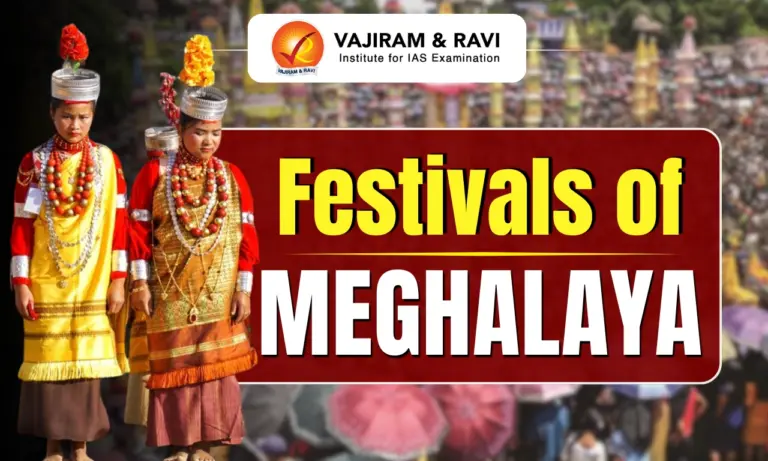
Meghalaya is known for its rich cultural traditions and vibrant festivals, which reflect the simple lifestyle and deep-rooted customs of its people. These festivals are closely connected with nature, agriculture, and community life, and are celebrated with great enthusiasm. They often include music, dance, rituals, and traditional attire, giving a glimpse into the unique identity of the state. The festivals of Meghalaya highlight the spirit of togetherness, tradition, and cultural pride, making them an important part of the region’s heritage.
Major Festivals of Meghalaya
Meghalaya’s festivals beautifully reflect the everyday life, traditions, and beliefs of its people. Rooted in nature, agriculture, and community values, these celebrations are full of energy and enthusiasm. With traditional music, dance, rituals, and vibrant customs, they offer a glimpse into the state’s rich cultural identity. Some of the key festivals of Meghalaya are explained below.
1. Nongkrem Dance Festival
- The Nongkrem Dance is one of the most important festivals of the Khasi tribe, celebrated in Smit village at the residence of the Khasi chief (Syiem).
- The main venue, known as Iing Sad, is a traditional thatched structure built without using metal, symbolizing the unique architectural practices of the Khasis.
- This festival lasts for five days and includes several rituals led by the royal family of the Khyrim kingdom, who play an important role in preserving traditions.
- A key ritual before the dance is the “Pomblang” (goat sacrifice), performed as an offering for prosperity and well-being.
- The dance performances include unmarried girls and male members, all dressed in rich traditional attire, showcasing elegance and cultural pride.
- Overall, the festival reflects faith, cultural identity, and community unity, while also keeping ancient Khasi traditions alive.
2. Umsan Nongkharai Festival
- Umsan Nongkharai is a religious festival of the Khasi community, usually celebrated in April or May.
- It is dedicated to Lei Shyllong, the main deity of the Khasi religion, after whom Shillong city and its peak are named.
- The rituals begin at midnight with prayers and offerings, including animal sacrifice, as a mark of devotion.
- Traditional musical instruments like drums and flutes are played while men perform ritual dances that continue till dawn.
- The festival continues for five days, with each day having specific prayers and themes.
- People pray for a good harvest, protection from natural calamities, and also perform fertility-related rituals.
- The final day attracts large gatherings, making it both a spiritual and social celebration.
3. Chad Sukra Festival
- Chad Sukra is an important sowing festival of the Pnar (Jaintia) tribe, linked closely with agriculture.
- It is celebrated before the beginning of the farming season, as people seek blessings for a successful harvest.
- The festival holds special importance in the Niamtre religion, the traditional belief system of the Pnar community.
- Rituals and prayers are performed to ensure fertility of land and prosperity in the coming year.
- People dress in their best traditional clothes, and various folk dances and cultural performances take place.
- It gives visitors a chance to experience the traditional lifestyle and cultural richness of the Jaintia community.
4. Laho Dance Festival
- The Laho Dance is a lively and colourful cultural celebration of the Jaintia (Pnar) tribe.
- It involves men and women dancing together, where a woman is placed between two men, and they link arms and move in rhythm.
- The dance is unique because it is often accompanied by a narrator who recites humorous and spontaneous verses, adding entertainment.
- It is also known as the Chipiah Dance and is performed during community gatherings and festivals.
- The festival highlights the spirit of joy, unity, and social bonding within the community.
- It reflects the fun-loving and expressive nature of the people of Meghalaya.
5. Shad Suk Mynsiem Festival
- Shad Suk Mynsiem, meaning the “Dance of Peaceful Hearts,” is an important festival of the Khasi tribe.
- It is celebrated to mark the beginning of a new year and the arrival of spring, symbolizing renewal and positivity.
- People greet each other wishing for a happy and prosperous year ahead.
- The festival includes traditional dances, music performances, and community feasts.
- Women wear gold ornaments and elegant traditional dresses, while men wear colourful attire, making the celebration visually vibrant.
- It reflects gratitude, harmony, and cultural pride among the Khasi people.
5. Behdienkhlam Festival
- Behdienkhlam is a major festival of the Pnar (Jaintia) community, celebrated mainly in Jowai.
- The main purpose of the festival is to drive away diseases and evil spirits and to pray for a healthy and good harvest.
- It usually lasts for several days, during which families and communities come together in celebration.
- A key attraction is the carrying of tall decorated bamboo structures (rots) and dancing in muddy water, symbolizing purification.
- A traditional game called “Datlawakor” (wooden ball game) is also played as part of the rituals.
- The festival ends with a sense of joy, unity, and renewed hope for the future.
6. Wangala Festival
- Wangala, also known as the “Hundred Drums Festival,” is the most important festival of the Garo tribe.
- It is a harvest festival celebrated in honour of Sun God Saljong (Misi Saljong), who is believed to bless the crops.
- The festival takes place after the harvest season, especially in November, and is marked by thanksgiving rituals.
- The highlight is the performance of traditional dances accompanied by drum beats, creating a lively atmosphere.
- People wear bright traditional costumes and participate in group dances, showing community spirit and happiness.
- Wangala reflects the deep connection between the Garo people, nature, and agriculture.
7. Strawberry Festival
- The Strawberry Festival is a modern and fun celebration that highlights Meghalaya’s agricultural richness.
- It celebrates the local production of strawberries, which grow well in the state’s favourable climate.
- Visitors can enjoy fresh strawberries, desserts, and even strawberry-based drinks.
- The festival includes fun activities like competitions, games, and cultural performances.
- It promotes local farmers and tourism, making it both entertaining and economically beneficial.
- This festival shows a blend of tradition and modern lifestyle in Meghalaya.
Festivals of Meghalaya Cultural Significance
- Festivals in Meghalaya play a big role in preserving tribal traditions and identity, especially among the Khasi, Garo, and Jaintia communities. Events like Nongkrem and Wangala help keep their ancient customs alive.
- These festivals show a strong connection with nature and agriculture, as many celebrations like Shad Sukra and Behdienkhlam are linked to farming seasons and prayers for a good harvest.
- They help in passing down music, dance, and folk art forms from one generation to another, with traditional performances being an important part of almost every festival.
- Festivals bring people together and strengthen community bonding and unity, as families, relatives, and entire villages participate in rituals and celebrations.
- They reflect deep spiritual beliefs and faith, where rituals, prayers, and offerings are made to deities for protection, prosperity, and well-being.
- These celebrations also promote tourism and cultural awareness, allowing visitors to experience Meghalaya’s rich heritage, traditions, and unique way of life.


 Last updated on Sep, 2026
→ UPSC 2027 Notification will be released on 13 January 2027 at upsconline.nic.in.
→ Asian Games 2026 are being held in Aichi-Nagoya, Japan, from 19 September to 4 October.
→ Check out the latest UPSC Syllabus here.
→ Download UPSC Model Answers for Mains 2026
→ UPSC Mains Question Paper 2026 is out now for Essay & GS Paper 1, 2, 3 & 4.
→ UPSC Calendar 2027 has been released.
→ Enroll in Vajiram & Ravi’s UPSC Mains Test Series 2027 for structured answer writing practice, expert evaluation, and exam-oriented feedback.
→ Join Vajiram & Ravi’s UPSC Mentorship Program 2027 for personalized guidance, strategy planning, and one-to-one support from experienced mentors.
→ Go through the UPSC Mains Previous Year Papers to enhance your preparation.
→ UPSC has released UPSC Toppers List 2025 with the Civil Services final result on its official website.
→ Also check Best UPSC Coaching in India
Festivals of Meghalaya FAQs
Q1. What are the major festivals of Meghalaya?+
Q2. Why are festivals important in Meghalaya?+
Q3. What is the Nongkrem Dance Festival?+
Q4. What is the significance of the Wangala Festival?+
Q5. Which festival of Meghalaya is linked with agriculture?+
Q6. What is Behdienkhlam Festival known for?+
Q7. What is unique about the Laho Dance Festival?+
Tags: art and culture art and culture notes festivals of meghalaya