Volcanic Lightning

Volcanic Lightning

Volcanic Lightning Latest News

Volcanoes are incredible but highly dangerous natural phenomena and they also have the power to create lightning.

About Volcanic Lightning

  • It is a mysterious and powerful phenomenon that occurs during volcanic eruptions rather than thunderstorms.
  • It is in the form of a powerful barrage of lightning which occurs at the early stages of a volcanic eruption.
  • Cause: The main cause is the collision between ash particles within the volcanic plume.
    • The collision and rubbing of these particles together lead to the generation of static electricity, which, in turn, builds up charges and creates flashes of lightning.
  • This type of lightning can be found in two places
    • At the dense ash clouds located closer to the ground.
    • Higher up in the eruption plume where ice particles form (from water vapourised from the magma) and collide, building electric charges and creating lightning visible strikes at higher levels.
  • The water content found in volcanic plumes is higher than that in thunderstorms.

Previous Volcanic Lightning

  • The earliest was made by Pliny the Younger who described it during Mount Vesuvius eruption in Italy in 79 AD. 
  • Italian physicist Luigi Palmieri also recorded this phenomenon between 1858 and 1872.

Source: TH

Volcanic Lightning FAQs

Q1: What is volcanic lightning?

Ans: A phenomenon that occurs during volcanic eruptions.

Q2: Where does volcanic lightning typically occur?

Ans: In the volcanic plume

BIMSTEC-India Marine Research Network Conference

BIMSTEC-India Marine Research Network Conference

BIMSTEC-India Marine Research Network Conference Latest News

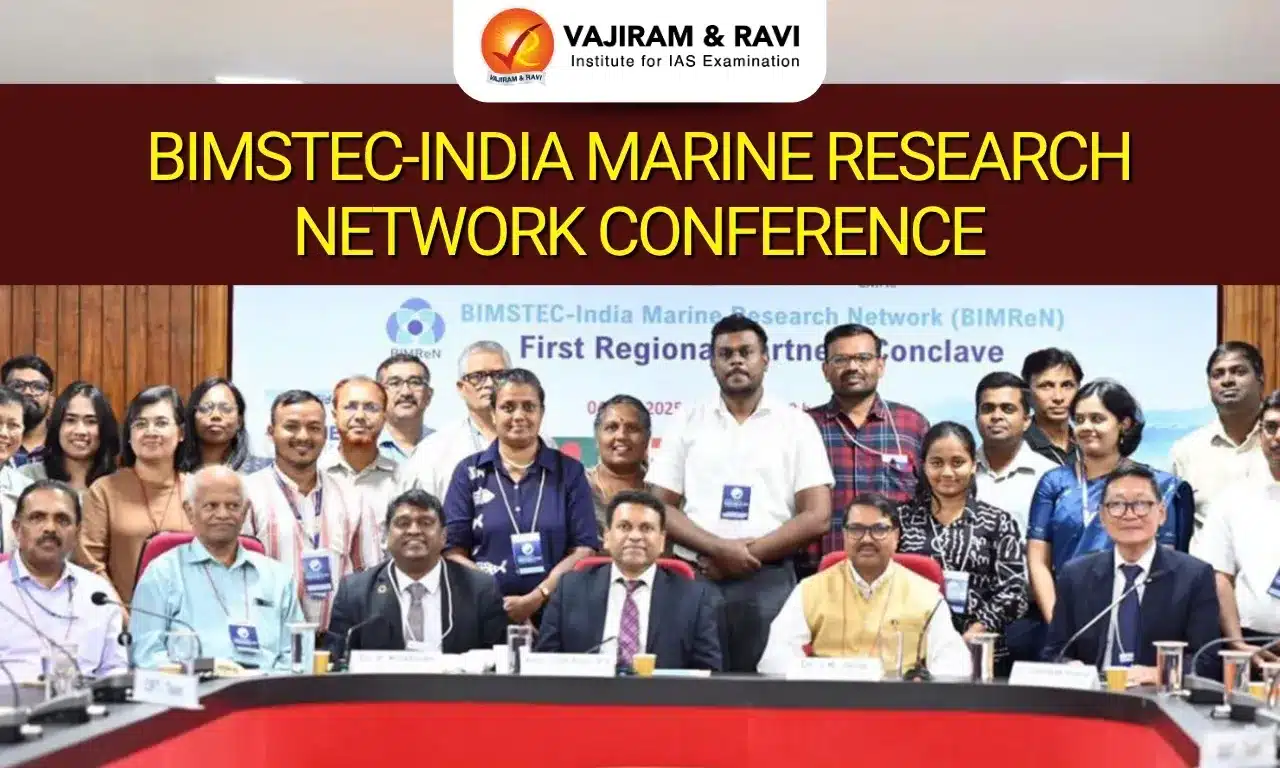
Recently, Kochi hosted the first BIMSTEC-India Marine Research Network (BIMReN) Conference to boost blue economy cooperation. 

About BIMSTEC-India Marine Research Network Conference

  • It is a biennial regional platform for facilitating collaboration among the researchers in the Bay of Bengal Region, for sustainable development of the blue economy by networking the researchers in the BIMSTEC Member Countries.
  • Background: It was first announced by the Prime Minister of India during the Colombo BIMSTEC Summit in 2022.
  • It was launched in 2024 by the Ministry of External Affairs, Government of India.

Key Features of BIMSTEC-India Marine Research Network Conference

  • It has connected 25 institutions and over 50 researchers from BIMSTEC countries.
  • It aligns with India’s broader regional policy objectives under its Neighbourhood First, Act East, Indo-Pacific and MAHASAGAR strategies.
  • It served as a milestone in advancing regional cooperation in marine research and sustainable blue economy initiatives.
  • It focused on marine challenges, ecosystem health, and research innovations, including building scientific networks among young researchers, effective marine resource management and harmonious policy development.

Source: DD News

BIMSTEC-India Marine Research Network Conference FAQs

Q1: Where was the first BIMSTEC-India Marine Research Network (BIMReN) conference held?

Ans: Kochi, Kerala

Q2: What is the primary objective of BIMReN?

Ans: To strengthen scientific cooperation in marine research.

Sharavathi Pumped Storage Hydroelectric Project (PSHP)

Sharavathi Pumped Storage Hydroelectric Project (PSHP)

Sharavathi Pumped Storage Hydroelectric Project Latest News

The Environment Ministry’s Forest Advisory Committee recently expressed concern that the Sharavathi Pumped Storage Hydroelectric Project (PSHP) could cause 'enormous damage to biodiversity in Western Ghats'.

About Sharavathi Pumped Storage Hydroelectric Project

  • It is a PSHP proposed on the Sharavathi River in Shivamogga district Karnataka.
  • It is designed to generate 2,000 MW of electricity.
  • The project involves building a pumped storage power plant between two existing reservoirs, Talakalale Dam and Gerusoppa Dam.
  • It plans to use the Talakalale dam as the upper reservoir and the Gerusoppa dam as the lower reservoir. 
  • Water will be pumped uphill during off-peak hours and released downhill to generate electricity during peak demand.
  • Modelled on the lines of Telangana’s Kaleshwaram project, it also aims to supply drinking water to Bengaluru. 
  • Five tunnels and eight pumping stations are critical parts of the plan.
  • The project falls within the Eco-Sensitive Zone (ESZ) of the Sharavathi Wildlife Sanctuary, which is home to the endangered lion-tailed macaque, hornbills, king cobras, and numerous endemic plant species of the Western Ghats.

Key Facts about Sharavathi River

  • It is a river in the western Karnataka state.
  • It is one of the few rivers in India, which flows in the west direction. 
  • A large part of the river basin lies in the Western Ghats.
  • Course: Rising in the Western Ghats, it flows in a northwesterly direction and empties into the Arabian Sea at Honnavar near the Uttara Kannada district.
  • Total Length: 128 km
  • The river basin covers 2,985 sq.km.
  • On its way, the Sharavathi forms the Jog Falls, one of the highest waterfalls in India, where the river falls from a height of 253 m. 
  • Diverse geological features mark the river’s course, including rocky outcrops, fertile plains, and deep gorges.
  • Major Tributaries: Nandihole, Haridravathi, Mavinahole, Hilkunji, Yennehole, Hurlihole, and Nagodihole.

Source: IT

Sharavathi Pumped Storage Hydroelectric Project FAQs

Q1: The proposed Sharavathi Pumped Storage Hydroelectric Project (PSHP) is located in which Indian state?

Ans: Karnataka

Q2: What is the designed power generation capacity of the Sharavathi Pumped Storage Hydroelectric Project?

Ans: 2,000 MW

Q3: The Sharavathi PSHP involves building a pumped storage system between which two existing reservoirs?

Ans: Talakalale Dam and Gerusoppa Dam

Q4: How does a pumped storage hydroelectric system generally operate?

Ans: It pumps water uphill during off-peak hours and releases it downhill to generate electricity during peak demand.

Key Facts about Denmark

Key Facts about Denmark

Denmark Latest News

Recently, Denmark’s government announced a political agreement to ban access to social media for anyone aged under 15. 

About Denmark

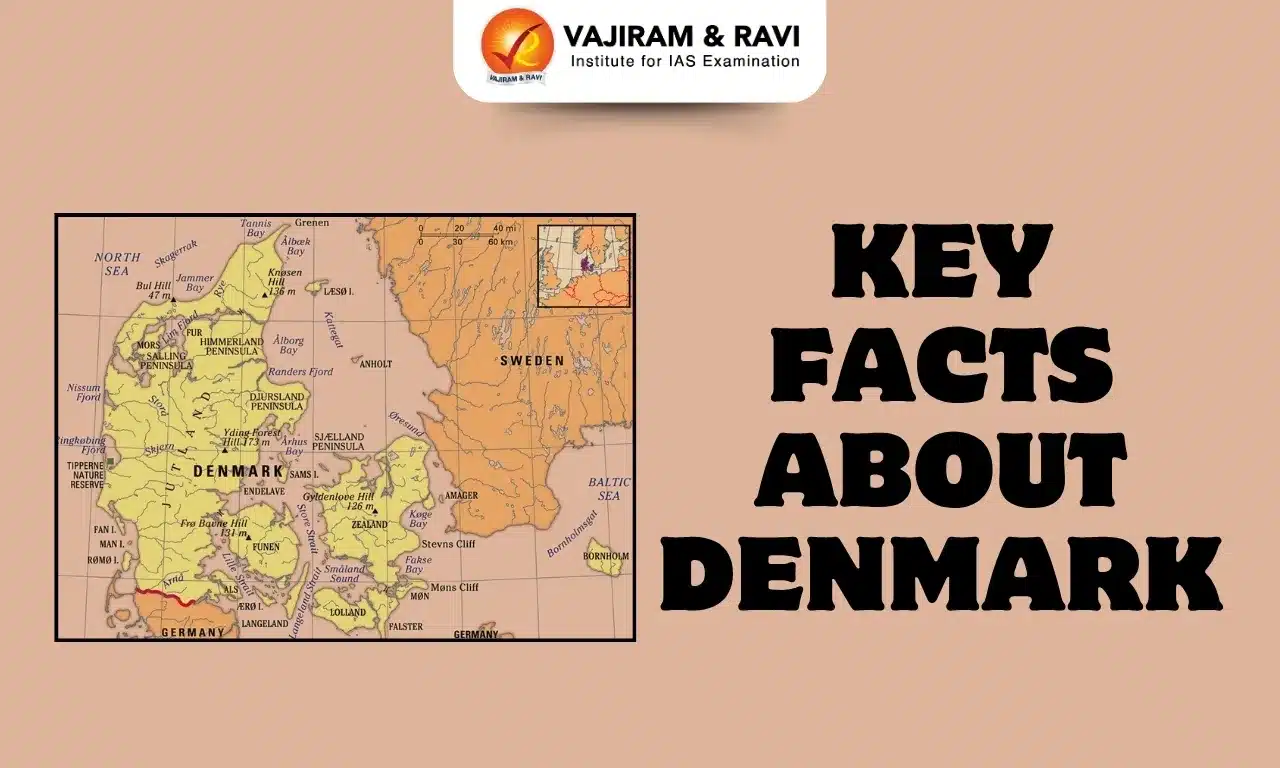
  • Location: It is located in north central Europe and it is part of the Scandinavian countries.
  • It also encompasses the Faroe Islands and the island of Greenland, both located in the North Atlantic Ocean.
  • Bordering Country:  It shares a land border with Germany in the south.
  • Water bodies: It is surrounded by bodies of water including the Baltic Sea, North Sea, Kattegat Bay and Kiel Bay.
  • Capital City: Copenhagen

Geographical Features of Denmark

  • Topography: The most part Denmark consists of flat lands with very little elevation, except for the hilly central area on the Jutland Peninsula. 
  • Denmark occupies the Jutland Peninsula and an archipelago of more than 443 islands
  • The coastline of Denmark is indented by many fjords, with LimFjord (in the north) the largest.
  • Climate: It is moderated by the warm Gulf Stream and is therefore milder than surrounding Scandinavian countries.
  • Rivers: The most significant include the Guden (longest river), Odense and Skjern.
  • Natural resources: Petroleum, natural gas, fish, salt, limestone, chalk stone.

Source: TH

Denmark FAQs

Q1: What is the capital of Denmark?

Ans: Copenhagen

Q2: What is the official language of Denmark?

Ans: Danish

Scintillometer

Scintillometer

Scintillometer Latest News

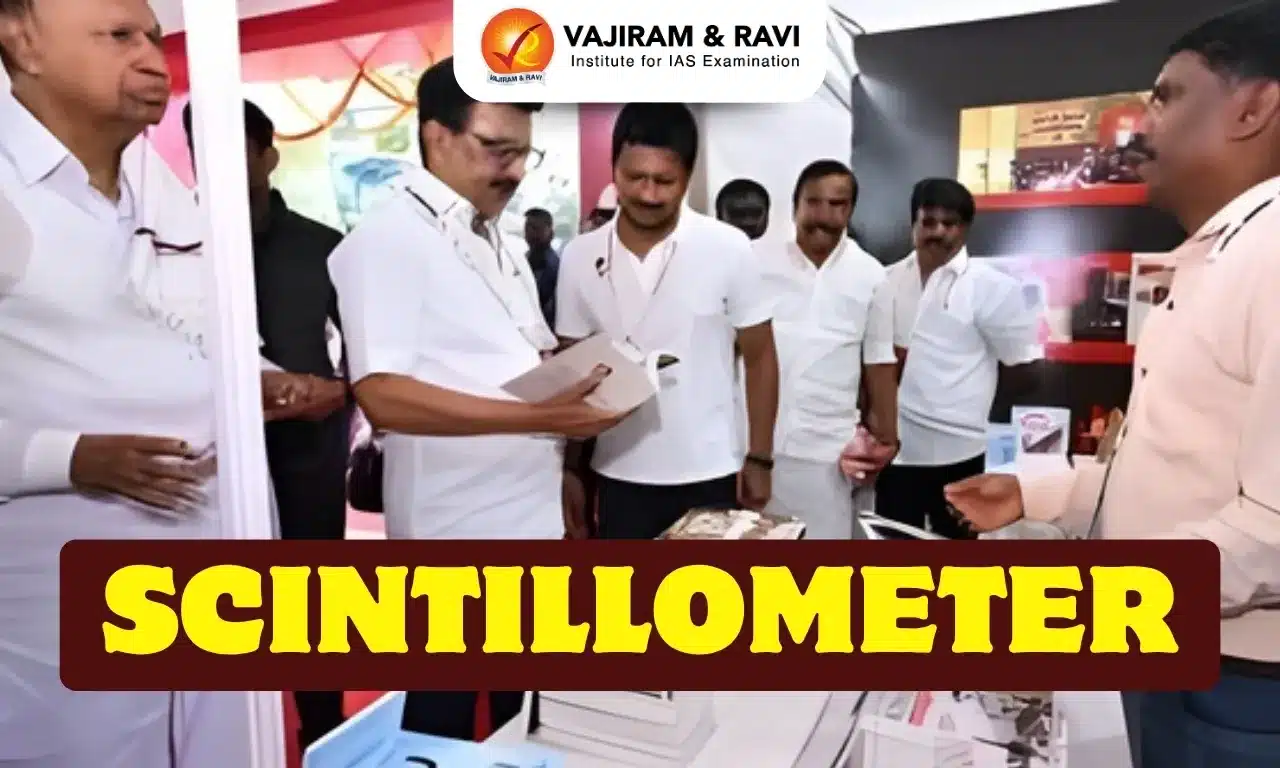
Recently, a scintillometer was installed at the Tamil Nadu Rice Research Institute (TRRI), Aduthurai, Tamil Nadu.

About Scintillometer

  • It is an optical instrument that measures heat and moisture exchange between the land surface and the atmosphere. 

Working of Scintillometer

  • It operates by transmitting a light beam between two fixed points.
  • Minute, rapid fluctuations in the beam caused by turbulent air known as scintillations are analysed to estimate heat transfer from the land to the atmosphere.
  • It was installed recently in an existing suite of sensors at the TRRI Critical Zone Observatory (CZO).

Key Facts about Critical Zone Observatory of Tamil Nadu Rice Research Institute

  • It was established under Tamil Nadu Agricultural University (TNAU) with support from the National Centre for Earth Science Studies (NCESS), and became fully operational in 2022.
  • It is one of three such observatories in India and the only one in Tamil Nadu.
  • The site records weather parameters, soil moisture and direct air–surface fluxes; the scintillometer now provides direct estimates of sensible heat flux.
  • Main Instruments at about Critical Zone Observatory Site: Automatic Weather Station, COSMOS soil-moisture sensor, pan evaporimeter and eddy-covariance tower.
  • Functions:
    • The site records weather parameters, soil moisture and direct air–surface fluxes; the scintillometer now provides direct estimates of sensible heat flux.
    • These observations improve estimates of evapotranspiration, soil moisture and local microclimate, directly supporting irrigation planning and local forecasts.
    • The observatory will generate long-term datasets on meteorological, canopy and hydrological parameters for the Cauvery delta.
  • Advantages: These are crucial for managing water and crops in this climate-sensitive agricultural region.
  • It would strengthen climate-resilient decision-making in the Cauvery delta.

Source: TH

Scintillometer FAQs

Q1: What is a scintillometer used to measure?

Ans: Turbulence

Q2: What is the principle behind scintillometer measurements?

Ans: Fluctuations in the refractive index of air.

Crassicaulis middletonii

Crassicaulis middletonii

Crassicaulis middletonii Latest News

In a remarkable botanical breakthrough, scientists from the Botanical Survey of India (BSI) recently discovered a new flowering plant species — Crassicaulis middletonii.

About Crassicaulis middletonii

  • It is a new species of flowering plant.
  • It was discovered in the evergreen forests of Arunachal Pradesh’s West Siang district.
  • It marks the first-ever record of the genus Crassicaulis in India, extending its known range by more than 1,200 kilometres westward from China’s Yunnan province.
  • It belongs to the Gesneriaceae family (commonly known for ornamental species like African violets).
  • It grows up to 30 cm tall and thrives along stream banks near small waterfalls at about 800 metres elevation.
  • Its leaf base, white flowers tinged with pink, capsule shape, greenish ovary, and calyx distinguish it from its only known relative, Crassicaulis guiliangii, found in Yunnan.
  • It has been assessed as “Critically Endangered” under the IUCN Red List criteria.

Source: NEN


Crassicaulis middletonii FAQs

Q1: What is Crassicaulis middletonii?

Ans: It is a new species of flowering plant.

Q2: The new species Crassicaulis middletonii was discovered in which Indian state?

Ans: Arunachal Pradesh

Q3: The genus Crassicaulis was earlier known only from which country before its discovery in India?

Ans: China

Fujian Aircraft Carrier

Fujian Aircraft Carrier

Fujian Aircraft Carrier Latest News

After extensive trials, the People’s Liberation Army Navy (PLAN)  recently inducted a Fujian aircraft carrier.

About Fujian Aircraft Carrier

  • It is China’s third aircraft carrier and its most advanced one yet.
  • China already has two other carriers: the Liaoning and Shandong.
  • Fujian is China’s first domestically designed and built aircraft carrier.  
  • With this addition, China now boasts the second largest number of such ships in the world, though it still lags far behind the 11 operated by the US Navy.

Fujian Aircraft Carrier Features

  • Fujian is China's first aircraft carrier with a catapult launch system, which means it can launch heavy and fully loaded warplanes, including an early-warning and control plane. 
    • That allows the carrier to operate against distant targets while far out at sea, since it doesn't have to rely on land-based reconnaissance aircraft to detect threats. 
    • Its planes can also carry more arms and fuel, boosting their range and firepower.
    • It's also the second carrier in the world with an electromagnetic catapult launch system, after America's newest carrier, the USS Gerald R. Ford.
  • However, China’s carriers are still not nuclear-powered, which limits how far and how long they can sail.
  • Estimates put the Fujian's operational range at 8,000 to 10,000 nautical miles.
  • It has a flat flight deck.
  • The Fujian has a full-load displacement of more than 80,000 tons.
  • China has not disclosed how many planes Fujian can carry, but experts estimate it is 40 to 60, compared with 60 to 70 on US ships.
  • The Fujian has two aircraft elevators (versus three on the USS Ford), a smaller flight deck, and three catapults rather than four, meaning US carriers can launch planes more quickly.

Source: IE

Fujian Aircraft Carrier FAQs

Q1: Which country has developed the aircraft carrier Fujian?

Ans: China

Q2: How many aircraft carriers does China currently possess, including Fujian?

Ans: Three

Q3: What is a special feature of Fujian aircraft carrier?

Ans: Fujian is China's first aircraft carrier with a catapult launch system, which means it can launch heavy and fully loaded warplanes.

Q4: Is the Fujian aircraft carrier nuclear-powered?

Ans: No, Fujian aircraft carrier is not nuclear-powered.

Q5: What is the estimated operational range of the Fujian?

Ans: 8,000–10,000 nautical miles.

Mount Vesuvius

Mount Vesuvius

Mount Vesuvius Latest News

A mechanical artwork created in 1775 to portray the eruption of Italy's Mount Vesuvius has been recently brought to life for the first time.

About Mount Vesuvius

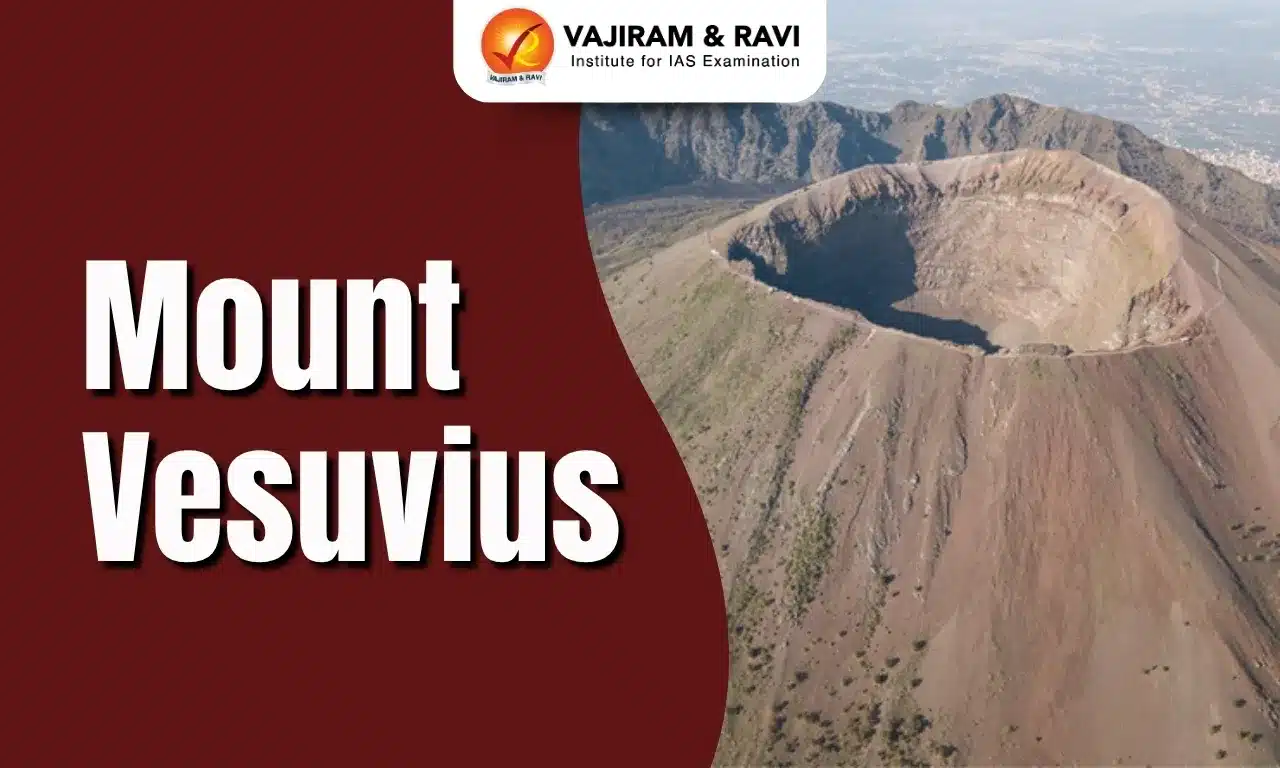
  • It is an active volcano located on the west coast of Italy near Naples, in the Gulf of Naples.
  • It stands about 4,200 feet (1,280 meters) high, but its height changes after each major eruption. 
  • It is a composite stratovolcano, made up of pyroclastic flows, lava flows, and debris from lahars that accumulated to form the volcanic cone.
    • A high ridge known as Mount Somma partly surrounds the main cone of Vesuvius. 
    • The area between the ridge and the cone is known as Valle del Gigante (Giant’s Valley). 
    • At the top of the cone is a large crater. It is about 1,000 feet (300 meters) deep and 2,000 feet (600 meters) across.
  • As part of the Campanian volcanic arc, it formed over the subduction zone created by the collision of the Eurasian and African tectonic plates. 
    • This subduction zone stretches the length of the Italian peninsula and is the source of other volcanoes, such as Mt. Etna and Stromboli.
  • Mount Vesuvius is the only active volcano in mainland Europe.
  • Its eruptions typically involve explosive eruptions as well as pyroclastic flows.
  • It is one of the most dangerous volcanoes on the planet. 
  • It is most famous for the 79 AD eruption, which destroyed the Roman cities of Pompeii and Herculaneum. 
    • The cities were engulfed in pyroclastic flows—superheated, high-density clouds of volcanic gas, ash, and rock that flow downslope at hundreds of kilometers per hour.
  • The last major eruption occurred in 1944.

Source: SCTD

Mount Vesuvius FAQs

Q1: Where is Mount Vesuvius located?

Ans: On the west coast of Italy near Naples.

Q2: What type of volcano is Mount Vesuvius?

Ans: Composite stratovolcano.

Q3: Mount Vesuvius is part of which volcanic arc?

Ans: Campanian volcanic arc.

Q4: The most famous eruption of Mount Vesuvius in 79 AD destroyed which Roman cities?

Ans: Pompeii and Herculaneum

Q5: When did the last major eruption of Mount Vesuvius occur?

Ans: 1944

Piprahwa Gems

Piprahwa Gems

Piprahwa Relics Latest News

A portion of the holy Piprahwa Relics of Lord Buddha, brought from India, were on Saturday enshrined at Thimpu's prominent monastery, Tashichhodzong, considered the seat of Bhutan’s highest spiritual and political institutions.

About Piprahwa Relics

  • The Piprahwa Relics are a collection of sacred artifacts discovered in 1898 at the Piprahwa Stupa in Uttar Pradesh, India. 
  • It is the site believed to be associated with ancient Kapilavastu, the homeland of Gautama Buddha.
  • These relics are of immense archaeological and religious importance, as they are believed to be associated with Lord Buddha himself.
  • These relics, unearthed by British colonial engineer William Claxton Peppé in 1898, include bone fragments believed to be those of Lord Buddha, along with crystal caskets, gold ornaments, gemstones, and a sandstone coffer.
  • An inscription in Brahmi script on one of the caskets links the relics directly to the Sakya clan, to which Buddha belonged, indicating that these remains were enshrined by his followers around the third century BC. 
  • The British crown claimed Peppé’s find under the 1878 Indian Treasure Trove Act, with the bones and ash presented to the Buddhist monarch King Chulalongkorn of Siam. 
  • Most of the 1,800 gems went to what is now the Indian Museum in Kolkata, while Peppé was permitted to retain approximately a fifth of them.
  • Piprahwa Relics are classified as ‘AA’ antiquities under Indian law, prohibiting their removal or sale.
  • Further excavations by the Archaeological Survey of India between 1971 and 1977 uncovered additional steatite caskets containing 22 sacred bone relics, which are now preserved at the National Museum in New Delhi.
  • A part of the Piprahwa Relics was passed down for generations in the Peppé family. 
    • These were put up for auction in Hong Kong in May 2025.
    • However, it was successfully repatriated back to India through a public-private collaboration between the Government and the Godrej Industries Group.

Source: DH

Piprahwa Relics FAQs

Q1: Where were the Piprahwa Relics discovered?

Ans: Piprahwa Stupa, Uttar Pradesh

Q2: The Piprahwa site is believed to be associated with which ancient city?

Ans: Kapilavastu

Q3: Who discovered the Piprahwa Relics in 1898?

Ans: William Claxton Peppé

Q4: The Piprahwa Relics are associated with whom?

Ans: Lord Buddha

Q5: What did the 1898 Piprahwa discovery include?

Ans: Bone fragments believed to be those of Lord Buddha, along with crystal caskets, gold ornaments, gemstones, and a sandstone coffer.

Long Range Glide Bomb

Long Range Glide Bomb

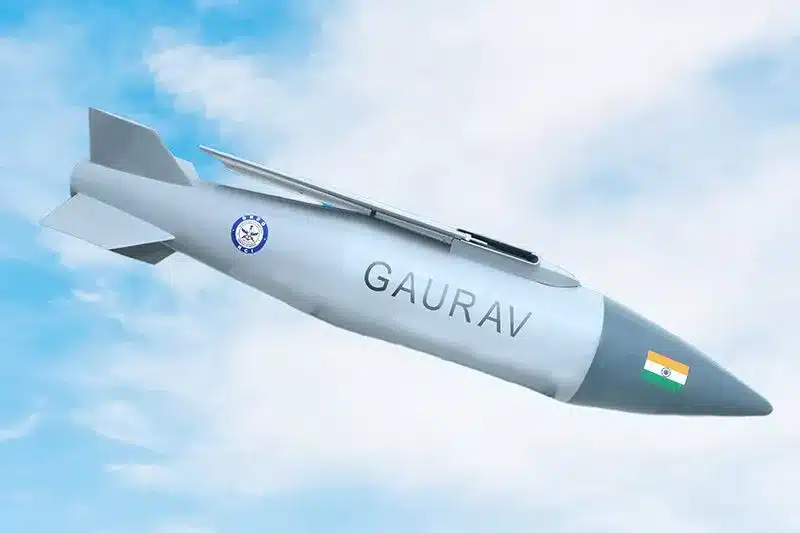
About Long Range Glide Bomb:

  • It is an air launched 1,000 kg class glide bomb capable of hitting targets at long distance.
  • Features
    • It is an Air to Surface LRGB with conventional warheads to destroy enemy air strips, bunkers, hard installations, buildings etc.
    • It is designed to integrate with fighter aircrafts.
    • It consists of an Inertial Navigation based guidance system with Digital Control.
  • GAURAV has been designed and developed indigenously by the Research Centre Imarat (RCI), Hyderabad.
  • After being launched, the glide bomb steers towards the target using a highly accurate hybrid navigation scheme with a combination of INS and GPS data.
  • During the flight test, the glide bomb hit the target erected at Long Wheeler’s island with pinpoint accuracy.
  • Complete flight data during the test launch was captured by Telemetry and Electro optical tracking systems deployed by Integrated Test Range along the coastline.

Q1: What is the inertial navigation system (INS)?

It is a self-contained navigation technique in which measurements provided by accelerometers and gyroscopes are used to track the position and orientation of an object relative to a known starting point, orientation and velocity.

Source: DRDO carries out successful maiden flight test of Long Range Glide Bomb ‘GAURAV’ from Su-30 MK-I platform off Odisha coast

Gharcholas Saree

Gharcholas Saree

About Gharcholas Saree:

  • It is also known as Ghatchola and Gharcholu which has finest bandhani work of Gujarat
  • It has traditionally been used for years in Gujarati weddings.
  • The name ‘Gharchola’ means ‘Outfit for Home’, which symbolizes a newly wedded bride joining her new home.
  • Features
    • It is woven on Cotton or Silk fabric in large checks of using Silk and Zari threads.
    • This is further colored in Bandhani or tie & dye technique. These checkered patterns are filled with small golden motifs of peacocks, lotus, human figures, and floral designs. 
    • These are traditionally crafted in auspicious colours such as red, maroon, green, and yellow, which hold special significance in Hindu customs.
    • A Gharchola Saree with 12 squares is known as ‘Bar Bagh’, while the one with 52 squares is known as ‘Bavan Bagh’.
    • The designs often incorporate symbols of fertility and prosperity, such as the kalash and the paan.
    • In recent times weavers are infusing modern designs and techniques into their gharcholas, blending tradition with contemporary appeal.
  • Gharchola saris are sourced from generational clusters of artisans in Gujarat, who have been preserving and passing down this intricate craft for centuries.
  • This is the 27th GI tag that Gujarat has received.

Q1: What is Geographical Indications (GI tag)?

These are signs used on products that have a specific geographical origin and possess distinctive qualities, reputation, or characteristics attributable to that place of origin. GI tags serve as intellectual property rights that identify a product's unique geographical source, providing legal protection and preventing unauthorised use.

News:Gujarat’s ‘Gharcholas’ receive GI tag

Glide Phase Interceptor (GPI) Project

Glide Phase Interceptor (GPI) Project

About Glide Phase Interceptor (GPI) Project:

  • It is a missile-intercepting system under joint development by the US and Japan.
  • By the end of 2032, Washington and Tokyo aim to achieve full operational capability for the system.
  • What is the Glide Phase?
    • With a traditional Intercontinental Ballistic Missile (ICBM), the warhead separates from its booster and continues on a parabolic, gravity driven trajectory to its target.
    • A hypersonic weapon, by contrast, separates from its booster after the peak of its trajectory and accelerates toward the Earth using gravity. It then performs a pitch manoeuvre to begin a flatter trajectorycalled the glide phase.
    • Unlike typical ballistic missiles, the hypersonic and glide vehicles travel at five times (or more) the speed of sound on an unpredictable trajectory.
  • What is the Project all about?
    • Hypersonic weapons or missiles pose a unique challenge due to their blinding speeds and relatively low altitudes (20 to 80 km) during the glide phase.
    • They can navigate around areas containing known missile defence sensors.
    • These characteristics make it particularly challenging for ground-based radar systems to track them efficiently.
    • The GPI Project aims to provide regional hypersonic missile defence.
    • It will achieve this by launching specially modified missiles from surface warships.
    • These missiles will engage and destroy incominghypersonic missilesas they glide through the boundary between space and Earth’s atmosphere.
    • The “glide” phase of the missile’s trajectory provides the best opportunityto intercept it before it enters its last high-speed drop.

Q1: What is an intercontinental ballistic missile (ICBM)?

An ICBM is a guided missile that is designed to deliver nuclear warheads, although it could also deliver other payloads. According to the Federation of American Scientists, ICBMs have a minimum range of 5,500 kilometers (3,400 miles), with maximum ranges varying from 7,000 to 16,000 kilometers. ICBMs are much faster and have a greater range than other types of ballistic missiles. Agni-V is an Indian ICBM with a range of over 5,000 km.

Source: Explained: What is the Glide Phase Interceptor (GPI) programme?

National Council of Educational Research and Training (NCERT)

National Council of Educational Research and Training (NCERT)

About National Council of Educational Research and Training (NCERT)

  • It is an autonomous organisation set up in 1961 by the Government of India to assist and advise the Central and State Governments on policies and programmes for qualitative improvement in school education.
  • The major objectives of NCERT and its constituent units are to:
    • Undertake, aid, promote and coordinate research in areas related to school education;
    • Prepare and publish model textbooks, supplementary material, newsletters, journals and other related literature;
    • Organise pre-service and in-service training of teachers;
    • Develop and disseminate innovative educational techniques and practices;
    • Collaborate and network with state educational departments, universities, NGOs and other educational institutions;
    • Act as a clearing house for ideas and information in matters related to school education;
    • Act as a nodal agency for achieving the goals of universalization of elementary education.
  • NCERT is an implementation agency for bilateral cultural exchange programmes with other countries in the field of school education. 
  • The NCERT also interacts and works in collaboration with international organisationsvisiting foreign delegations and offering various training facilities to educational personnel from developing countries.
  • As per the National Education Policy 2020, NCERT is the nodal agency to develop National Curriculum Frameworks (NCFs) for (a) Early Childhood Care and Education (ECCE), (b) School Education, and (c) Adult Education.
  • The council headquarters is located at Sri Aurobindo Marg, New Delhi. 
  • Organizational Structure:
    • The Union Minister of Education is the President (ex-officio) of the General Body of NCERT.
    • The members of the General Body include Education Ministers of all States and Union Territories.
    • The Secretary, NCERT is the Convenor of the General Body of the NCERT.
    • The Executive Committee is the main governing body of NCERT. The Union Minister of Education is its President (ex-officio) and the Union Minister of State in the Ministry of Education is the ex-officio Vice-President.
    • The Executive Committee is assisted in its work by the various Standing Committees/Boards.
    • The functions of the Council are looked after by the Director, Joint Director and Secretary.


Q1) What is the National Education Policy 2020?

The National Education Policy, approved by the Union Cabinet in July 2020, outlines the vision of India’s new education system. NEP 2020 focuses on five pillars: Affordability, Accessibility, Quality, Equity, and Accountability – to ensure continual learning. The new policy replaces the previous National Policy on Education, 1986 and forms a comprehensive framework to transform both elementary and higher education in India by 2040.

Source: NCERT granted deemed university status: Dharmendra Pradhan

Mount Dhaulagiri

Mount Dhaulagiri

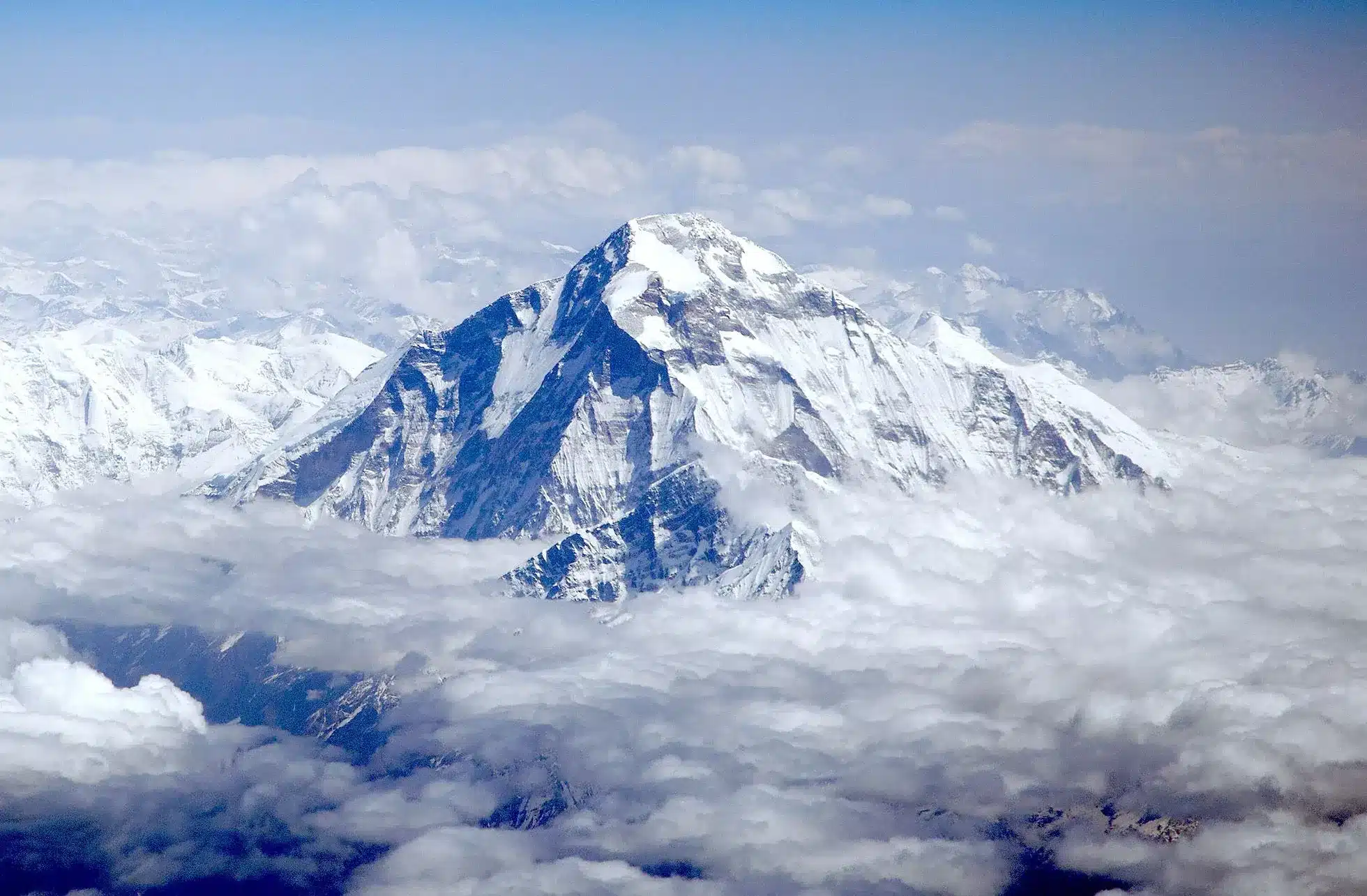
About Mount Dhaulagiri:

  • It is the seventh-highest mountain in the world.
  • It has an elevation of 8,167 meters (26,795 feet) above sea level.
  • It is located in the Dhaulagiri Himal Mountain range of west-central Nepal and is part of the Himalayan Mountain range.
  • It is also one of the "eight-thousanders" — the fourteen mountains on Earth that are more than 8,000 metres (26,247 ft) above sea level.
  • Dhaulagiri means "white mountain" in Sanskrit, and it is known for its snowy peaks and glaciers.
  • It is the highest mountain located entirely within Nepal. 
  • It extends about 120km from the Kaligandaki River to the Bheri River in the west. 
  • It is also the highest point of the Gandaki River Basin.
  • It is one of the most challenging mountains to climb due to its difficult terrain and unpredictable weather conditions.
    • The first successful expedition to Mt. Dhaulagiri was led by the Swiss climber, Max Eiselin, in 1960.

Q1: Which are the main tributaries of Gandaki river?

Major Tributaries are Daraudi, Seti, Madi, Marsyandi, and Budhi Gandaki.

Source: Fall claims lives of five Russian climbers on Nepal's Mount Dhaulagiri

Enquire Now