Vajiram and Ravi provide Current Affairs of 27 October 2025 for UPSC aspirants. We cover all relevant news and important events crucial for the exam, helping you stay updated and well prepared.
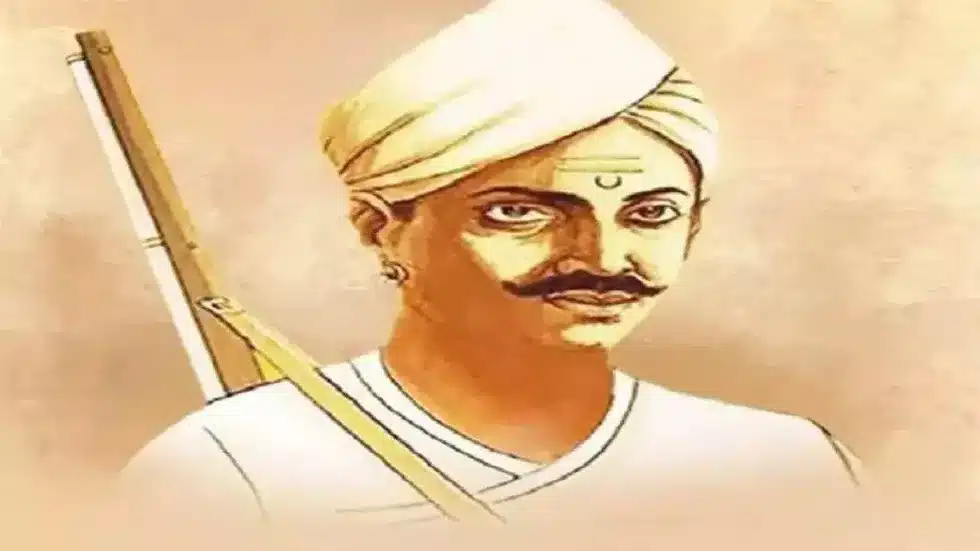
Mangal Pandey played a crucial role in India's first rebellion against British rule in 1857.
He is considered the hero of the first war of Independence, also known as the Sepoy Mutiny of 1857.
Early life
He was born on July 19, 1827near Faizabad in Uttar Pradesh.
In 1849, Pandey joined the army of the British East India Company and served as a sepoy in the 6th Company of the 34th Bengal Native Infantry in Barrackpore.
Rebellion against East India Company
He revolted against the East India Company for introducing cartridges that were greased with animal fat as it hurt the religious sentiments of the soldiers..
This movement of rebels reached other parts of India and led to a mass revolt against the colonial rulers. Common people too came out and opposed anti-India laws.
On March 29, 1857, Pandey mutinied and fired at his Senior Sergeant Major. He was overpowered and hanged on April 8, 1857, by the order of a Court Martial at Lal Bagan in Barrackpore. His regiment was disbanded, like the 19th infantry at Behrampore, for showing resentment.
Q1: What is Doctrine of Lapse (1848)?
This was the policy initiated by Governor General Lord Dalhousie (1848-56) to acquire the Princely states. The doctrine declared that if an Indian ruler died without a natural heir, his kingdom would 'lapse', that is, become part of Company territory.
What are the Key proposals of the draft digital competition Bill 2024?
Criticism of the digital competition Bill 2024
Why in News?
In February 2023, the Ministry of Corporate Affairs (MCA) formed the Committee on Digital Competition Law (CDCL) to explore the necessity of a separate law addressing competition in digital markets.
After a year of discussions, the CDCL concluded that the existing Competition Act, 2002, which operates on an ex-post framework (addressing issues after they occur), needed to be supplemented with an ex-ante framework (preventive measures to address issues before they occur). Ex-ante competition regulation is unusual. The European Union is the only jurisdiction where a comprehensive ex-ante competition framework, under the Digital Markets Act, is currently in force.
This led to the creation of the draft Digital Competition Bill, which outlines the ex-ante framework designed to enhance the current regulatory system for digital markets.
Growing need for an ex-ante framework
Due to the complex world of digital markets, regulating for market abuse after it takes place (as in an ex-post framework) is not optimal.
This is due to following reasons:
Digital enterprises enjoy economies of scale and economies of scope.
I.e., reduction in cost of production per unit as the number of units increase and reduction in total costs of production with increase in number of services respectively.
This propels them to grow rather quickly as compared to players in the traditional market.
This growth is aided by network effects — utility of the digital services increases with the increase in the number of users.
A forward-looking, preventive, and presumptive law (an ex-ante framework), which foresees the potential harms that can arise out of antitrust issues and prescribes pre-determined no-go areas is considered as the way forward.
What is Digital Competition Bill, 2024?
About
The bill seeks to further regulate large digital enterprises, including news aggregators, as part of efforts to ensure a level-playing field and fair competition in the digital space.
It was proposed in March 2024.
The new law could prevent big tech companies like Google, Facebook, and Amazon from favoring their own services or using data collected from one of their businesses to help another one of their businesses.
It has provisions to set presumptive norms to curb anti-competitive practices before they actually take place.
It promises to impose heavy penalties — which could amount to billions of dollars — for violations.
Similarity with EU’s Digital Markets Act (DMA)
The new law is similar to the EU’s Digital Markets Act (DMA), which went into complete effect earlier this year.
DMA requires large tech firms like Alphabet, Amazon and Apple to open their services, and not favour their own at the expense of rivals.
Nodal ministry
The Ministry of Corporate Affairs (MCA) is handling the draft.
What are the Key proposals of the draft digital competition Bill 2024?
List of Core Digital Services (CDS)
The list of core digital services has been mentioned under Schedule I of the bill.
It consists of
online search engines,
online social networking services,
video-sharing platform services,
interpersonal communications services,
operating systems, web browsers, cloud services, advertising services, and
online intermediation services (includes web-hosting, service providers, payment sites, auction sites, app stores, e-commerce marketplaces and aggregators, etc.)
Significant entities
The Bill proposes to designate certain enterprises as Systemically Significant Digital Enterprises (SSDEs).
SSDEs are those enterprises that provide core digital services in India and have a significant presence and significant financial strength in the country.
Parameters to determine whether the enterprise may be designated as SSDE
If an enterprise is engaged in a CDS, the Bill proposes two tests – the financial strength test and spread test (user base test) to determine whether the enterprise may be designated as SSDE.
The quantitative parameters for a company to be designated a SSDE are:
If in the last 3 financial years, its turnover in India is not less than Rs 4,000 crore; or its global turnover is not less than $30 billion; or
Its gross merchandise value in India is not less than Rs 16,000 crore; or
Its global market capitalisation is not less than $75 billion; or
The core digital service provided by these companies should also have at least 1 crore end users, or 10,000 business users.
Entities that do not fall under these parameters can still be designated as SSDEs if the CCI believes that they have a significant presence in any given core digital service.
Obligations imposed on SSDE
Entities which are designated as SSDEs, have been prohibited from engaging in practices such as self-preferencing, anti-steering, and restricting third party applications.
If they violate these requirements, they can be fined up to 10% of their global turnover.
Associate Digital Enterprises
The Bill proposes to designate associate digital enterprises (ADEs) to understand the role that data collected by one company of a major technology group can play in benefiting other group companies.
If an entity of a group is determined to be an associate entity, they would have the same obligations as SSDEs.
However, this will depend on the level of their involvement with the core digital service offered by the main company.
For example, Google Maps could be seen as an associate entity because Google Search directs users to it.
The same goes for YouTube, depending on how much data is shared between Google Search and YouTube, affecting the video recommendations YouTube makes to users.
Criticism of the digital competition Bill 2024
Significant compliance burden
An ex-ante framework with its strict prescriptive norms could lead to significant compliance burden for big tech companies.
It may lead to shift of focus from innovation and research to ensuring that companies do not presumptively engage in an anti-competitive practice.
Stringent requirements of the EU’s DMA and associated impact
Experts have highlighted the fact that because of the stringent requirements of the EU’s DMA, there has been an increase of 4,000 per cent in the time it takes to find things via Google search.
Broad definition of who a significant platform could be
Companies are concerned about the broad definition — both quantitative and qualitative — of who a significant platform could be.
Unlike EU’s DMA which specifically names the ‘gatekeeper’ entities, that decision in India’s draft law has been left to the discretion of the CCI.
Companies believe that could lead to arbitrary decision making, which could potentially also impact start-ups.
May affect smaller businesses
Companies are claiming that the bill would force them to make the changes to their platform and cut down on data sharing.
It could also impact smaller businesses who rely on their platforms to reach a big target audience.
Q.1. What is Systemically Significant Digital Enterprises (SSDEs)?
SSDEs are those enterprises that provide core digital services in India and have a significant presence and significant financial strength in the country.
Q.2. What is EU’s Digital Markets Act (DMA)?
The EU's Digital Markets Act (DMA) is legislation aimed at ensuring fair competition in the digital sector by regulating large online platforms, known as gatekeepers, to prevent anti-competitive practices and promote a more open and competitive digital market.
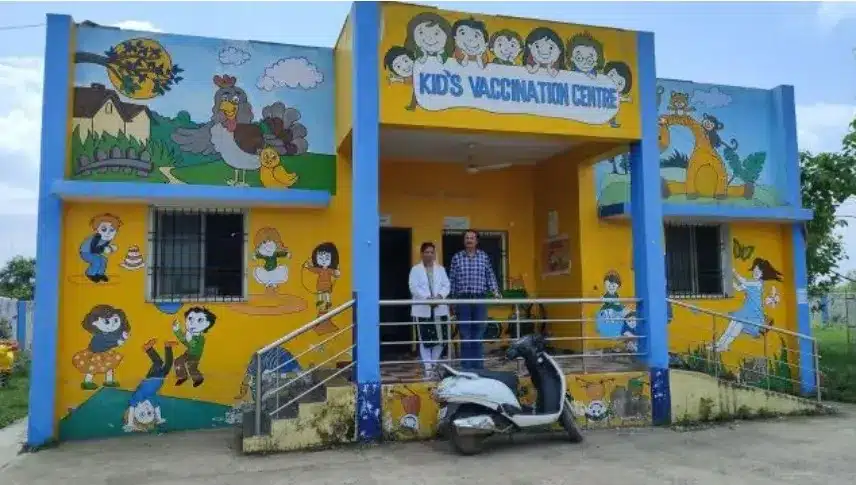
It is aiming to maintain an electronic registry of routine immunizations.
Currently, U-WIN is in pilot mode across all states and Union Territories, except for West Bengal.
It captures every vaccination event for pregnant women and children under the Universal Immunization Programme (UIP).
It will ensure timely administration of vaccine doses by digitally recording every vaccination event under the Universal Immunisation Programme among all pregnant women and children aged 0-5 years.
Features
The platform generates a uniform QR-based, digitally verifiable e-vaccination certificate, similar to Covid vaccination certificate, which can be accessed anytime by the citizens through a single click.
The U-WIN is going to be the single source of information for immunisation services which will record pregnancy details and outcome, newborn registration and immunisation at birth.
It will update vaccination status, and delivery outcome, among others, in real time.
Citizens can self-register for vaccinations via the U-WIN web portal or its Android mobile application, select preferred vaccination centres, and schedule appointments.
Automated SMS alerts inform citizens about registration confirmations, administered doses, and upcoming dose reminders, ensuring timely and age-appropriate vaccinations.
It also supports the frontline workers to digitally record all vaccination events for children and pregnant women for complete, accurate and easy record maintenance.
Q1: What is Immunization?
Immunization is a process by which a person becomes protected against a disease through vaccination. This term is often used interchangeably with vaccination or inoculation.
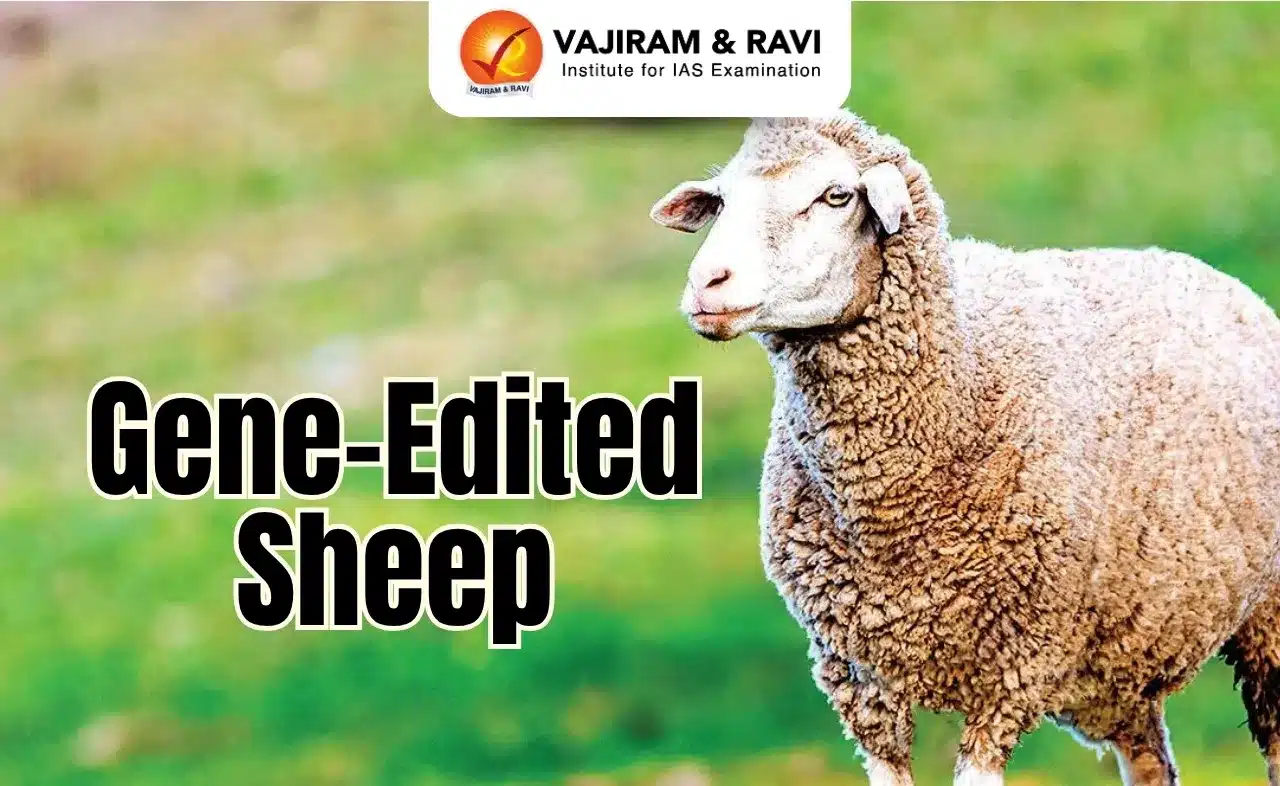
Six months ago, a team led by Professor Riyaz Ahmad Shah at Sher-e-Kashmir University (SKUAST), Srinagar, successfully birthed India’s first gene-edited sheep—a Kashmir Merino.
The breakthrough was kept under wraps until gene sequencing confirmed its success. This milestone marks a major step in India’s genetic research, opening doors to transgenic advancements in livestock aimed at improving meat and milk yield, disease resistance, and climate resilience.
Kashmir Merino
Kashmir Merino is a sheep breed developed in Kashmir Valley, India, known for its fine, high-quality wool and good meat production.
It is a dual-purpose breed, meaning it's used for both wool and meat, and it is well-suited to the harsh conditions of the Kashmir Valley.
Development
The Kashmir Merino breed was evolved around 1960 at Govt. Sheep Breeding and Reserch Farm Reasi (Jammu).
It was developed through a cross-breeding program that involved native Kashmir sheep breeds like Poonchi, Gaddi, and Bakerwal, and exotic breeds like Australian Merino and Delaine rams.
Productivity
The breed is 3 to 4 times more productive than local sheep in terms of both wool and meat production, and is comparable to exotic fine wool breeds.
Adaptability
It is well-adapted to the harsh climatic conditions and diseases of the Kashmir Valley.
India’s First Gene-Edited Sheep: A Landmark Achievement
Six months after its birth, India’s first gene-edited sheep—a Kashmir Merino—is now healthy and thriving, marking a significant breakthrough in livestock biotechnology.
Gene editing is a precise technique that allows scientists to modify or alter specific DNA sequences within an organism’s genome.
It’s used to correct genetic defects, improve traits, or enhance disease resistance using tools like CRISPR-Cas9.
The myostatin gene (MSTN) plays a crucial role in regulating skeletal muscle growth and development in vertebrates.
It encodes a protein called myostatin, which acts as a negative regulator, limiting muscle growth.
Editing this gene resulted in a 30% increase in muscle mass, offering major potential in boosting meat yield in sheep.
Wider Significance for India
Experts highlighted the project's national relevance, especially in meeting rising meat demands.
Gene-editing is essential for creating high-quality, disease-resistant livestock, and the technology is already being widely used globally.
The introduction of this mutation through gene editing, and not through traditional crossbreeding, represents a technological leap akin to the revolution Artificial Intelligence is driving in the 21st century.
This comes after India’s recent launch of its first gene-edited rice. It highlights the country’s rising strength in genomic science.
Challenges and Persistence
The team’s journey began in 2020 and wasn’t smooth. It failed three times before succeeding in gene-editing.
The embryo was developed in a lab, implanted in a surrogate mother, and the sheep was born in December 2024, weighing 3.15 kg.
From Cloning to Gene-Editing
The SKUAST lab has come a long way since cloning the world’s first pashmina goat, Noori, in 2012.
Noori lived for 11 years, marking a milestone in endangered species cloning.
Cloning is the process of creating an exact genetic copy of a living organism.
This means the cloned organism has the same DNA as the original.
Now, the lab has advanced to gene-editing, with plans to target the FGF5 gene next to improve fibre quality.
The FGF5 gene, also known as Fibroblast Growth Factor 5.
It plays a critical role in regulating hair growth, particularly the length of hair, in mammals.
Gene-Edited Sheep FAQs
Q1. What is gene editing in animals?
Ans. It is a technique to alter specific genes, improving traits like muscle growth, disease resistance, and productivity in livestock.
Q2. Which gene was targeted in India’s first gene-edited sheep?
Ans. The myostatin gene, which limits muscle growth, was edited to boost muscle mass by up to 30 percent.
Q3. Which technology was used for editing the gene?
Ans. CRISPR-Cas9 technology was used, enabling precise modification of the myostatin gene in the sheep’s genome.
Q4. Why is this sheep significant?
Ans. It represents India’s entry into advanced livestock genets, aiming for better meat yield and disease resistance through gene editing.
Q5. Which institution led this breakthrough?
Ans. Sher-e-Kashmir University of Agricultural Sciences and Technology (SKUAST), Srinagar, pioneered the project under Prof. Riyaz Ahmad Shah.
The Union government has taken up about 22,560 hectares of land to restore and conserve mangroves under the Mangrove Initiative for Shoreline Habitats & Tangible Incomes (MISHTI) initiative over the past two years.
About MISHTI Scheme
The Mangrove Initiative for Shoreline Habitats & Tangible Incomes (MISHTI) scheme is a government-led initiative aimed at increasing the mangrove cover along the coastline and on salt pan lands.
It was launched after India joined the ‘Mangrove Alliance for Climate’ launched during the 27th Conference of Parties (COP27) to the UNFCCC held in November 2022.
It was launched by the Ministry of Environment, Forest & Climate Change in 2023.
Objective: To restore mangrove forests by undertaking mangrove reforestation/afforestation measures along the coast of India, states Government of India.
Features of MISHTI Scheme
It is primarily focused on the Sundarbans delta, Hooghly Estuary in West Bengal and other bay parts of the country, but also includes other wetlands in the country.
Financial assistance: Under this scheme the government is providing financial assistance to local communities to undertake mangrove plantation activities.
It leverages the strengths and provisions of different government schemes and initiatives such as the Mahatma Gandhi National Rural Employment Guarantee Scheme (MGNREGS), the Compensatory Afforestation Fund Management and Planning Authority (CAMPA) Fund and other relevant sources.
The plantation activities are carried out in a participatory manner, involving local communities and NGOs, to ensure sustainability and community ownership of the initiative.
The Bharat Startup Knowledge Access Registry (BHASKAR) initiative, under the Startup India program aimed at strengthening India’s startup ecosystem.
It is a platform designed to centralize, streamline, and enhance collaboration among key stakeholders within the entrepreneurial ecosystem, including startups, investors, mentors, service providers, and government bodies.
The primary goal of BHASKAR is to build the world’s largest digital registry for stakeholders within the startup ecosystem.
Key Features of BHASKAR
Networking and Collaboration: BHASKAR will bridge the gap between startups, investors, mentors, and other stakeholders, allowing for seamless interaction across sectors.
Providing Centralized Access to Resources: By consolidating resources, the platform will provide startups with immediate access to critical tools and knowledge, enabling faster decision-making and more efficient scaling.
Creating Personalized Identification: Every stakeholder will be assigned a unique BHASKAR ID, ensuring personalized interactions and tailored experiences across the platform.
Enhancing Discoverability: Through powerful search features, users can easily locate relevant resources, collaborators, and opportunities, ensuring faster decision-making and action.
Supporting India’s Global Brand: BHASKAR will serve as a vehicle for promoting India’s global reputation as a hub for innovation, making cross-border collaborations more accessible to startups and investors alike.
Q1: What is the Start Up India Programme?
The Startup India Initiative is a flagship initiative of the Government of India intended to catalyse start-up culture with the objective of supporting entrepreneurs, building a robust startup ecosystem and transforming India into a country of job creators instead of job seekers.
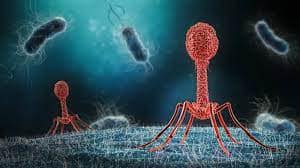
A bacteriophage is a type of virus that infects bacteria.
The word "bacteriophage" literally means "bacteria eater," because bacteriophages destroy their host cells.
They are the most common biological entities in nature.
Also known as phages, these viruses can be found everywhere bacteria exist, including, in the soil, deep within the earth’s crust, inside plants and animals, and even in the oceans.
Thousands of varieties of phages exist, each of which may infect only one type or a few types of bacteria or archaea.
All bacteriophages are composed of a nucleic acid molecule that is surrounded by a protein structure.
The nucleic acid may be either DNA or RNA, and it may be double-stranded or single-stranded.
How does it infect bacteria?
A bacteriophage attaches itself to a susceptible bacterium and infects the host cell.
Following infection, the bacteriophage hijacks the bacterium's cellular machinery to prevent it from producing bacterial components and instead forces the cell to produce viral components.
Eventually, new bacteriophages assemble and burst out of the bacterium in a process called lysis.
Bacteriophages occasionally remove a portion of their host cells' bacterial DNA during the infection process and then transfer this DNA into the genome of new host cells. This process is known as transduction.
Uses:
They are common natural entities that can destroy bacteria that are resistant to drugs such as antibiotics.
Phage therapy holds promising potential in the fight against antimicrobial resistance (AMR).
Q1: What are antibiotics?
Antibiotics are medicines that fight bacterial infections in people and animals. They work by killing the bacteria or by making it hard for the bacteria to grow and multiply.
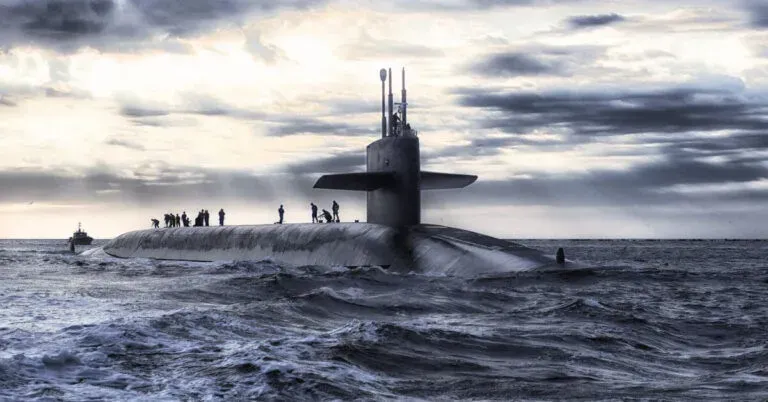
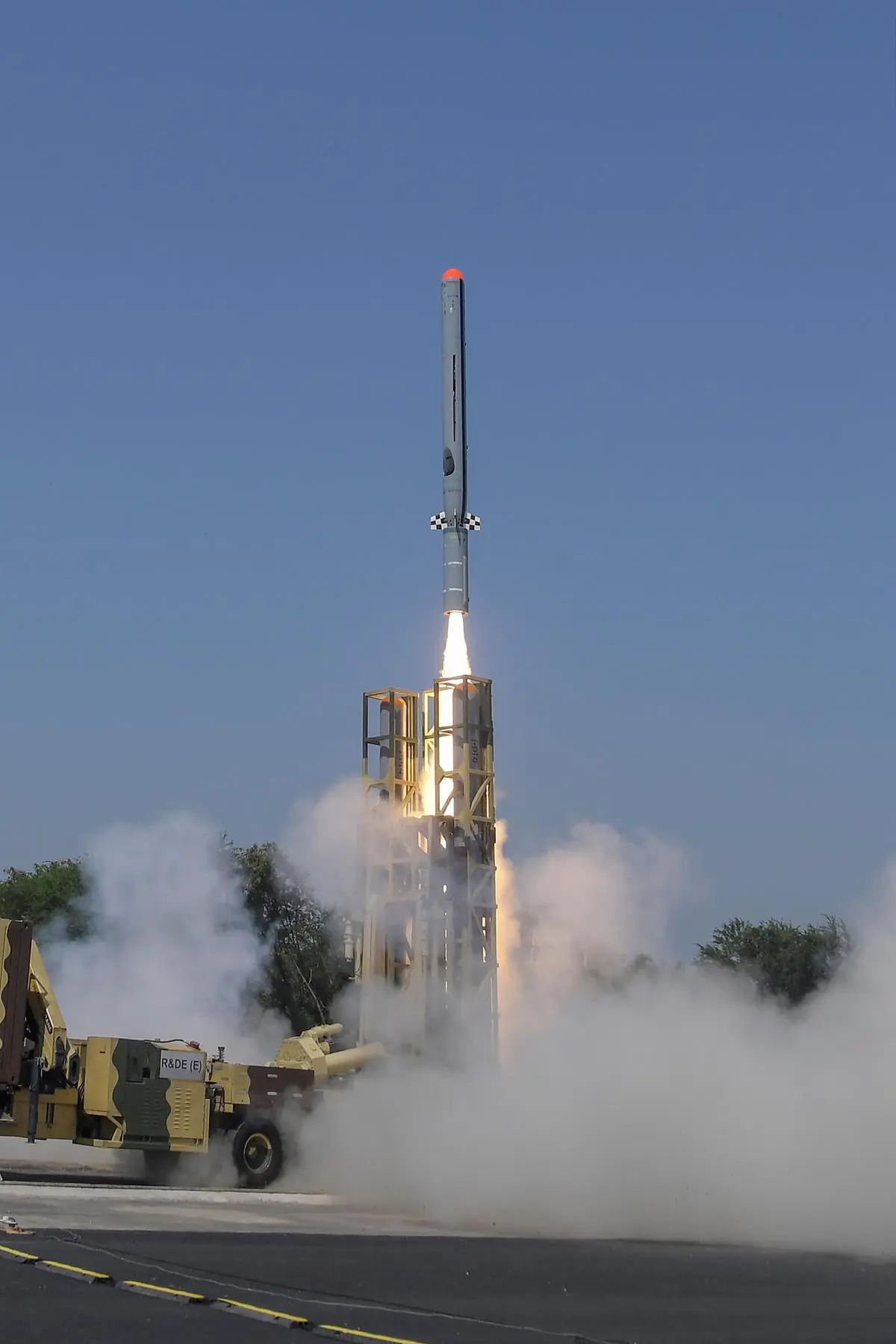
About India’s fourth nuclear-powered ballistic missile submarine (SSBN):
The fourth SSBN is codenamed S4*.
It boasts nearly 75 percent indigenous content and is equipped with K-4 ballistic missiles, which have a range of 3,500 km and are fired through vertical launching systems.
While the first of its class, INS Arihantcarries750 km range K-15 nuclear missiles, its successors, INS Arighaat and INS Aridhaman, are all upgrades of the previous ones and carry only K-4 ballistic missiles.
The launch of S4* follows the commissioning of INS Arighaat in August 2024, and the INS Aridhaman is set for commissioning next year. Both INS Arihant and INS Arighaat are already on deep sea patrols.
Naming: Since national security planners named India’s first leased nuclear attack submarine INS Chakra as S1, INS Arihant was named S2, INS Arighaat S3, INS Aridhaman S4 and hence the newly launched one is the last of its class, S4* with the formal name yet to be given.
SSBN:
SSBNs are a potent and highly specialised military asset. Operated by only the United States, Russia, China, the United Kingdom, France, and India, these are armed with submarine-launched nuclear ballistic missiles.
These submarines are designed to provide a reliable second-strike capability and underpin strategic nuclear deterrence via the principle of mutual assured destruction.
With unlimited range and endurance, the SSBN is constrained only by food supplies, crew fatigue, and maintenance.
Q1: What is the K-4 ballistic missile?
The solid-fuelled K-4 missile is being developed by DRDO to arm the country’s nuclear-powered submarines in the shape of INS Arihant and its under-development sister vessels. It has a range of 3,500 km and it will be able to bring almost all parts of Pakistan and several areas of China within its reach.
About National Industrial Corridor Development Programme:
It is India's most ambitious infrastructure programme aiming to develop new industrial cities as "Smart Cities" and converging next generation technologies across infrastructure sectors.
The NICDP aims to facilitate investments from both large anchor industries and Micro, Small, and Medium Enterprises (MSMEs), serving as catalysts to achieve the government's ambitious goal of $2 trillion in exports by 2030.
Under this programme the newly sanctioned industrial areas are
Khurpia in Uttarakhand, Rajpura-Patiala in Punjab, Dighi in Maharashtra, Palakkad in Kerala, Agra and Prayagraj in Uttar Pradesh, Gaya in Bihar, Zaheerabad in Telangana, Orvakal and Kopparthy in Andhra Pradesh, and Jodhpur-Pali in Rajasthan.
These sites will soon host state-of-the-art industrial smart cities, each designed to foster a vibrant industrial ecosystem. The proposed industrial nodes would focus on creating regional manufacturing hubs across the country.
The development of these industrial cities is envisioned as greenfield smart cities built to global standards, embodying the 'plug-n-play' and 'walk-to-work' concepts.
This innovative approach ensures that the cities will be equipped with advanced infrastructure designed to support sustainable and efficient industrial operations.
The projects are closely aligned with the PM GatiShakti National Master Plan, which focuses on integrated and seamless multi-modal connectivity.
Q1: What is National Industrial Corridor Development and Implementation Trust (NICDIT)?
The NICDIT is the implementing agency of the National Industrial Corridor Programme. The Government of India is developing various Industrial Corridor Projects as part of the National Industrial Corridor Programme.
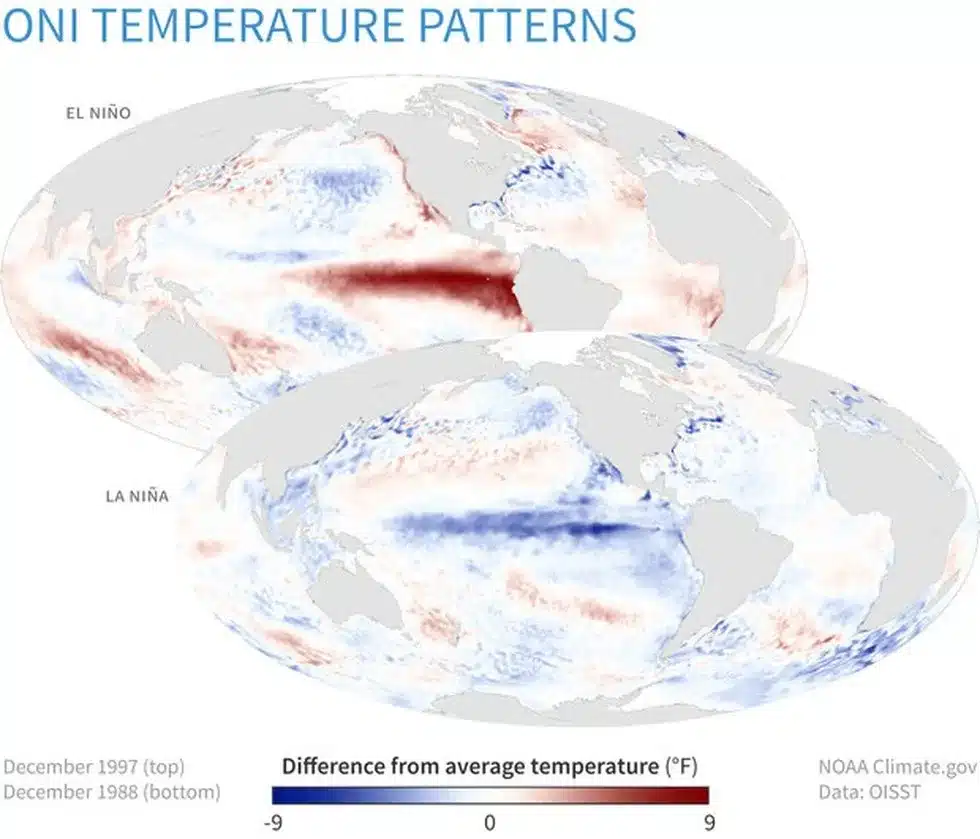
It is the National Oceanic and Atmospheric Administration’s (NOAA) primary indicator for monitoring the ocean part of the seasonal climate pattern called the El Niño-Southern Oscillation, or “ENSO”.
The ONI tracks the running 3-month averagesea surface temperatures in the east-central tropical Pacific between 120°-170°W, near the International Dateline, and whether they are warmer or cooler than average.
Index values of +0.5 or higher indicate El Niño and values of -0.5 or lower indicate La Niña.
What are El Nino and La Nina?
El Nino and La Nina are two opposing climate trends that deviate from the normal conditions and normally run nine to twelve months, but can often extend.
These events occur every two to seven years on average (El Nino is more frequent than La Nina), but not on a regular basis and together are referred to as the El Nino-Southern Oscillation (ENSO) cycle by scientists.
El Nino is typically known as the warm phase (a band of warmer water spreading from west to east in the equatorial Pacific Ocean) and La Nina is identified as the cold phase (a band of cooler water spreads east-west) of ENSO.
Both El Nino and La Nina can have global effects on weather, wildfires, ecosystems and economics.
Q1: What is Southern Annular Mode?
It is the north-south movement of Southern Westerly Winds over timescales of 10s to 100s of years. It is also known as the Antarctic Oscillation.They blow almost continuously in the mid- to high-latitudes of the southern hemisphere.
This model enables detection of mule bank accounts in an efficient manner. A pilot with two large public sector banks has yielded encouraging results.
Advantages
Identification of Mule Accounts: It focuses on identifying and tracking mule accounts, which are often used to facilitate fraudulent transactions. By analyzing transaction patterns, the system can flag suspicious accounts that are being used to transfer illegally obtained funds.
Real-time Monitoring: It enables real-time monitoring of transactions, allowing banks and financial institutions to detect and respond to suspicious activities promptly. This immediate action can prevent further fraudulent transactions.
Data Analytics: It employs advanced data analytics and machine learning algorithms to assess large volumes of transaction data. This helps in recognizing trends and patterns associated with fraudulent activities, making it easier to preemptively shut down potential scams.
Collaboration Among Institutions: It encourages collaboration among banks, payment service providers, and law enforcement agencies. Sharing information about identified mule accounts helps create a more comprehensive defense against digital fraud.
Regulatory Compliance: It aids financial institutions in complying with regulatory requirements related to anti-money laundering (AML) and combating the financing of terrorism (CFT), thus enhancing the overall integrity of the financial system.
What is a mule bank account?
A mule account is a bank account that is used by criminals for illegal activities, including the laundering of illicit funds.
A mule account is typically bought over by the criminals from their original users, individuals who are often from lower income groups, or have low levels of technical literacy.
The related term “money mule” is used to describe the innocent victims who are used by the criminals to launder stolen or illegal money via their bank accounts.
When such incidents are reported, the money mule becomes the target of police investigations, because it is their accounts that are involved, while the actual criminals remain undetectable.
Q1: What is the role of the Reserve Bank of India?
It is the central bank of India. The main purpose of the RBI is to conduct consolidated supervision of the financial sector in India, which is made up of commercial banks, financial institutions, and non-banking finance firms.
Space MAITRI (Mission for Australia-India's Technology, Research and Innovation), represents a major step forward in the strategic partnership between the two nations in the space domain.
It aims to foster closer ties between commercial, institutional, and governmental space organizations from India and Australia.
It focuses on debris management and sustainability, aligning with both nations' core values and objectives in promoting responsible space operations and mitigating the growing threat of space debris.
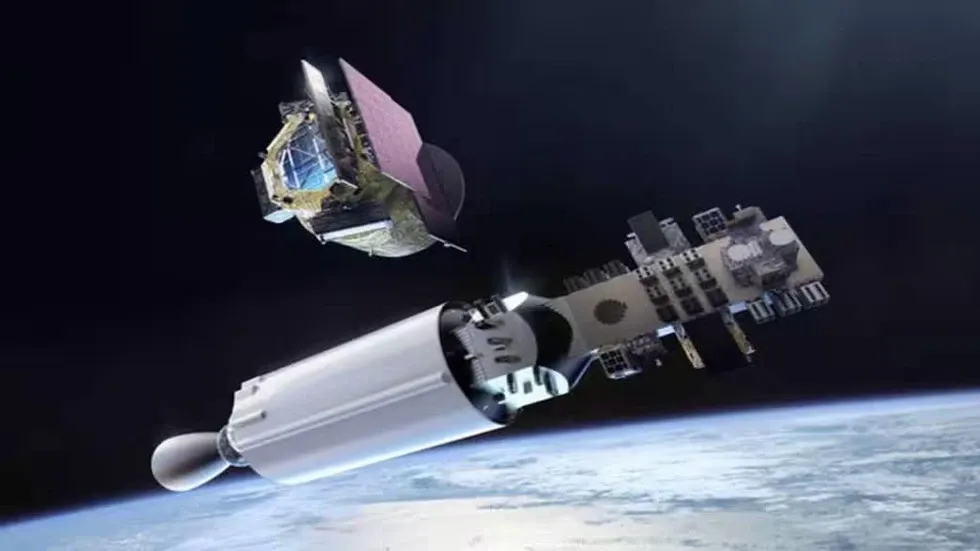
Under this agreement, NewSpace India Limited will launch Australia’s Space Machines Company's second Optimus spacecraft in 2026.
It is a commercial arm under Department of Space (DoS), Government of India.
It was incorporated in March 2019 and was set up to take high technology space-related activities in India.
Under the new space policy reforms announced by the Government of India in June 2020, NSIL is to undertake operational satellite missions on a “demand-driven” model.
They are responsible to build, launch, own and operate the satellite and provide services to customers.
It is headquartered in Bengaluru.
Q1: What are Small Satellite Launch Vehicles (SSLVs)?
SSLV is a 3-stage Launch Vehicle configured with three Solid Propulsion Stages and liquid propulsion-based Velocity Trimming Module (VTM) as a terminal stage.
It is a new and innovative tactic employed by cybercriminals to defraud gullible victims and extort money.
Modus operandi:
The modus operandi in this cybercrime method is that fraudsters pose as law enforcement officials such as police, Enforcement Directorate, CBI, among others, and manipulate them into believing that they have committed some serious crime.
In certain cases, the victims are “digitally arrested”, and forced to stay visible over Skype or other video conferencing platforms to the criminals until their demands are met.
The cyber fraudsters deceive the victim into believing that he or she has been put under ‘digital arrest’ and will be prosecuted if they do not pay the scamsters a huge amount of money.
The cyber criminals often force the naive victims to self-arrest or self-quarantine themselves, by tricking them into believing that they have been put under ‘digital arrest’ and cannot leave their house unless they pay up.
Preventing measures
Cyber Hygiene: It is done by regularly updating passwords, and software and also enabling two-factor authentications to reduce the chances of unauthorized access.
Phishing Attempts: These can be evaded by refraining from clicking on dubious links or downloading attachments from unknown sources and also authenticating the legitimacy of emails and messages before sharing any personal information.
Secured devices: By installing reputable antivirus and anti-malware solutions and keeping operating systems and applications up to date with the latest security protocols.
Virtual Private Networks (VPNs): VPNs can be employed to encrypt internet connections thus enhancing privacy and security. However one must be cautious of free VPN services and OTP only for trustworthy providers.
Secure communication channels: Secure communication techniques such as encryption can be done for the protection of sensitive information. Sharing of passwords and other information must be cautiously done especially in public forums.
Awareness: There is a need for preventive measures and increased public awareness.
Q1: What is Phishing?
It refers to an attempt to steal sensitive information, typically in the form of usernames, passwords, credit card numbers, bank account information or other important data in order to utilize or sell the stolen information.
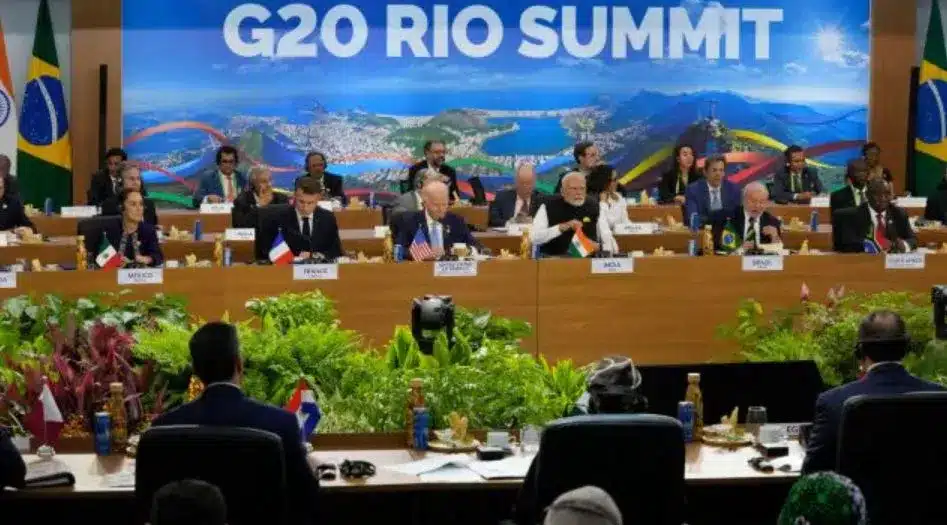
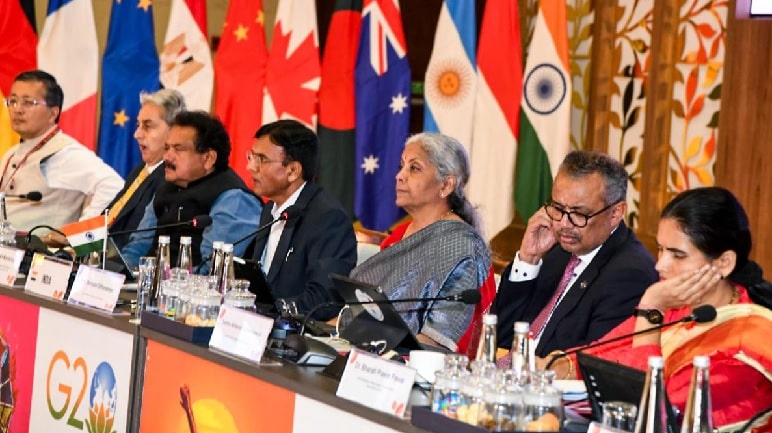
The G20 summit began at Rio de Janeiro’s Modern Art Museum, hosted by Brazilian President Luiz Inácio Lula da Silva. Key leaders, including India’s Prime Minister Narendra Modi, US President Joe Biden, and China’s Xi Jinping, are participating in discussions on trade, climate change, and international security.
PM also addressed the opening session of the G 20 Summit on ‘Social Inclusion and the Fight against Hunger and Poverty’.
G20
Overview
G-20, is a group of finance ministers and central bank governors from 19 individual countries and European Union. It was established in 1999.
It was elevated to a forum of Heads of State/Government in 2008 to effectively respond to the global financial crisis of 2008.
It is a forum, not a legislative body, its agreements and decisions have no legal impact, but they do influence countries' policies and global cooperation.
Members
The G20 consists of 19 countries and the European Union (EU):
Countries: Argentina, Australia, Brazil, Canada, China, France, Germany, India, Indonesia, Italy, Japan, Mexico, Russia, Saudi Arabia, South Africa, South Korea, Turkey, the United Kingdom, and the United States.
Special Invitees: Guest nations and organizations, including the United Nations and the World Bank, participate in G20 summits.
Aims/Objectives
Economic Stability: Foster global economic growth and financial stability.
Sustainable Development: Promote policies addressing climate change and equitable development.
Crisis Management: Coordinate responses to financial and health crises (e.g., COVID-19).
Global Collaboration: Strengthen multilateral cooperation on trade, investment, and innovation.
Inclusivity: Represent voices of both advanced and emerging economies, including the Global South.
Achievements (Examples)
Financial Crisis Mitigation (2008): Coordinated response to the global financial crisis, preventing deeper recession.
Paris Agreement Support (2015): Played a key role in fostering international consensus on climate change goals.
Debt Relief for Developing Nations (2020): Launched the Debt Service Suspension Initiative (DSSI) during the pandemic to aid vulnerable countries.
COVID-19 Pandemic: Facilitated vaccine distribution and economic recovery plans through global cooperation.
In March 2020, G20 leaders pledged to inject $5 trillion into the global economy to reduce the economic impact of the coronavirus pandemic.
Digital Transformation (2023): India’s G20 presidency focused on fostering digital public infrastructure to bridge the global digital divide.
Key Highlights of PM Modi’s Speech at the G20 Summit
Focus on Sustainable Development Goals (SDGs)
Praised Brazil’s agenda for emphasizing SDGs and Global South concerns.
Recognized continuity from India’s G20 presidency theme: “One Earth, One Family, One Future.”
India’s Achievements in Poverty Alleviation and Food Security
Pulled 250 million people out of poverty in the last decade.
Distributes free foodgrains to 800 million citizens.
550 million people benefit from the world’s largest health insurance scheme.
Advocates a ‘Back to Basics and March to Future’ approach for tackling food security.
Global Contributions and Collaboration
Strengthened food security in Africa, providing humanitarian aid to Malawi, Zambia, and Zimbabwe.
Welcomed Brazil’s proposal to establish a ‘Global Alliance against Hunger and Poverty.’
Support for the Global South
Emphasized prioritizing Global South concerns, particularly food, fuel, and fertilizer crises caused by global conflicts.
Women-Led Development and Nutrition
Highlighted India’s initiatives for women-led development.
Focused on nutrition as part of food security efforts.
G20 Summit in Rio begins
About the news
The G20 summit commenced at Rio de Janeiro’s Modern Art Museum, hosted by Brazilian President Luiz Inácio Lula da Silva.
Contentious Ukraine War Discussions
Drafting a joint statement has been challenging, particularly over the Ukraine war.
European leaders sought stronger language following a recent Russian airstrike, while Biden announced the US would lift restrictions on Ukraine’s use of US-made weapons for strikes inside Russia.
Brazil’s G20 Agenda
Brazil’s agenda emphasized sustainable development, taxing the super-rich, combating poverty, and reforming global financial institutions.
However, potential resistance is anticipated with US President-elect Donald Trump’s administration, especially concerning taxation reforms.
Climate and Energy Commitments
US President Biden pledged funds to the World Bank’s International Development Association and launched a clean energy partnership with Brazil.
Meanwhile, Xi Jinping promoted the Belt & Road initiative, despite Brazil’s refusal to join.
Trade Tensions and Economic Policies
Trade talks were overshadowed by fears of an escalating US-China trade war, with Trump planning new tariffs.
Efforts to include a tax on the super-rich faced opposition, notably from Argentina.
Q.1. What was the focus of PM Modi’s speech at the G20 Rio Summit?
PM Modi emphasized sustainable development, food security, and prioritizing the Global South’s concerns. He also showcased India’s poverty alleviation and women-led initiatives.
Q.2. What are Brazil’s key G20 agenda points?
Brazil’s agenda highlights sustainable development, taxing the super-rich, combating poverty, and reforming global financial institutions, although these may face resistance.
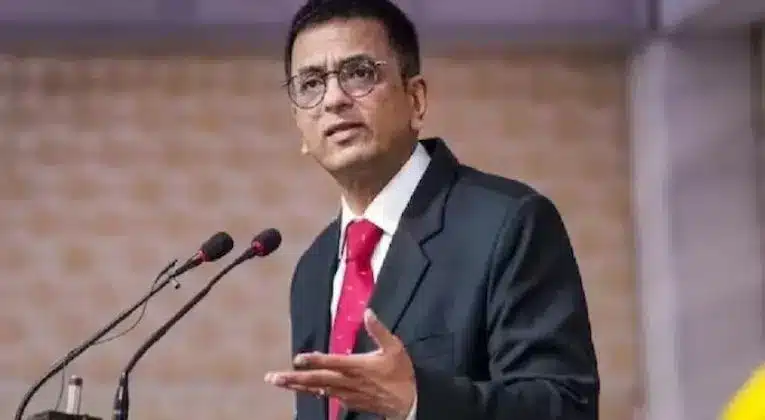
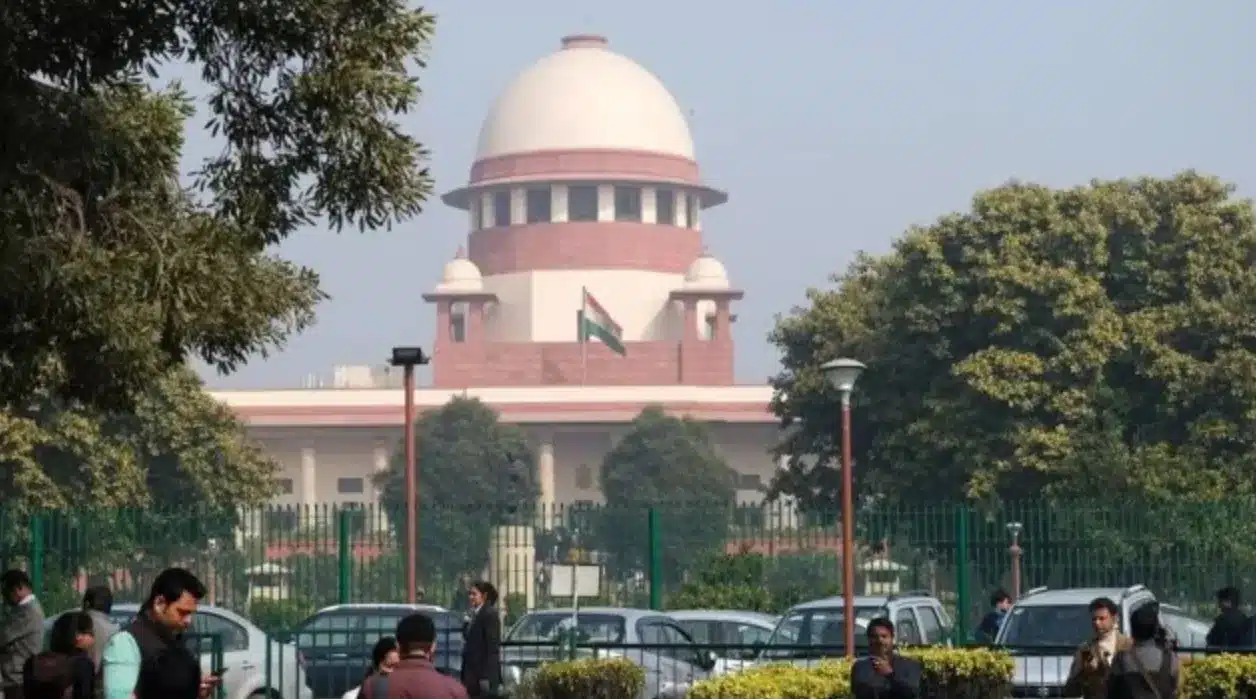
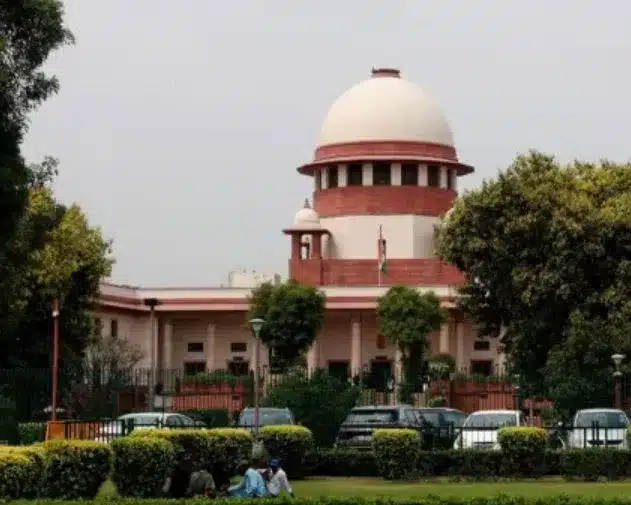
The Supreme Court, led by Chief Justice D.Y. Chandrachud, asked the government to provide a detailed report on the status of judicial appointments that had been reiterated by the Collegium but not yet cleared by the government.
The court emphasized that the Collegium is not a "search committee" and holds a critical role in the constitutional framework, implying that the government should not have absolute discretion in accepting or rejecting recommendations.
The court was hearing a Public Interest Litigation (PIL) seeking a fixed timeline for the government to notify judicial appointments recommended by the Collegium. Additionally, a contempt plea was brought by the Jharkhand government, alleging delays in clearing the transfer of Himachal Pradesh High Court Chief Justice M.S. Ramachandra Rao to the Jharkhand High Court.
Collegium System
Background – Article 124 and 217 of Indian constitution and controversy over word “Consultation”
Article 124(2) of Indian Constitution deals with the appointment of Judges of Supreme Court. As per this article:
Every judge of SC is to be appointed by the President.
President will consult such judges of the SC and of the HCs in the States as the President may deem necessary.
CJI shall always be consulted in case of the appointment of judge other than the Chief Justice of SC.
Article 217 of Indian Constitution covers the appointment and conditions of a High Court Judge.
It says that every Judge of a High Court shall be appointed by the President by warrant under his hand and seal after consultation with the Chief Justice of India, the Governor of the State.
The constitutional provision gave the CJI and other judges the status of consultant and left the decision of appointment to the executives.
This has been interpreted by the SC in a different way ultimately leading to the evolution of Collegium system.
Evolution - The current collegium system has evolved over a period of time through the judicial pronouncements. These cases have been mentioned as below:
First Judges Case (1982)
SC held that consultation does not mean concurrence.
Gave Primacy to Executive.
Second Judges Case (1993)
Court reversed its earlier ruling by changing the meaning of consultation to concurrence.
Advice tendered by CJI is binding.
CJI would take into account the views of two of his senior most colleagues.
Third Judges Case (1998)
Court gave primacy to the opinion of CJI in the matter of appointment of Judges
However, Chief Justice must consult four seniormost judges of SC.
Opinion of all members of the collegium should be in writing.
If the majority of the collegium is against the appointment of a particular person that person shall not be appointed.
Role & responsibilities of Collegium System
Appointment of Judges
Supreme Court Judges: The Collegium for appointing SC judges consists of the Chief Justice of India (CJI) and the four senior-most judges of the Supreme Court.
High Court Judges: For High Court appointments, the Collegium consists of the CJI and two senior-most judges of the Supreme Court.
The names recommended by the Collegium are sent to the government for approval. The government can either accept or return the recommendations for reconsideration.
As per convention, the government is obliged to accept the collegium's recommendation for appointment of judges if the decision has been reiterated.
Transfer of Judges
The Collegium also plays a key role in the transfer of judges between different High Courts.
This ensures the independence of the judiciary and prevents judges from developing local biases.
Role in Maintaining Judicial Independence
The primary goal of the Collegium system is to ensure that judicial appointments remain independent of political or executive influence.
By vesting the power of appointment within the judiciary itself, it seeks to maintain the independence and integrity of the courts.
Collegium system: a tug of war
The judiciary and the executive keep clashing over the collegium system for appointment of judges in higher judiciary.
The Centre terms this system to be opaque and non-transparent and retired and current chief justices and judges of the SC holds it as the best system.
The delays in appointments and transfers, particularly when recommendations are pending approval from the government, have caused friction between the judiciary and the executive.
Q.1. What is the Supreme Court's concern regarding judicial appointments?
The Supreme Court expressed concerns over the government's delays in clearing appointments recommended by the Collegium, stating that it undermines the constitutional framework. It asked for a detailed report on pending appointments within a week.
Q.2. Why is the Collegium system significant for judicial appointments?
The Collegium system ensures judicial independence by allowing judges to be appointed through recommendations from within the judiciary. It prevents political influence in the process, preserving the integrity of judicial appointments in India.
What Concerns are Japanese Authorities Currently Facing?
Why was Alert Issued if Earthquakes can't be Predicted?
What is the Ring of Fire?
Why in News?
A recent earthquake (of magnitude 7.1 on Richter scale) in southern Japan was promptly followed by a major warning from Japan's meteorological agency, stating that there was a heightened risk of a first-ever "mega earthquake".
Earthquakes with a magnitude greater than 8 (on Richter scale) are classified as megaquakes.
What Concerns are Japanese Authorities Currently Facing?
Japan is situated on the Ring of Fire:
Though Japan is no stranger to seismic activity (experiencing approx. 1,500 earthquakes annually), most of these tremors cause minimal damage.
However, there have been devastating exceptions, such as the magnitude 9.0 quake that struck in 2011, triggering a tsunami and nuclear disaster that claimed over 18,000 lives along the north-east coast.
The Nankai Trough:
The Nankai Trough, situated off the southwest Pacific coast of Japan, is a significant geological feature that extends for roughly 900 km (600 miles).
This trough is formed by the subduction of the Philippine Sea Plate beneath the Eurasian Plate.
The convergence of these two tectonic plates along the Nankai Trough results in the accumulation of immense tectonic strains over time.
These built-up strains have the potential to trigger a devastating megaquake approximately once every 100 to 150 years.
For example, a rupture spanning the entire 600km length of the Nankai Trough triggered Japan's 2nd-largest recorded earthquake (followed by the eruption of Mount Fuji) in 1707.
According to experts, there is a 70% to 80% probability of a magnitude 8 or 9 earthquake occurring somewhere along the trough within the next three decades.
Why was Alert Issued if Earthquakes can't be Predicted?
According to experts, the issuance of the warning has almost nothing to do with science.
This is because earthquakes are known to be a "clustered phenomenon", and it is not possible to tell in advance whether a quake is a foreshock or an aftershock.
However, the alert was sent out urging individuals to be ready for potential evacuation. For example,in several towns authorities are encouraging elderly residents and others to voluntarily relocate to safer areas.
What is the Ring of Fire?
The Ring of Fire is a tectonic belt of volcanoes and earthquakes, which is about 40,000 km (25,000 mi) long] and up to about 500 km (310 mi) wide.
It surrounds most of the Pacific Ocean, hence it is also called Circum-Pacific Belt.
It contains between 750 and 915 active or dormant volcanoes, which is around two-thirds of the world total.
About 90% of the world's earthquakes, including most of its largest, occur within the belt.
Q.1. What is the difference between the mercalli and richter scales of seismic activity?
The Mercalli and Richter scales are both used when measuring the impacts of seismic activity. However, while the Richter scale measures the magnitude/ force of the earthquake, the Mercalli scale measures the physical impact/ intensity of the earthquake within a given location.
Q.2. What is the difference between the epicenter and the focus of an earthquake?
The focus is the place inside Earth's crust where an earthquake originates. The point on the Earth's surface directly above the focus is the epicenter.
Operation Flood, launched in 1970, ushered in the White Revolution and transformed the dairy sector in India. In order to give further boost to this sector, the government has announced plans for “White Revolution 2.0”.
White Revolution 2.0
About
White Revolution 2.0 aims to boost milk procurement by dairy cooperatives from 660 lakh kg per day in 2023-24 to 1,007 lakh kg by 2028-29.
The Ministry of Cooperation's strategy focuses on expanding cooperative reach to new areas and increasing their share in the organized dairy sector.
This initiative, building on the legacy of Operation Flood, will enhance market access for dairy farmers, generate employment, and empower women.
Target
White Revolution 2.0 will increase milk procurement of dairy cooperatives by 50%, over the next five years.
It will do so by providing market access to dairy farmers in uncovered areas and increasing the share of dairy cooperatives in the organised sector.
NDDB's Action Plan for White Revolution 2.0
To drive the White Revolution 2.0, the National Dairy Development Board (NDDB) plans to establish 56,000 new multipurpose dairy cooperative societies (DCSs) over the next five years and strengthen 46,000 existing ones.
The strengthening will be done by providing more advanced milk procurement and testing infrastructure.
Key states for new DCSs include Uttar Pradesh, Odisha, Rajasthan, and Andhra Pradesh.
Funding
The National Programme for Dairy Development (NPDD) 2.0 will provide the bulk of the funding for White Revolution 2.0.
The scheme will offer financial aid to set up milk procurement systems, chilling facilities, and capacity-building programs at the village level.
Additionally, Rs 40,000 will be provided to 1,000 Multipurpose Primary Agricultural Credit Cooperative Societies (MPACSs) to support the infrastructure of dairy cooperatives.
Pilot project
In February 2023, NDDB launched a Rs 3.8 crore pilot project to set up dairy cooperatives in uncovered gram panchayats in Haryana, Madhya Pradesh, and Karnataka.
The 79 DCSs established through this pilot now procure 15,000 liters of milk per day from around 2,500 farmers.
Status of Dairy Cooperatives in India
Since its creation, in 2021, the Ministry of Cooperation has focused on expanding the network of cooperatives, in particular dairy cooperatives.
Currently, dairy cooperatives cover around 70% of India's districts, with about 1.7 lakh cooperative societies operating in 2 lakh villages (30% of the total number of villages in the country).
These cooperative societies procure about 10% of the country’s milk production and 16% of the marketable surplus.
However, regional disparities exist, with higher coverage in states like Gujarat, Kerala, and Sikkim, while regions such as West Bengal and the Northeast lag behind with less than 10% coverage.
The government aims to bridge these gaps to expand dairy cooperative networks across India.
Milk scenario in India
World’s top milk producer
India is the world’s top milk producer, with production having reached 230.58 million tonnes during 2022-23.
Total milk production increased from 187.75 million tonnes in 2018-19 to 230.58 million tonnes in 2022-23.
However, the annual growth rate of production came down from 6.47% to 3.83% during this period.
About 63% of the total milk production comes to the market; the remaining is kept by producers for their own consumption.
About two-thirds of the marketable milk is in the unorganised sector.
In the organised sector, cooperatives account for the major share.
Average yield
The average yield is, only 8.55 kg per animal per day for exotic/ crossbred animals, and 3.44 kg/ animal/ day for indigenous/ nondescript animals.
The yield in Punjab is 13.49 kg/ animal/ day (exotic/ crossbreed), but only 6.30 kg/ animal/ day in West Bengal.
Per capita availability of milk
The national per capita availability of milk is 459 grams/ day, which is higher than the global average of 323 g/ day.
This number, however, varies from 329 g in Maharashtra to 1,283 g in Punjab.
The top five milk producing states
The top five milk producing states are UP (15.72%), Rajasthan (14.44%), Madhya Pradesh (8.73%), Gujarat (7.49%), and Andhra Pradesh (6.70%), which together contribute 53.08% of the country’s total milk production.
Contribution of milk group in the agriculture, livestock, forestry, and fishing sector
The milk group contributed almost 40% (Rs 11.16 lakh crore) of the value of output from the agriculture, livestock, forestry, and fishing sector in 2022-23 — much higher than cereals.
Milk group comprises milk consumed or sold in liquid form, ghee, butter, and lassi produced by producer households.
The dairy sector provides livelihoods to more than 8.5 crore people directly or indirectly, of whom the majority are women.
Q.1. What is Operation Flood?
Operation Flood, launched in 1970, was a dairy development program that revolutionized India's dairy industry. Spearheaded by the National Dairy Development Board (NDDB), it transformed India into the world's largest milk producer by creating a nationwide milk grid, increasing milk production, and empowering dairy farmers through cooperatives.
Q.2. How does White Revolution 2.0 impact India's dairy sector?
The initiative targets improving milk procurement infrastructure, establishing 56,000 new cooperative societies, and creating employment. With funding from NPDD 2.0, it aims to increase milk production and address regional disparities in cooperative coverage.
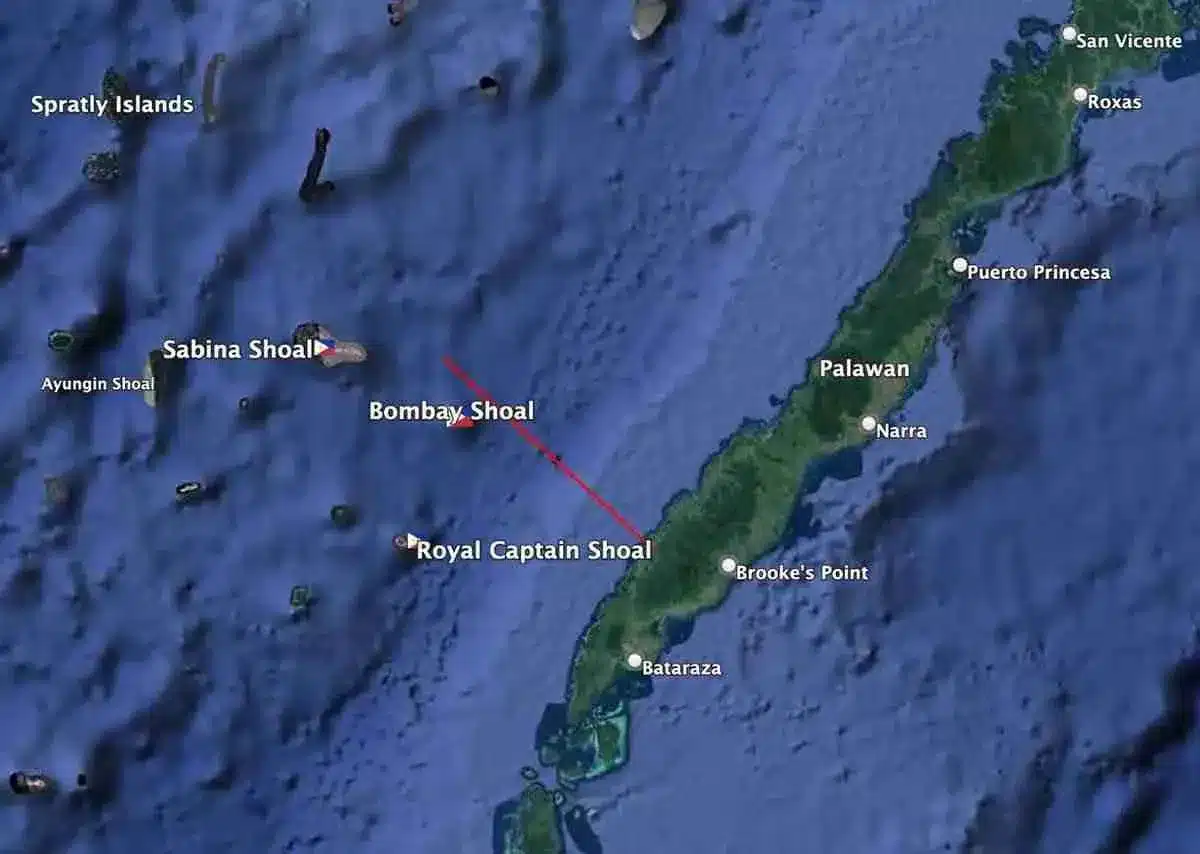
Sabina Shoal, also known as Xianbin Reef, is an oceanic coral atoll that developed on top of a seamount in the eastern part of the Spratlys Islands in the South China Sea.
It is located some 75 nautical miles from the Philippine province of Palawan.
It is considered to be within the Philippines 200-nautical mile exclusive economic zone (EEZ) under the 1982 United Nations Convention on the Law of the Sea.
China, however, claims the shoal and much of the South China Sea as its sovereign territory and has maintained a continuous presence there. It is located 630 nautical miles from China.
Sabina Shoal extends close to 23 km along its northwest-southeast axis.
It is composed of two main parts connected by a narrow section.
The western part measures 13 km long by 6 km wide and is larger than the eastern part, which measures 10 km by 3 km.
They both have a central lagoon surrounded by a coral ring made of discontinuous shallow sections.
Q1: What is a Seamount?
Seamount is an underwater mountain formed through volcanic activity. These are recognised as hotspots for marine life. Like volcanoes on land, seamounts can be active, extinct or dormant volcanoes. These are formed near mid-ocean ridges, where the earth’s tectonic plates are moving apart, allowing molten rock to rise to the seafloor. The planet’s two most-studied mid-ocean ridges are the Mid-Atlantic Ridge and the East Pacific Rise. Some seamounts have also been found near intraplate hotspots – regions of heavy volcanic activity within a plate – and oceanic island chains with a volcanic and seismic activity called island arcs. These are formed when molten rock comes up from below the tectonic plate.
Saudi Arabia’s Strategy: From Supply Cuts to Market Share Defense
OPEC+ Coordination and Global Impacts
Impact on Global Oil Prices
India’s Position
Strategic Takeaways for India
Conclusion
Global Oil Market FAQs
Global Oil Market Latest News
Last week, eight OPEC+ countries unveiled plans to advance their planned phase-out of voluntary oil output cuts by ramping up output by 411,000 barrels per day in May, equivalent to three monthly increments.
Background
Global oil markets are once again under the scanner as Saudi Arabia signals a shift in its production strategy.
With plans to gradually unwind its voluntary output cuts, the kingdom is positioning itself to influence global prices in the backdrop of an increasingly volatile geopolitical and economic environment.
These strategic moves are closely linked with OPEC+’s larger objectives and could have far-reaching consequences on countries heavily reliant on oil imports, particularly India.
Saudi Arabia’s Strategy: From Supply Cuts to Market Share Defense
In recent years, Saudi Arabia had taken the lead in voluntarily cutting oil production to stabilize plummeting prices during the COVID-19 pandemic and its aftermath.
However, with global demand rebounding and supply-side dynamics shifting, Riyadh is now looking to reverse some of those cuts.
According to reports, Saudi Arabia is contemplating the gradual phasing out of its voluntary production cuts starting in Q3 2024.
This move is seen as a calculated step to regain market share that it had ceded to non-OPEC producers like the United States and Russia.
OPEC+ Coordination and Global Impacts
Saudi Arabia’s decisions do not exist in isolation.
As a leading member of the Organization of the Petroleum Exporting Countries and its allies (OPEC+), its production strategies are coordinated efforts aimed at avoiding a price crash.
However, the strategy also carries the risk of being countered by competitive responses from other oil producers.
There is growing speculation that if oil prices rise too sharply, it could trigger a new wave of supply from the US shale sector and other producers, thereby nullifying Saudi Arabia’s attempts to maintain price discipline.
Impact on Global Oil Prices
Oil prices have been relatively stable in the first half of 2025, with Brent crude hovering around $85 per barrel. However, any aggressive shift by Saudi Arabia could result in either of two outcomes:
A price surge, if OPEC+ restricts supplies beyond market expectations.
A price slide, if Saudi Arabia's return to full production leads to oversupply amid weak global demand.
The balance between these scenarios will depend heavily on geopolitical stability, demand trends in China and the US, and how other major producers react.
India’s Position
India, as the world’s third-largest importer of crude oil, remains highly sensitive to such shifts.
While rising prices strain India’s import bill and impact inflation, any price correction improves the macroeconomic outlook.
According to an Indian Express report, India has so far not protested the ongoing oil price spirals, suggesting that it might be capitalizing on diplomatic channels to ensure a steady supply at competitive rates.
Furthermore, India's diversification efforts, such as increasing imports from Russia and investing in energy infrastructure, are partially insulating it from abrupt market shocks.
Strategic Takeaways for India
Energy Diplomacy: India continues to maintain strong ties with major oil-producing nations including Saudi Arabia, ensuring leverage during tight supply scenarios.
Diversification of Imports: India is importing more from non-traditional partners like Russia, Brazil, and West Africa to reduce dependency on OPEC nations.
Strategic Reserves: Expansion of the Strategic Petroleum Reserve (SPR) has been prioritized to cushion against future price volatility.
Transition Push: Rising oil prices have further incentivized the government to accelerate its transition toward electric mobility and renewable energy.
Conclusion
Saudi Arabia’s evolving oil policy signals a critical moment for global energy markets.
While its intention to unwind production cuts may bring short-term relief from high prices, it could also destabilize the market if not coordinated effectively with OPEC+ and other producers.
For countries like India, such developments reaffirm the importance of strategic preparedness, ranging from energy diplomacy to diversification and sustainability investments.
Global Oil Market FAQs
Q1. Why is Saudi Arabia unwinding its oil production cuts?
Ans. To regain market share and respond to rebounding global demand.
Q2. How does Saudi Arabia influence global oil prices?
Ans. As a leading OPEC+ member, it controls a large share of global oil supply, affecting prices directly.
Q3. What is the impact on India due to rising oil prices?
Ans. It increases the import bill and inflation but also encourages diversification and transition to renewables.
Q4. How is India mitigating the impact of global oil price fluctuations?
Ans. Through import diversification, strategic reserves, and diplomatic engagements.
Q5. What could be the risk of Saudi Arabia increasing production too fast?
Ans. It could lead to oversupply, causing a sudden drop in oil prices.
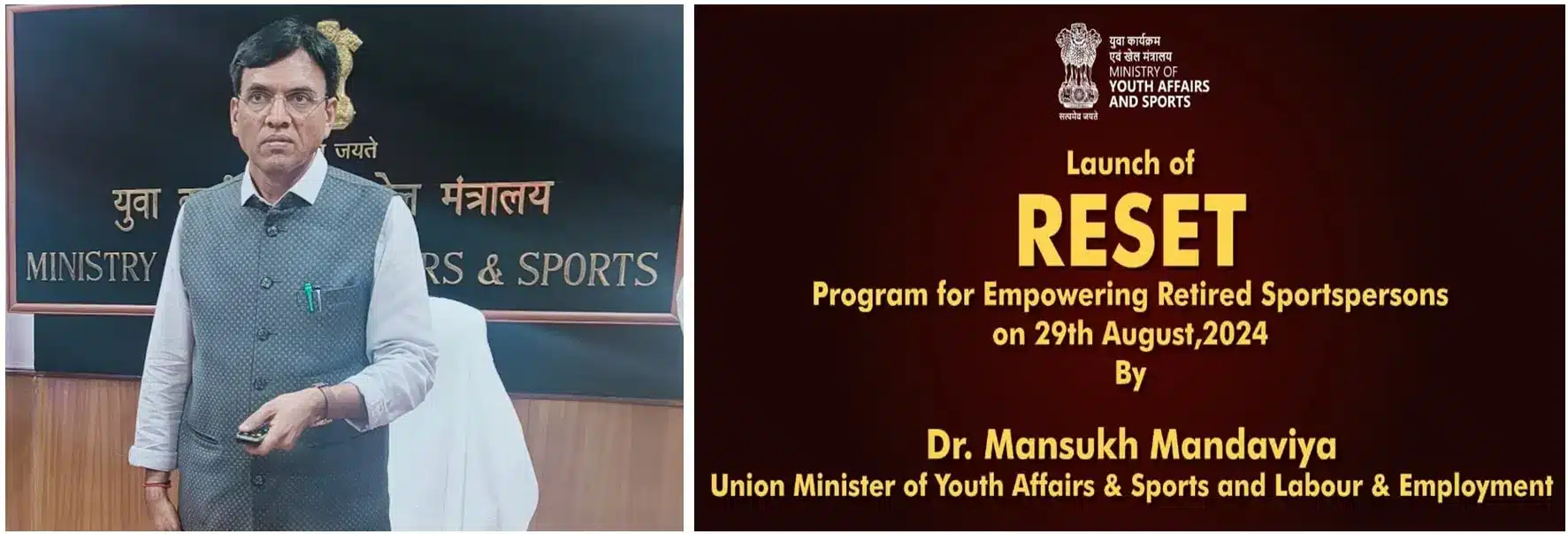
The Retired Sportsperson Empowerment Training Programme is aimed at empowering our retired sportspersons who have played for the country and brought immense laurels to the nation.
It will support retired athletes on their career development journey by empowering them with the necessary knowledge and skills and making them more employable.
It represents a significant step towards recognizing and utilizing the invaluable experience and expertise of our retired athletes.
Eligibility:
o The athletes, who have retired from an active sports career and are aged between 20-50 years and who have been winners of an International Medal/participants in international events or have been National medallists/State medallists/participants in competitions recognized by National Sports Federations/Indian Olympic Association/Ministry of Youth Affairs and Sports are eligible to apply for courses under RESET Programme.
Initially, the programmes will be of two levels based on educational qualifications viz., Class 12th and above and Class 11th and below.
For this pilot phase of the RESET Programme, Lakshmibai National Institute of Physical Education (LNIPE) will be the lead institute to implement the Programme.
The programme will be offered in hybrid mode consisting of self-paced learning through a dedicated portal, along with on-ground training and internship.
Internships will be provided in sports organizations, sporting competitions/training camps, and leagues. Further, placement assistance, guidance for entrepreneurial ventures, etc. will be provided upon successful completion of the course.
Q1: What are the National Sports Awards?
The National Sports Awards are given annually to recognize and reward excellence in sports, highlight extraordinary performance at the national and international competitive events, encourage sportsmanship and promote nation-building by creating a sense of national pride and unity in a country as diverse as India.
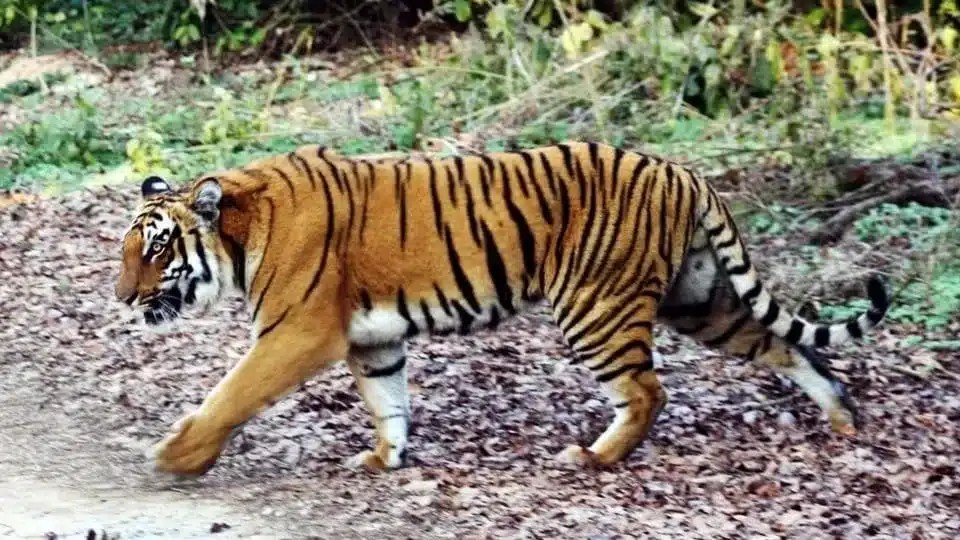
Madhya Pradesh government, under Chief Minister Dr. Mohan Yadav, officially notified the Ratapani Wildlife Sanctuary as a Tiger Reserve, marking a significant but long-delayed move in tiger conservation.
With an estimated population of 90 tigers, Ratapani now becomes the state's eighth tiger reserve.
Tiger Reserves of India:
About:
The tiger reserves in India were set up as a part of Project Tiger initiated in 1973 and are administered by the National Tiger Conservation Authority (NTCA) of Government of India.
As of December 2024, there are 57 protected areas that have been designated as tiger reserves.
There were 3,682 wild tigers in India (as of 2023), which is almost 75% of the world's wild tiger population.
Tiger reserves consist of: A core area which includes part(s) of protected areas such as a national park or a wildlife sanctuary and a buffer zone which is a mix of forested and non-forested land.
Goal: Project tiger is aimed at performing the necessary activities to ensure viability of the tiger population in the core area and to promote a balance between the existence of people and animals in the buffer zones.
Declaration: State governments notify areas as tiger reserves based on the NTCA's recommendations.
Maintenance:
As per the Wild Life (Protection) Act, 1972, the state governments are responsible for preparing a Tiger Conservation Plan.
Such a plan includes planning and management of notified areas and maintaining the requisite competent staff to ensure the protection of the tiger reserve.
About Ratapani:
Location: Spanning Raisen and Sehore districts, Ratapani serves as a critical tiger habitat, with tigers migrating from nearby Satpura ranges.
Biodiversity and challenges:
Habitat encroachment and insufficient prey bases led to tigers straying into populated areas, escalating conflicts.
The sanctuary has witnessed increased tiger-human interactions, emphasising the need for protection and management.
Declaration as tiger reserve:
The notification comes amid a Public Interest Litigation (PIL) filed by wildlife activist, who criticised the government’s delay despite receiving in-principle approval from the NTCA in 2008.
The PIL highlighted issues like increasing human-wildlife conflicts, degradation of tiger habitats, and encroachments due to delayed action.
The State Wildlife Board (SWB) approved projects like a coal-based power plant and railway lines, jeopardising the proposed reserve’s ecosystem.
Challenges ahead:
Strengthening protection measures: Anti-poaching strategies and defined boundaries must be established.
Restoring ecosystems: Enhancing prey bases and curbing encroachments are essential to ensure a sustainable tiger population.
Community engagement: Collaboration with local communities is crucial to promote coexistence and minimise conflicts.
Conclusion:
The Ratapani Tiger Reserve’s official notification marks a victory for conservation efforts but also highlights years of bureaucratic delays and ecological negligence.
Moving forward, effective management and sustained efforts will be critical in preserving Madhya Pradesh’s rich wildlife heritage.
Q.1. What is Project Tiger?
Project Tiger is a wildlife conservation movement initiated in India to protect the endangered tiger. The project was initiated in 1973 by the Ministry of Environment, Forest and Climate Change of the Government of India.
Q.2. What is Tiger Census?
Every 4 years the National Tiger Conservation Authority conducts a tiger census across India to figure out the Royal Bengal Tiger population in India. The year 2022 was the 5th Tiger Census in India, and NTCA has estimated 3,682 Tigers in India.
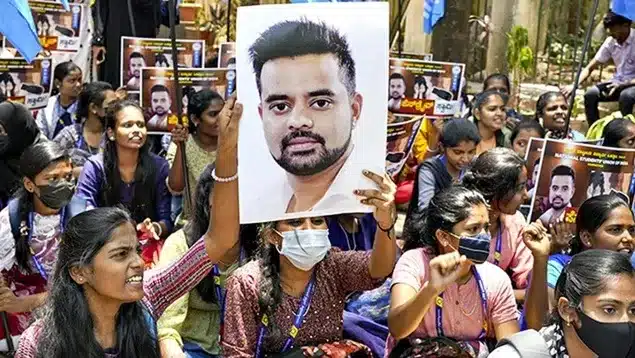
Amid a political storm in Karnataka over grave allegations of sexual abuse against Prajwal Revanna, sitting Hassan MP, Interpol has issued a Blue Corner notice against the absconding politician.
What is Interpol?
About
Full Name - International Criminal Police Organisation.
Interpol is the radio-telegraph code for the organisation.
Interpol is an international police organisation made up of 194 member countries.
It does not work under UN.
It has enjoyed a special role – that of Permanent Observer at the United Nations - since 1996.
It was founded in 1923 and is headquartered at Lyon, France.
Functions
It is not a police force in the traditional sense—its agents are not able to arrest criminals.
It is more of an information-sharing network.
It provides a way for national police forces to co-operate effectively and tackle international crime ranging from human trafficking and terrorism to money laundering and illegal art dealing.
Sharing of information is done by issuing colour-coded notices in four languages - English, Spanish, French, and Arabic.
The organization operates centralised criminal databases that contain fingerprint records, DNA samples and stolen documents.
Functioning
The agency has a National Central Bureau (NCB) in all member countries, which is a single point of contact between law enforcement agencies of that country and Interpol.
NCB serves as the national platform for cooperation between domestic law enforcement units and the international police community.
Types of Interpol Notices
Interpol issues different types of notices which have different objectives. Types of notices issued – Red, Blue, Yellow, Black, Orange, Purple, Green etc.
Red Notice - A notification that a member state would like someone arrested.
A ‘Blue Corner’ notice is issued when the case is related to missing persons.
Also called an enquiry notice, such an alert is sent for additional information from member States about a person, to verify their identity, location, or criminal record concerning a criminal investigation.
The ‘INTERPPOL-United Nations Security Council Special Notice’ is issued for entities and individuals who are the targets of the UN Security Council Sanctions Committees.
States are not obliged to follow these notices, but will often treat them as a warrant for someone’s arrest and extradition.
Differences between Blue Corner notice and Red Corner Notice
The purpose of a ‘blue’ notice is to gather information about a person of interest in an investigation.
On the other hand, the red notice is generally issued against a person wanted for extradition, or serve a sentence based on a court decision, or a similar lawful action.
In the present case, the investigating team moved for a Blue Corner alert against Mr. Revanna, considering that the investigation is in the early stages and the police are yet to file criminal charges.
India and Interpol
India has been a member since 1956.
Like any member nation, India maintains a National Central Bureau (NCB). The NCB is the designated contact point for the Interpol.
In India’s case, The CBI is the designated nodal body for the Interpol in India.
India has collaborated with the Interpol in tackling a myriad of organised crimes such as poaching, wildlife trafficking, spurious drugs and fake medicine rackets, etc.
India hosted the Interpol General Assembly in 2022 as part of celebrations of the 75th anniversary of Indian Independence.
Also, in November 2021, CBI Special Director Praveen Sinha was elected as a delegate for Asia on the executive committee of the Interpol.
Q.1. What is the National Central Bureau (NCB)?
The National Central Bureau (NCB) is a country's focal point for all International Criminal Police Organization (INTERPOL) activities. Each member country of INTERPOL has an NCB that connects their national law enforcement with other countries and the General Secretariat through a secure global police communications network.
Q.2. What is radio telegraphy?
Radio telegraphy is a method of communication that uses radio waves to send coded signals, usually Morse code, in the form of pulses of different lengths called "dots" and "dashes". The radio carrier is modulated by changing its amplitude, frequency, or phase to match the code.
It is a Govt. of India Enterprise under the Department of Scientific and Industrial Research (DSIR), Ministry of Science and Technology.
It was established in 1974, with the objective to commercially exploit indigenous technologies developed by National Laboratories and R&D Institutions in the country.
CEL's mission is to achieve excellence in the technology and manufacture, and be market leader in Solar Energy Systems and Strategic Electronics.
It holds a unique position among the family of Public Sector Enterprises in Electronics, with its emphasis on indigenous technology inducted both from its in-house developments and from the National Laboratories, for its production programme in diverse high-technology areas of national importance.
The activities of CEL are sharply focused on three thrust areas:
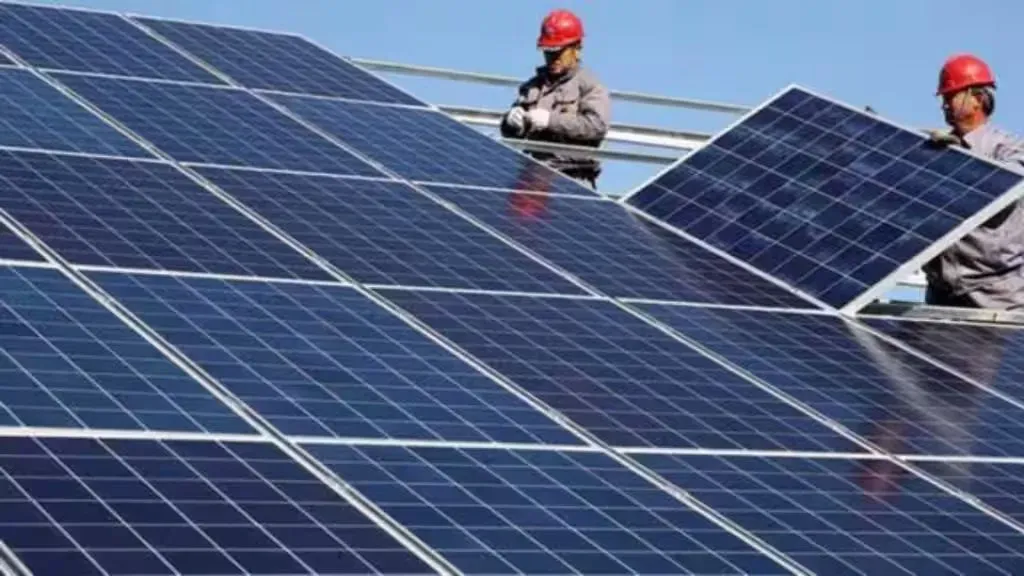
Solar photovoltaic cells, modules, and systems for a variety of applications.
Selected Electronic Systems: Equipment for Railway Signalling and Safety, Cathodic protection Equipment for Oil Pipelines, Switching Systems and Very Small Aperture Terminals (VSATs).
Selected Electronic components-professional (Soft) Ferrites, Electronic Ceramics, Piezo Electric Elements and Microwave Components.
CEL has been a pioneer in the country in the areas of solar photovoltaics, ferrites, and piezo ceramics.
Today, it enjoys the international status of being among the top producers of crystalline silicon solar cells in the world.
CEL has developed a number of critical components for strategic applications and is supplying these items to Defence.
Q1: What are solar photovoltaic (PV) cells?
Solar photovoltaic (PV) cells, also known as solar cells, are electronic devices that convert sunlight into electricity. They are made of semiconductor material that can conduct electricity better than an insulator but not as well as a metal. When light hits a PV cell, it may be reflected, absorbed, or pass through the cell.
It represents the average sea-surface temperature variations across the tropical Indian Ocean.
It has emerged as a key indicator for predicting the magnitude and timing of dengue epidemics in each country.
IOBW index’s association with the Southern Hemisphere is stronger than that with the Northern Hemisphere.
The index has a more pronounced impact on temperatures in tropical regions. Brazil, for example, bears a higher burden of dengue in the Southern Hemisphere.
The Northern Hemisphere witnesses a peak dengue epidemic period between July and October and the Southern Hemisphere in February and April, both in the summers.
Further, the amplitude of dengue incidence was high when the index was positive and low when it was negative.
The link between the Indian Ocean’s temperature and dengue incidence is likely due to its influence on regional temperatures through teleconnections, large-scale atmospheric patterns that can transfer heat and moisture across vast distances.
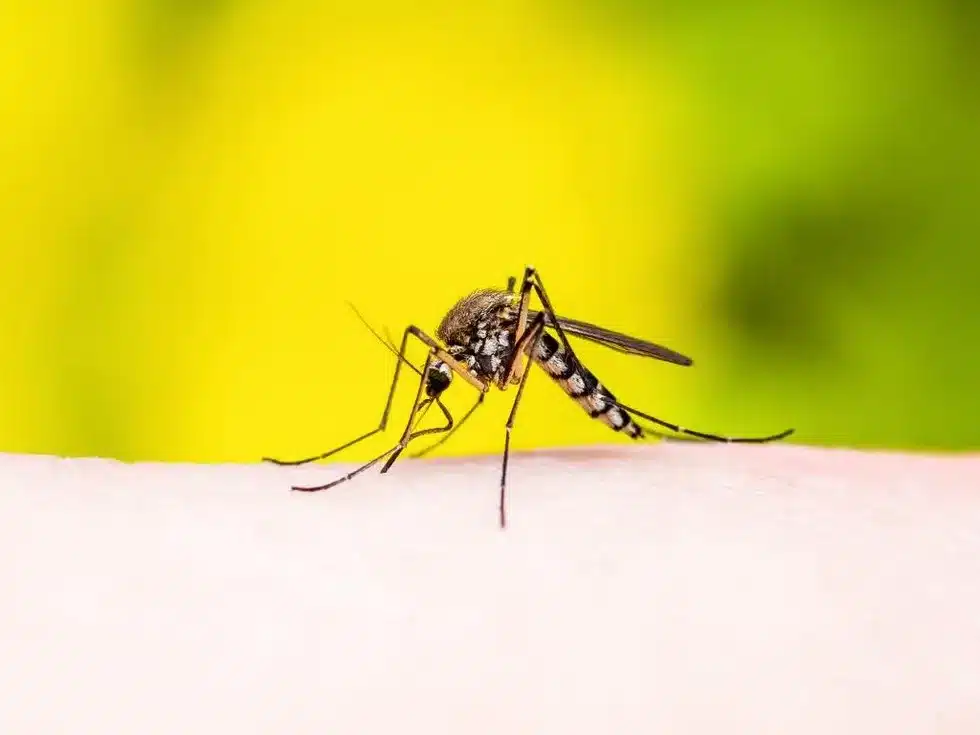
Transmission: It is transmitted to humans through the bites of infected female mosquitoes, primarily the Aedes aegypti mosquito.
The severe form of dengue fever, also called dengue hemorrhagic fever, can cause serious bleeding, a sudden drop in blood pressure (shock) and death.
It is more common in tropical and subtropical climates.
Symptoms: The most common symptoms are high fever, headache, body aches, nausea and rash.
Q1: What is the Indian Ocean Dipole?
Indian Ocean Dipole is sometimes referred to as the Indian Nino, is a similar phenomenon, playing out in the relatively smaller area of the Indian Ocean between the Indonesian and Malaysian coastline in the east and the African coastline near Somalia in the west.
It comprises three Reserve forests-Khanapara, Amchang, and South Amchang.
It stretches from the Brahmaputra River in the north to the hilly forests of Meghalaya in the south, forming a continuous forest belt through Meghalaya's Maradakdola Reserve Forests.
Flora: Khasi Hill Sal Forests, East Himalayan Mixed Deciduous Forest, Eastern Alluvial Secondary Semi-evergreen Forests and East Himalayan Sal Forests.
Tree yellow butterflies (gancana harina) are found at the Amchang wildlife sanctuary which is indigenous to Thailand, Malaysia, Singapore and northeast India.
Q1: What is the Sal Tree?
The Sal tree (Shorea robusta) is a large deciduous tree species that is native to the Indian subcontinent, particularly in the forests of India, Nepal, Bhutan, and Bangladesh. It holds significant ecological, cultural, and economic value.
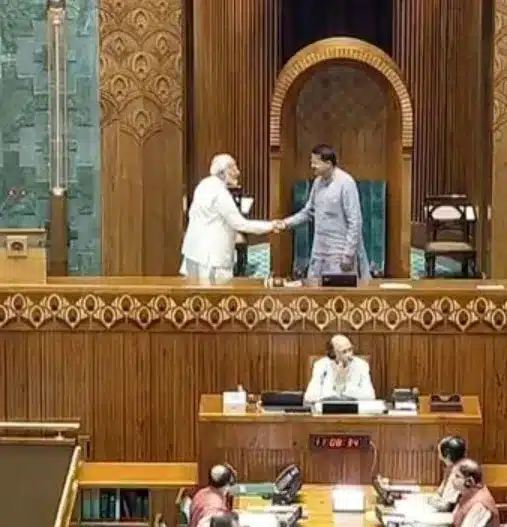
The first session of the 18th Lok Sabha will start today. Before the House can begin its legislative functioning, the newly elected members will have to take the oath of Members of Parliament (MP), which is provided in the Constitution.
Bhartruhari Mahtab, elected for the seventh consecutive time from Cuttack, Odisha, will be the first to take the oath as a Lok Sabha MP at Rashtrapati Bhavan in front of President Droupadi Murmu. The President has appointed him as the Speaker (pro tem) under Article 95(1) of the Constitution until the new Speaker is elected. Mahtab will preside over the House during the oath-taking ceremony of his colleagues.
Term of an MP
The five-year term of a Lok Sabha MP begins when the Election Commission of India (ECI) declares the results as per Section 73 of the Representation of the People Act, 1951.
From that point, MPs are entitled to certain rights as elected representatives.
For instance, they start receiving their salary and allowances from the date of the ECI notification — after the 2024 general elections, the ECI declared the results on June 6.
Additionally, the start of their term means that if MPs switch party allegiance, their political party can request the Speaker to disqualify them from Parliament under the anti-defection law.
Parliamentary oath
About
The third schedule of the Constitution contains the parliamentary oath.
Through this, members swear or affirm to bear true faith and allegiance to the Constitution of India, uphold India's sovereignty and integrity, and faithfully discharge their duties.
Importance of the Parliamentary Oath Despite the Start of an MP's Term
Winning the election and starting the term does not automatically allow an MP to participate in House proceedings.
An MP must take an oath or affirmation, as prescribed by the Constitution (Article 99), to debate and vote in the Lok Sabha.
The Constitution imposes a financial penalty of Rs 500 (Article 104) if a person participates or votes without taking the oath.
An exception exists for ministers who are not yet elected to Parliament; they can participate, but not vote, in House proceedings for up to six months while they secure a seat in either Lok Sabha or Rajya Sabha.
Evolution of oath over the years
The draft Constitution, prepared by the committee chaired by Dr. B.R. Ambedkar, initially did not invoke God in any oaths, emphasizing a solemn and sincere promise to uphold the Constitution.
During the Constituent Assembly discussions, members like K.T. Shah and Mahavir Tyagi proposed amendments to include God in the President's oath.
They argued that it would provide a divine sanction for believers while allowing non-believers to affirm solemnly.
Despite disagreements, Ambedkar accepted the amendments, recognizing the significance of invoking God for some individuals.
The last modification to the oath came with the Constitution (Sixteenth Amendment) Act, 1963.
This amendment added the commitment to uphold India's sovereignty and integrity, following recommendations from the National Integration Council.
Process
Before taking the oath or affirmation, MPs must submit their election certificate to the Lok Sabha staff.
This requirement was introduced after a 1957 incident where a mentally unsound individual posed as an MP and took the oath.
MPs can then take their oath or affirmation in English or any of the 22 languages specified in the Constitution.
About half of the MPs take their oath in Hindi or English, with Sanskrit also becoming popular in recent years.
MPs must use the name on their election certificate and adhere to the text of the oath.
Deviations, such as adding suffixes or phrases, are not recorded, and MPs may be asked to retake the oath.
While oaths and affirmations are a personal choice, 87% of MPs swore in the name of God in the last Lok Sabha, with the remaining 13% affirming allegiance to the Constitution.
Some MPs alternate between swearing by God and affirming across different terms.
Can MPs in jail take the oath?
The Constitution specifies that if an MP does not attend Parliament for 60 days, their seat can be declared vacant.
Courts have used this ground to allow MPs in jail to take an oath in Parliament.
Q.1 What is Third Schedule of Indian Constitution?
The Third Schedule of the Indian Constitution outlines the forms of oaths and affirmations for various constitutional positions, including the President, Ministers, Judges, and Members of Parliament and State Legislatures.
Q.2 What is Election Commission of India (ECI)?
The Election Commission of India (ECI) is an autonomous constitutional authority responsible for administering election processes in India at both the national and state levels, ensuring free and fair elections.
The launch of the Boeing Starliner, which was set to take astronaut Sunita Williams to space for a third time, has been postponed due to a technical glitch.
What is Boeing’s Starliner?
Starliner is a partially reusable crew capsule, officially known as CST-100 (crew space transportation).
It consists of two modules.
One is the crew module, which can be reused up to 10 times, with a six-month turnaround.
The other is the service module - the powerhouse of the spacecraft - which supplies electricity, propulsion, thermal control, air, and water in space. This module is expandable.
On its first crewed test flight, Boeing’s Starliner spacecraft would be carrying two NASA astronauts and will be launched on an Atlas V rocket from the Kennedy Space Center to the International Space Station (ISS).
The two NASA astronauts are Barry “Butch” Wilmore and Sunita Williams
If the mission is successful, Boeing will become the second private firm to be able to provide NASA crew transport to and from the ISS, alongside Elon Musk’s SpaceX.
What is the Mission?
The main objective of the mission is to see how Starliner performs in space with a crew onboard.
It is supposed to dock with the ISS (a day after the launch) for around 10 days before it returns to the Earth.
But before Starliner automatically docks with the space station, the crew members will test flying it manually.
The crew will also test seats, assess onboard life-support and navigation systems, as well as evaluate the system that moves cargo into the ISS.
The space suits worn by Wilmore and Williams will also be tested - these blue suits are around 40% lighter than their predecessors and have touchscreen-sensitive gloves.
During the return journey, NASA and Boeing will be keeping an eye on the spacecraft’s heat shield and parachutes.
They will slow the descent before airbags open to soften the moment of impact with the ground.
Unlike other crew capsules, Starliner will land on the ground and not in the sea.
What Caused the Delay?
After NASA retired its space shuttle fleet in 2011, it invited commercial space companies to help it transport astronauts and cargo to the ISS.
Two companies got the contracts: SpaceX and Boeing. While SpaceX has been ferrying astronauts to and from the ISS since 2020, Boeing is yet to successfully launch its first crewed flight.
Starliner’s first uncrewed flight itself came after four years of delay. Although it was set to take off in 2015, the company postponed it to 2019.
When it did finally happen, a series of software and hardware failures thwarted the spacecraft from getting into its planned orbit and docking with the ISS.
It took more than 80 fixes for Starliner to make its first successful uncrewed flight.
Even after achieving the goal, there were concerns about the performance of the spacecraft’s safety and cooling system.
As a result, Boeing delayed the launch of Starliner’s first crewed flight from 2023 to where we are today.
Why is the Mission Significant?
The mission’s success is crucial for both NASA and Boeing. Currently, NASA has only one private company, SpaceX, which can take its astronauts and cargo to the ISS.
Starliner getting approval for conducting routine flights to and from the ISS would give NASA a backup and option to not depend on one company or vehicle for space launches.
The success is more important for Boeing. If Starliner completes its objectives, it will also help Boeing challenge SpaceX’s dominance in the commercial space industry.
Q.1. What is the International Space Station (ISS)?
The ISS is a large space station assembled and maintained in low Earth orbit by a collaboration of five space agencies: NASA, Roscosmos, JAXA, ESA, CSA, and their contractors.
Q.2. What is the Bharatiya Antariksha Station?
It is a planned modular space station to be constructed by India and operated by ISRO. Originally planned to be completed by 2030, it was later postponed to 2035 due to delays caused by technical issues related with the Gaganyaan crewed spaceflight mission and the COVID-19 pandemic in India.
Recently, the Supreme Court raised concerns over the ongoing issue of stubble burning in Punjab and Haryana. The court condemned the selective enforcement of penalties, describing it as a violation of citizens' fundamental right under Article 21 of the Indian Constitution to live in a pollution-free environment.
Right to environment in India constitution
Right to life under Article 21
The Supreme Court in Subhash Kumar v. State of Bihar, 1991 held that Article 21 includes the right to a wholesome environment.
This position was again reaffirmed in Virender Gaur v. State of Haryana,1994.
Directive Principle of State Policy
Article 48A puts a duty on the State to protect and improve the environment and further to safeguard the forests and wildlife.
In Sher Singh vs State of Hp 2014, the National Green Tribunal held that the State is under a constitutional obligation to protect and improve the environment.
In M.C. Mehta vs Union of India, 2002, the court held that Article 39(e), 47 and 48A collectively cast a duty on State to secure public health and environment protection.
Fundamental Duties
Article 51A(g) puts a fundamental duty on the citizens to protect and preserve the environment.
Stubble Burning
Why Farmers opt for Stubble Burning?
Rice and wheat straws left in the field, after combine harvesting, are generally burnt by the farmers to facilitate seed bed preparation and seeding.
Farmers find this method as quick and cheap compared to other practices for crop residue management.
Since input costs of farming is going up day by day, farmers are not willing to further invest in equipments useful for crop residue management.
Happy Seeder (a tractor-operated machine for in-situ management of paddy stubble) continues to be an expensive method for majority of farmers.
Areas where this practice is rampant
Burning of agricultural residue is done on a large-scale basis in states such as Punjab, Haryana, Uttar Pradesh, Rajasthan and National Capital Region of Delhi.
This is prevalent in other states too. This includes: Bihar, Odisha, West Bengal etc.
Impact
Environmental Pollution
Agriculture fires are a major contributor to air pollution in north India in October-November.
Pollutants from these fires spread across the region, triggering smog and extreme air quality situations.
An increase in the concentration of particulate matter (PM) 2.5 and PM 10 in the atmosphere is observed in these months.
Harmful to the health of soil
Burning of crop residues removes huge amount of nutrient from the soil.
Practices like residue burning has further reduced the organic carbon content in soil.
Steps Taken by the government to tackle the issue of farm fires
Taken by Centre
A Central Sector Scheme on ‘Promotion of Agricultural Mechanisation for In-Situ Management of Crop Residue in the States of Punjab, Haryana, Uttar Pradesh and NCT of Delhi’ was approved.
Farmers are being provided 50 percent of the cost of machinery/equipment as financial assistance for the purchase of such machinery.
The central government has released Rs 3,062 crore to the governments of Punjab, Delhi and states in NCR during the five-year period from 2018 to 2023 towards effective management of stubble.
Profit from the left-over biomass is shared with farmers.
Pusa Decomposer by Indian Agricultural research Institute (IARI)
It decomposes stubble within 20-25 days after spraying and turn it into manure, improving the soil quality.
Taken by State Governments and Other agencies
States governments and other agencies are sensitising farmers on healthier practices.
The Punjab government had proposed to provide cash incentives to farmers for not burning stubble.
It also decided to provide non-fiscal incentives to these industries in terms of availability of Panchayat land for storage of paddy straw with lease agreement upto 33 years.
Key highlights of the observation made by SC
Fundamental Right to a Pollution-Free Environment
The Supreme Court emphasized that every citizen has a fundamental right under Article 21 of the Indian Constitution to live in a pollution-free environment.
It stressed that violations of this right go beyond mere implementation of laws, highlighting the blatant infringement of fundamental rights.
Section 15 of the Environment Protection Act Rendered "Toothless"
The court criticized the ineffectiveness of the amended Section 15 of the Environment Protection Act-1986, which replaced criminal penalties with financial penalties for environmental violations.
This provision has become "toothless" due to the Centre's failure to establish necessary support systems, such as framing rules and appointing adjudicating officers, even after six months of the amendment's enactment.
Inadequate Enforcement Mechanism
The absence of appointed adjudicating officers prevents law enforcement from imposing penalties under the amended Section 15, leaving environmental violations unpunished.
Q.1. Why did the Supreme Court criticize Punjab and Haryana over stubble burning?
The court noted selective penalties, where only a few violators faced consequences, despite widespread stubble burning. This inconsistent enforcement infringes on citizens' right to a pollution-free environment, a fundamental right under Article 21 of the Indian Constitution.
Q.2. What are the consequences of stubble burning in northern India?
Stubble burning contributes significantly to air pollution in northern India during October and November. It increases particulate matter, impacting air quality and health, and depletes soil nutrients, necessitating stricter enforcement of environmental laws.
Switzerland has announced the suspension of the Most-Favoured-Nation (MFN) clause under the Double Taxation Avoidance Agreement (DTAA) with India, effective January 1, 2025.
This move could lead to higher tax burdens for Indian companies operating in Switzerland and Swiss investors in India, potentially impacting bilateral investments.
What is the Most Favoured Nation (MFN)?
Meaning:
An MFN clause mandates a country that provides a trade concession to one trading partner to extend the same treatment to all trading partners.
It is a founding principle of the World Trade Organisation (WTO). For example, if a WTO member country reduces a tariff on a product for one trading partner, it must also extend that same tariff reduction to all other WTO members.
Purpose: MFN aims to replace power-based policies with a rules-based framework, where trading rights are not dependent on a country's economic or political clout.
Pros and Cons of MFN:
Exemptions: The WTO provides the following exemptions from MFN provisions -
When members strike bilateral trade agreements or when members offer developing countries special access to their markets.
Trade blocs like the European Union (EU), are allowed to discriminate against imports from outside the bloc.
Trade barriers in response to unfair competition, etc.
WTO members can impose any trade measures they want on countries that are not members of the WTO (Iran, North Korea, Syria, Belarus, etc).
Removal of MFN status:
There is no formal procedure for suspending MFN treatment and it is unclear whether members must notify the WTO if they do so.
For example, India revoked Pakistan's MFN status following the Pulwama attack in 2019. Pakistan has never granted India MFN status.
Background of the India-Switzerland Tax Treaty:
Original agreement: The DTAA between India and Switzerland was signed in 1994 and amended in 2010 to prevent double taxation of income.
Supreme Court ruling:
In 2023, the Indian SC ruled that the DTAA’s provisions require explicit notification under the Income-Tax Act to be enforceable.
This overturned a Delhi High Court decision that protected entities from double taxation.
The court ruled that a country can claim DTAA benefits only from the treaty's date of enforcement, not retroactively.
Though companies like Nestlé and Concentrix argued for reduced withholding tax rates under OECD-member treaties, the ruling rejected automatic applicability.
Reason for suspension of the MFN clause:
The Swiss government cited a lack of reciprocity as the basis for suspending the MFN clause.
Swiss authorities stated that they could not apply reduced tax rates unilaterally without mutual agreement from India.
Implications of the Suspension of the MFN Clause:
Higher tax rates:
Dividends paid after January 1, 2025, will be taxed at a higher rate of 10% in the source state.
This affects Swiss companies like Nestlé and challenges India's attractiveness as an investment destination.
On European Free Trade Association (EFTA): Switzerland’s suspension poses risks to the $100 billion investment commitment under the EFTA-India trade pact, signed in March 2024.
EFTA is an intergovernmental grouping of Iceland, Liechtenstein, Norway and Switzerland.
On bilateral treaty dynamics:
The decision underscores evolving international tax frameworks and India’s stricter treaty interpretations.
Indian entities operating in Switzerland may face higher tax liabilities/ increased financial burdens, reflecting broader global taxation trends.
Conclusion:
Switzerland’s suspension of the MFN clause marks a significant shift in India-Switzerland tax treaty relations.
While aimed at addressing reciprocity concerns, the move could deter Swiss investments in India and complicate tax compliance for Indian entities.
The development emphasises the importance of mutual agreement and clarity in international tax treaties to ensure stability and fairness in cross-border trade and investment.
Q.1. What is the EFTA-India trade pact?
India-European Free Trade Association signed a Trade and Economic Partnership Agreement (TEPA) today i.e. on 10th March 2024. For the first time in history of FTAs, binding commitment of $100 bn investment and 1 million direct jobs in the next 15 years has been given.
Q.2. What is a Double Taxation Avoidance Agreement (DTAA)?
DTAA is an international treaty between two or more countries designed to prevent the same Income from being taxed twice. India, for instance, has such agreements with 85 countries, benefiting individuals who reside in one country but earn Income in another.
Rationale behind imposing the GST on health and life insurance premiums
Need for withdrawing the GST on the premium
Why in News?
Insurance premiums for health and life policies have increased this year, and with an 18% Goods and Services Tax (GST) added, many people in India are finding insurance less affordable.
Opposition leaders protested at Parliament, demanding the removal of GST on these premiums. Recently, Union Minister Nitin Gadkari wrote to Finance Minister, arguing that GST on insurance premiums taxes life's uncertainties and hampers industry growth.
Life and health insurance market in India
In fiscal 2023-24, the general insurance industry collected Rs 1,09,000 crore in health premiums, while life insurance companies collected Rs 3,77,960 crore, with LIC alone contributing Rs 2,22,522 crore.
Five states—Maharashtra, Karnataka, Tamil Nadu, Gujarat, and Delhi—accounted for 64% of the total health insurance premium in 2022-23, with the rest of the states contributing 36%.
A Swiss Re Sigma report noted a decrease in insurance penetration in India's life insurance sector from 3.2% in 2021-22 to 3% in 2022-23, while non-life insurance penetration remained at 1%.
Overall, India's insurance penetration dropped to 4% in 2022-23 from 4.2% in the previous year.
GST on health and life insurance premiums
GST, introduced on July 1, 2017, replaced all indirect taxes, including service tax and cess.
Currently, GST on health and life insurance policies is fixed at 18%.
Prior to GST, life insurance premiums were subject to 15% service taxes, comprising Basic Service Tax, Swachh Bharat cess, and Krishi Kalyan cess.
Since GST encapsulates service tax, which applies to the insurance industry, its introduction has resulted in an increase in premium amounts.
This rise, combined with high medical inflation estimated at 14% last year, has made medical and term insurance less affordable for many.
The government acknowledged in Parliament that it received requests for an exemption or reduction in GST rates on life and health insurance.
Rationale behind imposing the GST on health and life insurance premiums
Role of GST Council
The GST rates and exemptions on services, including health insurance premiums, are set by the GST Council, which includes the Union Finance Minister and state/UT ministers.
Revenue earning segment for the government
GST is applicable to all insurance policies since insurance is a service, and policyholders pay tax on their insurance premium.
This segment fetched Rs 21,256 crore in GST during the last three financial years, and another Rs 3,274 crore from the reissuance of health policies.
Certain deductions allowed while computing income tax
Insurance premiums are eligible for tax deductions under Sections 80C and 80D of the Income Tax Act, 1961, with deductions up to Rs 1.5 lakh, including GST, and additional deductions for medical riders.
Need for withdrawing the GST on the premium
Large increases in premium on health insurance policies
The main issue is the large increases in premium on health insurance policies this year — a leading public sector insurer has hiked the premium by 50%.
GST on insurance in India is the highest in the world
Many experts have pointed out that the GST on insurance in India is the highest in the world.
This step might create challenges for IRDAI’s goal of “Insurance for All by 2047”.
Report by Standing Committee on Finance
The Standing Committee on Finance in its 66th report, submitted to Parliament in February 2024, recommended rationalisation of the GST rate on insurance products, especially health and term insurance.
It said that the high rate of GST results in a high premium burden, which acts as a deterrent to getting insurance policies.
Q.1. What is Goods and Services Tax (GST)?
The Goods and Services Tax (GST) is a comprehensive, multi-stage, destination-based tax levied on every value addition in India. It replaced multiple indirect taxes and is implemented to create a unified national market, simplifying taxation, and ensuring a seamless flow of input tax credits across the supply chain.
Q.2. What is Insurance Regulatory and Development Authority of India (IRDAI)?
The Insurance Regulatory and Development Authority of India (IRDAI) is the apex body overseeing the insurance industry in India. Established to protect policyholders' interests, promote fair practices, and ensure the orderly growth of the insurance sector, IRDAI regulates, licenses, and monitors insurance companies and intermediaries.
It is the world’s first commercial passenger ferrypowered entirely by zero-emission hydrogen fuel cells.
The 75-passenger ferry was built by All American Marine Shipyard for the compatriot shipowner SWITCH Maritime.
The vessel, designed by Incat Crowther, is fitted with hydrogen-powered fuel cells producing electricity to power electric motors, enabling the vessel to operate for about 16 hours, traveling around 300 nautical miles, between refueling sessions.
It can reach speeds up to 20 knots, and its services speed will be about 8-12 knots.
It uses H2 fuel cells to generate electricity through the combination of H2 from storagetanks and oxygen from the ambient air.
Unlike current diesel-powered ferries that emit pollutants, the hydrogen-powered Sea Change produces only heat and water vapor as by products. Passengers can even drink the emissions from an onboard water fountain.
Q1: What is a fuel cell?
A fuel cell is a device that generates electricity by a chemical reaction. Fuel cells can be used in a wide range of applications, providing power for applications across multiple sectors, including transportation, industrial/commercial/residential buildings, and long-term energy storage for the grid in reversible systems.
Reasons behind Typhoon Yagi becoming the strongest storm in Asia
Operation Sadbhav by India
Why in News?
Typhoon Yagi, the strongest tropical cyclone in Asia this year and second only to Hurricane Beryl globally, has caused widespread devastation across Southeast Asia.
Countries like the Philippines, China, Laos, Myanmar, and Thailand have been severely affected, but Vietnam has borne the brunt of the storm, with around 233 deaths. Torrential rains, floods, and landslides have added to the challenges faced by millions in the affected areas.
Tropical Cyclones
About
Cyclones that develop in the regions between the Tropics of Capricorn and Cancer are called tropical cyclones.
The World Meteorological Organisation uses the term 'Tropical Cyclone’ to cover weather systems in which winds exceed ‘Gale Force’ (minimum of 34 knots or 63 kph).
Tropical cyclones are the progeny of ocean and atmosphere, powered by the heat from the sea; and driven by easterly trades and temperate westerlies, high planetary winds and their own fierce energy.
Formation of cyclones
Tropical Cyclone is a weather phenomenon, which is formed only over warm ocean waters near the equator.
Characteristics of a Tropical Cyclone:
The centre of a cyclone is very calm and clear with very low air pressure. The average speed is 120 kmph.
They have closed isobars which leads to greater velocity.
Isobars are imaginary lines on a weather map that connect locations with equal atmospheric pressure.
They develop over oceans and sea only.
They move from east to west under the influence of trade winds.
Extremely Severe Cyclonic Storm: Between 166-221 Km/h
Super Cyclonic Storm: Above 222 Km/h
Category of a tropical cyclone
The category of a tropical cyclone is determined by its sustained wind speed, as measured by the Saffir-Simpson Hurricane Wind Scale.
It is classified into five categories — Category 1 to Category 5.
While Category 1 tropical cyclones bring winds of 119 to 153 kmph, Category 5 tropical cyclones, which are the strongest, have winds of 252 kmph or higher.
Storms that reach Category 3 and higher are considered major tropical cyclones due to their potential to inflict significant damage.
Tropical cyclones are known by different names in various regions
Hurricanes – In the in the West Indian islands in the Caribbean Sea and Atlantic Ocean.
Tornados - In the Guinea lands of West Africa and southern USA
Typhoons – In the Northwest Pacific Ocean, particularly affecting East and Southeast Asia (e.g., Japan, Philippines, China, Taiwan).
Cyclones – In the Southwest Indian Ocean (off the coast of Africa, Madagascar), the Southeast Indian Ocean, and the Southwest Pacific Ocean.
Willy-Willies – An informal term used for tropical cyclones in Australia.
Reasons behind Typhoon Yagi becoming the strongest storm in Asia
Warm waters of South China Sea
Typhoon Yagi started as a tropical storm in the western Philippine Sea. It made landfall in the Philippines and started to weaken.
However, due to unusually warm waters in the South China Sea, the storm intensified again.
Later, it became a Category 5 typhoon with peak maximum sustained winds of 260 kmph.
Typhoon Yagi is one of four Category 5 storms recorded in the South China Sea, after Pamela in 1954, Rammasun in 2014, and Rai in 2021.
The storm was subsequently downgraded to a tropical depression but still brought heavy rains last week in countries such as Myanmar, where it triggered severe floods around the remote capital, Naypyidaw.
Role of climate change
Scientists are still debating how climate change affects tropical cyclones, as many factors influence storm formation and development.
However, there is agreement that rising global temperatures are making tropical cyclones more intense.
A recent study suggests that in Southeast Asia, cyclones are now forming closer to coastlines, intensifying faster, and lingering longer over land.
This is likely due to warmer sea surface temperatures, which have increased by nearly 0.9°C since 1850.
Hotter oceans fuel storms with more water vapor and heat, leading to stronger winds, heavier rainfall, and increased flooding when storms make landfall.
Operation Sadbhav by India
India launched Operation Sadbhav to provide humanitarian assistance and disaster relief (HADR) to Laos, Myanmar and Vietnam that have been hit by severe flooding caused by Typhoon Yagi.
India has committed $1mn worth of flood relief assistance to Vietnam and $1,00,000 worth of assistance to Laos.
India has been among the first responders in providing HADR to the region.
This Operation is part of India’s broader effort to contribute to HADR within the ASEAN region, in line with its longstanding Act East Policy.
Q.1. What made Typhoon Yagi the strongest storm in Asia this year?
Typhoon Yagi intensified due to unusually warm waters in the South China Sea, reaching Category 5 with winds of 260 kmph. It caused widespread devastation in Southeast Asia, particularly in Vietnam, where floods and landslides led to hundreds of deaths.
Q.2. How does climate change affect tropical cyclones like Typhoon Yagi?
Climate change is increasing the intensity of tropical cyclones by raising sea surface temperatures. Warmer oceans fuel storms with more heat and water vapor, leading to stronger winds, heavier rainfall, and more devastating landfall impacts.
Responsibility for Registration Under the Civil Registration System (CRS)
Centralised Portal for Birth and Death Registration
Concerns Raised by the RGI
Vital Statistics Report Not Published Since 2020
Birth and Death Registration in India FAQs
Birth and Death Registration in India Latest News
Recently, the Registrar General of India (RGI), under the Union Home Ministry, issued a circular directing private and government hospitals to report births and deaths within 21 days.
The move came after it was found that many medical institutions were violating this legal requirement, prompting action by the Vital Statistics division.
Gaps in Registration
The Registrar General of India (RGI) issued a circular on March 17 noting that around 10% of births and deaths in India are still not registered.
While 90% registration has been achieved, the goal of 100% universal registration remains unmet.
Progress Since 2011
According to the RGI, the registration level in 2011 was 82.4% for births and 66.4% for deaths, indicating significant progress over the years.
Legal Provisions and Penalties
The Registration of Birth and Death (RBD) Act, 1969—amended in 2023—makes it mandatory to register all births and deaths.
Under Section 23(2), registrars who are negligent in performing their duties may face fines, which have been increased from ₹50 to up to ₹1,000.
Responsibility for Registration Under the Civil Registration System (CRS)
Under the Civil Registration System (CRS), governed by the Registrar General of India (RGI), government hospitals act as registrars for births and deaths.
Private hospitals are required to report such events to the designated registrar so that certificates can be issued to the families.
Role of State Authorities and Departments
The RBD Act empowers the RGI to coordinate with Chief Registrars appointed by State governments.
Registration duties vary across States:
Health Departments manage registration in States/UTs like Assam, Chandigarh, Haryana, Lakshadweep, Meghalaya, Odisha, Punjab, Sikkim, and the Andaman & Nicobar Islands.
Panchayat Departments handle it in Kerala.
Directorate of Economics and Statistics manages it in Bihar.
Centralised Digital Registration System
Following the 2023 amendment to the RBD Act (effective from October 1, 2023), all births and deaths in India must be digitally registered through the Centre’s Civil Registration System portal.
Chief Registrars and Registrars are mandated to share this data with the Central database maintained by the RGI.
Centralised Portal for Birth and Death Registration
From October 1, 2023, all births and deaths in India must be registered digitally through a central portal.
This ensures uniformity, transparency, and seamless integration across government services.
Digital Birth Certificate as a Key Document
The digital birth certificate is now the sole official document to prove date of birth for various purposes, including:
School admissions
Government job applications
Marriage registration
Obtaining passports and Aadhaar
Integration with National Databases
The data from the central portal will be used to update key records such as:
National and State Population Registers (NPR)
Ration cards
Property registrations
Electoral rolls
Foundation for NPR and NRC
The centralized registration system feeds into the National Population Register (NPR), which has a database of 119 crore residents.
The NPR, updated in 2015, is seen as a precursor to the National Register of Citizens (NRC).
Each resident’s information is linked through a unique registration number, connecting documents like Aadhaar and birth certificates — starting from birth, thereby creating a unified digital identity trail.
Concerns Raised by the RGI
Delayed Registration by Hospitals
The RGI observed that some hospitals delay the registration process, waiting for family members to approach them instead of registering birth or death events proactively.
Non-Compliance by Private Hospitals
Several private hospitals have been found to completely avoid reporting such events to the designated registrar.
Instead, they direct families to handle the registration themselves, violating legal obligations.
Lack of Citizen-Friendly Services
The RGI also flagged that some registrars fail to make the registration process user-friendly.
It emphasized the need for timely issuance of birth and death certificates, ideally within seven days of the event.
Vital Statistics Report Not Published Since 2020
The Vital Statistics of India report, which provides key national-level data on infant mortality, stillbirths, and deaths, has not been published since 2020.
This delay hampers the government’s ability to conduct effective socio-economic planning and evaluate social sector programs.
Importance of the Report
Compiled from State-level data, the report is crucial for public health planning and assessing the impact of various welfare schemes.
It acts as a foundational document for health-related policy-making in India.
Status of State-Level Reporting
While several States and UTs like Himachal Pradesh, Karnataka, Delhi, Chandigarh, Mizoram, Goa, and Arunachal Pradesh have released their reports till 2022, Kerala’s last available report is from 2021.
Mizoram is the only State to have released its report for 2023.
Trends in Registered Births (2020 Report)
According to the last published report (2020):
Registered births dropped from 2.48 crore in 2019 to 2.42 crore in 2020, a decline of about 2.4%.
Most States saw a dip in registered births, except Bihar, Haryana, Madhya Pradesh, Rajasthan, Sikkim, Andaman & Nicobar Islands, Jammu & Kashmir, and Ladakh.
Interestingly, the level of Death registration increased from 76.4 lakh in 2019 to 81.2 lakh in 2020.
Birth and Death Registration in India FAQs
Q1. What is the Civil Registration System (CRS) in India?
Ans. The CRS records all births and deaths, with designated hospitals and registrars responsible under the Registrar General of India (RGI).
Q2. Why was a centralized portal launched for registration?
Ans. The centralized portal ensures digital, uniform registration of births and deaths and integrates with databases like NPR, Aadhaar, and electoral rolls.
Q3. What are RGI’s concerns about registration delays?
Ans. Hospitals delay registrations or avoid reporting; registrars often fail to offer user-friendly, timely services for citizens.
Q4. What legal changes were made under the RBD Act 2023?
Ans. The amended Act mandates digital registration and increases penalties for non-compliance by registrars and medical institutions.
Q5. Why is the Vital Statistics Report important?
Ans. It provides national data on births and deaths, essential for policy, planning, and evaluating social sector programs and health outcomes.
News Summary: Global Initiative on Digital Health launched
What is GIDH?
What are the aims of GIDH?
What are the pillars of GIDH?
What are the strategies to be employed by GIDH?
Why in news?
The World Health Organization (WHO) and the G20 India presidency announced a new Global Initiative on Digital Health (GIDH).
GIDH was announced at the recently concluded Health Minister’s Meeting of the G20 Summit hosted by the Government of India.
What is Digital Health?
Digital health refers to the use of technology, such as mobile devices, software applications, and other digital tools, to improve health and healthcare delivery.
Basically, it is a multidisciplinary concept that includes concepts from an intersection between technology and healthcare.
It encompasses a wide range of technologies and services, including telemedicine, electronic health records, wearable devices, health information exchange, and more.
India’s CoWIN, UNICEF’s RapidPro and FamilyConnect etc. are few notable examples of digital health initiatives.
The real-time information platform, RapidPro, is a core solution in UNICEF’s digital health portfolio.
UNICeF’s FamilyConnect sends targeted life cycle-based messages via SMS to pregnant women, new mothers, heads of households etc.
Why is Digital Health important?
Empowers Patients
Digital tools are giving providers a more holistic view of patient health through access to data and giving patients more control over their health.
Hence, it empowers patients to make better-informed decisions about their own health.
E.g., wearable devices can monitor vital signs and provide real-time feedback to patients and clinicians.
Treatment of Disease
Digital health tools provide new options for facilitating prevention, early diagnosis of life-threatening diseases, and management of chronic conditions outside of traditional health care settings.
Other benefits
Reduce inefficiencies; Improve access; Reduce costs; Increase quality, and Make medicine more personalized for patients.
Support overall universal health coverage targets
Digital health is a great enabler in delivery of healthcare services and has the potential to support overall universal health coverage targets.
This is because it can ensure availability, accessibility and affordability, and equity of health services.
For example, telemedicine allows patients to connect with healthcare providers remotely.
What are the Challenges of Digital Health?
Equitable access
Universalization of digital health and enabling of equitable access to healthcare services across the world, particularly for low- and middle-income countries is challenging.
The issue of accessibility becomes more daunting against the backdrop of low digital literacy and low-level of internet penetration.
Ethical Challenges related to privacy, security and data ownership
The increasing digitization of healthcare and the growth of mobile and IoT devices as data collection tools raises many ethical issues.
One commonly recurring theme relates to the exact nature of the role of consumer tech companies, such as Amazon, Apple etc. who have all entered the digital health domain.
Such companies offer solutions for collecting, storing and analysing health data which raises issues relating to privacy, data protection and informed consent.
Analysts also raise ethical concerns relating to data ownership.
Ethical challenges related to regularisation of digital health technologies
The growth of apps and technologies developed for a consumer market blurs the lines between what is medical and non-medical devices.
Hence, it raises ethical challenges relating to how to regularize such technologies.
Data management
Due to the massive amounts of data collected from a variety of systems that store and code data differently, data interoperability is an ongoing challenge.
News Summary: Global Initiative on Digital Health launched
What is GIDH?
GIDH is one of the key deliverables of India’s G-20 Presidency.
It will consolidate the evidence and amplify recent and past gains in global digital health while strengthening mutual accountability to enhance the impact of future investments.
GIDH will be a WHO Managed Network (“Network of Networks”) that will promote equitable access to digital health.
It will do so by sharing digital goods and knowledge.
The GIDH will ensure inclusivity, integration, and alignment of healthcare goals by not leaving anyone behind.
What are the aims of GIDH?
ALIGN efforts to support the Global Strategy on Digital Health 2020–2025;
SUPPORT quality assured technical assistance to develop and strengthen standards-based and interoperable systems aligned to global best practices, norms and standards;
FACILITATE the deliberate use of quality assured digital transformation tools that enable governments to manage their digital health transformation journey.
What are the pillars of GIDH?
It will have four pillars:
investment tracker; ask tracker to track technologies the countries need; a library of available digital tools, and a platform for knowledge-sharing to implement these technologies at scale.
Image caption: Pillars of GIDH
What are the strategies to be employed by GIDH?
The GIDH will bring countries and partners together to achieve measurable outcomes by:
developing clear priority-driven investment plans for digital health transformation;
improving reporting and transparency of digital health resources;
facilitating knowledge exchange and collaboration across regions and countries to accelerate progress;
increasing technical and financial support to the implementation of the Global Strategy on Digital Health 2020–2025 and its next phase.
Q1) What is CoWIN?
CoWIN stands for COVID Vaccine Intelligence Network. It is an online platform developed by the Indian government to facilitate the efficient and transparent distribution of COVID-19 vaccines across the country. The CoWIN platform provides several features, including vaccine registration, appointment scheduling, and vaccination certification.
Q2) What is UNICEF’s FamilyConnect ?
UNICEF's FamilyConnect is an innovative mobile application designed to provide pregnant women and new mothers with the information and support they need to ensure the health and wellbeing of their babies and themselves. The app provides a range of features, including personalized pregnancy and postnatal care guidance, health tips, nutrition advice, and parenting resources.
The fort has a 1000-year history having connections to various dynasties, including the Chalukyas, Rashtrakutas Deccan Sultanate and Vijayanagara Empire.
The fort gained prominence during the Bahmani Sultans who ruled large areas of the Deccan Plateau from Gulbarga (now Kalaburagi).
It later went to the hands of the Vijayanagara Empire. After the Sultanate broke into five States (Nizam Shahi of Ahmednagar, Qutb Shahi of Golconda (Hyderabad), Barid Shahi of Bidar, Imad Shahi of Berar and Adil Shahi of Bijapur), the fort was a major cause of clashes between the Vijayanagara Empire and Adil Shahi Sultanate.
Strategic location
Standing on the border of the Adil Shahi and Vijayanagara empires, the Mudgal Fort witnessed as many as 11 battles between the 14th and 16th Centuries.
The Bijapur and Vijayanagara viewed it as a symbol of power and pride because of its strategic location to control the large Raichur Doab, the land between Tungabhadra on the south and Krishna on the north.
Raichur Doab between Krishna and Tungabhadra rivers is fertile land for agriculture. It has also had rich mineral resources including gold.
Inscriptions
Historians and researchers have so far studied as many as 99 inscriptions etched on the fort walls and monuments in Kannada, Sanskrit, Telugu, Persian, Arabic and Gujarati languages.
Important among them are those that describe the bravery of Malik Murad Khan, the military general of Ibrahim Adil Shah II of Bijapur. He was the man who fought successful battles against the Vijayanagara Empire between 1590 and 1610.
Architectural style
The mixed architectural styles of the monuments and traditions followed by the people living inside.
Inside the fort there is Ranganathaswamy Temple and Hussain Alam Dargah stand side-by-side sharing a common wall and the compound.
The fort has several gates, each with intricate carvings and strategic placements for defence.
The main entrance on the north side of the fort, which is called Fateh Darwaza.
Q1) What are inscriptions in history?
Inscriptions are the writings on stone, metal or some materials as an important historical source. These are valuable historical evidence of the existence and activities of early kings and empires and are the information written on the stones, pillars and other metals.
Data Centres in the Emerging Markets in Asia-Pacific
Case of India
Efforts in India to Boost Computing Capacity
Why in News?
Given the sector's expansion in emerging economies, India may become a major player in the data centre market in the years to come. However, it may also face stiff competition from nations like Malaysia and Vietnam.
A data centre refers to a designated space within a building or a set of architectural configurations designed to accommodate computer systems and their associated components, including networking and storage systems.
The Indian Data Centre Sector:
Data centre segments in India: It is categorised into two main segments: captive and outsourced (including colocation and hosting), and further divided by IT infrastructure type, which includes servers, storage, and enterprise networking.
Market overview:
The Indian data centre market is currently in a dynamic phase, marked by impressive growth and substantial government support.
In 2023, India’s data centre market achieved revenues of approx. US$7.44 billion, with network infrastructure emerging as the dominant segment, valued at US$5.09 billion.
In 2022, the data centre capacity in India was at 637 MW. India is ranked the 13th largest data centre market in the world with 138 data centres.
Additionally, 45 new data centres with a combined 13 million square feet and 1,015 MW of capacity are scheduled to be developed by the end of 2025.
Government support:
Data centre policy: To encourage investment and accelerate India’s current rate of data centre expansion, the Indian government is formulating a data centre policy.
Salient provisions of the policy:
Incorporating data centres under the Essential Services Maintenance Act (ESMA), Creating Data Centre Facilitation Units (DCFU),
Creating Data Centre Economic Zones, and
Creating a special category code for data centres under the National Building Code of India.
Outlook:
India’s data centre sector is set for growth, driven by a thriving digital economy, widespread internet access, and the transition to 5G networks from 4G.
However, emerging regulatory frameworks require data localisation, which will impact demand in the data centre market.
Data Centres in the Emerging Markets in Asia-Pacific:
Highlights of a research by S&P Global:
As over $100 billion will be invested in such facilities in the Asia-Pacific region over the next 5 years, emerging markets in the region are expected to outpace established markets in capacity growth.
The spending will capitalise on strong data growth and the rise in AI, cloud computing and digitalisation.
Why are emerging markets in the Asia-Pacific an attractive alternative to developed markets?
Lower costs to develop and operate data centres;
Significant growth in data demand due to digitalisation and favourable demographics; and
Government support for the building of local data centres as part of their push for data sovereignty.
Case of India:
According to the S&P Global research,
India currently has a leased data centre capacity of 1-3 GW, which is the highest compared to other emerging markets like Indonesia, Malaysia, Philippines, Thailand and Vietnam.
India is already home to data centres set up by big tech companies like Google, Microsoft, and Amazon.
Challenges for India:
India could face competition from both emerging markets and developed economies in attracting more data centres.
For example, Johor Bahru in Malaysia has become a hot landing spot for new data centres. It can be a cheaper alternative to Singapore for regional data traffic, with more affordable land and power.
Japan is offering subsidies to decentralise data-centre development, such that new centres will be built away from big cities like Tokyo and Osaka.
Opportunities for India:
Stricter data sovereignty requirements in the Southeast Asian country could give India an edge.
Data centres in tier-two or tier-three cities typically have lower land and construction costs compared with tier-one cities.
The Indian government is looking to subsidise setting up of data centres to capitalise on the AI boom, and make access to computing capacity easier for smaller entities like start-ups and research institutions.
Efforts in India to Boost Computing Capacity:
Need:
Apart from data sets and inventive algorithms, one of the most crucial components of developing a huge AI system is computing capacity.
Due to the high cost, it is also one of the most difficult components for smaller businesses seeking to develop such AI systems.
Steps taken:
The Indian government is planning to procure graphics processing units (GPUs) as part of its ambitious IndiaAI Mission.
This will offer computing capacity to Indian start-ups, researchers, public sector agencies and other entities approved by the government.
IndiaAI Mission:
Under the mission (launched at the GPAI Summit 2023), the Ministry of Electronics and IT (MeitY) will look -
To establish a computing capacity of more than 10,000 GPUs and
To help develop foundational models trained on datasets covering major Indian languages for priority sectors like healthcare, agriculture, and governance.
Of the total outlay (of Rs 10,372 crore), Rs 4,564 crore has been earmarked for building computing infrastructure.
Q.1. What are graphics processing units (GPUs)?
A GPU is a processor that specialises in graphics-related tasks like video editing, 3D rendering, and design work.
Q.2. What is the Essential Services Maintenance Act (ESMA) 1968?
The ESMA is an act of Parliament of India which was established to ensure the delivery of certain services, which if obstructed would affect the normal life of the people. This includes services like public transport (bus services), health services (doctors and hospitals).
The Centre has set up a single-member committee under the Department of Personnel and Training (DoPT) to review the documents submitted by IAS probationer Puja Khedkar, who secured a rank of 821 in the 2022 UPSC Civil Services Examination.
Khedkar was allotted the IAS under the OBC and Physically Handicapped quotas. Questions have been raised about her appointment under these categories.
It should be noted that Khedkar’s actions as a civil servant are governed primarily by two rules: the All-India Services (Conduct) Rules, 1968, and the Indian Administrative Service (Probation) Rules, 1954.
According to Rule 3(1), officers must uphold absolute integrity and dedication to their duties at all times.
Gifts and Benefits
Rule 11(1) regulates the gifts and benefits received by a civil servant.
Acceptance of gifts is limited to those from near relatives, with strict reporting requirements for any gift exceeding Rs 25,000 to prevent influence on their duties.
This rule also prohibits officers from engaging in any trade or business to maintain impartiality and prevent conflicts of interest.
Unbecoming of an officer
Rule 4(1) is more specific about what is unbecoming.
It states that officers must not use their position or influence to secure employment for any member of his family with any private undertaking or NGO.
Property details
Rule 13 of the All-India Services (Conduct) Rules mandates that officers must annually submit property returns.
These returns must detail all immovable properties that officers or their family members own, inherit, acquire, or hold through lease or mortgage.
This requirement ensures transparency and prevents illicit accumulation of wealth among civil servants.
Sub-rules added in 2014
In 2014, the government added a few sub-rules.
This included that officers should maintain:
high ethical standards, integrity and honesty;
political neutrality;
accountability and transparency;
responsiveness to the public, particularly to the weaker sections;
courtesy and good behaviour with the public.
Rules for probationers
Rules
There is an additional set of rules that govern the conduct of officers during their probation period, which lasts for at least two years after selection to the services.
IAS officers, in addition, are governed by the IAS (Probation) Rules during their probation period.
Probation Conditions
Officers undergo training at the Lal Bahadur Shastri National Academy of Administration (LBSNAA) in Mussoorie.
At the end of two years, they must pass an examination to be confirmed in their service.
Salary and Allowances
Probationers receive a fixed salary and travel allowance but do not have entitlements like an official car, official accommodation, or an official chamber with staff.
Probationer Discharge
Rule 12 outlines circumstances under which probationers can be discharged, such as being found ineligible or unsuitable for the service by the central government, neglecting duties, or lacking essential qualities needed for the service.
Enquiry Process
If disciplinary action is initiated against a probationer, a summary enquiry is conducted by a committee appointed by the Department of Personnel and Training (DoPT).
The committee submits its report within two weeks to inform decisions regarding the probationer's status.
Allegations against Khedkar
Puja Khedkar, despite her low rank, secured a position in the prestigious IAS through reservations meant for OBC and Persons with Disabilities (PH).
Since the batch of 1995, 27% seats in the services have been reserved for the OBC category.
The PH reservation was introduced with the batch of 2006 — 3% seats in every category (General, OBC, SC, and ST) are reserved for the differently abled.
However, allegations have surfaced regarding the validity of her OBC and PH certificates.
If these allegations are proven true — that she falsified these certificates — Khedkar faces potential discharge from service.
Probationers are discharged, while confirmed officers are dismissed.
The issue is compounded by a legal battle over her PH status, where she failed to attend a medical examination required by the UPSC, citing reasons including a Covid-19 infection.
Critics have raised questions about her eligibility for OBC (non-creamy layer) benefits, highlighting her family's background in politics and her father's former government service.
For those whose parents work in the private sector, the current threshold to qualify for the non-creamy layer status is an income of under Rs 8 lakh annually.
For those with parents who work in the public sector, income is not taken into account.
Rather, as per DoPT rules, what qualifies people to be in the creamy layer is either parent becoming a Group-A official before the age of 40, or both being Group-B officials with similar ranks.
Q.1. What is Union Public Service Commission (UPSC)?
The Union Public Service Commission (UPSC) is India's premier central recruiting agency responsible for conducting examinations and selecting candidates for civil services and various government positions, ensuring merit-based selection and adherence to constitutional provisions.
Q.2. What is Department of Personnel and Training (DoPT)?
The Department of Personnel and Training (DoPT) is a key department under the Government of India responsible for personnel management, training, and administrative reforms, overseeing policies related to recruitment, service conditions, and career development of civil servants.
A windfall profit refers to a sudden increase in profits, typically caused by an unexpected event or circumstance.
Such profits are generally well above historical norms and may occur due to factors such as a price spike or supply shortage that are either temporary in nature or longer-lasting.
Windfall profits are generally reaped byanentire industrysector but can also find their way to an individual company or individual.
Among the reasons that windfall profits can arise are a sudden change in market structure, an executive order from the government, a court ruling, or a dramatic shift in trade policy.
Interms of an individual, a windfall profit/gain could be a spike in income as a result of a specific, one-time event, such as winning the lottery or inheriting a fortune or valuable property.
Businesses typically use these profits in part to increase dividends, buy back shares, reinvest in the business for future growth, or reduce debt.
Windfall Tax:
Windfall profits often receive a windfall tax.
It is a tax levied by governments against certain industries when economic conditions allow those industries to experience significantly above-average profits.
Q1: What is a dividend?
A dividend is the distribution of a company's earnings to its shareholders and is determined by the company's board of directors. Dividends are often distributed quarterly and may be paid out as cash or in the form of reinvestment in additional stock.
The issue of climate finance is a critical topic in global discussions on climate change.
As the world faces increasingly severe environmental challenges, the burden falls disproportionately on developing nations.
These countries often bear the brunt of climate impacts, such as floods, droughts, and extreme weather events, while having contributed the least to global emissions.
The 29th Conference of the Parties (COP29), scheduled to be held in Baku, Azerbaijan from November 11 to 22, 2024, will focus heavily on climate finance, making it a crucial meeting for addressing this global inequality.
What is Climate Finance?
According to the United Nations Framework Convention on Climate Change (UNFCCC), climate finance refers to local, national, or transnational financial flows that support efforts to mitigate and adapt to climate change.
These funds can come from public, private, and alternative sources.
Key uses of climate finance include:
Mitigation: Reducing or preventing greenhouse gas emissions.
Adaptation: Helping vulnerable regions and communities adapt to the impacts of climate change.
Developed countries are expected to contribute the bulk of climate finance, given their historical responsibility for emissions, while developing nations need this support to manage both their developmental needs and climate action.
Why Do Developing Nations Need Climate Finance?
Developing countries are among the most vulnerable to climate change due to:
Geographical factors: Many are located in regions more prone to extreme weather conditions.
Economy reliance on agriculture: Sectors like agriculture, which are particularly sensitive to climate change, are often the backbone of their economies.
Limited resources: These nations have fewer financial and technological resources to adapt to climate change or recover from climate-related disasters.
For example, the International Energy Agency (IEA) reported that in 2021, around 675 million people in the developing world lacked access to electricity.
These countries face not only developmental challenges but also the urgent need for climate-friendly energy solutions, which are often more expensive.
About Copenhagen Accord
The Copenhagen Accord is a political agreement that was reached in 2009 at the 15th session of the UNFCCC.
At the Copenhagen Accord, developed nations pledged to provide $100 billion annually in climate finance by 2020 to help developing countries combat climate change.
However, this goal has not been fully realized. Key issues with this commitment include:
Over-reporting: Developed nations often report commitments rather than actual disbursals of funds.
Reclassification of aid: Existing development aid is sometimes rebranded as climate finance, reducing the impact of new and additional funding.
Loans vs. Grants: A significant portion of the reported climate finance consists of loans, not grants, adding to the debt burden of developing countries.
For instance, in 2022, 69.4% of international public climate finance was in the form of loans, with only 28% provided as grants.
Developing nations argue that climate finance should be predominantly grants or at least concessional loans (loans with low-interest rates), to avoid increasing their financial burdens.
India’s Climate Finance Needs
India is a prime example of a country with ambitious climate goals but significant financial needs. India’s climate targets include:
500 GW of non-fossil fuel capacity by 2030.
5 million metric tonnes of green hydrogen (GH2) production capacity annually.
Electric Vehicle (EV) penetration across various categories by 2030.
The cost to achieve these goals is enormous:
An estimated ₹16.8 lakh crore will be required for renewable energy projects by 2030.
India’s Green Hydrogen Mission alone requires an additional ₹8 lakh crore in investments.
To meet its electric vehicle (EV) targets, consumers will need to spend ₹16 lakh crore on EVs.
Looking further ahead, India requires ₹850 lakh crore in investments between 2020 and 2070 to meet its net-zero emissions target.
New Collective Quantified Goal (NCQG)
As the current $100 billion climate finance target expires in 2025, there is a push for a new, more ambitious goal, called the New Collective Quantified Goal (NCQG). The NCQG must include:
Actual disbursals, not just commitments.
New and additional funding, beyond existing aid.
Public capital in the form of direct grants.
Mobilized private capital that results from public funding initiatives.
A high-level expert group at COP26 and COP27 determined that developing countries (excluding China) will need around $1 trillion in external climate finance annually by 2030.
Challenges in Climate Finance
The road to securing adequate climate finance for developing countries is fraught with challenges:
High capital costs: Developing countries often face twice the cost of capital for green technologies, such as solar photovoltaics, compared to developed nations.
Competing developmental needs: Developing nations need to balance economic growth with climate action, often needing external financial support to do so.
Conclusion
As the world prepares for COP29, climate finance remains at the forefront of global negotiations.
Developing countries, including India, need substantial external financial assistance to meet their climate goals and adapt to the growing impacts of climate change.
The ongoing debate around the $100 billion commitment and the push for a more ambitious NCQG highlights the urgency for developed countries to fulfil their responsibilities and ensure that vulnerable nations have the resources they need to fight climate change effectively.
Q1. What is the UNFCCC and what do they do?
The UNFCCC secretariat (UN Climate Change) is the United Nations entity tasked with supporting the global response to the threat of climate change. UNFCCC stands for United Nations Framework Convention on Climate Change.
Q2. What is the difference between mitigation and adaptation?
In essence, adaptation can be understood as the process of adjusting to the current and future effects of climate change. Mitigation means preventing or reducing the emission of greenhouse gases (GHG) into the atmosphere to make the impacts of climate change less severe.
It was established on the eve of the 1992 Rio Earth Summit of UNFCC to help tackle our planet’s most pressing environmental problems.
It is a family of funds dedicated to confronting biodiversity loss, climate change, pollution, and strains on land and ocean health.
It provides financial assistance for five major international environmental conventions:
Minamata Convention on Mercury.
Stockholm Convention on Persistent Organic Pollutants (POPs).
United Nations Convention on Biological Diversity (UNCBD)
United NationsConvention to Combat Desertification (UNCCD).
United Nations Framework Convention on Climate Change (UNFCCC).
It has 184 member countries, including India.
The governing council is the main governing body of GEF which comprises 32 members appointed by constituencies of GEF member countries (14 from developed countries, 16 from developing countries, and two from economies in transition).
Secretariat: Its secretariat is based in Washington, D.C.
The GEF Trust Fund was established to help tackle our planet’s most pressing environmental problems.
Funds are available to developing countries and countries with economies in transition to meet the objectives of the international environmental conventions and agreements.
Q1: What is the Nagoya Protocol?
Nagoya Protocol on Access to Genetic Resources and the Fair and Equitable Sharing of Benefits Arising from their Utilization (the Protocol) is a legally binding global agreement that implements the access and benefit-sharing obligations of the Convention on Biological Diversity (CBD).
These wasps are parasitoids, meaning their larvae feed and develop on or within the bodies of other arthropods.
They parasitize many insect groups, especially Lepidoptera (moths and butterflies), Coleoptera (beetles), and other Hymenoptera (ants, bees, and wasps).
Appearance:
These wasps have a body formed of a head, thorax, and abdomen, and six legs.
They have a pair of large compound eyes on the side of the head and three ocelli (simple eyes) on the top of the head.
They have longer antennae with more segments, or sections.
Adult wasps typically feed on nectar and pollen, and as solitary wasps, only come together to mate.
Breeding: The females lay their eggs in or on the larvae or pupae (rarely eggs or adults) of the host. To attack wood-boring hosts deep inside woody plant tissues, some ichneumon wasp species actually use their ovipositors as a drill capable of penetrating solid wood.
Ecological Significance: These tiny winged insects are critical to the ecosystem because they play an important role in controlling the population of crop-damaging pests, such as aphids and caterpillars, without contaminating the environment
New species found in India
Four new species are recently discovered from India namely
Recently, India completed wet testing of its Matsya-6000 submersible, capable of diving up to 6 km below the surface to look for underwater minerals off the coast.
Background
India is steadily moving forward in its journey to explore and harness the vast potential of the deep ocean.
A key step in this direction was the recent wet testing of Matsya-6000, a deep-sea submersible developed by the National Institute of Ocean Technology (NIOT) under the Samudrayaan Project.
Capable of diving up to 6 km beneath the sea surface, Matsya-6000 is part of the broader Deep Ocean Mission, which aims to place India among a handful of nations with human-rated submersibles capable of operating at such extreme depths.
However, as former naval commander Vice Admiral Biswajit Dasgupta (Retd) explains, developing deep sea capabilities is not just about science—it’s about economic strength, digital infrastructure, national security, and global competition, especially with countries like China far ahead in this field.
Importance of Deep Sea Matters for India
The United Nations Convention on the Law of the Sea (UNCLOS) gives countries exclusive rights over natural resources within their Exclusive Economic Zone (EEZ), extending 200 nautical miles (about 370 km) from the coastline.
India’s EEZ holds massive untapped potential on the seabed and in the water column.
Some key reasons why India needs to invest in this domain include:
Mineral and energy resources: The seabed holds valuable resources like polymetallic nodules, gas hydrates, oil, and other rare-earth materials that are critical for India’s growing industrial and energy needs.
Food and nutraceuticals: Fisheries and marine bio-resources offer economic and nutritional benefits.
Oceanographic and climate data: Deep ocean exploration can support climate modelling, weather forecasting, and environmental research.
Digital economy infrastructure: Over 95% of global internet traffic passes through undersea fiber-optic cables. Ensuring these cables are secure, well-maintained, and possibly expanded with Indian participation is crucial to the digital economy.
National security: Deep sea is increasingly a space of strategic competition. China, for example, recently unveiled a cable-cutting device capable of damaging critical undersea infrastructure. India must prepare with domain awareness, monitoring systems, and countermeasures.
Challenges of Deep Sea Technology
Developing deep sea capability is no small feat. The average depth in India’s EEZ is around 3,741 metres, nearly four-and-a-half times the height of the Burj Khalifa.
The pressure at such depths exceeds 380 atmospheres, requiring specially designed submersibles and materials.
Some key technological challenges include:
Communication underwater: Unlike air, sound in water is affected by temperature, pressure, and salinity, making communication difficult. Very Low Frequency (VLF) and Extremely Low Frequency (ELF) sound systems are essential but expensive to develop.
Pressure resistance: The deeper the dive, the more robust the vessel needs to be. The OceanGate Titan submersible tragedy in 2023 is a sobering reminder of what can go wrong without rigorous safety and engineering standards.
Cost and expertise: Building these technologies demands large financial investments, specialised research, and a highly skilled workforce—areas where countries like China, the US, Japan, and France have made significant progress.
What India Needs to Do Next
While the Deep Ocean Mission launched in 2018 is a step in the right direction, experts believe much more needs to be done. Key suggestions include:
Create a dedicated Ministry: Upgrade the Department of Ocean Development into a full-fledged Ministry of Ocean Affairs, with a Cabinet-rank Minister to drive coordination and accountability.
Boost funding and speed: Approve projects in mission-mode with clear deadlines, adequate budgets, and transparent review mechanisms.
Establish centres of excellence: Invest in academic institutions and research labs focused on deep ocean science and technology, encouraging innovation and skill development.
Support industrial partnerships: Incentivise private companies to enter deep sea mining, cable-laying, salvage, and submersible development.
Create a 10-year roadmap: Formulate a long-term plan with defined milestones across technology, governance, infrastructure, and security.
Importantly, the dual-use nature of deep sea technologies, serving both scientific and military goals, makes it essential for India to view ocean development as not just a technical project but a national strategic priority.
Conclusion
India’s ambition to be a global economic and strategic power cannot ignore the depths of the ocean.
Whether it's for minerals, data, food, or security, the deep sea holds the key to the future.
With Matsya-6000 as a starting point, India must now accelerate efforts to build a robust, well-funded, and forward-looking deep ocean capability that matches its global aspirations.
India’s Deep Sea Capabilities FAQs
Q1. What is Matsya-6000?
Ans. Matsya-6000 is India’s first deep sea manned submersible, capable of diving up to 6 km below sea level.
Q2. Why is deep sea technology important for India?
Ans. It helps access underwater resources, secures digital infrastructure, and supports national security.
Q3. What are the main challenges in deep sea exploration?
Ans. High pressure, communication issues, and the need for specialised vessels and materials.
Q4. What is the Deep Ocean Mission?
Ans. A government initiative launched in 2018 to promote deep sea research and exploration technologies.
Q5. Why is China’s progress a concern for India?
Ans. China leads in deep sea capabilities and has developed disruptive tools like cable-cutting devices, posing strategic risks.
Dr. Manmohan Singh, a renowned economist and the former Prime Minister of India, significantly shaped India's economic policies and reforms.
His work reflected a deep understanding of India's economic challenges and opportunities, making him one of the most influential figures in modern Indian economic history.
Early Life and Academic Achievements
Obtained a Tripos in Economics from Cambridge (1957) and a DPhil from Oxford (1962).
Taught at the Delhi School of Economics (1969–1971).
Held prominent policymaking roles, including Governor of the RBI and Deputy Chairman of the Planning Commission.
Transition to Economic Liberalization
As Finance Minister (1991-96):
Introduced economic reforms that shifted India from a closed, centrally-planned economy to an open, liberalized market economy.
Ended the Licence-Permit Raj, easing industrial licensing and promoting private enterprise.
As Prime Minister (2004-14):
Oversaw India's fastest economic growth phase and significant poverty reduction.
His tenure was marred by allegations of corruption and "policy paralysis" in the later years.
Key Economic Principles and Insights
On Planning vs. Markets:
Believed planning was not a "panacea" for economic issues, particularly in the absence of efficient public administration.
Highlighted the need for market forces, but understood the rationale for state intervention in newly independent economies with underdeveloped infrastructure.
On Inequality and Wealth Redistribution:
Warned against the disruptive effects of elite-mass contradictions, where a small elite enjoyed luxury while the masses lacked basic necessities.
Opposed populist policies like "soaking the rich," emphasizing the importance of trust between government and private enterprise.
On Trade and Export Potential:
Advocated for a more open trade policy.
Criticized the export pessimism of early planners and emphasized the potential of export-led growth.
On Public Sector Enterprises (PSUs):
Stressed the need for autonomy and accountability in PSUs.
Criticized political interference, outdated technologies, and price controls, which led to inefficiencies and losses.
On Education, Health, and Women’s Empowerment:
Highlighted the critical role of universal primary education, healthcare, and women’s literacy in enhancing productivity and societal well-being.
Advocated for better nutrition and sanitation to unlock India's human potential.
Key Contributions to Economic Reforms
Economic Liberalization (1991):
Focused on fiscal discipline, reduced trade barriers, and encouraged foreign investments.
Emphasized the role of private enterprise in driving economic growth.
Focus on Governance and Public Policy:
Advocated for institutional reforms to reduce corruption and enhance efficiency in public administration.
Legacy and Challenges
Achievements:
Credited with transforming India into a global economic player.
His reforms paved the way for sustained economic growth and structural changes.
Criticism:
Later years as Prime Minister saw allegations of corruption, weakening his legacy.
Accused of being too accommodating to coalition pressures, leading to policy inertia.
Broader Impact
Dr. Singh’s policies laid the foundation for India's modern economic framework, emphasizing:
A balance between state intervention and market liberalization.
The importance of inclusive growth.
The need for long-term institutional reforms.
Conclusion
Dr. Manmohan Singh’s economic vision, rooted in pragmatism and foresight, reshaped India’s economic landscape.
His leadership during the liberalization era and his focus on reforms across governance, trade, and social sectors remain a cornerstone of India’s economic transformation.
Despite challenges, his legacy endures as a testament to the power of thoughtful, informed policymaking.
Q1. What is the main difference between Privatisation & Disinvestment?
The main difference between privatization and disinvestment is that privatization involves transferring ownership and control of an entity to private entities, while disinvestment involves selling a portion of ownership of an entity.
Q2. What is the purpose of the IMF?
The IMF has three critical missions: furthering international monetary cooperation, encouraging the expansion of trade and economic growth, and discouraging policies that would harm prosperity. To fulfill these missions, IMF member countries work collaboratively with each other and with other international bodies.
It is a virus of the Rhabdoviridae family, which also includes other members such as the lyssavirus that causes rabies.
Several species of sandflies like Phlebotomine sandflies and Phlebotomus papatasi, and some mosquito species such as Aedes aegypti (which is also the vector for dengue) are considered vectors of CHPV.
The virusresides in the salivary gland of these insects, and can be transmitted to humans or other vertebrates like domestic animals through bites.
The infection caused by the virus can then reach the central nervous system which can lead to encephalitis — inflammation of the active tissues of the brain.
Disease progression can be as rapid as a patient reporting high fever in the morning, and their kidneys or liver being affected by the evening.
Symptoms
The CHPV infection presents initially with flu-like symptoms such as acute onset of fever, body ache, and headache.
It may then progress to altered sensorium or seizures and encephalitis.
Respiratory distress, bleeding tendencies, or anaemia.
The infection often progresses rapidly after encephalitis, which may then lead to mortality within 24-48 hours of hospitalization.
This infection has largely remained limited to children below 15 years.
Treatment: The infection can only be symptomatically managed as currently there is no specific antiretroviral therapy or vaccine available for treatment.
Affected regions in India
The CHPV infection was first isolated in 1965 while investigating a dengue/chikungunya outbreak in Maharashtra.
However, one of the most significant outbreaks of the disease in India was seen in 2003-04 in states such as Maharashtra, northern Gujarat and Andhra Pradesh.
The infection has largely remained endemic to the central part of India, where the population of CHPV infection-spreading sandflies and mosquitoes is higher.
Q1: What is Sickle Cell Anaemia (SCA)?
Sickle Cell Anaemia (SCA) is one of a group of inherited disorders known as sickle cell disease (SCD). It affects the shape of red blood cells, which carry oxygen to all parts of the body. Red blood cells contain hemoglobin, a protein that carries oxygen. Healthy red blood cells are round, and they move through small blood vessels to carry oxygen to all parts of the body.
What is the Indian Government’s National Quantum Mission (NQM)?
Analysing the Progress of Quantum Technology in India
Why in News?
In 2023, India launched the National Quantum Mission and became one of the few countries in the world to have a dedicated programme to harness the power of quantum technologies.
But India is far behind China and the US despite having a fairly strong research base in quantum science.
What is Quantum Technology?
It is a class of technology (developed in the early 20th century) that works by using the principles of quantum mechanics - the physics of subatomic particles, including quantum entanglement and quantum superposition.
Hence, it is based on phenomena exhibited by microscopic particles (like photons, electrons, atoms, etc) which are quite distinct from the way normal macroscopic objects behave.
As behaviour of these microscopic particles can’t be described by Classical Physics (based on Newtonian Mechanics), consequently Quantum Mechanics came into picture.
The principles behind quantum technology:
Applications: In more reliable navigation and timing systems, more secure communications, more accurate healthcare imaging through quantum sensing (perform a measurement of a physical quantity), more powerful computing (quantum computer), etc.
Progress in India: India is currently at the forefront of tapping the quantum revolution through massive investments in the field. The Union Budget 2020-21 proposed to spend
₹8,000 crore on the newly launched National Mission on Quantum Technologies and Applications (NMQTA) and
₹ 3660 Crore for National Mission on Interdisciplinary Cyber Physical Systems (NM-ICPS).
What is the Indian Government’s National Quantum Mission (NQM)?
NQM will be led by the Department of Science and Technology (DST) for strengthening India’s R&D in the quantum arena, andfocuses on four key domains: computing, communications, sensors, and materials.
It will target developing intermediate scale quantum computers with 50-1000 physical qubits in eight years in various platforms like superconducting and photonic technology.
Other objectives of the mission:
Satellite based secure quantum communications over a range of 2000 km within India and with other countries.
Develop magnetometers with high sensitivity in atomic systems and Atomic Clocks for precision timing, communications and navigation.
It will also support design and synthesis of quantum materials such as superconductors, novel semiconductor structures and topological materials for fabrication of quantum devices.
Four ‘Thematic Hubs’ (T-Hubs) will be set up in top academic and national R&D institutes in the domains of quantum computing, communication, sensing and metrology.
The hubs will focus on generation of new knowledge through basic and applied research as well as promote R&D.
The Mission will have wide-scale applications ranging from healthcare and diagnostics, defence, energy and data security.
Analysing the Progress of Quantum Technology in India:
India lagging behind other nations:
A new report has found that countries like China and the US have a huge head start in quantum technologies over India.
Not only have these nations invested significantly more funds to research, they have a larger number of professionals in this field, have been publishing more scientific papers, and have registered many more patents.
India still remains in competition:
Indian scientists are at the forefront of research into quantum communications and quantum sensing.
Even in areas such as computing and materials, the gap is not such that it cannot be bridged.
Outside the European Union, India had the largest number of graduate students in disciplines (biochemistry, electronics, statistics, ICT, etc) aligned to quantum technologies.
There were more than 82,000 such students enrolled, which is more than in China or the US.
Way ahead for India:
In a decade or two, a quantum-enabled transition can lay the groundwork for a new economy by surpassing the limitations of existing technology. This is why India wants to rapidly build its capabilities in these areas.
Partnering in technology development would ensure early success, leading to swift economic progress and access to cutting-edge technologies for India.
The NQM needs to identify and promote young talent, helping to raise a separate cadre of quantum scientists.
● Conclusion: There is much ground to cover, and the NQM is only the first step. But the good thing is that India is not exactly starting from zero.
Q.1. What is the difference between a computer and a quantum computer?
A quantum computer uses a quantum property called superposition or qubits to store data. Unlike a classical computer whose bits of data can exist as either a zero or a 1, a qubit can be a zero, 1, or both simultaneously.
Q.2. What is QuIC lab?
The Quantum Information and Computing (QuIC) lab at the Raman Research Institute, Bangalore is one of the first labs in India to manufacture and establish the usage of heralded and entangled photon sources towards various applications in quantum technologies.
It is located in the northeastern region of the Bay of Bengal, close to the border between Bangladesh and Myanmar.
It is nine kilometres away from the southern tip of Bangladesh’s Cox’s Bazar-Teknaf peninsula.
Geography: It is mostly flat and sits at an elevation of 3.6 metres above the mean sea level. It is Bangladesh’s only coral island — there are reefs from 10-15 km to the west-northwest — and is also a breeding ground for sea turtles.
What is the history of the island?
The island was once part of the Teknaf peninsula (around 5,000 years ago) but gradually got submerged into the sea.
Around 450 years ago, the southern suburbs of present-day St Martin’s Island resurfaced — the northern and rest of the parts of the island rose above sea level in the following 100 years.
The Arab merchants were among the first ones to settle on the island. They began to arrive there in the 18th Century.
The merchants initially named the island “Jazira” (meaning “the island” or “the peninsula”) and later changed it to “Narikel Jinjira” or “Coconut Island”.
In 1900, British India annexed the island during a land survey. By then, some fishermen had settled on the island — they were either Bengali or from the Rakhine community (who were based in present-day Myanmar).
During the British occupation, the island came to be known as St Martin’s Island, named after then Deputy Commissioner of Chittagong Martin.
Q1: What are Corals?
Corals are essentially animals, which are sessile, meaning they permanently attach themselves to the ocean floor.Corals share a symbiotic relationship with single-celled algae called zooxanthellae.
The Enforcement Directorate (ED) has filed a chargesheet against Vivo China, accusing the company of siphoning off Rs 70,000 crore from India under the guise of import payments.
Chinese Commercial Entities (CCE) and India’s internal security
Background
A disturbing picture of Chinese Commercial Entities (CCE) has emerged after a series of actions by Indian authorities since 2020.
The investigation began after the June 15, 2020, incident in Ladakh’s Galwan.
Actions by Indian authorities included busting of spying rings, tax raids on major Chinese telecom companies, a crackdown on mobile apps and a study of incoming investments into India.
The actions by these agencies revealed a web of companies and individuals indulging in espionage, profiling of high value individuals, large-scale tax evasion and exfiltration of bulk data.
Findings of investigating agencies
The assessment by agencies found that the Chinese commercial entities operate in India with five primary objectives:
influencing minds; build economic control; acquisition of data; for espionage and to target scientists to compromise innovation and intellectual property rights (IPRs).
The objective of counterintelligence is pursued through top officials of Chinese companies in India.
Small-size shell companies were also used as financial conduits to fund espionage rings and resident agents.
Modus operandi of these entities
Hundreds of small companies controlled by Chinese nationals have dummy Indian directors and managers for a show of legitimacy.
Many of these companies did not physically exist at their registered offices. However, their banking accounts were active and being operated from abroad.
A cheap (and sometimes below production cost) pricing model that has given them control of a large chunk of the telecom and hardware markets in India.
Investigations also show that some senior Chinese employees of these companies are documented members of the Chinese Communist Party.
Hence, Beijing has a strong leverage on their operations in India.
Agencies also found a seamless flow of data to Chinese servers through remote access of modems, switches, routers and networks sold and installed by these companies in India.
Similarly, a seamless data link through Chinese origin mobile phones was also established during investigations.
The data collected has helped Chinese artificial intelligence (AI) engines create portraits, with biometric details of millions of Indians.
Threat for India’s Internal Security
Access to personal data of Indians
Chinese entities have been storing away information and data using multiple methods, with the objective of gaining strategic advantage over India’s economic and security systems.
Influencing minds
Deep cover resident agents, posing as officials of these companies, are attempting to fund and influence masses in India.
This is being done to foment the sentiments of masses and create internal disturbances.
Such entities are also used to influence Tibetan monks living in India.
Chinese national Luo Sang, who was arrested for money laundering in August 2020, was actively sending money in packets to Tibetan monks.
Agencies are suspecting that it was intended to gather information about the Dalai Lama and the Tibetan government in exile.
Espionage and money laundering
Small-size shell companies were also used as financial conduits to fund espionage rings and resident agents.
E.g., operating under the name of Charlie Peng, the web is believed to have laundered over Rs 1,000 crore, with some of the proceeds used to gather intelligence in India.
Recently, a top executive of a telecom company found in the possession of sensitive documents.
The investigation also revealed of exhaustive profiling of key business leaders.
Steps Taken By The Government
Crackdown by investigating agencies
Chinese commercial entities are under sustained investigation by the intelligence agencies since 2020.
Multiple raids have been conducted by the ED under the provision of Prevention of Money Laundering Act.
Clampdown on Chinese investment
In 2020, Central govt declared that foreign investments from countries with which India shares land border shall be under approval route.
Since China shares a land boundary with India, this announcement clamped down on investments from China making prior government clearance mandatory for all forms investments, even indirect ones.
Ban on Chinese app
The govt of India has banned more than 250 Chinese apps including PUBG Mobile, Tiktok, Shein, AliExpress and more.
Other steps
The Intelligence Bureau created a new wing — China Coordination Centre — to collaborate with financial enforcement agencies to investigate Chinese companies.
The 57th Director General of Police conference, held in January 2023, discussed the issue of influence wielded by Chinese commercial firms.
Vivo China siphoned off Rs 70,000 crore
About the news
ED has filed a chargesheet against Vivo China, accusing the company of siphoning off Rs 70,000 crore from India under the guise of import payments.
Allegations made by ED
The ED claims that Vivo India remitted Rs 70,837 crore abroad since 2014, with large sums being sent to overseas entities controlled by Vivo China.
These entities, based in Hong Kong, Samoa, and the British Virgin Islands, were allegedly set up as trading companies to conceal their connection to Vivo China.
The ED also stated that Vivo China tried to hide its relationship with Vivo India, creating a structure that distanced itself on paper while maintaining control over the distribution network.
Special Purpose Vehicles, like Multi Accord Ltd in Hong Kong, were set up to exert control over Vivo India.
The chargesheet also alleges that Vivo India and its state distributor companies misdeclared their ownership to the Indian government.
Chinese nationals used Indian firms like Labquest Engineering Pvt Ltd and Lava International Ltd to carry out unauthorized business activities and obtain invitations to India without raising suspicion.
Q.1. What are the allegations made by the Enforcement Directorate against Vivo China?
The ED alleges that Vivo China siphoned off Rs 70,000 crore under the guise of import payments. Funds were funneled to overseas entities controlled by Vivo China, using shell companies to conceal their involvement and evade Indian authorities.
Q.2. How did Chinese companies like Vivo China impact India’s internal security?
Investigations reveal that Chinese companies like Vivo China were involved in espionage, data exfiltration, and economic manipulation. The ED uncovered a network of dummy companies and unauthorized data flow to Chinese servers, posing a threat to India’s internal security.
It is a Rajput Class Guided Missile Destroyer which has undergone upgrade with state of art weapons and sensors, majority being indigenous.
It is the fourth of the five Rajput-class destroyers built for the Indian Navy which was commissioned on 28 October 1986.
During this visit, personnel from the Indian and Bangladesh navies will engage in a wide range of professional interactions including Subject Matter Expert Exchange (SMEE), cross-deck visits, community outreach and friendly sports fixtures.
On completion of harbour phase, INS Ranvir will participate in a Maritime Partnership Exercise (MPX)/ PASSEX with ships of the Bangladesh Navy.
Significance of the visit: It will further strengthen the longstanding friendship, cooperation as also the robust interoperability between both nations through a series of engagements and activities aligned with Government of India’s focus on Security and Growth for All in the Region(SAGAR).
What is the SAGAR Initiative?
It is an Indian foreign policy doctrine that was introduced in 2015.
The aim of SAGAR is to enhance cooperation and mutual trust between India and its neighbouring countries, particularly in the Indian Ocean region.
The SAGAR policy has several components, including ensuring maritime security and safety, promoting sustainable development and economic growth, and strengthening cultural and people-to-people ties between nations.
Q1: What is the Indian Ocean Rim Association?
Indian Ocean Rim Association was established in 1997 as an intergovernmental organisation of States on the rim of the Indian Ocean.It has members from Africa, West Asia, South Asia, Southeast Asia , Europe and Oceania.
About Mission for Integrated Development of Horticulture:
A Central Sponsored Scheme (CSS) is being implemented w.e.f. 2014-15 for holistic growth of the horticulture sector.
It promotes the cultivation of fruits, vegetables, root and tuber crops, mushrooms, spices, flowers, aromatic plants, coconut, cashew, cocoa and bamboo.
MIDH also provides technical advice and administrative support to State Governments/ State Horticulture Missions (SHMs) for the Saffron Mission and other horticulture related activities Rashtriya Krishi Vikas Yojana (RKVY)/NMSA.
Funding:
Under MIDH, Government of India (GOI) contributes 60% of total outlay for developmental programmes in all the states except states in North East and Himalayas, 40% share is contributed by State Governments.
In the case of North Eastern States and Himalayan States, GOI contributes 90%.
In case of National Horticulture Board (NHB), Coconut Development Board (CDB), Central Institute for Horticulture (CIH), Nagaland and the National Level Agencies (NLA), GOI contributes 100%.
Key Components
National Horticulture Mission (NHM) - Focuses on the development of horticulture in states and union territories.
Horticulture Mission for North East and Himalayan States (HMNEH) - Addresses the specific needs of the northeastern and Himalayan regions.
National Bamboo Mission (NBM) - Dedicated to promoting bamboo cultivation and its value chain.
Coconut Development Board (CDB) - Works on the development of the coconut sector.
Central Institute of Horticulture (CIH): It was established at Medizipehima, Nagaland in 2006-07 for providing technical backstopping through capacity building and training of farmers and Field functionaries in the North Eastern Region.
Q1: What is the National Bamboo Mission?
National Bamboo Mission is a Centrally Sponsored Scheme started in the year 2006-07 and was subsumed under the Mission for Integrated Development of Horticulture (MIDH), for the years 2014-15 and 2015-16.
Major Fleet Expansions and Infrastructure Investments
Regulatory frameworks for the aviation sector
Way forward
Why in News?
The privatisation of Air India in 2022, transferring ownership from the government to Tata Sons, marked a significant milestone and a bold reform since the second wave of liberalisation in 2004.
This strategic transformation is anticipated to stabilize the airline sector and positively impact the entire value chain, potentially extending benefits beyond India's borders.
Major Fleet Expansions and Infrastructure Investments
Fleet expansion
Since 2022, significant developments in India's airline sector include Air India's order for a record 470 aircraft and IndiGo's rapid growth with a fleet of about 370 aircraft and more than 980 on order.
This could double the country's fleet of nearly 700 aircraft by 2030.
It took the Indian industry about 90 years from the time of the first commercial flight to reach a fleet size of 700 aircraft.
But the rate of growth is so strong that carriers could add a further 600-700 aircraft in just the next 5-7 years.
Robust airline system and growth in traffic
Air India's $6.5 billion investment and IndiGo's record $1 billion profitability in FY2024 indicate a robust airline system.
Despite supply-chain challenges, domestic and international traffic grew by 13% and 22%, respectively, in FY2024.
Efforts to enhance airport infrastructure
To support this expansion, India is enhancing airport infrastructure with a $11 billion investment pipeline.
In the National Capital Region, Delhi International Airport will expand capacity to 130-140 million passengers annually, complemented by the new Noida International Airport opening in April 2025 with a 70 million capacity.
The Mumbai Metropolitan Region will also have a dual airport system, handling 145 million passengers annually.
The Adani Group is expanding capacity at six non-metro airports, and the Airports Authority of India is investing $4 billion to enhance non-metro capacity.
Greenfield airports are also planned for Chennai and Pune.
Regulatory frameworks for the aviation sector
National Civil Aviation Policy (NCAP) 2016 guides the Indian aviation sector.
Aviation policy is broad-based in India and is dealt with by the Ministry of Civil Aviation under the legal framework of the Aircraft Act 1934, and Aircraft Rules 1937.
The DGCA is the statutory regulatory authority which comes in for issues related to safety, licensing, airworthiness, and so on.
Airports Authority of India (AAI) manages and operates airports and provides air traffic management services.
Bureau of Civil Aviation Security (BCAS) is responsible for laying down standards and measures for the security of civil flights and airports.
Airport Economic Regulatory Authority (AERA) regulates tariffs and other charges for aeronautical services provided at major airports.
It also monitors performance standards of such services.
Regional Connectivity Scheme (RCS) - UDAN (Ude Desh ka Aam Naagrik) aims to make air travel affordable and widespread by enhancing regional air connectivity through financial incentives, subsidies, and infrastructural support.
Way forward
Provide incentives for investment in skilling, training, and education
The rapid growth of India's aviation industry could lead to skill shortages, particularly among technical staff like pilots, maintenance engineers, and technicians.
The new DGCA duty and rest norms for pilots could increase pilot demand by 15%.
There are also shortages in air-traffic controllers and security personnel.
Thus, the Budget should provide incentives for investment in skilling, training, and education.
Restructuring of institutions
Restructuring the Directorate General of Civil Aviation and the Bureau of Civil Aviation Security is necessary to address challenges from technological disruptions and environmental issues.
Corporatising air traffic control by hiving off Air Navigation Services from AAI could improve capital access for system investments.
Rationalisation of taxes
The Budget should consider rationalising taxes, which currently account for nearly 20% of an airline's quarterly revenue, including state levies on aviation turbine fuel.
Q.1. What is Directorate General of Civil Aviation (DGCA)?
The Directorate General of Civil Aviation (DGCA) is India's statutory regulatory authority overseeing civil aviation safety, airworthiness, licensing, and regulations, operating under the Ministry of Civil Aviation, ensuring compliance with the Aircraft Act 1934 and Aircraft Rules 1937.
Q.2. What is Regional Connectivity Scheme (RCS) - UDAN (Ude Desh ka Aam Naagrik)?
The Regional Connectivity Scheme (RCS) - UDAN (Ude Desh ka Aam Naagrik) aims to enhance regional air connectivity in India by making air travel affordable through financial incentives, subsidies, and infrastructural support, targeting underserved and unserved airports.
U-Win, a digital platform set to launch on August 15, aims to transform maternal and child healthcare across India.
By digitizing vaccination records, it will replace the current manual system used by ASHA and other healthcare workers, streamlining record-keeping and marking a significant shift in primary healthcare delivery.
What is Universal Immunization Programme (UIP)?
About
UIP is one of the largest public health programmes targeting close of 2.67 crore newborns and 2.9 crore pregnant women annually.
It is one of the most cost-effective public health interventions and largely responsible for reduction of vaccine preventable under-5 mortality rate.
A child is said to be fully immunized if child receives all due vaccine as per national immunization schedule within 1st year age of child.
Vaccines covered
Under UIP, immunization is providing free of cost against 12 vaccine preventable diseases:
Nationally against 9 diseases - Diphtheria, Pertussis, Tetanus, Polio, Measles, Rubella, severe form of Childhood Tuberculosis, Hepatitis B and Meningitis & Pneumonia caused by Hemophilus Influenza type B.
Sub-nationally against 3 diseases - Rotavirus diarrhoea, Pneumococcal Pneumonia and Japanese Encephalitis.
Two major milestones of UIP
The two major milestones of UIP have been the elimination of polio in 2014 and maternal and neonatal tetanus elimination in 2015.
What is U-Win portal?
About
The U-WIN portal is a replication of the Covid-19 vaccine management system Co-WIN.
It aims to maintain an electronic registry of routine immunizations.
Currently, U-WIN is in pilot mode across all states and Union Territories, except for West Bengal.
It captures every vaccination event for pregnant women and children under the Universal Immunization Programme (UIP).
It will ensure timely administration of vaccine doses by digitally recording every vaccination event under the Universal Immunisation Programme among all pregnant women and children aged 0-5 years.
How Does U-Win Work?
Children between 0-5 years will be registered on U-Win. Vaccines given at birth are also recorded.
A list of children, who are scheduled to receive their vaccine doses, is generated through U-Win.
The e-record helps children get vaccinated in different places without carrying a booklet. The portal sends SMS alerts to parents.
The portal also records birth weight and details of physical deformities, if any. This can be used for other government programmes.
Features
The platform generates a uniform QR-based, digitally verifiable e-vaccination certificate, similar to Covid vaccination certificate.
This can be accessed anytime by the citizens through a single click.
It will update vaccination status, and delivery outcome, among others, in real time.
Citizens can self-register for vaccinations via the U-WIN web portal or its Android mobile application, select preferred vaccination centres, and schedule appointments.
Automated SMS alerts inform citizens about registration confirmations, administered doses, and upcoming dose reminders, ensuring timely and age-appropriate vaccinations.
It also facilitates the creation of Ayushman Bharat Health Account (ABHA) IDs for comprehensive health record maintenance.
It also supports the frontline workers to digitally record all vaccination events for children and pregnant women for complete, accurate and easy record maintenance.
Benefits
This real-time registration of children and the digital vaccination record on U-Win will help in reducing the number of “zero-dose” children (those who do not receive their first doses of vaccines for diphtheria, pertussis, and tetanus).
This will be beneficial for migrant workers, who can get their children vaccinated at any centre in the country and without the hassle of carrying their child’s vaccination cards.
The U-Win portal is one of the important steps towards halving the number of zero-dose children by 2030.
Besides details of children and pregnant women who are due for vaccinations, the U-Win portal will have a record of health centres and community health workers.
Status of childhood immunization in India
As per the recently released WHO and UNICEF estimates of national immunisation coverage (WUENIC), there was a slight dip in childhood immunisation in 2023 compared to 2022.
There was a two-percentage point dip (from 95% in 2022 to 93% in 2023) in the coverage of the diphtheria, pertussis, and tetanus (DPT) vaccine. The 2023 global average was 89%.
Coverage of the DPT vaccine is used as a proxy for the number of zero-dose children — those who have not received any routine immunisation.
WUENIC shows that there were 1.6 million zero-dose children in India in 2023, up from 1.1 million in 2022, but much less than 2.73 million seen in 2021.
The data also show that the coverage of the third dose of the DPT vaccine — used as a proxy for under-vaccination — stood at 91% in 2023, a two-percentage point dip from the previous year, but much higher than the 2023 global average of 84%.
In absolute terms, 2.04 million children remained under-vaccinated in 2023, slightly lower than the 2.11 million children in 2019.
Q.1. What is UNICEF?
UNICEF, the United Nations Children's Fund, is a specialized agency established by the United Nations General Assembly in 1946. It works globally to provide humanitarian aid and development assistance to children and mothers in developing countries. UNICEF promotes children's rights, survival, protection, and development through various programs and initiatives.
Q.2. What is Co-WIN portal?
The Co-WIN portal is a digital platform developed by the Government of India for managing COVID-19 vaccination efforts. It facilitates registration, appointment scheduling, and real-time monitoring of vaccine distribution and administration across the country.
It is a freshwater species (Lepidosiren paradoxa).
It is the nearest living relative to the first land vertebrates and closely resembles its primordial ancestors dating back more than 400 million years.
Distribution: It is mainly inhabiting slow-moving and stagnant waters in Brazil, Argentina, Peru, Colombia, Venezuela, French Guiana and Paraguay.
It has the largest genome compared to any of the animals on the earth.
The length of the DNA in each cell of this lungfish would extend almost 60 metres. The human genome would extend a mere 2 metres.
Its genome is more than 50 times the human genome’s size.
The world’s four other lungfish species live in Africa, also with large genomes.
Its genomes are largely composed of repetitive elements – about 90% of the genome.
Key features of Lungfish
Lungfish first appeared during the Devonian Period.
It was during the Devonian that one of the most important moments in the history of life on the earth occurred: when fish possessing lungs and muscular fins evolved into the first tetrapods.
While other fish rely upon gills to breathe, lungfish also possess a pair of lung-like organs.
It lives in oxygen-starved, swampy environs of the Amazon and Parana-Paraguay River basins, and supplements the oxygen gotten from the water by breathing in oxygen from the air.
Q1: What is Genome sequencing?
Genome sequencing is the process of determining the DNA sequence of an organism's genome. A genome is a complete set of DNA that contains all of the genes of an organism. Genome sequencing involves figuring out the order of bases in an organism's entire genome.
Growth in India's industrial output accelerated to 5.7 percent in February, according to data released by the Ministry of Statistics and Programme Implementation.
Also, India’s consumer price index (CPI)-based inflation rate eased to 4.85% in March from 5.09% in February. However, it remained well above the Reserve Bank of India’s (RBI’s) 4 per cent target.
What is Index of Industrial Production (IIP)?
About
The IIP number measures the industrial production for the period under review, usually a month, as against the reference period.
There is a lag of six weeks in the publication of the IIP index data after the reference month ends.
It is currently calculated using 2011-2012 as the base year.
Institution involved
National Statistical Organisation (NSO) under the Ministry of Statistics and Programme Implementation (MoSPI) releases the IIP data.
IIP Index Components
IIP is a composite indicator that measures the growth rate of industry groups classified under:
Broad sectors, namely, Mining (14.4%), Manufacturing (77.6%) and Electricity (8%)
Use-based sectors, namely Basic Goods, Capital Goods and Intermediate Goods etc.
These Eight Core Industries mentioned in above section comprise 40.27 percent of the weight of items included in the IIP.
What is Consumer Price Index (CPI)?
CPI is a metric that measures retail inflation by collecting data on the prices of goods and services that are consumed by the retail population of the country.
The National Statistical Office (NSO), Ministry of Statistics and Programme Implementation releases CPI.
CPI is released for all-India and States/UTs separately for rural, urban and combined (national).
Currently, CPI is calculated using 2012 as a base year.
Items for the CPI basket of goods and services classified across categories.
Few of the categories are; food and beverages, clothing, housing, fuel and light, recreation and etc.
All categories are assigned weights (as shown in the diagram).
Currently, CPI is calculated by taking into consideration 299 items.
Retail Inflation for March 2024
India’s retail inflation rate eased to a 10-month low in March 2024. This fall was led by fuel and light group (-3.24 per cent), reflecting a decline in cooking gas prices.
Food and beverages inflation remained elevated, easing only marginally to 7.7 per cent in March from 7.8 per cent in February.
However, core inflation, which excludes volatile food and fuel items, continued to decelerate in March to 3.25 per cent.
Growth in the IIP for February 2024
Growth in the IIP expanded to 5.7 per cent in February 2024.
It was boosted by output growth in mining (8 per cent) and electricity (7.5 per cent) while manufacturing output (5 per cent) remained the laggard.
In terms of the use-based classification of goods, production growth in February was as follows:
Capital goods increased at 1.2 percent;
Intermediate goods increased at 9.5 percent;
Infrastructure goods rose to 8.5 percent;
Consumer durable rose to 12.3 percent;
Consumer non-durable goods fell to 3.8 percent
Q.1. What is National Statistical Organization (NSO)?
The National Statistical Organization (NSO) is a government organization that was formed in 2019 by merging the Central Statistics Office (CSO) and the National Sample Survey Office (NSSO). The NSO is part of the Ministry of Statistics and Programme Implementation (MOSPI).
Q.2. What is core inflation?
Core inflation is a measure of long-term price trends that excludes volatile price changes, such as food and energy. It is derived from headline inflation and is measured by excluding food and fuel from the Consumer Price Index (CPI) or Wholesale Price Index (WPI).
It has been named after the dominant Apatani community in recognition of their ingenuity in the conservation of wild flora and fauna.
Distribution: It is distributed along the Eastern Himalayan and the Indo-Burma biodiversity hot spots of the country.
Key facts about Apatani community
The Apatani are a tribal group of people living in the Ziro valley in Arunachal Pradesh.
Language: They speak a local language called Tani and worship the sun and the moon.
Festivals: They have major festivals like Dree, Myoko, Yapung and Murung.
Dree is celebrated with prayers for a bumper harvest and prosperity of all humankind and Myoka celebrates friendship similar to modern friendship day.
They have been practising integrated rice-fish farming in their mountain terraces of Arunachal Pradesh since the 1960s.
They principally use three rice varieties: Emeo, Pyape and Mypia.
Key Facts about Tale Valley Wildlife Sanctuary
It is located near the beautiful Apatani cultural landscape in the Lower Subansiri District of Arunachal Pradesh.
Rivers like Pange, Sipu, Karing, and Subansiri flow through this sanctuary.
Flora: It has a stunning spectrum of subtropical and alpine forests like silver fir trees, ferns, orchids, bamboo, and rhododendron.
Fauna: Clouded leopard, Himalayan squirrel, Himalayan Black Bear etc.
Q1: What is a Biodiversity Heritage Site?
Biodiversity Heritage Site are areas that are unique, ecologically fragile ecosystems having rich biodiversity comprising of any one or more of the components such as; species richness, high endemism, presence of rare, endemic and threatened species etc.
These are also known as anti-ballistic missiles (ABMs). Features
These are surface-to-air missiles designed to counter incoming ballistic missiles.
They are designed to intercept and destroy any type of ballistic threat during the mid-course or terminal phase of their trajectory.
However, they are specifically designed to counter Intercontinental Ballistic Missiles (ICBMs). The anti-ballistic missiles operate beyond the Earth's atmosphere.
The exo-atmospheric interceptors or anti-ballistic missiles are equipped with advanced technology including infrared sensors and radar systems so that they can detect and track incoming ballistic missiles and terminate them.
These missiles travel at a hypersonic speed advanced and sophisticated guidance missile systems to accurately manoeuvre and intercept targets travelling at very high speeds.
These missiles are guided by an inertial navigation system that is updated during flight using contour maps stored in the system's computerized memory.
The anti-ballistic missiles use a three-stage solid rocket booster to propel itself out of Earth's atmosphere at near-hypersonic speed. After reaching into space, the ABM activates its sophisticated sensors to identify and track the incoming target. They have an inbuilt rocket motor to navigate towards the target with exceptional accuracy.
Q1: What is a ballistic missile?
These are powered initially by a rocket or series of rockets in stages, but then follow an unpowered trajectory that arches upwards before descending to reach its intended target. Ballistic missiles can carry either nuclear or conventional warheads.
About QCI Surajya Recognition & Ranking Framework:
It is an empowering initiative designed to drive excellence among states to improve quality of life of citizens for a Viksit Bharat.
It aims to create a developed India by recognizing and rewarding states and organizations that excel in quality and innovation.
This framework is categorized under four pillars: Shiksha (Education), Swasthya (Health), Samriddhi (Prosperity), and Sushasan (Governance).
The Surajya Recognition acknowledges the outstanding performance and commitment to quality by states and organisations in these vital areas.
The August rankings focus on Shiksha, Swasthya, and Samriddhi, with Sushasan to feature in future editions.
In the Shiksha Rankings,Uttar Pradesh leads with the highest number of accreditations, assessments, and ratings. Delhi, as a union territory, also ranks prominently.
In the Swasthya category, Chhattisgarh, Karnataka, Kerala, Rajasthan, Mizoram and Manipur stand out with complete certification in the Ayushman Arogya Yojana (NABH), while Tamil Nadu and Maharashtra lead in the Medical Entry Level Testing Labs (MELT) rankings (NABL).
Among the union territories, Chandigarh excels with 100% certification in Ayushman Arogya Yojana, and Jammu & Kashmir shows commendable performance with a 71.43% certification rate. Delhi, followed by Jammu & Kashmir, excels in MELT.
In the Samriddhi category, Gujarat, Karnataka, and Rajasthan lead with the highest number of ZED certifications, particularly in the Micro category. Jammu & Kashmir and Delhi also achieved significant certifications in ZED. For the MSME Competitive LEAN Scheme, Maharashtra and Bihar are the top performers.
Q1: What is the Quality Council of India?
Quality Council of India was set up in 1997, jointly by the Government of India and the Indian Industry represented by the three premier industry associations i.e. Associated Chambers of Commerce and Industry of India (ASSOCHAM), Confederation of Indian Industry (CII) and Federation of Indian Chambers of Commerce and Industry (FICCI), with Mr Ratan Tata as its first Chairman.
Current domestic and global situation against which the MPC meeting was held
Key highlights of the MPC meeting
Why in News?
The Reserve Bank of India (RBI) announced its fourth bi-monthly monetary policy for FY25 on October 9, 2024.
The RBI’s Monetary Policy Committee (MPC) decided to keep the repo rate unchanged at 6.5%, marking the tenth consecutive time the rate has remained steady. Five out of six MPC members voted in favour of maintaining the current rate.
What is Monetary Policy Committee (MPC)?
The Committee
Under Section 45ZB of the amended RBI Act, 1934, the central government is empowered to constitute a six-member Monetary Policy Committee (MPC).
MPC will determine the policy interest rate required to achieve the inflation target. The first such MPC was constituted in September 2016.
Members of MPC
As per the amended RBI act, the MPC shall consist of
the RBI Governor as its ex officio chairperson,
the Deputy Governor in charge of monetary policy,
an officer of the Bank to be nominated by the Central Board, and
three persons to be appointed by the central government.
Functions of MPC
Setting Policy Interest Rates: The primary function of the MPC is to determine the policy interest rates, specifically the repo rate.
Inflation Targeting: The current inflation target set by the government is a Consumer Price Index (CPI) inflation target of 4% with a tolerance band of +/- 2%.
Economic Analysis and Forecasting: The MPC conducts thorough analysis and forecasting of various economic indicators, including inflation, GDP growth, employment, fiscal conditions, and global economic developments.
Decision-Making: The MPC meets at least four times a year to review the monetary policy stance.
Current domestic and global situation against which the MPC meeting was held
Domestic growth has continued its strong momentum, and the global economy has shown resilience since the last meeting.
However, risks remain due to geopolitical conflicts, financial market instability, and high public debt.
On the bright side, world trade is showing signs of recovery.
Key highlights of the MPC meeting
Key Policy rates remain unchanged
Repo Rate - The repo rate now stands at 6.50 per cent.
Repo rate is the rate at which the Reserve Bank of India lends money to commercial banks in the event of any shortfall of funds.
The standing deposit facility (SDF) - This rate stands at 6.25%.
The SDF is a liquidity window through which the RBI will give banks an option to park excess liquidity with it.
It is different from the reverse repo facility in that it does not require banks to provide collateral while parking funds.
The idea of an SDF was first mooted in the Urjit Patel Monetary Policy Committee report in 2014.
It later received the government’s nod following an amendment to the RBI Act in 2018, vide the Finance Bill.
The marginal standing facility (MSF) rate – It stands at 6.75%.
MSF is a window for banks to borrow from the central bank in an emergency situation when inter-bank liquidity dries up completely.
The Bank Rate - It is now 6.75%.
Bank rate is the rate charged by the central bank for lending funds to commercial banks.
There is a slight difference between Bank Rate and Repo Rate. In Repo Rate, RBI lends money to the banks against securities for the short term only.
Policy stance changed
The RBI has changed its policy stance changed to ‘Neutral’ from ‘Withdrawal of Accommodation’.
Withdrawal of accommodation - It means reducing the money supply in the system to control inflation. It rules out the option of cutting rates.
Neutral stance - This means that the central bank is open to either increasing or decreasing interest rates, depending on data related to inflation and economic growth.
GDP projection
India’s real GDP grew by 6.7 per cent in Q1.
For FY25, the RBI kept its gross domestic product (GDP) projection unchanged at 7.2 per cent.
Inflation projection
The MPC projected inflation at 4.5 per cent for FY25, the same as previously forecast.
The RBI reported that headline inflation dropped significantly to 3.6% in July and 3.7% in August from 5.1% in June.
However, the RBI warned that September inflation could rise due to adverse base effects and higher food prices, though food inflation is expected to ease by Q4 FY25 with better kharif and rabi harvests.
Core inflation is likely to remain contained, influencing the RBI’s shift to a 'Neutral' policy stance.
Despite efforts to control inflation, risks such as unfavorable weather, geopolitical tensions, and rising food and metal prices could push inflation higher in the coming months.
Reserve Bank Climate Risk Information System (RB-CRIS)
The RBI proposed to create a climate risk data repository, the RB-CRIS, to address gaps in climate-related data.
It will have two parts: a publicly accessible web-based directory of data sources like meteorological and geospatial information, and a data portal with standardized datasets available only to regulated entities in phases.
Enhancement of transaction and wallet limitsfor UPI
UPI Lite Wallet Limit Increased
The RBI has increased the UPI Lite wallet limit from Rs 2,000 to Rs 5,000 and per-transaction limit for the same from Rs 500 to Rs 1,000.
UPI Lite operates without using real-time core banking systems, while ensuring risk mitigation.
UPI Lite is a simplified version of UPI that lets users make small transactions without a UPI PIN.
UPI123 Pay Transaction Limit Enhanced
The per-transaction limit for UPI123 Pay has been increased to ₹10,000 from ₹5,000. This feature is now available in 12 languages, broadening accessibility.
UPI 123PAY is a payment system mainly for non-smart phone/feature phone user by which they can make payment using UPI without Internet in a safe and secure manner.
Beneficiary Account Name Look-up Facility
The RBI proposed a new ‘beneficiary account name look-up facility’ for RTGS and NEFT transactions.
This feature allows remitters to verify the beneficiary’s name by entering the account number and branch IFSC code, reducing the chances of incorrect transfers and fraud.
Foreclosure Charges on MSE Loans Removed
To promote transparency and customer-centric lending, the RBI has banned foreclosure charges and pre-payment penalties on loans to micro and small enterprises (MSEs).
Foreclosure refers to the complete repayment of the outstanding loan amount before the end of the loan tenure.
E.g., If one takes a home loan for 10 years but decides to repay the entire loan in 5 years, the lender might charge a fee for doing so.
Pre-payment is when a borrower pays off a part of the loan early (in addition to regular monthly payments).
E.g., If you pay an extra ₹1 lakh towards your home loan principal, in addition to your regular EMI, the lender may impose a penalty for reducing the loan balance early.
Additionally, banks and NBFCs are prohibited from levying such charges on floating rate term loans to individuals for non-business purposes.
Q.1. What is repo rate?
The repo rate, short for "repurchase rate" or "repurchase agreement", is the interest rate that the central bank charges when commercial banks borrow money. The central bank is often called the "lender of last resort".
Q.2. What is Unified Payments Interface (UPI)?
Unified Payments Interface (UPI) is a system that powers multiple bank accounts into a single mobile application (of any participating bank), merging several banking features, seamless fund routing & merchant payments into one hood. It also caters to the “Peer to Peer” collect request which can be scheduled and paid as per requirement and convenience.
Purandar’s figs, known to be one of India’s finest figs, are a GI commodity, known for their sweet taste, size, and nutritional benefits.
It is cultivated in many villages of Purandar talukin Pune district, Maharashtra.
The agro-climatic factors such as dry weather, hilly slopes,well drained medium land are essential for Purandar Fig cultivation.
Purandar has red and black soil that has high Calcium and Potassium content, which is responsible for the violet colour and size of the fig.
It was awarded the GI Tag in 2016.
Features:
Purandar fig is bell-shaped, larger in size than other varieties, and has a distinctive violet skin colour that differentiates itself from other varieties.
It has more than 80 percentpulp or edible part.
The pulp colour is pinkish red and is highly nutritious.
It is a rich source of vitamins and minerals.
What is the Agricultural and Processed Food Products Export Development Authority (APEDA)?
APEDA was established by the Government of India under the Agricultural and Processed Food Products Export Development Authority Act of 1985.
It works under the Ministry of Commerce and Industry.
Objective: To develop and promote the export of scheduled products.
The products specified under the APEDA ACT are called scheduled products, and exporters of such scheduled products are required to register under APEDA.
It provides financial assistance, information, and guidelines for the development of scheduled products.
Headquarters: New Delhi
Functions:
Setting the standards and specifications for the scheduled products.
Registration of exporters of the scheduled products on payment of required fees.
Improving packaging and marketing of the Scheduled products.
Carrying out an inspection of products to ensure the quality of such products.
Training in various aspects of the industries connected with the scheduled products.
Development of industries relating to the scheduled products and undertaking surveys, feasibility studies, etc.
Collection of statistics from the owners of factories or establishments and publication of such statistics.
Examples of scheduled products: Fruits, Vegetable, Meat,Poultry, Dairy Products, Confectionery, Biscuits, Bakery Products, Honey, Jaggery, etc.
Q1: What is a Geographical Indication Tag?
Geographical Indication Tag is a sign used on products that have a specific geographical origin and possess qualities or a reputation that are due to that origin. This is typically used for agricultural products, foodstuffs, wine and spirit drinks, handicrafts and industrial products. The Geographical Indications of Goods (Registration and Protection) Act, 1999 seeks to provide for the registration and better protection of geographical indications relating to goods in India. This GI tag is valid for 10 years following which it can be renewed.
The bill seeks to amend the Disaster Management Act, 2005, which was enacted to provide for the effective management of disasters.
The bill makes provision for the constitution of “Urban Disaster Management Authority” for State capitals and large cities having municipal corporations, except the union territories of Delhi and Chandigarh.
The bill empowers the National Disaster Management Authority (NDMA) and the State Disaster Management Authorities to prepare the disaster plan at the national level and state level, respectively, instead of the plans made by the National Executive Committee and the State Executive Committees earlier.
Furthermore, the NDMA will have the authority to appoint experts and consultants as necessary to fulfill its functions effectively.
It seeks to create a “disaster database at national and State level.
The database will include disaster assessment, fund allocation detail, expenditure, preparedness and mitigation plan, risk register according to type and severity of risk, and such other relevant matters, in accordance with such policy, as may be determined by the Union government.
The bill will grant statutory recognition toexisting bodies like the National Crisis Management Committee and the High-Level Committee.
It also seeks to make provision for a "State Disaster Response Force" by the State Governments.
A new Section 60A will be added to empower both the Centraland State Governments to direct individuals to take necessary actions or refrain from them to mitigate disaster impacts, with penalties for non-compliance not exceeding ₹10,000.
Q1: What is the National Disaster Response Fund (NDRF)?
It is defined in Section 46 of the Disaster Management Act, 2005. It is a fund managed by the Central Government to meet the expenses for emergency response, relief, and rehabilitation due to any threatening disaster situation or disaster. NDRF is constituted to supplement the funds of the State Disaster Response Funds (SDRF) in case of a disaster of severe nature, provided adequate funds are not available in SDRF. It is placed in the “Public Account” of the GOI under “reserve funds not bearing interest”. Since it is placed in the public accounts, the government does not require parliamentary approval to take money out of this fund.
Supreme Court's Discretion in Responding to Presidential References
Limits of Presidential Reference: No Tool for Overturning SC Judgments
Presidential Reference Goes Beyond the April 8 Ruling
Broader Context Behind the Presidential Reference
Presidential Reference Article 142 FAQs
Presidential Reference Article 142 Latest News
President Droupadi Murmu has invoked the Supreme Court’s advisory jurisdiction under Article 143(1) of the Constitution to seek its opinion on whether timelines can be mandated for the President and Governors to act on Bills passed by state legislatures.
This move came, following a Supreme Court ruling on April 8, where a two-judge Bench set a three-month deadline for the President to act on Bills reserved for her consideration.
Supreme Court’s Advisory Jurisdiction
The advisory jurisdiction is provided under Article 143 of the Constitution.
It extends the Government of India Act, 1935 provision to include both questions of law and fact, including hypotheticals.
The President may refer a question that "has arisen, or is likely to arise",
It must be of public importance and require the Supreme Court’s opinion.
Usage History
This power has been used at least 15 times since 1950.
Supreme Court's Discretion in Responding to Presidential References
Discretionary Nature of Article 143(1)
Article 143(1) states the Supreme Court “may” report its opinion, indicating that the Court has the discretion to decline a reference.
The SC has declined at least two such references in the past.
Notable Cases Where the SC Declined
1993 – Ram Janma Bhumi-Babri Masjid Reference
President Shankar Dayal Sharma asked whether a Hindu temple or religious structure existed before the Babri Masjid.
The SC unanimously declined to answer as the matter was already sub judice in a civil suit.
1982 – Jammu & Kashmir Resettlement Law Reference
President Giani Zail Singh referred the constitutionality of a Bill on the resettlement of people who migrated to Pakistan.
The SC did not return an opinion as:
The Bill was enacted after being passed a second time and assented to by the Governor.
Petitions challenging the law were already pending before the Court.
Since advisory opinions are not binding, the Court would have to decide the issue afresh in regular litigation.
Key Insight
The advisory opinion under Article 143 is non-binding and not a substitute for judicial review.
The Court may refuse to answer if the issue is already in court, violates constitutional principles, or becomes irrelevant.
Limits of Presidential Reference: No Tool for Overturning SC Judgments
In its 1991 Cauvery Water Disputes Tribunal opinion, the Supreme Court clarified that Article 143 is not meant for reviewing or overturning the Court’s prior judgments.
Once the SC has given an authoritative ruling on a legal issue, it cannot be reconsidered via a presidential reference.
Advisory Jurisdiction Not an Appeal Mechanism
The Court stated that using Article 143 to revisit a settled decision would mean sitting in appeal over its own ruling, which is impermissible even in regular judicial processes.
The President cannot confer appellate powers on the SC through a reference.
Available Legal Remedies for the Government
The government can still file a review petition against the April 8 ruling.
If the review is dismissed, it may file a curative petition—a rare legal remedy to correct gross miscarriage of justice.
Possibility of Reconsideration by Larger Bench
Since the April 8 ruling was delivered by a two-judge Bench, and similar matters from states like Kerala and Punjab are pending, a larger Constitution Bench may eventually examine the issue, providing scope for a fresh judicial interpretation.
Presidential Reference Goes Beyond the April 8 Ruling
Broader Scope: 14 Questions of Law Raised
The presidential reference includes 14 legal questions, many of which stem from the April 8 Supreme Court ruling, but it is not limited to that verdict alone.
The final questions raise deeper constitutional issues about the Supreme Court’s discretionary powers and jurisdiction.
Questioning Bench Composition for Key Matters (Q12)
Question 12 asks whether the SC must first determine if a case involves a “substantial question of law” or requires constitutional interpretation, in which case only a larger Bench should hear it.
This effectively challenges whether smaller Benches can decide such weighty constitutional issues.
Use of Article 142 – Power to Do Complete Justice (Q13)
Question 13 focuses on the scope and limitations of Article 142, under which the SC can exercise its discretionary powers to ensure “complete justice”.
The reference seeks clarity on the boundaries of this broad power.
Centre–State Disputes and Article 131 (Q14)
The final question pertains to Centre–state disputes and asks the SC to define the jurisdictional limits of courts in such cases.
Article 131 grants the Supreme Court exclusive original jurisdiction, but the reference questions how broadly this should be interpreted.
Broader Context Behind the Presidential Reference
Centre vs Opposition-ruled States: The Governor’s Role
The dispute stems from ongoing power struggles between the Centre and Opposition-ruled states.
Governors, appointed by the Centre, have been accused of stalling state legislation by withholding or delaying assent to Bills passed by elected Assemblies.
In the R N Ravi case, the Tamil Nadu Governor withheld assent to 10 Bills, later referring them to the President.
April 8 SC Judgment: Extending Judicial Oversight
The SC not only addressed Governor inaction but also set a three-month deadline for the President to act on such Bills.
The Court further allowed states to seek a writ of mandamus against the President, compelling a decision if timelines are not followed.
This move was seen by the government as an encroachment on executive authority.
Presidential Reference Article 142 FAQs
Q1. What is Article 143 of the Indian Constitution?
Ans. It allows the President to seek the Supreme Court’s advisory opinion on important legal questions.
Q2. Why did President Murmu seek the Court’s opinion?
Ans. She wanted clarity on SC’s power under Article 142 to set deadlines for Bill approvals.
Q3. Can Supreme Court opinions under Article 143 be binding?
Ans. No, such opinions are advisory and not binding on the government.
Q4. What triggers a Presidential Reference?
Ans. Complex constitutional or legal issues needing clarity usually prompt Presidential References.
Q5. Has Article 142 been used in state matters before?
Ans. Yes, but not to set deadlines for Governors' actions on state Bills.
The Indian National Centre for Ocean Information Services (INCOIS) has caution coastal states to remain alert to the sea being rough with high waves and inundation of low-lying areas.
It is a unit of the Earth System Science Organization (ESSO).
Objective: To provide ocean data, information and advisory services to society, industry, the government and the scientific community.
Activities of INCOIS Include:
Provides round-the-clock monitoring and warning services for the coastal population on tsunamis, storm surges, high waves, etc.
Provides daily advisories to fisher folk to help them easily locate areas of abundant fish in the ocean while saving on both fuel and time used to search for the same.
Short term (3-7 days) Ocean State Forecasts (waves, currents, sea surface temperature, etc.) are issued daily.
Deploys and maintains a suite of Ocean Observing Systems in the Indian Ocean to collect data on various oceanic parameters to understand the processes in the ocean and to predict their changes.
What Are Swell Waves?
Swell waves are formed by an ocean swell, hence the name swell surge.
Ocean swells do not occur due to the local winds, but rather due to distant storms like hurricanes, or even long periods of gale winds.
During such storms, huge energy transfer takes place from the air into the water, leading to the formation of very high waves.
It moves from very deep water—away from its source, such as a hurricane or other storm event—toward very shallow water near the coast.
Factors Affecting the Size of Swell Waves:
Wind speed: The greater the wind speed, the larger the wave.
Wind duration: The longer the wind blows, the larger the wave.
Fetch: The greater the distance the wind travels over open water, the larger the wave.
Swell Waves in India:
Usually, states like Kerala witness swell waves as a result of strong winds in the southern part of the Indian Ocean, where an ocean swell is generated, and the waves then travel north to reach the coast in two or three days.
The swell waves that were generated in March, 2024 after a low atmospheric pressure system moved over the region from the South Atlantic Ocean — 10,000 kilometres off the Indian coast.
The arrival of the pressure system resulted in strong winds, which led to the formation of swell waves of up to 11 metres in height. These waves hit the Kerala coast and Lakshadweep.
To forecast swell waves, INCOIS launched the Swell Surge Forecast System in 2020 which can give forewarning seven days in advance.
What is the Difference Between Swell Waves and Tsunamis?
Unlike swell waves, a tsunami is a series of enormous waves created by an underwater disturbance usually associated with earthquakes occurring below or near the ocean.
Tsunamis are around 10 times faster than swell waves.
Although both swell waves and tsunamis slow down near the coast, the latter hit land at 30–50 km/h.
News Summary
The Indian National Centre for Ocean Information Services (INCOIS) on Friday (May 3) forecasted that high sea waves, also known as swell waves, might hit the coastal areas of Goa, Maharashtra, West Bengal, Odisha, Tamil Nadu, Kerala, Lakshadweep, Karnataka, Gujarat, and Andaman & Nicobar Islands between Saturday (May 4) and Sunday (May 5).
INCOIS cautioned fishermen and coastal population and urged for total suspension of operational/recreational activities at beach/nearshore regions.
In March, swell waves led to flooding in several areas of Kerala — the worst affected were Alappuzha, Kollam, and Thiruvananthapuram districts.
Such flooding events are called Kallakkadal in Kerala.
Q1. How are Tsunamis Formed?
A tsunami is a series of extremely long waves caused by a large and sudden displacement of the ocean, usually the result of an earthquake below or near the ocean floor. This force creates waves that radiate outward in all directions away from their source, sometimes crossing entire ocean basins.
Q2. Why are Oceanic Ridges important?
Mid-ocean ridges are geologically important because they occur along the kind of plate boundary where new ocean floor is created as the plates spread apart. Thus the mid-ocean ridge is also known as a "spreading center" or a "divergent plate boundary." The plates spread apart at rates of 1 cm to 20 cm per year.
In an unexpected move, Andhra Pradesh Chief Minister N. Chandrababu Naidu announced that his government is working on a law to incentivize families to have more children.
His concerns arise from the state's declining young population, with fertility rates below the replacement level.
According to the CM, having fewer than two children is leading to a rapid decline in the younger population, and this could have long-term implications for the state.
Context & Concerns of Southern States
CM’s remarks are part of a broader discussion regarding population trends in Southern India.
Southern states, like Tamil Nadu, Kerala, and Andhra Pradesh, have successfully brought down their fertility rates over the years.
This success has contributed to an aging population, creating concerns about the future representation of these states in the Indian Parliament.
Tamil Nadu Chief Minister M. K. Stalin even raised concerns about the potential reduction of South India's share in parliamentary seats due to low population growth.
India's Aging Population and Fertility Trends
With the 2021 Census delayed, the most recent data on population projections come from a 2020 report by the Union Ministry of Health and Family Welfare.
The report highlights several key findings:
Aging Population:
Across India, the percentage of people aged 60+ is expected to increase significantly.
However, this trend is more pronounced in Southern states, which achieved low fertility rates earlier than their Northern counterparts.
For example, Uttar Pradesh is projected to reach the replacement level of fertility (2.1 children per woman) only by 2025, more than two decades after Andhra Pradesh.
Population Growth:
Between 2011 and 2036, India's population is expected to grow by 31.1 crore people.
Half of this growth will come from just five states: Bihar, Uttar Pradesh, Maharashtra, West Bengal, and Madhya Pradesh.
On the other hand, the five Southern states (AP, Karnataka, Kerala, Telangana, and Tamil Nadu) will contribute only 2.9 crore to the total population increase during the same period.
Older Population Doubling:
The number of elderly persons (aged 60+) is expected to more than double, from 10 crore in 2011 to 23 crore in 2036.
In Kerala, for example, nearly 1 in 4 people will be over 60 by 2036. In contrast, Uttar Pradesh is projected to have a younger population, with only 12% of its people in the 60+ bracket by 2036.
Why is an Aging Population a Concern?
An aging population and smaller overall population are two distinct issues.
An aging population raises concerns about the dependency ratio—the percentage of the population that is not working (those below 15 and above 60).
A high dependency ratio means that a larger portion of the population relies on the working-age group for economic support.
As a result, the state may have to invest more in healthcare and social security for the elderly.
On the other hand, a smaller population compared to other states could impact political representation in the Lok Sabha (House of the People).
Southern states, which achieved demographic transitions earlier, fear they could be penalized during electoral delimitation, losing seats in Parliament to Northern states like Bihar, Uttar Pradesh, and Madhya Pradesh, where population growth continues to be higher.
Do Pro-Natalist Policies Work?
CM cited examples from countries like Japan, China, and Europe, where governments have attempted to boost fertility rates to counter aging populations.
However, experts argue that pro-natalist policies—policies encouraging families to have more children—have had limited success.
According to social demographer Sonalde Desai, and scholars like P.M. Kulkarni and Deepak Mishra, these policies generally fail, particularly in societies that have achieved a certain level of prosperity and education.
While Scandinavian countries have managed to stabilize fertility rates to some extent through family support systems, childcare services, and gender equality measures, countries like Japan and China have not seen significant success.
Even offering financial incentives is not enough to encourage families to have more children, as shown in the case of countries like France and South Korea.
Why CM Naidu’s Comments Matter?
CM’s remarks mark a significant shift in the political discourse surrounding the population. Several decades ago, India faced concerns about overpopulation, with high fertility rates leading to rapid population growth.
Back then, politicians and policymakers were focused on controlling population growth to avoid potential crises.
Southern states, like Andhra Pradesh, played a crucial role in achieving Replacement Level of Fertility early.
Andhra Pradesh, for instance, reached the fertility rate of 2.1 children per woman in 2004.
In fact, Andhra Pradesh once had a law that barred individuals with more than two children from contesting local elections—a law that the CM repealed.
However, with declining fertility rates and India now being the world's most populous country, the political conversation is evolving.
The challenge now is balancing population control with ensuring there are enough young people to support economic growth.
Way Forward
While pro-natalist policies have proven largely ineffective, experts suggest that migration could help address demographic imbalances. Internal migration from Northern to Southern states could alleviate the issue of a shrinking workforce in the South.
Southern states can benefit from this by absorbing migrants who are already of working age, thus bypassing the costs associated with raising and educating a young population.
This is similar to the model employed by the United States, where immigration has helped sustain the country's economic dominance by providing a steady flow of working-age individuals.
Economists like Kulkarni and Mishra also argue that India's focus should be on improving the productivity of its labor force, rather than simply increasing the population.
By ensuring that India capitalizes on its ongoing demographic dividend—a large share of the population being of working age—the country can maximize economic growth.
Conclusion
As Andhra Pradesh considers incentivizing larger families, the broader debate around fertility rates, aging populations, and political representation comes to the fore.
While the state faces real challenges related to its declining young population, global evidence suggests that pro-natalist policies may not be the answer.
Instead, a combination of migration, labor productivity improvements, and a focus on the demographic dividend could help balance India's population and economic needs.
Q1. What is the Demographic Dividend?
A demographic dividend is the economic growth potential that can occur when a population's age structure shifts, resulting in a larger working-age population relative to the non-working-age population. This can happen when birth rates and death rates fall, causing the dependency ratio to decrease.
Q2. What is Population Density?
Population density is the number of people or organisms per unit of area, usually expressed as people per square kilometer.
What is Central bank digital currency (CBDC) or e-rupee?
Key highlights of the speech delivered by RBI Governor
Why in News?
RBI Governor Shaktikanta Das said that permanent deletion of transactions can make the e-rupee or central bank digital currency (CBDC) become anonymous and make it at par with paper currency.
He made those remarks while speaking at the BIS Innovation Summit.
What is Central bank digital currency (CBDC) or e-rupee?
About
CBDC is the legal tender issued by a central bank in a digital form.
The digital rupee (e-Rupee) is the digital currency launched by Reserve Bank of India.
It is the same as a fiat currency and is exchangeable one-to-one with the fiat currency, only its form is different.
The central bank creates the CBDC and the banks distribute it.
To widen the reach of the e-rupee, the RBI recently announced the participation of non-banks in the pilot.
The idea is that their reach can be leveraged for distribution of CBDCs and for providing value-added services.
Launch of Digital Rupee
RBI has demarcated the digital rupee into two broad categories: general purpose (retail) and wholesale.
This demarcation is based on the usage and the functions performed by the digital rupee and considering the different levels of accessibility.
From November 1, 2022, RBI launched its first pilot project to use digital rupee in the wholesale market for secondary trade in government securities (G-secs).
From December 1,2022, retail digital rupee (e-R) pilot was launched.
In effect, the retail e-rupee is an electronic version of cash, and will be primarily meant for retail transactions.
It is available for use by all — the private sector, non-financial consumers and businesses. It will be distributed through intermediaries, i.e., banks.
It will not earn any interest and can be converted to other forms of money, like deposits with banks.
CBDC is non-remunerative
India has made CBDC non-remunerative, by making it non-interest bearing to mitigate any potential risks of bank disintermediation.
Introduction of offline functionality in Central Bank Digital Currency (CBDC) -Retail
In February 2024, the RBI announced to introduce an offline functionality in CBDC-Retail for transactions in areas with poor or limited internet connectivity.
The CBDC Retail (CBDC-R) pilot currently enables Person to Person (P2P) and Person to Merchant (P2M) transactions.
It is now proposed to enable additional functionalities of programmability and offline capability in CBDC retail payments.
Programmability will facilitate transactions for specific/targeted purposes.
Offline functionality will enable these transactions in areas with poor or limited internet connectivity.
Key highlights of the speech delivered by RBI Governor
CBDC transferable in the offline mode
He said that India is also working on making the CBDC transferable in the offline mode along with introducing the programmability feature to help its financial inclusion goals.
Anonymity can be addressed through legislation and/or through technology
Since the introduction of the CBDC in late 2022, there have been concerns about the privacy aspect.
Many experts have said that the electronic nature will leave a trail of where all the currency has been used, unlike cash which offers anonymity.
In this context, the governor said that the anonymity can be addressed through legislation and/or through technology.
For example, through permanent deletion of transactions.
The basic principle is that CBDC can have the same degree of anonymity as cash, no more and no less.
UPI (unified payment interface) still popular among retail users
Despite the efforts which are being undertaken by the Reserve Bank, the RBI still sees preference for UPI (unified payment interface) among retail users.
Q.1. What is Unified Payments Interface (UPI)?
Unified Payments Interface (UPI) is a real-time payment system developed by the National Payments Corporation of India (NPCI) in 2016. It allows users to make instant peer-to-peer (P2P), person-to-merchant (P2M), and person-to-person-merchant (P2PM) transactions using a mobile app.
Q.2. What is Fiat money?
Fiat money is a government-issued currency that is not backed by a commodity such as gold. Fiat money gives central banks greater control over the economy because they can control how much money is printed.
These amendments are expected to enhance the efficiency (and reduce costs) and transparency of the Corporate Insolvency Resolution Process (CIRP), and benefit creditors and other stakeholders involved in the CIRP.
What is the Insolvency and Bankruptcy Code (IBC)?
Insolvency vs Bankruptcy: While insolvency results from an inability to pay debts due to a lack of assets, bankruptcy occurs when an application is presented to an authority declaring insolvency and requesting to be declared bankrupt.
About the IBC 2016:
It is the bankruptcy law of India which seeks to consolidate the existing framework by creating a single law for insolvency and bankruptcy.
It is a one stop solution for resolving insolvencies which previously was a long process that did not offer an economically viable arrangement.
It aims to protect the interests of small investors and make the process of doing business less cumbersome.
What is the Insolvency and Bankruptcy Board of India (IBBI)?
It is the regulator for overseeing insolvency proceedings and entities like Insolvency Professional Agencies (IPA), Insolvency Professionals (IP) and Information Utilities (IU) in India.
It was established on 1 October 2016 and given statutory powers through the IBC 2016.
It functions under the Ministry of Corporate Affairs and covers Individuals, Companies, Limited Liability Partnerships and Partnership firms.
What is the Process Followed under the IBC?
When a corporate debtor (CD) or a company which has taken loans to run its business, defaults on its loan repayment, either the creditor or the debtor can apply for the initiation of a CIRP.
CIRP stands for Corporate Insolvency Resolution Process (CIRP), which comes under Section 6 of the IBC.
Earlier, the minimum amount of default after which the creditor or debtor could apply for insolvency was ₹1 lakh.
But, considering the stress on companies amid the pandemic, the government increased the minimum amount to ₹1 crore.
To apply for insolvency, one has to approach a stipulated adjudicating authority (AA) under the IBC.
The Tribunal has 14 days to admit or reject the application or has to provide a reason if the admission is delayed.
The CIRP or resolution process begins once an application is admitted by the AA.
The amended mandatory deadline for the completion of the resolution process is 330 days.
What is the Recent Proposal of IBBI?
A comprehensive valuation report for the corporate debtor:
The IBBI proposed that the registered valuer should submit a comprehensive valuation report for the corporate debtor as a whole, rather than separate valuations for different asset classes.
For companies with an asset size of up to Rs 1,000 crore and MSMEs, the board proposes to appoint only one registered valuer for providing the estimates of the fair value and the liquidation value.
However, keeping in view the complexities involved, they can have two valuers.
Interim resolution professional: To prevent delays in the appointment of authorised representatives (AR) for creditors, the IBBI also proposed to allow the interim resolution professional.
Issue of release of guarantees in the resolution plan: Such a proposal submitted by the applicant will not extinguish the rights of creditors to proceed against guarantors and enforce realisation of guarantees governed through various agreements.
Significance of these proposals:
These proposals seek to eliminate inconsistencies between the CIRP regulations and the Companies (Registered Valuers and Valuation) Rules.
These measures will reduce CIRP costs and expedite the process for small entities.
Q.1. What is the National Company Law Tribunal (NCLT)?
The NCLT is a quasi-judicial body in India established in 2016 under the Companies Act 2013. It adjudicates issues relating to Indian companies and is based on the recommendation of the V. Balakrishna Eradi committee.
Q.2. What are the steps taken by the Indian government to improve ease of doing business?
The Indian government has simplified procedures related to applications, renewals, inspections, etc; rationalised by repealing, amending or subsuming redundant laws; and promoted digitisation to improve ease of doing business in India.
The Union government's centralised Civil Registration System (CRS) portal, used for registering births and deaths, has been facing technical issues for the past four months, causing delays in the issuance of certificates.
The digital birth certificates will serve as a single document for various services, including education, government jobs, and marriage registration.
Additionally, the centralised database will update the National Population Register (NPR), which has 119 crore residents and serves as a precursor to the National Register of Citizens (NRC) under the Citizenship Act.
Civil Registration System (CRS) in India
With the enactment of the Registration of Births and Death Act (RBD Act) in 1969, the registration of births, deaths and still births have become mandatory in India.
The Registrar General, India (RGI) at the Central Government level coordinates and unifies the activities of registration throughout the country.
The Chief Registrar is mandated to publish a statistical report on the registered births and deaths during the year.
However, implementation of the statute is vested with the State Governments.
The registration of births and deaths in the country is done by the functionaries appointed by the State Governments.
Recent initiatives to strengthen CRS
Uniform Software Application for Registration of Births and Deaths
A software application for online and offline registration of birth and death has been developed.
The application that is presently available in English is being customized in 13 Indian languages.
Database of Institutions
A nationwide database of medical Institutions has been prepared.
The plan is to electronically monitor the registration of events occurring in these institutions through an ICT enabled platform.
Application to Monitor Institutional Events
An SMS based application called "Event Monitoring System for Registration" has been developed and is currently under pilot testing.
Data digitization
Project to keep old records in easy to retrieve digital form has been started.
This will help in storage of registers in electronic format and allow easy access to the records.
National Population Register
The Civil Registration System has been linked to the NPR.
Q.1. What is Registrar General, India (RGI)?
The Registrar General, India (RGI) is an official government authority responsible for conducting the Census of India and overseeing the registration of births, deaths, and marriages. Established in 1961, the RGI operates under the Ministry of Home Affairs and manages vital statistics and demographic data across the country.
Q.2. What is a National Population Register (NPR)?
The National Population Register (NPR) is a database of all usual residents of India, established under the Ministry of Home Affairs. It includes demographic and biometric details of residents and serves as a precursor to the National Register of Citizens (NRC). The NPR aims to enhance national security and streamline service delivery.
ChatGPT (Generative Pre-trained Transformer) is a chatbot launched by OpenAI in November 2022. It is built on top of OpenAI's GPT-3 family of large language models.
It is a type of artificial intelligence that can understand and generate natural language text.
It is trained on large amounts of text data and uses an algorithm called a transformer to learn how to generate text that is similar to human conversation.
The application is beneficial for presenting information and responding to queries in a way similar to what would occur in a normal conversation because it has been educated by artificial intelligence and machine learning.
GPT-3:
GPT-3 (Generative Pretrained Transformer 3) is a state-of-the-art language processing AI model developed by OpenAI.
It is capable of generating human-like text and has a wide range of applications, including language translation, language modeling, and generating text for applications such as chatbots.
It is one of the largest and most powerful language processing AI models to date, with 175 billion parameters.
Q1) What is artificial intelligence (AI)?
Artificial intelligence is the simulation of human intelligence processes by machines, especially computer systems. Specific applications of AI include expert systems, natural language processing, speech recognition and machine vision.
Consequence of Google’s Position as the Default General Search Engine (GSE)
What Steps have been Taken in India to Address Google's Monopoly?
Implications of the US Antitrust Ruling Against Google
Why in News?
The US District Court of Columbia accused search giant - Google - of using its dominant position in the online search market by cutting exclusive deals with smartphone makers such as Apple and Samsung.
The Court ruled that Alphabet Inc’s (parent company of Google) $26 billion payments to make its search engine the default option on smartphone web browsers violated US antitrust law.
What is the US Antitrust Ruling Against Google?
Google is a monopolist: The tech-giant Google violated antitrust laws to maintain a monopoly over “general search services” and “general search text ads” (ads that appear at the top of a search results page).
Google’s position as the “default” search engine: This gives Google anunseen advantage over its rivals because many users simply stick to searching with the default.
Google’s search engine currently processes an estimated 8.5 billion queries per day worldwide, nearly doubling its daily volume from 12 years ago.
The judgment limits itself to the relevant geographic market of the US: This is because the market conditions for default browsers in different countries could be different.
For instance, currently Xiaomi holds the largest market share (19.3%) in the mobile phone market in India.
Xiaomi phones have the Opera browser and search function pre-installed.
Consequence of Google’s Position as the Default General Search Engine (GSE):
Entry barriers for new entrants:
The new entrant would have to surmount the entry barriers to create a GSE of comparable quality to Google.
These barriers would include high capital costs, access to distribution channels, and brand recognition.
Challenges of revenue shortfall for new entrants:
New entrants would have to build an ads platform that could monetise search on par with Google.
They could face revenue shortfall that might arise either from reduced query volume (because some users would stay with Google) or from inferior ad monetisation (because fewer users could mean fewer advertisers).
What Steps have been Taken in India to Address Google's Monopoly?
It held that mandatory pre-installation of the Google Mobile Suite (Google Search, YouTube, Gmail, etc.) on Android devices with no option to uninstall the apps is an abuse of Google’s dominant position in the market.
Following this verdict, Google announced that it would allow Indian users to choose a default search engine of their choice.
The Draft Competition Bill 2024:
The Ministry of Corporate Affairs’ Bill prevents giant tech companies/ Systemically Significant Digital Enterprises (SSDEs) from participating in anti-competitive practices.
The Bill imposes restrictions on SSDEs, barring them from favouring their own products and services, and from using or sharing users’ personal data without their consent.
Big tech companies have objected to the Bill because the compliance burdens would shift focus from innovation and research.
Recent complaints: The Alliance of Digital India Foundation (ADIF) filed a complaint claiming that Google has indulged in anti-competitive practices in the online advertising market.
Implications of the US Antitrust Ruling Against Google:
Almost a quarter-century after an antitrust ruling against Microsoft (for illegally monopolising the web browser market for Windows) reshaped the business landscape of the tech industry, this landmark judgement could -
Lead to a new precedent on how Big Tech firms conduct their business affairs.
Fundamentally change the structure and nature of digital businesses as Google is linked to a range of digital services.
Immediately wipe out a revenue stream for handset makers (particularly Apple) if Google is ordered to terminate its exclusive deal with the iPhone maker.
Incentivise firms such as Apple and Samsung to build their own rival search engines.
Terminating such deals can help consumers find alternative search engines as opposed to getting one pre-loaded in their smartphones.
However, the effectiveness of these alternative search engines can only be assessed over time.
These changes could make Google build a better product that is focused on user privacy.
This ruling will have a huge impact on a series of antitrust cases that are underway against Big Tech firms such as Meta, Amazon, and Apple for their monopolistic business practices.
Q.1 What is the Competition Commission of India (CCI)?
The CCI is a statutory body within the Ministry of Corporate Affairs and is responsible for enforcing the Competition Act 2002 to promote competition and prevent activities that have an appreciable adverse effect on competition in India.
Q.2. What is the purpose of the Draft Competition Bill 2024?
The draft Competition Bill 2024 prescribes certain quantitative standards for the CCI to identify dominance of digital enterprises. These are based on the 'significant financial strength' and 'significant spread' test based on the number of users in India.
It is India’s second indigenously built nuclear-powered ballistic missile submarine (SSBN),following India's first nuclear submarine, INS Arihant, commissioned in 2018.
It was constructed at the Indian Navy's Ship Building Centre (SBC) in Visakhapatnam.
It represents a critical component of India's nuclear triad, enabling the nation to launch nuclear missiles from land, air, and sea.
Features:
It measures 111.6 meters in length, has a beam of 11 meters, a draught of 9.5 meters, and a displacement of 6,000 tonnes.
It will have one seven-blade propeller powered by a pressurised water reactor.
It can achieve a maximum speed of 12–15 knots (22–28 km/h) when on surface and 24 knots (44 km/h) when submerged.
It can carry up to four nuclear-capable K-4 SLBMs (Submarine Launched ballistic Missile) with a range of over 3500 kilometers or twelve conventional warhead K-15 SLBMs with a range of about 750 kilometers.
The K-15can also carry a strategic nuclear warhead.
It also carries torpedoes and mines.
Additional safety measures include two standby auxiliary engines and a retractable thruster for emergency power and mobility.
Q1. What are Ballistic Missiles?
A ballistic missile is a rocket-propelled, self-guided strategic-weapons system that follows a ballistic trajectory to deliver a payload from its launch site to a predetermined target. They are powered initially by a rocket or series of rockets in stages, but then follow an unpowered trajectory that arches upwards before descending to reach its intended target. They can carry conventional high explosives as well as chemical, biological, or nuclear munitions.
The races occur in the month of September across riverine Bengal, when the river waters are swollen during the last weeks of the monsoons.
They continue till September, sometimes till October, even November in some places.
These boat races were previously dominated by male but in recent years one can see participation of women too.
These boat races in southern West Bengal are particularly linked with the worship of the Hindu deity Manasa, the goddess of snakes.
The worship of Manasa is the worship of snakes. And the local deity most commonly worshipped in rural south Bengal is Manasa, a deity worshipped by agrarian communities.
Type of boats used
In this race four to five kinds of traditional boats are used for the races.
Other boats that are commonly used for races in Bengal include the Chhip, Kaile Bachhhari, Chande Bachhari, Chitoi and Sorpi.
A special type boat called Sorengi which is about 90 ft long which imitates nature is also seen in these races.
Q1: What is Vallam Kali (i.e Nehru Trophy Boat Race)?
It is a Snake Boat Race held every year in the month of August in Vembanad Lake. In 2002, it was included in the list of wetlands of international importance, as defined by the Ramsar Convention.
Telecommunication Cybersecurity Rules Under Telecom Act, 2023
Why in the News?
The Department of Telecommunications (DoT) has published four sets of draft rules under the Indian Telecommunications Act, 2023. One of these includes Cybersecurity Rules.
These rules mandate specific measures for telecom entities and outline clear obligations to enhance cybersecurity.
About Telecommunications Act, 2023
Earlier, the Indian Telecommunications sector was governed by three separate Acts of Parliament:
Indian Telegraph Act 1885,
Indian Wireless Telegraphy Act 1933,
Telegraph Wires, (Unlawful Protection) Act 1950
The Telecommunications Act, 2023 was brought in to consolidate these three separate Acts.
Aim: To amend the existing laws governing the provision, development, expansion and operation of telecommunication services, telecom networks and infrastructure, in addition to assignment of spectrum.
Telecommunication Cybersecurity Rules Under Telecom Act, 2023
Data Collection and Analysis:
The government or authorized agencies can request telecom companies for traffic data or other data for cybersecurity purposes.
Message data (e.g., text, audio, video) is excluded from the scope of government requests.
Traffic data includes information generated, transmitted, received, or stored in telecommunication networks, such as type, routing, duration, and timing.
Telecom companies must establish infrastructure to collect traffic data and provide it to the government at designated points for analysis, processing, and sharing with authorized entities.
Cybersecurity Compliance and Reporting:
Cybersecurity Policy: Telecom companies must adopt and report on a cybersecurity policy that includes:
Security safeguards and risk management practices.
Procedures for network testing and incident response systems.
Forensic analysis measures for cybersecurity incidents.
Security Audits: Companies must conduct periodic cybersecurity audits through government-certified agencies.
Security Operations Centre (SOC): Telecom companies must establish SOCs to monitor and handle cybersecurity incidents.
Incident Reporting:
Initial reporting of cybersecurity incidents within 6 hours of awareness.
Detailed reports (e.g., number of users affected, geographic impact, remedial actions) within 24 hours.
Compliance Portal: Companies must furnish cybersecurity compliance reports on a government portal or through secure communication channels.
Security Incident Response:
The government may direct telecom companies to:
Prevent or remedy cybersecurity incidents within a specified time frame.
Disconnect telecom identifiers linked to threat actors.
Companies must appoint a Chief Telecommunication Security Officer (CTSO) to coordinate incident response and compliance
The government can disclose incident details to the public or require telecom companies to do so.
Equipment Security Regulations:
Telecom equipment with an IMEI number must be registered with the government.
It is prohibited to:
Alter or remove telecommunication equipment identifiers.
Use devices with tampered identifiers to produce traffic.
The government may block equipment with tampered IMEI numbers or direct manufacturers to assist in addressing such issues.
Digital Implementation:
A government portal will facilitate the digital implementation of these rules.
Secure communication mechanisms may be used for issuing orders, collecting information, or reporting compliance.
Key Provisions Unchanged from the Original Draft Rules:
The government can take action against threat actors by disconnecting identifiers.
Directions may be issued to telecom companies to prevent or address security incidents.
Tampering with equipment identifiers remains strictly prohibited.
This structured format ensures clarity in understanding the roles and responsibilities of telecom companies and the government's authority under the Telecommunication Cybersecurity Rules.
Q1. How big is the telecommunication industry in India?
The Telecom industry in India is the second largest in the world with a subscriber base of 1.179 Bn as of August 2023 (wireless + wireline subscribers).
Q2. How do satellite phones work?
A satellite phone has an omnidirectional or directional antenna that is used for both transmitting and receiving signals. In order to receive a signal for service, most satellite phones require a line-of-sight with the sky.
About Prime Ministers' Museum and Library (PMML) Society
Status: It is an autonomous institutionunder the Ministry of Culture, Government of India.
Location: It is housed in the historic Teen Murti campus located south of Rashtrapati Bhavan in New Delhi.
PMML is dedicated to the objective of promoting advanced research on Modern and Contemporary India.
History:
Designed by Robert Tor Russel and built in 1929-30 as part of Edwin Lutyens' imperial capital, Teen Murti House was the official residence of the Commander-in-Chief in India.
In August 1948, after the departure of the last British Commander-in-Chief, Teen Murti House became the official residence of independent India's first Prime Minister, Jawaharlal Nehru, who lived here for sixteen years until his death on May 27, 1964.
On Jawaharlal Nehru's 75th birth anniversary on November 14, 1964 Dr. Sarvapalli Radhakrishnan, President of India, formally dedicated the Teen Murti House to the nation and inaugurated the Nehru Memorial Museum.
On 1 April 1966, the Government set up the Prime Ministers Museum and Library (PMML) Society to manage the institution.
PMML has four major constituents, namely-
Memorial Museum;
Library on modern India;
Centre for Contemporary Studies;
Nehru Planetarium;
Administration: The General Council and the President and the Vice-President of the PMML Society are nominated by the Central Government.
Q1) Which is the official residence of the Indian Prime Minister?
7, Lok Kalyan Marg (formerly known as 7 Race Course Road) is the official residence and principal workplace of the Indian Prime Minister.
A new study published in Nature Communications suggests the Arctic Ocean could experience its first ice-free day—defined as less than one million square kilometers of sea ice—by 2030 or earlier, driven by unprecedented greenhouse gas emissions.
The analysis warns that while the scenario is unlikely, its plausibility is growing due to continued human-induced climate change.
Arctic sea ice has been shrinking at an alarming rate, with its extent decreasing by 12.6% per decade over the last 40 years—a rate unmatched in at least 1,500 years, according to the MIT Climate Portal's 2023 report.
Arctic Region
Introduction
The Arctic region, or the Arctic, is a geographic region spreading around the North Pole.
It includes the northern parts of Canada, the United States, Russia, Finland, Sweden, Norway, Iceland, and Greenland.
The Arctic Ocean lies between these lands. An imaginary line, called the Arctic Circle, surrounds most of the area.
The Arctic Circle (66° 33'N) defines the Arctic based on solar radiation.
Geography and Climate
The Arctic consists mainly of flat, treeless tundras with some mountainous areas.
Much of the ground is permanently frozen, with only the top layer thawing in summer.
Greenland is largely covered by a permanent ice sheet.
Daylight: The North Pole experiences six months of darkness followed by six months of constant daylight, while Arctic lands farther south have shorter periods of daylight in winter and brief darkness in summer.
Temperature: Winters are extremely cold, with temperatures reaching −90°F (−68°C) inland, while summers are mild at around 50°F (10°C). Snowfall is heavier near the coasts.
Flora and Fauna
Plants: Trees are scarce, growing only in southern regions. The tundras support lichens, mosses, grasses, and some flowering plants.
Animals: The Arctic hosts polar bears, caribou, Arctic foxes, Arctic hares, gray wolves, seals, walruses, whales, and various fish. Birds like the snowy owl live year-round, while others migrate during summer.
Human Presence
Indigenous Peoples: Indigenous groups like the Nenets, Sakha, Evenk, Chukchi, Sami, Inuit, and Aleuts traditionally inhabit the Arctic, living in small settlements.
Settlers: In the 1900s, industries such as mining and oil drilling attracted settlers of European descent, who established larger towns and cities.
Key highlights of the study
Key Findings
Near-Term Ice-Free Scenario
Nine simulations projected the first ice-free day could occur as early as September 2027 if conditions such as an unusually warm fall, winter, and spring, combined with stormy weather, align.
Extended Ice-Free Period
The simulations suggested the ice-free period could last between 11 and 53 days, potentially leading to the Arctic's first ice-free month.
Timing uncertain
While the exact timing of the first ice-free day is uncertain, scientists agree it is inevitable unless dramatic reductions in GHG emissions are achieved—a scenario deemed unlikely in the near future.
The occurrence of the first ice-free day may trigger more frequent events in subsequent years.
Driving Factors
Unprecedented GHG emissions are accelerating Arctic Sea ice decline.
Global surface concentrations of carbon dioxide, methane, and nitrous oxide reached record highs in 2023, as reported by the World Meteorological Organization (WMO).
What happens if the Arctic becomes ice-free?
Impact on Climate Change
The loss of Arctic Sea ice accelerates climate change due to the Albedo effect, where the reflective ice is replaced by darker ocean water that absorbs more solar energy.
This leads to increased warming in the Arctic, triggering extreme weather events in mid-latitudes.
Rising Sea Levels
Global sea levels are already rising at an accelerated rate of 3.6 mm per year, 1.5 times faster than the 1990s.
If the Greenland ice sheet melts entirely, sea levels could rise by six meters, threatening coastal communities worldwide.
Ecosystem Disruption
The disappearance of sea ice poses severe challenges to Arctic ecosystems:
Species like polar bears, walruses, Arctic foxes, snowy owls, and reindeer are at risk due to habitat loss and melting permafrost.
Marine animals are migrating further north for colder waters, disrupting food chains and dependent species.
Human and Infrastructure Impact
The Arctic is warming four times faster than the global average, endangering ecosystems, infrastructure, and livelihoods of Arctic communities.
Q.1. What is the significance of the first ice-free day in the Arctic?
The first ice-free day signifies less than one million square kilometers of sea ice, marking accelerated climate change, rising sea levels, and disrupted ecosystems globally.
Q.2. How does Arctic ice melting affect sea levels?
Melting Arctic ice, especially the Greenland ice sheet, can raise global sea levels by up to six meters, threatening coastal regions worldwide.
Why is Jewish Community Dwindling in India/ Kerala?
Why in News?
India's Jewish community is projected to comprise 4,000–5,000 people now, down from 20,000–50,000 in the mid-1940s.
History of the Jews in India:
Origin:
It is thought that the first Indian Jews were originated from Israel, having settled on the Malabar coast after the Assyrian conquest of the Kingdom of Israel in the 9th century B.C.E.
This includes the Bene Israel, the Cochin Jews, and the Bnei Menashe.
Under British imperial rule: Indian Jews prospered enormously, achieving heights in population and wealth. The Jewish population in British India peaked at around 20,000 - 50,000 in the mid-1940s.
Jewing emigration from India:
The rise of Indian nationalism that accompanied sovereignty made some Jews uncomfortable, as they identified more as British than Indian.
This, coupled with the creation of the State of Israel in 1948, saw many Jews leave India.
Despite such heavy Jewish emigration, Jews continued to play an active role in Indian life throughout the latter half of the 20th century.
Jewish community in India today:
India is home to 3 historically distinct Jewish communities: the Bene Israel ("Sons of Israel"), the Cochin Jews, and the Baghdadi Jews, and is projected to comprise 4,000–5,000 people now.
Among these, almost all belong to the Marathi-speaking Bene Israel community, settled on the Konkan coast for hundreds of years.
However, the honour of being the oldest Jewish of India goes to one of Kerala’s two main Jewish communities (Malabar/ Cochin Jews).
The Jews of Kerala:
Malabar/ Cochin Jews:
The oldest documentary evidence of this community (copper plates of the Cranganore’s Hindu ruler from circa 1,000 CE) lists various economic and ceremonial privileges that the Jews enjoyed in the region.
Following the arrival of the Portuguese in the 16th century, Malabar Jews moved further south from Cranganore to Cochin (now Kochi) where the local king welcomed them.
Paradesi/ foreign Jews:
They migrated to the Indian subcontinent in the 15th and 16th centuries from the Iberian Peninsula due to persecution by the Catholic rulers of Spain and Portugal.
They settled on the Malabar coast alongside pre-settled Jewish communities, as well as in Madras (now Chennai).
The Paradesi Jews of Cochin were active in Kerala’s spice trade, and those settled in Madras were involved in the trade of Golconda diamonds and other precious stones.
Cultural evolution of Jews of Kerala:
The Paradesi Jews adopted Malayalam and many local customs and traditions.
However, they stopped marrying those from Kerala’s older Jewish community, and began to look down on them.
This effectively created two distinct Jewish communities in Kerala (Paradesis/ white Jews and the Malabaris/ black Jews). Although this characterisation is largely inaccurate.
In Cochin, the Koders were among the most prominent Paradesi Jewish families.
Why is Jewish Community Dwindling in India/ Kerala?
Unlike Jewish communities in Europe or West Asia, the ones in India seldom faced anti-Semitism or persecution.
However, there has been a steady migration of Kerala Jews to Israel since the 1950s. Only 14 Malabar Jews, and one Paradesi Jew are now left in Kerala.
The majority of Jews who emigrated from India made this decision based on the influence of Zionism and a love for Israel, rather than a disdain for India.
Q.1. What do you mean by anti-Semitism?
Antisemitism is hostility to, prejudice towards, or discrimination against Jews. This sentiment is a form of racism, and a person who harbours it is called an antisemite.
Q.2. What is Zionism?
Zionism is an ethno-cultural nationalist movement that emerged in Europe in the late 19th century and aimed for the establishment of a Jewish state through the colonisation of a land outside of Europe.
What are the regulatory frameworks guiding the organ transplantation in India?
Poor identification of brain death and low level of organ donations
Why in News?
As per the Union Health Ministry, poor identification and certification of brain stem death or brain death cases is keeping the rate of organ donations at low levels in India, despite the availability of many potential cases.
What is Brain death?
About
Brain stem death, also known as brain death, occurs when the brain stem stops working and a person can no longer breathe or regain consciousness without support.
The brain stem is the lower part of the brain that controls vital functions like breathing, heartbeat, blood pressure, and swallowing.
A person who is brain dead is legally confirmed as dead. They have no chance of recovery because their body is unable to survive without artificial life support.
Confirmation
Two senior doctors perform tests to confirm brain stem death, and one of them should not be involved in the patient's care.
Brain death and status of other organs
Once brain stem death is declared, the person is legally dead, but their organs are still alive because they are kept alive artificially.
Hence, after brain death, it may be possible for the person's organs to be used in transplants.
Organ transplantation in India – Statistics
According to the NOTTO data, there has been an overall increase in the number of transplants in the country, with a record high of 16,041 such procedures in 2022.
India has an organ donation rate of about 0.52 per million population.
In comparison, the organ donation rate in Spain, the highest in the world, is 49.6 per million population.
What are the regulatory frameworks guiding the organ transplantation in India?
Legislation
In 1994, The Transplantation of Human Organs Act (THOA) was promulgated by the government of India.
The Transplantation of Human Organs Rules followed in 1995 and were last amended in 2014, increasing the scope of donation and including tissues for transplantation.
The act made commercialization of organs a punishable offence and legalized the concept of brain death in India allowing deceased donation by obtaining organs from brain stem dead person.
Institution
National Organ and Tissue Transplant Organization (NOTTO) is a national level organization set up under Ministry of Health and Family Welfare.
Besides laying down policy guidelines and protocols for various functions, it coordinates all the activities associated with organ donation at national level.
Organ transplant rules
In February 2023 the govt modified national organ transplantation guidelines.
The new guidelines have done away with the 65-year age limit for registration of patients seeking organs from a deceased donor.
There was no age cap for living donor transplants, where family members donate organs like kidneys and livers.
However, people over the age of 65 years couldn’t register to receive organs from deceased donors as per guidelines of NOTTO.
It has asked states to remove the domicile criterion for registering those seeking organs from deceased donor for transplant procedures.
Now the needy person can go to any state of the country and register for getting organ and also get the transplant done.
The patient will be allotted a unique ID by NOTTO on registering.
This will get carried forward even if the patient changes multiple hospitals in different States.
Noting that some states have been charging fees ranging between Rs 5,000 to 10,000 for registering such patients, this guideline has asked them not to charge money.
Poor identification of brain death and low level of organ donations
Impact of Poor identification and certification of brain stem death on organ donation
Poor identification and certification of brain stem death or brain death cases is keeping the rate of organ donations at low levels in India.
The health ministry has expressed concern over the rate of organ donations in the country remaining at less than one donor per million population in a year.
Identify each potential brain death case admitted in the ICU
The govt asked health authorities to identify each potential brain death case admitted in the ICU and inquire whether the potential donor had pledged for organ donation.
If not, hospital authorities should make family members aware of the opportunity to donate organs before the heart stops.
Hospital to facilitate and monitor the certification of brain death cases
It asked every hospital to facilitate and monitor the certification of brain death cases to ensure compliance with the THOTA Act and Rules.
The Health Ministry also asked hospitals to install ‘Required Request Display Boards’ at strategic locations.
These boards should convey the message to the public that in the unfortunate event of brain death or cardiac arrest, donation of organs and tissues could save lives.
Update the National Organ & Tissue Transplant Organisation on a monthly basis
The authorities were told to update the National Organ & Tissue Transplant Organisation, on a monthly basis, on:
the number of brain death cases identified and certified,
number of cases where the family gave consent to donate organs and
the number of organs donated and utilised among other details.
Q.1. What is National Organ and Tissue Transplant Organization (NOTTO)?
The National Organ and Tissue Transplant Organization (NOTTO) is a national organization that coordinates and networks the procurement and distribution of organs and tissues in India. NOTTO also registers organ and tissue donation and transplantation in the country.
Q.2. What is Transplantation of Human Organs and Tissues Act (THOTA) 1994?
The Transplantation of Human Organs and Tissues Act (THOTA) of 1994 was enacted by the Indian Parliament to regulate the removal, storage, and transplantation of human organs and tissues for therapeutic purposes.
The missile is equipped with advanced avionics and software to ensure better and reliable performance.
The missile is developed by Bengaluru-based DRDO laboratory Aeronautical Development Establishment(ADE) along with contributions from other laboratories and Indian industries.
It was monitored by several range sensors like radar, Electro Optical Tracking System (EOTS) and telemetry deployed by ITR at different locations to ensure complete coverage of the flight path.
What is a Cruise Missile?
It is a guided missile used against terrestrial or naval targets,that remains in the atmosphere (unlike ballistic missiles) and flies the major portion of its flight path at an approximately constant speed, before hitting the target.
Precision: High, up to a few metres — fit for small, moving targets.
Trajectory: Low altitude, level trajectory — hard to detect
Subsonic Cruise missiles: These cruise missiles travel at less than Mach 1.
Supersonic Cruise missiles: Cruise missiles travelling at supersonic speeds are called supersonic cruise missiles.
Hypersonic Cruise missiles: Cruise missiles powered using scramjet engines to realise speeds greater than Mach 5 are designated as hypersonic cruise missiles.
Q1: What is Avionics?
It is a category of electronic systems and equipment specifically designed for use in aviation.
Government Initiatives to Bolster Domestic Clean Technology Manufacturing
Implications of Market Concentration in India’s Solar PV Module Industry
India’s Renewable Energy Prospects
Why in News?
The Ministry of New and Renewable Energy (MNRE) reimposed its mandate requiring solar projects to source (photovoltaic [PV]) modules exclusively from a government-approved list of domestic manufacturers starting April 1.
This comes amid concerns over market concentration in India’s solar PV module industry and its potential to drive-up household electricity tariffs.
Government Initiatives to Bolster Domestic Clean Technology Manufacturing:
The ALMM (Approved List of Model Manufacturers):
Issued by the MNRE in 2021, it mandates all government-assisted or associated solar projects to use only enlisted modules, effectively barring the use of imported modules in most projects.
The order aims to enhance energy security by reducing import dependence.
The order was reimposed recently because the enlisted capacity of around 50 GW is believed to be sufficient and the duty-free import of solar modules from ASEAN countries is detrimental to domestic producers.
The Production Linked Incentive (PLI) scheme for solar PV modules: Till now, the MNRE has announced incentives for 48.3 GW of module manufacturing capacities under the PLI scheme.
Implications of Market Concentration in India’s Solar PV Module Industry:
Positive:
The BCD (Basic Custom Duty of 40% on solar module imports) will help grow the consumption demand of domestically manufactured products.
Manufacturers anticipate a multifold increase in solar panel installations due to the PM-Surya Ghar Muft Bijli Yojana's goal of installing one crore household rooftop solar panels.
Furthermore, solar panel manufacturers are also hoping for a policy change in European countries on the lines of the US which may open the European market for India.
Negative:
Companies linked to just five manufacturers control nearly half of the current capacity listed on the ALMM.
Domestic solar modules are now 90% more expensive than imports, with prices reaching 18 cents per watt compared to 9.1 cents for imported modules.
India’s Renewable Energy Prospects:
Current situation:
It should be mentioned that India is the 3rd largest energy consuming country and stands 4th for total renewable power capacity additions.
As of (May) 2024, India’s renewable energy capacity stands at 195.01 GW with solar power capacity of 85.47 GW, wind power of 46.65 GW, small hydro power of 5 GW and large hydro power of around 46 GW.
At COP26 India announced its plan to achieve the target of 500GW of non-fossil fuel-based energy by 2030.
Future projections:
India’s power consumption is growing at around 10%-12% per annum resulting in an additional power demand of 20-25 GW annually.
This increasing demand combined with the government initiatives may create a multi fold increase in the demand for solar installations.
Challenges:
In order to reach the 2030 target, India needs to add about 44 GW annually, requiring an investment of US$ 190-215 billion over seven years.
According to the Ministry of Commerce & Industry data, the total solar capacity installed in FY 24 was around 15 GW this far.
Land acquisition and infrastructure development to establish an efficient transmission network are the major challenges that the industry and the government need to address.
India’s per capita power consumption is only around one third of the global average.
Q.1. What is the PM-Surya Ghar Muft Bijli Yojana?
The Government of India has approved the PM Surya Ghar: Muft Bijli Yojana on 29th February, 2024 to increase the share of solar rooftop capacity and empower residential households to generate their own electricity. The scheme has an outlay of Rs 75,021 crore and is to be implemented till FY 2026-27.
Q.2. What is India's stand at the COP26?
The Government of India has articulated and put across the concerns of developing countries at the 26th session of the Conference of the Parties (COP26) to the UNFCCC held in Glasgow, United Kingdom. Further, India presented the following five nectar elements (Panchamrit) of India’s climate action.
It is a bilateral program that supports collaborative research projects between Australia and India.
It aims to strengthen the scientific relationship between the two countries and address common challenges through joint research efforts.
It is a platform for bilateral collaboration in science, jointly managed and funded by the governments of India and Australia.
Objectives
To increase the uptake of leading-edge science and technology (S&T) by supporting collaboration between Australian and Indian researchers in strategically focused, leading-edge scientific research and technology projects, and strengthening strategic alliances between Australian and Indian researchers;
Facilitate India’s and Australia’s access to the global S&T system.
The priority areas for collaborative research projects in Round Fifteen of the Indo-Australian S&T Fund are Artificial Intelligence and machine learning, New and Renewable energy technologies (particularly ultra-low-cost solar and clean hydrogen), and Urban mining and electronic waste recycling.
Q1: What is Artificial Intelligence (AI)?
It involves the development of algorithms and models that enable computers to perform tasks that would typically require human intelligence, such as learning, reasoning, problem-solving, perception, and decision-making.
The Eta Aquariid meteor shower, which has been active since April 15, will peak on May 5 and 6.
Comprising burning space debris moving at speeds of around 66 km per second (2.37 lakh kmph) into Earth’s atmosphere, these showers are seen in May every year. These are best visible to countries such as Indonesia and Australia in the Southern Hemisphere.
What are comets?
About
Comets are icy, small, cosmic snowballs of dust, rock, and frozen gases that orbit the Sun.
They are often called dirty snowballs and are thought to be remnants from the formation of the solar system about 4.6 billion years ago.
Composition
Comets are made up of a nucleus, coma, hydrogen envelope, and dust and plasma tails.
The nucleus is a loose collection of ice, dust, and small rocky particles that can range from a few hundred meters to tens of kilometers across.
Location
They are located in two regions of the solar system:
Kuiper Belt - A wide disk beyond Neptune's orbit that contains short-period comets that orbit the Sun in less than 200 years.
Oort Cloud - A sphere-shaped region at the solar system's outer edge that contains long-period comets that take much longer to orbit the Sun.
Features
Comets orbit around the Sun in highly elliptical orbits which can, in some cases, take hundreds of thousands of years to complete.
Comets come in different sizes, although most are roughly 10 km wide.
However, as they come closer to the Sun, comets heat up and spew gases and dust into a glowing head that can be larger than a planet.
This material also forms a tail which stretches millions of miles.
How exactly are meteor showers related to comets?
Meteors are simply grains of dust or rock that burn up as they enter the Earth’s atmosphere. This burning also creates a brief tail.
Since most meteors are tiny (the size of a grain of sand) they completely burn up in Earth’s atmosphere.
However, once in a while, a large enough meteor passes through and hits the ground (at which time it is called a meteorite), often causing significant damage.
A meteor shower can be observed when Earth passes through the clouds of dust left behind in a comet’s orbital plane.
The sky lights up with small and large meteor tails as the debris left behind by the comet interacts with Earth’s atmosphere.
Eta Aquariid meteor shower
About
The Eta Aquariid meteor shower is formed when Earth passes through the orbital plane of the Halley’s Comet, which takes about 76 years to orbit the Sun once.
The shower seems to be originating from the Aquarius constellation — hence ‘Eta Aquariid’.
While it was observed as early as 240 BCE, it was only in 1705 that astronomer Edmond Halley realised that the periodic appearances were re-appearances of the same comet.
Last seen in 1986, Halley’s comet is due to enter the inner solar system again in 2061.
Like Eta Aquariids, the Orionids meteor shower is also caused by the Halley’s Comet, and appears every October.
Uniqueness
The Eta Aquariid meteor shower is known for its rapid speed. This makes for long, glowing tails which can last up to several minutes.
According to NASA, about 30 to 40 Eta Aquariid meteors can be seen per hour during the peak of the meteor shower, if observed from the Southern Hemisphere.
The number decreases to about 10 meteors per hour if being viewed in the Northern Hemisphere.
This is due to the location of the “radiant” — the position in the sky where the meteor shower seems to come from.
In the Northern Hemisphere, Eta Aquariid meteors most often appear as ‘Earthgrazers’ — long meteors which appear to skim the surface of the Earth.
In the South, they can be seen higher up in the sky, and hence are more visible.
Q.1. What is Kuiper Belt?
The Kuiper Belt is a doughnut-shaped region of icy objects, dwarf planets, dust, and comets that extends beyond Neptune's orbit in the outer solar system.
Q.2. What is Oort Cloud?
The Oort Cloud is a spherical shell of icy debris that surrounds our solar system, extending from 2,000 to 200,000 AU from the Sun. It's located beyond Pluto and the Kuiper Belt, and is thought to contain billions or trillions of icy objects, sometimes the size of mountains or larger.
In a significant ruling, the Supreme Court has expanded the scope of Articles 14 and 21 to include the right against the adverse effects of climate change.
Background of the Case
The recent judgment came on a petition by wildlife activists to protect the Great Indian Bustard (GIB), a critically endangered bird found only in Rajasthan and Gujarat.
Protection of GIB and April 2021 verdict of SC
In April 2021, SC had ordered restrictions on the setting-up of overhead transmission lines in an area covering about 99,000 square kilometres.
It mooted conversion of overhead low and high voltage lines into underground power lines.
Government sought modification in the order
The Ministry of Environment, Forests, and Climate Change, Ministry of Power, and Ministry of New and Renewable Energy later approached the SC, seeking modification of its directions.
The govt claimed this direction will harm India’s global commitments to reduce the carbon footprint by increasing dependence on renewable energy sources.
This is because the major solar and wind energy producing installations of the country fall in the same area.
It was also contended that putting high voltage power lines underground was technically not feasible.
SC modifies its April 2021 order
In March 2024, the Apex Court pointed to the practical difficulties in implementing the order, including the technical and land acquisition challenges and prohibitive costs.
While delivering this verdict, SC touched upon the issues of climate change jurisprudence and the need to harness renewable energy as well as balance the conservation of the GIB with the conservation of environment as a whole.
Key Highlights of the Judgement
Pointed out technical challenges in implementing the April 2021 order
The SC said that underground power transmission cables are available only in 400 KV with lengths of 250 metre.
This would mean more joints leading to leaks. The transmission loss in such cables is about five times higher as they don’t efficiently transmit AC power.
Also, the Electricity Act does not contemplate the acquisition of land for laying underground cables.
Overhead transmission lines require only the right of way.
Formed nine-member committee of experts
SC set up a nine-member committee of experts to assess the feasibility of undergrounding power lines in specific areas.
It also asked the committee to submit a report by July 31, 2024.
Pointed out India’s commitment towards renewable energy
The court pointed out that India aimed to achieve an installed renewable energy capacity (excluding large hydro) of 175 GW (Gigawatts) by 2022.
The future goal is of 450 GW installed capacity by 2030.
This goal signifies the country’s commitment to clean energy adoption.
The court further said that:
India’s commitment to transition to non-fossil fuels is not just a strategic energy goal but a fundamental necessity for environmental preservation.
Investing in renewable energy not only addresses these urgent environmental concerns but also yields a plethora of socio-economic benefits.
Highlighted the benefits of promotion of renewable energy
The promotion of renewable energy sources plays a crucial role in promoting social equity by ensuring access to clean and affordable energy for all segments of society, especially in rural and underserved areas.
This contributes to poverty alleviation, enhances quality of life, and fosters inclusive growth and development across the nation.
India urgently needs to shift to solar power due to three impending issues
Firstly, India is likely to account for 25% of global energy demand growth over the next two decades.
This necessitates a move towards solar for enhanced energy security and self-sufficiency while mitigating environmental impacts.
Failure to do so may increase dependence on coal and oil, leading to economic and environmental costs.
Secondly, rampant air pollution emphasises the need for cleaner energy sources like solar to combat pollution caused by fossil fuels.
Lastly, declining groundwater levels and decreasing annual rainfall underscore the importance of diversifying energy sources.
Solar power, unlike coal, does not strain groundwater supplies.
Climate change through the lens rights
The court said that the intersection between climate change and human rights has been put in sharp focus recently.
This underscores the imperative for states to address climate impacts through the lens of rights.
The right to a healthy and clean environment is undoubtedly a part of this duty of care.
States are compelled to take effective measures to mitigate climate change and ensure that all individuals have the necessary capacity to adapt to the climate crisis.
Highlighted the existing constitutional provisions and associated challenges
Article 48A of the Constitution provides that the State shall endeavour to protect and improve the environment and to safeguard the forests and wildlife of the country.
Clause (g) of Article 51A stipulates that it shall be the duty of every citizen of India to protect and improve the natural environment including forests, lakes, rivers and wildlife, and to have compassion for living creatures.
However, these are not justiciable provisions, they are mere indications that the Constitution recognises the importance of the natural world.
Expanded the scope of fundamental rights to include right against adverse effects of climate change
Article 21 recognises the right to life and personal liberty while Article 14 indicates that all persons shall have equality before law and the equal protection of laws.
These Articles are important sources of the right to a clean environment and the right against the adverse effects of climate change.
Without a clean environment which is stable and unimpacted by the vagaries of climate change, the right to life is not fully realised.
The right to health (which is a part of the right to life under Article 21) is impacted due to factors such as air pollution, shifts in vector-borne diseases, rising temperatures, droughts, etc.
The inability of underserved communities to adapt to climate change or cope with its effects violates the right to life (Article 21) as well as the right to equality (Article 14).
Conclusion
The Supreme Court has, from time to time, expanded the fundamental rights chapter to include various facets of a dignified existence. However, this is the first time that it has included the “right against the adverse effects of climate change.
Q.1. What is Great Indian Bustard (GIB)?
The Great Indian Bustard (GIB) is a large bird that lives in dry grasslands and scrublands on the Indian subcontinent. It is one of the world's heaviest flying birds and is the state bird of Rajasthan.
Q.2. What is Article 21 of the Constitution of India?
Article 21 of the Constitution of India protects the right to life and personal liberty. It states that no person can be deprived of these rights except according to a procedure established by law. This fundamental right is available to all people, both citizens and non-citizens.
A bonus issue, also known as a scrip issue or a capitalization issue, occurs when a company listed on a stock exchange decides to offer free additional shares to the existing shareholders.
The company decides the number of bonus shares to be allotted to every individual investor for holding a certain number of shares over a set period of time and accordingly rewards them.
For example, a company may give one bonus share for every five shares held.
This bonus issue aims to attract further investment and reward its existing shareholders as it improves the entity's market image.
A bonus issue of shares will increase a company's share capital but not its market capitalisation.
Market capitalisation is calculated by multiplying the company's current stock price and the total number of outstanding shares. Share capital is the amount that the company raises by issuing shares.
By issuing bonus shares, the number of outstanding shares increases with a proportional decrease in the value of each share, ensuring no change in the market capitalization. However, the face value of the shares remains unchanged.
Bonus shares do not dilute shareholders’ equity because they are issued in a constant ratio that keeps the relative equity of each shareholder the same as before the issue.
A bonus share issue is funded by the company's healthy profits reflected in its annual or quarterly results or from its share reserves.
The issuanceof bonus shares is not taxable; however, shareholders must still pay capital gains taxif they sell them for a net gain.
What is a Stock Split?
A stock split is an action taken in which a company divides its existing shares into multiple shares to boost the liquidity of shares.
A split is usually undertaken when the stock price is high, making it pricey for investors to acquire.
It brings down the share price as the number of shares increases.
The market cap of the firm and the value of each shareholder’s investment stay unchanged after a stock split.
Stock Split v/s Bonus Issue:
Most people mistake stock splits for bonus concerns. This is due to the fact that, similar to stock splits, bonus issues can result in a rise in the company's share count.
In contrast to a stock split, where the face value of each share is decreased, a bonus issue offer sexisting owners more shares at no cost in proportion to the shares they now possess in the company.
Therefore, bonus shares raise the company's share capital while a stock split keeps it constant.
However, in both scenarios, the number of shares rises and the share price falls accordingly.
Q1: What Is Equity?
Equity, referred to as shareholders' equity (or owners' equity for privately held companies), represents the amount of money that would be returned to a company's shareholders if all of the assets were liquidated and all of the company's debt was paid off in the case of liquidation. In the case of acquisition, it is the value of company sales minus any liabilities owed by the company not transferred with the sale.
In addition, shareholder equity can represent the book value of a company. Equity can sometimes be offered as payment-in-kind. It also represents the pro-rata ownership of a company's shares
It is an air-launched variant of the versatile SM-6 missile of the US Navy.
It became operational in July, 2024 and is derived by Raytheon, an Aerospace and defense company.
It is an extremely long-range air-to-air missile.
It is capable of striking targets up to 400 km (250 miles) away and it surpasses the range of China’s PL-15 missile.
It has been deployed in the Indo-Pacific region. This deployment is part of a broader strategy to enhance US power projection as tensions in the region escalate.
It is an engaging high-priority ground targets, such as air defence sites and warships, functioning in a quasi-ballistic manner.
Advantages:
One of the significant advantages of the AIM-174B is its ability to fly several times farther than the AIM-120 AMRAAM, the previous long-range US missile.
The AIM-174B retains the surface strike capability of the SM-6, making it useful for targeting large maritime vessels.
The AIM-174B allows the US to keep PLA carrier-hunting aircraft out of firing range and even threaten Chinese planes attacking Taiwan.
Q1: What is Standard Missile 6 (SM-6)?
Standard Missile 6 (SM-6) is a multi-mission missile capable of antiair warfare, terminal ballistic missile defense, and antiship strike roles. It was developed by Raytheon Company, a major U.S. defense contractor, primarily for the United States Navy.
Key Highlights of Chief Justice of India D Y Chandrachud's Speech
Why in News?
The Supreme Court in Vijay Madanlal Choudhary v. Union of India (2022) upheld several provisions of the Prevention of Money Laundering Act (PMLA), affirming the broad powers of the Enforcement Directorate (ED) in investigating and arresting individuals accused of money laundering. In this judgement, the apex court supported stringent bail conditions under the PMLA, reinforcing the Act's robust framework to tackle money laundering.
However, despite this ruling, the Supreme Court has also made smaller interventions that have gradually moderated some of these stringent provisions. These interventions aim to balance the need for stringent anti-money laundering measures with the protection of individual rights, particularly concerning arrest and bail.
This reflects the Court's ongoing efforts to ensure that the enforcement of the PMLA does not infringe on the fundamental rights of the accused.
Various relaxations extended by the Supreme Court to the PMLA Accused
On grounds of arrest
Section 19 of the PMLA gives the ED the power of arrest if the material it possesses gives it reason to believe an individual is guilty of money laundering.
The accused must be informed of the grounds of arrest “as soon as may be”.
In Vijay Madanlal Choudhary v. Union of India (2022), the Supreme Court ruled that the ED is not required to provide a copy of the Enforcement Case Information Report (similar to an FIR) to the accused, but only needs to inform them of the reasons for their arrest.
However, in Pankaj Bansal v. Union of India (2023), the Supreme Court emphasized that the accused have a fundamental right under Article 20 of the Constitution to be informed of the grounds of their arrest.
The Court observed that, in practice, the grounds were sometimes provided orally and sometimes in writing.
It clarified that the grounds of arrest must always be given in writing, without exception. Failure to provide written grounds would render the arrest illegal and invalid.
This verdict underscores the importance of protecting the rights of the accused while ensuring the enforcement of the law.
On bail for undertrials
Section 436A of the Code of Criminal Procedure (CrPC) allowed for the release on bail of individuals detained for up to half the maximum period of imprisonment for an offense while their trial or investigation was ongoing.
In Vijay Madanlal Choudhary v. Union of India (2022), the Supreme Court extended this provision to apply to cases under the PMLA.
This interpretation was reaffirmed by the Court in May 2024 in Ajay Ajit Peter Kerkar v. Directorate of Enforcement.
However, Section 436A has been replaced by Section 479 of the Bharatiya Nagarik Suraksha Sanhita, which may impact PMLA cases.
A key change is a new explanation that excludes the application of the bail provision if multiple offenses or cases are pending against the accused—a scenario common in money laundering cases.
This amendment potentially limits the benefit of bail under the PMLA, making it more challenging for accused individuals to secure release under the revised legal framework.
However, in August 2024, while delivering a verdict, SC reiterated that the legal principle “bail is the rule and jail is the exception” will apply even in cases registered under the PMLA.
On ‘need and necessity to arrest’
In July 2024, the SC granted interim bail to Delhi CM Arvind Kejriwal in the Delhi excise policy case, where the ED had arrested him under Section 19 of the PMLA.
Kejriwal challenged the legality of his arrest, arguing that there was no "necessity" for it.
He claimed that the material on which the ED based his arrest was available in July 2023, but he was only arrested in March 2024.
Section 19(1) of the PMLA requires the ED to have reason to believe that the accused is guilty, which the court noted must meet a high threshold, implying that these reasons should be based on "evidence admissible in court.
The Supreme Court also referred the question of whether the "need and necessity to arrest" can be a valid ground for challenging an arrest under the PMLA to a five-judge bench for further consideration.
This referral indicates the court's intention to scrutinize the conditions under which arrests are made under the PMLA, potentially influencing future interpretations of the law.
On relaxing twin conditions
In August 2024, the SC granted bail to former Delhi Deputy Chief Minister Manish Sisodia in the Delhi excise policy case.
Under Section 45 of the PMLA, the "twin conditions" for bail are stringent: the accused must prove that they did not commit an offense under the PMLA and are unlikely to commit any offense while on bail.
This effectively reverses the standard burden of proof in criminal cases.
However, the bench ruled that these conditions could be relaxed in cases where the accused has been incarcerated for a long period without trial proceedings commencing.
In Sisodia's case, he had been imprisoned for approximately 17 months without the trial starting.
This decision underscores the Court's recognition of prolonged pre-trial detention as a factor warranting the relaxation of otherwise stringent bail conditions under the PMLA.
On bail exception for women
In August 2024, the apex Court granted bail to BRS leader K Kavitha in the Delhi excise policy case, citing the exception in Section 45 of the PMLA, which allows for the release on bail of women if the Special Court so directs.
The Supreme Court overturned the Delhi High Court's earlier decision to deny Kavitha bail, where the High Court had argued that because she was "well educated," she did not qualify as a "vulnerable woman" under the exception.
The ruling reaffirms that the exception in Section 45 is applicable to women regardless of their educational background, ensuring that the provision is interpreted in a manner consistent with its intent.
On confession to ED officer
Section 50 of the PMLA empowers the ED to summon individuals and require them to make statements during investigations.
In Vijay Madanlal Choudhary v. Union of India (2022), the SC ruled that this provision does not violate the right against self-incrimination under Article 20(3) of the Constitution.
However, under Section 25 of the Evidence Act, 1872 (now Section 23 of the Bharatiya Sakshya Adhiniyam, 2023), confessions made to police officers are inadmissible as evidence during a trial.
In Prem Prakash v. Union of India (2024), a case was presented where the accused admitted guilt while in judicial custody.
In this case, the SC said that a person in custody cannot be considered as operating with a free mind, suggesting that such an individual might be under duress or coercion.
In past judgments, the apex court held that evidence obtained through compelled testimony or coercive methods violates the right against self-incrimination.
This reasoning emphasizes that confessions or admissions made while in custody, especially if they are compelled or coerced, cannot be considered voluntary.
Hence, they are inadmissible as evidence, reinforcing the protection against self-incrimination.
Q.1. What recent Supreme Court decisions have impacted the rights of the accused under the PMLA?
Recent Supreme Court rulings have clarified that the grounds for arrest must be provided in writing, extended bail rights for undertrials, and addressed the admissibility of confessions. The Court has also reviewed the necessity of arrest and relaxed stringent bail conditions in specific cases.
Q.2. How has the Supreme Court addressed the issue of confessions made to ED officers under PMLA?
The Supreme Court has ruled that confessions made to Enforcement Directorate officers under Section 50 of the PMLA are not in violation of self-incrimination rights, but emphasized that coerced or compelled confessions are inadmissible as evidence, reinforcing protections against self-incrimination.
NSO is Mandated with the Following Responsibilities
About the Standing Committee on Statistics (SCoS)
Why in News?
The Ministry of Statistics and Programme Implementation (MoSPI) has replaced the Standing Committee on Economic Statistics (SCES) - tasked with examining economic indicators only, with a Standing Committee on Statistics (SCoS).
The SCoS has a broader mandate to review the framework and results of all surveys conducted under the aegis of the National Statistical Office (NSO).
The Statistical set-up of the Government of India:
The MoSPI came into existence as an Independent Ministry in 1999 after the merger of the Department of Statistics and the Department of Programme Implementation.
The Ministry has two wings, one relating to Statistics and the other Programme Implementation.
The Statistics Wing called the NSO consists of the Central Statistical Office (CSO), the Computer center and the National Sample Survey Office (NSSO).
Besides these two wings, there is National Statistical Commission (NSC was created through a resolution) and one autonomous Institute - Indian Statistical Institute - an institute of National importance.
NSO is Mandated with the Following Responsibilities:
Acts as the nodal agency for planned development of the statistical system in the country.
Coordinates the statistical work in respect of the Ministries/Departments of the Government of India.
Prepares national accounts as well as publishes annual estimates of national product.
Maintains liaison with international statistical organisations, such as the United Nations Statistical Division (UNSD), Economic and Social Commission for Asia and the Pacific (ESCAP), IMF, ADB, FAO, ILO, etc.
Compiles and releases the Index of Industrial Production (IIP) every month in the form of ‘quick estimates’.
Conducts the Annual Survey of Industries (ASI).
Provides statistical information to assess and evaluate the changes in the growth, composition and structure of the organised manufacturing sector.
Organises and conducts periodic all-India Economic Censuses and follow-up enterprise surveys.
About the Standing Committee on Statistics (SCoS):
It was formed in 2019 to provide a new internal oversight mechanism for official data, revamping a SCES.
Need:
The development assumes significance amid sharp critiques of India’s statistical machinery by members of the Economic Advisory Council (EAC) to the PM.
The EAC’s chairperson (Bibek Debroy) had mooted an overhaul of the system and contended that the Indian Statistical Service has “little expertise in survey design”.
Terms of reference:
To ensure more coverage, the panel can have up to 16 members.
To expand the mandate beyond economic data and advise the Ministry on technical aspects for all surveys, such as sampling, design, survey methodology and finalisation of results.
To identify data gaps that need to be filled by official statistics, along with an appropriate strategy to plug those gaps.
To explore the use of administrative statistics to improve data outcomes.
Role to be played by NSC: While the panel will help finalise survey results, the NSC will have the ultimate authority to approve the publication of those results.
Q1: What is the National Sample Survey Office(NSSO)?
The National Sample Survey Office(NSSO) headed by a Director General is responsible for conducting large scale sample surveys in diverse fields on an All India basis. Primarily data are collected through nation-wide household surveys on various socio-economic subjects, Annual Survey of Industries (ASI), etc.
According to the Reporters Without Borders’ (RSF for Reporters sans Frontières) annual index of freedom - 2024 World Press Freedom Index, India’s rank improved from 161 in 2023 to 159 in 2024 among 180 jurisdictions.
However, India’s score fell (from 36.62 to 31.28, and scores dropped in all but the security indicator), and the ranking improved because other countries had slipped in their rankings.
The government has in the past dismissed international rankings of freedoms in India as propaganda.
What is the World Press Freedom Index (WPFI)?
The WPFI is an annual ranking of countries compiled and published by RSF (a France based international NGO) since 2002.
It only deals with press freedom and does not measure the quality of journalism in the countries it assesses, nor does it look at human rights violations in general.
The press freedom questionnaire covers five categories - political context, legal framework, economic context, sociocultural context and security.
Thus, the index intends to reflect the degree of freedom that journalists, news organisations, and netizens have in each country, and the efforts made by authorities to respect this freedom.
2024 WPFI - The Best and the Worst:
The overall decline in the political indicator has affected the trio at the top of the WPFI.
Norway, still in first place, has seen a fall in its political score, and Ireland (8th), where politicians have subjected media outlets to judicial intimidation, has ceded its leading position in the EU to Denmark (2nd), followed by Sweden (3rd).
The three Asian countries at the bottom of last year’s Index - Vietnam, China and North Korea - have ceded their positions to Afghanistan; Syria; and Eritrea (last).
Among the countries going to the polls this year, the U.S. was the most concerning in terms of press freedoms.
What the 2024 WPFI Highlights About India?
Press freedom is in crisis:
The RSF claimed that press freedom is in crisis in the world’s largest democracy.
9 journalists and 1 media worker have been detained in India as of today, while no journalist/media worker has been killed in the country since January 2024.
Draconian laws:
The government has introduced several new laws that will give the government extraordinary power to control the media, censor news and silence critics.
This includes the Telecommunications Act 2023, the draft Broadcasting Services (Regulation) Bill 2023, and the Digital Personal Data Protection Act 2023.
Unofficial state of emergency:
The RSF's analysis mentioned that the government has engineered a spectacular rapprochement between the (ruling) party and the big families dominating the media.
For example, the Reliance group owns more than 70 media outlets that are followed by at least 800 million Indians.
Harassment of journalists:
The report said that journalists who are critical of the government are routinely subjected to online harassment, intimidation, threats and physical attacks, as well as criminal prosecutions and arbitrary arrests.
The situation also remains very worrisome in Kashmir, where reporters are often harassed by police and paramilitaries.
Q.1. What is the Telecommunications Act 2023?
The Telecommunications Act 2023 is an act of the Parliament of India to replace the Indian Telegraph Act. 1885. It aims to consolidate laws relating to development, expansion and operation of telecommunication services and networks.
Q.2. What is the draft Broadcasting Services (Regulation) Bill 2023?
It extends the regulatory scope of government to cover over-the-top (OTT) Content, digital news, and current affairs. It also has expansive and almost all-encompassing definitions for stakeholders.
What will be the impact on other markets, including India?
Why in News?
The US Federal Reserve announced that it is keeping its benchmark rate unchanged due to an uptick in inflation. It said that agency would continue to watch incoming price data before taking a call on when to cut rates. This is significant as at the start of this year, most analysts had predicted a rate cut by the Fed at its May 1 meeting and a total of three rate cuts in 2024.
Inflation in US
According to data released by the US Labour Department’s Bureau of Labour Statistics on April 10, the consumer price index in the US increased by 0.4 per cent month-on-month and surged 3.5 per cent year-on-year.
US Fed Chair said that inflation was still too high and rate cuts would not be considered until price growth starts moving down towards its 2 per cent target.
The Chairman also mentioned that there is no guarantee of making more progress in reducing inflation, and the future course is uncertain.
Why are these signals from the US Fed important?
Monetary Policy and Its Impact
Like other central banks such as the RBI, the US Federal Reserve conducts monetary policy to influence employment and inflation.
Policy tools are used to control the availability and cost of credit in the economy.
The Fed's main tool of monetary policy is the federal funds rate. Changes in this rate influence other interest rates in the economy.
Impact on Borrowing Costs
When interest rates decrease, borrowing becomes cheaper for households and businesses.
Lower borrowing costs incentivize households to increase spending on goods and services.
Businesses are motivated to borrow funds to expand operations, purchase equipment, or invest in new projects.
By adjusting interest rates, the Federal Reserve aims to stimulate or slow down economic activity, thus influencing employment levels and the rate of inflation in the economy.
Impact on growth cycle
Improved demand for goods and services ends up pushing up wages, and helps rekindle the growth cycle.
Although the linkages of monetary policy to inflation and employment are not direct or immediate.
However, monetary policy is a key factor in curbing runaway prices or stoking the growth impetus.
Significance for emerging market economies
A signal to cut policy rates in the US should be a positive for emerging market economies, especially from a debt market perspective.
Emerging economies such as India tend to have higher inflation and, therefore, higher interest rates than in developed countries.
As a result, investors tend to borrow in the US at lower interest rates in dollar terms, and invest that money in the bonds of countries such as India in rupee terms to earn a higher rate of interest.
What will be the impact on other markets, including India?
Currency Carry Trade Opportunity
A rate cut by the US Federal Reserve could widen the interest rate differential between the US and other countries.
This makes countries like India more appealing for currency carry trade, as investors seek higher returns.
A currency carry trade is a foreign currency trading strategy.
It involves borrowing money from a currency with a lower interest rate to fund the purchase of a currency with a higher interest rate.
The goal is to profit from the difference between the two interest rates, which can be substantial depending on the amount of leverage used.
The attractiveness of the carry trade increases until other economies also start cutting rates.
Boost to US Growth and impact on global economic scenario
Lower rates signal a push for growth in the US economy.
This positive outlook for US growth is beneficial for global economic expansion, particularly amidst concerns over China's real estate crisis and slowing growth.
Reduced returns in US debt markets may prompt investors to shift towards emerging market equities, boosting foreign investor sentiment.
Impact on Currency Markets
Inflows of funds driven by lower US rates can influence currency markets.
Changes in currency valuations could occur as a result of these fund inflows, impacting global trade dynamics and financial markets.
Decisions of Central Banks of other countries
For the RBI, like other central banks, the likelihood of a future rate cut is somewhat predicated on the US Fed’s decision to cut rates.
Recently, on April 5, the RBI had kept the repo rate unchanged for the seventh consecutive time at 6.5 per cent.
This has raised expectations of a rate cut later this year, but in all probability that could happen only after the US Fed cuts its benchmark rates.
Q.1. What is the U.S. Federal Reserve?
The Federal Reserve is the most powerful economic institution in the United States. It is responsible for managing monetary policy and regulating the financial system.
Q.2. What is currency carry trade?
A currency carry trade is a foreign currency trading strategy. It involves borrowing money from a currency with a lower interest rate to fund the purchase of a currency with a higher interest rate. The goal is to profit from the difference between the two interest rates, which can be substantial depending on the amount of leverage used.
It is a hill fort situated in the Raigad district, Maharashtra.
It is surrounded by valleys shaped by the Kal and Gandhari rivers, standing as an isolated massif without connections to neighbouring hills.
Grant Duff, a British historian of the Maratha period has drawn parallels between Raigad and the Rock of Gibraltar. He has gone to the extent of labelling Raigad as the Gibraltar of the east.
History
In 1653 CE, Raigad (then known as Rairi) was captured by the Maratha forces from the Mores'.
Shivaji Maharaj assigned the work of reconstruction of the fort to Hiroji Indulkar.
Subsquently, on 6th June, 1674 CE a grand coronation ceremony of Shivaji Maharaj was held on Raigad post, during which he attained the title of “Chhatrapati”.
The fort served as the second capital of Chhatrapati Shivaji Maharaj and played an important role in the administration and expansion of the Maratha Kingdom.
Features:
There were two main gates both flanked by bastions, Nana Darwaza and Maha Darwaza.
It is remarkable for magnificently designed gates, fortification walls and imposing monuments.
Other structures within the fort are: Naqqar Khana, Sirkai Devi Temple, Jagadishwar Temple – a shrine dedicated to Lord Siva - including the Hall of Public Audience (Rajsadar), Royal Complex, Queens' palace Bazarpeth, Manore (pleasure pavilions), Wadeshwar Temple, Khublada Burj, Massid Morcha, Nanne Darwaza
The Royal Complex: It includes Ranivasa, Rajsadar, Naqqarkhana, Mena Darwaza, and Palkhi Darwaja, is well-fortified and accessible only through three entrances: Naqqarkhana, Mena Darwaja, and Palkhi Darwaja. This fortified complex is commonly known as Balle Qilla (citadel).
Rajsadar (Hall of Public Audience): This is where Shivaji Maharaj used to hold his court (darbar) to dispense justice on routine matters and to receive dignitaries and envoys. It is a rectangular structure facing east.
Holicha Mal: It is located outside Naqqarkhana. It is a wide-open ground that was most likely used for the annual Holi festival.
The fort of Raigad is part of the 12 forts nominated for UNESCO World Heritage under the title “Maratha Military Landscapes of India”.
Q1: What is the World Heritage Committee?
World Heritage Committee is a committee of the United Nations Educational, Scientific, and Cultural Organization. The Committee is responsible for the implementation of the World Heritage Convention, defines the use of the World Heritage Fund, and allocates financial assistance upon requests from States Parties.
The Tamil Nadu Water Resources Department (WRD) has informed the National Green Tribunal that it has requested ₹160 crore from Kamarajar Port in Ennore, Tamil Nadu, to address the removal of invasive charru mussels (Mytella strigata) along the coast. These mussels are harming marine ecosystems and obstructing fisher boat movements, impacting livelihoods.
The WRD accuses Kamarajar Port of contributing to the spread of the invasive species by failing to regulate ballast water from ships.
Invasive Species and Their Threat to Ecosystems
About
Invasive species are non-native organisms that are introduced, either accidentally or intentionally, into a new environment where they do not naturally occur.
These species often spread rapidly and can cause significant harm to the local ecosystems, economies, and human health.
Invasive species can outcompete native species for resources, alter habitats, disrupt food webs, and even lead to the extinction of native species.
One of the primary ways invasive species are introduced is through human activities, such as global trade and transportation.
For example, ballast water from ships, which is used to stabilize vessels, often contains various marine organisms.
When this water is discharged in a new location, it can introduce invasive species to the area.
Case Study: Charru Mussels (Mytella strigata)
About
The Charru mussel (Mytella strigata) is an example of an invasive species that has become a significant ecological threat.
Native to South America, the charru mussel has spread to other regions, including the coast near Kamarajar Port in Ennore, Tamil Nadu, India.
The spread of this species is largely attributed to ballast water discharge from ships, which is not adequately regulated.
Threats posed
The charru mussel poses a severe threat to marine ecosystems. It reproduces quickly and forms dense colonies, which can outcompete native species for space and resources.
The mussels attach to various surfaces, including rocks, other marine organisms, and even man-made structures like boats and docks.
This can lead to the displacement of native species, changes in habitat structure, and a reduction in biodiversity.
In the Ennore region, the proliferation of charru mussels has also had economic and social impacts.
The dense colonies of mussels hinder the movement of fishing boats, affecting the livelihoods of local fishermen.
What is Ballast water?
Ships require a certain level of immersion in the sea for stability. To maintain this, when cargo is discharged and the ship rises in the water, sea water, known as ballast water, is taken into tanks onboard.
Conversely, when cargo is loaded and the ship sinks lower in the water, the ballast water is pumped out.
Laws regulating movement of ballast water
Background
Traditionally, there were no restrictions on the intake and discharge of ballast water at various locations, including ports and along coasts.
However, since ballast water can carry invasive species that harm ecosystems in other countries, the global shipping industry has moved to regulate ballast water discharge.
In India, scientists have recorded nearly 30 invasive species coming from ship ballast water.
Among the most harmful in recent times is the charru mussel, Mytella Rigata.
In the Pulicat lake in Tamil Nadu, as in Ashtamudi lake in Kerala, this mussel has replaced almost all other species.
Its survival rate and egg production is very high. Though of marine origin, it can survive even in fresh water.
Global regulations
The Ballast Water Management (BWM) Convention, enforced by the International Maritime Organization (IMO) since 2017, aims to prevent the spread of harmful aquatic organisms and pathogens through ships' ballast water.
Ships must now manage their ballast water to remove or neutralize these organisms before discharge in new locations.
Newly built ships with ballast water management systems treat the water with chemicals to eliminate biological organisms.
Older ships without such systems are required to exchange ballast water taken in at ports with neutral ocean water during their journey.
Countries like Australia and New Zealand are particularly strict in enforcing these regulations to protect their marine ecosystems.
Australia, which frequently handles ballast water due to its role as a major raw material supplier, conducts rigorous checks on ships, especially near sensitive areas like the Great Barrier Reef, to prevent ecological damage.
Situation in India
As of July 2024, 97 countries have signed the Ballast Water Management (BWM) Convention of the International Maritime Organization (IMO), but India is not among them.
Consequently, ships docking at Indian ports are not obligated to follow the BWM Convention.
While Indian ports enforce other rules, such as those related to oil discharge, ballast water remains unchecked.
Way forward for India
Maritime law experts note that ports are facilitators and cannot be held liable unless a law is in place.
If there is any evidence that a vessel has pumped out the ballast water that led to the invasive species, then the vessel owner can be held liable if a law is in force.
Hence, India must join the BWM Convention to address this gap.
Q.1. What is Charru mussels (Mytella strigata)?
Charru mussels (Mytella strigata) are invasive species native to South America that have spread to other regions, including India, primarily through ballast water discharge from ships. These mussels form dense colonies, outcompeting native species, disrupting marine ecosystems, and hindering fishing activities, thereby posing significant ecological and economic threats.
Q.2. What is International Maritime Organization (IMO)?
The International Maritime Organization (IMO) is a specialized United Nations agency responsible for regulating shipping. It sets global standards for maritime safety, security, and environmental performance. Established in 1948, the IMO aims to ensure safe and efficient international shipping while protecting the marine environment through conventions and protocols.
It is a red supergiant star that forms the left shoulder of the constellation of Orion.
It is one of the brightest stars in the night sky and one of the largest stars ever discovered.
The star is approximately 650 light-years from Earth.
The star is nearing the end of its life span, and when it dies, the resulting explosion will be bright enough to see during the day for weeks.
It is one of the largest known stars, measuring more than 700 million miles (1.2 billion kilometers) in diameter.
It is known for its periodic dimming and brightening up.
It exhibits two distinct pulsation patterns: a short-term cycle of about a year and a longer six-year cycle.
The researchers concluded that the longer cycle, known as a long secondary period, is likely caused by the Betelbuddy's (companion star) orbital motion through Betelgeuse's surrounding dust.
What is Red supergiant star?
A red giant forms after a star has run out of hydrogen fuel for nuclear fusion, and has begun the process of dying.
They are evolved stars with masses between 10 and 25 times that of the Sun.
A star classed as a supergiant may have a diameter several hundred times that of the Sun and a luminosity nearly 1,000,000 times as great.
Supergiants are tenuous stars, and their lifetimes are probably only a few million years, extremely short on the scale of stellar evolution.
These stars have cool extended atmospheres.
Q1: What are Pulsars?
Pulsars are rapidly rotating neutron stars that blast out pulses of radiation at regular intervals ranging from seconds to milliseconds. Pulsars have very strong magnetic fields, which funnel jets of particles out along the two magnetic poles.
It was launched by the European Space Agency (ESA) in December 2013.
It is located 1.5 million kilometres from Earth at the second Sun-Earth Lagrange point (L2).
Mission:
It monitors each of its target stars about 14 times per year. It is precisely charting their positions, distances, movements, and changes in brightness.
It is expected to discover hundreds of thousands of new celestial objects, such as extra-solar planets and brown dwarfs, and observe hundreds of thousands of asteroids within our own Solar System.
The mission is also studying more than 1 million distant quasars and providing stringent new tests of Albert Einstein’s General Theory of Relativity.
It contains two optical telescopes that work with three science instruments to precisely determine the location of stars and their velocities, and to split their light into a spectrum for analysis.
It is creating an extraordinarily precise three-dimensional map of nearly two billion objects throughout our Galaxy and beyond, mapping their motions, luminosity, temperature and composition.
This huge stellar census is providing the data needed to tackle an enormous range of important open questions relating to the origin, structure and evolutionary history of our Galaxy.
Q1: What are Quasars?
The quasi-stellar radio sources (Quasars) were first discovered six decades ago. These are very luminous objects in faraway galaxies that emit jets at radio frequencies. They are located in supermassive black holes, which sit in the centre of galaxies.
Supreme Court Judgement on Mullaperiyar Dam Conflict
Provisions for the distribution of water in Indian Constitution
Dam Safety Act and Mullaperiyar Dam
Why in News?
Tamil Nadu has accused Kerala in the Supreme Court of complaining about the safety of the Mullaperiyar dam but blocking necessary maintenance work on the dam.
It contended that Kerala has managed to delay even routine annual maintenance works, including painting, patch works, repair to staff quarters, etc., for two months to more than a year.
Tamil Nadu asked the court to tell Kerala to let them finish strengthening work on the smaller dams and the main dam, and to cut 15 trees for this.
The State also said that even though the supervisory committee had authority under the Dam Safety Act, 2021, it didn't make sure Kerala allowed and helped with the dam's strengthening and related works.
About the Mullaperiyar dam:
Mullaperiyar dam is situated at the confluence of the Mullayar and Periyar rivers.
The dam is located entirely in Kerala.
It was built in the late 1800s in the princely state of Travancore (present-day Kerala) and given to British-ruled Madras Presidency on a 999-year lease in 1886.
The agreement granted full rights to the Tamil Nadu to construct irrigation projects on the land.
The dam was built to divert eastwards a part of the west-flowing Periyar river, to feed the arid areas of Tamil Nadu.
Situation after Independence
After the independence, the Kerala government said that the earlier agreement signed between British Raj and Travancore was invalid and needed to be renewed.
As a result, the agreement was renewed in the 1970s.
Tamil Nadu was given rights to the land and the water from the dam as well as the authority to develop hydro-power projects at the site.
Kerala received rent in return.
Origin of the Mullaperiyar Dam Dispute
Safety concerns surfaced in 1979 after it was reported in the Kerala that a minor earthquake had caused cracks in the dam.
The Central Water Commission was asked to examine the structure and suggest ways to strengthen it.
As an emergency measure, the commission recommended that the level of water stored in the reservoir be lowered to 136 feet from about 142 feet.
It held that the water level could be raised to the dam’s full capacity of 152 feet after the structure was strengthened.
This caused two divergent perspectives leading to the emergence of dispute between these two states:
Tamil Nadu claims that though it has undertaken periodic repairs on the dam, the Kerala government has not allowed it to raise the water level.
Kerala, on the other hand, contends it is not safe to raise the water level as Idukki district, where the dam is located, is earthquake-prone.
Supreme Court Judgement on Mullaperiyar Dam Conflict
In 2006, the Supreme Court allowed the Tamil Nadu government to raise the water level to 142 feet, contending that the apprehensions raised by Kerala were baseless.
The Kerala government countered this with an amendment to the 2003 Kerala Irrigation and Water Conservation Act.
The amendment classified the Mullaperiyar dam as endangered and restricted the level of water in it to 136 feet.
This amendment was declared unconstitutional by the SC in 2014.
In 2014, SC said that Kerala could not obstruct Tamil Nadu from raising the water level to 142 feet.
To allay Kerala’s concerns, it directed that a three-member supervisory committee be set up to:
oversee the process of raising the water level,
inspect the dam routinely, and
look into the safety concerns.
Provisions for the distribution of water in Indian Constitution
The relevant provisions of the Indian Constitution are
Entry 17 in the State List,
Entry 56 in the Union List, and
Article 262
Dam Safety Act and Mullaperiyar dam
About the act
The act is aimed at addressing the long-felt need for addressing issues concerning the safety of major dams all over the country.
The act came into force in December 2021.
It provides for surveillance, inspection, operation, and maintenance of certain dams for prevention of disasters related to dam failure.
It also creates institutional mechanisms to ensure their safe functioning.
Key provisions of the act:
The Act covers those dams having a height of over 15m and between 10m and 15m with certain stipulations.
It seeks to create two national institutions:
National Committee on Dam Safety (NCDS) to evolve dam safety policies and recommend necessary regulations, and
The National Dam Safety Authority (NDSA) to implement policies and address unresolved issues between the two States.
The NDSA will be the regulatory body.
The legislation also envisages the formation of State Dam Safety Organisations and State Committees on Dam Safety.
Dam owners will be held responsible for the construction, operation, maintenance, and supervision of dams.
Linkages between Dam Safety Act and the Mullaperiyar dam
As per the Act, the NDSA will perform the role of the State Dam Safety Organisation for a dam located in one State and used by another.
Hence, the Mullaperiyar dam comes under the purview of the NDSA.
Experts believe that there is every possibility of the Union government will indicate in the court that the NDSA can subsume the functions of the supervisory committee.
Q.1. What is Central Water Commission (CWC)?
The Central Water Commission (CWC) is a government body in India that is responsible for initiating and coordinating water resource control and conservation schemes. The CWC is an attached office of the Ministry of Water Resources, River Development, and Ganga Rejuvenation. The CWC's responsibilities include: Flood control, Irrigation, Navigation, Drinking water supply, and Water power development.
Q.2. What is National Dam Safety Authority (NDSA)?
The National Dam Safety Authority (NDSA) is a regulatory body in India that was established by the Dam Safety Act of 2021 to oversee dam safety in the country. The NDSA implements the policies, guidelines, and standards for dam safety that are developed by the National Committee on Dam Safety (NCDS).
The Centre has approved 12 greening projects under the Green Credit Program (GCP) and estimates of 24 plans submitted by different state forest departments are under consideration.
This program, introduced last year, is a market-based mechanism. It aims to encourage voluntary environmental actions across various sectors.
What is Green Credit Programme (GCP)?
Background
Green Credit Initiative was launched by the Indian PM on the side-lines of COP 28 (held in 2023 at Expo City, Dubai, United Arab Emirates).
It is an initiative within the government's Lifestyle for Environment (LiFE) movement.
The concept of LiFE was introduced by the Indian PM at COP26 (Glasgow) in 2021, to drive an international mass movement towards “mindful and deliberate utilisation” to protect and preserve the environment.
About
The GCP introduces a market-based approach to incentivise 8 identified environmental activities.
The main objective was to establish a mechanism where participants could earn incentives in the form of ‘Green Credits’.
It encourages voluntary environmental actions by individuals, organizations, and companies.
Aim
The GCP aims to promote sustainable lifestyles and environmental conservation.
Its goal is to lay an emphasis on sustainability, reduce waste and improve the natural environment.
Objectives
To enhance India’s forest and tree cover.
To Build an inventory of degraded land under the control and management of Forest Departments suitable for plantation.
To encourage participation of individuals and entities in pro-planet actions by rewarding Green Credits.
Implementing agency
The Indian Council of Forestry Research and Education (ICFRE) is responsible for administering the GCP.
Sectors targeted
The proposed GCP will be implemented in phases, with the initial phase focusing on water management and afforestation.
Subsequent phases will cover activities such as
Sustainable agriculture,
Waste management,
Air pollution reduction,
Mangrove conservation and restoration,
Eco mark label development, and
Sustainable building and infrastructure.
Compensatory Afforestation and GCP
The GCP allows for the exchange of credits to meet compensatory afforestation (CA) requirements.
Under CA, industries and government agencies are legally mandated to plant trees on non-forest land equal to the size of forests they cut down.
Implementation of the GCP:
Individuals and companies can apply to the Indian Council of Forestry Research and Education (ICFRE) - an autonomous body of the MoEFCC, to pay to restore these forests.
The actual afforestation will be carried out by State Forest departments.
Two years after planting and following an evaluation by the ICFRE, each such planted tree could be worth one ‘green credit.’
These credits can be claimed by the financing organisation and used in two ways:
Either using it to comply with existing forest laws that require organisations, which divert forest land for non-forestry purposes, to recompense by providing an equivalent amount of land elsewhere.
Or be used for reporting under environmental, social and governance leadership norms or to meet corporate social responsibility requirements.
Greening projects approved under GCP
Approval to 12 projects while 24 others are under consideration
The Centre has approved 12 greening projects under the GCP.
Estimates of 24 plans submitted by different state forest departments are under consideration.
PSUs being pushed to take a lead
The government has been pushing the public-sector undertakings (PSUs) to take a lead in registering for the programme, especially in mining heavy states.
Guidelines for third-party verification
The govt is developing guidelines for third-party verification of projects under the scheme.
Implementation so far
So far, forest departments of 13 States have offered 387 land parcels of degraded forest land - worth nearly 10,983 hectares.
Those interested in undertaking plantations have to first register on a government portal and the state departments then identify plots.
A plantation plan and cost estimate are submitted to ICFRE, which clears final proposal.
Initial focus is on states such as Chhattisgarh, Madhya Pradesh and Odisha, where large forested areas have been diverted for mining.
Q.1. What is Compensatory afforestation (CA)?
Compensatory afforestation (CA) is the process of replacing forest land that has been diverted for non-forest purposes with an equivalent area of non-forest land. The Forest (Conservation) Act of 1980 requires CA when forest land is diverted for residential, commercial, mining, or industrial purposes.
Q.2. What is the lifestyle for environment model?
This initiative encourages a lifestyle that focuses on mindful and deliberate utilization of resources and aims to change the present 'use and dispose of' consumption habits. The idea behind is to encourage individuals to adopt simple changes in their daily life that can contribute to climate change.
On What Grounds Allahabad HC Declared Madarsa Act Unconstitutional
Key Arguments on the Constitutionality of the Madarsa Education Act Before the SC
Wider Implications of the SC's Decision on the Madarsa Education Act
Conclusion
Why in News?
The Supreme Court of India (SC) has reserved its judgement in a case concerning the constitutionality of the Uttar Pradesh (UP) Board of Madarsa Education Act, 2004.
This verdict holds significant implications for the future of religious education in India, as it addresses key issues related to secularism, the right to education, and the intersection of religious and modern education.
What is the UP Madarsa Education Act 2004?
Governs madarsas: The Act governs the education provided in madarsas - institutions which offer education that integrates religious teachings with some elements of modern, secular subjects, though religious instruction takes precedence.
Established the UP Board of Madarsa Education:
This board, predominantly composed of members from the Muslim community, is responsible for preparing curriculum and conducting examinations for various madarsa courses, ranging
From ‘Maulvi’ (equivalent to Class 10)
To ‘Fazil’ (equivalent to a Master’s degree).
Status of Madarsas in UP:
The state has the highest number of madarsas in India: In 2023, about 1.69 lakh students from over 14,000 recognised institutions took the UP Madarsa board exams, which correspond to the Class 10 and Class 12 levels.
The Madarsa Education Act was declared unconstitutional: In March 2024, the Allahabad HC struck down the Act of 2004, deeming it unconstitutional and instructing the state government to integrate madarsa students into the formal education system.
What followed the HC decision?
The SC temporarily stayed the ruling in April 2024 and began hearing the case in October.
On What Grounds Allahabad HC Declared Madarsa Act Unconstitutional:
Violation of secularism:
The HC referred to previous SC judgments to highlight that secularism means equal treatment of all religions by the state.
The court noted that the madarsa curriculum made religious education on Islam compulsory while offering modern subjects as optional, which it argued conflicted with the state’s duty to provide secular education.
The court emphasised that the government should not favour any particular religion or religious sect through education policies.
Violation of the right to education:
The HC held that the Madarsa Act violated Article 21A of the Indian Constitution, which guarantees free and compulsory education to all children between the ages of six and fourteen.
It argued that the curriculum offered in madarsas did not meet the standard of quality education as defined by the Right to Education (RTE) Act, 2009.
The court criticised the state for failing to ensure that madarsa students receive a comprehensive education in modern subjects.
Conflict with the UGC Act:
The Allahabad HC also found that the provisions of the Madarsa Act conflicted with the University Grants Commission (UGC) Act, 1956.
The UGC Act grants only recognised universities or deemed universities the authority to confer degrees.
The madarsa board’s ability to grant degrees, therefore, was deemed unconstitutional, as it overstepped the boundaries set by the UGC Act.
Key Arguments on the Constitutionality of the Madarsa Education Act Before the SC:
Religious education vs. religious instruction:
A major point of contention was whether madarsas provide "religious education" or "religious instruction."
The distinction is crucial, as Article 28 of the Indian Constitution prohibits religious instruction in state-funded educational institutions.
However, religious education, which provides knowledge about different religions, is permitted for fostering communal harmony.
Senior Advocate, representing the madarsa board, argued that the Allahabad HC wrongly combined "religious education" with "religious instruction," leading to the conclusion that the Act violated secularism.
Striking down the entire Act:
Another key debate revolved around whether the HC should have struck down the entire Act or only specific provisions that were found to be unconstitutional.
Chief Justice D.Y. Chandrachud noted that the state government has the authority to regulate madarsa education in a way that aligns with secular principles, without completely abolishing the Act.
Wider Implications of the SC's Decision on the Madarsa Education Act:
The decision will likely have national ramifications in addition to directly affecting how madarsas function in UP.
The case touches on broader issues concerning -
The balance between religious education and secularism,
As well as the role of the state in ensuring that all children, regardless of their religious background, receive a modern, secular education.
The SC’s ruling could impact not only madarsas but also other religious educational institutions, such as gurukuls and convent schools, which incorporate religious teachings into their curricula.
Therefore, CJI issued a warning that when regulating religious instruction, secularism principles need to be properly taken into account.
Conclusion:
The SC’s forthcoming judgement in the madarsa education case could set a significant precedent for religious education in India.
This case has the potential to reshape how religious and secular education coexist in India’s diverse educational landscape.
Q.1. What is secularism as per the Constitution of India?
'Secularism' was introduced in India in 1976 by the 42nd Amendment to the Constitution. Secularism entails keeping religion and politics apart, which essentially means that the government should not support or adhere to any one religion but should instead give equal weight to all of them.
Q.2. What is the significance of Article 28 of the Indian Constitution?
Article 28 of the Indian Constitution protects the freedom of religion in educational institutions and ensures a secular educational environment.
It will facilitate rice millers in addressing their grievances with the FCI in an efficient and transparent manner.
It is part of the Government’s ongoing efforts to harness technology for good governance.
It aims to improve responsiveness and accountability by providing rice millers with a convenient platform to lodge complaints, monitor its status and receive responses on their mobile device in an end-to-end digitized manner.
Key Features of the App
User-Friendly Grievance Submission: Millers can easily register their grievances on their mobile through a user-friendly interface, simplifying communication with FCI. They have to register only once and thereafter any number of grievances can be lodged wherein each grievance will have a Unique Grievance ID.
Real –Time Tracking: It offers real-time updates on grievance status, keeping millers informed and ensuring transparency.
Automatic Assignment & Fast Resolution: Within FCI, once grievance is received, it will be automatically assigned to concerned Nodal Officers for further action. The App provides facility to Nodal Officers to either get grievances investigated by Quick Response Team or get feedback from the concerned Division.
Geo-Fencing for Quick Response Teams (QRTs): Where grievance redressal involves visit to site by QRT team, the mobile application will capture the physical visit by the team members through the geo-fencing tool.
Q1: What is Food Corporation of India (FCI)?
The FCI is a statutory body formed by the enactment of the Food Corporation Act, 1964 by the Parliament. It has an objective of effective price support operations for safeguarding the interests of the farmers,
Location: It was launched by Santhigiri Vidhyabhavan in Thiruvananthapuram, Kerala.
The establishment of this AI school is the result of a collaboration between iLearning Engines (ILE) USA and Vedhik eSchool.
The school’s curriculum aligns with the National School Accreditation Standards, which are based on the New National Education Policy (NEP 2020).
The school's unique approach centers on deepening students' understanding of Artificial Intelligence (AI) and advanced technologies, enhancing their learning journey.
It seamlessly integrates AI components such as machine learning, natural language processing, and data analysis into various educational facets like curriculum design, personalized assessments, and student support.
Features:
It caters to students from 8 to 12 grade with various multifaceted support services. They will get many benefits like support from a multitude of teachers, different test levels, aptitude tests, career planning, memory techniques and counselling.
Besides academics, this AI system nurtures the skills like interview techniques, group discussion aptitude, mathematical prowess, writing finesse, etiquette, English proficiency and emotional well-being as well.
It equips its students to prepare for competitive exams like JEE, NEET, CUET, CLAT GMAT and IELTS, for a better higher education.
It helps students get opportunities for esteemed foreign universities and paves the way for students to pursue their higher studies in foreign countries.
Q1) What is Artificial Intelligence (AI)?
Artificial Intelligence (AI) refers to the simulation of human intelligence in machines that are programmed to think and learn like humans. It encompasses a broad range of technologies and approaches that enable computers and machines to perform tasks that typically require human intelligence, such as understanding natural language, recognizing patterns, solving problems, and making decisions. AI systems are designed to mimic various aspects of human cognition and problem-solving abilities.
The first phase of polling for the Jammu and Kashmir Legislative Assembly is set to commence on from 18th Sep, 2024.
This election is particularly significant as it marks the first since the abrogation of Article 370 in 2019, fundamentally altering the political and constitutional landscape of the region.
The new Assembly will represent a Union Territory (UT) rather than a state, introducing substantial changes to the governance structure.
Constitutional Changes Post-2019
In August 2019, Jammu and Kashmir's statehood was revoked, and it was bifurcated into two Union Territories—Jammu and Kashmir with a legislature and Ladakh without a legislature.
This restructuring was made possible through the Jammu and Kashmir Reorganisation Act, 2019, which amended the First Schedule of the Constitution to reflect the new status and provided a fresh framework for governance under Article 239, which governs Union Territories.
Governance Structure of Jammu and Kashmir
The governance of the new UT of Jammu and Kashmir is unique, akin to the model followed by the Union Territories of Delhi and Puducherry, but with some distinctions.
Under Article 239A, the region will have a Legislative Assembly, similar to Puducherry.
However, the powers of this Assembly will differ substantially from the powers held by states.
Powers of the Legislative Assembly
The Jammu and Kashmir Reorganisation Act, 2019 outlines the specific powers of the Legislative Assembly.
Section 32 of the Act states that the Assembly may make laws on matters in the State List, except for critical areas like public order and police.
Additionally, the Assembly can legislate on subjects in the Concurrent List, as long as such laws do not conflict with central legislation.
However, Section 36 introduces an important condition for financial legislation.
Any Bill related to financial obligations must be recommended by the Lieutenant Governor (LG) before being introduced in the Assembly.
This gives the LG substantial control over policies that could impact the region’s finances.
Comparison with Delhi's Governance Model
The governance structure of Jammu and Kashmir can be compared to Delhi, another Union Territory with a legislature.
However, Delhi's powers are limited, with key areas such as land, public order, and police under the direct control of the LG.
Disputes between the Delhi government and the LG have often led to legal battles, particularly over control of services (the bureaucracy).
In Jammu and Kashmir, the LG has similar control over public order, police, and anti-corruption matters.
The 2019 Act also allows the LG to exercise discretion on issues outside the purview of the Legislative Assembly, thus giving the LG considerable influence in governance.
Role of the Lieutenant Governor
The Lieutenant Governor in Jammu and Kashmir holds significant authority, as defined under Section 53 of the 2019 Act.
The LG can act independently in matters beyond the legislative powers of the Assembly, including the All India Services and Anti-Corruption Bureau.
Moreover, the LG's decisions cannot be easily challenged in court, making the office a powerful administrative entity.
In the lead-up to the elections, several administrative changes have further extended the powers of the LG.
These changes include the ability to appoint the Advocate General, law officers, and participate in decisions related to prosecution and sanctions.
Conclusion
The upcoming Jammu and Kashmir Assembly elections mark a new chapter in the region’s governance, with a drastically altered political and constitutional framework post-2019.
The region now functions as a Union Territory with a limited legislative assembly, much like Delhi and Puducherry, but with additional checks in place through the enhanced powers of the LG.
How these changes will impact governance and the balance of power between the Centre and the region remains to be seen, especially as the region moves towards a new political and administrative reality.
Q1. How many UTs in India have a Legislative Assembly?
Three union territories in India have a legislative assembly: Delhi, Jammu and Kashmir, and Puducherry.
Q2. Who appoints Lieutenant Governor in India?
In India, according to Article 239 of its Constitution, the Lieutenant Governor is appointed by the President of India. An appointee does not hold office during the pleasure of a fixed tenure and employment works during the pleasure of the President.
The WHO has declared monkeypox a public health emergency of international concern, with the Democratic Republic of the Congo and other African countries being severely affected.
Since 2022, there have been 99,176 cases and 208 deaths reported from 116 countries. What seems to be worrisome is the spread of a new sexually transmissible strain of the virus.
What is World Health Organisation?
About:
Founded in 1948, it is the UN agency responsible for global public health. It has 194 member states.
It is based in Geneva, Switzerland.
It aims to promote health, keep the world safe and serve the vulnerable.
It is involved in vaccination campaigns, health emergencies and supporting countries in primary care.
It is funded by a combination of members' fees based on wealth and population and voluntary contributions.
India & WHO:
India became a party to the WHO constitution in January 1948. India is a member state of the South East Asia Region at the WHO.
The first regional director for South East Asia was an Indian, Dr Chandra Mani, who served between 1948-1968.
Currently, the post has again been occupied by an Indian appointee, Dr Poonam Khetrapal Singh, who has been in office since 2014.
Dr Soumya Swaminathan served as WHO’s chief scientist (2019-2022).
What does declaration as a PHEIC mean?
A PHEIC is declared for an extraordinary event which is determined to constitute a public health risk to other States through the international spread of disease.
PHEIC label by WHO is designed to trigger a coordinated international response and could unlock funding to collaborate on sharing vaccines and treatments.
What is Monkeypox?
About
Monkeypox is a rare zoonotic viral disease belonging to the Orthopoxvirus genus in the Poxviridae family, the same virus family as smallpox.
Zoonotic diseases are those disease that spread from animals to humans.
Monkeypox was first discovered in animals in 1958 when two outbreaks occurred in captive monkey colonies kept for research purposes.
Hence, the name ‘monkeypox’.
Symptoms
People with monkeypox often experience symptoms like fever, body aches and a rash. Most recover within weeks without needing medical care.
Complications of the infection include pneumonia, secondary skin infections, confusion, and eye problems.
Monkeypox is a largely self-limiting disease — which means it will resolve itself on its own, and will leave no long-term harmful effects on a patient’s health.
However, it can lead to death especially in children, and those with weak immune systems.
Transmission
From animals to humans, the infection is known to get transmitted through direct contact with blood, bodily fluid, or lesions in the infected animals.
Human-to-human transmission can happen either through large respiratory secretion or contact with lesions of the infected person or contaminated objects.
However, unlike with say influenza or Covid-19, transmission of monkeypox through respiratory droplets needs prolonged face-to-face contact.
Treatment
There is currently no specific treatment for monkeypox.
However, the Vaccinia vaccine, which was used against smallpox, had shown 85% efficacy in monkeypox prevention.
What is the reason for the current concern?
The spread of clade Ib of the mpox virus (MPXV), primarily transmitted through sexual contact, is causing concern.
Historically, clade I infections, which are deadlier than clade II, spread through zoonotic events, but sexual transmission of clade I was previously unreported.
Over 100 cases of clade Ib have emerged in countries neighboring the DRC—Burundi, Kenya, Rwanda, and Uganda—where mpox was not previously reported.
This, alongside a rise in total mpox cases to over 15,600 and 537 deaths this year, underscores the urgency of a coordinated international response.
WHO Director-General Dr. Tedros emphasized the need to control these outbreaks, as recent research shows the virus is now spreading human-to-human and rapidly mutating into new lineages.
Risk for India
The first case of the more contagious clade Ib mpox infection outside Africa was reported in Sweden, raising concerns that it could spread to other countries through global travel.
During the 2022 outbreak, India reported 27 cases and one death, primarily from the less deadly clade II, with infections initially linked to international travel but later spreading locally.
Experts emphasized that the current surge of mpox in Africa, coupled with the spread of a new sexually transmissible strain, is a global emergency.
Q.1. What is Poxviridae family?
The Poxviridae family comprises large, complex DNA viruses responsible for diseases like smallpox and monkeypox. These viruses infect both humans and animals, causing symptoms such as skin lesions and fever. Notable for their resilience and ability to evade the immune system, Poxviridae viruses are studied for their impact on public health.
Q.2. What are Zoonotic diseases?
Zoonotic diseases are infections transmitted between animals and humans, either directly through contact or indirectly via vectors like insects. Examples include rabies, Lyme disease, and COVID-19. These diseases can cause significant public health challenges, as they often emerge unpredictably and can lead to widespread outbreaks.
It is located in the South Eastern part of the present city of New Delhi.
It is one of the oldest forts in Delhi and built on the banks of river Yamuna.
It is also known as Qila-e-Kohna (meaning `old fort’).
The present citadel at Purana Qila was believed to have been built under Humayun and Sher Shah Suri (‘The Lion King’). Excavations point to traces from the3rd century BC, the pre-Mauryan period.
The Qila was inspired by Jama Masjid, which was established 15 years before the reconstruction of Qila.
Architecture:
It is roughly rectangular in shape having a circuit of nearly two kilometers.
The Purana Qila has three gates: Bara Darwaza or the Big Gate facing west, the Humayun Gate facing south and the Talaqui darwaza or the forbidden gateway facing the northern side.
These gates combine the typically Islamic pointed arch with Hindu Chhatris and brackets.
All of the gates are double-storeyed and consistof huge semi-circular bastions flanking either of their sides.
The Bada Darwaza acts as the main point of entry.
It was surrounded by a wide moat.
The walls themselves are as high as 20 m in places and approximately 4m thick.
A prominent structure of the Purana Qila is the Qila-e-Kuhna mosque built by Sher Shah in 1542 CE.
Q1: What is ‘'Adopt a Heritage' scheme?
Adopt a Heritage is an initiative of the Ministry of Tourism in collaboration with the Ministry of Culture and the Archaeological Survey of India. It was launched in September 2017 on World Tourism Day. Under it, the government invites entities, including public sector companies, private sector firms, as well as individuals, to develop selected monuments and heritage and tourist sites across India. The project aims to encourage these entities to become ‘Monument Mitras’ and take up the responsibility of developing and upgrading the basic and advanced tourist amenities at these sites.
Disparities in Population Growth and Representation
The Argument for Equity-Based Allocation
Way Ahead
Conclusion
Lok Sabha Seat Readjustment FAQs
Delimitation Latest News
The issue of readjustment of Lok Sabha seats in the context of the new Census is being hotly debated in the country.
Introduction
India’s political landscape is looking at a significant transformation with the upcoming readjustment of Lok Sabha seats, set to occur after the 2026 Census.
This realignment, mandated under Articles 81 and 82 of the Constitution, has sparked debates about equity, federal balance, and demographic justice.
Contrary to popular usage, the debate isn’t about delimitation (changing constituency boundaries), but rather about seat allocation, determining how many seats each state should have based on population.
At the heart of the debate lies a critical question: Should states that failed to control population growth be rewarded with more seats in Parliament, thereby gaining disproportionate influence?
Understanding the Legal and Demographic Framework
The last readjustment of seats in the Lok Sabha was carried out based on the 1971 Census.
Despite India’s population rising from 54.79 crore in 1971 to an estimated 141 crore in 2025, the number of Lok Sabha seats has remained frozen at 543.
This freeze was introduced to give high-growth states time to stabilize population numbers and avoid penalizing those who implemented effective population control.
As per Article 82, after each decennial Census, the allocation of Lok Sabha seats should reflect population changes.
With the 2026 deadline approaching, this constitutional provision is back in the spotlight.
Disparities in Population Growth and Representation
Northern states such as Uttar Pradesh and Bihar have seen disproportionate population growth due to weaker implementation of family planning.
Uttar Pradesh: From 8.38 crore in 1971 to 24.1 crore in 2025
Bihar: From 4.21 crore in 1971 to 13.1 crore in 2025
In contrast, southern states such as Kerala and Tamil Nadu have successfully stabilized their populations.
Kerala: From 2.14 crore in 1971 to 3.6 crore in 2025 (only 68% growth)
This divergence has created fears in the South that readjustment based solely on population would drastically reduce their political influence.
For example, if the standard 10 lakh people per constituency formula is used, Uttar Pradesh could jump from 80 to 240 seats, while Kerala would gain just 16 additional seats, despite decades of effective governance.
The Argument for Equity-Based Allocation
The concept of India as a "Union of States," enshrined in Article 1 of the Constitution, implies a federal structure rooted in equity.
If representation is decided purely on the basis of population, without factoring in developmental performance or governance quality, states that controlled population growth will be effectively penalized.
A possible solution is to use the state with the lowest population growth (Kerala, at 68%) as the baseline for increasing seats across all states.
Under this approach:
Uttar Pradesh would get 134 seats
Kerala would get 34 (from 20)
Tamil Nadu around 66 (from 39)
This method balances the need for democratic representation with fairness and encourages responsible governance.
The Broader Implications of Seat Allocation
Raising the total Lok Sabha strength to 800 or more, as is possible with the new Parliament’s chamber capacity, may superficially solve the problem but will still create a massive north-south divide in political power if done solely based on raw population numbers.
Key concerns include:
Rewarding poor governance and high fertility rates with political influence
Marginalizing states that have demonstrated governance maturity
Undermining the federal structure and principle of cooperative federalism
Political tensions are already brewing. Tamil Nadu’s CM M.K. Stalin has taken the lead in voicing southern concerns.
A recent Chennai conclave of southern and Punjab-based leaders reflects growing anxiety over losing political relevance due to population-based reallocation.
Way Ahead
A rational, equitable approach is essential. Here’s what can be considered:
Adopt a fixed growth-based seat allocation multiplier, such as 68%, across all states
Delink representation from mere numbers, and include performance indicators like human development, gender ratio, education levels, etc.
Convene an inter-state commission to create consensus on a balanced model
Promote a long-term framework where demography is aligned with development and governance performance
Conclusion
India’s upcoming Lok Sabha seat readjustment exercise must reflect not just demographic shifts but also fairness and federal harmony.
A mechanical approach based solely on population threatens to fracture the spirit of cooperative federalism and penalize progressive states.
A more sensitive, equity-driven formula, like using Kerala’s growth rate as the national standard, can offer a balanced way forward.
In a Union of States, every voice deserves fair and proportionate representation, not one dictated by fertility rates but by a shared commitment to progress.
Lok Sabha Seat Readjustment FAQs
Q1. Why is the Lok Sabha seat readjustment happening now?
Ans. It is mandated under Article 82 of the Constitution after every Census, with the next due after 2026.
Q2. What is the major concern regarding this seat allocation exercise?
Ans. Southern states fear loss of political influence due to lower population growth compared to northern states.
Q3. How does the current freeze on seats relate to population control efforts?
Ans. The freeze till 2026 was meant to incentivize population control and prevent penalizing progressive states.
Q4. What is the proposed equitable formula for seat redistribution?
Ans. A 68% seat increase across all states, based on Kerala’s population growth since 1971, has been suggested.
Q5. How could unequal seat allocation affect India’s democracy?
Ans. It could lead to political imbalance, undermine federal principles, and reward states with poor governance records.
About International Cryosphere Climate Initiative:
It was formed in 2009 following COP-15 in the Copenhagen meeting.
It is a network of senior policy experts and researchers working with governments and organizations to create, shape and implement initiatives designed to preserve as much of the Earth’s cryosphere as possible.
Its programs target the unique climate dynamics at work in the cryosphere, while at the same time lending increased urgency to global climate efforts aimed at CO2 and other greenhouse gases by communicating the unexpected rapidity and global implications of cryosphere warming.
Its work focuses on three major areas of the cryosphere: the Arctic, the Antarctic and high mountain regions.
Key facts about Humboldt glacier of Venezuela
It is also known as La Coronaglacier and it is 4,900 metres above sea level.
It was the only one left near the country's second-highest peak, Pico Humboldt.
The Humboldt glacier was projected to last at least another decade but latest assessments have found the glacier melted much faster than expected.
Q1: What is the Cryosphere?
It refers to any place on Earth where water is in its solid form, where low temperatures freeze water and turn it into ice. The frozen water can be in the form of solid ice or snow and occurs in many places around the Earth.
Itis a guidance-cum-rating system being developed for small stand alone buildings like residences, commercial offices, motels, dispensaries, schools etc.
It has been developed in order to help reduce the environmental impact of these small developments.
Rating system
It will be applicable only for projects which are less than 2500 sq.m. built-up area.
The rating system has 14 criteria.
Criteria: The criteria are divided into 5 broad sub-groups namely: architecture & energy, water & waste, materials, landscape and lifestyle.
It will be mandatory to attempt certain points under each sub-group. The total points that a project can achieve are 50
The rating will be done on a 1-5 star scale.
It has been designed as a simple online tool with guiding parameters which will evaluate the performance of the project with respect to SVAGRIHA in a simple, easy to understand manner.
Key facts about Kalughat Intermodal Terminal
It is one among several infrastructural interventions made by the Inland Waterways Authority of India (IWAI) for capacity augmentation of National Waterway 1 – River Ganga.
It has received five star rating for its efforts to ensure environmental sustainability by ensuring usage of recyclable materials like fibre, recyclable glasses, paint, sanitary fixtures etc during the building of the terminal.
Q1: What is the GRIHA Rating system?
It is an acronym for Green Rating for Integrated Habitat Assessment. GRIHA is a Sanskrit word meaning – 'Abode'. It is a rating tool that helps people assesses the performance of their building against certain nationally acceptable benchmarks.