Dowry System in India, History, Causes, Laws, Impact

Dowry System in India

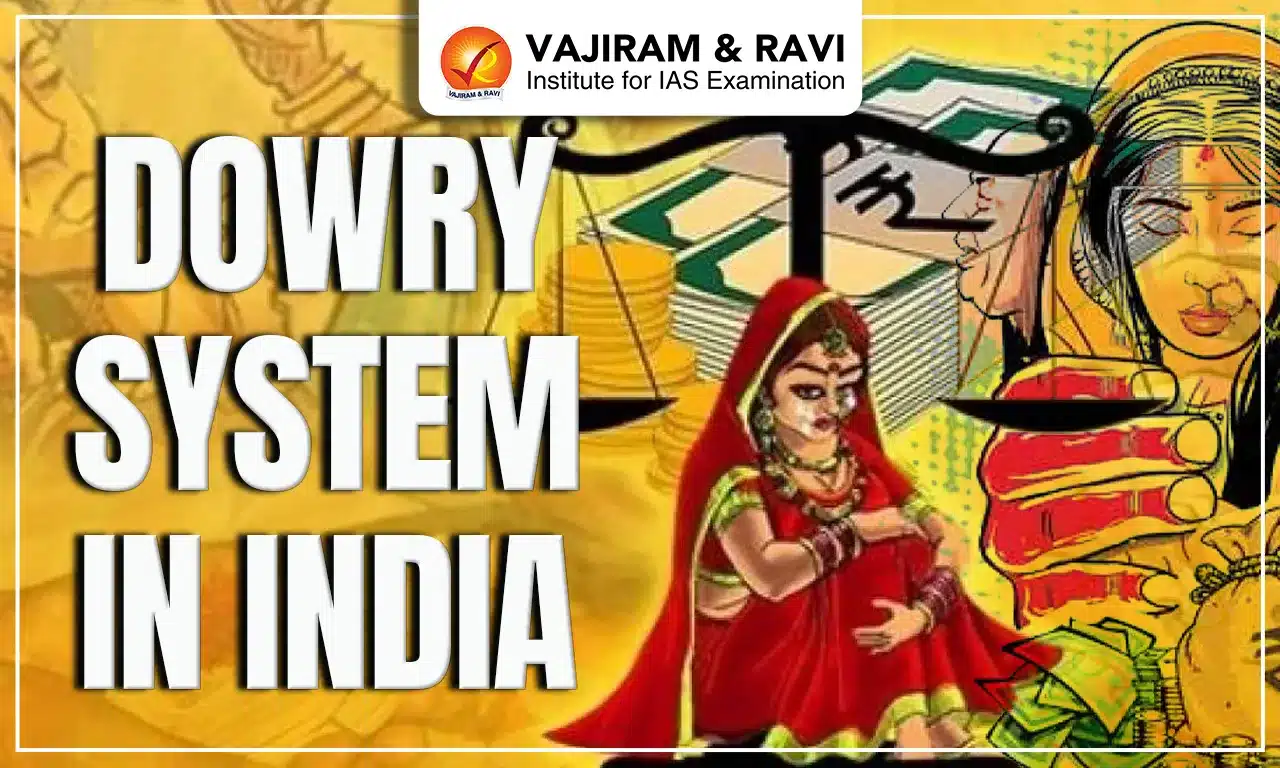
The Dowry System in India is one of the most enduring social practices rooted deeply in the country’s history, traditions, and patriarchal mindset. Originally meant as a voluntary gift to the bride from her family, dowry has over time evolved into a social menace that burdens families, fuels gender discrimination, and leads to violence against women. Despite being outlawed by the Dowry Prohibition Act of 1961, it continues to thrive across both urban and rural India.

Dowry System in India

The Dowry System in India refers to the transfer of wealth, property, or valuable items from the bride’s family to the groom’s family at marriage. According to Mahatma Gandhi, dowry was a social evil, he said- "Any young man, who makes dowry a condition to marriage, discredits his education and his country and dishonours womanhood". Originally intended to support the bride, it has evolved into a major cause of gender discrimination and social injustice.

Dowry System in India Historical Background

The Dowry System in India has evolved over centuries from a social custom into a complex economic and legal issue.

  • Ancient Period: Dowry began as “Stridhan” in Vedic times, intended as voluntary gifts to the bride for her financial security.
  • Medieval Era: Gradually, it became a compulsory payment demanded by the groom’s family, especially in royal and upper-caste marriages.
  • Colonial Period: British codification of property laws reinforced patriarchal inheritance, worsening dowry dependence.
  • Post-Independence: Despite the Dowry Prohibition Act, 1961, the custom persisted, adapting to modern materialistic expectations.

Dowry System in India Causes

The persistence of dowry in Indian society can be attributed to several socio-economic and cultural factors responsible for Dowry System in India:

  1. Patriarchal Mindset: Women are still viewed as financial liabilities, reinforcing the demand for dowry as compensation for “taking care” of them.
  2. Economic Inequality: Rising income disparities have commercialized marriages, where dowry becomes a form of wealth transfer.
  3. Marriage as a Social Transaction: The notion of status and prestige leads families to compete through lavish dowry exchanges.
  4. Gender Bias: Preference for sons over daughters perpetuates the view that investing in a girl’s education or career is less valuable.
  5. Lack of Education and Awareness: In rural areas, ignorance of legal safeguards enables continued dowry practices.
  6. Social Pressure and Tradition: Families fear social ostracism if they refuse to give or accept dowry.
  7. Weak Law Enforcement: Inadequate implementation of anti-dowry laws allows offenders to escape punishment.
  8. Cultural Conditioning: Bollywood and media often romanticize wealth-based marriages, indirectly validating dowry expectations.
  9. Inheritance Inequality: Since women often do not inherit property, dowry is seen as their “share” of parental wealth.
  10. Rising Consumerism: Growing material aspirations in society fuel the demand for luxury goods as part of dowry.

Dowry System in India Impact

Dowry has far-reaching social, economic, and psychological consequences. It reinforces gender inequality and affects both individuals and society at large.

  1. Violence Against Women: Dowry-related harassment, torture, and deaths remain rampant. As per NCRB 2022, crimes under Section 498A (cruelty by husband or relatives) exceed 125,000 cases annually.
  2. Gender Imbalance: Dowry has contributed to the decline in India’s sex ratio (1020 males per 1000 females as per NFHS-5) due to the preference for male children.
  3. Financial Burden on Families: Families often incur heavy debts or sell property to meet dowry demands, leading to long-term economic distress.
  4. Delay and Denial of Marriage: Poor families face difficulties marrying their daughters, leading to social exclusion and psychological trauma.
  5. Psychological Impact: Continuous harassment affects women’s mental health, causing depression, anxiety, and, in extreme cases, suicide.
  6. Loss of Dignity and Status: Women are often humiliated and treated as commodities, reducing their self-worth.
  7. Intergenerational Cycle of Poverty: The dowry burden perpetuates economic hardship, especially in rural India where families take loans to pay dowry.
  8. Erosion of Moral Values: Dowry encourages greed and corruption within the marriage system.

Dowry System in India Legal Framework

The legal provisions against the Dowry System in India has been given below:

  • The Dowry Prohibition Act, 1961: The cornerstone law that criminalizes giving, taking, or demanding dowry. Punishment includes imprisonment up to 5 years and a fine up to ₹15,000 or the value of the dowry.
  • Bhartiya Nyay Samhita (BNS) Section 85: Dowry Death, earlier given under Indian Penal Code (IPC) Sections 304B and 498A:
    • Section 304B (Dowry Death): Death of a woman within 7 years of marriage under suspicious circumstances is treated as dowry death.
    • Section 498A: Protects women from cruelty and harassment by husbands and in-laws.
  • Protection of Women from Domestic Violence Act, 2005: Extends legal protection to victims of dowry-related abuse within marital homes.
  • Indian Evidence Act (Section 113B): Presumes the husband or his relatives responsible if a woman dies due to dowry harassment.
  • Criminal Law (Amendment) Act, 1983: Strengthened legal provisions against dowry and cruelty within marriage.

Dowry System in India Case Laws

Various Case Laws that upheld and governed the rightful implementation of the safeguards as well as inhibit the misuse of the laws is given here:

  1. Rajesh and ORS v. State of Punjab (1992): The Court upheld clarification for evidentiary requirements.
  2. Preeti Gupta v. State of Jharkhand (2010): Supreme Court raised concerns about the potential for the misuse of Section 498A IPC
  3. S. Gopal Reddy v. State of Andhra Pradesh (1996): The Supreme Court clarified that dowry includes any demand made before or after marriage.
  4. Satbir Singh v. State of Haryana (2021): The Court reiterated that mental and physical cruelty linked to dowry qualifies as dowry harassment.
  5. Rajinder Singh v. State of Punjab (2015): The Supreme Court clarified the meaning of the phrase "soon before death" in the context of Section 304B IPC (dowry death) emphasizing that the cruelty or harassment must have a proximate and live link to the death of the woman.
  6. Arnesh Kumar v. State of Bihar (2014): Directed police to avoid arbitrary arrests under Section 498A, highlighting the misuse of dowry laws.

Dowry System International Framework

India is a signatory to several international conventions addressing gender-based violence and discrimination which indirectly supports the policies against the dowry system in India:

  • Convention on the Elimination of All Forms of Discrimination Against Women (CEDAW), 1979
  • Universal Declaration of Human Rights (UDHR), 1948
  • Beijing Declaration and Platform for Action, 1995

Dowry System in India Government Policies

The Government of India has brought several initiatives and policies that promotes the eradication of the issue of Dowry System in India directly and indirectly:

  1. Beti Bachao Beti Padhao (2015): Aims to improve the status of girls by addressing gender bias and promoting education.
  2. Mahila Shakti Kendras (MSK): Empower rural women through training, awareness, and financial support.
  3. One Stop Centres (OSC): Provide integrated support to women facing violence, including dowry-related abuse.
  4. Sukanya Samriddhi Yojana: Encourages saving for girls’ education and future financial independence.
  5. National Commission for Women (NCW): Monitors implementation of laws protecting women’s rights.
  6. Ujjawala Scheme: Focuses on prevention, rescue, and rehabilitation of trafficked women.

Role of Society and Media against Dowry System

The media plays a crucial role in shaping social attitudes. Campaigns such as Stop Dowry System and Beti Bachao Beti Padhao have raised awareness. Cinema too, through films like Thappad and Fire, has challenged patriarchal norms. Civil society organizations like Jagori, SEWA, and Vimochana conduct grassroots campaigns and legal aid programs to help women resist dowry-related abuse.

Dowry Laws in India Misuse

While the Dowry Prohibition Act, 1961 and Section 498A of IPC (now Section 85 of BNS and other related sections) were introduced to protect women from harassment, misuse of these provisions has become a growing concern. 

  • According to the National Crime Records Bureau (NCRB), nearly 2 lakh people, including 47,951 women, were arrested in 2012 for dowry offences, but only 15% were convicted.
  • The Supreme Court, in Preeti Gupta v. State of Jharkhand (2010) and Arnesh Kumar v. State of Bihar (2014), warned against arbitrary arrests under Section 498A IPC.
  • The Atul Subhash case (2024) highlighted growing concern over men’s rights, mental health, and alleged misuse of anti-dowry and domestic violence laws.
  • To prevent abuse, the Law Commission and Justice Malimath Committee recommended amendments in 2015 to make offences under Section 498A compoundable, promoting reconciliation.
  • Despite some misuse, experts emphasize the need for a balanced approach—protecting genuine victims while ensuring fairness to the accused.

Stree-Dhan in Indian Law

Stree-dhan (Stridhan) refers to the property, gifts, or money a woman receives during her lifetime, before, during, or after marriage. Under Section 14 of the Hindu Succession Act, 1956, a woman has absolute ownership over her stree-dhan. It cannot be taken by her husband or in-laws.

  • Includes gifts received from relatives, friends, or the husband.
  • The Supreme Court in Pratibha Rani v. Suraj Kumar (1985) affirmed that stree-dhan remains the woman’s exclusive property.
  • Misappropriation of stree-dhan can lead to prosecution under Section 316 BNS (criminal breach of trust)

Differences Between Dowry, Stree-Dhan and Alimony

Although these terms used relatively together, have different concepts of welfare and affirmation, which is often misused instead of safeguarding. The key difference between Dowry, Stree-Dhan and Alimony has been tabulated below:

Differences Between Dowry, Stree-Dhan and Alimony
Basis Dowry Stree-Dhan Alimony

Nature

Illegal transfer of money, goods, or property demanded by groom’s side

Legal property exclusively owned by a woman during or after marriage

Legal financial support granted after divorce or separation

Purpose

To satisfy demands at or after marriage

To provide financial security and independence to the woman

To ensure financial stability of dependent spouse post-divorce

Timing

Given before, during, or after marriage as part of social custom

Received before, during, or after marriage voluntarily

Paid after separation or divorce

Control & Ownership

Controlled by groom or his family (illegal possession)

Remains under the woman’s absolute ownership (cannot be claimed by in-laws or husband)

Decided by court based on income and needs

Legality

Prohibited under Dowry Prohibition Act, 1961

Protected under Hindu Succession Act, 1956 and upheld in Pratibha Rani v. Suraj Kumar (1985)

Permitted under BNSS Section 144 and Hindu Marriage Act, 1955

Punishment for Misuse/Violation

Up to 5 years imprisonment and fine

Misappropriation is punishable under Section 316 BNS (criminal breach of trust)

Not punishable; subject to judicial revision

Recipient

Groom’s family or relatives (illegal beneficiaries)

Woman herself - full and independent rights

Dependent spouse, usually wife

Moral Standing

Considered a social evil and punishable offence

Considered sacred property ensuring women’s dignity and financial safety

Considered a lawful right ensuring social justice

Example

Demanding cash or car as a condition of marriage

Jewellery or gifts received by bride during marriage ceremonies

Monthly maintenance or lump sum ordered by court

Dowry System in India Challenges

Despite various reforms and policies along with legal safeguards, the Dowry System has been prevalent in India as a part of Marriages and Ceremonies.

Challenges

  1. Societal Acceptance: Dowry is often seen as tradition, making it socially acceptable.
  2. Weak Law Enforcement: Many cases go unreported or unpunished due to social stigma.
  3. False Cases: Misuse of anti-dowry laws has led to skepticism and delayed justice.
  4. Patriarchal Structures: Deep-rooted gender bias still normalizes dowry.
  5. Economic Pressure: Families use dowry as a tool to secure economic advantage.

Way Forward

  • Strengthen awareness campaigns targeting schools and rural communities.
  • Introduce pre-marriage counseling programs to promote gender equality.
  • Encourage women’s property rights and financial independence.
  • Implement social audits and public disclosure for dowry-related crimes.
  • Foster collaboration between government, NGOs, and local panchayats to monitor dowry-free marriages.

Dowry System in India Current Status

Modern India presents a paradox, while laws and social reforms have improved women’s education and employment opportunities, dowry remains entrenched in cultural practice. As per the NITI Aayog’s 2023 Social Progress Index, nearly 75% of Indian marriages still involve some form of dowry transaction. However, rising female literacy, urbanization, and social media activism are gradually shifting public opinion against the practice.

Initiatives like “No Dowry Marriages” in Kerala and self-help groups promoting dowry-free weddings in Bihar and Tamil Nadu represent positive social change. The growing participation of women in the workforce and their access to education will remain the most powerful tools to eliminate dowry from Indian society.

Dowry System in India UPSC

Despite legislative bans, the practice remains prevalent. According to the National Crime Records Bureau (NCRB) 2022, India reported over 6,500 dowry-related deaths, accounting for nearly 19 deaths per day. States like Uttar Pradesh, Bihar, and Madhya Pradesh recorded the highest numbers. The National Family Health Survey (NFHS-5) also reveals that dowry continues to be an expected part of marriage negotiations, particularly in North India.

A United Nations Development Programme (UNDP, 2023) report states that dowry exchanges are more prevalent in regions where female literacy rates and workforce participation are low. Even among educated and urban populations, dowry remains a marker of social prestige, highlighting how modernization has failed to dismantle entrenched gender norms.

Dowry System in India FAQs

Q1: What is the Dowry System in India?

Ans: The dowry system involves giving money, goods, or property by the bride’s family to the groom’s family during marriage negotiations.

Q2: Is Dowry Legal in India?

Ans: No, it is banned under the Dowry Prohibition Act, 1961, and punishable by imprisonment and fines.

Q3: Which Indian states report the highest dowry cases?

Ans: According to NCRB 2022, Uttar Pradesh, Bihar, and Madhya Pradesh report the most dowry-related deaths.

Q4: What are the key laws against the Dowry System in India?

Ans: Major laws include the Dowry Prohibition Act, BNS Section 85, and the Domestic Violence Act, 2005.

Q5: How can we eliminate the Dowry System in India?

Ans: Through education, women empowerment, strict law enforcement, social awareness, and promoting dowry-free marriages.
Narendra Modi Biography, Birth Date, Education and Political Career

Narendra Modi Biography

Narendra Modi, born on 17 September 1950 in Vadnagar, Gujarat, is the Current Prime Minister of India. Rising from humble beginnings, he became an RSS member and later joined the BJP. He served as Chief Minister of Gujarat (2001-2014) before becoming India’s 14th Prime Minister in 2014, known for his dynamic leadership and development-focused governance.

An early member of the Rashtriya Swayamsevak Sangh (RSS), Modi later joined the Bharatiya Janata Party (BJP), where his organisational skills and leadership quickly gained recognition. He holds a degree in Political Science, which laid the foundation for his deep interest in governance and public policy.

Narendra Modi Birthday

Narendra Modi, born on September 17, 1950, has turned 75 on Wednesday, September 17, 2025. His birthday is observed as Sewa Diwas by the BJP and its supporters through social service activities like health camps, cleanliness drives, and blood donation. This year, a special Sewa Pakhwada (Sept 17-Oct 2) will be launched, focusing on Swadeshi and Aatmanirbhar Bharat. On his birthday, Narendra Modi will inaugurate a mega textile park in Dhar, Madhya Pradesh.

Narendra Modi Biography

Narendra Modi, born on September 17, 1950, in Vadnagar, Gujarat, is an Indian politician serving as the Prime Minister of India since May 2014. He represents the Bharatiya Janata Party (BJP), one of the major national parties known for its right-of-center ideology. Modi’s life story reflects a journey from modest beginnings to national leadership. His rise in politics, shaped by discipline, organizational skills, and strong oratory, has made him one of the most prominent and influential figures in contemporary Indian politics.

Narendra Modi Facts

Narendra Modi’s journey from a small town in Gujarat to becoming the Prime Minister of India has been remarkable. Below is a quick overview of Narendra Modi Facts and political details about him.

Narendra Modi Facts

Date of Birth

PM Modi was born on September 17, 1950.

Age

In Vadnagar, Gujarat, on September 17, 1950, the current Prime Minister, Narendra Modi, was born; hence, PM Modi’s Age is 75 years.

Full Name of Narendra Modi

His full name is Narendra Damodardas Modi.

Constituency

He serves as the Lok Sabha representative for the Varanasi constituency and is recognised as a strong party strategist.

Narendra Modi Early Life

Narendra Modi, the Current Prime Minister of India, was born and raised in a small village in northern Gujarat. He went on to pursue higher education at Gujarat University in Ahmedabad, where he earned a Master’s degree in Political Science.

In the early 1970s, Modi became associated with the Rashtriya Swayamsevak Sangh (RSS), a pro-Hindu nationalist organisation. He quickly became active in the Akhil Bharatiya Vidyarthi Parishad (ABVP), the student wing of the RSS, and soon began climbing the organisation’s ranks. His long association with the RSS played a key role in shaping his ideological foundation and proved instrumental in his later political rise.

By 1987, Modi transitioned to formal politics when he joined the Bharatiya Janata Party (BJP). Within the same year, he was appointed General Secretary of the Gujarat unit of the party. Over the next decade, he was deeply involved in expanding the BJP’s influence in Gujarat.

Modi’s organisational skills and political strategy helped the BJP secure a major win in the Gujarat Legislative Assembly Elections 1995, enabling the party to form its first-ever government in the state. Earlier, in 1990, he had also been part of the BJP’s role in forming a coalition government in Gujarat. However, the BJP’s hold on the state was short-lived, lasting only until September 1996.

Narendra Modi Education

Narendra Damodardas Modi, born on 17 September 1950 in Vadnagar, Gujarat, comes from a humble background. He grew up in a lower-middle-class family of grocers, where financial struggles were part of daily life. His early years instilled in him the values of hard work, perseverance, and discipline.

Primary and Secondary Education: Modi completed his primary and higher secondary schooling in Vadnagar. Teachers recall him as a bright and curious student with a deep interest in debates and theatre.

Higher Education:

  • Bachelor’s Degree (BA): Modi pursued Political Science at the University of Delhi, earning his degree in 1978.
  • Master’s Degree (MA): He continued his academic journey at Gujarat University in Ahmedabad, where he completed a Master’s in Political Science in 1983.

After completing his studies, Modi dedicated himself to public service. He became a pracharak (campaigner) for the Rashtriya Swayamsevak Sangh (RSS), where he developed his organisational skills and political ideology. His active involvement in the RSS eventually paved the way for his political career in the Bharatiya Janata Party (BJP).

Narendra Modi Political Timeline

The journey of Narendra Modi of becoming the Longest-Serving Prime Minister outside the Congress party, is marked by significant milestones. The timeline below highlights the key events in his life and career, showcasing how he rose through the ranks, took on leadership roles in Gujarat, and eventually emerged as a national leader.

Narendra Modi Political Timeline

Years

Events

2024

After another strong electoral performance, Narendra Modi was sworn in for a third consecutive term as Prime Minister on June 9, 2024.

2019

Narendra Modi, the prime minister of India, has been elected for a second five-year term.

2014

The 14th and current Prime Minister of India is Narendra Modi. On May 26, 2014, Modi took the oath of office as India’s prime minister. After India gained its independence from the British Empire, he became the country’s first prime minister.

2012

Modi won re-election in Maninagar. This time, he won by 34097 votes over Bhatt Shweta Sanjiv. In his fourth stint as chief minister, he again took the oath. Later, in 2014, he left the assembly.

2007

The third term of Modi’s leadership as CM began on December 23, 2007, and it ended on December 20, 2012. Once more, he prevailed over Maninagar. Dinsha Patel of Congress lost to him.

2002

The assembly election was won by him, who ran from Maninagar. By 38256 votes, he defeated Congressman Oza Yatinbhai Narendrakumar. He continued to serve as Gujarat’s chief minister (his second term).

2001

Keshubhai Patel’s health was deteriorating, and the BJP suffered a couple of losses in by-elections for state assembly seats. Modi took over as Gujarat’s Chief Minister after Patel was ousted by the BJP’s national leadership. Modi took his oath as Gujarat’s chief executive on October 7, 2001. He won the Rajkot II constituency’s by-election on February 24, 2002. By 14,728 votes, he defeated Ashwin Mehta of the INC. This was his first and only temporary position.

1995

He moved to New Delhi after being appointed the BJP national secretary. He oversaw the Himachal Pradesh and Haryana electoral campaigns. In 1996, Modi was allowed to become the BJP’s general secretary.

1990

Modi participated in the planning of L. K. Advani’s 1990 Ram Rath Yatra and Murli Manohar Joshi’s 1991–1992 Ekta Yatra.

1987

Modi was chosen to serve as the Gujarat branch of the BJP’s organising secretary.

1986

Modi succeeded L. K. Advani as BJP president. At that time, the RSS decided to give its members key posts within the BJP.

1985

Modi was given to the BJP by RSS. Modi assisted in planning the BJP’s campaign for the Ahmedabad municipal election later in 1987. The BJP won that election.

1979

He relocated to Delhi and started working with the RSS, where he was assigned to write and do research for the RSS’s account of the Emergency.

1978

He became an “RSS sambhag pracharak,” associated with RSS activity in the Surat and Vadodara regions.

1975

The RSS chose Narendra Modi to be the organisation’s general secretary, or “Gujarat Lok Sangharsh Samiti”. In order to avoid being arrested during the Emergency, Modi was compelled to hide. Printing pamphlets critical of the government was something he did.

Narendra Modi as Chief Minister of Gujarat

Narendra Modi as Chief Minister of Gujarat branded Gujarat as “Vibrant Gujarat,” highlighting economic growth and infrastructure development. Critics, however, point to persistent poverty, malnutrition, and low literacy in the state. According to data in 2014, Gujarat ranked 18th in literacy and 14th in poverty as of 2013. While women’s education and maternal health showed improvement, rural and lower-caste communities reportedly saw little benefit from the state’s progress.

Narendra Modi as Chief Minister of Gujarat

Term

Period

Key Events & Initiatives

Achievements

Controversies / Criticism

First Term

2001-2002

Took oath as CM on 7 Oct 2001; organized BJP for 2002 elections

Initiated privatization of small government institutions

2002 Godhra train incident & subsequent anti-Muslim riots; SIT later found no evidence against Modi, though allegations of concealed evidence emerged

Second Term

2002-2007

Focused on economic development and investment promotion; Vibrant Gujarat Summit 2007

Established financial and technological parks; signed real estate investments worth Rs. 6,600 billion; served 2,063 consecutive days as CM

Critics argued benefits mainly went to urban areas; rural and marginalized communities less affected

Third Term

2007-2012

Strengthened agriculture & rural infrastructure; micro-irrigation; power supply improvements; Sadbhavana Mission launched

500,000 infrastructure projects including 113,738 check dams; normalized groundwater in 60 tehsils; Bt cotton production increased; agriculture growth rate 9.6%; CAGR 10.97%

Critics highlighted continuing rural poverty and marginalization of Dalit & tribal communities; growth seen as benefiting mostly urban middle class

Fourth Term

2012-2014

Elected from Maninagar by a large margin; continued infrastructure & investment focus

Prepared Gujarat for economic growth & smooth transition to national politics

Limited time for term-specific controversies; ongoing criticism about uneven development across social groups

Narendra Modi Major Achievement

The following table provides a detailed overview of the major milestones, initiatives, and achievements of Narendra Modi throughout his political career. It covers his tenure as Chief Minister of Gujarat and as the Prime Minister of India, highlighting key economic reforms, social programs, infrastructure projects, legislative decisions, foreign policy actions, and environmental initiatives. The table is organised chronologically and categorically to give a clear and comprehensive picture of his contributions to India’s development and governance.

Narendra Modi Major Achievement

Category

Initiative / Reform

Launched / Implemented

Objective / Significance

Economic Reforms

Goods and Services Tax (GST)

July 1, 2017

Streamline India’s tax structure into a unified system; improve compliance and ease of doing business

Make in India

September 25, 2014

Encourage domestic & international manufacturing; boost jobs and industrial growth

Digital India

July 1, 2015

Build digitally empowered society; improve e-governance and digital literacy

Atmanirbhar Bharat

May 12, 2020

Promote self-reliance; reduce import dependence, especially post-COVID-19

Social Initiatives

Swachh Bharat Mission

October 2, 2014

Improve sanitation and cleanliness; eliminate open defecation; manage solid waste

Pradhan Mantri Jan Dhan Yojana (PMJDY)

August 28, 2014

Financial inclusion; provide banking services for the unbanked, including zero-balance accounts

Ayushman Bharat

September 23, 2018

Health insurance coverage of ₹5 lakh per family/year; improve healthcare access for economically weaker sections

Infrastructure Development

Pradhan Mantri Awas Yojana (PMAY)

June 25, 2015

Provide affordable housing to urban poor; ensure basic amenities for every family

Ujjwala Yojana

May 1, 2016

Free LPG connections for BPL women; improve health and reduce use of traditional fuels

Foreign Policy & Diplomacy

Strengthening Global Relations

Ongoing

Enhance trade, strategic partnerships, and cooperation with US, Japan, Russia, and others

Act East Policy

Ongoing

Strengthen strategic & economic ties with Indo-Pacific countries, especially ASEAN nations

Legislative / Policy Decisions

Abrogation of Article 370

August 5, 2019

Revoke special status of Jammu & Kashmir; reorganize it into two Union Territories

Citizenship Amendment Act (CAA)

December 12, 2019

Provide citizenship pathway for non-Muslim refugees from Pakistan, Bangladesh, Afghanistan

COVID-19 Response

Vaccine Rollout

January 16, 2021

Phase-wise vaccination starting with healthcare workers and high-risk groups

Economic Stimulus Packages

2020–2021

Financial support for businesses, workers, and healthcare during pandemic

Environmental / Climate Initiatives

International Solar Alliance (ISA)

November 30, 2015

Promote global solar energy use; promotes international collaboration in solar power

Bharat Stage VI (BS-VI) Emission Norms

April 1, 2020

Improve air quality; mandate stricter vehicle emission standards

Narendra Modi Books

Narendra Modi is not only a political leader but also a prolific writer. Over the years, he has authored several books and collections of stories that reflect his thoughts, experiences, and values. These works provide insight into his personal philosophy, social beliefs, and formative influences from his early days as a labourer and RSS pracharak to his vision for education, social harmony, and leadership. The following table summarises his notable literary contributions.

Book Title

Theme / Focus

Key Highlights

Jyotipunj

Inspirational figures

Modi describes the people who inspired him and shaped his life, including reflections from these individuals themselves.

Abode of Love

Short stories on love

A collection of eight stories highlighting the tender, compassionate side of Modi; explores motherly love as the root of all other forms of love.

Premtirth

Maternal feelings

A heartfelt portrayal of maternal emotions through simple yet impactful storytelling.

Kelve Te Kelavani

Education and knowledge

Focuses on the importance of nurturing education, presenting Modi’s vision for a knowledge revolution in Gujarat.

Sakshibhav

Personal reflections

A collection of letters to Jagat Janani Maa, revealing Modi’s emotional journey and inner self during his time with the RSS.

Samajik Samarasata

Social harmony

Papers and talks on social reform, caste equality, and Modi’s encounters with Dalits, reflecting his belief in social peace and action-oriented principles.

Narendra Modi FAQs

Q1: What is the salary of Modi?

Ans: The Prime Minister of India earns ₹2,80,000 per month (basic salary plus allowances), excluding perks and official residence.

Q2: Where is Narendra Modi's birthday?

Ans: Narendra Modi was born on 17 September 1950 in Vadnagar, Gujarat.

Q3: Who is India's Prime Minister in 2025?

Ans: As of 2025, Narendra Modi continues as India’s Prime Minister.

Q4: What is the qualification of Modi?

Ans: Narendra Modi holds a Master’s degree in Political Science from Gujarat University (correspondence program).

Q5: Whose salary is highest in India?

Ans: The Chief Justice of India and the President of India receive higher salaries than the Prime Minister, approximately ₹2.5-5 lakh/month plus allowances.

UPSC Daily Quiz 4 November 2025

UPSC Daily Quiz

The Daily UPSC Quiz by Vajiram & Ravi is a thoughtfully curated initiative designed to support UPSC aspirants in strengthening their current affairs knowledge and core conceptual understanding. Aligned with the UPSC Syllabus 2025, this daily quiz serves as a revision resource, helping candidates assess their preparation, revise key topics, and stay updated with relevant issues. Whether you are preparing for Prelims or sharpening your revision for Mains, consistent practice with these Daily UPSC Quiz can significantly enhance accuracy, speed, and confidence in solving exam-level questions.

[WpProQuiz 14]

UPSC Daily Quiz FAQs

Q1: What is the Daily UPSC Quiz?

Ans: The Daily UPSC Quiz is a set of practice questions based on current affairs, static subjects, and PYQs that help aspirants enhance retention and test conceptual clarity regularly.

Q2: How is the Daily Quiz useful for UPSC preparation?

Ans: Daily quizzes support learning, help in revision, improve time management, and boost accuracy for both UPSC Prelims and Mains through consistent practice.

Q3: Are the quiz questions based on the UPSC syllabus?

Ans: Yes, all questions are aligned with the UPSC Syllabus 2025, covering key areas like Polity, Economy, Environment, History, Geography, and Current Affairs.

Q4: Are solutions and explanations provided with the quiz?

Ans: Yes, each quiz includes detailed explanations and source references to enhance conceptual understanding and enable self-assessment.

Q5: Is the Daily UPSC Quiz suitable for both Prelims and Mains?

Ans: Primarily focused on Prelims (MCQ format), but it also indirectly helps in Mains by strengthening subject knowledge and factual clarity.

Social Movements in India, Types, List, History, Leaders, Impact

Social Movements in India

Social movements in India have played a crucial role in shaping the nation’s democratic, social, and political identity. They are collective efforts by groups or communities to promote, resist, or undo social change. Rooted in the country’s struggle for freedom and equality, social movements address issues like caste discrimination, gender inequality, environmental degradation, labor rights, and economic justice. These movements highlight the dynamic relationship between state, society, and citizens, reflecting India’s evolving socio-political consciousness.

Social Movements in India

Social movements are organized efforts by people to bring about or resist social, political, or economic changes. According to sociologists like M.S.A. Rao and T.K. Oommen, they emerge when existing institutions fail to address the needs and aspirations of certain sections of society. In India, these movements often arise from social inequalities based on caste, class, religion, gender, and ethnicity, aiming to create a more inclusive and participatory democracy.

Social Movements in India Historical Background

The roots of social movements in India can be traced to the 19th century when reformers like Raja Ram Mohan Roy, Jyotiba Phule, and Ishwar Chandra Vidyasagar initiated struggles against social evils such as sati, child marriage, and caste discrimination. The Indian freedom movement itself was one of the largest social movements in world history, mobilizing millions for independence and equality.

Social Movements in India Types

Based on the nature and focus of the movements, the Social Movements in India have been classified as:

1. Reformist Movements

Reformist movements aim to change certain aspects of society without altering its fundamental structure. They seek to modernize traditions, religion, and customs. Examples include:

  • Brahmo Samaj (1828): Advocated for women’s education and opposed sati.
  • Arya Samaj (1875): Promoted Vedic values, women’s empowerment, and education.
  • Prarthana Samaj: Worked for widow remarriage and caste equality in Maharashtra.

2. Revolutionary Movements

These movements aim for complete transformation of the social and political order through radical means.

  • Indian Freedom Struggle: Revolutionary groups like Hindustan Socialist Republican Association (HSRA) and Indian National Army (INA) sought independence through armed resistance.
  • Naxalite Movement (1967): Originated in Naxalbari, West Bengal, demanding land redistribution and social justice through revolutionary methods.

3. Peasant Movements

Peasant movements emerged against the exploitation of farmers by landlords, colonial authorities, and moneylenders.

  • Indigo Revolt (1859-60): Farmers protested against forced indigo cultivation.
  • Tebhaga Movement (1946-47): Sharecroppers in Bengal demanded two-thirds of the produce.
  • Champaran Satyagraha (1917): Gandhi’s first major movement in India, fighting indigo plantation oppression.
  • Contemporary Movements: Farmers’ protests against land acquisition and the 2020 farm laws reflect ongoing agrarian distress.

4. Tribal Movements

Tribal movements have aimed to preserve identity, land rights, and autonomy against exploitation and displacement.

  • Santhal Rebellion (1855-56): Protested against British policies and moneylenders.
  • Munda Rebellion (1899-1900): Led by Birsa Munda demanding tribal self-rule.
  • Jharkhand and Chhattisgarh Movements: Sought separate statehood for tribal welfare, leading to the formation of new states in 2000.

5. Dalit Movements

Dalit movements aim to end caste-based discrimination and untouchability.

  • Adi Dharma Movement (Punjab, 1920s): Asserted equality for Dalits.
  • Dr. B.R. Ambedkar’s Movement: Fought for legal and political rights, leading to the formation of the Scheduled Castes Federation.
  • Dalit Panthers (1972): Inspired by Black Panthers, they fought caste oppression and social exclusion.

6. Women’s Movements

Women’s movements have focused on gender equality, legal rights, and social justice.

  • Pre-independence: Reformers like Savitribai Phule and Sarojini Naidu fought for education and political participation.
  • Post-independence: Movements like the Anti-Dowry Movement (1980s), Chipko Movement, Nirbhaya protests (2012) and #MeToo Movement (2017)  demanded systemic reforms.
  • Legislative Impacts: These movements led to laws like the Dowry Prohibition Act (1961), Domestic Violence Act (2005), and POSH Act (2013).

7. Environmental Movements

Environmental movements arose from ecological degradation, deforestation, and displacement due to industrial projects.

  • Chipko Movement (1973): Villagers in Uttarakhand hugged trees to prevent deforestation.
  • Narmada Bachao Andolan (1985): Protested displacement due to dam projects.
  • Silent Valley Movement (1978): Opposed hydroelectric projects threatening biodiversity in Kerala.
  • Contemporary Focus: Climate activism, clean air campaigns, and green urban initiatives.

8. Student Movements

Students have been an active force in India’s political and social change.

  • JP Movement (1974): Led by Jayaprakash Narayan demanding “Total Revolution.”
  • Assam Agitation (1979-85): Led by AASU against illegal immigration.
  • Contemporary Movements: Student protests in universities like JNU, Hyderabad University, and Jamia Millia Islamia for social justice and freedom of speech.

Social Movements in India Post-Independence

After 1947, social movements shifted focus from colonial resistance to democracy, equality, and welfare.

  1. Land Reform Movements: Targeted redistribution of land and rights for landless laborers.
  2. Anti-Caste Movements: Dr. Ambedkar’s and Kanshi Ram’s activism laid the foundation for Dalit political assertion.
  3. Women’s Liberation: Post-1970s feminist activism reshaped gender discourse.
  4. Tribal Rights Movements: The Forest Rights Act, 2006, emerged from sustained tribal struggles.
  5. Environmental Justice: Narmada Bachao Andolan influenced the global environmental justice movement.

New Social Movements in India

The major movements that ignited in the recent times and had a great influence on the large population of the India and world for various issues of the contemporary times are:

  • Farmers’ Protests (2020-21): Millions of farmers from Punjab, Haryana, and Uttar Pradesh protested against three agricultural laws, demanding minimum support prices and protection from corporatization. The movement was largely peaceful and resulted in the repeal of the laws in 2021.
  • Anti-CAA Protests (2019-20): Citizens protested against the Citizenship Amendment Act, alleging it violated secular principles. The Shaheen Bagh sit-in became a symbol of democratic resistance led by women.
  • Environmental and Climate Movements: Youth-led initiatives like “Fridays for Future India” and “Let India Breathe” highlight the growing awareness of climate change and ecological degradation.
  • Digital Movements and Social Media Activism: Social media has amplified social justice movements. Hashtags like #MeTooIndia, #DalitLivesMatter, and #SaveAarey have mobilized national and global support for social causes.

Social Movements in India Features

Key features of the Social Movements in India are:

  1. Mass Mobilization: Involvement of marginalized communities, farmers, workers, and women.
  2. Diverse Ideologies: Ranging from Gandhian non-violence to Marxist radicalism.
  3. Organizational Networks: NGOs, unions, and civil society play key roles.
  4. Issue-Based Focus: Movements often target single issues like environment, gender, or labor rights.
  5. Democratic Character: Peaceful protests and public participation define their methods.

Social Movements in India Leadership

Leadership determines the direction and success of movements. Historical leaders like Mahatma Gandhi inspired non-violent resistance, Dr. B.R. Ambedkar fought for social justice, and Jayaprakash Narayan mobilized youth for democratic reform. Contemporary figures like Medha Patkar (Narmada Bachao Andolan) and Anna Hazare (anti-corruption movement) continue to shape civic consciousness.

Social Movements in India Legal and Constitutional Framework

The Legal and Constitutional Framework Supporting Social Movements are:

  1. Article 19(1)(a) and 19(1)(b): Guarantee freedom of speech and peaceful assembly.
  2. Article 21: Protects right to life and dignity, forming the basis for social rights.
  3. Article 17: Abolishes untouchability, strengthening Dalit and anti-caste movements.
  4. Right to Information Act (2005): Empowered citizens to demand transparency.
  5. Environmental Laws: The Environment (Protection) Act, 1986, supports ecological movements.

Social Movements in India Government Initiatives

Various Government Policies and initiatives that pave a path for the initiation and implementation of the Social Movements in India are:

  • National Commission for Women (1992): Safeguards women’s rights.
  • National Commission for Scheduled Castes and Tribes: Ensures representation and protection of marginalized communities.
  • Forest Rights Act (2006): Recognizes tribal land rights.
  • MNREGA (2005): Addresses rural poverty through employment guarantees.

Social Movements in India Challenges

  • Political Co-option: 
    • Many movements lose autonomy when absorbed by political parties.
    • Way Forward: Safeguard movement independence through ethical frameworks
  • Fragmentation of Movements: 
    • Lack of unity among regional and ideological groups.
    • Way Forward: Encourage broader coalitions among issue-based groups for stronger impact
  • Media Misrepresentation:
    • Certain protests are portrayed negatively, diluting legitimacy.
    • Way Forward: Use community media and verified digital networks for authentic outreach.
  • Repression of Dissent:
    • Use of colonial-era laws to restrict protests.
    • Way Forward: Strengthen legal protection for peaceful protest under Article 19.
  • Urban Bias:
    • Rural and tribal issues often receive limited attention.
    • Way Forward: Promoting local visits and empowerment of local centres to address the issue at inaccessible levels.
  • Digital Divide:
    • Limits participation from marginalized rural populations.
    • Way Forward: Expand digital literacy and offline mobilization in rural India.
  • Leadership Crisis: 
    • Absence of strong and inclusive leadership.
    • Way Forward: Enhance transparency and accountability of movement leaders.
  • Suggested Reforms:
    • Gender Inclusion: Ensure leadership roles for women and marginalized groups.
    • Capacity Building: Training programs for grassroots leaders and civic educators.
    • Policy Linkages: Institutionalize dialogue between movements and policymakers for effective governance reforms.
    • Funding Constraints: Promote independent funding and NGO collaboration to sustain activism.

Social Movements in India Impact

Social movements in India have significantly shaped the country’s democracy, promoting justice, equality, and accountability across political, economic, social, and environmental spheres.

  1. Political Impact
    • Democratization of Politics: Movements like the JP Movement (1974) and Anti-Corruption Movement (2011) empowered citizens to question political authority, strengthening democratic participation.
    • Policy Reforms: The RTI Act (2005) and Lokpal Bill emerged due to sustained public mobilization.
    • Rise of New Political Forces: Movements such as the farmers’ and Dalit rights struggles gave birth to regional parties like the Bahujan Samaj Party (BSP) and Aam Aadmi Party (AAP).
  2. Social Impact
    • Caste and Gender Equality: Dalit and Women’s Movements challenged deep-rooted hierarchies, increasing representation in education and employment.
    • Legal Reforms: Anti-Dowry Act (1961), Domestic Violence Act (2005), and SC/ST (Prevention of Atrocities) Act (1989) were direct outcomes.
  3. Economic Impact
    • Labor and Peasant Movements: Strengthened rural bargaining power, influencing land reform laws and wage policies.
    • Inclusion in Development: Grassroots mobilization improved access to employment through schemes like MNREGA (2005).
  4. Environmental Impact
    • Sustainable Development Awareness: Movements like 'Chipko' and 'Narmada Bachao Andolan' promoted ecological balance, leading to environmental laws such as the EPA (1986).
  5. Cultural and Ideological Impact
    • Social Consciousness: Movements fostered inclusivity, secularism, and human rights awareness.
    • Media and Digital Influence: Online activism (#MeToo, #DalitLivesMatter) expanded civic engagement and global solidarity.

Social Movements in India UPSC

Social movements in India are vital instruments of democracy and social transformation. From the reformist zeal of the 19th century to digital activism of the 21st, they have shaped India’s social fabric, expanded civil rights, and strengthened accountability. While challenges persist, the evolving landscape of activism, rooted in equality, justice, and inclusivity, continues to redefine India’s journey toward a more equitable and participatory society.

Social Movements in India FAQs

Q1: What are Social Movements in India?

Ans: Social movements in India are collective actions by citizens to demand social, political, or economic change, often addressing inequality or injustice.

Q2: What are some examples of major Social Movements in India?

Ans: Notable movements include the Chipko Movement, Dalit Panthers, Women’s Liberation Movement, and the Farmers’ Protest (2020-21).

Q3: What role did Gandhi play in India’s Social Movements?

Ans: Mahatma Gandhi’s philosophy of non-violence and mass mobilization shaped major movements like the Non-Cooperation and Civil Disobedience Movements.

Q4: How do Social Movements impact democracy in India?

Ans: They strengthen democracy by ensuring citizen participation, accountability, and inclusive governance.

Q5: What are current Social Movements in India?

Ans: Contemporary movements include climate justice campaigns, digital activism for women’s safety, and farmers’ rights protests.

Amphipods

Amphipods

Amphipods Latest News

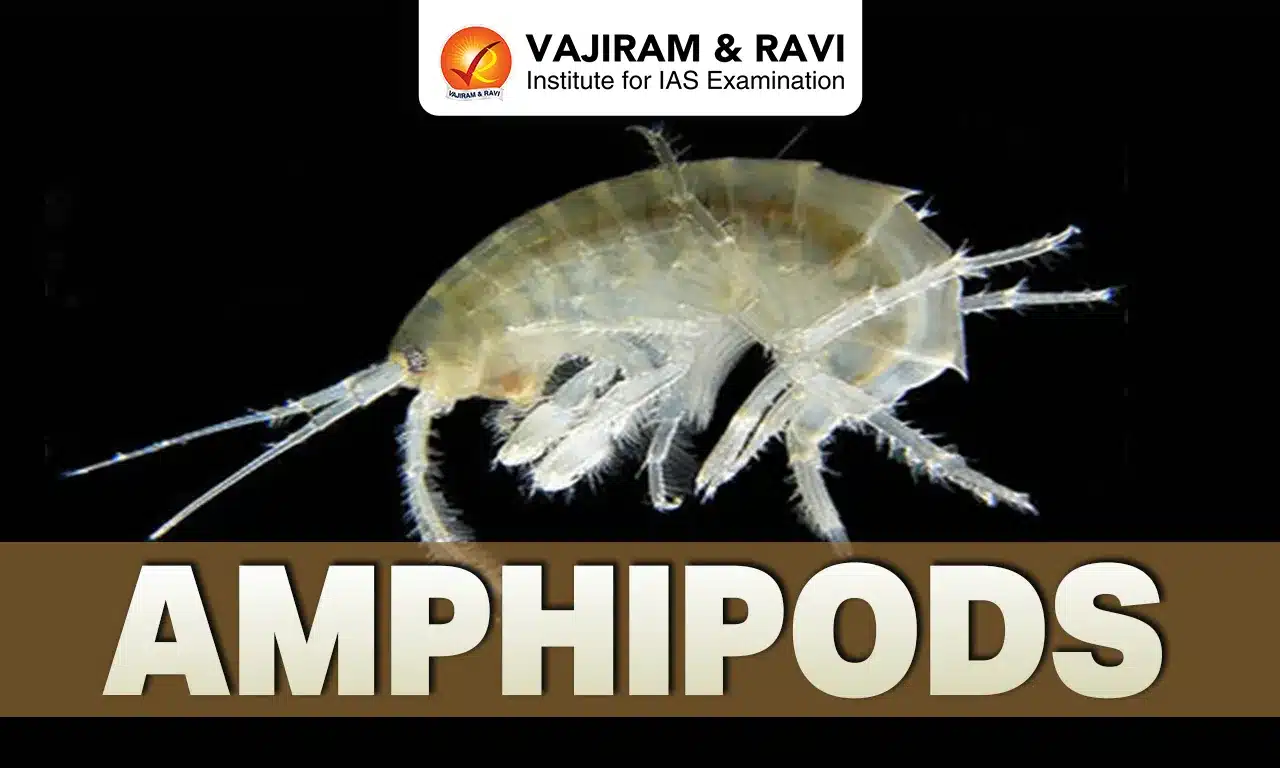
Two new species of marine amphipods, Grandidierella geetanjalae and Grandidierella khambhatensis, have been found by a team of researchers from Chilika and the Gulf of Khambhat, recently.

About Amphipods

  • They are a type of small crustacean. 
  • They are related to crabs, lobsters, and shrimp. 
  • They can be found in almost all water environments. 
  • They live in the ocean, in fresh water, and even on land.
  • The name ‘amphipoda’ means "different-footed." 
    • This is because they have many different kinds of legs. 
    • Unlike some other crustaceans, their legs are not all the same.
  • There are over 7,000 known species of amphipods. Most of them belong to a group called Gammaridea.
  • Amphipods can be very tiny, about 0.1 centimeters (0.04 inches) long. But some can grow quite large, up to 34 centimeters (13 inches).
  • Most amphipods eat tiny bits of dead plants and animals. Some are also scavengers, eating what they find.
  • They live in many places. 
    • About 750 species live in caves
    • Some amphipods are terrestrial animals, like sandhoppers. 
    • The largest amphipods live deep down on the sea floor.  They can be found seven kilometers (about 4.3 miles) deep.

About Grandidierella Geetanjalae and Grandidierella Khambhatensis

  • They are two new species of marine amphipods.
  • Grandidierella geetanjalae was collected from the Chilika lagoon near Rambha in Ganjam district, Odisha.
  • Grandidierella khambhatensis was collected from the Gulf of Khambhat, Gujarat.
  • Both species measure between 5.5 and 6 mm in length.
  • They are detritivorous, feeding primarily on organic matter and playing an important role in maintaining ecosystem health by contributing to natural cleaning processes.

Source: TOI


Amphipods FAQs

Q1: Amphipods belong to which group of animals?

Ans: Crustaceans

Q2: The name ‘Amphipoda’ refers to what special feature?

Ans: Having different types of legs.

Q3: Amphipods can be found in which type of environment?

Ans: Marine, freshwater, and terrestrial habitats.

Pilia malenadu

Pilia malenadu

Pilia malenadu Latest News

A team of researchers exploring biodiversity in the Western Ghats recently discovered a new species of spider named Pilia malenadu.

About Pilia malenadu

  • It is a new species of spider.
  • It belongs to Pilia, a genus of jumping spiders.
  • It was discovered in Madhugundi in the Mudigere taluk of Chikkamagaluru, Karnataka, at the foothills of the Western Ghats.
  • The researchers named it “Pilia malenadu”, to give credit to the place it was found.
  • The discovery is significant because the last time a species of spiders belonging to the pilia genus was discovered was about 123 years ago (1902) in Kerala. 
  • Further, the researchers, for the first time, have found both male and female spiders of the species.
  • These spiders were found in only two plant species — Memecylon umbellatum and Memecylon malabaricum.
  • In fact, the spiders were found concealed between the leaves of these plants.

Source: TH

Pilia malenadu FAQs

Q1: What is Pilia malenadu?

Ans: It is a new species of spider.

Q2: To which genus does Pilia malenadu belong?

Ans: It belongs to the genus Pilia, which is a genus of jumping spiders.

Q3: Where was Pilia malenadu discovered?

Ans: It was discovered in Madhugundi in the Mudigere taluk of Chikkamagaluru district, Karnataka.

Heavy Metals

Heavy Metals

Heavy Metals Latest News

Heavy metals are polluting the Cauvery River and its fish, researchers from Tamil Nadu have reported.

About Heavy Metals

  • The term ‘heavy metal' refers to any metallic chemical element that has a relatively high density and is toxic or poisonous at low concentrations. 
  • Examples of heavy metals include mercury (Hg), cadmium (Cd), arsenic (As), chromium (Cr), thallium (Tl), and lead (Pb). 
  • Heavy metals are natural components of the Earth's crust. They cannot be degraded or destroyed. 
  • To a small extent they enter our bodies via food, drinking water, and air. 
  • As trace elements, some heavy metals (e.g. copper, selenium, and zinc) are essential to maintain the metabolism of the human body. 
  • However, at higher concentrations they can lead to poisoning.
  • Heavy metal poisoning could result, for instance, from drinking-water contamination (e.g. lead pipes), high ambient air concentrations near emission sources, or intake via the food chain. 
  • Heavy metals are dangerous because they tend to bioaccumulate. 
    • Bioaccumulation means an increase in the concentration of a chemical in a biological organism over time, compared to the chemical's concentration in the environment. 
    • Compounds accumulate in living things any time they are taken up and stored faster than they are broken down (metabolized) or excreted. 
  • Heavy metals can enter a water supply by industrial and consumer waste, or even from acidic rain breaking down soils and releasing heavy metals into streams, lakes, rivers, and groundwater.
  • Mercury, lead, and cadmium are of greatest concern because of their ability to travel long distances in the atmosphere.

Source: TH

Heavy Metals FAQs

Q1: What are heavy metals?

Ans: The term ‘heavy metal' refers to any metallic chemical element that has a relatively high density and is toxic or poisonous at low concentrations.

Q2: Why are heavy metals considered dangerous to living organisms?

Ans: Because they tend to bioaccumulate and are toxic even at low concentrations.

Q3: How do heavy metals enter the human body?

Ans: Through food, drinking water, and air.

Q4: What are the main sources of heavy metal contamination in water?

Ans: Industrial and consumer waste, and acidic rain breaking down soils and releasing heavy metals into water bodies.

Pampadum Shola National Park

Pampadum Shola National Park

Pampadum Shola National Park Latest News

The Pampadum Shola National Park which was once dominated by invasive Australian wattles is undergoing a remarkable transformation and its grasslands are being restored, reviving streams and native species.

About Pampadum Shola National Park

  • Location: It is located in the eastern part of Southern Western Ghats of Kerala.
  • It is the smallest national park of Kerala and shares a border with Dindigul district of Tamil Nadu. 
  • It was declared a national park in 2004.
  • It is the southernmost shola–grassland mosaic in the Western Ghats, one of the world’s oldest mountain systems predating the Himalayas.
  • It is a part of Palani hills stretched up to Vandaravu peak.
  • It connects the Eravikulam National Park and the Palani Hills, providing a free range for many animals. 
  • Pampadum Shola Forests receive heavy rain in the North-East monsoon.
  • Topography: The terrain is undulating with hillocks of varying heights. The altitudes range between 1600-2400 m. 
  • Flora: The park’s unique shola forests are a mix of grasslands and patches of tropical montane forests. The park is rich in medicinal plants, orchids, ferns, and other native species.
  • Fauna: Nilgiri marten, Kerala laughing thrush, black-and-orange flycatcher etc.

Source: DTE

Pampadum Shola National Park FAQs

Q1: Where is Pampadum Shola National Park located?

Ans: Kerala

Q2: What type of forest is found in Pampadum Shola National Park?

Ans: Montane evergreen shola forest

Encephalomyocarditis Virus

encephalomyocarditis virus

Encephalomyocarditis Virus Latest News

Recently, an autopsy report from the Indian Veterinary Research Institute revealed that a lone African elephant at the National Zoological Park in Delhi died due to the rare rodent-borne virus — encephalomyocarditis virus (EMCV). 

About Encephalomyocarditis Virus

  • It is a non-enveloped, positive-sense, single-stranded RNA virus that is part of the Cardiovirus genus and Picornaviridae family.
  • It is the causative agent of encephalomyocarditis (EMC) infection in swine and other mammals.
  • African elephants are particularly susceptible to the virus, with outbreaks reported worldwide in captivity and in the wild.
  • EMCV is a zoonotic disease, therefore humans are susceptible to infection. Most infections in humans are asymptomatic.
  • Transmission: The virus can be transmitted by food or water contamination caused from feces or urine of a rodent species.
  • Symptoms of Encephalomyocarditis Virus infection in humans: Symptoms of EMCV infection in humans can include fever, headache, muscle aches, nausea, vomiting, and in severe cases, neurological symptoms like confusion and seizures.
  • Hosts: Pigs, non-human primates, zoo animals, and various wild species can be affected.
  • Treatment: Supportive care to manage symptoms and complications, with no specific treatment available.

Source: IE

Encephalomyocarditis Virus FAQs

Q1: What is the primary mode of transmission of Encephalomyocarditis Virus (EMCV)?

Ans: Direct contact with infected animals

Q2: What is the impact of Encephalomyocarditis Virus (EMCV) on animals?

Ans: It causes severe neurological and cardiac symptoms.

Integrated Sohra Tourism Circuit

Integrated Sohra Tourism Circuit

Integrated Sohra Tourism Circuit Latest News

Recently, the Union Minister for Development of North Eastern Region laid the foundation stone for the Integrated Sohra Circuit Development under the Prime Minister’s Development Initiative for North Eastern Region (PM-DevINE) scheme.

About Integrated Sohra Tourism Circuit

  • It is jointly being developed by the Ministry of DoNER and the Government of Meghalaya.
  • It aims to transform Sohra into a multi-day experiential tourism destination rooted in sustainability and local livelihoods.

Key Components of Integrated Sohra Tourism Circuit

  • Sohra Experience Centre: It will serve as the cultural nucleus of the circuit, showcasing Meghalaya’s diverse tribal heritage through amphitheatres, rain experience parks, art galleries, and craft pavilions.
  • Supporting projects: It includes Nohkalikai Falls precinct, Mawsmai Eco Park, Shella Riverside Development, and Wahkaliar Canyon with adventure tourism.

Key Facts about the PM-DevINE scheme

  • The Prime Minister’s Development Initiative for North Eastern Region (PM-DevINE), was launched in 2022 as a Central Sector scheme, with 100% Central funding.
  • The scheme has an outlay of Rs.6,600 crore for the 4 year period from 2022-23 to 2025-26.

Objectives of PM-DevINE scheme 

  • Fund infrastructure convergently, in the spirit of PM GatiShakti;
  • Support social development projects based on felt needs of the NER;
  • Enable livelihood activities for youth and women; and
  • Fill the development gaps in various sectors. 

Source: PIB

Integrated Sohra Tourism Circuit FAQs

Q1: What is the primary objective of the Integrated Sohra Tourism Circuit project?

Ans: To enhance tourism infrastructure and promote sustainable livelihoods

Q2: Under which scheme the Integrated Sohra Tourism Circuit project is being developed?

Ans: PM-DevINE Scheme

Nagarjunsagar-Srisailam Tiger Reserve (NSTR)

Nagarjunsagar-Srisailam Tiger Reserve (NSTR)

Nagarjunasagar-Srisailam Tiger Reserve Latest News

The forest department is preparing to launch the next round of tiger census in the Nagarjuna Sagar Tiger Reserve (NSTR).

About Nagarjunasagar-Srisailam Tiger Reserve

  • It is located in the Nallamala hill ranges (an offshoot of the Eastern Ghats) of Andhra Pradesh.
  • It is one of the largest tiger reserves in India, spreading over an area of 3,728 sq km.
  • It hosts the largest tiger population in the Eastern Ghat landscape.
  • It is named after two major dams in the area, Nagarjuna Sagar Dam and Srisailam Dam.
  • Two wildlife sanctuaries, namely Rajiv Gandhi Wildlife Sanctuary and Gundla Brahmeswaram Wildlife Sanctuary (GBM), constitute the NSTR.
  • The river Krishna traverses through this reserve for a linear distance of around 270 kilometers.
  • The reserve holds significant importance with ancient temples like the Mallikarjuna Swamy Temple at Srisailam and several archaeological sites, including Buddhist relics from the Nagarjuna Konda area.
  • Topography: It consists of plateaus, ridges, gorges, and deep valleys.
  • Vegetation: Tropical dry deciduous forests having an undergrowth of bamboo and grass.
  • Flora: The habitat has several endemics like Andrographis nallamalayana, Eriolaena lushingtonii, Crotalaria madurensis Var, Dicliptera beddomei, and Premna hamiltonii.
  • Fauna:
    • Top faunal species include Tiger, Leopard, Wolf, Wild Dog and Jackal.
    • The prey species are represented by Sambar, Chital, Chowsingha, Chinkara, Mouse Deer, Wild boar, and Porcupine.
    • The river Krishna has Muggers, Otters and Turtles.

Source: TOI

Nagarjunasagar-Srisailam Tiger Reserve FAQs

Q1: In which Indian state is the Nagarjunasagar–Srisailam Tiger Reserve located?

Ans: Andhra Pradesh

Q2: Nagarjunasagar–Srisailam Tiger Reserve is situated in which hill ranges?

Ans: It is located in the Nallamala hill ranges (an offshoot of the Eastern Ghats).

Q3: Which major river flows through the Nagarjunasagar–Srisailam Tiger Reserve?

Ans: Krishna River

Daily Editorial Analysis 4 November 2025

Daily Editorial Analysis

India’s IT Dream is at a Crossroads

Context

  • For nearly three decades, India’s Information Technology (IT) industry has stood as a cornerstone of national economic progress and a symbol of middle-class aspiration.
  • Though it employs only around 1% of the national workforce, the sector contributes nearly 7% to India’s GDP and has propelled millions into stable, global careers.
  • Companies like Infosys, Wipro, and Tata Consultancy Services (TCS) once represented assured success for young engineers across the country.
  • However, recent large-scale layoffs, including TCS’s unprecedented reduction of nearly 20,000 roles in a single quarter, have raised pressing questions about the future of the industry.

Changing Landscape of the Global IT Industry and End of the Traditional Outsourcing Model

  • Changing Landscape of the Global IT Industry

    • The forces transforming India’s IT sector are global.
    • Major technology companies in the United States and Europe, such as Amazon and Meta, are also restructuring and reducing headcount due to advances in automation and uncertainty in global markets.
    • The widespread deployment of Artificial Intelligence (AI), particularly generative and agentic AI systems, has automated routine functions such as coding, coordination, and reporting, functions that once formed the foundation of India’s IT services model.
    • Simultaneously, stricter U.S. immigration policies and rising visa costs have made it costly for Indian firms to send mid-level staff abroad, pushing companies to localize talent in major international markets.
    • These shifts challenge the traditional outsourcing model that relied heavily on cost-effective, large-scale talent supply from India.
  • End of the Traditional Outsourcing Model

    • India’s IT success story was built on the assembly line approach: hiring large numbers of engineers, training them in basic coding skills, and deploying them in global projects.
    • This model offered efficiency and scale, enabling the country to become the world’s back-office powerhouse.
    • However, clients today are seeking more than manpower, they want sophisticated solutions, faster delivery, and specialized expertise in cloud computing, cybersecurity, and AI-based platforms.
    • As a result, many mid-career professionals, especially those with legacy skills or managerial roles lacking technical depth, find themselves vulnerable. The market now rewards agility, innovation, and deep technological capability rather than scale alone.

Skill Gaps and Workforce Challenges

  • The transition to AI-driven IT has exposed a broad skill gap within the workforce.
  • Technologies like SAP ECC, once considered indispensable, are increasingly supported by automation tools.
  • Young graduates entering the industry face competition from both advanced automation and a global talent pool skilled in emerging technologies.
  • The days when mastering Java or .NET guaranteed career growth are gone; the future belongs to those proficient in machine learning, data engineering, cybersecurity, and product-oriented problem solving.
  • This shift necessitates massive upskilling initiatives and academic reform to bring engineering education in alignment with industry needs.

Policy Imperatives and Industry Responsibilities

  • To safeguard India’s technological leadership, a coordinated policy and industry response is essential.
  • Companies such as TCS have already upskilled hundreds of thousands of employees in AI-related competencies, signalling industry recognition of the challenge.
  • However, upskilling needs to extend system-wide. Government measures should focus on:
  • Encouraging AI-based curriculum in engineering and vocational programs
  • Incentivising upskilling and continuous learning through subsidies and partnerships
  • Supporting startup ecosystems and deep-tech innovation hubs
  • Considering mandatory severance mandates for mass layoffs
  • Providing social safety nets, including mental-health support and career transition services
  • India must also engage globally to protect its digital workforce interests, ensure data security, and preserve access to international markets.

The Road Ahead: Reinvention, Not Retreat

  • India’s IT journey is far from over. It remains a global digital leader, contributes over $280 billion to the economy, and anchors the country’s transformation across sectors.
  • But the industry’s identity is shifting, from outsourcing engine to innovation-driven technological powerhouse. This shift will be challenging.
  • Thousands of experienced employees may need to reinvent their skillsets, and young graduates must adapt to an era where foundational coding skills are insufficient.
  • Yet, this moment also presents an opportunity: to build products rather than just provide services, to emphasise creativity and research, and to shape the global rise of AI responsibly and inclusively.

Conclusion

  • India’s IT sector is transitioning from quantity-focused employment to quality-driven innovation, from routine service delivery to advanced technology and product development.
  • India stands at a pivotal juncture, one where resilience, strategic reform, and continuous learning will determine whether the country retains its global technology leadership.
  • With visionary policy support, bold corporate commitment, and a workforce equipped for the age of AI, India’s IT narrative can continue to thrive.
  • The bloom may have dimmed, but the roots of the industry remain strong, and with courage and foresight, the next chapter can be even more transformative than the last.

India’s IT Dream is at a Crossroads FAQs

 Q1. Why is India's IT sector undergoing major layoffs?

Ans. India's IT sector is undergoing layoffs because automation, especially AI, is reducing the need for routine IT tasks and clients now demand higher-skilled, specialised tech talent.

Q2. What traditional model of IT work is becoming obsolete?

Ans. The traditional model of hiring large numbers of engineers to perform basic coding tasks for global clients is becoming obsolete.

Q3. Which skills are now essential for IT professionals?

Ans. Skills in AI, data science, cloud computing, and cybersecurity are now essential for IT professionals.

Q4. What role should the government play during this transition?

Ans. The government should reform engineering education, support large-scale upskilling programs, strengthen startup ecosystems, and provide safety nets for displaced workers.

Q5. Is India’s IT sector declining?

Ans. India’s IT sector is not declining; it is evolving from a manpower-driven outsourcing model to an innovation-driven, AI-focused industry.

Source: The Hindu


The Case for Energy Efficiency

Context

  • India has aggressively expanded its clean energy capacity, with non-fossil fuel sources making up about 50% of total installed electricity capacity as of June 2025.
  • The grid emission factor has risen from 0.703 tCO₂/MWh in 2020–21 to 0.727 tCO₂/MWh in 2023–24, meaning the power consumed today is dirtier than it was five years ago.
  • This paradox, rising renewable capacity accompanied by increasing emissions, highlights the complex realities of India's decarbonization journey.
  • Understanding the mismatch between capacity and generation, the timing dynamics of renewable supply and demand, and the critical role of energy efficiency offers a pathway toward resolving this contradiction and achieving a truly clean power system.

The Capacity–Generation Mismatch

  • India’s clean energy progress is often assessed by the growth of installed renewable capacity. Yet, capacity does not equate to delivered electricity.
  • Renewable sources such as solar and wind typically operate at only 15–25% of capacity due to intermittency, whereas coal and nuclear power plants function at much higher utilisation levels of 65–90%.
  • As a result, despite half the installed capacity being non-fossil, renewables supply only about 22% of actual electricity generation.
  • The rest continues to come from fossil fuels, predominantly coal. In a rapidly growing economy with rising electricity demand, coal has filled the energy gap, pushing up total emissions.

Temporal Demand–Supply Challenges

  • India’s electricity demand profile further complicates decarbonization efforts.
  • Solar energy peaks during the afternoon but declines sharply by evening, just as household and commercial electricity demand surges.
  • This mismatch forces coal-based power plants to serve as the grid’s primary backup, particularly during peak hours and at night.
  • While renewables are growing fast, the system lacks the flexibility needed to rely on them during critical demand periods.
  • Round-the-Clock renewable power solutions are emerging and are already cost-competitive with new coal plants, yet scaling them requires extensive land acquisition, transmission infrastructure, and financing areas where progress remains slow.

Energy Efficiency as a Strategic Necessity

  • Energy efficiency emerges as a crucial, often overlooked, solution to India's clean energy paradox.
  • Known as the first fuel, efficiency reduces electricity demand before it even arises, easing pressure on fossil-based generation.
  • Efficient appliances, industrial equipment, cooling systems, and building standards can flatten peak demand curves, enabling better integration of renewable energy resources.
  • Evidence from the Bureau of Energy Efficiency shows India saved roughly 200 Million Tonnes of Oil Equivalent and avoided around 1.29 gigatonnes of CO₂ between FY2017-18 and FY2022-23, a testament to the transformative potential of efficiency-driven policies.
  • For a nation facing relentless growth in energy demand, efficiency is not optional; it is central to successful decarbonization.

Policy Directions for a Flexible, Low-Carbon Grid

  • For India to unlock the full value of its renewable energy capacity, complementary policy measures are essential.
  • These include enabling households and businesses to use stored battery power through virtual power plants, enforcing higher efficiency standards for appliances, incentivising small industries to adopt efficient machinery, and introducing dynamic electricity pricing to shift consumption toward periods of high renewable availability.
  • Additional steps such as scrapping outdated equipment and allowing distribution companies to procure high-efficiency, clean energy services, such as green cooling, can accelerate transition efforts.
  • The Central Electricity Authority projects a decline in India’s grid emission factor to 0.548 by 2026-27 and 0.430 by 2031-32, but achieving this trajectory requires prioritizing system flexibility and energy efficiency alongside renewable expansion.

Conclusion

  • The path to resolving this contradiction lies not only in building more renewable energy plants but also in redesigning the energy system to better utilize them.
  • Energy efficiency must become the foundation of India’s decarbonization strategy, complemented by flexible grid infrastructure, advanced storage solutions, smart pricing mechanisms, and progressive regulatory reforms.
  • By embracing efficiency as the first fuel and prioritizing flexibility over fossil-based backup power, India can ensure that clean energy capacity translates into truly clean electricity, securing a sustainable, low-carbon future.

The Case for Energy Efficiency FAQs

Q1. Why has India's grid become more carbon-intensive despite renewable growth?

Ans. India’s grid has become more carbon-intensive because renewable capacity has grown faster than actual renewable electricity generation, leading to continued reliance on coal to meet rising demand.

Q2. What is the key difference between capacity and generation?

Ans. Capacity refers to the maximum potential power a plant can produce, while generation refers to the actual electricity produced and supplied to the grid.

Q3. Why do coal plants remain essential in India’s power system?

Ans. Coal plants remain essential because they provide electricity during peak evening hours when solar power is not available.

Q4. How does energy efficiency support renewable energy integration?

Ans. Energy efficiency supports renewable integration by reducing demand peaks, making it easier for the grid to rely on renewable energy rather than coal.

Q5. What policy measures can help India reduce grid emissions?

Ans. India can reduce grid emissions by expanding battery-based virtual power plants, enforcing stricter appliance standards, adopting flexible electricity pricing, and promoting efficient technologies.

Source: The Hindu

Daily Editorial Analysis 4 November 2025 FAQs

Q1: What is editorial analysis?

Ans: Editorial analysis is the critical examination and interpretation of newspaper editorials to extract key insights, arguments, and perspectives relevant to UPSC preparation.

Q2: What is an editorial analyst?

Ans: An editorial analyst is someone who studies and breaks down editorials to highlight their relevance, structure, and usefulness for competitive exams like the UPSC.

Q3: What is an editorial for UPSC?

Ans: For UPSC, an editorial refers to opinion-based articles in reputed newspapers that provide analysis on current affairs, governance, policy, and socio-economic issues.

Q4: What are the sources of UPSC Editorial Analysis?

Ans: Key sources include editorials from The Hindu and Indian Express.

Q5: Can Editorial Analysis help in Mains Answer Writing?

Ans: Yes, editorial analysis enhances content quality, analytical depth, and structure in Mains answer writing.

Melatonin

Melatonin

Melatonin Latest News

Recently, concerns have been raised by doctors about melatonin supplements being taken by a large number of people with no medical supervision.

About Melatonin

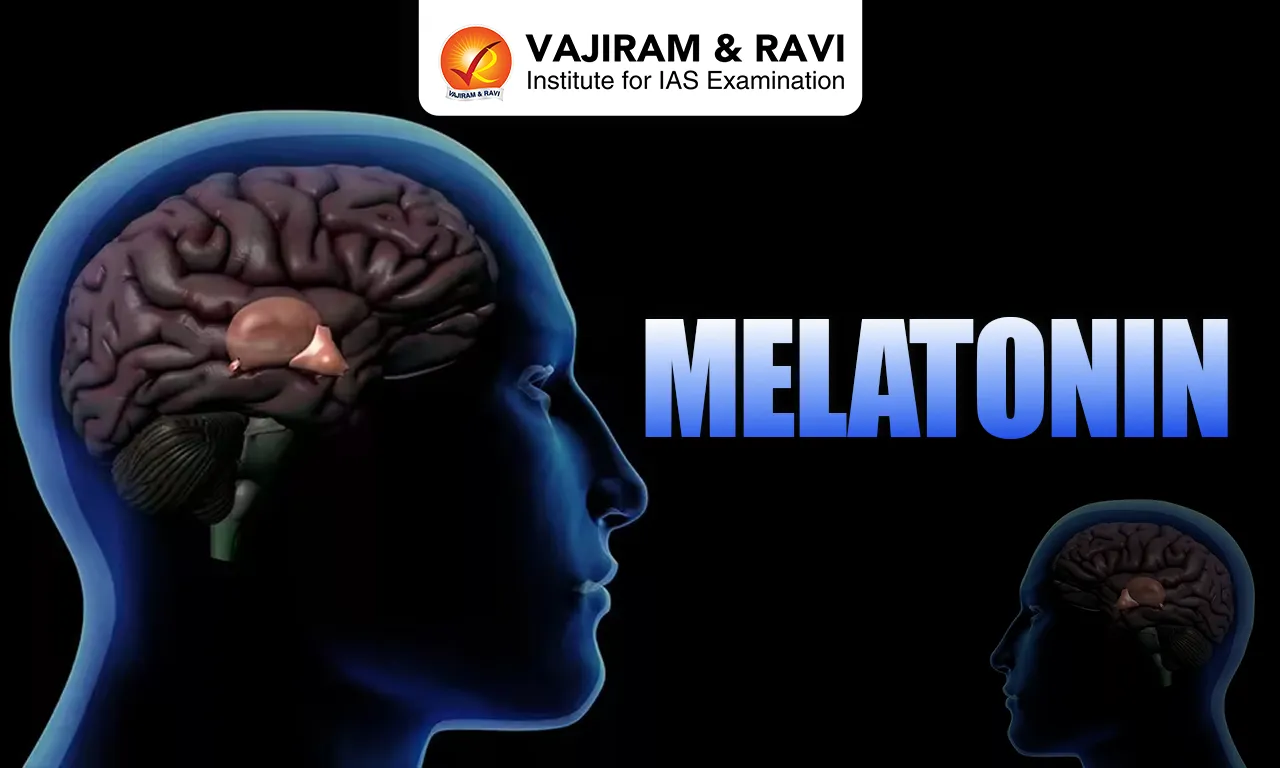
  • Melatonin is a naturally-occurring hormone in human beings that controls sleep and wake cycles in our daily lives. 
  • Its levels rise in the evening, helping to promote sleep.
  • It is secreted by the pineal gland in the human body.
    • Pineal gland releases the most melatonin when there’s darkness and decreases melatonin production when you’re exposed to light. 
  • Melatonin makes us sleepy at certain times of the day. It starts to secrete when our bodies are getting ready to go to sleep and usually takes about 30 to 45 minutes to take full effect.
  • Its secretion is at its highest in the middle of the night and gradually starts to decrease until we are ready to wake up and start our day.
  • Melatonin can also be made synthetically in a lab and sold as a dietary supplement. It’s called exogenous melatonin.
  • Those people whose sleep is not optimal and who travel frequently across time zones prefer melatonin supplements.
  • Side Effects of Melatonin supplements
    • Overuse of melatonin may cause headaches, hormonal changes, or mood swings, disturbing the very rhythm and sleep cycle.

Source: TH

Melatonin FAQs

Q1: What is the primary function of Melatonin in the human body?

Ans: Regulating sleep-wake cycle

Q2: Where is Melatonin produced in the human body?

Ans: Pineal gland

High Seas Treaty: Challenges in Global Ocean Governance

High Seas Treaty

High Seas Treaty Latest News

  • The High Seas Treaty faces challenges in implementation as countries debate funding mechanisms, governance frameworks, and equitable benefit-sharing.

Background

  • The High Seas Treaty, also known as the Biodiversity Beyond National Jurisdiction (BBNJ) Agreement, represents a landmark effort in global marine conservation. 
  • Ratified by over 60 countries in September 2025, the treaty will enter into force in January 2026. 
  • It seeks to protect marine biodiversity in areas beyond national jurisdiction, the so-called high seas, by promoting sustainable use of ocean resources, addressing threats such as overfishing, pollution, and climate change, and ensuring equitable benefit-sharing of marine genetic resources (MGRs).
  • While hailed as a major breakthrough under the United Nations Convention on the Law of the Sea (UNCLOS, 1982), the treaty faces significant implementation challenges, ranging from definitional ambiguities to geopolitical resistance by major powers.

Understanding the High Seas Treaty

  • The treaty establishes an international framework for conserving marine biodiversity in areas that lie beyond national control. 
  • These waters, which cover nearly two-thirds of the global ocean surface, are crucial for climate regulation, carbon sequestration, and food security.
  • The treaty introduces several tools and mechanisms for sustainable governance:
  • Marine Genetic Resources (MGRs):
    • Recognised as the “common heritage of humankind,” MGRs include genetic material from marine plants, animals, and microorganisms that can be used for scientific and commercial purposes, including pharmaceuticals and biotechnology. 
  • Area-Based Management Tools (ABMTs):
    • The treaty allows for the creation of Marine Protected Areas (MPAs) to conserve biodiversity hotspots and critical ecosystems. 
    • These zones will be identified using a mix of scientific data and traditional knowledge.
  • Environmental Impact Assessments (EIAs):
    • Any activity likely to affect the marine environment, especially with cumulative or transboundary impacts, must undergo a mandatory EIA. 
    • This ensures preventive measures are taken before potential damage occurs.
  • Capacity Building and Technology Transfer:
    • Recognising the technological disparity between developed and developing nations, the treaty encourages capacity building to ensure equal participation in ocean research and governance.

Evolution of the Treaty

  • The treaty’s development was two decades in the making. 
  • In 2004, the UN General Assembly established an ad hoc working group to address gaps in UNCLOS, which lacked specific provisions on biodiversity beyond national jurisdiction. By 2011, states had agreed to negotiate four key areas: MGRs, ABMTs, EIAs, and capacity building.
  • Between 2018 and 2023, four Intergovernmental Conferences were held, culminating in an agreement in March 2023. 
  • The treaty was formally adopted in June 2023, setting the stage for a new era of cooperative ocean governance.

Major Challenges in Implementation

  • Ambiguity Between “Common Heritage” and “Freedom of the Seas”
    • The treaty attempts to balance two conflicting principles:
    • Common Heritage of Humankind - advocating for equitable sharing of ocean resources among all nations.
    • Freedom of the High Seas - guaranteeing states unrestricted navigation, research, and exploitation rights.
    • However, this dual approach has created legal and operational ambiguities. While the common heritage principle is applied to MGRs, it remains only partially enforceable, leaving room for exploitation and unequal benefit-sharing.
  • Governance of Marine Genetic Resources
    • Before the treaty, there were no clear global norms on the extraction and commercialisation of MGRs. 
    • This led to concerns about biopiracy, where developed nations and private corporations could exploit resources without compensating developing countries. 
    • Although the treaty mandates monetary and non-monetary benefit-sharing, it lacks clarity on the mechanisms for calculating and distributing these benefits.
  • Limited Participation from Major Powers
    • Despite global support, the treaty faces a setback due to the absence of major maritime powers like the United States, China, and Russia, which have yet to ratify it. 
    • Their non-participation undermines the treaty’s universality and weakens enforcement capacity.
  • Coordination with Existing International Bodies
    • The treaty must align with existing institutions such as the International Seabed Authority (ISA) and Regional Fisheries Management Organisations (RFMOs) to prevent jurisdictional overlap. 
    • Without coherent coordination, there is a risk of fragmented ocean governance and conflicting mandates.
  • Implementation and Monitoring Mechanisms
    • Effective implementation will require regular monitoring, dynamic management of MPAs, and transparent data sharing among nations. 
    • Developing countries also need technological and financial support to fulfil treaty obligations, particularly in research and enforcement.

Way Forward

  • The High Seas Treaty marks a pivotal moment for ocean conservation under international law. Its success will depend on:
    • Finalising operational guidelines for benefit-sharing and environmental assessments.
    • Strengthening institutional cooperation between the BBNJ framework and existing global maritime bodies.
    • Encouraging universal ratification, especially by key maritime nations.
    • Linking ocean governance with broader climate and biodiversity frameworks to enhance global resilience.
  • By ensuring fair access and sustainable use of ocean resources, the treaty can bridge the gap between conservation and development, if backed by a genuine global commitment.

Source: TH

High Seas Treaty FAQs

Q1: When will the High Seas Treaty come into force?

Ans: The treaty will be enforced in January 2026 after being ratified by over 60 countries.

Q2: What is the main objective of the High Seas Treaty?

Ans: It aims to conserve and ensure the sustainable use of marine biodiversity in areas beyond national jurisdiction.

Q3: Why is the “common heritage of humankind” principle controversial?

Ans: It conflicts with the “freedom of the high seas” principle, leading to ambiguity over rights and benefit sharing.

Q4: Which countries have not ratified the treaty yet?

Ans: Major powers such as the United States, China, and Russia have not ratified the treaty so far.

Q5: What are Marine Genetic Resources (MGRs)?

Ans: MGRs are genetic materials from marine organisms used in scientific or commercial research, recognized under the treaty as the common heritage of humankind.

ESTIC 2025 – Building a Future-Ready India through Research, Innovation and Inclusivity

ESTIC 2025

ESTIC 2025 Latest News

  • Recently, the Indian PM addressed the Emerging Science, Technology and Innovation Conclave (ESTIC) 2025 conclave at Bharat Mandapam, New Delhi.
  • It aims to shape India’s science, technology, and innovation (STI) landscape to align with the nation’s goal of becoming a Viksit Bharat by 2047. 
  • The event replaces the Indian Science Congress, the oldest congregation of scientists in India (which had gone into oblivion, with its last session held in 2023), marking a significant milestone in India’s R&D journey.

Key Highlights of the Prime Minister’s Address

  • Inspiration and national pride:
    • Congratulated India’s women’s cricket team on winning the ICC Women’s World Cup 2025, calling it an inspiration for millions.
    • Celebrated the successful launch of India’s heaviest communication satellite (GSAT-7R/CMS-03), reflecting India’s growing technological prowess.
  • 21st century as the age of innovation:
    • Described the century as one of “exponential transformation”, emphasizing the need for global collaboration in emerging technologies.
    • Highlighted that the idea of ESTIC emerged from the need for international cooperation in STI.

Strengthening India’s Research and Innovation Framework

  • Research funding and institutional reforms:
    • Anusandhan National Research Foundation (ANRF): Set up to boost research in universities.
    • ₹1 Lakh Crore Research, Development and Innovation (RDI) Fund: To promote a private sector–driven R&D ecosystem, enabling funding for high-risk, high-impact projects.
    • Focus on ease of doing research: Reforms in financial rules, procurement policies, and regulatory frameworks to accelerate lab-to-market transition.
  • Indicators of India’s R&D growth:
    • India’s R&D expenditure has doubled in the last decade, and the number of registered patents has increased 17 times.
    • India now ranks as the world’s 3rd largest startup ecosystem, with over 6,000 deep-tech startups working in clean energy, advanced materials, and semiconductors.
    • India’s bio-economy grew from $10 billion (2014) to $140 billion (2025).

Focus on Emerging and Sunrise Sectors

  • Key domains of progress:
    • India is advancing in green hydrogen, quantum computing, deep-sea research, and critical minerals.
    • Emphasis on inclusive technological transformation—“When science is scaled, innovation becomes inclusive, and technology drives transformation.”
  • Digital public infrastructure (DPI):
    • Optical fibre connectivity to over 2 lakh gram panchayats; widespread access to mobile data and digital services.
    • DPI as the backbone for India’s large-scale policy implementation success.

Empowering Women in Science

  • In the field of patent filing, fewer than 100 patents were filed annually by women in India a decade ago, whereas today the number exceeds 5,000 per year. 
  • Women now constitute approximately 43% of STEM education enrolments in India, surpassing the global average. 
  • Women’s participation in space missions and scientific leadership cited as evidence of inclusivity.

Nurturing Scientific Temper

  • ATLs: Establishment of 10,000 Atal Tinkering Labs (ATLs), engaging over 1 crore students; plan to expand to 25,000 labs.
  • PM’s Research Fellowship: 10,000 new fellowships to be offered in the next five years.
  • NEP 2020: Enabled STEM education in local languages for wider access.
  • New institutions: Creation of hundreds of new universities, including 7 IITs and 16 IIITs.

AI for All - Artificial Intelligence and Ethical Technology

  • Launch of the India AI Mission with ₹10,000 crore investment for democratizing AI.
  • India leading efforts toward a global framework for ethical and human-centric AI.
  • Announcement of the Global AI Summit 2026 to be hosted by India.

Future Vision - Key Focus Areas Proposed by PM

  • India’s scientists should generate ideas to -
    • Move from food security to nutrition security.
    • Create biofortified crops to address malnutrition.
    • Develop low-cost fertilizers, bio-fertilisers and soil health enhancers as sustainable alternatives. 
    • Better map India’s genomic biodiversity for personalised medicine.
    • Arrive at new and cheap innovation in clean battery storage. 
    • Achieve Atmanirbharta (self-reliance) in critical inputs and technologies.

Way Forward - Toward a Developed India through STI

  • Foster collaboration among government, academia, industry, and startups.
  • Promote ethical, inclusive, and sustainable innovation.
  • Encourage young scientific talent and enhance global partnerships in frontier technologies.
  • Strengthen the link between research, application, and social impact.

Conclusion

  • The ESTIC 2025 conclave underscores India’s determination to lead the global discourse on ethical and inclusive science and innovation. 
  • By linking research with societal progress and empowering women and youth, India is moving from being a consumer of technology to a creator and exporter of innovation. 
  • The call of “Jai Vigyan, Jai Anusandhan” embodies India’s vision of a knowledge-driven, self-reliant, and technologically empowered nation.

Source: THPIB

ESTIC 2025 FAQs

Q1: How does the ₹1 Lakh Crore RDI Fund aim to transform India’s research ecosystem?

Ans: It seeks to build a private sector–driven R&D ecosystem by funding high-risk, high-impact projects and promoting industry–academia collaboration.

Q2: What is the significance of India’s progress in sunrise sectors for achieving the Viksit Bharat 2047 vision?

Ans: Advancements in these frontier technologies strengthen India’s technological self-reliance, sustainable growth, and global competitiveness.

Q3: In what ways has the government promoted inclusivity and gender balance in India’s science and technology ecosystem?

Ans: By increasing women’s participation in STEM to 43%, expanding Atal Tinkering Labs, and enabling education and patent access for women innovators.

Q4: What is the role of Digital Public Infrastructure (DPI) in India?

Ans: DPI, through nationwide optical fibre connectivity and digital services, ensures inclusive access, real-time delivery, and data-driven innovation.

Q5: What are the key objectives of India’s AI governance framework and the India AI Mission?

Ans: To develop a global, ethical, and human-centric AI ecosystem with ₹10,000 crore investment, promoting innovation, safety, and inclusivity.

Supreme Court Rules on Summons to Lawyers: Protecting Client Privilege

Lawyer Summons

Lawyer Summons Latest News

  • Recently, the Supreme Court ruled that police and investigating agencies cannot summon advocates to disclose client communications shared during legal advice. 
  • The Court examined whether lawyers acting solely in a professional capacity can be summoned and, if their role extends beyond that, whether such summons should face judicial scrutiny.

Background: From Gujarat Loan Dispute to Nationwide Concern

  • The case originated from a Special Leave Petition (SLP) in a loan dispute, where an advocate representing an accused in a bail plea was summoned by the investigating officer.
  • When the lawyer challenged the summons, the Gujarat High Court upheld it, ruling that the advocate’s non-cooperation had stalled the investigation and finding no violation of fundamental rights, as the officer acted within legal authority.
  • The issue escalated nationally after the Enforcement Directorate (ED) issued summons to Supreme Court senior advocates Arvind Datar and Pratap Venugopal.
    • This was issued in a probe related to ESOP allotments by Care Health Insurance Ltd to Rashmi Saluja, former Religare Enterprises chairperson.
  • Though the ED later withdrew the summons, the action drew strong condemnation from legal bodies, as the move threatened the independence of the legal profession and the right to fair legal representation.

Attorney-Client Communication Under the Bharatiya Sakshya Adhiniyam (BSA), 2023

  • The Bharatiya Sakshya Adhiniyam (BSA), 2023, which replaced the Indian Evidence Act, 1872, upholds the confidentiality of communications between advocates and their clients.
  • Such communications are privileged and cannot be disclosed to third parties, ensuring clients receive free and fair legal advice.

Exceptions to Privilege (Section 132)

  • An advocate cannot reveal client communications, even after professional engagement ends, except in three specific cases:
    • Client consent to disclosure.
    • The communication is made for an illegal purpose.
    • The advocate witnesses a crime being committed during the period of employment.

Scope of Protection

  • The privilege covers oral, written, and electronic communications between lawyer and client.
  • An advocate is also exempt from testifying about such exchanges in court or to investigative agencies.
  • The Supreme Court clarified that this protection exists to safeguard a client’s right to effective legal representation, not to grant immunity to lawyers from legitimate investigation when unlawful acts are involved.

Contentions Before the Supreme Court on Summons to Lawyers

  • The Bar associations contended that issuing summons to advocates violates their fundamental rights under Articles 19(1)(g) (right to practise any profession) and 21 (right to life and personal liberty).
  • They argued that Section 132 of the BSA, 2023 protects client communications, but lacks a corresponding safeguard for advocates against being coerced into disclosure.
  • Such forced revelation, they said, could amount to professional misconduct and undermine client confidentiality.

Bar’s Proposed Safeguards

  • The Bar suggested a two-tier mechanism to prevent arbitrary summons:
    • Judicial Oversight: Summons to advocates must first receive approval from a magistrate.
    • Peer Review: Thereafter, it should be examined by a committee of lawyers at the district, state, or national level to assess whether the communication falls within the exceptions under Section 132.
  • They also recommended applying the “dominant purpose test” — determining whether the communication’s main intent was seeking legal advice (privileged) or furthering illegal acts (not privileged).

Supreme Court’s Directions on Summoning Lawyers

  • The Supreme Court firmly ruled that lawyers cannot be summoned merely to disclose client communications, reaffirming the protection under Section 132 of the BSA 2023.
  • Such privilege, the court said, exists to ensure free and fair legal representation, not to shield illegality.
  • An advocate may only be summoned if the communication is used to commit or conceal a crime, and such summons must:
    • Specify the facts justifying the exception, and
    • Have written approval from a superior officer (not below the rank of Superintendent of Police).

Protecting Constitutional and Professional Rights

  • The bench agreed with the Bar’s contention that breaching confidentiality violates Articles 19(1)(g) (right to practise profession) and 21 (right to personal liberty).
  • It also observed that Section 132 aligns with Article 20(3) of the Constitution, which protects against self-incrimination, extending this principle to the lawyer–client relationship.

No New Guidelines — Existing Safeguards Are Sufficient

  • Rejecting calls for additional judicial oversight, the Court said Section 528 of the Bharatiya Nagarik Suraksha Sanhita (BNSS) already allows anyone, including advocates, to challenge summons before a court.
  • The bench held that investigative powers cannot be fettered, as constitutional safeguards already exist to prevent misuse.

Distinction Between Communication and Evidence

  • The Court clarified that Section 132 protects communications, not physical or digital materials.
  • Under Section 94 of the BNSS, investigators may seek documents or devices believed relevant, but only through the court — not directly.
  • Both lawyer and client must be notified, allowed to raise objections, and any examination must occur under judicial supervision, ensuring that unrelated client data remains sealed and protected.

Limited Privilege for In-House Counsels

  • The Court held that in-house legal advisers are not covered by full privilege under Section 132 since they are salaried employees and lack professional independence required under the Advocates Act, 1961.
  • They have limited protection — confidentiality applies to client communications received as legal advisers, but not to internal company exchanges or communications driven by business interests.

Source: IE | ABCL

Lawyer Summons FAQs

Q1: What did the Supreme Court rule about summoning lawyers?

Ans: The Court barred police and agencies from summoning advocates to reveal client communications, except when used to commit or conceal a crime.

Q2: Which law governs attorney-client privilege in India?

Ans: Section 132 of the Bharatiya Sakshya Adhiniyam (BSA), 2023 protects confidential legal communications from disclosure, even after a lawyer’s engagement ends.

Q3: What constitutional rights did the Court cite?

Ans: The bench said breaching confidentiality violates Articles 19(1)(g) and 21, and that Section 132 aligns with Article 20(3) protecting against self-incrimination.

Q4: Can investigators access a lawyer’s documents or devices?

Ans: Yes, but only through the court under Section 94 of the BNSS, ensuring judicial supervision and protection of unrelated client data.

Q5: Do in-house counsels have the same privilege?

Ans: No. In-house lawyers get limited protection since they’re salaried employees and not independent advocates under the Advocates Act, 1961.

Magnitude 6.3 Earthquake Hits Northern Afghanistan Near Mazar-e-Sharif

Afghanistan Earthquake

Afghanistan Earthquake Latest News

  • Recently, a 6.3-magnitude earthquake struck near Mazar-e-Sharif in northern Afghanistan, killing at least 10 people and injuring around 260.
  • The tremor follows a series of deadly quakes in August that claimed over 2,200 lives, highlighting the region’s continuing vulnerability to seismic disasters.

Geographical Location of Mazar-e-Sharif

  • Mazar-e-Sharif, the capital of Balkh province, lies in northern Afghanistan, close to the borders with Uzbekistan and Tajikistan.
  • It sits at an elevation of about 380 metres (1,250 ft) in a broad alluvial plain of the Amu Darya basin, making it a key urban and economic centre in the region.

Geophysical Characteristics

  • Mazar-e-Sharif lies near the boundary zone between the Eurasian and Indian tectonic plates, an area of intense crustal compression caused by the northward movement of the Indian plate.
  • This collision zone creates active fault lines running through northern and northeastern Afghanistan, where seismic stress accumulates and releases through frequent earthquakes.
  • The recent quake near Mazar-e-Sharif is linked to shallow crustal faults within this convergence zone, where compressional forces generate strike-slip and thrust faulting — common mechanisms for strong tremors in the region.

Afghanistan’s High Earthquake Risk

  • Afghanistan, surrounded by rugged mountain ranges, is highly prone to earthquakes, which are its deadliest natural disasters.
  • On average, around 560 people die each year, and annual damages exceed $80 million.
  • Since 1990, the country has experienced over 355 earthquakes with magnitudes above 5.0, underscoring its extreme seismic vulnerability.

Afghanistan’s Deadliest Earthquakes

  • Afghanistan has experienced around 100 damaging earthquakes since 1900, making it one of the world’s most seismically active countries.
    • In 2022, a magnitude 6 quake killed about 1,000 people.
    • In 2023, multiple quakes in one month claimed another 1,000 lives and flattened entire villages.
    • A 7.5-magnitude earthquake in 2015 killed 399 people across Afghanistan, Pakistan, and India.
    • The 1998 quakes were the deadliest, with two major shocks just three months apart — the first killing 2,300 and the second 4,700, causing massive destruction across the north.
  • These events highlight Afghanistan’s chronic seismic vulnerability and the repeated human toll from major tremors.

Afghanistan Is Prone to Earthquakes

  • Afghanistan lies at the junction of three major tectonic plates — the Eurasian, Indian, and Arabian plates.
  • The northward movement of the Indian plate and its collision with the Eurasian plate, combined with pressure from the Arabian plate in the south, makes this one of the most seismically active regions on Earth.
  • The constant pushing, twisting, and grinding of these plates generates frequent and powerful earthquakes across the region.

Most High-Risk Areas

  • The eastern and northeastern regions of Afghanistan — along borders with Pakistan, Tajikistan, and Uzbekistan — are most vulnerable to major tremors.
  • Kabul, the capital, faces the highest financial losses, averaging about $17 million annually from earthquake damage.

Added Threat of Landslides

  • In Afghanistan’s mountainous terrain, earthquakes often trigger landslides, which can bury entire villages, block vital roads, and delay rescue and relief operations, worsening the human and economic toll.

Building Earthquake Resilience in Afghanistan

  • Experts recommend that new buildings follow earthquake-resistant designs and existing structures be retrofitted to prevent collapses during tremors.
  • They also stress the need for better monitoring and early warning systems to issue timely alerts.
  • There is need for mapping fault lines through geospatial and remote sensing technologies to help relocate vulnerable populations and improve disaster preparedness.

Source: IE | BBC | NYT

Afghanistan Earthquake FAQs

Q1: Where did the 6.3 earthquake strike in Afghanistan?

Ans: It struck near Mazar-e-Sharif, the capital of Balkh province in northern Afghanistan, close to the borders with Uzbekistan and Tajikistan.

Q2: Why is Afghanistan prone to earthquakes?

Ans: The country sits at the collision zone of the Indian, Eurasian, and Arabian plates, creating one of the most seismically active regions on Earth.

Q3: Which were Afghanistan’s deadliest earthquakes?

Ans: Major quakes include 1998 (7,000 deaths), 2015 (7.5 magnitude), and 2022–2023 series, each killing over 1,000 people and devastating northern provinces.

Q4: What regions face the highest quake risk?

Ans: Eastern and northeastern Afghanistan, bordering Pakistan, Tajikistan, and Uzbekistan, face the strongest tremors, along with Kabul, which suffers high financial losses.

Q5: How can Afghanistan build earthquake resilience?

Ans: Experts urge earthquake-resistant construction, retrofitting older buildings, real-time monitoring, and geospatial fault-line mapping to protect vulnerable communities.

Silicon Carbide

Silicon Carbide

Silicon Carbide Latest News

Recently, the Chief Minister of Odisha performed the groundbreaking ceremony for  the country’s first end-to-end silicon carbide semiconductor production plant. 

About Silicon Carbide

  • It is a synthetically produced crystalline compound of silicon and carbon.
  • Its chemical formula is SiC and it is the most widely used non-oxide ceramic.
  • It was discovered by the American inventor Edward G. Acheson in 1891

Properties of Silicon Carbide

  • Hardness: It is the hardest ceramic material and has excellent thermal conductivity, low thermal expansion.
  • Conductivity: It is also classed as a semiconductor, having an electrical conductivity between that of metals and insulating materials.
  • It has excellent mechanical properties, and excellent resistance to wear and oxidation.

Applications of Silicon Carbide

  • Abrasives: Its primary application is as an abrasive because of its high hardness, which is surpassed only by diamond, cubic boron nitride, and boron carbide.
  • Refractory linings: It is used in refractory linings and heating elements for industrial furnaces, in wear-resistant parts for pumps and rocket engines.
  • Semiconducting substrates: It is used in semiconducting substrates for light-emitting diodes.
  • It is a promising ceramic material with excellent thermo mechanical characteristics.

Source: IE

Silicon Carbide FAQs

Q1: What is Silicon Carbide used for in the electronics industry?

Ans: It is used as a semiconductor substrate.

Q2: What is the chemical formula of Silicon Carbide?

Ans: SiC

Katkari Tribe

Katkari Tribe

Katkari Tribe Latest News

To highlight the plight of the Katkari Tribe, the Shramjeevi Organisation will hold a two-day protest featuring silent fasts and symbolic lamps, demanding land rights, unpaid wages, and dignity for the marginalised community.

About Katkari Tribe

  • It is a primitive tribe found in Maharashtra (Pune, Raigad, and Thane districts) and parts of Gujarat. 
  • It is one of the 75 Particularly Vulnerable Tribal Groups (PVTGs) in India.
  • They were historically forest dwellers.
  • Katkaris are also known as Kathodis because of their old occupation of making Katha (Catechu), the thickened sap from wood of Khair (Acacia catechu).
  • The Katkaris were also one of the few tribal communities of India that consumed rodents. 
  • Many of them still live in their traditional huts made of bamboo and anything they can find in the forest.
  • Despite having a patriarchal system, does not follow the joint family structure, preferring the nuclear family model.
  • Language
    • They are bilingual, speaking the Katkari language amongst themselves and Marathi with others. 
    • A few of them speak Hindi as well.
  • Occupation:
    • They serve as agricultural labourers and sell firewood and some jungle fruits.
    • They also take up fishing for domestic consumption, coal making, and brick manufacturing.
  • They have tremendous knowledge about uncultivated foods like fish, crabs, animals, birds, tubers/rhizomes, wild vegetables, fruits, nuts, etc.
  • A majority of the Katkari families are landless. The landless rate of 87% among the Katkari is much higher than 48% for rural households in India as a whole.
  • As a result of landlessness, migration is rampant, and livelihoods are seasonal.

Source: FPJ

Katkari Tribe FAQs

Q1: The Katkari tribe is primarily found in which Indian state?

Ans: Maharashtra

Q2: The Katkari tribe is also known by which other name?

Ans: Kathodi

Q3: Why are the Katkaris also called Kathodis?

Ans: Because of their occupation of making Katha (Catechu).

Q4: What is the approximate landlessness rate among the Katkari families?

Ans: 87%

Enquire Now