Plasser’s Quick Relaying System

Plasser’s Quick Relaying System

Plasser’s Quick Relaying System Latest News

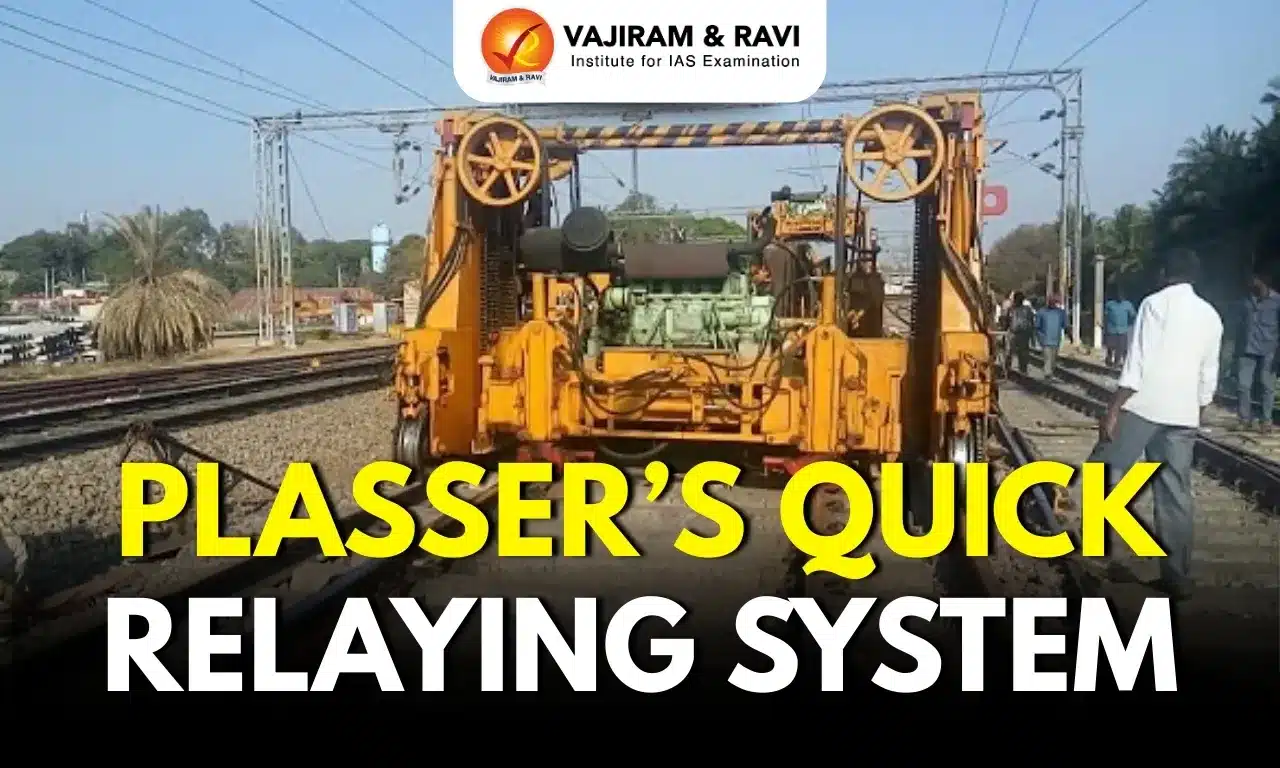
Recently, the Northeast Frontier Railway (NFR) has achieved a major milestone in mechanised track renewal by recording its highest-ever single-day output of 1,033 track metres using Plasser’s Quick Relaying System.

About Plasser’s Quick Relaying System

  • It is a modern semi-mechanized system automatic machine used for quick railway track replacement.
  • It aims to speed up track renewal while minimizing traffic disruption, enhancing safety, reliability, and maintenance efficiency

Features of Plasser’s Quick Relaying System

  • Plasser’s Quick Relaying System consists of self-propelled cranes which move on an auxiliary track of 3400 mm gauge having the same centre line as that of track to be relayed.
  • These portal cranes are capable of self-loading and unloading from BFRs (Bogie Flat Wagons).
  • High Lifting Capacity: Newer models can lift up to 9 tonnes, handling 13m PRC sleeper panels.
  • Uses: The system is widely used for new track construction as well as the modernisation of existing track infrastructure.

Benefits of the Plasser’s Quick Relaying System

  • Renewal time: It helps longer track lengths to be renewed within shorter traffic blocks
  • Cost-Effective: It is cost effective, as it reduces manual labor and lifecycle maintenance costs.

Source: DD News

Plasser’s Quick Relaying System FAQs

Q1: What is Plasser’s Quick Relaying System primarily used for?

Ans: Rapid railway track renewal

Q2: What is a key benefit of Plasser’s Quick Relaying System?

Ans: Reduces manual labor and lifecycle costs

Dulhasti Stage-II Hydropower Project

Dulhasti Stage-II Hydropower Project

Dulhasti Stage-II Hydropower Project Latest News

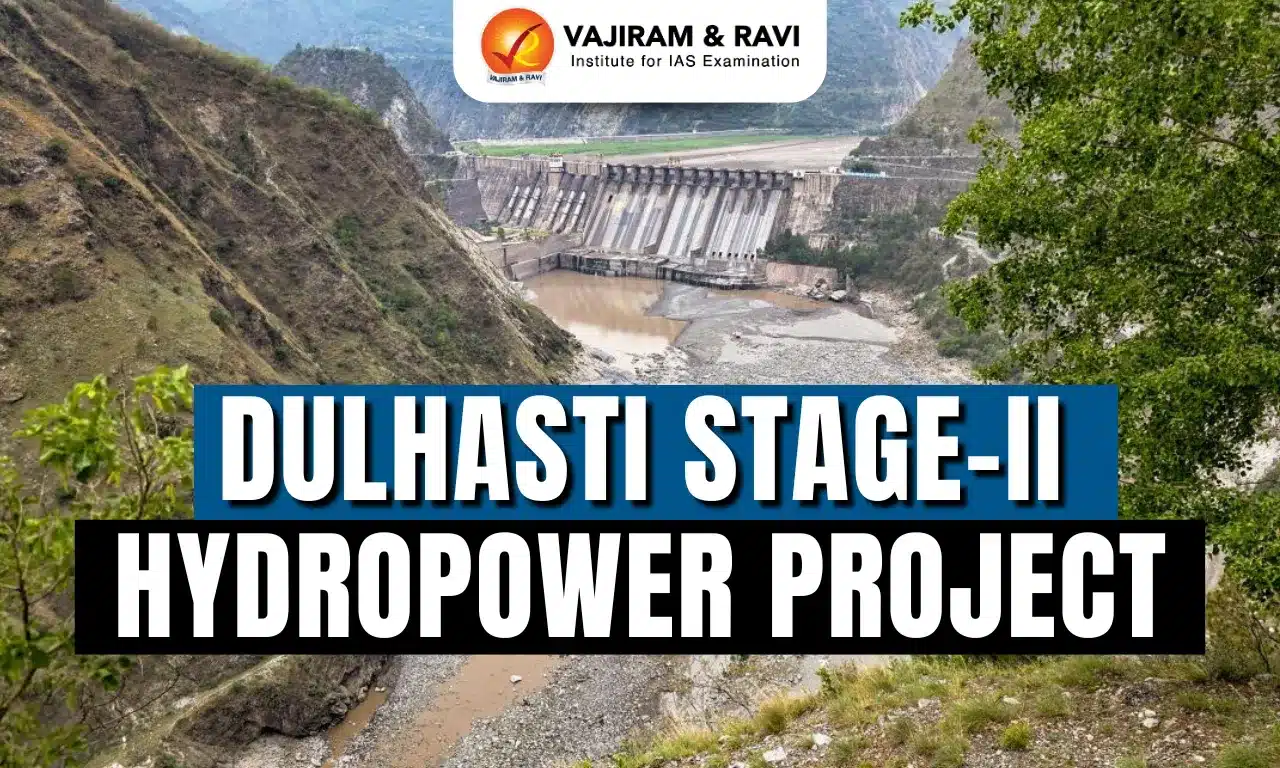
A panel under the Ministry of Environment, Forest and Climate Change recently approved the 260-megawatt Dulhasti Stage-II hydropower project on the Chenab river in Jammu and Kashmir’s Kishtwar district.

About Dulhasti Stage-II Hydropower Project

  • It is a 260-megawatt hydropower project proposed on the Chenab River in the Kishtwar District of Jammu and Kashmir. 
  • It is an extension of the existing 390 MW Dulhasti Stage-I Hydroelectric Project (Dulhasti Power Station), which has been successfully operating since its commissioning in 2007 by the National Hydroelectric Power Corporation Limited.
  • Under the plan, water will be diverted from the Stage-I power station through a separate tunnel measuring 3,685 metres in length and 8.5 metres in diameter to form a horseshoe-shaped pondage for Stage-II.
  • The project also includes a surge shaft, a pressure shaft, and an underground powerhouse housing two 130 MW units, resulting in a total installed capacity of 260 MW and an annual energy generation.
  • The project is estimated to cost more than Rs 3,200 crore.

Source: TI

Dulhasti Stage-II Hydropower Project FAQs

Q1: On which river is the Dulhasti Stage-II Hydropower Project proposed?

Ans: It is proposed on the Chenab River in the Kishtwar District of Jammu and Kashmir.

Q2: What is the installed capacity of the Dulhasti Stage-II Hydropower Project?

Ans: The installed capacity is 260 MW.

Q3: Dulhasti Stage-II is an extension of which existing hydropower project?

Ans: It is an extension of the 390 MW Dulhasti Stage-I Hydroelectric Project.

Q4: When was the Dulhasti Stage-I Power Station commissioned?

Ans: It was commissioned in 2007.

Dhasan River

Key Facts about Dhasan River

Dhasan River Latest News

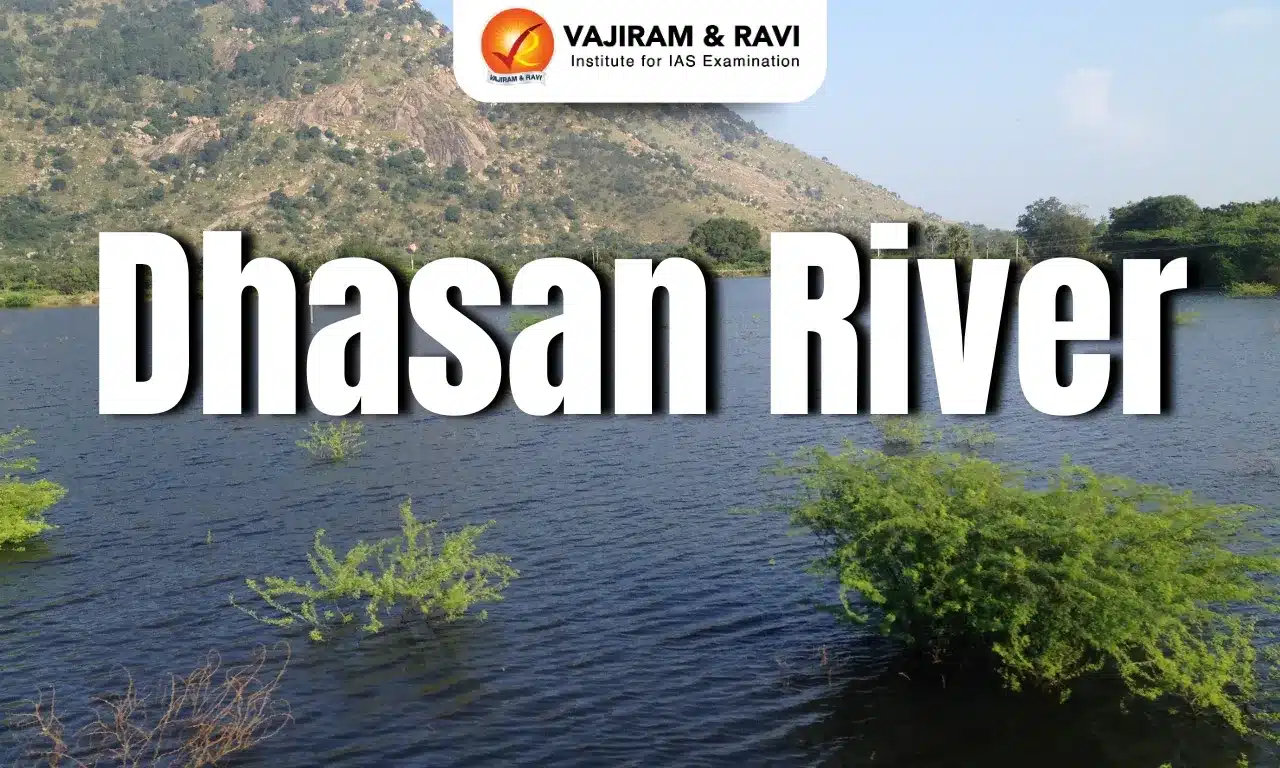
The National Green Tribunal (NGT), Principal Bench, New Delhi, recently dismissed an appeal challenging the cancellation of environmental clearance granted for sand mining in the river Dhasan in Jhansi district.

About Dhasan River

  • It is a right bank tributary of the Betwa River, which itself is a tributary of the Yamuna.
  • It flows in the Bundelkhand region of Madhya Pradesh and Uttar Pradesh.
  • Course
    • The river originates in Begumganj tehsil of Raisen district in Madhya Pradesh.
    • The river forms the southeastern boundary of the Lalitpur District of Uttar Pradesh state. 
    • The total length of the river is 365 km, out of which 240 km lies in Madhya Pradesh, 54 km common boundary between Madhya Pradesh and Uttar Pradesh, and 71 km in Uttar Pradesh. 
  • The river was known as the Dasharna in the ancient period.
  • Lehchura Dam is built on this river. It is primarily an irrigation dam providing water for agricultural use via the Dhasan Canal System (DCS).

Source: HT

Dhasan River FAQs

Q1: Dhasan River is a tributary of which river?

Ans: It is a right bank tributary of the Betwa River

Q2: In which regions does the Dhasan River mainly flow?

Ans: It flows in the Bundelkhand region of Madhya Pradesh and Uttar Pradesh.

Q3: Where does the Dhasan River originate?

Ans: It originates in Begumganj tehsil of Raisen district, Madhya Pradesh.

Q4: What is the total length of the Dhasan River?

Ans: The total length is 365 km.

Q5: Which major dam is built on the Dhasan River?

Ans: The Lahchura (Lehchura) Dam.

Revamped Distribution Sector Scheme (RDSS)

What is the Revamped Distribution Sector Scheme (RDSS)

Revamped Distribution Sector Scheme (RDSS) Latest News

Installation of rooftop solar power plants is being expedited in Rajasthan under the revamped distribution sector scheme (RDSS) to reduce transmission and distribution losses and improve power supply quality.

About Revamped Distribution Sector Scheme (RDSS)

  • It was launched by the Ministry of Power, Government of India, in July 2021, aimed at transforming the electricity distribution sector.
  • It is a Reforms-based and Results-linked Scheme with an outlay of Rs.3,03,758 crore over a period of five years from FY 2021-22 to FY 2025-26.
  • It seeks to modernise India’s power distribution sector through smart metering, network strengthening, and financial reforms, with the goal of creating financially sustainable and operationally efficient DISCOMs.
  • The scheme aims to reduce the Aggregate Technical and Commercial (AT&C) losses to pan-India levels of 12-15% and Gap between Average Cost of Supply (ACS) and Average Revenue Realised (ARR) to zero by 2024-25. 
  • The Scheme has two major components: 
    • Part A: Financial support for Prepaid Smart Metering & System Metering and upgradation of the Distribution Infrastructure.
    • Part B: Training & Capacity Building and other Enabling & Supporting Activities.
  • Financial assistance to DISCOMs is provided for upgradation of the Distribution Infrastructure and for Prepaid Smart Consumer Metering & System Metering based on meeting pre-qualifying criteria and achieving basic minimum benchmark in reforms.

Source: TH

Revamped Distribution Sector Scheme (RDSS) FAQs

Q1: Which ministry launched the Revamped Distribution Sector Scheme (RDSS)?

Ans: The Ministry of Power, Government of India.

Q2: What is the primary objective of the Revamped Distribution Sector Scheme (RDSS)?

Ans: To transform India’s electricity distribution sector and make DISCOMs financially sustainable and operationally efficient.

Q3: What kind of scheme is the Revamped Distribution Sector Scheme (RDSS)?

Ans: It is a Reforms-based and Results-linked scheme.

Q4: What is the duration of the Revamped Distribution Sector Scheme (RDSS)?

Ans: Five years, from FY 2021-22 to FY 2025-26.

Ho Tribe

Ho Tribe

Ho Tribe Latest News

The Ho Samaj Yuva Mahasabha (AHSYM) recently called upon tribal people not to celebrate picnics but to observe ‘Black Day’ on January 1 and 2.

About Ho Tribe

  • The Ho, or Kolha, people are an Austroasiatic Munda ethnic group of India.
  • They call themselves the Ho, Hodoko, and Horo, which mean ‘human’ in their own language.
  • Distribution
    • They are mostly concentrated in the Kolhan region of Jharkhand and Odisha, where they constitute around 10.7% and 7.3% of the total Scheduled Tribe population, respectively, as of 2011.
    • Ho also inhabit adjacent areas in the neighboring states of Odisha, West Bengal, and Bihar. 
    • They also live in Bangladesh and Nepal.
  • Language: Ho people speak the Ho language, an Austroasiatic language closely related to Mundari.
  • Occupation: The majority of the Ho tribe is involved in agriculture, either as landowners or labourers, while others are engaged in mining.
  • The men and women of this community wear very minimal dress. The women prefer to wear tribal jewelleries.
  • Women have higher status among the Ho than they do in most tribes.
  • Dance is very important in Ho culture. Most villages have a dedicated dancing ground, called akhra, usually consisting of a cleared space of hard ground under a spreading tree.
  • Traditional Ho music incorporates native instruments, including a dama (drum), dholak, dumeng (mandar), and the rutu (flute).
  • Religion
    • The majority of the Ho have their own nature-based religion (Sarnaism) that doesn't fit in with Hinduism.
    • They have a village priest called a deuri.

Source: HT

Ho Tribe FAQs

Q1: The Ho people belong to which major ethnic linguistic group?

Ans: They belong to the Austroasiatic Munda ethnic group of India.

Q2: In which Indian region are the Ho people mainly concentrated?

Ans: They are mainly concentrated in the Kolhan region of Jharkhand and Odisha.

Q3: Apart from Jharkhand and Odisha, in which other Indian states are the Ho also found?

Ans: They are also found in West Bengal and Bihar.

Q4: What is the language spoken by the Ho people?

Ans: They speak the Ho language, an Austroasiatic language closely related to Mundari.

Q5: What is the primary occupation of the Ho tribe?

Ans: Their primary occupation is agriculture, as landowners or labourers.

Shipbuilding Financial Assistance Scheme

Shipbuilding Financial Assistance Scheme (1)

Shipbuilding Financial Assistance Scheme Latest News

Recently, the Ministry of Ports, Shipping & Waterways (MoPSW) notified the operational guidelines for two major shipbuilding initiatives—the Shipbuilding Financial Assistance Scheme (SBFAS) and the Shipbuilding Development Scheme (SbDS).

About Shipbuilding Financial Assistance Scheme

  • It is aimed at strengthening India’s domestic shipbuilding capacity and improving global competitiveness. 
  • Time Period: It will remain valid until March 31, 2036.
  • Nodal Ministry: Ministry of Ports, Shipping & Waterways

Features of Shipbuilding Financial Assistance Scheme

  • Financial Assistance: The government will provide financial assistance ranging from 15% to 25% per vessel, depending on the vessel category.
  • Graded Support: The scheme introduces graded support for small normal, large normal and specialised vessels, with stage-wise disbursement linked to defined milestones and backed by security instruments.
  • Shipbreaking Credit Note: Under this, ship owners scrapping vessels at Indian yards will receive a credit equivalent to 40% of the scrap value.
  • It provides for the establishment of a National Shipbuilding Mission to ensure coordinated planning and execution of shipbuilding initiatives.

Key Facts about Shipbuilding Development Scheme

  • It focuses on long-term capacity and capability creation.

Features of Shipbuilding Development Scheme

  • Infrastructure Development: It provides for the development of greenfield shipbuilding clusters, expansion and modernisation of existing brownfield shipyards.
  • India Ship Technology Centre: It is to be established under the Indian Maritime University to support research, design, innovation and skills development.
  • Funding
    • Greenfield shipbuilding clusters will receive 100% capital support for common maritime and internal infrastructure through a 50:50 Centre–State special purpose vehicle.
    • Brownfield expansion will be eligible for 25% capital assistance for brownfield infrastructure such as dry docks, shiplifts etc.
  • Credit Risk Coverage: The scheme also includes a Credit Risk Coverage Framework, offering government-backed insurance for pre-shipment, post-shipment and vendor-default risks.

Source: PIB

Shipbuilding Financial Assistance Scheme FAQs

Q1: Which ministry administers SBFAS?

Ans: Ministry of Ports, Shipping and Waterways

Q2: What is the validity period of SBFAS?

Ans: Until March 2036

Nitrate

Nitrate

Nitrate Latest News

According to a submission by the Central Groundwater Board, over 20% of groundwater samples collected in Delhi in 2023 had nitrate levels exceeding the permissible limit of 45 mg/l.

About Nitrate

  • It is a compound of nitrogen and oxygen.
  • It is naturally found in air, soil, water, and some food.
  • Plants and animals require nitrates for their survival and growth, and the human body also produces this compound.

Applications of Nitrate

  • In industry, nitrate is used as fertilizers for crops and lawns.
  • Nitrates are used in food preservation, certain pharmaceutical medications, as well as the manufacture of munitions and explosives. 

Impact of Nitrate Contamination

  • It gets into water from fertilizer in runoff, manure from animal feeding operations and wastewater treatment plant discharge.
  • Health: Excessive nitrate in groundwater causes methemoglobinemia, reducing the ability of red blood cells to carry oxygen, particularly affecting infants and vulnerable populations.
  • Environment: Elevated nitrate levels in groundwater can lead to algal blooms in lakes and ponds, severely degrading aquatic ecosystems by depleting oxygen and harming biodiversity.

Source: TOI

Nitrate FAQs

Q1: What is the primary health risk associated with high nitrate levels in drinking water?

Ans: Methemoglobinemia (Blue Baby Syndrome)

Q2: Which of the following is a major source of nitrate pollution in groundwater?

Ans: Agricultural runoff (fertilizers)

Buccal Mucosa Cancer (BMC)

Buccal Mucosa Cancer (BMC)

Buccal Mucosa Cancer Latest News

Alcohol consumption, even in small amounts, significantly increases the risk of buccal mucosa cancer (BMC), a common and aggressive form of oral cancer in India, according to a recent study.

About Buccal Mucosa Cancer 

  • It refers to a type of oral cancer that originates in the inner lining of the cheeks, called the buccal mucosa. 
  • It usually occurs in the thin, flat cells called squamous cells that line the buccal mucosa and other parts of the mouth. Hence, most BMC cases are Squamous Cell Carcinoma (SCC).
  • It is the predominant form of oral cancer in the Indian subcontinent.
  • It primarily affects individuals with risk factors such as tobacco use and alcohol use, which causes cellular changes in the cheek lining. 
  • Symptoms commonly include persistent sores, lumps, pain, and difficulty chewing or moving the cheek. 
  • Treatment options include surgery, radiation therapy, and chemotherapy, depending on the cancer stage. 
  • Early detection is essential for improving prognosis and the buccal mucosa cancer survival rate.
  • 5-year survival rates for oral cavity cancers (including buccal mucosa) are roughly in the range of 60–70% overall.

Source: TH

Buccal Mucosa Cancer FAQs

Q1: What is Buccal Mucosa Cancer (BMC)?

Ans: Buccal Mucosa Cancer is a type of oral cancer that starts in the inner lining of the cheeks, known as the buccal mucosa.

Q2: What are the major risk factors for developing Buccal Mucosa Cancer?

Ans: The major risk factors are tobacco use (smoked or smokeless) and alcohol consumption.

Q3: What are common symptoms of Buccal Mucosa Cancer?

Ans: Common symptoms include persistent sores, lumps, pain, and difficulty chewing or moving the cheek.

Q4: What are the treatment options available for Buccal Mucosa Cancer?

Ans: Treatment options include surgery, radiation therapy, and chemotherapy, depending on the cancer stage.

Vallanadu Wildlife Sanctuary

Vallanadu Wildlife Sanctuary

Vallanadu Wildlife Sanctuary Latest News

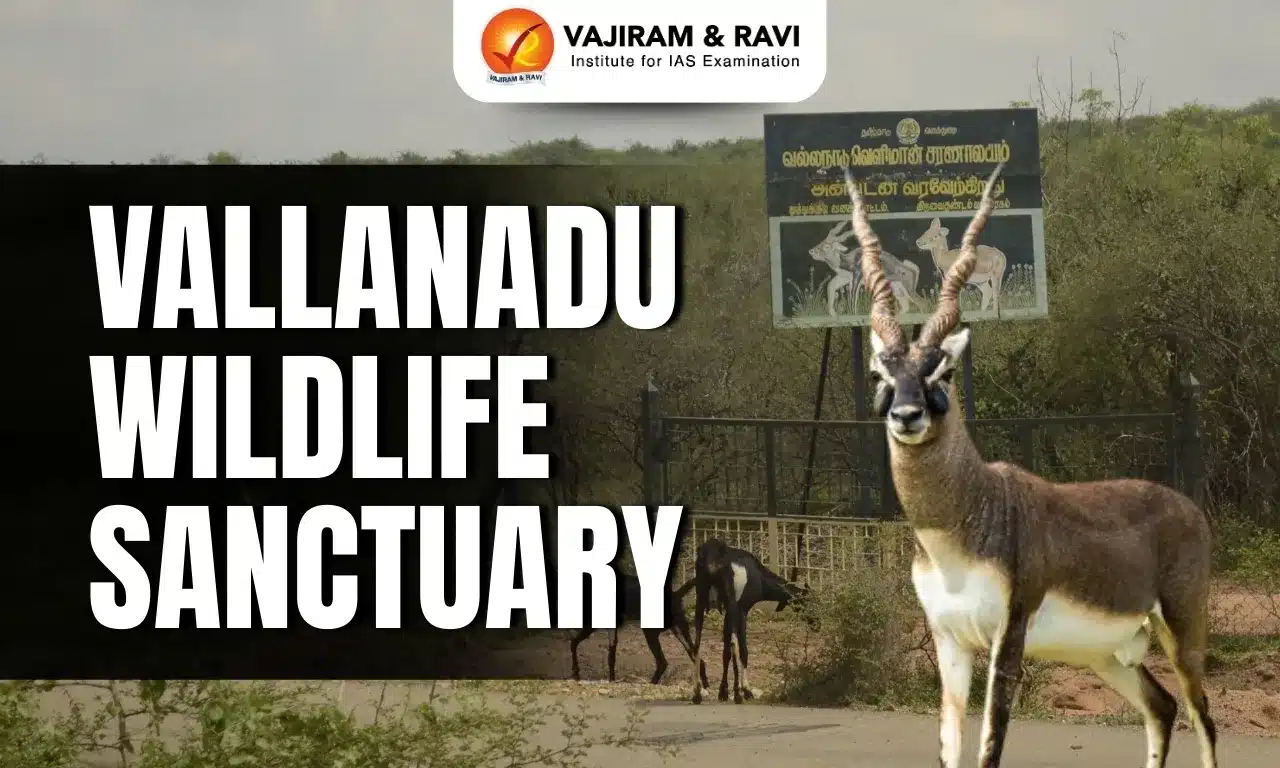
The blackbuck (Antilope cervicapra) population at the Vallanadu sanctuary has witnessed a surge, recording a total of 300. 

About Vallanadu Wildlife Sanctuary

  • Location: It is located in the state of Tamil Nadu.
  • It was established to protect blackbuck antelopes.
  • Vegetation: Vallanadu Sanctuary is a scrub forest area that is spread over 16.41 sq km.
  • Fauna: Blackbuck, Spotted Deer, Bonnet Macaque, Jungle Cat, Small Indian Civet, Black-naped Hare; Rose-ringed Parakeet; Common Indian Monitor Lizard etc. are found here.
  • Flora: Acacia Albizia amara, Zizyphus sp, Azadirachta indica, Carissa carandus, Euphorbia acalypha etc.

Key Facts about Blackbuck

  • It is a species of antelope native to India and Nepal.
  • Habitat: The blackbuck mostly lives in open grasslands, dry scrub areas, and thinly forested areas.
  • Distribution: It is widespread in the states of Rajasthan, Gujarat, Madhya Pradesh, Tamil Nadu, Odisha, and other areas throughout peninsular India.
  • It has been declared as the state animal by the governments of Punjab, Haryana, and Andhra Pradesh. 
  • Conservation Status: It is classified as ‘Least Concerned’ under the IUCN Red List.

Source: TH

Vallanadu Wildlife Sanctuary FAQs

Q1: Where is Vallanadu Wildlife Sanctuary located?

Ans: Tamil Nadu

Q2: What is the main purpose of establishing Vallanadu Wildlife Sanctuary?

Ans: To protect blackbuck antelop

Somaliland

Key Facts about Somaliland

Somaliland Latest News

Recently, Israel formally recognised the self-declared Republic of Somaliland ‍as an independent and sovereign state.

About Somaliland

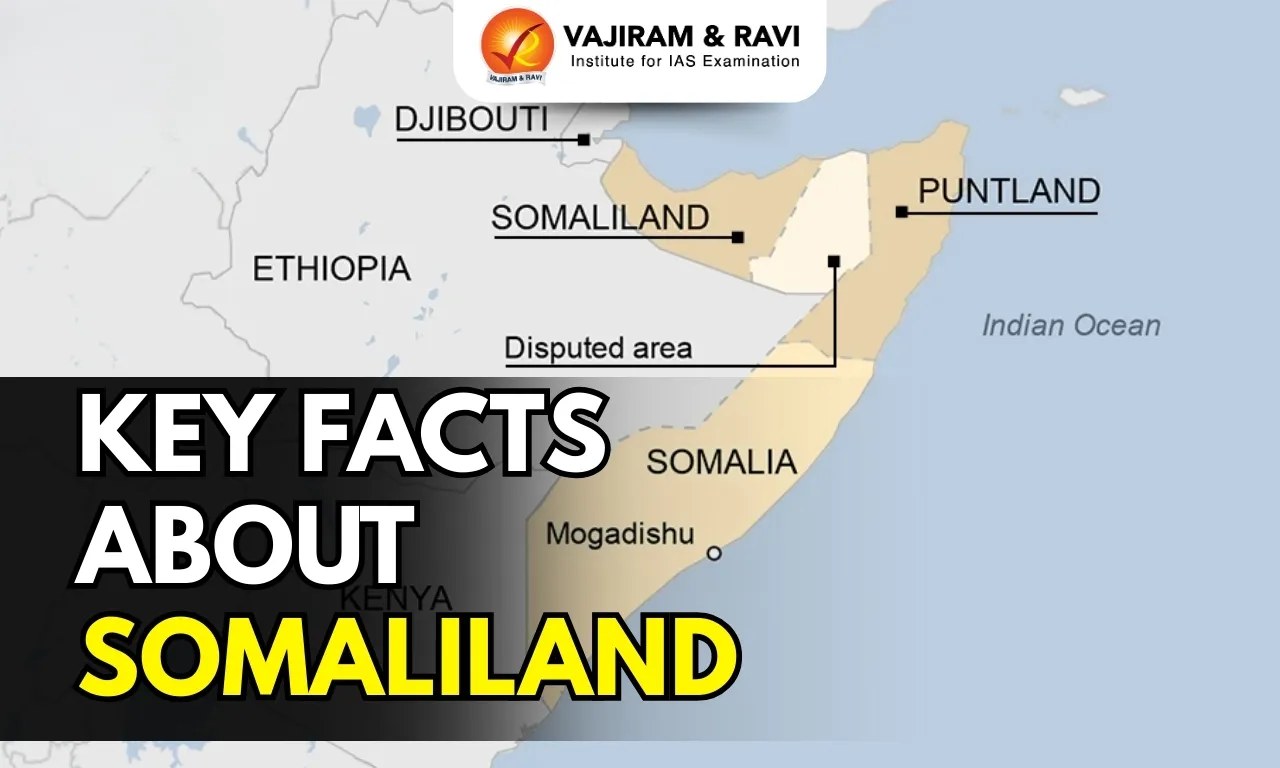
  • Location: It is located in the Horn of Africa.
  • Bordered by: It is bordering Djibouti, Ethiopia, Somalia, and the Puntland region, with a strategic coastline along the Gulf of Aden
  • Historical Background of Somaliland
    • Somaliland was a British protectorate from the late 19th century.
    • On 26 June 1960, it gained independence as the State of Somaliland.
    • It united with Italian Somaliland on 1 July 1960 to form the Somali Republic.
    • Northern regions faced political marginalization, economic disparities, and administrative neglect under the Somali government.
    • Siad Barre’s regime (1970s-80s) intensified repression, leading to civil war and mass displacement in the north.
    • In 1991, following state collapse, Somaliland declared independence, establishing its own political institutions.
  • Capital City: Hargeisa
  • Governance: It functions as a de facto independent state with its own constitution, elected government, judiciary, security forces, currency, and national symbols.
    • Governance combines modern democratic institutions with traditional clan-based mechanisms, ensuring stability and conflict resolution.
    • It has a bicameral legislature, including the House of Elders (Guurti), and conducts regular elections contributing to institutional legitimacy.
  • Port: Berbera Port is being developed as a regional trade and logistics corridor, particularly serving landlocked Ethiopia.
  • Economy: The economy is largely livestock-based, with exports to Gulf countries forming a major revenue source.

Source: TH

Somaliland FAQs

Q1: Where is Somaliland located?

Ans: Horn of Africa

Q2: Which country does Somaliland border?

Ans: Djibouti, Ethiopia, Somalia

India’s ‘RCEP Minus China’ Strategy – Securing Market Access without Strategic Vulnerability

India’s ‘RCEP Minus China’ Strategy - Securing Market Access without Strategic Vulnerability

RCEP Minus China Latest News

  • More than six years after opting out of the Regional Comprehensive Economic Partnership (RCEP) in 2019, India has effectively secured most of the economic benefits of the grouping without formally joining it. 
  • The recent conclusion of the India–New Zealand Free Trade Agreement (FTA) marks a significant milestone—India now has FTAs with all RCEP members except China. 
  • This reflects a calibrated trade strategy balancing market access, strategic autonomy, and economic security.

What is RCEP

  • RCEP is the world’s largest trading bloc, comprising -
    • 10 ASEAN countries (Brunei, Cambodia, Indonesia, Laos, Malaysia, Myanmar, Philippines, Singapore, Thailand, Vietnam)
    • Plus Australia, China, Japan, South Korea, and New Zealand
  • It covers nearly 30% of global GDP and population, and aims at tariff liberalisation, supply chain integration, and trade facilitation.

Why India Opted Out of RCEP (2019)

  • Key reasons:
    • China factor: Fear of near duty-free access for Chinese goods flooding Indian markets.
    • Manufacturing asymmetry: China’s superior manufacturing competitiveness.
    • Trade deficits: Concerns over widening deficits, especially with ASEAN and China.
    • Inadequate safeguards:
      • Weak protection for sensitive sectors (agriculture, MSMEs, manufacturing)
      • Limited flexibility in tariff liberalisation timelines
  • Official stand: The Indian PM stated that RCEP in its existing form did not reflect agreed guiding principles, and failed to address India’s “outstanding issues and concerns”.

The ‘RCEP Minus China’ Strategy

  • Core idea: Bilateral FTAs with 14 of 15 RCEP members, exclude China from a full-fledged FTA, and retain tariff sovereignty and policy space.
  • Expert view: 
    • Described as “smart risk management”, delivers market access without systemic vulnerability.
    • Superior to both joining RCEP, and signing a direct FTA with China.

India-China Trade Framework

  • APTA: India and China are part of the Asia Pacific Trade Agreement (APTA), which is a preferential Trade Agreement (PTA) with limited tariff concessions on select items.
  • Significance: Prevents blanket tariff elimination, limits exposure to Chinese imports.

Why RCEP Would Have Been Riskier

  • Integrated structure of RCEP diluted country-specific safeguards, and limited control over rules of origin.
  • Indirect entry of Chinese goods via ASEAN and other RCEP members.
  • No phased liberalisation tailored to India’s sensitivities.

India’s FTAs with RCEP Members

  • Pre-2014 agreements:
    • ASEAN–India Trade in Goods Agreement (AITIGA) – 2010
    • India–South Korea Comprehensive Economic Partnership Agreement (CEPA) – 2010
    • India–Japan CEPA – 2011
    • Issue: AITIGA led to a sharp rise in India’s trade deficit with ASEAN.
    • Status: Renegotiation underway, limited progress so far.
  • Post-2014 developments:
    • India–Australia Economic Cooperation and Trade Agreement (ECTA) – 2022 – Early-harvest deal, and ongoing talks to expand scope.
    • India–New Zealand FTA – Negotiations concluded December 2025.

Key Highlights of India-New Zealand FTA

  • Zero-duty market access for Indian exports.
  • Investment commitment of $20 billion.
  • Strengthens India’s presence in the Pacific and Indo-Pacific trade architecture.
  • Completes India’s bilateral coverage of RCEP (except China).

Challenges and Way Ahead

  • Persistent trade deficits with ASEAN countries: Slow renegotiation of legacy FTAs like AITIGA. Rebalance existing FTAs - Stronger safeguards, reciprocity-based market access.
  • Domestic competitiveness: MSMEs and manufacturing still need productivity enhancement. Strengthen domestic manufacturing - Align with Make in India and Atmanirbhar Bharat.
  • Geopolitical pressure: Strategic plurilateralism - engage selectively without compromising autonomy. 
  • Global supply chain realignments: Supply chain resilience - Leverage FTAs for diversification away from China-centric chains.

Conclusion

  • India’s post-RCEP trajectory demonstrates a mature and pragmatic trade strategy. 
  • By pursuing an ‘RCEP minus China’ approach, India has preserved tariff and policy autonomy. 
  • The India–New Zealand FTA completes this strategic arc, reinforcing India’s position as a selective, interest-driven participant in global trade, rather than a passive signatory to mega trade blocs. 
  • This approach aligns well with India’s long-term goals of economic resilience, strategic autonomy, and sustainable integration into global value chains.

Source: TH

RCEP Minus China FAQs

Q1: Why did India decide to opt out of the Regional Comprehensive Economic Partnership (RCEP) in 2019?

Ans: Mainly due to concerns over duty-free Chinese imports, widening trade deficits, inadequate safeguards for sensitive sectors, etc.

Q2: What is the concept of India’s ‘RCEP minus China’ strategy?

Ans: It refers to India securing bilateral FTAs with 14 of the 15 RCEP members while excluding China.

Q3: How does the APTA differ from a FTA in the India–China context?

Ans: APTA provides limited tariff concessions on select goods, unlike an FTA which entails near-zero tariffs on most items.

Q4: Why is the India–New Zealand FTA considered strategically significant for India?

Ans: The FTA completes India’s trade coverage of RCEP members excluding China, offers zero-duty market access and investment inflows.

Q5: Why joining RCEP could have posed greater risks for India than a bilateral FTA with China?

Ans: RCEP’s integrated framework would have diluted safeguards and enabled indirect entry of Chinese goods via third countries.

Reading the Economy: What India’s Economic Signals Show in 2025

Reading the Economy

India Economic Signals 2025 Latest News

  • The Indian economy in 2025 has faced a mixed and uncertain phase. 
  • Even as the government rolled out policy measures supportive of growth, their impact has been partly offset by domestic challenges and adverse global conditions, making the economic recovery uneven and fragile.

What Went Right for the Indian Economy in 2025

  • The year began on a positive note for the Indian economy with a series of growth-supporting policy moves.
  • In February, PM Modi and US President Trump announced plans to work towards a India–U.S. Bilateral Trade Agreement by the fall of 2025, raising expectations of improved trade and investment flows.
  • The same month, Union Finance Minister presented Budget 2025, which reduced income tax rates and slabs, easing the tax burden for most taxpayers. The move was widely seen as a boost to disposable incomes and consumer demand.
  • In September, the GST Council simplified the indirect tax structure by scrapping the 12% and 28% GST slabs and shifting most items to lower slabs—from 12% to 5%, and from 28% to 18%—helping reduce prices and improve consumption sentiment.
  • Further, in November, the Centre announced the implementation of the four Labour Codes, expanding social security coverage to contract and gig workers and ensuring benefits such as higher minimum wages, strengthening worker welfare and formalisation.
  • Overall, these measures signalled a policy push towards demand revival, tax rationalisation, and labour protection in 2025.

Trade Agreements That Strengthened India’s Economic Outreach in 2025

  • 2025 marked a strong year for India’s trade diplomacy, with several major agreements concluded, implemented, or pushed close to completion.
  • India–UK Trade Deal: The United Kingdom–India Comprehensive Economic and Trade Agreement, signed in July 2025, grants India duty-free access to most UK markets and improves mobility provisions for Indian professionals and workers.
  • India–EFTA Agreement Comes into Force: The Trade and Economic Partnership Agreement (TEPA) with the European Free Trade Association—covering Switzerland, Norway, Iceland and Liechtenstein—entered into force on October 1, 2025. 
    • Beyond trade concessions, EFTA countries committed $100 billion in investments over 15 years, a target officials believe may be met earlier.
  • India–Oman CEPA: In December, India signed a Comprehensive Economic Partnership Agreement (CEPA) with Oman, further expanding India’s footprint in West Asia.
  • India–New Zealand FTA: India and New Zealand concluded negotiations on a free trade agreement, under which 100% of Indian exports will receive duty-free access, alongside a $20 billion investment commitment over 15 years from New Zealand.
  • India–EU Talks Near Finish Line: According to Piyush Goyal, negotiations with the European Union are in their final stages, though it remains uncertain whether a deal will be concluded before the end of 2025.
  • Overall, 2025 underscored India’s push to diversify trade partners, secure market access, and attract long-term investment through ambitious trade agreements.

U.S. Trade Tensions Undermined India’s Economic Momentum in 2025

  • The biggest setback for India’s economy in 2025 came from trade frictions with the United States.

Tariff Shock After Early Optimism

  • After a positive start in February, when India and the U.S. announced plans for a bilateral trade agreement, President Donald Trump declared “Liberation Day” reciprocal tariffs in April. 
  • India initially faced a 26% tariff, later paused for 90 days to allow negotiations.

Breakdown of Trade Talks

  • Negotiations stalled over key issues, especially U.S. demands for market access in India for agricultural and dairy products. 
  • As no agreement was reached, the U.S. imposed 25% tariffs on India on July 31, followed by an additional 25% penalty tariff a week later for India’s imports of Russian oil, taking the total to 50%.

Impact on Indian Exports

  • The steep tariffs severely hurt labour-intensive sectors such as textiles, apparel, leather, and engineering goods, where the U.S. is a major export destination.
  • While New Delhi announced an Export Promotion Mission to provide cheaper credit and help exporters tackle non-tariff barriers, details of the support measures have not yet been released.

Outlook for the Indian Economy: Cautious Growth with Data Reforms Ahead

  • The year ahead is expected to be a mixed phase for India’s economy.
  • On the downside, the Reserve Bank of India has projected 7.3% GDP growth for 2025–26, implying a notable slowdown in the second half of the year after strong growth averaging 8% in the first half. 
  • In addition, global trade tensions and tariff-related uncertainties are likely to persist for several more months, weighing on exports and external demand.
  • On the positive side, India is set for a long-awaited upgrade of key macroeconomic indicators
  • The base years and methodologies for GDP, the Index of Industrial Production (IIP), and the Consumer Price Index (CPI) will be revised. 
  • These updates are expected to provide more accurate, contemporary, and reliable measurements of economic activity, inflation, and industrial performance.

Source: TH

India Economic Signals 2025 FAQs

Q1: What is the overall economic outlook for India in 2025?

Ans: India’s economy in 2025 shows uneven recovery, with supportive domestic reforms offset by global trade disruptions, especially US tariffs, resulting in cautious but resilient growth prospects.

Q2: Which government policies supported economic growth in 2025?

Ans: Key growth-supporting measures included income tax cuts in Budget 2025, GST slab rationalisation, implementation of four Labour Codes, and efforts to boost domestic demand and worker welfare.

Q3: What trade agreements strengthened India’s global economic position in 2025?

Ans: India concluded or advanced major trade deals with the UK, EFTA, Oman, and New Zealand, securing duty-free access, labour mobility, and long-term investment commitments worth billions.

Q4: How did US trade actions affect India’s economy in 2025?

Ans: US reciprocal tariffs, rising to 50%, severely impacted India’s labour-intensive exports like textiles and leather, disrupting trade talks and weakening export-driven growth momentum.

Q5: What are the key economic signals to watch going forward?

Ans: Key signals include RBI’s 7.3% growth projection, continued tariff uncertainty, and upcoming revisions to GDP, IIP, and CPI base years for better economic measurement.

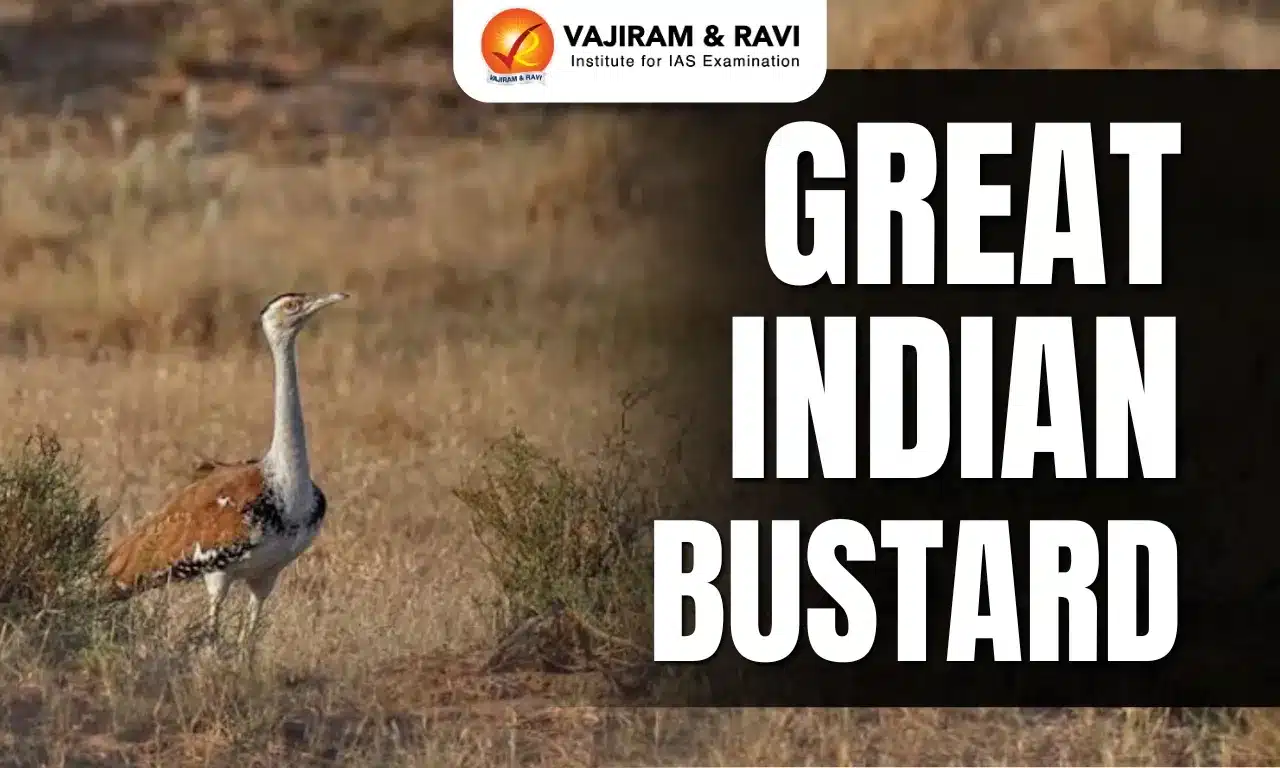
Great Indian Bustard Conservation: Why Supreme Court Ordered Safeguards Against Power Lines

Why the Supreme Court Stepped In to Save the Great Indian Bustard

Great Indian Bustard Latest News

  • Recently, the Supreme Court of India delivered a landmark judgment to strengthen conservation of the Great Indian Bustard, focusing on preventing bird deaths caused by collisions with overhead power lines linked to renewable energy projects.
  • Acting on recommendations from an expert committee, the Court demarcated priority conservation areas for the critically endangered species and laid down a mechanism to reroute or manage overhead power lines in these zones.

Background: What the Supreme Court Was Examining

  • A retired bureaucrat and environmentalist approached the Supreme Court of India seeking urgent protection for the Great Indian Bustard (GIB).
  • The petition flagged rising fatal collisions with renewable energy transmission lines in Rajasthan and Gujarat.
  • Poor frontal vision and heavy body make GIBs highly vulnerable to overhead wires.

Key Supreme Court Directions (2021–2024)

  • 2021 order - Ban on new overhead power lines across ~99,000 sq km of GIB habitat; Assessment of undergrounding high-voltage lines; Mandatory bird diverters
  • March 2024 modification - Withdrawal of blanket ban on overhead lines; Following concerns raised by the Ministry of Power, MNRE, and MoEFCC over feasibility and sector-wide impact.

Balancing Conservation and Clean Energy

  • Court acknowledged the need to balance:
    • Climate commitments and renewable energy expansion, and
    • Protection of a critically endangered species
    • Held that undergrounding alone is insufficient for conservation.
  • It constituted an expert committee of wildlife and power-sector specialists.

Basis of the Final Judgment

  • Expert committee recommendations guided the Court’s latest ruling.
  • The judgment introduced targeted safeguards for the GIB while accommodating India’s renewable energy goals.

Measures Ordered by the Supreme Court

  • Acting on recommendations from an expert committee, the Supreme Court of India approved a package of measures across three pillars:
    • redrawing conservation zones;
    • voltage-based mitigation for power lines (rerouting or undergrounding); 
    • creation of dedicated powerline corridors to reduce collision risk.

Revised Priority Conservation Areas

  • Rajasthan: Priority areas expanded from 13,163 sq km to 14,013 sq km.
  • Gujarat: Priority areas increased from 500 sq km to 740 sq km.
  • These zones represent core habitats and breeding areas identified by the Rajasthan Forest Department and the Wildlife Institute of India (WII).
  • Contestation: Petitioners opposed the exclusion of 657 sq km (eastern Rasla–Degray Oran), arguing it is a vital wintering and stopover corridor between Pokhran and Desert National Park.
  • Critical sites prioritised include: Desert National Park; Salkha–Kuchri; Sanu–Mokla–Parewar; Pokhran Field Firing Range (PFFR) and its buffer/eastern periphery; Dholiya; Khetolai; and Chacha.

Dedicated Powerline Corridors

  • Rajasthan: New powerline corridors up to 5 km wide, placed ≥5 km south of Desert National Park, to carry rerouted overhead lines.
  • Gujarat: Dedicated corridors of 1–2 km width to evacuate power from wind/solar projects in coastal Kutch.
  • Route optimisation mandate: Where multiple green-energy pooling stations terminate at a common grid station, authorities must converge routes into a common stretch wherever feasible.

Project Restrictions in Priority Areas

  • No new overhead power lines within revised priority areas except via designated corridors (lines ≤11 kV exempt).
  • No new wind turbines in priority areas.
  • No new solar parks/plants >2 MW, and no expansion of existing solar parks, within priority areas.

Voltage-Based Mitigation (Undergrounding & Timelines)

  • Rajasthan:
    • Immediate undergrounding of 80 km of 33 kV lines (of 104 km identified earlier).
    • All burying/rerouting to start immediately and finish before 2028.
  • Gujarat:
    • Immediate undergrounding of 79.2 km of 33 kV lines in priority areas.
    • 64.9 km of 66 kV lines earmarked for immediate undergrounding.
    • WII-identified 250 km of critical lines to be buried within 2 years.
  •  

Bird Flight Diverters: Evidence-Based Pause

  • The Court did not issue blanket directions on installing bird flight diverters.
  • Instead, it directed the committee to assess their effectiveness in reducing collision mortality and submit findings to the Centre.

Conservation Measures Directed by the Supreme Court

  • The apex court endorsed a mix of general and State-specific measures to strengthen conservation of the Great Indian Bustard (GIB), alongside the ongoing Project GIB. 

Measures for Rajasthan

  • Grassland Restoration and Consolidation - Priority on restoration, conservation, and consolidation of grassland ecosystems, the GIB’s primary habitat.
  • In-situ Habitat Management
    • To support survival in the wild, the Court directed:
    • Enclosure improvements to secure breeding and foraging areas
    • Predator management, including control of free-ranging dogs and reptiles that prey on eggs
    • Food and water management to stabilise resources
    • Community engagement to reduce human-wildlife conflict and support local stewardship

Measures for Gujarat

  • ‘Jump-Start’ Breeding in the Wild
    • Adoption of a ‘jump-start’ method: transferring fertile eggs from Rajasthan to Gujarat.
    • Technique involves swapping an infertile egg with a fertile one, enabling the female to incubate and raise the chick in natural conditions.
  • Technology-Enabled Monitoring
    • GPS tagging of birds to track movements and support the jump-start breeding process and post-release monitoring.

Source: IE

Great Indian Bustard FAQs

Q1: Why did the Supreme Court intervene in Great Indian Bustard conservation?

Ans: The Supreme Court intervened due to rising deaths of the critically endangered Great Indian Bustard from collisions with overhead power lines linked to renewable energy projects.

Q2: What threat do power lines pose to the Great Indian Bustard?

Ans: The Great Indian Bustard has poor frontal vision and a heavy body, making it unable to detect overhead transmission lines, leading to frequent fatal collisions.

Q3: What key measures did the Supreme Court order for GIB protection?

Ans: The Court ordered revised priority conservation areas, undergrounding or rerouting of power lines, creation of powerline corridors, and restrictions on new energy projects.

Q4: How did the Court balance conservation with renewable energy goals?

Ans: The Court acknowledged climate commitments but held that conservation cannot be compromised, adopting expert-driven, targeted safeguards instead of a blanket ban on power lines.

Q5: What conservation actions were directed beyond power line mitigation?

Ans: The Court directed grassland restoration, predator control, community engagement, in-situ habitat management, jump-start breeding in Gujarat, and GPS tagging of birds.

Health for All in India: Funding Gaps and Systemic Challenges

Health for All in India- Funding Gaps and Systemic Challenges

Health for All Latest News

  • India’s progress towards the “Health for All” goal has come under scrutiny amid funding constraints, rising disease burdens, antimicrobial resistance and recent pharmaceutical quality failures. 

India’s Health Landscape: The Emerging Context

  • With a population of nearly 146 crore, India’s public health system faces complex and overlapping challenges. 
  • The disease profile has shifted significantly over the last decade, marked by a sharp rise in non-communicable diseases (NCDs) such as diabetes, cardiovascular disorders and cancers, alongside the continued presence of infectious diseases like tuberculosis and emerging viral outbreaks. 
  • Climate change has further intensified health risks through heat stress, air pollution and extreme weather events, increasing morbidity and healthcare demand.
  • At the same time, India’s expanding pharmaceutical industry and growing role as a global medicine supplier have raised concerns over drug quality regulation, underscoring the need for stronger governance frameworks to protect public health.

Public Health Financing and Budgetary Constraints

  • One of the most persistent bottlenecks in achieving Health for All is under-investment in healthcare. 
  • India’s public health expenditure has consistently remained below 2% of GDP, despite the National Health Policy setting a target of 2.5% of GDP. 
  • For 2025-26, the Union health allocation stood at Rs. 99,859 crore, representing an increase over the previous year but still insufficient to meet population-level needs.
  • The funding stress has been exacerbated by external factors, including the withdrawal of certain international funding streams that previously supported programmes in HIV/AIDS, maternal health and population services. 
  • As a result, both Union and State governments have had to absorb additional fiscal pressure, often leading to uneven capacity across regions.

Infrastructure Gaps and Environmental Health Concerns

  • Although post-pandemic investments improved diagnostic capacity and hospital bed availability, infrastructure gaps persist, particularly in rural and peri-urban areas. 
  • The demand–supply mismatch is further worsened by severe air pollution, especially in northern India during the winter months. 
  • Poor air quality has reduced life expectancy, increased respiratory illnesses, and disproportionately affected children, elderly citizens and those with pre-existing conditions.
  • Without sustained environmental health interventions and long-term urban air quality management, these health stressors risk overwhelming already stretched public health systems.

Tuberculosis Control and Antimicrobial Resistance

  • India’s decision to advance its tuberculosis elimination target to 2025 has not yielded the desired outcomes. 
  • While diagnostic capacity has improved through indigenous molecular tools such as TrueNat, challenges persist due to inconsistent detection rates and the growing burden of multidrug-resistant and extensively drug-resistant TB.
  • A related and more systemic threat is antimicrobial resistance (AMR). Global surveillance data indicate that resistance levels in India are significantly higher than global averages, particularly for serious bacterial infections treated in hospital settings. 
  • Factors such as over-the-counter antibiotic access, self-medication, incomplete treatment courses, pharmaceutical waste contamination and weak regulatory enforcement continue to fuel AMR. 
  • Although policy frameworks exist, effective implementation remains uneven across States.

Pharmaceutical Quality and Regulatory Oversight

  • Recent incidents involving contaminated medicines have exposed serious regulatory lapses within India’s pharmaceutical quality control ecosystem. 
  • The deaths of children due to toxic cough syrup consumption in Madhya Pradesh highlighted failures in manufacturing oversight, testing and enforcement. 
  • Such episodes not only undermine domestic health outcomes but also weaken India’s credibility as a global supplier of affordable medicines.
  • Ensuring rigorous quality standards, strengthening drug regulators and enforcing accountability are essential for safeguarding public trust and advancing India’s ambition of being the “pharmacy of the world”.

Source: TH

Health for All FAQs

Q1: What is meant by Health for All in India?

Ans: It refers to ensuring equitable access to affordable, quality healthcare services for the entire population.

Q2: Why is healthcare funding a major concern in India?

Ans: Public health spending remains below 2% of GDP, limiting infrastructure, workforce and service delivery capacity.

Q3: Why has India struggled to eliminate tuberculosis by 2025?

Ans: Drug-resistant TB, uneven detection and treatment gaps have slowed progress despite diagnostic improvements.

Q4: What makes antimicrobial resistance a serious public health threat?

Ans: High antibiotic misuse and weak regulation have led to rising drug-resistant infections, especially in hospitals.

Q5: Why is pharmaceutical quality regulation critical for India?

Ans: Quality failures harm patients domestically and threaten India’s global reputation as a reliable medicine supplier.

Enquire Now