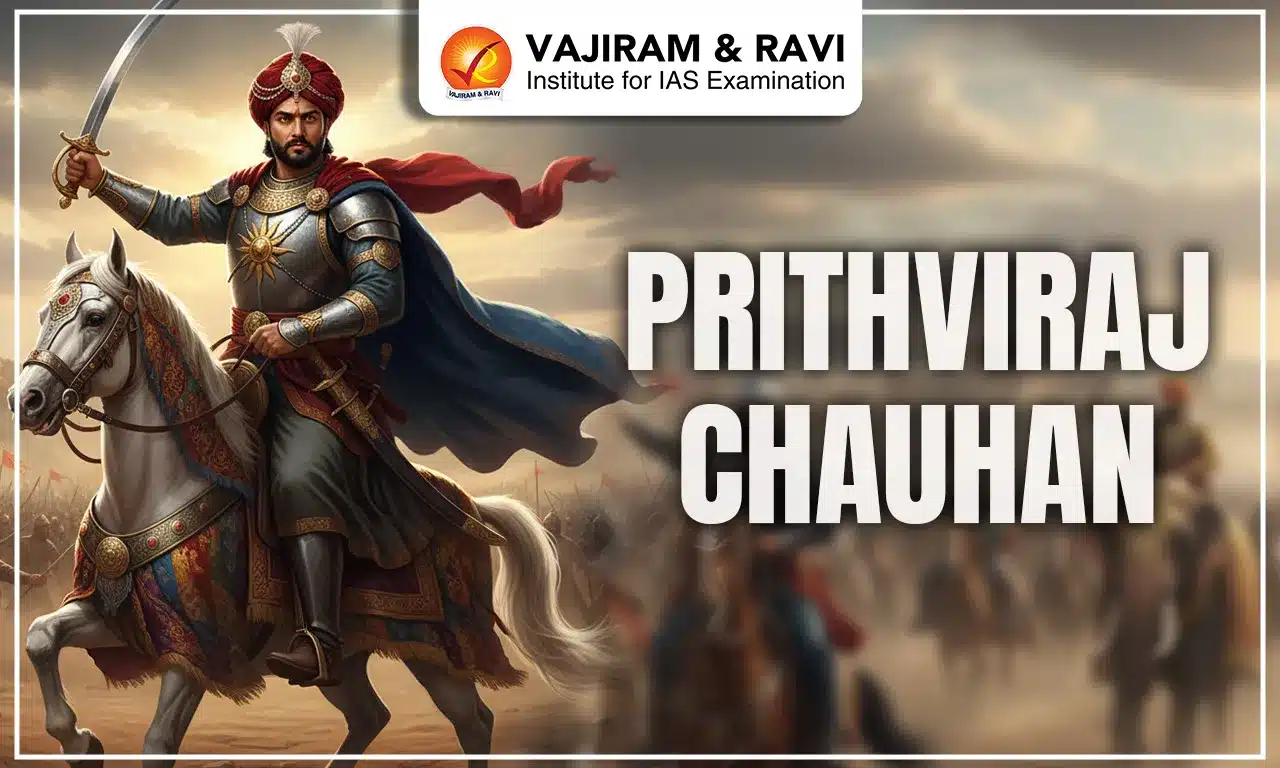
Prithviraj Chauhan, Biography, History, Battles, Victory

Prithviraj Chauhan

Prithviraj Chauhan, one of the most prominent rulers of medieval India, reigned from 1178 to 1192 CE. Celebrated for his courage, military prowess, and chivalry, he is remembered as a heroic figure in Rajput history. His most notable adversary was Muhammad of Ghor, with whom he fought a series of decisive battles. The First Battle of Tarain in 1191 CE marked a major victory for Prithviraj, showcasing his strength and leadership. However, in the Second Battle of Tarain in 1192 CE, he was defeated, captured, and taken prisoner. Despite this tragic end, his bravery, pride, and spirit turned him into a legendary symbol of resistance in Indian history.

Prithviraj Chauhan Biography

Prithviraj Chauhan, born in 1168 CE in Ajmer, Rajasthan, was one of the most celebrated rulers of the Chauhan dynasty. After the death of his father, Someshvara Chauhan, he ascended the throne at a young age and soon proved his capability as a strong and determined leader. His kingdom expanded to include Delhi, Ajmer, and parts of present-day Haryana, making him a central figure in northern India during the late 12th century.

Known for his mastery in archery and horsemanship, Prithviraj earned fame as a warrior of unmatched courage. His reign was defined by not just military conquests but also his adherence to Rajput ideals of honor and chivalry.

One of the defining moments of his rule was his rivalry with Muhammad of Ghor, the Ghurid ruler. Their clashes culminated in the two Battles of Tarain. In the first, fought in 1191 CE, Prithviraj defeated Muhammad of Ghor and, showing mercy, released him instead of executing him. However, this act of generosity proved costly. In 1192 CE, during the Second Battle of Tarain, Muhammad of Ghor returned with renewed strategy and deceit, leading to Prithviraj’s defeat. Captured and imprisoned, the Rajput king refused to surrender his pride or accept subjugation.

Beyond warfare, Prithviraj Chauhan’s legacy is also intertwined with the romantic tale of his love for Samyukta, the princess of Kannauj. Their story, celebrated in folklore and immortalized in the epic Prithviraj Raso, highlights not just his valor but also his human side.

Prithviraj Chauhan is remembered as the last great Hindu ruler of Delhi before the establishment of Muslim rule in northern India. His courage, tragic fall, and legendary tales have secured him a lasting place in Indian history as a symbol of bravery and resistance.

Prithviraj Chauhan History

Prithviraj Chauhan, also known as Rai Pithora, was a prominent king of the Chauhan (Chahamana) dynasty who ruled Sapadalaksha with his capital at Ajmer in present-day Rajasthan. He ascended the throne in 1177 CE as a minor, inheriting a kingdom stretching from Thanesar in the north to Jahazpur (Mewar) in the south. Prithviraj sought to expand his territory through military campaigns, most notably defeating the Chandelas.

In 1191 CE, he led a coalition of Rajput kings and achieved a remarkable victory over the Ghurid forces of Muhammad Ghori at the First Battle of Taraori. However, Muhammad Ghori returned the following year with a stronger army. In the Second Battle of Taraori in 1192 CE, Prithviraj was defeated, captured, and later executed by Ghori.

Prithviraj Chauhan’s life has been immortalized in Indian history and folklore. He is celebrated as a heroic warrior who resisted Muslim invasions, and his story has been recounted in numerous poems, songs, and plays. In 2022, a Bollywood film depicting his life was released, highlighting his enduring legacy.

Timeline of Key Events:

  • 1166: Born in Gujarat.
  • 1177: Ascends the throne of Ajmer.
  • 1182: Defeats the Chandelas of Khajuraho and Mahoba.
  • 1187: Defeated by the Chalukyas of Gujarat.
  • 1191: Defeats Muhammad Ghori in the First Battle of Taraori.
  • 1192: Defeated and executed by Muhammad Ghori in the Second Battle of Taraori.

Prithviraj Chauhan remains a symbol of bravery and resilience, representing the courage and determination of the Rajputs in defending their homeland from foreign invasions.

Prithviraj Chauhan Battles

Prithviraj Chauhan, a medieval Indian ruler, fought two major wars against the Ghurid Empire, led by Muhammad Ghori.

  • First Battle of Tarain (12 March 1191): Fought near Tarain (present-day Taraori, 110 km north of Delhi), this battle was a decisive victory for Chauhan. Despite facing a large Ghurid army, Chauhan’s forces defeated Ghori, who fled back to Afghanistan.
  • Second Battle of Tarain (17 November 1192): Ghori returned with a much larger and better-prepared army. Chauhan was defeated, captured, and subsequently executed. This loss led to the downfall of the Chauhan dynasty and paved the way for the Muslim conquest of northern India.

Key Events:

  • 1191: Prithviraj Chauhan defeats Muhammad Ghori in the First Battle of Tarain.
  • 1192: Muhammad Ghori returns with a larger army and defeats Chauhan in the Second Battle of Tarain.
  • 1192: Prithviraj Chauhan is captured and executed.
  • 1192-1206: Muhammad Ghori consolidates his control over northern India.
  • 1206: Muhammad Ghori is assassinated.
  • 1206-1210: Qutb-ud-din Aibak establishes the Delhi Sultanate.

The wars between Prithviraj Chauhan and Muhammad Ghori marked a major turning point in Indian history, signaling the decline of Hindu rule in northern India and the rise of Muslim dominance.

Prithviraj Chauhan Victory

Prithviraj Chauhan, born in 1166 in Ajmer, Rajasthan, was a prominent Hindu king of the Chauhan dynasty. He was the son of Someshwara Chauhan and received education in the Hindu tradition, along with training in warfare, horsemanship, poetry, and music.

In 1177, Chauhan succeeded his father as ruler and quickly established himself as a powerful leader. He expanded his kingdom, built a strong army, and became renowned for his military skills. Conflicts with Muhammad Ghori:

  • First Battle of Tarain (1191): Muhammad Ghori, ruler of the Ghurid Empire, invaded India with a large army. Despite being outnumbered, Chauhan defeated Ghori near Tarain, forcing him to retreat to Afghanistan.
  • Second Battle of Tarain (1192): Ghori returned the following year with a larger, better-prepared army. Chauhan was defeated, captured, and executed.

The defeat of Prithviraj Chauhan marked the end of the Chauhan dynasty and signaled the beginning of the Muslim conquest of northern India. Prithviraj Chauhan is remembered as a heroic figure in Indian history, symbolizing resistance against invasions. Beyond his valor in battle, he is also celebrated for his poetic and musical talents.

Other Related Posts
Paramara Dynasty Ashtadiggajas 
Western Chalukyas Battle of Talikota
Hoysala Dynasty Bahmani Kingdom
Kakatiya Dynasty Deccan Sultanates
Vijayanagara Empire Muhammad Ghori
Krishnadevaraya Mahmud of Ghazni

Prithviraj Chauhan FAQs

Q1: What was the cause of death of Prithviraj Chauhan?

Ans: Prithviraj Chauhan was captured and executed by Muhammad Ghori after the Second Battle of Tarain in 1192 CE, though exact historical details are debated.

Q2: Who defeated Prithviraj Chauhan 17 times?

Ans: There is no historical evidence that Prithviraj Chauhan was defeated 17 times; his notable defeat was by Muhammad Ghori in the Second Battle of Tarain.

Q3: Why is Prithviraj Chauhan so famous?

Ans: He is famous as a valiant Rajput king and warrior, known for resisting invasions and his legendary battles against Muhammad Ghori.

Q4: Why did Prithviraj lose to Ghori?

Ans: Prithviraj lost due to strategic mistakes, Ghori’s superior tactics, and possible betrayal, which allowed the Ghurid forces to capture Delhi and Ajmer.

Q5: Did Prithviraj Chauhan marry his cousin?

Ans: Yes, according to historical accounts, Prithviraj married Sanyogita (or Samyukta), his cousin, daughter of Jaichand of Kannauj.
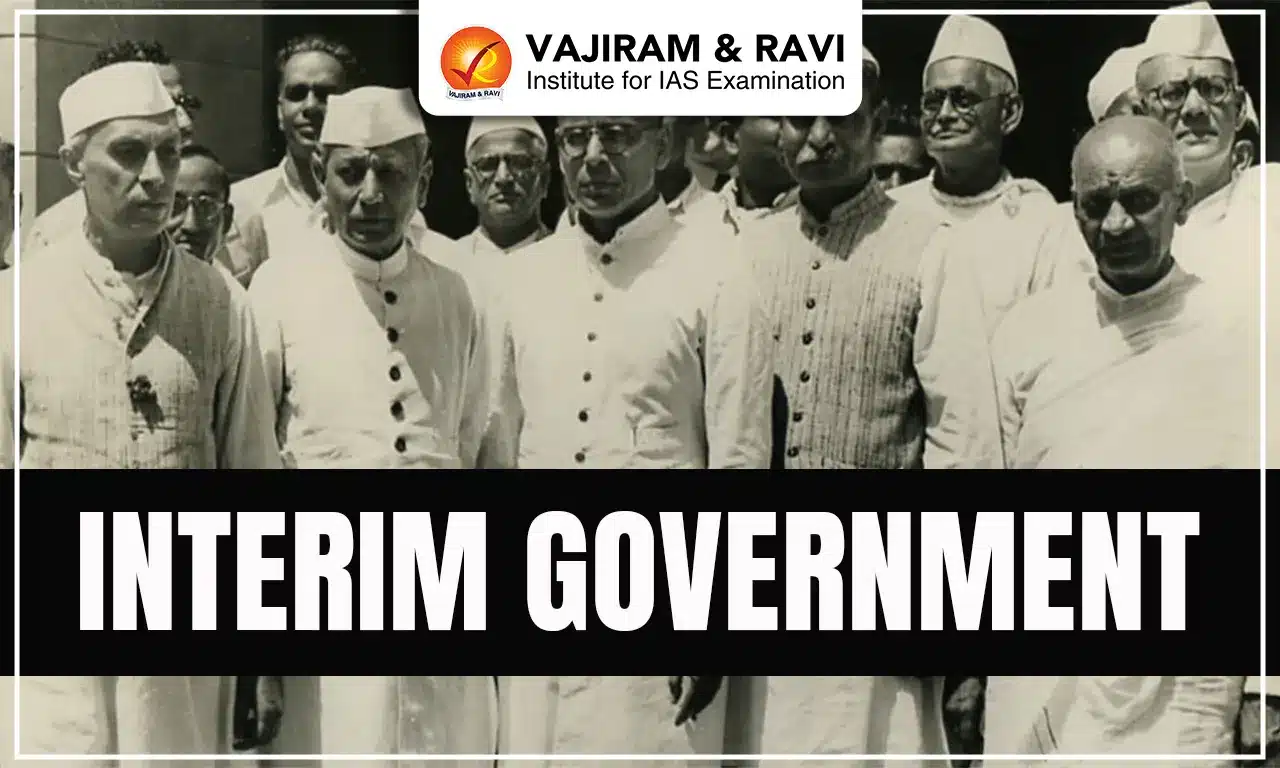
Interim Government, History, Formation, Members

Interim Government

This was the only cabinet in India’s history where the Muslim League and the Congress shared power at the national level. The Interim Government enjoyed considerable autonomy and remained in office until the end of British rule, when the independent dominions of India and Pakistan were established. In modern Indian history, this period represents a significant and pivotal chapter.

Interim Government History

The Interim Government was established as a temporary administration bridging the imperial structure and a democratic framework. It functioned from August 1946 until India’s independence on August 15, 1947, when the subcontinent was partitioned into India and Pakistan.

Its formation came from the newly elected Constituent Assembly, whose representatives were indirectly chosen by provincial legislatures. In these elections, the Indian National Congress (INC) won a plurality with 208 seats (about 69%), while the Muslim League secured 73 seats. The Interim Government replaced the Viceroy’s Executive Council with a Council of Ministers as the administrative branch.

Pandit Jawaharlal Nehru served as its Vice President and de facto Prime Minister. Although initially opposed to joining the Interim Government, the Muslim League eventually participated to gain political leverage, as Muhammad Ali Jinnah described, “entering the Interim Government to get a foothold to fight for… the cherished objective of Pakistan.”

Interim Government Formation

The Second World War significantly influenced the establishment of the Interim Government. Following the war, a pivotal development occurred with the release of all political prisoners associated with the Quit India Movement. The Indian National Congress, by announcing its participation in forming the Constituent Assembly, laid the foundation for a new administrative structure.

In 1946, the British government, led by the newly elected Prime Minister Clement Attlee, sent the Cabinet Mission to India. Its purpose was to propose a framework for establishing a government that would eventually lead to India’s independence.

Interim Government Members

The Cabinet of the Interim Government of India, formed in 1946, consisted of key leaders from the Indian National Congress and the Muslim League. This cabinet was responsible for administering the country during the transitional period leading up to independence. Below is the list of prominent Interim Government Members and their respective portfolios:

Interim Government Members

Pt. Jawaharlal Nehru

Vice President of the Executive Council, External Affairs and Commonwealth Relations

Vallabhbhai Patel

Home, Information and Broadcasting

Baldev Singh

Defence

Dr. John Mithai

Industries and supplies

C. Rajagopalachari

Education

C.H Bhabha

Works, Mines and Power

Rajendra Prasad

Food and Agriculture

Asaf Ali

Railways

Jagjivan Ram

Labour

Liaqat Ali

Finance

TT Chundrigar

Commerce

Abdur Rab Nistar

Communication

Gazanfar Ali khan

Health

Jogendra Nath Mandal

Law

Also Check Other Posts
Battle of Plassey Robert Clive
Battle of Buxar Anglo Mysore Wars
Dual Government in Bengal Tipu Sultan
Anglo Maratha Wars Maratha Empire
Third Battle of Panipat Chhatrapati Shivaji Maharaj
Battel of Bhima Koregaon Anglo Burmese War
Maharaja Ranjit Singh Anglo Nepal War

Interim Government FAQs

Q1: What is meant by Interim Government?

Ans: An Interim Government is a temporary government formed before full independence, managing administration and transition during political change, like pre-independence India in 1946.

Q2: Who was the first interim government of India?

Ans: The first Interim Government of India was formed in September 1946, under Jawaharlal Nehru, preparing for India’s independence and transfer of power.

Q3: Who was PM in Interim Government?

Ans: Jawaharlal Nehru served as the Prime Minister of the Interim Government of India from 1946 to 1947.

Q4: Who was the head of the Interim Government?

Ans: Lord Mountbatten was the Governor-General of India, heading and supervising the Interim Government during the transition to independence.

Q5: Who elects the Interim Government?

Ans: The Interim Government was formed by the Indian National Congress and other major parties nominated by the British Viceroy under the Cabinet Mission Plan.

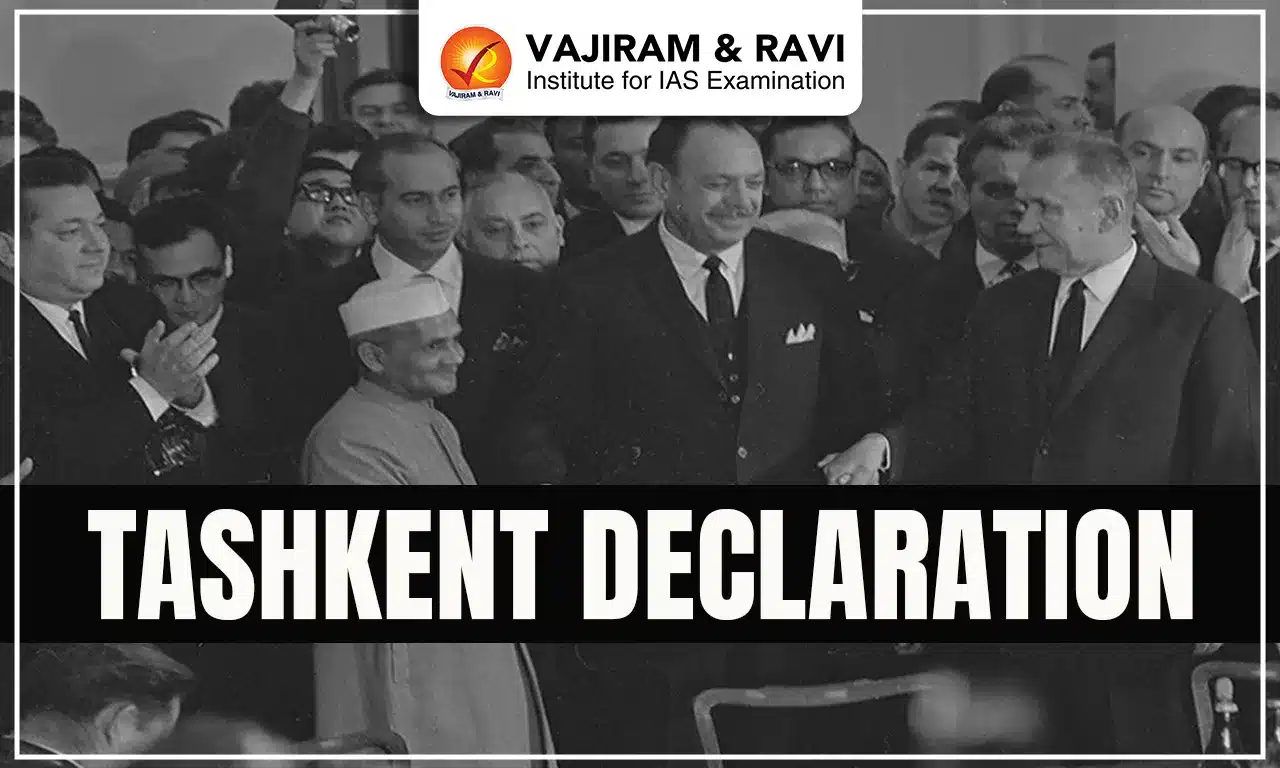
Tashkent Declaration, Background, Features, Outcomes

Tashkent Declaration

The Tashkent Declaration was a significant diplomatic agreement aimed at restoring peace between India and Pakistan following the war of 1965. It laid down key terms related to ceasefire, withdrawal of forces, and the normalization of diplomatic and economic relations between the two countries.

Tashkent Declaration

The Tashkent Declaration, signed to end the Indo-Pakistan War of 1965 (August 5 – September 23, 1965), was a landmark peace agreement between India and Pakistan. Concluded in Tashkent, the capital of the then Uzbek SSR in the USSR, its primary objective was to restore economic and diplomatic relations between the two countries. The agreement emphasized non-interference in each other’s internal and external affairs and sought to promote bilateral cooperation for mutual progress and stability.

Tashkent Declaration Overview

The Tashkent Declaration was a peace agreement signed between India and Pakistan on January 10, 1966, to formally end the Indo-Pakistan War of 1965. The agreement outlined key commitments, including the withdrawal of military forces and a pledge of non-interference in each other’s internal affairs. The table below summarizes its main aspects, outcomes, and consequences.

Tashkent Declaration Overview

Aspect

Details

Date

January 10, 1966

Location

Tashkent, Uzbekistan (USSR at the time)

Parties

India and Pakistan

Purpose

To end the Indo-Pakistan War of 1965 and restore peace between the two nations

Key Points

  • Military withdrawal to pre-conflict positions by February 25, 1966
  • Neither country would interfere in the other’s internal affairs

Outcome

Temporarily halted hostilities but did not resolve deep-rooted issues between the two countries

Consequences

Marked a brief pause in conflicts; underlying tensions remained, leading to renewed hostilities in 1970

Tashkent Declaration Background

  • First Indo-Pakistani War (1947-1949): Fought shortly after independence, it ended in a ceasefire and led to the establishment of the Line of Control (LOC) in Kashmir.
  • Operation Gibraltar (April 1965): Pakistan’s unsuccessful attempt to capture Kashmir by infiltrating forces disguised as locals.
  • Indo-Pakistan War (August-September 1965): Sparked by the failure of Operation Gibraltar, this conflict risked drawing in Cold War superpowers.
  • Diplomatic Intervention: The United States and the USSR pushed for peace talks to prevent further escalation.
  • UN Resolution (September 22, 1965): The UN called for a ceasefire, temporarily halting hostilities.
  • Tashkent Declaration (January 1966): Mediated by the USSR, leaders Lal Bahadur Shastri and Muhammad Ayub Khan signed the declaration to restore peace and rebuild diplomatic ties.

Tashkent Declaration Features

  • Restoration of Pre-War Positions: Both India and Pakistan agreed to return to the territorial positions held before the outbreak of the 1965 conflict, helping to ease tensions.
  • Non-Interference in Internal Affairs: Each country pledged not to interfere in the other’s internal matters and to avoid harmful propaganda, fostering mutual respect.
  • Orderly Transfer of Prisoners of War: The declaration called for the systematic and humane repatriation of prisoners captured during the war.
  • Commitment to Bilateral Improvement: Leaders of both nations committed to dialogue and cooperation aimed at rebuilding trust and improving diplomatic relations.
  • Restoration of Trade and Economic Relations: Both sides agreed to reinstate trade and economic ties to pre-war levels, promoting stability and shared prosperity.

Tashkent Declaration Outcomes

  • Ceasefire: Both nations agreed to an immediate ceasefire along the Line of Control and international borders.
  • Withdrawal of Forces: India and Pakistan committed to returning to the positions held before August 5, 1965.
  • No Use of Force: Both sides pledged to resolve disputes peacefully, avoiding military action.
  • Respect for Sovereignty: The declaration emphasized mutual respect for territorial integrity and sovereignty.
  • Economic and Diplomatic Relations: India and Pakistan agreed to restore trade and diplomatic ties.

Prisoners of War: Both countries consented to release and repatriate captured soldiers.

Also Check Other Posts
Battle of Plassey Robert Clive
Battle of Buxar Anglo Mysore Wars
Dual Government in Bengal Tipu Sultan
Anglo Maratha Wars Maratha Empire
Third Battle of Panipat Chhatrapati Shivaji Maharaj
Battel of Bhima Koregaon Anglo Burmese War
Maharaja Ranjit Singh Anglo Nepal War

Tashkent Declaration FAQs

Q1: What is the Tashkent Declaration?

Ans: The Tashkent Declaration was a peace agreement signed on 10 January 1966 between India and Pakistan, mediated by the USSR, after the Indo-Pak War of 1965.

Q2: Who signed the Tashkent Agreement?

Ans: It was signed by Lal Bahadur Shastri (Prime Minister of India) and Ayub Khan (President of Pakistan) in Tashkent, with Soviet Premier Alexei Kosygin mediating.

Q3: What is the Tashkent Agreement of UPSC?

Ans: For UPSC, it refers to the 1966 peace pact resolving the 1965 war, highlighting India-Pakistan relations, Cold War geopolitics, and India’s foreign policy under Shastri.

Q4: Which Indian prime minister died during the Tashkent Agreement?

Ans: Lal Bahadur Shastri, India’s second Prime Minister, died on 11 January 1966 in Tashkent, just hours after signing the peace agreement with Pakistan.

Q5: Was the Tashkent Agreement successful?

Ans: The agreement restored status quo ante (return to pre-war positions) and temporarily reduced tensions, but failed to resolve Kashmir, so its success was limited.

Article 78 of Indian Constitution, Prime Minister’s Duties & Powers

Article 78 of Indian Constitution

Article 78 of the Indian Constitution covers the Duties of the Prime Minister of India. The Prime Minister of India is a bridge in between the President and the Council of Ministers who conveys the advice and aid of the Council of Ministers to the President. In this article, we are going to cover all about Article 78 and the roles and responsibilities of the Prime Minister. 

Article 78 Provisions 

Article 78 outlines the roles and responsibilities of the Prime Minister in the Constitution of India. These responsibilities include: 

Article 78(1)

This article states that it is the Prime Minister's duty to keep the President up to date on the decisions made by the Council of Ministers in relation to administrative concerns and legislative proposals.

Article 78(2)

This article states that the Prime Minister must provide the President with certain administrative information about Union issues as and when he requests it.

Article 78(3)

This article states that, if the President so requires, to submit for the consideration of the Council of Ministers any matter on which a decision has been taken by a minister but which has not been considered by the council.

Prime Minister Office

The Prime Minister acts as the de facto executive authority in India, meaning that while the President is the constitutional head of the state, the Prime Minister is the head of the government and exercises real power.

The Constitution does not lay out a detailed procedure for the selection and appointment of the Prime Minister. Article 75 mentions that the Prime Minister shall be appointed by the President.

However, this does not grant the President absolute discretion in the matter. As per the conventions of a parliamentary system, the President is constitutionally bound to appoint the leader of the majority party or coalition in the Lok Sabha as the Prime Minister.

Also Check Related Articles
Article 295 of Indian Constitution Article 194 of Indian Constitution
Article 39 of Indian Constitution Article 191 of Indian Constitution
Article 20 of Indian Constitution Article 16 of Indian Constitution
Article 67 of Indian Constitution Article 40 of Indian Constitution
Article 78 of Indian Constitution

Article 78 of Indian Constitution FAQs

Q1: What is Article 76 and 78?

Ans: Article 76 provides for the Attorney General of India, while Article 78 outlines the duties of the Prime Minister to communicate with the President.

Q2: What is Article 77 and 78?

Ans: Article 77 deals with the conduct of government business in the name of the President, and Article 78 specifies the Prime Minister's obligation to inform the President on government affairs.

Q3: What is the 78th Amendment of the Constitution?

Ans: The 78th Amendment Act, 1995 added certain land reform acts to the Ninth Schedule to protect them from judicial review.

Q4: What are the roles and responsibilities of the Prime Minister?

Ans: The Prime Minister leads the Council of Ministers, advises the President, coordinates policy, and represents the country both nationally and internationally.

Q5: How does the Prime Minister get appointed?

Ans: The President appoints the leader of the majority party or coalition in the Lok Sabha as the Prime Minister.

Ocean Deposits, Meaning, Types, Significance, Examples

Ocean Deposits

Ocean Deposits means natural accumulation of solid, liquid and gaseous materials present on Earth’s surface, within ocean waters or in the atmosphere. These deposits also known as marine deposits are formed by the process of marine deposition, where sediments or materials are gradually transported and laid down in different parts of the ocean. Over geological timescales, these deposits create layered sediments that preserve valuable records about the climate history of the Earth, biological activity and tectonic changes. In this article, we are going to cover Ocean deposits, its types, and significance.

Ocean Deposits

Ocean Deposits refers to the materials that get collected at the bottom of oceans due to natural processes. This includes biological matter like the remains of time marine plants and animals, inorganic matter like sand, clay and rocks and even dissolved minerals that precipitate out of ocean water. The collection of these materials form sediment layers on the seafloor, each acting as a chronological archive of the Earth’s geological and climatic history. Some deposits originate from land sources carried by rivers, winds or glaciers, while others are authentically marine, produced by organisms, chemical precipitation or even cosmic activity. 

Ocean Deposits Types

Ocean deposits are divided on the basis of many criteria like location, depth and sediment composition. Ocean Deposits Types include: 

1. Based on Location- Shelf Deposits

Shelf deposits occur on the continental shelf, the shallowest and most productive part of the ocean. They are subdivided into:

  • Terrigenous Deposits: Formed by materials transported from land into the ocean through rivers, winds, glaciers, and coastal erosion.
  • Biogenous Deposits: Derived from the remains of marine organisms, such as shells, corals, and plankton skeletons.
  • Hydrogenous Deposits: Minerals precipitated directly from seawater, e.g., manganese nodules and phosphorites.
  • Cosmogenic Deposits: Rare deposits formed due to cosmic material, such as micrometeorites settling on the seafloor.

2. Based on Depth

  • Continental Shelf Deposits- Located in shallow waters along the shelf region.
    • Found in the steep gradient zone, often comprising coarser materials transported downslope.
  • Oceanic Basin Deposits – Located in the deepest parts of the ocean, mainly fine-grained sediments such as clays and oozes.

3. Based on Sediment Type

  • Clastic Deposits – Formed by fragmented rock or sediment particles transported by rivers, glaciers, or winds into the ocean.
  • Non-clastic Deposits – Composed of chemically precipitated minerals such as salts, phosphates, and carbonates, not derived from rock fragments.

Ocean Deposits Significance

Ocean deposits are important for the purpose of science, economy, and environmental studies. The study of Ocean Deposits in important because: 

  1. Historical Record: Sediment layers preserve evidence of past oceanic and climatic changes.
  2. Ocean Currents Study: Deposits reveal patterns of current movement and marine circulation.
  3. Climate Reconstruction: They act as archives of past climate variations, helping predict future climate shifts.
  4. Carbon and Water Cycles: Deposits illustrate the role of oceans in regulating global biogeochemical cycles.
  5. Oceanography: Deposits provide insights into the interaction of oceans with the atmosphere, lithosphere, and hydrosphere.

Ocean Deposits and Climate Change

Ocean deposits are central to the study of climate change. Since oceans act as major regulators of Earth’s temperature, examining deposits like microfossils, corals, and marine sediments allows scientists to trace historic shifts in climate, ice ages, and warming phases. They also reveal how oceans absorb atmospheric CO₂ and buffer against global warming.

Ocean Deposits Examples

Examples of ocean deposits include:

  • Rocks: Basalt, gabbro, granite in the oceanic crust.
  • Minerals: Olivine, pyroxene, amphibole, manganese nodules, phosphorites.
  • Sediments: Clay, silt, sand, and gravel transported from land.
  • Biological Material: Remains of plankton, corals, algae, and other organisms that form biogenous oozes.
Also Check Other Posts
Geomorphology Major Dams in India
Composition and Structure of Atmosphere Major Ports in India
Types of Forests in India Coastal States of India
Ocean Acidification Migration in India
Deep Ocean Mission Natural Vegetation of India

Ocean Deposits FAQs

Q1: What are ocean deposits?

Ans: Ocean deposits are naturally accumulated materials like sediments, minerals, and biological remains that settle on the ocean floor over time.

Q2: What are the deposits in the ocean?

Ans: Ocean deposits include terrigenous, biogenous, hydrogenous, and cosmogenic materials such as sand, clay, minerals, and remains of marine organisms.

Q3: What is the classification of ocean deposits?

Ans: Ocean deposits are classified based on location (shelf, slope, basin), depth, and sediment type (clastic and non-clastic).

Q4: What are clastic deposits?

Ans: Clastic deposits are ocean sediments made of rock fragments or particles transported by rivers, winds, or glaciers.

Q5: What are oceanic basin deposits?

Ans: Oceanic basin deposits are fine-grained sediments like clay and biogenous oozes that accumulate in the deepest parts of the ocean.

Hydrosphere, Meaning, Components, Significance, Impacts

Hydrosphere

Hydrosphere is the total amount of water present on Earth in all forms like Solid, liquid and gaseous. It also includes oceans and seas but also lakes, rivers, glaciers, underground aquifers and water vapor in the atmosphere. Covering about 71% of the Earth’s surface, it plays an important role in regulating climate, sustaining life and maintaining balance within the Earth System. In this article, we are going to cover hydrosphere, the hydrological cycle, components and significance.

Hydrosphere

The hydrosphere is not just a reservoir of water; it is the lifeline of Earth, regulating climate, sustaining biodiversity, and enabling human civilization. However, rising human pressures like pollution, overuse, and climate change threaten its balance. Conserving freshwater resources, managing waste, and adopting sustainable water practices are essential for maintaining this delicate system. Importantly, the hydrosphere does not exist in isolation, it interacts continuously with the geosphere (land), biosphere (living organisms), atmosphere (air), and the anthroposphere (human society). Thus, it forms a crucial link in Earth’s ecological and climatic framework. 

The Hydrological Cycle

The Hydrosphere is of dynamic nature and ensures continuous circulation of water within Earth’s systems. This cycle is driven mainly by solar energy and gravitation forces, making it an important natural process. 

Hydrological Cycle Stages

The stages of hydrological cycles are:

  1. Evaporation: Solar energy heats oceans, lakes, and rivers, causing water to change into vapor.
  2. Transpiration: Plants release water vapor into the atmosphere through their leaves.
  3. Transport: Water vapor is carried by winds across different regions.
  4. Condensation: Vapor cools and transforms into tiny droplets, forming clouds.
  5. Precipitation: Clouds release moisture as rain, snow, sleet, or hail.
  6. Infiltration and Groundwater Formation: Part of the precipitation seeps underground and gets stored in aquifers.
  7. Run-off: Remaining water flows over the surface, forming rivers and streams that eventually return to the oceans.
  8. The cycle maintains the balance of freshwater availability and regulates weather patterns globally.

Hydrosphere Components

The components of Hydrosphere are:

1. Oceans

  • Oceans hold nearly 97% of all Earth’s water, making them the largest reservoir.
  • Although oceans are interconnected, geographers divide them into five major oceans:
    • Pacific Ocean
    • Atlantic Ocean
    • Indian Ocean
    • Southern Ocean
    • Arctic Ocean
  • Oceans regulate global temperatures by absorbing and releasing heat slowly (high specific heat). They also influence monsoon systems and global climate circulation.

2. Freshwater

  • Freshwater makes up only about 2.5–3% of total water, making it a scarce resource.
  • Sources: rivers, lakes, ponds, and streams.
  • Excludes seawater and brackish water but includes mineral-rich sources like springs.
  • Crucial for drinking water, agriculture, and industrial use.

3. Glacial Water (Cryosphere)

  • Glaciers and ice caps store nearly 70% of freshwater.
  • Found mainly in Antarctica, Greenland, and the Himalayas.
  • Melting glaciers due to climate change are a serious concern, contributing to rising sea levels and altering freshwater supply.

4. Atmospheric Water Vapour

  • Water exists in gaseous form as vapor in the atmosphere.
  • It plays a key role in cloud formation and precipitation cycles.
  • Exists as:
    • Surface Water: lakes, rivers, oceans.
    • Groundwater: water stored in soil and aquifers, tapped through wells and pumps.

Hydrosphere Significance

Hydrosphere has the following components:

  1. Important for Life and Cellular Processes
    • About 75% of a cell’s mass is water, necessary for metabolism and biochemical reactions.
    • Without water, no organism can survive or function.
  1. Habitat for Flora and Fauna
    • Aquatic ecosystems (oceans, rivers, wetlands) provide shelter and nutrients.
    • Dissolved gases (O₂, CO₂) and ions (nitrates, ammonium) sustain biodiversity.
  1. Atmosphere Formation and Evolution
    • In early Earth history, volcanic eruptions released water vapor and gases that condensed to form oceans and atmosphere.
    • The hydrosphere helped stabilize Earth’s climate over billions of years.
  1. Fulfills Human Needs
    • Drinking water and sanitation.
    • Agriculture (irrigation).
    • Industrial processes (cooling, cleaning, raw material).
    • Hydropower generation for renewable energy.
  1. Regulation of Climate
    • Oceans act as climate stabilizers due to their high heat capacity.
    • Water circulation patterns like El Niño and La Niña influence global rainfall and temperature.

Hydrosphere Anthropogenic Impacts

Human activity has caused many disturbances in the hydrosphere. These anthropogenic impacts include: 

  1. Pollution: Industrial waste, plastic, and untreated sewage contaminate rivers and oceans.
  2. Over-extraction of Groundwater: Unsustainable pumping causes aquifer depletion and land subsidence.
  3. Climate Change: Rising global temperatures accelerate glacier melting and disrupt rainfall patterns.
  4. Deforestation and Urbanization: Reduce natural infiltration, increasing surface run-off and water scarcity.
  5. Ocean Acidification: Increased CO₂ absorption lowers pH, threatening marine ecosystems like coral reefs.
Also Check Other Posts
Geomorphology Major Dams in India
Composition and Structure of Atmosphere Major Ports in India
Types of Forests in India Coastal States of India
Ocean Acidification Migration in India
Deep Ocean Mission Natural Vegetation of India

Hydrosphere FAQs

Q1: What is the hydrosphere?

Ans: The hydrosphere is the total amount of water present on Earth, including oceans, rivers, lakes, glaciers, and groundwater.

Q2: What are the 5 parts of the hydrosphere?

Ans: The 5 parts of the hydrosphere are oceans, rivers, lakes, glaciers (ice caps), and groundwater.

Q3: What is 97% of the hydrosphere?

Ans: About 97% of the hydrosphere is made up of saltwater in the oceans.

Q4: What is a hydrological cycle?

Ans: The hydrological cycle is the continuous movement of water through evaporation, condensation, precipitation, infiltration, and runoff.

Q5: What are the components of the hydrosphere?

Ans: The components of the hydrosphere are oceans, seas, rivers, lakes, glaciers, groundwater, and atmospheric moisture.

Farrukh Siyar, Reign, Historical Importance, Final Crisis

Farrukh Siyar

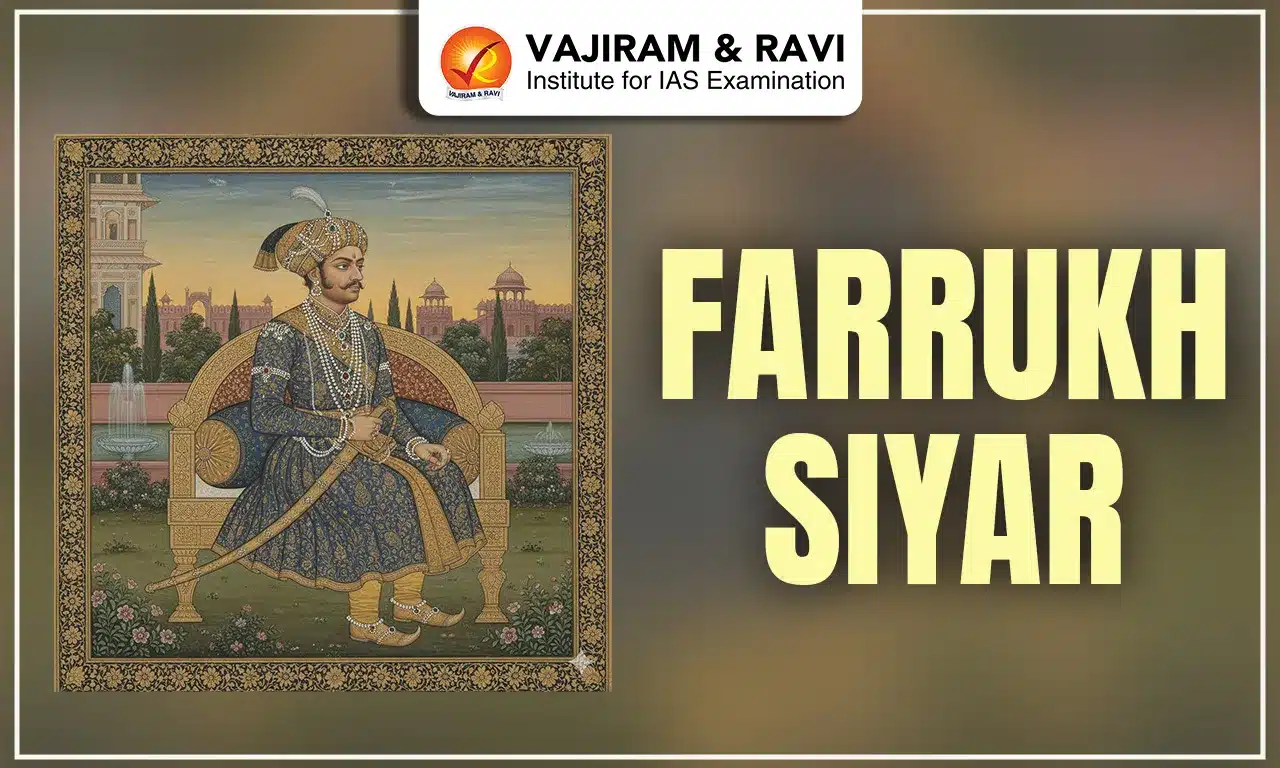
Farrukh Siyar was a Mughal emperor who reigned from 1713 to 1719, as a puppet ruler under the control of the Sayyid Brothers. He is known for granting trade privileges to the British East India Company in Bengal and for his weak leadership, which contributed to the further decline of the Mughal Empire. He was eventually deposed and executed by the Sayyid Brothers in 1719. In this article, we are going to cover Farrukh Siyar, his reign, farman and historical significance.

Farrukh Siyar

  • Farrukh Siyar was a weak and indecisive ruler who was killed by the Sayyid Brothers in 1719, having the same faith as Jahandar Shah.
  • During the beginning of his reign, Farrukh Siyar was backed by two influential Mughal Nobles, the Sayyid Brothers named Syed Hassan Ali Khan Barha and Syed Hussain Ali Khan Barha. 
  • The British East India Company secured the duty-free trading rights in Bengal from him in 1717 for a small annual payment of Rs. 3000, a concession with long-term implications. 
  • As tensions began to grow, in between Farrukh Siyar and the Sayyid brothers, his authority was reduced to just a formality, leaving him as a puppet ruler. 
  • Eventually the Sayyid Brothers deposed him and subjected him to imprisonment, starvation and blinding, before having him executed. 
  • In 1719, his cousin Rafi ud-Darajat was installed as emperor. 

Farrukh Siyar’s Reign 

  • The fall of Jahandar Shah in 1713 in Agra made the way for Farrukh Siyar’s succession. His rise to power was facilitated by Abdullah Khan (Wazir) and Hussain Ali Khan (Mir Bakshi) also known as the Sayyid Brothers.
  • The Sayyid Brothers assumed de facto control over the Mughal administration. 
  • By securing their position and halting the empire’s decline, the Sayyid Brothers believed that effective governance required real power to remain in their hands while Farrukh Siyar continued as a nominal monarch. 
  • This rivalry created a prolonged struggle for dominance between the Emperor and the Sayyids, which culminated in this deposition and execution in 1719. 

Farrukh Siyar’s Farman (1717) 

Farrukh Siyar issued a Farman in 1717, granting the English East India Company many privileges. 

These privileges included exemption from custom duties for trade in Bengal, Bihar and Orissa, a privilege obtained by persistent lobbying by the company. 

The arrangement required only a fixed annual payment while sparing company traders from traditional taxes and transit duties like the rahadari. 

Before this, precedents like Shah Jahan’s Farman of 1650, granted limited exemptions, but Farrukh Siyar’s concessions marked a turning point. They undermined Mughal economic interests while strengthening English commercial dominance in the region. 

Farrukh Siyar’s Historical Importance

Farrukh Siyar’s time of ruling witnessed both military campaigns and political missteps. He gained power against the Sikhs by capturing and executing Banda Singh Bahadur and temporarily subduing rebellious Rajput Chiefs.

However, his bad concession decisions to the English East India Company weakened the empire’s economic base. 

The 1717 Farman, granted under pressure, allowed the company to expand its trading monopoly and eventually paved the way for British colonial dominance in Bengal. 

These acts highlighted the emperor’s inability to assess the long-term consequences of his decisions, making his reign an important turning point in Mughal decline. 

Farrukh Siyar’s Final Crisis

  • Farrukh Siyar’s authority crumbled when his strained relations with nobles like Ajit Singh of Marwar alienated important allies. 
  • In 1718, Hussain Ali Khan marched from Aurangabad toward Delhi with 10,000 Maratha soldiers under Peshwa Balaji Vishwanath, isolating Farrukh Siyar with limited support from Jai Singh. 
  • Hussain Ali justified his move by presenting a supposed heir of Prince Akbar, though it was a political ploy. 
  • In February 1719, Farrukh Siyar was captured, deposed, and soon executed.
    The deposition caused unrest in Delhi, where 2,000 Maratha troops were killed, and the Sayyids faced resentment for eliminating the emperor.
  • They were thereafter seen as tyrannical usurpers rather than protectors of imperial order. This perception enabled other factions, including the Turani nobles (the “Chin”), to rise as defenders of the Timurid lineage and the fragile Mughal sovereignty.
Also Check Other Posts
Battle of Plassey Robert Clive
Battle of Buxar Anglo Mysore Wars
Dual Government in Bengal Tipu Sultan
Anglo Maratha Wars Maratha Empire
Third Battle of Panipat Chhatrapati Shivaji Maharaj
Battel of Bhima Koregaon Anglo Burmese War
Maharaja Ranjit Singh Anglo Nepal War

Farrukh Siyar FAQs

Q1: What is the significance of Farrukh Siyar’s Farman?

Ans: It granted the British East India Company duty-free trade in Bengal, Bihar, and Orissa, paving the way for colonial economic dominance.

Q2: Who assassinated Farrukh Siyar?

Ans: He was assassinated by the Sayyid Brothers in 1719.

Q3: Who ruled after Farrukh Siyar?

Ans: His cousin, Rafi ud-Darajat, was appointed emperor by the Sayyid Brothers.

Q4: Who were the Sayyid Brothers?

Ans: Syed Hassan Ali Khan Barha and Syed Hussain Ali Khan Barha, powerful Mughal nobles who controlled the administration and acted as kingmakers.

Q5: What led to the decline of the Mughal Empire?

Ans: Weak leadership, internal power struggles, opportunistic nobles like the Sayyid Brothers, and external pressures from foreign trading powers and regional rebellions.

K Visa

K Visa

K Visa Latest News

Recently, China has introduced a new visa category called the “K Visa” aimed at attracting foreign science and technology talent.

About the K Visa

  • The K Visa is a new category of Chinese visa created by revising the Regulations on the Administration of the Entry and Exit of Foreigners.
  • It comes into effect from October 1, 2025.
  • It is aimed at attracting foreign youth and professionals in STEM (Science, Technology, Engineering, Mathematics) fields.
  • Eligible applicants include graduates from renowned universities or research institutions with a bachelor’s degree or higher, as well as professionals engaged in STEM-related teaching and research.
  • Compared to existing visas, the K Visa offers:
    • Greater flexibility in entry frequency and validity period.
    • Expanded scope of activities (education, science, technology, culture, entrepreneurship, business).
    • No requirement for local enterprise sponsorship.

Source: IE

K Visa FAQs

Q1: What is the K Visa?

Ans: The K Visa is a new Chinese visa category aimed at attracting foreign STEM graduates and professionals, offering them flexible entry, wider activities, and no employer sponsorship requirement.

Q2: When will the K Visa come into effect?

Ans: The K Visa will be operational from October 1, 2025, as per the revised Chinese immigration regulations.

Sixth Schedule

Sixth Schedule

Sixth Schedule Latest News

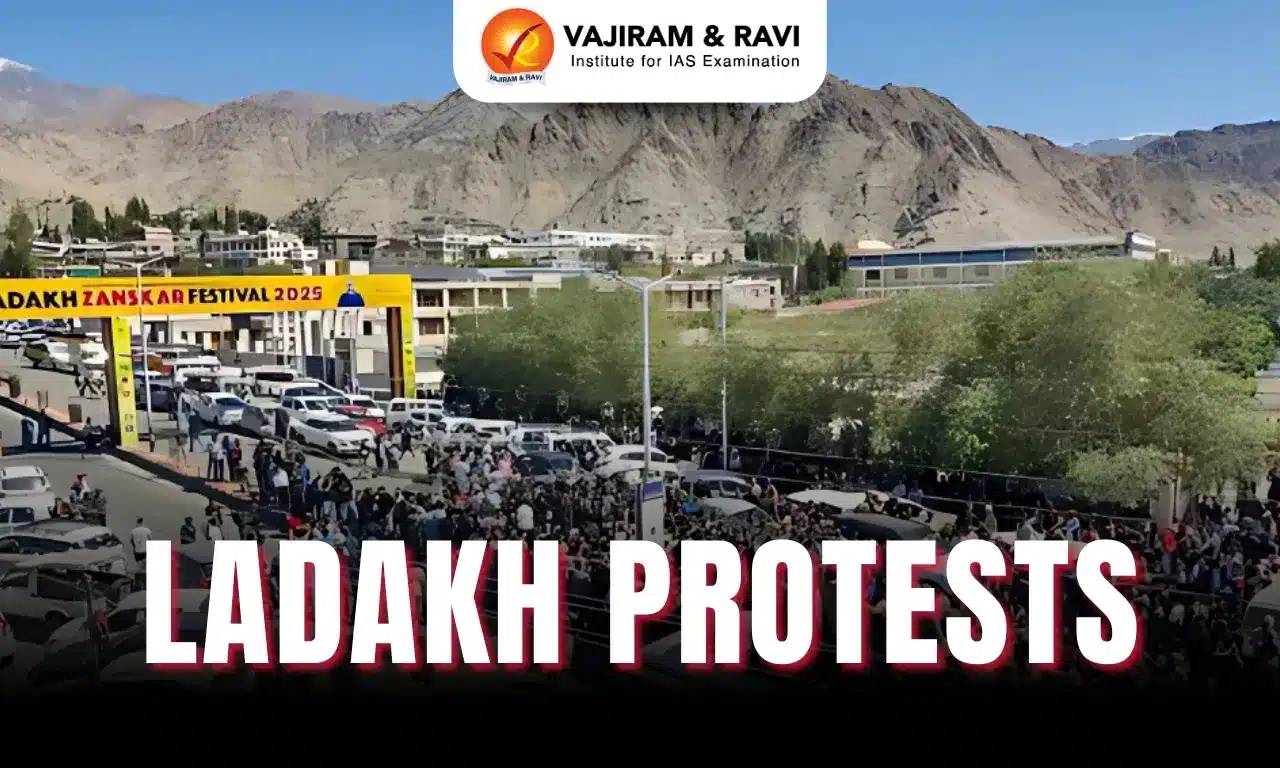
Recently, Ladakh witnessed one of its worst episodes of violence in decades over demands for statehood and inclusion under the Sixth Schedule.

About the Sixth Schedule

  • The Sixth Schedule of the Indian Constitution is a special provision that deals with the administration of tribal areas in the Northeast.
  • It was framed on the recommendations of the Bordoloi Committee (Sub-Committee of the Constituent Assembly on the North-East Frontier (Assam) Tribal and Excluded Areas).
  • The framers recognised the distinct cultural identity and vulnerability of the tribal population in these areas and thus provided for a system of autonomous governance.
  • It came into effect along with the Constitution in 1950, under Articles 244(2) and 275(1).
  • Unlike the Fifth Schedule, which applies to other tribal areas of India, the Sixth Schedule provides greater autonomy through elected Autonomous Councils with legislative, judicial, and financial powers.
  • These provisions are unique to the four Northeastern states of Assam, Meghalaya, Tripura, and Mizoram.

 Provisions under the Sixth Schedule

  • Article 244(2): Applies Sixth Schedule provisions to tribal areas of Assam, Meghalaya, Tripura, and Mizoram.
  • Autonomous Districts & Regions: Tribal areas are administered as Autonomous Districts, which may be subdivided into Autonomous Regions by the Governor.
  • Governor’s Powers: Can reorganise districts, alter boundaries, and rename autonomous areas.
  • District & Regional Councils: Each Autonomous District has a District Council (up to 30 members, 4 nominated by the Governor, others elected by adult suffrage).
    • Regional Councils created for distinct tribal groups.
  • Law-making Powers: Councils can legislate on land, forests (except reserved forests), inheritance, customary laws, and money-lending/trading by outsiders.
    • All such laws require the Governor’s assent.
  • Administration of Justice: Councils can establish Village and District Council Courts for disputes where both parties are tribals.
    • Jurisdiction excludes serious crimes (punishable with death or imprisonment for over 5 years).
  • Revenue & Resource Control: Councils can levy taxes, collect land revenue, and regulate mineral extraction.
  • Local Administration: Councils manage primary schools, dispensaries, markets, roads, fisheries, transport, and waterways.
  • Parliament/State Laws: Apply only with exceptions or modifications in these areas.
  • Governor’s Commission: Can review and report on the administration of autonomous regions. 

Source: IE

Sixth Schedule FAQs

Q1: What is the Sixth Schedule of the Constitution?

Ans: It is a set of provisions under Article 244(2) that provides for autonomous governance of tribal areas in Assam, Meghalaya, Tripura, and Mizoram.

Q2: Why was the Sixth Schedule introduced?

Ans: To protect tribal land, culture, and rights in the Northeast and to allow self-governance through Autonomous District and Regional Councils.

Q3: Can the Sixth Schedule be extended to other regions like Ladakh?

Ans: Yes, Parliament can amend the Constitution to include other areas. Currently, there are growing demands to extend the Sixth Schedule to Ladakh to safeguard tribal rights.

Capacity Building and Human Resource Development Scheme

capacity building and human resource development scheme

Capacity Building and Human Resource Development Scheme Latest News

Recently, the union cabinet has approved the Department of Scientific and Industrial Research / Council of Scientific and Industrial Research (DSIR/CSIR) Scheme on “Capacity Building and Human Resource Development” for the period of the Fifteenth Finance Commission Cycle 2021-22 to 2025-26.

About Capacity Building and Human Resource Development Scheme

  • It is implemented by the Council of Scientific and Industrial Research (CSIR).
  • It will cover all R&D institutions, national laboratories, Institutes of National Importance, Institutes of Eminence, and Universities across the country.
  • It provides a wide platform for young, enthusiastic researchers aspiring to build careers in universities, industry, national R&D laboratories, and academic institutions.
  • It is guided by eminent scientists and professors and will foster growth in Science, Technology & Engineering, Medical, and Mathematical Sciences (STEMM).
  • It has four sub-schemes such as
    • Doctoral and Postdoctoral Fellowships
    • The Extramural Research Scheme, the Emeritus Scientist Scheme, and the Bhatnagar Fellowship programme
    • Promotion and Recognition of Excellence through the Award Scheme; and
    • Promoting knowledge sharing through the Travel and Symposia Grant Scheme
  • Significance: It plays an important role in the achievement of the Sustainable Development Goals (SDGs) for the S&T sector in India by increasing the researchers per million population.

Source: PIB

Capacity Building and Human Resource Development Scheme FAQs

Q1: What is Council of Scientific and Industrial Research (CSIR)?

Ans: It is a premier research and development (R&D) organization in India which was established in 1942.

Q2: What is the objective of Bhatnagar Fellowship?

Ans: It is to recognize and enable outstanding scientists to pursue excellence in scientific research and innovative technology development.

Apterichtus kanniyakumari

Apterichtus kanniyakumari

Apterichtus kanniyakumari Latest News

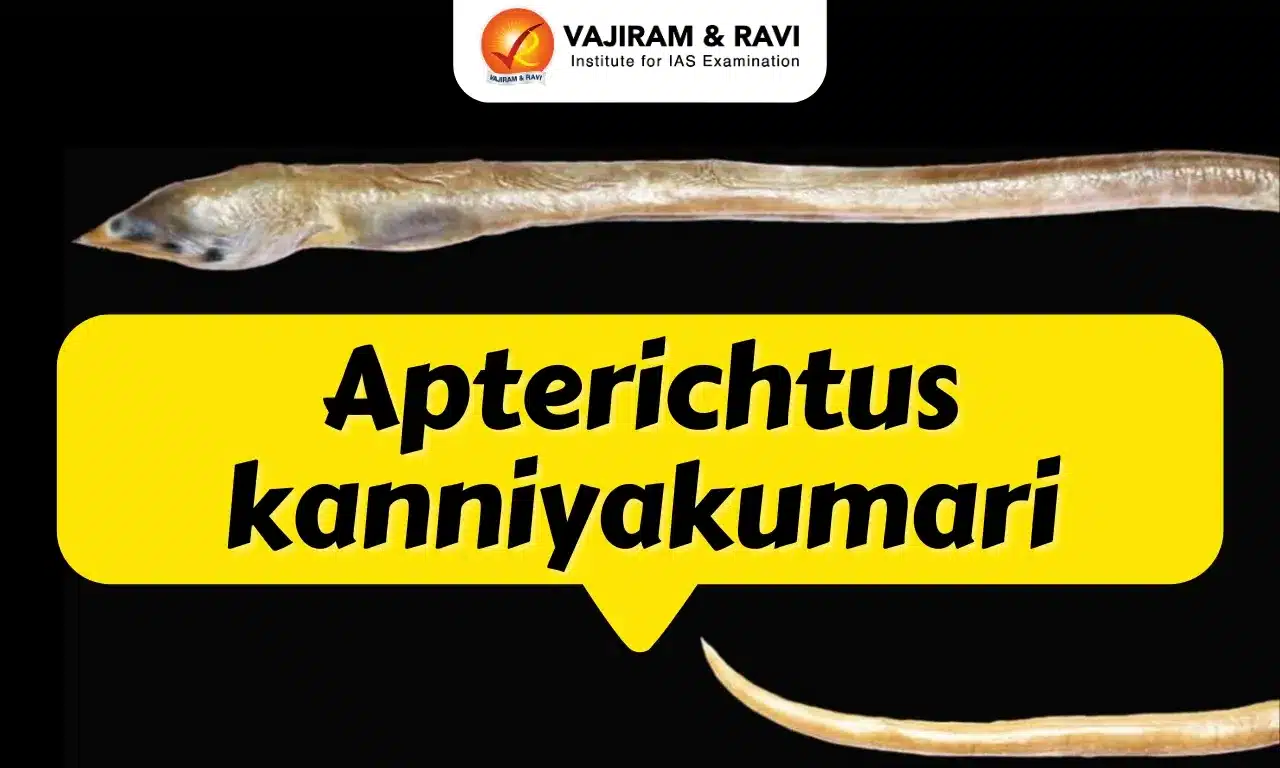
Researchers from National Bureau of Fish Genetic Resources (NBFGR) have discovered a new species of finless snake eel and named it after Kanniyakumari as Apterichtus kanniyakumari. 

About Apterichtus kanniyakumari

  • It is a species of finless snake eel belonging to the genus Apterichtus was discovered off the Colachel coast. 

Features of Apterichtus kanniyakumari

  • It has distinct golden-yellow body colouration, ventral side of head pale white with yellow lines along the lower jaw.
  • It consists of three black blotches including one behind the eyes followed by one in rictus and another behind the origin of rictus.
  • Molecular analysis based on mitochondrial CO1 gene exhibits that this new species forms a distinct clade with its sympatric species, Apterichtus nanjilnaduensis.

Key Facts about Snake eels

  • Snake eels are members of the family Ophichthidae, and are named for their snake-like appearance
  • Distribution: They are found in both tropical and temperate waters in oceans around the world.
  • Habitat: These eels mainly live in sandy areas in shallow seas, however some live in depths to 800m.
  • The snake eel uses its tail to burrow backward into the sea bottom, creating a protective burrow.

Source: TH

Apterichtus kanniyakumari FAQs

Q1: What is an eel?

Ans: Eels are elongated fishes, distinct from most others due to their cylindrical bodies and a continuous fin running around the tail tip.

Q2: What does the CO1 gene do?

Ans: It can be used to identify individuals belonging to the same species, as well as to distinguish between individuals from different species.

Bank Rate, Meaning, Types, Policy, Bank Rate vs Repo Rate

Bank Rate

Bank Rate is the interest rate at which the Reserve Bank of India (RBI) lends money to commercial banks without requiring any security or collateral. Unlike the Repo Rate, which involves a repurchase agreement and is backed by collateral, Bank Rate loans are unsecured. The Bank Rate is generally higher than the Repo Rate because it serves as a tool for controlling long-term credit and regulating liquidity in the economy. Determined by the RBI, it primarily influences the availability of funds for banks and helps in managing inflation and overall economic stability.

Bank Rate

Bank Rate is the interest rate at which a central bank lends money to commercial banks or financial institutions within its jurisdiction. It acts as a benchmark for lending in the banking sector and serves as a key tool to regulate liquidity and influence overall interest rates in the economy. Typically higher than other policy rates, the bank rate reflects the central bank’s monetary policy stance and signals its approach toward credit and inflation management. Key Features include:

  • Long-term lending: Unlike the Repo Rate, which addresses short-term liquidity needs, the Bank Rate is applied to long-term loans.
  • No collateral: Loans provided at the bank rate do not require any security or collateral.
  • Influence on other rates: Adjustments in the Bank Rate impact other interest rates in the economy, including lending rates for consumers and businesses.

Bank Rate Types

The concept of the Bank Rate can vary across different economies depending on the monetary policy framework. Some common variations include:

  • Nominal Bank Rate: This is the stated interest rate without adjusting for inflation. It indicates the rate at which banks borrow from the central bank, unaffected by inflationary pressures.
  • Effective Bank Rate: This rate reflects the actual cost of borrowing for commercial banks, considering compounding effects and other associated costs.
  • Discount Rate: In some countries, such as the United States, the central bank lends to commercial banks at the discount rate. While technically different from the bank rate, it serves a similar function in influencing monetary policy.
  • Penal Rate: A higher rate applied to banks that borrow beyond prescribed limits or fail to maintain required reserves. This is intended to discourage excessive borrowing and ensure financial discipline.

Bank Rate Policy

In India, the Bank Rate is a crucial policy rate set by the Reserve Bank of India (RBI). It serves as a tool to regulate borrowing costs and overall monetary conditions in the economy. By raising or lowering the Bank Rate, the RBI can influence lending rates, encourage or discourage borrowing, and manage liquidity within the banking system. This rate forms an integral part of the RBI’s monetary policy framework, which aims to maintain price stability, support sustainable economic growth, and ensure the stability of the financial system.

Bank Rate in India

    • Inflation: The RBI monitors current inflation levels and future projections. High inflation may lead to an increase in the Bank Rate to control inflationary pressures.
    • Economic Growth: Overall macroeconomic conditions and growth trends are considered. The Bank Rate may be adjusted to stimulate or moderate economic activity as per growth objectives.
    • Monetary Policy Objectives: The RBI aligns the Bank Rate with its goals of price stability, economic growth, and financial stability. The rate is set to effectively achieve these objectives.
    • Market Conditions: Interest rate levels, credit demand, liquidity, and investor sentiment are analyzed. These factors influence the decision to raise or lower the Bank Rate.
  • Frequency and Timing of Bank Rate Changes
    • The RBI reviews the Bank Rate during its bi-monthly monetary policy meetings.
    • Off-cycle adjustments may also be made to address emerging economic challenges or ensure policy effectiveness.
    • The timing and frequency of changes depend on the RBI’s assessment of prevailing economic conditions and policy requirements.

Bank Rate at Present

As of 2025, the Reserve Bank of India (RBI) has maintained the Bank Rate at 6.25%. This rate serves as a benchmark for lending between the RBI and commercial banks. It is a key monetary policy tool used to regulate liquidity and manage inflation in the economy.

Difference Between Bank Rate and Repo Rate

The table below compares the Bank Rate and the Repo Rate, two key monetary policy tools used by the Reserve Bank of India (RBI). While both influence liquidity and credit conditions in the economy, they differ in purpose, mechanism, and impact on the financial system. This comparison highlights their definitions, borrowers, collateral requirements, and the signals they send about the RBI’s monetary stance.

Difference Between Bank Rate and Repo Rate
Feature Bank Rate Repo Rate

Definition

The rate at which the central bank lends money to commercial banks or financial institutions.

The rate at which banks borrow money from the central bank by selling eligible securities.

Purpose

Influences borrowing costs and overall monetary conditions in the economy.

Manages short-term liquidity in the banking system and signals the central bank’s monetary policy stance.

Level

Typically higher than other policy rates and serves as a benchmark for lending within the banking sector.

Usually lower than the Bank Rate and longer-term policy rates, serving as the primary short-term policy rate.

Borrower

Commercial banks and financial institutions.

Banks borrowing from the central bank using eligible securities as collateral.

Collateral

Generally, no specific collateral required.

Banks provide eligible securities as collateral.

Monetary Policy Signal

Reflects the central bank’s stance on overall economic conditions.

Indicates the central bank’s stance on short-term interest rates and liquidity management.

Impact on Market

Influences lending rates, credit availability, and overall market sentiment.

Affects short-term borrowing costs, interbank liquidity, and money market rates.

Bank Rate FAQs

Q1: What is the Bank Rate?

Ans: Bank Rate is the interest rate at which the RBI lends to commercial banks, influencing lending, borrowing, and overall credit conditions in the economy.

Q2: What is Bank Rate vs Repo Rate?

Ans: Bank Rate: long-term lending rate by RBI to banks. Repo Rate: short-term borrowing rate against government securities. Both control liquidity and inflation differently.

Q3: What is the Bank Rate of RBI?

Ans: As of September 2025, the RBI Bank Rate is 6.25%, used as a benchmark for long-term lending by banks.

Q4: What is a Bank Rate today?

Ans: Today, the RBI Bank Rate is 6.25%, guiding commercial banks’ lending rates and signaling monetary policy stance.

Q5: What is the bank rate, CRR, and SLR?

Ans: Bank Rate: lending rate by RBI. CRR: Cash Reserve Ratio, banks’ mandatory deposits with RBI. SLR: Statutory Liquidity Ratio, banks’ investment in government securities.

Differences and Similarities Between Buddhism and Hinduism

Differences and Similarities Between Buddhism and Hinduism

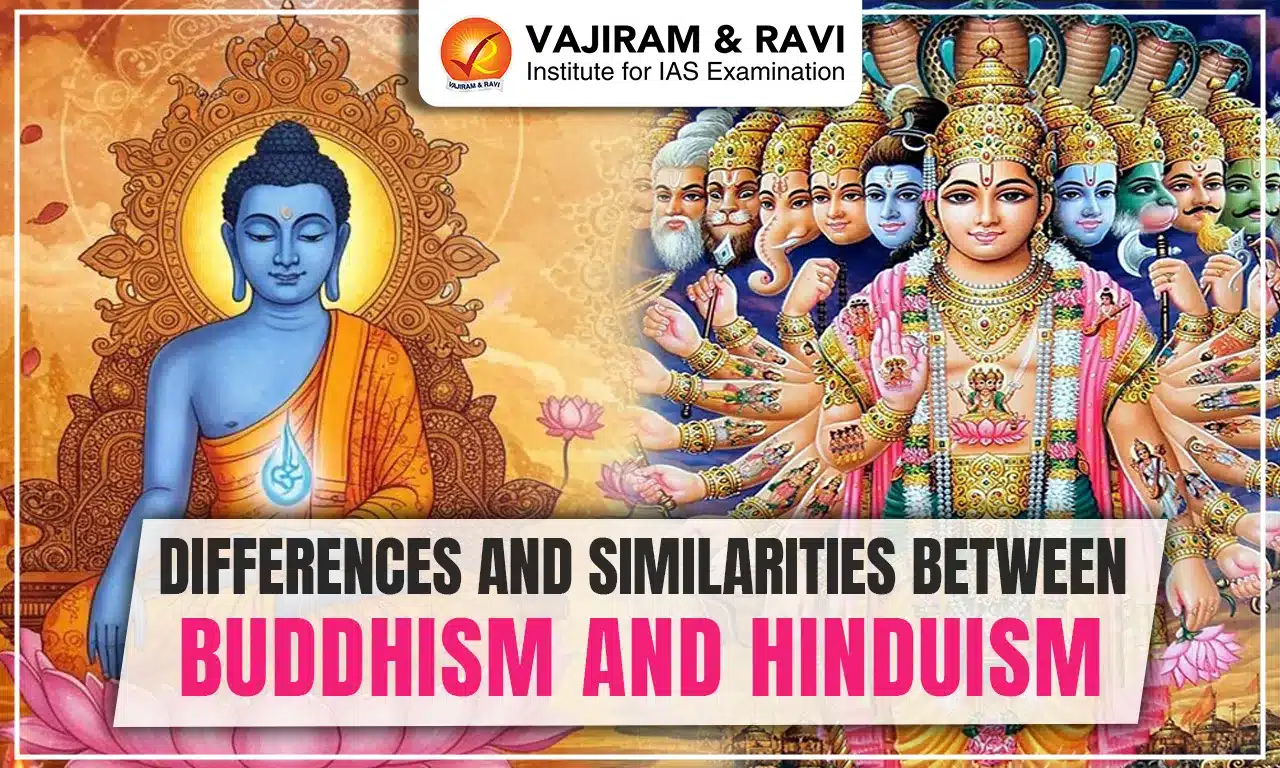
Buddhism and Hinduism are two of the most influential religions that originated in India, yet they differ greatly in their philosophies and practices. Buddhism is centered around the teachings of Gautama Buddha and emphasizes the path to enlightenment through the Four Noble Truths and the Eightfold Path. It rejects rigid rituals, caste distinctions, and the authority of the Vedas.

Hinduism, on the other hand, is considered the world’s oldest living religion and is often described by practitioners as Sanatana Dharma or “the eternal way.” It is a diverse system of beliefs rooted in the Vedas, emphasizing dharma (duty), karma (action), moksha (liberation), and devotion to various deities.

Understanding the Differences and Similarities Between Buddhism and Hinduism is important for grasping the basics of Indian religious thought, as well as their impact on culture, philosophy, and history.

Buddhism

    • Origin: Founded in the 6th century BCE by Siddhartha Gautama (the Buddha) in present-day Nepal/India.
    • Sacred Texts: Tripitaka (Pali Canon), Mahayana Sutras, Tibetan texts.
    • Beliefs: Rejects caste system and authority of the Vedas. Emphasizes equality and personal effort in spiritual progress.
    • Core Concepts: Four Noble Truths (suffering, its cause, cessation, and path). The Noble Eightfold Path provides the way to overcome suffering. The ultimate goal is Nirvana-freedom from suffering and the cycle of rebirth.
    • Practice: Meditation, mindfulness, monastic life, ethical conduct, stupas and monasteries as worship sites.

Hinduism

  • Origin: Among the world’s oldest religions; no single founder. Developed in ancient India through gradual assimilation of cultural traditions.
  • Monastic System: Monks (male): Bhikkhus, Nuns (female): Bhikkhunis, Community: Sangha (monastic order), Discipline: Monks and nuns practice celibacy; lay followers may marry
    • Sacred Texts: The Vedas, Upanishads, Bhagavad Gita, Ramayana, and Mahabharata.
    • Beliefs: Flexible-includes monotheism, polytheism, pantheism. Major deities include Brahma, Vishnu, Shiva, and Devi.
    • Core Concepts: Karma (actions and consequences), Dharma (duty), Samsara (cycle of rebirth). The ultimate goal is Moksha-liberation from samsara.
    • Practice: Rituals, devotion (bhakti), yoga, meditation, temple worship, pilgrimages.
    • Symbols: Dharmachakra (Wheel of Dharma), Lotus, Conch, Twin fish, Victory banner, Vase, Parasol
  • Monastic Titles: Male Monks - Yogis, Sages, Rishis, Gurus, Priests; Female Monks - Sanyasini, Sadhvi, Swamini
  • Sacred Texts: Vedas, Bhagavad Gita, Ramayan, Upanishads, Puranas
  • Marriage: Marriage allowed; historical instances of polygamy. 
  • Sins committed deliberately repaid through Karmic consequences; repentance for unintentional sins prescribed

Differences Between Buddhism and Hinduism

Buddhism and Hinduism, though both rooted in the Indian subcontinent, differ widely in their philosophies, practices, and worldviews. Hinduism is considered the world’s oldest religion, with a vast pantheon of deities and scriptures, while Buddhism emerged later as a reformist movement under the teachings of Gautama Buddha. The table below highlights the major Differences Between Buddhism and Hinduism:

Differences Between Buddhism and Hinduism
Aspect Hinduism Buddhism

Origin

Originated in India around 2000 BCE or earlier; considered the world’s oldest living religion

Founded in the 5th–6th century BCE by Siddhartha Gautama (Buddha) in India

Core Belief

Believes in Brahman (universal soul) and Atman (individual soul)

Denies permanent soul (Anatta); emphasizes impermanence and non-self

Goal of Life

Moksha - liberation of the soul from the cycle of birth and death (samsara)

Nirvana - liberation from suffering and end of rebirth

Deities

Polytheistic; worship of many gods and goddesses like Vishnu, Shiva, Durga

Non-theistic; Buddha is revered as a teacher, not a god

Sacred Texts

Vedas, Upanishads, Bhagavad Gita, Ramayana, Mahabharata

Tripitaka (Pali Canon), Dhammapada, Mahayana Sutras

Path to Liberation

Karma, dharma, devotion (bhakti), meditation, and knowledge (jnana)

Noble Eightfold Path: right view, right resolve, right speech, right action, right livelihood, right effort, right mindfulness, right concentration

Rituals

Complex rituals, puja, temple worship, festivals

Meditation, mindfulness, monastic discipline

Caste System

Strongly linked with caste system in society

Rejected caste distinctions, promoted equality

Similarities Between Buddhism and Hinduism

Hinduism and Buddhism, though distinct religions, share a deep historical and cultural connection as both originated in ancient India. Over time, they influenced each other’s philosophies and practices. Their common ground lies in ideas about karma, dharma, reincarnation, and the pursuit of liberation from worldly suffering. The table below highlights the major Similarities Between Buddhism and Hinduism.

Similarities Between Buddhism and Hinduism
Aspect Hinduism Buddhism Similarity

Origin

Emerged gradually in ancient India

Founded by Gautama Buddha in 6th century BCE

Both arose in the Indian subcontinent, sharing a common cultural background

Dharma

Refers to moral, social, and religious duties

Refers to Buddha’s teachings and universal law

Both stress righteous living and moral duties

Karma

Every action has consequences affecting future lives

Actions shape rebirths and experiences

Both uphold the law of cause and effect

Reincarnation (Samsara)

Continuous cycle of birth, death, rebirth

Cycle of rebirth driven by karma

Both believe in samsara and rebirth

Liberation

Moksha: release and union with the ultimate reality

Nirvana: freedom from suffering and desires

Both seek liberation from samsara

Concept of Self

Belief in eternal self (Atman)

Denies permanent self (Anatta)

Both stress impermanence of worldly existence

Ethical Teachings

Emphasis on truth, righteousness, self-discipline

Four Noble Truths & Eightfold Path as moral guide

Both promote ethical conduct and detachment

Meditation

Central practice for self-realization

Core practice for enlightenment

Both value meditation and mindfulness

Non-violence (Ahimsa)

Strong emphasis on ahimsa in thought and action

Compassion and non-harming central to practice

Both promote compassion and respect for life

Also check other Articles
Indus Script Jain Literature
Upanishads Sangam Age
Vedangas

Differences and Similarities Between Buddhism and Hinduism FAQs

Q1: What are the similarities and differences between Buddhism and Hinduism?

Ans: Both believe in karma, dharma, and reincarnation. Hinduism worships many gods, Buddhism rejects permanent self and deity worship, focusing on nirvana.

Q2: What are the similarities and differences between the goals of life in Hinduism and Buddhism?

Ans: Hinduism seeks moksha (union with Brahman); Buddhism aims for nirvana (liberation from suffering). Both stress ethical living, meditation, and self-realization.

Q3: How are Buddhism, Hinduism, and Christianity alike?

Ans: All promote ethical conduct, compassion, and moral life. They emphasize spiritual growth and have teachings on afterlife, karma, and salvation, though concepts differ.

Q4: What are 5 things Buddhism and Hinduism have in common?

Ans: Belief in karma, dharma, reincarnation, meditation, and ethical conduct are shared between both religions.

Q5: What is the difference between Buddhism and Hinduism Samsara?

Ans: Hinduism: Samsara ends by attaining moksha (union with Brahman). Buddhism: Samsara ends by achieving nirvana (liberation from suffering, no eternal soul concept).

Daily Editorial Analysis 25 September 2025

Daily Editorial Analysis

India’s Muted Voice, Its Detachment with Palestine

Context

  • The recognition of Palestinian statehood by France, the United Kingdom, Canada, Portugal, and Australia marks a significant moment in international diplomacy.
  • These decisions are more than symbolic gestures: they represent the global community’s growing acknowledgment of the Palestinian people’s legitimate aspirations for freedom, dignity, and sovereignty.
  • India, once a leading voice in this movement, recognised Palestinian statehood as early as 1988, guided by its moral compass and a worldview shaped by its own struggle against colonialism.
  • Yet, in the present moment of unprecedented humanitarian crisis in Gaza, India’s silence raises critical questions about whether the nation has abandoned its historic role as a champion of justice in global affairs.

India’s Legacy of Moral Leadership

  • Strategic Calculation Along with Ethical Clarity

    • India’s foreign policy has historically been defined not only by strategic calculation but also by ethical clarity.
    • Even before independence, India condemned apartheid in South Africa, severing trade ties with the regime and raising the issue at the United Nations.
    • During the Algerian war of independence, India was a steadfast supporter of anti-colonial struggle.
    • Similarly, in 1971, India intervened to halt atrocities in East Pakistan, contributing to the creation of Bangladesh.
    • When the Vietnamese people were suffering under foreign aggression, India stood firmly for peace and justice.
    • This moral outlook was enshrined in the Constitution, where the promotion of international peace and security is recognised as a directive principle of state policy.
  • Principled and Nuanced Position on Israel-Palestine Conflict

    • India was among the first countries to recognise the Palestine Liberation Organisation (PLO) in 1974 and has consistently supported a two-state solution that upholds Palestine’s right to self-determination while encouraging peaceful coexistence with Israel.
    • It has consistently backed UN resolutions affirming Palestinian rights and condemning settlement expansion, while simultaneously maintaining diplomatic relations with Israel.
    • India’s contributions to Palestinian development, through scholarships, healthcare aid, and capacity-building, have reflected its commitment to justice.

The Present Crisis and India’s Silence

  • The outbreak of hostilities in October 2023 placed the Israel-Palestine conflict back at the centre of global attention.
  • Hamas’s brutal attacks on Israeli civilians were followed by an Israeli military response that has devastated Gaza.
  • More than 55,000 Palestinians, including 17,000 children, have been killed. Infrastructure has been obliterated, famine looms, and civilians are being shot while seeking food.
  • In this humanitarian catastrophe, the world has been slow to act, implicitly legitimising Israel’s actions.
  • Against this backdrop, the recognition of Palestine by new countries signals a long-overdue reassertion of international justice.
  • Yet India, historically one of the strongest voices for oppressed peoples, has retreated into silence.
  • The current government’s approach appears driven less by constitutional values than by personal diplomacy, particularly the Prime Minister’s close relationship with his Israeli counterpart.
  • This personalisation of foreign policy is unsustainable, reducing a nation’s historic commitments to the vagaries of individual friendships.

The Way Forward: The Need for Ethical Continuity

  • The issue of Palestine cannot be treated merely as a matter of foreign policy.
  • It is also a moral and civilisational question, one that resonates with India’s own history of colonial subjugation.
  • The Palestinian struggle for sovereignty echoes India’s fight against imperialism, both peoples endured dispossession, exploitation, and denial of fundamental rights.
  • For India, to remain silent in the face of Palestinian suffering is not neutrality; it is complicity.
  • What is expected of India is not blind partisanship but principled leadership, the ability to stand for human dignity and justice regardless of political convenience.

Conclusion

  • India’s past foreign policy was defined by courage, moral clarity, and a sense of global responsibility.
  • At a time when much of the world is rediscovering its commitment to Palestinian statehood, India cannot afford to be silent.
  • The challenge is not only geopolitical but ethical: whether India remains true to its heritage as a voice for the oppressed or allows personal diplomacy to erode its role as a moral leader in world affairs.

India’s Muted Voice, Its Detachment with Palestine FAQs

 Q1. Why is the recognition of Palestinian statehood by countries like France and the UK significant?
Ans. It signals growing global support for the Palestinian people’s right to sovereignty and justice.

Q2. How has India historically positioned itself on issues of global justice?
Ans. India has often taken principled stands, supporting struggles against apartheid, colonialism, and genocide.

Q3. What has been India’s traditional stance on the Israel-Palestine conflict?
Ans. India has supported a two-state solution, backed Palestinian rights, and maintained diplomatic ties with both sides.

Q4. How has India’s response to the recent Gaza crisis been described?
Ans. India’s response has been marked by silence and deeper economic engagement with Israel, despite the humanitarian catastrophe.

Q5. Why is Palestine considered a moral and civilisational question for India?
Ans. Because Palestine’s struggle for freedom mirrors India’s own anti-colonial history, making silence a betrayal of its ethical heritage.

Source: The Hindu


Just a Pinch Can Reduce an Indian’s Salt Overload

Context

  • In recent years, the discourse on nutrition and health in India has largely revolved around the harmful effects of sugar and excessive oil consumption.
  • This is unsurprising given the growing prevalence of non-communicable diseases (NCDs), particularly obesity, across all age groups.
  • However, amidst this focus, one equally significant dietary concern remains underappreciated: the high consumption of salt among India’s population.
  • Despite being deeply ingrained in India’s food culture, excess salt intake has profound health consequences, making it imperative for public health policies to address this issue with the same urgency as sugar and fat consumption.

The Extent of the Problem

  • Scientific data reveal that Indian adults consume between eight to eleven grams of salt daily, nearly double the World Health Organization’s (WHO) recommended limit of five to six grams.
  • Unlike sugar and fat, where a substantial portion comes from processed foods, nearly three-fourths of India’s salt intake originates from home-cooked meals.
  • Staples such as pickles, papad, and other traditional items contribute to this problem.
  • Furthermore, the cultural habit of keeping salt shakers on dining tables and the rise in eating out, where restaurants enhance flavours with more oil, butter, and salt, only exacerbate the issue.
  • Salt is not always visible. It exists in hidden forms in bread, cookies, sauces, and even sweet items like cakes.
  • Packaged and ultra-processed foods, often categorised under the high-fat, salt, and sugar (HFSS) label, saturate the market.
  • While their harmful effects are recognised, salt reduction seldom receives the same advocacy as sugar or oil reduction.
  • This neglect persists despite the fact that hypertension, a condition strongly linked to excess salt intake, affects 28.1% of Indian adults and significantly increases the risk of cardiovascular disease.

Misconceptions and Myths

  • Public understanding of salt consumption is further complicated by widespread myths.
  • Many Indians believe alternatives such as rock salt, black salt, or Himalayan pink salt are healthier options.
  • In reality, all salts contain sodium, and their excessive consumption leads to the same harmful effects.
  • In some cases, these alternatives are consumed in greater amounts due to their milder taste, compounding the problem.
  • Moreover, they are often not iodised, which can lead to iodine deficiency, a condition India has long battled.

The Multi-Pronged Approach

  • Expanding Nutritional Boards

    • Current initiatives such as sugar and oil boards should evolve into HFSS boards that encompass salt as well.
    • This would highlight the collective risks of ultra-processed foods high in sugar, fat, and salt.
    • Behavioural Change Campaigns
    • Public campaigns must encourage gradual salt reduction during cooking, flavouring food with herbs and spices, and using low-sodium substitutes when medically appropriate.
    • Crucially, these substitutes should be consumed under medical advice, as high-potassium alternatives can be risky for individuals with kidney disease.
  • Early Intervention in Children

    • Since salt preference is an acquired taste, efforts must begin in early childhood.
    • Infants and toddlers should not be given added salt, while older children should consume the same minimally salted food as adults.
    • Establishing healthy taste preferences early can help reduce long-term salt dependency.
  • Reforming Public Food Programmes

    • Millions of vulnerable Indians, including children in schools, pregnant women at Anganwadi centres, and patients in hospitals, depend on government meals.
    • These programmes should introduce salt regulations, train cooks, and implement procurement standards to safeguard public health.
  • Front-of-Pack Labelling

    • India should adopt mandatory warning labels for high-salt foods, drawing inspiration from countries such as Chile, which have pioneered such measures.
    • Labelling, salt ceilings in processed foods, and restrictions on marketing unhealthy foods to children are crucial regulatory steps.
  • Community and Family-Level Interventions

    • Practical measures like removing salt shakers from restaurant tables, families auditing weekly purchases of HFSS items, and discouraging repeat purchases can curb consumption.
    • Local innovations at the household and community levels will also prove vital.
  • Integration with National Health Programmes

    • Salt reduction is already part of India’s National Multisectoral Action Plan (2017–22) for NCD prevention.
    • However, stronger cross-ministerial collaboration and integration into broader health programmes are necessary.
    • As the government formulates a new multi-sectoral plan, salt reduction should be embedded as a central objective.

The Case for Stronger Regulation

  • The WHO describes salt reduction as a best buy public health intervention, yielding twelve dollars of return for every dollar invested.
  • Such evidence underscores the cost-effectiveness of salt reduction initiatives. Yet, isolated awareness efforts are insufficient.
  • A mix of regulatory measures, such as mandatory labelling, procurement reforms, and marketing restrictions, must combine with grassroots-level interventions to yield meaningful results.

Conclusion

  • Salt, an invisible but equally harmful component of modern and traditional diets alike, demands urgent attention.
  • Excessive consumption is fuelling the country’s rising burden of hypertension and cardiovascular diseases, which strain both families and the healthcare system.
  • By debunking myths, reforming food systems, and promoting behavioural change, India can take bold steps toward reducing salt intake.
  • Ultimately, an integrated and multi-pronged strategy that balances regulation, awareness, and community participation is essential to safeguard public health and reduce the burden of NCDs for future generations.

Just a Pinch Can Reduce an Indian’s Salt Overload FAQs

Q1. How much salt do Indian adults consume daily compared to the WHO recommendation?
Ans. Indian adults consume eight to eleven grams of salt daily, which is nearly double the WHO’s recommended limit of five to six grams.

Q2. What percentage of salt intake in India comes from home-cooked meals?
Ans. Nearly three-fourths of salt intake in India comes from home-cooked meals.

Q3. Why are rock salt, black salt, or Himalayan pink salt not healthier alternatives?
Ans. They all contain sodium, which contributes to high blood pressure, and many are not iodised, which can lead to iodine deficiency.

Q4. Why should salt reduction begin with children?
Ans. Salt preference is an acquired taste, so reducing salt early helps children develop healthier eating habits.

Q5. What regulatory step can India adopt to reduce salt intake in processed foods?
Ans. India can adopt front-of-pack warning labels on high-salt foods, similar to measures implemented in Chile.

Source: The Hindu


Digital Payments and the Formalisation of the Indian Economy

Context:

  • The Indian economy has witnessed significant progress in formalisation over the past decade.
  • While formalisation of firms and workers has advanced gradually, the most striking transformation has occurred in household transactions, primarily driven by the adoption of digital payments platforms such as Unified Payments Interface (UPI).

Dimensions of Formalisation:

  • Firms: GST registrations reflect increasing entry of businesses into the formal tax net.
  • Workers: EPFO enrolments show rising formal sector employment.
  • Transactions: The largest transformation has occurred here, with UPI-led digital payments replacing cash in routine and non-routine expenditures.

Rise of Digital Payments:

  • UPI transactions (April–June 2025):
    • 9 billion transactions (person to merchant) took place through the UPI platform amounting to Rs 20.4 lakh crore.
    • This is equal to almost 40% of private final consumption expenditure (PFCE) during the quarter, up from 24% two years ago.
  • Food and beverages sector:

    • Households spent roughly Rs 3.4 lakh crore on food and beverages (including alcohol) through the UPI platform.
    • This works out to around 17% of all UPI transactions (person to merchants) or around 21% of all household expenditure on these items in the quarter (April–June 2025).
  • Non-food sector:

    • Digital payments are used for paying for a wide range of goods and services, ranging
      • From payment of utility bills (electricity, water and gas) and petrol,
      • To buying clothes, medicines, electronic goods and cigarettes,
      • To paying for haircuts and taxi.
    • Expenditure on these non-food items accounts for roughly two-thirds of all person to merchant transfers through the platform.
  • Beyond routine consumption:

    • In July 2025, households transferred Rs 93,857 crore to debt collection agencies presumably to repay loans, a significant share of which are taken to finance consumption.
    • In the same month, households also transferred Rs 61,080 crore to security brokers and dealers, presumably for the purpose of investing.

Cash vs Digital Paradox:

  • Despite the surge in digital payments, India still has high cash usage — similar to countries like Germany.
  • Key areas of cash use:
    • Land and gold purchases.
    • Election financing.
    • Precautionary household savings.

Trends in Cash Holdings:

  • Demonetisation (2016) and Pandemic (2020–21): Led to surge in household currency holdings.
  • Post-pandemic decline: Currency share in household financial savings dropped from 12.5% (2020–21) to 3.4% (2023–24).
  • ATM withdrawals: Declined from 81 crore transactions (₹2.8 lakh crore, July 2019) to 44 crore transactions (₹2.3 lakh crore, July 2025), even as the economy doubled.
  • Currency with public to GDP ratio: Fell from 12.9% (March 2022) to 10.9% (March 2025).

Key Takeaways from these Trends:

  • UPI as a tool of financial inclusion and economic formalisation.
  • Shift in consumption behaviour — both routine (food, utilities) and non-routine (loan repayment, investments).
  • Declining reliance on cash for transactions and precautionary savings.
  • Macroeconomic impact: Lower currency-to-GDP ratio, better monetary transmission, reduced black economy potential.
  • Challenges: Cash dominance in land, gold, and political funding.

Way Ahead:

  • India appears to be nearing an inflection point in its currency usage trajectory.
  • With digital payments steadily replacing cash in both urban and rural consumption, along with formalisation of firms and workers, the role of cash in the economy may decline further.
  • Policy priorities:
    • Strengthen digital infrastructure in semi-urban and rural areas.
    • Enhance cybersecurity and digital literacy.
    • Address persistent cash usage in land, gold, and political financing.

Conclusion:

  • The deepening of digital payments marks a structural shift in India’s economic formalisation journey, potentially heralding a transition to a less-cash economy.

Digital Payments and the Formalisation of the Indian Economy FAQs

Q1. What are the three key dimensions of formalisation of the Indian economy?

Ans. Formalisation occurs through firms (GST registrations), workers (EPFO enrolments), and transactions (UPI adoption).

Q2. How has UPI contributed to the formalisation of household transactions in recent years?

Ans. UPI transactions reached ₹20.4 lakh crore (Q1 FY26), covering ~40% of PFCE, signifying a major shift from cash to digital modes.

Q3. What evidence suggests a declining reliance on cash for precautionary savings in India?

Ans. The share of currency in household financial savings fell from 12.5% in 2020–21 to 3.4% in 2023–24.

Q4. Despite rising digital adoption, why does cash remain significant in the Indian economy?

Ans. Cash continues to dominate in land and gold purchases, election financing, and as a store of value for precautionary savings.

Q5. What trend does the currency-to-GDP ratio indicate about India’s cash economy?

Ans. The currency-GDP ratio declined from 12.9% (2022) to 10.9% (2025), suggesting India may be nearing an inflection point toward a less-cash economy.

Source: IE

Daily Editorial Analysis 24 September 2025 FAQs

Q1: What is editorial analysis?

Ans: Editorial analysis is the critical examination and interpretation of newspaper editorials to extract key insights, arguments, and perspectives relevant to UPSC preparation.

Q2: What is an editorial analyst?

Ans: An editorial analyst is someone who studies and breaks down editorials to highlight their relevance, structure, and usefulness for competitive exams like the UPSC.

Q3: What is an editorial for UPSC?

Ans: For UPSC, an editorial refers to opinion-based articles in reputed newspapers that provide analysis on current affairs, governance, policy, and socio-economic issues.

Q4: What are the sources of UPSC Editorial Analysis?

Ans: Key sources include editorials from The Hindu and Indian Express.

Q5: Can Editorial Analysis help in Mains Answer Writing?

Ans: Yes, editorial analysis enhances content quality, analytical depth, and structure in Mains answer writing.

Goods and Services Tax Appellate Tribunal

Goods and Services Tax Appellate Tribunal

Goods and Services Tax Appellate Tribunal Latest News

Recently, the Union Minister for Finance and Corporate Affairs formally launched the Goods and Services Tax Appellate Tribunal (GSTAT) in New Delhi.

About Goods and Services Tax Appellate Tribunal

  • It is a statutory appellate body established under the Central Goods and Services Tax Act, 2017 (CGST Act).
  • It hears various appeals under the said Act and the respective State/UT GST Acts.
  • The Tribunal will function through a Principal Bench in New Delhi and 31 State Benches across 45 locations in India.

Composition of Goods and Services Tax Appellate Tribunal

  • It consists of the President (Head), a Judicial Member, and 2 Technical Members (one from the state and another from the Centre).
  • The state bench consists of two Judicial Members, a Technical Member (Centre) and a Technical Member (state).

Eligibility of members of Goods and Services Tax Appellate Tribunal

  • The president must be a Supreme Court judge or have served the High Court as the Chief Justice.
  • The Judicial member must be a High Court Judge or has served as an Additional District Judge or a District Judge for a period of 10 years. 
  • The Technical Member (Centre) must be an Indian Revenue Service member belonging to Group A or must be a member of All India Service with three years of experience in administering GST in the Central Government.
  • Also, the Technical Member from the Centre should have completed twenty-five years in Group A services. 
  • The Technical Member (state) must be a state government officer or All India Service officer with the rank above Additional Commissioner of Value Added Tax; also, the rank should be above the First Appellate Authority.
  • The Technical Member from the state must have completed twenty-five years in Group A Services or equivalent and three years administering GST or finance and taxation in the State Government. 
  • Age limit and Tenure: The president and judicial and technical members of GSTAT shall hold office for four years, or until he attains the age of 70 years and 67 years.
  • It is equivalent to a Civil Court for trying a case. It can pass orders, hear cases, impose penalties, and revoke or cancel registrations.

Source: PIB

Goods and Services Tax Appellate Tribunal FAQs

Q1: Where is the Principal Bench of Goods and Services Appellate Tribunal located?

Ans: New Delhi

Q2: What is the eligibility criteria for the President of Goods and Services Appellate Tribunal ?

Ans: Supreme Court judge or have served the High Court as the Chief Justice is eligible the President of Goods and Services Appellate Tribunal.

Women’s Unpaid Care Work – Calls for Better Data

Unpaid Care Work

Unpaid Care Work Latest News

  • Experts have urged the government to refine the Time Use Survey to capture whether women’s rising unpaid care work is a matter of choice or obligation.

Introduction

  • Unpaid care work forms the invisible backbone of economies worldwide, yet it remains undercounted and undervalued. 
  • In India, women disproportionately shoulder this burden, spending hours daily on household chores, caregiving, and community work that go unrecognised in formal economic indicators like GDP. 
  • While India conducts a Time Use Survey (TUS) to map these patterns, experts argue that it does not fully capture the reasons behind women’s engagement in unpaid labour. 
  • The need for more granular data has become crucial as female labour force participation rates (FLFPR) in India remain among the lowest in the world, raising concerns over gender inequality in economic and social outcomes.

Women’s Unpaid Care Work in India

  • Globally, women spend three times more hours than men on unpaid care work. In India, the gender gap is even more striking. 
  • According to the 2019 TUS, Indian women spend 4.5 hours daily on unpaid household and caregiving tasks, compared to just 1.5 hours for men. Activities include:
    • Cooking, cleaning, and household maintenance.
    • Caring for children, elderly, and sick family members.
    • Community-related unpaid services, such as water collection.
    • While vital, these activities are excluded from GDP accounting, thereby undervaluing women’s economic contributions. 
  • This unpaid work also constrains women’s access to education, skill development, and formal employment, creating a vicious cycle of economic dependency.
  • Impact on Female Labour Force Participation
    • India’s female labour force participation rate hovers around 23% (PLFS 2022-23), far lower than global averages and peers like China (61%) and Bangladesh (38%). 
    • A significant factor behind this gap is the disproportionate unpaid care burden on women. 
    • The absence of institutional support, such as affordable childcare, elderly care infrastructure, and flexible work arrangements, worsens the problem.

Limitations of the Time Use Survey

  • The National Sample Survey Office (NSSO) conducted India’s first TUS in 1998-99, followed by the second in 2019. 
  • While the survey captures the number of hours men and women spend on paid and unpaid activities, experts argue it falls short in answering critical questions:
    • Choice vs. Compulsion: Are women engaging in unpaid care work voluntarily, or because societal and economic pressures leave them with no option?
    • Quality of Work: Does unpaid care work affect women’s health, aspirations, and capacity to enter paid employment?
    • Policy Integration: How can the findings be used to design childcare schemes, flexible employment policies, and social security?
  • Without capturing these nuances, the TUS risks portraying unpaid labour as an accepted “choice” rather than an economic compulsion rooted in gender norms.

Expert Recommendations for Improvement

  • Several labour economists, gender experts, and social researchers have called for reforms in how India measures unpaid care work:
  • Refined Survey Methodology
    • Introduce qualitative questions on whether women see unpaid care work as a duty or a choice.
    • Capture intergenerational differences, as younger women may perceive unpaid labour differently than older cohorts.
  • Integration with Labour Statistics
  • Policy-Oriented Use of Data
    • Use findings to strengthen schemes like the Pradhan Mantri Matru Vandana Yojana (PMMVY) and Anganwadi services, ensuring women get institutional support for care responsibilities.
  • Recognition in GDP Accounting
    • Explore satellite accounts or alternative GDP frameworks that assign economic value to unpaid care work.

Source: IE

Unpaid Care Work FAQs

Q1: What is unpaid care work?

Ans: Unpaid care work refers to household chores, caregiving, and community-related services performed without pay, predominantly by women.

Q2: How many hours do Indian women spend on unpaid care work?

Ans: On average, Indian women spend 4.5 hours daily on unpaid care work, compared to 1.5 hours for men.

Q3: Why is the Time Use Survey important for women’s empowerment?

Ans: It helps track the distribution of unpaid and paid work, influencing policies on childcare, labour force participation, and social security.

Q4: What reforms are experts suggesting in the TUS?

Ans: Experts recommend adding questions on whether unpaid care is a matter of choice or compulsion and linking it with labour force data.

Q5: How does unpaid care work affect India’s economy?

Ans: It keeps millions of women out of the formal workforce, reducing female labour participation and undervaluing women’s contributions to GDP.

Youth-led Ladakh Protests: Demands for Statehood, Sixth Schedule and Autonomy

Ladakh Protests

Ladakh Protests Latest News

  • Protests in Ladakh demanding statehood and inclusion under the Sixth Schedule escalated, when demonstrators turned violent.  
  • The clashes left four people dead and 30 others injured, prompting a massive shutdown in Leh town led by the Leh Apex Body (LAB). 
  • Amid the unrest, climate activist Sonam Wangchuk ended his 15-day hunger strike, urging Ladakh’s youth to continue their demonstrations peacefully and safeguard the five-year-long movement pressing the Centre to act on these demands.

Root Cause of Ladakh Protests

  • The current protests in Ladakh stem from the 2019 repeal of Article 370 and the passage of the Jammu and Kashmir Reorganisation Act, 2019, which bifurcated the erstwhile state. 
  • While Jammu and Kashmir became a Union Territory with a legislature, Ladakh was made a Union Territory without one, placing it under direct central administration. 
  • This lack of political representation and autonomy has kept Ladakh’s status contentious, fueling long-standing discontent and the present demand for statehood and inclusion under the Sixth Schedule.

Demand for Sixth Schedule in Ladakh

  • With over 90% of Ladakh’s population belonging to Scheduled Tribes, there is a strong demand to bring the region under the Sixth Schedule of the Constitution
  • This provision under Article 244 allows the creation of Autonomous District Councils (ADCs) that govern tribal-majority areas with powers to make laws on land, forests, water, agriculture, village councils, health, sanitation, and local policing. 
  • Each ADC has up to 30 members with a five-year term
    • At present, there are 10 such councils in the Northeast—three each in Assam, Meghalaya, and Mizoram, and one in Tripura. 
  • Supporters argue that a similar framework in Ladakh would ensure self-governance and protection of tribal rights.

Immediate demands behind Leh protest

  • LAB’s Immediate Demands - The Leh Apex Body (LAB), whose youth wing called for the September 24 protest, demanded an urgent meeting with the central government as members had been on a hunger strike since September 10.
  • Government’s Response - The Ministry of Home Affairs (MHA) announced that the next round of talks would be held on October 6, noting that the last meeting took place in May.
  • LAB’s Objection - LAB leaders rejected the October date as “dictation” while their members were still fasting. They insisted on an immediate agreement before ending the protest.
  • Rising Tensions - LAB warned that while the protest was peaceful, growing impatience among people risked spiraling out of control, eventually sparking violent clashes in Leh.

Government’s Position

  • The MHA has agreed to discuss only the service commission and Lok Sabha seat demands, rejecting statehood and resisting Sixth Schedule inclusion due to its wider ramifications.

Core Demands of Ladakh Protest

  • Since Ladakh became a Union Territory (UT) in 2019, residents have rallied around a four-point agenda:
    • Statehood for Ladakh to ensure self-governance beyond UT status.
    • Inclusion under the Sixth Schedule to safeguard tribal rights.
    • A separate public service commission to address high unemployment.
    • Two parliamentary seats instead of one, to increase representation at the Centre.

Unemployment Concerns

  • Youth discontent is driven by high joblessness, with 26.5% of Ladakh graduates unemployed, compared to the national average of 13.4%. 
  • This has fuelled calls for a separate service commission and 95% job reservation for Ladakhis, reportedly discussed with the MHA in 2024.

Possible Way Forward in Ladakh

  • A short-term solution to Ladakh’s statehood demand appears unlikely due to India’s strategic need for unfettered access in the border region with China. 
  • The Centre fears statehood could complicate troop movements and infrastructure building.
  • Protests are therefore expected to continue, with the LAB and KDA intensifying pressure
  • A possible compromise could involve expanding the powers of Hill Councils, alongside special job and land ownership reservations for locals. 
  • In return, protest groups may need to set aside statehood demands and accept Ladakh’s status as a Union Territory, at least for now.

Source: IE | NDTV | HT

Ladakh protests FAQs

Q1: Why are people protesting in Ladakh?

Ans: The repeal of Article 370 and Ladakh’s UT status without a legislature left people demanding statehood, Sixth Schedule inclusion, and more political autonomy.

Q2: What is the Sixth Schedule demand in Ladakh?

Ans: With over 90% tribal population, people want Sixth Schedule status, granting Autonomous District Councils powers over land, resources, and self-governance.

Q3: What are the core demands of Ladakh protests?

Ans: Protesters demand statehood, Sixth Schedule inclusion, a separate service commission to address unemployment, and two parliamentary seats for stronger representation.

Q4: Why did protests in Leh turn violent?

Ans: The Leh Apex Body (LAB) rejected the MHA’s October talks date, calling it “dictation” amid hunger strikes, leading to clashes that killed four and injured 30.

Q5: Is there a possible solution to the Ladakh unrest?

Ans: A compromise may involve expanding Hill Council powers and job reservations, with protesters accepting UT status while pressing for long-term autonomy.

Personality Rights in India: How Courts Protect Celebrities in the Digital Era

Personality Rights in India

Personality Rights in India Latest News

  • The Delhi High Court has recently expanded protection of personality rights for Bollywood stars against unauthorised use of their images, voices, and likeness. 
  • The court granted relief to Aishwarya Rai Bachchan and Abhishek Bachchan, following complaints of AI-generated misuse.
  • Earlier, Amitabh Bachchan, Anil Kapoor, and Jackie Shroff had secured such safeguards. 
  • This growing series of petitions marks a significant judicial shift in recognising and enforcing personality rights in India’s digital era.

Protection of Personality Rights in India

  • Personality rights protect an individual’s name, likeness, image, voice, signature, and other unique traits from unauthorised commercial use
  • Though not codified under a single statute, they are safeguarded through judicial precedents and common law doctrines of privacy, defamation, and publicity rights. 
  • Courts can grant injunctions, damages, or takedown orders to prevent misuse in ads, merchandise, AI-generated content, or digital platforms.

Statutory Safeguards

  • Protection is dispersed across intellectual property laws. 
  • Under the Copyright Act, 1957, performers enjoy exclusive rights (Section 38A) and moral rights (Section 38B) to control reproduction and object to distortion of their work. 
  • The Trade Marks Act, 1999 allows celebrities to register names, signatures, or catchphrases as trademarks — a step taken by actors like Shah Rukh Khan, Priyanka Chopra, Ajay Devgn, and Amitabh Bachchan. 
  • Additionally, the common law tort of “passing off” (Section 27) safeguards goodwill from misrepresentation or false endorsement, though it requires proof of reputation before courts grant relief.

Constitutional Backing

  • Personality rights are rooted in Article 21 of the Constitution, which guarantees autonomy and privacy. 
  • While celebrities may authorise the use of their identity in films, ads, or campaigns, unauthorised use — such as printing images on merchandise or creating AI deepfakes — strips them of control and compromises dignity and agency.

Court Rulings on Personality Rights in India

  • The jurisprudence on personality rights in India began with the 1994 Supreme Court judgment in R. Rajagopal v. State of Tamil Nadu
    • The Court upheld an individual’s right to control their identity, grounding it in the constitutional right to privacy.
  • In 2015, the Madras High Court strengthened the doctrine in a case involving actor Rajinikanth
    • It ruled that infringement occurs even without proof of falsity, confusion, or deception if the celebrity is identifiable, thereby protecting him against unauthorised commercial use of his name, image, and style.
  • The Delhi High Court has since played a pivotal role in addressing new threats posed by AI. 
    • In 2023, it granted Anil Kapoor broad protection over his persona, barring online misuse of his name, likeness, and catchphrase “jhakaas.” 
    • HC clarified that free speech allows parody and criticism but not commercial exploitation or tarnishment of reputation.
    • In 2024, the same court protected Jackie Shroff’s personality rights against misuse by e-commerce platforms and AI chatbots.
  • Later, in 2023, the Bombay High Court upheld Arijit Singh’s rights in a landmark ruling against AI voice cloning. 
    • The court condemned the unauthorised creation of artificial recordings, warning of the dangers generative AI poses to performers’ dignity and control over their identity.

Balancing Personality Rights and Free Expression

  • While courts in India have expanded protection of personality rights, they have also emphasised the need to balance them with Article 19(1)(a).
    •  Article 19 guarantees freedom of speech, including criticism, parody, and satire of public figures.
  • In DM Entertainment Pvt. Ltd. v. Baby Gift House (2010), the Delhi High Court granted relief against unauthorised commercial exploitation of singer Daler Mehndi’s likeness.
    • However, it cautioned that parodies, caricatures, and lampooning would not ordinarily violate publicity rights.
  • This balance was reaffirmed in Digital Collectibles PTE Ltd. v. Galactus Funware Technology Pvt. Ltd. (2023), involving the unauthorised use of sports stars’ likenesses. 
    • The Court ruled that publicity rights cannot override free expression, especially when material is already in the public domain. 
    • It clarified that legitimate uses of celebrity names or images — such as satire, art, scholarship, news, and music — fall under free speech and do not amount to infringement.

Concerns Around Personality Rights in India

  • Experts highlight the urgent need for a comprehensive legislative framework to regulate personality rights, as current enforcement relies heavily on fragmented judicial precedents. 
  • Without a clear regulatory regime, responses remain ad hoc and risk blurring the line between artistic freedom and infringement. 
  • Clear exceptions must be established to prevent misuse of personality rights as a tool for censorship.
  • Experts also stress that personality rights are not exclusive to celebrities. 
  • Ordinary citizens, particularly women, face disproportionate harm through deepfakes, impersonation, and revenge pornography. 
  • While courts often direct governments to block such harmful content, the sheer volume of violations makes consistent enforcement extremely difficult.

Source: TH | BBC | B&B

Personality Rights in India FAQs

Q1: What are personality rights in India?

Ans: Personality rights protect an individual’s name, image, voice, and likeness from unauthorised use. Indian courts enforce them through privacy, publicity rights, and IP laws.

Q2: Which Indian laws support personality rights?

Ans: The Copyright Act, 1957 and Trade Marks Act, 1999 provide safeguards, alongside common law doctrines like “passing off,” protecting celebrities against false endorsements and misrepresentation.

Q3: How have Indian courts ruled on personality rights?

Ans: Key rulings like Rajinikanth’s case, Anil Kapoor’s “jhakaas” protection, and Arijit Singh’s AI voice cloning case highlight judicial recognition of celebrity personality rights.

Q4: Do personality rights conflict with free expression?

Ans: Yes, but courts balance them with Article 19(1)(a). Parody, satire, art, and news use of celebrity images remain protected under free speech.

Q5: Why is a legal framework for personality rights needed?

Ans: Currently, protection relies on scattered judicial precedents. Experts call for a clear law to prevent misuse while safeguarding artistic freedom and privacy.

Varkala Cliff

Varkala Cliff

Varkala Cliff Latest News

Recently, UNESCO has placed the Varkala Cliff on its tentative list of World Heritage Sites. 

About Varkala Cliff

  • It is a beautiful natural formation located in Varkala, a coastal town in Thiruvananthapuram district of Kerala.
  • This cliff along Kerala’s coastline exposes the Warkalli Formation of the Mio-Pliocene age (13 lakh to 2.5 crore years ago), along with natural springs and striking erosional landforms, offering both scientific and touristic value.
  • It is locally called Sivagiri Thuruthu.
  • Its laterite and sedimentary layers hold fossils and traces of ancient climates.
  • The Papanasam Beach, located at the base of the cliff, is revered for its natural springs and believed to have therapeutic properties.
  • It is a crucial aquifer and natural water harvesting system for coastal communities, hosted unique biodiversity in its microhabitat, and supports underwater reefs essential for local fishing communities.
  • It is the 27th national geological monument in the country and the second in Kerala after the Angadipuram Laterite.

Source: DTE

Varkala Cliff FAQs

Q1: Where is Varkala Cliff located?

Ans: Kerala

Q2: What type of rock formation is Varkala Cliff?

Ans: Sedimentary

Central Water Commission

Central Water Commission

Central Water Commission (CWC) Latest News

The Central Water Commission (CWC) under the Ministry of Jal Shakti organised a virtual workshop on the theme "Technology for Efficient Water Management" as part of the Sujalam Bharat Summit (2025).

About Central Water Commission (CWC)

  • It is a Premier technical organisation in water resources under the Ministry of Jal Shakti.
  • Headquarters: New Delhi.
  • Functions:
    • It formulates & coordinates schemes for flood control, irrigation, drinking water, navigation, and hydropower.
    • It also conducts investigations, construction, and implementation of water projects.
  • Structure:
    • CWC is headed by a Chairman (Ex-Officio Secretary, GoI).
    • Three wings: Designs & Research (D&R), River Management (RM), and Water Planning & Projects (WP&P).
    • National Water Academy, Pune trains engineers from central & state agencies.

About Sujalam Bharat Summit (2025)

  • The Sujalam Bharat Summit is a national initiative led by the Ministry of Jal Shakti and coordinated by NITI Aayog, focusing on water management, sanitation, and sustainable practices.
  • It aims to bring grassroots perspectives into national policy-making, aligning with the vision of the Prime Minister.
  • A series of six Departmental Summits has been planned to gather feedback from the field on the impact and challenges of water-related policies.

Source: PIB

Central Water Commission (CWC) FAQs

Q1: What is the Central Water Commission (CWC)?

Ans: The CWC is a statutory body under the Ministry of Jal Shakti, responsible for planning, developing, and managing water resources in India, including flood control, irrigation, and hydropower projects.

Q2: Under which ministry does the CWC function?

Ans: The CWC functions under the Ministry of Jal Shakti, Government of India, formerly part of the Ministry of Water Resources.

Q3: What is the role of CWC in water management?

Ans: The CWC regulates, plans, and monitors water resources, promotes efficient water use, modern irrigation techniques, and water conservation technologies across India.

UPSC Daily Quiz 25 September 2025

UPSC Daily Quiz

The Daily UPSC Quiz by Vajiram & Ravi is a thoughtfully curated initiative designed to support UPSC aspirants in strengthening their current affairs knowledge and core conceptual understanding. Aligned with the UPSC Syllabus 2025, this daily quiz serves as a revision resource, helping candidates assess their preparation, revise key topics, and stay updated with relevant issues. Whether you are preparing for Prelims or sharpening your revision for Mains, consistent practice with these Daily UPSC Quiz can significantly enhance accuracy, speed, and confidence in solving exam-level questions.

[WpProQuiz 79]

UPSC Daily Quiz FAQs

Q1: What is the Daily UPSC Quiz?

Ans: The Daily UPSC Quiz is a set of practice questions based on current affairs, static subjects, and PYQs that help aspirants enhance retention and test conceptual clarity regularly.

Q2: How is the Daily Quiz useful for UPSC preparation?

Ans: Daily quizzes support learning, help in revision, improve time management, and boost accuracy for both UPSC Prelims and Mains through consistent practice.

Q3: Are the quiz questions based on the UPSC syllabus?

Ans: Yes, all questions are aligned with the UPSC Syllabus 2025, covering key areas like Polity, Economy, Environment, History, Geography, and Current Affairs.

Q4: Are solutions and explanations provided with the quiz?

Ans: Yes, each quiz includes detailed explanations and source references to enhance conceptual understanding and enable self-assessment.

Q5: Is the Daily UPSC Quiz suitable for both Prelims and Mains?

Ans: Primarily focused on Prelims (MCQ format), but it also indirectly helps in Mains by strengthening subject knowledge and factual clarity.

Perovskite Solar Cells

Perovskite Solar Cells

Perovskite Solar Cells Latest News

Swedish scientists at Chalmers University of Technology have used AI-enhanced simulations to solve the long-standing puzzle of halide perovskite instability.

About Perovskite Solar Cell (PSC)

  • A Perovskite Solar Cell (PSC) is a type of thin-film photovoltaic device that uses perovskite-structured compounds (ABX₃) as the light-absorbing active layer.
  • Perovskite Material:
    • Named after the mineral calcium titanium oxide (CaTiO₃).
    • General chemical formula: ABX₃, where ‘A’ and ‘B’ are cations and ‘X’ is an anion.
    •  In solar tech, it usually refers to metal halide perovskites: hybrid organic–inorganic compounds with a metal cation (Pb²⁺, Sn²⁺), halide anion (I⁻, Br⁻, Cl⁻), and organic cation (methylammonium, formamidinium).
  • Advantages:
    • High power conversion efficiency (PCE) (over 25% in labs).
    • Thin, lightweight, and flexible → can be applied on windows, buildings, smartphones, and vehicles.
    • Low-cost fabrication compared to energy-intensive silicon processing.
    • Potential use in tandem solar cells with silicon for even higher efficiency.
  • Efficiency Potential: It is known for high light absorption, excellent charge transport, and bandgap tunability and also  achieved power conversion efficiencies (PCEs) above 25%, comparable to silicon cells.

Source: DTE

Perovskite Solar Cells FAQs

Q1: What is Perovskite?

Ans: Perovskite refers to materials with the crystal structure of calcium titanium oxide (CaTiO₃), discovered in 1839 in Russia. The general formula is ABX₃, where ‘A’ and ‘B’ are cations and ‘X’ is an anion.

Q2: What are Perovskite Solar Cells?

Ans: Perovskite Solar Cells are next-generation photovoltaic devices that use materials with a perovskite crystal structure to convert sunlight into electricity, offering higher efficiency and lower production costs than conventional silicon-based cells.

Q3: Why are Perovskite Solar Cells considered revolutionary?

Ans: They combine high power conversion efficiency, flexibility, and low production costs, making them suitable for coating surfaces like windows, rooftops, and electronic devices.

Q4: What is the main limitation of PSCs?

Ans: The biggest challenge is instability,  they degrade rapidly under moisture, heat, and sunlight exposure. Additionally, the use of toxic lead raises environmental concerns.

Central Board of Film Certification (CBFC)

Central Board of Film Certification (CBFC)

Central Board of Film Certification (CBFC) Latest News

Recently, multiple films faced heavy censorship by the CBFC over caste, mythology, and political references.

About the Central Board of Film Certification (CBFC)

  • The Central Board of Film Certification (CBFC) is a statutory body under the Ministry of Information and Broadcasting, Government of India.
  • Commonly known as the Censor Board, though it functions mainly as a certification authority.
  • It works under:
    • Cinematograph Act, 1952
    • Cinematograph (Certification) Rules, 1983
    • Guidelines issued by the Central Government

Role and Structure of CBFC

  • It regulates the public exhibition of films in India. No film can be released publicly without CBFC certification.
  • Headed by a Chairperson, with 12–25 members appointed by the Central Government.
  • It operates through nine regional offices: Mumbai, Kolkata, Chennai, Bangalore, Thiruvananthapuram, Hyderabad, New Delhi, Cuttack, and Guwahati.
  • Supported by Advisory Panels (nominated by the Government for two-year terms) to assist in film examination.

Categories of Certification

  • U (Universal): Suitable for all age groups.
  • U/A: Universal with parental guidance (below 12).
  • A: Adults only.
  • S: Restricted to special classes (e.g., doctors, farmers).
  • New Sub-Categories (2023 Amendment): UA 7+, UA 13+, UA 16+ – aligning with global best practices.

Source: IE

Central Board of Film Certification (CBFC) FAQs

Q1: What is CBFC’s primary mandate?

Ans: The CBFC certifies films for public exhibition in India, ensuring compliance with the Cinematograph Act, 1952 and safeguarding public order, decency, and morality.

Q2: Can the CBFC ban a film?

Ans: The CBFC cannot impose a blanket ban but can refuse certification if a film violates legal provisions. An outright ban is the prerogative of the Central Government

Q3: Why is CBFC often criticized?

Ans: It is criticized for arbitrary censorship, lack of transparency, and political influence. Recent controversies show inconsistency in applying rules across different films.

Enquire Now