Difference between GDP and GVA, Calculation, Market and Basic Prices

Difference between GDP and GVA

 The Difference between GDP and GVA is important to understand how a country’s economic performance is measured. GDP (Gross Domestic Product) shows the total value of final goods and services produced in a country, while GVA (Gross Value Added) measures the value added by different sectors of the economy. In simple terms, GDP includes taxes and subsidies, whereas GVA focuses only on the actual production value.

Difference Between GDP and GVA

Difference between GDP and GVA are as follows: 

Difference between GDP and GVA
Gross Domestic Product (GDP) Gross Value Addition (GVA) 

Measures total value of final goods and services produced in the economy.

Measures value added by each producer or sector.

Calculated at Market Prices

Calculated at Basic Prices

Includes indirect taxes

Exclude indirect tax

Demand-side indicator

Supply-side indicator

Does not directly show sector contribution

Clearly shows contribution of agriculture, industry, and services

Gross Domestic Product (GDP) 

Gross Domestic Product (GDP) refers to the total monetary value of all final goods and services produced within the domestic territory of a country during a specific period, usually a financial year.

GDP captures the overall size of the economy and reflects aggregate demand. It includes consumption, investment, government expenditure, and net exports. 

Domestic Territory

Domestic territory in GDP calculations include: 

  • Political boundaries of the country: All land area, internal waters, and airspace.
  • Territorial waters: Sea area up to the country’s legal maritime boundary.
  • Embassies and consulates abroad: Treated as part of the domestic territory because they represent the country’s authority.
  • Ships and aircraft operated by residents: Even if they are operating in international waters or airspace.
  • Offshore installations: Such as oil rigs in international waters, if operated by the country’s residents.

Hence, Domestic territory may be defined as the political frontiers of the country including its territorial waters, ships, aircrafts, fishing vessels operated by the residents of the country, embassies and consulates located abroad etc.

Gross Domestic Product (GDP) Types

Nominal GDP

  • Nominal GDP is the total value of final goods and services produced in a country measured at current market prices of the same year.
  • It reflects changes in both production and price levels.
  • An increase in prices (inflation) can raise Nominal GDP even if output does not increase.

Real GDP

  • Real GDP is the total value of final goods and services produced in a country measured at constant prices of a base year.
  • It removes the effect of inflation or deflation.
  • It shows the actual growth in production.
  • India uses Real GDP with base year 2011-12 to measure economic growth.

GDP Calculation in India

  • In India, GDP is calculated and released by the Ministry of Statistics and Programme Implementation (MoSPI).
  • India primarily reports GDP at market prices, meaning it includes the impact of indirect taxes (like GST) and excludes subsidies.
  • In India, economic growth is measured by real GDP i.e., GDP at constant Market Prices.

Gross Value Addition (Gross Value Added)

  • Gross Value Added (GVA) measures the value added by different sectors of the economy such as agriculture, industry, and services after subtracting intermediate consumption (inputs used in production).
  • In simple terms, GVA reflects the actual value created by producers in the economy.
  • It shows how much each sector contributes to economic output. It is calculated at basic prices, which exclude indirect taxes and include subsidies.

GVA is considered a better indicator of the supply-side performance of the economy because it focuses on production rather than demand.

According to the Economic Survey 2025-26, the Indian economy is driven by a strong services sector, which accounts for a record 56.4% of Gross Value Added (GVA). The industrial sector (including manufacturing) saw a 7% GVA growth in H1 FY26, with manufacturing showing robust acceleration (9.13% in Q2). Agriculture and allied sectors are projected to grow by 3.1% in FY26.

Difference between GDP and GVA FAQs

Q1: What is the main difference between GDP and GVA?

Ans: GDP measures the total value of final goods and services in the economy, while GVA measures the value added by each sector or producer.

Q2: How are GDP and GVA related?

Ans: GDP is derived from GVA using the formula: GDP = GVA + Taxes on products − Subsidies on products.

Q3: Which is a demand-side indicator and which is a supply-side indicator?

Ans: GDP is a demand-side indicator, whereas GVA is a supply-side indicator.

Q4: At what prices are GDP and GVA calculated?

Ans: GDP is calculated at market prices, while GVA is calculated at basic prices.

Q5: Which indicator is better for analysing sector-wise performance?

Ans: GVA is better for sector-wise analysis because it shows the contribution of agriculture, industry, and services to the economy.

Difference between Developed and Developing Countries

Difference between Developed and Developing Countries

The Difference between Developed and Developing Countries is one of the most fundamental concepts in economics. It helps explain global inequality, patterns of trade, development challenges, and policy priorities. However, there is no single universal definition that clearly separates developed and developing nations. Different international organizations such as the United Nations, World Bank, and IMF use different indicators and criteria to classify countries. 

In general, the Difference between Developed and Developing Countries is based on economic performance, quality of life, industrialization, human development, and technological progress.

Meaning of Developed and Developing Countries

Developed Countries: Nations with a high level of economic growth, advanced technological infrastructure, and a high standard of living. They usually have strong industrial and service sectors, high per capita income, and better social indicators such as education, health, and life expectancy. 

Examples: United States, Japan, Germany, United Kingdom, France. 

Developing Countries: Those countries that are in the process of industrialization and economic growth. They have lower per capita income, moderate or low levels of human development, and challenges related to poverty, infrastructure, education, and health. 

Examples: India, Brazil, Indonesia, Mexico. 

This basic distinction forms the core of the Difference between Developed and Developing Countries.

Difference between Developed and Developing Countries

The two most widely used methods are income-based classification and the Human Development Index (HDI).

  1. Income-Based Classification (World Bank): The World Bank classifies countries based on Gross National Income (GNI) per capita into four groups: low-income, lower-middle-income, upper-middle-income, and high-income.
  • High-income countries generally have advanced industrial and service sectors, high productivity, and better living standards, and are considered developed.
  • Low- and middle-income countries face challenges like limited industrialization, dependence on agriculture, and lower per capita income, and are considered developing.
  1. Human Development Index (HDI): The HDI provides a broader measure by combining health, education, and income indicators.
  • Countries with very high HDI - high life expectancy, literacy, education quality, and income are classified as developed.
  • Countries with medium or low HDI face challenges in health, education, and living standards and are considered developing.

By combining GNI and HDI, we understand that the Difference between Developed and Developing Countries is multi-dimensional and cannot be assessed by income alone.

Difference between Developed and Developing Countries
Key Aspects Developed Countries Developing Countries

Economic Development 

High per capita income, diversified economy, strong industrial and service sectors

Low to medium per capita income, dependent on agriculture and low-value manufacturing.

Industrialisation and Technology

Highly industrialized, advanced technology, innovation-driven

Early or intermediate industrialization, limited technology adoption.

Standard of Living

High quality of life, better healthcare, housing, and education

Moderate or low living standards, widespread poverty, limited access to basic services.

Human Development 

High literacy, long life expectancy, low infant/maternal mortality.

Lower literacy, shorter life expectancy, high infant/maternal mortality.

Demography 

Low birth/death rates, aging population

High birth rates, young population, potential demographic challenges.

Infrastructure 

Well-developed transport, energy, and digital networks

Inadequate or uneven infrastructure, particularly in rural areas.

Employment Structure 

Concentrated in formal, high-skill jobs with social protection.

Predominantly informal, low-skill employment, minimal social protection

Governance 

Strong institutions, transparent governance, robust social welfare.

Weak institutions, corruption challenges, limited social protection.

Trade

Exports high-value goods/services, influence the global economy.

Export low-value goods/raw materials, dependent on global markets.

Changing Nature of the Difference between Developed and Developing Countries

In recent decades, the distinction has become more complex. Some developing countries like China and India have large economies but lower per capita income. 

Many organizations now avoid strict labels because development is multi-dimensional and dynamic. Thus, the Difference between Developed and Developing Countries is not static but constantly evolving.

Also Check Related Articles
Difference between NITI Aayog and Inter-State Council Difference Between Economic Survey and Union Budget
Difference Between Tropical Evergreen and Tropical Deciduous Forests Difference Between Ordinary Bill and Money Bill
Difference Between Legislative and Executive Difference between Himalayan and Peninsular Plateau
Difference Between Vedas and Upanishads Difference Between Scheduled and Non-Scheduled Banks
Difference Between Written and Unwritten Constitution Difference between NITI Aayog and Planning Commission
Difference between Colonialism and Imperialism Difference between Fundamental Rights and Directive Principles of State Policy
Difference between Procedure Established by Law and Due Process of Law Difference Between Democracy and Republic
Difference between Creamy Layer and Non-Creamy Layer of OBC Difference between Rajya Sabha and Vidhan Sabha
Difference Between Western Ghats and Eastern Ghats

Difference between Developed and Developing Countries FAQs

Q1: What defines a developed country?

Ans: A developed country has high per capita income, advanced industrial and service sectors, strong infrastructure, high human development, and a high standard of living.

Q2: What defines a developing country?

Ans: A developing country has lower per capita income, limited industrialization, dependence on agriculture, weaker infrastructure, and challenges in health, education, and standard of living.

Q3: How does the World Bank classify countries?

Ans: The World Bank classifies countries by Gross National Income (GNI) per capita into low-income, lower-middle-income, upper-middle-income, and high-income groups. High-income economies are generally considered developed.

Q4: What is the role of the Human Development Index (HDI)?

Ans: HDI measures health, education, and income. Countries with very high HDI are considered developed, while those with medium or low HDI are considered developing.

Q5: Is the difference between developed and developing countries fixed?

Ans: No. The difference is dynamic, as countries can improve economically and socially. Some large economies like China and India blur traditional distinctions.

UPSC Daily Quiz 18 February 2026

[WpProQuiz 95]

UPSC Daily Quiz FAQs

Q1: What is the Daily UPSC Quiz?

Ans: The Daily UPSC Quiz is a set of practice questions based on current affairs, static subjects, and PYQs that help aspirants enhance retention and test conceptual clarity regularly.

Q2: How is the Daily Quiz useful for UPSC preparation?

Ans: Daily quizzes support learning, help in revision, improve time management, and boost accuracy for both UPSC Prelims and Mains through consistent practice.

Q3: Are the quiz questions based on the UPSC syllabus?

Ans: Yes, all questions are aligned with the UPSC Syllabus 2025, covering key areas like Polity, Economy, Environment, History, Geography, and Current Affairs.

Q4: Are solutions and explanations provided with the quiz?

Ans: Yes, each quiz includes detailed explanations and source references to enhance conceptual understanding and enable self-assessment.

Q5: Is the Daily UPSC Quiz suitable for both Prelims and Mains?

Ans: Primarily focused on Prelims (MCQ format), but it also indirectly helps in Mains by strengthening subject knowledge and factual clarity.

Difference between Sympathy and Empathy, Definition, Examples

Difference between Sympathy and Empathy

Sympathy and empathy are both related to understanding other’s feelings. Sympathy means feeling concern or pity for someone’s situation. Empathy means understanding and sharing another person’s feelings by putting yourself in their place. Empathy involves deeper emotional understanding compared to sympathy.

Difference between Sympathy and Empathy

The Difference between Sympathy and Empathy is that sympathy means feeling pity or concern for someone’s suffering, while remaining emotionally separate. The key differences has been shared below.

Difference between Sympathy and Empathy
Basis of Difference Sympathy Empathy

Meaning

Feeling sorry or concerned for someone’s situation

Understanding and sharing someone’s feelings by putting yourself in their place

Emotional Involvement

Less personal, more distant

More personal, emotionally involved

Perspective

Observes another’s situation from outside

Experiences another’s feelings from their perspective

Response

Offers comfort, support or pity

Offers understanding, connection and emotional support

Depth

Surface-level understanding

Deeper emotional connection

Example

Saying “I feel sorry for you”

Saying “I understand how you feel and can relate to your emotions”

Sympathy

  • Sympathy means feeling sorry or concerned for someone who is facing hardship or suffering. It is an emotional response that shows care when we see someone in trouble.
  • In sympathy, a person understands that someone is suffering, but does not deeply feel or experience their emotions. The person remains emotionally separate while expressing concern or support.
  • For example, feeling sad for flood victims after watching the news, without actually knowing what they are going through.
  • Sympathy is an important moral quality because it shows kindness and concern. However, it may remain limited, as it does not involve fully understanding the other person’s feelings.
  • In simple terms, sympathy is about being aware of someone’s pain and expressing care, but not necessarily sharing their emotional experience.

Empathy

    • Empathy means understanding and sharing the feelings of another person. It is the ability to put yourself in someone else’s situation and understand what they are going through, both emotionally and mentally.
    • Empathy requires perspective-taking (seeing things from another person’s point of view), emotional connection and a conscious effort to understand their real-life experiences. Unlike sympathy, empathy reduces emotional distance and creates a deeper connection.
    • For example, understanding the fear and uncertainty faced by migrant workers during a lockdown by imagining yourself in their situation.
  • Types of Empathy
    • Affective Empathy - Feeling the emotions of another person and responding with care or concern.
    • Cognitive Empathy - Understanding what another person is thinking or feeling in a particular situation.
    • Somatic Empathy - Physically reacting to another person’s emotions, such as feeling uneasy when someone else is in pain.
  • Need for Empathy - Empathy helps build strong social relationships and improves emotional intelligence. It allows a person to understand others’ feelings and behave sensitively in different situations.
Also Check Related Articles
Difference between NITI Aayog and Inter-State Council Difference Between Economic Survey and Union Budget
Difference Between Tropical Evergreen and Tropical Deciduous Forests Difference Between Ordinary Bill and Money Bill
Difference Between Legislative and Executive Difference between Himalayan and Peninsular Plateau
Difference Between Vedas and Upanishads Difference Between Scheduled and Non-Scheduled Banks
Difference Between Written and Unwritten Constitution Difference between NITI Aayog and Planning Commission
Difference between Colonialism and Imperialism Difference between Fundamental Rights and Directive Principles of State Policy
Difference between Procedure Established by Law and Due Process of Law Difference Between Democracy and Republic
Difference between Creamy Layer and Non-Creamy Layer of OBC Difference between Rajya Sabha and Vidhan Sabha
Difference Between Western Ghats and Eastern Ghats

Difference between Sympathy and Empathy FAQs

Q1: What is sympathy?

Ans: Sympathy means feeling sorry or concerned for someone who is suffering.

Q2: What is empathy?

Ans: Empathy means understanding and sharing another person’s feelings by putting yourself in their place.

Q3: What is the main difference between sympathy and empathy?

Ans: Sympathy feels for someone from a distance, while empathy feels with someone by understanding their emotions deeply.

Q4: What are the types of empathy?

Ans: There are three types of empathy: affective empathy (feeling others’ emotions), cognitive empathy (understanding others’ thoughts and feelings), and somatic empathy (physically reacting to others’ emotions).

Q5: Why is empathy important in daily life?

Ans: Empathy helps build strong relationships, improves emotional intelligence and promotes sensitive behaviour.

Difference between Article 35A and 370, Constitutional Aspects, Features

Difference between Article 35A and 370

Article 35A and Article 370 were special constitutional provisions governing Jammu and Kashmir. The Difference between Article 35A and 370 states that Article 370 granted autonomous status and limited Parliament’s authority while Article 35A empowered the state legislature to define permanent residents and confer exclusive privileges. Both of these articles were revoked in August 2019.

Difference between Article 35A and 370

The Major Difference between Article 35A and 370 has been tabulated below:

Difference between Article 35A and 370

Aspect

Article 370

Article 35A

Constitutional Position

Placed in Part XXI as a temporary provision granting special status to Jammu and Kashmir.

Inserted through the 1954 Presidential Order under powers derived from Article 370.

Core Purpose

Provided an autonomous framework allowing separate Constitution, flag, and penal code for the state.

Enabled legislature to identify permanent residents and define their exclusive privileges.

Legislative Powers

Restricted Parliament’s authority to defence, foreign affairs, and communications under Instrument of Accession.

Allowed state laws on residency privileges, immune from challenge on fundamental rights grounds.

Amendment Process

Changes required Presidential Order with state concurrence and Constituent Assembly recommendation.

Not introduced through Article 368 amendment procedure; added via executive order.

Federal Structure

Reflected asymmetric federalism granting higher autonomy compared to other states.

Operationalised autonomy by protecting exclusive socio-economic benefits.

Emergency Powers

External emergency could be declared; internal disturbance required state concurrence.

No direct role in emergency provisions.

Judicial Reach

Extended Supreme Court jurisdiction through 1954 Order.

State privilege laws protected from annulment for violating fundamental rights.

Citizenship

Facilitated extension of Indian citizenship to permanent residents in 1954.

Differentiated permanent residents from others for state benefits.

Repeal

Abrogated by Constitution (Application to J&K) Order, 2019.

Ceased alongside Article 370’s revocation.

Structural Role

Served as constitutional bridge applying Union provisions to the state.

Derived existence entirely from Article 370 framework.

Difference between Article 35A and 370 FAQs

Q1: What was the main purpose of Article 370?

Ans: Article 370 granted special autonomous status to Jammu and Kashmir, allowing it to have its own Constitution and limiting Parliament’s legislative powers over the state.

Q2: What is the purpose of Article 35A under the Constitution of India?

Ans: Article 35A empowered the Jammu and Kashmir legislature to define permanent residents and grant them exclusive rights in matters like property, employment, and settlement.

Q3: How was Article 35A introduced into the Constitution?

Ans: Article 35A was added through the Constitution (Application to Jammu and Kashmir) Order, 1954, issued under the powers of Article 370.

Q4: Did Article 35A allow laws to override Fundamental Rights?

Ans: Yes. Laws made under Article 35A granting special rights to permanent residents were protected from being challenged for violating Fundamental Rights.

Q5: What happened to Articles 370 and 35A in 2019?

Ans: On 5 August 2019, the special status was revoked through a Presidential Order, and the state was reorganised into two Union Territories: Jammu and Kashmir, and Ladakh.

Difference Between Natural Farming and Organic Farming

Difference Between Natural Farming and Organic Farming

Sustainable agriculture has become a central pillar of India’s developmental strategy in the 21st century. Excessive dependence on chemical fertilizers and pesticides during the Green Revolution era increased food production but also led to soil degradation, declining groundwater quality, biodiversity loss, and rising input costs for farmers.

In response, alternative farming systems such as Natural Farming and Organic Farming have gained prominence. Although both seek to promote ecological balance and reduce chemical dependency, there is a difference between Natural Farming and Organic Farming. 

Natural Farming

Natural farming means farming with Nature and without chemicals. It is a chemical-free agricultural practice based entirely on natural processes and locally available inputs. It emphasizes that nature is self-sustaining and that soil already contains adequate nutrients to support crops if biological activity is enhanced.

In India, natural farming was popularized by Subhash Palekar, who advocated Zero Budget Natural Farming (ZBNF). 

Zero Budget Natural Farming (ZBNF)

The premise of ZBNF is that soil has all the nutrients plants need. To make these nutrients available to plants, we need the intermediation of microorganisms. For this, “four wheels of ZBNF” have been suggested:

  • Bijamrit is the microbial coating of seeds with formulations of cow urine and cow dung.
  • Jivamrit is the enhancement of soil microbes using an inoculum of cow dung, cow urine, and jaggery.
  • Mulching is the covering of soil with crops or crop residues which creates humus and encourages the growth of friendly microorganisms.
  • Waaphasa is the building up of soil humus to increase soil aeration

According to ZBNF principles, plants get 98% of their supply of nutrients from the air, water, and sunlight. And the remaining 2% can be fulfilled by good quality soil with plenty of friendly microorganisms. (Just like in forests and natural systems). The system requires cow dung and cow urine obtained from Indian breed cows only. In ZBNF, multi-cropping is encouraged over single crop methods.

Organic Farming

Organic farming is a method of agriculture that avoids synthetic fertilizers, pesticides, genetically modified organisms (GMOs), and chemical growth regulators. It uses organic wastes, biofertilizers, crop rotation, and biological pest control to maintain soil health and ensure sustainable production.

Organic Farming Key Features

  • No use of chemical fertilizers or synthetic pesticides.
  • Use of organic manure such as compost, farmyard manure, and vermicompost.
  • Use of biofertilizers and biological pest control methods.
  • Promotion of crop rotation, mixed cropping, and green manuring.
  • Focus on soil health, biodiversity, and ecological balance.
  • Requires certification to sell produce as organic in the market.

Organic Farming Main Practices 

  • Crop Rotation: Different crops are grown in sequence to maintain soil nutrients and reduce pests.
  • Green Manuring: Growing plants like sunhemp or dhaincha and ploughing them into the soil to improve fertility.
  • Composting and Vermicomposting: Using organic waste and earthworms to produce nutrient-rich manure.
  • Biological Pest Control: Using natural predators, neem-based products, and biopesticides.

Organic farming follows globally recognized standards and certification systems. In India, it is promoted under the Paramparagat Krishi Vikas Yojana (PKVY) and the National Programme for Organic Production (NPOP).

Organic Farming Advantages 

  • Improves soil fertility and structure.
  • Reduces water and soil pollution.
  • Promotes biodiversity.
  • Produces chemical-free, healthier food.
  • Reduces dependence on expensive chemical inputs.
  • Can fetch premium prices in the market.

Challenges of Organic Farming

  • Lower yields during the transition period.
  • Requires certification, which can be costly.
  • Needs more labour and management.
  • Limited availability of organic inputs in some regions.
  • Market access and price realization can be uncertain.

Differences between Natural Farming and Organic Farming

  • In organic farming, farmers apply organic manures such as compost, vermicompost, and farmyard manure, which are often sourced from outside the farm. In natural farming, no external fertilizers either chemical or organic, are added. Instead, nutrient cycling is maintained through microbial activity and decomposition on the soil surface.
  • Organic farming involves standard agricultural operations like ploughing, tilling, mixing manures, and weeding. In contrast, Natural Farming minimizes soil disturbance, discouraging deep ploughing and heavy tillage, and promotes practices similar to natural ecosystems.
  • Organic farming can be relatively costlier because it requires large quantities of organic inputs and certification. ZBNF (natural farming)  is designed as a low-cost or zero-budget system, relying mainly on locally available resources and on-farm preparations.
  • Organic farming is usually linked to formal certification and premium markets, while natural farming focuses more on self-reliance and cost reduction rather than certification-driven markets.

Similarities between Natural Farming

  • Both systems aim to eliminate the use of chemical fertilizers and synthetic pesticides in agriculture.
  • Both encourage farmers to use indigenous seed varieties and locally adapted crops.
  • Both promote natural and non-chemical methods of pest management, such as herbal formulations and biological controls.
  • Both focus on improving soil health, biodiversity, and long-term sustainability.
  • Both seek to reduce farmers’ dependence on costly external chemical inputs.
  • Both contribute to climate resilience and align with Sustainable Development Goals, particularly SDG 2 (Zero Hunger) and SDG 13 (Climate Action).
Also Check Related Articles
Difference between NITI Aayog and Inter-State Council Difference Between Economic Survey and Union Budget
Difference Between Tropical Evergreen and Tropical Deciduous Forests Difference Between Ordinary Bill and Money Bill
Difference Between Legislative and Executive Difference between Himalayan and Peninsular Plateau
Difference Between Vedas and Upanishads Difference Between Scheduled and Non-Scheduled Banks
Difference Between Written and Unwritten Constitution Difference between NITI Aayog and Planning Commission
Difference between Colonialism and Imperialism Difference between Fundamental Rights and Directive Principles of State Policy
Difference between Procedure Established by Law and Due Process of Law Difference Between Democracy and Republic
Difference between Creamy Layer and Non-Creamy Layer of OBC Difference between Rajya Sabha and Vidhan Sabha
Difference Between Western Ghats and Eastern Ghats

Difference Between Natural Farming and Organic Farming FAQs

Q1: What is the main difference between natural farming and organic farming?

Ans: Natural farming avoids all external inputs and relies entirely on natural processes, while organic farming allows certified organic inputs such as compost and biofertilizers.

Q2: What is Zero Budget Natural Farming (ZBNF)?

Ans: ZBNF is a form of natural farming that uses locally available inputs like cow dung and cow urine to improve soil health without external fertilizers or pesticides.

Q3: Does organic farming require certification?

Ans: Yes, organic farming usually requires certification under approved standards to sell produce as organic in domestic and export markets.

Q4: Which system is more cost-effective for farmers?

Ans: Natural farming is generally more cost-effective because it relies on on-farm resources, while organic farming may involve higher costs for inputs and certification.

Q5: How are both systems similar?

Ans: Both natural and organic farming avoid chemical fertilizers and pesticides, promote soil health, encourage biodiversity, and support sustainable agriculture.

Ozone Layer Depletion, Definition, Causes, Effects, Importance

Ozone Layer Depletion

Ozone Layer Depletion has become one of the prevailing environmental challenges which refers as the thinning of this protective shield has raised serious concerns about rising ultraviolet (UV) radiation and its impact on human health, ecosystems, and climate. Understanding the causes and consequences of Ozone Depletion is crucial for addressing its long-term risks. This article discusses it in detail, covering its major causes, harmful effects, and the measures adopted both in India and at the global level through agreements such as the Vienna Convention, the Montreal Protocol, and the Kigali Agreement.

Ozone Layer

The Ozone Layer is a protective shield of naturally occurring gas located about 10-50 km above the Earth’s surface. Its primary function is to absorb harmful ultraviolet (UV) radiation, preventing it from reaching the ground. Nearly 90% of the atmosphere’s ozone lies in the stratosphere, while the remaining 10% is found in the troposphere. The stratospheric ozone is what we commonly refer to as the “ozone layer.”

The concentration of ozone is not constant; it varies by location and over different time scales, ranging from daily to seasonal. These fluctuations are influenced by stratospheric winds, chemical processes of ozone production and destruction, and natural atmospheric circulation. Due to seasonal wind patterns in the stratosphere, total ozone levels are generally lowest near the equator and highest toward the poles.

Ozone Layer Depletion

Ozone Layer Depletion refers to the gradual thinning of the ozone layer present in the Earth’s stratosphere. Ozone, being a thermodynamically unstable gas, readily decomposes into molecular oxygen. Under normal conditions, an equilibrium is maintained between the production and decomposition of ozone molecules. Depletion occurs when this balance is disturbed, leading to a higher rate of ozone destruction than its formation.

Ozone Layer Depletion Mechanism

  • The Ozone Layer is destroyed when it reacts with nitrogen, hydrogen, chlorine, or bromine molecules. Some of these Ozone Layer Depletion substances occur naturally, while others are of anthropogenic origin. 
  • Although natural phenomena may cause temporary ozone loss, the release of chlorine and bromine from synthetic compounds is widely recognized as the principal cause of the long-term depletion of stratospheric ozone across the globe. 
  • These gases tend to accumulate in the lower atmosphere, as they are chemically inert and resistant to dissolution in rain or snow. Over time, they are transported to the stratosphere, where they break down into more reactive forms and trigger a series of reactions that accelerate Ozone Layer Depletion.

Ozone Layer Depletion Causes

Ozone Layer Depletion occurs due to both natural and human-made factors:

  • Natural Causes: Some naturally occurring substances contribute to ozone depletion. These include hydrogen oxides (HOx), methane (CH4), hydrogen gas (H2), nitrogen oxides (NOx), chlorine monoxide (ClO), stratospheric aerosols, and gases released during volcanic eruptions.
  • Man-made Causes: Industrial activities and consumer products release halogen-based gases (such as CFCs, halons, and carbon tetrachloride) into the atmosphere. These synthetic compounds break down in the stratosphere, releasing chlorine and bromine that accelerate ozone destruction.

Ozone Depleting Substances

Ozone Depleting Substances (ODSs) are chemical compounds that break down ozone molecules in the stratosphere, leading to thinning of the ozone layer. These substances are either naturally occurring or synthetically produced, but human-made compounds, especially those containing chlorine and bromine, are the primary contributors to ozone depletion. Below is a table listing some of the most common ODSs, their sources, and uses:

Ozone Depleting Substances
ODS Chemical Composition Primary Sources/Uses

Chlorofluorocarbons (CFCs)

Compounds of chlorine, fluorine, and carbon

Refrigerants, aerosol propellants, foam-blowing agents

Halons

Compounds containing bromine, fluorine, and carbon

Fire extinguishers, especially for aircraft and computer systems

Carbon Tetrachloride (CCl₄)

Carbon and chlorine compound

Solvent, cleaning agent, feedstock for CFC production

Methyl Chloroform (CH₃CCl₃)

Carbon, hydrogen, and chlorine compound

Industrial cleaning, degreasing solvents

Hydrochlorofluorocarbons (HCFCs)

Compounds of hydrogen, chlorine, fluorine, and carbon

Transitional substitutes for CFCs in refrigeration and air-conditioning

Methyl Bromide (CH₃Br)

Compound of carbon, hydrogen, and bromine

Soil fumigant, pesticide, and pest control in agriculture

Ozone Layer Depletion Effects

While a small dose of UV-B radiation is beneficial for vitamin D synthesis and also serves as a natural germicide, excessive exposure caused by Ozone Layer Depletion has serious consequences for life on Earth. The weakening of the ozone shield allows harmful ultraviolet rays to penetrate the atmosphere, leading to multiple adverse effects:

Ozone Layer Depletion Effects
Domain Effects of Ozone Layer Depletion

Humans

Increased risk of skin cancer, eye cataracts, weakened immune system, and premature aging due to higher UV exposure.

Plants

Reduced crop yield, damage to plant tissues, stunted growth, and disruption of photosynthesis.

Aquatic Life

Phytoplankton decline, affecting the base of the marine food chain; UV damage to fish eggs and larvae.

Animals

Skin diseases, eye damage, weakened immunity, and disrupted ecosystems due to loss of food sources.

Environment

Disruption of ecological balance, reduced biodiversity, and degradation of natural habitats.

Measures to Reduce Ozone Layer Depletion

To safeguard the Ozone Layer and minimize its depletion, several international agreements, technological shifts, and lifestyle changes have been adopted. These measures focus on phasing out harmful chemicals, encouraging sustainable practices, and promoting global cooperation to restore and protect the ozone shield.

Measures to Reduce Ozone Layer Depletion
Agreement / Protocol Year Key Features Impact / Significance

Vienna Convention for the Protection of the Ozone Layer

1985 (effective 1988)

First global framework to protect the ozone layer. Did not set binding targets but allowed adoption of future protocols.

Created international consensus and laid the groundwork for the Montreal Protocol.

Montreal Protocol on Substances that Deplete the Ozone Layer

1987 (effective 1989)

Legally binding treaty to phase out ozone-depleting substances (ODSs). Includes schedules for reduction/elimination.

Considered one of the most successful environmental treaties. Universally ratified.

London Amendment

1990

Strengthened phase-out schedule and added financial mechanisms for developing countries.

Accelerated control of CFCs and halons.

Copenhagen Amendment

1992

Expanded list of controlled substances, stricter phase-out timelines.

Brought forward deadlines for ODS elimination.

Montreal Amendment

1997

Introduced new controls on trade and licensing of ODSs.

Improved compliance and monitoring.

Beijing Amendment

1999

Added bromochloromethane to controlled substances, tightened controls.

Closed loopholes in earlier agreements.

Kigali Amendment

2016 (effective 2019)

Phases down Hydrofluorocarbons (HFCs), which are ozone-safe but potent greenhouse gases. Targets >80% reduction in HFCs by 2047.

Extends the protocol’s role to climate change mitigation, making it a key global warming treaty.

India’s Efforts to Control Ozone Layer Depletion

India has actively participated in global initiatives to protect the ozone layer and has taken several measures to control harmful substances. Some of the key efforts include:

  • International Commitments: India signed the Vienna Convention in 1991 and the Montreal Protocol in 1992, marking its commitment to the global fight against ozone depletion.
  • Phase-Out of ODSs: The country has successfully phased out the production and consumption of chlorofluorocarbons (CFCs), carbon tetrachloride, and halons.
  • Kigali Amendment: In 2021, India ratified the Kigali Amendment to the Montreal Protocol. As per the agreement, India will begin phasing down hydrofluorocarbons (HFCs) by 2028 and aims to cut emissions by 15% of the 2024-26 baseline levels by 2047.
  • Industrial Shifts: Earlier, some large steel manufacturers relied on carbon tetrachloride, a harmful chemical. Today, many have shifted to using tetrachloroethane, which is considered less damaging to the ozone layer.
  • Institutional Support: A dedicated Ozone Cell under the Ministry of Environment, Forest and Climate Change coordinates national efforts in collaboration with the United Nations Development Programme (UNDP).

Ozone Layer Importance

The major significance of the Ozone Layer has been listed below:

  • The Ozone Layer plays a key role in maintaining the Earth’s temperature balance by influencing atmospheric circulation patterns.
  • It helps in preserving biodiversity by protecting both terrestrial and marine ecosystems from UV-induced disruptions.
  • The ozone layer reduces UV-related degradation of materials such as plastics and paints, thereby prolonging their lifespan.
  • It supports agricultural productivity by shielding crops from harmful UV radiation, which ensures better yields and food security.
  • The ozone layer safeguards human health by preventing overexposure to UV rays that can cause skin cancer, cataracts, and other health issues.
  • In this way, the Ozone Layer plays a crucial role in sustaining life and the environment on Earth
Related Articles
Environmental Pollution Greenhouse Effect
Air Pollution Mercury Pollution

Ozone Layer Depletion FAQs

Q1: What is ozone layer depletion?

Ans: Ozone layer depletion is the thinning of the stratospheric ozone layer due to harmful chemicals like CFCs, halons, and other ozone-depleting substances.

Q2: Why is the ozone layer important?

Ans: It protects Earth from harmful ultraviolet (UV) radiation, preventing skin cancer, cataracts, and ecosystem damage.

Q3: What causes ozone layer depletion?

Ans: Chlorofluorocarbons (CFCs), halons, carbon tetrachloride, and methyl chloroform break down ozone molecules in the stratosphere.

Q4: What is the ozone hole?

Ans: It refers to a severe seasonal thinning of the ozone layer, especially over Antarctica, observed since the 1980s.

Q5: What are the effects of ozone depletion?

Ans: Increased UV radiation, skin diseases, eye disorders, reduced crop yields, harm to marine life, and global climate imbalance.

Socio-Economic Impact of India’s Digital Payment Incentive Framework

Socio-Economic Impact of India’s Digital Payment Incentive Framework

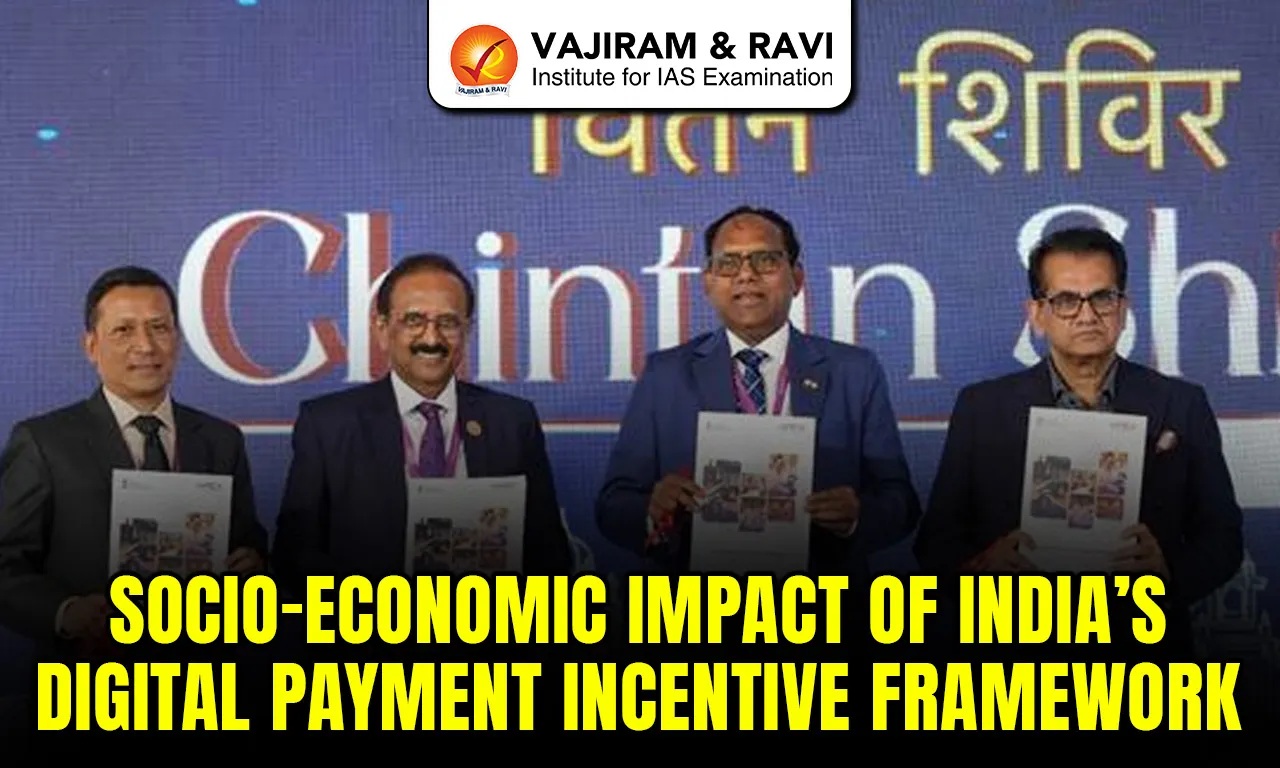
The Department of Financial Services (DFS), Ministry of Finance, released a report titled “Socio-Economic Impact Analysis of the Incentive Scheme for Promotion of RuPay Debit Card and Low-Value BHIM-UPI (P2M) Transactions” at Chintan Shivir 2026. The report evaluates how government incentives have accelerated digital payments, strengthened payment infrastructure, and promoted financial inclusion across India.

Background of the Incentive Scheme

The incentive scheme was introduced in FY 2021-22 as part of the Government’s broader objective to promote digital payments and reduce dependence on cash. It provided budgetary support to acquiring banks and ecosystem participants.

The aim was to make digital payments affordable, accessible, and sustainable for both users and merchants. The scheme continued till FY 2024-25.

Key Findings of the Report

1. Rapid Growth of Digital Transactions

  • Digital transactions increased nearly 11 times between 2021 and 2025.
  • UPI’s share in total digital transactions rose to about 80%.
  • UPI became the primary payment mode for everyday transactions.

2. Change in User Behaviour

  • UPI accounted for 57% of transactions, surpassing cash at 38%.
  • 65% of users reported making multiple digital transactions daily.
  • Among the 18-25 age group, UPI adoption reached 66%.
  • 90% of users reported increased confidence in digital payments.

3. Merchant Adoption

  • 94% of small merchants adopted UPI payments.
  • 72% of merchants expressed satisfaction with digital payments.
  • 57% reported increased sales after adopting digital payments.

4. Expansion of Digital Infrastructure

  • UPI QR deployment increased from 9.3 crore to about 65.8 crore.
  • The number of banks on UPI platform rose from 216 (2021) to 661 (2025).
  • Third-party app providers increased from 16 to 38.

5. Government Financial Support

  • Total budgetary support: ₹8,276 crore.
  • Incentive disbursements - ₹1,389 crore in FY 2021-22, ₹2,210 crore in FY 2022-23, ₹3,631 crore in FY 2023-24, ₹1,046 crore in FY 2024-25

Socio-Economic Impact

The report highlights the following key socio-economic impacts of the Government’s digital payment incentive framework.

  • Greater financial inclusion: The rapid spread of UPI and RuPay has brought millions of users and small merchants into the formal financial system, especially those who previously depended only on cash.
  • Formalisation of the economy: Digital transactions create a verifiable financial trail, which helps reduce informal cash-based dealings and improves tax compliance and transparency.
  • Improved efficiency for businesses: Digital payments enable faster transactions, reduce the cost and risks associated with handling cash, and help merchants maintain better records of sales and income.
  • Rise of the fintech ecosystem: The expansion of digital payments has encouraged innovation, leading to the growth of fintech companies, payment apps, and new financial services.
  • Behavioural shift towards a digital economy: Users are increasingly adopting digital-first payment habits, making multiple small transactions through UPI and reducing reliance on cash and ATM withdrawals.

Key Challenges Identified

The report also highlighted the following key challenges in the digital payments ecosystem, particularly in relation to RuPay debit card usage and low-value transactions.

  • Low usage of RuPay debit cards: Compared to UPI, the adoption and usage of RuPay debit cards remain relatively limited, especially for everyday transactions.
  • Regional and digital divide: Rural and semi-urban areas still face issues related to connectivity, infrastructure, and access to digital payment systems.
  • Digital literacy gaps: Many users, particularly in smaller towns and rural areas, lack adequate awareness and skills to confidently use digital payment platforms.
  • Fraud and security concerns: Rising digital adoption has increased concerns related to cyber fraud, requiring stronger risk mitigation and awareness measures.

Key Recommendations of the Report

The report further outlined the following key recommendations to strengthen digital payment adoption and improve the effectiveness of the incentive scheme.

  • Promote RuPay debit card usage in rural and semi-urban areas through targeted awareness and merchant enablement programmes.
  • Encourage low-value digital transactions using solutions like UPI Lite to increase everyday usage.
  • Continue government incentive support to sustain digital payment adoption among merchants and banks.
  • Invest in digital infrastructure and connectivity, particularly in underserved regions.
  • Improve digital literacy to build trust and confidence among users.
  • Strengthen fraud prevention and cybersecurity measures to ensure safe digital transactions.

The report highlights the significant impact of government incentives in transforming India’s digital payments landscape. With rapid growth in UPI usage, widespread merchant adoption, and improved financial inclusion, the scheme has contributed to the vision of a less-cash, transparent, and digitally empowered economy. Continued policy support and targeted interventions will be essential to sustain this momentum and ensure inclusive digital growth.

Socio-Economic Impact of India’s Digital Payment Incentive Framework FAQs

Q1: What is the purpose of the incentive scheme?

Ans: It aims to promote digital payments, reduce cash dependence, and support financial inclusion by incentivising RuPay debit card and low-value UPI transactions.

Q2: When was the scheme implemented?

Ans: The scheme was introduced in FY 2021-22 and continued till FY 2024-25.

Q3: What was the major finding of the report?

Ans: Digital transactions increased nearly 11 times between 2021 and 2025, with UPI accounting for about 80% of total digital transactions.

Q4: How did the scheme benefit merchants?

Ans: It reduced payment costs, improved record-keeping, increased sales, and encouraged widespread adoption of digital payments.

Q5: What is the key recommendation of the report?

Ans: The report recommends promoting RuPay debit card usage, expanding digital infrastructure, improving digital literacy, and strengthening cybersecurity measures.

Difference between Liberty and Freedom, Meaning, Legal Aspect

Difference between Liberty and Freedom

Liberty and freedom are closely related yet conceptually distinct ideas shaping democratic societies. Liberty refers to a legally protected space free from arbitrary restraint, while freedom denotes the power to think, speak and act independently. Both ensure dignity, equality and responsible citizenship within constitutional governance. 

The main Difference between Liberty and Freedom is that Liberty structures freedom within lawful boundaries, while freedom energizes liberty with individual will and moral agency.

Difference between Liberty and Freedom

Though often used together, there is a huge Difference between Liberty and Freedom. The liberty concerns lawful non-interference, whereas freedom emphasizes personal choice and self-determination.

Difference between Liberty and Freedom

Aspect

Liberty

Freedom

Core Meaning

Condition of being free within society from oppressive restrictions imposed by authority.

Power or right to speak, act and think according to one’s own will.

Nature

Social and political conditions shaped by law and institutions.

Personal and psychological capacity rooted in free will.

Legal Position

Protected through enforceable Fundamental Rights under Articles 19-22 and 32 of the Indian Constitution.

Expressed through freedoms like speech, religion, association and education.

Scope

Operates within rule of law and reasonable restrictions.

Can exist in private life, community or nation without formal political setting.

Responsibility

Requires responsible exercise without harming others’ rights.

Focuses on individual choice, even before institutional regulation.

Origin of Term

Derived from Latin “libertatem” meaning civil or political freedom.

Derived from Old English “freodom” meaning state of free will.

Types

Includes natural, civil, political, economic and domestic liberty.

Includes social and natural freedom, including belief and association.

Institutional Role

Upheld by independent judiciary and separation of powers under Article 50.

Practiced socially, culturally and politically.

Limits

Subject to reasonable restrictions for public order and stability.

May be curtailed if it violates others’ rights.

Enforcement

Justiciable and part of constitutional basic structure.

Realized through societal recognition and legal safeguards.

Objective

Secures equality, democracy and supremacy of law.

Promotes autonomy, creativity and individuality.

Social Impact

Balances state power and citizen rights in structured governance.

Inspires movements against oppression and for self-expression.

Difference between Liberty and Freedom FAQs

Q1: What is the basic Difference between Liberty and Freedom?

Ans: Liberty refers to lawful protection from arbitrary restraint, while freedom means the ability to think, speak, and act by one’s own choice.

Q2: Is Liberty limited by law?

Ans: Yes. Liberty operates within constitutional boundaries and reasonable restrictions to protect public order and others’ rights.

Q3: Does Freedom require legal recognition?

Ans: No. Freedom can exist as personal free will even outside formal legal or political structures.

Q4: What are Negative and Positive Liberty?

Ans: Negative liberty means freedom from interference, while positive liberty means having the capacity and conditions to achieve one’s goals.

Q5: Why are Liberty and Freedom important in a democracy?

Ans: They protect individual dignity, ensure equality before law, and balance state authority with citizens’ rights.

Twin Tube Road-Cum-Rail Tunnel Project, Key Features, Significance

Twin Tube Road-Cum-Rail Tunnel Project

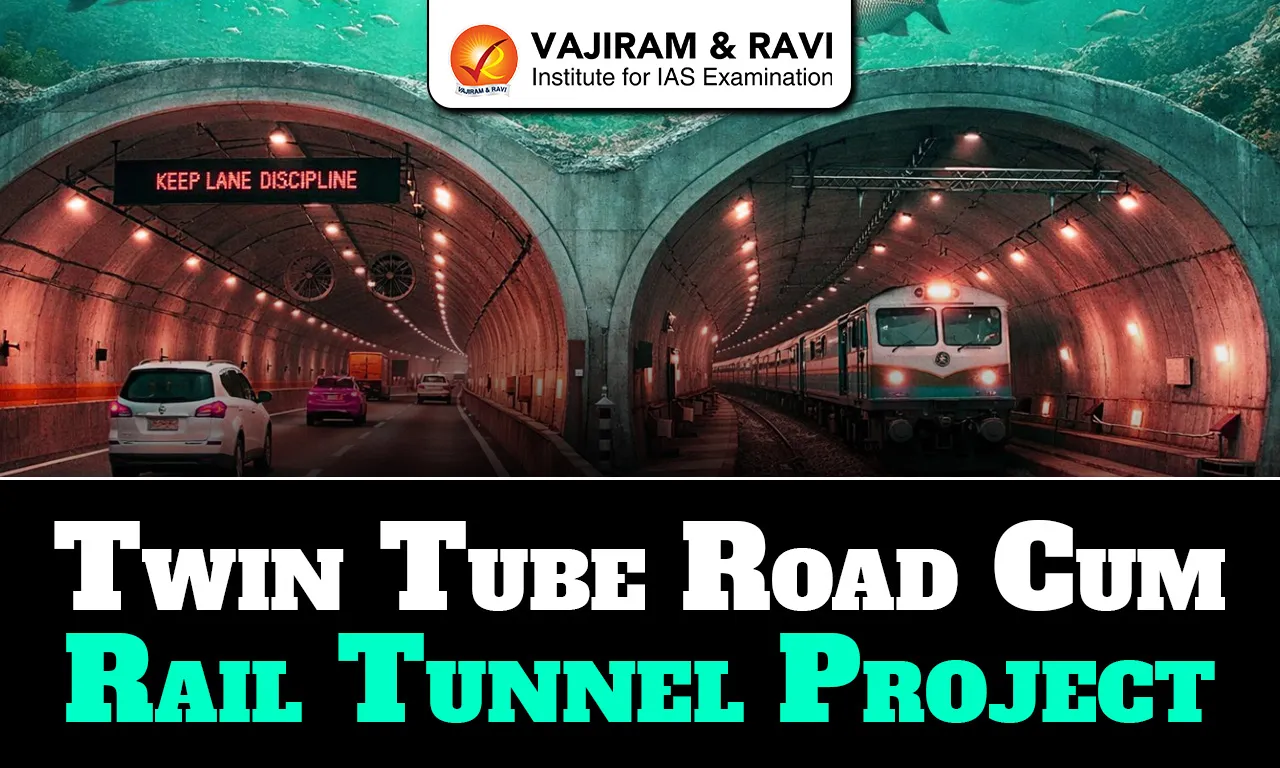
The Government of India has approved the construction of a twin tube road-cum-rail tunnel under the Brahmaputra River in Assam. It will be India’s first underwater twin tube road-cum-rail tunnel project. It is a major infrastructure initiative aimed at improving connectivity, economic growth, and strategic mobility in the North-Eastern region.

Twin Tube Road-Cum-Rail Tunnel Project Need

At present, connectivity between Gohpur on NH-15 and Numaligarh on NH-715 is indirect and inefficient. The existing route is about 240 km long and takes nearly six hours, as it relies on limited bridge crossings over the Brahmaputra and passes through ecologically sensitive areas near Kaziranga National Park. This results in traffic congestion, higher fuel consumption, delays in freight movement, and pressure on wildlife corridors. The lack of direct all-weather connectivity also affects economic activity and strategic mobility in the North-East, especially toward Arunachal Pradesh and other border regions. 

Therefore, the twin tube road-cum-rail tunnel is needed to provide a shorter, faster, and more reliable route, reduce logistics costs, protect fragile ecosystems, and strengthen regional and strategic connectivity

Twin Tube Road-Cum-Rail Tunnel Project Key Features

Key features of the twin tube road-cum-rail tunnel are: 

  • The project will create a 4-lane access-controlled greenfield corridor between Gohpur on NH-15 and Numaligarh on NH-715 in Assam.
  • The total length of the project is about 33.7 km.
  • It includes a 15.79 km twin-tube underwater tunnel under the Brahmaputra River.
  • The tunnel will be constructed using Tunnel Boring Machine (TBM) technology.
  • Each tube will carry two lanes of road traffic, while railway infrastructure will be provided in one of the tubes.
  • The project will be developed at a total capital cost of about ₹18,662 crore.
  • It will be implemented under the Engineering, Procurement and Construction (EPC) mode.
  • The corridor will connect two major national highways—NH-15 and NH-715.
  • It will also integrate with two railway sections on both sides of the river.
  • The project is expected to generate around 80 lakh person-days of direct and indirect employment.
  • It will connect major economic, social, tourist, and logistics nodes across Assam and the Northeast.
  • It is expected to be India’s first underwater road-cum-rail tunnel

Twin Tube Road-Cum-Rail Tunnel Project Significance 

  • Boost to regional connectivity: Provides a direct, all-weather link across the Brahmaputra, reducing travel distance and time between Gohpur and Numaligarh.
  • Economic growth and logistics efficiency: Facilitates faster freight movement, lowers transportation costs, and connects major industrial and economic nodes in Assam and the Northeast.
  • Strategic and border infrastructure: Strengthens connectivity to Arunachal Pradesh and other border states, improving military mobility and national security preparedness.
  • Multi-modal transport integration: Integrates highways, railways, airports, and inland waterways, creating a seamless transport network across the region.
  • Environmental and social benefits: Reduces traffic pressure near ecologically sensitive areas like Kaziranga National Park and improves access to education,healthcare, and employment in remote districts.

Thus, the Twin Tube Road-Cum-Rail Tunnel under the Brahmaputra is a landmark infrastructure project that will enhance connectivity, economic development, and strategic preparedness in the Northeast. It represents a major step toward integrated, multi-modal, and sustainable regional development.

Twin Tube Road-Cum-Rail Tunnel Project FAQs

Q1: Where will the Twin Tube Road-Cum-Rail Tunnel be built?

Ans: The tunnel will be constructed under the Brahmaputra River in Assam, connecting Gohpur on NH-15 with Numaligarh on NH-715.

Q2: What is unique about the Twin Tube Road-Cum-Rail Tunnel Project project?

Ans: It will be India’s first underwater twin tube road-cum-rail tunnel and one of the few such tunnels in the world.

Q3: What is the total length and cost of the Twin Tube Road-Cum-Rail Tunnel Project?

Ans: The total project length is about 33.7 km, including a 15.79 km underwater tunnel, with an estimated cost of around ₹18,662 crore.

Q4: What are the main benefits of the tunnel?

Ans: It will reduce travel time and distance, lower logistics costs, improve regional connectivity, support economic growth, and strengthen strategic mobility in the Northeast.

Q5: Why is this project important for the Northeast region?

Ans: It will provide all-weather connectivity, improve access to remote and border areas, promote tourism near Kaziranga National Park, and enhance integration of roads, railways, airports, and waterways.

Difference between 5th and 6th Schedule

Difference between 5th and 6th Schedule

The Difference between 5th and 6th Schedule of the Constitution of India is mainly about the level of autonomy given to tribal areas. The 5th Schedule applies to tribal areas in mainland India and gives special powers to the Governor for their administration. The 6th Schedule applies to certain tribal areas in Northeast India and provides Autonomous District Councils with legislative and financial powers. Thus, the 6th Schedule grants greater self-governance compared to the 5th Schedule.

Difference between 5th and 6th Schedule

The Difference Between 5th and 6th Schedule of the Constitution of India mainly lies in the level of autonomy, administrative structure, and legislative powers granted to tribal areas which has been discussed below.

Difference between 5th and 6th Schedule

Basis of Comparison

5th Schedule

6th Schedule

Constitutional Provision

Covered under Article 244(1).

Covered under Article 244(2) and Article 275(1).

Geographical Coverage

Applies to tribal areas in mainland India.

Applies to specific tribal areas in Northeast India.

States Covered

10 states including Jharkhand, Chhattisgarh, Odisha, etc.

4 states – Assam, Meghalaya, Tripura, and Mizoram.

Administrative Authority

Governor has special powers for administration of Scheduled Areas.

Autonomous District Councils (ADCs) administer tribal areas.

Autonomous Councils

No provision for Autonomous District Councils.

Provides for elected Autonomous District Councils and Regional Councils.

Legislative Powers

Governor can make regulations to restrict land transfer and money lending.

Councils can make laws on land, forest, agriculture, marriage, inheritance, and customs.

Judicial Powers

No separate judicial system; regular courts function.

ADCs can establish village courts for tribal dispute resolution.

Financial Powers

Limited financial autonomy; funds mainly through state government.

Councils can levy and collect taxes on land, markets, tolls, etc.

Tribes Advisory Council (TAC)

Mandatory TAC to advise on tribal welfare matters.

No Tribes Advisory Council; governance through ADCs.

Level of Autonomy

Moderate autonomy under state supervision.

High degree of autonomy with legislative and financial powers.

Objective

Protect tribal interests and prevent exploitation in Scheduled Areas.

Preserve tribal identity and ensure self-rule in Northeast India.

5th Schedule of Indian Constituion

The 5th Schedule of the Indian Constitution deals with the administration and control of Scheduled Areas and Scheduled Tribes in states other than the Northeast. It provides special powers to the Governor to ensure protection of tribal land, culture, and welfare under Article 244(1) of the Constitution of India.

  • Applies to tribal areas in mainland India (10 states which includes ).
  • President declares Scheduled Areas.
  • Governor has special powers to make regulations for peace and good governance.
  • Governor can restrict transfer of tribal land to non-tribals.
  • Governor can regulate money-lending activities in tribal areas.
  • Mandatory establishment of Tribes Advisory Council (TAC).
  • Governor submits annual report to the President regarding administration.
  • Provides moderate autonomy under state government supervision.
  • Aims to protect tribal communities from exploitation and displacement.

6th Schedule of Indian Constituion

The 6th Schedule of the Indian Constitution provides special autonomy to tribal areas in Northeast India. It ensures self-governance through Autonomous District Councils under Article 244(2) and Article 275(1) of the Constitution of India.

  • Applies to four states: Assam, Meghalaya, Tripura, and Mizoram.
  • Provides for Autonomous District Councils (ADCs) and Regional Councils.
  • Councils have legislative powers on land, forest, agriculture, customs, and marriage.
  • Councils can establish village courts for dispute resolution.
  • Councils have financial powers to levy and collect certain taxes.
  • Greater autonomy compared to the 5th Schedule.
  • Protects tribal identity, culture, and traditions.
  • Allows self-governance at district and regional levels.

Difference between 5th and 6th Schedule FAQs

Q1: Which Article of the Constitution deals with the 5th and 6th Schedule?

Ans: Both are covered under Article 244 of the Constitution of India; Article 244(1) for the 5th Schedule and Article 244(2) for the 6th Schedule.

Q2: What is the main difference between the 5th and 6th Schedule?

Ans: The 5th Schedule provides protection to tribal areas through the Governor’s powers, while the 6th Schedule grants greater autonomy through Autonomous District Councils (ADCs).

Q3: How many states are covered under the 6th Schedule?

Ans: Four states; Assam, Meghalaya, Tripura, and Mizoram are covered under the 6th Schedule.

Q4: Does the 5th Schedule provide Autonomous District Councils?

Ans: No, the 5th Schedule does not provide for Autonomous District Councils; it mainly relies on the Governor and Tribes Advisory Council.

Q5: Which Schedule provides more autonomy to tribal areas?

Ans: The 6th Schedule provides greater legislative, financial, and judicial autonomy compared to the 5th Schedule.

Difference between Reserved Forest and Protected Forest, Permission

Difference between Reserved Forest and Protected Forest

A forest is legally recognized land with tree canopy cover above 10% and minimum 0.5 hectare area. In India, forests recorded in government documents are classified into Reserved Forest, Protected Forest and Unclassed Forest under the Indian Forest Act 1927. 

Reserved Forests provide the strongest conservation framework within recorded forest land, while Protected Forests balance regulation with controlled usage. Together they form critical components of India’s 23.38% geographic area.

Difference between Reserved Forest and Protected Forest

The key Difference between Reserved Forest and Protected Forest has been listed here:

Difference between Reserved Forest and Protected Forest

Aspect

Reserved Forest

Protected Forest

Legal Basis

Notified under Section 20 of the Indian Forest Act 1927 or State Forest Acts with highest statutory protection.

Notified under Section 29 of Indian Forest Act 1927 with limited protection provisions.

Degree of Protection

Enjoys full legal protection; considered the most strictly regulated forest category.

Receives partial protection aimed at preventing further depletion.

Permission Rule

All activities prohibited unless specifically permitted by the Forest Officer.

All activities allowed unless expressly restricted by government notification.

Coverage in India

Covers 423,311 sq km, about 55.1% of total recorded forest area.

Covers 217,245 sq km, about 28.3% of total recorded forest area.

Purpose

Maintained as permanent forest estates for timber and forest produce conservation.

Established to regulate use where the government holds proprietary rights.

Control Authority

Constituted by the State Government over government forest land or wasteland.

The State Government is empowered to regulate land other than reserved forests.

Community Rights

Local access is highly restricted during the settlement process.

Certain customary rights may continue unless specifically withdrawn.

Examples

Attappadi Reserve Forest in Kerala; Palani Hills in Tamil Nadu.

Large areas in Bihar, Punjab, Haryana, Rajasthan under this category.

Economic Role

Produces regulated timber and non timber forest products.

Often used to control trees with revenue potential.

Historical Origin

Concept introduced during British administration in 1927 legislation.

Continued after independence with extended state level authority.

Difference between Reserved Forest and Protected Forest FAQs

Q1: What is the main Difference between Reserved Forest and Protected Forest?

Ans: Reserved Forests have stricter legal protection where all activities are banned unless permitted, while Protected Forests allow activities unless specifically prohibited.

Q2: Under which law are Reserved and Protected Forests notified?

Ans: Both categories are notified under the Indian Forest Act 1927 or corresponding State Forest Acts.

Q3: Which category covers a larger forest area in India?

Ans: Reserved Forests cover about 55.1% of the total recorded forest area, while Protected Forests cover around 28.3%.

Q4: Can local communities use forest resources in Reserved and Protected Forest?

Ans: In Reserved Forests, use is highly restricted and requires permission, whereas in Protected Forests certain activities may continue unless restricted.

Q5: Can Reserved and Protected Forest be upgraded to higher protection status?

Ans: Yes, both Reserved and Protected Forests can later be included in wildlife sanctuaries or declared national parks through legal notification.

Creative Industries as Growth Engines, India’s Creative Economy

Creative Industries as Growth Engines

Creative industries are sectors where value is created mainly from creativity, culture, technology, and intellectual property. These industries are not limited to art or entertainment; they are technology-driven and globally tradeable sectors. 

Creative Industries include Media and entertainment, Animation and visual effects (VFX), Gaming, Live cultural events and entertainment, Digital content platforms, Script, music, and audio-visual production. These industries generate value from ideas, stories, designs, and digital innovation. Because much of their output can be distributed online, they can reach global markets quickly and at scale.

Global Rise of the Creative Economy

Across the world, creative industries have moved from the margins to the mainstream of economic activity. 

  • In many countries, they contribute between 0.5 percent and over 7 percent of GDP.
  • Live entertainment and cultural industries also create strong linkages with tourism, hospitality, and urban services. 
  • Cities and countries that invest in creative ecosystems improve their global image, attract investment, and strengthen partnerships.

Thus, creativity today is not just cultural expression; it is an economic strategy.

India’s Creative Economy

India’s creative economy is rapidly expanding and becoming a major pillar of growth.

  • The media and entertainment sector was valued at approximately ₹2.5 trillion in 2024.
  • Digital media accounts for around one-third of total sector revenues, reshaping how content is produced and distributed.
  • High-growth segments include Animation and VFX (around ₹103 billion), Gaming (around ₹232 billion), Live entertainment (over ₹100 billion).
  • The sector supports more than 10 million livelihoods directly and indirectly.
  • Annual output stands at nearly ₹3 lakh crore.

This growth shows that creativity is no longer a side activity. It is becoming a structured, organised, and scalable economic capability.

Creative Industries as Growth Engines

Creative industries are called growth engines because of following benefits: 

Employment Generation

  • Creative industries create large numbers of jobs because they depend mainly on skills and talent. They provide work to artists, technicians, coders, designers, performers, and entrepreneurs. 
  • At the same time, they also create indirect employment in areas such as tourism, event management, digital services, and urban businesses. 
  • With a large young population, India can use these industries to generate jobs on a wide scale.

Export and Global Reach

  • Digital platforms make it easier for Indian creative products to reach international audiences. Scripts, music, games, and visual effects services can be exported to global markets. This not only increases foreign exchange earnings but also strengthens India’s position in the global creative economy.

Urban and Tourism Linkages

  • Live entertainment, festivals, and cultural events attract visitors and make cities more vibrant. Creative hubs encourage growth in hospitality, transport, retail, and other local services. In this way, the creative economy supports development at both the national and regional levels.

Soft Power and Global Visibility

  • The Orange Economy helps transform India’s cultural heritage and creative talent into economic opportunity and global influence. By using modern platforms, Indian stories, art, and skills can reach audiences across the world, improving India’s image and cultural presence internationally.
  • Creative industries therefore enhance both economic strength and diplomatic presence.

Government Initiatives for Creative Industries

Government has started following initiatives: 

  • The government has introduced a national roadmap for the AVGC-XR sector, focusing on skill development, creation of original intellectual property, industry collaboration, and access to global markets.
  • The Indian Institute of Creative Technologies (IICT) has been established as a national centre of excellence to provide industry-aligned training, advanced infrastructure, and startup incubation support.
  • To build a long-term talent pipeline, AVGC Content Creator Labs are proposed in 15,000 secondary schools and 500 colleges across the country.
  • The World Audio Visual and Entertainment Summit (WAVES) has been organised as a global platform to bring together creators, startups, investors, and policymakers for partnerships and deal-making.
  • WaveX has been launched to support startup innovation through incubation, mentorship, and investor engagement.
  • WAVES Bazaar has been created as a dedicated marketplace for scripts, music, comics, and audio-visual rights to facilitate co-production and cross-border collaborations.
  • The Create in India Challenge aims to identify emerging creative talent and connect them with global platforms and opportunities.
  • The government is also encouraging the development of regional creative hubs across cities to expand opportunities beyond a few metropolitan centres.

Overall, policy efforts are focused on strengthening skills, institutions, platforms, and global integration to make creative industries a major source of employment and economic growth.

India’s Creative Industry Challenges

  • There is a gap between what students learn in educational institutions and the skills required by the creative industry.
  • India still produces limited original intellectual property compared to major global creative economies.
  • Regulations related to media, gaming, and digital content are spread across different authorities, creating complexity.
  • Indian creative industries face strong competition from well-established global hubs.
  • There is a need for better access to finance and stronger physical and digital infrastructure.

Way Forward

  • Strengthen creative education and develop skill-training pipelines aligned with industry requirements.
  • Encourage the creation and promotion of original Indian intellectual property.
  • Provide tax incentives, funding support, and easier credit access for creative startups.
  • Build global partnerships and promote co-production agreements with other countries.
  • Develop creative industry clusters in tier-2 and tier-3 cities, not just in major metropolitan areas.

Creative Industries as Growth Engines FAQs

Q1: What are creative industries?

Ans: Creative industries are sectors where value is created mainly from creativity, culture, technology, and intellectual property. They include media, animation, gaming, digital content, and live entertainment.

Q2: Why are creative industries important for economic growth?

Ans: They generate employment, support exports, boost tourism, and increase a country’s global influence through culture and digital content.

Q3: What is the AVGC-XR sector?

Ans: AVGC-XR stands for Animation, Visual Effects, Gaming, Comics, and Extended Reality. It is a technology-driven part of the creative economy with high job and export potential.

Q4: How is the government supporting creative industries in India?

Ans: The government is promoting skill development, setting up institutions like IICT, organising global platforms like WAVES, and supporting startups and talent through various initiatives.

Q5: What are the main challenges facing India’s creative industries?

Ans: Key challenges include skill gaps, limited original intellectual property, complex regulations, global competition, and the need for better funding and infrastructure.

Difference between Pandemic and Epidemic, Definition, Spread

Default Image

Pandemics and Epidemics are public health terms that describe how diseases spread within populations. Although both indicate rising disease cases, the Difference between Pandemic and Epidemic lies mainly in scale, geographic reach, transmission pattern and long term impact on society.

Difference between Pandemic and Epidemic

The Difference between Pandemic and Epidemic has been tabulated here:

Difference between Pandemic and Epidemic

Aspect

Epidemic

Pandemic

Definition

Rapid rise of disease cases in a specific region or population within a short duration.

Global spread of a new disease affecting multiple countries and continents simultaneously.

Geographic Spread

Confined to a certain country or region; example: SARS outbreak in 2003 affecting nearly 800 people worldwide.

Crosses international borders; COVID 19 infected over 623 million people globally.

Scale of Impact

Limited to regional population clusters.

Affects nearly all populations with minimal pre existing immunity.

Nature of Disease

Can be infectious or non infectious; diabetes and obesity are termed epidemics in the USA.

Primarily infectious diseases with sustained human to human transmission.

Speed of Spread

Sudden and unexpected increase in cases.

Self sustaining transmission across countries over time.

Immunity Level

The population may have partial immunity.

The majority lack immunity against the new pathogen initially.

Declaration Authority

Recognized by national health authorities.

Declared globally by the World Health Organization.

Examples

Sixth Cholera Pandemic regionally severe and Measles outbreaks in 2019 in specific regions.

Black Death (1346-1350) killed about 25 million people and Spanish Flu (1918-1920) caused over 50 million deaths.

Duration

Often short term but intense.

May last for years; AIDS pandemic ongoing since 1981.

Healthcare Impact

Stresses regional health infrastructure.

Overwhelms global health systems and supply chains.

Difference between Pandemic and Epidemic FAQs

Q1: What is an Epidemic Disease?

Ans: An Epidemic is a sudden rise in disease cases within a specific region or population over a short period of time.

Q2: What is a Pandemic Disease?

Ans: A Pandemic occurs when a new infectious disease spreads across multiple countries or continents, affecting large populations with limited immunity.

Q3: Can an Epidemic Disease turn into a Pandemic Disease?

Ans: Yes, if an Epidemic spreads beyond national borders and sustains transmission internationally, it can escalate into a Pandemic.

Q4: Who declares a Pandemic Disease?

Ans: The World Health Organization declares a Pandemic after assessing global spread, sustained transmission and international public health risk.

Q5: What are the examples of Pandemic Diseases?

Ans: Notable Pandemics include the Black Death, Spanish Flu, AIDS crisis and COVID 19.

International Conference on Dam Safety, About, Highlights, DRIP

International Conference on Dam Safety

The International Conference on Dam Safety is a global platform where policymakers, engineers, experts and international organizations come together to discuss issues related to dam construction, maintenance, risk management and disaster preparedness.

About International Conference on Dam Safety

  • The International Conference on Dam Safety provides a global platform for experts, policymakers, and engineers to discuss dam construction, maintenance, risk management, and safety standards. They help countries share best practices, learn from past experiences and strengthen disaster preparedness and infrastructure resilience.
  • The International Conference on Dam Safety (ICDS) 2026 is the second conference under the Dam Rehabilitation and Improvement Project (DRIP) Phase II and III. It was held in Bengaluru on 13–14 February 2026. The first conference was organized in Jaipur in 2023.
  • The conference is being organized by the Water Resources Department of the Government of Karnataka in collaboration with the Department of Water Resources, River Development and Ganga Rejuvenation under the Ministry of Jal Shakti, the Central Water Commission (CWC), IISc Bengaluru, the World Bank and the Asian Infrastructure Investment Bank (AIIB).

International Conference on Dam Safety Key Highlights

  • Strengthening Dam Safety Framework: The conference stressed effective implementation of the Dam Safety Act, 2021 and the Dam Rehabilitation and Improvement Project (DRIP) to improve governance, accountability and long-term safety of India’s dams.
  • Focus on Ageing Dams: With many dams nearing or exceeding their design life, emphasis was laid on scientific, risk-based rehabilitation, strict quality control and institutional capacity-building.
  • Sediment Management: Reservoir sedimentation was identified as a serious threat to dam safety and water security. Preventive strategies such as catchment area treatment, remote sensing and sustainable desilting methods were highlighted.
  • Risk-Informed Decision-Making: Experts recommended simplified risk screening methods, dam-break analysis tools and climate-aware assessment frameworks to prioritize safety interventions across India’s large dam portfolio.
  • Flood and Reservoir Management: The need for coordinated, basin-level reservoir operations using dynamic rule curves, inflow forecasting and real-time data sharing was emphasized to manage floods and droughts effectively.
  • Emergency Preparedness and Community Safety: Strengthening Emergency Action Plans (EAPs), floodplain zoning, early warning systems and coordination with disaster management authorities were identified as key priorities.

About Dam Rehabilitation and Improvement Project (DRIP)

  • The Dam Rehabilitation and Improvement Project (DRIP) is a flagship programme of the Ministry of Jal Shakti aimed at improving the safety and performance of dams in India. It focuses on repairing old dams, strengthening their structure, and improving their operation and maintenance systems.
  • India has the third-largest number of large dams in the world (after China and the USA), with more than 6,600 dams. Many of these dams are aging, so ensuring their safety is important for water security, irrigation, hydropower, and flood control. This makes DRIP a necessary initiative.

Financial Support

  • DRIP receives financial assistance from the World Bank and the Asian Infrastructure Investment Bank (AIIB). Each phase gets about USD 500 million as external support.
  • The funding pattern is:
    • 80:20 (Centre : State) for Special Category States
    • 70:30 for General Category States
    • 50:50 for Central Agencies
    • Additionally, Special Category States like Manipur, Meghalaya, and Uttarakhand receive a 90% Central grant on the loan amount.
  • Objectives of DRIP
    • Safety Improvement: Strengthen selected dams and improve their operational performance.
    • Institutional Strengthening: Improve dam safety systems at both State and Central levels.
    • Revenue Generation: Explore ways to generate funds for sustainable maintenance of dams.
    • Climate Resilience & Disaster Preparedness: Install early warning systems, conduct dam-break studies, and prepare Emergency Action Plans (EAPs).
  • Phases of DRIP
    • Phase I (2012-2021): Rehabilitated 223 dams across 7 States and established basic safety guidelines.
    • Phase II & III (2021-2031): Cover 736 dams across 19 States with a total outlay of ₹10,211 crore. These phases focus on climate resilience, advanced monitoring systems, and long-term sustainability.

Importance of Dams

Dams play a key role in ensuring water security in India. They store and regulate water for drinking, irrigation, hydropower generation and industrial use. They also help in flood control and maintain river flow during dry seasons. With more than 6600 large dams in the country, many of which are old, proper maintenance and safety management have become national priorities.

Need for Dam Safety

Dam safety is essential because failure can cause serious loss of life and property. Climate change has increased extreme rainfall events, and the growing population in downstream areas has raised the risk. Therefore, dams require regular inspection, monitoring, timely repair and modernization using advanced technology.

Dam Safety Act, 2021

  • The Dam Safety Act, 2021 is an important law that ensures the safety of large dams in India. It provides clear rules for regular inspection, monitoring, operation and maintenance of dams to prevent accidents and disasters.
  • The Act creates a four-level institutional system for dam safety. At the central level, it sets up the National Committee on Dam Safety (NCDS) and the National Dam Safety Authority (NDSA). At the state level, it provides for a State Committee on Dam Safety and a State Dam Safety Organization (SDSO). These bodies supervise and guide dam safety measures across the country.
  • The Act also makes dam owners responsible for the safe construction, operation and maintenance of dams. They must conduct regular inspections, especially during the monsoon, set up dam safety units and prepare Emergency Action Plans, risk assessments and expert safety reports to avoid dam failure.

International Conference on Dam Safety FAQs

Q1: What is the International Conference on Dam Safety (ICDS)?

Ans: It is a global forum to discuss dam safety, risk management and disaster preparedness.

Q2: What is the International Conference on Dam Safety (ICDS) 2026 and why is it important?

Ans: ICDS 2026 is the second conference under DRIP Phase II & III and was held in Bengaluru on 13-14 February 2026. It focuses on ageing dams, climate risks, flood management and effective implementation of the Dam Safety Act, 2021.

Q3: What is the Dam Rehabilitation and Improvement Project (DRIP)?

Ans: DRIP is a flagship programme of the Ministry of Jal Shakti aimed at improving the safety and performance of dams in India through repair, modernization, better monitoring systems and institutional strengthening.

Q4: What is the Dam Safety Act, 2021?

Ans: It is a law that sets up a national and state-level system for inspection and safe management of large dams.

Q5: Why is dam safety important?

Ans: It prevents loss of life and property and ensures safe water supply, irrigation, hydropower and flood control.

Patharughat Uprising 1894, Causes, British Response, Memorial

Patharughat Uprising

The Patharughat Uprising was a major peasant resistance against British colonial rule that took place on 28 January 1894 in Patharighat, earlier known as Patharughat, in Darrang district of Assam. It is located on the north bank of the Brahmaputra River, about 35 km northeast of the Baruah Souk area of north Guwahati. The site was a symbol of agrarian protest in colonial India. The incident, often called Patharughatar Ran or Patharughat Massacre, resulted in a brutal police firing on unarmed peasants. The day is remembered annually as Krishak Swahid Divas in honour of the farmer martyrs on January 28th.

Patharughat Uprising Causes

The Patharughat Uprising emerged from agrarian distress caused by steep colonial taxation and rigid revenue policies. The immediate causes of massacre are:

  • British Annexation of Assam (1826): After annexing Assam in 1826, colonial authorities began systematic land surveys to maximize revenue collection from agrarian regions.
  • Introduction of Cash Land Revenue: Traditional payment in kind or service was replaced with compulsory cash payments, disrupting the rural barter based agrarian economy.
  • Revenue Enhancement in 1893: In 1893, agricultural land tax was increased by nearly 70% to 80%, sharply burdening subsistence farmers.
  • Impact on Agrarian Economy: Repeated revenue revisions between 1826 and 1893 weakened peasant households and reduced their capacity to sustain farming.
  • Emergence of Raij Mels: Farmers organised peaceful public conventions called Raij Mels to discuss grievances and present collective petitions. These assemblies reflected organised mass participation without violent intent or secret planning.
  • Colonial Suspicion: British officials labelled Raij Mels as potential “breeding grounds for sedition” despite their non violent character.
  • Administrative Repression: Police forces frequently dispersed such gatherings with force to discourage collective mobilisation.
  • Immediate Trigger at Patharughat: On 28 January 1894, officials refused to address farmers’ complaints regarding revenue enhancement, escalating tensions.

Also Read: Civil Uprisings Before 1857

Patharughat Massacre

The protest at Patharughat turned violent when colonial police used force against peaceful protesters.

  • Date of Incident: The firing occurred on 28 January 1894 at Patharughat village in Darrang district.
  • Protesters: The peasants present were unarmed and had gathered solely to protest enhanced land revenue demands.
  • Firing on the protestors was done by the British police, killing several peasants.
  • Official Casualty Figures: The Darrang District Gazette of 1905, edited by BC Allen, recorded 15 deaths and 37 injuries.
  • Unofficial Estimates: Eyewitness accounts and local sources suggest nearly 140 peasants lost their lives in the firing.

Patharughat Uprising British Response

Colonial authorities treated the Patharughat Uprising as a law and order threat rather than a revenue grievance.

  • Officials interpreted peaceful assemblies as anti government conspiracies requiring immediate suppression.
  • Police units regularly attended Raij Mels to intimidate participants and prevent collective resolutions.
  • On the day of the incident, officers declined to consider petitions regarding excessive taxation.
  • Authorities first ordered a lathi charge to disperse the crowd assembled for grievance redressal.
  • When agitation intensified, the Indian Imperial Police opened direct fire on the gathered farmers.
  • Authorities defended the firing as necessary to maintain order and discourage rebellion.
  • Increased monitoring of rural gatherings followed to prevent recurrence of mass mobilisation.

Also Read: Peasant Movements in India

Patharughat Uprising Outcomes

The Patharughat Uprising Massacre left a deep social and political impact within Assam’s collective memory.

  • Immediate Fear Among Peasants: The violent suppression discouraged large scale gatherings temporarily across the district.
  • Moral Shock to Society: News of the firing spread rapidly, creating anger among rural communities.
  • Agrarian Awareness: Farmers became conscious of exploitative revenue mechanisms imposed by colonial administration.
  • Place in Freedom Movement: The uprising is considered one of the earliest organised mass protests before structured national leadership emerged.
  • Precursor to Civil Disobedience: Its peaceful method anticipated later non violent mass movements in India.
  • Limited Archival Coverage: Despite British record keeping, the episode remains underrepresented in mainstream history.
  • Cultural Transmission: Folk memory preserved the narrative even when formal documentation was minimal.
  • Comparison in Regional Memory: For Assamese society, it is often ranked second only to the 1671 Battle of Saraighat.
  • Annual Commemoration: 28 January is observed every year as Krishak Swahid Divas to honour farmer martyrs.
  • Recognition of Agrarian Identity: The uprising strengthened regional pride and identity linked to land and cultivation.

Also Read: Revolt of 1857

Patharughat Uprising Leaders

The Patharughat Uprising involved identifiable British officials who ordered the firing and local Indian organisers who mobilised peasants through Raij Mels in Darrang district.

  • J.D. Anderson: Deputy Commissioner of Darrang district who authorised police firing on 28 January 1894 against unarmed protesting peasants.
  • J.R. Barrington (Berington): Superintendent of Police and officiating commandant of military police who directly commanded the armed force during firing.
  • Mr. Remington: Sub Divisional Officer present during confrontation, representing executive authority at the protest site.
  • Local Raij Mel Organisers: Village level Assamese peasant representatives who convened peaceful conventions to oppose revenue hike.
  • Narottam Das: Eyewitness poet who later composed Doli Puran, preserving names and memory of martyrs in Assamese literary tradition.
  • Peasant Martyrs: Over 140 according to unofficial estimates, representing collective rural resistance rather than individual prominence.
  • British Military Police Unit: Armed colonial force executing Anderson’s orders under Barrington’s operational command at the protest ground.

Patharughat Uprising Memorial

The Patharughat Uprising Site today stands as a place of remembrance and historical reflection.

  • A martyrs column was erected at the firing site on 28 January 2001.
  • State authorities and local residents gather every year on 28 January for homage.
  • Since 2000, the Army has paid respects in military style to honour fallen peasants.
  • The commemoration is formally observed as Krishak Swahid Divas.
  • The memorial stands in Patharighat town, nearly 60 km northeast of Guwahati.
  • An Integrated Training and Skill Development Centre for farmers was inaugurated near the site in 2021.
  • The centre aims to teach modern agricultural techniques and technology to local cultivators.
  • The site is often referred to as Assam’s Jallianwala Bagh due to the scale of peasant sacrifice.

Patharughat Uprising FAQs

Q1: When did the Patharughat Uprising take place?

Ans: The Patharughat Uprising occurred on 28 January 1894 in Patharughat village of Darrang district, Assam, during British colonial rule.

Q2: What was the main cause of the Patharughat Uprising?

Ans: The uprising was triggered by a sharp 70% to 80% increase in agricultural land revenue imposed by the British in 1893.

Q3: How many people were killed in the Patharughat Firing?

Ans: Official records mention 15 deaths and 37 injuries, while unofficial sources estimate around 140 peasants were killed.

Q4: Who ordered the firing at Patharughat?

Ans: Deputy Commissioner J.D. Anderson ordered the firing and Superintendent of Police J.R. Barrington commanded the armed force.

Q5: Why is 28 January observed as Krishak Swahid Divas?

Ans: The day is observed to honour the farmer martyrs who lost their lives during the Patharughat peasant protest in 1894.

India-Thailand Air Exercise, About, Objectives, Significance

India-Thailand Air Exercise

The India-Thailand Air Exercise is a joint drill between the Indian Air Force and the Royal Thai Air Force. It aims to improve coordination, air combat skills and defence cooperation. The exercise strengthens bilateral ties and supports India’s Act East Policy and regional security in the Indo-Pacific.

About India - Thailand Air Exercise 2026

  • In February 2026, the Indian Air Force (IAF) conducted a joint air exercise with the Royal Thai Air Force (RTAF) in the Indian Ocean Region. The exercise aimed to strengthen defence cooperation and improve coordination between the two countries.
  • India deployed Su-30MKI fighter aircraft, along with IL-78 mid-air refuelling tankers and AWACS aircraft for surveillance and command support. Thailand participated with its SAAB Gripen fighter jets. The Indian aircraft operated from the Andaman and Nicobar Islands, while the Thai aircraft flew from bases in Thailand.

India-Thailand Air Exercise Objectives

The main objective of India-Thailand Air Exercise was to improve interoperability, enhance air combat skills and demonstrate India’s operational reach in the Indian Ocean Region. It also provided both air forces an opportunity to exchange best practices and gain operational experience.

India-Thailand Air Exercise Significance

The India-Thailand Air Exercise highlights the growing defence partnership between India and Thailand under India’s Act East Policy. It also reflects Thailand’s “Act West” approach, strengthening cooperation in the Indo-Pacific region. The Andaman and Nicobar Islands played an important strategic role as a forward operating base in the region.

India’s Act East Policy

The Act East Policy was launched in 2014 by Prime Minister Narendra Modi as an upgraded version of the earlier Look East Policy. It aims to strengthen India’s engagement with Southeast Asia and the wider Indo-Pacific region, with ASEAN at its centre. The policy shifts India’s approach from only building relations to actively participating in regional affairs.

India’s Act East Policy Objectives

The main objectives are to increase trade and investment, improve connectivity, strengthen diplomatic and strategic partnerships and promote cultural exchanges. It also focuses on cooperation in areas like maritime security, counter-terrorism and disaster management to ensure regional stability.

India’s Act East Policy Pillars

The policy has three main pillars:

  • Economic Pillar - Promote trade, investment and integration with regional supply chains.
  • Socio-Cultural Pillar - Strengthen people-to-people ties and cultural relations.
  • Political-Security Pillar - Enhance defence cooperation and ensure peace and stability in the Indo-Pacific.

India-Thailand Air Exercise FAQs

Q1: What is the India -Thailand Air Exercise?

Ans: It is a joint military exercise between the Indian Air Force (IAF) and the Royal Thai Air Force (RTAF) to improve air combat skills and defence cooperation.

Q2: When and where was the 2026 exercise conducted?

Ans: It was held in February 2026 in the Indian Ocean Region, with Indian aircraft operating from the Andaman and Nicobar Islands.

Q3: Which aircraft participated in the exercise?

Ans: India deployed Su-30MKI fighters, IL-78 refuelling tankers and AWACS aircraft, while Thailand participated with SAAB Gripen fighter jets.

Q4: What was the main objective of the exercise?

Ans: The aim was to enhance interoperability, improve coordination and demonstrate India’s operational reach in the Indian Ocean Region.

Q5: What is the strategic importance of the Andaman and Nicobar Islands?

Ans: They serve as a forward strategic base for India in the Indian Ocean Region and are important for maritime security.

Difference Between Autotrophic and Heterotrophic Nutrition

Difference Between Autotrophic and Heterotrophic Nutrition

Nutrition is the way living organisms obtain food for energy and growth. It is mainly of two types - autotrophic and heterotrophic. In autotrophic nutrition, organisms make their own food. In heterotrophic nutrition, organisms depend on others for food. The Difference between Autotrophic and Heterotrophic Nutrition is discussed in detail below in this article.

Difference Between Autotrophic and Heterotrophic Nutrition

Nutrition is mainly of two types - autotrophic and heterotrophic, based on how organisms obtain their food. The Difference between Autotrophic and heterotrophic nutrition is discussed below

Difference between Autotrophic and Heterotrophic Nutrition
Basis of Difference Autotrophic Nutrition Heterotrophic Nutrition

Meaning

Organisms make their own food.

Organisms cannot make their own food.

Dependence

They are independent for food.

They depend on other organisms for food.

Food Preparation

Food is prepared from carbon dioxide and water using sunlight (photosynthesis) or chemical energy.

No photosynthesis takes place; food is obtained from plants or animals.

Role in Food Chain

Called producers; they form the first trophic level.

Called consumers; they occupy higher trophic levels.

Type of Substances Used

Convert simple inorganic substances into complex organic food.

Consume complex organic food and break it into simpler substances during digestion.

Energy Source

Get energy from sunlight or chemical reactions.

Get energy directly or indirectly from autotrophs.

Presence of Chlorophyll

Usually contain chlorophyll for photosynthesis (in plants).

They lack chlorophyll and cannot perform photosynthesis.

Movement

Most autotrophs (like plants) are non-motile.

Many can move in search of food (e.g., animals).

Examples

Green plants, algae, some bacteria.

Humans, cows, lions, fungi, most animals.

About Autotrophic Nutrition

Autotrophic nutrition is a type of nutrition in which organisms prepare their own food from simple inorganic substances like carbon dioxide and water. They use energy from sunlight or chemical reactions to make organic food. Organisms that follow this mode of nutrition are called autotrophs. They do not depend on other living beings for food and are therefore known as producers in an ecosystem.

Process of Food Production

Autotrophs make food mainly by two processes:

  • Photosynthesis - Most green plants, algae and some bacteria use sunlight to prepare food. In this process, chlorophyll (the green pigment in plants) absorbs sunlight and helps convert carbon dioxide and water into glucose (food) and oxygen. This process takes place in the chloroplasts of plant cells.
  • Chemosynthesis - Some bacteria living in extreme places like deep-sea vents prepare food without sunlight. They use energy released from chemical reactions to produce organic substances.

Main Features of Autotrophic Nutrition

  • Carbon Fixation - Autotrophs convert inorganic carbon (carbon dioxide) into organic matter, which becomes the basic building material for life.
  • Primary Producers - They form the first trophic level in the food chain and provide energy to all other organisms.
  • Energy Storage - Extra glucose produced during photosynthesis is stored as starch for future use.
  • Role in Ecosystem - Autotrophs maintain the balance of oxygen and carbon dioxide in the atmosphere and support all life forms directly or indirectly.

About Heterotrophic Nutrition

Heterotrophic nutrition is a type of nutrition in which organisms cannot prepare their own food. They depend on other living organisms or organic matter for their energy and nutrients. Organisms that follow this mode of nutrition are called heterotrophs. They are known as consumers in the food chain.

How Heterotrophs Obtain Energy

Heterotrophs get food by eating plants, animals or dead organic matter. After taking in food, they break it down through digestion into simpler substances. The energy stored in food is released through cellular respiration, which helps in growth and other life activities.

Main Features of Heterotrophic Nutrition

  • Dependence on others - They rely directly or indirectly on autotrophs for food.
  • Ingestion and digestion - Food is taken inside the body and broken down into simpler forms.
  • Absorption and assimilation - Nutrients are absorbed into the cells and used for energy and body functions.
  • Higher trophic level -They occupy higher levels in the food chain.
  • Adaptations - Many heterotrophs have special organs, enzymes and behaviors to help them find and digest food.

Types of Heterotrophic Nutrition

  • Holozoic Nutrition - Organisms take in solid food and digest it inside the body. Example: Humans and most animals.
  • Saprophytic Nutrition - Organisms feed on dead and decaying matter by releasing enzymes outside their body. Example: Fungi and some bacteria.
  • Parasitic Nutrition - Organisms live on or inside another organism (host) and obtain food from it, often harming the host. Example: Lice on humans, Cuscuta (dodder) plant.
Also Check Related Articles
Difference between NITI Aayog and Inter-State Council Difference Between Economic Survey and Union Budget
Difference Between Tropical Evergreen and Tropical Deciduous Forests Difference Between Ordinary Bill and Money Bill
Difference Between Legislative and Executive Difference between Himalayan and Peninsular Plateau
Difference Between Vedas and Upanishads Difference Between Scheduled and Non-Scheduled Banks
Difference Between Written and Unwritten Constitution Difference between NITI Aayog and Planning Commission
Difference between Colonialism and Imperialism Difference between Fundamental Rights and Directive Principles of State Policy
Difference between Procedure Established by Law and Due Process of Law Difference Between Democracy and Republic
Difference between Creamy Layer and Non-Creamy Layer of OBC Difference between Rajya Sabha and Vidhan Sabha
Difference Between Western Ghats and Eastern Ghats

Difference Between Autotrophic and Heterotrophic Nutrition FAQs

Q1: What is the basic difference between autotrophic and heterotrophic nutrition?

Ans: Autotrophic nutrition is when organisms make their own food, while heterotrophic nutrition is when organisms depend on others for food.

Q2: Who are called producers and consumers in a food chain?

Ans: Autotrophs are called producers because they prepare their own food and form the first trophic level. Heterotrophs are called consumers because they depend on producers or other organisms for food.

Q3: What are the main processes of autotrophic nutrition?

Ans: Autotrophs prepare food by photosynthesis (using sunlight) or chemosynthesis (using chemical energy).

Q4: Why are autotrophs important in an ecosystem?

Ans: They fix carbon dioxide, produce oxygen, store energy as starch and provide food and energy to all other organisms.

Q5: How do heterotrophs obtain energy?

Ans: Heterotrophs obtain energy by eating plants, animals or dead matter. The food is digested and energy is released through cellular respiration.

Deocha Pachami Coal Block, Location, Issues, Way Forward

Deocha Pachami Coal Block

The Deocha Pachami Coal Block is located in the Birbhum district of West Bengal and is considered the world’s second largest coal reserve as well as the largest in Asia in terms of deposits. The project is important for energy security and industrial growth, but it faces serious issues such as environmental concerns, land acquisition problems, and displacement of local communities. Authorities should ensure proper rehabilitation, environmental protection, and transparent implementation while balancing development with social justice.

Also Read: Coal Mines In India

Deocha Pachami Coal Block

  • The Deocha Pachami Coal Block is located in the Birbhum Coalfield Area of West Bengal and is considered the world’s second largest coal reserve in terms of estimated deposits.
  • It is regarded as the largest coal block in Asia due to its massive coal reserves of around 2 billion tonnes, making it extremely important for India’s energy security.
  • The project is the newest major coal mining initiative in West Bengal and is being developed by the State Government, aiming to boost industrial growth and employment generation.
  • The coal extracted from this block will mainly support thermal power plants, steel industries, and cement industries, helping reduce coal imports.
  • The mining project is expected to create large-scale job opportunities in sectors like mining operations, transportation, construction, and allied services.
  • It is likely to generate significant state revenue, which can be invested in infrastructure development, education, healthcare, and rural development in Birbhum district.
  • The project has raised serious environmental concerns, including deforestation, air pollution, water contamination, and ecological imbalance.
  • A major issue associated with the project is the displacement of local communities, especially tribal populations, leading to concerns about loss of land and livelihood.
  • There have been public protests and debates over land acquisition, rehabilitation policies, and the adequacy of compensation packages for affected families.
  • The long-term success of the Deocha Pachami Coal Block depends on balancing economic development with environmental protection, ensuring fair rehabilitation, and maintaining transparency in implementation.

Also Read: Coal Energy

Deocha Pachami Coal Block FAQs

Q1: Where is the Deocha Pachami Coal Block located?

Ans: The Deocha Pachami Coal Block is located in the Birbhum district of West Bengal, in the eastern part of India.

Q2: Why is Deocha Pachami Coal Block important?

Ans: It is considered the world’s second largest coal reserve and the largest coal block in Asia, making it crucial for India’s energy security and industrial development.

Q3: How much coal reserve is estimated in this block?

Ans: The coal block is estimated to have around 2 billion tonnes of coal reserves, making it one of the largest deposits globally.

Q4: Who is developing the Deocha Pachami Coal Block?

Ans: The project is being developed by the Government of West Bengal to boost employment, revenue, and infrastructure growth in the region.

Q5: What are the major issues related to this project?

Ans: The major concerns include environmental damage, deforestation, pollution, land acquisition disputes, and displacement of local and tribal communities.

Kohbar Painting, Meaning, Theme, Significance, Art Style

Kohbar Painting

Kohbar Painting is a traditional wedding art form from Bihar, where “Kohbar” means the marriage chamber. Its theme focuses on love, fertility, prosperity, and marital harmony, using symbols like lotus, fish, bamboo, and the Sun-Moon to bless the couple. The art style includes bright natural colors, detailed line work, and decorative patterns, and it is an important part of Madhubani painting tradition.

Kohbar Painting

    • Origin: Kohbar Painting is a traditional folk art form from the Mithila region of Bihar, especially practiced in districts like Madhubani.
    • Meaning of ‘Kohbar’: The word Kohbar means “marriage chamber” where wedding rituals are performed.
    • Occasion: It is mainly created during Hindu wedding ceremonies to bless the newly married couple.
    • Theme: The paintings symbolize love, fertility, prosperity, and marital harmony.
    • Religious Significance: Images of Hindu deities like Lord Rama and Sita are commonly depicted to represent ideal marriage.

Also Read: Pahari Painting

  • Common Symbols Used:
      • Lotus (symbol of purity and fertility)
      • Bamboo grove (symbol of lineage and growth)
      • Fish (good luck and fertility)
      • Sun and Moon (eternal bond)
      • Parrot (love and passion)
  • Art Style:
    • Bright natural colors are used.
    • Detailed line work with geometric patterns.
    • Traditionally painted on walls using natural dyes and pigments.
  • Artists: Traditionally made by women of the household as part of wedding rituals.
  • Connection with Madhubani Art: Kohbar Painting is a significant part of Madhubani painting tradition.
  • Cultural Importance: It preserves local traditions, rituals, and mythological stories of the Mithila region.
  • Modern Adaptation: Today, it is also painted on paper, cloth, and canvas for commercial and decorative purposes.

Also Read: Kangra Painting

Kohbar Painting FAQs

Q1: What is Kohbar Painting?

Ans: Kohbar Painting is a traditional wedding folk art of the Mithila region in Bihar, made to bless newly married couples.

Q2: What does the word “Kohbar” mean?

Ans: “Kohbar” means the marriage chamber where wedding rituals are performed.

Q3: On which occasion is Kohbar Painting made?

Ans: It is mainly created during Hindu marriage ceremonies as part of traditional rituals.

Q4: What are the main themes of Kohbar Painting?

Ans: The themes include love, fertility, prosperity, family growth, and marital harmony.

Q5: Which symbols are commonly used in Kohbar Painting?

Ans: Common symbols include lotus (fertility), bamboo (lineage), fish (good luck), parrot (love), and the Sun and Moon (eternal bond).

Time Zone in India, Indian Standard Time , Benefits, Challenges

Time Zone in India

Time Zone in India refers to the standard time followed across the entire country. Despite its wide east–west geographical spread, India follows only one official time zone for administrative convenience and national uniformity. This helps maintain coordination in governance, transport, business, and communication nationwide. However, the vast longitudinal difference creates variations in sunrise and sunset timings.

What is Time Zone?

A time zone is a region of the Earth that has the same standard time. The world is divided into 24 primary time zones, each generally spanning 15 degrees of longitude to align with the rotation of the Earth. Time zones are expressed as offsets from Coordinated Universal Time (UTC), for example, UTC+5:30 is 5 hours 30 minutes ahead of UTC. These zones help standardize time across different longitudes so that people in the same region follow a consistent clock time for daily life and activities.

Indian Standard Time (IST)

India follows Indian Standard Time (IST) as its only official time zone. IST is calculated at UTC +5:30, based on the mean solar time at the 82.5°E longitude line passing through Mirzapur (near Allahabad) in Uttar Pradesh. This system was formalized during the British colonial era to unify the time system across the country and simplify administration, transportation, and communication.

Challenges Associated with a Single Time Zone

While one time zone keeps things simple administratively, it also presents several issues:

  • Mismatch in sunrise and sunset times: Eastern states like Arunachal Pradesh and Assam experience sunrise much earlier than western regions such as Gujarat or Rajasthan, leading to inefficient use of daylight.
  • Energy inefficiency: Due to this misalignment, people in some regions may require artificial lighting longer in the mornings or evenings, increasing energy use.
  • Biological rhythm disruption: The fixed time often doesn’t align with the natural circadian rhythm of people in the far east, affecting productivity and lifestyle patterns.

Also Read: Latitude, Longitude and Time Zone

Two Time Zones in India

Experts and researchers have suggested the idea of introducing two time zones in India, mainly to better align daily schedules with daylight hours and enhance productivity, especially in the northeastern region. A proposal by the Council of Scientific & Industrial Research’s National Physical Laboratory (CSIR-NPL) recommends two ISTs separated by one hour, termed IST-I and IST-II.

According to this proposal:

  • IST-I would cover most of India (from longitude 68°7′E to 89°52′E).
  • IST-II would cover the northeastern states (from longitude 89°52′E to 97°25′E)

Two Time Zones in India Benefits

Advocates for two time zones highlight several potential advantages:

  1. Better use of daylight: Eastern regions would align working hours more closely with daylight, reducing wasted daylight and dependency on artificial lighting.
  2. Energy savings: Studies suggest adjustments in time zones or shifting standard time could save billions of units of electricity annually, supporting energy efficiency and sustainability goals.
  3. Improved productivity: People’s daily routines could match natural light cycles more effectively, potentially boosting productivity, especially in sectors like agriculture.
  4. Enhanced safety and social outcomes: More daylight during morning and evening hours could contribute to reduced road accidents and improved safety for women and children.

Two Time Zones in India Challenges

Despite the potential advantages, several obstacles have been raised against implementing two time zones:

  • Coordination complexities: Synchronizing transportation (like railways), banking hours, and business operations across two different zones could lead to confusion and administrative burden.
  • Border confusion: People crossing from one time zone to another might need to reset clocks frequently, especially at regional boundaries, which could create inconvenience.
  • Political sensitivity: Dividing time zones may inadvertently reinforce regional divides or fuel perceptions of inequality between regions.
  • Infrastructure requirements: Establishing a separate timekeeping system in the new time zone would require additional resources, including new laboratories and technical systems.

Way Forward

The debate on time zones in India continues. Rather than immediately adopting two full zones, some experts suggest alternative solutions, such as:

  • Permanent shift of IST by half an hour to better match daylight hours.
  • Daylight Saving Time (DST): Temporarily adjusting clocks seasonally to make better use of daylight.
  • Consultative approach: Engaging stakeholders from different regions to develop a consensus before making major policy changes.

Time Zone in India FAQs

Q1: How many time zones does India currently have?

Ans: India has only one official time zone, Indian Standard Time (IST) at UTC +5:30.

Q2: Why doesn’t India have two time zones?

Ans: India maintains a single time zone for administrative ease and nationwide synchronization in governance, transportation, commerce, and communication.

Q3: What is the basis of IST?

Ans: IST is based on the mean time at the 82.5°E longitude, the central meridian used to calculate national time.

Q4: Would two time zones save energy?

Ans: Proponents believe that aligning time with daylight better could reduce energy consumption and improve productivity. Research suggests significant potential savings.

Q5: What are alternatives to two time zones?

Ans: Alternatives include shifting the existing IST forward or using Daylight Saving Time seasonally to optimize daylight use.

Charax Spasinou

Charax Spasinou

Charax Spasinou Latest News

Deep in the deserts of Iraq, the lost city of Charax Spasinou has finally been found.

About Charax Spasinou

  • It was an ancient port city located at the confluence of the Tigris and Choaspes rivers, near the modern border of Iraq and Iran.
  • Founded during the Hellenistic period, it was initially established by Alexander the Great.
  • It was reportedly founded in 324 BCE, just a few years before Alexander’s death.
  • He might have wanted it to cement control over Mesopotamia at a strategic river junction.
  • Some sources say it was originally called Alexandria.
  • The city passed to the Seleucid Empire after Alexander's death until it was destroyed at some point by flooding.
  • The city was later rebuilt by Hyspaosines, who became its first king and is recognized for founding the kingdom of Characene with Charax Spasinou as its capital.
  • Due to its favourable location, Charax became a very important harbour in the Persian Gulf area and a major trading point between Mesopotamia (a region in the Middle East) and India. 
  • The city was home to a succession of local rulers who minted coins from the late second century BC to the third century AD.
  • Charax's prominence waned around AD 224–28 with the rise of the Sassanian Empire, marking the end of Characene's political significance.

Source: TOI

Charax Spasinou FAQs

Q1: What was Charax Spasinou?

Ans: It was an ancient port city located near the confluence of the Tigris and Choaspes rivers.

Q2: During which historical period was Charax Spasinou founded?

Ans: It was founded during the Hellenistic period.

Q3: Who initially established Charax Spasinou?

Ans: It was established by Alexander the Great.

Q4: In which year was Charax Spasinou reportedly founded?

Ans: It was reportedly founded in 324 BCE.

Q5: Who rebuilt Charax Spasinou and later became its first king?

Ans: Hyspaosines rebuilt it and became its first king.

Alpheus Madhusoodanai

Alpheus Madhusoodanai

Alpheus Madhusoodanai Latest News

Researchers recently discovered a new species of pistol shrimp named Alpheus madhusoodanai in the Kochi backwaters.

About Alpheus Madhusoodanai

  • It is a new species of pistol shrimp, also known as snapping shrimp.
  • It was discovered from Kochi backwaters, Kerala.
  • It belongs to the family Alpheidae.
  • It is the first alpheid shrimp species to be recorded from an estuary in the region.
  • In local waters, they occur in small numbers and are often caught in stake nets.
  • It has a burrowing tendency and contributes to the health of mangrove ecosystems by releasing toxic gases trapped in swampy soil.

Key Facts about Pistol Shrimp

  • The pistol shrimp, also known as the snapping shrimp, possesses an extraordinary weapon — an oversized claw that can “fire” underwater bullets made of bubbles. 
  • These aren’t ordinary bubbles — they’re created through a process called sonoluminescence, “in which water is energised with specific vibrations causing emission of light through bubbles.
  • The resulting temperatures can reach an astounding 4,400°C — nearly as hot as the surface of the sun.
  • The sounds produced when the pistols of these shrimps are fired are among the loudest sounds that can be heard in the oceans.
  • The sound reaches an incredible 218 decibels — louder than a gunshot, typically around 140-175 decibels.
  • The pistol shrimp primarily uses this powerful weapon to catch prey. 
  • When hunting, it hides in its burrow, waiting for prey to come within range before firing its claw with remarkable speed and precision.
  •  There are hundreds of species found all over the world, but most species are found in reefs and seagrass beds in temperate and tropical regions.

Source: TOI

Alpheus madhusoodanai FAQs

Q1: What is Alpheus madhusoodanai?

Ans: It is a new species of pistol shrimp, also known as snapping shrimp.

Q2: Where was Alpheus madhusoodanai discovered?

Ans: It was discovered from Kochi backwaters, Kerala.

Q3: What unique weapon does the pistol shrimp possess?

Ans: It has an oversized claw that can “fire” underwater bullets made of bubbles.

Tidal Flooding

Tidal Flooding

Tidal Flooding Latest News

Recently, the Kerala government declared tidal flooding as a state specific disaster.

About Tidal Flooding

  • Tidal flooding, also known as sunny day flooding, king tide flooding, and nuisance flooding, is the temporary flooding of low-lying areas near a coast.
  • Causes: It usually occurs through the combination of winds, offshore storms, and full moon cycles during high tide events such as full moons and new moons. 
  • Unlike cyclone-induced storm surges, tidal flooding happens twice in a day and is more severe during full or new moons.
  • Impact on Kerala Coast: It is a common phenomenon along Kerala’s coastline, where the Arabian Sea level temporarily rises above an identified threshold for a brief period, inundating low-lying coastal areas.

Kerala Government's Decision

  • Kerala government declared financial assistance, similar to that provided to victims of natural disasters under State Disaster Response Fund (SDRF), to victims of floods caused by tidal rise.
  • This is the first time in the country that a State has declared tidal flooding a State-specific disaster.
  • Other State-specific disasters in Kerala: Coastal erosion, lightning, strong winds, soil piping, heatwave/sunstroke/sunburn, and human-wildlife conflict as State-specific disasters.

Source: TH

Tidal Flooding FAQs

Q1: Where is tidal flooding common in India?

Ans: Kerala's coastline

Q2: How often does tidal flooding occur?

Ans: Twice a day

Malabar Pied Hornbill

Malabar Pied Hornbill

Malabar Pied Hornbill Latest News

The Chhattisgarh Forest Department has started establishing six “hornbill restaurants” in the Udanti Sitanadi Tiger Reserve (USTR) for the rare Malabar Pied Hornbill and to promote natural forest expansion.

About Malabar Pied Hornbill

  • The Malabar pied hornbill (Anthracoceros coronatus ), also known as lesser pied hornbill, is a bird in the hornbill family.
  • Appearance: It is a medium-sized forest hornbill with striking black and white plumage and a prominent casque.
  • Habitat:  Its habitat is evergreen and moist deciduous forests, often near human settlements.
  • Distribution: It is found in the Western Ghats and north-eastern Himalayan foothill regions of India and Nepal, the Satpuda Hills, as well as in Sri Lanka. 
  • Diet: It is Frugivorous but can adapt themselves to an omnivorous diet in the breeding season.
  • Ecological Role: It is a vital indicator of the forest ecosystem’s health and stability.
  • Conservation Status: IUCN: Near Threatened
  • Threats: The primary threats to this species are habitat loss, degradation and fragmentation.

Key Facts about Udanti Sitanadi Tiger Reserve

  • Location: It is located in the state of Chhattisgarh.
  • It was established by joining the regions represented by Sitanadi and Udanti wildlife sanctuaries. 
  • The drainage system of the reserve consists of the Mahanadi as the main river, along with the Udanti, Sitanadi, Indravan, and Pairi Rivers as tributaries.
  • There are 19 named mountains in the reserve. Deo Dongri is the highest point. The most prominent mountain is Atānga Dongar.
  • Vegetation: The forest type here is predominantly tropical dry and moist deciduous.

Source: IE

Malabar Pied Hornbill FAQs

Q1: What is the diet of the Malabar Pied Hornbill?

Ans: Frugivorous (fruits)

Q2: Where is the Malabar Pied Hornbill primarily found?

Ans: Western Ghats

H-125 Helicopter

H-125 Helicopter

H-125 Helicopter Latest News

Recently, the Prime Minister of India and French President Mr Emmanuel Macron inaugurated the Final Assembly Line of the Airbus H-125 Light Utility Helicopter, located at Vemagal, Karnataka. 

About H-125 Helicopter

  • It is a single‑engine light utility helicopter from the legendary Ecureuil family.
  • It is valued for its reliability, low maintenance and adaptability.
  • The H125 is the only helicopter in history to have landed on the summit of Mount Everest.
  • Uses: It is used in emergency services, aerial filming, tourism, law enforcement, firefighting, and civil transport.

Features of H-125 Helicopter

  • High‑Altitude Performance: It can operate efficiently in “hot and high” environments — meaning high mountains or hot desert conditions.
  • Operational Versatility: It can be reconfigured for multiple roles such as rescue, medical evacuation, firefighting, passenger transport, and aerial work missions.
  • Simple and Robust Design: Its reliable engine and aerodynamics make it easier to maintain and operate in varied conditions.
  • High Cruise Speed and Range: With speeds up to around 252 km/h and a range of approximately 662 km, it’s capable of covering long distances without compromising performance.
  • Significance to India: It provides edge in high-altitude logistics, ensuring the delivery of vital supplies to remote frontline outposts, and serves as a rapid-response asset for search and rescue or medical evacuation operations.

Source: PIB

H-125 Helicopter FAQs

Q1: What is the maximum speed of the H-125 helicopter?

Ans: 252 km/h

Q2: What is the maximum altitude the H-125 helicopter can reach?

Ans: 23,000 ft

Defence Acquisition Council

Defence Acquisition Council

Defence Acquisition Council Latest News

The Defence Acquisition Council (DAC) recently cleared proposals worth nearly 3.60 lakh crore rupees to enhance the capability of the Armed Forces.

About Defence Acquisition Council

  • It is the highest decision-making body of the Defence Ministry on procurement.
  • The main objective of the DAC is to ensure expeditious procurement of the approved requirements of the armed forces in terms of capabilities sought and time frame prescribed by optimally utilizing the allocated budgetary resources.
  • Formation: It was formed after the Group of Minister’s recommendations on ‘Reforming the National Security System’, in 2001, post-Kargil War (1999).

Defence Acquisition Council Composition

  • The defence minister is the chairman of DAC. 
  • Its members include Chief of Defence Staff (CDS) and chiefs of Army, Navy and Air Force.

Defence Acquisition Council Functions

  • Give in principle approval of a 15-year Long Term Integrated Perspective Plan (LTIPP) for defence forces.
  • Accord of acceptance of necessity to acquisition proposals. 
  • Categorisation of the acquisition proposals relating to ‘Buy’, ‘Buy & Make’, and ‘Make’
  • Look into issues relating to single vendor clearance.
  • Take decisions regarding ‘offset’ provisions in respect of acquisition proposals above Rs 300 crore.
  • Take decisions regarding the Transfer of Technology under the ‘Buy & Make’ category of acquisition proposals. 
  • Field trial evaluation.

Source: NOA

Defence Acquisition Council FAQs

Q1: What is the Defence Acquisition Council?

Ans: It is the highest decision-making body of the Defence Ministry on procurement.

Q2: What is the main objective of the Defence Acquisition Council (DAC)?

Ans: To ensure expeditious procurement of approved requirements of the armed forces within the prescribed time frame by optimally utilizing budgetary resources.

Q3: When was the Defence Acquisition Council formed?

Ans: It was formed in 2001.

Q4: Who is the chairman of the Defence Acquisition Council?

Ans: The Defence Minister is the chairman.

Freedom of Satire and the Limits of State Power in India

Freedom of Satire

Freedom of Satire Latest News

  • Access to a satirical cartoon video was recently blocked, citing national security concerns, sparking debate on freedom of satire in India.

Constitutional Basis of Free Speech in India

  • Freedom of speech and expression is guaranteed under Article 19(1)(a) of the Constitution of India. 
  • However, this right is not absolute. Under Article 19(2), the State may impose reasonable restrictions in the interests of sovereignty and integrity of India, security of the State, friendly relations with foreign States, public order, decency, morality, and prevention of incitement to an offence.
  • Satire, cartoons, and comedy fall within the broad domain of artistic and political expression protected under Article 19(1)(a). 
  • Courts have consistently held that democratic discourse must tolerate dissent, exaggeration, irony, and ridicule.

Satire as a Form of Democratic Expression

  • The Supreme Court has repeatedly recognised satire as a legitimate artistic tool. In Indibily Creative (P) Ltd. v. State of West Bengal (2019), the Court described satire as an exaggeration that exposes societal absurdities and hypocrisies. It emphasised satire’s “unique ability” to make complex points accessible and impactful.
  • Similarly, in D.C. Saxena v. Chief Justice of India (1997), the Court cautioned that suppressing debate on public issues can endanger democratic stability. 
  • Courts have also observed that satire should be evaluated from the perspective of a “reasonable person” and not a “hypersensitive individual.”
  • The Madras High Court in Kama v. M. Jothisorupan (2018) termed political cartoons as a “weapon of ridicule,” meant to sting and provoke thought rather than flatter authority.

Legal Framework for Blocking Online Content

  • The recent controversy arises in the context of the Information Technology Act, 2000 and related rules.
  • Section 69A of the IT Act
    • Section 69A empowers the Union government to block public access to online content on specific grounds aligned with Article 19(2).
    • Blocking orders must be reasoned, recorded in writing, and subject to review.
    • In Shreya Singhal v. Union of India (2015), the Supreme Court upheld Section 69A but clarified that both intermediaries and originators of content should be heard before blocking, and that restrictions must strictly fall within Article 19(2).
  • IT Rules and Amendments
    • Amendments to the Information Technology (Intermediary Guidelines and Digital Media Ethics Code) Rules, 2026, reduce the time for social media platforms to remove content deemed illegal from 24-36 hours to three hours.
    • The Karnataka High Court upheld the government’s ‘Sahyog’ content-blocking portal, which automates notice transmission to intermediaries. However, concerns have been raised about bypassing procedural safeguards.
    • Petitions before the Supreme Court challenge the IT (Procedure and Safeguards for Blocking for Access of Information by Public) Rules, 2009, particularly provisions allowing emergency blocking without prior notice and maintaining confidentiality of blocking orders.

Judicial View on Artistic Freedom

  • Indian courts have repeatedly affirmed the importance of artistic and satirical expression.
  • In a March 2025 verdict, the Supreme Court observed that 75 years into the Republic, India cannot be so fragile that poetry, stand-up comedy, or artistic expression would automatically incite hatred.
  • The Delhi High Court has similarly defended creative liberty, stating that satire exposes societal ills through exaggeration. Globally too, democracies afford cartoons and satire greater latitude, recognising them as essential to public life.
  • The Supreme Court has even invoked philosopher Albert Camus to underline that art unites society while tyranny separates it.

Tension Between National Security and Free Expression

  • The recent blocking of a satirical cartoon video reportedly featuring the Prime Minister was justified on grounds such as national security, defence, and foreign relations.
  • While Article 19(2) permits restrictions, courts insist that such limitations must be reasonable, proportionate, and procedurally fair. 
  • The key constitutional question is whether satire, by its very nature exaggerated and ironic, can genuinely threaten national security, or whether invoking such grounds in artistic contexts amounts to excessive restriction.

Source: TH

Freedom of Satire FAQs

Q1: Under which Article is freedom of speech protected in India?

Ans: It is protected under Article 19(1)(a) of the Constitution of India.

Q2: What does Section 69A of the IT Act allow?

Ans: It empowers the government to block online content on specific grounds listed under Article 19(2).

Q3: What did the Supreme Court hold in Shreya Singhal (2015)?

Ans: It upheld Section 69A but required procedural safeguards and adherence to Article 19(2) grounds.

Q4: How have courts defined satire?

Ans: Courts describe satire as an exaggerated expression that exposes societal absurdities and hypocrisies.

Q5: Why is satire considered important in a democracy?

Ans: Because it facilitates public debate, challenges authority, and strengthens democratic accountability.

IndiaAI Mission 2.0: MSME AI Stack, Sovereign Models and $200 Billion Investment Pus

IndiaAI Mission 2.0

IndiaAI Mission 2.0 Latest News

  • Union IT Minister Ashwini Vaishnaw has unveiled the broad roadmap for IndiaAI Mission 2.0, marking a strategic shift from infrastructure-building to deeper research, development, and widespread adoption of artificial intelligence across sectors.
  • The renewed mission aims to accelerate AI innovation, strengthen indigenous R&D capabilities, and ensure meaningful diffusion of AI technologies—particularly for India’s vast MSME ecosystem. 
  • By embedding AI into small and medium enterprises, the government seeks to enhance productivity, competitiveness, and global integration.
  • The announcement coincides with the India AI Impact Summit 2026 at Bharat Mandapam, underscoring India’s ambition to position itself as a major global AI player while aligning technology deployment with domestic economic priorities.

IndiaAI Mission 2.0: MSME-Focused AI Stack on the Lines of UPI

  • India is preparing the next phase of its AI Mission with a strong focus on creating a bouquet of ready-to-use AI solutions for MSMEs
  • Union IT Minister Ashwini Vaishnaw said these solutions will be hosted on a common digital platform—similar to UPI—allowing small and medium enterprises to easily access and deploy AI tools across key sectors.

Boosting Compute Capacity and Democratizing Access

  • India will expand its AI compute infrastructure by adding 20,000 GPUs to the existing 38,000.
  • Unlike many countries where AI infrastructure is concentrated in a few corporations, India is working to ensure broad-based access to AI compute capacity
  • Several sovereign AI models launched at the summit, he said, have outperformed many global systems on multiple evaluation parameters.

Global Recognition and Investment Momentum

  • Citing Stanford’s ranking, Union IT Minister noted that India is now among the top three AI nations globally. 
  • He projected that over the next two years, more than $200 billion in investments could flow into the ecosystem, with venture capital commitments spanning all five layers of the AI stack—from hardware and models to applications.
  • The minister also acknowledged the overwhelming response from youth at the summit, despite logistical challenges on the opening day.

AI and India’s IT Services Sector

  • Addressing concerns about AI’s impact on India’s IT services industry amid recent market volatility, the minister said the sector remains a key national strength. 
  • He stressed the need for collaboration between government, industry, and academia to upskill the existing workforce and prepare future talent for technological transitions.

Fair Remuneration for News Publishers

  • IT Minister also underscored the government’s view that news publishers must receive fair compensation when AI models use their publicly available content for training.
  • The government is in discussions with major AI platforms on remuneration mechanisms. 
  • A DPIIT committee’s white paper has recommended a mandatory blanket licensing regime, under which AI companies would pay royalties for copyrighted material. 
  • If adopted, India could become the first country to implement a statutory licensing framework with government-determined royalty rates for AI developers.

Sovereign AI Beyond Models

  • Mission 2.0 expands the idea of sovereign AI beyond just building domestic models. It includes:
    • Indigenous chip development
    • Infrastructure and control systems
    • Scalable applications
  • The goal is to ensure India can scale AI solutions independently, without reliance on external approvals or foreign technological gatekeepers.
  • Overall, IndiaAI Mission 2.0 marks a transition from infrastructure building to scalable innovation, sovereign capability, and inclusive AI adoption, positioning India as a global AI leader.

Source: IE | ToI

IndiaAI Mission 2.0 FAQs

Q1: What is IndiaAI Mission 2.0?

Ans: IndiaAI Mission 2.0 is the second phase of India’s national AI strategy, focusing on MSME adoption, sovereign AI capabilities, compute expansion, and global competitiveness.

Q2: How will IndiaAI Mission 2.0 support MSMEs?

Ans: IndiaAI Mission 2.0 proposes a UPI-style AI platform offering ready-to-use, vetted AI solutions to help MSMEs improve productivity and competitiveness.

Q3: What role does sovereign AI play in IndiaAI Mission 2.0?

Ans: IndiaAI Mission 2.0 extends sovereignty beyond models to chips, infrastructure, control systems, and scalable applications, reducing reliance on foreign technological ecosystems.

Q4: How much investment is expected under IndiaAI Mission 2.0?

Ans: The government projects over $200 billion in investments over two years, covering hardware, AI models, data centres, and application-layer innovation.

Q5: What is IndiaAI Mission 2.0’s stance on AI training data?

Ans: IndiaAI Mission 2.0 supports fair remuneration for content creators, with proposals for a statutory licensing regime requiring AI firms to pay royalties for copyrighted content.

DPDP Act Challenge: Supreme Court Examines Privacy, RTI and Press Freedom Concerns

DPDP Act

DPDP Act Latest News

  • Three Public Interest Litigations (PILs) have been filed in the Supreme Court questioning the constitutionality of the Digital Personal Data Protection Act, 2023 (DPDP Act). Although the law aims to protect individuals’ digital privacy, the petitioners argue that it weakens the Right to Information (RTI), restricts investigative journalism, and broadens state surveillance powers.
  • The petitioners have contended that certain provisions of the Act and its Rules dilute transparency safeguards and may curb access to public-interest information.
  • The Supreme Court has admitted the pleas, issued notice to the Centre, and referred the matter to a five-judge Constitution Bench for hearing in March. However, it declined to grant an interim stay on the Act.

Privacy vs Transparency: The RTI Amendment at the Heart of the DPDP Challenge

  • A core objection raised in the petitions concerns Section 44(3) of the DPDP Act, which amends Section 8(1)(j) of the RTI Act, 2005.
  • Earlier, public authorities could deny disclosure of personal information only if it had no relation to public activity or if it caused an “unwarranted invasion of privacy.” 
  • Crucially, the law allowed disclosure if a “larger public interest” justified it.
  • The amended provision now broadly exempts “information which relates to personal information,” removing the public interest override.

Concerns Over Shielding Corruption

  • The petitioners argue that this change eliminates the power of Public Information Officers (PIOs) to balance privacy against public interest. 
  • Investigative journalism and anti-corruption inquiries often depend on records such as asset disclosures, tender documents, and file notings — all of which may contain personal data.
  • According to analysts, the amendment converts a “carefully calibrated privacy exemption into an absolute bar,” potentially shielding corrupt officials. They describe it as a “death knell for participatory democracy.”

Proportionality Test Under Puttaswamy

  • All three petitions rely on the Supreme Court’s 2017 Puttaswamy judgment, which requires that any restriction on fundamental rights meet the proportionality testserving a legitimate aim, adopting the least restrictive means, and including safeguards against misuse.
  • The petitioners contend that replacing the RTI Act’s public interest safeguard with a blanket exemption fails this test and is “manifestly arbitrary,” as it creates a category of information that remains opaque regardless of public interest.

Impact on Journalism: Data Law and Press Freedom

  • The Reporters’ Collective argues that under the DPDP Act, journalists collecting personal data during investigations may be treated as “data fiduciaries.” 
  • This classification imposes obligations such as issuing notices and obtaining consent from individuals whose data is being used.
  • In investigative reporting — especially in cases involving fraud, corruption, or misuse of public funds — seeking consent from the subject of investigation is often impractical and defeats the purpose of the probe.

Consent and Data Erasure Concerns

  • Section 12 of the Act requires that if consent is not granted or is withdrawn, the data must be erased. 
  • The petition contends that this would make post-publication verification and fact-checking difficult, potentially undermining the credibility and continuity of investigative journalism.

Chilling Effect on Free Press

  • The petition also highlights the risk of severe financial penalties — up to ₹250 crore — for non-compliance. 
  • It argues that the fear of such heavy sanctions could discourage journalists from pursuing stories involving personal data, thereby creating a “chilling effect” on press freedom and limiting reporting in the public interest.

Concerns Over State Power and Surveillance

  • Section 36 of the DPDP Act, which authorises the Union government to demand information from any “data fiduciary.”
  • The petitions argue that this provision enables broad access to personal data without clear procedural safeguards, independent oversight, or prior authorisation.
  • As per the analysts, Section 36 is “vague, overbroad and arbitrary,” as it allows the government to obtain personal data without the individual’s consent.
  • The petition warns that, in the absence of specific protections for journalistic work, media organisations could be compelled to disclose data that may reveal confidential sources, discouraging whistleblowers and investigative reporting.
  • There is no statutory appeal or review mechanism against orders issued by the Central Government under Section 36.
  • This concentration of power creates the risk of arbitrary or excessive use, potentially enabling state control over private data and raising concerns about its implications for policymaking and electoral processes.

Concerns Over the Independence of the Data Protection Board

  • Experts argue that the Data Protection Board of India lacks institutional independence. 
  • Under the notified Rules, the search-cum-selection committee for appointing the Board’s chairperson and members comprises only government secretaries and government-nominated experts.
  • They contend that this “complete executive dominance” undermines the doctrine of separation of powers, especially since the Board performs quasi-judicial functions such as adjudicating disputes and imposing penalties.
  • As per them, the State itself is the largest collector of personal data. Therefore, a regulatory body appointed solely by the executive raises concerns about impartiality, potential conflicts of interest, and effective oversight of government actions.

Source: IE

DPDP Act FAQs

Q1: What is the DPDP Act challenge about?

Ans: The DPDP Act challenge questions whether amendments to the RTI Act, expanded surveillance powers, and press-related obligations violate constitutional guarantees of transparency and free speech.

Q2: Why is the RTI amendment controversial?

Ans: The DPDP Act challenge argues that removing the public interest override converts a limited privacy exemption into an absolute bar, potentially shielding corruption and weakening participatory democracy.

Q3: How does the DPDP Act challenge affect journalism?

Ans: Petitioners argue journalists may be classified as data fiduciaries, requiring consent from subjects under investigation, which could cripple investigative reporting and create a chilling effect.

Q4: What concerns exist regarding state surveillance?

Ans: The DPDP Act challenge highlights Section 36, which allows the government to demand information without independent safeguards or appeal mechanisms, raising fears of arbitrary digital searches.

Q5: Why is the Data Protection Board’s independence questioned?

Ans: Petitioners argue executive-dominated appointments undermine separation of powers, as the Board performs quasi-judicial functions while regulating data practices of the State itself.

Strait of Hormuz

Strait of Hormuz

Strait of Hormuz Latest News

Naval forces from Iran, Russia and China are set to conduct a joint military exercise in waters around the Strait of Hormuz.

About Strait of Hormuz

  • It is a narrow waterway between Iran and the Arabian Peninsula, specifically the United Arab Emirates, and Musandam (Oman).
  • The Gulf of Oman is on the strait’s east, while the Persian Gulf is on the west. 
  • It is the only sea channel linking the oil-rich Persian Gulf (west) with the Gulf of Oman and the Arabian Sea (southeast).
  • Iran is located on the north coast, while the UAE is on the south coast. 
  • At its narrowest point, the Strait of Hormuz is only 29 nautical miles wide (54 km). 
  • Islands: Some of the islands located in the Strait of Hormuz are Hengam, Hormuz, and Qishm. 
  • Significance
    • The Strait of Hormuz is considered one of the world’s most economically important choke points.
    • About 30% of the world’s liquefied gas and 25% of oil pass through the Strait of Hormuz.
    • It serves as a key passage for supertankers transporting oil and gas from Saudi Arabia, Kuwait, Iraq, Qatar, Bahrain, the UAE, and Iran.
    • Most of this energy flows to Asian markets, including China, which remains Iran’s sole significant oil customer.

Source: NIE

Strait of Hormuz FAQs

Q1: Where is the Strait of Hormuz located?

Ans: Between Iran and Oman

Q2: What is the strategic importance of the Strait of Hormuz?

Ans: Connects Indian Ocean to Persian Gulf

Shahpur Kandi Dam Project

Shahpur Kandi Dam Project

Shahpur Kandi Dam Project Latest News

India plans to block the surplus water flow from the Ravi River to Pakistan as the delayed Shahpur Kandi dam on the J&K–Punjab border heads for completion.

About Shahpur Kandi Dam Project

  • It is located on the Ravi River in Pathankot district, Punjab, downstream from the existing Ranjit Sagar Dam.
  • The water released by Ranjit Sagar Dam is utilized for generating power from this project. 
  • Declared a national project in 2008, the dam is being built at a cost of Rs 3,394.49 crore, with Punjab contributing 80 percent and the Centre funding the remaining 20 percent.
  • It is constructed by the irrigation department of the Government of Punjab.
  • It features a 55.5 m high concrete gravity dam with 206 MW power output and a 7.7 km hydel channel. 
  • The project has the potential to irrigate around 5,000 hectares in Punjab and 32,000 hectares in Jammu and Kashmir’s Sambha and Kathua districts. 
  • The dam will help save any excess Ravi water that used to flow to Pakistan during the rainy season, utilising it for the benefit of the Indian farmers.

Source: N18

Shahpur Kandi Dam Project FAQs

Q1: Where is the Shahpur Kandi Dam Project located?

Ans: It is located on the Ravi River in Pathankot district, Punjab.

Q2: Which existing dam is located upstream of the Shahpur Kandi Dam?

Ans: The Ranjit Sagar Dam.

Q3: What is the funding pattern of the Shahpur Kandi Dam Project?

Ans: Punjab contributes 80 percent and the Centre funds 20 percent.

France

France

France Latest News

Recently, India and France renewed the defence cooperation agreement for another 10 years at the 6th India-France Annual Defence Dialogue in Bengaluru.

About France

  • It is a country located in North Western Europe.
  • Bordering countries: It is bordered by 7 countries: Belgium, Luxembourg, Germany, Switzerland, Italy, Spain and Andorra.
  • Surrounding Water bodies: It is bounded by the Bay of Biscay (North Atlantic Ocean) in the west; by the English Channel in the northwest and by the Mediterranean Sea in the south. 
  • It has 5 overseas regions namely: Guadeloupe, Guyane(French Guiana), La Réunion (Réunion), Martinique and Mayotte.
  • Capital City: Paris.

Geographical Features of France

  • Climate: The climate in mainland France is temperate, with quite significant regional differences.
  • Major Rivers:  Loire (drains into Atlantic ocean ), Seine (drains into English channel).
  • Major Mountains:  Alps (southern France), Jura Mountains (north of Alps), Pyrenees (forms border with Spain).
  • Natural Resources: Coal, iron ore, bauxite, zinc, uranium, antimony, arsenic, potash, feldspar, fluorspar, gypsum.

Source: TH

France FAQs

Q1: What type of country is France?

Ans: Semi-presidential republic

Q2: What is the currency of France?

Ans: Euro

Lake Victoria

Lake Victoria

Lake Victoria Latest News

Lake Victoria’s waters have turned a haunting green, and scientists say the damage has crossed a dangerous line.

About Lake Victoria

  • It is the largest lake in Africa.
  • It lies mainly in Tanzania and Uganda but also borders Kenya.
  • It is also called Victoria Nyanza in Kenya, Nalubaale in Uganda, and Ukerewe in Tanzania. 
  • It is crossed by the equator.
  • After Lake Superior in North America, it is the second-largest freshwater lake on Earth. 
  • The lake’s area is about 69,484 sq.km. which also makes it the world’s largest tropical lake.
  • This large irregular-shaped lake has a maximum length of 359 km (north-to-south) and a maximum width of 240 km. 
  • Its waters fill a shallow depression in the centre of the great plateau that stretches between the Western and Eastern Rift Valleys.
  • The Kagera River is the major river that empties into the lake. 
  • It is the chief reservoir of the Nile River.
  • The lake supports the largest freshwater fishery in the world, producing 1 million tons of fish per year and employing 200,000 people in supporting the livelihoods of 4 million people.

Source: IDR

Lake Victoria FAQs

Q1: Which countries does Lake Victoria border?

Ans: It lies mainly in Tanzania and Uganda and also borders Kenya.

Q2: Is Lake Victoria crossed by the equator?

Ans: Yes, it is crossed by the equator.

Q3: Which is the major river that empties into Lake Victoria?

Ans: The Kagera River.

Q4: Lake Victoria is the chief reservoir of which river?

Ans: It is the chief reservoir of the Nile River.

Daily Editorial Analysis 18 February 2026

Daily-Editorial-Analysis

Why Yuvraj Mehta’s Death Was Not an Accident

Context

  • Urban India often treats deaths caused by infrastructural failure as unfortunate events.
  • The death of 27-year-old Yuvraj Mehta in Greater Noida, after his car plunged into an unguarded construction pit, illustrates a deeper pattern.
  • Cities are not merely sites where tragedies occur; they actively generate them through weak governance, poor infrastructure, and diffused accountability.
  • The issue reflects not isolated negligence but a systemic outcome of rapid urbanisation where daily life is shaped by unmanaged risk.

The Myth of the Accident

  • The term accident suggests unpredictability, yet dangerous roads, open construction sites, exposed wiring, and waterlogging are documented repeatedly in civic complaints.
  • National Crime Records Bureau data for 2023 records 1.73 lakh road fatalities, with urban areas accounting for roughly 32% and showing higher death rates per lakh population.
  • These deaths occur in an environment where citizens anticipate danger and constantly adjust behaviour for personal safety.
  • Instead of institutional protection, individuals navigate hazards themselves: slowing near dark stretches, avoiding flooded areas, and choosing routes carefully.
  • This transfer of responsibility contradicts the 74th Constitutional Amendment, which intended decentralised urban administration.
  • In practice, fragmented authority and weak regulation leave cities unable to guarantee basic protection.

Development Priorities and Invisible Infrastructure

  • Indian cities heavily prioritise visible development- flyovers, expressways, and metro corridors.
  • Projects that enhance visibility attract attention, funding, and political prestige. In contrast, essential systems such as drainage, pedestrian pathways, and electrical networks receive little urgency.
  • The result is a modern façade masking structural vulnerability. Karol Bagh in Delhi demonstrates this pattern.
  • The area, known for educational aspiration, repeatedly experiences monsoon flooding.
  • In 2024, three students drowned in a flooded basement library already flagged in municipal audits.
  • The illegal use of basements persisted despite known violation because demand was high and enforcement weak.
  • Such incidents reveal a consistent logic: expansion and appearance take precedence over safety.

Fragmented Responsibility and Lack of Accountability

  • After tragedies, multiple agencies appear: municipal departments, contractors, inspectors, and police.
  • Each controls a limited portion of the system but none assumes full responsibility.
  • In Mehta’s case, oversight failures combined with delayed emergency response, as recovery was handled only after the State Disaster Response Force intervened.
  • Administrative reactions typically involve a committee, an inquiry, and suspension of junior officials.
  • These actions rarely address deeper institutional flaws. Investigations often stop at lower levels even when failures are clearly systemic.
  • As a result, procedural activity replaces genuine accountability, and structural risks remain unchanged.

Social Vulnerability Across Classes

  • Urban danger cuts across social categories. Mehta, a working professional, and students living in unsafe basements share the same vulnerability.
  • Infrastructure failure does not discriminate by class. Yet public outrage is limited because responsibility lacks a single identifiable face.
  • Harm accumulates through overlooked inspections, delayed repairs, and ignored warnings.
  • Public mourning follows a predictable cycle: sorrow, assurances, and eventual silence. Without sustained attention, tragedy becomes routine rather than transformative.

The Way Forward: Toward Safer Urban Governance

  • Deaths resulting from infrastructural neglect should be recognised as political outcomes of planning and policy
  • Meaningful reform requires enforceable oversight rather than reactive measures. Three steps are essential:
  • RTI-linked urban risk registers ensuring citizen complaints lead to action within 30 days.
  • Quarterly independent audits of preventable deaths to introduce administrative transparency.
  • Independent urban safety commissions empowered to enforce binding standards across municipalities.
  • These measures would convert awareness into responsibility and prevention into a governance priority.

Conclusion

  • Urban fatalities caused by infrastructural neglect are not random misfortunes. They arise from planning priorities that privilege visibility over protection and speed over maintenance.
  • Fragmented institutions dilute responsibility, while citizens adapt to danger rather than challenge it.
  • Until safety becomes central to governance and accountability is clearly assigned, such deaths will persist.
  • Ultimately, these tragedies are civic failures, demonstrating that development without reliable public systems does not represent progress but enduring insecurity.

Why Yuvraj Mehta’s Death Was Not an Accident FAQs

Q1. Why are urban infrastructure deaths often misunderstood?
Ans. They are misunderstood because they are labeled accidents even though they result from predictable governance failures.

Q2. What does the 74th Constitutional Amendment aim to achieve?
Ans. It aims to decentralise urban administration and strengthen local governance responsibilities.

Q3. Why is everyday infrastructure neglected in cities?
Ans. Everyday infrastructure is neglected because governments prioritise visible development projects over basic safety systems.

Q4. How is accountability weakened after such tragedies?
Ans. Accountability is weakened because responsibility is divided among multiple agencies and often limited to junior officials.

Q5. What key reform can improve urban safety?
Ans. Establishing independent urban safety commissions can improve enforcement of safety standards.

Source: The Hindu


India's Aviation is in Need of Data-Driven Oversight

Context

  • In December 2025, IndiGo’s operational crisis triggered a sharp rise in airfares nationwide, exposing vulnerabilities in India’s rapidly expanding aviation sector.
  • Although the Ministry of Civil Aviation imposed temporary fare caps and the DGCA sought pricing data from major airlines to probe potential market abuse, the episode revealed a deeper issue.
  • India, now the world’s third-largest aviation market, lacks robust, real-time data systems to systematically monitor fare patterns.
  • While reactive interventions may offer short-term consumer protection, the absence of a sustained analytical framework limits regulators’ ability to distinguish genuine demand-driven price increases from potential misuse of market dominance.
  • This article highlights the urgent need for India’s aviation sector to transition from reactive fare controls to a structured, data-driven oversight framework.

Learning from the U.S.: Building a Data-Driven Aviation Regulator

  • From Crisis Response to Continuous Oversight

    • The recent fare surge presents an opportunity for India’s DGCA to move beyond reactive interventions toward sustained, data-based regulation.
    • Mature aviation markets like the United States offer a useful template for this shift.
  • The U.S. DB1B Model

    • The U.S. Bureau of Transportation Statistics (BTS) maintains the Airline Origin and Destination Survey (DB1B), which publishes ticket-level data for a 10% random sample of all domestic tickets sold each quarter since 1995.
    • The database includes actual fares paid, route details, and carrier information—creating a comprehensive digital trail of airline pricing behaviour.
  • Implications for India

    • Unlike the DGCA, which mainly tracks passenger and freight volumes, the DB1B model enables monitoring of pricing trends and market conduct.
    • Adopting a similar 10% sampling framework in India would enhance transparency and help regulators detect abnormal fare patterns over time.
    • Such a system would function like a speed camera—encouraging compliance and maintaining market discipline without constant punitive action.

Transparency as a Check on Airline Pricing Power

  • Encouraging Self-Regulation Through Data Disclosure

    • Greater fare transparency can prompt airlines to self-regulate pricing algorithms.
    • When ticket data are open to scrutiny, carriers are more likely to embed safeguards against opportunistic or algorithm-driven price spikes, reducing legal and reputational risks.
  • Strengthening Research and Policy Design

    • Public access to long-term pricing data—like the U.S. DB1B dataset—has enabled landmark research, including the “Southwest Effect,” where entry of a low-cost carrier lowers fares and boosts passenger traffic.
    • A similar dataset in India could enhance regulatory insight and academic research.
  • Detecting Market Power Through Data Analysis

    • A structured fare database would allow regulators to:
      • Compare routes: Persistently higher fares on monopoly routes may signal dominance.
      • Track entry and exit effects: Fare spikes after competitor exits—or drops upon entry—indicate pricing power.
      • Monitor peak-period pricing: Disproportionate hikes on high-share routes during demand surges may reflect leverage of dominance.
    • Resistance to Transparency

      • Opposition to data disclosure typically cites concerns about proprietary information, technical burdens of reporting, and fears of tacit coordination among competitors.

Why a 10% Fare Data Sample Is a Practical Solution

  • Balancing Transparency and Proprietary Protection

    • Airlines often argue that revenue management algorithms are commercially sensitive.
    • A 10% random ticket sample offers a middle path—protecting the proprietary “how” behind pricing systems while revealing the “what,” or actual fares charged.
    • Because only a fraction of total ticket data would be collected, compliance would not impose significant operational or technical strain on airlines.
  • Addressing Concerns Over Competitive Coordination

    • Fears that transparency could enable airlines to track competitors are overstated.
    • In today’s environment of real-time data scraping, airlines already monitor market prices.
    • Publishing sampled data with a quarterly delay can further prevent short-term fare alignment.
  • From Reactive Controls to Data-Driven Oversight

    • Instead of relying on ad hoc fare caps and investigations, the DGCA should adopt a structured, data-first framework—allowing market competition to function while ensuring informed and continuous regulatory oversight.

India's Aviation is in Need of Data-Driven Oversight FAQs

Q1. Why did the December 2025 IndiGo crisis highlight regulatory gaps?

Ans. The crisis triggered nationwide fare spikes, exposing the DGCA’s lack of systematic pricing data to distinguish genuine demand fluctuations from possible market dominance abuse.

Q2. What is the U.S. DB1B database model?

Ans. The DB1B database publishes ticket-level data from a 10% random sample of domestic tickets quarterly, enabling long-term analysis of pricing behaviour and competitive patterns.

Q3. How can fare transparency influence airline behaviour?

Ans. Public or regulatory scrutiny of fare data encourages airlines to embed safeguards in pricing algorithms, reducing opportunistic spikes and strengthening ethical revenue management practices.

Q4. How can regulators detect market power using fare data?

Ans. By comparing monopoly and competitive routes, tracking entry-exit effects, and analysing peak-period pricing, regulators can identify patterns suggesting dominance or anti-competitive behaviour.

Q5. Why is a 10% random sample considered practical?

Ans. It balances transparency and confidentiality, revealing actual ticket prices without exposing proprietary algorithms, while imposing minimal technical burden on airlines.

Source: TH


India–France Relations - Strategic Convergence, Recasting Multipolarity through a “Multipolar West”

Context

  • President Emmanuel Macron’s fourth visit to India since 2017 underscores the steady transformation of India–France relations, especially in defence, technology, artificial intelligence (AI), and the Indo-Pacific.
  • His engagements in Mumbai and Delhi reflect not just bilateral warmth with the Indian Prime Minister, but a deeper recalibration in India’s global strategy — one that increasingly runs through Europe.
  • This visit coincides with India’s broader pivot towards Europe, evidenced by high-level exchanges, EU participation in Republic Day celebrations, and progress on trade negotiations.

Key Highlights/ Outcome of the French President Visit to India

  • Shared vision

    • At a time of global geopolitical flux, the Indian PM described the Indo-French partnership as a “force for stability”.
    • Both leaders underscored shared principles of rule of law, strategic autonomy, opposition to hegemony, and advocacy of sovereign equality, and technological sovereignty.
  • Institutional elevation

    • From Strategic to “Special Global Strategic” Partnership, marking a qualitative shift in India–France ties across defence, technology, innovation, space, AI governance, and economic cooperation.
  • AI governance (A “Third Way” Approach)

    • Macron emphasised transparent algorithms, respect for diversity, and ethical AI governance.
    • This echoes India’s attempt to promote a “third way” between the American corporate-dominated AI model, and Chinese state-centric digital control.
    • Their joint participation in the AI Action Summit in Paris (2025) and the India AI Impact Summit signals growing cooperation in global norm-setting.
  • Defence and industrial cooperation (From Buyer-Seller to Co-Production)

    • H125 Helicopter: Both leaders virtually inaugurated the Airbus H125 Helicopter final assembly line in Vemagal, Karnataka.
    • Dassault Rafale: Recent developments include expansion of India’s Rafale fleet (Air Force and Navy). French willingness to produce components in India. Joint jet-engine development.
    • Significance: Reinforcing Make in India, Atmanirbhar Bharat in defence, defence technology transfer, etc.
  • Launch of India–France Year of Innovation

    • Marked at the iconic Gateway of India, this initiative aims -
      • At deeper integration between two knowledge-based economies.
      • To promote joint R&D, enhance digital sovereignty, create high-skilled workforce, and strengthen startup and industrial ecosystems.
  • Space diplomacy (TRISHNA Satellite)

    • A joint mission between ISRO and CNES, TRISHNA will help monitor and understand climate change through advanced thermal infrared observation.
  • Counter-terrorism and strategic signalling

    • President Macron paid tribute at the Taj Mahal Palace Hotel to victims of the 26/11 attacks, reiterating France’s firm stance against terrorism.
  • Economic and cultural diplomacy

    • Amendment of Double Taxation Avoidance Agreement (DTAA) protocol enhances investment climate.
    • Farm-to-plate agricultural tracking projects reflect cooperation in sustainable agriculture and food systems.
    • Macron’s engagement with investors in Mumbai underscores economic partnership.
    • Cultural diplomacy (cinema interaction, museum cooperation) strengthens soft power ties.

Analysing These Outcomes

  • Rethinking multipolarity

    • Despite rhetorical emphasis on multipolarity, the global balance of power remains asymmetrical.
    • For example,
      • The United States remains pre-eminent.
      • China continues to rise.
      • Middle powers like India and France lag behind in economic and technological scale.
    • The AI sector exemplifies this imbalance, challenging the simplistic usage of multipolarity and highlighting structural hierarchies in global power.
  • Geopolitical drivers (Space created by American retrenchment)

    • The US is increasingly focused on the Western hemisphere, pressuring allies for greater burden-sharing.
    • This encourages regional self-reliance in Eurasia and the Indo-Pacific, and creates strategic space for India–France cooperation, India–EU strategic engagement, and expanded Indo-Pacific coordination.
    • Importantly, India–France ties are not anti-American; rather, they complement India’s diversified engagement strategy.
  • India’s European pivot

    • India no longer sees Europe as merely an adjunct of Washington in US-China rivalry.
    • Instead, it views Europe — especially France — as a source of advanced technology, a partner in economic diversification, a geopolitical balancer, and a contributor to India’s “strategic autonomy”.
    • This marks India’s exploration of what can be termed a “multipolar West” — recognising internal differentiation within the Western bloc.
  • Institutionalising the partnership (Horizon 2047 Framework)

    • Unveiled in 2023, Horizon 2047 is a long-term roadmap aligning India and France’s cooperation until India’s centenary of independence.
    • Key pillars: Defence industrial cooperation, space collaboration, energy transition, technology and AI, and Indo-Pacific maritime security.
    • This institutionalisation reflects a shift from transactional ties to structural strategic alignment.

Strategic Implications for India

  • Diversification within the West: The “collective West” is not monolithic. Partnership with France allows India to reduce overdependence on Washington. Engage a geopolitically assertive Europe. Expand strategic manoeuvring space.
  • Mitigating vulnerabilities: Cooperation among Delhi, Paris, and Brussels can help address supply-chain risks, enhance technological resilience, and balance geopolitical pressures. Manage economic interdependence with China.
  • Historical significance: India, a post-colonial state, has built a stable and forward-looking partnership with a former imperial power embedded in the political West.

Challenges

  • Structural power asymmetry: US-China dominance in technology and capital markets.
  • European fragmentation: Varied threat perceptions within the EU. Economic slowdown in Europe may limit investment capacity.
  • AI norm-setting constraints: Limited technological weight compared to US and China.
  • Defence technology transfer sensitivities: Intellectual property and export control barriers.

Way Forward

  • Deepen co-production: Move towards joint R&D in defence and aerospace. Integrate Indian private sector.
  • Institutionalise AI collaboration: Joint regulatory platforms. Shared standards in ethical AI.
  • Strengthen Indo-Pacific cooperation: Maritime domain awareness, trilateral partnerships (India–France–Australia, etc.).
  • Expand economic engagement: Conclude and operationalise India–EU trade agreements, and strengthen clean energy partnerships.
  • Build normative coalitions: Lead middle-power coalitions on digital governance and climate action.

Conclusion

  • The “Macron moment” goes beyond bilateral warmth. It signals a deeper shift in India’s geopolitical imagination — from abstract multipolar rhetoric to a calibrated engagement with a differentiated West.
  • By strengthening ties with France and a strategically autonomous Europe, India widens its strategic options, reduces overdependence, and enhances its manoeuvrability in a complex global order.
  • For India, multipolarity is no longer merely about balancing great powers — it is about constructing resilient networks of partnerships across traditional East-West and North-South divides. The India–France axis stands at the heart of this transformation.

India–France Relations FAQs

Q1. What is the significance of the elevation of India–France ties to a Special Global Strategic Partnership?

Ans. The elevation institutionalises long-term defence, technology and Indo-Pacific cooperation, strengthening India’s strategic autonomy.

Q2. How does the India–France partnership reflect the idea of a “multipolar West”?

Ans. By engaging France as an autonomous European power rather than as a US adjunct.

Q3. What is the role of the Horizon 2047 Roadmap in deepening Indo-French cooperation?

Ans. Horizon 2047 provides a structured framework for sustained collaboration in defence, space, AI, energy and innovation.

Q4. In what ways does Indo-French cooperation in AI governance represent a “third way”?

Ans. It seeks to balance innovation with sovereignty and ethical regulation, positioning itself between US and China’s models.

Q5. What is the strategic importance of defence industrial collaboration between India and France?

Ans. Joint production, assembly lines and technology partnerships move India from a buyer–seller relationship to co-development.

Source: IE

Daily Editorial Analysis 18 February 2026 FAQs

Q1: What is editorial analysis?

Ans: Editorial analysis is the critical examination and interpretation of newspaper editorials to extract key insights, arguments, and perspectives relevant to UPSC preparation.

Q2: What is an editorial analyst?

Ans: An editorial analyst is someone who studies and breaks down editorials to highlight their relevance, structure, and usefulness for competitive exams like the UPSC.

Q3: What is an editorial for UPSC?

Ans: For UPSC, an editorial refers to opinion-based articles in reputed newspapers that provide analysis on current affairs, governance, policy, and socio-economic issues.

Q4: What are the sources of UPSC Editorial Analysis?

Ans: Key sources include editorials from The Hindu and Indian Express.

Q5: Can Editorial Analysis help in Mains Answer Writing?

Ans: Yes, editorial analysis enhances content quality, analytical depth, and structure in Mains answer writing.


Enquire Now