Katabatic Winds, Formation, Characteristics and Impact on Local Climate

Katabatic Winds

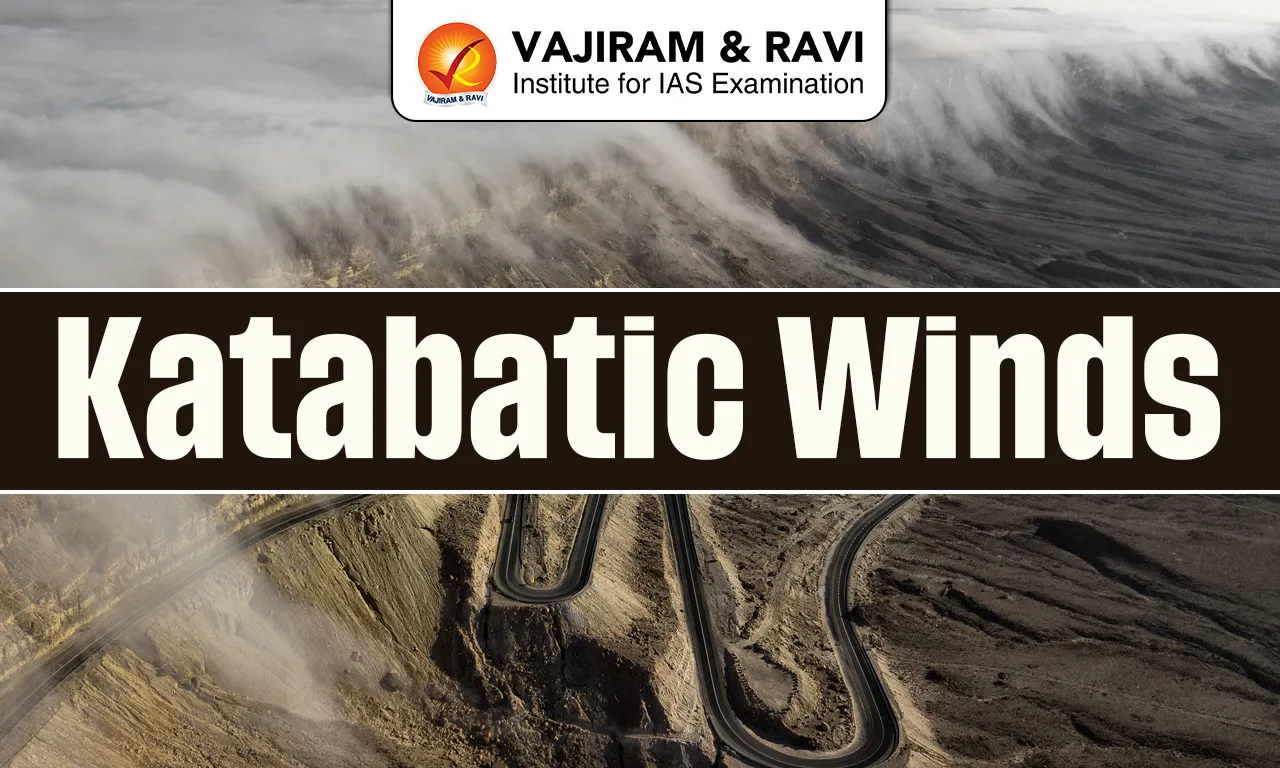
Katabatic winds are cold, dense winds that flow downhill from higher areas like mountains or plateaus to lower regions due to gravity. These winds are usually dry and fast-moving, and are common in polar and mountainous regions. They play an important role in influencing local weather conditions.

About Katabatic Winds

  • Katabatic winds are cold, dry winds that blow downhill from higher areas like mountains, plateaus, or glaciers to lower regions due to gravity. They are also known as downslope winds or gravity winds.
  • These winds are usually strong and can significantly affect local weather conditions, especially in mountainous and polar regions. In very cold areas like Antarctica, they can remain extremely cold and flow continuously over large areas.
  • In some cases, when these winds warm up while moving downward, they are called foehn winds, and when they descend very rapidly without warming much, they are known as fall winds.

Also Read: Local Winds in India

Formation of Katabatic Winds

  • Katabatic winds form when the air near the surface of highland areas like mountains, glaciers, or plateaus becomes very cold. This usually happens at night when the land loses heat.
  • As the surface cools, the air in contact with it also cools down. Cold air becomes heavier (denser) than the surrounding air. Due to gravity, this dense air starts moving downward along the slope.
  • A temperature difference between the colder air near the surface and the relatively warmer air above creates a pressure difference, which further helps the air to flow downhill.
  • As a result, the cold, dense air slides down from higher elevations to lower areas, forming katabatic winds.

Katabatic Winds Significance

  • Affects Local Climate and Farming: These winds can suddenly lower temperatures, especially in valleys. This may create frost conditions that can damage crops and affect agriculture.
  • Influences Glaciers: Katabatic winds help cool the air over glaciers, which can slow down melting in some areas and affect the overall balance of ice.
  • Creates Risks for Navigation: In some regions, these winds can become very strong and dangerous, making sea travel risky for ships and boats.
  • Leads to Temperature Inversion: They push cold air into low-lying areas, sometimes trapping warmer air above. This can trap pollutants and reduce visibility.
  • Useful for Wind Energy: In certain places, these winds are strong and consistent, making them useful for generating wind power.

Katabatic Winds FAQs

Q1: What are Katabatic Winds?

Ans: They are cold, dense winds that flow downhill from higher areas due to gravity.

Q2: Why are Katabatic Winds also called gravity winds?

Ans: Because they move downward mainly due to the force of gravity.

Q3: Where are Katabatic Winds commonly found?

Ans: They are common in polar regions like Antarctica and in mountainous areas.

Q4: How are Katabatic Winds formed?

Ans: They form when air over highlands becomes cold and dense and flows downhill.

Q5: What are foehn and fall winds?

Ans: Foehn winds are warm katabatic winds, while fall winds are fast, cold descending winds.

Watershed Management, Principles, Objectives, Planning, IWMP

Watershed management

Watershed management is the careful use and protection of land and water in a particular area, where all rainwater drains into a common river, lake, or stream. It focuses on conserving water, soil, and vegetation to prevent problems like soil erosion, water shortage, and floods. By managing a watershed properly, we can improve water availability, support agriculture, and protect the environment. It helps maintain a healthy balance between human needs and natural resources.

About Watershed Management

  • Watershed management is the proper planning and use of land and water resources in a specific area to prevent land degradation and improve productivity. It focuses on using natural resources in a careful and sustainable way so that they can support life for a long time without getting damaged.
  • The main aim is to control the flow of rainwater so that it moves slowly over the land. This helps more water to soak into the ground (infiltration) and reduces soil erosion. Simple methods like reducing the impact of raindrops on soil, slowing down water flow, working along land contours, and safely diverting excess water are commonly used.
  • Watershed management also involves planning and implementing different programs and activities to protect and improve the condition of the watershed. It includes studying the area’s features such as water supply, water quality, drainage, and runoff to use resources wisely.
  • Overall, watershed management helps in conserving water, improving soil quality, increasing agricultural productivity, and protecting the environment. It is considered one of the most effective ways to manage natural resources for present and future needs.

Watershed Management Principles

  • The main principles of watershed management focus on using land and water resources in a smart and sustainable way.
  • Use land as per its capacity: Land should be used according to its type and ability (for farming, forestry, etc.) to avoid damage and increase productivity.
  • Conserve rainwater where it falls: Efforts should be made to store rainwater in the same place (in situ) so that it can soak into the soil and improve groundwater levels.
  • Manage excess water safely: Extra rainwater should be drained slowly and directed to storage structures like ponds or tanks for future use.
  • Control soil erosion: Steps should be taken to prevent the formation of gullies. Structures like check dams can help reduce soil loss, store water, and recharge groundwater.
  • Choose suitable crops: Crops should be selected based on the local conditions of the watershed to ensure better growth and efficient use of resources.
  • Maximize productivity: The aim is to get the highest possible output using available land, water, and time without harming the environment.

Objectives of Watershed Management

  • Conserve soil and water resources: Protect soil from erosion, conserve rainwater, and use surplus water for groundwater recharge and creating additional water sources.
  • Promote sustainable agriculture and productivity: Encourage better farming practices, suitable cropping systems, intercropping, and crop rotation to maintain stable and higher yields.
  • Develop and utilize land efficiently: Use non-arable, marginal, and wastelands through afforestation, horticulture, grazing, and agroforestry based on land capability.
  • Improve livelihoods and reduce risks: Increase income through alternative activities and reduce the impact of extreme weather conditions on farmers’ income.
  • Maintain ecological balance: Protect and sustain the ecosystem by ensuring the proper interaction of land, water, plants, animals, and humans.
  • Strengthen infrastructure: Improve storage, transportation, and marketing facilities to support overall development.

Watershed Management Planning

  • Planning for watershed management begins with collecting proper maps and data, often using remote sensing and satellite images. These tools help give a clear overall picture of the area, including land, water, vegetation, and how they are connected.
  • Satellite images are very useful in identifying natural resources and understanding how the land is being used. They can show the area under different crops, crop production, and problems like pests, diseases, or drought.
  • By studying this information, planners can understand how resources are distributed and what their current condition is. Based on this, detailed plans are prepared for managing the watershed.
  • Finally, different methods are applied to conserve soil and water. These include mechanical measures (like building check dams), agricultural practices, ecological approaches, and forestry activities. All these steps together help in better use and protection of resources in the watershed.

Watershed Management in India

  • In India, watershed management is carried out in a planned and organized way to ensure better use of land and water resources, especially in rural and drought-prone areas. The All India Soil and Land Use Survey Organization under the Department of Agriculture has developed a national system to identify, map, and classify watersheds.
  • Watersheds in India are divided into different levels based on their size and drainage area. These include basins, catchments, sub-catchments, and watersheds. Overall, India has around 35 river basins, 112 catchments, 500 sub-catchments, and nearly 3200 watersheds, which helps in managing resources at different scales.
  • For effective planning and implementation, watersheds are further classified into smaller units based on area:
    • Sub-watershed: 10,000 to 50,000 hectares
    • Milli-watershed: 1,000 to 10,000 hectares
    • Micro-watershed: 100 to 1,000 hectares
    • Mini-watershed: 1 to 100 hectares
  • This classification allows better planning at the local level, especially for soil conservation, water harvesting, and agricultural development.
  • In India, watershed management is also linked with various government programs like rainwater harvesting, afforestation, and rural development schemes. It plays a key role in improving groundwater levels, increasing agricultural productivity, reducing soil erosion, and supporting the livelihoods of farmers.

Integrated Watershed Management Programme (IWMP)

  • The Integrated Watershed Management Programme (IWMP) was started in 2009-10 by the Ministry of Rural Development to improve and manage rain-fed areas in India. Its aim is to cover about 55 million hectares of land by 2027, especially in areas facing water scarcity and land degradation.
  • This programme is implemented by the Department of Land Resources and was formed by combining three earlier schemes:
    • Desert Development Programme (DDP)
    • Drought Prone Areas Programme (DPAP)
    • Integrated Wastelands Development Programme (IWDP)
  • IWMP is one of the largest watershed development programmes in the world, second only to China.
  • Main Objectives of IWMP
    • Conserve natural resources: Protect and improve soil, water, and vegetation.
    • Reduce soil erosion: Control runoff and prevent loss of fertile soil.
    • Improve water availability: Collect rainwater and recharge groundwater.
    • Increase agricultural productivity: Support better farming practices, multi-cropping, and diversified agriculture.
    • Promote sustainable livelihoods: Create opportunities for income generation and improve living conditions of rural people.
    • Restore ecological balance: Improve the overall health of the environment through proper resource management.
  • Implementation and Features
    • The programme is implemented across all states in India.
    • It follows a 90:10 funding pattern, where most funds come from the central government and the rest from state governments.
    • Gram Panchayats play an important role at the village level, ensuring local participation, transparency, and proper implementation.

Watershed Management Challenges

  • Issues in Project Planning and Execution: Many watershed programs do not perform well due to poor planning, outdated methods, limited funding, and short project duration. Also, there is often a lack of proper understanding of how upland and lowland areas are connected.
  • Lack of Strong Policies and Legal Support: In many countries, there are general environmental laws, but specific policies for watershed management are weak or missing.
  • Weak Institutional Support: Local institutions created for watershed projects often become inactive after the project ends because they do not receive enough support. Self-help groups are also not fully involved, which affects long-term sustainability.
  • Limited Inclusion of Forest Areas: Watershed programs often do not properly include reserved forest areas or give clear rights over forest resources. Poor coordination between departments like forestry and rural development also creates challenges.

Watershed Management Significance

  • Reduces Pollution: Watershed management helps control pollution by reducing the harmful substances carried by rainwater runoff into rivers and lakes.
  • Controls Harmful Activities: It identifies activities that can damage natural resources and suggests ways to manage them properly to reduce negative impacts.
  • Encourages Community Participation: It brings together farmers, local people, and other stakeholders, promoting cooperation for better use of land and water resources.
  • Efficient Use of Limited Resources: It helps in planning and using available resources wisely, especially when they are limited, by setting priorities.
  • Promotes Sustainable and Inclusive Growth: Watershed management improves water availability, supports different farming practices, and helps rural communities grow in a balanced and sustainable way.
  • Improves Water Quality: It helps in collecting and managing water in a way that makes it cleaner and more useful for domestic, agricultural, and industrial purposes.
  • Increases Agricultural Productivity: By improving water availability and soil quality, it supports better crop production and provides farmers with more cropping options.
  • Supports Economic Development: It creates opportunities for income and employment by making better use of land, including wastelands and forest areas, contributing to overall economic growth.

Watershed Management Related Initiatives

  • Haryali Watershed Development Project: This project is supported by the Central Government and focuses on helping rural communities conserve water for daily use, farming, fisheries, and tree plantation. It is mainly carried out by Gram Panchayats with active participation from local people, making it a community-driven effort.
  • Neeru-Meeru (Water and You) Programme: Started in Andhra Pradesh, this programme encourages people to take part in water conservation activities. It involves building structures like check dams, percolation tanks, and ponds to store rainwater and improve groundwater levels. Similar community efforts, like the Arvari Pani Sansad in Rajasthan, have also shown how local participation can successfully manage water resources.
  • Rainwater Harvesting in Tamil Nadu: Tamil Nadu has made rainwater harvesting compulsory for buildings. No new building is allowed without proper water harvesting systems. This step has helped improve groundwater levels and water availability in many areas.

Watershed Management FAQs

Q1: What is Watershed Management?

Ans: It is the proper use and conservation of land and water in an area where all water drains to a common point like a river or lake.

Q2: What is the main aim of Watershed Management?

Ans: Its main aim is to control rainwater flow, reduce soil erosion, and increase water absorption into the ground.

Q3: What are the key principles of Watershed Management?

Ans: Using land as per its capacity, conserving rainwater, controlling soil erosion, managing excess water, and selecting suitable crops.

Q4: What are the objectives of Watershed Management?

Ans: To conserve soil and water, improve agriculture, increase income, use land efficiently, and maintain ecological balance.

Q5: What is IWMP?

Ans: The Integrated Watershed Management Programme (IWMP) is a government scheme started in 2009-10 to improve rain-fed areas and conserve natural resources.

Coastal Security in India, Key Threats, Need, Challenges

Coastal Security in India

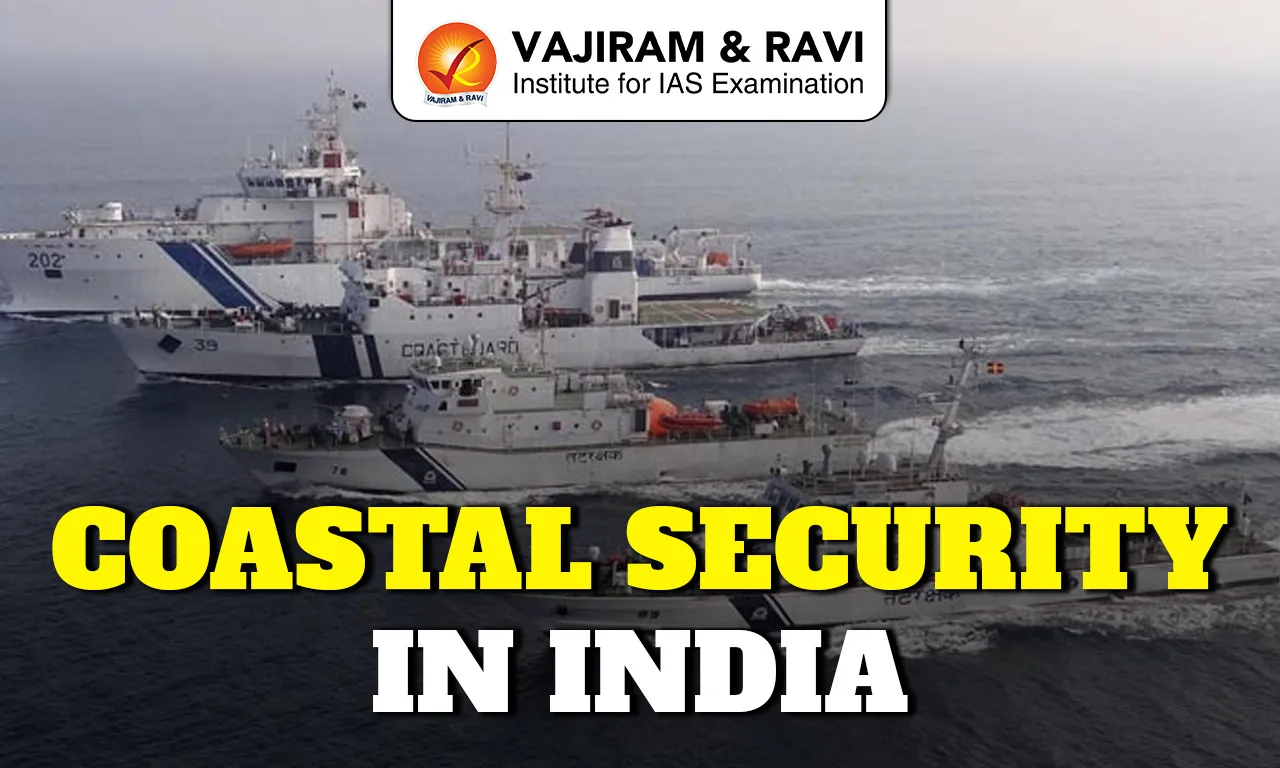
India’s coastline stretches over 11,098.81 km, encompassing nine coastal states and four Union Territories. This extensive coastline houses 13 major ports, over 200 minor ports, nuclear plants, and other critical infrastructure, making it both an economic lifeline and a potential target for security threats.

Coastal Security Meaning 

Coastal security in India refers to the protection of the shoreline, nearshore waters, ports, offshore assets, and coastal communities from traditional and non-traditional threats, including terrorism, smuggling, piracy, illegal fishing, and natural disasters. 

Key Threats to Coastal Security

Terrorist Attacks

  • Coastal routes have been exploited for terrorism and infiltration.
  • The 1993 Mumbai bombings and the 26/11 attacks (2008) highlighted how militants can infiltrate via the sea to reach urban targets. 
  • The threat is amplified by porous coastlines and limited patrolling in some areas.

Piracy

  • Piracy is defined under UNCLOS as any illegal act of violence or detention committed for private ends by the crew or passengers of a ship against another vessel on the high seas. 
  • Piracy increases shipping costs through higher insurance premiums and can discourage traffic in critical trade routes

Smuggling and Money Laundering

  • India’s coastline is a conduit for drugs, arms, gold, fake currency, and human trafficking. 
  • According to the Directorate of Revenue Intelligence (DRI), in FY 2023‑24, 623 smuggling cases were detected with seizures worth ₹3,500 crore, including 1,319 kg kg of gold. 
  • The Narcotics Control Bureau (NCB) seized over 10,500 kg of narcotics in 2024 via coastal routes. 
  • The economic consequences of such smuggling are severe, including revenue loss, disruption of legal trade, and funding of criminal networks.

Illegal Migration and Refugee Influxes

  • India faces coastal infiltration from neighboring countries. 
  • For example, illegal migration through the Gujarat creeks from Pakistan has been reported, while other regions like Andaman and Nicobar Islands are vulnerable to refugee flows from Southeast Asia.

Fishermen Conflicts

  • Fishermen often inadvertently trespass into the territorial waters of neighboring countries, leading to arrests and diplomatic tensions.
  • Notable examples include the Sir Creek region between India and Pakistan and Katchatheevu Island between India and Sri Lanka.

Resource Constraints and Operational Challenges

  • Despite these threats, India faces manpower shortages in its naval and coastal forces. 
  • The Navy has reported a 20.6% shortage of sailors and a 12.12% shortage of officers, while many marine police personnel are inadequately trained for counter-terrorism operations. 
  • Coordination between multiple agencies has historically been limited, creating gaps in surveillance and response.

Coastal Security Need

India’s extensive coastline and strategically important maritime domain make coastal security essential for safeguarding national sovereignty, protecting trade and energy routes, and preventing threats from terrorism, smuggling, and natural hazards.

  • Safeguarding Trade and Energy Routes: With over 85% of crude oil and 50% of natural gas imports arriving via sea routes, secure coastlines ensure uninterrupted energy supply and protect India’s trade lifeline.
  • Protection of Critical Infrastructure: Coastal areas host ports, offshore oil and gas rigs, and nuclear facilities, making them vulnerable to sabotage, terrorist attacks, and natural hazards.
  • Preventing Smuggling and Illegal Activities: India’s coast is a conduit for drugs, arms, gold, and counterfeit currency, as well as human trafficking, which can undermine internal security and cause economic losses.
  • Securing Coastal Communities and Livelihoods: Fishermen and coastal populations face threats from illegal fishing, piracy, and cross-border intrusions, necessitating protection for both human and economic security.
  • Preserving National Sovereignty and Strategic Interests: A robust coastal security framework prevents unauthorized maritime incursions, supports India’s role as a net security provider in the Indian Ocean Region, and safeguards maritime sovereignty.

Challenges in India’s Coastal Security

Despite the critical importance of safeguarding its coastline, India faces several operational, strategic, and technological challenges that hinder effective coastal security.

  • Resource Constraints
    • The Indian Navy faces 20.6% shortage of sailors and 12.12% shortage of officers, limiting effective patrolling.
    • Many marine police personnel lack specialized counter-terrorism training.
  • Multi-Agency Coordination Gaps
    • Multiple agencies including the Navy, Coast Guard, Marine Police, Customs, Intelligence Bureau, and state governments operate along the coast.
    • Lack of clear coordination creates surveillance and response gaps.
  • Geographical and Monitoring Limitations
    • India’s 7,500 km coastline with 1,382 islands is difficult to monitor completely.
    • Many small fishing vessels lack tracking or identification systems, increasing vulnerability to illegal activities.
  • Transnational Threats
    • Piracy, smuggling, and illegal fishing from foreign trawlers and ships in the Indian EEZ pose complex operational challenges.
    • Cross-border tensions due to illegal fishing or trespassing add diplomatic sensitivity.
  • Natural Hazards and Climate Change
    • Coastal areas are prone to cyclones, tsunamis, coastal erosion, and sea-level rise, which can disrupt security infrastructure and human settlements.

Government Measures for Coastal Security

India’s approach to coastal security is multi-dimensional, combining technology, manpower, legal frameworks, and community participation. The system not only protects economic assets and energy imports but also strengthens national sovereignty, strategic deterrence, and India’s credibility as a net security provider in the Indian Ocean Region (IOR)

  1. Strengthening Security Architecture
  • India has established a three-tier coastal security grid:
    • The Indian Navy monitors offshore and deep-sea waters.
    • Indian Coast Guard - responsible for near-shore patrolling, maritime law enforcement, and search-and-rescue operations.
    • Marine Police - handles close-to-shore security and integrates local community reporting.
  • Harbour Defence Units (HDUs) have been set up at critical ports to protect commercial and naval assets.
  • The National Committee for Strengthening Maritime and Coastal Security, headed by the Cabinet Secretary, coordinates policies and oversees all coastal security matters.
  1. Enhanced Surveillance and Technology
  • Coastal Surveillance Network (CSN): A chain of radars across the coastline and islands provides near-continuous monitoring.
  • National Command Control Communication and Intelligence Network (NC3I): Integrates radar, Automatic Identification System (AIS), and Vessel Traffic Management System (VTMS) data to track vessels and detect suspicious activity.
  • Information Management and Analysis Centre (IMAC): Located in Gurugram, it consolidates maritime intelligence for real-time operational decisions.
  • Long-Range Identification and Tracking (LRIT): Tracks ships beyond India’s territorial waters to enhance maritime situational awareness.
  1. Capacity Augmentation
  • Expansion of the Sagar Prahari Bal post-26/11 to enhance coastal patrolling and rapid response capabilities.
  • Indian Coast Guard modernization: acquisition of interceptor boats, Dornier aircraft, and ALH helicopters.
  • Coastal Security Scheme (CSS): Strengthens marine police in coastal states with modern equipment and training.
  1. Inter-Agency Coordination
  • Joint Operation Centres (JOCs) in Mumbai, Kochi, Vizag, and Port Blair facilitate unified monitoring and operational response.
  • Creation of the National Maritime Security Coordinator (2022) under the National Security Advisor ensures a coherent national-level strategy.
  • National-level exercises like Sea Vigil and Sagar Kavach test inter-agency coordination and operational readiness.
  1. Community Engagement
  • Fishermen are issued biometric ID cards to verify identity and integrate them into surveillance networks.
  • Coastal Village Committees and community reporting networks enable early detection of suspicious activity.
  • Awareness campaigns train local communities to act as the “eyes and ears” of coastal security.
  1. Legal and Policy Measures
  • The Anti-Maritime Piracy Act, 2022 provides a legal framework to combat piracy, extending jurisdiction to India’s territorial waters, Exclusive Economic Zone (EEZ), and even the high seas.
  • The Act prescribes stringent penalties including life imprisonment and death penalty for piracy-related deaths, enables extradition, and ensures speedy trial mechanisms.
  • Operational examples include interception of hijacked vessels (INS Kolkata – MV Ruen, 2024) and rescue missions (Al-Kambar dhow, 2024), demonstrating enforcement capability.
  1. Integration with National Security and Energy Policy
  • Coastal security initiatives are aligned with energy security, safeguarding offshore oil and gas infrastructure.
  • Surveillance networks also contribute to maritime disaster response, ensuring rapid relief during cyclones and tsunamis.

Way Forward

To enhance coastal security, India must continue to adopt both technological and structural reforms:

  • Invest in advanced surveillance systems including drones, satellites, and automated sensors to fill monitoring gaps.
  • Strengthen inter-agency coordination between the Navy, Coast Guard, marine police, intelligence agencies, and state governments.
  • Expand training programs for marine police to handle counter-terrorism and emergency situations.
  • Engage local communities, particularly fishermen, to act as the first line of detection for suspicious activity.
  • Promote regional cooperation with neighboring countries to tackle cross-border threats such as smuggling, piracy, and illegal migration.
  • Integrate disaster management planning into coastal security to prepare for cyclones, tsunamis, and oil spills.

Coastal Security in India FAQs

Q1: What is Coastal Security in India?

Ans: Coastal Security in India involves safeguarding the shoreline, nearshore waters, ports, offshore assets, and coastal communities from threats such as terrorism, piracy, smuggling, illegal fishing, and natural disasters, ensuring national sovereignty and economic security.

Q2: Why is Coastal Security in India important?

Ans: It is crucial due to India’s 11,098.81 km coastline, strategic ports, nuclear plants, and offshore energy infrastructure. Effective coastal security protects trade and energy routes, secures critical infrastructure, prevents illegal activities, and maintains India’s strategic interests in the Indian Ocean Region.

Q3: What are the major threats to Coastal Security in India?

Ans: India faces threats from maritime terrorism, piracy, smuggling of drugs, arms, and fake currency, illegal migration, human trafficking, fishermen conflicts, and natural hazards such as cyclones, tsunamis, and rising sea levels.

Q4: What are the main challenges in Coastal Security in India?

Ans: Challenges include manpower shortages in the Navy and marine police, limited inter-agency coordination, difficulty in monitoring the extensive coastline and islands, transnational threats like piracy and illegal fishing, and vulnerabilities arising from climate change and natural disasters.

Q5: How is Coastal Security in India managed?

Ans: India secures its coasts through a multi-layered system involving the Indian Navy, Indian Coast Guard, and marine police, supported by surveillance networks like the Coastal Surveillance Network and legal backing such as the Anti-Maritime Piracy Act 2022.

Phosphorus Cycle, Process and Importance in Ecosystem

Phosphorus Cycle

The Phosphorus Cycle is the natural movement of phosphorus through the environment. It is an essential nutrient needed by all living organisms for growth and development. In this cycle, phosphorus circulates mainly through rocks, soil, water, and living organisms, helping maintain the balance of ecosystems.

About Phosphorus Cycle

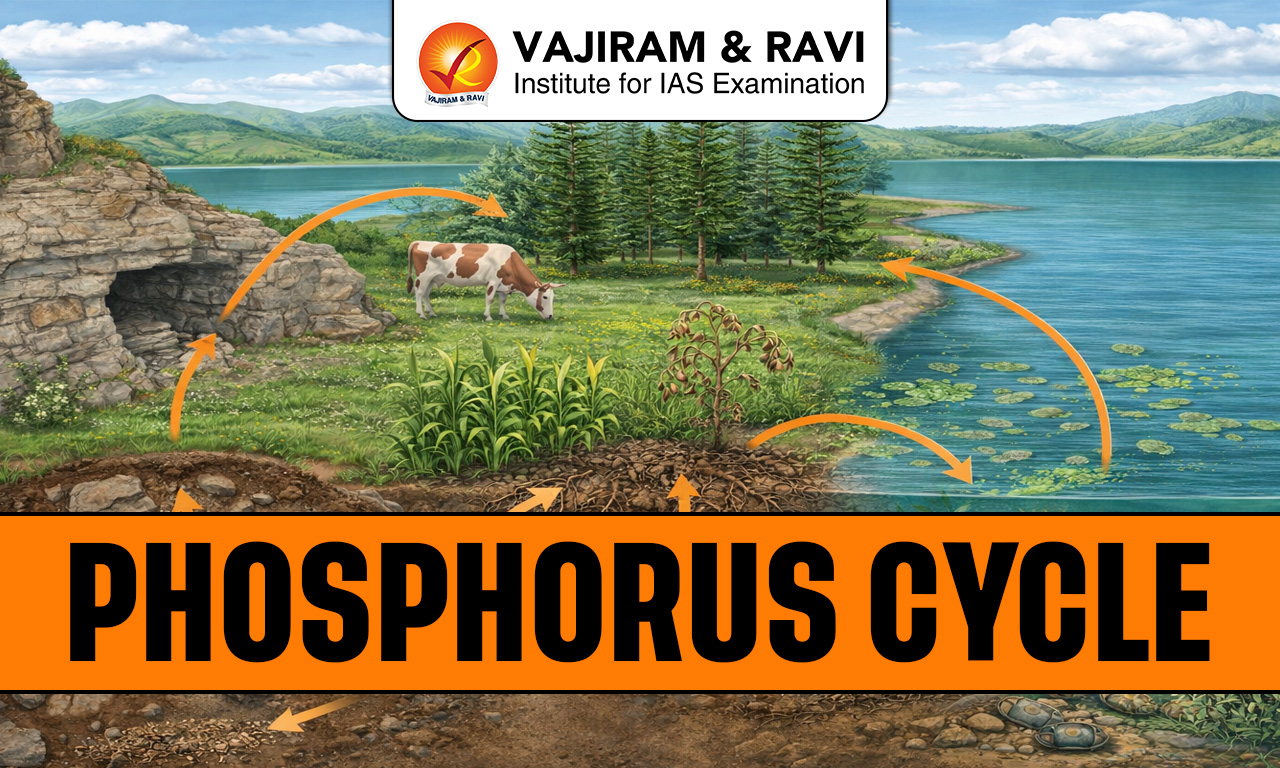
  • The phosphorus Cycle is a type of sedimentary biogeochemical cycle that explains how phosphorus moves through the lithosphere (land), hydrosphere (water), and biosphere (living organisms). Phosphorus is an important mineral found mainly in phosphate rocks, and it enters the cycle through processes like weathering and erosion.
  • Over millions of years, movements of Earth’s crust (tectonic uplift) bring phosphorus-rich rocks from the ocean floor to the surface, making them available again.
  • The global phosphorus cycle mainly involves four key processes:
    • Weathering of rocks: Phosphorus-containing rocks (such as apatite) break down due to physical, chemical, and biological weathering, releasing phosphorus into soil and water.
    • Movement through water: The released phosphorus is carried to lakes, rivers, and oceans through surface runoff and underground flow.
    • Use by living organisms: Plants absorb phosphorus from the soil, and animals get it by eating plants or other animals.
    • Sedimentation: In water bodies, phosphorus settles down as sediments and gets buried over time, eventually forming new rocks.
  • This cycle is slow and does not involve the atmosphere, making phosphorus a limited but very important nutrient in ecosystems.

Also Read: Biogeochemical Cycles

Phosphorus Cycle Steps Involved

The phosphorus cycle can be understood in four simple stages:

  • Weathering
    • Phosphorus is mainly found in rocks, where it is combined with other minerals. Over time, these rocks break down due to rain, temperature changes and the action of microbes. This process is called weathering.
    • Rainwater and acids produced by microorganisms help release phosphorus from rocks into the soil. Microbes like bacteria and fungi (such as Bacillus, Pseudomonas, Aspergillus, and Penicillium) play an important role in making phosphorus available in the soil.
    • Some of this phosphorus also gets dissolved in water and is carried to rivers, lakes, and oceans. Natural events like volcanic eruptions can also release phosphorus from the Earth’s crust.
  • Absorption by Plants
    • Plants absorb phosphorus from the soil through their roots. This mineral is essential for plant growth, helping in the formation of roots, seeds, and energy transfer.
    • Sometimes, the amount of phosphorus in the soil is low, so farmers add fertilizers to improve soil fertility. In water bodies, aquatic plants absorb phosphorus from the water.
    • Certain helpful bacteria in the soil also assist plants by converting phosphorus into a form that plants can easily use.
  • Absorption by Animals
    • Animals get phosphorus by eating plants or other animals. As phosphorus moves through the food chain, it becomes part of important substances in the body.
    • It helps in forming bones and teeth and is also a key part of molecules like DNA and energy compounds. As animals consume food, phosphorus passes from one organism to another.
  • Decomposition
    • When plants and animals die, decomposers like bacteria and fungi break down their bodies. This process returns phosphorus back to the soil or water in a usable form.
    • This conversion of organic phosphorus into inorganic form is called mineralization. During rainfall, some phosphorus may be washed into water bodies and eventually reach the oceans.
    • In oceans, phosphorus settles at the bottom as sediments. Over a long time, these sediments form rocks, and through geological processes, they may rise again to the surface continuing the cycle.

Phosphorus Cycle Significance

  • Maintains nutrient balance and ecosystem stability: The phosphorus cycle ensures a continuous supply of phosphorus in soil and water, helping maintain balance in both terrestrial and aquatic ecosystems.
  • Supports growth and life processes: Phosphorus is essential for plant growth, root development, and food production. It is also a key component of DNA, RNA, and ATP, which are necessary for energy transfer, growth, and reproduction.
  • Helps in formation of bones and tissues: It plays an important role in forming strong bones and teeth and is needed for the development of body tissues in living organisms.
  • Recycles nutrients: Through decomposition, phosphorus from dead plants and animals is returned to the soil and water, ensuring it can be reused by other organisms.

Phosphorus Cycle FAQs

Q1: What is the Phosphorus Cycle?

Ans: It is the natural movement of phosphorus through rocks, soil, water, and living organisms.

Q2: Why is phosphorus important?

Ans: It is essential for growth, energy transfer (ATP), and formation of DNA, bones, and teeth.

Q3: Where is phosphorus mainly found?

Ans: It is mainly found in phosphate rocks as a natural reservoir.

Q4: How does phosphorus enter the cycle?

Ans: It enters through weathering and erosion of rocks.

Q5: How do plants and animals get phosphorus?

Ans: Plants absorb it from soil; animals get it by eating plants or other animals.

Oil Shock’s Impact on India’s BoP, Trade Deficit, CAD, Inflation

Oil Shock’s Impact on India’s BoP

Recent geopolitical tensions in West Asia, particularly involving Iran, have led to a sharp surge in global crude oil prices. Given that India imports nearly 90% of its crude oil and about half of its gas requirements largely from the Gulf region such disruptions not only fuel inflation but also place significant strain on its Balance of Payments, especially by widening the trade deficit.

Key Drivers of the Ongoing Oil Price Shock

The rising global oil prices are driven by several key factors, including geopolitical tensions, supply route vulnerabilities, production risks, market speculation, and limited spare capacity:

  • The main trigger is rising geopolitical tensions in West Asia, especially involving Iran. Since this region supplies a large share of global oil, even the fear of conflict pushes prices up.
  • There is serious concern about disruption of the Strait of Hormuz, a narrow sea route through which nearly one-third of the world’s oil trade passes. Any blockage here can immediately reduce global supply.
  • Attacks or instability in oil-producing countries can damage production facilities, which reduces supply and creates expectations of future shortages.
  • Uncertainty in the market leads to speculative buying by global traders, which often pushes prices higher than what actual supply shortages would justify.
  • The situation worsens because global spare production capacity is limited, meaning supply cannot be increased quickly to stabilise prices.

Impact on India’s Balance of Payments

Rising oil prices affect India’s Balance of Payments in following ways:

Rising Import Bill and Widening Trade Deficit

  • A surge in oil prices immediately increases India’s import bill, as the country depends heavily on imported crude and gas.
  • Oil demand is relatively inelastic, meaning consumption does not reduce much even when prices rise. As a result, higher global oil prices sharply increase India’s import expenditure, widening the trade deficit .
  • Rising non-oil imports, such as gold and consumer goods alongside high oil imports further worsen the overall trade imbalance.

Pressure on Current Account Deficit (CAD)

A sustained rise in oil prices can push India’s current account deficit to higher levels. 

  • Estimates suggest that if crude prices remain around $100 per barrel, the CAD could rise to nearly 2% of GDP, compared to relatively moderate levels earlier.
  • A widening CAD indicates greater dependence on external financing, making the economy more vulnerable to global financial conditions.

Exchange Rate Depreciation and Forex Stress

  • Higher oil import payments increase the demand for foreign currency, particularly the US dollar, putting downward pressure on the rupee.
  • A depreciating rupee further increases the cost of imports, thereby aggravating the trade deficit.
  • To stabilise the currency, the central bank may intervene by selling foreign exchange reserves. While such measures provide temporary relief, they reduce the reserve buffer available to manage future external shocks.

Inflationary Pressures and Indirect Effects

  • Oil being a universal intermediate input, its price rise leads to economy-wide cost escalation. Transport, agriculture, and manufacturing all become more expensive, resulting in imported inflation.
  • Higher inflation can erode export competitiveness and reduce real demand, indirectly affecting foreign exchange earnings and worsening the BoP position.

Weakening of Traditional Buffers

India has historically managed some of its oil import burden through two important cushions:

  • Remittances from the Gulf region, which support the current account
  • Exports of refined petroleum products, leveraging excess refining capacity

However, a prolonged oil crisis may weaken both. Economic slowdown in oil-exporting countries can reduce remittances, while domestic prioritisation of fuel may limit petroleum exports. This reduces India’s ability to offset rising import costs.

Emerging Gas Supply Constraints

The crisis is not limited to crude oil alone. Gas supply shortages have already begun affecting industries and households. This adds further pressure on the import bill and increases dependence on expensive alternative energy sources, compounding the strain on the current account.

Broader Macroeconomic Implications

The impact of oil shocks extends beyond the BoP and affects overall macroeconomic stability:

  • Slower economic growth due to rising input costs
  • Persistent inflationary pressures
  • Reduced investor confidence and possible capital outflows
  • Increased vulnerability of the external sector

Together, these factors can create a cycle of economic instability.

Way Forward

Addressing the vulnerability to oil shocks requires both short-term management and long-term structural reforms:

  • In the short term, efficient use of foreign exchange reserves and diversification of import sources can help manage immediate pressures
  • In the long run, reducing dependence on imported fossil fuels through renewable energy, promoting electric mobility, and improving energy efficiency is essential
  • Strengthening export competitiveness and maintaining stable remittance inflows can also enhance resilience of the external sector

Oil Shock’s Impact on India’s BoP FAQs

Q1: What makes India particularly vulnerable to global oil shocks?

Ans: India imports nearly 90% of its crude oil and about half of its gas requirements, largely from the Gulf region. Limited strategic reserves and rising energy demand make the country highly sensitive to sudden price spikes or supply disruptions.

Q2: How does a rise in oil prices affect India’s external sector?

Ans: Oil Shock’s Impact on India’s BoP is primarily seen through a higher import bill, widening trade deficit, and pressure on the current account, as rising prices increase the cost of crude and gas imports.

Q3: How can currency depreciation worsen Oil Shock’s Impact on BoP?

Ans: Rupee depreciation raises the cost of dollar-denominated oil imports, further widening the trade deficit and stressing the current account.

Q4: What are the short-term measures to manage Oil Shock’s Impact on BoP?

Ans: Efficient use of foreign exchange reserves and diversification of import sources help manage immediate external sector pressures.

Q5: What are the long-term measures to reduce Oil Shock’s Impact on BoP?

Ans: Promoting renewable energy, electric mobility, energy efficiency, and strengthening export competitiveness can reduce dependence on imports and mitigate Oil Shock’s Impact on India’s BoP over time.

Difference between El Nino and La Nina, Meaning, Impacts and Examples

Difference between El Nino and La Nina

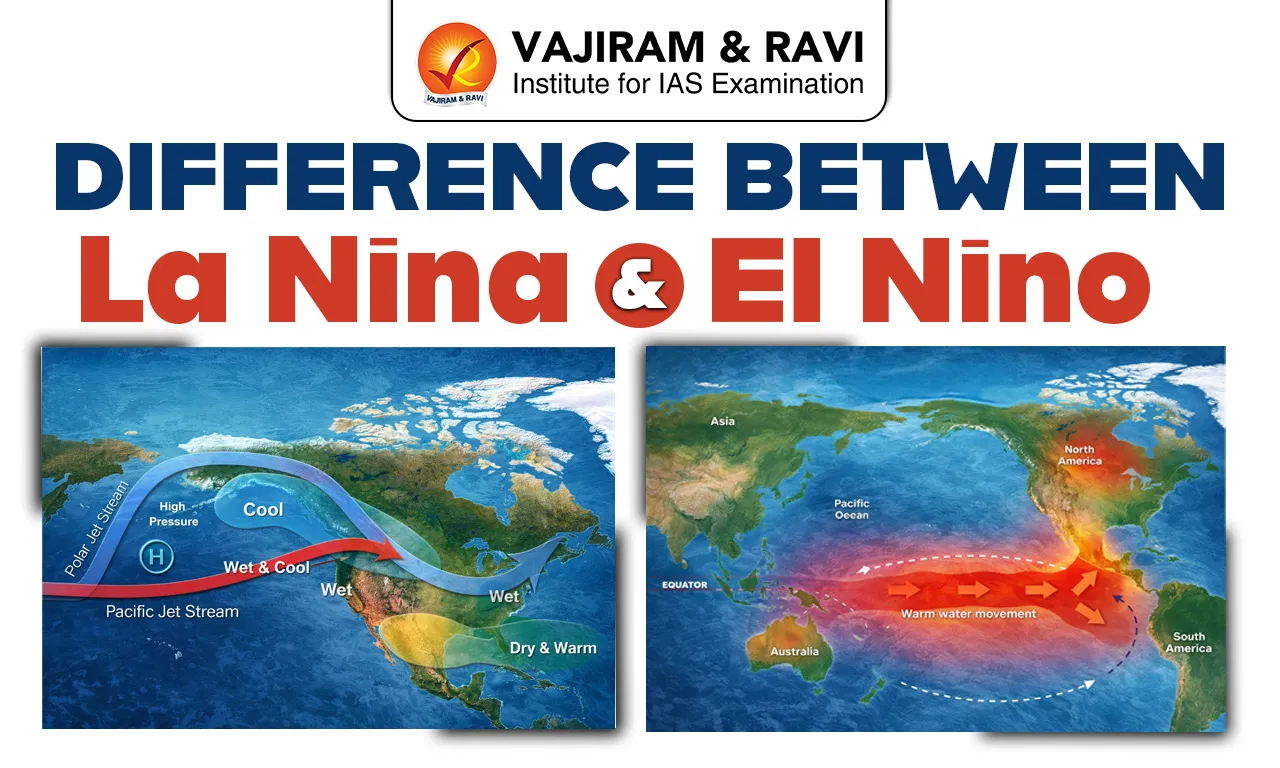
Difference between El Nino and La Nina lies in opposite ocean temperature patterns across the equatorial Pacific influencing atmosphere, pressure, and winds. These phases of ENSO alter rainfall, monsoon strength, and global weather, typically lasting 9-12 months with irregular recurrence every 2-7 years.

Also Read: What is El Nino and La Nina?

Difference between El Nino and La Nina

Difference between El Nino and La Nina reflects contrasting warming and cooling patterns, altering pressure, winds, rainfall distribution, and ocean processes globally.

Difference between El Nino and La Nina

Aspect

El Nino (Warm Phase)

La Nina (Cool Phase)

Meaning

El Nino refers to unusual warming of Pacific Ocean waters near Peru coast.

La Nina refers to unusual cooling of Pacific waters in the same region.

Ocean Temperature

Water becomes warmer than normal; strong events show rise up to 14-18°F above average.

Water becomes cooler than normal; temperature drops more than 0.9°F for several months.

Frequency

Occurs more often, usually every 2-7 years but not on a fixed schedule.

Occurs less often but usually follows El Nino events in many cases.

Duration

Usually lasts about 9-12 months; rarely continues beyond one year.

Can last longer, around 1-3 years, making its effects more prolonged.

Trade Winds

Trade winds become weak, so warm water moves back toward South America.

Trade winds become stronger, pushing warm water towards Asia and Australia.

Rainfall Pattern

Heavy rainfall in countries like Peru and Ecuador; floods and erosion are common.

Heavy rainfall in Australia and Southeast Asia; floods seen in regions like Queensland (2010 event).

Drought Areas

Causes drought in Indonesia and Australia, affecting water supply and agriculture.

Causes dry conditions in western South America like Peru, but improves rainfall in other regions.

Impact on Ocean Life

Weak upwelling reduces nutrients, harming fish population near Peru coast.

Strong upwelling increases nutrients, improving fishing conditions in western South America.

Climate Impact

Can reduce Atlantic hurricanes and cause unusual warm winters in some regions.

Increases chances of hurricanes and brings colder winters in many regions.

Events

1997-98 El Nino caused floods in Peru and drought in Southeast Asia.

2010 La Nina caused severe floods in Australia, affecting over 10,000 people.

Difference between El Nino and La Nina FAQs

Q1: What is El Nino?

Ans: El Nino is a climate pattern where the Pacific Ocean becomes unusually warm, affecting weather like heavy rains in South America.

Q2: What is La Nina?

Ans: La Nina is the opposite phase where the Pacific Ocean becomes cooler than normal, leading to strong winds and increased rainfall in some regions.

Q3: Which lasts longer, El Nino or La Nina?

Ans: La Nina usually lasts longer (1-3 years), while El Nino generally lasts about 9-12 months.

Q4: How do El Nino and La Nina affect rainfall?

Ans: El Nino brings heavy rain in Peru but drought in Australia, while La Nina causes heavy rain in Australia and drier conditions in Peru.

Q5: Which is more frequent, El Nino or La Nina?

Ans: El Nino occurs more frequently than La Nina, usually at irregular intervals of 2-7 years.

60th Jnanpith Award, Winner Name, About, R. Vairamuthu

60th Jnanpith Award

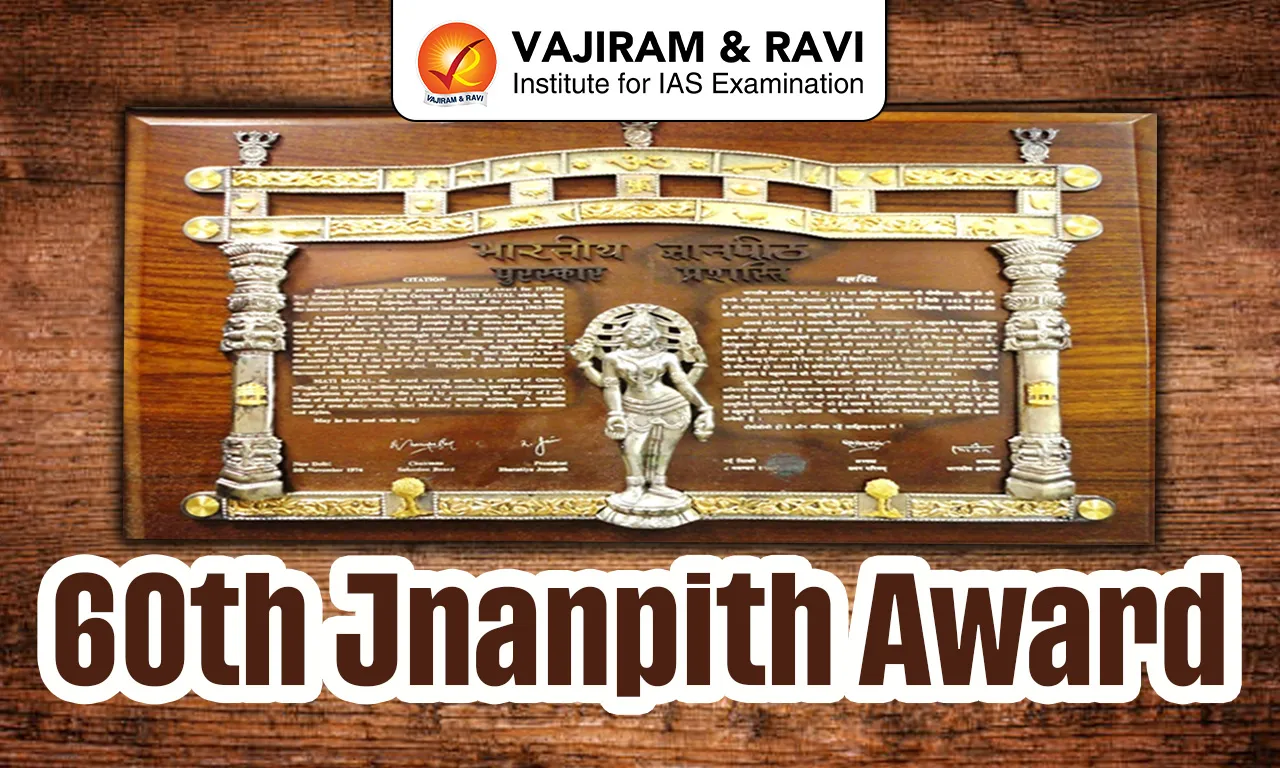
Renowned Tamil poet and lyricist R. Vairamuthu has been awarded the 60th Jnanpith Award (2025), India’s highest literary honour. With this recognition, he becomes only the third Tamil writer to receive the award and the first to be honoured primarily for Tamil poetry. The other two Tamil writers who received the Jnanpith Award are Akilan, awarded in 1975 and D. Jayakanthan, awarded in 2002.

About R. Vairamuthu

R. Vairamuthu is a leading figure in contemporary Tamil literature. He is known as a poet, lyricist, and writer, with contributions across poetry, novels, and film songs. His writings are known for emotional depth, social concerns, and a strong connection with nature and rural life

  • He was born on 13 July 1953 in Tamil Nadu.
  • He has authored over 37 books, including Kallikattu Ithikasam, Karuvachi Kaaviyam, and Thanni Desam.
  • He has written more than 8,000 songs in Tamil cinema, influencing popular culture.
  • He has received the National Film Award for Best Lyrics seven times for his excellence as a lyricist
  • He was awarded the Sahitya Akademi Award in 2003 for Kallikattu Ithikasam.
  • He was honoured with the Padma Shri (2003) and Padma Bhushan (2014) by the Government of India.
  • He is regarded as a writer who bridges classical Tamil literary traditions with modern expression.

About Jnanpith Award

The Jnanpith Award is India’s highest literary honour, instituted to recognise exceptional contributions to literature across the country’s diverse languages.

  • Jnanpith Award was instituted in 1961 by the Bharatiya Jnanpith, a cultural and literary organisation
  • It is regarded as India’s highest literary award, recognising outstanding contributions to literature
  • It is awarded annually to an Indian author for their lifetime contribution to literature
  • Initially, it was given for a single literary work, but since 1982 it is awarded for overall contribution. 
  • It covers all 22 languages listed in the Eighth Schedule of the Constitution, along with English
  • The first award was given in 1965 to Malayalam poet G. Sankara Kurup
  • The award includes a cash prize of ₹11 lakh, a citation, and a bronze statuette of Vagdevi (Saraswati)
  • The recipient is usually honoured by the President of India
  • The selection is made by a committee of eminent scholars and writers based on literary merit and impact.

60th Jnanpith Award FAQs

Q1: What is the Jnanpith Award?

Ans: The Jnanpith Award is India’s highest literary honour, instituted in 1961 by the Bharatiya Jnanpith, and is awarded annually for an author’s lifetime contribution to literature.

Q2: What does the Jnanpith Award include?

Ans: The award carries a cash prize of ₹11 lakh, a citation, and a bronze statuette of Vagdevi (Saraswati), and is usually presented by the President of India.

Q3: Who has been awarded the 60th Jnanpith Award?

Ans: The 60th Jnanpith Award (2025) has been conferred on R. Vairamuthu for his outstanding contribution to Tamil literature.

Q4: Who is R. Vairamuthu?

Ans: R. Vairamuthu is a renowned Tamil poet, lyricist, and writer known for his significant contributions to literature and cinema. He is only the third Tamil writer to receive the award and the first to be recognised primarily for Tamil poetry.

Q5: Who were the previous Tamil recipients of the Jnanpith Award?

Ans: The earlier recipients were Akilan (1975) and D. Jayakanthan (2002).

India-Singapore Relations, Evolution, Areas of Cooperation

India-Singapore Relations

India-Singapore Relations share a strong and multi dimensional partnership built on trade, strategic trust, cultural links and modern cooperation. Over time, this partnership has expanded into areas like digital economy, defence and education, making Singapore a key gateway for India into Southeast Asia and the Indo-Pacific region.

India-Singapore Relations Evolution

India-Singapore Relations evolved from ancient cultural links and colonial connections to a modern strategic partnership with deep economic and political cooperation.

  • Ancient Cultural Linkages: Pre colonial Singapore had Indian kingdoms linkage with empires like Srivijaya and Majapahit, reflected in cultural practices, trade routes and linguistic similarities across Southeast Asia and the Indian subcontinent.
  • Colonial Administrative Connection: In 1819, Sir Stamford Raffles established Singapore as a British trading post, which was administered from Kolkata until 1867.
  • Role in Freedom Movement: Singapore played a role during India’s independence struggle, where Subhash Chandra Bose formed the Provisional Government of Azad Hind in 1943.
  • Diplomatic Recognition in 1965: India was among the first countries to officially recognize Singapore after its independence in August 1965.
  • Strategic Partnership 2015: Relations were elevated to Strategic Partnership in 2015, expanding cooperation into defence, economy and technology sectors.
  • Judicial and Institutional Cooperation: Engagement expanded to legal systems, including high level judicial exchanges such as lectures at the Supreme Court of India Foundation Day celebrations in 2023.
  • Diplomatic Relations: Both countries marked 60 years of relations in 2025.

India-Singapore Relations Areas of Cooperation

India-Singapore Relations cooperate across trade, defence, technology, education and culture, forming a comprehensive and dynamic bilateral partnership in Asia.

  • Trade and Economic Partnership: Bilateral trade increased from USD 6.7 billion in 2004-05 to USD 35.6 billion in 2023-24, making Singapore India’s 6th largest trade partner with a 3.2% share.
  • ASEAN: Singapore accounted for 27.3% of India’s total trade with ASEAN in 2021-22.
  • Foreign Direct Investment: Singapore is the largest source of FDI into India, contributing around USD 136.653 billion over 20 years, nearly 23% of total inflows.
  • Recent FDI Trends: In FY 2023-24, Singapore invested USD 11.774 billion in India, especially in sectors like services, telecom, software and pharmaceuticals.
  • Comprehensive Economic Cooperation Agreement (CECA): Signed in 2005, CECA integrates trade in goods, services, investment protection and mutual recognition agreements, boosting bilateral economic activity.
  • Finance and Banking: Singapore serves as a financial hub for Indian companies, with around 9,000 Indian firms operating there and nine Indian banks having a presence.
  • Fintech Integration: The UPI-PayNow linkage launched in 2023 enabled seamless cross border transactions.
  • Defence Cooperation: Defence ties are guided by agreements like the Defence Cooperation Agreement (2003) and Naval Cooperation Agreement (2017).
  • Joint Military Exercises: Regular exercises include SIMBEX (Navy), Bold Kurukshetra and Agni Warrior (Army) and Joint Military Training (Air Force).
  • Maritime Security: Both countries work together in the Indo-Pacific to ensure freedom of navigation, counter piracy and maintain regional stability.
  • Science and Technology: Collaboration includes AI, IoT, fintech, biotech and smart manufacturing, highlighted during the 28th India-Singapore Technology Summit in 2022.
  • Space Technology: ISRO launched Singapore’s first indigenous micro satellite in 2011 and several others in subsequent years.
  • Digital Public Infrastructure: Singapore is exploring collaboration with India on systems like Aadhaar and integration of Proxtera with India’s ONDC for MSME digital ecosystems.
  • Semiconductor Partnership: The India-Singapore Semiconductor Ecosystem Partnership focuses on supply chain resilience, cluster development and talent creation in chip manufacturing.
  • Education and Skill Development: Cooperation aligns with India’s NEP 2020, focusing on vocational education, lifelong learning and skill integration with higher education frameworks.
  • Urban Infrastructure Development: Singapore supports India in smart cities, industrial parks and urban planning through expertise in sustainable infrastructure and housing.
  • Multilateral Cooperation: Both countries collaborate in forums like East Asia Summit, IORA, Commonwealth, IONS and support initiatives like IPEF and global digital governance frameworks.
  • Renewable Energy: Singapore joined India led initiatives like the International Solar Alliance and Global Biofuel Alliance.
  • Indian Diaspora: Ethnic Indians form about 9.1% of Singapore’s population (around 3.5 lakh), contributing significantly to economic and cultural life.
  • Cultural Exchange: Tamil is one of Singapore’s official languages and festivals like Deepavali are celebrated nationally.

India-Singapore Relations Challenges

Despite strong ties, certain economic, strategic and social challenges affect the smooth expansion of India-Singapore Relations today.

  • Chinese Economic Influence: Singapore’s investments in China account for nearly 85% of its Belt and Road related inflows and China remains its third largest trading partner, affecting strategic balance.
  • Trade Imbalance Issues: India remains a net importer from Singapore, with imports at USD 21.2 billion exceeding exports of USD 14.4 billion in 2023-24.
  • Gold Smuggling Activities: Cases have emerged where Indian workers in Singapore are used as carriers for gold smuggling, creating legal and regulatory concerns.
  • Anti-India Sentiments: Instances of workplace discrimination and social media harassment against Indian workers have been reported.

India-Singapore Relations FAQs

Q1: When was the bilateral India-Singapore Relations established?

Ans: Diplomatic relations were established in 1965, soon after Singapore gained independence, with India being one of the first countries to recognize it.

Q2: What is the significance of CECA between India and Singapore?

Ans: The Comprehensive Economic Cooperation Agreement (2005) boosts trade, investment, services and economic cooperation between both countries.

Q3: Why is India-Singapore Relations important for the economy?

Ans: Singapore is India’s largest FDI source and a major trade partner, acting as a financial and business hub for Indian companies.

Q4: What are the key defence exercises between India and Singapore?

Ans: Major exercises include SIMBEX (Navy), Bold Kurukshetra and Agni Warrior (Army) and Joint Military Training for Air Forces.

Q5: What role does the Indian diaspora play in Singapore?

Ans: Indians form about 9.1% of Singapore’s population and contribute significantly to its economy, culture and social development.

Gyan Bharatam National Manuscript Survey, Need, Objective

Gyan Bharatam National Manuscript Survey

The Ministry of Culture launched the Gyan Bharatam National Manuscript Survey on 16 March 2026, under the Gyan Bharatam initiative, to identify and document manuscripts located across the country.

Gyan Bharatam National Manuscript Survey Need

India possesses one of the world’s richest manuscript traditions across subjects like philosophy, science, medicine, mathematics, astronomy, literature, arts, and governance. A large part of this knowledge heritage, however, remains undocumented and dispersed across private homes, temples, monasteries, libraries, and institutions. In this context, the Gyan Bharatam National Manuscript Survey has been launched to identify, document, and preserve manuscripts across the country.

Gyan Bharatam National Manuscript Survey Objective

Gyan Bharatam National Manuscript Survey seeks to identify and locate manuscripts across the country and create a comprehensive, geo-tagged national inventory. 

It aims to facilitate systematic documentation, promote scientific preservation, and support digitisation for long-term access. At a broader level, it intends to make India’s traditional knowledge systems more accessible for research and future generations.

Gyan Bharatam National Manuscript Survey Process 

Gyan Bharatam National Manuscript Survey will be conducted through a four-stage framework: 

  • First Stage: Identification of manuscripts and their locations through submissions on the digital platform, leading to the creation of a national manuscript presence map. 
  • Second Stage: Physical verification by experts and state authorities. 
  • Third Stage: Detailed cataloguing and metadata creation, such as identification of language, script, and subject. 
  • Fourth Stage: Conservation support and high-quality digitisation of manuscripts to enable long-term preservation and research.

A key feature of the Gyan Bharatam National Manuscript Survey is its focus on people’s participation. It allows citizens to share information through the mobile app and website. Manuscript holders such as families, scholars, temples, and institutions, as well as others aware of local collections, can contribute. The process is voluntary, non-intrusive, and does not affect ownership or require transfer of manuscripts.

The initiative forms a key pillar of the Gyan Bharatam initiative, a national mission aimed at preserving, digitising and disseminating India’s vast manuscript legacy by integrating traditional knowledge systems with emerging technologies, including artificial intelligence.

Gyan Bharatam National Manuscript Survey FAQs

Q1: What is the Gyan Bharatam National Manuscript Survey?

Ans: It is a nationwide initiative by the Ministry of Culture to identify, document, and map manuscripts across India for their preservation and digitisation.

Q2: Why has the Gyan Bharatam National Manuscript Survey been launched?

Ans: The survey aims to address the issue of manuscripts being scattered and undocumented, which puts India’s knowledge heritage at risk of loss and neglect.

Q3: Who can participate in the Gyan Bharatam National Manuscript Survey?

Ans: Citizens, scholars, families, temples, institutions, and anyone aware of manuscript collections can contribute information through the digital platform.

Q4: Does participation affect ownership of manuscripts?

Ans: No, participation is voluntary and non-intrusive. It does not affect ownership or require transfer of manuscripts.

Q5: What will be the outcome of the Gyan Bharatam National Manuscript Survey?

Ans: The survey will create a geo-tagged national inventory, support preservation and digitisation, and make manuscripts accessible for research and future generations.

Stalactites and Stalagmites Formation, Karst Topography, Role

Stalactites and Stalagmites

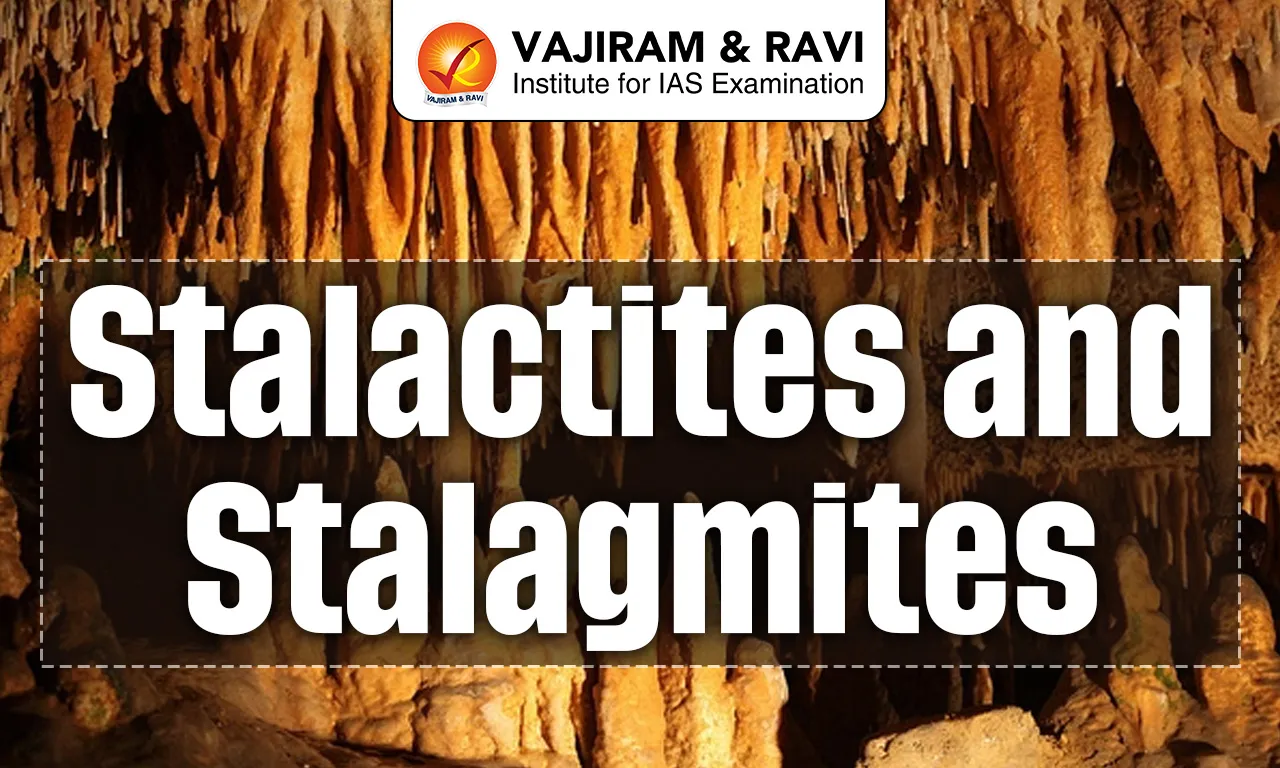
Stalactites and stalagmites are natural mineral formations found inside caves, especially in limestone regions. They are formed when water carrying dissolved minerals slowly drips and deposits material over thousands of years. These formations are part of cave deposits called Speleothems.
Stalactites hang from the ceiling, while stalagmites grow upward from the ground. Both are formed through Chemical Weathering and deposition.

Stalactites

A stalactite is a formation that hangs from the ceiling of caves, mines, and even man-made structures like bridges. These structures form due to dripping water carrying minerals that get deposited over time. Stalactites are not limited to limestone caves. They may be composed of different materials such as:

  • Sand
  • Lava
  • Mud
  • Peat
  • Pitch
  • Minerals
  • Amberat and sinter

Any material that is soluble, can melt, or can remain suspended in water (colloidal form) has the potential to form stalactites. However, the most common type of stalactites are found in limestone caves because limestone dissolves easily in water. These are known as speleothem stalactites.

Also Read: Lightning Formation

Stalagmites

Stalagmites are natural mineral formations that rise from the floor of caves due to the gradual accumulation of minerals deposited by dripping water. They are most commonly found in limestone caves and are mainly composed of calcium carbonate.

  • Formation Process: Stalagmites form when water droplets containing dissolved minerals fall from cave ceilings. As the water hits the ground, it loses carbon dioxide and deposits calcium carbonate, leading to gradual buildup.
  • Growth Direction: They always grow upward from the cave floor, unlike stalactites which hang downward.
  • Material Composition: Mainly composed of calcium carbonate, but can also include materials like sand, lava, mud, peat, pitch, and other mineral deposits.
  • Shape and Structure: Typically thick, rounded, or dome-shaped because the mineral spreads out as it accumulates on the ground.
  • Growth Rate: Extremely slow growth, usually less than 1 mm per year, depending on water supply and mineral content.
    Source of Formation: Directly linked to stalactites, as the dripping water from stalactites above leads to the formation of stalagmites below.
  • Types of Stalagmites: Include limestone stalagmites, lava stalagmites, ice stalagmites, and concrete-derived stalagmites.
  • Joining with Stalactites: Over long periods, stalagmites may grow tall enough to meet stalactites, forming a column or pillar.
  • Occurrence: Found mainly in karst regions, where limestone rocks are easily dissolved by water, leading to cave formation.

Karst Topography

Karst topography is a unique type of landscape formed due to the dissolution of soluble rocks such as limestone, dolomite, and gypsum by slightly acidic water. This process creates underground drainage systems, caves, sinkholes, and other distinctive landforms. Stalactites and stalagmites develop within these karst caves, making karst regions very important for understanding cave formations and geological processes.
Main Process: Formed by Chemical Weathering, where carbonic acid in water dissolves calcium carbonate in rocks.

Rock Types Involved:

  • Limestone (most common)
  • Dolomite
  • Gypsum

Key Landforms:

  • Sinkholes (Dolines): Depressions formed due to collapse of underground cavities
  • Caves and Caverns: Formed by continuous dissolution of rock
  • Disappearing Streams: Rivers that flow underground
  • Limestone Pavements: Flat surfaces with cracks (clints and grikes)
  • Underground Drainage Systems: Lack of surface rivers

Drainage Pattern: Water mainly flows underground, making surface water bodies rare.
Soil and Vegetation: Thin soil cover and limited vegetation due to poor water retention.

Also Read: Hailstorm Formation

Karst Topography Role

Karst topography plays a very important role in shaping underground landscapes and in the formation of cave features like stalactites and stalagmites.

  • Formation of Caves: Karst processes dissolve limestone rocks and create caves and caverns, which act as the natural environment where stalactites and stalagmites form.
  • Underground Drainage System: Water flows below the surface through cracks and fissures, carrying dissolved minerals necessary for speleothem formation.
  • Supply of Mineral-rich Water: Rainwater absorbs carbon dioxide and becomes slightly acidic, dissolving calcium carbonate and transporting it into caves.
  • Deposition of Minerals: Inside caves, the water loses carbon dioxide and deposits calcium carbonate, leading to the gradual formation of stalactites and stalagmites.
  • Creation of Ideal Conditions: Karst regions provide stable temperature, high humidity, and slow water movement, perfect conditions for slow mineral deposition.
  • Development of Unique Landforms: Features like sinkholes, dolines, and underground channels are formed, supporting the entire cave ecosystem.
  • Indicator of Geological Activity: Shows continuous interaction between water and rock over thousands of years.

Stalactites and Stalagmites FAQs

Q1: What are stalactites and stalagmites?

Ans: Stalactites and stalagmites are mineral formations found in caves. Stalactites hang from the ceiling, while stalagmites grow upward from the cave floor due to mineral deposits from dripping water.

Q2: What is the main difference between stalactites and stalagmites?

Ans: The main difference is their position and growth direction. Stalactites form on the ceiling and grow downward, whereas stalagmites form on the ground and grow upward.

Q3: How are stalactites and stalagmites formed?

Ans: They are formed when water containing dissolved calcium carbonate drips inside caves. As the water loses carbon dioxide, minerals get deposited, gradually forming these structures over time.

Q4: What are they made of?

Ans: They are mainly made of calcium carbonate (limestone), but can also be formed from materials like lava, sand, mud, and ice depending on environmental conditions.

Q5: How long do they take to grow?

Ans: They grow very slowly, usually less than 1 mm per year, and may take hundreds to thousands of years to form fully.

Biogeochemical Cycle, Definition, Types and Ecological Significance

Biogeochemical Cycle

The Biogeochemical Cycle refers to the natural movement of nutrients and elements between living organisms (plants, animals) and the non-living environment (air, water, and soil). These cycles are important because they keep the ecosystem balanced and help support and sustain life on Earth. 

About Biogeochemical Cycles

  • The term combines three words - bio (living), geo (earth), and chemical (elements) showing the link between life and Earth’s components.
  • It involves the continuous recycling of nutrients, ensuring they are not lost but reused within the ecosystem.
  • These cycles help in maintaining ecological balance and are essential for the survival of living organisms.
  • The process takes place through different parts of the Earth like the atmosphere, hydrosphere, lithosphere, and biosphere.
  • Both geological processes (like weathering) and biological and chemical processes (like decomposition) play an important role.
  • Based on the main reservoir, biogeochemical cycles are of two types: Gaseous cycles (circulate through the atmosphere, e.g., carbon and nitrogen) and Sedimentary cycles (mainly from soil and rocks, e.g., phosphorus).

Also Read: Business Cycle

Gaseous Biogeochemical Cycles (Carbon, Nitrogen, Oxygen, and Water)

  • Gaseous biogeochemical cycles include the carbon, nitrogen, oxygen, and water cycles. In these cycles, the main reservoir is the atmosphere, and the elements move between air, land, water, and living organisms.
  • In general, these cycles involve the movement of gases or volatile substances between the atmosphere, terrestrial ecosystems, and aquatic ecosystems.
  • Carbon Cycle: The carbon cycle involves the movement of carbon in forms like carbon dioxide (CO₂) and methane. Carbon moves between the atmosphere, oceans, and living organisms. Plants absorb CO₂ during photosynthesis and store it, while it returns to the atmosphere through respiration and decomposition.
  • Nitrogen Cycle: The nitrogen cycle is the movement of nitrogen from the atmosphere to living organisms and back. It includes processes like nitrogen fixation, nitrification, assimilation, and denitrification. Nitrogen is essential for making proteins, amino acids, and DNA.
  • Oxygen Cycle: The oxygen cycle is the circulation of oxygen between the atmosphere, living organisms, and the Earth’s crust. Oxygen is mainly produced during photosynthesis and is used by organisms during respiration, making it vital for life.
  • Water Cycle: The water cycle is the continuous movement of water in different forms of liquid, vapor, and ice between the Earth’s surface and the atmosphere. It includes processes like evaporation, condensation, precipitation, and runoff, helping maintain water balance on Earth.

Sedimentary Biogeochemical Cycles (Phosphorus, Sulphur, Rock Cycle)

  • Sedimentary cycles are those in which the main reservoir is the Earth’s crust (rocks and soil). These cycles are slow and involve the movement of nutrients between land, water, and living organisms through processes like weathering, erosion, and sedimentation. Examples include the phosphorus cycle, sulphur cycle, and rock cycle.
  • Phosphorus Cycle: Phosphorus is essential for DNA, cell membranes, and energy transfer. It mainly comes from rocks in the form of phosphates. Weathering releases it into the soil, where plants absorb it, and animals get it by eating plants. After death and decomposition, phosphorus returns to the soil. Some of it reaches water bodies and eventually forms sediments again.
  • Sulphur Cycle: Sulphur is important for proteins and amino acids. It is mostly stored in rocks and ocean sediments but also has a small gaseous phase (SO₂, H₂S). It moves through air, water, soil, and organisms. Natural processes and human activities release sulphur into the atmosphere, where it can form acid rain before returning to the soil.
  • Rock Cycle: The rock cycle is the continuous transformation of rocks through processes like weathering, erosion, and formation of new rocks. It helps in releasing minerals into the environment.

Biogeochemical Cycles Significance

  • Biogeochemical cycles help in converting nutrients into usable forms so that living organisms can absorb them. For example, plants cannot use nitrogen directly from the air, so it must first be converted into forms like ammonium or nitrate.
  • They ensure the continuous availability of essential elements like carbon, nitrogen, phosphorus, and water, which are necessary for life.
  • These cycles play an important role in recycling nutrients, so that resources are not depleted and can be reused again and again in the ecosystem.
  • They help in maintaining ecological balance by regulating the movement of elements between air, water, soil, and living organisms.
  • Biogeochemical cycles also contribute to climate regulation by controlling the levels of gases like carbon dioxide in the atmosphere.
  • They improve soil fertility, as nutrients are returned to the soil through decomposition and other natural processes, supporting plant growth and agriculture.
  • They enable interaction between living and non-living components of the environment, linking organisms with air, water, and land.

Biogeochemical Cycles FAQs

Q1: What is a biogeochemical cycle?

Ans: It is the movement of nutrients and elements between living organisms and the non-living environment.

Q2: Why are biogeochemical cycles important?

Ans: They maintain ecological balance and support life by recycling nutrients.

Q3: What are the main types of biogeochemical cycles?

Ans: They are gaseous cycles (air-based) and sedimentary cycles (rock/soil-based).

Q4: What are gaseous biogeochemical cycles?

Ans: Cycles where the main reservoir is the atmosphere, such as carbon, nitrogen, oxygen, and water cycles.

Q5: What are sedimentary biogeochemical cycles?

Ans: Cycles where the main reservoir is the Earth’s crust, such as phosphorus and sulphur cycles.

Prambanan Temple

Prambanan Temple

Prambanan Temple Latest News

India and Indonesia have partnered for the restoration of the Prambanan Temple complex in the Special Region of Yogyakarta in southern Java.

About Prambanan Temple

  • It is the largest Hindu temple complex in Indonesia, located in Sleman, Yogyakarta, Southern Java.
  • It is known locally as the Temple of the Slender Virgin (Roro Jonggrang).
  • It was built in the 9th century by the Sanjaya dynasty, a Hindu kingdom that ruled over central Java. 
  • It is dedicated to the Hindu Trimurti, the three main gods of Hinduism: Shiva, Vishnu, and Brahma.
  • The temple complex was buried for centuries before being rediscovered and restored in the 19th century.
  • In 1991, UNESCO designated Prambanan Temple as a World Heritage Site.

Prambanan Temple Architecture

  • The architectural style of Prambanan reflects the influence of both indigenous Javanese traditions and elements borrowed from South India, specifically the Pallava style.
  • The towering structures, adorned with intricate carvings depicting scenes from the Ramayana epic and other Hindu narratives, showcase the sophisticated craftsmanship of the era.
  • The main temple complex consists of 240 temples.
  • The highlight is the central compound, where eight main and eight minor temples are assembled on a raised platform. 
  • The three main temples are the Shiva Temple, Brahma Temple, and Vishnu Temple.
  • Shiva’s temple is the biggest and centrally located. It soars to a height of 47 meters, making it one of the tallest temples in Southeast Asia.
  • While the main temple complex is dedicated to Hindu gods, Buddhist temples and shrines surround the area.

Source: TP

Prambanan Temple FAQs

Q1: Where is the Prambanan Temple located?

Ans: It is the largest Hindu temple complex in Indonesia, located in Sleman, Yogyakarta, Southern Java.

Q2: By which dynasty was Prambanan Temple built?

Ans: The Sanjaya dynasty.

Q3: In which century was Prambanan Temple constructed?

Ans: 9th century CE.

Q4: How many temples are there in the main Prambanan temple complex?

Ans: 240 temples.

Exercise Sea Dragon 2026

Exercise Sea Dragon 2026

Exercise Sea Dragon Latest News

The Indian Navy along with multiple partner nations is participating in Exercise Sea Dragon 2026, a United States Navy-led multinational anti-submarine warfare drill.

About Exercise Sea Dragon

  • It is a United States Navy-led multinational anti-submarine warfare (ASW) drill conducted annually to strengthen maritime security and cooperation among allied nations in the Indo-Pacific region.
  • It has been held annually since 2019 at Andersen Air Force Base in Guam in the Western Pacific.
  • Participating countries deploy long-range maritime patrol aircraft, such as the P-8 Poseidon.
  • It provides a structured environment to test interoperability between near-identical platforms operated by different nations, standardizing data links, communication protocols, and tactical procedures that would be essential in any real-world combined ASW operation.
  • Sea Dragon 2026:
    • The exercise includes forces from the United States Navy, the Indian Navy, the Royal Australian Air Force, the Japan Maritime Self-Defence Force, and the Royal New Zealand Air Force.
    • Participants will be challenged on speed, accuracy, and coordinated mission execution, strengthening ASW proficiency and enhancing interoperability among partner forces. 
    • It advances aircrew proficiency in ASW by progressing from track-simulated targets to detecting and tracking a live submarine.
    • During the exercise, each event is graded, and the nation scoring the highest total points will receive the coveted Dragon Belt award.

Source: HBL

Exercise Sea Dragon FAQs

Q1: What is Exercise Sea Dragon?

Ans: It is a United States Navy-led multinational anti-submarine warfare (ASW) exercise conducted annually in the Indo-Pacific region.

Q2: Which organization leads Exercise Sea Dragon?

Ans: The United States Navy.

Q3: Where is Exercise Sea Dragon usually conducted?

Ans: Andersen Air Force Base in Guam in the Western Pacific.

Q4: What is the main objective of Exercise Sea Dragon?

Ans: To strengthen maritime security, improve ASW capabilities, and enhance interoperability among participating nations.

Floating LiDAR Buoy System

Floating LiDAR Buoy System

Floating LiDAR Buoy System Latest News

Recently, the National Institute of Ocean Technology (NIOT) has successfully tested an indigenously developed Floating LiDAR Buoy System off the coast of Muttom in Tamil Nadu.

About Floating LiDAR Buoy System

  • It is a high-tech ocean-based instrument used to measure wind conditions over the sea.
  • It combines a floating platform (buoy) with LiDAR technology, short for Light Detection and Ranging.
  • It uses laser pulses to measure atmospheric conditions with high precision.
  • Purpose: It is designed to measure wind profiles and atmospheric conditions over the ocean. It can track wind speed and direction and changes in wind at different heights.

Working of Floating LiDAR Buoy System

  • The system uses LiDAR (Light Detection and Ranging) technology. 
  • The buoy in this floats on the ocean surface and emits laser pulses into the atmosphere.
  • These pulses bounce back after hitting particles in the air and the returned signals are analysed to measure wind movement and patterns.
  • This allows scientists to gather highly accurate, real-time data from areas where traditional instruments may struggle.
  • Unlike traditional instruments, this buoy can capture detailed wind data up to 300 metres above sea level.
  • Significance: Better weather prediction, improved storm and cyclone tracking and understanding climate change impact will help scientists to know how the sea works. 

Source: IT

Floating LiDAR Buoy System FAQs

Q1: What is the primary purpose of a Floating LiDAR Buoy System?

Ans: To measure wind speeds for offshore wind energy

Q2: What does LiDAR stand for in Floating LiDAR Buoy System?

Ans: Light Detection and Ranging

24 Speed Post

24 Speed Post

24 Speed Post Latest News

Recently, the Department of Posts launched the 24 Speed Post service guarantee delivery services.

About 24 Speed Post

  • It provides guaranteed next-day delivery (D+1) service for urgent and time-sensitive consignments. 
    • ‘D’ means the day of booking of the article.
  • It is developed under the Speed Post category and introduced to meet urgent & bulk customer needs.
  • It is available in identified metro city pairs Delhi, Mumbai, Bengaluru, Chennai, Kolkata and Hyderabad.
  • Nodal Ministry: It is launched by the Department of Posts, Ministry of Communications.

Features of 24 Speed Post

  • The new services will also include one-time password (OTP)-based delivery verification, along with comprehensive end-to-end tracking supported by real-time messaging alerts.
  • Additionally, businesses will be offered features such as “Book Now, Pay Later” (BNPL), centralized billing, and API integration.
  • It operates 7 days a week including Sundays.
  • It offers full postage refund guaranteed as compensation if the D+1 delivery is not met, which is claimable online within 7 days.
  • Parcel Limit: Up to 5 Kg only.       

Source: PIB

24 Speed Post FAQs

Q1: What is 24 Speed Post?

Ans: A postal service by Indian Post

Q2: What is the primary feature of 24 Speed Post?

Ans: Same-day delivery

United States Commission on International Religious Freedom (USCIRF)

United States Commission on International Religious Freedom (USCIRF)

United States Commission on International Religious Freedom (USCIRF) Latest News

India recently rejected the latest report by the USCIRF, calling it “motivated and biased”, after the US panel recommended sanctions against Indian entities and again sought to designate the country as a “country of particular concern”.

About United States Commission on International Religious Freedom (USCIRF)

  • It is an independent, bipartisan U.S. federal government commission established under the International Religious Freedom Act of 1998.
  • USCIRF monitors the universal right to freedom of religion or belief (FoRB) abroad; makes policy recommendations to the President, Secretary of State, and Congress; and tracks the implementation of these recommendations. 
  • USCIRF's nine Commissioners are appointed by either the President or Congressional leaders of each political party, supported by a non-partisan professional staff. 
  • USCIRF issues an annual report that assesses the US government’s implementation of IRFA, highlights “Countries of Particular Concern” engaging in severe religious freedom violations, documents the conditions of religious freedom in many countries, and provides policy recommendations.
  • USCIRF recommendations are not binding on the U.S. government.
  • It uses international standards to monitor religious freedom violations globally.
  • Article 18 of the Universal Declaration of Human Rights affirms that: 
    • Everyone has the right to freedom of thought, conscience, and religion; this right includes freedom to change his religion or belief, and freedom, either alone or in community with others and in public or private, to manifest his religion or belief in teaching, practice, worship, and observance.”

Source: TI

United States Commission on International Religious Freedom (USCIRF) FAQs

Q1: What is the United States Commission on International Religious Freedom (USCIRF)?

Ans: It is an independent, bipartisan U.S. federal government commission that monitors religious freedom around the world.

Q2: Under which law was United States Commission on International Religious Freedom (USCIRF) established?

Ans: International Religious Freedom Act of 1998

Q3: To whom does United States Commission on International Religious Freedom (USCIRF) make policy recommendations?

Ans: The President, the Secretary of State, and the U.S. Congress.

Q4: Are United States Commission on International Religious Freedom (USCIRF) recommendations binding on the U.S. government?

Ans: No, its recommendations are advisory and not binding.

Melanoma

Melanoma

Melanoma Latest News

A recent study led by scientists in the U.S. National Institutes of Health reported THAT cholesterol in the membrane around the cell nucleus helps in spreading melanoma.

About Melanoma

  • Melanoma is a kind of skin cancer that starts in the melanocytes.
  • Melanocytes are cells that make the pigment that gives skin its color. The pigment is called melanin.
  • It typically starts on skin that's often exposed to the sun. This includes the skin on the arms, back, face and legs.
  • Rarely, it can happen inside the body, such as in the nose or throat.

Cause of Melanoma

  • The exact cause of all melanomas isn't clear.
  • Most melanomas are caused by exposure to ultraviolet light. Ultraviolet light, also called UV light, comes from sunlight or tanning lamps and beds.

Symptoms of Melanoma

  • The first melanoma signs and symptoms often are:
    • A change in an existing mole.
    • The development of a new pigmented or unusual-looking growth on the skin.
    • It doesn't always begin as a mole. It also can happen on otherwise healthy skin.

Treatments for melanoma

  • Melanoma Surgery: In the early stages, surgery has a high probability of being able to cure melanoma.
  • Lymphadenectomy: In cases where melanoma has spread, removal of the lymph nodes near the primary diagnosis site may be required.
  • Metastasectomy: It is used to remove small melanoma bits from organs.

Source: TH

Melanoma FAQs

Q1: What is melanoma?

Ans: A type of skin cancer

Q2: What is the primary cause of melanoma?

Ans: UV radiation from the sun

Hindon River

Hindon River

Hindon River Latest News

A recent survey of the Hindon river has raised serious concerns about water quality, with preliminary tests showing zero dissolved oxygen (DO) levels at several locations, rendering the water "uninhabitable" for most aquatic life.

About Hindon River

  • It is a tributary of the Yamuna River.
  • Course:
    • It originates in the Saharanpur district of Uttar Pradesh, in the Siwalik Hills, at an elevation of about 800 meters (2,625 feet) above sea level.
    • It flows across the industrial belt of Western Uttar Pradesh and Haryana before merging with the Yamuna River near Noida.
  • Total Length: 400 km
  • The river is entirely fed by rain, with a significant increase in water flow during the monsoon season.
  • Tributaries: The Kali (West) River and Krishni River are the main tributaries of River Hindon.
  • It is on the banks of this river that archeologists found traces of the Harappan civilization with sites dating back to as long as 2500 BC. 
  • Due to urban, agricultural, and industrial waste which is being released without sufficient treatment into its waters, the Hindon is now one of the most polluted stretches in the Ganga basin.
  • In 2015, the Central Pollution Control Board (CPCB) found the Hindon’s pollution levels were so severe that it was declared a ‘dead river’ and ‘unfit’ even for bathing in several sections of the river.

Source: TOI

Hindon River FAQs

Q1: Hindon River is tributary of which major river?

Ans: Hindon River

Q2: Where does the Hindon River originate?

Ans: It originates in the Saharanpur district of Uttar Pradesh, in the Siwalik Hills

Q3: In which state does the Hindon River primarily flow?

Ans: Uttar Pradesh.

Q4: What is the total length of the Hindon River?

Ans: About 400 km.

Ladakh Magmatic Arc

Ladakh Magmatic Arc

Ladakh Magmatic Arc Latest News

Recently, scientists have traced the evolution of the Ladakh Magmatic Arc (LMA) in North West Himalaya.

About Ladakh Magmatic Arc

  • It is a belt of igneous rocks in the Trans-Himalaya formed in the period Jurassic to Eocene- 201.3 million years ago to 33.9 Million Year (Ma).
  • The LMA is a long-extinct volcanic system evolved through three major phases of geological activity over tens of millions of years.
    • 160–110 million years ago: Early island arc formation
    • 103–45 million years ago: Intensified magmatism during plate convergence
    • Less than 45 million years ago: Post-collisional magmatic activity

Process of Formation of Ladakh Magmatic Arc

  • Millions of years before the region that is now called Ladakh lay above an ocean called the Neo-Tethys Ocean.
  • Below that ancient sea, giant slabs of Earth’s crust slowly plunged into the mantle in a process known as subduction leading to the formation of the Ladakh Magmatic Arc (LMA).

Phases of Formation of Ladakh Magmatic Arc

  • Island Arc Formation: In its earliest stage, Ladakh resembled a chain of volcanic islands rising from the Neo-Tethys Ocean.
    • Represented by the Dras–Nidar Island Arc Complex (DNIAC)
    • Magma primarily originated from the mantle
    • Minimal contribution from subducted sediments
  • Crustal Enrichment and Batholith Formation: As tectonic plates converged, the system evolved:
    • Formation of large granite bodies known as the Ladakh Batholith (LB)
    • Increased input from continental crust and recycled sediments
    • Chemical signatures indicate deep crustal processes and magma mixing
    • This phase coincides with the approaching collision between India and Eurasia.
  • Post-Collision Magmatism: After the plates collided and the Neo-Tethys Ocean closed, tectonic activity continued:
    • Formation of mafic dykes—vertical sheets of volcanic rock
    • Magma derived from a previously enriched mantle source
    • Indicates lingering tectonic and magmatic activity even after collision

Source: PIB

Ladakh Magmatic Arc FAQs

Q1: Which tectonic process is associated with the Ladakh Magmatic Arc?

Ans: Oceanic-continental convergence

Q2: What is the Ladakh Magmatic Arc?

Ans: A volcanic arc in Ladakh, India

Kalinjar Fort

Kalinjar Fort

Kalinjar Fort Latest News

The hill region surrounding the Kalinjar Fort in Banda was officially declared a National Geo-Heritage Site by the Geological Survey of India (GSI) recently.

About Kalinjar Fort

  • It is located in the Banda district of Uttar Pradesh.
  • It is situated on an isolated hilltop, surrounded by the Vindhya Mountains and the Ken River.
  • It is one of the oldest and most impressive forts in the country.
  • Many decisive battles were fought for the possession of this strategically located fort in ancient, medieval, and modern times.
  • History:
    • The history of Kalinjar Fort is more than 1500 years old
    • Historical documents and inscriptions indicate that a strategic fort was established during the Gupta period (4th-6th century). 
    • Later, Kalinjar came under the Chandela dynasty (9th-13th century) and became one of their capitals.
    • During the rule of the Chandela kings, the fort developed into a military fort on one side and a religious centre on the other. 
    • Mahmud Ghaznavi, Qutubuddin Aibak, and Humayun attacked it and wanted to win it but could not succeed. 
    • Finally, in 1569 AD, Akbar won this fort and gifted it to Birbal. After Birbal, this fort came under the Bundel king Chhatrasal. 
    • After them, the fort was occupied by Hardev Shah of Panna. 
    • In 1812, this fort became under the British.
  • The fort also houses mosques, temples, palaces, and stepwells.
  • One of the main attractions of Kalinjar is the Neelkanth Temple. 
    • It was built by Chandela ruler Paramaditya Dev. 
    • The Shiva lingam is of blue stone in addition to the giant 18-arm statue in the temple.

Source: TOI

Kalinjar Fort FAQs

Q1: Where is Kalinjar Fort located?

Ans: Where is Kalinjar Fort located?

Q2: In Banda district.

Ans: The Vindhya Mountains.

Q3: Which river flows near Kalinjar Fort?

Ans: The Ken River.

Q4: How old is the history of Kalinjar Fort?

Ans: More than 1500 years old.

Q5: Which dynasty later made Kalinjar one of its capitals?

Ans: The Chandela dynasty.

MXene

MXene

MXene Latest News

Recently, the IIT Guwahati research team developed a MXene-based catalyst that can both produce hydrogen efficiently from water and act as a photocatalyst for desalination.

About MXene

  • MXenes are a group of two-dimensional materials first discovered in 2011.
  • They are made from a bulk crystal called MAX. 
    • They have the general formula of Mn+1XnTx, where M is an early transition metal, X is carbon and/or nitrogen, and T is a functional group on the surface of an MXene (typically O, OH, and F).
  • Among various types of MXenes, titanium carbide (Ti3C2Tx) is the most widely used. 
  • Properties of MXenes: They show high electrical conductivity, excellent mechanical strength, good chemical stability, remarkable hydrophilicity, and tunable surface chemistry.

Applications of MXenes

  • Energy Storage Devices: MXene could be used in energy storage devices such as electrodes of Li-ion batteries, pseudo capacitors, etc. 
  • Desalination and waste-water treatment: These can be used in in water desalination and wastewater treatment.
  • Separation and Filtration Applications:  Because of remarkable properties such as hydrophilicity, conductivity, and high flexibility these can be used in separation and filtration processes in industries.

Source: DD News

MXene FAQs

Q1: What is MXene?

Ans: A type of 2D material

Q2: What is MXene typically used for?

Ans: Energy storage, Electronics and Biomedical applications

Global Energy Shock in India: How Global Energy Shock Threatens Goldilocks Growth

Global Energy Shock

Global Energy Shock Latest News

  • Rising global energy shocks, driven by geopolitical conflicts and disruptions like the closure of the Strait of Hormuz, are putting pressure on India’s rupee, inflation, and overall economic stability.
  • As a result, India’s Goldilocks phase (stable growth + low inflation) is under threat from external energy shocks, underscoring the need for energy diversification and macroeconomic resilience.

India’s Structural Energy Vulnerability

  • India remains heavily dependent on imported energy, making it highly exposed to global price shocks.
  • Recent crises — Russia–Ukraine war and West Asia conflict — highlight that not just financial markets, but the entire economy is vulnerable.

Pressure on the Rupee

  • The rupee is weakening due to:
    • Weak FDI inflows
    • Portfolio outflows: $11.8 billion (2025); $4 billion (2026 so far).
  • Exchange rate trends:
    • Fell below ₹90–91 per dollar (Dec)
    • Breached ₹92 per dollar recently
  • If crude prices stay high, the rupee may approach ₹100 per dollar.
  • At $120+/barrel:
    • Oil trade deficit could reach $220 billion
    • Current Account Deficit (CAD) may exceed 3.1% of GDP
  • High deficits may trigger:
    • Sharp rupee depreciation (10%+ historically)
    • Rising inflation
    • Liquidity crunch in the economy

India’s Goldilocks Growth–Inflation Balance Under Threat

  • India has recently enjoyed a “Goldilocks” phase of strong growth and low inflation:
    • GDP growth rose from 6.7% (Q1 2025–26) to 8.4% (Q2), then 7.8% (Q3)
    • Inflation dropped to 2.75% (Jan, new CPI series), below RBI’s 4% target
  • However, this favourable macroeconomic balance is now at risk due to rising crude oil prices and fuel supply disruptions, which could disrupt both growth and inflation stability.

Rising Oil Prices Threaten Growth and Inflation Stability

  • Crude oil prices, after briefly crossing $100/barrel, remain volatile and above $90/barrel despite efforts like potential IEA reserve releases.
  • Iran has warned of further escalation, even suggesting prices could reach $200/barrel.
  • India received a 30-day waiver to import Russian oil, but its impact is limited.

Domestic Impact: Fuel Shortages and Policy Response

  • Gas shortages have forced the government to:
    • Prioritise key sectors for supply
    • Increase LPG prices by ₹60 per cylinder
    • Extend refill waiting period from 21 to 25 days
  • Though petrol/diesel prices remain unchanged, household inflation pressures are rising.

Inflation Risks Intensifying

  • Nomura raised CPI inflation forecast (2026–27) to 4.5% (+70 bps).
  • UBS estimates inflation could cross 5% if crude hits $100/barrel with full pass-through.
  • Rising fuel costs are expected to push up overall price levels.

Growth Outlook Weakening

  • RBI projects GDP growth at 6.9–7% in early 2026–27.
  • Economists see downside risks emerging:
    • Nomura cut forecast to 7%
    • UBS & DBS estimate 40 bps reduction if oil stays at $100/barrel

Who Bears the Cost of Rising Fuel Prices

  • If retail fuel prices are not increased, the burden shifts to:
    • Government finances
    • Oil Marketing Companies (OMCs)
  • Political considerations (elections in early 2026) may delay price hikes, with OMCs initially absorbing the shock.
  • Government may also cut excise duties instead of raising fuel prices.
  • However, both options lead to revenue losses or financial stress.

Fiscal Targets Under Pressure

  • Budget targets for 2026–27 at risk:
    • Fiscal deficit: 4.3% of GDP
    • Debt-to-GDP ratio: 55.6%
  • Revised GDP estimates (3–4% lower) already made targets harder to achieve.
  • Elevated oil prices could increase fiscal deficit by ~30 basis points (bps).
  • A ₹2 excise cut may cost ₹32,000 crore annually.
  • Additional pressures: Fertiliser subsidy increase (₹19,230 crore extra in 2025–26).

Government Response Measures

  • Creation of an Economic Stabilisation Fund (₹1 lakh crore) to manage shocks from global volatility.
  • The situation remains highly fluid. If the conflict ends and supply stabilises, the economic impact may be limited.

Source: IE | FT

Global Energy Shock FAQs

Q1: What is the global energy shock in India?

Ans: Global energy shock in India refers to rising oil prices and supply disruptions impacting inflation, rupee stability, and economic growth due to heavy import dependence.

Q2: Why is India vulnerable to energy shocks?

Ans: India depends heavily on imported oil and gas, making it highly exposed to global price fluctuations, geopolitical tensions, and supply disruptions affecting macroeconomic stability.

Q3: How does global energy shock affect inflation?

Ans: Global energy shock raises fuel costs, increasing transportation and production expenses, which pushes up overall inflation and reduces household purchasing power.

Q4: What is India’s Goldilocks phase?

Ans: India’s Goldilocks phase refers to a period of strong GDP growth combined with low inflation, creating a balanced and stable macroeconomic environment.

Q5: Who bears the cost of rising fuel prices?

Ans: Costs are shared between consumers, government finances, and oil companies, especially when political considerations delay fuel price hikes or reduce excise duties.

Transgender Rights Bill 2026: Key Changes in Transgender Rights Bill Explained

Transgender Rights Bill 2026

Transgender Rights Bill 2026 Latest News

  • The Transgender Persons (Protection of Rights) Amendment Bill, 2026, introduced in Parliament, proposes significant changes to the 2019 law governing transgender rights.
  • The most contentious provision is the removal of the right to self-identify one’s gender, which was recognised by the Supreme Court in the landmark NALSA v. Union of India (2014) judgment. Instead, the Bill introduces a requirement for medical certification for legal gender recognition.
  • This shift has triggered widespread criticism from transgender and LGBTQ+ groups, who argue that it undermines dignity, autonomy, and hard-won legal rights, marking a rollback of progressive jurisprudence in India.

Definitions of Sex, Gender, and Transgender

  • The Transgender Persons (Protection of Rights) Act, 2019 defines a transgender person as someone whose gender does not match the gender assigned at birth
  • It includes a wide range of identities such as:
    • Trans men and trans women (irrespective of medical procedures)
    • Persons with intersex variations
    • Genderqueer and non-binary individuals
    • Sociocultural identities like kinner, hijra, aravani, and jogta
  • The Act’s definition aligns with the United Nations’ view, which treats transgender as an umbrella term for individuals whose gender identity differs from their assigned sex at birth.
  • The framework highlights that biological sex and social gender are distinct, and recognizing this distinction is central to understanding transgender identities.

Distinction Between Sex and Gender

  • Sex: Refers to biological characteristics; Determined by anatomy, chromosomes, and hormones; Categorised as male or female.
  • Gender: A social and cultural construct; Defines roles, behaviours, and expectations; Varies across societies and time.

Concept of Gender Identity

  • Gender identity is a person’s internal sense of self and gender.
  • It may or may not align with the sex assigned at birth.
  • Forms the basis of transgender identity.

NALSA Judgment (2014) and Its Impact on Transgender Rights

  • The Supreme Court in NALSA v. Union of India (2014) delivered a landmark ruling that transformed transgender rights in India. 
  • It recognised transgender persons as a “third gender” and affirmed that they are entitled to all fundamental rights under the Constitution.
  • A key aspect of the judgment was the right to self-identification of gender, allowing individuals to identify as male, female, or third gender without mandatory medical intervention.
  • The Court also directed the government to create laws and welfare measures for the transgender community. 
  • This led to the enactment of the Transgender Persons (Protection of Rights) Act, 2019, which institutionalised legal recognition through:
    • Inclusion of “third gender” in official documents
    • Issuance of transgender identity cards
    • Creation of welfare mechanisms, including Transgender Welfare Boards
  • These identity cards enabled access to government schemes, with over 32,000 cards issued so far, improving legal recognition and social inclusion of transgender persons.

Key Changes Proposed in the Transgender Rights Amendment Bill, 2026

  • Shift in Approach: From Identity to Biology
    • The Bill focuses on protecting only those facing biological-based exclusion.
    • It marks a shift back to a pre-2014 understanding, prioritising biological traits over self-identified gender.
  • Narrower Definition of Transgender
    • Restricts recognition to:
      • Sociocultural identities (kinner, hijra, aravani, jogta, eunuch)
      • Persons with specific congenital biological variations
      • Replaces the broader 2019 definition with a medicalised and limited list (genitalia, chromosomes, hormones, etc.).
    • New Category Introduced: Includes persons forced into transgender identity through coercion, surgery, or manipulation.
  • Removal of Self-Identification
    • Deletes the provision allowing self-identification of gender.
    • Argues earlier definition was “vague” and made it difficult to identify genuine beneficiaries.
    • Excludes gender-fluid and self-perceived identities from legal recognition.
  • Medical Board for Certification
    • Replaces the earlier administrative process with a medical evaluation system.
    • A Medical Board (headed by CMO/DCMO) will assess applicants and advise the District Magistrate.
    • Introduces clinical gatekeeping in identity recognition.
    • Institutional Change: Members representing states/UTs must now be senior officials (Director rank or above).
  • Stricter Penal Provisions
    • Expands punishments for crimes against transgender persons.
    • New Offences & Penalties:
      • Forcing transgender identity (adult): 10 years to life imprisonment + ₹2 lakh fine
      • Forcing transgender identity (child): Life imprisonment + ₹5 lakh fine
      • Forced begging/servitude (adult): 5–10 years imprisonment + ₹1 lakh fine
      • Forced begging/servitude (child): 10–14 years imprisonment + ₹3 lakh fine
    • The Bill introduces a restrictive, medicalised framework, reduces autonomy, and strengthens punitive measures, significantly altering the rights-based approach of the 2019 Act.

Criticism of the Transgender Rights Amendment Bill, 2026

  • Violation of Self-Determination
    • Activists argue the Bill removes the fundamental right to self-identify gender.
    • Seen as a serious human rights violation, undermining dignity and autonomy.
    • Critics emphasise that gender identity is personal and lived, not subject to external approval.
  • Burden of Proof on Individuals
    • The amendment requires individuals to prove their identity through medical certification.
    • Activists argue identity should not require validation by authorities.
    • Raises concerns about institutional barriers and discrimination.
  • Challenges Due to Social Stigma
    • Requirement of medical documentation may be difficult due to prevailing transphobia in healthcare systems.
    • Trans persons may face bias, exclusion, and lack of access in hospitals and institutions.
  • Exclusionary Definition of Transgender Identity
    • Recognition limited to certain socio-cultural groups.
    • Excludes individuals who identify as transgender outside traditional community structures.
    • Critics say this ignores the diversity of transgender experiences.
  • Concerns Over Socio-Cultural Gatekeeping
    • The focus on traditional systems (like guru-chela networks) may:
      • Reinforce power hierarchies and exploitation
      • Marginalise those who transition independently

Source: IE

Transgender Rights Bill 2026 FAQs

Q1: What is the Transgender Rights Bill 2026?

Ans: Transgender Rights Bill 2026 is a proposed amendment to the 2019 law introducing medical certification, narrowing definitions, and removing the right to self-identification.

Q2: What change does the bill make to self-identification?

Ans: The bill removes the right to self-identify gender, replacing it with a medical certification process, which critics say undermines autonomy and dignity of transgender persons.

Q3: How does the bill redefine transgender identity?

Ans: It narrows the definition to biological traits and certain socio-cultural groups, excluding broader gender identities like non-binary and gender-fluid individuals.

Q4: What is the role of the medical board?

Ans: The medical board will assess individuals and recommend certification for transgender identity, introducing clinical gatekeeping instead of the earlier administrative process.

Q5: Why is the bill being criticised?

Ans: Critics argue the Transgender Rights Bill 2026 violates self-determination, imposes proof burdens, excludes many identities, and reverses progressive rights established by the Supreme Court.

Parliamentary Panel Flags Poor Financial Planning by NITI Aayog

Financial Planning

Financial Planning Latest News

  • A Parliamentary Standing Committee has criticised financial planning by NITI Aayog and the Ministry of Planning for persistent underutilisation of budgetary allocations. 

Role of NITI Aayog in India’s Governance

  • NITI Aayog (National Institution for Transforming India) serves as the government’s premier policy think tank. 
  • Established in 2015, it replaced the Planning Commission with the objective of promoting cooperative federalism and evidence-based policymaking.
  • Its key functions include:
    • Designing long-term policy frameworks
    • Monitoring and evaluating government schemes
    • Providing strategic and technical advice to the Centre and States
    • Facilitating innovation and development initiatives
  • Although NITI Aayog does not directly allocate funds like the erstwhile Planning Commission, it plays a crucial role in shaping development priorities and ensuring efficient utilisation of public resources.

Parliamentary Committee’s Observations

  • The Parliamentary Standing Committee on Finance has raised serious concerns regarding financial management by the Ministry of Planning and NITI Aayog.
  • The Committee found that the Ministry consistently spent significantly less than the budget allocated to it. Key findings include:
    • In 2023-24, actual expenditure was about Rs. 290.81 crore against a Budget Estimate (BE) of Rs. 824.39 crore (around 35%).
    • In 2024-25, expenditure stood at Rs. 282.61 crore against a BE of Rs. 837.26 crore (around 34%). 
  • This pattern indicates a structural issue in planning and execution, where funds remain idle instead of being effectively utilised.
  • Rising Budget Allocations Despite Low Spending
    • Despite the low utilisation rates, the Ministry continued to seek higher allocations.
    • The Ministry requested Rs. 1,203.38 crore for 2026-27, which is about 22% higher than the previous year’s allocation. 
  • The Committee questioned this trend, noting that increasing allocations without proper utilisation reflects poor fiscal discipline.

Weak Implementation and Planning Gaps

  • The Committee highlighted that the problem is not merely financial but also administrative.
    • There is dismal implementation of planned activities on the ground.
    • The Quarterly Expenditure Plan (QEP) shows persistent gaps between planned and actual spending.
  • This indicates that schemes and initiatives are either delayed or inadequately executed.

Issues in Expenditure Management

  • One major concern raised by the Committee is the tendency to spend large amounts in the final quarter of the financial year.
  • In 2025-26, a significant portion of spending was projected in the fourth quarter.
  • This creates a “rush to exhaust funds,” which can compromise the quality of expenditure. 
  • Such practices may also violate government norms that aim to distribute spending evenly throughout the year.

Violation of Fiscal Discipline Norms

  • The Central government has guidelines to ensure balanced expenditure patterns, including limits on monthly spending.
  • The Committee warned that excessive spending in the last quarter may breach these norms, leading to:
    • Inefficient allocation of resources
    • Reduced accountability
    • Poor outcomes from public expenditure

Recommendations by the Committee

  • The Parliamentary panel has made several recommendations to improve financial management.
  • Realistic Budgeting
    • Accurate estimation of expenditure
    • Avoiding inflated budget demands
    • Aligning allocations with actual requirements
  • Strengthening Monitoring Mechanisms
    • Conduct regular internal reviews
    • Ensure timely administrative approvals
    • Synchronise planning with expenditure targets
  • Better Utilisation of Funds
    • Avoid idle funds and resource blocking
    • Ensure the timely implementation of schemes
    • Improve coordination between planning and execution

Broader Implications for Governance

  • The issue of underutilisation of funds reflects deeper challenges in public financial management in India.
  • Impact on Development Outcomes - Inefficient use of funds can delay development projects and reduce the effectiveness of government programmes. This ultimately affects service delivery and economic growth.
  • Fiscal Responsibility and Accountability - Proper financial planning is essential for maintaining fiscal discipline. Persistent underutilisation, coupled with rising allocations, undermines accountability in public spending.

Source : TH

Financial Planning FAQs

Q1: What is NITI Aayog’s role in financial planning?

Ans: NITI Aayog provides policy guidance and monitors development programmes but does not directly allocate funds.

Q2: What issue did the Parliamentary Committee highlight?

Ans: It flagged persistent underutilisation of funds by the Ministry of Planning and NITI Aayog.

Q3: What is the problem with last-quarter spending?

Ans: It leads to rushed expenditure, inefficiency, and possible violation of fiscal norms.

Q4: Why is underutilisation of funds a concern?

Ans: It indicates poor planning and delays in implementation of development programmes.

Q5: What reforms were suggested by the Committee?

Ans: The Committee recommended realistic budgeting, better monitoring, and efficient utilisation of funds.

Maternity Leave for Adoptive Mothers – Supreme Court Redefining Parenthood Rights

Maternity Leave for Adoptive Mothers

Maternity Leaves for Adoptive Mothers Latest News

  • The Supreme Court of India has read down provisions of the Code on Social Security, 2020 to extend 12 weeks of maternity leave to all adoptive mothers irrespective of the child’s age. 
  • Simultaneously, it has urged the Union Government to recognise paternity leave as a social security benefit.
  • The judgment also intersects with an ongoing constitutional challenge to Section 5(4) of the Maternity Benefit Act, 1961, which restricts maternity benefits for adoptive mothers based on the age of the child.

Key Highlights of the Judgment

  • Removal of age restriction for adoptive mothers:
    • The Court read down Section 60(4) of the Code on Social Security, 2020.
    • It held that all adoptive mothers are entitled to 12 weeks of maternity leave, regardless of whether the child is above or below 3 months.
    • It declared the earlier restriction violative of Articles 14 (Right to Equality) and 21 (Right to Life and Personal Liberty).
  • Motherhood beyond biological childbirth:
    • The Court clarified maternity benefit is linked to motherhood, not childbirth.
    • Adoptive mothers have similar caregiving responsibilities as biological mothers.
    • Adoption recognised as part of reproductive and decisional autonomy under Article 21.
  • Maternity leave as a human right: The judgment termed maternity protection as a “basic human right”, ensuring economic security, workplace inclusion of women, and freedom to exercise reproductive choices without employment penalty.
  • Emphasis on role of fathers:
    • The Court highlighted early childhood care requires both parents.
    • Absence of paternity leave reinforces gender stereotypes, limits father’s participation in caregiving, and urges the government to frame a paternity leave policy as part of social security.

Legal and Policy Background

  • Maternity Benefit Act, 1961:
    • It aims to regulate employment of women before and after childbirth.
    • Key provisions are paid maternity leave (the period of such leave could not exceed twelve weeks), protection from dismissal, etc.
  • 2017 Amendment:
    • Increased paid maternity leave to 26 weeks for biological mothers.
    • Introduced, 12 weeks leave for adoptive mothers (only if child < 3 months), work-from-home provision, mandatory crèche facilities (in establishments having 50 or more employees).
  • Code on Social Security, 2020: It consolidates labour laws, and retains similar restrictive provision for adoptive mothers (which is now read down by SC).

Pending Constitutional Challenge

  • A PIL challenges Section 5(4) of the Maternity Benefit Act, 1961 as discriminatory and arbitrary, and violative of Part III (Fundamental Rights) of the Indian Constitution.
  • Key issues:
    • Denial of benefits to adoptive mothers of older children.
    • Discrimination against orphaned and abandoned children.
    • Conflict with the Juvenile Justice Act, 2015, and the adoption procedures that delay early adoption.

Key Issues and Challenges

  • Discrimination in existing framework: Unequal treatment between biological and adoptive mothers, adoptive mothers based on child’s age.
  • Structural barriers in adoption: Lengthy procedures make adoption of infants (<3 months) rare, legal requirements (e.g., declaration of child as “legally free”) cause delays.
  • Lack of paternity leave: India lacks a comprehensive statutory paternity leave policy, leading to gender imbalance in caregiving, and reinforcement of traditional roles.
  • Limited impact on women’s workforce participation: Evidence suggests that decline in women’s participation in several sectors post-2017 amendment, as a result of employer bias due to increased costs and lack of childcare support.
  • Implementation gaps: Weak enforcement in the unorganised sector. Limited access to crèche facilities, work-from-home flexibility.

Way Forward

  • Gender-neutral parental leave policy: Introduce statutory paternity leave, and move towards shared parental leave framework.
  • Harmonisation of laws: Align the Maternity Benefit Act, Code on Social Security, and the Juvenile Justice Act. Remove inconsistencies affecting adoptive parents.
  • Strengthening adoption ecosystem: Simplify procedures, reduce delays in declaring children legally free for adoption.
  • Incentivising employers: Government support/subsidies to offset maternity costs, promote women-friendly workplace policies.
  • Focus on unorganised sector: Expand social security schemes, ensure portability and accessibility of benefits.

Conclusion

  • The SC’s intervention marks a progressive shift from a biology-centric to a care-centric understanding of parenthood. 
  • By recognising adoptive motherhood as equal to biological motherhood and advocating for paternity leave, the judgment advances substantive equality and gender justice.
  • However, meaningful transformation will depend on legislative action, policy coherence, and effective implementation, ensuring that parental rights translate into real social security for all families.

Source: IE | IE

Maternity Leave for Adoptive Mothers FAQs

Q1: How did the SC reinterpret maternity benefits for adoptive mothers under the Code on Social Security, 2020?

Ans: The Court read down Section 60(4) to grant 12 weeks of maternity leave to all adoptive mothers.

Q2: Why did the SC hold the age-based classification in maternity benefits for adoptive mothers as unconstitutional?

Ans: Because it lacked a rational nexus with the objective of maternity protection, violating Article 14 (equality).

Q3: How does the judgment expand the scope of reproductive rights under Article 21?

Ans: It recognises adoption as an integral part of reproductive and decisional autonomy, not limited to biological childbirth.

Q4: What concerns has the SC raised regarding the absence of paternity leave in India?

Ans: It leads to reinforcement of gender stereotypes and restricts fathers’ participation in early childcare, undermining child development.

Q5: Why is Section 5(4) of the Maternity Benefit Act, 1961 being challenged constitutionally?

Ans: Because it denies benefits to adoptive mothers of children above three months, violating Fundamental Rights.

Daily Editorial Analysis 18 March 2026

Daily-Editorial-Analysis

A Bit of a Blur Over India’s New Carbon Credit Plan

Context

  • The Union Budget 2026 has sparked significant debate following the announcement of a ₹20,000 crore allocation for a carbon credit programme and this has led to widespread confusion regarding its intended purpose.
  • A key question has emerged: Is the allocation meant to support industrial carbon capture technologies, or is it designed to create a new income stream for farmers through carbon credits?
  • While official documents indicate a clear industrial focus, an alternative narrative has gained traction, highlighting both a communication gap and a broader policy opportunity.

The Official Framework: Focus on Industrial Decarbonisation

  • CCUS for Hard-to-Abate Sectors
    • The foundation of the Budget announcement lies in the R&D Roadmap for Carbon Capture, Utilisation, and Storage (CCUS), released by the Department of Science and Technology (DST) in December 2025.
    • This document clearly identifies its target sectors: power, steel, cement, refineries, and chemicals.
    • These industries are categorised as hard-to-abate because their emissions are concentrated and difficult to eliminate through renewable energy alone.
    • The ₹20,000 crore allocation is intended to support large-scale deployment of CCUS technologies.
    • These technologies capture carbon dioxide emissions directly from industrial sources and either repurpose or store them underground, thereby reducing overall emissions.
  • Exclusion of Agriculture from CCUS
    • A crucial aspect of the roadmap is the explicit exclusion of agriculture from CCUS strategies.
    • Although agriculture contributes to greenhouse gas emissions, primarily methane and nitrous oxide, it does so in a diffuse and biologically driven manner.
    • This makes it unsuitable for point-source carbon capture technologies.
    • Instead, agriculture is associated with Carbon Dioxide Removal (CDR) strategies, such as soil carbon sequestration, agroforestry, and biochar.
    • These approaches focus on removing existing carbon from the atmosphere rather than capturing emissions at their source.

The Counter-Narrative: Farmers as Beneficiaries

  • Emergence of the Farmer Carbon Credit Idea
    • Despite the clear industrial intent, a competing narrative has emerged in media and public discourse.
    • This perspective suggests that the Budget allocation will enable farmers to earn carbon credits by adopting sustainable agricultural practices.
    • The idea of turning farms into climate solutions has gained popularity due to increasing awareness of environmental sustainability and rural income diversification.
  • Link to Voluntary Carbon Markets
    • This narrative draws support from the growing voluntary carbon market, where agriculture and forestry projects are already generating carbon credits.
    • Several private and state-level initiatives are experimenting with models that reward farmers for improving soil health and increasing carbon sequestration.
    • However, these developments are separate from the government-funded CCUS initiative, leading to a conflation of two distinct concepts.

Root Cause of the Confusion: Policy Language and Misinterpretation

  • The confusion largely stems from the use of the broad term carbon credit programme in the Budget.
  • While technically accurate in a general sense, this phrasing lacks specificity and has blurred the distinction between industrial carbon capture and agricultural carbon sequestration.
  • The DST roadmap provides a precise and sector-specific framework, but the Budget’s language has created expectations of a more inclusive scheme, particularly among stakeholders in the agricultural sector.

Policy Implications and Opportunities

  • Need for Clear Communication
    • The government must address this ambiguity by clearly communicating the objectives and scope of the CCUS programme.
    • Ensuring that stakeholders understand the industrial focus of the allocation is essential to avoid unrealistic expectations.
  • Potential for Agricultural Carbon Markets
    • At the same time, the debate highlights a significant opportunity. India’s vast agricultural landscape offers immense potential for carbon sequestration.
    • A dedicated policy framework for agricultural carbon credits could provide farmers with an additional income stream while contributing to climate goals.
    • However, such a programme would require separate funding, institutional mechanisms, and regulatory structures, distinct from the technology-intensive CCUS initiative.

The Way Forward: Towards a Multi-Sectoral Climate Strategy

  • The current situation underscores the need for a comprehensive approach to climate policy.
  • Industrial decarbonisation through CCUS is essential, given that heavy industries contribute significantly to India’s emissions.
  • Simultaneously, agriculture can play a vital role in carbon removal and sustainability.
  • Balancing these two fronts, industrial emissions reduction and agricultural carbon sequestration, will be key to achieving long-term climate objectives.

Conclusion

  • The controversy surrounding the Union Budget 2026 reflects both a misunderstanding and an opportunity.
  • While the ₹20,000 crore allocation is clearly aimed at industrial decarbonisation through CCUS, the parallel narrative around farmers reveals a growing interest in agricultural carbon markets.
  • To move forward effectively, the government must clearly distinguish between these two domains while advancing both with equal commitment.
  • By doing so, India can develop a holistic, multi-sectoral strategy that addresses emissions from industry while unlocking the environmental and economic potential of its agricultural sector.

A Bit of a Blur Over India’s New Carbon Credit Plan FAQs

Q1. What is the main purpose of the ₹20,000 crore allocation in Union Budget 2026?
Ans. The allocation is primarily meant to support Carbon Capture, Utilization, and Storage (CCUS) technologies for industrial decarbonisation.

Q2. Which sectors are targeted under the CCUS programme?
Ans. The programme targets hard-to-abate sectors such as power, steel, cement, refineries, and chemicals.

Q3. Why is agriculture excluded from the CCUS framework?
Ans. Agriculture is excluded because its emissions are diffuse and not suitable for point-source carbon capture technologies.

Q4. What caused confusion about the carbon credit programme?
Ans. The confusion was caused by the broad use of the term “carbon credit programme,” which led to misinterpretation.

Q5. What opportunity does the debate highlight for farmers?
Ans. The debate highlights the potential for developing a separate agricultural carbon credit market to provide farmers with additional income.

Source: The Hindu


India’s West Asia Reset, More Sinned Against Than Sinning

Context

  • India’s West Asia policy has sparked domestic debate, prompting the need for an objective assessment focused on key trends, given the significant national interests involved.

Two Key Trends Shaping India’s West Asia Policy

Rising Diplomatic Engagement with West Asia

  • Over the past decade, India has significantly deepened engagement with West Asia. PM Modi made 15 visits to GCC countries, along with visits to Israel (twice), Iran, and Palestine.
  • India signed Comprehensive Economic Partnership Agreements (CEPA) with the UAE and Oman, and is negotiating similar deals with the GCC and Israel.
  • The GCC is India’s largest socio-economic partner, with:
    • $160+ billion bilateral trade
    • 10 million Indian diaspora
  • Key outcomes
    • De-hyphenation with Pakistan in West Asia policy
    • Stronger defence and security ties
    • India’s image as a responsible status quo power
    • However, promised investments from the region have lagged.

Changing Security Dynamics in the Gulf

  • Gulf monarchies prioritise external partners based on their ability to ensure: regime security → state stability → regional balance.
  • Since October 2023, escalating conflict and the closure of the Strait of Hormuz, along with Iranian drone and missile threats, have intensified insecurity.
  • This has led GCC countries to reconsider reliance on the traditional U.S.-led “Pax Americana” and search for alternative security partnerships.

India’s Diplomatic Reset in West Asia

  • India’s recent policy shift reflects recognition of both trends.
  • Focus on strategic alignment with key West Asian countries.
  • Key initiatives:
    • PM Modi’s visit to Israel
    • Direct outreach to GCC leaders during early conflict phase
    • Engagement with Iran as well
  • Signals:
    • India’s support for regional security and stability
    • Prioritisation of core national interests

Features of the New Diplomatic Doctrine

  • Shift towards “hard diplomacy” and realism
  • Departure from traditional balancing:
    • No reiteration of “please-all” positions
      • India refrained from adopting a balancing stance on sensitive issues such as the two-state solution and Iran’s nuclear ambitions.
    • No reliance on third-party narratives
  • Reflects greater strategic confidence and autonomy in foreign policy

Domestic Criticism of the Policy Reset

  • Key concerns raised
    • Timing of Israel visit (just before conflict escalation)
    • Perceived dilution of support for Palestine and Iran
    • Alleged alignment with Western interests
    • Risk of strategic overreach and security exposure
  • Government’s Defence of the Approach
    • Visit timing likely pre-scheduled, without foreknowledge of conflict escalation
    • West Asia’s volatile environment makes retrospective criticism (hindsight bias) easier
    • The visit was primarily bilateral, not linked to impending military developments

Global Responses and Selective Criticism

  • Criticism of India’s policy “immorality” is misplaced; other powers show greater inconsistency:
    • China imported nearly 90% of sanctioned Iranian oil, offering only rhetorical support.
    • Russia, despite a 20-year strategic pact with Iran, has underdelivered.
    • Pakistan shifted from aggressive rhetoric to aligning with the U.S.
  • Many Arab and Muslim countries remained largely silent during the Gaza conflict.

India’s Policy Reset: Gains and Risks

  • Recognition of Geopolitical Shifts
    • India’s reset reflects changing power dynamics in West Asia.
    • However, the shift may have tilted excessively, requiring recalibration toward balanced national interests.
  • Need for Strategic Flexibility
    • West Asia remains highly volatile (mercurial).
    • India must keep diplomatic options open rather than over-aligning with any one side.
  • Importance of Key Regional Relationships
    • The Palestine issue remains politically and diplomatically significant.
    • Iran remains crucial for India:
      • Key oil supplier
      • Potential market for trade, reconstruction, and services
      • Strategic location bordering Pakistan and Afghanistan
    • Emerging Regional Fault Lines
      • Growing Arab discomfort with U.S.-Israel actions
      • Saudi–UAE tensions
      • Iraq–Iran estrangement
      • Increasingly assertive roles of Pakistan and Türkiye
      • These trends require a more nuanced and inclusive Indian approach.
    • Gaps in India’s Response
      • Delayed and Limited Engagement - India could have responded faster to key developments like:
        • Assassination of Iran’s Supreme Leader
        • Leadership transition in Iran
      • Need for Diplomatic Assertiveness
        • India should avoid excessive political correctness and silence.
        • Diplomatic flexibility allows disagreement without damaging ties with the U.S. or Israel.
      • Expanding Relief Efforts
        • India could have provided greater humanitarian assistance to populations affected by the conflict.

Strategic Opportunities for India in West Asia

  • Erosion of the “Oil-for-Security” Model
    • The U.S.-led “Oil-for-Security” arrangement with GCC states is weakening amid the ongoing conflict with Iran.
    • The U.S. acted without consulting GCC countries, ignoring their concerns.
    • American military bases in the Gulf became targets of Iranian retaliation, exposing regional vulnerabilities. GCC states now fear U.S. unpredictability and possible withdrawal.
    • This may push them to diversify security partnerships, potentially including India.
  • Economic Realignment and “GCC+1” Strategy
    • Iranian attacks have disrupted supply chains and business activity in the Gulf.
    • The GCC’s image as a stable economic hub has been weakened.
    • There is growing interest in a “GCC+1” diversification strategy.
    • India can position itself as a reliable economic and investment destination, attracting: Capital; Talent.
    • This presents a historic opportunity to reclaim economic advantages previously lost to Gulf economies.
  • Need for a Realist and Dynamic Foreign Policy
    • India’s foreign policy must be:
      • Realistic and interest-driven
      • Flexible and adaptive
      • Consistent yet responsive to change
    • As India’s West Asia policy evolves, it must prioritise national interest over fixed alignments, echoing the principle:
      • Nations have no permanent allies or enemies—only permanent interests.

India’s West Asia Reset, More Sinned Against Than Sinning FAQs

Q1. What are the two key trends shaping India’s West Asia policy?

Ans. India’s policy is shaped by rising diplomatic engagement with GCC countries and changing Gulf security dynamics, including reduced reliance on the U.S. and search for alternative partnerships.

Q2. How has India’s diplomatic approach in West Asia changed recently?

Ans. India has shifted to a more assertive, interest-driven “hard diplomacy,” moving away from traditional balancing and adopting clearer positions aligned with strategic and security priorities.

Q3. What criticisms have been raised against India’s West Asia policy reset?

Ans. Critics cite timing of Israel visit, perceived abandonment of Palestine and Iran, alignment with the West, and risks of strategic overreach and increased security exposure.

Q4. Why is Iran still strategically important for India?

Ans. Iran remains vital as an oil supplier, trade partner, and strategic link to Central Asia, given its geographic position bordering Pakistan and Afghanistan.

Q5. What opportunities does the West Asia crisis present for India?

Ans. The crisis offers India opportunities to diversify Gulf security ties, attract global capital under a “GCC+1” strategy, and strengthen its role as a stable economic alternative hub.

Source: TH

Daily Editorial Analysis 18 March 2026 FAQs

Q1: What is editorial analysis?

Ans: Editorial analysis is the critical examination and interpretation of newspaper editorials to extract key insights, arguments, and perspectives relevant to UPSC preparation.

Q2: What is an editorial analyst?

Ans: An editorial analyst is someone who studies and breaks down editorials to highlight their relevance, structure, and usefulness for competitive exams like the UPSC.

Q3: What is an editorial for UPSC?

Ans: For UPSC, an editorial refers to opinion-based articles in reputed newspapers that provide analysis on current affairs, governance, policy, and socio-economic issues.

Q4: What are the sources of UPSC Editorial Analysis?

Ans: Key sources include editorials from The Hindu and Indian Express.

Q5: Can Editorial Analysis help in Mains Answer Writing?

Ans: Yes, editorial analysis enhances content quality, analytical depth, and structure in Mains answer writing.

Enquire Now