Article 158 of the Indian Constitution, Conditions of Governor’s Office

Article 158 of the Indian Constitution

Article 158 of the Indian Constitution lays down the conditions governing the office of the Governor of a State. It ensures that the Governor functions independently, without conflict of interest, and is provided with adequate facilities to discharge constitutional responsibilities.

Article 158 of the Indian Constitution Provisions

Article 158 (1) specifies that a Governor cannot be a member of either House of Parliament or of a State Legislature. If a sitting member of Parliament or a State Legislature is appointed as Governor, they are deemed to have vacated their seat on assuming office. This provision ensures that the Governor is politically neutral and not influenced by legislative duties or party affiliations.

Article 158 (2) states that the Governor cannot hold any office of profit. This prevents conflicts of interest and ensures that the Governor’s attention is fully devoted to constitutional responsibilities.

Article 158 (3) guarantees the Governor the use of the official residence (Raj Bhavan) without payment of rent. The Governor is also entitled to emoluments, allowances, and privileges as determined by Parliament, and until Parliament enacts specific laws, these are governed by the Second Schedule of the Constitution. This ensures that the Governor has adequate resources to perform official duties with dignity.

Article 158 (3A) deals with situations where the same person is appointed Governor of two or more States simultaneously. In such cases, the President may allocate the emoluments and allowances among the States in a proportion deemed appropriate.

Article 158 (4) states that the emoluments and allowances of the Governor shall not be diminished during their term of office, providing financial security and safeguarding the independence of the office.

Amendments related to Article 158 of the Indian Constitution

The Seventh Amendment Act, 1956 introduced Clause (3A) to Article 158.It addresses situations where the same person is appointed Governor of two or more States. In such cases, the President can allocate the emoluments and allowances among the States in such proportions as deemed appropriate. This ensures fairness and administrative clarity when a Governor serves multiple States.

Article 158 of Indian Constitution Significance

Article 158 is significant because it ensures that the Governor:

  • Remains politically neutral, free from legislative or party influences.
  • Has financial and administrative security, enabling the effective discharge of duties.
  • Can perform constitutional responsibilities with dignity, supported by adequate facilities and privileges.
  • Maintains institutional continuity, even if serving multiple States simultaneously.

Article 158 of the Indian Constitution FAQs

Q1: Article 158 of the Indian Constitution related to what?

Ans: Article 158 of the Indian Constitution lays down the conditions governing the office of the Governor, ensuring independence, neutrality, and adequate facilities to discharge constitutional duties.

Q2: Can a sitting member of Parliament or State Legislature be appointed as Governor under Article 158 of the Indian Constitution?

Ans: No, Article 158 of the Indian Constitution states that if a sitting member is appointed Governor, they are deemed to have vacated their seat upon assuming office to maintain political neutrality.

Q3: Can the Governor hold any other office of profit according to Article 158 of the Indian Constitution?

Ans: No, Article 158 of the Indian Constitution prohibits the Governor from holding any other office of profit to avoid conflicts of interest and ensure full attention to constitutional responsibilities.

Q4: Can the Governor’s emoluments and allowances be reduced during the term as per Article 158 of the Indian Constitution?

Ans: No, Article 158 of the Indian Constitution ensures that the Governor’s emoluments and allowances cannot be diminished during the term, providing financial security.

Q5: Why is Article 158 of the Indian Constitution significant?

Ans: Article 158 of the Indian Constitution preserves the Governor’s independence, neutrality, and dignity, ensures financial and administrative security, and allows them to perform duties effectively even if serving multiple States.

Youth Suicides in India, Causes, Trends, Data, Solutions

Youth Suicides in India

Youth suicides in India have become a serious concern in recent years. It is not just a mental health issue, but also a reflection of deeper social, economic, and cultural problems. Incidents like the suicide of two young sisters in Rajasthan, reportedly due to pressure of forced marriage, show how lack of freedom and social control can push young people to extreme steps.

Magnitude of Youth Suicides in India 

India is witnessing an alarming rise in suicide rates, particularly among youth:

  • According to the Registrar General of India’s “Causes of Death in India (2020-2022)” report, suicide accounts for about 17% of deaths among people aged 15-29.
  • Suicide, along with road accidents, remains one of the top two causes of death in the 15-29 age group for nearly two decades, as per a TOI report.
  • According to NCRB (2022), 1.71 lakh suicides were recorded, with nearly 40% involving young people.
  • States such as Tamil Nadu and Kerala, which rank high on human development indicators, report higher suicide rates compared to less developed states like Bihar. This suggests that economic development alone does not guarantee psychological well-being, especially when social norms remain rigid.

Key Drivers of Youth Suicide in India

Youth suicides in India are the result of multiple, interlinked factors rather than a single cause. These reasons are deeply rooted in social structures, economic conditions, and changing aspirations. 

  • Aspiration-Reality Gap: Rapid socio-economic change, exposure to global lifestyles, and expansion of education have raised aspirations among youth. However, limited job opportunities, social restrictions, and inequality create a gap between expectations and reality, leading to frustration and despair.
  • Family and Relationship Pressures: According to NCRB data, nearly 48% of suicides among youth (18-30 years) are linked to - Family problems (32.4%), Love affairs (8%), Marriage-related issues (7.5%). Forced marriages, inter-caste and inter-faith restrictions, and lack of emotional support often intensify distress.
  • Gender Inequality and Patriarchal Norms: Suicide is the leading cause of death among young women (15-29 years). The share of suicides in total deaths is slightly higher among young women (18.2%) than young men (16.3%).  Social restrictions on education, career, mobility, choice of partner and practices such as forced marriage, dowry, and control over personal decisions are some of the major reasons of suicides among women.
  • Educational Stress and Institutional Pressures: The highly competitive education system, especially in coaching hubs like Kota, creates immense psychological pressure. Fear of failure, parental expectations, and lack of counselling support aggravate mental health issues.
  • Unemployment and Economic Insecurity: Rising youth unemployment, underemployment, and precarious informal work conditions lead to financial stress, identity crises, and loss of dignity. Migration to urban areas further adds isolation and lack of support networks.
  • Social Exclusion and Discrimination: Marginalised communities, particularly Dalits and minorities, often face discrimination in educational institutions and workplaces. Student suicides in higher education frequently have a structural and political dimension, reflecting exclusion and systemic bias.
  • Generational Divide: There exists a widening communication gap between youth and parents, especially regarding career choices, relationships, and lifestyle. Young people often feel misunderstood, leading to emotional isolation.
  • Digital and Media Influence: The rapid spread of smartphones and social media has introduced new stressors such as cyberbullying, unrealistic comparisons, misinformation, and exposure to harmful content related to suicide.

The persistence of youth suicides in India can be better understood through the sociological framework of Emile Durkheim, who argued that, suicide is not merely an individual act but a social phenomenon. He identified four types of suicide, of which two, anomic and fatalistic are particularly relevant in the Indian context.

He identified four types of suicides, two types are relevant in case of India  

  • Anomic suicides occur during periods of rapid social change, when traditional norms weaken but new ones fail to take root, leaving individuals disoriented. 
  • Fatalistic suicides, arise in conditions of excessive regulation, where oppressive norms leave individuals feeling trapped with no hope of escape.

India today presents a paradoxical coexistence of both conditions. Rapid economic and social transformation has expanded possibilities, while rigid norms around caste, gender, and family continue to constrain choices.

Initiatives to address Youth Suicides in India

Addressing the rising incidence of youth suicides in India requires a multi-dimensional approach, and the government along with civil society has introduced several initiatives focusing on mental health support, awareness, and structural interventions.

  • National Mental Health Programme (NMHP): The National Mental Health Programme (NMHP), launched in 1982, aims to provide accessible and affordable mental healthcare by integrating mental health services with the general healthcare system. It is implemented mainly through the District Mental Health Programme (DMHP), focusing on early detection, treatment, awareness, and community-based care.
  • National Suicide Prevention Strategy (2022): Aims to reduce suicide mortality by 10% by 2030 through multi-sectoral action.
  • Manodarpan Initiative: Manodarpan is a nationwide initiative by the Ministry of Education (formerly MHRD), launched under the broader Atmanirbhar Bharat Abhiyan, to provide psychosocial support for the mental health and emotional well-being of students, teachers, and families.
  • National Tele Mental Health Programme (Tele-MANAS): Launched in 2022, this initiative provides 24×7 free tele-counselling services across India. It aims to ensure immediate psychological support, particularly for youth facing stress, anxiety, or suicidal thoughts.
  • National Education Policy (NEP) 2020: NEP emphasises reducing academic pressure, promoting holistic education, and integrating counselling services and well-being into the education system.
  • KIRAN Helpline: The Ministry of Social Justice and Empowerment has launched a 24/7 toll-free helpline “KIRAN” to provide mental health support.
  • Outlive Programme: Outlive is a youth suicide prevention initiative led by the Centre for Mental Health Law & Policy with Sangath, targeting urban youth. It works through awareness campaigns, a chat-based peer support platform, and a fellowship to train youth in policy advocacy, with a strong focus on youth-led and peer-driven support.
  • Organisations such as AASRA and Snehi provide emotional support, suicide prevention helplines, and awareness campaigns.

Why Youth Suicides Are Increasing Despite Initiatives

Despite multiple government initiatives and growing awareness, youth suicides in India continue to rise because of following reasons:

  • Structural Issues Remain Unaddressed: Most initiatives focus on mental health services, but the root causes such as unemployment, social inequality, and lack of opportunities persist. Without addressing these structural factors, suicides continue to rise.
  • Limited Reach and Accessibility: Mental health services are still urban-centric and underdeveloped in rural areas. 
  • Social Stigma Around Mental Health: Despite policy efforts, mental health remains stigmatized in Indian society. Young people hesitate to seek help due to fear of judgment, leading to untreated distress.
  • Weak Implementation and Coordination: There is often a gap between policy and practice. Poor coordination between ministries, lack of trained personnel, and inadequate funding reduce the effectiveness of initiatives.
  • Digital and Social Media Pressures: Government interventions have not fully addressed emerging challenges like cyberbullying, social comparison, and online harassment, which increasingly affect youth mental health.

Way Forward

Addressing youth suicides in India requires a comprehensive and integrated approach that goes beyond the health sector.

  • There is a need to strengthen family and community support systems by promoting open communication, mutual respect, and emotional understanding between generations.
  • Gender-sensitive reforms must be prioritised to dismantle patriarchal norms and ensure equality in opportunities and decision-making.
  • The education system must be reoriented to reduce academic pressure and create supportive environments through counselling services and inclusive practices.
  • Employment generation and skill development should be emphasised to provide young people with stable and meaningful livelihood opportunities.
  • Expand mental health infrastructure, ensuring accessibility and affordability, particularly for vulnerable populations.
  • Media regulation and digital literacy should be strengthened to minimise harmful influences and promote responsible reporting.
  • Broader legal and social reforms must ensure that young individuals have the freedom to make choices related to education, career, and relationships without fear of coercion or discrimination.
  • Learning from international experience (China) - The significant decline in suicide rates in China since the 1990s has been attributed to broad-based structural changes, including economic development, urbanisation, and improved social mobility. These changes reduced social stressors, particularly for vulnerable groups such as rural women.

Youth Suicides in India FAQs

Q1: Why are Youth Suicides in India increasing?

Ans: Youth Suicides in India are increasing due to a combination of factors such as rising aspirations with limited opportunities, family and relationship pressures, unemployment, academic stress, and persistent social inequalities.

Q2: Which groups are most affected by Youth Suicides in India?

Ans: Youth Suicides in India disproportionately affect young people aged 15–29, with particularly high vulnerability among students, unemployed youth, and young women facing gender-based restrictions and pressures.

Q3: What are the major causes behind Youth Suicides in India?

Ans: The major causes of Youth Suicides in India include family conflicts, relationship issues, academic pressure, unemployment, social discrimination, and the gap between aspirations and reality in a rapidly changing society.

Q4: What steps are being taken to reduce Youth Suicides in India?

Ans: To address Youth Suicides in India, the government and civil society have introduced initiatives such as the National Mental Health Programme, Tele-MANAS, Manodarpan, and community-based interventions.

Q5: What challenges hinder the prevention of Youth Suicides in India?

Ans: The prevention of Youth Suicides in India is hindered by factors such as social stigma around mental health, limited access to counselling services, weak implementation of policies, and the continued dominance of rigid social norms.

Bekaa Valley, Location, Climate, Agriculture, Economy, History

Bekaa Valley

Bekaa Valley is a broad and scenic valley in Lebanon. It is known for its open plains, natural beauty, and fertile land. The valley has been an important area for people to live, farm, and trade for a long time. Its landscapes and cultural significance make it a well-known and special part of the region.

Bekaa Valley Location and Geography

  • Bekaa Valley is located in eastern Lebanon, lying between two major mountain ranges: the Mount Lebanon range to the west and the Anti-Lebanon Mountains to the east. It is a long and wide valley, stretching across much of the country.
  • The valley is known for its flat and fertile land, which makes it ideal for farming. Rivers, streams, and underground water sources flow through the valley, helping agriculture thrive. Its climate is generally warm and dry in the summer and cool in the winter, with more rainfall than the surrounding mountains.
  • Bekaa Valley’s geography has made it an important region for settlement, trade, and farming throughout history, connecting different parts of Lebanon and neighboring countries.

Bekaa Valley Climate and Weather Patterns

  • Bekaa Valley has a Mediterranean climate, which means it experiences hot and dry summers and cool, wet winters. The surrounding mountains often get snow in winter, and as it melts, it provides water that flows into the valley, supporting its farms and rivers.
  • The valley is known for its fertile alluvial soil, which, along with sufficient rainfall, makes it perfect for agriculture. The landscape is a mix of wide plains, farmlands, and vineyards, dotted with small villages and towns. This combination of climate, water, and soil has helped make Bekaa Valley an important agricultural and settlement region for centuries.

Bekaa Valley Agriculture and Economic Importance

  • The Bekaa Valley is Lebanon’s main agricultural region, thanks to its fertile soil and favorable climate. The plains of the valley produce a wide range of crops, including wheat, barley, potatoes, vegetables, and fruits. The valley is especially renowned for its vineyards and wineries, which produce internationally recognized Lebanese wines such as those from Château Ksara, Château Kefraya, and Château Musar.
  • Besides grapes, farmers in the Bekaa cultivate olives, citrus fruits, and apples, while the southern areas of the valley support extensive livestock farming. The Litani River Project, launched in the mid-20th century, improved irrigation and electricity supply, further boosting agricultural productivity.
  • Despite its importance, the valley faces some challenges. Informal farming practices, occasional droughts, and the impact of regional conflicts can affect crop yields. Additionally, the arrival of refugees from Syria since 2011 has placed extra pressure on local resources and infrastructure, influencing both agriculture and the broader economy.
  • The Bekaa Valley continues to play a vital role in Lebanon’s economy, serving as a key source of food, wine, and other agricultural products.

Bekaa Valley History and Cultural Significance

  • The Bekaa Valley has a rich history, with evidence of human habitation dating back to prehistoric times. Its location made it an important corridor, connecting the coastal areas of Lebanon with the interior regions of Syria and Mesopotamia. Over the centuries, the valley was part of several major civilizations, including the Phoenicians, Greeks, Romans, and Byzantines.
  • During the Roman era, the valley became particularly famous for Heliopolis, now known as Baalbek, which housed some of the grandest temple complexes of the ancient world. The Temple of Jupiter and the Temple of Bacchus still stand today as well-preserved examples of Roman architecture, reflecting the region’s religious and cultural importance. The valley also acted as a hub for trade and cultural exchange, linking the Mediterranean with inland Asia.
  • In the Islamic period, the Bekaa Valley remained a fertile and agriculturally productive region, serving as a breadbasket for surrounding areas. Later, under Ottoman rule, it was incorporated into the empire’s provincial system, contributing crops, livestock, and other resources to the wider economy. The valley’s long history and cultural heritage make it a significant region in both historical and contemporary contexts.

Bekaa Valley Natural Resources and Environment

  • The Bekaa Valley is rich in natural resources, which make it an important region for Lebanon. Its fertile soil, nourished by rivers like the Litani and snowmelt from surrounding mountains, supports agriculture and vineyards. The valley’s water resources are used for irrigation, helping farmers grow crops like wheat, vegetables, fruits, and grapes.
  • The valley also has forests and grasslands, which provide grazing land for livestock and contribute to biodiversity. The surrounding mountains are home to wildlife and help regulate the local climate.
  • However, the environment faces challenges. Overuse of water, deforestation, and human activities have put pressure on the natural balance. Pollution and unplanned urbanisation are also affecting soil quality and water resources. Conserving these natural resources is essential to maintain the valley’s agriculture, wildlife, and overall ecological health.
  • The Bekaa Valley’s environment not only supports life and farming but also adds to its scenic beauty, making it attractive for tourism and sustainable development.

Bekaa Valley FAQs

Q1: What is the Bekaa Valley?

Ans: A fertile and scenic valley in eastern Lebanon, known for agriculture and history.

Q2: Where is the Bekaa Valley located?

Ans: Between the Mount Lebanon and Anti-Lebanon mountain ranges in eastern Lebanon.

Q3: What is the climate of the Bekaa Valley?

Ans: Mediterranean climate: hot, dry summers and cool, wet winters.

Q4: Why is the Bekaa Valley important for agriculture?

Ans: Fertile soil and water resources support crops, vineyards, and livestock.

Q5: What is the historical significance of the Bekaa Valley?

Ans: Home to ancient civilizations; includes Roman temples in Baalbek and Umayyad ruins in Anjar.

Debendranath Tagore (1817-1905), Biography, Contributions

Debendranath Tagore

Debendranath Tagore was a leading Indian philosopher, religious reformer and central figure of the Brahmo Samaj. He revitalised the theistic movement in 19th century India. He was born into the influential Tagore family. He combined spirituality with rational thought and played a key role in shaping religious reform during the Bengal Renaissance.

Debendranath Tagore Biography

Debendranath Tagore was born on 15 May 1817 in Jorasanko, Calcutta. He was the son of industrialist Dwarkanath Tagore and Digambari Devi. Debendranath was educated initially at home and later at Anglo Hindu College. He developed a deep interest in philosophy. He founded the Tattwabodhini Sabha in 1839, joined Brahmo Samaj in 1842 and laid the foundation of Santiniketan as an Ashram. He was also the father of Rabindranath Tagore. He passed away on 19 January 1905, leaving behind a strong legacy of religious reform, rational thought and social transformation in India.

Debendranath Tagore Contributions

Debendranath Tagore transformed religious thought through reformist ideas, institutions, writings and social initiatives rooted in rational spirituality. His major contributions include:

  • Brahmo Samaj: He joined Brahmo Samaj in 1842 and gave it new strength by promoting monotheism, opposing idol worship and shaping it into an organised religious reform movement with structured practices and teachings.
  • Brahmo Religion: In 1848, he revived Brahmoism after the death of Raja Rammohan Roy by giving it a clear philosophical base to the movement.
  • Tattwabodhini Sabha: He founded in 1839, this intellectual body promoted study of Upanishads and rational religious inquiry; it later merged with Brahmo Samaj and significantly influenced Bengal’s intellectual awakening.
  • Tattwabodhini Patrika: In 1843, he financed this journal edited by Akshay Kumar Datta, which spread philosophical ideas, translations of scriptures and reformist thoughts across educated society.
  • Promotion of Vedic and Upanishadic Studies: He translated texts like Katha Upanishad (1840) and later Rig Veda, encouraging public discussions and making ancient scriptures accessible in Bengali for wider understanding.
  • Literary Contributions: His major works include “Brahmo Dharma” (1849), “Atmattvavidya” (1850) and other texts that defined moral, spiritual and philosophical foundations of Brahmo beliefs.
  • Educational Contributions: He established Brahma Vidyalaya in 1859 and promoted theological education to train young individuals in Vedanta and Brahmo philosophy.
  • Social Reforms: He supported widow remarriage, opposed child marriage and polygamy and encouraged women’s education, contributing to progressive transformation of 19th century Indian society.
  • Santiniketan: In 1863, he established an ashram at Bhubandanga, later transformed as Santiniketan by his son Rabindranath Tagore as a centre for spiritual learning and meditation.
  • Political Engagement: As co-founder and secretary of the British Indian Association, he advocated reduction of chowkidari tax and demanded autonomy for India through petitions to the British Parliament.
  • Institutional Contributions: He was associated with organizations like the Bethune Society and helped expand intellectual and reformist networks during the Bengal Renaissance period.
  • Cultural Legacy: Belonging to the Tagore family, he influenced a lineage that contributed to literature, art and social reform, with his son Rabindranath Tagore gaining global recognition. 

Debendranath Tagore FAQs

Q1: Who was Debendranath Tagore?

Ans: Debendranath Tagore was an Indian philosopher and religious reformer who played a major role in strengthening the Brahmo Samaj movement.

Q2: When was Debendranath Tagore born?

Ans: He was born on 15 May 1817 in Jorasanko, Calcutta, into the prominent Tagore family.

Q3: What is Debendranath Tagore known for?

Ans: He is known for founding Brahmoism, promoting monotheism and spreading rational religious ideas through writings and institutions.

Q4: What was Debendranath Tagore’s role in Brahmo Samaj?

Ans: He revitalised the Brahmo Samaj by introducing structured worship methods and expanding its philosophical and social reform activities.

Q5: Who was the son of Debendranath Tagore?

Ans: His son was Rabindranath Tagore, a Nobel Prize winning poet, writer and philosopher.

Antyodaya Anna Yojana, Features, Eligibility, Significance

Antyodaya Anna Yojana

Antyodaya Anna Yojana (AAY) is a major food security scheme launched in December 2000 to target the poorest households in India. It was introduced after surveys indicated nearly 5% of the population lacked access to two proper meals daily. The scheme focuses on delivering essential food grains at highly subsidised rates through the Public Distribution System (PDS), ensuring minimum nutrition and reducing hunger among vulnerable sections across rural and urban areas.

Antyodaya Anna Yojana

Antyodaya Anna Yojana is implemented by the Ministry of Consumer Affairs, Food and Public Distribution with the objective of creating a hunger free India. Initially covering one crore poorest families, it has expanded to about 2.5 crore households. Beneficiaries receive food grains through PDS, with the Central Government handling procurement via FCI and States responsible for identification and distribution. The scheme is now integrated with PMGKAY (Pradhan Mantri Garib Kalyan Anna Yojana).

Antyodaya Anna Yojana Features

The Antyodaya Anna Yojana scheme ensures targeted food security by identifying poorest households and providing subsidised food grains and essential commodities through an efficient distribution system.

  • Eligibility Criteria: Includes landless labourers, marginal farmers, rural artisans, slum dwellers, daily wage earners, widows, elderly persons above 60 years, disabled individuals, primitive tribal groups and BPL HIV affected families lacking stable income sources.
  • Monthly Food Grain Entitlement: Each AAY household receives 35 kg food grains per month free of cost under PMGKAY, ensuring continuous access to basic nutrition and supporting food security.
  • Subsidised Pricing: Earlier, food grains were provided at Rs 2 per kg for wheat, Rs 3 for rice and Re 1 for coarse grains, making essential food affordable for extremely poor households.
  • Sugar Subsidy Provision: AAY families receive 1 kg sugar per month under TPDS (Targeted Public Distribution System), with a central subsidy of Rs 18.50 per kg, extended by the Union Cabinet till 2026 to maintain affordability.
  • Institutional Responsibilities: The Central Government manages procurement, storage and allocation through FCI, while State Governments handle identification, ration cards issuance, transportation and distribution within their jurisdictions.
  • Expansion of Coverage: Initially targeting one crore families, the scheme expanded in phases (2003-04 and 2004-05) to include widows, disabled persons and hunger prone households, reaching around 2.5 crore families.

Antyodaya Anna Yojana Significance

The Antyodaya Anna Yojana scheme plays a critical role in addressing hunger, improving nutrition and ensuring equitable access to food among the most vulnerable sections of society.

  • Reduction of Hunger: By targeting the poorest households, AAY directly addresses extreme hunger conditions, ensuring that vulnerable populations receive at least minimum food support regularly.
  • Nutritional Security: Regular supply of cereals improves calorie intake and basic nutrition levels, especially among economically weaker groups lacking access to balanced diets.
  • Social Equity: The scheme supports marginalised groups such as tribal communities, widows and disabled persons, reducing inequality and promoting inclusive welfare measures.
  • Economic Relief: Free or subsidised food grains reduce household expenditure burden, allowing poor families to allocate resources to health, education and livelihood activities.

Antyodaya Anna Yojana FAQs

Q1: What is Antyodaya Anna Yojana (AAY)?

Ans: It is a government scheme launched in 2000 to provide highly subsidised or free food grains to the poorest households in India.

Q2: Who are the beneficiaries of Antyodaya Anna Yojana?

Ans: The scheme targets the poorest families such as landless labourers, widows, elderly, disabled persons, tribal groups and informal sector workers.

Q3: How much food grain is provided under Antyodaya Anna Yojana?

Ans: Each eligible household receives 35 kg of food grains per month, currently free under the PMGKAY scheme.

Q4: What additional benefit is given under Antyodaya Anna Yojana?

Ans: Antyodaya Anna Yojana families receive 1 kg of sugar per month at subsidised rates through the Public Distribution System along with grains per month.

Q5: Which ministry implements Antyodaya Anna Yojana?

Ans: The scheme is implemented by the Ministry of Consumer Affairs, Food and Public Distribution in coordination with State Governments.

UN World Water Development Report 2026, Key Highlights

UN World Water Development Report 2026

The United Nations World Water Development Report 2026 (WWDR 2026), titled “Water for All People: Equal Rights and Opportunities,” was released by UNESCO on behalf of UN‑Water ahead of World Water Day 2026.

The report offers a global evidence‑based assessment of freshwater resources, focusing on how gender inequality shapes access, management, governance and benefits from water resources, and highlights practical pathways to bridge gaps toward sustainable water security for all.

About UN World Water Development Report

The United Nations World Water Development Report (WWDR) is UN-Water’s flagship report on water and sanitation issues

Launched on World Water Day, the report focuses on a different theme each year and gives policy recommendations to decision-makers by offering best practices and in-depth analyses. 

The WWDR is published by UNESCO on behalf of UN-Water and its production is coordinated by the UNESCO World Water Assessment Programme.

Key Highlights of United Nations World Water Development Report 2026

United Nations World Water Development Report 2026 report provides a global assessment of freshwater resources, with a particular focus on gender equality and equitable access to water. It emphasizes that water insecurity is not just an environmental or technical issue, but a social and equity challenge requiring inclusive policy solutions.

  • Globally, an estimated 2.1 billion people still lack safely managed drinking water. 
  • Women and girls are disproportionately affected by water insecurity. They Women and girls spend around 250 million hours each day collecting water - time that could otherwise be used for education, paid work, rest, or community participation.
  • Access to water resources (water rights) is often tied to land ownership. Because women face discriminatory land tenure rules, they are frequently denied access to irrigation water, limiting their agricultural productivity and economic independence.
  • The report highlights that women are under-represented in water governance and decision-making. In low- and middle-income countries, fewer than one in five water utility workers are women, and their presence in leadership roles is even lower. This inequity hinders the development of inclusive water policies and perpetuates social disparities.
  • Climate-related events (droughts, floods, storms) disproportionately affect women and girls, increasing their water-collection burdens and exposure to gender-based violence.
  • Lack of sex-disaggregated water data obscures the true scale of inequalities in access, labor, and decision-making. Better data is essential to inform policy and hold institutions accountable.

The report provides several actionable recommendations:

  • Promote gender-responsive water governance by ensuring women’s participation in decision-making.
  • Remove legal and institutional barriers that restrict women’s rights over water and land.
  • Collect sex-disaggregated data to better understand gendered water challenges.
  • Invest in capacity building, inclusive financing, and infrastructure to improve access for women and marginalized groups.
  • Recognize water access as a human right and development imperative, linking it to education, health, and livelihoods.

UN World Water Development Report 2026 FAQs

Q1: What is the UN World Water Development Report 2026?

Ans: The UN World Water Development Report 2026 (WWDR 2026) is a flagship publication by UNESCO on behalf of UN-Water that provides a global evidence-based assessment of freshwater resources, focusing on gender equality and inclusive water access.

Q2: When is the UN World Water Development Report released?

Ans: The report is launched annually on World Water Day, which falls on 22 March, highlighting a specific theme related to water and sanitation.

Q3: What is the main focus of UN World Water Development Report?

Ans: WWDR 2026 emphasizes that water insecurity is not just a technical issue but a social and equity challenge, showing how gender inequality affects access, governance, and management of water resources.

Q4: Who produces the UN World Water Development Report?

Ans: The report is published by UNESCO on behalf of UN-Water and coordinated by the UNESCO World Water Assessment Programme (WWAP).

Q5: Why does UN World Water Development Report focus on women and girls?

Ans: The report highlights that women and girls are disproportionately affected by water scarcity, spending millions of hours daily collecting water, which limits their education, work, and social participation.

Project NETRA, Components, Challenges, Significance

Project NETRA

Project NETRA (Network for Space Object Tracking and Analysis) is an initiative by ISRO to develop India’s own Space Situational Awareness (SSA) capability. It aims to track space debris and protect Indian satellites.

About Project NETRA

  • Project NETRA (Network for Space Object Tracking and Analysis) is a space surveillance initiative by ISRO.
  • It aims to develop India’s indigenous Space Situational Awareness (SSA) capability to detect, track, and monitor objects in space.
  • The project focuses on tracking space debris, inactive satellites, and other orbiting objects that may pose a threat to active Indian satellites.
  • It helps in providing early warning of potential collisions, allowing corrective actions like changing satellite orbit.
  • Project NETRA uses a network of ground-based radars, optical telescopes, and data processing systems to observe and analyze space objects.
  • It can track objects in Low Earth Orbit (LEO), Medium Earth Orbit (MEO), and Geostationary Orbit (GEO).
  • The project is part of India’s effort to ensure the safety, security, and sustainability of its space assets.

Project NETRA Components

  • Project NETRA includes a network of advanced telescopes and radars to track objects in space.
  • It plans to set up a high-precision, long-range telescope in Leh and a radar system in the North-East to improve coverage across different regions of India.
  • It also uses existing systems like the Multi-Object Tracking Radar (MOTR) at the Satish Dhawan Space Centre, along with telescopes at Ponmudi (Kerala) and Mount Abu (Rajasthan).
  • All these systems together help in creating a comprehensive picture of space activities and tracking space debris.
  • A dedicated Space Situational Awareness (SSA) centre will be set up to bring together all tracking data from different ISRO centres into one place for better analysis and quick decision-making.
  • At present, India has several important satellites that need protection:
    • Around 15 communication satellites in geostationary orbit (about 36,000 km)
    • Around 13 remote sensing satellites in low Earth orbit (up to 2,000 km)
    • Around 8 navigation satellites in medium Earth orbit
  • Earlier, India depended partly on global agencies like NORAD (USA-Canada) for space debris data, but Project NETRA aims to build independent capability.
  • Implementing Agency: Efforts related to Space Situational Awareness (SSA) in India are led by ISRO. These activities are coordinated through the SSA Control Centre in Bengaluru and are managed by the Directorate of Space Situational Awareness and Management at ISRO headquarters.

Concerns Related to Space Debris

  • Space debris (space junk) includes old rocket parts, non-working satellites, and small fragments created after collisions or anti-satellite (ASAT) tests.
  • These objects move at extremely high speeds around 27,000 km/h in Low Earth Orbit (LEO) so even a tiny piece can seriously damage or destroy a satellite.
  • This makes space increasingly dangerous and crowded, putting important services like communication, GPS, weather forecasting, and defence at risk.
  • According to ISRO, thousands of close approach events are detected every year where space objects come very near to Indian satellites, increasing the risk of collision.
  • A major source of debris is past events like:
    • China’s 2007 ASAT test (Fengyun-1C destruction)
    • The 2009 collision between Cosmos 2251 and Iridium 33
  • Recently, there have also been several close encounters (within 1 km) involving satellites from Starlink and Indian satellites.
  • Growing space activity increases the risk of a chain reaction of collisions (Kessler Syndrome), which can make some orbits unusable in the future.

Project NETRA Challenges and Limitations

  • High Cost and Infrastructure Needs: Setting up advanced radars, telescopes, and data centres requires huge investment and continuous maintenance.
  • Technological Limitations: Detecting very small debris (less than a few cm) is difficult, even with advanced systems, but such debris can still cause serious damage.
  • Limited Coverage: India’s SSA network is still developing and has less global coverage compared to countries like the USA.
  • Data Accuracy and Tracking Complexity: Space objects move at very high speeds, making precise tracking and prediction of collisions challenging.
  • Dependence on International Data: Despite NETRA, India still needs to rely partly on external agencies for comprehensive global tracking data.

Project NETRA Strategic and Security Significance

  • Project NETRA has strong strategic and security importance for India. It gives the country the ability to independently monitor space activities, including satellites and objects belonging to other nations. This is crucial in today’s time, as space is increasingly becoming a domain of competition and strategic importance.
  • Project NETRA can detect, track, and record space objects as small as 10 cm. It has a tracking range of about 3,400 km, allowing it to monitor objects in orbits up to around 2,000 km above the Earth.
  • By developing its own Space Situational Awareness (SSA) system through ISRO, India can reduce its dependence on foreign agencies for tracking data. This ensures better control over sensitive information and faster decision-making in case of potential threats.
  • Project NETRA also helps in protecting critical space assets such as communication, navigation, and defence satellites, which are essential for national security and daily services. In the context of rising militarization of space and anti-satellite (ASAT) capabilities, it allows India to detect suspicious activities and respond effectively.

Enhancing Space Situational Awareness (SSA)

  • India, as a growing space power, needs strong Space Situational Awareness (SSA) to protect its satellites and space assets. It is an important part of national capability, just like in advanced countries.
  • SSA acts as a force multiplier by improving both space safety and national security. It helps India keep track of all activities happening in space.
  • It has a strategic and military role, as it supports defence systems by monitoring objects that could pose threats from space.
  • SSA uses a mix of satellites, ground-based radars, and tracking systems to detect and monitor objects not only in space but also potential threats from air and missile systems.
  • With the help of long-range radars, SSA can also work as an early warning system against incoming ballistic missiles.

Global Context and Comparison

  • Advanced space powers like the United States have highly developed Space Situational Awareness (SSA) systems, such as the Space Surveillance Network, which can track thousands of space objects accurately.
  • These countries use a combination of ground-based radars, telescopes, and space-based sensors for global coverage and real-time monitoring.
  • Other major players like Russia and China are also strengthening their SSA capabilities due to increasing space competition and security concerns.
  • Compared to them, India’s SSA capability is still developing, but Project NETRA is a major step towards bridging this gap.
  • With Project NETRA, India is moving towards becoming a self-reliant and responsible space power, ensuring better protection of its space assets and contributing to global space safety.

Project NETRA FAQs

Q1: What is Project NETRA?

Ans: Project NETRA is a space surveillance initiative by ISRO to develop India’s own Space Situational Awareness (SSA) system for tracking space objects and protecting satellites.

Q2: What are the main objectives of Project NETRA?

Ans: To detect and track space debris, provide early collision warnings, protect Indian satellites, and ensure self-reliance in space monitoring.

Q3: What does Project NETRA consist of?

Ans: It includes a network of radars, telescopes (Leh, Ponmudi, Mount Abu), MOTR at Sriharikota, and a central SSA data centre for analysis.

Q4: Why is space debris a concern?

Ans: Space debris moves at very high speeds (~27,000 km/h) and can damage satellites, affecting communication, navigation, and security systems.

Q5: What are the major challenges of Project NETRA?

Ans: High cost, difficulty in tracking small debris, limited coverage, and dependence on international data.

Shivaram Rajguru, Biography, Role in Freedom Struggle, Legacy

Shivaram Rajguru

Shivaram Rajguru was a young and courageous freedom fighter who contributed to India’s struggle for independence from British rule. He was known for his strong patriotism, bravery, and dedication to the nation. From an early age, he was inspired to fight against injustice and worked alongside other revolutionaries. His sacrifice and commitment made him one of the respected heroes of India’s freedom movement, and he is remembered as a symbol of courage and love for the country.

Shivaram Rajguru Early Life

Rajguru was born in Khed (now called Rajgurunagar in Maharashtra) in a Deshastha Brahmin family on 24th August 1908. As a child, he grew up seeing the harsh treatment of Indians under British rule. This created strong nationalist feelings in him from an early age. He was also knowledgeable in Indian scriptures and had a strong cultural background.

Shivaram Rajguru Entry into Freedom Struggle

During the freedom struggle, Rajguru joined the Hindustan Socialist Republican Association (HSRA), which was formed in 1928 by leaders like Chandrasekhar Azad and Bhagat Singh. The HSRA aimed to fight British rule through revolutionary methods and spread awareness among people. Rajguru believed in militant nationalism and did not support non-violent methods like those of Mahatma Gandhi.

Lahore Conspiracy and Saunders Case

Rajguru is best known for his role in the assassination of British officer J.P. Saunders in 1928 in Lahore. This act was carried out to avenge the death of Lala Lajpat Rai, who died after being injured in a police lathi charge during protests against the Simon Commission. The plan was made by revolutionaries including Bhagat Singh, Rajguru, Sukhdev Thapar, and Chandrasekhar Azad. Rajguru was known as a skilled shooter and was often called the “gunman” of the group.

Shivaram Rajguru Personal Traits and Courage

Rajguru was known for his fearless and determined nature. It is said that he once tested his strength by touching a hot iron rod to prepare himself for possible torture by the British police. His dedication and bravery made him a key member of the revolutionary movement.

Shivaram Rajguru Arrest and Martyrdom

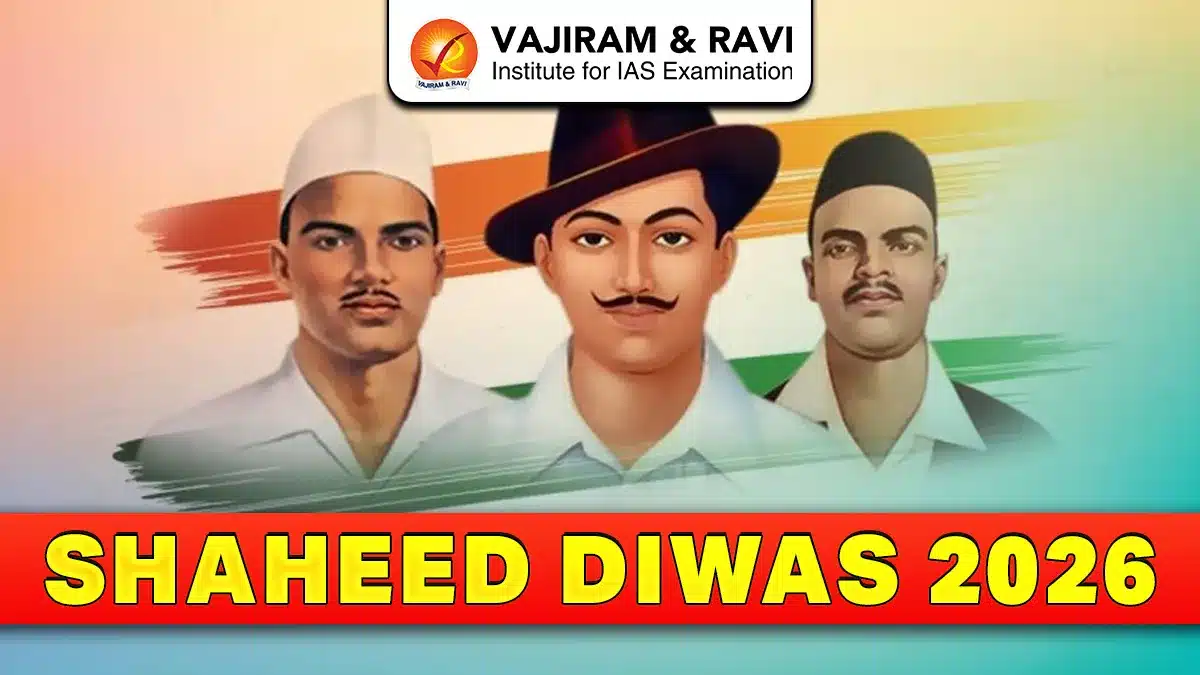
After the Saunders incident, Rajguru tried to escape but was later arrested while travelling to Pune. He, along with Bhagat Singh and Sukhdev, was tried and sentenced to death by the British government. On 23 March 1931, the three revolutionaries were executed in Lahore. Their bodies were secretly cremated on the banks of the Sutlej River. This day is now observed as Martyrs’ Day in India.

Shivaram Rajguru Legacy

Rajguru was only 22-23 years old when he sacrificed his life for the country. Shivaram Rajguru is remembered as a fearless and dedicated freedom fighter who sacrificed his life for the country. His courage, patriotism, and spirit of sacrifice continue to inspire generations. He remains an important symbol of India’s struggle for independence and the power of youth in bringing change.

Shaheed Diwas

Shaheed Diwas (Martyrs’ Day) is observed on 23 March every year in India to honour the sacrifice of Shivaram Rajguru, Bhagat Singh, and Sukhdev Thapar. On this day in 1931, these three brave revolutionaries were executed by the British government for their role in the freedom struggle. The day is remembered across the country to pay tribute to their courage, patriotism, and sacrifice. People observe it by organizing events, discussions, and remembering the contribution of these martyrs in India’s independence movement.

Shivaram Rajguru FAQs

Q1: When was Shivaram Rajguru born?

Ans: He was born on 24 August 1908 in Khed (now Rajgurunagar, Maharashtra).

Q2: What was Shivaram Rajguru’s age at the time of death?

Ans: He was about 22-23 years old when he was martyred.

Q3: Which caste did Shivaram Rajguru belong to?

Ans: He belonged to a Deshastha Brahmin family.

Q4: What was Shivaram Rajguru’s religion?

Ans: He followed Hinduism and had knowledge of Indian scriptures.

Q5: When did Shivaram Rajguru die?

Ans: He died on 23 March 1931, observed as Shaheed Diwas.

Troposphere, Extent, Characteristics,Variation, Significance

Troposphere

The troposphere is the lowest layer of the Earth’s atmosphere and lies closest to the Earth’s surface. It is the layer where we live and where most natural processes like weather changes take place. This layer contains the majority of air, along with water vapour and dust particles, which are essential for life on Earth.

About the Troposphere

  • The troposphere is the lowest layer of the Earth’s atmosphere, located just above the Earth’s surface. It is the most important layer because we live in this layer and all major weather activities take place here.
  • About 75-80% of the total mass of the atmosphere is found in the troposphere. It also contains most of the water vapour and dust particles, which makes it the wettest layer of the atmosphere. Because of this, almost all clouds, rainfall, storms, and winds occur in this layer.

Troposphere Extent and Thickness

  • The troposphere begins right from the Earth’s surface and extends upward into the atmosphere. On average, it goes up to about 10 km above sea level, but its height is not the same everywhere.
  • The thickness of the troposphere changes with latitude and season. It is thicker near the equator and thinner near the poles. Near the equator, it can extend up to 18-20 km, while over the poles, especially in winter, it may be as low as 7-8 km. During summer, the troposphere becomes slightly thicker, while in winter, it becomes thinner.
  • This variation happens because of differences in temperature and heating of the Earth’s surface. Warmer regions (like the equator) cause air to expand and rise higher, increasing the thickness of the troposphere.

Troposphere Characteristics

The troposphere is the most active and important layer of the atmosphere. It has several key features that make it unique:

  • Altitude and Temperature: The troposphere extends from the Earth’s surface up to the tropopause (about 8-18 km). A main feature is that temperature decreases with height, and it can fall to around -50°C to -60°C at the top.
  • Weather Activities: This is the only layer where all weather phenomena occur, such as clouds, rainfall, storms, and snowfall. This happens because it contains most of the water vapour.
  • Density and Mass: Around 75-80% of the total atmospheric mass is found in this layer. It also contains most of the dust particles and aerosols, which help in cloud formation and rainfall.
  • Air Pressure: Air pressure and density decrease with height. This means the air becomes thinner as we go higher in the troposphere.
  • Composition: It is mainly made up of nitrogen (78%) and oxygen (21%), along with small amounts of gases like carbon dioxide and methane, which are important for regulating temperature.
  • Convection Currents: Due to uneven heating of the Earth by the Sun, warm air rises and cool air sinks, creating convection currents. These currents help in the movement of heat and moisture and play a major role in weather and climate.
  • Upper Boundary (Tropopause): The top of the troposphere is called the tropopause, where the decrease in temperature stops. It acts as a boundary layer and limits vertical mixing of air.

Temperature Variation in the Troposphere

In the troposphere, temperature decreases as we go higher. This is a key feature of this layer. On average, the temperature falls by about 6.5°C per kilometre (this is called the normal lapse rate). Due to this, the air is warm near the Earth’s surface and becomes very cold near the top (tropopause), where temperatures can reach around -50°C to -60°C.

  • Cause of Temperature Decrease: The troposphere is heated from below, as the Earth’s surface absorbs heat from the Sun and then warms the air above it through conduction and convection. As we move higher away from this heat source, the temperature naturally decreases.
  • Temperature Inversion (Exception): Sometimes, the normal pattern is reversed, and a layer of cool air near the surface is covered by warmer air above. This is called a temperature inversion. It is an exception and can lead to conditions like fog and air pollution trapping, especially in winter.
  • Impact of Altitude: Due to this decrease in temperature, conditions change with height. The surface remains relatively warm, while the upper troposphere becomes very cold. This difference plays an important role in atmospheric processes.
  • Role in Weather Formation: The decrease in temperature with height creates instability in the atmosphere, which leads to the formation of clouds, rainfall, winds, and storms. It helps in condensation of water vapour, making the troposphere the centre of all weather activities.

Troposphere Composition

The troposphere, being the lowest layer of the atmosphere, contains the majority of the air and moisture that we experience daily. Its composition is important for weather, climate, and life on Earth.

  • Nitrogen (N₂): About 78% of the troposphere. It is inert and provides a stable environment for other gases.
  • Oxygen (O₂): About 21%, essential for respiration and combustion.
  • Trace Gases: Less than 1%, including:
    • Carbon dioxide (CO₂): Helps trap heat and regulate Earth’s temperature.
    • Methane (CH₄), Nitrous oxide (N₂O): Greenhouse gases affecting climate.
    • Ozone (O₃):  Present in small amounts, protects from harmful UV rays near the surface.
  • Water Vapour (H₂O): Varies from 0-4%, crucial for clouds, precipitation, and all weather processes.
  • Aerosols and Dust: Tiny particles like dust, smoke, sea salts, and pollen, which help in cloud formation and influence climate patterns.

Weather Phenomena in the Troposphere

  • Clouds and Precipitation
    • Warm air near the surface rises and cools as it ascends.
    • Water vapour condenses to form clouds like cumulus or cirrus.
    • This process often leads to rain, snow, sleet, or hail, depending on temperature and humidity.
  • Violent Storms
    • The troposphere experiences atmospheric instability and strong convective currents, which can produce severe weather.
    • Examples include thunderstorms, tornadoes, and tropical cyclones, which can cause widespread damage.
  • Wind and Air Circulation
    • Uneven heating of the Earth's surface drives vertical convection currents and horizontal winds.
    • These movements create major global wind patterns such as trade winds, westerlies, and polar easterlies, influencing climate and weather across regions.
  • Atmospheric Pressure Systems
    • Changes in air density and temperature give rise to high-pressure and low-pressure systems.
    • These pressure differences drive the movement of weather systems, including cyclones, anticyclones, and monsoonal patterns.
  • Boundary Layer and Temperature Inversion
    • The lowest kilometer of the troposphere, called the boundary layer, experiences rapid changes in temperature, humidity, and wind speed due to direct contact with the Earth's surface.
    • Occasionally, a temperature inversion occurs where a layer of warmer air lies above cooler surface air, temporarily suppressing vertical mixing and affecting local weather.

Troposphere Significance

  • Seat of All Weather
    • Almost all clouds, rain, storms, snow, and other weather phenomena occur in the troposphere.
    • It directly affects agriculture, water resources, and daily life.
  • Supports Life on Earth
    • The troposphere contains most of the oxygen, nitrogen, and water vapour needed for life.
    • Temperature and pressure conditions here are suitable for humans, animals, and plants.
  • Regulates Climate and Temperature
    • Vertical mixing and convection in the troposphere distribute heat and moisture, influencing local and global climates.
  • Influences Natural Disasters
    • Cyclones, tornadoes, and storms originate in this layer.
    • Studying the troposphere helps in forecasting and preparing for natural disasters.
  • Crucial for Aviation and Communication
    • Most airplanes fly in the lower troposphere, and weather patterns here affect flight safety.
    • Meteorological knowledge from this layer aids in satellite launches, communication, and navigation

Role of the Troposphere in Climate System

  • Regulates Temperature
    • The troposphere absorbs heat from the Earth’s surface and helps distribute it through convection and winds, keeping temperatures relatively balanced across the globe.
  • Controls Precipitation and Weather
    • Clouds and rain form in this layer, affecting local and regional climates. Areas with more moisture in the troposphere tend to have richer rainfall and greener landscapes.
  • Drives Wind and Air Circulation
    • Uneven heating of the Earth’s surface creates convection currents and wind patterns, which move heat and moisture around the planet.
    • These winds, like the trade winds and westerlies, shape seasonal weather and long-term climate patterns.
  • Supports the Water Cycle
    • Evaporation from oceans and lakes rises into the troposphere, condenses into clouds, and falls as rain or snow, forming the basis of the water cycle that sustains life.
  • Influences Extreme Events
    • Hurricanes, cyclones, and thunderstorms form due to instability in the troposphere. Understanding this layer helps in predicting and managing extreme weather events.

Human Activities and Impact on the Troposphere

The troposphere, being the lowest layer of the atmosphere, is directly affected by human activities. Our daily actions, industries, and transportation release gases and particles that can change the composition and behavior of this layer, which in turn affects weather, climate, and health.

  • Air Pollution
    • Emissions from vehicles, factories, and power plants release pollutants like carbon monoxide, nitrogen oxides, and particulate matter into the troposphere.
    • This causes smog, respiratory problems, and reduced air quality in cities.
  • Greenhouse Gas Emissions
    • Burning fossil fuels releases carbon dioxide (CO₂), methane (CH₄), and other greenhouse gases.
    • These gases trap heat in the troposphere, contributing to global warming and climate change.
  • Acid Rain
    • Sulfur dioxide (SO₂) and nitrogen oxides (NOx) from industries react with water in the troposphere, forming acid rain.
    • Acid rain damages crops, forests, freshwater bodies, and even buildings.
  • Ozone Pollution
    • Ground-level ozone, formed from pollutants under sunlight, accumulates in the troposphere.
    • It can harm lungs, damage plants, and reduce crop yields.
  • Impact on Weather and Climate
    • Human activities can alter cloud formation, rainfall patterns, and wind circulation.
    • For example, urban heat islands and large-scale deforestation can change local weather and contribute to extreme events like floods and heatwaves.

Troposphere FAQs

Q1: What is the Troposphere?

Ans: It is the lowest layer of the Earth’s atmosphere where we live and where all weather occurs.

Q2: What is the extent and thickness of the Troposphere?

Ans: It extends from the Earth’s surface up to about 10 km on average, up to 20 km at the equator and as low as 7-8 km at the poles.

Q3: What are the main characteristics of the Troposphere?

Ans: Contains most air and water vapour, weather occurs here, temperature decreases with height, and convection currents are active.

Q4: How does temperature vary in the Troposphere?

Ans: Temperature drops with height by about 6.5°C per km; it is warm at the surface and very cold at the tropopause.

Q5: What is the composition of the Troposphere?

Ans: Mostly nitrogen (78%) and oxygen (21%), with small amounts of carbon dioxide, methane, water vapour, and dust particles.

Variable Rate Repo, Meaning, Auction Process, Impact on Banking System

Variable Rate Repo

The Reserve Bank of India (RBI) injected Rs 55,837 crore transient liquidity into the banking system through three-day variable rate repo (VRR) auction.

What is Variable Rate Repo?

Variable Rate Repo (VRR) is a short-term borrowing and lending arrangement used by the Reserve Bank of India (RBI) to inject liquidity into the banking system.  Unlike the fixed repo rate, where the interest rate is predetermined by the RBI, the VRR allows the interest rate to be determined through an auction process. It is a part of the Liquidity Adjustment Facility (LAF) and helps banks manage temporary cash shortages. 

Key Characteristics of Variable Rate Repo (VRR)

Key characteristics of Variable Rate Repo are as follows: 

  • Short-Term Instrument: VRR is a temporary liquidity tool with a tenure of 1 to 14 days, used for managing short-term cash needs of banks.
  • Market-Determined Interest Rate: Unlike the fixed repo rate, the interest rate is determined through an auction based on banks’ bids.
  • Auction-Based Allocation: Banks submit bids specifying the amount and interest rate, and RBI allocates funds starting from the highest bid until the total notified amount is exhausted.
  • Collateral Requirement: Banks must provide eligible government securities as collateral to borrow funds.

Variable Rate Repo Working 

Suppose the RBI decides to conduct a 7-day VRR auction of ₹50,000 crore to inject liquidity into the banking system. Several banks participate and place bids indicating the amount they want to borrow and the interest rate they are willing to pay. Bank A bids ₹10,000 crore at 5.30%, Bank B bids ₹15,000 crore at 5.25%, and Bank C bids ₹20,000 crore at 5.20%. 

Bidding and Allocation: The RBI starts allotting funds from the highest interest rate bid to ensure efficient allocation. For example, 

  • Bank A is allotted ₹10,000 crore at 5.30%
  • Bank B is allotted ₹15,000 crore at 5.25%
  • Bank C is allotted ₹20,000 crore at 5.20%
  • Bank D is allotted only ₹5,000 crore at 5.15% (partial allocation because the total auction limit of ₹50,000 crore is reached)

Impact of Variable Rate Repo on Banking & Liquidity 

VRR operations directly influence banking liquidity and short-term borrowing costs. When the RBI injects funds through VRR auctions, banks have more surplus cash available for interbank lending. This pushes short-term interest rates lower and keeps them aligned with the policy repo rate. 

For borrowers, VRR indirectly impacts the loan pricing across the economy. As the borrowing costs change for the banks, it eventually reflects the lending rates on products such as home loans, personal loans, and corporate credit.  

Difference Between Variable Rate Repo (VRR) and Fixed Repo Rate

The Variable Rate Repo (VRR) and the Fixed Repo Rate are both tools used by the Reserve Bank of India (RBI) to manage liquidity and influence interest rates, but they differ significantly in their functioning and purpose

Difference Between Variable Rate Repo (VRR) and Fixed Repo Rate
Parameter Variable Rate Repo (VRR) Fixed Repo Rate

Interest Rate Determination

The interest rate in VRR is market-driven and decided through an auction, where banks bid for funds based on their liquidity requirements. The rate varies with each auction depending on demand and supply.

The Fixed Repo Rate is a policy rate set by RBI’s Monetary Policy Committee (MPC). It is predetermined and remains unchanged until RBI revises it in a monetary policy announcement.

Rate Consistency

VRR rates are flexible and change with every auction, reflecting the short-term liquidity conditions of the banking system.

The Fixed Repo Rate is stable over time and changes only when RBI announces a policy revision, providing predictability to banks and borrowers.

Primary Purpose

VRR is used by RBI to fine-tune short-term liquidity, helping banks meet temporary cash shortages and ensuring money market rates remain aligned with policy objectives.

The Fixed Repo Rate is used to signal the RBI’s overall monetary policy stance, guiding credit flow, lending rates, and economic behavior over the medium term.

Market Sensitivity /Risk

Highly sensitive to immediate liquidity conditions, as the interest rate is determined by market demand and competitive bidding among banks.

Less sensitive to short-term market fluctuations, since the rate is centrally fixed and not influenced by daily liquidity changes.

Impact on Borrowing Costs

Primarily affects short-term money market rates and has an indirect effect on lending rates for loans and credit products.

Serves as a benchmark for lending rates, including home loans, corporate borrowings, and other credit instruments, directly influencing borrowing costs.

Variable Rate Repo FAQs

Q1: What is Variable Rate Repo (VRR)?

Ans: Variable Rate Repo (VRR) is a short-term RBI tool to inject liquidity into the banking system with interest rates determined through an auction.

Q2: How does Variable Rate Repo (VRR) work?

Ans: Banks bid for funds, RBI allots from the highest bid, sets the cut-off rate, and the weighted average rate shows the average cost of funds.

Q3: Why does RBI conduct Variable Rate Repo (VRR) auctions?

Ans: RBI uses VRR to manage temporary liquidity shortages and stabilize short-term interest rates.

Q4: What is the tenure of Variable Rate Repo (VRR)?

Ans: VRR is a short-term instrument with a typical tenure of 1 to 14 days.

Q5: How does Variable Rate Repo (VRR) differ from the fixed repo rate?

Ans: VRR is market-determined and flexible, while the fixed repo rate is pre-set by RBI.

Elephanta Caves, History, Features, Architecture, Conservation

Elephanta Caves

Elephanta Caves are a remarkable group of rock cut cave temples dedicated mainly to Lord Shiva. These caves are located on Elephanta Island. These caves reflect the high artistic and cultural achievements of ancient India between the 5th and 9th centuries CE. The site showcases a blend of religious symbolism, sculptural excellence and architectural innovation carved out of solid basalt rock.

Elephanta Caves Historical Background

The Elephanta Caves developed under ancient dynasties, reflecting religious continuity, artistic excellence and later colonial interactions that shaped their preservation and recognition.

  • Early Construction Period: The caves are dated between the 5th and 7th centuries CE, with many scholars suggesting completion around 550 CE under regional Hindu dynasties like the Chalukyas and Rashtrakutas.
  • Ancient Settlement: Archaeological remains, including Buddhist stupa mounds from the 2nd century BCE, indicate that Elephanta Island had human occupation and religious activity long before the caves were excavated.
  • Portuguese Influence: The Portuguese named the island “Elephanta” after discovering a large stone elephant statue and ended its use as an active Hindu worship site after establishing control.
  • Colonial and Modern Conservation: British officials initiated preservation efforts in 1909, while major restoration was undertaken by the Indian government in the 1970s to stabilize damaged structures.
  • UNESCO Recognition: The caves were declared a World Heritage Site in 1987, highlighting their universal cultural value and importance in the history of Indian rock cut architecture.

Elephanta Caves Features

The Elephanta Caves combines geographical uniqueness, artistic brilliance and growing tourism infrastructure, making it one of India’s most significant cultural landmarks.

  • Location: Situated about 11 km from the Gateway of India, the island covers 10-16 km².
  • Cave Distribution: The complex includes 7 caves- five Hindu caves on the western hill and two Buddhist caves on the eastern hill, along with stupa mounds and water cisterns.
  • Tourism Connectivity: The caves are accessible via ferry services from Mumbai.
  • Ropeway Project: A proposed 8 km ropeway project costing around ₹700 crore aims to reduce travel time to 14 minutes, significantly boosting tourist access and regional connectivity.

Elephanta Caves Architecture

The Elephanta Caves represent advanced rock cut architecture, combining spatial planning, symbolic design and sculptural harmony aligned with Hindu temple traditions.

  • Great Cave Layout: The main cave (Cave 1) measures about 39 metres deep with a 27 metre square mandapa supported by rows of six columns, resembling the Dumar Lena cave at Ellora.
  • Mandala Based Planning: The spatial arrangement follows a mandala concept, with symmetrical placement of shrines, halls and sculptural panels representing cosmic order and spiritual balance.
  • Major Sculptures: The caves feature iconic sculptures like Trimurti Sadashiva, Nataraja, Yogishvara, Ardhanarishvara and Ravanaanugrahamurti, depicting Shiva in multiple philosophical forms.
  • Trimurti: The 7 metre high Sadashiva sculpture represents creation, preservation and destruction through three faces- Aghora, Tatpurusha and Vamadeva, symbolizing cosmic functions.
  • Temple Elements: Architectural components include pillared mandapas, garbhagriha (sanctum), dvarapalas (guardians) and rock cut corridors, showcasing a complete evolution of early Hindu temple design.

Elephanta Caves Conservation

The preservation of Elephanta Caves involves continuous efforts to protect fragile rock structures from environmental and human induced damage.

  • Managing Authority: The site is maintained by the Archaeological Survey of India (ASI), along with support from state departments under various heritage protection laws and regulations.
  • Legal Protection Framework: The site is protected under laws such as the Ancient Monuments and Archaeological Sites and Remains Act, along with the Indian Forest Act, 1927 and Forest Conservation Act, 1980.
  • Structural Restoration: Conservation work includes repairing collapsed pillars, stabilizing cave facades and reconstructing damaged sections, especially those affected during earlier periods of neglect.
  • Environmental Challenges: Saline activity, weathering and rock surface deterioration pose major threats, requiring scientific conservation methods to preserve carvings and structural integrity.
  • Visitor Management: Infrastructure such as pathways, steps and information centres has been developed to manage nearly seven lakh annual visitors while minimizing physical impact on the monument.

Elephanta Caves FAQs

Q1: Where are the Elephanta Caves located?

Ans: The Elephanta Caves are located on Elephanta Island, about 10 km east of Mumbai in Maharashtra.

Q2: What type of architecture is seen in Elephanta Caves?

Ans: The Elephanta Caves showcase rock cut architecture carved from basalt, with mandapas, pillars and a central shrine reflecting early Hindu temple design principles.

Q3: When were the Elephanta Caves built?

Ans: They were constructed between the 5th and 7th centuries CE, with most scholars suggesting completion around 550 CE.

Q4: Why are Elephanta Caves famous?

Ans: They are famous for rock cut architecture and the Trimurti Sadashiva sculpture, one of the finest examples of Indian art.

Q5: Who maintains the Elephanta Caves today?

Ans: The caves are maintained by the Archaeological Survey of India (ASI), which handles their conservation and protection.

Water Conservation in India, Challenges, Initiatives, Solutions

Water Conservation in India

On the occasion of World Water Day, Prime Minister Narendra Modi called upon citizens to reaffirm their commitment to conserve every drop of water and ensure its responsible use.

Need of Water Conservation in India

India faces a severe imbalance between demand and availability of water. The country supports nearly 18% of the world’s population and livestock but has access to only about 4% of global freshwater resources. Per capita availability dropped from 1,816 cubic metres in 2001 to roughly 1,486 in 2021. Rapid urbanisation, rising demand, and the climate crisis have further intensified stress on water resources, making efficient and responsible water management a national priority.

Initiatives for Water Conservation in India

India’s approach to water conservation has gradually shifted from fragmented efforts to a more integrated and people-centric model. The focus is not only on creating infrastructure but also on ensuring sustainability, community participation, and efficient use of resources.

Institutional Reform and Integrated Governance

A major step in this direction was the creation of the Ministry of Jal Shakti, which brought different aspects of water management under one umbrella. Earlier, issues like drinking water, river management, and sanitation were handled separately, often leading to gaps in coordination. This integrated framework now allows for a more comprehensive approach, addressing water from conservation and storage to distribution and quality.

Jal Jeevan Mission

The Jal Jeevan Mission has emerged as a transformative initiative aimed at providing tap water to every rural household. With coverage now extending to more than 15 crore households, it has significantly improved access to safe drinking water. Beyond infrastructure, the programme emphasises community involvement. Local bodies such as gram panchayats and village committees are actively engaged in managing water resources, while women are trained to monitor water quality. This has not only improved service delivery but also strengthened local ownership.

Namami Gange

The Namami Gange programme focuses on cleaning and rejuvenating the Ganga and its tributaries. It addresses pollution through sewage treatment and promotes ecological restoration. Over time, there has been visible improvement in water quality and biodiversity. What makes this initiative distinctive is its effort to connect conservation with livelihoods and community participation through concepts like Arth Ganga and Jan Ganga, thereby making river conservation more sustainable.

Jal Shakti Abhiyan

Water conservation in India is increasingly being driven as a people’s movement through the Jal Shakti Abhiyan. The idea of “catch the rain where it falls” has encouraged widespread adoption of practices like rainwater harvesting and groundwater recharge. By involving local communities, government agencies, and civil society, the campaign has helped create awareness and translate it into action on the ground.

Community Participation and Jan Bhagidari

Initiatives such as Jal Sanchay Jan Bhagidari highlight the importance of public participation. Across the country, communities are actively involved in building and maintaining water conservation structures like ponds, check dams, and recharge pits. The large number of such structures created in recent years shows that when people take ownership, conservation efforts become more effective and sustainable.

Agriculture and Efficient Water Use

Since agriculture is the largest consumer of water, improving efficiency in this sector is crucial. The promotion of micro-irrigation techniques like drip and sprinkler systems, along with better water management practices, has helped reduce wastage. These measures ensure that farmers can maintain productivity while using water more judiciously.

Urban and Industrial Initiatives

Urban areas are also being encouraged to adopt sustainable practices such as rainwater harvesting, wastewater reuse, and better planning of water resources. At the same time, industries are increasingly adopting water-saving technologies, recycling systems, and zero liquid discharge methods. These efforts are important in reducing pressure on freshwater resources.

Challenges in Water Conservation

Despite progress, water conservation in India faces several key challenges:

  • Unsustainable Agricultural Practices: Agriculture consumes nearly 90% of water, yet policy distortions encourage water-intensive crops like rice, leading to inefficient use and groundwater depletion.
  • Neglect of “Green Water”: Water policies largely ignore soil moisture, and degradation of soil due to intensive farming reduces its natural water retention capacity.
  • Low Wastewater Treatment and Reuse: Only a small proportion of wastewater is treated and reused, leading to wastage of a valuable resource and increased pressure on freshwater sources.
  • Urbanisation and Loss of Natural Recharge: Rapid concretisation in cities reduces groundwater recharge and increases flood risks, as natural water bodies and wetlands are encroached upon.
  • Poor Water Governance and Pricing: Lack of proper water accounting, weak regulation, and underpricing of water lead to overuse and inefficiency, while the poor often pay more through informal systems.
  • Climate Variability and Extreme Events: Changing monsoon patterns, uneven rainfall distribution, and rising extreme weather events have made water availability highly uncertain and increased vulnerability.
  • Implementation Deficits: Weak institutional capacity, inadequate monitoring, and poor maintenance undermine the long-term effectiveness of water conservation infrastructure.
  • Behavioural and Awareness Gaps: Limited public awareness and lack of behavioural change continue to hinder the adoption of conservation practices at the household and community levels.

Way Forward

The water crisis in India is not merely a question of availability but of governance and utilisation. India’s approach to water must shift from viewing it as a free resource to treating it as a strategic national asset.

  • There is a need to expand the focus beyond traditional “blue water” (rivers and groundwater) to include “green water” stored in soil moisture. Strengthening soil health through sustainable agricultural practices and protecting forests can significantly enhance natural water retention.
  • Agricultural practices must be reformed. Agriculture consumes nearly 90% of India’s water, yet productivity remains low. Diversification from water-intensive crops like rice to millets and pulses can save substantial water while improving nutrition and farmer incomes.
  • India must move towards a circular water economy, where wastewater is treated and reused rather than discarded. Currently, only a small fraction of wastewater is treated, indicating a major untapped opportunity for water conservation, economic growth, and job creation.
  • Urban planning must shift towards “sponge cities”, incorporating wetlands, green spaces, and permeable surfaces to enhance groundwater recharge and reduce flood risks.
  • Improve water governance. This includes better water accounting, rational pricing, and efficient regulation to ensure equitable and sustainable use of water resources.

Water Conservation Methods and Best Practices

Water conservation efforts across India and the world show that both traditional wisdom and modern innovation can effectively address water scarcity.

Traditional Water Conservation Practices

  • Watershed Management and Afforestation: Integrated watershed development, along with afforestation, helps in soil conservation, reduces runoff, and enhances groundwater recharge in rainfed regions.
  • Micro-Irrigation Techniques: Adoption of drip and sprinkler irrigation improves water-use efficiency in agriculture by delivering water directly to plant roots, reducing wastage.
  • Crop Diversification: Shifting from water-intensive crops like rice and sugarcane to millets, pulses, and oilseeds helps conserve water and promotes sustainable agriculture.
  • Greywater Recycling: Reuse of household wastewater for gardening, sanitation, and irrigation reduces pressure on freshwater resources, especially in urban areas.
  • Protection and Restoration of Wetlands: Wetlands act as natural water filters and storage systems; their conservation enhances biodiversity and supports groundwater recharge.
  • Urban Water-Sensitive Planning: Promoting permeable surfaces, green roofs, and urban forests helps in rainwater absorption and reduces flooding and water scarcity.
  • Leakage Reduction and Water Audits: Regular monitoring of pipelines and water systems, along with water audits in industries and cities, helps minimise losses and improve efficiency.
  • Desalination Technology: Coastal regions are increasingly adopting desalination plants to convert seawater into potable water, reducing dependence on freshwater sources.
  • Revival of Traditional Practices: Techniques such as johads, baolis, and tank irrigation systems provide sustainable, locally adapted solutions for water conservation.

Best Practices in India: 

  • In Jammu & Kashmir, Dr. Vijay Atri and local volunteers revived 65 stepwells through the Bowli Bachao Abhiyan, restoring natural springs and enabling groundwater recharge.
  • In Punjab, Balbir Singh Seechewal led the cleaning and restoration of the 160-km-long Kali Bein River, removing industrial and domestic waste, improving water quality, and promoting citizen participation.
  • In Bundelkhand, Uttar Pradesh, Rambabu Tiwari mobilised villagers to desilt and restore 75 ponds, enhancing irrigation and drought resilience. 
  • Residents of Sitamarhi in Bihar, in partnership with UNICEF, built over 2,000 soak pits in a single day, improving groundwater recharge and sanitation.
  • IAS officer Anshul Gupta and volunteers revived the Yam Talaiya pond in Madhya Pradesh, increasing water-holding capacity and biodiversity. 
  • In Maharashtra, Abhay Todkar provided sustainable water solutions to 64 drought-prone villages, enabling year-round access.
  • In Mumbai, the Drop Dead Foundation led by Aabid Surti fixed leaky taps, saving over 4.14 lakh litres of water annually.
  • In Nagaland, the North East Initiative Development Agency revived 99 springs under a women-led project, benefiting 12,000 households and promoting traditional conservation practices.
  • In Hyderabad, Kalpana Ramesh mobilised 200 families to repair borewells and restore lakes, improving groundwater levels.
  • Kerala’s Haritha Keralam Mission undertook river restoration, enhancing water conservation, fisheries, and biodiversity. 
  • In Tamil Nadu, IAS officers partnered with the Environmentalist Foundation of India to restore multiple urban ponds, reducing flood risks and improving ecology.

Global Best Practices: 

  • Israel has achieved high water security through large-scale desalination, drip irrigation, and reuse of wastewater for agriculture.
  • Singapore follows a “Four National Taps” strategy, including rainwater collection, desalination, imported water, and wastewater recycling (NEWater).
  • China promotes urban designs with wetlands, green spaces, and permeable surfaces to absorb rainwater and reduce flooding.
  • Australia uses efficient water pricing and strict regulation to encourage conservation and sustainable use.

Water Conservation in India FAQs

Q1: Why is water conservation in India important?

Ans: India has only about 4% of the world’s freshwater while supporting nearly 18% of the global population and livestock.

Q2: What are the main challenges to water conservation in India?

Ans: Challenges include over-extraction of groundwater, pollution of rivers and lakes, inefficient irrigation practices, urbanisation reducing natural recharge, low wastewater reuse, and limited public awareness.

Q3: What government initiatives support water conservation in India?

Ans: Key initiatives include the Jal Jeevan Mission for tap water access, Namami Gange for river rejuvenation, Jal Shakti Abhiyan for rainwater harvesting, and the promotion of micro-irrigation and community participation in water management.

Q4: How can citizens contribute to water conservation in India?

Ans: Citizens can participate by adopting rainwater harvesting, repairing leaks, reusing greywater, protecting local water bodies, planting trees, and following water-efficient practices in households, agriculture, and industry.

Q5: What lessons can India learn from global best practices in water conservation?

Ans: India can adopt methods like large-scale desalination (Israel), wastewater recycling (Singapore), sponge-city urban planning (China), and efficient water pricing (Australia) to enhance conservation efforts.


Mudaliar Commission (1952-53), Background, Objectives, Recommendations

Mudaliar Commission

The Secondary Education Commission, also called the Mudaliar Commission, was set up by the Government of India to improve the education system and make it more useful for the country. Dr. A. Lakshmanswami Mudaliar, who was the Vice-Chancellor of Madras University, served as the chairman of this commission.

Background and Need for the Mudaliar Commission

  • In the early years after independence, India’s education system was largely based on the British model. It mainly focused on rote learning and passing exams, with little attention to practical knowledge or overall development of students. This system was not suitable for the needs of a newly independent and democratic country.
  • To address these issues, the Government of India set up the Secondary Education Commission (1952-53) under the chairmanship of Dr. A. Lakshmanswami Mudaliar. The main purpose was to examine the condition of secondary education and suggest improvements.
  • The Commission aimed to make education more practical, skill-based, and relevant to real life. It also focused on preparing students to become responsible citizens and contribute to nation-building in a modern India.

Aim of Establishing the Mudaliar Commission

  • Develop Ideal Citizens: Education should foster patriotism, social responsibility, cooperation, and a sense of sacrifice. Students should take pride in India’s culture, reflect on their own strengths and weaknesses, and cultivate universal brotherhood.
  • Vocational Skills: Secondary education should equip students to earn a living, introducing vocational subjects for self-reliance.
  • Leadership Qualities: Schools should develop leadership skills to strengthen democracy and national development.
  • Human Values: Education must promote discipline, humility, kindness, cooperation, and brotherhood through subjects like science, arts, literature, and music.
  • Personality and Creativity: Students should explore creative skills and appreciate cultural heritage through music, dance, drama, and crafts.
  • Vocational Efficiency: Education should encourage productive work for self-sufficiency and national prosperity.

Mudaliar Commission Recommendations

  • Duration of Secondary Education:
    • Ages 11-17, divided into Junior High (3 years) and High School (4 years).
    • Suggested integration of 12th class into university degree to abolish intermediate colleges.
  • Curriculum Recommendations:
    • Multi-purpose schools to match student interests, near industrial institutions for practical learning.
    • Agriculture should be compulsory in rural schools; home science for girls; technical and commercial subjects in cities.
    • Lower Secondary Subjects: Mathematics, general science, languages, social studies, physical education, arts, handicraft, music.
    • Secondary Stage: Seven groups – Humanities, Sciences, Agriculture, Fine Arts, Industrial, Commercial, Home Science.
    • Core Curriculum: Common for all (languages, science, social studies, craft).
    • Students choose three subjects from the seven groups; optional additional subjects allowed.
  • Medium of Instruction:
    • Mother tongue or regional language.
    • At least two languages in junior stage; three languages in secondary stage (national, regional, foreign).
  • Textbooks and Resources:
    • Selection by a High-Power Committee based on quality, content, and utility.
    • Recommended stability in textbooks; supplementary reading for students and teachers encouraged.
  • Character and Health Education:
    • Focus on character formation as the foundation of national development.
    • Medical examinations twice a year; knowledge of health principles taught.
  • Teaching Methods and Teacher Improvement:
    • Trained teachers with proper qualifications and two-year training.
    • Better salaries, pension, medical benefits, and educational facilities for teachers.
    • Retirement at 60; restrictions on private tuition.
    • Central committee to improve teaching methods and encourage innovation.
  • School Management and Administration:
    • Education Director to advise the minister, organize boards for secondary education and teacher training.
    • Schools should be recognized only if conditions met; principals to have autonomy in management.
  • Finance:
    • Government support for vocational and technical education; financial aid from Centre to States.
    • No taxes on educational goods.
  • School Infrastructure and Session:
    • Schools in peaceful, ventilated locations; max 40 students per class.
    • Facilities include halls for assemblies, reading rooms with books and periodicals.
    • 200 days per year, 35 teaching hours per week; summer vacation two months.

Mudaliar Commission Highlighted the Defects in Secondary Education

  • Overemphasis on book learning; lack of critical thinking and expression.
  • Neglect of co-curricular activities due to heavy curriculum and limited resources.
  • One-sided education focusing on intellect, ignoring social, emotional, and moral development.
  • Lack of diversification; all students follow the same rigid track.
  • Outdated and ineffective teaching methods; insufficient research and dynamic teaching aids.
  • Overcrowded classrooms; weak teacher-student interaction.
  • Poor quality textbooks and teaching materials.
  • The examination system focused on rote learning, not skills or understanding.
  • Inadequate guidance and counseling for students.

Mudaliar Commission Significance

  • Brought focus from rote learning to practical and skill-based education.
  • Introduced the idea of structured stages in schooling.
  • Emphasized teacher training and improvement of teaching methods.
  • Encouraged regular evaluation and inspection of schools.
  • Influenced later policies like National Education Policy (1968).
  • Its ideas are still relevant in NEP 2020 (experiential learning, flexible curriculum).
  • Inspired schemes like Samagra Shiksha and DIKSHA for better education.
  • Overall, it made education more useful, student-centered, and linked to real life.

Mudaliar Commission FAQs

Q1: What was the Mudaliar Commission?

Ans: A commission set up to improve secondary education in India, chaired by Dr. A. L. Mudaliar.

Q2: What were its main objectives?

Ans: To develop ideal citizens, promote skills, leadership, values, and overall personality.

Q3: What structure of education was suggested?

Ans: Secondary education for ages 11-17, divided into 3 years (Junior) and 4 years (High School).

Q4: What were the key curriculum changes?

Ans: Introduction of multi-purpose schools, vocational subjects, and diversified subject choices.

Q5: What was suggested about language/medium?

Ans: Mother tongue as medium; learning 2-3 languages at different stages.

UPSC Daily Quiz 24 March 2026

[WpProQuiz 122]

UPSC Daily Quiz FAQs

Q1: What is the Daily UPSC Quiz?

Ans: The Daily UPSC Quiz is a set of practice questions based on current affairs, static subjects, and PYQs that help aspirants enhance retention and test conceptual clarity regularly.

Q2: How is the Daily Quiz useful for UPSC preparation?

Ans: Daily quizzes support learning, help in revision, improve time management, and boost accuracy for both UPSC Prelims and Mains through consistent practice.

Q3: Are the quiz questions based on the UPSC syllabus?

Ans: Yes, all questions are aligned with the UPSC Syllabus 2025, covering key areas like Polity, Economy, Environment, History, Geography, and Current Affairs.

Q4: Are solutions and explanations provided with the quiz?

Ans: Yes, each quiz includes detailed explanations and source references to enhance conceptual understanding and enable self-assessment.

Q5: Is the Daily UPSC Quiz suitable for both Prelims and Mains?

Ans: Primarily focused on Prelims (MCQ format), but it also indirectly helps in Mains by strengthening subject knowledge and factual clarity.

Hudsonian Godwit

Hudsonian Godwit

Hudsonian Godwit Latest News

The Hudsonian godwit population has plunged 95% in four decades due to a complex mix of environmental changes across multiple countries.  

About Hudsonian Godwit

  • It is a large shorebird in the sandpiper family, Scolopacidae.
  • The Hudsonian godwit (Limosa haemastica) is one of the world's most remarkable travellers. 
  • Appearance
    • It is graceful shorebirds with long, slightly upturned bills, long legs, and a glorious breeding plumage of gold, brown, and brick red.
    • They change to a subtle gray-brown nonbreeding plumage.
  • Habitat: It breeds in wetland habitats (sedge meadows and muskeg) in sub-Arctic and Boreal regions.
  • Distribution: It is mainly found in North America and South American countries.
  • Diet: These birds forage by probing in shallow water. They mainly eat insects and crustaceans.
  • It can fly up to 11,000 km in one stretch without stopping to eat, drink or sleep.
  • It travels every year from their breeding grounds in the Arctic to Patagonia where they spend the southern summer.
  • Threats: Habitat loss and climate change are among the most urgent threats.
  • Conservation Status
    • IUCN Red List: Vulnerable

Source: TH

Hudsonian Godwit FAQs

Q1: What is the Hudsonian Godwit's conservation status?

Ans: Vulnerable

Q2: Where does the Hudsonian Godwit breed?

Ans: Alaska and Canada

National AI Skilling Initiative

National AI Skilling Initiative

National AI Skilling Initiative Latest News

Recently, the Union Minister for Information & Broadcasting launched the national AI Skilling Initiative.

About National AI Skilling Initiative

  • It is aimed at strengthening AI capabilities in areas such as animation, visual effects, gaming, comics (AVGC) and media technology.
  • It was launched by the Ministry of Information and Broadcasting, in partnership with Google and YouTube.
  • This initiative will train 15,000 participants from the creative and media sectors.
  • Implementation: It is being implemented through the Indian Institute of Creative Technologies (IICT).

Features of National AI Skilling Initiative

  • It will be conducted in two phases.
  • Phase I: It will focus on foundational AI learning at scale through Google Career Certificates and Google Cloud Generative AI learning paths.
    • Participants will undergo courses such as AI Essentials, Prompting Essentials, Introduction to Generative AI, and Generative AI Leader Path. Successful completion of this phase will be mandatory for progression to the next stage.
  • Phase II: It will focus on advanced, hands-on and project-based specialization for the creative industry.
  • The training will be conducted in major cities across the country.
  • Significance: It will support creators, media professionals, students and developers in building future-ready skills.

Source: PIB

National AI Skilling Initiative FAQs

Q1: What is the primary goal of the National AI Skilling Initiative?

Ans: To train 15,000 youth in AI skills

Q2: Who is implementing the National AI Skilling Initiative?

Ans: Indian Institute of Creative Technologies (IICT)

Minor Planet Centre

Minor Planet Centre

Minor Planet Centre Latest News

Recently, the Minor Planet Centre (MPC) announced 15 new moons had been found, four around Jupiter and 11 around Saturn. 

About Minor Planet Centre

  • It is the world’s primary repository for all observations of small bodies in the solar system.
  • It is Located in Cambridge, Massachusetts
  • It operates at the Smithsonian Astrophysical Observatory under the International Astronomical Union
  • Process
    • When astronomers discover a new object, they send their data to the MPC, where experts verify the observations and calculate the object’s orbit.
    • If the discovery is new, the MPC assigns it an official designation.

Functions of Minor Planet Centre

  • It plays a vital role in tracking asteroids, comets, and the moons of the outer planets.
  • One of the MPC’s most critical jobs involves monitoring near-earth objects (NEOs).
  •  NEOs are space rocks that could potentially threaten the earth.
  • MPC maintains a large database that allows scientists to predict if and when a rock might come close to the earth.
  • The MPC also facilitates communication within the global scientific community by publishing electronic circulars that alert researchers to new discoveries or interesting celestial events.

Source: TH

Minor Planet Centre FAQs

Q1: Where is the Minor Planet Center located?

Ans: Cambridge, Massachusetts

Q2: What type of objects does the Minor Planet Center track?

Ans: Asteroids, comets, and moons of outer planets

Akasha300 3D Printer

Akasha300 3D Printer

Akasha300 3D Printer Latest News

The Kerala start-up delivers cutting-edge Akasha300 3D Printer to ISRO in a major step towards India’s self-reliance in advanced manufacturing. 

About Akasha300 3D Printer

  • It is a high-temperature multi-material extrusion 3D printer.
  • It is backed by the Space Technology Innovation and Incubation Centre at IIST and the Kerala Startup Mission. 

Features of Akasha300 3D Printer

  • The printer features dual-extrusion technology capable of operating at temperatures up to 350°C, with future upgrades planned to extend this to 500°C.
  • Its modular extruder design allows integration of additional extrusion systems, paving the way for hybrid additive manufacturing techniques.
  • The Akasha300 includes a heated bed that can reach up to 110°C, upgradeable to 150°C, and an enclosed chamber capable of maintaining temperatures up to 80°C.
  • This enables stable and precise printing of high-performance materials that require strict thermal conditions.
  • It is designed as an industrial-grade research platform, the system incorporates a robust motion system and integrated air filtration.
  • Significance: These features make it suitable for research and development, allowing engineers and scientists to create functional components and prototypes with greater speed and accuracy.

Source: IT

Akasha300 3D Printer FAQs

Q1: What is a key feature of the Akasha300's design?

Ans: Modular extruder design

Q2: What is the Akasha300?

Ans: A high-temperature multi-material extrusion 3D printer

Micro and Small Enterprises Cluster Development Programme

Micro and Small Enterprises Cluster Development Programme

Micro and Small Enterprises Cluster Development Programme Latest News

Recently, the Minister of State for Micro, Small and Medium Enterprises informed the Rajya Sabha about the Micro and Small Enterprises Cluster Development Programme (MSE-CDP).

About Micro and Small Enterprises Cluster Development Programme

  • It is a demand driven Central Sector Scheme.
  • It aims to increase the productivity and competitiveness of Micro and Small Enterprises (MSEs) for their holistic development using a cluster approach.
  • Under this programme, the State Government sends proposals for establishment of Common Facility Centers (CFCs) and establishment /up-gradation of Infrastructure Development (ID) projects as per requirements in clusters.
  • Objectives
    • To enhance the sustainability and growth of MSEs by addressing common issues such as improvement of technology, skills & quality, market access, etc
    • To build capacity of MSEs for common supportive action through formation of self-help groups, consortia, upgradation of associations, etc
    • To create/upgrade infrastructural facilities in the new/existing Industrial Areas/ Clusters of MSEs
    • To set up Common Facility Centres (for testing, training, raw material depot, effluent treatment, complementing production processes, etc.).
    • Promotion of green & sustainable manufacturing technology for the clusters so as to enable units switch to sustainable and green production processes and products
  • There are two components under the scheme viz.
    • Common Facility Centers (CFCs): Creation of tangible “assets”as Common Facility Centers (CFCs) in Industrial Estate.
    • Infrastructure Development (ID): This component is for development of infrastructure in new/existing notified Industrial Estate including Flatted factory complexes.
  • Nodal Ministry: Ministry of Micro, Small & Medium Enterprises

Source: PIB

Micro and Small Enterprises Cluster Development Programme FAQs

Q1: Which ministry implements the programme?

Ans: Ministry of MSME

Q2: What type of support does the programme provide?

Ans: Financial and technical support

Sedimentation, Meaning, Factors Affecting, Landforms Example

Sedimentation

Sedimentation is the process of deposition of sediments, where particles carried in a fluid like water or air settle down due to forces such as gravity, centrifugal force or electromagnetism. It represents the final stage of transport, where suspended materials come to rest against a surface or barrier. This process occurs across a wide range of particle sizes, from large rock fragments to fine dust and even microscopic particles and plays a crucial role in shaping landforms and forming sedimentary deposits over time.

Sedimentation

In geology, Sedimentation refers to the deposition of sediments after erosion and transportation, leading to the formation of sedimentary rocks and depositional landforms. It is considered the opposite of erosion and marks the final stage in the cycle of denudation. Sediments transported by rivers, wind, glaciers, or waves eventually settle when the transporting energy decreases, resulting in layered deposits that may later harden into sedimentary rocks.

Sediments

Sediments are solid particles like rock fragments, minerals, and organic matter that are transported by water, wind, ice or gravity. They vary in size from fine dust to large boulders and often accumulate to form Landforms or Sedimentary Rocks over time.

Factors Affecting Sedimentation

Sedimentation depends on physical, environmental and human factors that influence particle settling, transport conditions and deposition patterns across different environments.

  • Gravity and Forces: Gravity is the main force causing particles to settle, along with centrifugal and electromagnetic forces in certain conditions.
  • Particle Size and Density: Larger and denser particles settle faster, while finer particles like silt and clay settle slowly.
  • Fluid Velocity: Slower water or wind speeds promote deposition, while high velocity keeps particles suspended.
  • Viscosity of Fluid: Higher viscosity slows down particle settling, affecting Sedimentation rate.
  • Vegetation Presence: Plants like mangroves reduce wave energy and help sediments settle in coastal areas.
  • Climate and Weathering: Rainfall, flooding and erosion rates influence the amount of sediment available for deposition.
  • Human Activities: Deforestation, agriculture and dam construction alter sediment supply and deposition patterns.
  • Water Body Characteristics: Depth, size and flow conditions of rivers, lakes and oceans affect sediment accumulation.

Sedimentation Landforms

Sedimentation leads to the formation of various depositional landforms where transported materials accumulate and build up over time in different environments. The examples of major Depositional Landforms formed due to Sedimentation are:

  • Alluvial Fans: Cone shaped deposits formed when fast flowing streams deposit sediments at the base of mountains.
  • Deltas: Formed at river mouths where sediments are deposited into seas or lakes, creating fertile landforms.
  • Floodplains: Flat areas along rivers formed by repeated deposition of fine sediments during floods.
  • Natural Levees: Raised river banks formed due to deposition of heavier sediments during flooding.
  • Oxbow Lakes: Formed when river meanders are cut off and filled with deposited sediments.
  • Sand Dunes: Wind deposited landforms made of sand particles in desert regions.
  • Moraines: Deposits left behind by glaciers consisting of mixed rock debris.

Difference Between Sedimentation, Deposition and Settling

Sedimentation, Deposition and Settling are related but distinct processes. 

  • Settling is the downward movement of suspended particles in a fluid due to forces like gravity. 
  • Deposition is the accumulation of these particles at a place. 
  • Sedimentation is the overall process that includes settling and final deposition of sediments.

Sedimentation FAQs

Q1: What is Sedimentation?

Ans: Sedimentation is the process in which suspended particles settle down from a fluid like water or air due to gravity and other forces.

Q2: What causes Sedimentation?

Ans: Sedimentation is mainly caused by gravity, along with factors like reduced fluid velocity, particle size and environmental conditions.

Q3: What is the difference between Settling and Sedimentation?

Ans: Settling is the movement of particles downward in a fluid, while Sedimentation is the final deposition of those settled particles.

Q4: What are common landforms formed by Sedimentation?

Ans: Common landforms include deltas, floodplains, alluvial fans, sand dunes and moraines.

Q5: How do human activities affect Sedimentation?

Ans: Activities like deforestation, farming and dam construction can increase or alter sediment deposition patterns.

Aghanashini River

Aghanashini River

Aghanashini River Latest News

Recently the United Nations Educational, Scientific and Cultural Organisation (UNESCO) advised the Centre that the Aghanashini–Vedavathi river linking project must comply with the norms set under World Heritage Conservation frameworks.

About Aghanashini River

  • Origin: It originates from Gadihalli (Sirsi) at an altitude of 676m in the Western Ghats of Karnataka State.
  • Aghanashini, meaning the ​“Remover of Sins” is one of the very few free-flowing rivers of the world.
  • The river has a catchment area of 1449 sq.km
  • It travels a distance of nearly 117 km before it joins the Arabian Sea at Tadri, Karnataka.
  • Tributaries: Donihalla, Chandika hole, Masti mane halla, Benne hole etc
  • Water Falls: The variations in the terrain has led to formation of various water falls such as the Burude falls, Dabbe falls, Waate halla, Benne holé falls, Unchalli falls.
  • The rainfall in the catchment is orographic with annual rainfall varying spatially between 2500mm at the plains to over 6300 mm at the Ghats.
  • Aghanashini Estuary: Where the Aghanashini River meets the Arabian Sea, this estuarine system is rich in mangroves and supports a variety of fish and bird species.
    • Aghanashini Estuary has been designated as the Ramsar Site.

Source: NIE

Aghanashini River FAQs

Q1: Where is the Aghanashini River located?

Ans: Karnataka

Q2: What is the origin of the Aghanashini River?

Ans: Western Ghats

Panama Canal

Panama Canal

Panama Canal Latest News

The Panama Canal is operating at top capacity, as the Iran war triggers more LNG vessel traffic.

About Panama Canal

  • It is a manmade waterway that connects the Atlantic and Pacific oceans across the Isthmus of Panama.
  • It is one of the strategic artificial waterways in the world.
  • It is owned and administered by Panama, and it is 40 miles long from shoreline to shoreline.
  • History
    • It was built by the United States and completed in August 1914,
    • From its opening in 1914 until 1979, the Panama Canal was controlled solely by the United States.
    • In 1979, control of the canal passed to the Panama Canal Commission, a joint agency of the United States and the Republic of Panama, and complete control passed to Panama at noon on December 31, 1999.
  • Functioning
    • It uses a system of locks and elevators to take ships from one end to the other.
    • This is needed because the two oceans that the Panama Canal connects do not lie at the same elevation, with the Pacific slightly higher than the Atlantic.
    • For a ship entering the canal through the Atlantic, it needs to gain elevation during its journey to the Pacific.
    • This is achieved using a lock system which lifts and drops vessels to the required sea level at either end of the canal.
    • Basically, locks are either flooded (to gain elevation) or drained (to lose elevation), and act as water elevators.

Source: TH

Panama Canal FAQs

Q1: What is the Panama Canal?

Ans: A man-made waterway connecting Atlantic and Pacific Oceans

Q2: When was the Panama Canal opened?

Ans: 1914

Titanium

Titanium

Titanium Latest News

Recently, a new study by researchers from IIT-Kharagpur and the Physical Research Laboratory (PRL), Ahmedabad decoded the moon's titanium-rich rocks.

About Titanium

  • It is the fourth most abundant metal and the ninth most abundant element in the Earth's crust.
  • It often occurs in ore deposits in the form of chemical compounds with iron or oxygen.
  • It is present in meteorites and the sun.
  • Ores of Titanium: The two prime commercial minerals are Ilmenite (FeTiO3) and Rutile (TiO2).
  • Titanium is obtained by the Kroll process.
    • Kroll process is a method for producing titanium metal in large quantities and high purity using a magnesium reduction process for titanium tetrachloride, developed by William Justin Kroll in the 1940s.

Properties of Titanium

  • It is very corrosion resistant and generally not affected by air, water, acids or bases. 
  • It has a low density, good strength, is easily fabricated, and has excellent corrosion resistance. 
  • The metal burns in air and is the only element that burns in nitrogen

Applications of Titanium

  • It is useful in aircraft, spacecraft, ships, and other high-stress applications.
  • It also is used in prosthetic devices, because it does not react with fleshy tissue and bone.
  • Titanium oxide spectra are used by astronomers to identify cool red dwarf stars.
  • It is used as an alloying agent with many metals including aluminium, molybdenum and iron. 

Source: TH

Titanium FAQs

Q1: What is Titanium's atomic number?

Ans: 22

Q2: What is Titanium's symbol in the periodic table?

Ans: Ti

GARBH-INi Initiative

GARBH-INi Initiative

GARBH-INi Initiative Latest News

Recently, the Union Minister of State (Independent Charge) for Science & Technology said that India’s largest pregnancy cohort study of 12,000 women under the GARBH-INi initiative is aimed at developing indigenous, AI-driven solutions to address preterm births.

About GARBH-INi Initiative

  • It promotes Maternal and Child Health and develops prediction tools for preterm birth.
  • It is an interdisciplinary Group for Advanced Research in BirtH outcomes- DBT India Initiative (GARBH-Ini) has initiated a cohort study of pregnant women in May 2015.
  • Objectives
    • To acquire deep fundamental knowledge on adverse pregnancy outcomes such as preterm birth (PTB) and fetal growth restriction (FGR)
    • Apply this knowledge to identify efficient and sustainable solutions that would assist in reducing associated mortality, immediate and long term morbidity.
  • It is an initiative under the Department of Biotechnology of the Union Ministry of Science and Technology as a collaborative interdisciplinary programme.
  • This program is led by the Translational Health Science and Technology Institute (THSTI), NCR Biotech cluster, Faridabad.
  • It is part of the Atal Jai Anusandhan Biotech Mission – Undertaking Nationally Relevant Technology Innovation (UNaTI).

What is a Preterm Birth?

  • It is defined as babies born alive before 37 weeks of pregnancy are completed. There are sub-categories of preterm birth, based on gestational age:
    • Extremely preterm (less than 28 weeks)
    • Very preterm (28 to 32 weeks)
    • Moderate to late preterm (32 to 37 weeks)

Source: PIB

GARBH-INi Initiative FAQs

Q1: How many pregnant women are enrolled in the GARBH-INi study?

Ans: 12,000

Q2: Which department leads the GARBH-INi Initiative?

Ans: Department of Biotechnology

Article 159 of Indian Constitution, Key Aspects, Significance

Article 159 of Indian Constitution

Article 159 of Indian Constitution is a provision that talks about the oath taken by a Governor before starting their duties. It ensures that the Governor promises to perform their role honestly and protect the Constitution. This oath is usually administered by the Chief Justice of the High Court (or a senior judge). 

Article 159 of the Indian Constitution Key Aspects

  • Oath-taking process: Before starting their duties, the Governor must take an oath. This oath is usually given by the Chief Justice of the State High Court. If the Chief Justice is not available, the senior-most judge administers it.
  • Main promise in the oath: The Governor promises to perform their duties honestly and sincerely. They also promise to protect and defend the Constitution and follow the law. Another important part of the oath is to work for the welfare and benefit of the people of the state.
  • Who it applies to: This rule applies to every person appointed as Governor. It also applies to someone who is temporarily acting as Governor.
  • Purpose and importance: The oath ensures that the Governor acts in a fair and neutral way, without bias. Since the Governor represents the President at the state level, the oath makes sure they follow constitutional values and respect democratic principles.
  • Legal and constitutional value: Taking this oath is not just a formality—it gives legal and moral responsibility to the Governor. It reminds them that their actions must always be in line with the Constitution.
  • Ensures accountability: The oath helps maintain accountability, as the Governor is expected to act within constitutional limits and avoid misuse of power.
  • Symbol of trust: Overall, the oath is a symbol of trust between the Governor and the people, showing commitment to justice, fairness, and good governance.

Article 159 of the Indian Constitution Significance

  • Ensures constitutional commitment: The oath makes the Governor formally promise to follow and protect the Constitution, ensuring all actions are within constitutional limits.
  • Promotes neutrality and fairness: It guides the Governor to act as an impartial authority, free from political bias, while performing duties in the state.
  • Strengthens rule of law: By pledging to uphold the law, the Governor helps maintain legal order and respect for democratic institutions.
  • Creates moral and legal responsibility: The oath places both ethical and constitutional responsibility on the Governor to act honestly and responsibly.
  • Builds public trust: It reassures people that the Governor is committed to serving their welfare and working for the betterment of the state.

Article 159 of Indian Constitution FAQs

Q1: What is Article 159 of Indian Constitution?

Ans: It is the provision that requires every Governor to take an oath before assuming office, promising to protect the Constitution and perform duties honestly.

Q2: Who administers the Governor’s oath?

Ans: The oath is usually administered by the Chief Justice of the State High Court, or in their absence, the senior-most judge of the High Court.

Q3: What does the Governor promise in the oath?

Ans: The Governor pledges to faithfully perform their duties, uphold and defend the Constitution, follow the law, and work for the welfare of the state’s people.

Q4: Who is required to take this oath?

Ans: Every person appointed as Governor, including those temporarily acting as Governor, must take the oath under Article 159.

Q5: Why is the oath important?

Ans: It ensures the Governor acts impartially, respects democratic principles, and serves within constitutional limits.

Shaheed Diwas 2026, Date, Theme, Significance, History, Events

Shaheed Diwas 2026

Shaheed Diwas is observed every year on 23 March in India to honour the sacrifices of young revolutionaries who fought against British rule. This day reminds citizens about courage, patriotism and responsibility towards nation building, while inspiring youth to understand the value of freedom and contribute actively to the country’s progress.

Shaheed Diwas 2026

Shaheed Diwas 2026 marks the martyrdom anniversary of Bhagat Singh, Sukhdev Thapar and Shivaram Rajguru, who were executed on 23 March 1931. The day is observed nationwide as a tribute to their courage and sacrifice. It highlights that freedom was achieved through struggle and reminds citizens, especially youth, that responsibility for building the nation now lies in their hands through active participation and awareness.

Shaheed Diwas 2026 Theme

Shaheed Diwas 2026 is centred on youth responsibility and active participation in nation building through meaningful civic engagement initiatives. The theme for the 2026 observance is “Mera Bharat Meri Zimmedari”. It highlights the role of young people in shaping a progressive and responsible India. The theme connects past sacrifices with present duties, urging citizens to act consciously. It transforms remembrance into action, encouraging constructive contributions to India’s growth.

Bhagat Singh

Bhagat Singh was one of the most influential revolutionaries of India’s freedom struggle. He is known for his fearless actions and strong ideology against colonial rule.

  • Early Life: Born in 1907 in Punjab, he was deeply influenced by nationalist movements and joined revolutionary activities at a very young age.
  • Revolutionary Actions: He protested British rule by throwing bombs in the Central Legislative Assembly in 1929 without intent to kill, aiming to spread awareness.
  • Organisations: He was associated with the Hindustan Socialist Republican Association (HSRA) and also formed Naujawan Bharat Sabha to mobilize youth.
  • Ideology and Slogan: His famous slogan “Inquilab Zindabad” became a symbol of resistance and inspired many young Indians.
  • Martyrdom: He was executed at the age of 23 in Lahore Central Jail on 23 March 1931, becoming a symbol of courage and sacrifice.

Sukhdev Thapar

Sukhdev Thapar played a crucial role in organising revolutionary activities and mobilising youth against British rule during India’s independence movement.

  • Early Life: Born in 1907 in Ludhiana, he became actively involved in revolutionary activities from a young age.
  • Organisational Role: He was closely associated with HSRA and played a key role in organising activities in the Punjab region.
  • Youth Mobilisation: He worked to bring young people into the freedom movement and strengthen revolutionary networks.
  • Contribution to Movement: He participated in major actions including the Lahore Conspiracy Case linked to British officer Saunders’ killing.
  • Martyrdom: He was executed along with Bhagat Singh and Rajguru on 23 March 1931, symbolising unity and sacrifice.

Shivaram Rajguru

Shivaram Rajguru was known for his bravery, sharp shooting skills and strong commitment to revolutionary activities against British colonial rule.

  • Early Life: Born in 1908 in Maharashtra, he was well versed in Indian scriptures and developed nationalist ideas early in life.
  • Role in HSRA: He joined the Hindustan Socialist Republican Association and became known as a skilled gunman within the organisation.
  • Key Action: He participated in the assassination of British officer J.P. Saunders to avenge Lala Lajpat Rai’s death.
  • Fearless Personality: His courage and dedication made him one of the most respected young revolutionaries of his time.
  • Martyrdom: He was executed at the age of 22 along with his fellow revolutionaries on 23 March 1931.

Shaheed Diwas 2026 Observation and Events

Shaheed Diwas 2026 is observed through nationwide programmes and activities designed to engage youth and honour the legacy of martyrs. Citizens across the country actively participate in events, pledges and awareness campaigns to strengthen patriotism as highlighted below:

  • Nationwide Padyatra: A large scale padyatra is organised across 763 districts, with a major event in Faridabad involving thousands of youth participants.
  • Quiz Competition: “Quiz on Unsung Heroes” is conducted from 19 to 23 March 2026 to spread awareness about freedom fighters.
  • Reel Competition: “Ek Yuva Aisa Bhi” encourages youth to creatively express ideas and honour unsung heroes through digital content.
  • Shramdaan Campaign: Conducted on 22 March 2026, it promotes civic sense through cleanliness drives and social responsibility activities.
  • Prime Minister’s Tribute: On the occasion of Shaheed Diwas 2026, PM Narendra Modi paid homage to Bhagat Singh, Rajguru and Sukhdev.

Shaheed Diwas 2026 FAQs

Q1: When is Shaheed Diwas 2026 observed?

Ans: Shaheed Diwas 2026 is observed on 23 March to mark the martyrdom of Bhagat Singh, Rajguru and Sukhdev.

Q2: What was the Lahore Conspiracy Case?

Ans: It involved Bhagat Singh, Shivaram Rajguru and Sukhdev Thapar in the killing of British officer Saunders to avenge Lala Lajpat Rai’s death.

Q3: What is the theme of Shaheed Diwas 2026?

Ans: The theme is “Mera Bharat Meri Zimmedari”, focusing on youth responsibility and active participation in nation building.

Q4: Who are the main martyrs remembered on Shaheed Diwas 2026?

Ans: Bhagat Singh, Shivaram Rajguru and Sukhdev Thapar are the main martyrs honoured on Shaheed Diwas 2026.

Q5: How is Shaheed Diwas 2026 observed?

Ans: It is observed through padyatras, quiz competitions, reel contests and civic activities like Shramdaan to engage youth and promote responsibility.

World Tuberculosis Day 2026, Theme, Government Initiatives

World Tuberculosis Day 2026

World Tuberculosis Day 2026 is observed every year on March 24 to raise awareness about one of the world’s deadliest infectious diseases, tuberculosis (TB). The day commemorates the discovery of the TB-causing bacterium by Robert Koch in 1882, which was a major breakthrough in medical science.

Despite being preventable and curable, TB continues to affect millions of people globally, especially in developing countries like India. This day plays a crucial role in educating people, reducing stigma, and promoting early diagnosis and treatment.

World Tuberculosis Day 2026 Theme

The World Tuberculosis Day 2026 theme continues the global message of “Yes! We Can End TB: Commit, Invest, Deliver.” It highlights the need for strong commitment from governments and communities to fight tuberculosis. The theme also focuses on increasing investment in healthcare and ensuring better access to diagnosis and treatment. Overall, it encourages collective action to eliminate TB and build a healthier future for all.

Government Initiatives to Eliminate Tuberculosis

The Government of India has launched several major programs to eliminate TB by 2025, ahead of the global target. These initiatives focus on early detection, free treatment, and nutritional support.

  • National Tuberculosis Elimination Programme (NTEP) ensures free diagnosis, treatment, and monitoring of TB patients across government health facilities while aiming to eliminate TB by 2025.
  • Nikshay Portal is a digital platform that tracks TB patients, monitors treatment progress, and helps healthcare workers ensure timely care and adherence.
  • Nikshay Poshan Yojana provides ₹1000 per month to TB patients to support their nutritional needs and improve recovery outcomes.
  • Pradhan Mantri TB Mukt Bharat Abhiyaan encourages individuals, NGOs, and organizations to adopt TB patients and provide additional support such as nutrition and care.
  • TB Harega Desh Jeetega Campaign focuses on mass awareness, reducing stigma, and encouraging early testing and treatment.
  • Active Case Finding (ACF) involves door-to-door screening in high-risk and vulnerable populations to detect TB cases early.
  • Free TB Diagnosis and Treatment is provided through government hospitals using advanced testing methods and a continuous supply of medicines.
  • Universal Drug Susceptibility Testing (UDST) ensures that patients receive the right treatment, especially in cases of drug-resistant TB.
  • Private Sector Engagement integrates private healthcare providers into TB control efforts to ensure standardized and quality treatment.

World Tuberculosis Day 2026 Importance

World Tuberculosis Day 2026 highlights the urgent need to spread awareness about tuberculosis and ensure early diagnosis and proper treatment.

  • Raises awareness about tuberculosis as a major public health issue and educates people about its symptoms, causes, and prevention methods
  • Encourages early detection through timely testing, which helps in reducing the spread of infection in communities
  • Promotes completion of the full treatment course to prevent relapse and the development of drug-resistant TB
  • Helps reduce social stigma and discrimination faced by TB patients, encouraging them to seek medical help without fear
  • Supports government initiatives and health programs aimed at eliminating TB at national and global levels
  • Highlights the importance of proper nutrition, hygiene, and living conditions in preventing TB infection
  • Spreads knowledge about drug-resistant TB and the need for strict medical supervision during treatment
  • Encourages community participation, NGOs, and healthcare workers to actively contribute to TB awareness and control
  • Strengthens global partnerships and collaborations to achieve the goal of a TB-free world by 2030
  • Motivates policymakers to increase funding, improve healthcare infrastructure, and invest in research for better TB diagnosis and treatment

About Tuberculosis

Tuberculosis (TB) is a contagious bacterial disease caused by Mycobacterium tuberculosis that mainly affects the lungs. It spreads through the air and is preventable and curable with proper and timely treatment.

  • How it spreads: TB spreads through airborne droplets when an infected person coughs, sneezes, speaks, or laughs, especially in crowded and poorly ventilated places.
  • Close contact risk: People living or working closely with an infected person are at a higher risk of contracting TB.
  • Weak immunity: Individuals with weak immune systems, such as those with HIV, diabetes, or malnutrition, are more vulnerable to infection.
  • Latent vs Active TB: In latent TB, bacteria remain inactive without symptoms, while in active TB, the disease becomes symptomatic and infectious.
  • Common symptoms: Persistent cough (more than 2 weeks), fever, night sweats, chest pain, fatigue, and weight loss.
  • Diagnosis: TB is diagnosed through sputum tests, chest X-rays, and advanced molecular tests like CBNAAT.
  • Treatment regime: TB is treated with a combination of antibiotics taken regularly for 6-9 months under medical supervision.
  • Drugs used to treat TB: Tuberculosis (TB) treatment typically involves a 6-month regimen of four first-line antibiotics: isoniazid (INH), rifampin (RIF), pyrazinamide (PZA), and ethambutol (EMB).
  • Drug-resistant TB: Incomplete or incorrect treatment can lead to drug-resistant TB, which requires longer and more complex treatment.
  • Prevention: Early detection, proper ventilation, wearing masks, vaccination (BCG), and completing treatment help prevent the spread of TB. 

World Tuberculosis Day 2026 FAQs

Q1: When is World Tuberculosis Day observed?

Ans: World Tuberculosis Day is observed every year on March 24 to raise awareness about tuberculosis.

Q2: Why is World Tuberculosis Day celebrated?

Ans: It is celebrated to spread awareness about TB, promote early diagnosis, and encourage efforts to eliminate the disease globally.

Q3: What is the theme of World Tuberculosis Day 2026?

Ans: The theme is expected to be “Yes! We Can End TB: Commit, Invest, Deliver.”

Q4: Who discovered the TB-causing bacterium?

Ans: The bacterium causing TB was discovered by Robert Koch in 1882.

Q5: Is tuberculosis curable?

Ans: Yes, tuberculosis is completely curable with proper and timely treatment using antibiotics.

India’s Position on West Asia Conflict: Key Signals from PM Modi’s Statement

India’s Position on West Asia Conflict

India’s Position on West Asia Conflict Latest News

  • PM Modi addressed the Lok Sabha during the Budget Session of Parliament, outlining India's position on the escalating West Asia conflict, now in its fourth week. 
  • His statement carried five key diplomatic signals and touched upon energy security, the Indian diaspora, and India's foreign policy approach.

Key Takeaways From PM Modi’s Lok Sabha Speech on West Asia Conflict

  • Acknowledging the Crisis: Why Parliament Was Chosen
    • PM Modi described the situation in West Asia as "concerning" and noted that the conflict has been ongoing for "more than three weeks". 
    • Choosing Parliament as the platform to address the crisis is itself significant — it reflects the gravity of the situation and its direct impact on ordinary citizens' lives, including supply chain disruptions affecting everyday goods.
  • Economic Impact on India
    • PM highlighted that India has extensive trade relations with countries both directly at war and those affected by the war in West Asia and the Gulf region.
    • The Strait of Hormuz: A Critical Chokepoint
      • The Strait of Hormuz is a narrow but strategically vital waterway through which approximately one-fifth of the world's energy supply passes.
      • PM Modi described any closure of the strait as "unacceptable", underlining its importance to India's trade and energy needs.
      • Several Indian commercial ships and seafarers are directly affected in this region.
    • Energy Security and LPG
      • India imports 60% of its LPG requirements, and uncertain supply due to the conflict has prompted the government to prioritise domestic LPG production.
      • Government is ensuring smooth supply of petrol and diesel across the country.
      • Active monitoring of Gulf shipping routes to ensure safe passage; several stuck ships have since arrived in India.
      • India currently holds a Strategic Petroleum Reserve of 53+ lakh metric tonnes.
      • Work underway to expand this to 65+ lakh metric tonnes, in addition to reserves held by oil companies.
      • Over the past 11 years, India has expanded its energy import sources from 27 to 41 countries, reducing dependence on any single region — a strategy that has proven its value in the current crisis.
  • Indians Affected by the Conflict
    • The Indian Diaspora in the Gulf
      • Approximately one crore (10 million) Indians live and work in Gulf countries.
      • They are primarily breadwinners from states like Kerala, Uttar Pradesh, Bihar, and West Bengal.
      • Any prolonged conflict threatens their livelihoods, remittances, and safety — making this a deeply personal issue for millions of Indian families.
    • Stranded Indian Seafarers
      • Around 700 Indian seafarers aboard approximately 22 ships are currently stuck in the Strait of Hormuz.
      • Indians make up a significant portion of crew members on commercial ships sailing these waters, amplifying India's stakes in the crisis.
    • Evacuation
      • More than 3,75,000 Indians have safely returned to India since the war began.
      • Approximately 1,000 Indians evacuated from Iran, including over 700 young medical students.
      • CBSE has cancelled Class 10 and 12 board exams in Gulf countries and is working to ensure educational continuity.
    • Consular Mechanisms Activated
      • All Indian missions in affected countries are providing continuous help and issuing regular advisories.
      • 24/7 control rooms and emergency helplines established both in India and in affected countries.
  • India's Diplomatic Position: Dialogue Over Conflict
    • PM Modi stated that he has personally spoken twice to all major leaders in the region — including those from Iran, Saudi Arabia, UAE, Qatar, Oman, Kuwait, and Bahrain.
    • He reiterated that "dialogue and diplomacy are the only solutions", echoing a position India had also taken during the Russia-Ukraine war.
    • India has consistently positioned itself as a voice for peace in the interest of humanity, urging all parties to pursue a swift and peaceful resolution.
  • India's Strategic Silence: Reading the Diplomatic Signals
    • One of the most notable aspects of PM Modi's statement was what he did not say:
      • He made no condemnation of US or Israeli actions in the conflict.
      • He also expressed no condolences for the Iranian supreme leader — a silence that has been noted in Tehran.
    • This deliberate ambiguity reflects India's pragmatic foreign policy — a careful balancing act to protect its national interests without alienating any of the major players. 
    • This approach is often described as "strategic autonomy" — India avoids taking sides while actively engaging all parties diplomatically.

Source: IE | PMINDIA

India’s Position on West Asia Conflict FAQs

Q1: What is India’s position on West Asia conflict?

Ans: India’s position on West Asia conflict emphasises diplomacy, dialogue, and neutrality, avoiding taking sides while protecting national interests like energy security and diaspora safety.

Q2: Why is the Strait of Hormuz important for India?

Ans: India’s position on West Asia conflict highlights the Strait of Hormuz as critical since nearly one-fifth of global energy flows pass through it, impacting India’s imports.

Q3: How is the conflict affecting India’s economy?

Ans: India’s position on West Asia conflict reflects concerns over supply disruptions, rising oil prices, and trade impacts, which can affect inflation and economic stability.

Q4: How is India protecting its citizens abroad?

Ans: India’s position on West Asia conflict includes evacuations, consular support, helplines, and monitoring of Indian seafarers and diaspora in Gulf countries.

Q5: What is India’s foreign policy approach in this conflict?

Ans: India’s position on West Asia conflict reflects strategic autonomy, balancing relations with all sides while advocating peaceful resolution through dialogue and diplomacy.

Corporate Laws (Amendment) Bill 2026 – Balancing Ease of Doing Business with Regulatory Oversight

Corporate Law (Amendment) Bill 2026

Corporate Law (Amendment) Bill 2026 Latest News

  • The Corporate Laws (Amendment) Bill 2026, introduced by the Union Finance Minister in the Lok Sabha, seeks to amend the Limited Liability Partnership Act, 2008 and the Companies Act, 2013
  • The Bill has been referred to a 31-member Joint Parliamentary Committee (JPC) for detailed scrutiny, reflecting both its significance and the concerns raised by the Opposition.
  • The 31 members JPC [21 from Lok Sabha (nominated by Om Birla), and 10 from Rajya Sabha (selected by C. P. Radhakrishnan)], will submit its report by the first week of the Monsoon Session.

Objectives of the Bill

  • Ease of Doing Business: Simplify compliance requirements and reduce regulatory burden.
  • Decriminalisation: Shift minor corporate offences from criminal penalties to monetary fines.
  • Modernisation: Align India’s corporate regulatory framework with global best practices.
  • Governance reforms: Strengthen institutions like National Financial Reporting Authority (NFRA) and Regional Directors (RDs).

Key Provisions of the Bill

  • Decriminalisation of corporate offences: It seeks to convert minor offences into civil violations with monetary penalties, to reduce litigation and improve business sentiment.
  • Changes in Corporate Social Responsibility (CSR): 
    • It increases CSR applicability threshold from ₹5 crore to ₹10 crore profits.
    • However, mandatory CSR spending remains at 2% of average net profits (last 3 years).
    • Relaxations: Exemption for small companies. Extension of deadline for transferring unspent CSR funds (from 30 to 90 days).
  • Corporate governance and compliance reforms:
    • Reduced compliance burden for small companies.
    • For example, relaxed auditor appointment norms, lower additional fees for filings, and enhanced role of NFRA and RDs.
  • Hybrid meetings and digital governance: 
    • Companies are allowed to hold Annual General Meetings (AGMs)/Extraordinary General Meetings (EGMs) via videoconferencing. 
    • However, at least one physical AGM is mandatory every three years. 
    • This reflects post-pandemic digital governance trends.
  • Capital structure flexibility: Rationalisation of provisions related to share buybacks. Increased flexibility in capital structuring while retaining safeguards.
  • New framework for trust conversion: It enables conversion of specified trusts (registered under SEBI/IFSC) into LLPs. Expands flexibility for financial entities and investment structures.

Concerns and Criticisms

  • Delegation of legislative powers: Critics argue excessive delegation to executive bodies like NFRA. In Hamdard Dawakhana vs Union of India, the apex court held that Parliament should not enact “skeletal legislation”.
  • Dilution of parliamentary oversight: Opposition fears reduced role of legislature in rule-making. Concerns over arbitrariness and accountability.
  • Weakening of CSR framework: Raising the CSR threshold may exclude many companies, and could dilute social responsibility obligations.
  • Governance vs deregulation debate: Decriminalisation may reduce fear of non-compliance. Risk of weakening corporate accountability mechanisms.

Significance for the Economy

  • Positive signals for investors: Reduced compliance burden improves business climate.
  • Alignment with global practices: Enhances India’s attractiveness as an investment destination.
  • Digital corporate ecosystem: Promotes efficiency through virtual meetings and governance.

Challenges and Way Ahead

  • Striking a balance: Between ease of doing business and corporate accountability.
    • Stakeholder consultation - Incorporate industry, civil society, and expert inputs.
    • Balanced decriminalisation - Retain strict penalties for serious corporate misconduct.
  • Ensuring effective oversight: Despite increased delegation.
    • Strengthen parliamentary scrutiny - Ensure JPC thoroughly evaluates delegation clauses.
  • Maintaining CSR effectiveness: Amid relaxed norms.
    • CSR reforms with safeguards - Monitor impact of increased thresholds on social spending.
  • Preventing misuse: Of decriminalisation provisions.
    • Robust regulatory framework - Empower NFRA with accountability safeguards.

Conclusion

  • The Corporate Laws (Amendment) Bill 2026 represents a significant step toward modernising India’s corporate regulatory landscape. 
  • The success of the reform will ultimately depend on maintaining a fine balance between liberalisation and accountability, ensuring that economic growth does not come at the cost of governance standards.

Source: IE

Corporate Laws (Amendment) Bill 2026 FAQs

Q1: What is the significance of the Corporate Laws (Amendment) Bill 2026?

Ans: It aims to improve ease of doing business by replacing criminal penalties with monetary fines, reducing litigation and compliance burden.

Q2: How does the Bill propose to reform CSR in India?

Ans: It raises the CSR applicability threshold to ₹10 crore profit and relaxes compliance norms.

Q3: What are the concerns regarding delegation of legislative powers in the Bill?

Ans: Critics argue it leads to excessive executive control and weakens parliamentary oversight, risking arbitrariness.

Q4: What is the role of digital governance reforms proposed in the Bill?

Ans: Provisions for virtual AGMs/EGMs enhance efficiency, transparency, and adaptability in corporate functioning.

Q5: Will the Bill disturb the balance between ease of doing business and corporate accountability?

Ans: While reforms promote business flexibility and investment, they risk diluting accountability if oversight mechanisms are weakened.

India’s Strategic Petroleum Reserves: Hidden Vulnerability in Energy Security

India’s Strategic Petroleum Reserves

India’s Strategic Petroleum Reserves Latest News

  • India's Strategic Petroleum Reserves (SPRs), with a total storage capacity of 5.33 million tonnes, are currently holding 3.37 million tonnes of crude oil — just 64% of total capacity, as revealed by Minister of State for Petroleum in a written reply to the Rajya Sabha.
  • The SPRs are spread across three underground cavern facilities in Andhra Pradesh and Karnataka, managed by the Indian Strategic Petroleum Reserve Limited (ISPRL). At full capacity, they can cover approximately 9.5 days of India's crude oil requirements.
  • With one-third of storage capacity lying vacant, India's buffer against short-term supply shocks is not at its strongest at a time when it is needed most. The government noted that the reserve figure is dynamic, not static — it fluctuates depending on market conditions, incoming stocks, and actual consumption. So the 64% figure represents a snapshot, not a fixed position.

About Strategic Petroleum Reserves (SPRs)

  • Strategic Petroleum Reserves are dedicated stockpiles of crude oil maintained by countries as a buffer against sudden supply disruptions and price shocks. 
  • They are distinct from the routine operational reserves held by oil companies.

Historical Background

  • The concept of SPRs was first proposed after the Oil Crisis of 1973, when Arab nations imposed an oil embargo on Western countries. 
  • Since then, SPRs have been tapped during major global emergencies.
  • Countries like the US, China, and Japan maintain massive SPRs, reflecting the strategic importance of energy stockpiling for large oil-importing economies.

India's SPR Infrastructure: Current Status

  • In India, SPRs are managed by ISPRL (Indian Strategic Petroleum Reserve Limited) — a special purpose vehicle and a wholly-owned subsidiary of the Oil Industry Development Board (OIDB). 
  • India currently has three underground cavern facilities:
    • Visakhapatnam (Andhra Pradesh) – 1.33 million tonnes
    • Mangaluru (Karnataka) -1.50 million tonnes
    • Padur (Karnataka) - 2.50 million tonnes
    • Total - 5.33 million tonnes
  • At full capacity, these reserves cover approximately 9.5 days of India's crude oil needs.

Planned Expansion: Future SPR Sites

  • In July 2021, the government approved two additional commercial-cum-strategic petroleum reserves with a combined capacity of 6.5 million tonnes:
    • Chandikhol, Odisha — 4 million tonnes
    • Padur, Karnataka (expansion) — 2.5 million tonnes
  • Further proposals exist for reserves at Bikaner (Rajasthan) and Rajkot (Gujarat), which would add another 6 million tonnes to India's total SPR capacity. 
  • However, decisions on these are yet to be taken.

Key Gaps and Concerns

  • Current reserves cover only ~9.5 days of crude needs — far below the 90-day benchmark recommended for IEA members.
  • Reserves are presently at only 64% capacity (3.37 million tonnes out of 5.33 million tonnes).
  • Planned expansion projects remain incomplete or undecided, leaving India exposed during prolonged supply disruptions like the current West Asia conflict.

India's Oil Stockpiles: Where We Stand and Why It Matters

  • India is the world's third-largest consumer of crude oil.
  • Over 88% of its crude oil requirement is met through imports.
  • This high import dependency makes India acutely vulnerable to global supply disruptions.

The IEA Benchmark: How Does India Compare

  • The IEA (International Energy Agency) recommends that countries maintain oil stocks equivalent to at least 90 days of net oil imports. 
  • This includes both strategic reserves and commercial inventories held by refiners.
  • India is an Associate Member of the IEA (not a full member), so it is not legally obligated to meet this benchmark.
  • India's current total national storage capacity — including commercial stocks with refiners — stands at 74 days, still short of the 90-day IEA standard.

Why India Urgently Needs to Expand Its SPRs

  • The ongoing West Asia conflict has effectively closed the Strait of Hormuz, a critical maritime chokepoint. 
  • Experts argue that expanding dedicated strategic reserves is long overdue, given:
    • India's massive and growing consumption levels.
    • Its over 88% import dependency.
    • The risk of extended supply disruptions from geopolitical conflicts like the current West Asia war.
  • The current SPR covers only ~9.5 days of crude needs — a dangerously thin buffer.

The Commercial Case for Expanding SPRs

  • Beyond energy security, there is a strong commercial rationale for building more storage capacity:
    • Market leverage — Even limited additional storage would allow ISPRL to release inventory when prices surge and recharge reserves when prices are low, making it a serious player in international oil markets.
    • Leasing to foreign refiners — Storage can be leased to West Asian refiners, who benefit from reduced freight costs when supplying to Southeast Asian markets.

The ADNOC Example

  • In July 2021, the government approved the commercialisation of Phase-I SPRs. 
  • Under this, an agreement was signed between ADNOC (Abu Dhabi National Oil Company, UAE) and ISPRL.
  • It allows ADNOC to use 7,50,000 tonnes of capacity at the Mangaluru SPR — a model that can be replicated to generate revenue while keeping reserves available for emergencies.

Source: IE

India’s Strategic Petroleum Reserves FAQs

Q1: What are India’s strategic petroleum reserves?

Ans: India’s strategic petroleum reserves are emergency crude oil stockpiles stored in underground facilities to protect against supply disruptions and stabilise energy availability during crises.

Q2: Why are India’s strategic petroleum reserves important?

Ans: India’s strategic petroleum reserves act as a buffer against supply shocks, especially given India’s high dependence on imported crude oil and vulnerability to geopolitical disruptions.

Q3: What is the current status of India’s strategic petroleum reserves?

Ans: India’s strategic petroleum reserves are at about 64% capacity, covering roughly 9.5 days of crude demand, which is relatively low compared to global standards.

Q4: How does India compare with global oil reserve standards?

Ans: India’s strategic petroleum reserves fall short of the IEA’s 90-day benchmark, with total reserves (including commercial stocks) covering around 74 days of imports.

Q5: What challenges affect India’s strategic petroleum reserves?

Ans: India’s strategic petroleum reserves face challenges like limited capacity, incomplete expansion plans, high import dependency, and exposure to global conflicts like the West Asia crisis.

Women’s Reservation Act and Delimitation – Explained

Women’s Reservation

Women’s Reservation Latest News

  • The government is considering implementing the Women’s Reservation Act through delimitation based on the 2011 Census to fast-track its rollout. 

Women’s Reservation Act

  • The Women’s Reservation Act, officially known as the Constitution (106th Amendment) Act, 2023, aims to provide 33% reservation for women in the Lok Sabha and State Legislative Assemblies.
  • Key Features
    • Reserves one-third of seats for women in Parliament and State Assemblies. 
    • Includes reservation within the Scheduled Castes (SC) and Scheduled Tribes (ST) quotas. 
    • Reservation is expected to be implemented after delimitation based on Census data. 
  • Significance
    • The Act is a major step toward enhancing women’s political participation and representation in governance.
    • It aims to address historical underrepresentation and promote inclusive policymaking.

Delimitation and Its Role

  • Delimitation refers to the process of redrawing the boundaries of electoral constituencies based on population data.
  • It is conducted under Article 82 (for Parliament) and Article 170 (for State Assemblies). 
  • The objective is to ensure equal representation by adjusting seats according to population changes. 
  • Under the existing framework, delimitation is to be carried out after the first Census conducted post-2026.
  • This requirement has delayed the implementation of the Women’s Reservation Act.

Issues with Current Framework

  • The linkage between the Census and delimitation has created delays.
    • The 2021 Census has been delayed, pushing the timeline further. 
    • As a result, the implementation of women’s reservation could be postponed beyond 2030. 
  • This has led to policy discussions on alternative mechanisms to expedite implementation.

News Summary

  • The government is exploring a proposal to delink the Women’s Reservation Act from the ongoing Census and delimitation process and implement it earlier.
  • Increase in Lok Sabha Seats
    • The number of Lok Sabha seats may increase from 543 to 816
    • Out of these, 273 seats could be reserved for women
    • This expansion may involve a 50% increase in seats across states, while maintaining the current proportion of representation. 
  • Maintaining Federal Balance
    • To address concerns of southern states, the proposal suggests:
    • Keeping the proportion of seats across states unchanged
    • Avoiding the penalisation of states that have controlled population growth. 
    • This ensures political balance and reduces regional opposition.
  • Legislative and Constitutional Changes
    • Implementation would require amendments to key provisions, i.e. Article 81 (Lok Sabha composition) and Article 170 (State Assemblies composition). 
    • These constitutional caps currently limit the number of seats, necessitating amendments. 
  • Possible Implementation Mechanism
    • A lottery system may be used to determine reserved constituencies. 
    • Every third seat is likely to be reserved for women. 
    • However, clarity is still awaited on whether the reservation will be rotational.

Implications of the Proposal

  • Faster Implementation
    • Using 2011 Census data can enable implementation before the 2029 Lok Sabha elections.
  • Political Impact
    • An increase in seats may alter electoral dynamics. 
    • Larger states like Uttar Pradesh could see significant seat increases. 
  • Federal Concerns
    • Balancing representation without disadvantaging certain states is a critical challenge.
  • Administrative Challenges
    • Delimitation and seat expansion require extensive administrative and legal processes.

Source: TH | IE

Women's Reservation FAQs

Q1: What does the Women’s Reservation Act provide?

Ans: It provides 33% reservation for women in the Lok Sabha and State Assemblies.

Q2: Why has its implementation been delayed?

Ans: It is linked to delimitation based on Census data, which has been delayed.

Q3: What is the proposed solution by the government?

Ans: To conduct delimitation based on the 2011 Census to fast-track implementation.

Q4: How many seats are proposed in the Lok Sabha after expansion?

Ans: The number may increase to 816 seats, with 273 reserved for women.

Q5: What major constitutional changes are required?

Ans: Amendments to Articles 81 and 170 are required to increase seat limits.

Daily Editorial Analysis 24 March 2026

Daily-Editorial-Analysis

The Evolving Diagnostic Landscape for Tuberculosis

Context

  • Tuberculosis (TB) remains a major public health challenge, particularly in India. Recent advancements endorsed by the World Health Organisation have significantly transformed TB diagnostics.
  • The emergence of near point-of-care tests, molecular diagnostics, and AI-enabled tools has improved detection, efficiency, and accessibility.
  • However, persistent gaps in implementation, access, and research must be addressed to achieve elimination goals.

Technological Advancements and Their Impact

  • The introduction of near point-of-care (NPOC) tests, tongue swabs, and sputum pooling has made TB testing faster and more scalable.
  • A major breakthrough is the use of portable chest X-rays (CXR) combined with artificial intelligence (AI) for screening.
  • Under the National TB Elimination Programme, mobile vans equipped with these technologies have expanded community-based screening.
  • AI enables rapid identification of suspicious lesions, allowing opportunistic screening in both public and private healthcare settings.
  • This reduces diagnostic delays and improves early detection; however, effective implementation requires on-the-spot sputum collection, proper referral systems, and strong microplanning to target vulnerable populations, including those in urban slums and tribal areas.

Evolution of Molecular Testing in India

  • India’s diagnostic approach has shifted from sputum smear microscopy to advanced nucleic acid amplification tests (NAAT).
  • The introduction of CBNAAT and Truenat has enabled rapid detection of TB and drug resistance.
  • This shift has strengthened the overall diagnostic accuracy and reduced reliance on less sensitive methods.
  • Despite progress, uneven access to molecular testing remains a concern. Strengthening sample collection, transport systems, and laboratory capacity is essential, especially for the elderly, disabled, and populations in remote areas.
  • Reducing turnaround time is critical to ensure timely treatment, particularly for drug-resistant TB cases.
  • The expansion of decentralised testing through NPOC-NAAT allows testing at primary healthcare levels.
  • Additionally, non-sputum samples such as tongue swabs improve access for individuals who cannot produce sputum, including children.

The Need for a Comprehensive Diagnostic Strategy

  • No single diagnostic tool can address all challenges. A comprehensive diagnostic toolbox is required, combining AI-enabled imaging and molecular tests.
  • Diagnostic network optimisation helps determine the best combination of tools for different settings, ensuring accessibility, affordability, and efficiency.
  • Implementation must be guided by evidence-based research. Institutions like the Indian Council of Medical Research play a crucial role in evaluation, validation, and health technology assessment.
  • Streamlined procurement systems ensure that only effective and safe tools are scaled up across public and private sectors.

Persistent Gaps and Research Priorities

  • First, there is a need for cost-effective biomarkers to identify individuals at high risk of disease progression, improving TB preventive therapy (TPT) uptake.
  • Second, asymptomatic TB requires broader screening beyond symptoms, using CXR access and non-invasive diagnostics such as saliva-based tests.
  • Third, paediatric TB diagnosis remains difficult due to low bacterial load and inability to produce sputum.
  • Alternative approaches like stool-based testing require further research.
  • Fourth, extra-pulmonary TB (EP-TB) diagnosis is often delayed, expensive, and inaccessible, leading to misdiagnosis and poor outcomes.
  • Emerging solutions like AI-enabled ultrasound combined with molecular tools show promise but need further validation.
  • Finally, community engagement is essential. Addressing screening hesitancy and improving awareness through community-led programmes can increase uptake of diagnostics and preventive therapy.

Conclusion

  • Strengthening TB diagnostics offers one of the highest returns in public health. Early diagnosis improves treatment outcomes, reduces transmission, and minimises long-term complications.
  • It also lowers out-of-pocket expenditure for affected families.
  • India’s expanding diagnostic ecosystem, driven by innovation, research, and policy support, provides a strong foundation for TB elimination.
  • Achieving this goal requires ensuring equitable access, improving implementation efficiency, advancing research, and fostering community participation.
  • A robust, evidence-based diagnostic strategy can accelerate progress toward eliminating TB and improving overall public health.

The Evolving Diagnostic Landscape for Tuberculosis FAQs

Q1. What recent advancement has improved TB diagnosis at the primary level?
Ans. Recent advancements such as near point-of-care molecular tests have improved TB diagnosis at the primary healthcare level.

Q2. How is artificial intelligence helping in TB detection?
Ans. Artificial intelligence helps in TB detection by quickly identifying suspicious lesions in chest X-rays.

Q3. Why is molecular testing important in TB diagnosis?
Ans. Molecular testing is important because it provides accurate detection of TB and identifies drug resistance.

Q4. What challenge exists in diagnosing TB in children?
Ans. Diagnosing TB in children is challenging because they often cannot produce sputum and have low bacterial levels.

Q5. Why is early diagnosis of TB crucial?
Ans. Early diagnosis of TB is crucial because it improves treatment outcomes and reduces disease transmission.

Source: The Hindu


A Decade of Building India’s TB Champion Movement

Context

  • Tuberculosis (TB) continues to be a major public health challenge in India, not only due to its widespread prevalence but also because of the stigma and social isolation associated with it.
  • The experience shared by TB survivor Cedric Fernandes at a 2017 workshop in New Delhi highlights the emotional burden of the disease, particularly the loneliness faced by patients.
  • Over time, the emergence of the TB Champion movement has transformed the approach to TB care, shifting it from a purely biomedical model to a more inclusive and community-driven framework.

The Burden of TB and Social Stigma

  • India diagnoses and treats millions of TB cases annually, yet the journey from diagnosis to recovery is often fraught with social challenges.
  • Stigma and discrimination remain deeply embedded in both urban and rural settings, affecting individuals across gender, age, and socio-economic backgrounds.
  • Vulnerable groups, including women, transgender individuals, children, and the elderly, experience compounded disadvantages.
  • This stigma discourages people from seeking timely diagnosis and adhering to treatment, thereby worsening health outcomes.
  • The persistence of misconceptions about TB further reinforces fear and social exclusion, making it essential to address not only the medical but also the social dimensions of the disease.

Limitations of the Biomedical Approach

  • Historically, global TB responses have focused predominantly on clinical interventions such as diagnosis, treatment, and disease control.
  • While these measures are indispensable, they often overlook the lived experiences of patients.
  • This biomedical approach has been criticised for excluding community participation and undervaluing the emotional and social needs of individuals affected by TB.
  • Although India’s National TB Elimination Programme (NTEP) has introduced significant advancements, including AI-enabled screening, active case finding, and improved treatment regimens, these innovations alone are insufficient to achieve complete disease elimination.
  • A more holistic approach is required, one that integrates community involvement and patient perspectives.

Emergence of the TB Champion Movement

  • The TB Champion movement challenges earlier assumptions that TB survivors would prefer to disengage after completing treatment.
  • Contrary to such beliefs, many survivors have stepped forward as advocates, peer supporters, and community leaders.
  • TB Champions are individuals who use their lived experiences to support others, raise awareness, and advocate for change.
  • Their involvement demonstrates that survivors can play a vital role in strengthening the public health response.
  • By sharing their personal stories, they humanise the disease and help reduce fear and stigma within communities.

Role of TB Champions

  • Emotional and Psychological Support
    • One of the most significant contributions of TB Champions is the emotional support they provide to patients.
    • TB treatment can be long and challenging, often leading to anxiety, isolation, and self-stigma.
    • Through peer counselling and support groups, TB Champions offer reassurance, motivation, and guidance, helping patients navigate the treatment process.
  • Improving Treatment Literacy
    • TB Champions also enhance patients’ understanding of the disease and its treatment.
    • By explaining symptoms, side effects, and the importance of adherence, they empower individuals to take control of their health.
    • This personalised engagement develops confidence and improves treatment outcomes.
  • Combating Myths and Promoting Awareness
    • TB Champions play a crucial role in dispelling these myths through community outreach and education.
    • By conducting meetings and sharing their own recovery stories, they encourage people to seek timely diagnosis and treatment.
    • Their grassroots presence enables them to reach the last mile, ensuring that even remote and marginalised communities receive accurate information.
  • Expanding Community Impact
    • During the COVID-19 pandemic, they emerged as reliable sources of information, promoting appropriate health behaviours within their communities.
    • This highlights their broader potential as community health advocates.
    • Additionally, the formation of survivor-led networks has strengthened collective action.
    • These networks provide a platform for advocacy, mutual support, and engagement with healthcare systems, particularly for socially vulnerable groups.

Challenges and Sustainability

  • Despite their success, TB Champion networks face challenges related to sustainability.
  • Many of these initiatives depend on external funding, raising concerns about their long-term viability.
  • To ensure continued impact, there is a need to develop self-sustaining socio-economic models that can support survivor-led efforts.
  • Addressing these challenges is crucial for maintaining the momentum of community-driven TB responses and ensuring that the benefits of these initiatives are not lost.

Conclusion

  • The fight against tuberculosis in India requires more than medical interventions; it demands a comprehensive approach that addresses the social and emotional realities of patients.
  • The TB Champion movement exemplifies the power of community engagement, demonstrating that survivors can be instrumental in driving change.
  • By providing emotional support, improving awareness, and challenging stigma, TB Champions have redefined the role of patients in public health.
  • Their contributions highlight the importance of empathy, empowerment, and collective action in achieving the goal of a TB-free India.

A Decade of Building India’s TB Champion Movement FAQs

Q1. What major issue do TB patients face besides the disease itself?
Ans. TB patients often face stigma and social isolation in addition to the disease.

Q2. What was a limitation of the traditional TB response?
Ans. The traditional TB response focused mainly on medical treatment and ignored social and emotional needs.

Q3. Who are TB Champions?
Ans. TB Champions are TB survivors who support patients and spread awareness using their personal experiences.

Q4. How do TB Champions help patients during treatment?
Ans. TB Champions provide emotional support and improve patients’ understanding of the disease and treatment.

Q5. What is a key challenge faced by TB Champion networks?
Ans. A key challenge is their dependence on external funding for sustainability.

Source: The Hindu

Daily Editorial Analysis 24 March 2026 FAQs

Q1: What is editorial analysis?

Ans: Editorial analysis is the critical examination and interpretation of newspaper editorials to extract key insights, arguments, and perspectives relevant to UPSC preparation.

Q2: What is an editorial analyst?

Ans: An editorial analyst is someone who studies and breaks down editorials to highlight their relevance, structure, and usefulness for competitive exams like the UPSC.

Q3: What is an editorial for UPSC?

Ans: For UPSC, an editorial refers to opinion-based articles in reputed newspapers that provide analysis on current affairs, governance, policy, and socio-economic issues.

Q4: What are the sources of UPSC Editorial Analysis?

Ans: Key sources include editorials from The Hindu and Indian Express.

Q5: Can Editorial Analysis help in Mains Answer Writing?

Ans: Yes, editorial analysis enhances content quality, analytical depth, and structure in Mains answer writing.

Enquire Now