UPSC Daily Quiz 4 April 2026

UPSC Daily Quiz

[WpProQuiz 129]

UPSC Daily Quiz FAQs

Q1: What is the Daily UPSC Quiz?

Ans: The Daily UPSC Quiz is a set of practice questions based on current affairs, static subjects, and PYQs that help aspirants enhance retention and test conceptual clarity regularly.

Q2: How is the Daily Quiz useful for UPSC preparation?

Ans: Daily quizzes support learning, help in revision, improve time management, and boost accuracy for both UPSC Prelims and Mains through consistent practice.

Q3: Are the quiz questions based on the UPSC syllabus?

Ans: Yes, all questions are aligned with the UPSC Syllabus 2025, covering key areas like Polity, Economy, Environment, History, Geography, and Current Affairs.

Q4: Are solutions and explanations provided with the quiz?

Ans: Yes, each quiz includes detailed explanations and source references to enhance conceptual understanding and enable self-assessment.

Q5: Is the Daily UPSC Quiz suitable for both Prelims and Mains?

Ans: Primarily focused on Prelims (MCQ format), but it also indirectly helps in Mains by strengthening subject knowledge and factual clarity.

Cumulonimbus Cloud, Features, Types, Formation, Occurrence

Cumulonimbus Cloud

Cumulonimbus Cloud is a dense and towering vertical cloud formed by strong convection in the lower troposphere. It develops when warm, moisture laden air rises rapidly and expands upward across atmospheric layers. These clouds are the largest in the troposphere and are associated with severe weather phenomena such as thunderstorms, lightning, hail and intense rainfall. They may occur as isolated cells, clusters or along squall lines, often evolving from cumulus congestus clouds.

Cumulonimbus Cloud Features

Cumulonimbus Clouds are vertically developed, highly dynamic systems with distinct structural and physical features extending across atmospheric layers.

  • Vertical extent: These clouds extend from low altitudes around 200-4000 m to heights of 12,000 m, with extreme cases reaching 20,000-21,000 m, sometimes penetrating near or beyond the tropopause.
  • Anvil shaped top: Well developed Cumulonimbus Clouds exhibit a flat, anvil shaped top formed due to wind shear or temperature inversion near the equilibrium level in the upper troposphere.
  • Internal composition: Lower regions contain water droplets, while upper colder regions consist of ice crystals such as snow, graupel and hail, contributing to precipitation and electrical activity.
  • Size: Even the smallest Cumulonimbus Cloud is significantly larger than surrounding clouds, with bases ranging from tens of metres to several kilometres across.
  • Weather Associated: Produces intense weather phenomena including torrential rainfall, thunderstorms, lightning, hailstorms, strong winds, downbursts, microbursts and occasionally tornadoes and thundersnow under extreme atmospheric conditions.
  • Life Cycle: Follows three stages: Developing (cumulus congestus formation), Mature (strong updrafts, downdrafts, precipitation, lightning) and Dissipating (dominance of downdrafts leading to weakening), which typically lasts for around 30 minutes.
  • Electrical activity: Interaction between ice particles causes charge separation, leading to lightning formation and thunder, making these clouds the primary source of thunderstorms.
  • Dynamic structure: Presence of strong updrafts and downdrafts makes them highly unstable, capable of rapid growth, transformation into supercells and severe atmospheric disturbances.
  • Incus feature: Seen in mature clouds with flat anvil tops formed by strong winds and temperature inversion, indicating widespread storm development.
  • Overshooting top: Dome like structure rising above the anvil due to strong updrafts, signalling extremely intense storm conditions and severe weather potential.
  • Accessory formations: Features like arcus clouds, mammatus, tuba, pileus and flanking lines provide visual indicators of storm intensity, turbulence and possible tornado formation.

Cumulonimbus Cloud Types

Cumulonimbus Clouds are classified into different species and special types based on structural appearance and formation conditions.

  • Cumulonimbus calvus: Characterised by a rounded, dome shaped top with minimal fibrous structure, representing an early stage that may further develop into a more mature cloud form.
  • Cumulonimbus capillatus: Identified by a fibrous, cirrus like upper portion due to ice crystal formation, often accompanied by a distinct anvil shaped top indicating maturity.
  • Pyrocumulonimbus: A special type formed due to intense heat from wildfires or volcanic eruptions rather than atmospheric heating, capable of rapid vertical growth and lightning generation.

Also Check: Cloud Seeding

Factors Affecting Cumulonimbus Cloud Formation

Cumulonimbus Clouds require specific atmospheric conditions that promote strong vertical convection and sustained cloud growth.

  • High moisture content: Presence of abundant moisture in the lower troposphere provides sufficient water vapour for condensation, cloud formation and development of heavy precipitation systems.
  • Atmospheric instability: A highly unstable air mass, where warm air lies beneath cooler air, enhances buoyancy and allows rapid vertical ascent of air parcels.
  • Strong surface heating: Intense solar heating increases temperature near the surface, initiating convection currents that lift warm, moist air upward into the atmosphere.
  • Lifting mechanisms: Triggers such as frontal uplift, orographic barriers or convergence zones force air to rise, initiating cloud formation and vertical development.
  • Wind patterns and shear: Moderate wind shear supports organized cloud growth and helps in formation of features like anvil tops and severe storm structures such as supercells.

Cumulonimbus Cloud Formation Process

Cumulonimbus Clouds form through rapid convection involving moisture, instability and lifting mechanisms that drive vertical cloud development.

  • Initial uplift: Warm, moist air rises due to surface heating or frontal uplift, creating instability and initiating vertical air movement in the lower troposphere.
  • Condensation process: As rising air cools, water vapour condenses into droplets, forming cumulus clouds that continue growing vertically with sustained buoyancy.
  • Vertical growth stage: Continuous ascent leads to development into cumulus congestus, eventually forming cumulonimbus with strong updrafts extending through atmospheric layers.
  • Ice formation stage: At higher altitudes, droplets freeze into ice crystals like graupel and hail, intensifying precipitation and enabling charge separation within the cloud.
  • Mature stage: Cloud reaches maximum development with simultaneous updrafts and downdrafts, producing heavy rainfall, lightning and severe weather phenomena.
  • Dissipation stage: Downdrafts dominate, cutting off warm air supply, leading to weakening of the cloud; most storms last around 30 minutes, though larger systems persist longer.

Also Check: Cloud Burst

Cumulonimbus Cloud Occurrence

Cumulonimbus Clouds occur globally but are most frequent in regions with high moisture, temperature and atmospheric instability.

  • Tropical regions: Most common in tropical areas due to abundant heat and moisture, supporting strong convection and frequent thunderstorm activity throughout the year.
  • Temperate regions: Occur mainly during warm seasons when atmospheric instability and humidity are high, leading to seasonal thunderstorms and convective storms.
  • Squall line formation: Often develop in linear arrangements known as squall lines, producing widespread storms and propagating over long distances through outflow boundaries.
  • Multicellular systems: Outflow from one storm can trigger new cells nearby, forming multicellular thunderstorms that may last for hours or even extend over multiple days.
  • Arid region events: In dry areas, Cumulonimbus Clouds generate dust storms known as Haboobs through strong downdrafts and gust fronts.
  • Winter occurrence: In rare cases, they produce thundersnow during intense winter storms, combining heavy snowfall with lightning and strong winds, reducing visibility significantly. 

Cumulonimbus Cloud FAQs

Q1: What is a Cumulonimbus Cloud?

Ans: A Cumulonimbus Cloud is a tall, dense vertical cloud formed by strong convection, associated with thunderstorms, heavy rain, lightning, hail and severe weather conditions.

Q2: At what height do Cumulonimbus Clouds form?

Ans: They usually form between 200 m to 4,000 m and can grow up to 12,000 m, with extreme cases reaching 20,000 to 21,000 m in height.

Q3: What weather is associated with Cumulonimbus Clouds?

Ans: They produce intense weather such as heavy rainfall, thunderstorms, lightning, hailstorms, strong winds and sometimes tornadoes and downbursts.

Q4: How long does a Cumulonimbus Cloud last?

Ans: A typical Cumulonimbus Cloud completes its life cycle in about 30 minutes, but larger systems can persist for several hours or even days.

Q5: Where are Cumulonimbus Clouds most commonly found?

Ans: They are most common in tropical regions and also occur in temperate regions during warm seasons where moisture and atmospheric instability are high.

Sovereign Debt, Meaning, Legal Framework, Types, Risks

Sovereign Debt

Sovereign debt, also called public debt, is the total borrowing undertaken by a government to finance fiscal deficits, developmental projects, and other expenditures. In India, sovereign debt plays a pivotal role in funding infrastructure, social welfare, and growth initiatives. While it enables economic development, unsustainable borrowing can threaten fiscal stability, increase debt-servicing burdens, and slow long-term development.

Meaning and Nature of Sovereign Debt

Sovereign debt refers to funds borrowed by a national government from domestic or foreign sources. It can be in the form of bonds, loans, or securities. Governments can issue debt in local currency (domestic debt) or foreign currency (external debt). External debt in India is always recorded in the name of the Government of India, even if it is on behalf of a state government.

Sovereign Debt Constitutional and Legal Framework

The borrowing powers of governments in India are constitutionally governed. 

  • Article 292 empowers the Union Government to borrow upon the security of the Consolidated Fund of India, subject to limits set by Parliament. 
  • Article 293 governs state borrowing, permitting states to borrow within India, subject to conditions imposed by the Centre, particularly if a state has outstanding loans from the Centre.
  • The Fiscal Responsibility and Budget Management (FRBM) Act, 2003 was enacted to institutionalise fiscal discipline. It mandates reduction of fiscal deficit and debt to sustainable levels. The N.K. Singh Committee (2017) recommended a formal debt rule, targeting a general government debt-to-GDP ratio of 60% (40% for Centre, 20% for states) by 2022-23, alongside a fiscal deficit target of 2.5% of GDP for the Centre.

Types of Sovereign Debt

  • Domestic Debt: Borrowed within the country, denominated in the Indian Rupee. Sources include treasury bills, government securities (G-secs), and small savings instruments. Domestic debt is less exposed to currency risk and often considered safer than external debt.
  • External Debt (GoI Debt): External sovereign debt includes borrowing from foreign governments, multilateral institutions, or international capital markets. In India, all external debt is recorded in the name of the Government of India, even if raised for state governments. The main components include:
    • Foreign Portfolio Investments (FPI/FII) in Government Securities: Non-resident investors such as foreign institutional investors (FIIs) invest in G-securities, providing capital inflows while exposing the country to global market volatility.
    • Loans under Bilateral Assistance: Borrowing directly from foreign governments under bilateral agreements. These loans may have concessional terms, low interest rates, or long maturities.
    • Loans under Multilateral Assistance: Borrowing from international financial institutions like the World Bank, Asian Development Bank (ADB), or IMF. Such loans are often tied to specific development projects or structural reforms and come with guidance on fiscal management.
  • Short-term vs Long-term Debt: Short-term debt matures within a year and finances immediate fiscal needs. Long-term debt is used for infrastructure, strategic projects, or structural reforms.

Risks Associated with Sovereign Debt

  • Debt Sustainability: High debt relative to GDP strains public finances, increasing interest payments and reducing funds available for development. Persistent debt accumulation can heighten vulnerability to economic shocks.
  • Currency Risk: External debt in foreign currency becomes costlier if the rupee depreciates, raising repayment burdens and pressuring foreign exchange reserves.
  • Crowding Out of Private Investment: Heavy government borrowing can push up interest rates, making credit expensive for the private sector and slowing economic growth.
  • Fiscal and Credit Risks: Rising debt may lead to lower sovereign credit ratings, higher borrowing costs, and reduced investor confidence, limiting fiscal flexibility.
  • Economic Vulnerability: Excessive debt reduces the government’s ability to respond to crises, slowing growth, constraining fiscal space, and potentially leading to debt distress.

Is Rising Sovereign Debt Always Bad?

Rising sovereign debt is not always bad, but its implications depend on how the debt is used, its sustainability, and the economy’s capacity to service it.

  • If debt finances productive investments such as infrastructure, education, health, and technology, it can stimulate economic growth, increase future revenues, and improve development outcomes. For example, borrowing to build highways or power plants can enhance productivity, attract private investment, and expand the tax base.
  • However, if debt rises without productive use, financing unproductive subsidies, inefficient projects, or recurring fiscal deficits, it can strain public finances, raise interest payments, and increase vulnerability to economic shocks.

Sovereign Debt FAQs

Q1: What is sovereign debt?

Ans: Sovereign debt, also called public debt, is the total borrowing undertaken by a government to fund fiscal deficits, development projects, and other expenditures. It can be domestic or external and is used to support economic growth.

Q2: Why is sovereign debt important for India?

Ans: Sovereign debt enables the government to finance infrastructure, social welfare, and strategic projects. Managed effectively, it supports growth and development while maintaining macroeconomic stability.

Q3: What are the risks of high sovereign debt?

Ans: Excessive debt can strain public finances, increase interest payments, reduce fiscal flexibility, raise currency and credit risks, crowd out private investment, and make the economy vulnerable to shocks.

Q4: Is rising sovereign debt always harmful?

Ans: Not necessarily. Debt that finances productive investments like infrastructure, health, or education can boost growth and future revenue. Debt without productive use can, however, create fiscal stress and economic vulnerability.

Q5: How does sovereign debt affect economic growth?

Ans: If used for productive investments, sovereign debt can stimulate growth by improving infrastructure, attracting private investment, and expanding the tax base. Unproductive debt, however, can crowd out private investment and slow economic activity.

Liquidity Trap, Definition, Features, Effects on Economy

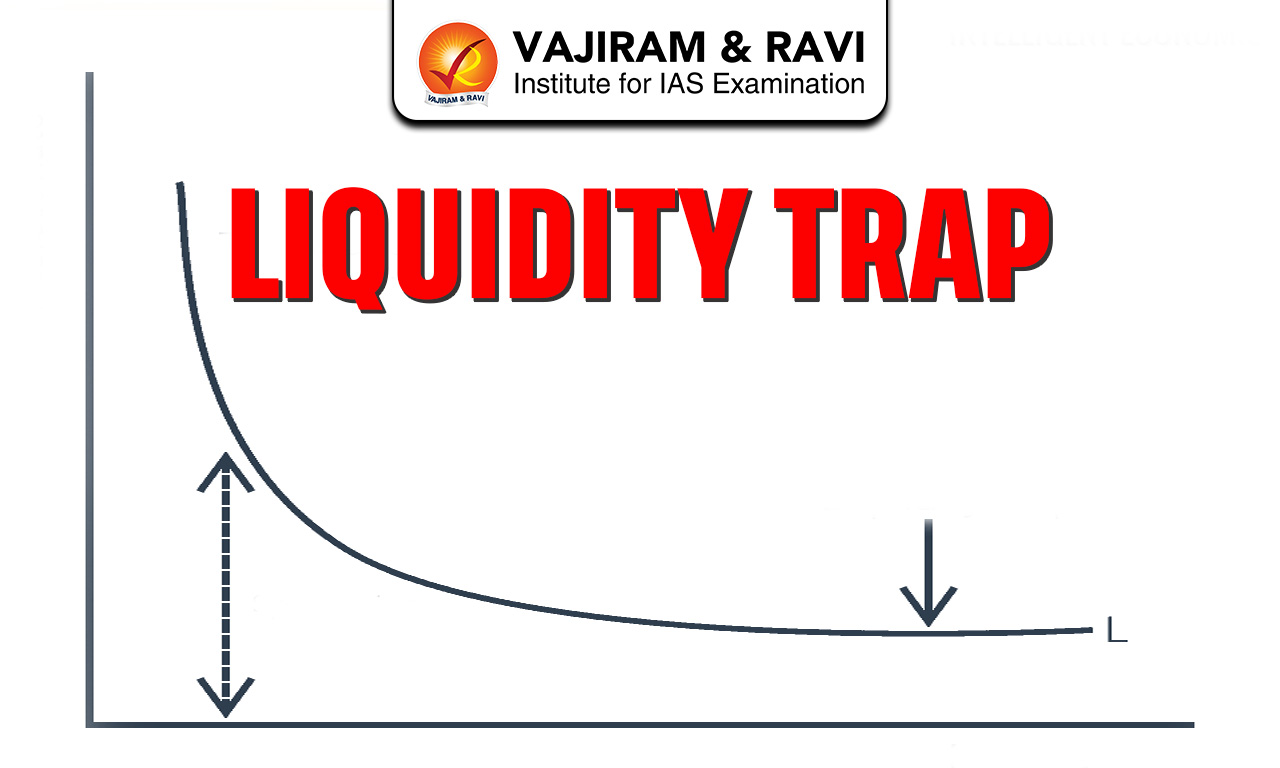
Liquidity Trap

A liquidity trap is a situation when interest rates are very low, but people still prefer to save money instead of spending or investing, which slows down economic activity. It is characterized by features like near-zero interest rates, high cash hoarding, low investment, and ineffective monetary policy. As a result, the economy faces slow growth, low demand, rising unemployment, and risk of Deflation.

What is a Liquidity Trap?

A liquidity trap happens when interest rates fall to very low levels (near 0%), but people still avoid spending or investing. Instead, they save money in bank accounts or hold cash because they are unsure about the future.

This term was first introduced by economist John Maynard Keynes. He explained that when interest rates are extremely low, people expect them to rise in the future. So, they avoid investing in bonds or financial assets, as rising interest rates can reduce their value.

Liquidity Trap Features

A liquidity trap is a situation where even after reducing interest rates, people prefer to save money instead of spending or investing. As a result, the economy does not respond to monetary policy measures.

  • Very Low Interest Rates: Interest rates fall to near zero, making borrowing cheaper, but still fail to encourage spending or investment.
  • Cash Hoarding Behavior: People prefer to keep money in cash or savings accounts instead of investing in financial assets.
  • Ineffective Monetary Policy: Central banks cannot stimulate economic growth even after increasing money supply or lowering interest rates.
  • Low Investment Demand: Businesses avoid investing due to low consumer demand and uncertain economic conditions.
  • Reduced Consumer Spending: People cut down on spending because of fear about the future economy.
  • Expectation of Rising Interest Rates: Investors expect interest rates to increase later, which may reduce bond prices, so they avoid investing now.
  • Economic Slowdown or Recession: The economy experiences slow growth or may enter a recession phase.
  • Low Inflation or Deflation: Prices either rise very slowly or start falling due to weak demand in the market.

Liquidity Trap Effects on Economy

A liquidity trap has serious effects on the overall economy because money stops circulating, and both spending and investment remain low. Even strong efforts by policymakers fail to revive economic growth.

  • Economic Slowdown: When people do not spend or invest, overall economic activity declines, leading to slow or negative growth.
  • Ineffective Monetary Policy: Central banks are unable to boost the economy despite lowering interest rates or increasing money supply.
  • Low Consumer Demand: People reduce spending on goods and services, which lowers demand in the market.
  • Decline in Investment: Businesses avoid new investments due to low demand and uncertain future conditions.
  • Unemployment Increases: Companies may cut production and jobs due to weak demand, leading to higher unemployment.
  • Deflation Risk: Continuous low demand may lead to falling prices, creating Deflation, which further discourages spending.
  • Reduced Business Profits: Lower sales result in declining profits for firms, affecting their growth and expansion plans.
  • Stagnation in Credit Growth: Even though loans are cheaper, people and businesses hesitate to borrow, slowing down credit expansion.

Liquidity Trap FAQs

Q1: What is a liquidity trap?

Ans: It is a situation where people prefer to save money instead of spending or investing, even when interest rates are very low.

Q2: Who introduced the concept of liquidity trap?

Ans: It was introduced by John Maynard Keynes.

Q3: Why does a liquidity trap occur?

Ans: It happens due to fear of economic uncertainty, low confidence, and expectations of rising interest rates.

Q4: What happens during a liquidity trap?

Ans: Spending and investment decrease, and economic growth slows down.

Q5: Why does monetary policy fail in a liquidity trap?

Ans: Because lowering interest rates further does not motivate people to spend or invest.

Ashok Dalwai Committee, Background, Objectives, Recommendations

Ashok Dalwai Committee

The Ashok Dalwai Committee was set up by the Government of India to improve the condition of farmers in the country. Its main aim was to find ways to double farmers’ income by 2022 and make agriculture more profitable and sustainable. The committee studied various problems faced by farmers, such as low income, high costs, and market challenges, and suggested practical solutions like better irrigation, improved technology, and stronger market support. It viewed agriculture as a complete economic activity, connected with markets, technology, industries, and services.

Ashok Dalwai Committee Background and Need

  • Indian agriculture mainly focused on increasing production after the Green Revolution, which improved food supply but not farmers’ income.
  • Even with higher production, farmers’ income did not increase much, creating a gap between output and earnings.
  • Farmers faced problems like low prices for crops and high cost of farming, which reduced their profits.
  • There was also poor market access and lack of proper facilities like storage and transport.
  • Farming depended heavily on weather conditions, making it risky and uncertain.
  • Therefore, the committee was formed to increase farmers’ income and make agriculture more profitable and sustainable.

Ashok Dalwai Committee Objectives

The main objective of the Ashok Dalwai Committee was to double farmers’ real income in a sustainable way.

  • It aimed to reduce the gap between farm and non-farm income so that farmers can earn better and more stable incomes.
  • The committee focused on making agriculture more efficient, productive, and profitable while reducing risks.
  • It encouraged the use of modern technology and better farming practices to improve productivity and lower costs.
  • It also aimed to strengthen farmers’ connection with markets so they can get better prices for their produce.

Important Focus Areas

The committee focused on five key areas to ensure long-term growth:

  • Proper pricing and sale of agricultural produce.
  • Sustainable farming practices to protect natural resources.
  • Efficient use of water, soil, and other inputs.
  • Strengthening agricultural extension services and spreading knowledge.
  • Managing risks through insurance, forecasting, and planning.

Major Sources of Growth

The Ashok Dalwai Committee identified seven key ways to increase farmers’ income by improving both agricultural and non-agricultural activities.

  • Within the Agriculture Sector
      • Improving crop productivity through the use of better seeds, modern technology, and efficient irrigation methods, so that farmers can produce more from the same land.
      • Increasing productivity in livestock, dairy, poultry, and fisheries, which provide additional and regular sources of income alongside crop farming.
      • Reducing the cost of production by using inputs like water, fertilizers, and labour more efficiently, which helps in increasing net profit.
      • Increasing cropping intensity by growing more than one crop in a year, making better use of land and resources.
      • Diversifying towards high-value crops such as fruits, vegetables, flowers, and horticulture products, which give higher returns compared to traditional crops.
      • Ensuring farmers receive better and fair prices for their produce through improved market systems, storage, and direct market linkages.
  • Outside the Agriculture Sector
    • Encouraging farmers to take up non-farm activities such as small businesses, food processing, rural industries, and services, so that they have multiple sources of income and are less dependent only on farming.

Ashok Dalwai Committee Major Recommendations

  • The Ashok Dalwai Committee gave several important recommendations to increase farmers’ income and make agriculture more efficient and sustainable.
  • Market and Supply Chain Reforms
    • The committee suggested creating a strong and integrated agricultural market system so that farmers can sell their produce easily and at better prices.
    • It recommended developing village-level and national-level markets connected through digital platforms to ensure wider market access.
    • Improving storage, warehousing, transportation, and cold chain facilities was emphasized to reduce post-harvest losses.
    • It also focused on providing better market information and price signals to farmers for informed decision-making.
  • Sustainable Agriculture
    • The committee stressed the need for eco-friendly and climate-resilient farming practices.
    • It encouraged organic farming, conservation agriculture, and water management techniques.
    • Use of scientific methods like soil testing, balanced fertilization, and efficient irrigation was recommended.
    • The aim was to ensure long-term productivity while protecting natural resources.
  • Increasing Productivity and Diversification
    • It recommended increasing production by using modern technology and better farming methods.
    • Farmers were encouraged to produce more with fewer resources to improve efficiency.
    • The committee also promoted diversification into high-value crops like fruits, vegetables, and horticulture to increase income.
  • Promoting Non-Farm Income
    • The committee suggested developing rural industries, small enterprises, and services near farms.
    • It encouraged activities like food processing, handicrafts, and agro-based industries.
    • This would provide additional income sources and employment opportunities, reducing dependence only on farming.
  • Risk Management
    • It emphasized improving crop insurance and weather forecasting systems to protect farmers from losses.
    • The committee also recommended better access to credit and financial support.
    • Measures were suggested to prevent distress sale of crops and help farmers manage uncertainties.
  • Strengthening Support Systems 
    • The committee highlighted the need to improve agricultural extension services and knowledge sharing.
    • It also recommended better coordination between government institutions and use of digital systems for monitoring progress.

Five Pillars of Income Growth

  • The Ashok Dalwai Committee identified five main pillars to increase and sustain farmers’ income in a simple and practical way:
  • The first pillar is increasing productivity, which means growing more crops and producing more output from the same land by using better seeds, technology, and farming methods.
  • The second pillar is reducing the cost of cultivation, so that farmers can save money by using resources like water, fertilizers, and labour more efficiently, leading to higher profits.
  • The third pillar is ensuring better prices for produce, which focuses on helping farmers sell their crops at fair and profitable prices through better markets and direct linkages.
  • The fourth pillar is promoting sustainable farming practices, which means using eco-friendly methods that protect soil, water, and the environment while maintaining long-term productivity.
  • The fifth pillar is managing risks, which includes protecting farmers from losses caused by weather, price changes, and other uncertainties through insurance, planning, and support systems.

Structure and Implementation

  • The Ashok Dalwai Committee prepared a detailed report in 14 volumes, covering various aspects of agriculture such as productivity, markets, sustainability, and risk management, to provide a complete roadmap for increasing farmers’ income.
  • It recommended setting up an Empowered Body or authority to monitor progress, guide implementation, and ensure coordination among different ministries and departments.
  • The committee suggested both short-term measures (up to 3 years) for quick improvements and long-term strategies for sustained growth in farmers’ income.
  • It also emphasized the need for coordination between central and state governments, along with involvement of local institutions, to effectively implement its recommendations.
  • The use of data, digital monitoring systems, and regular evaluation was suggested to track progress and improve policy decisions.
  • Many of its important recommendations have already been adopted by the government and included in policies, schemes, and Union Budgets to support farmers.

Ashok Dalwai Committee Significance

  • The Ashok Dalwai Committee is important because it shifted the focus of agriculture from only increasing production to increasing farmers’ income, which directly improves their standard of living.
  • It provided a clear and practical roadmap for making farming more profitable, sustainable, and modern.
  • The committee helped in promoting the idea of farmers as entrepreneurs, encouraging them to connect with markets and make better economic decisions.
  • Its recommendations strengthened market systems, infrastructure, and supply chains, helping farmers get better prices for their produce.
  • It also emphasized sustainable and climate-friendly farming, which is important for protecting natural resources and ensuring long-term growth.
  • The focus on risk management, insurance, and diversification of income made farming more secure and less uncertain.

Ashok Dalwai Committee FAQs

Q1: What is the Ashok Dalwai Committee?

Ans: It is a committee set up by the Government of India to improve farmers’ conditions and suggest ways to double their income and make agriculture more profitable.

Q2: What was the main aim of the committee?

Ans: Its main aim was to double farmers’ income by 2022 in a sustainable and practical way.

Q3: Why was the committee formed?

Ans: It was formed because even though agricultural production increased after the Green Revolution, farmers’ income remained low due to high costs, low prices, and poor market access.

Q4: What was the major focus of the committee?

Ans: The committee focused on increasing income instead of just production, and treated agriculture as a complete economic activity linked with markets and technology.

Q5: What are the key sources of increasing farmers’ income?

Ans: The committee identified sources like improving productivity, reducing costs, better pricing, diversification, and non-farm activities.

Laffer Curve, Meaning, Working Mechanism and Relevance

Laffer Curve

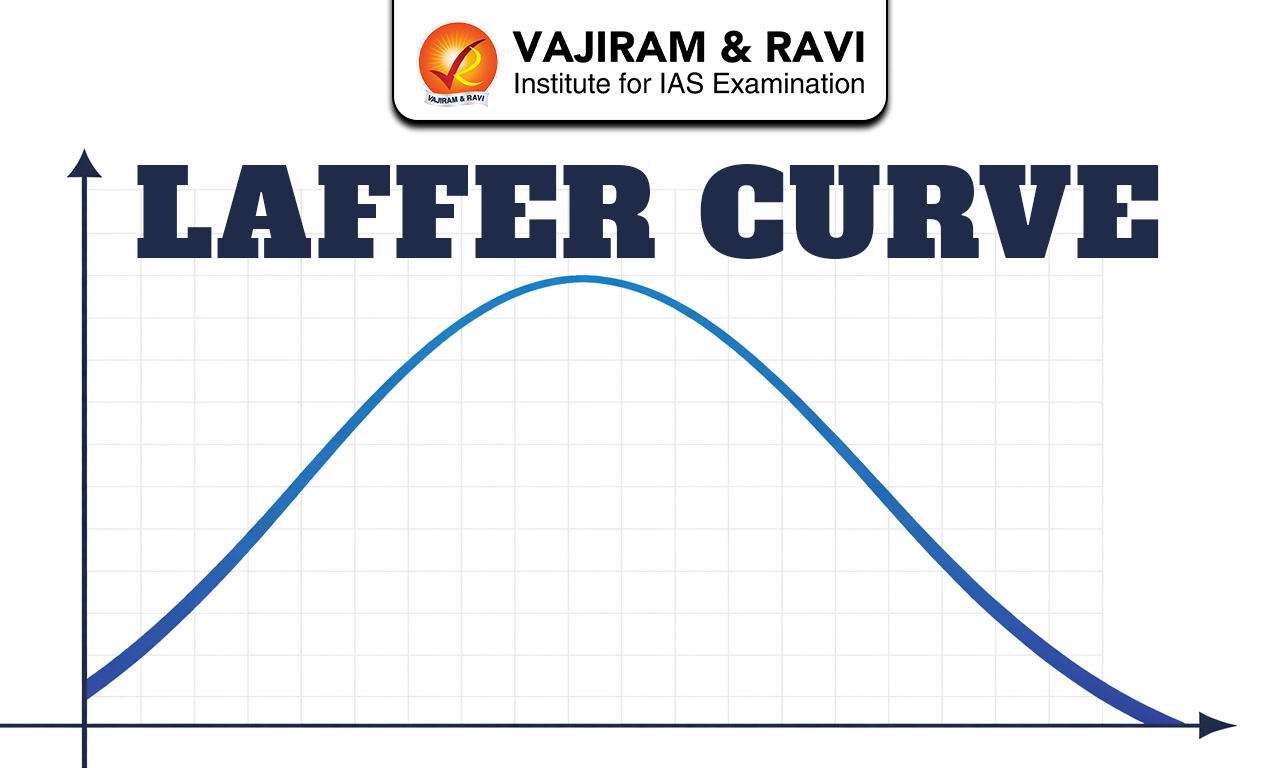
The Laffer Curve is an economic concept that illustrates how taxation influences government revenue, highlighting the balance between tax rates, incentives, and economic growth.

About Laffer Curve

The Laffer Curve is a concept in economics that explains how tax rates affect government revenue

  • The Laffer curve shows how tax revenues change when the tax rate is either increased or decreased. 
  • Typically, the Laffer Curve has an inverted-U shape. 
  • It was popularised in 1974 by economist Arthur Laffer in a discussion with former U.S. President Gerald Ford.
  • The curve supports the notion in supply-side economics that tax and regulatory burdens can impede growth.

It became an important part of supply-side economics, which emphasizes that economic incentives like taxation affect production, investment, and growth.

Laffer Curve Working Mechanism 

The Laffer Curve demonstrates the relationship between tax rates and government revenue, showing that revenue does not increase indefinitely with higher taxation. 

  • At very low tax rates, government revenue is minimal because only a small portion of income is collected. 
  • As tax rates rise, revenue increases since the government collects a larger share of income while economic activity remains robust.
  • However, beyond a certain threshold known as the revenue-maximizing tax rate, further increases in taxation reduce incentives for work, investment, and production. Individuals and businesses may choose to work less, save less, or engage in tax avoidance, leading to a decline in total revenue. 
  • At the extreme, a hypothetical 100% tax rate would yield zero revenue, as there would be no incentive to earn taxable income. 
  • The curve, typically represented as an inverted-U shape, emphasizes that effective fiscal policy must strike a balance between generating sufficient revenue and maintaining incentives for productive economic activity. 

By incorporating behavioral responses, the Laffer Curve provides a theoretical framework for understanding how tax policy influences economic growth and government finances.

Also Read: Direct Tax, Features, Types, CBDT, Impact on Indian Economy

Laffer Curve Contemporary Relevance

In countries like India, the Laffer Curve provides guidance for:

  • Designing tax rates that balance revenue collection with economic incentives.
  • Implementing targeted tax reforms for investment, small businesses, and innovation.
  • Ensuring fiscal policy supports growth, fairness, and sustainable development.

Also Read: Indirect Tax

Limitations of the Laffer Curve

While the Laffer Curve provides useful insights into the relationship between tax rates and revenue, it has several limitations. 

  • First, it oversimplifies real-world tax systems, often considering a single tax rate while ignoring multiple taxes, exemptions, and indirect levies. 
  • Second, the revenue-maximizing tax rate is difficult to determine empirically, as it varies across countries, sectors, and economic conditions. 
  • Third, it assumes predictable behavioral responses, but in reality, taxpayers’ reactions are complex, influenced by enforcement, culture, and alternative income sources. 
  • Fourth, over-reliance on the curve may justify large tax cuts that reduce fiscal revenue and increase deficits, especially in developing economies with limited revenue bases. 
  • Lastly, it does not account for broader economic objectives, such as equity, social welfare, and redistribution, focusing solely on revenue maximization rather than holistic fiscal policy.

Laffer Curve FAQs

Q1: What is the Laffer Curve?

Ans: The Laffer Curve is an economic concept that shows the relationship between tax rates and government revenue, illustrating that revenue increases with higher taxes only up to a point, after which it can decline if rates are too high.

Q2: Who popularized the Laffer Curve?

Ans: The concept was popularized in 1974 by economist Arthur Laffer during a discussion with former U.S. President Gerald Ford.

Q3: What is the main idea behind the Laffer Curve?

Ans: It emphasizes that both excessively low and excessively high tax rates can reduce government revenue. There exists a revenue-maximizing tax rate where revenue is highest, and beyond that, higher rates discourage work, investment, and compliance.

Q4: How does the Laffer Curve work?

Ans: At low tax rates, revenue is small because only a fraction of income is taxed. As rates rise, revenue grows, but after the optimal point, higher rates reduce incentives to earn or report income, causing total revenue to fall.

Q5: What are the limitations of the Laffer Curve?

Ans: It simplifies complex tax systems, assumes predictable behavior, cannot precisely determine the revenue-maximizing rate, and ignores broader goals like equity, social welfare, and fiscal stability.

Quantitative Easing, Background, Objectives, Advantages

Quantitative Easing

Quantitative Easing (QE) is an advanced monetary policy used by central banks to increase the supply of money in the economy during times of economic slowdown or financial crisis. It is called “quantitative” because it focuses on increasing the quantity of money, and “easing” because it aims to make financial conditions easier.

In simple language, QE means that a central bank creates new money digitally and uses it to purchase government bonds and other financial assets from banks and institutions. This injects liquidity into the system, making it easier for people and businesses to borrow and spend.

Quantitative Easing Background

Quantitative Easing became widely known after the 2008 Global Financial Crisis, when traditional tools like reducing interest rates were no longer effective.

  • Before QE, central banks mainly controlled the economy by changing interest rates
  • During severe recessions, interest rates often fall close to zero (Zero Lower Bound)
  • At this stage, central banks need alternative tools like QE
  • QE was first used extensively by the Federal Reserve
  • Later adopted by the European Central Bank and the Bank of Japan

Quantitative Easing Objectives

Quantitative Easing is introduced to achieve multiple economic goals when normal policies fail.

  • Increase Money Supply: QE injects large amounts of money into the economy to improve liquidity
  • Boost Economic Growth: Encourages businesses to invest and expand production
  • Promote Lending: Banks get more funds, making it easier to provide loans to individuals and companies
  • Reduce Unemployment: Increased investment leads to job creation
  • Prevent Deflation: Helps avoid falling prices, which can harm economic activity
  • Stabilize Financial Markets: Supports stock markets and bond markets during crises

How Quantitative Easing Works?

Quantitative Easing (QE) works by injecting money directly into the financial system to increase liquidity and encourage economic activity. It mainly targets long-term interest rates and boosts lending when traditional policies fail.

  • The central bank creates new money electronically (digital money creation)
  • It purchases government bonds and financial assets from banks and institutions
  • Banks receive cash in exchange, increasing their reserves
  • This reduces long-term interest rates due to higher demand for bonds
  • Lower interest rates make borrowing cheaper for businesses and individuals
  • Banks are encouraged to lend more due to excess liquidity
  • Increased lending leads to higher spending and investment
  • Economic activity rises, helping growth and employment 

Quantitative Easing in India

In India, full-scale Quantitative Easing has not been officially implemented, but similar liquidity-boosting measures have been adopted by the Reserve Bank of India during economic stress.

  • RBI uses Open Market Operations (OMO) to buy government securities
  • Long-Term Repo Operations (LTRO) provide long-term funds to banks
  • Targeted LTRO (TLTRO) supports specific sectors like NBFCs and MSMEs
  • Government Securities Acquisition Programme (G-SAP) is closest to QE
  • These measures were widely used during COVID-19 to support the economy
  • Focus is on maintaining liquidity and stable financial markets
  • RBI follows a cautious approach to avoid inflation risks
  • India’s strategy balances growth with financial stability

Real-World Examples of Quantitative Easing

Quantitative Easing has been widely used by major central banks across the world during financial crises and economic slowdowns.

  • The Federal Reserve introduced QE during the 2008 crisis (QE1, QE2, QE3)
  • It purchased trillions of dollars in bonds to stabilize the economy
  • The European Central Bank used QE during the Eurozone debt crisis
  • Focus was on government bond purchases to support weak economies
  • The Bank of Japan has used QE for decades
  • Japan aimed to fight deflation and boost demand
  • QE was also used globally during the COVID-19 pandemic
  • Many countries used QE to prevent economic collapse

Quantitative Easing Advantages

Quantitative Easing (QE) helps stimulate the economy by increasing liquidity and encouraging borrowing, spending, and investment. It is especially effective during recessions when traditional monetary tools become less useful.

  • Increases Money Supply: Injects large amounts of money into the economy, improving overall liquidity
  • Reduces Long-Term Interest Rates: Buying bonds raises their prices and lowers yields, making borrowing cheaper
  • Encourages Lending: Banks have more reserves, which motivates them to provide loans to businesses and individuals
  • Boosts Investment: Lower interest rates encourage companies to invest in expansion and new projects
  • Supports Economic Growth: Higher spending and investment lead to increased production and GDP growth
  • Prevents Deflation: Helps maintain price stability by avoiding falling prices
  • Stabilizes Financial Markets: Provides support to bond and stock markets during crises
  • Increases Asset Prices: Raises prices of stocks and real estate, improving wealth perception
  • Improves Employment: Increased business activity leads to job creation
  • Enhances Consumer Confidence: Economic stability encourages people to spend rather than save excessively

Quantitative Easing Disadvantages

Quantitative Easing (QE) can support economic recovery, but it also creates several risks if used excessively or for a long time. These drawbacks can affect financial stability and increase inequality in the economy.

  • Risk of Inflation: Excess money supply can lead to rising prices if demand grows faster than supply
  • Asset Price Bubbles: QE can push up prices of stocks and real estate beyond their real value
  • Income and Wealth Inequality: Wealthier individuals benefit more as they own financial assets that increase in value
  • Currency Depreciation: Increased money supply can weaken the domestic currency, affecting imports
  • Limited Impact on Lending: Banks may prefer to hold reserves instead of giving loans, reducing QE effectiveness
  • Difficult Exit Strategy: Withdrawing liquidity without disturbing markets is complex and risky
  • Market Distortion: Artificially lowers interest rates, which may misprice risk in financial markets
  • Dependence on Central Banks: Economies may become overly reliant on continuous monetary support
  • Risk of Future Financial Instability: Prolonged QE can create imbalances that may lead to future crises
  • Uneven Economic Benefits: The benefits of QE may not reach small businesses or lower-income groups effectively

Quantitative Easing FAQs

Q1: What is Quantitative Easing (QE)?

Ans: Quantitative Easing is a monetary policy where a central bank creates money digitally and buys financial assets to increase liquidity and support economic growth.

Q2: When is Quantitative Easing used?

Ans: QE is used during economic slowdown, recession, or crisis when interest rates are already very low and traditional policies are ineffective.

Q3: How is QE different from normal monetary policy?

Ans: Normal policy changes short-term interest rates, while QE focuses on buying assets to reduce long-term interest rates and increase money supply.

Q4: Does QE mean printing money?

Ans: QE involves digital money creation by central banks, not physical printing, but both increase the overall money supply.

Q5: What assets are purchased under QE?

Ans: Central banks mainly buy government bonds, but they may also purchase corporate bonds and other financial securities.

Brundtland Commission 1983, Background, Report, SDG, Impacts

Brundtland Commission

The Brundtland Commission is officially known as the World Commission on Environment and Development (WCED). It was established in 1983 by the United Nations to address growing global concerns over environmental degradation and development conflicts. It gained worldwide recognition through its 1987 report “Our Common Future”, which introduced the concept of Sustainable Development. The Commission played a crucial role in linking environmental protection with economic growth and social equity, shaping global policy discourse.

Brundtland Commission Background

The Brundtland Commission emerged amid rising environmental and developmental concerns globally during the late 20th century.

  • Environmental crisis context: Rapid industrialisation in the 1970s and 1980s led to pollution, deforestation, biodiversity loss and resource depletion, raising serious global environmental concerns.
  • Developmental tensions: Developing nations prioritised poverty alleviation and economic growth, while developed nations emphasised environmental protection, creating a conflict between growth and conservation goals.
  • UNGA Resolution 38/161: On 19 December 1983, the United Nations General Assembly established WCED to propose long term strategies for sustainable development and global cooperation.
  • Leadership and composition: Chaired by Gro Harlem Brundtland, the Commission included members from 21 countries, representing both developed and developing nations to ensure balanced global perspectives.
  • Global challenges addressed: Issues such as climate change, ozone depletion, desertification and resource scarcity highlighted the need for coordinated international action beyond national policies.

Brundtland Commission Objectives

The Brundtland Commission was assigned a comprehensive mandate to integrate environment and development issues globally.

  • Re-examining global issues: It aimed to analyse critical environmental and developmental challenges and propose realistic, long term solutions for sustainable growth.
  • Promoting sustainable development: The Commission sought to integrate economic growth with environmental conservation and social equity through practical policy strategies.
  • Strengthening cooperation: It focused on enhancing international collaboration between developed and developing countries for managing shared environmental concerns.
  • Raising awareness: The Commission worked to increase global understanding of the interdependence between environment, development and human well being.
  • Policy recommendations: It aimed to develop actionable policies ensuring long term sustainability while addressing poverty, inequality and environmental degradation.

Brundtland Commission Report

The Brundtland Commission released a report in 1987- “Our Common Future”, which became a landmark document in global environmental governance. The key highlights of the report are:

  • Definition of sustainable development: It defined sustainable development as development meeting present needs without compromising future generations’ ability to meet their needs.
  • Integration approach: The report emphasised that economic development and environmental protection are interconnected and must be pursued simultaneously.
  • Global issues identified: It highlighted climate change, biodiversity loss, deforestation, population growth, food security and energy challenges as urgent global threats.
  • Focus on poverty: The report identified poverty as both a cause and consequence of environmental degradation, stressing the need for equitable development strategies.
  • Call for cooperation: It recommended stronger international institutions and agreements to manage global commons and ensure sustainable resource use.

Brundtland Commission Sustainable Development Goals

The ideas of the Brundtland Commission laid the conceptual foundation for later global development frameworks including SDGs.

  • Three pillars concept: It introduced the integration of economic growth, environmental protection and social equity as core pillars of sustainable development.
  • Influence on MDGs and SDGs: Its framework directly influenced the Millennium Development Goals (2000-2015) and Sustainable Development Goals (2015-2030).
  • Holistic development vision: The Commission promoted a balanced approach addressing poverty, inequality, climate change and resource management simultaneously.
  • Global action framework: The SDGs reflect its emphasis on international cooperation, shared responsibility and inclusive development strategies.
  • Long term sustainability agenda: It provided a roadmap for achieving sustainable development through coordinated global efforts across sectors and nations.

Brundtland Commission Impacts

The Brundtland Commission had significant long term impacts on global environmental governance and policy frameworks.

  • Policy transformation: Its recommendations shaped national and international environmental and development policies across multiple countries and institutions.
  • Rio Earth Summit: It directly inspired the 1992 United Nations Conference on Environment and Development held in Rio de Janeiro.
  • Climate change awareness: The report elevated global understanding of climate change, contributing to the creation of the UNFCCC framework.
  • Academic influence: Sustainable development became a central concept in environmental studies, economics and public policy worldwide.
  • Institutional strengthening: It promoted global governance mechanisms and encouraged collaboration between governments, NGOs and international organisations.

Brundtland Commission Significance

The Brundtland Commission represents a major milestone in redefining global development paradigms.

  • Conceptual shift: It transformed the idea of development by integrating environmental sustainability with economic and social dimensions.
  • Intergenerational equity: The report emphasised fairness between present and future generations in resource use and development planning.
  • Global governance foundation: It laid the groundwork for international environmental agreements and sustainability frameworks.
  • Bridging global divide: The Commission attempted to reconcile differences between developed and developing countries on growth and environmental priorities.
  • Enduring relevance: Its principles continue to guide global debates on climate change, sustainability and equitable development in the 21st century.

Brundtland Commission Criticism

Despite its influence, the Brundtland Commission faced several criticisms regarding its approach and implementation.

  • Vagueness of definition: Critics argue the concept of sustainable development is too broad and ambiguous, allowing multiple interpretations that often prioritise economic growth over environmental protection.
  • Implementation challenges: Many countries struggled to convert recommendations into concrete policies, resulting in gaps between theoretical framework and practical execution.
  • Growth centric approach: Some analysts believe the emphasis on continued economic growth undermines ecological limits and environmental sustainability concerns.
  • North-South inequality: Developing nations argued the Commission did not adequately address structural inequalities in trade, finance and technology transfer between developed and developing countries.
  • Lack of measurable targets: The absence of clear quantitative indicators made it difficult to assess progress and enforce accountability in sustainable development efforts. 

Brundtland Commission FAQs

Q1: What is the Brundtland Commission?

Ans: The Brundtland Commission, officially the World Commission on Environment and Development (WCED), was established by the United Nations in 1983 to address global environmental and development challenges.

Q2: What is the main contribution of the Brundtland Commission?

Ans: Its key contribution is the 1987 report Our Common Future, which introduced and defined the concept of sustainable development.

Q3: What is the definition of sustainable development given by the Brundtland Commission?

Ans: It is defined as development that meets present needs without compromising the ability of future generations to meet their own needs.

Q4: How did the Brundtland Commission influence global policies?

Ans: It laid the foundation for major global initiatives like the Rio Earth Summit (1992), Millennium Development Goals and Sustainable Development Goals.

Q5: What are the major criticisms of the Brundtland Commission?

Ans: Major criticisms include its vague definition of sustainable development, lack of measurable targets, implementation challenges and insufficient focus on global inequalities.

TAK-003 (Qdenga) Dengue Vaccine, Advantages, Challenges

TAK-003 (Qdenga) Dengue Vaccine

Takeda’s tetravalent dengue vaccine, TAK-003 (called ‘Qdenga’), recently received clearance from the Subject Expert Committee (SEC) under the Drugs Controller General of India (DCGI) for use among individuals aged 4 to 60 years.

About TAK-003 (Qdenga) Dengue Vaccine 

  • TAK-003 (Qdenga) is a dengue vaccine developed by the Japanese pharmaceutical company Takeda. 
  • It is a tetravalent dengue vaccine, designed to provide protection against all four dengue virus serotypes (DENV-1 to DENV-4).
  • It is a disease-modifying vaccine, meaning it reduces severity but does not fully prevent infection. 
  • It has been tested on more than 28,000 participants globally and is already approved in over 40 countries.
  • It has been approved in India by the Subject Expert Committee (SEC) under the Drugs Controller General of India (DCGI) for individuals aged 4 to 60 years.

TAK-003 (Qdenga) Dengue Vaccine Advantages 

The approval of TAK-003 (Qdenga) Vaccine marks an important step in strengthening India’s dengue control strategy. It represents a shift from a reactive to a more preventive approach. 

  • Unlike earlier dengue vaccines, it does not require pre-vaccination screening for prior dengue infection, making it easier to administer in real-world conditions.
  • The vaccine has demonstrated good safety and strong protection against severe dengue and hospitalisation. 
  • In a country like India, where healthcare systems often face pressure during dengue outbreaks, even a moderate reduction in severe cases can significantly reduce hospital burden and improve health outcomes, especially among children and adolescents.

TAK-003 (Qdenga) Dengue Vaccine Challenges and Limitations

While TAK-003 (Qdenga) Vaccine represents a significant advancement in dengue control, it is important to understand its limitations and the challenges associated with its use in the Indian context.

  • Uneven effectiveness across serotypes:  Dengue is caused by four different serotypes (DENV-1 to DENV-4), and protection against one does not ensure protection against others. In some cases, it may even increase the risk of severe disease on later infection, making vaccine development complex. TAK-003 (Qdenga) vaccine shows strong effectiveness against DENV-2 and reasonable protection against DENV-1, but its effectiveness against DENV-3 and DENV-4 appears to be lower, especially in people who have never had dengue before. This is important for India because all four serotypes are present, and DENV-3 is increasing, contributing around 20-30% of cases in some regions. This may reduce the vaccine’s overall effectiveness at the population level.
  • Limited Impact on Transmission: TAK-003 is a disease-modifying vaccine rather than a transmission-blocking one. It reduces the severity of illness but does not prevent infection entirely, which means dengue outbreaks are likely to continue and vector control measures will remain indispensable.
  • Cost and Accessibility Concerns: The vaccine requires two doses, and the total cost is expected to be Rs 6,000-12,000, which raises concerns about affordability and access, especially for poorer populations.

India’s Indigenous Dengue Vaccine Pipeline

TAK-003 (Qdenga) Vaccine may represent the first major step in India’s dengue vaccination efforts, but it is not the final solution. 

  • India is developing an indigenous dengue vaccine, ‘DengiAll’, in collaboration with Panacea Biotec and Indian Council of Medical Research (ICMR). 
  • DengiAll is based on the U.S. National Institutes of Health (NIH) TV003 platform.
  • It is a single-dose vaccine designed to provide balanced protection against all four serotypes. 
  • Early data from similar vaccines indicate strong protection against severe dengue. 
  • If successful, DengiAll could be available in India by 2027, offering an improved solution for large-scale public health deployment.

Way Forward 

A multi-pronged strategy combining vaccination, surveillance, and vector control will be essential for sustainable dengue control in India.

  • India should focus on integrating vaccination with existing public health measures. 
  • TAK-003 can be used to reduce severe dengue cases and hospitalisation, particularly in high-burden regions, but it should not be seen as a standalone solution. There is a need to strengthen vector control measures such as eliminating mosquito breeding sites, insecticide use, and public awareness campaigns, as the vaccine does not prevent transmission and outbreaks may continue.
  • Ensuring affordability and wider access will be important for improving coverage, especially among vulnerable populations.
  • At the same time, post-marketing surveillance must be prioritised to assess real-world effectiveness across regions and serotype patterns. 
  • In the long term, India should remain open to adopting improved vaccines such as DengiAll, which may offer more balanced protection.

TAK-003 (Qdenga) Dengue Vaccine FAQs

Q1: What is the TAK-003 (Qdenga) Vaccine?

Ans: The TAK-003 (Qdenga) Vaccine is a tetravalent dengue vaccine developed by Takeda Pharmaceutical Company to provide protection against all four dengue virus serotypes.

Q2: Who approved the TAK-003 (Qdenga) Dengue Vaccine in India?

Ans: The TAK-003 (Qdenga) Dengue Vaccine has been approved by the Subject Expert Committee (SEC) under the Drugs Controller General of India (DCGI).

Q3: Who can take the TAK-003 (Qdenga) Dengue Vaccine?

Ans: The TAK-003 (Qdenga) Dengue Vaccine is approved for individuals aged 4 to 60 years in India.

Q4: How does the TAK-003 (Qdenga) Dengue Vaccine work?

Ans: The TAK-003 (Qdenga) Dengue Vaccine is a disease-modifying vaccine, meaning it reduces the severity of dengue illness rather than completely preventing infection.

Q5: Does the TAK-003 (Qdenga) Dengue Vaccine prevent dengue completely?

Ans: No, the TAK-003 (Qdenga) Dengue Vaccine does not fully prevent infection. It is a disease-modifying vaccine, meaning it mainly reduces the severity of dengue illness rather than completely preventing infection.

Molucca Sea, Location, Geography, Tectonic Activity

Molucca Sea

An earthquake of magnitude 7.6 struck the Northern Molucca Sea in Indonesia, causing damage, one death, tsunami waves, and multiple aftershocks.

About Molucca Sea 

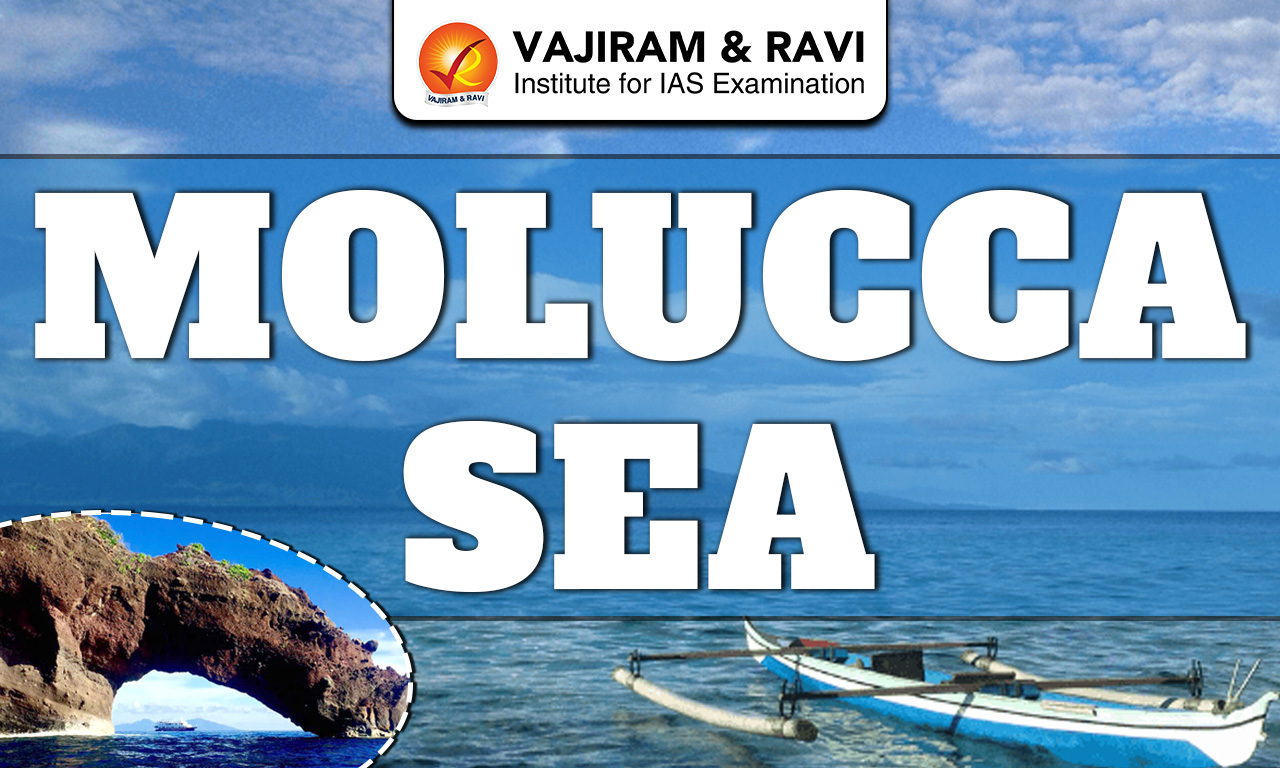
  • The Molucca Sea, also known as Laut Maluku in Indonesia, is a part of the western Pacific Ocean.
  • It is bounded by Sulawesi (Celebes) to the west, Halmahera to the east, and the Sula Islands to the south, and opens towards the Pacific Ocean through the Molucca Passage in the northeast.
  • It has a surface area of 77,000 square miles or 200,000 square kilometres and a maximum depth of 4810 m.
  • The Molucca Sea is divided into three zones based on depth and ocean currents
    • Northern zone: Located north of the Sula Islands, it is shallow and receives warm waters from the Pacific through ocean currents.
    • Central zone: Situated between the Sula and Banggai-Sula Islands, it has intermediate depths (up to around 800 m) and acts as a mixing zone for warm and cooler waters.
    • Southern zone: Found south of the Banggai-Sula Islands, it is the deepest region (over 1000 m in places) and experiences upwelling of cool, nutrient-rich waters, making it biologically productive.
  • Batjan (Bacan) Basin is the deepest part of the Molucca Sea, reaching about 4,810 m (15,780 ft), and is a sediment-filled basin formed on oceanic crust. The basin developed due to tectonic interactions among the Eurasian, Philippine Sea, and Australian plates, and lies in an active collision zone.
  • The Molucca Sea supports abundant marine life and is an important fishing ground for local communities. Key fisheries include tuna, snapper, grouper, shrimp, and lobster, with tuna being the most commercially significant.
  • The Molucca Sea region has several important seaports that support trade and economic activity. The major seaports in the Molucca Sea region include Bitung, Tubang, Ternate, Ambon, and Namlea port. 
  • The Moluccas, also known as the Spice Islands, were historically important for valuable spices like nutmeg, cloves, and mace, attracting traders from Asia and later European powers. 
  • Their strategic location made the Molucca Sea a key route for trade, leading to conflicts among the British, Portuguese, Spanish, and Dutch, who established military and trading bases to control these routes.
  • The Molucca Sea region experiences a tropical climate with high temperatures and humidity, making it suitable for tourism.

The Molucca Sea lies over the Molucca Sea Plate, where major tectonic plates interact, making it geologically active.

Molucca Sea FAQs

Q1: Where is the Molucca Sea located?

Ans: Molucca Sea is a marginal sea of the western Pacific Ocean located in Indonesia. It lies between Sulawesi to the west and Halmahera to the east, opening into the Pacific Ocean through the Molucca Passage.

Q2: Why is the Molucca Sea geologically active?

Ans: The Molucca Sea is geologically active because it lies at the convergence of the Eurasian, Philippine Sea, and Australian tectonic plates, making it prone to earthquakes and volcanic activity.

Q3: What is the depth of the Molucca Sea?

Ans: The Molucca Sea has a maximum depth of about 4,810 metres, with the deepest part located in the Batjan (Bacan) Basin.

Q4: What is the economic importance of the Molucca Sea?

Ans: The Molucca Sea is an important fishing ground, especially for tuna, and supports regional trade through several ports in eastern Indonesia.

Q5: What is the historical significance of the Molucca Sea?

Ans: The Molucca Sea region, part of the Moluccas, was historically known as the Spice Islands and attracted European colonial powers due to its valuable spices.

Deflation, Types, Causes, Advantages, Disadvantages

Deflation

Deflation is an important economic concept that refers to a continuous fall in the general prices of goods and services over time. Although it looks beneficial because things become cheaper, it can create serious problems for the economy if it continues for a long period.

What is Deflation?

Deflation means a long-term decline in the prices of goods, services, and assets in an economy. It is also called negative inflation because prices move downward instead of increasing. Deflation is often seen as a warning sign of economic slowdown or recession.

Example: If a mobile phone costs ₹20,000 today and after some time it becomes ₹18,000, it shows deflation.

Deflation Types

Deflation can occur in different forms depending on economic conditions and policy actions. Understanding its types helps in identifying the reasons behind falling prices and their impact on the economy.

  1. Strategic Deflation: This type of deflation happens when the government or central bank, such as the Reserve Bank of India, intentionally reduces demand to control rising prices.
  2. Circulation Deflation: It occurs due to economic instability or slowdown, where people reduce spending because of uncertainty about the future.

Deflation Causes

Deflation occurs when there is a continuous fall in the general price level of goods and services due to changes in demand, supply, and money flow in the economy. These causes often work together and create a downward pressure on prices.

  • Fall in Aggregate Demand: When people reduce spending due to low income or uncertainty, demand decreases, forcing businesses to lower prices.
  • Increase in Supply (Overproduction): If goods are produced in excess compared to demand, sellers reduce prices to clear stock.
  • Tight Monetary Policy: When central banks like the Reserve Bank of India increase interest rates or reduce money supply, borrowing and spending decline.
  • Decrease in Production Costs: Lower costs of raw materials, labour, or transportation reduce overall production cost, leading to lower prices.
  • Technological Advancements: Improved technology increases efficiency and production, which can reduce the cost of goods and push prices downward.
  • High Taxes and Reduced Government Spending: Higher taxes reduce disposable income, and lower government spending reduces overall demand in the economy.
  • Increase in Savings: When people prefer saving over spending, money circulation reduces, leading to lower demand and falling prices.
  • Global Economic Slowdown: Weak global demand reduces exports and overall economic activity, contributing to deflation.

Deflation Advantages

Deflation, though generally seen as harmful, can provide some short-term benefits to consumers and businesses when prices fall. These advantages mainly arise due to increased purchasing power and lower costs in the economy.

  • Increased Purchasing Power: People can buy more goods and services with the same amount of money as prices fall.
  • Lower Cost of Living: Essential items like food, clothing, and housing become more affordable.
  • Encourages Savings: The value of money increases over time, motivating people to save more.
  • Reduced Production Costs: Businesses benefit from lower raw material and input costs, which can improve profitability.
  • Better Resource Utilization: Companies focus on efficiency and cost-cutting to survive in a low-price environment.
  • Opportunities for Investors: Falling asset prices can create chances to invest at lower prices.
  • Improved Standard of Living (Short-term): Consumers may enjoy a higher standard of living due to cheaper goods.

Deflation Disadvantages

Deflation may seem beneficial due to falling prices, but it can have serious negative effects on the overall economy. Over time, it reduces demand, slows growth, and creates economic instability.

  • Reduced Consumer Spending: People delay purchases expecting prices to fall further, which decreases demand in the economy.
  • Decline in Business Profits: Lower prices reduce revenue for businesses, making it harder to cover costs.
  • Increase in Unemployment: Companies cut production and lay off workers due to falling profits.
  • Higher Real Debt Burden: The value of money increases, making loans more expensive to repay for borrowers.
  • Lower Economic Growth: Reduced spending and investment slow down overall economic activity.
  • Fall in Investment: Businesses avoid expansion due to uncertain demand and lower returns.
  • Risk of Deflationary Spiral: Continuous fall in prices leads to a cycle of low demand, low production, and rising unemployment.
  • Decline in Asset Prices: Prices of stocks, real estate, and other assets may fall, causing losses to investors.

Deflation FAQs

Q1: What is deflation?

Ans: Deflation is a continuous fall in the general price level of goods and services in an economy over time.

Q2: Is deflation good or bad?

Ans: Deflation is generally bad because it reduces demand, slows economic growth, and increases unemployment.

Q3: What are the main causes of deflation?

Ans: Major causes include low demand, excess supply, tight monetary policy, reduced money supply, and economic slowdown.

Q4: What is the opposite of deflation?

Ans: The opposite of deflation is inflation, where prices rise over time.

Q5: How does deflation affect consumers?

Ans: Consumers may benefit from lower prices, but they often delay purchases, which reduces overall economic activity.

Sachar Committee, Objectives, Key Findings, Major Recommendations

Sachar Committee

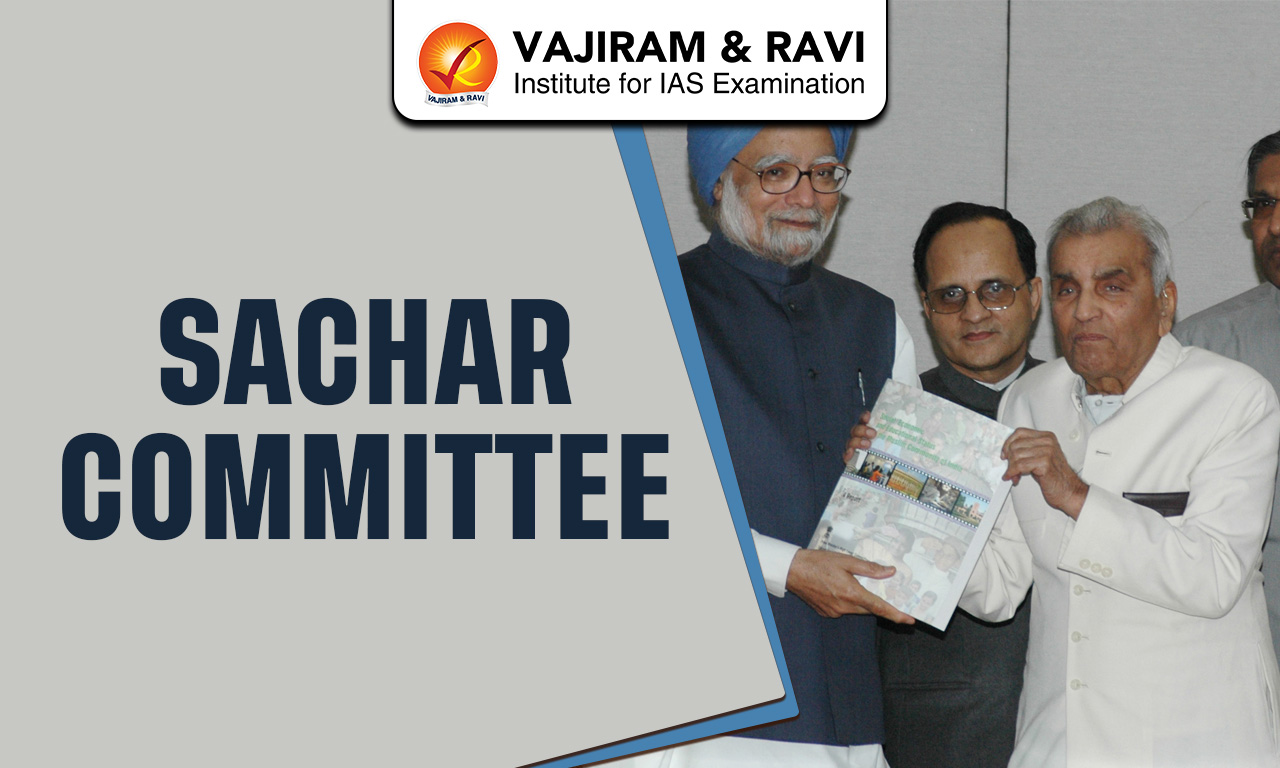
The Sachar Committee was a high-level committee set up by the Government of India in 2005 to study the social, economic, and educational conditions of Muslims in India. It was one of the most important efforts to understand the challenges faced by minority communities in the country.

The committee submitted its report in 2006, and it highlighted serious issues like low education levels, poor employment opportunities, and lack of access to basic facilities among Muslims. The report became a key document for policymaking and inclusive development in India.

Sachar Committee Objectives

The main objective of the Sachar Committee was to study and analyze the condition of Muslims in India and suggest ways to improve their situation. 

  • To collect reliable data on the social and economic status of Muslims
  • To examine their educational condition
  • To analyze their employment opportunities
  • To study their representation in government jobs and institutions
  • To assess access to healthcare, banking, and infrastructure
  • To suggest policies for inclusive growth and equal opportunities

Sachar Committee Key Findings

The Sachar Committee revealed that Muslims in India were facing serious socio-economic and educational disadvantages compared to other communities. The report highlighted gaps in education, employment, income, and access to basic facilities, showing the need for targeted government intervention.

  • Low Literacy Rate: Muslim literacy was below the national average, with higher dropout rates, especially among girls.
  • Poor Higher Education Participation: Very few Muslims reached colleges and universities due to financial and social barriers.
  • Low Representation in Government Jobs: Muslims had very limited presence in:
    • Civil services
    • Police
    • Public sector jobs
  • Dependence on Informal Sector:  A large number of Muslims worked in low-paying, unorganized sectors like small trades, handicrafts, and daily wage jobs.
  • High Poverty Levels: Many Muslim families lived below the poverty line with unstable income sources.
  • Limited Access to Banking Services: Muslims faced difficulty in getting:
    • Bank loans
    • Financial support
    • Credit facilities
  • Poor Infrastructure in Muslim Areas: Muslim-dominated localities often lacked:
    • Proper schools
    • Healthcare facilities
    • Roads and sanitation
  • Political Underrepresentation: Muslims had low representation in:
    • Parliament
    • State Assemblies
    • Decision-making bodies
  • Comparison with Other Communities: In many indicators, Muslims were found to be as backward as or even worse than Scheduled Castes and Scheduled Tribes.
  • Identity and Security Issues: The report also pointed out concerns related to social discrimination and insecurity, affecting their overall development.

Major Recommendations of the Sachar Committee

The Sachar Committee suggested several important measures to improve the social, economic, and educational conditions of Muslims in India. These recommendations focused on ensuring equal opportunities, better access to resources, and inclusive development.

  • Establish an Equal Opportunity Commission to address discrimination in jobs, education, and housing
  • Create a National Data Bank to collect and maintain socio-economic data of different communities
  • Set up an Assessment and Monitoring Authority to track the implementation of government schemes
  • Improve education by opening more schools and providing scholarships in minority areas
  • Focus on reducing dropout rates and promoting education among Muslim girls
  • Modernize madrasa education by including subjects like science, mathematics, and English
  • Increase the representation of Muslims in government jobs and public sector undertakings
  • Expand access to banking and provide easy credit facilities for self-employment
  • Improve infrastructure such as roads, schools, healthcare, and sanitation in Muslim-dominated areas
  • Recognize madrasa degrees to enable students to pursue higher education and competitive exams
  • Ensure fair political representation in elected bodies
  • Launch special development programmes for skill development, employment, and poverty reduction

Impact of the Sachar Committee Report

The Sachar Committee Report had a significant impact on policymaking in India by highlighting the need for inclusive development and equal opportunities for minorities. It brought national attention to the socio-economic challenges faced by Muslims and influenced several government initiatives.

  • Led to the launch of the Prime Minister’s New 15-Point Programme for Minorities
  • Increased focus on education, skill development, and employment generation for minority communities
  • Encouraged the government to design targeted welfare schemes for Muslims
  • Improved awareness about social and economic inequalities in India
  • Strengthened the idea of inclusive growth and social justice in policy planning
  • Promoted better data collection and monitoring of minority welfare programmes
  • Helped expand access to scholarships and educational support
  • Encouraged development of infrastructure in minority-dominated areas
  • Influenced banking policies to improve financial inclusion and credit access

About 15-Point Programme

The Prime Minister’s New 15-Point Programme for the Welfare of Minorities was launched in 2006 following the recommendations of the Sachar Committee. Its main aim is to ensure the social, economic, and educational upliftment of minority communities and provide them equal opportunities in development.

  • Focuses on education, employment, skill development, and housing for minorities
  • Ensures fair share in government schemes and welfare programmes
  • Targets improvement in living conditions in minority-concentrated areas
  • Promotes financial inclusion and access to credit
  • Aims to prevent discrimination and ensure equal opportunity
  • Monitors implementation through central and state governments
  • Covers minorities like Muslims, Christians, Sikhs, Buddhists, Parsis, and Jains
  • Encourages participation of minorities in public sector employment and governance

List of All 15 Points of the Programme

  1. Equitable availability of Integrated Child Development Services (ICDS)
  2. Improving access to school education
  3. Greater resources for teaching Urdu
  4. Modernizing Madrasa education
  5. Scholarships for meritorious students from minority communities
  6. Self-employment and wage employment for the poor
  7. Upgradation of skills through technical training
  8. Enhanced credit support for economic activities
  9. Recruitment to State and Central Government jobs
  10. Equitable share in rural housing schemes
  11. Improvement in conditions of slums inhabited by minorities
  12. Prevention of communal incidents and violence
  13. Ensuring peace and communal harmony
  14. Rehabilitation of victims of communal violence
  15. Strengthening law enforcement and justice delivery

Sachar Committee FAQs

Q1: What is the Sachar Committee?

Ans: The Sachar Committee was a government-appointed committee (2005) to study the socio-economic and educational condition of Muslims in India.

Q2: Who was the chairman of the Sachar Committee?

Ans: The committee was headed by Rajinder Sachar.

Q3: What was the main objective of the committee?

Ans: To analyze the social, economic, and educational status of Muslims and suggest measures for their upliftment.

Q4: What were the key findings of the report?

Ans: The report found low literacy rates, poor employment opportunities, high poverty, and lack of infrastructure among Muslims.

Q5: What are some major recommendations of the committee?

Ans: Key recommendations included setting up an Equal Opportunity Commission, improving education, increasing job opportunities, and enhancing access to credit.

Kargil Review Committee 1999, Observations, Recommendations

Kargil Review Committee

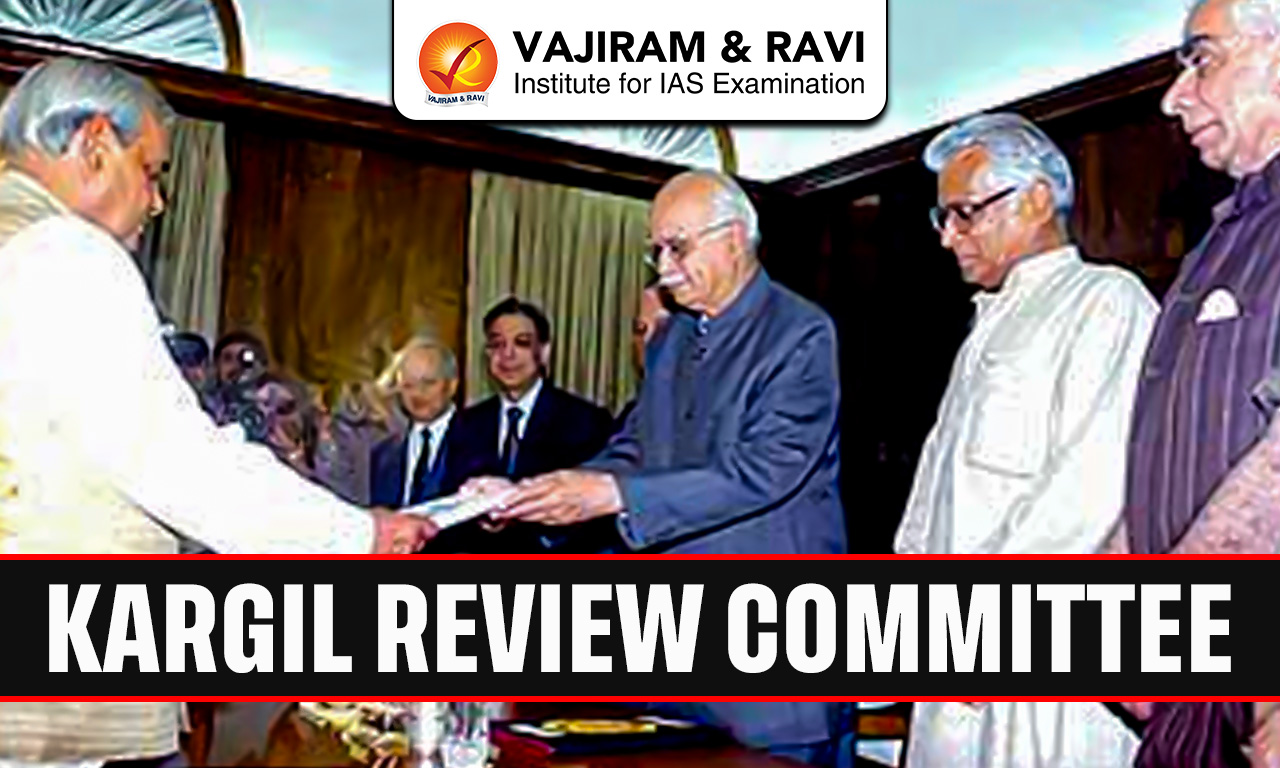
The Kargil Review Committee (KRC) was established by the Government of India on 29 July 1999 after the Kargil War to examine the sequence of events and recommend measures to strengthen national security. The committee was headed by K. Subrahmanyam. The KRC submitted its report to the serving Prime Minister Atal Bihari Vajpayee on 7 January 2000. The report became a landmark in security reforms of India.

Kargil Review Committee Background

The Kargil Review Committee was formed to investigate the Kargil intrusion, analyse systemic failures and recommend reforms in India’s national security framework after the 1999 conflict.

  • Formation: The KRC was set up on 29 July 1999, finalised its report on 15 December 1999 and it was tabled in Parliament on 23 February 2000 after submission.
  • Objectives: The committee examined events leading to the Kargil crisis and aimed to prevent future intrusions without assigning blame to individuals or institutions involved in the failure.
  • Scope of analysis: It studied historical and strategic aspects including the Simla Agreement, proxy war in Jammu and Kashmir and nuclear dynamics in India-Pakistan Relations affecting security decisions.
  • Consultations: Around 95 individuals, including former Presidents, Prime Ministers, Army Chiefs, RAW and IB heads, ministers and journalists, were consulted through recorded and verified discussions.

Kargil Review Committee Observations

The Kargil Review Committee made the observations related to the Kargil War and highlighted the following concerns:

  • Intelligence failure findings: The committee found intelligence inputs from RAW inadequate, outdated and insufficient to predict intrusions, highlighting systemic weaknesses rather than institutional incompetence.
  • Army operational mindset: Since 1971, the Army assumed no threat in Kargil due to harsh terrain and weather, leading to lack of patrolling and unchanged brigade deployment, causing misjudgment of threat.
  • Inter agency coordination issues: Intelligence agencies and armed forces failed to share critical information, resulting in lack of coordination and delayed response to Pakistani intrusions.
  • Technological gaps: The report questioned why satellite imagery and space technology were not effectively used to monitor unpatrolled high altitude areas along the northern borders.
  • Structural weaknesses: National security mechanisms remained largely unchanged for over 50 years, despite wars in 1962, 1965 and 1971 and evolving threats like nuclearisation and proxy conflicts.
  • Systemic policy concerns: The committee raised questions on lack of proactive policy in Jammu and Kashmir, inadequate intelligence upgrades and absence of continuous reassessment of border strategies.

Kargil Review Committee Recommendations

The Kargil Review Committee proposed comprehensive reforms in intelligence, defence management and national security decision making to prevent recurrence of similar crises.

  • National security review: Recommended a complete review of the national security system to improve decision making, coordination and response mechanisms at strategic and operational levels.
  • Intelligence reforms: Suggested strengthening intelligence collection, improving inter agency coordination and integrating tactical and strategic intelligence for better threat anticipation and response.
  • Defence management restructuring: Called for better integration between the Ministry of Defence and Service Headquarters to ensure efficient communication and unified military planning.
  • Chief of Defence Staff proposal: Recommended creation of the Chief of Defence Staff (CDS) post to ensure jointness among Army, Navy and Air Force and improve unified military command.
  • Border management improvements: Emphasised use of advanced surveillance technologies, including satellites and UAVs, to monitor inaccessible and high altitude border areas effectively.
  • Counter terrorism strategy: Suggested proactive policies to address militancy in Jammu and Kashmir and prevent cross border infiltration through coordinated military and political measures.
  • Joint command structure: Recommended establishing unified command systems to address coordination issues between Army, paramilitary forces and civil authorities in conflict regions.
  • Defence modernisation: Highlighted need to improve conventional military superiority beyond the existing ratio of 1.37:1 and modernise equipment, logistics and operational capabilities.
  • Media and information management: Called for structured communication systems to avoid misinformation and speculation during crises by ensuring timely dissemination of accurate information.
  • Strategic policy framework: Recommended development of a consistent long term national security strategy integrating political, diplomatic and military approaches.

Kargil Review Committee Impacts

The Kargil Review Committee report led to major institutional reforms and structural changes in India’s national security and defence management systems.

  • Group of Ministers (GoM): A GoM was established in April 2000 to review Kargil Review Committee recommendations, leading to a comprehensive report on reforming India’s security apparatus.
  • Implementation of recommendations: Out of 75 recommendations in defence management, 63 were implemented, four were in progress and eight related to CDS remained under consideration initially.
  • Creation of HQ IDS: The Headquarters Integrated Defence Staff was established to enhance jointness in planning, training, intelligence sharing and operational coordination among armed forces.
  • Tri service commands: The Andaman & Nicobar Command was created to ensure unified command over tri service and Coast Guard operations in strategically important island territories.
  • Intelligence agencies strengthening: Establishment of Defence Intelligence Agency and National Technical Research Organisation improved technical and strategic intelligence capabilities.
  • Surveillance enhancement: Use of UAVs and RISAT satellites significantly improved aerial surveillance and monitoring of sensitive border regions.
  • Institutional reforms: Bodies like the Nuclear Command Authority, Strategic Forces Command, Defence Acquisition Council and Defence Technology Council were established.
  • Chief of Defence Staff: The CDS post, recommended by KRC, was eventually implemented in December 2019 to strengthen military leadership and integration.
  • National Security Advisor role: A full time National Security Advisor system was institutionalised to coordinate security policy at the highest level.
  • Long term review mechanisms: Subsequent committees like Naresh Chandra Task Force (2011) and others continued evaluating and advancing national security reforms.

Kargil Review Committee Significance

The Kargil Review Committee marked a turning point in India’s strategic thinking and institutional reforms related to national security and defence preparedness.

  • First public security review: It was the first comprehensive and publicly available review of India’s national security system, increasing transparency and accountability.
  • Systemic reform approach: Shifted focus from individual blame to systemic weaknesses, ensuring long term structural improvements rather than short term corrective actions.
  • Strengthened civil military relations: Emphasised better integration between civilian leadership and military institutions, improving coordination and decision making processes.
  • Intelligence transformation: Highlighted critical need for coordination and modernisation of intelligence agencies, shaping reforms in intelligence architecture.
  • Strategic awareness: Brought attention to importance of continuous reassessment of threats, especially in high risk regions like Jammu and Kashmir.
  • Technological integration: Underlined the role of modern technology in warfare and surveillance, leading to increased adoption of advanced defence systems.
  • Policy driven approach: Encouraged development of consistent national security policies instead of ad hoc responses to crises.
  • Enhanced preparedness: Improved India’s readiness to handle future conflicts through better planning, coordination and intelligence based operations.
  • Institutional legacy: Led to creation of multiple long lasting institutions that continue to shape India’s defence and security framework.
  • Continuing relevance: Many recommendations remain relevant, especially regarding defence procurement, intelligence coordination and need for a formal National Security Doctrine. 

Kargil Review Committee FAQs

Q1: What was the Kargil Review Committee?

Ans: The Kargil Review Committee was set up on 29 July 1999 to examine the Kargil War events and recommend measures to strengthen India’s national security system.

Q2: Who headed the Kargil Review Committee?

Ans: The committee was chaired by K. Subrahmanyam, a noted expert on national security and strategic affairs.

Q3: When was the Kargil Review Committee report submitted?

Ans: The report was submitted to Prime Minister Atal Bihari Vajpayee on 7 January 2000 and later tabled in Parliament on 23 February 2000.

Q4: What were the key findings of the Kargil Review Committee?

Ans: The committee identified intelligence failures, lack of inter agency coordination, outdated military assumptions and inadequate use of surveillance technology as major reasons for the Kargil intrusion.

Q5: What major reforms resulted from the Kargil Review Committee recommendations?

Ans: The recommendations led to creation of institutions like HQ Integrated Defence Staff, Defence Intelligence Agency and eventually the post of Chief of Defence Staff to improve military coordination.

Kasturirangan Committee 2012, Background, Recommendations

Kasturirangan Committee

The Kasturirangan Committee is officially known as the High Level Working Group (HLWG). It was constituted in 2012 to review the earlier Western Ghats Ecology Expert Panel report and propose a balanced framework for conservation and development of Western Ghats. The committee, under the chairmanship of K. Kasturirangan, focused on protecting ecologically sensitive regions of the Western Ghats while accommodating livelihood and developmental needs. Its report highlighted the urgency of conserving biodiversity rich landscapes through a calibrated regulatory approach.

Kasturirangan Committee Background

The Kasturirangan Committee was formed to address conflicts between environmental protection and development needs in the Western Ghats region.

  • Need for Review of Gadgil Report: The earlier report recommended 64% of Western Ghats as ecologically sensitive, which faced strong opposition from states due to strict restrictions affecting development, agriculture and infrastructure activities.
  • Formation of HLWG Committee: A 10 member High Level Working Group chaired by K. Kasturirangan was constituted in 2012 to examine the Gadgil Committee recommendations and provide a more accurate and implementable framework.
  • Focus on Balanced Approach: The committee aimed to reconcile environmental conservation with economic development by reducing regulatory burden while ensuring protection of the most fragile ecosystems across six states.
  • Western Ghats Significance: The region spans multiple states and is a globally recognized biodiversity hotspot, hosting endangered species, major river systems and ecologically sensitive forest landscapes requiring urgent conservation.
  • Concept of Eco Sensitive Areas (ESA): ESAs are areas within 10 km of protected regions, notified under the Environment Protection Act, 1986 to regulate activities and minimize environmental degradation.

Kasturirangan Committee Recommendations

The Kasturirangan Committee proposed specific measures to identify and regulate ecologically sensitive areas while allowing sustainable development.

  • Eco Sensitive Areas Coverage: The report proposed 37% of the Western Ghats, around 60,000 sq km, as Eco Sensitive Area, significantly lower than the 64% suggested earlier, ensuring a balanced conservation approach.
  • State wise Distribution: Out of total ESA, about 20,668 sq km falls in Karnataka covering 1,576 villages which highlights the significant impact on specific regions and local populations.
  • Prohibition of Activities: A complete ban was recommended on mining, quarrying, thermal power plants and red category industries due to their high environmental impact and irreversible ecological damage.
  • Regulation of Infrastructure: The committee emphasized that infrastructure projects should undergo detailed environmental impact assessment to evaluate effects on forests, wildlife and overall ecosystem before approval.
  • UNESCO Recognition: It highlighted 39 Components of Protected Areas as national parks, wildlife sanctuaries and reserved forests across Western Ghats in Kerala, Karnataka, Tamil Nadu and Maharashtra as an opportunity to enhance conservation awareness.
  • Landscape Classification: The report distinguished between natural landscapes and cultural landscapes, excluding inhabited regions and plantations to protect livelihoods while focusing conservation on ecologically rich areas.
  • Mining Phase Out Plan: Existing mining activities in ESA were to be phased out within five years or upon lease expiry, ensuring gradual transition without sudden economic disruption.
  • Role of State Governments: States were advised to develop strategies for conservation, sustainable use of resources and long term ecological management aligned with regional development priorities.

Kasturirangan Committee Criticism

The Kasturirangan Committee report faced criticism from states, environmentalists and local communities for various reasons.

  • Opposition from Karnataka Government: The state government opposed ESA declaration, arguing it would adversely affect livelihoods, halt developmental activities and impact agriculture and local economic systems.
  • Satellite Based Demarcation Issues: The use of remote sensing and aerial surveys led to criticism that ground realities were ignored, resulting in inclusion of non forest areas and exclusion of ecologically sensitive zones.
  • Impact on Livelihoods: Farmers and local communities feared displacement, restrictions on farming and reduced economic opportunities due to limitations on development and industrial activities.
  • Environmental Concerns: Some experts, including members of the earlier panel, termed the report as anti environmental, arguing it diluted protections by reducing ESA coverage from 64% to 37%.
  • Governance Concerns: Critics highlighted that decision making power remained with bureaucratic authorities rather than local bodies, reducing community participation in environmental governance.
  • Inclusion Errors: Several villages with plantations or non forest land were included under ESA, creating confusion and opposition among residents who depended on these lands for livelihood.

Kasturirangan Committee Significance

The Kasturirangan Committee report remains a key policy framework in balancing conservation with development in ecologically sensitive regions.

  • Balanced Development Model: It attempted to harmonize environmental protection with economic growth by reducing ESA coverage while ensuring protection of critical biodiversity rich zones.
  • Climate Change Relevance: The report emphasized the need for preventive conservation to reduce long term economic costs associated with environmental degradation, disasters and climate induced risks.
  • Sustainable Livelihood Approach: It recognized that conservation should not eliminate livelihood options but promote environmentally sustainable practices such as eco friendly agriculture and resource management.
  • Policy Framework for ESA: It provided a structured approach for identifying and managing Eco Sensitive Areas under the Environment Protection Act 1986, strengthening environmental governance.
  • Urgency of Implementation: The report highlighted that delays in implementation would accelerate ecological degradation, making restoration more costly and difficult in the future.
  • Stakeholder Engagement Need: It stressed the importance of scientific analysis, stakeholder consultation and consensus building to ensure effective and inclusive environmental decision making.
  • Long Term Ecological Security: By focusing on conservation of biodiversity hotspots, the report contributes to preserving water resources, forest cover and ecological stability crucial for sustainable development. 

Kasturirangan Committee FAQs

Q1: What is the Kasturirangan Committee?

Ans: It is a High Level Working Group formed in 2012 to review the Western Ghats ecology report and suggest a balanced approach for conservation and development.

Q2: How much area was proposed by the Kasturirangan Committee as an Eco Sensitive Area (ESA)?

Ans: The committee proposed 37% of the Western Ghats, approximately 60,000 sq km, to be declared as an Eco Sensitive Area.

Q3: Which activities are banned in Eco Sensitive Areas (ESA) regions?

Ans: Mining, quarrying, thermal power plants and red category industries are completely banned due to their high environmental impact.

Q4: Why did the Karnataka Government oppose the Kasturirangan Committee report?

Ans: Karnataka opposed it due to concerns over livelihood loss, restrictions on development and inclusion of many villages under ESA.

Q5: What is the main objective of the Kasturirangan Committee report?

Ans: The main objective is to balance environmental conservation with sustainable development while protecting biodiversity in the Western Ghats.

Shaivism, Origin and Development, Philosophical Schools

Shaivism

Saivism is an ancient tradition of Hinduism that worships Lord Siva as the supreme god. It sees Siva as both a protector and destroyer, combining power, wisdom, and compassion. Followers worship him in many forms, including as a meditating ascetic, a cosmic dancer, or through the linga. Saivism teaches devotion, moral living, meditation, and the path to spiritual liberation.

Saivism Origin and Development

  • Ancient Roots of Saivism:
    • Saivism is considered one of the oldest religions in India, and perhaps in the world. What makes it remarkable is that it is still a living religion, followed by millions of people today. It is a tradition that sees Lord Siva as the supreme deity. Scholars believe that Saivism may have started in the pre-Vedic period, long before the arrival of Aryans in India.
  • Evidence from Indus Valley Civilization:
    • Excavations at Mohenjadaro and Harappa have revealed statues and seals that suggest the worship of a male god, which many scholars identify as a prototype of Lord Siva. Sir John Marshall, a leading archaeologist, noted that Saivism’s roots may go back to the Chalcolithic Age, making it possibly the most ancient living faith in the world.
  • Vedic and Non-Vedic Debate:
    • There is debate among scholars about whether Saivism is Vedic or non-Vedic.
    • Scholars like Sir John Marshall, G.U. Pope, G. Slater, and Maraimalai Adigal believe Saivism is pre-Aryan and pre-Vedic, originating from Dravidian traditions.
    • Others, like K.A. Nilakanta Sastri, argue that Saivism has Vedic origins.
  • Connection with Vedic Rudra:
    • In the Vedic texts, a minor god named Rudra shares many qualities with Siva. Rudra is described as fierce, destructive, and associated with storms, lightning, and forest fires. He is also the lord of animal sacrifices. Over time, Rudra’s qualities merged with the concept of Siva.
  • Evolution in Vedic and Upanishadic Texts:
    • In the Yajurveda, Siva is described with one hundred names, including Paśupati (Lord of animals), Nilagriva (blue-necked), and Sitikantha (white-throated).
    • In the Śvetāśvatara Upaniṣad, Siva is referred to as Hara, Mahādeva, Īśa, Īśāna, Maheśvara, and Bhagavat, described as the “dweller of mountains,” “thousand-eyed,” and “steadfast.”
  • Role in Epics:
    • The Mahābhārata mentions 1,008 names of Siva and tells the story of Siva marrying Uma, daughter of Himavān, the mountain king.
    • In the Rāmāyaṇa, Siva is linked to the origin of the Ganga River, controlling her descent from heaven by holding her in his matted locks to reduce her force.
  • Puranic Descriptions and Forms:
    • Puranas describe Siva in various forms, such as Ardhanārīśvara (half male, half female), Dakṣiṇāmūrti (teacher of truth and yogic meditation), Mahāyogin, and Saṁhāramūrti (destroyer of evil).
    • He is often depicted with matted hair, crescent moon, serpents, trident (triśūla), bull as his vehicle, and ash-smeared body.
    • Siva’s third eye represents wisdom, while his hands hold fire, drum, and axe. He is also worshiped as Natarāja, the dancing lord.
  • Saivism in Tamil Literature:
    • Siva is widely referenced in ancient Tamil literature from the Sangam period onward.
    • Devotional Tamil texts describe his 64 divine sports, epithets, qualities, deeds, ornaments, and weapons in great detail, showing his importance in South Indian culture.
  • Fusion of Traditions:
    • Siva’s worship dates back to the Indus Valley civilization. Over time, the Vedic god Rudra and the indigenous Siva were merged, giving Siva a central place in the Vedic pantheon.
    • By the time of the Śvetāśvatara Upaniṣad, Siva was recognized as Mahadeva, the supreme god.
  • Historical References:
    • The earliest mention of Siva by a foreigner is by Megasthenes, the Greek ambassador.
    • During the Gupta period, Siva worship gained significant prominence, particularly in South India, where the Bhakti movement of Saivism flourished and reached its peak.

Saivism Philosophical Schools

  • General Concept of God in Saivism
    • Lord Siva is a complex deity with both fierce and compassionate sides.
    • On one hand, he has a dark and destructive aspect, inherited from the Vedic Rudra. He is said to live in cremation grounds, wear a garland of skulls, and perform the Rudra Tandava, a cosmic dance that destroys the world at the end of a Kalpa.
    • On the other hand, Siva is the great ascetic, meditating peacefully on Mount Kailasa in the Himalayas. He has matted hair, a crescent moon on his head, and the sacred river Ganga flowing from it.
    • Siva also shows qualities of a fertility and nature god, often called Paśupati (Lord of animals) and the patron of procreation.
    • He is commonly worshipped in the form of the Liṅga, a symbol of divine energy.
    • Some Siva cults practiced extreme rituals, including animal sacrifice or self-mortification, but most sects emphasize Siva as the God of love, grace, and moral guidance.
    • Tamil Saivism especially highlights Siva as a compassionate father, caring for all living beings and protecting them from evil.
  • The Paśupata and Kapālika Traditions
    • Paśupatas are the oldest Saivite sect in North India. They emphasize asceticism and meditation, focusing on Siva as the absolute God.
    • According to their philosophy:
      • Siva is the cause of the universe, while souls and nature are his effects.
      • Liberation means the soul becomes eternally united with Siva.
    • Their yogic practices involved meditation in solitude, often in cremation grounds.
    • Kapālikas, a more extreme branch, practiced radical renunciation, carried skulls (kapāla), bowls of liquor, and were known as Bhairava or “the frightful ones”.
    • Both groups emphasized that detachment from the world was the path to liberation.
  • Kashmiri Saivism (Trika Saivism)
    • Developed in the 9th century in Kashmir, it is a monistic form of Saivism called Trika.
    • Key texts: Siddhāntantra, Mālinītantra, Vāmakatantra, with systematic philosophy explained in Sivasūtra by Vasugupta.
    • Prominent thinkers: Somānanda, Utpaladeva, Bhaskaracarya, Abhinavagupta, Ksemaraja.
    • Core ideas:
      • The Absolute (Siva), Soul, and Matter are the three principles.
      • Influenced by Advaita philosophy, it teaches that Siva is the Absolute Reality, from which everything has emanated.
      • The Absolute is both Siva and Shakti, representing consciousness (Siva) and dynamic energy (Shakti).
      • The universe is not an illusion; it is a manifestation of Divine Energy.
      • Liberation comes through knowledge of oneness between individual self and Absolute.
      • Both divine grace (Kripā) and self-effort are important for salvation; one cannot succeed without the other.
      • Life in the world is affirmed, not renounced. Material and spiritual existence are reconciled.
  • Vīra Saivism (Lingayatism)
    • It began in the 12th century in North-Western Karnataka as a reformist Saivite movement.
    • Early founders include Ekorama, Panditaradhya, Revana, Marula, Visvaradhya, and the reformer Sri Basavesvara, considered an incarnation of Nandi.
    • Core principles:
      • Siva is supreme, and worship should be exclusive to him.
      • Abandoned ritualistic Hindu practices, such as the sacred thread ceremony.
      • Devotees wear a small Linga in a metal box around the neck, symbolizing purification and divine energy, not a phallic object.
      • Promotes social equality: rejects caste distinctions and grants equal status to women.
      • Followers are strict vegetarians, oppose magic and sorcery, and bury rather than cremate the dead.
      • Believes that Siva’s inner power resides in every individual, enabling them to see the divine in all beings.
  • Śaiva Siddhānta
    • A major Saivite philosophical system of South India, based on Saiva Agamas, Upanishads, Tirumurais, and Meikanta Sastras.
    • The term Siddhānta means “established conclusion” and represents the definitive philosophy for Siva worshippers.
    • Core features:
      • Combines Vedic and Agamic traditions, giving Vedas as the general source and Agamas as a special source.
      • Theistic philosophy that explains the relationship between God, soul, and matter.
      • Recognizes three eternal realities: God, soul, and matter.
      • Souls are helped by God’s grace, which is necessary for liberation.
      • God is inseparable from the universe and souls, but not identical; He dwells within them and guides them.
      • Liberation is the realization of the soul’s unity with God, and enlightenment is facilitated by the guru, though Siva remains the ultimate source of grace and knowledge.

Saivism FAQs

Q1: What is Saivism?

Ans: Saivism is an ancient tradition of Hinduism that worships Lord Siva as the supreme god and emphasizes devotion, meditation, and spiritual liberation.

Q2: What are the origins of Saivism?

Ans: Saivism has very old roots, possibly from the pre-Vedic period, with links to the Indus Valley civilization and later development through the Vedic god Rudra.

Q3: How is Siva described in scriptures and epics?

Ans: Siva is described in many forms such as Paśupati, Mahadeva, and Nataraja, and is shown with symbols like the third eye, trident, matted hair, and crescent moon.

Q4: What are the major philosophical schools of Saivism?

Ans: The main schools include Paśupata-Kapālika, Kashmiri Saivism, Vīra Saivism (Lingayatism), and Śaiva Siddhānta, each with different beliefs and practices.

Q5: What is the importance of the Linga in Saivism?

Ans: The Linga represents the divine energy and presence of Siva and is widely used as a symbol of worship.

Dutch Disease, Origin, Meaning, Effects and Economic Impact

Dutch Disease

Dutch Disease is a situation where a country’s economy becomes unbalanced due to a sudden rise in income, often from natural resources. While this increase may seem beneficial, it can weaken other sectors of the economy. A rise in income can make a country’s goods more expensive for others, reducing exports from sectors like agriculture and manufacturing. Over time, this leads to overdependence on one source of income and reduces overall economic balance.

About Dutch Disease

  • Meaning
    • Dutch Disease is an economic problem that happens when a country discovers valuable natural resources like oil, gas, or minerals.
    • As the country starts earning a lot of money from exporting these resources, one part of the economy grows very fast, while other sectors grow slowly or even decline.
    • The large inflow of money makes the country’s currency stronger, which makes its other exports (like manufactured goods and agricultural products) more expensive in the global market.
    • At the same time, imports become cheaper, so people and businesses prefer buying foreign goods instead of domestic ones.
  • Main Economic Effects
    • Reduced export competitiveness: Goods produced by industries like manufacturing become expensive for other countries. As a result, exports from these sectors decrease.
    • Increase in imports: A stronger currency makes foreign goods cheaper. This leads to higher imports and lower demand for domestic products.
  • Long-Term Effects
    • Decline in manufacturing and agriculture: These sectors may shrink because they cannot compete globally.
    • Unemployment: Jobs in industries like manufacturing may reduce as production shifts to cheaper countries.
    • Overdependence on natural resources: The economy becomes too dependent on one sector, making it risky if resource prices fall.
    • Regional inequality: Areas rich in resources may develop faster than others, creating imbalance within the country.
  • Origin of the Term
    • The concept was formally explained by economists Peter Neary and Max Corden in 1982.
    • The term “Dutch Disease” was first used by The Economist in 1977.
  • Impact of Gas Discovery on the Dutch Economy
    • During the 1960s, the Netherlands discovered large natural gas reserves in the North Sea.
    • Exporting this gas brought a significant increase in national income and caused the currency to strengthen.
    • This led to challenges for other sectors:
    • Non-gas products became more expensive in global markets.
    • Exports from manufacturing lost competitiveness.
    • The manufacturing sector declined, causing job losses and reduced investments.
    • Over time, the economy became heavily reliant on gas, weakening other industrial areas.
  • How to Control Dutch Disease
    • Fiscal Policy (Government Spending): Governments should spend resource income carefully instead of overspending. Funds should be invested in education, infrastructure, and long-term development. Creating sovereign wealth funds (saving money for future use) can help reduce risks.
    • Smart Spending Policies: Public spending should focus on improving productive sectors like manufacturing and agriculture. Encouraging private investment in industries can increase productivity and competitiveness. Supporting exports through subsidies or incentives can also help.
    • Monetary Policy (Central Bank Actions): Central banks can control excess money supply to prevent currency from becoming too strong. Increasing reserve requirements or controlling credit can reduce inflation and currency appreciation.
    • Economic Diversification: The country should develop multiple sectors instead of depending only on natural resources. Promoting industries like technology, services, and manufacturing can balance growth.

Dutch Disease FAQs

Q1: What is Dutch Disease?

Ans: Dutch Disease is an economic problem where a country’s economy becomes unbalanced due to a sudden rise in income, usually from natural resources, which can weaken other sectors like manufacturing and agriculture.

Q2: How does Dutch Disease affect exports and imports?

Ans: A sudden resource income strengthens the country’s currency, making domestic goods more expensive abroad (reducing exports) and foreign goods cheaper at home (increasing imports).

Q3: What are the long-term effects of Dutch Disease?

Ans: It can cause a decline in manufacturing and agriculture, lead to unemployment, create overdependence on natural resources, and result in regional economic imbalances.

Q4: Where did the term “Dutch Disease” originate?

Ans: The term was first used by The Economist in 1977, and the concept was formally explained by economists Peter Neary and Max Corden in 1982.

Q5: What happened in the Netherlands due to gas discovery?

Ans: In the 1960s, the Netherlands discovered North Sea gas. Exports increased income and strengthened the currency, making other exports expensive, reducing manufacturing, increasing unemployment, and over-relying on gas.

Sulaiman Range, Location, Peaks, Rivers, Mountain Passes

Sulaiman Range

The Sulaiman Range is a major mountain system forming a north-south extension of the southern Hindu Kush in western Pakistan and eastern Afghanistan. It marks the eastern edge of the Iranian plateau and spans about 6,475 km². It stretches from Kandahar, Zabul and Paktia to southwestern Punjab. It separates the Indus plains from highlands and plays a key role in regional geography, climate and tectonic structure.

Sulaiman Range Features

The Sulaiman Range is a structurally complex mountain belt with significant geographical, geological and climatic importance across Pakistan and Afghanistan.

  • Location: The Sulaiman Range is located in western Pakistan and eastern Afghanistan, extending across Kandahar, Zabul and Paktia provinces into Waziristan, Kurram, northern Balochistan and southwestern Punjab near the Indus River.
  • Extent: The range stretches about 280 miles (450 km) from the Gomal Pass in Khyber Pakhtunkhwa to near Jacobabad in Sindh, further extending into southwestern Punjab along the Indus River.
  • Boundary Formation: It forms the eastern boundary of the Iranian plateau, with the Indus River plains to the east and Central Hindu Kush highlands rising up to 3,383 m in the north.
  • Major Peaks: The highest peak is Zarghun Ghar at 3,578 m near Quetta, followed by Takht-e-Sulaiman (3,487 m) and Khilafat Hill (3,475 m) in Ziarat District.
  • Takht-e-Sulaiman: It is located near Darazinda, this twin-peaked mountain is historically important and associated with cultural and legendary references, making it a prominent landmark of the range.
  • Geological Formation: The range formed around 30 million years ago due to the collision of the Indian Plate with the Eurasian Plate, creating a fold and thrust belt with complex fault systems.
  • Tectonic Features: It includes stacked thrust faults and imbricate rock formations, capable of generating doublet earthquakes such as the 1997 Harnai earthquake with magnitudes 7.1 and 6.8.
  • Climate Influence: The range acts as a natural barrier blocking moist winds from the Indian Ocean, leading to arid conditions in southern and central Afghanistan while supporting contrasting environments near the Indus basin.
  • River Systems: Important rivers include the Gomal River flowing into the Indus and the Dori River draining southwest into the Helmand River through tributaries of the Arghandab system.
  • Vegetation Patterns: Northern areas have juniper and edible pines, central parts contain olives, while southern sections remain sparsely vegetated due to arid climatic conditions.
  • Mountain Passes: Key passes include Ghat, Zao, Chuhar Khel Dhana and Sakhi Sarwar, while Fort Munro at 1,921 m serves as an important hill station in the southern region. 

Sulaiman Range FAQs

Q1: Where is the Sulaiman Range located?

Ans: The Sulaiman Range is located in western Pakistan and eastern Afghanistan, extending from Kandahar, Zabul and Paktia to southwestern Punjab along the Indus River boundary.

Q2: What is the highest peak of the Sulaiman Range?

Ans: The highest peak is Zarghun Ghar, which rises to 3,578 meters (11,739 feet) near Quetta in Balochistan.

Q3: Why is the Sulaiman Range geologically important?

Ans: It is a fold and thrust belt formed due to the collision of the Indian Plate with the Eurasian Plate around 30 million years ago, creating complex tectonic structures.

Q4: How does the Sulaiman Range affect climate?

Ans: It acts as a barrier to moist winds from the Indian Ocean, causing dry conditions in Afghanistan while maintaining relatively fertile plains near the Indus River.

Q5: Which rivers originate from the Sulaiman Range?

Ans: Major rivers include the Gomal River flowing into the Indus and the Dori River, which drains into the Helmand River system through tributaries.

Raja Ravi Varma

Raja Ravi Varma

Raja Ravi Varma Latest News

Recently, Raja Ravi Varma’s Yashoda and Krishna painting was sold for ₹167.2 crore at Saffronart.

About Raja Ravi Varma

  • He was born on 29 April 1848, in the village of Kilimanoor in Kerala to a family of chieftains known as the Koil Thampurans. 
  • Ravi Varma was an Indian painter celebrated for blending Hindu mythological themes with European realism and naturalism.
  • He was among the first Indian artists to use oil paints and master lithographic reproduction.
  • Themes: Varma painted scenes from Hindu mythology and portraits of Indian and British figures in India.
  • Notable Works: His notable works include Shakuntala Writing a Love Letter to Dushyanta and Shri Rama Vanquishing the Sea.
  • He is also known for having mastered the reproduction of his work on the lithographic press– through which his paintings spread far and wide.
  • He set up his own printing press in Maharashtra — first in Ghatkopar and eventually in Lonavala in 1894.
  • Awards
    • In 1904, he received the Kaiser-i-Hind medal and was popularly known as Raja Ravi Varma.
    • His 1873 painting, Nair Lady Adorning Her Hair, won Varma prestigious awards including Governor’s Gold Medal when it was presented in the Madras Presidency, and Certificate of Merit at an exhibition in Vienna.

Source: TH

Raja Ravi Varma FAQs

Q1: Who is Raja Ravi Varma?

Ans: A renowned Indian painter

Q2: What style of painting is Raja Ravi Varma known for?

Ans: Fusion of European and Indian styles

Kar Saathi

Kar Saathi

Kar Saathi Latest News

Recently, the Income Tax Department on Thursday launched a new website called ‘Kar Saathi’.

About Kar Saathi

  • It is the Income Tax Department's AI chatbot, designed to serve as a virtual tax assistant available round-the-clock through the department's official website.
  • It is aimed at simplifying compliance under the Income Tax Act, 2025.
  • It functions as a digital assistant integrated within the new income tax website.
  •  Its primary purpose is to address user inquiries, provide step-by-step guidance, and streamline procedures such as filing returns.
  • It is integrated into the site to provide automated, real-time responses to taxpayer queries.

Features of Kar Saathi

  • The tool is available 24x7 and can explain processes such as filing returns, understanding updated provisions, and navigating forms.
  • It's positioned as a "one-stop solution" for taxpayers — covering everything from understanding tax rules to walking you through return filing and resolving queries about direct tax compliance.

Source: DD News

Kar Saathi FAQs

Q1: What is the primary objective of Kar Saathi Portal?

Ans: To simplify tax compliance and return filing

Q2: Which section of the Income Tax Act deals with deductions for charitable contributions?

Ans: Section 80G

Sukhna Wildlife Sanctuary

Sukhna Wildlife Sanctuary

Sukhna Wildlife Sanctuary Latest News

Sukhna Wildlife Sanctuary has emerged as a remarkable success story of ecological revival which is nestled in the fragile Shivalik Hills.  

About Sukhna Wildlife Sanctuary

  • Location: It is a protected area located in Chandigarh, near the famous Sukhna Lake at the foothills of the Shivalik range.
    • The lake was created by the architect Le Corbusier in 1958 by diverting the Sukhna Choe, a seasonal stream that flows down from the Shivalik hills. 
  • The sanctuary was developed as a result of afforestation done for soil conservation around Sukhna Lake. 
  • The Sanctuary was established in 1998.
  • The place is quite unstable geographically and becomes prone to soil erosion by surface runoff during rains.
  • It has sandy soil of Shivalik with pockets of clay embedded at places. 
  • Apart from the Sukhna Lake, there are around 150 small and large water bodies in the sanctuary that form its catchment area.
  • Vegetation: It is characterized by a mix of forests, grasslands, and wetlands, with the Sukhna Lake forming an important part of the ecosystem.
  • Flora: The common flora of the sanctuary includes Khair, Phulai, Kikar, Shisham, Moonj, Amaltas, Jhingan, Amla, Rati, Vasaka, and many more.
  • Fauna: Squirrel, Common-Mongoose, Indian Hare, Porcupine, Jungle Cat, Jackal, Wild boar, etc, are the mammals found in the sanctuary.

Source: TOI

Sukhna Wildlife Sanctuary FAQs

Q1: Sukhna Lake is part of which project?

Ans: Sukhna Lake Project

Q2: Where is Sukhna Wildlife Sanctuary located?

Ans: Chandigarh

Azerbaijan

Azerbaijan

Azerbaijan Latest News

Recently, India and Azerbaijan comprehensively reviewed the current state of bilateral relations, covering areas of mutual interest in Baku.

About Azerbaijan

  • Location: It is located at the junction of Eastern Europe and Western Asia along the southern flanks of the Caucasus Mountains.
  • Bordering Countries:  It is bordered by Russia in the north, Georgia in the northwest, Armenia in the west, and Iran in the south.
  • Water Bodies: It is bounded in the east by the Caspian Sea.
  • Capital City:  Baku

Geographical Features of Azerbaijan

  • Climate: Its climate is highly varied and contains examples of nine out of the world's eleven climate zones.
  • Major Rivers: Alazani, Aras, and Kura Rivers 
  • Highest Point: Mount Bazardüzü is the highest peak in the Greater Caucasus Range and the highest mountain in Azerbaijan. 
  • Natural Resources: It mainly consists of gold, silver, iron, titanium, copper, manganese, cobalt, molybdenum, and chromium.

Source: TH

Azerbaijan FAQs

Q1: Where is Azerbaijan located?

Ans: South Caucasus region

Q2: What is the capital of Azerbaijan?

Ans: Baku

Commission for Air Quality Management

Commission for Air Quality Management

Commission for Air Quality Management Latest News

Recently, the 128th meeting of the Enforcement Task Force (ETF) of the Commission for Air Quality Management in NCR and Adjoining Areas (CAQM) was held.

About Commission for Air Quality Management

  • It is a statutory body established under the Commission for Air Quality Management in National Capital Region (NCR) and Adjoining Areas, Act 2021.
  • Mandate: Better coordination, research, identification, and resolution of problems surrounding the air quality index and for matters connected therewith or incidental thereto.
  • It undertakes action for the prevention and control of Air pollution in Delhi-NCR & Adjoining Areas.
  • It is required to coordinate its actions on monitoring of air quality with the government of Delhi and the adjoining states, which includes Punjab, Haryana, Rajasthan, and Uttar Pradesh. 
  • Powers
    • Restricting activities influencing air quality
    • Investigating and conducting research related to environmental pollution impacting air quality, preparing codes and guidelines to prevent and control air pollution,
    • Issuing directions on matters including inspections, which will be binding on the concerned person or authority?
    • All the directions and orders by the Commission are of binding nature, and any person, officer, or authority shall be bound to comply with the same.
    • The commission is directly accountable to the parliament.
  • Composition
    • Chairperson: To be chaired by a government official of the rank of Secretary or Chief Secretary. He will hold the post for three years or until s/he attains the age of 70 years.
    • It will also have five ex officio members who are either Chief Secretaries or Secretaries in charge of the department dealing with environment protection in the States of Delhi, Punjab, Haryana, Rajasthan, and Uttar Pradesh.
    • Three full time technical members.
    • Three members from non-government organisations.
    • Technical members from Central Pollution Control Board (CPCB), Indian Space Research Organisation, and NITI Aayog.

 Source: PIB

Commission for Air Quality Management FAQs

Q1: What is the primary objective of CAQM?

Ans: To prevent and control air pollution in NCR and adjoining areas

Q2: Who is the chairperson of CAQM?

Ans: A government official of Secretary or Chief Secretary rank

Rongali Bihu

Rongali Bihu

Rongali Bihu Latest News

Recently, the festive fervour of Rongali Bihu has gripped different parts of Assam.

About Rongali Bihu

  • It is one of the major festivals of Assam which is commonly known as Bohag bihu.
  • It is the most popular Bihu that celebrates the onset of the Assamese New Year and the coming of spring. 
  • The word ‘Rongali’ is derived from ‘Rong’ which means Happiness and celebrations.
  • This festival reflects the rich culture of Assamese society.
  • During the celebration, traditional pat or muga silk or cotton mekhela chadors are worn by ladies (the two-piece attire). 
  • As a sign of affection and respect, gamocha, the traditional Assamese towel, also known as Bihuwaan, is exchanged.

Key Facts about Bihu

  • Bihu is celebrated by people from all parts of Assam irrespective of caste, creed or religious background.
    • The first Bihu is known as the Rongali Bihu or Bohag Bihu, which is celebrated in the month of April.
    • The second Bihu is known as Kati Bihu or Kongali Bihu, which is celebrated during the month of October
    • Finally there is Magh Bihu, which is observed during the month of January.

Source: DD News

Rongali Bihu FAQs

Q1: Which season does Rongali Bihu mark the beginning of?

Ans: Spring

Q2: Rongali Bihu is a festival celebrated in which state?

Ans: Assam

Namo Drone Didi Yojana

Namo Drone Didi Yojana

Namo Drone Didi Yojana Latest News

Karnataka has the most number of women self-help groups (SHGs) to have undergone training as drone pilots under the ‘Namo Drone Didi Yojana’ (NDDY).

About Namo Drone Didi Yojana

  • It is a central sector initiative to empower women-led Self-Help Groups (SHGs) promoted under Deendayal Antyodaya Yojana – National Rural Livelihoods Mission (DAY-NRLM) by providing them with drone technology for agricultural services.
  • It aims to provide drones to selected SHGs for rental services to farmers for agriculture purposes (application of liquid fertilizers and pesticides for the present).
  • Target: A total of 15,000 drones will be provided to selected women SHGs between 2024-25 and 2025-26.
  • Financial Assistance: Central Financial Assistance @ 80% of the cost of drone package up to a maximum of Rs. 8.00 lakhs will be provided to the women SHGs.
  • For the remaining 20% cost, SHGs can seek loans from the National Agriculture Infrastructure Financing Facility (AIF) with a 3% interest subvention.
  • Training: One of the members of the women SHGs will be selected for 15 day training consisting of mandatory drone pilot training and additional training for agriculture purpose for nutrient and pesticide application.
  • It is implemented by converging the resources of
    • Department  of Agriculture & Farmer’s Welfare (DA&FW), Department of Rural Development (DoRD) and Department of Fertilizers (DoF) and Lead Fertilizer Companies (LFCs).

Source: TH

Namo Drone Didi Yojana FAQs

Q1: Which ministry is the nodal ministry for Namo Drone Didi Yojana?

Ans: Ministry of Agriculture and Farmers Welfare

Q2: What is the main objective of Namo Drone Didi Yojana?

Ans: To provide drones to farmers

Juang Tribe

Juang Tribe

Juang Tribe Latest News

A 16-year-old Juang tribal girl in Odisha changed the entire mindset of a village related to child health and child marriage.

About Juang Tribe

  • Juang is one of the 13 particularly vulnerable tribal groups (PVTGs) of the total 62 tribes found in Odisha.
  • They are primarily concentrated in the current districts of Keonjhar and Dhenkanal in Odisha.
  • Language: Linguistically, they converse in the Juang language, a member of the Munda family within the Austroasiatic languages.
  • The Juangs are known for their clan structure and kinship organisations.
  • Occupation: Initially reliant on hunting, gathering, and limited cultivation, the declaration of their forests as reserves during the British colonial era prompted a shift in traditional customs. 
    • Adapting to these changes, the Juang people showcased expertise in basket-weaving, exchanging their products with neighboring caste villages for essentials like salt, oil, and food.
  • Clothing: Historically known as Patuas or “leaf-wearers,” Juang women adorned leaf girdles, while men wore small loincloths. 
  • Beliefs: Although they have some Hindu beliefs, Juangs practice mostly ancient animistic rituals.
  • Their supreme god is the sun god. However, they have also adopted the Hindu deities in addition to tribal gods and goddesses.

Source: TOI

Juang Tribe FAQs

Q1: Where is the Juang Tribe primarily located?

Ans: Odisha

Q2: Juang Tribe is a part of which larger group?

Ans: Austroasiatic tribes

Purchasing Managers’ Index

Purchasing Managers’ Index

Purchasing Managers’ Index Latest News

According to recent data, India’s manufacturing activity slowed to a 45-month low in March, with the HSBC India Manufacturing Purchasing Managers’ Index falling to 53.9 from 56.9 in February.

About Purchasing Managers’ Index

  • It is an indicator of business activity — both in the manufacturing and services sectors.
  • It is a survey-based measure that asks the respondents about changes in their perception of some key business variables from the month before.
  • It is calculated separately for the manufacturing and services sectors and then a composite index is constructed.
  • The index helps in determining whether the market conditions, as seen by purchasing managers, is expanding, contracting or staying the same. 
  • There are two types of PMI — Manufacturing PMI and Services PMI.

How is the Manufacturing PMI Derived?

  • It is derived by sending fact-based questions to a large number of companies in the concerned sector.
  • The questions are related to 5 key variables— new orders, output employment, suppliers’ delivery times and stock of items purchased
  • The surveys are conducted on a monthly basis.
  • The Purchasing Managers' Index can range between 0 and 100, with a number over 50 citing expansion and under 50 noting contraction.

Source: TH

Purchasing Managers’ Index FAQs

Q1: What does a PMI reading above 50 indicate?

Ans: Expansion in business activity

Q2: What does PMI measure?

Ans: Business activity and sentiment

INS Aridhaman

INS Aridhaman

INS Aridhaman Latest News

Recently, India inducted its third nuclear-powered ballistic missile submarine (SSBN), INS Aridhaman into the Indian Navy.

About INS Aridhaman

  • It is India’s third indigenously built nuclear-powered ballistic missile submarine.
  • It is the second submarine in the Arihant class of SSBNs (Submersible Ship Ballistic Nuclear).
  • It is built under the Advanced Technology Vessel (ATV) project to build nuclear submarines at the Ship Building Centre in Visakhapatnam.

Features of INS Aridhaman

  • Displacement Capacity: It can displace 6,000 tonnes on the surface and 7,000 tonnes submerged.
  • It consists of an 83 MW pressurized water reactor supplied by the Bhabha Atomic Research Centre.
  • Armaments
    • Equipped with eight vertical launch tubes, it is designed to carry more long-range nuclear-tipped missiles than INS Arihant and INS Arighaat.
    • It has four launch tubes capable of deploying up to 24 K-15 Sagarika submarines each with a 750 km range  or Longer-range K-4 missiles extending to 3,500 km for intercontinental strikes.
    • It also has anechoic tiles for acoustic damping and advanced sonar suites enhancing its survivability against detection.

Source: IE

INS Aridhaman FAQs

Q1: What is INS Aridhaman?

Ans: A ballistic missile submarine

Q2: What is the displacement capacity of INS Aridhaman?

Ans: 7,000 tonnes

IBC Amendments 2026 – Strengthening Insolvency Framework

IBC Amendments

IBC Amendments Latest News

  • The Parliament has passed amendments to the Insolvency and Bankruptcy Code (IBC) to address delays and improve resolution efficiency. 

Insolvency and Bankruptcy Code

  • The Insolvency and Bankruptcy Code (IBC), enacted in 2016, provides a time-bound framework to resolve the insolvency of companies, partnerships, and individuals.
  • The objective is to either revive financially distressed firms through a resolution plan or liquidate them in an orderly manner if revival is not feasible.
  • The process is overseen by the National Company Law Tribunal (NCLT), with the Insolvency and Bankruptcy Board of India (IBBI) acting as the regulator.
  • The IBC marked a major shift from earlier fragmented laws by creating a creditor-driven process and enforcing strict timelines for resolution.

Issues in Implementation

  • Despite its transformative intent, the IBC has faced several operational challenges over time.
  • Delays in admission of cases have weakened the time-bound nature of the process.
  • Backlog of cases in tribunals has increased resolution timelines beyond prescribed limits.
    Recovery rates for banks have remained modest in many cases.
  • These challenges have reduced the effectiveness of the IBC and highlighted the need for further reforms. 


News Summary

  • The Insolvency and Bankruptcy Code (Amendment) Bill, 2026, has been passed to address structural gaps in the insolvency framework. 
  • The amendments aim to speed up the resolution process and introduce new mechanisms such as out-of-court resolution, group insolvency, and cross-border insolvency. 
  • One of the key changes relates to faster admission of insolvency applications. The NCLT is now required to admit applications once a default is established, without additional discretionary conditions. 
  • A major reform is the introduction of the Creditor-initiated Insolvency Resolution Process (CIIRP). 
  • This allows specified financial creditors to initiate insolvency proceedings outside the traditional court-driven process, provided at least 51% of creditors agree. 
  • The amendments also incorporate recommendations of the Select Committee, which suggested measures to reduce delays and improve oversight. These include stricter timelines for appellate decisions and enhanced powers for regulators. 
  • Another important reform is the introduction of group insolvency and cross-border insolvency frameworks. These aim to address complexities arising from interconnected companies and international operations. 
  • The amendments also seek to reduce conflicts of interest by preventing resolution professionals from acting as liquidators in the same case
  • Further, the law replaces certain criminal penalties with civil penalties for procedural violations, recognising that delays or non-compliance may not always involve malicious intent. 

Key Implications

  • The amendments are expected to significantly improve the efficiency of India’s insolvency framework.
  • Faster admission of cases will reduce initial delays, which have been a major bottleneck.
  • The introduction of out-of-court mechanisms will provide flexibility and reduce the burden on the tribunal.
  • Group and cross-border insolvency provisions will align India’s framework with global best practices.
  • The reforms are also likely to improve investor confidence by ensuring predictability and reducing litigation delays.

Performance of IBC So Far

  • The IBC has achieved notable outcomes since its implementation.
  • As of December 2025, 1,376 companies have been successfully resolved under the framework.
  • Creditors have recovered approximately Rs. 4.11 lakh crore. Financial creditors have achieved recovery of over 34% of their claims. 
  • These figures indicate that while the IBC has improved recovery and credit discipline, there is still scope for enhancement.

Way Forward

  • The recent amendments represent a step towards making the insolvency framework more efficient and responsive.
  • However, sustained improvement will depend on strengthening institutional capacity, especially tribunals.
  • Reducing litigation and ensuring strict adherence to timelines will be critical.
    Further clarity in cross-border insolvency rules will be necessary for effective implementation.
  • A balanced approach that prioritises resolution over liquidation will help preserve enterprise value and support economic growth.

Source: TH | IE

IBC Amendments FAQs

Q1: What is the main objective of the IBC?

Ans: To resolve insolvency in a time-bound manner by reviving or liquidating distressed firms.

Q2: What is CIIRP under the new amendments?

Ans: It is a creditor-initiated out-of-court insolvency resolution process requiring approval of at least 51% creditors.

Q3: Which authority oversees insolvency proceedings in India?

Ans: The National Company Law Tribunal (NCLT).

Q4: What is the significance of cross-border insolvency provisions?

Ans: They help manage insolvency cases involving assets or creditors across different countries.

Q5: What has been the recovery rate under IBC?

Ans: Financial creditors have recovered over 34% of their claims.

Right to Promotion Consideration: Understanding Right to Promotion Consideration as a Fundamental Right

Right to Promotion

Right to Promotion Latest News

  • A recent Punjab and Haryana High Court judgment has reaffirmed that while government employees do not have a guaranteed right to promotion, they do have a fundamental right to be fairly considered for promotion if they meet eligibility criteria.
  • The ruling highlights an important constitutional principle in public employment: authorities must ensure fair, timely, and non-arbitrary evaluation of eligible candidates. 
  • The case also shows how this right is often violated in practice, bringing attention to gaps between legal safeguards and actual implementation.

Background: Case of Denial of Promotion Consideration

  • Kulwant Singh, a junior engineer, approached the court after being excluded from a Departmental Promotion Committee (DPC), which evaluates candidates for promotion. 
  • The government claimed he was ineligible due to a distance-learning diploma.
  • However, the High Court found that the government had misinterpreted its own amended rules, which exempted existing employees like Singh from this requirement. As a result, his case was never considered by the DPC.
  • The court held that this amounted to a violation of his fundamental right to be considered for promotion. 
  • It directed the government to grant him a notional promotion with retrospective effect and mandated that DPC meetings be held every three months.

Constitutional Basis of the Right

  • The right to be considered for promotion is rooted in Articles 14 and 16(1) of the Constitution, which guarantee equality before law and equal opportunity in public employment. 
  • Courts have interpreted “employment” broadly to include not just entry into service, but also career progression, making fair consideration for promotion a constitutional requirement.

Distinction Between Consideration and Promotion

  • The Supreme Court clarified in 1991 (Lift Irrigation Corporation case) that there is no fundamental right to promotion itself. 
  • However, every eligible employee has a right to be considered for promotion in accordance with applicable rules whenever a vacancy arises.

Judicial Reinforcement of the Principle

  • This principle was reaffirmed by a five-judge Constitution Bench in the 1999 Ajit Singh vs State of Punjab case. 
  • The Court held that any employee who meets eligibility criteria and falls within the zone of consideration has a fundamental right to be considered for promotion.

Violation of the Right

  • The Court further clarified that if an eligible employee is not considered for promotion, it amounts to a clear violation of their fundamental right, as this right is a personal and enforceable constitutional guarantee.

Judicial Interpretation in Practice

  • The application of the right to be considered for promotion has been consistently shaped by court rulings. 
  • In July 2024 (Bihar State Electricity Board vs Dharamdeo Das), the Supreme Court reaffirmed that while this right is fundamental, there is no vested right to promotion from the exact date a vacancy arises. 
  • The Court rejected a claim for backdated promotion, noting that administrative delays can justify deviations.
  • High Courts have increasingly invoked this principle to address delays in holding Departmental Promotion Committee (DPC) meetings, which often stall career progression. 
  • Courts have recognised that prolonged inaction can effectively deny employees their fundamental right.

Key High Court Interventions

  • In December 2025, the Himachal Pradesh High Court directed the state to expedite DPC proceedings for senior lecturers nearing retirement, emphasising that this right cannot be defeated by unnecessary delays.
  • Similarly, in 2022, the Manipur High Court granted notional promotions to police inspectors who were eligible since 2007 but were promoted only in 2021, acknowledging the loss of career advancement due to state inaction.
  • The Delhi High Court (2024) stressed the importance of regularly convening DPCs to ensure eligible employees are considered on time. 
    • It highlighted that delays not only harm employees but can also affect administrative efficiency.

Conclusion

  • While promotion itself is not guaranteed, courts have made it clear that timely and fair consideration is a fundamental right, and administrative delays cannot be used to undermine it.

Source: IE

Right to Promotion FAQs

Q1: What is the right to promotion consideration?

Ans: The right to promotion consideration means eligible government employees must be fairly evaluated for promotion, even though promotion itself is not guaranteed under law.

Q2: Is promotion a fundamental right?

Ans: No, promotion is not a fundamental right. However, the right to promotion consideration is recognised as a fundamental right under Articles 14 and 16.

Q3: Which court cases established this principle?

Ans: Key cases include the 1991 Lift Irrigation Corporation case and the 1999 Ajit Singh case, which affirmed the right to be considered for promotion.

Q4: What happens if an employee is not considered?

Ans: If an eligible employee is not considered, it violates their fundamental right, and courts can grant relief such as notional promotion or direction for reconsideration.

Q5: How do courts address delays in promotions?

Ans: Courts direct timely Departmental Promotion Committee meetings and may grant retrospective benefits if delays deny employees fair consideration for promotion.

INS Aridhaman: Boosting India’s Nuclear Deterrence at Sea

INS Aridhaman

INS Aridhaman Latest News

  • India has inducted its third nuclear-powered ballistic missile submarine (SSBN), INS Aridhaman, along with the stealth frigate INS Taragiri at Visakhapatnam. There has been no formal announcement of its commissioning.
  • The quiet induction of INS Aridhaman follows the same pattern as earlier Arihant-class submarines—INS Arihant (2016) and INS Arighaat (2024). 
  • Its addition is significant as it strengthens India’s sea-based nuclear deterrence, a crucial component of the country’s strategic defence capability.

Induction of INS Aridhaman

  • India has inducted its third nuclear-powered ballistic missile submarine (SSBN), INS Aridhaman, significantly enhancing its sea-based nuclear deterrence. 
  • With this induction, India now has three operational SSBNs, marking a major milestone in its strategic capabilities.

Enhanced Capabilities of the Submarine

  • INS Aridhaman is an indigenous SSBN designed to carry a greater number of long-range nuclear-tipped missiles compared to its predecessors—INS Arihant (commissioned in 2016) and INS Arighaat (2024). 
  • This advancement strengthens India’s ability to maintain a credible deterrent.

Strengthening India’s Nuclear Triad

  • The induction further consolidates India’s nuclear triad, which refers to the capability to launch nuclear weapons from land, air, and sea. 
    • Land-based systems: Agni series missiles 
    • Air-based systems: Fighter aircraft like Rafale, Su-30MKI, and Mirage 2000 
    • Sea-based systems: SSBNs like INS Aridhaman
  • India joins a select group of countries—the US, Russia, China, and France—that possess such capability.

Second-Strike Capability and Deterrence

  • India follows a “No First Use” nuclear doctrine, meaning nuclear weapons are intended only for deterrence and retaliation. 
  • In this context, SSBNs play a critical role by ensuring a second-strike capability.
  • Even if an adversary targets India’s land and air bases in a first strike, SSBNs operating stealthily at sea can launch a retaliatory nuclear attack, thereby maintaining credible deterrence.

Features of INS Aridhaman

  • INS Aridhaman is a 7,000-tonne nuclear-powered submarine equipped with eight vertical launch tubes, nearly double that of its predecessors. 
  • This allows it to carry a larger number of nuclear-capable missiles.
  • It is powered by upgraded nuclear reactors, enabling it to remain submerged for months without surfacing, significantly improving stealth and survivability.
  • The submarine can deploy:
    • K-15 SLBMs with a range of over 700 km 
    • K-4 SLBMs with a range of around 3,500 km 
  • This combination enhances India’s ability to strike targets at varying distances.
  • India is also building a fourth SSBN, expected to be larger and capable of carrying more K-4 missiles, further strengthening the country’s sea-based nuclear deterrent.

Origins of India’s Nuclear Submarine Programme

  • India’s nuclear-powered submarine project began over three decades ago, involving collaboration between the DRDO, private industry, and technical assistance from Russia. 
  • The aim was to build an indigenous sea-based nuclear deterrent.

INS Arihant: The First Milestone

  • INS Arihant, launched in 2009 and commissioned in 2016, became India’s first nuclear-powered submarine, giving the country a maritime nuclear strike capability for the first time.
  • In 2018, Arihant completed its first deterrence patrol, marking the operationalisation of India’s nuclear triad. 
  • Later, in October 2022, it successfully launched a submarine-launched ballistic missile (SLBM) in the Bay of Bengal with high accuracy.

INS Arighaat: Technological Advancement

  • The induction of the 6,000-tonne INS Arighaat in 2024 further strengthened India’s nuclear strike capability. 
  • It is considered more technologically advanced than Arihant, incorporating improved design, engineering, and manufacturing techniques.
  • Its construction involved advanced R&D, specialised materials, complex engineering processes, and skilled workmanship, reflecting India’s growing expertise in submarine technology.

Nuclear Propulsion and Stealth Capability

  • Both INS Arihant and INS Arighaat are powered by 83 MW pressurised light-water nuclear reactors, enabling them to remain submerged for long durations and operate with greater stealth compared to conventional diesel-electric submarines.
  • Together, these submarines form the backbone of India’s sea-based nuclear deterrent, enhancing survivability, stealth, and second-strike capability as part of the country’s broader nuclear strategy.

Future Submarine Plans of India

  • India is expanding its underwater capabilities through multiple initiatives. 
  • It is pursuing a nuclear-powered attack submarine (SSN) programme, under which two SSNs will be built indigenously, while one submarine will be leased from Russia, expected by 2027–28, to bridge immediate capability gaps.
  • Additionally, India is close to finalising the Project-75I submarine deal with Germany, where ThyssenKrupp Marine Systems will collaborate with Mazagon Dock Shipbuilders Ltd to build six advanced conventional submarines with Air Independent Propulsion (AIP) technology in India.
  • However, there is still uncertainty regarding the acquisition of three additional Scorpene-class submarines.

India’s Submarine Strength and Operational Capacity

  • India currently operates 16 conventional submarines, in addition to its SSBN fleet. 
  • These include six Kalvari-class submarines built with France’s Naval Group, four Shishumar-class, and seven Kilo (Sindhughosh)-class submarines.
  • While the Navy is authorised to maintain a fleet of 18 submarines, about 30% are typically under refit at any given time, reducing the number of operational submarines available.
  • In comparison, the United States operates 14 Ohio-class SSBNs and 53 attack submarines, while China has around 12 nuclear submarines, including six nuclear-powered attack submarines, highlighting the capability gap India aims to bridge.

Source: IE | ToI | IE

INS Aridhaman FAQs

Q1: What is INS Aridhaman?

Ans: INS Aridhaman is India’s third nuclear-powered ballistic missile submarine, designed to enhance sea-based nuclear deterrence and strengthen the country’s strategic defence and second-strike capabilities.

Q2: Why is INS Aridhaman important?

Ans: INS Aridhaman is crucial as it improves India’s nuclear deterrence, increases missile-carrying capacity, and ensures survivability of nuclear forces through stealthy underwater operations.

Q3: What is nuclear triad and how does INS Aridhaman help?

Ans: A nuclear triad means launching nuclear weapons from land, air, and sea. INS Aridhaman strengthens the sea-based leg, making deterrence more credible and resilient.

Q4: What missiles can INS Aridhaman carry?

Ans: INS Aridhaman can carry K-15 short-range and K-4 long-range submarine-launched ballistic missiles, enabling India to strike targets at varying distances effectively.

Q5: How does INS Aridhaman improve second-strike capability?

Ans: By remaining submerged for long durations, INS Aridhaman ensures retaliation capability even after a nuclear first strike, reinforcing India’s no-first-use doctrine.

Daily Editorial Analysis 4 April 2026

Daily-Editorial-Analysis

Kerala’s Development Decade

Context

  • The decade from 2016 to 2026 represents a period of significant transformation in Kerala’s economic and social landscape.
  • Despite operating under considerable challenges, the State has achieved remarkable progress across multiple sectors.
  • By sustaining a formal planning process and prioritising inclusive development, Kerala has emerged as a distinctive model that combines economic growth with social justice and democratic participation.

Economic Growth and Planning Framework

  • Kerala has distinguished itself as the only Indian state to continue a structured planning process after the dissolution of the Planning Commission.
  • This approach enabled the State to increase capital expenditure from 2017 onwards, in contrast to the declining trend observed in many other states.
  • The State’s growth rates have remained comparable to, and in some years higher than, the national average.
  • Development has been broad-based, with all sectors experiencing expansion.
  • Special attention has been given to marginalised communities, as reflected in the allocation of funds for Scheduled Castes (SC) and Scheduled Tribes (ST), which consistently exceeds their population share.

Kerala’s Development Trajectory

  • Infrastructure Development and Institutional Innovation
    • Infrastructure expansion has been driven by innovative mechanisms such as the Kerala Infrastructure Investment Fund Board (KIIFB), which has financed over 1,200 projects.
    • Local governments have evolved into key agents of economic growth, complementing their traditional participatory role.
    • Institutional innovation is further evident in the creation of Kerala Bank through the consolidation of district cooperative banks.
  • Advancements in Education
    • The State has achieved universal elementary education with zero dropout rates at the preparatory and middle-school levels.
    • Dropout rates among SC/ST students are also among the lowest in India.
    • The State’s transition to becoming India’s first fully digital school education system highlights its commitment to modernisation.
    • In higher and technical education, reforms in governance and curriculum, combined with strong public investment, have improved institutional performance and national rankings.
  • Public Health Achievements
    • The State has achieved an infant mortality rate of just five per 1,000 live births, outperforming many developed countries.
    • Major initiatives such as the Aardram Mission and Karunya Arogya Suraksha Padhathi have strengthened health infrastructure and expanded access to affordable care.
    • The system’s resilience was demonstrated during crises such as the Nipah outbreaks and the COVID-19 pandemic.
  • Poverty Alleviation and Housing
    • Housing initiatives, particularly the LIFE Mission, have played a critical role, with over five lakh houses constructed for the poor.
    • These efforts have set new standards for inclusive welfare and improved living conditions, reflecting the State’s commitment to equitable development.

Some Other Aspects of Kerala’s Development

  • Gender Development and Social Inclusion
    • Programmes such as Kudumbashree have empowered women through collective action, livelihood generation, and local economic development.
    • Social inclusion is further reinforced through targeted policies for children, the elderly, and persons with disabilities.
    • The introduction of an Elderly Budget and expanded pension coverage demonstrates a comprehensive approach to welfare.
  • Social Justice and Welfare Systems
    • The Public Distribution System (PDS) covers nearly all households, ensuring food security and stabilising prices through active market intervention.
    • Allocations for vulnerable groups, including persons with disabilities, have increased significantly.
  • Industrial Growth and Technological Advancement
    • The State has witnessed expansion in MSMEs, modern industries, and industrial infrastructure.
    • Public sector undertakings have also shown improved performance.
    • The growth of the startup ecosystem has been particularly notable, with a substantial increase in ecosystem value.
    • Initiatives such as recognising internet access as a basic right and implementing K-FON have supported the transition towards a knowledge-based economy.
  • Infrastructure and Connectivity
    • Major projects such as the Hill Highway, expanded national highways, and the Kochi Metro have reduced travel time and enhanced mobility.
    • Innovative projects like the Kochi Water Metro demonstrate sustainable transport solutions.
    • The commissioning of the Vizhinjam International Deep-Water Seaport represents a major milestone in trade infrastructure.

Fiscal Constraints and Challenges

  • Despite its achievements, Kerala faces significant fiscal challenges due to structural imbalances in the federal system.
  • The centralisation of taxation under the Goods and Services Tax (GST), reduced fiscal transfers, and restrictive borrowing limits have constrained the State’s financial capacity.
  • The increasing reliance on conditional grants has further limited fiscal autonomy and reduced policy flexibility.
  • These challenges pose a threat to the sustainability of Kerala’s development model.

Conclusion

  • Kerala’s development trajectory from 2016 to 2026 presents a comprehensive model of inclusive and sustainable growth.
  • By integrating economic progress with social justice, human development, and democratic governance, the State has established itself as a unique example within India and globally.
  • However, sustaining this model requires addressing fiscal constraints and preserving the principles of cooperative federalism.
  • Kerala’s experience offers valuable lessons for policymakers, demonstrating that equitable growth and economic advancement can go hand in hand.

Kerala’s Development Decade FAQs

Q1. What makes Kerala’s development model unique?
Ans. Kerala’s development model is unique because it combines economic growth with social justice and inclusive planning.

Q2. How did Kerala sustain economic growth despite constraints?
Ans. Kerala sustained economic growth by continuing a formal planning process and increasing capital expenditure.

Q3. What are Kerala’s major achievements in education and health?
Ans. Kerala achieved universal elementary education and developed a strong public health system with low infant mortality rates.

Q4. How has Kerala promoted social welfare?
Ans. Kerala has promoted social welfare through schemes like housing projects, pensions, and a near-universal Public Distribution System.

Q5. What is the main challenge faced by Kerala?
Ans. The main challenge faced by Kerala is fiscal constraint due to an imbalanced federal financial system.

Source: The Hindu


Jan Vishwas and the Shift from “Danda” to “Data”

Context

  • In 2024, the Prime Minister of India, while addressing the Director Generals of Police conference, advocated replacing coercive enforcement (“danda”) with data-driven governance to prioritise citizens, dignity, and justice.
  • This vision has culminated in the Jan Vishwas framework, aimed at large-scale decriminalisation of minor offences and improving ease of living and doing business.

The Jan Vishwas Project - Scope and Significance

  • Largest decriminalisation exercise:
    • It reviewed over 950 laws leading to removal of over 12,500 criminal compliance provisions.
    • It covers both citizens and enterprises, making it one of the world’s largest decriminalisation reforms.
  • Key legislative and policy measures:
    • Passage of the Jan Vishwas Bill.
    • Amendments to the Companies Act.
    • Notification of Labour Codes.
    • Identification and removal of obsolete laws.
  • Illustrative reforms:
    • Removal of jail provisions for ticketless railway travel, minor factory compliance issues (canteen distance, spittoons, registers), publishing and reporting lapses, and minor traffic violations.
    • For example, prescribing jail for cheque bouncing accounts for 43 lakh cases out of total 5-crore case backlog in courts.

Structural Problem - Over-Criminalisation of Compliance:

  • Cascade effect of jail provisions:
    • A single criminal provision in a law can generate thousands of compliance requirements via subordinate legislation.
    • For example, the repealed Factories Act created more than 8,500 jail-linked compliances from one provision.
  • Role of administrative State: Use of 21 regulatory instruments (notifications, circulars, SOPs, etc.), and creation of 41 types of compliance obligations (licenses, registers, inspections, etc.).
  • Case study: Poultry farm guidelines (2021) used provisions under the Environment Protection Act 1986 to impose over 20 criminal liabilities for minor lapses.

Why Decriminalisation Matters?

  • Inequality: Unenforced laws disproportionately harm the poor and unconnected, while the powerful evade consequences.
  • Informality: Excessive regulation leads to disregard for rule of law. Only 10 lakh out of 7 crore enterprises contribute to social security.
  • Corruption: It creates scope for rent-seeking and discretion in enforcement.
  • Judicial burden: It contributes to India’s 5 crore pending cases, undermining access to justice.

Jan Vishwas Siddhant - 3-Phase Reform Strategy

  • Principle formulation: Focus on nature of offence (procedural vs serious harm), intent (malicious vs inadvertent), proportionality of punishment, and availability of civil penalties.
  • Inventory creation: Identification of all criminal provisions across laws.
  • Application of principles: Systematic removal or conversion to civil penalties.

Constitutional and Philosophical Dimensions

  • The distinction between “procedure established by law” and “due process of law”, influenced by Felix Frankfurter and Benegal Narsing Rau, enabled expansion of state power.
  • Jan Vishwas represents a shift from niti (policy/control) to nyaya (justice/fairness), emphasising constitutional morality - liberty should not be curtailed casually.

Challenges and Limitations

  • Partial decriminalisation: Some ministries retain personal criminal liability for offences already covered under the Bharatiya Nyaya Sanhita.
  • Bureaucratic resistance: Administrative tendency to expand regulatory control persists.
  • Enforcement gaps: Laws often remain symbolic, neither enforced nor repealed.
  • Lack of awareness: Businesses and citizens may not fully benefit without legal literacy and clarity.

Way Forward - Next Phase of Reforms

  • Digitisation: Reduce human discretion and improve transparency.
  • Deregulation: Rationalise compliance burden further.
  • Single source of truth: Unified, accessible database of all laws and rules.
  • State-level replication: Adoption by State governments to ensure nationwide impact.
  • Principles-based governance: Institutionalising proportionality and necessity in law-making.

Conclusion

  • The Jan Vishwas initiative marks a paradigm shift in governance—from a coercive, compliance-heavy state to one rooted in trust, proportionality, and justice.
  • By pruning excessive criminalisation, it not only reduces judicial burden and corruption but also strengthens economic formalisation and citizen-state trust.
  • However, its success hinges on sustained political will, administrative reform, and replication across states.
  • Ultimately, prioritising nyaya over niti reflects a mature state that governs not by fear, but by legitimacy.

Jan Vishwas FAQs

Q1. What is the rationale behind the Jan Vishwas initiative?

Ans. It seeks to replace excessive criminal penalties for minor compliance violations with civil penalties.

Q2. How does over-criminalisation of compliance provisions contribute to judicial backlog and corruption?

Ans. It creates unnecessary litigation and discretionary enforcement, leading to case overload and rent-seeking opportunities.

Q3. What is the role of subordinate legislation in expanding criminal liability in India?

Ans. Rules and regulations framed by the executive multiply compliance requirements with criminal penalties beyond the parent law.

Q4. What is the significance of the principle-based approach in the Jan Vishwas reforms?

Ans. It ensures proportionality and rationalisation by decriminalising procedural and low-harm offences while retaining penalties for serious crimes.

Q5. In what way does the Jan Vishwas initiative reflect a shift from ‘niti’ to ‘nyaya’ in governance?

Ans. It prioritises justice and individual liberty over excessive state control by reducing arbitrary criminal provisions.

Source: IE

Daily Editorial Analysis 4 April 2026 FAQs

Q1: What is editorial analysis?

Ans: Editorial analysis is the critical examination and interpretation of newspaper editorials to extract key insights, arguments, and perspectives relevant to UPSC preparation.

Q2: What is an editorial analyst?

Ans: An editorial analyst is someone who studies and breaks down editorials to highlight their relevance, structure, and usefulness for competitive exams like the UPSC.

Q3: What is an editorial for UPSC?

Ans: For UPSC, an editorial refers to opinion-based articles in reputed newspapers that provide analysis on current affairs, governance, policy, and socio-economic issues.

Q4: What are the sources of UPSC Editorial Analysis?

Ans: Key sources include editorials from The Hindu and Indian Express.

Q5: Can Editorial Analysis help in Mains Answer Writing?

Ans: Yes, editorial analysis enhances content quality, analytical depth, and structure in Mains answer writing.

White Tigers, Genetics, Features, Distribution, Conservation

White Tigers

White Tigers are rare colour variants of the tiger species, known for their striking white coat and dark stripes. They are not a separate subspecies but result from a genetic condition called leucism, which reduces pigmentation. Historically recorded in India since the 16th century, White Tigers have strong links with regions like Rewa in Madhya Pradesh. Their rarity, ecological limitations and conservation challenges make them significant in wildlife studies and biodiversity discussions.

White Tigers

White Tigers are unique due to genetic mutation and are mainly associated with Bengal tiger populations in India. Their rarity and distinct features make them important for understanding genetics and conservation.

  • Genetic Reason (Leucism): White Tigers possess a recessive gene causing leucism, reducing pheomelanin pigment. This results in white or cream fur while maintaining black or grey stripes, unlike albinism which removes all pigmentation.
  • Physical Features: They have white to cream coloured fur, black or chocolate stripes, pink noses and mostly blue eyes. Adult males can weigh 200-230 kg and grow up to 3 metres in length.
  • Distribution in India: White Tigers have been reported in Madhya Pradesh, Assam, West Bengal, Bihar, Odisha and Sundarbans, with Rewa region historically recognised as their primary habitat.
  • Historical Significance: The first recorded White Tiger in Madhya Pradesh was spotted in 1915. In 1951, a cub named Mohan was captured.
  • Rarity and Occurrence: Natural occurrence is extremely rare, approximately one in 10,000 births, as both parents must carry the recessive gene responsible for white coloration.
  • Behaviour and Survival: Due to lack of camouflage, White Tigers face difficulty in hunting and avoiding predators, reducing their survival chances in the wild compared to orange Bengal tigers.

White Tigers Conservation

Conservation of White Tigers focuses on habitat protection, regulated breeding and awareness, while ensuring broader tiger conservation goals are not compromised.

  • Conservation Sites: Van Vihar National Park functions as a National Park, zoo and rescue centre, housing White Tigers along with other rescued wildlife species in semi natural habitats.
  • Tiger Safari: The world’s first White Tiger safari was established in Mukundpur, Satna district of Madhya Pradesh in 2016 and world's first Melanistic Tiger Safari is being established in Odisha, eventually promoting awareness and controlled conservation of this rare variant.
  • Zoological Conservation: National Zoological Park houses both Royal Bengal Tigers and White Tigers, contributing to captive breeding and public education about genetic diversity and conservation challenges.
  • Legal and Policy Framework: India’s tiger conservation is guided by Project Tiger and the National Tiger Conservation Authority. The Conservation Assured Tiger Standards (CA|TS) framework is being extended to all 50 tiger reserves for global standards.
  • Population Status: As per the 4th All India Tiger Estimation (2022), India has 3,167 tigers, accounting for about 70% of the global population, though White Tigers form only a tiny fraction.
  • Challenges in Conservation: Excessive inbreeding for maintaining white traits leads to genetic disorders, organ failure and reduced immunity, raising serious ecological and ethical concerns.
  • Habitat Based Conservation: Areas like Similipal Tiger Reserve highlight broader tiger conservation, supporting genetic diversity, though known more for melanistic tigers, emphasizing importance of natural habitats over selective breeding.

White Tigers FAQs

Q1: What is a White Tiger?

Ans: A White Tiger is a leucistic variant of the Bengal tiger, not a separate subspecies, characterized by white fur and dark stripes due to reduced pigmentation.

Q2: Why are White Tigers so rare?

Ans: White Tigers occur naturally only once in about 10,000 births because both parents must carry the recessive gene responsible for white coloration.

Q3: Where are White Tigers found in India?

Ans: They have been reported in Madhya Pradesh, Assam, West Bengal, Bihar, Odisha and the Sundarbans, with Rewa being historically significant.

Q4: What is the difference between White Tigers and Albino Tigers?

Ans: White Tigers are leucistic and retain stripe patterns, while albino tigers lack all pigmentation, including stripes, due to complete absence of melanin.

Q5: What are the major conservation challenges of White Tigers?

Ans: Key challenges include genetic disorders due to inbreeding, poor survival in the wild due to lack of camouflage and ethical concerns in captive breeding practices. 

Baswan Committee, Background, Recommendations, Significance

Baswan Committee

The Baswan Committee was set up by the Government of India to review and improve the civil services system in the country. It was formed to study how the overall functioning of civil services could be made more effective and better suited to the needs of modern governance. The committee was headed by B.S. Baswan, a former UPSC Chairman, focused on making the system more efficient, transparent, and responsive to people. Its suggestions aimed at bringing reforms so that government institutions can function better and serve the public more effectively.

Baswan Committee Background

  • The committee was formed in August 2015 at a time when there were growing concerns that the Civil Services Examination had become lengthy, complex, and uneven, especially due to differences in optional subjects, high age limits, and multiple attempts, which created imbalance among candidates from different educational and social backgrounds.
  • It carefully studied the entire examination process, including prelims, mains, and interview stages, and submitted its report in August 2016 to the government, after which it was sent to the Department of Personnel and Training (DoPT) for further consideration and possible reforms.

Baswan Committee Key Recommendations

    • Age Limit Reduction: The committee recommended reducing the upper age limit (then 32 years for general category) so that candidates can enter civil services at a younger age, which would help in building a more energetic, long-serving, and adaptable administrative workforce.
    • Removal of Optional Subject: It suggested removing the optional subject paper from the mains examination because different subjects created scoring differences and gave unfair advantages to some candidates, thereby affecting the principle of a level playing field.
    • Changes in Exam Structure: The committee reviewed the structure of the exam, including the number of papers and evaluation methods, and suggested simplifying the pattern, improving transparency, and focusing more on testing practical knowledge, analytical ability, and problem-solving skills rather than rote learning.
    • Fixing IAS Intake: It recommended that the number of IAS officers recruited each year should be kept around 180, as increasing the intake beyond this level could affect the quality of candidates and also put pressure on training capacity at institutions like the Lal Bahadur Shastri National Academy of Administration (LBSNAA).
  • Additional Suggestions
    • The committee emphasized the need to improve the overall quality of civil servants by focusing more on ethics, decision-making ability, leadership skills, and administrative aptitude so that selected candidates are better prepared for real-life governance challenges.
    • It also highlighted the importance of better training, periodic performance evaluation, and continuous capacity building of civil servants even after recruitment, so that they remain efficient, accountable, and responsive to public needs.

Baswan Committee Significance

  • The Baswan Committee is significant because it brought major attention to the need for reforms in the Civil Services Examination system and highlighted key issues like fairness, efficiency, and quality of selection.
  • Its recommendations started an important debate on UPSC reforms, especially regarding optional subjects, age limits, and exam structure, and even though many suggestions have not been fully implemented, they continue to influence discussions on improving the recruitment system for civil services in India.

Baswan Committee FAQs

Q1: What is the Baswan Committee?

Ans: The Baswan Committee (2015-16) was an expert group set up by the Government of India to review and suggest reforms in the Civil Services Examination (CSE).

Q2: Who headed the Baswan Committee?

Ans: It was headed by B.S. Baswan, a former Chairman of UPSC.

Q3: Why was the Baswan Committee formed?

Ans: It was formed to address issues like the complex exam pattern, high age limits, multiple attempts, and lack of fairness due to optional subjects.

Q4: What was the main recommendation of the committee?

Ans: The committee recommended removing the optional subject and simplifying the exam to ensure a fair and level playing field.

Q5: What did the committee suggest about the age limit?

Ans: It suggested reducing the upper age limit so candidates can join civil services earlier and serve longer.

Deccan Plateau, Formation, Soil, Minerals and Agriculture

Deccan Plateau

The Deccan Plateau is a large highland area in southern India. It is known for its flat and rocky land and warm climate. The plateau is important for farming and natural resources and plays a key role in the geography of India.

About Deccan Plateau

  • The Deccan Plateau is a very large plateau located in western and southern India. It covers most of the southern part of the country and also spreads into central India. It is one of the largest plateaus in the world, covering about 5 lakh square kilometres. The word “Deccan” comes from the Sanskrit word Dakshina, which means “south.”
  • Location and Boundaries
    • The plateau has a roughly triangular shape.
    • In the north, it is bordered by the Vindhya and Satpura ranges.
    • In the west, it is bounded by the Western Ghats.
    • In the east, it extends towards the Eastern Ghats and the Bay of Bengal.
    • To the west lies the Arabian Sea.
  • Relief and Physical Features
    • The Deccan Plateau has an average height of about 600 metres above sea level. The land is mostly flat but gently slopes from west to east, which is why most rivers flow in that direction.
    • It also includes several smaller plateaus formed due to river erosion. Some important hills in this region include the Nilgiri, Anaimalai, and Cardamom Hills.
    • The highest point is Doddabetta Peak.
  • Formation of the Deccan Plateau
    • The plateau was formed millions of years ago due to volcanic activity.
    • Around 65 million years ago, the Indian Plate moved and collided with the Eurasian Plate
    • This caused cracks in the Earth’s surface, allowing lava to flow out
    • Repeated lava flows created layers of basalt rock, forming the Deccan Traps.
    • Over time, erosion shaped the present landscape, including hills, valleys, and rivers
  • Climate
    • The climate of the Deccan Plateau varies from place to place.
    • Lower regions are generally hot and tropical
    • Higher regions have a milder, more pleasant climate
    • Rainfall depends on monsoon winds and is not the same everywhere
  • Rivers and Drainage
    • Many important rivers flow across the plateau.
    • Major east-flowing rivers include the Godavari, Krishna, and Kaveri, which flow into the Bay of Bengal
    • Some short rivers flow west into the Arabian Sea
    • These rivers are important for irrigation, water supply, and hydroelectric power.
  • Soil and Agriculture
    • Different types of soil are found here:
    • Black soil is very good for growing cotton
    • Red and laterite soils are suitable for millets, pulses, and oilseeds
    • River valleys have fertile soil for crops like rice and sugarcane
    • Agriculture is the main occupation of people living here. Major crops include cotton, rice, wheat, millets, sugarcane, and pulses. Farming is supported by both rainfall and irrigation.
  • Mineral Resources
    • The Deccan Plateau is rich in minerals. Important minerals found here include:
    • Iron ore
    • Coal
    • Manganese
    • Bauxite
    • Limestone
    • These resources play a major role in industries and economic development.
  • Flora and Fauna
    • The plateau has different types of forests such as dry deciduous and moist deciduous forests. The Western Ghats region is especially rich in biodiversity.
    • Animals like tigers, elephants, leopards, and deer are found here.
  • People and Culture
    • The Deccan Plateau is home to many different communities, languages, and religions.
    • Most people follow Hinduism, but there are also Muslims, Christians, Sikhs, and Jains
    • Many languages are spoken, including Hindi, Marathi, Telugu, Tamil, and Kannada
    • Tribal groups like Gonds, Bhils, and Santhals also live in this region
    • The region has a rich cultural heritage with famous historical sites and temples.
  • Economic Importance
    • The Deccan Plateau is very important for India’s economy.
    • Agriculture and livestock rearing are major occupations
    • It produces important crops like cotton and sugarcane
    • Mineral resources support industries like mining and manufacturing
    • Rivers provide water and electricity through dams

Sub-Plateaus of the Deccan Plateau

The Deccan Plateau is not a single flat region. It is made up of several smaller plateaus. These were formed over time due to river erosion, which cut and shaped the land into different parts. The three main sub-plateaus are:

  • Maharashtra Plateau
    • The Maharashtra Plateau forms the northern part of the Deccan Plateau and lies mainly in the state of Maharashtra.
    • This region is mostly made up of basalt rocks, formed from ancient volcanic lava flows known as the Deccan Traps
    • The land looks like a rolling plain because of long-term weathering
    • The lava layers have created a step-like (trap) landscape, which is a unique feature of this region
    • Rivers like the Godavari, Bhima, and Krishna flow through this plateau, forming broad and shallow valleys
    • The entire region is covered with black cotton soil (regur), which is very fertile and ideal for growing cotton.
  • Karnataka Plateau (Mysore Plateau)
    • The Karnataka Plateau lies south of the Maharashtra Plateau and forms the southern part of the Deccan Plateau.
    • It has an average height of about 600–900 metres above sea level
    • The land looks like a rolling plateau with gentle slopes
    • Many rivers such as the Krishna, Kaveri, Tungabhadra, and Sharavati flow through this region
    • These rivers, especially those rising from the Western Ghats, have deeply cut the land, dividing it into two parts:
    • Malnad
      • “Malnad” means hill country in Kannada
      • It has high hills, deep valleys, and dense forests
      • This region receives heavy rainfall and is rich in biodiversity
    • Maidan (or Maidan region)
      • This is a plain area with low granite hills
      • It has less rainfall compared to Malnad
      • It is suitable for agriculture and human settlement
      • The highest point here is Mulangiri Peak in the Baba Budan Hills
      • Towards the south, the plateau merges with the Nilgiri Hills
  • Telangana Plateau
    • The Telangana Plateau lies in the state of Telangana and forms another important part of the Deccan region.
    • It is mainly made up of very old rocks (Archaean gneisses)
    • The average height is about 500-600 metres.
    • The southern part is slightly higher than the northern part
    • It is drained by major rivers like: Godavari, Krishna and Penneru
    • The plateau is divided into two main physical regions:
    • Ghats: These are upland or hilly areas with uneven terrain
    • Peneplains: These are broad, flat, and slightly undulating plains formed after long periods of erosion. They represent the final stage of land leveling.

Deccan Plateau FAQs

Q1: What is the Deccan Plateau?

Ans: The Deccan Plateau is a large highland region in southern India. It is known for its flat, rocky land and is important for agriculture and natural resources.

Q2: Where is the Deccan Plateau located?

Ans: It is located in western and southern India. It is bounded by the Vindhya and Satpura ranges in the north, the Western Ghats in the west, and the Eastern Ghats in the east.

Q3: How was the Deccan Plateau formed?

Ans: It was formed around 65 million years ago due to volcanic activity. Lava flows created layers of basalt rock, forming the Deccan Traps.

Q4: What are the main rivers of the Deccan Plateau?

Ans: Major rivers include the Godavari, Krishna, and Kaveri, which mostly flow east into the Bay of Bengal.

Q5: What type of soil is found in the Deccan Plateau?

Ans: Black soil (regur), red soil, and laterite soil are commonly found. Black soil is especially good for growing cotton.

United Nations Convention Against Corruption (UNCAC)

United Nations Convention Against Corruption (UNCAC)

The United Nations Convention Against Corruption (UNCAC) is the first global, legally binding international treaty aimed at preventing and combating corruption worldwide. Adopted by the United Nations in 2003 and enforced in 2005, UNCAC provides a comprehensive framework for countries to tackle corruption through preventive measures, criminalization, international cooperation, and asset recovery.

United Nations Convention Against Corruption (UNCAC)

The United Nations Convention Against Corruption (UNCAC) is an international agreement that establishes standards, measures, and rules to strengthen global efforts against corruption. It covers a wide range of corrupt practices such as bribery, embezzlement, money laundering, and abuse of power. India is also a signatory to UNCAC and has implemented several legal and institutional reforms in line with its provisions.

United Nations Convention Against Corruption Objectives

The primary objectives of United Nations Convention Against Corruption (UNCAC) are:

  • To promote and strengthen measures to prevent and combat corruption efficiently.
  • To facilitate international cooperation in anti-corruption efforts.
  • To promote integrity, accountability, and proper management of public affairs.
  • To support recovery and return of stolen assets to their rightful owners.
  • To enhance global awareness and coordination against corruption.

Major Provisions of UNCAC

The United Nations Convention Against Corruption (UNCAC), adopted by the United Nations, provides a comprehensive global framework to prevent and combat corruption. It focuses on strengthening laws, promoting transparency, enhancing international cooperation, and ensuring recovery of stolen assets.

  • Promotes preventive measures such as transparent governance, accountability in public administration, and establishment of anti-corruption bodies.
  • Encourages merit-based recruitment, ethical conduct, and integrity among public officials.
  • Mandates criminalization of offenses like bribery, embezzlement, money laundering, and abuse of power.
  • Strengthens law enforcement systems and ensures independence of judiciary and investigative agencies.
  • Facilitates international cooperation through extradition, mutual legal assistance, and information sharing.
  • Introduces asset recovery mechanisms to trace, freeze, confiscate, and return illicit wealth to rightful countries.
  • Supports technical assistance, training, and capacity building for developing nations.
  • Promotes exchange of information, research, and best practices among member states.
  • Establishes implementation and review mechanisms to monitor compliance and effectiveness.
  • Enhances global coordination to fight corruption and improve governance systems.

UNCAC and India

India signed UNCAC in 2005 and ratified it in 2011. Several legislative and institutional steps have been taken to align with UNCAC provisions: 

United Nations Convention Against Corruption (UNCAC) FAQs

Q1: What is the United Nations Convention Against Corruption (UNCAC)?

Ans: The United Nations Convention Against Corruption (UNCAC) is a global treaty adopted by the United Nations to prevent and combat corruption through legal, institutional, and international cooperation measures.

Q2: When was UNCAC adopted and enforced?

Ans: UNCAC was adopted in 2003 and came into force in 2005.

Q3: Is UNCAC legally binding?

Ans: Yes, UNCAC is a legally binding international convention, meaning member countries are required to implement its provisions.

Q4: What are the main objectives of UNCAC?

Ans: Its main objectives are to prevent corruption, promote transparency and accountability, strengthen international cooperation, and enable recovery of stolen assets.

Q5: How many countries are members of UNCAC?

Ans: More than 180 countries are parties to the convention, making it a widely accepted global anti-corruption framework.

Internet Shutdowns, Causes, Trends, Legal Framework, Implications

Internet Shutdown

The 2026 #KeepItOn report, “Rising Repression Meets Global Resistance: Internet Shutdowns in 2025,” highlights the growing use of internet shutdowns worldwide. In 2025, India recorded 65 internet shutdowns, the highest number among democracies showing how these measures, originally meant to maintain law and order, are increasingly becoming a tool of governance, raising constitutional and human rights concerns.

Internet Shutdowns Globally

The 2026 #KeepItOn report, titled “Rising Repression Meets Global Resistance: Internet Shutdowns in 2025”, revealed a sharp rise in deliberate internet disruptions worldwide, highlighting their growing use as tools to suppress dissent, control narratives, and restrict human rights.

  • The 2026 #KeepItOn report revealed that , in 2025, the world witnessed 313 internet shutdowns across 52 countries, marking the highest number ever recorded by Access Now since it began tracking such data.
  • Out of these 313 shutdowns, 75 shutdowns in 33 countries continued into 2026, indicating prolonged disconnection.
  • Shutdowns were persistent rather than isolated events, with at least one shutdown occurring somewhere in the world every single day throughout the year.
  • Seven countries imposed internet shutdowns for the first time in 2025, including Albania, Angola, Cambodia, Lithuania, Panama, Papua New Guinea, and the United States of America.
  • The Asia-Pacific region accounted for the majority of shutdowns, with 195 occurrences across 11 countries.
  • Myanmar experienced the highest number of shutdowns, totaling 95 incidents, primarily implemented by the military junta to suppress dissent, control information, and isolate civilians, especially after the 2021 coup.
  • Other countries with significant shutdowns included Pakistan, which reported 20 shutdowns, often during protests or politically sensitive periods, and Afghanistan, where the Taliban imposed four shutdowns, affecting millions and further restricting access to education, employment, and essential services.
  • The main triggers for shutdowns globally were conflict, accounting for 125 incidents, and protests or political instability, which caused 64 shutdowns, showing that authorities frequently use connectivity restrictions to suppress dissent and consolidate power.
  • Internet shutdowns were also used to conceal human rights abuses, with 70 shutdowns in 2025 linked to severe violations, such as those during humanitarian crises in Sudan and Gaza, or nationwide blackouts in Iran that hid state violence during protests.
  • Authorities increasingly targeted alternative connectivity solutions, including Low-Earth Orbit (LEO) satellite internet, which was blocked 14 times across seven countries, demonstrating efforts to fully control access to information.
  • Social media and messaging platforms were heavily restricted, with 94 communication platform blocks across 40 countries, affecting platforms like WhatsApp, Facebook, Instagram, TikTok, Telegram, and even dating apps, severing critical communication channels during crises.
  • Some shutdowns were cross-border in nature, with 18 incidents imposed by external actors in countries including Cambodia, Myanmar, Russia, Ukraine, Yemen, Central African Republic, and Palestine, often aggravating existing humanitarian or conflict-related crises.

Internet Shutdowns in India 

India recorded 65 internet shutdowns in 2025, the lowest since 2017 but still the second highest globally, after Myanmar. These shutdowns were imposed across 12 states and territories, during protests, communal violence, conflicts, and religious holidays. 

Over the past decade, India has witnessed a fluctuating but consistently high trend of shutdowns, from 30 in 2016 to a peak of 134 in 2018.

Legal and Constitutional Framework 

Internet shutdowns in India are now governed by the Telecommunications Act, 2023, which empowers the government to restrict internet services in specified areas for reasons such as public order, sovereignty, or security.Further, the Supreme Court in Anuradha Bhasin v. Union of India (2020) clarified key principles:

  • Access to the internet is essential for freedom of speech and expression (Article 19(1)(a)) and the right to carry on business or profession (Article 19(1)(g)).
  • Restrictions must satisfy necessity, proportionality, and legality; indefinite or arbitrary shutdowns violate constitutional rights.
  • Shutdown orders must be published and subject to judicial review, ensuring transparency and accountability.

Despite this, compliance remains inconsistent, with many shutdown orders lacking adequate justification, reflecting a gap between law and practice.

Key Drivers of Internet Shutdown

The 2026 #KeepItOn report highlights that internet shutdowns are not random but strategically employed by authorities to manage unrest, suppress dissent, and control information, both in India and globally.

  • Conflict: Conflict remains a major trigger for shutdowns. In India, internet disruptions during communal violence or border tensions are used to prevent mobilisation and maintain order. Globally, conflict-related shutdowns disrupt civilian communications, conceal atrocities, and exacerbate human suffering, as seen in Myanmar, Sudan, and Gaza.
  • Protests and Political Instability: Shutdowns are frequently employed to manage protests and political unrest. Authorities use them to suppress dissent, curb opposition rallies, and influence elections. In India, such measures are often implemented during anti-government protests or politically sensitive periods to control public narratives and prevent mobilisation.
  • Hiding Human Rights Abuses: Shutdowns are also timed to coincide with violations of civil liberties, cutting off populations from critical information. In Jammu & Kashmir, prolonged disconnections have affected education, commerce, and access to essential services, particularly for vulnerable groups. Globally, similar tactics have been observed in Iran, Uganda, and Myanmar, where blackouts have been used to conceal state-perpetrated human rights violations.

Implications of Internet Shutdown 

The 2026 #KeepItOn report notes that internet shutdowns have serious global and domestic consequences, affecting human rights, access to information, and socio-economic stability.

  • Restriction of Civil Liberties: Shutdowns limit freedom of expression and access to information, preventing people from communicating, sharing opinions, or participating in public life.
  • Obstruction of Emergency and Humanitarian Efforts: Shutdowns disrupt rescue operations and access to critical services, as seen in Myanmar during the earthquake and in Sudan and Gaza during humanitarian crises.
  • Concealment of Human Rights Violations: Blackouts are used to hide state-perpetrated violence and civil rights abuses from both domestic and international scrutiny.
  • Suppression of Dissent and Political Manipulation: Shutdowns prevent mobilisation, suppress protests, and are sometimes used to influence elections or control public narratives.
  • Targeting Alternative Connectivity and Platforms: Authorities block VPNs, satellite internet, and social media platforms to fully control communication and restrict access to information during crises.
  • Prolonged Socio-Economic Impact: Shutdowns affect education, commerce, and essential services, especially harming vulnerable populations who rely on the internet for critical information and services.

Way Forward

The 2026 #KeepItOn report emphasises that governments must take urgent steps to prevent internet shutdowns and protect access to information as a fundamental right.

  • End Arbitrary Shutdowns: Authorities should stop using shutdowns as a default response to protests, conflict, or political events, and recognise that deliberate disruptions must never be normalised.
  • Strengthen Legal Accountability: Strategic litigation, civil society action, and court interventions should be used to challenge shutdowns and hold governments accountable.
  • Protect Communications Infrastructure: Measures should ensure safe and secure access to communication platforms, including alternative connectivity like satellite internet, to maintain connectivity during crises.
  • Global Recognition of Impact: International bodies should acknowledge the link between shutdowns and human rights violations, ensuring that internet blackouts do not enable abuse or impede humanitarian assistance.

Internet Shutdowns FAQs

Q1: What are internet shutdowns?

Ans: Internet shutdowns are deliberate disruptions of internet services by authorities, often implemented to control information, suppress dissent, or maintain public order during conflicts, protests, or politically sensitive events.

Q2: How prevalent are internet shutdowns globally?

Ans: In 2025, there were 313 internet shutdowns across 52 countries, marking the highest number ever recorded, with the Asia-Pacific region accounting for the majority of these disruptions.

Q3: Why are internet shutdowns imposed in India?

Ans: In India, shutdowns are primarily used during communal violence, protests, religious events, and conflicts to prevent mobilisation, maintain order, and control public narratives.

Q4: What are the main consequences of internet shutdowns?

Ans: Shutdowns restrict freedom of expression, hinder access to information and emergency services, conceal human rights violations, suppress dissent, and disrupt socio-economic activities, particularly affecting vulnerable populations.

Q5: Are internet shutdowns legal in India?

Ans: Yes, internet shutdowns in India are governed by the Telecommunications Act, 2023, which allows restrictions in specified areas for reasons like public order, sovereignty, or security. However, the Supreme Court in Anuradha Bhasin v. Union of India (2020) emphasized that access to the internet is essential for freedom of speech and expression, and restrictions must be necessary, proportionate, and legally justified.


Enquire Now