10 Years of the UPI, Growth, Expansion, Evolution, Impact

10 Years of the Unified Payments Interface

The Unified Payments Interface (UPI), launched on April 11, 2016 by the National Payments Corporation of India (NPCI), has completed 10 years and today stands as the backbone of India’s digital payments ecosystem.

About Unified Payments Interface (UPI)

The Unified Payments Interface (UPI) is a real-time digital payment system developed by the National Payments Corporation of India (NPCI) and launched on April 11, 2016. It enables instant transfer of money between bank accounts using a mobile-based interface, making digital payments simple, fast, and accessible to all.

UPI Key Features

The Unified Payments Interface (UPI) is designed as a simple, secure, and real-time digital payment system that makes financial transactions seamless and accessible for all users.

  • UPI allows users to transfer money instantly from one bank account to another without needing details like account number and IFSC code, as transactions are done using a Virtual Payment Address (UPI ID).
  • It operates 24 hours a day and 7 days a week, ensuring uninterrupted access to financial transactions at any time.
  • The system is interoperable, meaning users can send and receive money across different banks and mobile applications seamlessly without any restriction.
  • It requires only a mobile phone, bank account, and secure authentication (such as PIN or OTP).
  • UPI supports multiple types of transactions, including person-to-person (P2P) and person-to-merchant (P2M) payments, enabling both individuals and businesses to use it efficiently.

UPI Growth and Expansion 

India’s Unified Payments Interface (UPI) has evolved from a simple money transfer system into the backbone of the country’s digital economy, clocking exponential growth in both scale and scope.

  • From just 17.86 million transactions worth ₹6,952 crore in FY17, UPI has surged to 218.98 billion transactions totalling nearly ₹285 lakh crore in FY26, according to Tracxn data. 
  • Monthly transaction value has jumped from ₹21 lakh crore in FY20 to about ₹30 lakh crore recently, underlining strong post-pandemic adoption.
  • The platform now serves roughly 400 million active users, with nearly 250 million daily users and about 450 million monthly users, as highlighted by CRED cofounder Kunal Shah. 
  • UPI is also seeing rising traction in recurring payments, with close to 100 million autopay mandates set up and around 500 million monthly autopay debits.

UPI Evolution 

UPI has continuously evolved to meet the changing needs of users and businesses.

  • The introduction of UPI Lite has made it easier to carry out small-value transactions quickly without overloading the banking system.
  • UPI AutoPay has enabled seamless recurring payments such as subscriptions, utility bills, and EMIs, improving user convenience.
  • The feature of Credit on UPI has expanded access to formal credit by allowing users to utilise pre-approved credit lines directly through the platform.

These innovations have transformed UPI from a simple payment system into a comprehensive financial platform.

UPI Global Recognition

Global institutions such as the International Monetary Fund (IMF) and the World Bank have acknowledged the scale, efficiency, and inclusiveness of UPI. 

UPI has also expanded beyond national borders and is now operational or linked with payment systems in multiple countries, including the United Arab Emirates, Singapore, Bhutan, Nepal, Sri Lanka, France, Mauritius, and Qatar.

Government Initiatives for UPI 

The government’s policy push, regulatory support and interoperability framework have helped UPI emerge as the world’s largest real-time payments system.

Government Policy Push: 

  • The government actively promoted digital payments through initiatives like Jan Dhan Yojana, Aadhaar, and mobile connectivity (JAM Trinity), which created a ready user base for UPI by ensuring bank accounts, identity, and digital access.
  • The push towards a less-cash economy encouraged citizens and businesses to adopt digital transactions, accelerating UPI usage across both urban and rural areas.
  • Public systems like Direct Benefit Transfer (DBT) familiarised millions with digital banking, indirectly boosting confidence in platforms like UPI.

Regulatory Support: 

  • The Reserve Bank of India (RBI) and policymakers ensured a supportive regulatory environment by enabling secure, real-time, and 24×7 payment systems.
  • The system operates on a low-cost or zero-cost model for users, which removed entry barriers and encouraged mass adoption.
  • Continuous improvements in security frameworks and authentication mechanisms have strengthened trust, which is critical for scaling any payment system.

Interoperability Framework: 

  • UPI’s biggest strength lies in its interoperability, where users can seamlessly transfer money across different banks and apps using a single interface.
  • The expansion from 216 banks to over 690 banks by 2026 created a unified nationwide payments network.
  • This open architecture allowed fintech companies, banks, and apps to innovate on top of the same infrastructure, driving competition and rapid growth.

Impact of UPI 

The Unified Payments Interface (UPI) has emerged as a transformative digital public infrastructure that has reshaped India’s financial system.

  • Transformation of Everyday Transactions: It has replaced cash-based and time-consuming payment methods with instant, low-cost, and 24×7 digital transactions, making daily payments simpler and more efficient.
  • Financial Inclusion: UPI has expanded formal financial access by enabling real-time digital payments for users across rural and urban areas, bringing large sections of the population into the formal banking ecosystem.
  • Strengthening Welfare Delivery and Governance: Integrated with the JAM Trinity (Jan Dhan, Aadhaar, Mobile), UPI has strengthened Direct Benefit Transfer (DBT) systems by ensuring schemes like PM-KISAN are delivered directly into beneficiaries’ accounts, reducing delays, leakages, and intermediary dependence.
  • Boost to High-Velocity Digital Economy: UPI has significantly increased the speed of financial transactions and improved money circulation in the economy. In January 2026 alone, it processed 21.70 billion transactions, accounting for 81% of India’s retail digital payments, while India commands 49% of global real-time payment transactions.
  • Formalisation of Economy: UPI transactions have created a credible digital record or “information collateral,” enabling MSMEs, small traders, and street vendors to access formal credit based on transaction history, thereby reducing dependence on informal moneylenders.
  • Global Leadership: UPI has positioned India as a global leader in real-time payment systems, gaining international recognition. 

Concerns related to UPI 

Despite its transformative success, UPI faces several structural, operational, and social challenges that need to be addressed for sustainable growth.

  • Duopoly: UPI transactions are largely dominated by two major platforms, PhonePe and Google Pay, together accounting for over 80% of the market share. This creates reduced competition, high dependency on a few players, and systemic risk. 
  • Revenue Sustainability Issue (Zero MDR): The zero Merchant Discount Rate model supports adoption but limits income for banks and payment service providers, affecting their ability to invest in infrastructure, innovation, and long-term system stability.
  • Cyber Fraud and Security Risks: UPI expansion has increased cases of digital fraud such as phishing, fake QR codes, and social engineering scams, especially affecting users with low digital literacy and weakening trust in digital systems.
  • Infrastructure and Scalability Pressure: Very high transaction volumes, especially small-value frequent payments, put heavy pressure on banking systems, sometimes causing delays, slowdowns, or system failures during peak usage.
  • Digital Divide and Gender Exclusion: Unequal access to smartphones and digital literacy, particularly in rural areas and within households, limits equal participation, with women often facing restricted access to digital financial tools.

10 Years of the Unified Payments Interface FAQs

Q1: What is UPI?

Ans: UPI is a real-time payment system by NPCI that enables instant money transfer between bank accounts through a mobile app using a UPI ID.

Q2: When was UPI launched?

Ans: UPI was launched on April 11, 2016 by the National Payments Corporation of India (NPCI).

Q3: Why is UPI important?

Ans: UPI has made digital payments fast, simple, and widely accessible, forming the backbone of India’s digital financial ecosystem.

Q4: How does UPI work?

Ans: It links bank accounts to a Virtual Payment Address, allowing instant transfers with secure authentication without sharing bank details.

Q5: Is UPI used outside India?

Ans: Yes, UPI is expanding internationally and is operational or linked with countries like Singapore, UAE, France, Nepal, Bhutan, and others.
Congress of Vienna, Background, Objectives, Key Players, Outcomes

Congress of Vienna

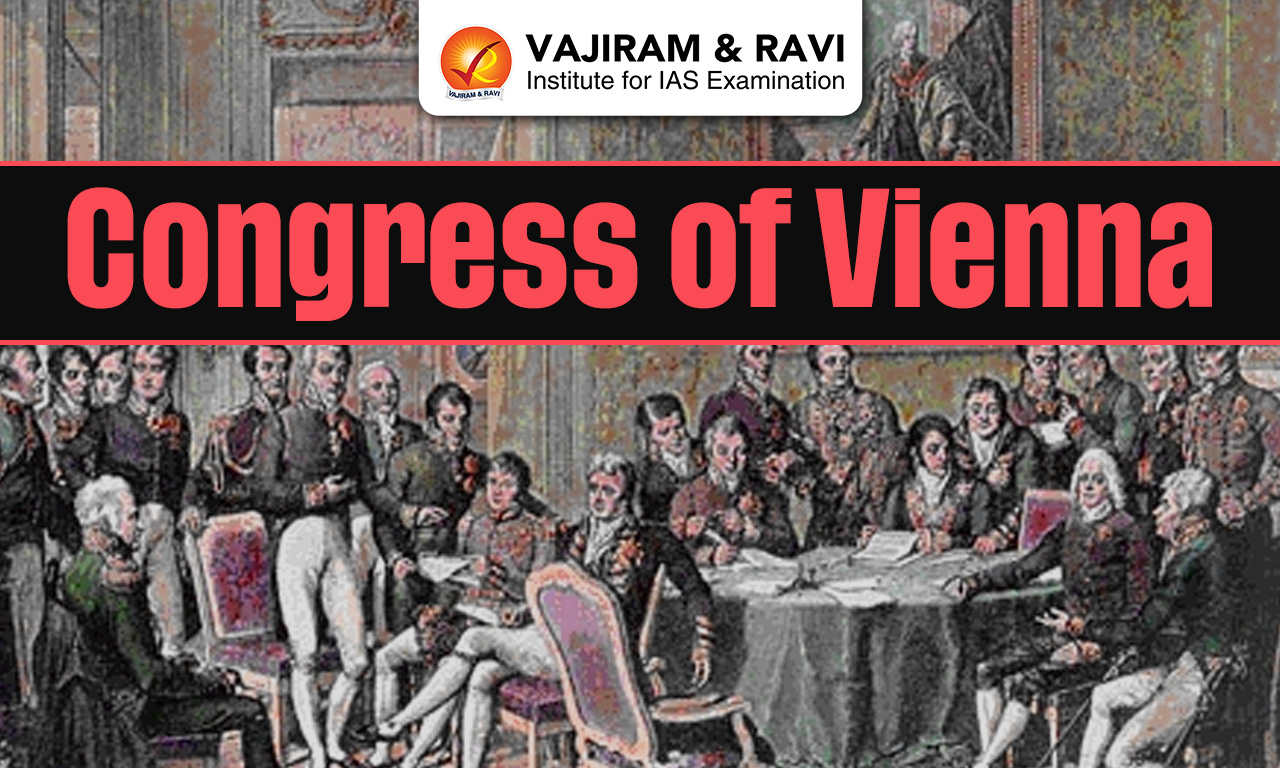
The Congress of Vienna was a meeting of important European countries held between 1814 and 1815 after the defeat of Napoleon Bonaparte. Leaders from countries like Austria, Britain, Russia, Prussia, and France came together to reorganize Europe and bring peace after years of war. Their main aim was to restore old monarchies, maintain a balance of power so that no country becomes too strong, and ensure long-term stability. The decisions taken during this meeting helped Europe avoid major wars for almost 100 years, although they also ignored and suppressed growing feelings of nationalism in many regions.

Congress of Vienna Background

  • After the defeat of Napoleon Bonaparte, four major powers - Austria, Prussia, Russia, and Great Britain played the key role in defeating him. Even before his final fall, they formed an alliance through the Treaty of Chaumont (March 9, 1814). Later, peace treaties with France were signed on May 30, 1814, joined by Sweden, Portugal, and later Spain. All countries agreed to send representatives to the Congress of Vienna, but real decision-making remained with the four major powers.
  • At the same time, nationalism was rising in Europe. In Germany and Italy, common language, culture, and shared history helped people unite and form independent nation-states by 1870. Though nationalism existed earlier, both countries became proper nation-states only in the 19th century.
  • Their unification paths were different. Germany achieved strong economic and political unity mainly under Prussia and leadership from above, while Italy’s unification was more political and cultural, with weaker economic unity and greater involvement of common people. Language also became a political issue, leading to conflicts like Schleswig-Holstein (Danes vs Germans) and the Rhine region (Germans vs French) in the 1840s.

Congress of Vienna Objectives

  • Balance of Power: The main aim of the Congress of Vienna was to make sure that no single country, especially France, becomes too powerful again and dominates Europe.
  • Control over France: To stop France from expanding in the future, strong countries were placed around it, such as a stronger Netherlands and increased territory for Prussia in the west.
  • Restoration of Monarchies: The Congress tried to bring back old royal families who had lost their thrones during the time of the French Revolution and Napoleon Bonaparte, so that traditional systems of rule could be restored.
  • Reorganisation of Territories: The map of Europe was redrawn, and land was distributed among major powers like Austria, Prussia, Russia, and Great Britain as a reward for defeating Napoleon.
  • Maintaining Peace and Stability: The Congress also wanted to ensure long-term peace in Europe, so it created a system called the “Concert of Europe,” where countries would solve problems through discussion and diplomacy instead of war.

Congress of Vienna Key Players

  • Representatives from across Europe arrived in Vienna in September 1814, including many important leaders and diplomats.
  • Klemens von Metternich represented Austria and played a leading role, while Alexander I of Russia personally guided Russia’s decisions.
  • Frederick William III of Prussia was represented by his minister Karl von Hardenberg, and Britain was first represented by Viscount Castlereagh, later replaced by Duke of Wellington and then Lord Clancarty.
  • France, under Louis XVIII, was represented by Charles-Maurice de Talleyrand, while countries like Spain, Portugal, and Sweden had less influential representatives.
  • Many smaller European states also sent delegates, along with large groups of courtiers and officials who took part in the grand social life of Vienna.
  • Friedrich Gentz helped manage the organisation of the Congress, but frequent social events and celebrations sometimes delayed serious decision-making.

Congress of Vienna Key Outcomes

  • The Congress of Vienna faced major disagreements over regions like Poland, Saxony, and German states, with powers like Russia and Prussia often opposing Austria, Britain, and France.
  • Alexander I of Russia gained control over most of Poland, while Austria got back Galicia, and Prussia received parts of Saxony and important areas near the Rhine to act as a barrier against France.
  • A strong Netherlands was created (including Belgium) to check France, while Austria gained control over regions like Lombardy and Venice. Other states like Bavaria and Hanover also gained territory.
  • Germany was reorganised into a loose group of states (confederation), and Switzerland was given a new constitution. Denmark lost Norway to Sweden.
  • In Italy, territories were rearranged, Piedmont gained Genoa, the Pope got back the Papal States, and Naples returned to its old rulers.
  • The final agreement was signed in June 1815, creating a balance of power that kept peace in Europe for many years, but it ignored people’s wishes and rising nationalism, which later caused problems.

Significance of the Congress of Vienna

  • Balance of Power: European boundaries were adjusted so that no single country, especially France, could dominate again.
  • Concert of Europe: Major powers began meeting regularly to solve problems peacefully and maintain stability.
  • Restoration of Monarchies: Old royal families were brought back to power, guided by leaders like Klemens von Metternich.
  • Long-Term Peace: The system helped Europe avoid major wars for many years until World War I.
  • Territorial Settlements: Lands were redistributed Prussia gained the Rhineland, Russia got most of Poland, and Switzerland was made neutral

Congress of Vienna FAQs

Q1: What was the Congress of Vienna?

Ans: It was a meeting (1814-1815) of major European powers after the defeat of Napoleon Bonaparte to restore peace and reorganise Europe.

Q2: Why was the Congress of Vienna held?

Ans: It was held to bring stability after years of war, restore monarchies, and prevent any one country from becoming too powerful.

Q3: Which countries played the main role?

Ans: The main powers were Austria, Russia, Prussia, and Great Britain, while France also participated.

Q4: What were the main objectives of the Congress?

Ans: Its key aims were to maintain balance of power, control France, restore old rulers, redraw boundaries, and ensure long-term peace.

Q5: What were the major outcomes of the Congress?

Ans: Europe’s map was redrawn, France was contained, new arrangements were made in Germany and Italy, and countries like the Netherlands and Switzerland were strengthened or reorganised.

24th Constitutional Amendment Act, Background, Provisions, Case Laws

24th Constitutional Amendment Act

The 24th Constitutional Amendment Act was passed in 1971 to clarify and strengthen the power of Parliament to amend the Constitution of India. The amendment made it clear that Parliament has the authority to amend any part of the Constitution according to the procedure laid down in the Constitution.

24th Constitutional Amendment Act Background

  • The need for this amendment arose after the Supreme Court’s judgment in Golaknath v. State of Punjab. In this case, the Court ruled that Parliament did not have the power to amend the Fundamental Rights of the Constitution of India. According to the judgment, any law that tried to limit or remove Fundamental Rights would be considered invalid.
  • This decision created difficulties for the government because many social and economic reforms required constitutional amendments. Therefore, it became necessary to clearly state that Parliament had the authority to amend the Constitution, including Fundamental Rights.

24th Constitutional Amendment Act Key Provisions

  • The amendment clarified that Parliament has the power to amend any provision of the Constitution.
  • It amended Article 13 of the Constitution of India by stating that constitutional amendments made under Article 368 will not be considered ordinary laws.
  • It amended Article 368 of the Constitution of India to clearly describe the power of Parliament to amend the Constitution and the procedure for doing so.
  • It made it mandatory for the President of India to give assent to a constitutional amendment bill once it is passed by both Houses of Parliament.

24th Constitutional Amendment Act Case Laws

The 24th Constitutional Amendment Act was passed to overcome the effect of the Golaknath v. State of Punjab judgment and to clearly state that Parliament has the power to amend any part of the Constitution of India, including the Fundamental Rights of the Constitution of India.

Several important Supreme Court cases later discussed and clarified the scope of this amendment.

  • Golaknath v. State of Punjab (1967): The Supreme Court ruled that Parliament cannot amend or limit the Fundamental Rights. This decision created difficulties for the government in carrying out reforms and led to the passing of the 24th Constitutional Amendment.
  • Kesavananda Bharati v. State of Kerala (1973): The Supreme Court upheld the validity of the 24th Constitutional Amendment. It stated that Parliament can amend any part of the Constitution, including Fundamental Rights. However, the Court also introduced the Basic Structure Doctrine, which means Parliament cannot change the basic structure of the Constitution.
  • Minerva Mills Ltd. v. Union of India (1980): The Supreme Court further strengthened the Basic Structure Doctrine and stated that Parliament’s power to amend the Constitution is not unlimited.
  • I.R. Coelho v. State of Tamil Nadu (2007): The Court reaffirmed that any constitutional amendment must not violate the basic structure of the Constitution, even if it is passed under the amending power of Parliament.

24th Constitutional Amendment Act Significance

The 24th Constitutional Amendment Act was important because it strengthened Parliament’s power to amend the Constitution and removed the confusion created by earlier court decisions. It also ensured that constitutional amendments could be made to support social and economic reforms while following the procedure laid down in the Constitution.

24th Constitutional Amendment Act FAQs

Q1: What is the 24th Constitutional Amendment Act, 1971?

Ans: The 24th Constitutional Amendment Act strengthened Parliament’s power to amend the Constitution of India, including Fundamental Rights.

Q2: Why was the 24th Constitutional Amendment passed?

Ans: It was passed after the Supreme Court judgment in Golaknath v. State of Punjab, which said Parliament could not amend Fundamental Rights.

Q3: Which constitutional articles were amended by the 24th Amendment?

Ans: The amendment made changes to Article 13 of the Constitution of India and Article 368 of the Constitution of India.

Q4: What change was made in Article 13?

Ans: It clarified that constitutional amendments made under Article 368 will not be treated as ordinary laws.

Q5: What change was made in Article 368?

Ans: It clearly stated that Parliament has the power to amend any part of the Constitution according to the prescribed procedure.

Modern Music, Revival, Western Influence, Contemporary Developments

Modern Music

Modern Indian music represents a dynamic blend of tradition and innovation. From the late 19th century revival of classical forms to the influence of Western music and globalization, Indian music has evolved significantly. Today, it reflects both deep-rooted cultural heritage and modern artistic experimentation, making it relevant to global audiences.

Revival of Indian Music in the Late 19th and Early 20th Century

A major revival in Indian music took place during the late 19th and early 20th centuries. This period witnessed efforts to preserve, reform, and popularize Indian classical music, which had earlier been limited to royal courts and traditional gharanas.

One of the most influential figures of this era was Rabindranath Tagore, who created a unique genre of music known as Rabindra Sangeet. His compositions combined classical Indian elements with lyrical depth and emotional expression.

The freedom movement also played a crucial role in shaping music. Many musicians used their art as a tool for nationalism and social awakening. Notable contributors included:

  • Kazi Nazrul Islam - Known for revolutionary songs and poems
  • Vishnu Digambar Paluskar - Promoted music education and accessibility
  • Subramania Bharati - Composed patriotic songs 

Institutional Developments in Modern Indian Music

To revive and systematize Indian music, several important institutions were established:

  • In 1901, Vishnu Digambar Paluskar founded the Gandharva Mahavidyalaya in Lahore to reduce the dominance of gharanas and make music education accessible to the masses.
  • In 1926, Vishnu Narayan Bhatkhande established the Marris College of Music in Lucknow, which later became a major center for structured music education.
  • In 1919, an All-India Music Academy was set up to promote research and deeper understanding of Indian music traditions.
  • In 1928, the Madras Music Academy was established to revive and promote Carnatic music.

Cross-Cultural Collaborations

One of the most significant features of modern Indian music is its interaction with global music traditions.

  • In the early 1960s, artists like John Coltrane and George Harrison collaborated with Indian musicians and incorporated instruments like the sitar into Western compositions.
  • Indian classical music began influencing global music trends, especially in jazz and rock.
  • During the late 1970s and early 1980s, Indo-Western fusion music gained popularity in Europe and North America.

These collaborations helped Indian music gain international recognition and created new hybrid musical forms.

Impact of Western Music on Indian Musical Traditions

Globalization and technological advancement have significantly influenced Indian music. Western music has both enriched and challenged traditional Indian musical systems.

Positive Impacts

  • Global Recognition: Artists like Pandit Ravi Shankar, Zakir Hussain, and A. R. Rahman have gained worldwide acclaim.
  • Revival of Interest: International artists such as Shankar Tucker have shown interest in Indian classical music.
  • New Opportunities: Increased global exposure has created better career opportunities for musicians.
  • Fusion and Innovation: Genres like Indie-pop and fusion music have enriched Indian music traditions.

Negative Impacts

  • Decline in Traditional Learning: Many students prefer Western music due to better economic prospects.
  • Changing Audience Preferences: Western music is becoming more popular among the masses.
  • Resource Gap: Traditional artists often lack access to modern tools and marketing compared to Western musicians.
  • Rural Impact: Westernization is affecting local folk traditions and livelihoods.
  • Cinema Trends: Popular films increasingly favor Western styles over traditional Indian music.

Way Forward for Indian Music

To preserve and promote Indian musical heritage in the modern era, several steps are necessary:

  • Financial Support: Provide funding and scholarships for classical musicians.
  • Education and Awareness: Introduce music appreciation and training at the school level.
  • Employment Opportunities: Create sustainable livelihood options for traditional artists.
  • Institutional Strengthening: Organizations like the Sangeet Natak Akademi should be strengthened with resources for research and promotion.
  • Digital Promotion: Use technology and online platforms to showcase Indian music globally.

Modern Music FAQs

Q1: What is modern music?

Ans: Modern music refers to contemporary styles of music that developed from the late 19th century to the present. It includes genres like pop, rock, jazz, hip-hop, and electronic music, and focuses on creativity, innovation, and mass appeal.

Q2: When did modern music begin?

Ans: Modern music began to take shape in the late 19th and early 20th centuries, when musicians started experimenting beyond traditional classical forms and introduced new styles like jazz and blues.

Q3: How is modern music different from classical music?

Ans: Modern music is more flexible, technology-driven, and aimed at mass audiences, whereas classical music follows strict rules, traditional instruments, and structured compositions.

Q4: What role does technology play in modern music?

Ans: Technology has made music production easier and more accessible. Platforms like Spotify and YouTube allow artists to share their work globally, while digital tools help in composing, recording, and editing music.

Q5: What is modernism in music?

Ans: Modernism in music refers to a movement where artists experimented with new sounds, structures, and styles, breaking away from traditional norms to create innovative forms of expression.

34th Constitutional Amendment Act, Background, Purpose, Case Laws

34th Constitutional Amendment Act

The 34th Constitutional Amendment Act was passed in 1974 as an important amendment to the Constitution of India. It was introduced to make certain changes related to laws passed by the government in order to promote social and economic justice in the country. The amendment aimed to support government efforts to bring reforms in important areas of society and ensure that such laws could function effectively. It also reflected the commitment of India to strengthen the goals of equality, welfare, and development within the constitutional framework.

34th Constitutional Amendment Act Background

  • After independence, the government of India introduced several land reform laws to reduce inequality in land ownership and improve the condition of farmers. These laws aimed to remove large landholdings and distribute land more fairly among the people.
  • However, many of these laws were challenged in courts on the ground that they violated certain Fundamental Rights of the Constitution of India, especially the right to property that existed at that time. Because of these legal challenges, the implementation of some reform laws became difficult.
  • To protect such laws and ensure that social and economic reforms could continue without legal obstacles, the government decided to include them in the Ninth Schedule of the Constitution of India, which gives protection from judicial review in many cases. As a result, the 34th Constitutional Amendment Act was passed to add more laws to the Ninth Schedule and support the process of social and economic reforms in the country.

34th Constitutional Amendment Act Purpose

  • The main purpose of the 34th Constitutional Amendment Act was to protect certain important laws related to land reforms from being challenged in courts.
  • The amendment added several state land reform laws to the Ninth Schedule to ensure their smooth implementation. 
  • Another purpose of the amendment was to support the goal of social and economic justice mentioned in the Constitution of India. By protecting these laws, the government wanted to promote fair distribution of resources and improve the condition of farmers and rural society in India.

34th Constitutional Amendment Act Significance

  • Protected Reform Laws: The 34th Constitutional Amendment Act helped protect several important land reform laws by placing them in the Ninth Schedule of the Constitution of India.
  • Supported Land Reforms: It strengthened the implementation of land reform policies aimed at reducing inequality in land ownership.
  • Reduced Legal Challenges: By adding these laws to the Ninth Schedule, the amendment limited the possibility of these laws being challenged in courts.
  • Promoted Social Justice: The amendment supported the goal of creating a more equal and fair society, as envisioned in the Constitution of India.
  • Strengthened Welfare Policies: It allowed the government to continue policies meant for the welfare of farmers and rural communities in India.

34th Constitutional Amendment Act Case Laws

The 34th Constitutional Amendment Act added 20 land reform and land tenure laws from different states to the Ninth Schedule of the Constitution of India. The main purpose of adding these laws to the Ninth Schedule was to protect them from being challenged in courts. These laws were mainly related to land ceiling, redistribution of land, and tenancy reforms, which aimed to reduce inequality in land ownership and improve the condition of farmers.

  • Kesavananda Bharati v. State of Kerala (1973): The Supreme Court introduced the Basic Structure Doctrine, stating that Parliament cannot amend the Constitution of India in a way that destroys its basic structure.
  • Waman Rao v. Union of India (1981): The Court held that laws placed in the Ninth Schedule of the Constitution of India after 24 April 1973 can be challenged in courts if they violate constitutional principles.
  • I.R. Coelho v. State of Tamil Nadu (2007): The Supreme Court ruled that any law added to the Ninth Schedule after 24 April 1973 is subject to judicial review if it violates fundamental rights or the basic structure of the Constitution.

34th Constitutional Amendment Act FAQs

Q1: What is the 34th Constitutional Amendment Act, 1974?

Ans: The 34th Constitutional Amendment Act added several land reform laws to the Ninth Schedule of the Constitution of India to protect them from legal challenges.

Q2: Why was the 34th Constitutional Amendment passed?

Ans: It was passed to protect land reform laws and ensure fair distribution of land and social justice in India.

Q3: How many laws were added to the Ninth Schedule by this amendment?

Ans: The amendment added 20 land reform and land tenure laws from different states to the Ninth Schedule.

Q4: What types of laws were protected under this amendment?

Ans: The laws mainly dealt with land ceiling, land redistribution, and tenancy reforms.

Q5: What was the main objective of adding laws to the Ninth Schedule?

Ans: The objective was to protect these laws from judicial review so that land reforms could be implemented effectively.

2nd Constitutional Amendment Act, Background, Need, Provisions

2nd Constitutional Amendment Act

2nd Constitutional Amendment Act 1952 is one of the earliest amendments made to the Constitution of India after independence. It mainly dealt with the issue of representation in the Lok Sabha and the relationship between population size and parliamentary constituencies. The amendment became necessary after the first Census of independent India (1951) revealed significant changes in population figures.

2nd Constitutional Amendment Act Background

Before the 2nd Constitutional Amendment Act, Article 81 of the Constitution of India defined the composition of the Lok Sabha and the relationship between population and parliamentary representation.

The original provisions included:

  • The Lok Sabha could have a maximum of 500 elected members.
  • Each parliamentary constituency had to follow a population limit:
    • Not less than one member for every 750,000 people
    • Not more than one member for every 500,000 people

However, the delimitation of constituencies in the early years was based on estimated population figures rather than actual census data. When the 1951 Census of India was conducted, it showed that population levels were higher in most states. As a result, it became difficult to maintain the population limits mentioned in Article 81 while keeping the total number of seats within the constitutional cap of 500 members. 

Thus, the 2nd Constitutional Amendment Act was introduced to resolve this issue.

2nd Constitutional Amendment Act Need

The 2nd Constitutional Amendment Act was necessary because the earlier population limits created practical problems in adjusting parliamentary representation.

The major reasons were:

  • The 1951 Census revealed higher population figures across most states.
  • Strictly following the population ratio would have required increasing the number of Lok Sabha seats beyond the limit of 500.
  • There was a need to re-adjust parliamentary constituencies without violating constitutional provisions.
  • The amendment was required to enable the delimitation of constituencies based on updated population data.

Therefore, the 2nd Constitutional Amendment Act aimed to introduce flexibility in determining the population size of parliamentary constituencies.

Also Read: Indian Constitution

2nd Constitutional Amendment Act Key Provisions

The most important change introduced by the 2nd Constitutional Amendment Act was related to Article 81(1)(b).

Major provision:

  • The amendment removed the words “not less than one member for every 750,000 of the population” from Article 81(1)(b). 

Key implications:

  • The strict population limit for constituencies was relaxed.
  • A parliamentary constituency could now represent more than 750,000 people if necessary.
  • This allowed flexibility in allocating seats while keeping the maximum limit of Lok Sabha members unchanged.

Thus, the 2nd Constitutional Amendment Act made it possible to adjust representation according to population changes.

2nd Constitutional Amendment Act Significance

Significance of 2nd Constitutional Amendment Act 1952 can be understood through the following points:

  • It enabled fair readjustment of parliamentary constituencies after the 1951 Census.
  • It ensured that population growth did not force an increase in Lok Sabha seats beyond the constitutional limit.
  • It provided flexibility to the delimitation process when drawing constituency boundaries.
  • It helped maintain balanced representation of states in Parliament.

2nd Constitutional Amendment Act, 1952 FAQ

Q1: What is the 2nd Constitutional Amendment Act, 1952?

Ans: The 2nd Constitutional Amendment Act, 1952 was one of the earliest amendments to the Constitution of India. It modified provisions related to representation in the Lok Sabha by relaxing population limits for parliamentary constituencies.

Q2: Why was the 2nd Constitutional Amendment Act introduced?

Ans: The amendment was introduced after the 1951 Census of India revealed higher population figures than earlier estimates. This created difficulties in maintaining the population–representation ratio while keeping the total number of Lok Sabha seats within the constitutional limit.

Q3: Which constitutional provision was amended by the 2nd Constitutional Amendment Act?

Ans: The 2nd Constitutional Amendment Act amended Article 81 of the Constitution of India, which deals with the composition of the Lok Sabha and the allocation of seats among states based on population.

Q4: What was the key change introduced by the 2nd Constitutional Amendment Act?

Ans: The amendment removed the requirement that each parliamentary constituency must have not less than one member for every 750,000 people, allowing constituencies to represent larger populations if necessary.

Q5: What is the significance of the 2nd Constitutional Amendment Act?

Ans: The 2nd Constitutional Amendment Act made it possible to readjust parliamentary constituencies after the 1951 Census without increasing the total number of Lok Sabha seats beyond the constitutional limit, ensuring smoother delimitation and balanced representation.

80th Constitutional Amendment Act 2000, Changes, Significance 

80th Constitutional Amendment Act

The 80th Constitutional Amendment Act also known as Constitution (Eightieth Amendment) Act, 2000 introduced important changes in the system of financial distribution between the Union and the States in India. It modified provisions related to tax collection and sharing under the Constitution. The amendment mainly altered Articles 269 and 270 and removed Article 272 to create a clearer structure for allocating tax revenues between different levels of government.

80th Constitutional Amendment Act 2000

The 80th Constitutional Amendment Act 2000 was enacted by Parliament in the 51st Year of the Republic of India. It restructured the constitutional provisions governing tax distribution. The amendment ensured that several central taxes collected by the Union Government were appropriately assigned to States. It also provided a retrospective effect to certain provisions from 1 April 1996.

Changes Under 80th Constitutional Amendment Act

This amendment reorganized tax sharing provisions between the Union and States by modifying Articles 269 and 270 and omitting Article 272.

  • Amendment of Article 269: The amendment replaced clauses (1) and (2) of Article 269. It provided that taxes on sale or purchase of goods and taxes on consignment of goods in inter-State trade are levied and collected by the Union but assigned to the States.
  • Definition of Tax Categories: The amendment clarified that taxes on sale or purchase of goods include transactions in inter-State trade except newspapers, while taxes on consignment of goods include goods transferred during inter-State commerce.
  • Distribution of Net Proceeds: The net proceeds of these taxes collected in a financial year do not form part of the Consolidated Fund of India. Instead, they are assigned to States where the taxes are leviable and distributed according to parliamentary law.
  • Substitution of Article 270: A new Article 270 replaced the earlier provision. It stated that taxes and duties in the Union List, except those under Articles 268 and 269, along with exclusions like surcharges and cesses, are distributed between Union and States.
  • Role of the President and Finance Commission: The percentage of tax distribution is prescribed by the President. After the establishment of a Finance Commission, the President determines the distribution after considering its recommendations.
  • Omission of Article 272: Article 272, which earlier dealt with Union excise duties distribution, was removed. Any tax revenue distributed as grants-in-aid to States after 1 April 1996 was deemed to follow the new Article 270 provisions.

80th Constitutional Amendment Act Significance

The major highlighting importance of the 80th Constitutional Amendment Act has been listed below:

  • The amendment created a broader divisible tax pool by allowing Union taxes listed in the Union List to be shared with States under Article 270, strengthening cooperative fiscal federalism.
  • By giving retrospective effect, the amendment regularized earlier financial transfers made to States, ensuring constitutional validity of revenue distributions already implemented.
  • Removal of Article 272 simplified the constitutional structure governing Union excise duty distribution, replacing multiple mechanisms with a unified framework under the revised Article 270.
  • The amendment strengthened the institutional role of the Finance Commission, since the President determines the share of taxes for States after considering its recommendations on revenue distribution.
  • Assigning proceeds of inter-State sales and consignment taxes to States under Article 269 ensured that revenue generated through inter-State commerce directly supported the finances of concerned States.

80th Constitutional Amendment Act FAQs

Q1: What is the 80th Constitutional Amendment Act 2000?

Ans: The 80th Constitutional Amendment Act, 2000 revised the constitutional provisions related to distribution of taxes between the Union and the States by amending Articles 269 and 270 and removing Article 272.

Q2: When did the provisions of the 80th Constitutional Amendment Act take effect?

Ans: Although the Act was passed in 2000, several provisions were given retrospective effect from 1 April 1996 for the purpose of tax distribution between the Union and States.

Q3: Which constitutional articles were changed under the 80th Constitutional Amendment Act?

Ans: The amendment modified Article 269, substituted Article 270, and omitted Article 272 of the Constitution to reorganize the system of sharing central tax revenues.

Q4: How are inter-State sales taxes treated under Article 269 after the 80th Constitutional Amendment Act?

Ans: Taxes on inter-State sale or purchase of goods and consignment of goods are levied and collected by the Union Government but assigned to the States where the tax is applicable.

Q5: Who decides the percentage of tax distribution between the Union and the States?

Ans: The President of India determines the percentage of tax distribution based on the recommendations of the Finance Commission once it has been constituted as per the 80th Constitutional Amendment Act.

97th Constitutional Amendment Act, Objective, Key Details

97th Constitutional Amendment Act

After confirmation from the Supreme Court to a decision by Gujarat High Court in 2013 which invalidated some parts of the 97th Constitutional Amendment Act in 2011. Part IX was introduced to elaborate the terms of existing cooperative society. The act basically focused on overcoming the challenges and hurdles experienced by cooperative societies and tried to install effective techniques to manage them. Under the act, amendments were added to the words or co-operative societies after the words or unions in Article 19(i). Other than this, Article 43B was included to Part IV of the Indian Constitution which mentions that “the State shall endeavour to promote voluntary formation, autonomous functioning, democratic control, and professional management of cooperative societies” and “the State shall endeavour to promote voluntary formation, autonomous functioning, democratic control, and professional management of cooperative societies”. Part IX-B was added after IX-A. Article 243ZH through 243ZT was added to Part IX-B.

Also Check: 103rd Constitutional Amendment Act

97th Constitutional Amendment Act

The 97th Constitutional Amendment Act came into existence in 2011, for the first time, cooperative societies were given formal constitutional backing, elevating their status in the country’s political and economic framework. This amendment did three key things which includes, It made the right to form cooperative societies a fundamental right under Article 19(1)(c), putting it on par with the right to form unions or associations, It added Article 43B to the Directive Principles of State Policy, stating that the state shall promote voluntary formation, autonomous functioning, democratic control, and professional management of cooperative societies. It introduced Part IX-B (Articles 243-ZH to 243-ZT), which lays out the framework for how cooperative societies should function covering everything from the composition of their boards to their elections, audits, and dispute resolution.

97th Constitutional Amendment Act FAQs

Q1: What is the 97th Constitutional Amendment Act?

Ans: The 97th Amendment, enacted in 2011, granted constitutional status and protection to cooperative societies in India.

Q2: When did the 97th Constitutional Amendment come into force?

Ans: It came into effect on 15th February 2012.

Q3: What was the main objective of the 97th Amendment?

Ans: To encourage the development of cooperative societies as democratic, autonomous, and professional institutions.

Q4: Which part of the Constitution was amended by the 97th Amendment?

Ans: It amended Part III (Fundamental Rights), Part IV (Directive Principles), and added Part IXB to the Constitution.

Q5: What article was inserted into the Fundamental Rights by this amendment?

Ans: What article was inserted into the Fundamental Rights by this amendment?

91st Constitutional Amendment Act, Background, Provisions, Case Laws

91st Constitutional Amendment Act

The 91st Constitutional Amendment Act was enacted in 2003 to strengthen the anti-defection framework in India and to bring stability to governments. The amendment made important changes to the Constitution of India by modifying provisions related to political defections and the size of the Council of Ministers.

This amendment mainly strengthened the Tenth Schedule, which deals with the Anti-Defection Law, and also introduced limits on the number of ministers in the Union and State governments. The aim was to prevent political instability caused by frequent defections and to ensure responsible governance.

91st Constitutional Amendment Act Background

The 91st Constitutional Amendment Act was introduced to address the growing problem of political defections and instability in governments.

  • The 52nd Constitutional Amendment Act (1985) introduced the Anti-Defection Law but allowed one-third of legislators to split from a party, which created loopholes.
  • Frequent party switching by legislators caused political instability and misuse of ministerial positions.
  • To remove these loopholes and strengthen the law, Parliament enacted the 91st Constitutional Amendment Act in 2003.

91st Constitutional Amendment Act Provisions

The 91st Constitutional Amendment Act introduced important provisions to strengthen the Anti-Defection Law and to control the size of the Council of Ministers in the Union and State governments. The amendment made changes to the Constitution of India by modifying Article 75 and Article 164, and by adding new provisions to prevent political defections.

  • Limit on Council of Ministers: The total number of ministers, including the Prime Minister or Chief Minister, cannot exceed 15% of the total strength of the Lok Sabha or State Legislative Assembly.
  • Minimum Number of Ministers: In smaller states, the number of ministers in the Council of Ministers must not be less than 12.
  • Disqualification of Defectors from Ministerial Office: The amendment added Article 75(1B) and Article 164(1B), which state that a member disqualified under the Tenth Schedule cannot be appointed as a minister until they are re-elected.
  • Disqualification from Holding Political Posts: The amendment introduced Article 361B, which prevents a disqualified legislator from holding any remunerative political post until their term ends or they are re-elected.
  • Removal of Split Provision: The amendment removed the earlier rule that allowed one-third of legislators to split from a political party without disqualification. Now only a merger supported by two-thirds of legislators is permitted under the Anti-Defection Law.

91st Constitutional Amendment Act Case Laws

Several important judgments of the Supreme Court of India have interpreted the Anti-Defection Law and the provisions strengthened by the 91st Constitutional Amendment Act. These cases clarified how disqualification of legislators and party defections should be handled under the Tenth Schedule.

  1. Kihoto Hollohan v. Zachillhu: In this landmark judgment, the Supreme Court upheld the constitutional validity of the Tenth Schedule (Anti-Defection Law). The Court ruled that the Speaker or Chairman has the authority to decide disqualification cases, but their decisions are subject to judicial review by the courts.
  2. Ravi S. Naik v. Union of India: In this case, the Supreme Court clarified the meaning of “voluntarily giving up membership of a political party.” The Court held that a legislator may be disqualified even without formally resigning from the party if their actions clearly show that they have abandoned party loyalty.
  3. Rajendra Singh Rana v. Swami Prasad Maurya: This case involved defections in the Uttar Pradesh Legislative Assembly. The Supreme Court emphasized that the Speaker must act promptly while deciding disqualification petitions under the Anti-Defection Law to maintain the stability of democratic governments.

91st Constitutional Amendment Act FAQs

Q1: What is the 91st Constitutional Amendment Act?

Ans: The 91st Constitutional Amendment Act was enacted in 2003 to strengthen the Anti-Defection Law and to limit the size of the Council of Ministers in the Union and State governments.

Q2: What is the main objective of the 91st Amendment?

Ans: The main objective is to prevent political defections, ensure stable governments, and reduce the size of the Council of Ministers.

Q3: What is the maximum size of the Council of Ministers under this amendment?

Ans: The number of ministers cannot exceed 15% of the total strength of the Lok Sabha or State Legislative Assembly.

Q4: Which constitutional provisions were added by the 91st Amendment?

Ans: The amendment added Articles 75(1B), 164(1B), and 361B to the Constitution of India.

Q5: What change was made in the Anti-Defection Law?

Ans: The amendment removed the provision allowing one-third of legislators to split from a party without disqualification, thereby strengthening the Tenth Schedule.

100th Constitutional Amendment Act 2015, Background, Provisions

100th Constitutional Amendment Act

The 100th Constitutional Amendment Act, 2015 was passed to implement the India-Bangladesh Land Boundary Agreement. This amendment allowed India to exchange certain territories with Bangladesh and to finally settle long-pending border disputes between the two countries.

100th Constitutional Amendment Act Background and Need

When India was partitioned in 1947, the boundary between India and East Pakistan (now Bangladesh) was decided by the Radcliffe Award. However, the boundary was not clearly drawn in some areas. As a result, a complex territorial arrangement developed along the border. Certain small pockets of Indian territory were located within Bangladesh, and similarly, some Bangladeshi territories were situated within India. These pockets were known as enclaves. Over time, three major problems existed:

  • 111 Indian enclaves were located inside Bangladesh.
  • 51 Bangladeshi enclaves were located inside India.
  • Some areas were under “adverse possession”, meaning one country controlled land that legally belonged to the other.
  • Around 6.1 km of the border was not clearly marked.

The people living in these enclaves suffered the most. They did not have proper citizenship documents, police protection, schools, hospitals or access to government schemes. It was difficult for either country to provide services because the land was surrounded by another country. Therefore, there was a strong humanitarian and administrative need to solve this issue permanently.

India-Bangladesh Land Boundary Agreement, 1974

To settle the issue, India and Bangladesh signed the Land Boundary Agreement on 16 May 1974. The agreement proposed:

  • Exchange of enclaves
  • Settlement of areas under adverse possession
  • Complete demarcation of the boundary

However, the agreement involved transfer of territory. In the Berubari case (1960), the Supreme Court had clearly stated that transfer of Indian territory requires a Constitutional Amendment under Article 368. Therefore, the 1974 agreement could not be implemented without amending the Constitution.

2011 Protocol

In 2011, both countries signed a Protocol to finalise the exact areas to be exchanged and to settle the remaining boundary disputes. The concerned states - Assam, West Bengal, Meghalaya and Tripura agreed to the settlement. This created the necessary political and legal consensus for bringing a constitutional amendment.

100th Constitutional Amendment Act Provisions

The provisions of the 100th Amendment are:

  • Gave constitutional approval to the 1974 Agreement and 2011 Protocol.
  • Transferred 111 Indian enclaves to Bangladesh.
  • Received 51 Bangladeshi enclaves from Bangladesh.
  • Settled areas under adverse possession.
  • Completed demarcation of the remaining 6.1 km border.
  • Amended the First Schedule of Indian Constitution to change the territories of Assam, West Bengal, Meghalaya and Tripura.
  • Gave residents of enclaves the option to choose their citizenship.

Conclusion

The 100th Constitutional Amendment Act, 2015 finally resolved a long-standing border problem that had existed since Partition. It improved the lives of thousands of people living in enclaves and strengthened friendly relations between India and Bangladesh. It also showed that any transfer of territory must follow proper constitutional procedure.

100th Constitutional Amendment Act FAQs

Q1: What is the 100th Constitutional Amendment Act, 2015?

Ans: The 100th Constitutional Amendment Act, 2015 is a constitutional amendment that gave effect to the India-Bangladesh Land Boundary Agreement (1974) and the 2011 Protocol by enabling exchange of territories and settlement of boundary disputes.

Q2: Why was the 100th Constitutional Amendment Act passed?

Ans: The 100th Constitutional Amendment Act was passed because transfer and acquisition of territory require a Constitutional Amendment under Article 368, as clarified by the Supreme Court in the Berubari case (1960).

Q3: What territorial changes were made under the 100th Constitutional Amendment Act?

Ans: Under the 100th Constitutional Amendment Act, India transferred 111 enclaves to Bangladesh and received 51 enclaves from Bangladesh, settled areas under adverse possession, and completed demarcation of 6.1 km of undemarcated boundary.

Q4: How did the 100th Constitutional Amendment Act affect Indian states?

Ans: The 100th Constitutional Amendment Act amended the First Schedule of the Constitution to alter the territories of Assam, West Bengal, Meghalaya and Tripura.

Q5: What is the significance of the 100th Constitutional Amendment Act?

Ans: The 100th Constitutional Amendment Act resolved a long-standing border issue since Partition, improved the lives of enclave residents, strengthened India–Bangladesh relations, and upheld constitutional procedure for territorial transfer.

UPSC Daily Quiz 15 April 2026

UPSC Daily Quiz

[WpProQuiz 137]

UPSC Daily Quiz FAQs

Q1: What is the Daily UPSC Quiz?

Ans: The Daily UPSC Quiz is a set of practice questions based on current affairs, static subjects, and PYQs that help aspirants enhance retention and test conceptual clarity regularly.

Q2: How is the Daily Quiz useful for UPSC preparation?

Ans: Daily quizzes support learning, help in revision, improve time management, and boost accuracy for both UPSC Prelims and Mains through consistent practice.

Q3: Are the quiz questions based on the UPSC syllabus?

Ans: Yes, all questions are aligned with the UPSC Syllabus 2025, covering key areas like Polity, Economy, Environment, History, Geography, and Current Affairs.

Q4: Are solutions and explanations provided with the quiz?

Ans: Yes, each quiz includes detailed explanations and source references to enhance conceptual understanding and enable self-assessment.

Q5: Is the Daily UPSC Quiz suitable for both Prelims and Mains?

Ans: Primarily focused on Prelims (MCQ format), but it also indirectly helps in Mains by strengthening subject knowledge and factual clarity.

9th Indian Ocean Conference, Venue, Theme, Purpose

9th Indian Ocean Conference

The 9th Indian Ocean Conference was held in Port Louis, Mauritius from April 10–12, 2026, marking the first time the event was hosted in Africa. External Affairs Minister Dr. S. Jaishankar Subrahmanyam Jaishankar outlined India’s priorities, including regional resilience, overcoming colonial legacies, and adapting to a fragmented global order.

About 9th Indian Ocean Conference

  • Venue: The 9th Indian Ocean Conference (IOC 2026) was held in Port Louis, Mauritius from April 10-12, 2026. This is the first time the conference was held in an African country. 
  • Theme: Collective Stewardship for Indian Ocean Governance.
  • Organised by: 9th Indian Ocean Conference (IOC 2026) was organised by the India Foundation in collaboration with the Government of Mauritius. 
  • No delegate attended from the Maldives, as diplomatic ties between Mauritius and the Maldives have been suspended over territorial differences related to the Chagos Islands

About the Indian Ocean Conference (IOC)

The Indian Ocean Conference is a flagship consultative forum aimed at strengthening regional dialogue and cooperation in the Indian Ocean Region.

  • The conference was initiated in 2016 by the India Foundation in collaboration with regional partners.
  • It brings together ministers, policymakers, scholars, and strategic experts from more than 40 countries.
  • The conference focuses on regional cooperation under India’s vision of SAGAR (Security and Growth for All in the Region). 
  • It serves as a platform to discuss geopolitical, economic, and environmental challenges in the Indian Ocean Region.

India’s Five Key Priorities at 9th Indian Ocean Conference

 EAM Dr. S. Jaishankar, in his keynote address, outlined five broad priorities for Indian Ocean nations. 

Priority 1: The Ocean as a Living Ecosystem, Not Just a Geographic Space

  • Dr. S. Jaishankar said the Indian Ocean is not merely a geographic space but a living ecosystem that sustains economies, livelihoods, connectivity, resources, and shared cultural heritage. He warned that any disruption to this interconnected system has far-reaching consequences, underscoring the need for stability and careful stewardship of the maritime domain. 

Priority 2: Overcoming Colonial Legacies and Deepening Regional Integration

  • Countries of the region must continue efforts to overcome historical barriers inherited from the colonial era and deepen regional cooperation. This includes the importance of stronger economic linkages, improved connectivity, and the revival of traditional ties, and nations must not lose sight of long-term collective goals even as global fragmentation increases. 

Priority 3: Adapting to a More Fractured and Competitive World Order

  • EAM Dr. S. Jaishankar highlighted the changing nature of the global order, noting that the world has become more competitive, inward-looking, and fractured. The benefits of globalisation are increasingly being overshadowed by tendencies to weaponise interdependence, prompting countries to seek more reliable partnerships and greater resilience in an uncertain environment. 

Priority 4: Addressing Physical and Conceptual Choke Points

  • While maritime choke points remain strategically significant, similar constraints are emerging in domains such as finance, technology, resources, and knowledge. Jaishankar cautioned that controlled systems can hinder global well-being and stressed the need for more open and resilient flows.  This is a reference not only to strategic straits like Hormuz and Malacca, but also to technological dependencies (semiconductor supply chains), financial gatekeeping, and knowledge monopolies.

Priority 5: Building Collective Resilience in the Global South

  • EAM Dr. S. Jaishankar called for deeper cooperation among Indian Ocean nations, describing the region as a “Global South ocean” facing shared challenges such as food, fuel, and fertiliser shortages; disaster response; and the spillover effects of conflicts. He stated that the answer to these challenges lies increasingly in collective resilience

Importance of the Indian Ocean Region

The strategic relevance of the Indian Ocean explains the importance of the conference.

  • The Indian Ocean connects over 35 littoral states and supports nearly 40% of the global population, making it a vital geopolitical space.
  • It carries around two-thirds of global oil shipments and a significant share of global trade, making it central to energy and economic security.
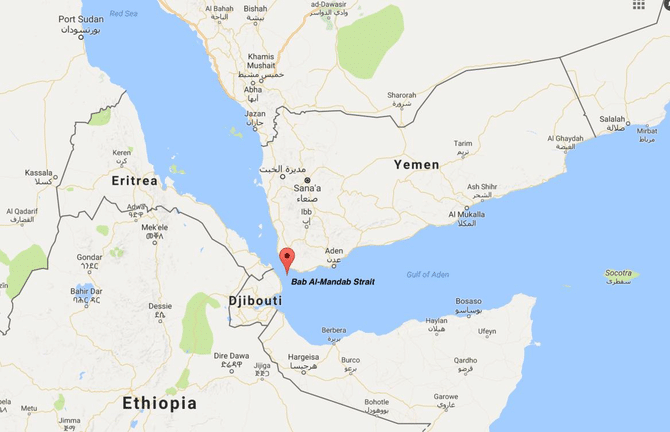
  • Key chokepoints such as the Strait of Hormuz and Malacca Strait influence global trade flows and strategic stability.
  • The region offers vast Blue Economy potential, including fisheries, seabed resources, renewable energy, and maritime trade.

9th Indian Ocean Conference FAQs

Q1: Where was the 9th Indian Ocean Conference held?

Ans: The conference was held in Port Louis, the capital of Mauritius, from April 10-12, 2026.

Q2: Who organised the 9th Indian Ocean Conference?

Ans: It was organised by the India Foundation in collaboration with the Government of Mauritius.

Q3: What was the theme of 9th Indian Ocean Conference?

Ans: The theme was “Collective Stewardship for Indian Ocean Governance,” emphasizing shared responsibility among nations to manage maritime resources, security, and sustainability.

Q4: What is the purpose of the Indian Ocean Conference?

Ans: The conference serves as a platform for dialogue and cooperation among Indian Ocean countries, focusing on geopolitical, economic, and environmental challenges under India’s SAGAR vision.

Q5: What were India’s key priorities highlighted at IOC 2026?

Ans: India, through Subrahmanyam Jaishankar, stressed viewing the ocean as an ecosystem, overcoming colonial legacies, adapting to a fragmented world order, addressing emerging choke points, and building collective resilience among Global South nations.

93rd Constitutional Amendment Act, Objectives, Provisions

93rd Constitutional Amendment

93rd Constitutional Amendment Act, 2005 was an important step taken by the Indian Parliament to promote social justice in education. The amendment empowered the State to make special provisions for socially and educationally backward classes, Scheduled Castes, and Scheduled Tribes in matters of admission to educational institutions, including private institutions.

93rd Constitutional Amendment Act Background

The education sector in India underwent major changes after the 1990s. Economic liberalization encouraged private investment in higher education. As a result, the number of private professional colleges increased significantly. However, this growth also created concerns about unequal access to quality education. Admission to many private institutions was primarily based on competitive merit, which indirectly disadvantaged students from socially and educationally backward communities.

Students from weaker sections often faced challenges such as lack of access to quality schooling, coaching facilities, and educational resources. Consequently, their representation in professional courses remained relatively low. To address these concerns and promote inclusive access to higher education, the 93rd Constitutional Amendment Act, 2005 was introduced.

93rd Constitutional Amendment Act Objectives 

The main objective of the 93rd Constitutional Amendment Act was: 

  • To promote inclusive education and ensure greater social equality.
  • To expand the scope of reservation policy in higher education.
  • To address the impact of privatization in education. 

The amendment was also aligned with the Directive Principles of State Policy, especially Article 46, which directs the State to promote the educational and economic interests of weaker sections of society.

93rd Constitutional Amendment Act Provisions 

The most important provision introduced by the 93rd Constitutional Amendment Act was the addition of clause (5) in Article 15 of the Constitution. 

Article 15(5) gives the State the power to make special laws for the advancement of socially and educationally backward classes, Scheduled Castes, and Scheduled Tribes. This provision mainly deals with admission to educational institutions.

The important features of 93rd Constitutional Amendment Act are:

  • It applies to a wide range of educational institutions including private universities, professional colleges, technical institutes, and other higher education institutions.
  • Both government-aided and private unaided institutions are covered.
  • Educational institutions established by religious and linguistic minorities under Article 30 are exempted from reservation requirements. This was done to protect the constitutional rights of minorities to preserve and administer their educational institutions.
  • Reservation or special provisions must be made through proper legislation. This means that the State cannot implement such policies arbitrarily through executive orders and must follow the law-making process.
  • This provision also limits Article 19(1)(g), which guarantees the right to carry on any profession or business, to the extent necessary for implementing reservation policy.
  • The amendment mainly focuses on admission processes in educational institutions. It does not give unlimited control to the government over the internal administration of private institutions but allows reasonable intervention to promote social justice.

93rd Constitutional Amendment Act Judicial Validity

The constitutional validity of the 93rd Constitutional Amendment Act was challenged before the Supreme Court. In the case of Ashoka Kumar Thakur v. Union of India, the Supreme Court upheld the validity of the amendment and held that it does not violate the basic structure of the Constitution.

The Court observed that the amendment promotes the constitutional value of equality by enabling affirmative action for socially and educationally backward classes, Scheduled Castes, and Scheduled Tribes. It further stated that reservation policies are justified in the Indian context because many communities have historically faced social and educational discrimination.

The judgment also highlighted the concept of substantive equality, explaining that equality does not simply mean treating everyone in the same manner. Instead, true equality sometimes requires providing additional support and opportunities to historically disadvantaged groups to reduce existing social inequalities and create a more level playing field.

93rd Constitutional Amendment Act FAQs

Q1: What is the 93rd Constitutional Amendment Act, 2005?

Ans: 93rd Constitutional Amendment Act, 2005 allows the State to make reservation provisions for socially and educationally backward classes, SCs, and STs in educational institutions, including private institutions.

Q2: Why was the 93rd Constitutional Amendment Act introduced?

Ans: 93rd Constitutional Amendment Act was introduced to improve access to higher education and promote social justice after the growth of private educational institutions in India.

Q3: Which article was added by the 93rd Constitutional Amendment Act?

Ans: 93rd Constitutional Amendment Act added Article 15(5) to the Constitution.

Q4: Does the 93rd Constitutional Amendment Act apply to minority institutions?

Ans: No, minority educational institutions under Article 30 are excluded.

Q5: Was the 93rd Constitutional Amendment Act declared valid by the Supreme Court?

Ans: Yes, in the Ashoka Kumar Thakur case, the Supreme Court upheld its constitutional validity of 93rd Constitutional Amendment Act.

Banking System in India, Types, Structure, Related Concepts

Banking System in India

The Banking System in India forms the cornerstone of the country’s economic structure. It acts as the principal financial intermediary, channeling funds from savers to borrowers, facilitating capital formation, and ensuring the smooth flow of credit across all sectors of the economy. Beyond its traditional roles of accepting deposits and lending money, the Indian banking system also promotes financial inclusion, supports government policy implementation, and contributes to national development. Understanding the structure, classification, and working of India’s banking system is important for comprehending the broader Indian financial system. In this article, we are going to cover the Banking System in India, its components, regulatory framework, types of banks, and related concepts like Basel Norms, Development Banks, NBFCs and digital banking trends.

Banking System in India

The Banking System in India refers to the network of financial institutions that perform banking and allied functions. These institutions like the commercial banks, cooperative banks, and development banks handle deposits, provide loans, facilitate payments, and offer financial services to individuals, businesses, and governments.

Essentially, banks act as financial intermediaries, transferring surplus funds from households and institutions that save, to those that require funds for investment and consumption. This intermediation promotes productive use of money and stimulates economic activity.

The Indian banking sector not only supports private business and industry but also plays a crucial social role by implementing welfare-oriented schemes like Jan Dhan Yojana, MUDRA, and Priority Sector Lending, which ensure that credit reaches weaker sections of society.

Classification of Banks in India

Banks in India are classified into two main categories:

  1. Scheduled Banks
  2. Non-Scheduled Banks

This classification is based on their inclusion in the Second Schedule of the Reserve Bank of India Act, 1934

1. Scheduled Banks

Scheduled Banks are those institutions that appear in the Second Schedule of the RBI Act, 1934. Inclusion in the Schedule indicates that the bank fulfills certain conditions prescribed by the RBI and is therefore eligible for various facilities offered by it.

To qualify as a Scheduled Bank, an institution must:

  • Have a paid-up capital and reserves of at least ₹5 lakh.
  • Satisfy the RBI that its operations are not conducted in a manner detrimental to the interests of depositors. If a bank fails to maintain these standards, it can be de-listed from the Schedule.

Benefits of Being a Scheduled Bank

  • Access to borrowings from the RBI at the Bank Rate.
  • Membership of the Clearing House, enabling efficient settlement of interbank transactions.
  • Eligibility to rediscount first-class exchange bills with the RBI.
  • Enhanced public confidence, as inclusion in the Schedule signals stability and reliability.

2. Non-Scheduled Banks

Non-Scheduled Banks are institutions not listed in the Second Schedule of the RBI Act. They are usually small local banks that do not meet the RBI’s prescribed criteria. Though they function under the supervision of the RBI, they are subject to less stringent regulations.

These banks maintain their own cash reserves instead of depositing them with the RBI and usually operate on a smaller scale, focusing on local or regional needs.

Key Differences between Scheduled and Non-Scheduled Banks 

The Difference between Scheduled and Non-Scheduled Banks are:

Basis Scheduled Banks Non-Scheduled Banks

Inclusion

Listed in the Second Schedule of RBI Act, 1934.

Not listed in the Second Schedule.

Capital Requirement

Minimum paid-up capital of ₹5 lakh.

No specific requirement.

CRR Maintenance

Maintain Cash Reserve Ratio (CRR) with RBI.

Maintain CRR with themselves.

Borrowing from RBI

Can borrow funds from RBI.

Can borrow only in emergencies.

Clearing House Membership

Automatic membership.

Not eligible.

Supervision

Strictly regulated by RBI.

Lesser degree of regulation.

Examples

SBI, HDFC Bank, PNB.

Local Area Banks, small UCBs.

Most banks operating in India today fall under the category of Scheduled Banks.

Banking System in India Structure

The structure of the Indian Banking System is multi-layered and includes various institutions catering to different needs ranging from large-scale commercial banks to rural cooperative societies. At the top of this structure is the Reserve Bank of India (RBI), which acts as the regulator and guardian of the entire system.

1. Reserve Bank of India (RBI)

Established in 1935, the Reserve Bank of India is the central bank and monetary authority of the country. It regulates and supervises the functioning of all banks and financial institutions in India.

Functions of RBI

  • Formulation of monetary policy to ensure price stability and economic growth.
  • Regulation and supervision of banking operations.
  • Control of credit and liquidity in the economy.
  • Issuance and management of currency.
  • Acting as the banker to the government and banker’s bank.
  • Maintaining financial stability and promoting economic development. The RBI thus acts as the apex institution of the banking hierarchy in India.

2. Commercial Banks

Commercial Banks are profit-oriented institutions that provide financial services to the general public, businesses, and government. They form the backbone of India’s banking network.

  • Accept deposits and extend loans.
  • Provide investment, insurance, and payment services.
  • Operate on a profit motive while maintaining social obligations.
  • Regulated by the Banking Regulation Act, 1949.

Types of Commercial Banks

  1. Public Sector Banks: Majority owned by the government (e.g., SBI, Bank of Baroda).
  2. Private Sector Banks: Owned by private entities (e.g., HDFC Bank, Axis Bank).
  3. Foreign Banks: Branches of foreign institutions (e.g., Citi Bank, HSBC).
  4. Regional Rural Banks (RRBs) : Established to serve rural credit needs (e.g., Prathama Bank).

Commercial banks play a major role in mobilizing savings, facilitating trade, and ensuring capital formation in the economy.

3. Cooperative Banks

Cooperative Banks operate on the principle of cooperation, self-help, and mutual benefit. Owned and managed by their members, these banks aim to provide affordable credit, particularly to rural and semi-urban populations.

Structure of Cooperative Banks: 

  1. Primary Agricultural Credit Societies (PACS): Operate at the village level.
  2. District Central Cooperative Banks (DCCBs):  Operate at the district level.
  3. State Cooperative Banks (SCBs): Apex institutions at the state level.

Cooperative banks have been instrumental in promoting agricultural finance and rural development in India.

4. Development Banks

Development Banks, also known as Development Financial Institutions (DFIs) or Term-Lending Institutions (TLIs), provide long-term capital for industries and infrastructure projects.

Functions of Development Banks

  • Provide long-term loans to industries and infrastructure projects.
  • Promote entrepreneurship and industrialization.
  • Fill gaps left by commercial banks in providing long-term finance.

Examples

Development banks have been important in strengthening India’s industrial and rural sectors.

5. Differentiated Banks

To promote innovation and inclusion, the RBI introduced the concept of Differentiated Banks based on the Nachiket Mor Committee Report (2013).

Types of Differentiated Banks

  • Payments Banks: Focus on small savings, remittances, and payments; cannot lend. Examples:  Paytm Payments Bank, India Post Payments Bank.
  • Small Finance Banks (SFBs): Provide banking services to small businesses and low-income groups. Examples: AU Small Finance Bank, Ujjivan SFB.

These banks help in advancing the goal of financial inclusion by bringing underserved populations into the formal financial network.

6. Non-Banking Financial Companies (NBFCs)

NBFCs are financial institutions that perform similar functions to banks such as providing loans, advances, and investment services but do not possess a full banking license.

NBFCs Characteristics

  • Cannot accept demand deposits.
  • Not part of the payment and settlement system.
  • Do not issue cheques drawn on themselves.
  • Regulated under the Companies Act, 1956, and supervised by the RBI and other regulators.

NBFCs play an important role in financing small-scale industries, transport operators, and self-employed individuals segments often overlooked by commercial banks.

Difference between Banks and NBFCs 

Banks and NBFCs are different in the following ways: 

Basis Banks NBFCs

Demand Deposits

Can accept

Cannot accept

Cheque Facility

Available

Not available

Deposit Insurance

Covered under DICGC

Not covered

Reserve Ratios

Must maintain CRR, SLR

Not mandatory

Regulatory Act

Banking Regulation Act, 1949

Companies Act, 1956

FDI Limit

74%

100%

NBFCs complement traditional banks by serving niche sectors, thereby expanding financial access.

Banking System in India Basel Norms (Basel Accords)

The Basel Norms are international banking regulations developed by the Basel Committee on Banking Supervision (BCBS) under the Bank for International Settlements (BIS), Switzerland. They aim to strengthen the regulation, supervision, and risk management of banks globally.

These norms ensure that banks maintain sufficient capital to absorb losses and remain solvent even during economic stress.

Basel I (1988)

  • Focused on credit risk.
    Introduced the concept of Risk-Weighted Assets (RWA).
  • Minimum capital adequacy ratio fixed at 8% of RWA.

Basel II (2004)

  • Broadened the framework to include market risk and operational risk.
  • Based on three pillars:
    1. Minimum Capital Requirement
    2. Supervisory Review
    3. Market Discipline

Basel III (2010)

  • Introduced after the 2008 global financial crisis.
  • Aimed to enhance banks’ ability to absorb shocks.
  • Focused on capital adequacy, leverage, and liquidity.
  • Encourages banks to build capital buffers and maintain stronger risk management practices.

Capital-to-Risk Weighted Asset Ratio (CRAR)

The Capital Adequacy Ratio (CAR) or CRAR ensures that a bank maintains sufficient capital to meet its obligations and absorb potential losses. It is calculated as:

A higher CRAR shares a stronger and more stable bank. In India, the RBI mandates a minimum CRAR of 9%, higher than the global Basel requirement, reflecting the prudential approach of Indian regulators.

Banking System in India Related Concepts

Here are a few terms and concepts related to the Banking System in India:

Domestic Systemically Important Banks (D-SIBs)

D-SIBs are banks that are considered “Too Big to Fail” due to their size, interconnectedness, and importance in the financial system. Their failure could trigger wider instability.

  • Identified under RBI’s 2014 framework.
  • Banks with assets exceeding 2% of India’s GDP are classified as D-SIBs.
  • As of now, SBI, ICICI Bank, and HDFC Bank have been identified as D-SIBs.

These banks are required to maintain additional capital buffers to enhance resilience.

Neobanks

Neobanks are digital-only financial institutions with no physical branches. They leverage technology to offer banking services through mobile applications and websites.

Types in India: 

  1. Partnered Neobanks: Collaborate with traditional banks to offer services. (e.g., Jupiter, RazorpayX)
  2. Licensed Neobanks: Hold independent banking licenses (yet limited in India).

Neobanks aim to make banking more accessible, personalized, and cost-effective, especially for the tech-savvy generation.

Banking System in India UPSC

The Banking System in India is a vast, dynamic, and evolving network that underpins the country’s economic development. From the RBI at the apex to rural cooperative societies at the grassroots, every institution contributes to maintaining the flow of credit, ensuring stability, and fostering inclusive growth.

In recent years, the Indian banking sector has embraced digitalization, financial inclusion, and regulatory reforms, ensuring greater transparency and efficiency. Initiatives like Jan Dhan Yojana, UPI, and Digital Rupee signify the sector’s transformation toward a more inclusive, technology-driven future.

As India aspires to become a $5 trillion economy, the banking system will continue to play an important role not just as a financial intermediary but as a driver of sustainable and equitable growth.

Banking System in India FAQs

Q1: What are the 4 types of banks in India?

Ans: The four types of banks in India are Commercial Banks, Cooperative Banks, Development Banks, and Differentiated Banks.

Q2: How many types of banking systems are there in India?

Ans: There are two main types of banking systems in India: Scheduled Banks and Non-Scheduled Banks.

Q3: When was the banking system introduced in India?

Ans: The formal banking system in India began in 1770 with the establishment of the Bank of Hindustan.

Q4: What are the three phases of the banking system?

Ans: The three phases of the Indian banking system are Pre-Independence Phase (before 1947), Post-Independence Phase (1947–1991), and Liberalization Phase (1991 onwards).

Q5: What are the different types of bank accounts?

Ans: The main types of bank accounts are Savings Account, Current Account, Fixed Deposit Account, and Recurring Deposit Account.

Sudan Civil War, Background, Consequences, Reasons, Geography

Sudan Civil War

The Sudan Civil War is an ongoing conflict that has caused serious suffering to the people of Sudan. It was started due to a struggle for power between Army leader and Paramilitary leader  and has led to widespread of violence and instability across the country. Since then, millions of people have been forced to leave their homes and many are facing problems like hunger, lack of healthcare, and unsafe living conditions. The situation remains hostile with no clear solution in sight.

Sudan Civil War Background

  • Long Political Instability: Sudan faced years of instability under Omar al-Bashir, marked by economic problems, lack of freedom, and conflicts like Darfur, until he was removed in 2019 after public protests.
  • Failed Democratic Transition: After 2019, a joint civilian–military government was formed, but weak trust and continued military dominance slowed democratic progress.
  • Military Coup (2021): In October 2021, Abdel Fattah al-Burhan and Mohamed Hamdan Dagalo carried out a coup, removing the civilian government and taking control.
  • Rise of Rival Power Centres: Although they initially worked together, both leaders soon developed differences over control of the country and armed forces.
  • Growing Tensions: Disputes, especially over merging RSF into the army, increased mistrust, competition, and conflict between the two sides.
  • Start of Civil War (2023): On April 15, 2023, tensions turned into open fighting between SAF and RSF, leading to a full-scale civil war.

Also Read: Spanish Civil War

Sudan Civil War Consequences

The civil war in Sudan has caused massive human suffering, forcing millions of people to leave their homes and live in very difficult conditions. Many people are facing hunger, disease, and lack of basic needs like food, water, and healthcare. The country’s economy and infrastructure have been badly damaged, making daily life extremely hard.

  • Control and Spread of Conflict: The war in Sudan has spread across most regions, with SAF controlling eastern and central areas including Khartoum, while RSF dominates western areas like Darfur, with heavy fighting also in Gezira and Kordofan.
  • Mass Displacement and Death: Around 14 million people have been displaced, including 4.4 million who fled to countries like Chad, South Sudan, and Egypt, with an estimated 40,000 deaths and many civilians facing violence while escaping.
  • Human Rights Violations: Widespread abuses include killings, forced recruitment, and arrests, with women and girls facing severe risks of sexual violence, often used as a weapon in the conflict.
  • Severe Food Crisis: About 21 million people face hunger, with famine in some areas, as agriculture is destroyed, crops are lost, and food has become scarce and expensive.
  • Collapse of Healthcare System: Hospitals lack basic facilities and staff, disease outbreaks are increasing, and attacks on medical services have made healthcare extremely limited.
  • Disruption of Aid Supply: Regional tensions have disrupted supply routes, reducing the ability of aid agencies to deliver food and medicines, worsening the humanitarian crisis.

Also Read: Yemen Civil War

Reasons for the Persistent Conflict in Sudan

  • Power Struggle: The conflict in Sudan is mainly due to rivalry between Abdel Fattah al-Burhan (SAF) and Mohamed Hamdan Dagalo (RSF), as both want full control and refuse to compromise.
  • Continuous Flow of Weapons: Despite international bans, weapons keep entering the country, helping both sides continue fighting and increasing destruction.
  • Ethnic Divisions: The conflict has taken an ethnic form, especially in Darfur, where different communities support different sides, leading to more violence and mistrust.
  • Foreign Support: External countries are supporting both sides with money, weapons, and influence, which reduces chances of peace.
  • Failure of Peace Talks: Efforts like the Jeddah Declaration have failed due to lack of trust and repeated violations by both sides.
  • Weak System and Economic Crisis: Political instability after Omar al-Bashir and problems like poverty and competition for resources have further prolonged the conflict.

About Sudan Geography

  • Location: Sudan is a country located in the northeastern part of Africa and is one of the larger countries on the continent.
  • Bordering Countries: It shares land borders with several countries including South Sudan, Ethiopia, Eritrea, Egypt, Libya, Chad, and the Central African Republic, making it an important link between North and Central Africa.
  • Maritime Border: Sudan also has a coastline along the Red Sea, which is important for trade and transportation.
  • Capital City: The capital city of Sudan is Khartoum, which is also the political, cultural, and economic centre of the country.
  • Relief and Terrain: The country is mainly made up of vast plains and plateaus, and much of its land is shaped and drained by the Nile River and its tributaries, which play a crucial role in agriculture and settlement.
  • Climate: Sudan experiences different types of climate from north to south, with the northern region having a hot desert climate with very little rainfall, gradually changing into semi-arid conditions and then tropical savannah climate with more rainfall in the southern parts.
  • Highest Point: The highest point in Sudan is Jabal Marrah, which is located in the Darfur region.
  • Major River System: The Nile River is the most important geographical feature of Sudan, flowing from south to north and providing water for agriculture, drinking, and transportation, while also supporting most of the population.
  • Natural Resources: Sudan is rich in natural resources such as petroleum and also has smaller reserves of minerals like gold, iron ore, copper, chromium, zinc, tungsten, mica, and silver, along with significant potential for hydropower generation.

Sudan Civil War FAQs

Q1: What is the main cause of the Sudan Civil War?

Ans: The war in Sudan started mainly due to a power struggle between Abdel Fattah al-Burhan (SAF) and Mohamed Hamdan Dagalo (RSF), both wanting full control of the country.

Q2: When did the Sudan Civil War begin?

Ans: The conflict began on April 15, 2023, after rising tensions between the Sudanese Armed Forces (SAF) and Rapid Support Forces (RSF) turned into open fighting.

Q3: What was the background of the conflict?

Ans: Sudan had a long history of political instability under Omar al-Bashir, followed by a failed transition to civilian rule and a military coup in 2021, which created tensions between military leaders.

Q4: What is the current situation in Sudan?

Ans: The country remains divided, with SAF controlling eastern and central regions including Khartoum, while RSF controls much of Darfur, and fighting is still ongoing.

Q5: What are the major consequences of the war?

Ans: Millions of people have been displaced, many are facing hunger, disease, and lack of healthcare, and the country’s economy and infrastructure have been severely damaged.

77th Constitutional Amendment Act 1995, Changes, Case Laws

77th Constitutional Amendment Act

The 77th Constitutional Amendment Act 1995 is an important constitutional amendment that strengthened India’s reservation framework in public employment. It was enacted to protect the interests of Scheduled Castes (SCs) and Scheduled Tribes (STs) in government services. The amendment inserted a new provision in Article 16 of the Constitution to allow reservation in promotions for these communities. This change was introduced after a Supreme Court judgement restricted such reservations, and it aimed to ensure their adequate representation in State services.

77th Constitutional Amendment Act

The 77th Constitutional Amendment Act also called- Constitution (Seventy-seventh Amendment) Act, 1995 was enacted by Parliament in the 46th Year of the Republic of India and officially published in the Gazette of India on 31 May 1995. It came into force on 17 June 1995. The amendment inserted clause (4A) into Article 16 of the Constitution to enable the State to provide reservation in promotion for Scheduled Castes and Scheduled Tribes in government services where their representation was considered inadequate.

Changes under 77th Constitutional Amendment Act

The 77th Constitutional Amendment Act introduced constitutional support for reservation in promotions for SCs and STs within State services.

  • Insertion of Article 16(4A): The amendment added clause (4A) to Article 16 of the Constitution. This clause clearly states that the State can provide reservation in promotion for Scheduled Castes and Scheduled Tribes in government services if these groups are not adequately represented in public employment positions.
  • Restoration of Promotion Reservation Policy: Reservation in promotion had been practiced administratively since 1955. However, the Supreme Court judgement in 1992 restricted reservation only to initial appointments. The 77th Amendment restored the earlier system by giving constitutional authority to the continuation of promotional reservations for SCs and STs.
  • Protection of Representation in State Services: The amendment was based on the recognition that representation of Scheduled Castes and Scheduled Tribes in State services had not reached the desired level. The new provision enabled governments to adopt promotion reservations as a corrective measure to improve representation.
  • Empowerment of State Governments: Article 16(4A) gave discretionary power to State governments to decide whether reservation in promotion should be implemented. The State can introduce such policies only when it believes that SCs and STs are inadequately represented in public services.

Case Laws related to 77th Constitutional Amendment Act

Several judicial decisions have examined the validity and implementation conditions of reservation in promotions under the 77th Constitutional Amendment Act.

  • Indra Sawhney v. Union of India (1992): The Supreme Court held that Article 16(4) allows reservation only at the stage of initial appointment and not in promotions. The judgement also imposed a general ceiling of 50 percent on reservations in public employment, which influenced later constitutional changes.
  • M. Nagaraj v. Union of India (2006): The Supreme Court upheld the constitutional validity of Article 16(4A). However, it directed States to satisfy certain conditions before granting promotion reservation, including proving inadequate representation of SCs and STs and ensuring administrative efficiency is maintained.
  • Jarnail Singh v. Lachhmi Narain Gupta (2018): The Court reaffirmed the constitutional validity of promotion reservation provisions. It clarified aspects of the Nagaraj judgement and continued to support the framework established by the 77th Amendment while ensuring constitutional safeguards.

77th Constitutional Amendment Act FAQs

Q1: What is the 77th Constitutional Amendment Act 1995?

Ans: The 77th Constitutional Amendment Act 1995 inserted Article 16(4A) into the Constitution to allow reservation in promotions for Scheduled Castes and Scheduled Tribes in government services where their representation is inadequate.

Q2: When did the 77th Constitutional Amendment Act come into force?

Ans: The amendment was published in the Gazette of India on 31 May 1995 and officially came into effect on 17 June 1995 after being passed by Parliament.

Q3: Which Article of the Constitution was amended by the 77th Amendment?

Ans: The amendment modified Article 16 of the Constitution by inserting clause (4A), which allows the State to provide reservation in promotions for SCs and STs.

Q4: Why was the 77th Constitutional Amendment introduced?

Ans: It was introduced to restore reservation in promotions for Scheduled Castes and Scheduled Tribes after the Supreme Court’s 1992 Indra Sawhney judgement limited reservations to initial appointments only.

Q5: Who can implement reservation in promotions under Article 16(4A)?

Ans: State governments have the authority to introduce reservation in promotions for SCs and STs in public services if they believe these communities are not adequately represented.

38th Constitutional Amendment Act, Articles, Changes, Significance

38th Constitutional Amendment Act

The 38th Amendment to the Constitution of India was enacted in 1975 during a politically sensitive period when emergency powers were being widely discussed. This amendment significantly expanded the authority of the executive during emergency situations and restricted the ability of courts to review certain constitutional actions. It mainly focused on making the satisfaction of the President, Governors, and Union Territory administrators final in specific constitutional matters, particularly regarding ordinances and emergency proclamations.

38th Constitutional Amendment Act

The Constitution (Thirty eighth Amendment) Act, 1975 was passed by the Lok Sabha on 23 July 1975 and by the Rajya Sabha on 24 July 1975. The bill was introduced on 22 July 1975 as Bill No. 54 of 1975. The amendment received Presidential assent on 1 August 1975 and came into force the same day. Its main purpose was to make the declaration of emergencies and the promulgation of ordinances non-justiciable, meaning courts could not question the satisfaction of the executive authorities involved in these constitutional decisions.

Changes Under 38th Constitutional Amendment Act

The Thirty eighth Amendment introduced important article wise changes that strengthened executive powers and limited judicial review in matters related to ordinances, emergency proclamations, and suspension of fundamental rights.

  • Amendment to Article 123: A new clause (4) was inserted stating that the satisfaction of the President while promulgating an ordinance under Article 123 would be final and conclusive. Courts were barred from questioning the validity of such satisfaction on any legal ground.
  • Amendment to Article 213: Clause (4) was added to Article 213 declaring that the Governor’s satisfaction in issuing ordinances for a state legislature would be final. This provision ensured that courts could not examine the Governor’s judgment behind promulgating an ordinance.
  • Amendment to Article 239B: The amendment inserted clause (4) in Article 239B concerning Union Territories. It made the satisfaction of the Administrator while promulgating ordinances final and non-justiciable, thereby preventing courts from reviewing such executive decisions.
  • Amendment to Article 352: Two new clauses, (4) and (5), were inserted. Clause (4) allowed the President to issue multiple proclamations of national emergency simultaneously on different grounds such as war, external aggression, internal disturbance, or imminent threats.
  • Further Change in Article 352: Clause (5) made the satisfaction of the President in declaring or continuing a national emergency final and beyond judicial review. It also removed the jurisdiction of the Supreme Court and other courts to question the validity of emergency proclamations.
  • Amendment to Article 356: Clause (5) was inserted stating that the President’s satisfaction in imposing President’s Rule in a state under Article 356 could not be challenged in any court. This strengthened the executive authority in dealing with constitutional breakdown in states.
  • Amendment to Article 359: Clause (1A) was inserted allowing the State to make laws or take executive action even if such actions restricted certain Fundamental Rights during the operation of an order suspending those rights.
  • Effect of Laws under Article 359: The amendment clarified that laws made during suspension of Fundamental Rights would remain valid for actions taken during that period. However, once the suspension order ended, such laws would cease to operate beyond their permitted scope.
  • Amendment to Article 360: Clause (5) was added to Article 360 regarding Financial Emergency. It declared that the President’s satisfaction in declaring financial emergency would be final and could not be challenged before the Supreme Court or any other court.

38th Constitutional Amendment Act Significance

  • Restriction on Judicial Review: The amendment collectively ensured that courts could not question emergency proclamations, ordinances, or related executive actions. This effectively expanded executive discretion and limited constitutional challenges during emergency situations.
  • Expansion of Executive Powers: By making the satisfaction of constitutional authorities final, the amendment increased the power of the executive branch. Decisions related to emergencies and ordinances were protected from legal scrutiny by the judiciary.
  • Emergency Governance Framework: The amendment also formally allowed simultaneous emergency proclamations based on different threats. This created a constitutional framework where the central authority could respond separately to multiple national security concerns.
  • Impact on Fundamental Rights: Through changes to Article 359, the amendment indirectly allowed wider executive action during emergencies. The State could temporarily act beyond restrictions imposed by certain Fundamental Rights when an order suspending them was in force.
  • Ratification by State Legislatures: The amendment was ratified by more than half of the state legislatures as required for constitutional changes. States such as Andhra Pradesh, Bihar, Karnataka, Maharashtra, Punjab, Rajasthan, Uttar Pradesh, and West Bengal supported it.
  • States that did not Ratify: Some states including Gujarat, Tamil Nadu, Nagaland, Manipur, and Jammu and Kashmir did not ratify the amendment. Despite this, the required majority of states approved the constitutional change.
  • Legislative Purpose of the Amendment: The principal objective of the 38th Amendment was to ensure that executive decisions related to emergencies and ordinances could operate without judicial interference, thereby strengthening governmental authority during national crises.

38th Constitutional Amendment Act FAQs

Q1: What is the 38th Amendment of the Indian Constitution?

Ans: The 38th Amendment Act, 1975 made the satisfaction of the President, Governors, and Union Territory administrators final in certain constitutional matters, especially related to ordinances and emergency proclamations.

Q2: When was the 38th Constitutional Amendment Act passed?

Ans: The amendment was passed by the Lok Sabha on 23 July 1975, by the Rajya Sabha on 24 July 1975, and received Presidential assent on 1 August 1975.

Q3: Who introduced the 38th Amendment Bill in Parliament?

Ans: The Constitution (Thirty-eighth Amendment) Bill, 1975 was introduced in the Lok Sabha by H. R. Gokhale on 22 July 1975 as Bill No. 54 of 1975.

Q4: What was the main objective of the 38th Constitutional Amendment Act?

Ans: The main objective was to make emergency proclamations and ordinance promulgations non-justiciable, meaning courts could not question the satisfaction of executive authorities.

Q5: Which constitutional provisions were amended by the 38th Amendment?

Ans: The amendment modified Articles 123, 213, 239B, 352, 356, 359, and 360 to expand executive powers and restrict judicial review in emergency-related matters.

69th Constitutional Amendment Act 1991, Changes under Amendment

69th Constitutional Amendment Act

The 69th Constitutional Amendment Act 1991 introduced a special constitutional framework for governing Delhi, the national capital of India. Through this amendment, Parliament inserted Articles 239AA and 239AB into the Constitution to reorganize the administrative structure of Delhi. The amendment transformed the Union Territory of Delhi into the National Capital Territory (NCT) of Delhi. 

69th Constitutional Amendment Act

The 69th Constitutional Amendment Act was enacted in the 42nd Year of the Republic of India to address governance challenges in the National Capital. It came into effect on 1 February 1992 through a Central Government notification published in the Official Gazette. The amendment created a Legislative Assembly and established a Council of Ministers headed by the Chief Minister while ensuring that the Union Government retained authority over critical subjects necessary for national administration and security.

Changes under 69th Constitutional Amendment Act

The 69th Constitutional Amendment Act introduced important constitutional provisions to regulate governance in the National Capital Territory of Delhi as highlighted below:

  • Designation of Delhi as National Capital Territory: The amendment officially changed the designation of the Union Territory of Delhi to the National Capital Territory of Delhi (NCT). This change recognized the city’s unique position as the capital of India while maintaining its constitutional classification as a Union Territory administered under Article 239.
  • Legislative Assembly: A Legislative Assembly for the National Capital Territory was established through Article 239AA. Members of the Assembly are chosen by direct elections from territorial constituencies, ensuring democratic representation for residents of Delhi while enabling legislative governance within the constitutional framework.
  • Assembly Composition: The amendment authorized Parliament to determine the total number of seats, reservation and division of constituencies in the Assembly. 
  • Electoral Provisions: Articles 324 to 327 and 329 of the Constitution were made applicable to the National Capital Territory and its Legislative Assembly. These provisions ensure that elections to the Delhi Assembly follow the same constitutional mechanisms governing elections to State legislatures in India.
  • Legislative Powers: The Delhi Assembly received authority to legislate on matters listed in the State List and Concurrent List of the Seventh Schedule, but only where such subjects apply to Union Territories. However, certain critical subjects were specifically excluded from its jurisdiction.
  • Subjects Reserved for the Union Government: The amendment clearly excluded public order, police, and land from the legislative authority of the Delhi Assembly. These subjects correspond to Entries 1, 2, and 18 of the State List.
  • Parliament’s Legislative Authority: If a conflict arises between a law passed by Parliament and one enacted by the Assembly, the Parliamentary law prevails.
  • Presidential Assent for Certain Assembly Laws: If a law passed by the Delhi Legislative Assembly receives Presidential assent, it can prevail in the NCT despite earlier central legislation. However, Parliament still retains the authority to amend or repeal such laws later.
  • Council of Ministers: The amendment created a Council of Ministers headed by the Chief Minister, consisting of not more than 10% of the total strength of the Legislative Assembly. 
  • Lieutenant Governor: The Lieutenant Governor (LG) was designated as the administrator of the National Capital Territory. The LG exercises executive powers and acts on the advice of the Council of Ministers except in matters where he is required to act in his discretion under the Constitution or law.
  • Resolution of Disagreements: If a difference of opinion arises between the Lieutenant Governor and the Council of Ministers, the LG may refer the matter to the President of India for final decision. During urgent situations, the LG can take immediate action pending the President’s determination.
  • Appointment of Chief Minister: The President appoints the Chief Minister, and other ministers are appointed on the advice of the Chief Minister. 
  • Responsibility of the Council of Ministers: The amendment ensured that the Council of Ministers remains collectively responsible to the Legislative Assembly. 
  • Constitutional Breakdown: Article 239AB allows the President to suspend the operation of Article 239AA or laws made under it if the administration of the National Capital Territory cannot be carried on according to constitutional provisions. This mechanism operates when constitutional machinery fails in Delhi.
  • Presidential Administration During Suspension: When Article 239AB is invoked, the President may introduce incidental or consequential administrative arrangements for governing the National Capital Territory.

69th Constitutional Amendment Act FAQs

Q1: What is the 69th Constitutional Amendment Act 1991?

Ans: The 69th Constitutional Amendment Act, 1991 introduced Articles 239AA and 239AB in the Constitution and granted special constitutional status to Delhi by establishing the National Capital Territory (NCT) of Delhi with a Legislative Assembly and a Council of Ministers.

Q2: When did the 69th Constitutional Amendment Act come into force?

Ans: The Act came into force on 1 February 1992 after a notification issued by the Central Government in the Official Gazette.

Q3: Which new constitutional articles were added through the 69th Constitutional Amendment Act?

Ans: The amendment inserted Article 239AA, which provides special provisions for the governance of Delhi, and Article 239AB, which deals with failure of constitutional machinery in the National Capital Territory.

Q4: Which subjects are excluded from the legislative powers of the Delhi Assembly?

Ans: The Delhi Legislative Assembly cannot make laws on public order, police, and land, which remain under the direct control of the Union Government.

Q5: What happens if there is a disagreement between the Lieutenant Governor and the Council of Ministers?

Ans: If a difference of opinion occurs, the Lieutenant Governor can refer the matter to the President of India, whose decision becomes binding for the administration of the National Capital Territory.

76th Constitutional Amendment Act 1994, Changes, 9th Schedule

76th Constitutional Amendment Act

The 76th Constitutional Amendment Act 1994 is an important amendment related to reservation policy in India. It was enacted by the Parliament in the 45th Year of the Republic and received the assent of the President on 31 August 1994, later published in the Gazette of India on 1 September 1994. The amendment mainly aimed to provide constitutional protection to a reservation law passed by the State of Tamil Nadu by placing it in the Ninth Schedule of the Constitution.

76th Constitutional Amendment Act

The 76th Constitutional Amendment Act was introduced to safeguard the Tamil Nadu reservation law that provided 69% reservation for Backward Classes, Scheduled Castes, and Scheduled Tribes in education and government services. By inserting the Tamil Nadu Act in the 9th Schedule through Article 31B, Parliament ensured that the law would receive constitutional protection from challenges related to violation of Fundamental Rights.

Changes under 76th Constitutional Amendment Act

The 76th Constitutional Amendment Act mainly inserted a specific Tamil Nadu reservation laws as highlighted below:

  • 9th Schedule: The amendment inserted Entry 257-A in the Ninth Schedule of the Constitution. This entry included the Tamil Nadu Backward Classes, Scheduled Castes and Scheduled Tribes (Reservation of Seats in Educational Institutions and of Appointments or Posts in the Services under the State) Act, 1993, officially known as Tamil Nadu Act 45 of 1994.
  • Reservation Policy: Tamil Nadu implemented a 69% reservation system in educational institutions and state government jobs for Backward Classes, Scheduled Castes, and Scheduled Tribes. The amendment aimed to safeguard this policy by placing the Act under constitutional protection.
  • Article 31B: Through Article 31B of the Constitution, laws listed in the Ninth Schedule receive immunity from being invalidated on the grounds of violating Fundamental Rights

9th Schedule of Indian Constitution

The Ninth Schedule is a constitutional mechanism designed to protect specific laws from judicial invalidation, particularly those related to land reforms and social welfare policies.

  • The Ninth Schedule was introduced by the Constitution (First Amendment) Act, 1951. Initially, 13 laws were placed in this schedule to protect agrarian reform measures from court challenges after early constitutional litigation.
  • Article 31B provides legal protection to all laws included in the Ninth Schedule. It states that such laws cannot be declared void merely because they conflict with Fundamental Rights guaranteed by the Constitution.
  • The main purpose of this schedule was to protect legislation aimed at land redistribution, abolition of the Zamindari system, and reduction of economic inequality, thereby promoting a more equitable society.
  • Although many early laws focused on land reforms, later additions also included laws related to reservation and welfare policies. The Tamil Nadu reservation law added by the 76th Amendment is one such example.
  • Important Supreme Court judgments later clarified that laws inserted into the Ninth Schedule after 24 April 1973 can still be examined if they violate the basic structure of the Constitution. This interpretation maintained constitutional balance between legislative power and judicial review.

76th Constitutional Amendment Act FAQs

Q1: What is the 76th Constitutional Amendment Act 1994?

Ans: The 76th Constitutional Amendment Act, 1994 inserted the Tamil Nadu Backward Classes, Scheduled Castes and Scheduled Tribes Reservation Act, 1993 into the Ninth Schedule of the Constitution to provide constitutional protection to the state’s reservation policy.

Q2: When did the 76th Constitutional Amendment Act come into force?

Ans: The amendment received the assent of the President on 31 August 1994 and was published in the Gazette of India on 1 September 1994.

Q3: Which law was added to the Ninth Schedule through the 76th Constitutional Amendment Act?

Ans: The amendment added the Tamil Nadu Backward Classes, Scheduled Castes and Scheduled Tribes (Reservation of Seats in Educational Institutions and of Appointments in State Services) Act, 1993, also known as Tamil Nadu Act 45 of 1994.

Q4: What was the main objective of the 76th Constitutional Amendment Act?

Ans: The primary objective was to protect the 69% reservation policy in Tamil Nadu for Backward Classes, Scheduled Castes, and Scheduled Tribes in education and government employment.

Q5: Which communities benefit from the reservation protected by the 76th Constitutional Amendment Act?

Ans: The reservation policy protected by this amendment benefits Backward Classes, Scheduled Castes, and Scheduled Tribes in Tamil Nadu by providing reserved seats in educational institutions and reserved posts in state government employment.

65th Constitutional Amendment Act, Background, Provisions, Case Laws

65th Constitutional Amendment Act

The 65th Constitutional Amendment Act, 1990 was enacted to strengthen the system for protecting the rights and welfare of Scheduled Castes (SCs) and Scheduled Tribes (STs) in India. It made changes to Article 338 and established a stronger institutional mechanism to monitor the safeguards provided to these communities under the Constitution. From a UPSC perspective, the amendment is important because it improved the constitutional framework for the protection of SCs and STs.

65th Constitutional Amendment Act Background

  • The Constitution of India originally provided for a Special Officer under Article 338 to look into the safeguards for Scheduled Castes (SCs) and Scheduled Tribes (STs). This officer was responsible for investigating issues related to their rights and reporting to the President of India.
  • However, over time it was felt that a single officer was not enough to effectively monitor the large number of issues related to the protection and development of SCs and STs across the country. There was a need for a stronger and more organized institutional body.
  • Therefore, the 65th Constitutional Amendment was introduced to replace the Special Officer with a multi-member commission, known as the National Commission for Scheduled Castes and Scheduled Tribes, to better protect and promote the interests of these communities.

65th Constitutional Amendment Act Key Provisions

The 65th Constitutional Amendment made important changes to Article 338 of the Constitution to strengthen the protection of Scheduled Castes (SCs) and Scheduled Tribes (STs).

  • Establishment of a National Commission: The amendment created the National Commission for Scheduled Castes and Scheduled Tribes. It replaced the earlier system of a single Special Officer with a multi-member commission.
  • Composition of the Commission: The Commission consists of a Chairperson, a Vice-Chairperson, and five other members. They are appointed by the President of India.
  • Functions of the Commission
      • The Commission was given several responsibilities, such as:
      • Monitoring the constitutional safeguards provided to SCs and STs.
      • Investigating complaints related to the violation of their rights.
      • Advising the government on policies and development programs for these communities.
      • Reporting to the President about the implementation of safeguards and welfare measures.
  • Reporting to Parliament: The reports submitted by the Commission are presented before Parliament of India, along with the actions taken by the government on its recommendations.
  • Powers of the Commission: While investigating complaints, the Commission has powers similar to a civil court, such as summoning people, examining evidence, and asking for documents.
  • Consultation with the Commission: The Union and State Governments are required to consult the Commission on important policy matters affecting Scheduled Castes and Scheduled Tribes.
  • Later, the Constitution (Eighty-ninth Amendment) Act, 2003 divided this body into two separate commissions. This step was taken to provide more focused attention and better protection of the rights and development of both communities.
    • National Commission for Scheduled Castes
    • National Commission for Scheduled Tribes

65th Constitutional Amendment Act Case Laws

The 65th Constitutional Amendment Act, 1990 gave constitutional status to the National Commission for Scheduled Castes and Scheduled Tribes by amending Article 338. Several court cases have highlighted the role of the Commission and the constitutional safeguards for Scheduled Castes (SCs) and Scheduled Tribes (STs).

  • B. Narayana v. Government of Andhra Pradesh (1997): This case dealt with the unequal distribution of reservation benefits among different SC communities in Andhra Pradesh. It emphasized the role of the Commission in examining such issues and making recommendations to the government.
  • M. Nagaraj v. Union of India (2006): In this case, the Supreme Court of India discussed reservation policies and reaffirmed the importance of constitutional safeguards for SCs and STs, along with the role of the Commission in protecting their interests.

65th Constitutional Amendment Act Significance

  • Strengthened protection of SCs and STs: The amendment improved the system for protecting the rights and safeguards of Scheduled Castes (SCs) and Scheduled Tribes (STs).
  • Created a stronger institutional body: It established the National Commission for Scheduled Castes and Scheduled Tribes by amending Article 338, replacing the earlier system of a single Special Officer.
  • Better monitoring of safeguards: The Commission was given the responsibility to investigate complaints, monitor constitutional safeguards, and evaluate welfare programs for SCs and STs.
  • Improved policy advice to the government: The Commission could advise the government on policies and development programs for these communities.
  • Strengthened democratic accountability: By submitting reports to the President of India and Parliament of India, the amendment ensured better oversight of measures taken for the welfare of SCs and STs.

65th Constitutional Amendment Act FAQs

Q1: What is the 65th Constitutional Amendment Act, 1990?

Ans: It strengthened the protection of Scheduled Castes (SCs) and Scheduled Tribes (STs) by creating a national commission to monitor their safeguards.

Q2: Which constitutional article was amended by this amendment?

Ans: It amended Article 338 of the Constitution.

Q3: What institution was created by the 65th Amendment?

Ans: It established the National Commission for Scheduled Castes and Scheduled Tribes.

Q4: What was the structure of the Commission?

Ans: The Commission consisted of a Chairperson, Vice-Chairperson, and five members appointed by the President of India.

Q5: What are the main functions of the Commission?

Ans: It monitors safeguards for SCs and STs, investigates complaints, and advises the government on their welfare and development.

Sonoran Desert, Location, Flora, Fauna, Climate

Sonoran Desert

The Sonoran Desert is one of the most ecologically rich and geographically diverse desert regions in the world. Spread across approximately 120,000 square miles, it extends over the southwestern United States (primarily Arizona and California) and northwestern Mexico, including the states of Sonora and Baja California. Unlike typical deserts, it supports a remarkable diversity of life forms due to its unique climatic conditions, varied topography, and dual rainfall system. It is widely regarded as the most biologically diverse desert in North America.

About Sonoran Desert

  • The Sonoran Desert is distinguished by its unique bimodal rainfall pattern, receiving precipitation during both winter (from Pacific storms) and summer (from monsoon thunderstorms), which supports a wide range of plant and animal life not typically found in other deserts.
  • The Sonoran Desert experiences extreme climatic conditions, with summer temperatures frequently exceeding 40°C and occasionally reaching up to 48°C, while winters remain relatively mild, especially in lowland areas where frost is rare.
  • The Sonoran Desert has a highly varied topography characterized by the Basin and Range system, including rugged mountain ranges, expansive valleys, and gently sloping alluvial fans known as bajadas, which contribute to diverse microclimates.
  • The Sonoran Desert contains geological formations that range from ancient Precambrian rocks over two billion years old to relatively recent volcanic features, including lava flows and craters found in regions like the Pinacate volcanic field.
  • The Sonoran Desert is home to the iconic saguaro cactus, along with a wide variety of vegetation such as barrel cactus, cholla, prickly pear, ocotillo, mesquite, palo verde, and creosote bush, making it the most vegetatively diverse desert in North America.
  • The Sonoran Desert supports a rich diversity of fauna, including mammals like desert bighorn sheep, mule deer, coyotes, and mountain lions, as well as reptiles such as the Gila monster, desert tortoise, and numerous snake species adapted to arid conditions.
  • The Sonoran Desert provides habitat for a wide range of bird species, including roadrunners, Gila woodpeckers, Gambel’s quail, hawks, and owls, many of which are specially adapted to survive in extreme heat and limited water availability.
  • The Sonoran Desert ecosystem includes important river systems such as the Colorado River, Gila River, and Salt River, which provide crucial water resources for both wildlife and human populations.
  • The Sonoran Desert is characterized by large diurnal temperature variations, often exceeding 15°C, due to low humidity and minimal vegetation cover, which allows rapid heat loss after sunset.
  • The Sonoran Desert is influenced by surrounding mountain systems such as the Sierra Madre Occidental and the Peninsular Ranges, which affect rainfall patterns and climatic conditions.
  • The Sonoran Desert contains several protected areas, including Saguaro National Park, Organ Pipe Cactus National Monument, and Cabeza Prieta National Wildlife Refuge, which help conserve its unique biodiversity.
  • The Sonoran Desert plays a crucial ecological role by supporting pollinators such as bats, bees, and birds, which are essential for the reproduction of many desert plants, including cacti and flowering shrubs.

Sonoran Desert FAQs

Q1: Where is the Sonoran Desert located?

Ans: The Sonoran Desert is located in North America, covering parts of Arizona, California, and northwestern Mexico, including the states of Sonora and Baja California.

Q2: Why is the Sonoran Desert considered unique?

Ans: The Sonoran Desert is unique because of its bimodal rainfall pattern (winter rains and summer monsoons) and its exceptionally high biodiversity compared to other deserts.

Q3: What is the climate of the Sonoran Desert?

Ans: The Sonoran Desert has an extremely hot climate with summer temperatures often exceeding 40°C, mild winters, and large day-night temperature variations due to low humidity.

Q4: Which is the most famous plant found in the Sonoran Desert?

Ans: The most iconic plant of the Sonoran Desert is the saguaro cactus, known for its tall, tree-like structure and long lifespan.

Q5: What types of animals are found in the Sonoran Desert?

Ans: The Sonoran Desert is home to mammals like coyotes and mountain lions, reptiles like the Gila monster and desert tortoise, and birds such as roadrunners and hawks.

52nd Constitutional Amendment Act, Objectives, Features, Case Laws

52nd Constitutional Amendment Act

The 52nd Constitutional Amendment Act was enacted in 1985, to deal with the problem of political defections in India. It introduced the Tenth Schedule of the Constitution of India, also known as the Anti-Defection Law, which provides for the disqualification of legislators who switch political parties after being elected.

52nd Constitutional Amendment Act Background

  • After independence, political defections became a common problem in India. Many elected representatives started changing their political parties after elections for personal or political benefits. This often led to the fall of governments and created political instability.
  • A famous example was the case of Gaya Lal, an MLA from Haryana, who changed his party three times in a single day in 1967. This incident led to the popular phrase “Aaya Ram, Gaya Ram.”
  • Due to increasing defections during the 1960s and 1970s, the need for a law to control this practice was strongly felt. As a result, the Anti-Defection Law was introduced through the 52nd Constitutional Amendment in 1985.

52nd Constitutional Amendment Act Objectives

The main objective of the 52nd Constitutional Amendment was to control the growing problem of political defections and protect democratic values in India. The amendment introduced the Anti-Defection Law through the Tenth Schedule of the Constitution of India.

  • To reduce political defections: The amendment aimed to stop elected representatives from frequently changing political parties for personal gain.
  • To promote political stability: By discouraging defections, it helped ensure that governments could function more smoothly without the constant risk of losing their majority.
  • To strengthen party discipline: The law made legislators more accountable and loyal to the party on whose ticket they were elected.
  • To provide punishment for defections: Members who defect from their party can be disqualified from the legislature, which acts as a deterrent.
  • To protect democratic values: The amendment aimed to safeguard the mandate given by voters and maintain trust in the democratic system.

52nd Constitutional Amendment Act Key Features

    • Introduction of the Tenth Schedule: The amendment added the Tenth Schedule of the Constitution of India, which contains the Anti-Defection Law. Its main purpose is to prevent elected representatives from changing parties after being elected and to maintain political stability.
    • Disqualification of Defecting Members: Under this law, Members of Parliament or State Legislatures can be disqualified if they leave the party on whose ticket they were elected. However, a disqualified member is still allowed to contest elections again.
    • Power of the Presiding Officer: The authority to decide cases of defection is given to the Speaker of the Lok Sabha or the Chairman of the Rajya Sabha (or the presiding officer of state legislatures). Their decision can also be reviewed by the courts through judicial review.
  • Grounds for Disqualification
    • A member can be disqualified if:
    • They voluntarily give up membership of their political party.
    • They vote or abstain from voting against party directions (party whip) without permission.
    • An independent member joins a political party after being elected.
    • A nominated member joins a political party after six months of being nominated.
  • Burden of Proof: If a member is accused of defection, the responsibility to prove that they did not voluntarily leave the party lies with that member.
  • Exception (Merger of Parties): The law allows a merger of political parties. If a large group of members decide to merge with another party, it will not be considered defection. Later, the Constitution (Ninety-first Amendment) Act, 2003 clarified that at least two-thirds of the members of a party must support the merger for it to be valid.

52nd Constitutional Amendment Act Case Laws

  • Kihoto Hollohan v. Zachilhu (1992): In this case, the Supreme Court of India upheld the validity of the Anti-Defection Law under the Tenth Schedule of the Constitution of India. The Court ruled that the decision of the Speaker or Chairman on disqualification can be reviewed by the judiciary.
  • Kesavananda Bharati v. State of Kerala (1973): The Court held that judicial review is part of the basic structure of the Constitution. Therefore, decisions taken by legislative authorities, including those under the Anti-Defection Law, can be examined by courts.
  • Rajendra Singh Rana v. Swami Prasad Maurya (2007): The Court explained the meaning of “voluntarily giving up membership” of a political party. It stated that even actions showing support for another party can be treated as giving up party membership.
  • Mannadi Satyanarayana Reddy v. Andhra Pradesh Legislative Assembly (2009): The Court clarified that the Speaker has the authority to decide defection cases, and courts generally do not interfere while the proceedings are still ongoing.
  • Keisham Meghachandra Singh v. Speaker, Manipur Legislative Assembly (2020): The Court criticized delays in deciding defection cases and suggested the need for a more neutral mechanism to handle such matters in the future.

Anti-Defection Law

  • Defection means a situation where an elected representative changes their political party after being elected or leaves the party to become independent.
  • In India, the Anti-Defection Law was introduced in 1985 through the Constitution (Fifty-second Amendment) Act, 1985. This law was added to the Constitution as the Tenth Schedule of the Constitution of India.
  • The main aim of this law is to prevent elected representatives from frequently changing parties for personal or political benefits. It also helps maintain political stability and party discipline in legislatures.
  • Under this law, members who defect from their party can face disqualification from the legislature. The law also ensures that elected representatives remain accountable to the voters who elected them.

52nd Constitutional Amendment Act Significance

  • Introduced the Anti-Defection Law: The amendment introduced the Anti-Defection Law through the Tenth Schedule of the Constitution of India, which aims to prevent elected representatives from changing political parties after elections.
  • Promoted political stability: It helped reduce frequent party switching by legislators, which earlier caused instability and the fall of governments.
  • Strengthened party discipline: The law made legislators more accountable to their political parties and required them to follow party decisions in the legislature.
  • Protected voters’ mandate: It ensured that elected representatives respect the mandate given by voters and do not misuse their position by switching parties for personal gain.
  • Strengthened democratic functioning: By discouraging defections, the amendment helped maintain stability and trust in the parliamentary system.

52nd Constitutional Amendment Act FAQs

Q1: What is the 52nd Constitutional Amendment Act, 1985?

Ans: It introduced the Anti-Defection Law to prevent elected representatives from changing political parties after elections.

Q2: Which schedule was added by the 52nd Amendment?

Ans: It added the Tenth Schedule of the Constitution of India, which contains provisions related to defection.

Q3: What is meant by defection?

Ans: Defection refers to an elected representative leaving their political party or joining another party after being elected.

Q4: Who decides cases of disqualification under the Anti-Defection Law?

Ans: The Speaker of the Lok Sabha or the Chairman of the Rajya Sabha (or presiding officer of state legislatures) decides such cases.

Q5: On what grounds can a member be disqualified?

Ans: A member can be disqualified for leaving the party voluntarily, voting against party directions, or joining another party after being elected.

51st Constitutional Amendment Act, Provisions, Significance

51st Constitutional Amendment Act

The 51st Constitutional Amendment Act, 1984 was enacted to ensure better political representation of Scheduled Tribes in certain northeastern states of India. It provided reservation of seats in the Lok Sabha for tribal communities in Arunachal Pradesh, Meghalaya, Mizoram and Nagaland, aiming to strengthen their participation in the democratic process.

51st Constitutional Amendment Act Background

Before this amendment, the Constitution provided for reservation of seats for Scheduled Castes (SCs) and Scheduled Tribes (STs) in the Lok Sabha based mainly on their population. However, in some northeastern states such as Arunachal Pradesh, Meghalaya, Mizoram and Nagaland, the population consists largely of tribal communities, but not all of them were listed as Scheduled Tribes under the Constitution. Because of this, some tribal groups could have been left without representation if strict reservation rules were applied.

51st Constitutional Amendment Act Key Provisions

Amendment to Article 330

  • Article 330 deals with reservation of seats for Scheduled Castes and Scheduled Tribes in the Lok Sabha.
  • The amendment clarified that reservation for Scheduled Tribes would apply to all STs except those living in the autonomous districts of Assam.
  • This change helped adjust the representation of tribal communities in Parliament.

Amendment to Article 332

  • Article 332 deals with reservation of seats for SCs and STs in State Legislative Assemblies.
  • Earlier, STs in the tribal areas of Assam, Nagaland, and Meghalaya were excluded from this provision.
  • The amendment changed this rule and limited the exclusion only to STs living in the autonomous districts of Assam.

Continuity of Existing Representation

  • The amendment also stated that the changes would not affect the existing representation in the Lok Sabha or the Legislative Assemblies of Nagaland and Meghalaya until the current Houses were dissolved.

51st Constitutional Amendment Act Significance

  • Better political representation: The amendment ensured that Scheduled Tribes (STs) in northeastern states received proper representation in the Lok Sabha and state legislatures.
  • Focus on Northeast India: It specifically addressed the needs of tribal communities in states like Meghalaya, Arunachal Pradesh, Nagaland, and Mizoram, where tribal populations form a large part of society.
  • Protection of tribal interests: By reserving seats for STs, the amendment helped ensure that the concerns and rights of tribal communities are represented in law-making.
  • Strengthening inclusive democracy: The amendment promoted a more inclusive political system by giving marginalized communities a voice in governance.
  • Balanced federal representation: It helped maintain fair representation in both Parliament and state legislative assemblies, especially in tribal-dominated regions.

51st Constitutional Amendment Act FAQs

Q1: What is the 51st Constitutional Amendment Act, 1984?

Ans: It is a constitutional amendment that strengthened political representation of Scheduled Tribes (STs) in certain northeastern states of India.

Q2: Which constitutional articles were amended by the 51st Amendment?

Ans: It amended Article 330 and Article 332 related to reservation of seats for SCs and STs.

Q3: What does Article 330 deal with?

Ans: It provides reservation of seats for Scheduled Castes and Scheduled Tribes in the Lok Sabha.

Q4: What does Article 332 deal with?

Ans: It provides reservation of seats for SCs and STs in State Legislative Assemblies.

Q5: Which states mainly benefited from this amendment?

Ans: The amendment mainly benefited Arunachal Pradesh, Meghalaya, Mizoram and Nagaland.

26th Constitutional Amendment Act, Reasons, Relevance, Significance

26th Constitutional Amendment Act

The 26th Constitutional Amendment Act was an important amendment to the Constitution of India passed in 1971. It aimed to bring changes related to the status and privileges that existed from the time of the integration of princely states after independence. The amendment was introduced to strengthen the principles of equality and democracy in the country and to ensure that the constitutional system was in line with the idea of a modern republic.

About 26th Constitutional Amendment Act

  • The 26th Constitutional Amendment Act was passed in 1971 to abolish the privy purses and special privileges given to the former rulers of princely states. The main objective was to promote equality and establish an egalitarian society in India.
  • After independence, many princely states agreed to join the Indian Union. In return for surrendering their ruling powers, the government guaranteed them a tax-free payment called privy purse along with certain privileges. These guarantees were provided under Article 291 and Article 362 of the Constitution of India. The amount of privy purses was generally about one-fourth of the income that the rulers had earlier received.
  • Although the system of privy purse was initially accepted as part of the agreement for the integration of princely states, it later came to be criticised for being inconsistent with the democratic principle of equality. During the discussions in the Constituent Assembly of India on 12 October 1949, Sardar Vallabhbhai Patel explained that these payments were a necessary compromise to ensure the peaceful integration of the princely states into India.
  • However, over time the government decided that such privileges were not suitable for a democratic republic. Therefore, the amendment abolished the privy purse, ended the recognition of former rulers, and removed Articles 291 and 362 from the Constitution of India, strengthening the principles of equality and democracy.

Relevance of Privy Purse

After independence, many princely states joined India on the condition that their rulers would receive a fixed payment from the government, known as the privy purse. These payments were guaranteed under Article 291 of the Constitution of India and Article 362 of the Constitution of India. However, over time the system was criticised for several reasons:

  • It gave special privileges and financial benefits to former rulers, which created inequality in a democratic country.
  • It continued the old colonial practice of ruler and ruled, which was not suitable for a modern republic.
  • It went against the principle of equality mentioned in the Constitution of India, especially the ideals in the Preamble of the Constitution of India and Fundamental Rights (Part III).
  • The payments also created an extra financial burden on the government at a time when the country was facing poverty, hunger, and development challenges.
  • As a result, the 26th Constitutional Amendment Act was passed in 1971, which abolished the privy purse and removed Articles 291 and 362 from the Constitution.

Reasons for Abolition of Privy Purse

  • Equality before law: Privy purse gave special financial benefits to a small group of former rulers, which went against the principle of equal rights for all citizens.
  • Incompatibility with democracy: The idea of maintaining royal privileges did not match the values of democracy, equality, and social justice.
  • Economic reasons: India was facing serious economic challenges, including poverty and rising government expenditure. Abolishing the privy purse helped reduce the financial burden on the state.
  • Socialist goals: The government aimed to build a socialistic pattern of society, where resources would be used for the welfare of all people rather than for maintaining royal privileges.
  • Political and economic pressures: Events such as the 1971 refugee crisis from East Pakistan (now Bangladesh) increased government expenditure, making it necessary to reduce unnecessary payments.
  • Thus, the abolition of the privy purse was seen as an important step toward strengthening democracy, equality, and economic justice in India.

Significance of the 26th Constitutional Amendment Act (1971)

  • Promoted Equality: The amendment ended special privileges given to former princely rulers and strengthened the principle of equality before law.
  • Strengthened Democracy: By abolishing royal privileges, it reinforced the idea that all citizens are equal in a democratic republic.
  • Ended Privy Purses: It removed the system of privy purse payments, which were earlier given to former rulers after the integration of princely states.
  • Reduced Financial Burden: Abolishing these payments helped reduce unnecessary government expenditure.
  • Completed Political Integration: It marked an important step in fully integrating the princely states into the Indian democratic system.

26th Constitutional Amendment Act FAQs

Q1: What was the 26th Constitutional Amendment Act, 1971?

Ans: The 26th Constitutional Amendment Act abolished the privy purses and special privileges of former rulers of princely states to promote equality in India.

Q2: What was a Privy Purse?

Ans: A privy purse was a fixed, tax-free payment given by the Government of India to former princely rulers after they agreed to join the Indian Union.

Q3: Which constitutional provisions guaranteed the Privy Purse?

Ans: Privy purses were guaranteed under Article 291 of the Constitution of India and Article 362 of the Constitution of India.

Q4: Why were Privy Purses abolished?

Ans: They were abolished because they created inequality, maintained royal privileges, and placed a financial burden on the government.

Q5: What changes were made by the 26th Amendment?

Ans: The amendment abolished privy purses, ended the official recognition of former rulers, and removed Articles 291 and 362 from the Constitution of India.

15th Constitutional Amendment Act 1963, Articles, Changes

15th Constitutional Amendment Act

The 15th Constitutional Amendment Act 1963 was enacted by the Indian Parliament to make important changes in the Constitution, particularly concerning the judiciary and public service protections. The amendment aimed to strengthen judicial functioning, improve administrative clarity, and safeguard the rights of public servants. It introduced changes in the retirement age of judges, eligibility for Supreme Court appointments, powers of High Courts, and protections for civil servants.

Changes Made by 15th Constitutional Amendment Act 1963 

15th Constitutional Amendment Act 1963 made following changes in the constitution of India: 

Amendment of Article 124 - Supreme Court Judges’ Age

  • Clause (2-A) was inserted in Article 124, allowing Parliament to decide the retirement age of Supreme Court judges by law. 
  • This gave flexibility instead of fixing the age strictly in the Constitution.

Amendment of Article 128 - Eligibility for Supreme Court

  • Article 128 was amended to include judges who had served in High Courts and were duly qualified for the Supreme Court
  • This expanded the pool of eligible candidates beyond just former Federal Court judges.

Amendment of Article 217 - High Court Judges’ Age

  • The retirement age of High Court judges was increased from 60 to 62 years. 
  • A new clause (3) allowed the President, after consulting the Chief Justice of India, to decide any disputes regarding a judge’s age, and this decision would be final.

Amendment of Article 222 - Transfers and Allowances

  • When a High Court judge is transferred to another High Court, they are entitled to a compensatory allowance in addition to their salary during the period of service. 
  • The allowance is determined by Parliament or, until then, by the President.

Amendment of Article 224 and Insertion of Article 224-A

  • The retirement age for additional High Court judges was increased to 62 years. 
  • Article 224-A was added to allow retired judges to temporarily sit and act as High Court judges when requested by the Chief Justice and approved by the President, with full powers and allowances.

Amendment of Article 226 - High Court Powers

  • High Courts were given the power to issue directions, orders, or writs to governments, authorities, or persons even if they are outside the state, as long as the cause of action arises in the state.

Amendment of Article 297 -Territorial Waters and Continental Shelf

  • The amendment clarified India’s control over maritime areas. 
  • In addition to “territorial waters,” the Constitution now explicitly includes the “continental shelf,” giving India legal authority over these areas for governance, resources, and security purposes.

Amendment of Article 311 - Civil Service Protection

  • The 15th Constitutional Amendment strengthened protections for civil servants by ensuring that no government employee can be dismissed, removed, or reduced in rank without a proper inquiry. 
  • This means that before any major penalty is imposed, the employee must be informed of the charges, given a fair chance to present their case, and allowed to respond to the proposed punishment. 
  • Exceptions: 
    • if the employee has been convicted of a crime, 
    • if it is practically impossible to conduct an inquiry, or
    • if the President or Governor believes holding an inquiry would affect national security
  • In cases where it is questioned whether an inquiry can be held, the decision of the authority in charge is final.

Amendment of Article 316 -Temporary Chairman Duties

The 15th Constitutional Amendment clarified what happens if the office of a Commission Chairman (such as the Public Service Commission) becomes vacant or if the Chairman is temporarily unable to perform duties due to absence or other reasons. 

  • In such cases, another member of the Commission, appointed by the President (for Union or Joint Commissions) or by the Governor (for State Commissions), can perform all the duties of the Chairman until a new Chairman is appointed or the original Chairman resumes office. 

Amendment of the Seventh Schedule 

  • The phrase “(including vacations)” was added after the word “organisation” in List I, entry 78 of the Seventh Schedule. This made administrative provisions clearer and ensured proper interpretation regarding official duties and leave periods.
  • It helped avoid confusion about administrative functions and responsibilities during official breaks, making the rules regarding the functioning of offices and officials more precise and easier to interpret.

15th Constitutional Amendment Act FAQs

Q1: How did the 15th Constitutional Amendment Act change the retirement age of judges?

Ans: It increased the retirement age of High Court judges from 60 to 62 years and allowed Parliament to decide the retirement age of Supreme Court judges.

Q2: What eligibility changes for Supreme Court judges were made by the 15th Constitutional Amendment Act?

Ans: The amendment allowed judges who have served in High Courts and are duly qualified to be appointed to the Supreme Court, expanding the pool of eligible candidates.

Q3: How does the 15th Constitutional Amendment Act protect civil servants?

Ans: It ensures that civil servants cannot be dismissed, demoted, or removed without a proper inquiry, except in cases of criminal conviction, national security, or if holding an inquiry is not possible.

Q4: What changes did the 15th Constitutional Amendment Act make regarding maritime areas?

Ans: It clarified that India has authority over the “continental shelf” in addition to “territorial waters,” strengthening legal and administrative control.

Q5: What provisions did the 15th Constitutional Amendment Act make for transferred judges?

Ans: Judges transferred to another High Court are entitled to a compensatory allowance along with their salary, determined by Parliament or, until then, by the President.

Critical Minerals, About, Application, Availability, Importance

Critical Minerals

Why in the news?

As part of the continuous Structural reforms in the mining sector undertaken by Government of India to align with the  vision of Aatmanirbhar Bharat and Viksit Bharat 2047, the Government has recently notified Coking Coal as Critical and Strategic mineral under the Mines and Minerals (Development and Regulation) Act, 1975 (MMDR Act).

About Critical Minerals

Critical Minerals are the set of minerals which are crucial for national security and  latest modern technologies and economic development but due to their lack of availability, geographical concentration, extraction or processing difficulties leads to supply chain disruptions.

Why are they called Critical Minerals?

  • The criticality level of minerals are determined by their economic importance and their risk of supply chain disruptions. 
  • The economic importance depends on the factor of how relevant it is to produce new advanced technologies, while the supply chain vulnerabilities refer to likelihood of shortage due to their geographical scarcity and extraction difficulties.
  • The major reason for the mineral supply chain disruptions is that they are present in minimum concentration as by-products of the ‘major’ minerals. 
  • The other reason for their criticality is the market concentration in the downward processing stage.
  • For instance about 40% of global smelting and refining of Cobalt, Lithium, REE and Copper is concentrated in China.

Coking Coal Inclusion Significance

  • India accounts for about 37.37 billion tonnes of coking coal, majorly found in Jharkhand, with minor reserves in Madhya Pradesh, West Bengal, and Chhattisgarh
  • However, despite this India saw coking coal imports rising from 51.20 million tonnes in 2020–21 to 57.58 million tonnes in 2024–25
  • At present, around 95% of the steel industry’s coking coal requirement is fulfilled through imports, creating a heavy drain on foreign exchange.
  • Now, classifying coking coal as a critical mineral is expected to increase approvals, upgrade ease of doing business, and boost up exploration and mining, including deep-seated deposits
  • Exemptions from public consultation and the use of degraded forest land for compensatory afforestation are also likely to attract greater private sector participation.

Use of Coking Coal

  • Essential for steel making: Coking coal is a crucial raw material which is used to produce coke, which is essential for steel production.
  • Supports infrastructure growth: Steel which is made using coking coal is crucial for buildings, railways, roads, and defence equipment.
  • Economic importance: Reducing dependence on imports can save foreign exchange and strengthen India’s economy.
  • Strategic significance: A steady supply of coking coal is crucial for industrial security and self-reliance.
  • Employment and investment: Increase in domestic mining can create jobs and can also attract private investment.

Critical Minerals Application

  • Energy: They are indispensable for clean energy technologies like solar panels, wind turbines, advanced batteries for energy storage and transportation.

Example: Lithium and Cobalt are used in Lithium ion batteries which are the backbone of Electric vehicles (Evs)

  • Modern technologies: Critical minerals are the foundation on which modern technologies are built. Most of the modern digital devices depend on critical minerals for their manufacturing.

Example: the manufacturing of semiconductors, LEDs and modern micro high speed chips.

  • Defence and strategic technologies: They are used in advanced military equipment to increase precision, to support R&D and other aerospace weaponry.

Example: the use of Titanium in submarines and fighter jets.

  • Medical devices: Critical minerals play a vital role in the diagnostics, advanced medical equipment and implants.

Example: Use in MRI and medical imaging systems.

  • Space Technologies: Critical minerals are essential for space missions and nuclear energy infrastructure.

Example: Use of Beryllium in the satellites and space exploration telescope.

Critical Minerals List

The Government of India in 2023 has notified a list of 30 Critical Minerals, which are crucial for India’s economic development, which is as follows:

Critical Minerals List
S.No. Critical Minerals Application
  1.  

Antimony

Flame retardants, Lead-acid batteries, Lead alloys, Plastics (catalysts and stabilisers), Glass and ceramics

2.

Beryllium

Automotive components: Transport and Defence Manufacturing of Machinery., Electronic and telecommunications equipments

3.

Bismuth

Chemicals, Pharmaceuticals, Casting of Iron

4.

Cadmium

Batteries, Pigments, Coatings

5.

Cobalt

Electric Vehicle, Batteries, corrosion resistant alloys, aerospace applications, Pigments and Dyes

6.

Copper

Electrical and electronics products, Electrical Wiring, Solar Panel, Automotive industry

7.

Gallium

Semiconductors, Integrated Circuits, LEDs

8.

Germanium

Optical fibres, satellites, solar cells

9.

Graphite

Batteries, Lubricants, fuel cells for EVs, Electric Vehicle

10.

Hafnium

Superalloy, Catalyst precursor, Semiconductors, Oxide for Optical, Nuclear reactors

11.

Indium

Electronics (Laptops, LED Monitors/TVs, Smartphones), and semiconductors

12. 

Lithium

Electric Vehicle, Batteries, glassware, ceramics, fuel manufacturing, Lubricant

13.

Molybdenum 

Steel alloys, Pigment and Dyes, Catalyst, Electrical and Electronic

14. 

Niobium

Construction, transportation

15. 

Nickel

Stainless steel, solar panels, batteries, aerospace, defence applications and Electric Vehicle

16.

PGE

Auto catalyst, Jewellery, medicine, electronic equipment used by military

17.

Phosphorus 

Mineral fertilizer

18.

Potash 

Chemical Fertilizers, Water softener

19.

Rare earth element (REE)

Permanent magnets for electricity generators and motors, catalyst, polishing, Batteries, Electronics, Defence technologies, wind energy sector, aviation, and Space

20.

Rhenium 

Super-alloys, aerospace and machinery uses, Catalysts in petroleum industry

21.

Selenium 

Electrolytic, Manganese, Glass, pigments

22.

Silicon

Semiconductors, electronics, and transport equipment, Paints, Aluminum alloys

23.

Strontium

Alloys of aluminium, Pigments and Fillers, Glass, Magnets, Pyrotechnic applications

24.

Tantalum 

Capacitors, Superalloys, Carbides, Medical technology

25.

Tellurium

Solar power, thermoelectric devices, Rubber vulcanising

26.

Tin

Aerospace, construction, home decor, electronics, jewellery and telecommunications

27.

Titanium

Aerospace and defence applications, chemicals and petrochemicals, Pigments, Polymers

28.

Tungsten

Mill and cutting tools, Mining and construction tools, Catalysts and pigments, Aeronautics and energy uses, tungsten carbide

29.

Vanadium

Alloys, batteries 

30.

Zircon

High value chemical manufacturing and electronics sector

Critical Minerals Vs. Rare Earth Elements (REE)

Critical Minerals are a broad class of minerals, which are crucial for the economy and clean energy of a country with a high supply chain vulnerability. Their classification is determined by their strategic importance, economic availability and supply chain risks. 

Rare Earth Elements (REE) are a subset of specific 17 chemically similar elements in the periodic table. They are a part of Critical minerals if deemed strategic importance. They are primarily used in high-performance magnets, electronics and defence, EVs and wind turbines.

Critical Mineral Global Overview

The report by the International Energy Agency provides an outlook for the key energy minerals and rare earth elements.

Critical Mineral Global Overview
S.No. Critical Mineral Top 3 (Mining Countries) Top 3 (Refining Countries)
  1.  

Copper 

  1. Chile
  2. Peru
  3. DRC
  1. China
  2. Chile 
  3. DRC
  1.  

Lithium

  1. China
  2. Australia
  3. Chile
  1. China
  2. Chile
  3. Australia

3.

Nickel

  1. Indonesia
  2. Philippines
  3. Russia
  1. Indonesia
  2. China
  3. Russia

4.

Cobalt

  1. Democratic Republic of Congo
  2. Indonesia
  3. Russia
  1. China
  2. Finland
  3. Indonesia

5.

Graphite

  1. China
  2. Japan
  3. Madagascar
  1. China
  2. Japan
  3. Indonesia

6.

REE

  1. China
  2. Australia
  3. Myanmar
  1. China
  2. U.S.A
  3. Malaysia

Critical Mineral Five Pillars Value Chain

For the success of the Critical Minerals in India, there is a need to develop capacity at each stage starting from exploration to recycling.

For the success of the Critical Minerals in India, there is a need to develop capacity at each stage starting from exploration to recycling.

1. Geoscience and Upstream Exploration

  • Diverse geological regions of India have been thoroughly mapped by the Geological Survey of India (GSI) to recognize mineral-rich areas known as Obvious Geological Potential (OGP) zones
  • These respective zones hold important minerals such as gold, rare earth elements, nickel, and cobalt. Exploration of minerals is mainly undertaken by MECL and State mining departments. 
  • Earlier, exploration was mainly focused on bulk minerals like coal and iron ore. 
  • However, with rising demand for critical minerals the focus has shifted towards deep-seated resources. Reforms such as the MMDR Amendment Act, 2021 and further support from NMET have enabled accelerated participation by the private sector in mineral exploration.

2. Upstream Mining and Extraction

  • Mining is the process of separating minerals from the earth through both surface or underground methods, depending on the characteristics of the deposit. These operations often use heavy machinery for drilling, blasting, excavation, and transporting minerals for further processing.

3. Midstream – Processing, Refining and Metallurgy

  • Although India has strengthened mineral exploration and manufacturing, intermediate processing and refining still need much attention. 
  • Developing advanced, environmentally friendly refining technologies is crucial for building a strong critical minerals ecosystem. 
  • Even though India has capable research institutions, most of the work remains at the laboratory level. 
  • Increase in funding and pilot-scale support are essential to commercialize innovations and process minerals efficiently from primary sources as well as waste such as used batteries and mine tailings.

4. Downstream - Component Manufacturing & Advanced Technology Production

  • Processed critical minerals are used in EV motors, wind turbines, and other advanced products.
  • Permanent magnets from rare earth metals are key for electric vehicles and renewable energy.
  • India’s Aatmanirbhar Bharat and Make in India programs promote domestic manufacturing and exports.
  • The PLI (Production-Linked Incentive) scheme boosts global competitiveness in 13 sectors; 7 key sectors using critical minerals:
    • Large-scale electronics (MeitY)
    • Electronic/technology products (MeitY)
    • Telecom & networking products (DoT)
    • White goods like ACs & LEDs (DPIIT)
    • High-efficiency solar PV modules (MNRE)
    • Automobiles & auto components (DHI)
    • Advanced Chemistry Cell batteries (DHI)

5. Material Recovery & Recycling

  • Recycling majorly reduces dependence on the primary minerals and assists sustainable development.
  • Lithium-ion batteries and other such tech products can be recycled to recover valuable minerals.
  • Currently, only steel, lead, copper, and aluminium have significant recycling rates; others have  minimal.
  • By 2040, recycling is expected to play a major role globally.
  • Strong recycling policies and infrastructure are needed to recover minerals from end-of-life products, industrial waste, and post-consumer goods.

Critical Minerals Initiatives taken by the Government 

The Government of India has launched several initiatives, such as the National Critical Minerals Mission, overseas mineral asset acquisition, exploration reforms, and recycling policies to ensure secure, sustainable, and diversified access to critical minerals essential for economic growth and energy transition.

Early Policy Recognition (2011)

  • The Planning Commission (now NITI Aayog) highlighted the need for assured mineral availability for India’s industrial growth.
  • Focus was placed on systematic exploration, efficient management, recycling, overseas acquisition, and R&D for substitutes.
  • A list of 12 strategic minerals was identified, including lithium, cobalt, tin, tungsten, rare earths, and others.

Ministry of Mines Initiative

  • In 2011, the Ministry of Mines formed a Steering Committee to assess Rare Earth Elements (REEs) and energy-critical minerals.
  • The 2012 roadmap emphasized strengthening the entire mineral supply chain from exploration to manufacturing.

Research on Mineral Criticality

  • A CEEW study (2016), supported by DST, highlighted weak research on mineral security in India.
  • It developed a criticality index for 49 non-fuel minerals and identified 13 minerals as highly critical by 2030, including rare earths, graphite, germanium, and niobium.

Focus on Rare Earth Elements (2017–2020)

  • GSI and AMD submitted reports on India’s potential REE deposits and strategies to enhance REE exploration.
  • India Exim Bank also stressed the importance of securing REEs for economic and strategic needs.

CSEP Studies on Critical Minerals

  • CSEP adopted the EU methodology to identify critical minerals for India.
  • Studies (2021–2023) assessed the criticality of 11, 23, and 43 non-fuel minerals based on economic importance and supply risk.
  • These studies also projected mineral demand for manufacturing and green technologies.

Critical Minerals in India: Conclusions & Recommendations

  • India adopted a three-stage assessment involving global benchmarking, inter-ministerial consultations, and empirical analysis to identify critical minerals. The study reviewed strategies of major economies and shortlisted 69 globally critical minerals, incorporating domestic research inputs. Sectoral consultations ensured alignment with national priorities. 
  • An EU-style framework based on economic importance and supply risk was proposed, highlighting the need for robust indicators such as import reliance and substitutability. Based on this process, 30 minerals, including two fertilizer minerals, were identified as most critical for India.
  • To address supply vulnerabilities, the report recommends establishing a Centre of Excellence for Critical Minerals under the Ministry of Mines. The Centre should focus on advanced exploration, R&D, policy coordination, international collaboration (including KABIL), and periodic updating of the critical minerals list. This would help build a domestic value chain and reduce import dependence in strategic sectors.

UPSC CSE Prelims PYQs

Consider the following statements: [2025]

I. India has joined the Minerals Security Partnership as a member.

II. India is a resource-rich country in all the 30 critical minerals that it has identified.

III. The Parliament in 2023 has amended the Mines and Minerals (Development and Regulation) Act, 1957 empowering the Central Government to exclusively auction mining lease and composite licenses for certain critical minerals.

Which of the statements given above are correct?

  1. I and II only
  2. II and III only
  3. I and III only
  4. I, II and III

Critical Minerals FAQs

Q1: What are critical minerals?

Ans: Critical minerals are the set of minerals crucial for national security and latest modern technologies and economic development but due to their lack of availability, geographical concentration, extraction or processing difficulties leads to supply chain disruptions.

Q2: Why was Coking Coal declared as Critical Mineral?

Ans: Despite having large reserves, India imports nearly 95% of its coking coal for steel production, leading to high foreign exchange loss.

Q3: What are the major applications of critical minerals?

Ans: Some of the major applications of critical minerals are Renewable energy (solar panels, wind turbines), Electric vehicles and batteries, Semiconductors and electronics etc.

Q4: How are critical minerals different from Rare Earth Elements (REEs)?

Ans: Critical minerals are a broad category based on economic importance and supply chain risk. REEs are a subset of 17 specific elements, mainly used in magnets, electronics, EVs, defence, etc

Q5: Why are critical minerals called “critical”?

Ans: They are called critical due to high economic importance for advanced technologies and high supply chain risk.

99th Constitutional Amendment Act, Features, Constitutionality

99th Constitutional Amendment Act

The 99th Constitutional Amendment Act of India was passed to reform the system of appointing judges in India. It amended the Constitution of India to establish the National Judicial Appointments Commission (NJAC), which aimed to replace the Collegium System used for appointing judges to the Supreme Court of India and High Courts of India. The main objective of the amendment was to make the judicial appointment process more transparent and participatory. It is significant in constitutional studies as it reflects the debate over judicial reforms and the independence of the judiciary in India.

99th Constitutional Amendment Act Background

  • The background of the 99th Constitutional Amendment Act of India is related to the long-standing debate about how judges should be appointed in India. Under the Collegium System, judges of the Supreme Court of India and High Courts of India were selected mainly by senior judges of the judiciary. Over time, this system faced criticism for lacking transparency and accountability.
  • Many people, including the government and legal experts, believed that the appointment process should include a broader group and be more open. As a result, the government proposed a change to the Constitution of India to create a new body called the National Judicial Appointments Commission (NJAC). The aim was to make the appointment process more transparent and balanced by involving both the judiciary and the executive.
  • Thus, the 99th Constitutional Amendment Act was introduced as an attempt to reform the judicial appointment system while maintaining the functioning of the judiciary.

99th Constitutional Amendment Act Features

  • Creation of NJAC: The amendment created a new body called the National Judicial Appointments Commission (NJAC) to recommend the appointment of judges.
  • Change in Appointment Process: It changed the system of appointing judges to the Supreme Court of India and High Courts of India, making appointments based on the recommendation of the NJAC.
  • Composition of the Commission: The NJAC consisted of six members: the Chief Justice of India, two senior Supreme Court judges, the Union Law Minister, and two eminent persons chosen by a committee.
  • Role in Judicial Transfers: The commission was also responsible for recommending the transfer of judges and Chief Justices between different High Courts.
  • Focus on Merit and Integrity: The NJAC was expected to ensure that only persons with ability, merit, and integrity were recommended for judicial appointments.
  • Power of Parliament to Regulate Procedure: Parliament was given the power to make laws to regulate the procedure for judicial appointments and the functioning of the NJAC.
  • Amendments in Various Constitutional Articles: Several provisions of the Constitution of India were amended to replace the earlier consultation process with the recommendation of the NJAC.

99th Constitutional Amendment Act Constitutionality

  • In 2015, the Supreme Court of India examined the validity of the 99th Constitutional Amendment Act of India and the National Judicial Appointments Commission Act, 2014 in the case of Supreme Court Advocates-on-Record Association v. Union of India.
  • The Court declared both laws unconstitutional and void. It held that the amendment affected the independence of the judiciary, which is an essential part of the Basic Structure Doctrine.
  • The Court observed that the National Judicial Appointments Commission (NJAC) reduced the role and importance of the Chief Justice of India and senior judges in judicial appointments. The inclusion of the Law Minister and two eminent persons in the commission could allow political influence in the appointment of judges.
  • Another concern was that any two members of the NJAC could veto a recommendation, which might override the opinion of the judges. The Court also pointed out that the method of selecting the “eminent persons” was not clearly defined.
  • Therefore, by a 4:1 majority judgment, the Supreme Court of India struck down the amendment and restored the Collegium System for the appointment of judges.

99th Constitutional Amendment Act Case Law

  • In Supreme Court Advocates-on-Record Association v. Union of India (2015), the Supreme Court of India declared the 99th Constitutional Amendment Act of India and the National Judicial Appointments Commission Act, 2014 unconstitutional by a 4:1 majority.
  • The Court held that the National Judicial Appointments Commission (NJAC) violated the Basic Structure Doctrine, especially the principle of judicial independence. As a result, the Court struck down the NJAC and restored the Collegium System for the appointment of judges.

99th Constitutional Amendment Act FAQs

Q1: What is the 99th Constitutional Amendment Act of India?

Ans: It amended the Constitution of India to create the National Judicial Appointments Commission (NJAC) for appointing judges to higher courts.

Q2: Why was the amendment introduced?

Ans: It aimed to reform the Collegium System and make judicial appointments more transparent and participatory.

Q3: What was the NJAC?

Ans: The National Judicial Appointments Commission was a body created to recommend appointments and transfers of judges to the Supreme Court of India and High Courts of India.

Q4: What was the composition of the NJAC?

Ans: It consisted of the Chief Justice of India, two senior Supreme Court judges, the Union Law Minister, and two eminent persons.

Q5: Which case challenged the constitutionality of the amendment?

Ans: The amendment was challenged in Supreme Court Advocates-on-Record Association v. Union of India.

INS Dhruv

INS Dhruv

INS Dhruv Latest News

Recently, the Indian Navy has deployed its specialised missile-tracking and ocean-surveillance vessel INS Dhruv into the Arabian Sea immediately before Pakistan’s declared live-firing window.

About INS Dhruv

  • It is India's first dedicated nuclear missile tracking and ocean surveillance ship.
  • It was commissioned on 10 September 2021.
  • It was built by Hindustan Shipyard Limited in collaboration with Defence Research and Development Organisation (DRDO) and National Technical Research Organisation (NTRO).

Functions of INS Dhruv

  • The ship has the capability to map ocean floors, which aids in the research and detection of enemy submarines
  • It is a highly secretive strategic asset designed to track ballistic missiles and gather electronic intelligence (ELINT) to support India's missile defence programme.
  • It provides early warning of missile attacks and helps calibrate India's own ballistic missile defence systems by gathering data on flight trajectories and terminal performance.
  • It is operated jointly by the Indian Navy, the National Technical Research Organisation (NTRO), and the Defence Research and Development Organisation (DRDO).

Features of INS Dhruv

  • Displacement Capacity: It displaces 15000 tons.
  • Propulsion: It is powered by two diesel engines in CODAD configuration each generating 9000KW.
  • Speed: These engines can propel INS Dhruv to a maximum speed of 21 knots and generate
  • It is equipped with powerful X-band and S-band AESA radars, it can track nuclear-capable ballistic missiles and satellites from thousands of kilometres away.
  • It is capable of monitoring missile re-entry vehicles, distinguishing between different payload signatures and generating data useful for ballistic missile defence calibration, countermeasure development and strategic warning systems.

Source: DSA

INS Dhruv FAQs

Q1: What is the primary role of INS Dhruv?

Ans: Tracking missiles and satellites

Q2: When was INS Dhruv commissioned?

Ans: 2021

85th Constitutional Amendment Act, Background, Provisions, Case Laws

85th Constitutional Amendment Act

The 85th Constitutional Amendment Act is an important amendment to the Constitution of India that deals with reservation in promotion for Scheduled Castes (SCs) and Scheduled Tribes (STs) in government services. This amendment introduced the concept of “consequential seniority” for SC/ST employees who are promoted through reservation in public employment.

85th Constitutional Amendment Act Background

The 85th Constitutional Amendment Act was introduced to address issues related to reservation in promotion for Scheduled Castes (SCs) and Scheduled Tribes (STs) in government services. Earlier court judgments created uncertainty regarding the seniority of SC/ST employees promoted through reservation

To resolve this issue and protect their service rights, the amendment modified Article 16 by introducing the concept of consequential seniority.

  • The Indra Sawhney v. Union of India judgment limited reservation in promotions, creating concerns about representation of SC/ST employees in higher government posts.
  • The government introduced earlier amendments such as the 77th Constitutional Amendment Act, 81st Constitutional Amendment Act, and 82nd Constitutional Amendment Act to address reservation issues.
  • Despite these measures, seniority disputes continued, leading to the enactment of the 85th Constitutional Amendment Act in 2001 with retrospective effect from 17 June 1995.

85th Constitutional Amendment Act Objectives

The major objectives of the 85th Constitutional Amendment Act are:

  • To provide consequential seniority to SC/ST employees promoted through reservation.
  • To ensure adequate representation of SC/ST communities in higher government posts.
  • To protect the service rights and career progression of SC/ST employees.
  • To strengthen the reservation policy in public employment and promote social justice.
  • To maintain the constitutional principle of equal opportunity in government services.

85th Constitutional Amendment Act Provisions

The amendment modified Article 16, particularly Article 16(4A), to provide reservation in promotion with consequential seniority for SC/ST employees.

  • Amendment to Article 16(4A): The amendment added the words “with consequential seniority” to Article 16(4A) of the Constitution.
  • Reservation in Promotion: It allows the government to provide reservation in promotions for SC/ST employees in government services.
  • Consequential Seniority: SC/ST employees promoted through reservation will retain seniority over general category employees promoted later.
  • Retrospective Effect: The amendment came into force retrospectively from 17 June 1995.
  • Applicability: The provisions apply to government services and public sector employment where reservation policies are implemented.
  • Strengthening Social Justice: The amendment aims to ensure fair representation of historically disadvantaged communities in higher administrative positions.

85th Constitutional Amendment Act Case Laws

Several important judgments of the Supreme Court of India have interpreted and clarified the provisions related to the 85th Constitutional Amendment Act and other amendments dealing with reservation in promotions for Scheduled Castes (SCs) and Scheduled Tribes (STs)

  1. M. Nagaraj v. Union of India: In this landmark judgment, the Supreme Court examined the constitutional validity of the 77th, 81st, 82nd, and 85th Constitutional Amendments. The Court upheld these amendments but stated that the government must collect quantifiable data before providing reservation in promotions. The data should prove the backwardness of the class, inadequate representation in services, and maintenance of administrative efficiency.
  2. 2. Jarnail Singh v. Lachhmi Narain Gupta: In this case, the Supreme Court partly modified the earlier judgment in the M. Nagaraj case. The Court ruled that the government does not need to prove the backwardness of SC/ST communities again, as they are already recognized as backward under the Constitution. However, the government must still show inadequate representation and ensure administrative efficiency while implementing reservation in promotions.

85th Constitutional Amendment Act FAQs

Q1: What is the 85th Constitutional Amendment Act?

Ans: The 85th Constitutional Amendment Act, 2001 provides reservation in promotion with consequential seniority for SC/ST employees in government services.

Q2: Which Article was amended by the 85th Amendment?

Ans: The amendment modified Article 16, specifically Article 16(4A).

Q3: When did the 85th Constitutional Amendment come into force?

Ans: It was enacted in 2001 but made effective from 17 June 1995.

Q4: What is consequential seniority?

Ans: Consequential seniority means that an SC/ST employee promoted through reservation retains seniority from the date of promotion.

Q5: Why was the 85th Constitutional Amendment introduced?

Ans: It was introduced to protect the seniority rights of SC/ST employees and ensure their fair representation in higher government positions.

Startup India Fund of Funds 2.0, Objectives, Key Features

Startup India Fund of Funds 2.0

The Central Government has approved the establishment of ‘Startup India Fund of Funds 2.0’ with a total corpus of Rs. 10,000 crore for the purpose of mobilizing venture capital for the startup ecosystem of the country. The Scheme shall be known as the ‘Startup India Fund of Funds 2.0 (Startup India FoF 2.0)’.

Startup India Fund of Funds 2.0 Background

The Startup India Fund of Funds 2.0 scheme builds upon the earlier Fund of Funds for Startups (FFS 1.0). 

  • Fund of Funds for Startups (FFS 1.0) was launched in 2016 under the Startup India Action Plan to address funding gaps and catalyse the domestic capital for startups. 
  • Fund of Funds for Startups (FFS 1.0) played an important role in catalysing venture capital investments in India. It helped improve funding availability for startups, especially during their early stages.
  • However, gaps persisted in sectors such as deep technology and innovative manufacturing, where investment risks are higher and returns take longer to materialise. Startup India Fund of Funds 2.0 has been designed to address these specific shortcomings.

Startup India Fund of Funds 2.0 Objectives

The Startup India Fund of Funds 2.0 scheme aims to strengthen both the availability and quality of funding in the startup ecosystem.

  • It seeks to enable access to venture capital for startups across different stages and sectors.
  • It provides a focused push to innovation-driven manufacturing and long-gestation technologies.
  • It aims to support the development of smaller venture capital funds that invest in early-growth-stage startups.
  • It promotes innovation by nurturing startups working on complex and high-risk ideas.

Startup India Fund of Funds 2.0 Key Features

Corpus and Time Frame: The scheme has a total corpus of ₹10,000 crore. Investments will be spread across 16th and 17th Finance Commission cycles.

Priority Sectors: Special emphasis is placed on deep technology and advanced manufacturing. These sectors are critical for technological self-reliance and long-term competitiveness.

Co-Investment Framework: Acts as a common platform where the government, different ministries, and institutional investors can invest together in startups, allowing pooling of resources for priority sectors, reducing individual risk, and ensuring that larger and more strategic investments can be made in areas where funding needs are high.

Operational Framework: Startup India Fund of Funds 2.0 follows an indirect investment model, ensuring professional fund management and efficient allocation of resources.

  • The government does not invest directly in startups. Instead, it contributes to SEBI-registered Alternative Investment Funds (AIFs). These AIFs, in turn, invest in startups through equity and equity-linked instruments.
  • A Venture Capital Investment Committee (VCIC), comprising industry experts and stakeholders, will evaluate and recommend AIFs for funding. Preference will be given to AIFs managed by experienced professionals with a proven track record.

Segmented Investment Approach: Startup India Fund of Funds 2.0 adopts a four-segment structure, making it more targeted:

  • The first segment focuses on AIFs supporting deep-tech startups, which require higher investment and longer development cycles.
  • The second segment supports smaller AIFs investing in early-stage startups that are still in the process of developing products or services.
  • The third segment targets technology-driven and innovative manufacturing startups, aligning with broader industrial policy goals.
  • The fourth segment remains flexible, supporting AIFs investing across sectors and stages.

Implementation Mechanism: The Small Industries Development Bank of India (SIDBI) has been designated as the primary implementation agency. In addition, another domestic agency may be selected to assist in implementation.

Governance and Monitoring: An Empowered Committee, chaired by the Secretary of the Department for Promotion of Industry and Internal Trade (DPIIT), will monitor implementation and performance.

  • The EC will include representatives from various ministries, the National Startup Advisory Council, and experts from the startup ecosystem.
  • It will also have the authority to modify guidelines within the approved framework to ensure effective implementation.

Ecosystem Development: Up to 5% of returns can be utilised for activities such as capacity building, mentorship, workshops, and regulatory support.

Startup India Fund of Funds 2.0 FAQs

Q1: What is Startup India Fund of Funds 2.0?

Ans: Startup India Fund of Funds 2.0 is a government initiative with a corpus of ₹10,000 crore aimed at mobilising venture and growth capital for startups by investing in SEBI-registered Alternative Investment Funds, which further invest in eligible startups.

Q2: What is the main objective of Startup India Fund of Funds 2.0?

Ans: The main objective of Startup India Fund of Funds 2.0 is to improve access to funding for startups, especially in deep-tech, early-stage, and innovation-driven sectors where private investment is limited.

Q3: Who implements Startup India Fund of Funds 2.0?

Ans: Startup India Fund of Funds 2.0 is implemented primarily by the Small Industries Development Bank of India, with oversight from the Department for Promotion of Industry and Internal Trade and monitoring by an Empowered Committee.

Q4: How does Startup India Fund of Funds 2.0 work?

Ans: Startup India Fund of Funds 2.0 operates through an indirect investment model where the government provides capital to Alternative Investment Funds, and these funds then invest in startups based on their expertise and market assessment.

Q5: Which sectors are prioritised under Startup India Fund of Funds 2.0?

Ans: Startup India Fund of Funds 2.0 prioritises sectors such as deep technology, technology-driven manufacturing, and early-stage innovation, while also allowing flexibility for investments across different sectors.

Calamaria garoensis

Calamaria garoensis

Calamaria garoensis Latest News

Recently, a team of researchers from multiple institutions has described a new species of burrowing reed snake from Meghalaya’s West Garo Hills district and named it as Calamaria garoensis.

About Calamaria garoensis

  • It is a new species of burrowing reed snake.
  • It is found mainly in Garo Hills of Meghalaya.
  • It is currently known only from this region, indicating a potentially restricted distribution .
  • Characteristics
    • It is characterised by smooth dorsal scales arranged in 13 rows, a short non-tapering tail with an obtuse tip, and a distinct broad median black stripe on the underside of the tail.
    • The body exhibits longitudinal striping along with a faint nuchal ring, distinguishing it from all known related species.

Key Facts about Reed Snakes

  • They are small, slender, non-venomous snakes.
  • Reed snakes of the genus Calamaria are small, secretive, and largely burrowing.
  • Appearance: Typically brown, reddish, or blackish in color.
  • Distribution: They are found in southern and southeastern Asia. 
  • Habitat: They are mostly found in moist forests, leaf litter, under logs, stones, and soil.
  • They are fossorial/semi-fossorial – spend most of their time underground or hidden in leaf litter.
  • Diet: They eat small, soft-bodied invertebrates

Source: TH

Calamaria garoensis FAQs

Q1: What is the typical habitat of Calamaria garoensis?

Ans: Moist forest floor and leaf litter

Q2: What is the common name of Calamaria garoensis?

Ans: Garo reed snake

Monthly Current Affairs March 2026 for UPSC Prelims and Mains

Monthly Current Affairs March 2026

Monthly Current Affairs March 2026 constitute a vital component of the UPSC Civil Services Examination preparation strategy. Current affairs refer to significant national and international developments taking place across diverse domains such as polity, economy, society, culture, environment, science, technology and sports. A structured understanding of Monthly Current Affairs March 2026 helps aspirants stay updated with relevant events and align their preparation effectively for both Prelims and Mains stages of the examination.

Monthly Current Affairs March 2026

Monthly Current Affairs March 2026 play a crucial role in strengthening conceptual clarity and analytical ability. To assist aspirants systematically, Vajiram & Ravi publish the Monthly Current Affairs Magazine- The Recitals, along with Daily Prelims Pointers, Mains Articles, Editorial Analysis and The Analyst - Newspaper Analysis Video. These resources bring together important updates from authentic platforms such as PIB, Yojana, Kurukshetra, The Hindu, Indian Express, Economic Times and Down to Earth. The information is presented in a simplified format using text explanations, charts, tables and infographics to ensure better comprehension and efficient revision.

Monthly Current Affairs March 2026 for Prelims & Mains

The coverage of Monthly Current Affairs March 2026 includes Daily Prelims Pointers, Mains Articles and Editorial Analysis prepared by experienced faculty members. These are updated daily on the official website and are largely based on content from The Hindu and The Indian Express. Prelims Pointers provide crisp, fact oriented notes tailored for objective questions, while Mains Articles focus on in depth analysis to improve answer writing skills. Additionally, The Analyst - Newspaper Analysis Video offers a detailed breakdown of key news developments, accompanied by concise handouts summarizing essential points in bullet format for quick revision.

UPSC March Current Affairs 2026

On a daily basis, the platform releases ten Prelims Pointers, four Mains Articles and three Editorial Analyses to ensure complete coverage of important issues throughout the month. Aspirants are also provided with a Daily MCQ Quiz and The Analyst - Newspaper Analysis Video to promote regular practice and strengthen conceptual understanding. 

Below is the structured list of links to Daily Prelims Pointers, Mains Articles, Editorial Analyses and The Analyst Videos for March 2026:

Monthly Current Affairs March 2026
March 2026 Date Prelims Pointers Mains Articles Editorial Analysis The Analyst - Newspaper Analysis Video

1 March 2026

Link

Link

To be Updated

Link

2 March 2026

Link

Link

Link

Link

3 March 2026

To be Updated

Link

Link

To be Updated

4 March 2026

To be Updated

To be Updated

To be Updated

To be Updated

5 March 2026

Link

Link

Link

To be Updated

6 March 2026

Link

Link

Link

Link

7 March 2026

Link

Link

Link

Link

8 March 2026

Link

Link

To be Updated

Link

9 March 2026

Link

Link

Link

Link

10 March 2026

Link

Link

Link

Link

11 March 2026

Link

Link

Link

Link

12 March 2026

Link

Link

Link

Link

13 March 2026

Link

Link

Link

Link

14 March 2026

Link

Link

Link

Link

15 March 2026

Link

Link

To be Updated

Link

16 March 2026

Link

Link

Link

Link

17 March 2026

Link

Link

Link

Link

18 March 2026

Link

Link

Link

Link

19 March 2026

Link

Link

Link

Link

20 March 2026

Link

Link

Link

Link

21 March 2026

Link

Link

Link

Link

22 March 2026

Link

Link

To be Updated

Link

23 March 2026

Link

Link

Link

Link

24 March 2026

Link

Link

Link

Link

25 March 2026

Link

Link

Link

Link

26 March 2026

Link

Link

Link

Link

27 March 2026

Link

Link

Link

Link

28 March 2026

Link

Link

Link

Link

29 March 2026

Link

Link

To be Updated

Link

30 March 2026

Link

Link

Link

Link

31 March 2026

Link

Link

Link

Link

Importance of Monthly Current Affairs March 2026 for UPSC Aspirants

Monthly Current Affairs March 2026 remain fundamental to UPSC CSE preparation as they reflect recent developments influencing governance and policy making. Spanning subjects such as polity, economy, social issues, environment and technology, they enhance an aspirant’s awareness and analytical capabilities. Mastering these updates strengthens both factual accuracy for Prelims and analytical depth required for Mains.

Assessing Awareness and Contemporary Understanding

Monthly Current Affairs March 2026 evaluate more than simple recall of facts. They test an aspirant’s ability to interpret developments, understand their broader context and analyze potential outcomes. This process develops critical thinking and helps build a well rounded understanding of national and global dynamics, which is central to civil services preparation.

Bridging Static Knowledge with Current Developments

March 2026 Current Affairs serve as a connecting link between static syllabus topics and real time events. Policy reforms, international meetings and socio economic transformations can be integrated with subjects like history, geography, polity and economics. This linkage improves conceptual clarity and enhances the quality of structured answers in the Mains examination.

Dynamic Character of UPSC Preparation

The evolving nature of Monthly Current Affairs March 2026 makes consistent revision essential. Unlike static subjects, current events change daily and require regular monitoring. This dynamic aspect keeps aspirants engaged, encourages adaptability and ensures preparedness for unpredictable questions in the examination.

Relevance to Administrative Responsibilities

Monthly Current Affairs March 2026 also reflect practical governance challenges and policy decisions that future civil servants must understand. These topics often form the basis of discussion during the Interview stage, where aspirants are assessed on their awareness, balanced judgment and analytical reasoning regarding contemporary national and international matters.

Monthly Current Affairs March 2026 FAQs

Q1: How should aspirants cover Monthly Current Affairs March 2026 effectively?

Ans: By regularly reading newspapers, revising monthly magazines and practicing answer writing based on current topics.

Q2: Why are Monthly Current Affairs important for UPSC CSE?

Ans: They connect static subjects with ongoing developments and are essential for Prelims, Mains and Interview preparation.
Q3: What is included in Vajiram & Ravi Prelims Pointers?

Ans: They consist of concise, exam oriented notes on daily current affairs prepared specifically for UPSC Prelims revision.

Q4: Which newspapers are most useful for Current Affairs preparation?

Ans: The Hindu and The Indian Express are widely recommended for reliable and syllabus focused coverage.

Q5: How can aspirants organize current affairs notes for quick revision?

Ans: By summarizing key issues in bullet form and arranging them according to the General Studies syllabus for systematic revision.

Important Straits of the World, List, Key Details

Important Straits of the World

A strait is a narrow natural water channel that connects two larger water bodies, usually seas or oceans, and is often flanked by landmasses such as continents or islands. Straits have been at the centre of human history, shaping trade, culture, and geopolitics. They are not just physical features on the map but also strategic chokepoints, economic lifelines, and zones of cultural exchange. Straits are not just geographical features but the arteries of global trade, energy, and security. From the Strait of Malacca that sustains Asian economies to the Hormuz and Bab-el-Mandeb that fuel the energy needs of the world, their importance is unmatched. For UPSC, mastering these straits means not only memorising their locations but also understanding their strategic, economic, and geopolitical implications. In this article, we are going to cover the important straits of the world, their formation, and its strategic importance. 

What are Straits?

A strait is a naturally formed narrow passage of water that links two larger water bodies, such as seas or oceans. These water channels are often bordered by land masses on both sides and act as natural connectors in global geography. Straits are generally the result of geological processes such as tectonic shifts, erosion, or rising sea levels.

They are important for:

  • Navigation and trade, as ships use them as shorter routes.
  • Geopolitics, since controlling a strait gives strategic dominance.
  • Cultural exchange, enabling people, ideas, and goods to flow between regions.
  • Climate regulation, as they act as corridors for ocean currents.

Straits Formation

Straits are formed due to many natural processes:

  • Tectonic activity: Movement of Earth’s plates can create narrow openings between land masses. Example: Strait of Gibraltar formed by the African and Eurasian plates.
  • Water erosion: Continuous erosion by ocean currents or rivers can shape narrow channels.
  • Glacial activity: Retreating glaciers may carve out deep, narrow waterways later filled with seawater.
  • Sea level rise: Historical rise in sea levels submerged low-lying land strips, leaving behind narrow water channels.

Thus, straits are both geological marvels and strategic connectors.

Important Straits of the World

To understand their importance, let’s explore the most well-known straits all over the world. These straits not only link continents but also act as strategic arteries of global commerce. The list of important straits in the world includes:

Bering Strait

  • Connects the Bering Sea (Pacific Ocean) with the Chukchi Sea (Arctic Ocean).
  • Lies between Russia (Asia) and USA (North America).
  • Narrowest width: 85 km between Cape Dezhnev (Russia) and Cape Prince of Wales (USA).
  • Contains Diomede Islands- Big Diomede (Russia) and Little Diomede (USA) separated by the International Date Line.
  • It is geographically important as it marks the maritime boundary between two superpowers.

Dardanelles Strait

  • Also called Hellespont, connects the Aegean Sea with the Sea of Marmara, and further via Bosporus to the Black Sea.
  • Located in northwestern Turkey; approx. 61 km long, narrowest width 1.2 km.
  • Historically defended Byzantium and Ottoman Empires.
  • Played a decisive role in the World War I Gallipoli Campaign.
  • Under the Montreux Convention, Turkey controls military passage.

Taiwan Strait (Formosa Strait)

  • Separates Taiwan and mainland China.
  • Connects the East China Sea with the South China Sea.
  • A major hotspot for US-China geopolitical rivalry.

Strait of Tartary

  • Between Russia’s Sakhalin Island and mainland Asia.
  • Links the Sea of Japan with the Gulf of Tartary.
  • Supports regional shipping and fisheries.

Yucatán Strait

  • Lies between Mexico and Cuba.
  • Connects the Gulf of Mexico and the Caribbean Sea.
  • A vital shipping lane for oil and trade entering the Gulf.

Strait of Messina

  • Separates Italy and Sicily.
  • Joins the Tyrrhenian Sea with the Ionian Sea.
  • Known for strong tidal currents and whirlpools.

Otranto Strait

  • Lies between Italy and Albania.
  • Connects the Adriatic Sea with the Ionian Sea.
  • A vital link between western and eastern Mediterranean.

Cook Strait

  • Separates North and South Islands of New Zealand.
  • Connects the Tasman Sea with the South Pacific Ocean.
  • One of the world’s most dangerous waterways due to unpredictable currents.

Hudson Strait

  • Located in Canada, between Baffin Island and Labrador.
  • Connects the Atlantic Ocean with Hudson Bay.
  • Historically vital for Arctic exploration and shipping.

Mozambique Channel

  • Between Mozambique and Madagascar.
  • Part of the Indian Ocean.
  • Significant for oil routes and rich fishing grounds.

Strait of Hormuz

  • Between Iran and Oman.
  • Connects the Persian Gulf with the Gulf of Oman.
  • Carries over 25% of global seaborne oil trade.
  • A critical chokepoint often in global headlines.

Bab-el-Mandeb Strait

  • Between Yemen and Djibouti/Eritrea.
  • Connects the Red Sea with the Gulf of Aden.
  • Gateway to the Suez Canal; handles nearly 12% of global trade.

Ten Degree Channel

  • Lies between the Andaman Islands and Nicobar Islands (India).
  • Connects the Andaman Sea with the Bay of Bengal.
  • Strategically important for India’s maritime security.

Sunda Strait

  • Between Java and Sumatra (Indonesia).
  • Connects the Indian Ocean with the Java Sea.
  • Important shipping route for Indo-Pacific trade.

Strait of Gibraltar

  • Separates Spain (Europe) and Morocco (Africa).
  • Connects the Atlantic Ocean with the Mediterranean Sea.
  • Only natural entrance/exit to the Mediterranean.

Strait of Malacca

  • Lies between Malaysia and Indonesia (Sumatra).
  • Connects the Andaman Sea with the South China Sea.
  • One of the busiest maritime routes, carrying ~25% of global trade.

Palk Strait

  • Between India and Sri Lanka.
  • Connects the Bay of Bengal with the Palk Bay.
  • Historically and culturally significant for Indo-Sri Lankan ties.

Bosporus Strait

  • In Turkey it divides Europe and Asia.
  • Connects the Black Sea with the Sea of Marmara.
  • Along with Dardanelles, it forms the Turkish Straits – critical to NATO and Russia.

Bass Strait

  • Between Australia and Tasmania.
  • Connects the Tasman Sea with the Southern Ocean.

Davis Strait

  • Between Greenland and Canada.
  • Connects the Labrador Sea with Baffin Bay.
  • Crucial for Arctic navigation.

Strategic Importance of Straits of the World

Straits have historically influenced trade routes, naval wars, colonisation, and diplomacy. Their strategic importance today includes:

  • Global trade arteries  that control 90% of world trade. It is seaborne, much of it through straits.

  • Energy transport: Chokepoints like Hormuz, Malacca, and Bab-el-Mandeb handle most global oil & LNG flows.
  • Military bases: Nations secure straits to project power.
  • Climate role: They regulate ocean circulation.
  • Cultural crossroads: Straits like Gibraltar have long been points of cultural interaction.

Important Strait Points of Global Trade

  1. Strait of Hormuz: Manages 25% of oil trade, 20% of LNG.
  2. Bab-el-Mandeb: It is the Gateway to the Suez Canal, ~12% of trade.
  3. Strait of Malacca : ~25% of world’s shipping trade.
  4. Turkish Straits (Bosporus + Dardanelles):  Critical for Black Sea nations.

Difference between a Gulf and a Strait

The differences in between a gulf and a strait includes:

Aspect Gulf Strait

Definition

Large body of water partly surrounded by land

Narrow passage of water connecting larger water bodies

Size

Generally larger and wider

Narrower and elongated

Examples

Gulf of Mexico, Persian Gulf

Malacca, Hormuz, Gibraltar

Formation

Flooding of river valleys, tectonic activity

Erosion, tectonic shifts, sea-level rise

Significance

Harbours, fishing, tourism

Trade routes, naval strategy

Also Check Other Posts
Geomorphology Major Dams in India
Composition and Structure of Atmosphere Major Ports in India
Types of Forests in India Coastal States of India
Ocean Acidification Migration in India
Deep Ocean Mission Natural Vegetation of India

Important Straits of the World FAQs

Q1: Which is the biggest strait in the world?

Ans: The Malacca Strait between the Malay Peninsula and Sumatra is the biggest strait in the world.

Q2: How many major Straits are there in the world?

Ans: There are around 200 major straits in the world, significant for global navigation and trade.

Q3: What are the important Straits of India?

Ans: The Palk Strait and the Malacca Strait are the most important straits for India.

Q4: Where does the Strait of Hormuz lie?

Ans: The Strait of Hormuz lies between Oman and Iran, connecting the Persian Gulf with the Gulf of Oman.

Q5: What is a Strait?

Ans: A strait is a narrow waterway connecting two larger bodies of water and often serving as a key maritime route.

Chalukya Dynasty, Origin, Rulers, Time Period, Founder

Chalukya Dynasty

The Chalukya Dynasty was one of the most influential dynasties in early medieval India, ruling large parts of the Deccan region between the 6th and 12th centuries. They laid the foundation for political stability, cultural development, and architectural innovation in South India. The Chalukyas are especially remembered for their powerful rulers, efficient administration, religious tolerance, and remarkable temple architecture.

Chalukya Dynasty Origin and Rise

The Chalukya Dynasty emerged in the 6th century in the Deccan region, with its base in present-day Karnataka. Under the leadership of Pulakesin I, the dynasty established a strong kingdom at Badami and gradually expanded into a powerful empire.

  • The dynasty was founded by Pulakesin I around 543 CE, marking the beginning of Chalukya rule.
  • He established his capital at Badami (ancient Vatapi), which became a major political and cultural center.
  • The early Chalukyas started as local chiefs under larger powers but gradually gained independence.
  • Strategic location in the Deccan plateau helped them control important trade and military routes.
  • The use of strong fortifications at Badami provided security and helped consolidate their rule.
  • The real expansion of the empire took place under Pulakeshin II, who turned the kingdom into a vast empire.
  • Pulakeshin II defeated Harsha, which established the Chalukyas as a major power in India.
  • Continuous conflicts with the Pallava dynasty further strengthened their military and political position.
  • The Chalukyas unified large parts of the Deccan, creating stability and encouraging cultural growth.

Branches of Chalukya Dynasty

The Chalukya Dynasty was divided into three major branches, each ruling different regions of the Deccan and contributing significantly to Indian history, culture, and architecture.

1. Badami Chalukyas (c. 543-753 CE)

  • Founded by Pulakesin I, who established Chalukya power in the Deccan.
  • Capital was Badami (ancient Vatapi), a strategically located and well-fortified city.
  • This branch marked the beginning of Chalukya political dominance in South India.
  • The greatest ruler, Pulakeshin II, expanded the empire across most of the Deccan plateau.
  • Pulakeshin II defeated Harsha, stopping northern expansion beyond the Narmada River.
  • Maintained long and intense conflicts with the Pallava dynasty, especially under Narasimhavarman I.
  • The Pallavas temporarily captured Badami, weakening Chalukya power.
  • The administration was well-structured with provinces, districts, and village-level governance.
  • Promoted early temple architecture at Aihole, Badami, and Pattadakal, laying the foundation of the Vesara style.
  • Encouraged both Sanskrit and Kannada languages in administration and literature.
  • Supported multiple religions, including Hinduism, Jainism, and Buddhism.
  • Their decline began due to continuous wars and internal weaknesses, leading to their defeat by the Rashtrakutas.

2. Eastern Chalukyas (c. 624-11th Century)

  • Founded by Kubja Vishnuvardhana, the brother of Pulakeshin II.
  • Established in the Vengi region with capital at Vengi.
  • Initially served as a subordinate branch of the Badami Chalukyas but later became independent.
  • Ruled for nearly four centuries, making them one of the longest-surviving branches.
  • Played a key role in the development and promotion of Telugu language and literature.
  • Maintained political stability in the eastern Deccan despite frequent conflicts.
  • Frequently involved in wars and alliances with the Chola dynasty.
  • Entered into matrimonial alliances with the Cholas, which strengthened political ties.
  • Acted as a cultural bridge between northern Sanskrit traditions and southern Dravidian culture.
  • Encouraged temple construction and religious activities in the region.
  • Their administration followed similar patterns to the Badami Chalukyas but adapted to local needs.
  • Eventually merged with the Chola Empire due to increasing political influence and alliances.

3. Western Chalukyas (c. 973-1189 CE)

  • Also known as the Kalyani Chalukyas, with capital at Basavakalyan.
  • Emerged after the decline of the Rashtrakuta Empire and revived Chalukya power in the Deccan.
  • Established a strong and stable kingdom in the later medieval period.
  • Known for efficient administration and decentralization of power to local authorities.
  • Introduced improved revenue systems and strengthened governance structures.
  • Played a key role in the transition of South Indian political and cultural systems.
  • Made significant contributions to temple architecture, especially using soapstone for detailed carvings.
  • Developed advanced features such as lathe-turned pillars and highly ornate temple designs.
  • Their architecture represents a transition between early Chalukya and Hoysala styles.
  • Encouraged Kannada and Sanskrit literature, supporting scholars and poets.
  • Engaged in conflicts with the Cholas and other regional powers for dominance in the Deccan.
  • Gradually declined due to the rise of powerful dynasties like the Hoysalas and Seunas (Yadavas). 

Chalukya of Badami

The Chalukyas emerged as a powerful force in the Deccan under the leadership of Pulakesin I (c. 533-566 CE), who transformed a small regional power into an independent kingdom. 

Pulakesin I (c. 533-566 CE)

  • Founder of the Badami Chalukya dynasty and first independent ruler.
  • Established Chalukya power in the Deccan region.
  • Made Badami (Vatapi) his capital due to its strong natural defenses of hills and rivers.
  • Built a strong hill-fort to secure his kingdom.
  • Performed the Ashvamedha sacrifice to declare sovereignty.
  • Adopted the title Vallabheshvara.
  • Laid the political and military foundation for future expansion. 

Kirtivarman I (566-597 CE)

  • Son and successor of Pulakesin I.
  • Expanded the kingdom through military conquests.
  • Defeated the Mauryas of North Konkan, the Nalas of Nalavadi, and the Kadambas of Banavasi.
  • Strengthened Chalukya control over Karnataka and surrounding regions.
  • Consolidated administrative structure and internal stability.

Mangalesa (597-609 CE)

  • Brother of Kirtivarman I; ruled as regent for his nephew.
  • Expanded the empire by defeating the Kalachuris of Chedi.
  • Established control over a vast region between the eastern and western seas.
  • Attempted to retain power instead of handing it to the rightful heir.
  • His actions led to a civil war with Pulakeshin II.

Pulakeshin II (609-642 CE)

  • One of the greatest rulers of the Chalukya dynasty.
  • Defeated Mangalesa in a civil war and ascended the throne.
  • Adopted the title Satyashraya.
  • Made the Chalukyas the paramount power in the Deccan.
  • Defeated southern powers like the Western Gangas and Alupas.
  • Northern rulers such as Latas, Malavas, and Gurjaras accepted his supremacy.
  • Successfully stopped the advance of Harshavardhana at the Narmada River.
  • Conquered the Vengi region and appointed his brother Kubja Vishnuvardhana as governor, leading to the rise of Eastern Chalukyas.
  • Initially defeated the Pallava dynasty and occupied northern territories.
  • Later defeated by Pallava ruler Narasimhavarman I, who captured Badami.
  • Maintained diplomatic relations with Persia; received an envoy from Khosrow II.
  • Visited by Chinese traveler Xuanzang.
  • Encouraged art, architecture, and learning; Aihole inscription written by Ravikirti.

Vikramaditya I (644-681 CE)

  • Son of Pulakeshin II who restored Chalukya power after decline.
  • Recovered territories lost to the Pallavas.
  • Formed alliances with the Pandyas.
  • Invaded and plundered Kanchipuram, avenging his father’s defeat.
  • Re-established stability and unity in the empire.

Vinayaditya (681-693 CE)

  • Ruled during a period of peace and prosperity.
  • Maintained stability and strong administration.
  • Focused on consolidation rather than expansion.

Vijayaditya (693-733 CE)

  • Had one of the longest and most peaceful reigns.
  • Period marked by economic growth and internal stability.
  • Encouraged large-scale temple construction and religious activities.
  • Strengthened administrative efficiency.

Vikramaditya II (733-745 CE)

  • Powerful ruler known for repeated victories over the Pallavas.
  • Invaded Kanchipuram multiple times and defeated the Pallavas decisively.
  • His victories ended Pallava dominance in the far south.
  • Successfully resisted Arab invasions in western India (especially Gujarat region).
  • Promoted art and temple architecture.

Kirtivarman II (744-745 CE)

  • Last ruler of the Badami Chalukya dynasty.
  • Faced internal weaknesses and external threats.
  • Defeated by Dantidurga.
  • Led to the rise of the Rashtrakuta dynasty.
  • Marked the end of the Badami Chalukya rule.

Eastern Chalukyas (c. 624 - 11th Century)

The Eastern Chalukyas were an important branch of the Chalukya dynasty that ruled the eastern Deccan region, particularly the fertile coastal plains of Andhra Pradesh. They were founded by Kubja Vishnuvardhana, the brother of Pulakeshin II, after the conquest of the Vengi region.

Political History and Struggles

  • Early rulers after Vishnuvardhana were mostly weak, leading to political instability.
  • Between 642 CE and 705 CE, frequent changes in rulers weakened the kingdom.
  • Internal family disputes and succession conflicts created instability.
  • The rise of the Rashtrakuta dynasty posed a serious threat.
  • Rashtrakutas repeatedly invaded and overran the Vengi region.
  • Stability was restored under Gunaga Vijayaditya III (848 CE), who resisted Rashtrakuta dominance.
  • He initially maintained friendly relations with Rashtrakuta ruler Amoghavarsha but later asserted independence.
  • Continuous conflicts with neighboring powers shaped the political structure of the kingdom.
  • Eventually, the Eastern Chalukyas were absorbed into the Chola Empire through alliances and succession.

Kubja Vishnuvardhana (624-641 CE)

  • Founder of the Eastern Chalukya dynasty.
  • Initially served as viceroy under Pulakeshin II.
  • Declared independence and established a separate kingdom in Vengi.
  • Known by the title Vishamasiddhi (conqueror of difficulties).
  • Likely died in battle during conflicts with the Pallavas.
  • Succeeded by his son Jayasimha I.

Mangi Yuvaraja (682–706 CE)

  • His reign marked the end of a series of weak rulers.
  • Faced increasing pressure from the Rashtrakuta dynasty.
  • Had to defend the kingdom against repeated invasions.
  • Began efforts to stabilize the kingdom.

Rajaraja Narendra (1019–1061 CE)

  • One of the most important rulers of the dynasty.
  • Established the city of Rajahmundry (Rajahmahendravaram).
  • His reign saw cultural and literary development.
  • Maintained close relations with the Cholas through marriage alliances.
  • Married Amangai Devi, daughter of Rajendra Chola I.
  • His son later became a ruler of the Chola Empire, leading to the merger of the two dynasties.

Administration under Eastern Chalukya

  • Early administration followed the model of Badami Chalukyas but later developed regional features.
  • Based on traditional Hindu political theory like Saptanga (seven elements of the state).
  • Important officials included ministers, priests, military commanders, and administrators.
  • Key administrative divisions were Vishaya (district) and Kottam (sub-division).
  • Royal orders were issued to local officers and village assemblies.
  • Land grants were common and often recorded in inscriptions.
  • Local chiefs and officers like Manneyas held land assignments.

Religion under Eastern Chalukya

  • Hinduism was the dominant religion, especially Shaivism.
  • Many rulers called themselves Parama Maheswara (devotees of Shiva).
  • Temples were built and religious festivals were organized.
  • Buddhism declined during this period.
  • Jainism continued to receive support and had strong public presence.
  • Jain temples and land grants are mentioned in inscriptions.
  • Ruler Vimaladitya was a follower of Jain teachings.

Architecture under Eastern Chalukya

  • Temple construction increased due to the popularity of Shaivism.
  • Vijayaditya II is said to have built 108 temples.
  • Yuddhamalla I built a Kartikeya temple at Vijayawada.
  • Bhima I constructed famous temples like:
    • Draksharama Temple
    • Samalkot Temple
  • Developed a distinct architectural style influenced by Pallava and Chalukya traditions.
  • Famous temple groups include:
    • Pancharama temples
    • Biccavolu temples
  • Golingeshvara Temple is known for sculptures of Shiva, Vishnu, Agni, and Surya.

Western Chalukyas (c. 973-1189 CE)

The Western Chalukyas, also known as the Kalyani Chalukyas, were a later branch of the Chalukya dynasty that ruled large parts of the Deccan from the late 10th to the 12th century. They revived Chalukya power after the decline of the Rashtrakutas and played a crucial role in the political and cultural history of South India. Their capital was at Basavakalyan (ancient Kalyani).

Origin and Establishment

  • Founded by Tailapa II in 973 CE after defeating the last Rashtrakuta ruler.
  • Re-established Chalukya authority nearly two centuries after the fall of the Badami Chalukyas.
  • Initially ruled from Manyakheta (former Rashtrakuta capital).
  • Later shifted capital to Basavakalyan (Kalyani), which became a major political and cultural center.
  • Claimed descent from the earlier Chalukyas to legitimize their rule.
  • Their rise marks the beginning of a new phase in Deccan politics.

Political Expansion and Conflicts

  • Controlled vast regions including Karnataka, parts of Maharashtra, Andhra Pradesh, and Telangana.
  • Constantly engaged in wars with the powerful Chola dynasty for control over the Vengi region.
  • The Tungabhadra River served as a natural boundary between Chalukya and Chola territories.
  • Fought against other regional powers like the Paramaras, Kalachuris, and Hoysalas.
  • Maintained a balance of power in the Deccan through both warfare and alliances.
  • Period marked by both military conflicts and political stability. 

Important Rulers and Their Contributions

We have described in brief all the important rulers of the Western Chalukyas along with their contributions to administration, society, religion, economy, art and architecture.

Tailapa II (973–997 CE)

  • Founder of the dynasty.
  • Defeated the Rashtrakutas and restored Chalukya prestige.
  • Consolidated control over the Deccan region.

Satyashraya (997–1008 CE)

  • Defended the kingdom against Chola invasions.
  • Maintained territorial integrity during external threats.

Someshvara I (1042–1068 CE)

  • One of the most capable rulers.
  • Strengthened administration and military organization.
  • Developed Basavakalyan as a prominent capital.
  • Continued conflicts with the Cholas for dominance in South India.

Vikramaditya VI (1076–1126 CE)

  • Greatest ruler of the Western Chalukyas.
  • His reign is considered the golden age of the dynasty.
  • Introduced the Chalukya-Vikrama Era in 1076 CE.
  • Defeated the Cholas and expanded political influence.
  • Ensured long-term peace, stability, and prosperity.
  • Patronized scholars like Bilhana and Vijnaneshwara.
  • Promoted literature, law, and culture.

Administration

  • Strong central monarchy supported by ministers and officials.
  • Kingdom divided into Mandalas (provinces), Nadus (districts), and villages.
  • Local self-government played an important role in administration.
  • Feudal system was prominent, with local chiefs (feudatories) controlling regions.
  • Land revenue was the main source of income.
  • Officers were appointed for tax collection, law enforcement, and justice.
  • Inscriptions mention grants to temples, Brahmins, and institutions.

Economy

  • Agriculture was the backbone of the economy, supported by irrigation tanks and canals.
  • Cultivation of crops like rice, millet, and pulses was common.
  • Trade flourished due to control over inland trade routes.
  • Trade links existed with other regions of India and possibly overseas.
  • Guilds of merchants and artisans played a significant role in economic life.
  • Use of coins and land grants facilitated economic transactions.

Religion and Society

  • Hinduism was dominant, especially Shaivism and Vaishnavism.
  • Rulers built temples and supported religious institutions.
  • Patronized Jainism, which had a strong presence in Karnataka.
  • Society was organized around temples, which acted as centers of social and economic activity.
  • Religious tolerance allowed multiple faiths to flourish.

Art and Architecture

  • Developed a unique architectural style known as the Later Chalukya or Kalyani style.
  • Used soapstone, which allowed detailed and intricate carvings.
  • Introduced lathe-turned pillars, a key architectural innovation.
  • Temples featured ornate doorways, sculpted ceilings, and detailed iconography.
  • Represent a transitional phase between early Chalukya and Hoysala architecture.

Important Temples

  • Mahadeva Temple – Known as the “Emperor among Temples”
  • Kashivisvesvara Temple – Famous for intricate carvings
  • Dodda Basappa Temple – Unique star-shaped structure

Decline

  • Continuous wars with the Cholas weakened the empire.
  • Rise of powerful regional dynasties like the Hoysalas and Seunas reduced their influence.
  • Internal rebellions and feudal fragmentation weakened central authority.
  • Gradual loss of territories led to decline by the late 12th century.

Chalukya Dynasty FAQs

Q1: What was the Chalukya Dynasty?

Ans: The Chalukya Dynasty was a powerful South Indian dynasty that ruled large parts of the Deccan from the 6th to 12th centuries, contributing significantly to politics, culture, and temple architecture.

Q2: Who founded the Chalukya Dynasty?

Ans: The dynasty was founded by Pulakesin I in the 6th century, with his capital at Badami.

Q3: Who was the greatest ruler of the Chalukyas?

Ans: Pulakeshin II is considered the greatest ruler due to his military achievements, including defeating Harsha and expanding the empire.

Q4: What were the main branches of the Chalukya Dynasty?

Ans: The dynasty had three main branches: Badami Chalukyas, Eastern Chalukyas (Vengi) and Western (Kalyani) Chalukyas

Q5: What was the capital of the Chalukyas?

Ans: The capitals varied by branch: Badami Chalukyas – Badami, Eastern Chalukyas – Vengi and Western Chalukyas – Basavakalyan

e-SafeHER Initiative

e-SafeHER Initiative

e-SafeHER Initiative Latest News

Recently, C-DAC, Hyderabad, a scientific society under the Ministry of Electronics and Information Technology (MeitY), Government of India and Reliance Foundation announced the launch of e-SafeHER initiative.

About e-SafeHER Initiative

  • It is a cyber-security awareness training programme to enable one million women across rural India.
  • It aims to strengthen last mile cybersecurity awareness, particularly among women in rural India, who are increasingly engaging with digital platforms for financial transactions, livelihoods and access to essential services. 
  • This initiative is anchored under Ministry of Electronics & IT (MeitY’s) Information Security Education and Awareness (ISEA) programme through C-DAC Hyderaba
  • Target and Duration: To empower one million Cyber Sakhis in rural India over the next three years.
  • Implementation Strategy
    • C-DAC will lead the development, localization, and continuous enhancement of cybersecurity training content under the ISEA Project.
    • Reliance Foundation will leverage its extensive grassroots presence and women’s empowerment platforms across rural India, for delivery through a peer-led, community-based model.
  • The initiative will be started first in Madhya Pradesh and Odisha and expanded nationwide in a phased manner.

Key Facts about Information Security Education and Awareness

  • It is an initiative of the Ministry of Electronics and Information Technology (MeitY), Government of India.
  • It was started in 2005 and currently in its third phase since Oct. 2023 onwards.
  • Purpose: Generating human resources in the area of Information Security and creating general awareness on cyber hygiene/cyber security among the masses.
  • Aim: It is aimed at human resources development for safe, trusted, and secure cyber space.

Source: PIB

e-SafeHER Initiative FAQs

Q1: In which states will e-SafeHER Initiative be started first before nationwide rollout?

Ans: Madhya Pradesh and Odisha

Q2: Under which Ministry and programme is e-SafeHER Initiative anchored?

Ans: Ministry of Electronics & IT (MeitY) – Information Security Education and Awareness (ISEA) programme

86th Constitutional Amendment Act, Objectives, Key Details

86th Constitutional Amendment Act

The 86th Constitutional Amendment Act protects the citizen’s right to education. It covers all about the challenges related to education in India. The amendment adds three provisions in the constitution of India that target the rights to free and compulsory education for children in the age group between 6 to 14 years as a fundamental right.

86th Constitutional Amendment Act, 2002

The 86th Constitutional Amendment Act, 2002 is also known as the Right of Children to Free and Compulsory Education (RTE). The amendment added provisions about the necessity of a child to receive free and compulsory education as a fundamental right. 

Under Article 21A of the Indian Constitution, every child aged between 6 to 14 years has the fundamental right to receive free and compulsory elementary education of an equitable and satisfactory quality. It places the responsibility on State Governments to ensure this right is fulfilled.

A significant implicant of this amendment is that all schools catering to this age group are mandated to provide free and compulsory education. Moreover, no private unaided school is permitted to deny admission to eligible children, and failure to comply may invite penalties and legal action.

Additionally, the amendment emphasizes the role of local authorities in implementing this provision. They are required to develop and enforce suitable schemes involving parents, teachers, and school management committees to ensure the effective realization of this constitutional right.

86th Amendment Act 2002 Objectives

86th Amendment Act 2002 has the following objectives: 

  • The amendment makes sure that every child below 14 years of age is getting free and compulsory education in the form of formal schooling. 
  • Article 21A provides guarantee of right to education, making education a fundamental right for children aged 6 to 14 years. 
  • It is mandatory for the state to provide free and compulsory education to children in the form of proper schooling. 
  • Schools should be established in the vicinity of residential areas, making enrollment easy. 
  • The 86th Amendment Act, 2002 also lays down the responsibility on the parents to send their children to school.
    The Act further ensures that children are not only enrolled but also provided an environment conducive to learning, including early childhood care and opportunities for quality education.

Right to Education

The Right to Education Act, introduced in 1995, is a landmark legislation aimed at securing free and compulsory education for all children aged 6 to 14 years, regardless of their religion, caste, culture, or background.

  1. The Act makes sure that every child who wants to receive an education and complete primary schooling is entitled to do so.
  2.  Many children are deprived of education due to financial constraints, lack of infrastructure, and limited access to resources. This Act seeks to eliminate those barriers.
  3. It recognizes that families may struggle to afford education or may be unaware of their children's rights. The Act empowers them by offering legal backing and institutional support.
  4. By making education a fundamental right, the Act provides families and communities with a platform to demand schooling for their children.
  5. The overall aim is to create an environment where no child is left behind, and where quality education is not a privilege but a guaranteed right.

86th Constitutional Amendment Act FAQs

Q1: What is the 86th Constitutional Amendment Act?

Ans: The 86th Constitutional Amendment Act, 2002 made education a fundamental right for children aged 6 to 14 years by inserting Article 21A.

Q2: Which fundamental duty was added by the 86th amendment Act 2002?

Ans: The duty of parents or guardians to provide opportunities for education to children aged 6 to 14 was added as Article 51A.

Q3: What is the 86th Constitution amendment Bill significance?

Ans: It made free and compulsory education for children aged 6–14 a justiciable fundamental right under Article 21A.

Q4: Is Right to Education a fundamental right?

Ans: Yes, the Right to Education is a fundamental right under Article 21A of the Constitution.

Q5: Which article of Indian Constitution ensures right to education?

Ans: Article 21A of the Indian Constitution ensures the Right to Education.

Shongtong Karcham Hydroelectric Project

Shongtong Karcham Hydroelectric Project

Shongtong–Karchham Hydroelectric Project Latest News

Himachal Pradesh Chief Minister recently reviewed the progress of the 450 MW Shongtong-Karcham Hydroelectric Project on the Satluj River during his two-day visit to Kinnaur district.

About Shongtong–Karchham Hydroelectric Project

  • It is a hydro power project on the river Satluj in the Kinnaur District of Himachal Pradesh.
  • The project is envisaged as a run-of-river (RoR) scheme. 
  • Capacity: 3 × 150 MW Francis turbines, totaling 450 MW.
  • The project includes:
    • Barrage - 26 m high, 122.6 m long at the top 
    • Four 260 m long underground chambers
    • 7.7 km headrace tunnel
    • 110 m high and 30.6 m diameter surge shaft
    • 23 m wide by 54 m high underground powerhouse
  • Once completed, the project is expected to generate around 1,579 million units of electricity annually.
  • It is being developed by Himachal Pradesh Power Corporation Limited (HPPCL).

Source: ANI

Shongtong Karcham Hydroelectric Project FAQs

Q1: The Shongtong Karcham Project is located in which district of Himachal Pradesh?

Ans: Kinnaur

Q2: On which river is Shongtong Karcham hydropower project located?

Ans: Satluj River

Q3: What is the total installed capacity of the Shongtong Karcham Hydroelectric Project?

Ans: 450 MW

Whole-Exome Sequencing (WES)

Whole-Exome Sequencing (WES)

Whole-Exome Sequencing (WES) Latest News

Scientists recently used a genetic sequencing technique called whole exome sequencing to discover a new rare genetic disease.

About Whole-Exome Sequencing (WES)

  • WES is the approach used to sequence only the protein-coding regions of the human genome
  • These protein-coding regions within the genome are known as exons, and they make up less than 2% of our entire genome, but they are very important because they contain about 85% of the genetic variants linked to different diseases.
  • Together, all the exons in a genome are known as the exome.
  • WES focuses on the exome and provides a more targeted approach compared to whole-genome sequencing (WGS), which sequences the entire genome, including non-coding regions. 
  • Since most disease-related mutations are found in the exome, this makes WES an effective tool for diagnosing genetic conditions and understanding disease mechanisms. 
  • WES is a faster and cost-effective alternative to WGS. It also simplifies the data analysis process.
  • WES is especially useful in research and clinical settings to identify both common and rare genetic variants.

Source: NM

Whole-Exome Sequencing (WES) FAQs

Q1: What is Whole-Exome Sequencing (WES)?

Ans: It is a technique used to sequence only the protein-coding regions (exons) of the genome.

Q2: What are exons in the human genome?

Ans: Exons are the protein-coding regions of genes.

Q3: What is the exome?

Ans: The exome is the complete set of all exons in a genome.

Q4: What percentage of the human genome do exons constitute?

Ans: Less than 2% of the entire genome.

Q5: What percentage of disease-related genetic variants are found in exons?

Ans: About 85% of disease-related genetic variants.

New Consumer Price Index – Changes and Implications

New Consumer Price Index

Consumer Price Index Latest News

  • The Ministry of Statistics and Programme Implementation (MoSPI) has released a new India Consumer Price Index (CPI) series with 2024 as the base year, reporting retail inflation at 2.75% in January. 

Understanding the Consumer Price Index in India

  • The Consumer Price Index (CPI) is the primary measure of retail inflation in India. 
  • It tracks changes in the prices of goods and services consumed by households and is used by the Reserve Bank of India (RBI) to frame monetary policy under the inflation-targeting framework.
  • CPI reflects the cost of living and directly affects interest rates, wages, pensions, and government welfare schemes. 
  • It is based on a “basket” of goods and services that represents typical household consumption patterns.
  • Since consumption habits change over time due to income growth, technological shifts, and urbanisation, the CPI basket must be periodically revised. 
  • Without such revisions, the index may misrepresent actual inflation trends.

Key Features of the New CPI Series

  • Updated Base Year
    • The base year has been revised to 2024. A base year acts as a reference point against which price changes are measured. 
    • Updating it ensures that inflation calculations reflect contemporary consumption patterns rather than outdated ones.
  • Revised Consumption Basket
    • The new CPI includes goods and services that households currently consume and excludes obsolete items. 
    • For example, older items such as CDs and DVDs have been replaced with modern electronics such as headphones, earphones, and Bluetooth devices. 
    • This reflects the digital transformation of Indian households and makes inflation measurement more realistic.
  • Retail Inflation in January
    • According to the new CPI series, retail inflation stood at 2.75% in January. 
    • However, direct comparison with previous months under the old CPI series is statistically inappropriate due to differences in basket composition and methodology.

The Apples-to-Oranges Problem

  • One major issue raised by analysts is the comparability of inflation rates under the old and new series.
  • Under the old CPI, December inflation was recorded at 1.33%. Comparing that figure directly with January’s 2.75% under the new series would be misleading because:
    • Some goods have been added or removed.
    • Weightages assigned to categories have changed.
    • Data sources and price collection methods have been revised.
  • This is similar to comparing two different baskets of goods; the underlying components differ, so inflation outcomes may vary even if price trends remain stable.

The Back-Series Debate

  • To address comparability concerns, MoSPI has released a “back-series” of headline index numbers going back to 2013. 
  • However, experts caution that this back-series is largely mechanical. It applies linking factors to adjust old data, but does not reconstruct the old basket using new consumption patterns.
  • For example, December 2025 inflation under the new series would be 1.17%, compared to 1.33% under the old series. 
  • Over 2025, the average inflation rate remains broadly similar at around 2.2% under both series. 
  • Yet, economists argue that a more detailed back-series requires deeper methodological work, especially given changes in:
    • Item inclusion and exclusion
    • Market coverage
    • Data collection processes

Changes in the Weight of Food, Gold and Silver

  • Reduced Weight of Food
    • Food items now carry a lower weight in the CPI basket compared to the previous series. 
    • This reflects rising incomes and diversification of household expenditure towards services and non-food items.
    • A lower food weight could potentially reduce volatility in headline inflation, as food prices are typically more sensitive to monsoon conditions and supply shocks.
  • Revised Weight of Gold and Silver
    • In the old CPI, gold had a weight of 1.08% and silver 0.11%. 
    • In the new CPI, gold/diamond/platinum jewellery together account for 0.62%, while silver jewellery accounts for 0.31%. 
    • Although their combined weight remains important, gold’s individual weight has reduced.
    • Interestingly, global gold and silver prices saw sharp increases — gold inflation at 69% and silver at 97% during December 2025. 
  • If these were excluded, CPI inflation in December 2025 would have been just 0.26% instead of 1.33%. 
  • This shows how commodity price shocks can significantly influence headline inflation.

Implications for Monetary Policy

  • The new CPI series has several policy implications:
    • Improved Accuracy - It better reflects actual household spending patterns.
    • Reduced Food Volatility - Lower food weight may stabilise headline inflation.
    • Core Inflation Insight - With changed weights, underlying (core) inflation trends may appear softer.
    • Better Policy Calibration - RBI decisions on repo rates can be more aligned with real consumption dynamics.
  • However, transitional confusion and data interpretation challenges may persist until a detailed back-series is prepared.

Source: IE

[youtube url="https://www.youtube.com/watch?v=T3gWqdVUJyQ" width="560" height="315"]

Consumer Price Index FAQs

Q1: What is the base year of the new CPI series?

Ans: The new CPI series uses 2024 as its base year.

Q2: What was retail inflation in January under the new CPI?

Ans: Retail inflation stood at 2.75% in January.

Q3: Why cannot the new CPI be directly compared with the old series?

Ans: Because the consumption basket, weights, and methodology have changed.

Q4: How has the weight of gold changed in the new CPI?

Ans: Gold/diamond/platinum jewellery now accounts for 0.62% compared to 1.08% for gold earlier.

Q5: How did gold and silver prices affect inflation in December 2025?

Ans: Excluding gold and silver, inflation would have been 0.26% instead of 1.33%.

Eturnagaram Wildlife Sanctuary

Eturnagaram Wildlife Sanctuary

Eturnagaram Wildlife Sanctuary Latest News

Recently, a massive forest fire has engulfed hundreds of hectares of Eturnagaram Wildlife Sanctuary in Mulugu district.

About Eturnagaram Wildlife Sanctuary

  • It is located near the border of Maharashtra, Chhattisgarh, and Telangana of Telangana.
  • It was established in 1952.
  • Rivers: It has a water source called Dayyam Vagu, which separates the sanctuary into two parts.
    • The river Godavari also passes through it.
  • Terrain: The landscape is undulating, ranging from steep slopes to gentle slopes from west to east. 
  • The famous Sammakka-Saralamma Temple is situated inside the sanctuary.
  • Vegetation: The region is covered completely with thick natural vegetation, and it falls in the tropical dry deciduous.
  • Flora: It is rich in the growth of teak, bamboo, and other trees like madhuca and terminalia.
  • Fauna: This sanctuary provides shelter to Tiger, Leopard, Panther, Wolf, Wild Dogs, Jackals, Sloth Bear, Chousingha, Black Buck, Nilgai, Sambar, Spotted Deer, Four Horned Antilope, Chinkara, Black Buck, Gaur, and Giant Squirrels.

Source: NIE

Eturnagaram Wildlife Sanctuary FAQs

Q1: Which temple is situated inside Eturnagaram Wildlife Sanctuary?

Ans: Sammakka-Saralamma Temple

Q2: Which major river passes through Eturnagaram Wildlife Sanctuary?

Ans: Godavari

OPEC+

OPEC+

OPEC+ Latest News

Recently, the Organization of the Petroleum Exporting Countries (OPEC)+ has agreed in principle to maintain steady oil output despite rising political tensions among key members and widening geopolitical uncertainty. 

About OPEC+

  • It is the alliance of major oil-exporting nations. 
  • It is an extension of the Organization of the Petroleum Exporting Countries formed in 2016.
  • It consists of 22 oil-exporting countries which meet regularly to decide how much crude oil to sell on the world market.
  • Members of OPEC+: It comprises 12 OPEC countries plus Azerbaijan, Bahrain, Brunei, Kazakhstan, Russia, Mexico, Malaysia, South Sudan, Sudan, and Oman.
  • These nations aim to work together on adjusting crude oil production to bring stability to the oil market.

Key Facts about Organization of the Petroleum Exporting Countries

  • It is a permanent intergovernmental organization of oil-exporting countries.
  • It was established in 1960 by the five founding members Iran, Iraq, Kuwait, Saudi Arabia, and Venezuela. 
  • Currently, it has 12 members, including Algeria, Congo, Equatorial Guinea, Gabon, Libya, Nigeria, and the United Arab Emirates.
  • Angola withdrew its membership effective 1 January 2024.
  • Headquarters: Vienna, Austria.

Source: News on Air

OPEC+ FAQs

Q1: When was OPEC+ formed?

Ans: 2016

Q2: What is the primary goal of OPEC+?

Ans: To stabilize global oil prices

Right to Vote – Understanding Its Legal Status and Constitutional Evolution in India

Right to Vote Latest News

  • The Supreme Court is hearing cases filed against the Special Intensive Revision (SIR) of electoral rolls in Bihar.

Introduction

  • The Supreme Court of India is presently examining petitions related to the Special Intensive Revision (SIR) of electoral rolls in Bihar. 
  • This has reignited an important legal question: What is the true legal status of the right to vote in India?
  • Although the right to vote is fundamental to the functioning of a democracy, Indian jurisprudence has oscillated between categorising it as a constitutional right and a statutory one. 
  • The debate has implications not just for electoral integrity but also for how citizen rights are interpreted and enforced.

Classifying Rights in the Indian Legal Framework

  • India recognises different classes of rights under its constitutional and legal regime:
    • Natural Rights: Inherent and inalienable, such as the right to life and liberty. While not directly enforceable, courts may interpret these through fundamental rights.
    • Fundamental Rights: Enshrined in Part III of the Constitution, they include rights such as freedom of speech, equality before the law, and protection from discrimination. These are enforceable under Article 32.
    • Constitutional Rights: Located outside Part III but within the Constitution, such as the right to property and trade. These are enforceable through Article 226 or relevant legal processes.
    • Statutory Rights: Derived from ordinary laws passed by Parliament or State legislatures, such as the right to work under MGNREGA or the right to food under the National Food Security Act.
  • The status of the right to vote, though derived from the Constitution, has largely been interpreted as a statutory right, setting the stage for the ongoing debate.

Constitutional and Legal Provisions on Voting

  • The Constitution of India, under Article 326, guarantees universal adult franchise, stating that every citizen aged 18 or above is entitled to vote, provided they are not disqualified under law. This mandate is operationalised through two key legislations:
  • Representation of the People Act, 1950 (RP Act, 1950):
    • Section 16 disqualifies non-citizens from being enrolled in electoral rolls.
    • Section 19 requires voters to be ordinarily resident and aged 18 or more on the qualifying date.
  • Representation of the People Act, 1951 (RP Act, 1951):
    • Section 62 allows voting for all enrolled individuals unless disqualified by law or imprisoned.
  • These laws form the statutory framework for voting, leading to the view that the right to vote is not absolute but subject to legislative qualifications.

Judicial Interpretation Over the Years

  • The status of the right to vote has been clarified, and contested, across several landmark judgments:
    • N.P. Ponnuswami (1952): The Supreme Court held that the right to vote is purely statutory.
    • Jyoti Basu (1982): Reaffirmed that voting is neither a fundamental nor a common law right, but a statutory one.
    • PUCL Case (2003): Justice P.V. Reddy observed that even if not fundamental, the right to vote could be considered a constitutional right.
    • Kuldip Nayar (2006): The Supreme Court reverted to viewing voting as a statutory right.
    • Raj Bala (2015): Recognised it as a constitutional right based on earlier PUCL interpretation.
    • Anoop Baranwal (2023): Majority opinion once again concluded that the right to vote is statutory.
  • These oscillations reflect the court’s balancing act between textual interpretation and evolving democratic principles.

The Dissenting View and Future Possibility

  • In the Anoop Baranwal case, one of the judges, in his dissent, presented a nuanced position. He argued that:
    • Voting is an expression of choice protected under Article 19(1)(a), freedom of speech and expression.
    • Free and fair elections are intrinsic to the basic structure of the Constitution.
    • Although shaped by statutory law, the origin of this right lies in Article 326 of the Constitution.
  • His reasoning could lay the foundation for a future judicial reconsideration that may elevate voting to the status of a constitutional right, particularly as jurisprudence around electoral rights and democratic accountability deepens.

Implications of the Current Legal Status

  • Statutory Nature: Being a statutory right means Parliament can impose reasonable restrictions, such as disqualifications or procedural changes.
  • Limited Enforcement: The right cannot be enforced through Article 32 like fundamental rights; redressal is through regular legal channels.
  • Need for Clarity: In an era of increasing voter suppression concerns, digital disenfranchisement, and electoral roll errors, the legal status of voting may impact how robustly the right is protected.

Source: TH

Right to Vote FAQs

Q1: What is the current legal status of the right to vote in India?

Ans: The right to vote in India is presently recognised as a statutory right under laws enacted by Parliament.

Q2: Which constitutional article underpins the right to vote?

Ans: Article 326 of the Constitution provides for universal adult suffrage in India.

Q3: Can the right to vote be enforced under Article 32 of the Constitution?

Ans: No, since it is not a fundamental right, it cannot be enforced directly under Article 32.

Q4: Which laws operationalise the right to vote in India?

Ans: The Representation of the People Act, 1950 and 1951 govern voter eligibility and electoral procedures.

Q5: Has the Supreme Court ever recognised voting as a constitutional right?

Ans: In some cases like PUCL and Raj Bala, courts acknowledged it as a constitutional right, but the prevailing view remains that it is statutory.

Chagas Disease

Chagas Disease

Chagas Disease Latest News

World Chagas Disease Day is observed every year on April 14 to raise awareness around the disease, and the impact it has on lives.

About Chagas Disease

  • Chagas disease, also known as American trypanosomiasis, is an inflammatory, infectious disease caused by the protozoan parasite, Trypanosoma cruzi. 
  • It is an illness that can cause serious heart and stomach problems.
  • It is the result of a complex health problem typical of neglected tropical diseases and socially- and environmentally-determined diseases.
  • It is named after Carlos Chagas, a Brazilian physician and researcher who on 14 April 1909 diagnosed the disease in a person for the first time. 

Chagas Disease Transmission

  • The most common way people are infected with Chagas is through the blood-sucking triatomine bugs.
  • This parasite is found in the feces of the triatomine bug.
  • These bugs also are called reduviid. They may also be known as “kissing bugs” because they tend to bite people’s faces.
  • The parasite can also be transmitted from mother to child during pregnancy or childbirth, through contaminated food and beverages, blood transfusions, organ transplants, or laboratory accidents.
  • Once a person has the infection, they remain infected for decades, often with no signs or symptoms of illness.
  • Chagas disease is common in South America, Central America, and Mexico, the primary home of the triatomine bug.

Chagas Disease Symptoms

  • Few people have symptoms at first. But over time, parasites can move to your tissues and cause chronic infections, leading to heart and digestive tract damage.
  • Left untreated, Chagas disease later can cause serious heart and digestive problems.

Chagas Disease Prevention

  • There is no vaccine to prevent Chagas disease. 
  • Vector control, reducing interaction between humans and vector insects, has been the most effective method of prevention.
  • Blood screening is necessary to prevent infection through congenital transmission, transfusion, and organ transplantation.

Chagas Disease Treatment

  • During the first phase of infection, treatment of Chagas disease aims to kill the parasite.
  • Later, it’s no longer possible to kill the parasite. Treatment in this later phase is about managing symptoms.

Source: HAM

Chagas Disease FAQs

Q1: What is Chagas disease?

Ans: It is an inflammatory infectious disease caused by the protozoan parasite Trypanosoma cruzi.

Q2: What is another name for Chagas disease?

Ans: American trypanosomiasis.

Q3: What is the most common mode of transmission of Chagas disease?

Ans: Through the bite of infected triatomine bugs.

Q4: What happens if Chagas disease is left untreated?

Ans: It can cause severe heart and digestive problems.

Film Piracy in India – Legal Provisions and Enforcement Challenges

Film Piracy

Film Piracy Latest News

  • The leak of the Tamil film Jana Nayagan before its theatrical release has highlighted legal and enforcement challenges related to film piracy in India.

Film Piracy and Its Nature

  • Film piracy refers to the unauthorised copying, distribution or sharing of copyrighted audio-visual content such as movies and web series. It can occur through:
    • Illegal downloads and torrent platforms. 
    • Sharing via messaging apps and cloud links. 
    • Recording in theatres or leaking from production pipelines. 
  • The recent case is significant because the film was leaked in high quality even before its theatrical release, indicating internal access misuse. 

Legal Framework on Film Piracy in India

  • India has a multi-layered legal framework to address piracy.
  • Copyright Act, 1957
    • The Copyright Act forms the primary legal basis for protecting creative works.
    • Section 63 provides for imprisonment up to 3 years. 
    • It also allows fines up to Rs. 2 lakh. 
    • Section 63A deals with repeat offenders, imposing similar penalties for each violation. 
    • The Act covers films, books, music and other intellectual property.
  • Cinematograph Act, 1952 (Amended in 2023)
    • The 2023 amendment strengthened anti-piracy provisions.
    • It introduces a penalty of up to 5% of the audited gross budget of the film. 
    • This significantly increases financial deterrence for piracy. 
    • In high-value productions, this can result in extremely large fines.

Enforcement Challenges in India

  • Despite strong laws, enforcement remains weak.
    • India is often labelled a “notorious market” for piracy due to limited enforcement action. 
    • Investigations are rarely pursued rigorously. 
    • Legal action often targets distributors rather than individual infringers. 
  • However, in the current case, strong political and industry support may lead to stricter enforcement. 

Scope of Liability in Piracy Cases

  • Liability in piracy is not limited to the original leaker.
    • Individuals who forward links can also face penalties. 
    • Cloud sharing and digital dissemination expand the chain of liability. 
    • Early recipients of leaked content may face harsher punishment. 
  • This reflects the evolving nature of digital piracy, where distribution networks are decentralised.

Mechanisms Used by Studios to Prevent Piracy

  • Restricted Access and Encryption
    • Films are distributed to theatres in encrypted formats. 
    • Access is limited to authorised personnel only. 
  • Digital Rights Management (DRM)
    • OTT platforms use DRM technologies to prevent copying. 
    • However, advanced piracy tools can bypass DRM protections. 
  • Watermarking Techniques
    • Invisible and visible watermarks are embedded in film prints. 
    • These help identify the source of a leak. 
    • This acts as a strong deterrent for insiders.

Post-Leak Response Measures

  • Once a film is leaked, complete removal is nearly impossible.
  • Key challenges include:
    • Constantly changing piracy websites. 
    • Distribution through torrents and encrypted messaging platforms. 
    • Rapid replication across multiple platforms. 
  • However, studios still attempt mitigation through:
    • Copyright takedown notices to platforms. 
    • Collaboration with anti-piracy firms such as AiPlex. 
    • Blocking of infringing websites. 

Judicial Tools to Combat Piracy

  • Courts have developed innovative legal tools.
    • Dynamic injunctions: Allow continuous blocking of new piracy links. 
    • John Doe orders: Issued in anticipation of piracy even before release. 
  • These tools enhance proactive enforcement.

Source: TH | TH

Film Piracy FAQs

Q1: What is film piracy?

Ans: It is the unauthorised copying and distribution of films and other copyrighted content.

Q2: What punishment is prescribed under the Copyright Act?

Ans: Up to 3 years imprisonment and a fine of Rs. 2 lakh.

Q3: What is the key change in the Cinematograph Act amendment?

Ans: A penalty of up to 5% of the film’s audited budget.

Q4: Can sharing pirated links also be punished?

Ans: Yes, even forwarding links can attract legal penalties.

Q5: What are dynamic injunctions?

Ans: Court orders that allow continuous blocking of piracy websites and links.

Right to Vote vs Right to Contest: How Right to Vote Impacts Elections in SIR Row

Right to Vote

Right to Vote Latest News

  • The Supreme Court of India denied interim relief to over 34 lakh individuals removed from electoral rolls in West Bengal after the SIR exercise, barring them from voting in upcoming elections.
  • The case underscores the tension between procedural integrity and individual electoral rights, raising concerns about how voter exclusion can directly affect democratic participation and candidacy.

Background: Contrasting Case Outcomes

  • Case of C. Geetha (Tamil Nadu)
    • C. Geetha filed her nomination on April 2, 2026 and began campaigning as an independent candidate. 
    • She later discovered her name had been deleted from the electoral roll, allegedly after officials skipped her house during the SIR exercise.
    • The Election Commission of India (ECI) stated the challenge was filed too late, as:  Nominations had closed; Electoral rolls were already frozen. 
      • Inclusion was only possible via a supplementary list, which requires a prior tribunal order.
    • The Supreme Court rejected her plea on April 10, upholding the ECI’s position.
  • Case of Motab Shaikh (West Bengal)
    • Motab Shaikh, an INC candidate, had his name deleted due to inconsistencies in records. He appealed promptly.
    • The appellate tribunal examined documents (Aadhaar, passport, driving licence, family records) and confirmed his identity. It ordered his name to be added to the supplementary list the same day.
    • The contrasting outcomes highlight how delays in appeal and rigid electoral procedures can determine eligibility, raising concerns about fairness and due process in large-scale voter deletions.

Court’s Position on Voting Rights

  • The Court described the right to vote as a key expression of citizenship and patriotism. It refused to allow excluded individuals to vote while their appeals are pending, citing procedural consistency and fairness.

Reasoning Behind the Decision

  • Allowing excluded voters to vote could create precedent-based complications.
  • It may lead to similar demands from those challenging voter inclusions, disrupting electoral integrity.
  • The Court emphasised consistency in electoral processes.

Broader Electoral Implications

  • The ruling highlights the strict linkage between inclusion in electoral rolls and voting rights.
  • Individuals excluded from rolls lose immediate electoral participation, even if their appeals are ongoing.
  • The situation highlights a key issue: pending appeals do not restore voting rights, leaving both voters and candidates in legal limbo during elections.

Impact on Candidates

  • A key concern arises for candidates whose names are deleted from voter rolls. 
  • Such individuals face uncertainty, as their eligibility to contest elections is tied to their status as registered voters.
  • The controversy underscores a critical democratic dilemma: the right to vote directly affects the right to contest elections, raising questions about fairness, timing, and due process in electoral roll management.

Legal and Procedural Constraints

  • Supplementary List Requirement - Under Rule 23(5) of the Registration of Electoral Rules, 1960, names can be added only after a tribunal allows the appeal. Without such a decision, no immediate correction is possible.
  • No Interim Relief During Appeals - Rule 23(3) does not allow temporary restoration of names while appeals are pending. Courts cannot order inclusion mid-process, even if sympathetic.
  • Procedural Deviations in SIR Exercise - The appellate process showed deviations from Rules 19 and 20, which require: Prior notice; Opportunity to be heard before deletion.

Right to Vote vs Right to Contest: Legal Distinction

  • Not Fundamental Rights - The Supreme Court, in Ram Chandra Choudhary v Roop Nagar Dugdh Utpadak Sahakari Samiti Ltd (2024), reiterated that neither the right to vote nor the right to contest elections is a fundamental right, but both are statutory in nature.
  • Key Distinction Between the Two Rights - The right to vote allows a person to exercise franchise as per the statutory framework. The right to contest is a separate and additional right, subject to eligibility conditions, qualifications, and disqualifications. 
  • Eligibility vs Disqualification - Eligibility is a threshold condition required to enter the electoral process. Lack of eligibility is not a punishment, but merely delays participation until conditions are fulfilled. This is distinct from disqualification, which carries legal consequences.

Implications for Candidates in SIR Deletions

  • Loss of Elector Status - Candidates whose names were removed from electoral rolls under the SIR exercise are not legally disqualified, but they lose their status as electors, which is essential to contest elections.
  • Legal Requirement Under Election Law - Under the Representation of the People Act, a candidate must be registered as a voter in any constituency within the relevant State to be eligible to contest.

Judicial Precedents Reinforcing the Principle

  • In Jyoti Basu v Debi Ghosal, the Supreme Court held that the right to contest is purely statutory.
  • In K Krishna Murthy v Union of India, it affirmed that political participation rights are subject to statutory limitations.

Emerging Concern: Scale of Administrative Impact

  • While the legal framework is well established, the current situation is unusual due to the large-scale administrative deletions under SIR, which have affected candidates who were often unaware of their exclusion.
  • The issue highlights how loss of voter registration, even without formal disqualification, effectively bars candidates from contesting, raising concerns about procedural fairness and electoral participation.

Source: IE

Right to vote FAQs

Q1: What is the SIR controversy in West Bengal?

Ans: The SIR controversy involves deletion of over 34 lakh voters from electoral rolls, raising concerns about voting rights and its impact on electoral participation.

Q2: Is the right to vote a fundamental right?

Ans: The right to vote is not a fundamental right but a statutory right, governed by election laws and subject to conditions like inclusion in electoral rolls.

Q3: How does the right to vote affect contesting elections?

Ans: The right to vote determines eligibility to contest, as candidates must be registered voters. Without this, they cannot legally contest elections.

Q4: Why did courts deny interim relief to excluded voters?

Ans: Courts denied relief due to procedural constraints, as electoral rules do not allow temporary restoration of voting rights while appeals are pending.

Q5: What are the broader implications of SIR deletions?

Ans: SIR deletions raise concerns about due process, fairness, and democratic participation, as large-scale exclusions can affect both voting rights and candidacy eligibility.

Minimum Wage Crisis: Why Minimum Wage Gap is Driving Worker Protests in India

Minimum Wage

Minimum Wage in Mandis Latest News

  • Thousands of factory workers in Noida protested—turning violent—over demands for minimum wage hikes, better working conditions, and overtime pay, amid rising living costs.
  • The immediate trigger was a 35% minimum wage hike in Haryana following protests in Manesar. Workers in neighbouring regions demanded similar wage revisions, sparking unrest in Noida.
  • The protests reflect growing distress due to rising living expenses, especially amid the West Asia war-induced inflation. Workers argue that wages have not kept pace with increasing costs of living.

Delay in Minimum Wage Revisions

  • Minimum wage has two components: 
    • Base wage – Revision supposed to take place every five years 
    • Cost of living allowance [Consumer Price Index-Industrial Workers (CPI-IW) linked] - This variable component is supposed to be revised twice a year.
  • However, base wage revisions have been delayed significantly: 
    • Haryana revised after 10 years 
    • Uttar Pradesh last revised in 2012, now offering only interim hikes
  • While most states carried out half-yearly revisions, they have missed out on the base minimum wage revisions, especially in the years after Covid-19.
  • The protests highlight a widening gap between inflation-driven expenses and delayed wage revisions, underscoring structural issues in India’s wage policy and labour welfare system.

Rising Cost of Living and Worker Distress

  • According to CPI-IW data (base year 2016), inflation for industrial workers rose by 24.8% nationally between February 2021 and February 2026. 
    • In key industrial regions, inflation was even higher—27.9% in Gurugram, 27.2% in Faridabad, and 27.4% in Ghaziabad, Noida, and Delhi.
  • However, minimum wage growth has not kept pace with rising prices: Haryana (rose only 15%); Uttar Pradesh (rose 24.6%); Delhi (rose only 20.6%).
  • This mismatch shows that real incomes of workers have declined, especially in Delhi-NCR.
  • Rising input costs due to US tariffs and disruptions like the Strait of Hormuz crisis have strained industries. This has led to delayed wage payments and job insecurity for workers.

Rising Household Expenses for Workers

  • Workers, many of whom are migrants, face increasing living costs:
    • LPG cylinders in black markets costing up to ₹4,000 
    • Rising room rents and food prices
  • These pressures have significantly worsened their financial burden.
  • The widening gap between inflation and wage growth, combined with industrial and global disruptions, has intensified economic stress for workers, fuelling protests and labour unrest.

Labour Codes and Worker Expectations

  • A key concern among protesting workers in Noida and Manesar was the expectation of higher wages following the notification of the four Labour Codes in November 2025. 
  • However, no such uniform wage increase materialised. 
  • Claims of a ₹20,000 minimum wage were clarified by the Uttar Pradesh government as misleading, since such rates applied only to central sphere establishments, not all factories.
  • The confusion stemmed from a 2024 Union government release indicating ₹783 per day (₹20,358 per month) for unskilled workers in certain sectors. 
  • Workers interpreted this as a universal minimum wage, while in reality, state-level rules determine wages for most establishments.

Uncertainty in Implementation of Labour Codes

  • The four labour codes—Code on Wages, Code on Social Security, Industrial Relations Code, and Occupational Safety, Health and Working Conditions (OSH) Code—came into effect in November 2025.
  • However, final rules are yet to be notified by the Centre and most states. Draft rules were issued in December 2025, creating uncertainty.

Working Hours and Flexibility Debate

  • The new codes define 8 hours per day and 48 hours per week, aligned with international norms.
  • However, daily work hours, rest intervals, and spread-over limits are yet to be formally specified.
  • This flexibility allows employers to introduce models like 12-hour shifts with extended weekly breaks, but has led to confusion and potential overwork.

Shift from Earlier Legal Framework

  • Under the Factories Act, 1948, daily working hours were capped at 9 hours, and spread-over hours at 10.5 (extendable to 12). 
  • The new codes shift regulatory power from Parliament to the executive, allowing states to decide details through rules. 

Concerns Raised by Experts and Workers

  • Risk of Exploitation - Experts argue that flexibility without clear safeguards is being misused by employers, leading to longer working hours in some sectors.
  • Lack of Uniformity Across States - Since states will notify their own rules: There may be regional disparities in wages and working conditions; Implementation may vary widely, creating confusion for workers and employers alike.
  • Weakening of Collective Bargaining - The new codes leave trade union recognition and collective bargaining largely to states, raising concerns about lack of a credible and uniform process for labour reforms.
  • While the Labour Codes aim to simplify regulations and standardise labour practices, delayed implementation, lack of clarity, and excessive flexibility have created confusion, unmet expectations, and concerns about worker protection.

Source: IE | ToI

Minimum Wage FAQs

Q1: Why are workers protesting in India?

Ans: Workers are protesting due to minimum wage stagnation, rising inflation, delayed wage revisions, and worsening living conditions, especially in industrial hubs like Noida and Manesar.

Q2: What are the components of minimum wage?

Ans: Minimum wage consists of base wage, revised every five years, and cost-of-living allowance linked to CPI-IW, revised twice yearly to reflect inflation trends.

Q3: How has inflation impacted workers?

Ans: Inflation for industrial workers rose sharply, but minimum wage growth lagged behind, reducing real incomes and increasing financial stress among workers in Delhi-NCR regions.

Q4: What role do labour codes play in protests?

Ans: Labour codes created expectations of higher minimum wage and better conditions, but delays in implementation and unclear rules caused confusion and dissatisfaction among workers.

Q5: What structural issues does the protest highlight?

Ans: The protests highlight delayed minimum wage revisions, policy gaps, weak labour protection, rising costs, and lack of uniform implementation across states.

VB–G RAM G Bill 2025 Explained: How It Replaces MGNREGA

VB–G RAM G Bill

VB–G RAM G Bill Latest News

  • The Viksit Bharat–Guarantee for Rozgar and Ajeevika Mission (Gramin) - VB-G Ram G- Bill, 2025 proposes a sweeping overhaul of India’s two-decade-old rural employment system by replacing MGNREGA, 2005
  • While positioned as a modernised framework for rural jobs and livelihoods, critics contend that the Bill could significantly increase the financial and administrative burden on state governments, raising concerns over its feasibility and federal implications.

Key Changes Proposed by the VB–G RAM G Bill

  • The Viksit Bharat–Guarantee for Rozgar and Ajeevika Mission (Gramin) Bill, 2025 proposes a fundamental restructuring of India’s rural employment guarantee by replacing the MGNREGA, 2005. 
  • The following are the five most consequential statutory changes, with relevant sections and clauses.

Expansion of Guaranteed Employment Days - [Section 3(1), VB–G RAM G Bill | Section 3(1), MGNREG Act]

  • The Bill guarantees 125 days of wage employment per rural household per financial year, up from “not less than 100 days” under MGNREGA.
  • Under MGNREGA, 100 days became a de facto ceiling due to NREGA software constraints, despite legal flexibility.
  • Existing provisions under Section 3(4) of MGNREGA allowed:
    • Additional 50 days in drought or disaster-notified areas.
    • 150 days for certain Scheduled Tribe households in forest areas.
  • VB–G RAM G makes 125 days the standard statutory entitlement, rather than an exception triggered by special circumstances.

Change in Centre–State Funding Pattern - [Section 22(2), VB–G RAM G Bill]

  • A major departure from MGNREGA, where the Centre paid 100% of unskilled wage costs.
  • Proposed cost-sharing under VB–G RAM G:
    • 90:10 (Centre:State) for Northeastern States, Himalayan States, and UTs with legislature (Uttarakhand, Himachal Pradesh, J&K).
    • 60:40 for all other States and UTs with legislature.
    • 100% Central funding for UTs without legislature.
  • This shifts direct wage liability to States, substantially increasing their fiscal responsibility.
  • Under MGNREGA, States were primarily responsible only for:
    • Unemployment allowance
    • ¼ of material costs
    • State-level administrative expenses

Normative Allocation Replaces Labour Budget - Sections 4(5) & 4(6), VB–G RAM G Bill

  • Section 4(5): Central Government shall determine State-wise normative allocation for each financial year based on prescribed objective parameters.
    • Normative allocation is a system where a central authority sets fixed, principled limits (norms) for funding or resource distribution to states/regions, shifting from demand-driven models.
  • Section 4(6): Any expenditure beyond this allocation shall be borne by the State Government.
  • Normative allocation” is defined as the Central fund allocation to a State.
  • This replaces the Labour Budget mechanism under MGNREGA, where:
    • States submitted annual work plans and labour budgets by January 31.
    • Funding was demand-driven and open-ended.
  • Effectively converts a rights-based, demand-led scheme into a budget-capped, supply-driven programme.

Statutory Pause During Peak Agricultural Seasons - Section 6(1) & Section 6(2), VB–G RAM G Bill

  • Section 6(1): No work shall be commenced or executed during notified peak agricultural seasons.
  • Section 6(2): States must notify, in advance, a period aggregating to 60 days per financial year covering sowing and harvesting.
  • Notifications may vary by:
    • Districts
    • Blocks
    • Gram Panchayats
    • Agro-climatic zones and local cropping patterns
  • All planning and execution authorities are legally bound to ensure works occur only outside these periods.
  • While addressing farm labour shortages, this reduces the effective window to realise the 125-day guarantee.

Viksit Gram Panchayat Plans & National Infrastructure Stack - Schedule I, VB–G RAM G Bill

  • All works must originate from Viksit Gram Panchayat Plans, consolidated upward:
    • Gram Panchayat → Block → District → State
  • These are aggregated into the Viksit Bharat National Rural Infrastructure Stack, aligned with national priorities.
  • The Stack covers four thematic domains:
    • Water security (water-related works)
    • Core rural infrastructure
    • Livelihood-related infrastructure
    • Extreme weather mitigation works
  • Plans will be integrated with the PM Gati Shakti National Master Plan, enabling spatial optimisation and inter-departmental convergence.

Rationale Behind the Proposed Overhaul of MGNREGA

  • The government argues that an overhaul was necessary as MGNREGA, enacted in 2005, no longer reflects current rural realities. 
  • With declining poverty levels and expanded digital access, the scheme has continued to face structural issues such as misuse of funds, weak monitoring, and creation of low-quality assets. 
  • In FY 2024–25, misappropriation amounted to ₹193.67 crore, while only 7.61% of households completed the full 100 days of work. 
  • The proposed VB–G RAM G framework seeks to replace this fragmented approach with a more focused, accountable, and technology-driven rural employment system.

Expected Impact of VB–G RAM G on the Rural Economy

  • The government argues that the new law will strengthen rural employment, incomes, and infrastructure. 
  • By prioritising water-related works, rural roads, markets, and climate-resilient assets, the scheme aims to raise agricultural productivity and reduce distress migration. 
  • Digitised planning, payments, and monitoring are expected to improve efficiency, transparency, and delivery.

What It Means for Farmers

  • Farmers are expected to benefit in multiple ways:
    • Improved labour availability during peak sowing and harvesting, as States can pause public works for up to 60 days.
    • Lower wage inflation during critical agricultural seasons.
    • Better water and irrigation infrastructure, enhancing farm resilience.
    • Improved rural connectivity and storage facilities, reducing post-harvest losses.

Gains for Rural Workers

  • For workers, the government highlights:
    • 25% increase in guaranteed employment days (125 days instead of 100).
    • Digital wage payments and Aadhaar-based verification, reducing delays and wage theft.
    • Mandatory unemployment allowance if work is not provided.
    • Creation of durable community assets such as roads and water systems.
    • Predictable job availability through panchayat-led planning.

Stronger Accountability and Monitoring

  • To address past weaknesses, the Bill introduces robust accountability mechanisms:
    • AI-based fraud detection systems
    • GPS and mobile-based monitoring of works
    • Weekly public disclosures of scheme data
    • Twice-yearly social audits at the gram panchayat level
    • Central and State-level steering committees for oversight

Source: IE | BT | MB

VB–G RAM G Bill FAQs

Q1: What is the VB–G RAM G Bill, 2025?

Ans: The VB–G RAM G Bill proposes replacing MGNREGA with a restructured rural employment framework featuring higher guaranteed days, funding caps, seasonal pauses, and digital governance.

Q2: How does the Bill change employment guarantees?

Ans: It raises guaranteed wage employment to 125 days per rural household annually, compared to 100 days under MGNREGA, making the higher limit a statutory entitlement.

Q3: How does funding under VB–G RAM G differ from MGNREGA?

Ans: Unlike MGNREGA’s fully Central wage funding, the new Bill introduces Centre–State cost sharing and normative allocations, shifting significant financial responsibility to States.

Q4: What is the provision for pausing work during agricultural seasons?

Ans: Sections 6(1) and 6(2) allow States to suspend work for up to 60 days during sowing and harvesting to ensure farm labour availability.

Q5: What accountability mechanisms are introduced?

Ans: The Bill mandates AI-based fraud detection, GPS monitoring, Aadhaar-linked payments, weekly disclosures, biannual social audits, and Central–State steering committees.

FCRA Amendment Bill 2026: FCRA Amendment Bill 2026 Key Changes and Kerala Controversy Explained

FCRA Amendment Bill 2026

FCRA Amendment Bill 2026 Latest News

  • The Union government has deferred discussion on the FCRA Amendment Bill, 2026, which was introduced in the Lok Sabha recently. 
  • The Bill proposes changes to the Foreign Contribution (Regulation) Act, 2010, aimed at regulating foreign funds to ensure they do not harm national interest, public order, or security.
  • However, the Bill has triggered controversy, with Opposition parties alleging it could adversely impact minority institutions, especially Christian organisations
  • The issue has gained political significance ahead of the Kerala Assembly elections, with strong opposition from both the ruling Left and the Congress in the state.

About FCRA

  • The Foreign Contribution (Regulation) Act (FCRA) is a law that regulates the acceptance and use of foreign funds by individuals, NGOs, and associations in India to ensure they do not affect national interest.
  • FCRA was first introduced in 1976 amid concerns that foreign entities were influencing India’s internal affairs through funding. 
  • It aimed to ensure organisations operate in line with the values of a sovereign democratic republic.
  • The Act has been amended three times (2016, 2018, 2020) to strengthen oversight.
  • The most significant changes came in 2020, which increased government control and scrutiny over how NGOs receive and utilise foreign funds.

FCRA 2010: Consolidated Framework

  • Key Objectives - A revised law was enacted in 2010 to consolidate regulations on foreign funding and prevent its misuse for activities harmful to national interest.
  • Registration Requirement - NGOs, associations, and individuals must obtain registration or prior permission to receive foreign contributions.
  • Permitted Uses - Foreign funds can be used only for specified purposes: Cultural; Economic; Educational; Social; Religious.

Scale of Foreign Funding

  • Around 16,000 organisations are registered under FCRA.
  • They collectively receive about ₹22,000 crore annually in foreign contributions.

Why the Amendment is Proposed

  • The government argues that the current law lacks a comprehensive framework for handling assets when FCRA registration lapses.
  • Key issues cited include:
    • Multiple investigations and inconsistent penalties 
    • No clear timelines for utilisation of funds 
    • Ambiguity in handling assets during suspension 
    • Lack of clarity on cessation of registration

FCRA Amendment Bill 2026: Key Changes

  • The FCRA Amendment Bill, 2026 proposes a major structural change by introducing a “designated authority” appointed by the Union government. 
    • This replaces Section 15 of the existing Act, aiming to address gaps in managing foreign-funded assets.
  • The designated authority will take over, supervise, and manage foreign contributions and assets if an organisation’s FCRA registration is:
    • Cancelled 
    • Surrendered 
    • Expired or not renewed 
  • A registration will be deemed expired if:
    • No renewal application is filed 
    • Renewal is denied 
    • Renewal is not obtained before expiry

Return or Permanent Takeover of Assets

  • If an organisation later gets its registration renewed or reissued, the authority may return unutilised funds and assets.
  • Assets can be permanently taken over if:
    • Registration is not renewed or restored within a specified period 
    • The organisation becomes defunct or ceases to exist 
  • In such cases, assets may be:
    • Transferred to government bodies (Centre, State, or local) 
    • Sold or disposed of through prescribed processes
  • Special Provision for Religious Institutions - Under Clause 16A(7), if the asset is a place of worship, the authority can assign its management to another person, ensuring that its religious character is preserved.
  • Religious and civil society groups argue that the amendment could threaten the functioning of minority institutions and NGOs that depend on foreign funding for social, educational, and charitable work.

Why the FCRA Amendment Bill is Controversial

  • The FCRA Amendment Bill, 2026 has triggered a political and social debate over its implications for NGOs and religious institutions, especially regarding government control over foreign-funded assets.

Government’s Justification

  • Addressing Legal and Operational Gaps - The Union government argues that the amendment is necessary to fix gaps in handling cases where FCRA registration is cancelled, surrendered, or expires.
  • Security Concerns - The Bill targets entities with “ill intentions”, particularly those allegedly using foreign funds for forced religious conversions.

Opposition’s Concerns

  • Risk of Asset Takeover - Opposition parties warn that if an NGO’s renewal application is delayed or rejected, its registration could lapse, allowing the designated authority to take control of its assets.
  • Fear of Excessive Government Control - Critics argue this provision could place NGOs and charitable organisations at the mercy of the Union government, reducing their autonomy.

The Kerala Factor in the FCRA Controversy

  • The debate over the FCRA Amendment Bill, 2026 has intensified in Kerala, especially with the Assembly elections scheduled for April 9, giving the issue strong political significance.
  • As per the 2011 Census, Kerala has a population of over 3.34 crore, with Christians forming the second-largest minority at more than 61 lakh people. This makes them a crucial voter base in the state.

Source: IE | IT

FCRA Amendment Bill 2026 FAQs

Q1: What is the FCRA Amendment Bill 2026?

Ans: The FCRA Amendment Bill 2026 proposes changes to regulate foreign funding, including creating a designated authority to manage NGO assets when registrations lapse.

Q2: What is the key change in the FCRA Amendment Bill 2026?

Ans: The main change in the FCRA Amendment Bill 2026 is the creation of a designated authority to control and manage foreign-funded assets of NGOs.

Q3: Why is the FCRA Amendment Bill 2026 controversial?

Ans: The FCRA Amendment Bill 2026 is controversial because critics fear it allows government control over NGO assets, especially affecting minority and charitable organisations.

Q4: Why is Kerala important in the FCRA Amendment Bill 2026 debate?

Ans: Kerala is significant because of its large Christian population and upcoming elections, making the FCRA Amendment Bill 2026 politically sensitive.

Q5: What concerns have opposition raised about the FCRA Amendment Bill 2026?

Ans: Opposition leaders argue the FCRA Amendment Bill 2026 could harm NGO autonomy and place charitable organisations under excessive government control.

Delimitation and Women’s Reservation Bills – A Structural Reset of India’s Electoral Framework

Delimitation and Women's Reservation Bills

Delimitation and Women’s Reservation Bill Latest News

  • The Union government has introduced three key Bills, including the Constitution (131st Amendment) Bill, 2026, to operationalise 33% reservation for women in the Lok Sabha and State Assemblies. 
  • These Bills also propose a major overhaul of the delimitation process, which has remained frozen since the 1970s.

The Legislative Package

  • The Constitution (131st Amendment) Bill, 2026 — proposes expansion of Lok Sabha and amends Articles 81 and 82.
  • The Delimitation Bill, 2026 — establishes a new Delimitation Commission framework.
  • A third Bill facilitating women's reservation in State Assemblies and Union Territory (UT) legislatures.

Key Provisions

  • Expanding the Lok Sabha:
    • From the current strength from the current 543 seats to up to 850, by revising the cap to 815 MPs from States and 35 from UTs. 
    • This represents a 50% increase over existing strength — and aligns with the seating capacity of 888 members in the new Parliament building (expandable to 1,272 for joint sittings). Larger membership would technically mean smaller constituency sizes geographically.
  • Women's reservation (The 2029 target):
    • Although the Constitution (106th Amendment) Act, 2023 had already legislated 33% reservation for women, its implementation was tied to a post-Census delimitation.
    • Since the 2021 Census remains ongoing with no clear completion timeline, the government now proposes conducting delimitation on the basis of the 2011 Census (the "latest Census").
    • Hence, the central government is targeting implementation from the 2029 Lok Sabha elections onwards.
  • Redefining "Population" under Article 81:
    • Shifting from "the last preceding Census" to "population as ascertained at such Census as Parliament may by law determine". 
    • This grants Parliament the discretion to choose which Census data underpins any given delimitation exercise, introducing political flexibility into a previously constitutional-mechanical process.

The North-South Divide - A Political Fault Line

  • Delimitation - a politically sensitive issue:
    • Southern states — TN, Kerala, Karnataka, Andhra Pradesh, Telangana — achieved lower population growth rates by successfully implementing family planning policies. 
    • A straight population-based delimitation would therefore reduce their share of Lok Sabha seats relative to high-growth northern states.
    • This concern led Parliament to freeze delimitation twice (in 1976 and 2001) — postponing seat readjustment until after the first Census post-2026. 
  • New mechanism:
    • The new Bills propose removing this time-linked freeze, replacing it with a Parliament-triggered process.
    • However, the constitutional principle (Article 81) that the population-to-seat ratio must be "as far as practicable, the same for all States" — directly conflicts with the commitment to preserve current regional seat proportions. 
    • Reconciling these two positions is expected to be the sharpest point of parliamentary debate.

Structural Shift in Delimitation

  • Renaming Article 82: From "Readjustment after each Census" to "Readjustment of constituencies", simultaneously removing the mandatory link between delimitation and decadal Census cycles.
  • From two-thirds to simple majority:
    • Historically, any deferral of delimitation required a two-thirds constitutional majority — precisely to prevent political manipulation of electoral boundaries. 
    • The proposed framework lowers this threshold to a simple parliamentary majority, potentially giving future ruling coalitions greater leverage to time delimitation exercises to political advantage.
  • Delimitation Commission: 
    • The Delimitation Bill, 2026 provides for a Commission that will work on the basis of the "latest Census figures" and established criteria such as administrative boundaries, physical features, and public convenience. 
    • However, no allocation formula is specified for distributing seats across states, leaving a visible gap between political assurance and legal architecture.

Challenges

  • Constitutional tension: The "one person, one vote, one value" principle under Article 81 is difficult to reconcile with the promise of maintaining existing seat proportions for southern states.
  • Lowered constitutional safeguards: Moving delimitation from a constitutionally-triggered to a legislatively-triggered process reduces institutional protection against political misuse.
  • Census delay: The ongoing 2021 Census has already derailed one implementation cycle; relying on the 2011 Census is a workaround, not a structural fix.
  • Women's reservation timeline: The 2029 target remains contingent on the delimitation process running smoothly and on time.

Way Forward

  • Parliament must debate and define a clear seat-allocation formula that satisfies both the constitutional requirement of equitable representation and the political commitment to regional fairness.
  • A transparent and independent Delimitation Commission with defined terms of reference — rather than broad legislative discretion — would strengthen public trust in the process.
  • Restoring some form of constitutional safeguard around the frequency and triggers of delimitation would prevent future politicisation of constituency boundaries.
  • The 2021 Census must be expedited, as continued delays will perpetuate uncertainty around future delimitations and reservation implementation.

Conclusion

  • The proposed Bills mark a transformative moment in India’s electoral and constitutional framework. 
  • While the intent to fast-track representation reform is evident, the shift from a rule-based to discretion-based system raises critical concerns about federal balance, electoral fairness, and constitutional integrity. 
  • The success of these reforms will depend on transparency, institutional safeguards, and political consensus, ensuring that the democratic promise of inclusive and equitable representation is truly realised.

Source: IE | IE

Delimitation and Women's Reservation Bills FAQs

Q1: What is the significance of the Constitution (131st Amendment) Bill, 2026?

Ans: It enhances representational capacity through smaller constituencies but raises concerns over equitable inter-state seat distribution.

Q2: How the proposed changes to Article 82 alter the nature of delimitation in India?

Ans: It transforms delimitation from a mandatory decadal constitutional exercise into a discretionary process controlled by Parliament.

Q3: What are the challenges in implementing women’s reservation in legislatures?

Ans: Delays due to delimitation dependency, lack of clarity on seat allocation, and political consensus remain key hurdles.

Q4: How does the delimitation debate reflect tensions between federalism and electoral equality?

Ans: Population-based seat allocation may uphold vote equality but risks undermining federal balance by disadvantaging southern states.

Q5: What are the implications of redefining ‘population’ under Article 81?

Ans: It introduces flexibility in seat allocation but increases the scope for political discretion and potential misuse.

Sakurajima Volcano

Sakurajima Volcano

Sakurajima Volcano Latest News

Recently, the Sakurajima volcano has erupted, sending huge plumes of ash billowing kilometres into the sky.

About Sakurajima Volcano

  • Location: It is located on the southern tip of Kyushu island near the city of Kagoshima, Japan.
  • It is one of Japan’s most active volcanoes and eruptions of varying levels take place on a regular basis.
  • Sakurajima is a stratovolcano formed from layers of lava and ash.
  • It is situated on a convergent plate margin.
  • It is an andesitic volcano (meaning it has a high gas content and is very viscous) located at the southern edge of the Aira caldera.
  • It is formed by the central cones of the Kitadake (northern peak) and the Minamidake (southern peak).
  • Sakura-jima formed an island until 1914, when an explosive eruption produced enough material to join the island to the peninsula on the east.

Key Facts about Stratovolcanoes

  • These are also known as composite volcanoes which are tall, steep, and cone-shaped types of volcanoes.
  • Unlike flat shield volcanoes, they have higher peaks.
  • They are built of successive layers of ash and lava.
  • The magma (molten rock) within the volcano is viscous and often contains trapped gas, causing explosive eruptions. 
  • Stratovolcanoes occur at the margins of tectonic plates, large sections of Earth’s crust that move together. 
  • The continental plates, composed of less dense material, override the oceanic plates.
  • Magma generated from the subducting plate rises and squeezes into cracks, eventually reaching the surface in a volcanic eruption.
  • They comprise the largest percentage (~60%) of the Earth’s individual volcanoes.

Source: TH

Sakurajima Volcano FAQs

Q1: What is Sakurajima known for?

Ans: It is one of Japan's most active volcanoes

Q2: What type of volcano is Sakurajima?

Ans: Stratovolcano

CAPF Bill 2026 – Codifying IPS Deputation

CAPF Bill 2026

CAPF Bill Latest News

  • The Union government has proposed the Central Armed Police Forces (General Administration) Bill, 2026, to codify IPS deputation and address recent Supreme Court directions. 

Central Armed Police Forces and IPS Deputation

  • The Central Armed Police Forces (CAPFs) are key pillars of India’s internal security architecture. 
  • They include forces such as CRPF, BSF, ITBP, CISF, and SSB, which perform functions like border guarding, counter-insurgency, and maintaining internal security.
  • Historically, leadership positions in CAPFs have been shared between:
    • Cadre officers (direct recruits within CAPFs)
    • Indian Police Service (IPS) officers on deputation
  • IPS officers, being part of an All India Service under Article 312, have traditionally occupied senior leadership roles in CAPFs to ensure coordination between the Centre and States.

Existing System of Deputation

  • Before the proposed Bill, IPS deputation in CAPFs was governed by executive orders.
    • Around 20% of posts at the DIG level are reserved for IPS officers
    • Around 50% of posts at the IG level are filled through IPS deputation 
  • There was no comprehensive statutory framework governing these appointments, leading to ambiguity and litigation.

Structural Issues in CAPFs

  • The controversy also highlights deeper structural challenges:
    • Around 10 lakh personnel in CAPFs
    • Only about 13,000 Group A officers
    • Nearly 93,000 vacancies across ranks 
  • These issues point to systemic gaps in manpower planning, promotions, and cadre management.

Key Provisions of the CAPF Bill 2026

  • The proposed Bill seeks to formalise and expand IPS deputation in CAPFs.
    • 50% of Inspector General (IG) posts to be filled by IPS officers
    • At least 67% of Additional Director General (ADG) posts to be held by IPS officers
    • All posts of Special DG and DG to be reserved for IPS officers 
  • The Bill aims to create an umbrella legal framework to regulate recruitment and service conditions of Group A officers in CAPFs.

Rationale Behind the Bill

  • Administrative Clarity: The absence of a statutory law led to fragmented rules and multiple court cases. The Bill aims to bring uniformity.
  • Reducing Litigation: Frequent disputes between CAPF cadre officers and IPS officers have resulted in prolonged litigation. The Bill seeks to “avoid unnecessary litigation.” 
  • Strengthening Coordination: Since CAPFs operate closely with State police, IPS officers are considered essential for maintaining Centre-State coordination.
  • National Security Imperative: CAPFs perform critical roles such as Border security, Counter-insurgency operations and Internal security management.
  • The government argues that experienced IPS leadership enhances operational efficiency.

Supreme Court Judgment and Policy Response

  • The Bill comes in the backdrop of a May 2025 Supreme Court judgment, which directed progressive reduction of IPS deputation in CAPFs up to IG level.
  • Additionally:
    • CAPF officers were granted Organised Group A Services (OGAS) status
    • The Court called for a cadre review and new service rules
  • The government’s Bill is seen as a legislative response to balance judicial directions with administrative needs. 

Concerns Raised by CAPF Officers

  • The proposal has faced strong opposition from retired and serving CAPF officers.
  • Career Stagnation
    • Limited senior posts for cadre officers
    • First promotion often takes 15-18 years 
  • Perceived Discrimination
    • Cadre officers argue that reserving top posts for IPS officers undermines their career progression despite operational experience.
  • Ignoring Judicial Intent
    • Critics contend that the Bill contradicts the Supreme Court’s directive to reduce IPS deputation.

Significance of the Bill

  • Institutionalising Administrative Practices: The Bill converts executive practices into statutory provisions, reducing ambiguity.
  • Federal Balance: By emphasising IPS deputation, it reinforces Centre-State administrative linkages.
  • Civil Services Reform Debate: The issue has reopened debates on:
    • Role of All India Services
    • Autonomy of specialised forces
    • Career progression within uniformed services

Source: TH | TOI

CAPF Bill FAQs

Q1: What is the CAPF Bill 2026?

Ans: It is a proposed law to regulate recruitment and service conditions in CAPFs and codify IPS deputation.

Q2: Why is the Bill being introduced?

Ans: To provide legal clarity, reduce litigation, and formalise existing deputation practices.

Q3: What did the Supreme Court direct in 2025?

Ans: It asked for a gradual reduction of IPS deputation up to IG level in CAPFs.

Q4: Why are CAPF officers opposing the Bill?

Ans: Due to concerns over career stagnation and limited promotional opportunities.

Q5: What role do CAPFs play in India?

Ans: They handle border security, internal security, and counter-insurgency operations.

International Awards List 2025, Category, Winners

International Awards List 2025

International Awards 2025 are conducted to highlight the contributions of people and organisations in fields of science, peace, literature, journalism and film. Awards like Pulitzer Prize, Nobel prize and others show the global excellence of human development. In this article, we are going to cover these international awards, their importance and the winners. Here is the list of Top 10 Awards and Honours List.

Top 10 Awards in the World

The international awards include a huge range of categories like peace, literature, science and arts and many more. The top 10 international awards include:

1. Oscar Awards 2025

The Oscar Awards 2025 also known as academy awards, recognises the film industry. Introduced in 1929 for the first time by the Academy of Motion Picture Arts and Sciences,  

97th Oscar Awards 

Award Category 

Winner 

Best Picture 

Anora

Best Actor in a Leading Role 

Adrien Brody (The Brutalist)

Best Actress in a Leading Role 

Mikey Madison (Anora)

Best Directing 

Sean Baker (Anora)

Best Animated Feature Film 

Flow

Best Cinematography 

Lol Crawley (The Brutalist)

Best Documentary Feature Film 

No Other Land

Best International Feature Film 

I’m Still Here

2. Nobel Prize 

The Nobel Prize is considered as the highest most prestigious international award established in 1901 by Alfred Nobel, a Swedish engineer, chemist and inventor. The prize is awarded for six categories: Literature, Physics, Economic science,Chemistry, Medicine and Peace. Here is a list of Nobel Prize winners of 2024:

Nobel Prize Winners 2024

Prize Category 

Laureates 

Contribution Description 

Physiology/Medicine 

Victor Ambros and Gary Ruvkun 

Discovery of microRNA and its role in post-transcriptional gene regulation. 

Physics 

John J. Hopfield and Geoffrey E. Hinton

Foundational discoveries and inventions that enable machine learning with artificial neural networks.

Chemistry 

David Baker, Demis Hassabis, and John Jumper

Baker was recognized for his work in computational protein design, while Hassabis and Jumper were honored for protein structure prediction.

Literature 

Han Kang

Intense poetic prose that confronts historical traumas and exposes the fragility of human life.

Peace 

Nihon Hidankyo

Efforts to achieve a world free of nuclear weapons and for demonstrating through witness testimony that nuclear weapons must never be used again.

Economic Sciences 

Daron Acemoglu, Simon Johnson, and James Robinson

Studies of how institutions are formed and affect prosperity

3. Magsaysay Awards 

Established in 1957, Magsaysay Award is Asia's version of nobel prize, that demonstrates the integrity of government, the service to the people and idealism within a democratic society. The list of Magsaysay Awards is given below:

Ramon Magsaysay Awards 2024 

Awardee 

Country 

Contribution Description 

Karma Phuntsho 

Bhutan 

Harmonizing Bhutan's past with its present; inspiring pride in heritage. 

Miyazaki Hayao 

Japan 

Using animation to illuminate the human condition and nurture children's imagination. 

Rural Doctors Movement 

Thailand 

Advocating for rural health and rights; ensuring no one is left behind in progress. 

Nguyen Thi Ngoc Phuong 

Vietnam 

Promoting public service and hope; warning against the repercussions of war. 

Farwiza Farhan 

Indonesia 

Connecting nature and humanity; advancing social justice and environmental awareness. 

4. The International Booker Prize 

The International Booker Prize, awarded every year since 2004, honors the best translated fiction published in the UK or Ireland. The 2024 winner is Kairos by Jenny Erpenbeck, translated by Michael Hofmann. This novel, set in 1980s East Berlin, explores a turbulent romance and raises deep questions about freedom and love. The £50,000 prize is shared equally between the author and translator.

The Booker Prize 2024 was awarded on November 12 to British author Samantha Harvey for Orbital, a novel set aboard the International Space Station. Described as a "space pastoral," it delves into human fragility and Earth's beauty, following six astronauts experiencing 16 sunrises and sunsets in a single day. Harvey began writing it during the COVID-19 lockdowns, drawing parallels between space isolation and life on Earth. Her lyrical prose and profound reflections earned her the £50,000 ($64,000) prize.

5. Grammy Awards 

The Grammy Awards established in 1959, honors the achievements across various genres of pop, rock and classical. Introduced by the Recording academy, grammy awards are given to the artists and technical merits of the music industry.

Grammy Awards Winners 

Award 

Winner 

Album of the Year 

Taylor Swift - Midnights 

Record of the Year 

Miley Cyrus - Flowers 

Song of the Year 

Billie Eilish - What Was I Made For? 

Producer of the Year 

Non-Classical - Jack Antonoff 

6. Pulitzer Prize 

Started in 1917, the Pulitzer Prize was initiated by Joseph Pulitzer, who was an american-hungarian journalist. The award recognises the excellence of musical composition, literature and journalism. Awarded for 21 categories, here is a list of Pulitzer award winners: 

Top Pulitzer Prize Winners 2024 

Category 

Winner 

Public Service 

ProPublica (Joshua Kaplan et al.) 

Investigative Reporting 

Hannah Dreier,   The New York Times 

Editorial Writing 

David E. Hoffman,   The Washington Post 

Breaking News Photography 

Photography Staff of Reuters 

7. UN Human Rights Award 

The UN Human Rights awards were established in 1966 by the United Nations to honor individuals and organisations for their contributions towards promoting human rights. Presented every five years, the award winners include name likes Human Rights Center “Viasna”, Ms. Julienne Lusenge (DR Congo), the Amman Centre for Human Rights Studies (Jordan) and a global coalition for the right to a clean environment. 

8. Goldman Environmental Prize 

The Goldman Environmental Prize established in 1989, is awarded to environmental activists around the world every year. The award recognises the efforts of environmentalists towards protecting and improving the natural environment. The Goldman Environmental Prize, also known as “Green Nobel Prize” is awarded to six activists around the six continents.  

Goldman Environmental Prize 

Winner 

Country 

Contribution 

Alok Shukla 

India 

Protected a forest from coal mining. 

Andrea Vidaurre 

U.S. 

Changed California’s transportation regulations. 

Marcel Gomes 

Brazil 

Exposed links between beef and deforestation. 

Murrawah Maroochy Johnson 

Australia 

Blocked the development of a coal mine. 

Teresa Vicente 

Spain 

Led a campaign for legal rights to an ecosystem. 

Nonhle Mbuthuma and Sinegugu Zukulu 

South Africa 

Stopped destructive seismic testing for oil and gas. 

9. The Booker Prize 

Established in 1969, the Booker Prize is a literary award awarded to authors who write original fiction novels in English, irrespective of nationality.  In 2023, Paul Lynch’s Prophet Song was awarded the Booker Prize that awarded him  £50,000.

10. The International Gandhi Peace Prize 

Established by India in 1995, the International Gandhi Peace Prize honors individuals and institutions for their contributions to social change through non-violence, reflecting Mahatma Gandhi’s ideals. The award includes ₹1 crore (approximately $130,000), a plaque, and a citation. The 2021 Gandhi Peace Prize has been awarded to Gita Press, Gorakhpur for its remarkable contributions.

International Awards Categories 

International awards honor excellence in diverse fields such as science, peace, literature, journalism, and films. Here’s a breakdown of key awards and their significance:

Science Awards

  • Nobel Prize (Physics, Chemistry, Medicine) – The highest recognition for groundbreaking discoveries in these fields.
  • Breakthrough Prize – Dubbed the "Oscars of Science," it celebrates advances in fundamental physics, life sciences, and mathematics.

Peace Awards

  • Nobel Peace Prize – The most prestigious global award recognizing efforts toward peace and conflict resolution.
  • International Gandhi Peace Prize – Awarded by the Government of India for contributions to non-violent social, economic, and political transformation.
  • Indira Gandhi Peace Prize – Honors efforts in peace, disarmament, and development.
  • World Peace Prize – Acknowledges significant contributions to global peace.

Literature Awards

  • Nobel Prize in Literature – The highest global honor for literary excellence.
  • Pulitzer Prize – Recognizes achievements in literature, journalism, and musical composition in the U.S.
  • Booker Prize – One of the most prestigious awards for novels written in English.
  • Man Booker International Prize – Celebrates translated works of literary excellence.

Journalism Awards

  • Pulitzer Prize for Journalism – The top honor for outstanding journalistic work in the U.S.
  • George Polk Awards – Recognizes journalists who risk their lives to uncover crucial stories.
  • International Press Freedom Awards – Celebrates courageous defenders of press freedom.

Film Awards

  • Academy Awards (Oscars) – The highest recognition in global cinema, honoring excellence in acting, directing, and production.
  • BAFTA Film Awards – The British counterpart of the Oscars, celebrating outstanding films worldwide.
  • International Film Awards (IFAs) – Recognizes exceptional achievements in global cinema.

International Awards 2025 FAQs

Q1: Who are the Oscar winners in 2025?

Ans: "Anora" won Best Picture; Adrien Brody and Mikey Madison secured Best Actor and Best Actress, respectively.

Q2: Which is the number one award in the world?

Ans: The Nobel Prize is widely regarded as the world's most prestigious award.

Q3: Who won the leading actress award in 2025?

Ans: Mikey Madison won Best Actress for her role in "Anora."

Q4: Who won the best song in the Oscars in 2025?

Ans: Specific information about the Best Original Song winner at the 2025 Oscars is not available in the provided sources.

Q5: Who is hosting the Oscars in 2025?

Ans: Conan O'Brien hosted the 2025 Oscars.

CAPF Bill Controversy: Key Issues in CAPF Bill and IPS Deputation Debate

CAPF Bill Controversy

CAPF Bill Controversy Latest News

  • The Central Armed Police Forces (General Administration) Bill, 2026, introduced in the Rajya Sabha, proposes reserving senior leadership positions in CAPFs largely for IPS officers on deputation. 
  • It mandates:
    • 50% of Inspector General (IG) posts 
    • At least 67% of Additional Director General (ADG) posts 
    • 100% of Special DG and DG posts 
      • to be filled by IPS officers.
  • The proposal has drawn criticism from the Opposition and retired CAPF officials, who argue it may limit career progression opportunities for cadre officers within CAPFs.

Background: Supreme Court Judgment and Government’s Response

  • The Bill was introduced following a Supreme Court judgment (May 2025) which directed that deputation of IPS officers to senior posts in CAPFs should be gradually reduced within two years. 
  • The Court also recognised CAPF Group A officers as Organised Group A Services (OGAS), similar to IAS, IPS, and IFS.

Government’s Response and Legal Developments

  • The Ministry of Home Affairs (MHA) filed a review petition against the judgment, but it was dismissed in October 2025. 
  • Despite this, the MHA continued appointing IPS officers to key positions in CAPFs, leading to allegations of non-compliance.
  • Retired CAPF officers filed a contempt petition against the Union Home Secretary for not implementing the Court’s order. 
  • In response, the government proposed a legal solution, leading to Cabinet approval of the CAPF (General Administration) Bill, 2026 to address the issue through legislation.

About CAPFs

  • The Central Armed Police Forces (CAPFs) include seven forces: 
    • Assam Rifles (guards Indo-Myanmar and counter insurgency operations in NE)
    • the BSF (guards Pakistan and Bangladesh borders), 
    • CISF (protects airports and critical infrastructure), 
    • CRPF (handles internal security and law and order), 
    • SSB (guards Nepal and Bhutan borders), and 
    • ITBP (secures the China border).
    • National Security Guard (an elite counter-terrorism unit)
  • Currently, IPS officers occupy key leadership roles in CAPFs, with 20% of Deputy Inspector General posts and 50% of Inspector General posts reserved for them through executive orders. 
  • The Ministry of Home Affairs (MHA) controls both CAPFs and IPS cadres.

Personnel and Recruitment

  • CAPFs have around 13,000 Group A officers and nearly 10 lakh personnel in total. 
  • Recruitment is conducted through the Union Public Service Commission (UPSC), ensuring a structured entry into these forces.

Current IPS Deployment

  • As of March 9, 2026, there are 213 sanctioned IPS posts in CAPFs, with 35 vacancies. 
  • Across India, there are about 4,594 IPS officers, with 40% of senior posts earmarked for Central deputation and 60% for state roles.

Why is there opposition to the Bill

  • Retired CAPF officials oppose the Bill, arguing it undermines the Supreme Court’s ruling. 
  • They highlight career stagnation, noting that CAPF officers face slow promotions compared to IPS officers, who advance much faster. 
  • They also object to reserving 100% of Special Director General posts for IPS officers, limiting career growth for CAPF personnel.

Government’s Justification

  • The government maintains that CAPFs handle critical national security functions requiring coordination with states. 
  • It argues that IPS officers are essential for effective functioning and for maintaining strong Centre–State relations.

Concerns Raised by Opposition Leaders

  • Opposition leaders have criticised the Bill as an overreach. 
  • They said it undermines judicial authority and pointed to low morale in CAPFs due to poor promotions. 
  • They argued Parliament cannot override court rulings without proper legal basis. 

Other Concerns

  • Lack of Domain Expertise - Critics argue that IPS officers deputed at senior levels often lack ground-level experience in CAPFs, affecting decision-making and operational effectiveness.
  • Need for Institutional Continuity - CAPFs handle complex roles like border security, counter-insurgency, and disaster response, which require long-term experience and continuity of leadership—something cadre officers are better positioned to provide.
  • Institutional Autonomy vs Bureaucratic Control - The Bill is seen as reinforcing bureaucratic control rather than promoting professional autonomy. Experts argue that modern security forces require specialised leadership, not external administrative dominance.
  • Equality and Fair Opportunity - Permanent exclusion of CAPF officers from top leadership raises concerns under Articles 14 and 16 (equality and equal opportunity).
  • National Security vs Service Interests - Critics argue the Bill prioritises IPS career progression over strengthening CAPFs. The focus on coordination and administrative control may not stand legal scrutiny, as courts have already examined these arguments.

Source: TH | TP

CAPF Bill Controversy FAQs

Q1: What is the CAPF Bill controversy about?

Ans: CAPF Bill controversy revolves around reserving senior CAPF posts for IPS officers, raising concerns about career stagnation, autonomy, and violation of Supreme Court directives.

Q2: What did the Supreme Court say about CAPFs?

Ans: CAPF Bill controversy stems from a 2025 Supreme Court ruling recognising CAPF officers as Organised Group A Services and directing gradual reduction of IPS deputation.

Q3: Why are CAPF officers opposing the Bill?

Ans: CAPF Bill controversy highlights concerns over limited promotions, lack of leadership opportunities, and perceived dominance of IPS officers in top positions within CAPFs.

Q4: What is the government’s justification for the Bill?

Ans: CAPF Bill controversy includes government arguments that IPS officers ensure coordination with states and strengthen national security administration across CAPFs.

Q5: What constitutional concerns are raised?

Ans: CAPF Bill controversy raises issues under Articles 14 and 16 regarding equality, fair opportunity, and whether Parliament can override judicial directions through legislation.

Daily Editorial Analysis 15 April 2026

Daily-Editorial-Analysis

Mapping the Legislative Vacuum in India’s Heat Crisis

Context

  • The phenomenon of extreme heat in India has undergone a significant transformation, evolving from a seasonal inconvenience into a widespread national crisis.
  • Once largely confined to the arid northwestern and central regions, heatwaves now affect coastal and temperate zones, with over 57% of districts classified as heat-prone.
  • Despite its broad geographic spread, the impact of extreme heat is unevenly distributed, revealing deep-rooted inequalities based on class, caste, and gender.
  • For millions of informal workers, heat is not merely discomfort, it is a fundamental threat to life and livelihood.

Changing Geography of Heatwaves

  • India’s heatwave patterns have expanded beyond their traditional boundaries.
  • Regions previously considered relatively immune, such as coastal and temperate areas, are now increasingly vulnerable.
  • This shift reflects broader climatic changes, making extreme heat a persistent and pervasive issue rather than a seasonal anomaly.
  • The result is a nationwide thermal canopy that affects all regions, albeit with unequal consequences.

Socio-Economic Dimensions of Thermal Inequality

  • While extreme heat affects everyone, its burden is disproportionately borne by the poor.
  • Affluent populations can mitigate heat exposure through private cooling systems, but nearly 400–490 million informal workers lack such cooling autonomy.
  • For them, survival depends on continued outdoor labour under hazardous conditions.
  • Even slight increases in temperature significantly reduce productivity, leading to income loss.
  • Consequently, workers are forced into a difficult choice between protecting their health and securing their livelihoods.

Frontline Realities: Evidence of Harm

  • Ground-level evidence reveals the harsh realities faced by vulnerable workers.
  • Sanitation workers and waste pickers operate in environments where heat is intensified by toxic emissions from unsegregated waste, creating dangerous micro-climates.
  • Reports of burns from handling heated waste without protective gear highlight the severity of these conditions.
  • This situation reflects a climate-caste nexus, where marginalised communities engaged in stigmatised occupations face the highest exposure to environmental hazards.

Sector-Wise Vulnerabilities

  • Gig Workers: Delivery personnel face algorithmic pressures that discourage rest, even during extreme heat alerts.
  • Construction Workers: High physical exertion combined with heat from materials like steel and concrete increases health risks.
  • Street Vendors: They suffer both physically and economically, as heat reduces customer activity and spoils perishable goods.

Legal and Institutional Gaps

  • India’s current legal framework is inadequate to address the challenges posed by extreme heat.
  • The Factories Act of 1948 provides protections only for indoor workers, leaving outdoor labourers unprotected.
  • Similarly, the Occupational Safety, Health and Working Conditions (OSHWC) Code of 2020 lacks mandatory provisions for heat safety, relying instead on discretionary measures.
  • Additionally, the exclusion of heatwaves from the Nationally Notified Disaster list limits states’ financial capacity to respond effectively.
  • This creates a fiscal vacuum, restricting the allocation of resources for relief and adaptation.

Towards Addressing Thermal Injustice

  • Recognition as a National Disaster: Including heatwaves in the National Disaster list would unlock funding and enable stronger administrative action.
  • Adoption of the Heat Index: Using a combined measure of temperature and humidity would provide a more accurate assessment of risk.
  • Strengthening Labor Protections: Mandatory work-rest cycles and provision of protective equipment should be enforced under existing labour laws.
  • Right to Cool: Recognising access to cooling as a fundamental right would ensure the establishment of public cooling shelters and water facilities.
  • Protection for Gig Workers: Legal safeguards must prevent platforms from penalising workers during extreme heat conditions.
  • Income Compensation Mechanisms: Financial support systems, including innovative insurance models, should be implemented to offset income loss.

Conclusion

  • Extreme heat in India is no longer just an environmental issue; it is a reflection of systemic social and economic inequalities.
  • The concept of thermal injustice highlights how vulnerable populations bear the brunt of climate impacts while lacking the means to adapt.
  • Addressing this crisis requires a shift from fragmented, advisory-based responses to a comprehensive framework grounded in rights, equity, and accountability.
  • Ensuring thermal safety must become an integral part of the social contract, reinforcing the constitutional promise of justice and dignity for all.

Mapping the Legislative Vacuum in India’s Heat Crisis FAQs

Q1. What is the Right to Cool?
Ans. The Right to Cool refers to the idea that access to cooling resources and protection from extreme heat should be recognized as a fundamental right under the right to life.

Q2. Who are the most affected by extreme heat in India?
Ans. Informal workers such as construction labourers, street vendors, and sanitation workers are the most affected.

Q3. What is meant by cooling autonomy?
Ans. Cooling autonomy refers to the ability to access resources like air conditioning to protect oneself from heat.

Q4. Why is the current legal framework inadequate?
Ans. The current legal framework is inadequate because it does not provide mandatory protections for outdoor workers against heat.

Q5. What is one suggested solution to address thermal injustice?
Ans. One suggested solution is to recognise heatwaves as a national disaster to enable better funding and response.

Source: The Hindu


Food Worth ₹1.55 Lakh Cr. Wasted Annually

Context

  • The International Day of Zero Waste, observed on March 30, highlights the urgent issue of food waste.
  • This year’s focus underscores the stark contradiction of massive food wastage alongside widespread hunger and malnutrition.
  • In India, such waste also reflects the loss of farmers’ and workers’ hard-earned produce and effort.
  • This article highlights the scale and implications of food waste in India and globally, examining its economic, environmental, and ethical dimensions while outlining systemic challenges and actionable pathways to reduce food loss.

Global Food Waste Crisis: A Moral and Systemic Failure

  • According to the United Nations Environment Programme Food Waste Index Report 2024, the world wastes 1.05 billion tonnes of food annually, with households contributing 60%, food services 28%, and retail 12%.
  • This massive wastage reflects systemic inefficiencies in supply chains, policy gaps, and consumption patterns, even as 783 million people face hunger and over 3.1 billion cannot afford a healthy diet.

India’s Paradox: Waste Amid Hunger

  • India ranks second globally in food waste, losing 78–80 million tonnes annually worth ₹1.55 lakh crore, behind China (108 million tonnes).
  • Despite lower per capita waste (55 kg annually compared to 73 kg in the U.S. and 75 kg in Germany), India ranks 111th in the Global Hunger Index, with about 194 million people undernourished.
  • This highlights a stark contradiction between food surplus and widespread hunger.
  • Punjab Case Study: Production Without Efficiency
    • Punjab produces surplus food but suffers heavy losses due to extreme weather and poor infrastructure.
      • Around 20% of fruits and vegetables are lost post-harvest.
      • Over 8,200 tonnes of foodgrains were damaged in FCI storage (2019–2024) — the highest in India.
      • Key issues include inadequate storage, weak cold-chain systems, lack of mechanisation, and poor packaging and grading, as highlighted by NITI Aayog.

Environmental Consequences

  • Food waste contributes 8–10% of global greenhouse gas emissions.
  • If it were a country, it would be the third-largest emitter after China and the U.S.
  • Decomposing food releases methane, a highly potent greenhouse gas. Additionally, wasted food implies loss of critical resources—water, land, energy, and labour.
  • For instance, producing 1 kg of rice requires ~5,000 litres of water, intensifying concerns like groundwater depletion in Punjab.

Structural Causes of Food Loss

  • Food waste is driven by:
    • Post-harvest inefficiencies at the farm level
    • Inadequate storage and cold-chain infrastructure
    • Fragmented logistics and supply chains
    • Cultural normalisation of waste in consumption patterns

Pathways to Reduce Food Waste

  • Strengthen Cold-Chain Infrastructure - India processes only 8% of its produce, compared to 65% in the U.S. A national cold-chain mission, especially in key agricultural states, is essential for reducing losses.
  • Legal Framework for Food Redistribution - Inspired by European models, India should enact laws to prevent destruction of surplus food and promote donation through tax incentives and food banks.
  • Empower Farmers at the Source - Post-harvest losses begin at the farm gate. Solutions include:
    • Mechanised drying and storage systems
    • Hermetic storage bags and mobile cold units
    • Reforming laws like the Jute Packaging Materials Act to allow modern storage solutions
  • Improve Data and Accountability - India lacks a national database on food waste. Mandatory measurement and public reporting for businesses, caterers, and institutions can improve accountability and efficiency.
  • Cultural and Behavioural Change - Reviving the traditional ethos of “Anna (food) as sacred” can drive responsible consumption. Awareness must translate into collective civic responsibility through education and community initiatives.

Conclusion: From Awareness to Action

  • Food waste is not just inefficiency—it is a moral, economic, and environmental crisis.
  • Addressing it requires systemic reforms, infrastructure investment, policy intervention, and a cultural shift towards valuing food as a precious resource.

Food Worth ₹1.55 Lakh Cr. Wasted Annually FAQs

Q1. What is the scale of global food waste?

Ans. Globally, 1.05 billion tonnes of food is wasted annually, with households contributing the largest share, highlighting systemic inefficiencies amid widespread hunger and food insecurity.

Q2. Why is India’s food waste situation concerning?

Ans. India wastes 78–80 million tonnes annually despite high hunger levels, reflecting a paradox of surplus production alongside widespread malnutrition and inadequate access to food.

Q3. What are the main causes of food loss in India?

Ans. Food loss arises from poor storage, weak cold-chain infrastructure, inefficient supply chains, post-harvest losses, and consumption patterns that normalise waste across households and markets.

Q4. How does food waste impact the environment?

Ans. Food waste contributes 8–10% of global emissions, wastes water and resources, and releases methane in landfills, worsening climate change and environmental degradation.

Q5. What measures can reduce food waste effectively?

Ans. Key measures include cold-chain development, food redistribution laws, farmer support, better data tracking, and promoting responsible consumption through cultural and behavioural change.

Source: TH

Daily Editorial Analysis 15 April 2026 FAQs

Q1: What is editorial analysis?

Ans: Editorial analysis is the critical examination and interpretation of newspaper editorials to extract key insights, arguments, and perspectives relevant to UPSC preparation.

Q2: What is an editorial analyst?

Ans: An editorial analyst is someone who studies and breaks down editorials to highlight their relevance, structure, and usefulness for competitive exams like the UPSC.

Q3: What is an editorial for UPSC?

Ans: For UPSC, an editorial refers to opinion-based articles in reputed newspapers that provide analysis on current affairs, governance, policy, and socio-economic issues.

Q4: What are the sources of UPSC Editorial Analysis?

Ans: Key sources include editorials from The Hindu and Indian Express.

Q5: Can Editorial Analysis help in Mains Answer Writing?

Ans: Yes, editorial analysis enhances content quality, analytical depth, and structure in Mains answer writing.

Bab al-Mandab strait

Bab al-Mandab strait

About Bab al-Mandab strait

  • It is strait between Arabia (northeast) and Africa (southwest) that connects the Red Sea (northwest) with the Gulf of Aden and the Indian Ocean (southeast).
  • It forms a vital strategic link in the maritime trade route between the Mediterranean Sea and the Indian Ocean via the Red Sea and the Suez Canal
  • It is one of the world's most important routes for global seaborne commodity shipments, particularly crude oil and fuel.
  • It is bordered by Yemen on the Arabian Peninsula and Djibouti and Eritrea on the African coast.

Key points about the Red Sea

  • It is a semi-enclosed inlet (or extension) of the Indian Ocean between the continents of Africa and Asia. It is one of the world’s warmest seas.
  • The northern portion of the Red Sea is bifurcated by the Sinai Peninsula into the Gulf of Aqaba and the Gulf of Suez, where it is connected to the Mediterranean Sea via the famous Suez Canal.
  • Bordering Countries:
    • Yemen and Saudi Arabia border the Red Sea to the east.
    • It is bordered by Egypt to the north and west and by Sudan, Eritrea, and Djibouti to the west.

Q1) Where is Sinai Peninsula?

It is a triangle-shaped peninsula located in northeastern Egypt. It serves as a land bridge connecting Asia and Africa.It has an area about 23,500 square miles (61,000 square km). It is the sovereign territory of Egypt.

Source: Bab al-Mandab shipping lane a target as Israel fights Hamas

Enquire Now