Blazar

Blazar

Blazar Latest News

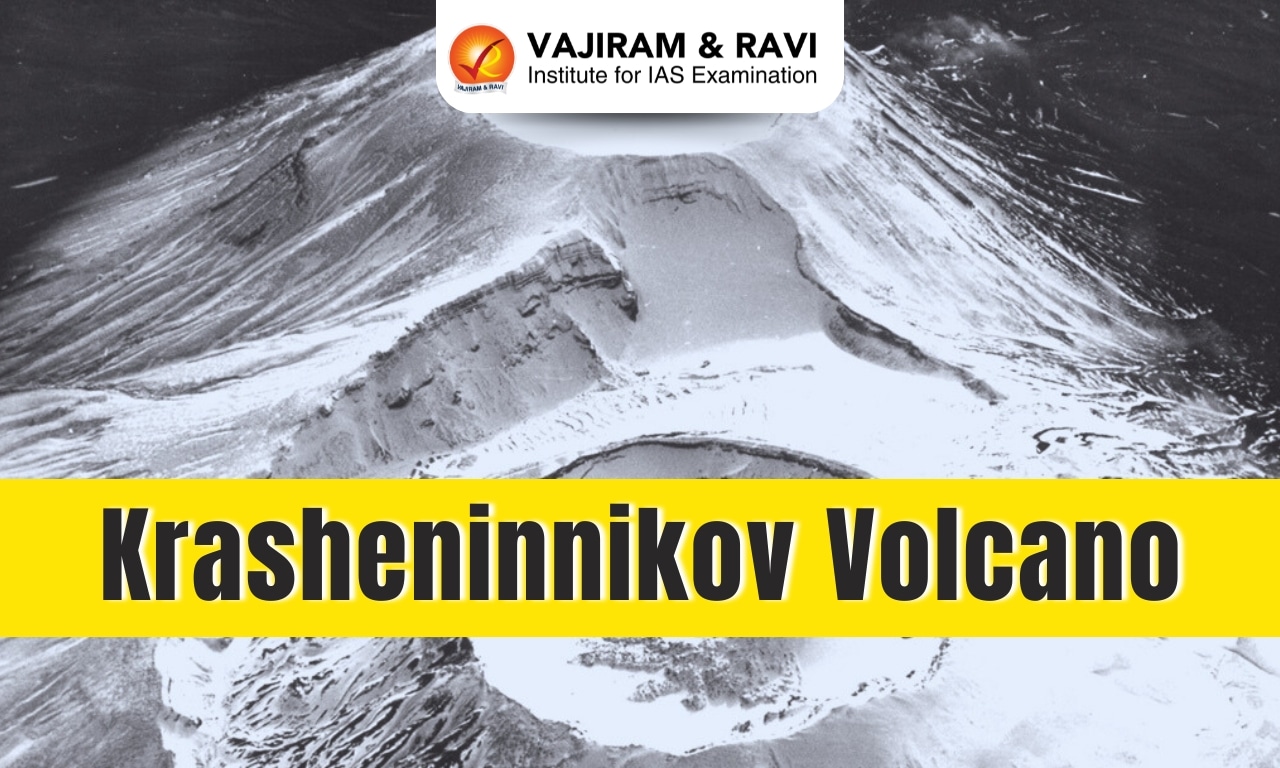
Astronomers tracked some of the blazars with the highest energy radiations revealing new clues about the sources of X-ray emission in these energetic objects. 

About Blazar

  • Blazars are among the most energetic objects in the Universe.
  • Formation: They typically form in young galaxies or galaxies undergoing a collision.
  • A blazar consists of a supermassive black hole, the accretion disk and the galaxy that hosts them.  
  • They are active galaxies powered by supermassive black holes at their centres, where matter falling towards the black hole releases large amounts of energy.
  • These systems also emit high-speed particle jets directed close to Earth’s line of sight, making them appear exceptionally bright.
  • A particularly extreme group of these objects are TeV blazars, which produce very-high-energy gamma rays reaching tera-electron volt energies.
  • Significance of Blazars
    • They are instrumental for exploring extreme physics that cannot be recreated on Earth.
    • The relativistic jets they produce offer clues about how matter behaves near supermassive black holes.
  • Challenges in Observation
    • As the powerful jets from blazars are directed almost toward Earth, their X-ray spectra are generally dominated by emission from the jet.
    • This makes it difficult to identify radiation from other parts of the galaxy, such as the accretion disk around the black hole.

Source: PIB

Blazar FAQ's

Q1: What are Blazars?

Ans: Blazars are among the most energetic objects in the Universe.

Q2: Where does Blazars form?

Ans: They typically form in young galaxies or galaxies undergoing a collision.

Election Commission of India – Decision-Making, Dissent and Institutional Checks

Election Commission

Election Commission Latest News

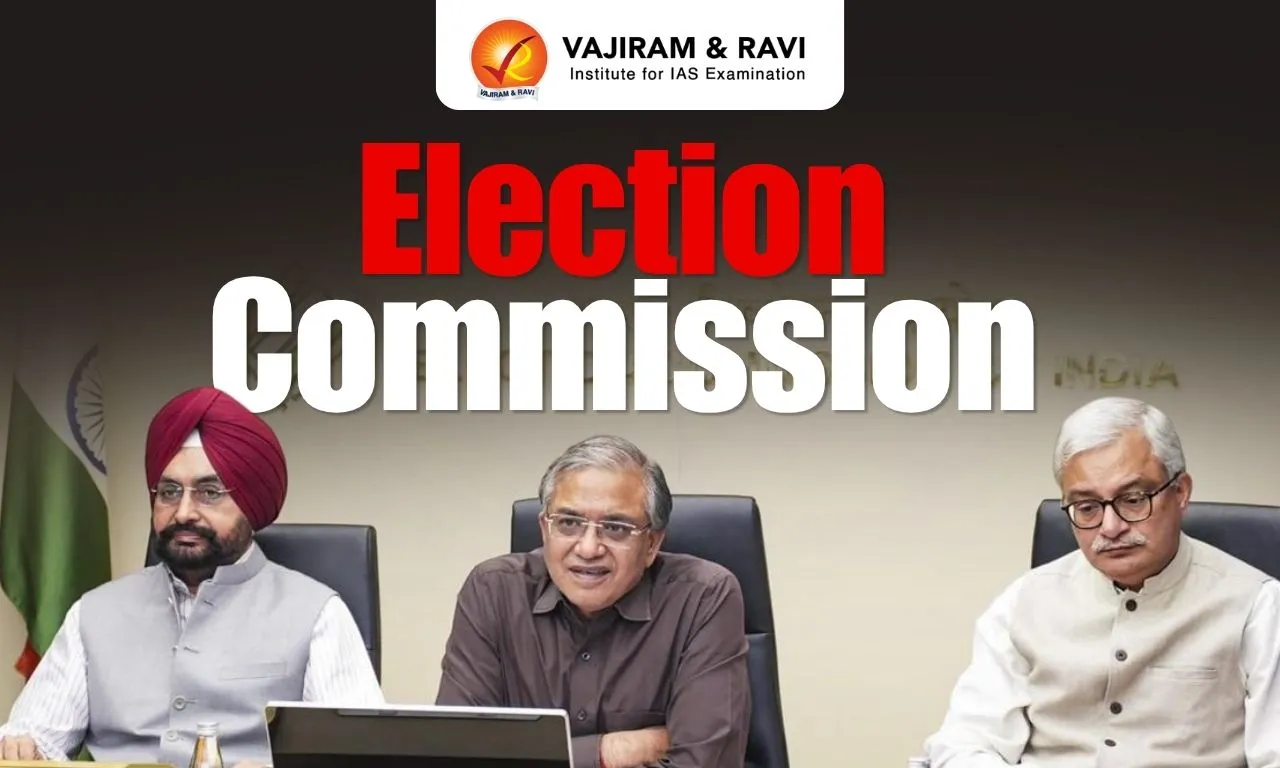
  • Recent reports of differing views among Election Commissioners have renewed attention on the decision-making process, voting mechanism and role of dissent within the Election Commission of India (ECI).

Election Commission of India: Constitutional Framework

  • The Election Commission of India (ECI) is a constitutional body established under Article 324 of the Constitution.
  • Article 324 vests the ECI with the “superintendence, direction and control” of the preparation of electoral rolls and the conduct of elections to Parliament, State Legislatures, and the offices of the President and Vice-President.
  • The Constitution provides for a Chief Election Commissioner (CEC) and such number of other Election Commissioners (ECs) as the President may determine, subject to legislation.
  • The ECI was permanently expanded from a single-member body to a three-member commission in 1993, comprising the CEC and two Election Commissioners.

How Does the Election Commission Take Decisions?

  • The decision-making process is currently governed by the Chief Election Commissioner and Other Election Commissioners (Appointment, Conditions of Service and Term of Office) Act, 2023.
  • Under Section 17, the business of the Commission is conducted according to the provisions of the Act.
  • Section 18 provides that:
    • The Commission should, as far as possible, conduct its business unanimously. 
    • If the members differ in their opinions, the matter is decided by majority. 
    • Since the Commission has three members, two members can decide a matter when unanimity is not achieved. 
    • The CEC chairs the Commission, but all three members have one vote each. 
  • Thus, the CEC does not possess a casting vote that can override the other Commissioners.

Judicial Clarification on Equality of Commissioners

  • The principle of equality among the three members was clarified by the Supreme Court in T.N. Seshan v. Union of India (1995).
  • Then CEC T.N. Seshan had challenged the appointment of two Election Commissioners, M.S. Gill and G.V. Krishnamurthy.
  • The Supreme Court upheld the appointments and established that the three members of the Commission have equal status in decision-making.
  • This is important for understanding the institutional structure of the ECI: although the CEC is the chairperson, the Commission functions as a multi-member body rather than a hierarchy in which the CEC has greater voting power.

Dissent Within the Election Commission

  • Differences of opinion within the ECI are not unprecedented.
  • T.N. Seshan and Other Commissioners
    • The period following the expansion of the Commission saw disagreements between T.N. Seshan and Commissioners M.S. Gill and G.V. Krishnamurthy, eventually leading to litigation before the Supreme Court.
  • N. Gopalaswami and Navin Chawla
    • In 2009, CEC N. Gopalaswami wrote to the President seeking the removal of Election Commissioner Navin Chawla, citing concerns over his political neutrality.
    • The request was not acted upon, and Chawla subsequently became Chief Election Commissioner.
  • Ashok Lavasa's Dissent
    • In 2019, Election Commissioner Ashok Lavasa disagreed with the majority view concerning complaints against Prime Minister Narendra Modi and BJP president Amit Shah relating to alleged Model Code of Conduct violations.
    • Lavasa recorded dissent notes and also objected that his views were not being reflected in the Commission's final orders. He resigned from the ECI in 2020.

Dissent Notes and Observations

  • A distinction exists between an observation recorded during deliberations and a final dissent against a Commission decision.
  • Election Commission officials have stated that differing views on electoral or administrative matters are a normal part of internal deliberation. Commissioners can record their disagreement on files, while the final decision can still be unanimous or based on majority opinion.
  • For instance, before the Special Intensive Revision (SIR) of electoral rolls in 2025, Election Commissioner Sukhbir Singh Sandhu recorded an observation emphasising that vulnerable groups such as elderly persons, persons with disabilities and poor citizens should not face harassment.
  • According to the ECI, such observations formed part of the internal deliberative process, while the final SIR decision was unanimous.

Why Institutional Dissent Matters

  • Dissent within a constitutional body can function as an internal check and balance. 
  • Recording alternative views creates an institutional record of deliberation and can help identify administrative, legal or operational concerns before a final decision is taken.
  • At the same time, the statutory framework gives the Commission a clear mechanism for resolving disagreements through majority decision-making.
  • This balances two requirements: collective decision-making and individual institutional accountability.

Source: IE

Election Commission FAQs

Q1: Which Article establishes the Election Commission of India?

Ans: Article 324 of the Constitution establishes the Election Commission and vests it with superintendence, direction and control over specified elections.

Q2: Does the CEC have more voting power than other Election Commissioners?

Ans: No, the CEC chairs the Commission but each of the three members has one vote.

Q3: How are disagreements within the ECI resolved?

Ans: The Commission seeks unanimity as far as possible, but a disagreement is resolved through the majority view under Section 18 of the 2023 Act.

Q4: What did the T.N. Seshan judgment establish?

Ans: The Supreme Court's 1995 judgment established that the CEC and other Election Commissioners have equal status in decision-making.

Q5: Can an Election Commissioner record a dissent?

Ans: Yes, an Election Commissioner can record a dissenting note or observation on the relevant file during the Commission's deliberative process.

Taiwan Factor: Why Taiwan Shapes the Xi-Trump Meeting

Taiwan

Taiwan Latest News

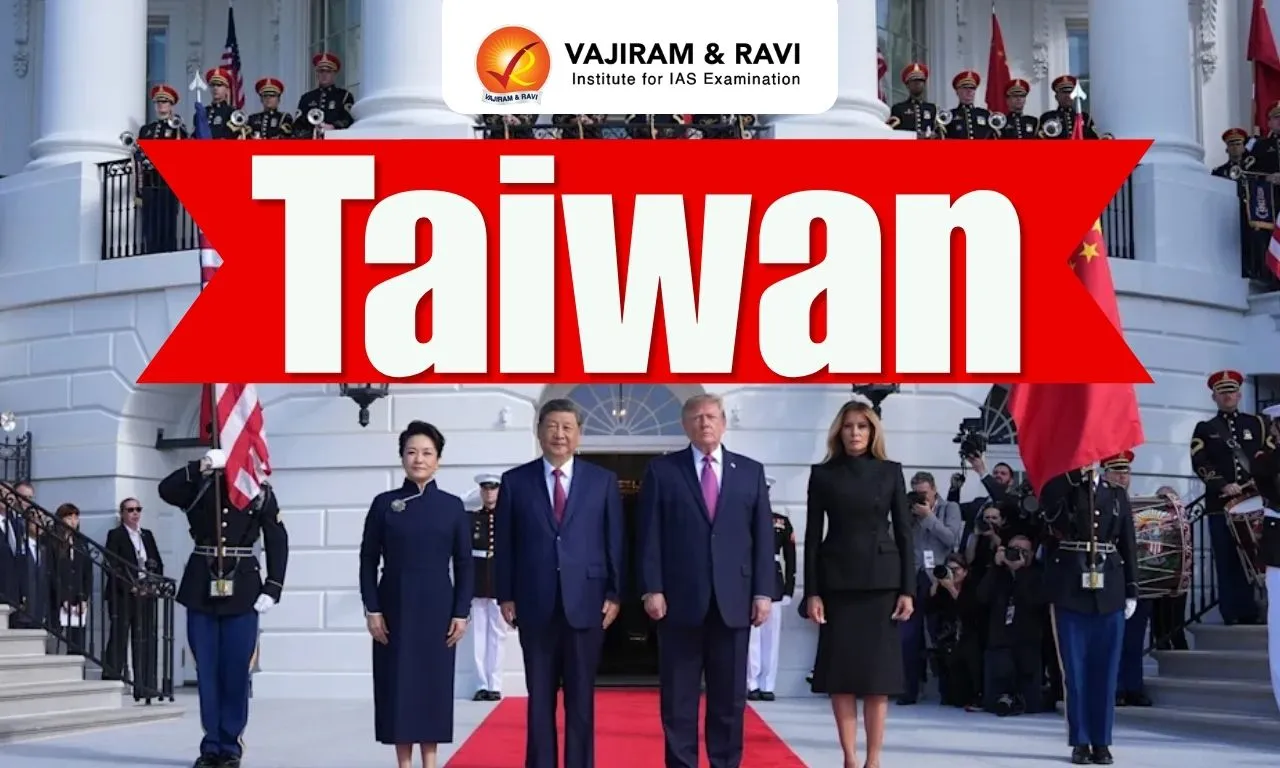
  • During Chinese President Xi Jinping's visit to the United States, issues ranging from tariffs to AI regulation were on the agenda, carrying global implications. But for China, the most significant concern is likely US policy on Taiwan. 
  • China has called Taiwan a "red line" that cannot be challenged. In Washington, Xi said China hopes the US will oppose "Taiwan independence" and handle the issue with caution "to lay a solid foundation for China-US strategic cooperation."

The Larger US-China Meeting: What to Expect

  • Trump's first term (from 2017) centred on strategic competition and correcting unfair trade with China. 
  • His approach has since evolved — he believes personal charm can persuade autocratic leaders, a playbook used with Vladimir Putin and Kim Jong Un. It hasn't worked with Putin, given the lack of a Ukraine agreement.
  • With China, the outcome is uncertain. Trump understands the cultural importance of respect and has shown deference to Xi. 
  • But leverage remains a concern — during the last trade war, when China restricted rare earths, the US lost its negotiating advantage.
  • Realistic outcomes: Agreement on AI principles, extended trade, or better personal rapport preventing future escalation would count as positive. 

Taiwan in US Policy

  • Before 1979: The US officially recognised Taiwan as representing China internationally.
  • Three Joint Communiqués (through 1982): The US and mainland China agreed to recognise each other diplomatically, conditional on the US revoking recognition of Taiwan. The third communiqué stated the US would gradually decrease arms sales to Taiwan.
  • The Six Assurances: A classified US memo to Taiwan clarifying that the US had not agreed to any end date on arms sales and would not negotiate with China over them — reassuring Taiwan it wasn't being abandoned.
  • Taiwan Relations Act, 1979: This remains the basis of unofficial US-Taiwan relations, with the US as Taiwan's primary arms supplier, committed to helping Taiwan credibly deter Chinese military action.

Strategic Ambiguity: Biden vs Trump

  • Strategic ambiguity is the long-standing US policy of not explicitly committing to military support for Taiwan in case of a Chinese attack.
  • Joe Biden repeatedly dispensed with this ambiguity, stating the US would intervene militarily.
  • Trump has softened this stance, echoing Chinese talking points such as "no one wants to go to war" and noting "Taiwan's 9,500 miles away."
  • This shift worries Taiwan while pleasing China.

The Arms Package Controversy

  • In 2025: Trump approved a $10 billion arms package to Taiwan.
  • Now: A proposed $14 billion package — the largest ever — awaits Trump's clearance.
  • It remains unclear whether this package has become a "red line of red lines" for Xi, though China has likely signalled consequences if it's approved.

Why China Wants It Held Off

  • After Trump and Xi's meeting in Beijing in May 2026, Trump gave interviews echoing Beijing's talking points without reasserting long-standing US Taiwan policy, including arms sales. 
  • Xi appears to view Trump as malleable on this issue and is testing how far he can be pushed toward Beijing's position.

Current Status

  • Trump has paused the $14 billion package — possibly as a token gesture to Xi in service of securing what Trump primarily wants: trade and bilateral investment. 
  • Experts predict Trump will eventually approve it, but the timing will be significant, likely well after this visit. A failure to approve it would set a worrying precedent.

The Economic Stakes: TSMC and Chip Supply Chains

  • Beyond geopolitics, Taiwan's economic weight has grown sharply because TSMC, based in Taiwan, became the world's number-one chipmaker. 
  • Semiconductors are essential components for nearly all modern electronics.
  • Theories that China might invade specifically to seize TSMC lack strong credibility.
  • Nonetheless, any conflict would severely disrupt global chip supply chains — a major concern for the US and all chip-importing countries.
  • Both Trump and Xi reportedly understand that a Taiwan conflict would be disastrous.
  • This has driven increased US-Taiwan discussions on supply chain resiliency, and Trump has pushed Taiwan to shift chip manufacturing to the US — leading to investments in Arizona.

Conclusion

  • Taiwan sits at the exact intersection of geopolitics and economics — a small island whose chips power the world and whose fate could trigger a great-power confrontation. Trump's willingness to soften strategic ambiguity, even as a bargaining chip, unsettles a region already hedging its bets. 
  • The paused $14 billion arms package is not just about weapons — it is a live signal of how much Washington is willing to trade for Beijing's cooperation elsewhere.

Source: IE

Taiwan FAQ

Q1: Why is Taiwan important in the Xi-Trump meeting?

Ans: Taiwan is central to the Xi-Trump meeting because China considers it a red line, while US policy involves arms sales and strategic ambiguity.

Q2: What is the Taiwan Relations Act?

Ans: The Taiwan Relations Act of 1979 provides the basis for unofficial US-Taiwan relations and supports Taiwan's ability to deter Chinese military action.

Q3: What is strategic ambiguity regarding Taiwan?

Ans: Strategic ambiguity is the longstanding US policy of avoiding an explicit commitment to military intervention if China attacks Taiwan.

Q4: Why is the proposed US arms package important for Taiwan?

Ans: The proposed $14 billion arms package is significant because its approval could signal Washington's position on Taiwan and affect US-China strategic relations.

Q5: Why does Taiwan matter to global semiconductor supply chains?

Ans: Taiwan hosts TSMC, a leading global chipmaker, making any conflict potentially disruptive to semiconductor supply chains serving the United States and other economies.

Asian Games 2026 Medal Tally, Country-Wise Medals and Rankings

Asian Games 2026 Medal Tally

Asian Games 2026 Medal Tally is updated as athletes from across Asia compete for medals at the 20th Asian Games in Aichi-Nagoya, Japan. The Asian Games 2026 are being held from 19 September to 4 October 2026. The event features 43 sports, 71 disciplines and 469 medal events.

China, Japan, South Korea and other Asian countries are competing across multiple sports. The medal table ranks countries based primarily on the number of gold medals, followed by silver and bronze medals. 

India has won 27 medals at the Asian Games 2026, including 3 gold medal, 11 silver medals and 13 bronze medals. Indian athletes have earned these medals across events such as shooting and mixed martial arts.

Asian Games 2026 Medal Tally

The following is the Asian Games 2026 medal tally based on the latest figures provided as of 26th September 2026.

Rank Country Gold Silver Bronze Total
1 China 105 39 25 169
2 Japan 30 44 46 120
3 South Korea 13 20 36 69
4 Uzbekistan 8 17 9 34
5 Kazakhstan 8 8 18 34
6 Thailand 7 6 9 22
7 Iran 6 12 7 25
8 Bahrain 5 2 2 9
9 Hong Kong, China 4 11 11 26
10 North Korea 4 5 3 12
11 Malaysia 4 1 7 12
12 India 3 11 13 27
13 Chinese Taipei 2 5 17 24
14 Philippines 2 2 5 9
15 Qatar 2 2 1 5
16 Kuwait 2 1 2 5
17 Tajikistan 2 1 1 4
18 Singapore 1 5 3 9
19 Indonesia 1 4 17 22
20 Macao, China 1 4 1 6
21 Vietnam 1 1 16 18
22 Jordan 1 1 1 3
23 Myanmar 1 1 1 3
24 Saudi Arabia 0 2 4 6
25 Kyrgyzstan 0 1 3 4
26 Afghanistan 0 1 2 3
27 Iraq 0 1 2 3
28 Lebanon 0 1 1 2
29 Oman 0 1 1 2
30 Sri Lanka 0 1 0 1
31 Turkmenistan 0 1 0 1
32 Cambodia 0 0 4 4
33 Nepal 0 0 2 2
34 Pakistan 0 0 2 2
35 Bangladesh 0 0 1 1
36 Brunei Darussalam 0 0 1 1
37 Mongolia 0 0 1 1
38 Syria 0 0 1 1

Note: The medal tally changes throughout the Asian Games as more events are completed. The table above reflects the figures provided for this update and should be treated as a live/ongoing tally rather than the final medal standings.

India in Asian Games 2026 Medal Tally

India has recorded 27 medals in the provided Asian Games 2026 medal tally, including 3 gold medal, 11 silver medals and 13 bronze medals.

India in Asian Games 2026 Medal Tally

Medal

Number

Gold

3

Silver

11

Bronze

13

Total

27

Indian Medallists at Asian Games 2026

India’s athletes delivered notable performances at the 2026 Asian Games, winning medals across disciplines and adding to the country’s medal tally. Shooting emerged as one of the key contributors, with Indian athletes securing multiple silver and bronze medals in individual and team events.

No. Medal Winner(s) Sport Event Medal
1 Indian Women’s Cricket Team Cricket Women’s T20 Gold
2 Suruchi Singh & Kamaljeet Shooting 10m Air Pistol Mixed Team Gold
3 Indian Women’s Kabaddi Team Kabaddi Women’s Final Gold
4 Niraj Kumar, Aishwary Pratap Singh Tomar & Rudrankksh Patil Shooting Men’s 50m Rifle 3P Team Silver
5 Mirabai Chanu Weightlifting Women’s 49kg Silver
6 Elavenil Valarivan, Sonam Maskar & Vidarsa Vinod Shooting Women’s 10m Air Rifle Team Silver
7 Elavenil Valarivan Shooting Women’s 10m Air Rifle Silver
8 Rudrankksh Patil, Parth Mane & Himanshu Dhillon Shooting Men’s 10m Air Rifle Team Silver
9 Himanshu Dhillon Shooting Men’s 10m Air Rifle Silver
10 Naorem Roshibina Devi Wushu Women’s Sanda 60kg Silver
11 India Mixed 4×400m Relay Team Athletics Mixed 4×400m Relay Silver
12 Gulveer Singh Athletics Men’s 10,000m Silver
13 Sawan Barwal Athletics Men’s Marathon Silver
14 Ashi Chouksey, Tilottama Sen & Vidarsa Kochalumkal Shooting Women’s 50m Rifle 3P Team Silver
15 Rudrankksh Patil Shooting Men’s 10m Air Rifle Bronze
16 Suchika Tariyal MMA Women’s Traditional MMA -60kg Bronze
17 Raiza Dhillon, Maheshwari Chauhan & Parinaaz Dhaliwal Shooting Women’s Skeet Team Bronze
18 Anantjeet Singh Naruka, Mairaj Ahmad Khan & Bhavtegh Singh Gill Shooting Men’s Skeet Team Bronze
19 Jay Meena Soft Tennis Men’s Singles Bronze
20 Indian Men’s Badminton Team Badminton Men’s Team Bronze
21 Satnam Singh & Salman Khan Rowing Men’s Double Sculls Bronze
22 Anantjeet Singh Naruka & Parinaaz Dhaliwal Shooting Mixed Team Skeet Bronze
23 Seema Kumari Athletics Women’s 10,000m Bronze
24 Manush Shah & Diya Chitale Table Tennis Mixed Doubles Bronze
25 Manpreet Kaur Athletics Women’s Shot Put Bronze
26 Baranica Elangovan Athletics Women’s Pole Vault Bronze
27 Joshna Chinappa & Velavan Senthilkumar Squash Mixed Doubles Bronze

India at Asian Games 2026 Day-Wise Medal Updates

India has won 27 medals at the Asian Games 2026 in Aichi-Nagoya so far, comprising 3 gold, 11 silver and 13 bronze medals. India’s third gold medal came on 26 September, when the Indian women’s kabaddi team defeated Iran in the final.

26 September Update

Day 8 of the Asian Games 2026 is one of the busiest days for India, with action across kabaddi, athletics, shooting, badminton, squash, archery, boxing, canoe sprint, table tennis, fencing, sailing and esports. India entered the day with 23 medals and added further medals through the men’s marathon, women’s 50m rifle 3P team event and squash, while the women’s kabaddi team also secured gold.

  • Women’s Kabaddi Gold: India defeated Iran 37–34 in the women’s kabaddi final to win the gold medal and take India’s gold-medal count to three.
  • Men’s Marathon Silver: Sawan Barwal won silver in the men’s marathon with a national-record performance, ending India’s long wait for a marathon medal at the Asian Games.
  • Women’s 50m Rifle 3P Team Silver: Ashi Chouksey, Tilottama Sen and Vidarsa Kochalumkal secured silver in the team event.
  • Squash Bronze: Joshna Chinappa and Velavan Senthilkumar secured bronze in mixed doubles after reaching the semifinal.
  • Lakshya Sen: Lakshya faced Loh Kean Yew of Singapore in men’s singles and was eliminated after losing 12–21, 21–15, 14–21.
  • Shooting: Indian shooters also competed in the individual 50m Rifle 3 Positions qualification and final stages.
  • Squash Semifinals: Anahat Singh and Abhay Singh competed in the women’s and men’s singles semifinals respectively.
  • Archery: Indian archers took part in recurve and compound qualification rounds, including individual and team events.
  • Athletics: India had several athletes in action, including Tajinderpal Singh Toor, Karanveer Singh, Jyothi Yarraji, Parul Chaudhary, Pooja, Praveen Chithravel and Karthik Unnikrishnan.

25 September Update

India added two medals on 25 September, including a gold medal in shooting. Kamaljeet and Suruchi Singh won the 10m Air Pistol Mixed Team event, securing India's second gold medal of the Games and India's first shooting gold.

India also won a silver medal in the Men's 50m Rifle 3 Positions Team event, with Aishwary Pratap Singh Tomar, Rudrankksh Patil and Niraj Kumar finishing second.

Athlete/Team Sport Event Medal
Kamaljeet & Suruchi Singh Shooting 10m Air Pistol Mixed Team Gold
Aishwary Pratap Singh Tomar, Rudrankksh Patil & Niraj Kumar Shooting Men's 50m Rifle 3 Positions Team Silver

Following these results, India's medal tally stands at 2 Gold, 8 Silver and 9 Bronze, 19 medals in total.

24 September Update Wushu Silver and Rowing Bronze

  • Roshibina Devi – Silver (Wushu): Won silver in the women's 60kg sanda category after losing the final to China's Zhang Xiaoyu. This is her third consecutive Asian Games medal, following bronze in 2018 and silver in 2023.
  • Satnam Singh and Salman Khan – Bronze (Rowing): Won bronze in the men's double sculls, clocking 6:13.25. It is India's first Asian Games medal in the men's double sculls.
  • Anantjeet Singh Naruka and Parinaaz Dhaliwal: Qualified for the mixed skeet team final, keeping India in contention for another shooting medal.
  • Balraj Panwar: Finished fourth in the men's single sculls after staying in medal contention for much of the race.

23 September Update India's Five-Medal Day

  • Mirabai Chanu – Silver (Weightlifting): Won silver in the women's 49kg category, ending India's 28-year wait for an Asian Games weightlifting medal since Karnam Malleswari's bronze in 1998.
  • Women's skeet team – Bronze (Shooting): Parinaaz Dhaliwal, Raiza Dhillon and Maheshwari Chauhan won bronze.
  • Men's skeet team – Bronze (Shooting): Anantjeet Singh Naruka, Bhavtegh Singh Gill and Mairaj Ahmad Khan secured bronze.
  • Jay Meena – Bronze (Soft Tennis): Won India's first-ever Asian Games medal in soft tennis in the men's singles.
  • Men's badminton team – Bronze: India secured bronze after reaching the semi-finals.
  • Women's hockey: India defeated Thailand 20-1, with Deepika Sehrawat scoring nine goals.
  • Women's kabaddi: The defending champions defeated Iran 37-23 to record their second consecutive group-stage win.

22 September Update India Wins First Gold

  • Women's cricket team – Gold: India defeated Sri Lanka by 147 runs in the final to retain the Asian Games women's cricket title.
  • Record total: India scored 216/3, the highest team total in Asian Games cricket, with Smriti Mandhana scoring 79, Shafali Verma 48 and Richa Ghosh remaining unbeaten on 49.
  • Shooting: Elavenil Valarivan and Parth Mane finished fourth in the 10m air rifle mixed team event.
  • Swimming: India's men's 4x100m medley relay team qualified for the final with the seventh-fastest time.
  • Karate: Chetan Bhatt missed a bronze medal in the men's 84kg kumite event.

Which Country is Leading the Asian Games 2026 Medal Tally?

China is at the top of the Asian Games 2026 medal tally with 105 gold medals and a total of 169 medals.

Japan is next with 30 gold medals, followed by South Korea with 13 gold medals and Kazakhstan with 8 gold medals.

The Asian Games medal table is generally arranged according to gold medals first, followed by silver and bronze medals. Therefore, the total number of medals alone does not determine the position of a country in the table.

Also Read:- Asian Games 2026 Indian Cricket Team

Asian Games 2026 Host Country

Japan is the host country of the 20th Asian Games. The event is officially called the Aichi-Nagoya 2026 Asian Games.

The Games are being organised in Aichi Prefecture and Nagoya, with competitions taking place across multiple venues. The official event programme includes 43 sports and 71 disciplines.

The Asian Games are being held from 19 September 2026 to 4 October 2026. The Opening Ceremony took place on 19 September 2026, while the Closing Ceremony is scheduled for 4 October 2026.

Also Read:- India's medals at Asian Games 2026

How is the Asian Games Medal Tally Calculated?

The Asian Games medal tally records the number of gold, silver and bronze medals won by each participating country or region.

The ranking generally follows this order:

  1. Number of gold medals
  2. Number of silver medals
  3. Number of bronze medals

For example, a country with 5 gold medals is placed above a country with 4 gold medals even if the second country has a higher overall medal count.

The Total column is calculated by adding: Gold + Silver + Bronze = Total Medals

Asian Games 2026 Key facts for UPSC Prelims

20th Asian Games, hosted by Aichi Prefecture and Nagoya, Japan, are being held from 19 September to 4 October 2026, featuring 43 sports, 71 disciplines and 469 medal events under the Olympic Council of Asia (OCA).

Parameter Details
Edition 20th Asian Games (XX Asian Games)
Host Aichi Prefecture and Nagoya, Japan
Dates 19 September – 4 October 2026
Sports / Disciplines / Events 43 / 71 / 469
Governing Body Olympic Council of Asia (OCA), headquartered in Kuwait City
Debut Sport Mixed Martial Arts (MMA)
India’s Firsts in 2026 First MMA medal – Suchika Tariyal; first soft tennis medal – Jay Meena; first wushu medals at three consecutive Games – Roshibina Devi
First Asian Games New Delhi, India – 1951
India at Hangzhou 2023 106 medals (28 Gold, 38 Silver, 40 Bronze) – 4th position; India’s first 100+ medal haul
Next Editions Doha 2030 and Riyadh 2034

Asian Games 2026 Medal Tally FAQs

Q1: What is the Asian Games 2026 Medal Tally?

Ans: The Asian Games 2026 Medal Tally is the country-wise record of gold, silver and bronze medals won at the Aichi-Nagoya 2026 Asian Games.

Q2: Which country is leading the Asian Games 2026 Medal Tally?

Ans: China is leading the medal tally with 105 gold medals and 169 total medals.

Q3: How many medals has India won in Asian Games 2026?

Ans: According to the provided update, India has won 27 medals, including 3 gold, 11 silver and 13 bronze medals.

Q4: How many gold medals has India won in Asian Games 2026?

Ans: India has won 3 gold medals in the provided medal tally.

Q5: When are the Asian Games 2026 being held?

Ans: Asian Games 2026 are being held from 19 September to 4 October 2026 in Aichi-Nagoya, Japan.

High-Speed Corridors: NHAI’s New Rules for India’s Expressways

High-Speed Corridors

High-Speed Corridors Latest News

  • In a move to ensure uniformity and consistency in the construction of high-speed corridors — also known as access-controlled national highways or expressways — the National Highways Authority of India (NHAI) has issued detailed guidelines covering design, standards and specifications for such projects.
  • Until now, consultants prepared Detailed Project Reports (DPRs) for these corridors based on varying standards and specifications, leading to inconsistency across projects.

The Bigger Picture: Vision 2047

  • The move gains significance because India targets 50,000 km of high-speed corridors by 2036–37 under Vision 2047.
  • These corridors are special sections of national highways providing uninterrupted, end-to-end travel.
  • The total length of high-speed corridors stood at just 3,052 km as of December 2025 — showing the scale of expansion planned ahead.

How Traffic Will Be Assessed

  • NHAI has mandated a more rigorous approach to traffic assessment for these projects.
    • Assessment must include existing, generated, induced, and diverted traffic, based on proper traffic modelling.
    • Freight growth rate must be analysed considering economic development.
    • Traffic data must be validated from secondary sources such as toll transactions.
    • For freight traffic and determining the Vehicle Damage Factor (VDF), data from GST portals, mining departments and other sources must be cross-validated.

Lane Configuration Norms

  • The guidelines set clear, traffic-based thresholds for how many lanes a corridor should have:
  • [my_image src="https://vajiramias.sgp1.cdn.digitaloceanspaces.com/wp/current-affairs/2026/09/26065329/Lane-Configuration-Norms.jpg?v=1790385808" size="full" align="none" width="auto" height="203px" alt="" title="Lane Configuration Norms"]
  • This tiered approach ensures highways are built to match actual and projected traffic volumes, rather than a one-size-fits-all design.

Access Control and Design Standards

  • The core principle behind access-controlled highways is protecting the speed of long-distance through traffic from local interference.
    • Access must be planned so that through traffic can move at the speed set by the main highway flow — not slowed by local, access, or cross traffic.
    • There shall be no at-grade intersection of any road with the project highway.
    • Access to the highway must be through properly designed ramps at planned locations.
  • Underpass height: In areas with frequent operation of heavy agricultural machinery — harvesters and laden tractors — underpass height may be set at 4.50 metres, accommodating farm vehicle movement.
  • Service roads: These must be provided in built-up and urban sections on both sides, along with a drain-cum-footpath, ensuring local connectivity and pedestrian safety alongside the high-speed corridor.

Signage and Road Marking Standards

  • NHAI has also standardised signage placement for driver clarity and safety:
    • Full overhead gantries (carrying direction signs) shall be placed 5 km and 2 km ahead of an exit.
    • Cantilever gantries (carrying advance direction signs) shall be placed 1 km and 500 metres before the exit.
    • Lane and other markings must be 150 mm wide.
    • Edge-lane markings must be 200 mm wide.

Barrier-Less Tolling and Corridor Protection

  • NHAI is shifting towards a Multi-Lane Free Flow (MLFF) system — essentially a barrier-less tolling mechanism that allows vehicles to pass through toll points without stopping. 
  • The new guidelines require provisions for this system to be incorporated into corridor layout design from the outset.
  • Preventing encroachment: To stop unauthorised access and encroachment on high-speed corridors, a 1-metre-high RCC (Reinforced Cement Concrete) boundary wall must be constructed along the extreme outer edge of the Right of Way (ROW).
    • ROW refers to the total width of land legally acquired or owned by the government or road authority for construction, operation, maintenance, and future highway expansion.

Green and Sustainable Design Elements

  • The guidelines also embed environmental considerations into corridor planning:
    • Drip irrigation will be provided in the median for watering plants.
    • Tree plantation will be made an integral part of project design at the DPR stage itself — not an afterthought.

Conclusion

  • NHAI's new rules replace guesswork with a uniform rulebook — from lane width to tree plantation. 
  • As India races toward 50,000 km of high-speed corridors, consistency in design will matter as much as the pace of construction. Standardisation today prevents costly retrofits tomorrow.

Source: IE | PIB

High-Speed Corridors FAQs

Q1: What are high-speed corridors?

Ans: High-speed corridors are access-controlled national highways designed to provide uninterrupted, end-to-end travel while protecting through traffic from local interference.

Q2: Why has NHAI introduced new rules for high-speed corridors?

Ans: NHAI introduced new rules to standardise design, specifications and construction practices after consultants used varying standards for different high-speed corridor projects.

Q3: How will traffic determine lane configuration on high-speed corridors?

Ans: Lane configuration will be based on present and projected traffic volumes, using detailed traffic modelling and validated data from multiple sources.

Q4: What access-control standards apply to high-speed corridors?

Ans: High-speed corridors cannot have at-grade road intersections, while access must occur through planned ramps designed to protect uninterrupted through traffic.

Q5: What sustainable features are included in high-speed corridor guidelines?

Ans: High-speed corridor guidelines include median drip irrigation and require tree plantation to be incorporated into project design from the Detailed Project Report stage.

Asian Games 2026, Medal Tally, Participating Countries, Host Country

Asian Games 2026, officially known as the 20th Asian Games Aichi-Nagoya 2026, are being held in Japan from 19 September to 4 October 2026. Aichi Prefecture and Nagoya are hosting the continental multi-sport event, which brings together athletes from across Asia.

The Games feature 43 sports, 71 disciplines and 469 medal events. The official programme also includes newer sports such as teqball, padel, sport climbing, skateboarding, surfing, esports and mixed martial arts (MMA).

Asian Games 2026 Overview

The key highlights related to the Asian Games 2026 have been tabulated below...

Asian Games 2026 Overview

Particulars

Details

Event

20th Asian Games

Official Name

Aichi-Nagoya 2026

Host Country

Japan

Host Region

Aichi Prefecture and Nagoya

Dates

19 September – 4 October 2026

Total Indian Delegation

768

New and Emerging Sports at Asian Games 2026

Asian Games 2026 feature several new and emerging sports, reflecting the changing interests of athletes and younger audiences. These sports add more variety to the Games and give athletes from newer sporting disciplines an international platform.

  • Teqball: A football-based sport played on a curved table, making its Asian Games debut in 2026.
  • Mixed Martial Arts (MMA): Included in the Games for the first time, with competitions across different weight categories.
  • Padel: A racket sport combining elements of tennis and squash, included in men's and women's competitions.
  • Surfing: Features shortboard events for men and women.
  • Skateboarding: Includes different disciplines that test balance, speed and technical skills.
  • Sport Climbing: Includes speed, bouldering and lead events.
  • Esports: Continues to provide a competitive platform for digital sports and gaming.

Also Read:- India to Host Commonwealth Games 2030

Asian Games 2026 Participating Countries

Asian Games 2026 feature participation from 45 countries and regions across Asia. The participating delegations represent South Asia, Southeast Asia, East Asia, Central Asia and West Asia.

No. Country/Region No. Country/Region No. Country/Region
1 Afghanistan 16 Kazakhstan 31 Philippines
2 Bahrain 17 Kuwait 32 Qatar
3 Bangladesh 18 Kyrgyzstan 33 Korea
4 Bhutan 19 Lao PDR 34 Saudi Arabia
5 Brunei 20 Lebanon 35 Singapore
6 Cambodia 21 Macao, China 36 Sri Lanka
7 Chinese Taipei 22 Malaysia 37 Syria
8 DPR Korea 23 Maldives 38 Tajikistan
9 Hong Kong, China 24 Mongolia 39 Thailand
10 India 25 Myanmar 40 Timor-Leste
11 Indonesia 26 Nepal 41 Turkmenistan
12 Iraq 27 Oman 42 United Arab Emirates
13 IR Iran 28 Pakistan 43 Uzbekistan
14 Japan 29 Palestine 44 Vietnam
15 Jordan 30 China 45 Yemen

Asian Games 2026 Host Country

Japan is hosting the 20th Asian Games 2026 in Aichi-Nagoya, marking the third time the country has hosted the Asian Games. The event is being held from 19 September to 4 October 2026 across multiple venues in Aichi Prefecture and Nagoya. Japan previously hosted the Asian Games in Tokyo in 1958 and Hiroshima in 1994. The Games feature athletes from across Asia competing in a wide range of sports and disciplines.

Also Read:- India's medals at Asian Games 2026

India at Asian Games 2026

India is participating in the 20th Asian Games in Aichi-Nagoya with 503 athletes across 36 disciplines. The contingent includes 269 men and 234 women, supported by coaches, officials and other staff. India enters the Games after winning a record 107 medals at Hangzhou 2023, including 28 gold, 38 silver and 41 bronze medals.

India has won 19 medals at the Asian Games 2026, including 2 gold medal, 8 silver medals and 9 bronze medals. Indian athletes have earned these medals across events such as shooting and mixed martial arts.

No. Medal Winner(s) Sport Event Medal
1 Indian Women’s Cricket Team Cricket Women’s T20 Gold
2 Suruchi Singh & Kamaljeet Shooting 10m Air Pistol Mixed Team Gold
3 Indian Women’s Kabaddi Team Kabaddi Women’s Final Gold
4 Niraj Kumar, Aishwary Pratap Singh Tomar & Rudrankksh Patil Shooting Men’s 50m Rifle 3P Team Silver
5 Mirabai Chanu Weightlifting Women’s 49kg Silver
6 Elavenil Valarivan, Sonam Maskar & Vidarsa Vinod Shooting Women’s 10m Air Rifle Team Silver
7 Elavenil Valarivan Shooting Women’s 10m Air Rifle Silver
8 Rudrankksh Patil, Parth Mane & Himanshu Dhillon Shooting Men’s 10m Air Rifle Team Silver
9 Himanshu Dhillon Shooting Men’s 10m Air Rifle Silver
10 Naorem Roshibina Devi Wushu Women’s Sanda 60kg Silver
11 India Mixed 4×400m Relay Team Athletics Mixed 4×400m Relay Silver
12 Gulveer Singh Athletics Men’s 10,000m Silver
13 Sawan Barwal Athletics Men’s Marathon Silver
14 Ashi Chouksey, Tilottama Sen & Vidarsa Kochalumkal Shooting Women’s 50m Rifle 3P Team Silver
15 Rudrankksh Patil Shooting Men’s 10m Air Rifle Bronze
16 Suchika Tariyal MMA Women’s Traditional MMA -60kg Bronze
17 Raiza Dhillon, Maheshwari Chauhan & Parinaaz Dhaliwal Shooting Women’s Skeet Team Bronze
18 Anantjeet Singh Naruka, Mairaj Ahmad Khan & Bhavtegh Singh Gill Shooting Men’s Skeet Team Bronze
19 Jay Meena Soft Tennis Men’s Singles Bronze
20 Indian Men’s Badminton Team Badminton Men’s Team Bronze
21 Satnam Singh & Salman Khan Rowing Men’s Double Sculls Bronze
22 Anantjeet Singh Naruka & Parinaaz Dhaliwal Shooting Mixed Team Skeet Bronze
23 Seema Kumari Athletics Women’s 10,000m Bronze
24 Manush Shah & Diya Chitale Table Tennis Mixed Doubles Bronze
25 Manpreet Kaur Athletics Women’s Shot Put Bronze
26 Baranica Elangovan Athletics Women’s Pole Vault Bronze
27 Joshna Chinappa & Velavan Senthilkumar Squash Mixed Doubles Bronze

Medal Tally at Asian Games 2026

As of 26 September 2026, China leads the Asian Games 2026 medal table with 169 medals, while India is ranked 12th with 27 medals, including 3 gold, 11 silver and 13 bronze.

Rank Country Gold Silver Bronze Total
1 China 105 39 25 169
2 Japan 30 44 46 120
3 South Korea 13 20 36 69
4 Uzbekistan 8 17 9 34
5 Kazakhstan 8 8 18 34
6 Thailand 7 6 9 22
7 Iran 6 12 7 25
8 Bahrain 5 2 2 9
9 Hong Kong, China 4 11 11 26
10 North Korea 4 5 3 12
11 Malaysia 4 1 7 12
12 India 3 11 13 27
13 Chinese Taipei 2 5 17 24
14 Philippines 2 2 5 9
15 Qatar 2 2 1 5
16 Kuwait 2 1 2 5
17 Tajikistan 2 1 1 4
18 Singapore 1 5 3 9
19 Indonesia 1 4 17 22
20 Macao, China 1 4 1 6
21 Vietnam 1 1 16 18
22 Jordan 1 1 1 3
23 Myanmar 1 1 1 3
24 Saudi Arabia 0 2 4 6
25 Kyrgyzstan 0 1 3 4
26 Afghanistan 0 1 2 3
27 Iraq 0 1 2 3
28 Lebanon 0 1 1 2
29 Oman 0 1 1 2
30 Sri Lanka 0 1 0 1
31 Turkmenistan 0 1 0 1
32 Cambodia 0 0 4 4
33 Nepal 0 0 2 2
34 Pakistan 0 0 2 2
35 Bangladesh 0 0 1 1
36 Brunei Darussalam 0 0 1 1
37 Mongolia 0 0 1 1
38 Syria 0 0 1 1
About Asian Games

Asian Games, also known as the Asiad, are a major multi-sport event held every four years for athletes from across Asia. The Games have evolved significantly since their beginning in 1951.

  • Early Origins: The idea of an Asian multi-sport event was influenced by the Far Eastern Championship Games (1913) and the West Asian Games (1934).
  • 1948 Initiative: During the 1948 London Olympics, Asian representatives discussed creating a larger sporting event for Asian countries. Indian IOC representative Guru Dutt Sondhi played an important role in promoting the idea.
  • Asian Games Federation: The Asian Games Federation (AGF) was established in 1949 in New Delhi to organise and govern the new continental sporting event.
  • First Asian Games: The first Asian Games were held in New Delhi in March 1951, with 489 athletes from 11 countries competing in 6 sports and 57 events.
  • Expansion: The Games gradually expanded to more countries and sports, with editions held in Manila (1954), Tokyo (1958), Jakarta (1962), Bangkok (1966 and 1970) and other Asian cities.
  • Formation of OCA: In 1981, the Olympic Council of Asia (OCA) was created to replace the Asian Games Federation. It later became the main governing body for the Asian Games.
  • Modern Asian Games: The Games continued to grow, with recent editions held in Guangzhou (2010), Incheon (2014), Jakarta-Palembang (2018) and Hangzhou (2023).

Asian Games 2026 FAQs

Q1: When are the Asian Games 2026 being held?

Ans: Asian Games 2026 are being held from 19 September to 4 October 2026 in Aichi-Nagoya, Japan.

Q2: Where are the Asian Games 2026 being held?

Ans: The Games are being hosted by Aichi Prefecture and Nagoya in Japan, with competitions taking place across multiple venues.

Q3: How many sports are there in Asian Games 2026?

Ans: The official Aichi-Nagoya programme features 43 sports, 71 disciplines and 469 medal events.

Q4: How many athletes are representing India?

Ans: India has sent 503 athletes, comprising 269 men and 234 women, across 36 disciplines.

Q5: How many members are there in India's Asian Games contingent?

Ans: India's total approved contingent consists of 768 members, including 503 athletes and accompanying support staff and officials.

Asian Games 2026 Day 8, India’s Schedule, Medal Tally, Key Events

Asian Games 2026 Day 8

Asian Games 2026 Day 8 is being held on September 26, 2026, in Aichi-Nagoya, Japan. India has a busy schedule across athletics, shooting, kabaddi, archery, badminton, squash, table tennis, fencing, canoe sprint and other sports.

India started Day 8 with 23 medals, but the tally has already increased to 26 medals; 2 gold, 11 silver and 13 bronze. India is currently placed 12th in the overall medal standings.

Three medals have been added during the early Day 8 action. Sawan Barwal won silver in the men’s marathon, the Indian women’s team won silver in the 50m rifle 3 positions team event, and Joshna Chinappa and Velavan Senthilkumar won bronze in mixed doubles squash.

Asian Games 2026 Day 8 India Medal Tally

India entered Day 8 with 23 medals. Three more medals have been added during the day's early action. India's latest position is 12th in the medal table.

Asian Games 2026 Day 8 India Medal Tally

Medal

Number

Gold

2

Silver

11

Bronze

13

Total

26

India’s Medal Winners at Asian Games 2026 So Far

India has won 26 medals at the Asian Games 2026 so far, comprising 2 gold, 11 silver and 13 bronze medals. India is currently placed 12th in the overall medal table.

India’s Medal Winners at Asian Games 2026 So Far

No.

Medal Winner(s)

Sport

Event

Medal

1

Indian Women’s Cricket Team

Cricket

Women’s T20

Gold

2

Suruchi Singh & Kamaljeet

Shooting

10m Air Pistol Mixed Team

Gold

3

Niraj Kumar, Aishwary Pratap Singh Tomar & Rudrankksh Patil

Shooting

Men’s 50m Rifle 3P Team

Silver

4

Mirabai Chanu

Weightlifting

Women’s 49kg

Silver

5

Elavenil Valarivan, Sonam Maskar & Vidarsa Vinod

Shooting

Women’s 10m Air Rifle Team

Silver

6

Elavenil Valarivan

Shooting

Women’s 10m Air Rifle

Silver

7

Rudrankksh Patil, Parth Mane & Himanshu Dhillon

Shooting

Men’s 10m Air Rifle Team

Silver

8

Himanshu Dhillon

Shooting

Men’s 10m Air Rifle

Silver

9

Naorem Roshibina Devi

Wushu

Women’s Sanda 60kg

Silver

10

Vishal T.K., M.R. Poovamma, Manu T.S. & Vithya Ramraj

Athletics

Mixed 4×400m Relay

Silver

11

Gulveer Singh

Athletics

Men’s 10,000m

Silver

12

Sawan Barwal

Athletics

Men’s Marathon

Silver

13

Ashi Chouksey, Tilottama Sen & Vidarsa Kochalumkal

Shooting

Women’s 50m Rifle 3P Team

Silver

14

Rudrankksh Patil

Shooting

Men’s 10m Air Rifle

Bronze

15

Suchika Tariyal

Mixed Martial Arts

Women’s Traditional MMA -60kg

Bronze

16

Raiza Dhillon, Maheshwari Chauhan & Parinaaz Dhaliwal

Shooting

Women’s Skeet Team

Bronze

17

Anantjeet Singh Naruka, Mairaj Ahmad Khan & Bhavtegh Singh Gill

Shooting

Men’s Skeet Team

Bronze

18

Jay Meena

Soft Tennis

Men’s Singles

Bronze

19

Indian Men’s Badminton Team

Badminton

Men’s Team

Bronze

20

Satnam Singh & Salman Khan

Rowing

Men’s Double Sculls

Bronze

21

Anantjeet Singh Naruka & Parinaaz Dhaliwal

Shooting

Mixed Team Skeet

Bronze

22

Seema Kumari

Athletics

Women’s 10,000m

Bronze

23

Manush Shah & Diya Chitale

Table Tennis

Mixed Doubles

Bronze

24

Manpreet Kaur

Athletics

Women’s Shot Put

Bronze

25

Baranica Elangovan

Athletics

Women’s Pole Vault

Bronze

26

Joshna Chinappa & Velavan Senthilkumar

Squash

Mixed Doubles

Bronze

India’s Three New Medals on Day 8

India's medal tally increased from 23 to 26 after strong performances in athletics, shooting and squash.

Sawan Barwal Wins Silver in Men’s Marathon

Sawan Barwal won the silver medal in the men's marathon, giving India its first Asian Games marathon medal in 44 years.

Barwal finished with a national record time and became only the third Indian athlete to win a marathon medal at the Asian Games. India's previous marathon medals came in 1951 and 1982.

The medal was particularly significant because India had been waiting since the 1982 Asian Games in New Delhi for another men's marathon medal.

India Wins Silver in Women’s 50m Rifle 3 Positions

India also won silver in the women’s 50m rifle 3 positions team event. The Indian team consisted of:

  • Tilottama Sen
  • Vidarsa Kochalumkal
  • Ashi Chouksey

The trio finished second in the team competition, adding another silver medal to India's tally.

The 50m rifle 3 positions event involves shooting from three positions:

  1. Kneeling
  2. Prone
  3. Standing

The Indian shooters also competed in the individual qualification and final stages. Tilottama Sen and Vidarsa Kochalumkal progressed to the individual final.

Joshna Chinappa and Velavan Senthilkumar Win Squash Bronze

India added its third medal of the day through Joshna Chinappa and Velavan Senthilkumar.

The Indian pair won bronze in mixed doubles squash after losing their semifinal against Hong Kong's Lee Ka Yi and Tang Ming Hong.

The result gave India another medal in squash and added to Joshna Chinappa's long list of Asian Games achievements.

India will still have Anahat Singh and Abhay Singh competing in their respective squash semifinals later in the day.

Asian Games 2026 Day 8 Kabaddi Finals

India featured in both men’s and women’s kabaddi finals on Day 8, with the women’s team facing Iran for the gold medal and the men’s team also competing against Iran in the final.

  • Women’s Kabaddi Final: India faced Iran in the gold-medal match.
  • First Half: India led Iran 22–16 at half-time.
  • Second Half: Iran fought back strongly, making the contest closely fought.
  • Key Performers: Sanju Devi made important raids, while Pushpa Rana and Ritu contributed with crucial tackles.
  • Late Match: India maintained a narrow advantage as the match entered its final minutes.
  • Men’s Kabaddi Final: India also faced Iran in the men’s gold-medal match later on Day 8.
  • Significance: The two finals highlighted India’s strong presence in kabaddi at the Asian Games, with both teams competing for the top medal.

Asian Games 2026 Day 8 Athletics

Athletics remained one of the major medal-producing sports for India on Day 8 of the Asian Games 2026, with events ranging from the marathon and decathlon to shot put, triple jump, hurdles and middle-distance races.

  • Men’s Marathon: Sawan Barwal won the silver medal and set a new national record with a timing of 2:11:37.
  • Men’s Marathon: Kartik Jayaraj Karkera also represented India in the final.
  • Men’s Shot Put: Tajinderpal Singh Toor and Karanveer Singh competed in the final.
  • Men’s Triple Jump: Praveen Chitravel and Karthik Unnikrishnan competed for a podium finish.
  • Women’s 100m Hurdles: Jyothi Yarraji and Nandhini Kongan featured in the heats.
  • Women’s 200m: Haritha Bhadra and Unnathi Bolland competed in the qualifying heats.
  • Women’s 400m: Prachi and Kiran competed in the final.
  • Men’s 400m: Vishal TK competed in the final.
  • Women’s 1500m: Pooja and Parul Chaudhary competed in the final.
  • Men’s Decathlon: Tejaswin Shankar and Thowfeeq Noushad participated in multiple events, including the 100m, long jump, shot put, high jump and 400m.

Key Indian Athletes and Events on Day 8

Day 8 of the Asian Games 2026 featured a packed schedule for India, with major action in badminton, squash, athletics and archery. Several athletes entered knockout or medal events, while India also competed in qualification rounds across multiple disciplines.

Lakshya Sen at Asian Games 2026

Lakshya Sen began his men’s singles campaign against Singapore’s Loh Kean Yew. The Indian shuttler won the second game after losing the opening game but eventually lost the match 12–21, 21–15, 14–21. As a result, his individual campaign ended in the Round of 32.

  • Sport: Badminton
  • Event: Men’s Singles
  • Round: Round of 32
  • Opponent: Loh Kean Yew, Singapore
  • Score: 12–21, 21–15, 14–21
  • Result: Lakshya Sen was eliminated.

PV Sindhu at Asian Games 2026

PV Sindhu was among the major Indian badminton players in action on Day 8. She faced Chiu Pin-chian of Chinese Taipei in the women’s singles second round. Sindhu's appearance was part of India's continuing individual badminton campaign after the Indian men's team had already secured a bronze medal earlier in the Games.

  • Sport: Badminton
  • Event: Women’s Singles
  • Round: Second Round
  • Opponent: Chiu Pin-chian, Chinese Taipei
  • Scheduled time: 1:30 PM IST
  • Other Indian women’s singles player: Unnati Hooda

Tajinderpal Singh Toor – Shot Put Final

Tajinderpal Singh Toor was one of India's key athletics names on Day 8. The two-time Asian Games gold medallist competed in the men’s shot put final, with Karanveer Singh also representing India in the event. The final was scheduled for the evening session.

  • Event: Men’s Shot Put Final
  • Indian athletes: Tajinderpal Singh Toor and Karanveer Singh
  • Scheduled time: 4:30 PM IST
  • Category: Medal event
  • Toor entered the competition as an established Asian-level shot put athlete, making the event one of India's major athletics medal opportunities on Day 8.

Jyothi Yarraji – 100m Hurdles

Jyothi Yarraji featured in the women’s 100m hurdles, one of the important track events in the evening athletics programme. India also had Nandhini Kongan in the event.

  • Event: Women’s 100m Hurdles
  • Indian athletes: Jyothi Yarraji and Nandhini Kongan
  • Yarraji's scheduled time: 4:04 PM IST
  • Nandhini Kongan's scheduled time: 4:12 PM IST
  • The event was part of India's track-and-field programme on Day 8.

Parul Chaudhary – 1500m

Parul Chaudhary competed in the women’s 1500m final, alongside fellow Indian Pooja. The final was scheduled for the closing part of the evening athletics programme.

  • Event: Women’s 1500m Final
  • Indian athletes: Parul Chaudhary and Pooja
  • Scheduled time: 6:45 PM IST
  • Category: Medal event
  • Parul was one of India's leading middle-distance runners in action on Day 8.

Anahat Singh – Squash

Anahat Singh competed in the women’s singles squash semifinal against Japan’s Satomi Watanabe. Reaching the semifinal meant Anahat was already assured of at least a bronze medal, making the match an important opportunity to progress to the final.

  • Sport: Squash
  • Event: Women’s Singles
  • Stage: Semifinal
  • Opponent: Satomi Watanabe, Japan
  • Scheduled time: Around 10:30–10:35 AM IST
  • Medal status: At least a bronze medal assured on reaching the semifinal.

Abhay Singh – Squash

Abhay Singh represented India in the men’s singles squash semifinal against Pakistan’s Muhammad Irfan. Like Anahat Singh, Abhay had already secured at least a bronze medal by reaching the semifinal stage.

  • Sport: Squash
  • Event: Men’s Singles
  • Stage: Semifinal
  • Opponent: Muhammad Irfan, Pakistan
  • Scheduled time: 11:15 AM IST
  • Medal status: At least a bronze medal assured.

Indian Archery at Asian Games 2026

Indian archers were involved in a busy programme of recurve and compound qualification events on Day 8. These rounds were important for determining positions and progression into subsequent individual and team stages.

  • Men’s Recurve: Dhiraj Bommadevara, Neeraj Chauhan and Yashdeep Bhoge.
  • Women’s Recurve: Ankita Bhakat, Kumkum Anil Mohod and Kirti Sharma.
  • Men’s Compound: Sahil Rajesh Jadhav, Thirumuru Ganesh Maniratnam and Kushal Dalal.
  • Women’s Compound: Jyothi Surekha Vennam, Prithika Pradeep and Taniparthi Chikitha.
  • India competed in both individual and team qualification events.
  • The archery programme began in the early morning, making it one of the first major events for India's contingent on Day 8.
Related Articles
Asian Games 2026 Asian Games 2026 India Schedule
Asian Games 2026 Medal Tally Asian Games 2026 Sports List
Asian Games 2026 Indian Cricket Team India's medals at Asian Games 2026
Asian Games 2026 Day 3 Asian Games 2026 Day 4
Asian Games 2026 Day 5 Asian Games 2026 Day 6
Asian Games 2026 Day 7  

Asian Games 2026 Day 8 FAQs

Q1: What is the date of Day 8 of the Asian Games 2026?

Ans: Day 8 of the Asian Games 2026 is being held on September 26, 2026, in Aichi-Nagoya, Japan. India has a packed schedule covering kabaddi, athletics, badminton, squash, archery, shooting and several other sports.

Q2: How many medals has India won so far at the Asian Games 2026?

Ans: India has won 26 medals so far, comprising 2 gold, 11 silver and 13 bronze medals. India is currently placed 12th in the overall medal table.

Q3: Who won India’s latest medal on Day 8?

Ans: India's latest medal from the events covered on Day 8 is the bronze won by Joshna Chinappa and Velavan Senthilkumar in mixed doubles squash. Earlier on Day 8, Sawan Barwal won silver in the men's marathon, while India's women's 50m rifle 3P team also won silver.

Q4: Who won the marathon silver medal for India?

Ans: Sawan Barwal won the silver medal in the men's marathon on Day 8. He clocked 2:11:37, setting a personal best and ending India's 44-year wait for a medal in the Asian Games marathon.

Q5: Which kabaddi teams are playing in the Asian Games 2026 finals?

Ans: Both the Indian men's and women's kabaddi teams are playing against Iran in their respective gold-medal matches on Day 8.


Asian Games 2026 Day 7, India Medal Tally, Results & Highlights

Asian Games 2026 Day 7

Asian Games 2026 Day 7 brought a strong start for the Indian contingent in Aichi-Nagoya, Japan, with India winning two shooting medals, including its second gold medal of the Games. Suruchi Singh and Kamaljeet won gold in the 10m air pistol mixed team event, while Niraj Kumar, Aishwary Pratap Singh Tomar and Rudrankksh Patil secured silver in the men’s 50m rifle 3 positions team event.

India also secured medals in table tennis and squash, while the women’s hockey team defeated Japan and the women’s kabaddi team reached the halfway point of its semifinal against Nepal with a 31-17 lead. Several Indian athletes also progressed in swimming, badminton and squash.

Asian Games 2026 Day 7 Highlights

The major highlights from India's campaign on Day 7 include:

  • Suruchi Singh and Kamaljeet won gold in the 10m air pistol mixed team event.
  • Niraj Kumar, Aishwary Pratap Singh Tomar and Rudrankksh Patil won silver in the men's 50m rifle 3 positions team event.
  • Manush Shah and Diya Chitale entered the mixed doubles table tennis semifinals, assuring India a medal.
  • Joshna Chinappa and Velavan Senthilkumar reached the mixed doubles squash semifinals, securing another medal.
  • India women's hockey team defeated Japan 3-1.
  • India women's kabaddi team led Nepal 31-17 at half-time in the semifinal.
  • Abhay Singh reached the men's singles squash semifinals.
  • Anahat Singh defeated Tanvi Khanna and entered the women's singles squash semifinals.
  • Sajan Prakash qualified for the men's 200m butterfly final.
  • Unnati Hooda began her badminton singles campaign with a straight-games victory.
  • India's men's foil and women's epee teams were eliminated in the round of 16.

Asian Games 2026 Medal Tally

The following is the Asian Games 2026 medal tally based on the latest figures provided as of 25th September 2026.

Rank Country Gold Silver Bronze Total
1 China 92 34 22 148
2 Japan 23 38 44 105
3 South Korea 12 16 30 58
4 Kazakhstan 8 8 11 27
5 Uzbekistan 6 15 9 30
6 Iran 6 11 6 23
7 Thailand 6 6 8 20
8 Hong Kong, China 4 10 10 24
9 North Korea 4 3 3 10
10 Malaysia 4 1 5 10
11 Bahrain 3 2 0 5
12 India 2 8 9 19
13 Philippines 2 1 4 7
14 Kuwait 2 1 2 5
15 Qatar 2 1 1 4
16 Tajikistan 2 1 1 4
17 Chinese Taipei 1 5 13 19
18 Indonesia 1 4 17 22
19 Macao, China 1 4 2 7
20 Singapore 1 3 2 6
21 Vietnam 1 1 16 18
22 Jordan 1 1 1 3
23 Myanmar 1 1 1 3
24 Saudi Arabia 0 2 2 4
25 Kyrgyzstan 0 1 3 4
26 Afghanistan 0 1 2 3
27 Iraq 0 1 2 3
28 Lebanon 0 1 1 2
29 Sri Lanka 0 1 0 1
30 Turkmenistan 0 1 0 1
31 Cambodia 0 0 4 4
32 Nepal 0 0 2 2
33 Pakistan 0 0 2 2
34 Bangladesh 0 0 1 1
35 Brunei Darussalam 0 0 1 1
36 Mongolia 0 0 1 1
37 Syria 0 0 1 1

Indian Medallists at Asian Games 2026

India’s athletes delivered notable performances at the 2026 Asian Games, winning medals across disciplines and adding to the country’s medal tally. Shooting emerged as one of the key contributors, with Indian athletes securing multiple silver and bronze medals in individual and team events.

No. Athlete/Team Sport Event Medal
1 Elavenil Valarivan, Sonam Maskar, Vidarsa Vinod Shooting Women's 10m Air Rifle Team Silver
2 Elavenil Valarivan Shooting Women's 10m Air Rifle Silver
3 Rudrankksh Patil, Parth Mane, Himanshu Dhillon Shooting Men's 10m Air Rifle Team Silver
4 Himanshu Dhillon Shooting Men's 10m Air Rifle Silver
5 Rudrankksh Patil Shooting Men's 10m Air Rifle Bronze
6 Suchika Tariyal Mixed Martial Arts Women's Traditional -60kg Bronze
7 Team India Cricket Women's Team Gold
8 Parinaaz Dhaliwal, Raiza Dhillon, Maheshwari Chauhan Shooting Women's Skeet Team Bronze
9 Anantjeet Singh Naruka, Bhavtegh Singh Gill, Mairaj Ahmad Khan Shooting Men's Skeet Team Bronze
10 Jay Meena Soft Tennis Men's Singles Bronze
11 Mirabai Chanu Weightlifting Women's 49kg Silver
12 Team India Badminton Men's Team Bronze
13 Satnam Singh, Salman Khan Rowing Men's Double Sculls Bronze
14 Roshibina Devi Wushu Women's 60kg Sanda Silver
15 Anantjeet Singh Naruka, Parinaaz Dhaliwal Shooting Mixed Skeet Team Bronze
16 Seema Athletics Women's 10,000m Bronze
17 India Mixed 4x400m Relay Team Athletics Mixed 4x400m Relay Silver
18 Kamaljeet, Suruchi Singh Shooting 10m Air Pistol Mixed Team Gold
19 Aishwary Pratap Singh Tomar, Rudrankksh Patil, Niraj Kumar Shooting Men's 50m Rifle 3 Positions Team Silver

India’s Second Gold Medal at Asian Games 2026

Suruchi Singh and Kamaljeet won India's second gold medal of the Asian Games in the 10m air pistol mixed team event.

The Indian pair scored 484.6 points in the final to finish ahead of South Korea, which won silver. The duo had qualified for the final after scoring 587 points in qualification, equalling the Asian record.

The gold was particularly significant because both shooters had faced disappointment in their individual events. Paired at the last minute, they converted their second opportunity into a gold medal for India.

India Wins Silver in Men’s 50m Rifle 3 Positions Team Event

India also won a silver medal in the men's 50m rifle 3 positions team event.

The Indian team comprising Niraj Kumar, Aishwary Pratap Singh Tomar and Rudrankksh Patil finished with 1762 points, narrowly behind China, which scored 1766 points to win gold.

Niraj Kumar and Aishwary Pratap Singh Tomar also qualified for the individual final, while Rudrankksh Patil finished ninth with a score of 585.

Manush Shah and Diya Chitale Assure Table Tennis Medal

Manush Shah and Diya Chitale created a significant moment in Indian table tennis by reaching the mixed doubles semifinals.

The Indian pair defeated Hong Kong's Wong Chun-Ting and Doo Hoi Kem to secure a medal. It will be India's second mixed doubles medal in table tennis at the Asian Games, following the bronze won by Sharath Kamal and Manika Batra in Jakarta. It is also India's fourth table tennis medal in Asian Games history.

The pair will face China's Wang Chuqin and Sun Yingsha in the semifinal.

Meanwhile, Harmeet Desai and Yashaswini Ghorpade lost their mixed doubles quarterfinal against China's Lin Shidong and Kuai Man in straight games.

Squash Produces Two More Medal Assurances

India also secured medals in squash on Day 7.

Joshna Chinappa and Velavan Senthilkumar defeated the Philippines' David Pelino and Jemyca Aribado 11-3, 11-5 to reach the mixed doubles semifinals. The pair will face Hong Kong's Lee Ka Yi and Tang Ming Hong in the semifinal.

In men's singles, Abhay Singh defeated Japan's Ryunosuke Tsukue in straight games to enter the semifinals.

Anahat Singh also progressed to the women's singles semifinals after defeating compatriot Tanvi Khanna 11-2, 11-5, 11-3. She will face Japan's Satomi Watanabe in the next round.

India Women Defeat Japan in Hockey

The Indian women's hockey team defeated hosts Japan 3-1 in their penultimate Pool B match.

Before the match, both India and Japan had nine points and were at the top of the pool standings. The victory helped India maintain its position at the top of the group.

India Women Lead Nepal in Kabaddi Semifinal

The Indian women's kabaddi team made a strong recovery after a slow start against Nepal in the semifinal.

India led 31-17 at half-time, after Nepal initially managed to collect points through raids. India's defence improved as the first half progressed, allowing the team to establish a significant lead.

The Indian men's kabaddi team was also scheduled to face Thailand in its semifinal.

Swimming: Sajan Prakash Qualifies for Final

Indian swimmer Sajan Prakash qualified for the men's 200m butterfly final after clocking 2:00.94 in the heats.

Rishabh Das and Utkarsh Patil also qualified for the men's 200m backstroke final. Das finished fourth overall in the heats with a time of 2:00.53, while Patil qualified ninth with 2:02.13.

However, India missed out on the men's 400m freestyle final, with Dhanashan Shashikumar and Aneesh Gowda finishing 18th and 17th respectively. Dhanush Suresh also failed to qualify for the 50m breaststroke final.

Badminton: Unnati Hooda Starts with a Win

Unnati Hooda began her women's singles campaign with a comfortable victory over North Korea's Yu Mi Song.

She won the match 21-9, 21-10 in straight games. India's mixed doubles pair of Dhruv Kapila and Tanisha Crasto also defeated Maldives' Aminath Abdul Razzaq and Nibal Ahmed 21-8, 21-7 in the first round.

Fencing: India Knocked Out in Two Team Events

India suffered defeats in both team fencing events on Day 7.

The men's foil team lost 27-45 to Hong Kong, while the women's epee team was defeated 29-45 by Uzbekistan in the round of 16.

The Indian men's foil team included Aditya, Hemash Singh Sanasam and Sachin, while the women's epee team featured Taniksha Khatri, Yashkeerat Kaur Hayer and Mitva Jesangbhai Chaudhari.

Surfing Makes Asian Games Debut

Surfing made its Asian Games debut at Aichi-Nagoya on September 25.

Indian surfers Sugar Shanti Gayen and Kamali Prakash competed in the women's shortboard opening-round heats. Gayen scored 3.84 and finished third in her heat, while Kamali scored 3.74. Both were scheduled to return for the second-round heats.

India's men's challenge in surfing includes Kishore Kumar Anbarashu and Sivaraj Babu.

India’s Medal Tally on Day 7

Before the start of Day 7, India had 17 medals, including one gold. The Indian Express live update recorded India's medal tally at 19 medals after the two shooting medals won on Day 7. The tally comprised 2 gold, 7 silver and 10 bronze medals.

Medal

Number

Key Events

Gold

2

Women's cricket; 10m air pistol mixed team

Silver

7

Shooting, weightlifting, wushu, athletics

Bronze

10

Shooting, MMA, badminton, soft tennis, rowing and athletics

Total

19

As of the latest Day 7 update


Related Articles
Asian Games 2026 Asian Games 2026 India Schedule
Asian Games 2026 Medal Tally Asian Games 2026 Sports List
Asian Games 2026 Indian Cricket Team India's medals at Asian Games 2026
Asian Games 2026 Day 3 Asian Games 2026 Day 4
Asian Games 2026 Day 5 Asian Games 2026 Day 6
   

Asian Games 2026 Day 7 FAQs

Q1: What is the date of Day 7 of the Asian Games 2026?

Ans: Day 7 of the Asian Games 2026 is being held on 25 September 2026 in Aichi-Nagoya, Japan.

Q2: How many medals did India win on Day 7 of the Asian Games 2026?

Ans: India won two medals in shooting on Day 7: a gold medal in the 10m air pistol mixed team event and a silver medal in the men’s 50m rifle 3 positions team event.

Q3: Who won India’s second gold medal at the Asian Games 2026?

Ans: Suruchi Singh and Kamaljeet won India’s second gold medal in the 10m air pistol mixed team event on Day 7.

Q4: Who won silver for India in shooting on Day 7?

Ans: Aishwary Pratap Singh Tomar, Rudrankksh Patil and Niraj Kumar won the silver medal in the men’s 50m rifle 3 positions team event.

Q5: Which Indian table tennis pair assured a medal on Day 7?

Ans: Manush Shah and Diya Chitale assured India a medal by reaching the mixed doubles semifinals.

Special Intensive Revision (SIR), Meaning, Phases, Latest News 2026

Special Intensive Revision (SIR)

Special Intensive Revision (SIR) is a comprehensive, time bound exercise of the Election Commission of India (ECI) to verify and update electoral rolls through house to house enumeration. It aims to include every eligible citizen while removing deceased, shifted, duplicate and otherwise ineligible entries. The exercise is conducted under constitutional and statutory authority and includes draft publication, claims, objections and verification before finalisation.

Special Intensive Revision Latest News 2026

As of September 2026, Special Intensive Revision (SIR) is being implemented in phases across India. Phase III covers 16 States and 3 Union Territories. Odisha, Mizoram, Sikkim and Manipur were scheduled for final rolls on September 6, while other regions have later deadlines extending into October, November and December 2026.

What is Special Intensive Revision (SIR)?

Special Intensive Revision (SIR) is an intensive verification of electoral rolls conducted by the Election Commission of India. It differs from routine summary revision because it involves extensive field level enumeration and verification.

  • Full form: SIR stands for Special Intensive Revision of electoral rolls. It involves systematic verification of voters at the household level.
  • Primary objective: The central aim is to ensure that no eligible citizen is excluded and no ineligible person remains enrolled in the electoral roll.
  • Field verification: Booth Level Officers conduct house to house visits, distribute SIR Enumeration Forms and verify existing electoral information.
  • Electoral roll: An electoral roll is the official voter list of a constituency. Registration generally requires Indian citizenship, attainment of the prescribed voting age and ordinary residence in the concerned area.
  • Entries examined: The process identifies deaths, permanent migration, duplicate registrations, incorrect particulars and voters who remain untraceable after prescribed verification.

Special Intensive Revision Background

SIR (Special Intensive Revision) has historical roots in earlier intensive electoral roll revisions. The current nationwide exercise gained importance from demographic changes, migration, urbanisation and the need to improve electoral roll accuracy.

  • Earlier revisions: Intensive revisions were conducted in 1952-56, 1957, 1961, 1965, 1966, 1983-84, 1987-89, 1992, 1993, 1995, 2002, 2003 and 2004 in different parts of India.
  • Nationwide expansion: The ECI subsequently expanded SIR through multiple phases, covering progressively larger groups of States and Union Territories.
  • Participatory structure: Political parties participate through Booth Level Agents. During the first two phases, nearly 59 crore electors were covered with over 6.3 lakh BLOs and 9.2 lakh BLAs involved at different stages.

Special Intensive Revision Phases

The current Special Intensive Revision has been organised in stages to manage the large administrative scale and allow verification, claims and objections before final publication.

SIR Phase I

  • Bihar was covered from June to September 2025. 
  • The starting electorate was 7.89 crore, while the final roll contained nearly 7.42 crore electors.

SIR Phase II

  • Chhattisgarh, Goa, Gujarat, Kerala, Madhya Pradesh, Rajasthan, Tamil Nadu, Uttar Pradesh and West Bengal, along with Andaman and Nicobar Islands, Lakshadweep and Puducherry, were covered during the second phase.
  • The exercise covered about 50.99 crore electors. 
  • The final electorate was approximately 45.81 crore, representing a reduction of about 10.2%.

SIR Phase III

  • Andhra Pradesh, Arunachal Pradesh, Haryana, Jharkhand, Karnataka, Maharashtra, Manipur, Meghalaya, Mizoram, Nagaland, Odisha, Punjab, Sikkim, Tripura, Telangana and Uttarakhand are covered along with Delhi, Chandigarh and Dadra and Nagar Haveli and Daman and Diu.
  • Over 3.94 lakh BLOs were assigned to visit approximately 36.73 crore electors. 
  • Political parties appointed about 3.42 lakh BLAs to support participation and verification.

Remaining Areas

  • Himachal Pradesh, Jammu and Kashmir and Ladakh were kept for a later schedule considering Census related requirements and difficult weather conditions in higher altitude areas.

What is the Need of Special Intensive Revision?

The principal purpose of Special Intensive Revision SIR is to maintain an accurate, inclusive and credible electoral roll amid continuous demographic and residential changes.

  • Remove duplicate entries: SIR identifies multiple registrations of the same elector across constituencies or within electoral records.
  • Update migration: Frequent movement of workers, students and families can leave voters registered at addresses where they no longer ordinarily reside.
  • Record deaths: Verification helps remove names of deceased electors when such information has not been reflected in electoral records.
  • Add eligible voters: Young citizens reaching voting age and eligible residents omitted earlier can seek inclusion through the prescribed process.
  • Protect one person one vote: Accurate rolls strengthen electoral equality by reducing duplicate and invalid registrations.
  • Improve public confidence: Transparent verification, publication of draft rolls and grievance mechanisms can improve trust in the electoral process.

Also Read: Universal Adult Franchise

Special Intensive Revision SIR Process

Special Intensive Revision combines physical enumeration, administrative scrutiny, public participation and final verification before an electoral roll is formally published.

  • Notification: The ECI announces the revision, qualifying date, schedule, areas covered and applicable procedures for the concerned States and Union Territories.
  • House visits: BLOs visit households in their assigned polling areas and distribute or collect enumeration forms from electors.
  • Data verification: Existing electoral information is checked against field findings and available official records to identify discrepancies.
  • Identification of entries: Deaths, permanent shifts, duplicate registrations and untraceable electors are examined before any deletion is finalised.
  • Draft roll: A draft electoral roll is published after enumeration and preliminary scrutiny, allowing citizens and political parties to examine entries.
  • Claims and objections: Form 6 is used for inclusion, Form 7 for objections or deletion and Form 8 for correction or shifting of residence.
  • Notice and verification: Deletion follows prescribed procedures. The ECI has stated that BLOs make two to three attempts before an elector is treated as untraceable.
  • Appeal mechanism: Aggrieved persons can use the prescribed appellate channels, including the designated appellate authority and further recourse to the Chief Electoral Officer.
  • Final publication: After disposal of claims and objections, corrections and verification, the final electoral roll is published.

Special Intensive Revision Legal Framework

SIR (Special Intensive Revision) rests on constitutional authority and statutory provisions governing electoral roll preparation, revision and correction.

  • Constitutional Articles:
    • Article 324: It gives the Election Commission superintendence, direction and control over elections and electoral roll preparation within its constitutional functions.
    • Article 326: It establishes elections to the Lok Sabha and State Legislative Assemblies on the basis of adult suffrage, subject to legal qualifications and disqualifications.
  • Representation of the People Act 1950:
    • Section 16: The Act 1950 specifies disqualifications for registration, including non citizenship.
    • Section 19: Registration is linked to eligibility conditions including the prescribed age and ordinary residence in the concerned constituency.
    • Section 21: Section 21(3) specifically permits the ECI to direct a special revision of an electoral roll at any time for reasons recorded by it.
    • Section 22: Electoral Registration Officers can correct, transpose or delete entries after proper verification when entries are erroneous, the elector has shifted or other statutory grounds apply.
  • Registration of Electors Rules 1960: The rules provide the procedural framework for electoral roll revision, claims, objections and related actions.
  • Supreme Court judgment: On May 27, 2026, the Supreme Court in Association for Democratic Reforms & Ors. vs. Election Commission of India & Ors. held that SIR falls within the ECI's statutory mandate and is consistent with its constitutional responsibility to ensure free and fair elections.

Special Intensive Revision (SIR) Significance

Special Intensive Revision has significance for electoral integrity because the quality of the voter list directly affects participation, representation and confidence in elections.

  • Electoral accuracy: Regular field verification helps bring electoral records closer to actual demographic conditions.
  • Democratic legitimacy: Accurate rolls strengthen the principle that eligible citizens should have an equal opportunity to participate in elections.
  • Better inclusion: Enumeration can identify eligible citizens who were previously missed, particularly first time voters and people affected by residential changes.
  • Administrative efficiency: Updated rolls support better polling station planning, voter communication and election management.
  • Political transparency: BLAs allow recognised political parties to participate in verification and flag discrepancies during the process.

Special Intensive Revision Challenges

The effectiveness of SIR (Special Intensive Revision) depends on balancing electoral roll accuracy with the constitutional importance of universal adult participation.

  • Risk of exclusion: Strict verification requirements can create difficulties for genuine voters who lack easily available historical or residential documents.
  • Migrant vulnerability: Migrant workers, students and seasonal labourers frequently change residences, making ordinary residence verification more difficult.
  • Documentation burden: Poor, elderly, homeless and socially marginalised citizens may face greater difficulty completing forms or producing supporting records.
  • Timing concerns: Large scale revision close to elections can create administrative pressure and political controversy over possible voter exclusions.
  • Digital divide: Online systems can improve efficiency but may disadvantage citizens with limited internet access, digital literacy or connectivity.
  • Public trust: Large deletions can generate anxiety unless reasons, procedures and opportunities for restoration are communicated clearly.

Way Forward

The future implementation of Special Intensive Revision should combine rigorous verification with simple procedures, transparency and strong safeguards against wrongful exclusion.

  • Simple documentation: Documentation requirements should remain proportionate and should not create unnecessary barriers for genuinely eligible electors.
  • Strong field verification: Door to door verification should remain central, particularly for vulnerable communities and areas with high migration.
  • Transparent deletion: Reasons for deletions should be properly recorded and made accessible through lawful and privacy conscious disclosure mechanisms.
  • Effective appeals: Claims, objections and appeals should receive adequate time and prompt disposal before final electoral rolls are published.
  • Political participation: Political parties should actively appoint BLAs so that discrepancies can be identified through wider stakeholder participation.
  • Technology safeguards: Digital systems can support duplicate detection, tracking and monitoring, but automated flags should not independently determine voter deletion.
  • Special outreach: Dedicated camps and multilingual awareness drives should assist migrants, persons with disabilities, first time voters and other vulnerable groups.
  • Post revision audits: Independent sample checks after finalisation can identify wrongful exclusions and help improve the accuracy of subsequent electoral roll revisions.

SIR Election Commission

The Election Commission of India (ECI) plays a central role in planning and executing the Special Intensive Revision (SIR). It issues formal notifications specifying the schedule, qualifying date, and procedures for enumeration. The ECI also supervises the house-to-house verification, document scrutiny, and final roll publication. Through its constitutional authority under Article 324, the Commission ensures that every eligible citizen is included and every error or duplicate is eliminated from the voter roll.

Chief Electoral Officer

The Chief Electoral Officer (CEO) of each state or union territory is responsible for implementing SIR on the ground. Acting under the guidance of the Election Commission, the CEO coordinates with District Election Officers, Electoral Registration Officers, and Booth Level Officers. The CEO ensures timely data collection, field verification, training of staff, public awareness drives, and transparent grievance redressal during the revision. Their reports form the basis for ECI’s final electoral roll approval.

Special Intensive Revision (SIR) FAQs

Q1: What is Special Intensive Revision (SIR)?

Ans: SIR is a large-scale voter roll verification process conducted by the Election Commission to update and correct the electoral list.

Q2: Why is Special Intensive Revision important before elections?

Ans: It ensures fair and accurate elections by removing duplicate or ineligible entries and adding newly eligible voters to the list.

Q3: Who conducts Special Intensive Revision in each state?

Ans: The Chief Electoral Officer and local election officers conduct SIR under the supervision of the Election Commission of India.

Q4: What documents are required for SIR verification?

Ans: Voters may need to provide proof of age, address, and parentage, especially for registrations after 2003.

Q5: What are the major challenges in Special Intensive Revision?

Ans: Challenges include risk of voter exclusion, documentation barriers, limited staff, and digital accessibility issues in remote areas.

Cyclone Arnab 2026, Location, Naming, Tracker, Latest Updates

Cyclone Arnab

Cyclone Arnab 2026 refers to the weather system over the Bay of Bengal that has attracted attention as the next possible cyclone name. However, the system remains a deep depression and is not classified as a cyclonic storm. It is moving towards the north Andhra Pradesh-South Odisha coast, with landfall expected near Kalingapatnam between Visakhapatnam and Gopalpur.

Cyclone Arnab Latest Updates

According to the latest IMD Tropical Weather Outlook issued on September 25, 2026, the system has moved north-northwestwards and weakened from a deep depression into a depression over south interior Odisha and adjoining south Chhattisgarh. At 05:30 AM on September 25, it was located close to Nuapada in Odisha and about 120 km southeast of Raipur in Chhattisgarh.
The system is very likely to continue moving north-northwestwards and maintain depression intensity for the next 12 hours. It is then expected to weaken into a well-marked low-pressure area during the following 12 hours.

Cyclone Arnab 2026

The Cyclone Arnab 2026 system is located over the westcentral and adjoining northwest Bay of Bengal and is being monitored continuously by IMD.

  • Cyclone Classification: The India Meteorological Department has indicated that the system is unlikely to intensify into a cyclone before landfall. Therefore, it is expected to retain deep depression status.
  • Name Arnab: The name Arnab means ocean in Bengali. The name was contributed by Bangladesh for the regional tropical cyclone naming system.
  • Formation Background: The system developed over the Bay of Bengal and intensified from a depression into a deep depression before approaching the north Andhra Pradesh-South Odisha coast.
  • Monitoring System: The system is under continuous observation by the Doppler Weather Radar at Visakhapatnam. Radar monitoring is tracking its movement and structure near the coast.
  • Wind Conditions: Strong winds are expected along the affected coastal areas. The Bay of Bengal Deep Depression 2026 may produce gusty winds along with heavy rainfall during its approach and landfall.

Cyclone Arnab Impacts

The main concern from the Cyclone Arnab system is heavy rainfall, strong winds, rough seas, flooding and localised landslide risks across affected areas.

  • Odisha Impact: Odisha remains among the worst-affected regions. Heavy to very heavy rainfall is expected in several areas, with extremely heavy rainfall possible at isolated places.
  • Red Alert Areas: Koraput, Gajapati and Ganjam faced warnings for heavy to very heavy rainfall and isolated extremely heavy rainfall on September 24.
  • Further Rainfall: Kalahandi, Nabarangpur, Koraput and Malkangiri are expected to receive heavy rainfall during September 24-25.
  • Andhra Pradesh: Coastal Andhra Pradesh is also experiencing the system's effects. Squally weather and strong winds are expected along and off the south Odisha-north Andhra Pradesh coasts.
  • West Bengal: Parts of West Bengal are expected to receive heavy to very heavy rainfall. Darjeeling and Kalimpong were also under landslide warnings.
  • Flood Risk: Heavy rainfall can increase water levels in rivers, water bodies and dams. Low lying areas may face waterlogging and local flooding during intense rainfall.
  • Landslide Risk: Odisha authorities identified 140 landslide prone areas in Gajapati. Rain related risks were also reported from Ganjam, Malkangiri, Koraput, Rayagada and Nabarangpur.
  • Sea Conditions: Very rough seas are expected over the westcentral and northwest Bay of Bengal until the evening of September 24. Coastal waters may gradually improve afterwards.
  • Local Damage: Heavy rain has already resulted in reports of trees being uprooted, houses being damaged, rainwater entering homes and muddy water flowing down hills.

Cyclone Arnab 2026 Management

Preparedness of Cyclone Arnab 2026 focuses on evacuation, shelter management, emergency services, weather monitoring, essential supplies and protection of vulnerable communities.

  • Evacuation: About 8,000 people were moved to safer locations in Odisha. Pregnant women and elderly persons were among those shifted to cyclone centres and temporary relief camps.
  • Emergency Services: Essential supplies, equipment, health services and emergency teams were kept ready. Disaster mitigation teams were placed on high alert for rapid response.
  • Shelter Preparedness: Cyclone and flood shelters were kept ready in vulnerable districts. Temporary relief camps were also arranged for evacuated residents.
  • Vulnerable Areas: Authorities restricted access to identified landslide prone locations. Continuous monitoring was carried out in areas considered vulnerable to landslides and mudslides.
  • Water Monitoring: Officials monitored water levels in rivers, water bodies and dams to identify possible flood risks during periods of intense rainfall.
  • Public Safety: People were advised to stay indoors during strong winds. They should avoid windows, damaged structures, trees, large hoardings, floodwater and exposed electrical equipment.
  • Emergency Kit: Residents should keep drinking water, food, medicines, first aid supplies, torches, batteries, candles, matches and power banks ready for at least two to three days.
  • Evacuation Rules: People in coastal, low lying and flood prone areas should immediately follow evacuation orders. They should move to designated shelters or safer higher ground.

Cyclone Arnab Tracker

The Cyclone Arnab 2026 is being tracked by the latest monitoring systems of the India Meteorological Department Doppler Weather Radar. It’s latest updates are shared to the authorities to improve and monitor preparations to reduce the impacts of the storm.

  • Current Bay of Bengal Deep Depression 2026 Status: According to the IMD update of September 25, 2026, the system has weakened from a deep depression into a depression over south interior Odisha and adjoining Chhattisgarh.
  • Landfall Location: The system crossed between Visakhapatnam and Gopalpur, close to Kalingapatnam, after moving west-northwestwards towards the coast.
  • Post-Landfall Movement: The system is now moving north-northwestwards after landfall. IMD expects it to maintain depression intensity for the next 12 hours and then weaken into a well-marked low-pressure area during the subsequent 12 hours.
  • Wind Forecast: At 05:30 AM on September 25, the depression had maximum sustained surface winds of 45-55 kmph, gusting to 65 kmph. IMD forecasts winds of 35-45 kmph, gusting to 55 kmph, by 05:30 PM on September 25, followed by further weakening.
  • Preparedness: Odisha placed collectors of 11 districts on high alert. Cyclone and flood shelters were kept ready, while at least 5,000 people were moved to safer locations.
  • Post-Landfall Monitoring: Authorities continue to monitor the system as it moves inland across Odisha and adjoining Chhattisgarh. IMD expects associated extreme weather over east, east-central and subsequently adjoining northern plains during the next 3-4 days.
  • Current Location: As of September 25, the depression was located near 20.5°N and 82.5°E, close to Nuapada in Odisha.
  • Expected Weakening: The system is likely to weaken further because of its movement over land. IMD forecasts that it will become a well-marked low-pressure area by September 26, 2026.

Cyclone Arnab 2026 FAQs

Q1: What is Cyclone Arnab 2026?

Ans: Cyclone Arnab 2026 refers to the deep depression over the Bay of Bengal approaching the north Andhra Pradesh-South Odisha coast.

Q2: Where is Cyclone Arnab now?

Ans: As of 25 September 2026, The depression is currently over south interior Odisha and adjoining Chhattisgarh, near 20.5°N and 82.5°E, close to Nuapada in Odisha

Q3: Did Cyclone Arnab make landfall?

Ans: The system crossed the Andhra Pradesh-Odisha coast near Kalingapatnam during the early hours of September 24, 2026, as a deep depression.

Q4: What is the latest status of Cyclone Arnab 2026?

Ans: As of 25 September 2026, The system is moving north-northwestwards and is expected to maintain depression intensity for the next 12 hours before weakening into a well-marked low-pressure area.

Q5: Who named Cyclone Arnab?

Ans: The name Arnab, meaning ocean in Bengali, was contributed by Bangladesh.

Kasturirangan Committee 2012, Background, Recommendations

Kasturirangan Committee

The Kasturirangan Committee is officially known as the High Level Working Group (HLWG). It was constituted in 2012 to review the earlier Western Ghats Ecology Expert Panel report and propose a balanced framework for conservation and development of Western Ghats. The committee, under the chairmanship of K. Kasturirangan, focused on protecting ecologically sensitive regions of the Western Ghats while accommodating livelihood and developmental needs. Its report highlighted the urgency of conserving biodiversity rich landscapes through a calibrated regulatory approach.

Why in News?

The Kasturirangan Committee Report is in the news as the Karnataka Legislature has sought changes to the Centre’s seventh draft notification on the Western Ghats Ecologically Sensitive Area (ESA). The Centre has asked Karnataka to submit its stand by September 27, 2026

Kasturirangan Committee Background

The Kasturirangan Committee was formed to address conflicts between environmental protection and development needs in the Western Ghats region.

  • Need for Review of Gadgil Report: The earlier report recommended 64% of Western Ghats as ecologically sensitive, which faced strong opposition from states due to strict restrictions affecting development, agriculture and infrastructure activities.
  • Formation of HLWG Committee: A 10 member High Level Working Group chaired by K. Kasturirangan was constituted in 2012 to examine the Gadgil Committee recommendations and provide a more accurate and implementable framework.
  • Focus on Balanced Approach: The committee aimed to reconcile environmental conservation with economic development by reducing regulatory burden while ensuring protection of the most fragile ecosystems across six states.
  • Western Ghats Significance: The region spans multiple states and is a globally recognized biodiversity hotspot, hosting endangered species, major river systems and ecologically sensitive forest landscapes requiring urgent conservation.
  • Concept of Eco Sensitive Areas (ESA): ESAs are areas within 10 km of protected regions, notified under the Environment Protection Act, 1986 to regulate activities and minimize environmental degradation.

Kasturirangan Committee Recommendations

The Kasturirangan Committee proposed specific measures to identify and regulate ecologically sensitive areas while allowing sustainable development.

  • Eco Sensitive Areas Coverage: The report proposed 37% of the Western Ghats, around 60,000 sq km, as Eco Sensitive Area, significantly lower than the 64% suggested earlier, ensuring a balanced conservation approach.
  • State wise Distribution: Out of total ESA, about 20,668 sq km falls in Karnataka covering 1,576 villages which highlights the significant impact on specific regions and local populations.
  • Prohibition of Activities: A complete ban was recommended on mining, quarrying, thermal power plants and red category industries due to their high environmental impact and irreversible ecological damage.
  • Regulation of Infrastructure: The committee emphasized that infrastructure projects should undergo detailed environmental impact assessment to evaluate effects on forests, wildlife and overall ecosystem before approval.
  • UNESCO Recognition: It highlighted 39 Components of Protected Areas as national parks, wildlife sanctuaries and reserved forests across Western Ghats in Kerala, Karnataka, Tamil Nadu and Maharashtra as an opportunity to enhance conservation awareness.
  • Landscape Classification: The report distinguished between natural landscapes and cultural landscapes, excluding inhabited regions and plantations to protect livelihoods while focusing conservation on ecologically rich areas.
  • Mining Phase Out Plan: Existing mining activities in ESA were to be phased out within five years or upon lease expiry, ensuring gradual transition without sudden economic disruption.
  • Role of State Governments: States were advised to develop strategies for conservation, sustainable use of resources and long term ecological management aligned with regional development priorities.

Kasturirangan Committee Criticism

The Kasturirangan Committee report faced criticism from states, environmentalists and local communities for various reasons.

  • Opposition from Karnataka Government: The state government opposed ESA declaration, arguing it would adversely affect livelihoods, halt developmental activities and impact agriculture and local economic systems.
  • Satellite Based Demarcation Issues: The use of remote sensing and aerial surveys led to criticism that ground realities were ignored, resulting in inclusion of non forest areas and exclusion of ecologically sensitive zones.
  • Impact on Livelihoods: Farmers and local communities feared displacement, restrictions on farming and reduced economic opportunities due to limitations on development and industrial activities.
  • Environmental Concerns: Some experts, including members of the earlier panel, termed the report as anti environmental, arguing it diluted protections by reducing ESA coverage from 64% to 37%.
  • Governance Concerns: Critics highlighted that decision making power remained with bureaucratic authorities rather than local bodies, reducing community participation in environmental governance.
  • Inclusion Errors: Several villages with plantations or non forest land were included under ESA, creating confusion and opposition among residents who depended on these lands for livelihood.

Kasturirangan Committee Significance

The Kasturirangan Committee report remains a key policy framework in balancing conservation with development in ecologically sensitive regions.

  • Balanced Development Model: It attempted to harmonize environmental protection with economic growth by reducing ESA coverage while ensuring protection of critical biodiversity rich zones.
  • Climate Change Relevance: The report emphasized the need for preventive conservation to reduce long term economic costs associated with environmental degradation, disasters and climate induced risks.
  • Sustainable Livelihood Approach: It recognized that conservation should not eliminate livelihood options but promote environmentally sustainable practices such as eco friendly agriculture and resource management.
  • Policy Framework for ESA: It provided a structured approach for identifying and managing Eco Sensitive Areas under the Environment Protection Act 1986, strengthening environmental governance.
  • Urgency of Implementation: The report highlighted that delays in implementation would accelerate ecological degradation, making restoration more costly and difficult in the future.
  • Stakeholder Engagement Need: It stressed the importance of scientific analysis, stakeholder consultation and consensus building to ensure effective and inclusive environmental decision making.
  • Long Term Ecological Security: By focusing on conservation of biodiversity hotspots, the report contributes to preserving water resources, forest cover and ecological stability crucial for sustainable development. 

Kasturirangan Committee FAQs

Q1: What is the Kasturirangan Committee?

Ans: It is a High Level Working Group formed in 2012 to review the Western Ghats ecology report and suggest a balanced approach for conservation and development.

Q2: How much area was proposed by the Kasturirangan Committee as an Eco Sensitive Area (ESA)?

Ans: The committee proposed 37% of the Western Ghats, approximately 60,000 sq km, to be declared as an Eco Sensitive Area.

Q3: Which activities are banned in Eco Sensitive Areas (ESA) regions?

Ans: Mining, quarrying, thermal power plants and red category industries are completely banned due to their high environmental impact.

Q4: Why did the Karnataka Government oppose the Kasturirangan Committee report?

Ans: Karnataka opposed it due to concerns over livelihood loss, restrictions on development and inclusion of many villages under ESA.

Q5: What is the main objective of the Kasturirangan Committee report?

Ans: The main objective is to balance environmental conservation with sustainable development while protecting biodiversity in the Western Ghats.

Daily Editorial Analysis 26 September 2026

Daily-Editorial-Analysis

The Case for Accountable Lottery Regulation in India

Context

  • The debate over lotteries reflects a broader policy dilemma: whether socially harmful activities should be prohibited or regulated.
  • Experiences with tobacco, alcohol and gambling suggest that prohibition cannot always eliminate persistent demand.
  • It may instead create black markets, increase enforcement costs and deprive governments of revenue.
  • Lotteries therefore require a balance between individual choice, consumer protection, social welfare and fiscal interests.

The Limits of Prohibition

  • The U.S. experience with alcohol prohibition from 1920 to 1933 demonstrates the limitations of banning activities with sustained demand.
  • Although legal supply was suppressed, bootlegging and organised crime expanded, public institutions were corrupted and governments lost excise revenue.
  • Repeal in 1933 reflected recognition that a regulated and taxed market could be more manageable than an unenforceable ban.
  • Indian experiences with prohibition reveal similar challenges.
  • When demand persists, consumers may shift towards illegal and unregulated markets, where there are fewer safeguards and greater opportunities for fraud and exploitation.

The Case for Regulating Lotteries

  • Lotteries can impose serious social costs, particularly on low-income households.
  • Instant games, rapid draws, large jackpots, aggressive advertising and loss-chasing can encourage compulsive gambling and distort perceptions of risk.
  • However, prohibition may drive consumers towards matka, satta, illegal lotteries and offshore platforms, where age restrictions, transparent odds, audited prize funds and grievance mechanisms are often absent.
  • Legitimate vendors may also lose livelihoods, while governments lose GST and lottery revenue.
  • A regulatory framework can reduce these risks through age verification, spending limits, responsible advertising, transparent odds, audited draws, restrictions on credit sales and effective grievance redressal.

Paternalism and Consistency

  • The regulation of lotteries also raises questions of policy consistency.
  • Adults are permitted to participate in risky activities such as day trading and derivatives.
  • Financial markets remain legal because risks are disclosed, intermediaries regulated and fraud punished.
  • Lotteries differ because they are games of chance rather than instruments serving functions such as capital formation or hedging.
  • Nevertheless, the comparison raises a broader question: whether financial risk should automatically justify prohibition or whether informed adult choice combined with regulation can provide adequate protection.

International Experience

  • International practice largely favours controlled legality rather than blanket prohibition.
  • Lotteries operate in much of North America, Europe and Australia, with revenues frequently directed towards education, healthcare, welfare, sports and infrastructure.
  • The public-operator model allows governments or statutory bodies to retain operational control, while private firms may provide technology and retail services.
  • Under the concession model, governments regulate the activity while granting operating rights to private entities.
  • Federal countries also demonstrate the value of inter-State cooperation.
  • Multi-jurisdictional lotteries can pool players and prizes while allowing participating governments to retain regulatory autonomy.

India's Legal and Fiscal Framework

  • Government-organised lotteries fall under Entry 40 of the Union List.
  • The Lotteries (Regulation) Act, 1998 establishes conditions governing State lotteries and permits restrictions on lotteries that violate statutory requirements.
  • The Supreme Court has treated gambling, including State lotteries, as res extra commercium, outside the ordinary constitutional protection of trade.
  • However, R. Enterprises v. State of U.P. (1999) held that a State seeking to prohibit lotteries organised by other States must also refrain from operating its own lottery.
  • This creates an all-or-nothing regulatory structure. States such as Tamil Nadu and Karnataka chose total prohibition, thereby surrendering the possibility of operating regulated public lotteries.

Reforming the Legal Framework

  • Section 5 could be amended to permit a State to prohibit lotteries from other States whether or not it operates its own lottery, provided the rule is applied uniformly.
  • A State could either admit all qualifying outside lotteries or exclude all of them.
  • A new Section 4A could permit two or more States to establish common lotteries through formal agreements, pooling players, prizes, technology and administrative costs while retaining regulatory oversight.
  • Reform should also emphasise audits, age restrictions, responsible marketing, transparent prize structures, digital monitoring, anti-money-laundering safeguards and grievance mechanisms.

Kerala as a Public-Operator Model

  • Kerala demonstrates how State-operated lotteries can combine regulation with fiscal and welfare objectives.
  • In FY 2023-24, its lottery system generated ₹2,883.80 crores, including ₹1,129.71 crores in net lottery revenue and ₹1,754.09 crores in State GST. Lottery surpluses support health and welfare programmes.
  • The system also provides livelihoods to small vendors, persons with disabilities, women’s self-help groups and cooperatives.
  • Kerala therefore offers a significant model of public operation, although different States may require different institutional arrangements.

Conclusion

  • The central issue is whether prohibition produces better outcomes than effective regulation.
  • Persistent demand can survive bans and migrate towards illegal markets, weakening consumer protection and increasing enforcement burdens.
  • India can consider a framework combining consumer protection, fiscal responsibility, State autonomy and individual choice.
  • Transparent public operation, inter-State cooperation, responsible marketing and targeted restrictions can address lottery-related harms while preserving legitimate economic and welfare benefits.
  • Effective policy must account for human behaviour, institutional capacity and unintended consequences, rather than relying exclusively on prohibition.

The Case for Accountable Lottery Regulation in India FAQs

Q1. Why can lottery prohibition be counterproductive?
Ans. Prohibition can push lottery demand into illegal and unregulated markets.

Q2. What are the major risks associated with lotteries?
Ans. Lotteries can encourage compulsive gambling, financial losses and exploitation of vulnerable households.

Q3. What does international experience generally favour?
Ans. International experience generally favours controlled legality with strong regulation.

Q4. What did B.R. Enterprises v. State of U.P. establish?
Ans. The judgment held that a State prohibiting other States’ lotteries must also prohibit its own lottery.

Q5. What does Kerala’s lottery model demonstrate?
Ans. Kerala demonstrates how regulated State lotteries can generate revenue while supporting welfare and livelihoods.

Source: The Hindu


Revisiting India’s Nuclear Doctrine without Revising It

Context

  • India’s nuclear doctrine has remained broadly stable for over two decades despite major changes in its security environment.
  • Operationalised in 2003, it rests on credible minimum deterrence, No First Use (NFU), second-strike capability, and civilian control. It also provides for nuclear retaliation after a major biological or chemical attack.
  • However, China’s military expansion, Pakistan’s evolving nuclear posture and emerging technologies have created strategic conditions very different from those of the early 2000s.
  • This raises the need to examine whether the existing framework remains adequate.

Origins and Core Principles of India’s Nuclear Doctrine

  • India’s doctrine emerged after the 1998 Pokhran-II nuclear tests and the 1999 Kargil War, which demonstrated that nuclear deterrence does not eliminate conventional conflict.
  • The 1999 Draft Nuclear Doctrine and the Cabinet Committee on Security’s January 4, 2003 decision established its operational framework.
  • Its principal elements include credible minimum deterrence, No First Use, massive retaliation, a survivable nuclear arsenal, second-strike capability, and firm civilian control.
  • The framework sought to combine nuclear deterrence with strategic restraint and predictability.

A Changed Strategic Environment

  • The China-Pakistan Strategic Nexus

    • China and Pakistan increasingly represent an interconnected strategic challenge.
    • China has expanded and modernised its nuclear forces, strengthened military infrastructure along the Line of Actual Control, and deepened defence cooperation with Pakistan.
    • Pakistan has also diversified its nuclear capabilities.
    • India must therefore consider the possibility of simultaneous pressure from two nuclear-armed adversaries.
    • A crisis involving one country could create opportunities or incentives for the other, complicating deterrence and escalation management.
  • Evolution of Pakistan’s Nuclear Posture

    • Pakistan’s development of tactical nuclear weapons is intended to offset India’s conventional military advantage.
    • Such weapons potentially lower the threshold between conventional and nuclear warfare.
    • This creates a dilemma for India. A doctrine based on massive retaliation raises questions about the credibility and consequences of responding to a limited nuclear strike.
    • At the same time, weakening the retaliatory threat could affect deterrence. The challenge is to maintain credible deterrence while preventing uncontrolled escalation.
  • Transformation of Military Technology

    • Cyber warfare, artificial intelligence, hypersonic weapons, precision missiles and space capabilities are transforming nuclear deterrence.
    • Attacks on communication networks, satellites, early-warning systems or command infrastructure could affect nuclear decision-making.
    • The distinction between conventional and nuclear warfare is consequently becoming less clear.
    • Misinterpreting a conventional attack on strategic infrastructure as preparation for a nuclear strike could increase the danger of miscalculation and inadvertent escalation.

Credible Minimum Deterrence and Strategic Stability

  • Credible minimum deterrence remains important because it avoids an unlimited nuclear arms race.
  • India does not formally seek numerical parity with China or Pakistan; instead, it requires sufficient capability to impose unacceptable costs on an adversary.
  • However, the meaning of minimum changes as technologies and adversary capabilities evolve.
  • Maintaining deterrence therefore requires continuous attention to survivability, assured retaliation and resilient command-and-control systems.

The NFU Debate

  • No First Use remains a defining feature of India’s nuclear posture.
  • It signals that nuclear weapons are primarily instruments of deterrence rather than weapons for initiating nuclear warfare.
  • Debate continues over whether NFU remains suitable amid changing threats.
  • Critics question its strategic flexibility, while supporters argue that it promotes predictability, crisis stability and responsible nuclear behaviour.
  • The key issue is whether the present formulation adequately addresses contemporary security and technological conditions.

The Need for Periodic Review

  • Changing strategic circumstances justify a systematic review without necessarily requiring abandonment of the existing doctrine. Important areas include:
    • Massive retaliation and its credibility
    • Second-strike survivability
    • Tactical nuclear weapons
    • China-Pakistan strategic coordination
    • Cyber and space vulnerabilities
    • Artificial intelligence and emerging technologies
    • Nuclear command-and-control resilience
    • Escalation risks during simultaneous crises
    • Nuclear communication and risk-reduction mechanisms
  • The objective should be to preserve deterrence while reducing the possibility of miscalculation and unintended escalation.

Conclusion

  • India’s nuclear doctrine has delivered continuity, restraint and strategic predictability since 2003.
  • Yet, China’s growing nuclear capabilities, Pakistan’s tactical nuclear posture, closer China-Pakistan cooperation and disruptive technologies have transformed the strategic environment.
  • The challenge is not necessarily to discard established principles but to ensure that credible minimum deterrence, NFU, second-strike capability and civilian control remain effective under contemporary conditions.
  • Regular reassessment can help India reconcile its tradition of nuclear restraint with the complexities of modern strategic competition while keeping the prevention of nuclear war at the centre of its nuclear policy.

Revisiting India’s Nuclear Doctrine without Revising It FAQs

Q1. What are the core principles of India’s nuclear doctrine?
Ans. India’s doctrine is based on credible minimum deterrence, No First Use, second-strike capability and civilian control.

Q2. Why has India’s strategic environment changed?
Ans. India faces China’s expanding nuclear capabilities, Pakistan’s tactical nuclear weapons and emerging military technologies.

Q3. What challenge do Pakistan’s tactical nuclear weapons create?
Ans. They potentially lower the threshold for nuclear use and complicate India’s massive-retaliation strategy.

Q4. How are emerging technologies affecting nuclear deterrence?
Ans. Cyber warfare, artificial intelligence, hypersonic weapons and space capabilities can create new risks of miscalculation.

Q5. Why is a periodic review of India’s nuclear doctrine important?
Ans. A periodic review can ensure that deterrence remains credible while reducing escalation and miscalculation risks.

Source: The Hindu


Election Commission’s Independence - Neutrality as a Constitutional Imperative

Context

  • The Election Commission of India (ECI) is a constitutional institution under Article 324, entrusted with ensuring free and fair elections.
  • Its credibility depends not only on actual independence but also on the perception of institutional neutrality.
  • The Supreme Court’s recent disagreement over the constitutional validity of the Chief Election Commissioner and other Election Commissioners (Appointment, Conditions of Service and Term of Office) Act, 2023 has revived this question.

Constitutional Basis of ECI Independence

  • During the Constituent Assembly debates, concerns were raised that an Election Commissioner could become vulnerable to executive influence.
  • R. Ambedkar, therefore, envisaged appointments under Article 324(2) being regulated by a law made by Parliament. However, Parliament did not enact such a law for nearly seven decades.
  • In Anoop Baranwal Union of India (2023), the Supreme Court filled this legislative vacuum by prescribing an interim selection committee comprising -
    • Prime Minister (PM)
    • Leader of Opposition (LoP)
    • Chief Justice of India (CJI)
  • Parliament subsequently enacted the 2023 Act, replacing the CJI with a Union Cabinet Minister nominated by the Prime Minister.

The Supreme Court’s Current Disagreement:

  • A two-judge Bench comprising Justices Dipankar Datta and Satish Chandra Sharma differed on petitions challenging the 2023 law and referred the matter for consideration by a Constitution Bench.
  • Justice Datta argued that the case essentially involves application of an already settled constitutional principle, rather than a new question of constitutional interpretation.
  • His opinion rests on the distinction that interpretation of law is not application of law.
  • A question of interpretation arises when competing meanings of a legal provision are possible.
  • If the SC has already established the governing constitutional principle, a subsequent court ordinarily has to determine whether the challenged law complies with that principle.

What Did Anoop Baranwal Establish?

  • The 2023 judgment emphasised that an Election Commissioner must not be beholden to the authority that appoints him.
  • The Court stressed that the appointment process should not create even a perception of executive control.
  • Justice Datta therefore identified the binding constitutional principle as the ECI's appointments must be insulated from exclusive executive control.
  • According to him, the specific mechanism devised in Anoop Baranwal—including the CJI—was an interim prescription, not the permanent constitutional requirement.
  • Thus, Parliament could modify the composition of the selection committee, without undermining the underlying principle of institutional independence and neutrality.

The Problem of Executive Dominance:

  • Under the 2023 Act, the selection committee consists of the PM, Union Cabinet Minister nominated by the PM, and the LoP.
  • This gives the government two members against one from the Opposition.
  • During proceedings, when asked whether the PM’s nominee would oppose the PM in a disagreement with the LoP, the Attorney General reportedly answered “probably no”, while petitioners argued “certainly no”.
  • This raises the constitutional concern that the selection process may permit executive dominance over the appointment of the electoral umpire.

Justice Sharma’s Reasoning:

  • He accepted that free and fair elections are part of the Basic Structure, constitutional principles declared by the SC under Article 141 are binding, and the Anoop Baranwal committee was an ad hoc arrangement.
  • However, he considered the question of whether Parliament was justified in excluding a neutral selector to be a new issue requiring independent examination.
  • Thus, his reasoning (examining whether a new law meets an already established constitutional test) is simply applying the existing law, not interpreting it.

NJAC Analogy and Institutional Independence:

  • The government relied on the National Judicial Appointments Commission (NJAC) judgment, 2015, arguing that executive participation does not automatically violate institutional independence.
  • However, the NJAC judgment sought to protect judicial independence from excessive executive influence.
  • Applying the same logic to protect executive control over the ECI reverses the underlying constitutional concern.
  • The ECI is the electoral umpire, while the executive is itself a participant in the electoral process.
  • Therefore, institutional independence requires safeguards against exclusive executive influence.

Way Forward - Strengthening Credibility:

  • Instead of allowing executive dominance, the selection committee could have been required to take decisions unanimously.
  • Such a requirement would ensure that both the government and Opposition agree on an appointee, strengthening public confidence in the ECI.

Conclusion:

  • The independence of an electoral institution requires not merely freedom from actual interference but also a selection process that does not create a reasonable perception of executive control.
  • A democracy can tolerate an occasional erroneous decision by its electoral umpire, but sustained public suspicion about the umpire’s neutrality can undermine electoral legitimacy and democratic trust.

Election Commission’s Independence FAQs

Q1. Why is the independence of the ECI essential for democracy?

Ans. It ensures free and fair elections, protects the electoral process from executive influence, etc.

Q2. What constitutional principle did the SC establish in Anoop Baranwal (2023)?

Ans. The appointments to the ECI must be insulated from exclusive executive control.

Q3. What is the difference between ‘interpretation’ and ‘application’ of law?

Ans. Interpretation determines meaning, while application tests compliance with settled constitutional principles.

Q4. Why can executive dominance in appointing Election Commissioners raise constitutional concerns?

Ans. As the executive is itself a participant in the electoral process, dominance undermines institutional neutrality and credibility.

Q5. How can the appointment process of Election Commissioners be strengthened?

Ans. A selection process based on bipartisan consensus, neutral participation and transparent criteria.

Source: IE

Daily Editorial Analysis 2026 FAQs

Q1: What is editorial analysis?

Ans: Editorial analysis is the critical examination and interpretation of newspaper editorials to extract key insights, arguments, and perspectives relevant to UPSC preparation.

Q2: What is an editorial analyst?

Ans: An editorial analyst is someone who studies and breaks down editorials to highlight their relevance, structure, and usefulness for competitive exams like the UPSC.

Q3: What is an editorial for UPSC?

Ans: For UPSC, an editorial refers to opinion-based articles in reputed newspapers that provide analysis on current affairs, governance, policy, and socio-economic issues.

Q4: What are the sources of UPSC Editorial Analysis?

Ans: Key sources include editorials from The Hindu and Indian Express.

Q5: Can Editorial Analysis help in Mains Answer Writing?

Ans: Yes, editorial analysis enhances content quality, analytical depth, and structure in Mains answer writing.

POCSO Act, Objectives, Govt. Initiatives, Judgements, Criticism

POCSO Act

The Protection of Children from Sexual Offences (POCSO) Act, 2012 was enacted to create a gender-neutral, child-friendly legal framework to prevent, report, and punish sexual offences against minors. Its objectives include clear classification of offences, stringent punishments, mandatory reporting, Special Courts, and comprehensive victim protection. The government has strengthened implementation through POCSO Rules 2020, fast-track POCSO courts, support persons, awareness campaigns, and schemes like Beti Bachao Beti Padhao. The detailed article on the POCSO Act 2012 has been shared below for candidates appearing for UPSC and various other competitive exams.

POCSO Act Historical Background

Rising cases of child sexual abuse in the 1990s-2000s highlighted the limitations of vague IPC terms like “outraging modesty” and the absence of child-friendly procedures. India’s ratification of the UN Convention on the Rights of the Child (UNCRC) in 1992 created international obligations to strengthen child protection laws. These developments collectively led to the enactment of the Protection of Children from Sexual Offences (POCSO) Act, 2012, notified on 14 November 2012.

  • IPC Limitations: No clear definition of child sexual abuse; non-penetrative assault and child pornography were not recognised as separate offences.\
  • Increasing CSA Cases: NCRB and civil society reports in the 2000s exposed the gravity of sexual violence against children and underreporting.
  • UNCRC 1992 Obligations: India was required to create a specialised legal framework for child protection, investigation, and victim support.
  • Law Commission Reports: Multiple commissions (especially the 172nd Report) recommended a distinct law addressing sexual crimes against children.
  • Supreme Court Concerns: Courts repeatedly stressed the need for clearer legal provisions and better protection mechanisms for minors.
  • Parliamentary Action: After extensive consultation, the POCSO Bill was introduced and passed, creating a gender-neutral, child-centric framework.

POCSO Act Objectives

  • Ensure Protection: Safeguard children (below 18 years) from sexual assault, sexual harassment, and pornography.
  • Gender-Neutral Coverage: Protect both boys and girls equally, ensuring non-discriminatory legal treatment.
  • Child-Friendly Procedures: Provide safe reporting, medical examination, and trial environment to minimise trauma.
  • Clear Classification of Offences: Define sexual crimes in explicit terms for consistent interpretation and prosecution.
  • Mandatory Reporting: Make reporting of child sexual offences a legal duty for individuals and institutions.
  • Speedy Trial Mechanism: Establish Special Courts for timely disposal of cases within prescribed timelines.
  • Deterrence Through Strict Punishment: Prescribe enhanced penalties, including life imprisonment and death penalty (post-2019).
  • Institutional Accountability: Strengthen roles of police, medical professionals, CWCs, and support persons.

Amendments to the POCSO Act (2019 & Later)

The 2019 amendment strengthened the Protection of Children from Sexual Offences (POCSO) Act by enhancing punishments, expanding definitions, and tightening provisions related to pornography. It introduced the death penalty for the most heinous sexual crimes against children while ensuring faster investigation and child-centric procedures.

  • Introduced the death penalty for aggravated penetrative sexual assault.
  • Increased minimum sentences for penetrative and aggravated offences (10-20 years; 20-life).
  • Expanded definition of child pornography to include storage, browsing, and transmission.
  • Enhanced punishment for pornography-related offences (3-7 years; 5-10 years for repeat).
  • Strengthened victim protection through interim compensation and “support person” provisions under Rules 2020.

Government Initiatives for Child Protection

The Government of India has implemented multi-layered legal, institutional, and welfare mechanisms to prevent child abuse, trafficking, exploitation, and neglect. These initiatives strengthen reporting systems, improve rehabilitation support, enhance policing, and promote awareness across households and institutions.

  • POCSO Act (2012) & POCSO Rules (2020): Provide stringent punishment for sexual offences against children, interim compensation, support persons, and child-friendly reporting.
  • Integrated Child Protection Scheme (ICPS) / Child Protection Services (CPS) Scheme: Supports CWCs, JJBs, Special Homes, Child Care Institutions; provides rescue, rehabilitation, sponsorship, and foster care.
  • Beti Bachao Beti Padhao (BBBP): Focuses on preventing female foeticide, improving girl child survival, promoting education, and reducing vulnerability to exploitation.
  • National Commission for Protection of Child Rights (NCPCR): Monitors child rights, inspects institutions, conducts inquiries, and ensures implementation of child protection laws.
  • Juvenile Justice (Care and Protection of Children) Act, 2015: Governs adoption, foster care, rehabilitation, care services, and protection for children in need or conflict with law.
  • Child Marriage Prohibition Act (2006): Prevents early marriage, criminalizes failure to report, empowers Child Marriage Prohibition Officers.
  • Child Labour (Prohibition and Regulation) Amendment Act, 2016: Prohibits hazardous labour under 18; provides rescue and rehabilitation with financial assistance.
  • PM CARES for Children Scheme (2021): Provides financial support, education, health insurance, and welfare for children orphaned due to COVID-19.
  • Fast Track Special Courts (FTSCs) for POCSO cases: 758 FTSCs including 412 exclusive POCSO courts functional (as of May 2023) to speed up trials.
  • Cyber Crime Prevention Against Women & Children (CCPWC): Supports cyber forensic labs, training of police, and reporting portals for online child pornography.
  • National Cyber Crime Reporting Portal: Enables online reporting of child sexual abuse material (CSAM) and cyber exploitation.
  • Operation Smile & Operation Muskan (State Police): Nationwide drives to rescue missing and trafficked children.

POCSO E-Courts and Fast-track Mechanism

To address the rising number of child sexual abuse cases and reduce pendency, the government has set up Fast Track Special Courts (FTSCs) and exclusive POCSO courts integrated with e-Court systems. These courts aim to ensure time-bound trials, digital documentation, victim-friendly procedures, and easier monitoring of case progress.

Features

  • Centrally Sponsored Scheme (2019): Launched to establish 1023 Fast Track Special Courts, including 389 exclusive POCSO courts, to handle rape and POCSO cases.
  • Operational Performance (as of May 31, 2023): 758 FTSCs, including 412 exclusive POCSO courts, functional in 29 States/UTs.
  • Time-Bound Trial Mandate under POCSO Act: Investigation to be completed in 1 month and trial ideally within 1 year; FTSCs aim to ensure adherence.
  • Use of Digital Tools under e-Courts Project: Integration of e-filing, virtual hearings, digital evidence presentation, and online case status.
  • Child-Friendly Court Procedures: Special courtrooms with separate waiting areas, one-way mirrors, video testimony, and minimal direct interaction with the accused.

Data and Statistics (NCRB, Conviction Rate)

NCRB data shows that crimes against children, including POCSO-related offences, have steadily increased due to both rising incidents and improved reporting mechanisms. A significant proportion of perpetrators are known to the child, highlighting the challenge of familial and community-based abuse.

  • Over 1.6 lakh crimes against children registered in recent years, with POCSO cases forming a major share.
  • 94-96% of offenders in POCSO cases are known to the victim (family, neighbours, acquaintances).
  • High pendency: Over 85% of POCSO cases remain pending in courts.Increased reporting due to awareness, mandatory reporting, and institutional duty to report.
  • Majority victims are girls, but increasing cases against boys show gender-neutral applicability.
  • Conviction rate in POCSO cases remains low (approx. 30-35%), far below the desired level for deterrence.

International Conventions Related to Child Protection

International conventions provide the global framework for safeguarding children from exploitation and abuse, guiding national laws like the POCSO Act. India’s child protection laws are aligned with major UN treaties that mandate child rights, safety, and dignity.

  • UN Convention on the Rights of the Child (UNCRC), 1989: India ratified in 1992; it mandates protection from sexual abuse, exploitation, trafficking, and harmful practices.
  • Optional Protocol on the Sale of Children, Child Prostitution & Child Pornography (2000): Obligates States to criminalise sale, trafficking, online abuse, and pornography involving children.
  • ILO Convention No. 182 on Worst Forms of Child Labour (1999): Includes sexual exploitation as "worst form"; India ratified in 2017, aligning with POCSO and labour laws.
  • Convention on the Elimination of All Forms of Discrimination Against Women (CEDAW): Requires protection of girls from violence, abuse, and exploitation; influences national gender-protective laws.
  • SAARC Convention on Preventing and Combating Trafficking in Women and Children (2002): Promotes regional cooperation to prevent trafficking and protect cross-border victims.
  • Universal Declaration of Human Rights (UDHR), 1948: Recognises children's right to special protection and care, forming foundation for later binding treaties.

POCSO Act Landmark Judgements

Landmark judgements under the POCSO Act have shaped the interpretation of “sexual assault,” age determination, consent, mandatory reporting, and the child-friendly nature of trials. Courts have consistently emphasised the protection of minors while resolving ambiguities in the Act, especially in cases involving adolescents, digital abuse, and evidentiary standards.

  1. Attorney General of India vs Satish Ragde (2021) - “Skin-to-Skin” Doctrine Rejected

SC held that sexual intent, not direct skin contact, defines sexual assault under POCSO. Overturned Bombay HC’s narrow interpretation.

  1. Independent Thought vs Union of India (2017) - Marital Rape of Minors

SC criminalised sexual intercourse with a wife aged 15-18, reading it as rape, harmonising IPC with POCSO’s absolute child protection.

  1. Jarnail Singh vs State of Haryana (2013) - Age Determination Norms

SC ruled that JJ Act age-determination procedure applies to POCSO child victims too, ensuring uniform proof of age.

  1. Shafhi Mohammad vs State of Himachal Pradesh (2018) - Crime Scene Documentation

SC mandated photography and videography of crime scenes in serious offences, including POCSO, to strengthen evidence quality.

  1. Nipun Saxena vs Union of India (2018) - Identity Protection

SC barred any publication or disclosure of a child victim’s identity, ensuring strict confidentiality under POCSO.

Also Read: Forest Conservation Act 1980

POCSO Act Criticisms

Despite being one of India’s strongest child-protection laws, the POCSO Act faces criticism related to its implementation, procedural gaps, and unintended consequences. Courts have highlighted inconsistencies in age verification, consent issues among adolescents, and misuse of the law in elopement cases.

  • Criminalisation of Consensual Adolescent Relationships: Many cases involve romantic relationships (16-18 years), leading to criminal charges against boys despite the girl's consent, raising concerns of over-criminalisation.
  • Low Conviction Rates: NCRB data shows conviction rates remain low due to weak evidence collection, hostile witnesses, and procedural lapses, reducing the Act’s effectiveness.
  • Inadequate Age Verification Mechanism: No standard statutory procedure for victims under POCSO; courts rely on inconsistent school records, leading to disputes.
  • Delay in Trials Despite Fast-Track Courts: Despite mandated timelines, many cases exceed trial limits due to shortage of judges, forensic delays, and high pendency.
  • Misuse in Family or Custody Disputes: The Act is sometimes invoked in marital or property disputes to pressure the opposite party, burdening courts with false or exaggerated complaints.
  • Insufficient Rehabilitation Mechanisms: Compensation delays, lack of counsellors, and inconsistent support-person mechanisms weaken post-abuse care.
  • Harsh Punishments Like Death Penalty Debated: Critics argue the death penalty may lead to under-reporting, especially in cases where the perpetrator is known to the child (over 90% cases as per NCRB).
  • Inadequate Data & Monitoring: No centralised system to track investigation quality, pendency, or trial outcomes, limiting policy-level improvements.

Way Forward

Strengthening the POCSO framework requires faster investigations, specialised child-friendly systems, and stronger institutional coordination. Uniform training for police, doctors, teachers, and judiciary is essential to improve victim support and conviction rates.

  • Strengthen Investigation Capacity: Dedicated child protection units, timely forensic examination, and better use of DNA/FSL infrastructure.
  • Improve Fast-Track Court Efficiency: Increase number of POCSO courts, ensure vacancies are filled, and mandate completion within one year.
  • Standardised Training for Stakeholders: Mandatory specialised training for police, prosecutors, medical staff, counsellors, and CWC members.
  • Enhance Child-Friendly Procedures: More child-friendly courts, support persons, counselling facilities, separate waiting rooms, video-conferencing testimonies.
  • Reduce Underreporting: Community-based reporting mechanisms, school awareness programs, and sensitisation of parents/teachers.
  • Clear Guidelines for Consensual Adolescent Cases: Judicial and legislative clarity to prevent criminalisation of consensual relationships among teenagers.
  • Strengthen Rehabilitation: Timely compensation, long-term psychological care, safe shelter homes, and monitored reintegration.

POCSO Act FAQs

Q1: What is the POCSO Act?

Ans: The Protection of Children from Sexual Offences (POCSO) Act, 2012 is a special law to protect children (below 18 years) from sexual assault, harassment, and pornography.

Q2: What is the age definition of a child under POCSO?

Ans: Any person below 18 years is considered a child under the Act.

Q3: What types of offences are covered under POCSO?

Ans: Aggravated and non-aggravated penetrative assault, sexual assault, sexual harassment, child pornography, and abetment or attempt.

Q4: What is mandatory reporting under POCSO?

Ans: Any person aware of a child sexual offence must report it; non-reporting may attract punishment.

Q5: Who investigates POCSO cases?

Ans: Local police or special juvenile police units (SJPU) register and investigate cases under CrPC and POCSO provisions.

Enquire Now