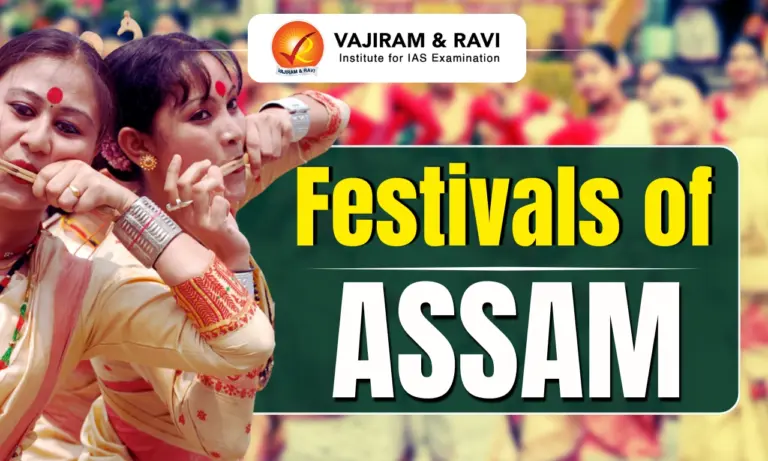
Assam, the gateway to Northeast India, is renowned for its vibrant culture, rich traditions, and diverse ethnic communities. The festivals of Assam beautifully reflect the state’s agricultural heritage, religious beliefs, tribal customs, and spirit of unity. In this article, we have discussed the Major Festivals of Assam.
Top 10 Famous Festivals of Assam 2026
The major festivals of Assam reflect the state’s rich cultural heritage, agricultural traditions, and ethnic diversity. Celebrations such as Bihu, Ambubachi Mela, Baishagu, Me-Dam-Me-Phi, Ali-Ai-Ligang, and Jonbeel Mela are marked by vibrant folk dances, music, rituals, and community feasts. These festivals promote unity, cultural preservation, and tourism, showcasing the unique traditions and harmonious lifestyle of the people of Assam.
1. Bihu Festival
Bihu is the most important and widely celebrated festival of Assam, symbolizing the state’s agricultural heritage, prosperity, and the Assamese New Year.
- Celebrated three times a year as Bohag (Rongali) Bihu, Kati (Kongali) Bihu, and Magh (Bhogali) Bihu.
- Bohag Bihu marks the Assamese New Year and the beginning of the sowing season.
- Kati Bihu is observed for the protection and healthy growth of crops.
- Magh Bihu celebrates the harvest with community feasts and bonfires.
- Famous for Bihu dance, Bihu songs, traditional attire, and festive cuisine.
- Promotes unity, cultural identity, and community bonding.
2. Ambubachi Mela
Ambubachi Mela is a renowned religious festival celebrated annually at the Kamakhya Temple in Guwahati, attracting devotees and pilgrims from across the country.
- Held every year during mid-June (monsoon season).
- Celebrated according to Tantric traditions dedicated to Goddess Kamakhya.
- The temple remains closed for three days, symbolizing the annual menstruation of the Goddess.
- Devotees are allowed to offer prayers on the fourth day after the temple reopens.
- Thousands of saints, sadhus, and pilgrims participate in the festival.
- It is one of the largest spiritual gatherings in Northeast India.
3. Me-Dam-Me-Phi
Me-Dam-Me-Phi is the most significant festival of the Ahom community, dedicated to honoring ancestors and preserving cultural traditions.
- Celebrated annually on 31 January.
- Ancestors are worshipped through traditional rituals and prayers.
- Strengthens family values and community harmony.
- Traditional processions feature people dressed in colorful Assamese attire.
- Cultural programs and religious ceremonies are organized.
- Reflects the Ahom community’s respect for their heritage and forefathers.
4. Baishagu Festival
Baishagu is the principal festival of the Bodo community, celebrating the arrival of spring and the Bodo New Year.
- Celebrated every year during mid-April.
- Marks the Bodo New Year and the beginning of the agricultural season.
- Features traditional Bodo folk dances, songs, and cultural performances.
- Musical instruments like Kham, Siphung, Gogona, Jotha, and Khawbang are played.
- Ends with a community prayer known as Garjasali.
- Promotes peace, prosperity, and social unity among the Bodo people.
5. Ali-Ai-Ligang
Ali-Ai-Ligang is the major agricultural festival of the Mishing tribe, marking the beginning of paddy cultivation in Assam.
- Celebrated annually in February.
- Marks the start of the sowing season for farmers.
- Traditional Gumrag dance and folk songs are performed during the celebrations.
- Families prepare traditional delicacies and Apong (rice beer).
- Farmers offer prayers for a good harvest and agricultural prosperity.
- Preserves the rich cultural traditions and identity of the Mishing community.
6. Jonbeel Mela
Jonbeel Mela is a unique traditional fair of Assam, famous for its centuries-old barter system, where goods are exchanged without the use of money.
- Held annually in January near Jagiroad in Morigaon district.
- Brings together Tiwa, Karbi, Khasi, Jaintia, and other tribal communities.
- Traders exchange agricultural produce, handicrafts, and household items through barter.
- Features traditional folk dances, music, and cultural performances.
- Preserves Assam’s ancient trading traditions and cultural heritage.
- Promotes community harmony and inter-tribal cooperation.
7. Rongker Festival
Rongker Festival is an important religious and cultural festival celebrated by the Karbi tribe for the protection and well-being of the village community.
- Celebrated annually in January or February.
- Dedicated to village deities and ancestral spirits.
- Rituals are performed to seek protection from diseases and natural calamities.
- Community prayers strengthen social unity and peace.
- Traditional Karbi dances, songs, and rituals are an integral part of the festival.
- Reflects the tribe’s close relationship with nature and spirituality.
8. Baikho Festival
Baikho Festival is a major harvest festival of the Rabha community, celebrated to express gratitude for a good harvest and pray for prosperity.
- Celebrated after the harvesting season.
- Devotees worship local deities for peace and agricultural abundance.
- Traditional Rabha folk dances and songs are performed.
- Community feasts and cultural programs bring people together.
- Elders bless the younger generation for a prosperous future.
- Preserves the customs and cultural identity of the Rabha tribe.
9. Bohaggiyo Bishu
Bohaggiyo Bishu is the traditional New Year and spring festival of the Dimasa community, celebrated with joy and cultural enthusiasm.
- Celebrated during April with the arrival of spring.
- Marks the beginning of the Dimasa New Year.
- People perform traditional dances and folk songs in colorful attire.
- Families prepare festive meals and participate in community gatherings.
- Rituals are conducted to seek peace, prosperity, and a good harvest.
- Strengthens cultural identity and social bonding within the community.
10. Rajini Gabra Harni Gabra
Rajini Gabra Harni Gabra is a traditional festival of the Dimasa tribe, celebrated to honor deities and seek the welfare of the community.
- Observed according to the traditional Dimasa calendar.
- Religious rituals are performed to invoke divine blessings.
- Traditional music, dances, and cultural ceremonies are organized.
- Elders pass on customs and folklore to younger generations.
- Reinforces social unity and tribal heritage.
- Reflects the Dimasa community’s deep respect for tradition, culture, and spirituality.
Festivals of Assam Cultural Significance
The festivals of Assam are an integral part of the state’s cultural identity, reflecting its rich traditions, agricultural heritage, and ethnic diversity. Celebrated by various communities and tribes, these festivals strengthen social bonds, preserve age-old customs, and showcase Assam’s vibrant folk music, dances, rituals, and cuisine.
- Preserve Cultural Heritage: Festivals help protect and promote Assam’s rich traditions, folklore, languages, and indigenous customs for future generations.
- Celebrate Agricultural Life: Festivals like Bihu, Baishagu, and Ali-Ai-Ligang are closely linked to the agricultural cycle, expressing gratitude for nature and good harvests.
- Promote Unity in Diversity: Assam’s festivals are celebrated by different ethnic groups and religious communities, fostering communal harmony and mutual respect.
- Showcase Folk Arts: Traditional Bihu dance, Gumrag dance, folk songs, music, and indigenous musical instruments are performed during festivals, preserving Assam’s artistic heritage.
- Strengthen Community Bonds: Community feasts, fairs, prayers, and cultural gatherings encourage cooperation, social interaction, and collective celebrations.
- Promote Religious and Spiritual Values: Festivals such as Ambubachi Mela and Me-Dam-Me-Phi reflect deep spiritual beliefs, devotion, and respect for ancestors and deities.
- Boost Tourism and Local Economy: Major festivals attract thousands of domestic and international tourists, supporting local artisans, craftsmen, performers, and small businesses.
- Preserve Tribal Traditions: Tribal festivals like Rongker, Baikho, and Bohaggiyo Bishu help safeguard the unique customs, rituals, and cultural identity of Assam’s indigenous communities.
- Encourage Cultural Exchange: Festivals provide a platform for different communities to share their traditions, strengthening Assam’s multicultural identity.


 Last updated on Sep, 2026
→ UPSC 2027 Notification will be released on 13 January 2027 at upsconline.nic.in.
→ Asian Games 2026 are being held in Aichi-Nagoya, Japan, from 19 September to 4 October.
→ Check out the latest UPSC Syllabus here.
→ Download UPSC Model Answers for Mains 2026
→ UPSC Mains Question Paper 2026 is out now for Essay & GS Paper 1, 2, 3 & 4.
→ UPSC Calendar 2027 has been released.
→ Enroll in Vajiram & Ravi’s UPSC Mains Test Series 2027 for structured answer writing practice, expert evaluation, and exam-oriented feedback.
→ Join Vajiram & Ravi’s UPSC Mentorship Program 2027 for personalized guidance, strategy planning, and one-to-one support from experienced mentors.
→ Go through the UPSC Mains Previous Year Papers to enhance your preparation.
→ UPSC has released UPSC Toppers List 2025 with the Civil Services final result on its official website.
→ Also check Best UPSC Coaching in India
Festivals of Assam FAQs
Q1. Which is the most famous festival of Assam?+
Q2. What are the major festivals celebrated in Assam?+
Q3. What is the significance of Ambubachi Mela?+
Q4. Why is Bihu celebrated in Assam?+
Q5. Which community celebrates Baishagu?+
Tags: art and culture art and culture notes