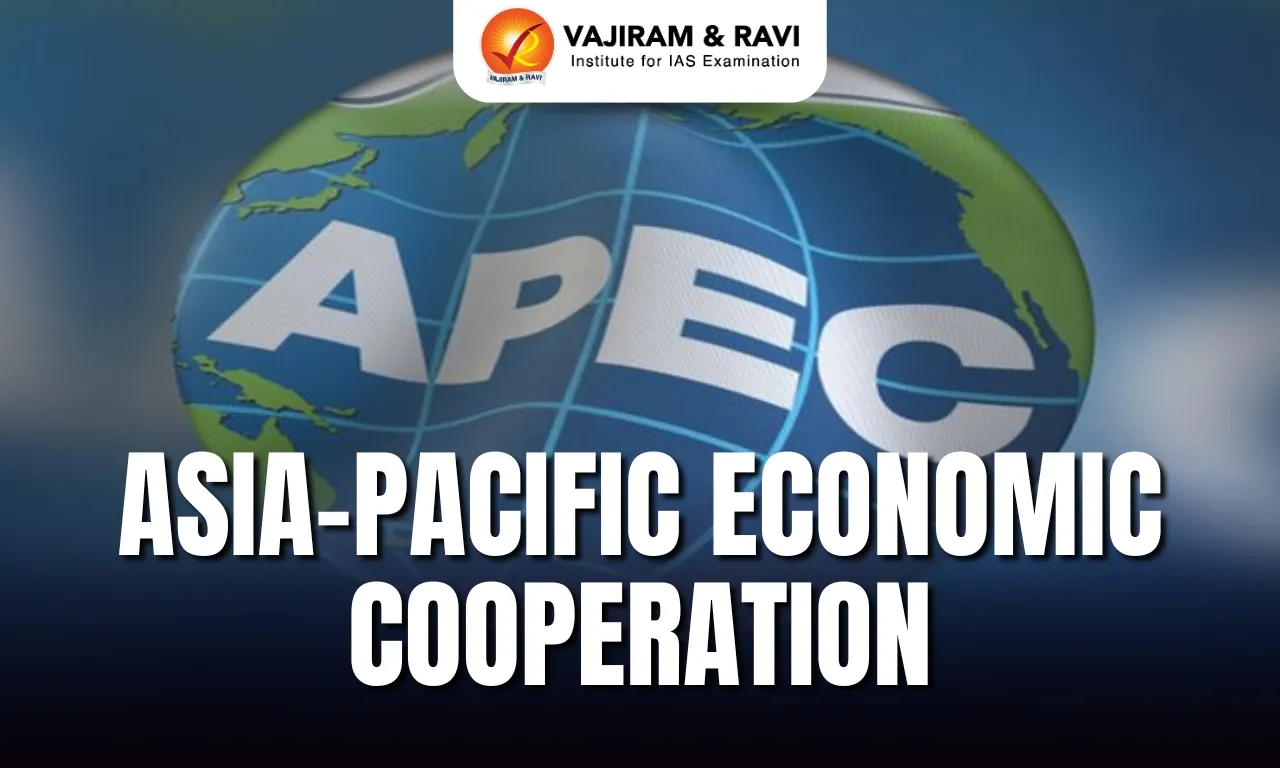
Asia-Pacific Economic Cooperation (APEC)

Asia-Pacific Economic Cooperation

Asia-Pacific Economic Cooperation (APEC) Latest News

US President Donald Trump and his Chinese counterpart Xi Jinping are likely to meet at the Asia-Pacific Economic Cooperation (APEC) summit in South Korea.

About Asia-Pacific Economic Cooperation (APEC)

  • It is a regional economic forum established in 1989 to leverage the growing interdependence of the Asia-Pacific.
  • It aims to create greater prosperity for the people of the region by promoting balanced, inclusive, sustainable, innovative, and secure growth and by accelerating regional economic integration.
  • The focus of APEC has been on trade and economic issues, and hence, it terms the countries as “economies”.
  • It has been operating on the basis of non-binding commitments, with decisions taken through commitments and consensus undertaken on a voluntary basis.
  • There are no binding commitments or treaty obligations. 
  • Member Countries:
    • Currently, APEC has 21 members.
    • The criterion for membership, however, is that each member must be an independent economic entity, rather than a sovereign state.
    • The grouping’s current members are Australia, Brunei, Hong Kong, New Zealand, Papua New Guinea, the Philippines, Indonesia, China, Japan, South Korea, Russia, Canada, the United States, Mexico, Peru, Chile, Malaysia, Vietnam, Singapore, Thailand, and Taiwan.
  • The APEC Secretariat is based in Singapore and operates as the core support mechanism for the APEC process. 
  • APEC's member economies are home to more than 2.9 billion people and make up over 60 percent of global GDP.

Source: FP

Asia-Pacific Economic Cooperation (APEC) FAQs

Q1: When was the Asia-Pacific Economic Cooperation (APEC) established?

Ans: It was established in 1989 to leverage the growing interdependence of the Asia-Pacific.

Q2: What is the primary aim of Asia-Pacific Economic Cooperation (APEC)?

Ans: To create greater prosperity through balanced and sustainable economic growth.

Q3: The Asia-Pacific Economic Cooperation (APEC) Secretariat is headquartered in which country?

Ans: The APEC Secretariat is based in Singapore.

Q4: How many members does Asia-Pacific Economic Cooperation (APEC) currently have?

Ans: 21

Panna Tiger Reserve

Panna Tiger Reserve

Panna Tiger Reserve Latest News

Vatsala', considered to be Asia's oldest elephant, died recently at the age of more than 100 years at the Panna Tiger Reserve in Madhya Pradesh.

About Panna Tiger Reserve

  • Location: It is located in the Vindhyan mountain range in the northern part of Madhya Pradesh.
  • Standing over an area of 542 sq.km., it is the only tiger reserve in the entire Bundhelkhand region.
  • It falls in biogeographic zones of the Deccan Peninsula and the Biotic Province of the Central highlands.
  • It was declared a Project Tiger Reserve by the Government of India in 1994. 
  • Landscape:
    • It is characterized by a ‘Table Top’ topography.
    • It consists of extensive plateaus and gorges.
    • Two plateaus run parallel to each other from southwest to northeasterly direction. 
  • River: The Ken River flows from south to north through the reserve.
  • The reserve is also dotted with two-thousand-year-old rock paintings.
  • The region surrounding the reserve is home to various indigenous tribes, each with its distinct culture and traditions. The Baiga and Gond tribes are among the prominent ones. 
  • Flora:
    • The dominant vegetation type is dry deciduous forest interspersed with grassland areas.
    • In the north, it is surrounded by teak forest, and in the east, it is surrounded by Teak-Kardhai mixed forest. It is the northernmost boundary of the natural distribution of teak (Tectona grandis).
    • The tree species Acacia catachu dominates the dry, steep slopes of the plateaus here.
  • Fauna:
    • It supports a sizable population of Tiger, Sloth Bear, Leopard, and Striped Hyena.
    • Other prominent carnivores are Jackal, Wolf, Wild Dog, Jungle Cat, and Rusty Spotted Cat.

Source: TH

Panna Tiger Reserve FAQs

Q1: Which state is Panna Tiger Reserve in?

Ans: Madhya Pradesh

Q2: Which major river flows through the Panna Tiger Reserve?

Ans: Ken River

Q3: What is the dominant vegetation type in the Panna Tiger Reserve?

Ans: Dry deciduous forest interspersed with grassland areas.

Q4: What is the approximate area of Panna Tiger Reserve?

Ans: 542 sq.km.

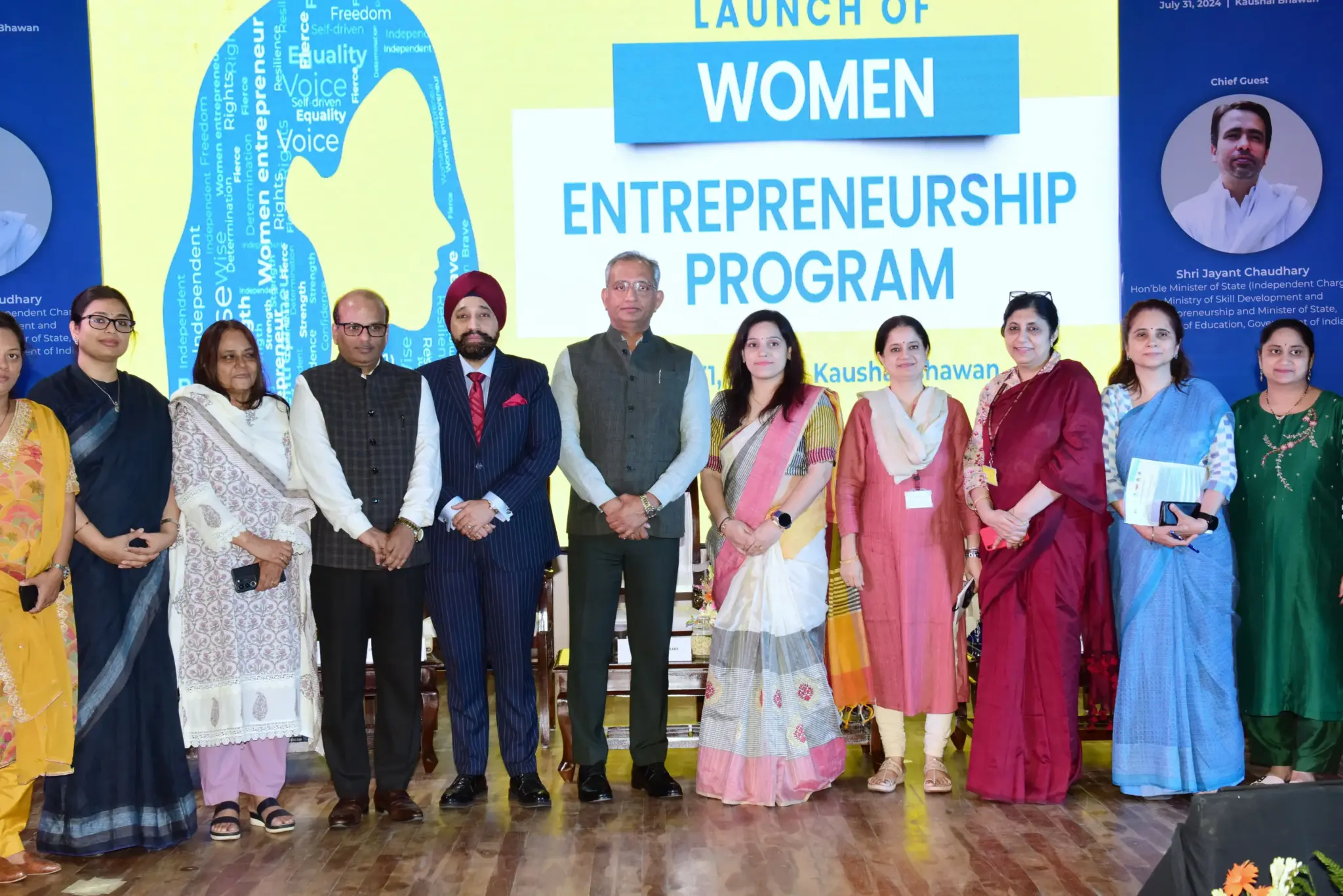
Women Entrepreneurship Program

Women Entrepreneurship Program

About Women Entrepreneurship Program: 

  • It is designed to address the distinct challenges that women face when starting and growing businesses.
  • This initiative aims to empower approximately 25 lakh women across India, providing them with the skills, knowledge, and resources needed to start and grow successful businesses.
  • It is in partnership with Britannia Industries Limited.
  • The initiative will also offer financial grants and feature their products and services on the Skill India Digital Hub, reflecting a strong commitment to fostering an inclusive environment for women entrepreneurs.
  • NSDC, with support from the National Institute for Entrepreneurship and Small Business Development (NIESBUD), will offer free online self-learning entrepreneurship courses through the Skill India Digital Hub (SIDH).
  • These courses, available in multiple languages, will cover crucial topics such as entrepreneurial skills, enterprise setup, finance basics, digital skills, and market analysis.

Key facts about the National Skill Development Corporation

  • It was established on July 31, 2008, as a not-for-profit public limited company under section 25 of the Companies Act, 1956.
  • It operates as a unique Public Private Partnership (PPP) model under the Ministry of Skill Development & Entrepreneurship (MSDE).

Q1: What is Skill India Digital (SID) Platform?

Skill India Digital (SID) Platform serves as India’s Digital Public Infrastructure (DPI) for the skill development, education, employment and entrepreneurship ecosystem. This Platform aims to bring all skilling initiatives under a single umbrella and provide skill development and entrepreneurial support to people.

Source: Women Entrepreneurship Program launched to empower women entrepreneurs and spurring economic growth

INS Mahe

INS Mahe

INS Mahe Latest News

Cochin Shipyard Limited (CSL) recently delivered the first of the eight anti-submarine warfare shallow water craft (ASW-SWC), INS Mahe, indigenously designed and built by it to the Indian Navy.

About INS Mahe

  • It is the first of the eight anti-submarine warfare shallow water craft (ASW-SWC) of the Indian Navy.
  • It is indigenously designed and built by the Cochin Shipyard Limited (CSL).
  • Designed for a wide range of coastal defence missions, Mahe is equipped for underwater surveillance, search and rescue duties, Low Intensity Maritime Operations (LIMO), and complex mine-laying tasks. 

INS Mahe Features

  • The ship’s design reflects extensive indigenous input, with over 90 percent of components sourced domestically.
  • The 78-meter-long vessel is the largest Indian naval warship powered by a diesel engine-waterjet propulsion system.
  • This advanced propulsion system ensures superior manoeuvrability and a reduced acoustic signature, crucial in anti-submarine operations carried out in littoral waters.
  • Its compact design and high agility make it ideal for operations in shallow waters where conventional destroyers and frigates face navigational constraints.
  • These ships are equipped with one RBU-6000 anti-submarine rocket launcher and two sets of light-weight torpedo-tube launchers for launching anti-submarine torpedoes.

Source: TH

INS Mahe FAQs

Q1: INS Mahe is primarily designed for which type of naval operation?

Ans: Anti-submarine warfare in shallow waters.

Q2: Which Indian shipyard designed and built INS Mahe?

Ans: Cochin Shipyard Limited (CSL).

Q3: What is the propulsion system used in INS Mahe?

Ans: Diesel engine with waterjet propulsion.

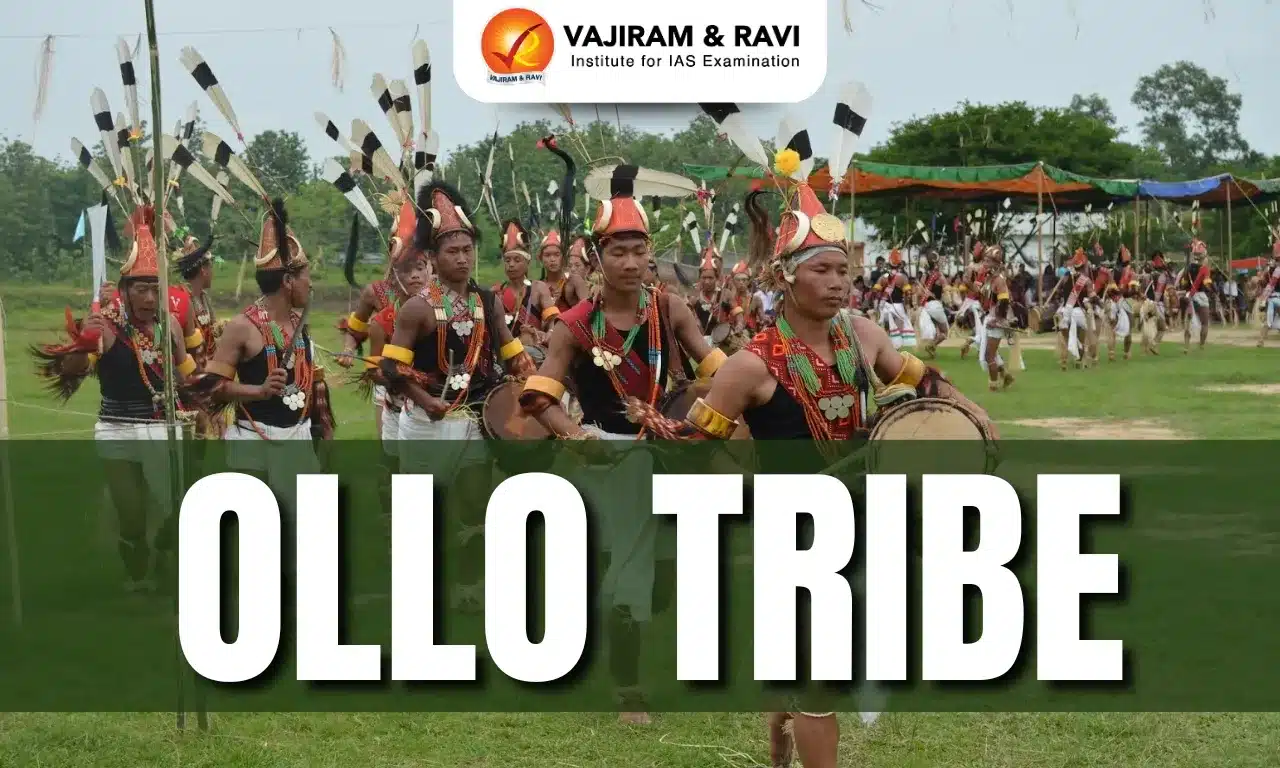
Ollo Tribe

Ollo Tribe

Ollo Tribe Latest News

In an effort to promote self-reliance and inclusive growth, the Khonsa Battalion of the Assam Rifles recently launched a skill-based initiative to empower women of the Ollo tribe under Operation Sadbhavana.

About Ollo Tribe

  • It is an indigenous tribe inhabiting the Laju Circle of the Tirap district in Arunachal Pradesh, India, and parts of Myanmar.
  • The Ollo people are also known as Oloh or Lazu Naga.
  • Even though they live in two distinct countries, they maintain a close relationship.
    • They speak the same dialect, practice the same religion, and follow the same traditions and customs.
  • They are organised by clan-based systems with a hereditary chieftaincy system. 
  • The Ollo society is deeply patriarchal, with well-defined roles based on gender and lineage. 
    • Family, kinship, and leadership are governed by strict traditional norms that prioritise male succession and property rights.
  • Historically known for their distinctive facial tattoos and once-practiced headhunting traditions, the tribe today continues to embrace development while preserving its cultural heritage.
  • The Ollos construct houses made of stilts, although the chief's houses of the villages are constructed with massive carved blocks and wooden pillars.
  • According to the 2011 Census, the total population of the Ollo tribe in India is just over 1500.

Source: IT

Ollo Tribe FAQs

Q1: The Ollo Tribe primarily inhabits which Indian state?

Ans: Arunachal Pradesh

Q2: The Ollo people are also known by which other name?

Ans: Oloh or Lazu Naga

Q3: What is the distinctive architectural feature of traditional Ollo houses?

Ans: The Ollos construct houses made of stilts.

Q4: As per the 2011 Census, what is the approximate population of the Ollo Tribe in India?

Ans: Just over 1,500

Comprehensive Nuclear-Test-Ban Treaty Organization (CTBTO)

Comprehensive Nuclear-Test-Ban Treaty Organization (CTBTO)

About Comprehensive Nuclear-Test-Ban Treaty Organization (CTBTO):

  • It is an international organization based in Vienna, Austria, established to implement the Comprehensive Nuclear Test-Ban Treaty (CTBT), which aims to ban all nuclear explosions worldwide.
  • CTBT is a multilateral treaty opened for signature in 1996 by which states agree to ban all nuclear explosions in all environments, for military or civilian purposes
  • The treaty envisages the mechanisms that control such prohibition, including distant monitoring and data collection.
  • It was signed by 183 states and ratified by 164 but has not entered into force as eight specific states among 44 (so-called Annex-2 states whose signatures are required for the Treaty to enter into force, namely the US, China, Iran, Egypt, Israel, India, Pakistan, and North Korea) have not ratified the treaty yet
  • In order to verify compliance with its provisions, the treaty establishes a global network of monitoring facilities and allows for on-site inspections of suspicious events.

Q1: What is a Nuclear Weapon?

A nuclear weapon is a type of explosive device that derives its destructive power from nuclear reactions, either fission (splitting atomic nuclei) or a combination of fission and fusion (combining atomic nuclei). These reactions release massive amounts of energy in the form of an explosion, along with radiation and heat, making nuclear weapons the most powerful weapons known.

News: ‘Global N-monitoring system transparent’

What is Intergovernmental Negotiating Committee on Plastic Pollution?

What is Intergovernmental Negotiating Committee on Plastic Pollution?

About Intergovernmental Negotiating Committee on Plastic Pollution:

  • In March 2022, at the fifth session of the UN Environment Assembly, a historic resolution was adopted to develop an international legally binding instrument (ILBI) on plastic pollution, including in the marine environment.
  • The resolution requested the Executive Director of the UN Environment Programme (UNEP) to convene an Intergovernmental Negotiating Committee (INC) to develop "the instrument," which is to be based on a comprehensive approach that addresses the full life cycle of plastic, including its production, design, and disposal.
  • The objective of the global plastics treaty is to set a global framework of standards around accountability, responsibilities, financing, material/chemical standards, import/export restrictions, targets. 
  • From this global framework, countries will be tasked with implementing globally aligned policies that meet the targets set.
  • An INC has been established, which will meet five times to develop the specific content of the new ILBI by the end of 2024.
  • The INC began its work during the second half of 2022, with the ambition to complete the negotiations by the end of 2024.
  • The first session of the INC (INC-1) took place in Punta del Este, Uruguay, from 28 November to 2 December 2022, followed by a second session (INC-2) from 29 May to 2 June 2023 in Paris, France, and a third session (INC-3) from 13 to 19 November 2023 in Nairobi, Kenya.
  • INC-5, scheduled for 25 November to 1 December 2024 in Busan, Republic of Korea, is intended as the end of the INC process.

It will be followed by a Diplomatic Conference where Heads of State will sign the agreement.


Q1: What is the UN Environment Programme (UNEP)?

UNEP is the leading global authority on the environment. UNEP’s mission is to inspire, inform, and enable nations and peoples to improve their quality of life without compromising that of future generations. It works with governments, civil society, the private sector and UN entities to address humanity’s most pressing environmental challenges - from restoring the ozone layer to protecting the world's seas and promoting a green, inclusive economy.

Source: Pivotal fourth session of negotiations on a global plastics treaty opens in Ottawa

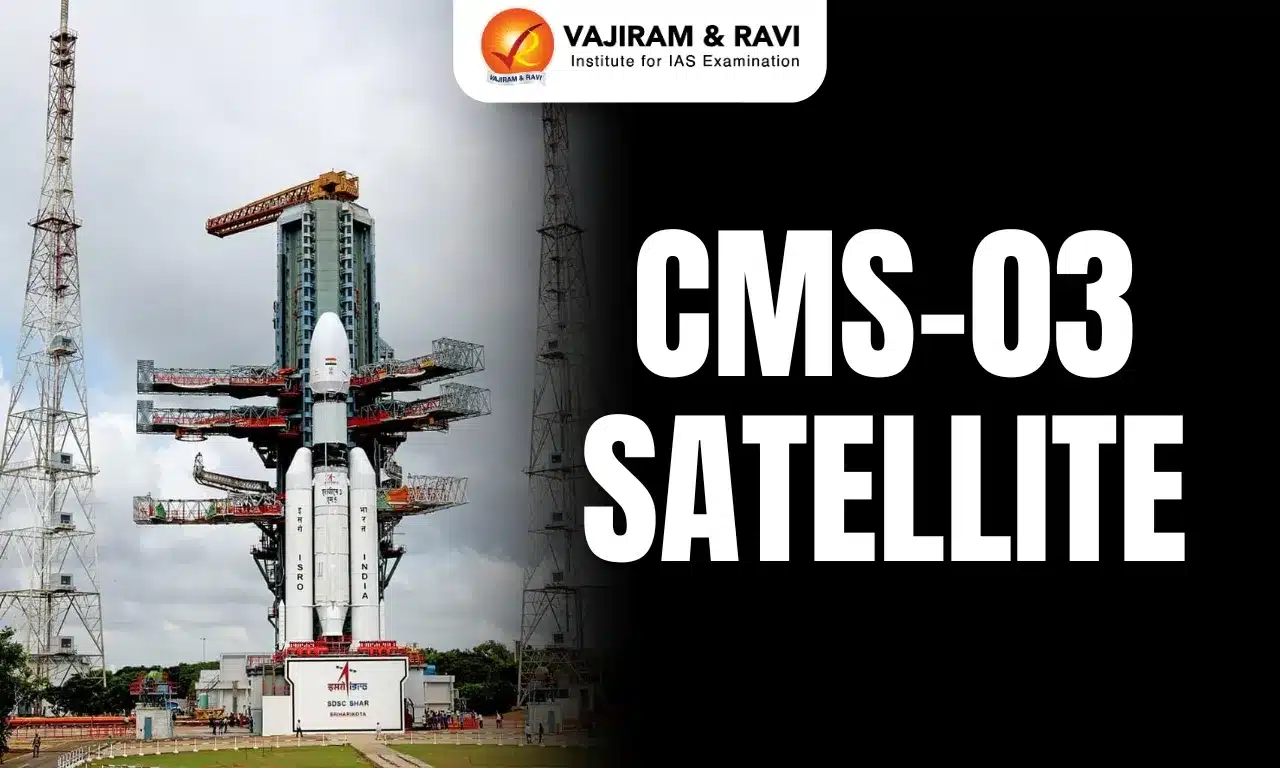
CMS-03 Satellite

CMS-03 Satellite

CMS-03 Satellite Latest News

The Indian Space Research Organisation (ISRO) will launch military communications satellite CMS-03 from the Satish Dhawan Space Centre in Sriharikota.

About CMS-03 Satellite

  • It is a communication satellite, also known as GSAT-7R, and will be launched by the Launch Vehicle Mark 3 (LVM3).

Features of CMS-03 Satellite

  • It is a multi-band communication satellite that will provide services over a wide oceanic region including the Indian landmass.
  • It is weighing about 4400kg, will be the heaviest communication satellite
  • It will be launched to Geosynchronous Transfer Orbit (GTO).
  • It will provide sharper connectivity and increased bandwidth for civil, strategic, and maritime users.

What is Geosynchronous Orbit?

  • It is a prograde (in the direction of Earth’s rotation), low inclination, High Earth orbit around Earth.
  • A spacecraft in this orbit appears at a constant longitude above the Earth.
  • The geosynchronous orbit is also called the Clarke orbit, as it was first popularised by the science fiction author Arthur C. Clarke.

Source: TH

CMS-03 Satellite FAQs

Q1: What is the primary objective of ISRO?

Ans: To develop space technology for national development

Q2: What is the primary purpose of LVM3?

Ans: Launching heavy payloads into space

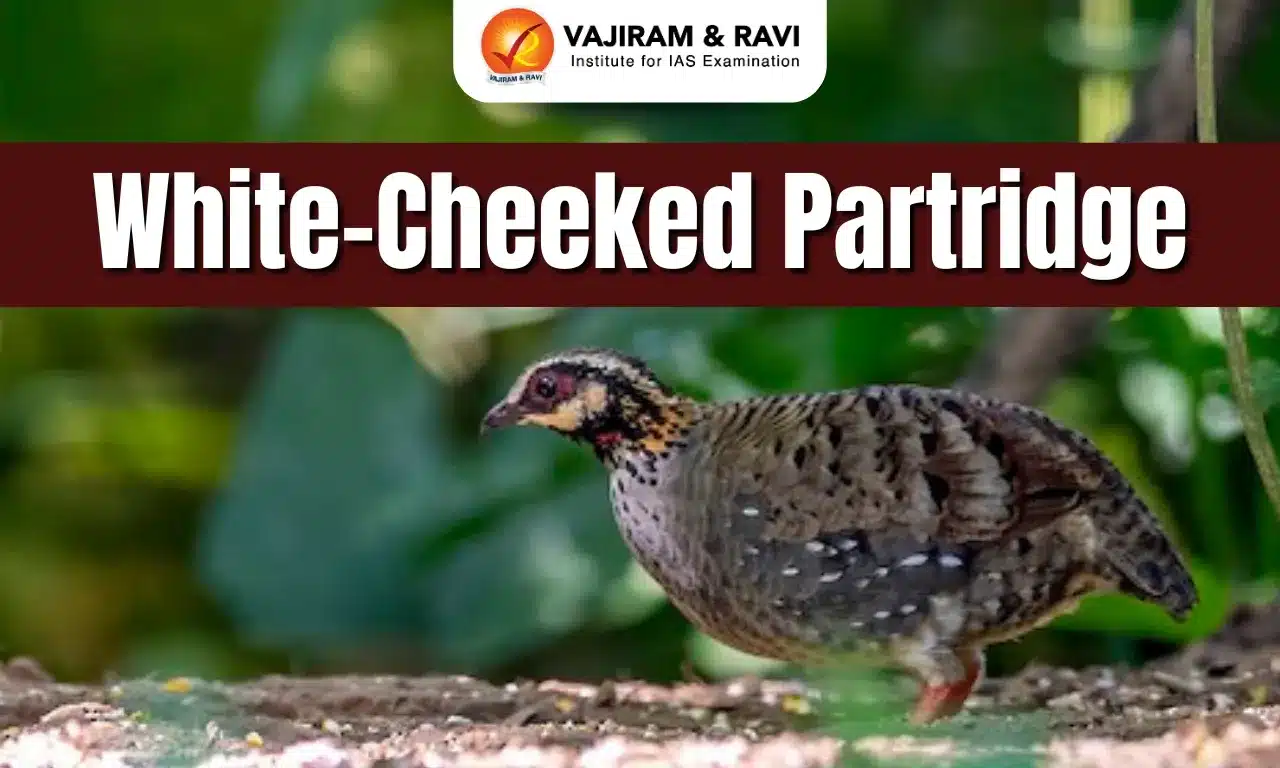
White-Cheeked Partridge

White-Cheeked Partridge

White-Cheeked Partridge Latest News

Recently, a White-cheeked Partridge (Arborophila atrogularis) was rescued near Dehing Patkai National Park.

About White-Cheeked Partridge

  • It is a species of partridge in the family Phasianidae.
  • Habitat: It inhabits dense undergrowth in primary and secondary evergreen forest; this sometimes includes adjacent areas of scrub, bamboo, grassland and cultivated land.
  • In India, the species occurs generally at altitudes below 750 m, but may be found at up to 1,220 m in South-East Asia.
  • Distribution: It is found mainly in Northeast India, northern Myanmar, and northeast Bangladesh.
  • Lifestyle: It is a terrestrial and non-migrant species.
  • Threats: It is principally threatened by habitat loss and persecution.
  • Conservation Status: IUCN: Near Threatened

Key Facts about Dehing Patkai National Park

  • Location: It is located in the state of Assam.
  • It is situated at the foothills of Patkai Hill Ranges, on the banks of the River Dehing and adjacent to the Namdapha Wildlife Sanctuary.
  • It is often referred to as the ‘Amazon of the East‘owing to its expanse and thick forest.
  • The climate of the region is mostly tropical with an annual rainfall of more than 4,000 mm.
  • Vegetation: The park is a deciduous rainforest with semi-evergreen and lush green flora.
  • Flora: Hollong, Nahor, Mekai, Paroli, Simul, various orchids, ferns, cane, and bamboo.
  • Fauna: Slow loris, pig-tailed macaque, stump-tailed macaque, capped langur, Himalayan black bear, clouded leopard, barking deer, Chinese pangolin etc.

Source: NENOW

White-Cheeked Partridge FAQs

Q1: What is the main threat to the White-Cheeked Partridge's survival?

Ans: Habitat loss and hunting

Q2: Where is the White-Cheeked Partridge primarily found?

Ans: Northeast India, northern Myanmar, and northeast Bangladesh

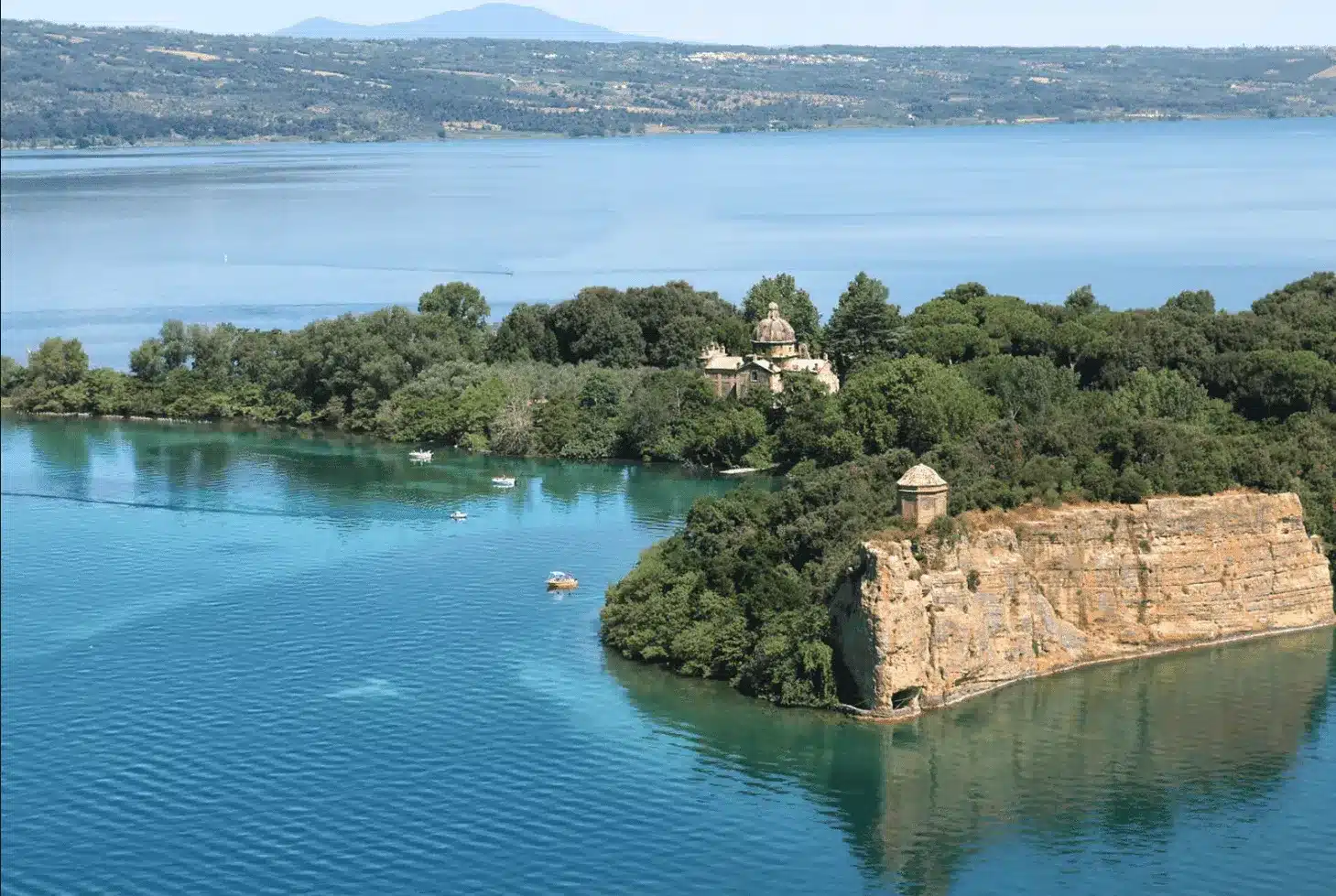
Key Facts about Lake Bolsena

Key Facts about Lake Bolsena

About Lake Bolsena:

  • It is a volcanic lake located in the northern part of the province of Viterbo in the Lazio region of Italy.
  • It is the largest volcanic lake in Europe, covering a total area of 113.5 sq. km.
  • It is 13.5 km (8.4 miles) in length and 12 km (7.5 miles) in diameter.
  • Its formation began 370,000 years ago following the collapse of a caldera of the Vulsini volcano, which stayed active until 104 BC.
  • It is known for a strange phenomenon, known locally as “sessa”, which causes tidal-like movements in the lake.
  • The two islands, Martana and Bisentina, in the southern part of the lake were formed by underwater eruptions.
  • The shores of the lake are characterised by almost untouched nature, with forests, reed beds, and quiet coves, as well as cultivated fields, olive groves, and vineyards.
  • Towns Bordering: Capodimonte and Bolsena

What is a Volcanic Lake?

  • A volcanic lake is a body of water that forms within a volcanic crater, caldera, or a volcanic depression.
  • These lakes can develop after a volcanic eruption when the crater or caldera left behind fills with water, either from precipitation, groundwater, or melting ice and snow.

Q1: What is a Caldera?

A caldera is a large depression formed when a volcano erupts and collapses. During a volcanic eruption, magma present in the magma chamber underneath the volcano is expelled, often forcefully. When the magma chamber empties, the support that the magma had provided inside the chamber disappears. As a result, the sides and top of the volcano collapse inward. Calderas vary in size from one to 100 kilometers (0.62 to 62 miles) in diameter.

Source: Italy: Ancient 3000-year-old clay figurine discovered underwater with fresh finger prints

What is Steriphopus Wangala?

What is Steriphopus Wangala?

About Steriphopus Wangala:

  • It is a newly discovered species of spider from the West Garo Hills district of Meghalaya.
  • It has been named after the Garo community's harvest festival, the Wangala festival, or the 100 Drums Festival.
  • This spider belongs to the Palp-Footed Spider family, characterized by their disproportionately powerful and heavily sclerotized first pair of legs.
  • It has a characteristic reddish-brown colour.

What is the Wangala festival?

  • Wangala festival, also known as the 100 drums festival, is a popular festival among the Garos of Meghalaya.
  • The Wangala Festival marks the end of the agricultural season. This is followed by thanking the spirits and deities for a bountiful harvest and seeking their blessings for the upcoming year.
  • It is the occasion when the tribals offer sacrifices to please their main deity, Saljong, the Sun God.
  • It also signifies the onset of winter.
  • The highlight of Wangala is the rhythmic beat of a hundred drums. These drums are a big part of Garo culture, and they are traditionally made out of tree trunks
  • Towards the end of the festival (which continues for days), the largest batch of dancers converge on the main celebration area with multiple drumsand perform the ceremonial and traditional dances.
  • The dance is characterised by dancers moving to the rhythmic drumming.

Who are Garos?

  • The Garos call themselves Achik-mande.
  • Garos form the second largest tribe in the state of Meghalaya.
  • They are one of the last remaining matrilineal tribes in the world.
  • Two mountain ranges, the Arabella range and the Tura range, passthrough the Garo Hills, forming the great Balpakram valley in between.
  • Balpakram area is considered sacred for the Garo community due to their belief that the spirits of the dead sojourn here.
  • The highest pointin the Garo Hills is Nokrek Peak, with an elevation of 1412 m, which is covered by a thick film of lush forest.

The region is home to the esteemed Nokrek National Park, protects a highly diverse plant and animal diversity. In 2009, the park was designated a biosphere reserve by UNESCO.


Q1: What is a Biosphere Reserve (BR)?

Biosphere Reserve (BR) is an international designation by UNESCO for representative parts of natural and cultural landscapes extending over a large area of terrestrial or coastal/marine ecosystems or a combination thereof. They are sites for testing interdisciplinary approaches to understanding and managing changes and interactions between social and ecological systems, including conflict prevention and management of biodiversity. Biosphere reserves are nominated by national governments and remain under the sovereign jurisdiction of the states where they are located.

Source: A Spider named after Wangala festival of Meghalaya

CRYODIL

CRYODIL

CRYODIL Latest News

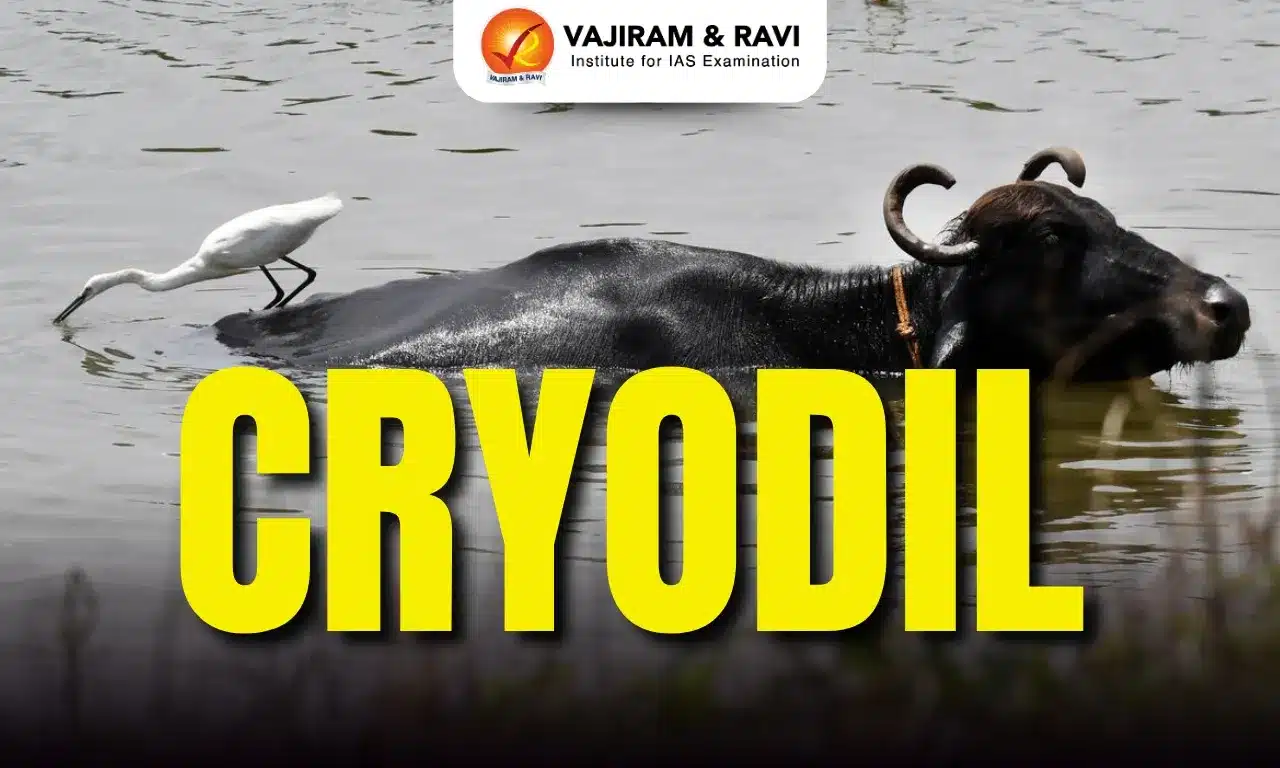
Scientists at the National Institute of Animal Nutrition and Physiology (NIANP), Bengaluru, under the Indian Council of Agricultural Research (ICAR), have developed a ready-to-use, egg yolk-free solution – CRYODIL.

About CRYODIL

  • It is an egg yolk-free, ready to use semen extender for buffaloes.
  • It is developed by the National Institute of Animal Nutrition and Physiology (NIANP), Bengaluru, under the Indian Council of Agricultural Research (ICAR).
  • It has a higher shelf-life (≥18 months), developed for cryopreservation of buffalo semen for the first time in India.
  • The post-thaw progressive motility of cryopreserved buffalo sperm in CRYODIL was significantly higher (P≤ 0.05) as compared to that in traditional egg-yolk-based semen extenders.
    • Post-thaw sperm movement i. e how actively sperm can swim after being frozen and thawed, a key factor that determines whether insemination will lead to pregnancy and viability which are critical factors for successful fertilisation.
  • CRYODIL is cheaper to produce than traditional egg yolk-based extenders. 

Key Facts about Indian Council of Agricultural Research

  • It is an autonomous organisation under the Department of Agricultural Research and Education (DARE), Ministry of Agriculture and Farmers Welfare, Government of India. 
  • Background: It was formerly known as the Imperial Council of Agricultural Research, it was established on 16 July 1929 as a registered society under the Societies Registration Act, 1860, in pursuance of the report of the Royal Commission on Agriculture. 
  • Functions: The Council is the apex body for coordinating, guiding, and managing research and education in agriculture, including horticulture, fisheries, and animal sciences, throughout the country
  • Headquarters: New Delhi. 

Source: TH

CRYODIL FAQs

Q1: Where is the National Institute of Animal Nutrition and Physiology (NIANP) located?

Ans: Bengaluru

Q2: What is the main objective of NIANP?

Ans: To improve animal productivity through nutritional and physiological approaches.

What is Montreal Protocol?

What is Montreal Protocol?

About Montreal Protocol:

  • The Montreal Protocol on Substances that Deplete the Ozone Layer is a landmark multilateral environmental agreement that regulates the production and consumption of nearly 100 man-made chemicals referred to as ozone depleting substances (ODS).
  • ODS are substances that are commonly used in products such as refrigerators, air conditioners, fire extinguishers, and aerosols. 
  • When released into the atmosphere, those chemicals damage the stratospheric ozone layer, Earth’s protective shield that protects humans and the environment from harmful levels of ultraviolet radiation from the sun. 
  • The Montreal Protocol sits under the Vienna Convention for the Protection of the Ozone Layer (the Vienna Convention).
  • Adopted on 16 September, 1987, the Protocol is, to date, one of the rare treaties to achieve universal ratification.
  • The Montreal Protocol phases down the consumption and production of the different ODS in a step-wise manner, with different timetables for developed and developing countries (referred to as “Article 5 countries”). 
  • Under this treaty, all parties have specific responsibilities related to the phase out of the different groups of ODS, control of ODS trade, annual reporting of data, national licensing systems to control ODS imports and exports, and other matters. 
  • Developing and developed countries have equal but differentiated responsibilities, but most importantly, both groups of countries have binding, time-targeted, and measurable commitments.
  • The Meeting of the Parties is the governance body for the treaty, with technical support provided by an Open-ended Working Group, both of which meet on an annual basis.
  • The Parties are assisted by the Ozone Secretariat, which is based at UN Environment Programme headquarters in Nairobi, Kenya.
  • Kigali Amendment:
    • In 2016, parties to the Montreal Protocol adopted the Kigali Amendment to phase down production and consumption of hydrofluorocarbons (HFCs) worldwide.
    • HFCs are widely used alternatives to ODS, such as hydrochlorofluorocarbons (HCFCs) and chlorofluorocarbons (CFCs), which are already controlled under the Protocol. 
    • HFCs are powerful greenhouse gases, and global implementation of the Kigali Amendment is expected to avoid up to half a degree Celsius of temperature rise by 2100.
    • It will phase down HFC consumption and production based on the carbon dioxide equivalent (CO2e) by 80-85 percent by 2045.

Q1: What is Ozone?

It is a gas composed of three atoms of oxygen. It is both a natural and a man-made product that occurs in the Earth's upper atmosphere (Stratospheric ozone) and lower atmosphere (the troposphere). Stratospheric ozone is formed naturally through the interaction of solar ultraviolet (UV) radiation with molecular oxygen (O2). The "ozone layer," approximately 6 to 30 miles above the Earth's surface, reduces the amount of harmful UV radiation reaching the Earth's surface.

Source: A class of ozone-depleting chemicals is declining, thanks to the Montreal Protocol

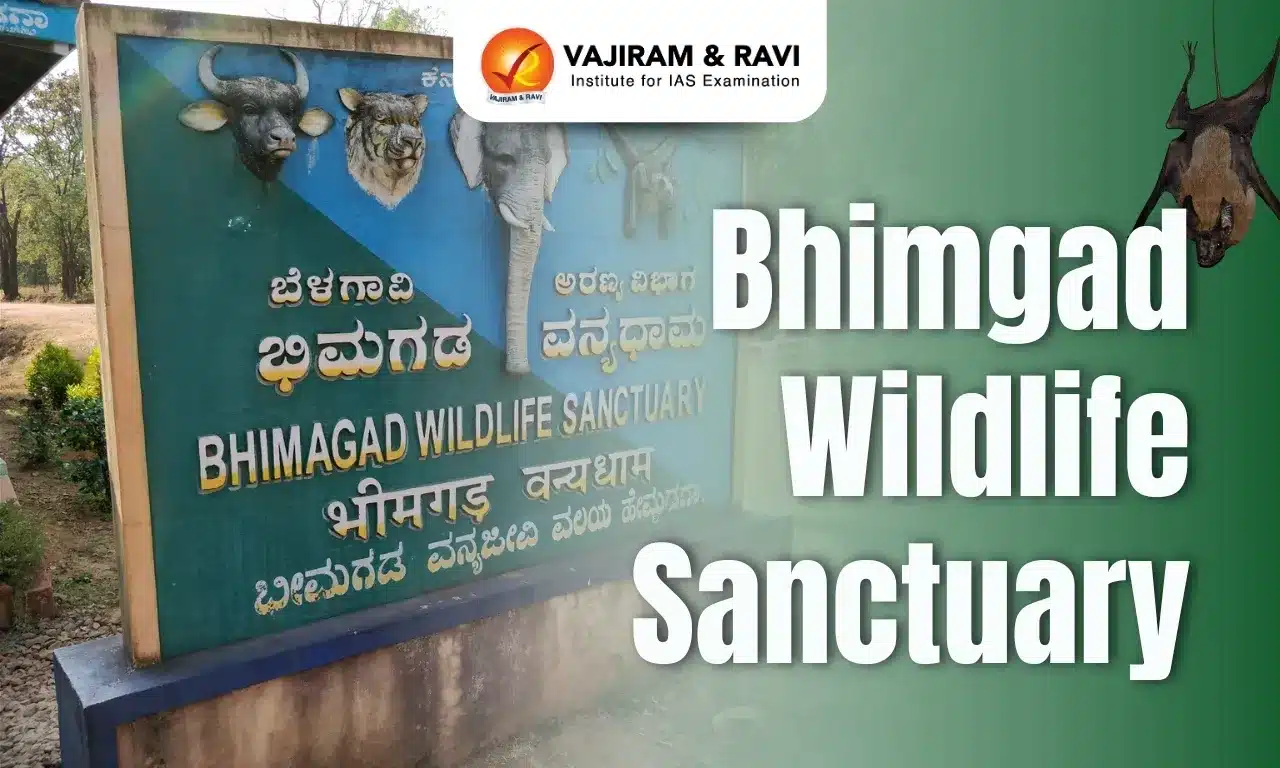
Bhimgad Wildlife Sanctuary

Bhimgad Wildlife Sanctuary

Bhimgad Wildlife Sanctuary Latest News

The forest department's relocation drive at Bhimgad Wildlife Sanctuary (BWS) in Khanapur taluk has hit a hurdle, as residents of Amagaon village have set several conditions before agreeing to move out.

About Bhimgad Wildlife Sanctuary

  • It spans over the Western Ghats in the Belgaum district of Karnataka.
  • It is spread across an area of 190 sq.km.
  • The sanctuary has been named after the Bhimgad Fort, constructed by Chhatrapati Shivaji Maharaj in the 17th century as a strategic outpost to guard against Portuguese expansion from Goa. 
  • It shares its boundary with the north of Dandeli Wildlife Sanctuary, north-west of the Bhagwan Mahaveer Sanctuary and Mollem National Park, north of Netravali Wildlife Sanctuary, and east of Mhadei Wildlife Sanctuary.
  • BWS forms the headwaters of a number of rivers like Tillari, Malaprabha, and Mhadei and several perennial streams.
  • The sanctuary is most famous for the Barapede Caves, the only known breeding ground of the Wroughton’s Free-tailed Bat, a threatened species on the verge of extinction.
  • Vegetation: The dominant vegetation of the forest comprises tropical and subtropical moist broadleaf forests. 
  • Flora
    • Forests are dominated by towering trees like Malabar teak, rosewood, and various species of dipterocarps
    • It also hosts a number of medicinal plants. 
  • Fauna
    • It provides habitat for several endangered species, such as the Indian sloth bear, Indian pangolin, and the elusive black panther. 
    • Other notable residents include the Malabar giant squirrel, gaur, sambar deer, and a plethora of bird species, including the Malabar trogon and the great Indian hornbill.
    • One of the unique features of Bhimgad is the presence of large, isolated rock formations that serve as ideal breeding grounds for the King Cobra, the world’s longest venomous snake.

Source: TOI

Bhimgad Wildlife Sanctuary FAQs

Q1: Bhimgad Wildlife Sanctuary is located in which Indian state?

Ans: Karnataka

Q2: Bhimgad Wildlife Sanctuary derives its name from a fort constructed by which historical ruler?

Ans: Chhatrapati Shivaji Maharaj

Q3: Which rivers have their headwaters originating in the Bhimgad Wildlife Sanctuary?

Ans: It forms the headwaters of a number of rivers like Tillari, Malaprabha, and Mhadei and several perennial streams.

Q4: What is the dominant type of vegetation found in Bhimgad Wildlife Sanctuary?

Ans: Tropical and subtropical moist broadleaf forest.

OPCW- The Hague Award

Default Image

About OPCW- The Hague Award:

  • The Organisation for the Prohibition of Chemical Weapons established the ‘OPCW-The Hague Award’ in collaboration with the Municipality of The Hague in 2014.
  • Itis part of the OPCW’s ongoing effort to highlight significant contributions made by individuals and organisations, widely from academia, researchers, chemical industry, and civil society to achieve a world free of chemical weapons.
  • Recipient of the award receives a medallion, a certificate and share of the €90,000 award fund.

Key facts about the Indian Chemical Council

  • It is India's premier body representing the chemical industry which was established in 1938.
  • It is the apex national body representing all branches of the Chemical Industry in India such as Organic & Inorganic Chemicals, Plastics & Petrochemicals & Petroleum Refineries etc.
  • The Ministry of Commerce & Industry, Government of India, has authorised all ICC offices (Mumbai, New Delhi, Kolkata and Chennai) to issue the CERTIFICATE OF ORIGIN for the exporters.
  • Initiatives of ICC:
    • ICC’s ‘Nicer Globe’ initiative has had a substantial impact on chemical transportation safety in India, offering real-time monitoring and emergency response capabilities.
    • It has conducted other activities to promote chemical safety and security through its ‘Responsible Care’ (RC) programme and the introduction of the Security Code of RC.

Do you know?

  • The Organisation for the Prohibition of Chemical Weaponsis the implementing body of the Chemical Weapons Convention (CWC).
  • Its mission isto implement the provisions of the Chemical Weapons Convention (CWC) in order to achieve the OPCW’s vision of a world that is free of chemical weapons and of the threat of their use, and in which cooperation in chemistry for peaceful purposes for all is fostered.
  • It receives states-parties’ declarations detailing chemical weapons-related activities or materials and relevant industrial activities.
  • The OPCW was awarded the Nobel Peace Prize in 2013.
  • Headquarters: Hague, Netherlands.

Q1: What is the Chemical Weapons Convention?

It is a multilateral treaty that bans chemical weapons and requires their destruction within a specified period of time.It entered into force on April 29, 1997.

News: Indian Chemical Council Wins 2024 OPCW-The Hague Award

World Federation for Medical Education (WFME)

World Federation for Medical Education (WFME)

About World Federation for Medical Education (WFME)

  • WFME is a global organization concerned with the education and training of medical doctors.
  • WFME’s mission is to strive for better health care for all mankind.
  • WFME’s primary objective is to enhance the quality of medical education worldwide, with the promotion of the highest scientific and ethical standards in medical education
  • This objective is met through 
    • The development of standards in medical education;
    • The promotion of accreditation of medical schools;
    • The development of databases on medical education;
    • Projects on the future of medicine and medical education;
    • Publications and partnerships;
  • It was founded in 1972 and is headquartered in Ferney-Voltaire, France.
  • It is the organisation that officially and globally represents medical teachers and medical teaching institutions before the World Health Organization (WHO).
  • WFME's accreditation program plays a pivotal role in ensuring that medical institutes meet and uphold the highest international standards of education and training
  • Importance of WFME Recognition Status to NMC:
    • It will enable Indian medical graduates to practice or pursue post-graduation in countries including the US, Canada, Australia and New Zealand, where WFME recognition is a prerequisite.
    • All 706 existing medical colleges in India have received WFME accreditationAny new medical colleges established in the next 10 years will also automatically gain WFME accreditation status.
    • It will enable the commission to enhance the quality and standards of medical education in India by aligning it with global best practices and benchmarks.
    • It will also augment the international recognition and reputation of Indian medical institutions and professionals, foster academic collaborations and exchanges, and promote ongoing improvements and innovation in medical education.


Key Facts about National Medical Commission (NMC):

  • NMC is a statutory body established under the National Medical Commission Act, 2019.
  • The NMC replaced the erstwhile Medical Council of India (MCI), which was established in 1934.
  • Functions:
    • NMC regulates medical education and medical professionals.
    • The Commission grants recognition of medical qualificationsgives accreditation to medical schools, grants registration to medical practitioners, monitors medical practice and assesses the medical infrastructure in India.
  • Headquarters: New Delhi
  • Organisational structure of NMC:
    • It consists of 33 members, including Chairman (medical professionals only), 10 ex-officio members and 22 part-ime members.
    • Medical Advisory Council: It provides the platform through which the states or UTs can put forth their views and concerns before the NMC and advises the NMC on measures to determine and maintain minimum standards of medical education.


Q1) What is the World Health Organization (WHO)?

WHO is a specialized agency of the United Nations (UN) responsible for international public health. Established on April 7, 1948, the WHO's primary objective is to promote and protect global health, as well as to provide leadership on international public health issues.

Source: India gets WFME accreditation, medical students can now practice in US, other countries

What is Jiyo Parsi Scheme?

What is Jiyo Parsi Scheme?

About Jiyo Parsi Scheme:

  • It is a unique Central Sector Scheme implemented by the Ministry of Minority Affairsfor arresting the population decline of the Parsi Community in India.
  • The scheme was launched in 2013-14.
  • The objective of the scheme is to reverse thedeclining trend of the Parsi population by adopting scientific protocols and structured interventions to stabilize their population in India.
  • The scheme has three components: Medical Assistance, Advocacy, and Health of Community.
    • Under the Medical Component of the scheme, financial assistance is provided to Parsi Couples for medical treatment under standard medical protocol.
    • Under the Health of Community Component, financial assistance is provided to Parsi Couples for child care and assistance of elderly people.
    • Under the Advocacy Component, advocacy/outreach programmes are conducted to generate awareness among the Parsi population.

Q1: What is a central sector scheme?

Central Sector Schemes are those that are implemented by a central agency and 100% funded by the center on subjects within the union list.

Source: Kiren Rijiju launches portal for Jiyo Parsi Scheme

International Council on Monuments and Sites

International Council on Monuments and Sites

About International Council on Monuments and Sites: 

  • It was established in 1965 in Warsaw (Poland) as a result of the Venice Charter of 1964 and offers advice to UNESCO on World Heritage Sites.
  • It is an international non-governmental organisation that is composed of professionals, experts, representatives from local authorities, companies and heritage organisations, and is dedicated to the conservation and enhancement of the architectural and landscape heritage throughout the world.

Key facts about Moidams

  • The Moidams (also Maidams) are the mound-burial system of the Ahom dynasty (13th century-19th century).
  • The mound-burial system of the royals of the Ahom dynasty in Assam’s Charaideo district can be likened to the royal tombs of ancient China and the Pyramids of the Egyptians Pharaohs (kings of ancient Egypt).
    • The Ahom rule lasted for about 600 years until the British annexed Assam in 1826.
    • Charaideo, more than 400 km east of Guwahati, was the first capital of the Ahom dynasty founded by Chao Lung Siu-Ka-Pha in 1253.
  • However, after the 18th century, the Ahom rulers adopted the Hindu method of cremation, entombing the cremated bones and ashes in a Moidam at Charaideo.
  • The Moidams enshrine the mortal remains of Ahom royalty and are highly venerated.
  • With the shift of Ahom capital south and eastwards, Moidams have been seen in different parts of Northern Vietnam, Laos, Thailand, Northern Burma, Southern China and Northeast India - together defining the region where Tai-Ahom culture prevailed.

Q1: What is the Global Geoparks Network?

It is a non-profit International Association officially established in 2014 subject to French legislation. It is the official partner of UNESCO for the operation of the UNESCO Global Geoparks.

Source: Ahom 'Moidam' recommended for inclusion in UNESCO World Heritage List

Prevention of Money Laundering Act

Prevention of Money Laundering Act

Prevention of Money Laundering Act (PMLA) Latest News

The Enforcement Directorate (ED) has significantly intensified actions under the PMLA since 2014, reflecting a heightened institutional response to economic offences in India.

About the Prevention of Money Laundering Act (PMLA), 2002

  • The Prevention of Money Laundering Act (PMLA), 2002 was enacted in January 2003 to combat money laundering and confiscate proceeds of crime.
  • Section 3 defines money laundering as any attempt to project criminal proceeds as untainted assets.
  • The main objectives of the Act are:
    • To prevent and control money laundering,
    • To attach and confiscate assets derived from crime,
    • To address related economic offences in India.
  • PMLA has undergone major amendments in 2009 and 2012 to expand its scope and enforcement powers.
  • As of 2024-25, the ED has initiated 775 new investigations under the PMLA and filed 333 prosecution complaints, demonstrating increased legal action against money laundering.

Enforcement Directorate (ED) Role

  • ED is the chief enforcement agency under PMLA, empowered to investigate, attach property, and file prosecution complaints.
  • The Act mandates record maintenance and client identity verification by banks, financial institutions, and intermediaries.
  • Key institutions include:
    • Adjudicating Authority (for attachment confirmation),
    • Appellate Tribunal, and
    • Special Courts (designated sessions courts for PMLA trials).
  • The Act allows international cooperation through treaties and MoUs with foreign governments.

Focus Areas for 2025

  • Foreign Exchange Management Act (FEMA) cases are a key enforcement priority this year.
  • Under the Fugitive Economic Offenders Act, 2018, applications were filed against 24 individuals, and 14 have been declared fugitive economic offenders.
    • Over ₹900 crore worth of assets have been confiscated so far.

Source: TH

Prevention of Money Laundering Act FAQs

Q1: What is the objective of the Prevention of Money Laundering Act (PMLA)?

Ans: PMLA, 2002 aims to prevent money laundering and confiscate properties derived from laundered money.

Q2: Which agency enforces PMLA in India?

Ans: The Enforcement Directorate (ED) is the key agency responsible for investigating offences under PMLA.

Q3: What is a scheduled offence under PMLA?

Ans: A scheduled offence is a predicate offence listed in the schedule of the Act, and it must be proved before prosecuting money laundering.

What are Supercapacitors?

What are Supercapacitors?

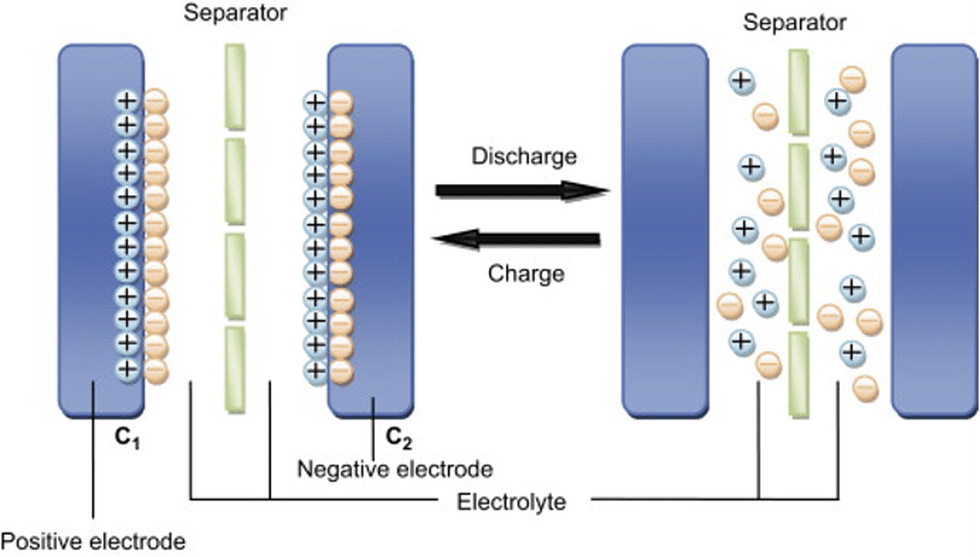
About Supercapacitors: 

  • A supercapacitor is a next-generation energy storage device which is also known as an ultracapacitor.
  • It has advantages such as high-power density, long durability, and ultrafast charging characteristics as compared to conventional capacitors and Lithium-Ion batteries (LIB).
  • The main components of supercapacitors include an electrode, electrolyte, separator, and current collector.
  • An electrode is a solid electric conductor that carries electric current into non-metallic solids, liquids, gases, plasmas, or vacuums.
  • An electrolyte is a substance that produces an electrically conducting solution when dissolved in a polar solvent, such as water. 

Key findings

  • It is found that the prototype supercapacitors made of coconut husk-derived activated carbon to be four-times more efficient that the existing supercapacitors.
  • This innovative method not only saves time, but also yields activated carbon with an impressive surface area of 1,200 m2 g-1 and highly porous structures, making it an ideal material for various applications.
  • The device’s high-power output is capable of powering two LEDs for 20 minutes.

What is a microwave-assisted method?

  • It is relatively inexpensive and exhibits exceptional supercapacitor capability.
  • By utilising an advanced microwave pyrolysis reactor one can produce high-quality carbon within five minutes, eliminating impurities like ash and generating zero waste.

Q1: What is Electrolysis?

Electrolysis is the process of using electricity to split water into hydrogen and oxygen. This reaction takes place in a unit called an electrolyzer.

Source: Researchers devise method to develop eco-friendly supercapacitors using activated carbon produced from coconut husks

Hokersar wetland

Hokersar wetland

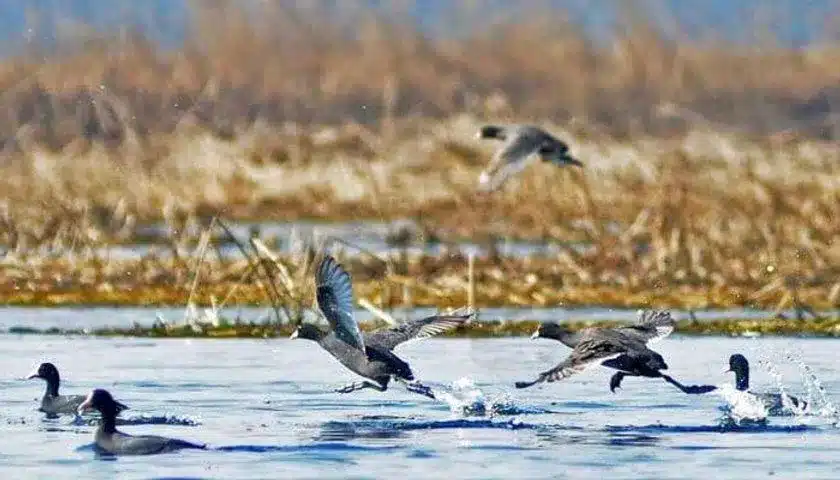
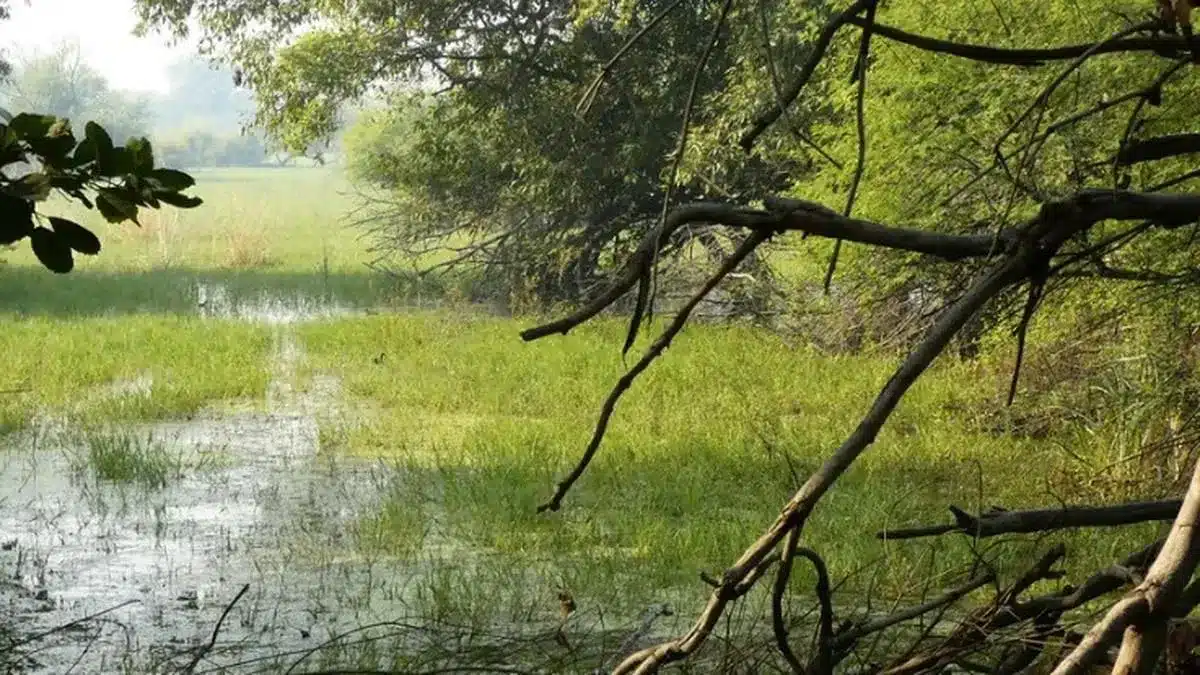
About Hokersar wetland:

  • It is known as the ‘Queen Wetland of Kashmir’, Hokersar (also known as Hokera) is a designated Ramsar site is located in Srinagar, Jammu and Kashmir.
  • It is a natural perennial wetland contiguous to the Jhelum basin.
  • It gets water from the Doodhganga River (Tributary of Jhelum).
  • It is located at the northwest Himalayan biogeopgraphic province of Kashmir, back of the snow-draped Pir Panchal.
  • Fauna: It is the only site with remaining reedbeds of Kashmir and pathway of 68 waterfowl species like Large Egret, Great Crested Grebe, Little Cormorant, Common Shelduck, Tufted Duck and endangered White-eyed Pochard, 
  • It is an important source of food, spawning ground and nursery for fishes, besides offering feeding and breeding ground to a variety of water birds. 

What is the Ramsar Convention?

  • This convention was signed on 2nd February 1971 to preserve the ecological character of their wetlands of international importance.
  • It is named after Ramsar, the Iranian city where the treaty was signed in 1971, and places chosen for conservation under it are given the tag ‘Ramsar site’.

Q1: Which are the main tributaries of Jhelum River?

The largest tributary of the Jhelum is the Kishenganga (Neelum) River, which joins near Muzaffarabad and enters the Punjab province, Pakistan. Kunhar River is the second largest tributary of the river, which connects Pakistan-occupied Kashmir (PoK) and Pakistan on the Kohala Bridge of Kanghan valley. Other tributaries include Sandran River, Bringi River, Arapath River, Watlara River, Lidder River and Veshaw River.

News: Lack of rainfall impacts arrival of migratory birds in Kashmir Valley’s Hokersar wetland

Teal Carbon

Teal Carbon

About Teal Carbon:

  • It refers to carbon stored in non-tidal fresh water wetlands, encompassing carbon sequestered in vegetation, microbial biomass, and dissolved and particulate organic matter.
  • These ecosystems are considered to be more effective at carbon capture and storage than terrestrial forest ecosystems, and can store and sequester more carbon than any other type of terrestrial ecosystem.
  • The concept of teal carbon is a recent addition to the environmental science pertaining to organic carbon in inland fresh wetlands. 
  • It is a colour-based terminology that reflects the classification of the organic carbon based on its functions and location rather than its physical properties.
  • At the global level, the storage of teal carbon across the ecosystems is estimated to be 500.21 petagrams of carbon (PgC), which is a unit to measure carbon.
  • Major sources of Teal carbon: Peatlands, freshwater swamps, and natural freshwater marshes account for a significant amount of this storage.
  • Threats: Though these wetlands play a crucial role in regulating greenhouse gases, they are vulnerable to degradation from pollution, land use changes, water extraction, and landscape modifications.

Q1: What are Peatlands?

Peatlands are terrestrial wetland ecosystems in which waterlogged conditions prevent plant material from fully decomposing. Consequently, the production of organic matter exceeds its decomposition, which results in a net accumulation of peat.

Source: India’s first ‘teal carbon’ study bets on wetlands to address the challenges of climate adaptation and resilience

Periodic Labour Force Survey (PLFS)

Periodic Labour Force Survey (PLFS)

Periodic Labour Force Survey Latest News

According to the Monthly Bulletin of the Periodic Labour Force Survey (PLFS), India's unemployment rate fell to 5.2% in July 2025 from 5.6% in June 2025.

About Periodic Labour Force Survey

  • It gives estimates of key employment and unemployment indicators like the Labour Force Participation Rate (LFPR), Worker Population Ratio (WPR), Unemployment Rate (UR), etc.
  • The sample design of the Periodic Labour Survey (PLFS) has been revamped from January 2025.
  • As part of revamping of the sample design monthly rotational panel scheme has been implemented for both rural and urban areas wherein each selected household is visited four times in four consecutive months
  • The redesigned PLFS aims to achieve the following objectives
    • To generate key employment and unemployment indicators every month for both rural and urban areas at the all-India level under the Current Weekly Status (CWS).
    • To extend the Quarterly PLFS results to rural areas, thereby producing quarterly estimates of labour market indicators for both rural and urban India under the CWS framework.
    • To provide annual estimates of key employment and unemployment indicators in both usual status (ps+ss) and Current Weekly Status (CWS) for rural as well as urban areas.
  • This survey is conducted by the National Sample Survey (NSO), working under the Ministry of Statistics and Programme Implementation (MoSPI).

Source: PIB

Periodic Labour Force Survey FAQs

Q1: Who published the PLFs survey?

Ans: National Sample Survey Office (NSSO)

Q2: What is Labour Force Participation Rate (LFPR)?

Ans: LFPR is defined as the percentage of persons in labour force (i.e. working or seeking or available for work) in the population.

Armed Forces (Special Powers) Act (AFSPA),1958

Armed Forces (Special Powers) Act (AFSPA),1958

Armed Forces (Special Powers) Act (AFSPA),1958 Latest News

The Assam government recently extended the Armed Forces (Special Powers) Act (AFSPA), 1958, in three districts for another six months.

About Armed Forces (Special Powers) Act (AFSPA),1958

  • It is a law enacted by the Parliament in 1958 which gives the armed forces special powers and immunity to maintain public order in “disturbed areas”. 
  • When is it applied? It can be applied only after an area has been declared “disturbed” under section 2 of the Act.
  • Declaration of Disturbed Areas:
    • Defined under Section 3 of the Act, a “disturbed area” is where the use of armed forces is deemed necessary to support civil authorities in maintaining law and order.
    • An area can be declared disturbed due to conflicts or disputes between various religious, racial, linguistic, regional, or caste-based communities.
    • The central government, Governor of the state, or the administrator of the Union Territory can declare the whole or part of a state or union territory as a disturbed area.
    • Once declared, the region is maintained as disturbed for at least three months under The Disturbed Areas (Special Courts) Act, 1976.
    • The scope and duration of AFSPA can vary depending on the region’s security situation. 
  • The ‘special powers’ of armed forces under AFSPA are: 
    • They have the authority to prohibit a gathering of five or more persons in an area, can use force even to cause death or even open fire after giving due warning, if they feel a person is in contravention of the law. 
    • If reasonable suspicion exists, the army can also arrest a person without a warrant, enter or search a premises without a warrant, and ban the possession of firearms.
    • Any person arrested or taken into custody may be handed over to the officer in charge of the nearest police station along with a report detailing the circumstances that led to the arrest.
    • These armed forces are immune from prosecution unless the Union Government provides sanction to the prosecuting agencies.
    • Where is AFSPA in force now? Currently, AFSPA is active in Assam, Manipur, Nagaland, Arunachal Pradesh, and the UT of J&K.

Source: NOA

Armed Forces (Special Powers) Act (AFSPA), 1958 FAQs

Q1: The Armed Forces (Special Powers) Act (AFSPA) was enacted by the Parliament in which year?

Ans: 1958

Q2: Who has the authority to declare an area as “disturbed” under AFSPA?

Ans: The Central Government, Governor of the state, or UT Administrator.

Q3: AFSPA is currently in force in which regions?

Ans: Odisha, Himachal Pradesh, Nagaland, Sikkim

‘Bal Vivah Mukt Bharat’ Campaign

‘Bal Vivah Mukt Bharat’ Campaign

About ‘Bal Vivah Mukt Bharat’ Campaign:

  • It was launched by the Ministry of Women and Child Development, Government of India.
  • It seeks to engage multiple stakeholders in a collective effort to eliminate child marriage in India.
  • It will focus on the seven high-burden states-West Bengal, Bihar, Jharkhand, Rajasthan, Tripura, Assam, and Andhra Pradesh-and nearly 300 high-burden districts where child marriage rates are high as compared to the national average. 
  • The campaign will call on every State and Union Territory to devise an action plan aimed at reducing the child marriage rates below 5% by 2029.
    • Child marriage rates dropped from 47.4% in 2006 to 23.3% in 2019-21, according to government data.
  • A key feature of the initiative is the launch of the Child Marriage Free Bharat portal, a platform to raise awareness, report cases, and monitor progress.
    • The portal is designed to facilitate effective monitoring of Child Marriage Prohibition Officers (CMPOs) by strengthening supervision and evaluation mechanisms to ensure their active role in preventing child marriages and supporting affected individuals. 
    • People will be able to register their complaints pertaining to child marriage, and these will be directed straight to the concerned CMPOs anywhere in the country.
    • All states have been directed to log on to the portal and register the CMPOs so that there is real-time monitoring of cases.
    • Nodal officers will be assigned at the Centre for monitoring the portal.
    • It seeks to enhance public access to information, making it easily available to enable better communication and support.

Q1: What is the Prohibition of Child Marriage Act (PCMA), 2006?

PCMA came into force in 2006 to prevent child marriage and ensure the eradication of the practice. It replaced the Child Marriage Restraint Act of 1929. The primary object of the Act is to prohibit solemnization of child marriage. This Act is armed with enabling provisions to prohibit child marriages, provide relief to victims, and enhance punishment for those who abet, promote, or solemnize such marriages. As per the act, the age of marriage for boysis 21, and for girls, it is 18, and any marriage of people below this age will be considered a child marriage which is illegal, an offence, and is punishable under the law.

News: Child marriage free India campaign: Minister Annapurna Devi launches portal

What is Agriculture Infrastructure Fund (AIF) Scheme?

What is Agriculture Infrastructure Fund (AIF) Scheme?

About Agriculture Infrastructure Fund (AIF) Scheme:

  • It is a Central Sector Scheme which was launched in 2020.
  • Objective: The scheme shall provide a medium- to long-term debt financing facility for investment in viable projects for post-harvest management infrastructure and community farming assets through interest subvention and financial support.
  • The duration of the Scheme shall be from FY2020 to FY2032 (10 years).
  • Who are eligible?
    • Primary Agricultural Credit Societies (PACS)
    • Marketing Cooperative Societies
    • Farmer Producers Organizations (FPOs)
    • Farmers
    • Self Help Group (SHG)
    • Joint Liability Groups (JLG)
    • Multipurpose Cooperative Societies
    • Agri-entrepreneurs and Startups
    • Central/State agency or Local Body sponsored Public-Private Partnership Projects.
  • Exclusions: Public Sector Undertakings (PSU’s) are directly not eligible under the scheme, but projects sponsored by the munder PPP are eligible.
  • All scheduled commercial banks, scheduled cooperative banks, Regional Rural Banks (RRBs), Small Finance Banks, Non-Banking Financial Companies (NBFCs), and National Cooperative Development Corporation (NCDC) may participate to provide this financing facility.
  • If required, need-based refinance support will be made available by NABARDto all eligible lending entities, including cooperative banks and RRBs, as per its policy.
  • Features:
    • All loans up to a limit of ₹ 2 crores under this financing facility will have interest subvention of 3% per annum. This subvention will be available for a maximum period of 7 years.
    • An applicant can put up to 25 projects in different locations, and each of such projects will be eligible under the scheme for a loan upto ₹ 2 crore.
    • This limit of 25 projects is applicable to private sector entities, such as farmers, Agri entrepreneurs, and start-ups.
    • This limitation of 25 projects will not be applicable to state agencies, cooperatives, national and state federations of cooperatives, FPOs, federations of FPOs, SHGs, and federations of SHGs.
    • Multiple projects in one location are also eligible with an overall cap of ₹2 crore.
    • Under the scheme, it is mandatory for borrowers to contribute at least 10% of total project cost, irrespective of available capital subsidy.
    • The moratorium for repayment under this financing facility may vary, subject to a minimum of 6 months and a maximum of 2 years.
    • 24% of total grants–in–aid under the scheme should be utilized for SC/ST entrepreneurs (16% for SC and 8% for ST).
    • Besides this, lending institutions would ensure adequate coverage of entrepreneurs belonging to women, and other weaker segments of society may be provided loans on a priority basis.
    • Credit guarantee coverage will be available for eligible borrowers from this financing facility under the Credit Guarantee Fund Trust for Micro and Small Enterprises (CGTMSE) scheme for a loan up to Rs. 2 crores. The fee for this coverage will be paid by the Government.
    • In the case of FPOs, the credit guarantee may be availed from the facility created under the FPO promotion scheme of the Department of Agriculture, Cooperation & Farmers Welfare (DACFW).

Q1: What is a central sector scheme?

Central Sector Schemes are those that are implemented by a central agency and 100% funded by the center on subjects within the union list.

Source: Centre approves expansion of Agricultural Infrastructure Fund scheme

Central Consumer Protection Authority (CCPA)

Central Consumer Protection Authority (CCPA)

Why in news?

  • CCPA passed orders against the five e-commerce players for violation of consumer rights and unfair trade practice under the Consumer Protection Act, 2019.

About CCPA:

  • It is a regulatory body established in 2020 based on the provisions of the Consumer Protection Act, 2019.
  • Nodal Ministry: The Ministry of Consumer Affairs.
  • Composition
    • It will have a Chief Commissioner as head, and only two other commissioners as members one of whom will deal with matters relating to goods while the other will look into cases relating to services.
    • The CCPA will have an Investigation Wing that will be headed by a Director General.
    • District Collectors too, will have the power to investigate complaints of violations of consumer rights, unfair trade practices, and false or misleading advertisements.
  • Objective: To promote, protect and enforce the rights of consumers as a class.
  • It will be empowered-
    • To conduct investigations into violation of consumer rights and institute complaints / prosecution,
    • Order recall of unsafe goods and services,
    • Order discontinuation of unfair trade practices and misleading advertisements,
    • Impose penalties on manufacturers/ endorsers/ publishers of misleading advertisements.


Q1) What are the work of Nodal Ministry in India

The role of the Nodal agency is as below: Notify all the guidelines, formats, advisories, Best Practices required for implementation of the project from time to time. Appraise the DPRs before putting up to the Monitoring Committee. Monitor physical and financial progress of the projects including quality of works.

Source: Centre issues order against Amazon, Flipkart and others for selling seat belt alarm stopper clips, directs to delist

Aligarh Muslim University (AMU)

Aligarh Muslim University (AMU)

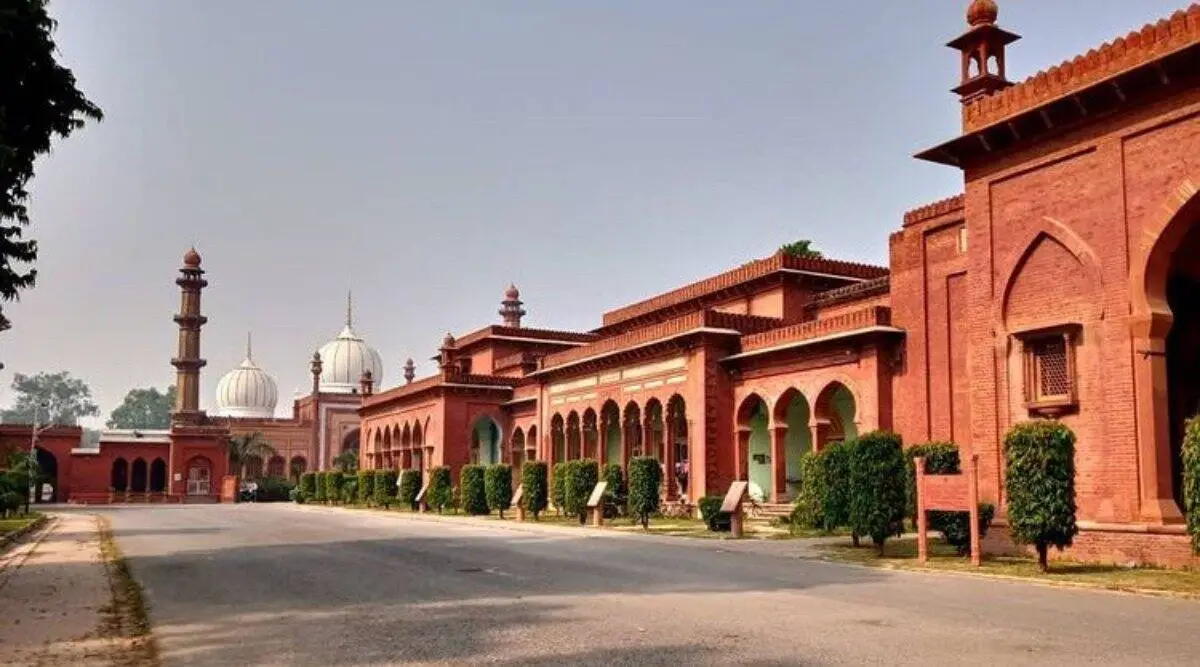
About Aligarh Muslim University:

  • It is a government-run education institution situated in Aligarh, Uttar Pradesh.
  • History:
    • It was originally established by social reformer Sir Syed Ahmad Khanas the Mohammedan Anglo-Oriental College in 1875
    • In the aftermath of the 1857 Indian War of Independence, the College was built on Khan’s conviction that it was important for Muslims to gain education and become involved in public life and government services in India.
    • Raja Jai Kishan helped Sir Syed establish the college.
    • Muhammadan Anglo-Oriental College became AMU in 1920, following the Aligarh Muslim University Act.
  • From its very inception, it has kept its door open to members of all communities and from all corners of the country and the world.
  • The university is open to all irrespective of caste, creed, religion, or gender.
  • AMU is recognised by the University Grant Commission (UGC) and the Association of Indian Universities (AIU). 
  • AMU offers more than 300 courses in the traditional and modern branches of education.
  • It draws students from all states in India and from different countries, especially Africa, West Asia, and Southeast Asia.
  • In some courses,seats are reserved for students from SAARC and Commonwealth Countries.
  • It has three off-campus centres: AMU Malappuram Campus (Kerala), AMU Murshidabad Centre (West Bengal), and Kishanganj Centre (Bihar).

Minority Status of AMU:

  • In 1967, a five-judge Constitution bench in the Azeez Basha vs. Union of India case held that since AMU was a central university, it cannot be considered a minority institution.
  • AMU got back its minority status when Parliament passed the AMU (Amendment) Act in 1981.
  • In January 2006, the Allahabad High Court struck down the provision of the 1981 law by which AMU was accorded the minority status.
  • Later, appeals were filed in the Supreme Court challenging the high court verdict.
  • On January 9, 2024, a seven-judge bench of the Supreme Court commenced hearing arguments on the vexed question of minority status of AMU.
    • It overruled judgement in the 1967 Azeez Basha case and also said that a new bench will decide on the minority status of the AMU.
    • The judgement underlined the importance of identifying the university's actual point of origin-its genesis-to establish its minority status.

Q1: What is the University Grant Commission (UGC)?

The University Grants Commission (UGC) came into existence on 28th December, 1953 and became a statutory Organization of the Government of India by an Act of Parliament in 1956, for the coordination, determination and maintenance of standards of teaching, examination and research in university education.

News: Aligarh Muslim University minority status case: SC overrules 1967 judgement

Global Gender Gap Report 2024

Global Gender Gap Report 2024

About Global Gender Gap Report:

  • It is an annual index designed to measure gender equality.
  • It benchmarks gender-based gaps in four areas: economic participation and opportunity; educational attainment; health and survival; and political empowerment.
  • It is released by the World Economic Forum (WEF).
  • It is the longest-standing index tracking the progress of numerous countries’ efforts towards closing these gaps over time since its inception in 2006.
  • Highlights of 2024 Report:
    • The global gender gap score in 2024 for all 146 countries stands at 68.5%, a 0.1 percentage point improvement on last year.
    • At the current pace, it will take another 134 years to achieve full gender parity.
    • India slipped two places to 129th place as Iceland retained its top position in the rankings for the 15th consecutive year.
    • It was followed in the top 10 by Finland, Norway, New Zealand, Sweden, Nicaragua, Germany, Namibia, Ireland, and Spain.
    • With a population of over 1.4 billion, India closed 64.1% of its gender gap in 2024.
    • In South Asia, India was ranked fifth after Bangladesh, Nepal, Sri Lanka, and Bhutan, while Pakistan was ranked last.
    • In the world, Sudan was ranked last on the index of 146 countries, while Pakistan fell three places to 145th.
    • India was among the economies with the lowest levels of economic parity, with Bangladesh, Sudan, Iran, Pakistan, and Morocco, as all of them registered less than 30 percent gender parity in estimated earned income. 
    • India showed the best gender parity in terms of enrolment in secondary education and ranked 65th globally on political empowerment of women.
    • With regard to parity in number of years with female/male heads of state for the last 50 years, India ranked 10th.

Q1: What is the World Economic Forum (WEF)?

The WEF is the International Organization for Public-Private Cooperation. It provides a global, impartial and not-for-profit platform for meaningful connection between stakeholders to establish trust, and build initiatives for cooperation and progress. It convenes an annual winter conference, traditionally in Davos, Switz., for the discussion of global commerce, economic development, political concerns, and important social issues. Some of the world’s most prominent business leaders, politicians, policy makers, scholars, philanthropists, trade unionists, and representatives of nongovernmental organizations (NGOs) attend the meetings.

Source: WEF Global Gender Gap Report 2024: Parity for Women remains five generations away

Uri-I Hydroelectric Project

Uri-I Hydroelectric Project

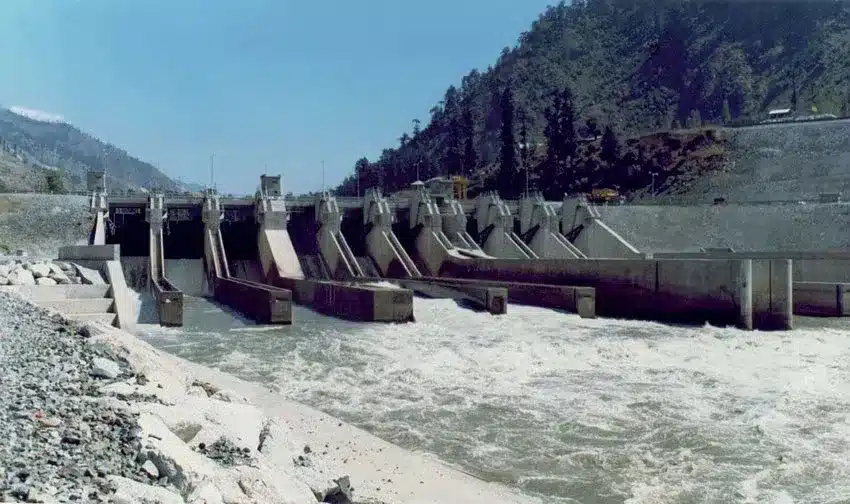
About Uri-I Hydroelectric Project:

  • It is an operating hydroelectric power plant located in the Jhelum River of Uri town in the Baramulla district of Jammu & Kashmir. 
  • It is located very near the Line of Control (LOC), the de facto border between India and Pakistan.
  • The power project was commissioned in 1997 with a total installed capacity of 480 MW.
  • It is owned by the Central Government, and the operating company of the plant is National Hydroelectric Power Corporation Limited (NHPC).
  • The unit size of the power plant is 480 MW, having 4 units of 120 MW each.

Key Facts about Jhelum River:

  • It is a river that flows in India and Pakistan.
  • It is a tributary of the Indus River.
  • It is the main waterway of the Kashmir valley.
  • It is the largest and most western of the five rivers of Punjab and passes through the Jhelum District in the north of Punjab province, Pakistan.
  • Course:
    • Origin: It originates at the Verinag Spring at Anantnag, at the foot of the Pir Panjal range in the Kashmir Valley.
    • It then flows via Srinagar and Wular Lake prior to entering Pakistan.
    • The river makes a deep, narrow gorge on its way to Pakistan.
    • It joins the Chenab River near Trimmu, Pakistan.
    • Length: It has a total length of about 725 km (450 mi).
  • Major Tributaries:
    • The largest tributary of the Jhelum is the Kishenganga (Neelum) River, which joins near Muzaffarabad and enters the Punjab province, Pakistan.
    • Kunhar River is the second largest tributary of the river, which connects Pakistan-occupied Kashmir (PoK) and Pakistan on the Kohala Bridge of Kanghan valley.
    • Other tributaries include the Sandran River, Bringi River, Arapath River, Watlara River, Lidder River, and Veshaw River.

Q1: Which are the main tributaries of the Jhelum River?

The largest tributary of the Jhelum is the Kishenganga (Neelum) River, which joins near Muzaffarabad and enters the Punjab province, Pakistan. Kunhar River is the second largest tributary of the river, which connects Pakistan-occupied Kashmir (PoK) and Pakistan on the Kohala Bridge of Kanghan valley. Other tributaries include Sandran River, Bringi River, Arapath River, Watlara River, Lidder River and Veshaw River.

Source: EAC defers proposal for grant of EC to Stage-II of Uri-I Hydroelectric Project

Sone River

Sone River

Sone River Latest News

Bodies of two persons, who had gone missing while bathing in the Sone river on the occasion of the Chhath festival, were fished out in Jharkhand's Palamu district recently.

About Sone River

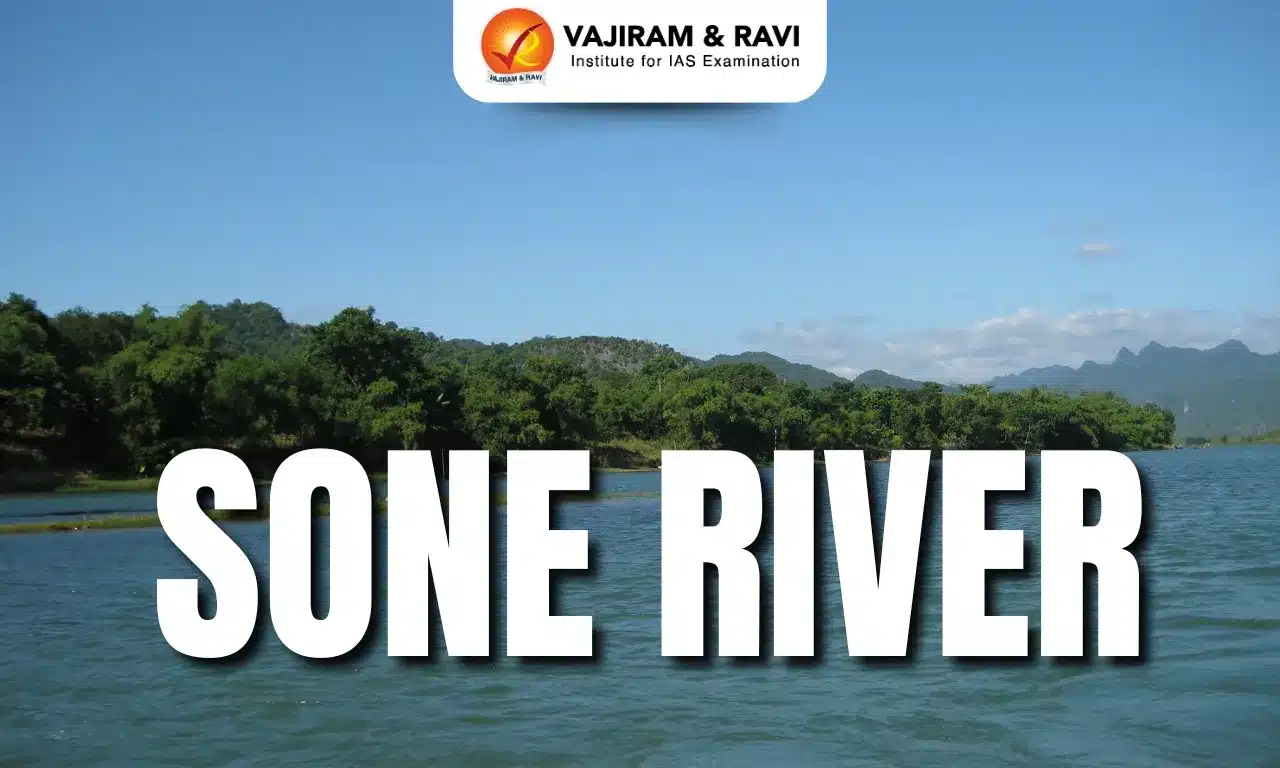
  • The Sone River, also called Son, is a principal southern tributary of the Ganges (Ganga) River after the Yamuna River. 
  • It flows through the states of Madhya Pradesh, Uttar Pradesh, Jharkhand, and Bihar.
  • Course:
    • It originates in the Amarkantak highlands in Madhya Pradesh, in the east direction of the origin of the Narmada River.
    • It then flows in the north-northwest direction through Madhya Pradesh before turning in the east direction where it meets the Kaimur range.
    • The river starts flowing in the parallel direction of the Kaimur range in the east-northeast direction through Uttar Pradesh and Bihar and joins the Ganga River just above Patna.
  • Total Length: 784 km
  • It is a wide and shallow river and forms pools of water in the remaining parts of the river.
  • The floodplain of the river is narrow and is only 3 to 5 kilometers wide. 
  • The river’s flow is seasonal, and the Sone is unimportant for navigation. 
  • The Sone valley is geologically almost a continuation of that of the Narmada River to the southwest. It is largely forested and sparsely populated.
  • The valley is bordered by the Kaimur Range to the north and the Chota Nagpur plateau to the south. 
  • Tributaries: The main tributaries are the Rihand River and the Koel River. The other tributaries are the Gopad River and the Kanhar River.
  • Dehri is the major town situated on the Sone River.
  • Dams and Hydroelectric Projects:
    • Bansagar Dam in Madhya Pradesh.
    • Rihand Dam in Uttar Pradesh 
    • Indrapuri Barrage in Bihar.

Source: PTI

Sone River FAQs

Q1: The Sone River is a principal southern tributary of which major river in India?

Ans: Ganga River

Q2: The Sone River originates from which region?

Ans: It originates in the Amarkantak highlands in Madhya Pradesh.

Q3: The Sone River joins the Ganga River near which major city?

Ans: Patna

Q4: What is the total length of the Sone River?

Ans: 784 km

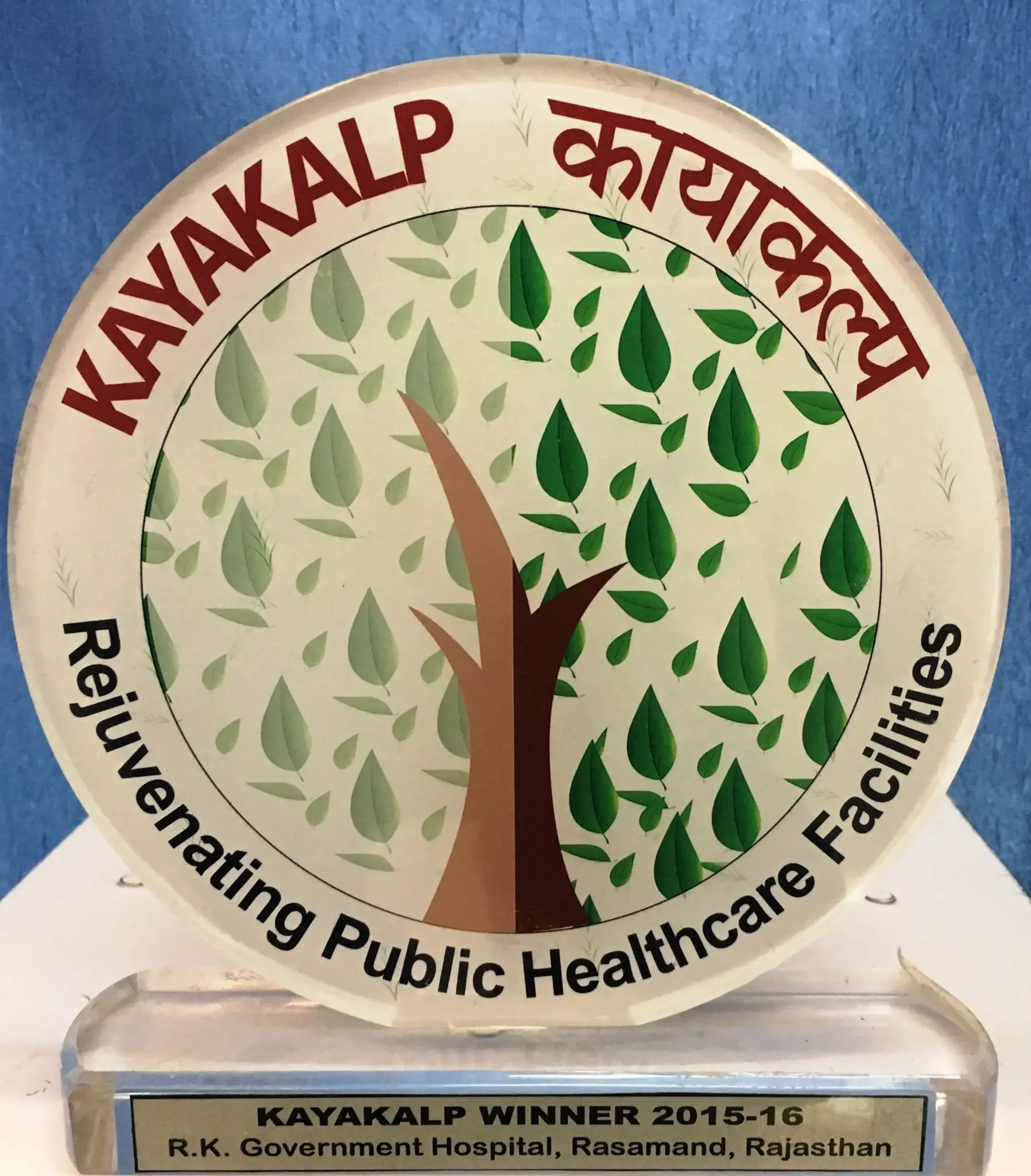
What is Kayakalp Scheme?

What is Kayakalp Scheme?

About Kayakalp Scheme:

  • It is an initiative launched by the Ministry of Health and Family Welfare (MoHFW) on May 15, 2015, under Swachh Bharat Abhiyan to promote cleanliness and enhance the quality of healthcare facilities in India.
  • Objectives:
    • To promote cleanliness, hygiene, infection control, and environment-friendly practices in Public Health Facilities (PHFs).
    • To incentivise and recognise PHFs that show exemplary performance in adhering to standard cleanliness and infection control protocols.
    • To inculcate a culture of ongoing assessment and peer review of performance related to hygiene, cleanliness, and sanitation.
    • To create and share sustainable practices related to improved cleanliness in PHFs linked to positive health outcomes.
  • The Kayakalp assessment is a three-tier process involving internal, peer, and external assessment. At the beginning of each financial year, a health facility is assessed, scored, and documented using the pre-defined assessment tool.
  • The parameters on which the performance of the facility would be judged are as follows:
    • Hospital/Facility Upkeep
    • Sanitation and Hygiene
    • Waste Management
    • Infection Control
    • Support Services
    • Hygiene Promotion
  • To appreciate the hard work and dedication of the healthcare centres, five awards are provided under this scheme:
    • Two best district hospitals.
    • Two best community health centres or sub-district hospitals
    • One primary health centre in every district.
  • Cash awards and citations are provided to the winners judged by the set criteria.

Q1: What is Swachh Bharat Abhiyan?

Swachh Bharat Abhiyan is a nationwide campaign launched by the Government of India to promote cleanliness, hygiene, and sanitation in urban and rural areas. It was launched by Prime Minister Narendra Modi on October 2, 2014, on the occasion of Mahatma Gandhi’s birth anniversary.

News: Rajasthan govt. draws flak over its order to paint college walls orange

DIKSHA Platform

DIKSHA Platform

About DIKSHA Platform: 

  • It is a national platform for school education, an initiative of National Council for Education Research and Training (NCERT), Ministry of Education.
  • It provides e-content for schools via an online portal and a mobile application.
  • It was developed based on the core principles of open architecture, open access, open licensing, choice and autonomy.
  • It is built on open source technology that is made in India and for India, incorporating internet scale technologies and allowing for a variety of use-cases and solutions for teaching and learning.
  • Features
    • The core building blocks of DIKSHA comprise majority of National Digital Education Architecture (NDEAR) building blocks, having enabled some successful use-cases of NDEAR such as: energized textbooks, online courses, content authoring, content sourcing, interactive quizzes, question banks, chatbot, analytics and dashboard.
    • To aid teaching and learning for Children With Special Needs (CWSN), a large number of audio books, ISL (Indian Sign Language) Videos and Dictionary have been made available on DIKSHA for CWSN.


Key facts about National e-Governance Division

  • It was created by the Ministry of Electronics & Information Technology as an Independent Business Division under the Digital India Corporation.
  • Since 2009, NeGD has been playing a pivotal role in supporting MeitY in Programme Management and implementation of the e-Governance Projects; provide technical and advisory support to Ministries/ Departments, both at Central and State levels along with other Government organisations.
  • It has developed and is managing several National Public Digital Platforms such as DigiLocker, UMANG, Rapid Assessment System, OpenForge, API Setu, Poshan Tracker, Academic Bank of Credits, etc.


Q1) What is the National Council of Educational Research and Training?

It is an autonomous organization in India that was established in 1961 under the Ministry of Education. NCERT is responsible for advising and assisting the central and state governments on academic matters related to school education.

Source: Centre’s Digital Infrastructure for Knowledge Sharing education platform to offer AI help

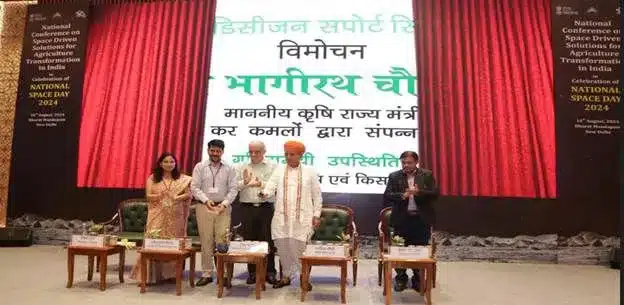
Krishi-Decision Support System

Krishi-Decision Support System

About Krishi-Decision Support System: 

  • It is a first-of-its-kind geospatial platform specifically designed for Indian agriculture.
  • Features
    • It captures minute details from the vast expanse of fields to the smallest soil particle.
    • The platform provides seamless access to comprehensive data including satellite images, weather information, reservoir storage, groundwater levels and soil health information, which can be easily accessed from anywhere at any time.
    • It’ll also give near real-time information on various indicators such as soil moisture, water storage, crop condition, dry spells, etc.
    • One nation-one soil information system of Krishi-DSS will give comprehensive soil data with embedded information on soil type, soil pH (potential of hydrogen), soil health, etc.
  • Significance
    • It will enable the government to understand cropping patterns by analysing parcel-level crop maps of different years.
    • The feature on drought monitoring in this platform will help the government to stay ahead of drought.
    • It will enable the government to accurately identify field-parcel units, which will help in understanding each parcel's unique needs, and cropping patterns, for targeted interventions.
    • Soil data will help the government in assessing crop suitability and land capability for implementing soil-water conservation measures, officials said.
    • That apart, the ground-truth data library of Krishi-DSS will help in fostering innovation by providing essential resources for different crops to researchers and the industry.
    • By integrating data sources available on Krishi-DSS, various farmer-centric solutions — such as right individual advisories to farmers, early disaster warnings like pest attacks, heavy rain, hailstorms, etc. — can be developed.
  • It is developed jointly by the Ministry of Agriculture and the Department of Space.

Q1: What is Hydrology?

It is the study of the distribution and movement of water both on and below the Earth's surface, as well as the impact of human activity on water availability and conditions.

Source: MoS Shri Bhagirath Choudhary launches the digital geo-spatial platform, Krishi-Decision Support System

Materiovigilance Programme of India

Materiovigilance Programme of India

About Materiovigilance Programme of India: 

  • It was launched on July 6, 2015 to monitor the safety of medical devices in the country.
  • It aims to collect data on medical device related adverse events systematically and scientifically analyze them to aid in regulatory decisions and recommendations on safe use of medical devices.
  • Objective: To improve Indian patient safety by monitoring, recording and analysing the root cause of adverse events or risks associated with the use of medical devices including in-vitro diagnostics by healthcare professionals or patients/users and suggesting regulatory bodies for appropriate action with the sole intention of improving patient safety.
  • It is an important program for reporting of adverse events, coordinated analysis etc related to the medical devices including in-vitro diagnostic devices.
  • The Indian Pharmacopoeia Commission (IPC) functions as National Coordination Centre (NCC) since 2018.
  • It is regulated by the Central Drugs Standards Control Organization (CDSCO).
    • Medical devices consist of electronic equipment, implant, consumables and disposables, surgical instruments and in-vitro diagnostic reagents, among others.
    • Currently, all medical devices in India are regulated by the Drugs and Cosmetics Act, 1940 and Medical Device Rule, 2017.
    • At present, India is 80% dependent on imports for medical devices.
  • Nodal Ministry: Ministry Of Health and Family Welfare

Key facts about Drugs Controller General of India

  • Drugs Controller General of India is the head of the department of the CDSCO of the Government of India responsible for approval of licences of specified categories of drugs such as blood and blood products, IV fluids, vaccines and sera in India.
  • DCGI also sets standards for the manufacturing, sales, import, and distribution of drugs in India.

Q1: What is the Central Drugs Standard Control Organization (CDSCO)?

CDSCO is the National Regulatory Authority (NRA) of India for the medical devices industry under the provisions of the Drugs & Cosmetics Rules.It works under the Ministry of Health & Family Welfare.

Source: DCGI calls for strict reporting of side-effects related to medical devices

Latakia Port

Latakia Port

About Latakia Port:

  • It isthe principal port of Syria.
  • It is located in the Eastern part of the Mediterranean coast.
  • This port exports bitumen and asphalt, cereals, cotton, fruit, eggs, vegetable oil, pottery, and tobacco. 
  • It consists of an extensive agricultural hinterland producing abundant crops of tobacco, cotton, cereal grains, and fruits. 
  • Other industries: Cotton ginning, vegetable oil processing, tanning, and sponge fishing are local industries present in this port city.

Key facts about the Mediterranean Sea

  • It is an intercontinental sea that is bordered by the continent of Europe in the north, by Asia in the east, and by Africa in the south.
  • In the west, the Mediterranean Sea is connected to the Atlantic Ocean via the narrow Strait of Gibraltar.
  • In the extreme northeast, it is connected to the Black Sea via the Dardanelles Strait, the Sea of Marmara, and the Bosporus Strait. 
  • The Mediterranean Sea is also connected to the Red Sea via the Suez Canal in the southeast.
  • Bordering Countries: 22 countries and one territory (Gibraltar - a British Overseas Territory) have coasts on the Mediterranean Sea.
  • Rivers: Ebro, Rhone, Po, Nile, Tiber, etc drain into this sea.
  • Islands: Corsica, Crete, Cyprus, Chios, Euboea, Lesbos, Mallorca, Rhodes, Sicily, and Sardinia are present in this sea.

Q1: What is a Port of Call?

It is an intermediate stop for a ship on its scheduled journey for cargo operation or transporting supplies or fuel. It is a port where a ship stops except its home port.

News: Israel’s military strikes in Syria: A response to strategic threats

ASEAN-India Trade in Goods Agreement (AITIGA)

ASEAN-India Trade in Goods Agreement (AITIGA)

ASEAN-India Trade in Goods Agreement Latest News

The 10-nation Association of Southeast Asian Nations (ASEAN) is stonewalling the review of the ASEAN-India Trade in Goods Agreement (AITIGA), a senior official said recently.

About ASEAN-India Trade in Goods Agreement

  • It is a trade deal between the ten member states of ASEAN and India.
  • It was signed at the 7th ASEAN Economic Ministers-India Consultations in Bangkok, Thailand, in 2009. The agreement entered into force on 1 January 2010.
  • The agreement originated out of the Framework Agreement on Comprehensive Economic Cooperation between India and ASEAN created in 2003
  • This framework agreement set the basis for India and ASEAN to conclude further agreements.
  • AITIGA covers trade in physical goods and products; it does not apply to trade in services. 
  • ASEAN and India signed a separate ASEAN-India Trade in Services Agreement in 2014. 
  • Along with the ASEAN-India Investment Agreement, the three agreements collectively form the ASEAN-India Free Trade Area.
  • Eliminating Tariffs on Goods:
    • Under the AITIGA, ASEAN and India have committed to progressively eliminating duties on 76.4 percent of goods and to liberalize tariffs on over 90 percent of goods.
    • Because of the uneven levels of development and differing economic policies within ASEAN, the agreement applies two different classes of tariff rates depending on whether or not they are WTO members. 
    • Generally speaking, the agreement grants less developed ASEAN members with less liberalized economies, such as Myanmar and Laos, a longer timeframe to reduce their tariffs.
    • The agreement allows the parties to maintain tariffs of four to five percent for some sensitive products. 
    • Moreover, the agreement includes unique tariff reduction provisions for India’s “special products”, which are crude and refined palm oil, coffee, black tea, and pepper.
    • Finally, parties are permitted to place some tariff lines into “highly sensitive lists” to manage tariff reductions for sensitive products, as well as an “exclusion list” for products excluded from the Agreement, which the parties must review annually.
  • Other Provisions:
    • In addition to reducing tariffs, the Agreement calls on all parties to establish predictable, consistent, and transparent trade practices to reduce non-tariff barriers. 
    • This includes simplifying customs procedures, ensuring permissible non-tariff measures are transparent, and preventing countries from instituting or maintaining non-tariff measures not in accordance with the WTO.
    • The Agreement also establishes a Joint Committee formed from representatives of the parties.
    • Among other responsibilities, the Joint Committee reviews the implementation and operation of the Agreement, considers and recommends amendments, and supervises and coordinates the work of sub-committees established under the Agreement.
    • Other provisions in the agreement include references to the ASEAN-India DSM agreement for dispute resolution, exemptions for protecting security interests, and safeguard measures to protect against tariff cuts resulting in such significant import increases that foreign products overwhelm domestic ones.

Source: FE

ASEAN-India Trade in Goods Agreement FAQs

Q1: When did the ASEAN-India Trade in Goods Agreement (AITIGA) enter into force?

Ans: 1 January 2010

Q2: The AITIGA originated from which earlier agreement?

Ans: AITIGA originated out of the Framework Agreement on Comprehensive Economic Cooperation between India and ASEAN created in 2003.

Q3: Under AITIGA, what percentage of goods are to have duties progressively eliminated?

Ans: 76.4%

Q4: What provision does AITIGA have for less developed ASEAN member countries?

Ans: Longer timeframes to reduce tariffs

Late Blight disease

Late Blight disease

About is Late Blight Disease:

  • Late blight (Phytophthora infestans) is one of the most serious fungal diseases that can affect tomatoes and potatoes.
  • Transmission:
    • It is spread from infected transplants, volunteer potato or tomato plants, and certain weeds botanically related to tomatoes. 
    • Spores of this fungus can be airborne and travel great distances in storms. Rain deposits spores on plants, causing infection. 
    • Late blight is favored by cool, wet weather and will cycle repeatedly if weather conditions are favorable.
  • Symptoms:
    • When plants have become infected, lesions (round or irregularly shaped areas that range in colour from dark green to purplish black and resemble frost injury) appear on the leaves, petioles, and stems.
    • A whitish growth of spore-producing structures may appear at the margin of the lesions on theunder leaf surfaces.
    • Potato tubers develop rot up to 15 mm (0.6 inch) deep.
    • Secondary fungi and bacteria (particularly Erwinia species) often invade potato tubers and produce rotting that results in great losses during storage, transit, and marketing.
  • The disease can be managed with a timely application of fungicide, though epidemics can occur rapidly once crops are infected.

Q1: What are Fungi?

Fungi, along with Animalia (animals), Plantae (plants), Protista, Archaea/Archaebacteria, and Bacteria or Eubacteria form the six ‘kingdoms’ of biology. They are eukaryotic organisms; i.e., their cells contain membrane-bound organelles and clearly defined nuclei. Fungi usually reproduce both sexually and asexually. Fungi are either terrestrial or aquatic, the latter living in freshwater or marine environments. They are found in all temperate and tropical regions of the world where there is sufficient moisture to enable them to grow.

Source: CPRI issues advisory as late blight disease threatens potato crops

Critical Minerals

Critical Minerals

Critical Minerals Latest News

India’s first auction of deep-sea blocks of critical minerals, which are vital for electric vehicles, defence equipment and renewable energy, has been delayed indefinitely following a poor response from bidders.

About Critical Minerals

  • Critical minerals are those that are essential for modern technologies and national security but have supply chain risks due to their limited availability or geographical concentration.
  • Their ‘criticality’ changes over time depending on technological demand and supply dynamics.
  • Applications:
    • They are used to manufacture advanced technologies, including mobile phones, computers, fibre-optic cables, semiconductors, banknotes, and defence, aerospace, and medical applications.
    • Many are used in low-emission technologies, such as electric vehicles, wind turbines, solar panels, and rechargeable batteries.
    • Some are also crucial for common products, such as stainless steel and electronics.
  • Top Producers: Chile, Indonesia, Congo, China, Australia, and South Africa.
  • Countries identify minerals critical for them based on their national priorities.
  • In 2023, the Ministry of Mines released a list of 30 critical minerals for India. 
    • These minerals are Antimony, Beryllium, Bismuth, Cobalt, Copper, Gallium, Germanium, Graphite, Hafnium, Indium, Lithium, Molybdenum, Niobium, Nickel, PGE, Phosphorous, Potash, REE, Rhenium, Silicon, Strontium, Tantalum, Tellurium, Tin, Titanium, Tungsten, Vanadium, Zirconium, Selenium, and Cadmium.
    • 24 minerals added to Part D of Schedule I of the Mines and Minerals (Development and Regulation) Act, 1957 (MMDR Act), granting Central Government exclusive auctioning powers.
    • A Centre of Excellence for Critical Minerals (CECM) will regularly review the mineral list and advise policy.

National Critical Mineral Mission (NCMM)

  • The Government of India launched the NCMM in 2025 to establish a robust framework for self-reliance in the critical mineral sector. 
  • The NCMM encompasses all stages of the value chain, including mineral exploration, mining, beneficiation, processing, and recovery from end-of-life products. 
  • Exploration
    • Under this mission, the Geological Survey of India (GSI) has been tasked with conducting 1,200 exploration projects from 2024-25 to 2030-31, with an aim of ensuring domestic production of at least 15 critical minerals (such as graphite, lithium, potash, REEs).
    • The NCMM also aims for Indian companies to acquire 50 mining assets worldwide. 
    • To achieve these targets, it seeks to create a fast-track regulatory approval process for mining projects.
  • Recycling: The NCMM seeks to set up an incentive scheme for mineral recycling with a budget of INR 1500 crore (USD 170 million), with a target of recovering 400 kilotonnes (kt) of recycled material. 
  • Stockpiling: The NCMM foresees the creation of a National Critical Minerals Stockpile comprising at least 5 critical minerals to mitigate the risks from global supply chain disruptions.
  • Research: 
    • The NCMM seeks to promote research in critical mineral technologies with a target of achieving self-sufficiency in processing at least 5 critical minerals and generating 1000 patents across the critical mineral value chains by 2031. 
    • It also proposes setting up 4 regional mineral processing parks and 3 Centres of Excellence on Critical Minerals.
  • Governance: The NCMM envisages the formation of an Empowered Committee on Critical Minerals that would coordinate and implement the initiatives under the NCMM.

Source: MC

Critical Minerals FAQs

Q1: Why does the criticality of minerals change over time?

Ans: Their ‘criticality’ changes over time depending on technological demand and supply dynamics.

Q2: Which countries are the top global producers of critical minerals?

Ans: Chile, Indonesia, Congo, China, Australia, and South Africa.

Q3: How many critical minerals were identified by India’s Ministry of Mines in 2023?

Ans: In 2023, the Ministry of Mines released a list of 30 critical minerals for India.

Overnight Index Swap

Overnight Index Swap

About Overnight Index Swap: 

  • It is a derivative instrument where returns under a fixed rate asset are swapped against a pre-determined published index of a daily overnight reference rate for an agreed period of time.
  • Purpose: The primary purpose of an OIS is to manage interest rate risk, particularly the risk associated with fluctuations in the overnight lending rate.
  • An overnight index swap rate is calculated each day.
  • This interest rate is based on the average interest rate institutions with loans based on the overnight rate have paid for that day.

How does an OIS work?

  • These are instruments that allow financial institutions to swap the interest rates they are paying without having to refinance or change the terms of their existing loan.
  • When two financial institutions create an overnight index swap, one of the institutions is swapping an overnight (floating) interest rate and the other institution is swapping a fixed short-term interest rate.
  • To get the swap rolling, both the firms would agree to continue servicing their loans, but at the end of a specified time period whoever ends up paying less interest will make up the difference to the other firm.

Q1: What are Derivatives?

Derivatives refers to a type of financial contract whose value is dependent on an underlying asset, group of assets, or benchmark. These contracts can be used to trade any number of assets and carry their own risks.

Source: Monetary policy review: FPI investment limit in OIS market under review

National Crisis Management Committee

National Crisis Management Committee 

National Crises Management Committee Latest News

Recently, the Cabinet Secretary chaired a meeting of the National Crises Management Committee (NCMC) to review preparedness for the impending cyclone in Bay of Bengal.

About National Crises Management Committee

  • It is established under the Disaster Management Act, 2005 by the central government.
  • The committee shall be the apex body for dealing with the situation arising out of a major disaster.
  • Composition of National Crises Management Committee
    • Chairperson: It is headed by the cabinet secretary.
    • Members: Members will constitute the Union home secretary, defence secretary, secretary (co-ordination), cabinet secretariat and member and head of department, the National Disaster Management Authority.
    • The chairperson of the NCMC can co-opt experts or officers from central/state governments or any organisation, based on the nature of the crisis. 

Role of National Crisis Management Committee

  • It shall evaluate preparedness to respond to any threatening disaster situation, emerging disaster situation or disaster and give directions, where necessary, for enhancing such preparedness.
  • It shall coordinate and monitor actions of the concerned ministries or departments of the government of India, state governments, national authority, state authorities, governmental and non-governmental organisations in relation to disaster response.
  • It shall give directions as may be necessary for the proper coordination and monitoring of disaster response in the country.

Source: PIB

National Crises Management Committee FAQs

Q1: Who chairs the National Crisis Management Committee (NCMC)?

Ans: Cabinet Secretary

Q2: What is the primary objective of the NCMC?

Ans: To coordinate disaster response and relief efforts

World Drought Atlas

World Drought Atlas

About World Drought Atlas: 

  • It was launched by the United Nations Convention to Combat Desertification (UNCCD) in collaboration with the European Commission Joint Research Centre.
  • It explains how worsening drought risks are linked to human activities and then delves into the impacts of drought in five key areas—water supply, agriculture, hydropower, inland navigation, and ecosystems. 
  • It features 21 case studies from around the world, underscoring that no country—whatever its size, GDP, or latitude—is immune to drought and all can better prepare for it. 

  • It describes concrete measures and pathways to manage, reduce, and adapt to systemic drought risks; underscores the co-benefits of these actions for different sectors; and showcases best practices from different regions.
  • The measures highlighted in the Atlas fall into three categories:
    • Governance (e.g. early warning systems, microinsurance for smallholder farmers, pricing schemes for water usage);
    • Land-use management (e.g. land restoration and agroforestry);
    • Management of water supply and use (e.g. wastewater reuse, managed groundwater recharge and conservation.)

Q1: What is the United Nations Convention to Combat Desertification?

It is the only legally binding international agreement linking environment and development to sustainable land management. The Convention addresses the arid, semi-arid and dry sub-humid areas, known as the drylands, where some of the most vulnerable ecosystems and peoples can be found. 

News:75% global population to be affected by drought in 25 years: UNCCD’s ‘Drought Atlas’ provides adaptation guideline

Extra-pulmonary TB

Extra-pulmonary TB

About Extra-pulmonary TB: 

  • It refers to Tuberculosis infections affecting organs other than the lung (namely lymph nodes, brain, gut, eyes, or other organs).
  • It is often stain negative, which means it is not detectable on regular TB stain tests.
  • The infection may surface in any part of the body and present itself like other non-TB conditions. Many cases of EPTB may not have a corresponding lung infection.
  • It can affect any organ and is more prevalent in people living with HIV.
  • Issues with EPTB
    • A troubling aspect of EPTB infection is the prolonged presence of disease markers even after the infection is resolved with treatment.
    • Diagnosis and treatment protocols for all organs affected by EPTB do not exist.
    • The twin challenges in tackling EPTB are lack of awareness, even among physicians, and lack of accurate diagnostic and treatment criteria.
    • Some EPTB patients who complete anti-TB therapy may still find themselves affected by the disease.
    • INDEX-TB guidelines were formulated over a decade ago and need to be updated with the latest data and experience.

Q1: What is Tuberculosis?

Tuberculosis is a bacterial infection spread through inhaling tiny droplets from the coughs or sneezes of an infected person. Mycobacterium tuberculosis bacteria is responsible for TB.

Source: The challenge of extra-pulmonary TB

Key Facts about Jiadhal River

Key Facts about Jiadhal River

About Jiadhal River

  • It is a northern tributary of the Brahmaputra River.
  • Course:
    • It originates in the sub-Himalayan mountains of Arunachal Pradesh at an altitude of 1247m.
    • After passing through a narrow gorge in Arunachal Pradesh, the river enters the plains of Assam in Dhemaji district, where it flows in braided channels.
    • The river finally debouches into the Brahmaputra near Selamukh in Lakhimpur district.
    • But after the construction of the embankment over the Kherkutiya Suti of the Brahmaputra, the river confluences with the Subansiri River.
    • The total length of the river is 187 km.
  • Topographically, the upper partof the basin is hilly (Himalayan range), and the middle part onwards is a plain area.
  • The total area of the catchment is 1053.20 sq.km., of which 696.80 sq.km., and 356.4 sq.km. come under Assam and Arunachal Pradesh respectively.
  • The sub-basin of Jiadhal experiences heavy rainfall. It carries heavy silt load from its 1346 sq. km catchment area during the rainy season and deposits them on its bed in the plains, resulting in the considerable rise of its riverbed. 
  • Jiadhal is known for frequent changingof its course and devastating floods.
  • The Jiadhal River is a classic example of a flashy river and produces floods with a sudden, high dischargeover a short time interval (a few hours to a day) and with a high sediment load and debris.

Related Topics:

Gomti River


Q1: Which are the main tributaries of Brahmaputra?

The principal tributaries of the river joining from right are the Lohit, the Dibang, the Subansiri, the Jiabharali, the Dhansiri, the Manas, the Torsa, the Sankosh and the Teesta whereas the Burhidihing, the Desang, the Dikhow, the Dhansiri and the Kopili joins it from left.

Source: How shifts in the rivers are threatening food security in Assam | Alarming Variations Ep-02

Mangal Pandey

Mangal Pandey

About Mangal Pandey

  • Mangal Pandey played a crucial role in India's first rebellion against British rule in 1857.
  • He is considered the hero of the first war of Independence, also known as the Sepoy Mutiny of 1857.
  • Early life
    • He was born on July 19, 1827near Faizabad in Uttar Pradesh.
    • In 1849, Pandey joined the army of the British East India Company and served as a sepoy in the 6th Company of the 34th Bengal Native Infantry in Barrackpore.
  • Rebellion against East India Company
    • He revolted against the East India Company for introducing cartridges that were greased with animal fat as it hurt the religious sentiments of the soldiers..
    • This movement of rebels reached other parts of India and led to a mass revolt against the colonial rulers. Common people too came out and opposed anti-India laws.
    • On March 29, 1857, Pandey mutinied and fired at his Senior Sergeant Major. He was overpowered and hanged on April 8, 1857, by the order of a Court Martial at Lal Bagan in Barrackpore. His regiment was disbanded, like the 19th infantry at Behrampore, for showing resentment.

Q1: What is Doctrine of Lapse (1848)?

This was the policy initiated by Governor General Lord Dalhousie (1848-56) to acquire the Princely states. The doctrine declared that if an Indian ruler died without a natural heir, his kingdom would 'lapse', that is, become part of Company territory.

Source: Remembering Mangal Pandey, and the legacy of the revolt he inspired

U-WIN Portal

U-WIN Portal

About U-WIN Portal:

  • It is aiming to maintain an electronic registry of routine immunizations.
  • Currently, U-WIN is in pilot mode across all states and Union Territories, except for West Bengal.
  • It captures every vaccination event for pregnant women and children under the Universal Immunization Programme (UIP).
  • It will ensure timely administration of vaccine doses by digitally recording every vaccination event under the Universal Immunisation Programme among all pregnant women and children aged 0-5 years.
  • Features
    • The platform generates a uniform QR-based, digitally verifiable e-vaccination certificate, similar to Covid vaccination certificate, which can be accessed anytime by the citizens through a single click.
    • The U-WIN is going to be the single source of information for immunisation services which will record pregnancy details and outcome, newborn registration and immunisation at birth.
    • It will update vaccination status, and delivery outcome, among others, in real time.
    • Citizens can self-register for vaccinations via the U-WIN web portal or its Android mobile application, select preferred vaccination centres, and schedule appointments.
    • Automated SMS alerts inform citizens about registration confirmations, administered doses, and upcoming dose reminders, ensuring timely and age-appropriate vaccinations.
    • It also facilitates the creation of Ayushman Bharat Health Account (ABHA) IDs for comprehensive health record maintenance.
  • It also supports the frontline workers to digitally record all vaccination events for children and pregnant women for complete, accurate and easy record maintenance.

Q1: What is Immunization?

Immunization is a process by which a person becomes protected against a disease through vaccination. This term is often used interchangeably with vaccination or inoculation.

Source: Pan India rollout of U-WIN to track routine vaccinations likely by Aug end

MISHTI Scheme

MISHTI Scheme

MISHTI Scheme Latest News

The Union government has taken up about 22,560 hectares of land to restore and conserve mangroves under the Mangrove Initiative for Shoreline Habitats & Tangible Incomes (MISHTI) initiative over the past two years.

About MISHTI Scheme

  • The Mangrove Initiative for Shoreline Habitats & Tangible Incomes (MISHTI) scheme is a government-led initiative aimed at increasing the mangrove cover along the coastline and on salt pan lands. 
    • It was launched after India joined the ‘Mangrove Alliance for Climate’ launched during the 27th Conference of Parties (COP27) to the UNFCCC held in November 2022.
  • It was launched by the Ministry of Environment, Forest & Climate Change in 2023.
  • Objective: To restore mangrove forests by undertaking mangrove reforestation/afforestation measures along the coast of India, states Government of India.

Features of MISHTI Scheme

  • It is primarily focused on the Sundarbans delta, Hooghly Estuary in West Bengal and other bay parts of the country, but also includes other wetlands in the country.
  • Financial assistance: Under this scheme the government is providing financial assistance to local communities to undertake mangrove plantation activities. 
  • It leverages the strengths and provisions of different government schemes and initiatives such as the Mahatma Gandhi National Rural Employment Guarantee Scheme (MGNREGS), the Compensatory Afforestation Fund Management and Planning Authority (CAMPA) Fund and other relevant sources.
  • The plantation activities are carried out in a participatory manner, involving local communities and NGOs, to ensure sustainability and community ownership of the initiative. 

Source: TH

MISHTI Scheme FAQs

Q1: What is the main objective of the MISHTI Scheme?

Ans: To conserve and restore mangrove ecosystems

Q2: How will the MISHTI Scheme be funded?

Ans: Through convergence of funds from MGNREGS, CAMPA, and other sources.

BHASKAR Platform

BHASKAR Platform

About BHASKAR Platform:

  • The Bharat Startup Knowledge Access Registry (BHASKAR) initiative, under the Startup India program aimed at strengthening India’s startup ecosystem
  • It is a platform designed to centralize, streamline, and enhance collaboration among key stakeholders within the entrepreneurial ecosystem, including startups, investors, mentors, service providers, and government bodies.
  • The primary goal of BHASKAR is to build the world’s largest digital registry for stakeholders within the startup ecosystem.
  • Key Features of BHASKAR
    • Networking and Collaboration: BHASKAR will bridge the gap between startups, investors, mentors, and other stakeholders, allowing for seamless interaction across sectors.
    • Providing Centralized Access to Resources: By consolidating resources, the platform will provide startups with immediate access to critical tools and knowledge, enabling faster decision-making and more efficient scaling.
    • Creating Personalized Identification: Every stakeholder will be assigned a unique BHASKAR ID, ensuring personalized interactions and tailored experiences across the platform.
    • Enhancing Discoverability: Through powerful search features, users can easily locate relevant resources, collaborators, and opportunities, ensuring faster decision-making and action.
    • Supporting India’s Global Brand: BHASKAR will serve as a vehicle for promoting India’s global reputation as a hub for innovation, making cross-border collaborations more accessible to startups and investors alike. 

Q1: What is the Start Up India Programme?

The Startup India Initiative is a flagship initiative of the Government of India intended to catalyse start-up culture with the objective of supporting entrepreneurs, building a robust startup ecosystem and transforming India into a country of job creators instead of job seekers.

Source: DPIIT to launch BHASKAR: A Revolutionary Platform for India's Startup Ecosystem

What is Bacteriophage?

What is Bacteriophage?

About Bacteriophage:

  • A bacteriophage is a type of virus that infects bacteria.
  • The word "bacteriophage" literally means "bacteria eater," because bacteriophages destroy their host cells.
  • They are the most common biological entities in nature.
  • Also known as phages, these viruses can be found everywhere bacteria exist, including, in the soil, deep within the earth’s crust, inside plants and animals, and even in the oceans. 
  • Thousands of varieties of phages exist, each of which may infect only one type or a few types of bacteria or archaea. 
  • All bacteriophages are composed of a nucleic acid molecule that is surrounded by a protein structure.
    • The nucleic acid may be either DNA or RNA, and it may be double-stranded or single-stranded. 
  • How does it infect bacteria?
    • A bacteriophage attaches itself to a susceptible bacterium and infects the host cell. 
    • Following infection, the bacteriophage hijacks the bacterium's cellular machinery to prevent it from producing bacterial components and instead forces the cell to produce viral components.
    • Eventually, new bacteriophages assemble and burst out of the bacterium in a process called lysis.
    • Bacteriophages occasionally remove a portion of their host cells' bacterial DNA during the infection process and then transfer this DNA into the genome of new host cells. This process is known as transduction.
  • Uses:
    • They are common natural entities that can destroy bacteria that are resistant to drugs such as antibiotics.
    • Phage therapy holds promising potential in the fight against antimicrobial resistance (AMR).

Q1: What are antibiotics?

Antibiotics are medicines that fight bacterial infections in people and animals. They work by killing the bacteria or by making it hard for the bacteria to grow and multiply.

Source: New system makes lifesaving phages accessible, transportable and much easier to use

India’s fourth nuclear-powered ballistic missile submarine (SSBN)

India’s fourth nuclear-powered ballistic missile submarine (SSBN)

About India’s fourth nuclear-powered ballistic missile submarine (SSBN):

  • The fourth SSBN is codenamed S4*.
  • It boasts nearly 75 percent indigenous content and is equipped with K-4 ballistic missiles, which have a range of 3,500 km and are fired through vertical launching systems.
  • While the first of its class, INS Arihantcarries750 km range K-15 nuclear missiles, its successors, INS Arighaat and INS Aridhaman, are all upgrades of the previous ones and carry only K-4 ballistic missiles
  • The launch of S4* follows the commissioning of INS Arighaat in August 2024, and the INS Aridhaman is set for commissioning next year. Both INS Arihant and INS Arighaat are already on deep sea patrols.
  • Naming: Since national security planners named India’s first leased nuclear attack submarine INS Chakra as S1, INS Arihant was named S2, INS Arighaat S3, INS Aridhaman S4 and hence the newly launched one is the last of its class, S4* with the formal name yet to be given.

SSBN:

  • SSBNs are a potent and highly specialised military asset. Operated by only the United States, Russia, China, the United Kingdom, France, and India, these are armed with submarine-launched nuclear ballistic missiles.
  • These submarines are designed to provide a reliable second-strike capability and underpin strategic nuclear deterrence via the principle of mutual assured destruction.
  • With unlimited range and endurance, the SSBN is constrained only by food supplies, crew fatigue, and maintenance.

Q1: What is the K-4 ballistic missile?

The solid-fuelled K-4 missile is being developed by DRDO to arm the country’s nuclear-powered submarines in the shape of INS Arihant and its under-development sister vessels. It has a range of 3,500 km and it will be able to bring almost all parts of Pakistan and several areas of China within its reach.

News: India launches 4th nuclear-missile submarine

What is National Industrial Corridor Development and Implementation Trust?

What is National Industrial Corridor Development and Implementation Trust?

About National Industrial Corridor Development Programme: 

  • It is India's most ambitious infrastructure programme aiming to develop new industrial cities as "Smart Cities" and converging next generation technologies across infrastructure sectors.
  • The NICDP aims to facilitate investments from both large anchor industries and Micro, Small, and Medium Enterprises (MSMEs), serving as catalysts to achieve the government's ambitious goal of $2 trillion in exports by 2030.
  • Under this programme the newly sanctioned industrial areas are
    • Khurpia in Uttarakhand, Rajpura-Patiala in Punjab, Dighi in Maharashtra, Palakkad in Kerala, Agra and Prayagraj in Uttar Pradesh, Gaya in Bihar, Zaheerabad in Telangana, Orvakal and Kopparthy in Andhra Pradesh, and Jodhpur-Pali in Rajasthan.
    • These sites will soon host state-of-the-art industrial smart cities, each designed to foster a vibrant industrial ecosystem. The proposed industrial nodes would focus on creating regional manufacturing hubs across the country.
    • The development of these industrial cities is envisioned as greenfield smart cities built to global standards, embodying the 'plug-n-play' and 'walk-to-work' concepts.
    • This innovative approach ensures that the cities will be equipped with advanced infrastructure designed to support sustainable and efficient industrial operations.
    • The projects are closely aligned with the PM GatiShakti National Master Plan, which focuses on integrated and seamless multi-modal connectivity.

Q1: What is National Industrial Corridor Development and Implementation Trust (NICDIT)?

The NICDIT is the implementing agency of the National Industrial Corridor Programme. The Government of India is developing various Industrial Corridor Projects as part of the National Industrial Corridor Programme.

Source: Cabinet approves 12 Industrial nodes/cities under National Industrial Corridor Development Programme

Grain ATM

Grain ATM

About Grain ATM: 

  • It is known as Annapurti Grain ATM which is designed and developed by the World Food Programme India.
  • The Annapurti provides universal access: anyone with a Public Distribution System ration card valid in India, regardless of the State and Union Territory, can access their entitlement.
  • It can dispense grain up to 50 kilograms in five minutes 24 hours a day, reducing waiting time by 70 percent.
  • It is an automated multi-commodity dispensing solution that provides fast, clean and precise access to commodities (rice, wheat, grains) to beneficiaries, post biometric authentication.
  • Once biometric authentication is completed, it provides consistent access to the full food ration.
  • The modular design allows easy assembly based on available space. Annapurti is energy efficient, and can be connected to solar panels for automatic refilling.
  • Benefits
    • Eliminates long queues at traditional distribution points.
    • Reduces issues related to theft and black marketing.
    • Ensures accurate weight and prevents potential cheating.
    • 24/7 access to rice, reducing waiting times by 70%.

Q1: What is the World Food Programme?

World Food Programme is a branch of the United Nations that deals with hunger eradication and promotes food security in the world. It is a member of the United Nations Development Programme (UNDP).

Source: India's first round-the-clock grain ATM opened at Mancheswar in Odisha

Oceanic Niño Index

Oceanic Niño Index

About Oceanic Niño Index

  • It is the National Oceanic and Atmospheric Administration’s (NOAA) primary indicator for monitoring the ocean part of the seasonal climate pattern called the El Niño-Southern Oscillation, or “ENSO”.
  • The ONI tracks the running 3-month averagesea surface temperatures in the east-central tropical Pacific between 120°-170°W, near the International Dateline, and whether they are warmer or cooler than average.
  • Index values of +0.5 or higher indicate El Niño and values of -0.5 or lower indicate La Niña.

What are El Nino and La Nina?

  • El Nino and La Nina are two opposing climate trends that deviate from the normal conditions and normally run nine to twelve months, but can often extend.
  • These events occur every two to seven years on average (El Nino is more frequent than La Nina), but not on a regular basis and together are referred to as the El Nino-Southern Oscillation (ENSO) cycle by scientists.
  • El Nino is typically known as the warm phase (a band of warmer water spreading from west to east in the equatorial Pacific Ocean) and La Nina is identified as the cold phase (a band of cooler water spreads east-west) of ENSO.
  • Both El Nino and La Nina can have global effects on weather, wildfires, ecosystems and economics.

Q1: What is Southern Annular Mode?

It is the north-south movement of Southern Westerly Winds over timescales of 10s to 100s of years. It is also known as the Antarctic Oscillation.They blow almost continuously in the mid- to high-latitudes of the southern hemisphere.

Source: Two reasons why food inflation may soften in the months ahead

MuleHunter.AI

MuleHunter.AI

About MuleHunter.AI: 

  • It is the Artificial Intelligence/ Machine Learning-based model.
  • It is developed by the Reserve Bank Innovation Hub (RBIH), which is a subsidiary of Reserve Bank.
  • This model enables detection of mule bank accounts in an efficient manner. A pilot with two large public sector banks has yielded encouraging results.
  • Advantages
    • Identification of Mule Accounts: It focuses on identifying and tracking mule accounts, which are often used to facilitate fraudulent transactions. By analyzing transaction patterns, the system can flag suspicious accounts that are being used to transfer illegally obtained funds.
    • Real-time Monitoring: It enables real-time monitoring of transactions, allowing banks and financial institutions to detect and respond to suspicious activities promptly. This immediate action can prevent further fraudulent transactions.
    • Data Analytics: It employs advanced data analytics and machine learning algorithms to assess large volumes of transaction data. This helps in recognizing trends and patterns associated with fraudulent activities, making it easier to preemptively shut down potential scams.
    • Collaboration Among Institutions: It encourages collaboration among banks, payment service providers, and law enforcement agencies. Sharing information about identified mule accounts helps create a more comprehensive defense against digital fraud.
    • Regulatory Compliance: It aids financial institutions in complying with regulatory requirements related to anti-money laundering (AML) and combating the financing of terrorism (CFT), thus enhancing the overall integrity of the financial system.

What is a mule bank account?

  • A mule account is a bank account that is used by criminals for illegal activities, including the laundering of illicit funds.
  • A mule account is typically bought over by the criminals from their original users, individuals who are often from lower income groups, or have low levels of technical literacy.
  • The related term “money mule” is used to describe the innocent victims who are used by the criminals to launder stolen or illegal money via their bank accounts.
  • When such incidents are reported, the money mule becomes the target of police investigations, because it is their accounts that are involved, while the actual criminals remain undetectable.

Q1: What is the role of the Reserve Bank of India?

It is the central bank of India. The main purpose of the RBI is to conduct consolidated supervision of the financial sector in India, which is made up of commercial banks, financial institutions, and non-banking finance firms.

News: RBI asks banks to collaborate with MuleHunter.AI to find mule accounts

Space MAITRI Mission

Space MAITRI Mission

About Spece MAITRI Mission:

  • Space MAITRI (Mission for Australia-India's Technology, Research and Innovation), represents a major step forward in the strategic partnership between the two nations in the space domain.
  • It aims to foster closer ties between commercial, institutional, and governmental space organizations from India and Australia.
  • It focuses on debris management and sustainability, aligning with both nations' core values and objectives in promoting responsible space operations and mitigating the growing threat of space debris.
  • Under this agreement, NewSpace India Limited will launch Australia’s Space Machines Company's second Optimus spacecraft in 2026.

Key facts about NewSpace India Limited

  • It is a commercial arm under Department of Space (DoS), Government of India.
  • It was incorporated in March 2019 and was set up to take high technology space-related activities in India.
  • Under the new space policy reforms announced by the Government of India in June 2020, NSIL is to undertake operational satellite missions on a “demand-driven” model.
  • They are responsible to build, launch, own and operate the satellite and provide services to customers.
  • It is headquartered in Bengaluru.

Q1: What are Small Satellite Launch Vehicles (SSLVs)?

SSLV is a 3-stage Launch Vehicle configured with three Solid Propulsion Stages and liquid propulsion-based Velocity Trimming Module (VTM) as a terminal stage.

Source: Collaboration Marks a New Era in Space Exploration

What is Digital Arrest?

Digital Arrest Scam

About Digital Arrest: 

It is a new and innovative tactic employed by cybercriminals to defraud gullible victims and extort money.

  • Modus operandi:
    • The modus operandi in this cybercrime method is that fraudsters pose as law enforcement officials such as police, Enforcement Directorate, CBI, among others, and manipulate them into believing that they have committed some serious crime.
    • In certain cases, the victims are “digitally arrested”, and forced to stay visible over Skype or other video conferencing platforms to the criminals until their demands are met.
    • The cyber fraudsters deceive the victim into believing that he or she has been put under ‘digital arrest’ and will be prosecuted if they do not pay the scamsters a huge amount of money.
    • The cyber criminals often force the naive victims to self-arrest or self-quarantine themselves, by tricking them into believing that they have been put under ‘digital arrest’ and cannot leave their house unless they pay up.
  • Preventing measures
    • Cyber Hygiene: It is done by regularly updating passwords, and software and also enabling two-factor authentications to reduce the chances of unauthorized access.
    • Phishing Attempts: These can be evaded by refraining from clicking on dubious links or downloading attachments from unknown sources and also authenticating the legitimacy of emails and messages before sharing any personal information.
    • Secured devices: By installing reputable antivirus and anti-malware solutions and keeping operating systems and applications up to date with the latest security protocols.
    • Virtual Private Networks (VPNs): VPNs can be employed to encrypt internet connections thus enhancing privacy and security. However one must be cautious of free VPN services and OTP only for trustworthy providers.
    • Secure communication channels: Secure communication techniques such as encryption can be done for the protection of sensitive information. Sharing of passwords and other information must be cautiously done especially in public forums.
    • Awareness: There is a need for preventive measures and increased public awareness.

Q1: What is Phishing?

It refers to an attempt to steal sensitive information, typically in the form of usernames, passwords, credit card numbers, bank account information or other important data in order to utilize or sell the stolen information.

Source: What is ‘digital arrest’, and what can you do to ensure you don’t fall victim to cybercriminals?

Key Facts about Sabina Shoal

Key Facts about Sabina Shoal

About Sabina Shoal:

  • Sabina Shoal, also known as Xianbin Reef, is an oceanic coral atoll that developed on top of a seamount in the eastern part of the Spratlys Islands in the South China Sea.
  • It is located some 75 nautical miles from the Philippine province of Palawan.
  • It is considered to be within the Philippines 200-nautical mile exclusive economic zone (EEZ) under the 1982 United Nations Convention on the Law of the Sea.
  • China, however, claims the shoal and much of the South China Sea as its sovereign territory and has maintained a continuous presence there. It is located 630 nautical miles from China.
  • Sabina Shoal extends close to 23 km along its northwest-southeast axis.
  • It is composed of two main parts connected by a narrow section.
  • The western part measures 13 km long by 6 km wide and is larger than the eastern part, which measures 10 km by 3 km.

They both have a central lagoon surrounded by a coral ring made of discontinuous shallow sections.


Q1: What is a Seamount?

Seamount is an underwater mountain formed through volcanic activity. These are recognised as hotspots for marine life. Like volcanoes on land, seamounts can be active, extinct or dormant volcanoes. These are formed near mid-ocean ridges, where the earth’s tectonic plates are moving apart, allowing molten rock to rise to the seafloor. The planet’s two most-studied mid-ocean ridges are the Mid-Atlantic Ridge and the East Pacific Rise. Some seamounts have also been found near intraplate hotspots – regions of heavy volcanic activity within a plate – and oceanic island chains with a volcanic and seismic activity called island arcs. These are formed when molten rock comes up from below the tectonic plate.

Source: China publishes first survey report of disputed South China Sea's Sabina Shoal

RESET Programme

RESET Programme

About RESET Programme:

  • The Retired Sportsperson Empowerment Training Programme is aimed at empowering our retired sportspersons who have played for the country and brought immense laurels to the nation.
  • It will support retired athletes on their career development journey by empowering them with the necessary knowledge and skills and making them more employable.
  • It represents a significant step towards recognizing and utilizing the invaluable experience and expertise of our retired athletes.
  • Eligibility:

o The athletes, who have retired from an active sports career and are aged between 20-50 years and who have been winners of an International Medal/participants in international events or have been National medallists/State medallists/participants in competitions recognized by National Sports Federations/Indian Olympic Association/Ministry of Youth Affairs and Sports are eligible to apply for courses under RESET Programme.

  • Initially, the programmes will be of two levels based on educational qualifications viz., Class 12th and above and Class 11th and below.
  • For this pilot phase of the RESET Programme, Lakshmibai National Institute of Physical Education (LNIPE) will be the lead institute to implement the Programme.
  • The programme will be offered in hybrid mode consisting of self-paced learning through a dedicated portal, along with on-ground training and internship.
  • Internships will be provided in sports organizations, sporting competitions/training camps, and leagues. Further, placement assistance, guidance for entrepreneurial ventures, etc. will be provided upon successful completion of the course.

Q1: What are the National Sports Awards?

The National Sports Awards are given annually to recognize and reward excellence in sports, highlight extraordinary performance at the national and international competitive events, encourage sportsmanship and promote nation-building by creating a sense of national pride and unity in a country as diverse as India.

Source: Dr. Mansukh Mandaviya Launches Retired Sportsperson Empowerment Training (RESET) Programme

What is Central Electronics Limited (CEL)?

What is Central Electronics Limited (CEL)?

About Central Electronics Limited (CEL):

  • It is a Govt. of India Enterprise under the Department of Scientific and Industrial Research (DSIR), Ministry of Science and Technology.
  • It was established in 1974, with the objective to commercially exploit indigenous technologies developed by National Laboratories and R&D Institutions in the country.
  • CEL's mission is to achieve excellence in the technology and manufacture, and be market leader in Solar Energy Systems and Strategic Electronics.
  • It holds a unique position among the family of Public Sector Enterprises in Electronics, with its emphasis on indigenous technology inducted both from its in-house developments and from the National Laboratories, for its production programme in diverse high-technology areas of national importance. 
  • The activities of CEL are sharply focused on three thrust areas:
    • Solar photovoltaic cells, modules, and systems for a variety of applications.
    • Selected Electronic Systems: Equipment for Railway Signalling and Safety, Cathodic protection Equipment for Oil Pipelines, Switching Systems and Very Small Aperture Terminals (VSATs).
    • Selected Electronic components-professional (Soft) Ferrites, Electronic Ceramics, Piezo Electric Elements and Microwave Components.
  • CEL has been a pioneer in the country in the areas of solar photovoltaics, ferrites, and piezo ceramics.
  • Today, it enjoys the international status of being among the top producers of crystalline silicon solar cells in the world.

CEL has developed a number of critical components for strategic applications and is supplying these items to Defence.


Q1: What are solar photovoltaic (PV) cells?

Solar photovoltaic (PV) cells, also known as solar cells, are electronic devices that convert sunlight into electricity. They are made of semiconductor material that can conduct electricity better than an insulator but not as well as a metal. When light hits a PV cell, it may be reflected, absorbed, or pass through the cell.

Source: Union Minister Dr. Jitendra Singh announced grant of 'Mini RATNA' status (Category-1) for Central Electronics Limited (CEL)

Indian Ocean basin-wide (IOBW) Index

Indian Ocean basin-wide (IOBW) Index

About Indian Ocean basin-wide (IOBW) Index:

  • It represents the average sea-surface temperature variations across the tropical Indian Ocean.
  • It has emerged as a key indicator for predicting the magnitude and timing of dengue epidemics in each country. 
  • IOBW index’s association with the Southern Hemisphere is stronger than that with the Northern Hemisphere. 
  • The index has a more pronounced impact on temperatures in tropical regions. Brazil, for example, bears a higher burden of dengue in the Southern Hemisphere. 
    • The Northern Hemisphere witnesses a peak dengue epidemic period between July and October and the Southern Hemisphere in February and April, both in the summers.
  • Further, the amplitude of dengue incidence was high when the index was positive and low when it was negative.
  • The link between the Indian Ocean’s temperature and dengue incidence is likely due to its influence on regional temperatures through teleconnections, large-scale atmospheric patterns that can transfer heat and moisture across vast distances.

Key facts about Dengue

  • It is caused by the dengue virus (DENV)
  • Transmission: It is transmitted to humans through the bites of infected female mosquitoes, primarily the Aedes aegypti mosquito.
  • The severe form of dengue fever, also called dengue hemorrhagic fever, can cause serious bleeding, a sudden drop in blood pressure (shock) and death.
  • It is more common in tropical and subtropical climates.
  • Symptoms: The most common symptoms are high fever, headache, body aches, nausea and rash.

Q1: What is the Indian Ocean Dipole? 

Indian Ocean Dipole is sometimes referred to as the Indian Nino, is a similar phenomenon, playing out in the relatively smaller area of the Indian Ocean between the Indonesian and Malaysian coastline in the east and the African coastline near Somalia in the west.

Source: Can changes in Indian Ocean temperatures help predict dengue outbreaks? New paper finds links

Amchang Wildlife Sanctuary

Amchang Wildlife Sanctuary

About Amchang Wildlife Sanctuary:

  • It is located in the state of Assam.
  • It comprises three Reserve forests-Khanapara, Amchang, and South Amchang.
  • It stretches from the Brahmaputra River in the north to the hilly forests of Meghalaya in the south, forming a continuous forest belt through Meghalaya's Maradakdola Reserve Forests.
  • Flora: Khasi Hill Sal Forests, East Himalayan Mixed Deciduous Forest, Eastern Alluvial Secondary Semi-evergreen Forests and East Himalayan Sal Forests.
  • Fauna: Flying fox, Slow loris, Assamese macaque, Rhesus macaque, Hoolock gibbon, Porcupine. White-backed Vulture, Slender-billed Vulture.
  • Tree yellow butterflies (gancana harina) are found at the Amchang wildlife sanctuary which is indigenous to Thailand, Malaysia, Singapore and northeast India.

Q1: What is the Sal Tree?

The Sal tree (Shorea robusta) is a large deciduous tree species that is native to the Indian subcontinent, particularly in the forests of India, Nepal, Bhutan, and Bangladesh. It holds significant ecological, cultural, and economic value.

News: Forest dept under scrutiny after elephant carcass found in Amchang Wildlife Sanctuary

MV Sea Change

MV Sea Change

About MV Sea Change:

  • It is the world’s first commercial passenger ferry powered entirely by zero-emission hydrogen fuel cells.
  • The 75-passenger ferry was built by All American Marine Shipyard for the compatriot shipowner SWITCH Maritime.
  • The vessel, designed by Incat Crowther, is fitted with hydrogen-powered fuel cells producing electricity to power electric motors, enabling the vessel to operate for about 16 hours, traveling around 300 nautical miles, between refueling sessions.
  • It can reach speeds up to 20 knots, and its services speed will be about 8-12 knots.
  • It uses H2 fuel cells to generate electricity through the combination of H2 from storage tanks and oxygen from the ambient air.
  • Unlike current diesel-powered ferries that emit pollutants, the hydrogen-powered Sea Change produces only heat and water vapor as by products. Passengers can even drink the emissions from an onboard water fountain. 

Q1: What is a fuel cell?

A fuel cell is a device that generates electricity by a chemical reaction. Fuel cells can be used in a wide range of applications, providing power for applications across multiple sectors, including transportation, industrial/commercial/residential buildings, and long-term energy storage for the grid in reversible systems.

Source: World’s first hydrogen-powered commercial ferry launches in San Francisco

Mudgal Fort

Mudgal Fort

About Mudgal Fort

  • It is located in the state of Karnataka.
  • The fort has a 1000-year history having connections to various dynasties, including the Chalukyas, Rashtrakutas Deccan Sultanate and Vijayanagara Empire.
  • The fort gained prominence during the Bahmani Sultans who ruled large areas of the Deccan Plateau from Gulbarga (now Kalaburagi).
  • It later went to the hands of the Vijayanagara Empire. After the Sultanate broke into five States (Nizam Shahi of Ahmednagar, Qutb Shahi of Golconda (Hyderabad), Barid Shahi of Bidar, Imad Shahi of Berar and Adil Shahi of Bijapur), the fort was a major cause of clashes between the Vijayanagara Empire and Adil Shahi Sultanate.
  • Strategic location
    • Standing on the border of the Adil Shahi and Vijayanagara empires, the Mudgal Fort witnessed as many as 11 battles between the 14th and 16th Centuries.
    • The Bijapur and Vijayanagara viewed it as a symbol of power and pride because of its strategic location to control the large Raichur Doab, the land between Tungabhadra on the south and Krishna on the north.
    • Raichur Doab between Krishna and Tungabhadra rivers is fertile land for agriculture. It has also had rich mineral resources including gold.
  • Inscriptions
    • Historians and researchers have so far studied as many as 99 inscriptions etched on the fort walls and monuments in Kannada, Sanskrit, Telugu, Persian, Arabic and Gujarati languages.
    • Important among them are those that describe the bravery of Malik Murad Khan, the military general of Ibrahim Adil Shah II of Bijapur. He was the man who fought successful battles against the Vijayanagara Empire between 1590 and 1610.
  • Architectural style
    • The mixed architectural styles of the monuments and traditions followed by the people living inside.
    • Inside the fort there is Ranganathaswamy Temple and Hussain Alam Dargah stand side-by-side sharing a common wall and the compound. 
    • The fort has several gates, each with intricate carvings and strategic placements for defence.
    • The main entrance on the north side of the fort, which is called Fateh Darwaza.

Q1) What are inscriptions in history?

Inscriptions are the writings on stone, metal or some materials as an important historical source. These are valuable historical evidence of the existence and activities of early kings and empires and are the information written on the stones, pillars and other metals.

Source: The Hindu

What is Windfall Profit?

What is Windfall Profit?

About Windfall Profit

  • A windfall profit refers to a sudden increase in profits, typically caused by an unexpected event or circumstance.
  • Such profits are generally well above historical norms and may occur due to factors such as a price spike or supply shortage that are either temporary in nature or longer-lasting.
  • Windfall profits are generally reaped byanentire industrysector but can also find their way to an individual company or individual.
  • Among the reasons that windfall profits can arise are a sudden change in market structure, an executive order from the government, a court ruling, or a dramatic shift in trade policy.
  • Interms of an individual, a windfall profit/gain could be a spike in income as a result of a specific, one-time event, such as winning the lottery or inheriting a fortune or valuable property.
  • Businesses typically use these profits in part to increase dividends, buy back shares, reinvest in the business for future growth, or reduce debt.
  • Windfall Tax:
    • Windfall profits often receive a windfall tax.
    • It is a tax levied by governments against certain industries when economic conditions allow those industries to experience significantly above-average profits.

Q1: What is a dividend?

A dividend is the distribution of a company's earnings to its shareholders and is determined by the company's board of directors. Dividends are often distributed quarterly and may be paid out as cash or in the form of reinvestment in additional stock.

Source: Onion traders cry foul over underpriced exports to UAE

Global Environment Facility

Global Environment Facility

About Global Environment Facility: 

  • It was established on the eve of the 1992 Rio Earth Summit of UNFCC to help tackle our planet’s most pressing environmental problems. 
  • It is a family of funds dedicated to confronting biodiversity loss, climate change, pollution, and strains on land and ocean health.
  • It provides financial assistance for five major international environmental conventions:
    • Minamata Convention on Mercury.
    • Stockholm Convention on Persistent Organic Pollutants (POPs).
    • United Nations Convention on Biological Diversity (UNCBD)
    • United Nations Convention to Combat Desertification (UNCCD).
    • United Nations Framework Convention on Climate Change (UNFCCC).
  • It has 184 member countries, including India.
  • The governing council is the main governing body of GEF which comprises 32 members appointed by constituencies of GEF member countries (14 from developed countries, 16 from developing countries, and two from economies in transition).
  • Secretariat: Its secretariat is based in Washington, D.C.
  • The GEF Trust Fund was established to help tackle our planet’s most pressing environmental problems. 

Funds are available to developing countries and countries with economies in transition to meet the objectives of the international environmental conventions and agreements.


Q1: What is the Nagoya Protocol?

Nagoya Protocol on Access to Genetic Resources and the Fair and Equitable Sharing of Benefits Arising from their Utilization (the Protocol) is a legally binding global agreement that implements the access and benefit-sharing obligations of the Convention on Biological Diversity (CBD).

Source: Amount of $736.4 million to be disbursed at 67th council meet of Global Environment Facility at Washington

Darwin wasp

Darwin wasp

About Darwin wasp:

  • These wasps are parasitoids, meaning their larvae feed and develop on or within the bodies of other arthropods.
  • They parasitize many insect groups, especially Lepidoptera (moths and butterflies), Coleoptera (beetles), and other Hymenoptera (ants, bees, and wasps).
  • Appearance:
    • These wasps have a body formed of a head, thorax, and abdomen, and six legs.
    • They have a pair of large compound eyes on the side of the head and three ocelli (simple eyes) on the top of the head. 
    • They have longer antennae with more segments, or sections. 
  • Adult wasps typically feed on nectar and pollen, and as solitary wasps, only come together to mate.
  • Breeding: The females lay their eggs in or on the larvae or pupae (rarely eggs or adults) of the host. To attack wood-boring hosts deep inside woody plant tissues, some ichneumon wasp species actually use their ovipositors as a drill capable of penetrating solid wood.
  • Ecological Significance: These tiny winged insects are critical to the ecosystem because they play an important role in controlling the population of crop-damaging pests, such as aphids and caterpillars, without contaminating the environment

New species found in India

  • Four new species are recently discovered from India namely
    • Microleptes chiani collected from Kalakad Mundanthurai Tiger Reserve (KMTR), Tamil Nadu.
    • Microleptes gowrishankari collected from Biligiri Ranganathaswamy Temple Tiger Reserve, in Karnataka.
    • Microleptes sandeshkaduri collected from the Siang valley of Arunachal Pradesh.
    • Microleptes tehriensis is named after its collection site, Tehri in Uttarakhand.

Q1: What is a Parasite?

It is an organism that lives on or in another organism, the host, and gets its food from or at the expense of its host.

News:Researchers discover five new species of the Darwin wasp

Chandipura Virus Infection

Chandipura Virus Infection

About Chandipura Virus Infection: 

  • It is a virus of the Rhabdoviridae family, which also includes other members such as the lyssavirus that causes rabies.
    • Several species of sandflies like Phlebotomine sandflies and Phlebotomus papatasi, and some mosquito species such as Aedes aegypti (which is also the vector for dengue) are considered vectors of CHPV.
  • The virus resides in the salivary gland of these insects, and can be transmitted to humans or other vertebrates like domestic animals through bites.
  • The infection caused by the virus can then reach the central nervous system which can lead to encephalitis — inflammation of the active tissues of the brain.
  • Disease progression can be as rapid as a patient reporting high fever in the morning, and their kidneys or liver being affected by the evening.
  • Symptoms
    • The CHPV infection presents initially with flu-like symptoms such as acute onset of fever, body ache, and headache.
    • It may then progress to altered sensorium or seizures and encephalitis.
    • Respiratory distress, bleeding tendencies, or anaemia.
    • The infection often progresses rapidly after encephalitis, which may then lead to mortality within 24-48 hours of hospitalization.
  • This infection has largely remained limited to children below 15 years.
  • Treatment: The infection can only be symptomatically managed as currently there is no specific antiretroviral therapy or vaccine available for treatment.
  • Affected regions in India
    • The CHPV infection was first isolated in 1965 while investigating a dengue/chikungunya outbreak in Maharashtra.
    • However, one of the most significant outbreaks of the disease in India was seen in 2003-04 in states such as Maharashtra, northern Gujarat and Andhra Pradesh.
    • The infection has largely remained endemic to the central part of India, where the population of CHPV infection-spreading sandflies and mosquitoes is higher.

Q1: What is Sickle Cell Anaemia (SCA)?

Sickle Cell Anaemia (SCA) is one of a group of inherited disorders known as sickle cell disease (SCD). It affects the shape of red blood cells, which carry oxygen to all parts of the body. Red blood cells contain hemoglobin, a protein that carries oxygen. Healthy red blood cells are round, and they move through small blood vessels to carry oxygen to all parts of the body.

Source: 6 children die of suspected Chandipura virus infection in Gujarat: What is the disease, and what are its symptoms?

St Martin’s Island

St Martin’s Island

About St Martin’s Island: 

  • It is located in the northeastern region of the Bay of Bengal, close to the border between Bangladesh and Myanmar.
  • It is nine kilometres away from the southern tip of Bangladesh’s Cox’s Bazar-Teknaf peninsula.
  • Geography: It is mostly flat and sits at an elevation of 3.6 metres above the mean sea level. It is Bangladesh’s only coral island — there are reefs from 10-15 km to the west-northwest — and is also a breeding ground for sea turtles.
  • What is the history of the island?
    • The island was once part of the Teknaf peninsula (around 5,000 years ago) but gradually got submerged into the sea.
    • Around 450 years ago, the southern suburbs of present-day St Martin’s Island resurfaced — the northern and rest of the parts of the island rose above sea level in the following 100 years.
    • The Arab merchants were among the first ones to settle on the island. They began to arrive there in the 18th Century.
    • The merchants initially named the island “Jazira” (meaning “the island” or “the peninsula”) and later changed it to “Narikel Jinjira” or “Coconut Island”.
    • In 1900, British India annexed the island during a land survey. By then, some fishermen had settled on the island — they were either Bengali or from the Rakhine community (who were based in present-day Myanmar).
    • During the British occupation, the island came to be known as St Martin’s Island, named after then Deputy Commissioner of Chittagong Martin.

Q1: What are Corals?

Corals are essentially animals, which are sessile, meaning they permanently attach themselves to the ocean floor.Corals share a symbiotic relationship with single-celled algae called zooxanthellae.

Source: What is Bangladesh’s St Martin’s Island, under spotlight after Sheikh Hasina’s resignation?

INS Ranvir

INS Ranvir

About INS Ranvir: 

  • It is a Rajput Class Guided Missile Destroyer which has undergone upgrade with state of art weapons and sensors, majority being indigenous.
  • It is the fourth of the five Rajput-class destroyers built for the Indian Navy which was commissioned on 28 October 1986.
  • During this visit, personnel from the Indian and Bangladesh navies will engage in a wide range of professional interactions including Subject Matter Expert Exchange (SMEE), cross-deck visits, community outreach and friendly sports fixtures.
  • On completion of harbour phase, INS Ranvir will participate in a Maritime Partnership Exercise (MPX)/ PASSEX with ships of the Bangladesh Navy.
  • Significance of the visit: It will further strengthen the longstanding friendship, cooperation as also the robust interoperability between both nations through a series of engagements and activities aligned with Government of India’s focus on Security and Growth for All in the Region(SAGAR).

What is the SAGAR Initiative?

  • It is an Indian foreign policy doctrine that was introduced in 2015.
  • The aim of SAGAR is to enhance cooperation and mutual trust between India and its neighbouring countries, particularly in the Indian Ocean region.

The SAGAR policy has several components, including ensuring maritime security and safety, promoting sustainable development and economic growth, and strengthening cultural and people-to-people ties between nations.


Q1: What is the Indian Ocean Rim Association?

Indian Ocean Rim Association was established in 1997 as an intergovernmental organisation of States on the rim of the Indian Ocean.It has members from Africa, West Asia, South Asia, Southeast Asia , Europe and Oceania.

Source: INS RANVIR ARRIVES AT CHATTOGRAM, BANGLADESH

Mission for Integrated Development of Horticulture

Mission for Integrated Development of Horticulture

About Mission for Integrated Development of Horticulture:

  • A Central Sponsored Scheme (CSS) is being implemented w.e.f. 2014-15 for holistic growth of the horticulture sector.
  • It promotes the cultivation of fruits, vegetables, root and tuber crops, mushrooms, spices, flowers, aromatic plants, coconut, cashew, cocoa and bamboo.
  • MIDH also provides technical advice and administrative support to State Governments/ State Horticulture Missions (SHMs) for the Saffron Mission and other horticulture related activities Rashtriya Krishi Vikas Yojana (RKVY)/NMSA.
  • Funding:
    • Under MIDH, Government of India (GOI) contributes 60% of total outlay for developmental programmes in all the states except states in North East and Himalayas, 40% share is contributed by State Governments.
    • In the case of North Eastern States and Himalayan States, GOI contributes 90%.
    • In case of National Horticulture Board (NHB), Coconut Development Board (CDB), Central Institute for Horticulture (CIH), Nagaland and the National Level Agencies (NLA), GOI contributes 100%.
  • Key Components
    • National Horticulture Mission (NHM) - Focuses on the development of horticulture in states and union territories.
    • Horticulture Mission for North East and Himalayan States (HMNEH) - Addresses the specific needs of the northeastern and Himalayan regions.
    • National Bamboo Mission (NBM) - Dedicated to promoting bamboo cultivation and its value chain.
    • Coconut Development Board (CDB) - Works on the development of the coconut sector.
    • Central Institute of Horticulture (CIH): It was established at Medizipehima, Nagaland in 2006-07 for providing technical backstopping through capacity building and training of farmers and Field functionaries in the North Eastern Region.

Q1: What is the National Bamboo Mission?

National Bamboo Mission is a Centrally Sponsored Scheme started in the year 2006-07 and was subsumed under the Mission for Integrated Development of Horticulture (MIDH), for the years 2014-15 and 2015-16.

News: Govt set to expand horticulture mission with hydroponics, aquaponics and more to boost modern farming techniques

South American lungfish

South American lungfish

About South American lungfish: 

  • It is a freshwater species (Lepidosiren paradoxa).
  • It is the nearest living relative to the first land vertebrates and closely resembles its primordial ancestors dating back more than 400 million years.
  • Distribution: It is mainly inhabiting slow-moving and stagnant waters in Brazil, Argentina, Peru, Colombia, Venezuela, French Guiana and Paraguay.
  • It has the largest genome compared to any of the animals on the earth.
    • The length of the DNA in each cell of this lungfish would extend almost 60 metres. The human genome would extend a mere 2 metres.
  • Its genome is more than 50 times the human genome’s size.
  • The world’s four other lungfish species live in Africa, also with large genomes.
  • Its genomes are largely composed of repetitive elements – about 90% of the genome.

Key features of Lungfish

  • Lungfish first appeared during the Devonian Period.
    • It was during the Devonian that one of the most important moments in the history of life on the earth occurred: when fish possessing lungs and muscular fins evolved into the first tetrapods.
  • While other fish rely upon gills to breathe, lungfish also possess a pair of lung-like organs.
  • It lives in oxygen-starved, swampy environs of the Amazon and Parana-Paraguay River basins, and supplements the oxygen gotten from the water by breathing in oxygen from the air.

Q1: What is Genome sequencing?

Genome sequencing is the process of determining the DNA sequence of an organism's genome. A genome is a complete set of DNA that contains all of the genes of an organism. Genome sequencing involves figuring out the order of bases in an organism's entire genome.

Source: South American lungfish has largest genome of any animal

Xenophrys apatani

Xenophrys apatani

About Xenophrys apatani:

  • It has been named after the dominant Apatani community in recognition of their ingenuity in the conservation of wild flora and fauna.
  • Distribution: It is distributed along the Eastern Himalayan and the Indo-Burma biodiversity hot spots of the country.

Key facts about Apatani community

  • The Apatani are a tribal group of people living in the Ziro valley in Arunachal Pradesh.
  • Language: They speak a local language called Tani and worship the sun and the moon.
  • Festivals: They have major festivals like Dree, Myoko, Yapung and Murung.
    • Dree is celebrated with prayers for a bumper harvest and prosperity of all humankind and Myoka celebrates friendship similar to modern friendship day.
  • They have been practising integrated rice-fish farming in their mountain terraces of Arunachal Pradesh since the 1960s.
  • They principally use three rice varieties: Emeo, Pyape and Mypia.

Key Facts about Tale Valley Wildlife Sanctuary

  • It is located near the beautiful Apatani cultural landscape in the Lower Subansiri District of Arunachal Pradesh.
  • Rivers like Pange, Sipu, Karing, and Subansiri flow through this sanctuary.
  • Flora: It has a stunning spectrum of subtropical and alpine forests like silver fir trees, ferns, orchids, bamboo, and rhododendron.
  • Fauna: Clouded leopard, Himalayan squirrel, Himalayan Black Bear etc.

Q1: What is a Biodiversity Heritage Site?

Biodiversity Heritage Site are areas that are unique, ecologically fragile ecosystems having rich biodiversity comprising of any one or more of the components such as; species richness, high endemism, presence of rare, endemic and threatened species etc.

Source: Arunachal Pradesh yields new species of horned frog

What are Exo-Atmospheric Missiles?

What are Exo-Atmospheric Missiles?

About Exo-Atmospheric missiles

  • These are also known as anti-ballistic missiles (ABMs).
    Features
    • These are surface-to-air missiles designed to counter incoming ballistic missiles.
    • They are designed to intercept and destroy any type of ballistic threat during the mid-course or terminal phase of their trajectory.
    • However, they are specifically designed to counter Intercontinental Ballistic Missiles (ICBMs). The anti-ballistic missiles operate beyond the Earth's atmosphere.
    • The exo-atmospheric interceptors or anti-ballistic missiles are equipped with advanced technology including infrared sensors and radar systems so that they can detect and track incoming ballistic missiles and terminate them.
    • These missiles travel at a hypersonic speed advanced and sophisticated guidance missile systems to accurately manoeuvre and intercept targets travelling at very high speeds.
    • These missiles are guided by an inertial navigation system that is updated during flight using contour maps stored in the system's computerized memory.
    • The anti-ballistic missiles use a three-stage solid rocket booster to propel itself out of Earth's atmosphere at near-hypersonic speed. After reaching into space, the ABM activates its sophisticated sensors to identify and track the incoming target. They have an inbuilt rocket motor to navigate towards the target with exceptional accuracy.

Q1: What is a ballistic missile?

These are powered initially by a rocket or series of rockets in stages, but then follow an unpowered trajectory that arches upwards before descending to reach its intended target. Ballistic missiles can carry either nuclear or conventional warheads.

Source: Iran-Israel crisis: Tel Aviv claims air-defence system stopped ‘99% of missiles’. What is Exo-Atmospheric Interception?

QCI Surajya Recognition & Ranking Framework

QCI Surajya Recognition & Ranking Framework

About QCI Surajya Recognition & Ranking Framework: 

  • It is an empowering initiative designed to drive excellence among states to improve quality of life of citizens for a Viksit Bharat.
  • It aims to create a developed India by recognizing and rewarding states and organizations that excel in quality and innovation.
  • This framework is categorized under four pillars: Shiksha (Education), Swasthya (Health), Samriddhi (Prosperity), and Sushasan (Governance).
  • The Surajya Recognition acknowledges the outstanding performance and commitment to quality by states and organisations in these vital areas.
  • The August rankings focus on Shiksha, Swasthya, and Samriddhi, with Sushasan to feature in future editions.
    • In the Shiksha Rankings,Uttar Pradesh leads with the highest number of accreditations, assessments, and ratings. Delhi, as a union territory, also ranks prominently.
    • In the Swasthya category, Chhattisgarh, Karnataka, Kerala, Rajasthan, Mizoram and Manipur stand out with complete certification in the Ayushman Arogya Yojana (NABH), while Tamil Nadu and Maharashtra lead in the Medical Entry Level Testing Labs (MELT) rankings (NABL).
    • Among the union territories, Chandigarh excels with 100% certification in Ayushman Arogya Yojana, and Jammu & Kashmir shows commendable performance with a 71.43% certification rate. Delhi, followed by Jammu & Kashmir, excels in MELT.
    • In the Samriddhi category, Gujarat, Karnataka, and Rajasthan lead with the highest number of ZED certifications, particularly in the Micro category. Jammu & Kashmir and Delhi also achieved significant certifications in ZED. For the MSME Competitive LEAN Scheme, Maharashtra and Bihar are the top performers.

Q1: What is the Quality Council of India?

Quality Council of India was set up in 1997, jointly by the Government of India and the Indian Industry represented by the three premier industry associations i.e. Associated Chambers of Commerce and Industry of India (ASSOCHAM), Confederation of Indian Industry (CII) and Federation of Indian Chambers of Commerce and Industry (FICCI), with Mr Ratan Tata as its first Chairman.

Source: Quality Council of India introduces QCI Surajya Recognition & Ranking Framework to Drive Excellence in Key Sectors

Key Facts about Purandar Figs

Key Facts about Purandar Figs

About Purandar figs:

  • Purandar’s figs, known to be one of India’s finest figs, are a GI commodity, known for their sweet taste, size, and nutritional benefits
  • It is cultivated in many villages of Purandar talukin Pune district, Maharashtra.
  • The agro-climatic factors such as dry weather, hilly slopes,well drained medium land are essential for Purandar Fig cultivation.
  • Purandar has red and black soil that has high Calcium and Potassium content, which is responsible for the violet colour and size of the fig.
  • It was awarded the GI Tag in 2016.
  • Features:
    • Purandar fig is bell-shaped, larger in size than other varieties, and has a distinctive violet skin colour that differentiates itself from other varieties.
    • It has more than 80 percentpulp or edible part.
    • The pulp colour is pinkish red and is highly nutritious.
    • It is a rich source of vitamins and minerals.

What is the Agricultural and Processed Food Products Export Development Authority (APEDA)?

  • APEDA was established by the Government of India under the Agricultural and Processed Food Products Export Development Authority Act of 1985.
  • It works under the Ministry of Commerce and Industry.
  • Objective: To develop and promote the export of scheduled products.
  • The products specified under the APEDA ACT are called scheduled products, and exporters of such scheduled products are required to register under APEDA.
  • It provides financial assistance, information, and guidelines for the development of scheduled products.
  • Headquarters: New Delhi
  • Functions:
    • Setting the standards and specifications for the scheduled products.
    • Registration of exporters of the scheduled products on payment of required fees.
    • Improving packaging and marketing of the Scheduled products.
    • Carrying out an inspection of products to ensure the quality of such products.
    • Training in various aspects of the industries connected with the scheduled products.
    • Development of industries relating to the scheduled products and undertaking surveys, feasibility studies, etc.
    • Collection of statistics from the owners of factories or establishments and publication of such statistics.
  • Examples of scheduled products: Fruits, Vegetable, Meat,Poultry, Dairy Products, Confectionery, Biscuits, Bakery Products, Honey, Jaggery, etc.

Q1: What is a Geographical Indication Tag?

Geographical Indication Tag is a sign used on products that have a specific geographical origin and possess qualities or a reputation that are due to that origin. This is typically used for agricultural products, foodstuffs, wine and spirit drinks, handicrafts and industrial products. The Geographical Indications of Goods (Registration and Protection) Act, 1999 seeks to provide for the registration and better protection of geographical indications relating to goods in India. This GI tag is valid for 10 years following which it can be renewed.

Source: India’s GI-tagged agro-product Figs juice exported first time to Poland

Disaster Management (Amendment Bill) 2024

Disaster Management (Amendment Bill) 2024

About Disaster Management (Amendment Bill), 2024:

  • The bill seeks to amend the Disaster Management Act, 2005, which was enacted to provide for the effective management of disasters.
  • The bill makes provision for the constitution of “Urban Disaster Management Authorityfor State capitals and large cities having municipal corporations, except the union territories of Delhi and Chandigarh.
  • The bill empowers the National Disaster Management Authority (NDMA) and the State Disaster Management Authorities to prepare the disaster plan at the national level and state level, respectively, instead of the plans made by the National Executive Committee and the State Executive Committees earlier.
  • Furthermore, the NDMA will have the authority to appoint experts and consultants as necessary to fulfill its functions effectively.
  • It seeks to create a “disaster database at national and State level.
    • The database will include disaster assessment, fund allocation detail, expenditure, preparedness and mitigation plan, risk register according to type and severity of risk, and such other relevant matters, in accordance with such policy, as may be determined by the Union government.
  • The bill will grant statutory recognition toexisting bodies like the National Crisis Management Committee and the High-Level Committee.
  • It also seeks to make provision for a "State Disaster Response Force" by the State Governments.

A new Section 60A will be added to empower both the Centraland State Governments to direct individuals to take necessary actions or refrain from them to mitigate disaster impacts, with penalties for non-compliance not exceeding ₹10,000.


Q1: What is the National Disaster Response Fund (NDRF)?

It is defined in Section 46 of the Disaster Management Act, 2005. It is a fund managed by the Central Government to meet the expenses for emergency response, relief, and rehabilitation due to any threatening disaster situation or disaster. NDRF is constituted to supplement the funds of the State Disaster Response Funds (SDRF) in case of a disaster of severe nature, provided adequate funds are not available in SDRF. It is placed in the “Public Account” of the GOI under “reserve funds not bearing interest”. Since it is placed in the public accounts, the government does not require parliamentary approval to take money out of this fund.

Source: Govt. introduces Disaster Management (Amendment) Bill, 2024 in Lok Sabha

What is ChatGPT?

What is ChatGPT?

About ChatGPT:

  • ChatGPT (Generative Pre-trained Transformer) is a chatbot launched by OpenAI in November 2022. It is built on top of OpenAI's GPT-3 family of large language models.
  • It is a type of artificial intelligence that can understand and generate natural language text.
  • It is trained on large amounts of text data and uses an algorithm called a transformer to learn how to generate text that is similar to human conversation.
  • The application is beneficial for presenting information and responding to queries in a way similar to what would occur in a normal conversation because it has been educated by artificial intelligence and machine learning.

GPT-3:

  • GPT-3 (Generative Pretrained Transformer 3) is a state-of-the-art language processing AI model developed by OpenAI.
  • It is capable of generating human-like text and has a wide range of applications, including language translation, language modeling, and generating text for applications such as chatbots.
  • It is one of the largest and most powerful language processing AI models to date, with 175 billion parameters.

Q1) What is artificial intelligence (AI)?

Artificial intelligence is the simulation of human intelligence processes by machines, especially computer systems. Specific applications of AI include expert systems, natural language processing, speech recognition and machine vision.

Source: ChatGPT can be used to write phishing emails, malicious code, warn security experts

What is INS Arighat?

What is INS Arighat?

About INS Arighat:

  • It is India’s second indigenously built nuclear-powered ballistic missile submarine (SSBN),following India's first nuclear submarine, INS Arihant, commissioned in 2018.
  • It was constructed at the Indian Navy's Ship Building Centre (SBC) in Visakhapatnam.
  • It represents a critical component of India's nuclear triad, enabling the nation to launch nuclear missiles from land, air, and sea.
  • Features:
    • It measures 111.6 meters in length, has a beam of 11 meters, a draught of 9.5 meters, and a displacement of 6,000 tonnes.

    • It will have one seven-blade propeller powered by a pressurised water reactor.
    • It can achieve a maximum speed of 12–15 knots (22–28 km/h) when on surface and 24 knots (44 km/h) when submerged.
    • It can carry up to four nuclear-capable K-4 SLBMs (Submarine Launched ballistic Missile) with a range of over 3500 kilometers or twelve conventional warhead K-15 SLBMs with a range of about 750 kilometers.
    • The K-15can also carry a strategic nuclear warhead.
    • It also carries torpedoes and mines.
    • Additional safety measures include two standby auxiliary engines and a retractable thruster for emergency power and mobility.

Q1. What are Ballistic Missiles?

A ballistic missile is a rocket-propelled, self-guided strategic-weapons system that follows a ballistic trajectory to deliver a payload from its launch site to a predetermined target. They are powered initially by a rocket or series of rockets in stages, but then follow an unpowered trajectory that arches upwards before descending to reach its intended target. They can carry conventional high explosives as well as chemical, biological, or nuclear munitions.

Source: India 'fully ready' to add to fleet 2nd submarine with nuclear-tipped missiles

Nouka Baich Boat Race

Nouka Baich Boat Race

About Nouka Baich Boat Race:

  • It is a traditional boat race of West Bengal.
  • Timing
    • The races occur in the month of September across riverine Bengal, when the river waters are swollen during the last weeks of the monsoons.
    • They continue till September, sometimes till October, even November in some places.
  • These boat races were previously dominated by male but in recent years one can see participation of women too.
  • These boat races in southern West Bengal are particularly linked with the worship of the Hindu deity Manasa, the goddess of snakes.
    • The worship of Manasa is the worship of snakes. And the local deity most commonly worshipped in rural south Bengal is Manasa, a deity worshipped by agrarian communities.
  • Type of boats used
    • In this race four to five kinds of traditional boats are used for the races.
    • Other boats that are commonly used for races in Bengal include the Chhip, Kaile Bachhhari, Chande Bachhari, Chitoi and Sorpi.
    • A special type boat called Sorengi which is about 90 ft long which imitates nature is also seen in these races.

Q1: What is Vallam Kali (i.e Nehru Trophy Boat Race)?

It is a Snake Boat Race held every year in the month of August in Vembanad Lake. In 2002, it was included in the list of wetlands of international importance, as defined by the Ramsar Convention.

Source: With onset of monsoon, boat races set to enthral rural Bengal

Prime Ministers’ Museum and Library (PMML) Society

Default Image

About Prime Ministers' Museum and Library (PMML) Society


  • Status: It is an autonomous institution under the Ministry of Culture, Government of India.
  • Location: It is housed in the historic Teen Murti campus located south of Rashtrapati Bhavan in New Delhi.
  • PMML is dedicated to the objective of promoting advanced research on Modern and Contemporary India.
  • History:
    • Designed by Robert Tor Russel and built in 1929-30 as part of Edwin Lutyens' imperial capital, Teen Murti House was the official residence of the Commander-in-Chief in India.
    • In August 1948, after the departure of the last British Commander-in-Chief, Teen Murti House became the official residence of independent India's first Prime Minister, Jawaharlal Nehru, who lived here for sixteen years until his death on May 27, 1964.
    • On Jawaharlal Nehru's 75th birth anniversary on November 14, 1964 Dr. Sarvapalli Radhakrishnan, President of India, formally dedicated the Teen Murti House to the nation and inaugurated the Nehru Memorial Museum.
    • On 1 April 1966, the Government set up the Prime Ministers Museum and Library (PMML) Society to manage the institution.
  • PMML has four major constituents, namely-
    • Memorial Museum;
    • Library on modern India;
    • Centre for Contemporary Studies;
    • Nehru Planetarium;
  • Administration: The General Council and the President and the Vice-President of the PMML Society are nominated by the Central Government.


Q1) Which is the official residence of the Indian Prime Minister?

7, Lok Kalyan Marg (formerly known as 7 Race Course Road) is the official residence and principal workplace of the Indian Prime Minister.

Source: Change in name of NMML to Prime Ministers' Museum and Library comes into effect

Indigenous Technology Cruise Missile

Indigenous Technology Cruise Missile

About Indigenous Technology Cruise Missile

  • The missile is equipped with advanced avionics and software to ensure better and reliable performance.
  • The missile is developed by Bengaluru-based DRDO laboratory Aeronautical Development Establishment(ADE) along with contributions from other laboratories and Indian industries.
  • It was monitored by several range sensors like radar, Electro Optical Tracking System (EOTS) and telemetry deployed by ITR at different locations to ensure complete coverage of the flight path.

What is a Cruise Missile?

  • It is a guided missile used against terrestrial or naval targets,that remains in the atmosphere (unlike ballistic missiles) and flies the major portion of its flight path at an approximately constant speed, before hitting the target.
  • Precision: High, up to a few metres — fit for small, moving targets.
  • Trajectory: Low altitude, level trajectory — hard to detect
    • Subsonic Cruise missiles: These cruise missiles travel at less than Mach 1.
    • Supersonic Cruise missiles: Cruise missiles travelling at supersonic speeds are called supersonic cruise missiles.
    • Hypersonic Cruise missiles: Cruise missiles powered using scramjet engines to realise speeds greater than Mach 5 are designated as hypersonic cruise missiles.

Q1: What is Avionics?

It is a category of electronic systems and equipment specifically designed for use in aviation.

Source: Indigenous Technology Cruise Missile successfully flight-tested by DRDO off the Odisha coast

Australia-India Strategic Research Fund

Australia-India Strategic Research Fund

About Australia-India Strategic Research Fund: 

  • It is a bilateral program that supports collaborative research projects between Australia and India.
  • It aims to strengthen the scientific relationship between the two countries and address common challenges through joint research efforts.
  • It is a platform for bilateral collaboration in science, jointly managed and funded by the governments of India and Australia.
  • Objectives
    • To increase the uptake of leading-edge science and technology (S&T) by supporting collaboration between Australian and Indian researchers in strategically focused, leading-edge scientific research and technology projects, and strengthening strategic alliances between Australian and Indian researchers;
    • Facilitate India’s and Australia’s access to the global S&T system.
    • The priority areas for collaborative research projects in Round Fifteen of the Indo-Australian S&T Fund are Artificial Intelligence and machine learning, New and Renewable energy technologies (particularly ultra-low-cost solar and clean hydrogen), and Urban mining and electronic waste recycling.

Q1: What is Artificial Intelligence (AI)?

It involves the development of algorithms and models that enable computers to perform tasks that would typically require human intelligence, such as learning, reasoning, problem-solving, perception, and decision-making.

Source: Union Minister Dr. Jitendra Singh announces results of Australia-India Strategic Research Fund

What is Bonus Issue?

What is Bonus Issue?

About Bonus Issue:

  • A bonus issue, also known as a scrip issue or a capitalization issue, occurs when a company listed on a stock exchange decides to offer free additional shares to the existing shareholders.
  • The company decides the number of bonus shares to be allotted to every individual investor for holding a certain number of shares over a set period of time and accordingly rewards them.
    • For example, a company may give one bonus share for every five shares held.
  • This bonus issue aims to attract further investment and reward its existing shareholders as it improves the entity's market image.
  • A bonus issue of shares will increase a company's share capital but not its market capitalisation.
    • Market capitalisation is calculated by multiplying the company's current stock price and the total number of outstanding shares. Share capital is the amount that the company raises by issuing shares.
    • By issuing bonus shares, the number of outstanding shares increases with a proportional decrease in the value of each share, ensuring no change in the market capitalization. However, the face value of the shares remains unchanged.
  • Bonus shares do not dilute shareholders’ equity because they are issued in a constant ratio that keeps the relative equity of each shareholder the same as before the issue.
  • A bonus share issue is funded by the company's healthy profits reflected in its annual or quarterly results or from its share reserves. 
  • The issuanceof bonus shares is not taxable; however, shareholders must still pay capital gains taxif they sell them for a net gain.

What is a Stock Split?

  • A stock split is an action taken in which a company divides its existing shares into multiple shares to boost the liquidity of shares.
  • A split is usually undertaken when the stock price is high, making it pricey for investors to acquire.
  • It brings down the share price as the number of shares increases.
  • The market cap of the firm and the value of each shareholder’s investment stay unchanged after a stock split.

Stock Split v/s Bonus Issue:

  • Most people mistake stock splits for bonus concerns. This is due to the fact that, similar to stock splits, bonus issues can result in a rise in the company's share count.
  • In contrast to a stock split, where the face value of each share is decreased, a bonus issue offer sexisting owners more shares at no cost in proportion to the shares they now possess in the company. 
  • Therefore, bonus shares raise the company's share capital while a stock split keeps it constant.
  • However, in both scenarios, the number of shares rises and the share price falls accordingly.

Q1: What Is Equity?

Equity, referred to as shareholders' equity (or owners' equity for privately held companies), represents the amount of money that would be returned to a company's shareholders if all of the assets were liquidated and all of the company's debt was paid off in the case of liquidation. In the case of acquisition, it is the value of company sales minus any liabilities owed by the company not transferred with the sale.

In addition, shareholder equity can represent the book value of a company. Equity can sometimes be offered as payment-in-kind. It also represents the pro-rata ownership of a company's shares

Source: Reliance Industries to consider 1:1 bonus: A look at RIL's bonus history

AIM-174B Missile

AIM-174B Missile

About AIM-174B Missile:

  • It is an air-launched variant of the versatile SM-6 missile of the US Navy.
  • It became operational in July, 2024 and is derived by Raytheon, an Aerospace and defense company.
  • It is an extremely long-range air-to-air missile.
  • It is capable of striking targets up to 400 km (250 miles) away and it surpasses the range of China’s PL-15 missile.
  • It has been deployed in the Indo-Pacific region. This deployment is part of a broader strategy to enhance US power projection as tensions in the region escalate.
  • It is an engaging high-priority ground targets, such as air defence sites and warships, functioning in a quasi-ballistic manner.
  • Advantages:
    • One of the significant advantages of the AIM-174B is its ability to fly several times farther than the AIM-120 AMRAAM, the previous long-range US missile.
    • The AIM-174B retains the surface strike capability of the SM-6, making it useful for targeting large maritime vessels.
    • The AIM-174B allows the US to keep PLA carrier-hunting aircraft out of firing range and even threaten Chinese planes attacking Taiwan.

Q1: What is Standard Missile 6 (SM-6)?

Standard Missile 6 (SM-6) is a multi-mission missile capable of antiair warfare, terminal ballistic missile defense, and antiship strike roles. It was developed by Raytheon Company, a major U.S. defense contractor, primarily for the United States Navy.

Source: US Navy's newest air-to-air missile AIM-174B could tilt balance in South China Sea

Rajgad Fort

Rajgad Fort

About Raigad Fort:

  • It is a hill fort situated in the Raigad district, Maharashtra.
  • It is surrounded by valleys shaped by the Kal and Gandhari rivers, standing as an isolated massif without connections to neighbouring hills.
  • Grant Duff, a British historian of the Maratha period has drawn parallels between Raigad and the Rock of Gibraltar. He has gone to the extent of labelling Raigad as the Gibraltar of the east.
  • History
    • In 1653 CE, Raigad (then known as Rairi) was captured by the Maratha forces from the Mores'.
    • Shivaji Maharaj assigned the work of reconstruction of the fort to Hiroji Indulkar.
    • Subsquently, on 6th June, 1674 CE a grand coronation ceremony of Shivaji Maharaj was held on Raigad post, during which he attained the title of “Chhatrapati”.
    • The fort served as the second capital of Chhatrapati Shivaji Maharaj and played an important role in the administration and expansion of the Maratha Kingdom.
  • Features:
    • There were two main gates both flanked by bastions, Nana Darwaza and Maha Darwaza.
    • It is remarkable for magnificently designed gates, fortification walls and imposing monuments. 
    • Other structures within the fort are: Naqqar Khana, Sirkai Devi Temple, Jagadishwar Temple – a shrine dedicated to Lord Siva - including the Hall of Public Audience (Rajsadar), Royal Complex, Queens' palace Bazarpeth, Manore (pleasure pavilions), Wadeshwar Temple, Khublada Burj, Massid Morcha, Nanne Darwaza
    • The Royal Complex: It includes Ranivasa, Rajsadar, Naqqarkhana, Mena Darwaza, and Palkhi Darwaja, is well-fortified and accessible only through three entrances: Naqqarkhana, Mena Darwaja, and Palkhi Darwaja. This fortified complex is commonly known as Balle Qilla (citadel).
    • Rajsadar (Hall of Public Audience): This is where Shivaji Maharaj used to hold his court (darbar) to dispense justice on routine matters and to receive dignitaries and envoys. It is a rectangular structure facing east.
    • Holicha Mal: It is located outside Naqqarkhana. It is a wide-open ground that was most likely used for the annual Holi festival.
  • The fort of Raigad is part of the 12 forts nominated for UNESCO World Heritage under the title “Maratha Military Landscapes of India”.

Q1: What is the World Heritage Committee?

World Heritage Committee is a committee of the United Nations Educational, Scientific, and Cultural Organization. The Committee is responsible for the implementation of the World Heritage Convention, defines the use of the World Heritage Fund, and allocates financial assistance upon requests from States Parties.

News:Raigad Fort: Capital of most illustrious Maratha sovereign, nurtured by Chhatrapati Shivaji Maharaj

Betelgeuse star

Betelgeuse star

About Betelgeuse:

  • It is a red supergiant star that forms the left shoulder of the constellation of Orion.
  • It is one of the brightest stars in the night sky and one of the largest stars ever discovered.
  • The star is approximately 650 light-years from Earth.
  • The star is nearing the end of its life span, and when it dies, the resulting explosion will be bright enough to see during the day for weeks.
  • It is one of the largest known stars, measuring more than 700 million miles (1.2 billion kilometers) in diameter.
  • It is known for its periodic dimming and brightening up.
  • It exhibits two distinct pulsation patterns: a short-term cycle of about a year and a longer six-year cycle.
  • The researchers concluded that the longer cycle, known as a long secondary period, is likely caused by the Betelbuddy's (companion star) orbital motion through Betelgeuse's surrounding dust.

What is Red supergiant star?

  • A red giant forms after a star has run out of hydrogen fuel for nuclear fusion, and has begun the process of dying.
  • They are evolved stars with masses between 10 and 25 times that of the Sun.
  • A star classed as a supergiant may have a diameter several hundred times that of the Sun and a luminosity nearly 1,000,000 times as great.
  • Supergiants are tenuous stars, and their lifetimes are probably only a few million years, extremely short on the scale of stellar evolution.
  • These stars have cool extended atmospheres.

Q1: What are Pulsars?

Pulsars are rapidly rotating neutron stars that blast out pulses of radiation at regular intervals ranging from seconds to milliseconds. Pulsars have very strong magnetic fields, which funnel jets of particles out along the two magnetic poles.

News: Betelgeuse, one of the brightest stars predicted to explode, hides a tiny sun

Gaia Spacecraft

Gaia Spacecraft

About Gaia Spacecraft:

  • It was launched by the European Space Agency (ESA) in December 2013.
  • It is located 1.5 million kilometres from Earth at the second Sun-Earth Lagrange point (L2).
  • Mission:
    • It monitors each of its target stars about 14 times per year. It is precisely charting their positions, distances, movements, and changes in brightness.
    • It is expected to discover hundreds of thousands of new celestial objects, such as extra-solar planets and brown dwarfs, and observe hundreds of thousands of asteroids within our own Solar System.
    • The mission is also studying more than 1 million distant quasars and providing stringent new tests of Albert Einstein’s General Theory of Relativity.
  • It contains two optical telescopes that work with three science instruments to precisely determine the location of stars and their velocities, and to split their light into a spectrum for analysis.
  • It is creating an extraordinarily precise three-dimensional map of nearly two billion objects throughout our Galaxy and beyond, mapping their motions, luminosity, temperature and composition.

This huge stellar census is providing the data needed to tackle an enormous range of important open questions relating to the origin, structure and evolutionary history of our Galaxy.


Q1: What are Quasars? 

The quasi-stellar radio sources (Quasars) were first discovered six decades ago. These are very luminous objects in faraway galaxies that emit jets at radio frequencies. They are located in supermassive black holes, which sit in the centre of galaxies.

Source: Gaia spacecraft, mapping a billion stars in space, hit by micrometeoroid

What is a Solar Cycle?

What is a Solar Cycle?

About Solar Cycle:

  • Our Sun is a huge ball of electrically charged hot gas.
  • This charged gas moves, generating a powerful magnetic field.
  • The Sun's magnetic field goes through a cycle called the solar cycle.
  • Every 11 years or so, the Sun's magnetic field completely flips. This means that the Sun's north and south poles switch places.
  • Then it takes about another 11 years for the Sun’s north and south poles to flip back again.
  • Thus, the solar cycle is the cycle that the Sun’s magnetic field goes through approximately every 11 years.
  • The solar cycle affects activity on the surface of the Sun, such as sunspots, which are caused by the Sun's magnetic fields.
  • As the magnetic fields change, so does the amount of activity on the Sun's surface.
  • One way to track the solar cycle is by counting the number of sunspots.
    • The beginning of a solar cycle is a solar minimum, or when the Sun has the least sunspots.
    • Over time, solar activity—and the number of sunspots—increases.
    • The middle of the solar cycle is the solar maximum, or when the Sun has the most sunspots.
    • As the cycle ends, it fades back to the solar minimum, and then a new cycle begins.
  • Giant eruptions on the Sun, such as solar flares and coronal mass ejections, also increase during the solar cycle.
    • These eruptions send powerful bursts of energy and material into space.
    • This activity can have effects on Earth. For example, eruptions can cause lights in the sky, called aurora, or impact radio communications.
    • Extreme eruptions can even affect electricity grids on Earth.

Q1: What are Solar Flares?

Solar flares are large explosions that occur at the sun's surface when twisted magnetic-field lines suddenly snap, emitting large bursts of electromagnetic radiation. Flares are our solar system’s largest explosive events. They are seen as bright areas on the sun, and they can last from minutes to hours. In a matter of just a few minutes, they heat the material to many millions of degrees and produce a burst of radiation across the electromagnetic spectrum, including from radio waves to x-rays and gamma rays.

Source: Indian Institute of Astrophysics astronomers find new method to predict amplitude of upcoming solar cycle

FCI Grievance Redressal System App

FCI Grievance Redressal System App

About FCI Grievance Redressal System App:

  • It will facilitate rice millers in addressing their grievances with the FCI in an efficient and transparent manner.
  • It is part of the Government’s ongoing efforts to harness technology for good governance.
  • It aims to improve responsiveness and accountability by providing rice millers with a convenient platform to lodge complaints, monitor its status and receive responses on their mobile device in an end-to-end digitized manner.
  • Key Features of the App
    • User-Friendly Grievance Submission: Millers can easily register their grievances on their mobile through a user-friendly interface, simplifying communication with FCI. They have to register only once and thereafter any number of grievances can be lodged wherein each grievance will have a Unique Grievance ID.
    • Real –Time Tracking: It offers real-time updates on grievance status, keeping millers informed and ensuring transparency.
    • Automatic Assignment & Fast Resolution: Within FCI, once grievance is received, it will be automatically assigned to concerned Nodal Officers for further action. The App provides facility to Nodal Officers to either get grievances investigated by Quick Response Team or get feedback from the concerned Division. 
    • Geo-Fencing for Quick Response Teams (QRTs): Where grievance redressal involves visit to site by QRT team, the mobile application will capture the physical visit by the team members through the geo-fencing tool.

Q1: What is Food Corporation of India (FCI)?

The FCI is a statutory body formed by the enactment of the Food Corporation Act, 1964 by the Parliament. It has an objective of effective price support operations for safeguarding the interests of the farmers,

News: Shri Pralhad Joshi launches FCI Grievance Redressal System Mobile Application for Rice Millers

India’s First AI School

India’s First AI School

About India’s First AI School

  • Location: It was launched by Santhigiri Vidhyabhavan in Thiruvananthapuram, Kerala.
  • The establishment of this AI school is the result of a collaboration between iLearning Engines (ILE) USA and Vedhik eSchool.
  • The school’s curriculum aligns with the National School Accreditation Standards, which are based on the New National Education Policy (NEP 2020).
  • The school's unique approach centers on deepening students' understanding of Artificial Intelligence (AI) and advanced technologies, enhancing their learning journey.
  • It seamlessly integrates AI components such as machine learning, natural language processing, and data analysis into various educational facets like curriculum design, personalized assessments, and student support.
  • Features:
    • It caters to students from 8 to 12 grade with various multifaceted support services. They will get many benefits like support from a multitude of teachers, different test levels, aptitude tests, career planning, memory techniques and counselling.
    • Besides academics, this AI system nurtures the skills like interview techniques, group discussion aptitude, mathematical prowess, writing finesse, etiquette, English proficiency and emotional well-being as well.
    • It equips its students to prepare for competitive exams like JEE, NEET, CUET, CLAT GMAT and IELTS, for a better higher education.
    • It helps students get opportunities for esteemed foreign universities and paves the way for students to pursue their higher studies in foreign countries.


Q1) What is Artificial Intelligence (AI)?

Artificial Intelligence (AI) refers to the simulation of human intelligence in machines that are programmed to think and learn like humans. It encompasses a broad range of technologies and approaches that enable computers and machines to perform tasks that typically require human intelligence, such as understanding natural language, recognizing patterns, solving problems, and making decisions. AI systems are designed to mimic various aspects of human cognition and problem-solving abilities.

Source: Kerala Launches India's First AI School, Pioneering Future-Focused Education

Purana Qila

Purana Qila

About Purana Qila:

  • Location:
    • It is located in the South Eastern part of the present city of New Delhi.
    • It is one of the oldest forts in Delhi and built on the banks of river Yamuna.
  • It is also known as Qila-e-Kohna (meaning `old fort’).
  • The present citadel at Purana Qila was believed to have been built under Humayun and Sher Shah Suri (‘The Lion King’). Excavations point to traces from the3rd century BC, the pre-Mauryan period.
  • The Qila was inspired by Jama Masjid, which was established 15 years before the reconstruction of Qila.
  • Architecture:
    • It is roughly rectangular in shape having a circuit of nearly two kilometers.
    • The Purana Qila has three gates: Bara Darwaza or the Big Gate facing west, the Humayun Gate facing south and the Talaqui darwaza or the forbidden gateway facing the northern side.
  • These gates combine the typically Islamic pointed arch with Hindu Chhatris and brackets.
  • All of the gates are double-storeyed and consistof huge semi-circular bastions flanking either of their sides.
  • The Bada Darwaza acts as the main point of entry.
    • It was surrounded by a wide moat.
    • The walls themselves are as high as 20 m in places and approximately 4m thick.
    • A prominent structure of the Purana Qila is the Qila-e-Kuhna mosque built by Sher Shah in 1542 CE.

Q1: What is ‘'Adopt a Heritage' scheme?

Adopt a Heritage is an initiative of the Ministry of Tourism in collaboration with the Ministry of Culture and the Archaeological Survey of India. It was launched in September 2017 on World Tourism Day. Under it, the government invites entities, including public sector companies, private sector firms, as well as individuals, to develop selected monuments and heritage and tourist sites across India. The project aims to encourage these entities to become ‘Monument Mitras’ and take up the responsibility of developing and upgrading the basic and advanced tourist amenities at these sites.

Source: Searching for Indraprastha: Can excavations at Purana Qila find its Mahabharata link?

International Cryosphere Climate Initiative

International Cryosphere Climate Initiative

About International Cryosphere Climate Initiative: 

  • It was formed in 2009 following COP-15 in the Copenhagen meeting.
  • It is a network of senior policy experts and researchers working with governments and organizations to create, shape and implement initiatives designed to preserve as much of the Earth’s cryosphere as possible.
  • Its programs target the unique climate dynamics at work in the cryosphere, while at the same time lending increased urgency to global climate efforts aimed at CO2 and other greenhouse gases by communicating the unexpected rapidity and global implications of cryosphere warming.
  • Its work focuses on three major areas of the cryosphere: the Arctic, the Antarctic and high mountain regions.

Key facts about Humboldt glacier of Venezuela

  • It is also known as La Coronaglacier and it is 4,900 metres above sea level. 
  • It was the only one left near the country's second-highest peak, Pico Humboldt.
  • The Humboldt glacier was projected to last at least another decade but latest assessments have found the glacier melted much faster than expected.

Q1: What is the Cryosphere?

It refers to any place on Earth where water is in its solid form, where low temperatures freeze water and turn it into ice. The frozen water can be in the form of solid ice or snow and occurs in many places around the Earth.

Source: How did Venezuela’s Humboldt glacier shrink to an ice field?

SVAGRIHA Rating

SVAGRIHA Rating

About SVAGRIHA Rating:

  • SVAGRIHA rating that stands for Simple Versatile Affordable GRIHA – supports the concept of green buildings and sustainability under Green Rating for Integrated Habitat Assessment (GRIHA)
  • Itis a guidance-cum-rating system being developed for small stand alone buildings like residences, commercial offices, motels, dispensaries, schools etc.
  • It has been developed in order to help reduce the environmental impact of these small developments.
  • Rating system
    • It will be applicable only for projects which are less than 2500 sq.m. built-up area.
    • The rating system has 14 criteria.
    • Criteria: The criteria are divided into 5 broad sub-groups namely: architecture & energy, water & waste, materials, landscape and lifestyle.
    • It will be mandatory to attempt certain points under each sub-group. The total points that a project can achieve are 50
    • The rating will be done on a 1-5 star scale.
  • It has been designed as a simple online tool with guiding parameters which will evaluate the performance of the project with respect to SVAGRIHA in a simple, easy to understand manner.

Key facts about Kalughat Intermodal Terminal

  • It is one among several infrastructural interventions made by the Inland Waterways Authority of India (IWAI) for capacity augmentation of National Waterway 1 – River Ganga.
  • It has received five star rating for its efforts to ensure environmental sustainability by ensuring usage of recyclable materials like fibre, recyclable glasses, paint, sanitary fixtures etc during the building of the terminal.

Q1: What is the GRIHA Rating system?

It is an acronym for Green Rating for Integrated Habitat Assessment. GRIHA is a Sanskrit word meaning – 'Abode'. It is a rating tool that helps people assesses the performance of their building against certain nationally acceptable benchmarks.

News: IWAI’s Kalughat IMT gets recognition for sustainable infrastructure project

Key Stats about India’s Defence Production

Key Stats about India’s Defence Production

About India’s Defence Production:

  • As per the data received from all Defence Public Sector undertakings (DPSUs), other PSUs manufacturing defence items, and private companies, the value of defenceproduction in the country has gone up to a record-high figure of ₹1,26,887 crore during Financial Year (FY) 2023-24.
  • It reflects a growth of 16.7%over the defence production of the previous financial year. The value of defence production in FY 2022-23 was ₹1,08,684 crore.
  • Of the total value of production in 2023-24, 79.2% was contributed by DPSUsand other PSUs, and the remaining 20.8% by the private sector.
  • The value of defence production has grown by more than 60% since 2019-20, when it stood at ₹79,071 crore.
  • India produces a raft of weapons and systems, including the Tejas light combat aircraft (LCA), different types of helicopters, warships, tanks, artillery guns, warships, missiles, rockets, and a variety of military vehicles.
  • Defence exports also reached a record high of Rs 21,083 crore in FY 2023-24, reflecting a 32.5 percent growth over the previous fiscal’s Rs 15,920 crore.

India is currently exporting military hardware to around 85 countries.


Q1: What is Tejas light combat aircraft (LCA)?

It is the lightest, smallest and tailless multi-role supersonic fighter aircraft in its class. This aircraft is designed to carry a range of air-to-air, air-to-surface, precision-guided, weapons. This is India's first domestically designed and manufactured supersonic fighter aircraft developed by India's Aeronautical Development Agency (ADA) and Hindustan Aeronautics Limited (HAL).

Source: Defence production hit record high of nearly ₹1.27 lakh crore in 2023-24: Defence Ministry

PARAKH

PARAKH

About PARAKH: 

  • PARAKH (Performance Assessment, Review and Analysis of Knowledge for Holistic Development) is a unit established within NCERT in 2023 to standardise school board assessments nationwide.
  • PARAKH team will consist of leading assessment experts with a deep understanding of the education system in India and internationally. 
  • Objective: To fulfil the basic objectives of setting norms, standards, guidelines and implement activities related to student assessment along with other tasks as mandated by the National Education Policy (NEP) 2020.
  • The mandate of PARAKH is to work on bringing the school boards across the States and the Union Territories to a common platform.
  • Major areas of focus
    • Capacity Development in Competency Based Assessment
    • Large-Scale Achievement Survey
    • Equivalence of School Boards
    • Holistic Progress Cards for the Foundational, Preparational, Middle and Secondary Stages.

Q1: What is the National Council of education and training?

The National Council of Educational Research and Training (NCERT) is an autonomous organisation set up in 1961 by the Government of India to assist and advise the Central and State Governments on policies and programmes for qualitative improvement in school education.

Source: PARAKH report proposes including Class 9-11 marks for Class 12 final scores

Khelo India Rising Talent Identification (KIRTI) Program

Khelo India Rising Talent Identification (KIRTI) Program

About Khelo India Rising Talent Identification (KIRTI) Program: 

  • It is aimed at school children between nine and 18 years of age group.
  • The nation-wide scheme will have two main objectives:
    • To hunt talent from every nook and corner of the country and
    • To use sports as a tool to curb addiction towards drugs and other gadgetry distractions.
  • KIRTI made a solid launch across 50 centres in India. Fifty thousand applicants are being assessed in the first phase across 10 sports, including athletics, boxing, wrestling, hockey, football and wrestling.
  • It aims to conduct 20 lakh assessments across the country throughout the FY 2024-25to identify talent through notified Talent Assessment Centres.
  • Its athlete-centric programme is conspicuous by its transparent selection methodology based on Information Technology. Data analytics based on Artificial Intelligence are being used to predict the sporting acumen of an aspiring athlete.
  • With its decentralized and pocket-based talent identification approach will help in achieving the twin objectives of the Khelo India Scheme i.e. excellence in sports, and mass participation in sports.

Q1: What is the Khelo India Scheme?

Khelo India Scheme is the flagship Central Sector Scheme of the Ministry of Youth Affairs & Sports. The Khelo India Mission aims at infusing sports culture and achieving sporting excellence in the country thus allowing the populace to harness the power of sports through its cross-cutting influence.

Source: Khelo India Rising Talent Identification (KIRTI) Program to get Fresh Boost from Union Minister Dr. Mansukh Mandaviya

National Culture Fund

National Culture Fund

About National Culture Fund:

  • It was set up as a Trust on 28th November, 1996 under the Charitable Endowment Act, 1890 with a view to mobilize extra resources through Public Private Partnerships (PPP) towards promoting, protecting and preserving India’s tangible & intangible cultural heritage.
  • Objectives of NCF
    • To administer and apply the Fund for conservation, maintenance, promotion, protection, preservation and up-gradation of monuments protected or otherwise;
    • To impart training and facilitate development of a cadre of specialists and cultural administrators
    • To facilitate in providing additional space in existing museums & construct new museums to accommodate or create new & special galleries.
    • Documentation of cultural expressions and forms that have lost their relevance in contemporary scenario and are either fading out or facing extinction.
  • Features
    • It is managed and administered through a Governing Council chaired by the Hon’ble Minister of Culture and has a maximum strength of 25 members to decide the policies.
    • An Executive Committee headed by Secretary (Culture) and has a maximum strength of 11 Members, to execute those policies.
    • Donations to the National Culture Fund are eligible for 100% tax benefit under Section 80G (ii) of the Income Tax Act, 1961.
    • NCF’s activities are covered under Schedule VII No. (v) of the Companies Act, 2013 as valid receptacle of Corporate Social Responsibility (CSR) contribution under: - Protection of national heritage, art and culture including restoration of buildings and sites of historical importance and works of art; setting up public libraries; promotion and development of traditional arts and handicrafts.”
    • Annual Accounts are audited by the Comptroller and Auditor General of India.
  • NCF can receive donations from Corporates, PSUs, Trusts and Individuals for maintenance and preservation of Centrally Protected monuments/ cultural projects through NCF. All donors/sponsors have the responsibility to comply with the terms & conditions of the MoU agreed for any particular project.

Q1: What is Intangible cultural heritage?

Intangible cultural heritage means the practices, representations, expressions, knowledge, skills – as well as the instruments, objects, artefacts and cultural spaces associated with them that communities, groups and, in some cases, individuals recognize as a part of their cultural heritage.

Source: NATIONAL CULTURE FUND

Sangyaan App

Sangyaan App

About Sangyaan App: 

  • It is designed and developed by the Tech Team of RPF.
  • It is a practical tool for anyone seeking to stay informed about the latest legal developments in India.
  • It aims to educate and empower RPF Personnel by providing comprehensive information to understand the provisions of both new and old criminal laws, while highlighting the relevance of these new acts in the context of RPF operations.
  • It will provide in-depth information on three new Criminal Acts: the Bharatiya Nyaya Sanhita (BNS) 2023, the Bharatiya Nagarik Suraksha Sanhita (BNSS) 2023, and the Bharatiya Sakshya Adhiniyam (BSA) 2023.
  • Key Features
    • Comprehensive Legal Access
    • Comparison of Laws
    • Section wise analysis
    • Advanced Search Tools
    • Inclusive Legal Database
    • User-Friendly Design

Key facts about Railway Protection Force

  • The history of the RPF dates back to 1882 when various Railway companies appointed their own guards for protection of Railway property.
  • It was declared as statutory force in the year 1957 by an enactment of Parliament and subsequently declared as an armed force of the Union of India in the year 1985.
  • In 2003, the RPF partially took up the duties of escorting passenger trains and access control at the railway stations”.
  • It is led by a director-general.
  • It is an armed force under the operational and administrative control of the Union Ministry of Railways.
  • It is tasked with protecting and securing railway property, the passenger areas, and the passengers themselves.

Q1: What is Operation Amanat?

Under the Operation Amanat initiative, the Railway Protection Force has taken a novel initiative to make it easier for the passengers to get back their lost luggage.

Source: DG, RPF launches Sangyaan App- A Comprehensive application for legal reference

Filoboletus manipularis

Filoboletus manipularis

About Filoboletus manipularis: 

  • It is a fascinating species of bioluminescent mushroom.
  • These mushrooms glow a bright green at night due to a chemical reaction in their cells.
  • Habitat: They thrive in tropical, humid environments, typically found in dense forests where there’s plenty of decaying organic matter, like fallen trees and leaves.
  • This rich, moist environment provides the nutrients and conditions necessary for their growth and their unique glowing property.
  • Biochemical process: The chemical reaction involving luciferin (a pigment) and luciferase (an enzyme) with oxygen plays a critical role in these mushrooms. This reaction produces light, a trait shared with other bioluminescent organisms like fireflies and certain marine creatures. 
  • Advantage: In fungi, this glowing mechanism is thought to attract insects, “which help disperse the mushroom’s spores”.

What are mushrooms?

  • Mushrooms constitute secondary saprophytic fungi of the forest ecosystem.
  • Secondary saprophytic fungi play a very important role in the decomposition of plant litter. 
  • The Western Ghats region in Kerala is rich in fungi, many of which could also be described as endemic to the region.

Q1: What is a Fungi?

These are eukaryotic organisms made up of unicellular or multicellular arrangements.

Source: Scientists discover rare species of bioluminescent mushrooms in Kasaragod, warn against their consumption

Digital Agriculture Mission

Digital Agriculture Mission

About Digital Agriculture Mission: 

  • It is conceived as an umbrella scheme to support digital agriculture initiatives, such as creating Digital Public Infrastructure, implementing the Digital General Crop Estimation Survey (DGCES), and taking up other IT initiatives by the Central Government, State Governments, and Academic and Research Institutions.
  • Three major components of DPI are envisaged under the Digital Agriculture Mission: AgriStack, Krishi Decision Support System (DSS), and Soil Profile Maps.
  • Each of these DPI components will provide solutions that will allow farmers to access and avail of various services.
  • AgriStack: The farmer-centric DPI AgriStack consists of three foundational agri-sector registries or databases: Farmers’Registry, Geo-referenced Village Maps, and Crop Sown Registry, all of which will be created and maintained by state/ UT governments.
    • Farmers’Registry: It will be given a digital identity (‘Farmer ID’) similar to Aadhaar, which will be linked dynamically to records of land, ownership of livestock, crops sown, demographic details, family details, schemes and benefits availed, etc.
    • Pilots projects for the creation of Farmer IDs have been carried out in six districts — Farrukhabad (Uttar Pradesh), Gandhinagar (Gujarat), Beed (Maharashtra), Yamuna Nagar (Haryana), Fatehgarh Sahib (Punjab), and Virudhunagar (Tamil Nadu).
    • Crop Sown Registry: It will provide details of crops planted by farmers. The information will be recorded through Digital Crop Surveys — mobile-based ground surveys — in each crop season.
    • Geo-referenced Village Maps: It will link geographic information on land records with their physical locations.
  • Krishi DSS: It will create a comprehensive geospatial system to unify remote sensing-based information on crops, soil, weather, and water resources, etc.
    • This information will support crop map generation for identifying crop sown patterns, droughts/ flood monitoring, and technology-/ model-based yield assessment for settling crop insurance claims by farmers.
  • Soil Profile Maps: Under the Mission, detailed Soil Profile Maps (on a 1:10,000 scale) of about 142 million hectares of agricultural land are envisaged to be prepared. A detailed soil profile inventory of about 29 million ha has already been completed.

Q1: What is Digital Public Infrastructure (DPI)?

It is an open-source identity platform that can be used to access a wide variety of government and private services by building applications and products on a set of application programming interfaces (APIs) like India Stack.

Source: Cabinet approves the Digital Agriculture Mission today with an outlay of Rs. 2817 Crore, including the central share of Rs. 1940 Crore

Enquire Now