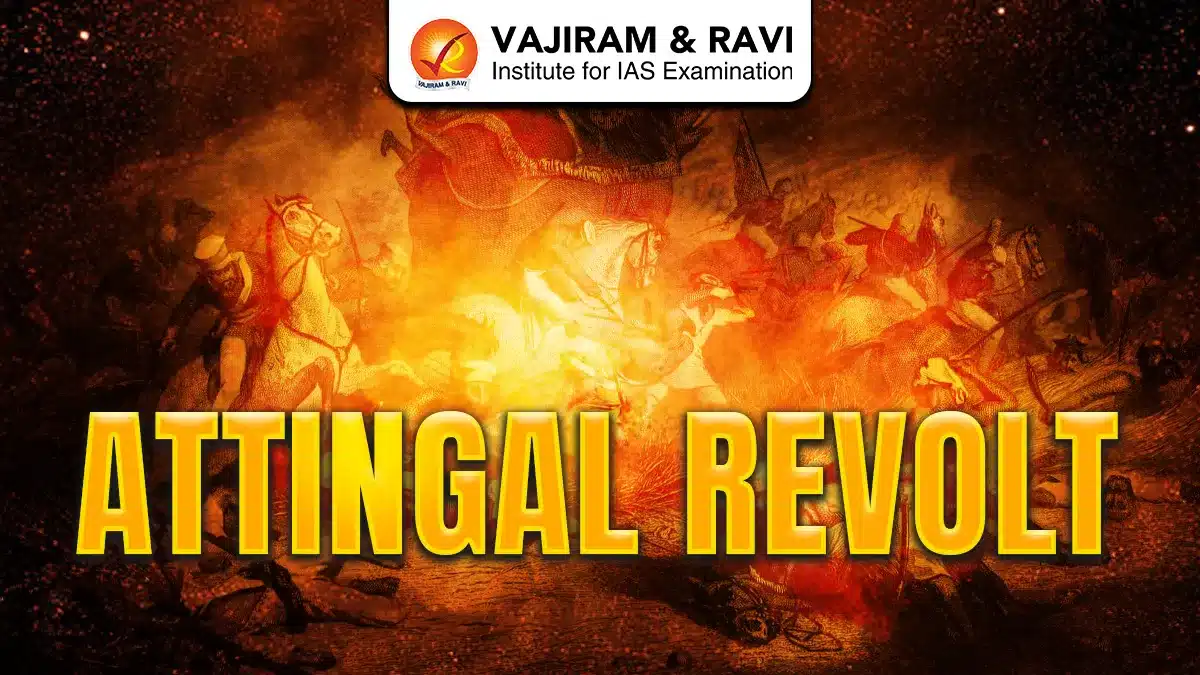
The Attingal Revolt is considered as one of the earliest uprisings among the common people against British rule in India, which took place in present day Kerala, near the Anjengo fort. The revolt showed the anger of farmers, traders, and local chiefs against foreign control.
Attingal Revolt Background
- The English East India Company entered the Attingal principality in the late 17th century to trade mainly in pepper.
- In 1684, Rani Umayamma (Aswathi Tirunal) allowed the English to set up a trading settlement at Anjengo (Anchuthengu), which was later turned into a fort by 1699.
- Over time, the English began to control and monopolise the pepper trade, paying very low prices to local cultivators, which caused widespread anger and hardship.
- English officials, especially Gifford, used unfair trade practices, such as false accounts, fake weights, and private trading, which further hurt local traders.
- The English also showed disrespect to local merchants, especially Muslim traders, leading to social tension and hostility.
- Powerful local chiefs like the Ettuveettil Pillamar and Madampimar opposed English interference and feared loss of traditional authority.
- The people were upset that local wealth was being taken away by foreigners, while farmers were becoming poorer.
- These economic exploitations, political interferences and social insults together created the background for the Attingal Revolt of 1721, one of the earliest popular resistances against the British in Kerala.
The Attingal Revolt
- In 1721, the English officer William Gifford decided to take annual gifts directly from Anjengo Fort to the Rani of Attingal with a group of about 140 English soldiers, ignoring the demands of local chiefs known as the Ettuveettil Pillamar.
- This show of military strength angered the local people. While the English party was travelling back by boat through the Vamanapuram River near Attingal, they were attacked by Nair soldiers and Muslim traders and most of the English soldiers were killed.
- After the attack, the local people surrounded and laid siege to Anjengo Fort for nearly six months. The fort was defended by Gunner Samuel Ince until British reinforcements arrived from Tellicherry, after which the revolt was suppressed.
- Following the revolt, an agreement was made between the East India Company and the Rani of Attingal. The company received compensation for its losses, secured a monopoly over the pepper trade, and gained the right to establish factories in places of its choice.
Attingal Revolt Outcome
- After the Attingal Revolt, the English East India Company suppressed the rebellion by sending reinforcements and regained control of Anjengo Fort.
- The company then made an agreement with the Rani of Attingal, under which it received compensation for its losses.
- The English were granted a monopoly over the pepper trade and permission to set up more trading centers, which increased their influence in the region.
The revolt showed early local resistance to British exploitation, even though the British finally strengthened their control.
Attingal Revolt FAQs
Q1: What is an Attingal revolt?
Ans: Attingal revolt is considered as one of the earliest uprising against the British rule that took place in 1721 in present day Kerala.
Q2: What was the main cause of the revolt?
Ans: Unfair trade practices and monopoly over pepper trade by the English caused the revolt
Q3: Who all participated in the revolt?
Ans: Local Nair soldiers and Muslim traders mainly took part in the revolt.
Q4: What was the outcome of the Attingal revolt?
Ans: The revolt was suppressed and the Britishers gained monopoly over pepper trade and more trading rights.
Q5: Which main British officer was involved in the Revolt?
Ans: William Gifford was the chief English officer involved in the incident.