Banking Sector Reforms, Evolution, Phases, Reforms

Banking Sector Reforms

A well-functioning banking system is essential for channelising savings into productive investment and supporting inclusive growth. In India, despite its developmental role, the sector has historically faced issues such as dominance of public sector banks, inefficiencies, rising non-performing assets, and governance gaps. These challenges have led to continuous reforms, especially since the economic reforms of 1991, to make the banking system more efficient, competitive, and resilient.

Evolution of Banking in India

  • Modern banking in India began during the colonial period with the establishment of agency houses and presidency banks such as the Bank of Bengal (1806), Bank of Bombay (1840), and Bank of Madras (1843).
  • These institutions were later merged in 1921 to form the Imperial Bank of India, which functioned both as a commercial bank and a quasi-central bank.
  • After Independence, concerns emerged that the banking system was largely serving the interests of urban and industrial elites, while neglecting agriculture and rural sectors.
  • To address this imbalance, the Imperial Bank was nationalised in 1955 and converted into the State Bank of India, marking the beginning of state intervention in banking.

Pre-Reform Phase: Nationalisation and State-led Banking (1969-1991)

The period between 1969 and 1991 is known as the era of nationalisation and state-controlled banking in India. During this phase, the government took direct control of the banking system with the objective of using banks as instruments of social and economic development rather than purely profit-making institutions.

Key Problems Before Nationalisation: 

  • Banking services were concentrated in urban areas only
  • Rural India had almost no access to banks
  • Moneylenders dominated rural credit markets and charged very high interest rates
  • Industrial loans were concentrated in a few big business groups
  • Financial inequality was increasing.

To solve these problems, government did Nationalisation of Banks, mainly in two phases: 

First Phase (1969): In 1969, the Government of India nationalised 14 major commercial banks. These were banks with deposits above ₹50 crore.

Second Phase (1980): In 1980, the government nationalised 6 more banks, expanding state control further. 

During this phase, several important policy measures were introduced:

  • Expansion of bank branches in rural and semi-urban areas to increase accessibility
  • Implementation of priority sector lending to ensure credit flow to agriculture, small-scale industries, and weaker sections
  • Regulation of interest rates by the government
  • Directed credit programmes to support targeted sectors

These measures succeeded in expanding the reach of banking services and improving access to credit. However, they also created several structural problems. 

  • The absence of competition, combined with excessive government control, led to inefficiencies in operations.
  •  Political interference in lending decisions weakened credit discipline. 
  • As a result, banks experienced declining profitability and a growing burden of non-performing assets.

Liberalisation Phase (1991-1998): Structural Reforms and Shift to Market-Oriented Banking

The banking sector reforms in India began in the backdrop of the balance of payments crisis of 1991, which exposed deep structural weaknesses in the economy, including the financial system. At that time, the banking sector was highly controlled, inefficient, and burdened with poor-quality assets.

  • To address these issues, the government initiated reforms based on the recommendations of the Narasimham Committee which was appointed in 1991. 
  • The objective was to transform the banking system from a state-controlled, regulation-heavy structure into a more efficient, competitive, and market-driven system.

Reduction in Statutory Pre-emptions (1991-1997)

Before reforms, banks were required to keep a large portion of their deposits with the government:

  • The Statutory Liquidity Ratio was as high as about 38.5 percent in 1991
  • The Cash Reserve Ratio was around 15 percent

This meant that nearly half of bank resources were locked and unavailable for lending. Reforms reduced these ratios gradually during the 1990s, which increased funds available for lending, improved profitability of banks and allowed more credit flow to the private sector. 

Deregulation of Interest Rates (1992-1997)

Earlier, interest rates on loans and deposits were fixed by the government, leaving little flexibility for banks.

  • Starting in 1992, interest rates were gradually deregulated
  • By the mid to late 1990s, most lending rates were market-determined

This enabled banks to:

  • Price loans based on risk and market conditions
  • Compete for customers
  • Improve efficiency in resource allocation

Entry of Private Sector Banks (1993 onwards)

Based on the recommendations of the Narasimham Committee, the Reserve Bank of India issued guidelines in January 1993 permitting the establishment of new private sector banks to introduce competition and improve efficiency.

  • Licences were granted in the mid-1990s, leading to the emergence of banks such as HDFC Bank (1994) and ICICI Bank (1994)
  • These banks brought technology-driven operations, improved risk management practices, and professional governance standards

Impact:

  • Public sector banks were compelled to enhance efficiency, service quality, and innovation
  • Competition increased across lending, deposits, and retail banking
  • The banking system became more market-oriented and customer-focused

Introduction of Prudential Norms (1992 onwards)

Based on the recommendations of the Narasimham Committee, prudential norms were introduced from 1992 to improve the transparency and financial health of banks.

Before these reforms, banks often overstated profits and concealed bad loans, as there were no strict rules for identifying or reporting stressed assets. To address this, the following norms were introduced:

  • Income Recognition Norms: Banks could recognise income only when interest was actually received, and not on loans that had stopped performing
  • Asset Classification Norms: Loans were classified into categories such as standard and non-performing based on repayment performance
  • Provisioning Norms: Banks were required to set aside a portion of their profits to cover potential losses from bad loans

Impact:

  • Bank balance sheets became more transparent and realistic
  • The actual level of non-performing assets became visible
  • Financial discipline and accountability in lending improved

Capital Adequacy Requirements (1992 onwards)

Based on the recommendations of the Narasimham Committee, India introduced capital adequacy norms from 1992 in line with international banking standards (Basel norms) to strengthen the financial stability of banks.

Before this reform, many banks operated with insufficient capital, making them vulnerable to losses and increasing the risk of failure.

  • Banks were required to maintain a minimum level of capital in proportion to their risk-weighted assets, meaning that riskier loans required higher capital backing
  • This requirement is known as the Capital to Risk-Weighted Assets Ratio, which ensures that banks have enough own funds relative to the risks they take

Impact:

  • Banks gained a financial cushion to absorb losses, reducing the risk of collapse
  • Lending became more prudent and risk-sensitive, as higher-risk loans required more capital
  • The Indian banking system became more aligned with global regulatory standards, improving credibility and stability

Second-Generation Banking Reforms (1998-2004)

The second phase of banking sector reforms was initiated following the recommendations of the Narasimham Committee II, submitted in April 1998. 

  • These reforms were implemented broadly between 1998 and the early 2000s, with the objective of consolidating the gains of the first phase (1991 onwards) and strengthening the institutional foundations of the banking system.
  • While the first phase focused on liberalisation, this phase emphasised prudential regulation, financial stability, and structural strengthening.

Strengthening Asset Quality and Prudential Norms (1998–2002): During this period, significant reforms were undertaken to improve the transparency and reliability of bank balance sheets:

  • By the late 1990s, stricter norms for income recognition, asset classification, and provisioning were enforced
  • The definition of non-performing assets was progressively tightened, and by March 2004, the norm was aligned to 90 days overdue, in line with international standards
  • Provisioning requirements were increased to ensure that banks maintained adequate buffers against bad loans

Strengthening Regulation and Supervision (1998 onwards): Following 1998, the regulatory role of the central bank was significantly enhanced:

  • Introduction of risk-based supervision around 1999–2000, moving beyond traditional inspection methods
  • Gradual implementation of Basel Capital Adequacy norms, with India moving toward Basel One compliance by the early 2000s
  • Strengthening of off-site monitoring systems for continuous supervision

These measures ensured that banks maintained sufficient capital and followed sound risk management practices, thereby improving systemic stability.

Banking Sector Consolidation and Structural Reorganisation (1998–early 2000s): The Narasimham Committee in 1998 recommended a three-tier banking structure, which influenced policy thinking in subsequent years:

  • Although large-scale mergers were not immediately executed, the period saw the beginning of voluntary consolidation efforts
  • Policy emphasis was placed on creating strong, well-capitalised banks capable of competing in a liberalised environment

This laid the groundwork for later consolidation phases, especially those undertaken after 2017.

Enhancing Autonomy and Governance of Public Sector Banks (1998–2003):Reforms during this period sought to reduce excessive government control:

  • Recommendations in 1998 emphasised granting operational autonomy to public sector banks
  • Steps were taken in the early 2000s to improve board-level professionalism and accountability
  • Efforts were made to delink routine banking decisions from direct government intervention

Although implementation remained partial, this phase marked the beginning of governance reforms in public sector banks.

Technological Modernisation (Late 1990s–Early 2000s): The period from 1999 to 2004 witnessed the early stages of banking technology adoption:

  • Introduction of core banking solutions in major banks
  • Computerisation of branches accelerated after 1999
  • Expansion of electronic payment systems such as Electronic Clearing Service

These developments improved operational efficiency, reduced transaction time, and enhanced customer experience.

Transparency and Market Discipline (1998 onwards): To improve accountability and public confidence

  • Disclosure norms were strengthened in the late 1990s and early 2000s
  • Banks were required to publish detailed financial statements, including asset quality indicators
  • Greater emphasis was placed on market discipline, allowing stakeholders to assess bank performance

Phase of Addressing Financial Stress and Non-Performing Assets

In the years following the global financial crisis of 2008, the Indian banking sector experienced a significant increase in stressed assets, particularly due to excessive lending to infrastructure and corporate sectors. To address this issue, a number of corrective measures were introduced:

  • The Reserve Bank of India conducted an Asset Quality Review to ensure transparent recognition of non-performing assets
  • The government undertook large-scale recapitalisation of public sector banks to strengthen their balance sheets
  • Institutional mechanisms were developed for the resolution of stressed assets

A major reform in this context was the enactment of the Insolvency and Bankruptcy Code, which provided a time-bound process for resolving insolvency and improving recovery rates for creditors. This marked a significant step toward strengthening credit discipline and improving the overall health of the banking system.

Recent Banking Sector Reforms (2014 onwards)

Since 2014, banking reforms in India have focused on bringing more people into the banking system, fixing bad loans, merging banks to make them stronger, improving how banks are run, and using technology to make services faster and easier.

Financial Inclusion 

A major breakthrough occurred with the launch of the Pradhan Mantri Jan Dhan Yojana in August 2014, which aimed to provide universal access to banking services.

  • Millions of previously unbanked individuals were brought into the formal financial system through zero-balance accounts

Digital Payments Revolution and Technological Transformation (2016 onwards)

The period after 2016 witnessed an unprecedented expansion in digital financial infrastructure.

  • The launch of the Unified Payments Interface in 2016 created a real-time, interoperable payment system
  • Rapid growth of mobile-based payments transformed transaction behaviour, especially after the demonetisation exercise in November 2016
  • Expansion of Aadhaar-enabled payment systems and digital identity infrastructure strengthened authentication and reduced transaction costs

This phase positioned India as a global leader in digital payments, while also improving transparency and formalisation of the economy.

Resolution of Stressed Assets and Creation of Institutional Mechanisms (2016 onwards)

The persistence of non-performing assets, particularly after the credit boom of the previous decade, required systemic intervention.

  • The enactment of the Insolvency and Bankruptcy Code in 2016 provided a time-bound framework for insolvency resolution
  • To complement this, the National Asset Reconstruction Company Limited was established in 2021 as a “bad bank” to aggregate and resolve stressed assets
  • The Reserve Bank of India introduced revised frameworks for stressed asset resolution in 2018 and subsequent years

These measures aimed to clean up bank balance sheets, improve credit discipline, and revive lending capacity.

Consolidation of Public Sector Banks (2017-2020)

Recognising the problem of fragmented and weak public sector banks, the government initiated a series of mergers:

  • The State Bank of India merged its associate banks in 2017, creating a larger and more efficient entity
  • In 2019–2020, a major consolidation exercise reduced the number of public sector banks significantly through mergers

Governance Reforms and Institutional Strengthening (2016 onwards)

Improving governance in public sector banks became a key priority:

  • The Bank Boards Bureau was established in 2016 to professionalise appointments and improve governance practices
  • The Prompt Corrective Action framework was strengthened to monitor weak banks and impose restrictions where necessary
  • Efforts were made to introduce performance-based evaluation and accountability mechanisms

Although progress has been gradual, these reforms represent an attempt to address structural governance weaknesses.

Recent Legislative Reform: Banking Laws (Amendment) Act, 2025

The Banking Laws (Amendment) Act, 2025 was enacted to update outdated provisions in banking laws, strengthen governance in public sector banks, and improve depositor convenience in a modern financial system. Key reforms include: 

  • Enhanced nomination facility: Depositors can now appoint up to four nominees (simultaneously or successively), addressing earlier limitations that created legal and procedural difficulties in transferring funds after death
  • Improved audit framework: Public sector banks are given greater flexibility in determining auditor-related matters, aiming to attract higher-quality auditors and improve scrutiny of financial statements
  • Co-operative bank reforms: Extension of director tenure and regulatory clarity aim to improve continuity, professionalism, and stability in co-operative banking institutions
  • Investor protection: Unclaimed deposits, shares, and financial assets can be transferred to a central fund, reducing idle funds and aligning banking practices with broader corporate governance standards.
  • Updated thresholds: The Act increases the limit for defining “substantial interest” (that is, the level of financial stake a director or their relative can hold in a company) from ₹5 lakh to ₹2 crore. If this stake crosses a certain limit, it is treated as a conflict of interest, and the bank is restricted from lending to that company. The earlier limit of ₹5 lakh had become outdated over time due to inflation and economic growth, causing even small and routine investments by bank directors to be classified as “substantial interest,” which in turn created unnecessary restrictions on lending despite the absence of any real conflict of interest.

Banking Sector Reforms FAQs

Q1: How have banking sector reforms in India evolved over time?

Ans: Banking reforms in India have moved through three stages: first, expanding banking through nationalisation; second, improving efficiency and competition after 1991; and third, focusing on inclusion, digital banking, and stronger financial systems in recent years.

Q2: Why were banking reforms started in 1991?

Ans: Reforms were started because banks were inefficient, controlled by the government, and burdened with bad loans. They were not able to support economic growth effectively, so changes were needed to make them more efficient and competitive.

Q3: What role did the Narasimham Committee play in reforms?

Ans: The committee suggested key changes like reducing government control, allowing private banks, improving transparency, and strengthening bank finances, which became the base of modern banking reforms in India.

Q4: What is the main focus of recent banking reforms in India?

Ans: Recent reforms focus on bringing more people into the banking system, reducing bad loans through laws like the Insolvency and Bankruptcy Code, improving bank management, and using digital technology to make banking faster and easier.

Q5: What are the main problems still faced by the banking sector?

Ans: Banks still face issues like bad loans, weak management in some public sector banks, slow credit growth, and limited financial awareness among people.
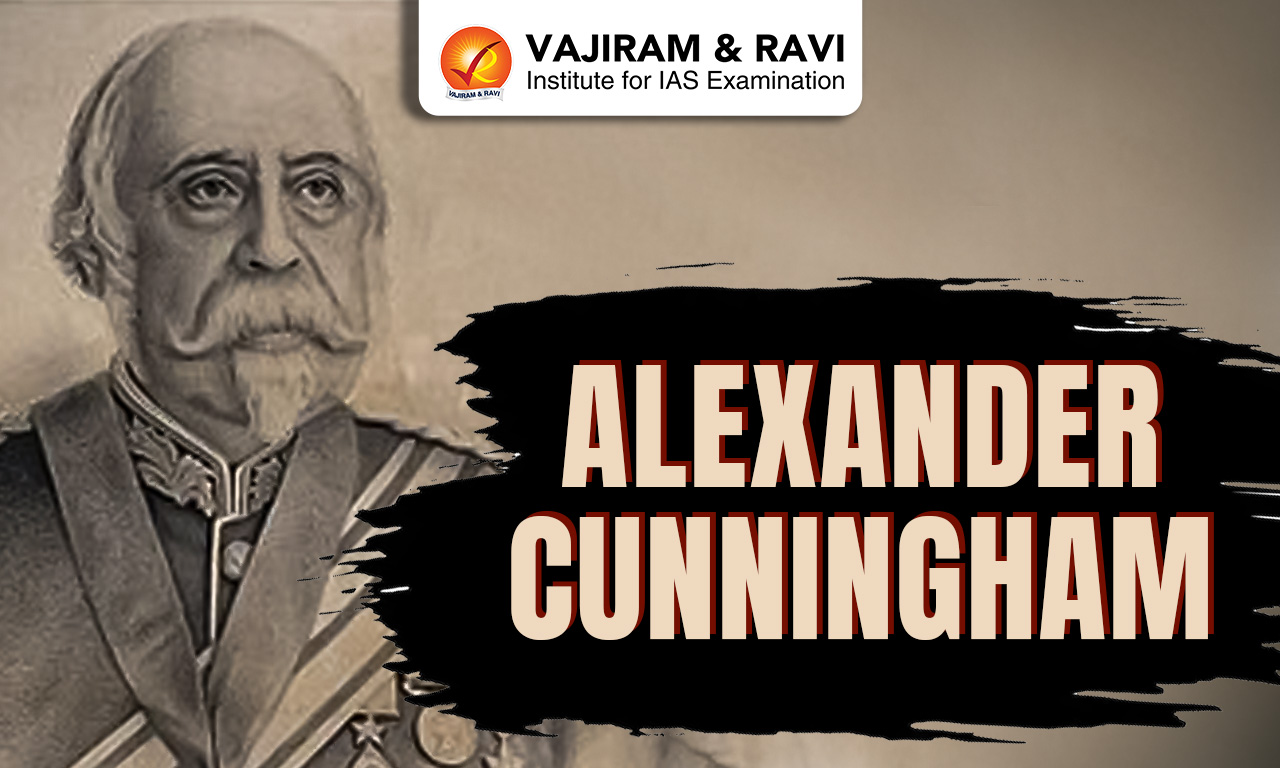
Alexander Cunningham & ASI, Father of Indian Archaeology

Alexander Cunningham

Alexander Cunningham was a British officer and archaeologist who is known as the “Father of Indian Archaeology.” He played an important role in discovering and studying many ancient historical sites in India. He was the first Director-General of the Archaeological Survey of India and helped preserve India’s rich cultural heritage. His work greatly improved our understanding of India’s ancient history.

About Alexander Cunningham

  • Alexander Cunningham was a British army officer and archaeologist who is known as the “Father of Indian Archaeology.” He played a major role in studying and preserving India’s ancient past.
  • He was born on 23 January 1814 in London and joined the Bengal Engineers at a young age. He spent many years working in India and later retired as a Major General in 1861.
  • His interest in Indian history began after meeting James Prinsep, who inspired him to study ancient coins, inscriptions, and historical sites.
  • Cunningham carried out important excavations at places like Sarnath and Sanchi, which are major Buddhist sites. He carefully studied sculptures, monuments, and temple structures.
  • He also explored regions like Kashmir and Ladakh and wrote books such as The Bhilsa Topes (1854), which helped trace Buddhist history through monuments.
  • In 1861, he became the first Director-General of the Archaeological Survey of India. Although the department was closed for some time, he returned when it was restarted in 1870 and continued his work for many years.
  • During his career, he travelled widely across northern India, studying ancient ruins, inscriptions, and historical geography. His book The Ancient Geography of India (1871) was one of his most important works.
  • He also studied the edicts of Ashoka and wrote about important sites like Bharhut.
  • Cunningham collected a large number of ancient Indian coins, many of which were later kept in the British Museum. After retiring in 1885, he focused mainly on studying coins (numismatics).
  • He helped identify many ancient sites mentioned by Chinese travellers like Xuanzang. He also played a role in bringing attention to places like Harappa, which later became very important archaeological sites.
  • For his contributions, he was honoured with a knighthood in 1887. He passed away on 28 November 1893 in London.
  • Overall, Cunningham’s work laid the foundation for systematic archaeological research in India, and his reports and studies are still important for understanding India’s ancient history.

About Archaeological Survey of India (ASI)

  • The Archaeological Survey of India is the main government organization responsible for studying, protecting, and preserving India’s historical monuments and cultural heritage, helping us understand the country’s ancient past in a better way.
  • It was established in 1861 by Alexander Cunningham during the time of Lord Canning, and later reorganised as a separate department in 1871, where Cunningham became its first Director-General.
  • The headquarters of ASI is located in New Delhi, and it works under the Ministry of Culture, which oversees cultural and heritage-related activities in the country.
  • The logo of ASI is inspired by the Sanchi Stupa, symbolizing India’s rich architectural and archaeological heritage.
  • One of its main goals is to protect and conserve ancient monuments and sites of national importance, while also exploring and documenting important historical locations on land as well as underwater.
  • ASI carries out scientific surveys and excavations to discover and study ancient remains, which help historians and researchers learn more about India’s history and culture.
  • It is responsible for maintaining and preserving more than 3,600 protected monuments under the Ancient Monuments and Archaeological Sites and Remains Act, 1958, ensuring their safety for future generations.
  • The organisation also focuses on research and regularly publishes reports, books, and journals such as Indian Archaeology - A Review, which provide detailed information about archaeological findings.
  • Through its Underwater Archaeology Wing, ASI also studies submerged sites in seas, rivers, and other water bodies, expanding knowledge about hidden historical remains.
  • ASI works in collaboration with various state departments, the Indian Navy, IITs, and international organizations to improve research, technology, and conservation methods.

Alexander Cunningham FAQs

Q1: Who was Alexander Cunningham?

Ans: Alexander Cunningham was a British army officer and archaeologist known as the “Father of Indian Archaeology.” He helped study and preserve India’s ancient history.

Q2: What is Alexander Cunningham famous for?

Ans: He is famous for conducting important excavations at sites like Sarnath and Sanchi and for laying the foundation of archaeological research in India.

Q3: What is the Archaeological Survey of India (ASI)?

Ans: The Archaeological Survey of India is a government organisation that protects, studies, and preserves India’s historical monuments and cultural heritage.

Q4: When was ASI established and by whom?

Ans: ASI was established in 1861 by Alexander Cunningham during the time of Lord Canning and later reorganised in 1871.

Q5: What are the main functions of ASI?

Ans: ASI carries out excavations, protects monuments, conducts research, publishes reports, and also studies underwater archaeological sites.

Garudan Thookkam, History, Location, Music, Instruments

Garudan Thookkam

Garudan Thookkam is a ritual art form observed in southern India, especially in Kerala and parts of Tamil Nadu. It is closely linked with Bhadrakali worship and temple festivals. It represents devotion, sacrifice and mythology through symbolic performance. This art form is performed by devotees seeking blessings and solutions to problems. Garudan Thookkam continues as a living cultural tradition rooted in ancient beliefs and rituals.

Also Read: Classical Dances of India

Garudan Thookkam

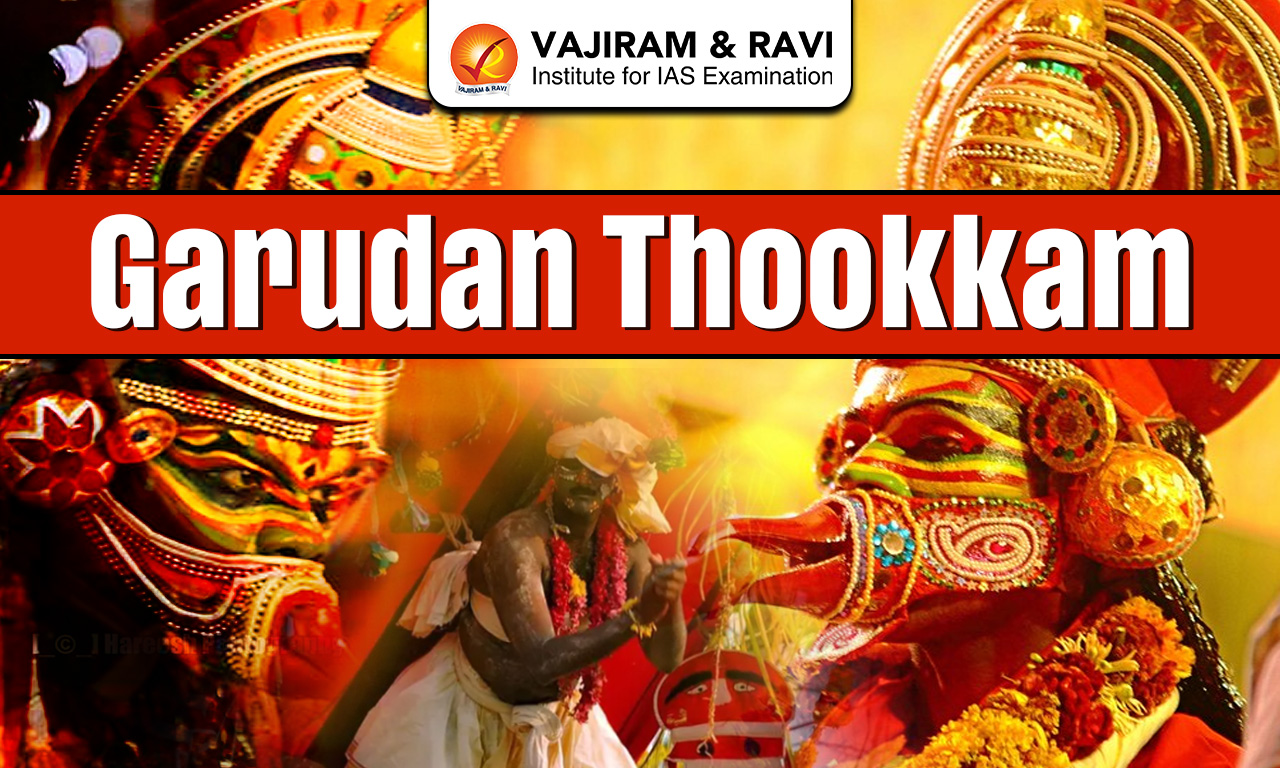
Garudan Thookkam is a ritual dance where performers dress as Garuda and enact mythological devotion through symbolic acts, music and temple processions.

  • History: It  is rooted in ancient Bhadrakali worship traditions of the former Travancore region, based on the legend of Goddess Kali and demon Darika, symbolizing devotion, sacrifice and ritual offerings practiced for centuries in temple culture.
  • Location: Garudan Thookkam is mainly performed in Kerala and parts of Tamil Nadu, especially in districts like Kottayam and Thiruvananthapuram, where Bhadrakali temples host the ritual during annual festivals.
  • Ritual: It is performed in Bhadrakali temples, especially in former Travancore regions. Devotees offer Garudan Thookkam as a vow for fulfilled wishes, reflecting strong faith traditions and community participation in temple centered rituals.
  • Performance Style and Costume: Performers dress as Garuda using Pattuvaal, Njori, Kacha, Mundi, Astimala, Chiraku, Uttareeyam and Kireedam. Bright costumes, elaborate makeup and symbolic wings recreate the divine eagle associated with Lord Vishnu.
  • Musical Elements: It includes traditional instruments like Chenda, Elathalam and Kombu. The performance follows 18 Thalavattam rhythmic patterns, creating a powerful sound environment that enhances the ritual intensity and cultural authenticity.
  • Ritual Act: A distinctive aspect of Garudan Thookkam involves Choondakuthal, where hooks pierce the skin on the performer’s back. They are then suspended and carried around the temple, symbolizing sacrifice and devotion to Goddess Kali.
  • Processions: It is conducted through vibrant processions using bullock carts, boats, or hand pulled carts. In regions like Kottayam, decorated Garudas move along rivers with illuminated structures, creating grand visual spectacles.
  • Sarkara Devi Temple: At Sarkara Devi Temple, It is part of festivals like Meena Bharani. The temple, dedicated to Bhadrakali, was historically enriched by Anizham Thirunal 
  • Regional Practices: Garudan Thookkam is widely seen in temples like Elamkavu Devi Temple and Arayankavu Bhagavathy Temple. Some locations host over 100 performers annually, making it one of the largest ritual performances in Kerala.

Also Read: Folk Dances of India

Garudan Thookkam FAQs

Q1: What is Garudan Thookkam?

Ans: Garudan Thookkam is a ritual art form where devotees dress as Garuda and perform symbolic acts in Bhadrakali temples.

Q2: Where is Garudan Thookkam mainly performed?

Ans: Garudan Thookkam is mainly performed in Kerala and parts of Tamil Nadu during temple festivals.

Q3: Why is Garudan Thookkam performed?

Ans: Garudan Thookkam is performed as an offering to Goddess Kali for fulfilling wishes and solving personal or family problems.

Q4: What is the main ritual in Garudan Thookkam?

Ans: The key ritual involves piercing the skin of the performer’s back and suspending them, symbolizing devotion and sacrifice.

Q5: Which deity is associated with Garudan Thookkam?

Ans: Garudan Thookkam is associated with Bhadrakali, a fierce form of Goddess Durga worshipped in South Indian temples.

Thanka Anki Procession, History & Sabarimala Significance

Thanka Anki Procession

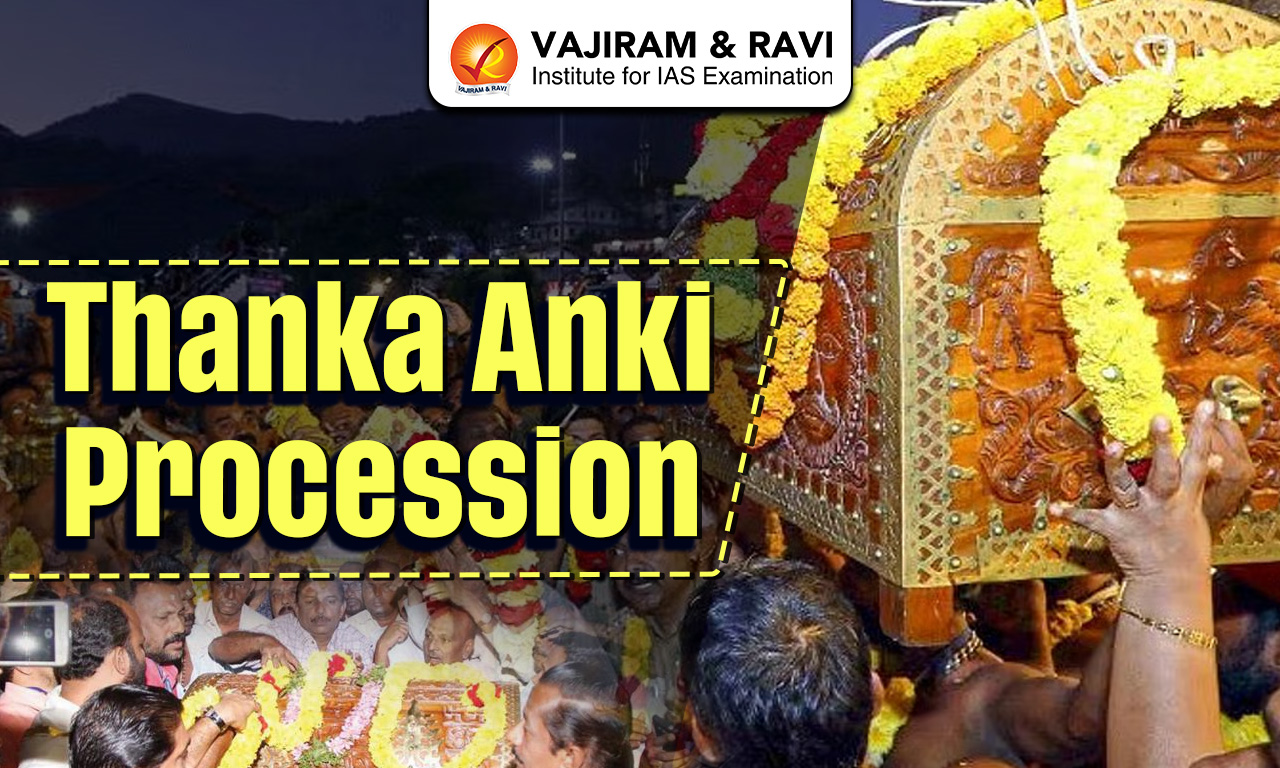
The Thanka Anki Procession is one of the most sacred and visually captivating traditions associated with the annual pilgrimage to the Sabarimala Sree Dharma Sastha Temple. This grand ceremonial journey carries the golden attire of Lord Ayyappa from Aranmula Parthasarathy Temple to Sabarimala, officially marking the beginning of the Mandalam-Makaravilakku pilgrimage season.

What is the Thanka Anki Procession?

The Thanka Anki Procession refers to the ceremonial transport of the sacred golden attire (Thanka Anki) of Lord Ayyappa to Sabarimala.

  • “Thanka” means gold, and “Anki” refers to attire or garment.
  • The attire weighs around 453 sovereigns of gold, symbolizing immense spiritual and material value.
  • It was offered by the Travancore royal family in the 1970s as a mark of devotion.
  • The golden attire is preserved at Aranmula and brought to Sabarimala annually during the pilgrimage season.

About Sabarimala Temple

The Sabarimala Sree Dharma Sastha Temple is one of India’s most important pilgrimage centers dedicated to Lord Ayyappa.

  • Located in the Western Ghats at an altitude of 914 meters above sea level.
  • Surrounded by dense forests within the Periyar Tiger Reserve.
  • Accessible only through a 4 km trek, symbolizing devotion and endurance.
  • Situated among 18 sacred hills, each representing spiritual values.

The temple attracts millions of devotees annually, especially during the Mandalam season.

Mythological Significance of Lord Ayyappa

Lord Ayyappa, also known as Hariharputra, holds a unique place in Hindu mythology.

  • He is believed to be born from the union of Lord Shiva and Mohini, the female avatar of Vishnu.
  • Represents harmony between Shaivism and Vaishnavism traditions.
  • Worshipped as a symbol of discipline, celibacy, and righteousness (Dharma).

Thanka Anki Procession FAQs

Q1: What is the Thanka Anki Procession?

Ans: The Thanka Anki Procession is a sacred annual ceremony in which the golden attire of Lord Ayyappa is carried from Aranmula Parthasarathy Temple to Sabarimala Sree Dharma Sastha Temple, marking the beginning of the Mandalam pilgrimage season.

Q2: What is Thanka Anki made of?

Ans: The Thanka Anki is made of gold and weighs around 453 sovereigns. It is a sacred offering presented by the Travancore royal family to Lord Ayyappa.

Q3: Why is the Thanka Anki Procession important?

Ans: It marks the formal beginning of the Sabarimala pilgrimage, symbolizes devotion, and plays a key role in rituals like the Mandala Puja where the attire is adorned on Lord Ayyappa’s idol.

Q4: Where is Sabarimala Temple located?

Ans: The Sabarimala Sree Dharma Sastha Temple is located in the Western Ghats of Kerala, within the Periyar Tiger Reserve, at an altitude of about 914 meters above sea level.

UPSC Daily Quiz 30 April 2026

UPSC Daily Quiz

[WpProQuiz 150]

UPSC Daily Quiz FAQs

Q1: What is the Daily UPSC Quiz?

Ans: The Daily UPSC Quiz is a set of practice questions based on current affairs, static subjects, and PYQs that help aspirants enhance retention and test conceptual clarity regularly.

Q2: How is the Daily Quiz useful for UPSC preparation?

Ans: Daily quizzes support learning, help in revision, improve time management, and boost accuracy for both UPSC Prelims and Mains through consistent practice.

Q3: Are the quiz questions based on the UPSC syllabus?

Ans: Yes, all questions are aligned with the UPSC Syllabus 2025, covering key areas like Polity, Economy, Environment, History, Geography, and Current Affairs.

Q4: Are solutions and explanations provided with the quiz?

Ans: Yes, each quiz includes detailed explanations and source references to enhance conceptual understanding and enable self-assessment.

Q5: Is the Daily UPSC Quiz suitable for both Prelims and Mains?

Ans: Primarily focused on Prelims (MCQ format), but it also indirectly helps in Mains by strengthening subject knowledge and factual clarity.

Bhimbetka, Location, Discovery, Time Period, Painting, Themes

Bhimbetka

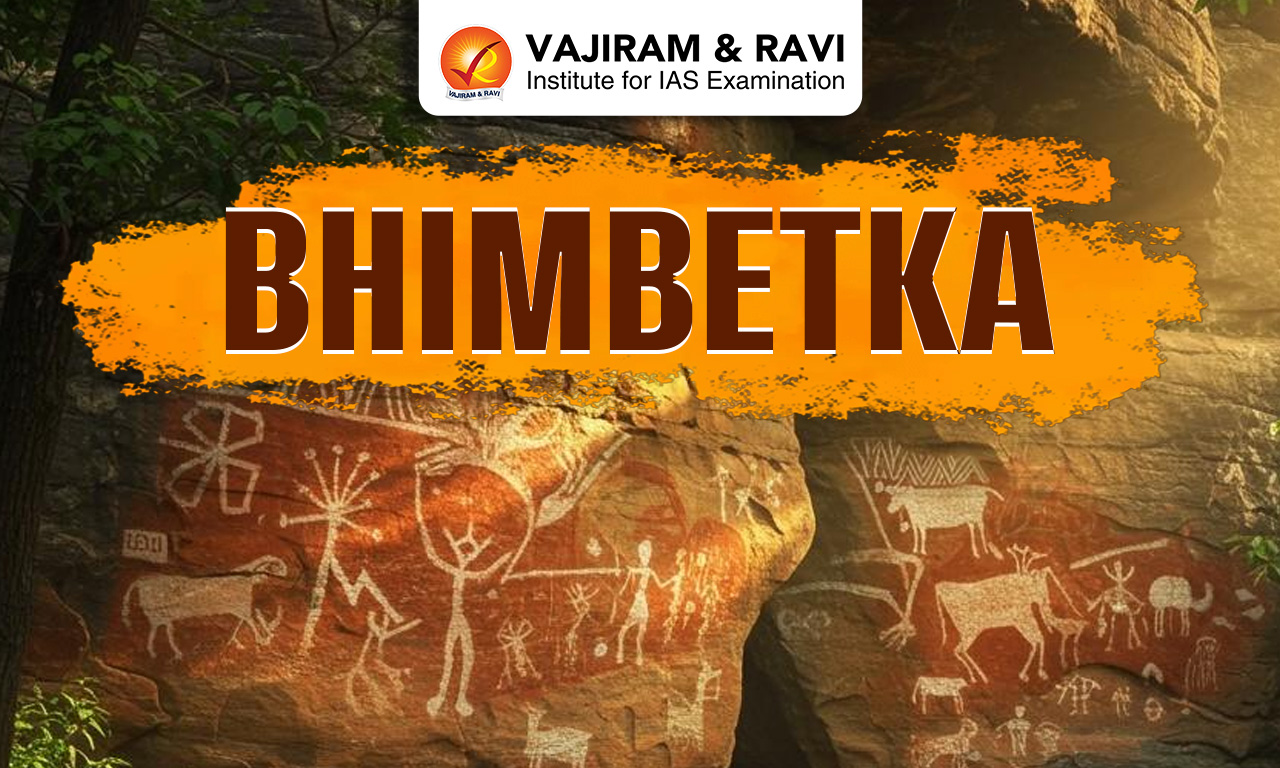
Bhimbetka Rock Shelters are a group of ancient caves and rock shelters located in central India. They are famous for their prehistoric paintings, which show how early humans lived, hunted, and expressed themselves. These paintings are thousands of years old and give us a glimpse into human life during the Stone Age. Today, Bhimbetka is an important historical site and a UNESCO World Heritage Site.

About Bhimbetka

  • Location and Discovery
    • Bhimbetka Rock Shelters are located in the Raisen district of Madhya Pradesh, about 45 km south of Bhopal, in the foothills of the Vindhya mountain range.
    • The site lies among sandstone hills surrounded by forests, creating natural rock shelters.
    • These caves were discovered by V. S. Wakankar in 1957-58, and their full importance was understood later in the 1970s.
    • Bhimbetka was declared a UNESCO World Heritage Site in 2003.
    • The name “Bhimbetka” is believed to be linked to Bhima, meaning “the sitting place of Bhima.”
  • Historical Background and Time Period
    • Bhimbetka is one of the oldest known places showing human life in India, with evidence going back over 100,000 years.
    • The rock paintings are believed to be as old as 30,000 years.
    • These shelters show continuous human presence from the Paleolithic (Stone Age) to the Mesolithic, Chalcolithic, Early Historic, and even Medieval periods.
    • Most of the paintings belong to the Mesolithic period, when humans were mainly hunters and gatherers.
  • Structure and Spread of the Site
    • The site consists of around 7 hills and more than 750 rock shelters spread across about 10 km.
    • Out of these, over 400 shelters contain paintings.
    • Major groups include the Bhimbetka group and the nearby Lakha Juar group.
    • These shelters were naturally formed and used by humans for living, protection, and artistic expression.
  • Painting Techniques and Colours
    • The paintings were made using natural colours obtained from minerals and plants.
    • Common colours include red, white, yellow, green, brown, and purple.
    • Materials like red ochre, charcoal, manganese, and hematite were used.
    • The paintings have survived for thousands of years because they were drawn inside protected cave surfaces.
  • Themes and Subjects of Paintings
    • The paintings mainly show scenes from daily life of early humans.
    • Human figures are often simple and stick-like in shape.
    • Common scenes include hunting, dancing, fighting, eating, and social gatherings.
    • Animals such as elephants, bison, deer, tigers, peacocks, and snakes are frequently shown.
    • Some paintings also include geometric patterns, symbols, and even imaginative elements like tree gods and sky chariots.
    • A famous example is the “Zoo Rock,” which shows many animals together.
  • Different Phases of Paintings
    • Upper Paleolithic Phase: Large animals like bison, tigers, and rhinos were painted.
    • Mesolithic Phase: Smaller human figures with weapons like bows, arrows, and spears are shown. Social activities like dancing and hunting are common.
    • Chalcolithic Phase: Scenes of agriculture and interaction between farmers and hunter-gatherers appear.
    • Later Periods: Use of more colours and materials like charcoal; some paintings show advanced life and beliefs.
  • Cultural and Archaeological Importance
    • Bhimbetka provides strong evidence of the cultural evolution of humans, from hunting to farming and settled life.
    • It shows early artistic expression, beliefs, and social life of prehistoric people.
    • The paintings also have similarities with rock art found in places like Kakadu (Australia), Kalahari Desert (Africa), and Lascaux caves (France), showing a shared human instinct for art.
    • The site is preserved and maintained by the Archaeological Survey of India.
  • Significance
    • Bhimbetka is one of the largest and oldest prehistoric sites in India.
    • It helps us understand how early humans lived, thought, and expressed themselves.
    • The site stands as an important link between ancient human life and modern civilization, making it a valuable part of world heritage.

Bhimbetka FAQs

Q1: What is Bhimbetka famous for?

Ans: Bhimbetka Rock Shelters are famous for their prehistoric rock paintings that show the lifestyle, hunting practices, and cultural activities of early humans during the Stone Age.

Q2: Where is Bhimbetka located?

Ans: Bhimbetka is located in the Raisen district of Madhya Pradesh, about 45 km south of Bhopal, in the Vindhya mountain range.

Q3: Who discovered the Bhimbetka caves?

Ans: The Bhimbetka Rock Shelters were discovered by V. S. Wakankar in 1957–58, and later studied in detail during the 1970s.

Q4: How old are the Bhimbetka rock paintings?

Ans: The paintings are extremely ancient, with some estimated to be around 30,000 years old, while the site itself shows evidence of human life dating back over 100,000 years.

Q5: What themes are shown in Bhimbetka paintings?

Ans: The paintings mainly show daily life scenes like hunting, dancing, and social gatherings, along with animals such as deer, bison, elephants, and tigers, as well as simple symbols and designs.

Disappearing Lakes in India, Reasons, Major Threats, Significance

Disappearing Lakes in India

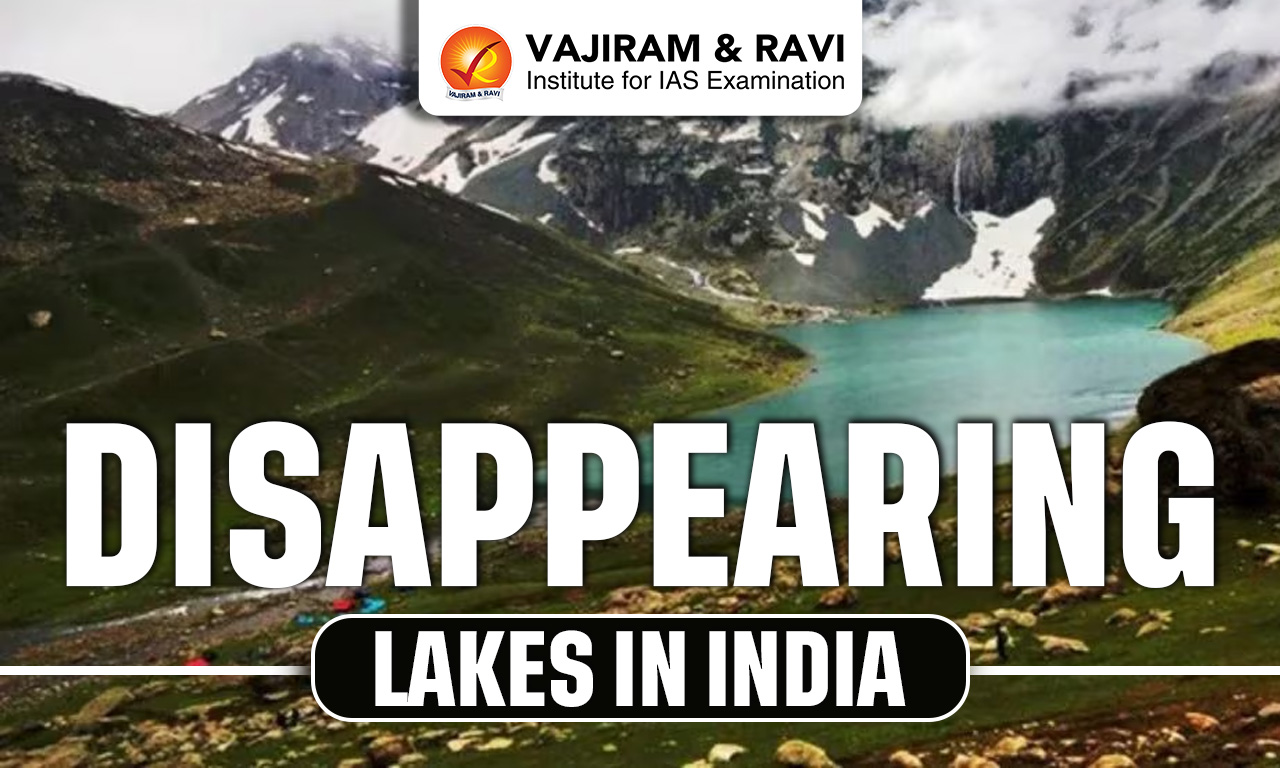
Lakes are among the most important freshwater ecosystems on Earth, yet they are rapidly shrinking, degrading, or disappearing due to increasing human interference in natural systems in the Anthropocene era.

State of Lakes in India and the World

According to the International Glossary of Hydrology, a lake is an inland body of water of considerable size, either natural or artificial. 

  • According to a recent Comptroller and Auditor General of India (CAG) report on Conservation and Management of Lakes, 518 out of 697 lakes recorded in 1967 in Jammu and Kashmir have either disappeared or significantly shrunk.
  • The report further notes that 315 lakes have completely vanished up to March 2022 in the region. 
  • This pattern is not confined to Jammu and Kashmir but reflects a wider trend across India, where lakes are under increasing pressure from urbanisation, pollution, and encroachment, leading to their shrinkage and disappearance.
  • Globally, around 117 million lakes cover nearly 4 per cent of the Earth’s land surface and collectively hold about 90 per cent of the world’s surface freshwater, making them critical for ecological balance and water security.

Ecological and Socio-Economic Significance of Lakes

Lakes are not merely scenic water bodies; they are life-supporting ecological systems. Their importance can be understood through six key functions:

  • Groundwater Recharge: Lakes act as natural reservoirs that recharge groundwater systems. In India, where a large share of drinking water and irrigation depends on groundwater, lakes play a crucial role in sustaining long-term water security.
  • Flood Regulation: During heavy rainfall, lakes function as natural buffers by absorbing excess runoff. This reduces surface flooding and protects downstream settlements from extreme hydrological events
  • Biodiversity Hotspots: Lakes provide critical habitats for aquatic plants, fish species, birds, and migratory fauna. For example, Chilika Lake in Odisha, the largest brackish water lagoon in the world, supports thousands of migratory birds every winter, making it a globally significant biodiversity site.
  • Socio-Economic Value: Lakes directly support livelihoods through fisheries, irrigation, agriculture, and domestic water supply. They also contribute to local economies through tourism and recreation, especially in urban centres.
  • Cultural and Spiritual Significance: In India, lakes often hold deep cultural importance. Dal Lake in Jammu and Kashmir and Pushkar Lake in Rajasthan are not only ecological assets but also sacred and cultural spaces integrated into local traditions.
  • Fresh water supply: Lakes provide 90% of the world's surface fresh water - making their conservation directly tied to global water security.

Thus, the degradation of lakes is not only an environmental issue but also a socio-economic and cultural concern.

Major Factors Responsible for Disappearing Lakes in India

The disappearance of lakes is driven by multiple interconnected anthropogenic pressures:

  • Pollution and Waste Dumping: Inadequate waste management has turned many lakes into dumping grounds for sewage and solid waste. Urban lakes such as Bellandur Lake in Bengaluru have become highly toxic due to industrial and domestic pollution.
  • Eutrophication: Excessive nutrient loading from sewage and agricultural runoff leads to eutrophication. This triggers algal blooms and oxygen depletion, making aquatic life unsustainable. Hussain Sagar Lake in Hyderabad and Dal Lake in Srinagar are notable examples.
  • Encroachment and Land-Use Change: Rapid urbanisation and rising land values have led to large-scale encroachment of lake areas. Lakes are increasingly viewed as real estate rather than ecological infrastructure, as highlighted in the CAG report.
  • Illegal Mining Activities: Unregulated sand and gravel mining from lakebeds disrupts hydrological balance and weakens lake ecosystems. Balsamand Lake in Rajasthan and Surajkund Lake in Haryana are affected by such practices.
  • Unregulated Tourism and Religious Practices: Tourism pressure leads to waste generation and habitat disturbance. 
  • Cultural and Religious Practices: Some cultural and religious practices, such as idol immersion, also degrade water quality and intensify ecological stress on these water bodies.

Impacts of Disappearing Lakes

The rapid degradation and disappearance of lakes is triggering wide-ranging ecological, economic, and social consequences across regions.

  • Groundwater depletion due to loss of recharge capacity, reducing long-term water availability
  • Increased urban flooding as natural water storage and drainage buffers are destroyed
  • Biodiversity loss caused by destruction of aquatic and wetland habitats
  • Public health risks arising from polluted and contaminated water bodies
  • Economic losses in fisheries, agriculture, and tourism-dependent livelihoods
  • Decline in ecosystem services such as water purification and nutrient cycling
  • Urban climate imbalance including increased heat stress and reduced local humidity regulation
  • Infrastructure stress due to unmanaged runoff and waterlogging in cities

The worsening ecological and socio-economic impacts of lake degradation highlight that the crisis is not merely environmental but deeply rooted in governance and institutional inefficiencies.

Governance Challenges: Public Trust Doctrine Perspective

The Public Trust Doctrine establishes that the state is the trustee of natural resources and must protect them for present and future generations. 

  • Despite this constitutional obligation, lake governance in India remains weak and fragmented.
  • The persistence of encroachment, pollution, and degradation reflects gaps in institutional accountability and enforcement. 
  • The Supreme Court in Swachh Association vs State of Maharashtra (2025) expanded the doctrine to include artificial water bodies that serve ecological functions, strengthening the legal responsibility of the state.

However, the gap between judicial principles and ground-level implementation continues to undermine lake conservation efforts. To understand the structural roots of these governance gaps, it is important to examine the constitutional and legal position of water bodies in India.

Constitutional and Legal Framework for Lake Conservation

  • Under the Indian Constitution, water falls under the State List. Therefore, primary responsibility for conservation and management of lakes lies with state governments.
  • India does not have a comprehensive central legislation exclusively for lake conservation. Regulation is largely dependent on fragmented frameworks.
  • Some states have attempted specific lake conservation laws. Karnataka enacted a lake conservation law in 2015 but later repealed it in 2018, reflecting policy instability.
  • The Wetlands (Conservation and Management) Rules, 2017 under the Environment Protection Act, 1986 provide a regulatory framework for wetland protection, but their coverage is limited to notified wetlands and Ramsar sites.

This results in diffused accountability and weak enforcement, as also observed by the CAG.

Policy Framework for Lake Conservation in India

India has implemented several programmes for lake and wetland conservation. 

  • The National Lake Conservation Programme (NLCP), launched in 2001, focused on restoring water quality and ecological health of lakes.
  • In 2013, NLCP was merged with the National Wetlands Conservation Programme (NWCP) to form the National Programme for Conservation of Aquatic Ecosystems (NPCA), a centrally sponsored scheme aimed at integrated conservation of wetlands and lakes.

However, the effectiveness of these programmes is constrained by selective coverage, dependence on state nominations, funding limitations, and weak monitoring mechanisms.

Way Forward: Strengthening Lake Conservation in India

A sustainable framework for lake conservation requires multi-dimensional reforms:

  • India needs a dedicated national legislation for lake protection that sets uniform standards and clearly defines institutional responsibilities. 
  • A statutory nodal authority can ensure coordinated governance and reduce fragmentation.
  • Scientific tools such as GIS mapping and remote sensing should be used for real-time monitoring of lake boundaries, encroachments, and water quality. 
  • Strict enforcement of pollution control laws is essential to prevent untreated sewage and industrial discharge into lakes.
  • Community participation must be strengthened to ensure local stewardship, while urban planning should integrate lakes as critical ecological infrastructure rather than vacant land.
  • Integration
  • Lakes must be recognised as critical urban ecological infrastructure, not vacant land for construction or expansion.

Disappearing Lakes in India FAQs

Q1: What does the CAG report reveal about lake loss?

Ans: The Comptroller and Auditor General report highlights a severe decline in lakes, particularly in Jammu and Kashmir, where more than five hundred lakes recorded in 1967 have either disappeared or shrunk significantly.

Q2: Why are lakes disappearing in India?

Ans: Lakes in India are disappearing mainly due to rapid urban expansion, encroachment, untreated sewage discharge, industrial pollution, eutrophication, illegal mining, and unplanned land-use changes.

Q3: Which Indian lakes are heavily polluted or degraded?

Ans: Lakes such as Bellandur in Bengaluru, Hussain Sagar in Hyderabad, and Dal Lake in Srinagar are among the most affected due to pollution, encroachment, and eutrophication, making them symbols of urban ecological stress.

Q4: What is the ecological significance of lakes?

Ans: Lakes are vital freshwater ecosystems that support groundwater recharge, regulate floods, sustain biodiversity, and provide water for domestic, agricultural, and industrial use.

Q5: What is the Public Trust Doctrine in relation to lakes?

Ans: The Public Trust Doctrine treats the state as a trustee of natural resources like lakes, requiring it to protect them for current and future generations. Judicial interpretation has expanded it to include even artificial water bodies with ecological functions, strengthening state responsibility.

Sant Mirabai Janmotsav 2026, Date, Biography, Contributions

Sant Mirabai Janmotsav

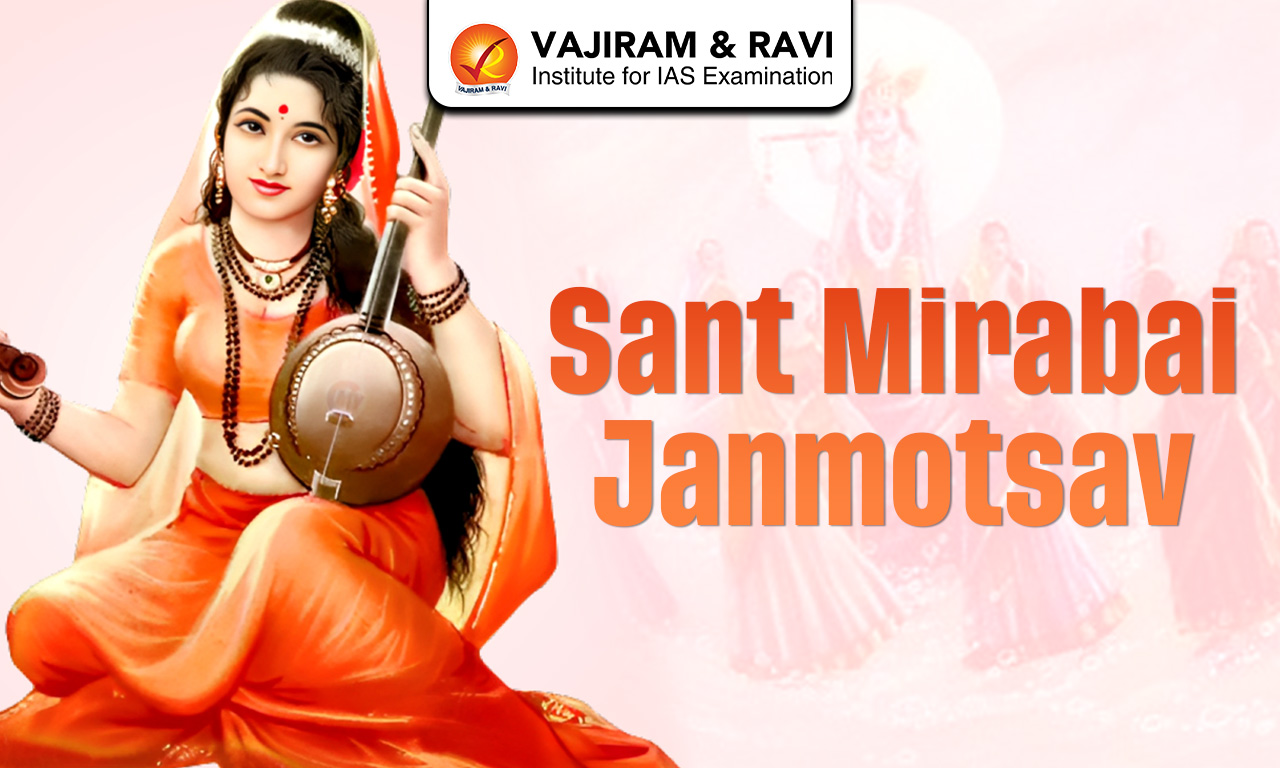
Sant Mirabai Janmotsav marks the celebration of the birth anniversary of Sant Mirabai, a leading Bhakti saint of medieval India. The day highlights her devotion to Lord Krishna, her spiritual journey and her poetic legacy. It is celebrated across India, especially in Rajasthan and Uttar Pradesh, Sant Mirabai Jayanti reflects her role in promoting devotion, equality and spiritual love through simple and emotional bhajans.

Sant Mirabai Janmotsav 2026

Sant Mirabai Janmotsav 2026 commemorates the 528th birth anniversary of Sant Mirabai with grand celebrations in Mathura, Uttar Pradesh. Sant Mirabai Jayanti 2026 will be observed on October 26th, 2026. The celebration includes cultural events, devotional singing and national tributes. 

Sant Mirabai Biography

Sant Mirabai Janmotsav also recalls the life of Mirabai. Mirabai was born in 1498 in Kudki, Rajasthan, into a Rathore Rajput family. She spent her early life in Merta and was the great granddaughter of Rana Jodhaji. She was married to Bhoj Raj of Mewar in 1516 where she faced hardships but chose devotion to Krishna. Her later years were spent in Vrindavan or Dwarka, dedicated to spiritual pursuits.

Sant Mirabai Contributions

Sant Mirabai Janmotsav highlights her major contributions to Bhakti movement and Indian spiritual heritage through devotion, poetry and social reform. The detailed information regarding Sant Mirabai has been listed below:

  • Role in Bhakti Movement: Sant Mirabai emerged as a key figure in the Bhakti Movement between the 14th and 17th centuries, promoting personal devotion to God. She emphasized emotional connection with Krishna over rituals, making spirituality accessible to common people across social divisions.
  • Literary Contributions: She composed numerous bhajans and padas in simple languages like Rajasthani and Braj Bhasha. Her compositions express deep love, surrender and longing for Krishna, with famous works like ‘Payoji Maine Naam Ratan Dhan Payo’ still widely sung.
  • Promotion of Social Equality: Sant Mirabai rejected rigid caste and gender norms of medieval society. She advocated equal access to divine grace regardless of birth, poverty, age, or gender, challenging hierarchical structures and promoting inclusivity in spiritual practices.
  • Spiritual Ideology of Premabhakti: Her life is considered a high example of Premabhakti, where devotion is based on pure love. She regarded Krishna as her eternal beloved, symbolizing complete surrender and emotional unity with the divine.
  • Cultural Influence: Her works enriched Indian cultural heritage through music and literature. Her songs continue to influence devotional traditions, classical music and folk practices, ensuring her lasting relevance across generations.
  • Historical Recognition: Sant Mirabai is mentioned in Bhaktamal by Nabha Dass, confirming her historical importance. 

Sant Mirabai Janmotsav FAQs

Q1: What is Sant Mirabai Janmotsav?

Ans: Sant Mirabai Janmotsav is a celebration of the birth anniversary of Sant Mirabai, honouring her devotion to Lord Krishna and her contributions to the Bhakti tradition.

Q2: When is Sant Mirabai Janmotsav 2026 celebrated?

Ans: Sant Mirabai Janmotsav 2026 will be observed on October 26th, 2026. It marks the 528th birth anniversary of Mirabai and is observed with special events, especially in Mathura, Uttar Pradesh.

Q3: Where was Sant Mirabai born?

Ans: Sant Mirabai was born in 1498 in Kudki village, located in the present day Pali district of Rajasthan.

Q4: What are the main contributions of Sant Mirabai?

Ans: Her major contributions include devotional bhajans, promotion of Premabhakti, social equality and enriching India’s cultural and spiritual heritage.

Q5: Which famous bhajan is associated with Sant Mirabai?

Ans: One of her most popular bhajans is “Payoji Maine Naam Ratan Dhan Payo,” which reflects her deep devotion to Lord Krishna.

Sikkim Model of Organic Farming, India’s First 100% Organic State

Sikkim Model of Organic Farming

The Prime Minister, while addressing the 50th year of Sikkim’s Statehood celebrations in Gangtok, praised Sikkim for adopting organic farming ahead of the rest of the country by nearly a decade. He described Sikkim’s organic farming system as a model for India’s sustainable agriculture mission.

Sikkim Model of Organic Farming 

Sikkim became the world’s first 100 per cent organic state in 2016, after completing a phased transition away from synthetic fertilisers and pesticides. The overall objective was to protect soil health, biodiversity, and fragile mountain ecosystems.

Key Pillars of the Sikkim Model of Organic Farming 

The Sikkim Organic Model is built on a structured combination of phased transition, legal enforcement, institutional support, and farmer-focused interventions that enabled the state to achieve 100% organic farming status.

  • Phased Transition (2003-2016): Sikkim followed a gradual reduction approach, cutting chemical fertilisers and pesticides by around 10% annually from 2003. This step-by-step process allowed farmers to adjust to organic methods, leading to a complete ban on synthetic inputs by 2014 and full organic certification by 2016.
  • Legal Backing: The state enforced a strict legal ban on the use and sale of chemical fertilisers and pesticides, supported by penal provisions including fines and imprisonment to ensure compliance and prevent illegal use of synthetic inputs.
  • Institutional Framework: The Sikkim Organic Mission, established in 2010, acted as the nodal agency responsible for planning, coordination, training, and implementation of organic farming across the state.
  • Farmer Training: Training programmes were conducted for thousands of farming households on composting, natural pest management, and organic cultivation practices. However, the reach and effectiveness of training remained uneven across regions.
  • Certification System: The Sikkim State Organic Certification Agency was set up to certify farms in line with national organic standards under the National Programme for Organic Production, ensuring credibility, traceability, and quality assurance.
  • Organic Practices: Farmers adopted sustainable methods such as composting, vermicomposting, crop rotation, intercropping, and botanical pesticides like neem-based formulations to replace chemical inputs and maintain soil health.
  • Market Strategy: The state focused on high-value crops such as large cardamom, ginger, turmeric, kiwi, and avocado, targeting niche domestic and international markets. However, weak market integration limited consistent price benefits for farmers.
  • Support Measures: The government provided compost pit construction, livestock support for manure production, bio-input distribution, and training infrastructure to strengthen on-farm organic capacity, though access remained uneven in practice.

Ecological Significance of the Sikkim Model of Organic Farming 

The Sikkim Model of Organic Farming has contributed significantly to environmental sustainability by aligning agricultural practices with ecological principles.

  • Reduced Chemical Pollution: Elimination of synthetic fertilisers and pesticides has reduced contamination of soil and water resources
  • Improvement in Soil Health: Increased use of organic manure has enhanced soil fertility, structure, and microbial activity
  • Biodiversity Conservation: The model supports rich Himalayan biodiversity by maintaining natural habitats and reducing ecological stress
  • Climate-Friendly Agriculture: Organic farming practices have lowered greenhouse gas emissions and promoted sustainable land use
  • Water Resource Protection: Reduced chemical runoff has improved the quality of surface and groundwater
  • Ecosystem Stability: The shift to natural inputs has strengthened ecological balance and resilience in farming systems
  • Preservation of Traditional Practices: Revival of indigenous farming methods has supported sustainable and low-input agriculture
  • Support to Pollinators and Soil Organisms: Reduced chemical use has helped restore populations of beneficial insects and soil fauna

Overall, the model demonstrates how agriculture can be aligned with environmental conservation, especially in ecologically sensitive regions like the Himalayas.

Challenges in the Sikkim Model of Organic Farming

While Sikkim’s transition to fully organic agriculture is a significant achievement, its implementation has revealed several structural, economic, and technical challenges.

  • Decline in Crop Productivity: Many farmers reported reduced yields in crops such as ginger, pulses, and maize after the withdrawal of chemical fertilisers and pesticides
  • Pest and Disease Management Issues: Increased incidence of pests and diseases due to limited availability and effectiveness of organic alternatives
  • Inadequate Farmer Training: Training programmes were conducted, but their reach and quality remained uneven, leaving many farmers without proper technical guidance
  • Limited Availability of Organic Inputs: Insufficient supply of bio fertilisers and bio pesticides constrained effective adoption of organic practices
  • Weak Market Linkages: Farmers often struggled to access reliable markets and were unable to secure premium prices for organic produce
  • Dependence on Middlemen: Lack of organised marketing systems led to continued reliance on intermediaries, reducing farmer income
  • High Certification Costs: Significant financial resources were spent on certification processes, diverting funds from farmer support and capacity building
  • Food Security Concerns: Declining productivity and focus on cash crops led to continued dependence on external states for food supply
  • Inadequate Infrastructure: Weak storage, transportation, and processing facilities limited value addition and market expansion
  • Lack of Data and Research Support: Insufficient scientific data on pest attacks, productivity trends, and soil health affected policy refinement
  • Implementation Gaps: Differences in policy design and ground-level execution created gaps in achieving intended outcomes

These challenges indicate that while the Sikkim model is environmentally progressive, its long-term success depends on addressing issues related to productivity, market systems, and farmer support.

Key Lessons for India from the Sikkim Model of Organic Farming

The Sikkim experience offers important insights for designing and scaling sustainable agriculture policies across diverse regions in India.

  • Gradual Transition: A phased approach, rather than a sudden shift, helps farmers adapt to organic practices without severe economic shocks
  • Strong Political Will: Consistent policy commitment and leadership are critical for implementing large-scale agricultural transformation
  • Institutional Support: Dedicated agencies and coordinated governance mechanisms are needed for effective implementation
  • Farmer-Centric Approach: Continuous training, technical guidance, and input support must be prioritised for farmers
  • Focus on Soil Health: Long-term sustainability depends on improving soil fertility and biological activity
  • Market Linkages Must Be Strengthened: Organic farming can succeed only if farmers receive assured markets and fair price premiums
  • Balance Between Sustainability and Productivity: Ecological goals must be aligned with maintaining adequate crop yields and food security
  • Research and Innovation: Scientific support is required for pest management, crop productivity, and climate resilience
  • Region-Specific Adaptation: The model cannot be directly replicated; it must be adapted to local agro-climatic and socio-economic conditions
  • Integrated Approach Required: Organic farming should be linked with tourism, value addition, and rural development for broader impact

These lessons highlight that while Sikkim provides a strong model, successful replication across India requires careful planning, institutional strength, and farmer-focused implementation.

Sikkim Model of Organic Farming FAQs

Q1: When did Sikkim become a fully organic state?

Ans: Sikkim was declared a 100 per cent organic state in 2016 after completing its transition.

Q2: Why did Sikkim adopt organic farming?

Ans: The main aim was to protect soil health, conserve biodiversity, and ensure sustainable agriculture in a fragile Himalayan ecosystem.

Q3: What are the ecological benefits of the Sikkim model?

Ans: It has reduced pollution, improved soil health, conserved biodiversity, and promoted environmentally sustainable farming.

Q4: What are the major challenges in the Sikkim model?

Ans: Farmers faced lower yields, pest problems, lack of inputs, weak market access, and limited price benefits.

Q5: What is the main lesson from the Sikkim model?

Ans: Sustainable farming needs strong policy support, farmer training, and proper market systems to succeed.

Kautilya’s Arthashastra, Features, Administration, Importance

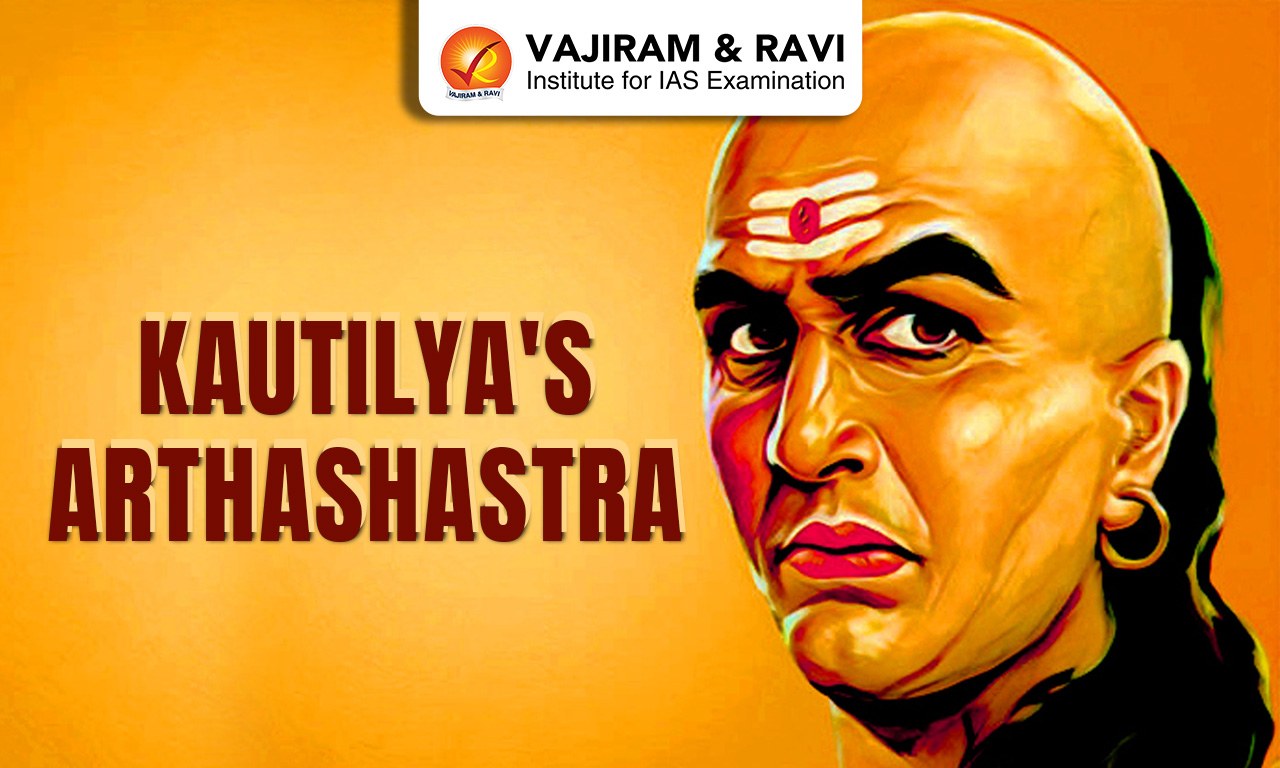
Kautilya's Arthashastra

Kautilya’s Arthashastra is one of the most important ancient Indian texts on governance, economics, politics, and strategy. It was written by Kautilya (also known as Chanakya or Vishnugupta), who was the chief advisor to Chandragupta Maurya, the founder of the Maurya Empire.

This text acts as a complete manual for ruling a state, covering administration, law, diplomacy, taxation, military strategy, and social order.

Kautilya's Arthashastra

The term Arthashastra comes from two Sanskrit words, Artha meaning wealth, prosperity, or material well-being, and Shastra, meaning science or treatise. Thus, Arthashastra means “The Science of Wealth and Statecraft.” It was written by Kautilya around the 4th century BCE and serves as a comprehensive guide for rulers. 

Kautilya's Arthashastra Key Features

Kautilya’s Arthashastra is a comprehensive and practical guide that explains governance, economy, diplomacy, and military strategy in a systematic way.

  • Comprehensive Treatise on Statecraft: Covers politics, administration, economics, military strategy, and social organization in a unified framework by Kautilya.
  • Role in Mauryan Establishment: Kautilya played a key role in establishing the rule of Chandragupta Maurya and shaping early imperial governance.
  • Saptanga Theory of State: Defines seven essential elements of a state: King, Ministers, Territory, Fort, Treasury, Army, and Allies.
  • Strong Administrative System: Emphasizes efficient governance through trained officials, proper hierarchy, and strict supervision.
  • Economic Management: Focuses on agriculture, trade, taxation, and state control over key industries to ensure economic stability.
  • Taxation Policy: Advocates fair and systematic tax collection without overburdening citizens.
  • Espionage System: Introduces a well-organized spy network to monitor internal administration and external threats.
  • Law and Justice: Promotes strict legal systems with defined punishments to maintain order and discipline.
  • Foreign Policy (Mandala Theory): Explains inter-state relations, alliances, and rivalries based on strategic interests.
  • Military Strategy: Highlights the importance of a strong army, planning, and use of tactics in warfare.
  • Public Welfare Focus: Encourages development of infrastructure, irrigation, trade routes, and citizen welfare.
  • Concept of Slavery: Mentions that individuals could become slaves through means such as judicial punishment. It also provided certain rights; if a female slave bore her master’s son, she could gain freedom, and the child was entitled to legal recognition.
  • Practical and Realistic Approach: Unlike idealistic texts, it focuses on real-world governance, power management, and decision-making.

Administration in Kautilya’s Arthashastra

  • Centralized Administration: Kautilya advocated a strong centralized system where the king was the supreme authority, but governance was carried out through a structured bureaucracy.
  • Role of the King: The king was the head of administration and responsible for law, order, security, and welfare of the people. He was expected to be disciplined, accessible, and guided by advisors.
  • Council of Ministers (Mantriparishad): A group of wise and experienced ministers assisted the king in decision-making. Policies were formed through consultation and collective wisdom.
  • Well-Defined Bureaucracy: Arthashastra describes a detailed administrative system with officials like:
    • Amatyas (Ministers)
    • Samaharta (Revenue Collector)
    • Sannidhata (Treasurer)
      Each official had clearly defined roles and responsibilities.
  • Departmental Administration: The state was divided into various departments such as:
    • Agriculture
    • Trade and commerce
    • Mining
    • Forests
    • Defense
      Each department was supervised by a superintendent (Adhyaksha).
  • Provincial and Local Administration: The empire was divided into provinces, districts, and villages for better governance. Local officers managed day-to-day administration and reported to higher authorities.
  • Revenue Administration: Efficient tax collection was a key feature. The state collected revenue from:
    • Agriculture
    • Trade
    • Customs duties
    • Mines and forests
  • Law and Order System: Strict laws and punishments were enforced to maintain discipline. Officials were responsible for preventing crime and ensuring justice.
  • Espionage and Intelligence System: A strong network of spies was used to monitor:
    • Officials
    • Public opinion
    • Enemy activities
      This helped in maintaining internal security and preventing corruption.
  • Anti-Corruption Measures: Kautilya emphasized strict supervision of officials. Regular audits and severe punishments were used to control corruption.
  • Record Keeping and Accountability: Detailed records of revenue, expenses, and administrative activities were maintained. Officials were held accountable for their performance.
  • Public Welfare Administration: The state was responsible for:
    • Building roads and irrigation systems
    • Supporting farmers and traders
    • Managing disasters and crises
  • Military Administration: A separate administrative system managed the army, including recruitment, training, and logistics.
  • Judicial Administration: Courts and judges were appointed to handle disputes. Justice was expected to be fair but strict.
  • Efficiency and Discipline: Overall administration focused on efficiency, discipline, and stability, ensuring smooth functioning of the state under rulers like Chandragupta Maurya.

Importance of Arthashastra

  • Foundation of Political Science in India: The Arthashastra by Kautilya is one of the earliest and most systematic works on governance, making it a cornerstone of ancient Indian political thought.
  • Practical Guide to Governance: Unlike purely philosophical texts, it provides real-world solutions on administration, law, taxation, and state management, helping rulers govern effectively.
  • Insight into Mauryan Administration: It offers a detailed understanding of how the Maurya Empire functioned under Chandragupta Maurya, including bureaucracy and decision-making.
  • Economic Planning and Resource Management: Arthashastra explains taxation, trade regulation, agriculture, and state control over resources, making it an early text on economic policy.
  • Development of Foreign Policy Concepts: Concepts like the Mandala Theory provide insights into diplomacy, alliances, and international relations, many of which are still relevant today.
  • Emphasis on Law and Order: It highlights the importance of a strong legal system with clear rules and punishments to maintain stability in society.
  • Focus on Public Welfare: The text stresses that the king’s duty is the welfare and happiness of his people, including infrastructure development and disaster management.
  • Use in Modern Administration and Strategy: Many ideas from Arthashastra are still applicable in public administration, management, and strategic planning.

About Kautilya (Chanakya)

  • Identity and Names: Kautilya was also known as Chanakya and Vishnugupta in ancient texts.
  • Time Period: Lived around the 4th century BCE, a crucial period in Indian history.
  • Author of Arthashastra: Wrote the famous Arthashastra, a detailed guide on governance, economics, and statecraft.
  • Advisor to Chandragupta Maurya: Served as the chief mentor and strategist to Chandragupta Maurya.
  • Role in Empire Building: Played a key role in the establishment of the Maurya Empire.
  • Political and Economic Thinker: Known for his deep understanding of administration, diplomacy, and economic policies.
  • Strategic Mindset: Famous for practical, result-oriented strategies rather than idealistic theories.
  • Association with Education: Believed Zto be linked with the ancient university of Takshashila.
  • Focus on Governance: Emphasized discipline, efficient administration, and welfare of the people.
  • Lasting Legacy: His ideas still influence modern governance, management, and political studies.

UPSC CSE Prelims PYQs

According to Kautilya’s Arthashastra, which of the following are correct?

  1. A person could be a slave as a result of a judicial punishment.
  2. If a female slave bore her master a son, she was legally free.
  3. If a son born to a female slave was fathered by her master, the son was entitled to the legal status of the master's son.

Which of the statements given above are correct?

  1. 1 and 2 only
  2. 2 and 3 only
  3. 1 and 3 only
  4. 1, 2 and 3

Kautilya's Arthashastra FAQs

Q1: Who wrote Kautilya’s Arthashastra?

Ans: It was written by Kautilya, also known as Chanakya or Vishnugupta.

Q2: What is Arthashastra about?

Ans: Arthashastra is a detailed text on governance, politics, economics, military strategy, law, and administration.

Q3: When was Arthashastra written?

Ans: It was written around the 4th century BCE during the time of Chandragupta Maurya.

Q4: Why is Arthashastra important?

Ans: It is one of the earliest and most comprehensive works on statecraft and public administration, still relevant today.

Q5: What is the main objective of Arthashastra?

Ans: Its main aim is to guide rulers on how to govern efficiently, maintain law and order, and ensure the welfare of the state.

Kudavolai System, Inscription, Process of Election, Eligibility

Kudavolai System

The Kudavolai System was an early method of local self-government used in South India during the time of the Chola Dynasty. In this system, people chose their village representatives by drawing names from a pot, making the process fair and transparent. It showed how villages managed their own administration with public participation. Overall, it is seen as an early example of democratic practices in India. Kudavolai System, Process of Election, Eligibility, Disqualification and other details are discussed in this article.

About Kudavolai System

  • The Kudavolai system was an early method of election used in village assemblies during the time of the Chola Dynasty. It was mainly followed in Brahmadeya villages of ancient Tamil Nadu.
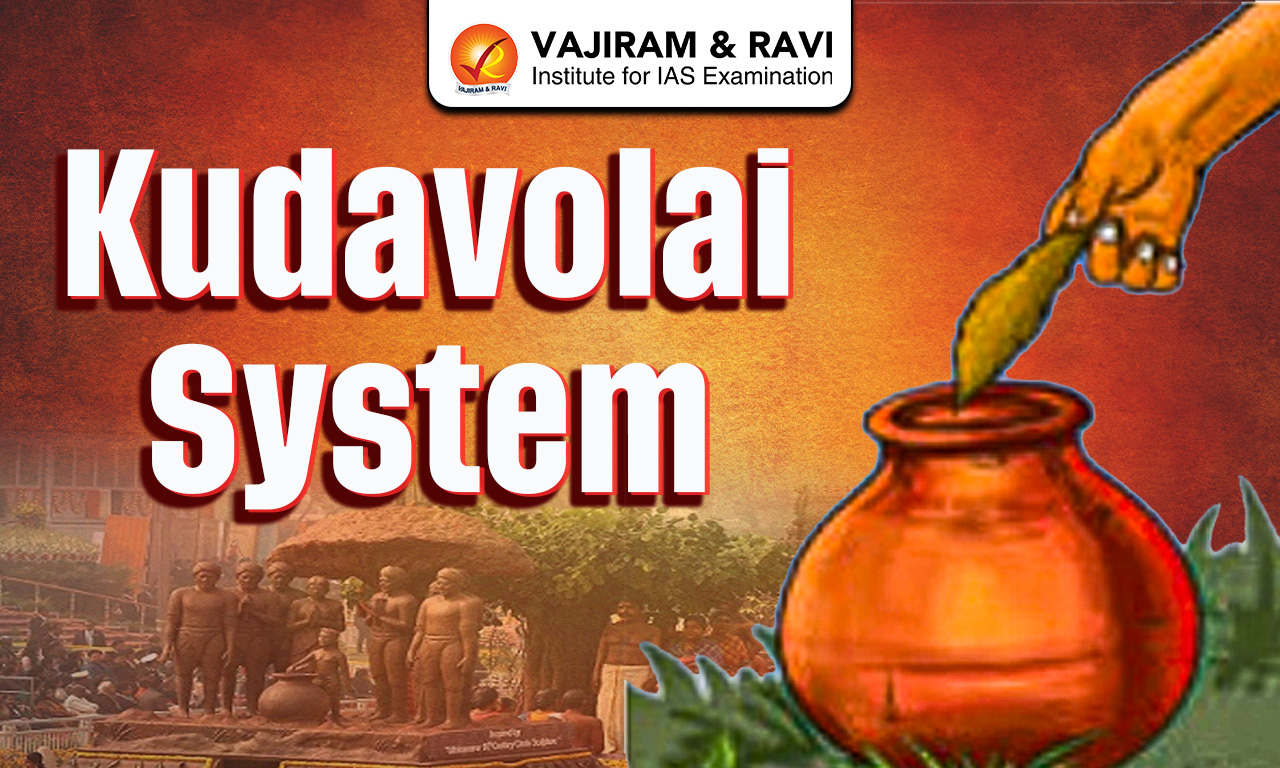
  • The term comes from Tamil words where “Kudam” means pot and “Olai” means palm leaf, describing the unique voting method used in this system.
  • Process of Election
    • Names of eligible candidates were written on palm leaves and placed inside a pot.
    • A young boy, selected for his honesty and impartial nature, would draw one leaf in front of the entire village.
    • The person whose name was picked became a member of the village assembly (Sabha).
    • This method was not just random selection but a well-respected public process that ensured transparency and fairness.
  • Historical Evidence
    • The system is clearly described in the Uttaramerur Inscriptions in Kanchipuram district.
    • These inscriptions belong to the reign of Parantaka Chola I (10th century CE) and give detailed rules about elections and administration.
    • Similar inscriptions found in other regions show that this system was widely practiced in South India.
  • Eligibility of Candidates
    • Candidates had to own land and regularly pay taxes to the state.
    • The age limit was generally between 35 and 70 years.
    • They were expected to have knowledge of Vedas, scriptures, or administrative work.
    • A good character was necessary, and they should not have any criminal record or immoral behavior.
  • Disqualification Criteria
    • People who did not repay debts or were involved in habits like alcoholism were not allowed to participate.
    • Close relatives of current members were disqualified to prevent concentration of power.
    • Those found guilty of corruption, misuse of public funds, or neglect of duties could be removed and banned from future roles.
  • Administration and Committees
    • The village administration was divided into different committees for areas like agriculture, education, trade, irrigation, and temple maintenance.
    • Members of these committees were selected through the Kudavolai system.
    • Regular audits and strict rules ensured that officials worked honestly and responsibly.
  • Significance
    • The Kudavolai system is considered one of the earliest examples of democratic practices in India.
    • It promoted public participation, transparency, and accountability in local governance.
    • Even today, it is remembered as an advanced and well-organized system of village administration in ancient India.

Chola Democratic System & Administration

  • The Chola Dynasty followed a well-organised and decentralised system of administration, where power was shared between the central authority and village-level institutions.
  • Two important village assemblies formed the base of local self-government:
    • Sabha - Found in Brahmadeya villages (settlements given to Brahmins), it included only Brahmin male members. It worked through different committees (variyams) like garden, tank, and justice committees, and members were often chosen through the Kudavolai system.
    • Ur - Found in non-Brahmin villages, mainly peasant settlements. The members (called Urar) were landholders who managed temple upkeep, irrigation, water systems, revenue collection, and law and order. It had a less formal structure but played a key role in administration.
  • These local bodies were not just symbolic; they had real powers over revenue, irrigation, temple management, and even justice. Regular audits were conducted to ensure accountability.
  • The empire was divided into provinces (Mandalams), districts (Valanadus and Kottams), and villages (Nadus), which helped in smooth and efficient governance.
  • The Cholas also supported trade by encouraging merchant guilds like Manigramam and Ayyavole, which boosted economic growth and connectivity.
  • Although the system was efficient, it was not fully equal, as women, landless people, and labourers were excluded from participation.
  • The Cholas were also strong in military strategy. Under rulers like Rajendra Chola I, they carried out successful naval campaigns and expanded their influence.
  • The Uttaramerur Inscription gives detailed information about their administration and electoral practices like the Kudavolai system, showing an early form of organised local governance in India.

Kudavolai System FAQs

Q1: What is the Kudavolai System?

Ans: The Kudavolai System was an early method of election used during the Chola Dynasty in South India. In this system, names of candidates were written on palm leaves and drawn from a pot to select village representatives in a fair and transparent way.

Q2: How did the Kudavolai election process work?

Ans: Eligible candidates’ names were written on palm leaves and placed in a pot. A young boy picked one leaf in front of the public, and the selected person became a member of the village assembly. This ensured openness and impartiality.

Q3: What are the main features of the Kudavolai System?

Ans: The system focused on transparency, fairness, and public participation. It included strict eligibility rules, random selection through a public process, and accountability through audits and removal of corrupt officials.

Q4: What is the historical evidence of the Kudavolai System?

Ans: The system is described in the Uttaramerur Inscriptions, issued during the reign of Parantaka Chola I in the 10th century CE, which provide detailed rules about elections and administration.

Q5: Who could participate in the Kudavolai System?

Ans: Only qualified candidates could participate. They had to own land, pay taxes, be between 35 and 70 years old, have knowledge of Vedas or administration, and maintain good character without any criminal record.

King Prithu Rae, Background, Bakhtiyar Khilji’s Invasion, Evidence

King Prithu Rae

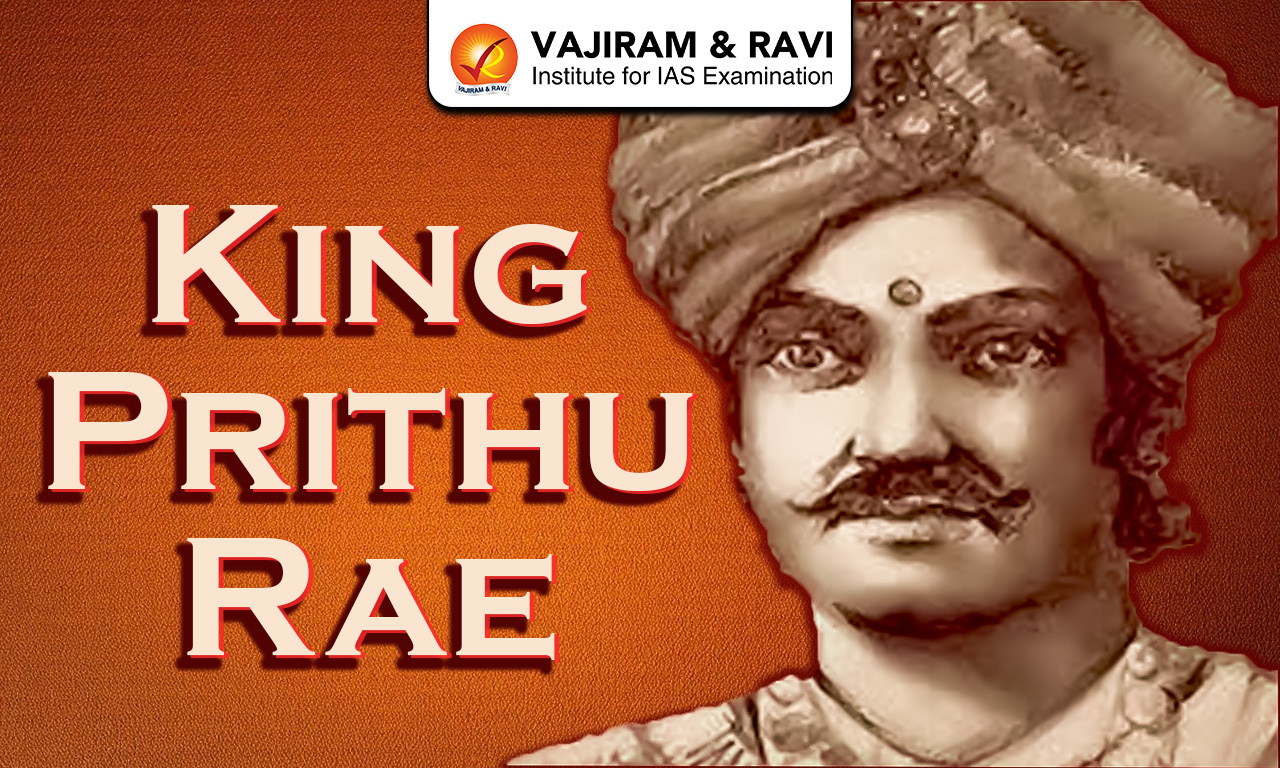
King Prithu Rae was a brave and capable ruler of the Kamrupa kingdom in present-day Assam during the early 13th century. He is best known for defending his region against foreign invasions, especially defeating Bakhtiyar Khilji. His leadership helped protect the independence and culture of Northeast India. Though not widely known in mainstream history, he is remembered as a heroic and just king in regional traditions.

About King Prithu Rae

  • King Prithu Rae Background
    • King Prithu Rae, also known as Raja Prithu Rae, was an important ruler of the Kamrupa kingdom (present-day Assam) during the early 13th century. He is remembered as a brave and capable king who protected his region during a time of invasions.
    • He belonged to the Khen dynasty, which claimed descent from Narakasura, a legendary figure in Indian mythology. This connection gave the dynasty a sense of cultural and traditional importance.
    • The Khen rulers were devoted to Goddess Kamteswari, who is considered a form of Goddess Durga, showing their strong connection to Hindu religious traditions.
    • After the decline of the Pala Dynasty, the Khens rose from being local chiefs to powerful rulers and later established the Kamata Kingdom, which was also known by names like Kamru, Kamrud, Kamrupa, Kamata, Koch, or Koch Hajo in different historical sources.
  • Recognition and Historical Importance
    • King Prithu has not been widely highlighted in mainstream Indian history, but he holds an important place in local traditions, inscriptions, and regional stories of Assam.
    • In recent years, his legacy has gained attention due to historian Raktim Patar, who wrote the book Maharaja Prithu: The Unsung Warrior King Who Annihilated Bakhtiyar Khalji in 2021, presenting him as a forgotten hero.
    • British historian Wolseley Haig also mentioned that Prithu defeated Hisan Uddin Iwaz, a ruler associated with the Delhi Sultanate, which further highlights his military strength.
  • Prithu and Bakhtiyar Khilji’s Invasion
    • Bakhtiyar Khilji was a powerful military commander under Muhammad of Ghor. He was among the early leaders who tried to expand Turko-Afghan rule into eastern parts of India.
    • Around 1205-1206 CE, after attacking regions like Nalanda, Khilji planned to expand his empire further by moving towards Tibet through Kamrupa.
    • However, when his army entered Kamrupa, they faced strong resistance and were completely defeated. Many local accounts say that Khilji was badly injured during this failed campaign.
    • This defeat is considered very important because it was one of the earliest successful resistances against Turko-Afghan invasions in Northeast India, showing the strength of local rulers like Prithu.
  • Evidence and Historical Records
    • The Kanai Varasi rock inscription in Assam provides evidence that the invading Turkish forces were destroyed in 1206 CE, supporting the story of this victory.
    • Historical texts like the Persian chronicle Tabaqat-i-Nasiri and inscriptions from North Guwahati mention a ruler named Bartu or Prithu, who is believed to have defeated Khilji.
    • Although there is no clear and direct record naming King Prithu, many modern historians believe that he was the ruler responsible for this important victory.
  • Key Contributions and Achievements
    • King Prithu is mainly known for defeating Bakhtiyar Khilji and protecting Kamrupa from invasion, which helped maintain the region’s independence.
    • The Kanai Varasi inscription stands as proof of the complete destruction of the invading army, making this event historically significant.
    • Despite his military success, Prithu showed kindness and humanity by pardoning prisoners of war and following the principles of Dharma Yuddha (righteous and ethical warfare).
    • King Prithu is remembered as a brave, just, and responsible ruler who defended his land during a difficult time.
    • Even though he is not very prominent in mainstream history books, he is respected as a heroic defender of Assam and Northeast India in regional history, folklore, and inscriptions.

King Prithu Rae FAQs

Q1: Who was King Prithu Rae?

Ans: King Prithu Rae, was a 13th-century ruler of the Kamrupa kingdom (present-day Assam). He is remembered as a brave king who protected his kingdom from foreign invasions.

Q2: Which dynasty did King Prithu Rae belong to?

Ans: He belonged to the Khen dynasty, which claimed descent from Narakasura and ruled parts of Assam after the decline of the Pala Dynasty.

Q3: What is King Prithu Rae known for?

Ans: King Prithu Rae is mainly known for defeating the invading forces of Bakhtiyar Khilji and successfully protecting Kamrupa from invasion.

Q4: Who was Bakhtiyar Khilji and what was his connection to King Prithu Rae?

Ans: Bakhtiyar Khilji was a Turko-Afghan military commander under Muhammad of Ghor. He attempted to invade Kamrupa around 1206 CE but was defeated, possibly by King Prithu Rae.

Q5: What evidence supports King Prithu Rae’s victory?

Ans: The Kanai Varasi rock inscription in Assam and references in texts like Tabaqat-i-Nasiri mention the destruction of invading forces and a ruler named Prithu or Bartu.

New Species of Fireflies

New Species of Fireflies

Fireflies Latest News

Scientists recently discovered two previously unknown species of fireflies named Diaphanes meghalayanus and Diaphanes mawlynnong in Meghalaya’s East Khasi Hills, marking the first formal documentation of such insects from the state.

About Diaphanes meghalayanus and Diaphanes mawlynnong

  • They are two new species of fireflies.
  • They were discovered in Meghalaya’s East Khasi Hills
  • D. meghalayanus has been named after Meghalaya to indicate its broader distribution in the region, while D. mawlynnong derives its name from Mawlynnong village, where the species was first recorded, acknowledging the local Khasi community. 
  • Both species thrive in dark, humid environments with minimal human interference. 
  • D meghalayanus was found in semi-evergreen forests as well as dense betel nut plantations interspersed with bamboo patches, typically during February. 
    • The species thrives in cool, humid conditions—around 18–20°C with 77–80% humidity—and flies at heights of 10–15 metres, glowing softly in the dark. 
  • D. mawlynnong appears to be more habitat-specific, inhabiting dense forests with thick bamboo growth and rocky streams.  
    • Males were observed flying about 15 metres above the ground, while the wingless female was found beneath a boulder—an unusual behaviour that offers rare insight into the species’ life cycle. 
    • Females emit a slower, longer pulsating glow compared to males.

Source: IT

New Species of Fireflies FAQs

Q1: What are Diaphanes meghalayanus and Diaphanes mawlynnong?

Ans: They are two newly discovered species of fireflies.

Q2: Where were Diaphanes meghalayanus and Diaphanes mawlynnong discovered?

Ans: They were discovered in the East Khasi Hills of Meghalaya.

Q3: What type of environment do these fireflies prefer?

Ans: They thrive in dark, humid environments with minimal human interference.

Kolkali Art, Dance, History, Music, Instruments, Style

Kolkali Art

Kolkali Art is a traditional folk dance of Kerala’s Malabar region with nearly 200 years of history and strong cultural roots. Kolkali Art reflects community unity, devotional traditions, and rhythmic performance using sticks. Kolkali Dance evolved with influences from Kalaripayattu and is widely performed in festivals and social events. Kolkali Art gained prominence through Kerala School Kalolsavam and continues to represent cultural harmony across communities in South India.

Kolkali Art Features

Kolkali Art is a rhythmic group dance combining martial influence, devotional songs, circular movement, and community participation traditions across Kerala.

  • Origin: Kolkali Art originated in North Malabar region of Kerala with about two centuries of history. 
  • Historical Background: It evolved from Kalaripayattu traditions and reflects Dravidian cultural practices, later spreading influence to states like Gujarat, Punjab, and Maharashtra.
  • Performance Style and Formation: In Kolkali Dance, 12 to 24 performers stand in a circle around a Nilavilakku lamp. They strike wooden sticks rhythmically while moving in expanding and contracting circular patterns with synchronized steps.
  • Music and Instruments: Kolkali Art relies on rhythmic stick sounds as primary music, supported by instruments like Chenda, Elathalam, Mathalam, and Chengala. Songs narrate devotional themes related to regional deities and traditions.
  • Variants and Styles: Kolkali Art includes two major styles, namely Actual Kolkali and Thekkan Koladi. Sub-forms like Thacholikali and Rajasooyam exist, though traditional Kolkali forms are now nearly extinct in practice.
  • Cultural and Social Significance: Kolkali Art was traditionally performed after harvest seasons to promote unity among villagers across caste and creed. Today, it is performed during festivals, weddings, and cultural events.
  • Regional Influence and Adaptations: Kolkali Art influenced similar stick dances across India, known as Kolattam in Tamil Nadu and Kolamu in Andhra Pradesh, showing its widespread cultural impact.
  • Modern Recognition and Practice: Kolkali Art is a key attraction in Kerala School Kalolsavam, considered Asia’s largest cultural event, ensuring its continued relevance and preservation among younger generations.

Also Read: Mauryan Art

Kolkali Art FAQs

Q1: What is Kolkali Art?

Ans: Kolkali Art is a traditional folk dance of Kerala’s Malabar region performed with sticks in rhythmic circular formations.

Q2: What is the origin of Kolkali Art?

Ans: Kolkali Art originated in North Malabar, Kerala, around 200 years ago with influences from Kalaripayattu martial traditions.

Q3: How is Kolkali Art performed?

Ans: Kolkali Art is performed by 12-24 dancers moving in a circle, striking sticks in rhythm around a Nilavilakku lamp.

Q4: What are the main styles of Kolkali Art?

Ans: Kolkali Art has two styles: Actual Kolkali and Thekkan Koladi, with some traditional forms now nearly extinct.

Q5: Where is Kolkali Art famous today?

Ans: Kolkali Art is popular in Kerala School Kalolsavam and performed in festivals, weddings, and cultural celebrations.

Khooni Darwaza, Location, Establishment, History, Architecture

Khooni Darwaza

Khooni Darwaza is a historic gateway in Delhi linked with the Revolt of 1857 and earlier medieval developments. The Gate was built in the 16th century by Sher Shah Suri, this structure reflects political and military history. It was originally called Lal Darwaza or Kabuli Darwaza, Khooni Darwaza later gained its present name after a tragic execution of Mughal princes in 1857, making it a symbol of Delhi’s violent past.

Khooni Darwaza

Khooni Darwaza stands near Delhi Gate on Bahadur Shah Zafar Marg and represents a key surviving gateway of medieval Delhi’s fortifications.

  • Location: Khooni Darwaza is situated on Bahadur Shah Zafar Marg in Delhi, close to Delhi Gate, opposite Arun Jaitley Stadium and near Maulana Azad Medical College, marking its importance within the urban landscape of old and modern Delhi.
  • Establishment: Khooni Darwaza was constructed during the reign of Sher Shah Suri between 1540 and 1545 as part of the fortifications of Purana Qila, reflecting the expansion of the Sur Empire in northern India.
  • Original Name: Initially known as Lal Darwaza or Kabuli Darwaza, Khooni Darwaza derived its earlier name from trade routes, as caravans travelling towards Kabul passed through this gateway.
  • Present Status: Khooni Darwaza is currently a protected monument maintained by the Archaeological Survey of India and public entry inside the structure has been restricted since 2002 for safety reasons.

Khooni Darwaza Historical Development

Khooni Darwaza reflects continuous political violence, imperial transitions and colonial conflict, with the 1857 execution of Mughal princes marking its most defining episode.

  • Sur Dynasty Foundation: Khooni Darwaza was constructed under Sher Shah Suri during 1540-1545 after his victories in the Battle of Chausa (1539) and Kanauj (1540), establishing Afghan authority in Delhi and strengthening urban fortifications.
  • Mughal Period Associations: During Mughal rule, Khooni Darwaza became linked with punitive displays, including incidents under Jahangir and Aurangzeb, where enemies and rivals were executed and their remains displayed as political warnings.
  • Execution of Mughal Princes (1857): On 22 September 1857, Major William Hodson shot dead Mirza Mughal, Mirza Khizr Sultan and Mirza Abu Bakr, sons and grandson of Bahadur Shah Zafar, near Khooni Darwaza after their surrender from Humayun’s Tomb, making it a symbol of colonial brutality.
  • Post 1857 Developments: Khooni Darwaza continued to witness violence during the Partition of 1947 and later incidents, including a major crime in 2002, after which authorities sealed its internal access for preservation and security.

Khooni Darwaza Architecture

Khooni Darwaza represents a transitional architectural style combining Afghan robustness with emerging Mughal decorative elements, reflecting 16th century construction practices in Delhi.

  • Structural Composition: Khooni Darwaza is a three storeyed gateway constructed using Delhi quartzite stone, rising to about 15.5 metres (around 50 feet), with separate staircases connecting each level, highlighting its defensive and surveillance functions.
  • Afghan Architectural Influence: The structure shows Afghan characteristics such as massive proportions, thick masonry walls, pointed arches, minimal ornamentation and emphasis on height, typical of Sur and Lodi period military architecture.
  • Mughal Design Elements: Khooni Darwaza incorporates Mughal features like red sandstone detailing, ornamental arch frames, jharokha style balconies and refined surface treatment, indicating the gradual evolution of Mughal aesthetics in early phases.
  • Defensive Features: The gateway includes kangura battlements at the top for guarding positions and damaaga openings below them, which were used by soldiers to pour hot liquids or attack enemies attempting to breach the gate.
  • Entrance and Openings: Khooni Darwaza has three arched entrances with the central arch larger than the others, along with rectangular windows fitted with chajjas supported by carved brackets, ensuring ventilation and defensive visibility.
  • Functional Detailing: The presence of pishtaq niches near the entrance allowed placement of lamps for illumination, while the large courtyard in front served as a public gathering space, enclosed by walls with chambers and rooms for administrative or military use.

Khooni Darwaza FAQs

Q1: What is Khooni Darwaza famous for?

Ans: Khooni Darwaza is famous for the 1857 execution of Mughal princes by Major William Hodson.

Q2: Who built Khooni Darwaza?

Ans: Khooni Darwaza was built by Sher Shah Suri in the 16th century during the Sur Dynasty.

Q3: Where is Khooni Darwaza located?

Ans: Khooni Darwaza is located on Bahadur Shah Zafar Marg near Delhi Gate in Delhi.

Q4: Why is it called Khooni Darwaza?

Ans: It is called Khooni Darwaza due to the killing of Bahadur Shah Zafar’s sons and grandson in 1857.

Q5: What was the original name of Khooni Darwaza?

Ans: Khooni Darwaza was originally known as Lal Darwaza or Kabuli Darwaza.

Exercise Pragati

Exercise Pragati

Exercise Pragati Latest News

The Indian Army is set to host military delegations to the inaugural edition of the multilateral exercise ‘Pragati’ at the Foreign Training Node in Umroi, Meghalaya.

About Exercise Pragati

  • The PRAGATI (Partnership of Regional Armies for Growth and Transformation in the Indian Ocean Region) is a multilateral military exercise.
  • It is the first edition of the exercise which will be held in Umroi, Meghalaya.
  • Participating Countries: It includes 11 friendly countries Laos, Myanmar, Seychelles, Sri Lanka, Philippines, Nepal, Maldives, Malaysia, Vietnam, Cambodia and Bhutan.
  • Aim: It aims to strengthen defence cooperation, enhance interoperability, and build mutual trust among participating nations.
  • It reflects a shared commitment to collective security and regional stability.
  • Key Focus of Exercise Pragati
    • It centers on counter-insurgency and counter-terrorism operations, emphasising joint training and defence diplomacy.
    • It is part of India’s growing defence engagement with its neighbouring and Indian Ocean region nations, focusing on building capacity and shared operational capabilities.
    • It will mark a shift in the Indian Army training from bilateral to consortium-style engagements.
    • Besides war games, a key component of the event is a two-day industry exposition, highlighting the Indian Army's capabilities and fostering industrial partnerships with ASEAN nations.

Source: DD News

Exercise Pragati FAQ's

Q1: Exercise PRAGATI 2026 is being held at which place?

Ans: Umroi, Meghalaya

Q2: What does PRAGATI as a military exercise stands for?

Ans: Partnership of Regional Armies for Growth and Transformation in the Indian Ocean Region

Kyrgyzstan

Kyrgyzstan

Kyrgyzstan Latest News

Recently, the Minister of Defence addressed the SCO Defence Ministers’ Meeting in Bishkek, Kyrgyzstan.

About Kyrgyzstan

  • Location:  It is a landlocked mountainous country in Central Asia.
  • Bordering Countries: It is bordered by four nations; Kazakhstan (north), Uzbekistan (west), Tajikistan (south), and China (east).
  • It is occasionally referred to as “the Switzerland of Central Asia”.
  • Capital City: Bishkek

Geographical Features of Kyrgyzstan

  • Climate: The climate is continental and varies according to the altitude. The winters are cold, often freezing, and the summers warm and sunny.
  • Highest Peak: The highest point in Kyrgyzstan Victory Peak, standing at an elevation of 7,439 meters
  • Major Rivers: Syr Darya, Naryn, Chu.
  • Lakes: Lake Issyk-Kul, the second-largest saline lake in the world is located here.
  • Natural Resources: It consists of coal, oil, natural gas, and uranium, alongside deposits of gold and rare earth metals.

Source: HT

Kyrgyzstan FAQs

Q1: Which major mountain range dominates the geography of Kyrgyzstan?

Ans: Tian Shan

Q2: What is the capital city of Kyrgyzstan?

Ans: Bishkek

Sant Tukaram, Philosophy, Contributions, Abhangas, Reforms

Sant Tukaram

Sant Tukaram was a prominent saint and poet of the Bhakti tradition in India. He is known for his deep devotion to God and for spreading the message of love, faith, and equality among people. Through his simple and meaningful teachings, he encouraged people to connect with God through devotion and lead a life based on honesty and humility.
About Sant Tukaram

  • Sant Tukaram was a 17th-century saint, poet, and philosopher from Maharashtra, associated with the Bhakti tradition.
  • He was a key follower of the Warkari sect, a devotional movement centered on the worship of Lord Vitthala (Panduranga).
  • He was also a contemporary of Shivaji Maharaj.
  • Warkari Tradition
    • The Warkari sect is popular in Maharashtra and focuses on devotion, equality, and simple living.
    • Saints like Dnyaneshwar, Namdev, and Eknath were also part of this tradition.
    • Sant Tukaram’s teachings and poems are central to this sect and still inspire followers today.
  • Literary Contributions
    • Sant Tukaram is best known for his Abhangas, which are short devotional poems written in Marathi.
    • These poems combine simple language, folk ideas, and deep spiritual meaning, making them easy for common people to understand.
    • His collection of poems is known as “Tukaram Gatha”, which includes thousands of Abhangas.
  • Devotion and Worship
    • He promoted Kirtans (devotional songs and group singing) as a way to connect with God.
    • His devotion was mainly towards Lord Vitthala (a form of Vishnu/Krishna).
    • He believed that true devotion comes from love and faith, not from rituals or external practices.
  • Philosophy and Influences
    • Sant Tukaram’s teachings were influenced by earlier Bhakti saints like Kabir, Namdev, Dnyaneshwar, and Eknath.
    • His philosophy had roots in Vedanta, but he explained it in a simple and practical way.
    • He focused on values like humility, devotion, truth, and inner purity.
  • Social Reforms
    • Sant Tukaram strongly spoke against caste discrimination and social inequality.
    • He rejected unnecessary rituals and emphasized that all people are equal in the eyes of God.
    • His Abhangas became a powerful tool to challenge social injustice and Brahmanical dominance.
  • Overall Contribution
    • Sant Tukaram played a major role in strengthening the Bhakti movement in Maharashtra.
    • His teachings made spirituality simple, emotional, and accessible to everyone.
    • Even today, his poems and ideas continue to inspire people towards a life of devotion, equality, and moral values.

Sant Tukaram FAQs

Q1: Who was Sant Tukaram?

Ans: Sant Tukaram was a 17th-century Bhakti saint and poet from Maharashtra, known for spreading the message of devotion, love, and equality through his simple teachings.

Q2: What is Sant Tukaram famous for?

Ans: He is famous for his Abhangas, which are devotional poems in Marathi that express deep faith and are easy for common people to understand.

Q3: What is the Warkari sect associated with Sant Tukaram?

Ans: The Warkari sect is a devotional tradition in Maharashtra focused on the worship of Lord Vitthala, emphasizing equality, devotion, and simple living.

Q4: What is Tukaram Gatha?

Ans: Tukaram Gatha is a collection of Sant Tukaram’s Abhangas, containing thousands of devotional poems dedicated to God.

Q5: What were Sant Tukaram’s main teachings?

Ans: He taught that true devotion comes from love and faith, not rituals, and emphasized values like humility, honesty, and inner purity.

Ugadi Festival, Significance, Rituals, Traditions

Ugadi Festival

Ugadi/Yugadi, also called Samvatsaradi, meaning the beginning of a new year, is a major Hindu New Year festival celebrated with devotion and cultural vibrancy. It marks the start of a fresh annual cycle and symbolizes renewal, hope, and prosperity. Ugadi Festival is observed according to the Hindu lunisolar calendar; it usually falls in late March or early April.

Ugadi Festival

Ugadi Festival is widely celebrated in the Indian states of Andhra Pradesh, Telangana, Karnataka, and Goa, where it holds deep cultural and religious significance as the traditional New Year’s Day.

  • In Karnataka, it is also referred to as Souramana Ugadi or Mesha Sankranti, especially among followers of the solar calendar system.
  • The term Souramana refers to the solar calendar, which calculates time based on the movement of the sun, while Chandramana is the lunar calendar that tracks time using the phases of the moon.
  • The festival is observed on the first day of the Chaitra month in the Hindu lunisolar calendar, marking the arrival of spring and the beginning of a new agricultural and spiritual cycle.
  • One of the most important traditions is drawing decorative floor patterns known as Muggulu (rangoli), which symbolize prosperity and welcome positive energy into homes.
  • Homes are adorned with Torana, which are fresh mango leaf decorations tied at entrances to signify good fortune and invite auspiciousness.
  • A unique dish called Ugadi Pachadi is prepared and shared, made from ingredients like neem, jaggery, tamarind, and raw mango, representing different flavors of life such as joy, sorrow, anger, and surprise.
  • Ugadi has historical significance as well, with references in medieval inscriptions and texts that mention charitable donations made to temples on this auspicious day.

Also Read: Modhweth Festival

Ugadi Festival FAQs

Q1: What is Ugadi?

Ans: Ugadi (or Yugadi) is the Hindu New Year festival celebrated mainly in Andhra Pradesh, Telangana, Karnataka, and Goa. It marks the beginning of a new year according to the Hindu lunisolar calendar.

Q2: When is Ugadi celebrated?

Ans: Ugadi is observed on the first day of the Chaitra month, which usually falls in late March or early April in the Gregorian calendar.

Q3: Why is Ugadi celebrated?

Ans: Ugadi signifies new beginnings, the arrival of spring, and the start of a new agricultural and spiritual cycle. It is believed to be the day when Lord Brahma created the universe.

Q4: What is the meaning of the word ‘Ugadi’?

Ans: The word “Ugadi” is derived from the Sanskrit words Yuga (age) and Adi (beginning), meaning “the beginning of a new age.”

Q5: What is Ugadi Pachadi and why is it important?

Ans: Ugadi Pachadi is a special dish made with six different tastes, sweet, sour, bitter, salty, spicy, and tangy, symbolizing the different emotions and experiences of life.

E-PRAAPTI Portal

E-PRAAPTI Portal

E-PRAAPTI Portal Latest News

The Employees Provident Fund Organisation (EPFO) is set to launch E-PRAAPTI (EPF Aadhaar-Based Access Portal for Tracking Inoperative Accounts).

About E-PRAAPTI Portal

  • E-PRAAPTI (EPF Aadhaar-Based Access Portal for Tracking Inoperative Accounts), a dedicated digital platform of the Employees Provident Fund Organisation (EPFO).
  • Purpose: To facilitate identification, tracking, Unique Account Number (UAN) linking, and activation of old EPF accounts. 
  • It must be noted that a PF account becomes inactive when no new contributions are made to the account for 36 consecutive months after leaving the job, or the PF record of the old company is not linked to the active UAN (Universal Account Number). 
    • EPFO began issuing a 12-digit unique number, UAN, to each employee in 2014.  
  • The E-PRAAPTI Portal will provide a streamlined Aadhaar-based authentication mechanism that will enable members to securely access their old EPF account that are not linked to a UAN and initiate the process for updating their member profile, followed by seamless UAN linking and activation. 
  • In the initial phase, the portal will be member ID-based, ensuring a secure and efficient rollout while delivering immediate benefits to a large segment of members who possess their member IDs.
  • E-PRAAPTI’s scope will later be expanded to include members who may not be able to recall or access their old member IDs. 

Source: TH

Modhweth Festival, Toda Tribe Rituals & Nilgiri Culture

Modhweth Festival

The Modhweth Festival is a unique and culturally rich celebration observed by the Toda tribe of the Nilgiri Hills in Tamil Nadu. This article provides detailed insights on Modhweth Festival and its significance.

Modhweth Festival

The Modhweth Festival is the traditional New Year celebration of the Toda tribe in the Nilgiri Hills of Tamil Nadu, reflecting their deep-rooted cultural and pastoral traditions. It is marked by sacred rituals, prayers for prosperity, and unique customs that highlight the tribe’s social identity and connection with nature.

  • Celebrated annually on the last Sunday of December or the first Sunday of January by the Toda community.
  • Held at the Moonpo Temple in Muthanadu Mund village in the Nilgiri district of Tamil Nadu.
  • The temple has a distinctive structure with a vertical spire, thatched roof, and flat stone top, representing traditional Toda architecture.
  • Devotees offer prayers to Thenkish Amman seeking good health, rainfall, and a prosperous harvest.
  • Traditional dances are performed outside the temple as part of communal celebrations.
  • Toda youth participate in a strength test by attempting to lift a greased boulder weighing around 80 kg.
  • The ritual of lifting the stone symbolizes masculinity, courage, and social recognition among men.
  • Women traditionally do not participate in the festival rituals as per customary practices.
  • The festival reflects the pastoral lifestyle of the Toda tribe and their dependence on nature.
  • It also reinforces community bonding, cultural continuity, and preservation of indigenous traditions.

About Toda Tribe

  • The Toda tribe inhabits the Nilgiri Hills in southern India.
  • They are classified as a Particularly Vulnerable Tribal Group (PVTG) in Tamil Nadu due to their small population and socio-economic vulnerability.
  • Traditionally, they are a pastoral community, primarily dependent on buffalo herding and dairy activities.
  • The Toda language belongs to the Dravidian family but is highly distinct and different from other Dravidian languages.
  • Their settlements, called “munds,” consist of a small cluster of houses with unique barrel-shaped huts.
  • The tribe is famous for its Toda embroidery, a distinctive red and black geometric pattern on white cloth.
  • Religion is centered around nature and sacred buffaloes, with important deities like Tökisy (goddess) and Ön (underworld god).
  • Dairy temples hold great religious significance, and priests perform rituals associated with milk and buffaloes.
  • Social customs are traditional, and certain rituals restrict the participation of women.
  • Their habitat lies within the Nilgiri Biosphere Reserve, highlighting their ecological importance.
  • The Toda community has played a role in conserving biodiversity through sustainable living practices.

About Nilgiri Hills

  • Nilgiri Hills is located at the junction of Tamil Nadu, Karnataka, and Kerala, forming a key part of the Western Ghats.
  • The name “Nilgiri” means “Blue Mountains”, derived from the seasonal blooming of Neelakurinji flowers.
  • Home to the famous hill stations like Ooty (Udhagamandalam), Coonoor, and Kotagiri.
  • The region forms a major part of the Nilgiri Biosphere Reserve, India’s first biosphere reserve.
  • Recognized under UNESCO for its ecological importance.
  • Known for high biodiversity, including endemic species like the Nilgiri tahr and Nilgiri langur.
  • Vegetation includes tropical rainforests, montane forests, grasslands, and shola ecosystems.
  • The hills act as an important watershed region, feeding rivers like the Bhavani, Moyar, and Kabini.
  • Inhabited by indigenous tribes such as the Toda, Kota, Kurumba, and Irula communities.
  • Climate is cool and pleasant, making it a major tourist destination in South India.
  • Contains several protected areas like Mudumalai, Mukurthi, and Silent Valley National Parks.

Modhweth Festival FAQs

Q1: What is the Modhweth Festival?

Ans: The Modhweth Festival is the traditional New Year celebration of the Toda tribe, marked by rituals, prayers, and cultural performances reflecting their pastoral lifestyle.

Q2: When is the Modhweth Festival celebrated?

Ans: It is celebrated annually on the last Sunday of December or the first Sunday of January.

Q3: Where is the Modhweth Festival held?

Ans: The festival takes place at the Moonpo Temple in Muthanadu Mund village in the Nilgiri district of Tamil Nadu.

Q4: Which tribe celebrates the Modhweth Festival?

Ans: It is celebrated by the Toda tribe, a Particularly Vulnerable Tribal Group (PVTG) residing in the Nilgiri Hills.

Q5: Which deity is worshipped during the festival?

Ans: Devotees offer prayers to Thenkish Amman, seeking good health, rainfall, and a prosperous harvest.

Piprahwa Relics

Piprahwa Relics

Piprahwa Relics Latest News

Leh witnessed a rare confluence of faith and history recently as the sacred Piprahwa relics of Gautam Buddha were ceremoniously brought to the high-altitude town, ushering in a landmark spiritual celebration across Ladakh.

About Piprahwa Relics

  • The Piprahwa Relics are a collection of sacred artifacts discovered in 1898 at the Piprahwa Stupa in Uttar Pradesh.
  • Archaeological evidence associates the Piprahwa site with ancient Kapilavastu, widely identified as the place where Lord Buddha spent his early life prior to renunciation. 
  • These are among the earliest and most historically significant relic deposits directly connected to Lord Buddha. 
  • These relics, unearthed by British colonial engineer William Claxton Peppé in 1898, include bone fragments believed to be those of Lord Buddha, along with crystal caskets, gold ornaments, gemstones, and a sandstone coffer.
  • An inscription in Brahmi script on one of the caskets links the relics directly to the Sakya clan, to which Buddha belonged, indicating that these remains were enshrined by his followers around the third century BC. 
  • The British crown claimed Peppé’s find under the 1878 Indian Treasure Trove Act, with the bones and ash presented to the Buddhist monarch King Chulalongkorn of Siam. 
  • Most of the 1,800 gems went to what is now the Indian Museum in Kolkata, while Peppé was permitted to retain approximately a fifth of them.
  • Piprahwa relics are classified as ‘AA’ antiquities under Indian law, prohibiting their removal or sale.
  • Further excavations by the Archaeological Survey of India between 1971 and 1977 uncovered additional steatite caskets containing 22 sacred bone relics, which are now preserved at the National Museum in New Delhi.
  • A part of the Piprahwa Relics was passed down for generations in the Peppé family. 
  • Originally slated for auction in Hong Kong in May 2025, the sacred artifacts were successfully secured and repatriated back to India through a public-private collaboration between the Government of India and the Godrej Industries Group.

Source: SM

Piprahwa Relics FAQs

Q1: What are the Piprahwa Relics?

Ans: They are a collection of sacred artifacts associated with Lord Buddha.

Q2: Where were the Piprahwa Relics discovered?

Ans: They were discovered at Piprahwa Stupa in Uttar Pradesh.

Q3: Who discovered the Piprahwa Relics?

Ans: Piprahwa Relics were unearthed by British colonial engineer William Claxton Peppé in 1898

Q4: With which ancient site is Piprahwa associated?

Ans: It is associated with Kapilavastu, widely identified as the place where Lord Buddha spent his early life prior to renunciation.

Naval Anti-Ship Missile Short Range

Naval Anti-Ship Missile Short Range

Naval Anti-Ship Missile Short Range Latest News

Defence Research & Development Organisation (DRDO) and Indian Navy have successfully conducted the maiden salvo launch of Naval Anti-ship Missile-Short Range (NASM-SR) from off the coast of Bay of Bengal in Odisha.

About Naval Anti-Ship Missile Short Range

  • It is India’s first indigenous helicopter-launched anti-ship missile.
  • It has been developed as a replacement for the ageing British-origin Sea Eagle missile currently used by naval Sea King helicopters.
  • Developed By: It has been developed by Hyderabad-based Research Center Imarat in collaboration with other DRDO laboratories.

Features of Naval Anti-Ship Missile Short Range

  • It uses a solid propulsion booster and long-burn sustainer.
  • Range: It has a range of 55 km.
  • It supports fire-and-forget operation in all weather conditions and at all hours.
  • It is equipped with advanced subsystems including a state-of-the-art seeker, integrated avionics, fibre-optic gyroscope-based inertial navigation system, radio altimeter, and a high-bandwidth two-way data link.
  • The system also incorporates advanced control and guidance algorithms and jet-vane control technology.
  • It features advanced, low-level sea-skimming, a precise waterline hit capability, a critical feature designed to maximise damage to enemy vessels.

Source: PIB

Naval Anti-ship Missile Short Range FAQs

Q1: NASM-SR uses which propulsion system?

Ans: Solid propulsion rocket motor

Q2: Naval Anti-Ship Missile-Short Range (NASM-SR) is developed by which organization?

Ans: Defence Research and Development Organisation

Platypus

Platypus

Platypus Latest News

New fossils from South Australia reveal a new species of ancient platypus that still had teeth – something modern platypuses lost long ago.

About Platypus

  • The platypus is a semi-aquatic egg-laying mammal endemic to eastern Australia.
  • Scientific Name: Ornithorhynchus anatinus 

Platypus Habitat

  • Platypuses occur in freshwater systems from tropical rainforest lowlands and plateaus of far northern Queensland to cold, high altitudes of Tasmania and the Australian Alps. 
  • When not foraging, the platypus spends most of the time in its burrow in the bank of the river, creek, or a pond.  

Platypus Features

  • The duck-billed platypus's head and body grow to about 38 centimeters and its tail grows to about13 centimeters long. 
  • Platypus is well adapted for a semi-aquatic lifestyle. 
  • Its streamline body and a broad, flat tail are covered with dense waterproof fur, which provides excellent thermal insulation. 
  • The platypus propels itself through the water by using its front, short, webbed limbs, and the partially webbed hind feet act as rudders. 
  • It uses its tail for storage of fat reserves and the strong claws on its feet for burrowing and moving on land. 
  • In addition, males possess a horny spur on their ankles, which is connected to a venom gland in the upper leg, making the Platypus one of the few venomous mammals. 

Platypus Conservation Status

It is classified as 'Near Threatened' under the IUCN Red List.

Source: EAR

Platypus FAQ's

Q1: What type of animal is the platypus?

Ans: It is a semi-aquatic egg-laying mammal.

Q2: Where is the platypus endemic to?

Ans: It is endemic to eastern Australia.

Q3: What type of body covering does the platypus have?

Ans: Dense waterproof fur.

Q4: What unique feature do male platypuses possess?

Ans: A venomous spur on their ankles, making the Platypus one of the few venomous mammals.

Q5: What is the conservation status of the platypus?

Ans: It is listed as Near Threatened under the IUCN Red List.

Panchayat Advancement Index 2.0

Panchayat Advancement Index 2.0

Panchayat Advancement Index 2.0 Latest News

Recently, the Ministry of Panchayati Raj released the Panchayat Advancement Index (PAI) 2.0 Report for the FY Year 2023–24.

About Panchayat Advancement Index 2.0

  • It is India’s first nationwide data-driven framework to assess Gram Panchayat performance.
  • It serves as a robust tool for evidence-based planning, performance monitoring, and incentivising Panchayati Raj Institutions.
  • It evaluates each of the more than 2.5 lakh Gram Panchayats across the country.
  • It is built on the framework of Localization of Sustainable Development Goals (LSDGs), which consolidates the 17 global SDGs into nine thematic areas relevant to Panchayati Raj Institutions.
  • Indicators Used : It used 150 indicators and 230 data points spanning nine thematic areas under the Localization of Sustainable Development Goals (LSDGs) –
    • Covering Poverty, Health, Child Welfare, Water, Environment, Infrastructure, Social Justice, Good Governance, and Women’s Empowerment.
  • Based on their composite PAI scores, Gram Panchayats are classified into five performance categories
    • Achiever (A+: 90 and above)
    • Front Runner (A: 75 to below 90),
    • Performer (B : 60 to below 75),
    • Aspirant (C: 40 to below 60),
    • Beginner (D: below 40)
  • It is prepared by the Union Ministry of Panchayati Raj.

Source: PIB

Panchayat Advancement Index 2.0 FAQs

Q1: Panchayat Advancement Index 2.0 was launched by which ministry?

Ans: Ministry of Panchayati Raj

Q2: What is the main purpose of PAI 2.0?

Ans: Evidence-based measurement of progress of Gram Panchayats towards achieving SDG localization

Mission SAKSHAM

Mission SAKSHAM

Mission SAKSHAM Latest News

Recently, the Reserve Bank of India (RBI) Governor launched a Mission for Urban Co-operative Banks.

About Mission SAKSHAM

  • The mission SAKSHAM (Sahakari Bank Kshamta Nirman) is a sector-wide capacity-building and certification framework for urban co-operative banks (UCBs).
  • It aims to enhance managerial and operational capabilities, improve compliance culture, and strengthen institutional resilience across UCBs.
  • It is a mission-mode, sector-wide and all-India capacity-building training initiative for UCBs, under which the RBI will conduct a large number of training programmes.
  • Features
    • Participant Goal: 1.40 lakh individuals across the UCB sector nationwide.
    • Target Groups: It targets board members, senior management, heads of risk, compliance and audit functions, and employees working in IT functions and other critical areas.
    • Delivery Model: Blended learning (in-person and digital) with a focus on regional language accessibility.
    • Collaboration: Designed with the Umbrella Organisation for UCBs and State/National Federations.
    • Core Objective: To improve compliance culture and strengthen the financial health of cooperative institutions
    • It focuses on establishing a sustainable, self-reinforcing ecosystem for systemic stability and the healthy growth and development of the UCB sector.

Source: BS

Mission SAKSHAM FAQs

Q1: Mission SAKSHAM – Sahakari Bank Kshamta Nirman was launched by which organisation?

Ans: Reserve Bank of India

Q2: What is the aim of Mission SAKSHAM ?

Ans: To enhance managerial and operational capabilities, improve compliance culture, and strengthen institutional resilience across urban co-operative banks.

NSO Health Survey Findings – Expanding Health Insurance, Uneven Results

NSO Health Survey

NSO Health Survey Latest News

  • The National Statistical Office recently released findings from its 80th round survey on Household Social Consumption: Health (2025).
  • The report reveals a paradox in India’s healthcare trend wherein health insurance coverage has expanded significantly, yet financial distress persists for many households.

Overview of the 80th Round NSO Health Survey

  • The 80th round survey conducted from January to December 2025 provides a comprehensive picture of healthcare access, utilisation, and financial protection in India. 
  • Compared to the 75th round conducted in 2017-18, insurance coverage, healthcare access, and institutional deliveries have improved substantially. 
  • However, the survey also reveals that higher coverage has not necessarily translated into lower out-of-pocket expenditure (OOPE) or increased hospitalisation in public facilities.

Rising Insurance Coverage in India

  • According to the latest data, 47.4% of rural and 44.3% of urban households are now covered under some form of health insurance.
  • This is a significant increase, largely driven by an expansion of Government-Financed Health Insurance (GFHI) schemes such as Ayushman Bharat - Pradhan Mantri Jan Arogya Yojana (PMJAY) and various State-level initiatives.
  • Government records show a more than two-and-a-half-fold rise in GFHI coverage between 2017-18 and 2025. 
  • Schemes like the Employees’ State Insurance Scheme (ESIS)Central Government Health Scheme (CGHS), and state employee schemes are also part of this growth. 
  • The combined effect indicates India’s rapid movement toward universal health assurance.

Expanding Access and Government Interventions

  • The Union Health Ministry has hailed the survey results as evidence of improved healthcare access across India. 
  • Initiatives such as the Free Drugs and Diagnostics Initiatives (FDSI and FDI), launched in 2015, have expanded the availability of essential medicines and tests even in remote areas. 
  • The creation of 1.84 lakh Ayushman Arogya Mandirs (AAMs) has strengthened India’s network for comprehensive primary healthcare, focusing on preventive, promotive, and curative services.
  • Schemes like the Affordable Medicines and Reliable Implants for Treatment (AMRIT), offering up to 50% discounts on 6,500 medicines through 220 pharmacies, have also bolstered affordability. 
  • These reforms have supported early detection and management of chronic illnesses such as diabetes and cardiovascular conditions, reflecting a clear epidemiological transition toward non-communicable diseases.

Persisting Gaps: Hospitalisation and Expenditure Patterns

  • Despite expanded coverage, the hospitalisation rate has not risen notably since 2017-18 and remains below 2014 levels. 
  • Utilisation of public institutions for hospitalisation and childbirth has declined, while demand for private sector care has surged, especially in urban areas.
  • Contrary to government claims of declining expenditure, independent analysis of NSO data shows OOPE on hospitalisation has more than doubled between 2017-18 and 2025. 
  • Average hospitalisation expenses in private hospitals have increased by 70% in rural areas and 80% in urban areas. 
  • Even in public hospitals, patients often face costs for medicines, diagnostics, transport, and incidental charges due to systemic shortages.
  • Official data indicate a median OOPE of Rs. 11,285 per hospitalisation in 2025, with substantially lower costs in public facilities (median Rs. 1,100). 
  • However, many high-cost cases, particularly specialised treatments sought in private care, push the average far higher.

Inequities in Utilisation and the Role of GFHI

  • Government-financed insurance schemes such as PMJAY are designed to protect vulnerable families from catastrophic health expenditures. However, utilisation trends suggest uneven benefits:
    • 57% of insured individuals sought hospital care in private facilities.
    • Among urban beneficiaries using insurance-linked hospitalisation, only 13% belonged to the poorest income group.
    • The better-off classes disproportionately benefit from the system, while state governments bear heavy fiscal burdens, up to 15% of health budgets in states like Haryana and West Bengal.
  • The structure of these insurance models channels substantial public funds to the private healthcare sector, which operates largely on profit-driven principles. 
  • Despite GFHI reimbursements, many hospitals impose additional charges on patients, undermining the schemes’ promise of “free” treatment.

Financial Protection and Public Health Equity

  • From a macro perspective, the survey presents mixed outcomes. While coverage and access indicators have improved, financial risk protection remains inadequate. 
  • In rural India, the bottom two income quintiles have shown some decline in OOPE, but in urban areas, the financial strain persists due to heavy reliance on private providers.
  • The  AAMs, envisioned as the primary care backbone under Ayushman Bharat, demonstrate potential for sustainable UHC. 
  • Yet, underfunding of AAMs and the National Health Mission (NHM) continues to limit their impact.

Way Forward

  • India’s experience illustrates that insurance-led healthcare models alone cannot achieve equitable health outcomes. 
  • Strengthening the public health infrastructure, ensuring consistent drug and diagnostic availability, and rationalising private sector regulation are crucial for protecting citizens from medical impoverishment.
  • The focus must shift towards preventive and primary care, robust data systems for monitoring, and outcome-based financing that prioritises value over volume. 
  • A well-functioning public health system remains the cornerstone of inclusive development and social justice.

Source: TH | PIB

NSO Health Survey FAQs

Q1: What is the recent NSS 80th round survey about?

Ans: It assesses household healthcare access, utilisation, and financial protection in India during 2025.

Q2: How much health insurance coverage does India have now?

Ans: Around 47.4% of rural and 44.3% of urban households are covered under some health insurance.

Q3: What is the median out-of-pocket expenditure per hospitalisation?

Ans: The median OOPE in 2025 is Rs. 11,285 per hospitalisation case.

Q4: Which schemes have contributed most to rising insurance coverage?

Ans: Ayushman Bharat–PMJAY, Swasthya Saathi, and other state GFHI programmes.

Q5: What remains India’s biggest healthcare challenge?

Ans: High out-of-pocket spending and disproportionate reliance on private sector care despite expanding insurance coverage.

Vikram VT 21: How Vikram VT 21 Upgrades India’s Infantry Combat Vehicles

Vikram VT 21

Vikram VT 21 Latest News

  • The Defence Research and Development Organisation has launched the Vikram VT 21 project featuring two Advanced Armoured Platforms—wheeled and tracked. 
  • These are designed to meet the Indian Army’s need for a Futuristic Infantry Combat Vehicle (FICV).
  • The platform aims to replace the ageing BMP-2 fleet by offering improved mobility, protection, and adaptability across varied terrains, positioning it as a next-generation solution for modern battlefield requirements.

Vikram VT 21: Advanced Armoured Platform by DRDO

  • The Vikram VT 21 is an Advanced Armoured Platform (AAP) developed by the DRDO, designed as a modern infantry combat vehicle. 
  • It features enhanced armour protection capable of withstanding projectiles, blasts, and shrapnel, along with integrated weapons and surveillance systems. 
  • The platform also offers high mobility across diverse terrains, making it suitable for modern battlefield operations.

Two Variants: Wheeled and Tracked

  • The project includes two variants:
    • Wheeled variant: Runs on tyres, offering higher speed, easier maintenance, and suitability for urban, semi-urban, and road conditions. 
    • Tracked variant: Moves on continuous tracks like tanks, providing better grip, stability, and performance on rough, uneven, and off-road terrain.

Collaborative Development

  • The platform has been co-developed by the Vehicles Research and Development Establishment, a DRDO facility, in partnership with Bharat Forge Limited and Tata Advanced Systems Limited, with support from multiple MSMEs and other DRDO units.

Vikram VT 21: Features, Mobility, Armour and Weaponry

  • The Vikram VT 21 is equipped with an indigenously designed 30 mm crewless turret, a remotely operated system that enhances firepower, protection, and operational safety. 
  • It is paired with a 7.62 mm PKT machine gun and can launch third-generation Nag Anti-Tank Guided Missiles (ATGMs), enabling it to effectively engage heavily armoured targets with precision.

High Mobility and Performance

  • Powered by a high-capacity engine and automatic transmission, the platform offers a strong power-to-weight ratio, ensuring superior speed, agility, and manoeuvrability. 
  • It can climb steep gradients and navigate difficult terrains, including trenches and uneven surfaces. 
  • Additionally, its amphibious capability, supported by hydro jets and water propulsion systems, allows seamless movement across rivers and water bodies.

Robust Armour and Protection

  • The vehicle provides STANAG Level 4 and 5 protection, adhering to NATO standards for resistance against heavy gunfire, explosions, and artillery fragments. 
  • It also features modular blast and ballistic protection, enhancing survivability in diverse combat scenarios.

Modularity and Indigenous Development

  • Designed as a modular platform, it can be adapted for multiple roles such as troop transport, reconnaissance, and combat support. 
  • Currently, about 65% of the system is indigenously developed, with plans to increase this to 90%, strengthening India’s defence manufacturing ecosystem.

Futuristic Infantry Combat Vehicle (FICV): Need and Strategic Importance

  • The Indian Army requires a Futuristic Infantry Combat Vehicle (FICV) to replace its ageing BMP-2 fleet, which has been in service since the 1980s. 
  • The need arises from evolving threats and the shift towards modern, technology-driven warfare.

Role in Network-Centric Warfare

  • FICV is designed for network-centric warfare, where military units, sensors, and command systems are digitally connected. 
  • This enables real-time information sharing, faster decision-making, improved coordination, and enhanced situational awareness, significantly boosting operational effectiveness.

Operational Importance in High-Threat Areas

  • With enhanced mobility, protection, and firepower, FICVs are critical for infantry operations in high-risk zones, particularly along borders with China and Pakistan. 
  • They support rapid deployment, combined arms operations, and integration of advanced surveillance and communication systems.

Way Forward: Trials and Induction

  • Before induction, the platform must undergo development trials, user trials, and approval by the Indian Army, followed by large-scale production. 
  • DRDO has expressed confidence that these stages can be completed within three years.

Source: IE

Vikram VT 21 FAQs

Q1: What is Vikram VT 21?

Ans: Vikram VT 21 is an advanced armoured platform developed by DRDO to serve as a next-generation infantry combat vehicle for the Indian Army.

Q2: Why is Vikram VT 21 important for India?

Ans: Vikram VT 21 is crucial to replace ageing BMP-2 vehicles and enhance India’s combat readiness through improved mobility, protection, and network-centric warfare capabilities.

Q3: What are key features of Vikram VT 21?

Ans: Vikram VT 21 includes a 30 mm crewless turret, Nag missiles, amphibious capability, strong armour protection, modular design, and high mobility across terrains.

Q4: How does Vikram VT 21 support modern warfare?

Ans: Vikram VT 21 supports network-centric warfare by integrating sensors, communication systems, and real-time data sharing for better coordination and battlefield awareness.

Q5: What challenges remain for Vikram VT 21 induction?

Ans: Vikram VT 21 must undergo development trials, user trials, and approvals before large-scale production and induction into the Indian Army within the next few years.

Creamy Layer Debate: Why Creamy Layer Issue Returned to Supreme Court

Vikram VT 21

Creamy Layer Debate Latest News

  • Fresh petitions have been filed before the Supreme Court seeking to extend the creamy layer principle to SC/ST reservations
  • These petitions draw their claimed constitutional backing from the same source—the seven-judge bench ruling in State of Punjab v. Davinder Singh (2024). This has revived a major constitutional debate on whether income can replace caste as a basis of disadvantage.

Creamy Layer

  • The creamy layer refers to the more economically and socially advanced sections within a backward community — those who have already benefited enough and arguably no longer need reservation. 
  • Currently, the creamy layer concept applies to OBCs but not to SCs and STs.

Origin of the Creamy Layer Principle

  • The creamy layer doctrine entered Indian constitutional law through the landmark Indra Sawhney v. Union of India (1992) judgment — also known as the Mandal Commission case. 
  • The Supreme Court upheld OBC reservations but ruled that the more advanced sections — the "creamy layer" — should be excluded from reservation benefits.

How Was Creamy Layer Originally Defined

  • The 1993 Office Memorandum (OM) that followed Indra Sawhney identified creamy layer exclusion primarily through status, not just income. 
  • The key criterion was whether a parent held a Class I or Class II government post — recognising that institutional power and social status compound across generations, not just wealth.

How Was This Diluted Over Time

  • A 2004 clarificatory letter by the DoPT began treating PSU salaries alone as a disqualifying criterion — shifting the focus purely to income. 
  • This was subsequently struck down by the Supreme Court in Union of India v. Rohith Nathan (March 2025), which held that parental salary alone cannot determine creamy layer status and restored the original status-based logic of the 1993 OM.

Creamy Layer Vs. Sub-Classification

  • Sub-classification means dividing a reserved category (like SCs) into sub-groups and giving preferential treatment to the most marginalised sub-groups within that category. 
  • This is different from creamy layer exclusionsub-classification does not remove anyone from reservation eligibility; it just prioritises within the category.

What is the Current Issue

  • Two recent petitions have triggered the debate:
    • One seeks exclusion of the “creamy layer” from SC/ST quotas 
    • Another proposes income-based prioritisation within these reservations 
  • Both rely on interpretations of the Davinder Singh judgment, though this interpretation is widely debated.

The 2024 Davinder Singh Judgment — What Did It Actually Say

  • In State of Punjab v. Davinder Singh (2024), a seven-judge bench of the Supreme Court permitted states to sub-classify Scheduled Caste communities — to direct reservation benefits toward the most marginalised within the SC list. 
  • Four of the seven judges made passing observations that creamy layer logic might apply to SC/ST groups as well. The new petitions are based on these observations. 

Why Income Cannot Simply Replace Caste-Based Disadvantage — The Ambedkar Argument

  • The most powerful objection to applying the creamy layer to SC/ST communities comes from Dr. B.R. Ambedkar himself. 
  • In his 1932 note to the Lothian Committee and at the Mahar Conference of 1936, Ambedkar argued that excluding wealthy or educated individuals from the category of untouchables was "a totally erroneous view."
  • His reasoning was simple but profound — economic progress and social emancipation travel on different tracks
  • An educated, propertied Mahar (a Dalit sub-community) still cannot open a shop without customers leaving when his caste becomes known. 
  • A salary does not erase untouchability. The creamy layer doctrine collapses this crucial distinction.

What Does Data Say

  • Data presented in Jaishri Patil v. Union of India (2021) showed that even Group D government employees were rendered ineligible for post-matric scholarships due to income-testing — demonstrating how blunt an instrument income is.
  • Various studies showed that elite capture of quota benefits is a myth — the positive impact of reservation is actually concentrated among less-educated SC members in rural areas.
  • A family earning ₹6 lakh a year cannot be equated with one earning ₹24 lakh simply because both exceed a common income ceiling — yet that is what a uniform income test does.
  • This creates a "creamy layer trap"the income bar is set low enough to exclude the barely economically stable, while the social burdens that reservation was designed to address persist regardless of salary bracket.

Why the SC/ST Case is Fundamentally Different from OBCs

  • The case for creamy layer exclusion was always weaker for SC/ST communities than for OBCs for a crucial reason. 
  • OBC status was defined by social and educational backwardness — a more fluid category. 
  • SC/ST status, on the other hand, is defined by inclusion in the Presidential list under Articles 341 and 342 of the Constitution — and this inclusion was never conditioned on poverty. 
  • It was based on the experience of untouchability and tribal exclusion, which persist regardless of economic status.

What Should Be Done — The Way Forward

  • The Rohith Nathan judgment (2025) creates a narrow but real opportunity for legislative recalibration. 
  • Parliament has both the constitutional authority and the democratic obligation to:
    • Clearly establish that sub-classification and creamy layer exclusion are distinct instruments with different legal bases.
    • Clarify that the creamy layer has no application to SC/ST communities whose inclusion in the Presidential list was never based on economic criteria.
    • Develop a framework that measures social backwardness by the subordination communities continue to face — not merely by income.

Source: TH | TH

Creamy Layer Debate FAQs

Q1: What is the creamy layer debate about?

Ans: Creamy layer debate concerns whether economically advanced individuals within SC/ST communities should be excluded from reservation benefits using income-based criteria.

Q2: Why has creamy layer debate returned to court?

Ans: Creamy layer debate returned due to petitions citing the Davinder Singh judgment, seeking income-based exclusion or prioritisation within SC/ST reservation categories.

Q3: What did the Davinder Singh judgment say about the creamy layer debate?

Ans: Davinder Singh judgment allowed sub-classification within SCs but did not mandate creamy layer SC ST exclusion; references to it were only passing judicial observations.

Q4: Why is creamy layer debate controversial?

Ans: Creamy layer debate is controversial because caste-based discrimination persists despite income gains, making economic criteria an inadequate proxy for social disadvantage.

Q5: What is the difference between sub-classification and creamy layer?

Ans: Sub-classification redistributes benefits within SC/ST groups, while creamy layer excludes individuals based on income, fundamentally altering reservation eligibility.

Preah Vihear Temple

Preah Vihear Temple

Preah Vihear Temple Latest News

In a sad turn of events, Thailand and Cambodia are currently fighting over the centuries-old Preah Vihear Temple, dedicated to Lord Shiva.

About Preah Vihear Temple

  • It is a Hindu temple located in the Preah Vihear Province, in the northern part of Cambodia.
  • It is situated atop a cliff on the Cambodia–Thailand border in the Dangrek Mountain range.
  • It is dedicated to Lord Shiva. 
  • It was built during the period of the Khmer Empire, in the eleventh and twelfth centuries.
  • It was built firstly by King Suryavarman I (1002-50) and then expanded upon by Suryavarman II (1113-50).
  • It was used by the ancient kings of Angkor for over 800 years. 
  • After the decline of Hinduism in the region, the temple gradually transformed into a Buddhist monument, which is why it features some Buddhist decorations.  
  • Due to its location, the Preah Vihear temple has been at the heart of the conflict between Cambodia and Thailand since the 19th and 20th centuries. 
    • In 1904, both countries signed a treaty granting Cambodia the right to occupy the temple. 
    • However, the Thai government contested the treaty and took control of the site. 
    • This led to a public protest by Cambodians in 1959. 
    • To resolve the issue, the International Court of Justice in The Hague ruled in 1960, affirming Cambodia's ownership of the temple.
  • In July 2008, Preah Vihear was designated a UNESCO World Heritage site.

Preah Vihear Temple Architecture

  • It is an outstanding masterpiece of Khmer architecture.
  • The temple is composed of a series of sanctuaries linked by a system of pavements and staircases over an 800-metre-long axis.
  • It features more than five successive gopuras
  • Unlike other structures of this kind, the gopuras here are connected by a long path and topped with multi-tiered platforms. 
  • Some of these gopuras have stone roofs, while others have wooden roofs.

Source: MSN

Preah Vihear Temple FAQs

Q1: Where is Preah Vihear Temple located?

Ans: It is located in Preah Vihear Province in northern Cambodia.

Q2: On which geographical feature is Preah Vihear Temple situated?

Ans: It is situated atop a cliff in the Dangrek Mountain range.

Q3: During which empire was Preah Vihear Temple built?

Ans: It was built during the period of the Khmer Empire, in the eleventh and twelfth centuries.

Q4: What was the International Court of Justice's verdict regarding the Preah Vihear Temple?

Ans: It affirmed Cambodia’s ownership.

Important Days in May 2026, National and International Days

Important Days in May 2026

May is an important month that includes a wide range of national and international observances related to labour, health, environment, culture, science and global awareness. Important Days in May 2026 help people understand key global issues such as biodiversity, press freedom, tobacco control and sustainable development. In India, this month also includes important festivals, public holidays and historical commemorations.

Important Days in May 2026

Important Days in May 2026 include global awareness days, national observances, cultural festivals and international campaigns. These days focus on themes like environmental protection, public health, communication, agriculture and peace. The list below provides a complete and structured view of all major days in May 2026 that are important for knowledge and awareness.

List of Important Days in May 2026

The List of Important Days in May 2026 has been tabulated below:

Important Days in May 2026

Date

Event / Occasion

Significance

May 1

Labour Day, Maharashtra Day, Gujarat Day, Buddha Purnima (Vesak)

Honors workers’ contributions, marks state formation and celebrates Buddha’s life and teachings.

May 2

World Tuna Day

Promotes sustainable fishing and conservation of tuna species.

May 3

World Laughter Day

Observed on the first Sunday of May to promote health wellness and positivity

May 3

World Press Freedom Day

Highlights the importance of free and independent media.

May 5

World Asthma Day

Organized by the Global Initiative for Asthma to raise awareness for Asthma

May 5

World Portuguese Language Day

Promotes the Portuguese language and cultural diversity.

May 7

World Athletics Day

Raises awareness for Sports, fitness and heath among youth globally

May 8

World Red Cross Day

Observed as celebration of the principles of the International Red Cross and Red Crescent Movement on H. Dunant’s birthday.

May 8-9

Time of Remembrance and Reconciliation (WWII)

Honors victims of the Second World War.

May 9

World Migratory Bird Day

Observed on Second Saturday of May, Raises awareness about protection of migratory birds.

May 9

Maharana Pratap Jayanti

The birth anniversary of Maharana Pratap, also celebrated on May 22 in some regions

May 10

Mother’s Day

Celebrated on the 2nd Sunday of May to honor mothers worldwide.

May 10

International Day of Argania

Promotes sustainable use of argan trees and their products.

May 11

National Technology Day

Commemorates the Operation Shakti conducted under Pokhran Nuclear Test 1988.

May 12

International Nurses Day

Celebrated on the birth anniversary of Florence Nightingale.

May 12

International Day of Plant Health

Focuses on protecting plants and agriculture from pests and diseases.

May 15

International Day of Families

Highlights the importance of family values and social support.

May 16

International Day of Living Together in Peace

Encourages unity, tolerance and peaceful coexistence.

May 16

International Day of Light

Celebrates the role of light in science and development.

May 16

Statehood Day of Sikkim

Commemorates the integration of Sikkim as 22nd state of India

May 17

World Hypertension Day

Initiated by World Hypertension League (WHL) to promote awareness of High BP screening, prevention and control.

May 17

World Telecommunication and Information Society Day

Promotes digital communication and technology development.

May 18

International Museum Day

Initiated by International Council of Museums (ICOM) to promote Museum as part of cultural exchange, education and development.

May 19

World Fair Play Day

Encourages honesty and fairness in sports and life.

May 20

World Bee Day

Highlights the importance of bees in pollination and ecosystem balance.

May 21

International Tea Day

Recognizes tea as an important agricultural and cultural product.

May 21

World Day for Cultural Diversity

Promotes cultural understanding and dialogue.

May 22

International Day for Biological Diversity

Focuses on protecting biodiversity and ecosystems.

May 23

International Day to End Obstetric Fistula

Raises awareness about maternal health issues.

May 24

International Day of the Markhor

Promotes conservation of the endangered markhor species.

May 25

World Football Day

Celebrates football as a global sport.

May 25

Ganga Dussehra

The day is also called Gangavataran and marks the day when Goddess Ganga descended on the Earth.

May 25-31

Week of Solidarity with Non Self Governing Territories

Supports people living in non self governing regions.

May 26

Eid al Adha

It is the festival of sacrifice among Muslims and observed based on the sighting of the moon.

May 28

Menstrual Hygiene Day

Initiated by WASH United in 2013 to promote awareness for Menstrual Health and Hygiene.

May 29

International Day of UN Peacekeepers

Honors peacekeepers working in conflict zones.

May 30

International Day of Potato

Highlights the importance of potato in food security.

May 31

World No Tobacco Day

Spreads awareness about harmful effects of tobacco.

Major Important Days in May 2026 Explained

The significant days that fall in the month of May 2026 has been explained below:

May 1 - Labour Day, Maharashtra Day and Buddha Purnima

May 1 is widely recognized as Labour Day, which honors workers and their contribution to society. In India, it is also celebrated as Maharashtra Day, marking the formation of the state in 1960. Buddha Purnima, observed on the same day, commemorates the birth, enlightenment and teachings of Lord Buddha, making it a spiritually significant day.

May 3 - World Press Freedom Day

World Press Freedom Day highlights the importance of a free and independent media in a democratic society. It reminds governments to respect freedom of expression and ensures the safety of journalists.

May 10 - World Migratory Bird Day

This day focuses on protecting migratory birds and their habitats. It spreads awareness about environmental conservation and the need to maintain ecological balance.

May 12 - International Day of Plant Health

This day emphasizes the importance of protecting plants from pests and diseases. Healthy plants are essential for food security, agriculture and environmental sustainability.

May 15 - International Day of Families

International Day of Families highlights the role of families in building strong societies. It encourages awareness about issues affecting families and promotes social development.

May 16 - International Day of Light

This day celebrates the importance of light in science, technology and daily life. It recognizes contributions in fields like physics, medicine and communication.

May 17 - World Telecommunication Day

World Telecommunication and Information Society Day focuses on the importance of communication technologies. It highlights how digital connectivity helps in development and global communication.

May 20 - World Bee Day

World Bee Day raises awareness about the role of bees in pollination and agriculture. It encourages efforts to protect bees, which are essential for food production and biodiversity.

May 21 - International Tea Day

Tea is one of the most consumed beverages in the world. This day recognizes the importance of tea production and supports workers involved in the tea industry.

May 22 - International Day for Biological Diversity

This day focuses on protecting plants, animals and ecosystems. It highlights the importance of biodiversity for maintaining ecological balance and sustainable development.

May 29 - International Day of UN Peacekeepers

This day honors the contribution of peacekeepers who work in conflict areas to maintain peace and security. It recognizes their dedication and sacrifices.

May 31 - World No Tobacco Day

World No Tobacco Day spreads awareness about the harmful effects of tobacco use. It encourages people to quit smoking and promotes healthier lifestyles.

Important Days in May 2026 FAQs

Q1: Why are Important Days in May 2026 significant?

Ans: They spread awareness about global issues like health, environment and social development.

Q2: Which is the most Important Day in May 2026 in India?

Ans: Labour Day on May 1 is one of the most important observances in India.

Q3: What is the purpose of World No Tobacco Day 2026?

Ans: It raises awareness about the harmful effects of tobacco and promotes quitting.

Q4: Why is International Tea Day 2026 celebrated?

Ans: It highlights the importance of tea production and supports workers in the tea industry.

Q5: What does World Bee Day 2026 represent?

Ans: It focuses on protecting bees and their role in pollination and food production.

Daily Editorial Analysis 30 April 2026

Daily-Editorial-Analysis

Why ‘Digital Vigilantism’ is Not the Problem

Context

  • The growing influence of social media has significantly altered how individuals respond to injustice, particularly in cases of harassment and misconduct.
  • Recent observations by the Delhi High Court on digital vigilantism highlight concerns that online expressions can escalate into public shaming without proper verification.
  • While these concerns emphasize the risks of unchecked digital amplification, they also point to a deeper issue: the increasing reliance on social media as an alternative mechanism for justice due to systemic failures in traditional institutions.

The Rise of Social Media as a Tool for Justice

  • Social media platforms have evolved beyond spaces for communication into powerful tools for accountability.
  • Victims of harassment often turn to these platforms to share their experiences and seek support when formal systems fail them.
  • Movements such as the #MeToo movement exemplify how digital platforms can amplify voices that were previously marginalized or ignored.
  • This phenomenon can be understood as crowdsourced justice, where public exposure serves as a means of demanding accountability.
  • In many cases, social media becomes the only accessible avenue for victims to highlight their grievances and compel action.

Key Factor Driving the Use of Social Media for Redress: Systemic Failures and Institutional Apathy

  • Legal processes are often slow, complex, and emotionally taxing. In cases of sexual harassment, victims frequently encounter additional barriers such as victim-blaming, intrusive questioning, and lack of sensitivity from authorities.
  • This systemic apathy creates a gap between the occurrence of harm and the delivery of justice.
  • As a result, individuals resort to social media to bridge this gap, seeking immediate visibility and response.
  • However, this shift underscores the urgent need to reform institutional mechanisms so that victims do not feel compelled to bypass them.

Risks of Digital Amplification

  • While social media can empower victims, it also introduces significant challenges.
  • The absence of verification mechanisms allows unsubstantiated allegations to spread rapidly. Anonymity can lead to misuse, enabling false accusations or exaggerations.
  • Moreover, the viral nature of online content can cause irreversible reputational damage to all parties involved.
  • This dynamic often transforms serious issues into public spectacles rather than facilitating meaningful resolution.
  • It also raises concerns about the erosion of principles such as natural justice, fair trial, and the presumption of innocence.

Rethinking Digital Vigilantism

  • The term digital vigilantism is frequently used to describe such online actions, but its applicability is debatable.
  • Traditionally, vigilantism involves organised, voluntary efforts by private individuals to enforce social norms, often through coercion.
  • According to Les Johnston, it is characterised by premeditation and a perceived need to restore order.
  • Social media activism in cases of harassment does not fully align with this definition.
  • It lacks organisation, does not guarantee safety for participants, and often exposes both victims and accused individuals to further harm, such as doxxing.
  • Rather than a deliberate attempt to enforce order, these actions are often reactive responses to institutional failure.

The Role of Social Media in Accountability

  • There have been several instances where public exposure on social media has prompted delayed institutional action.
  • For example, cases of misconduct during air travel have only been addressed after gaining widespread attention online.
  • Such incidents demonstrate that social media can act as a pressure mechanism, compelling organisations and authorities to respond.
  • A comparison can be drawn with consumer grievance systems, where social media complaints often lead to swift responses from companies concerned about reputational damage.
  • However, unlike consumer services, legal justice systems lack similar efficiency, making social media a last resort rather than a supplementary tool.

The Need for Institutional Reform

  • The increasing reliance on social media for justice highlights the urgent need for stronger institutional frameworks.
  • Effective grievance redressal mechanisms, timely investigations, and sensitive handling of complaints are essential to restore public trust.
  • Balancing the rights of victims with the protection of the accused is crucial.
  • Strengthening processes such as fair trials and due diligence can reduce the need for public exposure as a means of seeking justice.

Conclusion

  • Digital Vigilantism reflects a deeper crisis of trust in institutional systems.
  • Social media has become both a tool for empowerment and a source of potential harm, highlighting the complexities of modern justice.
  • To address this issue effectively, the focus must shift from regulating online behaviour to reforming the systems that drive individuals toward digital platforms.
  • By ensuring timely, fair, and accessible justice, society can reduce its dependence on social media as an alternative mechanism and uphold the principles of accountability and fairness

Why ‘Digital Vigilantism’ is Not the Problem FAQs

Q1. What concern did the Delhi High Court raise about social media?
Ans. The Court observed that social media posts can go beyond free expression and lead to public shaming without proper verification.

Q2. Why do victims turn to social media for justice?
Ans. Victims often use social media because formal justice systems are slow, insensitive, and sometimes ineffective.

Q3. What is meant by “crowdsourced justice”?
Ans. Crowdsourced justice refers to the use of public platforms where people collectively amplify allegations to demand accountability.

Q4. Why is the term “digital vigilantism” debated?
Ans. The term is debated because online actions lack the organization and intent traditionally associated with vigilantism, as explained by Les Johnston.

Q5. What is the main solution suggested in the analysis?
Ans. The analysis suggests strengthening institutional systems to ensure timely and fair justice so that people do not rely on social media.

Source: The Hindu


UAE’s Exit from OPEC - Geopolitical Realignment and Implications for India’s Energy Security

Context

  • The United Arab Emirates (UAE) has announced its withdrawal from the Organisation of the Petroleum Exporting Countries (OPEC) after nearly six decades of membership.
  • OPEC is a 12-member group of oil-exporting nations (Algeria, Congo, Iran, Iraq, Kuwait, Libya, Nigeria, Venezuela, etc) founded in 1960 and aiming to coordinate petroleum policies.
  • This development — set against the backdrop of the ongoing blockade of the Strait of Hormuz and deepening Saudi-UAE tensions — carries far-reaching consequences for global oil markets, Gulf geopolitics, and India's energy and foreign policy calculus.

Why the UAE Left OPEC

  • Production philosophy at odds with Saudi Arabia:
    • The fundamental trigger is a divergence in oil production strategy.
    • Saudi Arabia has historically championed supply restraint to keep global prices elevated — a stance rooted in both economic interest and post-1970s political assertion against Western oil dominance.
    • OPEC's quota system enforces production ceilings on its 12 member states, using collective spare capacity as a lever to guide prices.
    • The UAE, by contrast, seeks to maximise output. With some of the lowest per-barrel production costs in the region, the UAE is comparatively insulated from price drops and therefore has little incentive to hold back.
  • Regional conflicts as a catalyst:
    • Beyond economics, escalating disagreements over regional conflicts — particularly in Sudan and Yemen — have strained Saudi-UAE relations.
    • The UAE's growing alignment with the United States and Israel has also created friction within the broader Gulf Cooperation Council (GCC) framework.

Impact on Global Oil Markets

  • Immediate vs. long-term effects:
    • Short term: With the Strait of Hormuz currently blockaded, the market disruption from the UAE's exit is muted.
    • Medium to long term:
    • The UAE accounts for roughly 4–5% of OPEC+ (OPEC's 12 members plus 11 additional countries including Russia formed in 2016) production.
    • Once outside the quota system, its unconstrained output could erode OPEC's pricing power and put downward pressure on global oil prices.
  • OPEC's structural vulnerability:
    • OPEC+ collectively produced nearly half of global oil output before the UAE's departure.
    • This exit chips away at that collective discipline. Notably, this is not unprecedented — Indonesia and Qatar have also exited before — but the UAE's scale makes this departure more consequential.

Geopolitical Fault Lines - Is the GCC Fracturing?

  • The UAE's withdrawal raises a deeper question: is this purely an oil market decision, or the beginning of a broader Emirati realignment?
  • Post-World War II Gulf solidarity rested on three pillars:
    • Collective control over nationalised oil and gas resources (resisting Western MNC dominance).
    • A shared sense of Gulf regionalism.
    • Security cooperation through the GCC to preserve regional monarchies.
  • If the UAE's drift extends beyond OPEC, the GCC's cohesion could be meaningfully tested.
  • The UAE's warming ties with the US and Israel are already viewed with unease by some GCC members.

Implications for India

  • Diaspora and remittances at risk:
    • Over 9 million Indians live in the Gulf, most as low-wage workers.
    • The UAE and Saudi Arabia are the two largest destinations for Indian migrants in the region.
    • Growing tensions between these two powers could jeopardise worker safety and welfare.
    • Annual remittance inflows from the GCC exceed $50 billion — a figure that could become volatile if the Saudi-UAE schism deepens.
  • Sovereign wealth fund investments under strain:
    • Gulf sovereign wealth funds have already suspended deals due to ongoing regional conflict.
    • Post-conflict reconstruction will divert capital inward, meaning India cannot count on Gulf investment flows at the scale of the past decade.
  • A possible silver lining on oil prices:
    • As one of the UAE's largest oil customers, India could benefit if expanded Emirati production drives global prices down.
    • Given existing pressures — LPG shortages, rising prices of crude-derived products, and conflict premiums — cheaper oil would offer meaningful economic relief.

India's Strategic Dilemma - Fence-Sitting is Not a Strategy:

  • India holds associate membership in the International Energy Agency (IEA) — created in the 1970s as a counterweight to OPEC, allowing largely Western nations to coordinate releases from their Strategic Petroleum Reserves (SPR).
  • As an associate, India benefits from lower prices when SPR releases happen, but has no decision-making seat at the table.
  • On the other side, India has deep diplomatic and commercial ties with OPEC nations, participates in India-OPEC dialogues with increasing frequency, and is projected to be among the world's largest oil importers in the coming decades.
  • As the UAE chooses its path, India must decide whether it will shape its own — or simply react to others' choices.

Way Forward for India

  • Leverage: Diplomatic capital with both the UAE and Saudi Arabia to protect migrant workers and remittance flows.
  • Diversify: Energy partnerships beyond the Gulf, reducing vulnerability to regional instability.
  • Seek: Full IEA membership to gain a seat in strategic petroleum decisions rather than remaining a passive beneficiary.
  • Engage: Proactively in India-OPEC forums while simultaneously deepening ties with non-OPEC producers.
  • Develop: Domestic energy alternatives (renewables, green hydrogen) to reduce long-run crude oil dependence.

Conclusion:

  • The UAE's departure from OPEC is not merely a production dispute — it is a geopolitical signal that Gulf unity, long taken for granted, is under genuine strain.
  • The episode underscores a pressing need for India to move beyond strategic ambiguity and define, with clarity, where its energy and diplomatic interests truly lie.

UAE’s Exit from OPEC FAQs

Q1. What are the reasons behind the UAE’s exit from OPEC?

Ans. The UAE exited OPEC due to disagreements over production quotas and strategy, potentially weakening OPEC’s pricing power.

Q2. How does the UAE’s exit reflect broader shifts in global energy politics?

Ans. It reflects a shift from collective supply control toward competitive production strategies prioritising national economic interests over cartel discipline.

Q3. What is the impact of emerging fissures within the GCC on regional stability?

Ans. Growing divergences threaten GCC cohesion and may destabilise regional security frameworks.

Q4. What are the implications of West Asian geopolitical tensions for India?

Ans. Rising tensions can disrupt oil supply, increase price volatility, and threaten the safety and remittance flows of millions of Indian migrants.

Q5. Why should India reassess its engagement with global energy institutions?

Ans. India must enhance its role in institutions like the IEA and diversify partnerships to secure energy supplies amid weakening OPEC cohesion.

Source: IE


The Fight to Eliminate Cervical Cancer

Context

  • In 2008, Harald zur Hausen was awarded the Nobel Prize for establishing that persistent infection with high-risk Human Papillomavirus causes cervical cancer—a major health burden, especially in low- and middle-income countries.
  • His work enabled the development of preventive vaccines and diagnostic tests.
  • Building on this, the World Health Organization launched a global initiative in 2018 to eliminate cervical cancer, followed by a formal strategy in 2020 endorsed by 194 countries, including India.
  • This article highlights the global and Indian efforts to eliminate cervical cancer by tracing its link to Human Papillomavirus, examining the disease burden, challenges in screening, and the transformative role of vaccination and public health initiatives.

Cervical Cancer: Disease Burden and Prevention Challenges

  • High Burden and Severe Impact
    • Cervical Cancer is the second most common cancer among women in India, with nearly one lakh new cases annually and about 50,000 deaths, accounting for roughly one-fourth of the global burden.
    • It disproportionately affects younger women, leading to significant loss of productive life years and causing immense physical, emotional, and financial distress.
    • Advanced-stage disease can result in severe complications such as urinary fistulas, chronic pain, bleeding, ureter obstruction, and renal failure.
  • Treatment and Its Limitations
    • If detected early, cervical cancer is curable, but treatment often involves radical surgery, chemotherapy, or radiation, which carry substantial physical and financial costs.
    • Advanced or recurrent cases may require complex procedures like exenteration, along with long-term supportive care, making treatment burdensome.
  • Prevention Through Screening
    • Cervical cancer is largely preventable due to its long precancerous phase of 10–15 years, known as Cervical Intraepithelial Neoplasia (CIN).
    • Since the 1940s, countries in the West have used Pap smear screening to detect both cancer and precancerous changes early, allowing treatment through simple, low-risk procedures without removing the uterus.
  • Challenges in India and LMICs
    • In India and other low- and middle-income countries (LMICs), limited infrastructure and manpower have hindered large-scale screening.
    • Even screening all women above 30 once remains difficult, let alone regular three-year intervals.
    • Laboratory capacity constraints and reliance on outreach camps have restricted coverage.
    • Despite national screening programmes using visual inspection methods, coverage remains below 5%, and follow-up compliance is poor, with many women failing to return for confirmatory diagnosis and treatment.

HPV Vaccine: A Breakthrough in Cervical Cancer Prevention

  • Introduction and Evolution of the Vaccine
    • The Human Papillomavirus vaccine, introduced in 2006, transformed the prevention of Cervical Cancer by offering primary protection against its main cause.
    • Initially administered in three doses, research has shown that two doses—and even a single dose—can provide 85–90% protection, making it more accessible and cost-effective.
  • Safety and Global Adoption
    • With over 500 million doses administered worldwide (including nearly four million in India), extensive clinical trials and real-world data confirm that the vaccine is highly safe.
    • Reported side effects are limited to mild, temporary reactions, with no evidence of impact on fertility, reproductive health, or menstrual patterns.
  • High Efficacy Against Cancer-Causing Strains
    • The vaccine provides near-complete protection against high-risk HPV strains, particularly HPV 16 and 18, which account for 70% of cervical cancers globally and about 85% in India.
  • Global Success Stories
    • Countries such as Australia and United Kingdom, which adopted the vaccine early (2007–08), have already seen significant declines in precancerous lesions and cervical cancer cases.
    • Similar positive outcomes have been reported in Sweden, Denmark, Canada, and the United States.

Cervical Cancer Elimination: Expanding Access to Prevention

  • WHO Targets and Global Vision

    • The World Health Organization aims to make Cervical Cancer a rare disease with incidence below 4 per 1,00,000.
    • To achieve this by 2030, countries must meet key targets:
      • 90% HPV vaccination for girls before age 15
      • 70% screening of women at ages 35 and 45
      • 90% treatment of detected cases
    • India’s Progress and Gaps
      • While India has made progress since adopting the global strategy, it is still far from meeting these targets, especially in vaccination coverage and screening.
    • National HPV Vaccination Campaign
      • A major step forward is the launch of the National HPV Vaccination Campaign on February 28, 2026, reflecting strong political commitment to women’s health and reproductive rights.
      • The programme provides free vaccination for 14-year-old girls at government health facilities.
    • Path Ahead: Awareness and Participation
      • Achieving elimination depends on public awareness and participation, particularly encouraging parents to vaccinate eligible girls.
      • Expanding access to vaccination and screening can significantly reduce disease burden.

The Fight to Eliminate Cervical Cancer FAQs

Q1. What causes cervical cancer and why is it significant?

Ans. Cervical cancer is caused by persistent infection with high-risk HPV strains. It is a major public health issue, especially in India, with high incidence and mortality.

Q2. Why is cervical cancer considered preventable?

Ans. Cervical cancer has a long precancerous phase of 10–15 years, allowing early detection through screening and effective prevention using HPV vaccination.

Q3. What challenges does India face in cervical cancer screening?

Ans. India faces limited infrastructure, low screening coverage below 5%, and poor follow-up compliance, making early detection and treatment difficult.

Q4. How effective and safe is the HPV vaccine?

Ans. The HPV vaccine offers 85–90% protection, is highly safe, and has no adverse effects on fertility or reproductive health, with only mild temporary reactions reported.

Q5. What are WHO’s targets for eliminating cervical cancer?

Ans. WHO targets include 90% vaccination of girls, 70% screening of women, and 90% treatment of cases by 2030 to make cervical cancer rare.

Source: TH

Daily Editorial Analysis 30 April 2026 FAQs

Q1: What is editorial analysis?

Ans: Editorial analysis is the critical examination and interpretation of newspaper editorials to extract key insights, arguments, and perspectives relevant to UPSC preparation.

Q2: What is an editorial analyst?

Ans: An editorial analyst is someone who studies and breaks down editorials to highlight their relevance, structure, and usefulness for competitive exams like the UPSC.

Q3: What is an editorial for UPSC?

Ans: For UPSC, an editorial refers to opinion-based articles in reputed newspapers that provide analysis on current affairs, governance, policy, and socio-economic issues.

Q4: What are the sources of UPSC Editorial Analysis?

Ans: Key sources include editorials from The Hindu and Indian Express.

Q5: Can Editorial Analysis help in Mains Answer Writing?

Ans: Yes, editorial analysis enhances content quality, analytical depth, and structure in Mains answer writing.

Enquire Now