Folk Arts of Meghalaya, Dances, Festivals, Music, Significance

Folk Arts of Meghalaya

The Folk Arts of Meghalaya reflect the rich cultural traditions of the Khasi, Jaintia (Pnar) and Garo communities. Shaped by their close relationship with nature, agriculture, festivals and traditional beliefs, these arts are an important part of everyday community life.

Major Folk Arts of Meghalaya

The Folk Arts of Meghalaya can be broadly seen in its traditional dances, music, textiles, bamboo and cane crafts, pottery and other forms of indigenous craftsmanship, each reflecting the distinctive skills and practices associated with the state’s communities.

Folk Dances and Festivals

Meghalaya’s traditional dances are closely associated with festivals, agricultural cycles, thanksgiving and religious practices. The Khasi, Jaintia and Garo communities have their own distinctive dance traditions.

  • Wangala: Wangala is the major harvest festival of the Garo community, generally celebrated in October-November. It honours Saljong, associated with fertility and the bounties of nature, and marks the end of agricultural toil and the beginning of winter. The festival begins with the Ragula ceremony, followed by Kakkat, when men and women perform in colourful traditional dress to the beat of long oval-shaped drums. It is popularly known as the “100 Drums Festival.”
  • Shad Suk Mynsiem: Shad Suk Mynsiem is an important Khasi thanksgiving dance festival, held in April. It marks the beginning of a new agricultural cycle and expresses gratitude for the blessings and harvests received. The dance is performed with traditional dress and symbolic rituals and is an important expression of Khasi cultural identity.
  • Nongkrem Dance: Also known as Ka Pomblang Nongkrem, it is a five-day religious festival of the Khasi community, held at Smit near Shillong, generally in November. The festival seeks blessings for prosperity and a good harvest. Unmarried women perform graceful dances, while men perform more vigorous movements with swords and white yak-hair whisks to the accompaniment of drums and the tangmuri.
  • Behdienkhlam: Behdienkhlam is the principal festival of the Pnar or Jaintia community, celebrated at Jowai in July after the sowing period. Its central idea is to drive away evil, disease and misfortune and seek blessings for a good harvest. Rituals include striking house roofs with bamboo poles, processions with decorated structures called rots, and the traditional dad-lawakor game played with a wooden ball.

Folk Music and Musical Instruments

Music forms an important part of Meghalaya’s festivals, dances and community life. Traditional instruments include string, wind and percussion instruments.

  • Duitara: Duitara is a four-stringed traditional instrument used in Meghalaya. It has a wooden body and is an important part of the region’s indigenous musical tradition.
  • Tangmuri: Tangmuri is a traditional wind instrument commonly used during dances and processions. It has seven holes and produces a distinctive sound; it is also played during traditional Khasi ceremonies.
  • Sharati: Sharati is another traditional flute-like instrument used along with other indigenous instruments in Meghalaya’s musical traditions.
  • Garo Drums: Long, oval-shaped drums are central to Wangala performances and give the festival its popular name, the 100 Drums Festival. Drums are accompanied by gongs, flutes and other traditional instruments.

Traditional Weaving and Textiles

Weaving is an important traditional craft of Meghalaya, particularly among the Garo community. It combines practical use with distinctive local designs and traditional clothing.

  • Dakmanda: Dakmanda is a traditional garment woven by Garo women and worn from the waist to below the knee. Garo weavers also produce shirting, bedcovers, bed sheets and tablecloths. The craft remains an important part of the economic and cultural life of the Garo Hills.
  • Ryndia: Ryndia is Meghalaya’s traditional Eri silk, known for its texture, durability and sustainable production practices. Ri-Bhoi, particularly the Umden-Diwon area, is an important centre of Eri silk production and weaving. Ryndia received GI registration, strengthening its recognition as a distinctive Meghalaya textile.
  • Khasi Handloom: Traditional Khasi handloom products form another important part of Meghalaya’s textile heritage. Meghalaya Khasi Handloom Products received GI registration in 2023, providing legal recognition to the traditional textile tradition.

Bamboo and Cane Crafts

Bamboo and cane work is among the most important traditional crafts of Meghalaya. The abundance of bamboo and cane has encouraged the production of both household and decorative objects, while also supporting local livelihoods.

  • Khoh: Khoh is a traditional closed-weave Khasi basket used for carrying goods and general marketing. It is carried on the back with the help of a head strap.
  • Meghum Khok: Meghum Khok is an artistic basket made in the Garo Hills. It is used for storing valuable items such as clothes and other belongings.
  • Pokerwork: Pokerwork is a distinctive Garo technique in which designs are burnt into bamboo using a heated pointed rod. It combines utility with decorative craftsmanship.
  • Kurup and Bamboo Products: Khasi artisans also make bamboo-and-cane products such as kurup, mats, moorahs, baskets, umbrellas and other household articles. These crafts demonstrate the close relationship between local resources and traditional lifestyles.

Woodcarving and Pottery

  • Woodcarving: Woodcarving is an established craft tradition in the Khasi, Jaintia and Garo areas. Garo artisans, in particular, are known for woodcarving along with bamboo and cane work.
  • Meghalaya Lyrnai Pottery: Lyrnai pottery is a traditional pottery craft of Meghalaya and has received Geographical Indication (GI) registration. It is made through traditional techniques and represents the continuity of indigenous pottery traditions in the state.

Other Traditional Crafts

Meghalaya’s craft traditions also include carpet weaving, jewellery making, musical instruments, clay toys and dolls, and pineapple-fibre products. Pineapple fibre is particularly notable for making items such as nets, bags and purses. These crafts show how local natural resources are incorporated into traditional livelihoods.

Folk Arts of Meghalaya Cultural Significance

  • Community identity: Folk arts provide an important expression of Khasi, Jaintia and Garo cultural identities.
  • Agricultural connection: Festivals such as Wangala, Shad Suk Mynsiem, Nongkrem and Behdienkhlam are closely connected with sowing, harvest and thanksgiving.
  • Living traditions: These arts continue to be practised within communities rather than existing only as historical traditions.
  • Women and traditional crafts: Women play an important role in weaving, particularly in Garo textile traditions, linking craft production with household and community life.
  • Natural resource-based craftsmanship: Bamboo, cane, wood, silk and plant fibres are transformed into useful and decorative products, reflecting the close relationship between environment and culture.
  • Livelihoods: Handloom, bamboo and cane work, pottery and other crafts provide supplementary economic opportunities, particularly in rural areas.

Folk Arts of Meghalaya FAQs

Q1: What are the major Folk Arts of Meghalaya?

Ans: The major Folk Arts of Meghalaya include traditional dances, music, weaving, bamboo and cane crafts, pottery and other indigenous handicrafts.

Q2: Which communities are associated with the Folk Arts of Meghalaya?

Ans: The major traditions are associated with the Khasi, Jaintia (Pnar) and Garo communities.

Q3: Which Folk Art of Meghalaya is known as the “100 Drums Festival”?

Ans: Wangala, a major Garo harvest festival, is popularly known as the 100 Drums Festival.

Q4: Which community is associated with Wangala?

Ans: Wangala is the major harvest festival of the Garo community.

Q5: Which community celebrates Behdienkhlam?

Ans: Behdienkhlam is the principal festival of the Pnar (Jaintia) community, celebrated mainly at Jowai.

Scientists Discover New Way to Identify Earthquake Strike Zones

Scientists Discover New Way to Identify Earthquake Strike Zones

Scientists at the University of California, Riverside (UCR) have developed a new method to identify parts of earthquake faults that may be more likely to rupture. The study was led by Gareth Funning and Axel Periollat and published in Geophysical Research Letters.

What is the New Method for Identifying Earthquake Strike Zones?

The new method helps scientists identify parts of major faults where tectonic strain is accumulating and where a future earthquake rupture may be more likely.

  • Tectonic plates are constantly moving, but some sections of a fault can remain locked for decades or even centuries. Although these sections do not move freely, pressure continues to build as the plates push against each other. These locked sections are called asperities. They can store large amounts of tectonic strain, which may be released suddenly during a major earthquake.
  • The researchers identify such sections by studying very small movements of Earth's surface. This provides information about where strain is building up along a fault and helps identify areas that may be vulnerable to future rupture.

The method is therefore focused on identifying potential earthquake strike zones, rather than predicting the exact timing of an earthquake.

How Does the Method Work?

The researchers use GPS observations to detect extremely small movements of Earth's surface. Although these movements are difficult to notice directly, they reveal how tectonic plates are moving and interacting beneath the surface.

  • An algorithm analyses these observations to identify fault sections that are not moving freely and are therefore effectively locked. These sections are where tectonic strain can continue to build over time.
  • The approach was tested in Russia's Kamchatka Peninsula. Before a major earthquake occurred, the researchers had identified a locked section beneath the peninsula where strain was concentrated. The earthquake that followed ruptured through the same area identified by the model.

This provided an important real-world test of the method. However, the researchers could identify the likely area of rupture, not the time at which the earthquake would occur.

Implications for Disaster Preparedness

  • Better risk assessment: Identifying fault sections with high tectonic strain can improve long-term assessment of earthquake-prone areas.
  • Targeted preparedness: Authorities can give greater attention to areas where major fault ruptures may be more likely.
  • Improved earthquake planning: Information on strain accumulation can support better planning for future earthquake risks.
  • Better tsunami assessment: Identifying vulnerable fault sections can also improve understanding of tsunami risks, particularly in subduction zones.
  • Early identification of vulnerable zones: The method can identify potentially high-risk fault sections before a major earthquake, supporting long-term disaster preparedness.

However, better identification of high-risk fault sections does not mean that earthquakes can now be predicted. The method remains a tool for hazard assessment, not precise earthquake forecasting.

What are the Limitations?

  • A major challenge is the difficulty of studying faults located beneath the ocean. GPS stations on land can provide detailed information about surface movement, but many potentially dangerous faults are offshore. This creates gaps in monitoring earthquake and tsunami risks.
  • Another difficulty is that not all faults behave in the same way. Some faults release tectonic energy through slow movement instead of a sudden major earthquake. This makes it harder to assess their long-term behaviour.

Researchers are therefore exploring other ways to monitor these areas. In Japan, acoustic instruments are being deployed on the seafloor to measure slow changes in the Earth's crust. Similar projects are being considered in Chile and the Pacific Northwest. Satellite observations may also help provide information from areas where ground-based measurements are difficult.

Scientists Discover New Way to Identify Earthquake Strike Zones FAQs

Q1: What is the new method developed by University of California, Riverside scientists?

Ans: It uses Global Positioning System observations and an algorithm to identify locked sections of faults where tectonic strain is building up.

Q2: What are asperities?

Ans: Asperities are locked sections of faults that resist tectonic movement and can accumulate large amounts of strain.

Q3: Can the new method predict when an earthquake will occur?

Ans: No. It can identify potential rupture zones but cannot predict the exact timing of an earthquake.

Q4: Why was the Kamchatka Peninsula important for the research?

Ans: Researchers identified a locked section beneath the peninsula before a major earthquake later ruptured through the same area.

Q5: What is a major limitation of the method?

Ans: Monitoring offshore faults remains difficult because Global Positioning System stations on land cannot provide the same information for faults beneath the ocean.

Public Debt Management Cell, Need, Objectives, Functions

Public Debt Management Cell

The Public Debt Management Cell (PDMC) is an important part of India's framework for managing government debt, covering borrowing, liabilities, cash management, debt sustainability and government securities markets.

About the Public Debt Management Cell

Public Debt Management Cell (PDMC) is an interim arrangement for managing and advising the Government on its public debt.

  • It was established on 4 October 2016 under the Department of Economic Affairs (DEA), Ministry of Finance.
  • It serves as a transitional arrangement before setting up an independent and statutory Public Debt Management Agency (PDMA).
  • It was created by subsuming the Middle Office, which was set up in 2008 to build expertise in government debt management.
  • The PDMC primarily performs advisory, analytical and preparatory functions related to Central Government debt.

Public Debt Management Cell Historical Context and Need 

The Public Debt Management Cell (PDMC) was created to develop a specialised framework for managing government debt and gradually separate debt management from monetary policy. The RBI has traditionally handled important government borrowing and securities operations alongside monetary policy, creating potential conflicts between low-cost government borrowing and price and financial stability. This led to proposals for an independent Public Debt Management Agency (PDMA), supported by the Financial Sector Legislative Reforms Commission (FSLRC). As a gradual transition, the Government established the PDMC in 2016 to build expertise, strengthen debt-management systems and prepare the ground for the proposed PDMA.

Public Debt Management Cell Objectives 

The PDMC operates with several key objectives aligned with India's fiscal governance framework:

  • Efficient Debt Management: To ensure that the government's borrowing programme is executed efficiently, minimizing the cost of borrowing while maintaining an optimal maturity profile and managing rollover risks.
  • Risk Mitigation: To identify, measure, and manage various risks associated with public debt, including interest rate risk, refinancing (rollover) risk, currency risk (for external debt), and liquidity risk.
  • Transparency and Accountability: To enhance transparency in government borrowing operations through regular reporting, publication of debt statistics, and clear communication of the government's borrowing strategy to markets and stakeholders.
  • Coordination with RBI and Other Agencies: To work closely with the Reserve Bank of India (which continues to conduct debt auctions operationally), primary dealers, and other financial market participants to ensure smooth execution of the government's borrowing programme.
  • Capacity Building for Future PDMA: To develop institutional expertise, systems, and processes that will eventually form the foundation of a full-fledged Public Debt Management Agency once the enabling legislation is passed by Parliament

Public Debt Management Cell Functions and Responsibilities

The Public Debt Management Cell (PDMC) performs advisory, analytical and preparatory functions covering the major aspects of Central Government debt management.

  • Borrowing Planning: Plans Central Government borrowings, including market borrowings, other domestic borrowings and Sovereign Gold Bonds.
  • Liability Management: Manages and monitors government liabilities, including National Small Savings Fund (NSSF) liabilities and contingent liabilities.
  • Cash Management: Monitors government cash balances, improves cash forecasting and promotes efficient cash management.
  • External Debt Advisory: Advises DEA divisions on external debt with regard to cost, tenure, currency and hedging requirements, while monitoring foreign exchange markets.
  • Government Securities Market: Works towards developing a liquid and efficient market for government securities.
  • Stakeholder Coordination: Develops interfaces with stakeholders and agencies within the regulatory and financial architecture to improve debt-management operations.
  • Investment and Capital Markets: Advises the Government on matters relating to investment and capital market operations.
  • Research and Risk Management: Undertakes research on new debt products, market development, risk management and debt sustainability.
  • Debt Database and Transparency: Develops and maintains a near-real-time database of Government of India liabilities and publishes relevant debt-related information.
  • Debt Statistics and Reporting: Coordinates with relevant authorities for compilation and reporting of government debt statistics, covering external debt, public account liabilities and extra-budgetary resources.
  • Budgetary Work: Prepares estimates relating to interest payments and repayment of debt and contributes to liability statements for the Receipt Budget.
  • International Market Access: Coordinates matters relating to the Fully Accessible Route (FAR) and the inclusion of Indian government bonds in international bond indices.
  • PDMA Preparation: Undertakes preparatory work for establishing the proposed independent and statutory Public Debt Management Agency (PDMA).

Institutional Framework and Governance

The Public Debt Management Cell (PDMC) functions within the Department of Economic Affairs, Ministry of Finance, and works with key institutions and market participants involved in government debt management.

  • Reserve Bank of India: The RBI continues to perform important operational and statutory functions relating to government securities and government banking arrangements, while the PDMC provides advisory and planning support on debt management.
  • Financial Market Participants: The PDMC develops interfaces with investors, primary dealers, regulators and other stakeholders involved in the government securities market.
  • Accounting Authorities: It coordinates with authorities such as the Controller General of Accounts (CGA) and Chief Controller of Accounts (CCA) for compilation and reporting of government debt statistics.
  • Other Government Institutions: The PDMC works with relevant government departments and agencies on borrowing, liabilities, debt statistics and related financial matters.

The institutional framework is intended to gradually build the expertise and systems required for the proposed independent and statutory Public Debt Management Agency (PDMA).

Public Debt Management Cell Significance 

The Public Debt Management Cell (PDMC) provides the institutional capacity and systems needed for better public debt management while the proposed PDMA is yet to be established.

  • Builds expertise: Develops specialised expertise in public debt management.
  • Strengthens planning: Supports borrowing planning, debt-management strategy and cash management.
  • Improves information systems: Develops a comprehensive database of Government liabilities and strengthens debt reporting.
  • Prepares for PDMA: Undertakes preparatory work for establishing the proposed independent statutory PDMA.

Public Debt Management Cell Limitations 

The Public Debt Management Cell (PDMC) cannot provide the full institutional framework envisaged for the PDMA because it is an interim and primarily advisory arrangement.

  • Limited mandate: It performs mainly advisory, analytical and preparatory functions rather than functioning as an independent statutory debt-management agency.
  • Functions remain divided: The RBI continues to perform important operational functions relating to government securities, including auction and depository/registry functions.
  • Transition remains incomplete: The separation of debt-management functions from the RBI has not been fully completed.

Public Debt Management Cell FAQs

Q1: What is the Public Debt Management Cell?

Ans: The Public Debt Management Cell is an interim arrangement under the Department of Economic Affairs for managing and advising the Government on public debt, before the proposed establishment of an independent statutory PDMA.

Q2: When was the Public Debt Management Cell established?

Ans: The Public Debt Management Cell was established on 4 October 2016 by subsuming the Middle Office, which was set up in 2008 to build expertise in government debt management.

Q3: What are the major functions of the Public Debt Management Cell?

Ans: The Public Debt Management Cell undertakes borrowing planning, liability and cash management, external debt advisory, debt-risk research, government securities market development, debt reporting and preparation for the proposed Public Debt Management Cell Agency (PDMA).

Q4: Why was the Public Debt Management Cell created?

Ans: The Public Debt Management Cell was created as a transitional mechanism to build debt-management expertise and systems and facilitate the gradual separation of debt management from monetary policy.

Q5: What is the difference between Public Debt Management Cell and Public Debt Management Cell Agency?

Ans: The Public Debt Management Cell is an interim and primarily advisory arrangement, whereas the proposed Public Debt Management Cell Agency is envisaged as an independent statutory agency for public debt management.

UPSC Daily Quiz 9 September 2026

UPSC Daily Quiz

[WpProQuiz 250]

UPSC Daily Quiz FAQs

Q1: What is the Daily UPSC Quiz?

Ans: The Daily UPSC Quiz is a set of practice questions based on current affairs, static subjects, and PYQs that help aspirants enhance retention and test conceptual clarity regularly.

Q2: How is the Daily Quiz useful for UPSC preparation?

Ans: Daily quizzes support learning, help in revision, improve time management, and boost accuracy for both UPSC Prelims and Mains through consistent practice.

Q3: Are the quiz questions based on the UPSC syllabus?

Ans: Yes, all questions are aligned with the UPSC Syllabus 2025, covering key areas like Polity, Economy, Environment, History, Geography, and Current Affairs.

Q4: Are solutions and explanations provided with the quiz?

Ans: Yes, each quiz includes detailed explanations and source references to enhance conceptual understanding and enable self-assessment.

Q5: Is the Daily UPSC Quiz suitable for both Prelims and Mains?

Ans: Primarily focused on Prelims (MCQ format), but it also indirectly helps in Mains by strengthening subject knowledge and factual clarity.

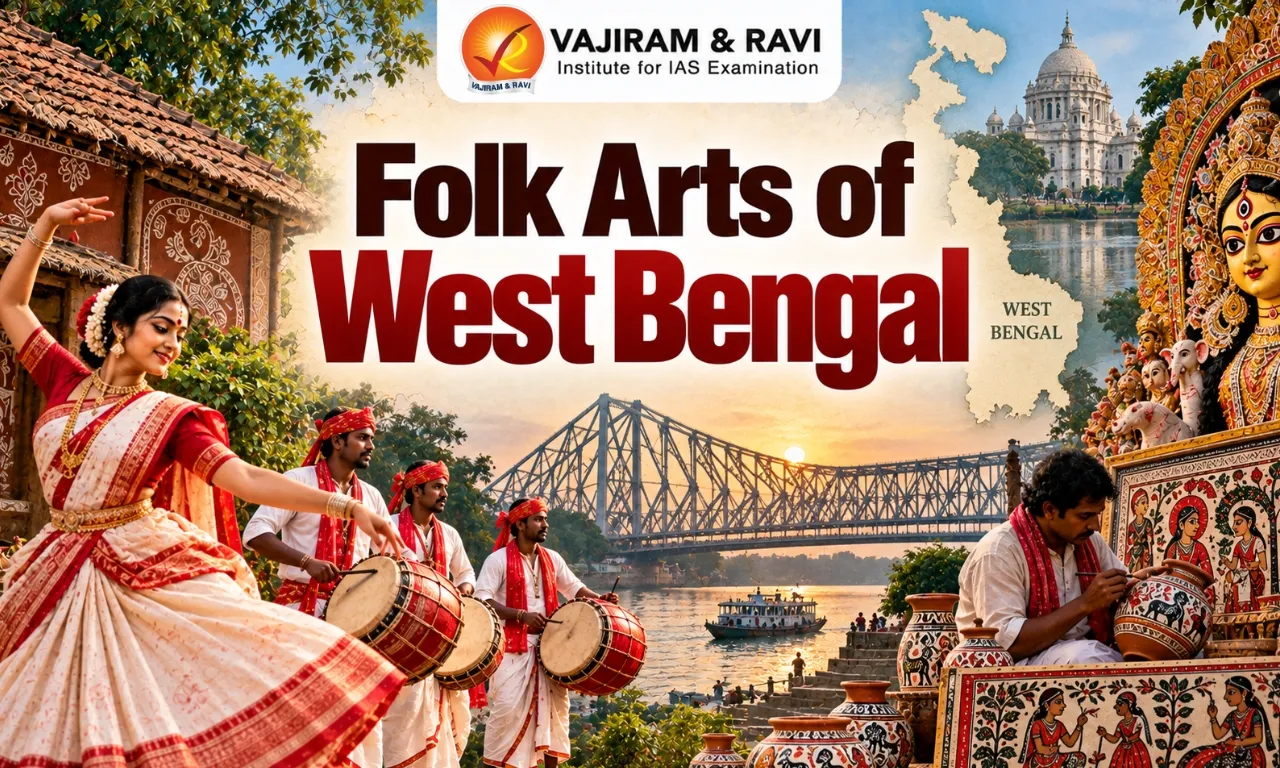
Folk Arts of West Bengal, Dances, Music, Significance

Folk Arts of West Bengal

The Folk Arts of West Bengal are closely connected with the state's festivals, rural life, religious practices and community traditions. They range from the masked movements of Purulia Chhau and the open-air performances of Jatra to Baul music, Patua scroll painting, terracotta, Dokra and traditional textiles.

Major Folk Arts of West Bengal

The Folk Arts of West Bengal can be broadly grouped into folk dances, theatre, music, painting and crafts, with each form reflecting the distinct cultural identity of the community and region where it is practised.

Folk Dances

  • Purulia Chhau: Purulia Chhau is one of the most well-known folk dances of West Bengal. 
    • It is performed with large masks, colourful costumes and energetic movements. 
    • The stories are mainly drawn from the Ramayana, Mahabharata and local folklore.
    • Martial movements, mock combat and acrobatics are important features of the dance.
    • Chhau has three styles - Purulia Chhau of West Bengal, Seraikella Chhau of Jharkhand and Mayurbhanj Chhau of Odisha. Purulia and Seraikella use masks, while Mayurbhanj is performed without them. 
    • The dance is traditionally associated with Chaitra Parva, a spring festival. 
    • Chhau was inscribed on UNESCO’s Representative List of the Intangible Cultural Heritage of Humanity in 2010.
  • Gambhira: Gambhira is a popular folk tradition of North Bengal, especially in Malda. It combines song, dialogue and dance, often using humour and satire to comment on social, political and moral issues. Its strong connection with everyday life makes it an important form of folk expression in Bengal.
  • Santhal Dance: Santhal dance is a traditional group dance performed by the Santhal community, mainly during festivals and community celebrations.The movements are simple and rhythmic, often accompanied by traditional music. The dance reflects the community’s close connection with nature, social life and local traditions.
  • Raibenshe: Raibenshe is a traditional martial dance in which performers display strength, agility and coordinated movements. It reflects the older martial traditions of rural Bengal and is performed with energetic movements and group formations.
  • Tusu and Bhadu: Tusu and Bhadu are seasonal folk traditions associated with rural communities, particularly in western Bengal. They are closely connected with village life, local festivals and the agricultural cycle.
  • Lathi Dance: Lathi dance uses sticks as an important part of the performance. In Bengal, it has also been associated with Muharram and is performed as a display of physical skill and coordinated movement. The Government of West Bengal identifies Lathi dance among the state's traditional folk forms. 

Folk Theatre

Jatra: Jatra is one of Bengal’s best-known folk theatre traditions. Performances are usually held in open spaces and combine acting, music, singing and dialogue. Traditionally, stories were based mainly on mythology and religion, but Jatra later began addressing social and contemporary issues as well. Its simple and direct style has helped it remain popular, particularly in rural Bengal.

Folk Music

West Bengal has a rich variety of folk music traditions, shaped by its rivers, rural life, occupations and local communities.

  • Baul Sangeet: Baul Sangeet is associated with wandering mystic singers of Bengal. Baul philosophy draws from different spiritual traditions and focuses on the search for the divine within oneself rather than strict religious boundaries. Bauls traditionally travel from place to place, singing with instruments such as the ektara, dotara and dubki. The tradition has also influenced Bengali culture and the works of Rabindranath Tagore. UNESCO recognises Baul Songs as a shared cultural tradition of Bengal, with Bauls found in both West Bengal and Bangladesh.
  • Bhatiali: Bhatiali is a folk music tradition associated with the rivers and boatmen of Bengal. Its songs often express loneliness, separation and longing, reflecting the experiences of people whose lives are closely connected with rivers.
  • Bhawaiya: Bhawaiya is an important folk music tradition of North Bengal. It grew from rural life and often deals with themes of love, separation, longing and everyday experiences.
  • Jhumur: Jhumur is popular in western Bengal, particularly Purulia and Bankura. It combines singing and dance and is closely associated with rural and tribal communities. The songs often reflect everyday life, love and local traditions.
  • Gambhira Songs: Gambhira songs are an important part of the Gambhira tradition of North Bengal, especially Malda. They use humour and satire to comment on social, political and everyday issues, making them an important form of folk expression.

Folk Painting

  • Bengal Patachitra: Bengal Patachitra is a traditional scroll-painting form associated with the Patua community. Its unique feature is the combination of painting and storytelling. The Patua gradually unfolds the scroll while singing the story, a performance known as Pater Gaan. The paintings depict stories from mythology, religious traditions and folklore, and sometimes address contemporary social issues. Pingla in Paschim Medinipur is a major centre of the tradition. Bengal Patachitra also has a GI tag, recognising its distinctive geographical and cultural identity.
  • Kalighat Painting: Kalighat painting developed around the Kalighat temple in Kolkata during the 19th century. Its bold lines, simple forms and relatively flat colours made it different from the more detailed painting traditions of the period. Artists painted religious figures as well as scenes from everyday urban life. Satirical paintings commenting on society also became an important part of the tradition. Kalighat therefore provides an example of how popular art responded to the changing social life of colonial Kolkata.

Folk Crafts

  • Bankura Panchmura Terracotta: Panchmura in Bankura is famous for its terracotta work, particularly the distinctive Bankura horse. The horse has become one of the most recognisable symbols of Bengal's traditional craft heritage. Bankura Panchmura Terracotta Craft has a GI tag.
  • Bengal Dokra: Dokra is a traditional metal craft made through the lost-wax casting technique. The artisan first creates a wax model and then prepares a mould around it. After the wax is removed, molten metal is poured into the mould. In West Bengal, important centres include Bikna in Bankura and Dariapur in Bardhaman. Bengal Dokra has a GI tag.
  • Nakshi Kantha: Kantha developed as a practical way of reusing old cloth by stitching layers together. Over time, the simple running stitch became a form of detailed embroidery, with flowers, animals, human figures and other motifs appearing on the fabric. Nakshi Kantha has a GI tag from West Bengal.
  • Santipore Saree: Santipur in Nadia is known for its fine handloom tradition and cotton sarees. The Santipore Saree is a GI-recognised traditional textile of West Bengal.
  • Baluchari Saree: The Baluchari tradition is associated with Bengal's silk-weaving heritage, particularly Bishnupur. Its most distinctive feature is the use of woven figurative and narrative motifs, often depicting scenes from mythology and traditional life. Baluchari Saree has a GI tag.
  • Dhaniakhali Saree: Dhaniakhali in Hooghly is known for its cotton sarees. The Dhaniakhali Saree is another GI-recognised textile tradition of West Bengal.
  • Purulia Chau Mask: Masks are central to the visual identity of Purulia Chhau. They are brightly painted and represent characters from mythology and folklore. Purulia Chau Mask has a GI tag.
  • Wooden Mask of Kushmandi: Kushmandi in Dakshin Dinajpur is known for its traditional wooden masks, which are associated with local performance traditions such as Gomira. Wooden Mask of Kushmandi has a GI tag.
  • Madurkathi: Madurkathi is a traditional mat-making craft of Medinipur. Artisans use locally available soft reed to make mats and other products. The craft has traditionally provided livelihood opportunities to local communities, including women artisans. Madurkathi has a GI tag.
  • Sholapith Craft: Sholapith is made from the soft white pith of the shola plant. It is used for decorative and religious items and has an important place in the visual traditions associated with festivals such as Durga Puja.
  • Santiniketan Leather Goods: Santiniketan is known for handcrafted leather products, including decorated and embossed articles. Santiniketan Leather Goods has a GI tag from West Bengal.
  • Sitalpati: Sitalpati is a traditional mat-weaving craft associated particularly with Cooch Behar and North Bengal. It reflects the use of locally available natural materials in everyday life.

Folk Arts of West Bengal Significance

  • Preserving community identity: Folk traditions carry the memories, beliefs and customs of communities and help pass them from one generation to another.
  • Supporting livelihoods: Painting, weaving, terracotta, metalwork and mask-making continue to provide income to many artisan communities.
  • Connecting art with everyday life: These traditions are not limited to galleries or formal stages. They remain linked with festivals, agriculture, religion and community celebrations.
  • Using local resources: Terracotta, Madurkathi, Sholapith and other crafts show how traditional artisans have developed useful products from materials available in their surroundings.
  • Promoting cultural tourism: GI recognition, cultural festivals and growing interest in traditional crafts have helped bring several traditional art forms to wider audiences.

Folk Arts of West Bengal FAQs

Q1: What are the major Folk Arts of West Bengal?

Ans: The major Folk Arts of West Bengal include Purulia Chhau, Jatra, Baul Sangeet, Bengal Patachitra, Kalighat Painting, Bankura Terracotta, Dokra and Nakshi Kantha.

Q2: Which folk dance is famous for its use of masks in West Bengal?

Ans: Purulia Chhau is famous for its large, colourful masks and energetic martial movements.

Q3: Which folk music tradition is associated with mystic singers of Bengal?

Ans: Baul Sangeet is associated with wandering mystic singers and reflects a spiritual tradition that transcends rigid religious boundaries.

Q4: Which painting tradition of West Bengal combines painting with storytelling?

Ans: Bengal Patachitra combines scroll painting with Pater Gaan, in which the Patua unfolds the scroll while singing the story.

Q5: Which Folk Arts of West Bengal have GI recognition?

Ans: Several traditional arts and crafts have GI recognition, including Bengal Patachitra, Bankura Panchmura Terracotta, Bengal Dokra, Nakshi Kantha, Baluchari Saree, Dhaniakhali Saree, Purulia Chau Mask and Madurkathi.

Lethal Autonomous Weapons Systems (LAWS), Key Concerns, IHL Rules

Lethal Autonomous Weapons Systems (LAWS)

The growing use of Artificial Intelligence (AI) in warfare has brought Lethal Autonomous Weapons Systems (LAWS) into focus. On 5 September 2026, 128 High Contracting Parties to the Convention on Certain Conventional Weapons (CCW) agreed in Geneva on a non-binding text on LAWS, marking an important step towards developing common international rules. However, countries remain divided over the extent of human control required and whether a legally binding treaty is necessary.

What are Lethal Autonomous Weapons Systems (LAWS)?

Lethal Autonomous Weapons Systems (LAWS) are weapons that can identify, select and attack targets on their own, without requiring a human to approve every individual attack. They use technologies such as AI, sensors, robotics and real-time data processing to make or assist targeting decisions. They are also commonly referred to as autonomous weapons systems (AWS) or killer robots.

Why are Lethal Autonomous Weapons Systems (LAWS) a Concern?

The concern with Lethal Autonomous Weapons Systems (LAWS) arises because weapons that can independently identify and attack targets may make it harder to ensure human judgement and compliance with the rules of war.

Under International Humanitarian Law (IHL), the use of weapons during armed conflict must protect civilians and limit unnecessary harm. In particular:

  • Distinction: Weapons must distinguish between civilians and combatants and target only legitimate military objectives.
  • Proportionality: Civilian harm must not be excessive in relation to the expected military advantage.
  • Precaution: Parties must take reasonable steps to minimise civilian harm during an attack.

The difficulty with Lethal Autonomous Weapons Systems (LAWS) is that applying these principles often requires context-specific human judgement. Battlefield conditions can change rapidly, making it difficult for an autonomous system to correctly identify a target or assess the likely civilian consequences of an attack. This creates wider concerns:

  • Human control: Excessive autonomy could reduce meaningful human control over decisions involving lethal force.
  • Accountability: When Lethal Autonomous Weapons Systems (LAWS) cause unlawful harm, determining responsibility among States, commanders and operators can become difficult.
  • Unpredictability: Errors in algorithms, sensors or data, as well as changing battlefield conditions, may lead to unintended attacks.
  • Escalation: The speed of autonomous systems could accelerate military responses and increase the risk of unintended escalation.

Thus, the central concern surrounding Lethal Autonomous Weapons Systems (LAWS) is whether they can operate with sufficient human control, reliability and predictability to comply with IHL.

International Efforts to Regulate Lethal Autonomous Weapons Systems 

International efforts to regulate Lethal Autonomous Weapons Systems (LAWS) have mainly taken place under the Convention on Certain Conventional Weapons (CCW), where countries are examining how emerging autonomous weapons can be governed while ensuring compliance with International Humanitarian Law.

Convention on Certain Conventional Weapons (CCW)

  • The Convention on Certain Conventional Weapons (CCW) was adopted in 1980 and came into force in 1983. 
  • It aims to prohibit or restrict certain conventional weapons that cause unnecessary suffering or harm civilians indiscriminately.
  • The CCW has a framework-plus-protocols structure. This means that the main convention provides the broad framework, while separate protocols deal with particular types of weapons.

The issue of Lethal Autonomous Weapons Systems (LAWS) is being discussed through the Group of Governmental Experts (GGE) on LAWS. The GGE brings countries together to examine the legal, military, technological and ethical issues raised by autonomous weapons.

In 2026, the GGE met twice  from 2-6 March and 31 August-4 September. Its work was then taken forward for consideration at the Seventh CCW Review Conference in November 2026.

2026 Geneva Consensus

The discussions produced an important development on 5 September 2026, when 128 High Contracting Parties agreed in Geneva on a common descriptive framework for LAWS.

In simple terms, countries were able to agree on a common way of describing and discussing LAWS. This is significant because countries have been negotiating the issue for several years.

However, the agreement does not mean that countries have agreed on how LAWS should ultimately be regulated.

Important questions remain unresolved, including:

  • Should some types of LAWS be completely prohibited?
  • How much human control should be required over lethal decisions?
  • Should countries negotiate a legally binding treaty?
  • What restrictions should apply to the use of autonomous weapons?

The 2026 text is non-binding. The next major decision will therefore come at the CCW Review Conference in November 2026, where countries will consider whether and how to move towards further negotiations.

India’s Position on Lethal Autonomous Weapons Systems (LAWS)

India supports a balanced approach to Lethal Autonomous Weapons Systems (LAWS), focusing on International Humanitarian Law while avoiding unnecessary restrictions on emerging technologies.

  • Prohibition: Ban autonomous weapons that cannot comply with International Humanitarian Law.
  • Regulation: Regulate other autonomous weapons to ensure compliance with International Humanitarian Law.
  • Human control: Ensure human judgement over lethal decisions.
  • Accountability: Keep responsibility with humans, not machines.
  • Dual-use technology: Avoid restricting peaceful uses of Artificial Intelligence and robotics.

In 2026, India maintained a cautious position on a new legally binding treaty, favouring further work through existing international law and guidelines.

Lethal Autonomous Weapons Systems (LAWS) FAQs

Q1: What are Lethal Autonomous Weapons Systems (LAWS)?

Ans: Lethal Autonomous Weapons Systems (LAWS) are weapons that can identify, select and attack targets with limited or no human intervention.

Q2: Why are Lethal Autonomous Weapons Systems (LAWS) a concern?

Ans: Lethal Autonomous Weapons Systems raise concerns over civilian protection, human control, accountability, unpredictability and military escalation.

Q3: Which international body discusses Lethal Autonomous Weapons Systems (LAWS)?

Ans: The Convention on Certain Conventional Weapons (CCW), mainly through its Group of Governmental Experts on LAWS.

Q4: What was the 2026 Geneva consensus on Lethal Autonomous Weapons Systems (LAWS)?

Ans: On 5 September 2026, 128 High Contracting Parties agreed on a non-binding common descriptive framework for LAWS.

Q5: Is the 2026 Lethal Autonomous Weapons Systems (LAWS) agreement legally binding?

Ans: No. It is a non-binding text and does not establish a legally binding treaty.

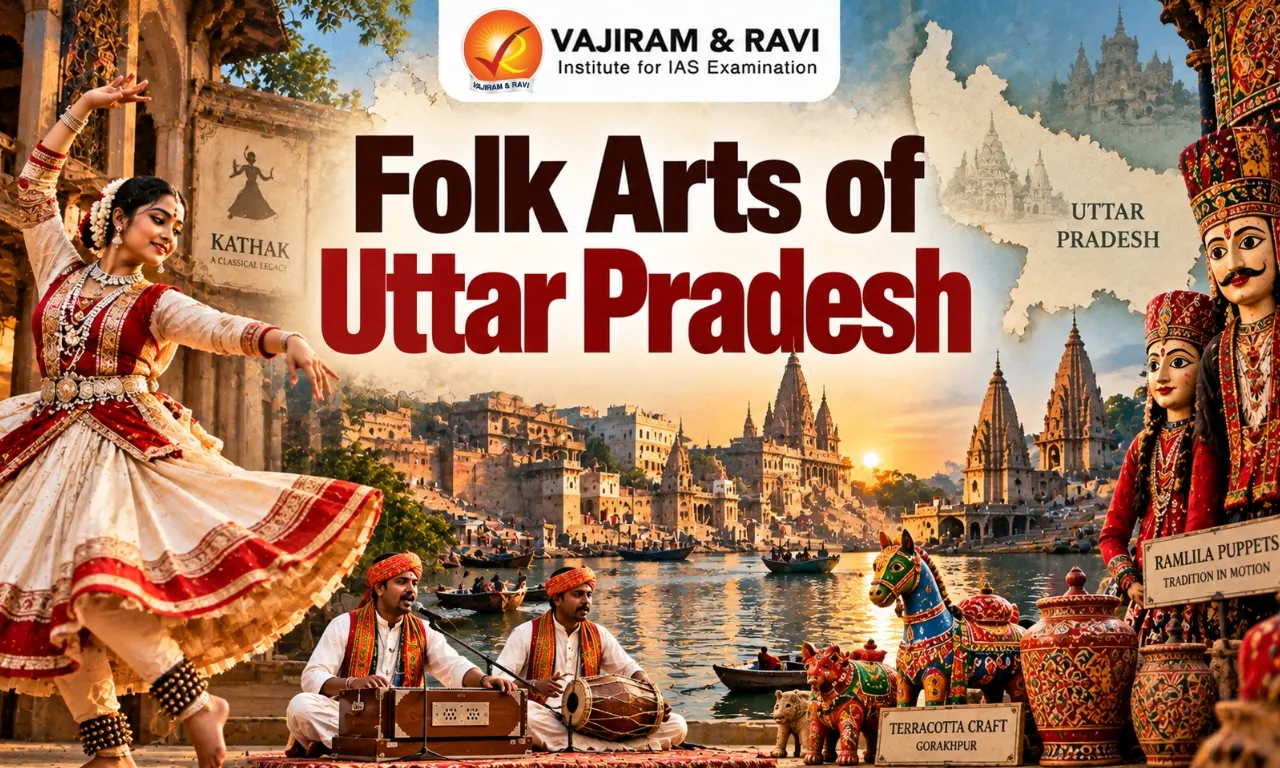
Folk Arts of Uttar Pradesh, Major Art Forms, Crafts, Importance

Folk Arts of Uttar Pradesh

Folk Arts of Uttar Pradesh represent the state’s rich cultural heritage, spiritual traditions, and centuries-old craftsmanship. From the intricate Sanjhi art of Mathura and Vrindavan to Chikankari of Lucknow, Banarasi brocade of Varanasi, and Gorakhpur terracotta, these traditional art forms reflect the diverse cultural identity of Uttar Pradesh.

Major Folk Arts of Uttar Pradesh

Folk Arts of Uttar Pradesh reflect the state’s rich cultural traditions, religious beliefs, and craftsmanship. Different regions of the state are known for distinctive art forms that have been preserved through generations.

1. Chowk Purana – Traditional Floor Art

  • A traditional floor decoration made during festivals, weddings, and other auspicious occasions.
  • Designs include geometric, floral, and religious patterns.
  • Usually made using rice flour, dry colours, or natural materials.
  • Considered a way of welcoming deities and bringing prosperity.

2. Sanjhi Art – Devotional Stencil Art

  • A traditional art form mainly associated with Mathura and Vrindavan.
  • Artists create delicate designs using finely cut paper stencils.
  • Themes are largely based on Lord Krishna, Radha, and the Braj tradition.
  • Closely connected with temple and devotional practices.

3. Chikankari – Delicate Embroidery of Lucknow

  • A famous hand-embroidery tradition of Lucknow.
  • Known for its fine, delicate, and detailed needlework.
  • Traditionally associated with white thread embroidery, although many colours are now used.
  • Commonly found on kurtas, sarees, dupattas, and dresses.

4. Zari Zardozi – Ornamental Embroidery

  • An elaborate embroidery technique using metallic threads and decorative elements.
  • Important centres include Lucknow, Bareilly, and Varanasi.
  • Designs often feature flowers, leaves, birds, and geometric patterns.
  • Widely used in bridal wear, traditional clothing, and accessories.

5. Banarasi Brocade – Traditional Silk Weaving

  • A renowned textile tradition associated with Varanasi.
  • Known for rich silk fabric and intricate woven designs.
  • Common motifs include flowers, leaves, creepers, and traditional patterns.
  • Banarasi sarees are among its most popular products.

6. Gorakhpur Terracotta – Traditional Clay Craft

  • A distinctive traditional craft associated with Gorakhpur.
  • Artisans make figures of animals, birds, deities, and other decorative forms.
  • The figures are made from natural clay and fired for durability.
  • It represents the traditional skills of local artisan communities.

7. Carpet Weaving – Craft of Bhadohi and Mirzapur

  • Uttar Pradesh is an important centre of handmade carpet production.
  • Bhadohi, Mirzapur, and Khamaria are major carpet-producing areas.
  • Carpets are made using materials such as wool and silk.
  • The craft is known for detailed designs and skilled handwork.

8. Attar Making – Traditional Perfumes of Kannauj

  • Kannauj is famous for its traditional perfume-making industry.
  • Attars are prepared using flowers, herbs, spices, and other natural ingredients.
  • Traditional methods use hydro-distillation to extract fragrances.
  • The craft represents the long-standing perfume-making heritage of the region.

Also Read: Festivals of Uttar Pradesh

Famous Handicrafts and Textiles of Uttar Pradesh

Uttar Pradesh is known for a wide variety of handicrafts and traditional textiles, each closely linked with a particular region and community. These crafts preserve traditional skills while also providing employment and supporting the local economy.

1. Chikankari – Lucknow

  • A famous hand-embroidery craft associated with Lucknow.
  • Known for delicate and fine stitches on fabrics.
  • Traditionally used white thread, though colourful designs are now also popular.
  • Commonly used for kurtas, sarees, dupattas, and dresses.

2. Zari Zardozi – Lucknow, Bareilly and Varanasi

  • An elaborate form of decorative embroidery using metallic threads.
  • Traditionally uses gold- and silver-coloured threads along with sequins and other embellishments.
  • Designs include flowers, leaves, birds, and other decorative motifs.
  • Widely used in bridal wear and traditional garments.

3. Banarasi Silk and Brocade – Varanasi

  • One of the most famous silk-weaving traditions of Uttar Pradesh.
  • Known for rich fabrics and intricate woven motifs.
  • Traditional designs include floral patterns, creepers, leaves, and Mughal-inspired motifs.
  • Banarasi sarees are particularly famous across India and abroad.

4. Carpet Weaving – Bhadohi and Mirzapur

  • Uttar Pradesh is an important centre of handmade carpet production.
  • Bhadohi, Mirzapur, and Khamaria are major carpet-producing regions.
  • Carpets are made using wool, silk, and other fibres.
  • The craft is known for detailed patterns and skilled handwork.

5. Gorakhpur Terracotta – Gorakhpur

  • A traditional clay craft associated with Gorakhpur.
  • Artisans make figures of animals, birds, deities, and decorative objects.
  • Natural clay is shaped, dried, and fired to make the products durable.
  • It reflects the traditional skills of local artisan communities.

6. Pottery – Various Regions

  • Pottery is an important traditional craft practised by artisan communities across the state.
  • Clay pots, diyas, utensils, toys, and decorative objects are commonly made.
  • Many products are still created using traditional methods.
  • Pottery is closely connected with rural life, festivals, and household traditions.

7. Brass and Metal Craft – Moradabad

  • Moradabad is widely known for its traditional brass and metal handicrafts.
  • Artisans create utensils, decorative items, lamps, sculptures, and other products.
  • Products are often decorated through engraving, carving, and other techniques.
  • The craft has an important place in the state's handicraft and export sector.

8. Attar and Perfume Making – Kannauj

  • Kannauj is famous for its traditional natural perfume and attar-making industry.
  • Attars are prepared using flowers, herbs, spices, and other aromatic materials.
  • Traditional hydro-distillation methods are used to capture natural fragrances.
  • The craft represents the region's long-standing perfume-making heritage.

Importance of Folk Arts of Uttar Pradesh

Folk Arts of Uttar Pradesh are important because they preserve the state’s cultural identity, traditional knowledge, and artistic skills. They also support the livelihoods of artisans and contribute to tourism, local economies, and the wider handicraft industry.

  • Preservation of Cultural Heritage: Folk arts preserve the traditions, customs, beliefs, stories, and practices passed from one generation to another.
  • Regional Identity: Different art forms give a distinct identity to different regions, such as Chikankari in Lucknow, Banarasi textiles in Varanasi, Terracotta in Gorakhpur, and Attar in Kannauj.
  • Source of Livelihood: Handicrafts and textiles provide employment and income to a large number of artisans, weavers, craftsmen, and their families.
  • Religious and Spiritual Importance: Several folk arts are connected with religious traditions, festivals, and devotional practices, such as Sanjhi Art associated with the Krishna tradition.
  • Promotion of Tourism: Traditional arts and crafts attract visitors to cultural centres such as Lucknow, Varanasi, Mathura, Vrindavan, Gorakhpur, and Kannauj.
  • Women’s Empowerment: Crafts such as embroidery and textile work provide opportunities for many women to earn income while working from their homes or local communities.
  • Promotion of Traditional Knowledge: These crafts preserve traditional techniques, designs, materials, and skills that may otherwise disappear with changing lifestyles.
  • Economic Contribution: Handicrafts, handloom products, carpets, textiles, and traditional perfumes contribute to local trade, exports, and the rural economy.
  • Environmental Value: Many traditional crafts use natural materials and handmade production methods, which can support more sustainable forms of production.

Folk Arts of Uttar Pradesh FAQs

Q1: What are the famous Folk Arts of Uttar Pradesh?

Ans: Some famous Folk Arts of Uttar Pradesh include Chowk Purana, Sanjhi Art, Chikankari, Zari Zardozi, Banarasi Brocade, Gorakhpur Terracotta, carpet weaving, and Kannauj's traditional attar-making.

Q2: Which folk art is famous in Lucknow?

Ans: Chikankari is the most famous traditional embroidery associated with Lucknow. The city is also known for Zari Zardozi.

Q3: What is Sanjhi Art famous for?

Ans: Sanjhi Art is famous for its delicate paper-cut stencil designs, particularly those depicting themes associated with Lord Krishna and the Braj tradition.

Q4: Which city is famous for terracotta art in Uttar Pradesh?

Ans: Gorakhpur is well known for its traditional terracotta craft, particularly clay figures of animals, birds, and deities.

Q5: Which place is famous for attar in Uttar Pradesh?

Ans: Kannauj is famous for its traditional attar and natural perfume-making industry.

Fat Tax, Meaning, Need, Advantages, Disadvantages & Health Impact

Fat Tax

Fat Tax refers to a tax imposed on foods and beverages that are considered unhealthy, particularly those high in sugar, saturated fat, salt, or calories. The idea behind such a tax is to make unhealthy foods more expensive and encourage people to choose healthier alternatives.

Why is Fat Tax Needed?

The growing consumption of processed and energy-dense foods has contributed to increasing rates of obesity and non-communicable diseases. A fat tax is proposed as one way to address this problem.

Major reasons for introducing such a tax include:

  1. Reducing unhealthy food consumption: Higher prices may discourage excessive consumption of unhealthy products.
  2. Promoting healthier choices: Consumers may prefer fruits, vegetables and other healthier alternatives.
  3. Controlling obesity: Lower consumption of high-calorie foods may help reduce obesity.
  4. Preventing lifestyle diseases: It may help address diseases such as diabetes, hypertension and cardiovascular diseases.
  5. Reducing healthcare costs: Better dietary habits could reduce the long-term burden on public healthcare systems.
  6. Generating government revenue: The tax can provide additional revenue that may be used for healthcare and nutrition programmes.

Fat Tax and Obesity

Obesity is associated with several health problems, including type 2 diabetes, heart disease, high blood pressure and certain cancers.

A fat tax aims to address one of the contributing factors by making foods with high levels of unhealthy nutrients relatively more expensive. However, taxation alone cannot solve obesity because physical activity, income, education, food availability and overall lifestyle also influence health.

Therefore, a fat tax is generally considered more effective when combined with nutrition awareness, healthy food policies and physical activity programmes.

Also Read: Taxation System in India

Advantages of Fat Tax

Fat tax can help improve public health by making unhealthy food products more expensive, encouraging healthier choices, and generating revenue that can be used for healthcare and nutrition programmes.

  1. Encourages Healthy Eating: Higher prices for foods high in unhealthy fats, sugar, salt, or calories may encourage consumers to choose healthier alternatives.
  2. Helps Reduce Obesity: By discouraging frequent consumption of high-calorie and highly processed foods, fat tax can contribute to efforts to control overweight and obesity.
  3. Prevents Lifestyle Diseases: Lower consumption of unhealthy foods may help reduce the risk of type 2 diabetes, hypertension and cardiovascular diseases over the long term.
  4. Promotes Product Reformulation: Food manufacturers may reduce sugar, salt, saturated fats and calories in their products to avoid higher taxes and remain competitive.
  5. Generates Government Revenue: Revenue collected through the tax can be directed towards public healthcare, nutrition programmes, disease prevention and health awareness campaigns.
  6. Creates Public Health Awareness: The introduction of such a tax can draw attention to the health effects of excessive consumption of unhealthy foods.
  7. Reduces Healthcare Burden: If the policy successfully reduces diet-related diseases, it may help lower the long-term healthcare costs associated with treating obesity and non-communicable diseases.

Disadvantages of Fat Tax

Fat tax can support public health, but it may also increase food prices, disproportionately affect poorer households, and create challenges in identifying and regulating unhealthy foods.

  1. Burden on Low-Income Groups: Higher prices can disproportionately affect low-income households, which spend a larger share of their income on food.
  2. Difficulty Defining Unhealthy Foods: It can be difficult to determine which foods should be taxed because fat, sugar and salt are present in many different foods.
  3. Higher Food Prices: The tax may increase the cost of processed and packaged foods, adding to household expenses.
  4. Limited Behavioural Change: Some consumers may continue purchasing unhealthy foods despite higher prices, reducing the effectiveness of the tax.
  5. Impact on Food Industry: Manufacturers and retailers may face higher production and compliance costs, which could be passed on to consumers.
  6. Not a Complete Solution: Obesity and lifestyle diseases have multiple causes, including physical inactivity, diet, lifestyle and socioeconomic factors, so fat tax alone cannot address the problem.

Fat Tax FAQs

Q1: What is Fat Tax?

Ans: Fat tax is a tax imposed on selected foods and beverages considered unhealthy, particularly products high in unhealthy fats, sugar, salt or calories.

Q2: What is the main purpose of Fat Tax?

Ans: Its main purpose is to discourage unhealthy food consumption and promote healthier dietary choices.

Q3: Is Fat Tax imposed on all fatty foods?

Ans: No. A well-designed fat tax generally targets specific products or nutritional characteristics rather than all foods containing fat.

Q4: Is Fat Tax the same as Sugar Tax?

Ans: No. Fat tax has a broader focus on unhealthy foods or nutrients, while sugar tax primarily targets products containing high levels of added sugar.

Q5: Can Fat Tax reduce obesity?

Ans: It may help reduce consumption of certain unhealthy products, but fat tax alone cannot eliminate obesity. It works best as part of a broader public health strategy.

Folk Arts of Tamil Nadu, Types, Dances, Cultural Significance

Folk Arts of Tamil Nadu

Folk Arts of Tamil Nadu form an important part of the state’s rich cultural heritage and reflect its long history of traditions, beliefs and community life. These art forms have been preserved and passed down through generations, often through local communities and traditional practitioners. They are closely associated with festivals, religious practices, social gatherings and everyday rural life.

Major Folk Arts of Tamil Nadu

The Folk Arts of Tamil Nadu reflect the state’s rich rural traditions, religious beliefs, festivals, mythology and everyday life. They include a wide range of folk dances, music, theatre, paintings and traditional crafts, many of which are closely connected with village communities and temple festivals. 

Traditional Folk Dances of Tamil Nadu

  • Karagattam: A traditional dance in which performers balance a decorated pot filled with water or rice on their heads. It is mainly performed in honour of Mariamman, the goddess associated with rain and health. The dance is accompanied by Naiyandi Melam and includes graceful as well as acrobatic movements.
  • Kavadi Attam: A devotional dance associated with Lord Murugan. Devotees carry a decorated wooden structure called a Kavadi on their shoulders, often during the Thaipusam festival and pilgrimages to Murugan temples. The dance is performed with music from instruments such as Nadaswaram and Thavil.
  • Poikkal Kuthirai Attam: Also known as the dummy or artificial horse dance, it creates the appearance of a person riding a horse. The horse figure is usually made of bamboo, cloth and papier-mâché, while the performer dances to folk music and percussion.
  • Mayilattam: Known as the peacock dance, performers dress in colourful peacock costumes and imitate the movements of the bird. The dance has a strong association with Lord Murugan and is traditionally performed during religious and village celebrations.
  • Puliyattam: Literally meaning “tiger dance,” this energetic folk performance features men painting their bodies with tiger-like stripes and spots. They imitate the movements of a tiger to the beats of powerful drums, particularly during village festivals.
  • Kummi: A traditional women’s folk dance performed in a circle, usually with rhythmic clapping and singing. It is commonly performed during festivals and harvest celebrations and is considered an old dance tradition that developed even before the widespread use of musical instruments.
  • Kolattam: A lively stick dance in which women move in coordinated patterns while striking wooden sticks together. It is generally performed during village festivals and combines rhythmic movements, music and songs.
  • Oyilattam: Meaning “dance of grace,” this folk dance originated in southern Tamil Nadu, particularly around the Madurai region. Dancers perform rhythmic steps in a line while holding colourful handkerchiefs, accompanied by instruments such as the Thavil.
  • Kokali-kattai: A distinctive stilt dance associated with the North Arcot region. Dancers tie about three-foot-high stilts to their feet and perform with considerable balance and acrobatic skill. It is traditionally connected with festivals dedicated to Mariamman.
  • Pinnal Kolattam: A visually attractive dance in which performers hold colourful ribbons hanging from a central point. Through coordinated movements, the dancers gradually create intricate braided patterns with the ribbons.
  • Thappattam: A folk dance and musical tradition performed with the Thappu, a traditional frame drum. Its strong rhythms are associated with village festivals, social occasions and even funeral ceremonies, reflecting different aspects of rural life.
  • Silambattam: A traditional martial art of Tamil Nadu centred on the use of a bamboo staff. Practitioners perform coordinated movements and techniques with staffs of different lengths, making it an important part of the state’s traditional martial heritage.
  • Devarattam: A traditional dance mainly associated with the Kampalathu Nayakkar community and performed by men. It is accompanied by instruments such as the Urumi and is traditionally performed on important occasions, including marriages.
  • Kaaliattam: A ritual folk performance associated with the worship of Kali. Its traditions are linked with local legends surrounding Pachai Kali, Pavala Kali and Kodi Amman, particularly in the Thanjavur region.

Also Read : Festivals of Tamil Nadu

Famous Folk Paintings and Crafts of Tamil Nadu

Tamil Nadu’s folk paintings and crafts reflect its rich cultural traditions, religious beliefs and skilled craftsmanship. Some of the major traditional art forms are discussed below. 

Folk and Traditional Paintings

  • Tanjore (Thanjavur) Paintings: Famous devotional paintings known for their bright colours, raised relief work and gold foil decoration. Religious figures and Hindu deities are among their most common subjects.
  • Karuppur Kalamkari: A traditional art form associated with the Thanjavur region. It uses hand-painting and block-printing techniques with natural colours to portray mythological and religious themes.
  • Temple Murals: Large narrative paintings found on the walls and ceilings of historic temples. They often depict mythological stories, religious themes, royal processions and scenes from epics, using earthy and natural shades.

Traditional Crafts

  • Swamimalai Bronze Icons: Swamimalai is well known for its traditional bronze sculpture, particularly images of Hindu deities. Artisans use the ancient lost-wax casting technique to create these detailed icons.
  • Thanjavur Dolls (Thalayatti Bommai): Traditional dolls with a weighted, rounded base that allows them to tilt and return to an upright position. They are popularly known for their distinctive bobbing movement.
  • Kancheepuram Silk Sarees: Famous handwoven silk textiles made using mulberry silk and gold zari. Their traditional designs often feature motifs inspired by temples, nature and Tamil cultural traditions.
  • Nachiarkoil Lamps: Traditional brass and bell-metal oil lamps, locally known as Kuthuvillakku. They are made by skilled artisans who traditionally cast and assemble the lamps in separate pieces.
  • Mahabalipuram Stone Carvings: A major stone-carving tradition associated with the artistic legacy of the Pallavas. Artisans create detailed sculptures of deities, figures and architectural elements mainly from stone and granite.

Cultural Significance of Folk Arts of Tamil Nadu

  • Connection with Religion: Many folk dances and performances are closely linked with temple worship, local deities, pilgrimages and religious festivals.
  • Reflection of Rural Life: Folk arts portray the daily life, occupations, beliefs, celebrations and social traditions of Tamil Nadu’s rural communities.
  • Festivals and Community Participation: Performances such as Karagattam, Kummi, Kolattam and Puliyattam bring communities together during village, temple and harvest festivals.
  • Preservation of Oral Traditions: Folk theatre, music, songs and storytelling help preserve local legends, myths, historical memories and cultural knowledge across generations.
  • Traditional Skills and Craftsmanship: Art forms such as Swamimalai bronze casting, Kancheepuram silk weaving, Thanjavur painting and Mahabalipuram stone carving showcase generations of specialised craftsmanship.
  • Living Cultural Heritage: These traditions continue to evolve while retaining their connection with Tamil Nadu’s history, religious practices, rural communities and regional identity.

Folk Arts of Tamil Nadu FAQs

Q1: What are the Folk Arts of Tamil Nadu?

Ans: The Folk Arts of Tamil Nadu include traditional dances, music, theatre, paintings, handicrafts and other community-based performances that represent the state’s cultural heritage.

Q2: What are the major folk dances of Tamil Nadu?

Ans: Some major folk dances of Tamil Nadu include Karagattam, Kavadi Attam, Kummi, Kolattam, Oyilattam, Puliyattam, Mayilattam and Poikkal Kuthirai Attam.

Q3: What is Karagattam in Tamil Nadu?

Ans: Karagattam is a traditional folk dance in which performers balance a decorated pot on their heads. It is closely associated with the worship of Mariamman and is performed during festivals and religious occasions.

Q4: What is Kavadi Attam?

Ans: Kavadi Attam is a devotional folk dance associated with Lord Murugan. Devotees carry decorated Kavadis and perform the dance during occasions such as Thaipusam and temple pilgrimages.

Q5: What is Puliyattam?

Ans: Puliyattam, or tiger dance, is a lively folk performance in which dancers paint or decorate their bodies to resemble tigers and imitate their movements to the beats of traditional drums.

India’s Carbon Credit Trading Scheme (CCTS), Latest News

Carbon Credit Trading Scheme

Carbon Credit Trading Scheme (CCTS) Latest News

United Kingdom has recognised India’s Carbon Credit Trading Scheme (CCTS) as an eligible carbon pricing mechanism under its Carbon Border Adjustment Mechanism (CBAM). The move is expected to reduce the carbon-related tax burden on Indian exporters selling eligible goods in the U.K.

Carbon Credit Trading Scheme (CCTS) Key Highlights

  • Recognition by the U.K.: The U.K. HM Treasury has included India’s Carbon Credit Trading Scheme (CCTS) in its indicative list of overseas carbon pricing schemes that can qualify for relief under the U.K. CBAM framework.
  • Benefit to Indian exporters: U.K. importers of eligible Indian goods can claim carbon price relief for the carbon price already paid on those goods under India’s CCTS, subject to the required evidence and verification.
  • Reduction in CBAM liability: The recognition can lower the effective CBAM burden on Indian exports, helping Indian exporters remain more competitive in the U.K. market.
  • Avoiding double taxation: The recognition follows the principle that goods should not face double carbon pricing when an eligible carbon price has already been paid in the country of origin.
  • Continued India-U.K. cooperation: Both countries will continue discussions on carbon pricing and carbon market design through the U.K.-India Energy Memorandum of Understanding and the Partnership for Market Implementation.
  • Relief will depend on actual carbon pricing: The amount of CBAM relief will depend on the effective carbon price paid for the goods under India’s system. U.K. CBAM- liable persons will still have to meet the required verification and documentation rules.
  • Recent trade relationship: India and the U.K. implemented a Comprehensive Economic and Trade Partnership on July 15, 2026. Merchandise trade between the two countries was $25.1 billion in 2025-26, while bilateral services trade reached $35.4 billion in 2024.

What is India's Carbon Credit Trading Scheme (CCTS)?

  • India’s Carbon Credit Trading Scheme (CCTS) is a market-based mechanism introduced to reduce greenhouse gas (GHG) emissions by putting a value on emission reductions and allowing carbon credits to be traded.
  • The scheme forms an important part of the Indian Carbon Market (ICM) and aims to encourage industries and other entities to adopt cleaner technologies and reduce their carbon footprint.
  • The legal foundation for the carbon market was created through the Energy Conservation (Amendment) Act, 2022. It empowered the Central Government to establish a carbon trading scheme and provide for the issuance of Carbon Credit Certificates (CCCs).
  • Under the CCTS, one Carbon Credit Certificate represents one tonne of CO₂ equivalent (tCO₂e) of greenhouse gas emission reduction or removal.
  • India is developing a national carbon market framework with an electronic registry and trading platform to make carbon credit transactions more transparent, organised and reliable.

Carbon Credit Trading Scheme (CCTS) Objectives

  • The main objective of CCTS is to accelerate the decarbonization of the Indian economy by giving greenhouse gas emission reductions an economic value.
  • It encourages industries to adopt energy-efficient processes, renewable energy, cleaner technologies and other low-carbon solutions.
  • The scheme supports India’s climate commitments under the Paris Agreement. India revised its NDC in 2022 and committed to reducing the emission intensity of its GDP by 45% by 2030 from the 2005 level.
  • CCTS can help bring greater private-sector participation in climate action by creating financial incentives for entities that achieve additional emission reductions.
  • The scheme also provides a framework for sectors outside the mandatory compliance system to participate through the voluntary offset mechanism, expanding the scope of domestic carbon reduction activities.
  • A well-functioning carbon market can encourage investment in areas such as renewable energy, green hydrogen, industrial efficiency, forestry, waste management and carbon removal technologies.
  • India’s experience with market-based schemes such as PAT, Energy Saving Certificates, Renewable Energy Certificates and Clean Development Mechanism projects provides a foundation for developing a larger domestic carbon market.

How Does India's Carbon Credit Trading Scheme Work?

The working of India's Carbon Credit Trading Scheme is based on emission-intensity targets, carbon credit generation and trading. It combines mandatory participation for selected industries with voluntary participation through eligible projects.

Compliance Mechanism

  • Under the compliance mechanism, the government sets sector-specific GHG emission-intensity targets for obligated industrial entities.
  • These targets determine the amount of greenhouse gas emissions allowed in relation to a particular level of production or output.
  • Entities that perform better than their prescribed targets by lowering their emission intensity can receive tradable Carbon Credit Certificates.
  • Entities that fail to meet their targets may need to purchase and surrender carbon credits to cover the shortfall.
  • This creates a financial incentive for industries to improve efficiency, adopt cleaner technologies and reduce their emissions.

Offset Mechanism

  • The offset mechanism allows entities outside the mandatory compliance system to voluntarily participate in the carbon market.
  • Eligible projects can reduce, remove or avoid GHG emissions and generate carbon credits after meeting the required conditions.
  • Projects undergo processes such as validation, monitoring and verification to establish that the claimed emission reductions are genuine.
  • The mechanism can encourage climate action in areas such as agriculture, forestry, clean cooking, renewable energy, industrial efficiency and other emission-reduction activities.

Role of Carbon Credit Certificates in India

  • Carbon Credit Certificates (CCCs) are the basic tradable units under India’s Carbon Credit Trading Scheme. Each CCC represents one tonne of CO₂ equivalent (tCO₂e) of emission reduction or removal.
  • CCCs provide a financial value to verified emission reductions, allowing entities that perform better than their targets to benefit from their additional climate action.
  • Under the compliance mechanism, an entity that reduces its emission intensity below the prescribed target may receive CCCs, while an entity that falls short can use purchased certificates to meet its compliance requirement.
  • CCCs are issued through the Indian Carbon Market Registry after the required assessment and verification process. They can then be traded through an approved electronic trading platform.
  • The system depends on reliable Monitoring, Reporting and Verification (MRV) to ensure that the claimed emission reductions are genuine and to reduce the risks of double counting or inaccurate reporting.
  • Carbon Credit Certificates can therefore create a market incentive for emission reduction, while also providing flexibility to entities in meeting their climate-related obligations.

Policy Support for India's Carbon Credit Trading Scheme

The development of India's Carbon Credit Trading Scheme is supported by several national laws, missions and programmes aimed at reducing energy consumption and greenhouse gas emissions.

  • The Energy Conservation (Amendment) Act, 2022 provides the legal foundation for India's carbon market and empowers the Central Government to establish the carbon credit framework and issue carbon credit certificates.
  • The National Green Hydrogen Mission is supported by the carbon-crediting methodologies approved in March 2025 and aims to produce 5 million metric tonnes (MMT) of green hydrogen annually by 2030.
  • The Perform, Achieve and Trade (PAT) scheme, implemented by the Bureau of Energy Efficiency (BEE) since 2012, has helped reduce energy and emission intensity in designated industries by around 15-25% over its lifecycle.
  • India also aims to install 500 GW of non-fossil fuel-based electricity capacity by 2030, supporting the country's broader clean-energy transition.

Government Measures to Strengthen Carbon Market Readiness

India's carbon market approach also reflects the principle of Common but Differentiated Responsibilities and Respective Capabilities (CBDR-RC), which recognises that countries have different development needs and capacities to address climate change.

  • Mission LiFE and the Green Credit Programme encourage sustainable practices and greater public participation in environmental protection.
  • The government has established the National Steering Committee for the Indian Carbon Market (NSCICM) to provide overall guidance for the development and functioning of the carbon market.
  • The Bureau of Energy Efficiency (BEE), under the Ministry of Power, plays a major role in administering and developing India's carbon market.
  • The government is also working to encourage greater private-sector participation in carbon reduction and clean-technology projects.

Mission LiFE

Mission LiFE (Lifestyle for Environment) is a global movement launched by India to encourage people to adopt more sustainable and environmentally responsible lifestyles.

  • It promotes simple behavioural changes such as saving energy, reducing plastic use and adopting waste-reduction practices.
  • The mission seeks to influence consumer behaviour, markets and government policies in favour of environmental sustainability.
  • Its goals include mobilising 1 billion people globally by 2028 to take individual and collective action for environmental protection.
  • It also aims to transform 80% of Indian villages and urban local bodies into green communities and create measurable environmental and climate benefits.

Green Credit Programme

The Green Credit Programme (GCP) was established through the Green Credit Rules, 2023, notified on October 12, 2023, under the Environment (Protection) Act, 1986.

  • It provides a voluntary, market-based mechanism to encourage activities such as tree plantation on degraded forest land.
  • Forest departments identify suitable degraded land parcels and register them as a dynamic land bank on the GCP portal.
  • Government bodies, PSUs, NGOs, companies, philanthropies, societies and individuals can participate through the digital platform.
  • Participants undertake plantation activities within two years and maintain the plantations for 10 years.
  • Green Credits are awarded based on planted trees and are supported by digital monitoring, field verification and third-party audits.
  • The programme aims to expand India's forest and tree cover, create an inventory of degraded land and reward voluntary environmentally responsible actions.

Institutional Framework and Future of India's Carbon Credit Trading Scheme

The success of India's Carbon Credit Trading Scheme depends on a strong institutional structure that can set targets, monitor the market and ensure that carbon credits represent genuine emission reductions.

National Steering Committee for the Indian Carbon Market

The National Steering Committee for the Indian Carbon Market (NSCICM) is the key body responsible for providing overall direction to India's carbon market.

  • It brings together representatives from relevant ministries, state governments and industry experts.
  • The committee provides recommendations on the rules, procedures and institutional structure of the Indian carbon market.
  • It helps formulate GHG emission-intensity targets for obligated entities.
  • It provides guidance on credit issuance, validity, renewal and international trading of carbon credits.
  • It can also constitute working groups and monitor the overall functioning of the carbon market.

Bureau of Energy Efficiency

The Bureau of Energy Efficiency (BEE) was established in 2002 under the Energy Conservation Act, 2001 and plays a central role in India's energy-efficiency and carbon-market framework.

  • BEE develops policies, standards and programmes aimed at improving energy efficiency and reducing energy intensity.
  • It uses a combination of regulatory and market-based measures to encourage energy conservation.
  • Its major areas of work include standards and labelling for appliances, building energy codes, industrial efficiency norms, awareness programmes and capacity building.
  • Through these measures, BEE supports India's broader efforts to reduce energy consumption and greenhouse gas emissions.

Transition from PAT to CCTS

  • India’s earlier Perform, Achieve, and Trade (PAT) scheme emphasised energy efficiency improvements in energy-intensive sectors through Energy Saving Certificates (ESCerts).
  • The CCTS supersedes PAT, focusing on direct GHG emissions intensity and issuing Carbon Credit Certificates (CCC), each representing 1 tonne of CO₂ equivalent reduced.
  • Target sectors (Compliance Mechanism): CCTS mandates participation from eight high-emission sectors: aluminium, cement, pulp & paper, chlor-alkali, iron & steel, textiles, petrochemicals, and refineries. These sectors account for ~16% of India’s total GHG emissions.
  • Power sector exclusion: The power sector, which contributes ~40% of India’s total GHG emissions, is currently excluded from the compliance mechanism but may be included in later phases.

India's Carbon Credit Trading Scheme FAQs

Q1: What is India's Carbon Credit Trading Scheme (CCTS)?

Ans: India's Carbon Credit Trading Scheme (CCTS) is a market-based mechanism that assigns economic value to greenhouse gas emission reductions and enables the trading of Carbon Credit Certificates (CCCs).

Q2: What is a Carbon Credit Certificate (CCC)?

Ans: A Carbon Credit Certificate represents one tonne of CO₂ equivalent (tCO₂e) of greenhouse gas emission reduction or removal and can be traded under the Indian carbon market framework.

Q3: What is the main objective of India's Carbon Credit Trading Scheme?

Ans: The main objective is to reduce greenhouse gas emissions by encouraging industries to improve energy efficiency, adopt cleaner technologies and invest in low-carbon solutions.

Q4: How does the Carbon Credit Trading Scheme work in India?

Ans: Under the compliance mechanism, obligated entities receive emission-intensity targets. Entities performing better than their targets can earn CCCs, while those falling short may need to purchase certificates to meet their obligations.

Q5: What is the legal basis of India's Carbon Credit Trading Scheme?

Ans: The Energy Conservation (Amendment) Act, 2022 provides the legal foundation for India's carbon market and empowers the Central Government to establish a carbon trading scheme and issue Carbon Credit Certificates.

Bhoramdeo Wildlife Sanctuary

Bhoramdeo Wildlife Sanctuary

Bhoramdev Wildlife Sanctuary Latest News

Wildlife and bird monitoring at the renowned Bhoramdev Wildlife Sanctuary in Chhattisgarh is set to receive a technological boost, with the Forest Department preparing to introduce a “bird hearing” technology to track the presence and activities of birds and other wildlife.

About Bhoramdev Wildlife Sanctuary

  • Bhoramdev Wildlife Sanctuary, also known as Bhoramdeo Wildlife Sanctuary, is located in the Kawardha district of Chhattisgarh.
  • It is part of the larger Maikal range of the Satpura hills.
  • It is part of the Kanha-Achanakmar Corridor, which connects Kanha National Park in Madhya Pradesh with Achanakmar Wildlife Sanctuary in Chhattisgarh. 
  • Named after the famous Bhoramdeo Temple situated nearby, the sanctuary covers an area of approximately 352 sq.km.
    • Bhoramdeo Temple, an ancient temple complex dating back to the 7th to 11th centuries, was built by the Nagvanshi dynasty. 
    • The temple is dedicated to Lord Shiva and is often referred to as the “Khajuraho of Chhattisgarh,”.
  • The sanctuary’s terrain is characterized by undulating hills, dense forests, and numerous streams.
  • The region surrounding Bhoramdev Wildlife Sanctuary is inhabited by various tribal communities, including the Baiga, Gond, and Kanwar tribes.
  • Rivers: The river Sakari flows through the sanctuary and is the source of drinking water for the wild animals.  
  • Flora: It contains tropical moist and dry deciduous woodland with trees such as saaj, sal, tendu, and eucalyptus. 
  • Fauna: Its habitats support Bengal tiger, leopard, sloth bear, sambar, gaur, wild boar, monitor lizard, and more than 100 bird species.

News: ETVB

Bhoramdev Wildlife Sanctuary FAQs

Q1: Where is Bhoramdev Wildlife Sanctuary located?

Ans: It is located in Kawardha district of Chhattisgarh.

Q2: Which mountain range is Bhoramdev Wildlife Sanctuary part of?

Ans: It is part of the Maikal Range of the Satpura Hills.

Q3: Which tribal communities inhabit the region surrounding Bhoramdev Wildlife Sanctuary?

Ans: The region is inhabited by tribal communities including the Baiga, Gond and Kanwar tribes.

Q4: What type of vegetation is found in Bhoramdev Wildlife Sanctuary?

Ans: The sanctuary contains tropical moist and dry deciduous woodland.

Shivneri Fort

Shivneri Fort

Shivneri Fort Latest News

The cultural affairs minister recently directed the authorities to conduct an “objective assessment” of unauthorised constructions and other structures, including graves and dargahs, in and around Shivneri Fort and take appropriate action.

About Shivneri Fort

  • It is a very old and important hill fort located near the town of Junnar in the Pune district of Maharashtra.
  • This fort is famous because it is the birthplace of Chatrapati Shivaji Maharaj.  

Shivneri Fort History

  • The Shivneri Fort was built during the time of Satavahanas.  
  • After the Satavahanas, the Shivneri Fort was occupied by the Shilaharas and the Yadavas.  
  • This fort was very important for protecting an old trading route. This route connected the region of Desh to the port city of Kalyan. 
  • In the 15th century, it came under the Bahmani Sultanate. Later, in the 16th century, it was taken over by the Ahmadnagar Sultanate.
  • In 1595, a Maratha chief named Maloji Bhosale was honored by the Ahmadnagar Sultan, Bahadur Nizam Shah. 
    • Maloji Bhosale was the grandfather of Shivaji Maharaj. 
    • The Sultan gave him control of Shivneri and Chakan forts.
  • Shivaji Maharaj was born at Shivneri Fort on February 19, 1630. Some records suggest he was born in 1627. He spent his early childhood years growing up within the fort's walls. 
  • An English traveler named Fraze visited the fort in 1673. He wrote that the fort was very strong and could not be easily defeated. 

Shivneri Fort Features

  • It is a triangular-shaped hill fort and has its entrance from the southwest side of the hill. 
  • The fort stretches for about 1 kilometer (1 mile). It has seven winding gates that are very well protected. All around the fort, there are strong mud walls. 
  • Inside the fort, you can find several important buildings. These include a prayer hall, a tomb, and a mosque. 
  • At the very center of the fort, there is a water pond called 'Badami Talav'. To the south of this pond, you can see statues of Jijabai and a young Shivaji.  
  •  In the fort there are two water springs, called Ganges and Yamuna, which have water throughout the year. 
  • About 2 kilometers away from Shivneri Fort, there are ancient Buddhist rock-cut caves. These are known as Lenyadri caves.

News: HT

Shivneri Fort FAQs

Q1: Where is Shivneri Fort located?

Ans: Shivneri Fort is located near Junnar town in Pune district, Maharashtra.

Q2: Why is Shivneri Fort famous?

Ans: Shivneri Fort is famous as the birthplace of Chhatrapati Shivaji Maharaj.

Q3: During whose period was Shivneri Fort built?

Ans: Shivneri Fort was built during the period of the Satavahanas.

Q4: Why was Shivneri Fort historically important?

Ans: It was important for protecting an old trading route connecting the Desh region with the port city of Kalyan.

Atherosclerosis

Atherosclerosis

Atherosclerosis Latest News

A new study in mice and patients shows that atherosclerosis meets the criteria for an autoimmune disease.

About Atherosclerosis

  • It is a condition in which plaque builds up inside your arteries. 
    • Arteries are blood vessels that carry oxygen-rich blood to organs and tissues throughout your body. 
    • Plaque is a sticky substance made up of cholesterol, fat, blood cells, calcium, and other substances found in the blood. 
  • Over time, plaque hardens and causes your arteries to narrow. That limits the flow of oxygen-rich blood to your body. 
  • Some people may confuse atherosclerosis and arteriosclerosis, but they are not the same thing:
    • Arteriosclerosis is hardening of the arteries, which means that the arteries thicken and become less flexible. It can have several different causes.
    • Atherosclerosis, which develops from plaque buildup, is a common type of arteriosclerosis.
  • What causes atherosclerosis?
    • Plaque often starts to build up during childhood and gets worse with age. 
    • The exact cause is unknown, but researchers believe that this buildup happens when there is damage to the arteries. This damage may be caused by unhealthy lifestyle habits, medical conditions, and your genes.
    • Recent studies also point that atherosclerosis meets the criteria for an autoimmune disease. 
  • Atherosclerosis can affect most of the arteries in the body. It has different names, based on which arteries are affected:
    • Coronary artery disease (CAD) is plaque buildup in the arteries of your heart.
    • Peripheral artery disease (PAD) is plaque buildup in the arteries that carry blood away from the heart to other parts of the body. It most often affects the arteries of your legs, but it can also affect the arteries of your arms or pelvis.
    • Carotid artery disease is plaque buildup in the neck arteries. It reduces blood flow to the brain.
    • Renal artery stenosis is plaque buildup in the arteries that supply blood to your kidneys.
    • Vertebral artery disease is plaque buildup in the arteries that supply blood to the back of your brain.
    • Mesenteric artery ischemia is plaque buildup in the arteries that supply your intestines with blood.
  • Symptoms:
    • Atherosclerosis symptoms often don’t start until an artery is very narrow or blocked. 
    • Many people don’t know they have plaque buildup until they have a medical emergency like a heart attack or stroke. 
    • Symptoms usually depend on the arteries that are affected, and the most common include:
      • chest pain (or angina)
      • feeling confused, as a result of limited blood flow to your brain
      • difficulty breathing
      • feeling very tired (fatigued)
      • pain in any of your limbs, where there may be a blocked artery
      • weak muscles.
    • Atherosclerosis can cause other health problems, or complications. 
      • For example, if a plaque bursts, a blood clot may form. 
      • The clot could block the artery completely or travel to another part of the body. 
      • Blockages in different parts of the body can lead to complications such as a heart attack, stroke, vascular dementia, or limb loss. 
  • Treatment: Treating atherosclerosis may include having a heart-healthy lifestyle and taking medicines. 

News: NM

Atherosclerosis FAQs

Q1: What is atherosclerosis?

Ans: Atherosclerosis is a condition in which plaque builds up inside the arteries.

Q2: What happens to plaque over time in atherosclerosis?

Ans: Plaque hardens over time and causes the arteries to narrow, limiting the flow of oxygen-rich blood.

Q3: How does atherosclerosis affect blood flow?

Ans: It narrows the arteries and limits the flow of oxygen-rich blood to the body's organs and tissues.

Q4: How is atherosclerosis related to arteriosclerosis?

Ans: Atherosclerosis, which develops from plaque buildup, is a common type of arteriosclerosis.

Q5: What factors may contribute to damage to the arteries leading to atherosclerosis?

Ans: Unhealthy lifestyle habits, medical conditions and genes may contribute to arterial damage.

BrahMos Belt Strategy, Countries, Purpose, Significance

BrahMos Belt Strategy

BrahMos Belt Strategy refers to the emerging network of BrahMos missile partnerships between India and Southeast Asian countries located around the South China Sea. The idea is being discussed as India expands BrahMos exports to countries such as the Philippines, Vietnam and Indonesia, while other countries including Thailand and Malaysia have shown interest.

What is the BrahMos Belt Strategy?

The BrahMos Belt Strategy is not a formal military alliance or treaty. It is a term used by strategic experts to describe India's growing network of BrahMos missile cooperation with countries around the South China Sea that have maritime security concerns.

The Philippines became the first foreign buyer of BrahMos in 2022. India has subsequently expanded cooperation with other Southeast Asian countries, including Vietnam and Indonesia. If more countries in the region acquire the system, these separate missile deployments could form a strategic chain around China's maritime periphery.

BrahMos Missile

BrahMos missile is a supersonic cruise missile jointly developed by India and Russia. It is designed for precision strikes against land and maritime targets and is known for its high speed, accuracy and versatility.

Key Features of the BrahMos Missile

  • Joint Development: BrahMos was developed through cooperation between India’s DRDO and Russia’s NPO Mashinostroyenia.
  • Name: The name BrahMos is derived from the Brahmaputra River of India and the Moskva River of Russia.
  • Supersonic Speed: It can travel at around Mach 2.8–3, making it much faster than conventional subsonic cruise missiles.
  • Cruise Missile: It uses an air-breathing propulsion system and flies within the atmosphere towards its target.
  • Multi-Platform Capability: BrahMos can be launched from land-based launchers, warships, submarines and aircraft.
  • Anti-Ship Capability: It can be used against enemy naval vessels, making it important for maritime warfare and sea-denial operations.
  • Land-Attack Capability: The missile can also conduct precision strikes against land-based targets.
  • High Precision: Its advanced guidance and navigation systems allow it to accurately engage designated targets.
  • Low-Level Flight: During parts of its flight, BrahMos can fly at a low altitude, making detection and interception more difficult.
  • Short Reaction Time: Its high speed gives an opponent limited time to detect, identify and respond to an incoming missile.
  • Export Potential: The Philippines became the first foreign customer for the BrahMos missile, marking an important step in India's defence exports.

Countries Linked to the BrahMos Belt

The BrahMos network is gradually expanding across Southeast Asia.

1. Philippines

The Philippines was the first foreign country to purchase BrahMos, signing a deal in 2022 for a shore-based anti-ship missile system. The acquisition is particularly significant because the Philippines faces maritime security challenges in the South China Sea.

2. Vietnam

Vietnam has emerged as another important potential user of BrahMos. Its strategic location along the South China Sea gives the missile considerable relevance for coastal defence and maritime deterrence. Recent reporting has highlighted a major BrahMos deal with Vietnam.

3. Indonesia

Indonesia has also moved towards acquiring BrahMos systems. Its geographical position around key maritime routes makes it strategically important for India's wider Indo-Pacific and maritime security outreach.

4. Thailand and Malaysia

Thailand is evaluating the BrahMos system, while Malaysia has also been identified as a potential future customer. If more countries acquire the missile, the geographical network of BrahMos-equipped coastal states could become wider.

BrahMos Belt Strategy Purpose

BrahMos Belt Strategy aims to build a network of defence partnerships and maritime deterrence around the Indo-Pacific by supplying BrahMos missiles to strategically located Southeast Asian countries.

  • Strengthen regional deterrence against potential maritime threats.
  • Enhance the coastal defence capabilities of partner countries.
  • Support maritime security in the South China Sea and surrounding waters.
  • Expand India's defence exports and defence-industrial partnerships.
  • Deepen strategic ties with Southeast Asian countries.
  • Strengthen India's role in the Indo-Pacific region.
  • Promote capacity building through training, logistics and defence cooperation.
  • Provide an alternative to excessive dependence on major external military powers.

BrahMos Belt Strategy Significance

BrahMos Belt Strategy is significant because it combines India's defence exports, strategic diplomacy and maritime security objectives, while expanding its influence in the Indo-Pacific without establishing permanent military bases.

  • Boosts Defence Diplomacy: BrahMos exports create long-term military and strategic partnerships with recipient countries.
  • Strengthens Indo-Pacific Presence: It expands India's strategic footprint across Southeast Asia.
  • Improves Maritime Deterrence: BrahMos gives partner countries a credible anti-ship and coastal strike capability.
  • Supports ASEAN Engagement: Defence cooperation strengthens India's relationship with ASEAN countries.
  • Counters Strategic Vulnerability: Stronger coastal capabilities can make regional countries less vulnerable to maritime coercion.
  • Promotes Defence Exports: BrahMos strengthens India's position as an emerging defence equipment exporter.
  • Supports Make in India: Growing exports can encourage domestic defence manufacturing and technology development.
  • Protects Sea Lanes: Better maritime capabilities can contribute to the security of important Sea Lines of Communication (SLOCs).
  • Enhances Strategic Autonomy: India can build partnerships without entering into a formal military alliance.

BrahMos Belt Strategy FAQs

Q1: What is the BrahMos Belt Strategy?

Ans: BrahMos Belt Strategy refers to the emerging network of BrahMos missile partnerships between India and Southeast Asian countries, particularly those located around the South China Sea.

Q2: Is the BrahMos Belt Strategy a formal military alliance?

Ans: No, the BrahMos Belt Strategy is not a formal military alliance or treaty. It describes India's growing network of defence cooperation and BrahMos missile partnerships with countries in the Indo-Pacific.

Q3: Which country was the first foreign buyer of BrahMos?

Ans: The Philippines became the first foreign customer of the BrahMos missile. It signed an agreement with India for a shore-based anti-ship missile system in 2022.

Q4: Why is BrahMos important for Southeast Asian countries?

Ans: BrahMos can strengthen coastal defence, maritime security and deterrence capabilities of Southeast Asian countries, particularly those facing security challenges in the South China Sea.

Q5: Which countries are associated with the BrahMos Belt?

Ans: The Philippines, Vietnam and Indonesia are among the key countries associated with the expanding BrahMos network. Thailand and Malaysia have also shown interest in the missile system.

Buellia maharajensis

Buellia maharajensis

Buellia maharajensis Latest News

Researchers have discovered a new species of lichen, Buellia maharajensis, in Mathikettan Shola National Park. 

About Buellia maharajensis

  • It is a new species of lichen.
  • It is the fourth lichen variety discovered within Mathikettan Shola National Park, Kerala.
  • Features of Buellia maharajensis
    • It is saxicolous lichen that grows directly on rock surfaces and was recorded at an elevation of approximately 1,351 m.

Key Facts about Lichen

  • A lichen is a symbiosis between different organisms — a fungus and an algae or cyanobacterium.
  • The basis of their relationship is the mutual benefit that they provide each other. 
  • The photosynthetic algae or cyanobacteria form simple carbohydrates that, when excreted, are absorbed by fungi cells and transformed into a different carbohydrate. 
  • They also produce vitamins that the fungi need. 
  • Fungi contribute to the symbiosis by absorbing water vapour from the air and by providing much-needed shade for the light-sensitive algae beneath.
  • The composite body of a lichen is called a thallus (plural thalli); the body is anchored to its substrate by hairlike growths called rhizines.
  • Lichens are found worldwide and occur in a variety of environmental conditions. 
  • Habitat: A diverse group of organisms, they can colonize a wide range of surfaces and are frequently found on tree bark, exposed rock, and as a part of biological soil crust.

Source: THb


Buellia maharajensis FAQs

Q1: What is Buellia maharajensis ?

Ans: Lichen

Q2: Where did Buellia maharajensis was discover?

Ans: Mathikettan Shola National Park, Kerala.

Orangutan, Species, Characteristics, Found in Odisha News 2026

Orangutan

Orangutans are among the most distinctive great apes and are widely recognised for their long reddish-orange hair. They are the largest tree dwelling mammals and spend more than 90% of their waking hours in trees. Orangutans are found naturally only on Borneo and Sumatra in Southeast Asia. Their intelligence, unique physical features and critically endangered status make their conservation globally important.

Why are Orangutans in News?

Orangutans are in news after five juvenile Orangutans were found near Badapai village forest in the Bhograi area of Odisha’s Balasore district. The unusual sighting has raised concerns about illegal wildlife trafficking because Odisha is outside their natural range. The five animals measured about 1 to 1.5 feet and were rescued by forest officials. Their arrival is under investigation.

What are Orangutans?

Orangutans are Asia’s only great apes and the largest arboreal mammals on Earth. They share 96.4% of their genes with humans. Their natural range is limited to Indonesian Sumatra and Malaysian and Indonesian parts of Borneo. They inhabit forests ranging from lowland peat swamps to mountainous areas reaching nearly 1.6 kilometres above sea level.

Orangutan Features

Orangutans have several distinctive physical and behavioural features that help them survive in dense tropical forests and spend most of their lives in trees.

  • Species: There are three recognised species of Orangutans, namely Bornean, Sumatran and Tapanuli Orangutans. All three species occur naturally in Southeast Asia.
  • Distribution: Wild Orangutans are restricted to Sumatra and Borneo. Their natural distribution does not extend to India, including Odisha, which makes the Balasore discovery unusual.
  • Body Size: Adult males are generally about twice the size of females. Males can reach 1.3 metres in height and weigh up to 130 kg in the wild.
  • Physical Features: Orangutans have long, sparse orange or reddish hair, very long arms and shorter legs. Their hands and feet have long curved fingers and toes for gripping branches.
  • Male Characteristics: Mature males develop prominent cheek pads. This feature is particularly distinctive among primates and becomes more noticeable as males mature.
  • Arboreal Behaviour: Orangutans spend more than 90% of their waking hours in trees. Their strong arms, hands and feet help them move through the forest canopy.
  • Diet: Orangutans mainly eat fruits and leaves, including lychees and figs. Their diet can also include nuts, bark, insects and occasionally bird eggs.
  • Social Structure: Orangutans are highly solitary among great apes. They usually live alone but may form temporary groups called parties when food is abundant.
  • Intelligence: Orangutans are highly intelligent animals. Their 96.4% genetic similarity with humans adds importance to protecting their populations and natural habitats.
  • Lifespan: Orangutans can live up to 50 years in the wild. Odisha forest officials stated that they generally live up to 40 years in the wild and can exceed 50 to 55 years in captivity.
  • Habitat: Their habitat includes lowland peat swamp forests and mountainous forests. Some populations occur at elevations approaching 1.6 kilometres above sea level.

Orangutan Conservation Status

All three Orangutan species face a severe survival threat because habitat destruction, poaching and illegal trafficking continue to affect their populations.

  • IUCN Status: Bornean, Sumatran and Tapanuli Orangutans are all classified as ‘Critically Endangered’ on the IUCN Red List, placing them at an extremely high risk of extinction.
  • Tapanuli Population: The Tapanuli Orangutan was identified as a separate species in 2017. Fewer than 800 individuals remain in a single forest patch.
  • Wildlife Trafficking: Orangutans are targeted by illegal wildlife traders. Officials have described Orangutan trafficking as a multi million dollar criminal industry.
  • Major Threats: Habitat loss, poaching and illegal trafficking are major threats. Their restricted distribution makes local population losses particularly serious for long term survival.

Orangutan Found in Odisha

The discovery of five juvenile Orangutan in Balasore is significant because the animals are thousands of kilometres outside their known natural range.

  • Location: Five juvenile Orangutans were spotted around 6 am near the Badapai village forest in Bhograi, Balasore. Local residents gathered rapidly after noticing the unusual animals.
  • Rescue Operation: Forest officials rescued all five Orangutans and shifted them to the forest office. Four were reported healthy, eating food and drinking ORS while receiving veterinary observation.
  • Smuggling Concern: Officials suspect a possible international wildlife smuggling operation. The Balasore DFO said natural migration was unlikely because there is no corridor link to the area.
  • Investigation: The forest department launched a field investigation and lodged a formal complaint under relevant wildlife laws. Police assistance was also sought to identify possible individuals or networks.
  • WCCB Role: The Wildlife Crime Control Bureau is expected to investigate the suspected trafficking angle. Odisha’s Forest and Environment Minister Ganesh Ram Singh Khuntia indicated central agency involvement.
  • Why It Matters: The case highlights the risks posed by illegal wildlife trafficking to critically endangered species. It also shows the importance of rapid rescue, quarantine and coordinated wildlife crime investigations.
  • Nandankanan Transfer: Officials planned to shift the rescued Orangutans to Nandankanan Zoological Park in Bhubaneswar after necessary procedures. The animals would undergo quarantine following their transfer.
  • Earlier Odisha Record: Nandankanan previously housed an Orangutan named Binny. Binny died in February 2019 at 41 from respiratory issues after being brought to the zoo from Pune in 2003.

Also Read: Species in News 2026

[my_image src="https://vajiramias.sgp1.cdn.digitaloceanspaces.com/wp/current-affairs/2024/08/09123021/Orangutans.webp?v=1788937226" size="full" align="center" width="auto" height="883px" alt="Orangutans" title="Orangutans"]

Orangutan FAQs

Q1: What are Orangutans?

Ans: Orangutans are highly intelligent great apes and the largest tree dwelling mammals, naturally found only on the islands of Sumatra and Borneo.

Q2: How many species of Orangutans are there?

Ans: There are three species of Orangutans: Bornean, Sumatran and Tapanuli Orangutans.

Q3: What is the conservation status of Orangutans?

Ans: All three Orangutan species are classified as ‘Critically Endangered’ on the IUCN Red List due to habitat loss, poaching and illegal trafficking.

Q4: Why were five Orangutans found in Odisha?

Ans: Five juvenile Orangutans were found in Balasore, Odisha, outside their natural range. Officials suspect they may have been brought there through wildlife trafficking.

Q5: Where do Orangutans naturally live?

Ans: Wild Orangutans naturally occur only in the rainforests of Borneo and Sumatra in Southeast Asia.

Luxembourg

Luxembourg

Luxembourg Latest News

Recently, India and Luxembourg have discussed expanding bilateral cooperation in space and exploring new areas of collaboration, including artificial intelligence, quantum technologies, advanced materials and life sciences. 

About Luxembourg

  • Location: It is a small landlocked western European Nation.
  • Bordering Country:  It is bordered by 3 Nations: Germany in the East and Northeast; by France in the south; and by Belgium in the North and West.
  • It is a founding member of the European Union and NATO.
  • Capital City: Luxembourg
  • Geographical Features of Luxembourg
    • Climate: It has a continental climate with cold winters and relatively mild-warm summers.
    • Highest Point: Luxembourg's highest point, Burgplatz, stands at 1,843 ft. (559m). 
    • Rivers: Major rivers are Alzette, Eisch, Moselle, Our and Sure.
    • Lake: The largest lake of Luxembourg is Lake Sure.
    • Natural resources: Its natural resources include oil, natural gas, coal, minerals, and the forest. 

Source: DD News

Luxembourg FAQs

Q1: Where is Lake Sure located?

Ans: Luxembourg

Q2: Which countries share border with Luxembourg ?

Ans: Germany, France and Belgium

TRISHNA Mission

TRISHNA Mission

TRISHNA Mission Latest News

The PSLV is scheduled to launch the Indo-French TRISHNA mission next year which is a collaborative endeavor between ISRO and CNES.

About TRISHNA Mission

  • The TRISHNA (Thermal Infra-Red Imaging Satellite for High-resolution Natural Resource Assessment) mission, is a collaborative endeavor between the Indian Space Research Organisation (ISRO) and the French Space Agency Centre National d’Etudes Spatiales (CNES).
  • It is engineered to deliver high spatial and high temporal resolution monitoring of Earth's surface temperature, emissivity, biophysical and radiation variables for surface energy budgeting at regional to global scale. 
  • Objectives:
    • Detailed monitoring of the energy and water budgets of the continental biosphere for quantifying terrestrial water stress and water use.
    • High-resolution observation of water quality and dynamics in coastal and inland waters.
    • A comprehensive assessment of urban heat islands detection of thermal anomalies linked to volcanic activity and geothermal resources.
    • Precise monitoring of snow-melt runoff and glacier dynamics. 
    • Provide valuable data on aerosol optical depth, atmospheric water vapor, and cloud cover. 
  • Payloads: TRISHNA satellite is equipped with two primary payloads.
    • The Thermal Infra-Red (TIR) Payload: It is provided by CNES and features a four-channel long-wave infrared imaging sensor capable of high-resolution surface temperature and emissivity mapping.
    • The Visible – Near Infra-Red – ShortWave Infra-Red (VNIR-SWIR) payload: It is developed by ISRO, includes seven spectral bands designed for detailed mapping of surface reflectance of VSWIR bands for generating important biophysical and radiation budget variables.
  • The satellite will operate in a sun-synchronous orbit at an altitude of 761 km.
  • This orbit will provide a spatial resolution of 57 meters for land and coastal areas and 1 km for oceanic and polar regions. The mission is designed for a 5-year operational life.
  • TRISHNA’s data will contribute to several global initiatives, such as GEOGLAM for agricultural monitoring, the UN's Sustainable Development Goals and targets, and the Global Water Watch. 
  • Some of the mission’s outputs will serve as Essential Agricultural Variables (EAVs), and Essential Climate Variables (ECVs) for the global community.

News: TH

TRISHNA Mission FAQs

Q1: What is the TRISHNA mission?

Ans: TRISHNA is a satellite mission designed for high spatial and high temporal resolution monitoring of Earth's surface temperature, emissivity, biophysical variables and radiation variables.

Q2: Which two space agencies are collaborating on the TRISHNA mission?

Ans: The Indian Space Research Organisation (ISRO) and the French Space Agency (CNES).

Q3: What does TRISHNA stand for?

Ans: TRISHNA stands for Thermal Infra-Red Imaging Satellite for High-resolution Natural Resource Assessment.

Q4: How will TRISHNA contribute to the assessment of terrestrial water resources?

Ans: It will help quantify terrestrial water stress and water use.

Financial Intelligence Unit–India

Financial Intelligence Unit–India

Financial Intelligence Unit- India Latest News

Recently, the Director, Financial Intelligence Unit-India (FIU-IND) has issued notices for non-compliance to following fifteen (15) Virtual Digital Assets Service Providers (VDA SPs) under Section 13 of the Prevention of Money Laundering Act, 2002(PMLA). 

About Financial Intelligence Unit- India

  • It was set by the Government of India in 2004.
  • It is the central national agency responsible for receiving, processing, analyzing and disseminating information relating to suspect financial transactions.
  • FIU-IND is an independent body reporting directly to the Economic Intelligence Council (EIC) headed by the Finance Minister.

Function of Financial Intelligence Unit-India

  • Collection of Information: It acts as the central reception point for receiving Cash Transaction reports (CTRs), Non-Profit Organisation Transaction Report (NTRs), Cross Border Wire Transfer Reports (CBWTRs) from various reporting entities.
  • Analysis of Information: Analyze received information in order to uncover patterns of transactions suggesting suspicion of money laundering and related crimes.
  • Sharing of Information: It shares information with national intelligence/law enforcement agencies, national regulatory authorities and foreign Financial Intelligence Units.
  • Central Repository: It establishes and maintains a national database on the basis of reports received from reporting entities.
  • Coordination: It coordinates and strengthens collection and sharing of financial intelligence through an effective national, regional and global network to combat money laundering and related crimes.
  • Research and Analysis: Monitor and identify strategic key areas on money laundering trends, typologies and developments.

Source: PIB

Financial Intelligence Unit- India FAQs

Q1: What is Financial Intelligence Unit- India?

Ans: It is the central national agency responsible for receiving, processing, analyzing and disseminating information relating to suspect financial transactions.

Q2: What is the function of Financial Intelligence Unit- India?

Ans: It acts as the central reception point for receiving Cash Transaction reports (CTRs), Non-Profit Organisation Transaction Report.

Saqqara

Saqqara

Saqqara Latest News

Archaeologists in Egypt recently discovered an ancient tomb belonging to the "keeper of the secrets of royal decrees," they announced following an excavation at Saqqara. 

About Saqqara

  • It is part of the necropolis of the ancient Egyptian city of Memphis.
  • It lies 24 km southwest of Cairo and west of the modern Arab village of Ṣaqqārah.  
  • The site extends along the edge of the desert plateau for about 8 km, bordering Abū Ṣīr to the north and Dahshūr to the south. 
  • In 1979 the ancient ruins of the Memphis area, including Ṣaqqārah, Abū Ṣīr, Dahshūr, Abū Ruwaysh, and the Pyramids of Giza, were collectively designated a UNESCO World Heritage site. 
  • Saqqara contains numerous pyramids, tombs, mastabas, temples, and other funerary monuments.
  • A mastaba is an ancient Egyptian rectangular tomb structure with a flat roof and sloping sides.
  • Saqqara is where the transition from the use of the mastaba as a burial site to the pyramid design that is more popularly known today took place. 
  • Kings and noblemen from the very first two dynasties (c.3040–2686 BC) were buried here, and this is also the location of the Step Pyramid of Djoser (c.2686–2667 BC).  
    • It is the oldest surviving pyramid in the world.    
    • Designed by the architect Imhotep, its distinctive six-tiered form marked a crucial stage in the development of pyramid construction and paved the way for the great pyramids that followed. 
  • The pyramids of some of the most important kings of the Old Kingdom Fifth (c.2494–2345 BC) and Sixth (c.2345–2181 BC) Dynasties are located in Saqqara. 
  • One of these, the pyramid of Unas (also known as Wenis; (c.2375–2345 BC), features the oldest pyramid burial chamber decorated with texts.  
  • Among the most important of Saqqara’s monuments is the Serapeum, a series of underground galleries in which the Apis Bulls were buried from the Eighteenth Dynasty (c.1550–1295 BC) to the Ptolemaic Period (332–30 BC). 
    • The Apis Bull was considered an incarnation of Ptah himself, one of the most important gods of Memphis.

News: LS

Saqqara FAQs

Q1: What is Saqqara?

Ans: Saqqara is part of the necropolis of the ancient Egyptian city of Memphis.

Q2: Which ancient sites were collectively included in the UNESCO World Heritage designation of the Memphis area?

Ans: They include Ṣaqqārah (Saqqara), Abū Ṣīr, Dahshūr, Abū Ruwaysh and the Pyramids of Giza.

Q3: What types of ancient monuments are found at Saqqara?

Ans: Saqqara contains numerous pyramids, tombs, mastabas, temples and other funerary monuments.

Q4: Which famous pyramid is located at Saqqara?

Ans: The Step Pyramid of Djoser is located at Saqqara.

Q5: What is significant about the Step Pyramid of Djoser?

Ans: It is considered the oldest surviving pyramid in the world.

Dedicated Freight Corridors, How They Cut Transit Time and Boost Rail Freight

Dedicated Freight Corridors

Dedicated Freight Corridors Latest News

  • Prime Minister Narendra Modi inaugurated the last three sections of the Western Dedicated Freight Corridor in Vadodara, marking the completion of the 1,506-km corridor and taking India's total dedicated freight network to 2,843 km.

About Dedicated Freight Corridors

  • Dedicated Freight Corridors (DFCs) are rail routes built exclusively for goods traffic, separated from the passenger network.
  • India's two busiest trunk routes, Howrah-Delhi on the eastern side and Mumbai-Delhi on the western side, had become severely oversaturated, with line capacity utilisation ranging between 115% and 150%. 
  • This congestion caused freight traffic to decline, since passenger trains are typically given priority over goods movement.
  • Separating freight onto dedicated tracks was intended to restore capacity, improve speeds and reduce transit times.

Origins of the Project

  • The Dedicated Freight Corridor Corporation of India (DFCCIL), a special purpose vehicle, was incorporated in 2006, but early years primarily involved initial approvals, alignment finalization, and prolonged land acquisition.
  • Rapid Execution & Commissioning (2014-2026): The vast majority of major civil engineering, track laying, electrification, and section commissioning occurred during this period.
  • Financing
    • The projects were financed through debt funding from two multilateral sources:
      • World Bank: Rs. 14,900 crore
      • Japan International Cooperation Agency: Rs. 38,722 crore
  • Gross budgetary support accounted for the remaining amount.

The Two Corridors

  • Western Dedicated Freight Corridor
    • The WDFC spans 1,506 km, running from Jawaharlal Nehru Port Trust (JNPT) in Navi Mumbai to Dadri in Uttar Pradesh, near Delhi.
    • Traffic on this corridor consists mainly of ISO containers from JNPT and Mumbai Port in Maharashtra, and from Pipavav, Mundra and Kandla ports in Gujarat. These containers are headed for Inland Container Depots (ICDs) in north India, primarily at Tughlakabad in Delhi, Dadri in Uttar Pradesh, Dhandari Kalan in Punjab and Khatuwas in Rajasthan.
    • The corridor is also expected to carry fertilisers, foodgrain, salt, coal, iron, steel and cement.
  • Eastern Dedicated Freight Corridor
    • The EDFC spans 1,337 km, running from Ludhiana in Punjab to Sonnagar in Bihar. It caters mostly to coal and mineral traffic from eastern India.
    • It comprises two distinct segments:
    • An electrified double-line segment of 936 km between Sonnagar and Dadri
    • An electrified single-track segment of 401 km between Ludhiana (Sahnewal) and Khurja
    • The EDFC was fully commissioned in October 2023. Its alignment deliberately takes a detour to bypass densely populated towns including Mirzapur, Allahabad, Kanpur, Etawah, Firozabad, Tundla, Hathras, Aligarh, Hapur, Meerut, Muzaffarnagar, Ambala, Rajpura, Sirhind, Doraha and Sahnewal.

News Summary: Completion of the Western Corridor

  • The three sections inaugurated cover 326 kilometres and were developed at a cost of over Rs. 20,700 crore. These sections lie between Gujarat and Maharashtra:
    • New Sanand (N) to New Makarpura
    • New Umbergaon to New Saphale
    • New Saphale to New JNPT
  • With the last remaining stretch between Vaitarna (Saphale) and JNPT now operational, the WDFC gains direct connectivity to JNPT. 
  • Freight loading on the corridor is expected to increase further as a result.
  • Together, the two corridors now form a 2,843-km dedicated freight network carrying about 426 freight trains daily.

Performance and Impact

  • Speed Gains
    • The most measurable benefit has been in average speeds.
    • Railways data shows the average speed of trains on DFCs was over 50 kmph, roughly double the average speed of freight trains on the non-DFC network. In April and May, recorded speeds were:
      • EDFC: 44.9 kmph and 44.7 kmph
      • WDFC: 53.6 kmph and 52.3 kmph
  • Other Benefits
    • Reduced transit time, since freight trains are no longer held for passenger services.
    • Lower logistics cost per tonne moved.
    • Last-mile connectivity at certain locations, including direct port links.

Why Freight Matters for Railways

  • Freight is the financial backbone of Indian Railways. Freight services account for over 65% of total earnings, and this revenue plays a crucial role in subsidising passenger travel.
  • The scale of the shift being attempted is significant:
    • Current share of freight traffic moved by rail: around 27%
    • Target under the National Rail Plan: 45% by 2030, equivalent to 3,000 million tonnes
    • Highest ever loading achieved: 1,670 million tonnes in 2025-26
  • The Road-Rail Comparison
    • The National Highways running along the DFC routes constitute just 0.5% of India's road network, yet they carry almost 40% of total road freight.
    • This concentration explains why shifting even a portion of that traffic to rail can meaningfully reduce congestion, fuel consumption and emissions.
  • The Third Corridor
    • In the Budget this year, the government announced plans for a third dedicated freight corridor, connecting Dankuni in West Bengal to Surat in Gujarat.
    • The detailed project report is currently being prepared. This corridor would create an east-west link, complementing the existing north-south and north-west alignments.

Significance

  • For logistics costs: India's logistics expenditure as a share of GDP has historically been higher than in comparable economies. Faster, more reliable freight movement addresses one component of that gap.
  • For port connectivity: Direct rail links to JNPT and Gujarat ports reduce dependence on road transport for container movement, improving turnaround times for exporters and importers.
  • For emissions: Rail freight is considerably less carbon-intensive per tonne-kilometre than road transport, making modal shift relevant to India's climate commitments.
  • For passenger services: Freeing capacity on trunk routes creates room for additional passenger trains, which had previously competed with goods traffic for the same tracks.

Source: IE

Dedicated Freight Corridors FAQs

Q1: What is the total length of India's Dedicated Freight Corridors?

Ans: The two corridors together span 2,843 km, 1,506 km on the Western DFC and 1,337 km on the Eastern DFC.

Q2: Which agency implements the DFC project?

Ans: The Dedicated Freight Corridor Corporation of India Limited (DFCCIL), a special purpose vehicle set up for construction, operation and maintenance.

Q3: What is the average speed of trains on the DFCs?

Ans: Over 50 kmph, roughly double the average speed of freight trains on the non-DFC network.

Q4: What is the National Rail Plan target for rail freight share?

Ans: An increase from the current 27% to 45% by 2030, equivalent to 3,000 million tonnes.

Q5: Where will the proposed third freight corridor run?

Ans: From Dankuni in West Bengal to Surat in Gujarat, with the detailed project report currently being prepared.

Equal Earth Map: Why the UN Is Moving Beyond the Mercator Projection

Equal Earth Map

Equal Earth Map Latest News

  • The United Nations General Assembly has adopted a resolution to move away from the 16th-century Mercator map towards the Equal Earth projection, which shows Africa's true size more accurately. 
  • The Togo-led resolution was supported by 164 countries, including India. The United States voted against it and six countries abstained. Since UN resolutions are not binding, it remains to be seen whether governments, organisations and classrooms will actually adopt the new map. 
  • India backed the resolution while drawing a firm line on the depiction of Jammu and Kashmir and Ladakh.

Why No Flat Map Can Be Perfect

  • The Earth is not a perfect sphere. It bulges at the equator because of its spin, is warped by the Moon's gravity, and is further shaped by continents and oceans. 
  • The most accurate representation is therefore a spheroid, a three-dimensional shape formed from a two-dimensional ellipse. 
  • A globe is the best model, but carrying one around is impractical. This is where map projections come in.
    • A projection is the transformation of the Earth's three-dimensional surface onto a two-dimensional map. 
  • Every flat map must distort at least one of four properties:
    • Area: how large a landmass is relative to others
    • Shape: the true outline of a country
    • Distance: the actual space between two points
    • Direction: the correct compass bearing between locations

Types of Map Projections

  • Projections are classified by the property they preserve:
    • Conformal projections preserve angles and local shapes (e.g. Mercator).
    • Equal-area projections preserve relative areas (e.g. Equal Earth).
    • Equidistant projections preserve distance.
    • Compromise projections balance distortions in area, shape, distance and direction without preserving any one exactly (e.g. Robinson, Winkel Tripel).
  • The choice of projection depends entirely on the purpose of the map. Experts caution that one type of map should not be directly compared with another designed for a different purpose.

Origins of the Mercator Projection

  • The Mercator map was introduced in 1569 by Gerardus Mercator, a Flemish geographer from present-day Belgium. 
  • It is a conformal, cylindrical projection, created as if the Earth's surface were unwrapped from a cylinder around the globe.
  • Its greatest strength lies in navigation. It represents rhumb lines (lines of constant compass bearing) as straight lines. A sailor drawing a straight line from Mumbai to Muscat on a Mercator map could hold the same compass direction throughout the voyage. 
  • By the 18th century, this made it the standard projection for navigation. It was also easy to construct, since all parallels and meridians are straight lines.

The Distortion Problem

  • On the Mercator grid, longitudes are evenly spaced, but the gaps between latitudes widen towards the poles. 
  • This is deliberate. To preserve shapes, the stretching of parallels is matched exactly with the stretching of meridians. The result is that landmasses far from the equator appear much larger than they are.
  • The most famous example is Africa, which appears similar in size to Greenland. In reality, Greenland is 14 times smaller and roughly the size of the Democratic Republic of the Congo. Antarctica also appears far larger than its true size.

The Colonial Lens

  • Critics argue that the Mercator projection reflects a Western-centric worldview. It helped Western cartographers map their own towns, cities and roads with ease. 
  • They described the Greenwich-anchored world map as an example of Western cultural hegemony. They argued that the projection served as a political tool during the Scramble for Africa, when European powers partitioned the continent.

The Long Search for a Better Map

  • Several alternatives have emerged over the centuries:
    • Gall-Peters projection: First presented by Scottish clergyman James Gall in 1855, and popularised by German historian Arno Peters in 1973. It preserves area accurately but makes landmasses look stretched or squashed. 
    • Robinson projection (1963): Devised by geographer Arthur H. Robinson to balance size and shape and solve the "Greenland problem". It is a compromise projection with meridians curving gently towards the poles.
    • Winkel Tripel projection (1921): Created by German cartographer Oswald Winkel to reduce distortion across area, distance and direction. In 1998, it replaced the Robinson projection in National Geographic Society maps, followed by schools, textbooks and the World Bank.

The Equal Earth Map

  • Developed in 2018 by an international team of cartographers, Equal Earth is an equal-area projection. 
  • It preserves the relative areas of landmasses while allowing some distortion of shape and distance. Its meridians curve gently towards the poles.
  • Supporters say it corrects the visual diminishing of the Global South, including South Asia, and helps reverse "colonial" perceptions of Africa. 
  • It is best suited for thematic and statistical data, such as population density, climate impacts and resource distribution. For classrooms and research, it offers mathematically accurate depiction of area.

Which Projection to Use

  • Navigation and direction: Conformal projections like Mercator.
  • Thematic and statistical data: Equal-area projections like Equal Earth.
  • General reference and world maps: Compromise projections like Robinson or Winkel Tripel.
  • Polar or single-point studies: Azimuthal or planar projections, which project the Earth onto a flat plane from a central point.
  • Adoption in Practice - The World Bank already uses Winkel Tripel or Equal Earth for static maps and is phasing out Mercator on web maps. Google Maps offers a choice between Mercator and a 3D globe view on desktop, but Mercator remains the default on its mobile app.

Conclusion

  • The UN's adoption of the Equal Earth map is a symbolic step towards a fairer representation of the world. Yet no flat map can be perfect, and every projection serves a specific purpose. 
  • The real shift will depend on whether governments, institutions and classrooms embrace the change and challenge long-held perceptions shaped by Mercator.

Source: IE

Equal Earth Map FAQs

Q1: What is the Equal Earth Map?

Ans: The Equal Earth Map is an equal-area projection that accurately preserves relative landmass areas while allowing some distortion in shape and distance.

Q2: Why has the UN adopted the Equal Earth Map?

Ans: The Equal Earth Map was supported by the UN to encourage a fairer visual representation of global land areas, particularly Africa and the Global South.

Q3: How is the Equal Earth Map different from Mercator?

Ans: The Equal Earth Map preserves relative area, whereas Mercator preserves angles and local shapes but significantly enlarges landmasses located near the poles.

Q4: What are the advantages of the Equal Earth Map?

Ans: The Equal Earth Map is particularly useful for thematic and statistical maps because it provides a mathematically accurate comparison of land areas.

Q5: Is the Equal Earth Map suitable for navigation?

Ans: The Equal Earth Map is not primarily designed for navigation; Mercator remains useful because it represents constant compass-bearing routes as straight lines.

NHRC Probe into Instagram Ads, India’s Online Child Abuse Response

NHRC Probe into Instagram Ads

NHRC Probe into Instagram Ads Latest News

  • The National Human Rights Commission (NHRC) has issued notices to the Ministry of Electronics and Information Technology (MeitY), the Ministry of Information and Broadcasting (MIB), and the Delhi Police over paid Instagram advertisements that allegedly directed users to Telegram channels offering child sexual abuse material (CSAM). 
  • The Commission has sought an Action Taken Report within two weeks. The notice flagged that these advertisements had passed Meta's review systems and stayed online until they were brought to the company's attention. 
  • The case exposes a larger problem: India receives a huge volume of alerts about online child abuse, but only a small fraction leads to police action.

Two Questions Raised by the NHRC

  • The NHRC's order raises two key issues:
    • Compliance with POCSO reporting duties: Whether statutory reporting obligations under the Protection of Children from Sexual Offences (POCSO) Act, 2012 were followed.
    • Intermediary status of AI-driven platforms: Whether platforms whose AI systems actively shape content can still claim the legal protections available to intermediaries.

The Mandatory Reporting Obligation

  • Section 19 of the POCSO Act requires any person who apprehends that an offence is likely to be committed, or knows that one has been committed, to report it to the Special Juvenile Police or the local police. 
  • The NHRC has asked Meta whether the alleged offences were reported and, if not, to identify who was responsible for compliance. 
  • The Commission stressed that this legal duty cannot be replaced by internal correspondence, grievance redressal or regulatory engagement.

Are AI-Powered Platforms Still Intermediaries?

  • A supplementary representation before the Commission argued that Meta's AI tools now do far more than host third-party content. Its systems generate captions, recommend posting schedules, optimise engagement and assist monetisation.
  • The NHRC called this a "significant regulatory question". It has asked MIB to examine whether such functions are consistent with intermediary status or whether they resemble the role of a publisher of online curated content under the IT Rules, 2021. 
  • The core issue is whether the law adequately distinguishes mere hosting of third-party content from substantive platform involvement in generating, curating, recommending, amplifying or monetising it.

Understanding CyberTipline Reports

  • India received around 1.9 million CyberTipline reports in 2025. 
  • These are alerts generated when tech platforms detect suspected child sexual exploitation and abuse material (CSEAM). 
  • The reporting chain works as follows:
    • Tech platforms detect suspected material and report it to the National Centre for Missing and Exploited Children (NCMEC) in the United States, which runs the CyberTipline.
    • Reports linked to India are forwarded to Indian authorities.
    • The National Crime Records Bureau (NCRB) and the Indian Cybercrime Coordination Centre (I4C), both under the Union Ministry of Home Affairs, process these reports.
    • Reports are then assigned to state and district authorities. In Delhi, the Intelligence Fusion and Strategic Operations (IFSO) unit receives them, verifies the district, and forwards them to the relevant police station.
  • These reports cover abuse imagery, attempts to distribute such material, online grooming, sextortion, trafficking-related content and accounts suspected of storing CSAM.

From Report to FIR: The Verification Funnel

  • Before an FIR is registered, authorities conduct preliminary verification. Investigators use account details, IP logs, linked email addresses, phone numbers, account creation records and digital hash values to identify the jurisdiction from which content was uploaded.
  • A hash value acts as a digital fingerprint of a file. Investigators compare the hash of recovered material with the hash in the CyberTipline report to confirm both refer to the same content.
  • Not every report progresses. Reports vary widely in quality. Some support immediate action, while others need further verification. 
  • An FIR is registered when the material prima facie appears to depict child sexual abuse. A recurring difficulty is verifying the victim's age. Poor image quality or blurred visuals can prevent police from proceeding.
  • NCRB's Crime in India 2024 report shows how much survives this funnel. 
  • Of 1,238 cybercrime cases registered against children under the IT Act that year, 1,099, or nearly nine in ten, involved publishing or transmitting sexually explicit material depicting children.

Investigation and Trial

  • Once an FIR is registered, investigators identify the person behind the account by obtaining subscriber information, tracing IP addresses, identifying internet service providers and seizing devices for forensic examination. 
  • The chain of custody is documented through certificates under Section 63 of the Bharatiya Sakshya Adhiniyam, 2023.
  • Such cases are tried before POCSO Special Courts. Under Section 28(3) of the POCSO Act, these courts have jurisdiction over offences under Section 67B of the IT Act. 
  • Convictions depend heavily on digital evidence. 

Structural Limitations

  • A CyberTipline report usually identifies where material was found, not where it originated. Establishing origin requires separate investigation.
  • Reports pass through multiple agencies before reaching a police station, causing delays even when the child, offender and platform are all in India.
  • Offenders increasingly use encrypted platforms and AI-generated content, making traditional detection methods like hash matching less effective.
  • Experts argue that equipping agencies is not a one-time fix, as the crime keeps changing shape. Law enforcement must evolve at the same pace.

Conclusion

  • The NHRC probe highlights two urgent gaps: weak enforcement of mandatory reporting under POCSO and outdated intermediary rules for AI-driven platforms. 
  • India's system converts only a fraction of abuse alerts into prosecutions because of multi-layered routing, verification hurdles and evolving technology. 
  • Faster reporting chains, clearer platform accountability and continuous capacity building are essential to protect children online.

Source: IE

NHRC Probe into Instagram Ads FAQs

Q1: What is the NHRC probe into Instagram ads about?

Ans: The NHRC probe into Instagram ads examines advertisements allegedly directing users to Telegram channels offering child sexual abuse material despite Meta’s review systems.

Q2: Why did the NHRC initiate a probe into Instagram ads?

Ans: The NHRC probe into Instagram ads followed allegations that paid advertisements linked users to child sexual abuse material and remained online until reported.

Q3: What does POCSO require regarding child abuse material?

Ans: The NHRC probe into Instagram ads highlights Section 19 of POCSO, which requires suspected offences involving children to be reported to police.

Q4: What are CyberTipline reports in India?

Ans: The NHRC probe into Instagram ads highlights CyberTipline reports, which alert Indian authorities about suspected child exploitation material detected by technology platforms.

Q5: What are the major challenges identified by the NHRC probe?

Ans: The NHRC probe into Instagram ads identifies delayed reporting chains, verification hurdles, unclear platform accountability, encryption and evolving AI-generated child abuse material.

Daily Editorial Analysis 9 September 2026

Daily-Editorial-Analysis

The Political Cost of Unconditional Cash Transfers

Context

  • Since 2020, Unconditional Cash Transfer (UCT) schemes have become an important welfare instrument and electoral strategy in India, particularly for attracting women voters.
  • Schemes such as Kalaignar Magalir Urimai Thittam, Lakshmir Bhandar, Gruha Lakshmi and Mukhya Majhi Ladki Bahin Yojana provide direct financial support to women.
  • They also partly advance SDG 5.4, which recognises women’s unpaid domestic and care work, however, higher cash transfers do not necessarily ensure electoral success.
  • Their effectiveness is influenced by fiscal pressures, targeting errors and perceptions of unfairness, creating significant political costs.

UCTs: Welfare Support and Electoral Strategy

  • UCTs provide immediate financial relief without requiring beneficiaries to fulfil behavioural conditions.
  • They can improve household consumption, strengthen women’s financial autonomy and recognise unpaid care work.
  • States are expected to spend around $18 billion on UCTs in 2025-26, with much of the expenditure directed towards women.
  • Their electoral appeal is strong because beneficiaries experience a visible and direct connection with government.
  • Yet, elections show that cash benefits alone cannot guarantee voter loyalty, especially when large sections of potential beneficiaries feel excluded.

The Fiscal Cost of Competitive Welfarism

  • UCTs create concerns regarding fiscal sustainability and opportunity costs.
  • Governments may need to shift expenditure, borrow more or accept larger fiscal deficits to finance recurring transfers.
  • This can reduce resources for employment generation, infrastructure, education, healthcare and self-employment programmes.
  • Once households become accustomed to regular transfers, withdrawing them becomes politically difficult.
  • Political parties may consequently engage in competitive welfarism, promising increasingly generous benefits.
  • Welfare can thus become a recurring fiscal commitment rather than a temporary instrument of economic empowerment.

The Problem of Targeting

  • Targeted UCTs face a fundamental challenge: identifying genuine beneficiaries.
  • Since incomes are difficult to observe among informal-sector workers, governments rely on proxy indicators such as land ownership, electricity consumption and household assets.
  • This produces inclusion errors, where ineligible households receive benefits, and exclusion errors, where eligible households are denied them.
  • Such errors generate not only economic hardship but also perceptions of governmental injustice and discrimination.

Lessons from Tamil Nadu

  • The Kalaignar Magalir Urimai Thittam illustrates the difficulties of targeting.
  • Although the ruling party had promised ₹1,000 per month to women-headed households before the 2021 election, fiscal constraints led to eligibility restrictions when the scheme was launched in September 2023.
  • Initially, around 13 crore women were covered. Following complaints, another 16.94 lakh beneficiaries were added in December 2025.
  • The scheme cost approximately ₹13,807 crore in 2025-26.
  • Nevertheless, dissatisfaction continued among women who believed they remained unfairly excluded.
  • The distribution of advance payments and additional relief to existing beneficiaries could further intensify such grievances.
  • In closely contested constituencies, even small shifts in voter preferences can affect electoral outcomes.

Political Costs of Perceived Injustice

  • Similar concerns emerged with Lakshmir Bhandar in West Bengal, while Maharashtra’s Mukhya Majhi Ladki Bahin Yojana and Karnataka’s Gruha Lakshmi Scheme faced different inclusion or exclusion-related controversies.
  • The key problem is that perceived targeting errors can be politically as damaging as actual errors.
  • Citizens may consider themselves deserving even when they fail to satisfy official criteria. Conversely, legally eligible households may be perceived by others as undeserving because they appear relatively affluent.
  • Thus, welfare satisfaction depends not only on receiving benefits but also on perceptions of fairness and equal treatment.

Economics versus Politics

  • UCTs reveal a fundamental conflict between economic efficiency and political acceptability.
  • Economics favours targeting scarce resources towards those most in need.
  • Politics, however, often rewards broader inclusion because voters evaluate governments according to both the benefits they receive and those they believe were unfairly denied.
  • Therefore, the more narrowly a programme is targeted, the greater its potential exposure to exclusion-related political grievances.
  • Targeting improves resource efficiency but simultaneously creates a distinction between beneficiaries and non-beneficiaries.

Conditional Transfers as an Alternative

  • Conditional cash transfers and incentive-based welfare programmes can provide a more sustainable alternative by linking benefits with desirable developmental outcomes such as education, healthcare, nutrition and skill development.
  • Tamil Nadu’s Midday Meal Scheme demonstrates this approach.
  • Since participation is connected with school enrolment, beneficiaries effectively self-select, reducing some targeting grievances while simultaneously promoting education, nutrition and human-capital development.

Way Forward

  • Future welfare policies should combine social protection with long-term economic empowerment. Governments should:
    • Improve beneficiary identification and grievance redressal.
    • Establish transparent and easily understandable eligibility criteria.
    • Regularly assess inclusion and exclusion errors.
    • Combine cash support with employment and skill development.
    • Expand conditional programmes where behavioural incentives can generate developmental gains.
    • Evaluate welfare schemes for fiscal sustainability and social outcomes.
    • Recognise the political consequences of perceived unfairness.

Conclusion

  • UCTs can provide meaningful financial protection and promote women’s economic empowerment, but their electoral effectiveness cannot be taken for granted.
  • Cash transfers may generate political support among beneficiaries while simultaneously creating resentment among excluded groups.
  • India therefore needs a welfare framework balancing financial protection, fiscal responsibility, administrative fairness and human development.
  • The ultimate goal should be to transform welfare from a mechanism of recurring dependence into a pathway towards economic security, capability and genuine empowerment.

The Political Cost of Unconditional Cash Transfers FAQs

Q1. What are UCT schemes?
Ans. UCT schemes provide direct financial assistance without imposing behavioural conditions.

Q2. What is a major problem with targeted UCTs?
Ans. A major problem is the occurrence of inclusion and exclusion errors.

Q3. Why can UCTs create political costs?
Ans. UCTs can create political costs when excluded citizens perceive the targeting as unfair.

Q4. What is an alternative to unconditional transfers?
Ans. Conditional cash transfers can link welfare benefits with desirable developmental outcomes.

Q5. What should future welfare policies prioritise?
Ans. Future welfare policies should balance social protection, fiscal sustainability, fairness and economic empowerment.

Source: The Hindu


Reclaiming Universities Through Trust, Student Voice

Context

  • Student protests are growing across Indian campuses. Recently, law students of NALSAR were in the news after a controversy over their convocation.
  • Chief Justice of India Surya Kant intervened by staying the Bar Council of India's order against the graduating batch, quashing FIRs against protesting students, declaring that the BCI has no disciplinary control over students, and reducing the three-year practice requirement for the judicial services examination to one year.
  • Against this backdrop, this article argues that the real issue is not student behaviour but the failure of university governance.

The Real Question Behind Campus Protests

  • The debate should not be about whether students were right or wrong in seeking a say in their convocation.
  • The deeper question is why students are so frustrated with the governance of universities that they lose hope and sometimes cross the limits of decency.
  • Blaming a single oral remark by the CJI, which was quickly clarified, oversimplifies a much larger governance crisis. Three questions need answers:
    • How should universities be governed?
    • What is the role of free speech and academic autonomy?
    • Why are Vice-Chancellors unable to command students' respect or resolve issues internally?

Academic Freedom Must Be the Core

  • Universities cannot function without academic freedom. The Indian Constitution does not explicitly mention it, but several other constitutions do:
    • Article 5(3) of the German Basic Law guarantees scientific freedom (Wissenschaftsfreiheit) to everyone engaged in scholarly teaching and research.
    • The Constitutions of Japan, South Africa, Portugal and Spain contain similar provisions.
    • Article 137 of Hong Kong's Basic Law allows educational institutions to retain autonomy and enjoy academic freedom.
  • Ideally, governments should not dictate what universities teach or how they teach. Universities, in turn, should not deny this freedom to their departments.
  • Experts cite Delhi University's recent decision to drop a paper on the Delhi Sultanate. They argue that Gen Z can easily see the ideological motives behind such curriculum changes.
  • Curriculum should be decided by all stakeholders, including students.
  • Academic freedom does not mean a licence to defame people or engage in anti-national activities. Where an activity involves "conduct" rather than speech, the state can regulate it.

Academic Freedom Under Strain Worldwide

  • Even in the West, academic freedom faces pressure. In the US, federal funding has been used to reshape campus culture, diversity programmes have been dismantled, and research funding in areas like climate change has been
  • Universities have been pressured for allowing student protests, including those over Gaza. Both right-wing and left-wing regimes have tried to control universities.
  • Today, with shrinking public funding, research agendas are shaped by funders, corporations and pharmaceutical companies.

The Control Model and Its Failures

  • Student protests are a symptom of poor governance. Governments increasingly seek to control universities, and administrations follow a "control model".
  • Most universities remain Vice-Chancellor-centric, while students, the very reason universities exist, have little say.
  • When grievances go unaddressed, students feel ignored and some take extreme steps. Vice-Chancellors rarely hold open houses and remain inaccessible.
  • Knowledge creation cannot happen in a controlled environment. It needs the freedom to question everything.
  • India's ancient Gurukul system was fully autonomous, yet today's education system is over-regulated and underfunded. Key problems include:
    • Public investment in education stands at around 4–4.1 per cent of GDP, well short of the NEP 2020 target of 6 per cent, with higher education receiving the smallest share.
    • Deteriorating infrastructure and an acute hostel shortage, which led to a tragedy in New Delhi.
    • Vacant faculty positions and poorly paid guest faculty.
    • Faculty recruitment that prioritises ideological leanings over merit.
    • Repeated examination paper leaks that add to student stress.
  • Eventually, this frustration erupts against the government rather than university administrations.

Flawed Appointments of Vice-Chancellors

  • Experts highlight gross violations of natural justice in Vice-Chancellor appointments.
  • In one case, a Vice-Chancellor changed the composition of the selection committee, chaired it, and voted to appoint his own wife. The judiciary declined to follow its own precedents of quashing such appointments.
  • Some appointees have questionable records and adverse CVC reports, and some state universities face bribery allegations.
  • Paper leaks reflect the same systemic failure. No examination is foolproof if paper setters and officials are appointed for reasons other than merit and integrity.

The Liberty Model of Governance

  • This article proposes a "liberty model".
  • It rests on trust: when students are trusted, they act more responsibly. Students could meet the Vice-Chancellor without appointments and share personal concerns.
  • This trust made frank conversations possible even when unpopular decisions had to be taken.
  • Under this model:
    • Universities are spaces where even the most unpopular ideas can be debated freely.
    • Students have a meaningful role in academic, administrative and financial decisions, including faculty appointments, procurement, curriculum design and drafting of regulations.
    • Institutions like Aligarh Muslim University already give students a statutory role in selecting the Vice-Chancellor.
  • Democratising campuses is the only real solution to growing student protests.

Conclusion

  • Student unrest reflects a governance crisis, not student indiscipline. Universities must become student-centric rather than Vice-Chancellor-centric. Restoring academic freedom, merit-based appointments, adequate funding and genuine student participation can rebuild trust.
  • India must reject the outdated control model and embrace the liberty model of governance.

Reclaiming Universities Through Trust, Student Voice FAQs

Q1. What is the main issue behind growing student protests?

Ans. Growing student protests reflect dissatisfaction with university governance, inaccessible administrations, unaddressed grievances, limited student participation and declining trust in institutional leadership.

Q2. Why is academic freedom important for universities?

Ans. Academic freedom enables universities to question ideas, encourage independent research and teaching, and provide spaces where diverse and unpopular views can be debated.

Q3. What problems does the control model of university governance create?

Ans. The control model limits student participation, concentrates authority with Vice-Chancellors, suppresses open dialogue and leaves grievances unresolved, ultimately increasing campus frustration.

Q4. What is the liberty model proposed for universities?

Ans. The liberty model is based on trust, allowing students meaningful participation in academic, administrative and financial decisions while encouraging open communication.

Q5. How can universities rebuild trust with students?

Ans. Universities can rebuild trust through academic freedom, transparent governance, merit-based appointments, adequate funding, accessible leadership and genuine student participation in institutional decisions.

Source: TH


India’s Demographic Dividend as a Global Talent Strategy

Context

  • The global economy is entering a demographic transition marked by declining fertility, ageing populations and shrinking workforces, particularly in advanced economies.
  • This is producing structural labour shortages in healthcare, infrastructure, technology and other skilled sectors.
  • For India, this demographic imbalance presents a strategic opportunity. With a large young population, India can transform its human capital into a global economic and geopolitical resource.
  • However, India must develop the skills, institutions and safeguards necessary for international workforce participation.

India’s Human Capital - A Strategic Resource

  • India has around 450 million people aged 18–35 years, according to UN population estimates.
  • A substantial section of this population is English-speaking, digitally literate, culturally adaptable and globally connected.
  • Unlike conventional strategic resources such as oil, coal or rare-earth minerals, India’s advantage lies in its raw human talent.
  • However, demographic strength by itself cannot generate economic gains. Youth must be equipped with -
    • Language and communication skills
    • Technical and vocational training
    • Internationally recognised certifications
    • Cultural and professional preparedness
    • Industry-relevant skills and work discipline
  • Thus, India needs to move from merely having a large workforce to creating a globally employable workforce.

Global Skills Mobility as Economic Diplomacy

  • International labour mobility should no longer be treated merely as a migration issue. It can become a strategic instrument of economic diplomacy, workforce development and international cooperation.
  • Indian professionals and workers can help address labour shortages in ageing economies while generating substantial remittance inflows for India.
  • Overseas employment can also enhance India's soft power, strengthen people-to-people ties and expand its international influence.
  • India’s remittance performance demonstrates this potential. Worker remittances exceeded $110 billion in FY 2025–26, reflecting the growing economic significance of Indians working abroad.
  • The traditional concern over “brain drain” is also evolving into the concept of “brain circulation”, where international mobility can generate knowledge, networks, capital and skills that ultimately benefit the home country.

The Political Challenge - Rising Anti-Immigration Sentiment

  • The opportunity exists alongside a major political constraint - many developed economies facing labour shortages are simultaneously witnessing declining political support for immigration.
  • Anti-immigration political movements have gained influence in parts of Europe, making large-scale permanent migration increasingly politically contentious.
  • Therefore, India's global talent strategy cannot depend exclusively on conventional permanent migration.

Circular Mobility - A Possible Solution

  • Circular mobility—where workers move temporarily between countries while maintaining economic and social links with their home country—offers an alternative.
  • Models involving temporary foreign workers in Singapore, Hong Kong and Gulf economies demonstrate how structured labour mobility can address workforce shortages while limiting political concerns.
  • For India, negotiated mobility partnerships could combine -
    • Temporary and sector-specific migration
    • Mutual recognition of qualifications
    • Skill certification
    • Worker welfare and social-security safeguards
    • Transparent recruitment
    • Prevention of exploitation
    • Mechanisms for return and reintegration
  • However, circular migration must not become a justification for weakening labour rights or social protection.
  • The objective should be managed mobility based on dignity, fairness and mutual benefit.

Need for Trusted Institutions

  • India's existing migration ecosystem faces challenges from fragmented recruitment systems, opaque intermediaries and inadequate worker protection.
  • A globally competitive talent-mobility framework therefore requires institutional reform.
  • Role of government: The government should negotiate bilateral and multilateral mobility agreements, harmonise qualifications and standards, strengthen consular protection and establish mechanisms to protect migrant workers from exploitation.
  • Role of industry:
    • Industry must move beyond treating overseas recruitment as a short-term placement exercise.
    • It should invest in long-term workforce development, skill formation, certification and continuous upskilling.

Way Forward

  • India should aim to become a “global hub for trusted talent mobility”.
  • This requires converting its demographic advantage into human-capital advantage through skill development, internationally recognised certification, ethical recruitment and strategic mobility partnerships.
  • The coming decades may reward countries capable of producing globally employable talent at scale.
  • India's demographic dividend therefore needs to be connected with the demographic deficits of ageing economies.

Conclusion

  • India’s young population can become a strategic asset comparable, in economic significance, to traditional natural resources.
  • But the dividend will materialise only if demographic strength is matched by skills, institutional capacity, worker protection and diplomatic strategy.
  • Global skills mobility can consequently become an important pillar of India's economic growth, remittance economy, soft power and geopolitical influence.

India’s Demographic Dividend FAQs

Q1. How can India convert its demographic dividend into a global strategic advantage?

Ans. By investing in skill development, international certification, language proficiency and ethical talent mobility.

Q2. What is the significance of “brain circulation” for India’s development?

Ans. It transforms overseas migration from a potential loss into an opportunity for remittances, knowledge transfer, etc.

Q3. How can circular mobility address the contradiction due to labour shortages?

Ans. Temporary, regulated and sector-specific migration can meet labour shortages while reducing concerns over permanent settlement.

Q4. What institutional reforms are required to make India a global hub for trusted talent mobility?

Ans. Transparent recruitment systems, recognised skill certification, bilateral mobility agreements, etc.

Q5. Why is global skills mobility considered as an instrument of economic diplomacy?

Ans. Because managed talent mobility can simultaneously address global labour shortages, strengthen people-to-people ties, etc.

Source: IE

Daily Editorial Analysis 2026 FAQs

Q1: What is editorial analysis?

Ans: Editorial analysis is the critical examination and interpretation of newspaper editorials to extract key insights, arguments, and perspectives relevant to UPSC preparation.

Q2: What is an editorial analyst?

Ans: An editorial analyst is someone who studies and breaks down editorials to highlight their relevance, structure, and usefulness for competitive exams like the UPSC.

Q3: What is an editorial for UPSC?

Ans: For UPSC, an editorial refers to opinion-based articles in reputed newspapers that provide analysis on current affairs, governance, policy, and socio-economic issues.

Q4: What are the sources of UPSC Editorial Analysis?

Ans: Key sources include editorials from The Hindu and Indian Express.

Q5: Can Editorial Analysis help in Mains Answer Writing?

Ans: Yes, editorial analysis enhances content quality, analytical depth, and structure in Mains answer writing.

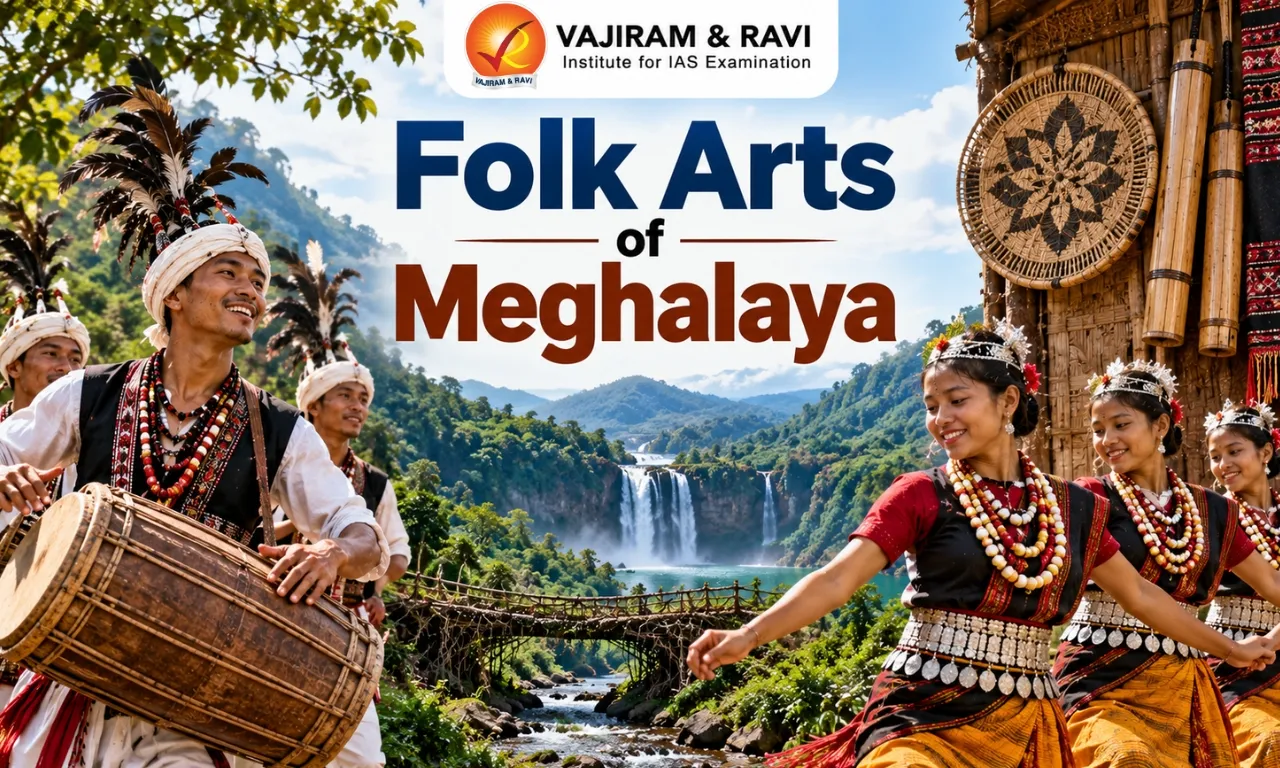
Enquire Now