Nachiket Mor Committee, History, Recommendations, Financial Inclusion

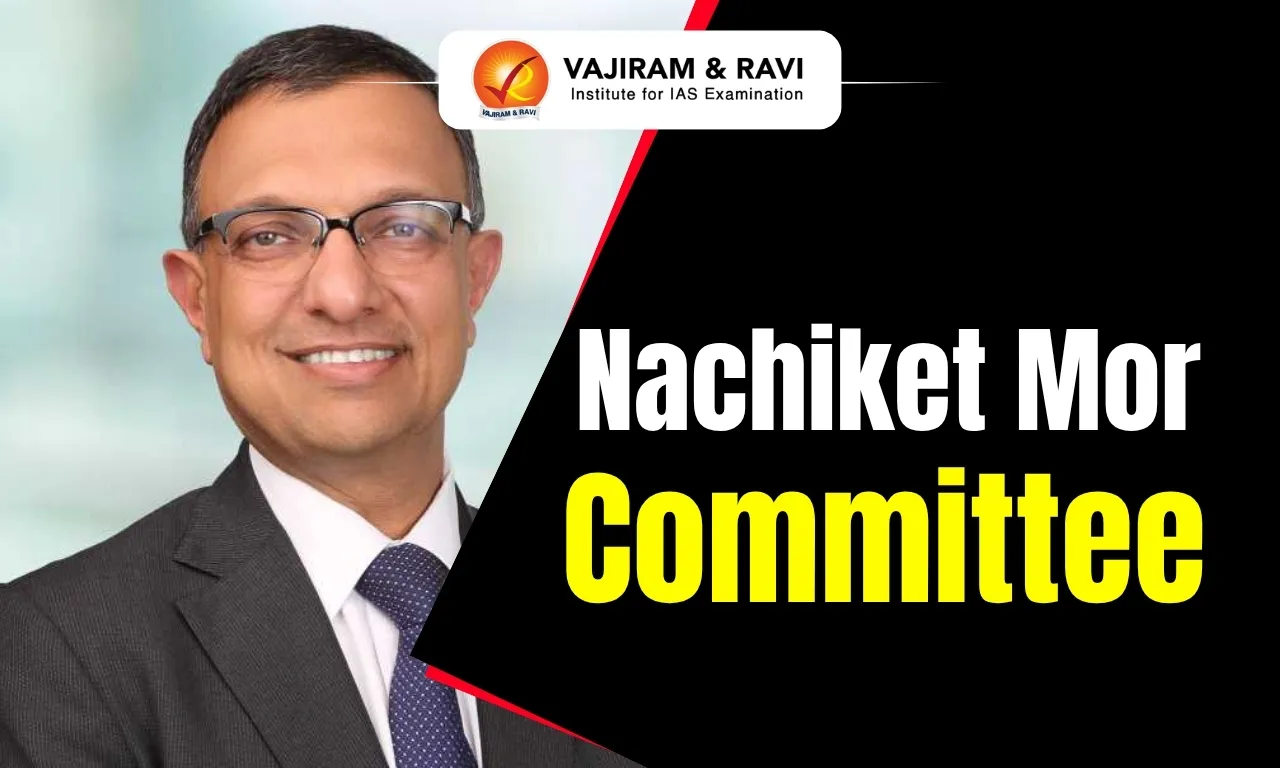
Nachiket Mor Committee

The Nachiket Mor Committee was set up by the Reserve Bank of India (RBI) to examine the challenges of financial inclusion in India. It focused on improving access to banking, credit, insurance, payments and other financial services, especially for low-income households and small businesses. The Committee’s recommendations aimed to make financial services more accessible, affordable and useful for people across the country. 

Nachiket Mor Committee History, Objectives

The Nachiket Mor Committee, officially known as the Committee on Comprehensive Financial Services for Small Businesses and Low-Income Households, was constituted by the Reserve Bank of India (RBI) in September 2013 under the chairmanship of Dr. Nachiket Mor.

  • Background: The committee was formed when India had expanded its banking network, but many rural households, migrant workers, small businesses, informal workers and low-income groups still had limited access to formal financial services such as banking, affordable credit, insurance and safe payment facilities.
  • Need for the Committee: The committee aimed to address gaps in the existing financial inclusion system and ensure that individuals and small businesses could access a wider range of formal financial services.
  • Core Vision: It proposed a financial system where every individual and small business could access affordable, convenient and reliable financial services.
  • Access and Usage: The committee stressed that financial inclusion should not be limited to simply opening bank accounts. People should also be able to use financial services such as savings, credit, insurance, pensions and payments effectively.
  • Economic Empowerment: It viewed financial inclusion as more than a banking issue, linking it with poverty reduction, economic participation and inclusive growth.

Nachiket Mor Committee Recommendations on Financial Inclusion

The committee proposed a broad approach to financial inclusion that covered bank accounts, payments, credit, insurance, pensions and consumer protection. Its recommendations focused on making financial services accessible and useful for underserved sections.

  • Universal Electronic Bank Account: The committee recommended that every adult Indian should have a Universal Electronic Bank Account (UEBA). It was intended to serve as a basic financial account through which people could save money, receive government benefits, make payments and become part of the formal financial system.
  • Easy Access to Payment Points: The committee proposed that residents should have access to payment services within a reasonable distance. It supported the use of banking correspondents, mobile banking, digital channels and local service points to reduce the difficulty faced by people in rural and remote areas.
  • Payments Banks: It recommended Payments Banks to provide basic savings and payment services to people who were not adequately served by traditional banks. These institutions were intended to support migrant workers, low-income households, small businesses and rural or semi-urban populations.
  • Payments Bank Services: Payments Banks were designed to provide services such as small savings accounts, remittances, digital payments, debit cards and mobile-based banking. However, they were not permitted to provide loans, keeping their focus on payments and deposit-related services.
  • Wholesale Banks: The committee also proposed Wholesale Banks to provide liquidity and credit support to financial institutions serving priority sectors and underserved regions. The aim was to improve the flow of funds to areas such as small businesses, agriculture and low-income groups.
  • Priority Sector Lending: It recommended reforms in Priority Sector Lending (PSL) so that credit would reach genuinely underserved sectors rather than merely helping banks meet fixed targets. The focus was on making PSL more flexible, better monitored and more effective.
  • Complete Range of Financial Products: The committee stressed that financial inclusion should go beyond bank accounts. Low-income households may also need affordable credit, insurance, pension products, safe remittance services, emergency savings and financial advice to manage different financial risks.

Also Read : Banking System in India

Key Recommendations of the Nachiket Mor Committee

The Nachiket Mor Committee recommendations covered both the structure of the banking system and the way financial services should be delivered and regulated.

  • Differentiated Banking: The committee supported a banking structure in which institutions could have different roles based on their functions. This included specialised institutions such as Payments Banks and Wholesale Banks to meet the needs of different sections of the economy.
  • Small Finance Banks: The committee recommended the idea of Small Finance Banks to improve credit access for small businesses and low-income households. This became an important part of the differentiated banking approach in India.
  • Greater Competition: It supported wider participation of non-bank players in financial services to encourage competition, innovation and better service delivery.
  • Digital Payment Infrastructure: The committee highlighted the importance of affordable, reliable and widely available payment systems. It supported the development of interoperable digital payment infrastructure to reduce transaction costs and make formal financial services easier to use.
  • Credit for Small Businesses: The committee recognised that small businesses often struggle to obtain formal loans because of limited collateral and documentation. It therefore supported measures such as cash-flow-based lending and improved credit information systems to improve access to formal credit.
  • Customer-Centric Regulation: The committee proposed moving towards a customer-centric regulatory approach instead of focusing only on banks and institutions. It emphasised proportional regulation, where rules would reflect the nature and risk profile of different financial institutions.
  • Consumer Protection: The committee stressed that financial inclusion should be supported by strong consumer protection. It highlighted the need for responsible lending, transparent products, simple communication, effective grievance redressal and suitable financial products for low-income households.

Also Read : Financial Institutions in India

Significance of the Nachiket Mor Committee for Indian Banking

The Nachiket Mor Committee played an important role in changing the way financial inclusion was viewed in India. Instead of measuring inclusion only through the number of bank branches or accounts, it placed greater emphasis on access, usage, financial security and a wider range of financial products.

  • Expansion of Financial Inclusion: Its recommendations influenced later developments such as Jan Dhan accounts, Aadhaar-enabled financial services, Direct Benefit Transfer, banking correspondents and digital payments.
  • Growth of Differentiated Banking: The committee’s ideas contributed to the development of specialised banking models, particularly Payments Banks, which expanded the range of institutions serving underserved customers.
  • Better Government Benefit Delivery: Wider access to bank accounts and digital payment systems helped strengthen the delivery of government benefits and transfers through formal financial channels.
  • Greater Savings and Formalisation: Bringing more households and small businesses into the formal financial system can encourage savings mobilisation, formal payments and reduced dependence on informal sources of finance.
  • Support for Small Businesses: By focusing on better credit access and improved financial services, the committee aimed to help small businesses participate more effectively in the formal economy.
  • Focus on Financial Security: The committee recognised that inclusion must also provide protection against financial risks through insurance, pensions, emergency savings and responsible credit.
  • Long-Term Impact: The committee’s approach helped shape India’s broader financial inclusion framework and supported the movement towards the JAM Trinity - Jan Dhan, Aadhaar and Mobile.

Nachiket Mor Committee Challenges

  • Uneven Access and Usage: Despite wider banking coverage, some rural households, low-income groups, migrant workers and small businesses still face difficulties in accessing and regularly using formal financial services.
  • Limited Access to Formal Credit: Small businesses and low-income borrowers continue to face challenges related to collateral, documentation and credit assessment, making it difficult to obtain affordable formal loans.
  • Digital Divide: Differences in digital literacy, internet connectivity and access to digital devices can limit the effective use of digital banking and payment services, particularly in underserved areas.
  • Fraud and Consumer Risks: The growing use of digital financial services has increased concerns related to fraud, mis-selling, over-indebtedness and unsuitable financial products, making strong consumer protection important.
  • Challenges for Payments Banks: Payments Banks have faced difficulties in developing sustainable business models while serving low-income customers and providing affordable payment and savings services.
  • Need for Greater Financial Security: Financial inclusion needs to go beyond bank accounts and payments by ensuring wider access to credit, insurance, pensions, emergency savings and financial advice.

Recent Developments based on Nachiket Mor Committee

  • Wider Financial Inclusion: The approach suggested by the Nachiket Mor Committee has influenced the expansion of financial inclusion in India by shifting the focus from merely opening accounts to ensuring meaningful access and regular usage.
  • Growth of Basic Bank Accounts: Initiatives such as Pradhan Mantri Jan Dhan Yojana (PMJDY) have significantly expanded access to basic bank accounts, particularly among previously underserved sections.
  • Expansion of Digital Payments: UPI, Aadhaar-enabled payment systems, mobile banking and Direct Benefit Transfer (DBT) have strengthened the digital financial ecosystem and improved access to formal financial services.
  • Greater Role of Differentiated Banks: The Committee's recommendation for differentiated banking models contributed to the introduction of Payments Banks and Small Finance Banks, aimed at serving specific customer groups and financial needs.
  • Continuing Inclusion Gaps: While access has improved considerably, challenges remain in ensuring affordable credit, regular usage, financial literacy, digital connectivity and consumer protection, especially for vulnerable and underserved groups.

Nachiket Mor Committee Way Forward

  • Focus on Meaningful Usage: Financial inclusion should move beyond account opening and focus on regular and useful access to savings, credit, payments, insurance and pension services.
  • Improve Affordable Credit: Better credit assessment, cash-flow-based lending and stronger credit information systems can help small businesses and low-income borrowers obtain formal credit more easily.
  • Strengthen Digital Infrastructure: Improving rural connectivity, digital access and financial literacy can help more people use digital financial services safely and effectively.
  • Enhance Consumer Protection: Financial institutions should ensure transparent products, responsible lending, simple communication and effective grievance redressal to protect customers from fraud and mis-selling.
  • Expand Insurance and Pension Coverage: Financial inclusion should provide low-income households with access to suitable insurance, pension and emergency savings products to improve their overall financial security.
  • Strengthen Digital Safety: Greater attention should be given to data privacy, cybersecurity and protection against digital fraud as financial services become increasingly technology-driven.

Nachiket Mor Committee FAQs

Q1: What is the Nachiket Mor Committee?

Ans: The Nachiket Mor Committee was set up by the RBI in September 2013 to examine financial inclusion and improve access to banking and other financial services.

Q2: What was the main objective of the Nachiket Mor Committee?

Ans: Its main objective was to ensure affordable, convenient and reliable financial services for individuals, small businesses and underserved groups.

Q3: What is Universal Electronic Bank Account (UEBA)?

Ans: The Committee recommended a Universal Electronic Bank Account for every adult Indian to support savings, payments, government benefits and access to the formal financial system.

Q4: What are the major recommendations of the Nachiket Mor Committee?

Ans: Major recommendations included Universal Electronic Bank Accounts, Payments Banks, Wholesale Banks, Small Finance Banks, digital payment infrastructure and stronger consumer protection.

Q5: What are Payments Banks according to the Nachiket Mor Committee?

Ans: Payments Banks were proposed to provide basic savings and payment services to underserved groups such as migrant workers, low-income households and small businesses. They cannot provide loans.

Churches and Convents of Goa, Monuments, UNESCO Heritage Site

Churches and Convents of Goa

Churches and Convents of Goa are a remarkable group of religious monuments at Old Goa. They were built mainly between the 16th - 17th centuries and reflect Portuguese rule and the spread of Christianity in Asia. These monuments combine European architectural traditions with local materials, craftsmanship, paintings, carvings and religious art. Their historical, architectural, cultural and artistic importance earned them UNESCO World Heritage recognition in 1986.

Churches and Convents of Goa History

Old Goa developed from the earlier settlement of Ella after Portuguese forces captured Goa in 1510, making it an important centre of administration, trade and Christian evangelisation. 

The historical background of the development and evolution of the Churches and Convents of Goa has been discussed below:

  • Portuguese Conquest: Afonso de Albuquerque captured Goa in 1510. Portuguese control continued for more than 450 years until Goa became part of India in 1961.
  • Rise of Old Goa: Goa became the capital of Portuguese territories in Asia. At its peak, the city had more than 200,000 inhabitants and was widely known as the ‘Rome of the East’ because of its numerous Catholic religious buildings.
  • Christian Evangelisation: Jesuits, Franciscans, Dominicans, Augustinians, Carmelites and Theatines established religious institutions in Goa from the 16th century. The city became a major centre for spreading Catholicism across India and other parts of Asia.
  • Local Artistic Influence: European architectural forms were adapted to local conditions. Goan artists and workers contributed to paintings, wooden carvings, sculptures, furniture and decorative elements, creating a distinctive Indo-Portuguese Architectural character.
  • Decline of Old Goa: Competition from Dutch and British traders weakened Goa’s economy. Epidemics also affected the city, while the Mandovi River became unsuitable for larger ships.
  • Loss of Capital Status: The Portuguese Viceroy shifted to Pangim, or Nova Goa, in 1759. Old Goa officially lost its capital status in 1843, accelerating its decline as an urban centre.

Churches and Convents of Goa Monuments

The Churches and Convents of Goa UNESCO property comprises seven major surviving monuments that demonstrate Manueline, Mannerist, Baroque, Renaissance, Gothic and Classical influences adapted to local conditions.

The 7 Monuments under the UNESCO Recognised Churches and Convents of Goa include:

1. Church of Our Lady of Rosary

  • Construction: Built in 1543, the Church of Our Lady of Rosary is among the oldest surviving churches of Old Goa and represents the early Manueline tradition.
  • Architecture: Its exterior resembles a small fortress. Cylindrical towers with cupolas and the entrance arrangement show influences associated with late Gothic and Manueline Portugal.
  • Interior: Manueline vaults mark the chapels. A carved alabaster cenotaph commemorates Dona Catarina, wife of Garcia de Sá, whose grave lies beneath the floor.

2. Se’ Cathedral

  • Origin: The first cathedral began as a small mud and straw chapel ordered after Afonso de Albuquerque’s conquest. It was later rebuilt on a much larger scale.
  • Construction: Reconstruction began in 1562. The main body was completed by 1619, while the facade was finished in 1631.
  • Architecture: The cathedral has three naves of equal height, a Tuscan exterior, Corinthian columns, three portals, vaulted interiors and a richly decorated gilded chancel altarpiece.
  • Bell Tower: The cathedral originally had two towers. One tower was destroyed by a storm in 1766, leaving the present structure with one surviving tower.
  • Principal Chapel: The chapel contains engraved pillars and pilasters. Its religious imagery includes Senhora d’Esperanca, Christ crucified, St. Catherine, St. Peter and St. Paul.

3. Basilica of Bom Jesus

  • Construction: The Basilica of Bom Jesus was begun in 1594 and consecrated in 1605. It became the most important surviving Jesuit monument of Old Goa.
  • Architecture: The basilica has a Mannerist facade and incorporates Ionic, Doric and Corinthian elements. Its black granite facade is elaborately carved and its ceiling is richly decorated.
  • St. Francis Xavier: The basilica preserves the remains of Francisco Xavier in a silver urn. The mausoleum was created by Florentine artist Giovanni Battista Foggini in 1697.
  • Mausoleum: The monument was associated with the Grand Duke of Tuscany, Cosimo III de Medici. Artist Placido Francesco Ramponi came to Goa in 1698 to install it.
  • Main Altar: The high altar is dedicated to the Infant Jesus. It dates to around 1699 and includes an image of Ignatius of Loyola, founder of the Jesuit Order.

4. Church and Convent of St. Francis of Assisi

  • Franciscan Foundation: The Franciscan Order received permission from King Manuel I to establish a convent in Goa in 1517. The early church was completed in 1521.
  • Rebuilding: The church was completely rebuilt from 1661. Its earlier Manueline doorway was retained and incorporated into the later Mannerist facade.
  • Interior: The church contains a single vaulted nave, side chapels, a transept, stucco work, paintings and numerous graves with inscriptions and coats of arms.
  • Altarpiece: The main chapel has paintings depicting the life of St. Francis of Assisi. Its gilded altarpiece dates to around 1670 and depicts Jesus embracing Francis Xavier.

5. Chapel of St. Catherine

  • Historical Site: The chapel stands near the location where Afonso de Albuquerque entered Goa in 1510. A stone inscription records the historical association of the site with the conquest.
  • Cathedral Status: Pope Paul III raised the chapel to cathedral status in 1534. It was subsequently rebuilt and developed into its present simple architectural form.
  • Architecture: The rectangular structure has a single nave, stone chancel, cylindrical vaulted ceiling, pilasters, a central entrance, triangular pediment and two square bell towers.

6. Church of St. Augustine

  • Foundation: Augustinian religious members arrived in Goa during the 16th century. They established the convent and began constructing the church in 1597.
  • Ruins: The church complex later fell into ruins. Its vault collapsed in 1842, while the facade collapsed in 1936.
  • Bell Tower: Only part of the original bell tower survives. The former facade had two massive five storey towers, while the church included a nave, side chapels and a transept.

7. Church of Divine Providence (São Caetano or Saint Cajetan)

  • Construction: The Theatines arrived in Goa in 1639. They established a convent and built the Church of St. Cajetan by 1665.
  • Design: Italian architects Carlo Ferrarini and Francesco Maria Milazzo designed the church with a Greek cross plan. Its facade follows the design tradition of St. Peter’s Basilica in Rome.
  • Architecture: A large hemispherical dome dominates the church. Two quadrangular towers replace the paired cupolas associated with the Roman model.
  • Sculptures: Four basalt statues of St. Paul, St. Peter, St. John the Evangelist and St. Matthew occupy niches on the facade.
  • Religious Inscription: The portal carries the Latin inscription “Domus mea, domus orationis,” meaning “My House is a House of Prayer.”

Churches and Convents of Goa Conservation

Conservation focuses on protecting architectural integrity, historic functions, structural stability, artistic elements and the wider setting of the Churches and Convents of Goa.

  • National Protection: The Archaeological Survey of India manages the centrally protected monuments.
  • Development Regulation: Goa’s Planning and Development Authority regulates conservation and preservation zones through the Development Plan Regulations of 1989 and 2000.
  • Protected Areas: The 2010 Amendment and Validation Act restricts construction and mining activities within prohibited and regulated zones of 100 metres and 200 metres respectively from protected monuments.
  • Conservation Challenges: Weathering, capillary action and termite activity remain important threats. Wooden carvings and panel paintings require particular attention because of their vulnerability.
  • Conservation Cooperation: India, Goa authorities, local experts and Portuguese heritage institutions have worked toward developing a more coherent conservation approach and inventory for the historic site.

Churches and Convents of Goa UNESCO Recognition

UNESCO recognised the Churches and Convents of Goa as a World Heritage Site in 1986 for their exceptional architectural, artistic, missionary and historical significance.

  • World Heritage Property: Seven monuments collectively represent the architectural heritage of the former Portuguese capital.
  • UNESCO Criteria: The Churches and Convents of Goa were recognised under Criteria (ii), (iv) and (vi) for their influence on Asian art and architecture, outstanding missionary architectural ensemble and the universal significance of Saint Francis Xavier’s tomb.
  • Authenticity: Systematic conservation has helped retain the structures, historic functions, religious ceremonies and occasional services. Excavation and in situ conservation have also supported the preservation of the St. Augustine complex.
  • Integrity: The property boundary includes the structures necessary to demonstrate the assimilation of Manueline, Mannerist and Baroque styles with local practices. Regular monitoring and conservation support their continued protection.

Churches and Convents of Goa FAQs

Q1: What are the Churches and Convents of Goa?

Ans: The Churches and Convents of Goa are a group of seven historic religious monuments at Old Goa, built mainly between the 16th and 17th centuries during Portuguese rule.

Q2: Why are the Churches and Convents of Goa famous?

Ans: They are famous for their Manueline, Mannerist, Baroque, Renaissance, Gothic and Classical architectural features and their role in spreading European art across Asia.

Q3: How many monuments are included in the Churches and Convents of Goa?

Ans: The UNESCO World Heritage property includes seven monuments, including Se’ Cathedral, Basilica of Bom Jesus, Church of St. Francis of Assisi and Church of St. Augustine.

Q4: When did Churches and Convents of Goa get UNESCO recognition?

Ans: The Churches and Convents of Goa were inscribed on the UNESCO World Heritage List in 1986 for their architectural, artistic, historical and missionary significance.

Q5: Which architectural styles are found in the Churches and Convents of Goa?

Ans: The monuments display Manueline, Mannerist, Baroque, Renaissance, Gothic, Tuscan and Classical influences, adapted through local materials, craftsmanship and artistic traditions.

UPSC Daily Quiz 10 September 2026

UPSC Daily Quiz

[WpProQuiz 251]

UPSC Daily Quiz FAQs

Q1: What is the Daily UPSC Quiz?

Ans: The Daily UPSC Quiz is a set of practice questions based on current affairs, static subjects, and PYQs that help aspirants enhance retention and test conceptual clarity regularly.

Q2: How is the Daily Quiz useful for UPSC preparation?

Ans: Daily quizzes support learning, help in revision, improve time management, and boost accuracy for both UPSC Prelims and Mains through consistent practice.

Q3: Are the quiz questions based on the UPSC syllabus?

Ans: Yes, all questions are aligned with the UPSC Syllabus 2025, covering key areas like Polity, Economy, Environment, History, Geography, and Current Affairs.

Q4: Are solutions and explanations provided with the quiz?

Ans: Yes, each quiz includes detailed explanations and source references to enhance conceptual understanding and enable self-assessment.

Q5: Is the Daily UPSC Quiz suitable for both Prelims and Mains?

Ans: Primarily focused on Prelims (MCQ format), but it also indirectly helps in Mains by strengthening subject knowledge and factual clarity.

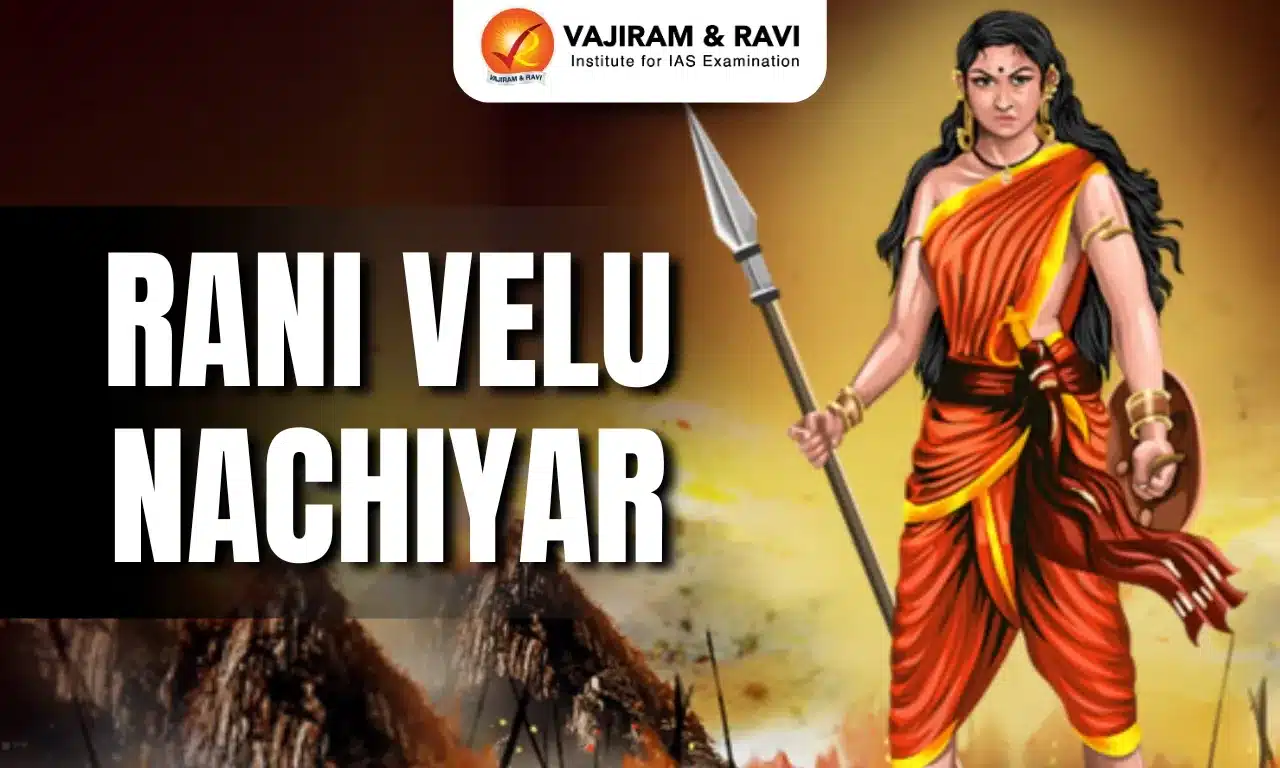
Rani Velu Nachiyar (1730-1796), Biography, Contributions, Kuyili

Rani Velu Nachiyar

Rani Velu Nachiyar (3 January 1730-25 December 1796) was the queen of Sivaganga in present day Tamil Nadu. She is remembered as Veeramangai, meaning brave woman. She was the first Indian queen to wage war against the British East India Company. Her resistance, military organisation, strategic alliances and recovery of Sivaganga in 1780 made her an important figure in the early history of anti colonial resistance in India.

Rani Velu Nachiyar Biography

Rani Velu Nachiyar was a prominent Freedom Fighter who combined royal education, military training and political leadership. Her life connected the regional politics of Ramanathapuram, Sivaganga, Mysore and the Arcot power structure.

  • Birth and Family: Rani Velu Nachiyar was born on 3 January 1730 in Ramanathapuram. She was the only child of Raja Chellamuthu Vijayaragunatha Sethupathy and Rani Sakandhimuthal of the Ramnad kingdom.
  • Marriage: At the age of 16, she married Muthu Vaduganatha Periyavudaya Thevar, the prince and later ruler of Sivaganga. Their political association continued until his death in 1772.
  • Education and Skills: She received training in weapons, horse riding, archery, Valari, Silambam and Kalaripayattu. She also had proficiency in Tamil, English, French and Urdu.
  • Exile After 1772: After her husband was killed during the conflict at Kalaiyar Koil in 1772, Rani Velu Nachiyar left Sivaganga with her daughter Vellacci and remained in exile for about eight years.
  • Alliance with Hyder Ali: During her exile, she sought military assistance from Hyder Ali of Mysore. She met him at Dindigul and gained his support for rebuilding her forces and recovering Sivaganga.

Also Read: Anglo-Mysore Wars

Rani Velu Nachiyar Contributions

Rani Velu Nachiyar’s contribution went beyond battlefield resistance. She used alliances, military preparation, women’s participation and regional political support to challenge British power.

  • Resistance to British Rule: Rani Velu Nachiyar fought the British East India Company and reclaimed Sivaganga in 1780. This made her an early Indian queen to successfully recover territory from British control.
  • Military Preparation: During her eight year exile, she organised forces with support from regional leaders, the Marudu brothers and Hyder Ali. Her preparations focused on regaining Sivaganga.
  • Women’s Army: She established a dedicated women’s military unit known as Udaiyal. The force was named in honour of Udaiyal, a trusted woman associated with her resistance.
  • Strategic Alliances: Her alliance with Hyder Ali provided military resources, including soldiers, weapons and financial support. She also maintained relations with the Marudu brothers and regional commanders.
  • Administration: After regaining Sivaganga, Rani Velu Nachiyar granted administrative responsibilities to the Marudu Brothers in 1780. She continued ruling the kingdom until around 1790.

Rani Velu Nachiyar Recognitions

Rani Velu Nachiyar remains an important historical symbol of women’s leadership and early resistance against colonial expansion in southern India.

  • Veeramangai: Rani Velu Nachiyar is popularly known among Tamils as Veeramangai, meaning brave woman. The title reflects her military leadership and resistance against British power.
  • Postage Stamp: A commemorative postage stamp dedicated to Rani Velu Nachiyar was released on 31 December 2008. It formally recognised her place in India’s historical memory.
  • Memorial in Sivaganga: A Veera Mangai Velu Nachiyar Memorial was inaugurated in Sivaganga in 2014. A six foot bronze statue of the queen was also installed.
  • Cultural Legacy: Her life has been represented through dance and cultural performances. A grand dance ballet depicting her history was staged at Narada Gana Sabha in Chennai on 21 August 2017.

Also Read: Woman Freedom Fighters of India

Who was Kuyili?

Kuyili was the trusted army commander of Rani Velu Nachiyar. She played a major role in the 1780 campaign against the East India Company and is remembered for her ultimate sacrifice.

  • Birth and Background: Veeramangai Kuyili was born on 29 November 1749 at Kudanchavadi near present day Sivaganga district. She belonged to a socially marginalised Arunthathiyar or Sambavar background.
  • Military Leadership: Kuyili rose to the position of commander in chief in Rani Velu Nachiyar’s military organisation. She became closely associated with the queen’s campaign to recover Sivaganga.
  • Attack Strategy: Kuyili and other women entered the British controlled fort by blending with women visiting a temple during Vijayadashami. The group then attacked the guards and opened the gates.
  • Attack on the Arsenal: During the 1780 attack on an East India Company fort, Kuyili reportedly applied ghee to her body, set herself on fire and entered the British ammunition store. The act destroyed the arsenal and aided the queen’s military campaign.
  • Historical Significance: Kuyili is widely described as the First Woman Martyr and the First Suicide Bomber in Indian History. These descriptions are mainly associated with later historical accounts, folk traditions and oral histories.
  • Theepaanchi Amman: Kuyili is revered locally as Theepaanchi Amman, meaning “the goddess who jumped into fire,” at Muthupatti village near Sivaganga. This tradition preserves her memory in local culture.
  • Memorials: The Tamil Nadu government inaugurated a memorial dedicated to Kuyili in Sivaganga district in July 2014. A statue commemorating her was inaugurated in October 2024.

Rani Velu Nachiyar FAQs

Q1: Who was Rani Velu Nachiyar?

Ans: Rani Velu Nachiyar was the queen of Sivaganga who fought the British East India Company and reclaimed her kingdom in 1780.

Q2: When was Rani Velu Nachiyar born?

Ans: Rani Velu Nachiyar was born on 3 January 1730 in Ramanathapuram. She was the only child of Raja Chellamuthu Vijayaragunatha Sethupathy.

Q3: Why is Rani Velu Nachiyar famous?

Ans: Rani Velu Nachiyar is famous for her early armed resistance against the British East India Company and for organising a dedicated women’s army called Udaiyal.

Q4: Who was Kuyili in Rani Velu Nachiyar’s army?

Ans: Kuyili was the commander in chief of Rani Velu Nachiyar’s women’s army. She sacrificed her life while attacking the East India Company’s ammunition store in 1780.

Q5: When did Rani Velu Nachiyar die?

Ans: Rani Velu Nachiyar died on 25 December 1796 in Sivaganga. Her daughter Vellacci succeeded her as ruler around 1790.

18th BRICS Summit 2026, Date, Venue, Theme & Host Country

18th BRICS Summit 2026

18th BRICS Summit 2026 will be hosted by India in New Delhi on September 12–13, 2026. The summit will bring together leaders of BRICS member countries to discuss global economic cooperation, development, climate action, technology, energy transition and issues concerning the Global South. India assumed the BRICS Chairship on January 1, 2026.

Delhi schools and offices will remain closed on September 12 in view of the 18th BRICS Leaders’ Summit, which is scheduled to be held at Bharat Mandapam from September 12 and 13.

18th BRICS Summit 2026 Overview

18th BRICS Summit 2026 is the culmination of India’s year-long BRICS Chairship, bringing leaders together to strengthen cooperation and discuss shared global and regional challenges.

18th BRICS Summit 2026 Overview

Particulars

Details

Summit

18th BRICS Summit

Year

2026

Dates

September 12–13, 2026

Host Country

India

Venue

Bharat Mandapam, New Delhi

Chair

India

Theme

“Building for Resilience, Innovation, Cooperation and Sustainability”

Major Focus

Global South, climate action, digital public infrastructure, green finance, energy transition and multilateral cooperation

18th BRICS Summit 2026 Venue

The 18th BRICS Summit will be held at Bharat Mandapam in New Delhi. Bharat Mandapam is a major international convention and exhibition centre located at Pragati Maidan, New Delhi. It has hosted several major national and international events and provides facilities for large-scale diplomatic and multilateral meetings.

18th BRICS Summit 2026 Theme

The theme of the 18th BRICS Summit is: “Building for Resilience, Innovation, Cooperation and Sustainability”. The theme highlights the need for BRICS countries to work together to address global challenges while promoting sustainable development and technological innovation.

The four key ideas in the theme are:

  • Resilience: Strengthening countries' ability to deal with economic, environmental and geopolitical challenges.
  • Innovation: Promoting new technologies, research and digital solutions for development.
  • Cooperation: Increasing collaboration among BRICS countries in different sectors.
  • Sustainability: Supporting environmentally sustainable and inclusive economic growth.

India as BRICS Chair in 2026

India assumed the BRICS Chairship on January 1, 2026, placing it at the centre of the grouping's agenda for the year. India's chairship is guided by the theme “Building for Resilience, Innovation, Cooperation and Sustainability”, with a focus on people-centric development and stronger cooperation among BRICS countries.

Also Read:- India-EU FTA 2026

BRICS Summit 2026 Guest List

BRICS currently has 11 full members: Brazil, Russia, India, China, South Africa, Egypt, Ethiopia, Indonesia, Iran, Saudi Arabia, and the United Arab Emirates (UAE). South African President Cyril Ramaphosa has confirmed his participation in the summit.

The key leaders and representatives expected to attend include:

  • Xi Jinping – President of China
  • Vladimir Putin – President of Russia
  • Cyril Ramaphosa – President of South Africa
  • Masoud Pezeshkian – President of Iran
  • Abdel Fattah el-Sisi – President of Egypt
  • Abiy Ahmed – Prime Minister of Ethiopia
  • Prabowo Subianto – President of Indonesia
  • Sheikh Khaled bin Mohamed bin Zayed Al Nahyan – Crown Prince of Abu Dhabi, UAE
  • Mauro Vieira – Foreign Minister of Brazil

18th BRICS Summit 2026 Agenda

18th BRICS Summit 2026 will focus on strengthening cooperation among member countries while addressing major global economic, technological and environmental challenges. India’s agenda places particular emphasis on Global South priorities, innovation, digital cooperation, climate action and sustainable development.

  • Global South: Strengthening the voice and priorities of developing countries in global governance.
  • Climate Action: Promoting climate resilience, clean energy and sustainable development.
  • Green Finance: Encouraging greater green and climate finance for sustainable projects.
  • Digital Public Infrastructure: Expanding cooperation in DPI, digital payments and inclusive digital services.
  • Innovation and Technology: Promoting AI, startups, scientific research and inclusive innovation.
  • Energy Transition: Supporting clean energy and sustainable energy systems.
  • Resilient Supply Chains: Building reliable and diversified global supply chains through greater BRICS cooperation.
  • Multilateral Reforms: Pushing for more representative and inclusive global institutions.
  • Financial Cooperation: Exploring greater use of local currencies and cross-border digital payments among BRICS countries.

18th BRICS Summit 2026 Significance

18th BRICS Summit 2026 is significant as India’s chairship provides an opportunity to strengthen cooperation among emerging economies and highlight the priorities of the Global South. The summit also focuses on resilience, innovation, cooperation and sustainability in addressing major global challenges.

  • Global South: Strengthens the collective voice of developing and emerging economies in global decision-making.
  • Global Governance Reforms: Supports efforts to make multilateral institutions more representative and inclusive.
  • Climate Action: Promotes cooperation on climate change, sustainable development and green growth.
  • Digital Cooperation: Encourages collaboration in digital public infrastructure, technology and digital inclusion.
  • Economic Cooperation: Provides opportunities to enhance trade, investment and financial cooperation among BRICS members.
  • Energy Transition: Encourages cooperation on clean energy, energy security and sustainable energy systems.
  • Innovation: Places greater emphasis on technology, research and innovation-led development.
  • India's Global Role: Strengthens India's role in shaping discussions on global development and international cooperation.
  • 25-Year Milestone: The summit comes in 2026, 25 years after the BRIC concept was coined in 2001, highlighting the evolution of the grouping.

Also Read:- India's Q1 GDP Growth: 7.8%

BRICS

BRICS is a grouping of major emerging economies that aims to promote cooperation in areas such as trade, investment, finance, sustainable development, technology and global governance. The term BRIC was coined in 2001 to refer to Brazil, Russia, India and China, while South Africa joined the grouping in 2010, leading to the name BRICS.

  • BRIC Concept: Coined in 2001 by economist Jim O’Neill.
  • Founding Members: Brazil, Russia, India and China.
  • South Africa: Joined in 2010, turning BRIC into BRICS.
  • BRICS expanded to BRICS+ with the addition of Egypt, Ethiopia, Iran, Saudi Arabia and the UAE as new members in January 2024, followed by Indonesia in January 2025. 
  • Nature: A platform for economic, political and development cooperation among member countries.
  • Major Focus: Trade, investment, finance, technology, climate change and sustainable development.
  • Global South: BRICS seeks to strengthen the voice and representation of developing countries in global affairs.
  • New Development Bank: Established by BRICS to support infrastructure and sustainable development projects.
  • Global Governance: The grouping supports reforms to make international institutions more representative and inclusive.

BRICS and India’s Strategic Interests

  • Strategic Autonomy and Multi-Alignment: BRICS helps India engage with major global powers while maintaining an independent foreign policy.
  • Leadership of the Global South: It strengthens India’s role in raising concerns related to food security, climate finance, healthcare, debt and development.
  • Global Governance Reform: BRICS supports India’s demand for greater representation in the UNSC, IMF, World Bank and WTO.
  • Greater Diplomatic Influence: The grouping gives India a larger platform to shape discussions on global economic and geopolitical issues.
  • Trade and Export Diversification: BRICS provides access to expanding markets in Asia, Africa, Latin America and West Asia, helping India diversify its exports.
  • Energy Security: Cooperation with major oil and gas producers can help India secure reliable and diversified energy supplies.
  • Critical Mineral Security: Partnerships with resource-rich BRICS members can improve access to nickel, iron ore and other critical minerals.
  • Alternative Development Finance: The New Development Bank (NDB) provides additional financing for India’s infrastructure and sustainable-development projects.
  • Financial Independence: Local-currency trade and payment systems can reduce dependence on the US dollar and lower transaction costs.
  • Technology and Digital Cooperation: BRICS provides opportunities for cooperation in AI, fintech, digital public infrastructure, space and healthcare, while India can showcase UPI and India Stack.
  • Supply-Chain Resilience: Greater cooperation can diversify India’s sources of energy, minerals, food and industrial inputs, reducing vulnerability to global disruptions.

18th BRICS Summit 2026 FAQs

Q1: Which country will host the 2026 BRICS Summit?

Ans: India will host the 18th BRICS Summit 2026 in New Delhi on September 12–13, 2026. The summit will be held at Bharat Mandapam.

Q2: What is the theme of the 18th BRICS Summit 2026?

Ans: The theme of the 18th BRICS Summit 2026 is “Building for Resilience, Innovation, Cooperation and Sustainability.” It reflects India's focus on people-centric development and stronger cooperation among BRICS countries.

Q3: Who will host the BRICS Summit in 2027?

Ans: China is expected to host the BRICS Summit in 2027, following India's 2026 chairship.

Q4: Who will host the 19th BRICS Summit?

Ans: The 19th BRICS Summit will be hosted by China in 2027, as the BRICS chairship rotates among member countries.

Q5: Which country is the president of BRICS in 2026?

Ans: India holds the BRICS Chairship/Presidency in 2026. India assumed the chairship on January 1, 2026, succeeding Brazil.

Narcolepsy

Narcolepsy

Narcolepsy Latest News

Two researchers who did groundbreaking work on narcolepsy, the neurological disorder that triggers sudden sleep attacks, won a prestigious science award recently.

About Narcolepsy

  • Narcolepsy is a sleep disorder that causes extreme daytime sleepiness and sudden “sleep attacks,” where you fall asleep without warning. These can happen at any time, even during regular activities. 
  • It affects your brain’s ability to control when you fall asleep and wake up.
  • The condition can disrupt your daily life, making it harder to work, study, or keep relationships. 
  • Narcolepsy is uncommon. But it’s a manageable lifelong condition.  
  • There are two main types:
    • Narcolepsy type 1: This type causes sudden muscle weakness (cataplexy) and/or very low levels of a brain chemical called hypocretin/orexin (helps control wakefulness and rapid eye movement (NREM) sleep).
    • Narcolepsy type 2: This type causes daytime sleepiness like type 1, but without cataplexy. 
  • A separate condition called secondary narcolepsy can happen due to a brain injury, lesion, or other medical or genetic disorder. 
    • It often comes with more severe symptoms and longer sleep times. 

Narcolepsy What Causes Narcolepsy?

  • The exact cause of narcolepsy is not known. 
  • People with type 1 narcolepsy have low levels of hypocretin, also called orexin. Hypocretin is a chemical in the brain that helps control being awake and entering REM sleep.
  • Hypocretin levels are low in people who have cataplexy. 
  • Exactly what causes the loss of hypocretin-producing cells in the brain isn't known. 
  • But experts suspect it's due to an autoimmune reaction. An autoimmune reaction is when the body's immune system destroys its own cells.
  • It's also likely that genetics plays a role in narcolepsy. But the risk of a parent passing this sleep condition to a child is very low—only about 1% to 2%.
  • Narcolepsy may be linked to exposure to the H1N1 flu, sometimes called the swine flu

Narcolepsy Symptoms

  • Narcolepsy can feel different for everyone. Common symptoms include: 
    • Excessive daytime sleepiness: Feeling very sleepy during the day or suddenly falling asleep without warning
    • Cataplexy: Sudden muscle weakness, triggered by strong emotion, which can make you drop things or fall
    • Hallucinations: Seeing or hearing things that aren’t really there as you drift into or out of sleep
    • Sleep paralysis: Not being able to move or speak for a short time when falling asleep or waking up
    • Automatic behaviors: Doing things like walking while half asleep and not remembering it later.
    • Poor nighttime sleep: Waking up often or not sleeping deeply, even if you fall asleep easily
  • Narcolepsy itself isn’t usually dangerous, but sudden sleep episodes or muscle weakness can lead to accidents or injuries. These risks are higher when driving, using machinery, or doing activities like swimming or climbing. 

Narcolepsy Treatment

  • There’s no cure for narcolepsy. 
  • But treatment can help you manage symptoms and improve daily life. 

News:MED

Narcolepsy FAQ's

Q1: What is narcolepsy?

Ans: Narcolepsy is a sleep disorder that causes extreme daytime sleepiness and sudden sleep attacks.

Q2: What are sleep attacks in narcolepsy?

Ans: Sleep attacks are sudden episodes in which a person falls asleep without warning, sometimes during regular activities.

Q3: How does narcolepsy affect the brain?

Ans: It affects the brain’s ability to control when a person falls asleep and wakes up.

Q4: What is secondary narcolepsy?

Ans: Secondary narcolepsy is a form of narcolepsy that can occur due to a brain injury, brain lesion, or another medical or genetic disorder.

Q5: Is the exact cause of narcolepsy known?

Ans: No, the exact cause of narcolepsy is not known.

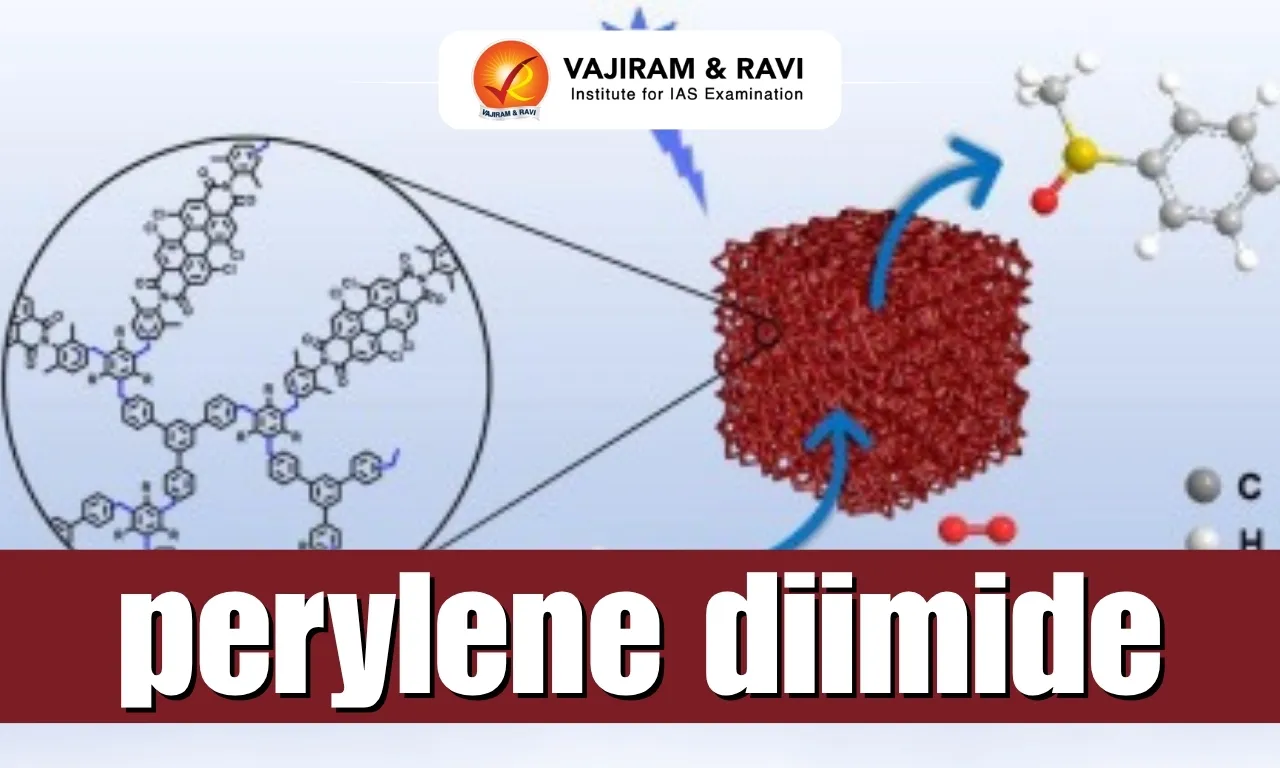
Perylene diimide

Perylene diimide

Perylene diimide Latest News

A team of researchers integrated amino acid (aspartic acid) with a light-absorbing organic molecule, perylene diimide (PDI) and allowed the molecules to spontaneously organize themselves through supramolecular self-assembly.

About Perylene diimide

  • It is a derivative of perylene.
  • Initially synthesized and explored as an organic dye, has since gained significant recognition for its outstanding optical and electronic properties.
  • Properties
    • PDIs exhibit exceptional optical characteristics.
    • It has strong absorption and high fluorescence quantum yield, along with remarkable electronic properties, such as high electron affinity and superior charge carrier mobility. 
    • It has a role as a fluorochrome. It is a dicarboximide and an organic heteropolycyclic compound.
    • The molecular architecture and electrical properties are closely related in semiconducting organic electronic materials.
  • Applications
    • PDI derivatives are considered as potential candidates for photovoltaic applications and organic electronics.
    • They behave as n-type organic semiconductor materials and have been used in fabrication of solar cells, photovoltaic devices, and dye lasers.

Source: PIB

Perylene diimide FAQs

Q1: What is Perylene diimide?

Ans: It is a derivative of perylene.

Q2: What are the applications of Perylene diimide?

Ans: It is used in fabrication of solar cells, photovoltaic devices, and dye lasers.

Navier-Stokes Equations

Navier-Stokes Equations

Navier-Stokes Equations Latest News

Recently, the mathematical community has been rocked by claims that OpenAI leveraged its enormous computing power — and potentially the private user data of academic researchers — to scoop a specific solution to the Navier-Stokes equations problem.

About Navier-Stokes Equations

  • The Navier-Stokes equations are a set of partial differential equations that describe the motion of viscous fluids. 
  • They are named after the French mathematician and physicist Claude-Louis Navier and the Irish mathematician and physicist George Gabriel Stokes, who developed them in the 19th century.
  • The Navier-Stokes equations are based on the conservation of mass, momentum, and energy
  • They use Newton’s second law of motion (F = m x a) to describe how fluids move. 
  • Importantly, they treat a fluid as a continuous medium rather than tracking individual molecules.  
  • Equation:
    • The Navier-Stokes equation, in modern notation, is 
      • ∂u/∂t + u·∇u = -∇P/ρ + v∇2 u
    • where u is the fluid velocity vector, P is the fluid pressure, ρ is the fluid density, υ is the kinematic viscosity, and ∇2 is the Laplacian operator.
  • Navier-Stokes equations have been used to model a wide variety of fluid flows, including the flow of water in pipes, the flow of air around airplanes, and the flow of blood in the human body. 
  • The Navier-Stokes equation is used in a wide variety of applications, including:
    • Weather forecasting
    • Climate modeling
    • Ocean circulation
    • Aerodynamics
    • Fluid dynamics
    • Hydraulics
    • Lubrication
    • Combustion
    • Chemical engineering
    • Biomedical engineering
  • There are a number of challenges associated with solving these equations, including: 
    • The equations are nonlinear, which means that they cannot be solved using linear methods.
    • The equations are coupled, which means that they cannot be solved independently of each other.
    • Whether smooth solutions in three dimensions continue to exist for all time — the problem of global existence and smoothness — is still an unsolved mathematical question.
  • Is the Navier-Stokes equation solved?
    • The Navier-Stokes equation is one of the most important unsolved problems in mathematics. 
    • In 2000, whether smooth, reasonable solutions to the Navier-Stokes equation in three dimensions exist was designated a Millennium Problem, one of seven mathematical problems selected by the Clay Mathematics Institute of Cambridge, Massachusetts, U.S., for a special award. 
    • The solution for each Millennium Problem is worth $1 million. 
    • Despite these challenges, there has been significant progress in solving the Navier-Stokes equations in recent years. 
      • This progress has been due in part to the development of new numerical methods and the use of high-performance computers.

News: nTH

Navier-Stokes Equations FAQs

Q1: What are the Navier–Stokes equations?

Ans: They are a set of partial differential equations that describe the motion of viscous fluids.

Q2: Which law of motion is used in the Navier–Stokes equations to describe fluid motion?

Ans: Newton’s second law of motion (F = ma).

Q3: How do the Navier–Stokes equations treat a fluid?

Ans: They treat a fluid as a continuous medium rather than tracking individual molecules.

Q4: Where are the Navier–Stokes equations used to model fluid flow?

Ans: They are used to model flows such as water in pipes, air around airplanes, and blood in the human body.

Q5: Why are the Navier–Stokes equations difficult to solve?

Ans: Because they are nonlinear and coupled equations.

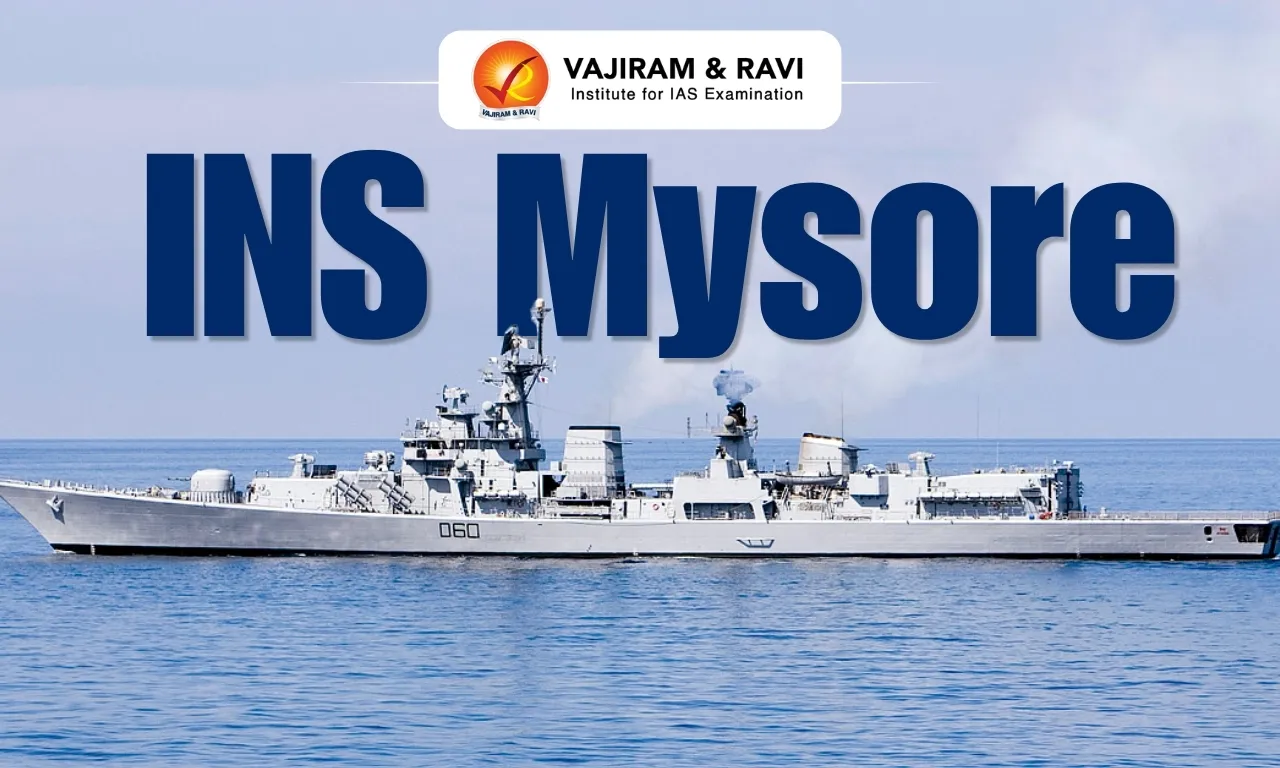
INS Mysore

INS Mysore

INS Mysore Latest News

Strengthening maritime cooperation and enhancing interoperability, Indian Naval Ship (INS) Mysore arrived recently at Lumut Naval Base in Malaysia to participate in the bilateral exercise Samudra Laksamana.

About INS Mysore

  • INS Mysore (D60) is a Delhi-class guided missile destroyer of the Indian Navy.
  • It was built at Mazagon Dock Limited in Mumbai. It was commissioned on 2 June 1999
  • It is designed for multi-role naval operations, including air defence, anti-surface warfare, anti-submarine warfare, and fleet escort missions.   

INS Mysore Features

  • It has a displacement of 6,835 tons, a length of 535 feet, a beam of 56 feet, and a draft of 21 feet.
  • Power consists of 2 x 54,000 hp AM-50 gas turbines linked to 2 x 10,000 hp marine diesel engines driving 2 x axles. 
  • Gas turbines are used to provide the extra thrust, while diesel engines provide the required cruising power.
  • It has a speed of 32 knots and a range of 5,000 miles.
  • A pair of medium helicopters (and their matching crews) are also supported thanks to the combination of a hangar and helipad in the stern.
  • It is equipped with state-of-the-art radar, communications, and sensor equipment, as well as a hull-mounted variable depth sonar system.
  • Weapons include a mix of rocket and projectile-guided weapons. 
  • Four quadruple launchers service a stockpile of 16 SS-N-25 Surface-to-Surface MissileS (SSM) and two SA-N-7 Surface-to-Air MissileS (SAM) launchers to counter air threats from afar. 
  • There is a conventional 100 mm deck gun and 4 x AK-630 series 30 mm Close-In Weapon Systems (CIWSs) and turrets.
  • In addition, the warship is equipped with two RBU-6000 anti-submarine rocket (ASROC) launchers and five 21-inch (533 mm) torpedoes, deployed in quintuple launchers.

Key Facts about Exercise Samudra Laksamana

  • It is a joint naval exercise between the Indian Navy and the Royal Malaysian Navy (RMB).
  • The exercise aims to strengthen bonds and enhance interoperability between the Indian and Royal Malaysian Navy.
  • INS Mysore, along with RMN Ships KD Lekir and KD Gagah Samudera, will participate in the 2026 edition of the exercise.

News: DEF

INS Mysore FAQ's

Q1: What is INS Mysore?

Ans: INS Mysore is a Delhi-class guided missile destroyer of the Indian Navy.

Q2: Where was INS Mysore built?

Ans: It was built at Mazagon Dock Limited in Mumbai.

Q3: When was INS Mysore commissioned into the Indian Navy?

Ans: It was commissioned on 2 June 1999.

Q4: What are the major roles for which INS Mysore is designed?

Ans: It is designed for air defence, anti-surface warfare, anti-submarine warfare and fleet escort missions.

International Atomic Energy Agency

International Atomic Energy Agency

International Atomic Energy Agency Latest News

The International Atomic Energy Agency (IAEA) reported Iran to the UN Security Council for the first time in 20 years recently. 

About International Atomic Energy Agency 

  • It is the world’s leading intergovernmental organisation for scientific and technical cooperation in the nuclear field.
  • The Agency’s genesis was U.S. President Eisenhower’s “Atoms for Peace” address to the  United Nations General Assembly (UNGA) on 8 December 1953.
  • The IAEA Statute was approved on 23 October 1956 and came into force on 29 July 1957.
  • It is an autonomous organization within the United Nations system.
  • It reports to both the UNGA and the UN Security Council.
  • Its primary goal is to ensure that nuclear energy is not diverted for weapons purposes.
  • The IAEA works with its Member States and multiple partners worldwide to promote the safe, secure, and peaceful use of nuclear technologies.
  • It is widely known as the world’s “Atoms for Peace and Development”​ organization. 
  • Member Countries: The agency currently has 180 member states, reflecting its wide international mandate and credibility.
  • The IAEA is headquartered in Vienna, Austria, and has regional and liaison offices in Toronto, Tokyo, New York, and Geneva.  

International Atomic Energy Agency Functions

  • Promoting Peaceful Uses of Nuclear Energy: The IAEA encourages the use of nuclear technology for peaceful purposes, emphasizing sustainability and safety.
  • Safety and Security: The agency establishes safety standards and provides assistance to ensure that nuclear operations are conducted safely and securely.
  • Verification: The IAEA conducts inspections and monitoring to verify compliance with nuclear non-proliferation agreements.
    • The IAEA is not a party to the Treaty on the Non-Proliferation of Nuclear Weapons (NPT) but is entrusted with a key verification role under it.
    • As part of the NPT, all non-nuclear powers are required to negotiate a safeguards agreement with the IAEA; as part of that agreement, the IAEA is given authority to monitor nuclear programs and to inspect nuclear facilities. 
    • The IAEA has no power to force the cooperation of its member states; however, each state can choose to follow or ignore the guidelines set by the IAEA. 

International Atomic Energy Agency Governance Structure

  • General Conference: The General Conference, composed of all member states, meets annually to approve budgets and set general policy directions.
  • Board of Governors: The Board of Governors, comprising 35 members, meets about five times a year to: approve safeguards agreements, carry out statutory functions, and appoint the Director General.
  • Secretariat: The Secretariat, led by the Director General, handles the IAEA’s daily operations.

News: TH

International Atomic Energy Agency FAQs

Q1: What is the International Atomic Energy Agency (IAEA)?

Ans: The IAEA is the world’s leading intergovernmental organisation for scientific and technical cooperation in the nuclear field.

Q2: When did the International Atomic Energy Agency (IAEA) Statute come into force?

Ans: It came into force on 29 July 1957.

Q3: What is the primary goal of the International Atomic Energy Agency (IAEA)?

Ans: Its primary goal is to ensure that nuclear energy is not diverted for weapons purposes.

Q4: Where is the headquarters of the International Atomic Energy Agency (IAEA) located?

Ans: Its headquarters is located in Vienna, Austria.

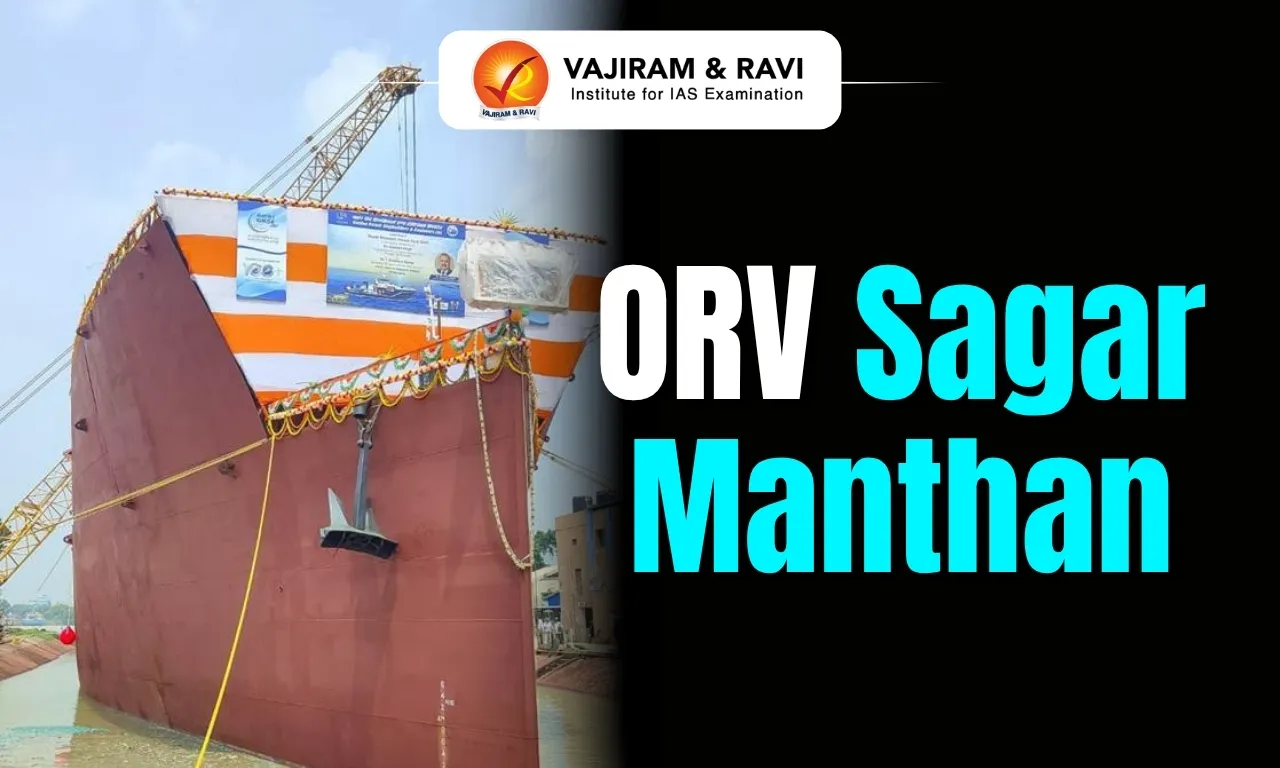
ORV Sagar Manthan

ORV Sagar Manthan

ORV Sagar Manthan Latest News

Recently, the Union Minister for Earth Sciences launched India’s advanced Ocean Research Vessel (ORV) ‘Sagar Manthan’ at Rishi Bankim Shipyard in Kolkata. 

About ORV Sagar Manthan

  • It is an indigenous ocean research vessel. 
  • It is an all-weather, multidisciplinary platform.
  • It is designed, engineered, and constructed by Garden Reach Shipbuilders & Engineers Limited (GRSE) for the National Centre for Polar and Ocean Research (NCPOR).
  • It is constructed under Vertical-4 (Deep Ocean Survey and Exploration) of the Government of India's flagship Deep Ocean Mission (DOM).
  • It is engineered to operate in extreme oceanic environments, including the Southern Ocean, with a projected service life of 30 years.

Key Technical & Operational Features of ORV Sagar Manthan

  • Advanced Equipment: It is integrated with dynamic positioning, multibeam bathymetry, multichannel seismic systems, sub-bottom profiling, weather radar, drop keels, and deployment facilities for Remotely Operated Vehicles (ROV) and Autonomous Underwater Vehicles (AUV).
  • Research Spectrum: It will support multidisciplinary exploration along the Indian Ocean mid-oceanic ridges to identify multi-metal hydrothermal sulphide mineralisation, establish environmental baselines, collect upper-air data, and undertake CTD profiling.
  • Dual-Class Certification: It is built in full compliance with international regulatory standards under dual-class certification by the Indian Register of Shipping (IRS) and the American Bureau of Shipping (ABS).

Source: PIB

ORV Sagar Manthan FAQs

Q1: What is ORV Sagar Manthan ?

Ans: It is an indigenous ocean research vessel. 

Q2: Which organisation designed the ORV Sagar Manthan ?

Ans: It is designed, engineered, and constructed by Garden Reach Shipbuilders & Engineers Limited.

Endometriosis

Endometriosis

Endometriosis Latest News

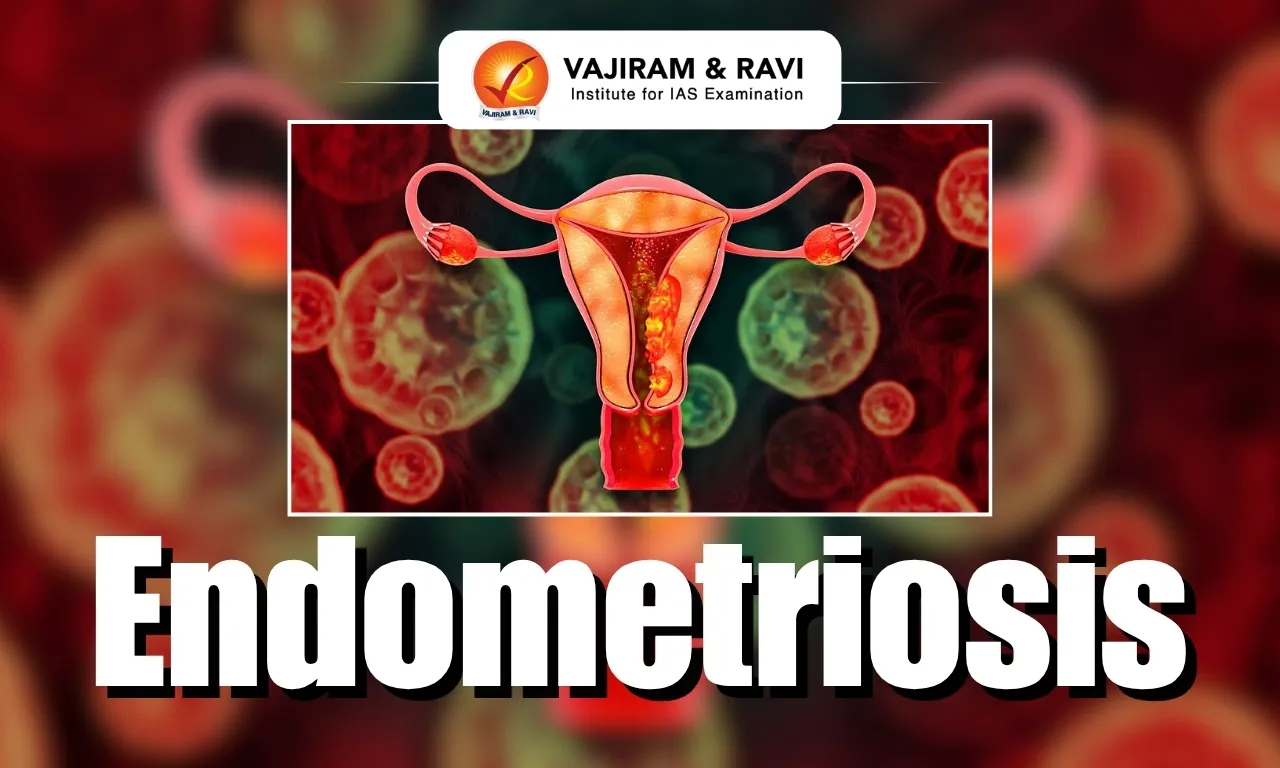
A latest study by the Indian Council of Medical Research-National Institute for Research on Women’s Health (ICMR-NIRWoH), Mumbai, has found that genetic factors contribute to a woman’s risk of developing endometriosis. 

About Endometriosis

  • It is a complex disease where tissue lining the uterus overgrows outside it.
  • It affects many women, globally from the onset of their first period (menarche) through menopause.
  • It affects a woman’s physical, psychological, and social well-being.
  • It is caused by a mix of genetics, hormones, environment, and lifestyle.
  • Endometriosis can also affect transgender men and non-binary individuals who menstruate. 
  • People with endometriosis have higher rates of other immune-mediated conditions, such as lupus, multiple sclerosis, and inflammatory bowel disease.
  • Symptoms: It can cause severe period pain, chronic pelvic pain, painful intercourse, fatigue, infertility, anxiety, depression and a poor quality of life.
  • Treatment: There is no cure for endometriosis, but treatments are available for the symptoms and problems it causes.
  • It affects about 10 per cent of women of reproductive age globally; India accounts for an estimated 50 million cases, representing nearly 18 per cent of the global burden.

Endometriosis FAQ's

Q1: What is Endometriosis?

Ans: It is a complex disease where tissue lining the uterus overgrows outside it.

Q2: What are the symptoms of Endometriosis?

Ans: It can cause severe period pain, chronic pelvic pain, painful intercourse, fatigue, infertility, anxiety.

Resplendent Shrub Frog

Resplendent Shrub Frog

About Resplendent Shrub Frog 

  • It belongs to the family Rhacophoridae.
  • Appearance: It is remarkably small, measuring only about 2–3 cm in length. Its body is adorned with bold patterns along its limbs and flanks. The limbs are much shorter than in other species of this genus.
  • Habitat: Normally, cold-climate-adapted frogs move to higher elevations as temperatures rise.
  • Distribution: It is endemic to the high-altitude shola-grassland ecosystems of the Anamudi region in Kerala’s Eravikulam National Park.
  • Characteristics
    • It is characterized by pronounced crawling behaviour. It is a ground-dwelling species.
    • They are nocturnal and hide from artificial light sources.
    • Reproduction: It undergoes direct development, without a free swimming tadpole stage.
  • Conservation Status: IUCN Red List: Critically Endangered

Key Facts about Eravikulam National Park

  • Location: It is an important protected area located in the Western Ghats of Kerala.
  • It is also surrounded by other protected areas like Chinnar Wildlife Sanctuary, Pampadum Shola National Park, Anamudi Shola National Park, and Kurinjimala Sanctuary.
  • It is most famous for being the largest habitat of the endangered Nilgiri Tahr.
  • It is also known as the “Land of Neelakurinji”, a rare flower that blooms once every 12 years.
  • It is dominated by high-altitude grasslands and rolling plateaus, usually found above 2000 meters.
  • Anamudi Peak (2695 m), which is the highest peak in South India, often called the “Everest of South India” is present here.
  • It consists of three types of vegetation: Grasslands, Shrublands and Shola forests.
  • Flora: The Park supports a wide range of plant diversity, including grasses, shrubs, and trees adapted to high-altitude conditions.
  • Fauna: Elephants, Gaur, Sambar Deer, Leopard, Tiger, Sloth Bear, and Wild Dog.

Source: TH

Resplendent Shrub Frog FAQs

Q1: Where do we find Resplendent Shrub Frog ?

Ans: It is endemic to the high-altitude shola-grassland ecosystems of the Anamudi region in Kerala’s Eravikulam National Park.

Q2: What is the IUCN status of Resplendent Shrub Frog ?

Ans: Critically Endangered

RBI ₹6 Lakh Crore VRRR Auction, Latest News, Details & Significance

RBI ₹6 Lakh Crore VRRR Auction

RBI ₹6 Lakh Crore VRRR Auction refers to the Reserve Bank of India’s recent move to absorb excess liquidity from the banking system through Variable Rate Reverse Repo (VRRR) auctions. The operation came amid a sharp rise in surplus funds, which had pushed short-term interest rates below the RBI’s policy rate. Through VRRR auctions, the RBI aims to manage liquidity conditions and keep money-market rates aligned with its monetary policy stance

RBI ₹6 Lakh Crore VRRR Auction Latest News

  • Liquidity Absorption: The Reserve Bank of India (RBI) absorbed ₹6.02 lakh crore from the banking system through two three-day Variable Rate Reverse Repo (VRRR) auctions as surplus liquidity remained at a record high.
  • Auction Details: Against the notified amount of ₹7 lakh crore, banks placed bids worth ₹5.41 lakh crore, while another auction with a notified amount of ₹1.5 lakh crore received bids worth ₹60,419 crore. Both auctions were conducted at a cut-off rate of 5.24%.
  • Record Surplus: Banking-system liquidity stood at around ₹10.32 lakh crore, reflecting a significant surplus of funds. The surplus had reached a fresh record as banks held more funds than required for their immediate needs.
  • Recent Operations: The RBI has significantly increased liquidity absorption through VRRR auctions. Between August and early September, it conducted 32 VRRR auctions, with maturities ranging from overnight to 14 days.

What is the RBI VRRR Auction?

  • Meaning: A Variable Rate Reverse Repo (VRRR) auction is a monetary policy tool used by the RBI to absorb excess liquidity from the banking system.
  • How It Works: Under a VRRR auction, banks temporarily park their surplus funds with the RBI for a specified period. The RBI accepts bids at variable interest rates, helping manage the amount of liquidity available in the financial system.
  • Difference from Fixed Reverse Repo: Unlike the traditional fixed-rate reverse repo, where the interest rate is predetermined, the interest rate in a VRRR auction is discovered through the bidding process.
  • Liquidity Management: By absorbing excess funds through VRRR auctions, the RBI helps keep short-term interest rates aligned with its monetary policy stance and prevents surplus liquidity from pushing market rates too far below the policy rate.

Also Read : Foreign Exchange Reserve of India

Why Did RBI Conduct the ₹6 Lakh Crore VRRR Auction?

  • Surplus Liquidity: The main reason was the sharp increase in surplus liquidity in the banking system. Excess funds had risen substantially in recent weeks, creating pressure on short-term interest rates.
  • FCNR(B) Inflows: A major source of the additional liquidity was the large inflow of foreign currency through the special FCNR(B) deposit scheme. The RBI's special forex measures mobilised $136.38 billion by August 31, including $127.23 billion through FCNR(B) deposits.
  • Rupee Liquidity: The foreign currency mobilisation, followed by swaps with the RBI, resulted in additional rupee liquidity entering the banking system. Month-end government spending, including salary and pension payments, also added to liquidity.
  • Pressure on Overnight Rates: The large liquidity surplus pushed short-term money market rates below the RBI's policy rate. The Weighted Average Call Rate (WACR), the operating target of monetary policy, was around 4.93-4.94%, compared with the 5.25% repo rate.

VRR and VRRR Key Differences

Variable Rate Repo (VRR) and Variable Rate Reverse Repo (VRRR) are auction-based tools used by the Reserve Bank of India (RBI) to manage short-term liquidity in the banking system. 

VRR and VRRR Key Differences

Feature

VRR (Variable Rate Repo)

VRRR (Variable Rate Reverse Repo)

Purpose

Injects liquidity into the banking system when there is a shortage of funds.

Absorbs excess liquidity from the banking system when there is a surplus.

How it works

Banks borrow funds from the RBI for a short period by providing government securities as collateral.

Banks park surplus funds with the RBI for a specified period, with securities provided by the RBI as collateral.

Liquidity impact

Increases liquidity available with banks.

Reduces surplus liquidity available with banks.

Interest rate

Rate is decided through a competitive auction.

Rate is decided through a competitive auction.

Main use

Helps address short-term cash shortages in the banking system.

Helps manage excess liquidity and keep short-term interest rates aligned with the monetary policy stance.

Tenure

Generally used for short-term periods, such as 1-14 days.

Tenure can vary depending on the RBI’s liquidity management requirements.

Significance of VRRR Auction for Banking System Liquidity

  • Controls Excess Funds: VRRR auctions help the RBI mop up surplus liquidity from banks without permanently removing money from the financial system.
  • Supports Monetary Policy Transmission: Absorbing excess liquidity can help prevent short-term market rates from falling too far below the policy repo rate, allowing the RBI's monetary policy stance to transmit more effectively.
  • Maintains Market Stability: Persistent excess liquidity can create distortions in money-market rates. VRRR operations provide the RBI with a flexible way to manage these fluctuations.
  • Need for Further Measures: If surplus liquidity remains elevated, the RBI may need to use other instruments along with VRRR auctions, including forex swaps and incremental Cash Reserve Ratio (I-CRR) measures, to absorb liquidity more sustainably.

RBI ₹6 Lakh Crore VRRR Auction FAQs

Q1: What is the RBI ₹6 Lakh Crore VRRR Auction?

Ans: The RBI ₹6 Lakh Crore VRRR Auction refers to the RBI’s move to absorb excess liquidity from banks through Variable Rate Reverse Repo (VRRR) auctions.

Q2: Why did RBI conduct the ₹6 Lakh Crore VRRR Auction?

Ans: The RBI conducted the auction to absorb surplus liquidity from the banking system and prevent excess funds from pushing short-term interest rates below the policy rate.

Q3: How much liquidity did RBI absorb through the VRRR auctions?

Ans: The RBI absorbed ₹6.02 lakh crore through two three-day VRRR auctions at a cut-off rate of 5.24%.

Q4: What is a Variable Rate Reverse Repo (VRRR) Auction?

Ans: A VRRR auction is a liquidity management tool through which banks temporarily park their surplus funds with the RBI at an interest rate determined through the bidding process.

Q5: Why was there excess liquidity in the banking system?

Ans: The surplus liquidity was driven by factors such as FCNR(B) inflows, foreign exchange-related operations and government spending, which increased rupee liquidity in the banking system.

Xi Jinping Likely to Visit India for 18th BRICS Summit in New Delhi

Xi Jinping's Expected India Visit for BRICS Summit

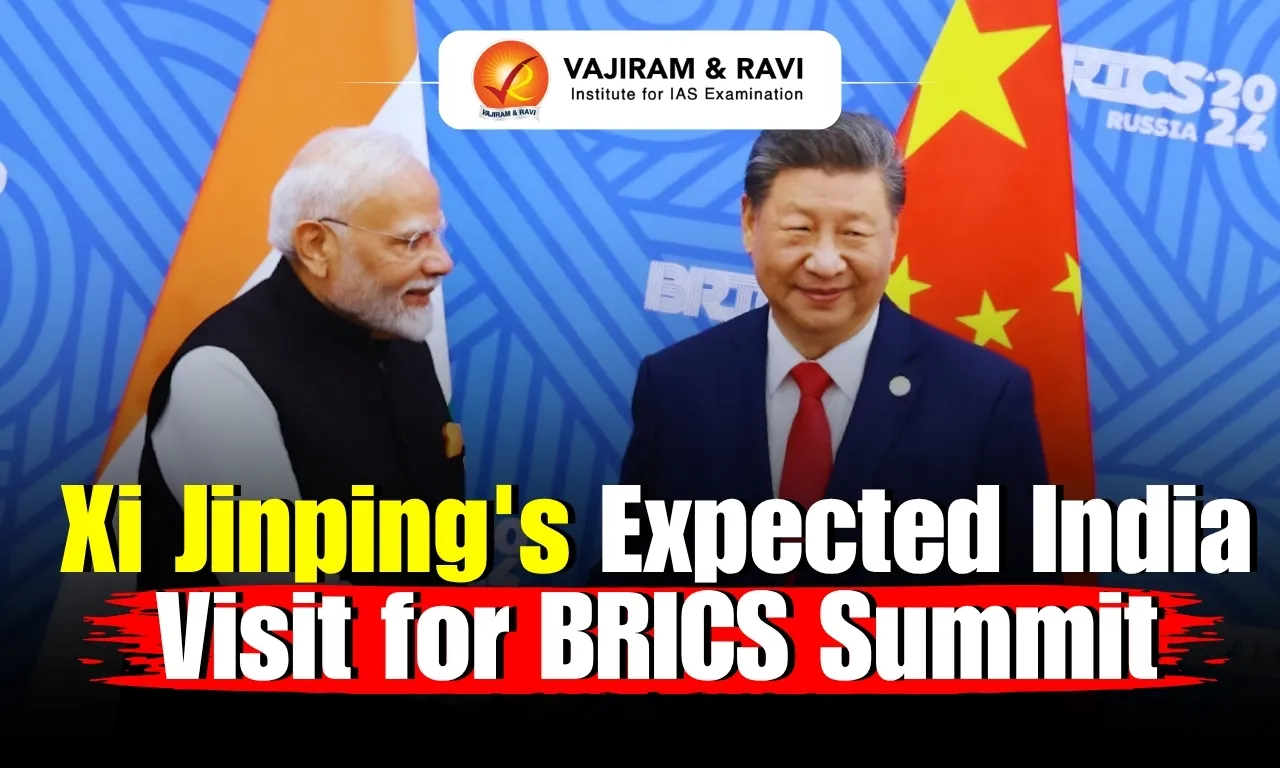
Chinese President Xi Jinping is expected to visit India for the 18th BRICS Summit, scheduled to be held in New Delhi on September 12–13, 2026. His visit would be his first trip to India in seven years and comes at a time when India-China relations are showing signs of cautious improvement after years of tensions following the 2020 border clashes. 

Significance of Xi Jinping’s Visit for India

Xi Jinping’s expected India visit comes against the backdrop of a gradual thaw in India-China relations after the sharp deterioration caused by the 2020 eastern Ladakh border clashes, in which 20 Indian and four Chinese soldiers were killed.

  • Improving Bilateral Relations: The visit could help consolidate the recent improvement in India-China relations and restore high-level political dialogue.
  • Border Stability: Discussions between PM Narendra Modi and Xi Jinping could help maintain peace and tranquillity along the Line of Actual Control (LAC) and address unresolved border concerns.
  • Reducing Trust Deficit: Direct engagement at the leadership level could help rebuild mutual trust that was severely affected by the 2020 border crisis.
  • Boosting Economic Ties: India could seek greater cooperation in trade, investment and supply chains, while addressing concerns related to the trade imbalance and dependence on Chinese imports.
  • Strengthening Strategic Autonomy: Engagement with China through BRICS allows India to pursue its interests while maintaining strategic partnerships with other major powers.
  • Promoting Global South Cooperation: India can use its BRICS presidency to advance the concerns of developing countries on development, energy security, food security and global governance reforms.
  • Managing Strategic Competition: The visit provides an opportunity to engage China diplomatically while continuing to safeguard India’s national security and strategic interests.
  • Strengthening India’s Global Role: Hosting the BRICS Summit and facilitating dialogue between major powers can reinforce India’s position as an important voice in a multipolar international order.

About BRICS Summit 2026

18th BRICS Summit will be hosted by India in New Delhi on September 12–13, 2026, during India’s fourth BRICS chairship. The summit is particularly significant as 2026 marks 20 years of BRICS, providing India an opportunity to shape the grouping’s agenda around Global South priorities, economic cooperation, innovation and sustainable development.

  • Host Country: India is hosting the 18th BRICS Summit as part of its 2026 BRICS chairship. This is India’s fourth BRICS presidency, after 2012, 2016 and 2021.
  • Venue and Dates: The summit is scheduled to take place at Bharat Mandapam, New Delhi, on September 12–13, 2026, bringing together leaders of the expanded BRICS grouping.
  • 2026 Theme: India’s BRICS presidency is centred on “Building for Resilience, Innovation, Cooperation and Sustainability”, with “Humanity First” as the broader guiding vision.
  • 20 Years of BRICS: The year 2026 marks two decades since the establishment of BRICS, making the summit an important occasion to assess the grouping’s evolution and future direction.
  • Expanded BRICS: BRICS has expanded from its original five members to 11 members, namely Brazil, Russia, India, China, South Africa, Egypt, Ethiopia, Iran, the UAE, Saudi Arabia and Indonesia. The expansion has increased the grouping’s geographical and economic significance.
  • Global South Cooperation: India is expected to use its chairship to strengthen cooperation among developing and emerging economies and highlight issues such as development finance, food security, energy security and climate change.
  • Economic and Financial Cooperation: The summit will provide a platform to discuss trade, investment, financial cooperation and economic resilience, particularly amid global economic uncertainties.
  • Resilient Supply Chains: Supply-chain resilience is an important priority, with BRICS countries seeking greater cooperation to reduce vulnerabilities caused by geopolitical tensions, disruptions and excessive dependence on concentrated sources.

Xi Jinping's Expected India Visit for BRICS Summit FAQs

Q1: Why is Xi Jinping expected to visit India in 2026?

Ans: Chinese President Xi Jinping is expected to visit New Delhi to attend the 18th BRICS Summit on September 12–13, 2026. The visit would be his first to India in seven years.

Q2: Why is Xi Jinping’s visit significant for India?

Ans: The visit could provide an opportunity to improve India-China relations, strengthen high-level diplomatic dialogue and discuss issues related to the LAC, trade, investment and economic cooperation.

Q3: When did Xi Jinping last visit India?

Ans: Xi Jinping last visited India in October 2019 for the informal Mamallapuram Summit with Prime Minister Narendra Modi. His expected 2026 visit would therefore be his first India visit in seven years.

Q4: What is the background to the India-China thaw?

Ans: India-China relations deteriorated sharply after the 2020 eastern Ladakh border clashes, in which 20 Indian and four Chinese soldiers were killed. Relations have gradually improved through diplomatic and military-level engagement in recent years.

Q5: What issues could India and China discuss during the visit?

Ans: Possible areas of discussion include border stability, the Line of Actual Control (LAC), trade, investment, technology, supply chains and economic cooperation.

Auroville, History, Matrimandir, UNESCO Recognition, Significance

Auroville

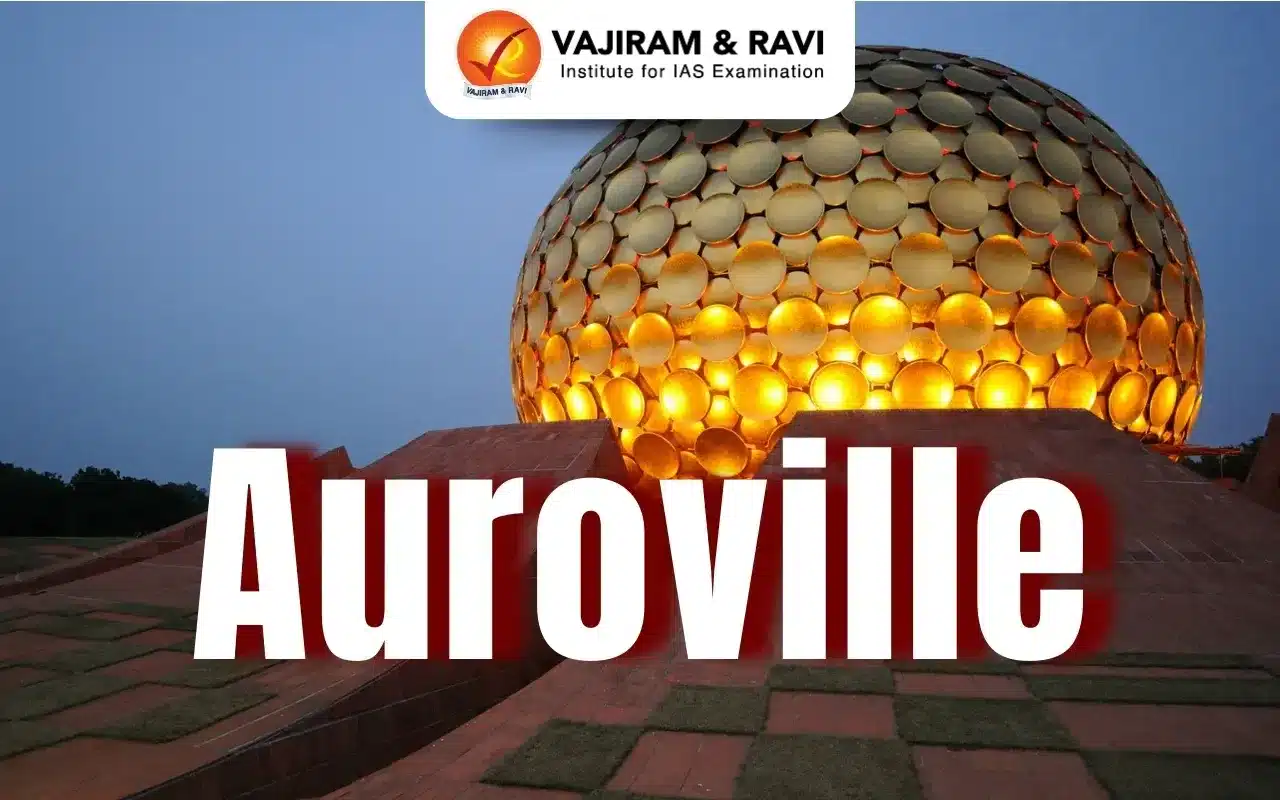
Auroville is a unique international township in South India, known for bringing people from different countries and cultures together. Founded in 1968, it is based on the ideals of peace, human unity, sustainable living and spiritual growth. Over the years, Auroville has developed into a green and diverse community that continues to explore new ways of living and working together. 

Auroville History, Vision and Significance

  • Foundation: Auroville was founded on 28 February 1968 by Mirra Alfassa, popularly known as the Mother, the spiritual collaborator of Sri Aurobindo Ghosh.
  • Idea and Purpose: The idea of Auroville came from the Mother’s vision of creating a place where people from different countries could live together in peace, harmony and human unity.
  • Inauguration: Auroville was inaugurated in 1968 in the presence of representatives from 124 countries and all the states of India. Soil brought from different countries was placed in a lotus-shaped urn during the ceremony.
  • Universal Township: Auroville is planned as a universal township that can eventually accommodate up to 50,000 people from across the world.
  • Auroville Charter: The Mother gave Auroville its four-point Charter at the time of its inauguration. It highlights human unity, continuous education, progress, and research into human consciousness.
  • Human Unity: The main purpose of Auroville is to realise human unity in diversity. Its residents, known as Aurovilleans, come from different countries, cultures, age groups and social backgrounds.
  • Development: Auroville has transformed a largely barren landscape into a 3,000-acre green township and bioregion, with millions of trees, rich biodiversity, schools and social enterprises.

Auroville Location, Architecture and Key Features

  • Location: Auroville is located mainly in Tamil Nadu, near Puducherry, and is about 150 km from Chennai. It extends across areas of Tamil Nadu and Puducherry.
  • Architectural Design: The township was designed by renowned architect Roger Anger, based on the vision of creating a city focused on human unity, sustainable living and collective development.
  • Matrimandir: At the centre of Auroville stands the Matrimandir, a large golden spherical structure known as the “soul of the city.” It is designed as a place for silent concentration.
  • Four Zones: The planned city is divided into four major zones: Industrial, Cultural, Residential and International. Each zone focuses on a different aspect of community life.
  • Green Belt: A Green Belt surrounds the township and includes forests, farms and natural areas. Afforestation and environmental restoration have helped improve the region’s biodiversity.
  • Sustainable Living: Auroville promotes sustainable living through renewable energy, organic farming, ecological restoration, alternative technologies and community-based enterprises.
  • Population: Auroville has around 2,500-3,000 residents from approximately 50-60 countries, representing diverse social, cultural and economic backgrounds.
  • Community Life: Auroville encourages people to see work as a form of service and self-development, while education focuses on continuous learning rather than only examinations, certificates or employment.

Auroville UNESCO Recognition and Cultural Importance

  • UNESCO Recognition: Auroville received international recognition through UNESCO, which adopted resolutions supporting and encouraging the Auroville project in 1966, 1968, 1970 and 1983.
  • 1966 Resolution: In 1966, UNESCO passed a unanimous resolution recognising Auroville as a project of importance to the future of humanity and encouraging international support for its development.
  • Government Support: The Government of India supported the development of Auroville as an experiment in international community living and the promotion of human unity.
  • Administrative Control: Since 1980, Auroville has been under the administrative control of the Ministry of Education and is governed according to the Auroville Foundation Act, 1988, passed by Parliament.
  • Government Funding: Under the Auroville Foundation Act, the Government of India provides grants to the Auroville Foundation for the establishment, maintenance and development of the township.
  • Cultural Importance: Auroville brings together people from different nations and backgrounds around common ideals of peace, cooperation, sustainable living and human unity.
  • Environmental Importance: Its transformation from a largely barren landscape into a green and biodiverse community makes Auroville an important example of environmental restoration and sustainable community development.
  • Global Significance: Auroville continues to function as an experiment in human unity, cultural exchange, sustainable living and social transformation, making it an important example of intentional community living.

Auroville FAQs

Q1: What is Auroville?

Ans: Auroville is an international township in South India founded on the ideals of human unity, peace, sustainable living and spiritual growth.

Q2: When was Auroville founded?

Ans: Auroville was founded on 28 February 1968 by Mirra Alfassa, known as the Mother, as a universal township based on the idea of human unity.

Q3: Where is Auroville located?

Ans: Auroville is located mainly in Tamil Nadu, near Puducherry, around 150 km south of Chennai.

Q4: What is the significance of the Matrimandir in Auroville?

Ans: The Matrimandir is a prominent golden spherical structure at the centre of Auroville. It is regarded as the “soul of the city” and is designed for silent concentration.

Q5: What is the Auroville Foundation Act, 1988?

Ans: The Auroville Foundation Act, 1988 is an Act of Parliament that provides the legal framework for the management and development of Auroville. It established the Auroville Foundation as an autonomous body.

Wildlife Crime Control Bureau

Wildlife Crime Control Bureau

Wildlife Crime Control Bureau Latest News

The Ministry of Environment, Forest & Climate Change recently constituted a 4-member inquiry team from WCCB to investigate the international organized crime linkage in the mysterious appearance of orangutan in the Balasore district.

About Wildlife Crime Control Bureau 

  • It is a statutory body established by the Government of India to combat organized wildlife crime in the country.
  • It was constituted under Section 38Y of the Wild Life (Protection) Act, 1972. It became operational in 2008.  
  • It is a multidisciplinary body with officials from Police, Forest, Customs, and other intelligence & enforcement agencies. 
  • It functions under the Ministry of Environment, Forests and Climate Change (MoEF&CC). 
  • Headquarter
    • Its headquarters is situated in New Delhi. 
    • There are five regional offices located at Delhi, Kolkata, Mumbai, Chennai, and Bhopal.  
  • Functions
    • Collect and collate intelligence related to organised wildlife crime activities and disseminate the same to state and other enforcement agencies for immediate action so as to apprehend the criminals and to establish a centralised wildlife crime data bank.
    • Coordination of actions by various officers, state governments, and other authorities in connection with the enforcement of the provisions of this Act, either directly or through regional and border units set up by the Bureau.
    • Implementation of obligations under various international conventions and protocols that are in force at present or which may be ratified or acceded to by India in the future.
    • Assistance to concerned authorities in foreign countries and concerned international organisations to facilitate coordination and universal action for wildlife crime control.
    • Develop infrastructure and capacity building for scientific and professional investigation into wildlife crimes and assist state governments to ensure success in prosecutions related to wildlife crimes.
    • Advise the government of India on issues relating to wildlife crimes having national and international ramifications, and suggest changes required in relevant policy and laws from time to time.
  • The WCCB assists in the enforcement of the CITES, to which India has been a party since 1976, and develops capacity through training programmes and species-identification support for frontline officers and prosecutors. 
  • It maintains liaison with the INTERPOL Environmental Crime Programme and the World Customs Organization to track cross-border trafficking routes. 
  • It has developed an online Wildlife Crime Database Management System to get real-time data in order to help analyse trends in crime and devise effective measures to prevent and detect wildlife crimes across India.
    • This system has been successfully used to analyse trends, helping put in preventive measures as well as for successfully carrying out operations such as Operation SAVE KURMA, THUNDERBIRD, WILDNET, LESKNOW, BIRBIL, THUNDERSTORM, LESKNOW-II

News: TOI

Wildlife Crime Control Bureau FAQs

Q1: What is the Wildlife Crime Control Bureau (WCCB)?

Ans: WCCB is a statutory body established by the Government of India to combat organised wildlife crime in the country.

Q2: Under which law was the Wildlife Crime Control Bureau (WCCB) constituted?

Ans: It was constituted under Section 38Y of the Wild Life (Protection) Act, 1972.

Q3: Where is the headquarters of the Wildlife Crime Control Bureau (WCCB) located?

Ans: Its headquarters is located in New Delhi.

Q4: Under which Union Ministry does the Wildlife Crime Control Bureau (WCCB) function?

Ans: It functions under the Ministry of Environment, Forests and Climate Change (MoEF&CC).

Meta Muse AI Agent, Features, Uses, Working & Significance

Meta Muse AI Agent

Meta recently introduced Muse, a personal AI agent designed to understand user goals and perform multi-step tasks across connected digital services.

The launch highlights the growing shift from traditional AI chatbots to agentic AI systems that can plan and take actions on behalf of users.

What is Meta Muse AI Agent?

Meta Muse AI Agent is a personal artificial intelligence agent developed by Meta to help users complete everyday digital tasks. Unlike a regular chatbot, it is designed to understand a user's goal, plan the required steps and take actions using connected apps and services. It can assist with tasks such as email, travel planning, shopping, scheduling and online forms. Meta Muse is powered by Muse Spark, a multimodal AI model developed by Meta Superintelligence Labs.

Why is Meta Muse Different from a Normal AI Chatbot?

Meta Muse is different from a normal AI chatbot because it is designed not only to answer questions but also to plan and perform tasks on the user's behalf.

  • Task-oriented: It can work towards completing a specific goal rather than only providing an answer.
  • Multi-step actions: It can break a complex request into smaller steps and work through them.
  • Tool integration: It can interact with connected apps and digital services such as email, calendars, shopping and travel.
  • Personalised assistance: It can use relevant information from previous interactions to provide more personalised help.
  • Greater autonomy: It can take certain actions without requiring the user to guide every individual step.
  • Human control: It can seek user approval before carrying out sensitive actions such as purchases or sending communications.

How Does Meta Muse Work?

Meta Muse works by understanding a user's goal, planning the required steps, using connected tools and services, and completing the task with appropriate user approval.

  • Understands the request: It first understands what the user wants to achieve.
  • Plans the task: It breaks a broad request into smaller steps and decides how to complete them.
  • Uses AI reasoning: Its underlying Muse Spark model helps it reason, use tools and handle different types of information.
  • Connects with apps: It can work with services such as email, calendars, shopping, travel and payments, depending on the access given by the user.
  • Takes action: Instead of only suggesting what the user should do, it can perform supported digital tasks.
  • Asks for permission: For sensitive actions, such as making a purchase or sending an email, it can require the user's approval.
  • Learns useful preferences: It can remember relevant information to provide more personalised assistance over time.
  • Maintains security: Meta uses systems such as Muse Secure VM and Sentinel to isolate the agent and monitor its actions.

About Agentic AI

Agentic AI refers to advanced AI systems that can understand a goal, plan the required steps, use different tools and take actions to complete a task with limited human intervention.

  • Goal-Oriented: Agentic AI starts with a specific objective given by the user and works towards achieving that objective rather than simply responding to individual questions.
  • Independent Planning: It can break a complex task into smaller steps, decide what needs to be done first and create a suitable plan to complete the task.
  • Decision-Making: It can analyse available information, compare different options and select an appropriate action based on the task and its instructions.
  • Use of Tools: Agentic AI can interact with external tools such as websites, applications, databases, APIs and digital platforms to perform tasks.
  • Multi-Step Task Execution: It can carry out a series of connected actions. For example, it may search for information, compare options, organise the results and then complete an approved action.
  • Adaptability: If a step does not produce the expected result, the system can reassess the situation and change its approach to continue working towards the goal.
  • Memory and Personalisation: Some agentic AI systems can remember relevant user preferences and previous interactions to provide more personalised assistance.
  • Human Oversight: Users can remain involved in important decisions, while the AI seeks approval before performing sensitive actions such as payments or sending important communications.
  • Continuous Monitoring: Agentic AI can monitor the progress of a task, check results and determine whether additional steps are needed.

Meta Muse AI and Agentic AI

Meta Muse is an example of agentic AI, which can go beyond answering questions to taking actions to achieve a specific goal. Unlike traditional AI systems, agentic AI can understand a task, plan steps, use tools and complete actions with limited human intervention. Meta Muse applies this approach to everyday activities such as email, travel, shopping and scheduling. It shows the growing shift from AI that provides answers to AI that can perform tasks.

Challenges Associated with Meta Muse AI

Meta Muse can make digital tasks easier, but its ability to access information and perform actions also creates several challenges related to privacy, security and human control.

  • Privacy Risks: Access to emails, calendars and other personal data may raise privacy concerns.
  • Security Threats: Greater access to digital services can increase the risk of cyberattacks and misuse.
  • Incorrect Actions: The AI may misunderstand instructions and perform an unwanted or incorrect task.
  • Prompt Injection: Malicious instructions hidden in online content could potentially influence an AI agent's actions.
  • Lack of Human Control: Greater autonomy may reduce direct human involvement in some decisions.
  • User Dependence: Excessive reliance on AI agents may reduce users' own involvement in planning and decision-making.

Way Forward

The future of Meta Muse and similar AI agents should focus on balancing innovation with strong safeguards, human oversight and responsible use of personal data.

  • Strengthen Data Privacy: Clear rules should protect users' personal and sensitive information.
  • Ensure Human Oversight: Users should remain in control of important decisions and sensitive actions.
  • Improve AI Safety: Strong safeguards should be developed to prevent misuse, harmful actions and prompt-injection attacks.
  • Increase Transparency: Users should know what data an AI agent accesses and why it is being used.
  • Promote Responsible AI: AI agents should be developed with fairness, accountability and safety as key principles.
  • Develop Strong Regulation: Governments and technology companies should work together to create clear frameworks for safe and responsible AI-agent use.

Meta Muse AI Agent FAQs

Q1: What is Meta Muse AI Agent?

Ans: Meta Muse AI Agent is a personal AI agent developed by Meta that can understand user goals, plan tasks and perform actions across connected digital services.

Q2: When was Meta Muse AI Agent introduced?

Ans: Meta introduced Muse on 8 September 2026 as part of its efforts to develop personal AI agents.

Q3: What can Meta Muse AI Agent do?

Ans: It can help with tasks such as email management, travel planning, shopping, scheduling, form filling and event planning, depending on the services connected to it.

Q4: What is Muse Spark?

Ans: Muse Spark is the multimodal reasoning model developed by Meta Superintelligence Labs that powers Meta Muse.

Q5: How is Meta Muse different from a chatbot?

Ans: A normal chatbot mainly provides answers, while Meta Muse is designed to plan and perform multi-step tasks on behalf of the user.

UK Ban on Israeli Settlement Goods: Legal Basis and Impact

UK Ban on Israeli Settlement Goods

UK Ban on Israeli Settlement Goods Latest News

  • Recently, the United Kingdom announced a ban on imports of all goods originating from illegal Israeli settlements in the occupied West Bank. 
  • Addressing the House of Commons, Foreign Secretary Ed Miliband declared Israel's occupation unlawful and said the British government believed "ethnic cleansing" of Palestinians was taking place in parts of the West Bank, carried out by "settler terrorists". 
  • The UK sees the move as a response to what it believes is a clear Israeli attempt to bury the two-state solution.

What the UK Has Banned

  • The measures go beyond goods and cover services, finance and sanctions:
    • Import ban: All agricultural, processed and manufactured goods produced in Israeli settlements across the occupied West Bank, including East Jerusalem, are barred from the UK market.
    • Services ban: British firms cannot provide services that facilitate settlement expansion, including construction, infrastructure, real estate, advertising and financing.
    • Export licences: The UK will refuse licence applications for arms and other exports that materially contribute to the occupation.
    • Sanctions: Sanctions against settler organisations and individuals involved in violence and settlement expansion will be expanded.

International Support

  • UK’s announcement was followed by a joint statement by 12 countries, including Canada and France, supporting the two-state solution and backing trade restrictions on illegal settlements. 
  • The UK, Canada and France committed to introducing national restrictions, while some other countries said they were still considering measures.

Why Now: The E1 Corridor Trigger

  • The immediate trigger is Israel's approval of new construction in sensitive zones, notably the "E1 corridor" between East Jerusalem and the Ma'ale Adumim settlement. 
  • Construction in E1 would:
    • Sever the territorial link between the northern and southern West Bank.
    • Further isolate East Jerusalem from the rest of the West Bank.
    • Physically fragment the territory claimed for a future Palestinian state.

The Legal Backdrop: ICJ Advisory Opinion

  • The decision rests on the International Court of Justice (ICJ) Advisory Opinion of July  2024. 
  • The court held that Israel's continued presence in the Occupied Palestinian Territory is unlawful. 
  • It also found that Israel's transfer of settlers to the West Bank and East Jerusalem, and maintaining their presence there, violates Article 49(6) of the Fourth Geneva Convention.
  • Crucially, paragraph 278 of the ruling placed obligations on third-party states. 
  • They must refrain from recognising the situation arising from Israel's unlawful presence as legal, and must avoid rendering aid or assistance in maintaining it. 
  • The UK's ban can be seen as compliance with this obligation.

Territorial Structure of the West Bank

  • The 1995 Oslo II Accord divided the West Bank into Areas A, B and C
  • Area C covers roughly 60 per cent of the West Bank, remains under full Israeli civil and military control, and houses almost all Israeli settlements outside Jerusalem. 
  • Jordan Valley and Dead Sea Basin: Cover nearly 30 per cent of the West Bank and are dominated by Israeli agricultural settlements. Palestinian land has been converted into industrial date plantations and commercial farms.

What Settlements Produce

  • Settlement production relies on commercial agriculture and light manufacturing:
    • Agricultural goods: Medjool dates (the Jordan Valley holds a significant share of global exports), table grapes, herbs, citrus fruits, avocados and wine from the West Bank and Golan Heights.
    • Manufactured goods: Cosmetics using Dead Sea minerals, plastics, textiles, construction materials and packaging, produced in industrial parks such as Barkan, Mishor Adumim and Atarot.

Economic Impact on Israel

  • A 2022 UNCTAD report estimated that settlements in Area C and East Jerusalem contributed about $30 billion annually (in constant 2015 dollars) to Israel's economy between 2000 and 2020. However, direct settlement exports form only 1 to 2 per cent of Israel's total exports. 
  • With a GDP above $500 billion, driven by high-technology, defence hardware and pharmaceuticals produced within pre-1967 lines, Israel's macroeconomy will not be destabilised.
  • The impact will be felt by specialised settlement businesses, especially date growers in the Jordan Valley and manufacturers in Barkan. 

Impact on Palestinian Workers

  • The relationship between Palestinian labour and the settlement economy is complex. 
  • According to the ILO, around 40,000 Palestinians worked in settlements in Area C before the October 7, 2023 attacks, mainly in construction, agriculture and factory labour. 
  • Critics of the ban argue it may harm Palestinian workers by removing higher-paying jobs, causing immediate income loss amid high unemployment. 
  • Palestinian civil society and trade unions counter that settlement employment is a form of captive labour born of structural dependency. 
  • Activists argue that ending the economic viability of settlements will help reclaim occupied land and build long-term economic sovereignty.

Source: IE | AJ

UK Ban on Israeli Settlement Goods FAQs

Q1: What has the UK banned from Israeli settlements?

Ans: The UK has banned agricultural, processed and manufactured goods produced in Israeli settlements across the occupied West Bank, including East Jerusalem.

Q2: What other restrictions accompany the UK import ban?

Ans: The measures also restrict services supporting settlement expansion, refuse certain export licences and expand sanctions against organisations and individuals involved.

Q3: Why did the UK introduce the settlement goods ban now?

Ans: Israel’s approval of construction in the E1 corridor triggered the move because it could fragment the West Bank and isolate East Jerusalem.

Q4: What is the legal basis for the UK’s settlement restrictions?

Ans: The UK decision draws on the ICJ’s July 2024 advisory opinion, which deemed Israel’s continued presence in occupied territory unlawful.

Q5: Will the UK ban significantly damage Israel’s overall economy?

Ans: The ban is unlikely to destabilise Israel’s macroeconomy because settlement exports constitute only one to two per cent of total Israeli exports.

Open Waste Burning in Indian Cities Triples During Winter – WRI Study

Open Waste Burning

Open Waste Burning Latest News

  • A working paper by World Resources Institute (WRI) India has found that open waste burning across Indian cities rises sharply in winter, with incidence, quantity burned and associated emissions as much as three times higher than in summer.

About Open Waste Burning

  • Open waste burning refers to the uncontrolled burning of municipal solid waste in the open, on streets, near dumpsites, in vacant plots or at collection points, rather than through regulated disposal or treatment.
  • It typically occurs where waste collection is irregular or absent, leaving residents and informal workers to dispose of accumulated garbage by setting it alight.
  • The practice releases a mix of pollutants, including particulate matter (PM2.5 and PM10), carbon monoxide, dioxins and furans, depending on the composition of the waste. Plastics, rubber and treated materials produce particularly toxic emissions.
  • Open burning of solid waste is prohibited under the Solid Waste Management Rules, 2016, which place responsibility on urban local bodies for door-to-door collection, segregation and scientific disposal.

News Summary

  • The study is based on field surveys conducted between 2019 and 2026 across 11 polluted Indian cities, whose names have not been disclosed.
  • The Winter Spike
    • The central finding is a sharp seasonal increase. Average incidence, quantity of waste burned, and associated emissions are up to three times higher in winter than in summer.
    • This timing compounds the problem. The findings come as cities approach the post-monsoon period, when falling temperatures and stagnant atmospheric conditions make it harder for pollutants to disperse. 
    • Emissions released during this period remain concentrated closer to the ground and linger longer.
  • Variation Across City Tiers
    • The study categorised cities by size and found differing patterns.
    • Tier 2 cities, those with populations between 500,000 and five million, recorded the highest quantities of waste burned among the cities examined.
    • Tier 3 cities, however, recorded the highest winter incidence of burning:
      • Tier 3 cities: 49.6 incidents per square kilometre per day
      • Tier 2 cities: 46 incidents per square kilometre per day
      • Tier 1 cities: 39.4 incidents per square kilometre per day
    • The pattern suggests that smaller cities, which typically have weaker municipal waste infrastructure, see burning occur more frequently, while larger Tier 2 cities generate greater volumes of burned waste overall.

The Exposure Problem

  • Open waste burning was not the dominant source of citywide particulate pollution. It contributed less than 1% of total citywide PM2.5 and PM10 emissions in the cities assessed.
  • Yet the study cautions against dismissing it on that basis. 
  • Because burning happens closer to homes, streets and waste dumps, it can significantly increase short-term exposure to toxic smoke for those living nearby.
  • This distinction between aggregate emissions and localised exposure is significant. A source may contribute little to a city's overall pollution average while still posing serious health risks to the specific populations living around it.

The Equity Dimension

  • The study found that the burden was strongly associated with socio-economic conditions. Poorer areas recorded substantially more burning than higher-income areas.
  • The highest incidence recorded in the entire study, nearly 84 incidents per square kilometre per day, was in the poorer areas of Tier 2 cities during winter. This is well above the Tier 2 city average of 46 incidents.
  • Researchers attribute this pattern to disparities in waste collection and other municipal services. Where formal collection is irregular or does not reach at all, residents have few alternatives to burning accumulated waste.
  • The result is a double disadvantage. Lower-income neighbourhoods receive poorer municipal services, and then absorb the health consequences of the disposal methods that gap forces upon them.

Why This Matters

  • Public Health
    • Open burning produces pollutants at breathing height in residential areas, unlike emissions from tall industrial stacks that disperse more widely. 
    • Exposure risks include respiratory illness, cardiovascular stress and, in the case of plastic combustion, exposure to carcinogenic compounds.
    • Vulnerable groups, children, the elderly, informal waste workers and street vendors, face the greatest exposure.
  • Municipal Governance
    • The findings point to a service delivery failure rather than merely a behavioural problem. 
    • Burning is largely a consequence of waste not being collected, which places the issue squarely within the responsibility of urban local bodies.
  • Winter Air Quality Management
    • Most winter air quality action plans in India focus on vehicular emissions, industrial sources, construction dust and crop residue burning. 
    • Open waste burning receives comparatively less attention, partly because its citywide contribution appears small.
    • The study suggests this framing may miss the localised harm it causes during precisely the season when dispersion is weakest.
  • Smaller Cities
    • Much of India's air quality monitoring and policy attention is concentrated on large metros. 
    • The higher burning incidence in Tier 2 and Tier 3 cities indicates that pollution management capacity needs to extend well beyond the major urban centres.

Way Forward

  • Strengthening waste collection coverage, particularly in underserved and low-income neighbourhoods, addresses the root cause rather than the symptom.
  • Enforcing segregation at source reduces the volume of mixed waste that is most likely to be burned and most toxic when it is.
  • Expanding processing and disposal capacity so that collected waste has somewhere to go, preventing accumulation at transfer points.
  • Targeted monitoring in Tier 2 and Tier 3 cities, where incidence is highest, but monitoring infrastructure is thinnest.
  • Integrating waste burning into winter action plans, recognising localised exposure as a distinct concern from citywide emission averages.
  • Supporting informal waste workers, who often handle collection in underserved areas and are among the most exposed to burning emissions.

Source: TH

Open Waste Burning FAQs

Q1: By how much does open waste burning increase in winter?

Ans: Incidence, quantity burned and associated emissions are as much as three times higher in winter than in summer.

Q2: Which category of cities recorded the highest winter incidence?

Ans: Tier 3 cities, at an average of 49.6 incidents per square kilometre per day, followed by Tier 2 cities at 46 and Tier 1 cities at 39.4.

Q3: How much does open waste burning contribute to citywide particulate pollution?

Ans: Less than 1% of total citywide PM2.5 and PM10 emissions in the cities assessed.

Q4: Why is it still considered a serious concern despite the low share?

Ans: Because it occurs close to homes, streets and waste dumps, increasing short-term exposure to toxic smoke for nearby residents.

Q5: Where was the highest incidence in the study recorded?

Ans: In the poorer areas of Tier 2 cities during winter, at nearly 84 incidents per square kilometre per day.

Foot-and-Mouth Disease

Foot-and-Mouth Disease

Foot-and-Mouth Disease Latest News

After around 60 years, a serotype of foot-and-mouth disease (FMD) is being reported again in parts of Europe and the Middle East.  

About Foot-and-Mouth Disease

  • It is a highly contagious viral infection that affects cloven-hoofed animals such as cattle, buffaloes, sheep and goats.
  • Cause: It is caused by an Aphthovirus of the family Picornaviridae.
  • Symptoms
    • It is characterised by fever and blister-like sores on the tongue and lips, in the mouth, on the teats and between the hooves.
    • The disease causes severe production losses, and, while the majority of affected animals recover, the disease often leaves them weakened and debilitated. 
    • The disease is rarely fatal in adult animals, but there is often high mortality in young animals due to myocarditis.
  • It is a transboundary animal disease (TAD) that deeply affects the production of livestock and disrupts regional and international trade in animals and animal products.
  • Intensively reared animals are more susceptible to the disease than traditional breeds.
  • Transmission: It is transmitted through
    • Infected animals newly introduced into a herd (carrying virus in their saliva, milk, semen, etc.); 
    • Contaminated pens/buildings or contaminated animal transport vehicles; 
    • Contaminated materials such as hay, feed, water, milk or biologics; 
    • Contaminated clothing, footwear, or equipment; 
    • Virus-infected meat or other contaminated animal products (if fed to animals when raw or improperly cooked); 
  • Treatment: Vaccination is the only effective preventive measure against FMD.

Source: IE

Foot-and-Mouth Disease FAQs

Q1: What is Foot-and-Mouth Disease?

Ans: It is a highly contagious viral infection.

Q2: What is the causative agent of Foot-and-Mouth Disease?

Ans: It is caused by an Aphthovirus of the family Picornaviridae.

India GDP Revisions: Why Growth Numbers Keep Changing

India GDP Revisions

India GDP Revisions Latest News

  • India's GDP numbers have once again sparked debate. The Ministry of Statistics and Programme Implementation (MoSPI) has revised past growth rates going as far back as 2023-24, with some revised upward and others downward. 
  • The short answer for these changes is "using PPI for double deflation". 
  • This article explains, in simple terms, how GDP data is compiled, why it gets revised, and what changed in India's methodology in 2026.

Why GDP Data Gets Revised Regularly

  • Revisions to past GDP numbers, especially quarterly ones, are routine. This is because quarterly and annual estimates are built differently:
    • Quarterly estimates use a "benchmark-indicator approach". 
      • Movement in quarterly GDP is guided by high-frequency indicators such as crop production, cement production, finished steel consumption and commercial vehicle sales.
    • Annual estimates are based on actual output data. 
      • As more actual data becomes available from company financial results and MoSPI surveys, quarterly estimates are revised.
  • This explains the large upward revision in growth for January-March 2026 (Q4 of FY26), from 7.8 per cent to 8.6 per cent. 
  • However, changes to older data happened mainly because MoSPI shifted to a new indicator, the Producer Price Index (PPI), to convert nominal GDP into real GDP.

The 2026 Base Year Revision

  • In February 2026, MoSPI released a new GDP series after changing the base year from 2011-12 to 2022-23. 
  • Every economy revises its base year periodically to include new data sources, improve methodology and capture the economy more accurately. 
  • During this rebasing, MoSPI also overhauled how it removes the effect of inflation from nominal GDP to arrive at real GDP.

How GDP Is Calculated

  • GDP is the sum of Gross Value Added (GVA) by each sector, plus indirect taxes collected by the government, minus subsidies. 
  • GVA is the difference between the value of what a sector produces (output) and the raw materials it uses (inputs). 
  • At current prices, this is called nominal GVA. The difficulty arises in calculating real GVA, which requires removing inflation.

Single Deflation: The Old Method

  • Under the old series, the value of inputs and outputs for each sector was deflated by the same number, except for agriculture and mining and quarrying. 
  • This deflator was either the Consumer Price Index (CPI), the Wholesale Price Index (WPI) or one of their sub-indices. 
  • The real input value was then subtracted from the real output value to get real GVA. This is called single deflation.
  • Single deflation works well only when input and output prices move at the same rate. When they diverge, it produces errors.

Double Deflation: The New Method

  • In double deflation, inputs are adjusted by input inflation and outputs by output inflation. This gives a more accurate real GVA. 
  • MoSPI adopted double deflation in the 2022-23 series after repeated criticism that single deflation was either underestimating or overestimating real growth.

Example Illustrating the Difference

  • A sector uses Rs 100 of inputs to produce Rs 200 of output. Nominal GVA is Rs 100.
  • Next year, inputs and outputs both rise 20 per cent to Rs 120 and Rs 240. Nominal GVA is Rs 120, a growth of 20 per cent.
  • Assume input prices rose 5 per cent and output prices rose 2 per cent.
  • Single deflation (using a common 3 per cent deflator): Real GVA is Rs 116.5, growth is 16.5 per cent, deflator is 3 per cent.
  • Double deflation (5 per cent for inputs, 2 per cent for outputs): Real GVA is Rs 121, growth is 21 per cent, deflator is -0.8 per cent.

What Double Deflation Implies

  • Two key points emerge:
    • When input prices rise faster than output prices, single deflation underestimates real GVA growth.
    • A negative implicit deflator ensures that when nominal growth is low because firms have not fully passed on higher costs to consumers, real growth is not wrongly penalised. 
    • This was the case in April-June 2026, when nominal growth was 10.3 per cent.
  • This also explains why the manufacturing deflator has been negative in six of the 13 quarters since April-June 2023. 
  • The manufacturing deflator moves inversely with crude oil prices, a crucial input. When oil prices rise, the deflator falls. 
    • Economists note that a negative deflator signals strong pipeline price pressures. 
    • If firms have pricing power, these costs will be passed on later, raising nominal growth while real growth may soften.

The Shift to PPI

  • When the new GDP series first came out in February, inflation was removed from the numbers using the CPI (retail prices), the WPI (wholesale prices) and their sub-indices. 
  • The latest revisions happened because MoSPI has now switched to the Producer Price Index (PPI). 
    • The PPI captures the price a producer actually receives at the factory gate. 
    • It leaves out taxes and the margins added by traders and transporters. 
    • It is therefore a cleaner measure of what producers earn.

Why does the choice of index matter so much? 

  • Because each sector's inputs and outputs must be adjusted using an index that reflects that sector's own prices. 
  • The old series failed to do this for services. In July-September 2025, the last quarter under the old series, the services sector's inflation was shown as just 1.2 per cent. 
  • This was far too low. The reason was that the WPI was used to adjust services GVA, but the WPI tracks only goods and has no services in it at all. The result was a distortion. 
    • When commodity prices were soft, wholesale inflation was low. 
    • Services GVA was then adjusted by a number much smaller than the real price rise in services. 
    • This made real services growth look higher than it actually was. When commodity prices shot up, the opposite happened, and services growth looked lower than it really was.
  • With PPIs, MoSPI now has more than 300 separate deflators to work with, compared to about 180 in the old series. 
  • In simple terms, more sectors and sub-sectors are now adjusted using their own correct price index, so GVA is being measured more accurately.

Remaining Limitations

  • The new methodology does not mean India's GDP numbers are perfect. The input PPI is still at a trial stage and exists only for manufacturing. 
  • Greater clarity will come when MoSPI publishes its "Sources and Methods" document later this month, detailing the compilation, data sources and methodologies of the new series.

Source: IE

India GDP revisions FAQs

Q1: Why are India’s GDP numbers revised regularly?

Ans: India’s GDP numbers are revised as more actual data becomes available from company financial results, surveys and improved economic indicators.

Q2: What changed in India’s GDP methodology in 2026?

Ans: India’s GDP methodology changed with a new base year of 2022-23 and greater use of double deflation and Producer Price Index.

Q3: What is double deflation in GDP calculation?

Ans: Double deflation adjusts inputs and outputs using separate inflation measures, producing a more accurate estimate of real Gross Value Added.

Q4: Why has India shifted towards the Producer Price Index?

Ans: The Producer Price Index captures prices received by producers at factory gates, excluding taxes and trade margins, providing sector-specific price information.

Q5: What are the limitations of India’s new GDP methodology?

Ans: The new methodology is not perfect because input PPI remains at a trial stage and is currently available only for manufacturing sectors.

Daily Editorial Analysis 10 September 2026

Daily-Editorial-Analysis

India Has to Act on Its ‘Sugar’ Problem 

Context

  • India is facing a growing public-health crisis involving childhood obesity, diabetes and hypertension.
  • Changing lifestyles contribute to this problem, but the increasing availability, affordability and aggressive marketing of foods high in fat, salt and sugar (HFSS) are equally important.
  • Children are particularly vulnerable because their food choices are influenced by advertising, school environments, pricing and parental perceptions.
  • The Food Safety and Standards Authority of India (FSSAI) has proposed bold red front-of-pack warning labels for unhealthy packaged foods.
  • This is a welcome step, but labelling alone cannot address the wider food environment

Rising Burden of Childhood Obesity and Diabetes

  • The World Obesity Atlas 2026 estimates that around 41 million Indian children and adolescents aged 5–19 are overweight or obese.
  • The rise in childhood obesity and diabetes demonstrates that unhealthy diets have become a structural health concern rather than merely an issue of individual choice.
  • Breakfast cereals, sweetened yoghurt and health drinks are often promoted as nutritious sources of energy and vitamins while their high sugar content receives inadequate attention.
  • Such marketing creates an information imbalance, making products appear healthier than they actually are.
  • The addition of sugar to infant food sold in India and other lower-income markets, while comparable European products reportedly contained no added sugar, also raises concerns about unequal food standards across markets.
  • Public pressure has similarly been required in some cases to encourage manufacturers to reduce excessive sugar.

Front-of-Pack Warning Labels: A Necessary Beginning

  • A prominent red warning label can make nutritional risks immediately visible at the point of purchase.
  • Unlike information hidden in fine print, front-of-pack warnings can help consumers identify products containing excessive sugar, salt or fat.
  • However, awareness does not automatically change behaviour. Consumers may continue purchasing unhealthy products because they are cheap, convenient and heavily marketed.
  • Labelling must therefore be part of a comprehensive regulatory framework.

The Enforcement Gap in Schools

  • Schools and colleges provide an important opportunity to influence children's dietary habits.
  • Existing recommendations concerning unhealthy food sales have limited impact when compliance remains voluntary.
  • School canteens frequently sell inexpensive products that are commercially popular.
  • An energy drink costing ₹20 and containing substantial sugar and caffeine illustrates how unhealthy products are priced within children's purchasing capacity.
  • Restrictions should therefore be mandatory, supported by inspections and penalties.
  • Regulation should also cover vendors operating immediately outside educational institutions.

The Unorganised Food Sector: The Missing Half

  • Packaged-food regulation has limited reach because a large share of Indians' consumption occurs through street vendors, dhabas, sweet shops and other unorganised businesses.
  • A warning label on packaged food cannot address the nutritional risks of loose jalebi, samosas or sugary drinks.
  • India consequently needs a phased regulatory framework for the unorganised sector, combining nutritional standards, vendor training, public awareness and practical enforcement.

The Way Forward

  • Sugar Tax as an Economic Instrument

    • The United Kingdom's experience demonstrates that taxation can encourage manufacturers to reformulate products and reduce sugar.
    • India's taxation structure provides limited incentives for such reformulation when sugary and sugar-free beverages receive similar treatment.
    • A tiered sugar tax could encourage companies to lower sugar content to reduce their tax liability.
    • Such taxation would therefore influence both consumer demand and industry behaviour.
  • Protecting the Poor Through Better Policy Design

    • The concern that a sugar tax could disproportionately affect poorer households is legitimate. However, low-income families already bear a disproportionate burden of diabetes, hypertension and obesity-related healthcare costs.
    • Doing nothing is not cost-free; it shifts the burden from consumers at the point of purchase to families and the healthcare system.
    • A better approach would be to calibrate taxation to sugar content, use part of the revenue to subsidise healthier foods and strengthen nutrition programmes.
  • Towards a Comprehensive Food Policy

    • India needs an integrated food-policy framework based on:
      • Mandatory front-of-pack warning labels for HFSS foods.
      • Nutritional standards for school and college canteens.
      • Restrictions on advertising unhealthy foods to children.
      • Regulation of food sales around educational institutions.
      • Gradual regulation of the unorganised food sector.
      • Sugar-content-based taxation encouraging reformulation.
      • Affordable access to healthier foods through targeted subsidies.
      • Stronger inspections and penalties.
      • Nutrition education for parents, children and teachers.
      • Uniform and transparent food standards across markets.

Conclusion

  • India's obesity and diabetes crisis requires a shift from viewing unhealthy eating solely as an individual responsibility to recognising it as a structural public-health challenge.
  • Consumers cannot make informed choices when nutritional risks are obscured and unhealthy products are aggressively marketed and widely available.
  • The FSSAI's proposed warning label is an important beginning, but its effectiveness will depend on stronger enforcement and complementary policies.
  • The ultimate objective should be to create a food environment where healthy choices are visible, affordable and accessible.
  • India's response must therefore move beyond informing consumers towards reshaping the incentives and environments that influence what people eat.

India Has to Act on Its ‘Sugar’ Problem FAQs

Q1. What is the major food-related health crisis in India?
Ans. India is facing rising childhood obesity, diabetes and hypertension.

Q2. What has FSSAI proposed for unhealthy packaged foods?
Ans. FSSAI has proposed red front-of-pack warning labels for foods high in fat, salt and sugar.

Q3. Why are school canteens important?
Ans. School canteens influence children's daily food choices and eating habits.

Q4. Why is a sugar tax being suggested?
Ans. A sugar tax can encourage manufacturers to reduce sugar and reformulate products.

Q5. What should India do beyond food labelling?
Ans. India should strengthen enforcement, child-focused advertising restrictions, school standards and sugar taxation.

Source: The Hindu


Turning Economic Cooperation into Shared Prosperity

Context

  • Ahead of the 18th BRICS Summit in New Delhi on September 12–13, 2026, Saeed bin Mubarak Al Hajeri, Minister of State at the UAE Ministry of Foreign Affairs, outlines how the UAE approaches BRICS.
  • The UAE became a full member of BRICS in January 2024. Its engagement rests on one simple principle: economic cooperation must create tangible opportunities for countries, businesses and people.
  • In a world of growing complexity and uncertainty, the value of international cooperation must be measured by its ability to deliver stability, resilience and shared prosperity.

Diversity as the Strength of BRICS

  • BRICS draws strength from its diversity. Its members have different economic structures, resources, capabilities and development experiences. They include:
    • Major producers and consumers
    • Sources of capital and investment destinations
    • Energy exporters
    • Manufacturing centres
  • These differences create room for complementarity. Markets, capital, capabilities and ideas can be connected in ways that benefit members and, by extension, the wider Global South.

The UAE's Approach to BRICS

  • The UAE's participation in BRICS flows from its broader commitment to multilateralism, constructive dialogue and diversified international partnerships.
  • It seeks to build bridges between economies and regions. It supports an open international system that promotes peace, stability, sustainable development and shared prosperity.
  • For the UAE, the real value of BRICS lies in implementation. Dialogue must translate into easier trade, stronger investment flows, more resilient supply chains, better connectivity and greater opportunities for businesses.

Relevance of India's 2026 Chairship

  • India's BRICS Chairship is centred on four pillars: resilience, innovation, cooperation and sustainability. Analysts see this as a timely framework.
  • Trade restrictions, supply-chain disruptions and uncertainty are raising costs for businesses and consumers.
  • The right response, as per the experts, is not to retreat from global economic integration but to make it more resilient and inclusive.
  • BRICS can deliver tangible benefits in five areas:
    • Strengthening the multilateral trading system
    • Facilitating trade and investment
    • Improving connectivity
    • Supporting resilient global value chains
    • Promoting sustainable development

Development Finance and the New Development Bank

  • Development finance is a key part of this agenda. The New Development Bank (NDB) has approved more than $40 billion in financing since its establishment.
  • This has supported infrastructure and sustainable development across member countries.
  • The UAE engaged actively with the NDB long before joining BRICS, reflecting its commitment to mobilising capital for productive investment and long-term growth.

UAE-India Partnership as a Model

  • The UAE-India relationship shows what practical connectivity can achieve.
  • The UAE-India Comprehensive Economic Partnership Agreement (CEPA) has created a more enabling environment for trade and investment between two highly complementary economies.
  • Key figures:
    • Non-oil bilateral trade grew by 17 per cent in 2025 to exceed $76 billion.
    • The two countries aim to raise bilateral trade to $200 billion by 2032.
  • The relationship goes beyond trade. It is reinforced by investment, innovation, education, tourism and long-standing links between businesses, institutions and people.

The Broader Lesson: Connectivity Across Societies

  • The UAE-India experience offers a lesson for BRICS. The strongest economic partnerships are built not only through agreements between governments but through lasting connections across societies.
  • These create trust, opportunity and resilience, allowing commercial ties to deepen over time.
  • Economic connectivity grows when businesses, entrepreneurs, investors and institutions become familiar with one another.
  • It is strengthened through education, research, tourism, cultural exchange and engagement of younger generations.
  • The opportunity for BRICS is to deepen the quality of connectivity among members, linking not just economies but also institutions, ideas and people.

The UAE's Advantages as a Connector

  • The UAE is well placed to contribute because connectivity lies at the heart of its own economic model. Its strengths include:
    • Non-oil sectors accounted for almost 79 per cent of GDP in 2025.
    • World-class infrastructure, trusted financial institutions, advanced logistics and energy capabilities.
    • An open investment environment that helps businesses scale up and expand outward.
    • Ports, airports and logistics networks connecting markets across Asia, Africa, Europe and beyond.
    • Financial centres linking international capital with regional opportunities.
    • Universities, research institutions and an innovation ecosystem connecting talent and ideas.
    • Sovereign wealth assets exceeding $2.9 trillion.
    • 38 concluded Comprehensive Economic Partnership Agreements.
  • For the UAE, connectivity is not merely about moving goods between markets. It is about creating conditions in which capital, knowledge, technology, talent and people can interact and generate new opportunities.
  • Its approach builds cooperation around connectivity, not division.

The Path Ahead

  • As India leads BRICS through 2026, experts see an opportunity to move towards delivery: building resilience without closing markets, supporting innovation while widening opportunity, and strengthening ties among businesses, institutions and people.
  • The UAE also looks forward to China's BRICS Chairship in 2027, hoping to carry forward the same spirit of openness, connectivity and practical cooperation.
  • Ultimately, the success of BRICS will be measured by the opportunities it creates.

Conclusion

  • The UAE presents BRICS as a platform for practical economic cooperation rather than geopolitical division.
  • Its emphasis on connectivity, implementation and people-to-people ties aligns well with India's 2026 chairship agenda.
  • The UAE-India partnership, driven by CEPA and ambitious trade targets, offers a working model of how BRICS members can convert dialogue into shared prosperity.

Turning Economic Cooperation into Shared Prosperity FAQs

Q1. What is the UAE’s approach to BRICS?

Ans. The UAE views BRICS as a platform for practical economic cooperation, focusing on connectivity, investment, trade, resilience and opportunities for businesses and people.

Q2. What are the four pillars of India’s 2026 BRICS Chairship?

Ans. India’s 2026 BRICS Chairship focuses on four pillars: resilience, innovation, cooperation and sustainability, providing a framework for inclusive and resilient economic integration.

Q3. How does the UAE-India CEPA strengthen economic cooperation?

Ans. The UAE-India CEPA creates a more enabling environment for trade and investment, with non-oil bilateral trade exceeding $76 billion in 2025.

Q4. What role does the New Development Bank play in BRICS?

Ans. The New Development Bank supports infrastructure and sustainable development, approving more than $40 billion in financing since its establishment across member countries.

Q5. Why is connectivity important for BRICS cooperation?

Ans. Connectivity links markets, capital, technology, institutions and people, helping BRICS members build trust, resilient supply chains, investment opportunities and sustainable economic partnerships.

Source: TH


Judicial Appointments - Transparency as the Foundation of Judicial Independence

Context

  • The debate over judicial appointments has been revived by the Supreme Court’s judgment in Arvind Malhotra v. High Court of Himachal Pradesh, concerning the elevation of a High Court judge to the Supreme Court.
  • The case raised concerns over whether judicial appointments should remain confidential, particularly when questions of merit, seniority and perceived political proximity arise.
  • The central issue is a larger constitutional question: Can judicial independence and institutional integrity be strengthened through a more transparent and representative appointment process?

India’s Collegium System - Confidentiality vs Transparency

  • In Arvind Malhotra, the applicant, an experienced Himachal Pradesh High Court judge, challenged the elevation of a junior judge over him, alleging that the latter was perceived as supportive of the government of the day.
  • The Supreme Court did not accept the challenge. It noted that the High Court Collegium had recommended the appointment and the Supreme Court Collegium had subsequently approved it.
  • The Court also emphasised that confidentiality is necessary to preserve the integrity of judicial appointments.
  • This raises an important dilemma. While confidentiality may protect candidates and prevent undue external pressure, excessive secrecy can also generate doubts about the objectivity, accountability and legitimacy of appointments.

The South African Alternative

  • South Africa offers a contrasting model. Judicial appointments are handled through the Judicial Service Commission (JSC), a constitutional body comprising senior judges, lawyers, legal academics and limited political representation.
  • Unlike India's largely confidential collegium deliberations, the South African process is substantially open -
    • Vacancies are publicly advertised and nominations invited.
    • A shortlist is prepared and public comments are sought.
    • Candidates undergo public interviews to assess their suitability.
    • Where consensus is absent, members may vote.
    • The identities of individual voters and their choices remain confidential.
  • The system therefore combines institutional participation with public scrutiny, while retaining limited confidentiality where necessary.

Transparency as a Safeguard for Integrity

  • The comparison raises the fundamental question of whether judicial appointments should be conducted behind closed doors or through an open process.
  • Transparency can enhance -
    • Public confidence in the judiciary;
    • Professional credibility of appointments;
    • Accountability of the appointing authority;
    • Perception of merit, impartiality and independence.
  • For an institution exercising enormous public power, legitimacy depends not only on actual independence but also on public perception of independence.

Scrutiny of Judicial Conduct

  • South Africa also provides for greater openness in disciplinary proceedings against judges.
  • Allegations of improper conduct can trigger investigation by the JSC and, where appropriate, a public inquiry.
  • The example of a senior High Court judge facing a public inquiry following a sexual-harassment complaint illustrates the principle that the judicial office does not place judges beyond institutional scrutiny.
  • A finding of gross misconduct can ultimately lead to a recommendation for impeachment.
  • Such mechanisms seek to balance judicial independence with judicial accountability.

Who Should Appoint Judges?

  • The comparison also raises a deeper institutional question: should judges be appointed primarily through a collegium of judges, or through a more representative constitutional body?
  • Since judges exercise a public constitutional function, the appointment mechanism must command broad societal confidence.
  • At the same time, political participation must not become political control, as that could compromise judicial independence.
  • The challenge is therefore to design a mechanism that reconciles independence, accountability, merit, diversity and transparency.

Way Forward

  • Reforms cannot emerge from silence. Lawyers, judges, politicians and legal academics must engage in an open and fearless constitutional debate on judicial appointments and disciplinary mechanisms.
  • India need not mechanically replicate the South African model. However, greater transparency—while protecting genuinely sensitive information—could strengthen confidence in the judiciary.

Conclusion

  • Judicial independence does not necessarily require institutional secrecy. Indeed, carefully designed transparency can reinforce independence by making the appointment process more credible and publicly legitimate.
  • A democratic judiciary must therefore balance confidentiality with accountability and ensure that judicial elevation is based on competence, integrity and independence rather than perceived political alignment.
  • The ultimate objective should be a judicial appointment system that is not merely independent, but is seen to be independent by citizens.

Judicial Appointments FAQs

Q1. How can transparency in judicial appointments strengthen judicial independence?

Ans. Transparency enhances public confidence, accountability and institutional legitimacy.

Q2. What are the major features of South Africa’s Judicial Service Commission model?

Ans. It combines judicial, legal and academic representation, public nominations, public comments and televised interviews.

Q3. Should judicial appointments be exclusively controlled by the judiciary?

Ans. A broader constitutional body involving the judiciary, legal profession, academia and limited political representation is the need of the hour.

Q4. How can judicial accountability be reconciled with judicial independence?

Ans. Independent judges should remain subject to credible, impartial and transparent disciplinary mechanisms.

Q5. What reforms are needed to improve India’s judicial appointment process?

Ans. India should promote greater transparency, objective criteria, reasoned disclosures and wider institutional participation.

Source: IE

Daily Editorial Analysis 2026 FAQs

Q1: What is editorial analysis?

Ans: Editorial analysis is the critical examination and interpretation of newspaper editorials to extract key insights, arguments, and perspectives relevant to UPSC preparation.

Q2: What is an editorial analyst?

Ans: An editorial analyst is someone who studies and breaks down editorials to highlight their relevance, structure, and usefulness for competitive exams like the UPSC.

Q3: What is an editorial for UPSC?

Ans: For UPSC, an editorial refers to opinion-based articles in reputed newspapers that provide analysis on current affairs, governance, policy, and socio-economic issues.

Q4: What are the sources of UPSC Editorial Analysis?

Ans: Key sources include editorials from The Hindu and Indian Express.

Q5: Can Editorial Analysis help in Mains Answer Writing?

Ans: Yes, editorial analysis enhances content quality, analytical depth, and structure in Mains answer writing.

Enquire Now